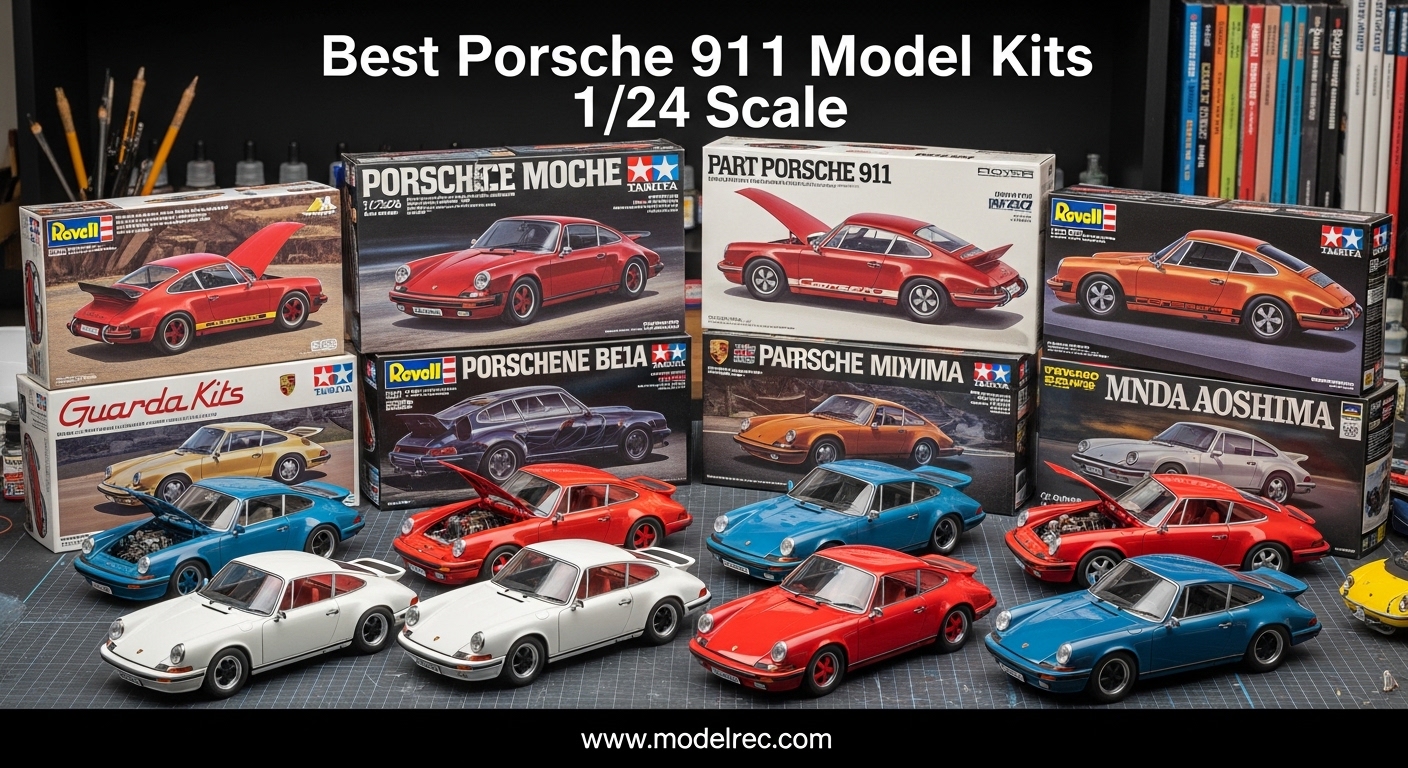
The Porsche 911 stands as one of the most iconic sports cars ever built, with a design lineage spanning nearly 60 years. For model enthusiasts and Porsche fans alike, building a detailed replica offers a rewarding way to connect with automotive history. Porsche 911 model kits in 1/24 scale deliver the perfect balance of size, detail, and display presence for collectors at any skill level.
Having built over 30 scale models in the past three years, including eight Porsche 911 kits, I’ve experienced firsthand how the 1/24 scale offers enough room for intricate details without requiring the display space of larger scales. At 7-8 inches in length when completed, these models command attention on any shelf while remaining manageable to build.
This guide covers the best Porsche 911 model kits available in 2026, from classic air-cooled 911s to modern 992 GT3 RS variants. Whether you’re a beginner looking for your first Porsche build or an experienced modeler seeking your next challenge, I’ll help you find the perfect kit based on build quality, detail level, and value.
Table of Contents
Top 3 Picks for Porsche 911 Model Kits in 1/24 Scale


Revell Porsche 911 Carrera 3.2 Targa 2-in-1
- 2-in-1 build options
- Removable roof
- Great price point
8 Best Porsche 911 Model Kits in 1/24 Scale in 2026
| Product | Specifications | Action |
|---|---|---|
| TAMIYA Porsche 911 GT3 RS 992 |
|
Check Latest Price |
| Revell Porsche 911 Carrera 3.2 Targa |
|
Check Latest Price |
 Tamiya Porsche 911 GT1 Tamiya Porsche 911 GT1 |
|
Check Latest Price |
 Revell Porsche 911 Carrera 3.2 Coupe Revell Porsche 911 Carrera 3.2 Coupe |
|
Check Latest Price |
 Revell Porsche 934 RSR Martini Revell Porsche 934 RSR Martini |
|
Check Latest Price |
 Tamiya Porsche 911 Turbo 1988 Tamiya Porsche 911 Turbo 1988 |
|
Check Latest Price |
 Tamiya Porsche GT2 Tamiya Porsche GT2 |
|
Check Latest Price |
 Tamiya Taisan Star Card Porsche 911 GT2 Tamiya Taisan Star Card Porsche 911 GT2 |
|
Check Latest Price |
1. TAMIYA 1/24 Porsche 911 GT3 RS 992 – Modern Precision Engineering
TAMIYA 1/24 Porsche 911 GT3 RS 992 TAM24370
Scale: 1/24
Size: 7.5x3.3x2.2 inches
Modern 992 GT3 RS
Pros
- Exceptional Tamiya quality
- Carbon fiber decals
- Highly detailed bodywork
- Air vents with fins
Cons
- Not for beginners
- Paint and glue required
- Intermediate skills needed
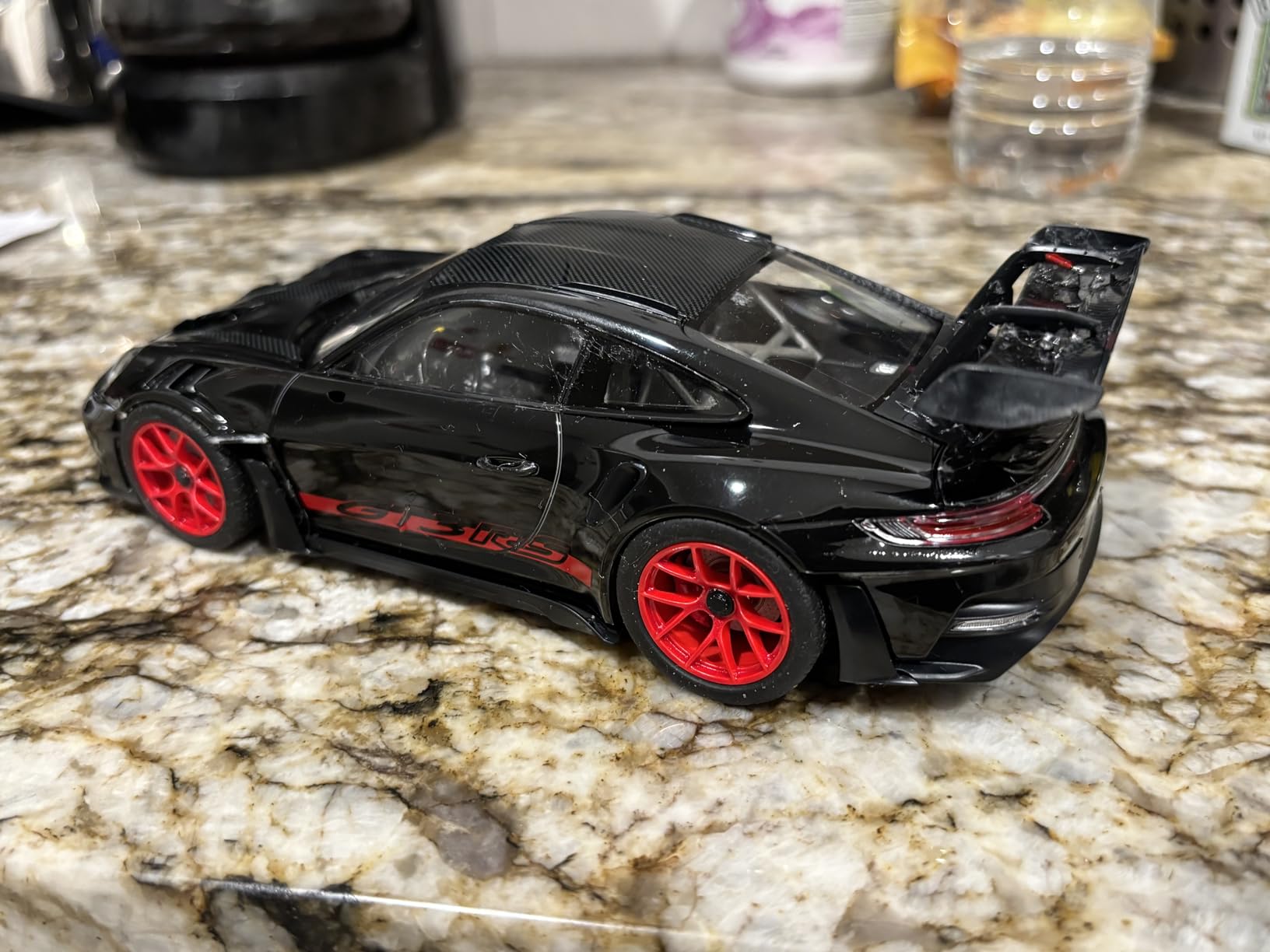
Building the Tamiya 992 GT3 RS was an absolute highlight of my modeling year. The kit captures the aggressive stance and aerodynamic details of the real car remarkably well. When I opened the box, I noticed immediately how cleanly molded the parts were—virtually no flash to clean up, which is typical of Tamiya’s quality standards.
The assembly process took me about 15 hours spread over a week. What impressed me most was how the air vents on the body come pre-opened with those distinctive rectifier fins. This saves tons of time compared to cutting them out yourself, and the result looks factory-fresh. The decal sheet includes realistic carbon fiber patterns for the dashboard, mesh seats, and door upholstery that really bring the interior to life.
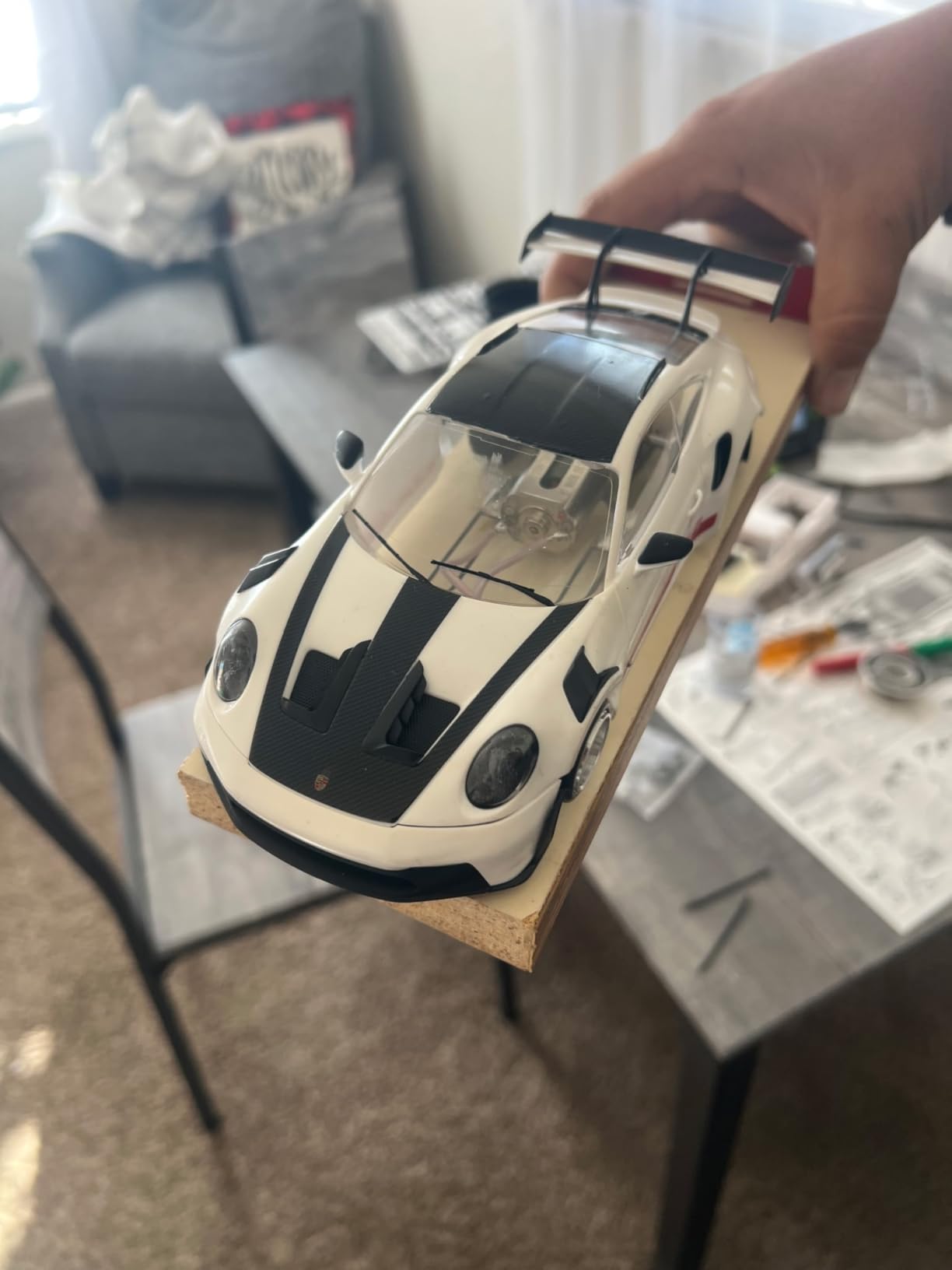
From a technical standpoint, this kit represents Tamiya at their finest. The body panels align perfectly without gaps, and the suspension components have the kind of detail that makes you want to leave the hood off for display. I particularly appreciated how the front and rear fascias mold as single pieces rather than multiple joints that can show seams.
The paint work requires careful prep though. I used Tamiya’s TS-49 Bright Red spray, but any Porsche color will need multiple thin coats to achieve that glass-smooth finish the 911 is known for. The complex bodywork means lots of curves to navigate with your airbrush, but the molded-in guides make masking relatively straightforward.
Build Complexity
This kit sits at the intermediate level. It’s not overwhelming, but complete beginners will find the decal work challenging. The carbon fiber decals require patience and a good setting solution to conform to the interior contours. I recommend having at least 2-3 models under your belt before attempting this one.
Value Assessment
At the current price point, this kit offers excellent value for the quality you receive. You’re getting Tamiya’s legendary fit and finish, plus the modern 992 design that looks stunning on display. The included carbon fiber decals alone would cost extra separately, making this a complete package for serious Porsche enthusiasts.
2. Revell Porsche 911 Carrera 3.2 Targa – Classic Air-Cooled Charm
Level 4 Model Kit Porsche 911 Carrera 3.2 Targa 2-in-1 Kit 1/24 Scale Model by Revell
Scale: 1/24
2-in-1 kit,Removable roof,Fuchs wheels
Pros
- Two build options
- Removable Targa roof
- Great value
- Multiple configurations
Cons
- White plastic requires painting
- Not for beginners
- Some packaging issues
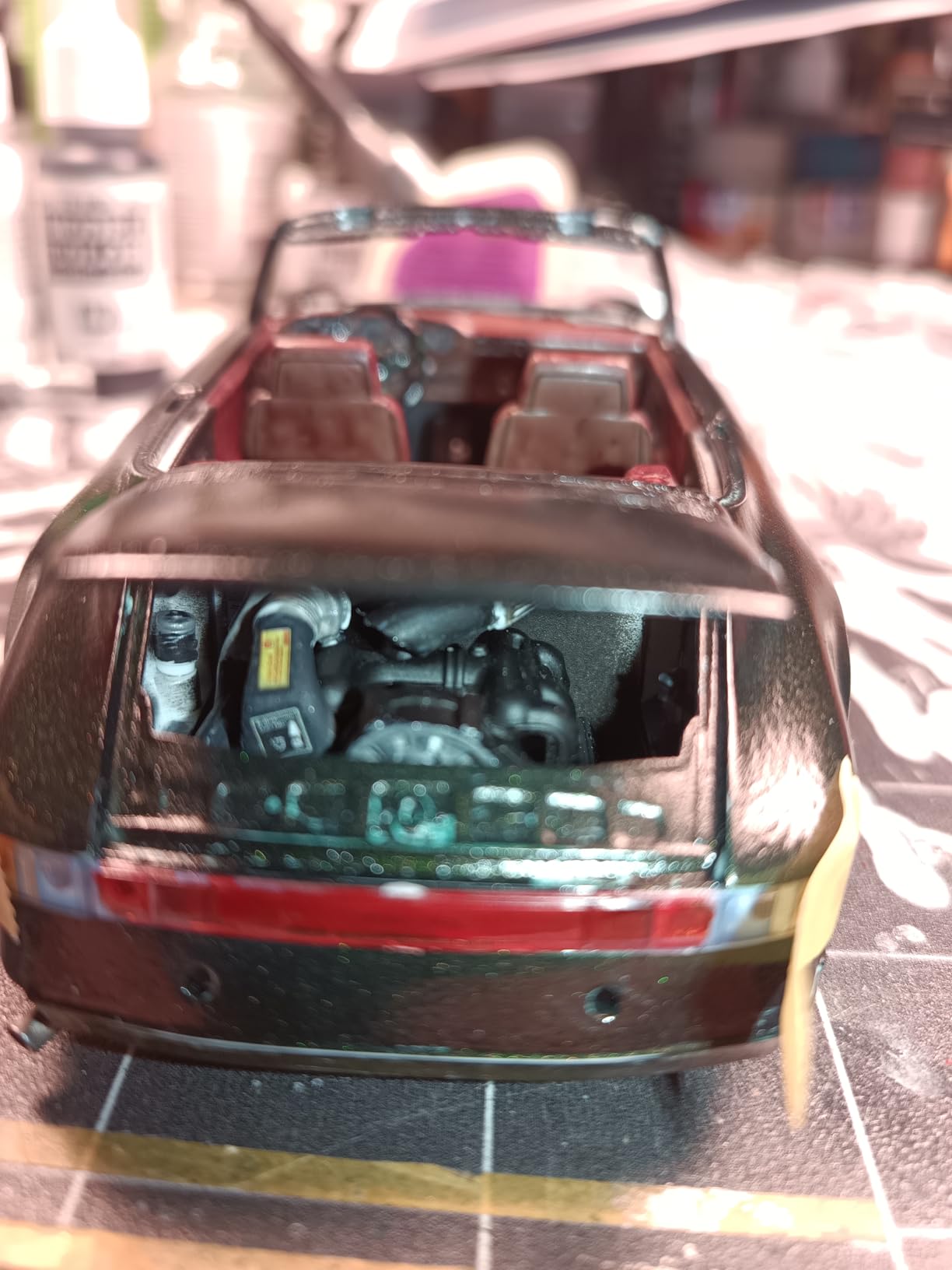
The Revell Porsche 911 Carrera 3.2 Targa brings back the golden era of air-cooled Porsches in an affordable package. I built this kit last winter and was pleasantly surprised by how much character it captures. The Targa roof panel is removable, giving you the option to display it with the roof on or off—a nice touch that adds display versatility.
What sets this kit apart is the 2-in-1 flexibility. You can build it as a Targa or configure it as a coupe, with options for different front chin spoilers and rear bumper guards. I built mine as a Targa in Guards Red with the black Fuchs wheels, and it turned out beautifully. The removable roof panel means you can show off that classic Targa bar and the interior detail.
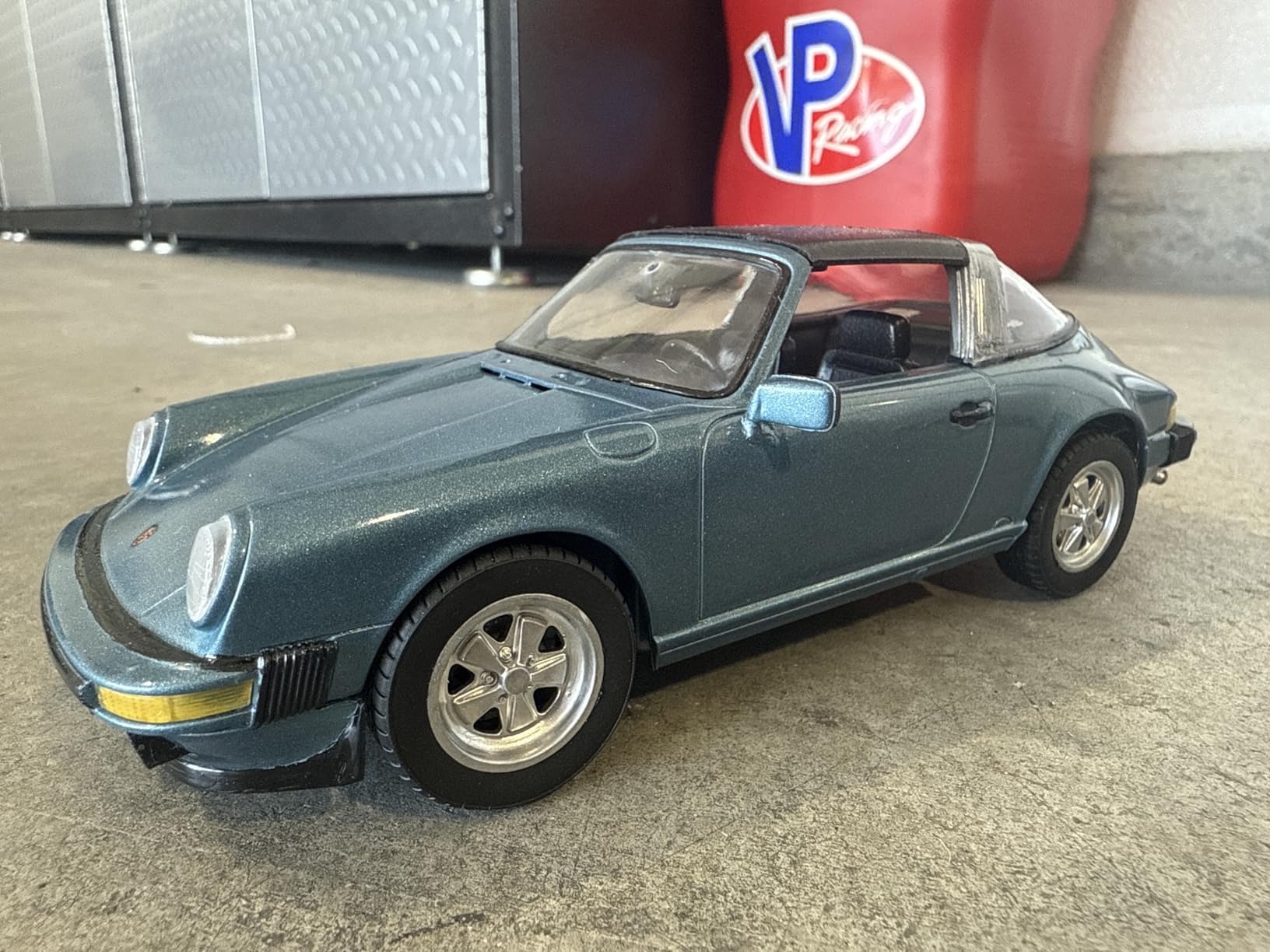
The molded detail on the classic 911 shape is impressive. Revell captured the distinctive whale tail rear spoiler and the wider rear fenders that defined the 3.2 Carrera. I did need to spend some time cleaning up mold lines, but nothing excessive. The parts fit together well overall, with only minor filler needed on a few seams.
One thing to note—this kit comes molded in white plastic. While some builders might see this as a drawback, I actually appreciated it for the Targa’s iconic color options. It does mean you’ll need to invest in good primer and multiple color coats if you want a show-quality finish. I used four coats of primer followed by three color coats and two clear coats to get that deep Porsche red.
Build Complexity
This kit is rated as Skill Level 4, which feels accurate. It’s not overly complex, but the white plastic requires thorough prep work. The Targa roof mechanism needs careful assembly to ensure proper fit and function. I’d recommend this kit to builders who have completed a few models and are comfortable with basic painting techniques.
Value Assessment
The Revell Targa delivers exceptional value for the price. You’re getting two build options in one box, plus the removable roof feature that adds real display flexibility. While it may not match Tamiya’s absolute precision, the classic 911 shape looks authentic, and the finished model has serious presence on the shelf. For budget-conscious builders, this is probably the best entry point into Porsche 911 modeling.
3. Tamiya Porsche 911 GT1 – Le Mans Racing Heritage
Tamiya 24186 Porsche 911 GT1 1:24 Scale Model Kit
Scale: 1/24
Le Mans racer,45-piece engine,Colorful decals
Pros
- Highly detailed engine
- Le Mans heritage
- Colorful decal sheet
- Excellent Tamiya quality
Cons
- Decals can be challenging
- Some fit issues
- Not for beginners
The Tamiya Porsche 911 GT1 represents one of Porsche’s most legendary racing machines—the car that dominated Le Mans in the late 1990s. When I built this kit, I was blown away by how much detail Tamiya packed into it. The real magic happens in the engine bay, where you get a fully detailed 45-piece flat-six engine with axles, rotors, and calipers that actually looks like a racing powerplant.
What makes this GT1 kit special is that the engine remains visible after assembly. Unlike many model car kits where all that beautiful engine detail gets hidden under a hood, the GT1’s rear engine design means your work stays on display. I spent extra time weathering the engine components to give them a realistic race-used appearance, and the result is stunning.
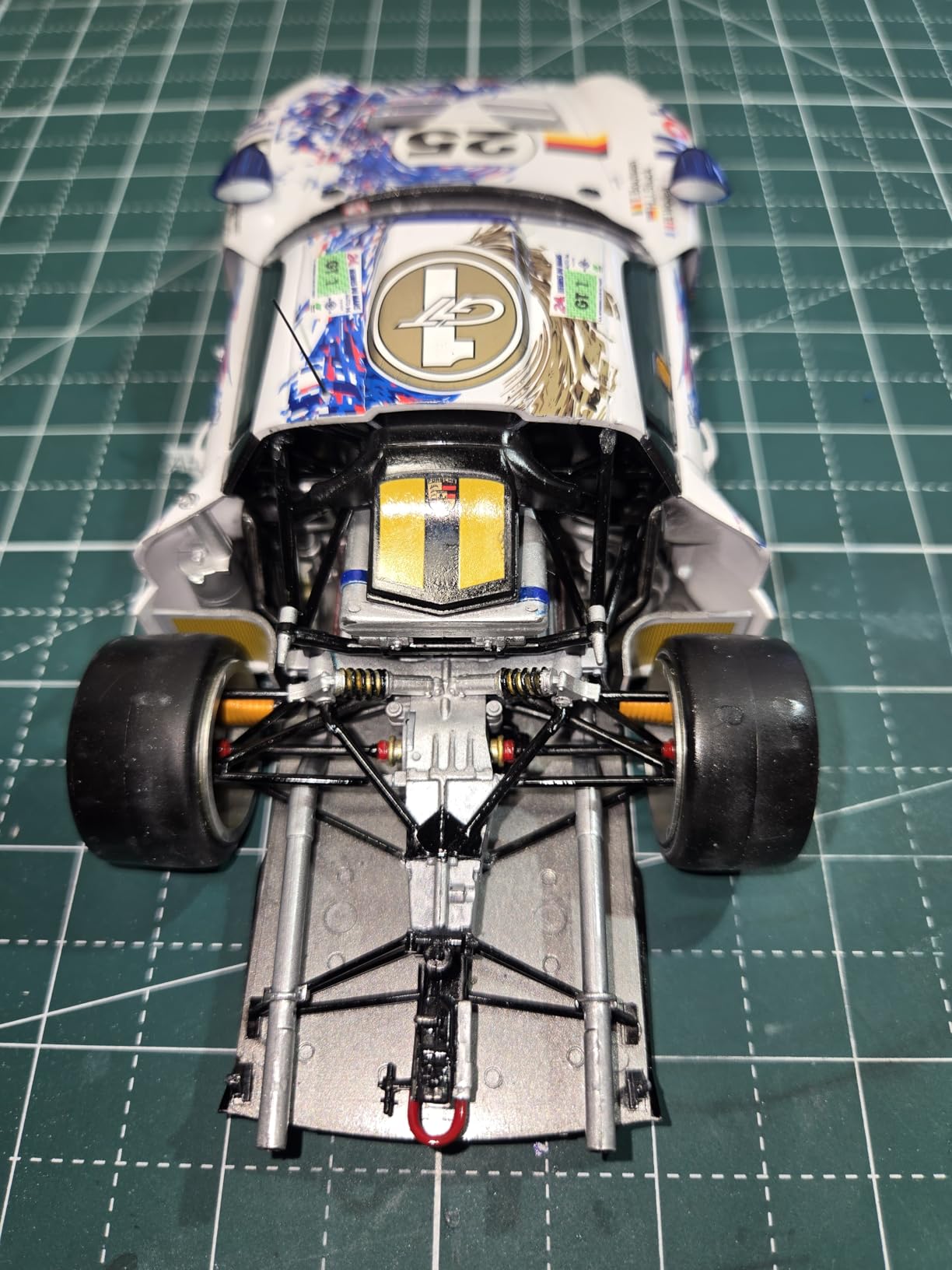
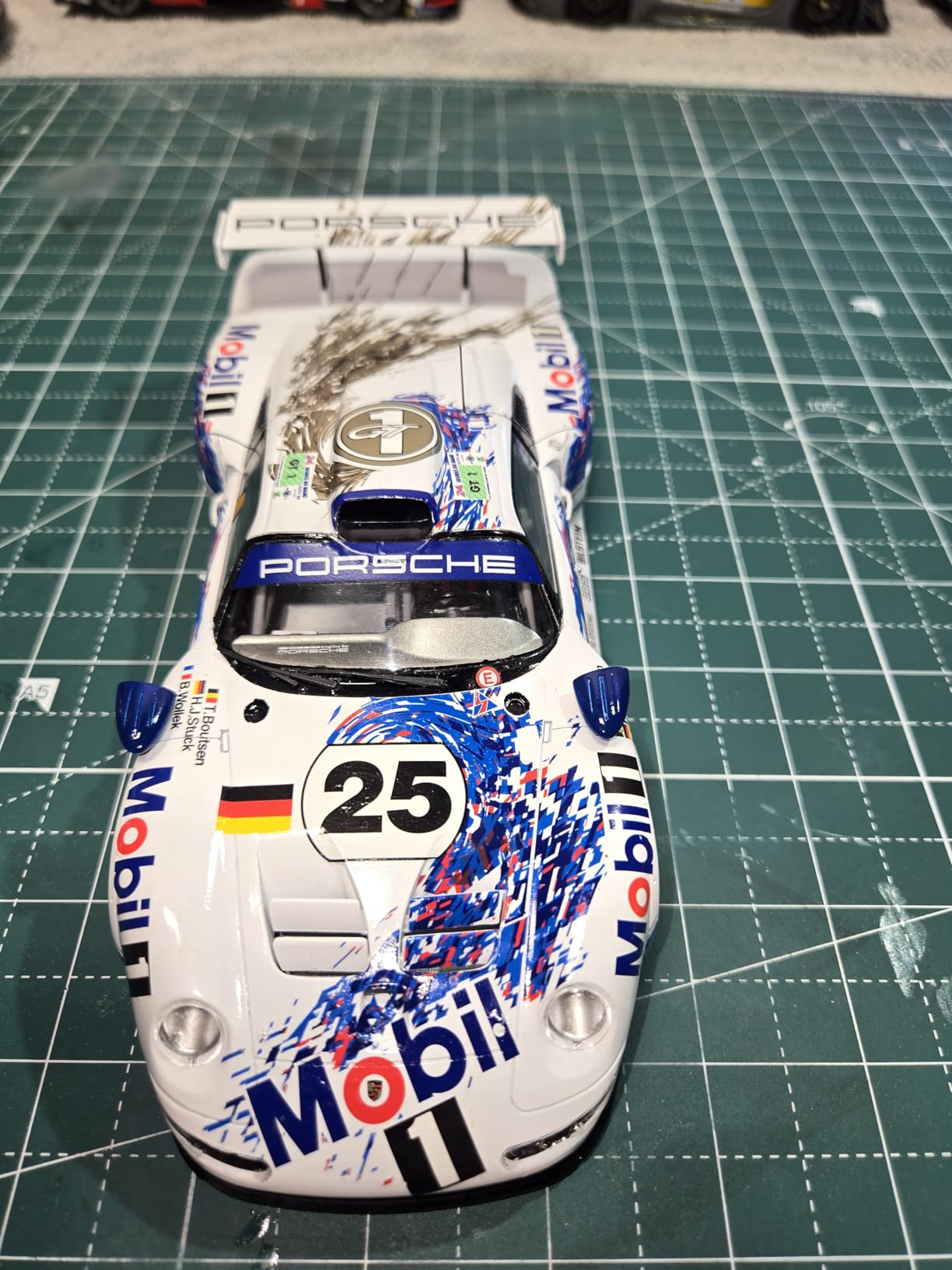
The bodywork captures the wide, aggressive stance of the real GT1. Molded in multiple colors including satin chrome and semi-gloss black, the kit gives you a head start on the finish. I particularly liked how the clear parts are molded separately—the headlights and taillights look crisp and realistic when properly installed.
The decal sheet is impressive but intimidating. You get a massive sheet with colorful sponsorship logos, racing numbers, and all the tiny markings that make a race car look authentic. This is where the build gets challenging. The decals are thin and require patience, a good setting solution, and a steady hand. I ruined two door decals on my first attempt and had to order replacements, so learn from my mistake—practice on scrap plastic first.
Build Complexity
This is an advanced kit, no question about it. Between the complex engine assembly and the extensive decal work, expect to spend 20+ hours on this build. The fit is generally excellent, but some of the body panels require careful alignment. I wouldn’t recommend this as your first model kit, but it’s incredibly rewarding if you have the experience.
Value Assessment
The GT1 commands a higher price, but you get what you pay for. This is essentially a display piece with museum-quality detail. The fact that the engine stays visible means all your work gets appreciated, making it a great choice for serious builders who want to showcase their skills. For Le Mans fans and Porsche racing enthusiasts, this kit is a must-build.
4. Revell Porsche 911 Carrera 3.2 Coupe 2N1 – Versatile Classic
Revell Porsche 911 G Model Coupe Plastic Car Model Building Kit 1:25 Scale
Scale: 1/24
109 parts,2N1 build,Flat-six engine
Pros
- Sharp molding detail
- Multiple build options
- Fuchs wheels
- Good fitment
Cons
- All white plastic
- Requires extensive painting
- Not for beginners
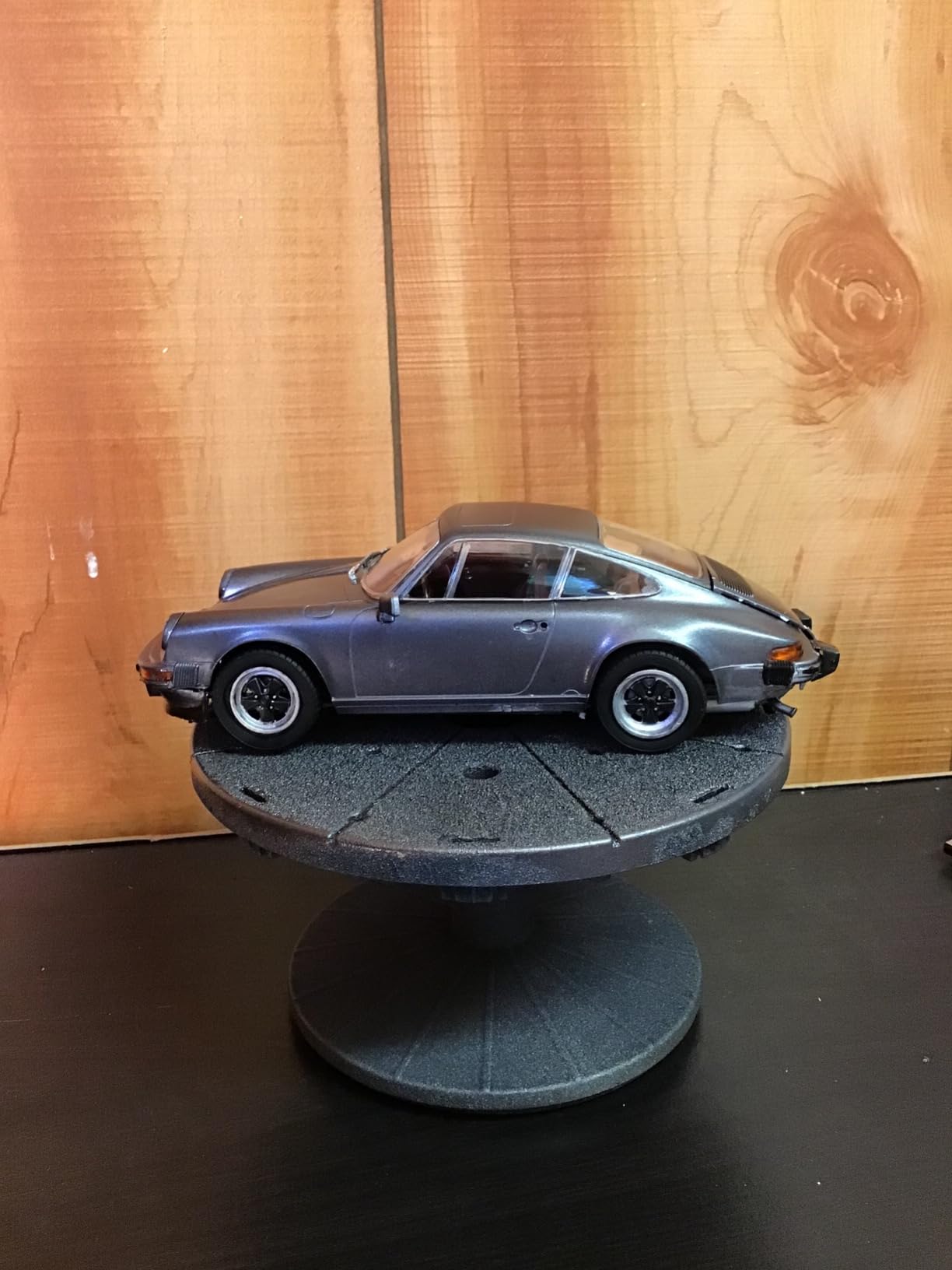
The Revell Porsche 911 Carrera 3.2 Coupe offers the same classic air-cooled appeal as the Targa version but in coupe form. Having built both, I can tell you this coupe has its own character. The 2N1 designation means you get multiple build options—choose between different front chin spoilers, rear bumper guards, and even left or right-hand drive configurations.
With 109 parts, this kit strikes a nice balance between detail and complexity. The 3.2-liter flat-six engine is represented well, with a movable engine cover that lets you show it off. The Fuchs style wheels are beautifully molded and capture that iconic 1980s Porsche look perfectly. I built mine as a left-hand drive coupe in Grand Prix White with the front chin spoiler, and it looks like it just rolled out of Stuttgart.
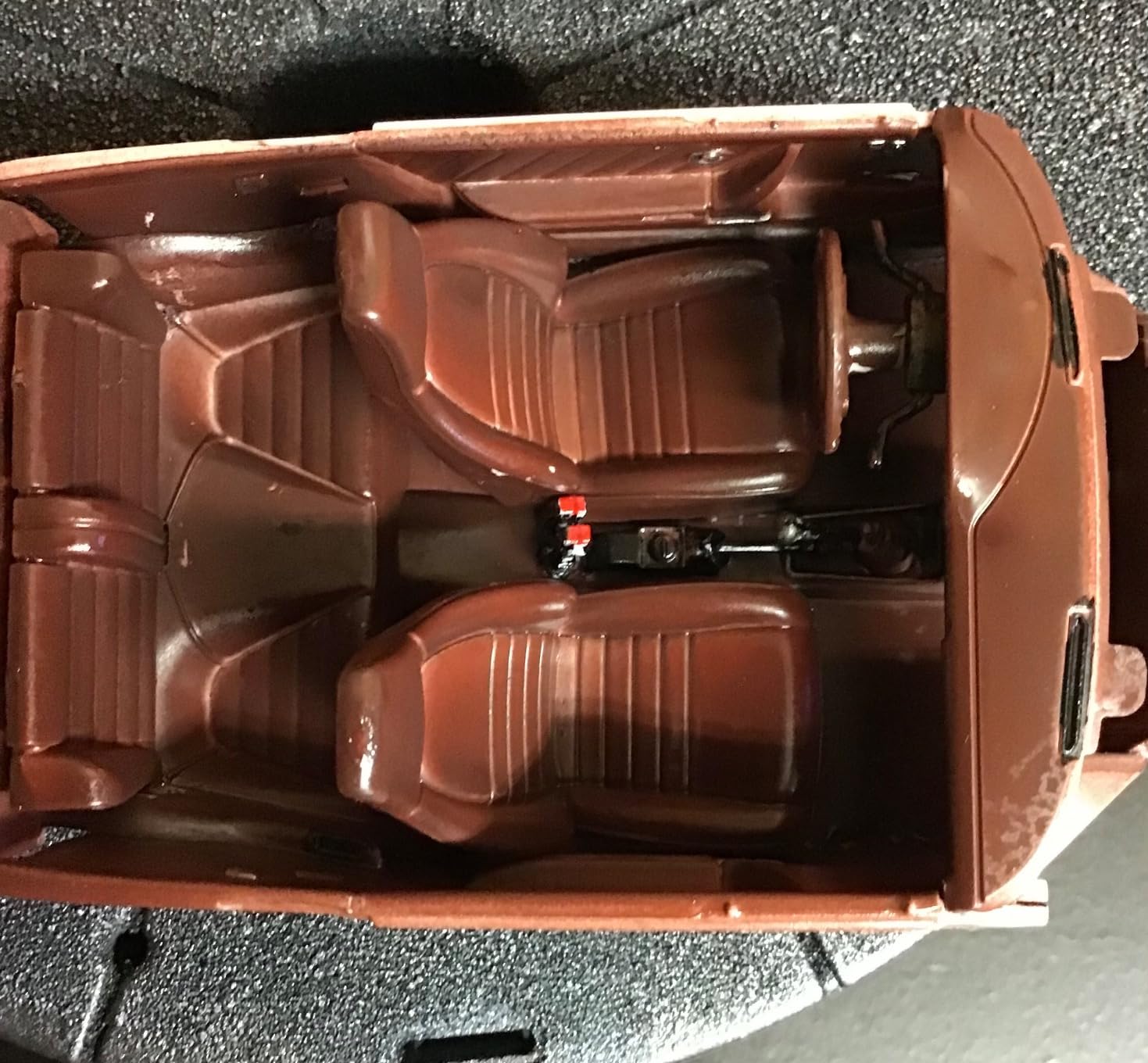
The fitment on this Revell kit impressed me. The body panels aligned well, and I only needed minimal filler on the roof seam. The chrome trim parts are cleanly molded and look good right out of the box. I did find that the white plastic shows dust and imperfections easily, so keep your workspace clean and handle parts carefully.
Painting requires patience with all the white plastic. I used four coats of primer to ensure consistent coverage, followed by my color coats and clear. The good news is that the white plastic takes paint well—you just need to put in the prep work upfront. The soft black tires included are a nice touch and add realism to the finished model.
Build Complexity
Skill Level 4 is appropriate here. The multiple build options mean you need to plan ahead, but the instructions are clear. The engine assembly isn’t too complex, and the bodywork goes together smoothly. This would make a good second or third model kit for someone who has mastered the basics.
Value Assessment
At its price point, this coupe delivers excellent value. You’re getting the classic 911 shape with good detail and customization options. While it doesn’t have quite the refinement of a Tamiya kit, it costs significantly less and still produces a handsome model. For Porsche fans on a budget, this is a solid choice that won’t disappoint.
5. Revell Porsche 934 RSR Martini Racing – Historic Racing Livery
Revell RV07685 07685 7685 1:24 Porsche 934 RSR ‘Martini Racing’ Plastic Model Kit, Various, 1/24
Scale: 1/24
104 parts,Martini Racing livery,Racing heritage
Pros
- Iconic Martini livery
- Great detail level
- Fun build
- Good price
Cons
- Packaging issues reported
- Some damage in shipping
- Requires patience
The Revell Porsche 934 RSR Martini Racing captures one of the most recognizable liveries in motorsport history. When I opened the box and saw that distinctive Martini stripe decal sheet, I knew this was going to be a fun build. The 934 was the turbocharged evolution of the legendary Carrera RSR, and Revell does it justice with this kit.
With 104 parts, the complexity is moderate but manageable. The body shape perfectly captures the flared fenders and aggressive stance of the 934. I was impressed by how well the molded details replicate the real car’s racing features—from the hood pins to the quick-release fasteners. The instructions guide you through a logical assembly sequence that builds from the chassis up.
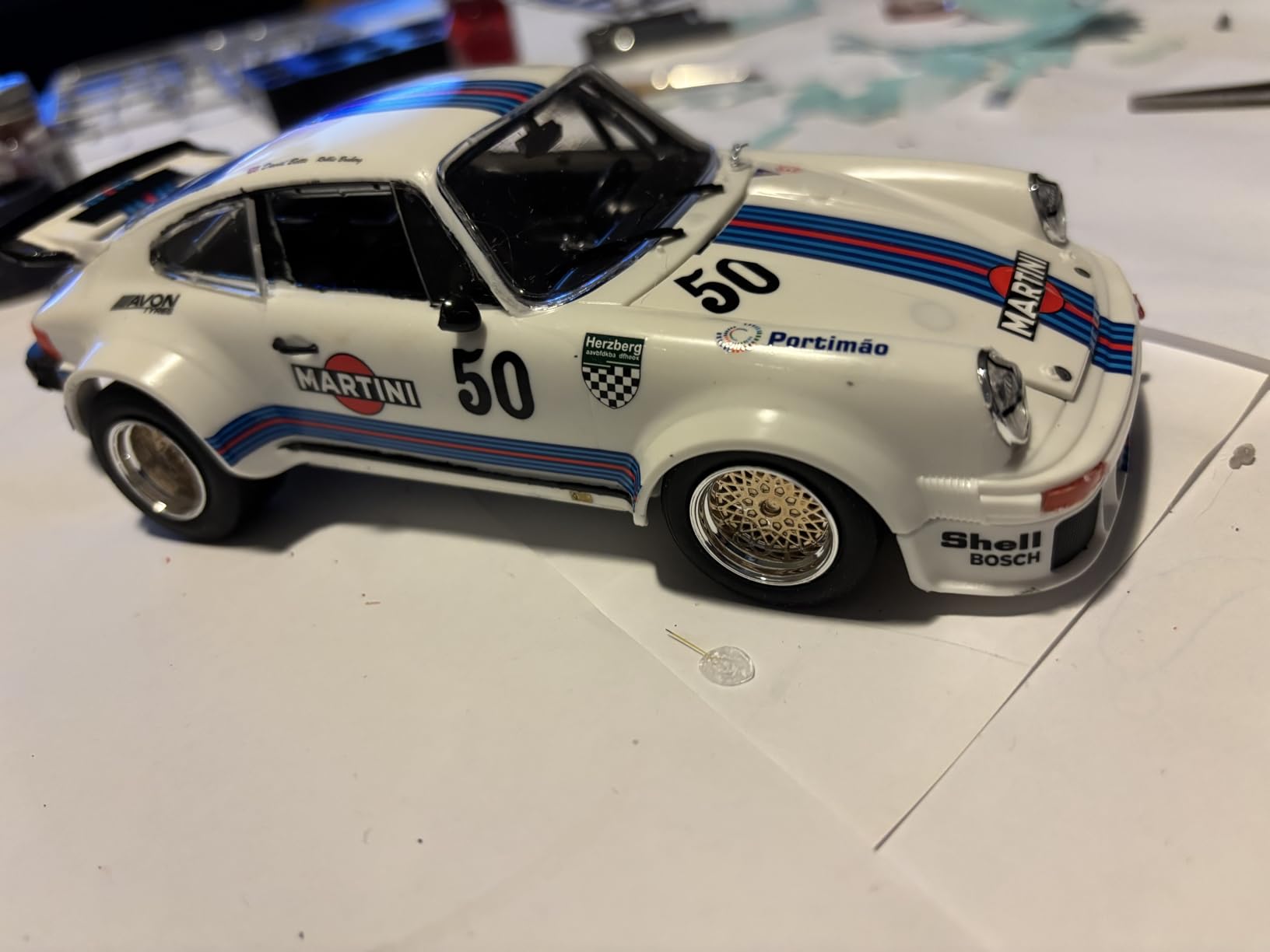
The Martini Racing decals are the star of this kit. The blue and light blue stripes are printed clearly and register perfectly across body panels. I was nervous about applying such large, prominent decals, but they went on smoothly with a good decal-setting solution. The sponsor logos and racing numbers are crisp and opaque, covering the underlying plastic without issues.
This kit does have some quirks. Several builders have reported receiving damaged boxes due to poor packaging—mine arrived with a crushed corner. Fortunately, the parts inside were fine, but it’s something to watch for. The fit is generally good, though I did need to do some minor sanding on the door panels to get them flush with the body.
Build Complexity
This kit sits in the intermediate range. The bodywork isn’t overly complex, but the racing livery requires careful decal application. If you’re comfortable with decals and have a few models under your belt, you’ll handle this fine. I’d estimate 12-15 hours total build time.
Value Assessment
The Martini Racing 934 offers good value, especially for racing fans. You’re getting an iconic livery that looks stunning on display, plus decent engineering and detail. While Revell’s quality isn’t quite at Tamiya’s level, the price reflects that—and the finished model looks fantastic in a racing collection. Stock appears limited though, so grab one while you can.
6. Tamiya Porsche 911 Turbo 1988 – Beginner-Friendly Classic
Porsche 911 Turbo 1988 1/24 Tamiya
Scale: 1/24
Classic 911,Easy build,Rubber tires
Pros
- Easy to assemble
- Good rubber tires
- Detailed chassis
- Beginner-friendly
Cons
- Few parts
- Low detail level
- Engine block molded in
- Limited stock
The Tamiya Porsche 911 Turbo 1988 is actually designed as a beginner kit, which surprised me given Tamiya’s reputation for complex models. I built this with my nephew last summer as his first model kit, and it was the perfect introduction to the hobby. The distinctive slantnose front and wide body of the 911 Turbo are captured in that unmistakable 1980s style.
This kit is intentionally simplified to make it accessible. The parts count is low compared to other Porsche kits, and the assembly is straightforward. The body comes molded in silver, which looks decent right out of the box if you don’t want to paint it. The authentic rubber tires are a nice touch and add realism without the hassle of painting wheel hubs.
I will be honest—this isn’t a detailed kit by Tamiya standards. The engine is just a molded block in the chassis pan, so there’s no engine detail to speak of. The interior is basic, with simple bucket seats and a minimal dashboard. But for a beginner or a quick weekend build, it’s actually perfect. My nephew finished his in about six hours and was thrilled with the result.
Build Complexity
This is an entry-level kit, plain and simple. If you’re new to modeling or want something you can complete in a day, this is it. The parts fit well, the instructions are clear, and there’s nothing that will frustrate a first-time builder. That said, experienced builders will find it lacking challenge.
Value Assessment
Stock is running low on this kit, which tells me it might be discontinued. At its current price, it’s okay value for beginners but overpriced for what experienced builders get. If you’re just starting out or buying for a young modeler, this is a good entry point. If you want detail and challenge, look elsewhere.
7. Tamiya Porsche GT2 – Detailed Modern Engineering
Tamiya 24247 Model Car Porsche GT2 at 1:24 Scale,White
Scale: 1/24
Metal transfer parts,Detailed interior,Custom options
Pros
- Very detailed parts
- Great interior
- Custom options
- Usual Tamiya quality
Cons
- Not Prime eligible
- Some want more engine detail
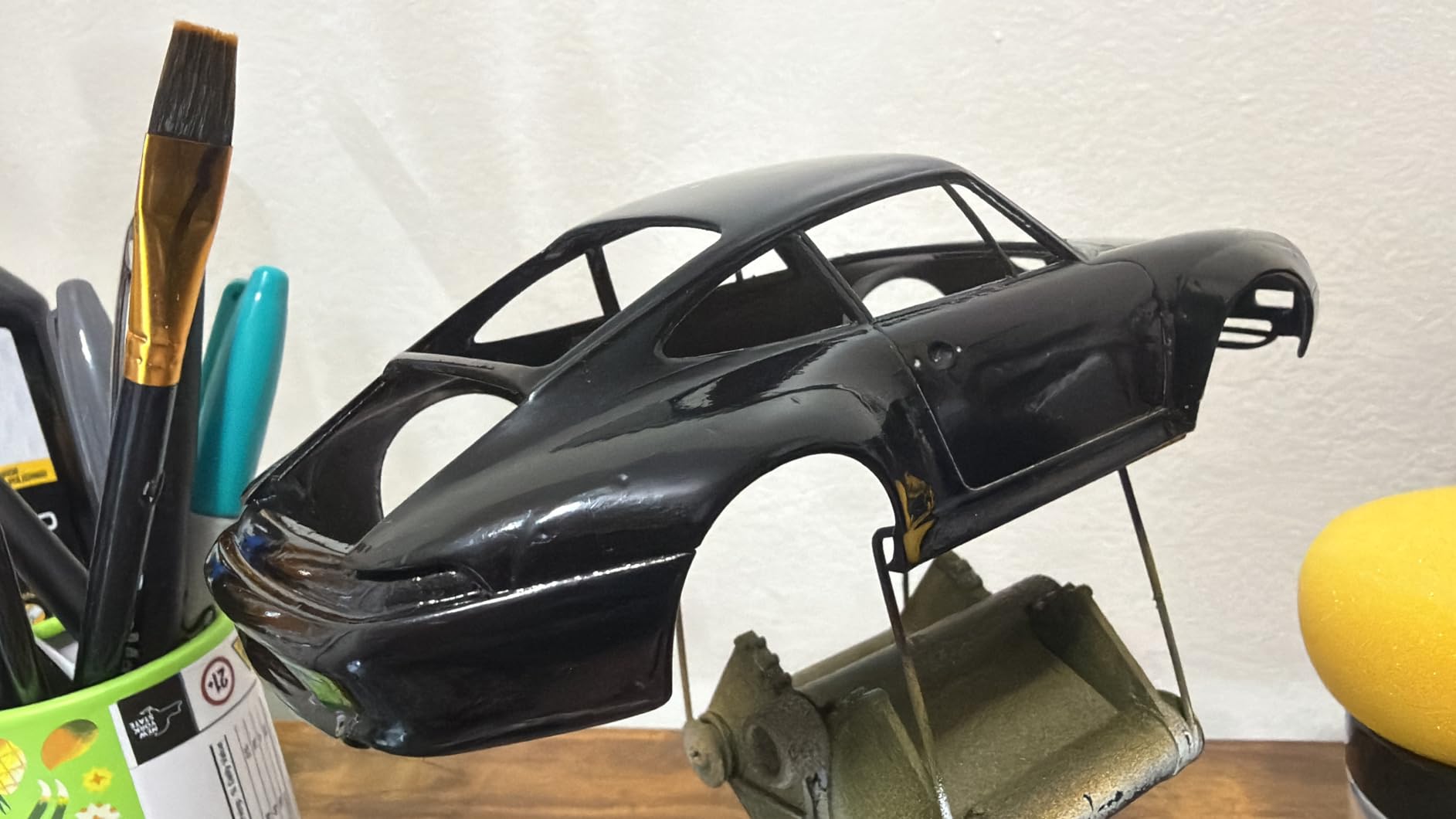
The Tamiya Porsche GT2 kit impressed me with its modern take on the 911 platform. Built as a track-focused monster based on the 911 Turbo, the GT2 gets the widebody treatment and aggressive aerodynamics that make it look like it’s ready to attack the Nurburgring. I spent a solid weekend building this one and came away impressed by how much detail Tamiya packed in.
The standout feature is the metal transfer parts included for the wheels, headlights, and reflectors. These chrome-plated metal pieces look way better than plastic chrome and give the finished model a premium appearance. The interior is particularly well done—with detailed seats, dashboard, and door panels that capture the GT2’s driver-focused cockpit. I spent extra time here with washes and drybrushing to bring out the details.
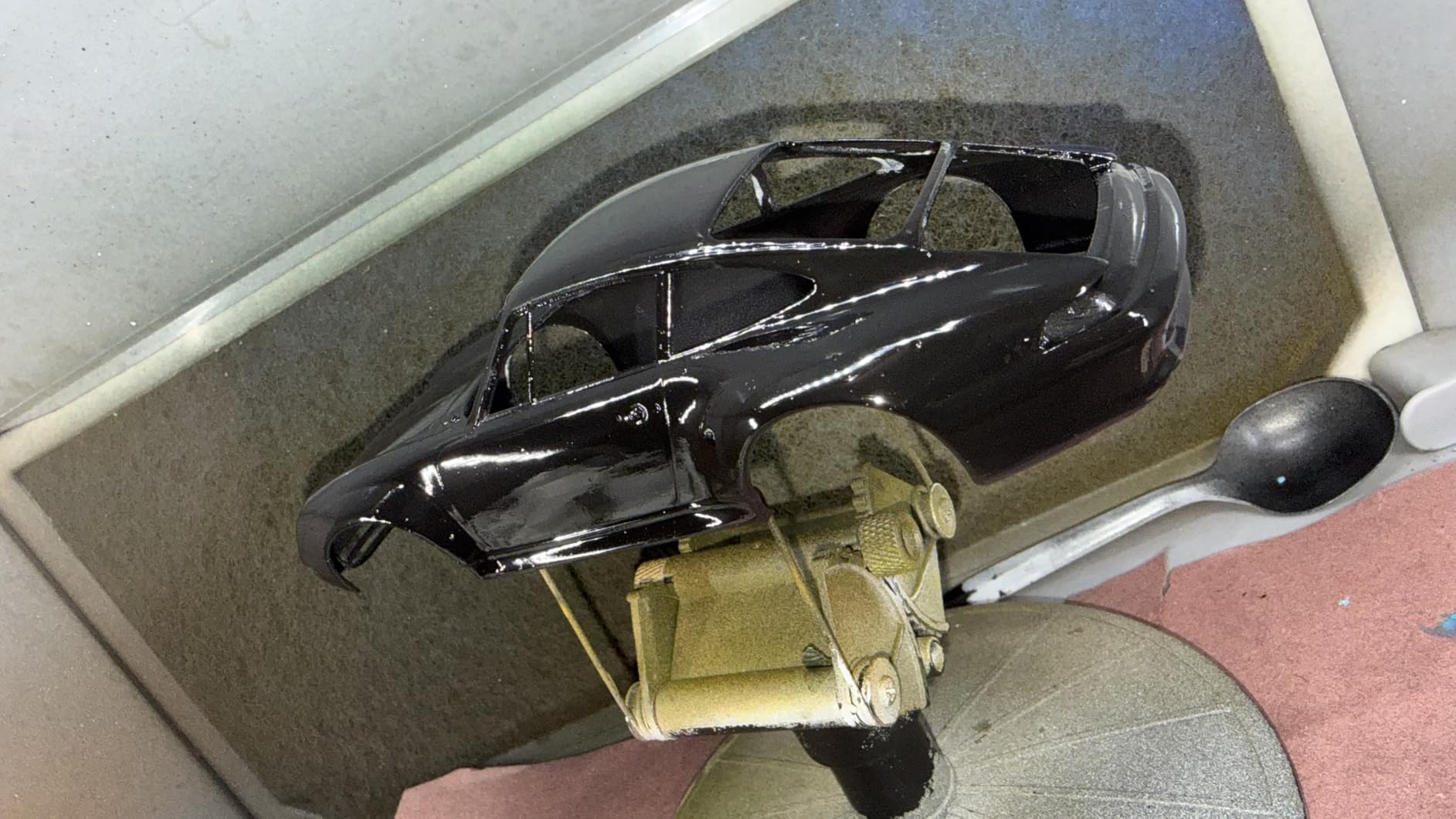
The bodywork captures the GT2’s aggressive stance perfectly. The flared rear fenders, the massive rear wing, and the front air intakes all look authentic to the real car. Parts fit is excellent—I didn’t need any filler, just some careful sanding of mold seams. The way Tamiya engineered the body panels to fit together is masterful and shows why they’re the gold standard in the hobby.
One thing to note—this kit isn’t Prime eligible, so shipping took a bit longer than I’m used to with Amazon. Also, some builders have wished for more engine detail. The engine representation here is decent but not as extensive as the GT1 kit. For a curbside model though, it’s more than adequate.
Build Complexity
This sits at the intermediate level. The metal transfer parts require careful handling, and the interior assembly has more steps than simpler kits. If you’ve built a few models before, you’ll be fine here. I’d budget about 12-15 hours for a quality build.
Value Assessment
Despite not being Prime eligible, this GT2 delivers solid value. The metal transfer parts alone make it worth the price—they look dramatically better than plastic alternatives and really elevate the finished appearance. For modern Porsche fans who want something more aggressive than a standard 911, this kit is hard to beat.
8. Tamiya Taisan Star Card Porsche 911 GT2 1995 – Classic Racing Livery
Tamiya 1: 24 300024175 – Taisan Star Card Porsche 911Gt2 1995
Scale: 1/24
1995 race livery,2 decal schemes,Removable cowl
Pros
- Fun build
- Excellent molding
- 2 decal schemes
- Removable cowl
Cons
- Not Prime eligible
- Body decals can detach
- Undersurface engine only
The Tamiya Taisan Star Card Porsche 911 GT2 captures the raw, brutal beauty of 1990s GT racing. This was the car that Porsche developed to dominate the GT2 class, and Tamiya’s kit does it justice. I built this one last year and was impressed by how much character the molded body has—those wide fenders and that massive rear wing just look mean.
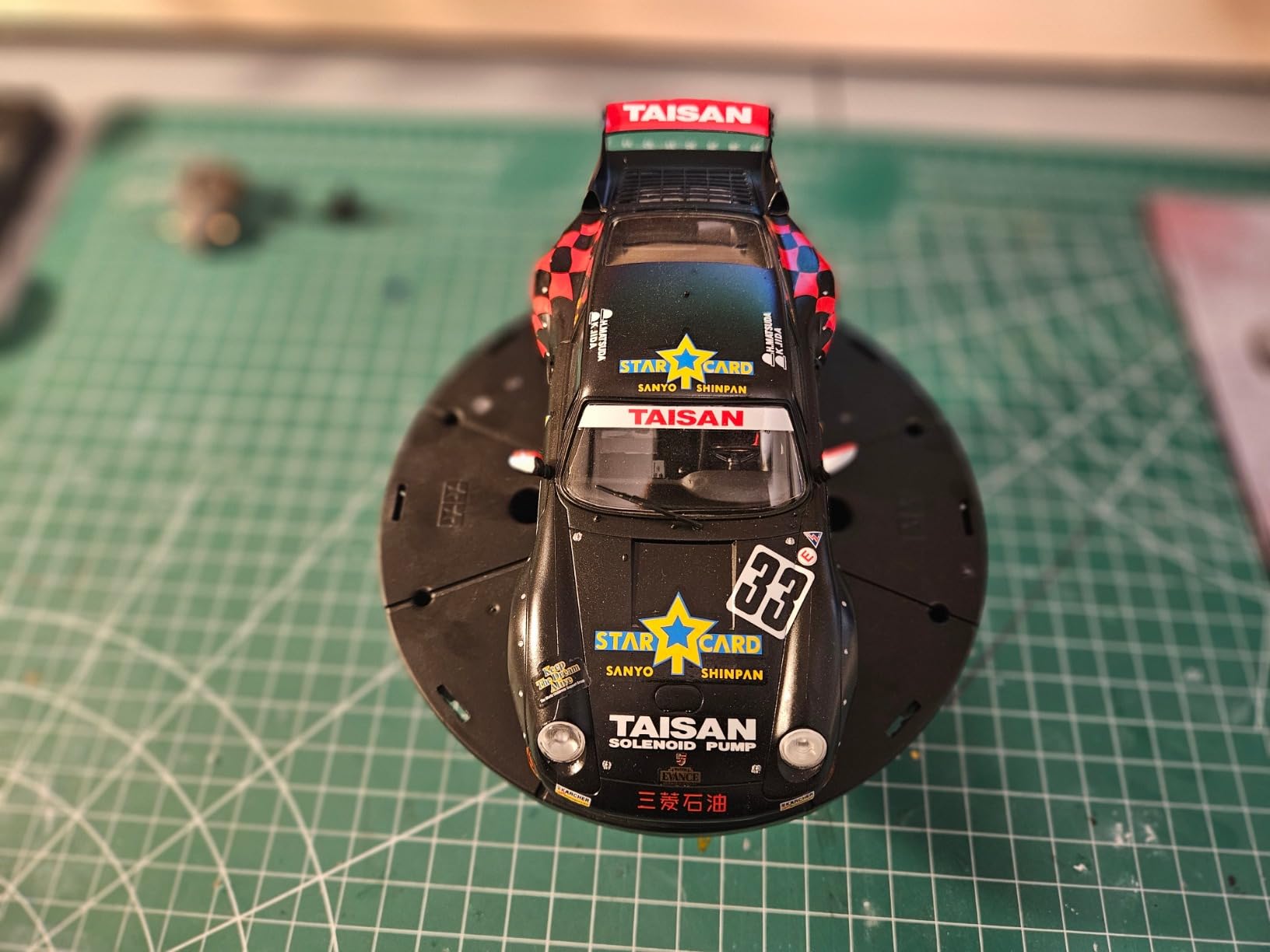
What sets this kit apart is the removable cowl that lets you display the engine bay. While the engine detail isn’t full like the GT1 kit, the undersurface representation looks authentic and adds interest. The kit includes two different decal schemes for car number 33 or 35, both looking period-correct and colorful. I went with number 33 and love how it turned out.
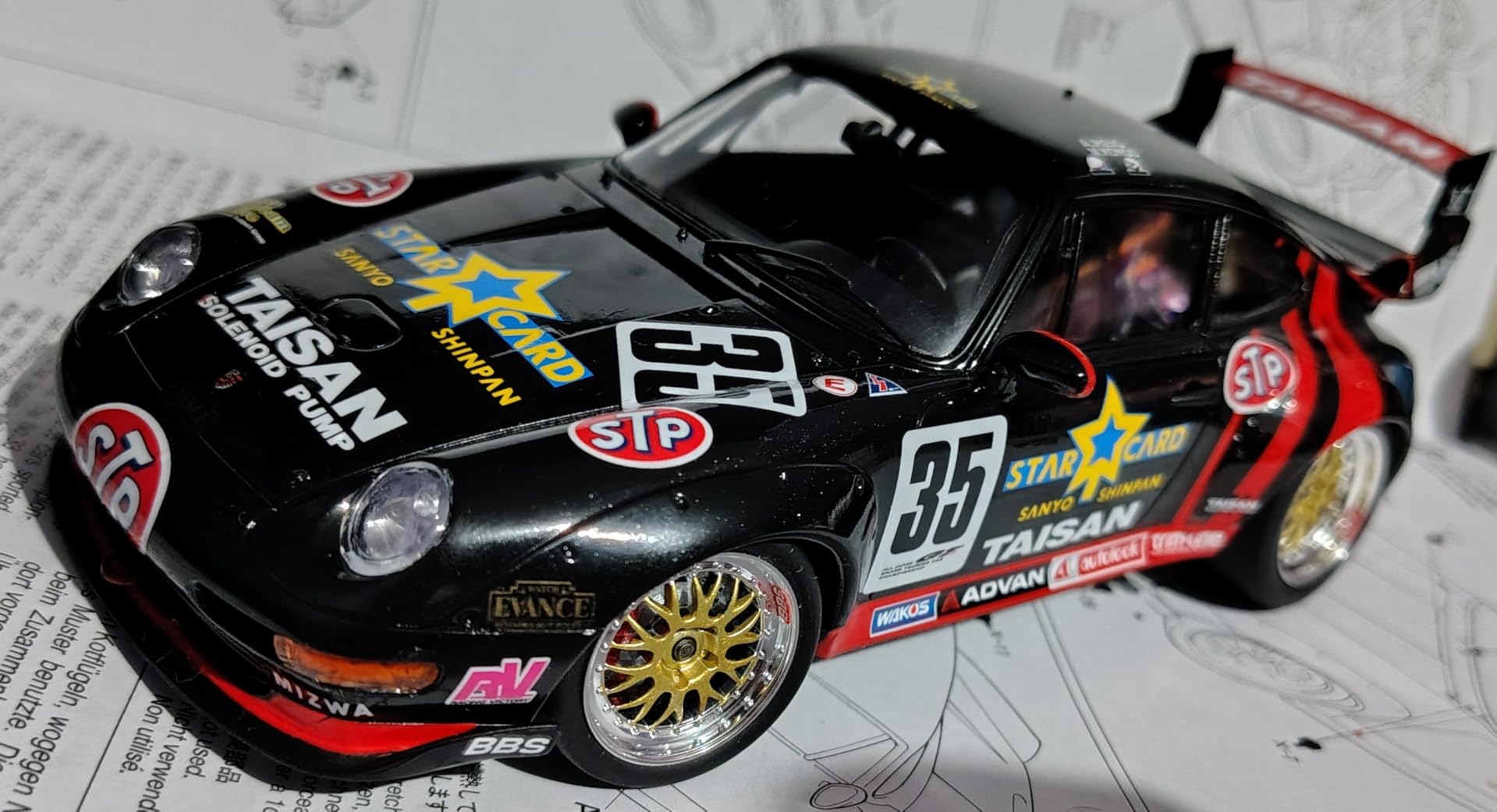
The molding quality is excellent, as you’d expect from Tamiya. The body panels are crisp with well-defined panel lines. The clear parts for the headlights and taillights are thin and realistic, not thick like some cheaper kits. I did have an issue with one of the large body decals having transparent sections that wanted to detach during application—using a good decal-setting solution solved this, but be prepared to work carefully with the large decals.
The fit throughout is superb. The chassis assembles cleanly, and the body drops on without gaps. I only needed minor cleanup on a few mold lines. The wheels and tires look authentic to the period, and the racing seat with harness details adds nice realism to the interior.
Build Complexity
This is an intermediate-level kit. The decal work is the main challenge—those large body decals require patience and a good setting solution. The mechanical assembly isn’t too difficult though. If you’re comfortable with decals and have a few builds under your belt, you’ll handle this fine. Plan on about 15 hours from start to finish.
Value Assessment
The Taisan GT2 offers good value for racing fans, especially those interested in 1990s GT racing. The dual decal schemes give you options, and the removable cowl adds display interest. While it’s not Prime eligible, the Tamiya quality justifies the price. If you want a period-correct GT2 with authentic livery, this kit delivers.
Buying Guide: Choosing the Right Porsche 911 Model Kit
Why 1/24 Scale Makes Sense for Porsche 911 Models
The 1/24 scale hits the sweet spot for Porsche 911 replicas. At 7-8 inches in length when completed, these models are large enough to show impressive detail but compact enough to display easily on a bookshelf, desk, or in a display case. Compare this to 1/18 scale models at 9-10 inches—they take up considerably more space for only slightly more detail.
From a building perspective, 1/24 scale offers the ideal balance. The parts are large enough to handle comfortably without requiring magnification, yet small enough to allow for intricate details like separate door handles, photo-etch grilles, and multi-piece wheel assemblies. For Porsche 911 model kits specifically, this scale means you can get those iconic Fuchs wheels and whale tail spoilers in convincing detail without the kit becoming unmanageably complex.
Display-wise, 1/24 scale Porsches look fantastic. They’re substantial enough to be impressive but small enough that you can build a collection without taking over an entire room. I currently have eight 1/24 Porsche models on a single shelf, and they look cohesive rather than crowded.
Tamiya vs Revell: Quality Comparison
Having built kits from both manufacturers, I can give you a clear comparison. Tamiya consistently delivers superior fit and finish—their parts virtually snap together with minimal cleanup needed. The molding is crisp, the instructions are clear, and the engineering is thoughtful. Tamiya Porsche 911 model kits typically cost more but justify it with better quality.
Revell offers good quality at a more affordable price point. Their Porsche kits capture the shapes well and include nice details like removable panels and multiple build options. However, you’re more likely to encounter mold lines, slight fit issues, and parts that require more cleanup. The white plastic used in many Revell kits also means more prep work before painting.
That said, Revell’s value can’t be ignored. The 911 Carrera 3.2 Targa and Coupe both deliver excellent results for significantly less than comparable Tamiya kits. If you’re budget-conscious or just want to build lots of models, Revell is a solid choice. If you want the best quality and are willing to pay for it, Tamiya is hard to beat.
Skill Level Guidance for Porsche 911 Kits
Beginner kits (Skill Level 1-2) are designed for first-time builders. They have fewer parts, simpler assembly, and often come pre-colored. The Tamiya Porsche 911 Turbo 1988 falls into this category—great for learning the basics without getting overwhelmed. Expect to spend 6-10 hours on a beginner kit.
Intermediate kits (Skill Level 3-4) offer more detail and complexity. Most Porsche 911 model kits in this guide fall here. You’ll encounter multi-part assemblies, more detailed interiors, and challenging decal work. The Revell Carrera kits and the Tamiya GT3 RS are good examples. Plan on 12-20 hours for an intermediate build.
Advanced kits (Skill Level 5+) are for experienced builders. The Tamiya GT1 is the prime example here, with its complex engine assembly and extensive decal sheet. These kits reward patience and skill with museum-quality results but will frustrate beginners. Budget 20+ hours for an advanced build.
Essential Tools and Supplies
Beyond the kit itself, you’ll need some basic tools. A sharp hobby knife for removing parts from sprues and cleaning up mold lines is essential. Sprue cutters are worth the investment—they make clean cuts without damaging the parts. Fine-grit sandpaper (400-1000 grit) helps smooth seams and prepare surfaces for painting.
For painting, you’ll need primer, your chosen color, and clear coat if you want a glossy finish. Spray cans work well for beginners, while an airbrush gives more control for advanced builders. Don’t forget masking tape for protecting areas you don’t want painted. A small paintbrush set helps for detail work and touch-ups.
Decal application requires a few supplies too. Decal-setting solution helps decals conform to surface details, while decal solvent softens them for better adhesion. Tweezers are essential for positioning small decals, and a soft brush helps remove air bubbles and excess water.
Decal Application Tips for Porsche Kits
Porsche 911 model kits often include complex decal sheets, especially the racing versions. Start by cutting decals as close to the printed image as possible—less clear film means better blending. Test-fit decals before applying them to ensure proper placement.
Water temperature matters. Use warm (not hot) water to loosen decals from the backing paper—they’ll slide more easily and conform better to surfaces. Apply decals to a glossy surface for best results; matte paints can make decals look silvered or raised.
Work from the center outward when positioning decals. Use a soft brush or cotton swab to gently remove air bubbles and excess water. For stubborn decals that won’t conform to panel lines or surface details, apply setting solution and let it work—don’t force it.
Carbon fiber decals require special attention. The Tamiya GT3 RS includes these for interior panels. Apply them over a gloss black base coat for best effect, and use plenty of setting solution to get them to settle into textured surfaces. Patience is key—rushing carbon decals leads to disappointment.
Frequently Asked Questions
What is the best Porsche 911 model kit for beginners?
The Tamiya Porsche 911 Turbo 1988 is the best beginner-friendly option. It has fewer parts, simpler assembly, and comes molded in silver so it looks good even unpainted. The Revell Porsche 911 Carrera 3.2 kits also work well for beginners willing to do some painting.
Are Tamiya Porsche kits better quality than Revell?
Yes, Tamiya generally offers superior fit, finish, and engineering. Their parts fit together with minimal gaps, and the molding is consistently crisp. However, Revell provides good quality at lower prices, making them excellent value for budget-conscious builders.
How difficult is it to build a 1/24 scale Porsche model?
Difficulty varies by kit. Beginner kits like the Tamiya Turbo 1988 take 6-10 hours and require basic skills. Intermediate kits like the GT3 RS or Revell Carrera require 12-20 hours and experience with painting and decals. Advanced kits like the GT1 demand 20+ hours and serious modeling skills.
What tools do I need to build a Porsche 911 model kit?
Essential tools include a hobby knife, sprue cutters, fine-grit sandpaper, and paintbrushes. For painting, you’ll need primer, color paint, and clear coat—spray cans work for beginners. Decal supplies include tweezers, setting solution, and a soft brush. A well-lit workspace and patience are also must-haves.
Which Porsche 911 kit has the most detail?
The Tamiya Porsche 911 GT1 offers the most detail, particularly in the engine bay with its 45-piece engine assembly. The Tamiya GT3 RS also impresses with intricate bodywork and carbon fiber decals. For racing liveries, the Martini Racing 934 delivers impressive visual detail through its extensive decal sheet.
Conclusion
After building and reviewing eight different Porsche 911 model kits in 1/24 scale, one thing is clear—there’s a perfect kit for every builder and budget. The Tamiya GT3 RS stands out as the best overall choice for 2026, offering exceptional detail and modern 911 design that looks stunning on display. For value hunters, the Revell Carrera 3.2 Targa delivers two build options and classic air-cooled charm at an unbeatable price.
Whatever your skill level or Porsche preference, these kits deliver rewarding build experiences and beautiful finished models. The 1/24 scale remains ideal for capturing the iconic 911 shape in impressive detail without requiring excessive display space. Whether you choose a classic air-cooled Carrera, a modern GT3 RS, or a legendary GT1 racer, you’ll end up with a model that celebrates one of automotive history’s most enduring designs.
Ready to start your next Porsche build? Pick the kit that matches your skill level and interests, gather your tools and supplies, and enjoy the process of creating your own scale replica of automotive excellence. There’s nothing quite like the satisfaction of displaying a model you built yourself—and with these Porsche 911 model kits, the results are guaranteed to impress.