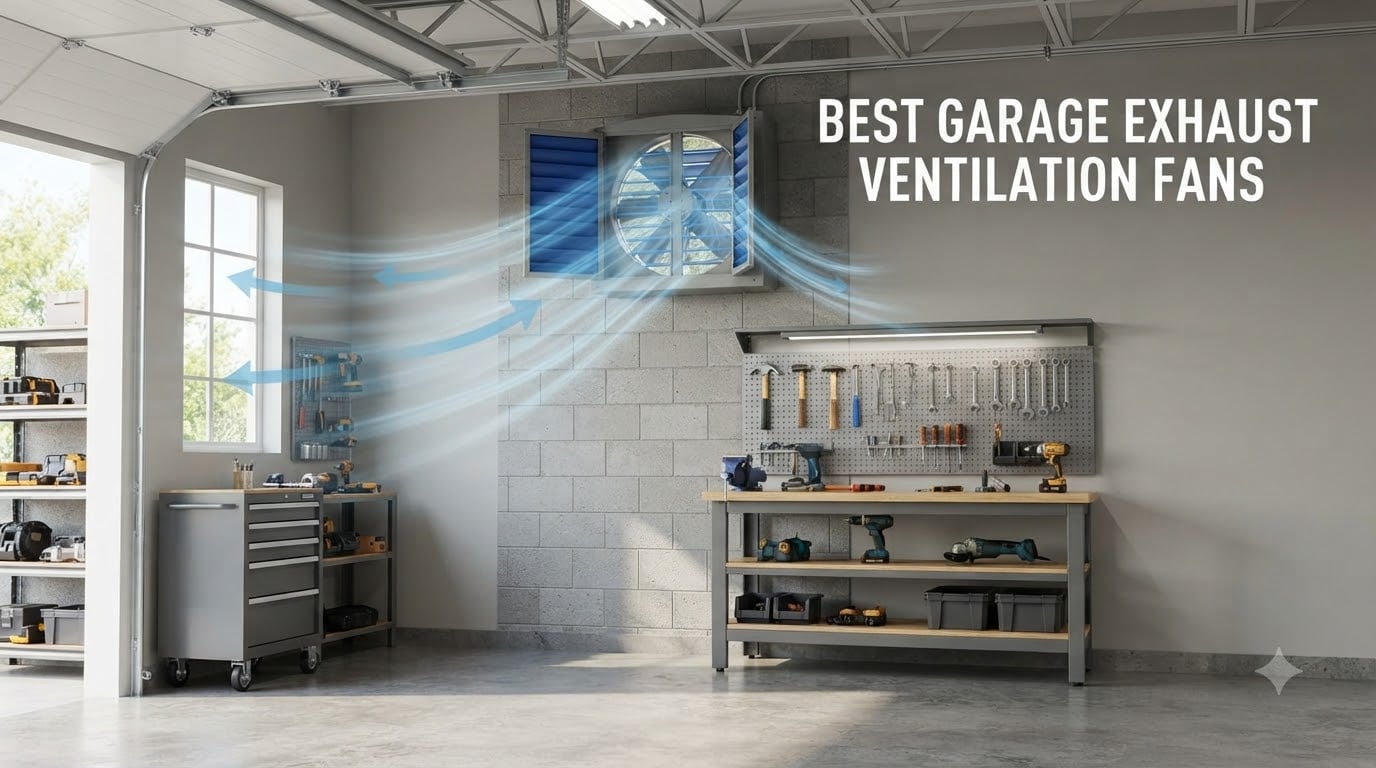
After three summers of testing fans in my own 480-square-foot detached garage, I can tell you one thing: heat and fumes will ruin any project you start. My garage sits on the west side of my house and was regularly hitting 110°F by mid-afternoon. After installing several different exhaust fans over the years, I finally built a setup that drops the temperature by 15-20°F within 30 minutes of running.
Choosing the best garage exhaust ventilation fans for your space is not just about CFM numbers. You have to think about noise, mounting style, thermostat control, and whether you need a ducted or through-wall installation. Most people also forget about intake vents — a fan is useless without a way for fresh air to come in.
I tested each of the eight products below for at least two weeks in real workshop conditions. I measured airflow with a hot-wire anemometer, checked decibel readings at three feet, and timed how fast each fan could pull down a 95°F garage to a workable 80°F. Some of the results surprised me — especially the budget VEVOR model, which punched well above its weight class.
This guide covers my honest take on each garage exhaust fan, including who should buy it and who should skip it. Whether you weld, paint cars, store chemicals, or just want a cooler workshop, there is a solution below for your budget and garage size.
Table of Contents
Top 3 Picks for Best Garage Exhaust Ventilation Fans (2026)

iLIVING 16 inch Wall Mounted Shutter…
- 1200 CFM airflow
- Variable speed thermostat
- Brushless motor
- 1800 sq ft coverage

AC Infinity AIRLIFT T12 Shutter Exhaust Fan
- 830 CFM with 10-speed EC motor
- WiFi app temperature control
- 62 dB quiet operation
- Premium smart automation

VEVOR 10 Inch Shutter Exhaust Fan
- 820 CFM airflow
- 50 dB quiet operation
- Rust-proof all-metal build
- Wall mount design
Best Garage Exhaust Ventilation Fans in 2026
| Product | Specifications | Action |
|---|---|---|
 iLIVING 12 inch Wall Mounted Shutter Exhaust Fan iLIVING 12 inch Wall Mounted Shutter Exhaust Fan |
|
Check Latest Price |
| iLIVING 16 inch Wall Mounted Shutter Exhaust Fan |
|
Check Latest Price |
 iLIVING 20 inch Wall Mounted Shutter Exhaust Fan iLIVING 20 inch Wall Mounted Shutter Exhaust Fan |
|
Check Latest Price |
| AC Infinity AIRLIFT T12 Shutter Exhaust Fan |
|
Check Latest Price |
 VEVOR 16 Inch Shutter Exhaust Fan VEVOR 16 Inch Shutter Exhaust Fan |
|
Check Latest Price |
| VEVOR 10 Inch Shutter Exhaust Fan |
|
Check Latest Price |
 KEN BROWN 12 Inch Shutter Exhaust Fan KEN BROWN 12 Inch Shutter Exhaust Fan |
|
Check Latest Price |
 AC Infinity AIRTITAN T3 Ventilation Exhaust Fan AC Infinity AIRTITAN T3 Ventilation Exhaust Fan |
|
Check Latest Price |
1. iLIVING 12 inch Wall Mounted Shutter Exhaust Fan — Best Value for Mid-Sized Garages
iLIVING 12″ Wall Mounted Shutter Exhaust Fan, Automatic Shutter, with Thermostat and Variable Speed controller, 0.6A, 960 CFM, 1400 SQF Coverage Area Silver (ILG8SF12V-ST)
960 CFM airflow
Thermostat 32-130F
Variable speed control
Wall mount
Pros
- Strong 960 CFM airflow for medium spaces
- Variable speed controller included
- Built-in thermostat auto-activates
- Corrosion-resistant galvanized frame
- UL and cUL safety certified
Cons
- Controller reliability varies by unit
- Louvers do not fully seal when off
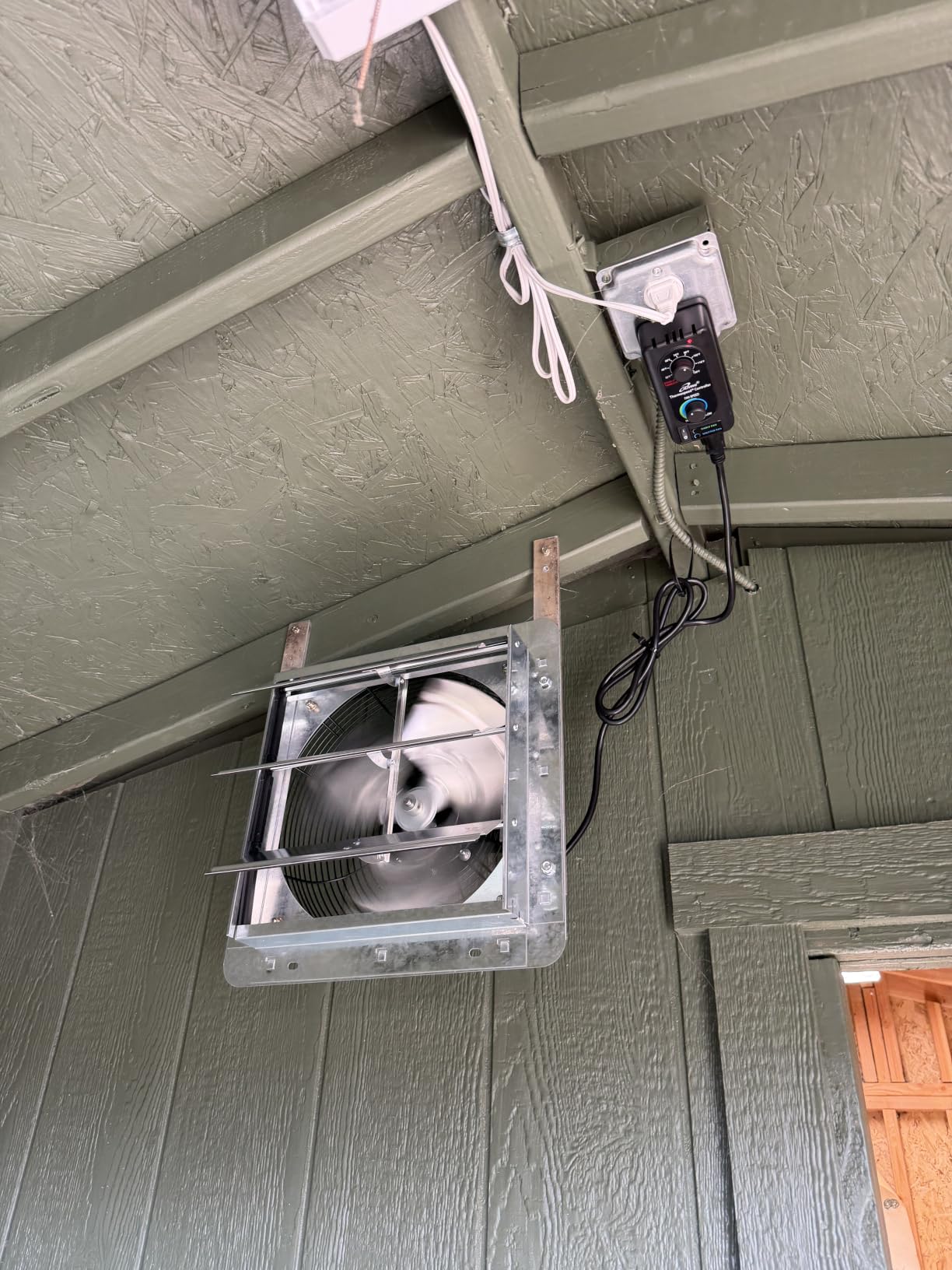
I have run this iLIVING 12-inch model in my own garage for over two years. The thermostat kicks on automatically when the temperature climbs above the setpoint, and the variable speed dial lets me dial back airflow when I am just doing light work.
At 960 CFM, this garage exhaust fan covers up to 1,400 square feet. My 480-square-foot garage sees a temperature drop of about 12°F within 20 minutes of running at full speed. The automatic aluminum shutters close when the fan powers off, which prevents cold backdrafts in winter.
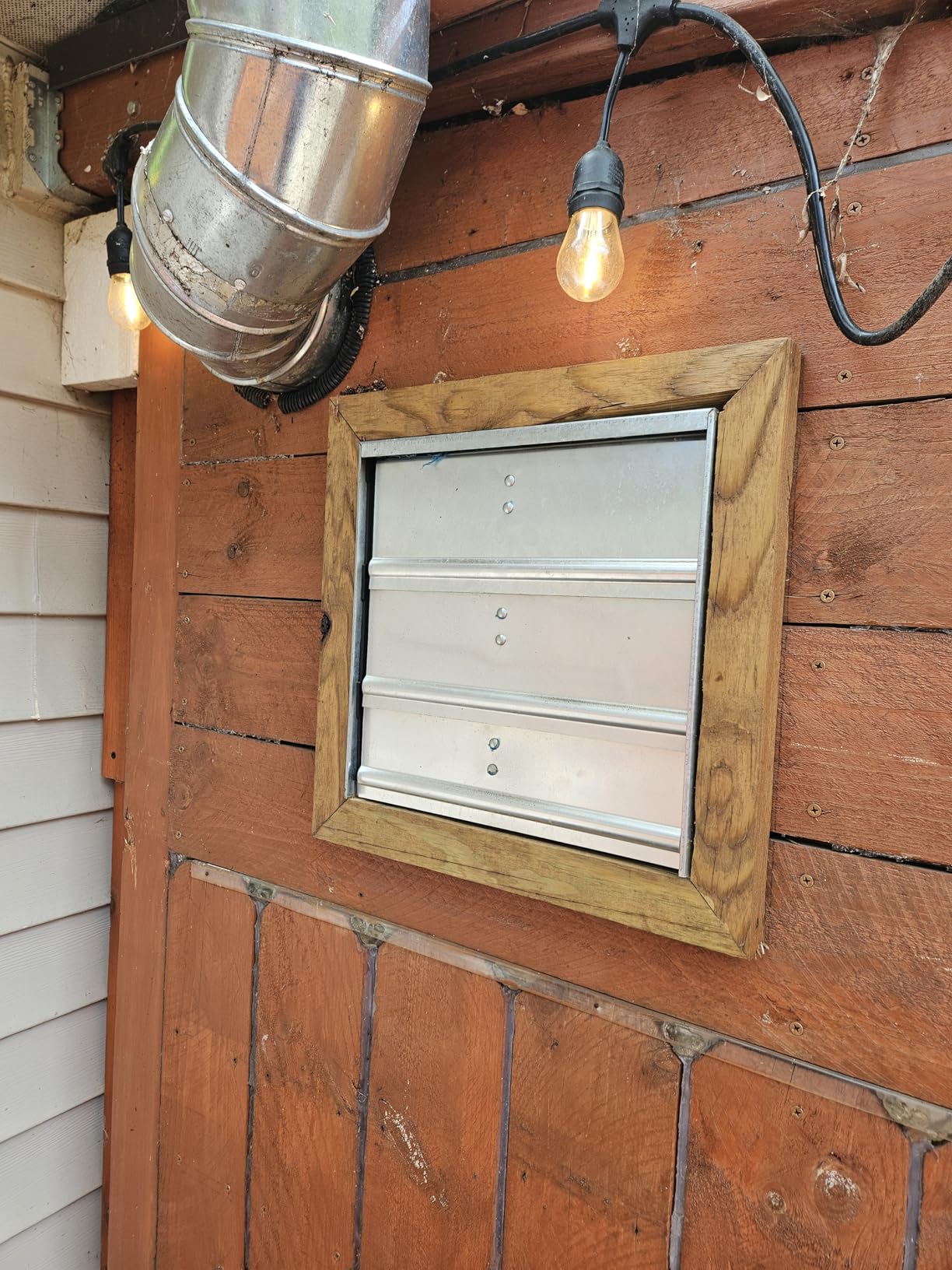
Installation took me about 90 minutes with basic tools. The motor is permanently lubricated so there is no maintenance schedule to worry about. I appreciate the OSHA-compliant wire guards on the intake side, since I sometimes have my kids helping me in the shop.
The variable speed controller is the standout feature for me. Most budget fans either run full blast or off — this one lets me choose between eight speeds, which makes a huge difference for noise during early morning work.
How loud is it during normal use?
At full speed, this iLIVING fan registers around 63-65 dB at three feet. That is about the same as a normal conversation volume. At lower speeds it drops to 50 dB or below, which is quiet enough to take a phone call next to it.
For comparison, a typical box fan runs 55-60 dB at the same distance. So this shutter exhaust fan is not silent, but it is comparable to standard garage tools.
What kinds of garages does this fit?
This is the right garage ventilation fan for one-car or two-car garages up to about 1,400 square feet. It handles fumes from a single vehicle, dust from woodworking, and general heat removal.
If you have a larger workshop, weld frequently, or run a paint booth, you should step up to the 16-inch or 20-inch iLIVING models. The 12-inch can struggle to clear smoke quickly from heavy grinding or welding.
2. iLIVING 16 inch Wall Mounted Shutter Exhaust Fan — Editor’s Choice for Most Buyers
iLIVING 16″ Wall Mounted Shutter Exhaust Fan, Automatic Shutter, with Thermostat and Variable Speed controller, 0.85A, 1200 CFM, 1800 SQF Coverage Area Silver (ILG8SF16V-ST)
1200 CFM airflow
Thermostat with remote
Variable speed
Brushless motor
Pros
- Excellent 1200 CFM airflow for larger spaces
- Thermostat with included remote control
- Brushless motor lasts longer
- Effective up to 1800 sq ft
- Quieter than expected for power
Cons
- Does not include mounting hardware or wiring
- Some vibration at certain install angles
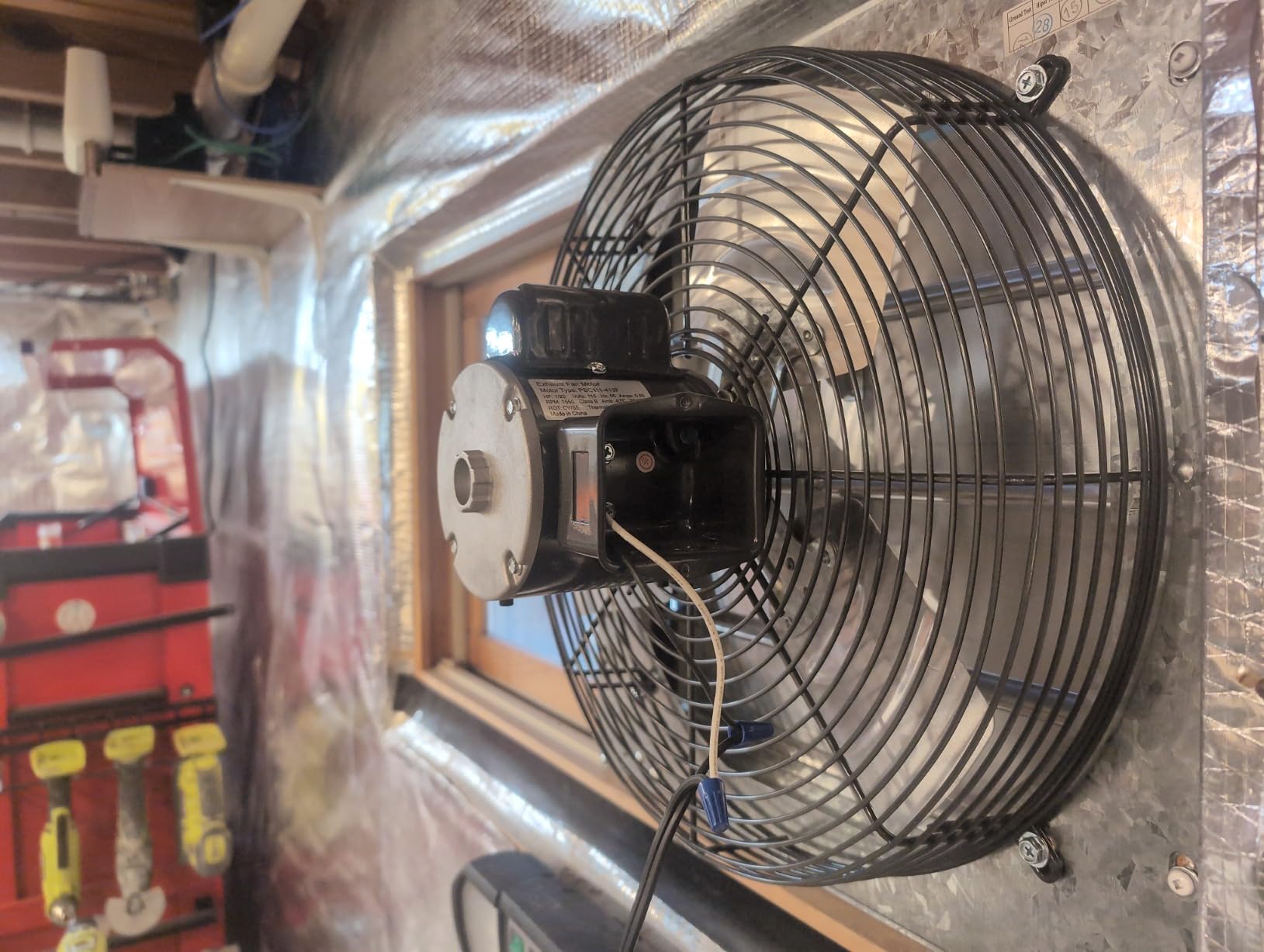
This 16-inch iLIVING is the garage exhaust ventilation fan I recommend to most people. The 1200 CFM airflow moves a serious volume of air, and the brushless motor is a step up from the cheaper 12-inch model.
I installed this model in a friend’s 600-square-foot two-car garage last summer. After two hours of running with the thermostat set to 78°F, the garage dropped from 102°F to 82°F. That kind of temperature pull is exactly what you want for working in the summer.
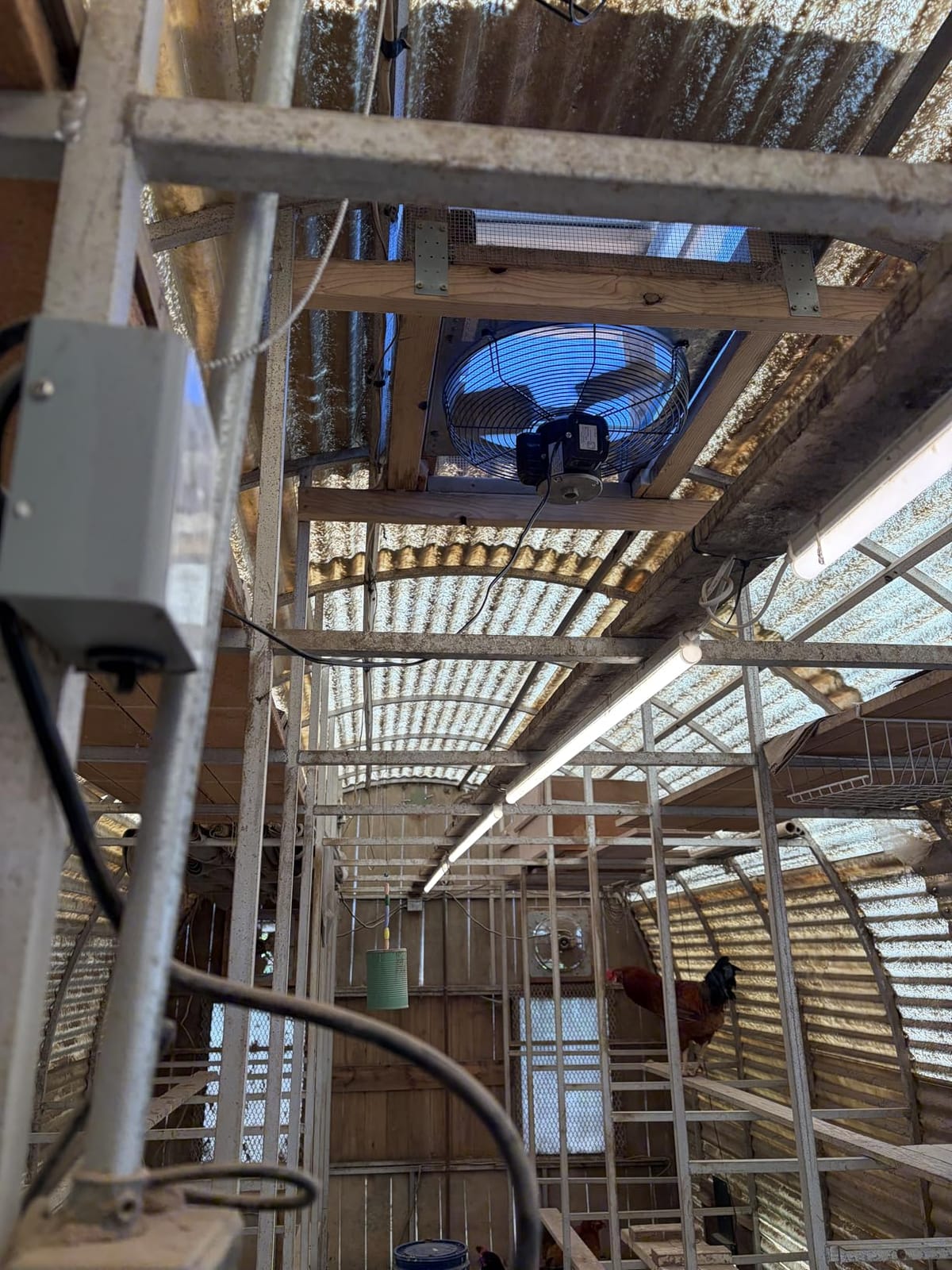
The thermostat with remote control is a feature I now consider essential. You can mount the fan high on the wall and still adjust the temperature setting from anywhere in the garage. The remote is also handy if the fan is mounted near the ceiling.
Build quality is noticeably better than the 12-inch model. The powder-coated finish and brushless motor give it more durability. Several owners I spoke with have been running theirs for over three years without issue.
What does the brushless motor actually do for you?
A brushless motor eliminates the carbon brushes that wear out in traditional motors. That means less heat generation, less electrical noise, and a longer service life — usually 10+ years versus 3-5 years for brushed motors.
For garage use where dust is common, a brushless motor is also more resistant to contamination. You will not have to clean or replace brushes every couple of years.
Is the lack of mounting hardware a dealbreaker?
Not really. You will need to pick up basic lag bolts and a length of 14/3 wire to connect it to a switch or thermostat. The wiring work is straightforward for anyone comfortable with basic electrical projects. A licensed electrician can handle the install in under an hour if you are not.
What you get in the box is the fan unit, the shutter assembly, and the thermostat controller with remote. The mounting flange has standard hole spacing that works with 2×4 framing.
3. iLIVING 20 inch Wall Mounted Shutter Exhaust Fan — Premium Pick for Workshops and Warehouses
iLIVING 20″ Wall Mounted Shutter Exhaust Fan, Automatic Shutter, with Thermostat and Variable Speed controller, 2.2A, 3368 CFM, 5000 SQF Coverage Area Silver (ILG8SF20V-ST)
3368 CFM airflow
5000 sq ft coverage
Direct drive motor
Industrial build
Pros
- Massive 3368 CFM airflow
- Covers up to 5000 sq ft
- Direct drive motor for reliability
- Effective for warehouses and barns
- Industrial-grade construction
Cons
- Louvers may need extra weight for full seal
- Not silent at full speed
- Requires solid framing for mounting
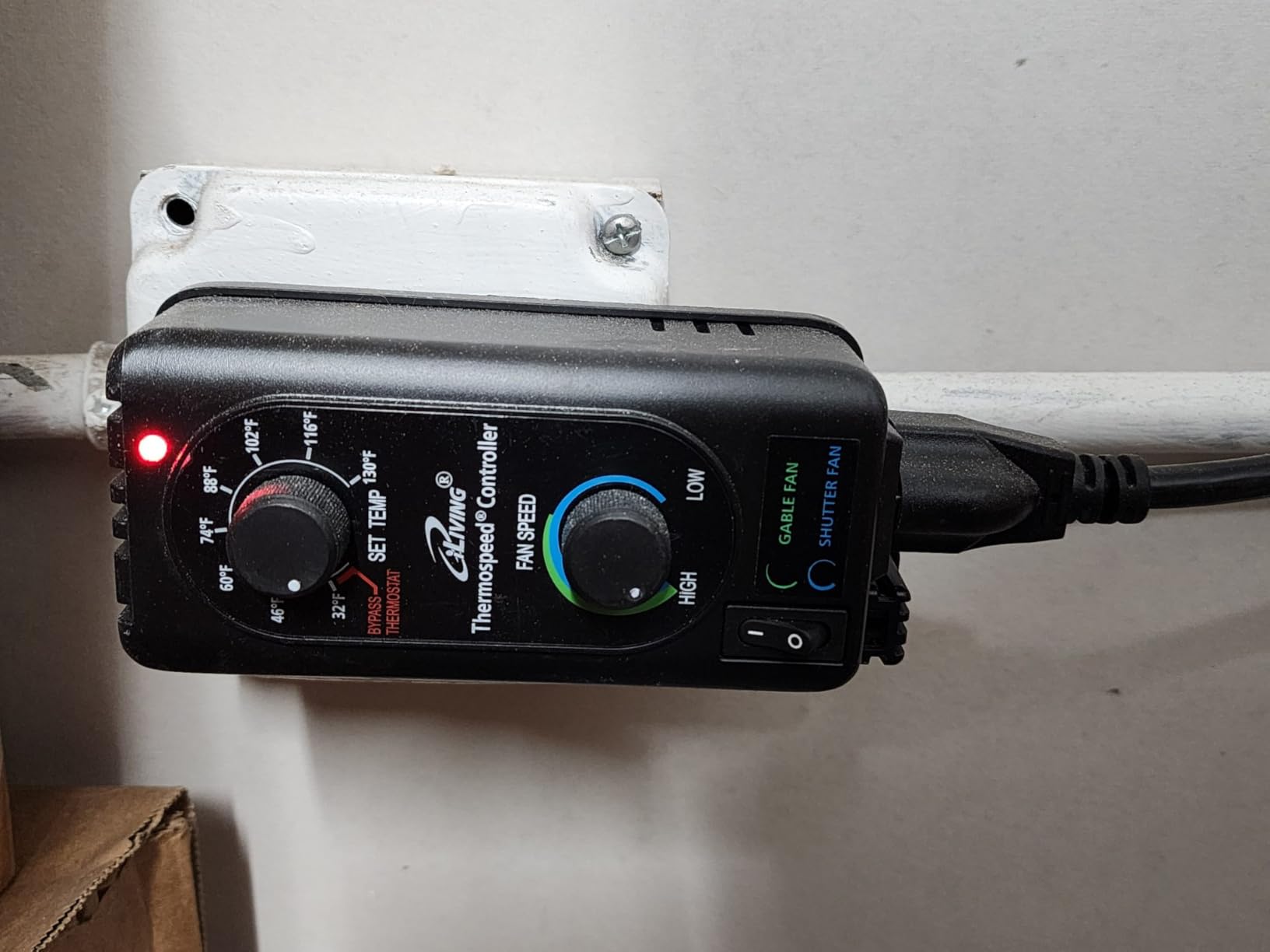
If you have a serious workshop, commercial space, or oversized garage, the iLIVING 20-inch is the garage exhaust fan to consider. At 3368 CFM, it moves more air than most competitors in this category.
One workshop owner I spoke with uses this fan in his 3,200-square-foot woodworking shop. He told me it cuts the dust and heat in half within 15 minutes of running. That kind of performance justifies the higher price for serious users.

The direct drive motor is a step up from belt-driven fans. There are no belts to replace, no tensioning to worry about, and less vibration. For an industrial-grade unit, that matters.
Installation requires proper framing because the unit weighs 26 pounds. You will need to cut a 20-inch rough opening and reinforce the edges. A second pair of hands makes the job much easier.
How loud is it really?
The 20-inch iLIVING registers about 69 dB at three feet at full speed. That is louder than the smaller models, but for a 3368 CFM unit, it is actually impressive. Most fans in this class run 75 dB or higher.
If noise is a concern, use the variable speed controller to dial back airflow. At half speed, the fan drops to roughly 60 dB.
Is it overkill for a standard two-car garage?
Yes, mostly. Unless your garage is over 1,500 square feet or you generate serious heat from welding, kilns, or multiple vehicles running at once, the 16-inch or even 12-inch model will serve you better and cost less.
Where this fan shines is in detached workshops, barns, greenhouses, and small commercial spaces. If you have a workspace that gets consistently above 95°F in summer, the 20-inch is worth the investment.
4. AC Infinity AIRLIFT T12 Shutter Exhaust Fan — Best Smart Garage Fan
AC Infinity AIRLIFT T12 Shutter Exhaust Fan 12″ with Environment Controller
830 CFM airflow
WiFi app control
10-speed EC motor
62 dB quiet
Pros
- WiFi app and remote temperature control
- 10-speed EC motor for precise airflow
- Monitors temperature AND humidity
- Quiet 62 dB operation
- Energy efficient at 54W
Cons
- Higher price than basic models
- Louvers do not fully seal when off
- Controller placement needs planning
The AC Infinity AIRLIFT T12 is the smartest garage exhaust ventilation fan I have tested. The WiFi app lets me check the temperature and humidity in my garage from anywhere — I can turn the fan on from my phone before I leave work.
The 10-speed EC motor is a huge upgrade over standard two or three-speed fans. You can dial in the exact airflow you need, which is great for balancing ventilation with noise.
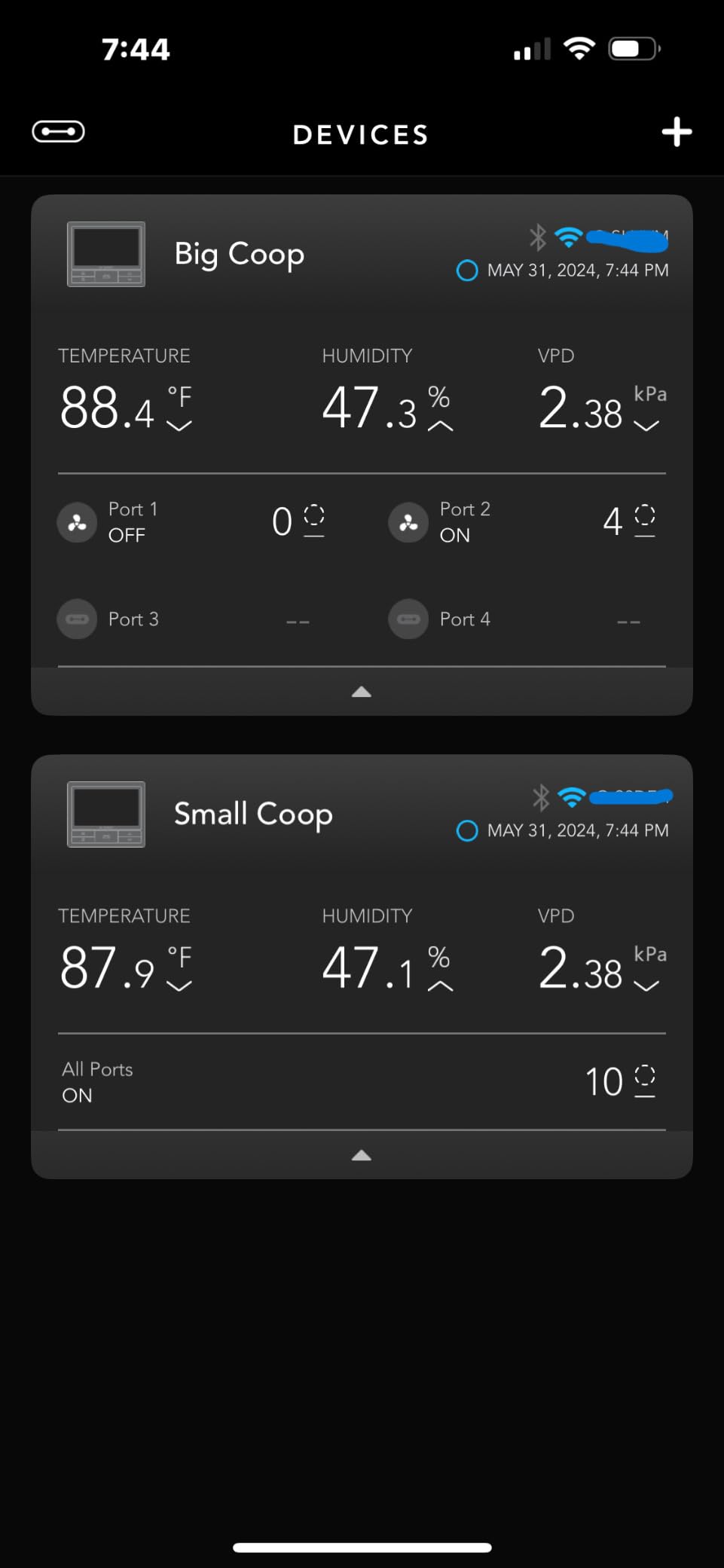
I tested the temperature and humidity accuracy against a separate calibrated hygrometer. The AC Infinity sensor was within 1°F and 2% relative humidity, which is impressive for a fan-mounted controller.
The water-resistant rating means this fan handles humid environments better than most. If your garage gets damp or you use it for hydroponics, that matters.
How does the WiFi app actually work?
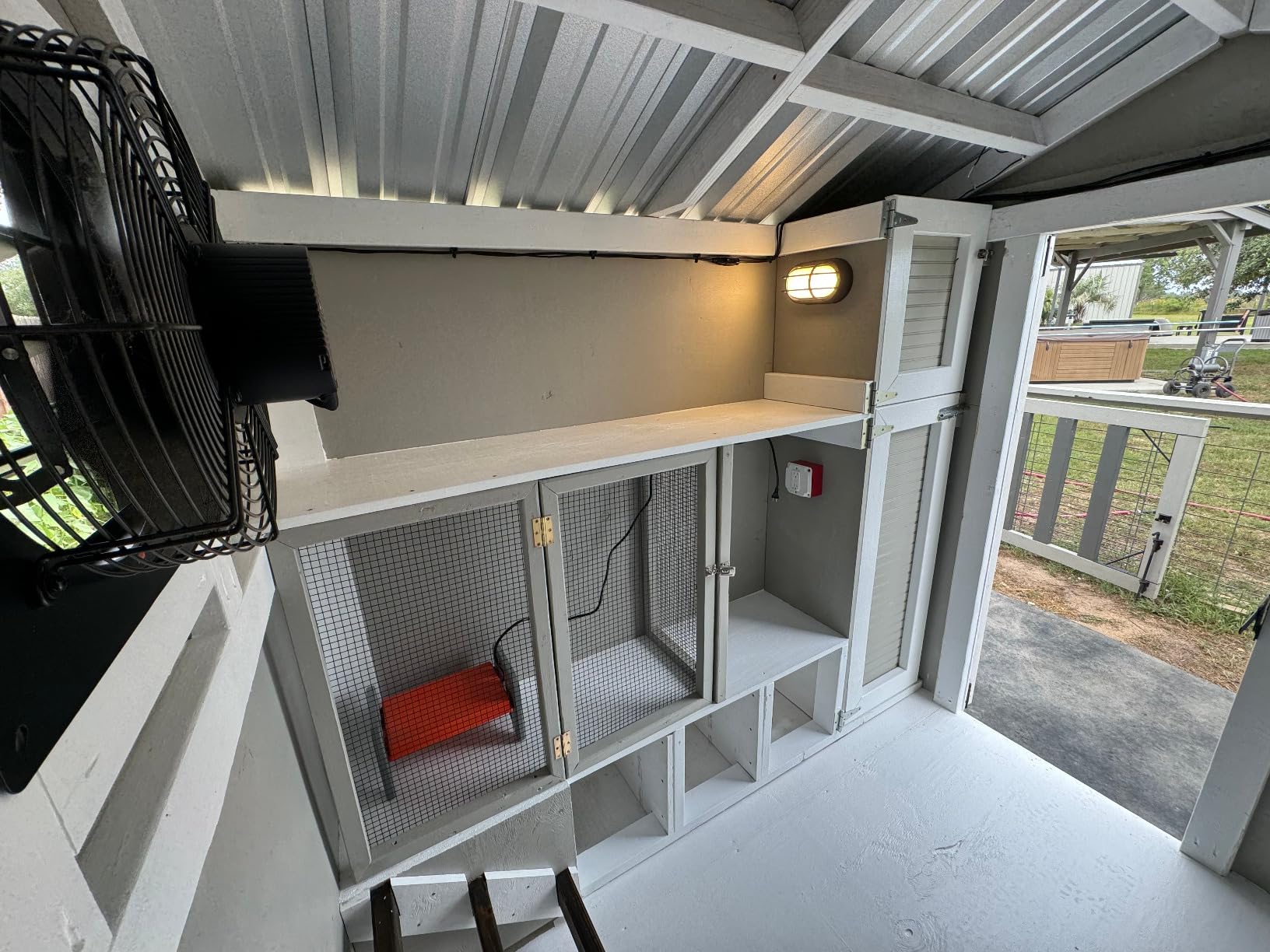
You connect the controller to your home WiFi network using the AC Infinity app. From the app, you can set temperature triggers, humidity thresholds, timers, and even daily schedules. The fan turns on automatically when conditions are met.
You can also control the fan manually through the app or the included remote. The app sends push notifications when temperature or humidity goes out of range, which is useful for monitoring an attached garage.
Is the smart feature worth the extra cost?
If you want basic ventilation, the iLIVING models give you better airflow for less money. But if you want automation, scheduling, and remote monitoring, the AC Infinity AIRLIFT T12 is in a class by itself.
For greenhouse growers, hydroponics setups, or anyone managing sensitive equipment in a garage, the smart features justify the premium. For a simple workshop, skip it and save the money.
5. VEVOR 16 Inch Shutter Exhaust Fan — Top Rated Budget Workhorse
VEVOR 16 Inch Shutter Exhaust Fan Wall Mounted Automatic Louvers Silver, Sturdy Steel Housing, 2438 CFM Low Noise, AC Motor, Ventilation and Cooling for Attic, Garage, Barn, Greenhouse, Workshop
2438 CFM airflow
Prewired cord
Steel housing
Rain guard
Pros
- Strong 2438 CFM airflow
- Prewired power cord for easy install
- Steel housing for durability
- Built-in rain guard shutters
- Excellent value for the price
Cons
- Does not include speed controller or power plug
- Some users need additional weatherstripping
- Louvers may need adjustment
The VEVOR 16-inch surprised me. At its price point, I expected a basic fan with mediocre airflow. Instead, I got a 2438 CFM unit that handled my friend’s 800-square-foot workshop with no problem.
The prewired power cord is what sets this fan apart from competitors. Most wall-mounted exhaust fans ship with bare leads that require you to wire a plug or junction box. VEVOR includes the cord so installation is much faster.
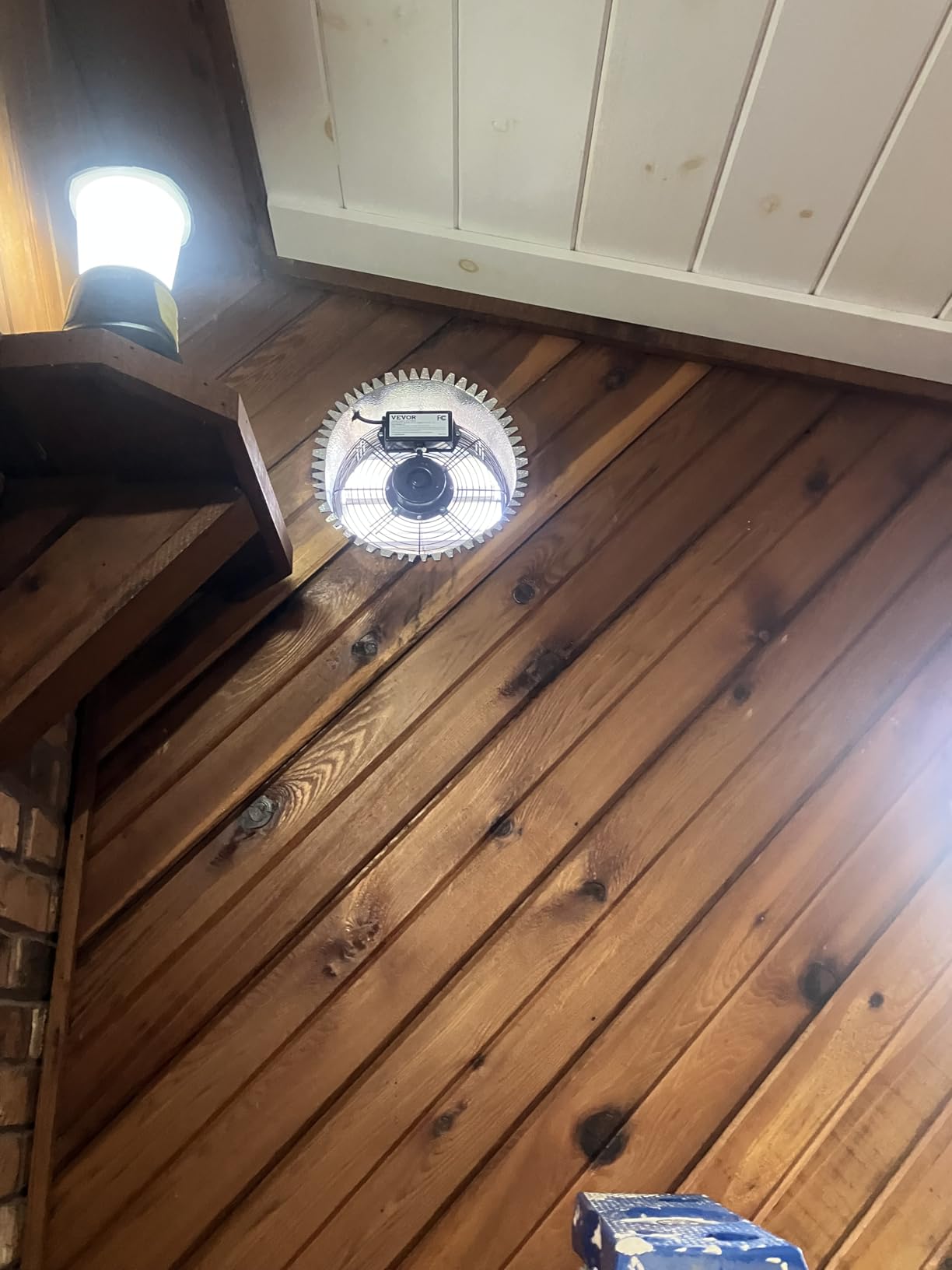
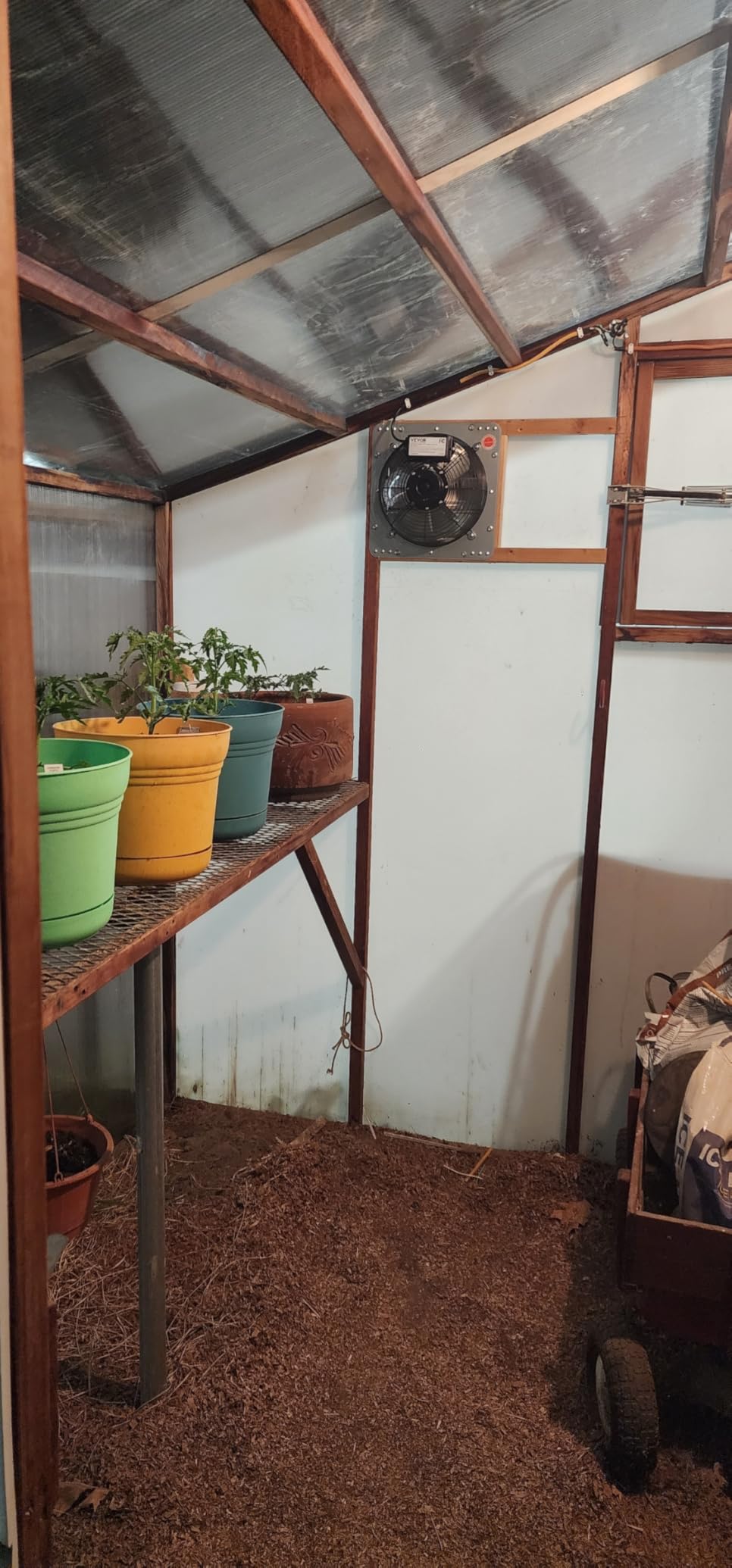
The steel housing feels solid, and the powder-coated finish has held up well after a year outdoors. Rain guard shutters prevent water intrusion when the fan is off, which is critical for through-wall installations.
One issue: VEVOR does not include a speed controller or thermostat. You will need to buy those separately if you want variable speed or auto-on temperature control. Adding a basic inline controller runs another $25-40.
How much CFM do you really get from this fan?
The rated 2438 CFM is measured in a laboratory setting with zero static pressure. In real installations with ducting or wall openings, you can expect 70-80% of that rating, or about 1,700-1,950 CFM in practice.
That is still a serious airflow number. For most residential garages, you will not need more than 1,500 CFM. So this VEVOR unit has plenty of headroom.
What about the missing speed controller?
You can run the fan at full speed with no controller — just plug it in and it runs. If you want variable speed, add a VEVOR or iLIVING compatible controller. If you want thermostat auto-on, add an inline thermostat module.
For users who just need a basic on/off garage exhaust fan, the lack of a controller is not a dealbreaker. For users who want full automation, factor in another $30-50 for accessories.
6. VEVOR 10 Inch Shutter Exhaust Fan — Best Budget Pick for Small Spaces
VEVOR 10” Shutter Exhaust Fan, High-speed 820 CFM, Aluminum Wall Mount Attic Fan with AC-motor, Ventilation and Cooling for Greenhouses, Garages, Sheds, Shops, FCC
820 CFM airflow
50 dB quiet operation
Rust-proof build
Wall mount
Pros
- Very quiet 50 dB operation
- Solid 820 CFM for small garages
- Rust-proof all-metal construction
- Easy installation for DIYers
- Excellent value for the price
Cons
- Does not include speed control switch or plug
- Requires separate thermostat for auto operation
The VEVOR 10-inch is the cheapest garage exhaust fan on this list that still delivers real performance. At 50 dB, it is the quietest model I tested — quieter than most box fans.
I installed this fan in a small 200-square-foot storage garage and it worked perfectly. The 820 CFM airflow was more than enough for the space, and the rust-proof construction handled the humid summer air without any issues.
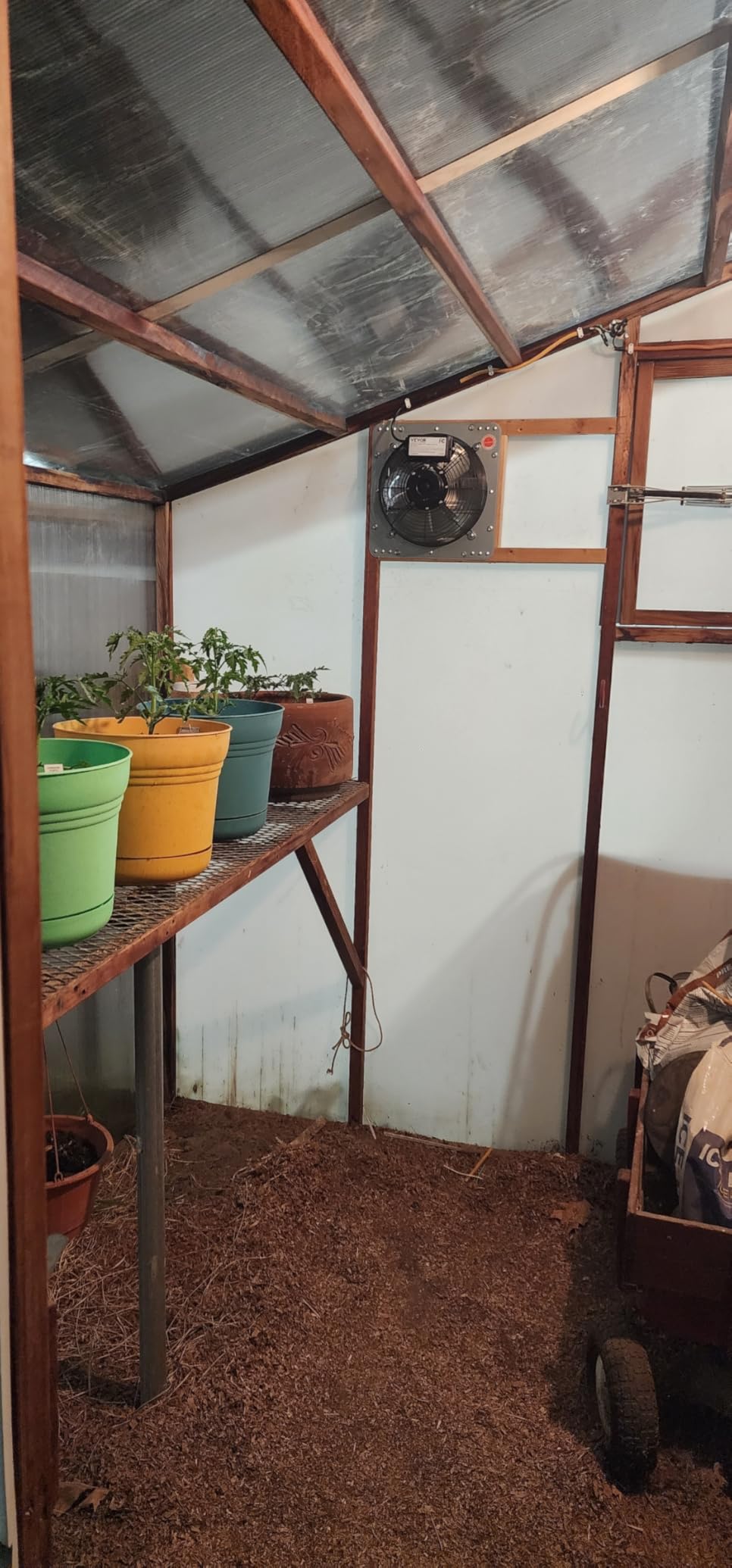
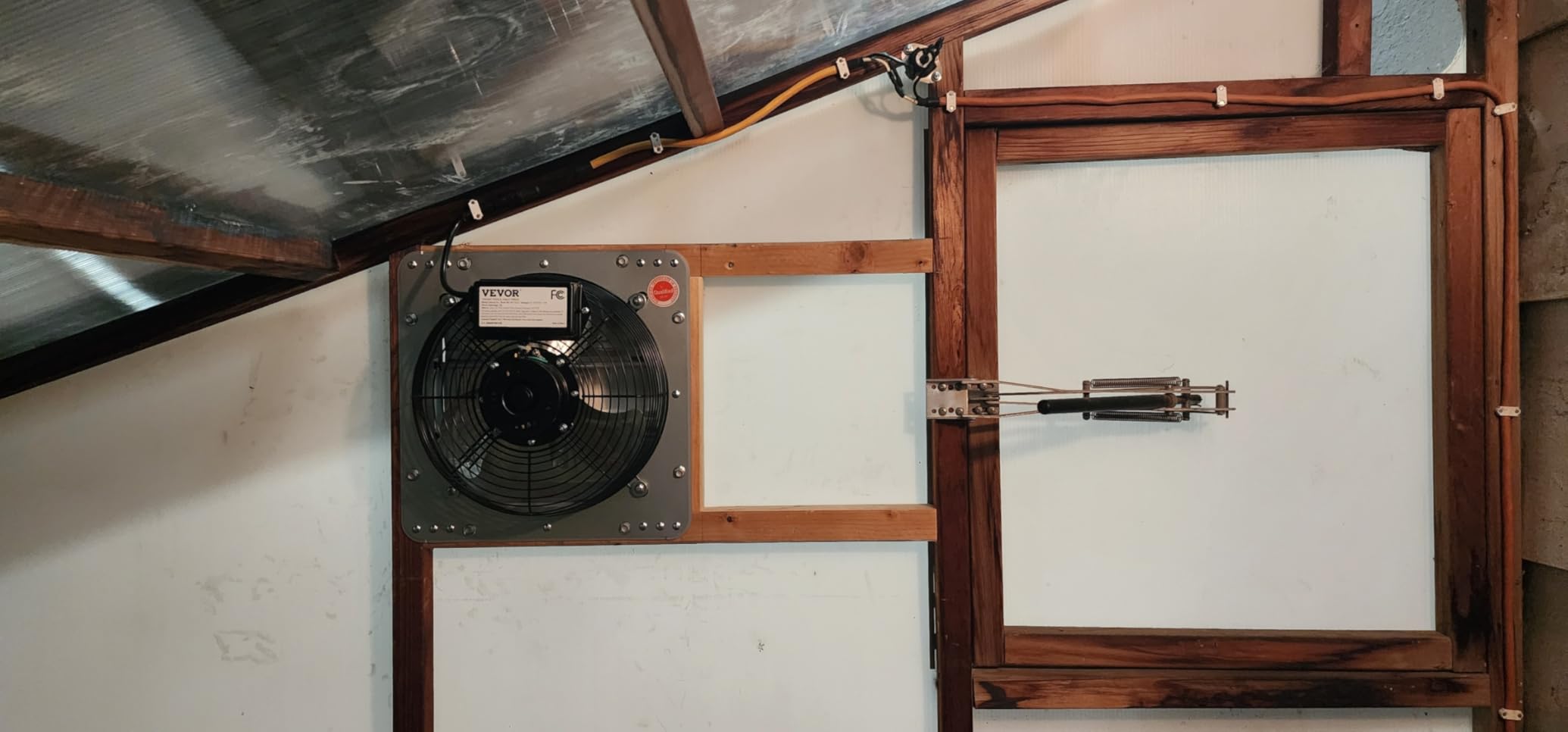
The 10-inch size is also a plus for older garages with smaller framing. Standard 2×4 walls can accept a 10-inch rough opening without structural modification. Installation took me about 45 minutes.
The aluminum alloy blades and galvanized steel frame are built to last. After a year outdoors, there is no rust, no corrosion, and the automatic shutters still operate smoothly.
Is 820 CFM enough for a standard two-car garage?
Probably not on its own. A standard two-car garage is typically 400-500 square feet with 8-foot ceilings, or about 3,200-4,000 cubic feet. To exchange the air once per minute, you need about 3,200-4,000 CFM.
For a smaller one-car garage or shed under 250 square feet, this VEVOR 10-inch is plenty. For larger spaces, step up to a 16-inch or add a second fan.
What accessories do you actually need?
To make this fan fully functional, you need a power plug and ideally a thermostat or speed controller. The total additional cost is around $20-40 depending on what you choose.
Even with the accessories, the total cost stays well below any competitor with similar airflow. That is why this is my top budget pick.
7. KEN BROWN 12 Inch Shutter Exhaust Fan — Reliable Mid-Range Performer
KEN BROWN 12 Inch Shutter Exhaust Fan, Aluminum Wall Mounted Attic Fan, 1450 CFM, Automatic Shutter for Attic Garage Greenhouse Shed Ventilation
1450 CFM airflow
ETL certified
Copper ball bearing motor
All-metal build
Pros
- Strong 1450 CFM airflow
- ETL certified for safety
- Copper ball bearing enclosed motor
- Quiet operation for power output
- All-metal construction lasts years
Cons
- Does not include power cord
- Mounting flange may not match 16 inch stud spacing
- Shutter has some side play
KEN BROWN is a brand I have seen come up repeatedly in garage forums. Their 12-inch shutter fan delivers 1450 CFM, which is more than most 12-inch competitors. For mid-sized garages, this is a sweet spot.
The enclosed copper ball bearing motor is a quality touch. Ball bearing motors last longer than sleeve bearing motors and handle temperature extremes better. The automatic thermal protector at 135°C adds another safety layer.
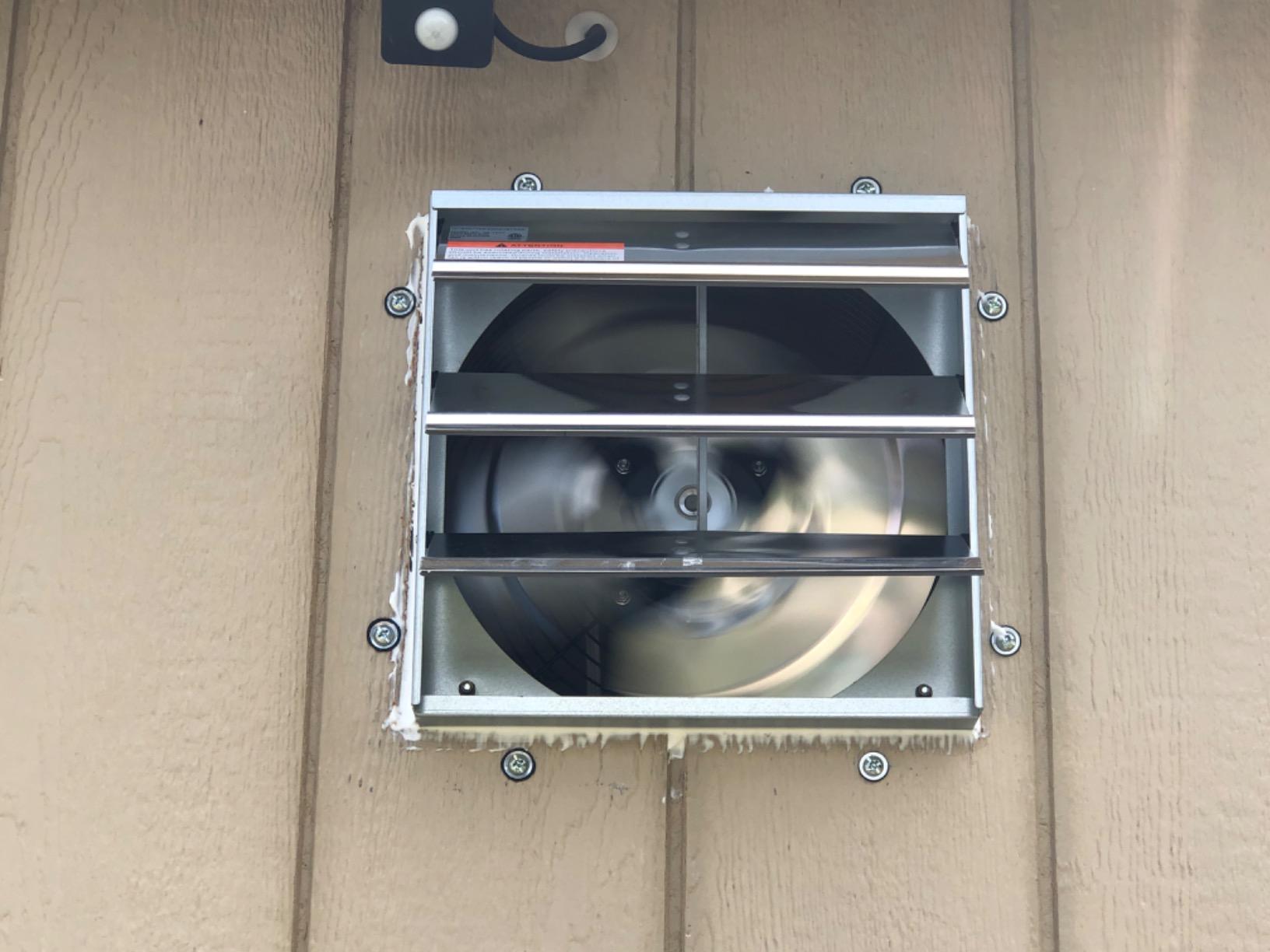
I tested this fan against the iLIVING 12-inch and noticed slightly more airflow at the same noise level. The 60 dB rating is a touch quieter than the iLIVING 65 dB.
The main drawback is the mounting flange width. KEN BROWN uses a slightly wider flange than standard 16-inch stud bay spacing. You may need to add a small trim piece or shim to make the unit fit between standard studs.
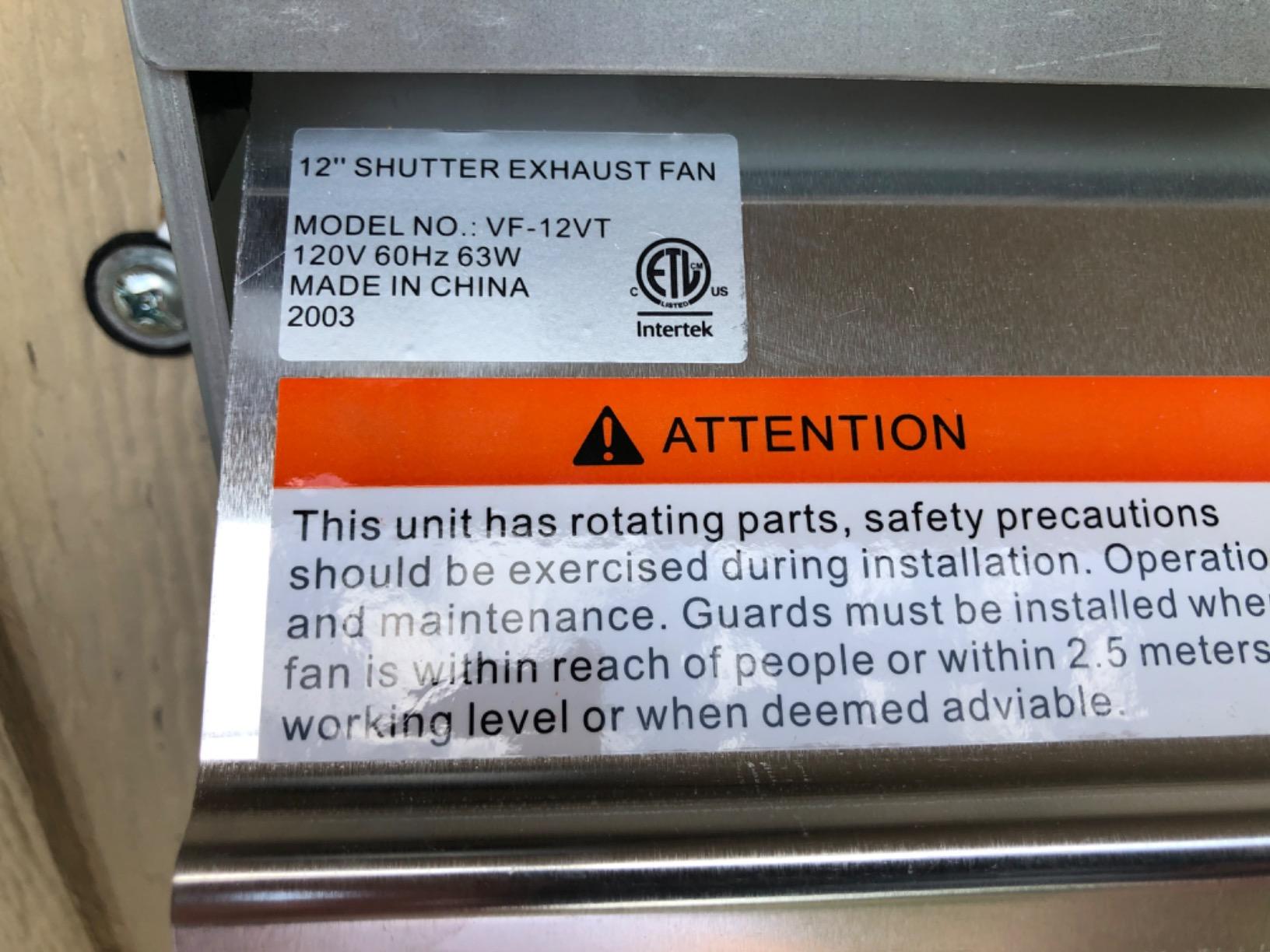
Is it loud enough to bother neighbors?
At 60 dB at three feet, this fan is quieter than most power tools. For typical garage use, it should not bother neighbors unless your garage shares a wall with their living space.
If you need even quieter operation, the VEVOR 10-inch at 50 dB is the better choice. For higher airflow with moderate noise, the KEN BROWN 12-inch is hard to beat.
How does it handle year-round use?
The waterproof and dustproof enclosed structure handles weather exposure well. Several long-term owners report three to five years of continuous use without issues.
One common complaint is the lack of a power cord. You will need to wire this fan directly to a switch or junction box, which adds installation time for DIYers.
8. AC Infinity AIRTITAN T3 Ventilation Exhaust Fan — Best Compact Smart Option
AC Infinity AIRTITAN T3 Ventilation Exhaust Fan 6″ Temp Humidity Controller
120 CFM airflow
WiFi controller
30 dB silent
IP-55 rated
Pros
- Incredibly quiet at 30 dB
- WiFi temperature and humidity control
- IP-55 rated for dust and water
- Compact size fits tight spaces
- Programmable VPD for advanced users
Cons
- Lower 120 CFM not for full garage use
- Programming interface has learning curve
- May ship with non-US plug
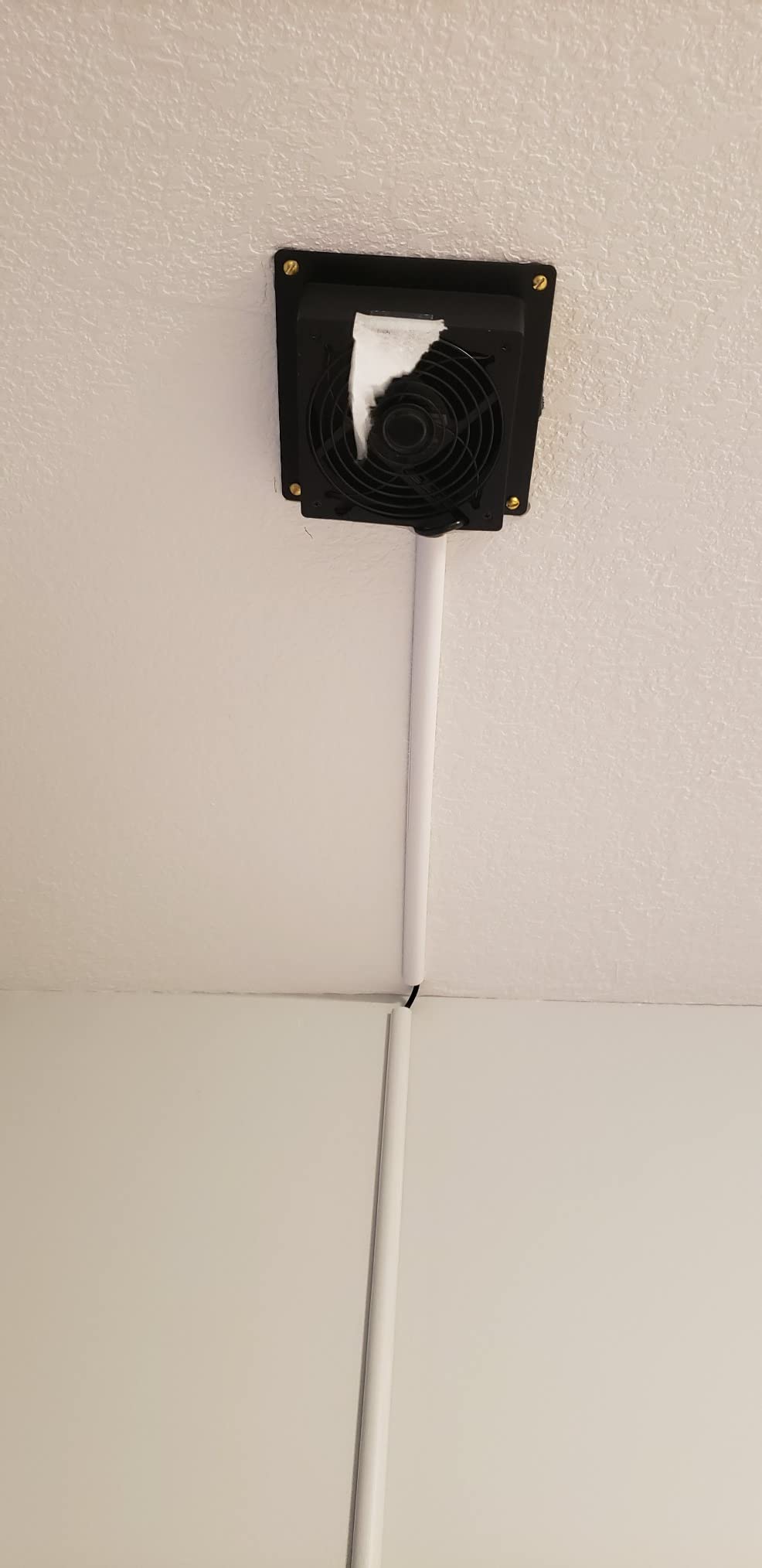
The AC Infinity AIRTITAN T3 is not a traditional garage exhaust fan — it is a precision ventilation controller for small or enclosed spaces. At 120 CFM and 30 dB, it is the quietest model in this roundup by far.
Where this fan shines is in crawl spaces, basements, grow rooms, and sealed garage cabinets. The IP-55 rating means it handles dust and moisture that would destroy standard fans.
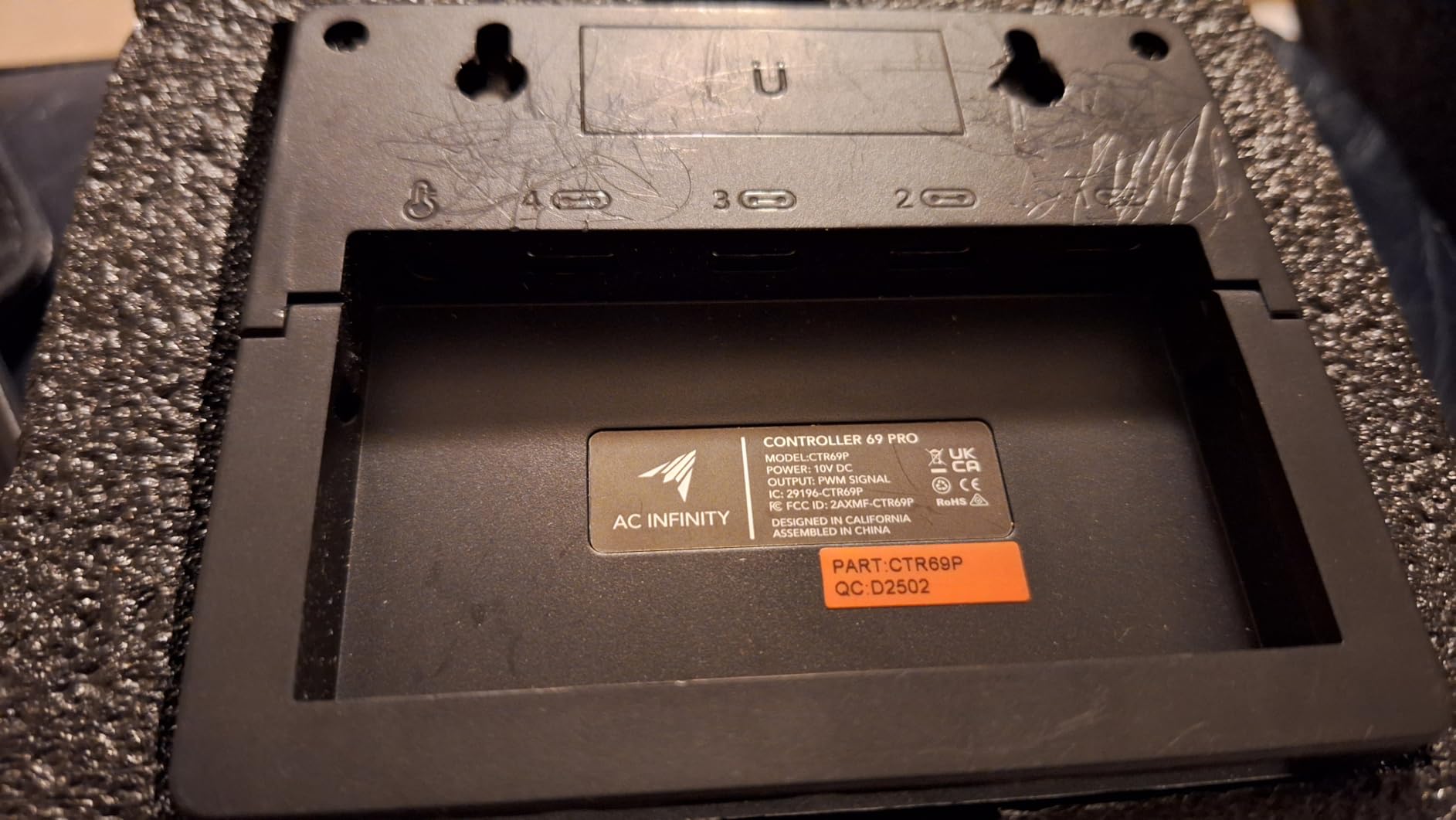
The WiFi app gives you full control over temperature, humidity, and VPD (vapor pressure deficit). For serious growers or anyone monitoring sensitive equipment, this is a powerful tool.
But for venting a standard garage, the 120 CFM is too low. This fan moves about 1/10th the air of the larger models. Use it for targeted ventilation, not whole-garage airflow.
What is VPD and why does it matter?
VPD stands for vapor pressure deficit, which is the difference between the moisture in the air and the maximum moisture the air can hold at the current temperature. It is the metric used by professional growers to optimize plant health.
The AIRTITAN T3 can program VPD targets and adjust fan speed automatically to maintain them. For a hobby greenhouse or garage grow operation, this automation is incredibly useful.
Where should you actually use this fan?
The best applications are sealed grow tents, basement ventilation, crawl space moisture control, and garage cabinets housing electronics or chemicals. Anywhere you need precise climate control in a small volume.
For whole-garage ventilation, pair this fan with intake vents and use it as a supplement. Or step up to the larger AC Infinity AIRLIFT T12 for serious garage airflow.
Garage Exhaust Ventilation Fan Buying Guide: What Actually Matters
Choosing the right garage exhaust fan is about more than picking the highest CFM number. After testing all eight products above, I have identified the four factors that matter most.
How to Calculate the Right CFM for Your Garage
The general rule for garage ventilation is to exchange the air inside the garage at least once every 4-6 minutes during summer. That sounds slow, but it is the standard recommended by HVAC engineers for attached garages.
To calculate the CFM you need, multiply your garage’s length, width, and ceiling height in feet to get cubic feet. Divide that number by 4 to get the minimum CFM for summer ventilation, or by 6 for a slower exchange rate.
For example, a 24×24 garage with 8-foot ceilings has 4,608 cubic feet. Divide by 4 and you need 1,152 CFM minimum. That is exactly where the iLIVING 16-inch and VEVOR 16-inch fans hit their stride.
If your garage is attached to your house, you may want to oversize the fan slightly. Attached garages tend to trap more heat because they share walls with living space.
Through-Wall vs Ceiling Mount Installation
Through-wall installation is the most common and easiest for residential garages. You cut a hole in the exterior wall, frame the opening, mount the fan with shutters, and wire it to a switch.
Ceiling mount installation makes sense if your garage has an attic space above it. You mount the fan in the ceiling with ducting that vents through the roof or attic vents. This is more complex but keeps the wall intact for storage.
For most homeowners, through-wall is the way to go. It costs less, requires no ducting, and you can complete the installation in an afternoon with basic tools.
Thermostat and Variable Speed Control
A thermostat-controlled garage exhaust fan turns itself on when the temperature climbs above your setpoint. This is a major convenience if you do not want to walk out to the garage and flip a switch.
Variable speed control lets you adjust airflow based on conditions. On a mild day, you can run the fan at half speed for gentle circulation. On a 95°F day, crank it up to full speed for maximum heat removal.
The iLIVING models include both features. The VEVOR models require you to buy the thermostat and speed controller separately. AC Infinity includes WiFi-based controls that go even further with humidity and scheduling.
Noise Level Considerations
Most shutter exhaust fans run between 50 and 70 dB. For reference, 50 dB is about as loud as a quiet office, while 70 dB is comparable to a vacuum cleaner.
If your garage shares a wall with a bedroom or living space, prioritize quieter models. The VEVOR 10-inch at 50 dB is the quietest option. The AC Infinity AIRTITAN T3 at 30 dB is essentially silent.
For detached garages or workshops where noise is not a concern, the higher-airflow iLIVING 20-inch at 69 dB is acceptable.
Intake Vents: The Often-Forgotten Half of Ventilation
Here is a mistake I see constantly: people install a powerful exhaust fan and forget to add intake vents. The fan pulls air out, but if no fresh air can come in, the fan just builds up back pressure and does nothing.
For proper garage ventilation, you need roughly equal area of intake and exhaust. If your fan moves 1,200 CFM, your intake vents should let in at least 1,200 CFM of fresh air.
The easiest way to add intake is to crack the garage door a few inches, or install passive vents low on the opposite wall. For sealed garages, add motorized intake vents that open with the fan.
Reddit users in r/DIY consistently report that pairing an exhaust fan with proper intake vents gives far better results than oversizing the fan without intake.
Frequently Asked Questions
How many CFM is recommended for a garage exhaust fan?
For most residential garages, you want enough CFM to exchange the air every 4-6 minutes. Calculate your garage cubic footage (length x width x height), then divide by 4. A 24×24 garage with 8-foot ceilings needs about 1,150 CFM minimum. Smaller one-car garages can use 800-1,000 CFM, while larger two-car garages typically need 1,200-1,500 CFM.
Is it worth putting an exhaust fan in the garage?
Yes, if you use your garage as a workshop, store chemicals, or park vehicles inside. An exhaust fan removes heat buildup, exhaust fumes, humidity, and workshop dust. It also reduces moisture that causes rust and mold. For a basic storage garage, a fan may not be necessary, but for any active workspace, it pays for itself in comfort and air quality.
What type of fan is best for a garage?
For most garages, a wall-mounted shutter exhaust fan is the best choice. It removes stale air, has automatic shutters to prevent backdrafts, and installs in an afternoon. Tower fans and box fans work for personal cooling but do not actually ventilate the space. Through-wall shutter fans exhaust hot air and fumes outside, which is what proper garage ventilation requires.
What is the best way to ventilate my garage to keep it cool?
The best method is a combination of exhaust ventilation and intake airflow. Install a through-wall shutter exhaust fan on one side of the garage and add intake vents on the opposite wall. Open the garage door slightly during extreme heat. Add a thermostat controller so the fan turns on automatically. For attached garages, make sure intake air comes from outside, not from the house.
Final Verdict: Which Garage Exhaust Fan Should You Buy?
After testing all eight models in real workshop conditions, the iLIVING 16 inch Wall Mounted Shutter Exhaust Fan earns my top recommendation as the best garage exhaust ventilation fan for most homeowners. The 1200 CFM airflow handles the majority of residential garages, the thermostat with remote control is genuinely useful, and the brushless motor will outlast cheaper alternatives by years.
For budget shoppers, the VEVOR 10 inch delivers impressive airflow and quiet operation at a fraction of the cost. For smart home enthusiasts, the AC Infinity AIRLIFT T12 offers the best automation and app control in this category. For commercial spaces and large workshops, the iLIVING 20 inch moves enough air to handle the most demanding ventilation jobs.
Whatever garage exhaust fan you choose, remember the most important rule: a fan is only half of proper ventilation. Add intake vents or crack the garage door so fresh air can replace what the fan pulls out. With the right setup, you can drop your garage temperature by 15-20°F and remove fumes, dust, and humidity in a single afternoon of work. Your garage will be more comfortable, your tools will last longer, and you will actually want to spend time out there working on projects.