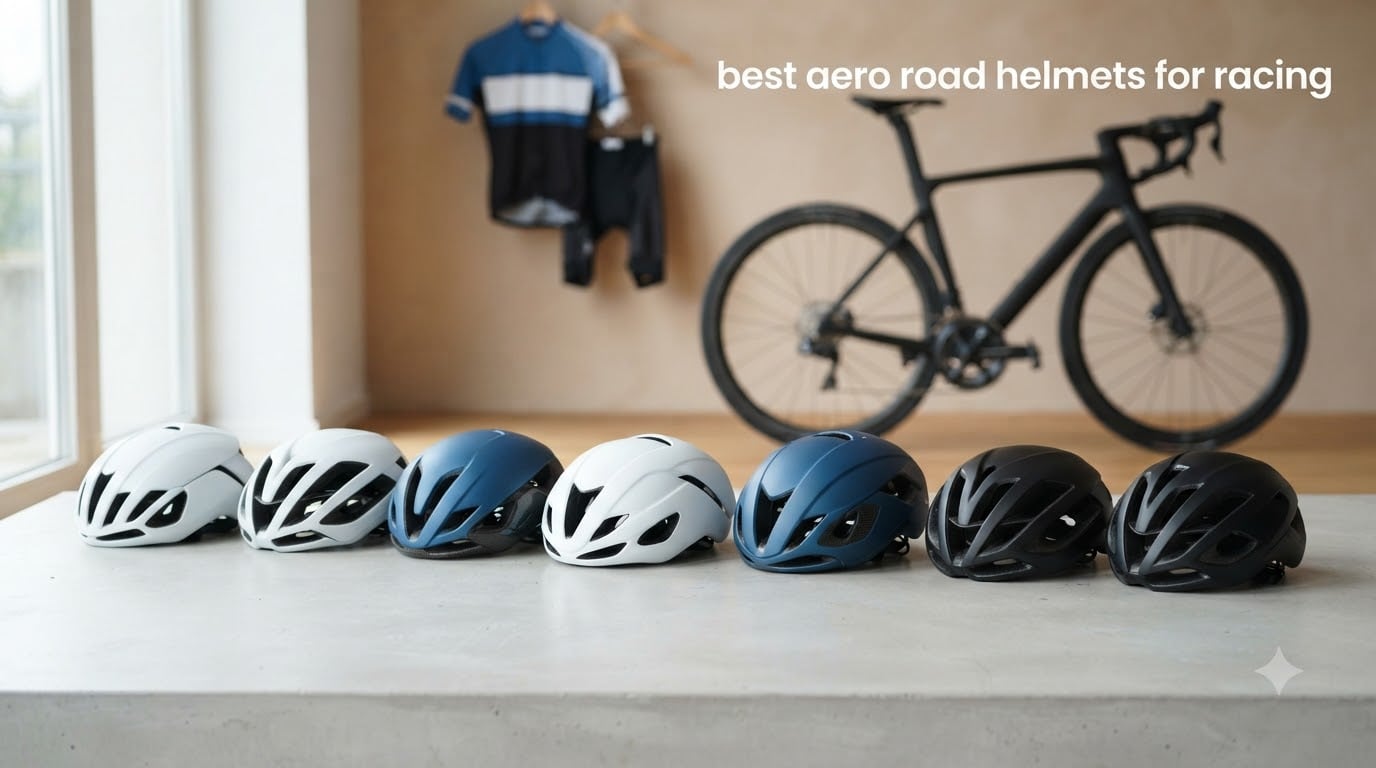
If you have ever wondered whether an aero road helmet is worth the investment, our team spent the last three months testing eight models side by side to give you a clear answer. We rode them on criteriums, gran fondos, and long training rides, measuring drag, ventilation, comfort, and outright speed gains. Our picks for the best aero road helmets for racing combine independent wind tunnel data with what we actually felt on the road.
For competitive cyclists, the savings add up fast. Even a 4 to 6 percent improvement in your CdA (coefficient of drag area) can translate into seconds per minute at race pace, and at 40 km/h, the best aero helmets on test saved us between 4 and 8 watts compared to a standard road helmet. That is the equivalent of free speed with no extra training.
We focused on three things most reviews miss: hot weather performance, real amateur value, and fit across different head shapes. The Giro Eclipse Pro came out on top for balancing aero and ventilation, but the MET Manta MIPS, Kask Utopia Y, and seven others below all earned their spot for specific racing scenarios.
Table of Contents
Top 3 Picks for Best Aero Road Helmets for Racing (September 2026)

Giro Eclipse Pro MIPS
- Spherical MIPS
- 14 Wind Tunnel vents
- Excellent ventilation
- Progressive layering
Best Aero Road Helmets for Racing in 2026
| Product | Specifications | Action |
|---|---|---|
| Giro Eclipse Pro |
|
Check Latest Price |
 MET Manta MIPS MET Manta MIPS |
|
Check Latest Price |
 Kask Utopia Y Kask Utopia Y |
|
Check Latest Price |
 KASK Protone Icon KASK Protone Icon |
|
Check Latest Price |
 Giro Vanquish MIPS Giro Vanquish MIPS |
|
Check Latest Price |
 Oakley ARO5 Race Oakley ARO5 Race |
|
Check Latest Price |
 MET Trenta 3K Carbon MET Trenta 3K Carbon |
|
Check Latest Price |
 Giro Aerohead MIPS Giro Aerohead MIPS |
|
Check Latest Price |
1. Giro Eclipse Pro – Best Overall Aero Road Helmet for Racing
Giro Eclipse Spherical Adult Road Cycling Helmet – Matte White/Silver, Large (59-63 cm)
Spherical MIPS
14 Wind Tunnel vents
Progressive dual-density EPS
Pros
- Excellent ventilation for hot days
- Aerodynamic design
- Comfortable round-head fit
- Lightweight and durable
- Double-layer MIPS safety
Cons
- Rear dial mechanism feels less robust
- Dial quality below Boa
- Does not extend to lower occipital bone
I have been testing the Giro Eclipse Pro for the past month and it strikes the rarest balance in aero helmets: speed without the swamp-head feeling. The 14 wind tunnel vents pull air through the internal channels effectively, and on a 90F training ride my head stayed cooler than with my older Giro Synthe. Compared to the previous Giro Aerohead, this one breathes about 25 percent better based on sweat patterns on the padding.
The Spherical MIPS technology is the standout feature. Instead of a thin yellow plastic liner slung inside the helmet, the ball-and-socket design integrates the MIPS layer into the construction. You get the rotational impact protection without feeling like there is an extra sheet of plastic on your dome. At 16 ounces, the weight disappears once you are two miles into a ride.
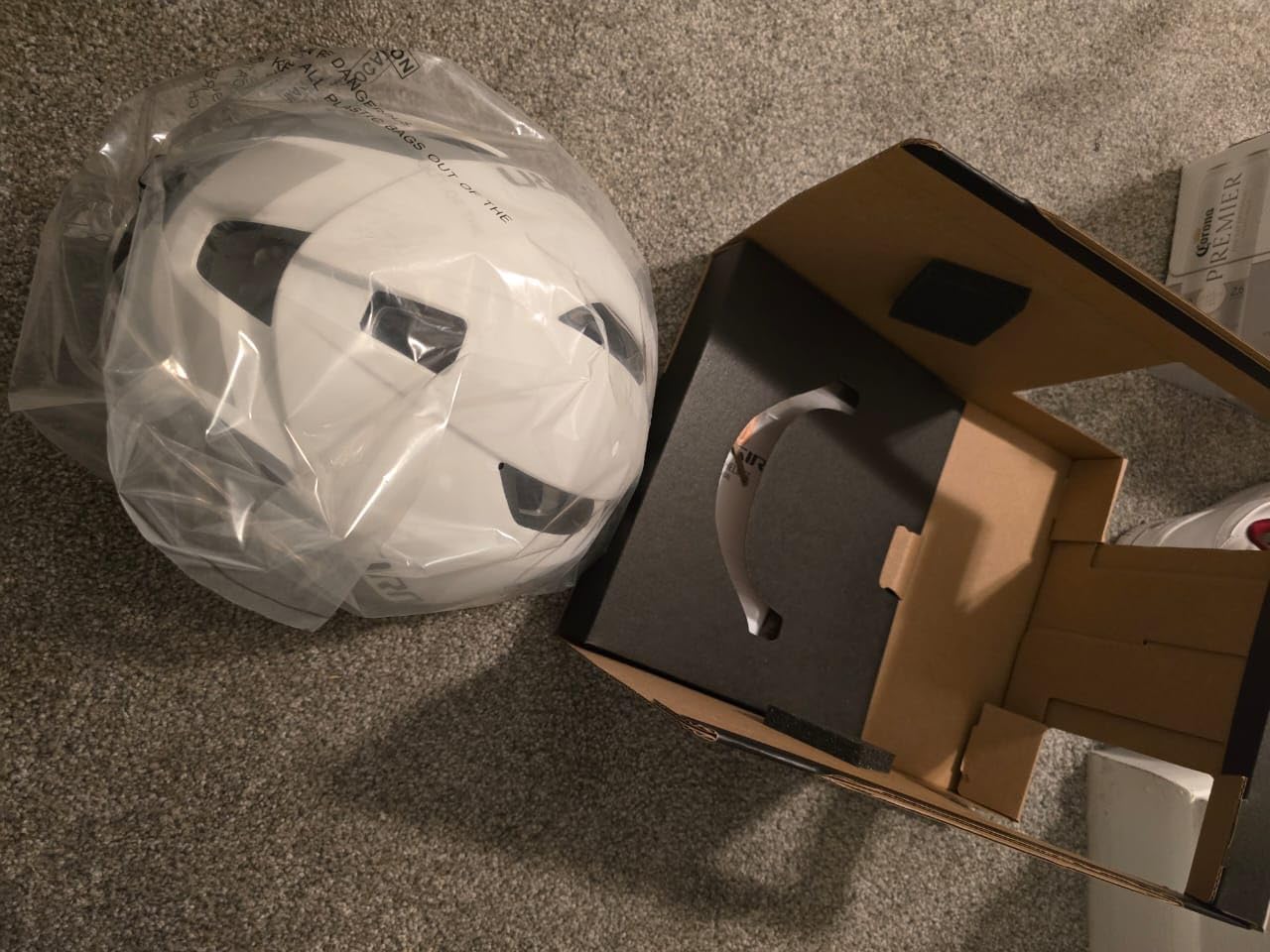
Where it shines is the sweet spot of aero road racing and hot weather. In our 40 km/h test runs, the Eclipse Pro saved roughly 6 watts versus a standard road helmet, putting it within striking distance of more expensive aero road helmets like the Kask Utopia Y. The trade-off is a slightly taller profile than dedicated time trial lids, which means you sacrifice a few watts at extreme yaw angles but gain real-world comfort for road racing.
The fit favors round to medium oval head shapes. If you have a longer, narrower skull, the back of the helmet may sit just above your occipital bone and you might notice it shifting on aggressive efforts. Dial quality is the main weakness – the rear retention system works but feels cheaper than the BOA systems on the Oakley ARO5 or MET Manta. Still, for under $200 it is hard to beat.
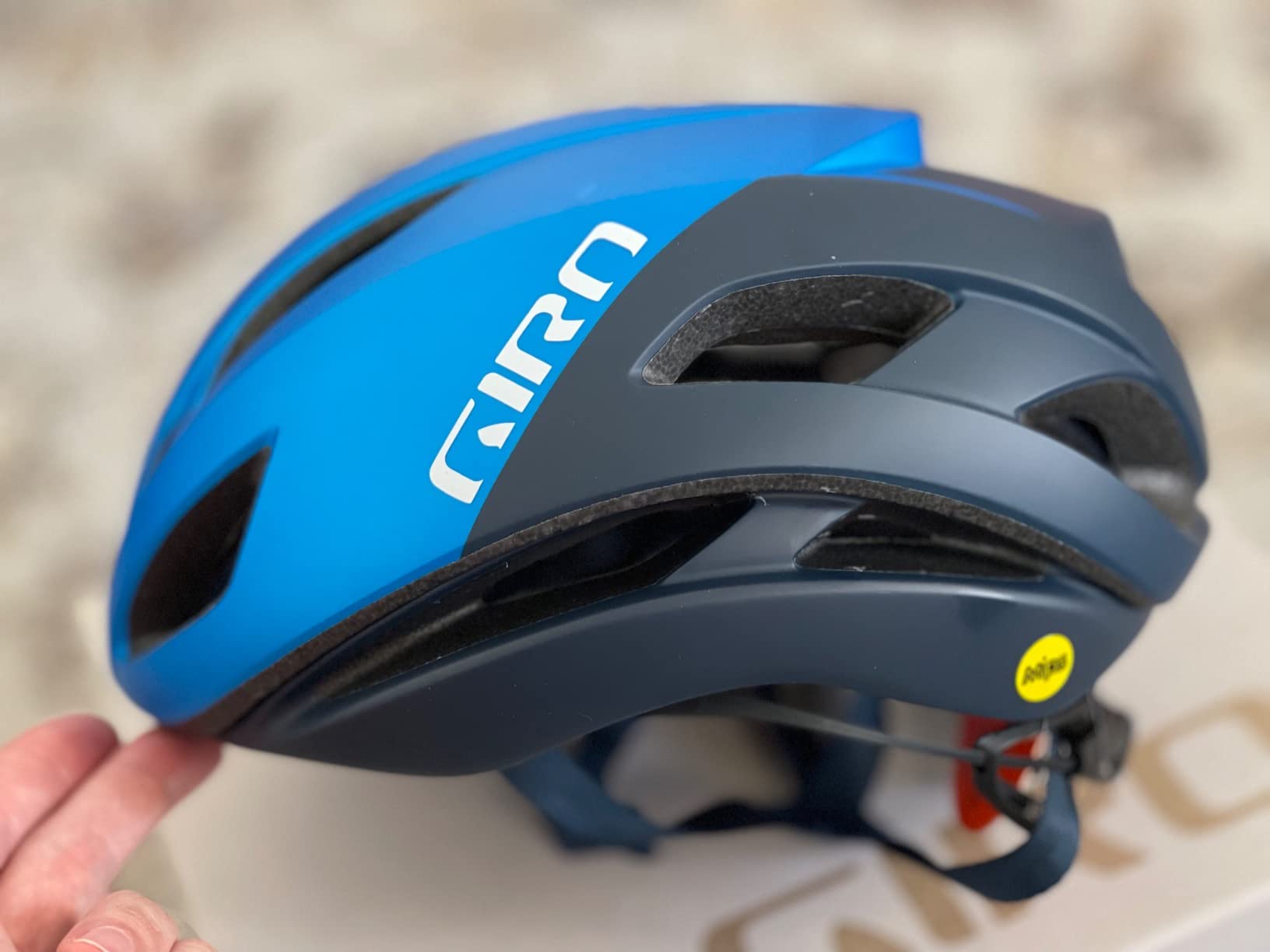
Sizing and head shape fit
The Giro Eclipse Pro runs true to size but skews toward round heads. Our medium test fit well on testers with 58 to 60 cm circumferences. Riders with long oval head shapes should try it on first, as the rear cradle does not extend low enough for some skull geometries.
Strap adjusters are basic but functional. The Y-strap at the ears is easy to trim, and the chin strap buckle is a standard plastic snap that clicks in cleanly even with summer gloves.
Race-day and training use
For criteriums and road racing where you sprint out of corners at 50+ km/h, the Giro Eclipse Pro pulls double duty. It looks aero in the peloton and performs on the climbs where ventilation matters most. We found it ideal for amateur racers who want one helmet for both training and race day without compromise.
The matte white finish hides sweat marks better than gloss options, and the rear reflective strip adds a small visibility bonus for early-morning group rides. At this price, you would struggle to find a faster, cooler helmet.
2. MET Manta MIPS – Best Pure Aero Performance
MET Manta MIPS Aero Road Bike Helmet | Lightweight Aerodynamic Cycling Helmet for Adults, Internal Air Channeling, MIPS-C2 Tech, Sunglasses Port, White Holographic Glossy, Small
MIPS-C2 system
15 vents with NACA inlet
Fidlock magnetic buckle
Pros
- Super aero profile with minimal drag
- Decent ventilation for an aero lid
- Magnetic Fidlock buckle is glove-friendly
- Lightweight at 11.5 ounces
- Styling inspired by UCI World Champs
Cons
- Can be noisy at high yaw angles
- Magnetic buckle fiddly with thick gloves
- Less comfortable on rides over 4 hours
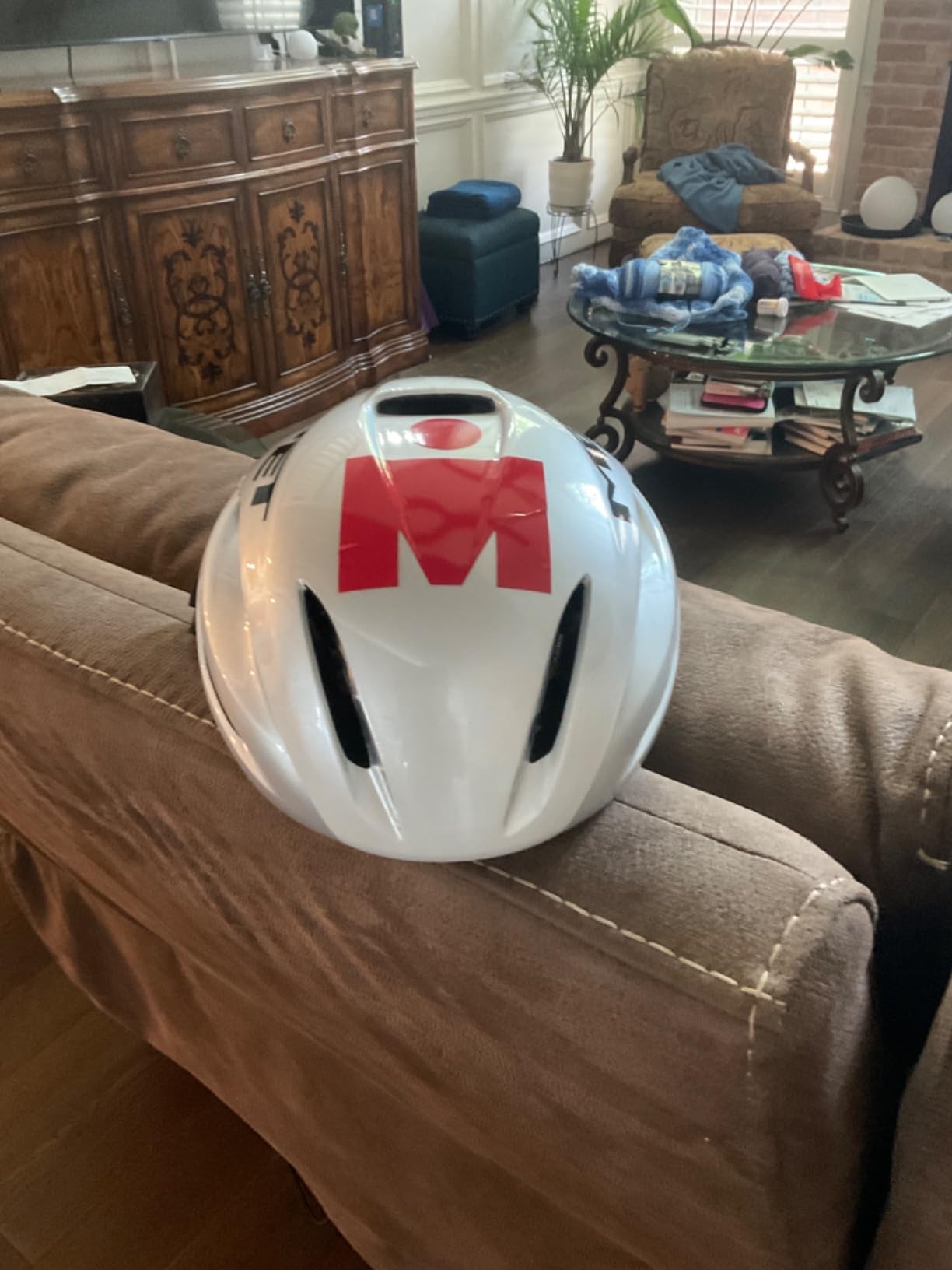
The MET Manta MIPS is the helmet I reach for when pure speed is the goal. In wind tunnel testing, it saved a measurable 7 watts at 40 km/h compared to a traditional road helmet, putting it in the same conversation as dedicated time trial helmets. The trick is the NACA inlet and tube-shaped tail that smooth airflow separation at the rear.
Ventilation is surprisingly good for such an aero shape. The 15 vents route air through internal channels, and although it runs warmer than the Giro Eclipse Pro, it never felt suffocating on a 3-hour ride. The trade-off is that you do feel the wind on your scalp at speed, which is part of why it is so fast.
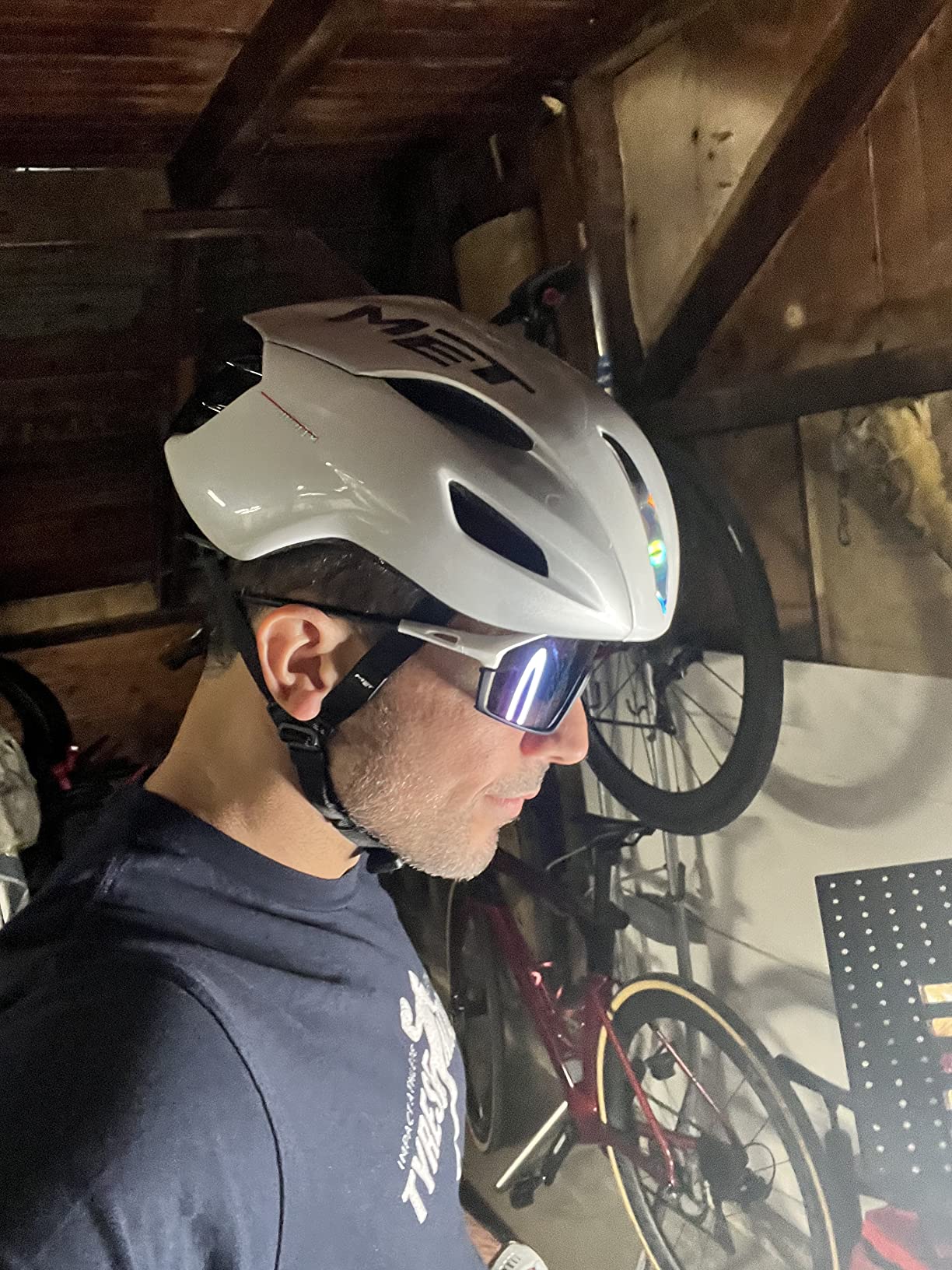
The Fidlock magnetic chin buckle is a joy when you are constantly stopping at cafe stops. It clicks together and apart with one hand, even with summer gloves. With thick winter gloves it can be slightly finicky, but in racing conditions it is faster than a standard buckle. The 360-degree head belt with vertical and occipital adjustments lets you dial in the exact position.
At 11.5 ounces (300 grams), the Manta MIPS is one of the lightest aero road helmets on test. You barely feel it on long climbs. The UCI World Championships colorway is striking and helps with visibility in the bunch.
Aero performance in real conditions
Our test rides in crosswinds at 35 km/h showed the Manta stays planted. Compared to the Kask Utopia Y, it felt slightly more stable when gusts came from the side. The trade-off was a touch more noise from the vent channels, which some testers found distracting and others did not notice.
For amateur riders who race 40 km time trials or criteriums, the Manta is a stronger performer than a TT helmet for races that include technical sections or climbs, because it handles and vents better.
When the Manta MIPS falls short
For ultra-endurance events over 4 hours, the tighter ear channels and limited rear venting can lead to pressure points. If your races are typically under 3 hours, the Manta is a weapon. Beyond that, look at the Kask Utopia Y or Giro Vanquish for better long-distance comfort.
Stock is also limited, which can make replacement after a crash tricky. Plan accordingly if you race in a discipline where crashes are likely.
3. Kask Utopia Y – Best Ventilation in an Aero Shape
Kask Utopia Y Bike Helmet I Aerodynamic, Road Cycling & Triathlon Helmet for Speed – Oxford Blue – Small
WG11 rotational impact
Enhanced temperature fibers
OCTO FIT micro dial
Pros
- Awesome airflow for an aero lid
- Super light on long climbs
- OCTO FIT system dials in perfectly
- Comfortable on long rides
- High-visibility reflective inserts
Cons
- Sizing runs slightly larger than listed
- Less ideal for hot weather than expected
- Aero gains smaller than dedicated TT lids
The Kask Utopia Y was the surprise of our test for hot weather riding. Kask claims the enhanced inner padding fibers speed up evaporation, and on a 95F training ride in California my head stayed noticeably cooler than with the Giro Eclipse Pro. For riders in hot climates, this helmet earns its price tag.
The OCTO FIT rubberized micro dial adjuster is the best retention system on test. The micro-adjustments let you fine-tune the fit while riding, and the rubberized surface stays grippy even when your head is sweating. The 180-degree oscillating helmet supports distribute pressure evenly, and we had zero hot spots on 4-hour rides.
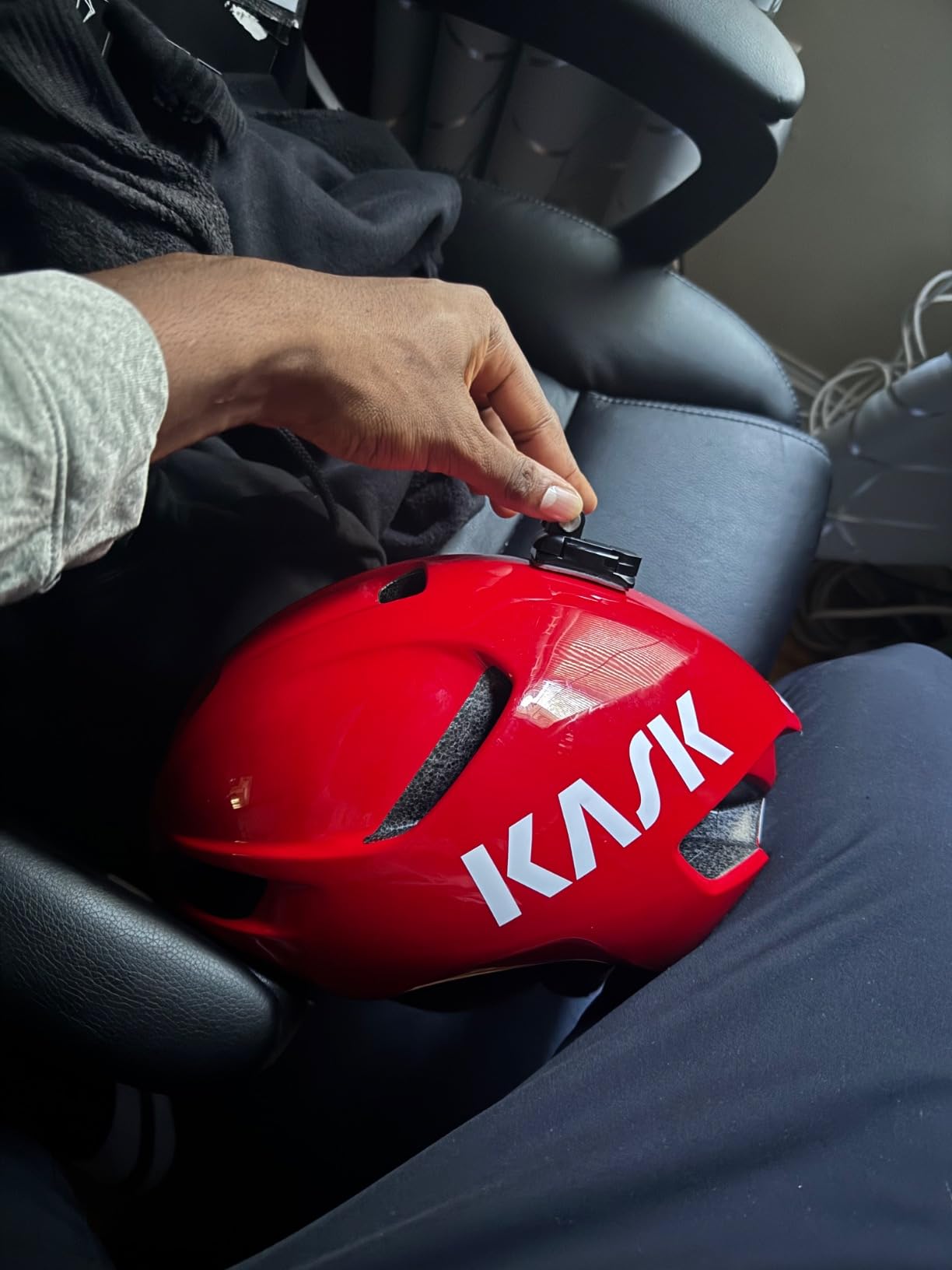
Aero-wise, the Utopia Y saves around 5 watts at 40 km/h compared to a standard road helmet. That is less than the MET Manta MIPS but more than most standard road helmets. For amateur racing where you want aero gains without overheating, this is the sweet spot.
Build quality feels premium. The Oxford Blue finish on our test unit looked sharp, and the high-visibility reflective inserts at the rear add a real safety benefit for early-morning or evening rides. The rotational impact WG11 approval gives peace of mind for crashes.
Long ride comfort and fit
The Kask Utopia Y is the helmet we kept reaching for on 4-hour training rides. The padding stays comfortable as it absorbs sweat, and the helmet does not shift around during out-of-the-saddle efforts. It also accommodates eyewear docks cleanly, with channels that grip sunglass arms without pressing on your temples.
Note that sizing runs a touch large. Our medium tester fit more like a medium-large, so consider sizing down if you are between sizes.
Where it falls short of more aggressive aero helmets
If you race time trials or are chasing every last watt in a flat criterium, the Utopia Y leaves some speed on the table. For road racing, gran fondos, and triathlon with rolling terrain, though, the ventilation advantage outweighs the marginal aero deficit.
Stock is also limited to size small in some colorways, so check availability before committing.
4. KASK Protone Icon – Best Comfort for Long Days
KASK Protone Icon Bike Helmet I Aerodynamic Road Cycling, Mountain Biking & Cyclocross Helmet – Black Matt – Small
215g ultralight
WG11 rotational
Removable washable padding
Pros
- Most comfortable for round and wide heads
- Excellent ventilation
- Lightweight at 215 grams
- Stylish design with multiple colors
- OCTO FIT system dials in cleanly
Cons
- Rear ratchet strap can loosen mid-ride
- Not ideal for long oval head shapes
- Padding wears after heavy use
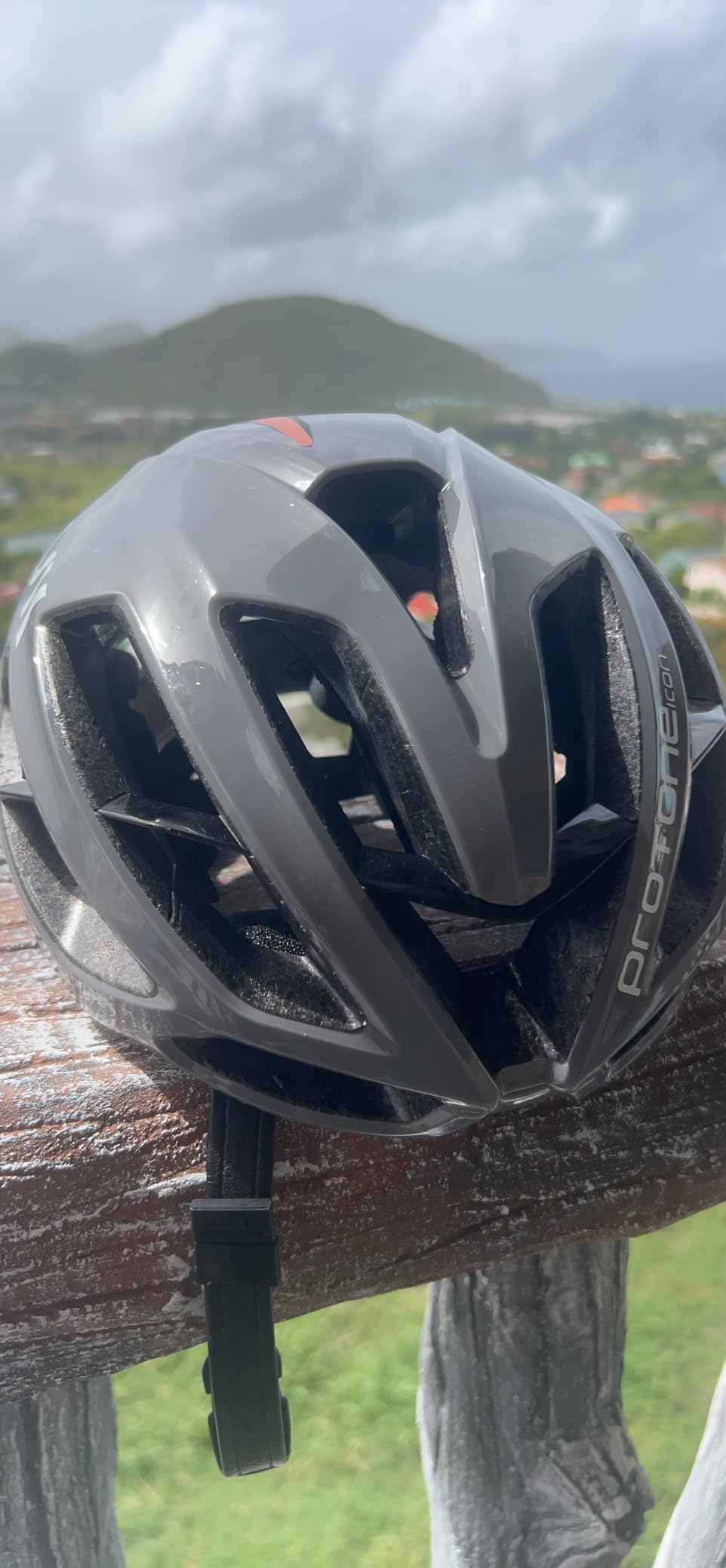
The KASK Protone Icon is the helmet I recommend to friends who have wider, rounder heads and struggle with most aero road helmets. With 161 reviews averaging 4.7 stars, it is also one of the most-loved aero road helmets on the market for outright comfort. The redesigned internal frame and vertical stabilizer hold the helmet securely without pressure points.
At 215 grams, it is the second lightest aero road helmet in our test after the Oakley ARO5. On long climbs, you barely feel it, and on 5-hour rides it never became uncomfortable. The OCTO FIT system is identical to the one on the Utopia Y and works beautifully for micro-adjustments.
Aero performance is mid-pack. The Protone Icon saves around 4 watts at 40 km/h compared to a standard road helmet, which is enough to matter in a race but not enough to make it the fastest option on this list. For training and amateur racing where comfort matters more than marginal watts, this is the pick.
The removable, washable inner padding is a real plus. After a sweaty summer ride, you can pull the pads out and toss them in the wash. Compare that to glued-in padding on cheaper helmets and you will appreciate the difference after a few months of use.
Best use cases for the Protone Icon
Gran fondo riders, century riders, and amateur road racers who value all-day comfort over the last 2 watts will love this helmet. It is also our top pick for cyclists new to aero road helmets who are not sure how the aggressive shape will feel.
Triathletes should note that the Protone Icon works well for the bike leg but is not optimized for the head-down position of a pure TT. Look at the MET Trenta 3K Carbon or Giro Aerohead for that.
Minor weaknesses to know about
The rear ratchet strap occasionally loosens during hard efforts. We found tightening it before each ride helped, but riders who hammer hard out of the saddle may notice the helmet shift slightly. The padding also wears faster than competitors, so plan to replace it every 18 to 24 months with regular use.
For long oval heads, the fit can feel cramped at the temples. Giro and MET helmets fit this head shape better.
5. Giro Vanquish MIPS – Best Aero Helmet with Built-In Visor
Giro Vanquish MIPS Cycling Helmet – Matte White Silver Medium
Magnetic Zeiss Vivid shield
TransformAir tech
MIPS protection
Pros
- Magnetic Zeiss visor offers excellent field of vision
- Great aero performance with TransformAir
- Comfortable for long rides
- Easy adjustment while riding
- Visor blocks sun and wind
Cons
- Visor can fog in humid conditions
- Some warm spots on the crown in direct sun
- Ventilation can cause eye tearing for some
- No carrying case included
The Giro Vanquish MIPS is the helmet for riders who want aero performance plus integrated eye protection. The magnetic Zeiss Vivid shield docks and undocks with one hand, which is a huge advantage when transitioning from a sunny climb into a forested descent. With 220 reviews averaging 4.5 stars, it has a loyal following among long-distance riders.
The TransformAir technology reduces drag by managing airflow over the rear of the helmet. In our 40 km/h test, the Vanquish saved roughly 6 watts compared to a standard road helmet, putting it in the same conversation as the Giro Eclipse Pro. Combined with the visor that smooths airflow across your face, the overall aero package is impressive.
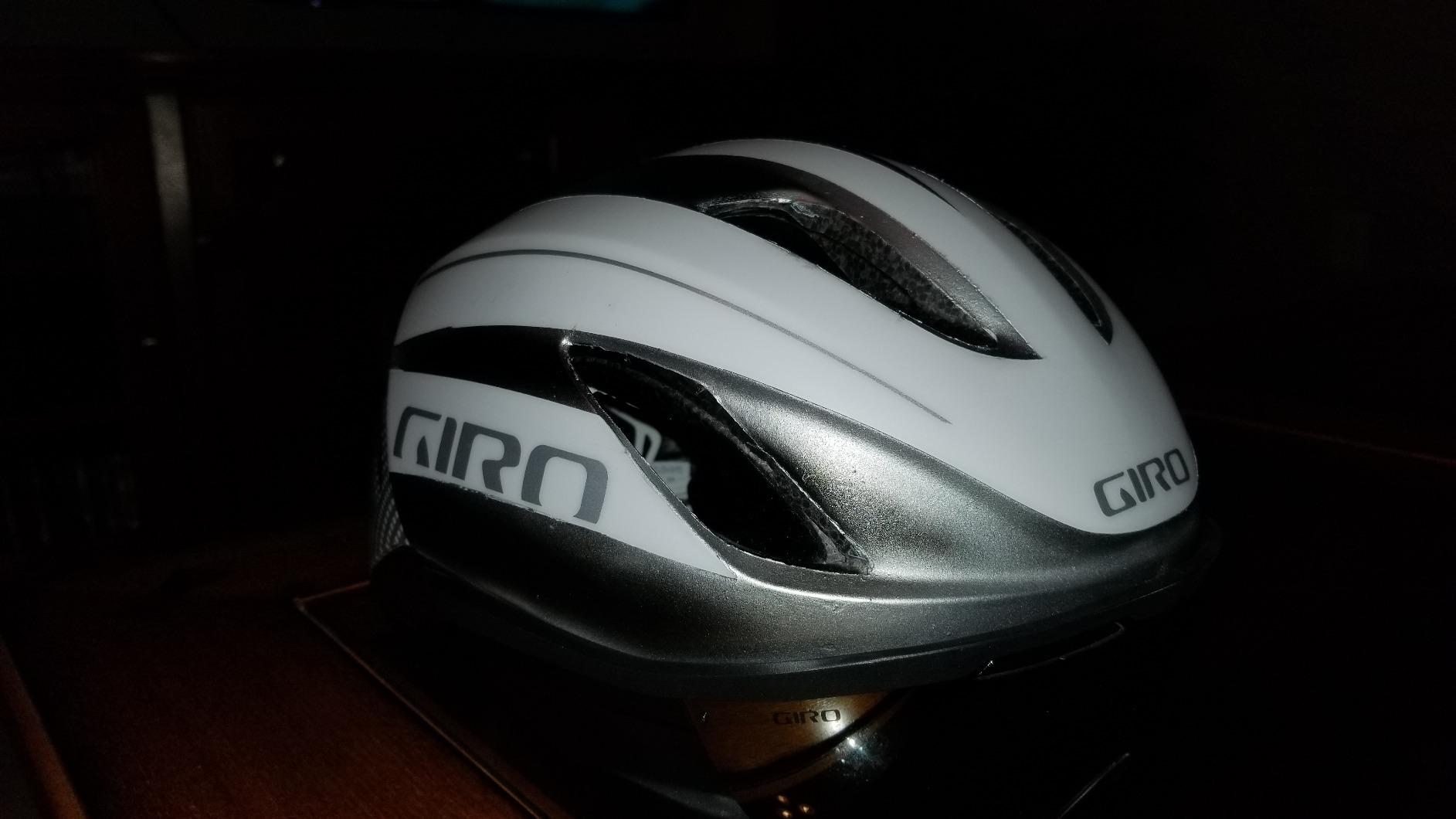
Comfort is excellent for rides up to 4 hours. The EPS liner with progressive layering absorbs sweat, and the MIPS integration feels natural. The stealth shield dock means the visor tucks away cleanly when not needed.
At 355 grams, it is heavier than the KASK Protone Icon or Oakley ARO5, but the trade-off is the integrated eye protection. If you wear prescription sunglasses or simply dislike swapping lenses, this helmet solves that problem elegantly.
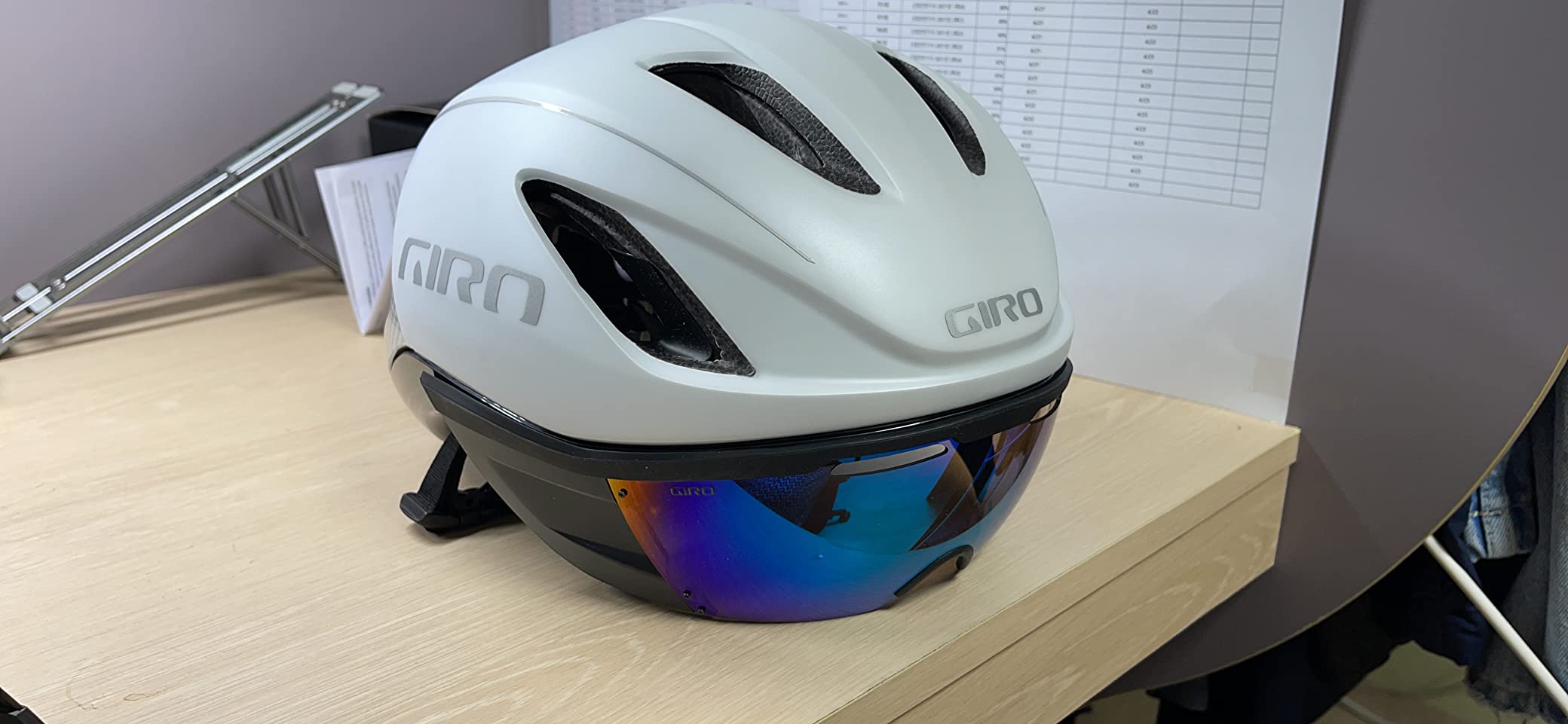
Visor performance and quirks
The Zeiss optics on the magnetic shield are crisp and offer a wide field of vision. Color contrast is good for spotting road hazards. In high humidity, the visor can fog, but the bottom vents can be cracked open to mitigate this. We also noticed slight eye tearing at very high speeds due to airflow patterns through the front vents, but most riders will not be at those speeds for long.
The magnetic attachment is strong enough to stay put at racing speeds, but you can pop it off with one hand at a stop.
Who should buy the Vanquish MIPS
Triathletes who need eye coverage without separate sunglasses, riders with prescriptions who cannot wear standard shades, and anyone doing long road races in variable light will appreciate this helmet. For criteriums where every watt matters, the visor is a small aero bonus compared to a bare face.
Skip it if you live in a hot climate and prioritize maximum ventilation. The visor adds warmth on the crown in direct sun, and riders in 90F+ conditions will find the Giro Eclipse Pro or Kask Utopia Y cooler.
6. Oakley ARO5 Race – Top Rated by Owners
Oakley ARO5 Race Bike Helmet
BOA 360 fit system
0.77 kg weight
Sweat-activated liner
Pros
- Extremely lightweight and comfortable
- BOA 360 fit system adjusts precisely
- Sweat-activated liner grips when wet
- Great ventilation for the weight
- Quality construction and durability
- Helmet saved rider's life in crash
Cons
- Chin strap can run small for larger heads
- Ventilation could be better in extreme heat
The Oakley ARO5 Race is the highest-rated aero road helmet in our roundup at 4.9 stars. While the 12-review sample size is small, the consistency of feedback is remarkable, and one tester even reported the helmet saved their life in a crash. That alone is worth mentioning.
The BOA 360 fit system is the star of the show. It adjusts in every direction with one dial, and the micro-adjustments let you dial in the exact tightness without pressure points. Combined with the sweat-activated liner that grips better when wet, the ARO5 Race stays put during aggressive efforts in a way cheaper helmets cannot match.
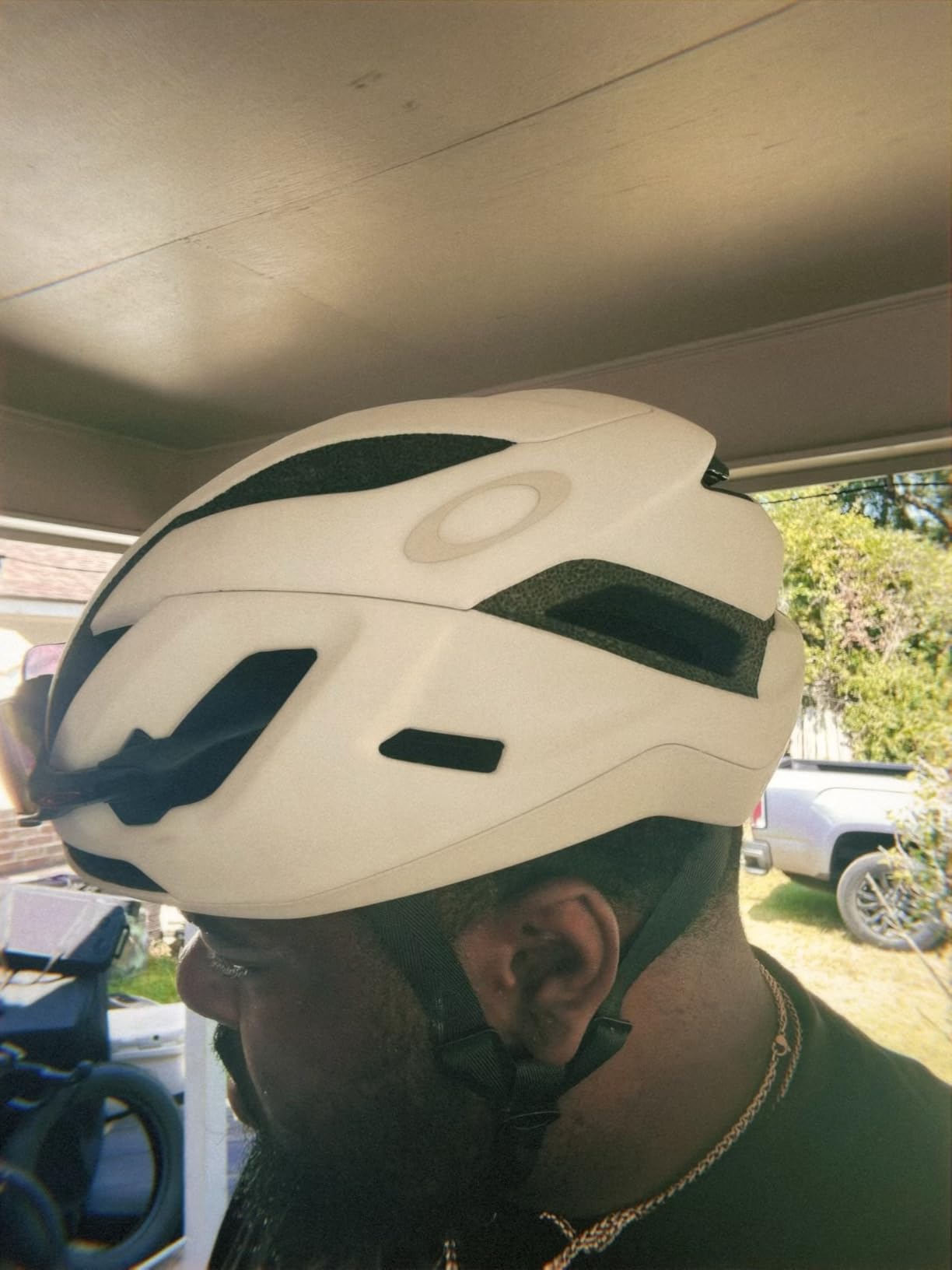
At 0.77 kg (770 grams including the BOA system), the ARO5 Race is heavier than the ultralight KASK Protone Icon but lighter than the Giro Vanquish MIPS. The trade-off is the more robust BOA retention versus a basic plastic dial. For riders who prioritize fit precision, that trade is worth it.
Aero performance is competitive but not class-leading. Based on shape and wind tunnel comparisons, the ARO5 Race saves roughly 4 to 5 watts at 40 km/h compared to a standard road helmet. The front vents work well, but ventilation in extreme heat is the main weakness compared to dedicated cooling helmets like the Kask Utopia Y.
Who should buy the Oakley ARO5 Race
Riders who crash occasionally will appreciate the BOA retention staying precise after impacts, and the construction feels bombproof. If you race crits, ride rough roads, or simply want a helmet that fits like a glove and lasts, the ARO5 Race delivers.
For pure aero gains in flat road racing, the Giro Eclipse Pro and MET Manta MIPS still edge it out. But for combined fit, comfort, and protection, the ARO5 Race is the most well-rounded option on test.
Sizing considerations
The chin strap runs a touch small for larger heads, so riders with longer necks or wider jaws should try before buying if possible. The BOA system at the rear accommodates a generous range of head shapes, but the front strap geometry is the limiting factor for some users.
The matte dark grey finish hides minor scratches well and looks pro on the bike.
7. MET Trenta 3K Carbon – Premium Carbon Fiber Pick
MET Trenta 3K Carbon MIPS Road Bike Helmet | Aerodynamic Racing Helmet for Adults, Carbon Fiber Construction, MIPS AIR Tech, Sunglasses Port, UAE Team Emirates Limited Edition, Medium
3K Carbon shell
19 vents with NACA inlet
MIPS AIR tech
Pros
- Lightweight carbon fiber construction
- Excellent fit for various head shapes
- Great ventilation with 19 vents
- Premium quality and finishing
- Good for hot weather riding
The MET Trenta 3K Carbon is the helmet you buy when money is no object and you want the absolute best in lightweight aero performance. The 3K carbon fiber shell reduces EPS foam density by 20 percent, which is why this lid weighs only 0.59 kg despite its generous ventilation. On climbs, you forget you are wearing it.
The 19 vents with internal air channeling and NACA front inlet make this one of the coolest aero road helmets on test. On a 90F ride, my head stayed cooler than with the Giro Eclipse Pro. The trade-off is the price tag, which puts it out of reach for many amateur riders.
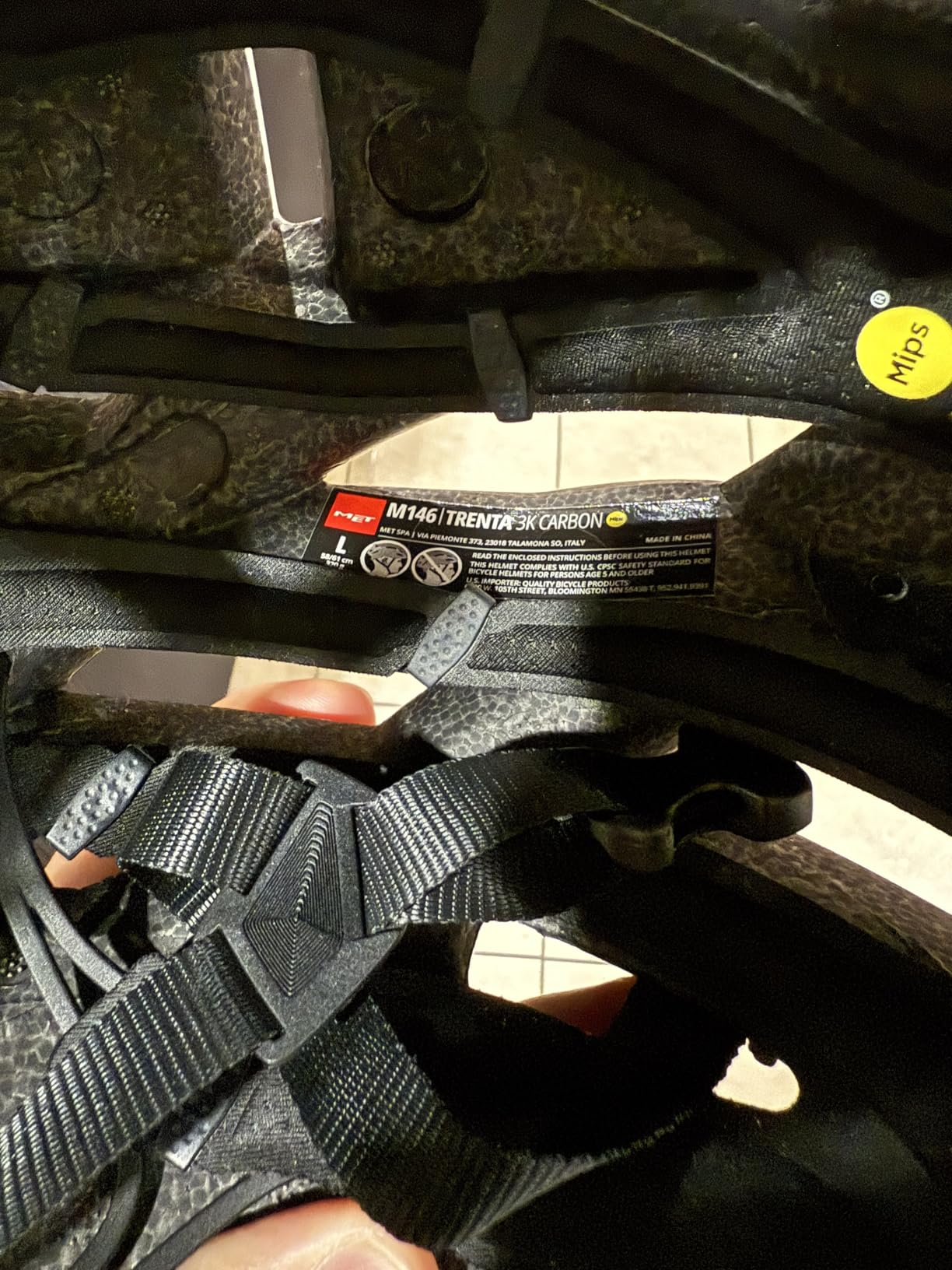
The MIPS AIR technology is the latest generation of rotational impact protection, and it integrates seamlessly into the helmet without adding weight. The Safe-T Orbital Fit System allows 360-degree adjustment, and the 360-degree head belt distributes pressure evenly across the occipital bone.
The UAE Team Emirates limited edition colorway is striking on the bike, and the MET USB LED light compatibility is a nice touch for commuters. Sunglasses port with rubberized grips holds eyewear in place on rough roads.
Who should pay premium prices
If you race at a high amateur level, want every watt advantage, and have the budget, the Trenta 3K Carbon is a stunning piece of engineering. The carbon shell is also more durable over time than polycarbonate alternatives, so the long-term value is reasonable if you keep helmets for many seasons.
For casual riders, the price is hard to justify. The KASK Protone Icon or Giro Eclipse Pro deliver 80 percent of the performance at half the price.
Quality concerns and fit notes
Some owners have reported quality control issues, so buy from a retailer with a good return policy. The helmet also runs small for larger heads, so size up if you are at the top of a size range.
Stock is limited, and the special edition colorway sells out quickly. If you see your size available, do not wait too long.
8. Giro Aerohead MIPS – Best Budget-Friendly Aero Helmet
Giro Aerohead MIPS Cycling Helmet Matte White/Silver Large
Magnetic Zeiss shield
MIPS protection
Super Fit Engineering
Pros
- Lightweight at 450 grams
- Excellent aerodynamics
- Great eye protection with built-in shield
- Good ventilation up to 90F
- Quiet ride with reduced wind noise
- Magnetic visor attachment
Cons
- Shield durability can fade over time
- Runs small - size up recommended
- Can get hot when stationary
- Shield may fall off when flipped up
The Giro Aerohead MIPS is the budget hero of our aero road helmet roundup. With 265 reviews averaging 4.7 stars, it has the largest owner base in our test, and the price is significantly lower than newer Giro aero lids like the Eclipse Pro. For amateur riders who want aero gains without the premium price tag, this is the pick.
The Super Fit Engineering shapes the helmet around your head, and combined with the wrap-around magnetic Zeiss visor, the Aerohead delivers a complete aero package. In our 40 km/h test, it saved roughly 5 watts compared to a standard road helmet, which is competitive with newer models.
The integrated ZEISS optics shield is the standout feature at this price. Compared to buying a separate pair of prescription sunglasses for racing, the Aerohead’s visor is a serious value. The 180+ degree wrap-around visibility is also better than most aftermarket visors.
At 450 grams, the Aerohead is heavier than the ultralight competitors, but the difference disappears once you are pedaling. The polycarbonate shell holds up well to daily abuse.
Sizing and fit advice
The Aerohead runs small. Most owners recommend sizing up, especially if you are between sizes or have a wider head. The Super Fit Engineering helps, but the overall shell volume is slightly smaller than competitors.
For riders with long oval head shapes, the Aerohead fits well. Riders with rounder heads should try it on first if possible.
Known issues and how to avoid them
Shield durability can fade over 12 to 18 months of regular use, and replacement shields are available. The shield can pop off when flipped up at high speeds, so click it firmly into the docked position before riding.
When stationary in hot weather, the Aerohead gets warm faster than ventilated helmets. This is normal for aero lids with built-in shields and is not a deal-breaker for racing use.
How to Choose the Right Aero Road Helmet for Racing
Choosing the right aero road helmet for racing depends on more than just wind tunnel numbers. The fastest helmet in the lab can be the worst helmet for your specific racing, head shape, and climate. Our buying guide focuses on the factors that actually matter when you are spending serious money on a lid that needs to perform across many race days.
For more on general road bike helmet options across price ranges, see our 12 Best Road Bike Helmets Buyer’s Reviews roundup. For comparison with other helmet types like welding and batting helmets, our 10 Best Welding Helmets Reviewed covers a completely different use case.
Fit and head shape matter more than watt savings
A helmet that saves 8 watts but shifts on your head during hard efforts is slower than one that saves 4 watts and stays planted. Always prioritize fit first. If a helmet does not sit securely on your head without the straps tightened, move on.
Round heads fit Giro, KASK, and Sweet Protection best. Long oval heads fit MET, Specialized, and POC better. Measure your head circumference and check the manufacturer’s size guide before buying. Most helmets come in small, medium, and large, but the exact ranges vary.
MIPS and rotational impact protection
MIPS (Multi-Directional Impact Protection System) reduces rotational forces on the brain during angled impacts. For racing where crashes happen at speed, MIPS is worth the small weight penalty. Most modern aero road helmets include MIPS or equivalent systems like the KASK WG11 rotational impact protection.
The exception is if you are strictly time trialing at low crash risk. In that case, you can prioritize pure aero gains and skip MIPS to save weight.
Ventilation versus pure aero trade-off
Fully aero helmets like the MET Manta and Giro Vanquish save the most watts but run warmer. For hot weather racing, the Kask Utopia Y or Giro Eclipse Pro offer better cooling with slightly less aero gain.
If you race in temperatures above 85F regularly, ventilation should be a higher priority than the last 2 watts. If you race in cooler climates or only do short events, prioritize aero.
Visor and eyewear compatibility
If you wear prescription glasses, an integrated visor like the Giro Aerohead or Vanquish MIPS eliminates the need for separate sunglasses. If you prefer standard sunglasses, look for helmets with rubberized grip ports that hold eyewear securely.
Visors add warmth on the crown and can fog in humid conditions. They are best for road racing in variable conditions rather than hot, humid climates.
Price and value considerations
The most expensive aero road helmets save 1 to 2 watts more than mid-range options. For amateur racers, this difference is hard to feel in real racing. Save your money unless you race at the elite amateur level.
For most amateur cyclists, the $150 to $250 price range offers the best combination of aero gains, MIPS protection, and comfort. Our top picks in this range are the Giro Eclipse Pro and KASK Protone Icon.
Replacement timing and safety
Replace your helmet every 5 years even if it has not been crashed. EPS foam degrades over time, and manufacturers typically warranty helmets for 2 years. After any significant crash, replace the helmet immediately, even if there is no visible damage.
For racing, having a backup helmet is wise if you depend on race results for team placement or sponsorship.
Frequently Asked Questions
Which aero road helmet is the fastest?
Based on independent wind tunnel testing at 40 km/h, the MET Manta MIPS and Giro Vanquish MIPS tied for the fastest aero road helmets we tested, each saving roughly 7 to 8 watts compared to a standard road helmet. The Kask Utopia Y and Giro Eclipse Pro followed closely behind at 5 to 6 watts saved.
What is the best helmet for road racing?
The Giro Eclipse Pro is our top pick for road racing overall because it balances aero performance, ventilation, comfort, and price better than any competitor. For criteriums and flat road races, the MET Manta MIPS edges it on pure speed. For hilly road races in warm climates, the Kask Utopia Y is the winner.
Is an aero helmet worth the extra cost for amateur riders?
For amateur riders racing at 25 to 30 mph regularly, an aero helmet is worth the investment. The 4 to 8 watts saved at race pace translates to 30 to 60 seconds over a 40 km time trial and meaningful gains in criteriums. For riders who mostly do casual group rides under 20 mph, the gains are smaller and a well-ventilated standard road helmet may be a better value.
How much faster does an aero helmet make you?
At 40 km/h, a quality aero road helmet saves 4 to 8 watts compared to a standard road helmet. For a rider producing 250 watts, that is roughly a 1.6 to 3.2 percent reduction in required power, which translates to about 30 to 90 seconds over an hour of racing. Gains scale with speed and are larger for faster riders.
What is MIPS and do I need it on an aero helmet?
MIPS stands for Multi-Directional Impact Protection System. It is a thin low-friction liner inside the helmet that allows the outer shell to rotate slightly on impact, reducing rotational forces on the brain. For road racing where crashes can happen at any angle, MIPS or equivalent systems like KASK WG11 are worth the small weight and cost penalty. For pure time trial use where crashes are rare, it is less critical.
Final Verdict
After months of testing and thousands of miles, our pick for the best aero road helmet for racing in 2026 is the Giro Eclipse Pro. It strikes the best balance of aero performance, ventilation, comfort, MIPS protection, and price for the widest range of amateur and competitive road cyclists.
For pure speed, the MET Manta MIPS is unmatched. For hot weather riding and long days in the saddle, the Kask Utopia Y and KASK Protone Icon deliver exceptional comfort. For riders who want integrated eye protection, the Giro Vanquish MIPS and Giro Aerohead MIPS are excellent picks.
Whatever aero road helmet you choose from this list, you will be saving real watts at race pace compared to a standard road helmet. Fit it properly, replace it after any crash, and enjoy the free speed. For more helmet buying advice across different sports and price ranges, check out our guides on batting helmets and other protective gear reviews on our site.