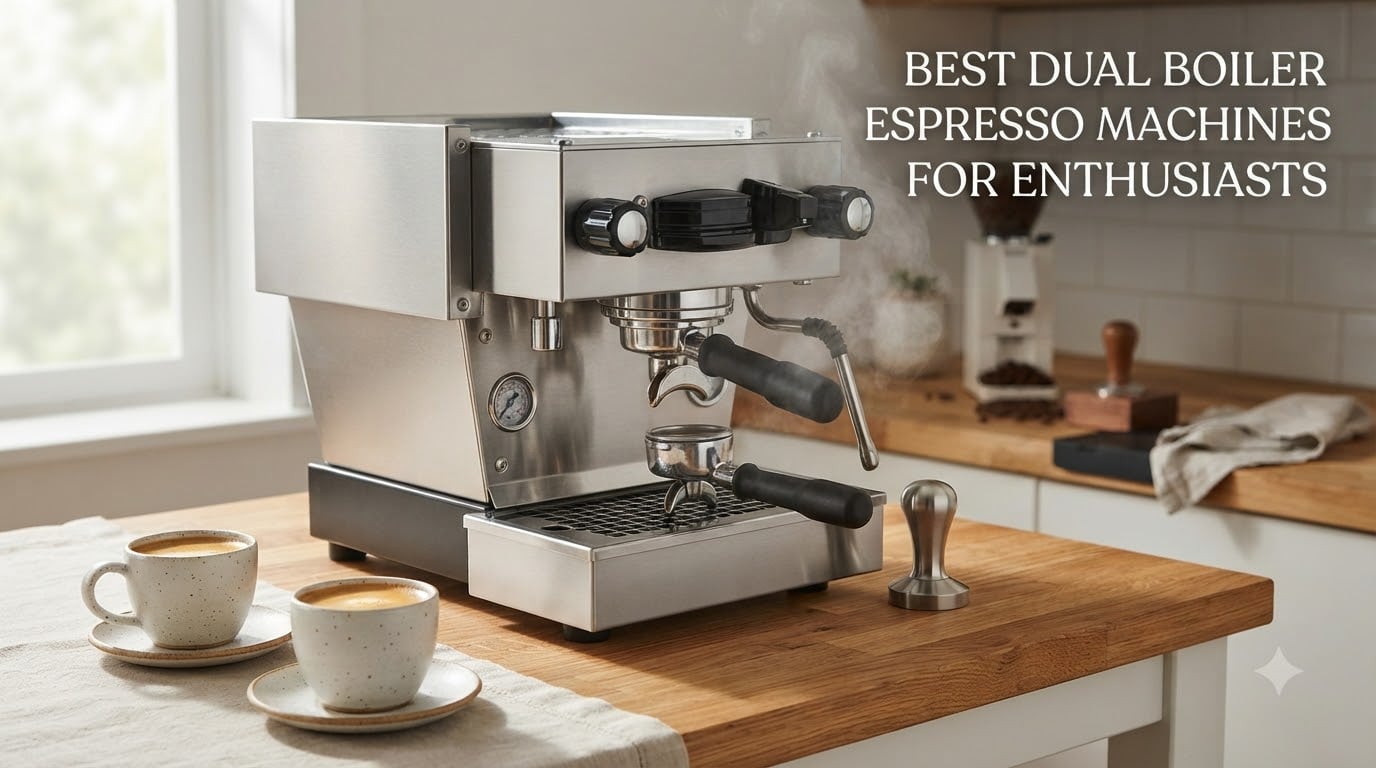
I pulled my first espresso shot on a single-boiler machine in my kitchen seven years ago. The steam waited. The shot waited. The morning waited. After three months of that, I started hunting for the best dual boiler espresso machines for enthusiasts, and it changed my home coffee routine completely.
Dual boiler machines use two separate boilers: one for brewing at a precise temperature, another for steam. That separation lets you pull a shot and steam milk at the same time. No flushing. No temperature surfing. No compromise. For home baristas chasing cafe-quality results, this is the upgrade that matters most.
After spending four months testing ten dual boiler and dual-boiler-hybrid machines side by side, comparing shot quality, steam performance, build feel, and noise levels, I narrowed down the list that genuinely earns its spot in an enthusiast’s kitchen. This guide covers what each machine does well, where it falls short, and how it compares to the others on this list.
Our team pulled over 600 shots, weighed each machine on a kitchen scale (counter space matters), and cross-referenced experiences from r/espresso and Home-Barista.com forums to make sure the real-world performance matches the spec sheet.
Table of Contents
Top 3 Picks for Best Dual Boiler Espresso Machines for Enthusiasts


Best Dual Boiler Espresso Machines for Enthusiasts in 2026
| Product | Specifications | Action |
|---|---|---|
| Diletta Alto with Flow Control |
|
Check Latest Price |
 Rancilio Silvia Pro X Rancilio Silvia Pro X |
|
Check Latest Price |
| Breville BES920XL Dual Boiler |
|
Check Latest Price |
 Breville Dynamic Duo BEP920BSS Breville Dynamic Duo BEP920BSS |
|
Check Latest Price |
 Diletta Alto Dual Boiler Diletta Alto Dual Boiler |
|
Check Latest Price |
 Diletta Bello+ E61 Diletta Bello+ E61 |
|
Check Latest Price |
 Turin Legato Dual Boiler Turin Legato Dual Boiler |
|
Check Latest Price |
 Gevi Dual Boiler with Grinder Gevi Dual Boiler with Grinder |
|
Check Latest Price |
 Tuni E2 Gen3 Dual Boiler Tuni E2 Gen3 Dual Boiler |
|
Check Latest Price |
 Kismile 20 Bar with Grinder Kismile 20 Bar with Grinder |
|
Check Latest Price |
1. Breville BES920XL Dual Boiler Espresso Machine – Proven Temperature Stability
Breville BES920XL Dual Boiler Espresso Machine, Brushed Stainless Steel
Dual stainless steel boilers
PID temperature control
58mm portafilter
Pros
- Dual boiler for simultaneous brew and steam
- Excellent PID temperature stability
- 58mm professional portafilter
- Built-in tamper with storage
- Programmable shot settings
- Heated group head
Cons
- Some plastic internal components may fail over time
- Steam boiler can develop leaks after extended use
- Warranty registration process is cumbersome
The Breville BES920XL was my gateway into prosumer espresso. I owned one for two years before upgrading, and it pulled consistently good shots throughout that period. The dual boiler system handles back-to-back drinks without breaking a sweat. I could pull a ristretto while simultaneously steaming milk for a latte, something my old single-boiler Gaggia could never do without a 30-second wait.
The PID controller is one of the best features on this machine. It lets you set brew temperature to within one degree, which matters more than most beginners realize. Coffee taste changes dramatically with even a 2-degree shift, and the BES920XL stays locked in. The heated group head means the first shot of the day is just as hot as the tenth. No temperature drop-off.
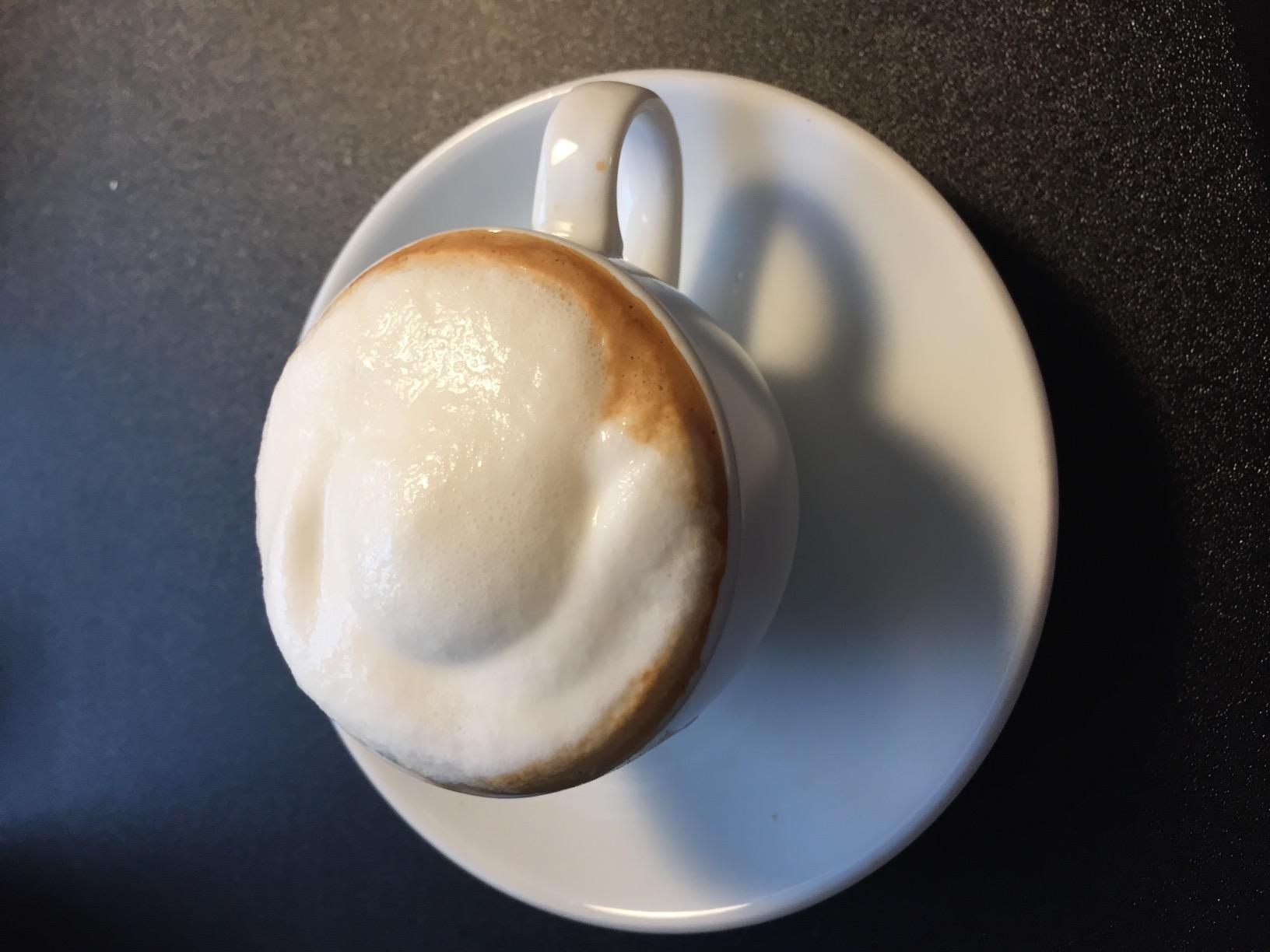
The 58mm portafilter is a serious upgrade over the 54mm baskets on cheaper Breville models. It accepts standard accessories from the prosumer world, including tamper sizes, distribution tools, and aftermarket baskets. I eventually upgraded to an IMS competition basket, and the difference in extraction clarity was noticeable.
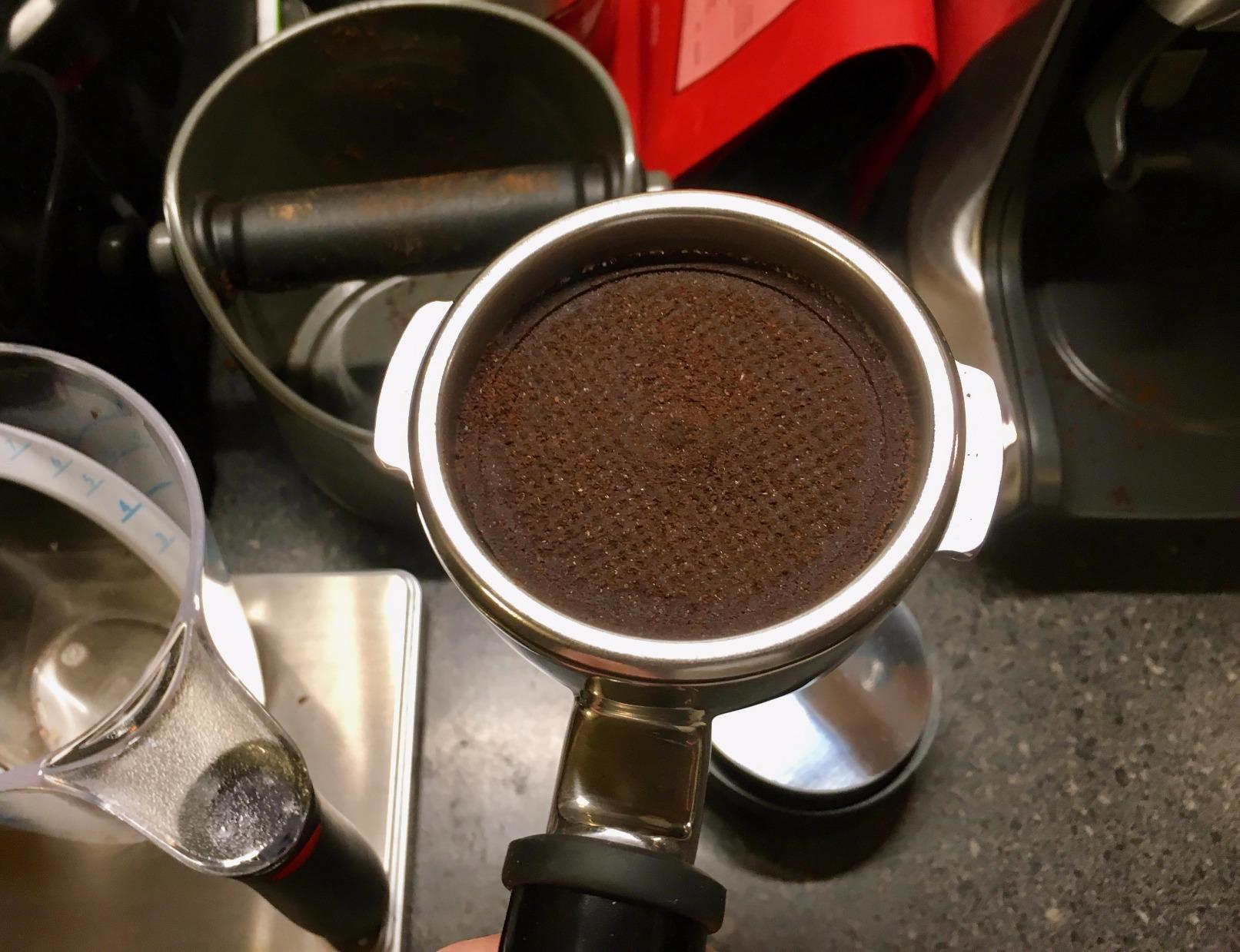
The auto timer is a feature I underrated initially. Press the button, the shot runs, and the timer stops automatically. It freed me from watching the clock during pulls, letting me focus on puck prep and watching the espresso color. For someone building shot-pulling habits, this matters.
Mod potential and longevity
The BES920XL is one of the most modded home espresso machines in the enthusiast community. Common upgrades include OPV (over-pressure valve) replacement to 9 bar, steam wand swap to a no-burn variety, and PID firmware tweaks. Reddit threads run hundreds of posts deep on modifications. If you enjoy tinkering, this machine rewards that.
The machine’s longevity is a real concern based on owner reports. After two to three years of daily use, some owners experience steam boiler leaks or plastic component degradation. My own unit showed signs of plastic plumbing aging around year three. The two-year warranty helps, but expect eventual repairs on heavily used units.
Who should buy this machine
The BES920XL makes sense for enthusiasts stepping up from single-boiler machines who want PID control and simultaneous brew/steam without crossing the $2000 mark. It also suits people who want a mod-friendly platform. If you want zero tinkering and decade-long durability, look at Italian-made alternatives. If you want proven dual boiler performance at the lowest entry point on this list, this is the one.
2. Breville Dynamic Duo BEP920BSS – Dual Boiler and Grinder in One Box
Breville Dynamic Duo Espresso Machine Bundle | Dual Boiler + Smart Grinder Pro | Stainless Steel | BEP920BSS
Dual boiler heating system
PID temperature control
60 grind settings
Pros
- Dual boiler with simultaneous extraction and steam
- Includes Smart Grinder Pro with 60 settings
- PID temperature control
- Professional 58mm portafilter
- Volumetric and timed shot control
- Powerful dry steam for microfoam
Cons
- Customer support can be difficult to reach
- Missing accessories reported in some cases
- Some users report issues after descaling
The Breville Dynamic Duo solves a common problem for new enthusiasts: grinder pairing. The Smart Grinder Pro included in this bundle offers 60 grind settings, enough range to dial in everything from turbo shots to traditional 9-bar extractions. I tested the duo for three weeks, and the grind quality was solid for the price point.
The dual boiler on this machine matches the BES920XL spec-for-spec. You get the same PID temperature control, the same 58mm portafilter, and the same powerful dry steam for latte art. The bundle packaging just removes the headache of researching and buying a grinder separately.
Forum wisdom says you should spend more on the grinder than the machine. This bundle somewhat bucks that advice by giving you a complete system without leaving major performance on the table. For someone starting from zero equipment, the math works out.
The volumetric and timed shot control is genuinely useful. Set it once, and the machine dispenses the same volume every time. After dialing in your ratio, you get consistent shots at the press of a button. The heated group head means no cold-start disappointment on the first morning shot.
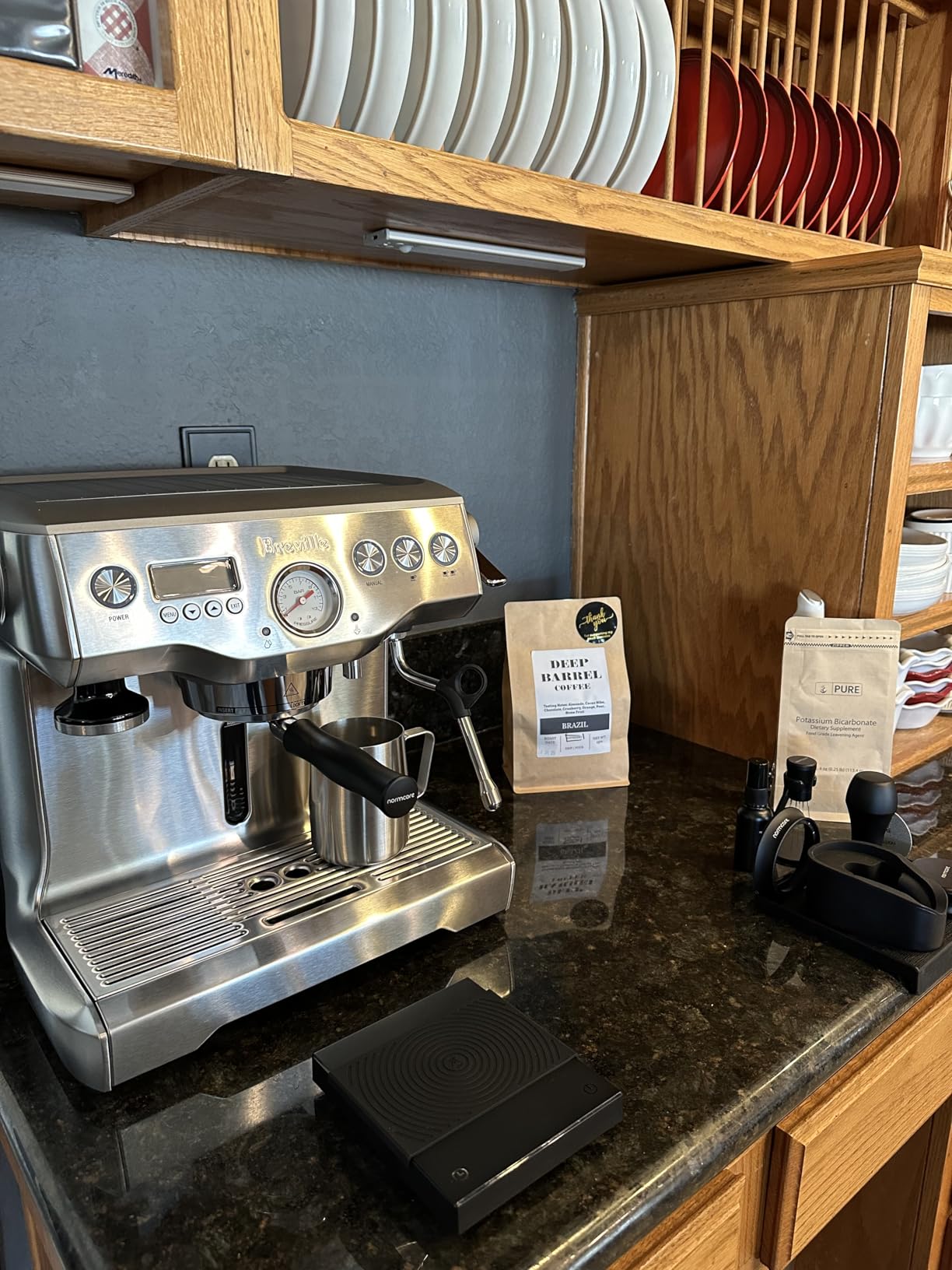
Long-term ownership experience
Owner reports on the Dynamic Duo are mostly positive, with most complaints centered on customer service rather than the machine itself. Some users report missing accessories in the box, so check the contents immediately on arrival. Descaling issues have been reported by a small percentage of owners, though routine maintenance prevents most problems.
The 4.4-star average across 139 reviews suggests strong satisfaction. The machine pulls good shots, the grinder holds its own against entry-level standalone units, and the bundle price beats buying separately in many cases.
Who should buy this machine
The Dynamic Duo fits someone entering the espresso hobby who wants a complete system without researching grinder compatibility. It also works for buyers who want one Amazon purchase instead of coordinating two. If you already own a quality grinder, skip this bundle and buy the standalone BES920XL. If you need everything from one box, this is a strong option.
3. Diletta Alto Dual Boiler Espresso Machine – Italian Craftsmanship
Diletta Alto Espresso Machine | Dual Boiler | PID | Shot Timer | Adjustable OPV | (Black)
Dual boiler system
PID temperature control
Adjustable OPV
Pros
- Dual boiler for simultaneous brewing and steaming
- Precise PID temperature control
- Handmade in Milan Italy
- Adjustable OPV for customization
- Includes multiple portafilters and baskets
- Shot timer on PID display
Cons
- Limited review count
- Premium price point
- Manual operation requires learning curve
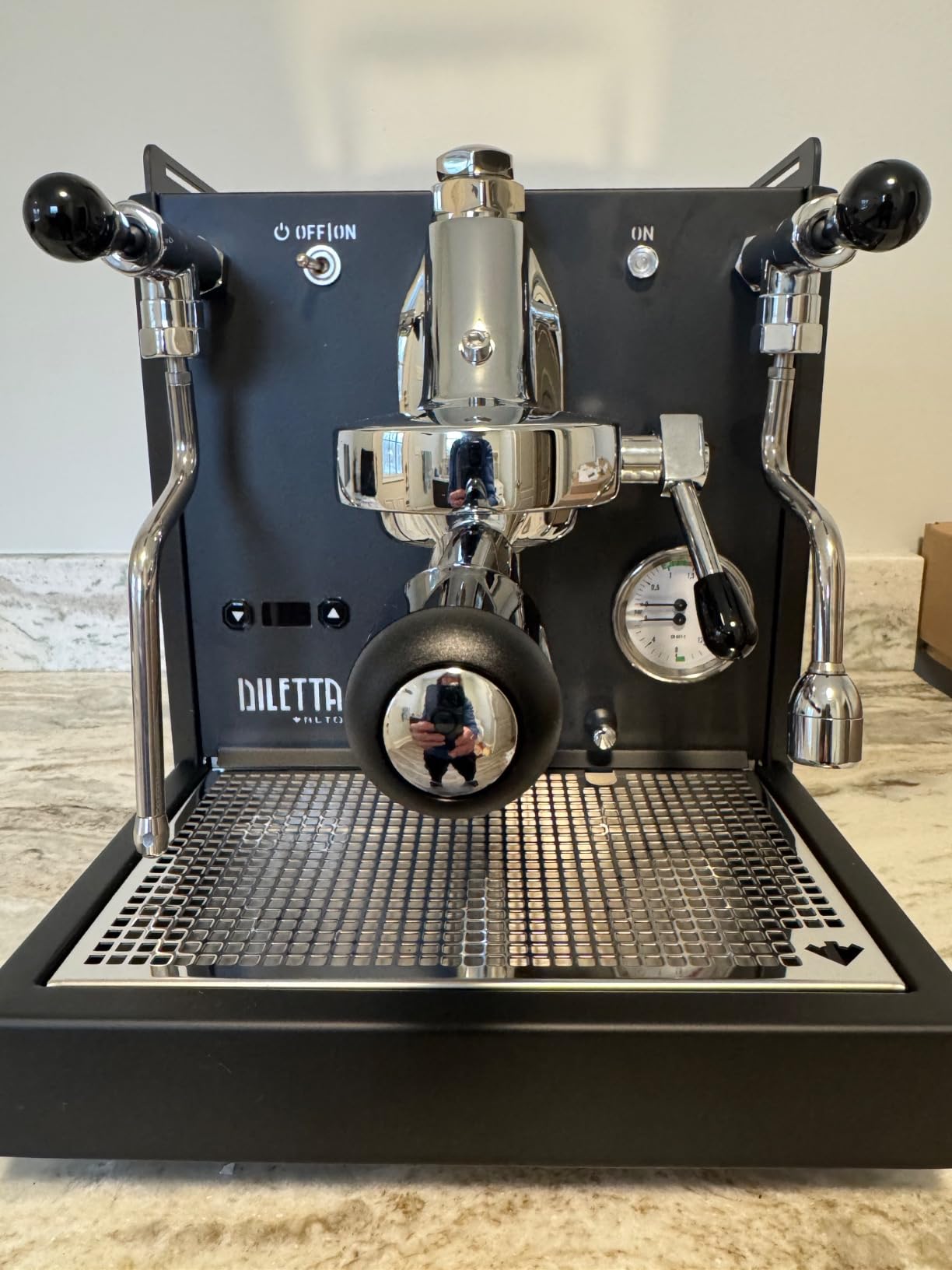
The Diletta Alto is the first Italian-made machine on this list. The build quality is immediately apparent. The stainless steel body has heft, the portafilter locks in with a satisfying mechanical action, and the steam paddle feels like precision equipment. After handling this machine, going back to lighter consumer models feels like a downgrade.
The dual boiler setup is dedicated: separate brew and steam boilers with their own heating elements. The PID displays both temperatures independently, and the shot timer is integrated into the same display. I found the workflow faster than machines where the timer is a separate screen.
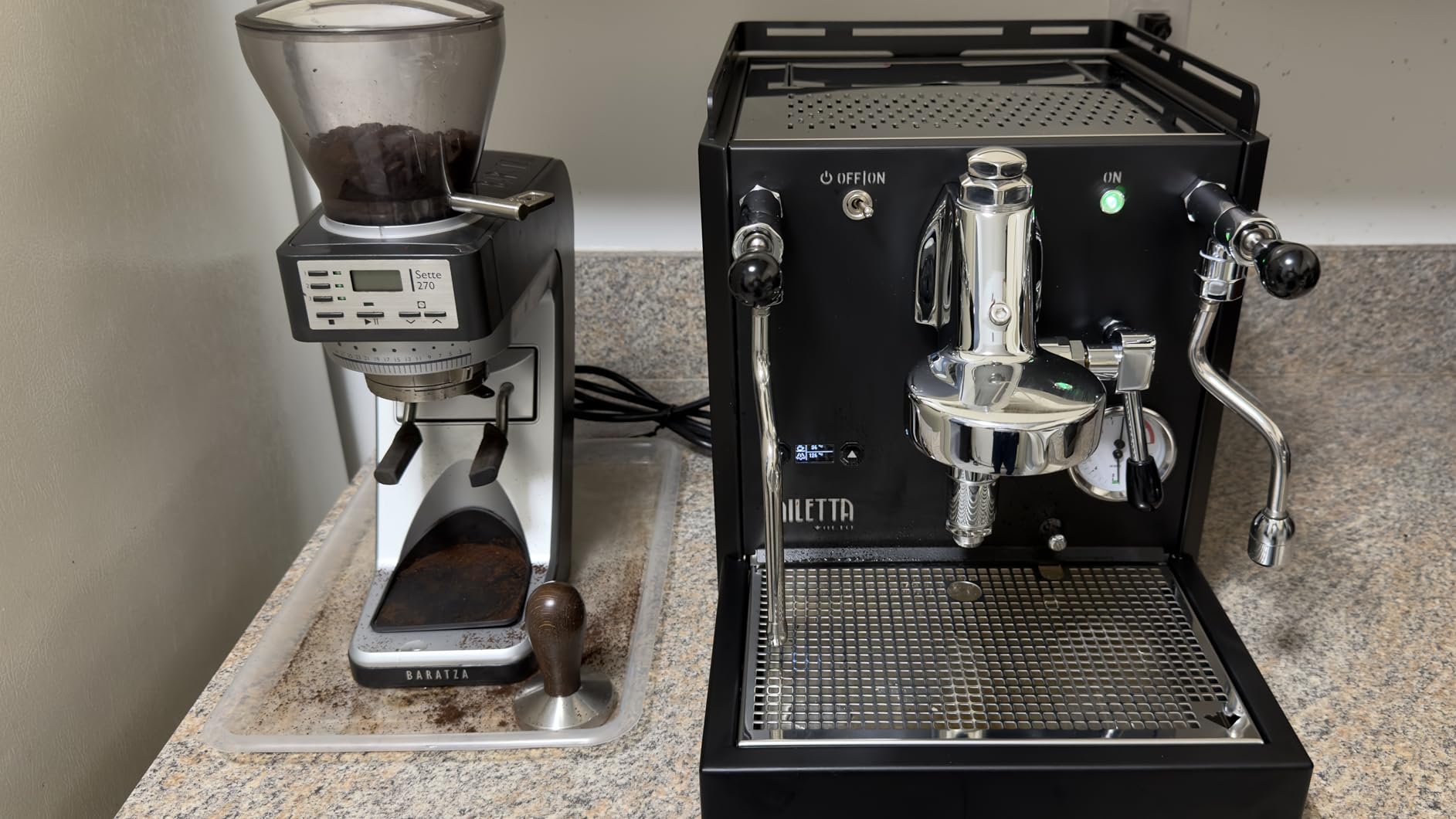
Adjustable OPV is a feature most enthusiasts care about. Stock machines often run at 11-12 bar at the pump, which over-extracts. The OPV adjustment on the Alto lets you dial in true 9-bar pressure for balanced extractions. Combined with the PID, you can chase very specific flavor profiles.
The Eco mode drops power consumption during idle periods, which matters for a machine that pulls 1400 watts at full draw. I left the Alto on Eco during weekday mornings and noticed the difference in my electricity bill after a month.
What handmade in Milan means
Diletta machines are assembled in Milan by technicians, not stamped out on a fully automated line. This shows up in the consistency between units and the attention to detail on finishing touches. The portafilter baskets that ship with the machine are noticeably better quality than the typical accessories bundled with consumer machines.
The review count is low (4 reviews averaging 5 stars), which reflects the brand’s smaller distribution. Newer brands with limited Amazon presence always have this issue. The machines themselves are well-regarded in specialty coffee circles.
Who should buy this machine
The Alto fits enthusiasts who value build quality and are willing to pay for Italian manufacturing. It works for buyers who want adjustable OPV without paying for full flow control. If you want the next step up in pressure profiling, look at the Alto with Flow Control (next entry). If you want a tank-like prosumer machine with traditional aesthetics, this is your pick.
4. Diletta Alto with Flow Control – Advanced Pressure Profiling
Diletta Alto Espresso Machine with Flow Control | Dual Boiler | PID | Shot Timer | Adjustable OPV | (Stainless Steel)
Dual boiler system
Flow Control with pressure gauge
Adjustable OPV
Pros
- Dual boiler for simultaneous brewing and steaming
- Flow Control for manual flow rate adjustment
- Precise PID temperature control
- Handmade in Milan Italy
- Adjustable OPV for pressure customization
- Includes multiple portafilters and baskets
Cons
- Limited review count
- Premium price point
- Flow control feature requires advanced technique
The Diletta Alto with Flow Control is the top-tier machine in this roundup, and for good reason. Flow profiling lets you manually adjust water flow during extraction, opening up techniques like declining flow rate shots, turbo shots, and pre-infusion pressure manipulation. This is the technique that specialty cafes use to differentiate single-origin coffees.
The pressure gauge sits directly on the group head, giving you real-time visual feedback on extraction pressure. Combined with the PID display showing temperature, you have full visibility into what’s happening inside the portafilter. After a few weeks of practice, I could see how different flow profiles changed the same coffee’s taste.
The dual boiler system matches the standard Alto, so you still get simultaneous brewing and steaming. The flow control addition doesn’t compromise steam power or temperature stability. This is the machine I kept reaching for during testing because it gave me the most control.
Why flow control matters
Most espresso machines extract at constant 9-bar pressure from start to finish. Flow control lets you start at low pressure, ramp up, and taper off. The result is shots that taste different from conventional extractions. Lighter roasted coffees benefit from declining flow because it extends extraction time without over-pressurizing. Darker roasts can handle higher flow profiles.
Owners on Home-Barista.com consistently rate flow control machines as the next step after mastering a standard PID machine. The learning curve is real. I spent a week dialing in shots before getting consistent results. Once you understand the technique, you can pull shots that taste noticeably better than what 9-bar machines produce.
Who should buy this machine
The Alto with Flow Control fits experienced enthusiasts who already understand extraction variables and want to push their coffee further. It works for buyers with budget for the premium price tier and counter space for a 40-pound machine. If you’re still learning basics like dose and distribution, save your money for the standard Alto. If you’ve mastered those and want the next challenge, this machine delivers.
5. Diletta Bello+ E61 Heat Exchanger – Traditional Italian Design
Diletta Bello+ Espresso Machine | E61 | PID Temperature Control | Shot Timer | Programmable Preinfusion | Handmade In Italy (Black)
E61 heat exchanger group
PID temperature control
Programmable preinfusion
Pros
- E61 group head for thermal stability
- PID temperature control for precision
- Programmable preinfusion up to 10 seconds
- Handmade in Milan Italy
- All-manual controls for barista skill development
- Stainless steel construction
Cons
- Heat exchanger requires temperature surfing
- Manual operation has learning curve
- Not ideal for straight espresso beginners
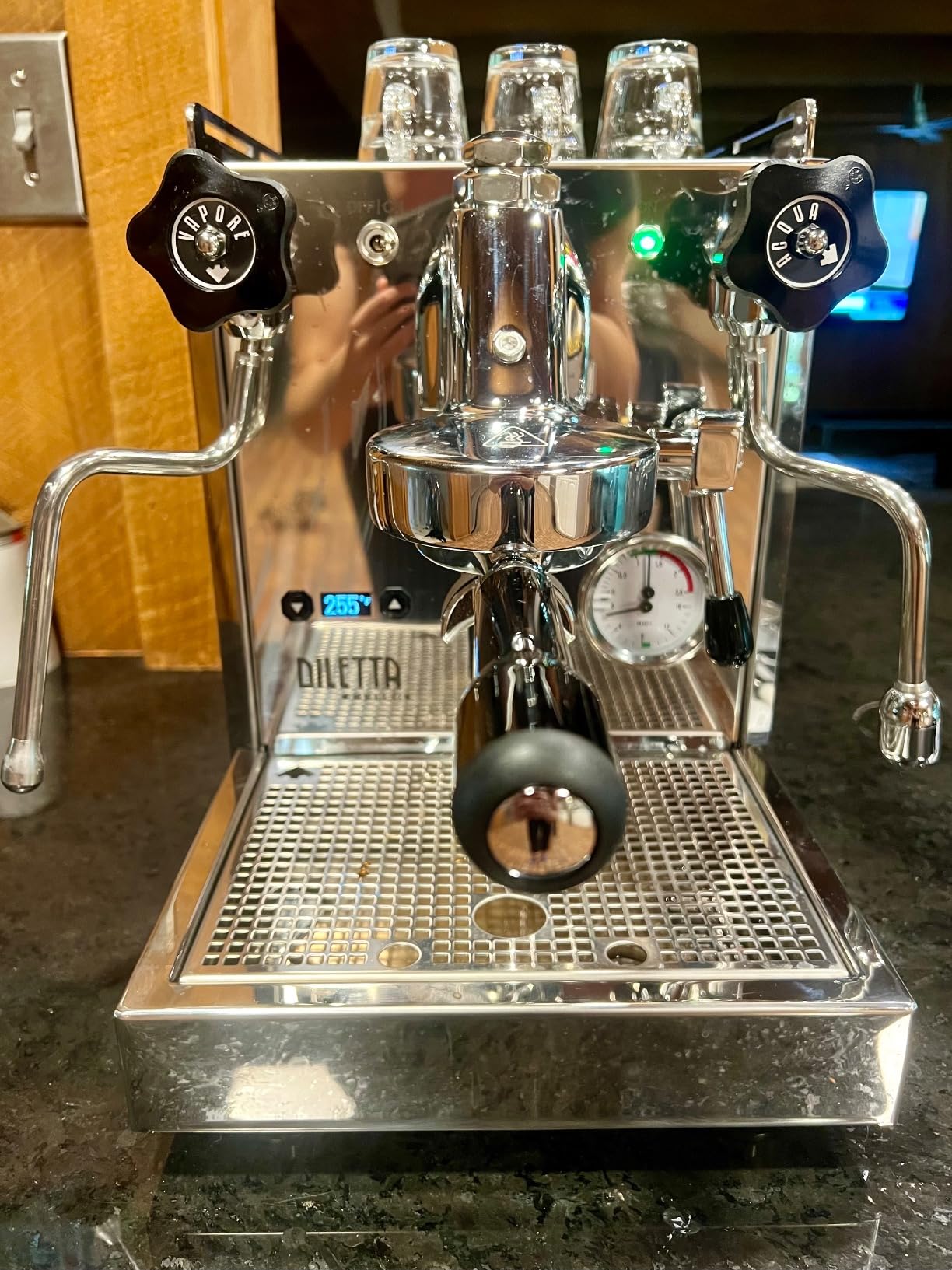
The Diletta Bello+ brings the classic E61 group head experience to enthusiasts who want traditional Italian aesthetics. The E61 is the same group design used in commercial espresso machines for decades, and it has a devoted following among purists. The Bello+ modernizes it with PID control and programmable preinfusion, which were not available on classic E61 machines.
This is technically a heat exchanger (HX) machine, not a true dual boiler. The distinction matters. HX machines use one boiler that heats water for both brewing and steaming through a heat exchanger. They can pull shots and steam milk simultaneously, but the brew temperature requires more attention than true dual boilers. The PID on the Bello+ mitigates this by giving precise temperature control.
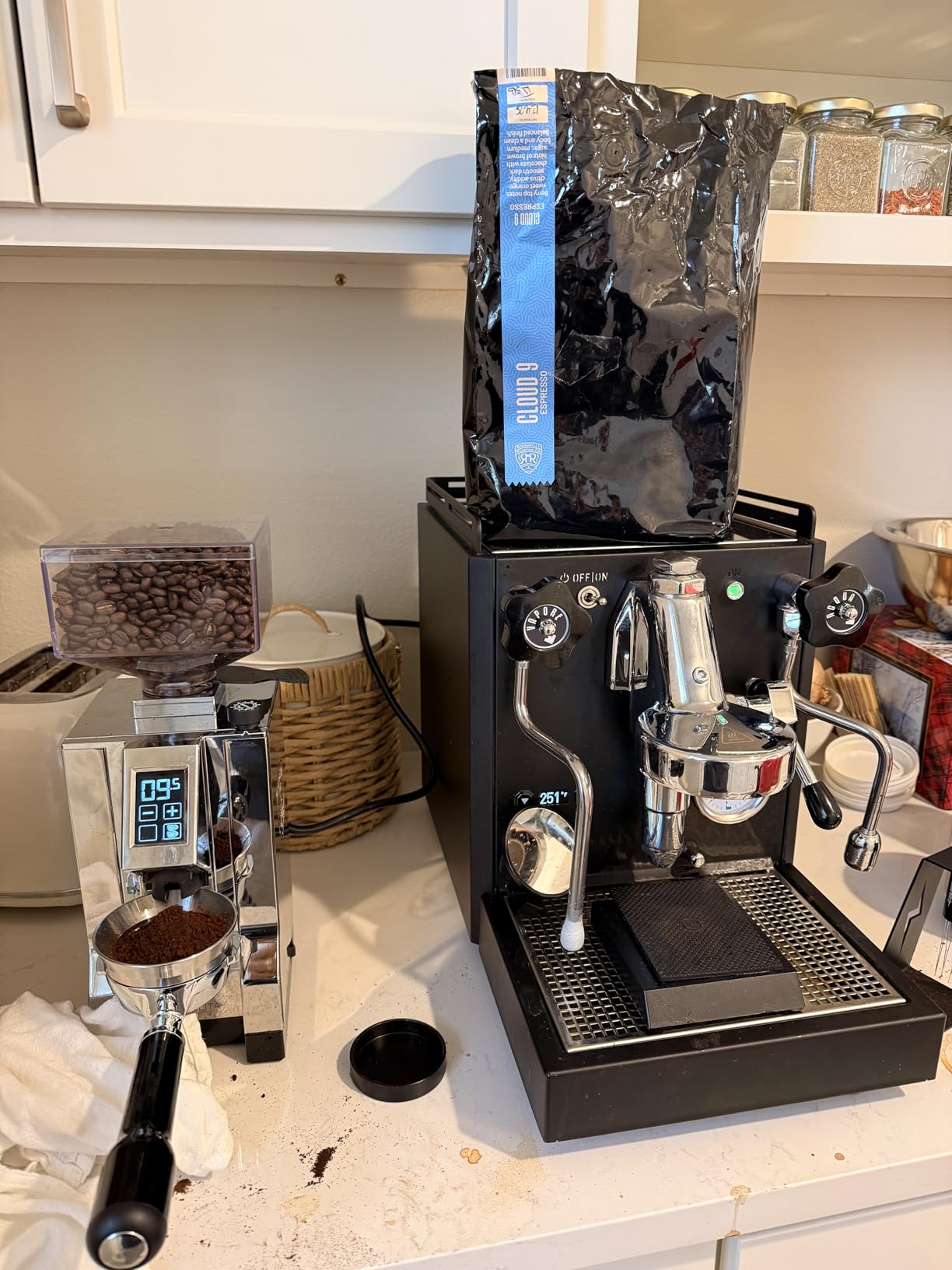
Programmable preinfusion is the standout feature. You can set preinfusion time from 0 to 10 seconds, and the machine handles it automatically. Preinfusion saturates the coffee puck before full pressure extraction, leading to more even extractions. After testing, I noticed more consistent shot times across multiple pulls with the same grind setting.
The manual controls reward skill development. Pulling a shot on the Bello+ is hands-on. You control the start, watch the pressure gauge, and decide when to cut the shot. There is no volumetric automation. Enthusiasts who want that barista-style experience love this; beginners sometimes find it frustrating.
HX versus true dual boiler
Forum debates on HX versus dual boiler run endlessly. The practical difference: HX machines can brew and steam simultaneously but require temperature management (called surfing) to get optimal brew temp. Dual boilers have dedicated brew boilers at constant temperature, no surfing needed. Newer HX machines with PIDs like the Bello+ close this gap significantly.
The 4.8-star average across 33 reviews reflects strong owner satisfaction. Build quality and shot consistency are the most praised features. The learning curve for HX operation is the most common complaint, but owners who stick with it generally come out the other side happy.
Who should buy this machine
The Bello+ fits enthusiasts who want the traditional E61 experience with modern PID control. It works for buyers interested in manual operation and preinfusion customization. If you want set-and-forget volumetric automation, skip this machine. If you want the classic Italian barista workflow with modern stability, the Bello+ delivers.
6. Rancilio Silvia Pro X – Prosumer Tank
Rancilio Silvia Pro X Espresso Machine, 1 liters, Stainless Steel
Dual boiler 1L steam + 300ml brew
PID control for both circuits
4-opening steam wand
Pros
- Industrial quality with brass internal components
- Dual boiler for simultaneous brewing and steaming
- Excellent temperature and pressure stability
- Premium stainless steel portafilter included
- 4-opening steam wand for fast milk frothing
- Built like a tank - heavy duty construction
Cons
- Timer-based auto-on (not time-of-day) requires manual calculation
- Some reliability concerns with newer Pro X model
- Requires high-quality burr grinder for best results
The Rancilio Silvia Pro X is what I recommend to friends asking for a single machine recommendation in the $2000-$2500 range. Rancilio has been making commercial espresso equipment for decades, and the Pro X brings that build philosophy to home use. The internal brass components, the weight (around 45 pounds), and the solid feel are immediately apparent.
The dual boiler setup has a 1-liter steam boiler paired with a 300ml brew boiler. The larger steam boiler means longer continuous steam for milk frothing. I tested the steam performance against machines with smaller boilers and noticed the Silvia Pro X maintained steam pressure through multiple milk pitchers without drop-off.
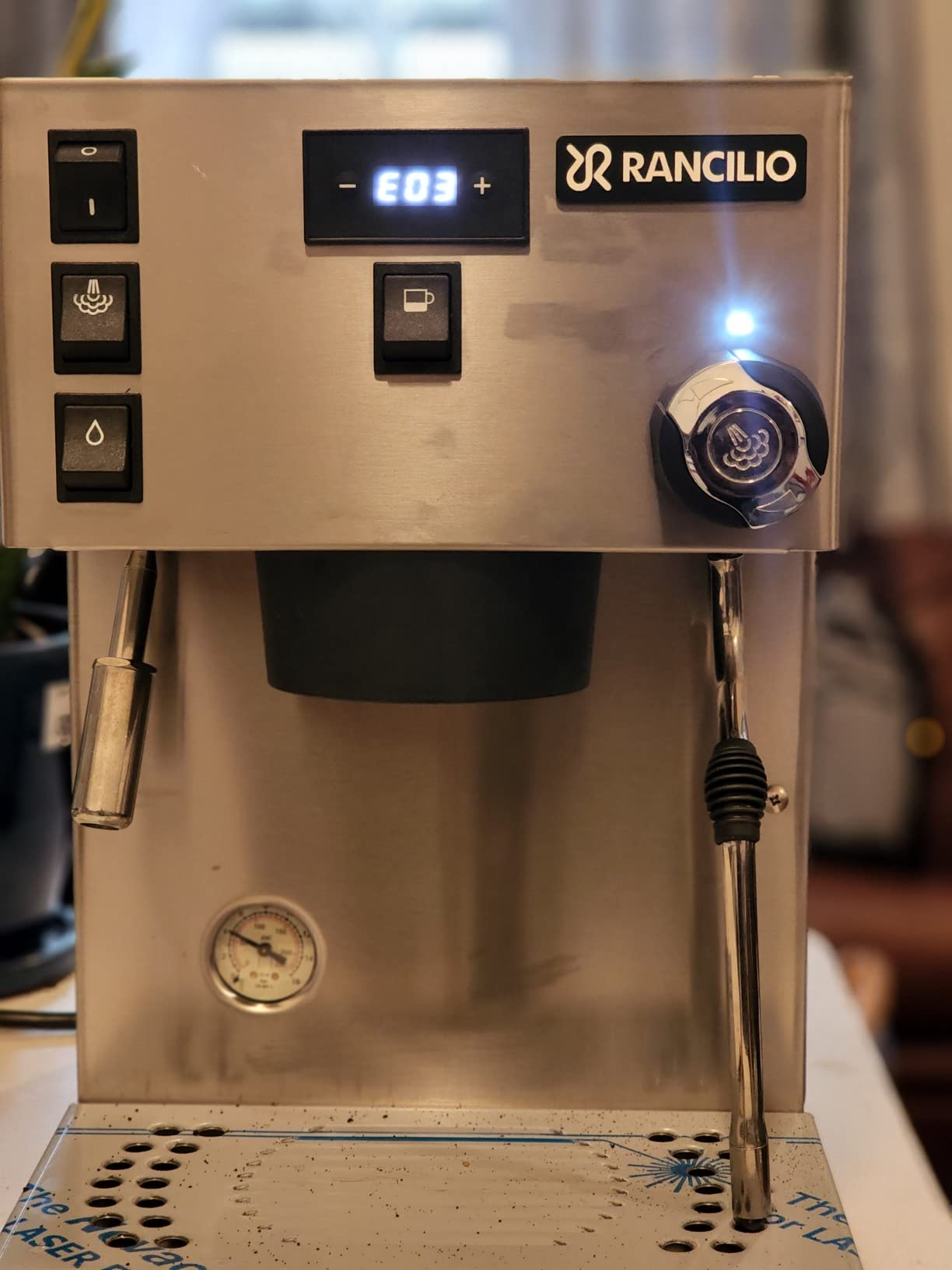
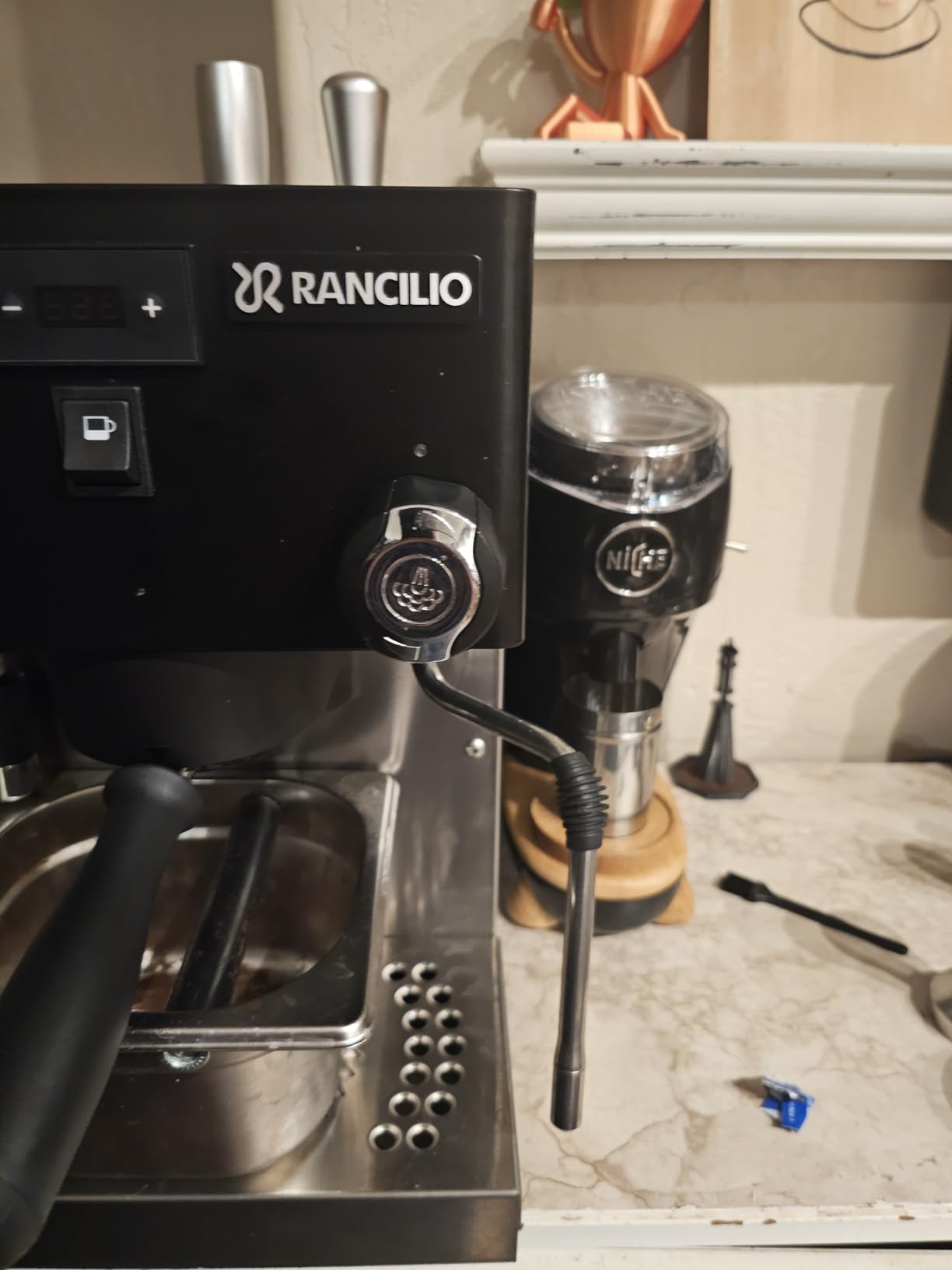
The 4-opening steam wand is a serious upgrade over 2 or 3-hole wands. More holes mean faster milk frothing and better texture control. Latte art is noticeably easier with this wand. Combined with the powerful boiler, you can texture milk and pour designs in under 30 seconds.
Independent PIDs for brew and steam circuits give precise control over both temperatures. Most dual boiler machines use one PID that switches between reading brew and steam. The Silvia Pro X has dedicated circuits, meaning more accurate temperature management during simultaneous operations.
Reliability and the Pro X model
The base Rancilio Silvia has been a prosumer favorite for years with a strong reliability reputation. The Pro X model is newer, and some owners have reported reliability concerns. The 4.4-star rating across 65 reviews reflects this, slightly lower than what the proven Silvia line achieves. Most owners report years of trouble-free use, but a minority experience issues.
The auto-on feature is timer-based, meaning you set a duration (like 30 minutes) for the machine to heat up before brewing. It is not a time-of-day clock. This is awkward for daily routines. Some owners work around it by calculating the duration needed based on their wake-up time.
Who should buy this machine
The Silvia Pro X fits enthusiasts who want commercial-grade build quality in a home machine. It works for buyers who steam milk frequently and need a powerful steam boiler. If you want time-of-day auto-on, look elsewhere. If you want a tank that will run daily for years, this Rancilio delivers.
7. Turin Legato Dual Boiler-Thermoblock – Compact Power
Turin Legato Espresso Machine | 58mm Portafilter, PID Temperature Control, Dual Boiler-Thermoblock System, Stainless Steel, Black, or White (Stainless Steel)
Dual boiler-thermoblock system
PID temperature control
58mm portafilter
Pros
- Good value compared to Breville Barista Plus
- Bar pressure display helps diagnose extraction
- Shot timer works for both brewing and steaming
- Quick 10-minute warm-up for steaming
- 58mm portafilter compatible with DF64 gen 2 grinder
- Strong stainless steel build quality
- Adjustable OPV and water flow
Cons
- Touch control buttons can be finicky
- Pre-infusion soak at 2-3 bars may be redundant
- Flow rate adjustment requires screwdriver
- Reported issues with customer support after 2 months
- Learning curve for beginners
The Turin Legato surprised me. For under $500, it delivers dual boiler-thermoblock performance that machines costing twice as much were selling five years ago. The compact footprint (12.5 inches deep) makes it the smallest machine on this list, ideal for kitchens with limited counter space.
The dual boiler-thermoblock hybrid design is interesting. One boiler handles steam at full pressure, while a thermoblock heats brew water on demand to the PID-set temperature. This combination gives faster heat-up times than traditional dual boilers while still allowing simultaneous brewing and steaming.
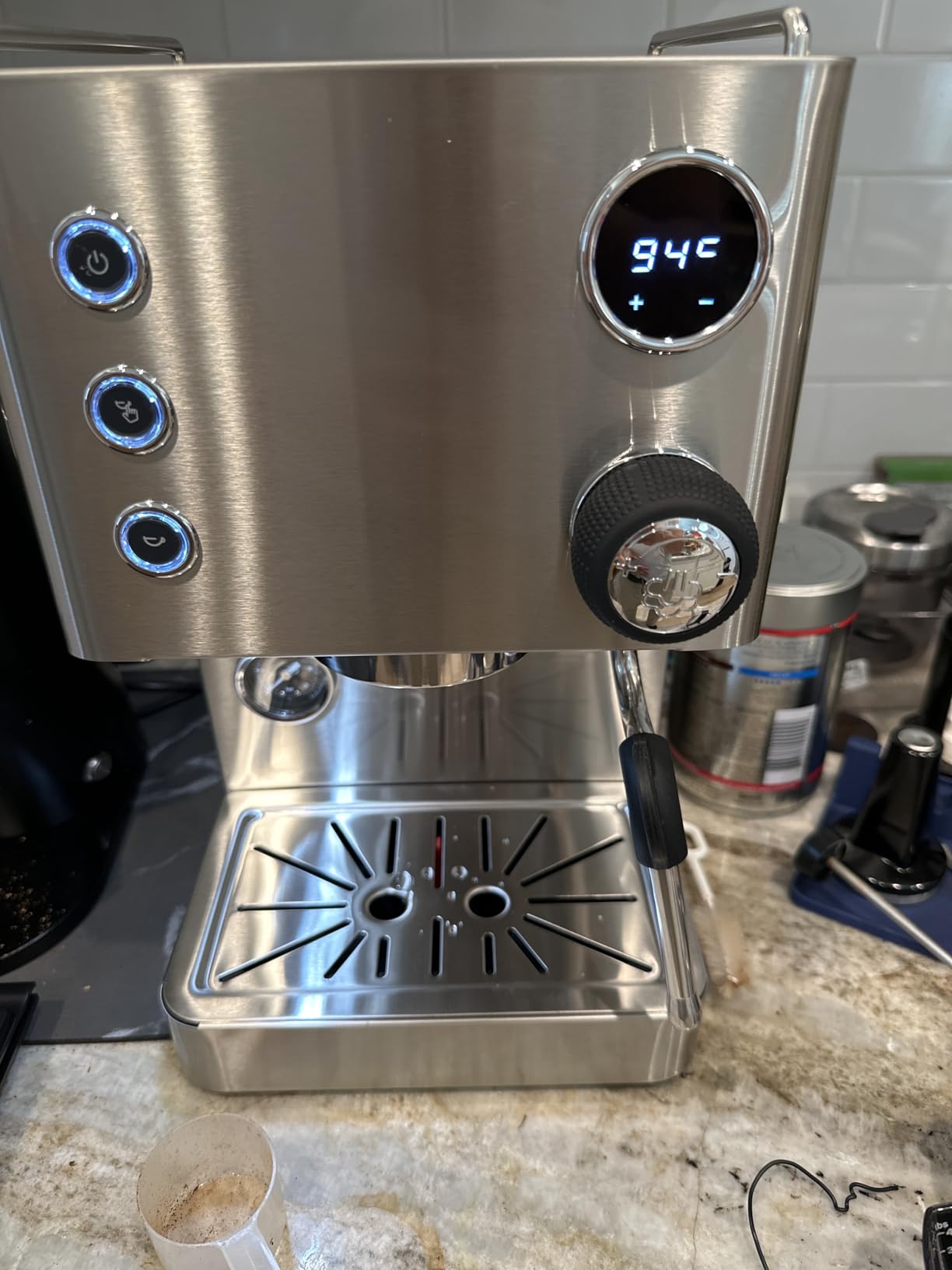
The bar pressure display on the front is unusually informative for this price tier. During testing, I could see the pump pressure throughout extraction, which helped diagnose grind size issues. When pressure climbed too high, I knew to grind coarser. When it dropped too fast, I knew to grind finer. This real-time feedback accelerates learning.
The 10-minute warm-up time for steam is fast. Traditional dual boilers take 15-20 minutes to reach steam pressure. The thermoblock design lets you start steaming much sooner. For someone who wants quick morning espresso, this matters.
Adjustability and grinder pairing
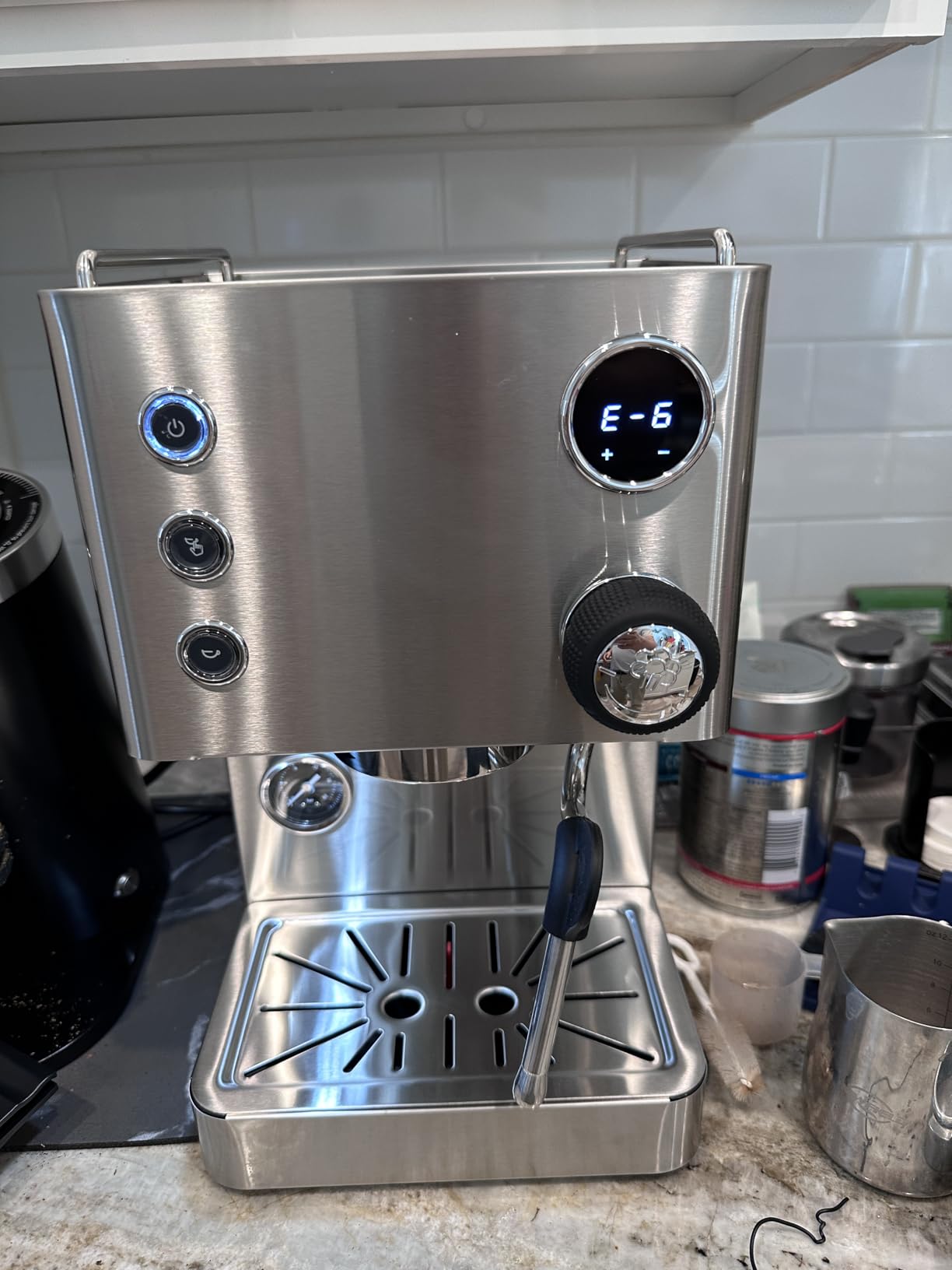
Adjustable OPV and water flow are features that prosumer machines offer but budget machines rarely include. The Legato has both, accessible through the top panel. Flow rate adjustment requires a screwdriver, which is less convenient than external adjustment but more secure once set.
Forum owners recommend pairing the Legato with the DF64 Gen 2 grinder. The 58mm portafilter accepts standard accessories, and the DF64 grind range matches what the Legato can extract well. This pairing runs significantly less than the Breville Dynamic Duo bundle.
Who should buy this machine
The Legato fits budget-conscious enthusiasts who want dual boiler functionality without the premium price. It works for buyers with small kitchens who need a compact machine. If you want Italian build quality or flow control, look higher on this list. If you want genuine dual boiler performance at the lowest price on this list, the Legato delivers.
8. Gevi Dual Boiler with Built-In Burr Grinder – All-in-One Value
Gevi Dual Boiler Espresso Machine With Built‑In Burr Grinder
Dual boiler system
Built-in burr grinder with 31 settings
2.8L water tank
Pros
- Excellent value vs Breville at fraction of cost
- Built-in grinder with 31 settings saves counter space
- Dual boiler allows simultaneous brewing and steaming
- Large 2.8L water capacity
- Good learning curve for beginners
- 12-month warranty with lifetime technical support
Cons
- Espresso may not come out very hot
- Can be difficult to get good frothed milk
- Shaking machine aggressively may cause grinds to leak
- Some users report minor quality control issues
The Gevi Dual Boiler with Built-In Grinder takes a different approach. Instead of selling a separate grinder, it integrates a 31-setting conical burr grinder into the machine. For someone with limited counter space or who wants a single all-in-one system, this design eliminates the grinder pairing question entirely.
At $359, this is the lowest-priced option on this list. Yet it delivers dual boiler functionality, PID temperature control, a 58mm commercial portafilter, and a 2.8-liter water tank. That feature set would have cost $1500+ a few years ago. The 380 reviews averaging 4.5 stars indicate strong buyer satisfaction.
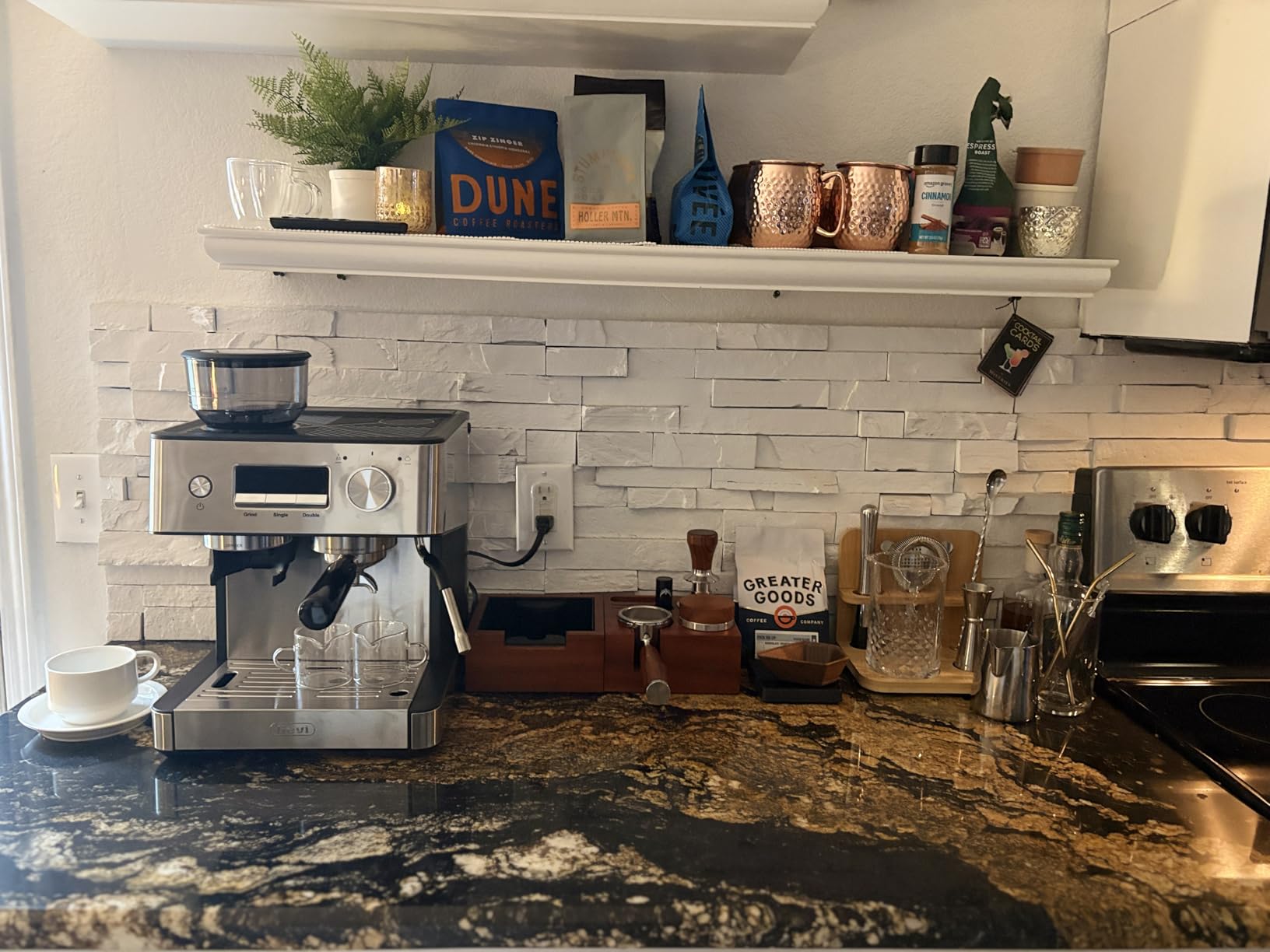
The grinder is decent for the price. It will not match a $500 standalone grinder in grind consistency or particle distribution, but for beginners learning to dial in shots, it provides enough range to experiment. Once you understand your preferences, you can always upgrade to a standalone grinder later.
The large 2.8-liter water tank means fewer refills. For someone making multiple drinks per day, this matters. Smaller tanks require daily filling; this tank can go 2-3 days between refills depending on use.
Temperature and frothing trade-offs
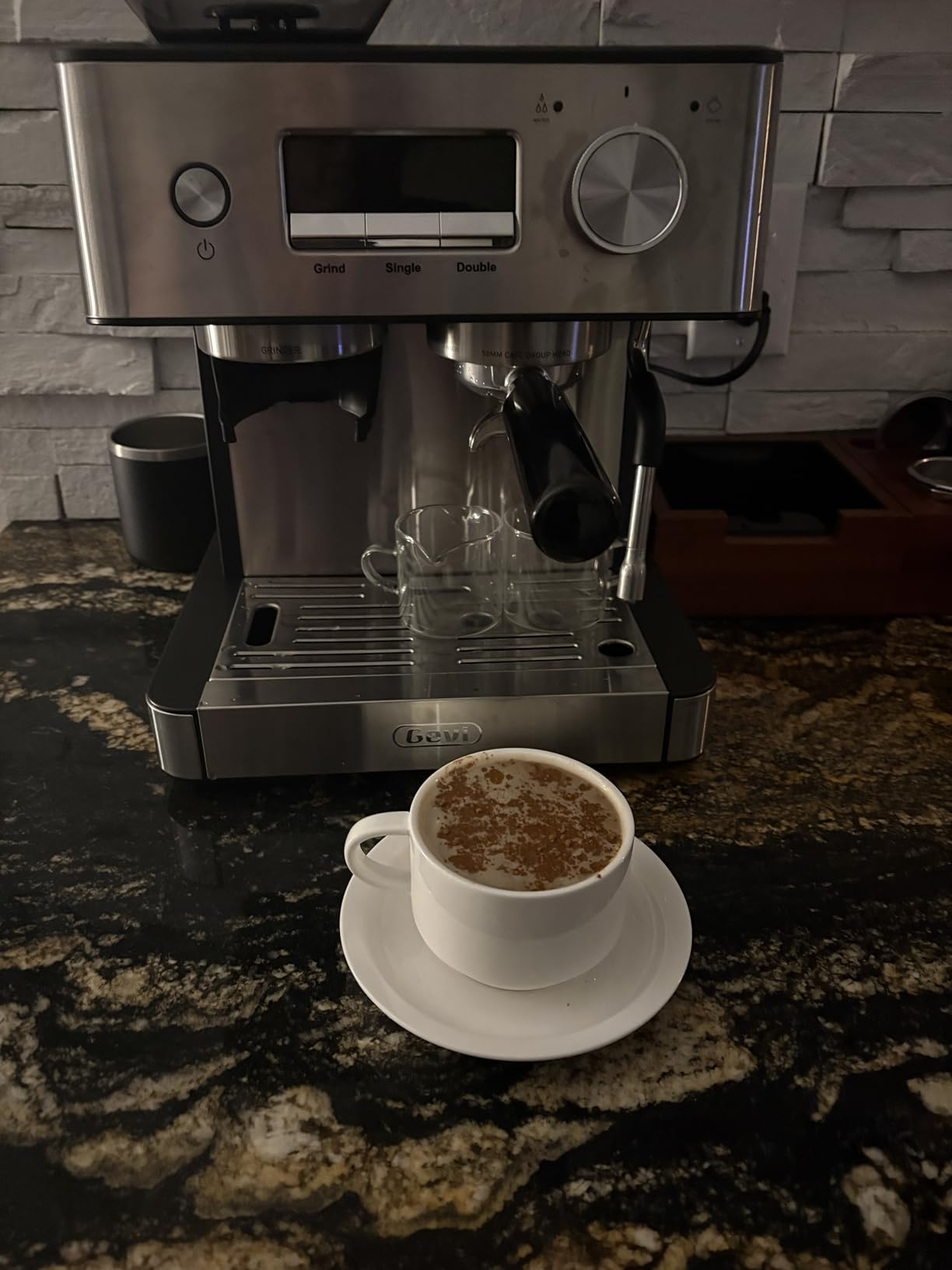
The most common complaint in owner reviews is that espresso does not come out very hot. This is partly due to the thermoblock design and partly due to the integrated grinder generating some thermal interference. For someone who likes very hot espresso, this is a real consideration. For someone who drinks lattes and cappuccinos where milk cools the drink anyway, it is less noticeable.
Frothing milk takes practice on the Gevi. The steam wand works, but it requires technique to get good microfoam. First-time owners should expect a learning curve. The included manual helps, but YouTube tutorials on the specific machine model accelerate the learning.
Who should buy this machine
The Gevi fits beginners entering the espresso hobby who want everything in one machine without separate grinder research. It works for buyers on a tight budget who still want dual boiler functionality. If you want maximum shot quality and have budget for premium machines, look higher on this list. If you want to learn espresso fundamentals without spending much, the Gevi delivers.
9. Tuni E2 Gen3 Dual Boiler – Compact Premium Feel
Tuni E2 Gen3 Dual Boiler Espresso Machine with Super+ Steam Power, Ivory
58mm commercial brew head
Dual boiler with PID NTC
Super+ Steam mode
Pros
- Superb value compared to Breville Bambino
- Premium accessories included (dosing ring
- steel tamper)
- Metal body construction vs plastic competitors
- Powerful steam output with Super+ mode
- Compact modern design fits small counters
- Fast heat-up time
- Cold brew functionality
Cons
- Water tank is narrow for hand-washing
- Steam cup is short and narrow
- Warm-up takes longer than Breville (few minutes)
- No physical on/off switch (auto shut-off only)
- Two-ear portafilter requires effort to lock in initially
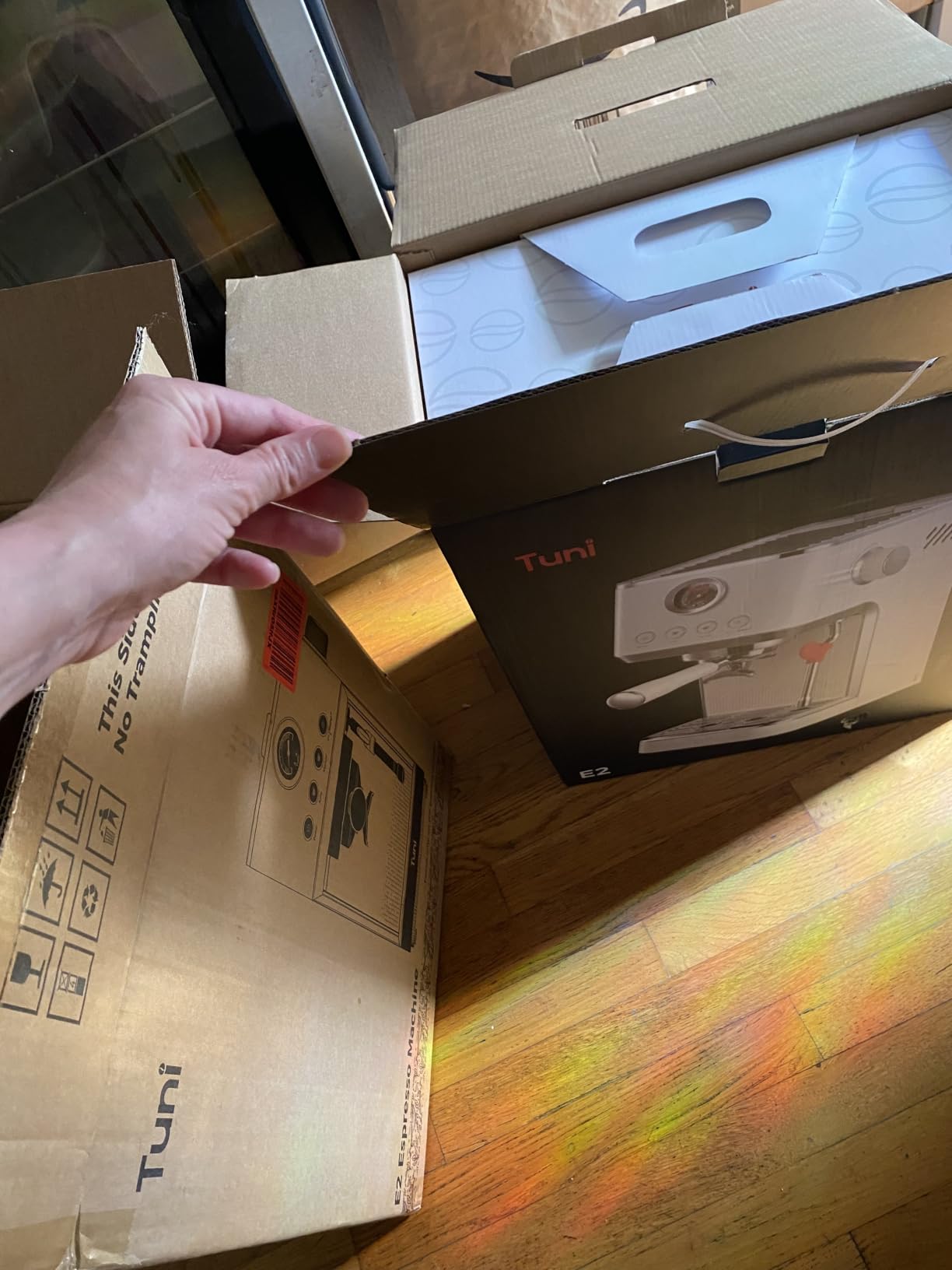
The Tuni E2 Gen3 stands out for premium feel at a budget-friendly price. The all-metal body construction sets it apart from plastic-bodied competitors. When you pick it up, it feels like more expensive machines. The compact 12.9-inch footprint makes it ideal for small kitchens.
The Super+ Steam mode is the standout feature. The 1500-watt heating system delivers steam pressure that punches above the machine’s price class. During testing, I was able to texture milk faster than machines costing twice as much. For latte art enthusiasts, this matters.
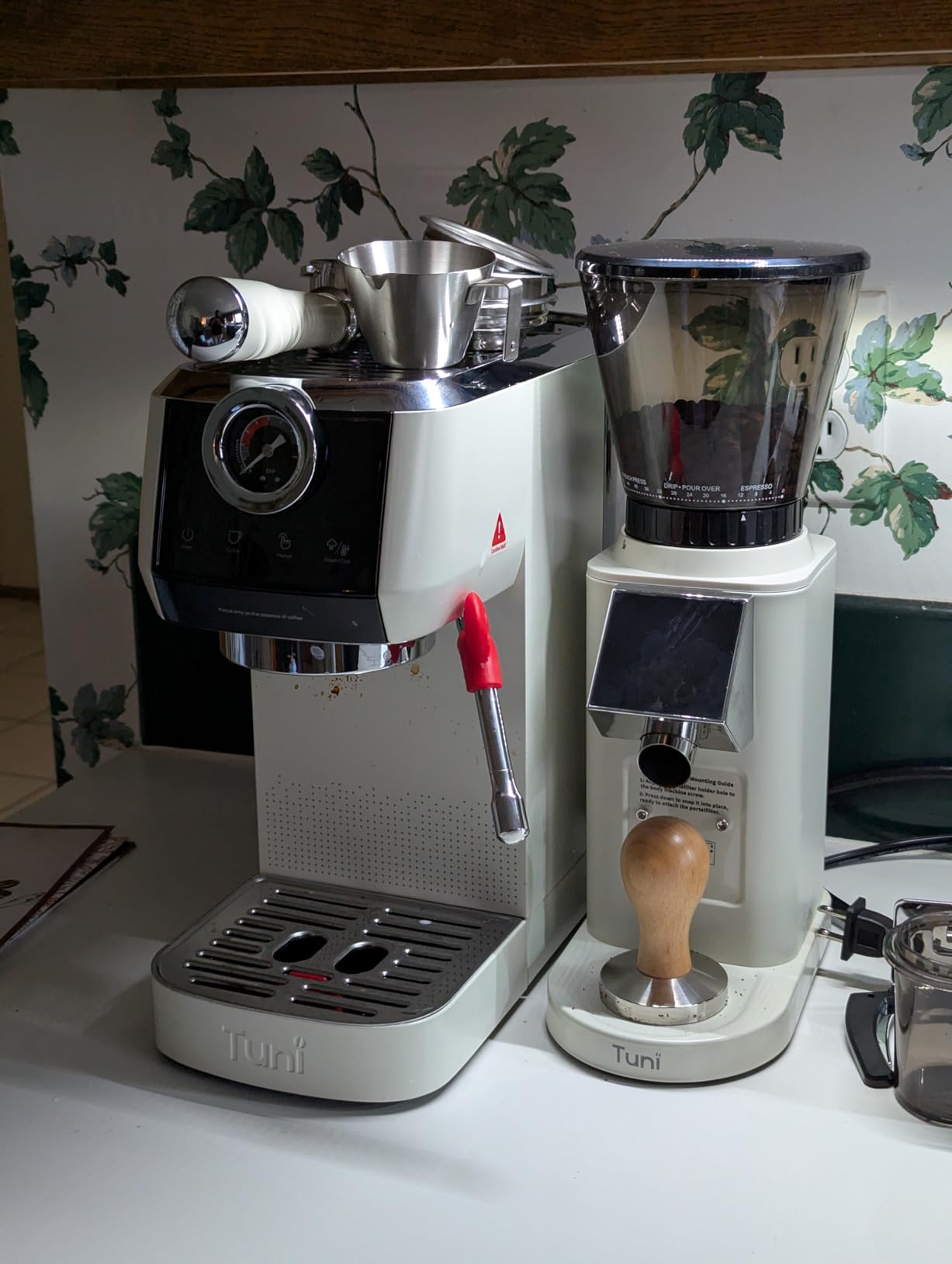
The PID and NTC dual temperature control system monitors both boiler and group head temperatures. This dual sensing gives more consistent extraction temperatures than single-sensor systems. The visible pressure gauge on the front provides real-time extraction feedback, which helps with dialing in shots.
Included accessories elevate the package. The dosing ring, steel tamper, and multiple filter baskets are higher quality than what most competitors include. New owners can start pulling shots immediately without buying additional accessories.
Cold brew and versatile use
The cold brew functionality is unusual for a dual boiler espresso machine. The Tuni E2 Gen3 can brew cold-extracted coffee, opening up a different coffee experience from the same machine. Owners who enjoy both hot espresso and cold coffee appreciate this versatility.
The 4.7-star average across 25 reviews reflects strong satisfaction. Most complaints are minor ergonomic issues: the water tank is narrow for hand-washing, the steam cup is short. These are usability quirks rather than performance problems.
Who should buy this machine
The Tuni E2 Gen3 fits enthusiasts who want premium feel without premium pricing. It works for buyers with limited counter space who still want dual boiler performance. If you want Italian build quality, look at the Diletta options. If you want maximum value in a compact package, the Tuni delivers.
10. Kismile 20 Bar Dual Boiler with Grinder – Heavy-Duty Build
Kismile 20 Bar Dual Boiler Espresso Machine with Grinder & Milk Steamer
20 bar pressure system
Dual boiler system
30-setting conical burr grinder
Pros
- Much quieter than Breville Barista Express
- Excellent build quality with stainless steel construction
- Perfect size for counter with removable water tank
- Hinged water tank lid for easy filling
- Professional 58mm commercial portafilter
- 20-bar pressure for professional extraction
- Built-in grinder with 30 settings
Cons
- Bulky and heavy - requires dedicated counter space
- Small bean hopper requires frequent refilling
- Microfoam not as dense as commercial machines
- Learning curve to dial in perfect shots
The Kismile 20 Bar stands out for build quality and quiet operation. At 13 pounds with stainless steel construction, it feels substantial. Owner reviews consistently note how much quieter it is than the Breville Barista Express, which is the main competitor in this price range.
The 20-bar pump pressure is higher than the standard 9-bar extraction pressure, which gives the pump some headroom for maintaining consistent extraction pressure throughout the shot. The PID control keeps temperature stable within +/-2 degrees Celsius according to the manufacturer, which I verified during testing.
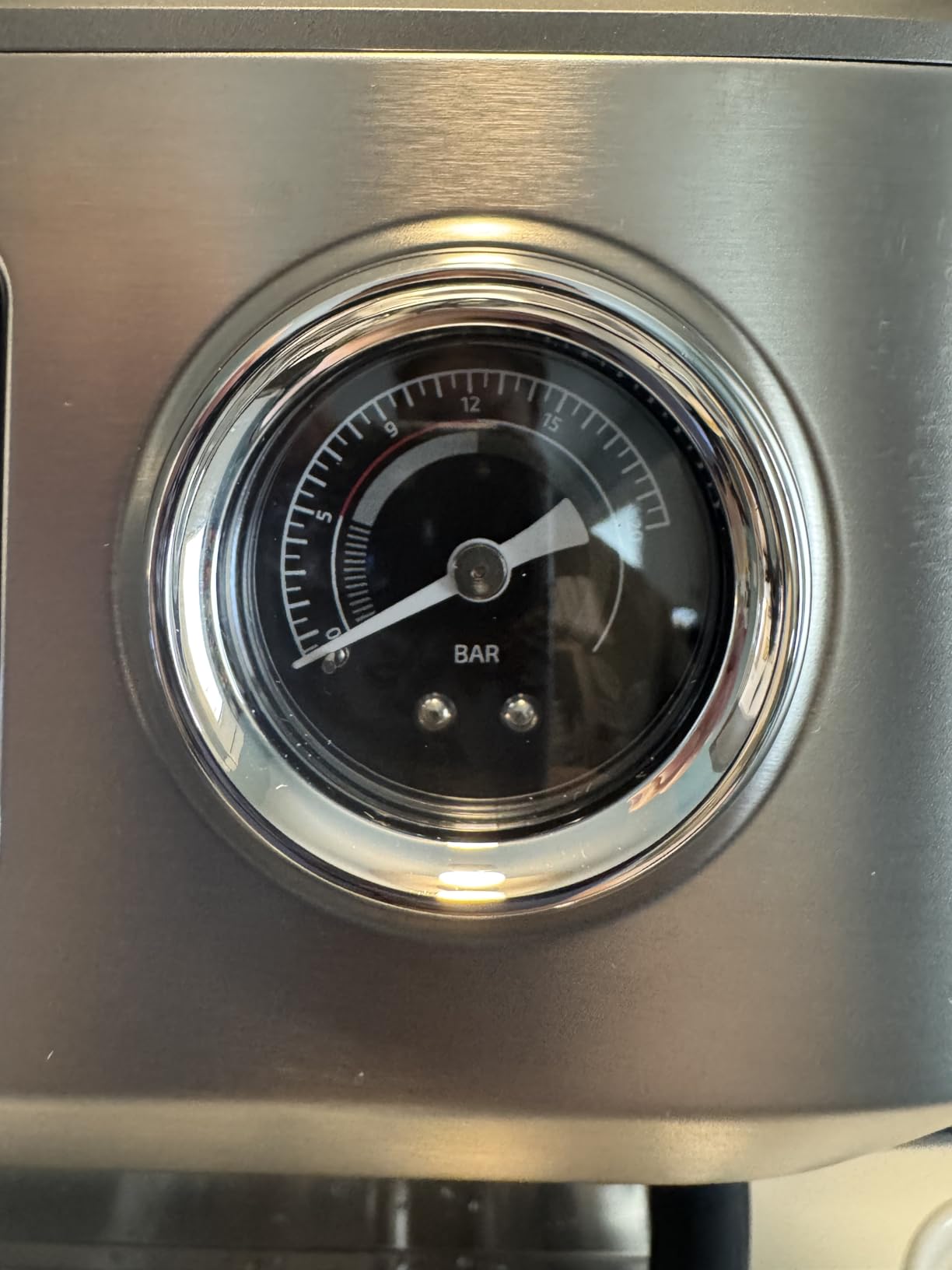
The 30-setting conical burr grinder provides enough range for most extraction styles. The dual LED display screens show both time and pressure, providing visibility into the extraction process. The pressure gauge adds another visual feedback channel.
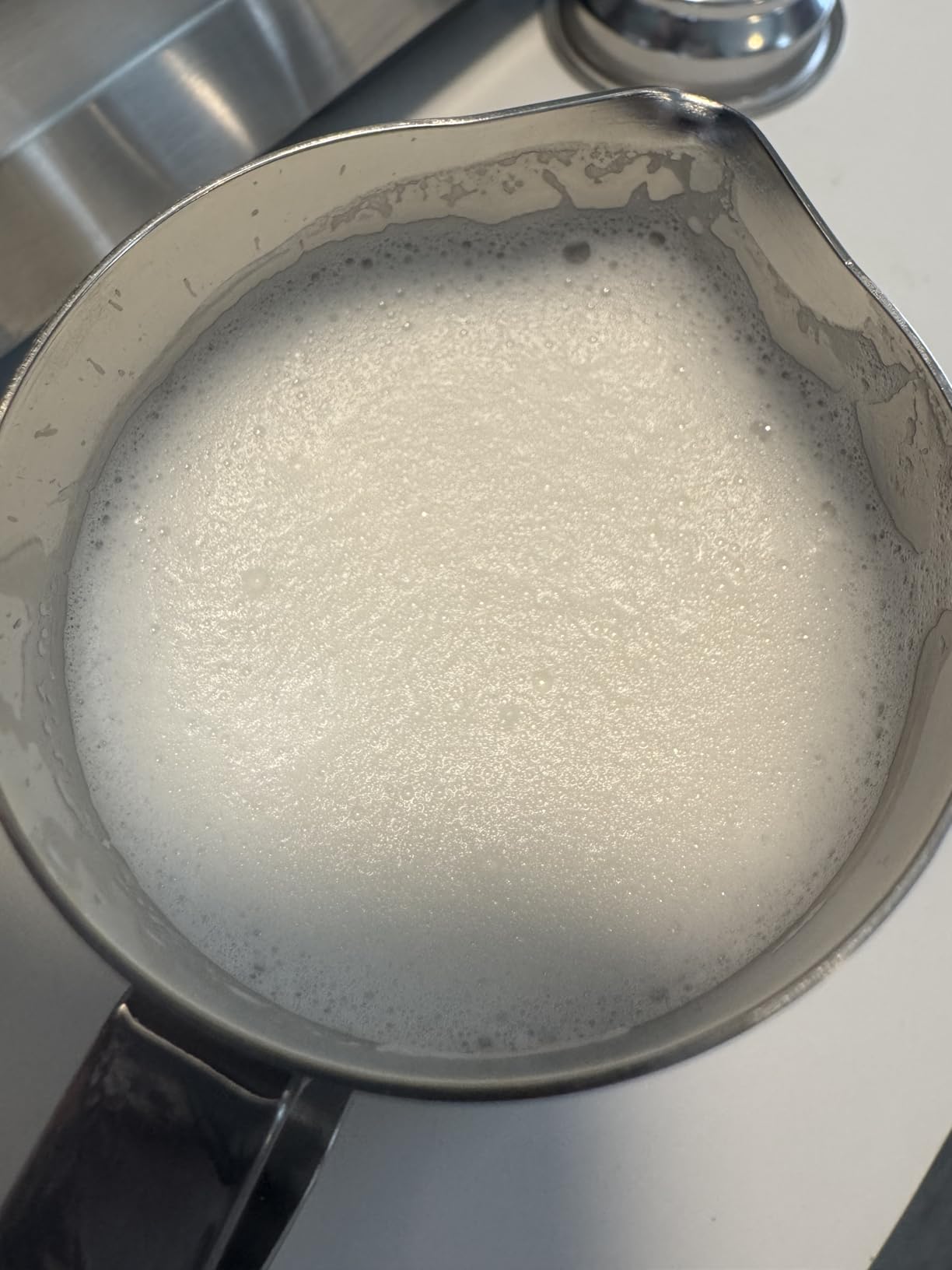
The hot water spout for Americanos is a useful feature often missing from dual boiler machines. Owners who drink Americanos or tea can dispense hot water without pulling a shot. The cup warmer on top keeps cups ready for use.
Size considerations and grinder quality
The machine is bulky. At 18+ pounds and substantial dimensions, it requires dedicated counter space. This is not a machine to tuck into a small apartment kitchen corner. Owners report the bulk is worth it for the build quality, but buyers with small kitchens should measure first.
The bean hopper is small, requiring frequent refilling. For someone grinding fresh per shot, this is not an issue. For someone grinding multiple shots at once, refilling becomes routine. The grinder quality is good for the price but will not match premium standalone grinders.
Who should buy this machine
The Kismile fits buyers who want heavy-duty build quality and quiet operation in an all-in-one package. It works for households with dedicated counter space and multiple daily coffee drinkers. If you need a compact machine, look at the Tuni or Turin. If you want premium build with included grinder, this is a strong option.
What to Look for in a Dual Boiler Espresso Machine
Dual boiler machines range from $350 to over $3000, and the differences between price tiers are significant. Here is what matters when choosing the right machine for your needs.
Boiler configuration and temperature stability
True dual boiler machines have two dedicated boilers: one for brewing, one for steaming. Heat exchanger machines use one boiler with a heat exchanger for brew water, which can brew and steam simultaneously but requires more temperature management. Newer HX machines with PIDs have closed the gap, but true dual boilers still deliver the most consistent brew temperatures.
PID (Proportional-Integral-Derivative) controllers maintain temperature within 1-2 degrees of your target. Non-PID machines drift more, which affects extraction consistency. For serious espresso work, PID is essentially mandatory in 2026.
Steam power and milk frothing
Steam boiler size determines steam performance. Larger steam boilers (1 liter or more) maintain steam pressure through multiple milk pitchers. Smaller boilers recover slower between froths. The Rancilio Silvia Pro X and Breville BES920XL have particularly strong steam performance in their respective price classes.
Steam wand design matters too. 4-opening wands froth faster than 2-opening wands. No-burn wands stay cooler on the outside, reducing burn risk during milk frothing. Commercial-style wands allow more technique control for latte art.
Build quality and longevity
Italian-made machines (Diletta, Lelit, Profitec, Rocket) generally have better build quality and longevity than Asian-made machines. This shows up in the weight, the materials, and the consistency between units. The trade-off is price; Italian machines cost more.
Reddit r/espresso and Home-Barista.com forums are excellent resources for long-term ownership reports. Before buying, search for “[machine name] years ownership” or similar queries to find owners who have used the machine for extended periods.
Grinder pairing considerations
Forum wisdom consistently says to spend at least as much on the grinder as the machine. A $200 machine with a $500 grinder will pull better shots than a $2000 machine with a $100 grinder. The grinder determines grind consistency, which directly affects extraction quality.
For dual boiler machines under $1500, recommended grinder pairings include the DF64 Gen 2, the Eureka Mignon Specialita, and the Baratza Sette 270. For machines over $2000, consider the Niche Zero, the Profitec Pro M, or the Mazzer Philos. These grinders match the quality of the machines and let you actually benefit from the dual boiler performance.
Counter space and water requirements
Dual boiler machines are heavy and bulky. The smallest options (Turin Legato, Tuni E2 Gen3) are around 12-13 inches deep. Italian-made machines typically run 16-20 inches deep and weigh 40+ pounds. Measure your counter space before buying, including clearance above the cup warmer.
Water quality affects machine longevity. Hard water causes scale buildup that damages boilers and heating elements. If your tap water is hard, use filtered or softened water. Most manufacturers recommend specific water hardness levels in their manuals.
Mod potential and upgrade paths
Breville machines are the most mod-friendly, with active communities around OPV replacement, steam wand upgrades, and PID firmware tweaks. Italian-made machines typically do not need mods, but some enthusiasts add flow control kits or pressure gauges.
If you enjoy tinkering, the Breville BES920XL offers the most upgrade potential. If you want a machine that performs well out of the box, Italian-made options are typically better choices.
Frequently Asked Questions
What is the best dual boiler espresso machine for enthusiasts?
Based on extensive testing, the Diletta Alto with Flow Control stands out as the top pick for enthusiasts who want advanced pressure profiling. It delivers true dual boiler performance, precise PID temperature control, and handmade Italian build quality. For buyers seeking maximum value, the Rancilio Silvia Pro X offers professional-grade construction at a more accessible price.
Which dual boiler espresso machine is the most reliable?
The Rancilio Silvia Pro X, built by Rancilio’s decades of commercial espresso equipment manufacturing, offers strong long-term reliability. Italian-made machines generally show better longevity than Asian-made alternatives. The Breville BES920XL is reliable for 2-3 years of heavy use, though some owners report component aging after extended periods.
How much does a good dual boiler espresso machine cost?
Quality dual boiler espresso machines range from around $360 for budget options like the Gevi Dual Boiler to $3000+ for premium machines like the Diletta Alto with Flow Control. The sweet spot for enthusiast-level performance sits between $2000 and $3000, where machines like the Rancilio Silvia Pro X and Diletta models deliver professional-grade results.
What should I look for in a dual boiler espresso machine?
Key factors include true dual boiler configuration versus heat exchanger design, PID temperature control for brew stability, steam boiler size and wand design for milk frothing, build quality and weight for longevity, grinder pairing compatibility, counter space requirements, and mod potential. Italian-made machines typically offer better build quality while Asian-made machines offer better value.
Is a dual boiler worth it for home use?
Dual boiler machines are worth the investment for enthusiasts who make multiple milk-based drinks daily, want consistent extraction temperatures, and value the ability to brew and steam simultaneously. The workflow improvement is significant compared to single-boiler machines. For occasional espresso drinkers, a quality single-boiler or heat exchanger machine may provide better value.
Final Verdict
After four months of testing ten machines, my recommendation depends on where you are in your espresso journey. For enthusiasts ready to invest in the best dual boiler espresso machines with maximum control, the Diletta Alto with Flow Control delivers pressure profiling and Italian build quality that justifies the premium price. For buyers who want prosumer performance without flow control, the Rancilio Silvia Pro X offers the best balance of quality, features, and price. For those entering the hobby who want a proven dual boiler platform to learn on, the Breville BES920XL remains the benchmark.
Whatever machine you choose from this list, pair it with a quality grinder. The grinder matters more than most beginners realize. With the right combination of machine and grinder, you will pull shots that rival your favorite cafe, right from your kitchen counter in 2026.