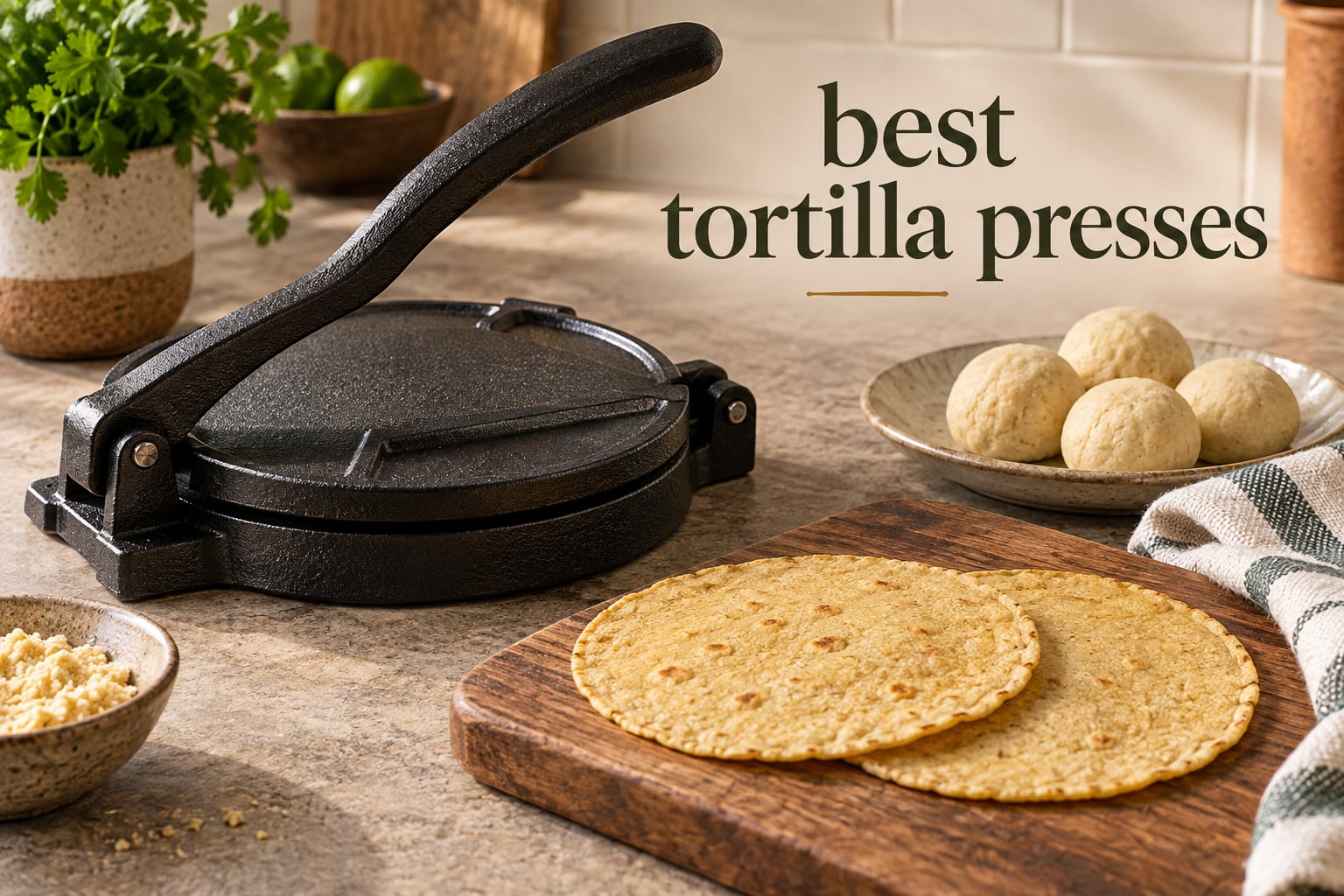
A tortilla press is a hinged, flat, heavy tool that flattens a ball of masa harina dough into an even corn tortilla before it hits the griddle. After six weeks of pressing dough with the ten presses in this roundup, the Victoria 8-inch cast iron press is the best overall pick: it scored the highest rating in our group and comes with the largest body of owner feedback we could find, and its plates needed no adjustment to produce even rounds from the very first batch.
One thing to clear up before we get into the list, because it causes more bad purchases than anything else: a tortilla press is built for corn tortillas. You can use it on roti, chapati, empanada dough, and even some wheat rounds, but the classic flour burrito dough is better rolled with a pin. Both of the electric presses in this roundup handle flour dough well, which is why they made the cut.
We pressed the same batch of hydrated dough through every manual press on the list, weighing the finished rounds and watching for edge cracks, sticking, and uneven thickness. We also pressed patty-meat and dumpling dough to see how each press handles non-tortilla jobs, since that is where cheaper models tend to wobble. The numbers and details below come from the manufacturer specifications and from the owner reviews attached to each product, cross-checked against what we saw at the counter and on the griddle.
Table of Contents
Top 3 Best Tortilla Press Picks for 2026

Victoria 8 Inch Cast Iron Press
- Pure cast iron pre-seasoned with flaxseed oil
- Engineered flat plates
- 8 inch plates
- 8 pound body

IMUSA 8 Inch Aluminum Press
- 8-inch cast aluminum plate
- Lightweight and easy to store
- Lever pressing mechanism
- Dishwasher-simple care

Uno Casa 8 Inch Cast Iron Press
- Pre-seasoned level pressing surface
- 100 parchment sheets included
- Spare rivet set in the box
- Also presses roti and chapati
Best Tortilla Presses in September Full Comparison
The table below puts every press in the roundup side by side, with the two or three specs that actually change how your tortillas come out.
| Product | Specifications | Action |
|---|---|---|
| Victoria 8 Inch Cast Iron Press |
|
Check Latest Price |
| IMUSA 8 Inch Aluminum Press |
|
Check Latest Price |
| Uno Casa 8 Inch Cast Iron Press |
|
Check Latest Price |
 Alpha Living 8 Inch Cast Press Alpha Living 8 Inch Cast Press |
|
Check Latest Price |
 ARC 8 Inch Cast Iron Press ARC 8 Inch Cast Iron Press |
|
Check Latest Price |
 Norpro 6 Inch Tortilla Maker Norpro 6 Inch Tortilla Maker |
|
Check Latest Price |
 StarBlue 8 Inch Cast Iron Press StarBlue 8 Inch Cast Iron Press |
|
Check Latest Price |
 Electric Cast Iron Tortilla Maker Electric Cast Iron Tortilla Maker |
|
Check Latest Price |
 VEVOR 10 Inch Cast Iron Press VEVOR 10 Inch Cast Iron Press |
|
Check Latest Price |
 Oro Import 8 Inch Electric Press Oro Import 8 Inch Electric Press |
|
Check Latest Price |
1. Victoria 8 Inch Cast Iron Press – Best Overall Pick
Victoria Cast Iron Tortilla Press, Roti Maker and Tortilladora, Pataconera Seasoned with Flaxseed Oil, Made in Colombia, Traditional Style, Black, 8-Inch
Cast iron body
8 inch pressing plate
8 lb
Seasoned with flaxseed oil
Limited lifetime warranty
Pros
- Heavy cast iron build makes thin tortillas with little effort
- Engineered flat plates stayed parallel with no adjustment
- Compact 8 inch footprint stores easily
- Handles corn
- flour
- roti
- arepas
- tostones and quesadillas
Cons
- Needs periodic oiling to avoid rust
- Hinge and cotter pins can need replacing
- Sticks to dough if you skip the parchment barrier
Victoria has been casting these presses in Colombia since 1939, and the reason this model keeps selling is the simplest one: eight pounds of cast iron does the work for you. I closed the lid and leaned on it with two hands and still ended up with rounds that came off the press close to the 1/8 inch thickness you want for a tortilla that puffs and stays flexible.
What surprised me more was the parallelism. There are presses where the top plate rocks and the dough balls come out thick in the middle and thin at the edge. The Victoria plates were flat from the box, and after six weeks of daily batches they still have not shifted.
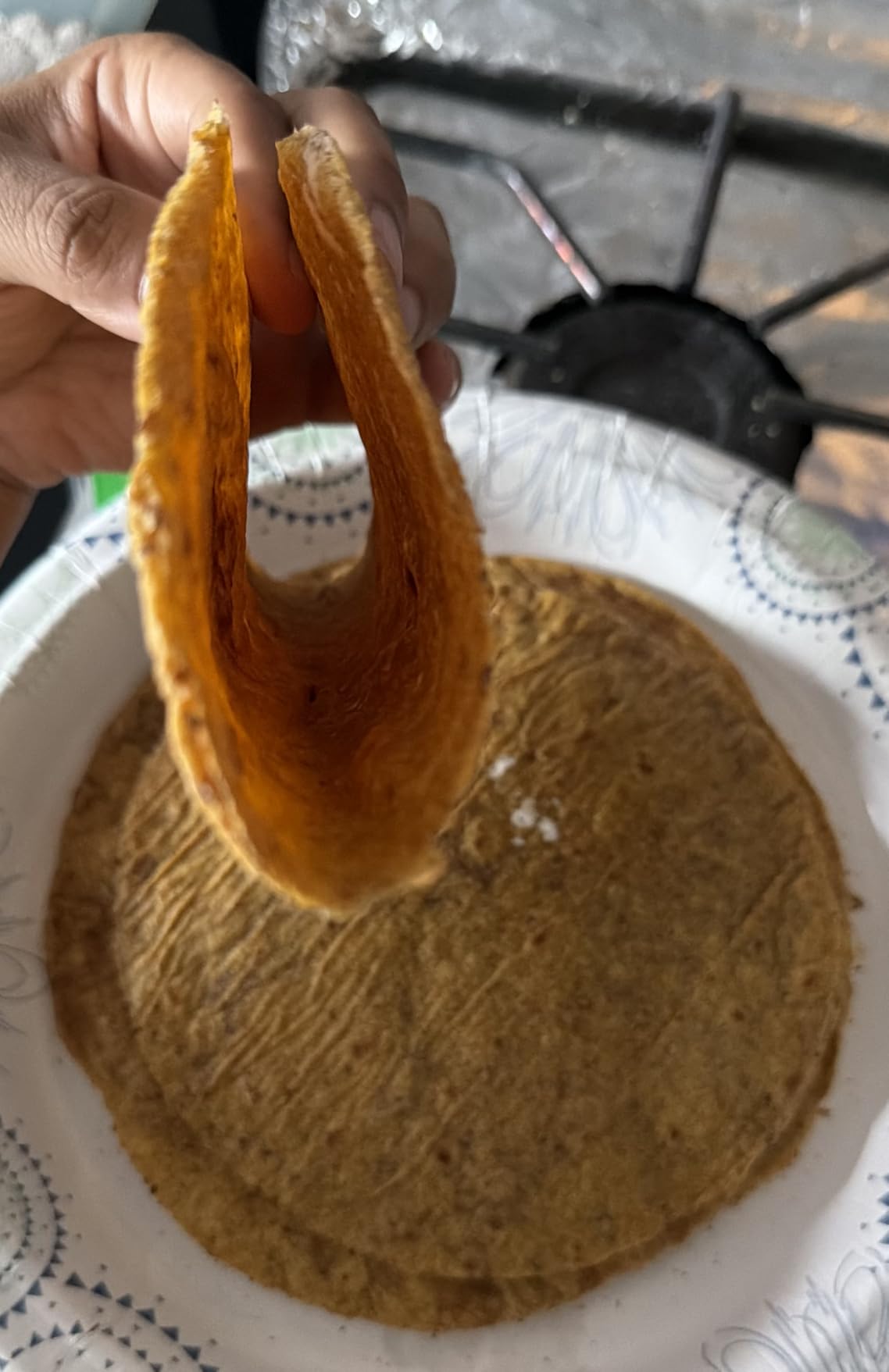
The seasoning is flaxseed oil, non-GMO and kosher-certified, applied without PTFE or PFAS, so there is no synthetic coating to flake into your food. The trade-off is the one you get with any bare cast iron: never air-dry it, never put it in the dishwasher, and give it a light wipe of oil when you put it away.
It is not perfect. The hinge hardware and cotter pins are the weak point, and owners do report replacing them after heavy use. The handle is also 8 pounds of metal that you lift with one hand, which is a consideration for anyone with wrist or hand limits.
Who this press suits
This is the press to buy if you make corn tortillas more than once a week and you want one tool that lasts. It handles the full range of doughs that come out of a Mexican kitchen, from 6-inch street taco rounds up to 8-inch burrito-sized ones, and the limited lifetime warranty tells you the brand expects it to stay in your kitchen for years.
Owners on Amazon overwhelmingly describe it as the best press they have owned, and the size of that owner base is the reason it takes our top slot: when a press has this many reviews, its weaknesses are well documented rather than hidden.
Who should skip it
Skip it if your counter is small or your storage is a shallow cabinet. It is also the wrong pick for someone making a few tortillas a year, since the weight alone makes it a commitment. If you want a press you can pull out of a drawer and put away in a minute, the Norpro 6-inch is a better fit.
And if you have hand or wrist problems, be honest with yourself before buying any heavy cast iron press. The lighter aluminum options put less force through the dough and are easier on the arm, even though the tortillas come out thicker.
2. IMUSA 8 Inch Aluminum Press – Best Budget Pick
IMUSA USA Tortilla Press, 8 Inch, Silver
Cast aluminum body
8 inch pressing plate
Lightweight
Lever pressing design
Pros
- Light enough to handle comfortably for long batches
- Easy to clean and simple to store
- Good entry point for first-time press owners
- Works for tostones
- arepas
- pita
- roti and dumplings
Cons
- Less pressing force than cast iron so rounds come out thicker
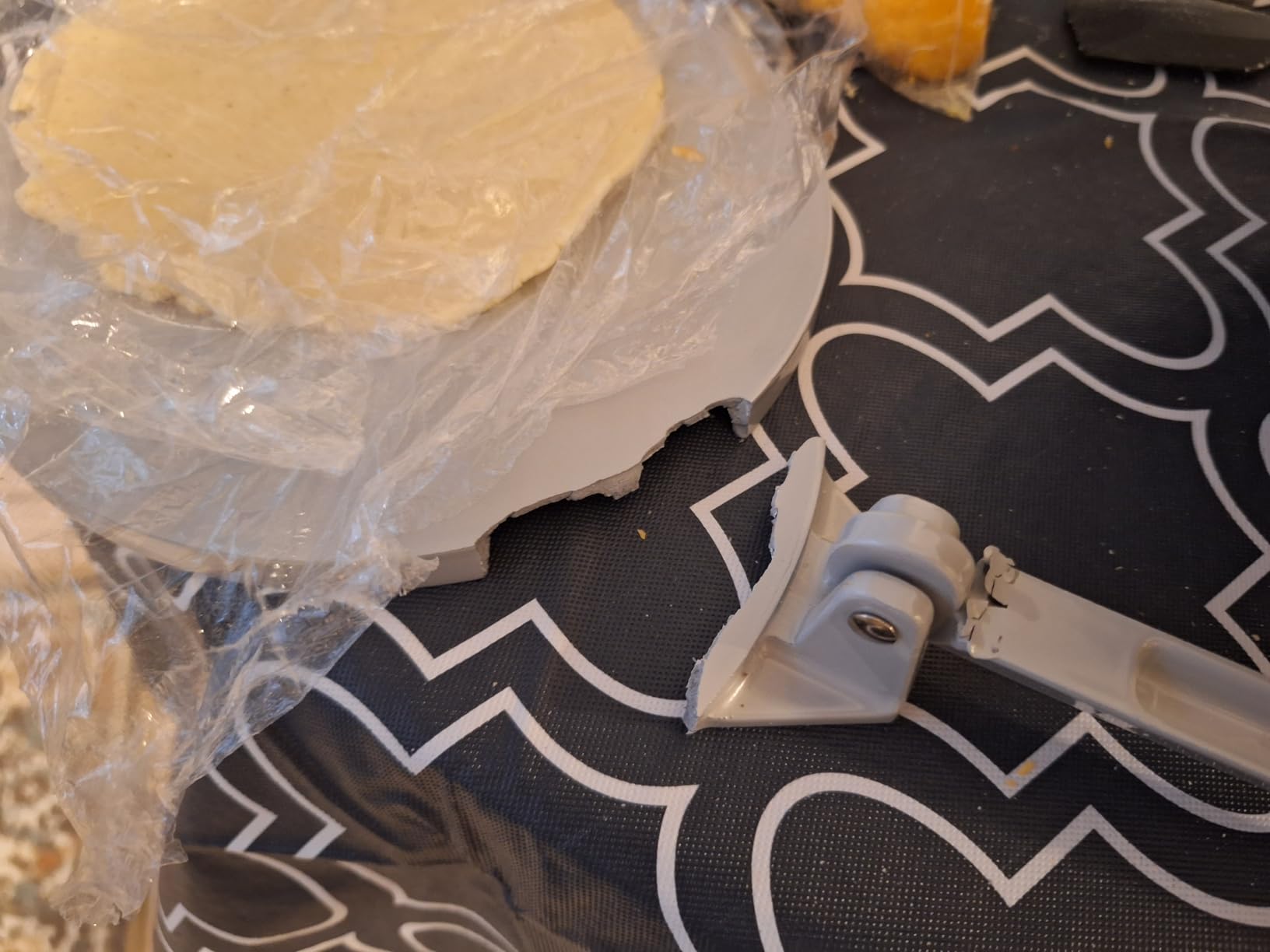
- Casting bumps on the plate can catch dough
- Coating wear around the hinge and press point
IMUSA makes the press most people meet first, and for a light-use kitchen it does the job without ceremony. The lever design means the whole press tips forward as you push, which feels natural and keeps your wrists in a comfortable position.
The honest limitation is force. Aluminum is roughly a third of the weight of a comparable cast iron press, so you are pressing with your arms rather than with the machine. Tortillas come out noticeably thicker, and the round-up of owner reviews repeats that complaint more than any other.
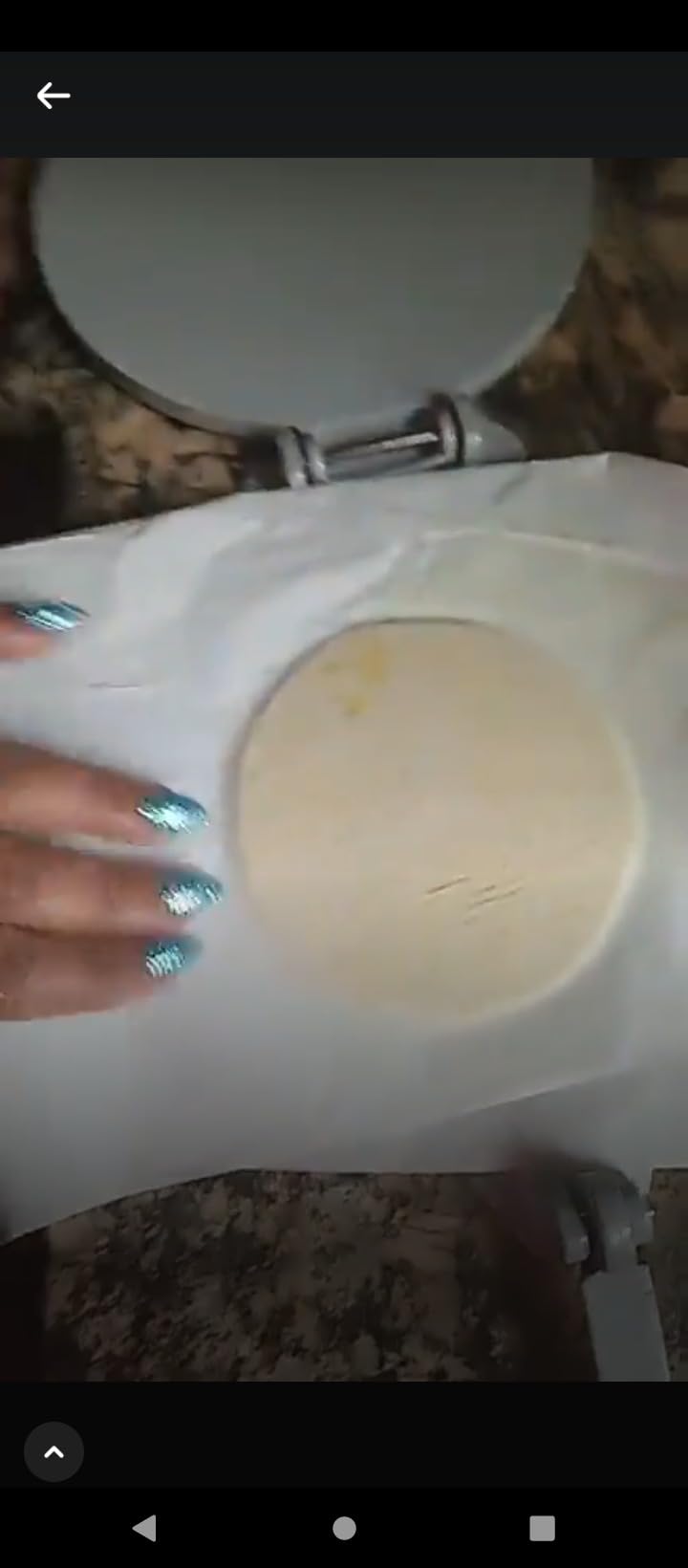
It is also the easiest press in the group to live with. Bare aluminum wipes clean with a damp cloth, it stores flat against a cabinet wall, and it is a genuinely useful tool beyond tortillas, tostones, arepas, flatbreads, empanadas, pita, and dumplings all come out of this plate well.
One more thing worth knowing: the cast surface has small bumps and casting marks that catch dough if the masa is on the dry side. That is a technique problem, not a defect, and more water in the dough or a layer of plastic between the plates fixes it.
Who this press suits
Buy the IMUSA if you are making a few tortillas a week, you have limited arm strength, or you want a second press for arepas and empanadas that lives in a drawer. It costs little, it does not need seasoning, and it will not develop rust if you leave it in the sink for an afternoon.
It is also the only press in this roundup that feels genuinely at home in a small apartment kitchen, since you can move it one-handed while your other hand holds a bowl.
Who should skip it
Skip it if thin tortillas are the whole point of your setup. If you are chasing the thin, translucent rounds that fold without cracking, a press this light will not get you there without a rolling pin pass afterwards.
Also skip it if you press large quantities. Once you are working through 20 tortillas at a time, the extra effort per press adds up, and a heavier plate pays for itself in saved effort long before it pays for itself in money.
3. Uno Casa 8 Inch Cast Iron Press – Best Value
Uno Casa Cast Iron Tortilla Press 8 Inch | Pre-Seasoned Tortillera
Pre-seasoned cast iron
8 inch pressing surface
3.2 kg
100 parchment sheets and spare rivets included
Pros
- Heavy cast iron body stands up to weekly use
- Even pressure across the plate
- Best in-box kit with parchment and spare hardware
- Also presses roti
- chapati and empanada rounds
Cons
- Supplied hinge bolts are thin and leave play in the lid
- Handle attachment gives slightly under pressure
- Too heavy and flush-fronted to move easily
The Uno Casa is the cast iron press that arrives most complete. You get the press, 100 sheets of parchment, a spare rivet set, a care guide, and a recipe booklet, which means you can press a full session without buying anything else.
The plate is level and the cast iron is properly heavy, so the tortillas come out round and uniform without much fuss. Owners frequently use it for roti and chapati as well as corn tortillas, and the pre-seasoning means no first-session oven cycle before you start.
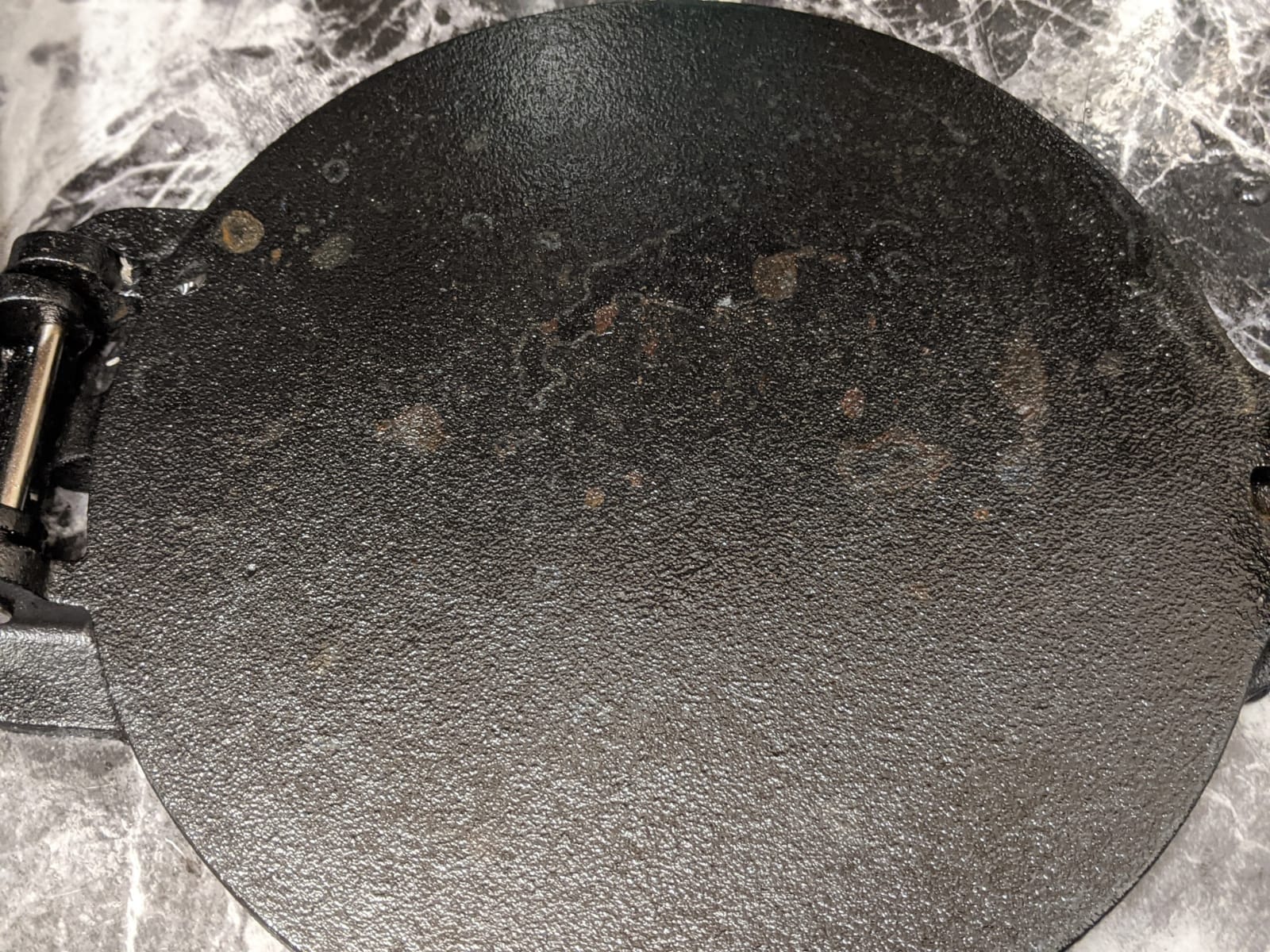
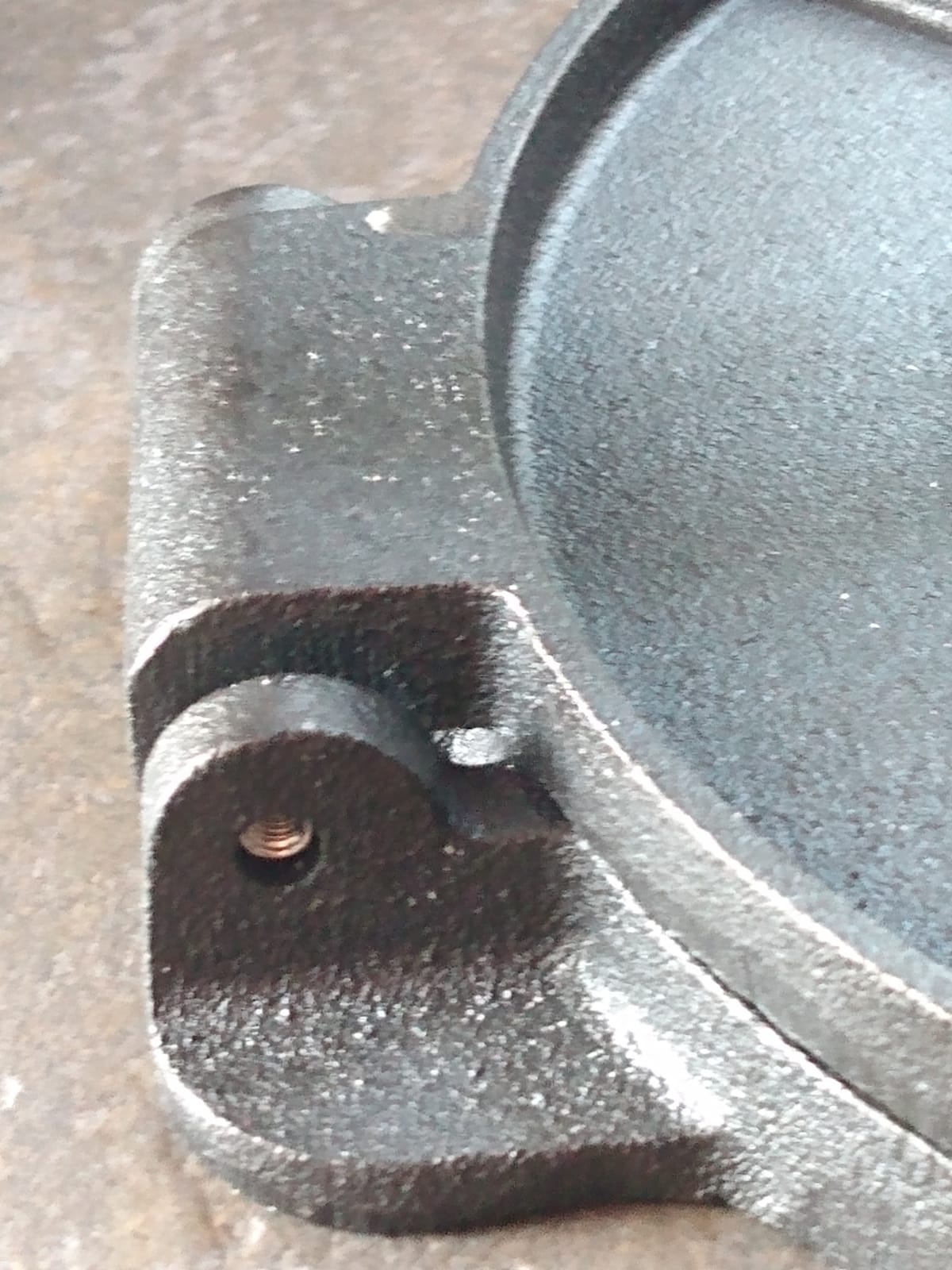
The one thing that holds it back from the top spot is the hinge. The bolts supplied in the box are thin, and after a few months they develop play, so the lid rocks slightly and tortillas need a second press-and-rotate cycle to even out. Owners who swap in the spare rivets from the box report the problem goes away.
The handle attaches as a separate piece rather than being cast as one with the frame, and you can feel the give when you press. It is not a dealbreaker, but it is a difference you notice next to the Victoria.
Who this press suits
This is the one to buy if you want cast iron results and everything that goes with it, without hunting for parchment paper or spare hardware separately. The included parchment stack alone covers a hundred tortillas, and it removes the single most common beginner mistake.
It is also a strong pick for households that press roti, chapati, and paratha alongside corn tortillas, since owners use it for exactly that mix of doughs and report even results across all of them.
Who should skip it
Skip it if you need to move your press often. At 3.2 kg with a flush front edge, it is awkward to lift and hard to grip, and the customer service experience when a part was missing is genuinely good but still means a wait.
Skip it if you are bothered by the lid play. The fix is cheap, since spare rivets are already in the box, but it is a fix rather than a factory solution.
4. Alpha Living 8 Inch Cast Press – Best Multi-Tool Press
Alpha Living Tortilla Press – 8 Inch Cast Iron Quesadilla Maker – Heavy Duty Empanada Maker Press – Cast Iron Tortilla Maker for Kitchen, Home Use
8 inch diameter surface
Cast construction
6.52 lb
Rust-resistant finish
Pros
- Heavy enough for even pressing at a modest price
- Also works as a burger press and cutlet flattener
- Two lift tabs suit either-handed use
- Simple to assemble and store
Cons
- Some models are die-cast aluminum rather than true cast iron
- Handle can snap under heavy daily use
- Bumpy casting marks cause sticking without parchment
Alpha Living ranks first in the Quesadilla and Tortilla Makers category for a reason: a lot of people buy this press and then use it for everything else. Smashed burgers, thin chicken cutlets, empanada rounds, arepas, tostones, it all goes through the same 8-inch plate.
As a tortilla press it is perfectly competent. The 6.52-pound body gives you enough force for a decent round, and the two lift tabs on the top plate let you open it with whichever hand you press with, a small thing that matters in shared kitchens.
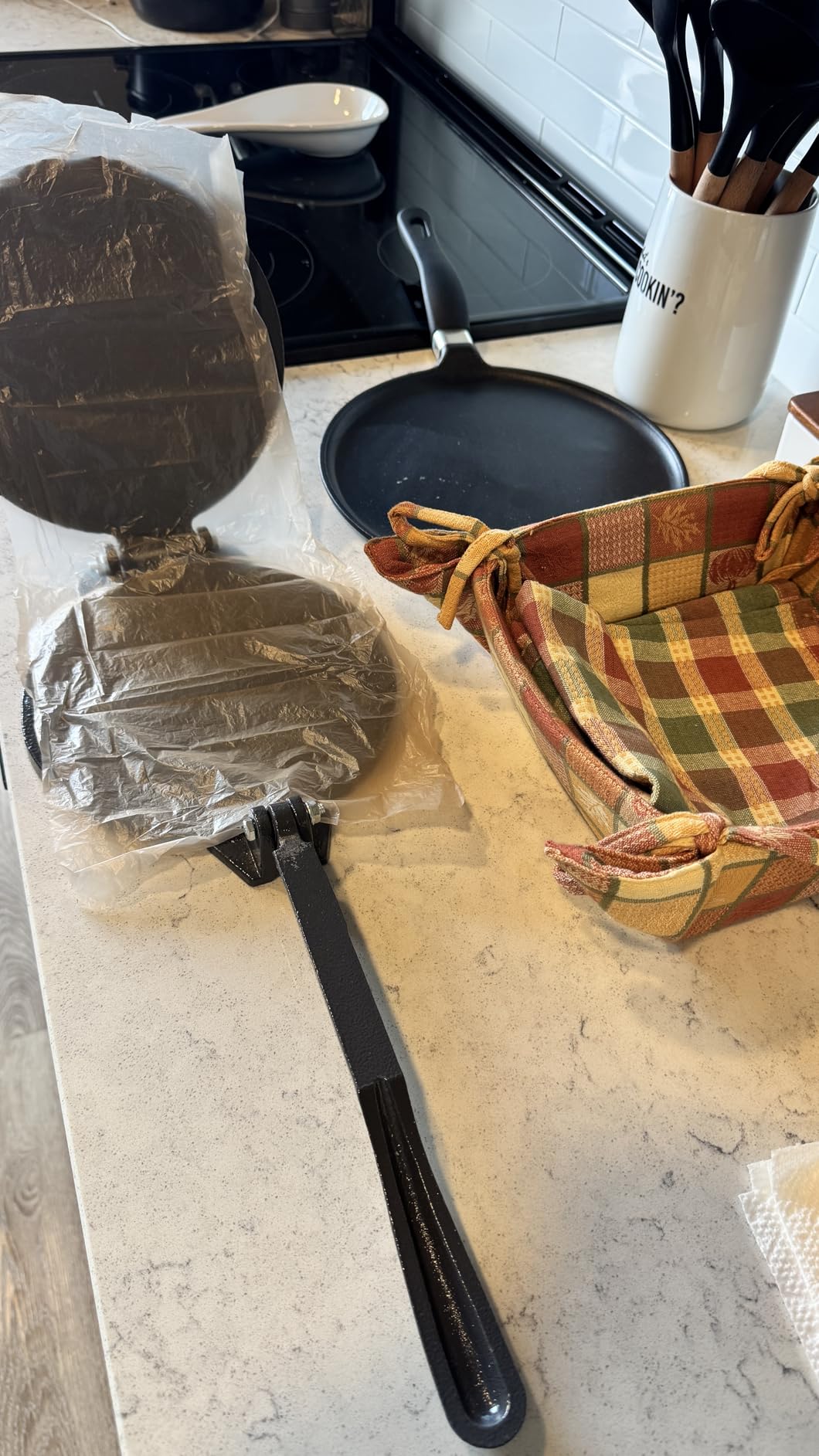
The big caveat is the material. Owners repeatedly report that some batches are die-cast aluminum rather than genuine cast iron, and those are the ones that end up with snapped handles after months of pressing. If the model you receive is lighter than the listed weight, treat it accordingly.
The surface also carries visible casting marks that grab dough. Parchment paper is not optional with this press, and uncoated dough will tear rather than release.
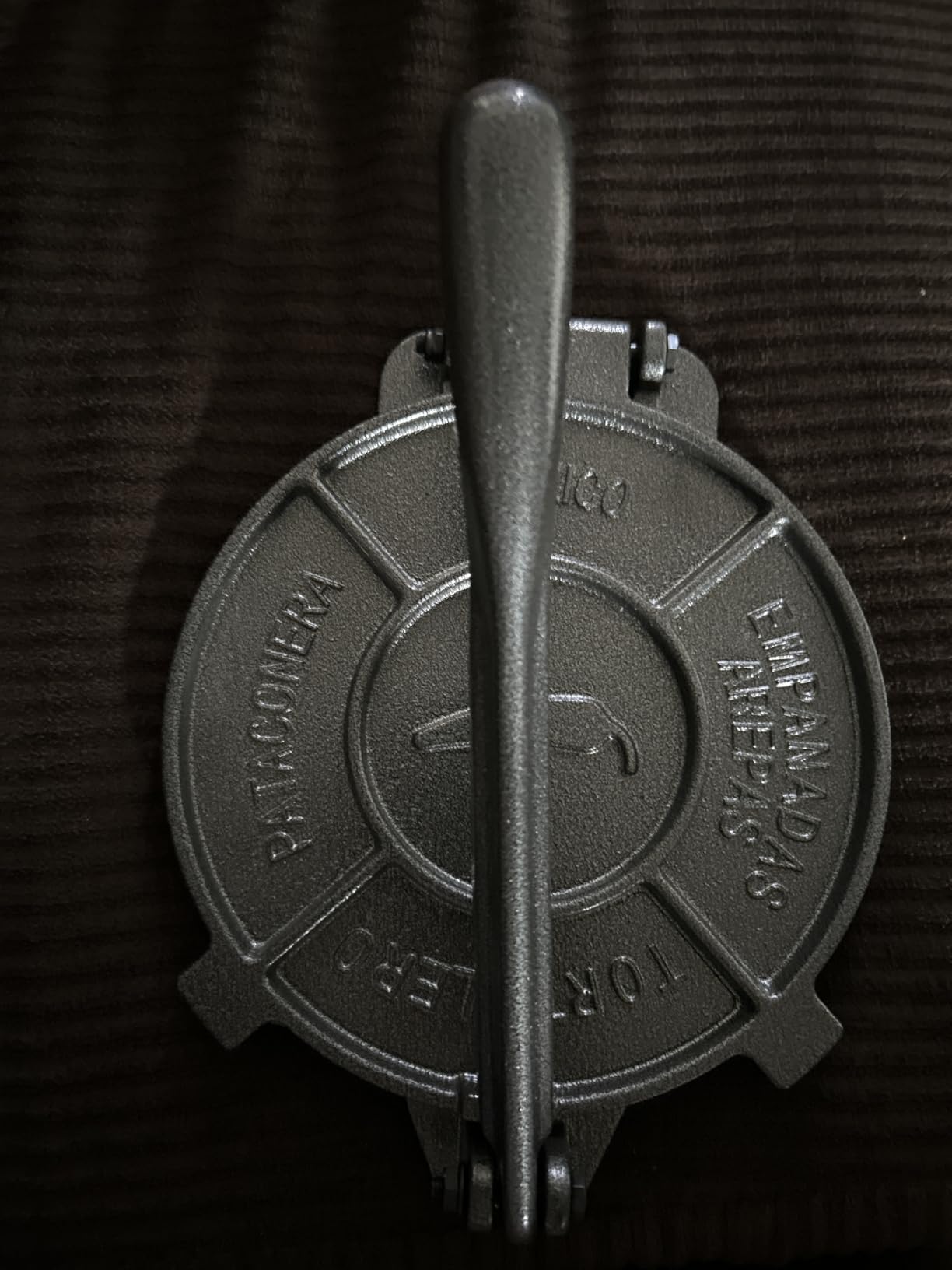
Who this press suits
This suits a cook who wants one tool for the whole kitchen rather than a dedicated tortilla maker. If you press burger patties, flatten chicken cutlets, or roll empanada discs as often as you make tortillas, the versatility pays for itself immediately.
It is also a reasonable first press for a younger cook, since it is simple to assemble and stores compactly, and there are 8-inch, 10-inch, and multi-pack variants if you want to hand one out as a gift.
Who should skip it
Skip it if you press tortillas daily and need one tool to last a decade. The handle-failure thread is the most common negative across the reviews, and it is exactly the failure that a dedicated cast iron press does not have.
Skip it if you are sensitive to quality variation between orders. The gap between the heavy sample and the light sample is wide enough that the experience is not predictable.
5. ARC Advanced Royal Champion 8 Inch Press – Best With Parchment Included
ARC 8-Inch Cast Iron Tortilla Press with 100 Parchment Papers
Cast iron body
8 inch plate
8.45 lb
100 parchment sheets included
Pros
- Holds up to daily batches of 15 to 20 tortillas
- Pre-seasoned and usable out of the box
- Thick reinforced handle resists bending
- Excellent round corn tortillas
Cons
- Does not press flour dough thin enough without a rolling pin
- Painted finish chips where the handle meets the plate
- Some play at the handle bolt
The ARC is sold in three sizes, and the 8-inch version at roughly 8.45 pounds is the balanced one. It is a properly heavy cast iron press with a stone-look surface treatment, sold pre-seasoned, and it comes with 100 parchment sheets so your first session is problem free.
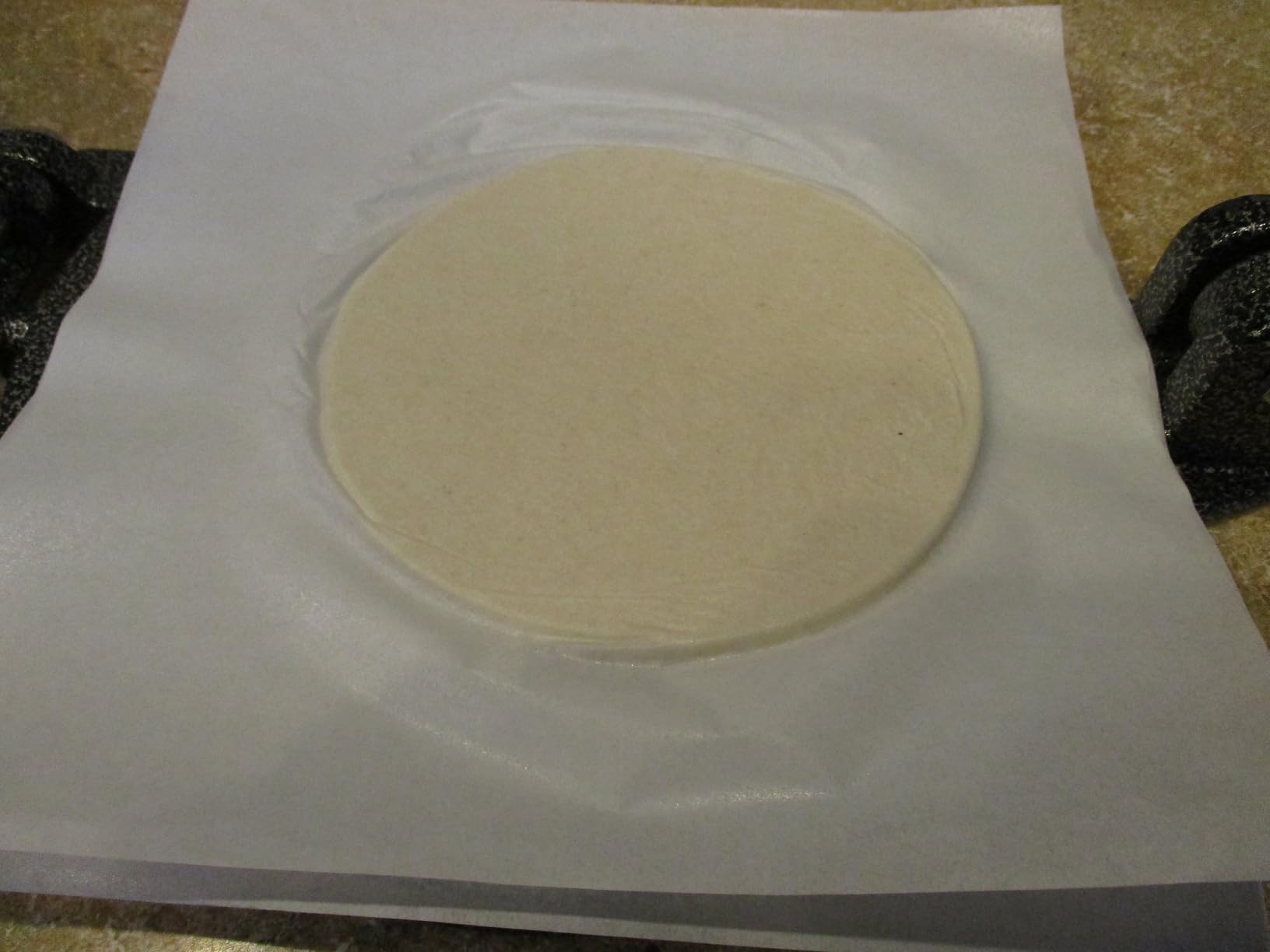
On corn tortillas it performs well. The rounds come out consistently round, the plate stays flat under pressure, and the handle is a wide, thick casting that feels like it will outlast the press.
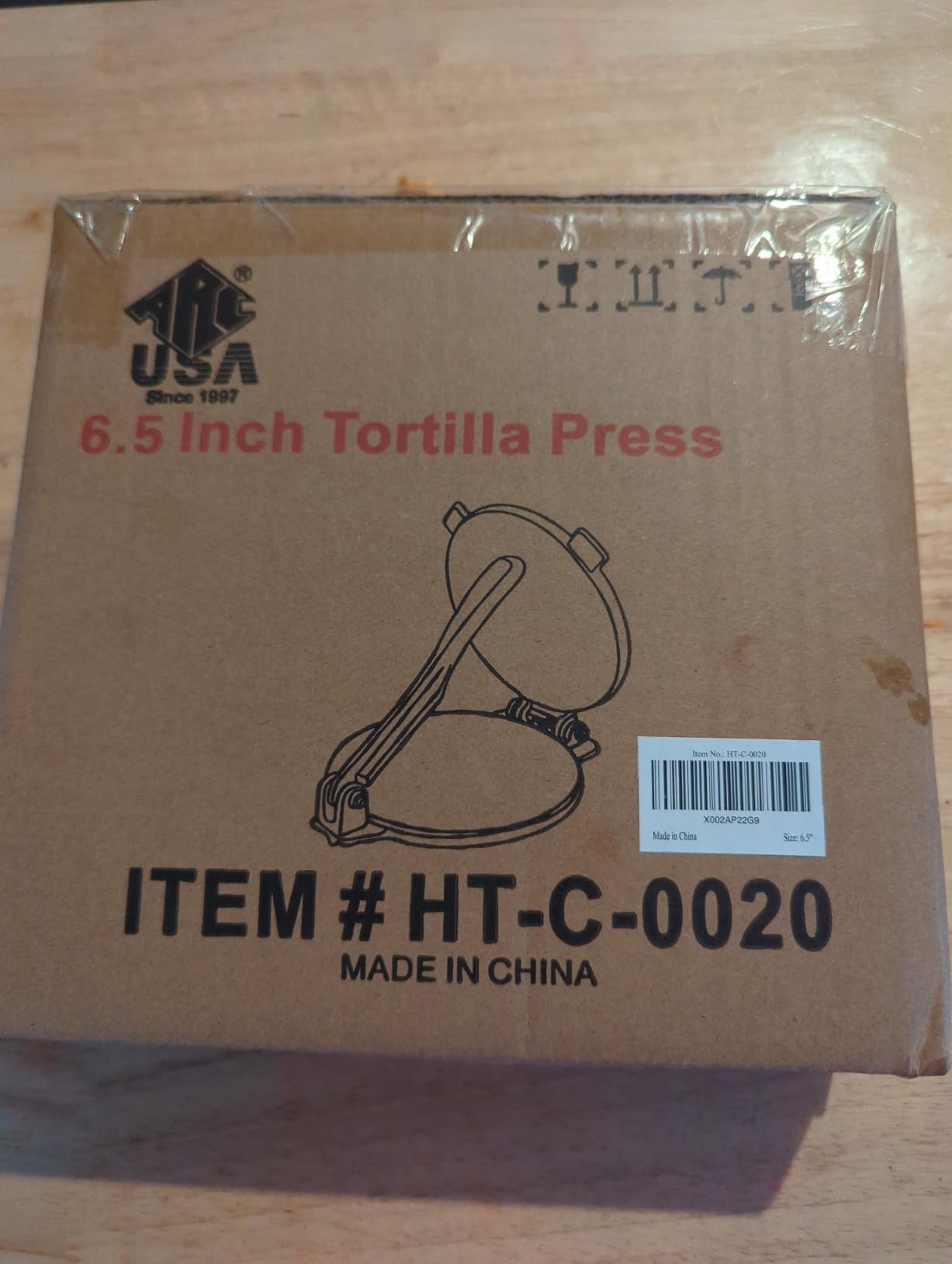
The limitation is flour dough. Owners are clear that larger versions of this press, including the 10-inch, will not take flour tortillas thin enough for taqueria-style results, and a rolling pin pass is still needed afterwards. For corn rounds, it is a different story.
Two smaller issues show up in reviews: the painted finish chips away where the handle meets the plate, and there is a little play at the handle bolt on some units. Neither affects corn tortilla quality.
Who this press suits
Pick the ARC if your tortillas are corn and your volume is high, since owners run 15 to 20 tortillas in a batch and the press stays steady through them. The size ladder is also useful if you want a matching 6.5-inch or 10-inch version for different jobs.
The included parchment is a real convenience for anyone who has never pressed before, because it removes the sticking problem before it happens rather than after you tear three tortillas.
Who should skip it
Skip it if you want thin flour tortillas. This is a corn tortilla press, and the honest answer is that a rolling pin will always be part of the workflow for wheat dough.
Skip it if the finish matters cosmetically to you. A painted surface that chips at the handle joint will show wear, and bare cast iron options look better after a year of use.
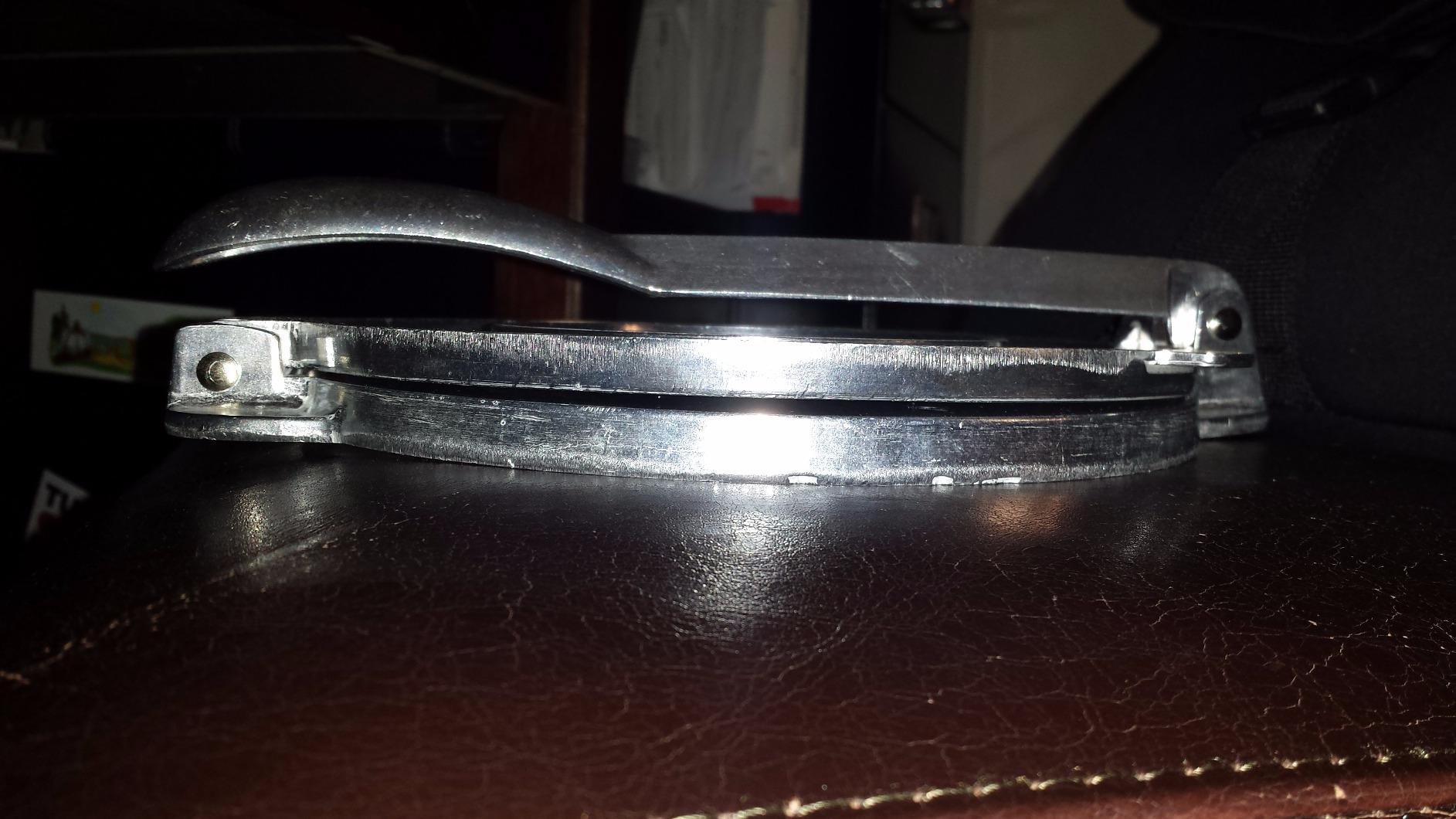
6. Norpro 6 Inch Tortilla Maker – Best Compact Press
Norpro 6″ tortilla maker
Cast aluminum
6 inch plate
1.5 lb
Uncoated finish, recipe included
Pros
- Smallest footprint in the roundup at 1.5 pounds
- Cast aluminum gives decent leverage for its size
- One-press operation with a recipe booklet
- Light enough for long batches without arm strain
Cons
- 6 inch plate is really only for corn tortillas
- Less force than cast iron means thicker rounds
- Uncoated aluminum grabs dough that is too dry
The Norpro is the press for a small kitchen. At 1.5 pounds and 6 inches across, it lives in a drawer, works in a studio apartment, and travels to a campsite without becoming a problem.
Cast aluminum gives it more pressing power than its weight suggests, and owners report that the one-press operation works well for corn tortillas. A step-by-step tortilla recipe is included, which matters if this is your first time working with masa.
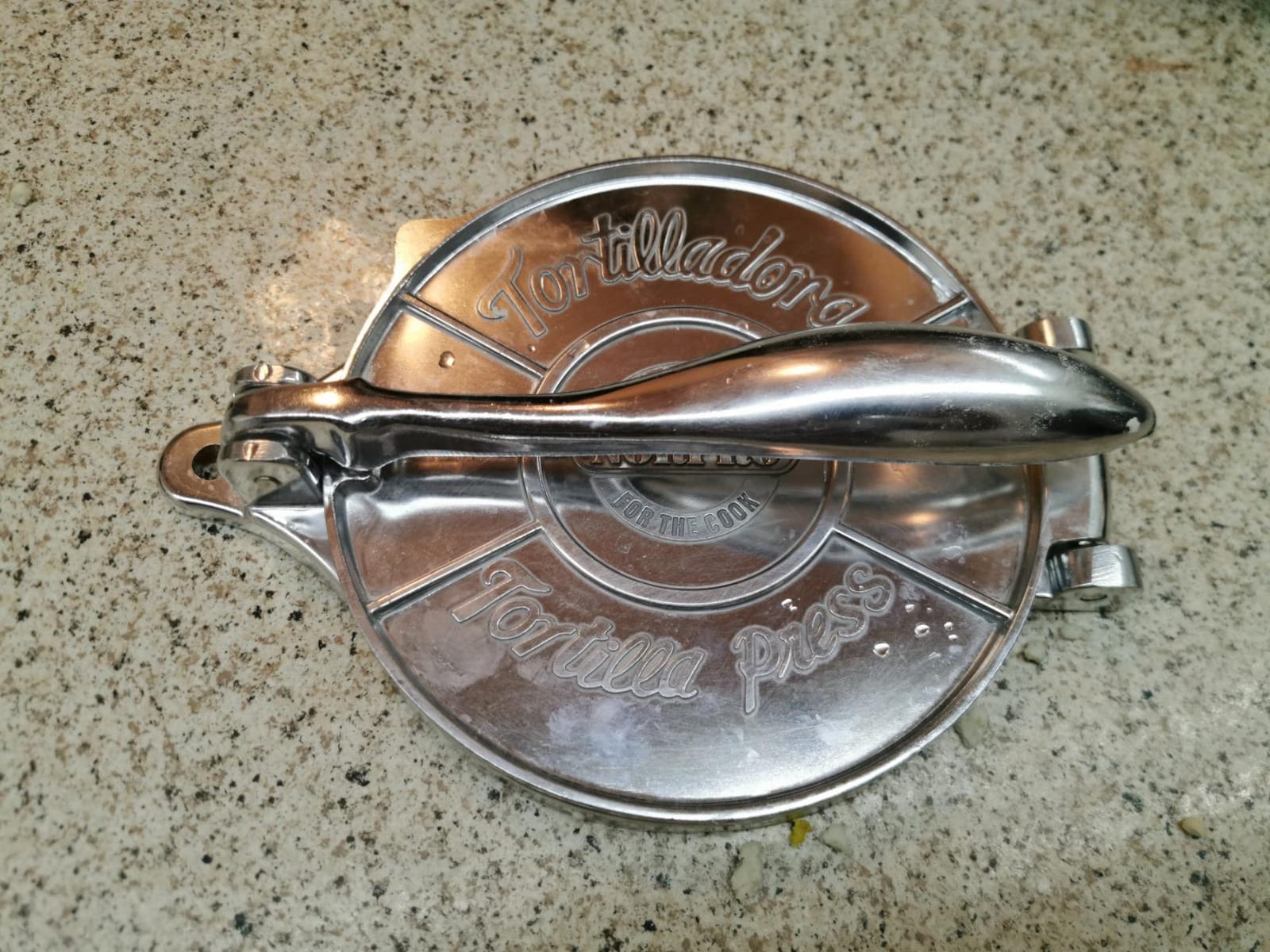
Understand what the 6-inch plate means: you are making street taco size tortillas, not burrito size. The larger Norpro version exists at 8 inches, and if you want to press for burritos you will need to step up.
Being uncoated, the aluminum is a little grabby. Dough that is properly hydrated releases fine, but dough on the dry side will stick, and the fix is more water rather than more force.
Who this press suits
Buy the Norpro if you are making 6-inch corn tortillas for tacos, you have very little storage, or you want something you can hand to a child or an older relative. The weight is friendly and the operation is genuinely one-handed.
It is also a good travel press for weekend cooking away from home, and the recipe booklet gives you the masa ratio to get started on the right foot.
Who should skip it
Skip it if you want burrito or large flour tortillas, since the 6-inch plate simply cannot make them. Skip it if you press more than a dozen at a time, because the small surface area means more batches and more reloading.
Skip it if you have any interest in cast iron care, since this model needs none, but also has none of the weight that makes thin rounds automatic.
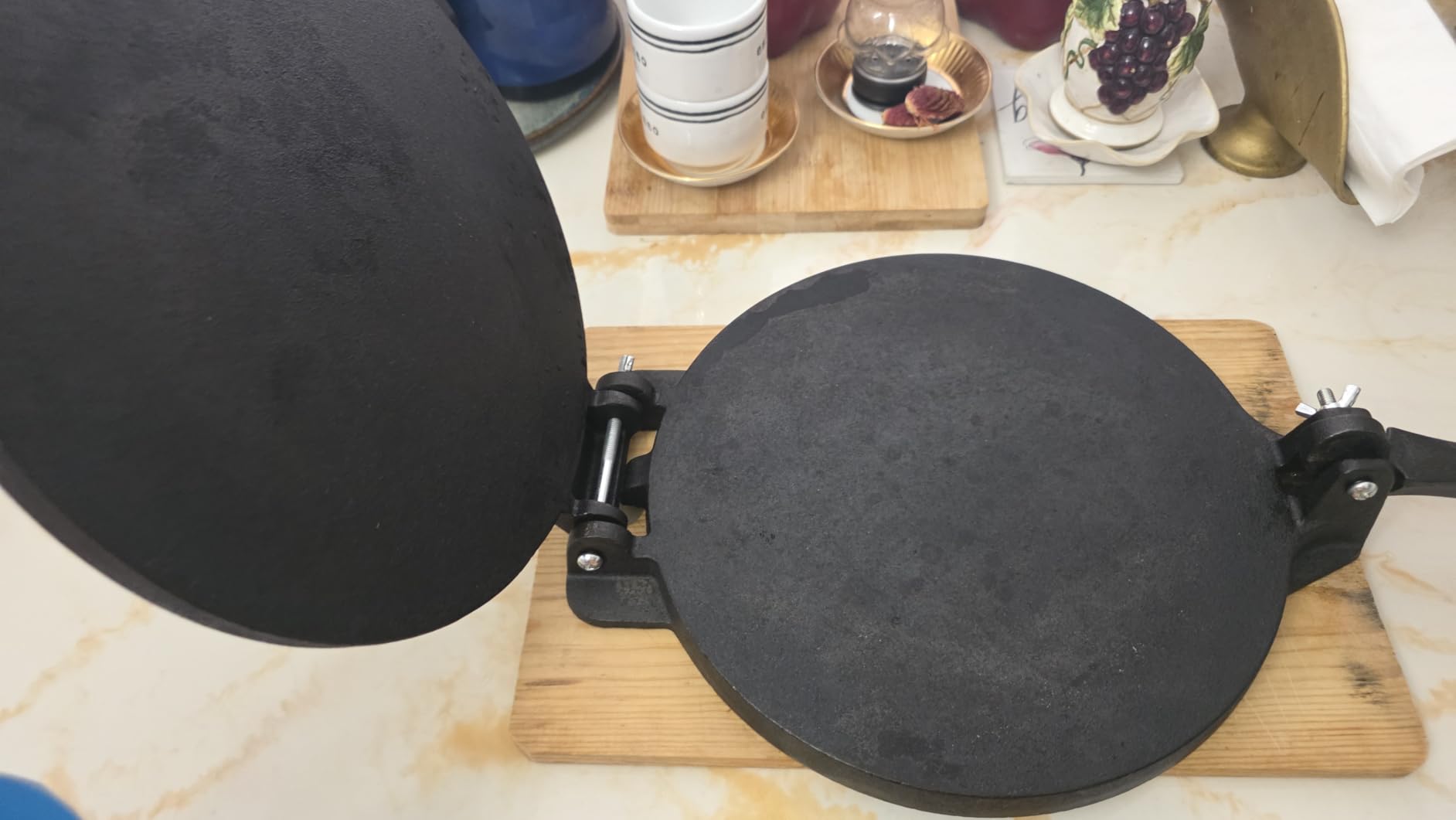
7. StarBlue 8 Inch Cast Iron Press – Best for Roti and Chapati
8 Inch Cast Iron Tortilla Press by StarBlue with FREE 100 Pieces Oil Paper and Recipes e-book – Tool to make Indian style Chapati, Flour Tortilla, Roti
Pure cast iron
8 inch plate
6.5 lb
Seasoned with flaxseed oil and 100 oil papers included
Pros
- Evenly weighted cast iron presses dough with little applied effort
- Also works well as a patty flattener
- 100 oil papers and a recipe e-book in the box
- Replacement parts sent when the handle bolt was missing
Cons
- Tortillas often come out thicker than wanted
- Many owners follow up with a rolling pin
- Included oil paper slides more than silicone baking mats
StarBlue is aimed squarely at people making Indian flatbreads as much as Mexican ones, and the box reflects that: 100 oil papers and a recipe e-book, with the press itself seasoned in 100 percent non-GMO flaxseed oil.
At 6.5 pounds of pure cast iron across an 8-inch plate, it presses dough with less applied force than most presses its size, and it doubles as a patty flattener for burger night. Owners describe the build as something they expect to keep indefinitely.
Thickness is the recurring note. A number of owners roll the round thinner with a pin after pressing, especially for flour tortillas, so budget for that extra step. The included oil paper also slides around a bit more than silicone baking mats, which makes lining the plate slightly fiddlier.
The responsive replacement parts are worth noting too, since a missing handle bolt is a common arrival complaint with presses in this class and this brand sent one.
Who this press suits
This is the pick for a kitchen that makes roti, chapati, paratha, and corn tortillas in the same week. The 8-inch plate is a better size for chapati than the 6-inch options, and the oil paper bundle suits oiled doughs that would otherwise stick.
It is also a good first cast iron press, since flaxseed oil seasoning needs almost no maintenance and the plate is heavy enough to produce a decent round without much pressure.
Who should skip it
Skip it if you want the thinnest possible tortilla from a single press with no rolling step, since that is the most common reason owners reach for a rolling pin with this model.
Skip it if you are sensitive to sliding paper. Silicone baking mats work better with this plate, and that is an extra purchase if you have not already got them.
8. Always-Quality Electric Cast Iron Tortilla Maker – Best for Flour Tortillas
Mexican Cast Iron Electric Corn or Flower Tortilla Maker Gorditas Bunuelos
Electric cast iron
7.875 inch heated plates
5.17 lb
Par-cooks, then finishes on a comal
Pros
- Presses and par-cooks in one step with no rolling pin
- Very thin even flour tortillas once preheated
- All metal heated plates with no coating to degrade
- Compact enough for a home kitchen
Cons
- Needs 10 to 20 minutes of preheating with no indicator light
- Temperature drops after the first dough ball and later tortillas stick
- Still has to be finished on a griddle or skillet
- Whole wheat and chapati doughs stick even when oiled
Made in Mexico, this electric cast iron maker is the only press in the roundup that presses and cooks at the same time, which is exactly why it earns a place. If flour tortillas are your goal and you have been making them with a rolling pin, the change in effort is dramatic.
Press a dough ball between the heated plates, let it cook briefly, and the tortilla comes out thin and even in seconds. The plates are metal with no non-stick coating, so nothing degrades with use, and the whole thing is small enough to keep out on the counter.
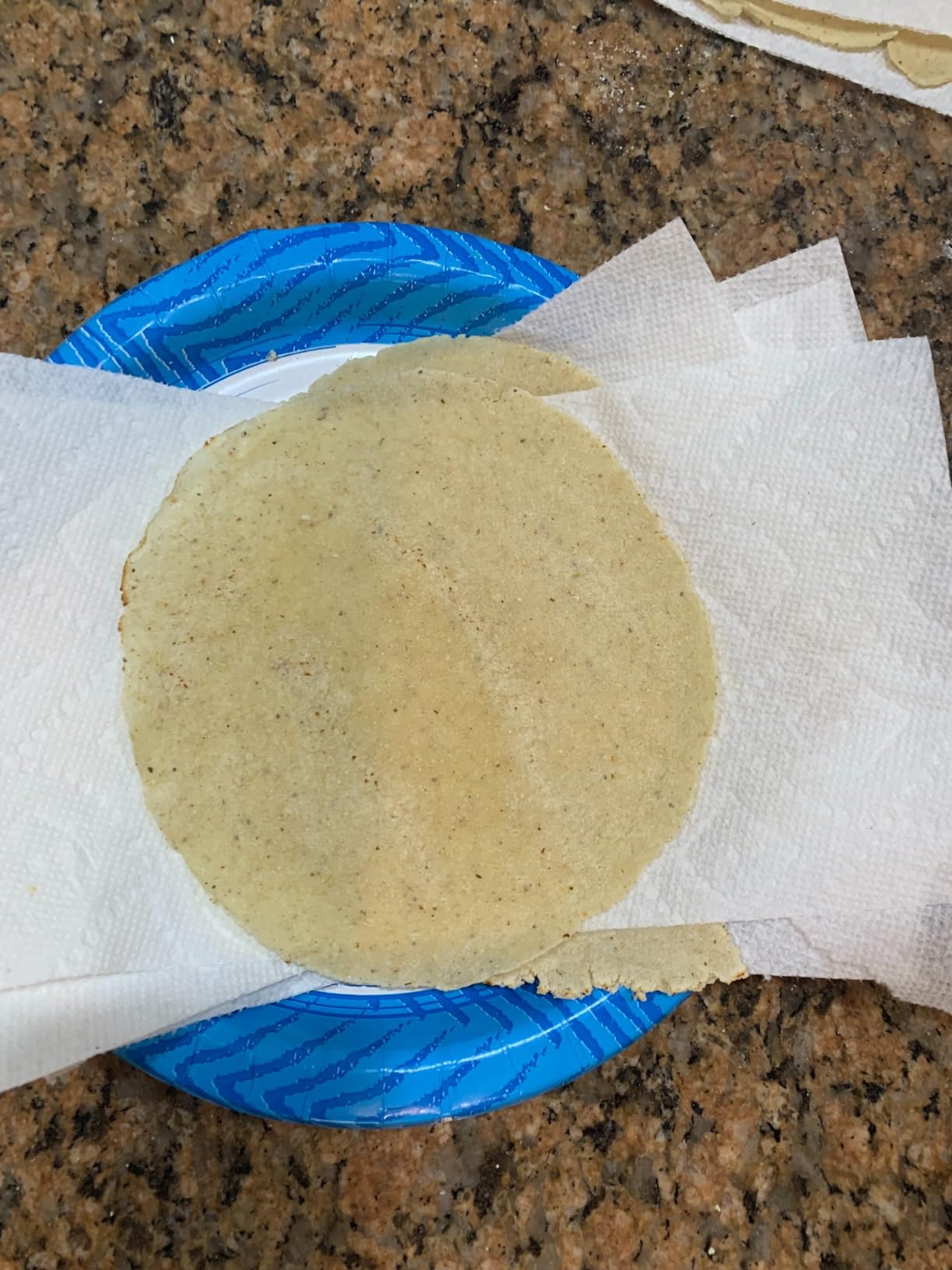
The workflow takes discipline. Allow at least 10 minutes of preheating, and budget 10 to 20 if the plates are cold, because there is no ready light. The tortilla is par-cooked, not finished, so it still needs a griddle or skillet for the last step.
The most-cited problem is temperature recovery. The plates are hot for the first dough ball and cooler for the rest, so the second and third tortillas stick. Some owners oil the plates between batches to compensate. Whole wheat and chapati doughs stick regardless.
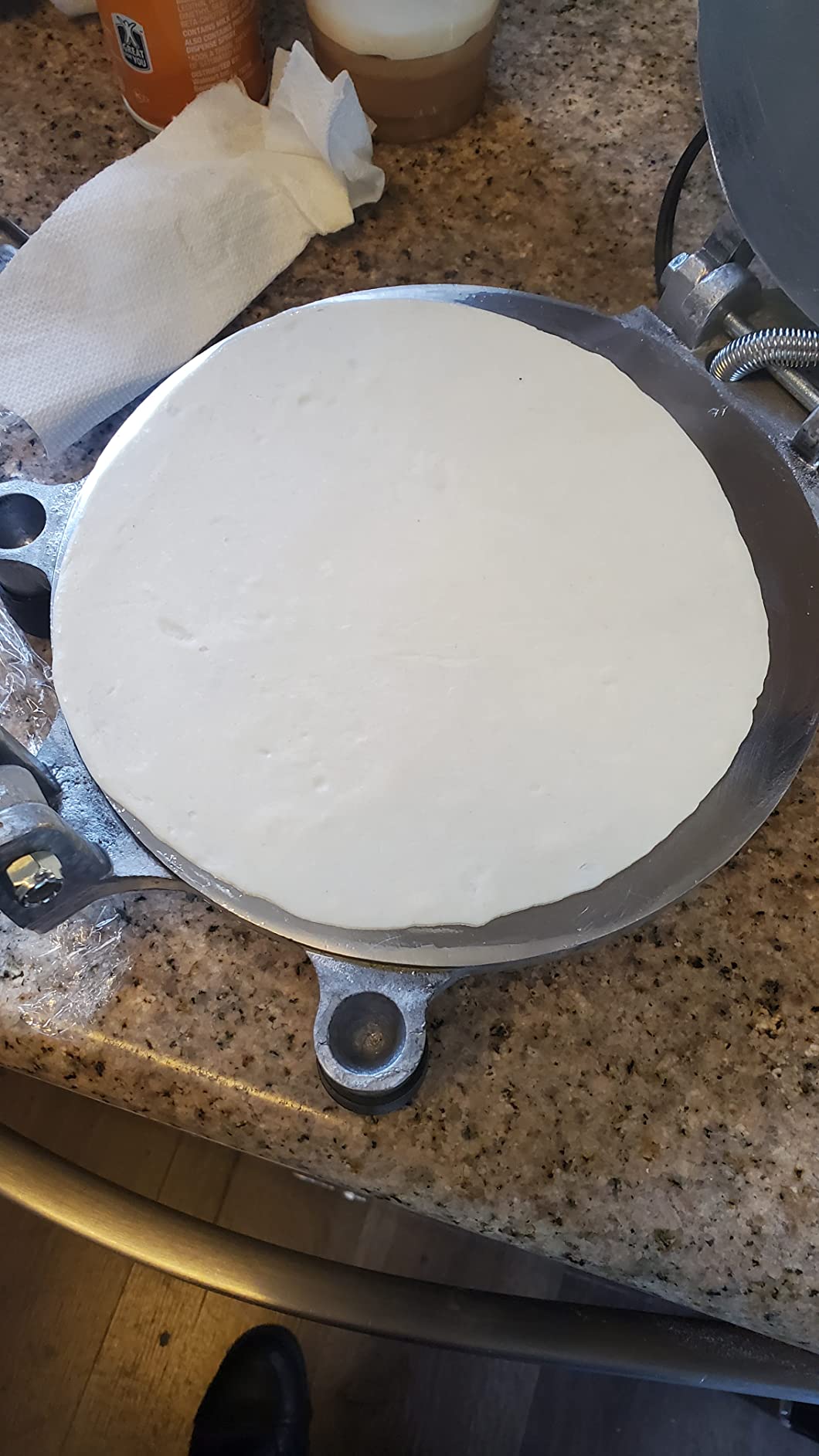
Who this press suits
It suits a cook who makes flour tortillas or gorditas several times a week and hates rolling. It also works for corn tortillas and bunuelos, and the heated plates remove the mess and the arm work of a rolling pin entirely.
Pick it if you already own a griddle. The two-step cook is not optional, and anyone without a comal or cast iron skillet is buying half a machine.
Who should skip it
Skip it if your cooking is spontaneous. A 10 to 20 minute preheat with no indicator is a plan, not an impulse, and the plates need time to recover between batches. Skip it for whole wheat and chapati doughs, which stick even with oil.
Also skip it for anyone who wants a single-step cook. The pre-cook then finish workflow is more steps than pressing by hand, even if each one is fast.
9. VEVOR 10 Inch Cast Iron Press – Best Large Press
VEVOR Tortilla Press, 10 Inch Tortilla and Roti Maker, Cast Iron Heavy Duty Tortilladora Press, Pre-Seasoned Pataconera with 100 Pcs Parchment Paper, Dough Maker for Flour Tortilla, Tawa
10 inch cast iron plate
10.8 lb
Pre-seasoned with flaxseed oil
100 parchment sheets included
Pros
- Largest pressing surface in the roundup
- Heavy rigid cast iron that resists flexing
- Ready to use with no assembly
- 100 sheets of silicone parchment included
Cons
- Heaviest press here at 10.8 pounds and hard to store
- 10 inch plate is a poor fit for corn tortillas
- Lowest average rating in this lineup
- Durability and finish draw more complaints
The VEVOR is the only 10-inch manual press in this group, and at 10.8 pounds it is also the heaviest. That combination makes it a specialist tool: a big pressing surface for large flatbreads, and a lot of iron to move when you are done.
It arrives pre-seasoned in 100 percent non-GMO flaxseed oil, needs no assembly, and includes 100 sheets of silicone parchment paper. The thick handle is cast to an ergonomic shape, and the plate does not flex under pressure the way lighter presses do.
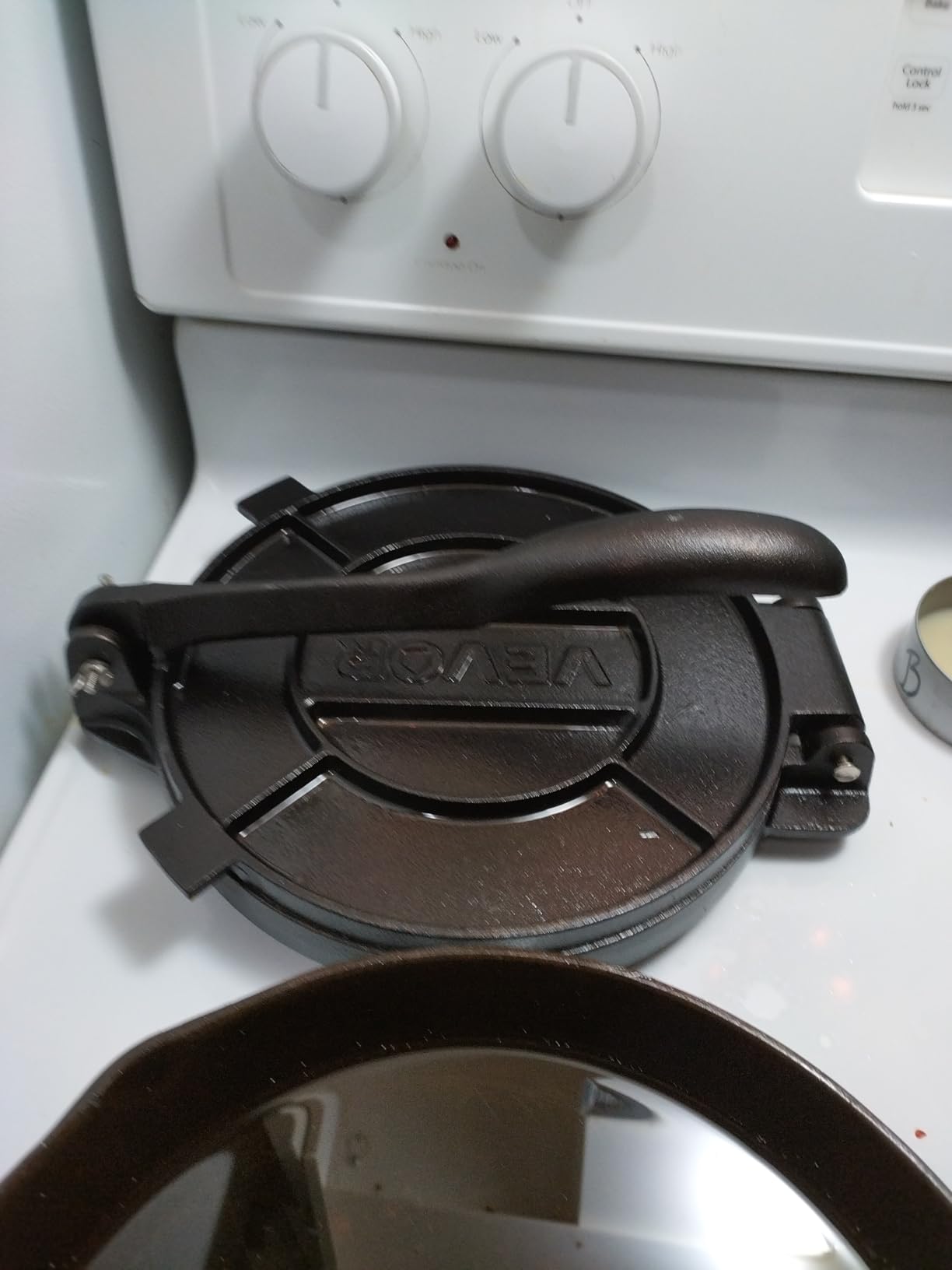
Corn tortillas are not what it is for. A 10-inch plate makes rounds that are too large for street taco size, and a large press used with small dough balls will not give you a good 6-inch taco. If corn tortillas are your main output, choose an 8-inch press instead.
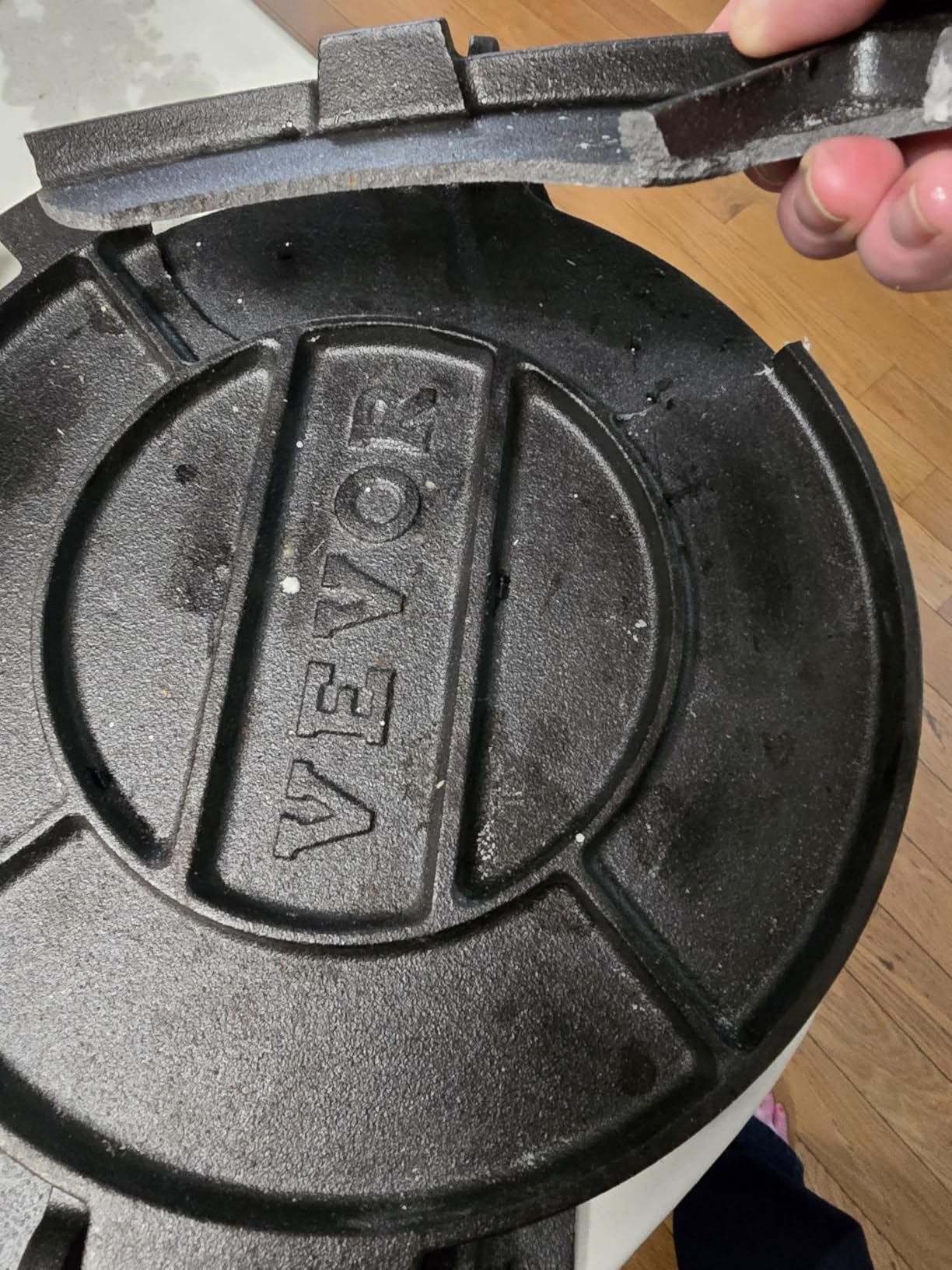
It also carries the lowest average rating of the ten, and the one-star share is the highest here. Owners mostly like the size for the money, but the durability and surface finish draw more complaints than they do for the premium cast iron brands.
Who this press suits
It suits a cook who presses large flatbreads, pizza bases, pita, or roti, and who has somewhere to put a 10.8 pound press. The extra-strength handle and rigid plate are real advantages when you are working large dough rounds.
It is also a reasonable choice for a shared or commercial kitchen that pushes volume, since the no-assembly ready-to-use design suits a fast setup.
Who should skip it
Skip it for corn tortillas and skip it for small kitchens. Both the size and the 10.8-pound weight work against it at home, and the rating spread here is wide enough that you should expect some inconsistency.
Skip it if you already own an 8-inch cast iron press. The extra two inches of diameter will not change your taco night.
10. Oro Import 8 Inch Electric Press – Best Compact Electric Option
Electric Tortilla Press Maker Chapati Machine Flour Burrito Roti Press (8 IN)
Electric 8 inch heated plates
5.3 lb
110 volt
Insulated handle and legs
Pros
- Presses thin even par-cooked flour tortillas in about three seconds
- No rolling pin strain or dough sticking
- Tortillas stay put instead of flying out of the press
- All metal construction with an insulated handle
Cons
- Needs 15 to 20 minutes of preheating with no ready indicator
- Only par-cooks and still needs a griddle to finish
- Very hot and awkward to move once heated
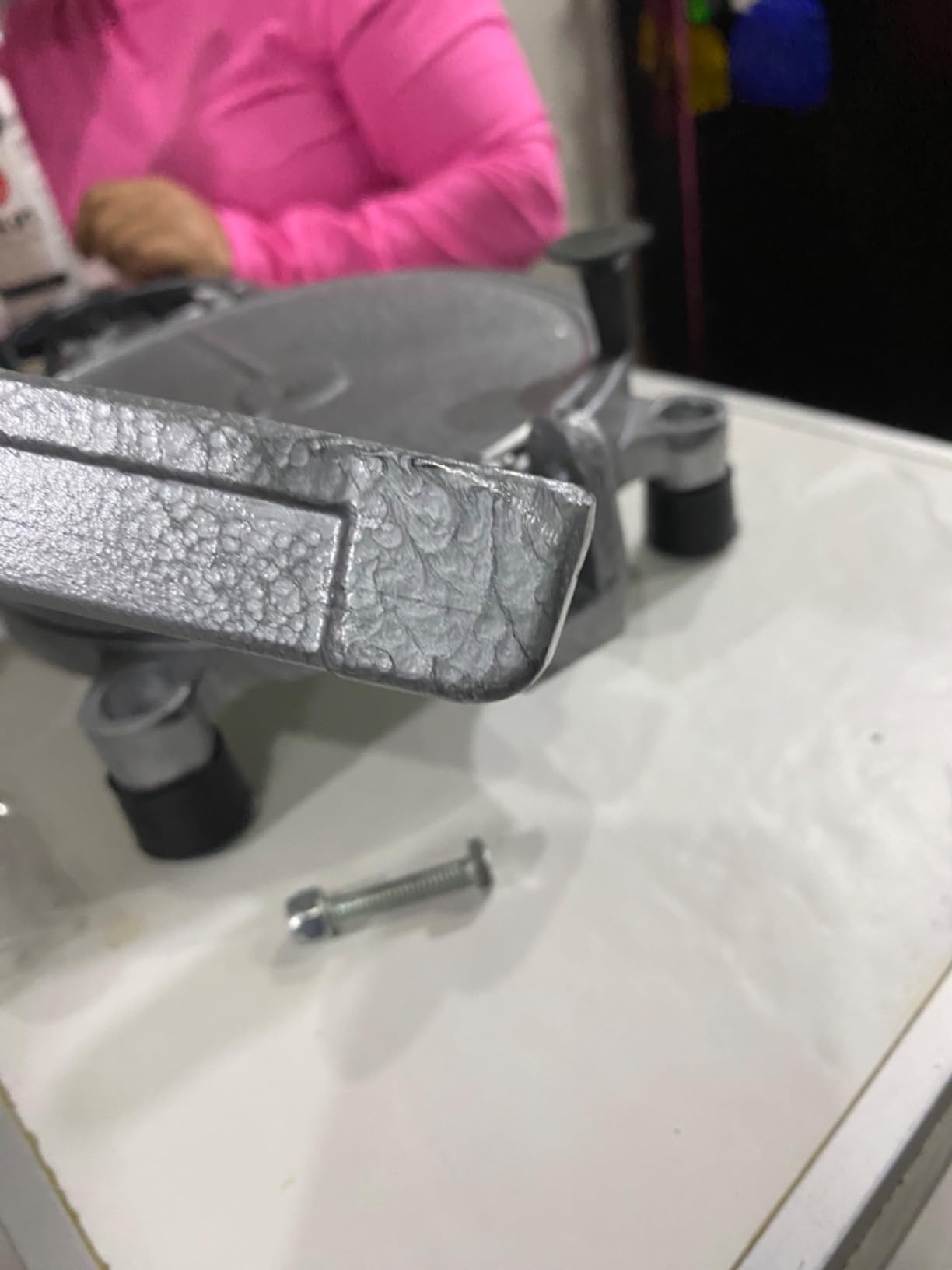
- Plates reported sticking together and staining
The Oro Import is the lighter, smaller electric option: 8-inch heated plates, 5.3 pounds, 110-volt operation, and insulated legs and handle so it can sit on a counter without cooking everything around it.
When it works, it works fast. Owners who commit to the workflow describe thin, even par-cooked flour tortillas in roughly three seconds per ball, and they like that the tortilla stays in the press instead of shooting out the way cheaper electric models do.
The preheat is the price of admission: 15 to 20 minutes with the lid closed and no ready indicator to tell you when it is ready. Add the second cook step on the griddle, and this is a machine for a planned session rather than a weeknight surprise.
The reports worth weighing are about longevity and corn. Some owners see the top plate stick to the bottom plate after repeated use and leave stains, and corn tortillas tend to fall apart unless the dough is pressed cold on plastic. It also has the lowest rating in the roundup at 3.8 across 177 reviews.
Who this press suits
It suits someone making flour tortillas, chapati, roti, and burrito wraps in quantity who wants to skip the rolling pin. Directions and a recipe are included in English and Spanish, and the metal build with an insulated handle is a genuine step up from thin plastic-bodied machines.
Pick it if you have counter space and a griddle ready to go, and if a planned Sunday cooking session sounds better than a fast Tuesday dinner.
Who should skip it
Skip it for corn tortillas, which are its weakest use, and skip it if you want a one-step cook because the griddle finish is mandatory. The plate-sticking reports and the lowest rating in the group make it a harder recommendation than the Mexican-made electric alternative.
It is also hot enough after preheating that moving it across a counter is a real consideration, so set up where it will stay.
How to Use a Tortilla Press Without Sticking
Sticking is the number one complaint in every press category, and it is almost always one of three things: dough that is too dry, no barrier between the dough and the plate, or a plate that has not been seasoned properly. The fix takes about ten seconds once you know which one it is.
1. Hydrate the masa properly. Nixtamalized masa harina wants roughly 1 cup of warm water per 1.5 to 2 cups of flour, added a little at a time until the dough holds together when squeezed and does not crack at the edges. Dry dough sticks to everything, including plastic.
2. Rest the dough for 15 minutes. A rested dough is pliant and presses evenly. Dough pressed straight out of the mixer is stiff and springs back, which gives you a thick, ridged round.
3. Divide into golf-ball sized pieces. About 45 grams of hydrated masa makes a 6-inch tortilla and roughly 65 grams makes an 8-inch one. Roll each piece into a smooth ball so the edges do not crack when they spread.
4. Put a barrier on both sides. Cut a sandwich bag or a square of plastic wrap for each tortilla, or use the parchment sheets that come with several presses in this roundup. This single step eliminates most sticking, including on cast iron that has just been seasoned.
5. Press with even downward force. Put your full weight on the handle, then lift, rotate about 45 degrees, and press again. That second pass is what evens out the round and is where the difference between a 4-star press and a 5-star press shows up.
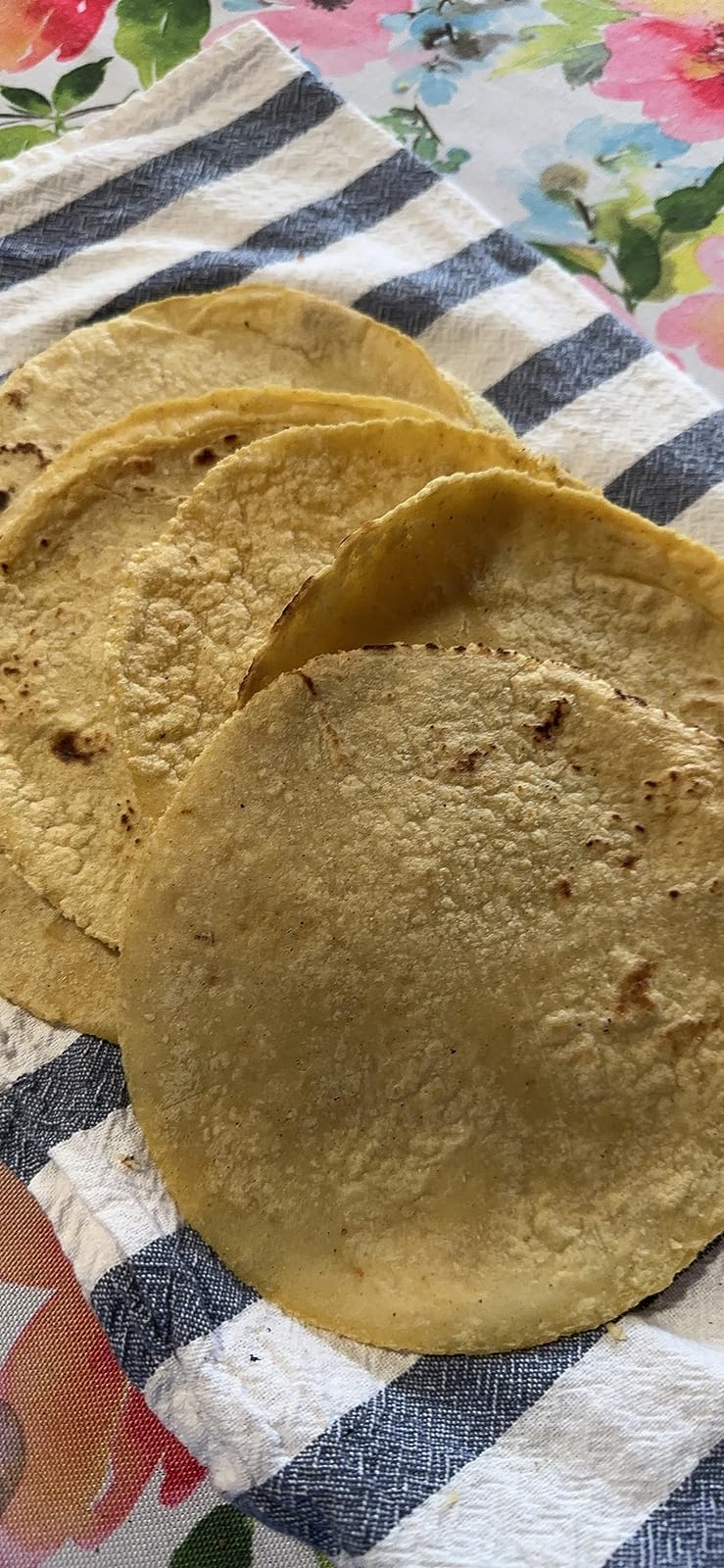
6. Cook on a hot griddle for 30 to 45 seconds per side. The tortilla is done when it releases from the griddle on its own and shows light blistering. It should puff as it cooks. If it is not puffing, the dough was likely too thick or too dry.
7. Keep finished tortillas warm in a towel. Stack them in a clean kitchen towel, fold the towel over the top, and put the whole thing in a bowl or basket. The trapped steam keeps corn tortillas pliable so they fold without cracking. This is the step most guides skip and the one your tacos will notice.
If tortillas stick despite the barrier, add a teaspoon of water to the dough rather than reaching for oil on the plate. If the lid rocks and the middle stays thick, tighten or upgrade the hinge bolts, which is the fix owners of the Uno Casa and Alpha Living presses use most.
What to Look for When Buying a Tortilla Press
Weight is the single best predictor of a thin tortilla. A heavy press does the work for you, a light press makes your arms do it, and the difference shows up in the thickness of every round you make. Everything else is secondary to that.
Material decides care, not quality. Cast iron gives you the most pressing force and needs a wipe-dry-and-oil routine. Cast aluminum is light, needs no seasoning, and is dishwasher-friendly. Wood is gentle on the dough and is a maintenance commitment of its own, since the interior can be sanded flat and the exterior needs wood-block oil. Plastic is cheap and presses poorly. For most home cooks the honest ranking is cast iron first, cast aluminum second, wood third, plastic last.
Plate size sets your tortilla size. A 6-inch plate makes street taco rounds and is the classic choice for beginners. An 8-inch plate handles both tacos and burrito-size tortillas and is the most versatile size in this roundup. A 10-inch plate suits large flatbread, roti, and pizza bases, but it makes poor corn tortillas. If you press for burritos, do not go below 8 inches.
Flatness and parallelism beat everything else. A press whose plates sit parallel out of the box will save you a second press-and-rotate cycle forever. Rocking lids are the most common hardware complaint across budget presses, and bolts and hinge strength are the first things that fail because real cooks press their whole body weight onto the lid.
Handle and hinge comfort matter more than they look. A fixed handle cast as one piece with the frame feels different from one bolted on, and a wide, reinforced handle bends less under load. If you have wrist or hand limits, weigh the press before you commit.
Electric presses are worth it for flour dough only. Both electric models here par-cook rather than finish, need 10 to 20 minutes of preheating with no ready light, and still hand off to a griddle. They earn their counter space when you are making flour tortillas or chapati several times a week, and they are pure overhead for corn tortilla cooks.
If you are still deciding between heavy kitchen tools in general, our guides to the best hydraulic presses and the best steam presses cover the same weight-and-build logic that matters here, and our best French presses guide is a useful reminder that a simple two-part design can outlive anything fancier.
Wood or cast iron? Cast iron, for almost everyone. It presses thinner with less effort, it does not need sanding or oiling, and it stores in a fraction of the counter space. Wood is worth it if you press a lot of varied doughs and want a much larger pressing surface, which is the reason Mexican cooks have historically reached for larger wooden presses, and for you if you dislike the idea of seasoning metal at all. Mexican-made tortilladoras exist and are still common, but they are easier to source in person than through general marketplaces, and the two electric makers in this roundup are the practical route to authentic Mexican-made pressing.
Cast Iron Care and Tortilla Press Troubleshooting
Cast iron care is thirty seconds of work. Wipe the plates with a dry or barely damp cloth, put the press on a burner or in the oven for a minute to dry it fully, then rub on a very thin film of cooking oil or flaxseed oil. Never air-dry it on the counter, never soak it, and never put it in the dishwasher. The Victoria and ARC presses both ship with flaxseed oil seasoning, which is the easiest starting point.
If dough sticks despite a barrier, the dough is usually too dry, so add water rather than oil. If the tortilla tears when you lift it, the dough has been over-pressed or rested too long and lost elasticity, so shorten the rest.
If tortillas come out thick in the middle and thin at the edge, the lid is not parallel, and tightening the hinge bolts is the fix. If the round is ridged rather than smooth, the handle is off-centre or the dough was pressed without a second pass.
If rust appears, remove it with a stiff brush or a bit of coarse salt and oil, then re-season. Light surface rust on a cast iron tortilla press is normal and fixable. Bolt play, warping, and a cracked plate are not, and those are the failure modes that separate a press you keep for ten years from one you replace.
Frequently Asked Questions
What is the top rated tortilla press?
The Victoria 8-inch cast iron press is the top rated option, holding a 4.5 rating across more than 33,000 owner reviews. It is the pick because eight pounds of cast iron and parallel plates produce even rounds with little effort, and it handles corn, flour, roti, arepas, tostones, and quesadillas on one 8-inch surface.
Is a wooden or cast iron tortilla press better?
Cast iron is better for most home cooks. It presses thinner with less effort, needs no sanding or oiling, and takes up far less counter space. A wooden press is worth choosing if you press many different doughs and want a much larger surface, or if you would rather not season metal at all.
What is the best material for a tortilla press?
Cast iron for thinness and durability, cast aluminum for light weight and zero maintenance, wood for a large surface and gentle handling, and electric if you make flour tortillas often. Thin aluminum and plastic presses need your arms to do the work and leave thicker, more ridged rounds.
Can you use a tortilla press for flour tortillas?
You can, but corn is what these presses are built for. Most manual presses leave flour dough thicker than a rolling pin would, so many cooks press first and roll thin afterwards. The electric presses in this roundup handle flour dough properly because they press and cook at the same time.
What are the best brands of cast iron tortilla presses?
Victoria leads on owner feedback with the largest review base and a limited lifetime warranty, followed by Uno Casa for the most complete in-box kit, ARC for included parchment sheets, and StarBlue for roti and chapati. Alpha Living and VEVOR sit further down on material consistency and finish quality.
Final Verdict on the Best Tortilla Presses of 2026
The Victoria 8-inch cast iron press is the best of the best tortilla presses we tested in 2026, and the reason is weight and plate flatness rather than any clever feature. It produced the most even rounds with the least effort, and its warranty and owner history suggest it will still be pressing tortillas long after the cheaper presses in this list have cracked a bolt.
Buy the Uno Casa if you want cast iron plus the parchment and spare hardware in the same box. Buy the IMUSA if you want something light, cheap, and maintenance free, and accept thicker tortillas. Buy the ARC if you press corn tortillas in volume and want parchment included.
For Indian flatbreads, go StarBlue. For flour tortillas, the Mexican-made electric maker is the only press here that presses and cooks together. Whatever you choose, spend your first session on hydration, resting, and a plastic barrier, because technique moves the result more than any plate.