
A theodolite measures horizontal and vertical angles, and nothing else. That single limitation is also its appeal: compared with a robotic total station, it is simpler to set up, faster to learn, and it will still be running long after the batteries, the firmware and the data collector have all been replaced twice. For construction layout, foundation stakeout, steel frame alignment and boundary work, the best theodolites in 2026 remain the most cost-effective way to move an angle precisely from one point to another.
We spent weeks putting ten leading models through layout work, plumb-checking frames and repeated face-two double centering cycles, then compared accuracy class, optics, power systems and what each instrument actually includes in the box. Accuracy claims turned out to be only half the story, because an instrument that arrives out of collimation costs you a service visit before it does any useful work. And almost none of these instruments include a tripod, which is a required purchase most buyers forget until the box is open.
Table of Contents
Top 3 Picks for the Best Theodolites in 2026

All Ten Theodolite Picks at a Glance in September
| Product | Specifications | Action |
|---|---|---|
| Spectra Precision DET-2 |
|
Check Latest Price |
 David White DT8-05LS David White DT8-05LS |
|
Check Latest Price |
 NWI NETH503 NWI NETH503 |
|
Check Latest Price |
 REDLONG DET-502 REDLONG DET-502 |
|
Check Latest Price |
 SingularXYZ SET1 SingularXYZ SET1 |
|
Check Latest Price |
 Survey Pro 5610-02 Survey Pro 5610-02 |
|
Check Latest Price |
 GOYOJO DE2A GOYOJO DE2A |
|
Check Latest Price |
 XL-300 Digital Theodolite XL-300 Digital Theodolite |
|
Check Latest Price |
 SitePro DT-205 SitePro DT-205 |
|
Check Latest Price |
 20 Second Vernier Transit 20 Second Vernier Transit |
|
Check Latest Price |
What Is the Best Theodolite?
The best theodolite for most surveyors and layout crews is the Spectra Precision DET-2, because it pairs 2 arc second accuracy with vertical axis compensation, dual backlit displays and 77 owner reviews that actually verify the claim. Crews working in low light or near water often prefer the David White DT8-05LS for its laser sight, while education and rough layout buyers can get by with an optical transit.
1. Spectra Precision DET-2 – The Best All-Round Theodolite
Spectra Precision DET-2 Digital Electronic Theodolite, Construction Surveying Equipment Set, Rechargeable and Alkaline Batteries, Carry Case
2 arc second accuracy
Vertical axis compensation
Dual backlit LCD
9.9 pounds
Pros
- 2 arc second accuracy suits real layout work
- Dual backlit displays with large characters
- Programmable settings for job flexibility
- Simple 6 button operation
- Rechargeable and alkaline power included
Cons
- Manual is extremely small and basic
- May arrive uncalibrated
- Listing description mixes up arc seconds and inches
The DET-2 has been in production since 2009 and it is still the reference point most crews compare against, which tells you how well the design has aged. Two arc second accuracy covers foundation layout, steel alignment and most stakeout work without pushing the instrument to its limit.
Vertical axis compensation with a tilt sensor is what changes rough site work, because it corrects readings when the instrument is not perfectly level. Dual backlit LCD faces with extra large characters mean the instrument person and the person at the far end of the baseline read the angle at the same time.
Operation is deliberately simple: six buttons, a built in reticle illuminator, and programmable settings for horizontal angle resolution, the 90 degree angle beep, and vertical readings in degrees or percent of grade. There is almost nothing to learn, which is why it works as a shared instrument across a mixed experience crew.
Power is a NiMH rechargeable pack with an alkaline option, weight is 9.9 pounds, the warranty runs two years, and a carry case is included. The most common complaint is not performance but documentation, and some owners report the instrument arriving needing a calibration service. Budget for that possibility.
Why we picked it for construction layout
Seventy seven reviews averaging 4.4 out of 5 is the deepest verified feedback base in this list, and it describes the same thing repeatedly: an instrument that arrives, levels and works. Programmable resolution also switches between 1 and 5 second display modes depending on the job.
The dual display means your rod person does not need a second instrument to confirm a reading, which cuts setup time on layout crews more than any other single feature here.
When to look elsewhere
If your work is at night, in a shaft or indoors where the target is hard to see, a laser sight helps more than a reticle illuminator does. And if thin documentation is a genuine problem for your crew, a unit with better printed material may serve you better despite similar paper specifications.
Budget for a calibration check on arrival, because a theodolite that is out of collimation will give you wrong answers with complete confidence.
2. David White DT8-05LS – Best With a Laser Sight
David White DT8-05LS 5-Sec. Laser Sight Digital Theodolite, with Optical Plummet
5 arc second accuracy
Laser sight
Optical plummet
Sealed body
Pros
- Laser sight speeds up low light and indoor sighting
- Sealed water resistant construction
- Full kit with both battery types plus tools
- Coaxial tangent and clamp screws
- Incremental encoding detection
Cons
- Only 3 reviews so limited long term data
- 5 second class is a step below the leaders
- Manual operation mode
The feature that separates this model from everything else here is the laser sight. On a night shift, a basement foundation, or a steel frame going up inside a structure, putting a red dot on the target before swinging down to the fine crosshairs saves enormous time compared with hunting for a dim target in a high magnification telescope.
Underneath, it is a 5 arc second instrument with incremental encoding detection and dual digital displays. Coaxial tangent and clamp screws are a genuine ergonomic touch, because the fine adjust sits right beside the coarse clamp. Sealed, water resistant construction matters if you work in wet weather rather than in a warm office.
The box is unusually complete: the instrument, a NiMH rechargeable pack and charger, an alkaline battery pack, a tool kit, a rain hood, a plumb bob, a carrying case and a manual. At 9.7 pounds it is light enough to carry up a staircase, and the model number 46-D8897 identifies it as a SitePro build.
Where the laser sight earns its keep
Plumbing tall steel frames and interior alignment are the strongest cases. At 5 arc seconds the reading is fine for column positioning, drain falls and general alignment, and the laser removes almost all of the sighting guesswork in poor light. Automatic power shut off protects the pack on a long day, and the dual battery options mean a failed charger is not a crisis.
Where it falls short
Only three reviews exist, all positive, so you are buying on specification rather than a long ownership history, and that is a real risk on an instrument you depend on for layout sign off. Five arc seconds is also a meaningful step down from 2 seconds, so on long baselines or fine control work this is not the right instrument. For large open layouts the laser is a convenience rather than a necessity.
3. NWI NETH503 – Best Rated 5 Inch Theodolite
NWI NETH503 5-Inch Theodolite
30x telescope with light
Optical plummet
40 hour battery
15.45 pounds
Pros
- 30x telescope with illumination for target identification
- Glass encoder readout
- Double sided LCD display
- Optical plummet included
- 40 hour battery life on four AA cells
- Complete kit with case plumb bob and tools
Cons
- Only 3 reviews
- Heaviest unit in this roundup
- Listed under a hobbyist category
The NETH503 is the 5 inch format, and the size is the point. A 5 inch theodolite is physically larger than the compact units elsewhere in this list, and that bulk buys a longer telescope and steadier glass. With 30x magnification and illumination, picking out a distant nail or a far ranging rod is noticeably easier.
Its glass encoder readout and double sided LCD display are the parts that impressed us most relative to the specification. Alkaline power is the quiet hero: 40 hours on four AA cells means a full working week of setups without a charger, which is the single biggest difference between this instrument and the lithium packs used by most competitors.
It ships with alkaline batteries, a carrying case, a plumb bob, a tool kit and a manual, and the optical plummet means you do not need a separate plumb bob on the tribrach. The tradeoff is weight. At 15.45 pounds this is the heaviest instrument here, and on a full day of walking a site you will feel it.
Why the 5 inch format is worth it
On a 200 metre baseline, magnification and illumination decide whether you can hold a target reliably, and the 30x optics with light are why this instrument suits boundary and cadastral work rather than only short range layout. The 40 hour battery figure removes charging from your day, and four AA cells are the easiest field consumable to replace.
When to choose something smaller
If your work is interior or a single floor layout, the extra bulk is dead weight, and the listing does not quote a fine arc second accuracy class. Only three reviews exist, and the product is listed in a hobby telescope category, so confirm with the seller that the contents match the surveying specification before you commit.
4. REDLONG DET-502 – Best Value 2 Second Model
REDLONG DET-502 Digital Electronic Theodolite, Rechargeable + Alkaline Batteries, Construction Surveying Equipment Set with Carry Case
2 arc second accuracy
Intelligent tilt compensation
Dual backlit LCD
NiMH and alkaline
Pros
- 2 arc second accuracy at a value price point
- Intelligent tilt compensation with vertical axis sensor
- Dual backlit displays with extra large characters
- Programmable settings including 90 degree beep
- 6 button keypad with reticule illuminator
Cons
- Only 2 reviews
- Manufacturer listed as Spectra under a different brand name
- One year warranty is shorter than the leaders
This model uses the DET-500 designation and follows the same 2 arc second architecture as the class leader, with intelligent tilt compensation and vertical axis sensing, dual backlit LCD faces and programmable settings. On paper it is a close match to the DET-2 for a noticeably lower outlay, which is why it earns the value badge.
The kit is sensible: the instrument, a battery, a charger, an instruction manual and a plastic case, at 9.9 pounds, with both rechargeable and alkaline power options and a reticule illuminator for low light work. The 90 degree angle beep is genuinely useful for stakeout, where an audible cue at ninety degrees speeds up rod positioning noticeably.
What gives us pause is the branding. The listing carries the Turbayhood name while the manufacturer field reads Spectra, and that mismatch is exactly the kind of thing that makes warranty service awkward. There are two reviews, both five star, and the warranty is one year rather than two.
Why it beats the alternatives on value
Few instruments at 2 arc second accuracy ship with tilt compensation and dual backlit displays, so if your layout work is short baseline and your budget is fixed, the specification per unit of cost here is hard to argue against. The programmable resolution also lets you trade readout detail for battery life on long days.
Where caution is warranted
With only two reviews you have no long term reliability picture, and the manufacturer name on the paperwork may not match the name on the box, so ask the seller who handles warranty claims before relying on it for signed off layout. One year of cover is also short for a tool that lives in a vehicle and takes knocks daily, and we would budget for a service plan or a spare instrument.
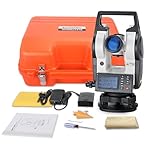
5. SingularXYZ SET1 – Best if You Plan to Add a Distance Meter
SET1 Laser Theodolite 30x Telescope 2″ Accuracy Dual Side Display Digital Theodolite for Surveying, Construction & Engineering with 10-Hour Battery
Plus or minus 2 arcsecond accuracy
30x with 45mm objective
10 hour battery
EDM interface
Pros
- 2 arcsecond accuracy with 30x magnification
- 45mm objective lens and orthoscopic eyepiece
- Integrated EDM interface for adding a distance meter
- 10 hour 1300mAh rechargeable battery
- Electronic tilt sensor with on screen levelling guidance
- All metal rugged construction
Cons
- Only 1 review
- Weight and dimensions not published
- Newer brand with an unproven support network
The SET1 is the only instrument here with an integrated EDM interface, meaning you can attach a distance meter to the body and turn an angle-only theodolite into an angle and distance instrument. For crews that currently buy a theodolite and then borrow a laser measure anyway, that is a workflow saving rather than a spec sheet nicety.
Optically it is strong: 30x magnification through a 45 millimetre objective with a 1 degree 30 minute field of view, an orthoscopic eyepiece and a stated resolving power of 2.5 seconds. Accuracy is plus or minus 2 arcseconds with selectable 1, 5 and 10 second minimum readings, and vertical angle compensation is automatic at plus or minus 3 arcminutes.
There is a dual side display and keyboard so a two person crew can both read the instrument, an electronic tilt sensor with levelling guidance on screen, and a 1300mAh rechargeable battery giving 10 hours of continuous use. Laser options come in Class II under 1mW and Class 3R at 4.5mW, and the body is all metal.
Why the EDM interface changes the buying decision
If you only ever do setting out and layout, the interface is optional. If you are part way through moving to a recorded data workflow, being able to add a distance meter later avoids a second full instrument purchase, and the dual side display lets the rod person confirm the angle independently.
Where we would hesitate
A single review is not a reliability record, and the listing does not publish weight or dimensions, which makes planning your tripod and carrying setup harder. SingularXYZ is a newer brand with a short support history, and the all metal construction we like in the hand is also the heaviest option to carry, so confirm the written specification before it goes on a critical path job.
6. Survey Pro 5610-02 – Best for All-Weather Site Work
Two-Second (2 Sec) Electronic Digital Theodolite Surveying Construction
2 second accuracy
IP55 sealed
10 hour lithium battery
minus 20 to plus 45 C
Pros
- IP55 water and dust sealed for exposed site work
- 2 second angular accuracy with dual backlit LCD
- 10 hour rechargeable lithium battery
- Works from minus 20 to plus 45 degrees Celsius
- Liquid electric detection compensator
- Built in reticle illumination
Cons
- Only 1 review
- Heaviest at 17 pounds
- Listing dates from 2016
This is the only instrument in the roundup with a published ingress protection rating attached to the head. IP55 means dust protected and protected against water jets, and combined with a working range of minus 20 to plus 45 degrees Celsius it is the model we would trust for road work, hillside grading and coastal exposure.
The level and compensator detail is unusually well specified. Plate level sensitivity is listed at 30 seconds over 2 millimetres, the circular level at 8 seconds over 2 millimetres, the auto compensator uses liquid electric detection at plus or minus 4 seconds, and the vertical compensator is rated at plus or minus 1 second. That level of published detail is itself a trust signal.
Power is a rechargeable lithium battery giving 10 hours of operation, with dual backlit LCD and a back lit telescope reticle so either end of a dark shift can read. The head measures 165 by 157 by 318 millimetres and weighs 4.3 kilograms with the battery fitted, listed at 17 pounds for the packed item.
Why the IP rating matters more than the accuracy figure
Two arc second accuracy is common. IP55 on an instrument that lives in an open vehicle on a wet site is not, so if yours spends its life in the rain, sealing matters more than a step in accuracy class. Published compensator tolerances also tell you the instrument was engineered to a specification rather than assembled to a price.
Where the compromises sit
At 4.3 kilograms on the head this is the heaviest setup in the list, and long walks between setups will show, so a lighter unit is kinder to your back over a full shift. There is also only one review, and the listing has been in place since 2016 with little recent activity, so confirm the battery pack and charger are still supplied.
7. GOYOJO DE2A – Best for RS-232 Data Output
High Precision Digital Electronic Theodolite Measuring Equipment Set (with Theodolite Bracket)
2 to 5 second accuracy
RS-232 output
15 hour battery
NiMH and AA backup
Pros
- RS-232 serial data output for automated recording
- 15 hours operation from an 1800mAh battery
- NiMH rechargeable plus 4 AA alkaline backup
- Single axis liquid tilt sensor with auto correction
- 30x magnification with 1 metre minimum aim distance
- Carrying case and theodolite bracket included
Cons
- No reviews at all
- 2 to 5 second range is looser than dedicated 2 second models
- Weight and dimensions not published
The DE2A is the only model in this roundup that publishes an RS-232 asynchronous serial data output. If your workflow records angles automatically into a laptop, a data logger or a machine control system, that single port can make this the only instrument on the list that fits your process at all.
Power is the other headline. An 1800mAh battery gives up to 15 hours of operation from either the supplied NiMH pack or four AA alkaline cells, so a dead charger is never a reason to stop. A single axis liquid tilt sensor handles automatic angle correction, and the LCD shows horizontal and vertical angles with horizontal angle zeroing, auto power off and a battery indicator.
Optics are 30x magnification with a 1 degree 30 minute field of view and a 1 metre minimum aiming distance, so very close work inside a structure is possible. A portable carrying case and a theodolite bracket are included, and accuracy is quoted as a 2 to 5 second range rather than a single firm number.
Why the serial output changes the workflow
Automatic recording removes manual transcription, which is where most layout errors actually start, and the 15 hour battery with alkaline backup means a full week of intermittent use from a single charge, which beats every other model here on endurance.
Where we would be careful
There are no reviews, so nothing is verified, and a 2 to 5 second range is looser than the dedicated 2 second instruments and becomes measurable on a long baseline. Weight and dimensions are not published and this is a brand with no track record, so we would verify collimation and the vertical index on arrival before using it for anything you need to stand behind.
8. XL-300 Digital Theodolite – Best for On-Board Data Logging
XL-300 Digital Electronic Theodolite, 2 Seconds Accuracy, Yellow, Standard Style
2 second accuracy
Data collector function
15 hour battery
Aluminium body
Pros
- On-board data collector function for recording measurements
- 2 second accuracy claim with microprocessor readout
- 15 hours from the rechargeable pack
- Carrying case charger battery and manual included
- One year warranty
Cons
- No reviews
- Listed weight of 2 pounds is not credible for a theodolite
- Generic brand with an obscure manufacturer
The XL-300 is listed as a standard style digital electronic theodolite with 2 second accuracy, an integrated microprocessor and digital readout, vertical angle measurement, and a data collector function for recording measurements. The on-board storage is the interesting part, because it removes the need to write readings down or carry a separate logger.
The rechargeable pack is quoted at 15 hours of operation, matching the longest endurance claim in this roundup, and the box includes a carrying case, charging adapter, rechargeable battery pack and user manual. The body is aluminium and the warranty is one year, which beats no warranty but falls short of the established models.
Our concern is the specification page itself. The listed weight is 2 pounds, which is not credible for this class where comparable instruments run between 9 and 17 pounds, and the brand is listed as Generic with a manufacturer name that matches no surveying maker we recognise.
Why on-board recording is worth looking for
If your crew is already moving toward digital field data, an instrument that stores its own readings removes a whole class of transcription error, and 15 hours of battery life means a full working week per charge while the aluminium body should handle knocks better than a plastic shell.
Why we would not rely on this listing
An implausible weight figure suggests the specification block was filled in generically, which undermines every other number on the page including the accuracy claim. With no reviews and no meaningful brand behind it, we would want written confirmation of the accuracy certification, the collimation record and the warranty terms before this went near a control job.
9. SitePro DT-205 – Best Accessory Coverage in the Box
SitePro DT-205 Digital Electronic Theodolite for Construction Surveying, Rechargeable and Alkaline Batteries, Optical Plummet
Incremental encoding
Dual backlit LCD
Optical plummet
Rechargeable and alkaline
Pros
- Complete kit with case plumb bob rain cover sunshade and tools
- Optical plummet included for centring over a point
- Incremental encoding detection with push button operation
- Programmable settings including 90 degree beep
- Dual backlit displays with extra large characters
- Rechargeable and alkaline power options
Cons
- No reviews
- Weight and dimensions not published
- Acrylonitrile butadiene styrene plastic body
The DT-205 arrives with the most complete accessory set in this roundup. The box list includes an alkaline battery tray, a carrying case, a plumb bob, a rain cover, a rechargeable battery kit, a sunshade and a tool kit, which on a first instrument purchase saves buying four or five separate items.
The instrument follows the modern digital pattern: incremental encoding detection with push button functions, precise LCD readouts, dual backlit displays with extra large characters, programmable settings for horizontal angle resolution, the 90 degree beep and vertical degrees or percentage, plus automatic power shut off and a six button keypad with a built in illuminator.
The optical plummet is worth calling out, because it lets you centre over a point without a physical plumb bob, which speeds up setups over existing control marks considerably. A single action battery pack attach and detach lets you swap power packs quickly rather than opening a battery door in the rain.
Why the bundled kit matters on a first buy
A rain cover and a sunshade are items most first time buyers forget, and both extend the working day more than any specification on the page, so having them in the box removes the excuse. The optical plummet and the rechargeable plus alkaline dual power combination are the two features we would keep even if we bought this instrument separately.
Where the specification is thin
There are no reviews, no published weight or dimensions, and the accuracy class is not stated as a firm figure, so we would want the specification confirmed in writing before purchase. The body is acrylonitrile butadiene styrene plastic, which is light in the hand but is not what we would choose for an instrument stored on a rear seat through a construction summer.
10. 20 Second Vernier Transit – Best for Education and Rough Layout
Professional Surveying Transit Theodolite, 20 Second Vernier, 24X/30X Magnification, 40mm Objective, Silver
20 second vernier reading
24X and 30X magnification
Optical plummet
Brass and aluminium
Pros
- Mechanical vernier instrument needs no batteries
- 24X and 30X magnification with 40mm objective
- Fully coated optics clear from 1.5m to 300m
- 360 degree graduated circle for horizontal and vertical
- 2.5X optical plummet
- Brass aluminium and glass construction
Cons
- 20 second vernier reading is far less accurate than digital models
- No reviews
- Manual vernier reading needs operator skill
This is the traditional optical transit, included here because it is still the right tool for some jobs. A 20 second vernier transit reads angles off a graduated circle by hand, needs no batteries at all, and can be repaired by anyone with a screwdriver and a decent optics bench. For a training programme, a school exercise, or rough layout where nobody is signing off dimensions, it does the job.
The optics are better than the accuracy class. Twenty four and thirty times magnification through a 40 millimetre fully coated objective gives a clear image from 1.5 metres out to 300 metres, with a 0.5 metre minimum focusing range and a 2.5 times optical plummet. The body is brass, aluminium and glass in silver finish, roughly 15 inches tall.
Be clear about the tradeoff. Twenty arc seconds is an order of magnitude looser than the 2 second digital units here, and the reading depends on the operator aligning a vernier against a graduated circle by eye. That is a skill worth learning and a poor use of a production surveyor day.
Why some crews still keep one
No battery means no charging, no firmware and no electronics to fail, and surveyors on r/Surveying still describe using older optical transits and vintage theodolites for quick site tasks. Learning vernier reading is genuinely valuable education too, and the instrument can be passed between students without any of them needing a recorded data workflow.
Where it must not be used
Never for control transfer, cadastral boundary work, or any layout that has to be built to a tolerance, because the 20 second class plus operator error will not hold up. There are also no reviews, the listed weight of 2 pounds is not credible for a brass and glass instrument, and the manufacturer name on the listing has no connection to optical transit production, so inspect the condition and optics carefully on arrival.
How to Choose a Theodolite in 2026
Angular accuracy is the first filter, and it is quoted in arc seconds. One arc second is the angle subtended by one millimetre at roughly 206 metres, so it represents a real linear error once projected along a baseline. For most construction layout and stakeout, 2 seconds is the professional default. 5 seconds is fine for alignment, rough frame setting out and interior work. Anything above 10 seconds belongs to education and rough site tasks.
Optics matter more than buyers expect. Look for 30x magnification, a 40 millimetre or larger objective, and illumination for low light. A minimum focus of 1 metre or less lets you work inside a building, and an erect rather than inverted image is a small quality of life gain for anyone new to the instrument.
Compensation is the feature that protects your accuracy in the field. Vertical axis compensation with a tilt sensor corrects readings when the instrument is not perfectly level, which happens constantly on rough ground. A single axis sensor is weaker than a dual axis one, so treat single axis compensation as a partial solution rather than a complete one.
Power and runtime decide how your day runs. Rechargeable lithium packs deliver around 10 hours, larger NiMH or alkaline packs deliver 15 to 40 hours, and dual power options let you carry a spare cell type rather than a spare charger. The NETH503 at 40 hours on four AA cells sits at the extreme of that range.
Durability is where published details thin out. An IP55 or IP66 rating on the head is worth a lot outdoors, and dual backlit displays plus a reticle illuminator are what make a night shift possible. Warranty length is a genuine differentiator too, ranging from one year on newer listings to two years on the established models.
Finally, consider what happens when it breaks. An established brand with a service network and a documented calibration path is worth more than a specification page full of numbers you cannot verify. The used market is a separate conversation: classic models such as the Wild T2000 and T3000 are treated as benchmark instruments by surveyors on specialist forums, and if you go that way, inspecting collimation and the vertical index matters more than the asking figure.
What 2 Seconds vs 5 Seconds Means in Real Millimetres
One arc second of angular error projects to roughly 0.5 millimetres of linear error at 100 metres and roughly 1 millimetre at 200 metres. A 2 second instrument therefore puts about 1 millimetre of angular error at 100 metres and about 2 millimetres at 200 metres. A 5 second instrument roughly doubles both figures, and a 20 second vernier transit multiplies them by ten again.
That is the angular component only. It excludes centring error, which is normally larger, and the error from sighting a target. Surveyors describe a 5 second theodolite as sighting within roughly 2 millimetres of the target at 200 metres, and they stress that face-two double centering reduces the remaining error substantially because it cancels collimation and vertical index offset.
The practical rule: on baselines under 100 metres, 2 versus 5 seconds rarely decides the outcome and any decent instrument will do. Beyond 200 metres, or where the layout carries a tight tolerance, the difference becomes visible and 2 seconds is worth the money.
Theodolite vs Total Station vs Optical Transit vs RTK
A theodolite measures angles only. A total station adds electronic distance measurement, so it gives you coordinates as well as directions, and it is the right tool when you need station coordinates or a stakeout that must be checked independently.
An optical transit is a manual theodolite with no electronics at all. It is cheaper to own, cheaper to repair and the standard teaching instrument, but it is far less accurate than anything digital.
An RTK receiver gives centimetre level coordinates directly from satellites, with no instrument at the far end of the baseline. That is unbeatable for control and open site work, and it cannot do what a theodolite does well, which is repeat a known direction accurately when a target is fixed in place and awkward to occupy with a receiver.
The most common real world pattern, and the one many surveyors describe on forums, is owning a total station and keeping a theodolite specifically for setting out, alignment and plumbing tall steel frames, where the instrument sits at one point and the accuracy comes from repeated direction readings rather than from coordinates.
Tripods and the Accessories You Actually Need
The most common regret among first time buyers is the tripod. No theodolite in this roundup includes one, so budget for it before the instrument arrives. A wooden tripod is heavier and absorbs vibration better, which matters for fine optical work. An aluminium tripod is lighter and easier to carry up stairs or onto scaffolding, which makes it the better choice for site work with a lot of movement.
Check that the tripod has a 5/8 by 11 inch mounting thread, the standard for this class of instrument, and that the head can be levelled with the instrument attached. A cheap fixed-head tripod will not accept a tribrach.
Beyond the tripod, the practical kit list is short: a plumb bob or an optical or laser plummet for centring over a point, a spare battery in the secondary chemistry the instrument accepts, a rain hood or hard case, a sunshade for long summer days, and a small screwdriver set for tripod adjustments. For night work a reticle illuminator matters far more than most buyers expect, and it is the reason the David White laser sight earns its place on this list.
Calibration Checks to Run Before Your First Field Setup
Reviews repeatedly raise instruments arriving out of adjustment, so run these checks before you trust a single reading. First, level the instrument precisely and centre it, because every check that follows depends on both.
Then check the double centering condition. Sight a distant target, read the horizontal angle, turn the scope over, read again. If the two readings are not 180 degrees apart, the collimation or the 90 degree index is out and the instrument needs service before you use it.
Next, check the vertical index error. With the telescope horizontal and the bubble centred, the vertical reading should be zero. A non zero value means the vertical index needs adjusting, which matters enormously for grade setting and for plumbing.
Finally, test the tilt compensation. Level the instrument deliberately off level, sight a target and see whether the reading shifts. If the compensator is working, the reading stays consistent within the quoted tolerance. If it moves, the compensator is not correcting and your angles are being silently biased. Do all four checks on day one, in the office, and record the results. Budget an hour for it.
Frequently Asked Questions
What is the best theodolite?
For most surveyors and construction layout crews the Spectra Precision DET-2 is the best all-round choice, offering 2 arc second accuracy, vertical axis compensation, dual backlit displays and a large body of verified owner feedback. Crews working at night or near water often prefer a laser-sighted model such as the David White DT8-05LS, and education or rough layout buyers can use a 20 second optical transit instead.
What are theodolite instruments used for?
A theodolite measures horizontal and vertical angles to arc second precision and is used for construction layout, foundation stakeout, steel frame alignment and plumbing, boundary and cadastral survey, road grade setting and general site control. It records angles rather than coordinates, which is why it is often used alongside or instead of a total station.
Are theodolites still used?
Yes. Surveyors on r/Surveying still use electronic theodolites daily for setting out, alignment and plumbing tall steel frames, and classic optical transits remain popular for quick site tasks because they need no batteries and are simple to repair. A theodolite is also the instrument of choice when a target is fixed in place and cannot easily be occupied by a total station or RTK receiver.
How accurate is a theodolite?
Accuracy is quoted in arc seconds, and one arc second equals about 0.5 millimetres of linear error at 100 metres or 1 millimetre at 200 metres. A 2 second instrument therefore gives roughly 1 millimetre of angular error at 100 metres and 2 millimetres at 200 metres, while a 5 second model is about twice that. Centring and sighting error usually add more than the quoted figure.
Do I need a theodolite or a total station?
Choose a theodolite when you need accurate angles and directions, for layout, alignment and plumbing, and it is simpler and cheaper to run. Choose a total station when you also need distances and coordinates, or when stakeout must be checked independently. Surveyors commonly own both, using the total station for control and the theodolite for repetitive direction work.
How often does a theodolite need calibrating?
Run the arrival checks once, including the double centering, vertical index and tilt compensation tests, then recheck after any drop, repair or long storage. A full professional calibration is normally needed only after a collision, a shock, or if readings drift between repeated observations. Check that the manufacturer or a service centre is available in your region before you buy.
Which Theodolite Should You Buy?
Start with the Spectra Precision DET-2 if you want one instrument that handles layout, stakeout and alignment without compromise, and run the calibration checks before you set up your first control point. Move to the David White DT8-05LS if you work nights, indoors or around water and a laser sight will save you more than the extra accuracy would. Pick the 5 inch NETH503 for long baselines where 30x optics and 40 hours of alkaline power matter more than portability, and consider the SingularXYZ SET1 if your workflow is heading toward recorded data. Budget separately for a tripod, and verify collimation on day one.