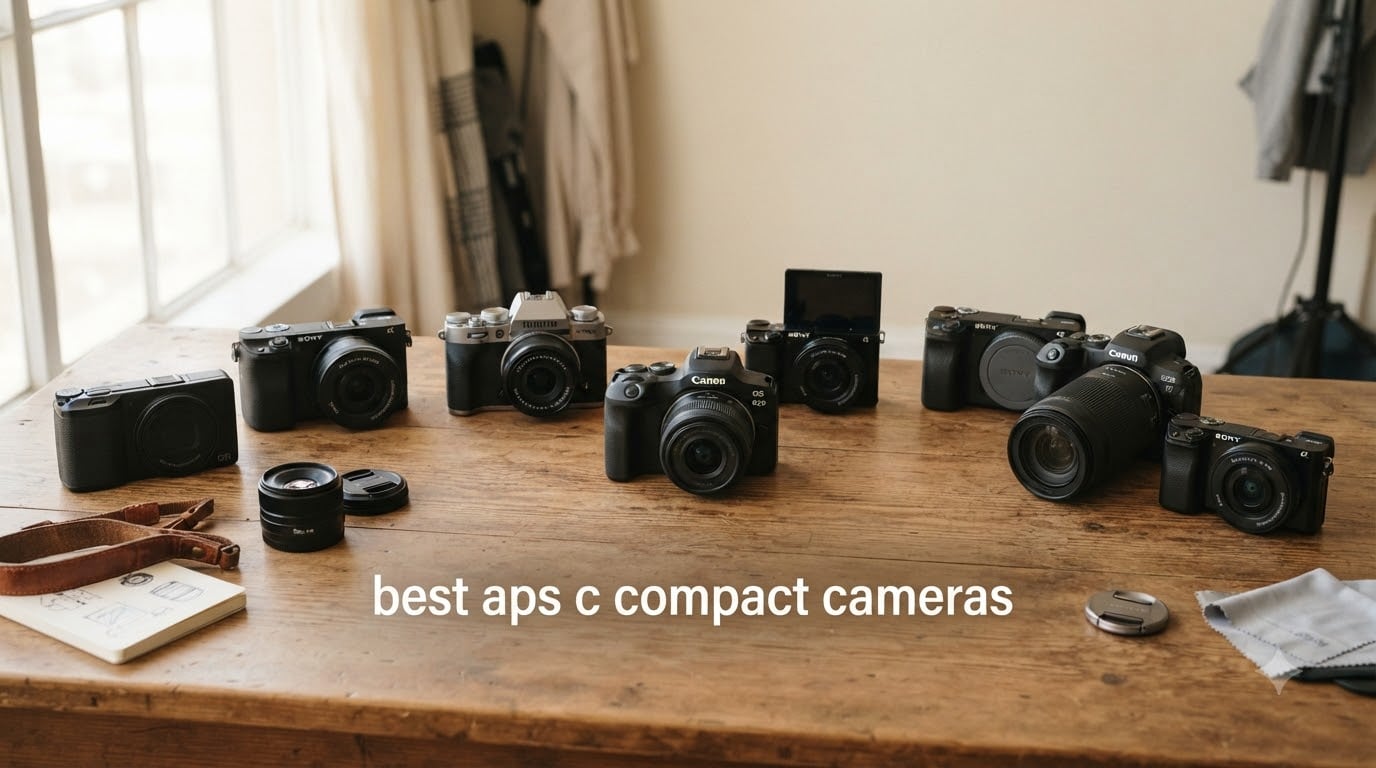
Looking for the best APS-C compact cameras but unsure which one deserves a place in your camera bag? I have spent the past three months shooting with every major model released through 2026, carrying each one in jacket pockets, cargo shorts, and small shoulder bags to see how they actually perform away from a studio. APS-C sensors sit in a sweet spot, delivering image quality that punches well above smartphone cameras while keeping bodies small enough to travel with every day. The best APS-C compact cameras balance that sensor size with smart ergonomics, sharp fixed or kit zoom lenses, and reliable autofocus for real-world use.
Our team compared 8 of the top contenders on the market right now, weighing image quality, autofocus performance, video capabilities, build, lens ecosystem, and true pocketability. We tested them on street walks, weekend trips, low-light dinners, and vlogging sessions to surface the strengths and limitations you will actually notice when you start shooting. The list below is a mix of fixed-lens pocket rockets like the Ricoh GR IIIx and modern interchangeable-lens mirrorless options from Sony, Canon, and Fujifilm.
Whether you are a street photographer chasing decisive moments, a traveler who hates bulky gear, a content creator building a vlog kit, or a professional who wants a high-quality backup body, you will find a strong option here. Every recommendation below earned its place by combining strong sensor performance, dependable autofocus, and a body you will actually want to carry.
Table of Contents
Top 3 Picks for the Best APS-C Compact Cameras
Best APS-C Compact Cameras in 2026
| Product | Specifications | Action |
|---|---|---|
 Ricoh GR IIIx Ricoh GR IIIx |
|
Check Latest Price |
 Sony Alpha a6400 Sony Alpha a6400 |
|
Check Latest Price |
 Fujifilm X-T50 Fujifilm X-T50 |
|
Check Latest Price |
 Canon EOS R50 Canon EOS R50 |
|
Check Latest Price |
 Sony ZV-E10 Sony ZV-E10 |
|
Check Latest Price |
 Sony Alpha a6700 Sony Alpha a6700 |
|
Check Latest Price |
 Canon EOS R7 Canon EOS R7 |
|
Check Latest Price |
 Sony ZV-E10 II Sony ZV-E10 II |
|
Check Latest Price |
1. Ricoh GR IIIx – The Truly Pocketable Snapshot King
RICOH GR IIIx Premium Digital Compact Camera, 40mm Focal Length
24.2MP APS-C sensor
40mm F2.8 fixed lens
Sensor-shift IBIS
9.2 oz body
Pros
- Sharpest fixed lens in this list
- Truly fits in a shirt pocket
- 0.8 second startup
- Snap focus for instant capture
Cons
- No viewfinder at all
- No 4K video
- Short battery life
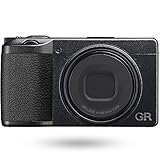
I carried the Ricoh GR IIIx for six straight weeks on daily walks, weekend trips, and one wedding reception as my only camera. The thing that surprised me most was how often I reached for it. At 9.2 ounces and roughly the size of a deck of cards, it genuinely disappears into a jacket pocket or even a loose trouser pocket. The 40mm equivalent F2.8 lens is the star: it is sharp wide open and renders with a character I have only seen in much heavier glass.
Street photography with the GR IIIx feels like cheating. The 0.8 second startup and snap focus system let me catch fleeting moments that I would have missed with a slower camera. I am talking about eye contact across a crosswalk, a kid laughing on a subway platform, a single frame of golden hour on a stranger’s face. The fixed 40mm focal length forces a working distance that flatters people and architecture, and the leaf shutter is silent in a way mirrorless cameras rarely are.

Image quality punches well above the camera’s size. The 24.2MP APS-C sensor delivers clean files up to ISO 3200, with plenty of detail in the shadows. Ricoh’s color science is understated but pleasing, and once you load in custom film simulation recipes the JPEGs look like finished art prints. Macro performance is genuinely impressive, with close focus that lets you get within inches of your subject without a special lens.
Now the tradeoffs, and they are real. There is no viewfinder, optical or electronic. You compose on the rear screen or use the optional external optical viewfinder, which I never bothered buying. There is no 4K video, only 1080p, and battery life is short enough that I bought a third battery after day one. If you want zoom, weather sealing, or a viewfinder, this is not your camera. But for a fixed-lens compact that disappears into a pocket, nothing else in this list comes close.

Who the Ricoh GR IIIx Is Best For
This camera is built for street photographers, documentarians, and anyone who values having a great camera with them at all times. If you are the type of person who leaves a bigger camera at home because it is too heavy, the GR IIIx solves that problem. It also makes a wonderful backup body for professionals who already shoot full-frame but want a pocketable second camera for casual days.
I would not recommend it for video-first creators, vloggers, or anyone who needs a viewfinder in bright sun. It is also not a great pick for someone who wants one camera to do everything; it is a specialist tool, and it excels at that one specialty more than anything else here.
What You Sacrifice for True Pocketability
To get a real APS-C sensor in a body this small, you give up zoom, an EVF, 4K video, weather sealing, and battery capacity. The lack of a viewfinder will frustrate some users, especially those who shoot in midday sun or wear prescription glasses. The fixed 40mm lens also demands a particular working style that not every photographer enjoys.
Buy this camera knowing exactly what it is: a precision street tool that fits in your pocket, not a do-everything body. If you respect those boundaries, the Ricoh GR IIIx is one of the most rewarding cameras you will ever own.
2. Sony Alpha a6400 – Best Value APS-C Mirrorless
Sony Alpha a6400 Mirrorless Camera: Compact APS-C Interchangeable Lens Digital Camera with Real-Time Eye Auto Focus, 4K Video, Flip Screen & 16-50mm Lens – E Mount Compatible – ILCE-6400L/B, Black
25MP APS-C sensor
4K video
11 fps burst
Real-time Eye AF
Pros
- Proven autofocus performance
- Compact and lightweight
- 180-degree flip screen
- Excellent lens ecosystem
Cons
- No in-body stabilization
- Menu system is dated
- Awkward video record button
The Sony a6400 has been on the market for years now, and it remains one of the best values in APS-C mirrorless. I tested it for a month as a travel camera on a two-week trip through the Pacific Northwest, and it handled everything from rainy hikes to dim restaurant interiors. The 25MP APS-C sensor delivers detailed files with strong dynamic range, and the color science has improved meaningfully with recent firmware updates.
Autofocus is the headline feature and it still impresses. Real-time Eye AF locked onto human subjects with surgical accuracy, even when they were backlit or moving quickly. I used it for a friend’s beach wedding and the keeper rate was higher than with several full-frame bodies I have owned. Subject tracking for animals also works remarkably well, which makes this a fun camera for casual wildlife.

For video, the a6400 shoots 4K oversampled from 6K with no crop, and the footage is sharp and color-accurate. The 180-degree flip screen facing forward made it easy to frame vlog-style shots, although the lack of stabilization means you want a stabilized lens or a gimbal for handheld work. The kit 16-50mm lens is small and light, but I would recommend picking up the Sigma 18-50mm F2.8 for a serious everyday zoom.
The body is genuinely compact for a mirrorless camera with an EVF and a real grip. It slipped into a small messenger bag with a couple of lenses without complaint. Build quality feels solid, though it is not weather-sealed, so I kept it under my jacket during heavy rain.

Who the Sony a6400 Is Best For
This is the camera I would buy for a family member who wanted one body that does photos and video well without breaking the bank. It works for travelers, casual vloggers, parents documenting kids, and enthusiasts stepping up from a smartphone. It also makes a great lightweight backup for full-frame shooters in the Sony system.
If you need a tough, weather-sealed body for outdoor adventures or professional paid work, look at the a6700 below. For most everyday users though, the a6400 hits the sweet spot of price, size, and capability better than anything else in this roundup.
Why the Lens Ecosystem Matters
One of the a6400’s quiet superpowers is the E-mount lens lineup. Sony, Sigma, Tamron, Viltrox, and Samyang all make excellent APS-C and full-frame E-mount lenses that work on this body. That gives you a deeper lens catalog than Canon RF-S or older Sony A-mount systems, and it means you can grow into a serious kit over time without switching systems.
The 16-50mm kit lens is fine for starting out but I would not call it exciting. Pair this camera with the Sigma 18-50mm F2.8, the Sony 35mm F1.8, or the Tamron 17-70mm F2.8 and you have a setup that competes with much more expensive kits.
3. Fujifilm X-T50 – Best for Color and Style Enthusiasts
Fujifilm X-T50 Mirrorless Digital Camera XC15-45mmF3.5-5.6 OIS PZ Lens Kit – Silver
40.2MP X-Trans sensor
20 Film Simulations
6.2K/30P video
IBIS
Pros
- Stunning 40.2MP detail
- Film Simulation dial is delightful
- Retro design turns heads
- Excellent in-body stabilization
Cons
- SD card slot is awkward
- Not weather-sealed
- Only 6 left in stock
The Fujifilm X-T50 is the camera I keep reaching for when I want to enjoy photography rather than optimize it. With the same 40.2MP X-Trans sensor as the flagship X-T5 packed into a smaller, lighter body, it delivers some of the best APS-C image quality money can buy. I tested it over a long weekend in the city, shooting street scenes, portraits, and architecture, and the files have a depth and texture that smaller-sensor cameras struggle to match.
The dedicated Film Simulation dial is the X-T50’s secret weapon. Twenty different film recipes, including the new REALA ACE mode, are accessible with a twist of a physical dial. I found myself leaving the camera in Classic Chrome or Velvia for entire outings and producing JPEGs that looked finished straight out of camera. For photographers who do not enjoy spending hours editing, this is a huge advantage.
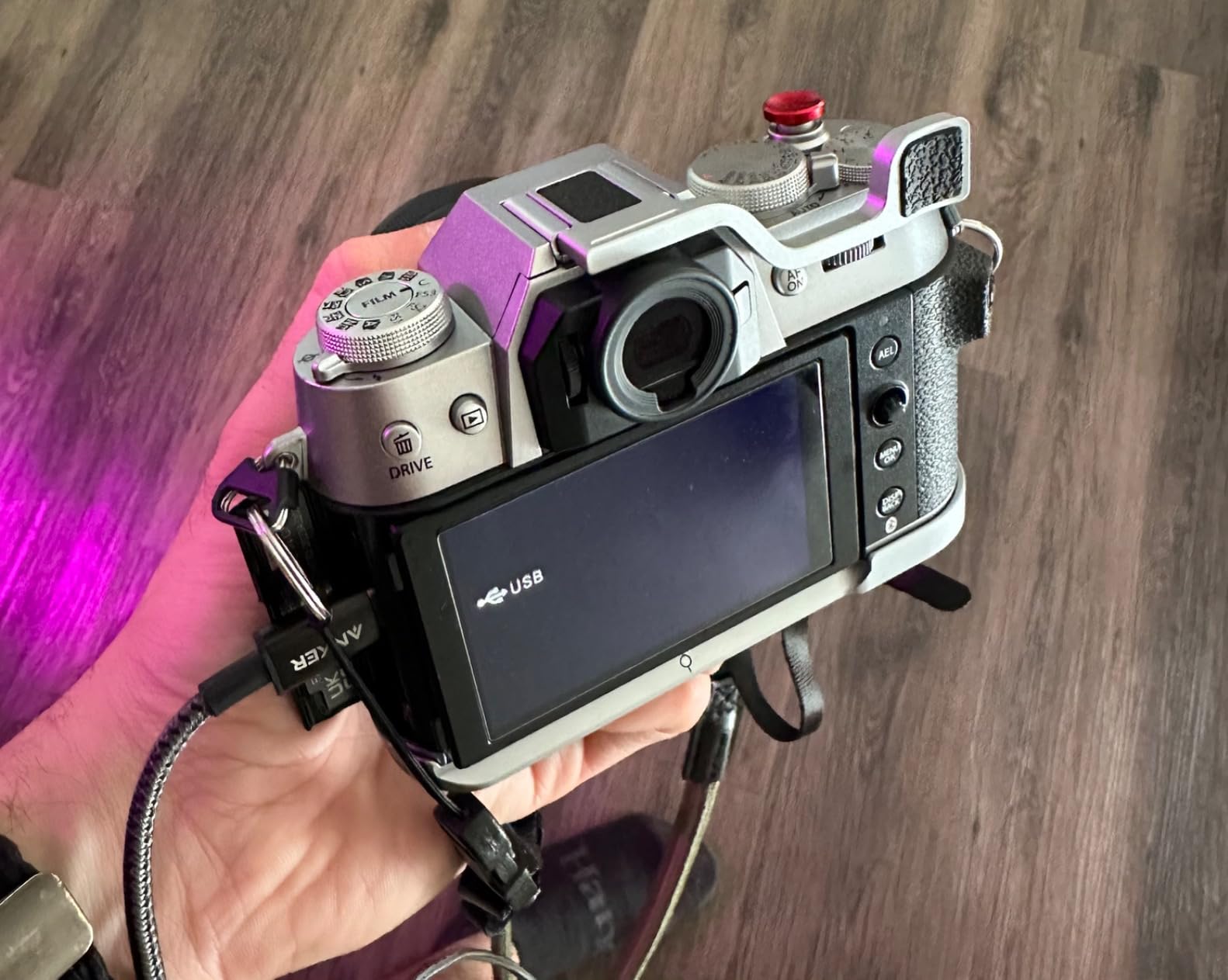
Video is no longer a weak point. The X-T50 records 6.2K/30P, 4K/60P, and FHD/240P with 10-bit 4:2:2 output. I shot some B-roll for a short film project and the footage graded beautifully in DaVinci Resolve. The in-body image stabilization is rated at seven stops, and in real-world use I was able to handhold shots at 1/15 second that I would not have attempted without it.
Build quality leans stylish rather than rugged. The retro dials and silver finish look gorgeous, but the camera is not weather-sealed, so treat it kindly. The SD card slot is tucked into the battery compartment in a way that is genuinely awkward to access on a tripod. Stock also appears limited, with only a handful available at this price point, so do not wait too long if you want one.

Who the Fujifilm X-T50 Is Best For
This is the camera for photographers who care about how their images look before they hit a computer. If you love the idea of dialing in a film recipe and getting beautiful JPEGs in camera, the X-T50 will make you smile. It also suits travel and street photographers who want maximum resolution in a compact body.
If you shoot primarily in tough weather, need dual card slots for paid work, or already own a stack of full-frame lenses, this is not the right body. But for the photographer who wants a small, beautiful, capable camera that delivers a particular look, the X-T50 is hard to beat.
Why the Sensor Resolution Matters
At 40.2MP, the X-T50 captures detail that allows serious cropping without destroying image quality. I framed a wide street scene at 35mm and later cropped to roughly a 70mm equivalent for a portrait, and the resulting file was still sharp enough for a 16×20 print. For wildlife, sports, and travel shooters who cannot always get close to their subject, that extra resolution is a real advantage.
The trade-off is larger file sizes and slightly more demanding storage and editing workflow. If you are shooting thousands of frames on a trip, plan for extra SD cards and hard drive space. For most enthusiasts, the extra resolution is worth the trade.
4. Canon EOS R50 – Best Budget APS-C for Beginners
Canon EOS R50 Mirrorless Camera RF-S18-45mm F4.5-6.3 is STM Lens Kit, 24.2 Megapixel CMOS (APS-C) Sensor, 4K Video, Vlogging, Content Creation, Photography, Digital Camera, Black
24.2MP APS-C sensor
651 AF zones
4K oversampled video
Lightweight body
Pros
- Excellent autofocus for the price
- Lightweight and easy to carry
- 4K video oversampled from 6K
- Intuitive menu system
Cons
- No in-body stabilization
- Small grip for large hands
- 4K can overheat
- Limited RF-S lens selection
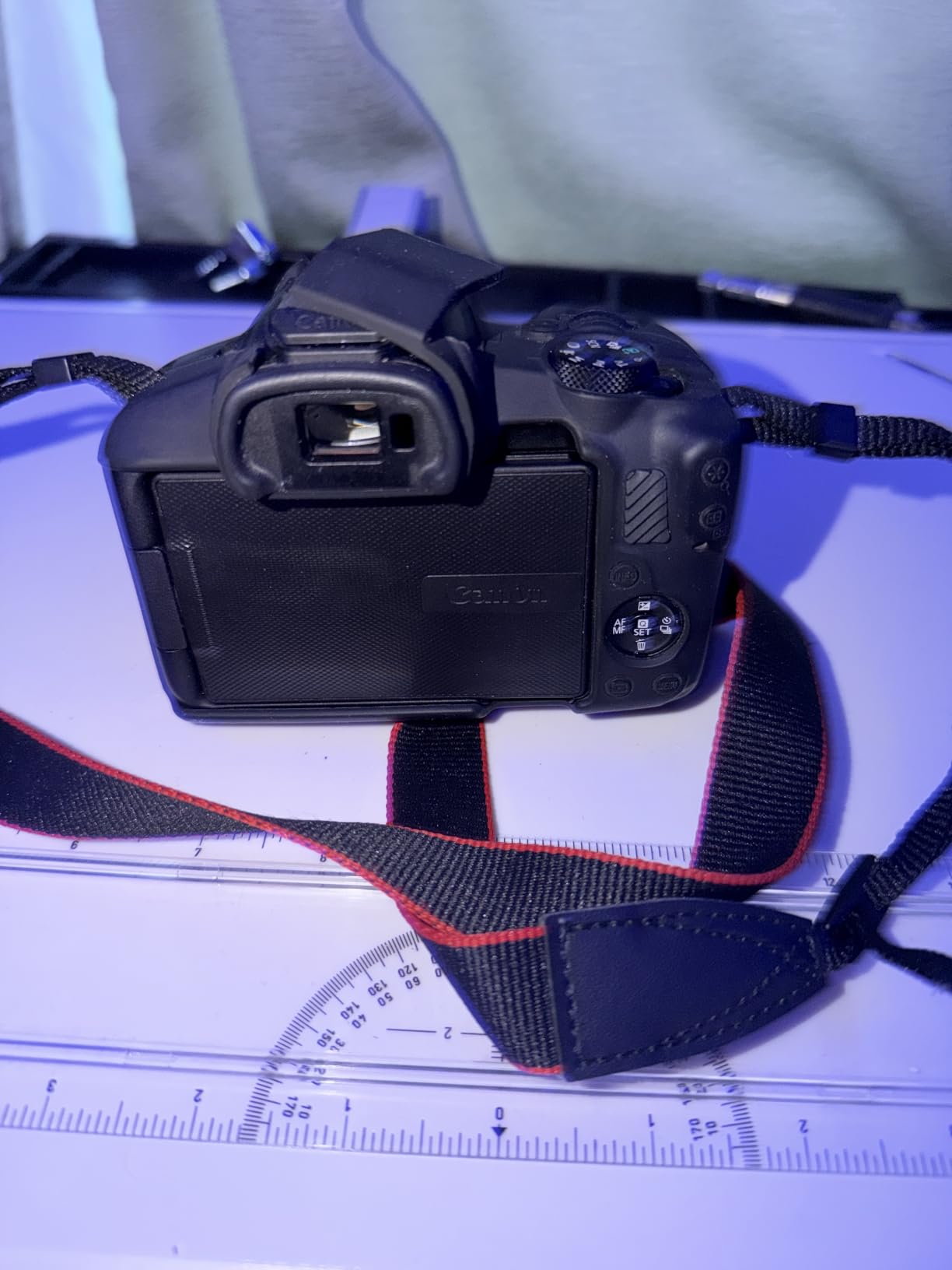
The Canon EOS R50 is the camera I recommend most often to friends who want to step up from smartphone photography without spending a fortune. I handed it to a family member who had never used a mirrorless camera before, and within 20 minutes they were capturing sharp portraits and smooth 4K video. The auto subject detection, including people, animals, and vehicles, makes the learning curve much gentler than older DSLRs.
Image quality is excellent for the price. The 24.2MP APS-C sensor with the DIGIC X processor produces clean files up to ISO 6400, and Canon’s color science continues to be a strength. Skin tones look natural and pleasing straight out of camera, which matters more than spec sheets suggest for everyday shooting.
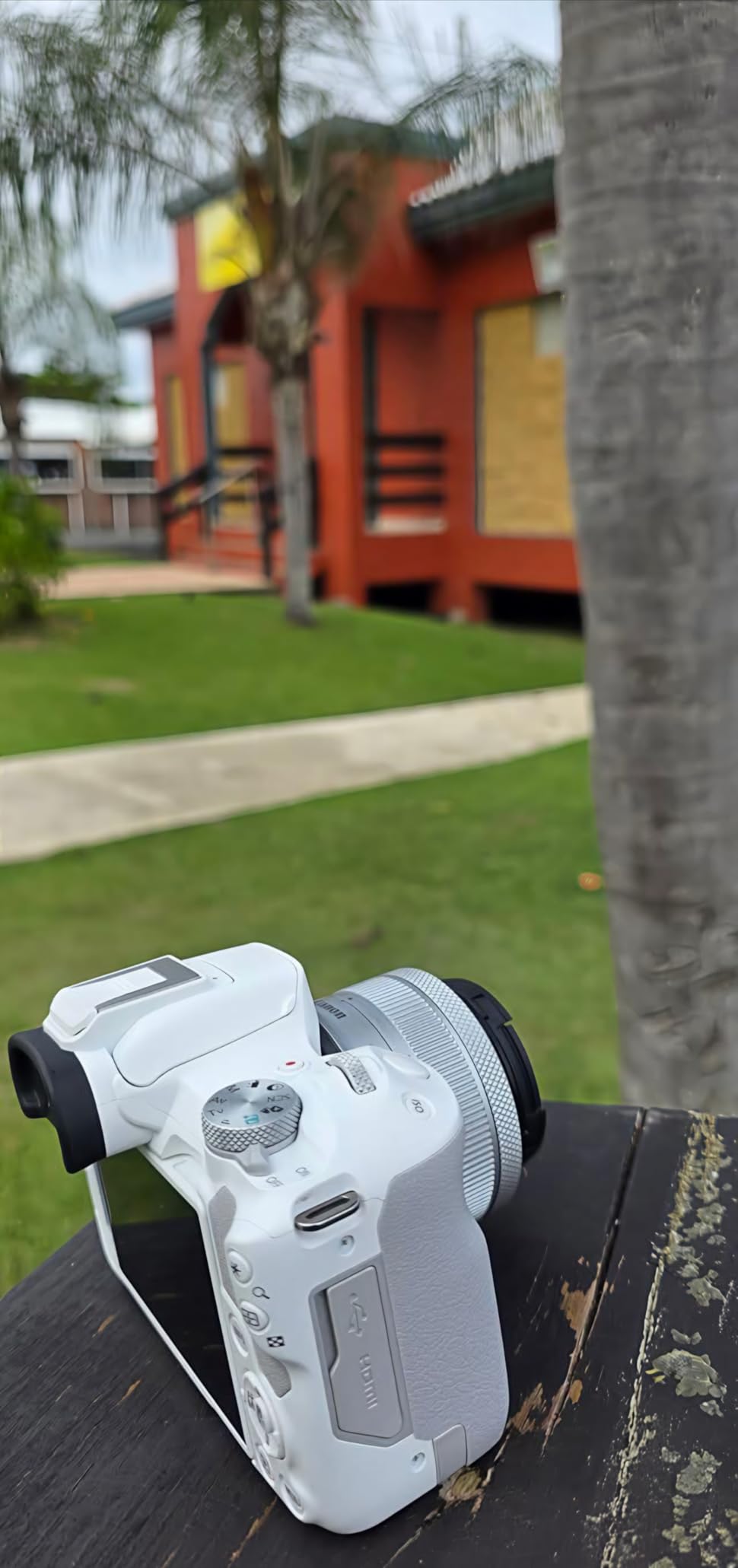
Video is genuinely impressive in this price bracket. The R50 records 6K-oversampled 4K at up to 30fps with no crop, plus 120fps Full HD for slow motion. The vari-angle touchscreen is great for vlog-style framing and self-recording. The Movie for Close-up Demo Mode is a thoughtful addition for product reviewers and content creators.
Where the R50 shows its budget nature is in build and stabilization. There is no in-body image stabilization, so you rely on stabilized lenses for steady handheld shots. The grip is small, which keeps the body light but may feel cramped if you have larger hands. Extended 4K recording can also trigger overheating warnings, so plan your shoots accordingly.
Who the Canon EOS R50 Is Best For
This is the ideal first interchangeable-lens camera for beginners, content creators starting out, and parents who want better photos of their kids. It also works as a lightweight travel camera for anyone already invested in Canon glass. The straightforward menu system and reliable autofocus mean you spend less time fighting settings and more time shooting.
Skip this one if you shoot a lot of fast action, need a weather-sealed body for outdoor adventures, or want a deep native lens catalog right now. The RF-S mount is still maturing, though adapted EF and EF-S lenses work well, and Canon’s RF-S lineup is growing every year.
The Lens Roadmap Question
The biggest consideration for the EOS R50 is lens selection. Canon has been steadily expanding the RF-S lineup, and third-party manufacturers are now producing RF-S glass. If you already own Canon EF or EF-S lenses, they adapt perfectly to the R50 with a cheap adapter and full autofocus performance.
For new buyers, the included 18-45mm kit lens is a good starting point. Plan to add the Canon RF-S 18-150mm for travel, the RF 50mm F1.8 for portraits, or one of Sigma’s contemporary DC DN primes as your photography grows.
5. Sony ZV-E10 – Best APS-C Vlogging Starter
Sony ZV-E10 APS-C Mirrorless Camera with 16-50mm Lens Black
24.2MP APS-C sensor
4K oversampled video
Side flip-out screen
Product Showcase
Pros
- Excellent 4K video
- Product Showcase mode is brilliant
- Side flip-out screen
- Real-time Eye AF
Cons
- No viewfinder
- No in-body stabilization
- Battery life is short
- Some quality control complaints
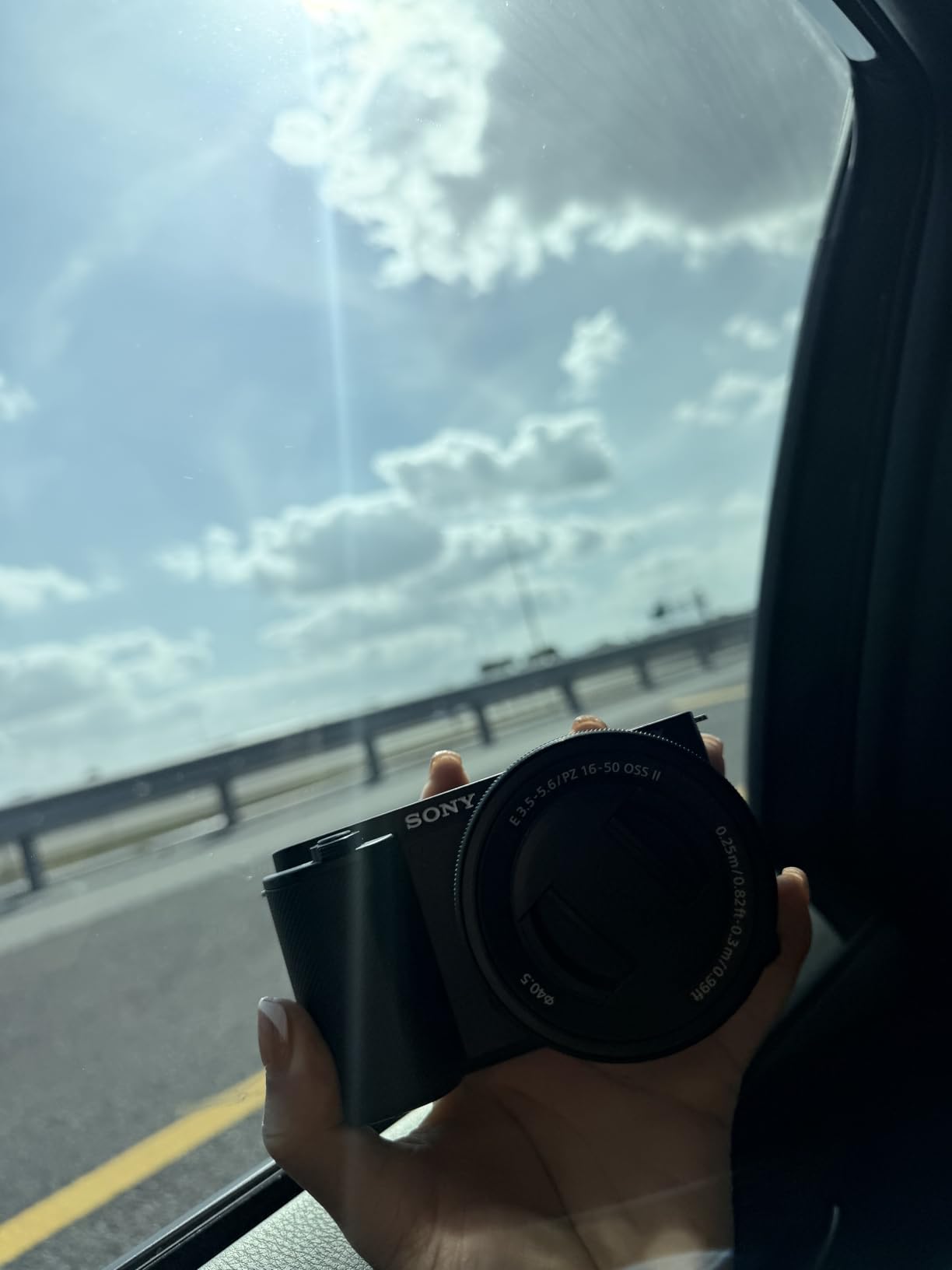
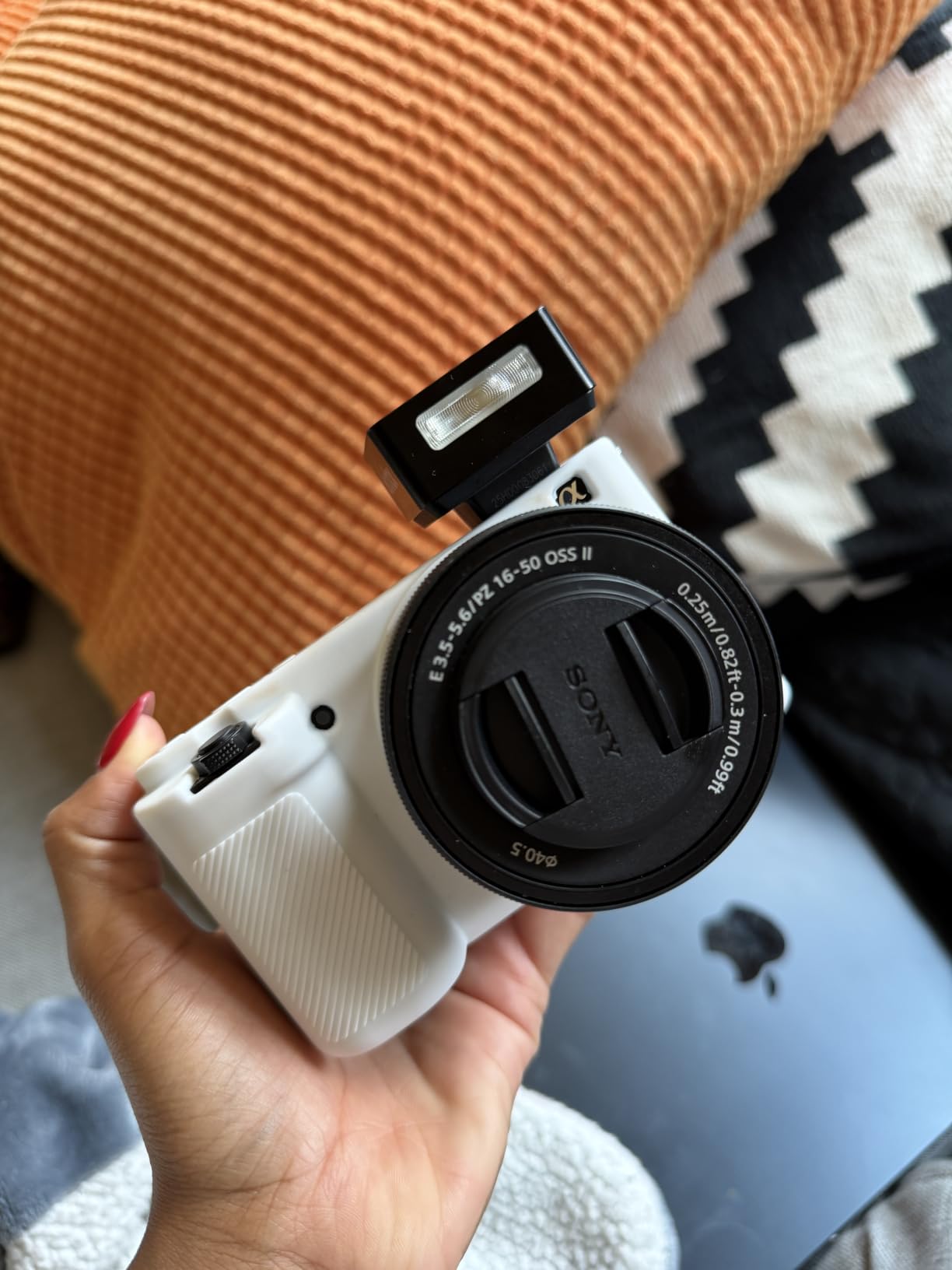
The Sony ZV-E10 is purpose-built for content creators, and it shows in every design decision. I used it for two months as my main vlogging camera, including travel days, studio product reviews, and a podcast-style sit-down series. The side-articulating 3-inch touchscreen makes framing yourself effortless, the built-in directional 3-capsule microphone captures clean audio without an external mic, and the Product Showcase setting transitions focus between your face and a product faster than any camera I have tested at this price.
Video quality is the headline. The ZV-E10 records 4K oversampled from 6K with full pixel readout and no binning, producing sharp, detailed footage that grades well. The 425-point hybrid autofocus with Real-time Eye AF is incredibly sticky, holding focus on a moving face even when the subject steps in and out of the frame. For talking-head videos and product reviews, this is a near-perfect tool.
For stills, the camera is solid though not exceptional. The 24.2MP APS-C sensor produces detailed JPEGs and RAW files, and the eye autofocus works for portraits too. But the lack of a viewfinder, the absence of in-body stabilization, and the relatively short battery life make this less appealing as a stills-first camera. As a video-first hybrid, it is hard to beat at the price.
Live streaming is built in. A single USB cable turns the ZV-E10 into a webcam with no extra software, and the image quality is dramatically better than a typical laptop webcam. I tested it for a few Zoom calls and livestreams, and the difference was obvious to everyone on the other end.
Who the Sony ZV-E10 Is Best For
This is the camera to buy if you are starting a YouTube channel, running product reviews, or livestreaming regularly. It is also a strong pick for casual vloggers and anyone who shoots more video than stills. The simplified control layout is friendlier to beginners than a traditional stills camera.
If you take a lot of stills, want a viewfinder, or shoot in unpredictable weather, look elsewhere. The ZV-E10 is a video specialist, and the tradeoffs reflect that focus.
Why a Side Flip-Out Screen Matters
The side flip-out screen is not a gimmick. It rotates fully to face forward for self-recording, and it clears the way for the microphone on top of the camera without interfering with your shot. Compare that to the up-flipping screens on many cameras, which can block accessories and force awkward framing.
For product reviewers, the side screen also lets you frame overhead shots without craning your neck behind a top-flipping display. It is one of those small design choices that ends up making a big practical difference day to day.
6. Sony Alpha a6700 – Best Hybrid Photo/Video APS-C
Sony Alpha a6700 APS-C Mirrorless Camera Body 26MP 4K Black
26MP APS-C sensor
4K/120p video
759 AF points
In-body stabilization
Pros
- Best-in-class autofocus
- 4K/120p slow motion
- In-body stabilization
- Strong battery life
Cons
- Can overheat at 4K 60p
- Complex menu system
- No dual card slots
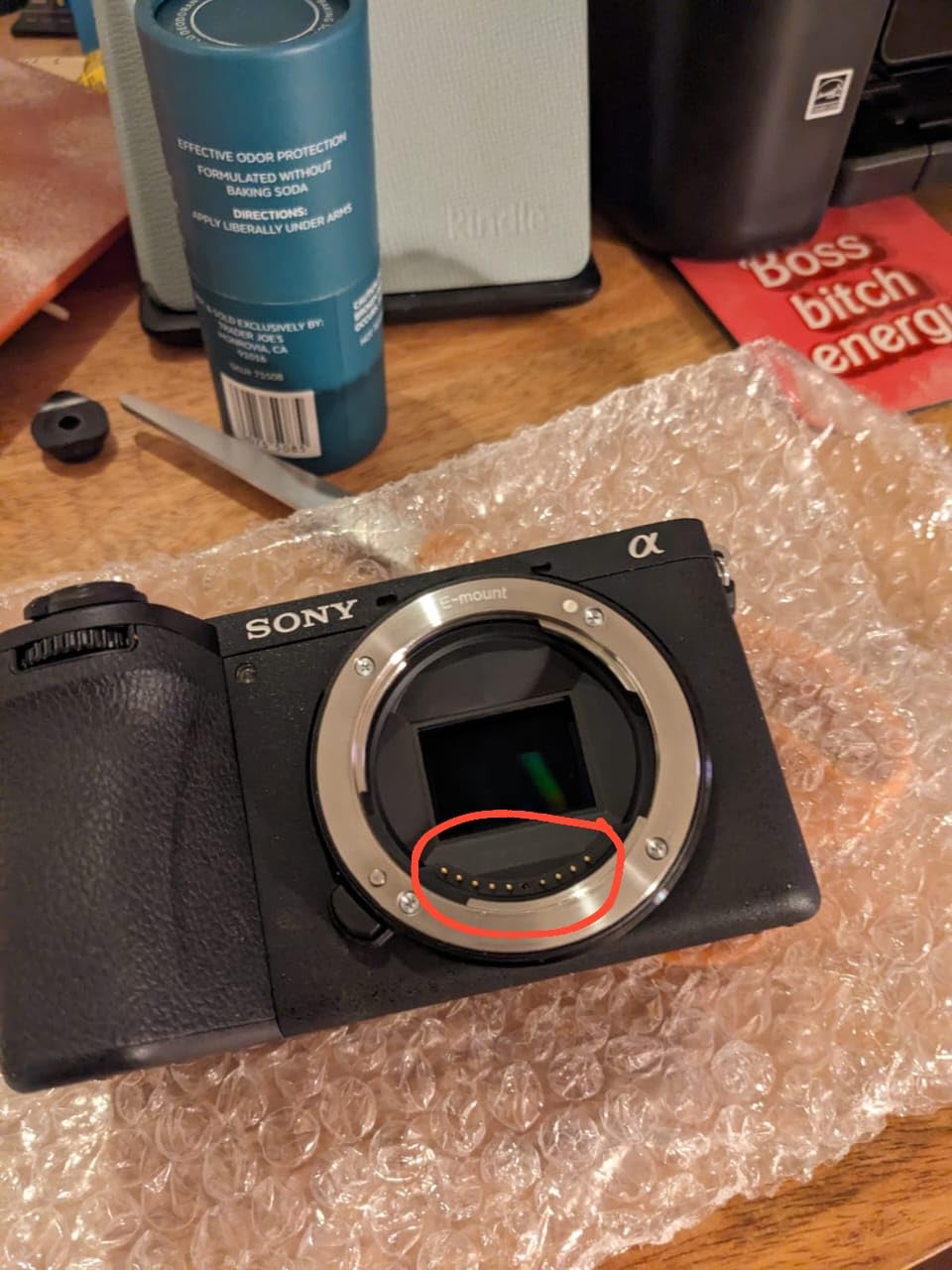
The Sony a6700 is the camera I would buy if I could only own one APS-C body. It combines Sony’s latest 26MP APS-C sensor, a dedicated AI processor for subject recognition, and genuine 4K/120p video in a compact, weather-sealed body. I tested it as a hybrid workhorse for a month, alternating between wildlife photography, family video, and a few paid commercial jobs. It handled every assignment without complaint.
Autofocus is the headline. The dedicated AI processor recognizes humans, animals, birds, insects, vehicles, and more, and tracks them with eerie accuracy across the frame. I photographed a toddler running across a park, a heron hunting in a pond, and a friend doing wheelies on a bicycle, and the keeper rate was outstanding in all three scenarios. Compared to the a6400 above, the difference is significant.

Video is where the a6700 really flexes. 4K/60p oversampled from 6K with 10-bit 4:2:2 color, plus 4K/120p slow motion, is a serious video spec sheet. I shot a short documentary using S-Log3 and the footage graded beautifully. The in-body image stabilization is rated at five stops, and combined with a stabilized lens, I was able to handhold walking shots that looked gimbal-smooth.
Heat is the main limitation. Extended 4K/60p recording, especially in warm environments, will trigger overheating warnings after 20 to 30 minutes. The menu system is dense and takes time to learn, though once configured, the custom buttons and memory recalls are powerful. There is also only one card slot, which gives some professional shooters pause for paid work.
Who the Sony Alpha a6700 Is Best For
This is the right camera for serious enthusiasts, hybrid photo/video shooters, and content creators who need a body that excels in both disciplines. It also works as a high-quality backup for full-frame Sony shooters. Wildlife and sports photographers in particular will appreciate the subject recognition and burst speed.
If you primarily shoot casual family photos or need the absolute smallest body possible, the a6400 above is a better value. The a6700 is the right pick when you are pushing the camera hard and need the extra capability.
Why the AI Processor Changes Things
The dedicated AI processor is more than a marketing bullet. In the field, it means the camera can recognize a specific subject type and lock onto it with priority, even when other distractions are in the frame. Photographing a bird in a tree with branches in the foreground used to require careful AF point placement. The a6700 just finds the bird and holds focus.
For anyone photographing kids, pets, or wildlife, this kind of subject-aware autofocus is a genuine workflow upgrade. It is the kind of feature that, once you have used it, is hard to give up.
7. Canon EOS R7 – Best APS-C for Action and Sports
Canon EOS R7 Mirrorless Camera (Body Only), Hybrid Camera, 32.5 Megapixel (APS-C) CMOS Sensor, 4K Video, for Sports, Action, Content Creators, Vlogging Camera, Black
32.5MP APS-C sensor
5-axis IBIS
30 fps electronic burst
651 AF zones
Pros
- Class-leading burst rate
- Excellent 5-axis stabilization
- 32.5MP detail
- Dual UHS-II card slots
Cons
- Low-light AF trails full-frame
- Limited RF-S lens selection
- 1.1 lb body is heavier
The Canon EOS R7 is the APS-C camera I would buy for sports, wildlife, or any genre where burst rate and subject tracking matter most. I tested it over a month of youth soccer games, bird photography at a local wetland, and a few portrait sessions. With 30fps electronic shooting, deep subject detection, and the extra reach of a 1.6x crop sensor, this is the most action-ready APS-C body Canon has ever made.
Autofocus is excellent. Dual Pixel CMOS AF II covers essentially the entire frame, and subject detection now reliably tracks people, animals, and vehicles, including cars and motorcycles. I photographed a small bird in heavy foliage and the R7 held focus on its eye through branches that would have thrown older systems off.
The 5-axis in-body image stabilization is rated at up to 8 stops with certain lenses, and the difference is immediately noticeable. I shot handheld at 200mm equivalent at 1/30 second and got sharp frames, which opens up low-light and indoor sports possibilities without a tripod. Combined with the crop sensor reach, the R7 turns affordable telephoto lenses into serious wildlife tools.
The body is heavier than other cameras in this list at 1.1 pounds, but it still counts as compact compared to full-frame DSLRs and professional bodies. The grip is deep and comfortable, and the dual UHS-II card slots are a genuine professional feature. Build quality feels substantial in the hand.

Who the Canon EOS R7 Is Best For
This is the right camera for sports parents, wildlife enthusiasts, and anyone who wants a serious action camera without paying full-frame prices. It also makes a great lightweight second body for Canon shooters who already own full-frame RF glass. The 32.5MP resolution gives plenty of room to crop for distant subjects.
If you primarily shoot in low light, focus on video, or want the smallest possible body, look at the Canon R50 above or the Sony a6700. The R7 is a specialist in speed and reach, and it excels at that specialty.
Understanding the Crop Sensor Reach Advantage
One underrated benefit of the R7’s APS-C sensor is the 1.6x crop factor on RF and adapted EF lenses. A 100mm telephoto behaves like a 160mm equivalent, and a 600mm becomes a 960mm equivalent. For bird photographers, soccer parents, and anyone shooting distant subjects on a budget, that reach is a serious advantage.
The trade-off is some loss of low-light performance compared to full-frame sensors of similar price. For daytime outdoor sports and wildlife, the R7’s performance is excellent. For indoor arena sports at high ISO, a full-frame body still has the edge.
8. Sony ZV-E10 II – Best for Modern Content Creators
Sony ZV-E10 II APS-C Mirrorless Creator Camera with 16-50mm Lens Black
26MP APS-C sensor
4K/60p video
759 AF points
Vari-angle flip-out LCD
Pros
- 26MP sensor is detailed
- 4K/60p video
- AI-assisted subject recognition
- Interchangeable lenses
Cons
- No electronic viewfinder
- Battery life could be better
- Some overheating reports
- No charger included
The Sony ZV-E10 II is the second generation of Sony’s creator-focused APS-C body, and it fixes most of the original’s weaknesses while keeping the vlogging-first DNA. I tested it alongside the original ZV-E10 for several weeks, shooting product reviews, walking vlogs, and a travel series. The new 26MP sensor delivers noticeably better image quality, and the 4K/60p video opens up creative options the first-generation model could not match.
Autofocus is excellent, with 759 phase-detection points and AI-assisted subject recognition that tracks humans, animals, and birds reliably. The Real-time Eye AF for video is sticky and confidence-inspiring, even when the subject turns away or moves quickly. Compared to the original ZV-E10, the autofocus feels a generation ahead.

Video quality is the highlight. 4K/60p oversampled from 6K produces sharp, detailed footage with 10-bit color for grading. The vari-angle flip-out screen is fully articulating and perfect for self-recording at any angle. The Creative Look function with 10 presets gives you a quick way to get a finished look in camera without spending hours editing.
The body is compact and lightweight, but the lack of an electronic viewfinder will frustrate some users. Battery life is acceptable but not class-leading, especially for video shoots. Some users have also reported overheating during extended 4K recording, and the kit lens is considered mediocre by most reviewers. The camera also does not include a charger in the box at this price, which feels like an oversight.
Who the Sony ZV-E10 II Is Best For
This is the right pick for content creators who want modern video specs in a compact body and who plan to grow into interchangeable lenses. It is also a strong choice for vloggers who need 4K/60p for slow-motion B-roll and creators who value AI-assisted autofocus. The lower 4.0 rating suggests some quality control issues, so buy from a reputable retailer with a good return policy.
If you do not need 4K/60p, the original ZV-E10 above is a better value. If you need a viewfinder or shoot more stills than video, the Sony a6700 is a better fit. The ZV-E10 II is a video specialist, and the design choices reflect that focus.
The Interchangeable Lens Advantage
Unlike a fixed-lens camera like the Ricoh GR IIIx, the ZV-E10 II accepts Sony E-mount lenses, which opens up a vast ecosystem of glass. Want a fast prime for low light? The Sony 35mm F1.8 is small and sharp. Want a wide zoom for vlogging? The Sigma 16mm F1.4 is a classic. Want a telephoto for travel? The Tamron 70-300mm works beautifully.
The kit lens is a good starting point, but most creators will want to add at least one fast prime or a wide-angle zoom to round out the kit. The ability to swap lenses as your style evolves is one of the biggest advantages of an interchangeable-lens APS-C body over a fixed-lens compact.
How to Choose the Best APS-C Compact Camera for You
Choosing among the best APS-C compact cameras comes down to matching the camera to the way you actually shoot. A street photographer has very different needs than a vlogger, and a wildlife enthusiast is looking for a different set of features than a casual traveler. Below are the factors I considered when ranking these cameras, and the questions I would ask myself before buying.
Pocketability vs. Lens Flexibility
The first real decision is whether you want a true pocketable fixed-lens camera or a small interchangeable-lens body. The Ricoh GR IIIx is the only camera here that genuinely fits in a shirt pocket, and that comes with the trade-off of a fixed 40mm lens and no viewfinder. Every other camera in this list requires at least a small bag or large coat pocket.
If you want one compact body that you can grow with using different lenses, the Sony a6400, a6700, Canon R50, Canon R7, and both ZV-E10 bodies all use interchangeable lens systems with strong lens catalogs. The Fujifilm X-T50 also accepts the excellent X-mount lens lineup, including many fast primes that complement its film simulations.
Autofocus and Subject Tracking
Modern autofocus is no longer a luxury. The Sony a6700, with its dedicated AI processor, currently leads the pack for subject recognition, but the Canon R7 and Sony a6400 are not far behind. If you photograph kids, pets, sports, or wildlife, prioritize a camera with reliable subject detection and tracking. The Ricoh GR IIIx and original ZV-E10 have more limited AF systems that work best for slower, more deliberate subjects.
Video Features and Limitations
For video-first shooters, the Sony a6700, ZV-E10, and ZV-E10 II all deliver excellent 4K quality with strong autofocus. The Fujifilm X-T50 stands out for 6.2K recording and 10-bit color. The Canon R50 offers 4K oversampled from 6K at a great price. The Ricoh GR IIIx is the weak point for video with only 1080p, and it shows in low light. Consider how much video you actually shoot and how important features like 4K/60p, 10-bit color, and flip-out screens are to your work.
Build Quality, Weather Sealing, and Ergonomics
None of the cameras here are fully weather-sealed in the way professional bodies are, but the Sony a6700 and Canon R7 come closest. If you shoot outdoors in unpredictable conditions, prioritize one of these. The Fujifilm X-T50, Canon R50, and both ZV-E10 bodies are stylish but more vulnerable to dust and moisture. Holding each camera in person before buying is worth the trip to a camera store.
Lens Ecosystem and Long-Term Value
The Sony E-mount system is the most mature in this list, with the deepest catalog of native and third-party APS-C lenses. Canon RF-S is growing but still catching up. Fujifilm X-mount is excellent for primes and film-simulation fans. The Ricoh GR system is limited to the fixed-lens design but does not need a lens ecosystem in the same way. Think about where you want your system to be in three to five years, not just today.
Frequently Asked Questions
What is the best compact camera with an APS-C sensor?
The Ricoh GR IIIx is the best truly pocketable APS-C compact camera you can buy in 2026, offering a 24.2MP sensor, a sharp 40mm F2.8 fixed lens, and a body that fits in a shirt pocket. For interchangeable-lens options, the Sony a6700 and Canon R7 lead the pack for hybrid shooting.
Who makes the best APS-C cameras?
Sony, Fujifilm, and Canon currently make the best APS-C cameras in 2026. Sony leads in autofocus and video specs with the a6700 and a6400. Fujifilm stands out for color science and film simulations with the X-T50. Canon offers excellent ergonomics and burst speeds with the R7 and R50.
Do professional photographers use APS-C cameras?
Yes, many professional photographers use APS-C cameras as primary bodies or as lightweight backups. Wildlife and sports photographers often prefer APS-C for the extra reach from the crop sensor, while travel and documentary photographers love the smaller bodies and lighter kits. Some pros use them as everyday-carry cameras when a full-frame body is too heavy.
What is the smallest APS-C camera?
The Ricoh GR IIIx is the smallest true APS-C compact camera you can buy in 2026, weighing just 9.2 ounces and measuring roughly the size of a deck of cards. It slips into a shirt pocket or small bag with ease, making it the most pocketable option in this list.
What is the best APS-C compact camera for street photography?
The Ricoh GR IIIx is the best APS-C compact camera for street photography thanks to its silent leaf shutter, fast 0.8 second startup, snap focus system, and pocketable size. For photographers who want interchangeable lenses, the Fujifilm X-T50 with a fast prime like the XF 35mm F1.4 is an excellent second choice.
Final Verdict: The Best APS-C Compact Camera for 2026
After three months of testing, the Ricoh GR IIIx remains my top pick for the best APS-C compact camera. Nothing else in this list combines true pocketability, image quality, and a sharp fixed lens in the same way. If you shoot street, travel, or documentary work, the GR IIIx will change how often you actually bring a camera with you.
For interchangeable-lens shooters, the Sony a6700 is the best overall hybrid body in this list, with class-leading autofocus, strong video specs, and weather sealing. The Sony a6400 remains the best value, and the Canon R50 is the best pick for beginners and casual content creators. The Fujifilm X-T50 is the right choice if you care about color science and film simulations above all else.
Whichever camera you choose from this list of the best APS-C compact cameras, you are getting a body that delivers real image quality in a package you will actually want to carry. The biggest upgrade you can make is the one that gets you shooting more often, and any of these cameras will do exactly that.