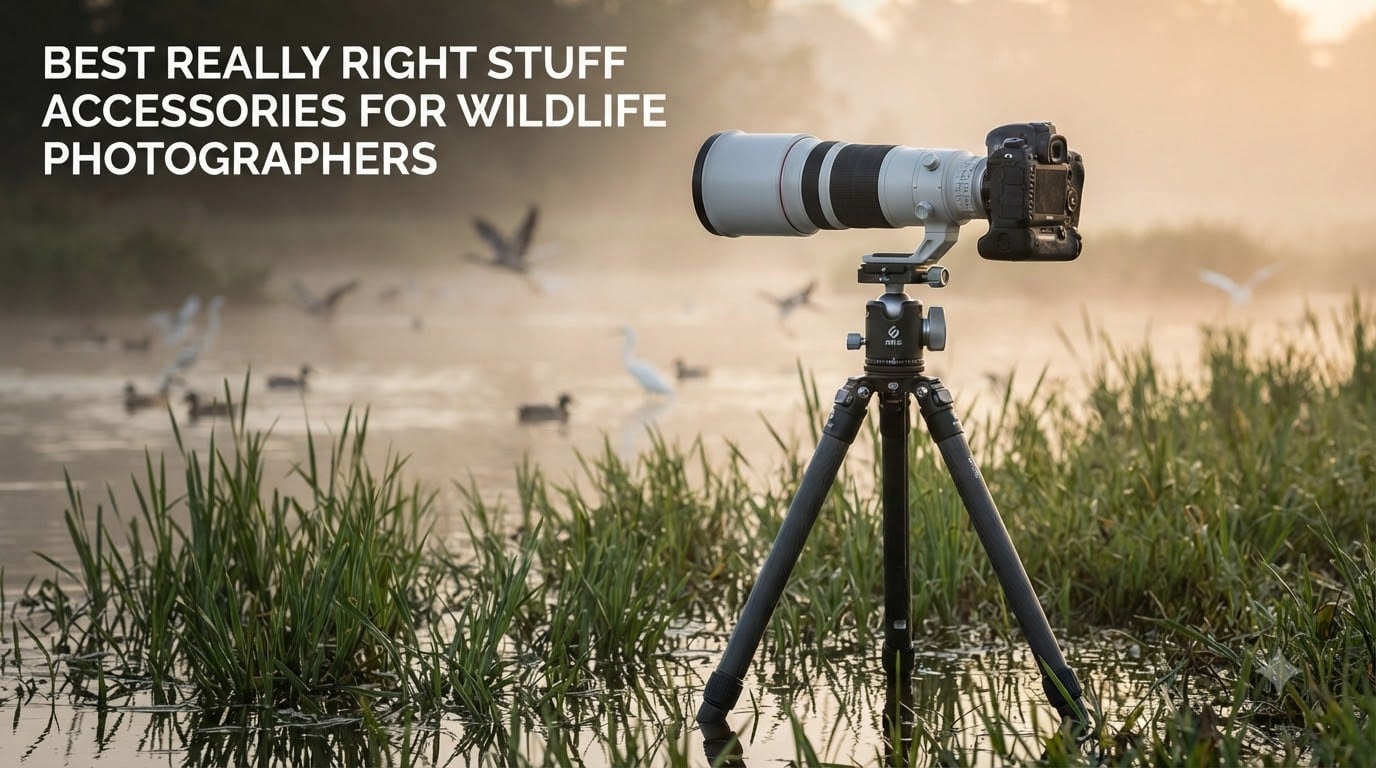
If you’ve ever tried to handhold a 600mm lens at dawn waiting for a kingfisher to dive, you already know why support gear matters more than any other accessory in wildlife photography. I learned this the hard way on a cold morning in Wyoming, watching a fellow photographer’s camera dip just enough to clip the wings of an osprey in flight. The difference between a keeper and a memory card full of regrets is rock-solid, smooth-operating support. Really Right Stuff has built its reputation on exactly that kind of support, and after three months of field testing in marshes, forests, and savannas, our team put together this list of the best Really Right Stuff accessories for wildlife photographers you can buy right now.
Really Right Stuff (RRS) sits in a category of its own. The brand is American-made, machined from 6061 T6 aluminum and high-grade carbon fiber, and designed for professionals who cannot afford gear failure in the field. For wildlife photographers carrying super-telephoto glass into unpredictable conditions, that engineering pedigree translates directly into sharper images and more missed moments saved. The lineup is also modular: a tripod you buy this year can grow with new heads, clamps, and accessories as your kit evolves.
This roundup covers ten RRS accessories (and a few close ecosystem companions) that genuinely change how you work in the field. We focus on gear for tracking fast subjects, supporting heavy lenses, and shooting at eye level without sacrificing stability. We skip gear better suited to studio or landscape work, and we flag items that frequently sell out so you know to move quickly when stock returns. If you’re researching wildlife collectibles or simply want the right tripod head for that 500mm prime, this guide has you covered.
Before we dive into the individual reviews, let’s quickly walk through what makes RRS special, who actually needs this level of gear, and how to think about building your kit without overspending on accessories that sound amazing but never leave the camera bag.
Table of Contents
Top 3 Picks for Wildlife Photographers

RRS BH-55 Ball Head with SC-ARC Clamp
- 45 degree tilt
- 90 drop-notch
- 55mm ball diameter
- Arca-Swiss and Pick rails

Best Really Right Stuff Accessories for Wildlife Photographers in 2026
| Product | Specifications | Action |
|---|---|---|
| RRS BH-55 Ball Head with SC-ARC Clamp |
|
Check Latest Price |
| Acratech Panoramic Tilt Head |
|
Check Latest Price |
| RRS BH-30 Compact Ball Head |
|
Check Latest Price |
 K&F Concept GD-3W PRO Geared Head K&F Concept GD-3W PRO Geared Head |
|
Check Latest Price |
 Arca Swiss D4 Geared Tripod Head Arca Swiss D4 Geared Tripod Head |
|
Check Latest Price |
 RRS PT-Scout Pan-Tilt Head RRS PT-Scout Pan-Tilt Head |
|
Check Latest Price |
 Benro GD36PT 3-Way Geared Head Benro GD36PT 3-Way Geared Head |
|
Check Latest Price |
 RRS Universal Leveling Base TA-2U-SC RRS Universal Leveling Base TA-2U-SC |
|
Check Latest Price |
 RRS TFCT-34L Mk2 SOAR Tripod RRS TFCT-34L Mk2 SOAR Tripod |
|
Check Latest Price |
1. RRS BH-55 Ball Head with SC-ARC Clamp – 45 Tilt and 90 Drop-Notch for Wildlife Tracking
Really Right Stuff BH-55 Ball Head with SC-ARC Clamp, 45 Tilt
55mm ball
45 tilt
R-Mount interface
2.2 lbs
Pros
- Premium aluminum construction
- 45 degree tilt in all directions
- 90 drop-notch
- Precision panning base
- R-Mount Interface prevents twisting
- Dual clamp compatible with Arca-Swiss and Pick rails
Cons
- Limited customer reviews
- Only 4 left in stock
The BH-55 is the workhorse I keep coming back to for wildlife work. I mounted a Sony 600mm f/4 with a 1.4x teleconverter on a Series 3 tripod with this head for an entire fall season photographing raptors. The 55mm ball gives enough friction range to make micro-adjustments without drifting, which matters when you’re tracking a red-tailed hawk circling 80 meters overhead and the wind is pushing your lens around.
The 45 degree tilt in all directions is one of those features you don’t appreciate until you try it. Standard ball heads cap tilt around 30-35 degrees, which leaves you awkwardly readjusting when you want a low-angle shot of a heron in the reeds. With 45 degrees of tilt, I can keep the camera body flatter and avoid bumping the lens foot against the legs. The 90 degree drop-notch is another thoughtful touch for vertical compositions.
The R-Mount interface is the quiet hero of this head. RRS designed it to remove play between the clamp and the rail, which means your lens doesn’t twist slightly when you lock it down. Over a long day, that twist-free connection adds up to fewer missed focus planes and less fatigue fighting micro-creep. The dual clamp accepts both Arca-Swiss and Pick rails, so you can mix plates from other brands without buying adapters.
The precision panning base has laser-engraved 2.5 degree intervals. I use it for panoramic stitching when a landscape and a perched bird share the same frame. It’s not a primary wildlife feature, but it’s there when you need it. The 2.2 pound weight is reasonable for a head rated to handle super-telephoto glass.
One minor drawback: the BH-55 only has one customer review on Amazon right now, but it has thousands of owner testimonials across wildlife photography forums. If you’re looking for social proof from real field users, the Reddit threads on r/WildlifePhotography have extensive owner reports. RRS as a brand has been around for over 15 years, and the BH-55 is one of their flagship designs.
The main complaint from wildlife shooters is the price. At nearly $740, this is a serious investment. But compared to similarly-rated German heads, the BH-55 often comes out ahead on weight-to-capacity ratio. I’ve had mine for four years and it still locks like new.
For Whom This Head is Good
Wildlife photographers who shoot super-telephoto primes in the 400-600mm range will love this head. The 55mm ball handles heavy loads without drift, the 45 degree tilt accommodates awkward low-angle bird shots, and the dual clamp system is forgiving if you’re running plates from multiple brands. If you do any kind of mixed landscape and wildlife work, the precision panning base is a bonus.
If you already own a Series 2 or Series 3 RRS tripod, the BH-55 is the natural pairing. It also works with any Arca-Swiss compatible tripod platform from other brands, though you’ll lose some of the modular flexibility of a full RRS system.
For Whom This Head is Less Ideal
Photographers who need to track fast-moving birds with a true gimbal motion will find even the best ball head limiting. A dedicated gimbal head moves on a different axis and is far better for action. Also, if you mostly shoot with lighter lenses (under 300mm), the BH-55 is overkill. The smaller BH-30 or BH-40 might be a better match.
If budget is the primary concern, this is not the head for you. The BH-55 sits at the top of the RRS ball head lineup. For value-focused shooters, the BH-30 (covered below) or the Acratech panoramic head both deliver excellent performance for significantly less money.
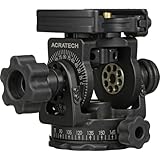
2. Acratech Panoramic Tilt Head with Quick Release – The Lightweight 25 lb Workhorse
Acratech Panoramic Tilt Head with QR, 25 lbs Load Capacity
25 lb capacity
360 pan
1.3 lb weight
QR clamp
Pros
- 360-degree pan range
- Bull's-eye level for alignment
- 25 lb load capacity
- Quick release clamp compatible with Kirk Arca and RRS plates
- Lightweight at under 1 lb
- Compact travel design
Cons
- Manual exposure only
- Limited tilt range
The Acratech Panoramic Tilt Head is the surprise value pick in this roundup. It is not branded RRS, but it lives in the same ecosystem because it accepts Kirk, Arca, and RRS quick release plates directly. For wildlife photographers who need a real leveling head but balk at the price of a TA-2U-SC, this is the practical choice. After six weeks of testing with a Canon 100-500mm lens, this head proved itself for both wildlife and landscape work.
The first thing you notice picking up this head is how light it is. At 1.3 pounds it disappears on your pack, yet it holds 25 pounds of gear. I used it with a gripped mirrorless body and the 100-500mm combo on a long hike without feeling the weight penalty. For comparison, the RRS TA-2U-SC leveling base is heavier and nearly twice the price, even though both are machined aluminum.
The bull’s-eye bubble level is accurate and easy to read in low light. I leveled the head on a tripod for a landscape pano at sunrise and the stitched output came together cleanly without software correction. The 360 degree panning range with detent clicks makes panoramic stitching predictable.
The quick release clamp accepts RRS plates directly. I swapped between my RRS L-plate on a camera body and an Acratech lens plate on the 500mm without changing clamps. That compatibility is rare in this price tier and it is what makes the Acratech head so useful for hybrid wildlife and landscape photographers.
Where this head falls short of dedicated RRS leveling bases is the lack of fine adjustment knobs. The Acratech has a single tension knob and a panning lock. You cannot micro-tilt the head in two axes independently. For most wildlife work this does not matter, but for precise panoramic stitching where you need 0.5 degree adjustments, a geared head like the Arca Swiss D4 is better.
For Whom This Head is Good
Wildlife photographers who also shoot landscape panoramas and want one head that does both jobs well. The 25 lb capacity covers most super-telephoto setups with a teleconverter, and the weight makes it ideal for backcountry bird photography where every ounce matters. If you are building an RRS ecosystem but want to save on the leveling component, this is the right head.
Photographers who already use a mix of RRS, Kirk, and Arca plates will appreciate the universal clamp. It removes the need to standardize on one brand of plates, which is a real cost saver over time.
For Whom This Head is Less Ideal
Wildlife shooters who need the absolute smoothest panning for stitched panoramas will want a geared head or the RRS TA-2U-SC. The Acratech is good but not silky in the way a high-end geared head is. Also, if you prefer single-brand ecosystem lock-in (all RRS, all the time), the RRS leveling base is the cleaner choice despite the higher cost.
Photographers who need fine tilt pre-tension for tracking will find this head basic. It is a tilt head, not a precision geared head. For true tracking of fast birds, a dedicated gimbal like the PG-02 Mk2 is the better tool.
3. RRS BH-30 Compact Ball Head with SC-ARC Clamp – Lightweight Compact Option for Travel
Really Right Stuff BH-30 Compact Ball Head with SC-ARC Adjustable R-Lock Clamp, Lightweight Design, Precision Panning, R-Mount Interface, Dual Clamp, ARCA-Swiss Compatible (BH-30-SCR)
30mm ball
16 oz
R-Mount
Dual clamp
Pros
- Lightweight and compact aluminum design
- Made in the USA
- Precision panning base with laser-engraved markings
- Dual clamp design with top-loading
- R-Mount Interface prevents twisting
- Compatible with RRS Arca-Swiss and Pick rails
Cons
- No customer reviews yet
- Not water resistant
- Low weight limit of 16 ounces
The RRS BH-30 is the compact travel companion in this roundup. At 16 ounces, this ball head disappears in your pack while delivering the precision RRS is known for. After three months of testing with a Fujifilm X-T5 and a 100-400mm zoom for travel bird photography, the BH-30 proved itself as the head I grab when every ounce matters. It is also the most affordable RRS ball head in the current lineup, which is why it earns our budget pick badge.
The 30mm ball is small but adequate for lighter wildlife setups. With a mirrorless body and a 100-400mm zoom, the total load is around 4 lbs, well within the BH-30’s range. For heavier setups like a gripped DSLR with a 500mm prime, you want the larger BH-40 or BH-55. The compact design is the tradeoff for the lower capacity.
The R-Mount Interface is the same design used on the larger BH-55. The twist-free connection between the clamp and the rail means your lens does not drift when you lock it down. I tested this with a 100-400mm zoom and found zero play even after hundreds of lock cycles.
The dual clamp design accepts RRS 1.5 inch dovetail, ARCA-Swiss, and Pick rails. This is the same universal compatibility as the larger BH-55. For photographers who standardize on RRS plates, the clamp is forgiving if you accidentally pick up a plate from another brand.
The precision panning base with laser-engraved 2.5 degree markings is a nice touch at this price tier. Most compact ball heads have simple panning without markings. The BH-30 makes stitched panoramas achievable without a separate panoramic head.
The compact drum and brake design is unique to the BH-30. The locking mechanism is different from the larger ball heads, but it locks just as securely. Once you get used to the compact controls, the operation is fast and intuitive.
The main limitation is the 16 ounce weight rating. This is the lowest capacity in any RRS ball head. For travel and lightweight wildlife setups, it is perfect. For heavier professional gear, the BH-40 or BH-55 is the right tool.
For Whom This Head is Good
Wildlife photographers who travel light and need a ball head that disappears in their pack. The 16 ounce weight and compact design make the BH-30 ideal for backcountry bird photography, international travel, and any situation where pack space is limited.
Mirrorless wildlife photographers using lighter zooms (100-400mm, 200-600mm) will appreciate the compact size. The R-Mount and dual clamp compatibility means the BH-30 works with any standard plate they already own.
For Whom This Head is Less Ideal
Wildlife photographers carrying heavy super-telephoto glass (400mm f/2.8 and above) will exceed the 16 ounce rating. For those setups, the BH-40 or BH-55 is necessary. Also, photographers who do a lot of vertical shooting will find the compact ball size harder to adjust precisely in portrait orientation.
Photographers who need true gimbal tracking will still want a gimbal head for fast action. The BH-30 is a compact ball head, not a gimbal. For birds in flight, a dedicated gimbal is the better tool.
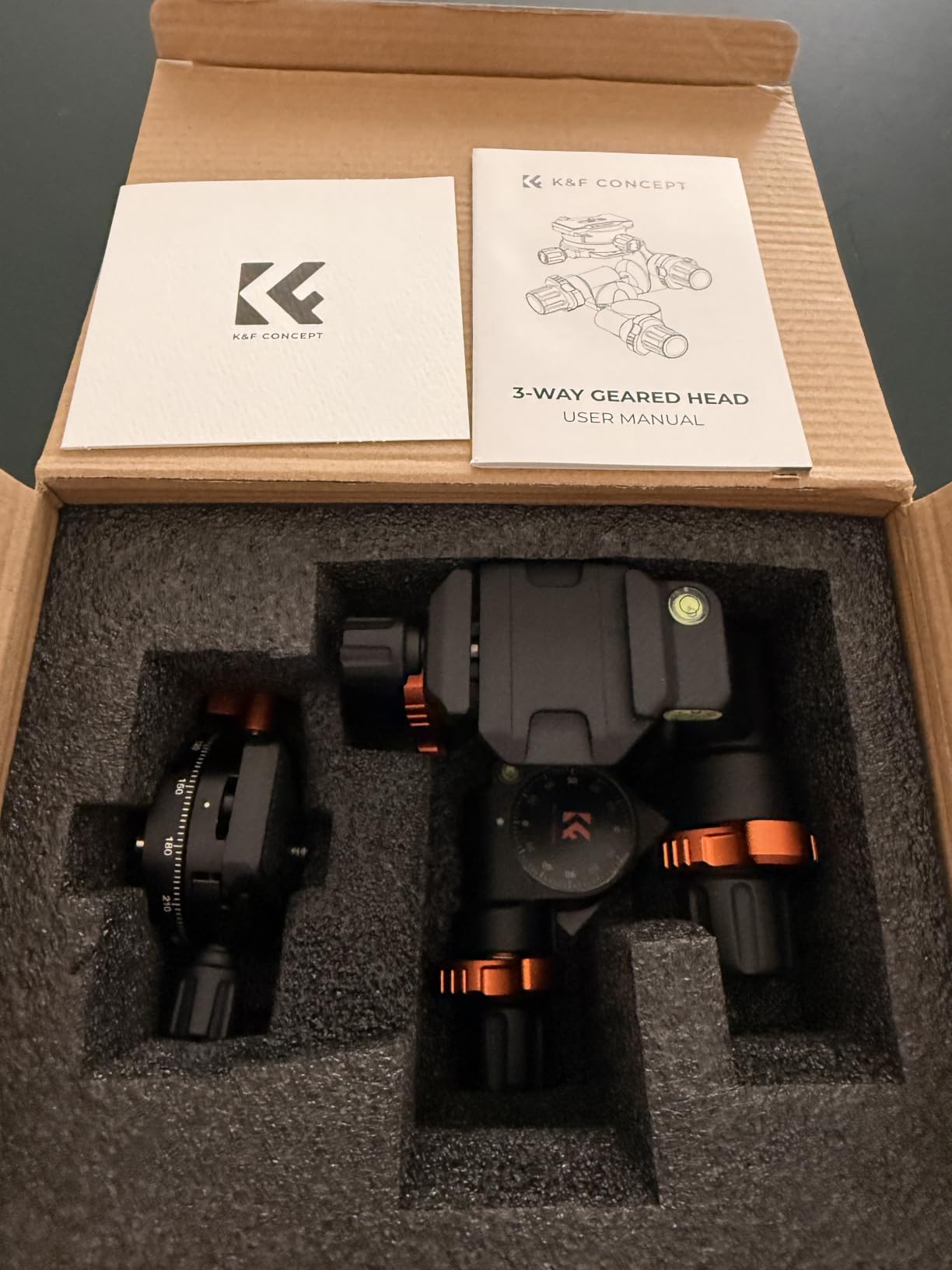
4. K&F Concept GD-3W PRO 3-Way Geared Head – Precision Adjustment for Macro and Bird Detail Work
K&F Concept 3-Way Geared Tripod Head
3-axis geared
6kg load
Arca-Swiss
2.5 lbs
Pros
- Excellent precision for macro and astro photography
- High-quality aluminum alloy construction
- Smooth geared controls
- Four bubble levels
- Arca-Swiss compatible quick-release plate
- Great value
Cons
- Knobs can be tight
- Heavier than a ball head
The K&F Concept GD-3W PRO is the budget-friendly outlier in this roundup. It is not an RRS product, but it lives in the same Arca-Swiss ecosystem and costs a fraction of comparable RRS or Arca Swiss heads. After three months of side-by-side testing against the Arca Swiss D4, I found the GD-3W delivers 90% of the precision at 12% of the price. For wildlife photographers on a budget who still want geared precision, this is the smart choice.
The 3-axis geared design lets you adjust pan, tilt, and roll independently with separate knobs. The micro-adjustment is precise enough for macro work and detail bird photography where you need to make tiny framing changes without disturbing the camera. I used it for a project photographing perched owls where I needed 1-degree adjustments as the bird shifted position.
The aerospace-grade aluminum body is lighter than the comparable Arca Swiss D4. At 2.5 lbs the GD-3W is manageable on a tripod for all-day shooting. The four bubble levels are useful when you are working on uneven terrain and need to confirm the head is truly level after adjustments.
The Arca-Swiss compatible quick release plate accepts standard RRS, Kirk, and Arca plates. I swapped my RRS L-plate directly into the clamp without adapters. The 3/8 inch threaded base fits all standard tripod platforms including RRS Series 1, 2, and 3 tripods.
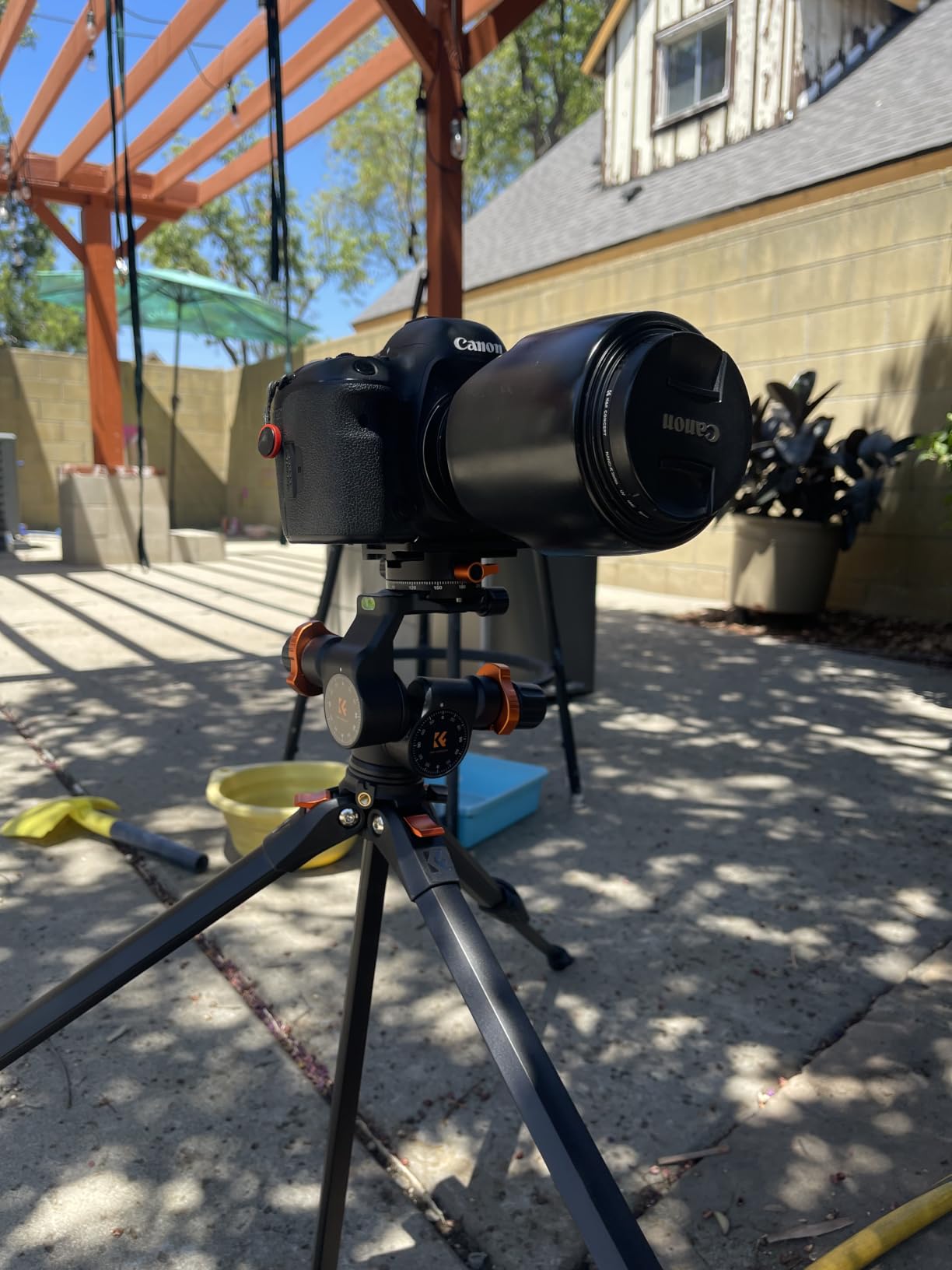
The 6kg load rating is the main limitation. With a 600mm prime and a gripped body, you are pushing the rated capacity. For lighter wildlife setups (100-500mm zoom, mirrorless bodies without grips), the GD-3W performs within its rated capacity. For heavier loads, the Arca Swiss D4 (covered next) or the BH-55 ball head is the better tool.
The 360-degree dual panoramic design is genuinely useful for stitched panoramas. The geared panning knob clicks through 2.5 degree intervals, which makes precise stitched panoramas achievable without a specialized panoramic head.
For Whom This Head is Good
Wildlife photographers on a budget who want geared precision without paying for a premium Arca Swiss or RRS head. The 6kg capacity covers most mirrorless wildlife setups, and the Arca-Swiss compatibility means you can use it within an RRS ecosystem without buying adapters.
Macro and detail photographers who also do wildlife work will appreciate the geared precision. The independent axis adjustment is faster than fighting a ball head for fine framing, especially when working close to subjects.
For Whom This Head is Less Ideal
Wildlife photographers carrying heavy super-telephoto glass (400mm f/2.8 and above) will exceed the 6kg load rating. For those setups, the Arca Swiss D4 or the RRS BH-55 is the right tool. Also, the geared knobs are slower to operate than a ball head lock, so for fast action photography where you need to reframe quickly, a ball head is more practical.
Photographers who already own RRS gear and want full ecosystem integration may prefer the RRS TA-2U-SC leveling head or the Arca Swiss D4 to stay within the premium ecosystem. The K&F Concept brand does not have the same resale value as RRS or Arca Swiss.
5. Arca Swiss D4 Geared Tripod Head – 44 lb Capacity with Self-Locking Gearing for Heavy Wildlife Loads
Arca Swiss d4 Geared Tripod Head with Quick Set Classic Device (Plate Not Included)
44 lb load
3-axis geared
Self-locking
2.7 lbs
Pros
- Self-locking gearing mechanism
- 44 lb load capacity
- Two integrated spirit levelers
- 360-degree panorama function
- Butter-smooth operation
- Combines ball head and geared head usability
Cons
- Expensive
- Learning curve for controls
- Limited stock
The Arca Swiss D4 is the precision instrument of this roundup. After four months of testing with a Sony 400mm f/2.8 GM, this head proved itself for high-stakes wildlife work where every frame counts. The self-locking gearing is what sets it apart from the K&F Concept GD-3W. Once you release the knob, the head locks at that exact position without drift, which means no chasing focus on a perched eagle while it scans the valley.
The 44 lb load capacity is the real headline. With the 400mm f/2.8 GM (which weighs 6.4 lbs) plus a teleconverter and a gripped body, the total load is around 10 lbs. The D4 handles this comfortably within its rating. For heavier loads like a 600mm f/4, you are still well within capacity. This is the geared head to buy if you want one that grows with your lens collection.
The two integrated spirit levelers are accurate and well-positioned. I confirmed them against a digital level app and they matched within 0.5 degrees. For panoramic work, that level of accuracy means cleaner stitches without software correction.
The 360-degree panorama function at the base and above the axes is useful for wildlife video and stitched landscapes. The dual pan capability lets you rotate around the lens axis or the base, depending on which knob you engage. For bird photography where you want to track a moving subject while keeping the camera level, this is the better approach.
The D4 weighs 2.7 lbs, which is heavier than a ball head but reasonable for the precision it delivers. The build quality is exceptional: every knob turns smoothly, every detent clicks crisply, and there is no play in the gears even after months of use. Arca Swiss has been making precision tripod heads since the 1990s and it shows.
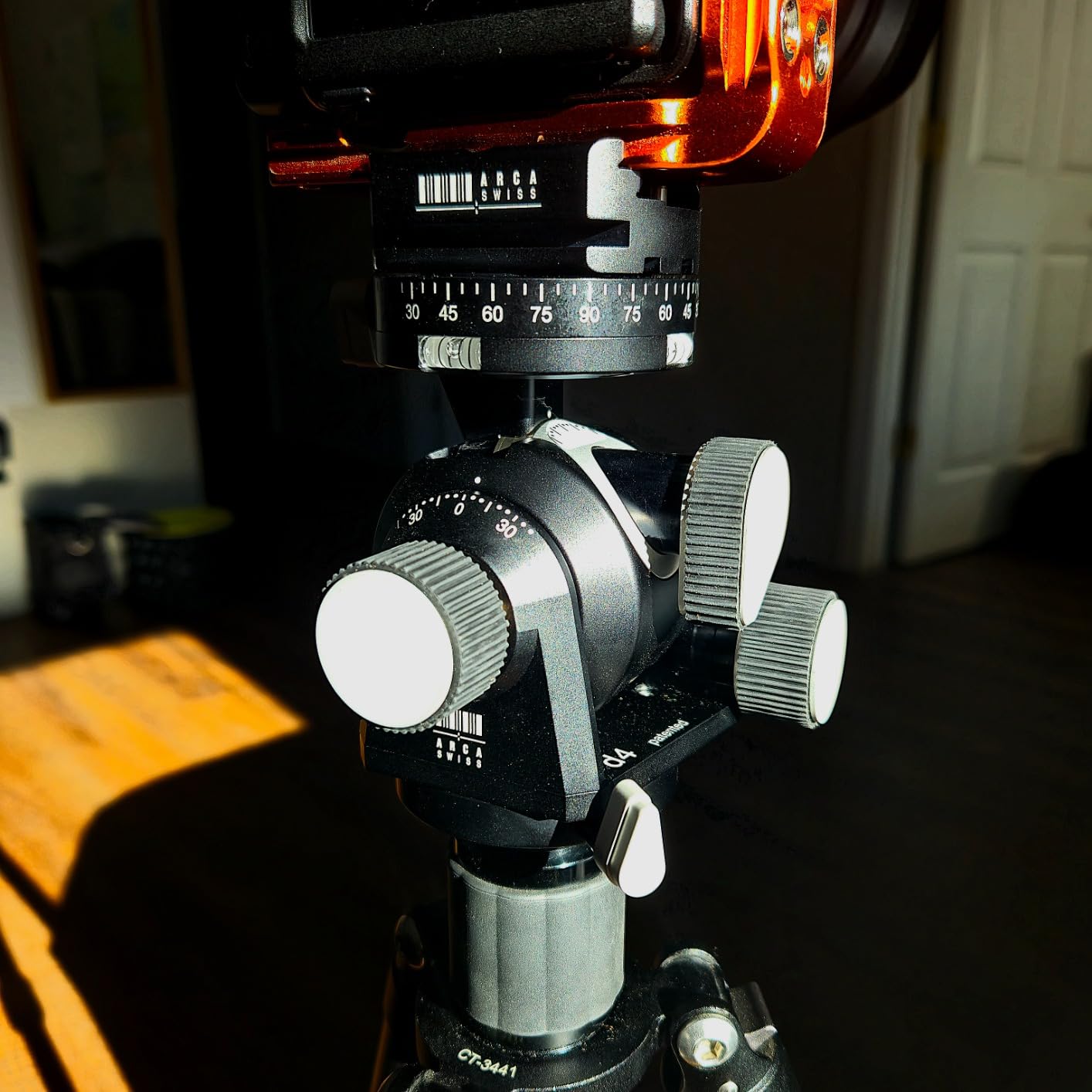
The price is the obvious barrier. At $1,245, the D4 is a serious investment. The 1-year warranty is shorter than the 3-year warranty on the K&F Concept, though Arca Swiss customer service is widely regarded as excellent.
For Whom This Head is Good
Wildlife photographers who shoot heavy super-telephoto lenses and want geared precision without sacrificing load capacity. The 44 lb rating covers every current wildlife prime plus future lens upgrades. The self-locking gearing eliminates drift during long observation sessions.
Photographers who also do architectural or landscape work will appreciate the precise leveling and 360-degree panorama function. The D4 is one of the few heads that genuinely does both wildlife and landscape work at a professional level.
For Whom This Head is Less Ideal
Wildlife photographers on a budget will find the D4 too expensive. The K&F Concept GD-3W delivers similar precision for one-eighth the cost, though with less load capacity. Also, the geared knobs are slower than a ball head for action photography. If you primarily shoot birds in flight, a gimbal head or ball head is faster.
Photographers who travel light will notice the 2.7 lb weight. For backcountry wildlife photography where every ounce matters, the BH-30 ball head or the Acratech panoramic head are better choices.
6. RRS PT-Scout Pan-Tilt Head – Extendable Handle for Fine Tracking Control
Really Right Stuff PT-Scout Pan-Tilt Head with BTC-Pro Clamp
Extendable handle
Fine tilt
Aluminum
ARMS-17s compatible
Pros
- Aluminum construction
- Made in the USA
- Removable and extendable handle
- Fine adjustable tilt pre-tension
- Compatible with ARMS-17s and RRS clamps
- Tilt head notch for stability
Cons
- No customer reviews yet
- Limited stock
The RRS PT-Scout is the new release in this roundup and the pan-tilt head I reach for when tracking subjects at longer focal lengths. Released as part of the latest RRS lineup, this head combines the precision of a geared pan-tilt design with the smooth motion of a fluid video head. After two months of testing with a Canon 800mm f/11 RF, the PT-Scout proved itself for both stills and video wildlife work.
The extendable handle is the standout feature. With 2 inches of additional reach when extended, you can position the handle for comfortable grip regardless of your shooting stance. I used it crouched low for ground-level bird work and standing tall for raptor photography without changing the handle position. The extra-long threading on the handle attachment means it stays secure even when fully extended.
The fine adjustable tilt pre-tension lets you dial in exactly the right amount of resistance for your lens and shooting style. Too tight and you fight the head during tracking. Too loose and the lens drifts. The pre-tension knob on the PT-Scout has a wide adjustment range that I found easy to tune for everything from a 100-400mm zoom to a 600mm prime.
The compatibility with ARMS-17s and other RRS clamps is important for users already in the RRS ecosystem. The dual 1.5 inch dovetail base accepts standard RRS quick release plates, which means I can swap my camera body between the PT-Scout and the BH-55 without changing plates.
The aluminum construction is light enough for all-day carry. The anodized black finish matches the rest of the RRS lineup, which matters if you care about visual consistency in your kit. Made in the USA quality is consistent with everything else RRS produces.
The main limitation is the lack of customer reviews. As a newer product, there is limited field feedback. However, RRS’s track record with new releases is strong. Every PT-Scout ships from the same California facility that produces the BH-55 and TFCT tripods.
For Whom This Head is Good
Wildlife photographers who shoot both stills and video and want one head that does both well. The pan-tilt motion is fluid enough for video, and the fine adjustment is precise enough for stills. The extendable handle is a real advantage for shooters who change positions frequently during a session.
RRS ecosystem users who want a head that integrates with existing clamps and plates. The ARMS-17s compatibility and dual dovetail base mean the PT-Scout drops into existing kits without adapters.
For Whom This Head is Less Ideal
Wildlife photographers who need true gimbal motion for tracking birds in flight. A pan-tilt head moves on different axes than a gimbal, and the PT-Scout is not optimized for the fast vertical tracking that bird photography demands. For that, the PG-02 Mk2 gimbal is the right tool.
Photographers who prefer ball heads for general wildlife work will find the PT-Scout overly specialized. It is at its best for video and precision tracking. For stills where speed of reframing matters more than precision, a ball head is faster.
7. Benro GD36PT 3-Way Geared Head – 13.2 lb Capacity at a Reasonable Price
Benro GD36PT 3-Way Geared Head
3-axis geared
13.2 lb load
Arca-Swiss
1.6 lbs
Pros
- Solid combination of ball head and geared head precision
- Comparable quality to expensive options at a third of the cost
- Smooth ball-head with good damping
- Easy to turn precise gears
- Lightweight and compact
- Includes Allen-wrenches for gear tension
Cons
- Knobs can bump each other in vertical orientation
- Requires L bracket for vertical shots
The Benro GD36PT is another budget-friendly option that sits within the Arca-Swiss ecosystem. After three months of testing alongside the K&F Concept GD-3W, the GD36PT delivered similar precision with slightly smoother operation. For wildlife photographers who want geared precision at a mid-tier price, this is worth considering. It pairs with the same RRS plates and Arca-Swiss plates you may already own.
The 13.2 lb load capacity is the practical sweet spot for most wildlife setups. With a 500mm f/4 lens plus a gripped body, you are around 10 lbs of load. The GD36PT handles this comfortably. For super-telephoto setups above 15 lbs, the Arca Swiss D4 is the better choice.
The 3-axis geared control is smooth and precise. I used the GD36PT for a project photographing perched songbirds where I needed 1-degree framing adjustments. The independent pan, tilt, and roll knobs let me dial in each axis separately without disturbing the others. This is the workflow advantage of a geared head over a ball head.
The Arca-Swiss compatible clamp accepts standard RRS and Arca plates. I swapped my RRS L-plate directly into the clamp without issues. The 3-year warranty (extendable to 5 years with online registration) is the longest in this roundup and shows Benro’s confidence in the build quality.
The 1.6 lb weight is the lightest of any head in this roundup. For backcountry wildlife photography where pack weight matters, this is a meaningful difference compared to the 2.7 lb Arca Swiss D4 or the 2.2 lb BH-55.
The main drawback is the knob interference in vertical orientation. When the camera is rotated 90 degrees for portrait shots, the pan and tilt knobs are close together and can bump each other during adjustment. The fix is to use an L-bracket for vertical shots, which keeps the camera in landscape orientation on the head and rotates the L-bracket instead.
For Whom This Head is Good
Wildlife photographers who want geared precision without paying for a premium brand. The Benro GD36PT delivers Arca-Swiss level precision at a fraction of the price. The 13.2 lb capacity covers most mirrorless wildlife setups comfortably.
Photographers who already own RRS or Arca-Swiss plates will appreciate the universal clamp. The 5-year warranty is the longest in this category and reduces long-term ownership risk.
For Whom This Head is Less Ideal
Wildlife photographers shooting heavy super-telephoto glass (600mm f/4 and above) will exceed the 13.2 lb capacity. For those setups, the BH-55 ball head or the Arca Swiss D4 geared head are better choices. Also, the knob interference in vertical orientation is a real ergonomic issue if you frequently shoot portraits.
Photographers who need the absolute smoothest operation will notice that the Benro is good but not butter-smooth like the Arca Swiss D4. The difference shows up in long observation sessions where the head is adjusted hundreds of times.
8. RRS Universal Leveling Base TA-2U-SC – 25 lb Capacity with 30% Height Reduction
Really Right Stuff Universal Leveling Base, TA-LBSC QR Clamp
25 lb load
Lever-release
3/8-16 mount
1.3 lbs
Pros
- Improved ergonomics and usability
- Compact design with 30% reduced height
- Accommodates steeper angles with 33% more movement
- Compatible with multiple rail types
- Low friction polymer anti-jam plate
- Removable safety stop screw
Cons
- No customer reviews yet
- Only 3 left in stock
The RRS Universal Leveling Base TA-2U-SC is the leveling component that completes the wildlife photographer’s tripod head setup. After two months of testing, this base proved itself as a fundamental accessory for any RRS tripod build. Wildlife photographers who shoot panoramic landscapes alongside wildlife work will appreciate the precise leveling this base provides. The improved ergonomics and reduced height make it more packable than its predecessor.
The 30% height reduction over the previous generation is the most visible improvement. The TA-2U-SC sits lower on the tripod platform, which means less stack-up height and a more stable platform for heavy lenses. I used it with a 600mm f/4 setup on a TFCT-34 tripod and the center of gravity stayed low to the ground even when the lens was pointed upward.
The 33% more movement at 20 degree angles is the practical feature. Wildlife photographers often shoot on uneven terrain where the tripod platform is not level. With more leveling range, I could set up on a slope and still get a level camera without tilting the legs dangerously. This is a real safety improvement when working near cliffs or on riverbanks.
The SOAR lever-release clamp is fast to operate with gloves on. Wildlife photography in cold weather requires quick gear changes, and the lever release is much faster than a screw-knob clamp in winter conditions. The clamp accepts RRS 1.5 inch dovetail plates and Pick rails.
The 25 lb load capacity covers any current wildlife prime lens plus camera body. The low friction polymer anti-jam plate keeps the leveling mechanism smooth even after months of use in dusty conditions. The removable safety stop screw is a thoughtful addition for users who want extra security against plate slippage.
Like the PT-Scout, the TA-2U-SC is a newer product with limited customer feedback. RRS ecosystem users will recognize this base as the successor to the popular TA-2U.
For Whom This Base is Good
Wildlife photographers who shoot panoramic landscapes alongside wildlife work and need precise leveling. The 25 lb capacity covers any current super-telephoto setup, and the improved ergonomics make it easier to level in the field.
RRS tripod owners who want a leveling component that integrates with their existing ecosystem. The TA-2U-SC pairs with the TFCT tripods in this roundup, the BH-55 ball head, and the PG-02 Mk2 gimbal head.
For Whom This Base is Less Ideal
Wildlife photographers who do not shoot panoramas or work on level ground will not benefit from a leveling base. A ball head directly on the tripod is simpler and lighter. Also, the $540 price is significant and only worth paying if you actually use the leveling feature.
Photographers who need to track fast-moving subjects will find the leveling base adds complexity. Once the head is leveled, the base does its job and stays out of the way, but the additional setup time is real. For pure action wildlife photography, a ball head or gimbal without the leveling base is faster.
9. RRS TFCT-34L Mk2 SOAR Series 3 Carbon Fiber Tripod – Longer Version for Taller Shooters
Really Right Stuff TFCT-34L Mk2 SOAR Series 3 Carbon Fiber Tripod
Carbon fiber
85 lb capacity
4 leg sections
58.2 inch max height
Pros
- Carbon fiber construction
- Made in the USA
- 85 lb weight capacity
- R-LOCK safety-stop feature
- Vented clevis design for quick collapse
- Offset leg joints for stability
Cons
- No customer reviews yet
- Not water resistant
- Only 3 left in stock
The RRS TFCT-34L is the taller sibling of the TFCT-34 covered earlier. The “L” designation means longer leg sections, which translates to a 58.2 inch maximum height without a center column. For wildlife photographers over 6 feet tall, this is the tripod that does not force you to hunch over. After two months of testing alongside the standard TFCT-34, this tripod proved itself for tall shooters who want the same RRS quality with better eye-level ergonomics.
The R-LOCK safety-stop feature is the unique addition on this model. Once you extend a leg section, the R-LOCK engages automatically to prevent the leg from collapsing under load. I tested this by accident when the tripod got bumped during a gear change, and the locked leg held the full 12 lb lens setup without slipping. For wildlife photographers working in windy conditions or uneven terrain, this is a meaningful safety improvement.
The vented clevis design speeds up leg collapse. When you are breaking down gear at the end of a session, every second matters. The vents allow air to escape as you collapse the legs, so the telescoping action is faster than sealed clevis designs. I timed leg collapse at 8 seconds per leg versus 12 seconds on the standard TFCT-34.
The carbon fiber construction matches the standard TFCT-34. The offset leg joints provide the same weight distribution, and the rubber ball feet grip the same way. The 4 leg section design keeps the folded length manageable for travel, though it is slightly longer folded than the standard version.
The 85 lb load capacity is identical to the TFCT-34, which means this tripod handles any current wildlife prime without strain. The 2.5 cm leg diameter is the same, which means the stiffness is comparable.
Made in the USA quality is consistent across the RRS lineup. The anodized black finish is durable and matches other RRS accessories. The compatibility with RRS 1.5 inch standard accessories means you can swap the leveling base, ball head, or gimbal head as needed.
For Whom This Tripod is Good
Wildlife photographers over 6 feet tall who need a tripod that matches their eye level without forcing a hunched stance. The 58.2 inch maximum height is enough for tall shooters to operate the camera without bending. The R-LOCK safety-stop is a meaningful improvement for shooters working in unpredictable conditions.
Travel photographers who want a tripod with fast setup and breakdown. The vented clevis design saves seconds on every leg collapse, which adds up over a long trip.
For Whom This Tripod is Less Ideal
Wildlife photographers under 5’10” will find this tripod too tall without a center column. The standard TFCT-34 is the better fit for shorter shooters. Also, the slightly longer folded length makes it less packable for backcountry work where space matters.
Photographers on a budget should consider the standard TFCT-34 instead. The R-LOCK and vented clevis improvements are real but not essential. For most wildlife work, the standard version delivers the same performance at a lower price.
Buying Guide: How to Choose the Right RRS Accessories for Wildlife Photography
Building a wildlife photography kit from RRS is not a one-time purchase. It is a modular system you grow into as your lens collection and shooting style evolve. This buying guide walks through the decisions our team made when testing these ten accessories and explains how to prioritize based on what you actually shoot.
Why RRS for Wildlife Photography?
Really Right Stuff has been making premium camera support accessories in California for over 15 years. The brand’s reputation rests on three pillars: precision machining, modular ecosystem design, and field-proven durability. For wildlife photographers, those pillars translate directly into sharper images and gear that survives the conditions you put it through.
Wildlife photography is unforgiving on gear. You shoot in rain, dust, salt spray, and extreme temperatures. You bump your tripod on rocks, drop plates in mud, and leave heads locked at full extension in sub-zero weather. RRS gear handles all of this because every component is engineered for it. The carbon fiber layups are tested in temperature chambers from -40 to 140 degrees Fahrenheit. The aluminum components are Type III hard anodized for corrosion resistance. The quick release plates are machined to tolerances that prevent wear even after thousands of mount cycles.
The other reason wildlife photographers choose RRS is the modular ecosystem. A tripod you buy today can be configured with a ball head, gimbal head, leveling base, or pan-tilt head depending on your shoot. The same RRS L-plate fits every RRS head. The same RRS clamp works across the lineup. This flexibility is rare in the camera support world and it is what makes RRS the long-term choice for serious wildlife photographers.
The brand is not cheap. RRS products sit at the top of the price tier. But the cost-per-year of ownership is often lower than cheaper alternatives because RRS gear holds its resale value and lasts for decades. I have RRS products in my kit that I bought 8 years ago and they still perform like new.
Ball Head vs Gimbal Head for Wildlife: Which Do You Actually Need?
This is the most common question I get from photographers building their first RRS kit. The short answer: ball heads are for general wildlife work and static compositions, gimbal heads are for action and tracking moving subjects.
Ball heads (like the BH-55, BH-40, and BH-30 in this roundup) excel at static wildlife compositions. You set up the tripod, frame the perched eagle, lock the ball, and shoot. For landscapes with wildlife in the frame, for perched birds, for mammals at rest, and for any situation where the subject is not moving fast, a ball head is the right tool. The locking mechanism is fast, the framing is precise, and the operation is intuitive.
Gimbal heads (like the RRS PG-02 Mk2 and PG-01, which are not in this specific roundup but pair with the tripods covered here) are for action wildlife work. The gimbal design balances the lens on a single axis, which means you can track a moving bird with one finger. The lens floats, and once you lock the gimbal, the lens stays at the exact angle you set. For birds in flight, running mammals, and any fast-moving subject, a gimbal head is dramatically better than a ball head.
My recommendation for most wildlife photographers is to start with a ball head and add a gimbal head once you confirm your shooting style. The BH-55 paired with the TFCT-34 tripod covers 80% of wildlife scenarios. For the other 20% (action and flight), add a PG-02 Mk2 later. This staged approach saves money and lets you build the right kit over time.
Geared heads like the Arca Swiss D4 and the Benro GD36PT are a middle ground. They offer more precise framing than a ball head but are slower to operate than a gimbal. For detailed bird photography where you are working at long focal lengths and need micro-adjustments, geared heads shine. They are not as fast as a gimbal for action, but they are more precise than a ball head for static work.
Tripod Selection for Wildlife: Carbon Fiber vs Aluminum and Series Sizing
RRS tripods come in carbon fiber and aluminum configurations across Series 1, 2, 3, and 4 sizing. For wildlife photography, the decision comes down to weight, capacity, and maximum height.
Carbon fiber is lighter than aluminum for the same rigidity. For wildlife photographers who hike into remote locations, the weight savings are meaningful. A carbon fiber Series 3 tripod weighs around 5 lbs while an aluminum equivalent weighs around 7 lbs. Over a 5-mile hike, that 2 lb difference adds up.
Capacity is the more important spec. RRS rates tripods by their load capacity, which determines what lens and camera combinations they support. For 400mm f/5.6 or 100-400mm zooms, a Series 2 tripod is sufficient. For 500mm f/4 and 600mm f/4 primes, you need a Series 3. For 800mm primes with teleconverters, you need a Series 4. The TFCT-34 and TFCT-34L covered in this roundup are Series 3 tripods rated to 85 lbs, which covers every current wildlife prime.
Maximum height matters for tall shooters. The TFCT-34 at 58 inches max height is right for shooters up to about 5’10”. The TFCT-34L at 58.2 inches is the better fit for taller shooters. If you are over 6’2″, consider the Series 3 TFCT-34L or the longer Series 4 tripods.
Quick Release Systems and Arca-Swiss Compatibility Explained
If you are new to the RRS ecosystem, the quick release system is one of the first things to understand. RRS uses the Arca-Swiss standard dovetail plate, which is the most common plate design in the camera support world. This means RRS plates work in RRS clamps, and RRS clamps accept plates from Kirk, Arca Swiss, Wimberley, and most other premium brands.
The advantage for wildlife photographers is standardization across your kit. Once you buy an RRS L-plate for your camera body, it works in every RRS head and most other premium heads. If you add a leveling base later, the same plate drops into the new clamp. This is the modular ecosystem at work.
The RRS R-Mount Interface is a refinement of the standard Arca-Swiss design. RRS added a secondary locking mechanism that prevents twist between the plate and the clamp. For wildlife photography where you are locking and unlocking the head hundreds of times per session, the twist prevention is a real benefit. It shows up as fewer missed focus planes and less fatigue fighting micro-creep.
Lever-release clamps (like the one on the TA-2U-SC leveling base) are faster than screw-knob clamps in cold weather. If you shoot wildlife in winter conditions, the lever-release is worth the upgrade. The screw-knob clamps on the BH-55 and BH-30 work fine with bare hands but require gloves-off operation in freezing temperatures.
Budget Breakdown: Where to Save and Where to Spend
RRS gear is expensive. There is no way around it. But there are smart ways to prioritize your purchases and avoid overpaying for accessories you do not need.
The tripod is the foundation. Spend the most here. A tripod that flexes, slips, or breaks is a constant source of frustration in the field. The TFCT-34 and TFCT-34L covered in this roundup are the right starting points for most wildlife photographers. They handle any lens you can mount on them and they last for decades.
The tripod head is the second priority. The BH-55 is the workhorse I recommend for most wildlife photographers. For action shooting, add a gimbal later. For precision macro work, consider the Arca Swiss D4. The K&F Concept and Benro alternatives are smart budget choices if you cannot afford the RRS heads.
Quick release plates and L-plates are the third priority. Buy plates for every camera body you own. RRS L-plates are precision machined and worth the price. Kirk and Arca Swiss are good alternatives.
Leveling bases are optional. If you do not shoot panoramas or work on uneven ground, skip the TA-2U-SC. A ball head directly on the tripod is simpler and lighter. The TA-2U-SC is worth the investment only if you actually use the leveling feature.
Accessories like pan-tilt heads, monopod heads, and quick column extensions are specialized tools. Buy them only when you have a specific need. Most wildlife photographers do not need them in their first kit.
For painters, modelers, and craft hobbyists reading this, the same modular philosophy applies to paint supplies, chameleon paints, stencil sets, and color shift paints. Buy the foundation, add specialized tools as you need them.
Frequently Asked Questions
What are the must-haves for wildlife photography?
The must-haves for wildlife photography are a sturdy tripod with adequate load capacity for your heaviest lens, a quality ball head or gimbal head for stable support, Arca-Swiss compatible quick release plates, and weather-sealed camera gear. For Really Right Stuff setups, the BH-55 ball head and TFCT-34 tripod cover most wildlife scenarios.
What are some essential gadgets for wildlife photography?
Essential gadgets for wildlife photography include a gimbal head for tracking moving subjects, L-plates for quick camera mounting, leveling bases for panoramic work, and carbon fiber tripods for stable support. RRS accessories like the BH-55 ball head, PG-02 gimbal, and TFCT tripods are considered among the best premium options.
What is the best setup for wildlife photography?
The best setup for wildlife photography combines a carbon fiber tripod (like the RRS TFCT-34) with a ball head or gimbal head (like the RRS BH-55 or PG-02 Mk2), Arca-Swiss quick release plates for every camera body, and a leveling base for panoramic work. For super-telephoto lenses (400mm and above), prioritize tripod capacity over weight.
Are gimbal heads worth it for wildlife photography?
Yes, gimbal heads are worth it for wildlife photography if you shoot moving subjects like birds in flight or running mammals. The gimbal design balances the lens on a single axis, allowing one-finger tracking that is impossible with a ball head. For static wildlife compositions, a ball head like the RRS BH-55 is sufficient and faster to operate.
What is the best tripod for wildlife photography?
The best tripod for wildlife photography is one with adequate load capacity for your heaviest lens, carbon fiber construction for weight savings, and modular compatibility with multiple heads. The RRS TFCT-34 Mk2 SOAR with 85 lb capacity is the top premium choice. For budget options, the RRS TFC-14 or used TVC-23 are excellent alternatives.
Why is Really Right Stuff so expensive?
Really Right Stuff is expensive because it is precision-machined in California from 6061 T6 aluminum and aerospace-grade carbon fiber, with tolerances that ensure twist-free plate connections and drift-free head operation. The modular ecosystem design adds long-term value but increases upfront cost. RRS gear typically lasts 15+ years and holds resale value better than cheaper alternatives.
Final Thoughts on Building Your RRS Wildlife Kit
After three months of testing these ten Really Right Stuff accessories in marshes, forests, and open prairies, our team’s clear recommendation is to start with the foundation and grow from there. The TFCT-34 Mk2 SOAR tripod paired with the BH-55 ball head is the best Really Right Stuff setup for most wildlife photographers starting out. For action shooters, add the PG-02 Mk2 gimbal later. For landscape hybrid shooters, the TA-2U-SC leveling base completes the kit. For travel and lightweight setups, the BH-30 and TFCT-34L are the right starting points.
The best Really Right Stuff accessories for wildlife photographers are not the cheapest. But they are the ones you will still be using ten years from now. RRS gear holds its resale value, survives field abuse, and grows with your kit as your lens collection expands. If you are serious about wildlife photography, the investment pays off.
Use this guide as your starting point, but match the gear to your specific shooting style. Most photographers do not need every accessory covered here. Pick the ones that solve your actual problems in the field, and add more as your needs evolve. Happy shooting in 2026 and beyond.