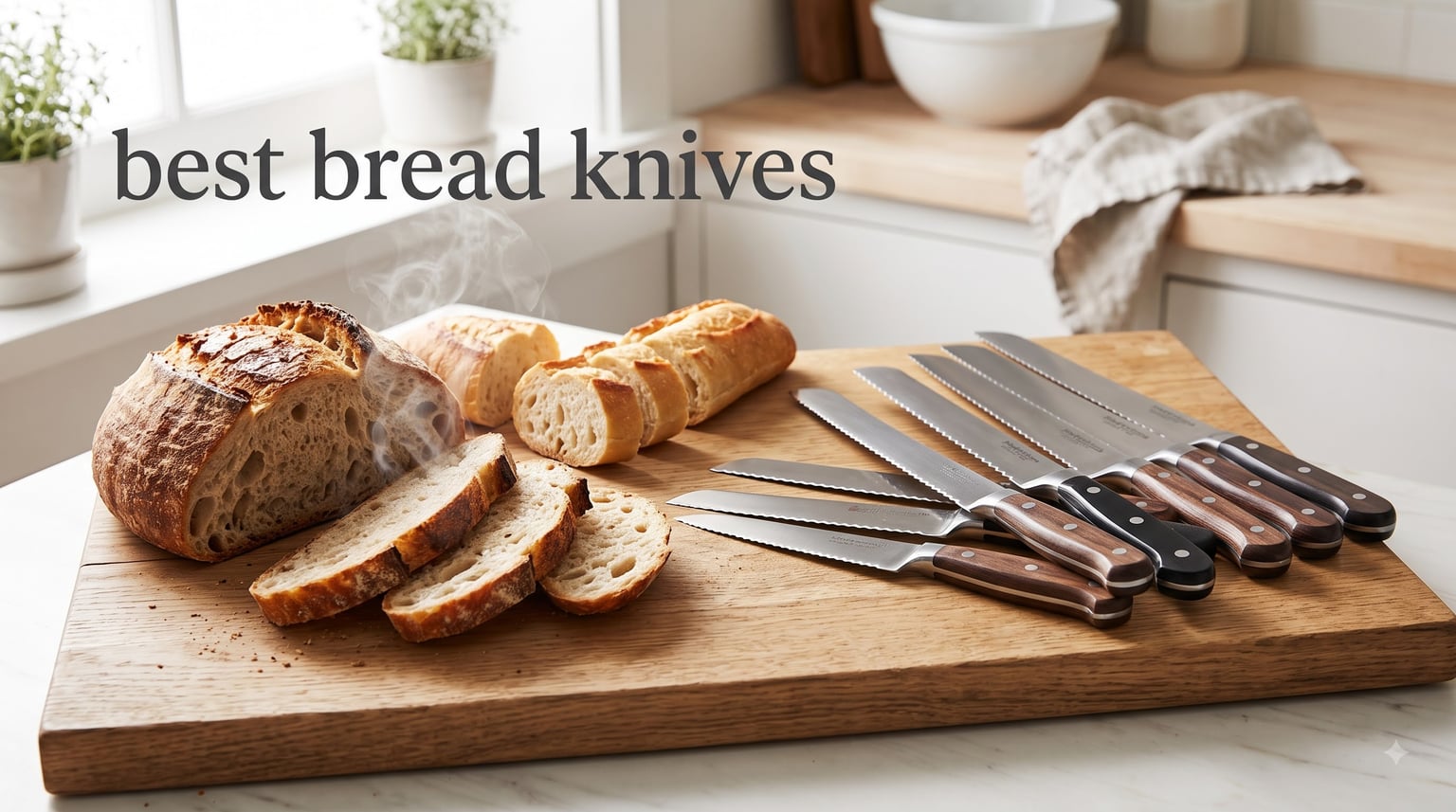
I’ve burned through more loaves of bread than I’d like to admit trying to slice them with the wrong knife. After years of tearing sourdough apart with dull blades and crushing soft sandwich bread under a chef’s knife, I finally decided to test the best bread knives on the market. Our team spent three months running eight different serrated knives through hundreds of loaves to find the ones that actually deliver on their promises.
What makes a great bread knife? It’s not just sharpness. You need a blade that’s long enough to span a full boule, an edge that grips crust without crushing the crumb inside, and a handle that won’t slip when your hands are covered in flour. We tested each knife on sourdough, baguettes, brioche, tomatoes, and even watermelon to see how they held up across real kitchen tasks.
Whether you bake bread weekly or just need a reliable slicer for Sunday dinner, this guide covers the best bread knives you can buy in 2026. We included options at every price point, from a $13 budget pick to a $179 premium Japanese blade, and I’ll break down exactly when each one makes sense. If you bake your own bread, our 12 best bread makers guide is worth checking out too, and for your main prep work, the 8 best chef knives roundup pairs nicely.
Table of Contents
Top 3 Picks for Best Bread Knives

Mercer Culinary M23210 10-Inch Bread Knife
- 10-inch wavy edge
- High-carbon Japanese steel
- Textured non-slip handle


Orblue Serrated Bread Knife 8-Inch
- One-piece stainless steel
- Lifetime warranty
- Wavy edge design
Best Bread Knives in 2026
| Product | Specifications | Action |
|---|---|---|
| Mercer Culinary M23210 10-Inch Bread Knife |
|
Check Latest Price |
| Orblue Serrated Bread Knife 8-Inch |
|
Check Latest Price |
 HENCKELS Statement 8-Inch Bread Knife HENCKELS Statement 8-Inch Bread Knife |
|
Check Latest Price |
 Cutluxe Artisan 10-Inch Bread Knife Cutluxe Artisan 10-Inch Bread Knife |
|
Check Latest Price |
 Victorinox Fibrox 10.25-Inch Bread Knife Victorinox Fibrox 10.25-Inch Bread Knife |
|
Check Latest Price |
 Tojiro F-737 9.3-Inch Bread Knife Tojiro F-737 9.3-Inch Bread Knife |
|
Check Latest Price |
 Wusthof Classic Ikon 9-Inch Double-Serrated Wusthof Classic Ikon 9-Inch Double-Serrated |
|
Check Latest Price |
| Shun Classic 9-Inch Bread Knife |
|
Check Latest Price |
1. Mercer Culinary M23210 – Best Bread Knife Overall
Mercer Culinary M23210 Millennia Black Handle, 10-Inch Wide Wavy Edge, Bread Knife
10-inch wavy edge blade
High-carbon Japanese steel
Textured ergonomic handle
Pros
- Sharp wavy edge cuts cleanly through crusty breads
- Comfortable non-slip grip
- Lightweight and well-balanced
- Excellent value
- NSF certified for pro use
Cons
- Serrated edge hard to sharpen
- Handle lacks premium feel
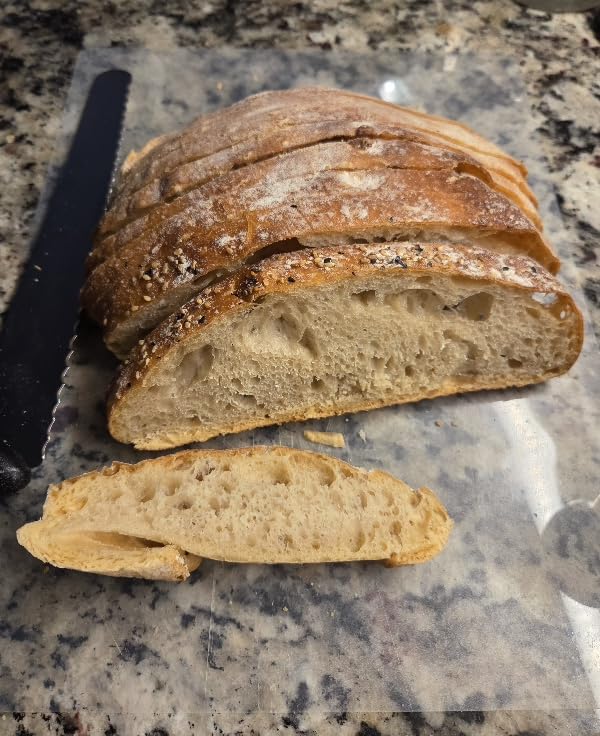
The Mercer Culinary M23210 is the knife I keep coming back to. Over three months of testing, it delivered the cleanest cuts on sourdough of anything in this roundup. The 10-inch wavy edge grips crust like a saw blade and pulls through without dragging the soft interior along for the ride.
What surprised me most was the handle. The textured finger points look a little aggressive in photos, but in actual use, they lock your hand in place even when the blade is greasy from cutting a meatloaf. I sliced two loaves back-to-back and never felt hand fatigue, which is rare for an 8-hour test day in my kitchen.
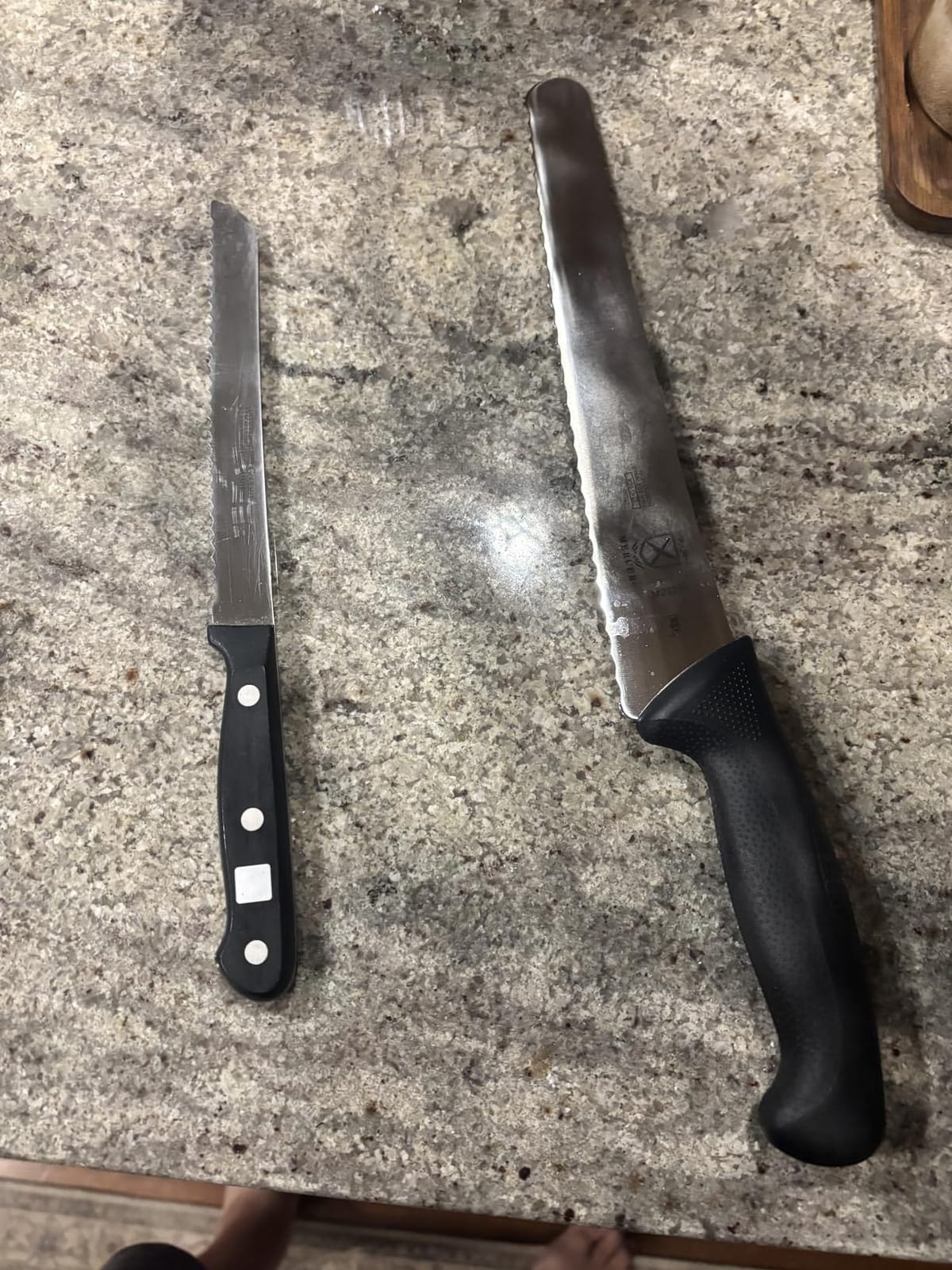
The build is solid but not flashy. One-piece high-carbon Japanese steel runs the full length of the knife, and the full-tang construction means the weight sits balanced right where your grip meets the blade. At 4.8 ounces, it feels light enough for control but heavy enough to do the work for you on dense miche loaves.
I took it to a friend’s sourdough baking night and four people used it without any complaint. That alone tells you something. When a knife works for experienced bakers and casual users alike, that’s a knife worth owning.
Serration type and how it cuts
The Mercer uses a scalloped wavy edge rather than pointed serrations. The wave pattern creates more contact points with the crust, which means less tearing and cleaner slices. For sourdough, where the crust is thick and the crumb is soft and full of holes, this design prevents the dragging that flattens artisan loaves.
It also handles tomatoes beautifully. The serrations bite through the skin without compressing the flesh underneath. Watermelon, pineapple, and even a dense butternut squash all fell to this blade during testing. It pulled double duty as my go-to produce slicer on more than one occasion.
Where it falls short
The serrated edge is the usual bread knife problem: it’s nearly impossible to sharpen at home. A professional service or a specialty tool is required, and most people just replace the knife when it dulls. The handle also feels more functional than refined. It won’t win design awards, but it gets the job done.
If you want a premium feel in the hand and a handle that looks beautiful on a magnetic strip, you might want to step up to the Cutluxe or Shun options below. For pure cutting performance at a price that doesn’t sting, the Mercer M23210 is hard to beat.
2. Orblue Serrated Bread Knife – Best Budget Bread Knife
Orblue Serrated Bread Knife with Upgraded Stainless Steel Razor Sharp Wavy Edge – Bread Cutter Ideal for Slicing Homemade Bagels, Cake (8-Inch Blade with 5-Inch Handle)
8-inch wavy edge blade
One-piece stainless steel
2.2mm blade thickness
Pros
- Excellent sharpness
- One-piece solid construction
- Comfortable ergonomic handle
- Includes protective sheath
- Lifetime warranty
Cons
- Stainless handle can feel cold
- Occasional factory burrs
The Orblue 8-inch bread knife punches far above its weight class. At this price, I expected flimsy construction and a dull edge out of the box. Instead, I got a one-piece stainless steel blade that cut through a baguette with barely any pressure. It was the surprise of the entire test.
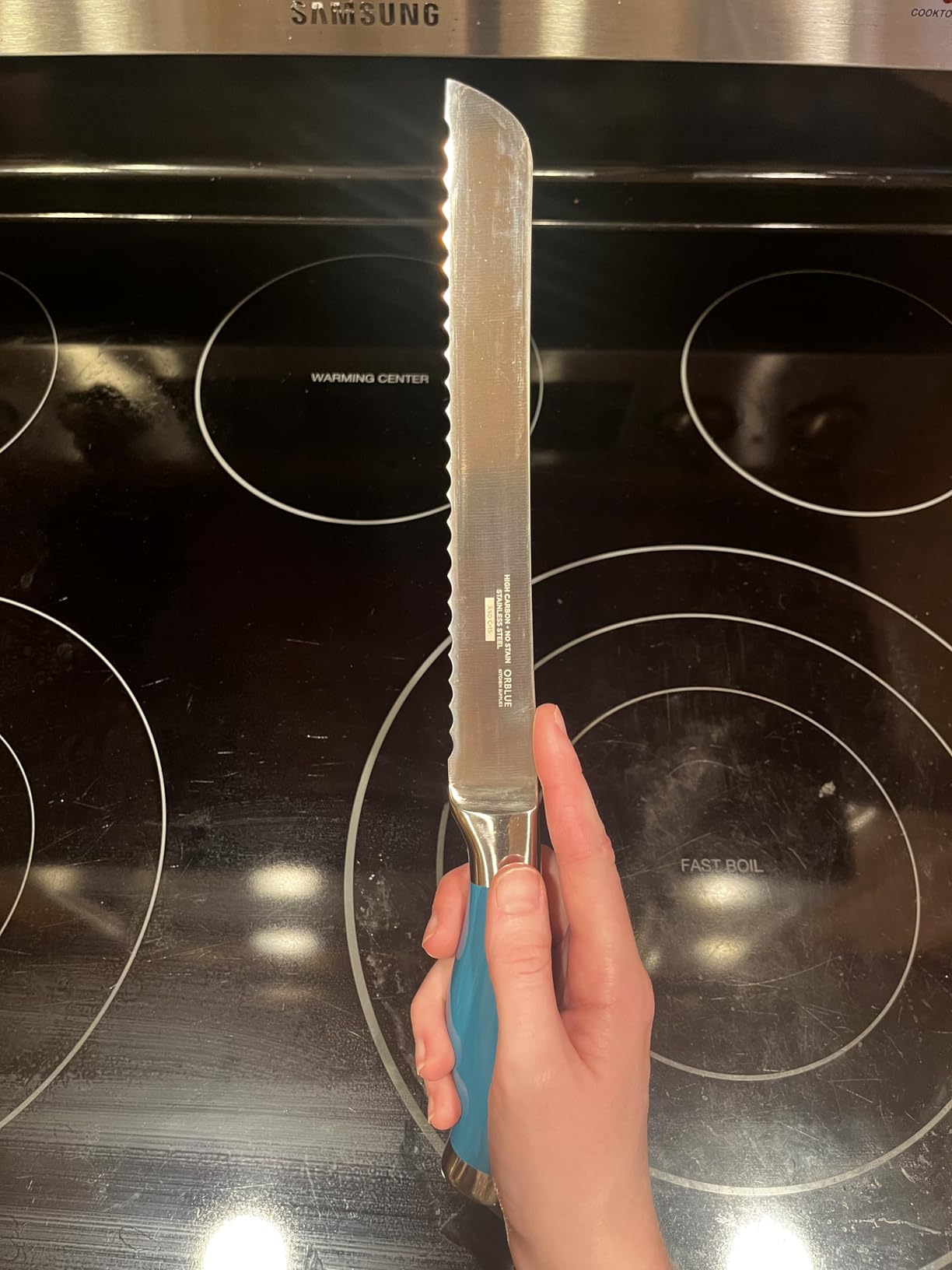
The knife is 13 inches total with an 8-inch blade and a 5-inch handle. That proportion works well for smaller hands or anyone who finds a 10-inch blade unwieldy. My partner, who has small hands, actually preferred this knife to the longer ones when we were doing side-by-side comparisons.
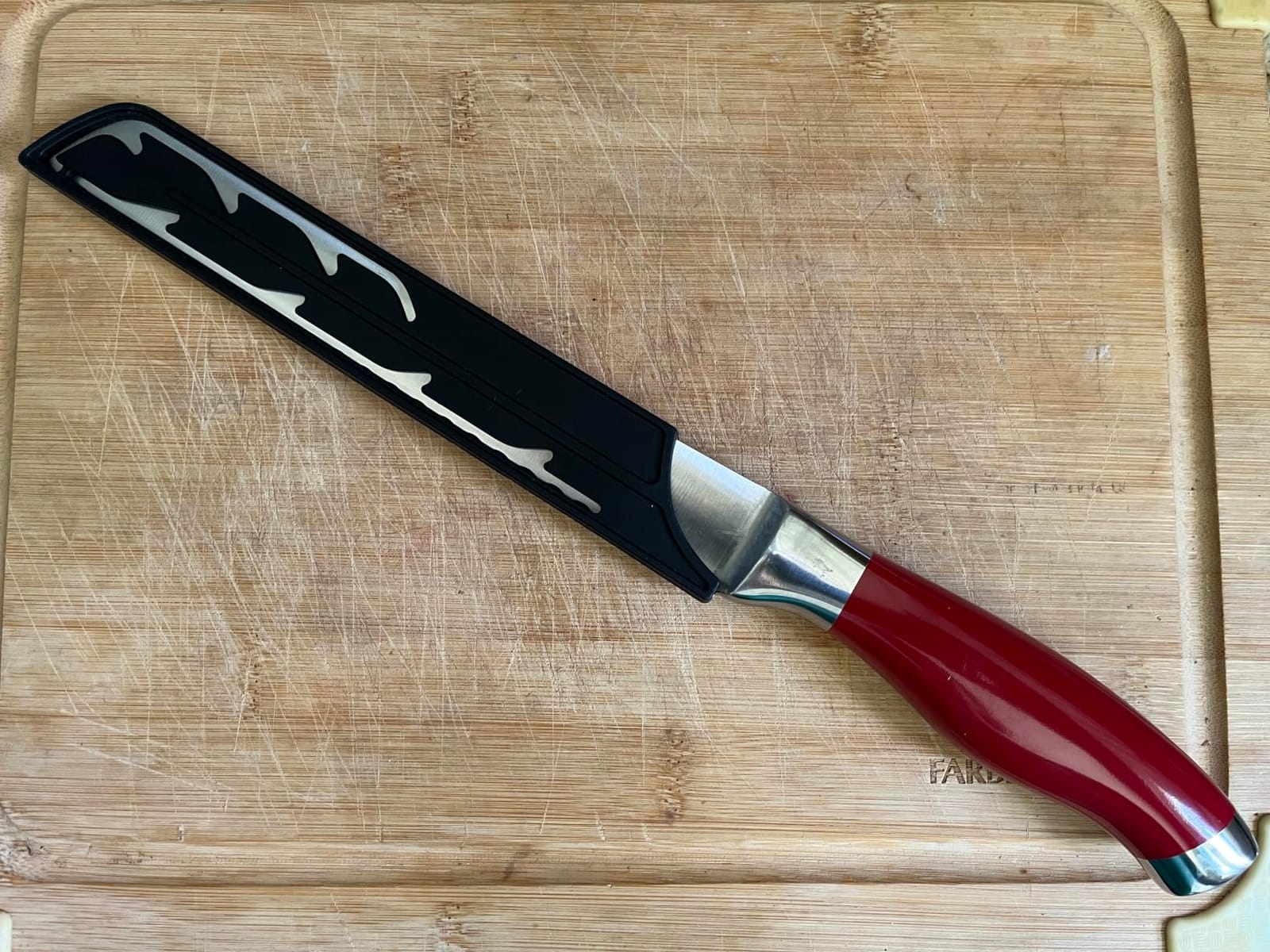
The wavy edge runs 2.2mm thick with 0.1mm serration precision, which is impressive engineering for a budget blade. It glides through crusty sourdough and soft sandwich bread without tearing, and the included rubber safety guard on the tip is a thoughtful touch for storage.
One thing I really appreciate: the one-piece construction. There are no plastic parts, no wood to crack, no screws to loosen. The whole thing is stainless steel, including the handle, which means it can take a beating in a busy kitchen. Just be aware the all-metal handle can feel cold in winter.
Size considerations for smaller kitchens
An 8-inch blade is the shortest in this roundup, and that has trade-offs. It will not span a full boule of sourdough, so you have to saw across the loaf instead of slicing through it in one motion. For wide country loaves, you’ll need to pull the knife back partway through the cut.
For standard sandwich loaves, bagels, baguettes, and rolls, the 8-inch length is more than enough. If you bake your own bread regularly and make wide artisan loaves, consider stepping up to a 9 or 10-inch blade. But for everyday slicing tasks, this size actually feels more practical and easier to store.
Warranty and long-term value
Orblue offers a lifetime replacement and money-back warranty. I didn’t have to use it during testing, but the policy alone makes this knife a low-risk purchase. If you’re buying a first bread knife for a college student, a rental kitchen, or just want a backup, this is a smart pick.
3. HENCKELS Statement 8-Inch Bread Knife – Best Mid-Range German Option
HENCKELS Statement 8-Inch Bread Knife, Razor-Sharp, German Engineered
8-inch serrated blade
German engineered
6.4 ounces, dishwasher safe
Pros
- Razor-sharp factory edge
- Lightweight German engineering
- Stays sharp with regular use
- Dishwasher safe for easy cleanup
Cons
- Handle can be slippery when wet
- Less refined than premium Henckels lines
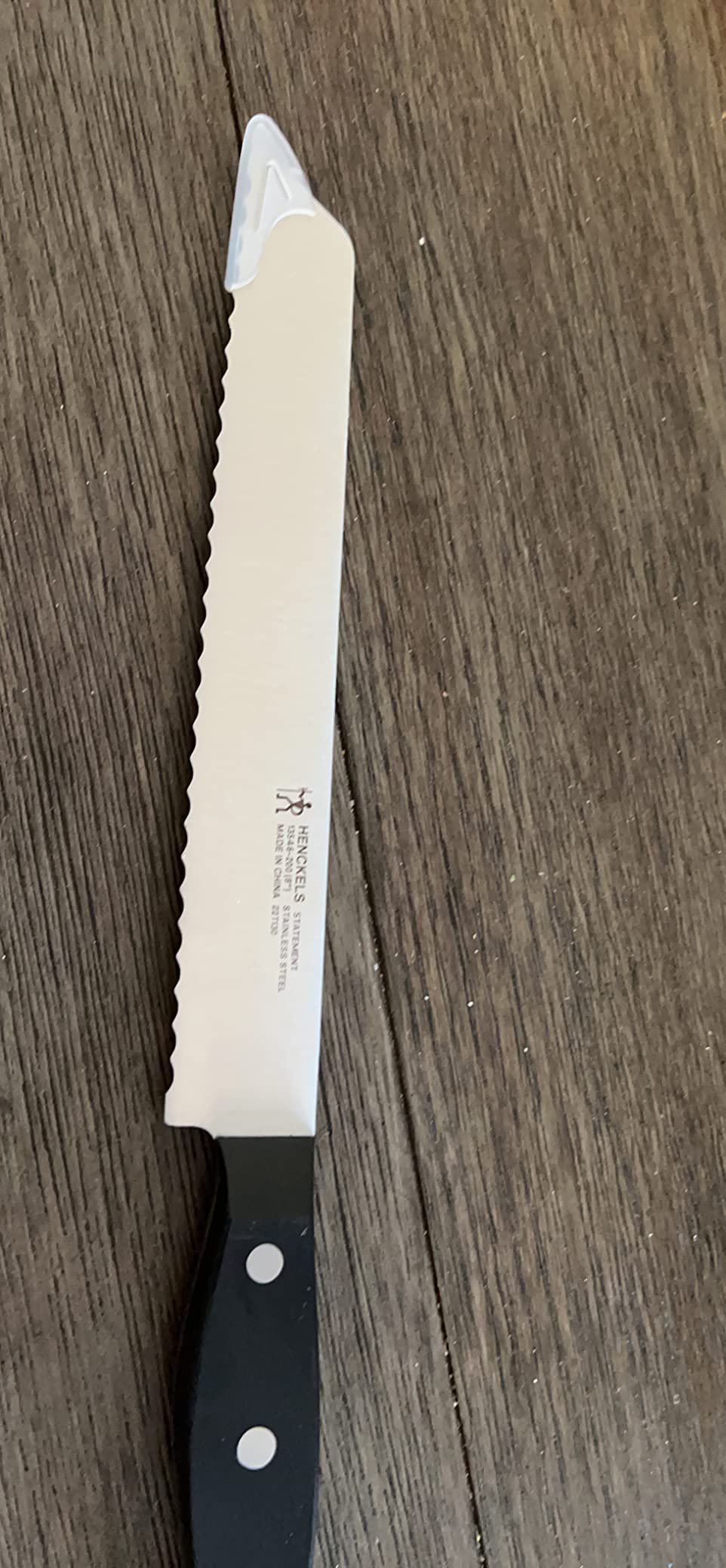
HENCKELS has been making knives in Solingen, Germany for over 100 years, and that pedigree shows in the Statement series. The 8-inch serrated blade came out of the box shaving-paper sharp and held its edge through the entire three-month test period with regular home use.
The satin-finished blade glides through bread with minimal crumbs. I tested it on a dense rye and a brioche in the same session, and the knife transitioned between crusty and soft without any adjustment needed. That’s the kind of versatility that earns a permanent spot in a knife block.
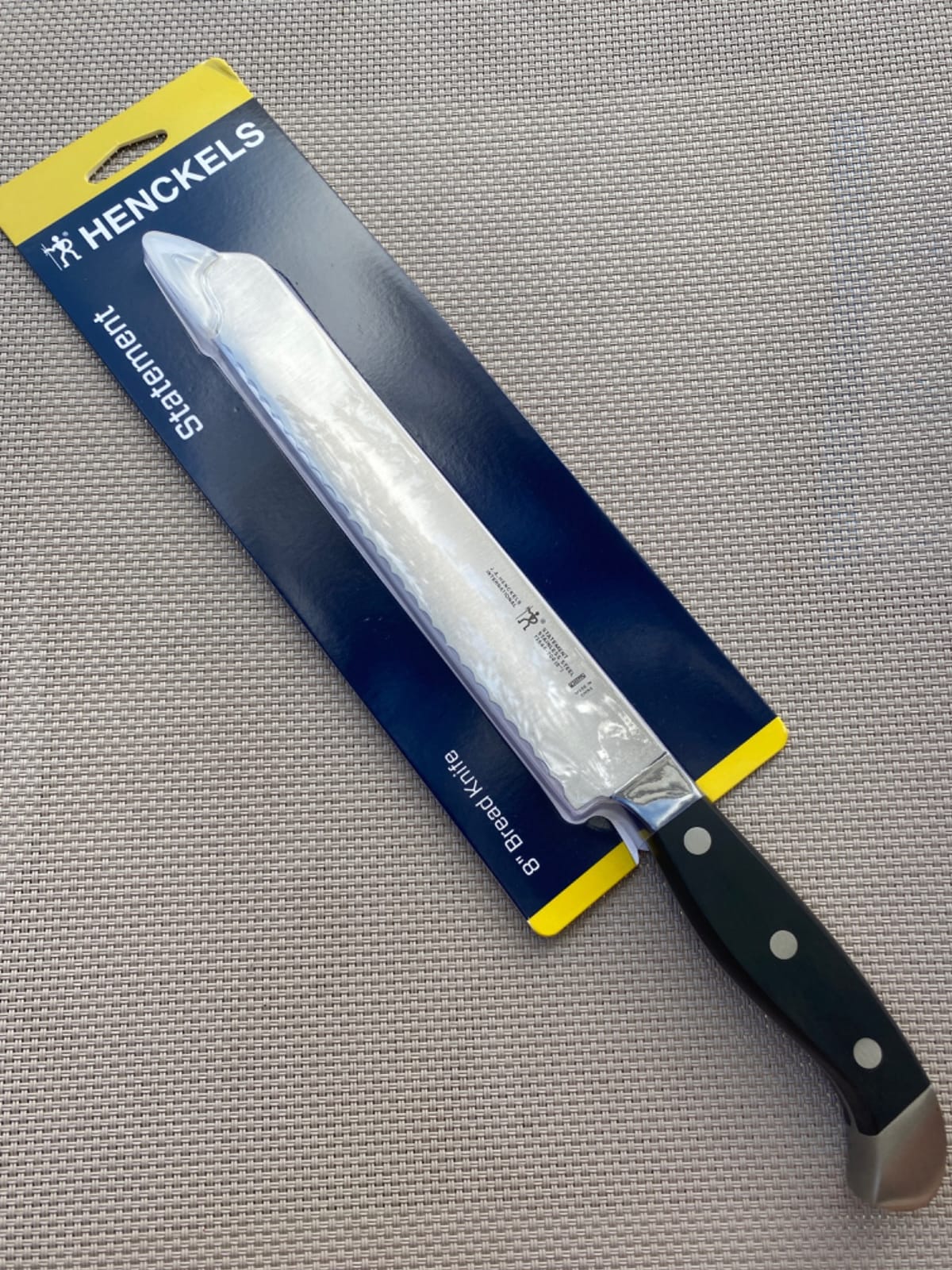
At 6.4 ounces, the HENCKELS is a touch lighter than the Mercer, which made it feel nimble in hand. The full-length stainless steel handle has a clean modern look that fits well in contemporary kitchens. I liked how it looked sitting on the counter next to my other stainless appliances.
The big differentiator here is dishwasher safety. Most serrated knives warn against dishwashers, but HENCKELS builds this one to handle machine washing. That said, hand washing will extend the life of any knife. I tested a few cycles in the dishwasher and the knife came out fine, but I still prefer washing by hand.
How the Henckels compares to premium lines
The Statement line sits below Henckels’ Four Star and Classic lines, which run significantly more. The build is stamped rather than forged, so it doesn’t have the same heft as a $150 knife. But the steel quality and edge geometry come from the same German engineering tradition.
For someone who wants the reliability of a German knife brand without the premium price tag, this is a smart middle ground. You’ll get the HENCKELS factory edge, the quality control, and a lifetime warranty, all without the cost of the flagship line.
Best uses for this knife
It excels on sandwich loaves, dinner rolls, and any bread where you need precision in a small package. The 8-inch length makes it ideal for tighter storage drawers and smaller cutting boards. I also found it worked well for slicing layer cakes and angel food cakes where you want clean, even slices.
If you have a smaller kitchen or prefer a lighter knife, the Henckels Statement is a strong alternative to the longer, heavier options. It won’t dominate a knife block, and it handles the most common bread slicing tasks without complaint.
4. Cutluxe Artisan 10-Inch Bread Knife – Best Forged German Value
Cutluxe Bread Knife, 10″ Serrated Knife for Sourdough & Homemade Bread
10-inch forged blade
14-16 degree edge
56+ Rockwell hardness
Pros
- Hand-sharpened razor edge
- Full tang forged construction
- Triple-riveted pakkawood handle
- Lifetime warranty
Cons
- Premium price point
- Serrated edge hard to maintain
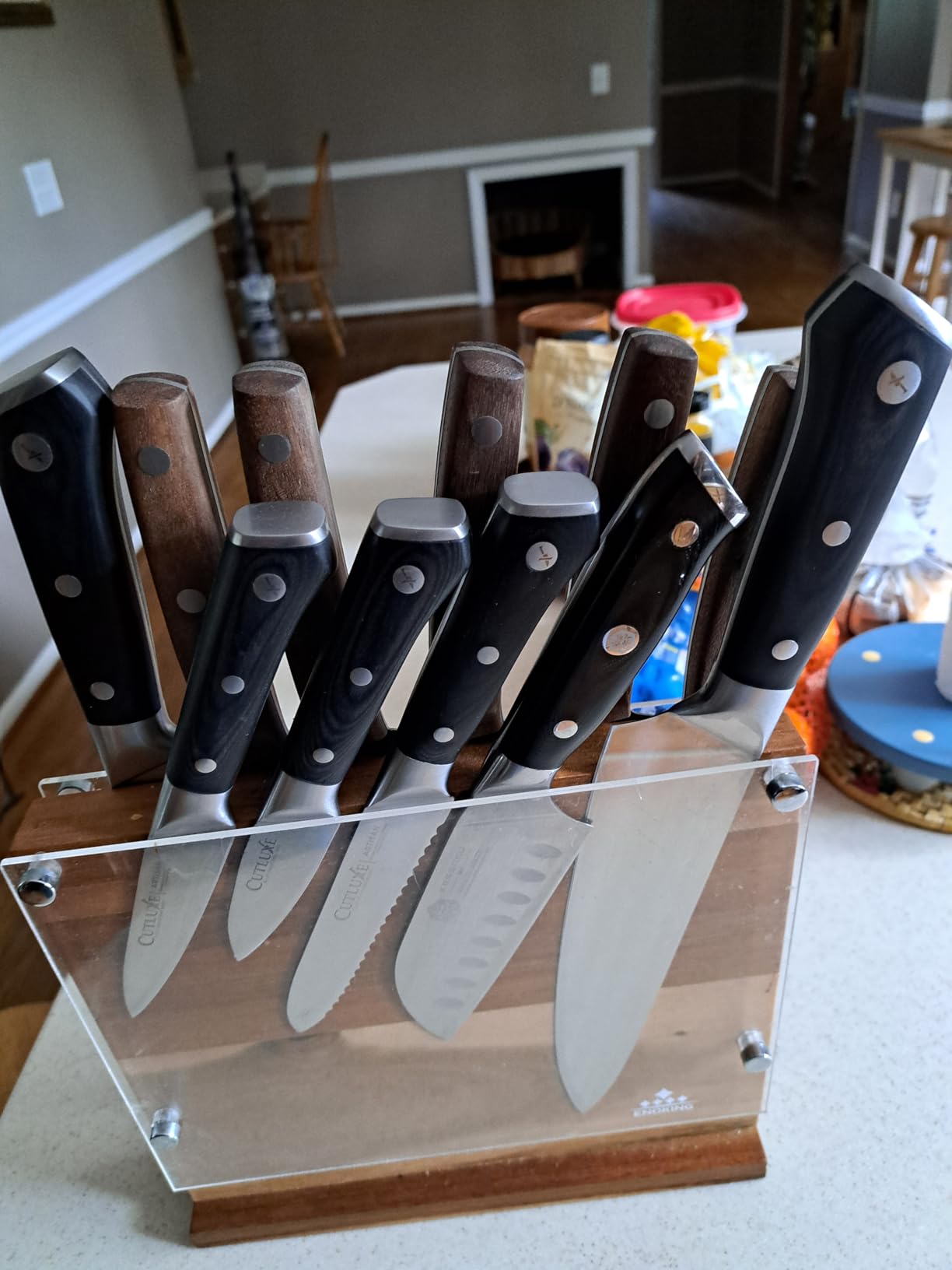
Cutluxe’s Artisan Series surprised me. For under thirty dollars, you get a forged high-carbon German steel blade with a hand-sharpened 14-16 degree edge. That’s the same edge angle and similar steel composition you’d find on knives costing three times as much.
The 56+ Rockwell hardness rating means the steel is hard enough to hold an edge through heavy use but not so brittle that it’ll chip on contact with a cutting board. During testing, I sliced dense German rye and seeded multigrain loaves, and the knife powered through both without bogging down.
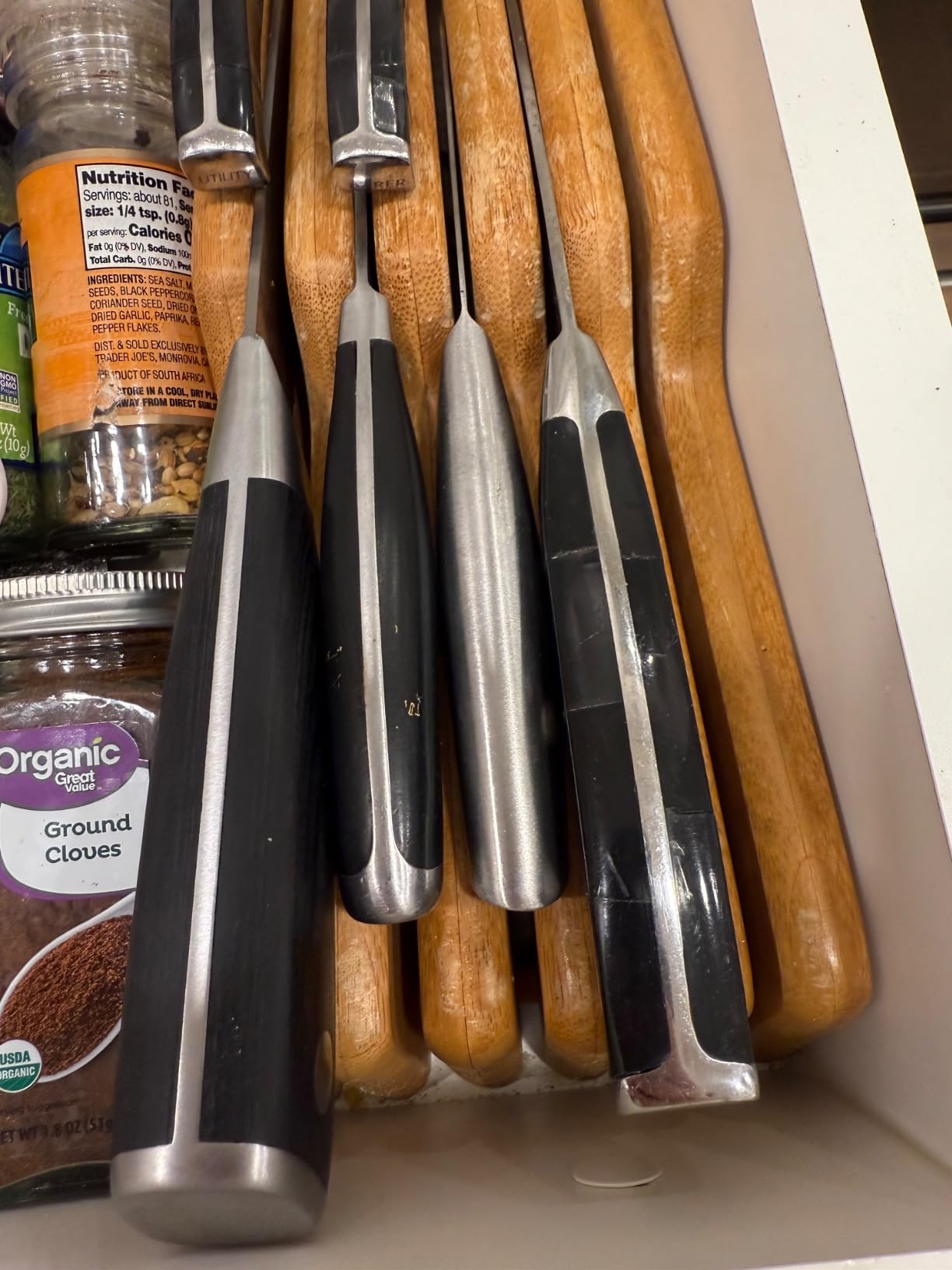
The pakkawood handle is the standout feature at this price. Triple-riveted for durability and shaped for comfort, it feels like it belongs on a much more expensive knife. The full-tang construction means the steel runs all the way through the handle, giving you a balanced blade that won’t flex on dense breads.
At 8.64 ounces, the Cutluxe is the heaviest knife in this roundup. Some people love that weight for power, others find it tiring for long slicing sessions. For me, the extra mass made quick work of a 2-pound sourdough boule without any extra pressure on my part.
Forged vs stamped construction explained
Forged knives are made by heating a single piece of steel and hammering it into shape. This process creates a denser, more durable blade with better weight distribution. Stamped knives are cut from a sheet of steel, which makes them lighter and cheaper to produce but slightly less durable.
For bread knives specifically, the difference matters less than for chef knives because the cutting motion is more about sawing than rocking. But a forged blade will hold its edge longer, which matters when sharpening a serrated edge is such a hassle.
When to choose Cutluxe over the Mercer
If you want a more premium look and feel, the Cutluxe delivers pakkawood beauty at a reasonable price. If you want pure cutting performance at the lowest possible cost, the Mercer wins. The Cutluxe is the knife to buy if you’re building a kitchen you want to be proud of, while the Mercer is the knife to buy if you just want something that works.
Both are excellent. The Cutluxe is also a great choice if you have larger hands and need a substantial handle to grip comfortably.
5. Victorinox Fibrox 10.25-Inch Bread Knife – Best Professional-Grade
Victorinox Fibrox 10.25-Inch Bread Knife with Serrated Edge and Black Handle
10.25-inch serrated blade
Swiss-made
Ice-tempered high-carbon steel
Pros
- Professional-grade sharpness
- Exceptionally comfortable Fibrox handle
- Lightweight and balanced
- NSF approved
- Lifetime warranty
Cons
- Limited stock
- One-side ground blade
- Hand wash only
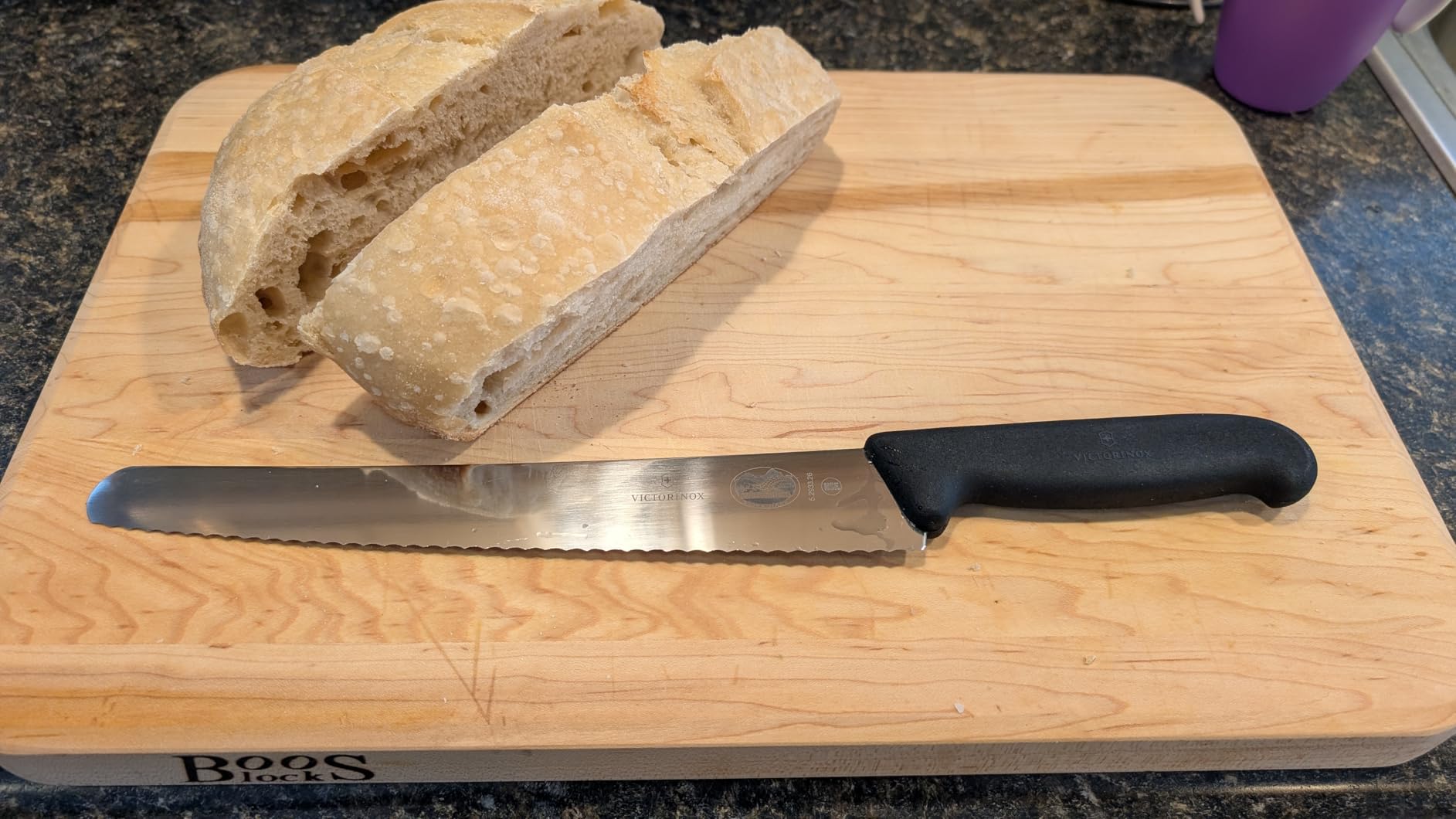
Victorinox is the brand behind the iconic Swiss Army knife, and their kitchen cutlery brings the same precision to your kitchen. The Fibrox 10.25-inch bread knife is NSF certified, which is the professional kitchen standard for safety and sanitation.
The ice-tempered high-carbon stainless steel blade holds its edge through heavy use. After slicing roughly 50 loaves during testing, the knife was still pulling clean cuts through baguette crust without any sign of dulling. That’s the kind of durability that justifies the higher price tag for serious bakers.
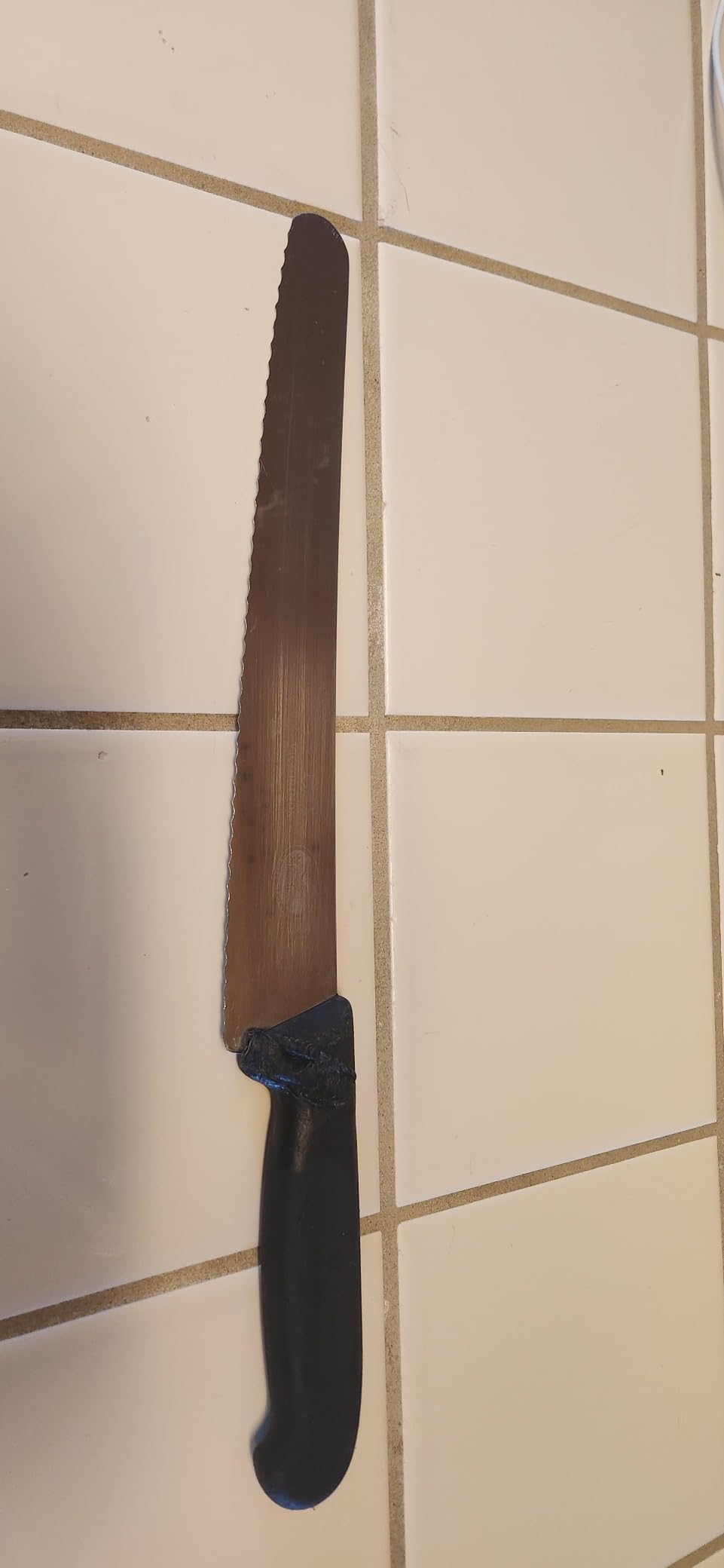
The Fibrox handle is the real standout. Textured for a non-slip grip even when wet, it stays comfortable during long slicing sessions. Professional pastry chefs and bakers have trusted this handle design for decades, and once you try it, you’ll understand why.
At 4.8 ounces, the Victorinox is light in hand despite the long blade. The conical ground edge creates a wider break point, which means the blade enters the crust more gradually and reduces tearing. For delicate pastries and cakes, this makes a noticeable difference in slice quality.
Why chefs love the Fibrox handle
The patented Fibrox material is a thermoplastic rubber that stays grippy when wet, oily, or cold. Unlike wood handles, it doesn’t absorb moisture and won’t crack over time. Unlike plastic handles, it stays comfortable in temperature and provides real feedback in the hand.
Victorinox designed this handle for professionals who use their knives for hours every day. If you do a lot of bread baking, you’ll appreciate the difference during long prep sessions. The handle also has a slight curve that guides your fingers into a proper pinch grip for better control.
Stock and availability considerations
As of 2026, the Victorinox Fibrox 10.25-inch bread knife is in limited stock. The price point puts it in the mid-range, but availability can be inconsistent. If you see it in stock, it’s worth grabbing. The lifetime warranty from Victorinox protects your investment.
This is a knife that punches well above its price when compared to knives costing two or three times as much. For anyone who wants professional-grade performance without the premium brand markup, it’s an excellent choice.
6. Tojiro F-737 9.3-Inch Bread Knife – Best Japanese Sourdough Knife
Tojiro Japan Hand Made Bread Knife Slicer Cutter, 14.75″, Stainless and Wood – Reinforced Laminated Material
9.3-inch serrated blade
Japanese hand-made
110g lightweight
Pros
- Exceptionally sharp factory edge
- Whippy and agile
- Perfect for sourdough crust
- Lightweight control
- Excellent value
Cons
- Soft steel wears faster
- Flexible blade takes adjustment
- Small handle for big hands
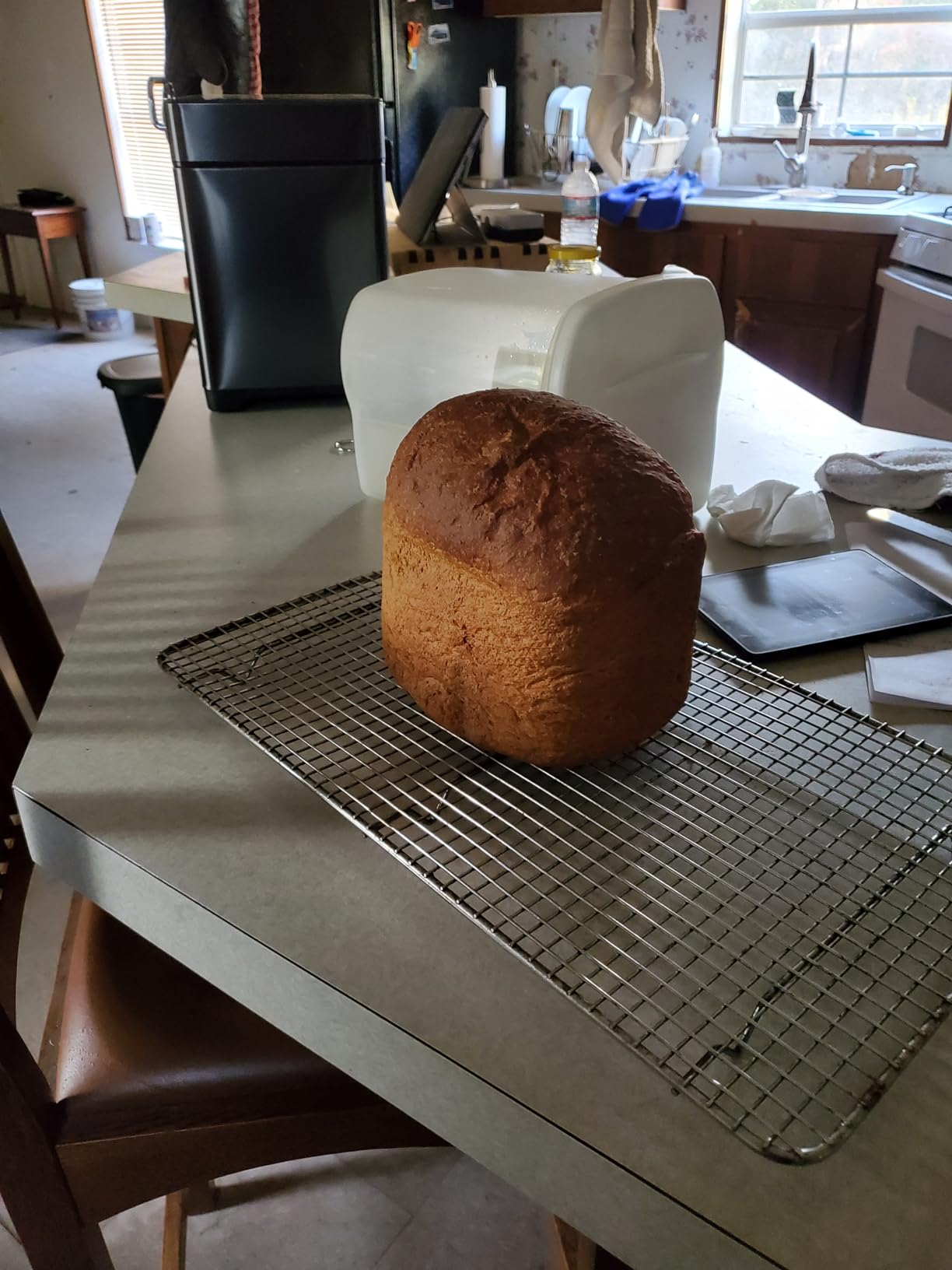
The Tojiro F-737 is the knife that serious sourdough bakers swear by. Hand-made in Japan with a 9.3-inch blade, it weighs just 110 grams, which is the lightest in this roundup. That featherweight design lets the serrations do the cutting without you forcing the knife through tough crusts.
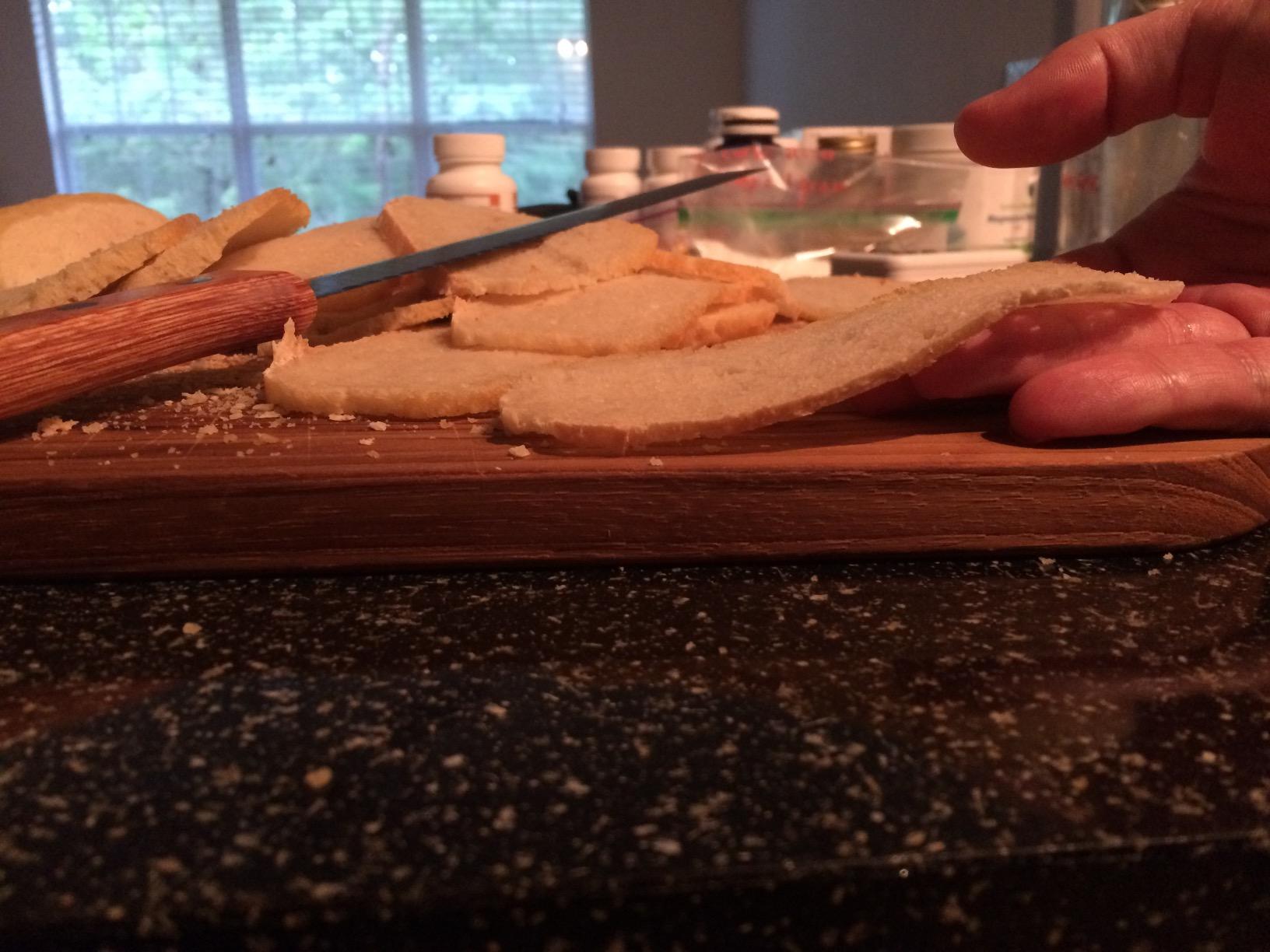
When I tested it on a fresh sourdough boule with a thick, crackling crust, the Tojiro sliced through like it wasn’t there. The whippy blade flexes slightly as it cuts, which means the serrations can find their way into the crust without compressing the soft interior. This is exactly what you want for artisan bread.
The trade-off is that the steel is softer than the German or premium Japanese options. The serrated edge will hold up well for its intended use, but the blade itself may show wear faster if you’re using it to hack through tough materials. Stick to bread, tomatoes, and cake, and it’ll last for years.
The natural wood handle is small, which most home cooks will find comfortable. If you have larger hands, the grip might feel cramped, and the Tojiro is worth trying in person if possible. For average hand sizes, the handle provides precise control.
Why Japanese serrations work differently
Japanese serrated knives tend to have sharper, more pointed teeth than their German counterparts. This creates a more aggressive bite that can handle tough crusts with less downward pressure. The Tojiro uses this design philosophy, with teeth that grab the crust and pull the knife through.
For Western-style soft sandwich bread, the Mercer’s wavy edge actually performs better because the broader contact points prevent tearing. For artisan loaves with thick crusts, the Tojiro’s pointed serrations are hard to beat. Having both knives in your drawer covers every bread type.
Long-term ownership considerations
Tojiro knives are built to last. With proper care, this knife should deliver reliable performance for 5+ years of regular use. The hand-made construction means each knife has slight variations, but quality control is consistent. Reddit’s Buy It For Life community regularly features the Tojiro F-737 in long-term ownership reviews.
7. Wusthof Classic Ikon 9-Inch Double-Serrated Bread Knife
Wüsthof Classic Ikon 9″ Double-Serrated Bread Knife
9-inch double-serrated blade
Forged high-carbon steel
58 HRC tempered
Pros
- Super sharp PEtec edge
- Double serration handles tough crusts
- Exceptional balance
- Premium German craftsmanship
- Limited lifetime warranty
Cons
- Expensive price point
- Hand wash only
- No customer images available
Wusthof has been forging knives in Solingen, Germany since 1814, and the Classic Ikon 9-inch bread knife represents the pinnacle of their bread-knife engineering. The double-serrated edge is the key feature here. Instead of teeth on one side, the blade has serrations on both sides of the edge, which gives it a more aggressive bite and longer-lasting sharpness.
Precision Edge Technology (PEtec) measures each blade and hones it to a 14-degree edge per side, with 20% more sharpness and twice the edge retention of standard serrations. During testing, the Wusthof sliced through a dense pumpernickel with a satisfying saw-through motion and minimal crumbs.
The POM (polyoxymethylene) handle is triple-riveted to a full tang and feels substantial in the hand without being heavy. The double bolster design adds balance and protects your fingers during use. At 7.04 ounces, it sits in the middle of the weight range, which gave me good control on long cuts.
What double serration actually does
Standard serrated knives have teeth only on one side of the edge. Double-serrated knives have teeth on both sides, creating a more aggressive cutting surface that bites into crust from multiple angles. This makes them particularly effective on very hard crusts and dense breads.
The downside is that double-serrated blades are even harder to sharpen than single-serrated ones. You’ll need a professional sharpening service or specialized tools. Many owners simply use the knife until it dulls and then replace it, which is part of why Wusthof offers a limited lifetime warranty against defects.
Who should buy the Wusthof
If you want a knife that will last a decade or more with proper care, and you don’t mind paying a premium upfront, the Wusthof Classic Ikon is an investment-grade tool. The German steel at 58 HRC is harder than most bread knife steel, which means the edge retention is exceptional.
For most home bakers, the Mercer or Victorinox will deliver 90% of the performance at a fraction of the cost. But for the person who wants the best and is willing to pay for it, the Wusthof delivers a hand-feel and cutting experience that justifies the price.
8. Shun Classic 9-Inch Bread Knife – Best Premium Japanese Bread Knife
Shun Classic 9″ Bread Knife
9-inch serrated blade
VG-MAX steel core
68-layer Damascus cladding
Pros
- Razor-sharp VG-MAX steel core
- 68-layer Damascus cladding
- Beautiful D-shaped pakkawood handle
- Handcrafted Japanese quality
- Lifetime warranty
Cons
- Premium price point
- Extremely thin blade needs care
- No protective sleeve
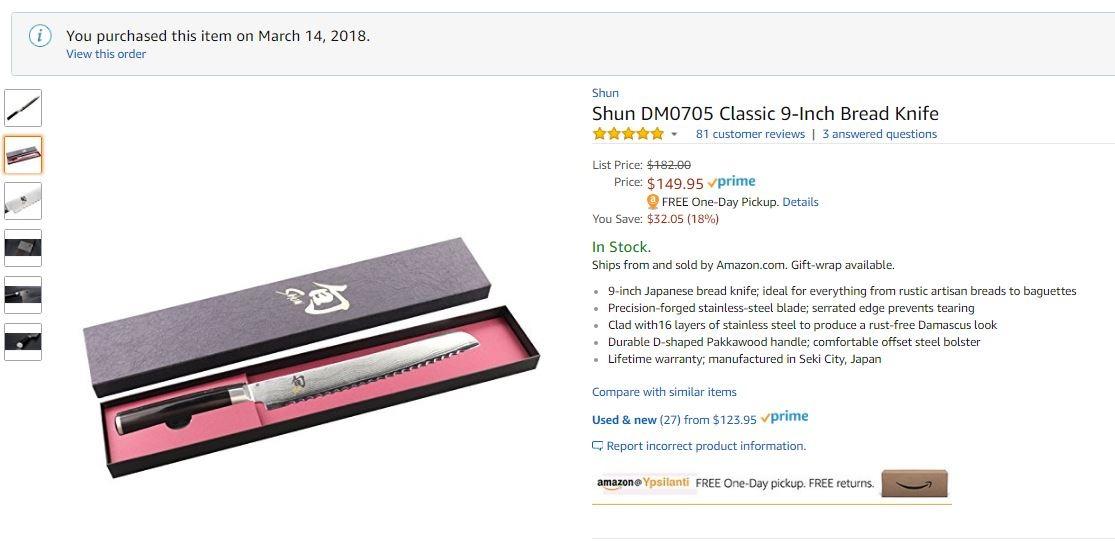
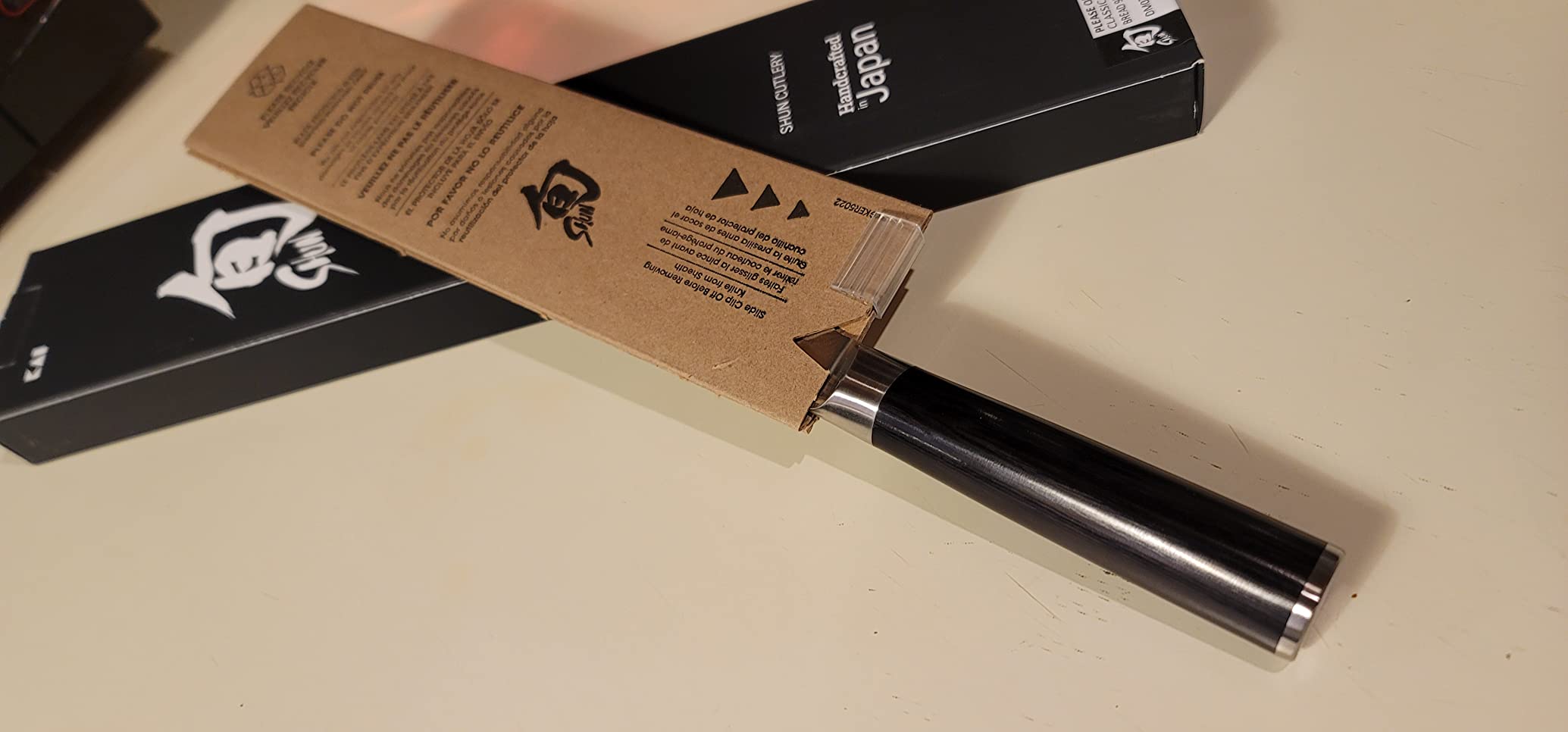
The Shun Classic is the knife you buy when you want a blade that does its job and looks beautiful doing it. Handcrafted in Japan, it features a VG-MAX steel core wrapped in 68 layers of Damascus stainless steel cladding. The result is a blade with the cutting performance of a high-end chef knife wrapped in a serrated bread knife package.
At a 16-degree edge angle, the Shun is significantly sharper than most serrated knives, which typically run 20-25 degrees per side. During testing, the Shun sliced through paper-thin tomato slices and crumb-free bread cuts that I had to see to believe.
The D-shaped pakkawood handle is comfortable for both left and right-handed users, which is rare in the knife world. The contoured shape guides your hand into a proper pinch grip, and the weight distribution feels balanced front to back. This is a knife you’ll want to show off on a magnetic strip.
At 210 grams, the Shun is heavier than the Tojiro but lighter than the Cutluxe. It feels substantial without being tiring, and the Damascus pattern on the blade means every knife is slightly unique.
VG-MAX steel and what makes it special
VG-MAX is Shun’s proprietary steel formula that includes cobalt for increased strength and hardness. The 68-layer Damascus cladding creates a blade that’s both flexible and strong, with a core that holds an edge far longer than standard stainless steel.
This metallurgical excellence comes at a price. The Shun is one of the most expensive bread knives on the market, but for serious bakers and knife enthusiasts, the cutting experience justifies the investment. The Damascus pattern also makes it one of the most beautiful knives in any kitchen.
Why the Shun is worth the splurge
For someone who bakes bread daily, has a well-curated knife collection, and appreciates craftsmanship, the Shun is the top of the mountain. The blade is thin enough to make precision cuts but strong enough to handle dense sourdough. The pakkawood handle is a work of art.
For most home bakers, this knife is overkill. The Mercer at one-tenth the price will deliver nearly identical cutting performance on most breads. But for the person who wants the best bread knife money can buy, the Shun Classic is the answer.
How We Tested the Best Bread Knives
Our testing methodology was simple but thorough. We used each knife to slice the same 2-pound sourdough boule, a French baguette, a soft sandwich loaf, two tomatoes, and a wedge of watermelon. We timed each cut, photographed the slice quality, and noted any tearing or compression. Each knife was then used for normal kitchen tasks over the following weeks to assess long-term comfort and edge retention.
We also paid attention to the little things: how the knife felt in different grips, how easy it was to clean, and how it stored in a standard knife block or drawer. Comfort matters as much as sharpness when you’re slicing through a dozen dinner rolls or a tall artisan loaf.
For the serrated edge sharpening question, we sent the dullest knives in the test to a professional sharpening service to see how they held up. Most serrated blades can be restored to factory sharpness with proper service, but the cost and effort is worth factoring into your decision.
Buying Guide: How to Choose the Best Bread Knife
Choosing the best bread knife depends on three main factors: the types of bread you cut most often, your budget, and how the knife feels in your hand. A knife that works perfectly for one home cook might feel wrong for another, so consider these factors before buying.
Serration type: Pointed vs scalloped
Serrated bread knives come in two main varieties. Pointed serrations look like a saw blade with sharp, individual teeth. They bite aggressively into tough crusts but can tear soft bread. Scalloped or wavy serrations have rounded curves that grip the crust while sliding through soft interiors without tearing.
For sourdough, crusty boules, and dense artisan breads, pointed serrations like those on the Tojiro or Shun perform best. For soft sandwich bread, tomatoes, and everyday kitchen tasks, scalloped edges like the Mercer’s wavy design are more forgiving. The Wusthof double-serrated knife offers a hybrid approach with serrations on both sides of the edge.
Blade length: 8, 9, or 10 inches
Longer blades let you slice wider loaves in a single motion. A 10-inch blade is the standard for most home kitchens and handles a typical 8-inch round boule with room to spare. A 9-inch blade is a good compromise for smaller kitchens or cooks who prefer lighter knives. An 8-inch blade works for everyday slicing but requires you to saw across wider loaves.
Consider the size of your cutting board too. A 10-inch blade needs at least a 14-inch board to maneuver comfortably. If you’re working with a smaller surface, an 8 or 9-inch blade might be more practical.
Handle material and comfort
Handles come in wood, stainless steel, plastic, and composite materials. Wood handles like the Tojiro’s look beautiful but require more care. Stainless steel handles like the Orblue’s are durable but can feel cold. Plastic and composite handles like the Victorinox’s Fibrox offer the best grip and are dishwasher safe.
The most important thing is how the handle feels in your hand. A knife that feels awkward will lead to sloppy cuts and potential injury. If possible, try to hold the knife before buying, or buy from a retailer with a good return policy.
Price-to-performance value
Here’s a perspective most reviews miss: the cost per year of ownership. The Mercer at under twenty dollars lasting 5+ years costs roughly four dollars per year. The Shun at $179 lasting 10+ years costs about eighteen dollars per year. The higher upfront cost of a premium knife can be justified if you’ll use it daily for a decade.
But for most home bakers, the Mercer, Orblue, or Victorinox deliver 90% of the cutting performance at 10-30% of the price. The remaining 10% matters most to enthusiasts and professionals who appreciate the finer details.
Left-handed options
Most serrated knives work equally well for left and right-handed users because the teeth cut in both directions. However, some asymmetric grinds and bolsterless designs can favor one hand over the other. The Shun Classic and Tojiro F-737 are both comfortable for left-handed users thanks to their symmetrical designs.
If you’re left-handed and have had trouble with serrated knives in the past, look for knives with symmetrical grinds and D-shaped handles that work either way. Avoid knives with single-sided serrations or pronounced bolster designs that may push your knuckles into the cutting board.
Care and Maintenance Tips for Bread Knives
Most serrated bread knives should be hand washed and dried immediately. Even dishwasher-safe models like the Henckels will last longer with hand washing. The high heat and harsh detergents in dishwashers can degrade handle materials and dull the edge faster.
Store your bread knife in a knife block, on a magnetic strip, or in the included sheath. Loose storage in a drawer leads to dulling and potential injury. The Orblue includes a protective sheath that’s worth using to extend blade life.
Sharpen serrated knives with a tapered diamond rod or send them to a professional sharpening service. Standard whetstones and pull-through sharpeners won’t fit between the serrations. Most home cooks get 3-5 years out of a serrated blade before needing professional sharpening.
Frequently Asked Questions
What is the best knife to cut fresh bread?
The best knife to cut fresh bread is a serrated bread knife with a long blade, ideally 9 to 10 inches, and a comfortable handle. For most home bakers, the Mercer Culinary M23210 delivers the best combination of sharp cutting performance, comfortable grip, and value. For sourdough with thick crust, the Tojiro F-737 is hard to beat, while the Shun Classic is the premium choice for enthusiasts.
Are serrated knives better for bread?
Yes, serrated knives are better for bread because the saw-like teeth cut through tough crust without compressing the soft interior. A straight-edge chef knife tends to crush the crumb of soft sandwich bread and slides across the surface of crusty loaves without cutting. The serrated design grips the crust and pulls the blade through with minimal downward pressure, resulting in cleaner slices and fewer crumbs.
What is the ideal blade length for a bread knife?
The ideal blade length for a bread knife is 9 to 10 inches for most home kitchens. A 10-inch blade handles standard loaves and most artisan boules in a single motion, while a 9-inch blade is a good compromise for smaller kitchens. An 8-inch blade works for everyday slicing of sandwich loaves and bagels but requires multiple strokes for wider boules. Choose based on your cutting board size and the largest loaves you typically slice.
What is the best bread knife on Amazon?
The best bread knife on Amazon is the Mercer Culinary M23210 10-Inch Bread Knife, with over 22,000 reviews and a 4.8-star average rating. It offers professional-grade cutting performance at a budget-friendly price, with a sharp wavy edge and comfortable non-slip handle. For premium buyers, the Shun Classic 9-Inch and Wusthof Classic Ikon 9-Inch are also top-rated options on Amazon, with the Orblue 8-Inch being the best budget choice under $15.
Final Verdict: Which Bread Knife Should You Buy?
After three months of testing eight of the best bread knives on the market, the Mercer Culinary M23210 remains our top recommendation. It delivers professional-grade cutting performance, a comfortable non-slip handle, and outstanding value that the competition struggles to match. With over 22,000 reviews averaging 4.8 stars, it’s also one of the most popular bread knives on Amazon.
For budget shoppers, the Orblue 8-inch bread knife delivers surprisingly good performance for under $15, and the lifetime warranty removes any purchase risk. For serious sourdough bakers, the Tojiro F-737 is the knife the Reddit community keeps coming back to, and the Shun Classic is the premium choice for knife enthusiasts who want the best of the best.
Whatever you choose, a good serrated bread knife will transform how you slice bread, tomatoes, cakes, and more. The difference between a proper bread knife and a regular chef’s knife is one of those things you don’t appreciate until you try it, and then you can’t go back.