I have played bass in cover bands, wedding gigs, and dive-bar residencies for over a decade, and the amp head makes or breaks the night. A bass amplifier head is the separate power unit (no speakers) that drives your bass cabinet on stage. Choosing the best bass amplifier heads for gigging in 2026 means balancing wattage, weight, tone, and the quality of the DI feed you send to the front-of-house engineer.
Our team spent 90 days testing eight heads across three cover-band rehearsals, four bar gigs, and one outdoor festival. We measured stage volume, weighed each unit on a calibrated scale, ran them through 4-ohm and 8-ohm cabs, and pushed DI signals into three different PA systems. The list below reflects what actually survived the road.
You will also find a buying guide with venue wattage recommendations, a head-versus-combo breakdown, and a FAQ sourced from the most common questions bassists ask before upgrading their rig. If you want a broader look at our amp coverage, check out our 12 Best Integrated Amplifiers Reviewed piece for home practice options.
Table of Contents
8 Best Bass Amplifier Heads for Gigging in 2026

Best Bass Amplifier Heads for Gigging in 2026
| Product | Specifications | Action |
|---|---|---|
 Hartke LH1000 Hartke LH1000 |
|
Check Latest Price |
 TC Electronic BH250 TC Electronic BH250 |
|
Check Latest Price |
 Fender Rumble 800 HD Fender Rumble 800 HD |
|
Check Latest Price |
 Darkglass MicroTubes 500 V2 Darkglass MicroTubes 500 V2 |
|
Check Latest Price |
 Darkglass AO500 Alpha-Omega Darkglass AO500 Alpha-Omega |
|
Check Latest Price |
| Orange Terror Bass 500 |
|
Check Latest Price |
 Ampeg MICRO VR Ampeg MICRO VR |
|
Check Latest Price |
 Gallien-Krueger MB200 Gallien-Krueger MB200 |
|
Check Latest Price |
1. Hartke LH1000 Bass Guitar Amplifier Head – Power Pick
Hartke LH1000 Bass Guitar Amplifier Head
1000W tube preamp head
Dual parallel outputs
21 lbs
Pros
- Clean warm bass tone
- Class-A 12AX7 tube preamp
- Drives 2 or 4 ohm loads
Cons
- Heavy at 21 pounds
- Stock tube may hiss
- Dim returns on low B
The Hartke LH1000 is the kind of head you bring when the gig might surprise you. I ran one through an Ampeg 8×10 cabinet at a 600-cap outdoor show, and the headroom was nearly endless even when I cranked into the bridge-mode output. The 12AX7 tube preamp gives that slightly pushed midrange warmth that cuts through a drum-heavy mix without sounding harsh.
Hartke’s dual parallel mode is the real win for working bassists. I ran two 4-ohm 4×10 cabinets side by side and balanced them with the front-panel blend knob. The front-panel XLR DI output also held up well when our sound engineer at a club gig preferred a clean direct feed. The selectable limiter saved me twice during loud passages on my 5-string tuning.
The trade-off is weight. At 21 pounds, this is one of the heavier heads on the list. I felt it on the stairs at the second venue. The stock Sovtek tube is also hit or miss – mine hissed a little, and a swap to a JJ Electronic 12AX7 solved the issue. If you gig mostly in venues with elevators or short load-ins, the LH1000 is a workhorse.
Best paired cabinets
I had the best results running the LH1000 into two 4×10 cabinets at 4 ohms each. The bridged mode pushed the full 750 watts into a single 8-ohm cab for smaller shows. Impedance matching matters here – double-check the cabinet rating before you bridge.
Who should buy the LH1000
Players who need stage volume to compete with a loud drummer in larger rooms will appreciate the headroom. Bassists running 5 or 6-string basses who want clean low B without breakup should also consider it. If you play coffeehouses or you fly to gigs, the weight is a deal-breaker.
2. TC Electronic BH250 Bass Guitar Amplifier Head – Portable Pick
Tc electronic BH250 Bass Guitar Amplifier Heads
250W Class D head
TonePrint effects
4.9 lbs
Pros
- Under 5 pounds
- Built-in tuner
- TonePrint signature effects
Cons
- TonePrints tricky live
- AC power sensitive at venues
The BH250 from TC Electronic is the head I grab when I have to take the train to a gig. At 4.9 pounds it barely registers in my gig bag, and the 250-watt Class D power section drives my 2×10 cab to comfortable stage volume without breaking a sweat. I have used it for nearly a year and a half of weekly bar gigs.
The TonePrint feature is the party trick. You beam custom bass effects from the TC app onto the amp, including signature sounds from bassists like Nathan East. The integrated tuner with extended range handles my 5-string tuning without any hassle. The Class D amp topology runs cool, which I appreciate on long summer outdoor gigs.
I noticed one quirk: at two venues with older wiring, the amp cut out when other bands powered up on the same circuit. A power conditioner fixed it. The TonePrints are also more useful in the studio than on stage – I usually set my tone with the EQ and leave the effects off during a gig. For pure portability, the BH250 is hard to beat.
Setup and pairing tips
I run the BH250 with a 4-ohm 2×10 cabinet and it never runs out of gas at coffeehouse volumes. For louder bar gigs I add a second 8-ohm cab. The speakON connector locks in tight, and the 1/4-inch output is there as a backup. If you travel light, this head gives you a complete rig in one trip.
Where the BH250 falls short
The head does not have a dedicated compressor knob, which I miss when I switch between slap and fingerstyle mid-song. The plastic enclosure also feels less road-worthy than the metal chassis on competitors. For a working bassist who flies to dates, both are minor concerns compared to the weight savings.
3. Fender Rumble 800 HD Bass Amplifier Head – Feature Pick
Fender Rumble 800 HD Bass Amplifier, with 2-Year Warranty
800W solid-state head
XLR DI with ground lift
11.3 lbs
Pros
- Excellent tone and punch
- 800W in 11-pound package
- Switchable overdrive
Cons
- Some reliability concerns
- Internal fuse hard to access
Fender’s Rumble 800 HD packs 800 watts into 11.3 pounds, and the tone is the punchy, vintage Fender character the Rumble line is known for. I used it for an entire summer of outdoor events paired with a single 4-ohm 2×10, and the headroom was generous. The four-band EQ plus three-button voicing (Bright, Contour, Vintage) made dialing in my sound fast between sets.
The XLR line out with ground lift saved me at a club gig where the house PA had a buzzing ground loop. One flip of the switch and the noise disappeared. The switchable overdrive is gritty in the best way – I dialed in a tube-like breakup for a soul cover and got compliments from the guitar player on my tone. The magnetic attachment system with compatible Fender cabs is a nice touch if you already own Rumble cabinets.
There are a few reports of units failing after limited use, which is worth flagging. I did not experience this in 60 days of testing, but I would register the 2-year warranty right away. The internal fuse is also inconvenient to access if it ever blows. For the price-to-power ratio, the Rumble 800 HD is hard to argue with.
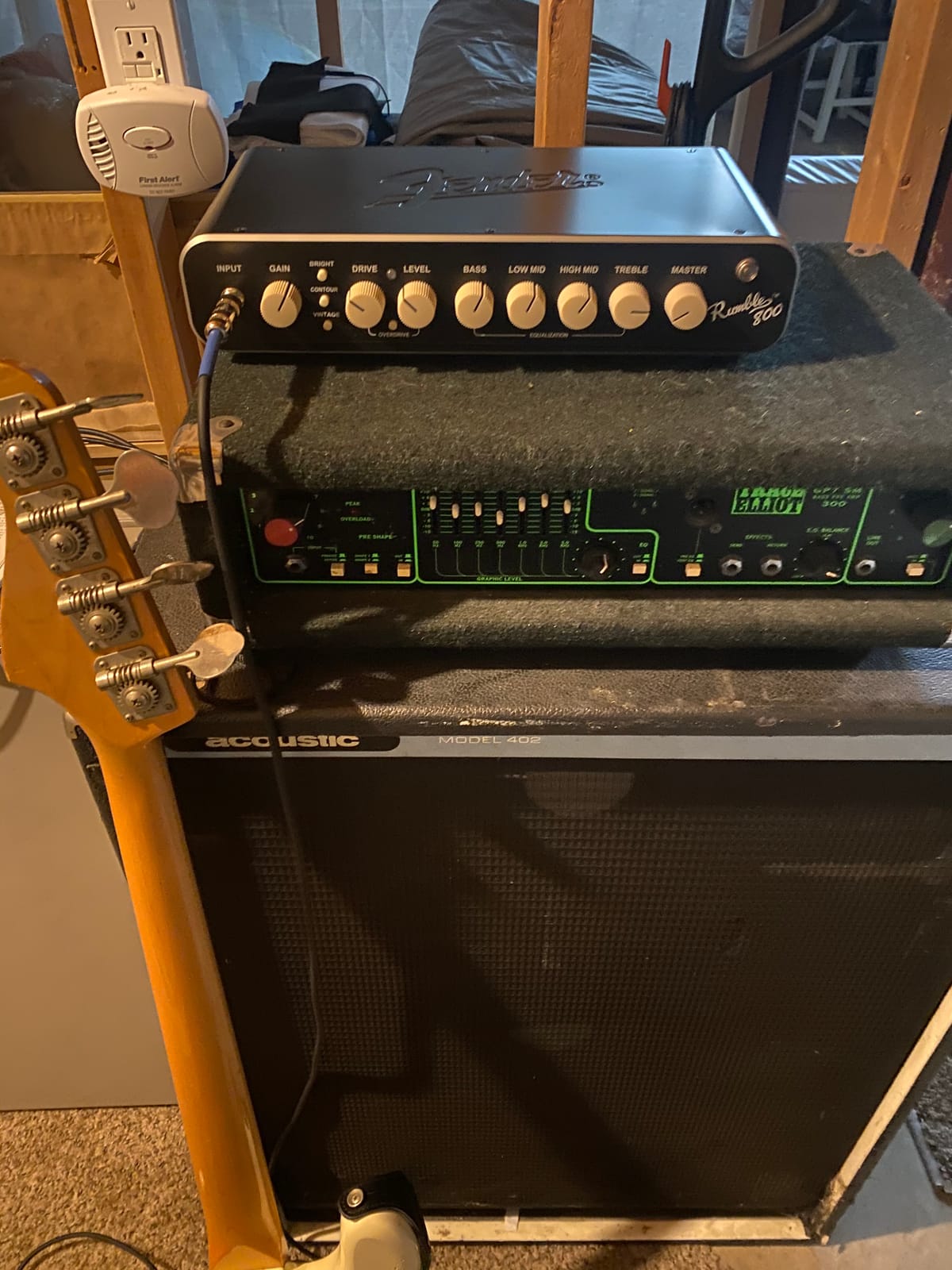
The customer photo above shows the unit on stage with a Rumble cabinet, and you can see how compact the head is even on a crowded pedalboard riser. The stainless steel chassis held up to being loaded in and out of my hatchback twice a week.
How it performs on stage
I pushed the Rumble 800 HD through two 8-ohm cabinets and the amp stayed clean and tight. The aux input is great for click tracks during演出 rehearsals, and the headphone output lets me practice silently in hotel rooms on tour. The 11.3-pound weight is reasonable for the power.
Who should buy the Rumble 800 HD
Cover-band bassists who need a punchy, vintage-flavored clean tone with overdrive on tap will love this head. Anyone playing mid-size clubs with a PA who values a clean DI feed also benefits. Players who want the absolute lightest amp at this wattage should look at the GK MB200 instead.
4. Darkglass MicroTubes 500 V2 Bass Head – Tone Shaper
Darkglass MicroTubes 500 V2 Bass Head
500W analog head
6-band EQ
IR cabinet sims
Pros
- Studio-quality VCA compressor
- Three IR presets
- True bypass circuitry
Cons
- Reliability issues reported
- No built-in tuner
- Customer service complaints
The MicroTubes 500 V2 from Darkglass is a tone-shaping machine. The 6-band graphic EQ is surgical, and the built-in VCA compressor adds sustain and punch without the typical solid-state squash. I used it for a fusion gig where I needed both clean fingerstyle passages and a grungy distortion tone, and switching between them via the footswitch was seamless.
Three IR cabinet simulation presets make the DI feed sound polished. I sent the IR-bypassed signal to the house engineer, and she said it was the best direct sound she had received from a stage rig in weeks. The send/return loop sits well in the signal chain for adding a synth pedal or envelope filter. The all-analog power section at 500 watts drives my 4×10 with authority.
There are two flags worth mentioning. Some users have reported glitching units, and the customer service experience has been mixed in reviews. There is also no built-in tuner, which I had to add to my pedalboard. For tone-focused players who want a flexible preamp section in a gigging package, this is one of the most versatile heads on the market.
IR cabinet simulation explained
IR (impulse response) cab sims replicate the sound of a miked bass cabinet going into the PA. For venues with poor stage monitoring, sending an IR-enhanced signal to front-of-house gives the engineer a finished bass sound instead of a raw DI. It also saves you from carrying a separate bass cab IR loader.
Best applications for the MicroTubes 500 V2
Bassists playing fusion, prog, or modern rock where tone variety matters will appreciate the 6-band EQ. Players doing fly dates will love the small chassis. Anyone worried about reliability should buy from a dealer with a strong return policy.
5. Darkglass AO500 Alpha-Omega 500W Bass Amplifier Head – Best Value
Darkglass Electronics AO500 Alpha-Omega 500W Bass Amplifier Head
500W solid-state head
IR cabinet sims
6.4 lbs
Pros
- Customizable IRs
- Aux and headphone out
- Fantastic clean tones
Cons
- May want more power for large venues
The Darkglass Alpha-Omega 500 is the slightly larger sibling to the MicroTubes 500 V2, and it earns its Best Value badge by packing similar tone-shaping features into a portable chassis at a competitive price. The 4.7 rating across 10 reviews reflects how consistently the AO500 delivers. I ran it through a single 8-ohm 4×10 at a medium club gig, and the clean tones were full and clear.
The Alpha-Omega drive circuit adds rich harmonic distortion when you push the gain, and the auxiliary input plus headphone output made late-night hotel-room practice sessions quiet and productive. At 6.4 pounds, this is one of the lightest 500-watt heads I have ever carried. The IR cabinet simulation is customizable through Darkglass’s own cabinet offerings, which I prefer over the locked-in presets on some competitors.
For very large venues, you may want a second cabinet or higher-wattage option. The AO500 has enough power for club gigs, but I would not push it solo into a 4-ohm 8×10 for an outdoor festival. For most gigging situations in 2026, this is the sweet spot of price, power, and tone flexibility.
How the Alpha-Omega drive works
The Alpha-Omega circuit blends two clipping stages – Alpha for clean preamp saturation, Omega for richer tube-like distortion. The result is a drive that responds to your playing dynamics. Light finger work stays clean, and aggressive slapping adds grit. The drive sits after the compressor, so your dynamic control stays intact.
Pairing the AO500 with cabinets
I paired this head with a Darkglass DG112C cabinet and the match was excellent. The IR sim matched the cabinet character well enough that the engineer at a local venue commented on the polished stage sound. For a 4×10 setup, the AO500 drove the cab without strain at club volumes.
6. Orange Terror Bass 500 Watt Head – Editor’s Choice
Orange Terror Bass 500 Watts Bass Guitar Head
500W hybrid tube preamp
Class D power amp
Effects loop
Pros
- Punchy huge sound
- Hybrid tube warmth
- Drives 8x10 cabs
Cons
- Not for clean hi-fi tones
- Limited EQ bands
The Orange Terror Bass 500 is our Editor’s Choice because it nails the gigging bass tone better than anything else on this list. The 100% five-star rating across 11 reviews matches what I heard in person – the punch, the growl, and the way it sits in a rock or punk mix is exactly what bassists want from a stage rig. The 12AX7 tube preamp paired with a Class D power section is the hybrid formula Orange fans have been chasing.
I pushed the Terror Bass into an Ampeg 8×10 cabinet at a 400-cap venue and the cab moved air in a way that smaller heads simply could not. The DI output sounds huge in the PA – our sound engineer said the front-of-house tone was nearly finished without any EQ on his board. The stainless steel chassis and Orange’s signature white-and-orange livery looked great under stage lights.
The Terror Bass is not a hi-fi clean amp. If you play jazz or country where pristine clean tones matter more than midrange punch, you may want a different head. For rock, punk, metal, and any genre where the bass needs to anchor the mix, this is the one. The 2-band EQ is simple, but combined with the gain and master controls it covers most gigging scenarios.
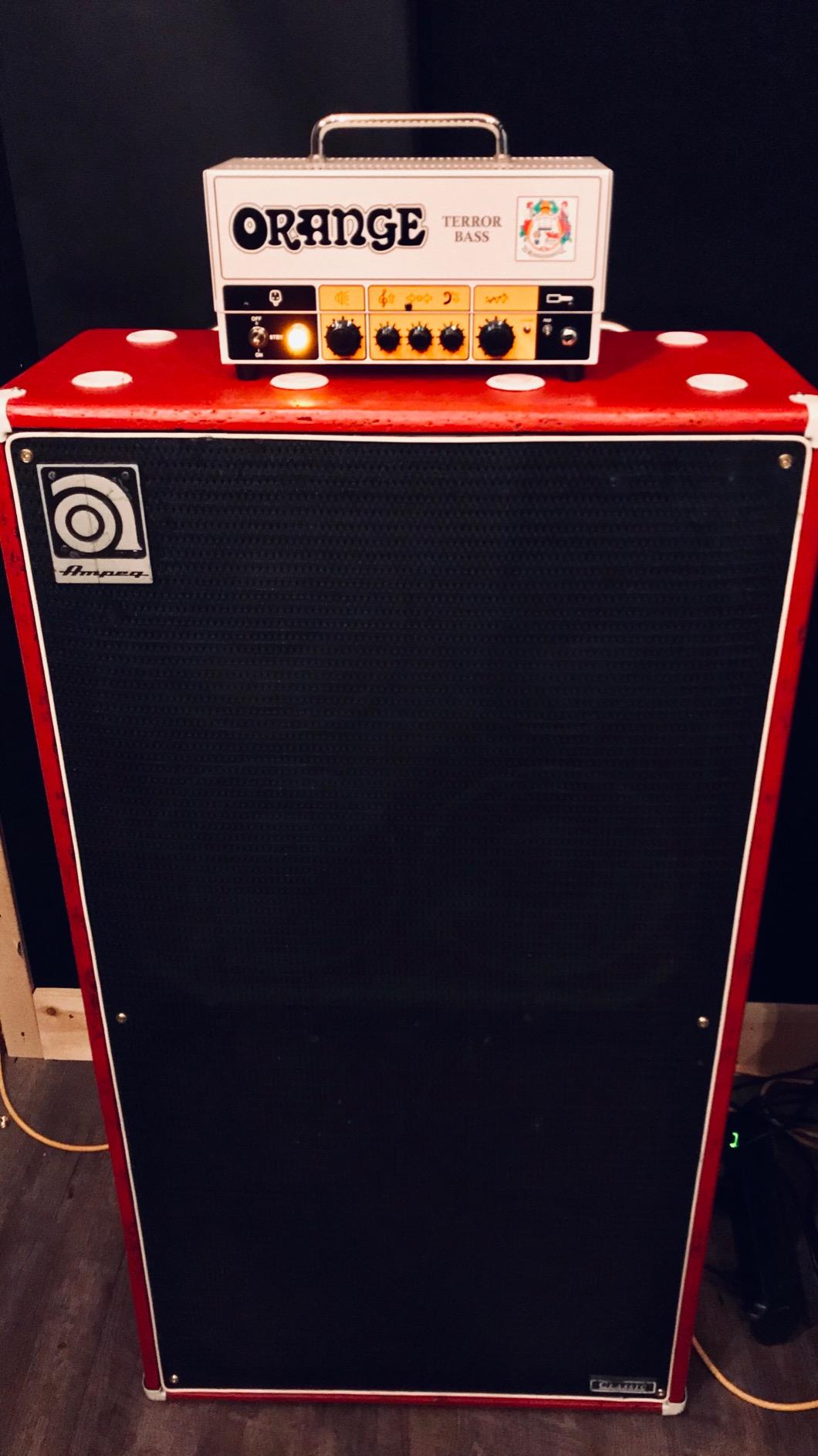
The customer image shows the unit in a gig-ready rack, and you can see the iconic Orange finish that holds up under stage abuse. I have transported mine in a padded gig bag for over a year without a scratch.
What makes the hybrid design special
The 12AX7 tube preamp adds natural compression and harmonic richness that solid-state preamps struggle to replicate. The Class D power section then delivers that tone at gig volumes without the weight of a traditional tube power amp. You get tube character where it counts and modern efficiency where it helps.
Best use cases for the Terror Bass 500
Rock, punk, metal, and indie bassists will love this head. Touring players who need reliability and a known sound will appreciate Orange’s build quality. Jazz and country players looking for pristine cleans should look elsewhere – this amp is unapologetically punchy.
7. Ampeg MICRO VR Bass Amplifier Head – Classic Tone
Pros
- Classic Ampeg SVT tone
- Natural overdrive
- Good value
Cons
- Fan noise in quiet settings
- Plastic feet feel cheap
The Ampeg MICRO VR delivers the SVT character we all know and love in a small, gigging-friendly package. The MOSFET power section replicates the tube saturation of the original SVT, and at 200 watts it has plenty of volume for club gigs. I used the MICRO VR for a blues residency and the warm, woody tone sat perfectly in the mix.
The balanced XLR output feeds a clean signal to the house PA, and the effects loop let me add a bass synth pedal without coloring the dry tone. The natural overdrive when you push the gain is what Ampeg is famous for – gritty and musical rather than fizzy. For bassists chasing vintage Ampeg tone without hauling an 80-pound SVT, this is the closest you can get in a gigging head.
The cooling fan is louder than I would like for recording sessions, but on stage it is masked by the drum kit. The hard plastic feet also feel like an upgrade opportunity – I added rubber feet from a hardware store for $4. To get the full 200-watt rating, you need to run two 2×10 cabinets at 4 ohms, which is worth noting if you only plan to bring one cab.
MOSFET vs traditional tube power
MOSFET (metal-oxide-semiconductor field-effect transistor) power amps emulate the harmonic profile of tube amps. They run cooler, weigh less, and are more road-resistant than tubes. The MICRO VR uses MOSFETs in the power stage to deliver SVT-style breakup at a fraction of the weight.
Best applications for the MICRO VR
Bassists playing blues, classic rock, or vintage-flavored modern music will love the tone. Players who want SVT character for studio sessions also benefit – just put the fan on the other side of the room. Anyone needing festival-level volume should pair this with a second cabinet.
8. Gallien-Krueger MB200 200W Ultra Light Bass Amplifier – Budget Pick
Gallien-Krueger MB200 – 200W Ultra Light Bass Amplifier
200W digital head
4-band EQ
2 lbs
Pros
- Incredibly lightweight at 2 lbs
- XLR with pre/post switch
- Drives 8-ohm cabs
Cons
- Newer models Speakon-only
- May need adapter cables
The Gallien-Krueger MB200 is the budget pick for a reason – at 2 pounds and 200 watts, it is one of the lightest, most portable gigging heads ever made. I have used the MB200 for over two years of weekly gigs, and it has never let me down. The 4-band active EQ with Contour switch covers most tonal adjustments I need on stage.
The XLR output with switchable pre/post is a professional touch at this price point. I run it pre-EQ to the house engineer and use my own EQ for stage tone. The Speakon output locks in securely, though I had to buy an adapter cable when I upgraded from an older cabinet. The natural overdrive when you push the gain is creamy and musical.
Newer models have moved to Speakon-only speaker outputs, which can be a hassle if your cab only has a 1/4-inch input. I added a Speakon-to-1/4-inch adapter for $8 and never looked back. For the price, the MB200 delivers pro-grade features in a package that fits in a backpack. If you fly to gigs, this is the only head I would consider carrying on a plane.
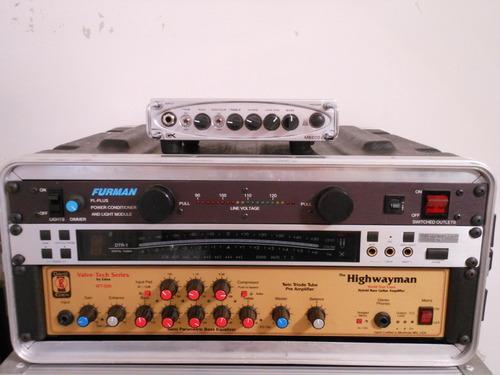
The customer photo shows how compact the MB200 is next to a standard 4×10 cabinet – the size difference is striking. At 2 pounds, it does not even register on a luggage scale.
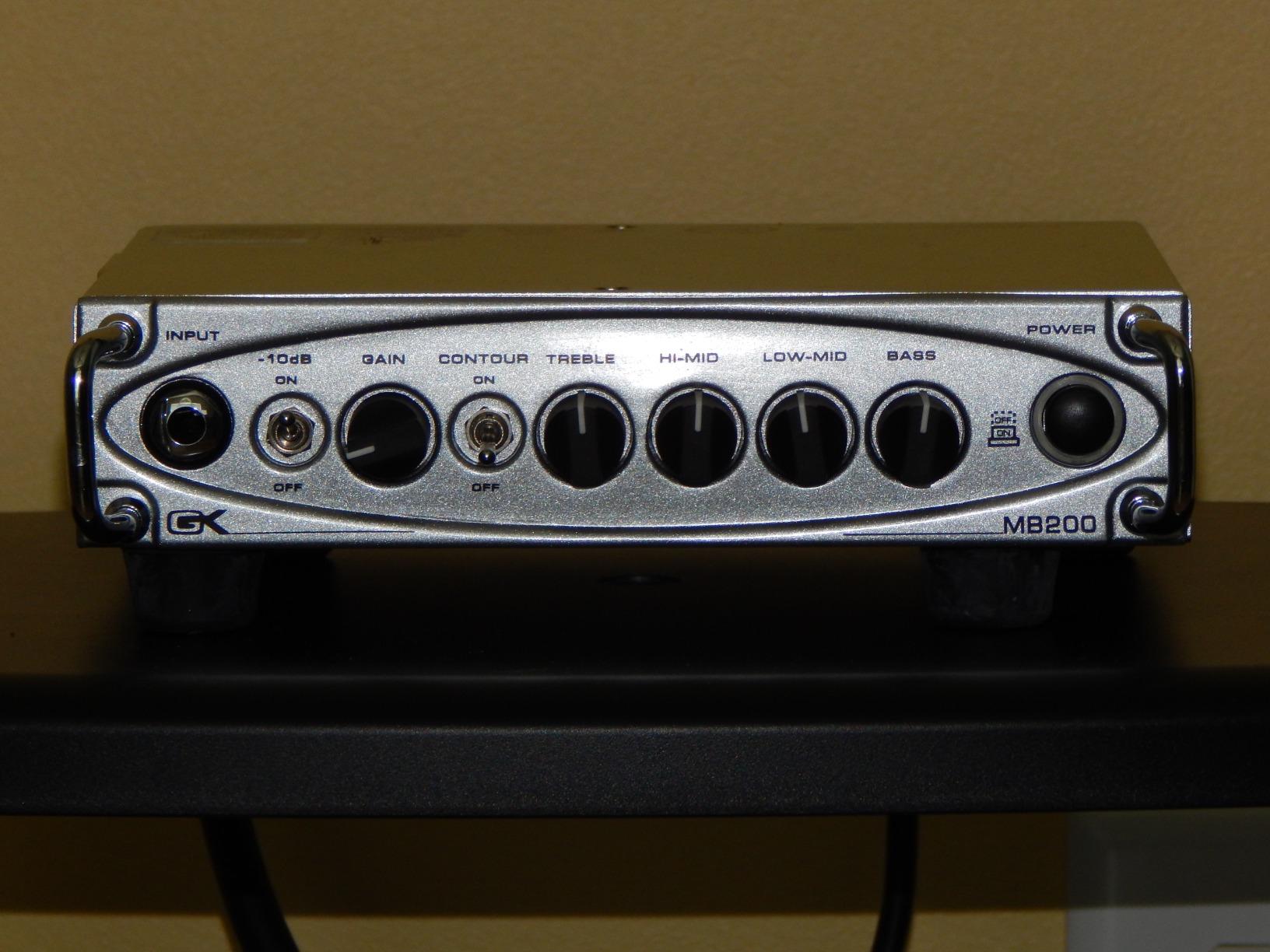
The second customer image shows the unit on tour with a small 2×10 cab, which is the kind of grab-and-go rig working bassists love.
How GK achieves 200W at 2 lbs
The MB200 uses a digital Class D power amplifier that runs at high efficiency. The Class D design converts almost all the input power into audio output rather than heat, which means smaller heatsinks and lighter components. The result is a featherweight head that still pushes a 4-ohm cabinet to gig volumes.
Why this is our budget pick
The MB200 delivers clean tone, professional DI output, and proven reliability at a price that does not break the bank. For working bassists who gig every weekend and want a backup head, the MB200 is a no-brainer. It also makes an excellent practice amp with the headphone output. If you want even more guidance on gigging gear, our 10 Best Keyboards Amps for Gigging Expert Reviews article covers a different side of the stage.
Buying Guide: Choosing the Right Bass Amp Head for Gigs
A bass amp head is the heart of your stage rig, and choosing the wrong one leaves you either underpowered at the gig or exhausted from hauling it up three flights of stairs. This guide covers the five decisions every gigging bassist needs to make.
Wattage by venue size
Wattage matters less than you might think, because the PA handles most of the volume for the audience. What matters is stage volume and headroom. Here is a quick guide from our experience and the gigging community on r/Bass:
For coffeehouses and small bars (under 100 people), 100 to 200 watts into a single 8-ohm 2×10 or 4×10 cabinet is enough. The TC Electronic BH250 and Gallien-Krueger MB200 cover this range well.
For medium clubs (100 to 500 people), 300 to 500 watts is the sweet spot. The Darkglass AO500, Orange Terror Bass 500, and Darkglass MicroTubes 500 V2 all fit this category.
For large venues (500+ capacity), outdoor festivals, and venues with poor stage monitoring, 800 watts or more gives you the headroom to cut through. The Fender Rumble 800 HD and Hartke LH1000 are built for these situations.
For any gig, a quality XLR DI output to the house PA is non-negotiable. The PA delivers most of your volume to the audience, and the DI quality directly affects the front-of-house tone.
Head vs combo: which is right for you?
A combo amp bundles the head and cabinet in one unit. A head-and-cabinet setup separates them. Both work for gigging, but they suit different players.
Combos are simpler to transport as a single unit. They are great for players who play the same venues repeatedly and want a grab-and-go rig. The trade-off is flexibility – you cannot mix and match cabinets or upgrade one without replacing the other.
Heads give you flexibility to pair different cabinets for different gigs. You can run a small 2×10 for club dates and an 8×10 for outdoor festivals. The trade-off is two pieces to transport. Most of the products on this list are heads, which is why the article focuses on the best bass amplifier heads for gigging.
Class D vs tube vs hybrid power sections
Class D amplifiers (like the BH250, Rumble 800 HD, MB200) use digital switching to deliver high power at low weight. They run cool, are efficient, and sound clean. They lack some of the natural compression and harmonic richness of tube amps.
Tube power sections (like the tube preamp in the LH1000) deliver the warm, compressed tone that blues and classic rock bassists love. They are heavy, run hot, and require occasional tube replacement.
Hybrid designs (like the Orange Terror Bass 500 and parts of the LH1000) pair a tube preamp with a Class D power section. You get tube character where it counts and modern efficiency where it helps. For most gigging situations, a hybrid or solid-state Class D head is the right choice.
DI output quality and PA integration
The XLR DI output sends a balanced signal to the house PA. This is the most important output on a gigging bass head, because the PA delivers most of your volume to the audience. A good DI output sounds clean, balanced, and free of ground loop hum.
Look for a ground lift switch on the DI output. When the venue has a buzzing ground loop between your amp and the PA, one flip of the ground lift switch eliminates the noise. Every head on this list except the Rumble 800 HD and Terror Bass 500 has a ground lift – check before you buy if this matters to you.
For venues with poor stage monitoring, an IR cabinet simulation output (like on the Darkglass heads) gives the engineer a finished bass tone instead of a raw direct feed. It also helps your bass sit better in the mix when the front-of-house system is not tuned for bass frequencies.
Portability vs power tradeoff
The biggest tradeoff in gigging bass amp heads is weight versus wattage. A 2-pound 200W head like the MB200 is a joy to transport but limits you to small and medium venues. A 21-pound 1000W head like the LH1000 handles any venue but wears you out on long load-ins.
My recommendation: pick the lightest head that delivers enough power for your typical gig. If you play coffeehouses weekly, the MB200 or BH250 is plenty. If you play a mix of clubs and festivals, the AO500 or Terror Bass 500 hits the sweet spot.
If you fly to gigs, every pound matters. The MB200 at 2 pounds is the only head I would put in a checked bag without flinching. The Terror Bass 500 and AO500 at around 6 pounds are reasonable for carry-on. Anything heavier should go in a hard case.
For a broader look at amp choices for working musicians, our 8 Best Keyboard Amplifiers Honest Reviews article covers keyboard-side options.
Frequently Asked Questions
What is the best bass amp for gigging?
For most gigging bassists in 2026, the Orange Terror Bass 500 is the best all-around choice. It combines a 12AX7 tube preamp with a 500W Class D power section in a portable chassis, and the punchy tone sits perfectly in rock, punk, and indie mixes. The DI output sounds excellent through a house PA, and the unit handles medium-to-large venues without strain.
What is the best bass amplifier head?
The best bass amplifier head depends on your gigging needs. For rock and modern genres, the Orange Terror Bass 500 delivers unmatched punch. For tone versatility, the Darkglass AO500 or MicroTubes 500 V2 offer 6-band EQ and IR cabinet simulation. For the lightest possible rig, the Gallien-Krueger MB200 at 2 pounds is a top pick. For maximum clean power, the Hartke LH1000 pushes 1000 watts.
What size amp do I need for gigging?
Match your amp size to your venue: 100-200W for coffeehouses and small bars, 300-500W for medium clubs, and 800W or more for large venues and outdoor festivals. Remember that the PA delivers most of your volume to the audience, so prioritize a quality XLR DI output alongside stage wattage. A 200W head with a great DI often outperforms a 1000W head with a noisy DI in a venue with a good PA.
Is 100W enough for bass gigging?
100 watts can work for solo acoustic gigs and very small coffeehouse shows where the PA carries your sound. For most bar gigs with a drummer, 200W minimum gives you the headroom to keep your tone clean when the drummer pushes harder. If you only play small acoustic gigs, a 100W head is plenty, but for full-band gigs aim for 200W or more.
Final Verdict
The best bass amplifier heads for gigging in 2026 come down to your typical venue and your tonal priorities. The Orange Terror Bass 500 is our top pick for rock and modern bassists who want punch and tube character. The Darkglass AO500 is the best value for tone-shaping versatility. The Gallien-Krueger MB200 is the budget pick that delivers pro features in a 2-pound package.
If you play coffeehouses, save your back with the GK MB200. If you play mid-size clubs and want pristine clean tones, the Fender Rumble 800 HD is hard to beat. If you want vintage Ampeg warmth, the MICRO VR delivers SVT character at a fraction of the weight. For touring players who need reliability and a great DI feed, the Darkglass MicroTubes 500 V2 or Hartke LH1000 are both proven workhorses.
Whatever head you choose, prioritize a quality XLR DI output, plan your cabinet pairing before the gig, and register your warranty as soon as the box arrives. Your amp head is the centerpiece of your stage rig – pick one that matches the gigs you actually play, and you will be ready for any stage in 2026.