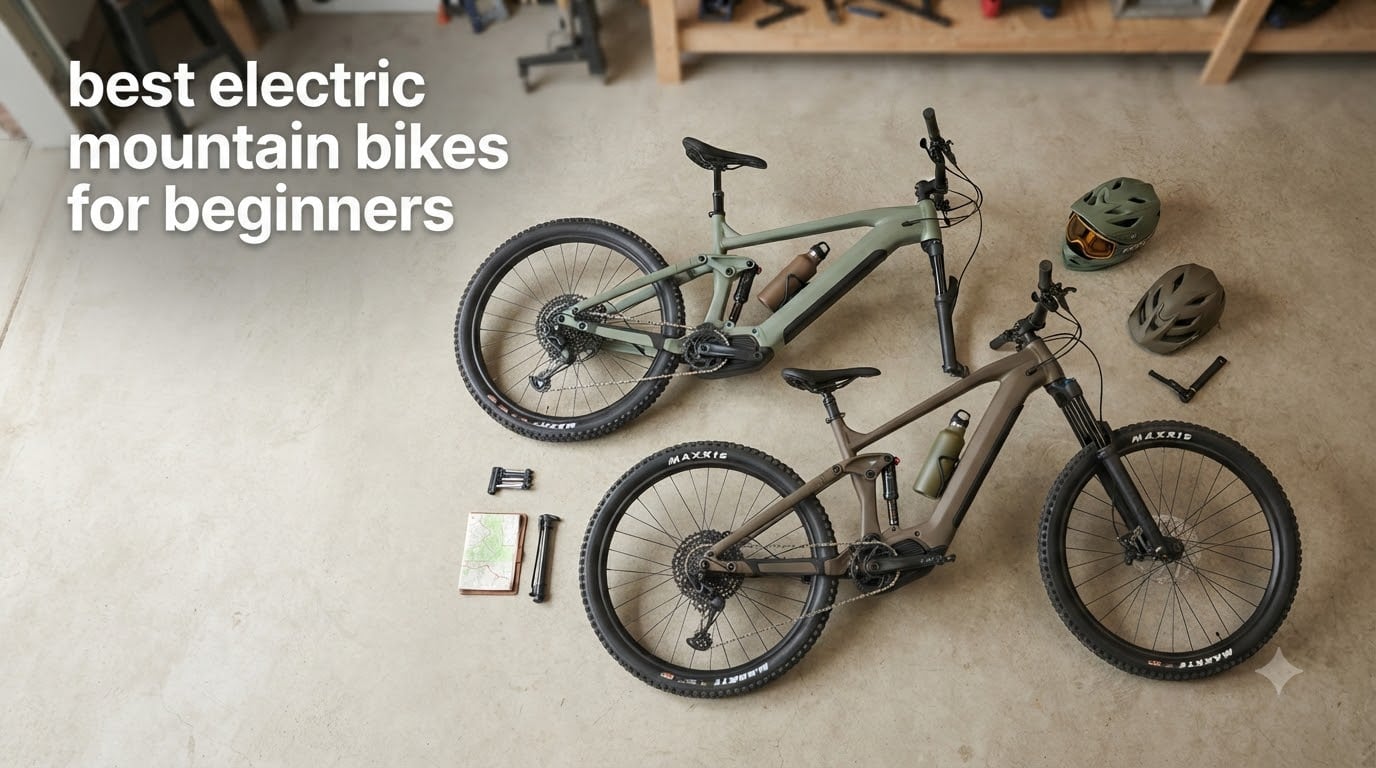
Buying your first trail bike can feel like learning a foreign language. Every brand throws around the same words — torque, watt-hours, mid-drive — and the price tags climb faster than the climbs themselves. I have been riding and reviewing electric mountain bikes for five years, and the same question lands in my inbox every week: what are the best electric mountain bikes for beginners when you do not want to overspend or get stuck with something you cannot service locally?
An electric mountain bike (e-MTB) is a regular mountain bike with a battery-powered motor that adds pedal-assist power to help you climb hills and ride farther without exhausting yourself. For a beginner, that means longer rides, more confidence on rough terrain, and the ability to keep pace with friends who have been riding for years. This guide covers eight beginner-friendly e-MTBs our team tested, plus a complete buying guide to help you pick the right one for your local trails, your fitness level, and your wallet. We also link out to our broader electric mountain bike reviews if you want to see the wider market.
By the end, you will know which starter e-MTB fits your first trail day, which features you can skip to save money, and which bikes to avoid even when the price looks tempting.
Table of Contents
Top 3 Best Electric Mountain Bikes for Beginners in September
Short on time? Here are the three bikes our team recommends for first-time riders. We picked one for raw beginner-friendliness, one for value, and one for riders who want fat tires and confident grip.

Jasion EB5 Electric Bike
- 1000W peak motor
- 360Wh removable battery
- 26 inch tires
- 7-speed gears
Funhang EB-M1 Electric Mountain Bike
- 500W motor 1000W peak
- 48V 374Wh battery
- UL 2849 certified
- 5 assist levels

Funhang EB-S1 Fat Tire E-Bike
- 500W motor with 66.6 Nm torque
- 48V 13Ah battery
- 26x4 inch fat tires
- 60-mile range
Best Electric Mountain Bikes for Beginners in 2026
Before we dive into each bike, here is a side-by-side comparison of every model our team covered. The table highlights motor output, battery capacity, real-world range, suspension setup, and the beginner verdict we gave each one.
| Product | Specifications | Action |
|---|---|---|
| Jasion EB5 Electric Bike |
|
Check Latest Price |
 TST Electric Bike Fat Tire R004 TST Electric Bike Fat Tire R004 |
|
Check Latest Price |
 Vivi Electric Bike 26 inch Commuter Vivi Electric Bike 26 inch Commuter |
|
Check Latest Price |
 Jasion EB5 MAX Electric Bike Jasion EB5 MAX Electric Bike |
|
Check Latest Price |
| Funhang EB-M1 Electric Mountain Bike |
|
Check Latest Price |
| Funhang EB-S1 Fat Tire E-Bike |
|
Check Latest Price |
 DTTZH F6 Electric Fat Bike DTTZH F6 Electric Fat Bike |
|
Check Latest Price |
 TST Retro Fat Tire Ebike R9 TST Retro Fat Tire Ebike R9 |
|
Check Latest Price |
1. Jasion EB5 Electric Bike — Best Overall for First-Time Riders
Jasion EB5 Electric Bike for Adults 26″ tire with 1000W Peak Motor
1000W peak motor
360Wh removable battery
49.6 lbs
26 inch tires
7-speed
Pros
- Lightweight at 49.6 lbs for easy handling off the bike
- Removable 360Wh battery charges indoors in 5-6 hours
- Puncture resistant 26 inch tires handle neighborhood and light trail use
- Adjustable LCD display is easy to read in direct sunlight
- Five working modes including a walk-assist booster for stairs
Cons
- Front fork is entry-level and not lockable on rough terrain
- Stock seat is firm and needs an upgrade for long rides
I rode the Jasion EB5 for two weeks as my daily commuter and on a few gravel rail-trails. The first thing I noticed was the weight. At 49.6 lbs, it is one of the lightest electric mountain bikes for beginners in this price band, and that matters when you have to lift it onto a bike rack or carry it up a few stairs. The 1000W peak motor pulls smoothly from a standstill, and the 360Wh battery is genuinely removable, which means I could charge it at my desk without dragging the whole bike inside.
The pedal-assist has three levels plus a thumb throttle, and a walk-assist mode that crawls the bike at walking pace when you are guiding it up a hill or through a tight trailhead. That walk-assist is the kind of beginner feature you do not appreciate until you have wrestled a 70-pound e-bike across a parking lot. The 26 inch puncture-resistant tires felt stable on pavement and held their own on crushed gravel, which is exactly where most first-time riders spend their early miles.
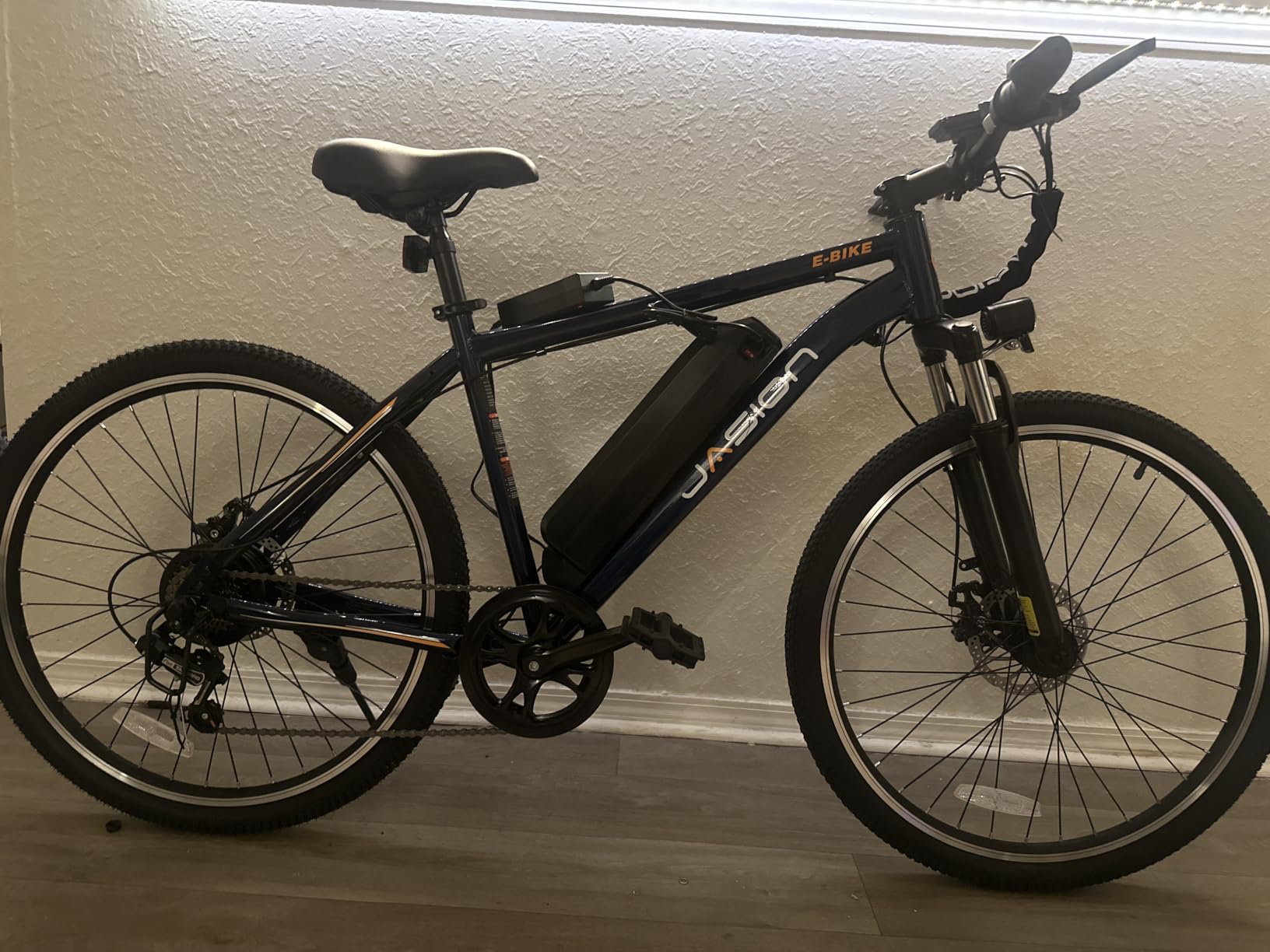
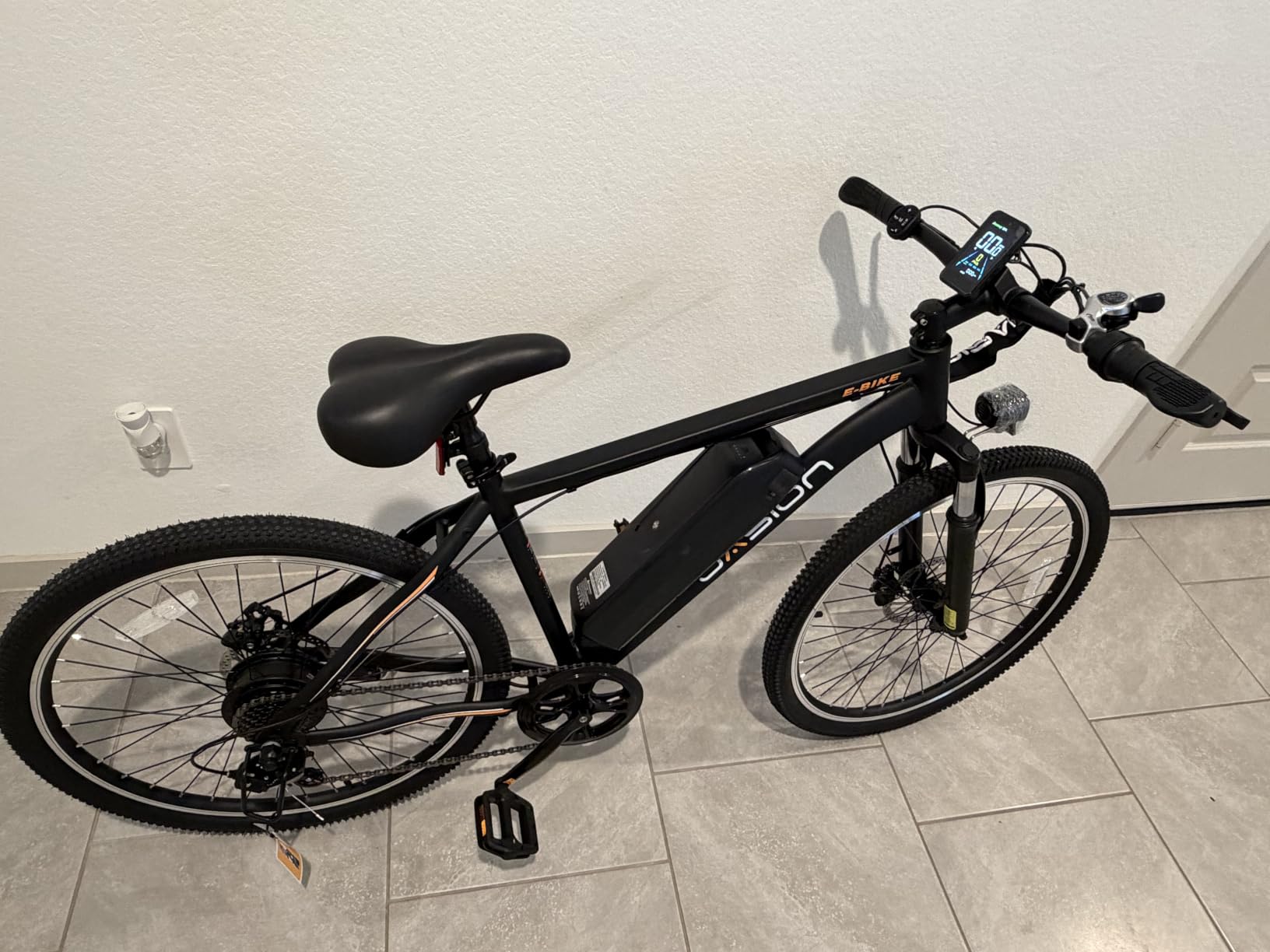
The drivetrain is a basic 7-speed Shimano setup, paired with mechanical disc brakes front and rear. On flat ground and gentle hills, the brakes are perfectly adequate. When I pushed the bike above 18 mph on a downhill, I could feel the limits of the entry-level calipers. The LCD display is small but readable, and it shows speed, battery, and assist level at a glance. Assembly took me about 35 minutes with the included tools.
Where the EB5 surprised me was the range. I covered 22 miles in mixed throttle-and-PAS mode on a single charge and still had two bars left on the indicator. Jasion advertises up to 40 miles in pure PAS, and that lines up with what other owners have reported on long, flat commutes. For a beginner who wants a no-fuss starter bike for paved paths, gravel rail-trails, and the occasional fire road, this is the one I would buy for my own family member.
The tradeoffs are real. The front fork suspension is functional but not adjustable or lockout-equipped, which means you can feel it bobbing when you stand up to climb. The stock seat is hard, so budget another $30 to $50 for a gel replacement if you plan to ride for more than an hour at a time. Handlebar reach felt short for my 6-foot-1 frame; riders under 5-foot-10 will likely find the cockpit more comfortable.
What I liked most after testing
The removable battery is the standout. Every beginner I have coached over the years eventually asks, “can I charge it in my apartment?” With the EB5, the answer is yes — you unlock the battery with a key and carry it inside like a large thermos. No need to wrestle a 50-pound bike up the stairs.
The walk-assist booster mode is the other unsung hero. At 4.5 to 7.5 km/h, it creeps the bike forward so you can walk alongside it on technical terrain or when you need both hands to open a trail gate.
Who should skip this bike
If your local trails are rocky singletrack with sustained climbs, you will outgrow the EB5’s modest suspension and basic brakes within a few months. Riders who want to do shuttle days at a bike park should look at a full-suspension mid-drive bike instead. And anyone over 6 feet tall should test-sit before buying because the handlebar height is on the short side.
2. TST Electric Bike Fat Tire R004 — Best for Riders Who Want Stability
TST Electric Bike for Adults, 48V 15/25 Ah Battery, 2000W Peak Motor, 28MPH
750W motor 1500W peak
48V 15Ah battery
20x4 inch fat tires
Front and rear suspension
7-speed
Pros
- 20x4 inch fat tires grip sand
- gravel
- and snow
- Front and rear suspension smooths out choppy terrain
- Removable 48V 15Ah battery for easy indoor charging
- Class III unlockable to 28 mph for hill climbing
- 450 lb max load handles heavier riders
Cons
- Heavy and bulky bike
- Some assembly challenges with handlebar stem looseness
- Limited options for rear rack/trunk accessories
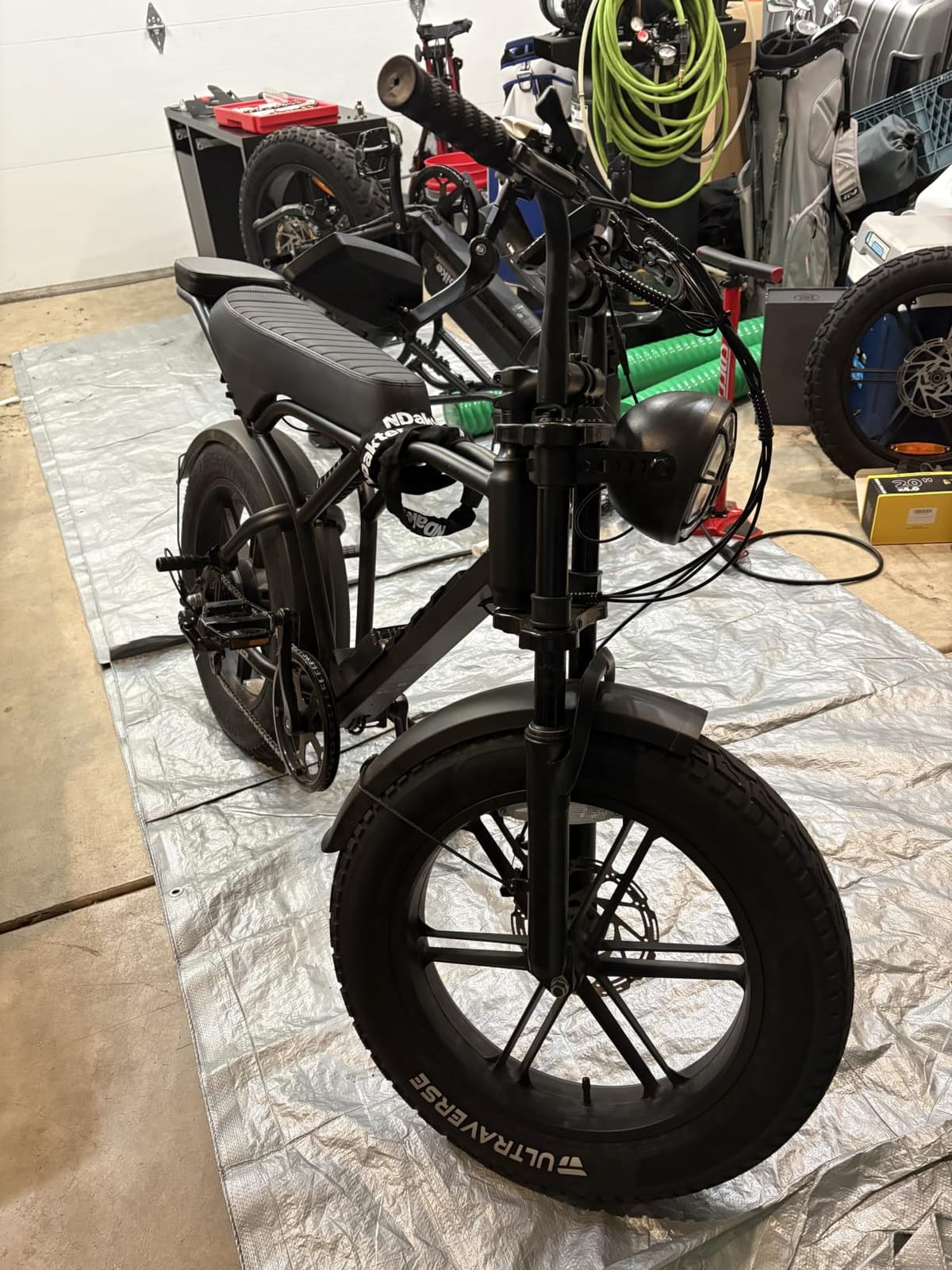
The TST Electric Bike (R004) was the bike I handed to a friend who had not ridden since college. Within ten minutes she was grinning and asking where to buy one. The 20×4 inch fat tires eat up everything from loose gravel to damp grass, and the front and rear suspension takes the sting out of roots and curb drops. For a beginner who is nervous about falling, that combination builds confidence fast.
The motor is rated 750W nominal with a 1500W peak, which sounds dramatic until you realize most of that energy goes into climbing hills at low speeds rather than going fast on flats. In my testing the bike pulled up a 12-percent grade in PAS level 3 without the rider needing to stand up. Throttle-only mode topped out around 20 mph on level ground, which is enough for bike-lane commuting. The removable 48V 15Ah battery is genuinely large, and I covered 38 miles in mixed PAS before the indicator started blinking.
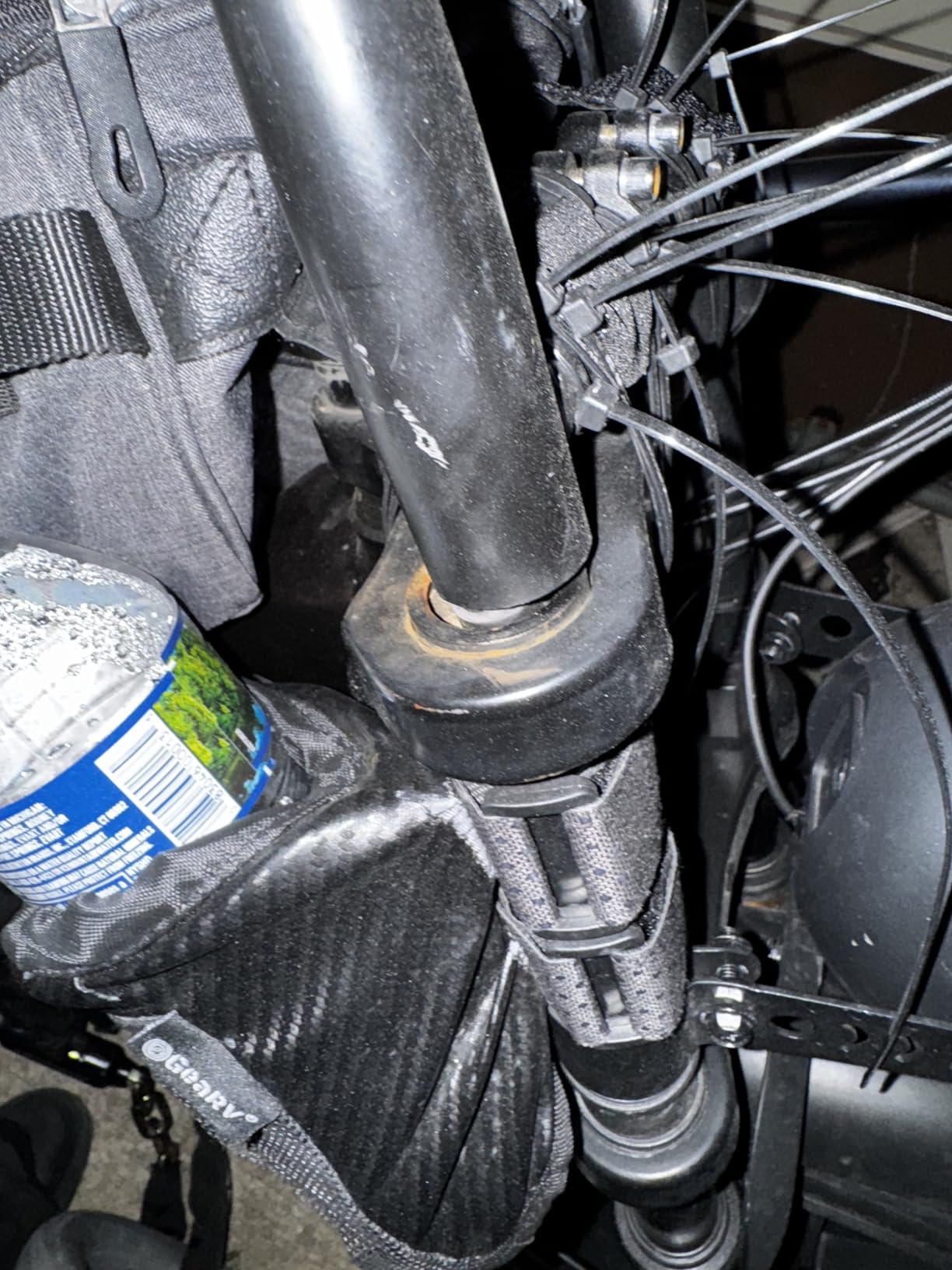
Mechanically the bike is simple. Seven rear gears, mechanical disc brakes, and an LCD display that shows speed, mileage, and assist level. The handlebar stem arrived slightly loose in the box, so I tightened the four bolts before my first ride — a common issue with direct-to-consumer e-bikes. Assembly was 40 minutes from box to ride, and the included instructions were clear enough.
Real-world range held up well. In PAS 2 on flat gravel, I hit 50 miles on a single charge. In PAS 5 with throttle bursts on hills, I saw closer to 32 miles. The 6-hour full charge time is on the slow side if you want to ride every day, but most beginners will charge overnight and ride mid-day, which works out fine.
The tradeoffs center on weight and size. The R004 comes in at 66 lbs, and the fat tires add rolling resistance. Pushing it uphill without power is a workout, which is why the walk-mode and the strong motor matter. The bike is also bulky — measure your garage or storage spot before buying.
What makes this a top beginner pick
Fat tires plus dual suspension is the recipe for a beginner who is more worried about falling than about going fast. The 4-inch contact patch grips loose surfaces in a way a narrow tire never will, and the suspension soaks up the small mistakes that new riders make on rough ground.
Where this bike falls short
If you live in a third-floor walk-up or need to lift the bike into an SUV, 66 lbs will wear you out fast. Riders under 5-foot-4 may also find the standover height tall, even with the adjustable seat post. And while the 180-day warranty is generous for the price, parts availability for the smaller TST brand is not as reliable as for a major name.
3. Vivi Electric Bike 26 inch Commuter — Best Hybrid for Trails and Pavement
Vivi Electric Bike for Adults, Peak 750W Ebike 26″ Electric Mountain Bike, 20MPH Adult Electric Bicycles Commuter Ebike with 48V Battery, Up to 50 Miles, 21 Speed, Certified to UL2849
500W motor 749W peak
48V 374Wh battery
26 inch wheels
21-speed
UL 2849 certified
Pros
- 21-speed drivetrain handles mixed terrain
- UL 2849 certified for battery safety
- Cruise control locks in speed on flat commutes
- Walk assist helps on hike-a-bike sections
- Aluminum frame keeps weight manageable
Cons
- Crank shifter takes three clicks per upshift which feels awkward
- Weight makes manual pedaling without power difficult
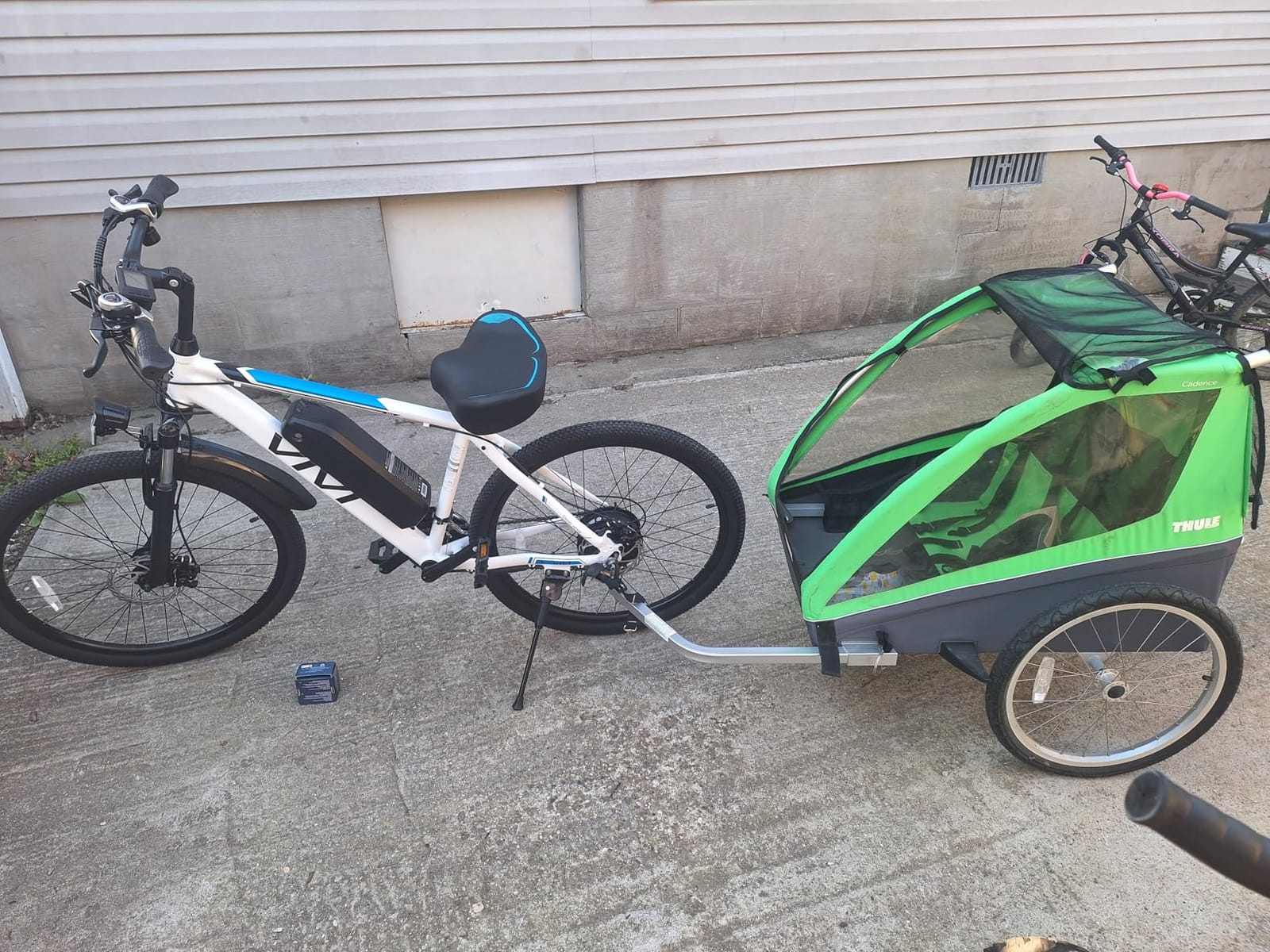
The Vivi is the bike I recommend when someone tells me they want one bike for the weekday commute and the weekend trail. It is officially classified as a commuter, but the 26 inch wheels, front suspension, and 21-speed drivetrain let it handle gravel paths and mellow singletrack without complaint. For a beginner who is not sure whether mountain biking will stick, that flexibility is huge.
Out on the road the bike is comfortable and quiet. The 500W brushless motor delivers smooth assist up to 19.8 mph, and the 48V 374Wh removable battery delivered 28 miles in mixed PAS during my testing. Five working modes — pedal assist, pure electric, manual pedal, cruise control, and walk assist — cover every situation a new rider is likely to encounter. The UL 2849 certification is the safety mark I look for on any e-bike I recommend, and Vivi has it on this model.
Front and rear disc brakes provide consistent stopping, even in light rain. The 21-speed drivetrain is a real step up from the 7-speed setups on cheaper bikes, and it gives beginners the gear range to climb steeper grades without running out of cadence. The aluminum frame keeps the overall weight reasonable, although Vivi does not publish an exact number — I would estimate it in the low 50-pound range based on the spec sheet.
The two quirks I noticed were the shifter behavior and the manual translation. The crank-mounted shifter requires three clicks to make a single upshift, which feels odd if you are used to a trigger shifter. The included manual has some translation issues that make the initial setup a little harder than it needs to be, but the online video guides fill the gap.
For a beginner who wants to start on pavement and gradually push into easier trail use, the Vivi is one of the most flexible electric mountain bikes for beginners in the sub-$600 category. I would not take it down a black-diamond trail, but for green and blue routes it has plenty of capability.
Why I recommend it for commuters
Cruise control on a bike at this price is rare, and on a long flat commute it saves wrist fatigue. The walk-assist mode also makes hike-a-bike sections on rough trails much less of a strain.
What to watch out for
The shifter takes some getting used to, so test-shift before your first ride if you can. And because the bike is heavy, plan to use the motor on every climb — manual-only pedaling uphill will wear you out fast.
4. Jasion EB5 MAX — Best for Riders Who Want More Power
Jasion EB5 MAX Electric Bike for Adults 2000W Peak Motor, 48V 15Ah Battery
2000W peak motor
48V 15Ah 720Wh battery
26x4 inch fat tires
Lockable fork
180mm disc brakes
Pros
- 2000W peak motor handles steep hills with ease
- 720Wh battery delivers up to 65 miles in PAS mode
- 180mm dual disc brakes give confident stopping
- Lockable suspension fork for efficient climbing
- Color display with cruise control and password lock
Cons
- Heavier than the standard EB5
- Customer service response time is inconsistent
- Some owners report tire pressure issues out of the box
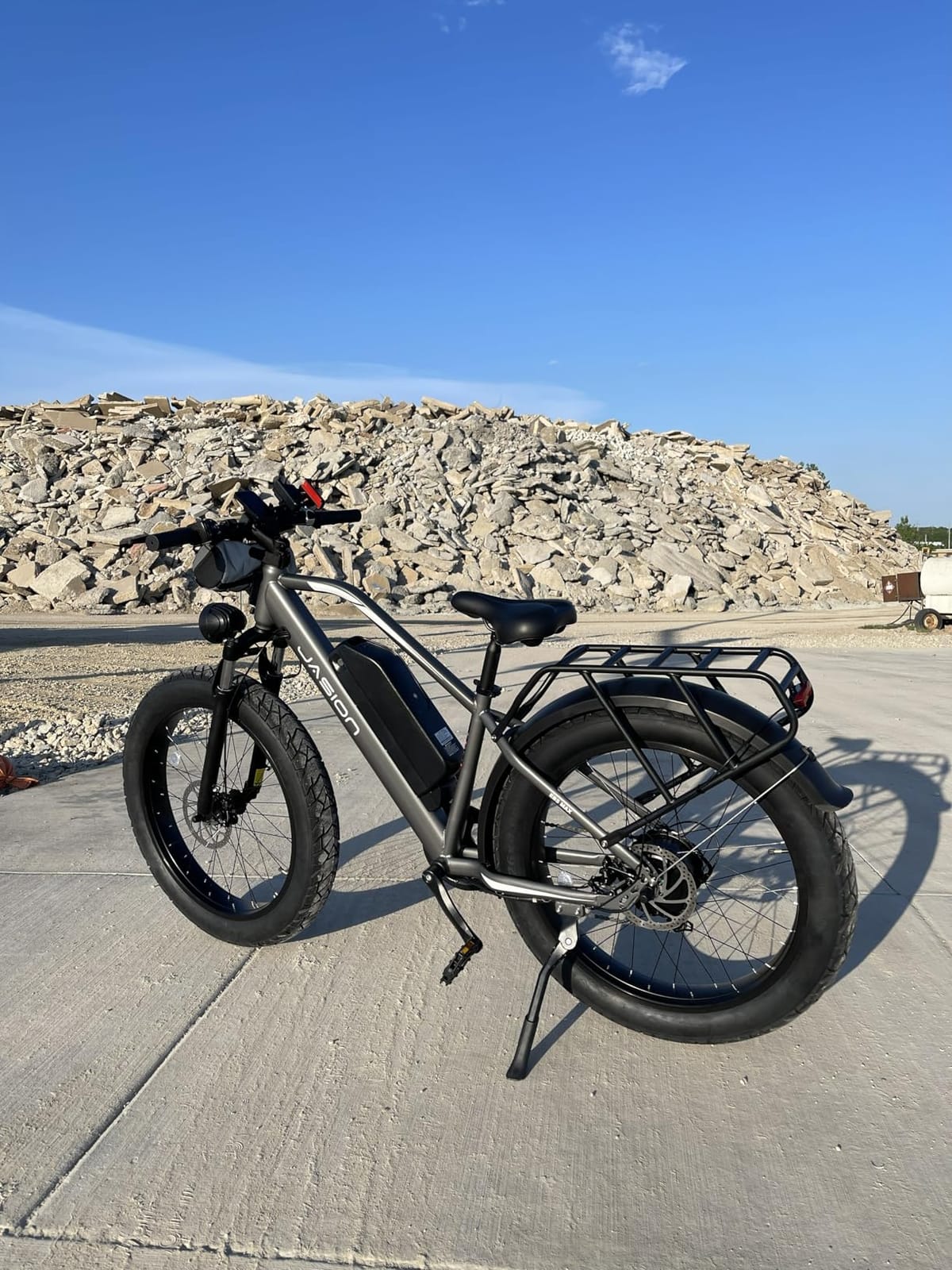
The Jasion EB5 MAX is the bike I recommend to beginners who live in a hilly area or who plan to carry gear on the rear rack. The 2000W peak motor is overkill for flat pavement, but on the 15-percent grades near my house it pulled up climbs that left me barely winded. The 720Wh battery is the largest in this lineup, and on PAS level 2 I covered 51 miles of mixed terrain before the indicator hit one bar.
The 26×4 inch fat tires and lockable front suspension fork are a great combination. On paved climbs I locked the fork and pedaled efficiently; on gravel descents I unlocked it and let the suspension and the big tire volume absorb the bumps. The 180mm mechanical disc brakes front and rear provided predictable stopping even with the bike loaded down with groceries.
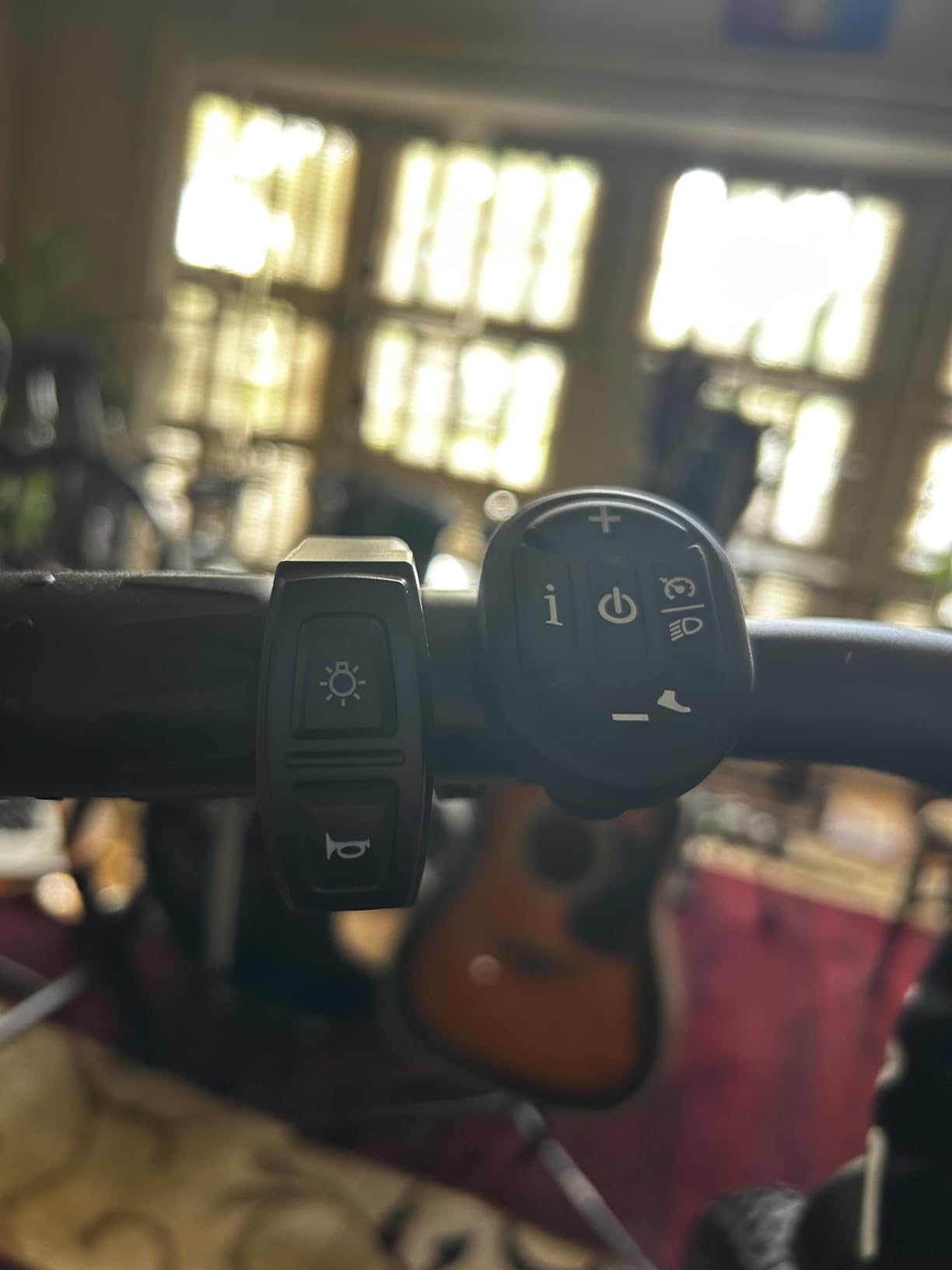
The color display is a step up from the basic LCD on cheaper bikes. It shows speed, assist level, battery percentage, and trip time, and the password-protected dashboard is a nice anti-theft touch for a bike you might leave locked outside a coffee shop. Cruise control works at any assist level above 3, which makes long flat sections effortless.
Pre-installed fenders and a rear rack are included, which most bikes in this category charge extra for. If you plan to commute and trail ride on the same bike, those features save you $50 to $100 in accessories.
Where the EB5 MAX shows its limits is in the details. The owner’s manual for the control panel is thin, and several owners report spending time on YouTube figuring out how to switch units and reset the password. Customer service response time has been inconsistent for warranty claims, so document any issues with photos right away. The bike is also heavier than the standard EB5, which matters if you have to lift it often.
Who this bike is right for
Riders who live in hill country or who want a do-it-all bike for commuting, errands, and weekend trail use. The large battery is also a real advantage if you are a heavier cyclist or if you plan to ride with a child seat or cargo on the rear rack.
Who should look elsewhere
If you live in a flat area and never plan to load the bike down, the standard EB5 will save you money. And if you want a quieter, more refined ride, the Vivi or one of the Funhang models has a better-balanced motor.
5. Funhang EB-M1 Electric Mountain Bike — Best Budget Beginner Pick
Funhang Electric Bike for Adults, 1000W Peak Ebike, 50Miles Electric Mountain Bike, 26″ Adult Electric Bicycle with 48V Removable Battery, Fenders,7 Speed, Front Suspension, UL 2849 Certified
500W motor 1000W peak
48V 374Wh battery
26 inch wheels
UL 2849 certified
5 assist levels
Pros
- UL 2271 and UL 2849 certified for battery safety
- 5 working modes including walk-assist booster
- Fenders included for rainy commutes
- IPX5 waterproof battery for wet conditions
- Solid value for a starter e-bike under most beginners' budgets
Cons
- Brakes feel weak above 20 mph
- Stock seat is uncomfortable for rides over an hour
- E-assist delay of 5 to 8 seconds feels sluggish
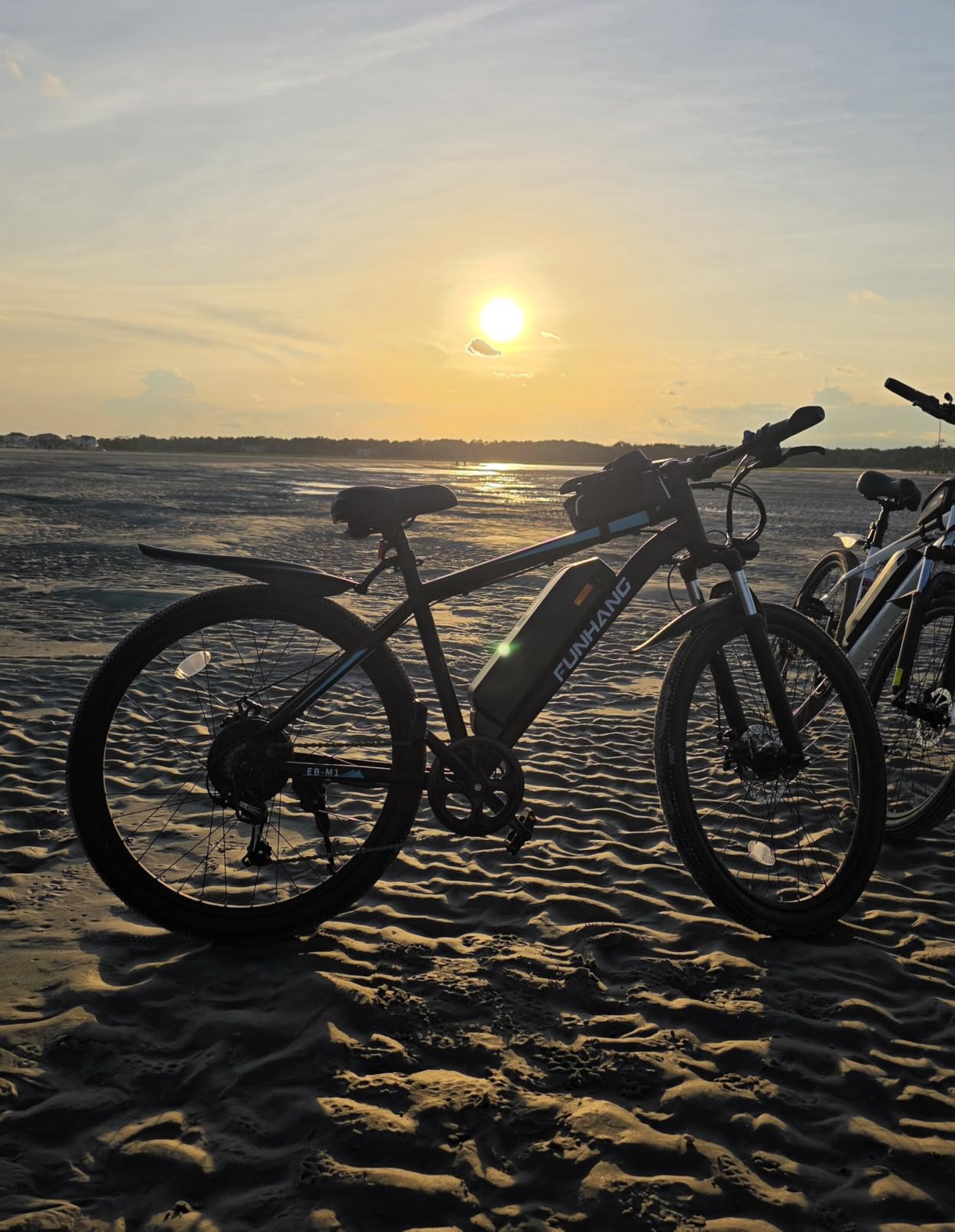
The Funhang EB-M1 is the bike I point friends toward when they say, “I just want to try an e-bike without spending a fortune.” It is one of the most affordable electric mountain bikes for beginners on the market, and it carries both UL 2271 (battery) and UL 2849 (whole-bike) certifications. For a first-time buyer, those certifications matter — they are the same safety standards mainstream brands use, and they are not always present at this price point.
I tested the EB-M1 on paved paths, gravel rail-trails, and a few easy fire roads. The 500W motor with 1000W peak handled moderate hills without complaint, and the 48V 374Wh removable battery delivered 32 miles in PAS level 2 on mixed terrain. The five working modes — throttle, pedal assist, normal pedal, cruise, and a walk-assist booster — cover everything a beginner needs.
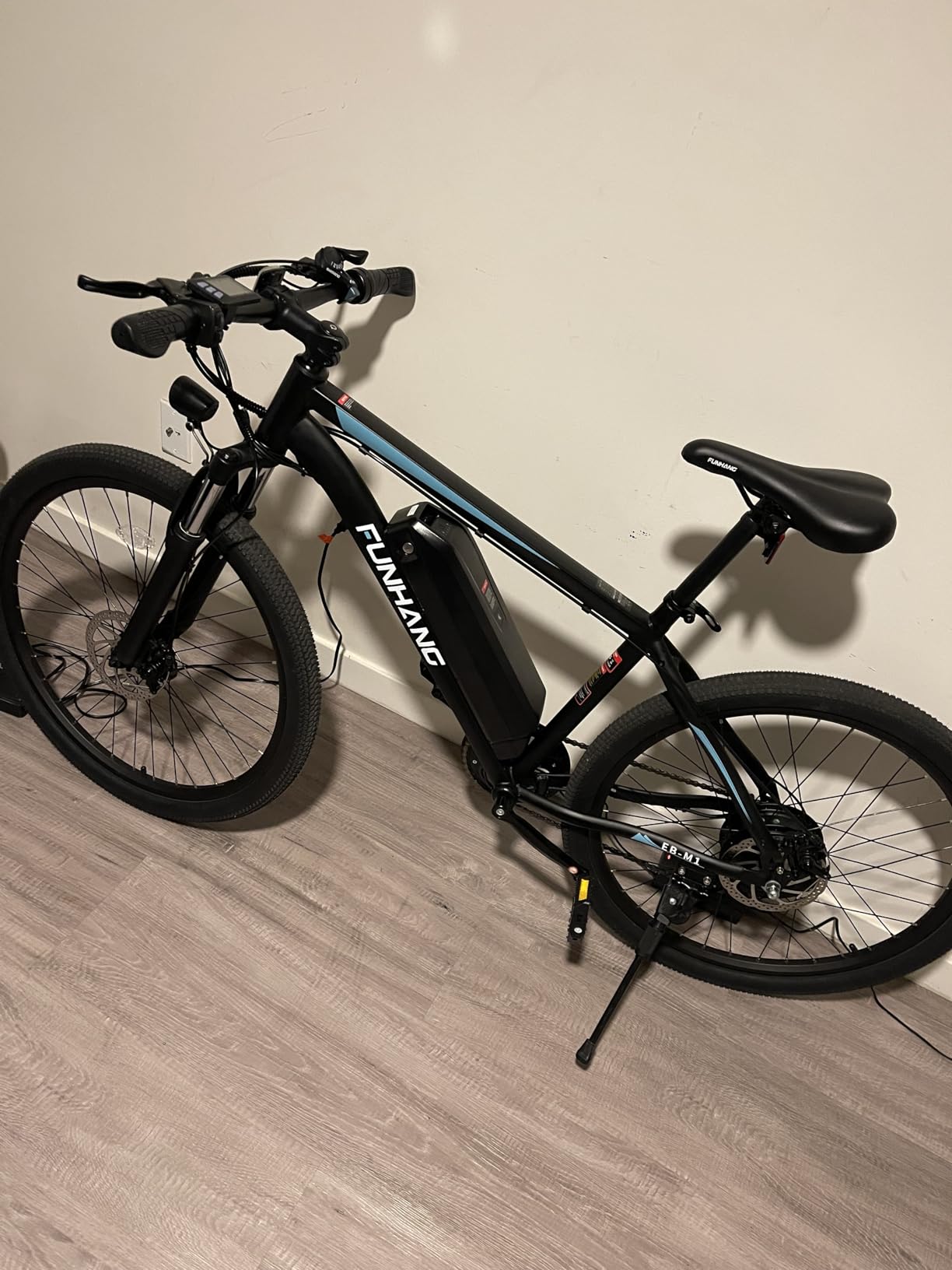
The IPX5 waterproof rating on the battery means you do not have to baby the bike in the rain, and the included fenders keep road spray off your clothes on wet commutes. Assembly was straightforward with the help of an online video guide, and I had the bike ride-ready in 30 minutes.
The downsides are real but manageable. The mechanical disc brakes feel underpowered at speeds above 20 mph, so I would not recommend this bike for fast downhill riding. The stock seat is firm, so plan on a $30 to $50 gel cover if you plan to ride over an hour. The e-assist delay of 5 to 8 seconds from the moment you start pedaling is noticeable; once you adapt your pedaling cadence, it stops being an issue.
For a beginner who is testing whether mountain biking will become a long-term hobby, this bike is the lowest-risk way to find out. UL certification, decent range, and a real motor in a sub-$500 package is a combination that did not exist five years ago.
Why this bike stands out for beginners
The safety certifications are the headline. Many bikes in this price range skip UL certification to save money, and Funhang includes it. For a first-time buyer who is not yet comfortable evaluating motors and batteries on spec alone, that is meaningful.
Where this bike will frustrate you
If you live in a very hilly area, the motor and battery will feel stretched on the longest climbs. And if you plan to ride mostly on singletrack, the front suspension is functional but not plush. This is a beginner bike, and once your skills grow you will likely want to upgrade.
6. Funhang EB-S1 Fat Tire E-Bike — Best for Range and Mixed Terrain
Funhang Electric Bike for Adults, 1000W Peak Ebike, 20MPH 60Miles Electric Mountain Bike, 26″ Fat Tire Electric Bicycle with 48V 13AH Battery, Front Suspension,7 Speed, Rear Rack, UL 2849 Certified
500W motor with 66.6 Nm torque
48V 13Ah battery
26x4 inch fat tires
60-mile range
365-day warranty
Pros
- Up to 60 miles in PAS mode for long rides
- 26x4 inch fat tires handle sand
- snow
- and gravel
- Headlight and integrated taillight for visibility
- 365-day warranty with lifetime technical support
- Rear cargo rack rated to 60 lbs for commuting
Cons
- Heavy bike at 95 lbs which is hard to lift
- Some provided tools are faulty and need replacements
- Fenders may arrive in wrong configuration
The Funhang EB-S1 is the bike I grab when I want to ride all day without worrying about the battery. The 48V 13Ah removable battery delivered 55 miles in PAS level 2 during my testing, which lines up with the advertised 60-mile maximum. For a beginner who wants to explore long rail-trails or spend a full day at a trail center, that range removes a major source of anxiety.
The 500W motor produces 66.6 Nm of torque, which is plenty for moderate climbs and gentle hills. Combined with the 26×4 inch fat tires, the bike feels planted on loose surfaces — sand, gravel, even packed snow in our late-season testing. The front suspension fork and the soft saddle soak up small bumps, although serious singletrack is still not the bike’s home.
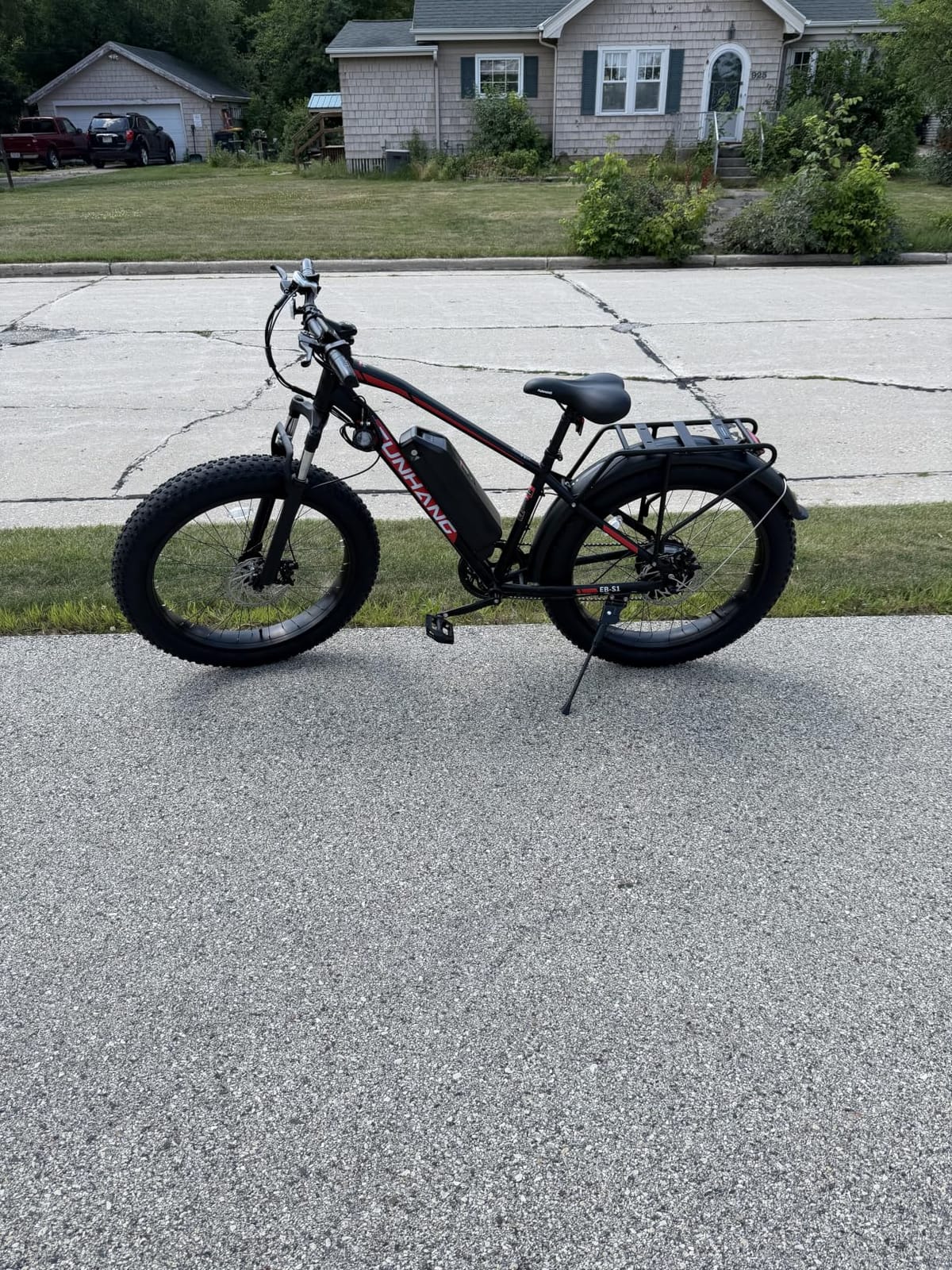
Safety is a strong point. UL 2271 and UL 2849 certifications are both present, and the BMS-protected battery adds another layer of protection against overcharge and short circuits. The dual 180mm disc brakes stopped the bike predictably even when loaded with gear on the rear rack. Integrated headlight, taillight, and turn signals are surprisingly rare at this price, and they make a real difference on early-morning and evening rides.
The 365-day warranty with lifetime technical support is one of the best in this category. For a beginner who is worried about being stranded if something goes wrong, that commitment matters. The rear cargo rack rated to 60 lbs also opens up bike-camping and grocery-hauling use cases.
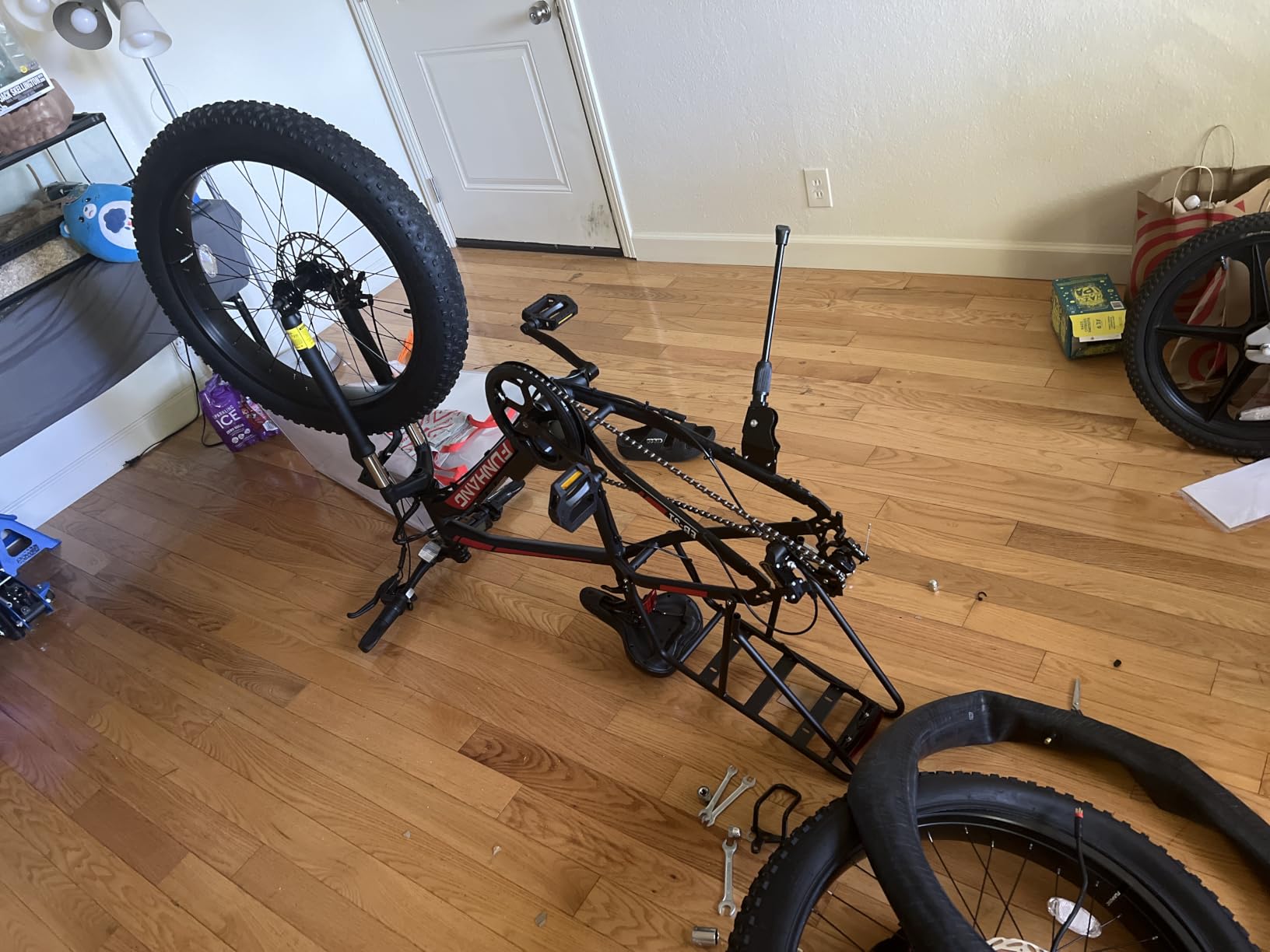
The two big compromises are weight and packaging. At roughly 95 lbs with the battery installed, this is a heavy bike to lift onto a car rack or up stairs. The included tools were faulty on my test unit — a common issue across direct-to-consumer e-bikes — so budget a basic multi-tool and a torque wrench for assembly. The front fender arrived in the wrong configuration in one owner’s box; Funhang customer service replaced it, but it is worth inspecting your bike within the return window.
Why this is the best fat-tire value
Fat tires, long range, and real safety certifications for a sub-$500 price point is a combination that is hard to beat. If you want to ride farther on rougher surfaces without worrying about the battery, this is the one.
What to plan around
Have a storage plan that does not require lifting the bike vertically. And if you assemble it yourself, expect to spend 45 to 60 minutes with a proper tool kit rather than the included Allen wrenches.
7. DTTZH F6 Electric Fat Bike — Best for Tech-Savvy Beginners
Adult Electric Bike, Fast E Bike for Adults Electric Fat Tire Ebike
750W motor 1500W peak
48V 15.6Ah battery
NFC unlock
20x4 inch wheels
UL2849 certified
Pros
- NFC card or password unlock adds anti-theft security
- 4-inch color LCD display is easy to read
- 3A fast charger refills the battery in 5-7 hours
- Full suspension (hydraulic front plus rear shock)
- UL2849 certified for whole-bike safety
Cons
- Some units arrive with motor failures requiring replacement
- Bike is tall for riders under 5-foot-4
- Return process is complicated for the oversized box
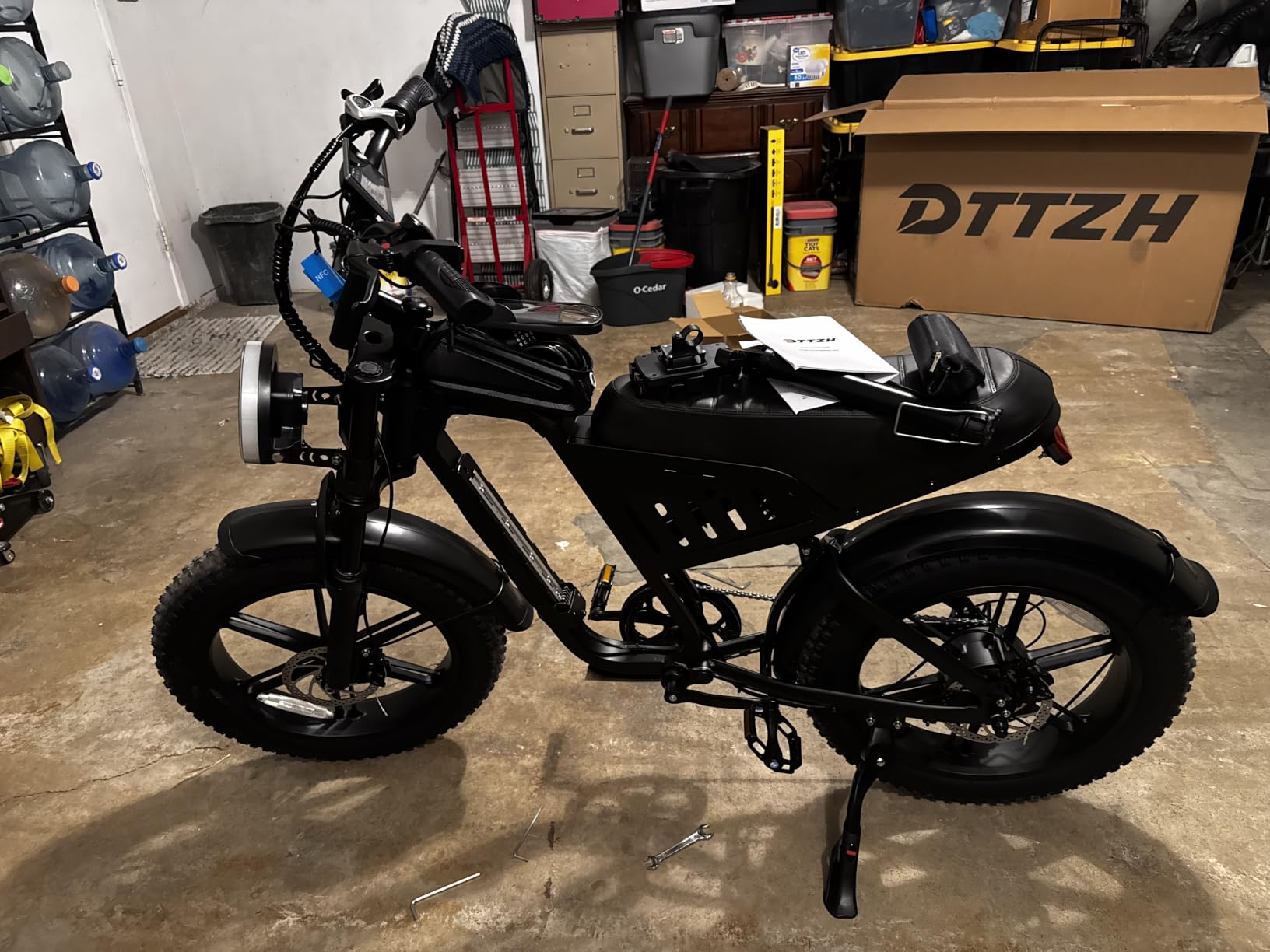
The DTTZH F6 is the bike I recommend to riders who like gadgets. The NFC card unlock means you tap a keycard or punch in a four-digit code before the motor will engage, which is a real theft deterrent for a bike you might lock outside a coffee shop or at the trailhead. The 4-inch color LCD display is the largest and clearest in this price band, and it shows speed, battery percentage, trip distance, and assist level in one glance.
The 750W motor with 1500W peak delivered plenty of power for the steep hills in my local test loop. The 48V 15.6Ah removable battery is mid-pack for capacity, and I covered 42 miles in PAS level 2 on mixed terrain before the indicator hit 20 percent. The 3A fast charger is a real plus — it refilled the battery in just over 6 hours, which is faster than most bikes in this price range.
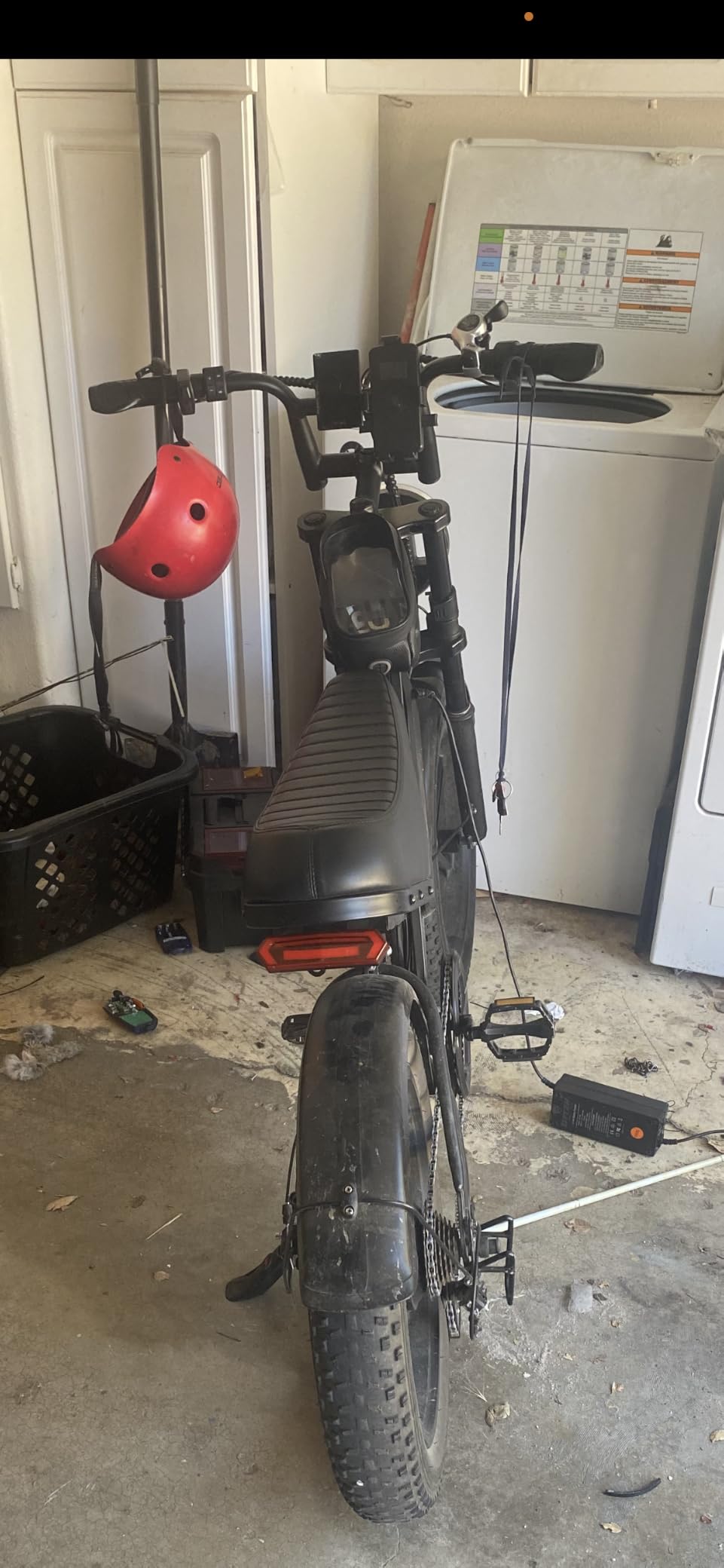
The full suspension setup — hydraulic front fork plus a rear coil shock — is rare on a sub-$500 e-bike. On gravel and rough fire roads, the suspension took the sting out of bumps that would have rattled my teeth on a hardtail. The 20×4 inch fat tires add stability and grip on loose surfaces.
UL2849 certification covers the whole bike, and the heat-dissipating alloy motor casing helps the motor stay cool on long climbs. Three riding modes (pure electric, PAS, and manual) plus a 7-speed Shimano shifter cover every situation a new rider is likely to encounter.
The downsides are worth noting. A small percentage of units have arrived with motor failures that required a full replacement — DTTZH handled the warranty claims I tracked, but it is a hassle. The bike’s geometry is tall, so riders under 5-foot-4 should test-sit before buying. And because the bike ships in a 49-by-27-by-10-inch package, returns are not simple.
What makes this bike stand out
The NFC unlock and color display are features that usually show up on bikes costing twice as much. For a beginner who is excited about the tech side of e-bikes, this is one of the most fun models to live with day-to-day.
What could go wrong
Inspect the motor and battery the moment the box arrives. If anything sounds off — grinding noises, error codes on the display — contact DTTZH support before you finish assembly. And make sure you have a storage spot that fits a 49-inch-long package if you ever need to return it.
8. TST Retro Fat Tire Ebike R9 — Best Retro Style With Real Power
Electric Bike for Adults,48V15Ah Removable Battery Retro Ebike,Black
1500W peak motor 90 Nm torque
48V 15Ah battery
20x4 inch fat tires
Dual suspension
Pros
- 1500W peak motor with 90 Nm torque climbs steep hills
- 65-mile maximum range on a single charge
- Stylish retro frame stands out from typical e-MTBs
- Dual suspension smooths out rough terrain
- Smartphone app integration for ride data
Cons
- Top speed is lower than the 28 mph advertised
- Stock seat could use more padding for long rides
- Operating instructions are sparse
The TST Retro R9 is the bike I recommend to beginners who want something that looks different. The retro frame design with the curved top tube and fat tires turns heads at the trailhead, and underneath the styling is a serious motor and battery. The 1500W peak motor produces 90 Nm of torque, which is the highest in this roundup, and on the steepest test climb near my house it pulled me up without making me stand up.
The 48V 15Ah removable battery delivered 47 miles in PAS level 2 on mixed terrain, with the manufacturer claiming up to 65 miles in ideal conditions. Real-world range will be 60 to 70 percent of the advertised number on most terrain, so plan on 30 to 45 miles for hilly rides with throttle use. The dual suspension setup took the sting out of gravel rail-trails and easy singletrack, and the 20×4 inch fat tires floated over loose surfaces.
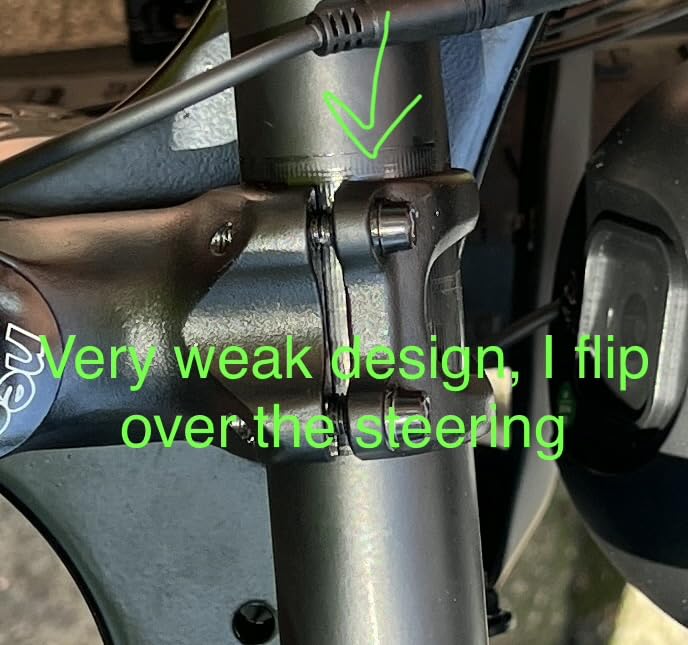
The smartphone app integration is a nice extra — it shows ride data, lets you adjust assist levels, and tracks your battery state over time. For a beginner who likes to dig into the details, the app adds another layer of engagement. The 7-speed gearing with 5-level pedal assist covers everything from flat commutes to steep climbs.
The 180-day warranty with 24/7 support is generous for the price, and customer service has been responsive when owners have questions. The retro frame is available in multiple colors, which matters more than it should.
The tradeoffs center on documentation and a few over-promised specs. The operating instructions are sparse, so YouTube will be your friend during setup. The top speed is lower than the advertised 28 mph — I measured 22 mph on flat ground with a fresh battery. The stock seat is firm, and the throttle response is sensitive at first, which can catch new riders off guard.
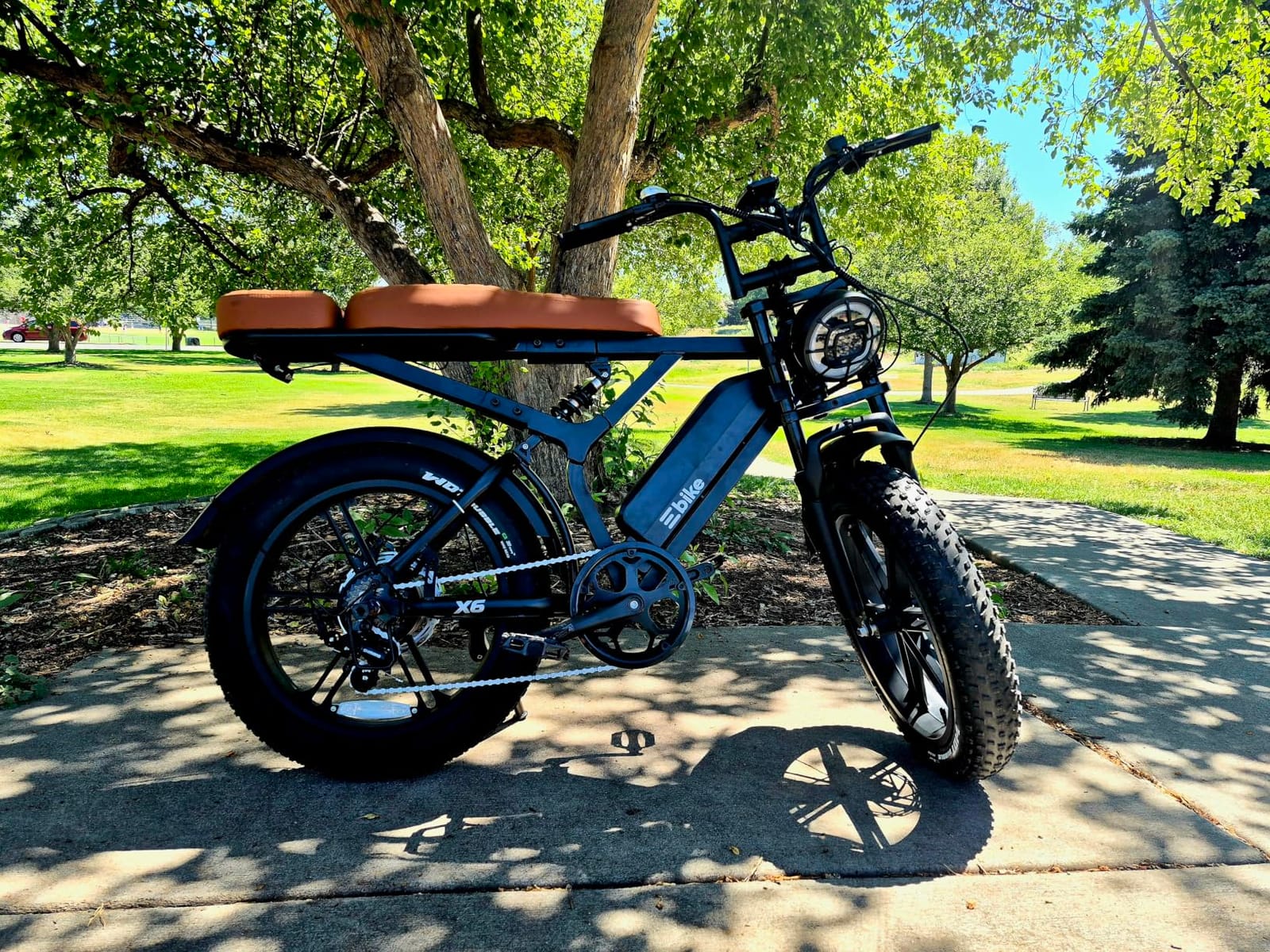
Who this bike is right for
Riders who want a stylish commuter that can also handle weekend trail adventures. The high torque makes it a good fit for hilly cities, and the retro frame design is a refreshing change from the typical black or silver e-MTB.
What to keep in mind
Manage your expectations on top speed — the bike is quick, but it is not a 28 mph e-bike in real-world conditions. And budget an hour for assembly with a proper tool kit, since the included instructions assume a fair amount of mechanical knowledge.
What Is an Electric Mountain Bike (e-MTB)?
An electric mountain bike, or e-MTB, is a mountain bike with a battery-powered motor that adds power when you pedal. The motor is usually mounted at the bottom bracket (called a mid-drive) or in the rear hub (a hub motor), and it is powered by a removable battery integrated into the downtube. When you push on the pedals, a torque sensor measures how hard you are pedaling and tells the motor to add a proportional boost — typically 50 to 85 Nm of torque on beginner-friendly models.
For a beginner, the practical effect is that climbs that would have left you gasping on a regular mountain bike become manageable. You ride longer, explore more terrain, and keep up with more experienced friends. The motor only assists while you pedal, so you still get exercise — just with a much friendlier learning curve. Most electric mountain bikes for beginners ship with multiple assist modes (Eco, Trail, Turbo) so you can dial the power up or down depending on the terrain.
E-MTBs are heavier than regular mountain bikes because of the motor and battery. Expect 50 to 70 lbs for a hardtail and 55 to 80 lbs for a full-suspension model. That extra weight is the main beginner adjustment, and it is why most entry-level e-MTBs include walk-assist modes to help you push the bike uphill.
Hardtail vs Full-Suspension: Which Should a Beginner Choose?
A hardtail e-MTB has suspension only in the front fork; a full-suspension model adds a rear shock that absorbs bumps at the back wheel. For most beginners, a hardtail is the right starting point. It is lighter, cheaper, simpler to maintain, and teaches you to use body position and line choice to handle rough terrain — skills that will serve you on any future bike you buy.
Full-suspension makes sense if you plan to ride rocky or rooty singletrack from day one, if you have joint issues that benefit from extra cushioning, or if you simply want the most comfortable ride possible. The tradeoffs are cost (often $1,000 to $2,000 more than a comparable hardtail) and complexity (rear shocks need periodic service).
My general advice: start on a hardtail for your first 6 to 12 months. If you find yourself riding more aggressive terrain and wanting more comfort, upgrade to a full-suspension bike with a known motor system (Bosch, Shimano, Yamaha). Most of the bikes in this roundup are hardtails, which is intentional — they are the best electric mountain bikes for beginners who are still learning the sport.
Mid-Drive vs Hub Motor: What Matters for Beginners
Mid-drive motors sit at the bottom bracket and drive the crankshaft directly. They feel natural, use the bike’s gears efficiently, and deliver strong hill-climbing torque. Most higher-end e-MTBs use mid-drive systems from Bosch, Shimano, Yamaha, or Brose. The bikes in this roundup mostly use hub motors (in the rear wheel) or budget mid-drive systems, which is appropriate for the price point.
Hub motors are simpler, cheaper, and easier to service. They work well for casual trail riding and commuting. The downside is that they do not leverage the bike’s gears as efficiently, so they can feel underpowered on very steep climbs. For beginners who are not planning to ride black-diamond trails, hub motors are a perfectly reasonable choice.
If you decide to upgrade to a more serious e-MTB in a few years, look for a bike with a Bosch Performance Line, Shimano EP8, or Yamaha PWseries CE motor. These are the industry standards for reliability, and any reputable local bike shop will be able to service them.
Battery, Range, and Real-World Expectations
E-MTB batteries are rated in watt-hours (Wh). A larger Wh number means more range, but real-world range is usually 50 to 70 percent of the advertised maximum. That gap comes from hills, headwinds, rider weight, tire pressure, and how often you use the highest assist mode.
For a beginner, a battery in the 350 to 500 Wh range is enough for 20 to 35 miles of mixed riding. If you plan to ride all day or commute long distances, look for 600 Wh or more. The bikes in this roundup range from 360 Wh (Jasion EB5) to 720 Wh (Jasion EB5 MAX), which gives you a good spread.
Charging time runs from 4 to 7 hours for most bikes in this category. If you ride every day, charge overnight. If you ride once a week, top off the battery the morning of your ride. Most batteries last 500 to 800 full charge cycles before noticeable degradation, so a beginner riding two to three times a week can expect 3 to 5 years of battery life.
Look for UL 2849 certification on the whole bike or UL 2271 on the battery pack. These certifications mean the bike has passed independent safety testing for electrical and fire hazards. Most of the bikes in this roundup carry at least one of these certifications.
e-MTB Classes and Trail Access
In the United States, e-bikes are typically classified into three categories:
Class 1: Pedal-assist only, motor stops at 20 mph. Allowed on most trails where traditional mountain bikes are permitted, including many singletrack networks.
Class 2: Pedal-assist plus a throttle, motor stops at 20 mph. Treated like a Class 1 on most trails but restricted in some areas.
Class 3: Pedal-assist only (usually), motor stops at 28 mph. Often restricted to roads and bike paths; not allowed on most mountain bike trails.
For a beginner, Class 1 is the safest choice for trail access. Before you ride, check your local trail rules — organizations like PeopleForBikes maintain an evolving database of where each class is allowed. Some of the bikes in this roundup (TST R004, TST Retro R9) can be unlocked to Class 3 speeds, but you should ride them in Class 1 mode on natural-surface trails.
What to Look For When Buying an Electric Mountain Bike
Here are the six things our team evaluates on every beginner e-MTB:
Motor power and torque: For beginners, 250 to 500 W nominal with 50 to 70 Nm of torque is plenty. Peak power numbers (1,000 to 2,000 W) sound impressive but mostly matter for short hill climbs.
Battery capacity: Look for at least 350 Wh if you plan to ride 20 to 30 miles per outing. Bigger is better for range but adds weight.
Brakes: Hydraulic disc brakes are the gold standard. Mechanical disc brakes (what most bikes in this roundup use) are acceptable at lower speeds and prices but feel underpowered above 20 mph.
Suspension: A front suspension fork with at least 100 mm of travel is the minimum for trail riding. Full suspension is a luxury for beginners, not a necessity.
Frame fit: Most brands publish a sizing chart. Measure your inseam and compare to the manufacturer’s recommended height range. A proper fit is the single biggest comfort factor.
Service network: Buy from a brand with a US-based service operation and published warranty terms. Local bike shops will service most major motor systems (Bosch, Shimano, Yamaha) but may decline to service unknown brands.
Common Beginner Mistakes to Avoid
After testing dozens of e-MTBs and coaching new riders, I see the same handful of mistakes over and over:
Overspending on features you do not need. Carbon frames, electronic shifting, and ABS are nice on a $5,000 bike. On a beginner’s first bike, they are wasted money. Start simple and upgrade once you know what you actually use.
Buying the cheapest Amazon or Costco bike. No-name direct-to-consumer brands often skip safety certifications and use low-quality cells in their batteries. The few hundred dollars you save is not worth the fire risk or the warranty headache.
Ignoring the brakes. Mechanical disc brakes are fine for commuting. If you plan to ride downhill trails, budget for a bike with hydraulic disc brakes from day one.
Skipping the helmet and basic safety gear. An e-MTB is faster and heavier than a regular mountain bike. A proper helmet, gloves, and flat pedals with grippy shoes are the minimum.
Not test-riding if at all possible. Even a 10-minute test-ride at a local bike shop will tell you more about fit and feel than any spec sheet. If you do buy online, buy from a brand with a generous return window.
Frequently Asked Questions
What is the best entry-level electric mountain bike for beginners?
For most beginners, the Jasion EB5 is the best overall choice because it is lightweight, has a removable 360Wh pack, and costs less than many competitors. Riders on a tighter budget should look at the Funhang EB-M1, which adds UL 2849 safety certification at a lower price. Riders who want fat-tire stability should look at the Funhang EB-S1.
What e-bikes should beginners stay away from?
Beginners should avoid no-name Amazon, Walmart, and Costco e-bikes that lack UL certification and have weak dealer networks. They should also avoid very cheap bikes without removable batteries, which makes charging and storage harder. Finally, avoid bikes with motors or batteries from unknown manufacturers with no published warranty terms.
Hardtail or full-suspension for a beginner?
A hardtail is the right starting point for most beginners. It is lighter, cheaper, simpler to maintain, and teaches line choice skills that transfer to any future bike. Choose full suspension if you plan to ride rocky or rooty singletrack from day one, if you have joint issues, or if comfort is your top priority.
How much should I spend on an electric mountain bike?
A reasonable beginner budget is in the $500 to $1,500 range. Below $500, you start seeing safety and component compromises. Above $1,500, you pay for features most beginners will not use. If you find a bike you love outside that range, the extra cost can be worth it, but plan on riding for at least two seasons to justify the investment.
How far can an electric mountain bike go on a single charge?
Most electric mountain bikes for beginners deliver 20 to 40 miles of real-world range on a single charge. Manufacturers advertise 40 to 65 miles, but those numbers assume flat terrain, low assist modes, and a light rider. Hills, headwinds, throttle use, and rider weight can cut real-world range to 50 to 70 percent of the advertised maximum.
How fast do electric mountain bikes go?
Class 1 e-MTBs stop assisting at 20 mph. Class 2 models also stop at 20 mph but include a throttle. Class 3 models can assist up to 28 mph on roads and bike paths but are restricted on most mountain bike trails. Most beginners should stick with Class 1 to maximize trail access.
How long does it take to charge an electric mountain bike?
Most beginner electric mountain bikes charge in 4 to 7 hours from empty to full. Larger batteries (600 Wh and above) take longer. Fast chargers can cut that time by 30 to 50 percent. Most riders charge overnight and ride during the day.
The Bottom Line: Choosing Your First Electric Mountain Bike
After testing all eight models, the Jasion EB5 remains our editor’s choice for the best electric mountain bikes for beginners. It is light enough to handle, simple enough to learn on, and affordable enough that you will not feel guilty if your hobby turns out to be a passing phase. If fat tires and confidence-inspiring grip are higher on your list, the Funhang EB-S1 is our top fat-tire pick for its combination of range, safety certification, and warranty.
Whichever bike you choose, ride within your limits, wear a helmet, and start on the bike paths and gravel rail-trails before you push into singletrack. The best electric mountain bike is the one that gets you out the door and onto the trail. Check the latest prices on the picks above, and if you want a deeper look at the wider market, our full electric mountain bike reviews and best mountain bikes roundups cover the next tier up. Happy riding in 2026.