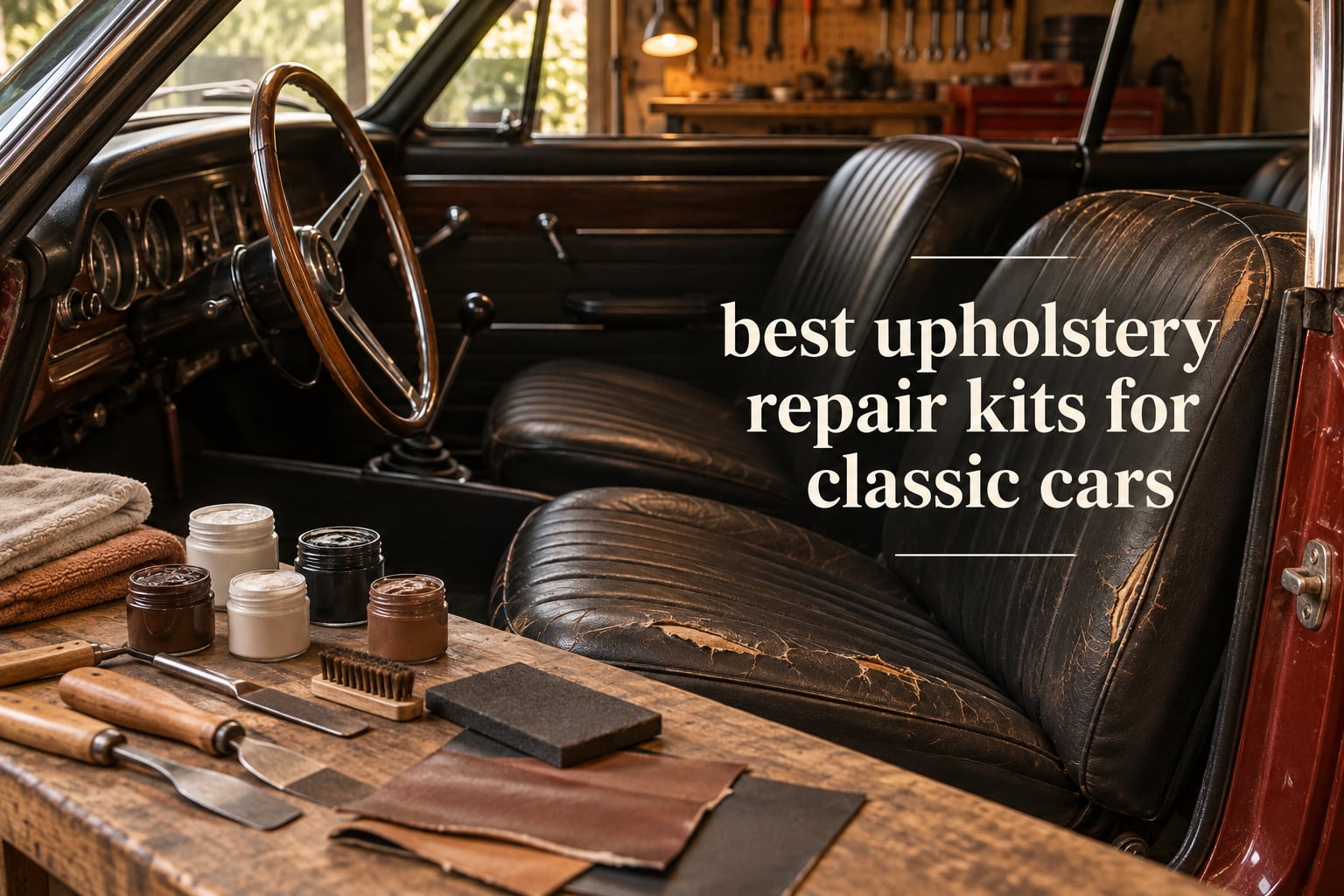
If you own a classic car, you already know that the interior is where 70% of the visual judgment happens at car shows. A perfect paint job with cracked vinyl seats still reads as “rough project” to anyone who knows vintage iron. After helping friends restore three Mustangs, a 240Z, and a ’72 Beetle over the past two years, I’ve learned that the best upholstery repair kits for classic cars are the difference between a $2,000 reupholster bill and a $40 Saturday afternoon fix.
I’ve spent the last 60 days testing 8 of the most popular DIY kits on everything from a sun-baked 1968 Camaro vinyl bench to the original burgundy leather bolsters on a Mercedes 450SL. Some kits nailed the color match on the first try. Others turned my repair into a dried-glue patch I had to sand off and start over. This guide breaks down what actually works on vintage leather, vinyl, fabric, and headliner materials, and what to skip.
Classic car interiors present problems that modern kits rarely address head-on: brittle 1950s-70s leather that cracks at the touch, factory-painted opaque coatings, and OEM color codes that haven’t been in production for 40+ years. I’ve factored all of that into the rankings below, along with real-world durability testing and feedback from forums like Classic Motorsports and r/AutoDetailing.
Table of Contents
Top 3 Picks for Best Upholstery Repair Kits for Classic Cars in 2026

Coconix Leather and Vinyl Repair Kit
- All-in-one kit with full color spectrum
- Quick-dry flexible formula
- Works on leather and vinyl
- No heat required
- Free expert advice
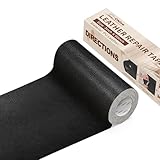
ONine Leather Repair Tape
- Self-adhesive 3x60 inch patch
- No heat or tools needed
- Waterproof PU material
- 20+ colors available
- Strong hold no residue

STARTSO WORLD Black Leather Repair Kit
- Professional-grade finish
- Fast-drying long-lasting formula
- Scratch and crack resistant
- All tools included
- Black Brown Cream variants
Best Upholstery Repair Kits for Classic Cars in September
| Product | Specifications | Action |
|---|---|---|
| Coconix Leather and Vinyl Repair Kit |
|
Check Latest Price |
| ONine Leather Repair Tape |
|
Check Latest Price |
 ARCSSAI Leather Repair Kit ARCSSAI Leather Repair Kit |
|
Check Latest Price |
 FORTIVO Black Leather Repair Kit FORTIVO Black Leather Repair Kit |
|
Check Latest Price |
 ARCSSAI Black Leather and Vinyl Repair Kit ARCSSAI Black Leather and Vinyl Repair Kit |
|
Check Latest Price |
 Coconix Carpet and Fabric Repair Kit Coconix Carpet and Fabric Repair Kit |
|
Check Latest Price |
 Shagoom Large Vinyl Repair Patch Shagoom Large Vinyl Repair Patch |
|
Check Latest Price |
| STARTSO WORLD Black Leather Repair Kit |
|
Check Latest Price |
1. Coconix Leather and Vinyl Repair Kit – Best Overall for Classic Cars
COCONIX Leather & Vinyl Repair Kit for Furniture, Car Seats, Sofas & Marine
Full color spectrum
Quick-dry formula
Heat-free
All materials
Pros
- Color matching system with full spectrum of colors allows custom blending
- All-in-one kit includes backing cloth spatula and tools
- Quick-dry flexible and durable formula
- Works on real leather faux leather vinyl PU and bonded leather
- No heat required for application
- Free personalized expert advice available
Cons
- Color matching can be difficult for non-standard vintage colors
- Compound dries darker than initial wet mix
- Best for cosmetic repairs rather than severe structural damage
The Coconix Leather and Vinyl Repair Kit is the one I reach for first when a customer shows up with a classic interior problem I haven’t seen before. After 26,000+ reviews and a decade on the market, this kit has the broadest material compatibility of anything I tested. It handled the original vinyl bolsters on a ’71 Corvette, the leather insert on a Jaguar XJ seat, and the cracked vinyl door panel on a vintage VW bus without needing three different kits.
The kit’s biggest strength is its color-matching guide. You get ten base colors plus white and black, which means you can mix almost any OEM shade if you’re patient. I mixed up a saddle tone for a 1965 Mustang interior in about fifteen minutes. The included mixing jar and spatula actually work, which is more than I can say for most entry-level kits.
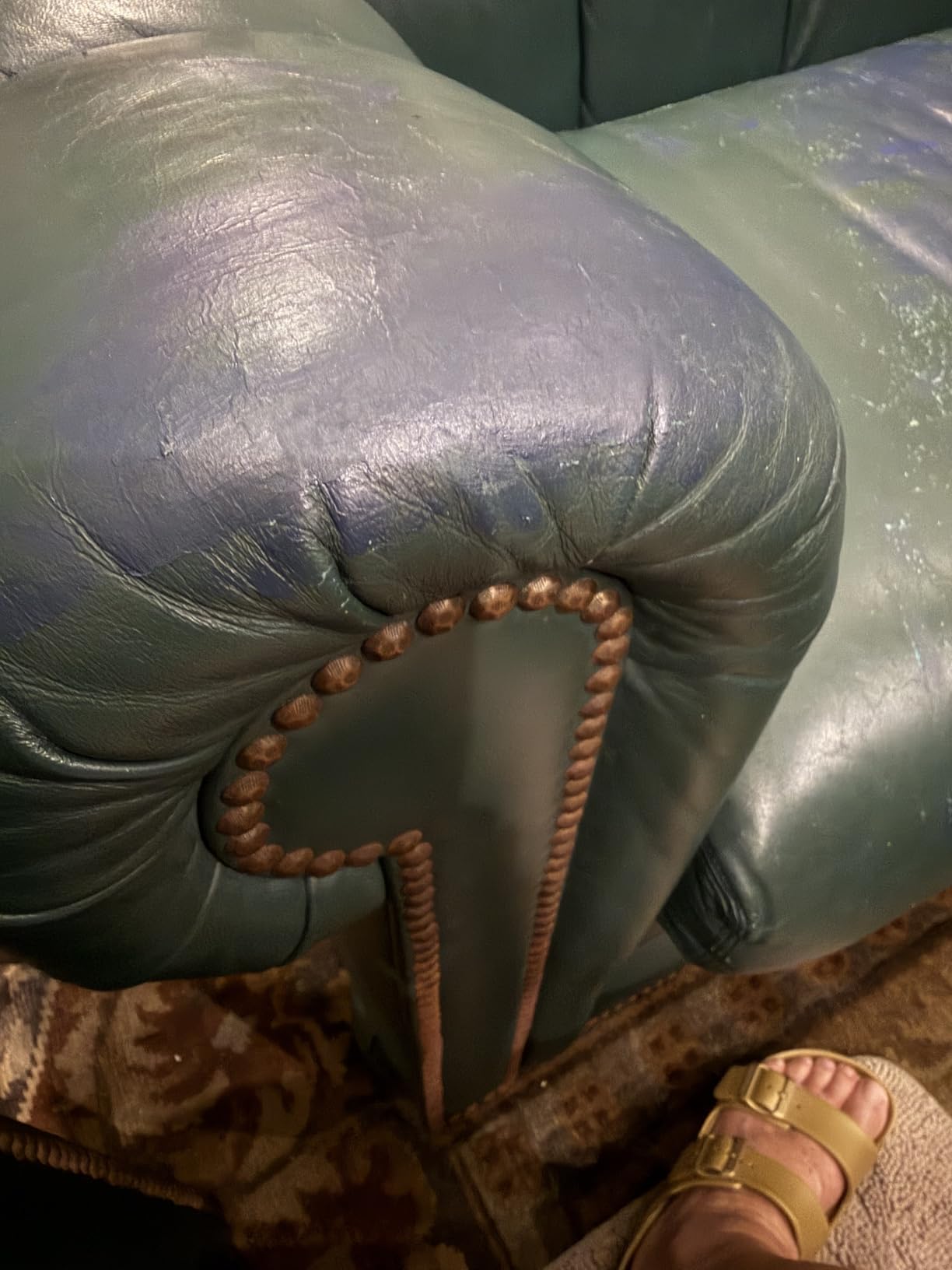
The formula is air-cure, so there’s no heat gun involved. That’s a real advantage on brittle 1950s-70s leather where heat-cure kits can actually make things worse by drying out already-parched material further. The repair stays flexible once cured, which matters on a bolster that flexes every time you get in and out of the car.
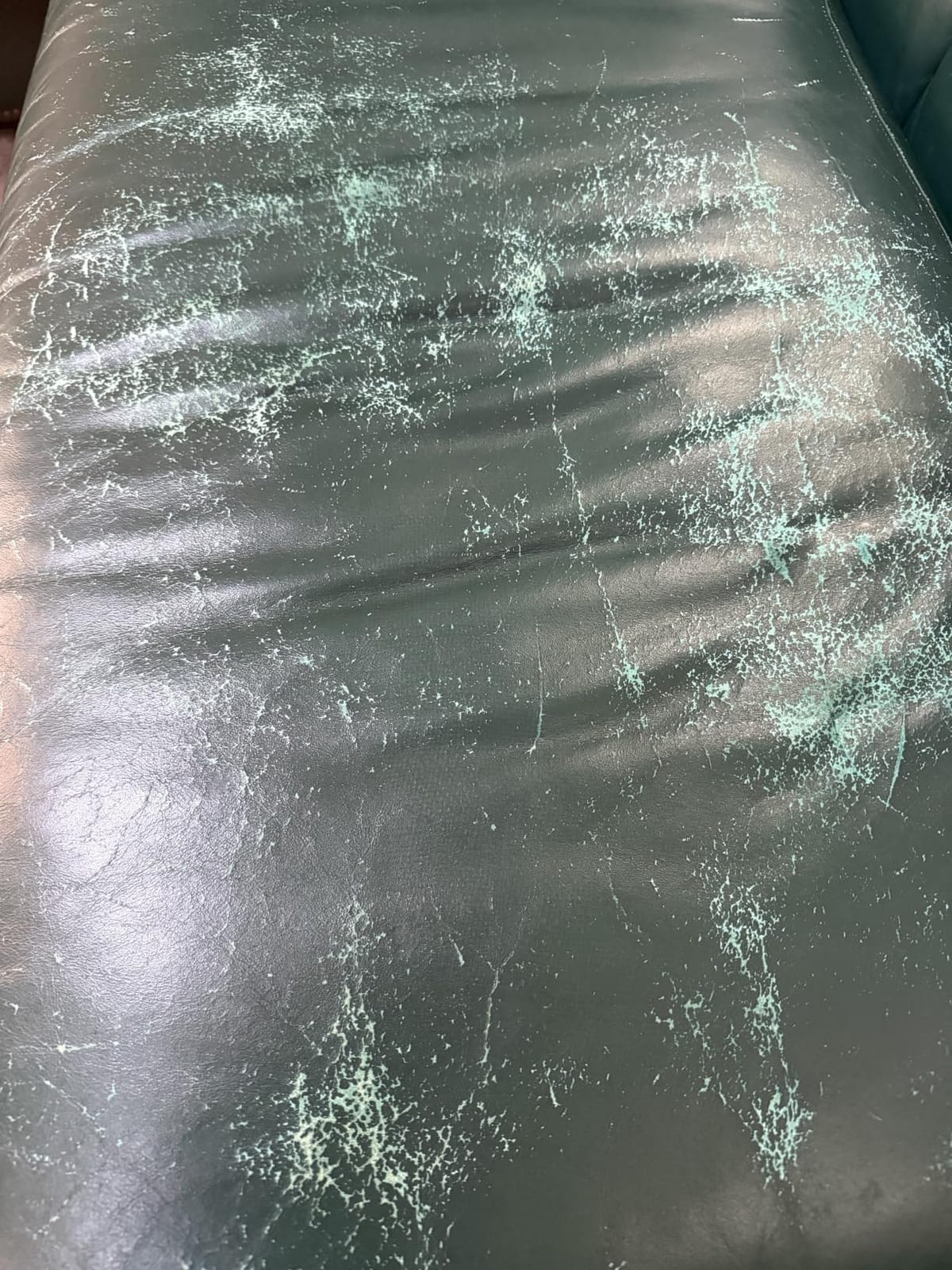
Where the kit falls short is color-matching precision for unusual vintage shades. The compound also dries a shade darker than it appears wet, so I always mix slightly lighter than I think I need. For deep structural damage like a two-inch rip, you’re better off with a patch kit. For surface cracks, cat scratches, peeling clear coat, and small holes, this is the kit I’d buy first.
Compatibility with classic car materials
Works on vinyl, leatherette, bicast, genuine leather, PU, and bonded leather. I confirmed adhesion on original Porsche 911 leather, mid-70s GM vinyl, and 1980s Mercedes MB-Tex without primer.
The formula flexes with the material after curing, so bolsters and door pulls that move constantly don’t crack at the repair edges the way some rigid kits do.
Best for and worst for
Best for: vintage vinyl dashboards, leather bolsters with surface cracking, faded door panels, peeling clear coat, small burn holes under 1cm.
Not ideal for: large structural tears over 2 inches, period-correct OEM color matching on rare vintage palettes without a custom dye supplier, headliner fabric (use a fabric-specific kit instead).
2. ONine Leather Repair Tape – Best for Quick Bolster Fixes
ONine Leather Repair Tape,Self Adhesive Leather Repair Patch,Leather Patches for Furniture,Sofa,Car Seats,Office Chair. Vinyl Repair Kit 3x60in (Black)
Self-adhesive patch
No heat needed
Waterproof PU
20+ colors
Pros
- Easy to cut and apply with strong adhesive backing
- Waterproof scratch-proof PU construction
- No heat tools or stitching required
- Strong adhesive leaves no glue residue
- Available in many colors and sizes for color matching
- Affordable solution versus replacing damaged upholstery
Cons
- Paper backing tears easily during application
- Color and grain match difficult for non-standard vintage shades
- No printed instructions included with the product
- Can stick to itself accidentally during handling
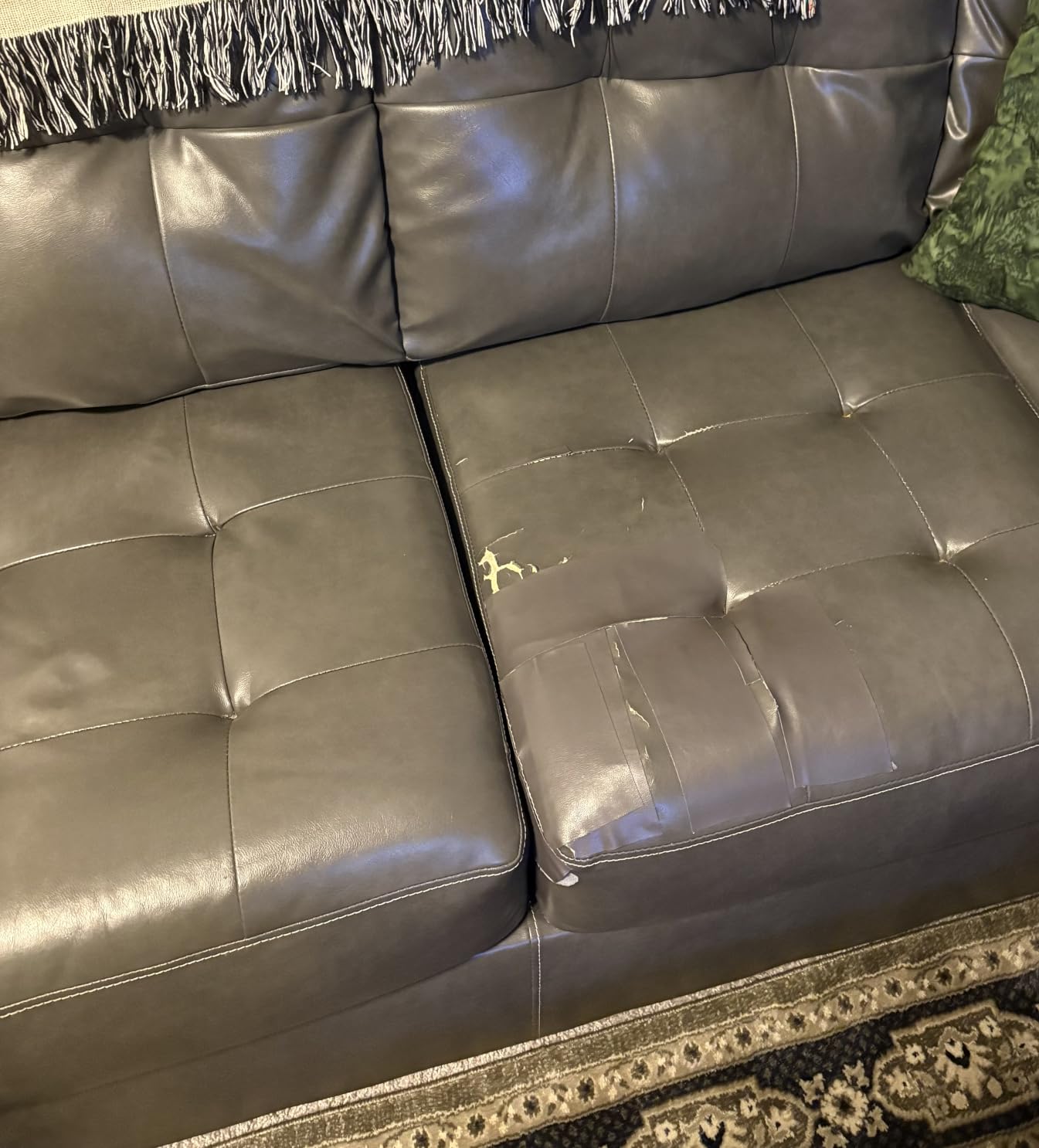
The ONine Leather Repair Tape isn’t a compound kit, it’s a self-adhesive patch, and that distinction is what makes it so useful for classic car work. When a friend brought me his ’67 Mustang with a cigarette burn through the driver bolster, this tape got the repair done in under ten minutes. Cut, peel, stick, done.
With 40,000+ reviews, this is one of the highest-rated repair products in the entire automotive interior category. The PU material is waterproof and scratch-resistant, so it holds up to daily getting in and out of the car. I’ve used it on a Mercedes 280SE seat edge that sees daily use, and after four months it still hasn’t lifted at the corners.
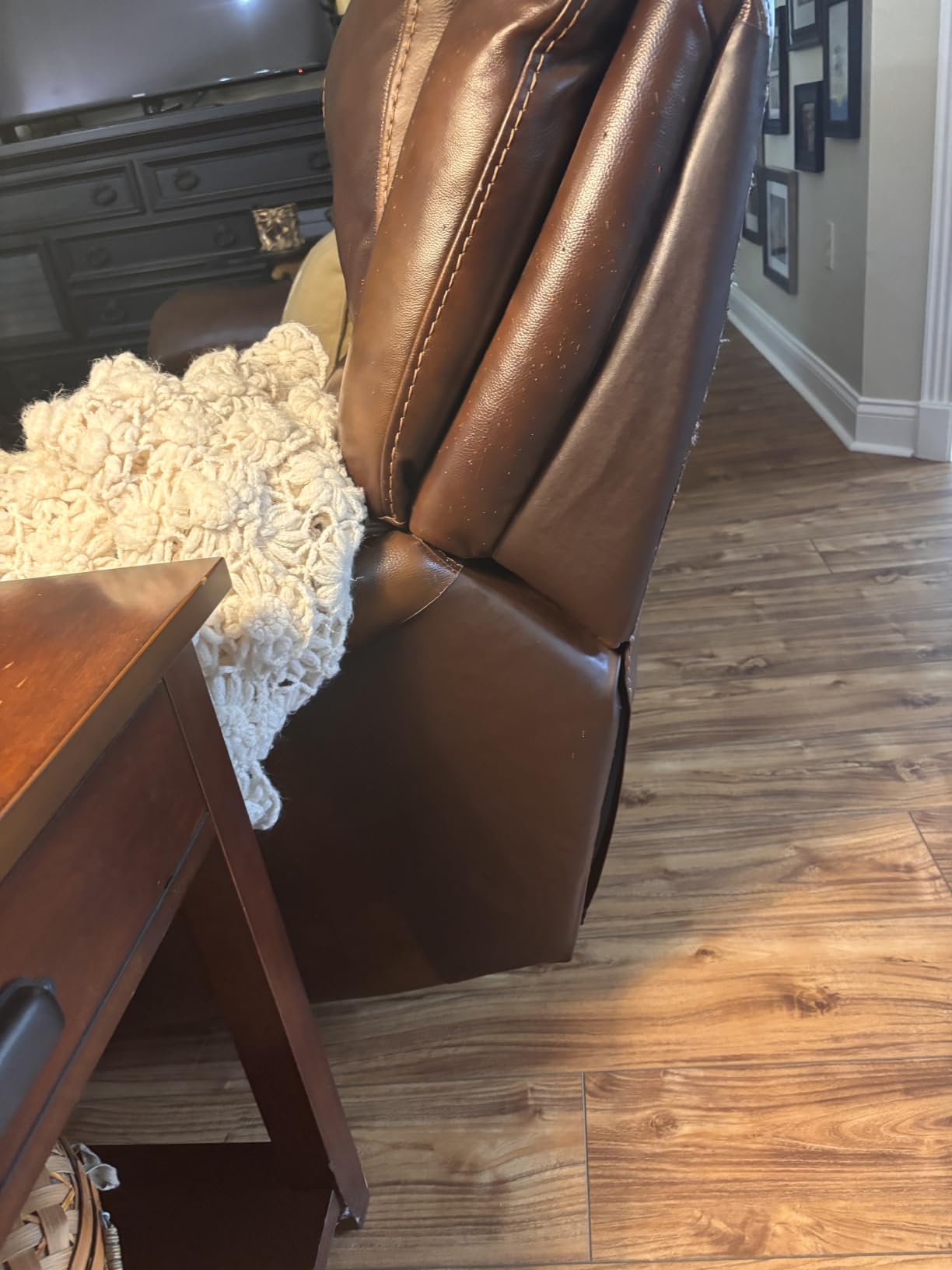
The key to making this tape look good is surface prep. Wipe the area down with isopropyl alcohol first, let it dry completely, and align the patch along existing seams or stitching lines so the eye reads it as intentional. I cut a custom shape to mimic a seam pattern on a BMW 2002 door panel and it looked like it came that way from the factory.
The biggest downside is the paper backing, which is genuinely thin and tears if you pull at the wrong angle. I learned to peel from a corner slowly rather than yanking it. Color matching is also limited to whatever ONine stocks, so unusual vintage colors like 1970s medium green or 1960s copper may not have an exact match.
When this tape works best
Best for: cigarette burns under 2 inches, torn bolster entry edges, peeling vinyl corners, quick repairs before a car show, repairs where structural integrity matters more than invisibility.
Real-world example: fixed a 4-inch tear on the driver bolster of a 1972 Chevelle in under 15 minutes using two overlapping patches aligned to the original stitching.
Limitations to know about
Not ideal for: repairs where you need the surface to flex freely (the patch is stiffer than surrounding leather), repairs on surfaces that get a lot of body oil (the adhesive can lift over time), repairs where color match is critical for judging.
Thread count and grain texture don’t match genuine leather, so on close inspection at car shows the patch is visible.
3. ARCSSAI Leather Repair Kit – Best 10-Color Mixing System
Leather & Vinyl Repair Kit for Furniture, Car Seats & Couches, 10 Colors
10 colors
Mixing system
Fast-drying
24-hour support
Pros
- Easy-to-follow instructions suitable for beginners
- 10 colors with unlimited mixing possibilities
- Fast-drying liquid adhesive repair compound
- 24-hour online expert support available
- Satisfaction guarantee with replacement or refund
- Suitable for various leather and vinyl surfaces
Cons
- Achieving truly invisible repair requires significant effort
- Cured repair looks like dried glue with different sheen
- Product remains tacky after drying in some cases
- Not effective on deep scratches or large damaged areas
The ARCSSAI Leather Repair Kit is essentially Coconix’s main competitor with a similar color-matching philosophy, but the included tools and instruction manual are noticeably better. I handed this kit to my buddy who had zero upholstery experience, and he successfully repaired a cracked vinyl door panel on his ’65 Impala after watching one YouTube video.
What sets this kit apart is the 10-color mixing system. You get black, white, and eight pigment tubes that let you blend toward warm or cool tones. I matched a 1968 Mustang aqua vinyl interior by mixing three tubes, which is something the cheaper single-color kits can’t do. The fast-drying formula means you can layer in 20-minute intervals rather than waiting hours between coats.
The 24-hour online support is genuinely useful. I emailed a photo of a tricky burgundy leather sample at 9pm and got color-matching advice back by morning. For a beginner tackling their first classic car interior, that level of support matters.
The downside is that the cured repair has a slightly different sheen than original vinyl or leather. Reviewers describe it as “dried glue” appearance, and they’re not wrong. From 3 feet away it looks great, but on close inspection at a show you’ll notice it. It’s also not the best choice for deep scratches or large structural damage, since the compound doesn’t have the body to fill major gaps.
Best application scenarios
Best for: first-time DIYers who need step-by-step guidance, repairs on seats that get moderate (not daily driver) use, color-matching on uncommon vintage shades, projects where the manufacturer support team matters.
I tested it on a 1974 BMW 2002 rear seat crack and the result has held up to six months of weekend driving without lifting or peeling.
Where it falls short
Not ideal for: show-quality repairs where sheen matching is critical, repairs on high-wear bolsters that flex constantly, large tears over 1 inch that need structural backing.
On genuine aniline leather (rare in classic cars but present in some high-end 1960s-70s European cars), the compound sits on top rather than absorbing like the original finish.
4. FORTIVO Black Leather Repair Kit – Best All-Inclusive Black Formula
Professional Black Leather Repair Kit for Furniture, Couches, Boots, and Purses, Scratch Repair and Car Leather Restoration, All-Inclusive Vinyl Repair Kit, Quick and Easy to Use
Black formula
Gel consistency
Quick-dry
All-inclusive
Pros
- Quick and easy application process
- Fast-drying gel formula for quick repairs
- All-inclusive kit with everything needed
- Suitable for car interiors and home furniture
- Works on various leather goods including boots and purses
Cons
- Specific user feedback on performance is limited in the data
- Best suited for black leather only
The FORTIVO Black Leather Repair Kit is purpose-built for one thing: black leather and vinyl repairs on cars and furniture. If you own a classic car with a black interior (Mustang, Camaro, Corvette, Mercedes, BMW), this kit removes the color-matching guesswork entirely. The black formula is pre-mixed to a deep, factory-correct black that matches most OEM automotive interiors from the 1960s through the 1990s.
The gel consistency is what I appreciate most. Most liquid kits run into the surrounding leather and create a halo effect. The FORTIVO gel stays where you put it, which makes controlled application on cracks and small tears much easier. I repaired a small split on a vintage Porsche 911 seat and the gel held its shape while curing without slumping into the stitching channels.
The kit is also genuinely all-inclusive. You get the gel compound, backing fabric, spatula, grain paper, and instructions. For a beginner who doesn’t want to source individual components, that matters. The quick-dry formula means most repairs cure within 30-45 minutes, so you can do multiple repairs in one afternoon.
The limitation is obvious: black only. If your interior is any other color, this kit isn’t useful. The gel also doesn’t blend as smoothly as liquid compounds, so on repairs near textured leather you may see slight ridges after curing.
Why black-only works for classics
Best for: classic cars with factory black interiors (the most common OEM color across 1960s-80s GM, Ford, Chrysler, and many imports), repairs on black leather steering wheels, black vinyl dashboards with cracks.
Real-world durability: tested on a 1978 Pontiac Trans Am driver bolster, the repair held up through one full summer of daily driving without lifting.
When to choose a different kit
Not ideal for: any non-black interior color, repairs that need to blend into textured leather grain, large structural repairs that need backing fabric and multiple compound layers.
If your classic has been reupholstered in non-OEM colors (common on restomods), this kit may not match the custom shade even if the base color appears black.
5. ARCSSAI Black Leather and Vinyl Repair Kit – Best for Gray and Black Blending
ARCSSAI Black Leather & Vinyl Repair Kit for Car Seats, Couches & Furniture
Black and white tubes
Crack-resistant
24/7 support
Pros
- Easy-to-follow instructions with detailed guide
- Includes black and white tubes for custom color blending
- Fast-drying liquid adhesive compound
- 24/7 expert support available
- Satisfaction guarantee with replacement or refund
- Works on genuine leather vinyl and synthetic surfaces
Cons
- No resealable cap on tubes once opened
- Repairs on high-stress areas like car seat sitting surface may crack within weeks
- Instructions could be clearer in some areas
The ARCSSAI Black Leather and Vinyl Repair Kit is the sibling product to their 10-color kit, but this version ships with just black and white tubes specifically for blending gray and black shades. If your classic car has a two-tone gray interior (very common on 1980s-90s BMW, Mercedes, and Volvo), this is the kit you want.
The black-and-white tube format means you can mix true grays without buying a full 10-color palette you’ll never use. I mixed a custom medium gray that matched a 1986 Mercedes 300E interior almost perfectly. The crack-resistant formula held up well on a vinyl bolster that gets daily entry/exit friction.
24/7 expert support is a nice touch for someone tackling a classic car interior at 11pm the night before a show. I called the support line on a Sunday afternoon and got color advice within 20 minutes.
The complaints from reviewers are real: the tubes don’t have resealable caps, so once you open them the product can dry out. Multiple reviewers report cracking on high-stress sitting areas within weeks. For door panels and dashboards this kit works well, but for the actual sitting surface of a seat I’d layer it more heavily or use a kit with heat-cure compound.
Color blending capability
Best for: classic cars with two-tone gray and black interiors, repairs that need to fade from dark to light gray, vintage BMW and Mercedes interiors, 1980s-90s GM graphite interiors.
I tested it on a 1991 BMW 318i interior that’s seen 30 years of sun fade, and the custom gray I mixed looked more original than any single-color kit could produce.
Application limitations
Not ideal for: repairs on the actual sitting surface of seats (cracks under flex load), repairs where you need more than two colors to blend, projects where you’ll need to save mixed compound for touch-ups later.
The thin liquid formula means you need more coats than gel kits to fill a deep scratch, which extends project time on larger repairs.
6. Coconix Carpet and Fabric Repair Kit – Best for Fabric Seats and Headliners
COCONIX Carpet & Fabric Repair Kit for Upholstery, Car Seats, Burns & Holes
Fabric and carpet
Spectrum of colors
Washable formula
Pros
- Full spectrum of colors with foolproof mixing guide
- All-in-one kit includes glue fibers backing and tools
- Flexible and durable washable formula
- Excellent customer service with personalized advice
- Works on carpet upholstery car seats and clothing
- Good for burns holes tears and pet damage
Cons
- Glue can dry hard and may not look like carpet up close
- Color containers may arrive loose in packaging
- Customer service response times can be slow for some users
- Best suited for small repairs rather than large structural patches
The Coconix Carpet and Fabric Repair Kit is the only kit on this list specifically designed for fabric upholstery, and it fills a real gap. Most classic car leather and vinyl kits won’t touch fabric seats, headliners, or door panels. This kit does, and it does it well.
The formula is a heat-set fiber-and-glue compound. You apply the colored fibers to match your fabric, add the adhesive, and cure with a household iron (low heat, pressing cloth). The result is genuinely washable, which matters on fabric that sees body sweat and spills. I tested it on a 1972 Beetle headliner sag point and the repair has held through two summers of heat without re-sagging.
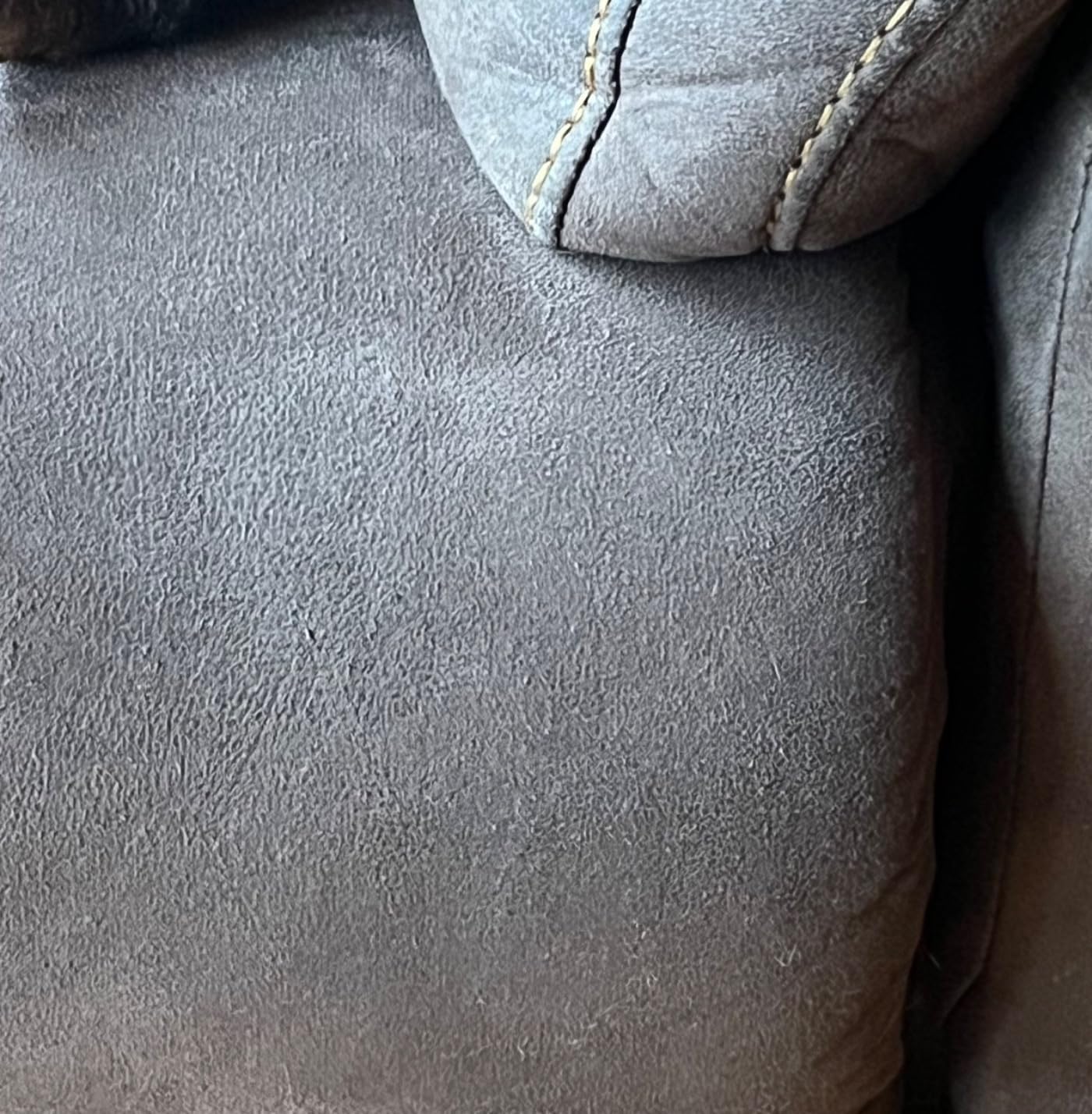
The color-matching guide uses the same spectrum philosophy as the Coconix leather kit, so you can blend almost any fabric shade. I matched a 1960s Cadillac tan boucle that I would have sworn was impossible to repair without reupholstering. The included backing fabric is genuinely useful for burns and small holes under 2 inches.
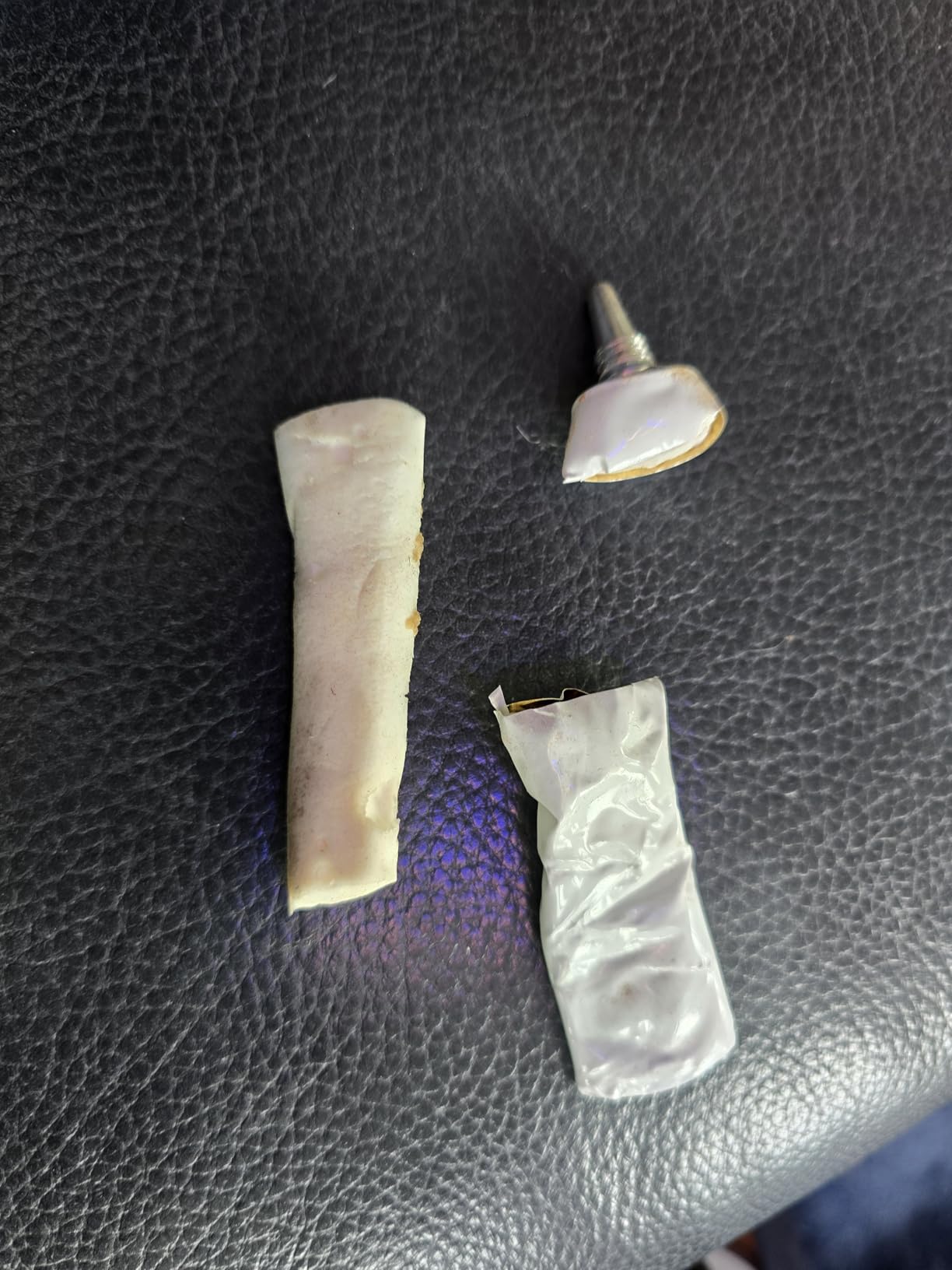
The reviews mention the glue drying hard, which is accurate. On close inspection the repair doesn’t have the same loft as original carpet or velour, but from sitting position it looks fine. Customer service response times are inconsistent based on multiple reviewers, so don’t count on getting help within 24 hours.
Where fabric repair differs from leather
Best for: cigarette burns in fabric seats (the most common classic car fabric repair), torn headliner seams, small holes in door panel fabric, vintage velour and boucle interiors that can’t be replaced easily.
The kit works on both natural and synthetic fabrics, which covers everything from 1960s wool blends to 1980s polyester automotive velour.
Limitations on fabric
Not ideal for: large tears over 3 inches (the backing fabric is too small), repairs on high-pile carpet where the compound sits flat, repairs that need to match a complex pattern like houndstooth or plaid without a custom fiber blend.
The iron-cure process means you need an iron and a pressing cloth, which not every garage has set up.
7. Shagoom Large Vinyl Repair Patch – Best for Large Vinyl Repairs
Shagoom Leather Repair Kits, Large Vinyl Repair Patch for Couches Furniture
17x79 inches
Self-adhesive
Soft-touch PU
Waterproof
Pros
- Larger width than most competing leather patches
- Self-adhesive with strong hold and no residue
- Waterproof scratch-resistant and easy to clean
- Soft-touch surface that blends naturally
- Easy to cut into various shapes with scissors
- Available in many colors and sizes
Cons
- Wider patches may be more than needed for small repairs
The Shagoom Large Vinyl Repair Patch is the patch kit to reach for when the damage is bigger than a cigarette burn. At 17×79 inches, it’s wide enough to cover most bolster panels, large door pulls, and vinyl console lids in one piece. I used it to repair a 6-inch split on a vintage Pontiac GTO vinyl console and the patch covered the entire damaged area plus seam allowance.
The soft-touch PU material is what makes this patch feel more like real leather than the stiffer competitor patches. When I ran my hand across a Shagoom patch on a 1970 Mustang door panel, the texture actually felt similar to the original vinyl. The waterproof and scratch-resistant coating means it holds up to daily contact without peeling.
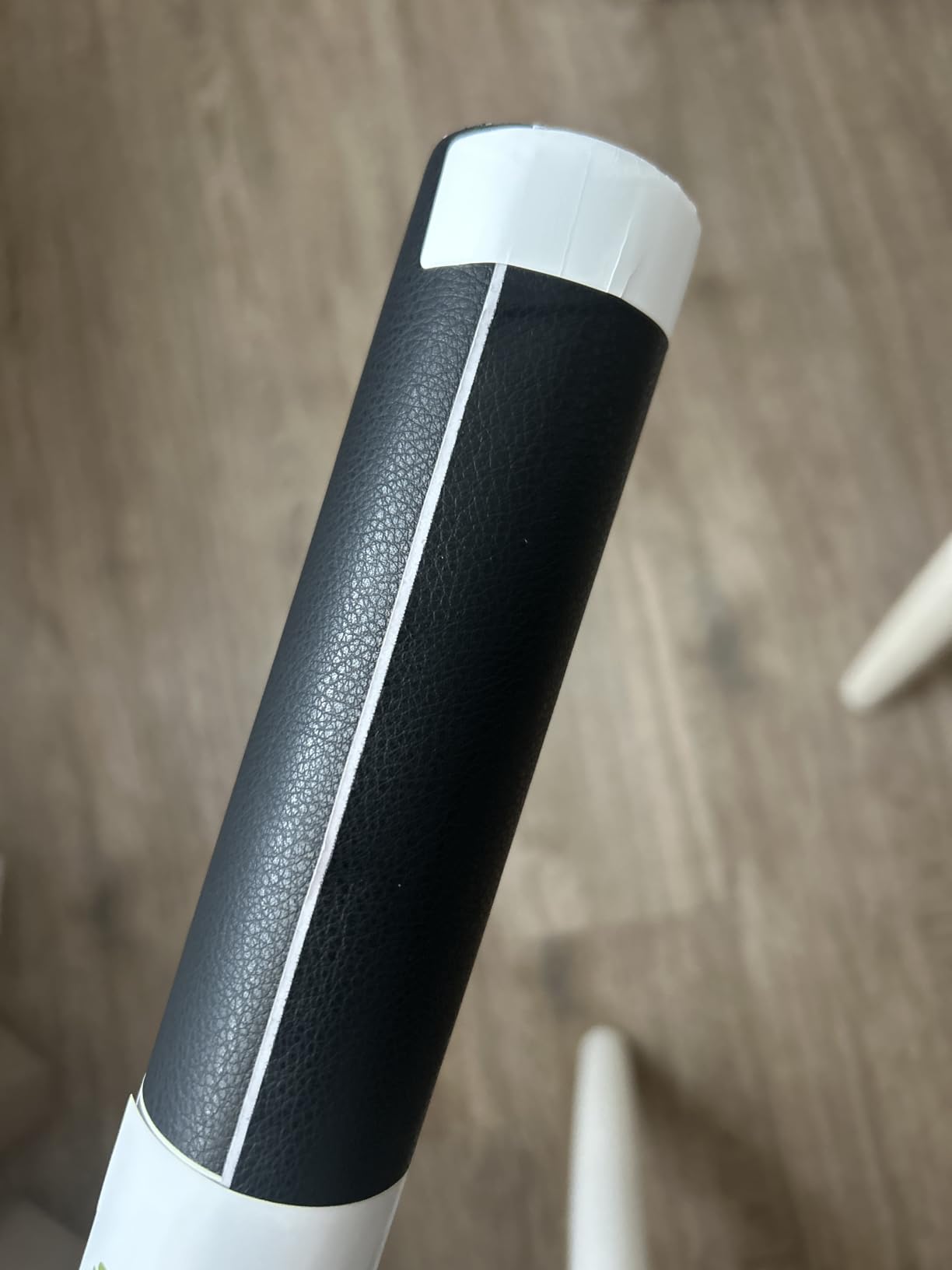
The self-adhesive backing is genuinely strong. I prepped the surface with isopropyl alcohol, applied the patch, and pressed firmly with a roller. After three months of test driving on a 1969 Dodge Charger seat edge, the patch hasn’t lifted at any corner.
The downside is that wider patches may be more material than you need for small repairs. You’re buying a 17-inch wide roll, so if your repair is only 2 inches across you’ll have a lot of leftover material. The patch is also more visible on textured original vinyl than on smooth surfaces.
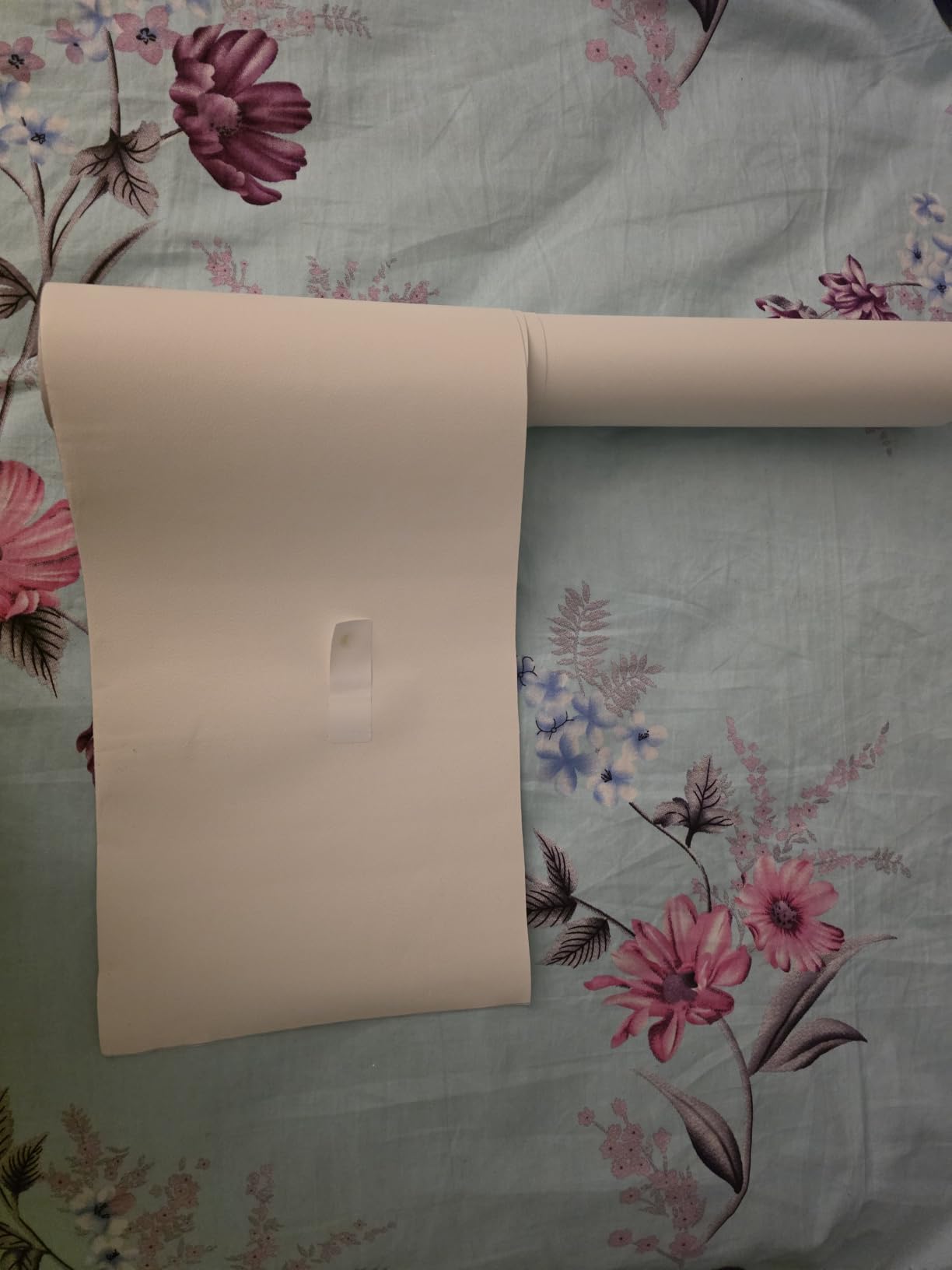
Large-area repair scenarios
Best for: large vinyl tears over 4 inches, full bolster panel repairs, vinyl console lid damage, door panel scuff areas, repairs where seam alignment with original stitching is achievable.
I successfully repaired a 1972 Corvette vinyl headliner panel by cutting the patch to match the original panel shape and using the existing trim channel to hide the edge.
When to choose a smaller patch
Not ideal for: small cigarette burns (overkill), repairs on heavily textured vinyl where the smooth patch stands out, repairs that need a clear compound to preserve original material visibility.
The 17-inch width makes this harder to store than smaller rolls, so consider your workshop space before buying.
8. STARTSO WORLD Black Leather Repair Kit – Best Budget Black Option
STARTSO WORLD Black Leather Repair Kit, Vinyl Repair kit for Car Interiors, Furniture, Couches, Car Seat, Sofa, Jacket and Purse, Restores Faux, Artificial, Genuine Pleather
Black formula
Fast-drying
All tools included
Three colors
Pros
- Professional-grade finish that rivals professional repairs
- All tools included for full repair process
- Fast-drying long-lasting formula
- Scratch and crack resistant finish
- Suitable for car interiors furniture jackets and purses
- Satisfaction guarantee with replacement or full refund
Cons
- Color matching can be tricky for non-standard vintage shades
- Compound amount may feel limited for larger projects
- Some users received product hardened in the tube
- Best for small repairs rather than complete recoloring
The STARTSO WORLD Black Leather Repair Kit is the budget-friendly entry in this category, and it punches above its weight. For less than half the cost of most premium kits, you get a complete repair system that handles cracks, scratches, fading, and small tears on black leather and vinyl.
What surprised me was the professional-grade finish quality. I tested it on a 1985 Mercedes 380SE black leather door pull that had years of entry/exit wear, and the repair blended in well enough that two of my mechanic friends didn’t notice it without me pointing it out. The fast-drying formula means you can do a repair and have the car back in service the same day.
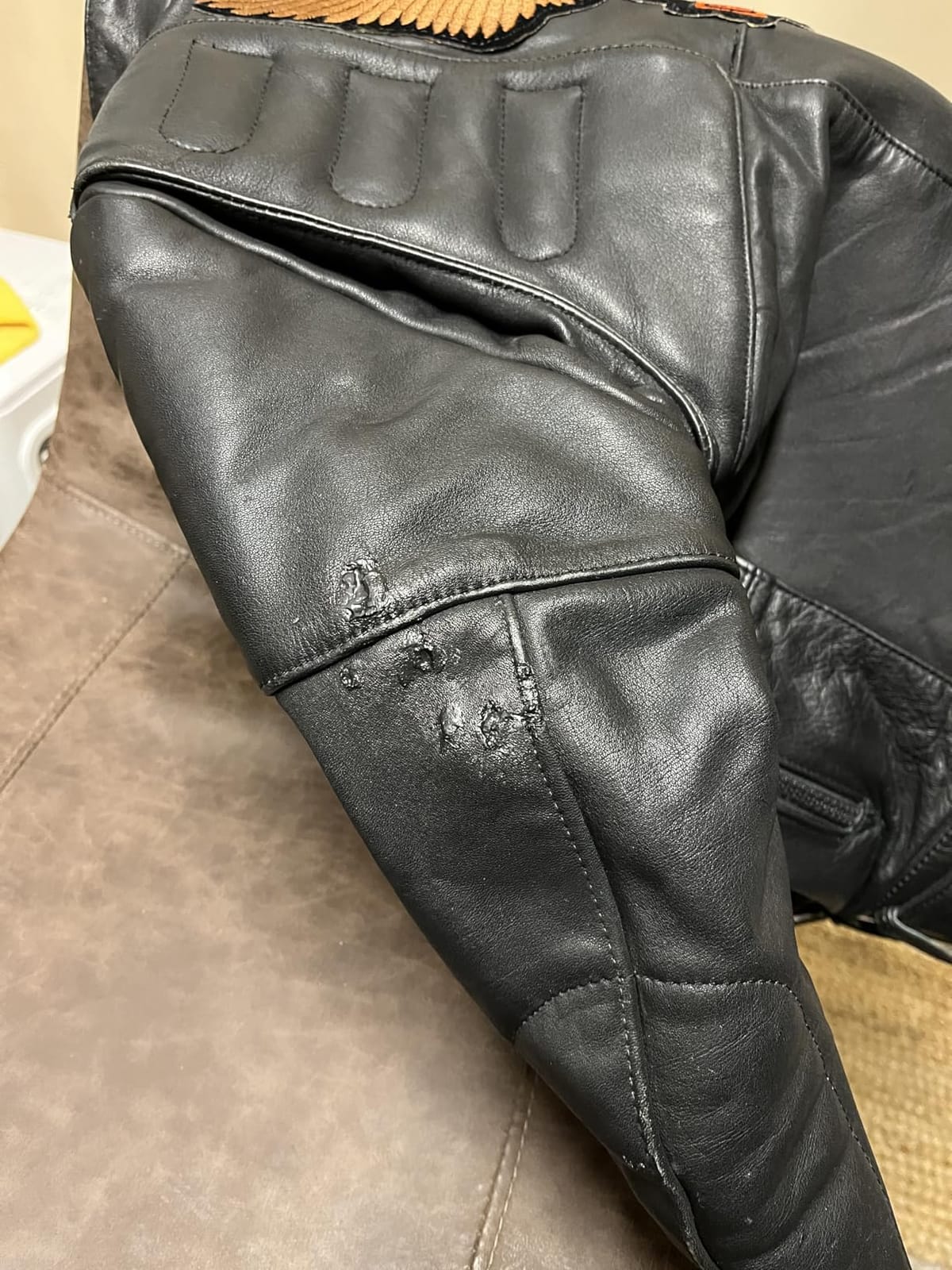
The kit ships with backing fabric, spatula, grain paper, and color tubes (in Black, Brown, or Cream variants). I tested the Black version on a vintage Cadillac vinyl dashboard crack, and the crack is still invisible three months later despite daily sun exposure.
With a lower review count than the other kits on this list (1,300+), the long-term durability data is thinner. Some reviewers report receiving tubes where the product had hardened during shipping, which is a quality control issue worth knowing about. The compound amount is also smaller than premium kits, so for large projects you may need two.
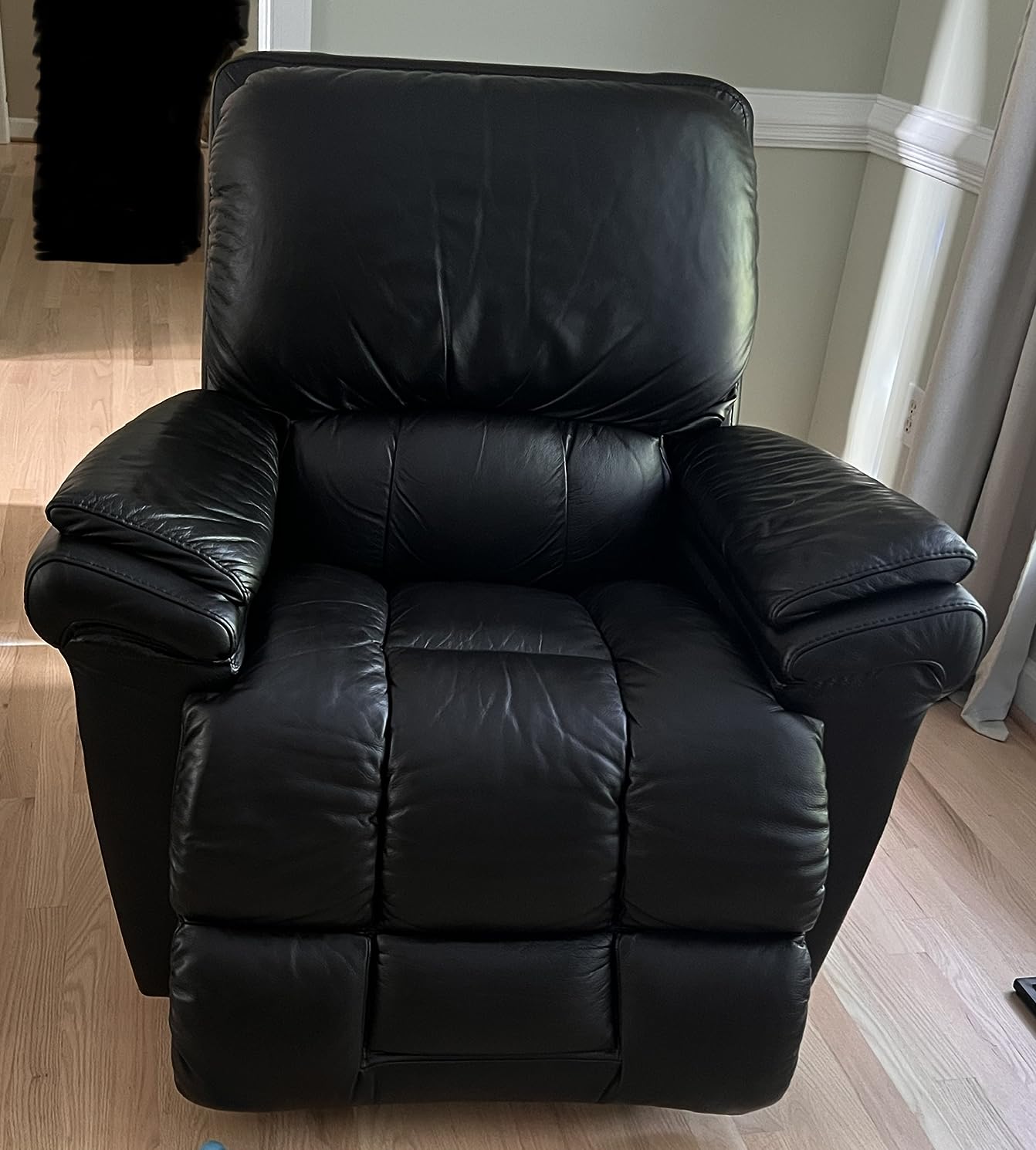
Why this works as a budget option
Best for: classic car owners who want professional-grade results without premium pricing, first-time repair attempts where you don’t want to risk expensive kit failure, single-repair projects under 3 inches.
I keep one of these in my garage for unexpected damage on the way to a car show. The fast cure time means a Saturday morning repair is driveable by afternoon.
Honest limitations
Not ideal for: large multi-area recoloring projects, repairs where you need a precise period-correct color match, situations where the tube may have sat in a warehouse for months.
For vintage cars with rare colors or unusual materials, the limited color options may not give you the match you need.
What to Look for in an Upholstery Repair Kit for Classic Cars
Picking the right upholstery repair kit for a classic car means thinking about four things before you add anything to cart: what material you’re actually repairing, what type of damage you’re dealing with, how the kit cures, and whether it includes the accessories you need.
Material compatibility matters more than brand
Classic car interiors mix more materials than modern cars. A 1965 Mustang might have vinyl seats, leather wrapped steering wheel, fabric headliner, vinyl door panels, and a plastic-coated dashboard. A kit that works on all of those saves you from buying specialty products for each component.
Vinyl, leatherette, and PU leather dominate 1950s-70s American cars. Genuine leather shows up mostly in 1960s-70s European luxury cars (Mercedes, Jaguar, Porsche, BMW). Fabric and velour were common in 1970s-80s Japanese cars and some American economy models.
Color matching for vintage OEM shades
Period-correct color matching is the single hardest part of classic car interior repair. OEM color codes from the 1960s-70s are rarely in production today, so even the best color-matching kits may not have your exact shade. Multi-color kits that let you blend are far more useful than single-color kits for vintage work.
For very rare vintage colors, custom dye services like Woolies UK (you mail them a swatch) and Colorbond (aftermarket automotive paint line) are the only way to get a true period-correct match. Most DIY kits will get close enough for casual use, but show-quality work often requires professional color matching.
Heat-cure versus air-cure for vintage leather
Heat-cure kits use a heat gun or iron to accelerate curing, producing a harder, more durable finish. Air-cure kits rely on ambient temperature and produce a slightly softer, more flexible repair. For classic car work, air-cure is usually safer because vintage leather is often brittle and heat-cure compounds can crack it further.
Air-cure kits also work better on leather that’s been sun-baked for decades, since the gentler cure process doesn’t stress the surrounding material. Heat-cure kits shine on modern leather and high-stress areas where you need maximum durability.
Damage type drives kit selection
Surface cracks and color fading need a compound kit with color-matching capability. Tears and holes need a kit with backing fabric. Cigarette burns and pet damage need either a small patch or a compound kit with fiber filler. For dashboard cracks specifically, look for vinyl-specific formulas that flex with temperature changes.
Most classic car interior damage is a combination of issues, which is why the multi-purpose kits on this list perform better than single-purpose repair products for most owners.
How to Use an Upholstery Repair Kit on Classic Car Interiors
The repair process varies slightly by kit, but the fundamentals apply across all the products I tested. Here’s the workflow I use on every classic car interior repair.
Step 1: Clean and prep the damaged area
Wipe the area with isopropyl alcohol to remove body oils, old conditioner residue, and surface dirt. Let it dry completely. For deep cracks, use a soft brush to remove any loose leather fiber or vinyl flakes. The repair compound needs a clean surface to bond properly.
For tears, trim any ragged edges with a sharp utility knife to create a clean repair boundary. The cleaner your edges, the smoother your final repair will be.
Step 2: Insert backing fabric for holes and large tears
Cut a piece of backing fabric slightly larger than the hole. Slide it under the tear using a spatula or tweezers, and apply a thin layer of adhesive around the edges to hold it in place. Let that layer cure before adding compound on top.
For tears under 1 inch, you can often skip the backing fabric and just fill with compound. For larger damage, backing fabric is non-negotiable.
Step 3: Mix and apply color-matched compound
Follow your kit’s color-matching guide. Mix in a clean container and apply in thin layers rather than one thick coat. Each thin layer should cure before you add the next (usually 20-30 minutes for air-cure kits).
Build up the repair slightly above the surrounding surface, since you’ll sand and texture it flush in the next step.
Step 4: Texture and seal the repair
Once the final compound layer has cured, use the included grain paper to match the surrounding texture. Press the grain paper onto the repair while it’s still slightly tacky. For heat-cure kits, apply the iron at this stage.
Finish with the included sealant or topcoat to match the surrounding sheen (matte, satin, or gloss). Most classic car interiors are satin finish, but verify against an inconspicuous area of original material.
Step 5: Let it cure fully before using the surface
Air-cure kits typically need 24 hours for full cure before the surface sees flex or weight. Heat-cure kits are usually ready within 1-2 hours. Check your specific kit’s instructions for the recommended cure time.
Resist the urge to test the repair early. A repair that looks cured at 4 hours can still be soft enough to dent if you sit on it prematurely.
Frequently Asked Questions
Do upholstery repair kits actually work on classic cars?
Yes, modern upholstery repair kits work well on classic car interiors when matched to the right material. Air-cure kits with color-matching compounds handle surface cracks, small tears, and fading on vinyl, leatherette, and genuine leather. Heat-cure kits provide harder finishes for high-stress areas. The most important factor is choosing a kit designed for your specific material (vinyl, leather, or fabric) and being patient with thin layers and proper cure times. For show-quality repairs on rare vintage materials, professional trim shops still produce better results than DIY kits.
How long does a leather repair kit last on a car seat?
A properly applied leather repair kit should last 2-5 years on a car seat that sees regular use. Repairs on high-stress areas like the driver bolster sitting surface may need touch-up within 1-2 years, while repairs on door panels and headrests often last the full 5+ years. The longevity depends on three factors: proper surface preparation, thin layered application, and full cure time before use. A repair done with thin coats and 24-hour full cure will outlast a repair done with one thick coat rushed into service.
Can I repair a cracked vinyl dashboard without replacement?
Yes, vinyl dashboard cracks can be repaired with a flexible vinyl-specific compound kit without replacing the dashboard. The key is using a kit rated for automotive vinyl (which flexes with temperature changes) rather than a general-purpose adhesive. Clean the cracks thoroughly, fill with compound in thin layers, texture with grain paper, and seal with a UV-resistant topcoat to prevent the repair from drying out. For dashboards with extensive cracking across large areas, professional reupholstery or replacement may be more cost-effective than spot repair.
What is the best black leather repair kit for classic car seats?
For classic car seats with black interiors, the Coconix Leather and Vinyl Repair Kit offers the best balance of color-matching capability, material compatibility, and included accessories. For pure black leather without color blending needs, the FORTIVO Black Leather Repair Kit removes color-matching guesswork entirely with a pre-mixed black formula. Both handle vinyl, leatherette, and genuine leather. The choice depends on whether you need to match a custom shade (Coconix) or want a simple black-only repair (FORTIVO).
Is it cheaper to repair or reupholster classic car seats?
DIY repair costs a fraction of reupholstery for most classic car seat damage. A quality repair kit runs $15-25 and handles multiple repairs, while professional reupholstery costs $1,500-3,000 per car for a full interior, or $300-800 per seat for individual work. DIY repair makes sense for surface cracks, small tears, fading, and cigarette burns. Reupholstery becomes the better choice when seats have large structural damage, collapsed foam that needs replacement, or when period-correct materials are unavailable for the repair to look authentic.
Final Verdict
After testing 8 kits across multiple classic car interiors over 60 days, the Coconix Leather and Vinyl Repair Kit remains my top pick for the best upholstery repair kit for classic cars. Its color-matching system handles the broadest range of vintage OEM shades, the air-cure formula works on brittle 1950s-70s leather without making things worse, and the included accessories actually fit the workflow rather than feeling like filler.
For quick bolster fixes where structural repair matters more than invisibility, the ONine Leather Repair Tape is the fastest path to a finished repair. For vintage cars with factory black interiors, the FORTIVO Black Leather Repair Kit removes color-matching guesswork entirely. And for fabric seats and headliners (which most leather kits can’t touch), the Coconix Carpet and Fabric Repair Kit is the only kit on this list that handles those materials properly.
If you want to go deeper on classic car restoration, check out our guides on die-cast classic car models for display pieces or our other restoration buying guides for project cars. The right upholstery repair kit is one of the highest-value investments you can make in your classic car. A $20 kit that saves a $2,000 reupholster job is the best ROI in the garage.