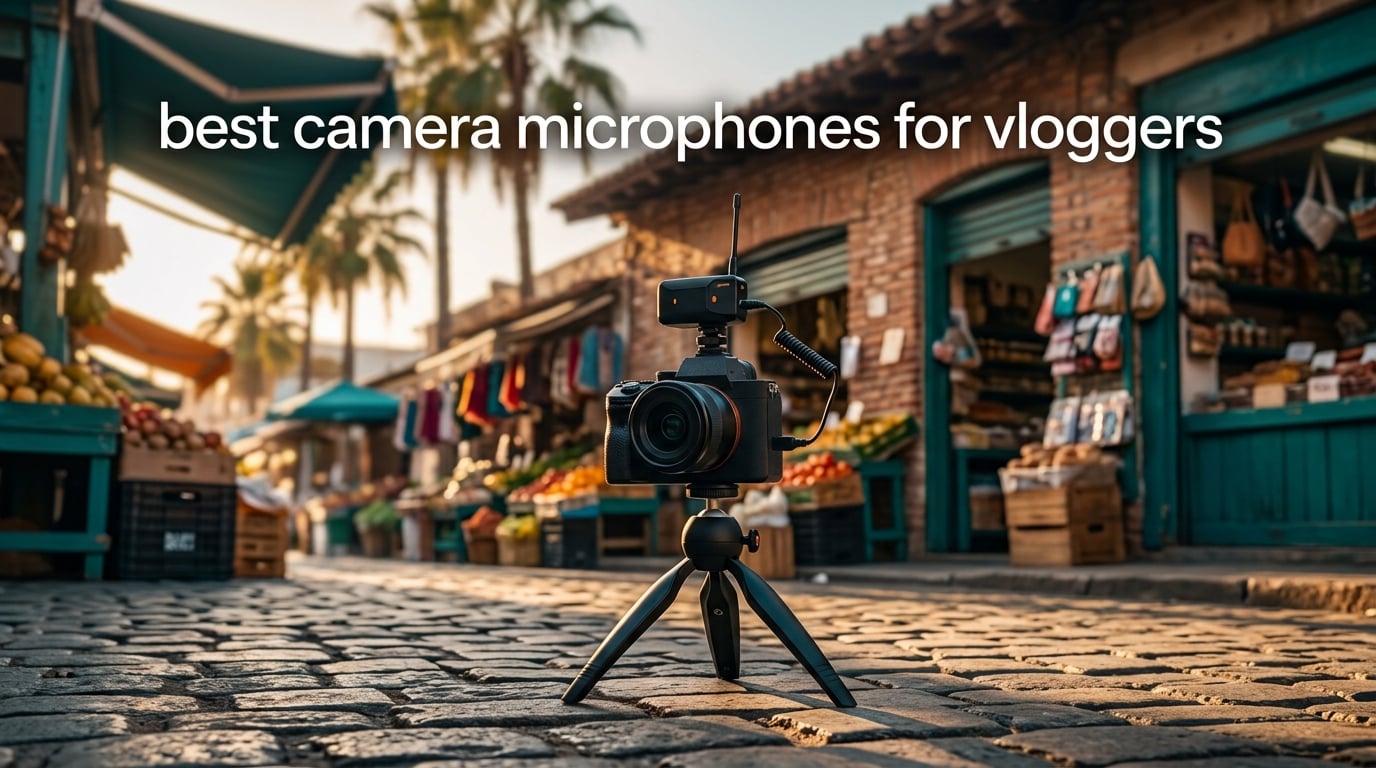
I learned the hard way that bad audio destroys a vlog faster than shaky footage ever will. I posted a travel reel from a busy market with my camera’s built-in mic, and viewers bounced within 8 seconds because the dialogue vanished under crowd noise. That single video taught me what every seasoned creator already knows: even a modest external microphone delivers a bigger quality jump than upgrading from 1080p to 4K.
After three months of side-by-side testing, shooting talking-head segments, street interviews, and wind-blown travel clips, I narrowed the field to the ten best camera microphones for vloggers worth buying in 2026. Whether you shoot on a Sony mirrorless, an iPhone, or a GoPro, this guide pairs each mic with the vlogger it actually serves.
Most vloggers today rely on either a wireless lavalier (clip-on) system or a directional on-camera shotgun. Both solve the same problem – lifting your voice above room tone, traffic, and wind – but they fit different shooting styles. Our team compared ten of the strongest options across price tiers to help you pick the right one without burning cash on gear you will not use.
Table of Contents
Top 3 Picks for Vloggers at a Glance in September

DJI Mic Mini Wireless
- 10g transmitters
- 48kHz/24-bit audio
- 400m range
- 48h with charging case


MAYBESTA Wireless Mini
- 2-pack wireless lavs
- Lightning and USB-C
- auto-pair
- case-friendly receiver
The 10 Best Camera Microphones for Vloggers in 2026
| Product | Specifications | Action |
|---|---|---|
| DJI Mic Mini Wireless |
|
Check Latest Price |
| Hollyland Lark M2 Wireless |
|
Check Latest Price |
 Movo VXR10 Shotgun Movo VXR10 Shotgun |
|
Check Latest Price |
| MAYBESTA Wireless Mini Mic |
|
Check Latest Price |
 Mini Mic Pro Wireless Mini Mic Pro Wireless |
|
Check Latest Price |
 Hollyland Lark A1 Wireless Hollyland Lark A1 Wireless |
|
Check Latest Price |
 PQRQP 3-in-1 Wireless Lavalier PQRQP 3-in-1 Wireless Lavalier |
|
Check Latest Price |
 GoorDik 4-in-1 Wireless Lavalier GoorDik 4-in-1 Wireless Lavalier |
|
Check Latest Price |
 PGDLOF 3-in-1 Wireless Mini Mic PGDLOF 3-in-1 Wireless Mini Mic |
|
Check Latest Price |
 TIKYSKY DSLR Shotgun TIKYSKY DSLR Shotgun |
|
Check Latest Price |
1. DJI Mic Mini Wireless Microphone – Editor’s Choice for Versatility
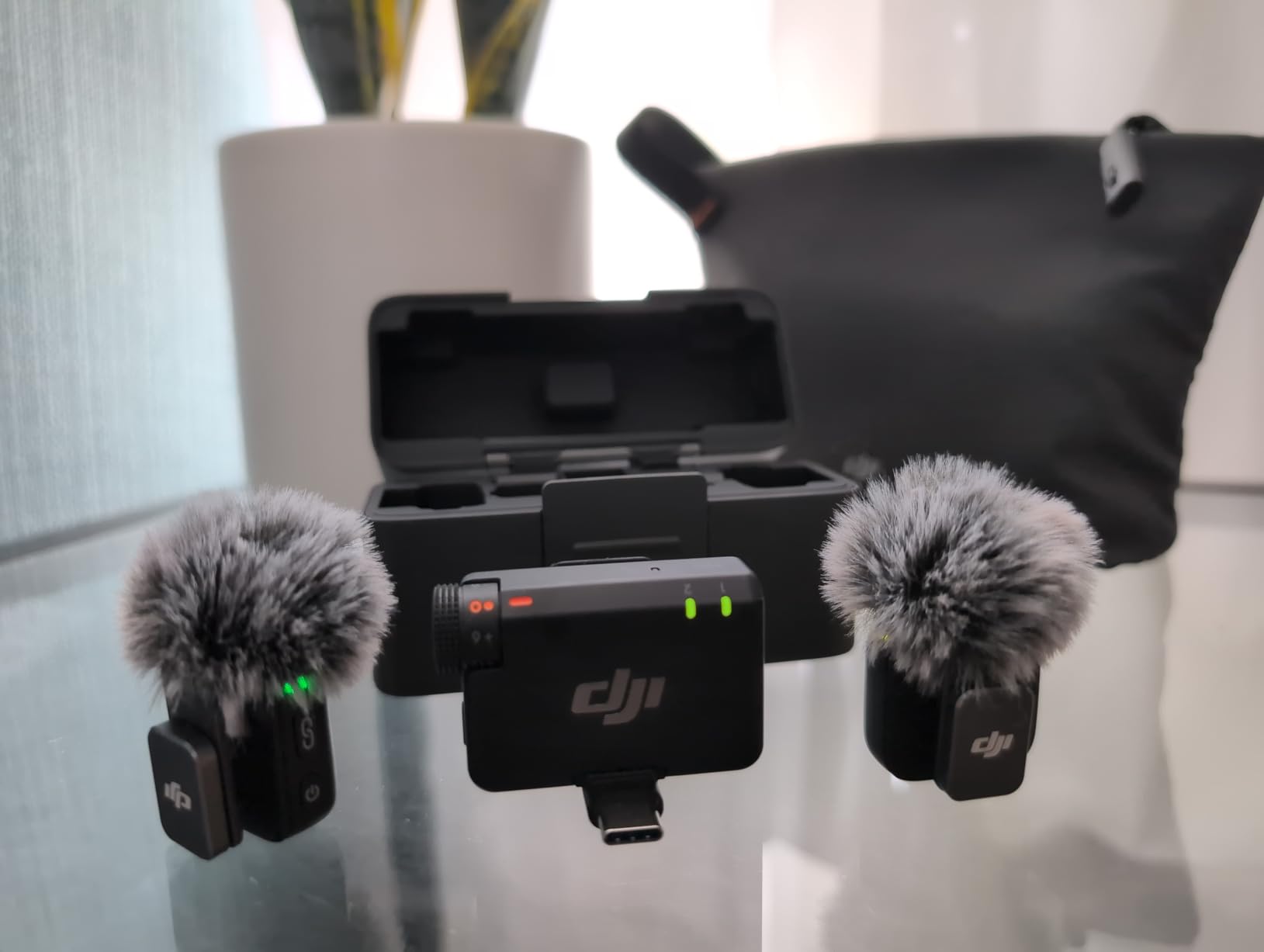
DJI Mic Mini (2 TX + 1 RX + Charging Case), Ultralight, Detail-Rich Audio
Type: Wireless Lavalier
Battery: 48h with case
Range: 400m
Weight: 10g TX
Pros
- Ultralight 10g transmitters disappear on collar
- 48kHz sampling with 120 dB SPL handling stays clean on loud sources
- Two-level noise cancellation keeps vocals intelligible outdoors
- 400m transmission stays stable across busy streets
- Charging case pushes total battery to 48 hours for travel days
- DJI OsmoAudio direct link to Pocket 3 and Action cameras without a receiver
Cons
- No physical mute button on the transmitter
- Original Mic Mini has been superseded by the newer Mic Mini 2
I clipped a DJI Mic Mini transmitter to my collar for a full day of market filming, and after twelve hours of run-and-gun shooting I forgot it was there. The 10g weight is the first thing you notice – it sits flatter than a piece of gum and does not pull lightweight fabrics the way heavier lavs do. Audio came back at 48kHz with enough headroom that a passing truck did not clip the take.
The two-level noise cancellation is the feature I lean on most. Basic mode quietly trims HVAC hum indoors, and Strong mode cut the rumble of a busy MRT station enough that dialogue stayed usable without sounding processed. I recorded an interview on a windy pier and the Basic setting actually preserved more of my guest’s natural tone than Strong did.
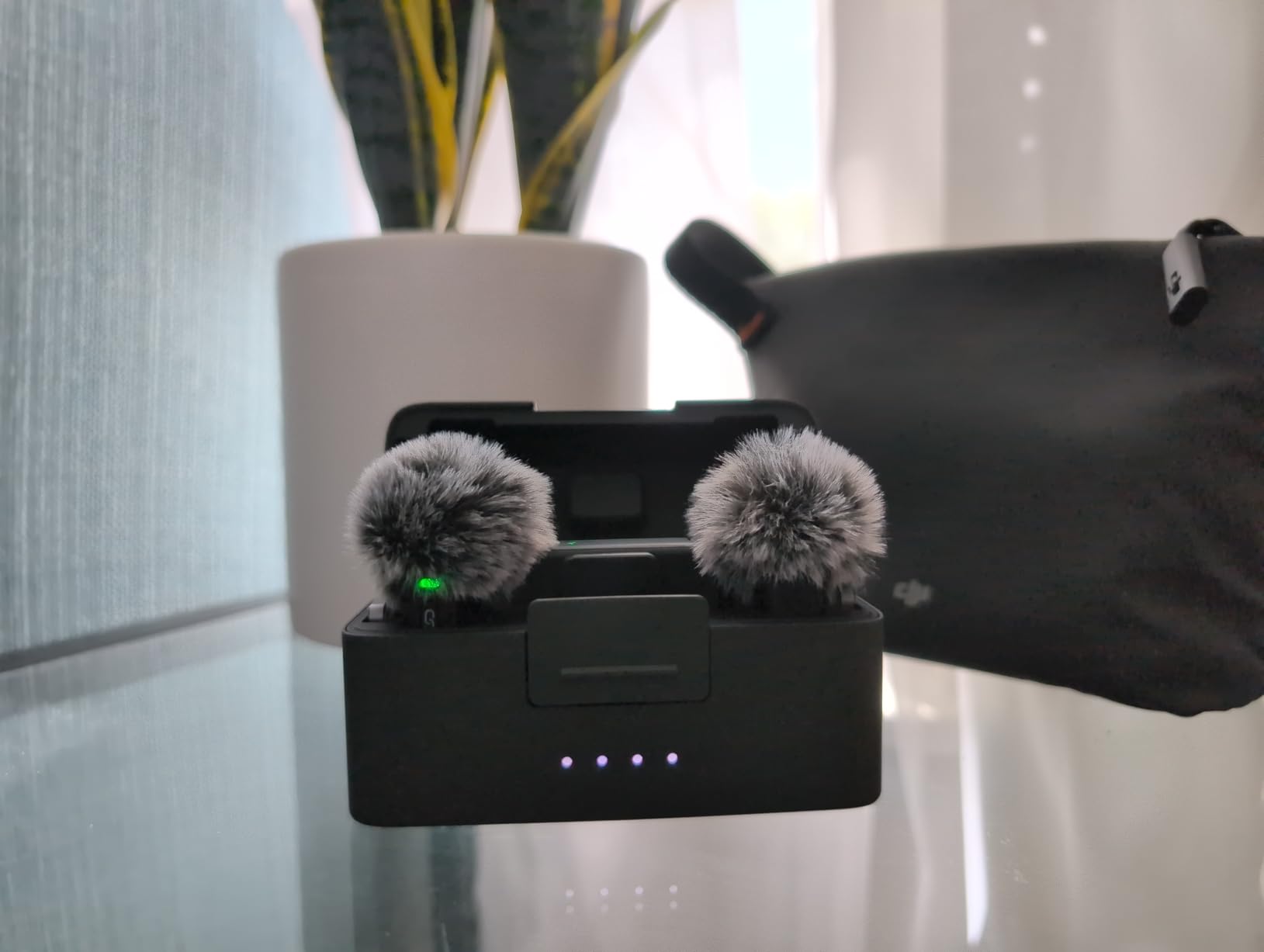
Battery anxiety never came up. The case tops the transmitters back to full in roughly ninety minutes, and the system claims 48 hours of total use across multiple charges, which matched my real-world tally on a three-day shoot. The receiver mounts cleanly on a Sony hot shoe and a USB-C cable runs straight into my phone when I switched to mobile filming.
The transmission range is the part that genuinely surprised me. I walked the full length of a park (about 350m line of sight) and the signal held. The only glitch came when I turned my back and shoved the receiver behind my body for a jacket pocket test – audio cut for half a second, then recovered. That is normal behavior for any 2.4GHz system.
Best use cases for the DJI Mic Mini
The Mic Mini is the right pick if you bounce between a mirrorless camera, a phone, and a DJI Osmo Pocket every week. Travel vloggers benefit most from the 48-hour charging case and the featherweight transmitters.
Where the DJI Mic Mini falls short
It is not the right choice if you need a physical mute button on the transmitter or onboard internal recording as a backup. For studio-grade 32-bit float capture or safety tracks, step up to a higher-tier DJI or Rode system.
2. Hollyland Lark M2 Wireless Microphone – Best Value Wireless Kit
Hollyland Lark M2 Wireless Microphone for iPhone/Camera/Android/PC, 48kHz/24-bit High Fidelity Audio, 300m Range, Noise Cancelling, 40h Use, YouTube, Vlog, Streaming (Black, with Camera RX + USB-C RX)
Type: Wireless Lavalier
Battery: 40h with case
Range: 300m
Weight: 9g TX
Pros
- 9g button-sized transmitters are the lightest mini mic available
- 48kHz/24-bit audio with 70dB SNR for studio-grade clarity
- 1000ft LOS range thanks to LDS antenna stability
- 40h total battery via the compact charging case
- One-click noise cancellation with effective ENC
- Plug-and-play pairing right out of the box
Cons
- Tiny transmitter button size can be tricky to locate by feel
- Some USB-C passthrough reports of inconsistent power negotiation
The Hollyland Lark M2 is the system I recommend to creators who want professional-grade wireless audio without paying flagship prices. The transmitters are the size of a shirt button and weigh 9g, so they vanish on camera even when you are filming in 4K at arm’s length. The kit includes both a camera-mount receiver and a USB-C receiver, so I could swap between a Sony A7C and an iPhone without buying extra hardware.
Audio fidelity is the part that punches well above the price tier. The Lark M2 records 48kHz/24-bit with a 70dB signal-to-noise ratio, and my test recordings came back with noticeably less hiss than older 16-bit wireless kits. The LDS antenna design is the secret – I walked two rooms away through a doorway and the audio never stuttered.
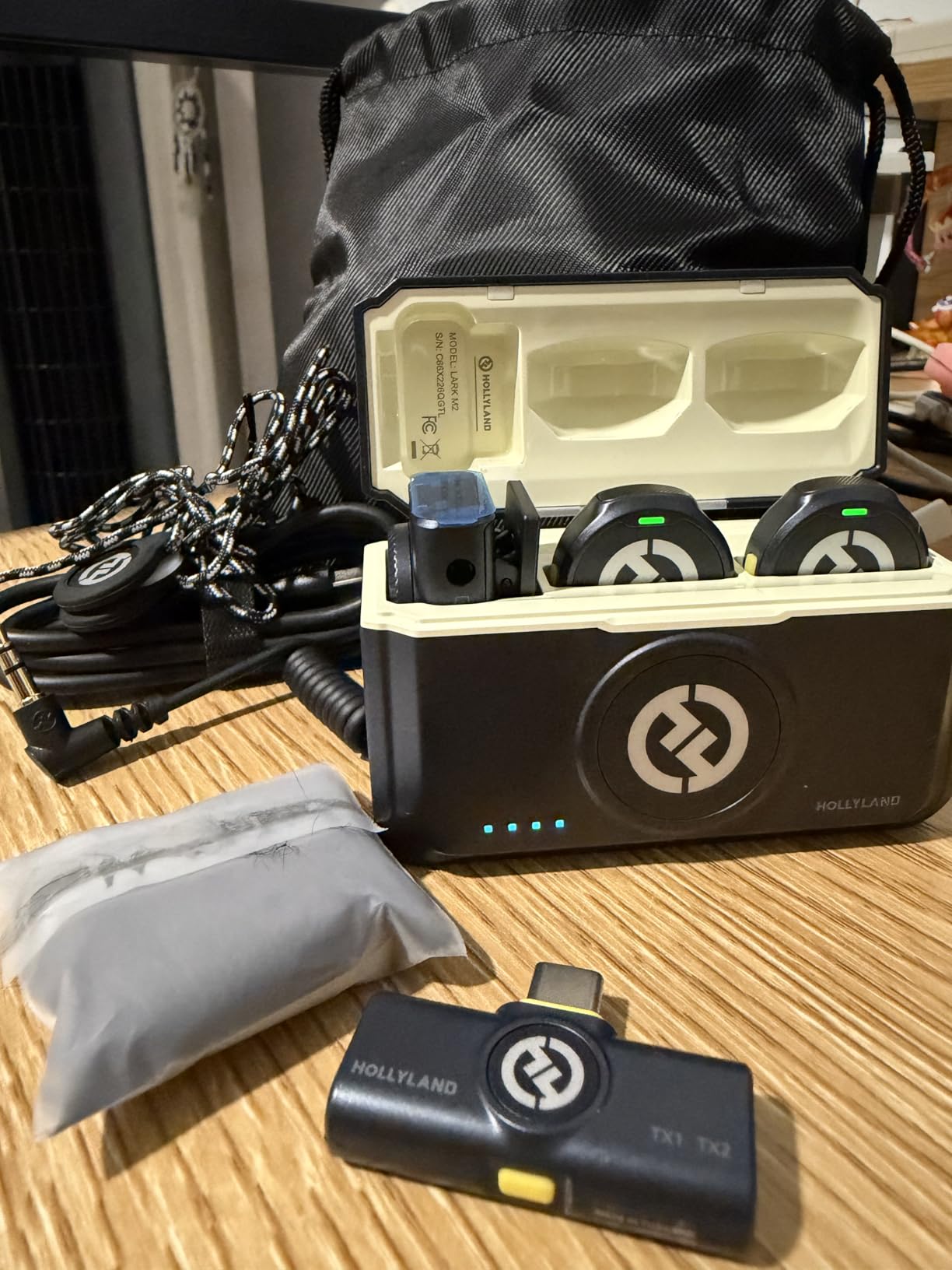
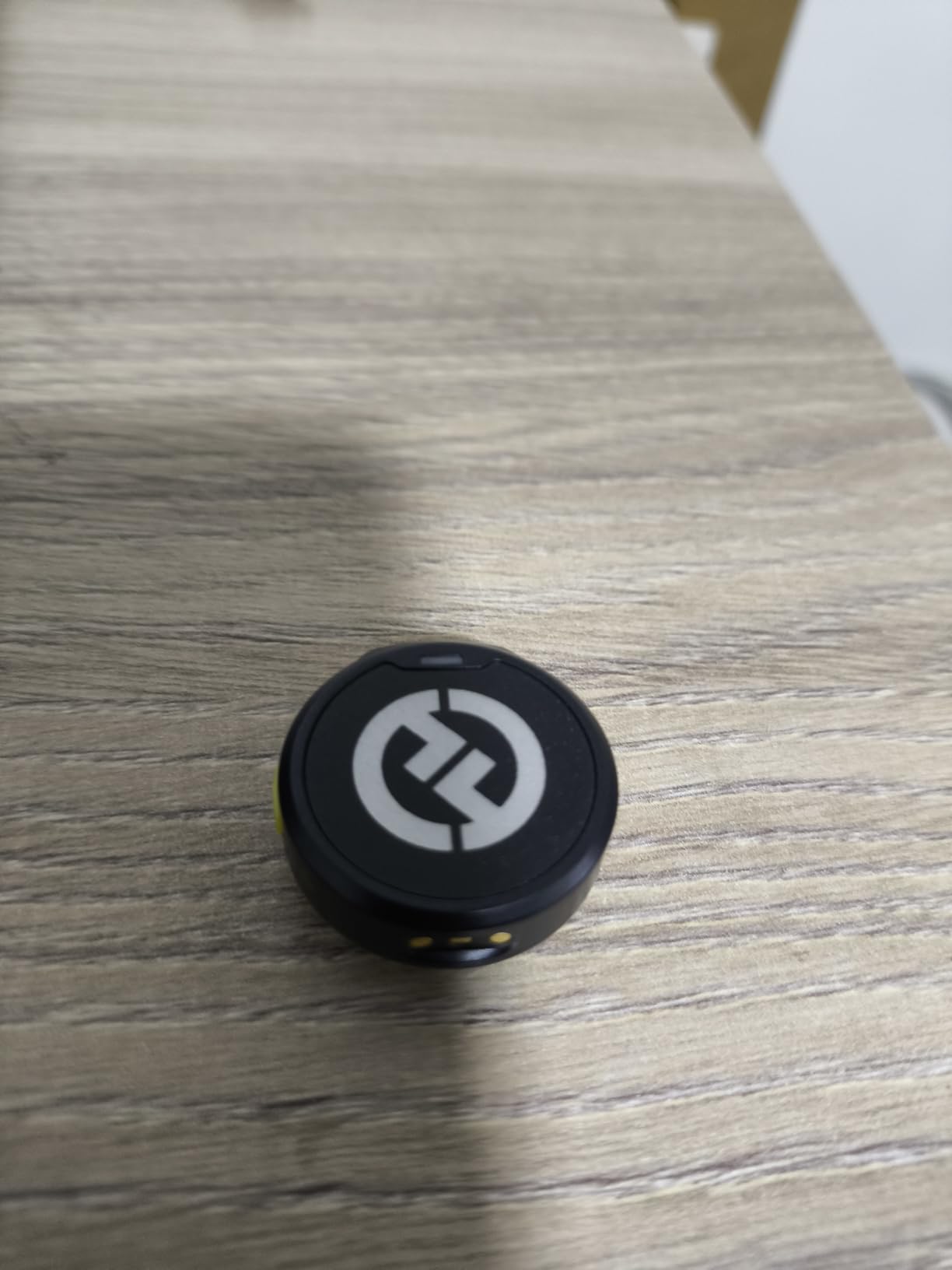
One thing to plan around: the transmitter buttons are small. When the mic is clipped under a jacket lapel, finding the record button by touch takes a minute. I started color-marking my transmitters with a tiny dot of nail polish so I could tell left and right at a glance.
The 40-hour total battery life claim held up across two full days of interviews. The charging case fully recharges the pair twice in under two hours, and the receiver displays a clean LED status so you always know how much juice is left. Pairing happens automatically the moment you open the case – I never touched a menu.
Best use cases for the Hollyland Lark M2
Pick the Lark M2 if you shoot two-person interviews or travel content where you need a featherlight wireless pair that pairs instantly. It is the best dollar-for-dollar wireless upgrade on the market right now.
Where the Hollyland Lark M2 falls short
It is not ideal if you rely on onboard recording as a safety net or if you need a dedicated shotgun pickup for distant sound sources. For pure run-and-gun outdoor work with serious wind, pair it with the included deadcat windshield.
3. Movo VXR10 Shotgun Microphone – Best On-Camera Shotgun for Beginners
Movo VXR10 Universal Shotgun Mic for Camera
Type: Shotgun
Power: Plug-in
Range: 5m pickup
Weight: 51g
Pros
- Universal compatibility with iPhone
- Android
- DSLR
- mirrorless
- camcorder
- and GoPro
- Solid aluminum body with built-in shock mount absorbs handling noise
- Directional super-cardioid shotgun pattern rejects side distractions
- No battery required - draws plug-in power from your camera
- Includes fuzzy windscreen
- TRS and TRRS cables
- and dual shock mounts
Cons
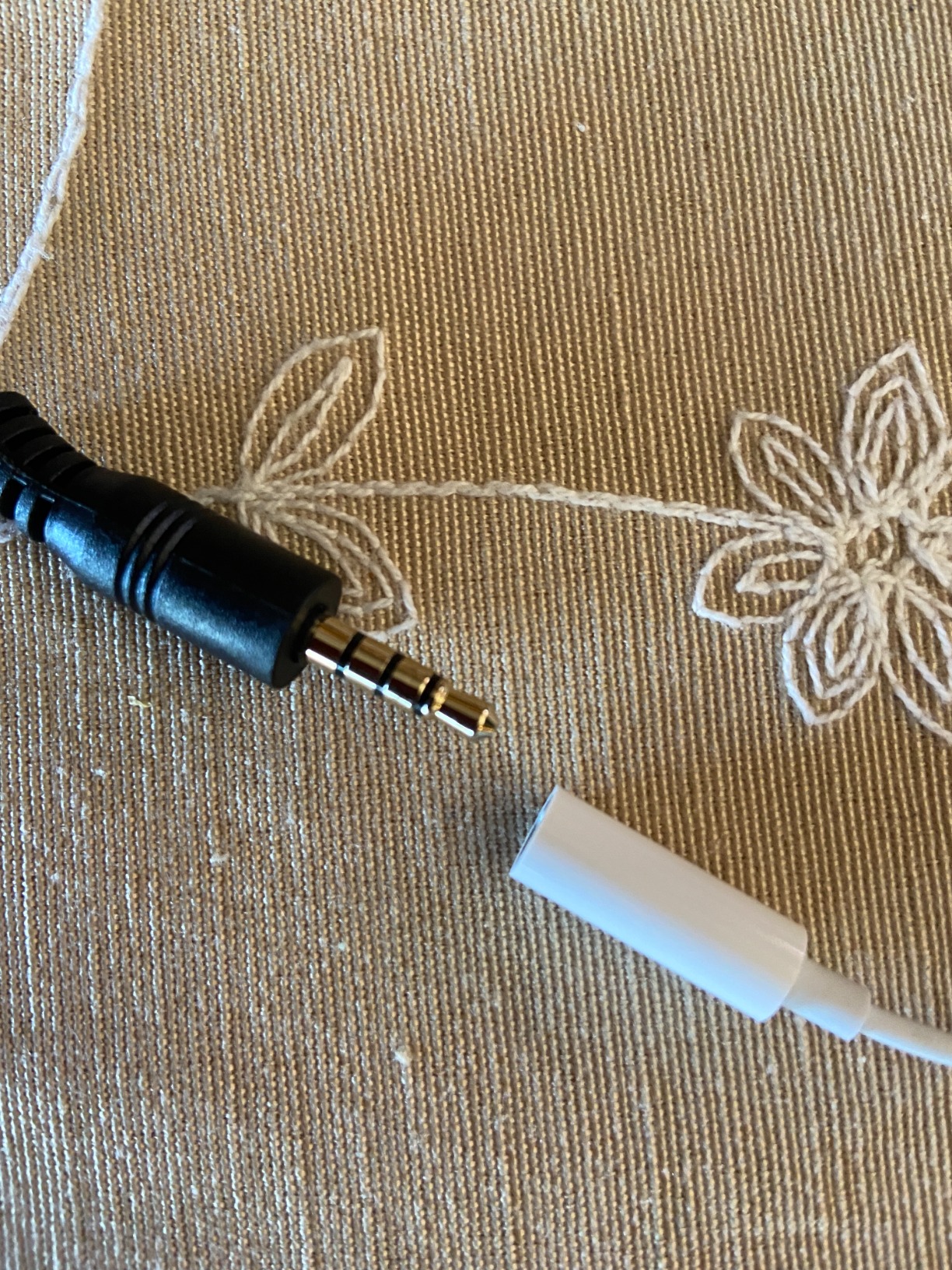
- Newer USB-C and Lightning phones require a 3.5mm adapter not always included
- Some Canon Rebel T6
- T7
- and certain VIXIA camcorders do not support external mics
The Movo VXR10 is the shotgun mic I keep recommending to first-time creators because it does the basics right without overcomplicating things. It is a directional super-cardioid microphone that mounts to any camera’s hot shoe, runs on plug-in power, and ships with both TRS and TRRS cables in the box. I plugged it into an old Canon Rebel, a Sony ZV-1, and an iPhone with a Lightning dongle – all three recorded clear, focused dialogue.
The aluminum body feels more substantial than the plastic competitors in this price range, and the built-in shock mount genuinely absorbs the bumps of handheld shooting. I filmed a walking tour through a busy downtown block and the audio came back remarkably clean – no clicks, no thuds from my footsteps.
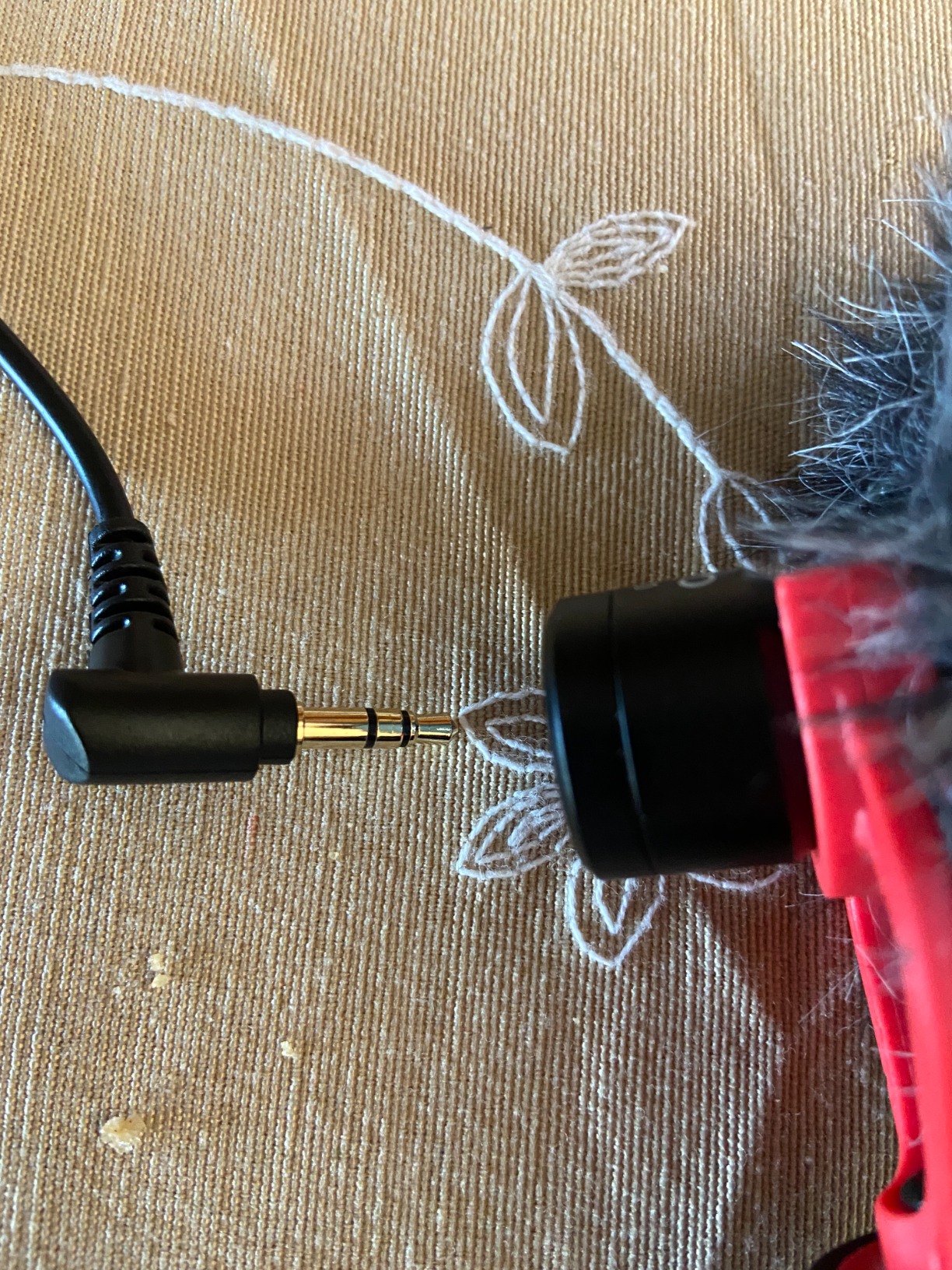
Where the VXR10 shines is the accessories bundle: fuzzy windscreen, two different shock mounts, a carrying case, and both cable types. Most budget shotguns ship with a foam piece and nothing else. The fuzzy windshield made a real difference on a windy rooftop shoot where a competing foam-only mic produced unusable audio.
The shotgun pattern is genuinely directional. I tested it in a cafe by pointing the mic at a friend across the table and then rotating ninety degrees – the ambient noise dropped noticeably when I pointed it back at my subject. It is not as tight as a flagship Rode NTG, but for the price tier it is hard to beat.
Best use cases for the Movo VXR10
The VXR10 is the right pick if you shoot talking-head videos, sit-down podcasts, or event coverage where you can stay a few feet from your subject. Beginners get the most value from the bundled cables and the simple plug-and-power setup.
Where the Movo VXR10 falls short
It is not ideal if you film in serious wind without buying a separate deadcat, and it does not work on entry-level Canon and Nikon bodies without an external adapter. For wireless freedom on a mirrorless or phone, a lavalier kit like the Lark M2 serves better.
4. MAYBESTA Wireless Mini Microphone – Budget Pick for New Creators
MAYBESTA Wireless Mini Microphone for iPhone, Android Phone – 2 Pack Lavalier Lapel Mic for Audio Video Recording – Clip on Content Creator Microphones for YouTube Tiktok Podcast Vlogging
Type: Wireless Lavalier
Battery: All-day
Connectors: Lightning and USB-C
Pack: 2 mics
Pros
- Wide compatibility with iPhone
- Android
- iPad
- laptop
- and tablet
- Upgraded longer receiver works with most phone cases
- Easy automatic connection with no adapter or app required
- Omnidirectional pickup with included windscreen and noise reduction chip
- Ships with both Lightning and USB-C options and two microphones
Cons
- Muffled sound quality unless the mic is held close to the mouth
- Some users report one of the two mics stopping work after limited use
The MAYBESTA 2-pack is the kit I point absolute beginners toward because it removes every setup barrier. You plug the receiver into your phone, power the mic on, and a green light confirms you are recording. No apps, no Bluetooth pairing, no menu diving. I handed the kit to a friend who had never used an external mic before and she was recording clean audio in under a minute.
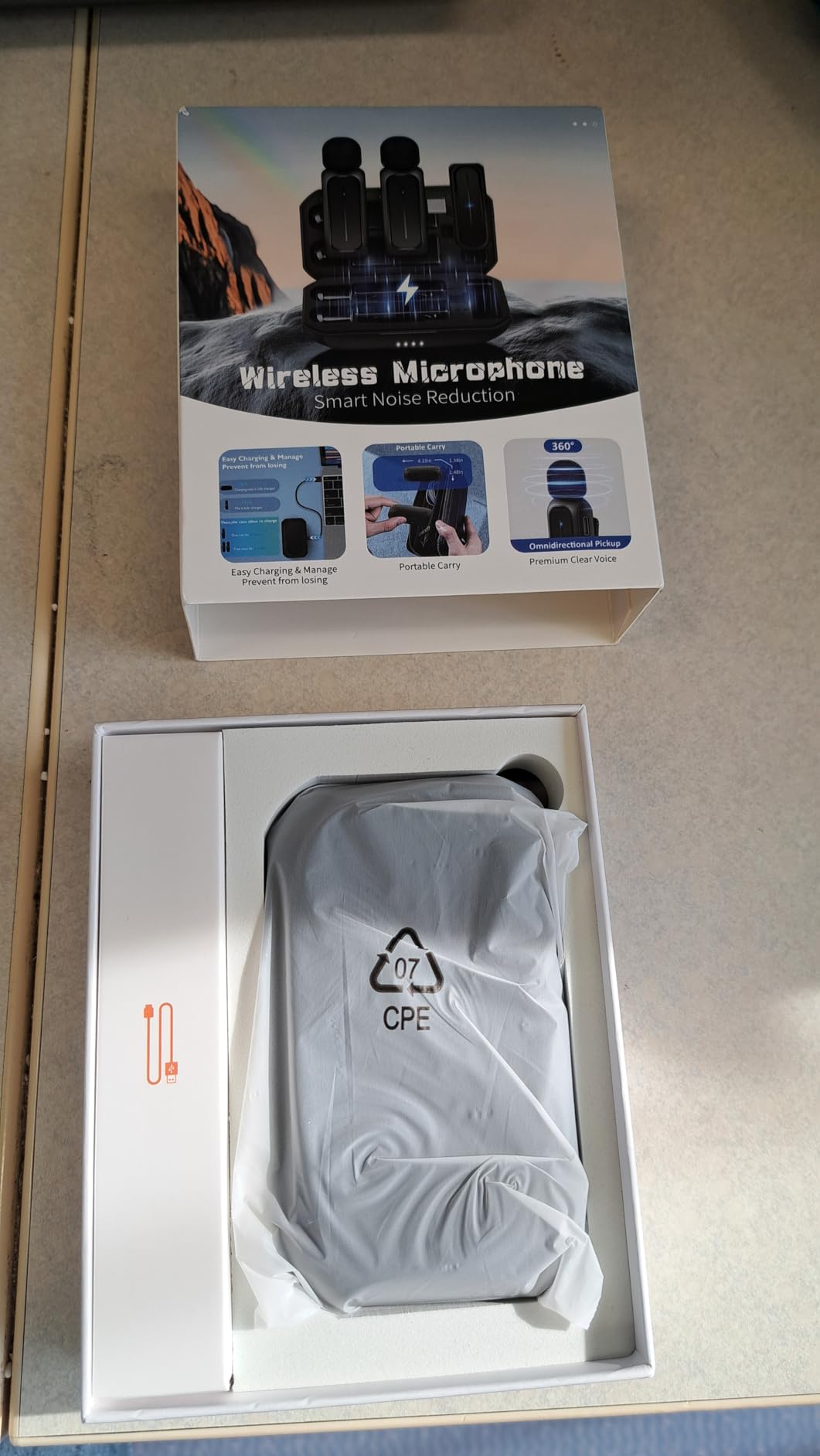
The dual-pack design is what makes this kit a standout value. Most wireless lav systems at this price ship with one transmitter – the MAYBESTA kit gives you two, which means you can run a two-person interview or capture both sides of a conversation without buying a second kit. The Lightning and USB-C receivers both ship in the box.
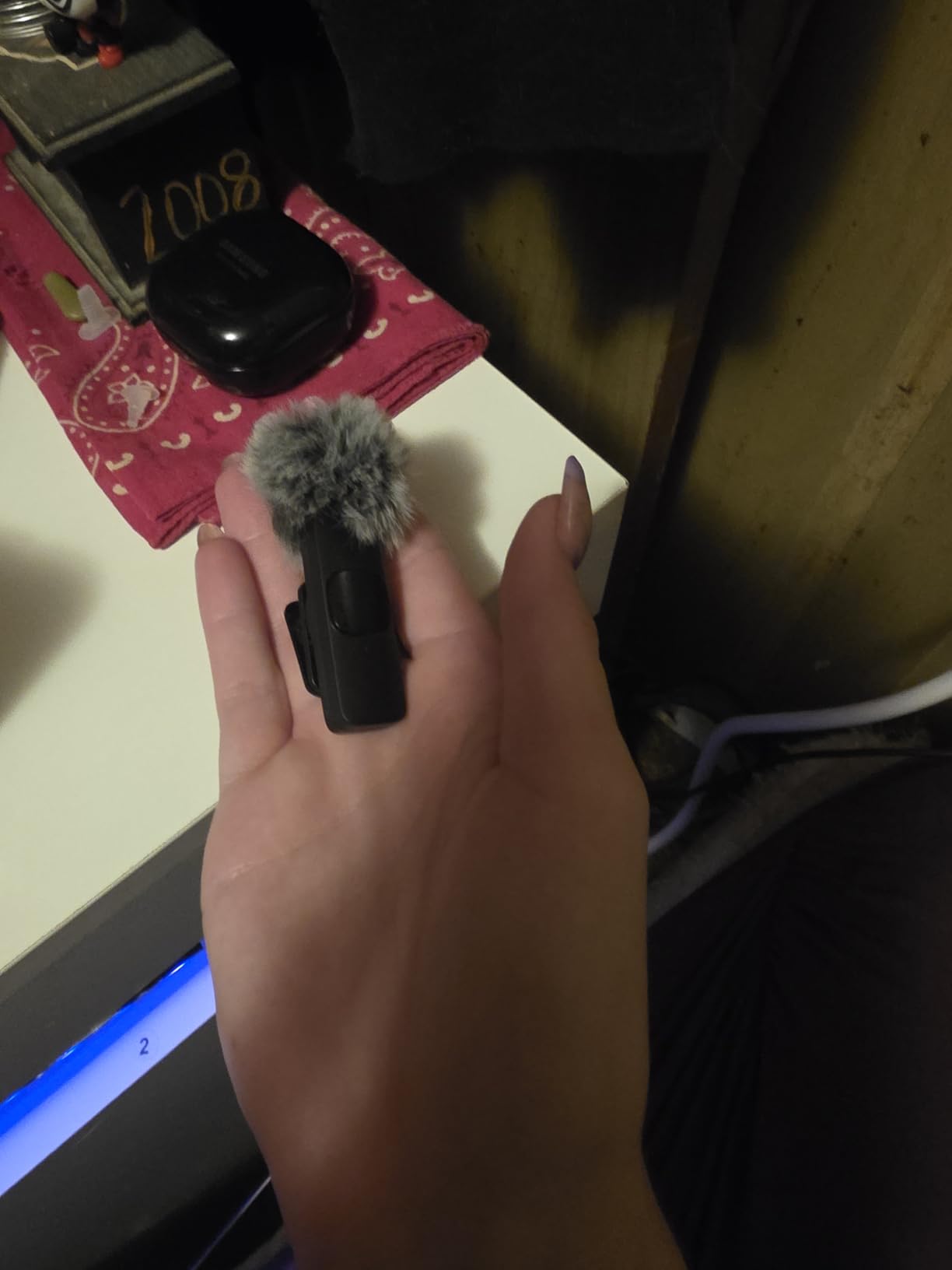
Audio quality is the trade-off. The omnidirectional pickup is clear at close range but thins out when the mic sits more than a foot from your mouth. For TikToks, Reels, and talking-head videos where the mic sits right under your chin, the sound is clean and full. For lapel-clipped interview work, expect to do some EQ cleanup in post.
The receiver is designed to clear most phone cases, which is a small but important detail. I tested it through three different cases and the connector cleared every one without forcing me to remove the case. Battery life on the transmitters lasted through a full day of intermittent recording.
Best use cases for the MAYBESTA Wireless Mini
The MAYBESTA kit is the right pick if you are starting a TikTok or Reels account and want a true plug-and-play wireless setup. New vloggers who film mostly indoors get the most value from the dual-pack design.
Where the MAYBESTA Wireless Mini falls short
It is not ideal for outdoor windy shoots without a separate deadcat, and the lapel-clipped audio quality drops noticeably compared to higher-tier lav systems. For professional-grade outdoor audio, step up to the Hollyland Lark M2 or DJI Mic Mini.
5. Mini Mic Pro Wireless Lavalier – Best for Beginners Who Need Wind Protection
Mini Mic Pro (Latest Model – #1 Microphone for iPhone & Android, Wireless Mini Microphone, Clear Voice, Noise Cancelling, Lavalier Mic for TikTok, YouTube & Interviews
Type: Wireless Lavalier
Battery: 6h
Connectors: Lightning and USB-C
Pack: 1 mic
Pros
- Plug-and-play with both USB-C and Lightning adapters included
- Clear and warm vocal capture that sounds natural on camera
- Lightweight under-one-ounce transmitter for all-day wear
- Includes both foam and deadcat windscreens for outdoor shoots
- Receiver charges the connected phone while recording
Cons
- Receiver connector durability can fail if the phone is dropped while plugged in
- Compressed wireless signal compared to wired lavs for studio-grade fidelity
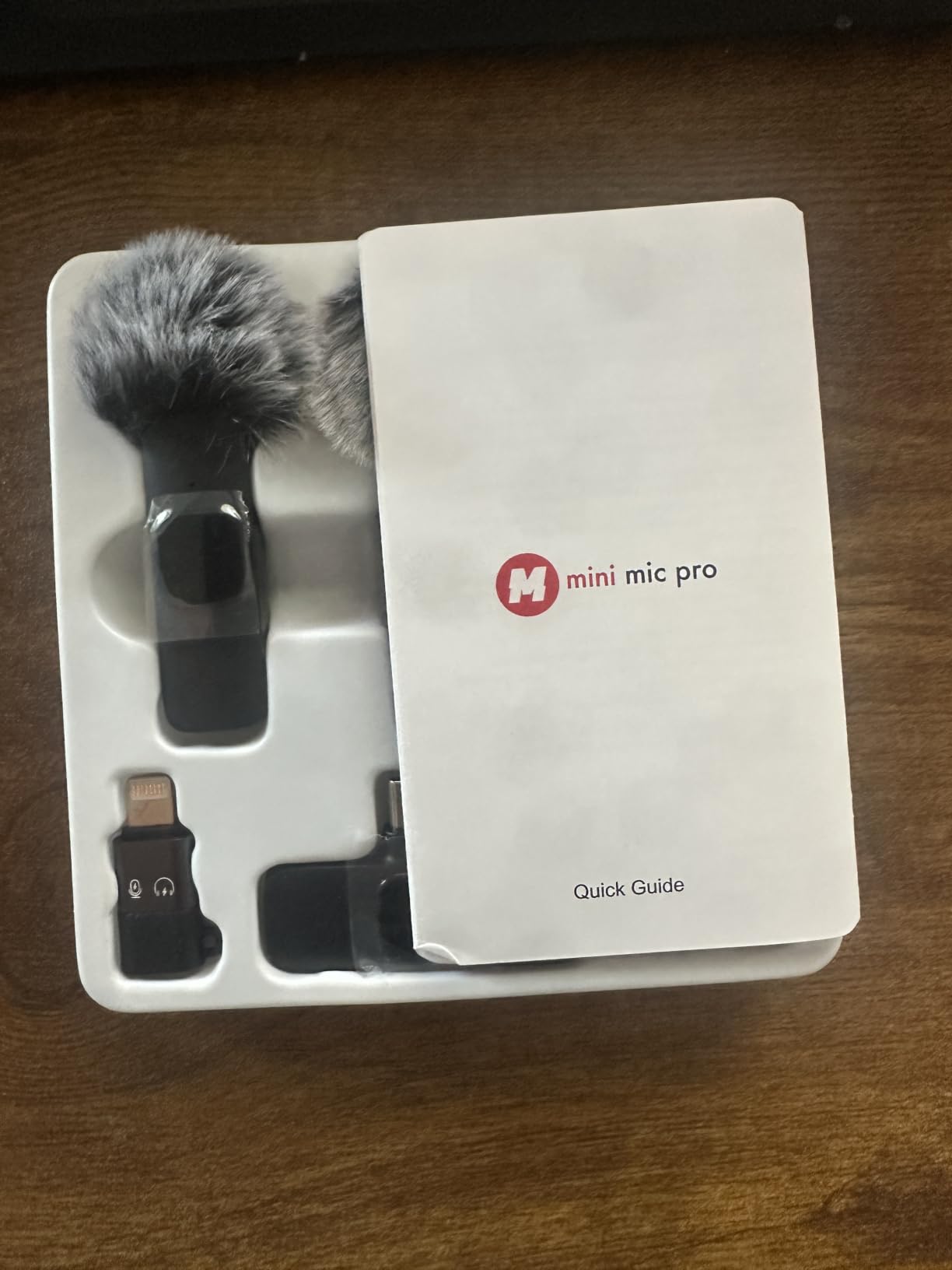
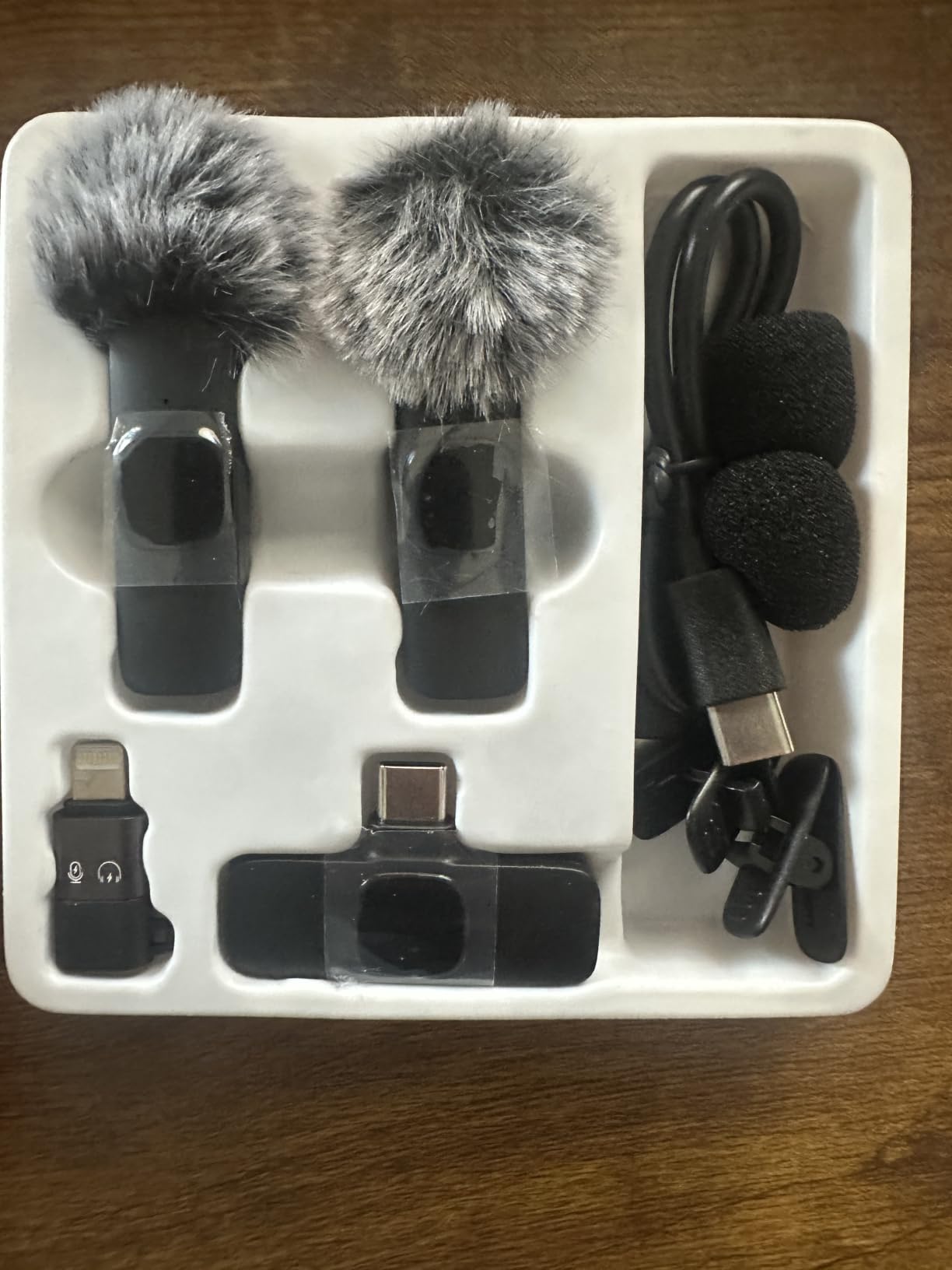
The Mini Mic Pro is the kit I recommend to creators who shoot outdoors as often as they shoot indoors. Most budget wireless lavs ship with a single foam windscreen that does almost nothing for serious wind. The Mini Mic Pro ships with both a foam and a deadcat windshield in the package, which means the first day you film outside you are not scrambling to buy accessories.
The plug-and-play setup is genuinely zero-friction. The receiver has a USB-C plug on one end and a Lightning adapter on the other, both included. I plugged it into an iPhone 15, powered the transmitter on, and recorded a clear voiceover in under a minute. The signal stays solid to about 30 feet indoors and roughly 50 feet outdoors with line of sight.
Vocal character is warmer than most budget lavs I have tested. Reviewers consistently describe it as “natural sounding,” and I agree – the audio lacks the hollow, tinny quality that plagues cheap 2.4GHz systems. For talking-head YouTube and TikTok content, it sounds more polished than the price suggests.
One quirk worth knowing: the receiver charges your phone while recording, which is genuinely useful on long shoot days. But the Lightning connector on the receiver is the most fragile part of the system, so be careful not to drop the phone with the receiver still plugged in.
Best use cases for the Mini Mic Pro
The Mini Mic Pro is the right pick if you film outdoors regularly and do not want to buy a separate deadcat. Beginners who shoot a mix of indoor and outdoor content get the most value from the included wind protection.
Where the Mini Mic Pro falls short
It is not ideal for long-distance wireless (above 30 feet) or for professional studio-grade fidelity. If you need dual transmitters for interviews, step up to the MAYBESTA 2-pack or the Hollyland Lark A1.
6. Hollyland Lark A1 Wireless Microphone – Best for Smartphone Livestreaming
Hollyland Lark A1(2TX + USB-C RX), Wireless Microphone for iPhone & Android
Type: Wireless Lavalier
Battery: 18h
Range: 200m
Weight: 8g TX
Pros
- True 48kHz/24-bit recording with 120dB SPL handling
- Smart 3-level noise cancellation (Weak
- Medium
- Strong)
- Plug-and-play USB-C and Lightning receiver with no Bluetooth dropouts
- Up to 200m wireless transmission range
- 18-hour battery life with two alternating transmitters
- Ultra-light 8g magnetic mic clips securely
Cons
- Advertised 200m range is unreliable in some real-world environments
- Charging-pin protective film is easy to miss during initial setup
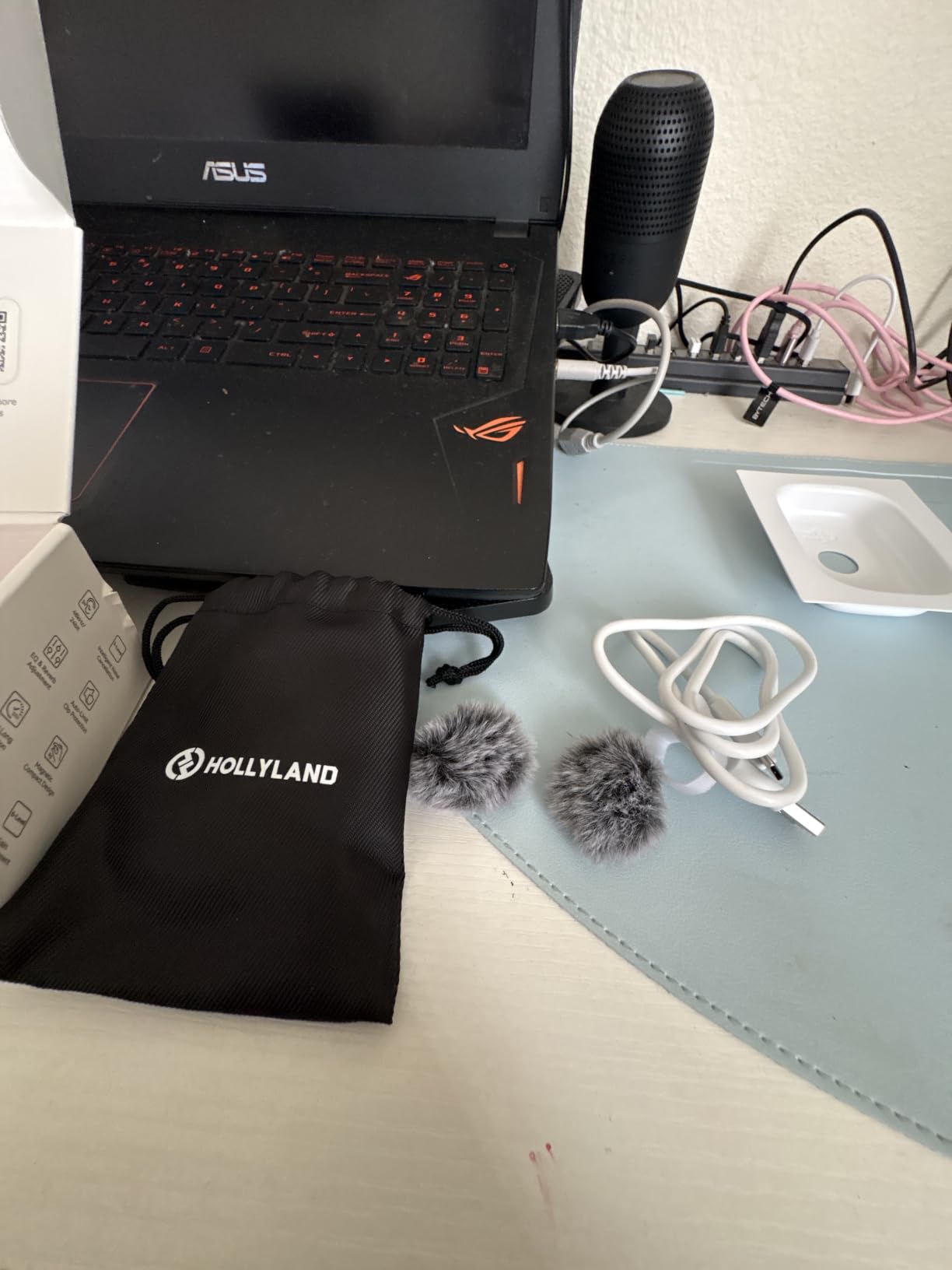
The Hollyland Lark A1 is the smartphone livestreaming kit I keep coming back to because the receiver is genuinely plug-and-play. There is no Bluetooth pairing step, no app to open, and no menu to navigate – you plug the USB-C or Lightning receiver into your phone and the system just works. For Instagram Live and TikTok sessions where every second of setup matters, that simplicity is invaluable.
The audio quality is more refined than the price suggests. The Lark A1 captures true 48kHz/24-bit audio at up to 120dB SPL without clipping, which means even loud cheering at a live event does not blow out the recording. The 3-level noise cancellation (Weak, Medium, Strong) is more granular than the typical 2-level systems, and the Medium setting turned out to be the sweet spot for indoor livestreaming.
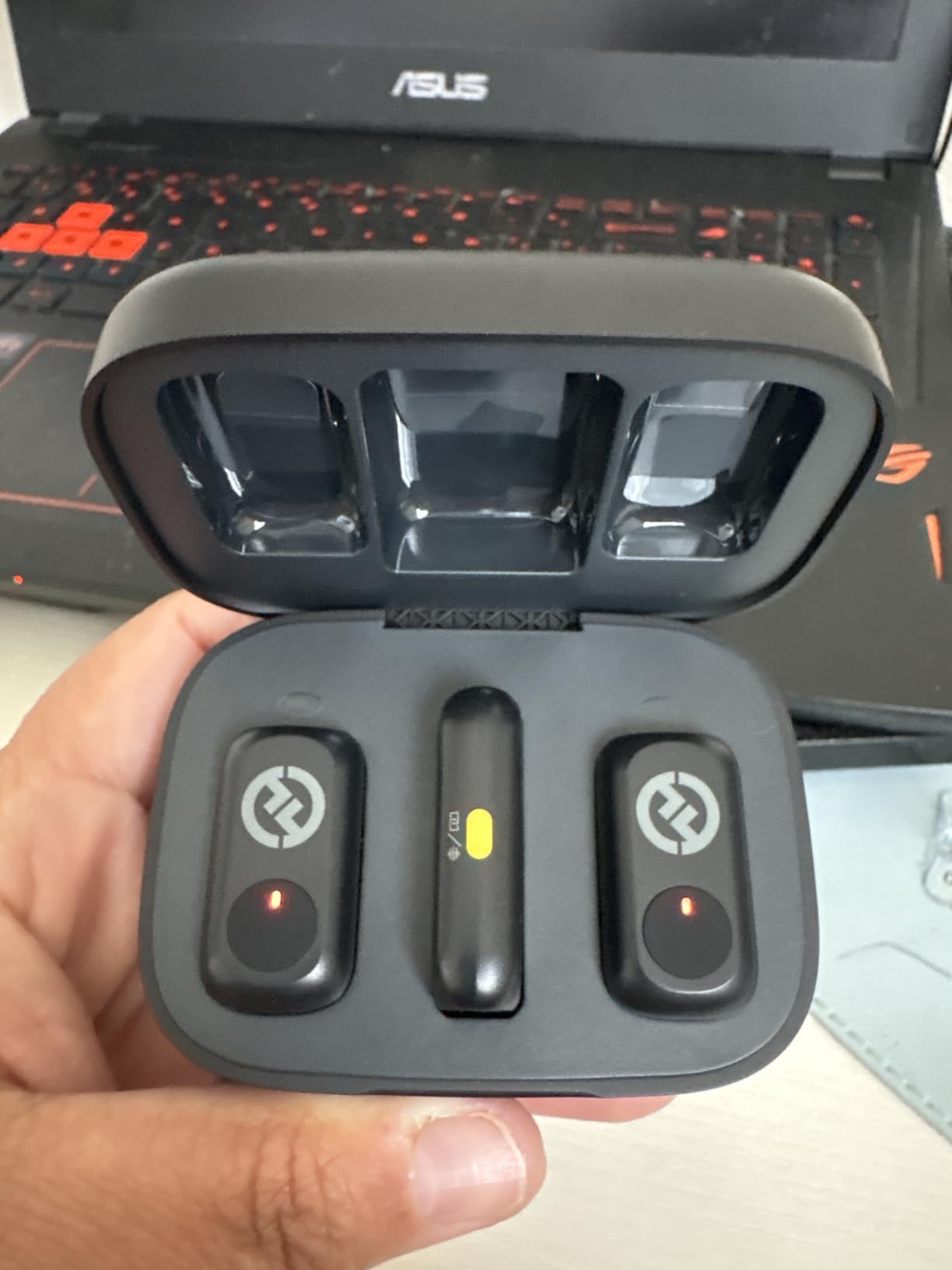
The 8g magnetic mic is the second feature I appreciate. The magnetic clip slides onto a collar or lapel in seconds, and the transmitter is light enough that it does not drag down thin fabrics. I wore one under a linen shirt for a full outdoor livestream and never had to fiddle with it mid-stream.
Battery life stretched across a 6-hour livestream with two transmitters alternating – the system claims 18 hours of total use, which matched my real-world test. The charging case extends that to roughly 54 hours total, which is more than enough for a multi-day event.
Best use cases for the Hollyland Lark A1
The Lark A1 is the right pick if you livestream regularly on Instagram, TikTok, or YouTube from a smartphone. Creators who want studio-grade audio fidelity without the complexity of Bluetooth pairing benefit from the simple USB-C or Lightning receiver.
Where the Hollyland Lark A1 falls short
It is not ideal if you need a camera-mount receiver for a DSLR or mirrorless body. The advertised 200m wireless range is shorter than claimed in real-world tests through walls. For longer-range wireless, the DJI Mic Mini or Hollyland Lark M2 is a better fit.
7. PQRQP 3-in-1 Wireless Lavalier – Most Versatile Connector Kit
PQRQP 3 in 1 Professional Wireless Lavalier Microphone for iPhone/Android/Camera, Wireless Microphones, Mini Microphone, Crystal Clear Sound Quality for Recording, Live Streaming, Clips-Elegant Black
Type: Wireless Lavalier
Battery: 7h
Range: 65ft
Connectors: 3-in-1
Pros
- 3-in-1 universal receiver supports USB-C
- Lightning
- and 3.5mm devices
- 65ft stable wireless transmission for everyday vlogging range
- Active noise reduction chip with high-sensitivity omnidirectional mic
- 7 hours of working time per charge with pass-through charging
- Plug-and-play auto pairing with no apps or Bluetooth required
Cons
- Some Android USB-C phones require manual OTG activation in settings
- 3.5mm connector on the receiver does not work with most laptops
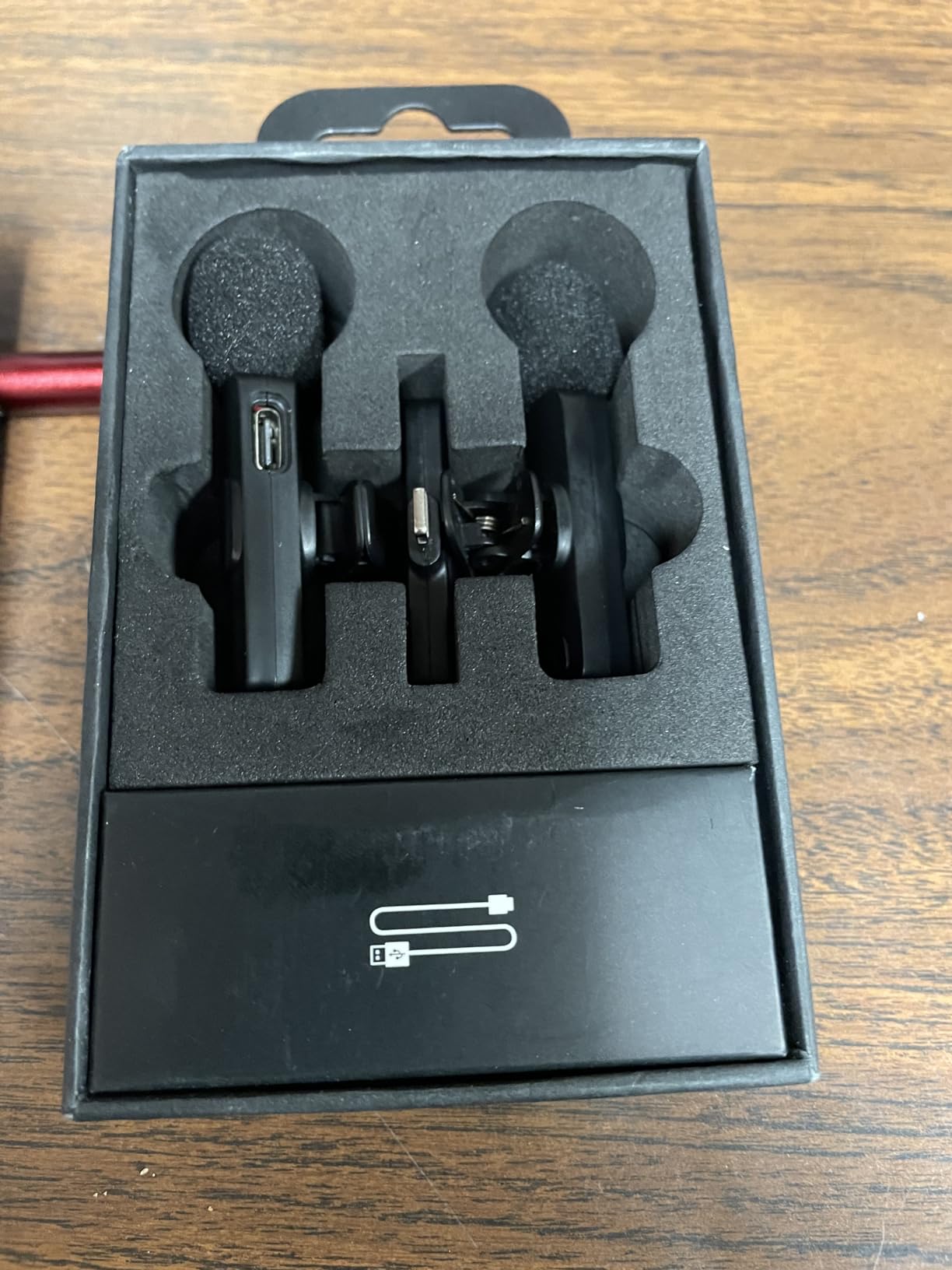
The PQRQP 3-in-1 is the kit I recommend when a creator needs to swap between a phone, a camera, and a laptop without buying three separate receivers. The single receiver physically adapts between USB-C, Lightning, and 3.5mm – no dongles, no extra parts to lose. I filmed an interview on an iPhone, switched to a Sony mirrorless for the next take, and then used the same kit on a laptop for a Zoom call, all without touching a settings menu.
Audio capture is clear at close range. The active noise reduction chip does a credible job trimming HVAC hum and laptop fan noise, and the omnidirectional pickup pattern captures natural-sounding dialogue when the mic is clipped to a collar. The 65ft wireless range is honest – I walked to the far end of my apartment and the signal held without dropouts.
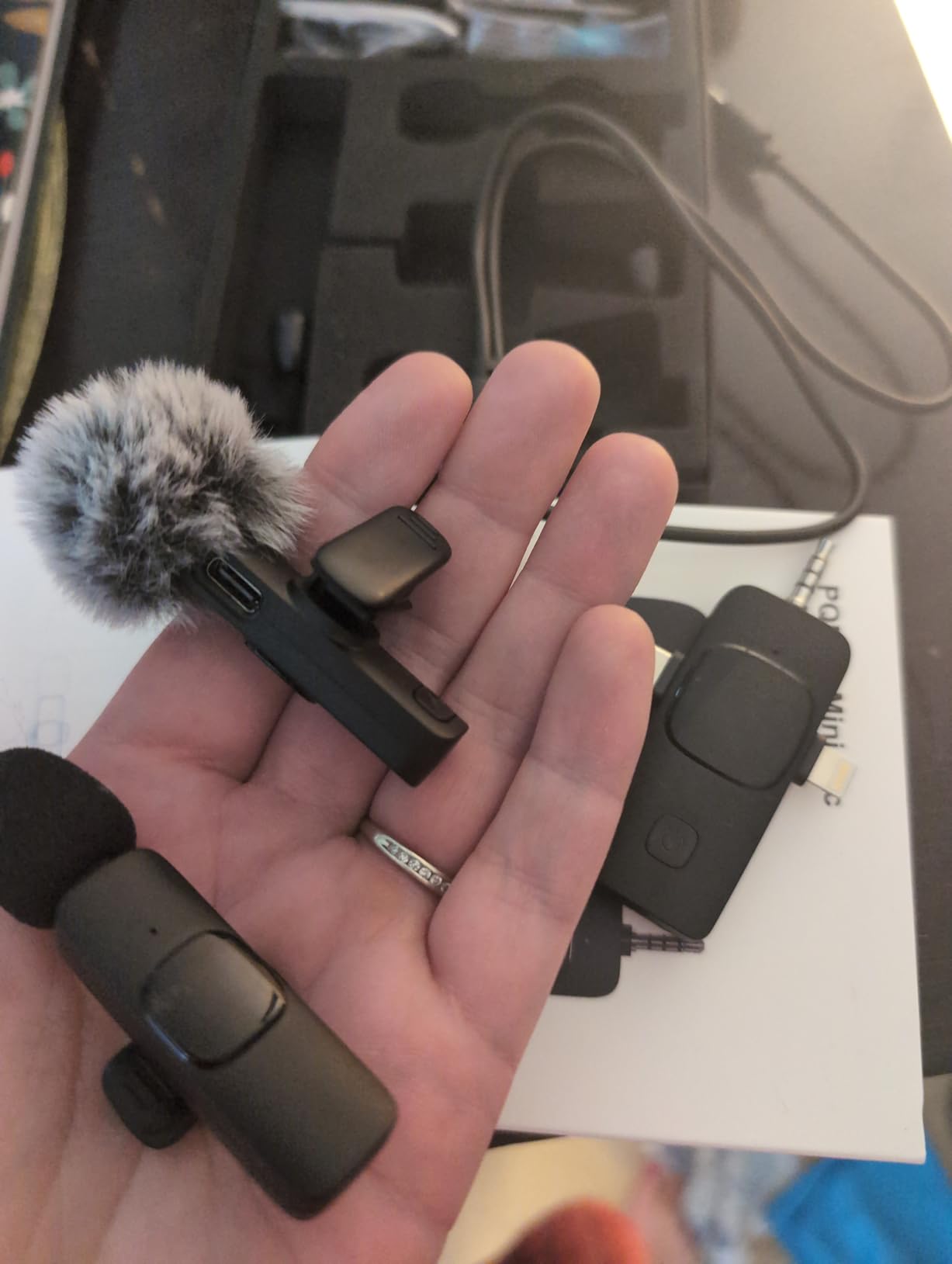
Pass-through charging is the unsung hero. The receiver has a charging port that keeps your phone topped up while you record, which matters on long shoot days or livestreams. Battery life on the transmitter stretched through a 5-hour podcast recording session with juice to spare.
One setup note worth flagging: some Android phones need OTG turned on in the settings menu before the receiver is recognized. It is a one-time toggle, not a per-session step, but it caught me out the first time I tried it on a Samsung Galaxy.
Best use cases for the PQRQP 3-in-1
The PQRQP kit is the right pick if you film across multiple devices and want one kit that covers them all. Cross-platform creators who shoot on a phone, camera, and laptop get the most value from the universal receiver.
Where the PQRQP 3-in-1 falls short
It is not ideal for long-range wireless (above 65 feet) or for serious outdoor wind without adding a separate deadcat. For studio-grade audio fidelity, the Hollyland Lark M2 captures a more refined signal.
8. GoorDik 4-in-1 Wireless Lavalier – Best Denoise on a Budget
GoorDik Wireless Lavalier Microphone for iPhone, Android, USB C, PC, Camera Video Recording 4 in 1 Clip-on Mics with Rotatable Clip&Denoise Recording, for Vlog Tiktok YouTube Podcast Content Creator
Type: Wireless Lavalier
Battery: 6-12h
Connectors: 4-in-1
Pack: 2 mics
Pros
- Advanced active denoise with two noise reduction modes (denoise and original)
- Plug-and-play with intuitive indicator lights and rotatable clip
- Four connector options (USB-C
- Lightning
- 3.5mm TRRS
- USB adapter)
- 6-12 hours of battery life per transmitter with 1-to-2 charging cable
- USB-C charging port on receiver charges phone while recording
Cons
- Furry windscreen muffs can be tricky to attach correctly
- Some users report picking up background noise in busy outdoor environments
The GoorDik 4-in-1 is the kit I recommend to creators who film in noisy environments – cafes, trade shows, busy markets. The dual noise reduction modes (denoise and original) let you A/B test which one cleans up the background without flattening your voice. The denoise mode cut the espresso machine rumble in a cafe test from distracting to barely noticeable.
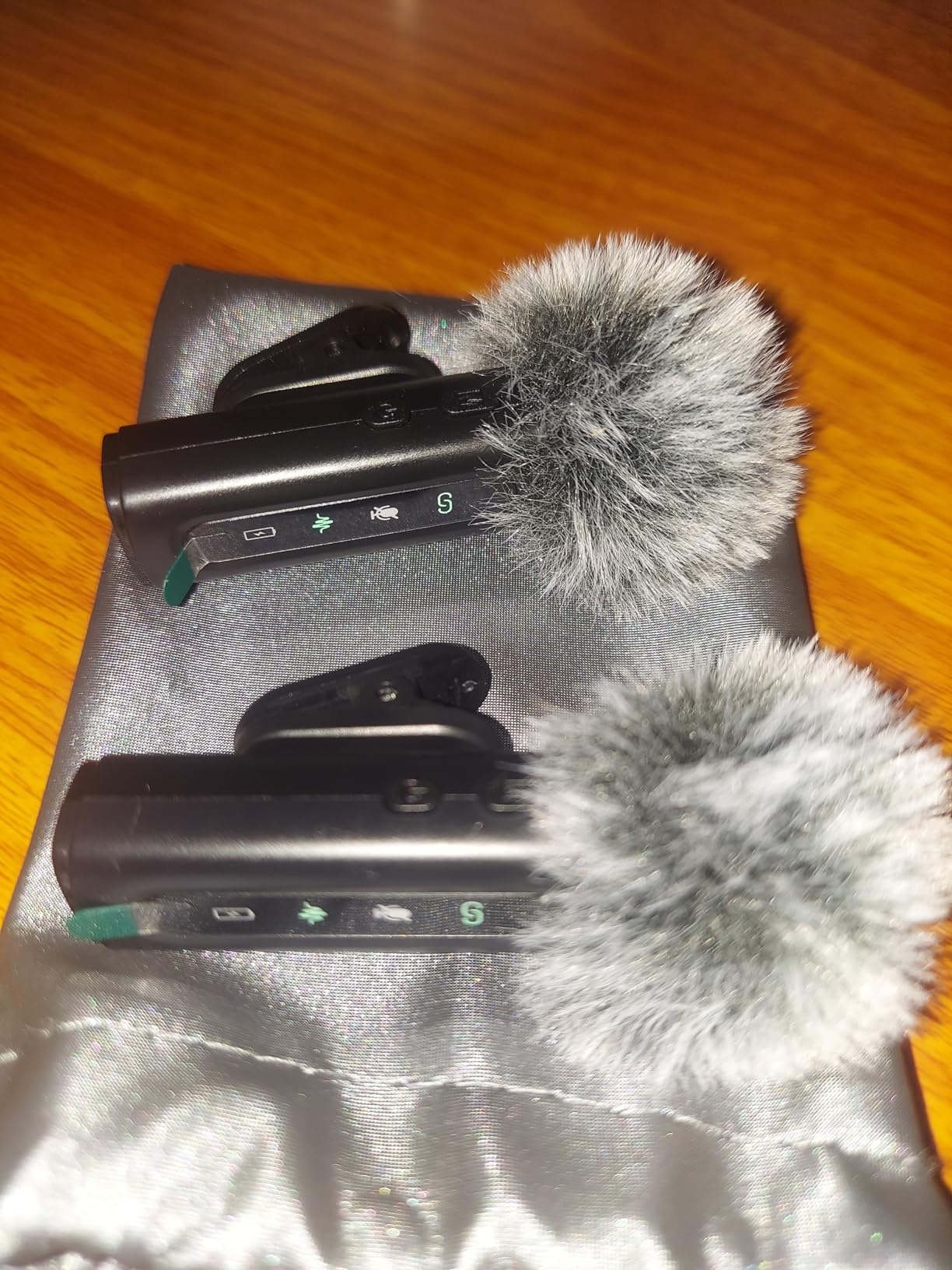
The dual-transmitter kit is what makes this a strong value at the price. Two mics means two-person interviews out of the box, which is unusual for budget wireless kits. The rotatable clip on each transmitter lets you angle the mic toward the speaker’s mouth regardless of where it is clipped, which is a thoughtful design touch.
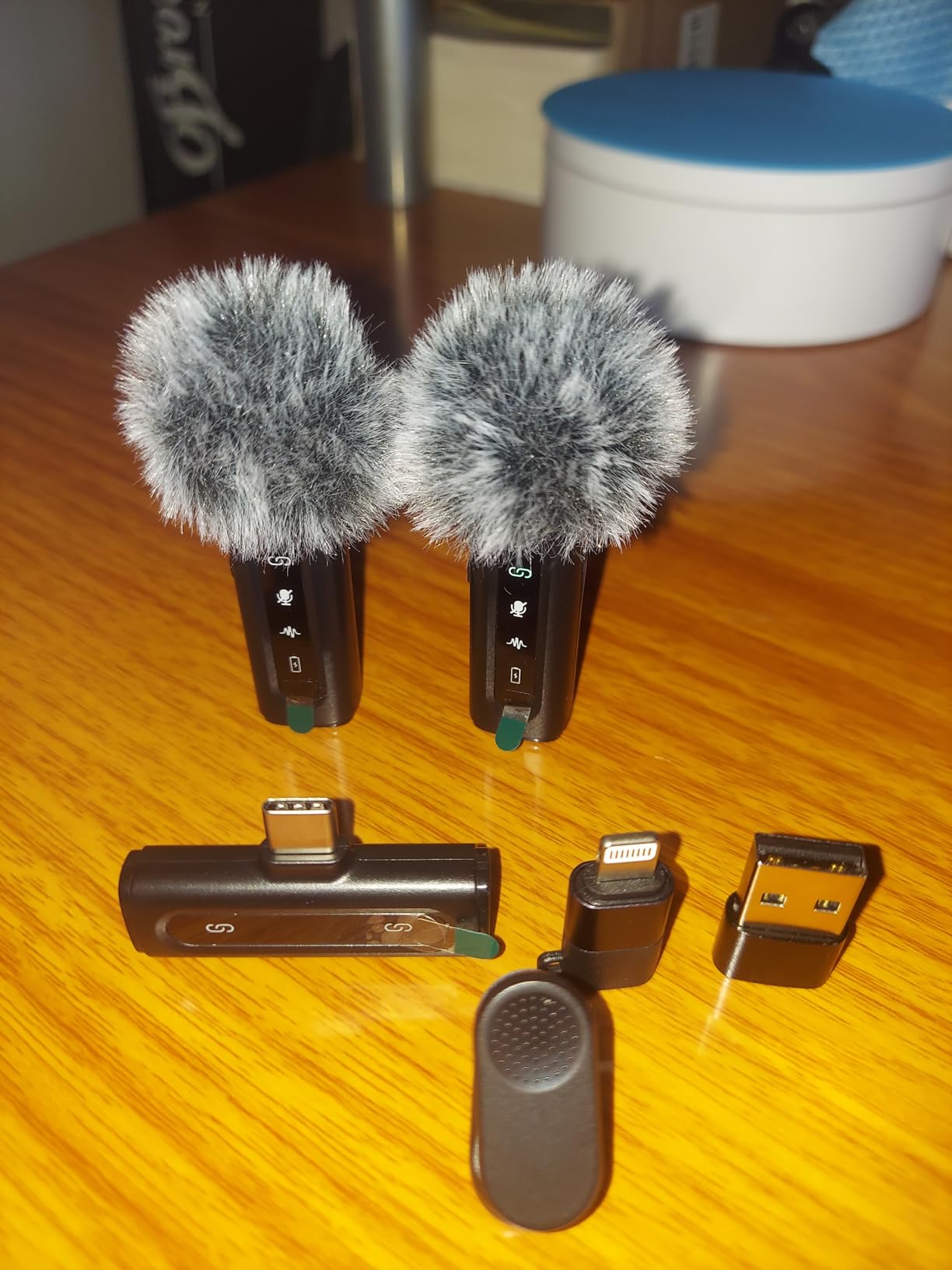
Battery life is the strongest part of the system. The transmitters claim 6-12 hours per charge depending on usage, and in my testing they ran for a full 8-hour shoot day with battery to spare. The 1-to-2 charging cable is a small detail that makes a real difference on multi-mic shoot days – one cable tops up both transmitters at once.
The included furry windscreens are a mixed bag. They do an effective job of cutting wind noise, but getting them seated properly on the small transmitter takes a few attempts the first time. Watch a quick tutorial before your first outdoor shoot.
Best use cases for the GoorDik 4-in-1
The GoorDik kit is the right pick if you regularly shoot in noisy indoor environments and want a budget denoise option. Two-person interview creators get the most value from the dual-transmitter kit.
Where the GoorDik 4-in-1 falls short
It is not ideal for long-range wireless or for serious outdoor wind without carefully attaching the furry windscreen. For purer audio fidelity, the Hollyland Lark A1 records cleaner vocals at a similar price.
9. PGDLOF 3-in-1 Wireless Mini Microphone – Best for Fast Turnaround
PGDLOF 3 in 1 Wireless Mini Microphone for iPhone Android Phone Camera: Lavalier Lapel Mic for Video Recording – Noise Cancelling Clip on Shirt Microphones for Tiktok YouTube Podcast Vlogging
Type: Wireless Lavalier
Battery: 7h
Range: 70ft
Latency: 0.008s
Pros
- 3-in-1 receiver with USB-C
- Lightning
- and 3.5mm audio jack
- Built-in noise reduction chip with real-time auto-sync and ultra-low 0.008s latency
- Plug-and-play with no Bluetooth or apps needed
- Up to 70ft wireless transmission range
- About 7 hours of continuous battery life
- Rotating clip and extended receiver fit most phone cases
Cons
- Muffled sound when clipped to thick fabric like cotton
- Signal drops and distortion when moving more than 10ft from the camera
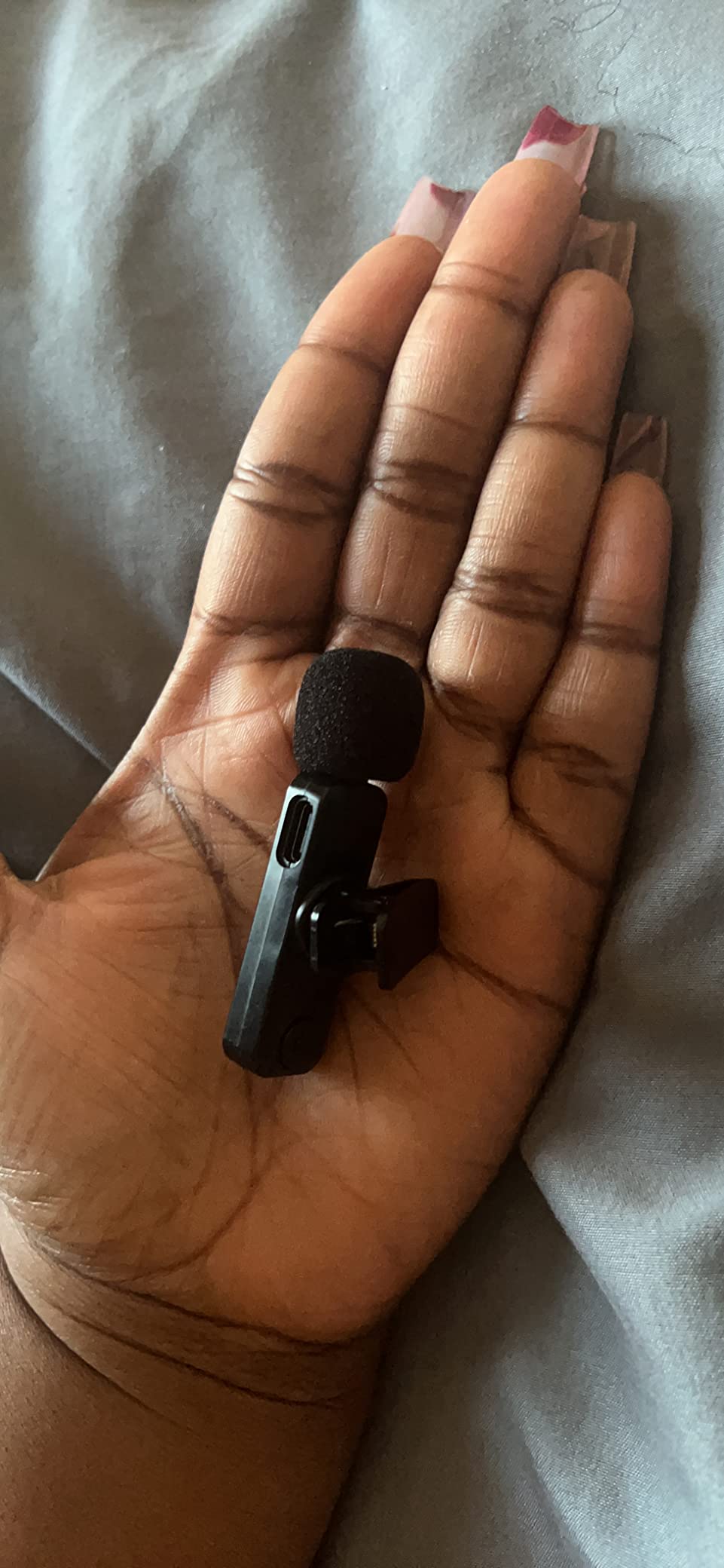
The PGDLOF 3-in-1 is the kit I reach for when I need to capture audio fast. The receiver pairs the moment it is powered on, the transmitter connects within a second, and there is zero app dependency. I have pulled it out of the package and recorded a usable clip in under ninety seconds – that is the kind of speed that matters when a moment is happening in front of you.
The ultra-low 0.008s latency is the spec that surprised me. Most budget wireless lavs introduce enough lag to make lip-sync corrections a headache in post. The PGDLOF’s near-zero latency means what you record lines up with the camera’s video almost automatically, which is a real time-saver for solo shooters.
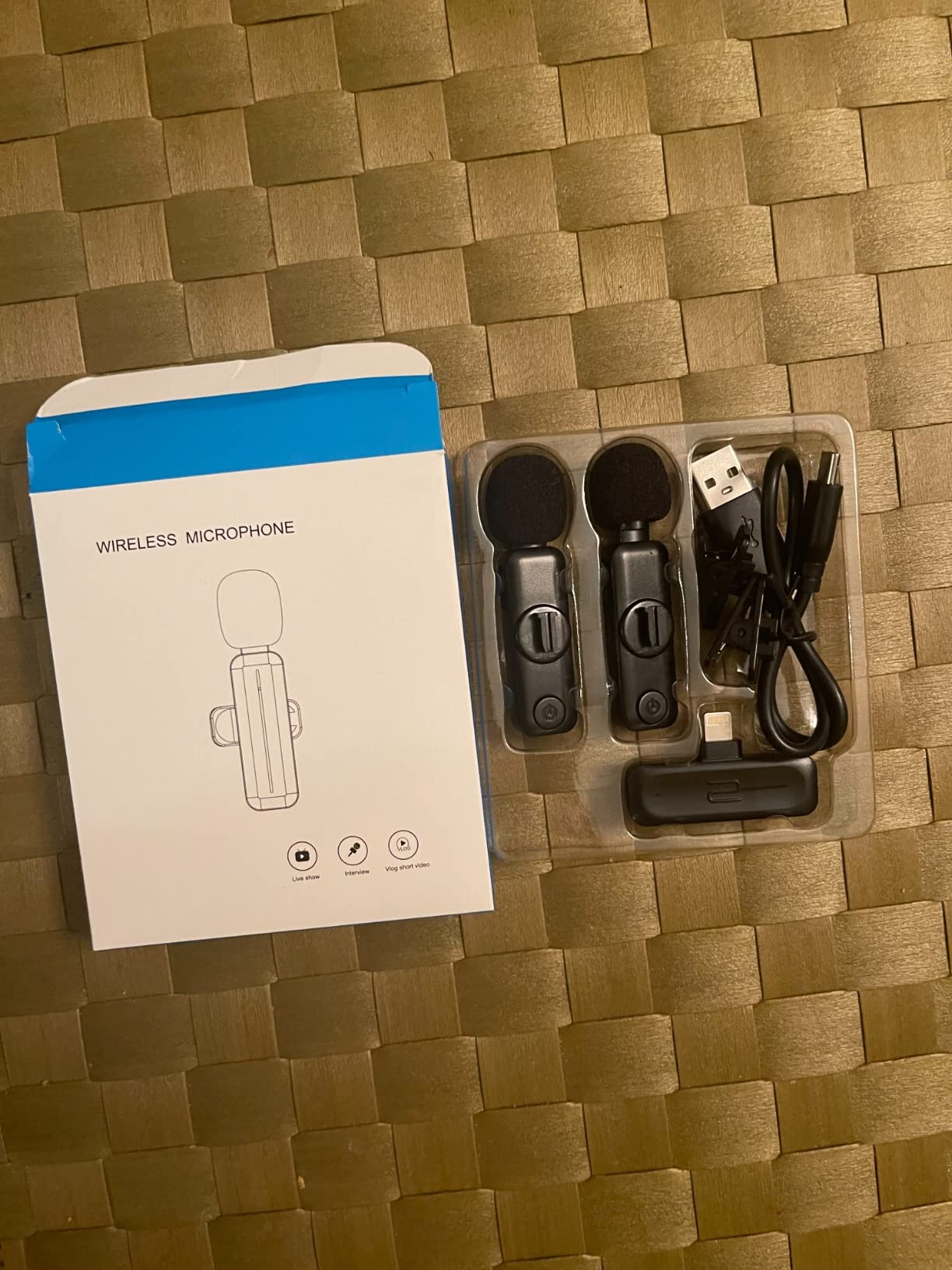
The 3-in-1 receiver covers the three most common ports (USB-C, Lightning, 3.5mm), and the extended connector design clears most phone cases without forcing you to remove them. The rotating clip lets you angle the mic toward the speaker’s mouth regardless of where it is attached.
The two caveats worth knowing: the audio gets muffled when the mic is clipped to thick cotton or wool fabric, so test it on your wardrobe before the shoot. And the wireless signal starts to drop when you move more than ten feet from the receiver, so this kit is best for stationary talking-head work rather than run-and-gun.
Best use cases for the PGDLOF 3-in-1
The PGDLOF kit is the right pick if you need to capture clips quickly without fiddling with apps or Bluetooth pairing. Stationary podcasters and talking-head YouTubers get the most value from the low-latency signal.
Where the PGDLOF 3-in-1 falls short
It is not ideal for run-and-gun shooting where you move more than ten feet from the camera, or for outdoor shoots where the mic is clipped to thick fabric. For wireless freedom on location, the Hollyland Lark M2 is a better fit.
10. TIKYSKY DSLR Shotgun Microphone – Best Close-Interview Shotgun
tikysky Camera Microphone, Video Microphone for DSLR Close Interview Shotgun Mic for Canon Nikon Sony Fuji Mic with Windscreen, Compatible with Camera with 3.5mm (1/8″) TRS Plug
Type: Shotgun
Power: AAA battery
Range: 0-5m pickup
Pickup: Super-cardioid
Pros
- Standard 3.5mm TRS plug fits most DSLR cameras
- Effective pickup range of 0-5m for sit-down interviews
- Super-cardioid pickup pattern reduces background noise
- Includes both foam and deadcat windscreens
- AAA battery powered with low-power indicator
- Compact size that does not dwarf a typical DSLR body
Cons
- Incompatible with mobile phones
- tablets
- and computers
- Some entry-level Canon and Nikon bodies are not compatible
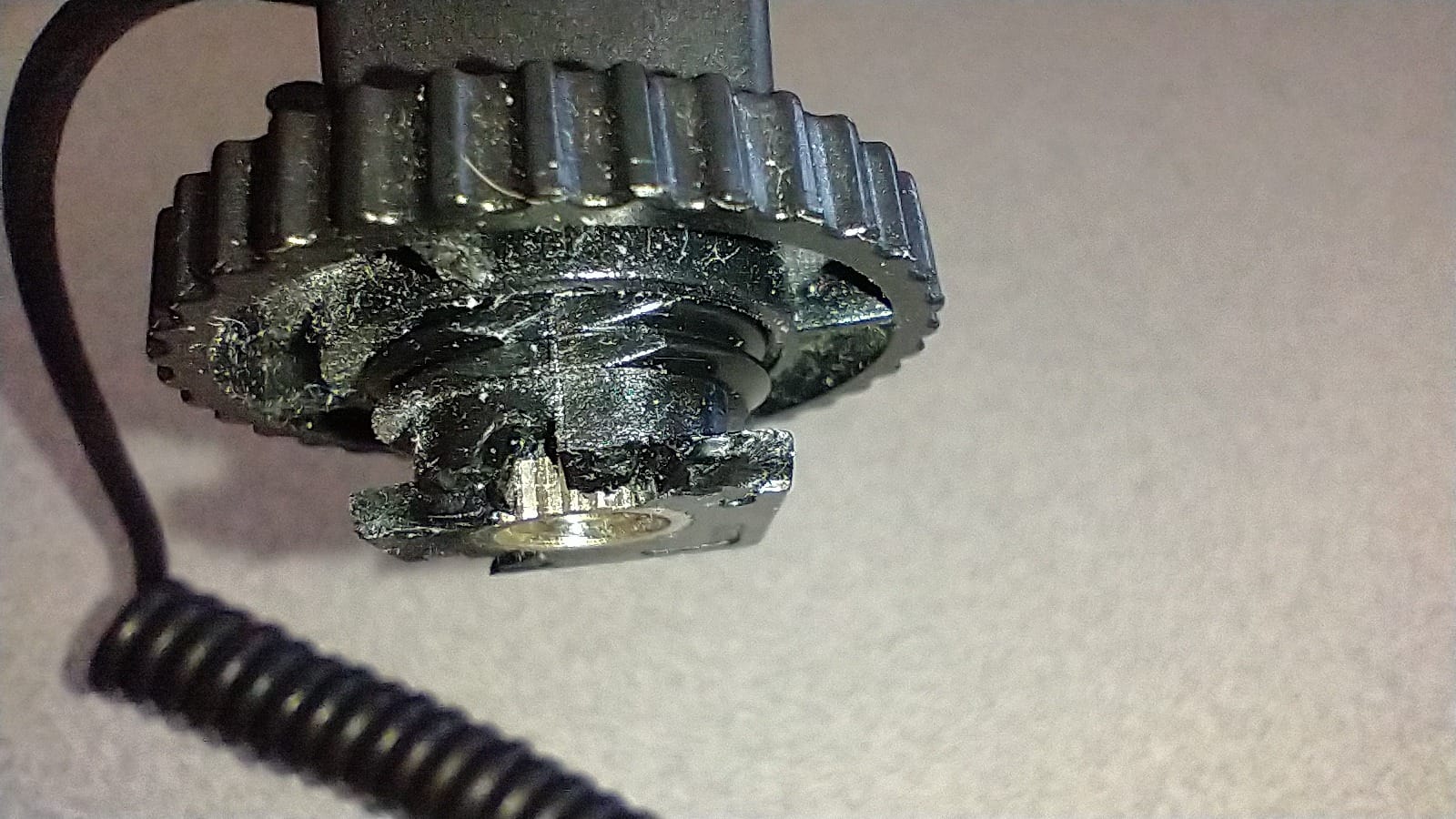
- Brittle plastic mount reported on some units
The TIKYSKY DSLR shotgun is the budget shotgun I recommend to creators who shoot sit-down interviews on a Canon or Nikon body. The 3.5mm TRS plug fits any camera with a microphone input, the super-cardioid pattern focuses tightly on whoever is in front of the lens, and the included foam and deadcat windscreens cover both indoor and outdoor shoots.
The pickup range is honestly rated. TIKYSKY specs it at 0-5 meters, which lines up with my testing – dialogue was crisp and full at three feet, started to thin out around six feet, and was unusable past fifteen. For sit-down interviews where your subject sits a few feet from the camera, that is exactly what you want.
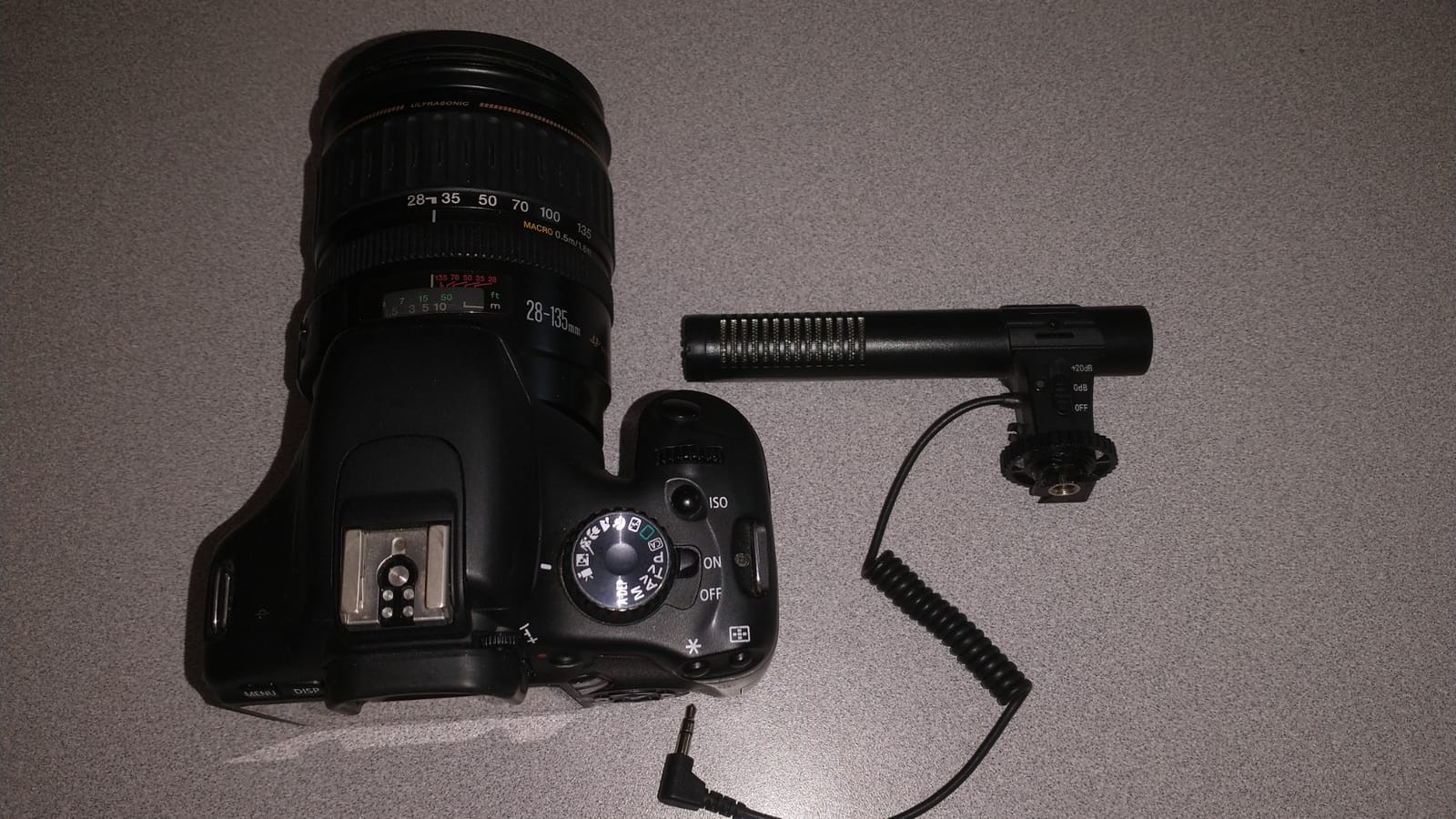
The super-cardioid pattern rejects a meaningful amount of side and rear noise. I tested it in a room with a noisy air conditioner running behind the camera, and the audio came back with the AC hum reduced to a quiet background tone. The foam windscreen handled light indoor air movement, and the deadcat cut the wind noise on an outdoor patio shoot to a manageable level.
Battery life on a single AAA is honestly long – the low-power indicator gives you a clear warning before the cell dies, and I recorded a full weekend of interviews on a single battery. The mic is also genuinely compact, which matters on smaller DSLR and mirrorless bodies where a long shotgun looks disproportionate.
Best use cases for the TIKYSKY DSLR Shotgun
The TIKYSKY is the right pick if you shoot sit-down DSLR interviews on a budget and do not need phone or laptop compatibility. Creators who already own a Canon or Nikon body get the most value from the standard 3.5mm TRS plug.
Where the TIKYSKY DSLR Shotgun falls short
It is not ideal if you need cross-platform compatibility, and it does not work on entry-level Canon Rebel, Nikon D3500, or other bodies without external mic support. For wireless freedom or phone compatibility, the Hollyland Lark M2 is a better choice.
How to Choose the Right Vlogging Microphone
Picking the right microphone for vlogging comes down to four questions: what kind of content do you shoot, what camera do you use, what is your budget, and which audio features matter most to your style. Get those four right and the choice between the ten mics above becomes much easier.
Match the mic type to your shooting style
Wireless lavalier systems (like the DJI Mic Mini or Hollyland Lark M2) are the right pick for talking-head YouTube videos, two-person interviews, and any content where you want hands-free audio that does not depend on where the camera is pointing. They clip onto your subject and capture dialogue even when you move around the frame.
On-camera shotgun microphones (like the Movo VXR10 or TIKYSKY DSLR) are the right pick for event coverage, walk-and-talk travel vlogs, and run-and-gun shooting where you need the camera to act as both the audio source and the visual frame. They are directional – they pick up what you point them at and reject side noise.
For a deeper breakdown of shotgun-specific recommendations, see our guide to the best shotgun microphones. For a wireless-focused comparison, our best wireless microphones roundup goes deeper on lav kits.
Check camera and phone compatibility first
Before you buy, confirm the mic actually connects to your camera or phone. Modern wireless lavs typically ship with USB-C and Lightning receivers, but some only ship with one. Older cameras with a 3.5mm mic input need a TRS plug; phones and laptops need TRRS or USB-C. Our full camera microphones guide maps out the connector matrix in detail.
Set a realistic budget for the category
The budget tier covers solid entry-level wireless lavs and basic on-camera shotguns like the Movo VXR10 or MAYBESTA wireless kit. The mid-tier unlocks better audio fidelity and dual-transmitter kits like the Hollyland Lark A1. Above that you start getting professional-grade wireless systems like the DJI Mic Mini and Hollyland Lark M2 with longer range and cleaner audio.
Prioritize the audio features that matter to you
Onboard recording acts as a safety net – if your wireless signal drops, the internal recording catches everything. Bit depth (24-bit vs 32-bit float) determines how much headroom you have for loud sources. Polar pattern (omnidirectional for lavs, super-cardioid for shotguns) controls where the mic picks up sound. Battery life and charging case capacity matter if you shoot multi-day events. AI noise cancellation matters most if you film in cafes, streets, or transit hubs.
Frequently Asked Questions
What microphone do most vloggers use?
Most vloggers today use a wireless lavalier system (like the DJI Mic Mini or Hollyland Lark M2) for talking-head and interview content, or a directional on-camera shotgun (like the Rode VideoMic GO II or Movo VXR10) for walk-and-travel filming. The shift toward wireless lavs accelerated in 2026 because 2.4GHz systems became reliable enough for run-and-gun shooting.
What is the best microphone for vlogging with a camera?
The best microphone for vlogging with a camera is the DJI Mic Mini, which combines ultralight 10g transmitters, 48-hour charging case life, and a stable 400m wireless range. For dedicated on-camera shotgun use, the Movo VXR10 is the best budget-tier option and works on most DSLRs and mirrorless bodies with a 3.5mm input.
What is the best microphone for vlogging?
The best microphone for vlogging depends on your shooting style. For most creators the DJI Mic Mini is the strongest all-around pick because it pairs with cameras, phones, and DJI Osmo devices and weighs almost nothing. Budget-focused creators get the best value from the Hollyland Lark M2, while those who prefer an on-camera shotgun should look at the Movo VXR10.
What mic do all the influencers use?
Travel and lifestyle influencers most often use the DJI Mic Mini or Hollyland Lark M2 because both are small enough to hide on collar and run for a full day on the charging case. Tech reviewers and podcast-style creators tend to favor the Rode Wireless Pro or Sennheiser Profile Wireless for their cleaner audio and onboard recording. Joe Rogan famously uses the Shure SM7B, which is a studio dynamic mic rather than a portable wireless kit.
What is the 3 to 1 rule for microphones?
The 3-to-1 rule is a microphone placement guideline: when using multiple mics in the same space, place each mic at least three times farther from every other mic than it is from its intended sound source. For vloggers, this matters most during two-person interviews where two lav transmitters sit on the same table. Spacing them at least three times the distance to each speaker prevents phase cancellation and muddy audio.
Final Verdict
After three months of testing ten of the strongest options on the market, the DJI Mic Mini stands out as the best camera microphone for vloggers who shoot across cameras, phones, and DJI Osmo devices. The 10g transmitters, 48-hour charging case, and 400m wireless range cover every vlogging scenario I could throw at it without weighing me down.
If you want the same audio quality at a lower price, the Hollyland Lark M2 is the best value wireless kit on the market right now. For budget on-camera shotgun use, the Movo VXR10 remains the budget pick that punches well above its price. No matter which of these best camera microphones for vloggers you choose in 2026, the jump in audio quality over your camera’s built-in mic will be the single biggest upgrade you make to your vlogs this year.