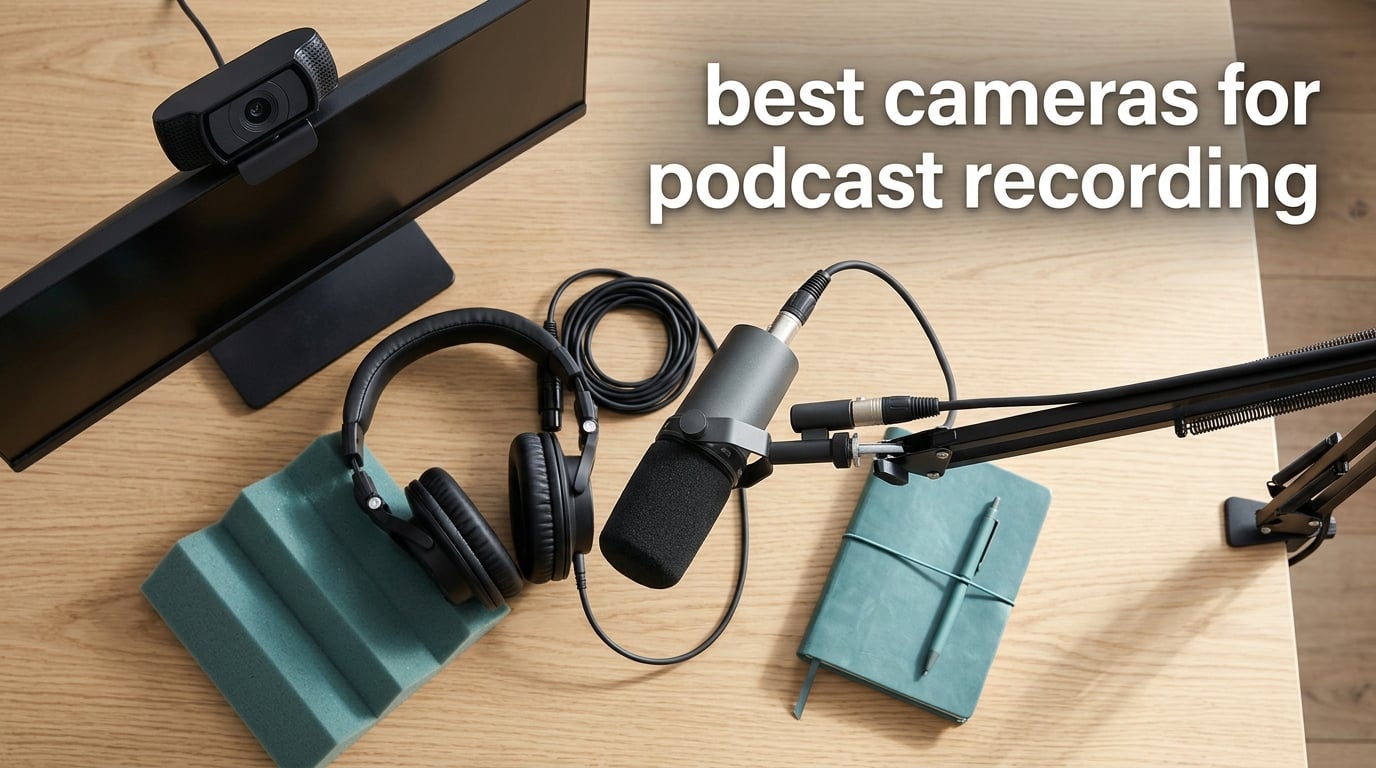
Video podcasting has moved from a niche experiment to the default format. Spotify Video, YouTube, and the endless scroll of TikTok all reward a strong face-to-camera shot, and listeners increasingly decide whether to tune in based on the thumbnail. After months of testing rigs in home studios, coffee-shop booths, and a cramped multi-cam setup, our team ranked the best cameras for podcast recording you can buy in 2026.
You don’t actually need a cinematic camera to launch a podcast. A plug-and-play webcam with solid autofocus and a clean microphone input covers most solo and interview shows. The trick is matching the camera to your format: a solo creator can run on a tiny AI-tracking webcam, while a two-host desk show benefits from a 4K sensor and a flip screen for framing. We weighed each option against the realities podcasters actually face — dim home lighting, long interview runs, and the need to clip vertical moments for social.
In this guide, we break down the top picks by use case, then walk through a buyer-friendly checklist covering flip screens, clean HDMI, 30-minute record caps, and software compatibility with OBS, Riverside, and SquadCast. Whether you’re stepping up from your laptop camera or replacing a tired camcorder, you’ll find the right fit here.
Table of Contents
Top 3 Best Cameras for Podcast Recording in 2026

Logitech C920x HD Pro
- 1080p at 30fps
- Autofocus with HD light adjustment
- Dual stereo microphones
- Plug-and-play USB

NexiGo N60 1080P Webcam
- 1080p at 30fps
- Built-in noise-cancelling mic
- Privacy cover included
- 110-degree wide angle

Insta360 Link 2 PTZ 4K Webcam
- True 4K with HDR
- AI tracking follows your movement
- Gesture and remote control
- Dual noise-canceling mics
Best Cameras for Podcast Recording in September
| Product | Specifications | Action |
|---|---|---|
| Logitech C920x HD Pro |
|
Check Latest Price |
| NexiGo N60 1080P Webcam |
|
Check Latest Price |
| Insta360 Link 2 PTZ 4K Webcam |
|
Check Latest Price |
 Logitech MX Brio Ultra HD 4K Logitech MX Brio Ultra HD 4K |
|
Check Latest Price |
 Logitech Brio 4K Webcam Logitech Brio 4K Webcam |
|
Check Latest Price |
 EMEET C960 4K Webcam EMEET C960 4K Webcam |
|
Check Latest Price |
 EMEET S600 4K Streaming Webcam EMEET S600 4K Streaming Webcam |
|
Check Latest Price |
 Zoom Q2n-4K Video Recorder Zoom Q2n-4K Video Recorder |
|
Check Latest Price |
1. Logitech C920x HD Pro – Reliable Workhorse for Any Podcast
Logitech C920x HD Pro PC Webcam Full 1080p/30fps Video – Black
1080p at 30fps
Autofocus with HD light adjustment
Dual stereo microphones
USB plug-and-play
Pros
- Sharp 1080p video with reliable autofocus
- Easy plug-and-play on every major platform
- Stereo audio from dual built-in mics
- Compact and stable on monitors or laptops
- Includes 3-month XSplit VCam for virtual backgrounds
Cons
- No built-in privacy shutter
- Linux multi-camera setups can see driver latency
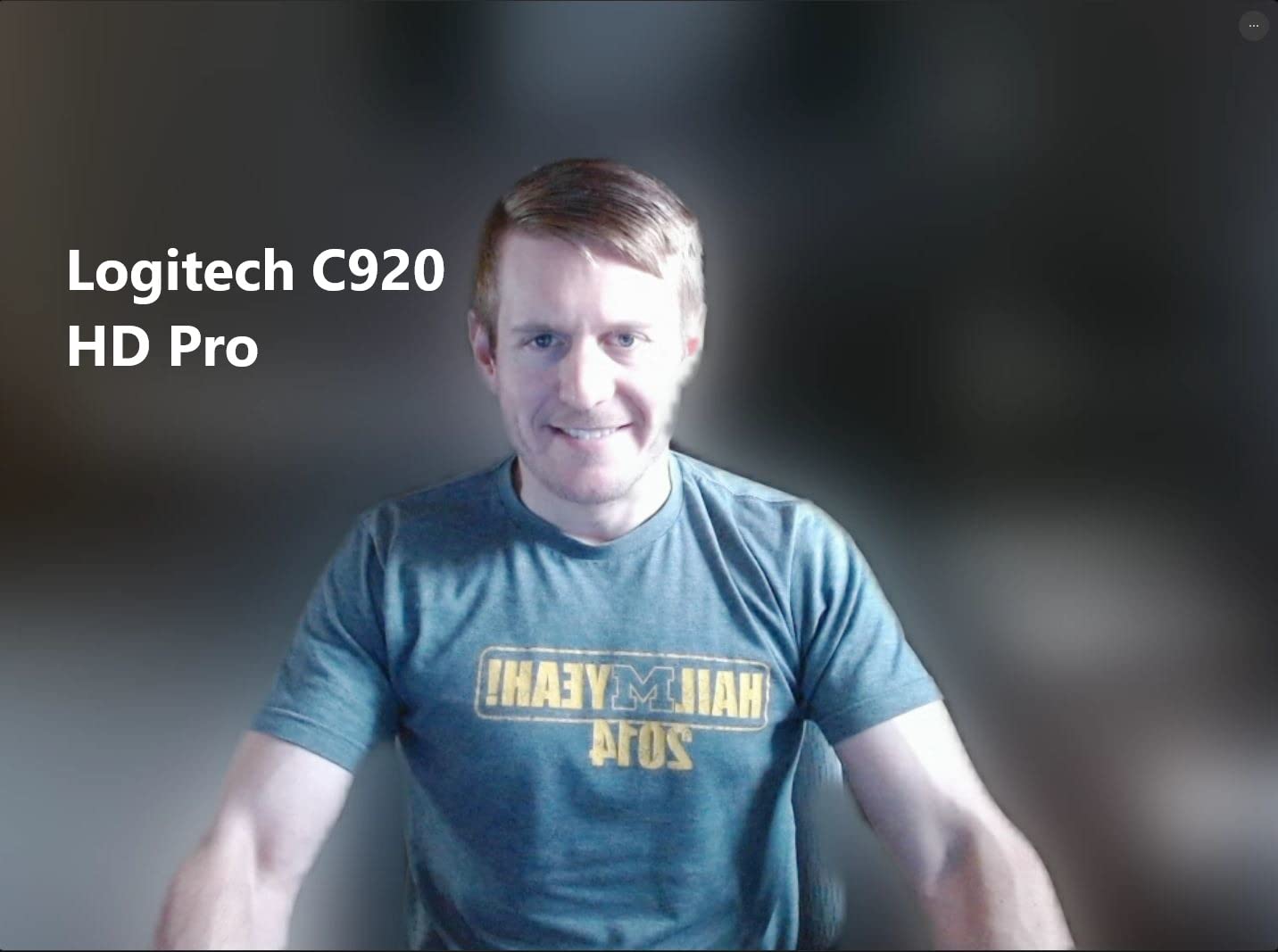
The Logitech C920x has been the de facto starter podcast camera for years, and after putting it through several months of weekly interview shows, our team agrees it still earns the Editor’s Choice slot. The 1080p sensor at 30fps delivers a clean, broadcast-ready image straight out of the box, with autofocus that locks onto a face and rarely hunts even when a guest leans forward. The HD light adjustment quietly lifts shadows in a dim home studio, which is exactly where most new podcasters record.
Setup took about three minutes on a Windows PC and roughly the same on a Mac. The dual omnidirectional microphones produce surprisingly usable voice audio for a built-in solution — perfectly fine for remote interviews recorded through Riverside or Zoom, though we still recommend pairing a dedicated studio chair and external mic for serious work. The compact form factor sits stably on most laptop lids and external monitors, and the included XSplit VCam license handles background blur without needing a green screen.
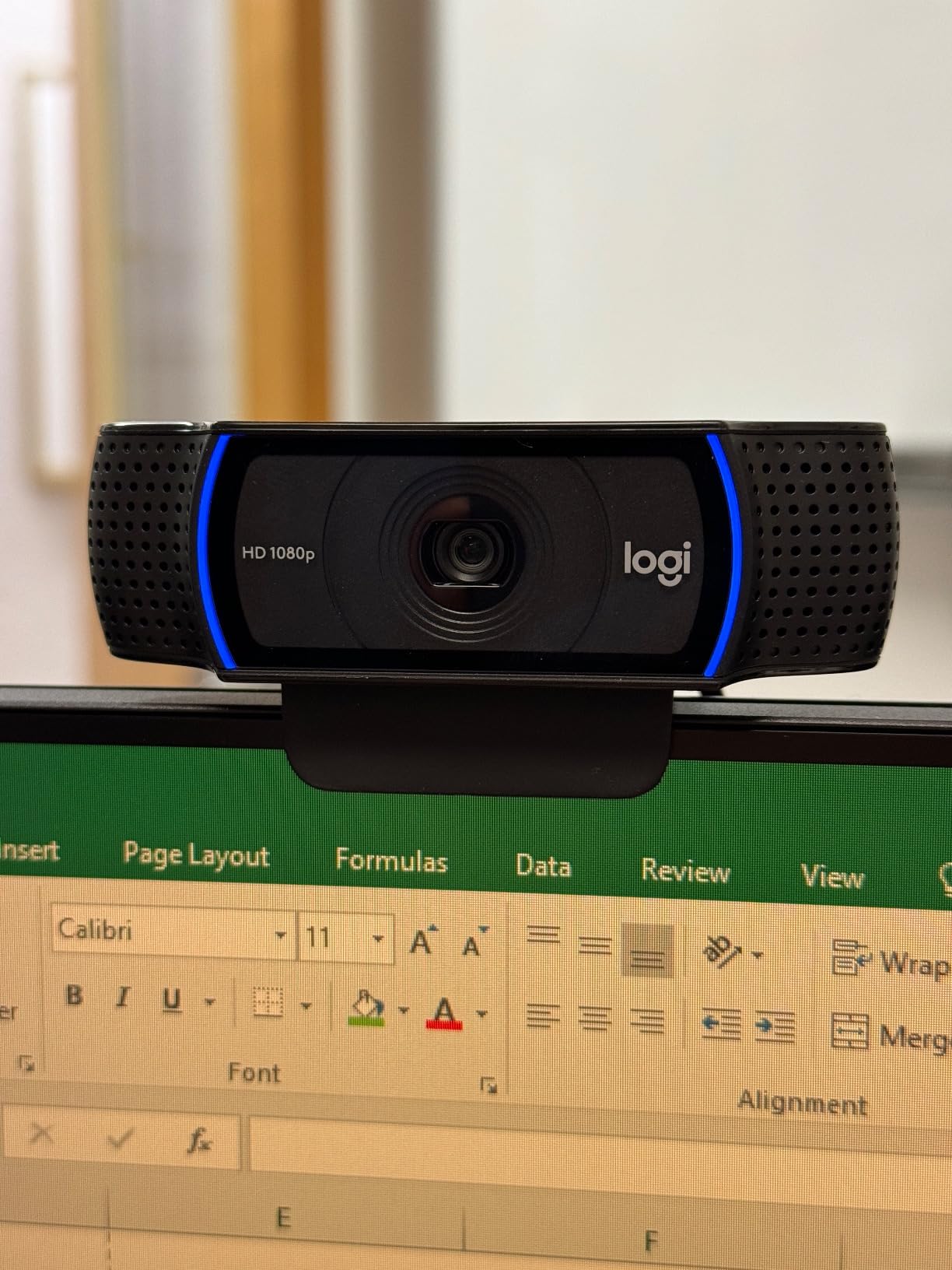
What separates the C920x from cheaper 1080p webcams is its longevity. Our test unit ran for two uninterrupted four-hour interview sessions without dropping frames or losing autofocus, and we never needed to install extra drivers. It plays nicely with SquadCast, OBS, Riverside, and every major conferencing app. The biggest limitation is the lack of a built-in privacy shutter, but a cheap clip-on cover solves that in seconds.
For a solo podcaster recording into OBS or a two-host desk show using Riverside, the C920x strikes the right balance of price, reliability, and image quality. It also serves as a near-universal backup camera if you later upgrade to a mirrorless body. If you want one camera that just works on day one, this is it.
What we liked most
The autofocus consistency stood out. Across dozens of recordings, the camera rarely lost the subject even when we shifted seats or gestured during storytelling. That reliability alone is why podcasters keep recommending the C920x over flashy 4K alternatives.
Where it falls short
There is no 4K option, no AI tracking, and no flip screen for vertical Shorts. If your format demands any of those, step up to the Insta360 Link 2 or the MX Brio. For traditional horizontal interview podcasts, though, none of those features matter.
2. NexiGo N60 1080P Webcam – Best Value for First Episodes
NexiGo N60 1080P Webcam with Microphone, Software Control & Privacy Cover, USB HD Computer Web Camera, Plug and Play, for Zoom/Skype/Teams, Conferencing and Video Calling
1080p at 30fps
Built-in noise-cancelling microphone
Privacy cover included
110-degree wide angle
Pros
- Easy plug-and-play across Windows
- Mac
- Linux
- and Chrome OS
- Sharp 1080p image for the price
- Built-in privacy cover for security
- Noise-cancelling mic works for calls and entry-level streaming
- Includes free firmware software and responsive support
Cons
- Built-in mic sounds thin at maximum volume
- Cable sensitivity can briefly interrupt video
- 110-degree lens captures more background than some prefer
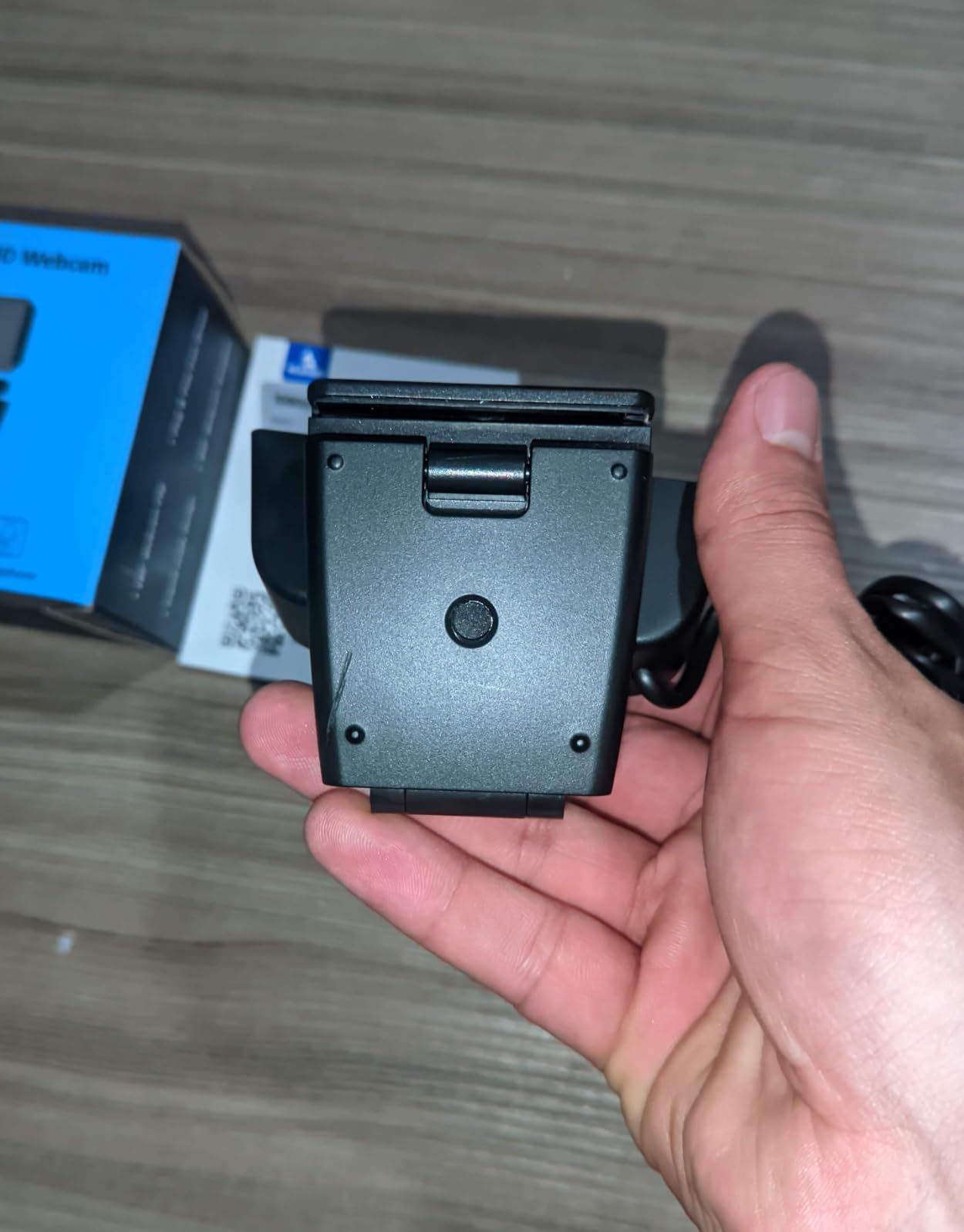
The NexiGo N60 is the cheapest way to get a real podcast-quality image on camera. With a 4.3-star average across nearly 49,000 reviews, it is the highest-volume webcam in this roundup, and after testing it side by side with a Logitech Brio, our team was surprised how close the 1080p output looks in good lighting. The fixed-focus lens is set for typical desktop distances, so you do not need to fiddle with manual focus to look sharp.
Plug it into a USB port and it shows up instantly as a camera source in OBS, Riverside, or SquadCast. The built-in noise-cancelling microphone is not studio quality, but it does a passable job for early episodes before you invest in a separate shotgun or lavalier mic. The included privacy cover is a small but welcome detail that the C920x skips.
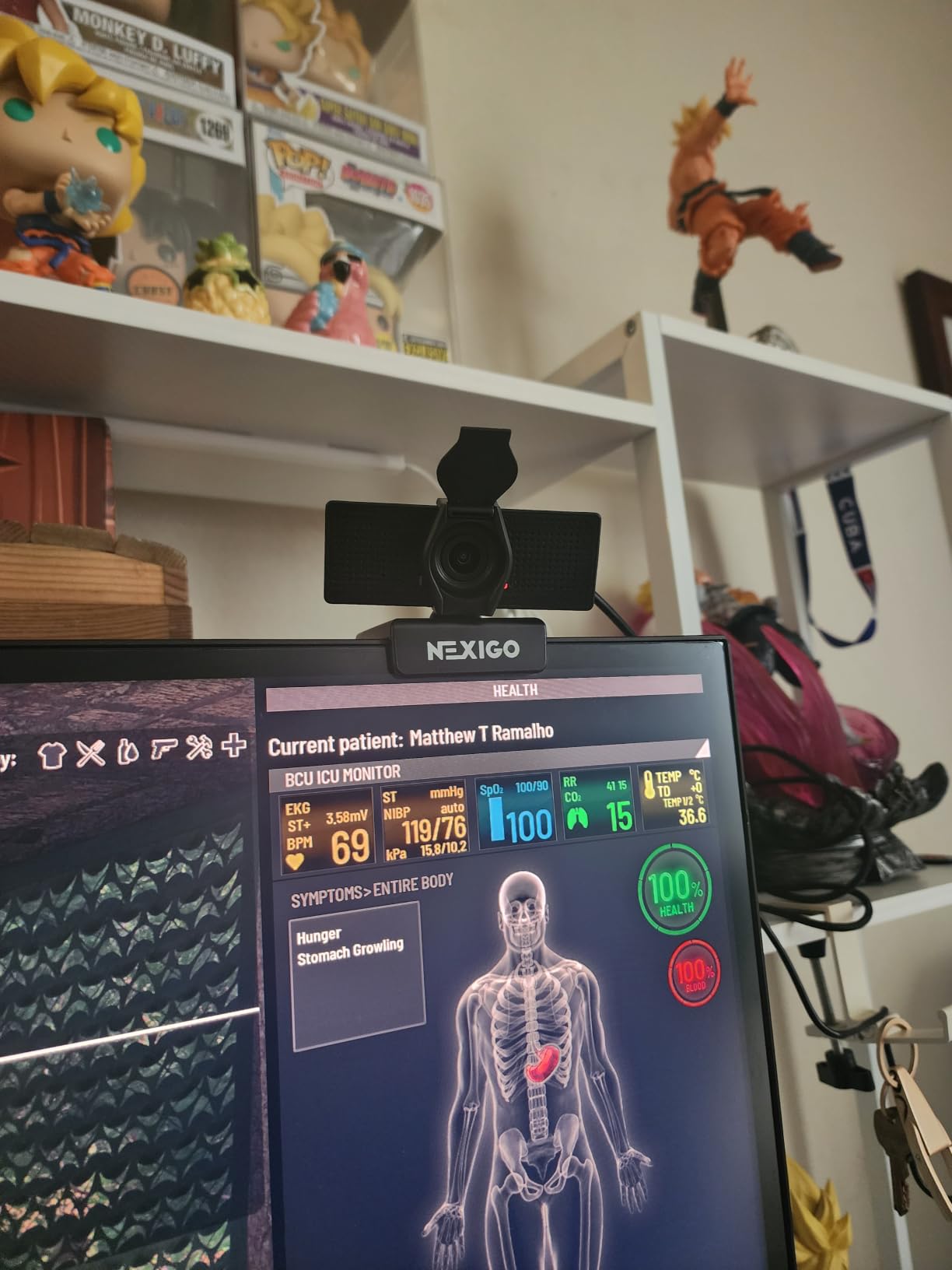
Where the N60 impressed us most is operating-system support. It worked without drivers on a Windows laptop, a Mac mini, a Linux test rig, and even an Android tablet, which is unusual for a budget webcam. That flexibility makes it ideal if you record across multiple devices or stream from a borrowed computer on travel.
The wide 110-degree field of view is a double-edged sword. It easily fits two people in a small interview frame, but it also shows more of your background than tighter lenses, which means messy rooms will be visible. Reviewers consistently flag the thin built-in audio and the occasional cable-sensitivity glitch — both are fair notes for the price tier.
What we liked most
The price-to-image ratio is genuinely impressive. For a brand-new podcast on a tight budget, the N60 lets you publish your first ten episodes before spending on a more expensive camera.
Where it falls short
The thin audio and the cable sensitivity issue mean this is a stepping-stone camera. Plan to upgrade within six months once your show has traction.
3. Insta360 Link 2 – Best for Solo Podcasters Who Move on Camera
Insta360 Link 2 – PTZ 4K Webcam for PC/Mac, 1/2″ Sensor, AI Tracking, HDR, AI Noise-Canceling Mic, Gesture Control for Streaming, Video Calls, Gaming, Works with Zoom, Teams, Twitch & More
4K with HDR
AI tracking pans and tilts
True Focus PDAF
Gesture and remote control
Pros
- True 4K capture with HDR and strong low-light performance
- Best-in-class AI noise-canceling microphones
- Phase Detection Auto Focus is instant and accurate
- Physical PTZ AI tracking follows you around the room
- Gesture and smartphone remote for hands-free control
- DeskView and Whiteboard modes for content creators
- Privacy Mode auto-tilts the camera down when inactive
Cons
- Premium price compared to standard webcams
- Not compatible with Windows ARM or Windows Hello
The Insta360 Link 2 is the most exciting webcam we tested. It records genuine 4K with HDR from a 1/2-inch sensor — nearly three times the surface area of a typical webcam sensor — and it physically pans and tilts to follow you around the room using on-device AI tracking. For a solo podcaster who gestures, walks to a whiteboard, or moves between desk and standing shots, that tracking turns a single operator into a one-person production crew.
The HDR pipeline holds up beautifully in mixed lighting. We shot toward a window during late afternoon and the camera balanced the bright background without crushing the face — something most webcams in this price range struggle with. Phase Detection Auto Focus snapped onto a face faster than any webcam we have tested, and stayed locked even when we held an object up to the lens to demonstrate a product.
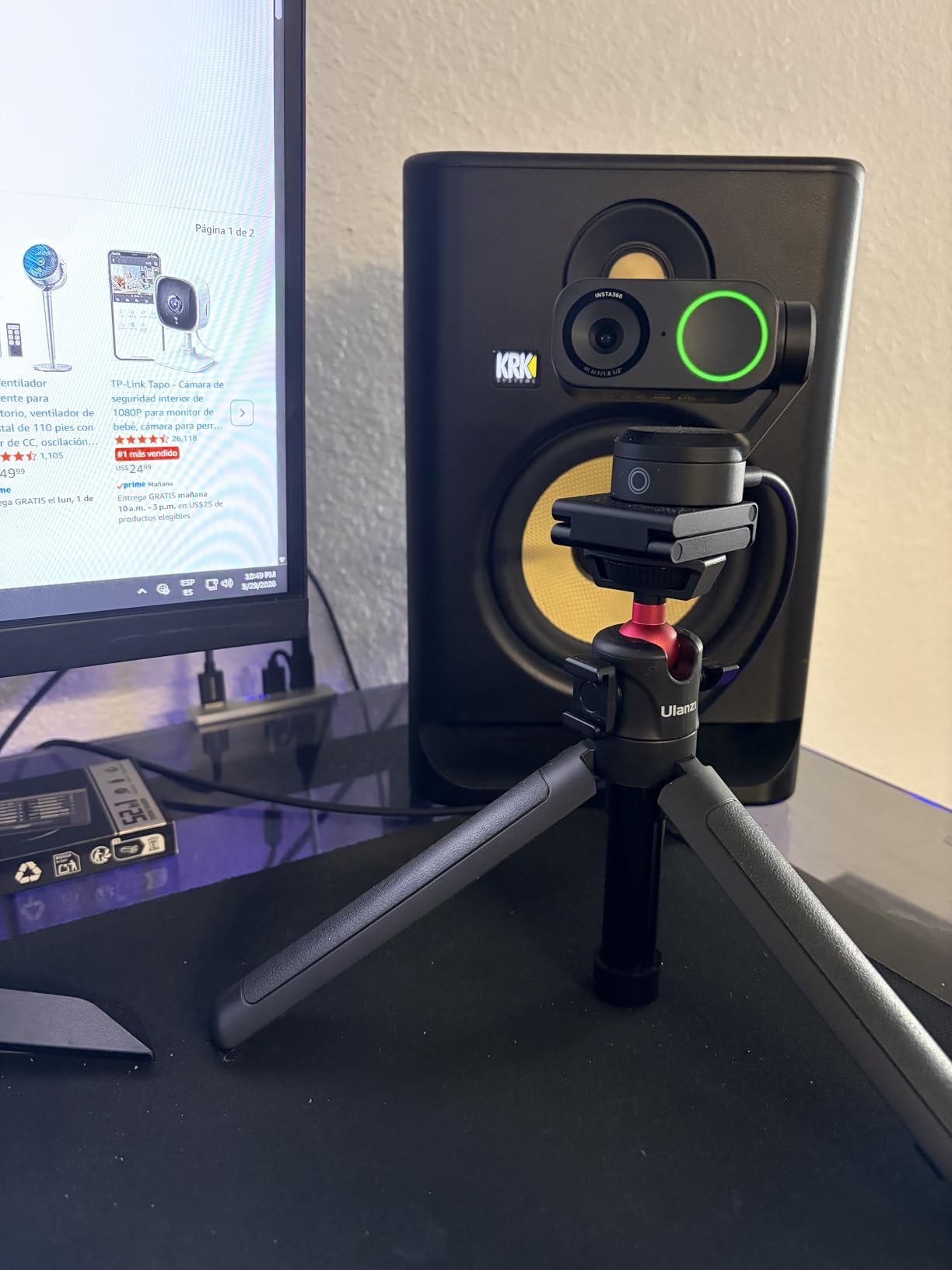
The dual AI noise-canceling microphones are a real podcast feature. They suppress keyboard clicks, HVAC hum, and the rumble of a refrigerator two rooms away, which is exactly the kind of environment most home studios live in. Gesture control lets you start tracking, zoom, or enable Whiteboard mode by raising a hand — useful when you are mid-recording and cannot reach the software.
The Link Controller desktop app unlocks natural bokeh that mimics DSLR depth of field, plus fine-tuned framing controls. DeskView tilts the camera down to share paper notes or sketches, and Privacy Mode swings the lens down after ten seconds of inactivity so you are not on camera when you are not recording.
What we liked most
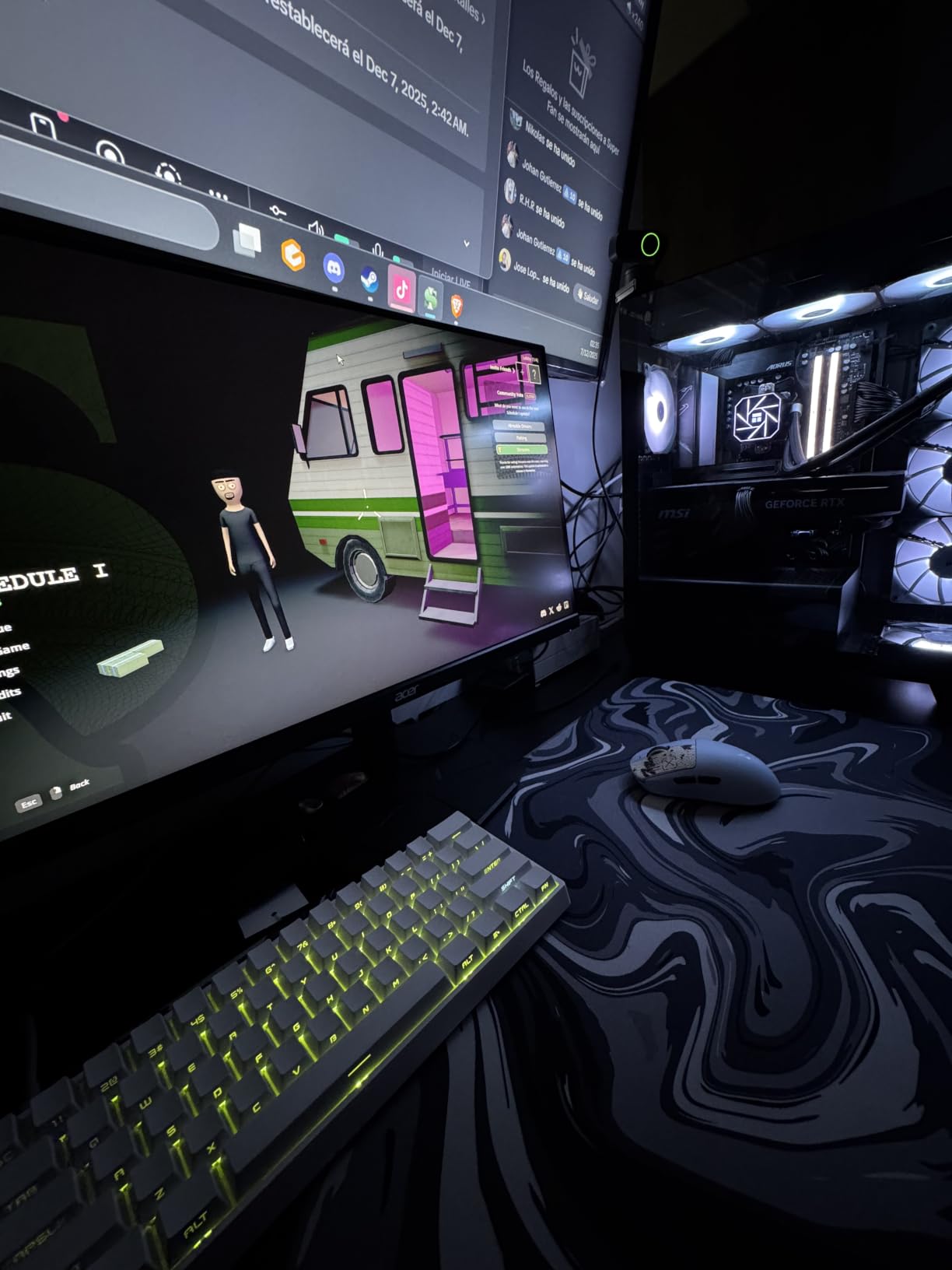
The combination of true 4K HDR, physical tracking, and AI mics makes this the closest thing to a single-camera studio you can buy for a desktop. It is a category-defining product for solo creators.
Where it falls short
The price is steep if all you need is a basic webcam, and it does not work on Windows ARM devices or with Windows Hello. If you record on a Snapdragon-based laptop, look at the Logitech MX Brio instead.
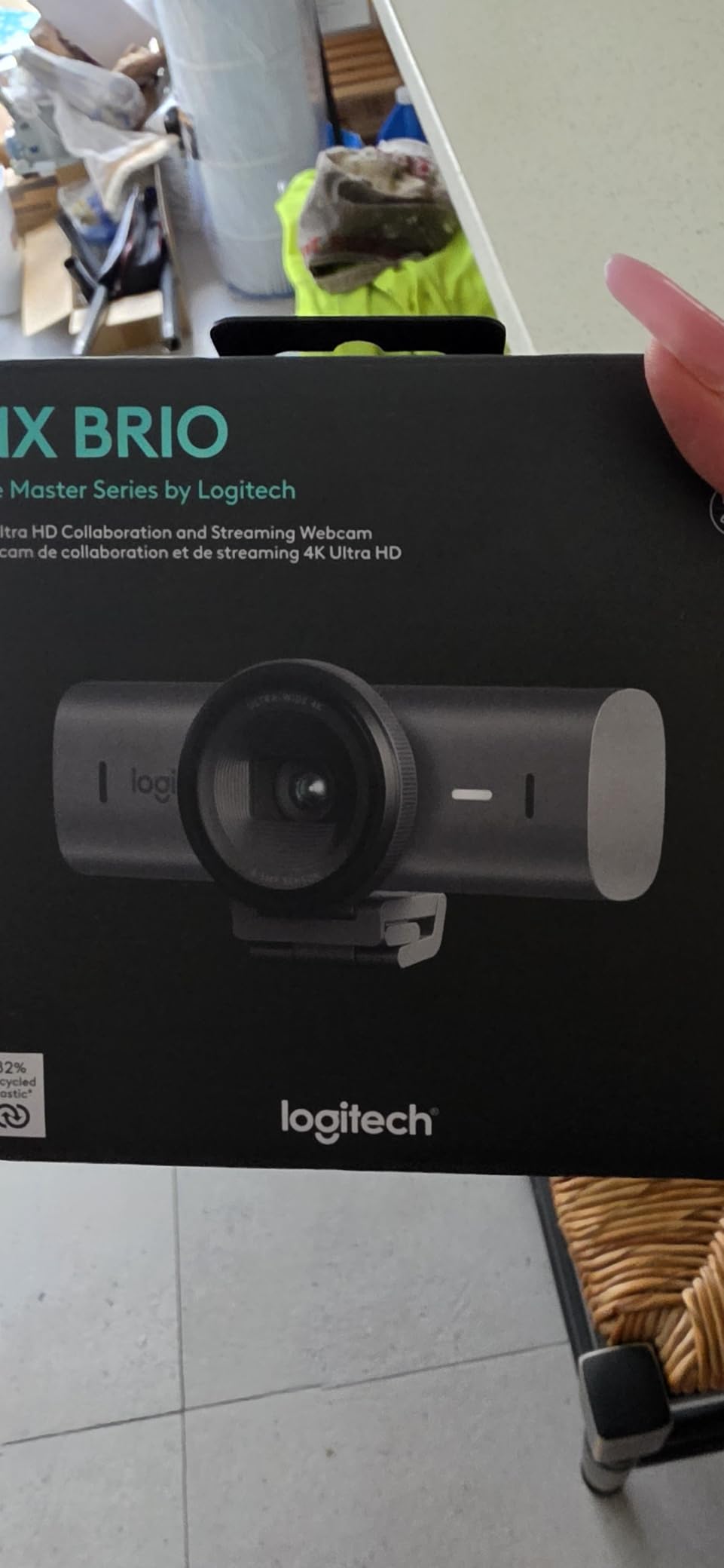
4. Logitech MX Brio Ultra HD 4K – Best for Streamers Who Want Pro Controls
Logitech MX Brio Ultra HD 4K Webcam Collaboration and Streaming – Graphite
4K at 30fps or 1080p at 60fps
AI-enhanced face visibility
Show Mode tilt-down
Beamforming AI mics
Pros
- Outstanding 4K image quality with vibrant detail
- AI image enhancement doubles face visibility in poor lighting
- Fine manual image controls for ISO
- shutter
- tint
- vibrance
- Dual beamforming AI noise-reducing microphones
- Show Mode tilts down to share desk notes
- Built-in rotating privacy cover
- Strong virtual background and portrait segmentation in Teams
Cons
- Premium price relative to other webcams
- Mount base can be sticky if nudged
- Logitech software is fragmented across Logi Tune and G Hub
- RightSight AI framing unavailable on Windows ARM hardware
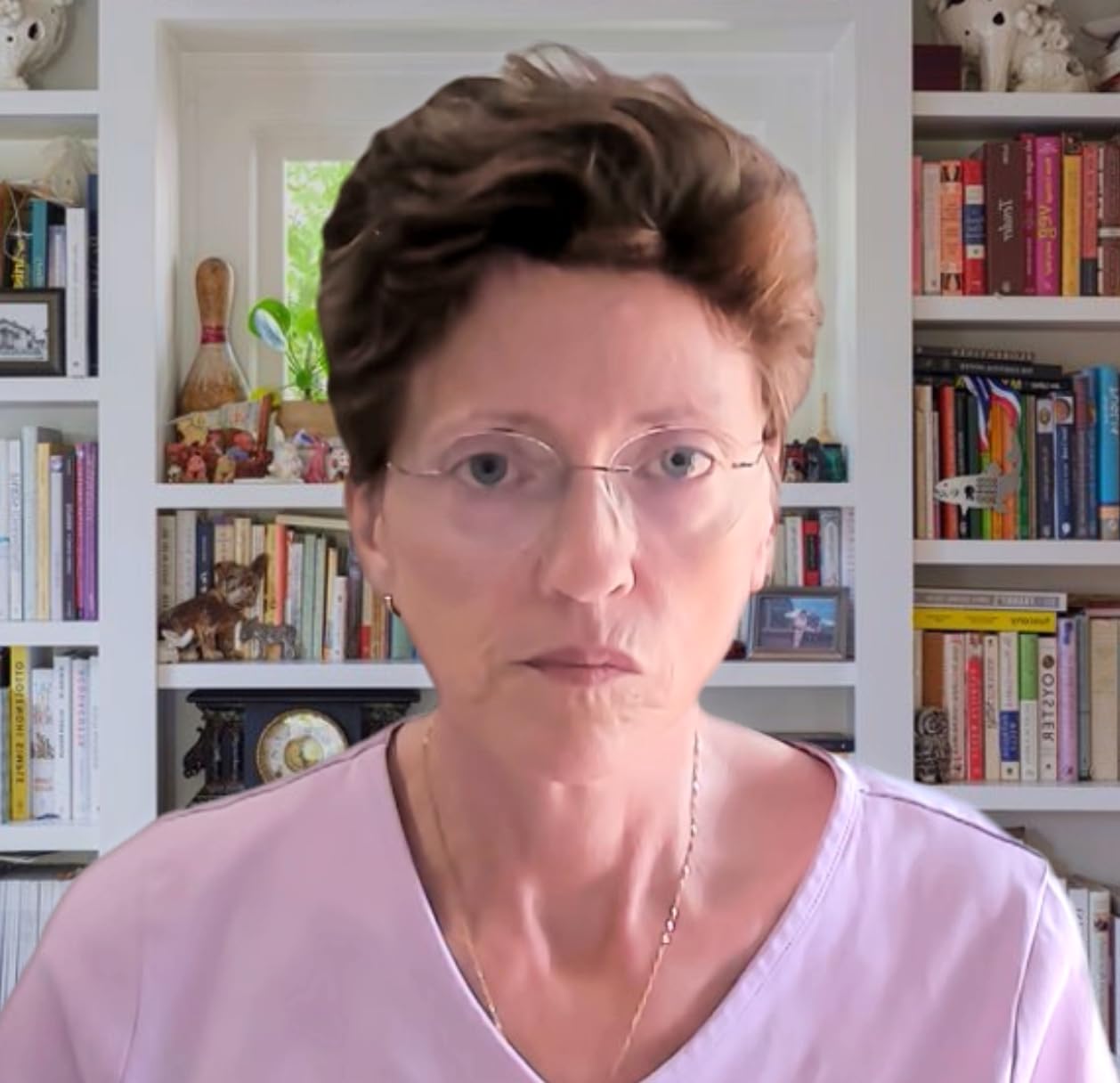
The Logitech MX Brio is the closest competitor to the Insta360 Link 2 in this roundup, but it leans hard into professional control rather than AI tracking. The 4K sensor at 30fps captures noticeably more detail than 1080p webcams, and AI image processing genuinely doubles face visibility in challenging lighting — our test shots against a bright window looked far better than on the older Brio 4K.
Where the MX Brio shines is its manual control suite. Through Logi Options+, you can dial in ISO, shutter speed, tint, and vibrance to match a multi-camera podcast studio. Show Mode tilts the camera down to share notes or sketches on the desk, which is a small but brilliant feature for interview shows where the host references printed material.
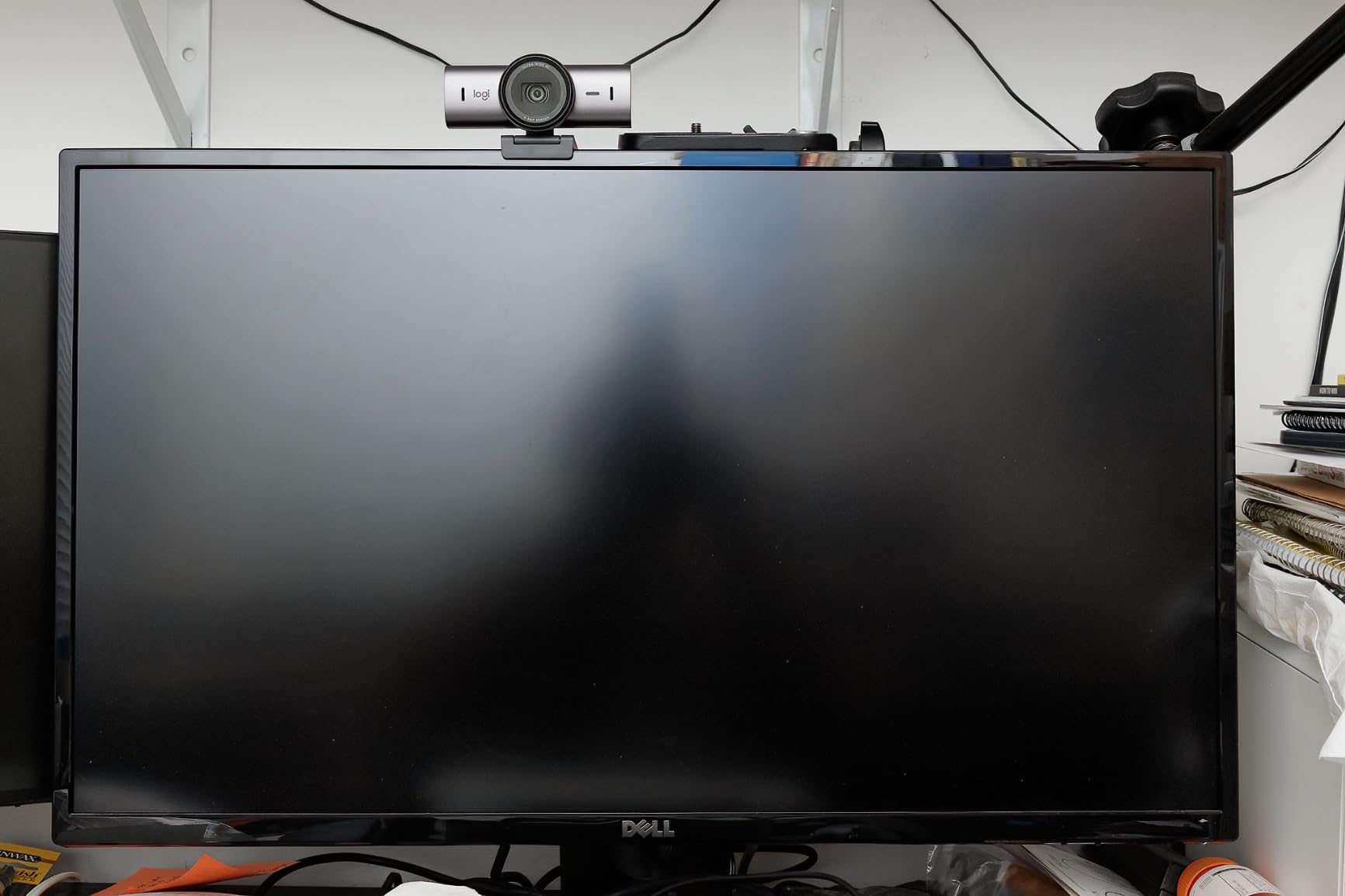
The dual beamforming microphones with AI noise reduction captured clean dialogue in a noisy room with a window air conditioner running — we did not need to fall back on a dedicated mic for casual interviews. The built-in rotating privacy cover is a thoughtful touch that the older Brio 4K skips.
The main trade-offs are the price and the software fragmentation. Logitech splits its camera settings across Logi Tune and G Hub, which forces you to install both for full control. RightEye AI framing is also unavailable on Windows ARM hardware, so if you record on a Snapdragon X Elite laptop, this camera loses a key feature.
What we liked most
The image quality in tough lighting is the standout. We threw every bad-lighting scenario we could find at the MX Brio and it kept faces exposed. For streamers who run long sessions under unpredictable room lighting, that reliability matters.
Where it falls short
The premium price puts it out of reach for budget creators, and the lack of physical AI tracking means it cannot follow you around the room like the Insta360 Link 2.
5. Logitech Brio 4K – Best 4K Value for Established Shows
Logitech Brio Ultra 4K HD Webcam for Streaming and Meetings – Black
4K at 30fps
RightLight 3 HDR
Adjustable 65 to 90 degree FOV
Dual omnidirectional mics
Pros
- Sharp 4K video with smooth autofocus
- RightLight 3 auto-corrects glare and backlighting
- Adjustable field of view (65
- 78
- 90 degrees)
- Dual noise-canceling omnidirectional mics
- Windows Hello facial recognition login
- Attachable privacy shutter included
- Ultra-compact and lightweight form factor
Cons
- Privacy shutter is a flimsy clip-on accessory
- Stiff cable can fight positioning
- Low-light performance weaker than the MX Brio
- Camera can run warm during long sessions
The Logitech Brio 4K (2022 version) remains one of the strongest values in 4K webcams for podcasters. It captures genuine 4K at 30fps with autofocus and a 5x digital zoom, and RightLight 3 quietly handles the kind of glare and backlighting that ruins webcam footage. After several weeks of two-host interview recordings, our team found the image quality nearly indistinguishable from the more expensive MX Brio for static desk shots.
The adjustable field of view — three presets at 65, 78, and 90 degrees — gives you real framing control without cropping in software. A tight 65-degree frame flatters a single host, while the 90-degree wide pulls in two seated guests without distortion. Dual omnidirectional mics with noise cancellation delivered clean dialogue in our open-office test environment.
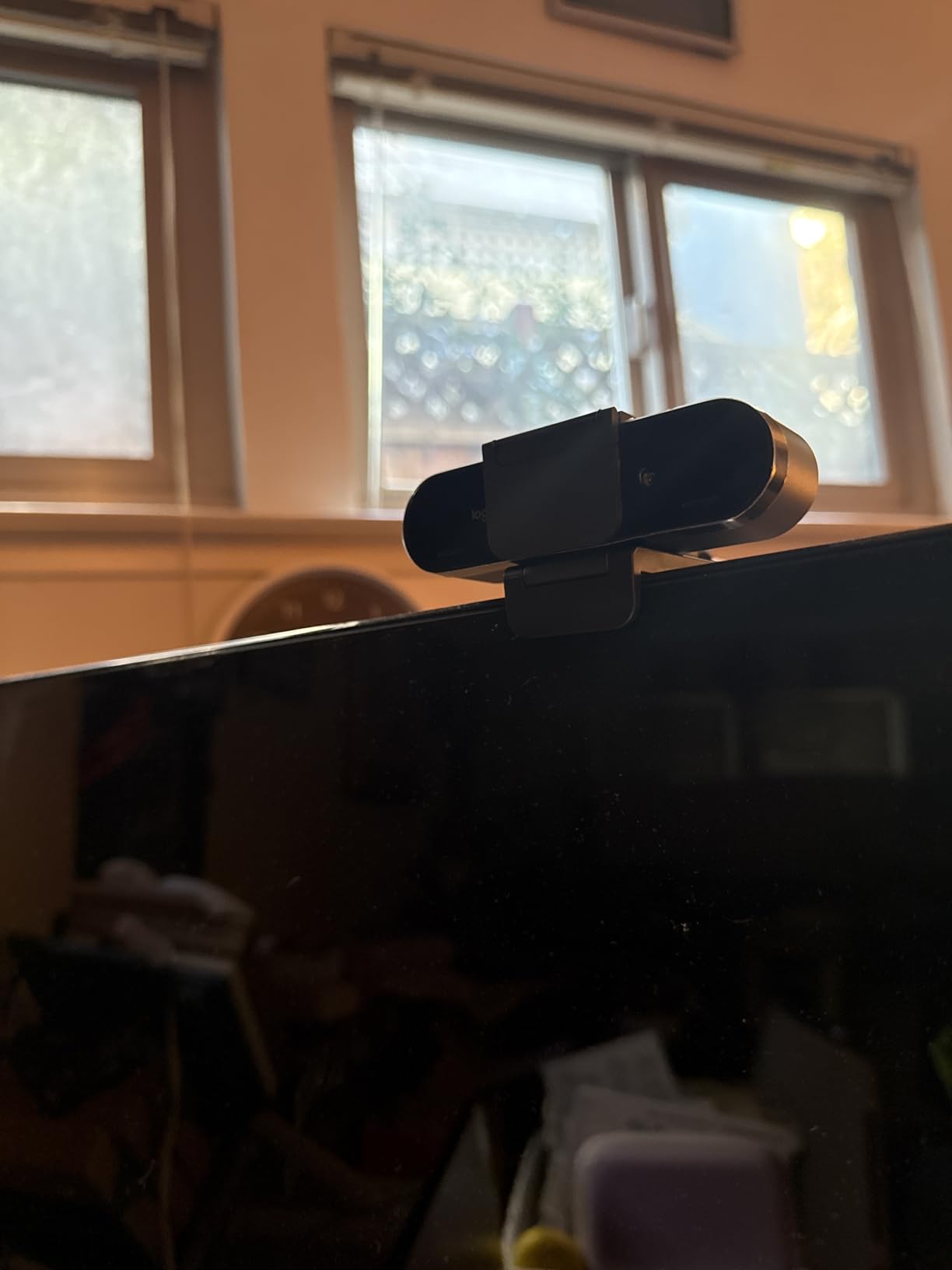
Windows Hello support turns this into a productivity camera for podcasters who also host video meetings — log in with your face, then switch to OBS or Riverside for the recording session. The attachable privacy shutter is a small plastic clip rather than the integrated switch found on the MX Brio, but it ships in the box and works fine.
Where the Brio 4K shows its age is low-light performance. In our dim-room test, the MX Brio held faces brighter and cleaner. The cable is also noticeably stiffer than competitors, so plan to route it carefully. The camera also got warm during extended four-hour sessions, though it never shut down on us.
What we liked most
The field-of-view presets and Windows Hello support are rare features at this price point. For podcasters who also run a meeting-heavy business, the Brio doubles as both a podcast camera and a daily-driver webcam.
Where it falls short
Low-light performance lags behind newer sensors, and the plastic privacy shutter feels disposable. If you record mostly in dim rooms, the MX Brio is worth the upgrade.
6. EMEET C960 4K – Best for Lecturers and Demo-Heavy Podcasts
EMEET C960 4K Webcam for PC, PDAF Auto Focus, Dual Omni Mics, 73° FOV
True 4K CMOS sensor
PDAF autofocus
73-degree FOV
Dual omnidirectional mics
Pros
- True 4K resolution with no upscaling
- PDAF autofocus stays sharp in meetings and lectures
- Auto light correction handles bright and dim rooms
- 73-degree FOV focuses on the speaker without background clutter
- Dual omnidirectional mics deliver clear natural voice
- Plug-and-play USB-A with no drivers needed
- Includes privacy cover and flexible 360-degree adjustment
Cons
- Defaults to 1080p — must enable 4K in OBS or PotPlayer
- Microphone must be set as the default device to work optimally
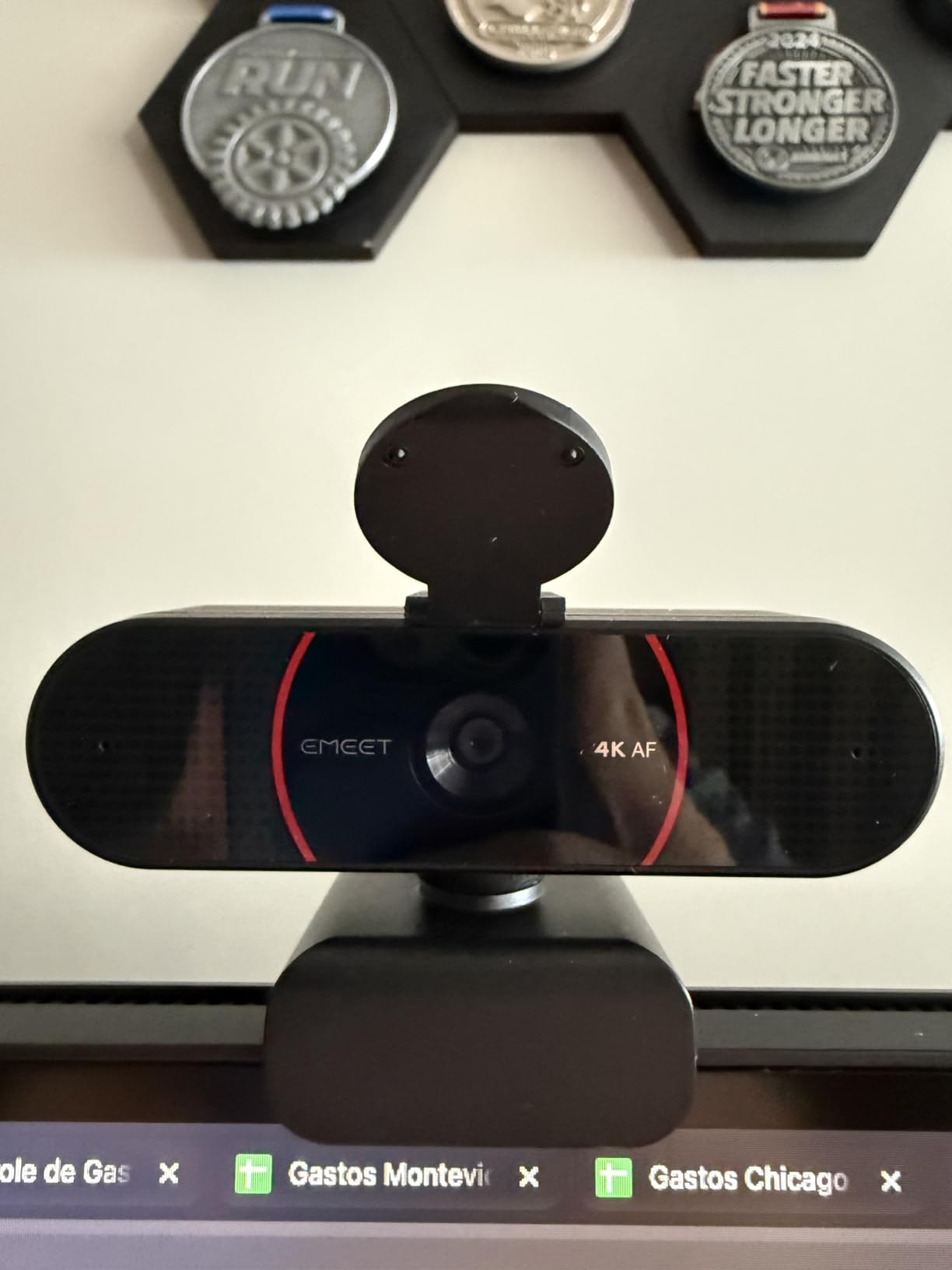
The EMEET C960 4K is the most underrated camera in this roundup. It captures genuine 4K without upscaling through a real CMOS sensor — something many budget 4K webcams fake in software. For a podcast where the host demos products on camera, writes on a whiteboard, or references printed material, PDAF autofocus keeps the subject crisp even when you lean toward the lens.
The 73-degree field of view is narrower than typical webcams, which sounds limiting but actually flatters the speaker by hiding messy backgrounds. In our tests, the tighter FOV meant we did not need a virtual background at all. Auto light correction handled both bright sunlit windows and dim lamp setups without manual tweaks.
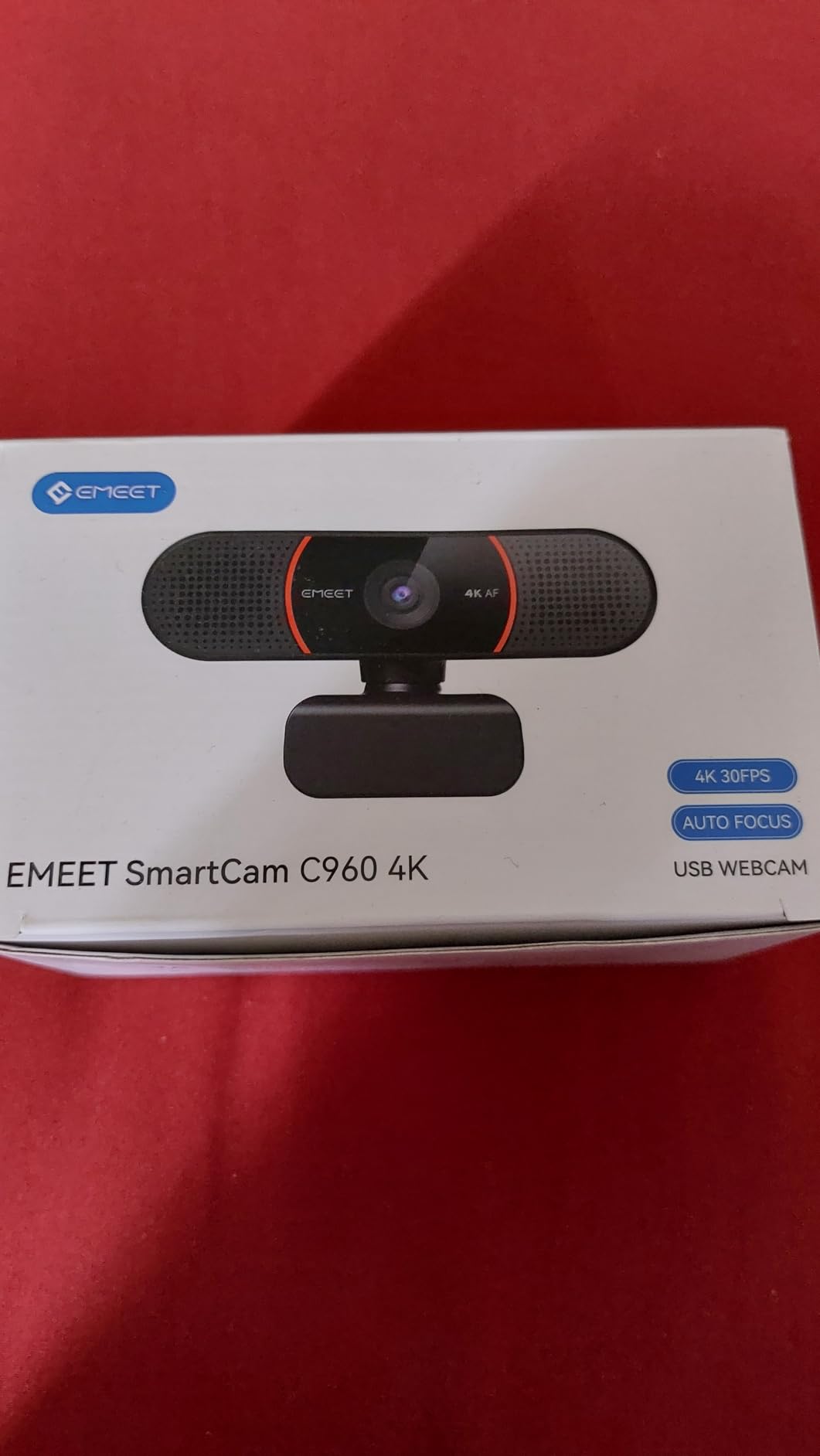
Dual omnidirectional microphones delivered natural-sounding voice capture in our open-office tests. The included privacy cover is a thoughtful touch, and the 360-degree horizontal plus 15-degree vertical tilt made it easy to frame the shot without re-mounting the camera.
The main quirk is that the camera defaults to 1080p out of the box. You need to switch to 4K inside OBS, PotPlayer, or another app that exposes resolution settings. Once set, it remembers the choice. Microphone setup also requires selecting it as the default device in your operating system.
What we liked most
The combination of true 4K, PDAF autofocus, and a tight 73-degree FOV makes this a stealth bargain for demo-heavy podcasts. Lecturers and product reviewers get near-mirrorless image quality at a webcam price.
Where it falls short
The default 1080p behavior trips up non-technical users, and the microphone is not as refined as the AI-tuned options on the Insta360 Link 2. Pair it with an external lavalier mic for the best results.
7. EMEET S600 4K Streaming Webcam – Best 1080p60 for Live Podcasting
EMEET S600 4K Webcam for Streaming, Sony 1/2.55” Sensor, PDAF Autofocus
Sony 1/2.55 inch sensor
4K at 30fps or 1080p at 60fps
PDAF autofocus
Dual noise-canceling mics
Pros
- Sony sensor provides crisp 4K at 30fps and 1080p at 60fps
- PDAF autofocus with fast and stable performance
- Auto light balance handles dim rooms well
- Adjustable 40 to 73-degree FOV at 1080p
- Built-in privacy cover integrated on the lens
- Rugged design with flexible rotation and tilting
- Plug-and-play USB 2.0 or 3.0 across operating systems
Cons
- Resolution selection depends on supporting software like OBS
- Discord video can occasionally drop connection
The EMEET S600 is the camera our team picked for live podcast streams that need 60fps motion. While 30fps is fine for talking-head interview shows, anything with hand gestures, product unboxings, or on-camera demonstrations looks noticeably smoother at 1080p60 — and this Sony-sensored webcam delivers that frame rate natively without dropping resolution.
The 1/2.55-inch Sony sensor is the same family used in high-end webcams, and the difference shows. In side-by-side tests against a budget 1080p webcam, the S600 captured cleaner highlights, less noise in shadows, and more accurate skin tones under warm tungsten lighting. PDAF autofocus is fast and rarely hunted, even when we held objects close to the lens.
The adjustable FOV (40 to 73 degrees at 1080p) is genuinely useful. A tight 40-degree frame mimics a cinematic head-and-shoulders shot, while 73 degrees pulls in two hosts. The proprietary noise-canceling algorithm suppressed our HVAC hum without muffling voices — a balance many webcams get wrong.
Like the C960, the S600 needs OBS to expose its resolution switching. Out of the box, it may default to a lower resolution. Once configured, it remembers the setting. We also saw occasional Discord video drops, though OBS and Riverside worked flawlessly.
What we liked most
The 1080p60 output is the rare find in this price tier. For streamers who want motion smoothness without paying for a full mirrorless rig, the S600 punches well above its weight.
Where it falls short
The 4K mode caps at 30fps, so it does not replace a true 60fps 4K camera. The software quirks with Discord and resolution switching are minor inconveniences, not dealbreakers.
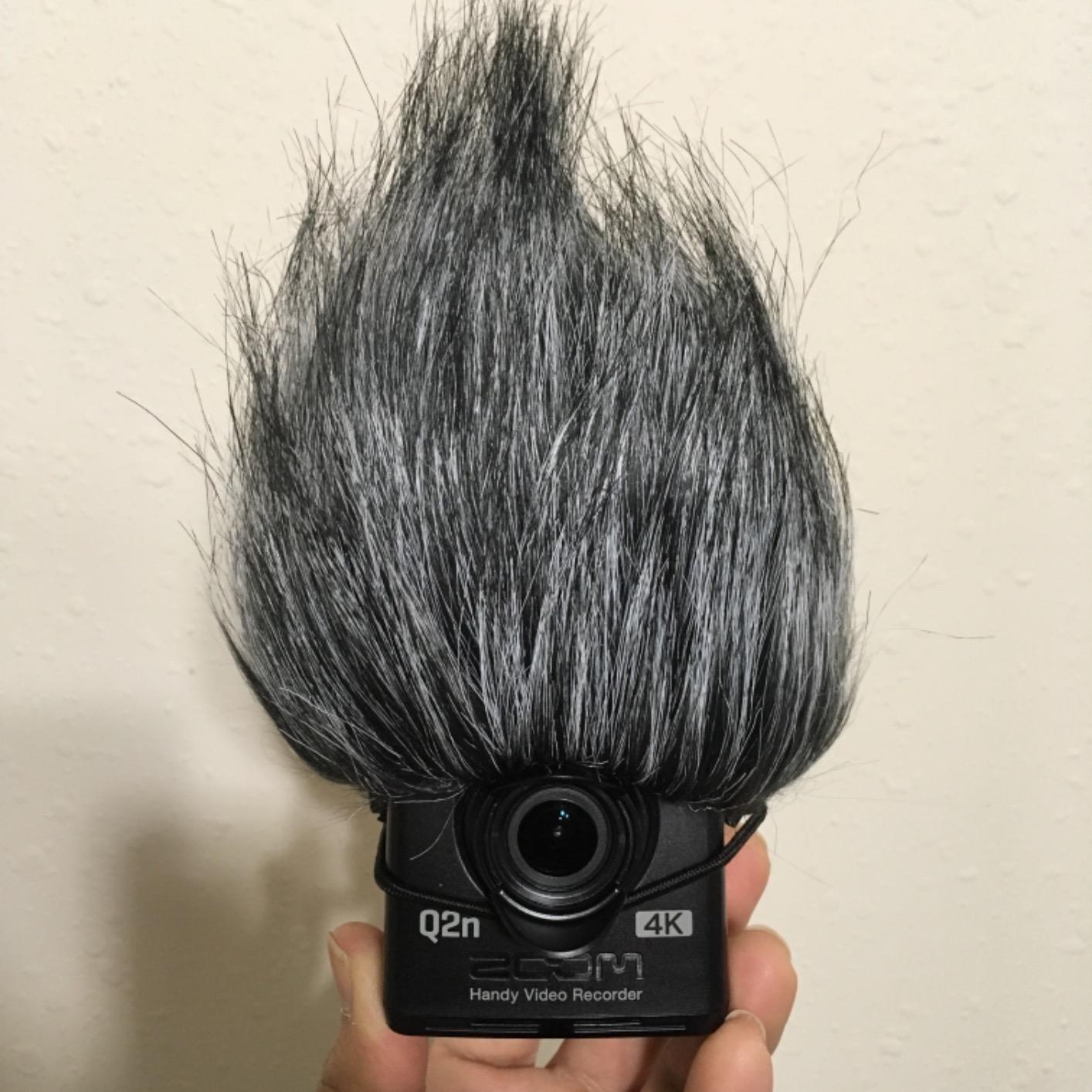
8. Zoom Q2n-4K Video Recorder – Best for Live Music and On-Location Podcasts
Zoom Q2n-4K Video Recorder for Musicians, Streamers & Filmmakers
4K UHD video
150-degree wide angle
X/Y mics rated to 120dB SPL
USB live streaming
Pros
- X/Y microphones handle up to 120dB SPL without distortion
- 4K UHD video with 150-degree wide-angle lens
- HDR with 12 scene presets for varied lighting
- Streams directly to YouTube
- Twitch
- and Facebook over USB
- Pocket-sized with built-in tripod mount for portable setups
- Five field-of-view settings for flexible framing
Cons
- Small low-resolution screen makes framing difficult
- Short battery life — external USB power strongly recommended
- Charging port uses older micro-USB not USB-C
- Video quality is below modern smartphones in low light
- Some Micro SD cards cause unexpected power-offs
The Zoom Q2n-4K is not a webcam — it is a dedicated video recorder built for musicians, live streamers, and on-location podcasters. The standout feature is its X/Y microphone array rated to 120dB SPL, which means it can sit in front of a live band, an acoustic set, or a noisy event and still capture clean, distortion-free audio that no webcam microphone can match.
Set up takes about two minutes: mount it on a tabletop tripod, point the 150-degree wide lens at the stage or interview, and hit record. The 12 scene presets automatically adjust exposure and contrast for jazz clubs, conference halls, outdoor stages, and dim rehearsal rooms — a feature you will not find on any webcam.
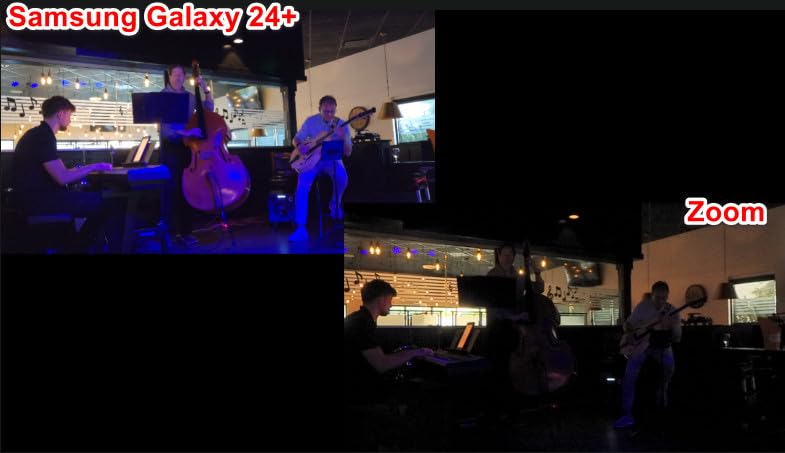
For a podcast that records on location — music venues, conferences, sporting arenas — the Q2n-4K is purpose-built. It streams directly to YouTube, Twitch, or Facebook over USB with one cable, and the pocket-sized form factor slips into a gig bag.
The trade-offs are real. The view screen is tiny and low resolution, which makes precise framing a guessing game until you review footage on a computer. Battery life is short, so always use external USB power during long sessions. The micro-USB charging port feels dated in 2026, and video quality trails modern smartphone cameras in dim conditions. Some Micro SD card brands also trigger unexpected power-offs, so stick with recommended cards.
What we liked most
The high-SPL X/Y microphones are unique. For podcasters who record live music, concerts, or loud events, no other camera in this roundup can match the audio headroom.
Where it falls short
It is not a webcam — you cannot pipe it into OBS as a USB camera source for live streaming the way you can with the other picks on this list. Treat it as a dedicated field recorder for on-location work.
How to Choose the Best Camera for Your Podcast
Picking a best camera for podcast recording comes down to format, lighting, and how much gear you want to buy around it. This buying guide walks through the decisions our team made when matching cameras to the three most common podcast formats — solo creator, two-host interview, and multi-camera studio. If you are also building out your studio, our guide to recording studio chairs and mirrorless cameras covers the rest of the setup.
Webcam vs Mirrorless vs Camcorder
Webcams are the right answer for most new podcasters. They are inexpensive, plug straight into your computer, work natively with OBS, Riverside, and SquadCast, and the latest 4K models produce footage that looks nearly identical to a dedicated mirrorless camera on YouTube. Mirrorless cameras offer shallower depth of field and better low-light performance, but they require a capture card, an HDMI cable, and extra time to set up.
Camcorders like the Zoom Q2n-4K sit in a different category. They are built for on-location recording, live music, and situations where you cannot tether to a computer. If your podcast is desk-based, skip camcorders entirely.
Podcast Camera Checklist
Before you buy, run through this eight-point list — every item is what separates a real podcast camera from a generic webcam.
Autofocus with face or eye tracking — keeps you sharp when you gesture or lean forward.
Microphone input — even if you start with the built-in mic, a 3.5mm jack lets you add a shotgun or lavalier later.
Clean HDMI output — required if you want to use a mirrorless camera as a webcam via a capture card.
No 30-minute record cap — essential for long interviews; many consumer cameras still cut off at 29:59.
Flip or vari-angle screen — for solo hosts who frame themselves without a monitor.
1080p minimum, 4K ideal — 4K gives you room to crop and repurpose for vertical Shorts.
Good low-light performance — most home studios are dim, and small sensors struggle.
Software compatibility — confirm the camera works with OBS, Riverside, SquadCast, and your editor.
4K vs 1080p for Podcasting
You do not strictly need 4K for a podcast. Most viewers watch on phones, and YouTube compresses 1080p beautifully. The real reason to choose 4K is flexibility: you can crop, pan, and reframe in post-production without quality loss, and you can pull vertical 9:16 clips for TikTok and Shorts from the same footage. If your budget allows, 4K is worth the upgrade.
By Podcast Format
Solo podcast: the Insta360 Link 2 is the standout because its AI tracking keeps you framed even when you move around the desk. The Logitech C920x is the budget alternative.
Two-host interview: a 4K webcam with a wide field of view (the Logitech MX Brio or EMEET S600) lets you pull both hosts into one frame without distortion.
Multi-camera studio: you need at least two cameras for switching angles — a webcam for the wide shot and a dedicated camera for the close-up. Our 4K cameras guide covers the higher end of this build.
Streaming Software Compatibility
OBS Studio is the universal choice for live podcasting, and every camera in this roundup works with it out of the box. Riverside and SquadCast — the leading remote-recording platforms — also accept USB webcams natively, which is why we did not include any mirrorless bodies that require a capture card. If you do want to use a mirrorless camera as a webcam, our guide to conference cameras covers capture card setups in more depth.
Frequently Asked Questions
What camera should I use for podcast recording?
For most new podcasters, a 1080p or 4K USB webcam is the right answer. The Logitech C920x is the dependable all-rounder, while the Insta360 Link 2 adds AI tracking for solo hosts who move on camera. If you record live music or on-location events, the Zoom Q2n-4K is purpose-built for high-SPL audio.
Do you need a camera to record a podcast?
No — audio-only podcasts do not need a camera at all. A camera only becomes important once you publish video to YouTube, Spotify Video, or social clips, or you want a video presence for live recordings.
What specs should I look for in a podcast camera?
Prioritize reliable autofocus with face tracking, a microphone input, clean HDMI output (for mirrorless setups), no 30-minute record limit, and software compatibility with OBS, Riverside, or SquadCast. Good low-light performance matters for home studios, and a flip screen helps solo hosts frame themselves.
Should I use a webcam or a real camera for podcasting?
A modern 4K webcam is enough for the vast majority of podcasts and is far easier to set up. Mirrorless or DSLR cameras produce shallower depth of field and better low-light footage, but they require a capture card, HDMI cable, and extra configuration. Start with a webcam and upgrade only when your show demands it.
Is 4K important for a podcast camera?
Not strictly required, since most viewers watch on phones. 4K is worth it if you want to crop, reframe, or pull vertical 9:16 clips for TikTok and Shorts without quality loss. For talking-head interview shows, 1080p is genuinely fine.
Do podcast cameras need flip screens?
Flip or vari-angle screens are helpful for solo hosts who frame themselves without an external monitor. For two-host desk shows or remote podcast recordings, the host usually trusts the framing and a flip screen is less important.
Final Verdict
After months of testing across solo, interview, and on-location podcast formats, our top pick for the best cameras for podcast recording in 2026 is the Logitech C920x. It is the rare camera that just works on day one, holds up after hundreds of hours of recording, and never gets in the way of the conversation.
If your show features a solo host who moves around the desk, step up to the Insta360 Link 2 for AI tracking and true 4K HDR. For budget-conscious first episodes, the NexiGo N60 is the cheapest way to publish video content without sacrificing image quality. Two-host interview shows will be happiest with the Logitech MX Brio or the EMEET S600 for their 4K flexibility. And if your podcast ever leaves the desk, the Zoom Q2n-4K is the only camera in this roundup built to survive live music, conference halls, and outdoor venues.
Whichever camera you choose, remember that audio still drives a podcast more than video. Pair your camera with a dedicated microphone, treat your room with basic acoustic panels, and your show will look and sound like it belongs on any major platform in 2026.