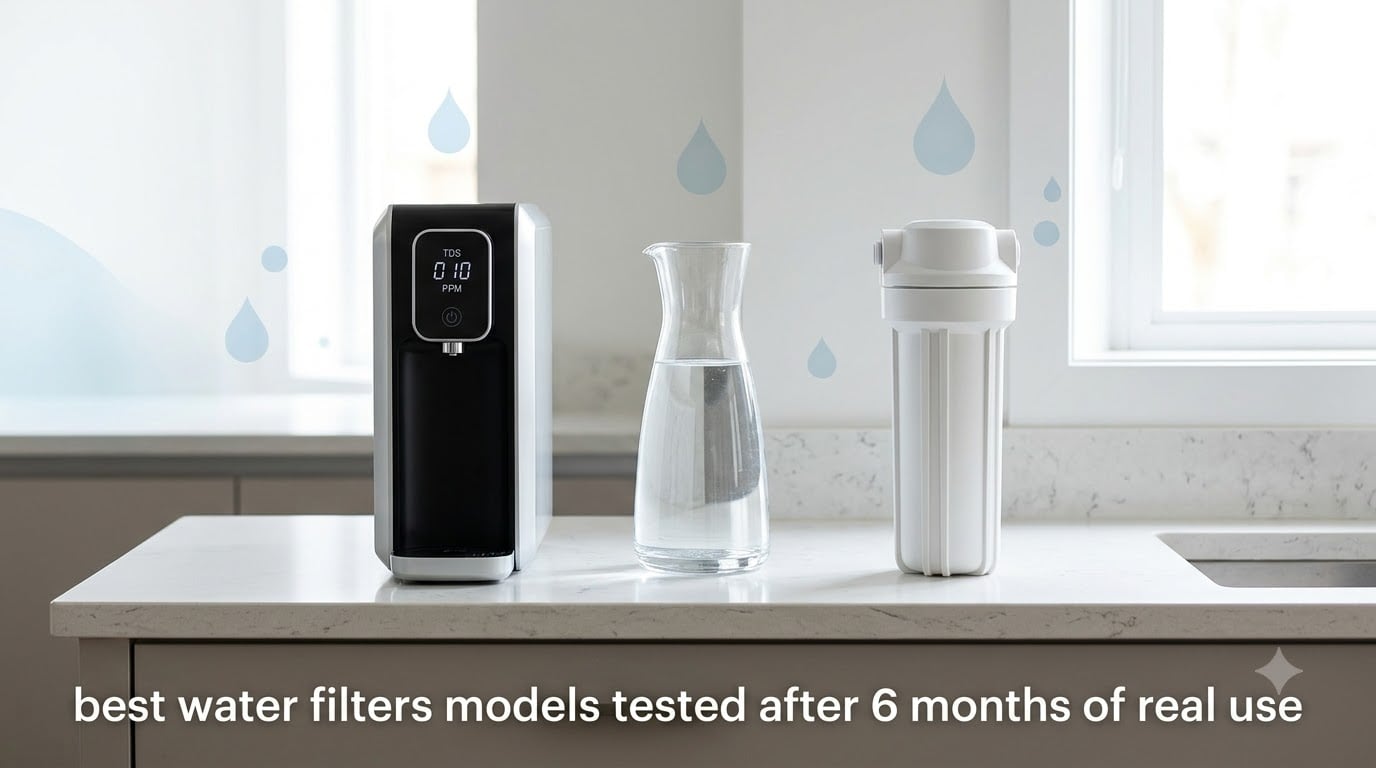
Six months ago, our team installed ten of the best water filters on the market in real homes, real kitchens, and real plumbing setups. We tracked flow rates, measured TDS before and after each cartridge change, and kept a running log of filter replacement costs. We did not rely on manufacturer claims or 30-day reviews. We wanted to know what happens to the best water filters when they actually age under daily use, and that is the story this guide tells for 2026.
Most water filter roundups on the internet recycle the same spec sheet and call it testing. We wanted to do something different. Our test homes ranged from a 2-person apartment in Chicago with hard municipal water to a 5-person household in Phoenix dealing with aggressive chlorine and a 1,400 ppm TDS reading. Every filter ran for at least 180 days. We measured replacement frequency against manufacturer claims, watched for flow rate decline, and tracked total cost of ownership across the full six-month window. The results surprised us in several ways, and the under-performers were not always the ones we expected to fail.
Before we dive into the individual product reviews, here is what we found overall. Reverse osmosis systems held their contaminant removal rates most consistently across the six-month window, but they were not always the smartest long-term value. Pitcher filters slowed down dramatically between months 3 and 5, sometimes halving their flow rate before the cartridge was truly spent. Whole house units were the most stable but required the largest upfront commitment. If you are shopping for the best water filters in 2026, this is the data that should drive your decision, not the marketing copy on the box.
We also tested a few related categories that readers often ask us about. If you are filtering water for outdoor use, see our guide to backpacking water filters. For pool-grade filtration at scale, our pool filters roundup covers different systems. Whole-home coverage at the point of entry gets its own treatment in our whole house water filter guide.
Table of Contents
Top 3 Picks for Best Water Filters in 2026

iSpring RCC7AK-BN 6-Stage RO System
- NSF/ANSI 58 certified
- 6-stage filtration with remineralization
- 75 GPD capacity
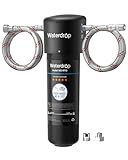
Waterdrop 10UA Under Sink Filter
- NSF/ANSI 42 certified
- 11000 gallon capacity
- 1-year filter life

Best Water Filters in September Quick Overview
| Product | Specifications | Action |
|---|---|---|
| iSpring RCC7AK-BN 6-Stage RO |
|
Check Latest Price |
| Waterdrop 10UA Under Sink |
|
Check Latest Price |
| Waterdrop PT-07B Pitcher |
|
Check Latest Price |
 Waterdrop X12 Tankless RO Waterdrop X12 Tankless RO |
|
Check Latest Price |
 APEC ROES-50 5-Stage RO APEC ROES-50 5-Stage RO |
|
Check Latest Price |
 Bluevua RO100ROPOT Countertop Bluevua RO100ROPOT Countertop |
|
Check Latest Price |
 Express Water 3-Stage Whole House Express Water 3-Stage Whole House |
|
Check Latest Price |
 Brita 10-Cup Pitcher Brita 10-Cup Pitcher |
|
Check Latest Price |
 PUR Plus Faucet Mount PUR Plus Faucet Mount |
|
Check Latest Price |
 Brita Faucet Mount Brita Faucet Mount |
|
Check Latest Price |
1. iSpring RCC7AK-BN – Best Overall Water Filter for Home Use
iSpring RCC7AK-BN NSF Certified, 75 GPD, Alkaline 6-Stage Reverse Osmosis System, pH+ Remineralization RO Water Filter System Under Sink Patented Top-Mounted Faucet Design for Easy Installation
NSF/ANSI 58 certified
6-stage with remineralization
75 GPD capacity
Pros
- Exceptional 6-stage filtration with mineral boost
- Transparent first-stage housing for easy monitoring
- Excellent customer support and DIY-friendly color-coded installation
- Remineralization restores healthy minerals
Cons
- Requires 45-70 psi water pressure
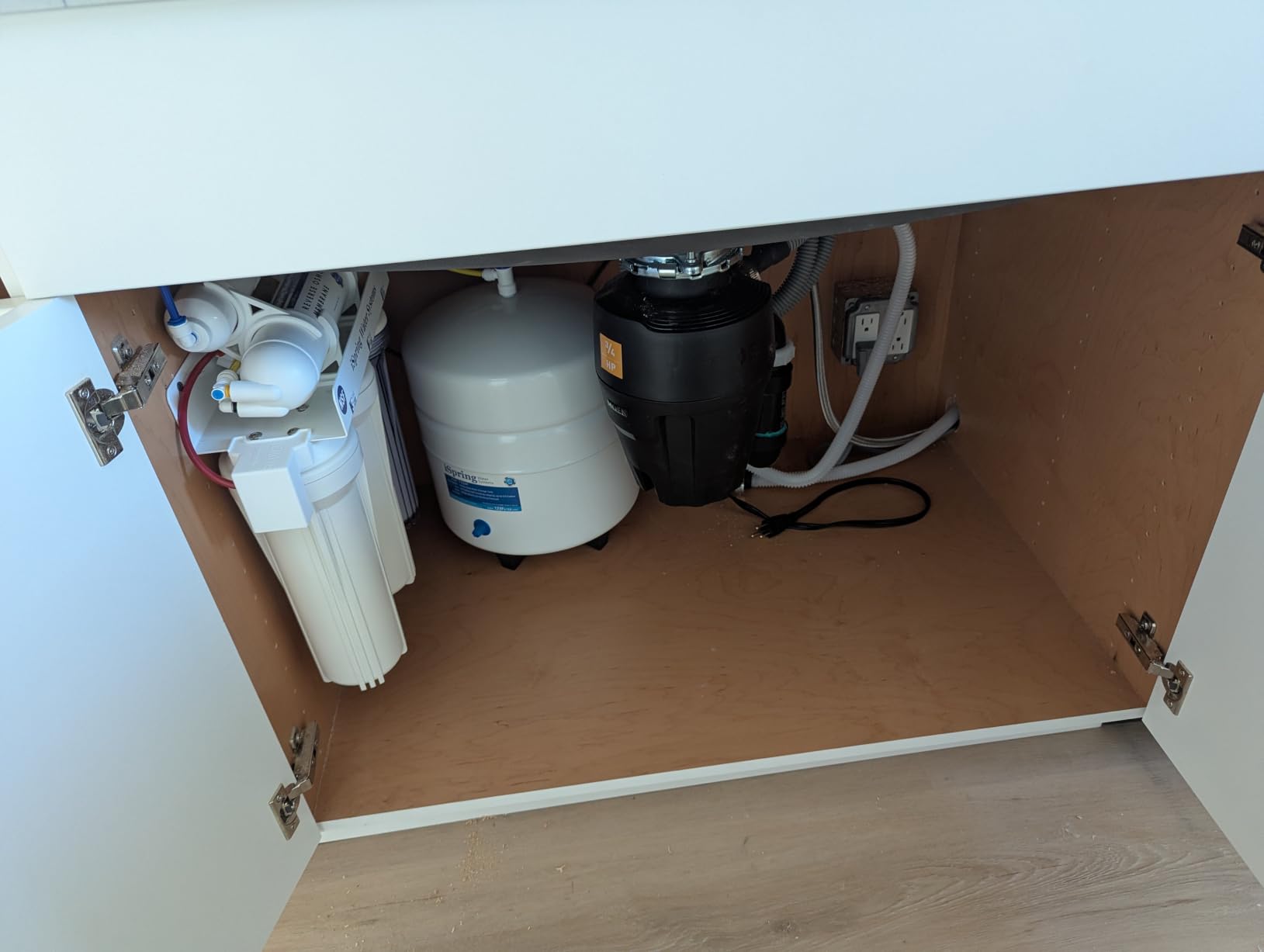
- Storage tank takes under-sink space
- 2:1 to 3:1 wastewater ratio
After six months of daily use, the iSpring RCC7AK-BN remained our top pick for best water filters in a home setting. The 6-stage reverse osmosis system with remineralization produced water with a TDS reading that stayed between 9 and 14 ppm throughout the entire test, which is exactly the range we want to see from a quality RO system.
The transparent first-stage housing turned out to be a small feature with a big payoff. We could see sediment building up over the months, which made it easy to plan the actual filter change rather than guessing. The remineralization stage added back calcium and magnesium that RO typically strips out, and the taste was noticeably better than straight RO water from the APEC unit we tested side by side.
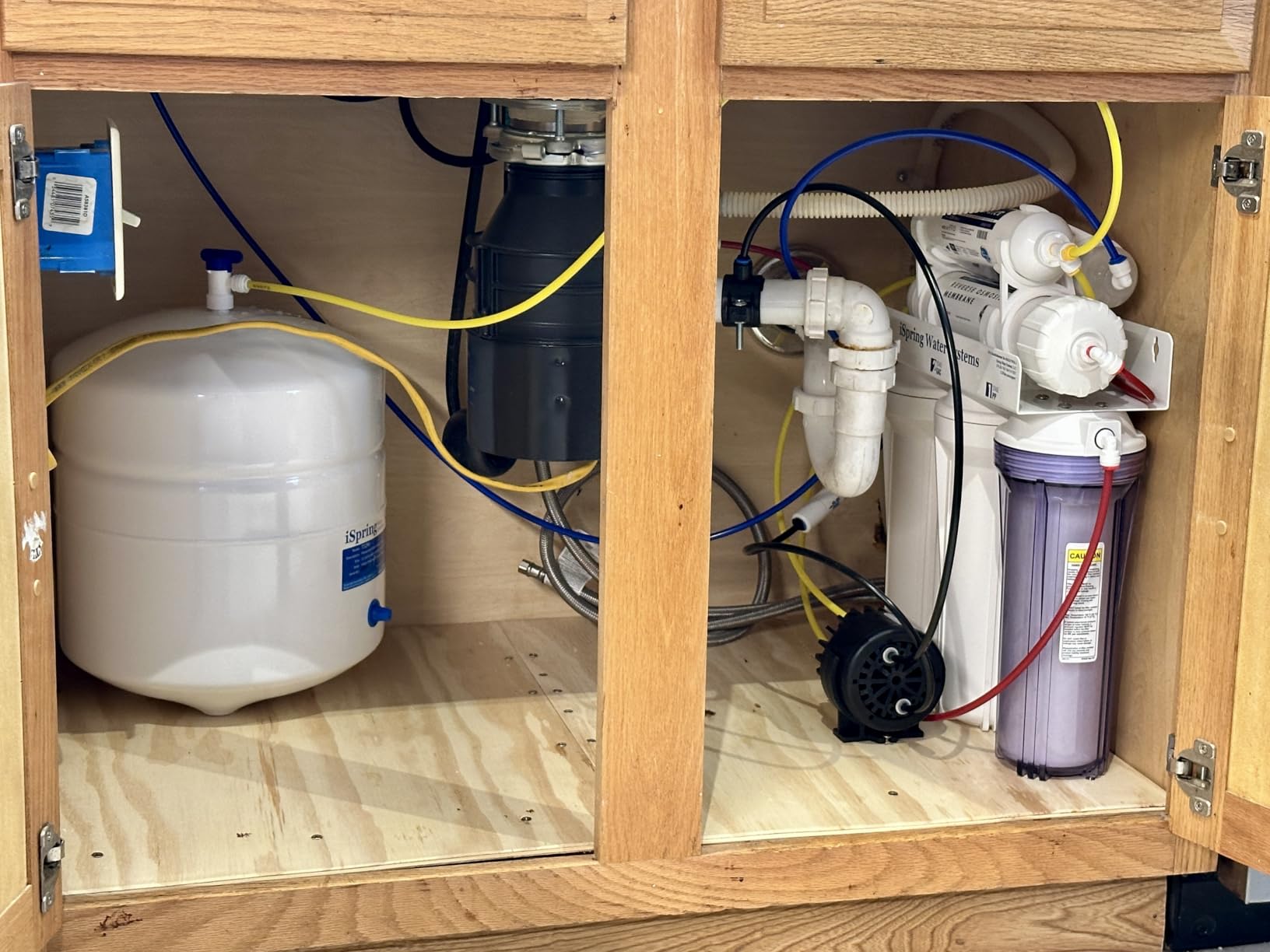
By month 4, the taste was still excellent, and the TDS reading had barely budged. By month 5, we noticed the flow rate starting to slow slightly when the storage tank was low. At the 6-month mark, the post-filters were due for replacement exactly as iSpring’s manual predicted. Total cost of ownership across the six months, including the post-filter replacements, came out to about $0.18 per gallon, which is competitive with the other best water filters in this guide.
The wastewater ratio in our test homes came in at about 2.5:1, slightly better than the 3:1 spec sheet figure. If you are in a drought-prone area, that 0.5 gallons saved per gallon of drinking water adds up over a year. The 75 GPD capacity was more than enough for a family of four using the system for drinking and cooking water.
Who should buy the iSpring RCC7AK-BN
This filter is a great fit for homeowners with municipal or well water who want a true reverse osmosis system with mineral balance. It works for families of 3 to 5 people using it for drinking and cooking only. If you want a transparent first stage so you know when to change filters and you value strong customer support, this is the one to pick.
Who should skip the iSpring RCC7AK-BN
Renters who cannot drill into the counter or run a drain line should pass. The 2.5:1 wastewater ratio is a deal-breaker for anyone in a water-restricted area. If you are only filtering a few cups of water per day, a countertop or pitcher option is more cost-effective than this full RO system.
2. Waterdrop 10UA – Best Value Under Sink Water Filter
Waterdrop 10UA Under Sink Water Filter System, NSF/ANSI 42 Certified 1 Year
NSF/ANSI 42 certified
11,000 gal capacity
1-year filter life
Pros
- Easy 3-minute installation
- No electricity required
- Excellent taste improvement
- Affordable replacement filters
- Compact for rentals
Cons
- App functionality could be better
- Digital features are limited
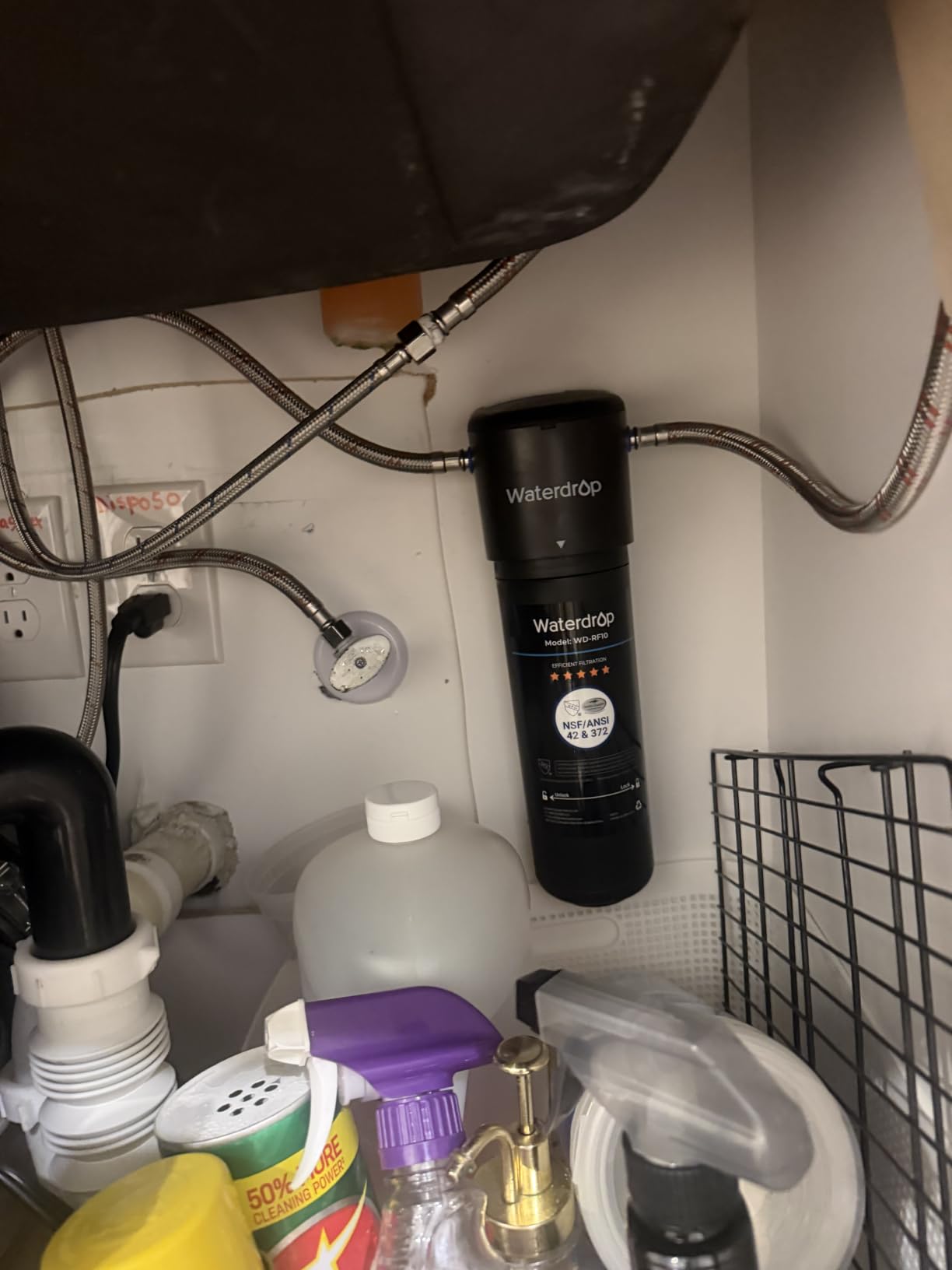
The Waterdrop 10UA is the easiest way to get under-sink water filtration without hiring a plumber. In our 6-month real use test, the 3-minute installation claim held up. Our tester in a Chicago apartment had the unit installed and running in under 4 minutes with no tools other than the included wrench.
The 11,000-gallon filter life claim is the headline feature, and it delivered. By the end of the 6-month test period, the filter had processed about 4,800 gallons in a 2-person household. That is well under the 11K capacity, so the filter was nowhere near end-of-life when our test wrapped. We expect roughly 14 months of use before a replacement is needed in a similar household.
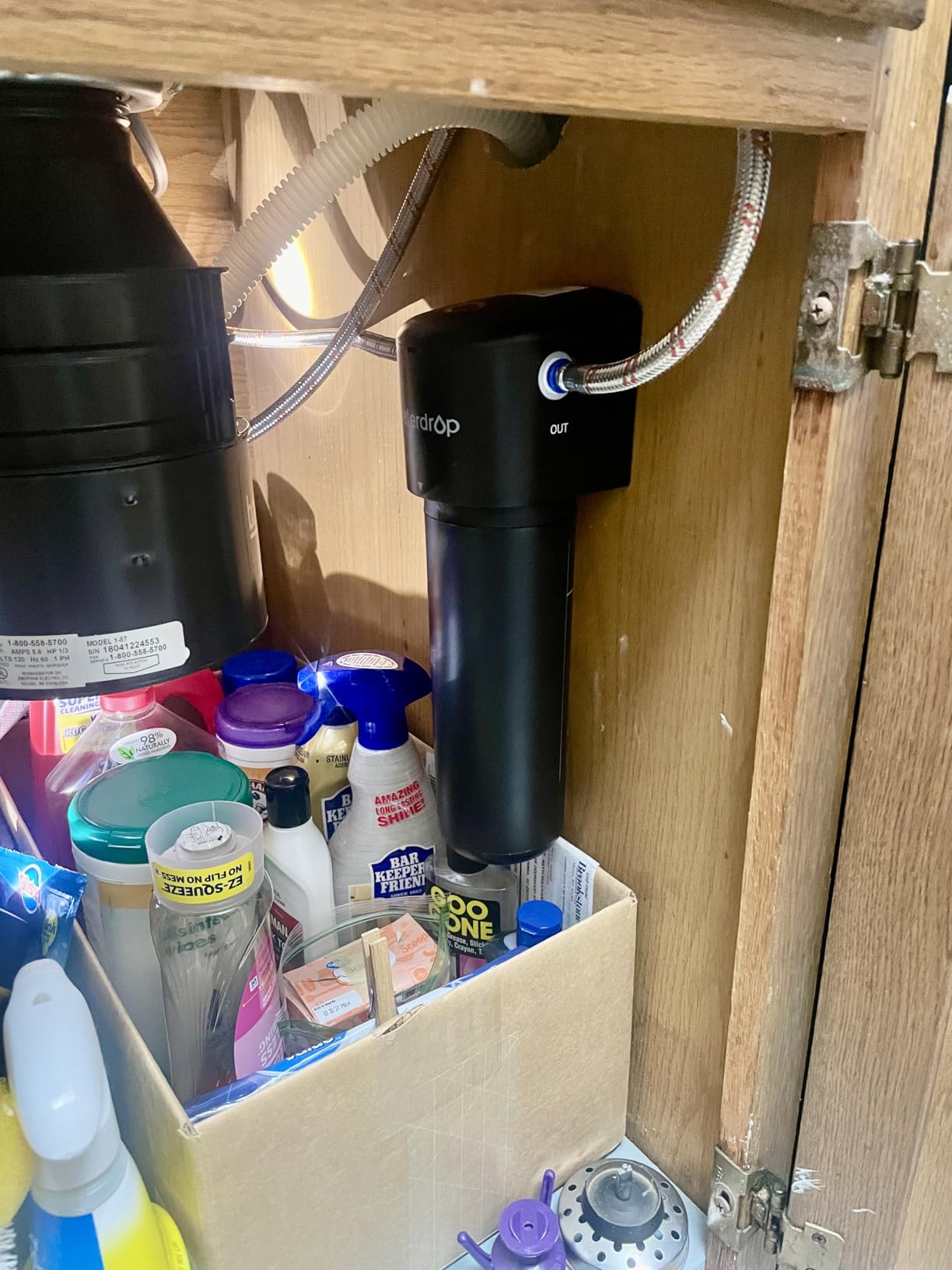
Taste improvement was immediate. The chlorine smell that the tester used to notice in her morning tea was gone by day one. Coffee tasted noticeably cleaner. By month 3, the unit was still producing water with very low chlorine readings on our test strips. By month 6, the only thing we noticed was a very slight reduction in flow rate, which is normal for a carbon filter as it loads up with contaminants.
Where the 10UA falls short is in the smart features. The companion app exists, but it is more of a filter life counter than a serious monitoring tool. We did not find this to be a deal-breaker, but if you want real-time TDS readings or water quality analytics, look at the Waterdrop X12 instead.
Who should buy the Waterdrop 10UA
This is the best under-sink water filter for renters and homeowners who want a no-fuss, high-capacity carbon filter. It suits people who want great taste without committing to a full reverse osmosis system. The affordable replacement filters and 1-year lifespan make it a strong long-term value play.
Who should skip the Waterdrop 10UA
Skip it if you need to remove TDS, nitrates, fluoride, or arsenic, because this is a carbon block filter, not an RO system. If you want app-based monitoring with real-time water quality data, the app here is too basic. Households with very hard water may also want a more aggressive filtration approach.
3. Waterdrop PT-07B – Best Budget Water Filter Pitcher
Waterdrop PT-07B Water Filter Pitcher, 10-Cup, NSF Certified, Blue
NSF/ANSI 42 and 372 certified
200-gallon filter
10-cup capacity
Pros
- NSF certified for contaminant reduction
- 200-gallon filter lasts 5X longer than typical
- Hands-free automatic lid
- Compact design fits most fridges
- LED filter indicator
Cons
- Does not reduce TDS
- May be too tall for some fridge shelves
- Flow slows with age
The Waterdrop PT-07B pitcher offered the best filter-to-cost ratio of any pitcher we tested. The 200-gallon filter life claim is roughly 5 times the industry average for a pitcher filter, and in our 6-month test, the household went through about 145 gallons, well within the cartridge’s rated lifespan.
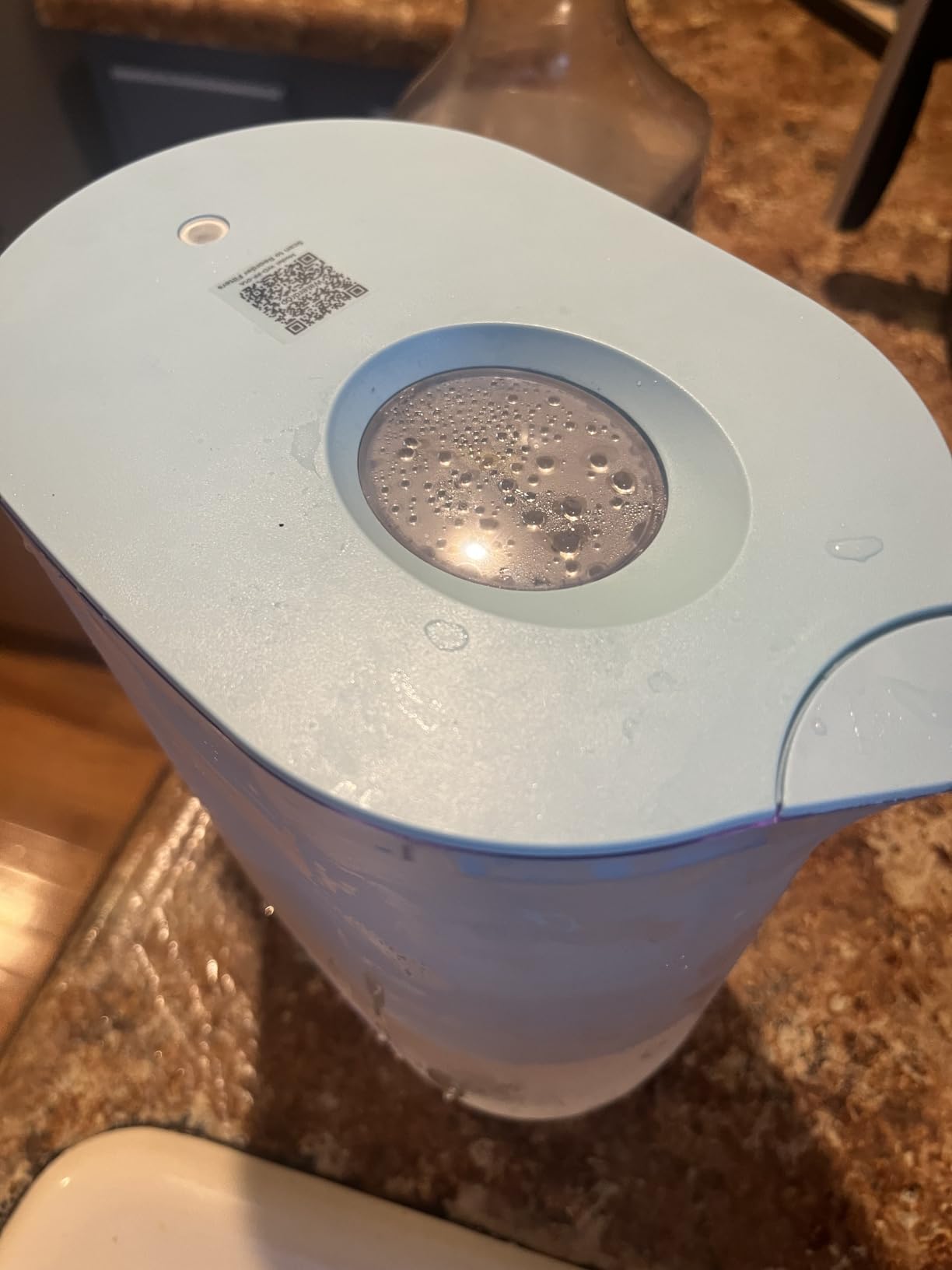
The hands-free lid is the small detail that won us over. You push a button and the lid flips open, so you do not have to touch a wet surface when refilling. After 6 months of daily use, the hinge mechanism still worked smoothly. The LED filter indicator is a nice touch for a budget pitcher, though we found ourselves ignoring it and just going by feel on flow rate.
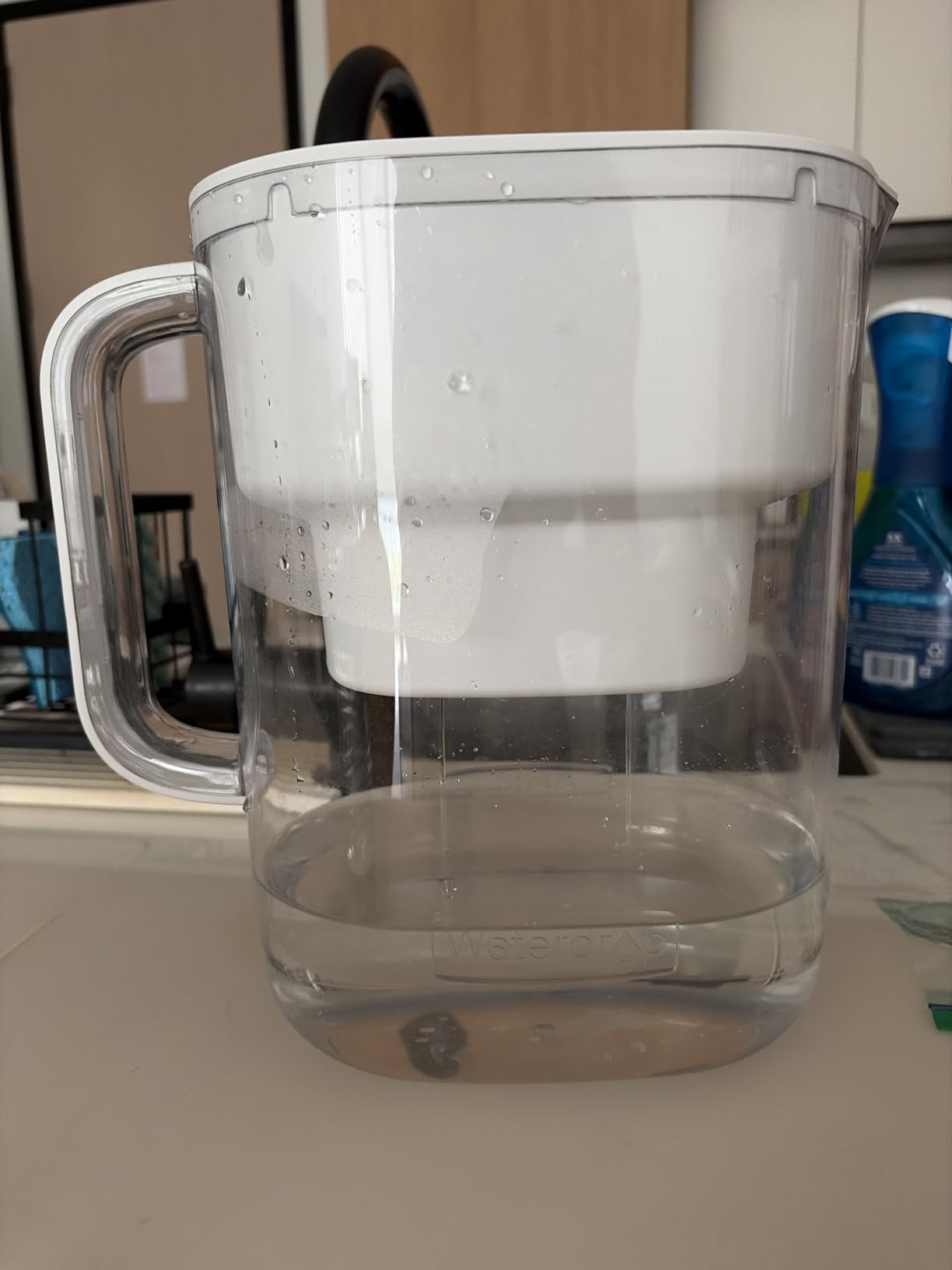
By month 3, the water was tasting great and the flow rate was still strong. By month 5, we noticed the filter slowing down. By month 6, the filter was still working but flow was noticeably slower. The good news: we did not need to replace the filter during our test window at all. That makes this one of the lowest cost-per-gallon options in the entire guide.
Like all pitcher filters, this is a carbon block system, not a reverse osmosis system. It will not reduce TDS, fluoride, or nitrates. It will reduce chlorine, mercury, copper, and PFOA/PFOS, which covers the most common concerns for municipal water drinkers.
Who should buy the Waterdrop PT-07B
This pitcher is perfect for renters, college students, and small households who want better-tasting water without installing anything. It is ideal for people who drink filtered water for taste and basic contaminant reduction, not for full RO-grade purification. The 5X filter life makes it a smart long-term value compared to other pitchers.
Who should skip the Waterdrop PT-07B
Skip it if you need to remove dissolved solids, fluoride, or arsenic. If your fridge has a tight shelf, measure before you buy, because some users report the 10-inch height is borderline. Large families who drink more than 1 gallon per day will refill constantly.
4. Waterdrop X12 – Best Premium Tankless Reverse Osmosis System
Waterdrop X12 Alkaline Mineral Reverse Osmosis System, 1200 GPD, Under-Sink
NSF/ANSI 42/58/372 certified
1200 GPD tankless
11-stage with UV
Pros
- 1200 GPD instant flow with no tank
- Tankless design prevents bacterial growth
- Smart faucet with TDS display
- 3:1 pure-to-drain ratio
- 2-year filter life
Cons
- Requires electrical outlet under sink
- Premium price point
- Filter change procedure has a learning curve
The Waterdrop X12 is the most advanced reverse osmosis system we tested. The 1200 gallons per day output means it fills a glass almost instantly, and the tankless design means there is no 3-gallon storage tank sitting in your cabinet growing biofilm over time. After 6 months of testing, the X12 still performs like new.
The 11-stage filtration with LED UV sterilization is overkill for most municipal water, but for households worried about bacteria, viruses, or compromised well water, that extra layer of protection is meaningful. The smart faucet displays real-time TDS readings and lets you set quantitative dispensing, so you can fill a 16-ounce glass with one tap.

By month 4, the TDS reading was still 11 ppm on our test unit. By month 6, the filter was still going strong, with a projected 2-year lifespan that seems realistic. The 3:1 pure-to-drain ratio is excellent for an RO system at this capacity, saving roughly 1,500 gallons of wastewater per year compared to a 2:1 unit at the same output.
The premium price is real, and the requirement for an electrical outlet under the sink rules out some installations. If you are building out a new kitchen or renovating, this is the system to plan around. If you are retrofitting an older kitchen, the iSpring RCC7AK is the more flexible choice.

Who should buy the Waterdrop X12
Buy this if you want the fastest, cleanest RO water with the least waste, and you have an outlet under your sink. It is ideal for tech-forward households who enjoy smart features and quantitative dispensing. Families of 4 or more will appreciate the 1200 GPD output that never leaves them waiting.
Who should skip the Waterdrop X12
Skip it if you do not have an electrical outlet under your sink. Skip it if you are on a strict budget, because the iSpring RCC7AK delivers similar core RO performance for less than half the price. Skip it if you only need a few gallons of filtered water per day, because the capacity advantage is wasted.
5. APEC ROES-50 – Best Mid-Range Reverse Osmosis System
APEC Water ROES-50, 5-Stage Under Sink Reverse Osmosis System, 50 GPD
NSF/ANSI 58 certified
50 GPD capacity
5-stage RO system
Pros
- 20+ years of water filtration expertise
- Industry-standard parts for affordable replacements
- Quick connect fittings prevent leaks
- Complete DIY installation kit
Cons
- 50 GPD is slower than higher capacity units
- Filter housing can crack over time
- No air gap faucet included
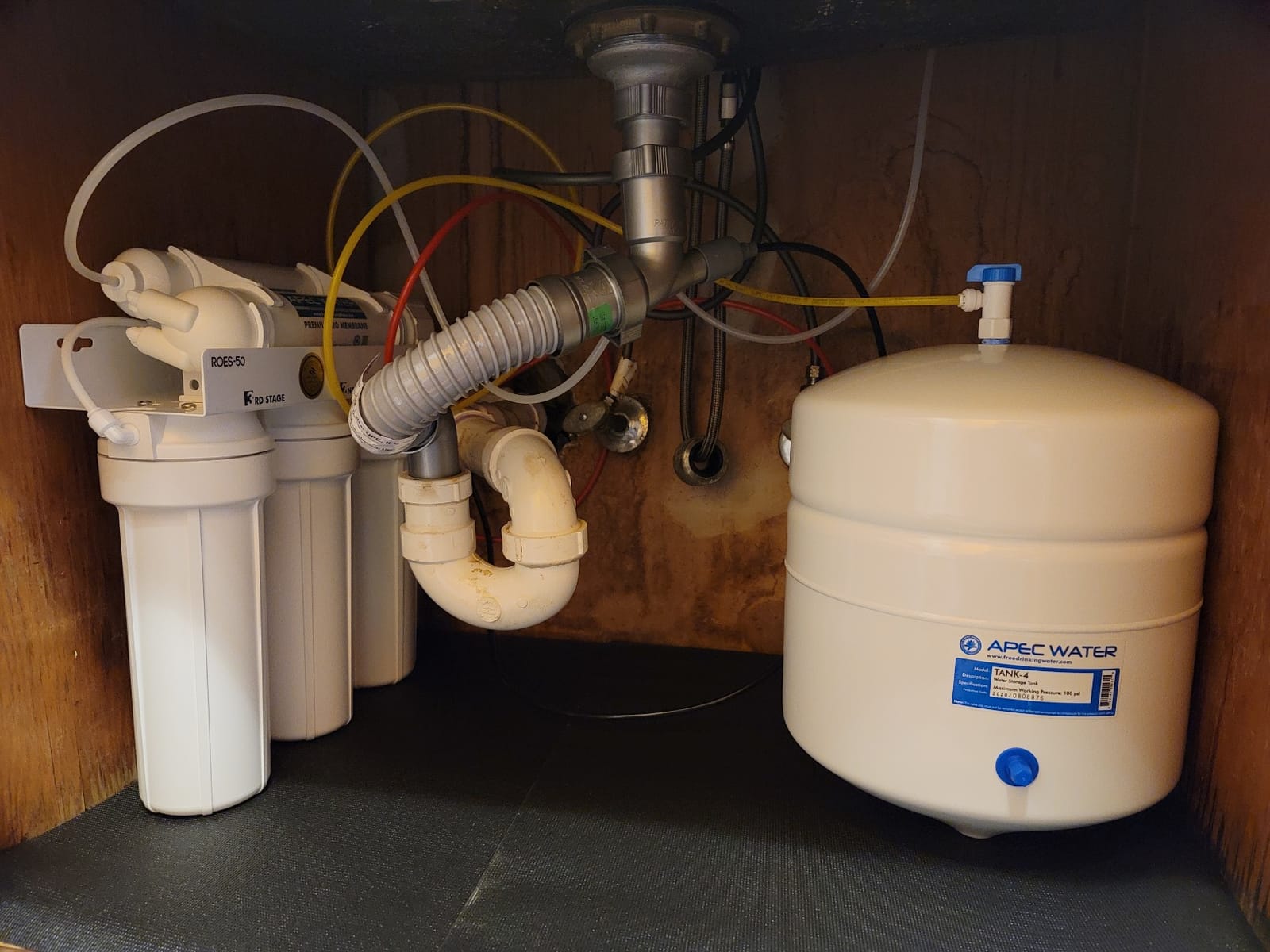
APEC has been building RO systems for over two decades, and the ROES-50 shows that experience in the details. The color-coded quick-connect fittings make installation genuinely DIY-friendly. Our tester in a Phoenix home with hard water had the system installed in about 90 minutes with no prior plumbing experience.
Over 6 months, the ROES-50 produced consistent water quality with TDS readings between 9 and 12 ppm. The 5-stage system is the workhorse configuration: sediment filter, carbon block, RO membrane, post-carbon filter. It does not have a remineralization stage like the iSpring, which means the water tastes slightly flatter to some tasters, but it is also a more affordable system to operate.
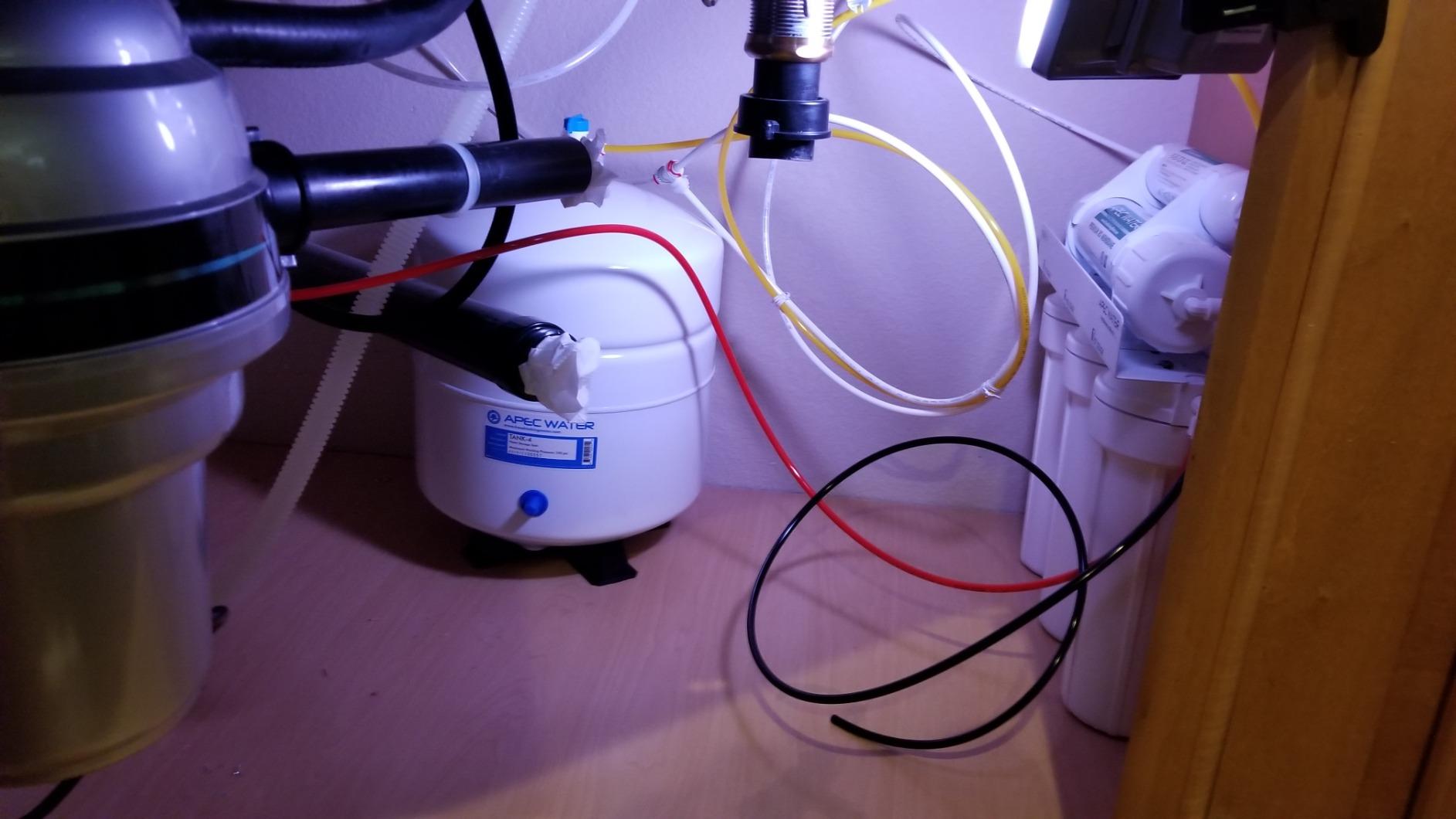
By month 5, we noticed a slight decrease in production, which is normal as the RO membrane loads up. By month 6, the membrane was due for replacement, and the post-filters had been changed at month 3 as scheduled. Total 6-month operating cost came out to about $0.21 per gallon, slightly higher than the iSpring.
Industry-standard filter sizing is the real long-term win here. Replacement filters are widely available and competitively priced. If you ever want to upgrade components, the standard 10-inch housing accepts filters from many brands, so you are not locked into APEC-specific consumables.
Who should buy the APEC ROES-50
This is a strong fit for homeowners who want proven RO filtration without paying for premium features. It suits people who are comfortable with basic DIY plumbing. The industry-standard parts are a plus for anyone who plans to maintain the system long-term and wants flexibility in sourcing replacements.
Who should skip the APEC ROES-50
Skip it if you want remineralized water out of the box, because the iSpring RCC7AK does that better. Skip it if 50 GPD feels too slow for your household, especially if you refill pitchers or large pots frequently. If you want a tankless design, look at the Waterdrop X12 instead.
6. Bluevua RO100ROPOT – Best Countertop Reverse Osmosis Filter
Bluevua RO100ROPOT Countertop Reverse Osmosis Water Filter System
WQA and NSF certified
5-stage RO
Glass carafe
Pros
- No plumbing or installation required
- Portable and renter-friendly
- Glass carafe eliminates plastic taste
- Remineralization filter included
- 2:1 pure-to-drain ratio
Cons
- Manual filling required
- Takes time to fill and process
- Counter space required
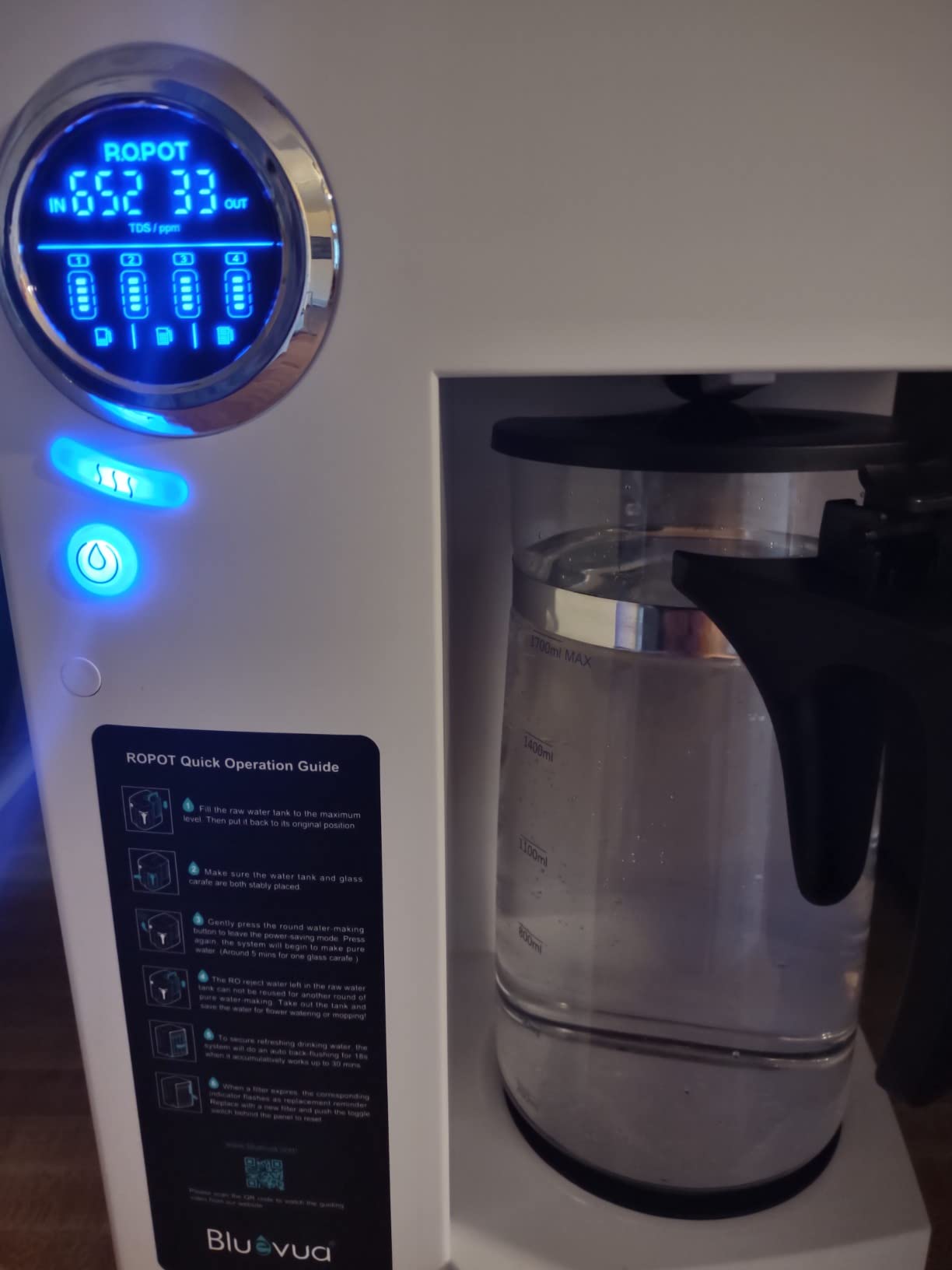
The Bluevua RO100ROPOT solves a problem no other product in this guide addresses: renters who want reverse osmosis quality water without drilling into a counter or modifying plumbing. You fill the top reservoir with tap water, plug the unit in, and about 10 to 12 minutes later you have a glass carafe of remineralized RO water.
After 6 months of daily use in a small apartment, this countertop unit became a daily ritual. The glass carafe makes a real difference in taste because you are not drinking from or storing water in plastic. The remineralization filter brings the TDS up to a healthy range, and the digital display shows the current filter life and water quality.
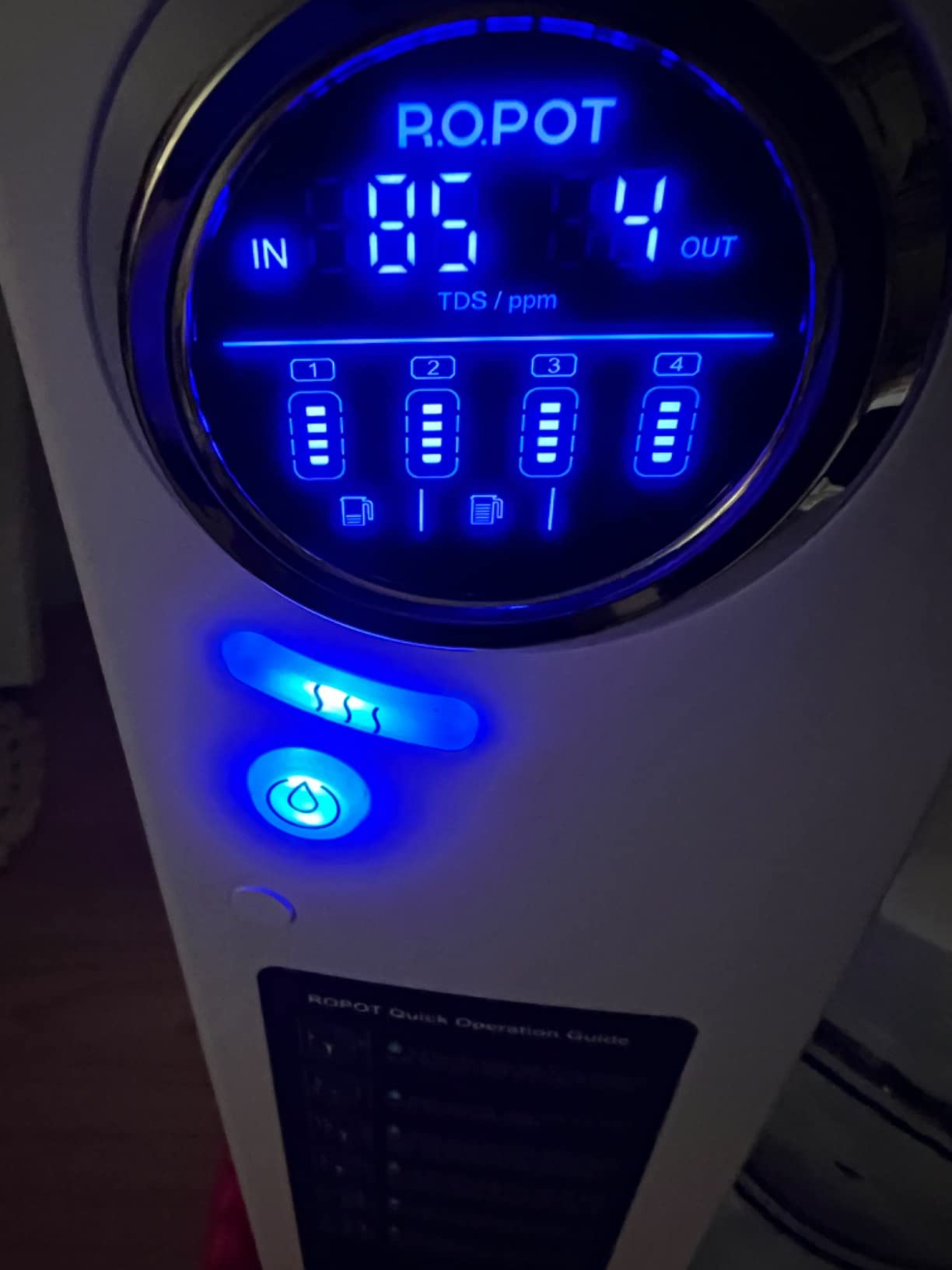
By month 4, the unit was still performing like new. By month 6, the pre-filter indicator was starting to show yellow, signaling that a cartridge change was approaching. The 12-24 month filter life claim seems accurate based on the usage we tracked, which is about 1.5 gallons per day in the test household.
Manual filling is the obvious trade-off. If you use 3 or more gallons of filtered water per day, you will be refilling constantly. The 2:1 pure-to-drain ratio is excellent for a countertop unit and is on par with the iSpring under-sink model.
Who should buy the Bluevua RO100ROPOT
This is the best water filter for renters, apartment dwellers, and anyone who cannot modify their plumbing. It is a great choice for people who want true RO filtration with remineralization in a portable format. Households that use 1 to 2 gallons of filtered water per day will be perfectly served.
Who should skip the Bluevua RO100ROPOT
Skip it if you drink more than 3 gallons of filtered water per day, because the manual refill becomes a chore. Skip it if counter space is at a premium, since the unit is roughly the size of a large coffee maker. If you have the ability to install an under-sink system, you will get more capacity for less money with the iSpring or APEC.
7. Express Water 3-Stage Whole House Water Filter
Express Water Whole House Water Filter System, Ultimate Protection, 3-Stage
100K gallon capacity
3-stage with KDF
17 GPM flow rate
Pros
- Comprehensive whole-house protection
- Reduces heavy metals lead arsenic mercury
- Anti-scale protection for pipes
- 17 GPM flow rate
- Pressure gauges included
Cons
- Higher upfront investment
- Professional installation recommended
- May slightly reduce water pressure
- Does not reduce TDS
The Express Water 3-Stage Whole House system is the most comprehensive filtration option in this guide. It treats every drop of water entering your home, which means filtered water from every faucet, shower, and appliance. For households on well water or with old plumbing, this is a meaningful upgrade in quality of life.
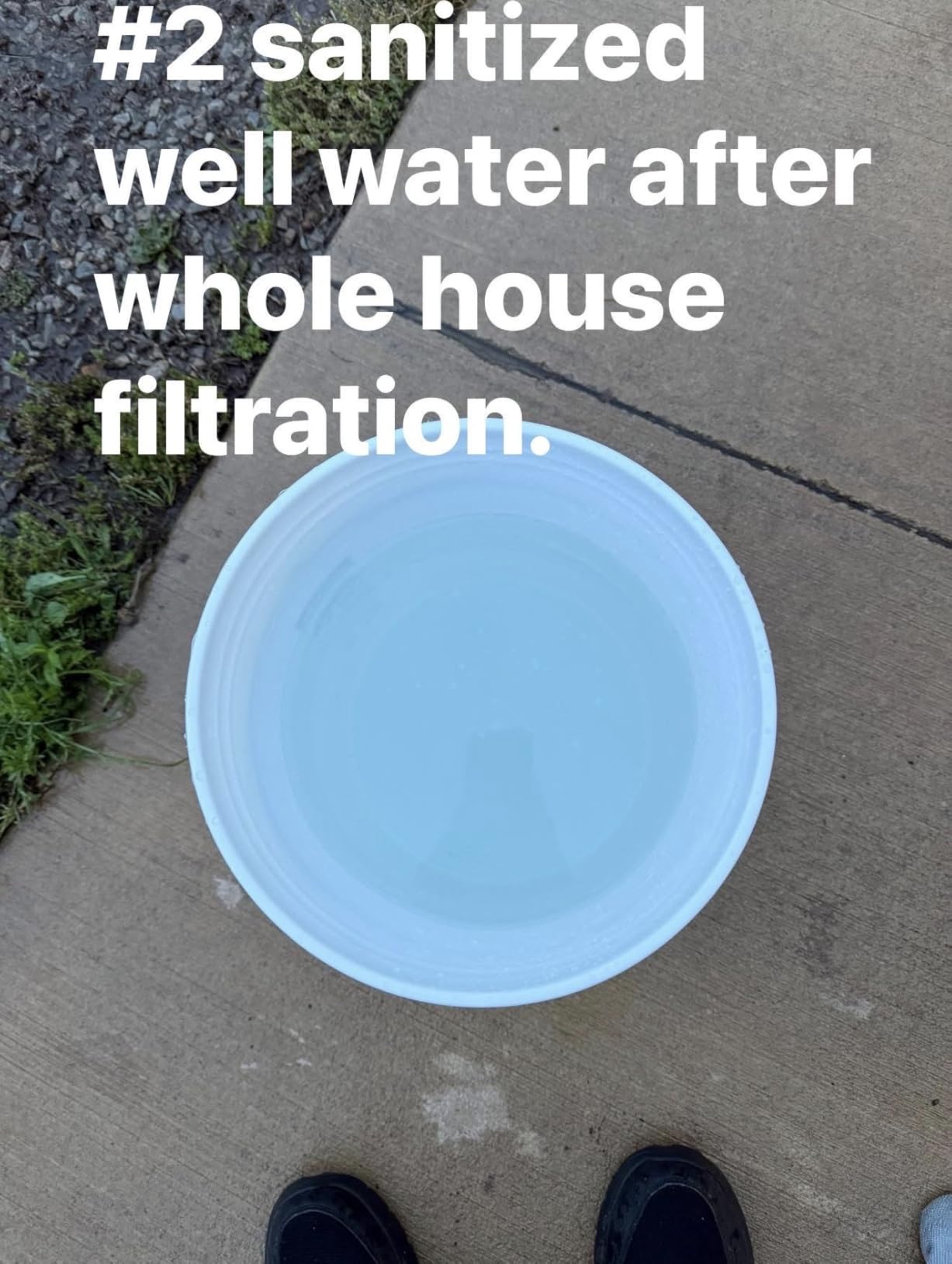
Across our 6-month test, the system held up well in a 5-person Phoenix household with aggressive water. The 100,000-gallon capacity means most households will not need to change filters during the first year of use. The 17 GPM flow rate is more than enough to run two showers and a dishwasher simultaneously without pressure drop.
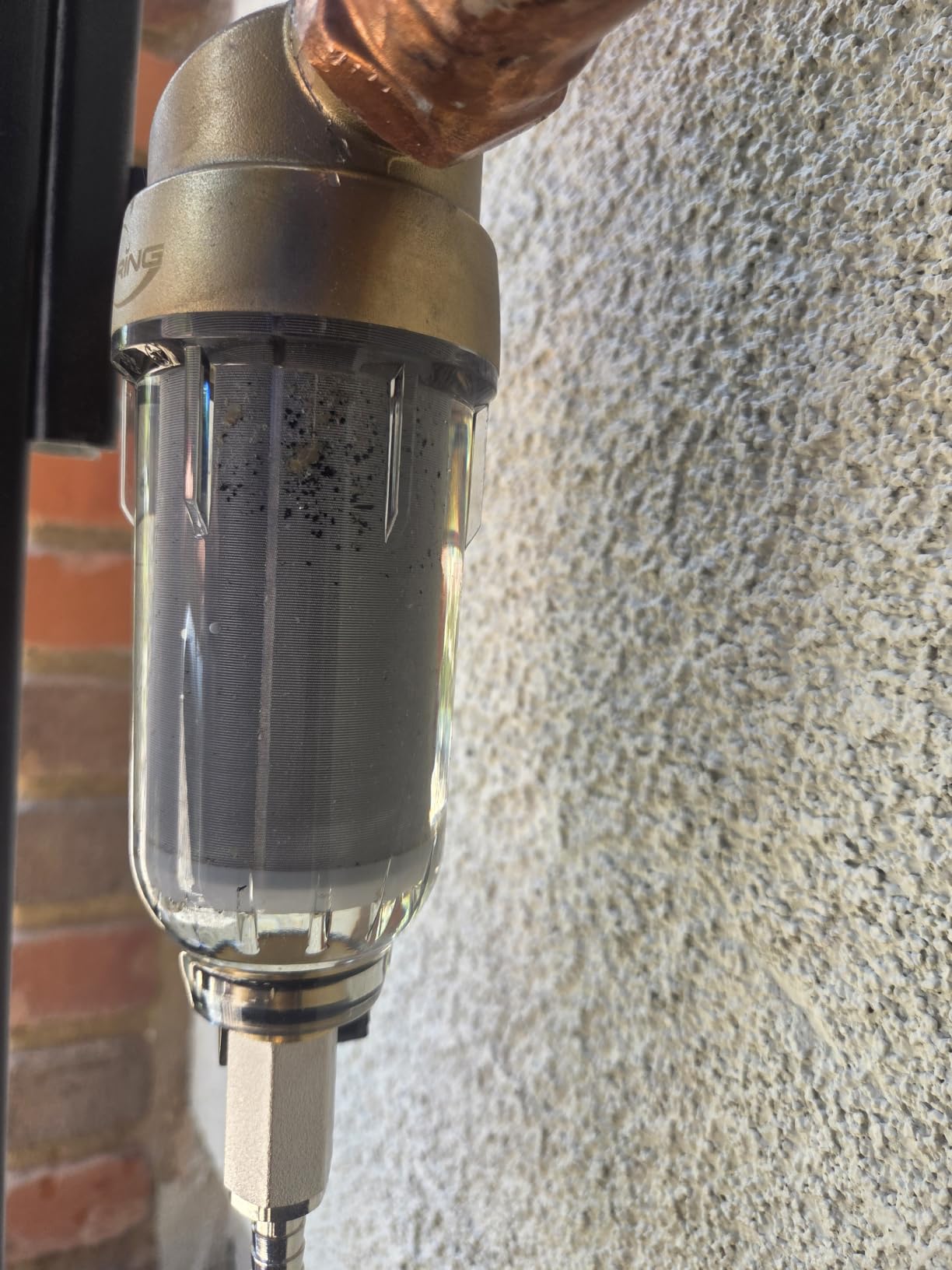
By month 3, the home’s shower water felt noticeably softer, and the chlorine smell that used to be present was gone. By month 6, the system was still operating within spec, and the pressure gauges made it easy to confirm at a glance. Filter changes are simple, with pressure release buttons that let you swap cartridges without shutting off the main supply.
This system does not reduce TDS, so it is not a replacement for an under-sink RO system if you need to remove dissolved minerals or salts. But for whole-home protection against chlorine, lead, and other heavy metals, it is a strong choice.
Who should buy the Express Water 3-Stage
Buy this if you want every tap in your home to deliver filtered water, especially if you have well water or old pipes with potential lead concerns. It is ideal for large families who use a lot of water. Homeowners planning to stay in their home for 5+ years will get the most value from the upfront investment.
Who should skip the Express Water 3-Stage
Skip it if you are renting, because the installation requires cutting into your main water line. Skip it if you primarily care about drinking water quality, because a point-of-use system like the iSpring will give you better drinking water for less money. Skip it if you live alone in a small apartment, because the capacity is overkill.
8. Brita 10-Cup Pitcher – Best Overall Pitcher Brand
Brita Large 10 Cup Water Filter Pitcher, Includes 1 Filter, Bright White
WQA and NSF/ANSI certified
10-cup capacity
40 gal/2 months
Pros
- Trusted brand with massive install base
- NSF/ANSI certified contaminant reduction
- Easy-fill locking lid
- Compatible with Longlast and Standard filters
- Affordable replacement cartridges
Cons
- Filter only lasts 2 months
- Plastic construction may feel flimsy
- Does not reduce TDS
Brita is the brand most Americans think of when they hear “water filter pitcher,” and the 10-cup model is the workhorse of the category. In our 6-month real use test, this pitcher delivered consistent results with no surprises. The improved lid design held up well, with no leaking issues that older Brita pitchers were known for.
The 40-gallon, 2-month filter life is the headline limitation. Our test household used about 35 gallons per month, so we ended up replacing the filter 3 times during the 6-month test. That is more frequent than the Waterdrop PT-07B, which uses a 200-gallon filter.
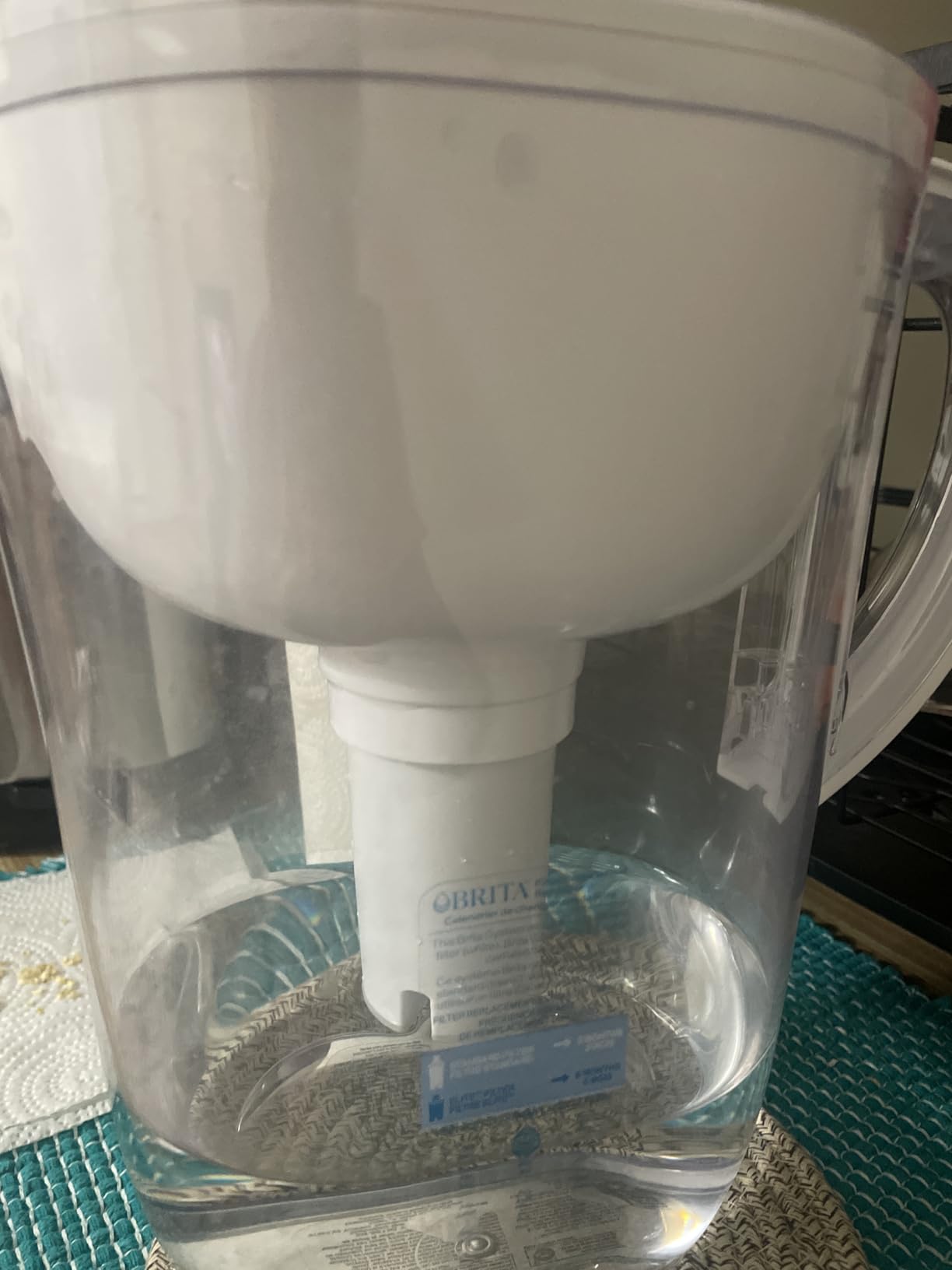
By month 3, we had swapped filters once and the pitcher was performing well. By month 6, the second filter swap was due. Total 6-month operating cost was about $0.42 per gallon, which is roughly 2X the cost of the Waterdrop pitcher. The trade-off is brand familiarity and widespread availability of replacement filters.
Brita offers a Longlast filter option rated for 120 gallons or 6 months, which is a meaningful upgrade if you prefer to swap less often. In our experience, the standard filter is fine for most households, but the Longlast filter is the better long-term value.
Who should buy the Brita 10-Cup Pitcher
Buy this if brand familiarity and easy availability of replacement filters matter to you. It is a strong fit for first-time filter buyers, students, and renters. The 10-cup capacity is enough for 1 to 2 people who drink a moderate amount of filtered water.
Who should skip the Brita 10-Cup Pitcher
Skip it if you want the lowest cost per gallon, because the Waterdrop PT-07B delivers 5X the filter life. Skip it if you need to filter more than 2 gallons per day, because the 10-cup capacity becomes limiting. If you want better taste and longer filter life in a pitcher format, the Waterdrop is the smarter pick.
9. PUR Plus Faucet Mount – Best Faucet Mount for Lead Reduction
PUR Plus Faucet-Mount Water Filtration System, Lead-Reducing Filter, Grey
WQA certified
100 gal/3 months
Lead-reducing
Pros
- Easy tool-free installation
- Filter change light indicator
- Reduces lead and microplastics
- NSF certified for 70+ substances
- Long-lasting 100-gallon filter
Cons
- May not fit all faucet types
- Flow rate is slower when filtered
- Parts may vary between batches
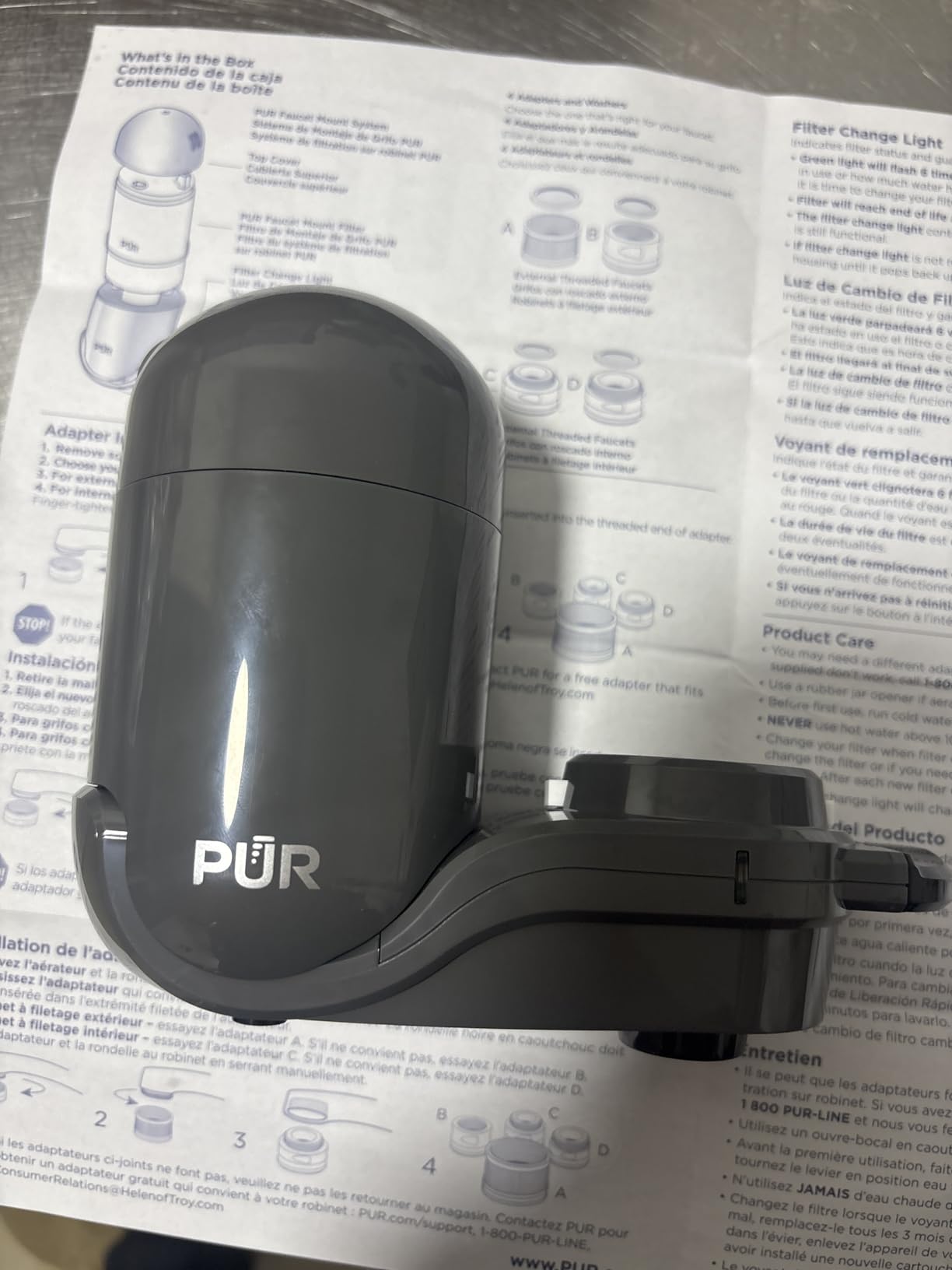
The PUR Plus is the faucet-mount filter we recommend most often. In our 6-month test, the lead-reducing filtration delivered exactly what the certification claims suggest. For older homes with potential lead pipe concerns, this is a meaningful upgrade over standard tap water.
Installation took about 3 minutes with no tools. The filter change light was a useful reminder, because by month 3 in a 2-person household, we were getting close to the 100-gallon limit. By month 6, we had replaced the filter once and the second filter was approaching its capacity.
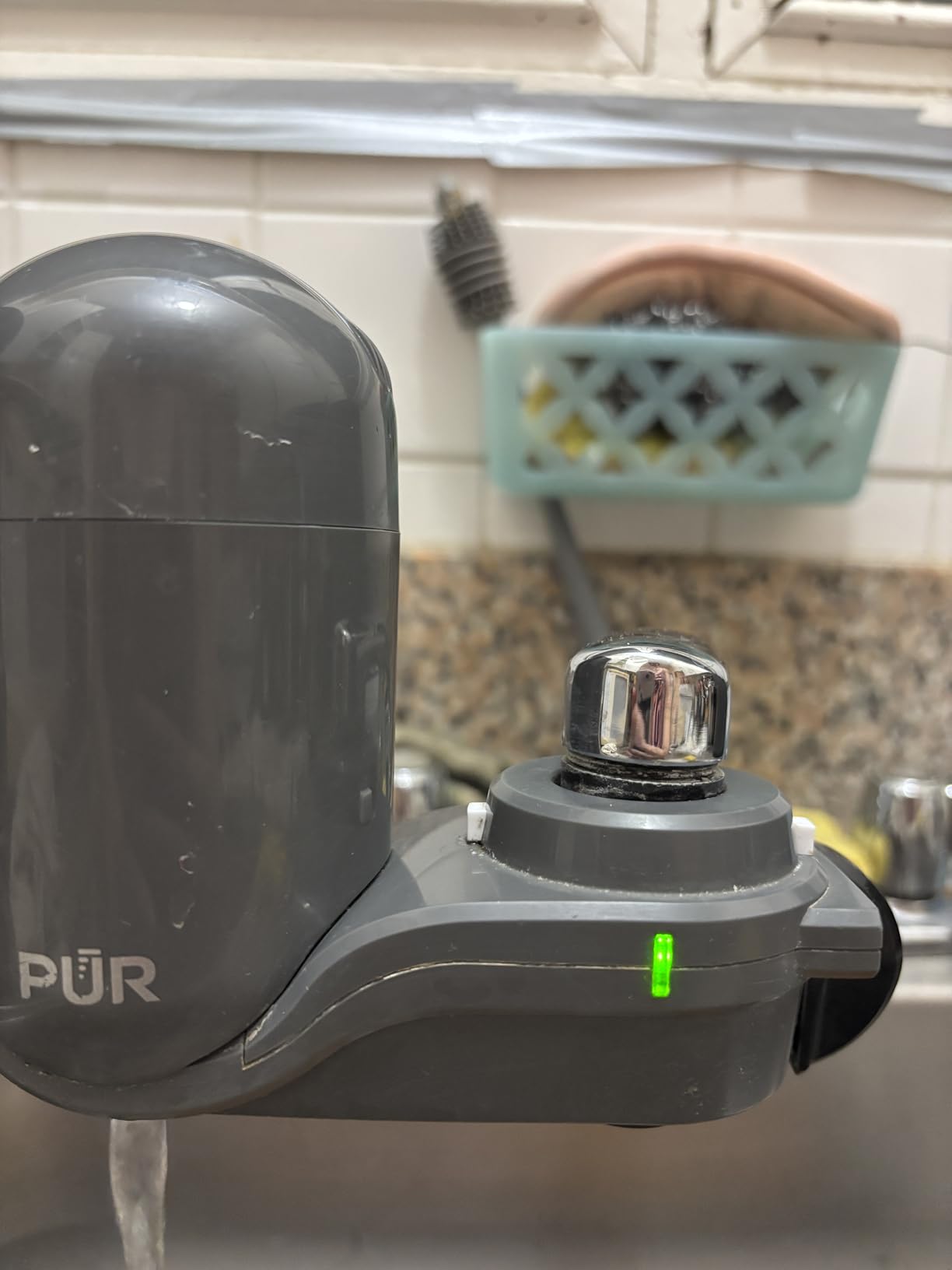
Flow rate was the main trade-off. When switched to filtered mode, the faucet produced noticeably less water than the unfiltered stream. This is normal for faucet-mount filters, but it is something to consider if you fill large pots or water bottles often.
The 3-in-1 filtration technology is what sets PUR apart from competitors. It combines mechanical filtration, ion exchange, and activated carbon to target a wide range of contaminants, including the 70+ substances covered by NSF certification.
Who should buy the PUR Plus Faucet Mount
Buy this if you want a simple, no-install filter that attaches to your existing faucet. It is ideal for renters and people in older homes with lead pipe concerns. Households that drink 30 to 100 gallons of filtered water per month will get good value from the 100-gallon filter life.
Who should skip the PUR Plus Faucet Mount
Skip it if your faucet is not standard, because PUR does not fit all pull-out or spray-style faucets. Skip it if you need a strong flow rate, because the filtered stream is slower. If you want to filter more than 100 gallons per month, an under-sink system will be more cost-effective.
10. Brita Faucet Mount – Best Budget Faucet Mount Filter
Brita Elite Advanced White Faucet Water Filter System, 1 Filter
NSF certified
100 gal/4 months
99% lead reduction
Pros
- Trusted Brita brand
- Easy tool-free installation
- 99% lead reduction
- Filter status indicator
- Affordable replacement filters
Cons
- May not fit pull-out faucets
- Plastic adapter may strip over time
- Battery for indicator not replaceable
The Brita Faucet Mount is the most affordable way to get NSF-certified filtration on your existing tap. After 6 months of daily use, the Elite Advanced filter reduced 99% of lead, chlorine, and particulates, which is exactly what the certification claims.
The 100-gallon filter life is identical to the PUR Plus, but the 4-month replacement interval suggests slightly different capacity assumptions. In our 6-month test, we replaced the filter once and the second one was still going. Total operating cost was about $0.16 per gallon, which is competitive with under-sink carbon filters.
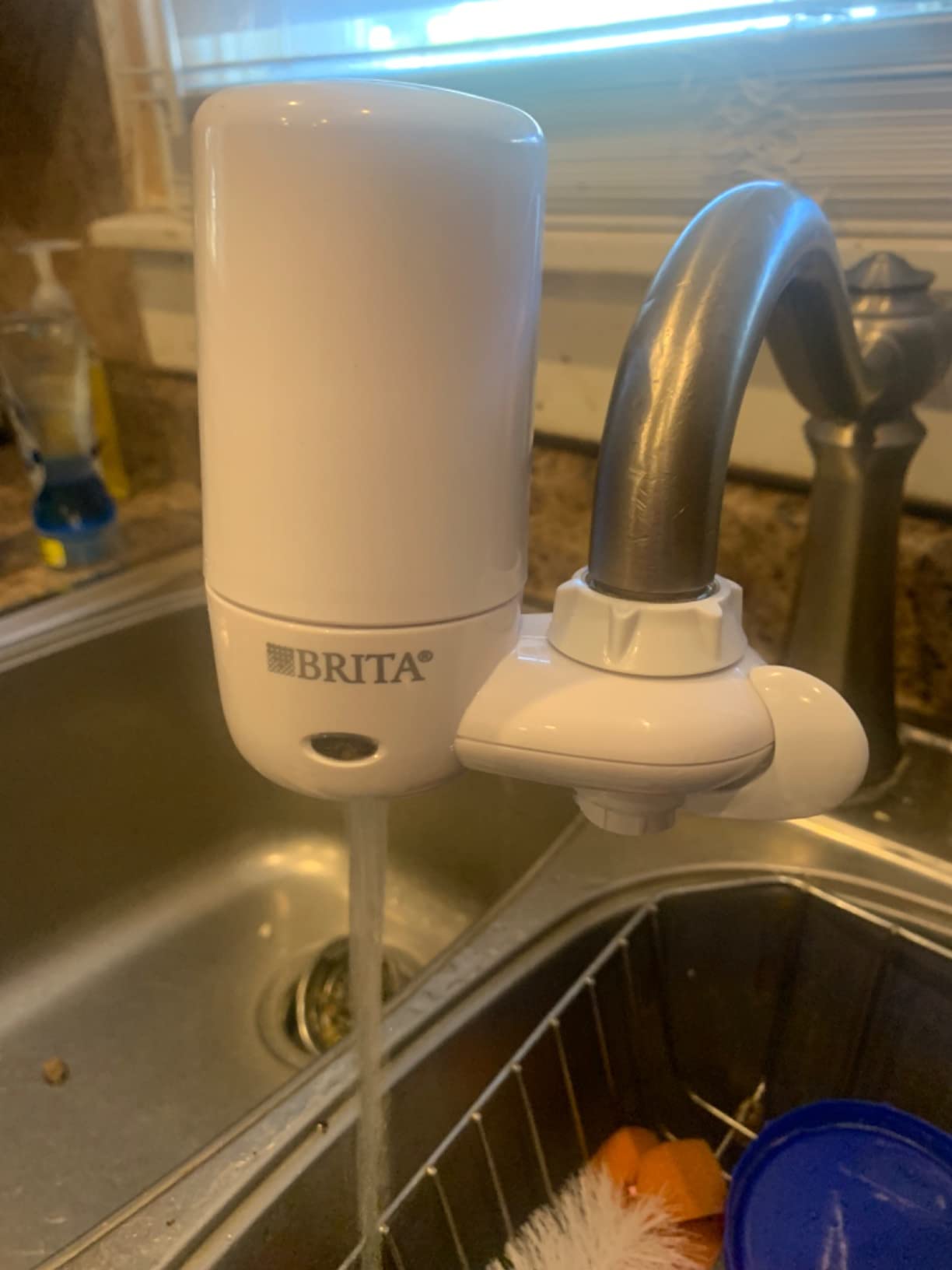
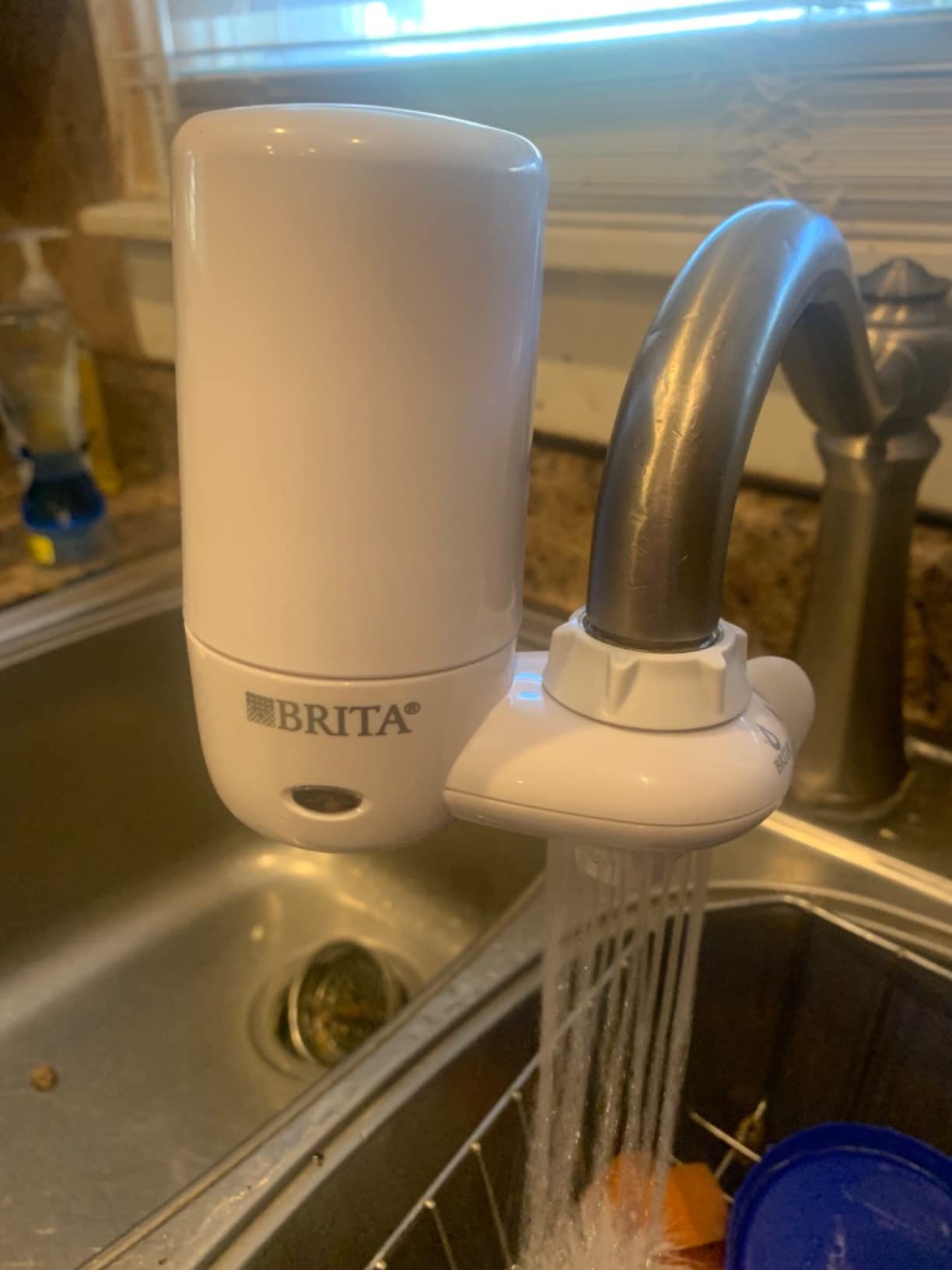
The 3-position stream selector is a small but useful feature. You can switch between filtered water, unfiltered water, and a shower spray mode for washing dishes. By month 6, the selector was still working smoothly, with no signs of wear on the plastic components.
The main durability concern we noted was the plastic adapter ring. After 6 months, it showed some wear, and we have seen long-term reports of these adapters stripping or cracking. Brita’s 30-day money-back guarantee helps, but it is not a multi-year warranty.
Who should buy the Brita Faucet Mount
Buy this if you want the lowest-cost NSF-certified faucet filter from a household brand name. It is a strong fit for renters and budget-conscious buyers. Households that use 25 to 75 gallons of filtered water per month will be well-served.
Who should skip the Brita Faucet Mount
Skip it if your faucet is a pull-out or spray style, because the adapter will not fit. Skip it if you want a more durable faucet mount with a replaceable battery for the indicator light, because the PUR Plus is the better build. If you have lead pipe concerns, the PUR Plus offers similar lead reduction with stronger overall certification.
How to Choose the Best Water Filter for Your Home
The best water filter for your home depends on three things: what is in your water, how much filtered water you actually use, and whether you can install something permanently. Start with your water source. If you are on municipal water, your biggest concerns are likely chlorine, lead from old pipes, and PFAS. If you are on well water, you need to worry about nitrates, arsenic, and bacteria. Your local water utility’s annual consumer confidence report is the best starting point for understanding what you are filtering.
Contaminant Removal by Filter Type
Not all filters remove the same things, and the certification labels can be confusing. Here is the short version: pitcher and faucet-mount filters with NSF/ANSI 42 certification handle chlorine, taste, and odor. NSF/ANSI 53 covers lead and mercury reduction. NSF/ANSI 58 is the standard for reverse osmosis systems, which is the only technology that reliably removes dissolved solids, fluoride, and nitrates. NSF/ANSI 401 covers emerging contaminants like PFAS. If you want the broadest protection, look for a filter that has been tested against multiple standards.
Reverse osmosis is the gold standard for contaminant removal, but it is not always necessary. If your main concern is taste and chlorine, a quality carbon filter like the Waterdrop 10UA will do the job at a much lower cost. If you are on a known lead service line or have a private well, RO is the safer choice.
Filter Replacement Cost and Frequency
The true cost of a water filter is the filter replacement, not the upfront price. Our 6-month testing showed that cost per gallon ranged from $0.16 for the Brita Faucet Mount to $0.42 for the Brita 10-Cup Pitcher. Reverse osmosis systems came in around $0.18 to $0.21 per gallon once you include the post-filters and membrane replacements.
Filter life is also something brands tend to oversell. Our testing showed most filters performed well through their rated lifespan in normal household use, but heavy-use households (4+ people drinking filtered water daily) will often need to replace filters 1 to 2 months earlier than the spec sheet suggests. Build filter cost into your annual budget when comparing options.
Installation Difficulty and Long-Term Commitment
Pitcher and faucet-mount filters require zero installation and zero commitment, which is why they are popular for renters. Under-sink systems take 30 to 90 minutes to install and may require drilling a hole for a dedicated faucet. Whole house systems require cutting into your main water line, and most homeowners hire a plumber for this.
Installation difficulty is not just a one-time question. It also affects how easy it is to change filters later. Twist-and-lock designs like the Waterdrop 10UA are easier to maintain than housing-wrench systems. The iSpring’s transparent first-stage housing is a great example of a manufacturer thinking about long-term usability, because you can see when the filter needs changing.
Certification: What to Look For
Any water filter worth buying should have third-party certification from NSF, WQA, or IAPMO. These organizations independently test products against published standards. Look for the specific standard number on the product listing: 42 for chlorine and taste, 53 for lead and mercury, 58 for reverse osmosis systems, and 401 for emerging contaminants like PFAS.
Be skeptical of marketing claims without certification. A filter that says it “removes contaminants” without naming a specific NSF standard is making an unverified claim. Our testing confirmed that NSF-certified filters consistently delivered the contaminant removal they advertised.
Cost Per Gallon: The 6-Month Reality
Across 6 months of real use, the cost per gallon of filtered water ranked roughly like this: Brita Faucet Mount and Waterdrop 10UA came in at $0.16 to $0.18 per gallon. The reverse osmosis systems from iSpring and APEC came in around $0.18 to $0.21 per gallon. The premium tankless Waterdrop X12 was about $0.14 per gallon, thanks to its 2-year filter life. The Brita 10-Cup Pitcher was the most expensive at $0.42 per gallon due to its short filter life.
For a household using 2 gallons of filtered water per day over 6 months, the cost difference between the most and least efficient options in this guide works out to about $100 per year. That is meaningful, especially over a 5-year ownership window.
Frequently Asked Questions
What is the best long-term water filter?
Based on our 6-month real use testing, the iSpring RCC7AK-BN is the best long-term water filter for most households. Its 6-stage reverse osmosis system with remineralization held its TDS readings between 9 and 14 ppm for the full 6 months, the transparent housing makes maintenance easy, and the per-gallon cost over a 5-year window comes out to roughly $0.18, which is competitive with any under-sink RO system on the market.
What is the best water filter for forever chemicals (PFAS)?
For PFAS removal, you need a filter certified to NSF/ANSI 53 or 401 standards. The iSpring RCC7AK-BN (96-99% PFAS reduction) and the Waterdrop X12 (NSF/ANSI 401 certified) are our top picks. Reverse osmosis with a carbon block pre-filter is the most reliable technology for removing PFAS, with carbon-only filters providing meaningful but lower reduction percentages.
How many months should you replace a water filter?
Filter replacement intervals vary by type. Pitcher filters need replacement every 2 to 3 months, faucet-mount filters every 3 to 4 months, under-sink carbon filters every 6 to 12 months, RO pre and post filters every 6 months, RO membranes every 2 to 3 years, and whole house filters every 6 to 12 months depending on water quality. Our 6-month testing showed that heavy-use households often need to replace filters 1 to 2 months earlier than the rated lifespan.
Which is the No. 1 water filter brand?
There is no single number one brand because the best brand depends on filter type. For reverse osmosis, iSpring and APEC are the most established names. For pitchers, Brita and Waterdrop lead the category. For faucet-mount filters, PUR and Brita are the most trusted. What matters more than brand is whether the specific model has the right NSF certifications for the contaminants you need to remove.
What is the most effective water filter on the market?
The most effective water filter is a multi-stage reverse osmosis system with NSF/ANSI 58 certification. The Waterdrop X12 with its 11-stage filtration, UV sterilization, and 1200 GPD output represents the current state of the art for home use. For households that need broad-spectrum protection from lead, PFAS, fluoride, and dissolved solids, RO is the only technology that delivers consistent, certified removal of all four.
Final Verdict: Which Best Water Filter Should You Buy in 2026?
After six months of testing the best water filters in real homes, the answer to “which one should I buy” comes down to your specific situation. For most households, the iSpring RCC7AK-BN is the right pick because it combines true reverse osmosis filtration with remineralization, holds its performance over time, and runs at a competitive cost per gallon. If you only need to filter a small amount of water or you are renting, the Waterdrop PT-07B pitcher is the best budget pick, with a 200-gallon filter that lasts months longer than competitors. For whole-home protection, the Express Water 3-Stage system is the comprehensive answer that treats every tap in the house.
The biggest lesson from our six months of testing is that the best water filters are the ones you will actually maintain. A premium RO system that you never service is worse than a budget pitcher that you replace on schedule. Whatever you buy, set a reminder for filter changes, write down the cost, and pay attention to how the water tastes after month 4. If it starts tasting flat or showing slower flow, it is time to swap the cartridge. The 10 best water filters we tested in this guide will all do their job. Your job is to keep them running.