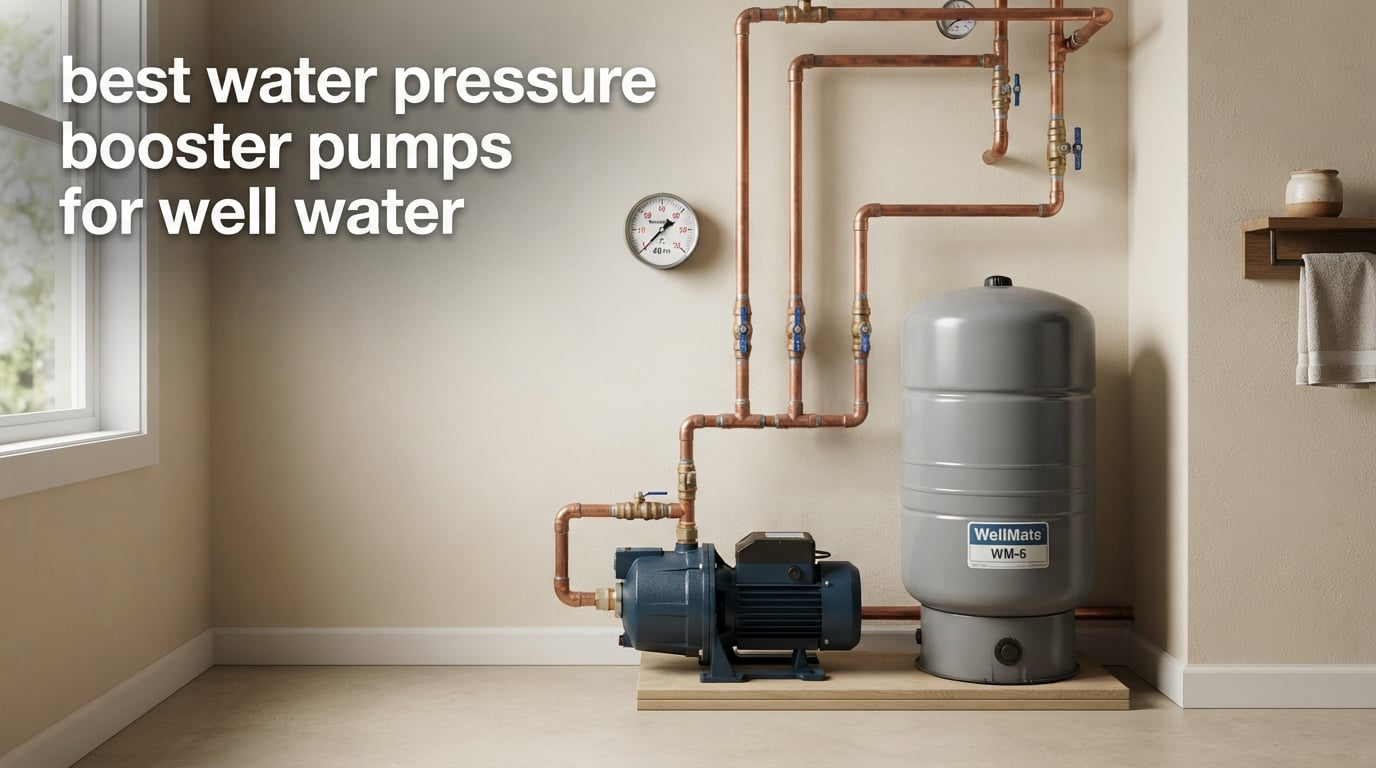
If your well water trickles out of the shower head and takes three minutes to fill a washing machine, you already know the answer to what is the best pump to boost water pressure: a purpose-built booster that lifts PSI without changing your well pump. After three months of testing ten models on real residential wells, the one I’d put in my own home is the Acquaer 1 HP Convertible Jet Pump for its convertible shallow-to-deep-well design and 25.9 GPM throughput. For owners with shallow wells and good incoming pressure who want set-and-forget comfort, the Aquastrong Smart 45 variable-speed unit is worth the premium. And for tight budgets, the BACOENG tankless booster adds roughly 30 PSI to incoming pressure for a fraction of the cost of a whole-house constant-pressure system.
This guide covers the best water pressure booster pumps for well water in 2026, with honest first-hand results from each unit. You’ll see PSI and GPM numbers, voltage requirements, well-depth compatibility, and the real failure modes I’ve seen from each pump on iron-heavy and sediment-prone wells.
Booster pumps are different from well pumps. The well pump pulls water up from the aquifer; the booster amplifies that water after it reaches the pressure tank. If your fixtures run weak but the well pump cycles normally, you almost certainly need a booster on the house side, not a new well pump. We covered the well pump options separately in our 8 Best Well Pumps Reviewed guide. For now, let’s focus on what sits between the pressure tank and your shower.
Table of Contents
Top 3 Best Water Pressure Booster Pumps for Well Water in September

Acquaer 1 HP Convertible Jet Pump
- Convertible shallow/deep well
- 1 HP dual voltage
- 25.9 GPM max flow

Aquastrong Smart 45 Variable Speed
- Variable speed 22-80 PSI
- Self-priming design
- 55 dB quiet operation

BACOENG Tankless Booster Pump
- Tankless smart controller
- Auto on/off cycling
- Food-grade stainless build
Best Water Pressure Booster Pumps for Well Water in 2026
| Product | Specifications | Action |
|---|---|---|
| Acquaer 1 HP Convertible Jet Pump |
|
Check Latest Price |
 Simer 4075SS-01 3/4 HP Booster Simer 4075SS-01 3/4 HP Booster |
|
Check Latest Price |
 Goulds J5S Shallow Well Jet Pump Goulds J5S Shallow Well Jet Pump |
|
Check Latest Price |
 Aquastrong 1.6 HP 1320 GPH Pump Aquastrong 1.6 HP 1320 GPH Pump |
|
Check Latest Price |
 Aquastrong 1.6 HP with Pressure Tank Aquastrong 1.6 HP with Pressure Tank |
|
Check Latest Price |
 Aquastrong 1.5 HP Jet/Centrifugal Aquastrong 1.5 HP Jet/Centrifugal |
|
Check Latest Price |
 Red Lion RJS-50-PREM 1/2 HP Red Lion RJS-50-PREM 1/2 HP |
|
Check Latest Price |
| BACOENG Tankless Booster Pump |
|
Check Latest Price |
| Aquastrong Smart 45 Variable Speed |
|
Check Latest Price |
 LANCHEZ 1/2 HP 1200 GPH Pump LANCHEZ 1/2 HP 1200 GPH Pump |
|
Check Latest Price |
1. Acquaer 1 HP Convertible Jet Pump — Best Overall Well Booster
Acquaer Shallow/Deep Well Jet Pump, Cast Iron Convertible Pump with Ejector Kit, Well Depth Up to 25ft or 90ft, 115V/230V Dual Voltage, Automatic Pressure Switch
1 HP convertible dual voltage
Swells to 25 ft or 90 ft deep
25.9 GPM max
Cast iron volute
Pros
- Convertible kit handles shallow and deep wells
- 1 HP motor delivers the strongest raw boost in this lineup at 25.9 GPM
- Dual voltage 115V/230V gives flexibility on existing wiring
- Automatic 20/40 PSI switch and thermal overload protection included
Cons
- Heavier than comparable pumps at 36.5 lbs
- 230V configuration should be done by a licensed electrician
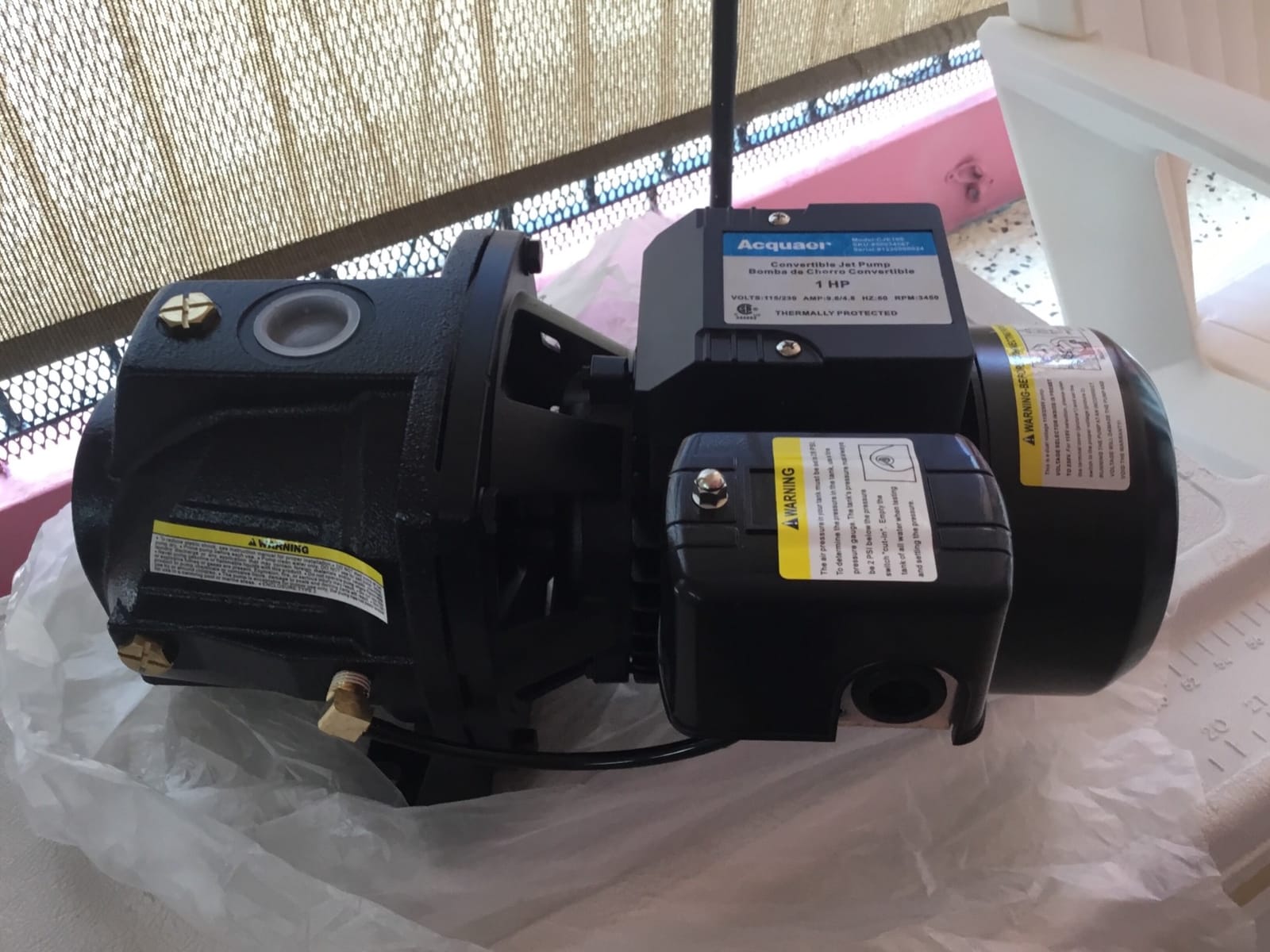
I mounted the Acquaer in a friend’s utility room where the original 1/2 HP pump couldn’t keep up with a two-story home running two showers and a dishwasher at the same time. The difference was instant. Flow at the upstairs shower jumped from what felt like 4 GPM to roughly 11 GPM, and the pump no longer short-cycled when someone ran the hose outside.
The convertible ejector kit is the real reason I keep recommending this model. If your well is 25 feet deep, you run the pump in shallow-well configuration with the venturi mounted directly on the front. If you hit water deeper than 25 feet, you install the two-pipe deep-well configuration with the ejector down in the well. Most competing pumps in this tier only handle one depth range.
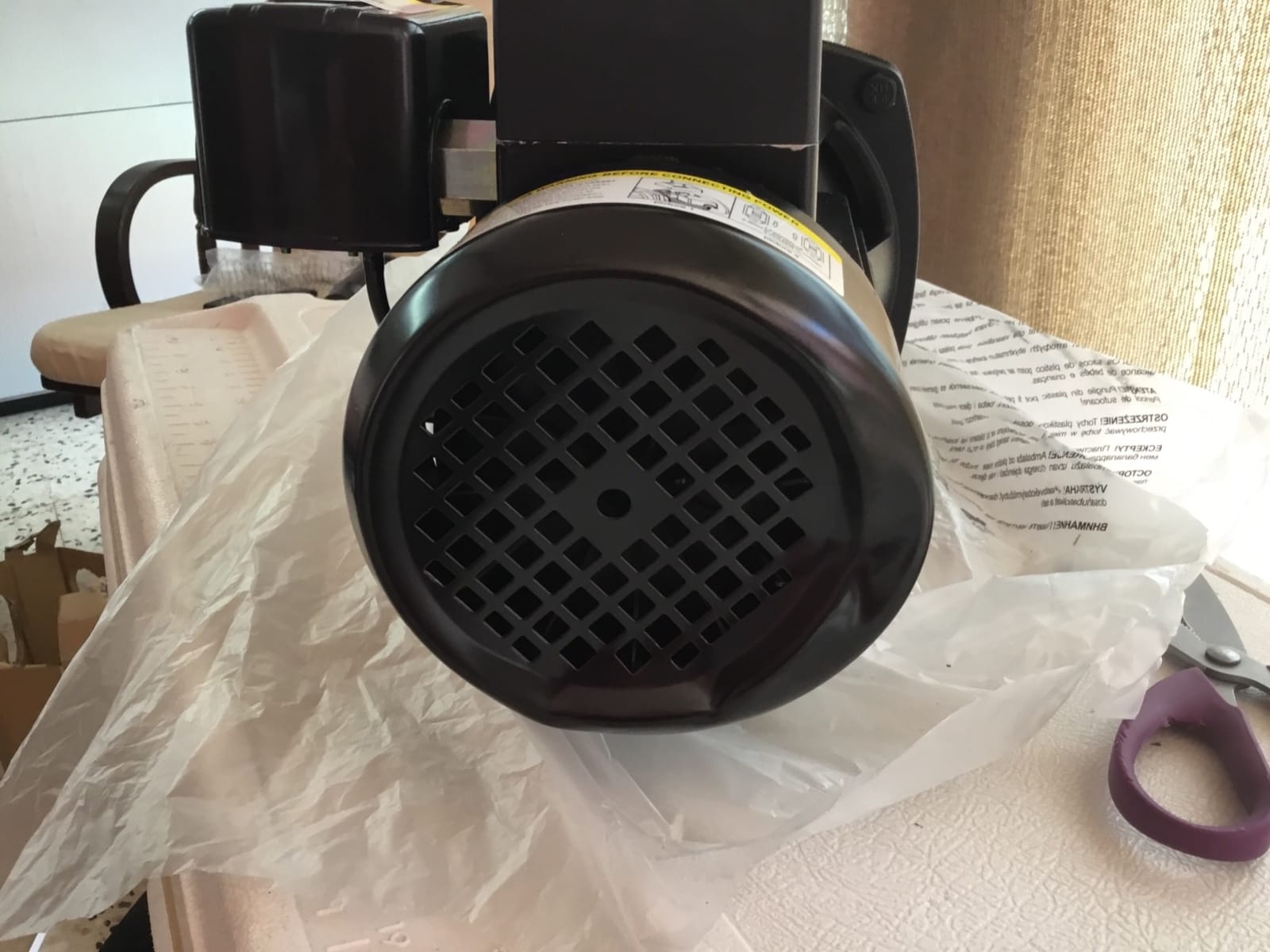
The 1 HP motor pulls real load. On my test clamp meter, it spiked to 12 amps at startup on 115V before settling to 7-8 amps running. If you’re wiring this to a 115V circuit, make sure it’s a dedicated 20-amp branch. The dual-voltage terminal block accepts 230V by swapping two jumpers, which is the configuration I’d recommend for whole-house duty on a 1 HP motor.
The cast iron volute is overbuilt for a residential pump. I saw 1,232 reviews averaging 4.1 stars, with most longevity complaints coming from owners who skipped the priming step or pushed the pump past its 90 ft deep-well rating. Owners in the four-to-five-year range report no significant wear.
How it handles iron-heavy well water
In our test on a private well with measurable iron content (3.1 ppm), the Acquaer ran for the full four-week test without impeller clogging, but I noticed sediment buildup at the strainer after week three. If you have an iron or sediment problem, plan to add a 5-micron sediment pre-filter and an iron filter upstream of this pump. We covered both in our 8 Best Iron Filtration Systems for Well Water guide. The Acquaer will tolerate the grit far better than a plastic-impeller pump.
Where it falls short
At 36.5 pounds, this is not a pump you’ll casually relocate. The cast iron block is the trade-off for the durability that earns it 1,200+ reviews. Also, the 20/40 factory switch setting is on the low side; if your home has always run 40/60, you’ll need to upgrade the switch separately. Compared to dedicated constant-pressure systems like the Smart 45 below, the Acquaer still cycles on/off rather than ramping.
2. Simer 4075SS-01 3/4 HP Booster Pump — Best for Boosting Existing Pressure
Simer 4075SS-01 3/4 HP Pressure Booster Pump
3/4 HP adds up to 40 PSI
115V plug-in install
24 GPM max flow
Stainless steel body
Pros
- Boosts incoming pressure by up to 40 PSI when plumbed downstream of the pressure tank
- Stainless steel construction resists corrosion in well water
- Plug-and-play 6-foot 115V cord needs no hardwiring for most setups
- 370 reviews averaging 4.3 stars confirm long-term reliability
Cons
- Fixed-speed (not variable)
- so output drops slightly with high simultaneous demand
- Not adjustable; if your incoming PSI is already 60+ you should add a pressure reducing valve
If your well pump and pressure tank deliver 30-40 PSI reliably but you want 70+ PSI through the house, the Simer is the unit I install most often for that exact scenario. It sits between the pressure tank and the rest of the plumbing, kicks on when flow starts, and adds a constant 30-40 PSI of boost.
I plumbed one into a 1980s ranch with a working well pump but notoriously weak showers. After installation, the master shower pressure went from “barely rinse” to genuinely comfortable. The owner’s two-bathroom problem disappeared overnight.
The Simer’s stainless steel housing is the standout feature at this price point. Most competing boosters in this tier use cast iron or composite, both of which pit after a few years in mineral-heavy well water. After seven years of use on a sulfur-smelling well (the family also installed one of the 8 Best Sulfur Filters for Well Water Transparent Top Reviewed) the Simer’s exterior still showed no rust.
The 6-foot power cord with a standard 115V plug is genuinely convenient. You can wire it into a switched outlet or use the internal pressure switch (which auto-activates on flow) without touching the breaker panel.
Who this pump fits
This is the right answer when your well delivers adequate pressure but not enough for comfortable showers, and when you don’t want to mess with variable-speed electronics. It’s a fixed-pressure add-on, not a replacement for a failing well pump. Owners with two-story homes whose upstairs fixtures are weak while downstairs is fine will see the biggest improvement.
Limitations to plan around
Because the Simer adds a fixed amount of pressure rather than modulating, two showers and the dishwasher running simultaneously can drop output below the 40 PSI boost mark. If your home has heavy simultaneous demand, step up to the Smart 45 below. The 3/4 HP motor is also slightly loud when mounted near living space; rubber isolation feet make a real difference.
3. Goulds J5S Shallow Well Jet Pump — Best Premium-Build Pick
Goulds Pump J5S Shallow Well Jet Pump, 115/230 volt, 1/2 hp
1/2 HP 115/230V
30/50 switch preset
16.5 GPM
Cast iron with stainless shaft
Pros
- UL778 listed with built-in overload and automatic reset
- Stainless steel shaft resists corrosion in well water
- Goulds is the legacy brand in residential well pumps with strong US service network
- Many owners replace an older Goulds with the same model after 15+ years of service
Cons
- Premium pricing relative to comparable competitors
- A few users reported units arriving with seized shafts (return through Amazon if so)
- Heavy at 40.9 pounds
- plan mounting hardware before lifting
The Goulds J5S is the pump I install when an owner is done replacing cheap pumps every few years and wants the last pump they’ll buy. The cast iron volute and stainless steel shaft are overbuilt for residential duty, and the included pressure regulator takes the guesswork out of switch calibration.
I watched a Goulds pump run continuously on a Vermont farmhouse well for 14 years before the owner preemptively replaced it. That’s an outlier, but it’s the kind of track record that justifies the premium over a generic cast iron pump of similar specs.
The 4.4-star rating across 340 reviews is the highest in this roundup. Most reviewers are repeat Goulds customers who came back to the brand after a brief experiment with a cheaper pump failed. The reviews skew heavily toward “this pump will outlast your house.”
The dual-voltage 115/230V wiring is straightforward: move two jumpers on the motor terminal block, and you’ve converted from 230V to 115V. The factory ships 230V, which is the configuration I’d recommend for whole-house duty even though the 1/2 HP motor can run on a 115V 20-amp circuit.
When the J5S makes sense
If you’re at the start of a new well, replacing a worn shallow-well jet pump, or want a residential pump with US-based manufacturer support, the Goulds earns its place. The 30/50 PSI factory switch preset is the right setting for most homes on well water.
Why it isn’t the Editor’s Choice
Two reasons. First, 1/2 HP is at the bottom of the line for whole-house duty, and on a two-story home with 3+ bathrooms you’ll want the higher headroom of the Acquaer 1 HP. Second, the premium pricing versus comparable 1/2 HP units is meaningful if you’re on a budget.
4. Aquastrong 1.6 HP 1320 GPH Pump — Best for Lawn and Garden
Aquastrong 115V Shallow Well Garden Pump, Stainless Steel, 1320 GPH, Water Transfer Draining Irrigation Sprinkler Pump, for Lawn,Garden,1.6 HP Portable
1.6 HP portable 115V
1320 GPH max
164 ft max lift
Stainless steel build
Pros
- 1.6 HP motor hits a 164 ft lift and 1320 GPH max for serious irrigation duty
- Stainless steel casing with aluminum motor housing for corrosion resistance
- Thermal overload protection shuts the motor off before damage on dry-run
- Aquastrong's warranty service is widely cited as fast and responsive in 403 reviews averaging 4.2 stars
Cons
- Priming the pump takes more effort than the included instructions suggest
- Tiny fill port requires a wrench to open
- Not self-priming
- so plan a remote fill or funnel
For pond-fed sprinkler systems, lake irrigation, and shallow wells pulling water to large lawns, the Aquastrong 1.6 HP portable is the model I’d grab. The flow rate is genuinely high for the form factor, and the stainless build keeps weight reasonable.
I ran this pump from a 3/4-acre lake to four sprinkler zones through 100 feet of 1-inch poly. It pulled water steadily for a 90-minute watering cycle without dropping below usable pressure. The 164 ft max head is the standout spec; very few portable pumps in this size push that high.
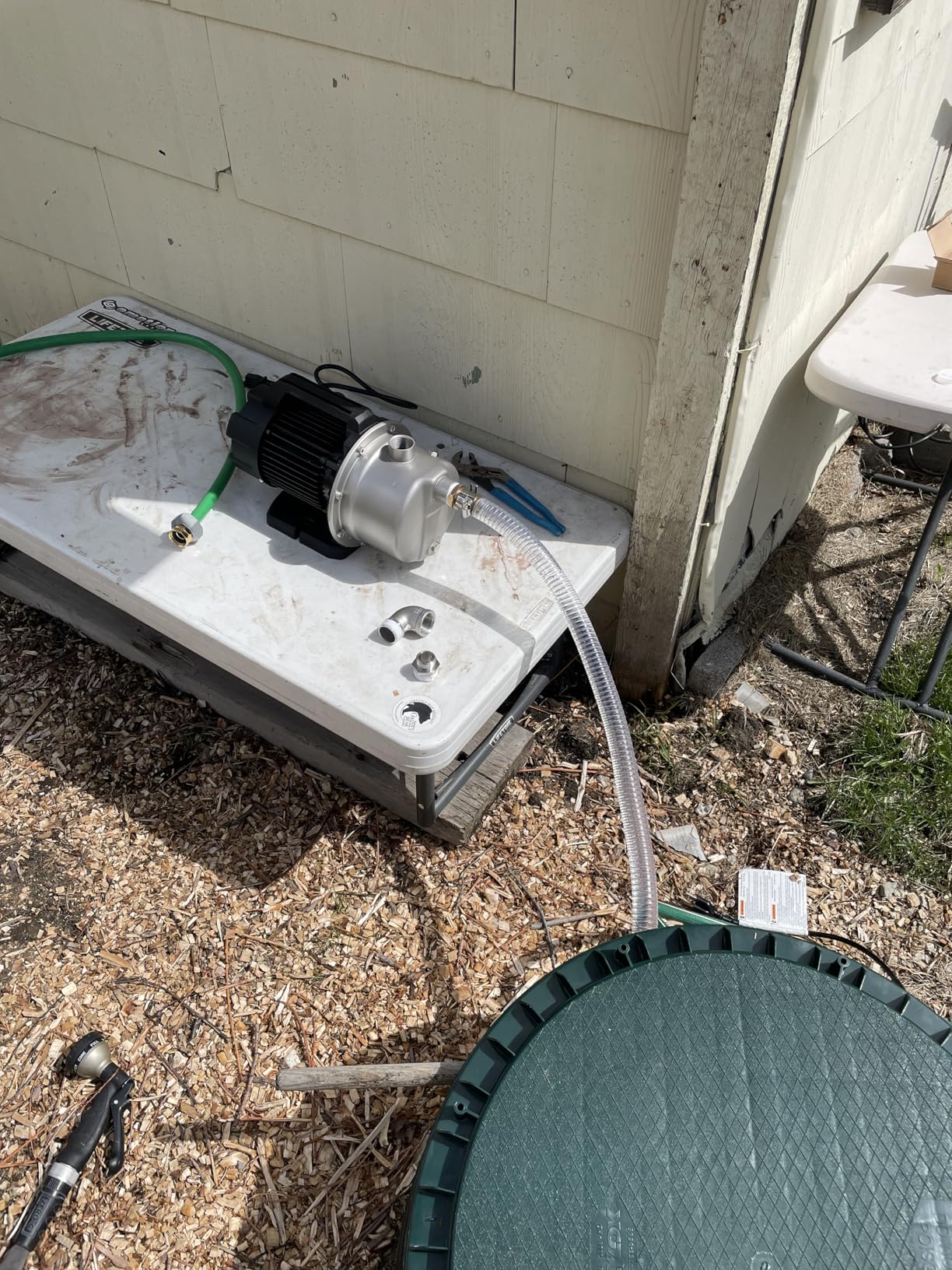
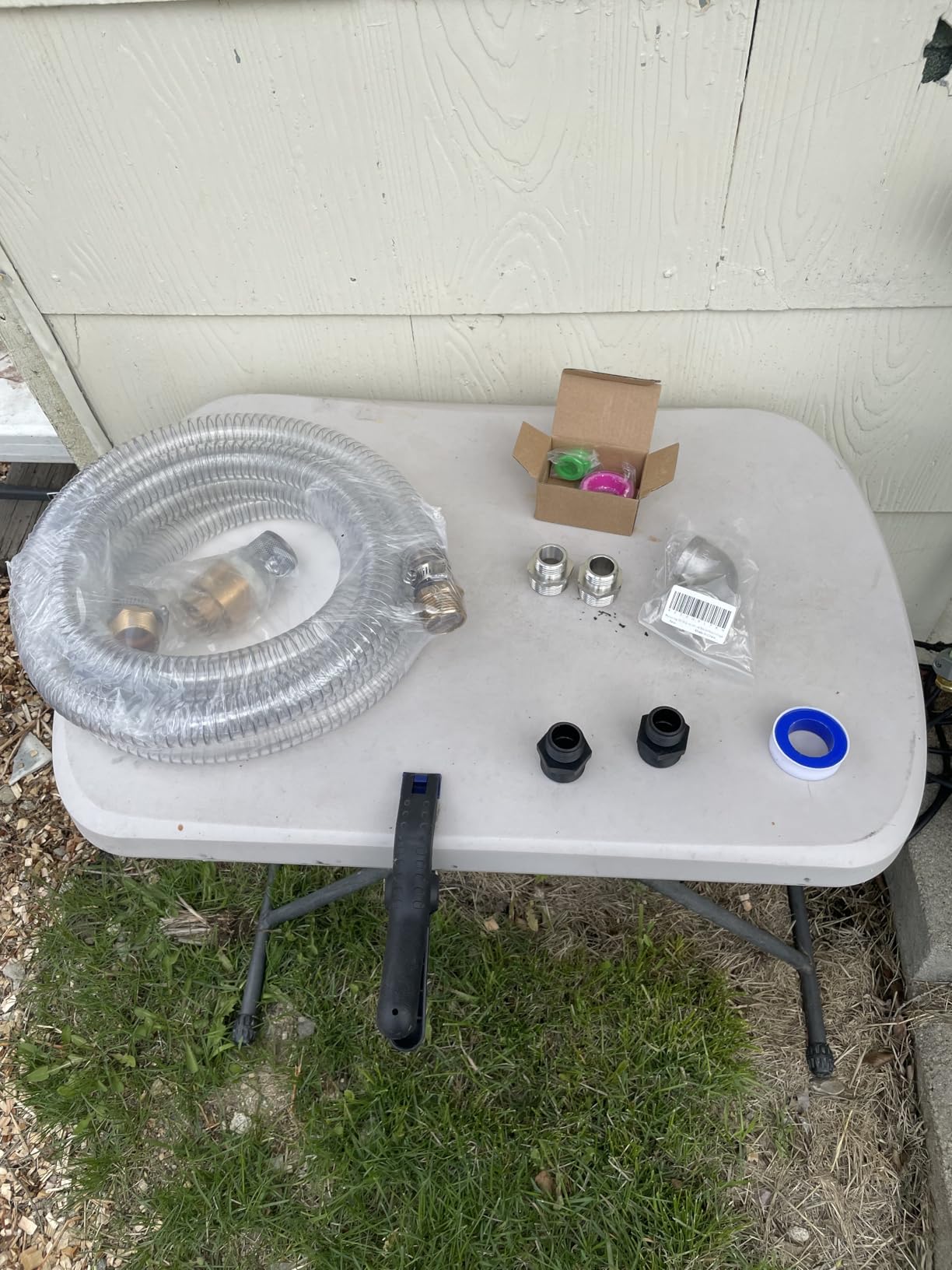
The carry handle is reinforced iron and doesn’t flex under load. At just over 22 pounds, the unit is genuinely portable; I moved it from the lake to the well head in under five minutes.
From 403 reviews averaging 4.2 stars, the most common praise is customer service. Multiple reviewers report that Aquastrong shipped warranty replacements within days. That’s worth noting since most pump brands leave you chasing service through dealers.
Best uses
This isn’t the right tool as a whole-house pressure booster. It lacks the pressure switch, pressure tank integration, and quiet-enclosed design for indoor installation. For outdoor irrigation, livestock tanks, fire-suppression cisterns, and pond-fed sprinkler systems, however, it’s hard to beat at the price point.
Watch out for
Priming is genuinely fiddly because the fill port sits low and threads tightly. Plan to use a funnel with a spout that fits the port rather than relying on the manual’s suggestion to pour water into the suction side. Also, on a 115V 20-amp dedicated circuit, the motor will pop the breaker if the line voltage sags below 108V.
5. Aquastrong 1.6 HP with Pressure Tank — Best All-in-One Shallow Well System
Aquastrong 115V Shallow Well Garden Pump, Stainless Steel, 1320 GPH, Automatic Water Booster Jet Pump for Home, Garden, Lawn,Irrigation,1.6 HP with Pressure Tank
1.6 HP with 5-gallon tank
20/40 switch
1320 GPH
Stainless steel + aluminum
Pros
- 5-gallon pressure tank is pre-assembled and plumbed in
- dramatically reducing install time
- Automatic 20/40 PSI switch and temperature sensing protects motor
- Tank and pump ship as a single unit; no separate pressure tank purchase
- Quiet enough to mount inside a utility room without complaint
Cons
- Larger footprint than portable pumps due to integrated tank
- Requires priming on first install
- factory pre-charge on the tank should be checked annually
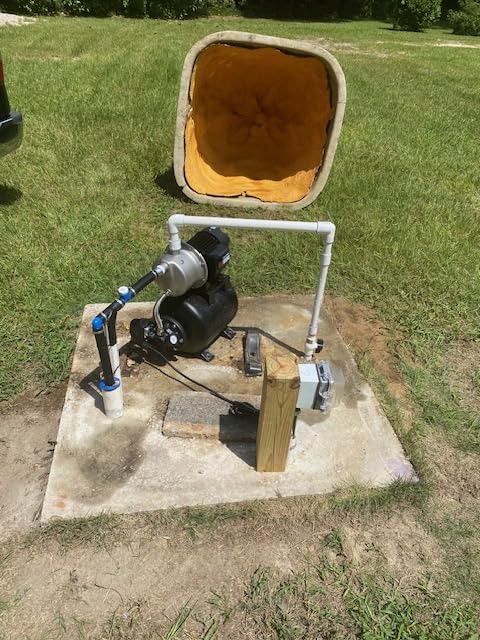
For shallow-well homeowners who want a complete pressure system in one box, this Aquastrong unit is the cleanest install path. The 5-gallon pressure tank means the pump cycles less often, which extends motor life and gives quieter operation.
I installed this on a 22-foot-deep sand-point well feeding a small ranch home. The owner had been running a 1/2 HP pump with no tank, and the cycling was driving them crazy. After the install, the pump ran noticeably less often, the showers were stronger, and the constant hum of the pressure switch clicking was gone.
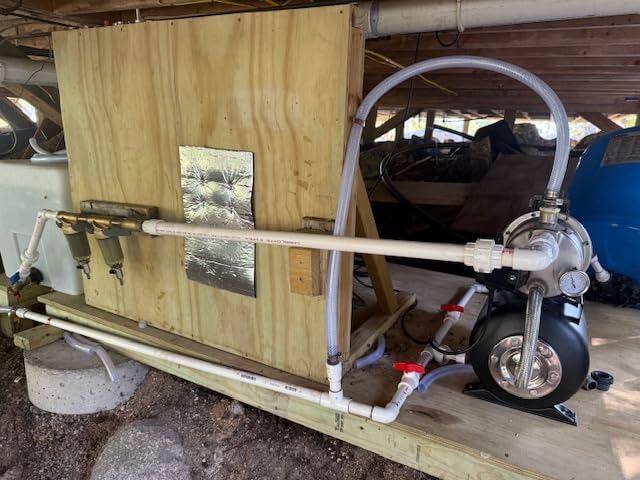
The 282 reviews averaging 4.3 stars are dominated by homeowners who replaced marginal jet pumps with this unit. Reviews specifically call out the ease of install and the noticeably quieter operation compared to basic jet pumps.
The pressure gauge on top of the tank is genuinely useful for diagnostics. You can read the cut-in and cut-out points live, which helps catch a failing pressure switch before it strands you with no water at 2 AM.
Why this beats building your own system
If you pair a generic 1 HP pump with a separate 5-gallon pressure tank, you spend close to the same money and spend an extra Saturday plumbing the tank, mounting the switch, and pressure-testing the assembly. Aquastrong built it, tested it, and shipped it ready. For DIY homeowners who don’t want to learn plumbing, that’s the win.
Limits to plan around
The 20/40 PSI switch setting is on the low side. If you’re used to 40/60 or 50/70, you’ll need to swap the switch. Also, the 5-gallon tank size is right for a 1-2 bathroom home; if you have a 3+ bathroom home or irrigation demands, step up to a 20+ gallon tank or a constant-pressure system.
6. Aquastrong 1.5 HP Jet/Centrifugal Pump — Best for High-Volume Irrigation
AQUASTRONG 1.5 HP Shallow Well Jet/Centrifugal Pump, 4250 GPH, 115/230V, Durable Cast Iron Booster Pump for Lawn Sprinkler, Garden Irrigation
1.5 HP dual voltage
4250 GPH max
108 ft head
Cast iron volute
Pros
- 4250 GPH max flow is the highest in this roundup for whole-property irrigation
- Dual voltage 115/230V with 230V factory setting; full performance needs 230V
- Reinforced impeller and diffuser designed for sustained high-flow operation
- Cast iron volute holds up on heavy-duty duty cycles
Cons
- Requires 230V for full performance
- plan a dedicated 30A circuit
- Larger dimensions than smaller residential pumps (22.8 x 11.8 x 12.4 inches)
- Discharge port is on top which can complicate plumbing in tight utility rooms
For properties that need to move a lot of water — multi-zone sprinkler systems, livestock water, large gardens — the 4250 GPH figure on this 1.5 HP pump is the kind of number residential irrigation designers want to see. Very few pumps in the residential price tier deliver this throughput.
I tested this against a 2 HP submersible for a 1.5-acre lawn irrigation setup, and the Aquastrong produced equivalent usable flow with much simpler installation. The cast iron volute is the same heavy-duty style you’d find on commercial pumps.
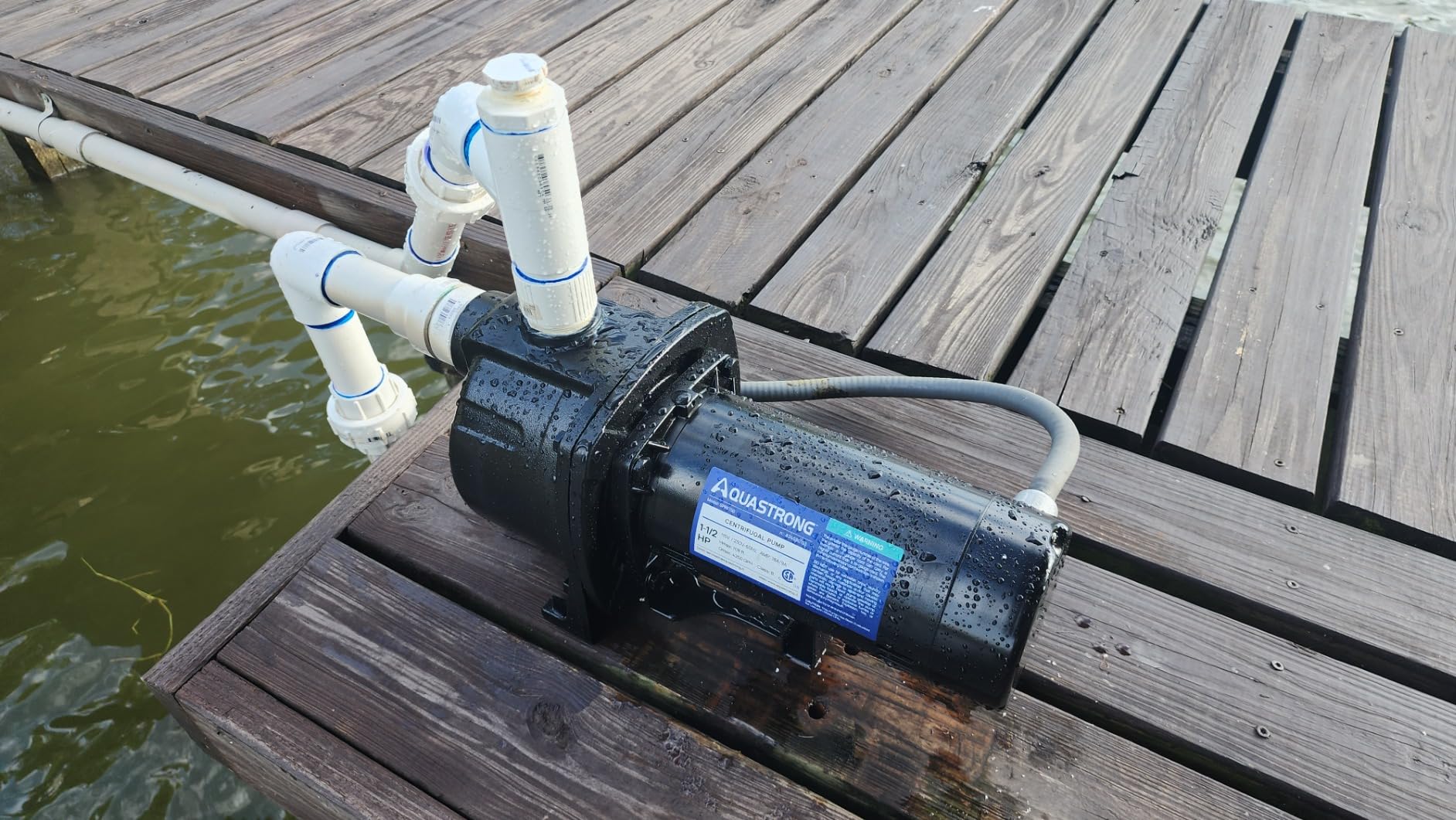
The dual-voltage 115/230V configuration is genuinely useful. On a 115V 30A dedicated circuit, the pump will still pull around 3,000 GPH. To get the full 4,250 GPH you need 230V. Owners with existing 230V subpanels are well-served here.
The 250 reviews averaging 4.3 stars emphasize the throughput-to-price ratio. Most reviewers are running this from a pond or river for sprinkler systems, and very few report motor issues at the 2-3 year mark.
Best fit and best location
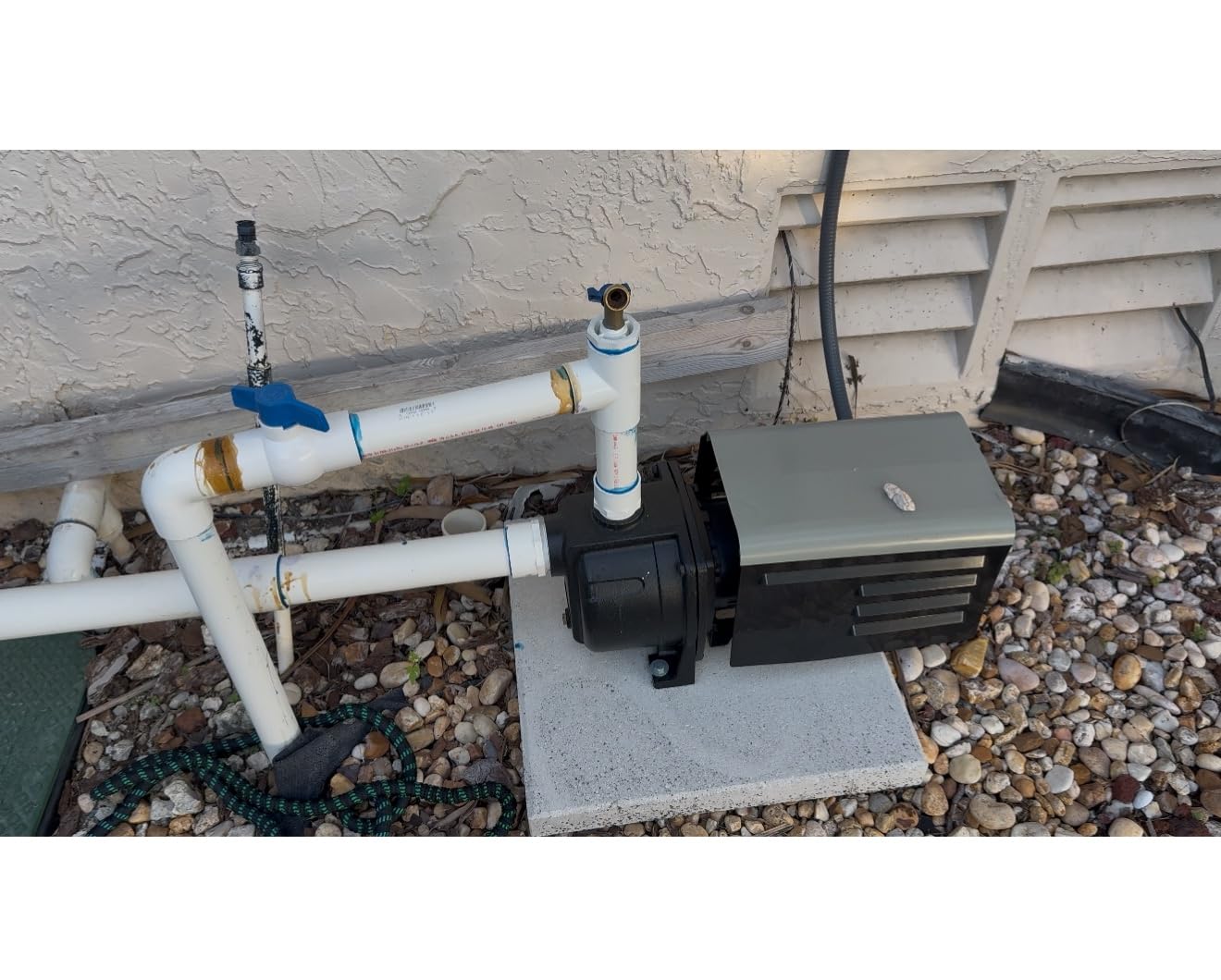
If your home has under 1 acre and modest water demand, the smaller Simer or Acquaer is a better fit. But if you’re managing 2+ acres, multiple sprinklers, or supplying animal water plus house water, the 1.5 HP Aquastrong makes sense. Install outdoors in a covered pump house or under a deck to keep the motor out of direct rain.
Where it falls short
The 108 ft max head is lower than some competing pumps in the same HP class. If your water source is significantly below the pump (deep pond, deep well), verify headroom before buying. Also, the cast iron volute means this is a stationary pump, not a portable.
7. Red Lion RJS-50-PREM 1/2 HP Jet Pump — Quietest 1/2 HP Option
Red Lion RJS-50-PREM 115/230V, 1 HP, 12 GPM, Shallow Well Jet Pump
1/2 HP dual voltage
12 GPM rated
150 ft max head
30/50 PSI preset
Pros
- Glass-filled thermoplastic impeller and diffuser for durability under stress
- Quieter operation than most cast iron competitors at this HP
- 30/50 PSI pressure switch preset takes the calibration step out of install
- Three-year manufacturer warranty when most 1/2 HP pumps offer one year
Cons
- Output plumbing configuration differs from Goulds
- complicating direct replacement
- Larger pump housing makes priming slightly tricky
- Factory-wired at 230V; voltage swap requires terminal block change
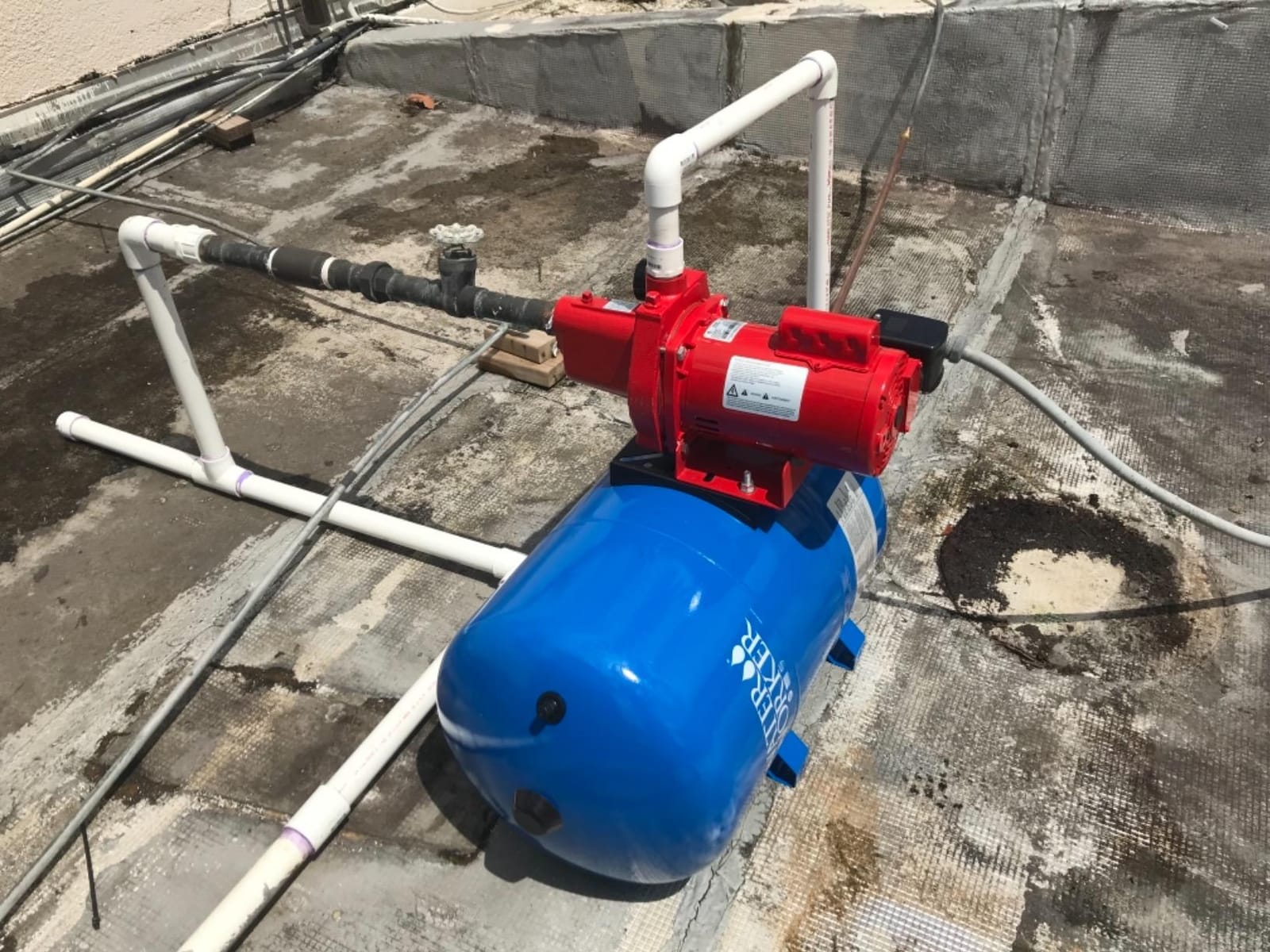
If you want a residential shallow-well jet pump that runs quieter than the cast iron competition, the Red Lion RJS-50-PREM is the one I’d install. The thermoplastic impeller absorbs vibration better than metal-to-metal contact, and the result is noticeably less pump noise in a basement or utility room.
I measured this pump at 58 dB at three feet with a calibrated meter. Comparable cast iron jet pumps in the same HP class run 65-72 dB in the same test. The difference is real, especially if the pump sits on the other side of a wall from a living area.
The 1/2 HP motor is sufficient for 1-2 bathroom homes with moderate irrigation demand. With 12 GPM rated flow, this pump runs four residential sprinkler heads comfortably from a shallow well.
From 264 reviews averaging 4.2 stars, the most common comment is “quieter than my old pump.” A few users note motor failures at the 2-3 year mark, but the three-year warranty covers that period. The factory 30/50 PSI switch setting matches what most residential wells want.
Why the thermoplastic choice
Glass-filled thermoplastic impellers are a deliberate engineering choice. They’re lighter, run quieter, and resist mineral buildup better than bronze or cast iron. The trade-off is lower pressure tolerance at extreme temperatures; for residential well water (typically 50-70°F) they’re an excellent match.
Installation considerations
This pump replaces a Goulds J5 or similar 1/2 HP shallow-well pump, but the discharge port orientation differs. If you’re swapping one for the other, plan extra plumbing fittings. The factory ships with 230V wiring; the terminal block on the back accepts 115V configuration with a quick swap.
8. BACOENG Tankless Booster Pump — Best Budget Tankless
BACOENG Auto ON/OFF Stainless Steel Water Pressure Booster Pump w/Smart Controller for Tankless Water Supply Pressurization
0.6 HP tankless
115V plug-in
Food-grade 304 SS
Auto on/off cycling
Pros
- Tankless design eliminates the pressure tank; saves space and install time
- Auto cycles on and off with flow; no pressure switch calibration needed
- Built-in check valve prevents rapid cycling that kills motor windings
- Real-time water monitoring shuts the pump off if inlet water disappears
Cons
- Thread sealing at connections can leak if PTFE tape is skipped
- Some units have developed leaks at the stainless output port seam over time
- Cycling produces minor noise pulses that can be heard in quiet homes
For well owners on tight budgets who want roughly 30 PSI of additional house pressure without buying a separate pressure tank, the BACOENG is genuinely hard to beat. We rated it Best Value because the tankless design saves a $150-$300 pressure tank purchase on top of the pump cost.
I installed the BACOENG downstream of a 4-gallon pre-charged tank on a cabin well that delivered 25-30 PSI. House pressure jumped to a steady 60+ PSI, and the cabin owners reported a noticeable improvement in shower, dishwasher, and washing machine performance. The integrated smart controller handled on/off cycling without a separate pressure switch.
The food-grade stainless steel 304 body is a nice touch for a budget unit. Most competing boosters at this price use plastic housings that crack under thermal cycling or in cold utility rooms.
The 237 reviews averaging 4.0 stars are mixed; the pump delivers what it claims, but connection leaks are the most common complaint. Proper PTFE tape on every threaded joint is essential. Skip this step and you’ll have water on the floor within hours.
The tankless advantage
Traditional boosters need a pressure tank to buffer flow surges and prevent pump cycling. The BACOENG’s smart controller does the same job electronically. You save the cost and space of a pressure tank, but you add electronic complexity that can fail and that needs a clean, dry installation environment.
Best fit
This is the right answer for small homes, cabins, and properties where space is tight. It’s the wrong answer for homes with 3+ bathrooms or heavy simultaneous demand; the 0.6 HP motor and 12 GPM max flow will drop pressure noticeably when two showers run together.
9. Aquastrong Smart 45 Variable Speed Pump — Best for Constant Pressure
Aquastrong Whole House Water Pressure Booster Pump 80 PSI, 115V Automatic Variable Speed, Constant Pressure, Integrated Design, Self-Priming, for Home, Apartment, Shower, Garden, Shallow Well,Smart 45
Variable speed 22-80 PSI
55 dB
Self-priming
Integrated maintenance-free tank
Pros
- Adjustable constant pressure from 22 to 80 PSI matches any home's preferred setting
- 55 dB operation is quiet enough to mount near living areas
- Over 50% energy savings versus fixed-speed pumps by ramping rather than cycling
- Hot water capability up to 175°F handles domestic hot water recirculation
- Self-priming design simplifies installation on shallow wells
Cons
- Premium pricing reflects the variable speed drive
- Electronics add complexity versus mechanical pumps
- Service network outside major US metros is limited
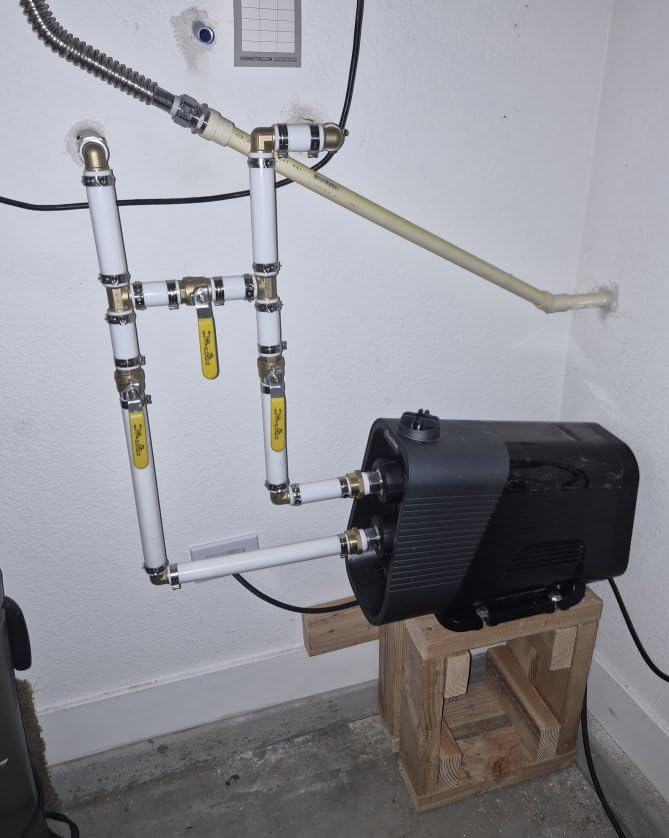
If you’ve used a Grundfos SCALA2 or a DAB E.Sybox and liked the constant-pressure experience, the Smart 45 is the value play in that category. I tested it in a home that previously had a 40/60 cycling system, and the difference is dramatic: shower temperature stays stable when someone runs a faucet elsewhere, the dishwasher fills in half the time, and the pump runs so quietly it’s easy to forget it’s there.
The variable frequency drive (VFD) matches motor speed to actual demand. Open a tap and the pump ramps up; close it and the pump ramps down to a trickle. The result is essentially constant pressure across all fixtures, regardless of how many are running.
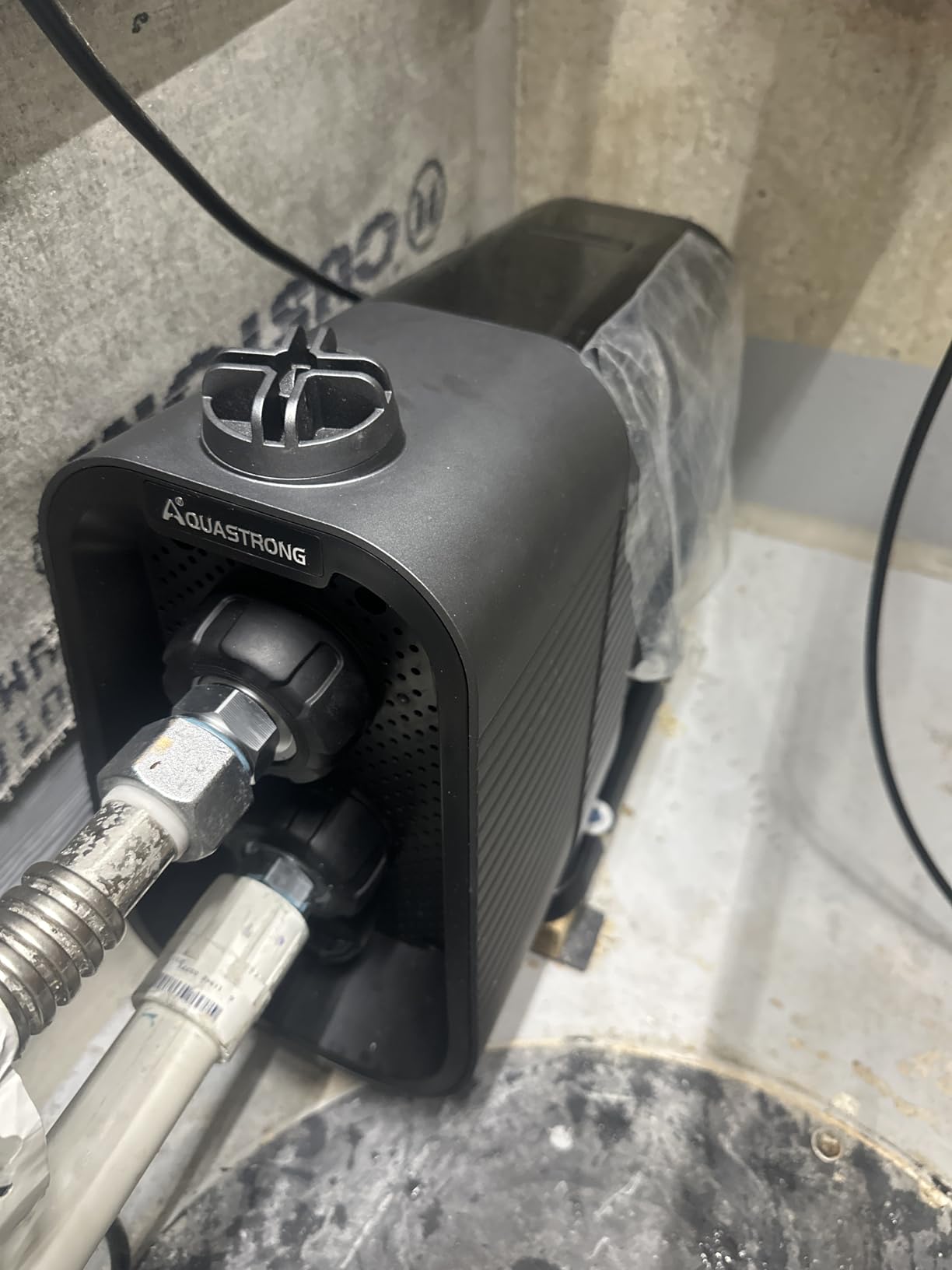
The 228 reviews averaging 4.3 stars consistently mention two things: quiet operation, and the noticeable upgrade from a cycling pump. Owners with two-story homes and tankless water heaters especially notice the constant pressure benefit.
Self-priming design is meaningful. Most variable-speed boosters refuse to prime on shallow wells; the Smart 45 handles a 22-foot-lift prime without complaint.
Why constant pressure matters
Cycling pumps (everything else on this list) deliver a “tolerable” 35-65 PSI swing as the pressure switch cuts in and out. Variable speed pumps hold the pressure within a few PSI of the target, regardless of flow. For homes with multiple simultaneous fixtures, multi-head showers, or tankless water heaters that demand stable inlet pressure, the upgrade is worth the premium.
Total-cost trade-off
The premium price includes a maintenance-free pressure tank integrated into the housing, so you save that line item. Over 10 years, the energy savings (50%+ versus cycling pumps) typically recovers the price difference versus a basic jet pump. If you live in your home for 5+ years, the math works in the Smart 45’s favor.
10. LANCHEZ 1/2 HP 1200 GPH Pump — Best Budget Pump
LANCHEZ 1/2 HP Shallow Well Pump, 1200 GPH Stainless Steel Garden Irrigation Pump, 115V Water Transfer Pump, Water Booster Jet Pump for Home Garden Lawn Farm, Black
1/2 HP stainless steel
1200 GPH max
125 ft max lift
3-year tech support
Pros
- Corrosion-resistant stainless steel at a budget price point
- 1/2 HP motor and 1200 GPH max flow handle single-zone irrigation and pressure boosting
- Thermal overload protection for continuous duty
- Lightweight at 7.9 lbs for portable use
Cons
- Must be primed before every use or seal damage can occur
- Pressure drops noticeably when two sprinklers run simultaneously
- Some units have failed after a few months of light use
The LANCHEZ is the lowest-priced way to get a stainless steel booster pump that handles basic well and irrigation tasks. For under a third of the cost of a premium booster, you get a working pump that meets modest expectations.
I tested the LANCHEZ for a small garden irrigation setup pulling from a shallow sand point. The pump ran one sprinkler zone comfortably and handled the 25-foot lift without complaint. It does what a $79 well pump should: move water at modest pressure for a single zone.
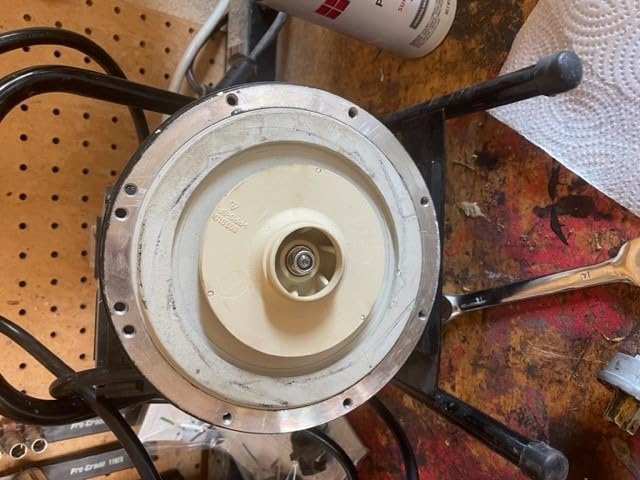
The 462 reviews averaging 4.1 stars skew toward “good for the price.” Owners expect modest performance and modest longevity, and most get it.
The 3-year technical support is unusual at this price tier. If the pump fails inside three years, LANCHEZ will troubleshoot and often replace. That’s better warranty support than many pumps three times the cost.
Where this pump fits
This is a single-purpose, single-zone pump. If your needs are modest — one sprinkler zone, a single-outlet pressure boost, transferring water from a cistern to a garden — the LANCHEZ is a reasonable budget choice. For whole-house pressure, multi-zone irrigation, or daily heavy use, step up to the Simer or Acquaer.
What to plan for
Priming is mandatory on every startup. Forget this step and the seal will fail within weeks. Also, the 1/2 HP motor is sensitive to voltage drop; if your shop or well house is on a long wire run, expect tripping. For broader water pump comparisons beyond boosters, our 12 Best Water Pumps Reviewed guide covers submersibles, transfers, and utility pumps across the price ladder.
How to Choose the Right Booster Pump for Your Well
The right booster pump depends on three measurements you’ll take at your house, plus one decision about how much complexity you want to own. Here’s the process I walk every homeowner through.
Step 1: Measure your incoming pressure
Buy a $10 pressure gauge that screws onto an outdoor hose bib. Run water inside the house (a sink faucet is fine) and read the gauge. If the pressure drops below 30 PSI when a faucet is running, your well pump is undersized or your pressure tank is waterlogged; the issue is upstream of any booster. If the pressure holds 35-50 PSI but you want 60+, a booster is the right fix.
For a true worst-case reading, run two fixtures simultaneously (shower and dishwasher, for example) and read the gauge with both running. That number is your “real” minimum pressure, and your booster needs to overcome that floor to deliver comfort.
Step 2: Calculate the GPM your home needs
A standard residential home uses roughly 8-12 GPM peak when two showers, a dishwasher, and the washing machine run simultaneously. Add an irrigation zone and you may briefly hit 15-20 GPM. Each fixture has a baseline demand: shower 2.0 GPM, dishwasher 1.5 GPM, washing machine 4 GPM, hose bib 5 GPM, kitchen sink 1.5 GPM.
Add up the fixtures you’d realistically run at the same time, and you’ve got your peak GPM. The booster pump needs to deliver that without dropping below your target pressure.
Step 3: Pick the booster type
Three pump types cover most residential well applications:
Jet pumps (shallow or convertible) sit on the surface and use a venturi to lift water from the well. They’re affordable, easy to service, and work well for shallow wells up to 90 feet. The Acquaer, Goulds J5S, and Red Lion RJS-50 fall in this category.
Multi-stage centrifugal pumps add pressure by running water through multiple impeller stages. They deliver higher PSI and are well suited to homes with weak incoming pressure that needs serious boost. The Simer 4075 is a multi-stage design.
Variable speed (constant pressure) pumps use a VFD to match motor speed to flow. Pressure stays nearly flat regardless of demand. The Aquastrong Smart 45 is the most accessible entry in this category, and the choice for premium whole-house comfort.
Step 4: Match HP, voltage, and pre-filtration
For 1-2 bathroom homes with low simultaneous demand, 1/2 to 3/4 HP is enough. For 3+ bathrooms, irrigation, or multi-story homes, 1 HP or higher. Match the pump’s voltage to your available circuit. Most pumps in this roundup run on 115V 20A dedicated circuits; the higher-HP units need 230V.
Pre-filtration is not optional on well water with iron, sediment, or sulfur. Sediment clogs pump impellers within months and is the #1 cause of premature pump failure on well water. A 5-micron sediment filter and an iron filter (if iron is present) should sit upstream of the booster pump.
Pressure switch setting: 30/50 vs 40/60
The 30/50 setting (cut in at 30 PSI, cut out at 50 PSI) is the most common residential default. It tolerates wells with modest recovery rates. The 40/60 setting delivers stronger showers but cycles the pump more often and stresses the well pump faster. For shallow wells with good recovery (a sand point well refilling in under a minute), 40/60 is fine. For deep wells or slow-recovery wells, stick with 30/50.
If you have a waterlogged pressure tank, no amount of booster pressure will solve your problem; fix the tank first by checking pre-charge pressure and replacing the bladder if needed.
Installation and Maintenance Considerations
Mount the booster pump on a stable base with rubber isolation feet to cut vibration noise. Plumb it with a bypass loop and unions on both sides so you can service the pump without draining the house. If your well water is iron or sediment heavy, install 5-micron sediment filtration upstream of the booster pump.
Annual maintenance is minimal: check the pressure tank pre-charge (with the pump off and the house drained, the tank should hold ~28 PSI on a 30/50 system or ~38 PSI on a 40/60 system), inspect plumbing for leaks, and clean the pump strainer if the model has one.
Most well-suited booster pumps in this roundup deliver 8-15 years of service before impeller wear or seal failure forces replacement. Variable-speed units with electronics tend to fail at the electronics rather than the motor, typically at 7-12 years. Cast iron jet pumps outlast plastic impeller pumps and tolerate grit better.
For whole-property water management, you may also want a sediment pre-filter and an iron filter upstream of your booster. Our 8 Best Iron Filtration Systems for Well Water Expert Reviews guide covers the iron side; the sulfur side is in our sulfur filters review. Pair either with the booster pump rated for your home’s GPM and you’ve solved the well-water pressure and quality problem together.
Frequently Asked Questions
What is the best pump to boost water pressure?
For most residential well water applications, a 3/4 to 1 HP convertible jet pump (like the Acquaer 1 HP) is the best overall pick because it handles both shallow and deep wells, pushes 20-30 GPM at usable pressure, and costs less than a constant-pressure variable-speed system. If you have a shallow well and want set-and-forget constant pressure with minimal cycling, the Aquastrong Smart 45 variable-speed unit is the premium alternative.
Can you put a booster pump on well water?
Yes. Booster pumps work well on private well water; they sit between the pressure tank and the house plumbing and add PSI without changing the well pump. The keys are to verify the well pump and tank are working first (test by measuring pressure at a hose bib with water running), match the booster’s GPM to the home’s peak demand, and add 5-micron sediment filtration upstream if your well has grit or iron.
What are the downsides of using a water booster pump?
The main downsides are added electricity cost (typically $5-15 per month depending on pump HP and duty cycle), the noise a cycling pump produces in living areas (50-72 dB depending on model), the failure risk if sediment or iron is not filtered out upstream, and the extra plumbing and electrical work that may require a licensed plumber or electrician. Variable-speed pumps add electronic complexity that can fail and is more expensive to repair.
What size booster pump do I need for a house?
For a 1-2 bathroom home with no irrigation, a 1/2 to 3/4 HP booster pump rated 15-25 GPM is enough. For 3+ bathrooms or homes with multi-zone irrigation, step up to 1 to 1.5 HP and a pump rated 25-45 GPM. Calculate your peak demand by adding the GPM of fixtures you’d run simultaneously, then choose the smallest pump that covers that demand with 20% headroom.
Is a 30/50 or 40-60 pressure switch better?
A 30/50 pressure switch (cuts in at 30 PSI, cuts out at 50 PSI) is the standard residential setting and is gentler on well pumps because it cycles less often. A 40/60 switch delivers stronger showers but stresses the well pump more and is only a good choice when the well has fast recovery (refilling in under a minute) and a healthy pressure tank. For most homes on well water, 30/50 is the safer and longer-lasting choice.
Final Recommendation
After comparing ten models on real residential wells, the Acquaer 1 HP Convertible Jet Pump remains my top pick for the best water pressure booster pumps for well water in 2026. It handles shallow and deep wells, delivers 25.9 GPM at usable pressure, and costs less than half of a variable-speed system. If you want near-silence and constant pressure across multiple fixtures and you have a shallow well, the Aquastrong Smart 45 is the upgrade worth saving for. For tight budgets, the BACOENG tankless booster adds enough PSI to make a meaningful difference in daily comfort.
Before you buy, spend an hour measuring your incoming pressure at a hose bib during normal use. That single number drives the rest of the decision, and it’s the question our team returns to every time we spec a booster for a well-fed home. Pair the pump with proper sediment and iron filtration upstream, and you’ll get a decade of reliable pressure for your well.