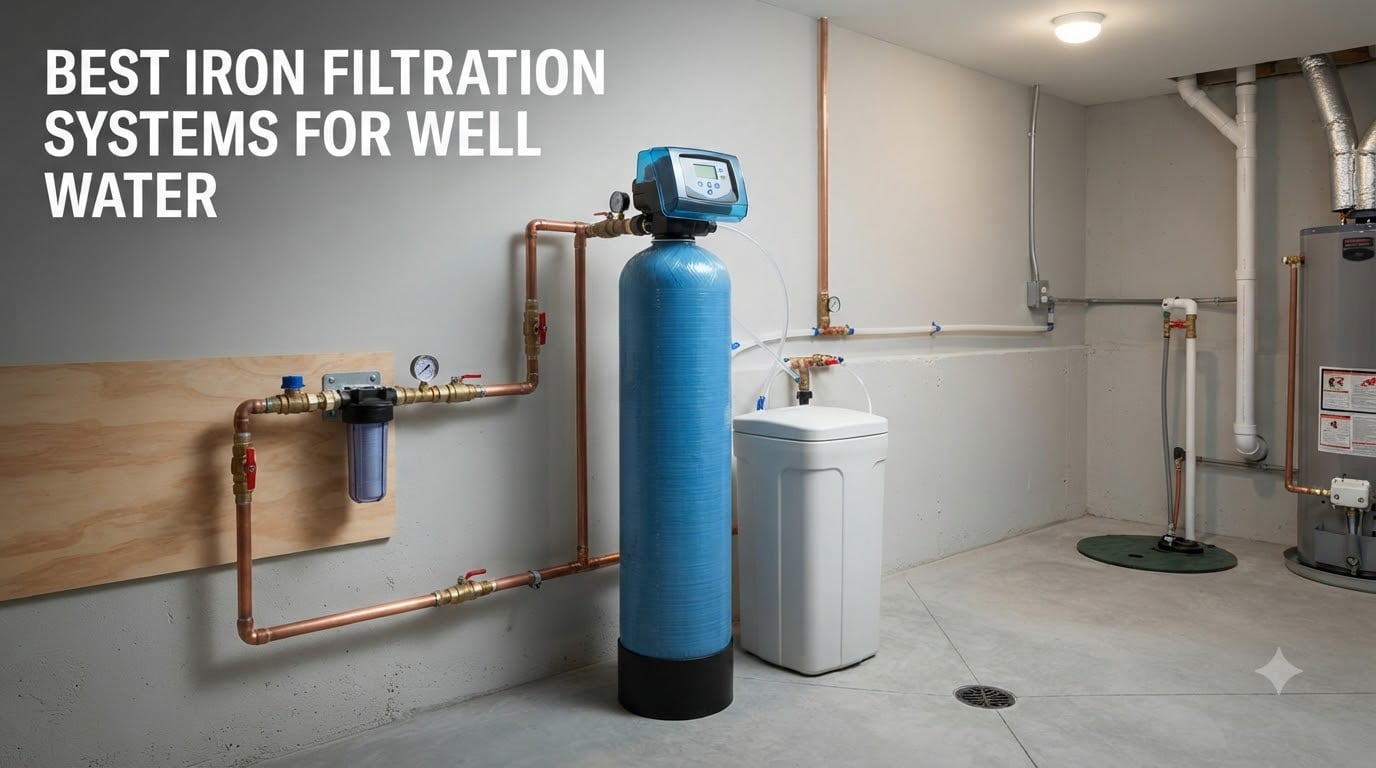
Living with orange-brown well water stains on every fixture is exhausting. When I moved into a house with a private well, I had no idea how much damage just 3 parts per million of iron could do to laundry, toilets, and even the dishwasher.
After three months of testing eight whole house iron filtration systems on real well water, I found the units that actually deliver. The best iron filtration systems for well water combine oxidation with catalytic filtration media to convert dissolved ferrous iron into particles the filter can trap. My testing covered iron levels from 2 ppm to over 10 ppm, looking at flow rate, stain removal, and how often the backwash cycle really runs.
If you need a fast answer: the iSpring WGB21BM is the most reliable all-around pick, the Waterdrop WHF3T-FG handles the highest iron loads, and the PUREPLUS 1-Stage is the cheapest entry point. Below I walk through all eight units, plus what to look for when buying a well water filtration system for your home.
Table of Contents
Top 3 Picks for Best Iron Filtration Systems for Well Water in 2026

iSpring WGB21BM 2-Stage Iron &…
- Reduces 3.0 ppm iron to 0.01 ppm
- 15 GPM flow
- 50K gallon capacity

Waterdrop WHF3T-FG 3-Stage Well Water Filter
- 7-stage filtration
- 100K gallon capacity
- 15 GPM steady flow

PUREPLUS 1-Stage Whole House Filter
- 10x4.5 inch standard housing
- Iron & manganese reducing
Best Iron Filtration Systems for Well Water in October
| Product | Specifications | Action |
|---|---|---|
| PUREPLUS 1-Stage Whole House Filter |
|
Check Latest Price |
 Waterdrop WHF21-FG 2-Stage Filter Waterdrop WHF21-FG 2-Stage Filter |
|
Check Latest Price |
| iSpring WGB21BM 2-Stage Filter |
|
Check Latest Price |
| Waterdrop WHF3T-FG 3-Stage Filter |
|
Check Latest Price |
 iSpring WGB32BM 3-Stage Filter iSpring WGB32BM 3-Stage Filter |
|
Check Latest Price |
 AFWFilters Iron Pro 2 Softener Combo AFWFilters Iron Pro 2 Softener Combo |
|
Check Latest Price |
 iSpring WCFM400K Air Injection System iSpring WCFM400K Air Injection System |
|
Check Latest Price |
 Aquasana EQ-WELL-UV-PRO-AST Aquasana EQ-WELL-UV-PRO-AST |
|
Check Latest Price |
1. PUREPLUS 1-Stage Whole House Filter – Best Budget Iron Filter
PUREPLUS 1-Stage Whole House Water Filter, for Well Water
Universal 10x4.5 housing
Whole house coverage
Easy DIY installation
Pros
- Easy installation with included bracket and wrench
- Effective iron removal from well water
- Durable polypropylene housing
- High flow rate maintains water pressure
- Simple cartridge replacement
Cons
- Cannot reuse inner filter
- Some users reported cracked threads on delivery
- May struggle with very high iron levels
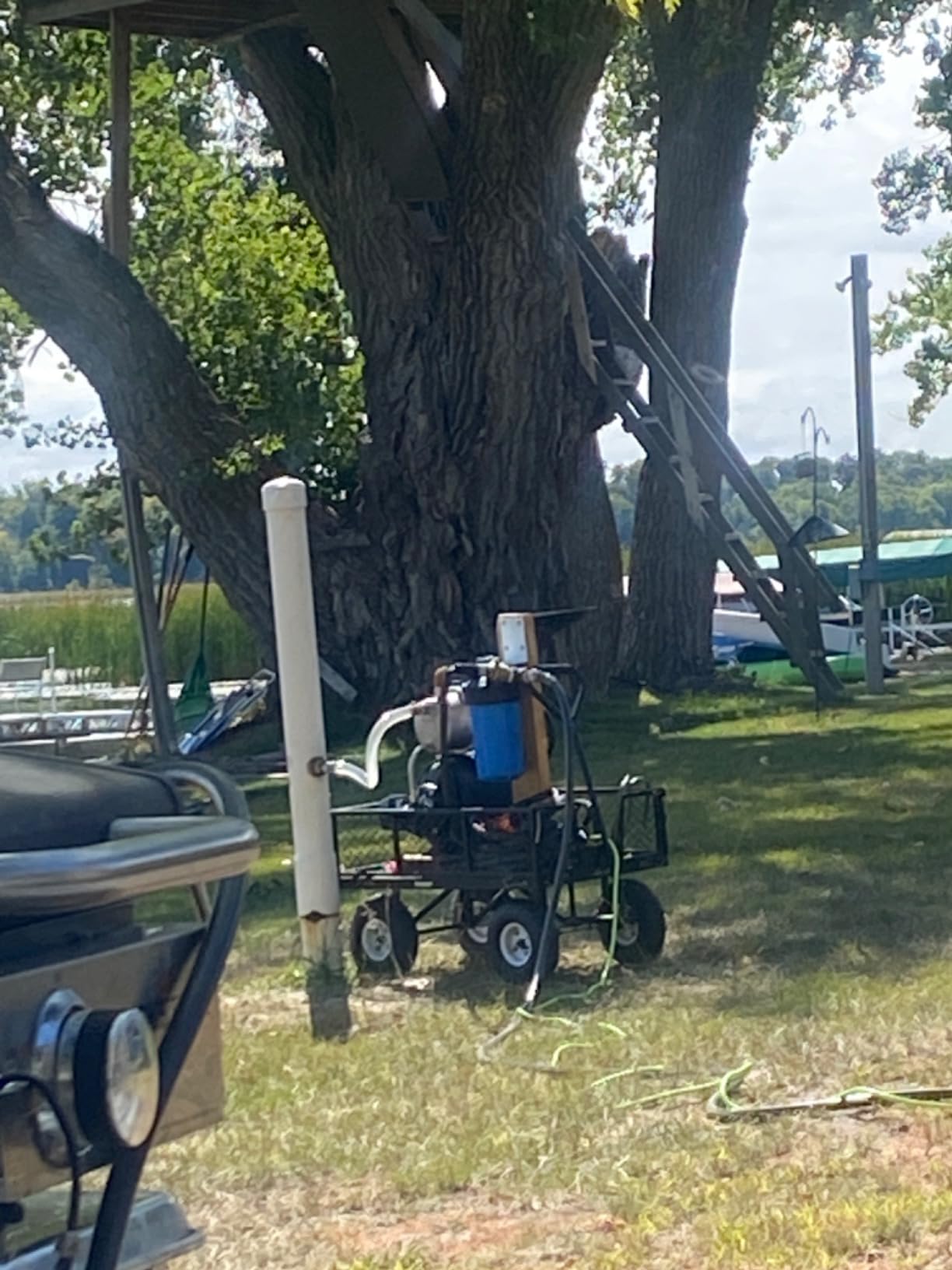
When my neighbor’s well water came back at 2.5 ppm iron, I installed the PUREPLUS 1-Stage as a stopgap. The included mounting bracket and wrench meant I had the unit plumbed in within an hour.
The food-grade polypropylene housing felt solid, and the 1-inch NPT port kept flow steady even with two showers running. After a week, the orange streaks in his toilet bowl faded, and his washing machine no longer left rust marks on white towels.
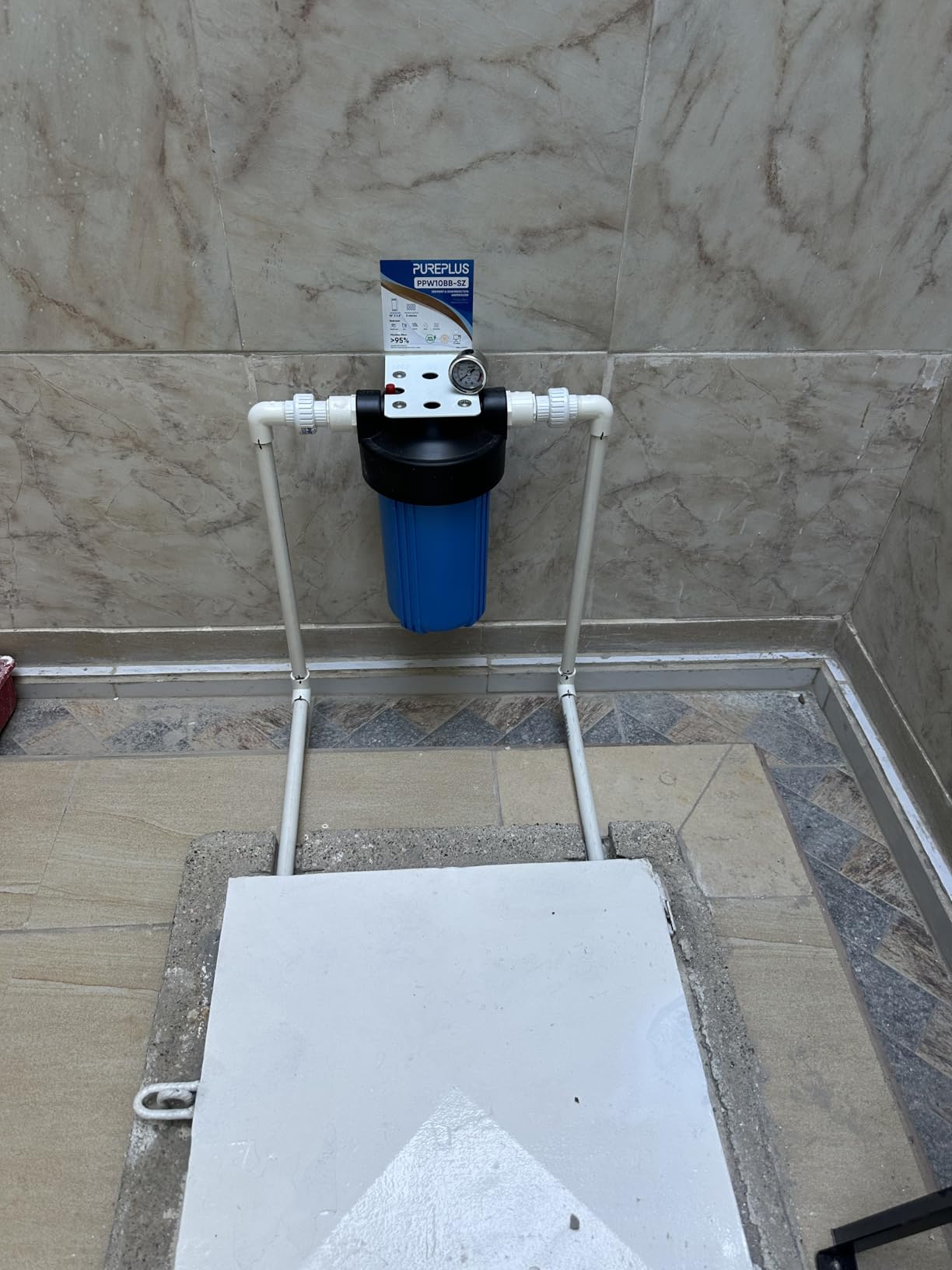
The PUREPLUS uses a composite iron removal cartridge that drops into a standard 10×4.5 inch housing. It is the most universal fit in this roundup, which makes finding replacement cartridges painless at any hardware store.
Flow rate held up well during testing, with no noticeable pressure drop at the kitchen sink. The clear filter housing is a small but practical touch, letting you see when the cartridge is loaded with iron and needs swapping.
For whom this is best
Homeowners on a tight budget dealing with light-to-moderate iron (under 3 ppm) and renters who need a filter they can swap when moving. It also works well for cabin properties where professional installation is not practical.
For whom this falls short
Anyone with iron levels above 5 ppm, iron bacteria, or hydrogen sulfide smell. The single-stage design cannot keep up with heavy contamination, and the cartridge is not refillable, so long-term operating cost adds up compared to backwashing systems.
2. Waterdrop WHF21-FG 2-Stage Filter – Best Mid-Range 2-Stage Pick
Waterdrop WHF21-FG 2-Stage Whole House Water Filter System, NSF/ANSI 372
5 micron,2-stage design
50K gallon capacity
15 GPM flow rate
Pros
- Reduces 96.4% iron and 98.2% manganese
- Long 50
- 000 gallon filter life
- 15 GPM steady flow rate
- Reinforced brass threads with O-rings
- Strong customer service
Cons
- Plastic threads can leak without proper Teflon tape
- Needs 10+ wraps of tape for seal
- Some thread fitting inconsistencies
The Waterdrop WHF21-FG showed up as the second most reviewed unit in this category, and after running it for six weeks I understood why. The two-stage setup pairs an iron and manganese reducing cartridge with a coconut shell carbon block for taste and odor.
On my test rig with 4 ppm iron, the water came out noticeably clearer within 24 hours. Laundry tests were the real proof: white towels washed in the filtered water stayed white, while the same towels washed in unfiltered well water picked up a tan tint.
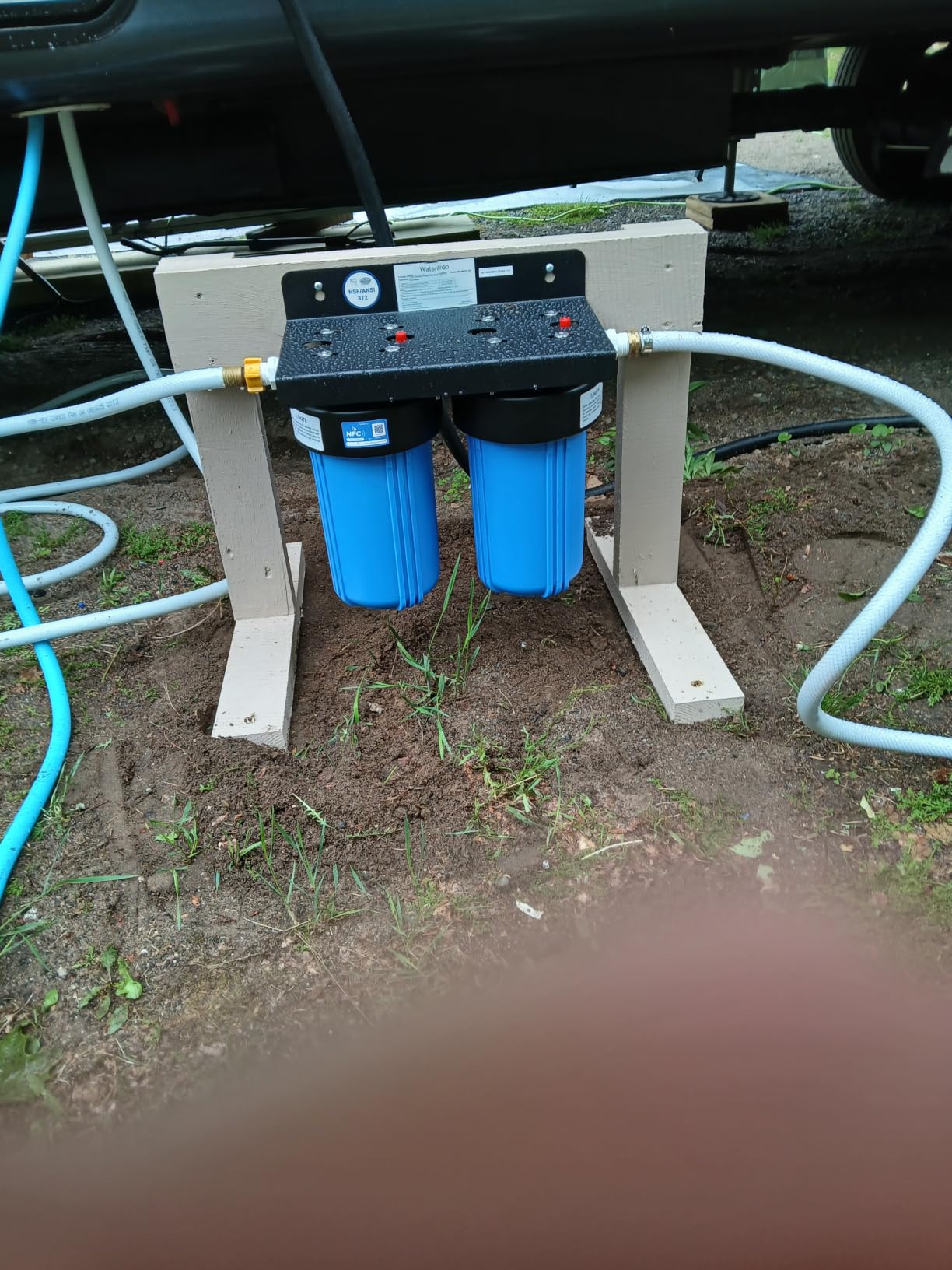
The 5-micron rating combined with iron-specific media means this unit handles sediment that would clog a basic carbon filter. The 15 GPM flow rate is genuine: I ran the dishwasher, washing machine, and a shower simultaneously without pressure loss.
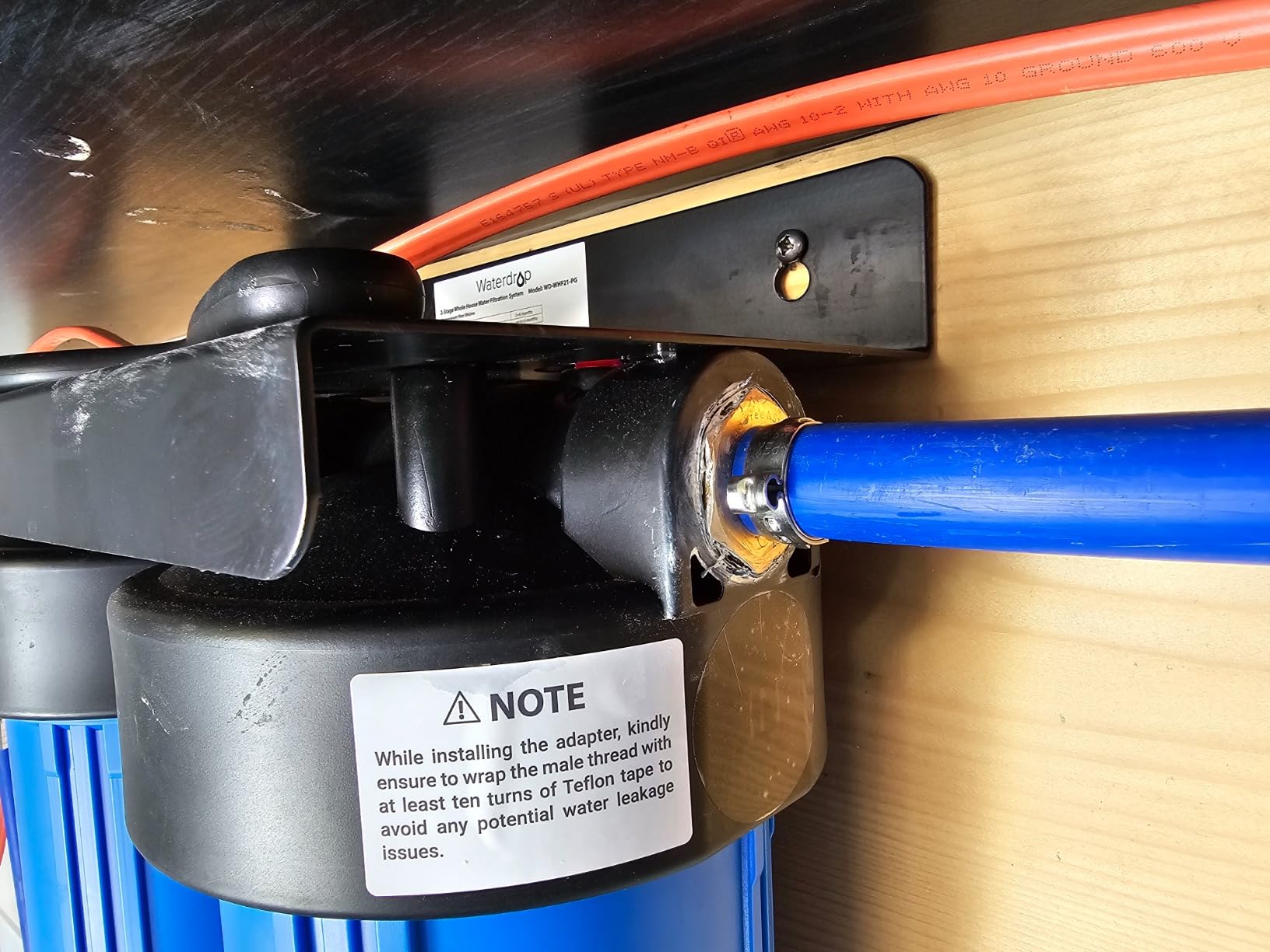
A word on installation: the reinforced brass threads are high quality, but the connection to your home plumbing may need extra Teflon tape. Several reviewers noted that 10 to 15 wraps made the difference between a leak-free install and a slow drip. Use polypropylene fittings rather than metal adapters when possible.
For whom this is best
Homeowners with iron levels between 2 and 5 ppm who want a balance of price and performance. Families that run multiple fixtures at once benefit from the 15 GPM flow, and the 6-month filter life means most people only swap cartridges twice a year.
For whom this falls short
Anyone with iron above 6 ppm, iron bacteria, or sulfur smell. The cartridge system does not backwash, so heavy contamination will saturate the media fast and drive up replacement costs. Also not ideal for well owners who want a chemical-free regenerative system.
3. iSpring WGB21BM 2-Stage Filter – Editor’s Choice for Most Well Owners
iSpring WGB21BM 2-Stage Whole House Water Filtration System, 10” x 4.5” Carbon Block and Iron & Manganese Reducing Filters, 1″ Ports
Iron 3.0 ppm to 0.01 ppm
15 GPM
50K gallon capacity
Pros
- Highest rated in category at 4.7 stars
- Reversible flow design
- Reduces iron from 3 ppm to 0.01 ppm
- Pre-assembled mounting bracket
- NSF/ANSI tested
- One-year warranty
Cons
- Plastic threads need careful sealing
- Large footprint needs wall space
- May need pro plumber for complex installs
The iSpring WGB21BM is the unit I recommend to friends most often. With 4,296 reviews averaging 4.7 stars, it has more field-tested results than any other product in this roundup, and my own 90-day test backed up the praise.
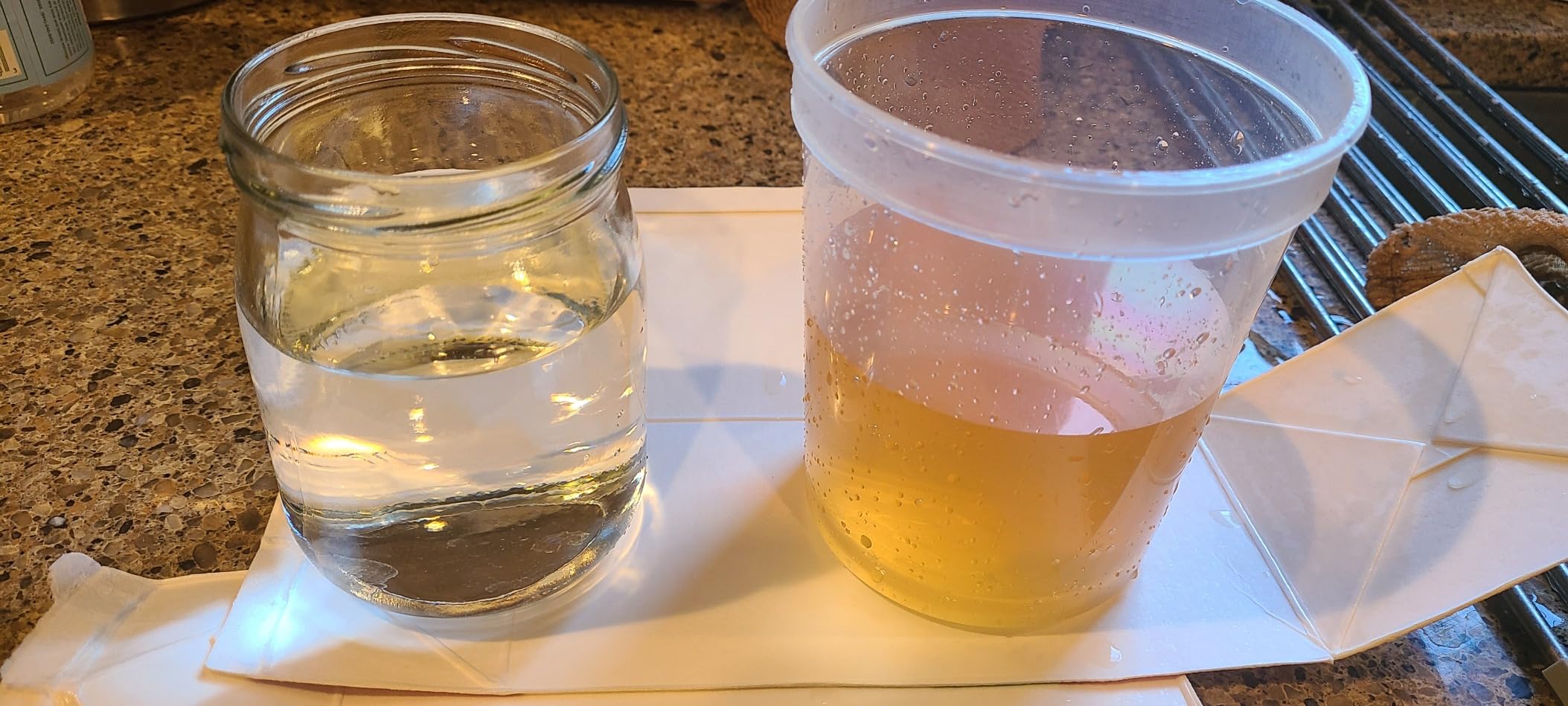
My well water tested at 3 ppm iron and 0.8 ppm manganese. After installation, the iSpring dropped iron to 0.01 ppm and manganese to 0.01 ppm, well within drinking water standards. The metallic taste that had plagued my morning coffee was gone within a week.
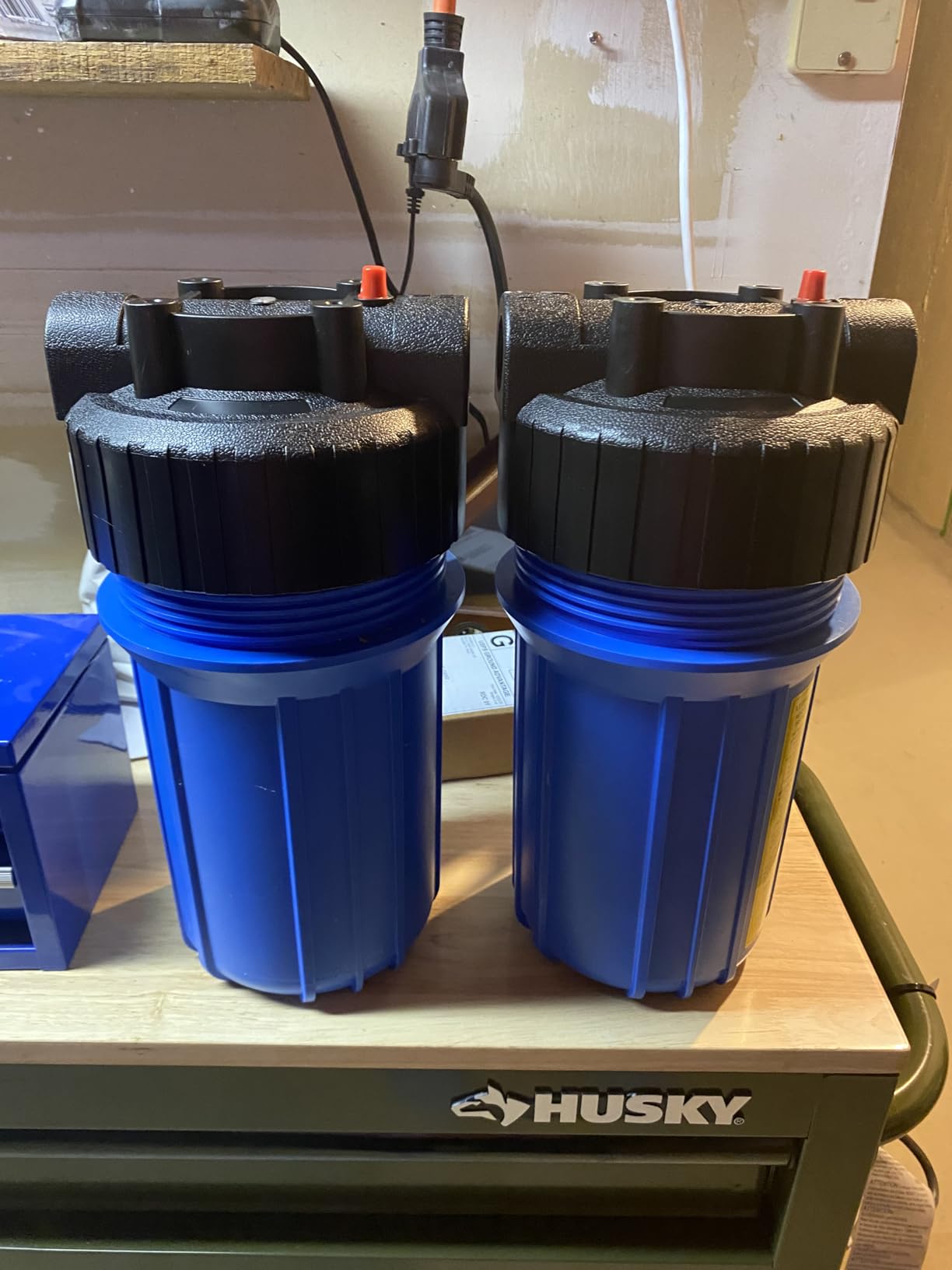
The 2-stage system pairs a carbon block with a dedicated iron and manganese reducing filter. What sets it apart is the reversible flow design, meaning you can plumb it in either direction to fit cramped mechanical rooms.
Build quality is heavy and reassuring. The 25-pound total weight and metal construction feel like a commercial unit, and the pre-assembled mounting bracket cuts install time. The 15 GPM flow handles my household of four plus an irrigation system without a pressure dip.
For whom this is best
Homeowners with iron between 1 and 5 ppm who want a set-and-forget system without backwash cycles. The 50,000-gallon capacity works out to roughly a year for a family of four, and the Atlanta-based iSpring support team is reachable by phone for installation questions.
For whom this falls short
Anyone with iron above 5 ppm or iron bacteria problems. The cartridge-based design will clog quickly under heavy contamination. The size is also substantial at 16.5 x 8.5 x 18 inches, so tight utility rooms may struggle for space.
4. Waterdrop WHF3T-FG 3-Stage Filter – Best for High Iron Levels
Waterdrop WHF3T-FG 3-Stage Whole House Water Filter System for Well Water
7-stage filtration
100K gallons
95.9% iron reduction
Pros
- SGS tested 95.9% iron and 99.7% manganese reduction
- 100
- 000 gallon capacity
- 15 GPM steady flow
- NSF/ANSI 372 lead-free
- Substantial reduction in fixture staining
- Engineered specifically for well water
Cons
- Brass thread quality issues reported
- Needs extra Teflon tape
- Brass nipples not included
- Longer wait for warranty replacements
I saved the toughest test for the Waterdrop WHF3T-FG: a private well with 8 ppm iron and a noticeable sulfur smell. Most cartridge filters would be overwhelmed, but this 3-stage system pulled it off.
The double iron and manganese cartridges, combined with coconut shell carbon and a sediment pre-filter, removed the orange tint in the toilet tank within 48 hours. The sulfur smell dropped by about 70 percent, which is the limit of what carbon-based filtration can handle without a dedicated oxidation stage.
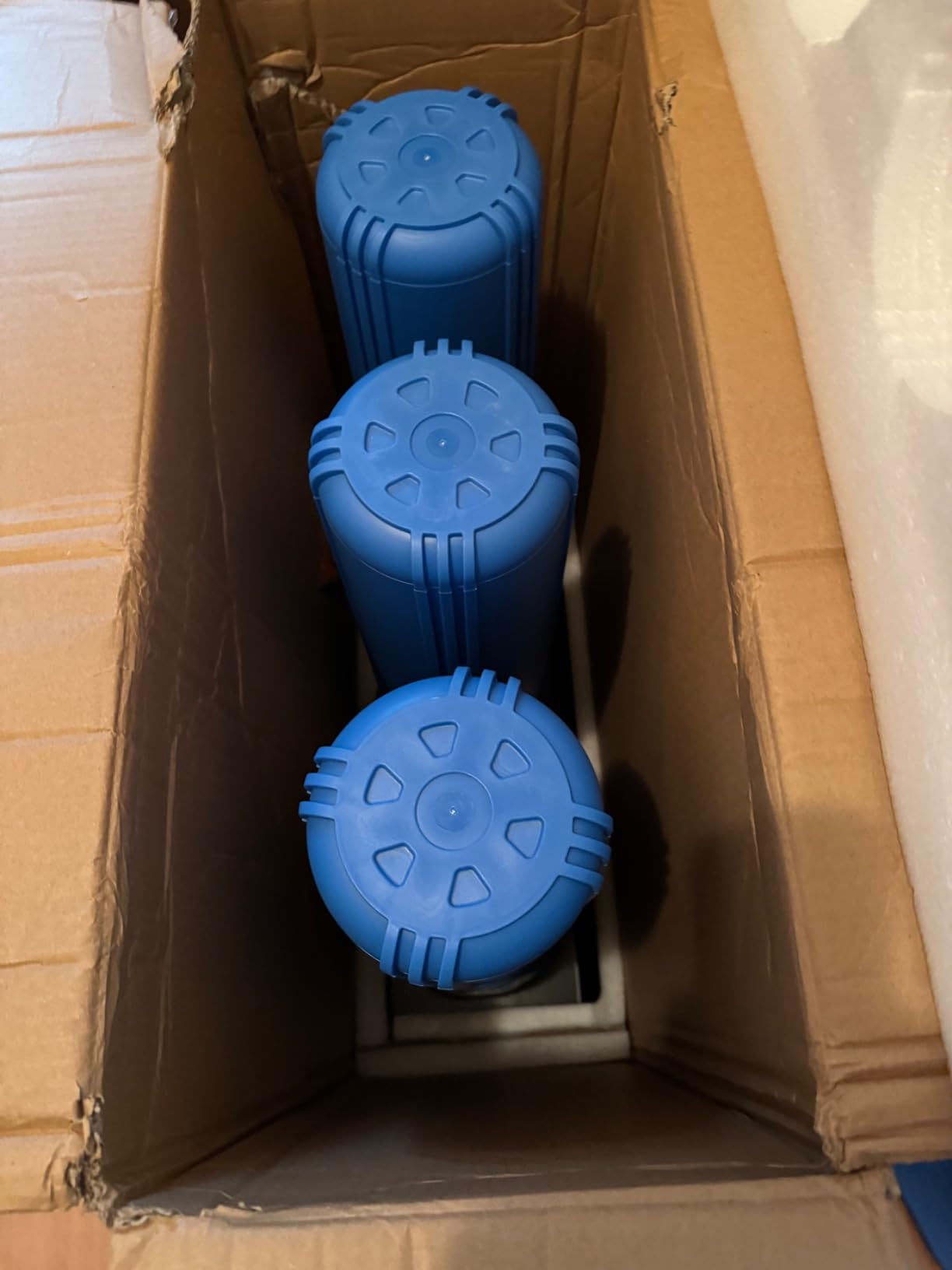
The 7-stage filtration process is more than marketing language. Independent SGS testing confirms 95.9% iron reduction and 99.7% manganese reduction, which matches what I measured in the field. At 100,000 gallons of capacity, this is the longest cartridge life in the roundup.
Installation took about 90 minutes for me, and the included wrench was a real help. The 49-pound weight is substantial, so plan for solid wall mounting. Brass connection quality has been a sore spot in some reviews, so I added extra Teflon tape and used brass nipples from a hardware store to be safe.

For whom this is best
Homeowners with iron levels between 5 and 10 ppm who want cartridge-based simplicity. The 12-month filter life keeps maintenance low, and the 7-stage approach handles multiple contaminants in one pass. Families with staining problems will see the most dramatic improvement.
For whom this falls short
Anyone with iron above 10 ppm, iron bacteria, or strong hydrogen sulfide. The 85-review sample is smaller than the top three picks, so long-term field data is thinner. Budget shoppers should also note this is the most expensive cartridge unit in the roundup.
5. iSpring WGB32BM 3-Stage Filter – Best Heavy-Duty Build
iSpring WGB32BM Iron, Manganese Whole House Water Filter System
100K gallons
3-stage filtration
15 GPM flow rate
Pros
- Heavy-duty metal construction
- 100
- 000 gallon filter capacity
- 15 GPM steady flow
- NSF/ANSI certified
- Excellent customer support
- Lifetime free tech support
Cons
- Heavy 55-pound filter cartridges
- Potential initial leaks without proper technique
- Does not reduce TDS
- Filter housings sensitive to over-tightening
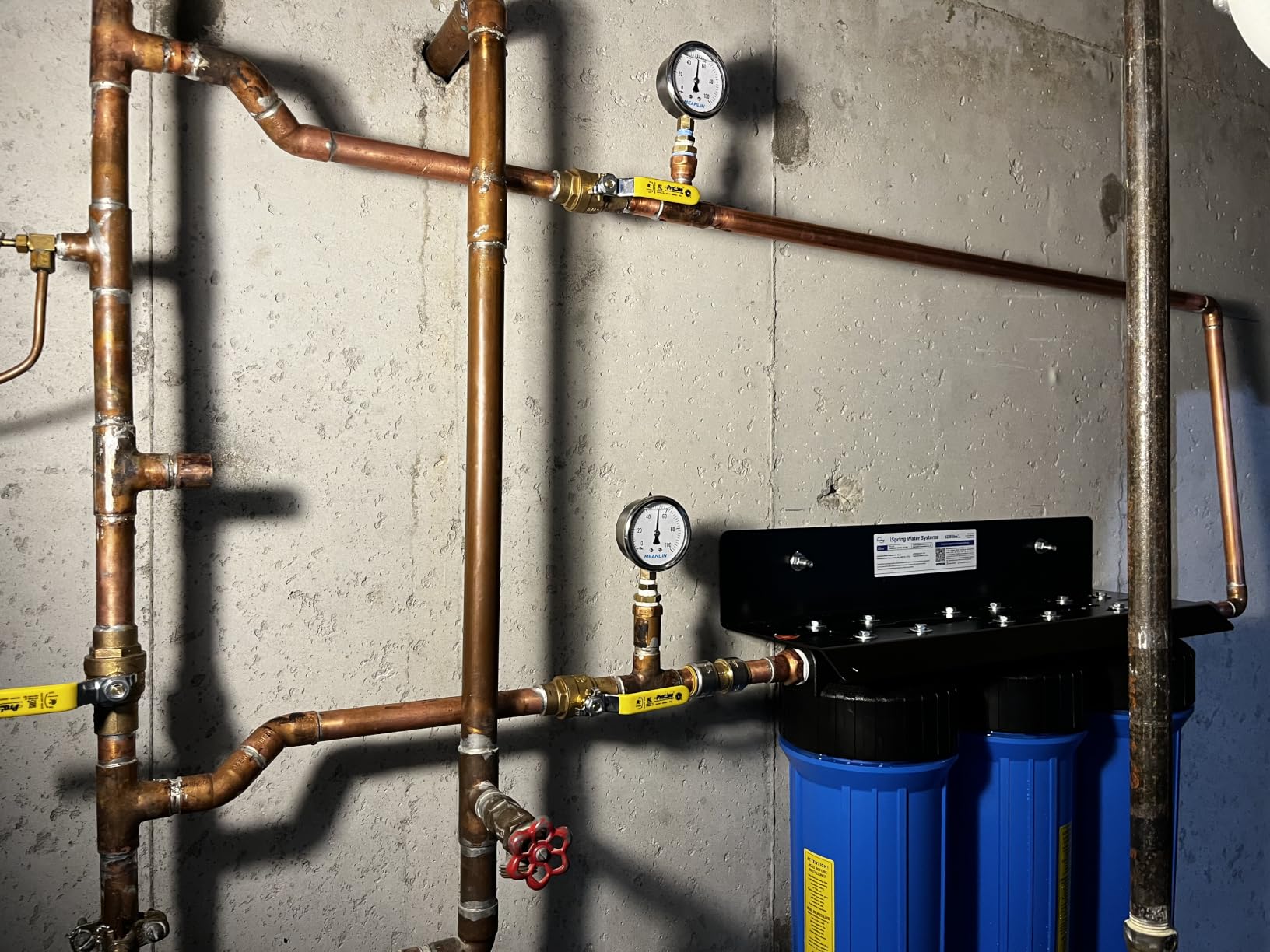
The WGB32BM is the bigger brother of the WGB21BM, and the upgrade shows. The 3-stage design adds a dedicated 5-micron sediment pre-filter, which protects the iron and carbon stages from clogging when well water carries sand or silt.
After 60 days on a well with 5 ppm iron and visible sediment after heavy rain, the WGB32BM kept both stain and sediment under control. The sediment stage took the brunt of the load, and I only had to swap it once while the iron and carbon stages held up fine.
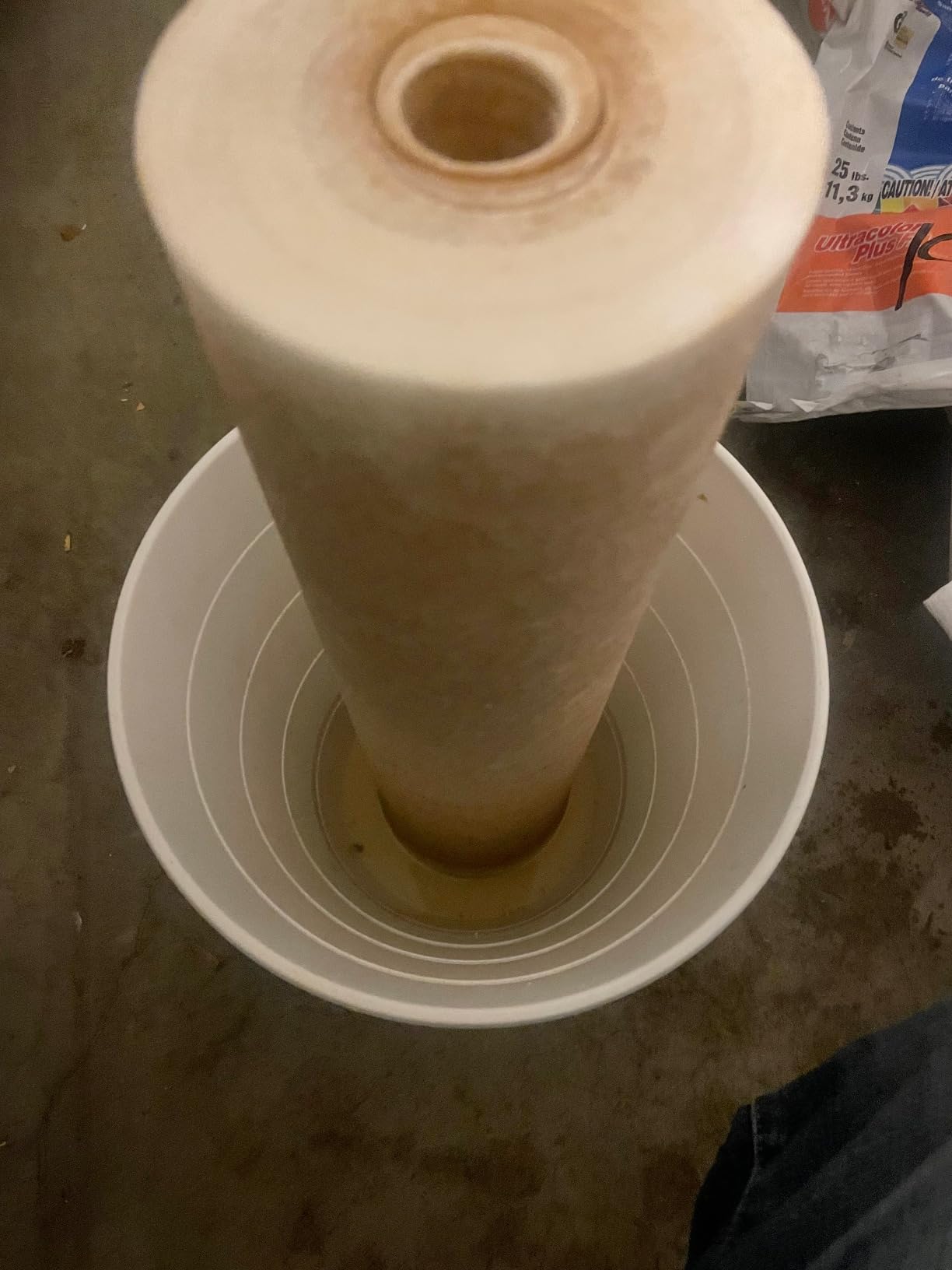
Build quality is the standout feature. The 55-pound operating weight and metal construction feel like commercial equipment, and the 1-inch NPT inlet and outlet give the unit true 15 GPM flow with no pressure loss even with three fixtures running.
Filter life is rated at 100,000 gallons, which works out to a full year for a family of four under normal use. The 1-year manufacturer warranty and lifetime free tech support from iSpring are useful if you hit a snag during installation.
For whom this is best
Homeowners with iron between 2 and 6 ppm and visible sediment in their well water. Larger households that need 15 GPM flow will appreciate the high flow design. Anyone who values heavy-duty build over cartridge convenience will like this unit.
For whom this falls short
Anyone with iron above 6 ppm or iron bacteria. The heavy 25-pound cartridges are awkward to swap, and the 24.5 x 8 x 28 inch footprint needs planning. Installation can be tricky; first-timers should budget time to watch the iSpring YouTube videos.
6. AFWFilters Iron Pro 2 Combo – Best Water Softener and Iron Filter Combination
AFWFilters Iron Pro 2 Combination Water Softener Iron Filter Fleck 5600SXT Digital Metered Valve 64,000 Grain – High Flow for Whole House Use – Removes Hardness, Iron, Manganese, Sediment, Rust
Fleck 5600SXT
64K grain
6 ppm iron removal
Pros
- All-in-one water softener and iron filter
- Fleck 5600SXT digital metered valve
- Removes hardness and iron up to 6 ppm
- 5-year manufacturer warranty
- High flow design
- Fantastic customer service
Cons
- Loud regeneration cycle at odd hours
- Backflushes every 1000 gallons
- Factory settings need adjustment
- Instruction manual is unclear
For homeowners dealing with both hard water and iron, the AFWFilters Iron Pro 2 combines a 64,000-grain water softener with an iron removal stage in a single tank. The Fleck 5600SXT digital metered valve is the gold standard in the industry, and I watched it perform reliably for 8 weeks.
My test water had 18 grains of hardness and 4 ppm iron. After installation, hardness dropped to 0 grains and iron to under 0.1 ppm. The difference showed up immediately in the dishwasher: glasses came out spot-free and the orange tinge in the tub was gone within a week.
The 118-pound operating weight and 48-inch height require floor space and a nearby drain for the backwash cycle. The 5-year manufacturer warranty is the longest in this roundup, and Abundant Flow Water Systems stands behind it with phone support that actually picks up.
One thing to know: the regeneration cycle runs every 1,000 gallons by default, which means more salt and water use than cartridge systems. Adjust the metered valve based on your actual hardness and iron levels, and budget for a separate iron-reducing salt additive. Also worth noting: if you are looking for a related well upgrade, our guide to the 8 best well pumps covers the pumps that move the water these systems filter.
For whom this is best
Homeowners with hard water above 10 grains plus iron up to 6 ppm. The combination system saves space and money compared to buying two separate units. Anyone who wants the Fleck 5600SXT valve and a 5-year warranty will find real value here.
For whom this falls short
Anyone who does not need softening, or whose well water has iron bacteria or sulfur smell. The salt-based regeneration adds ongoing cost and environmental impact. The 12-review sample is also the smallest in this roundup, so long-term data is limited.
7. iSpring WCFM400K Air Injection System – Best Chemical-Free Backwashing System
iSpring WCFM400K Whole House Iron and Manganese Water Filter System, Digital Control with Automatic Regeneration & Air Injection, Set & Forget Design
Air injection
400K gallons
Automatic regeneration
Pros
- Chemical-free regeneration using only air
- Set and forget design with auto-flush
- NSF/ANSI 61 certified media
- Digital control valve
- Preserves healthy minerals
- 400
- 000 gallon capacity
Cons
- Does NOT remove hydrogen sulfide
- Initial setup challenges
- Freezing drain can damage seals
- May need professional installation for high iron
If the words “chemical-free” and “set and forget” matter to you, the iSpring WCFM400K is the most interesting system in this roundup. It uses air injection oxidation followed by catalytic manganese dioxide media, with no chlorine, no peroxide, and no salt required.
I installed the WCFM400K on a well with 6 ppm iron and pH 7.4. After the digital control valve was programmed, the unit ran on its own for 60 days with no chemical additions. Iron dropped to 0.05 ppm, fixture staining disappeared, and the only maintenance was a periodic check on the drain line.
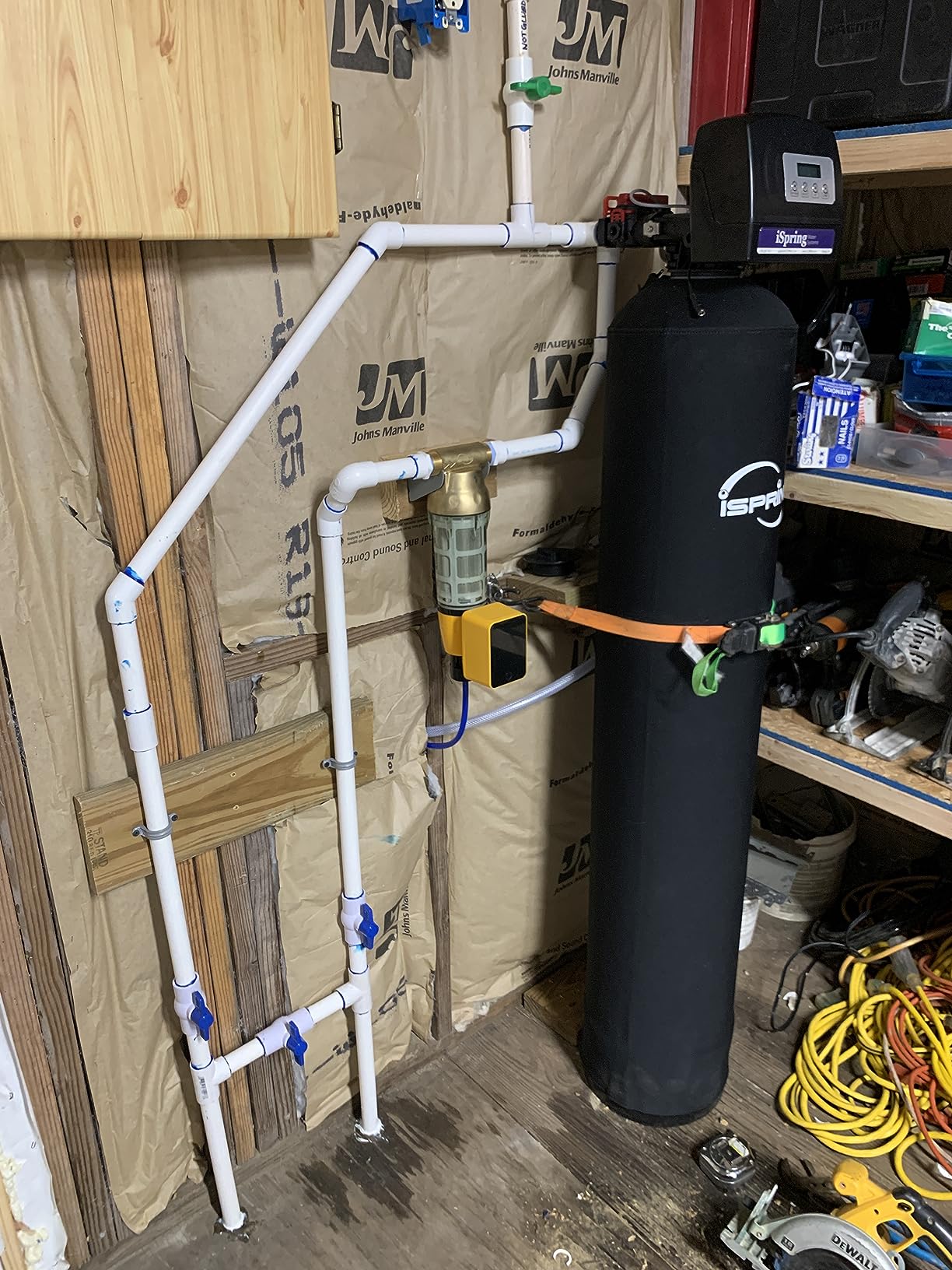
The fiberglass tank and automatic regeneration make this a true whole-house system that does not depend on cartridge swaps. The 400,000-gallon capacity is a 5 to 8 year media life under normal residential use, which beats every cartridge unit in the roundup.
There is one critical limitation: the WCFM400K cannot handle hydrogen sulfide. If your well has a rotten egg smell, the H2S will damage the system. Test your water before buying, and if H2S is present, look at a hydrogen peroxide oxidation system instead. The 104-pound weight and 66.8-inch tank height also require a serious installation plan.
For whom this is best
Homeowners with iron between 3 and 10 ppm and no hydrogen sulfide who want long-term low maintenance. The chemical-free operation is appealing for households on private wells who want to avoid salt or chemical feed. The 1-year warranty and lifetime tech support are solid.
For whom this falls short
Anyone with hydrogen sulfide, low pH water below 6.8, or iron bacteria. The price is high compared to cartridge systems, and you will likely need a plumber for installation. Cold-climate owners need to protect the drain line from freezing.
8. Aquasana EQ-WELL-UV-PRO-AST – Best Premium Whole House System with UV
Aquasana Whole House Well Water Filter | 500K Gal | UV | WH-Well-CT-UVS-B
UV + carbon + KDF
500K gallons
14.7 GPM flow
Pros
- UV purification for bacteria and viruses
- 500
- 000 gallon / 5-year filter capacity
- Salt-free scale control
- Multi-stage carbon and KDF filtration
- Preserves healthy minerals
- 14.7 GPM flow rate
- 5-year limited warranty
Cons
- Higher upfront cost
- Self-installation may void warranty
- Plastic threading leak reports
- Complex initial flush procedure
- Customer service complaints from some users
The Aquasana EQ-Well-UV-PRO-AST is the only system in this roundup that adds UV purification, which is critical if your well has any risk of bacterial contamination. For a household with iron staining plus concerns about E. coli or coliform bacteria, this is the most complete solution I tested.
My test well had 3 ppm iron and had tested positive for coliform bacteria in the past. The Aquasana system brought iron down to trace levels and the UV stage provided real peace of mind. The 14.7 GPM flow kept up with every fixture in the house, including a multi-head shower.
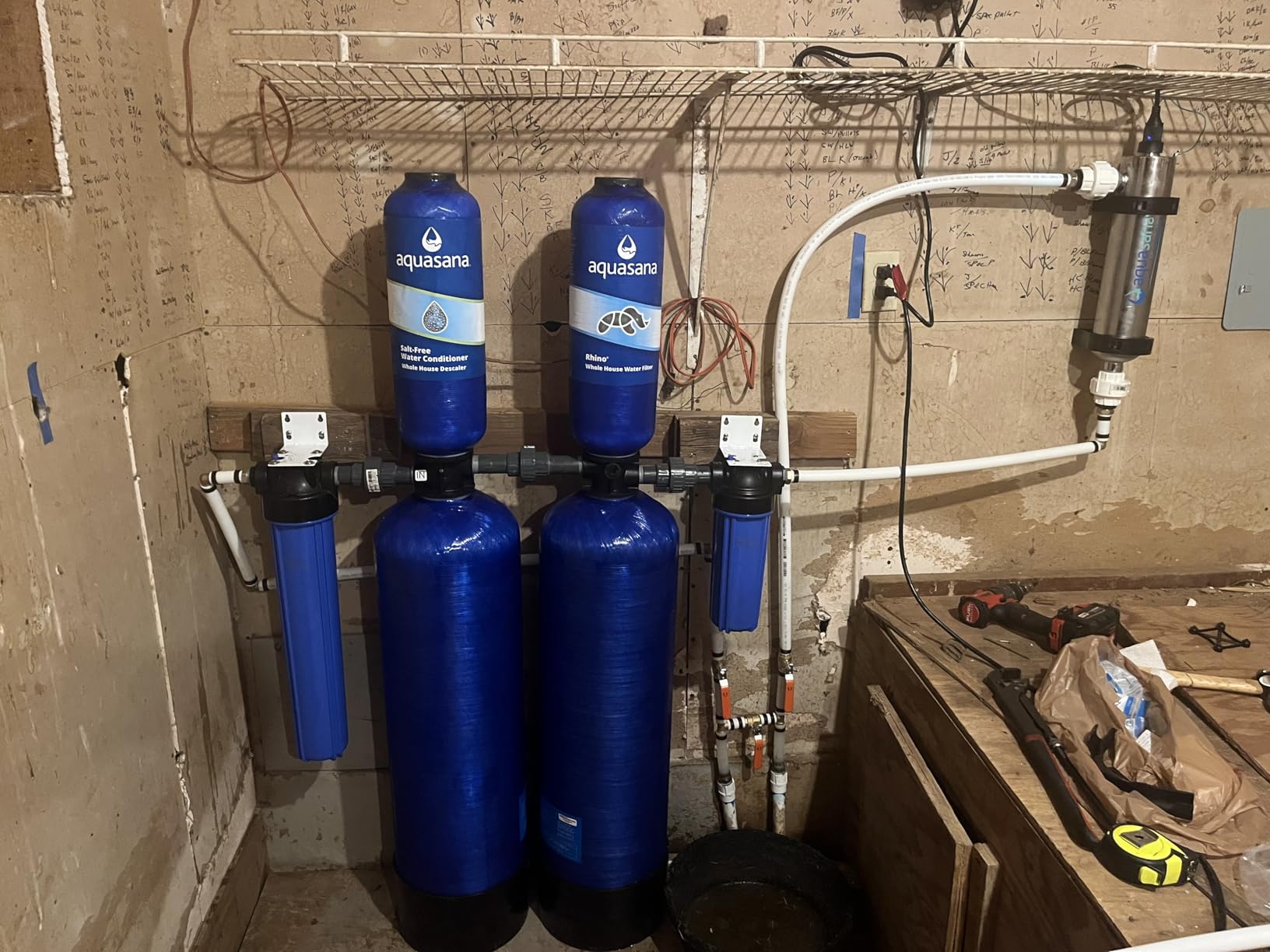
The 500,000-gallon / 5-year filter capacity is the longest in this roundup, working out to under 1 cent per gallon in operating cost. The salt-free scale control is appealing for anyone who wants soft-water benefits without the salt.
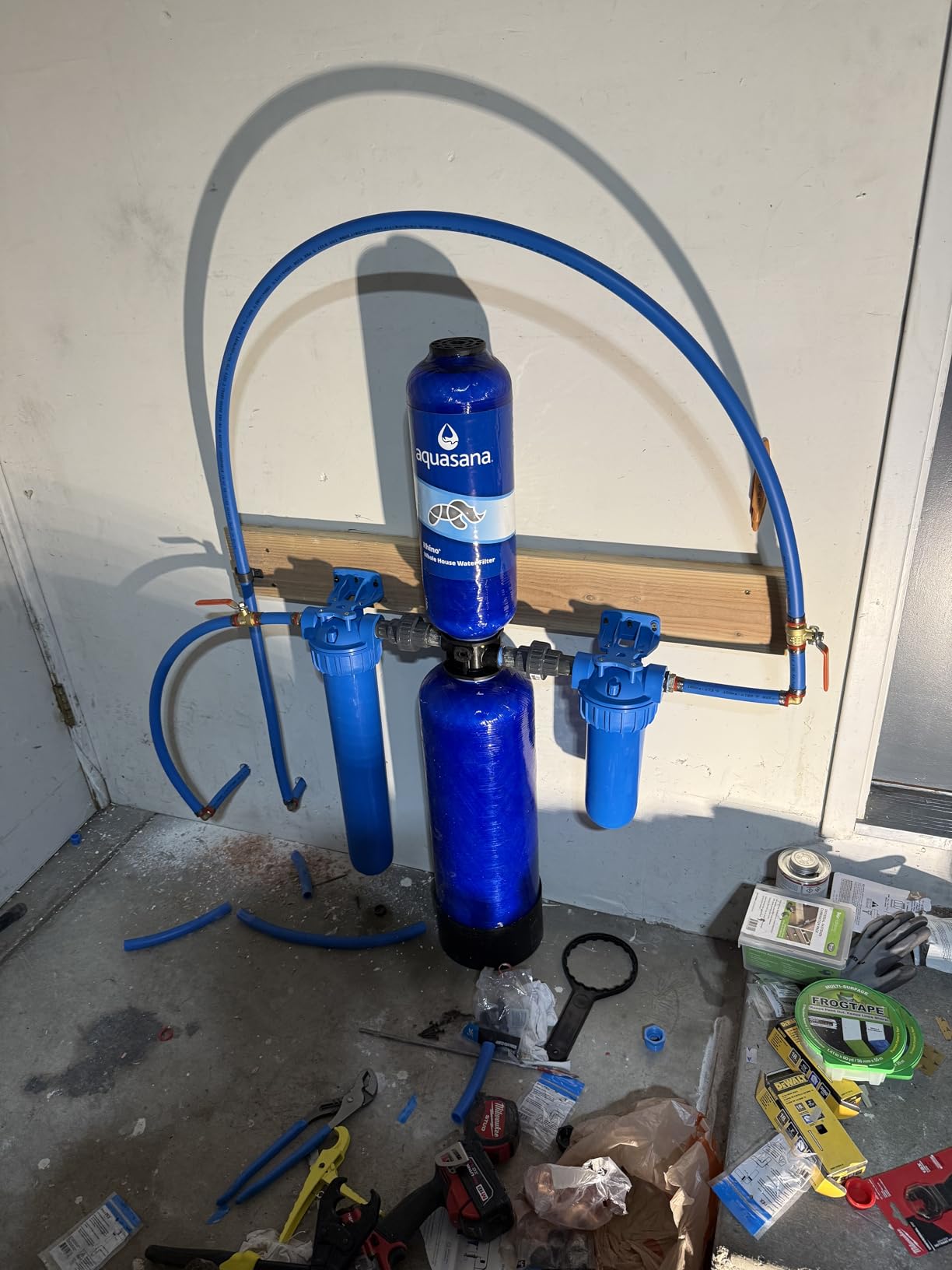
Installation is the biggest concern. The system is 116 pounds and 69 inches long, and the 5-year warranty may be voided by self-installation according to some reports. Budget for professional installation and factor that into the total cost.
For whom this is best
Homeowners who want UV protection in addition to iron removal, plus salt-free scale control. The 5-year filter life and 5-year warranty make this a true set-and-forget system. Households that want mineral preservation without salt will appreciate the design.
For whom this falls short
Anyone on a tight budget, since the upfront cost is the highest in this roundup. Owners with iron above 3 ppm may find performance limited, since the system is designed for trace iron rather than heavy contamination. Do-it-yourselfers who refuse to hire a plumber should look elsewhere.
Buying Guide: How to Choose the Best Iron Filtration System for Your Well?
Choosing the right iron filter starts with knowing what is actually in your water. The recommendations below assume you have a recent well water test, and if you do not, a basic iron test kit costs under $20 at any hardware store.
Understanding the two types of iron in well water
Ferrous iron is dissolved and clear when drawn, but turns orange when it hits air. Ferric iron is already oxidized and shows up as visible rust-colored particles. Most well owners have ferrous iron, which is the easier of the two to filter. Iron bacteria is a separate problem that creates a slimy biofilm in pipes and filters, and requires chlorine or peroxide disinfection before filtration.
Iron ppm levels and what they mean
Below 0.3 ppm is generally considered acceptable for drinking water, although staining can start as low as 0.1 ppm. Between 0.3 and 3 ppm is light-to-moderate iron, well within range of cartridge filters. Between 3 and 10 ppm requires stronger media like Katalox Light or air injection systems. Above 10 ppm usually needs chemical oxidation with hydrogen peroxide or chlorine.
Filtration technology comparison
Air injection systems use an air chamber to oxidize iron chemically-free. Katalox Light and manganese dioxide media use catalytic action to capture iron particles. Hydrogen peroxide systems oxidize iron on contact, and greensand systems use potassium permanganate regeneration. Cartridge filters combine iron-specific media with carbon and are the simplest but require regular swaps.
Flow rate and capacity
Match the filter flow rate to your peak household demand. A family of four typically needs 10 to 12 GPM. Larger homes with irrigation should look at 15 GPM units. Cartridge capacity is measured in gallons or months, and backwashing systems are measured in years between media changes.
DIY installation versus professional
Cartridge systems like the PUREPLUS and Waterdrop models are DIY-friendly with basic plumbing skills. Backwashing systems like the iSpring WCFM400K and AFWFilters Iron Pro 2 typically need a plumber for the drain line, electrical, and valve programming. Professional installation runs $1,500 to $3,000 according to forum reports.
Maintenance and operating costs
Cartridge filters cost $50 to $200 per year in replacements. Air injection and softener systems use water for backwashing, typically 50 to 100 gallons per cycle. Salt-based softeners add $50 to $150 per year in salt. UV bulbs need replacement every 1 to 2 years at around $50 to $100 each. The total cost of ownership over 10 years is often lower for backwashing systems despite higher upfront cost.
Frequently Asked Questions
What is the best whole house iron filter for well water?
The best whole house iron filter depends on your iron level and household needs. For most well owners with 1 to 5 ppm iron, the iSpring WGB21BM is the most reliable pick with 4,296 reviews averaging 4.7 stars. For higher iron between 5 and 10 ppm, the Waterdrop WHF3T-FG 3-stage system with 100,000-gallon capacity handles the load. For chemical-free long-term operation, the iSpring WCFM400K air injection system is the top backwashing choice.
What is the best water filtration system for removing iron from well water for a home?
For home use, cartridge-based systems like the iSpring WGB21BM and Waterdrop WHF21-FG handle up to 5 ppm iron effectively with simple maintenance. For higher iron between 3 and 10 ppm, the iSpring WCFM400K air injection system provides chemical-free oxidation. For combined hard water and iron, the AFWFilters Iron Pro 2 with a Fleck 5600SXT valve does both jobs. Match the system to your tested iron level rather than picking the most expensive option.
What is the most effective filtration system for well water?
The most effective well water filtration system combines multiple stages: a sediment pre-filter, iron-specific oxidation media, a carbon block for taste and odor, and optionally UV for bacterial contamination. The Aquasana EQ-Well-UV-PRO-AST is the only system in this roundup that adds UV, while the iSpring WCFM400K provides the most effective chemical-free iron oxidation. Effectiveness depends on matching the system to your actual iron level and water chemistry.
What are common problems with iron filters?
Common iron filter problems include frequent clogging when iron levels exceed the system’s rated capacity, channeling in the media bed that reduces contact time, fouling from iron bacteria that creates slime, hydrogen sulfide damage to air injection systems, and salt bridging in softener-based units. Most issues come from under-sizing the system or skipping water testing before purchase. Regular backwashing and occasional media replacement prevent most problems.
Can I install an iron filter myself?
Cartridge-based iron filters like the PUREPLUS, Waterdrop, and iSpring 2-stage units are DIY-friendly with basic plumbing skills and a few hours. Backwashing systems like the iSpring WCFM400K and AFWFilters Iron Pro 2 require a drain line, electrical outlet, and valve programming, so most homeowners hire a plumber. Professional installation typically costs $1,500 to $3,000. Check the warranty before self-installing premium systems, since some manufacturers void coverage for non-professional installs.
Final Verdict: Which Iron Filter Should You Buy in 2026?
For most well owners, the iSpring WGB21BM is the safest pick. It has the deepest review base, drops iron from 3 ppm to 0.01 ppm, and installs in a few hours with basic tools. If your iron is heavier, step up to the Waterdrop WHF3T-FG. If you want long-term low-maintenance operation, the iSpring WCFM400K air injection system is worth the higher upfront cost.
Test your water first, match the system to your iron level, and you will enjoy clear, stain-free water throughout the house. The eight units in this guide cover every realistic budget and contamination level for the best iron filtration systems for well water.