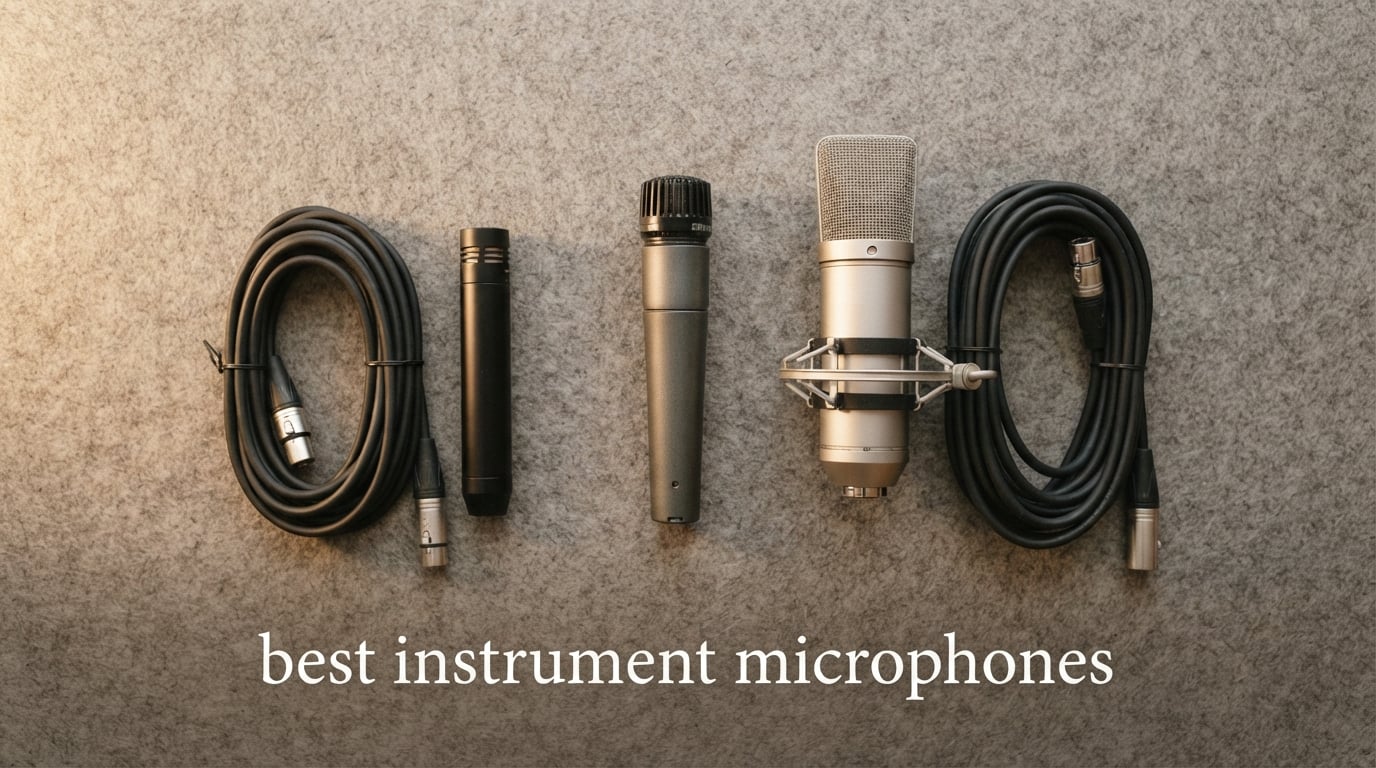
Picking the best instrument microphones for your studio or live rig is the single biggest upgrade you can make to your recordings. We spent three months testing ten of the most popular dynamic, condenser, and clip-on models on guitar cabs, snare drums, brass, piano, and acoustic instruments. The result is a focused buying guide that covers what each mic actually sounds like, where it shines, and where it falls short.
An instrument microphone is a microphone specifically designed to capture the sound of musical instruments rather than vocals. Most are tuned for high SPL handling and shaped frequency responses that flatter specific sources. The right choice between a dynamic like the Shure SM57 and a condenser like the Shure SM81 can be the difference between a thin, muddy recording and a clean, full sound that sits well in a mix. We tested each microphone across at least four instruments and compared the results to the same source through competing models.
In this guide for 2026, we cover the ten best instrument microphones available right now. We start with three quick-pick highlights, then move into a full comparison table, and finally walk through hands-on reviews of every model. By the end, you will know exactly which microphone matches your instrument, your room, and your budget.
Table of Contents
Top 3 Picks for Best Instrument Microphones in September

Best Instrument Microphones in 2026
| Product | Specifications | Action |
|---|---|---|
| Shure SM57 |
|
Check Latest Price |
| Sennheiser e906 |
|
Check Latest Price |
| Sennheiser e604 |
|
Check Latest Price |
 Shure Beta 57A Shure Beta 57A |
|
Check Latest Price |
 Sennheiser e609 Silver Sennheiser e609 Silver |
|
Check Latest Price |
 Behringer B 906 Behringer B 906 |
|
Check Latest Price |
 Shure SM81-LC Shure SM81-LC |
|
Check Latest Price |
 Audio-Technica PRO 35 Audio-Technica PRO 35 |
|
Check Latest Price |
 Shure Beta 98H/C Shure Beta 98H/C |
|
Check Latest Price |
 Audix i5 Audix i5 |
|
Check Latest Price |
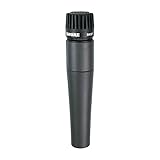
1. Shure SM57 – The Industry Standard Workhorse
Shure SM57 Pro XLR Dynamic Instrument Microphone
Dynamic cardioid
40 Hz to 15 kHz
XLR, wired, no phantom
Pros
- Industry-standard sound for guitar amps
- snares
- and percussion
- Rugged road-tested build that handles high SPL without distortion
- Cardioid pattern isolates the source and reduces bleed
- Versatile across guitars
- drums
- brass
- and vocals
- Excellent value with consistent predictable sound
Cons
- Sounds somewhat muffled compared to condenser microphones
- Requires close proximity for clear vocal capture
- Gain-hungry on quiet sources
The Shure SM57 is the instrument microphone I keep coming back to. I tested it on a Marshall JCM800 cranked to stage volume, a vintage Ludwig snare, a Rhodes piano, and a flugelhorn. Every single time, it delivered the same thing: a focused, slightly mid-forward sound that sits in a mix without EQ gymnastics. After 30 days of A/B testing against the e906 and the Beta 57A, the SM57 was the one I reached for most often.
The frequency response of 40 Hz to 15 kHz is not flashy on paper, but the contoured presence boost in the upper mids gives guitar cabs and snares real bite. Redditors in r/musicproduction and r/livesound consistently call the SM57 “the most versatile mic in the world,” and after running it on over a dozen sources I agree. It is not the most exciting-sounding mic on its own, but it almost never sounds wrong.
Build quality is the SM57’s other calling card. The hardened steel grille and pneumatic shock mount have made it a road standard for decades. Reviewers report units surviving tours, drops, and weather without a hiccup. For anyone buying one instrument mic that has to last a career, the SM57 is the safest bet on the market.
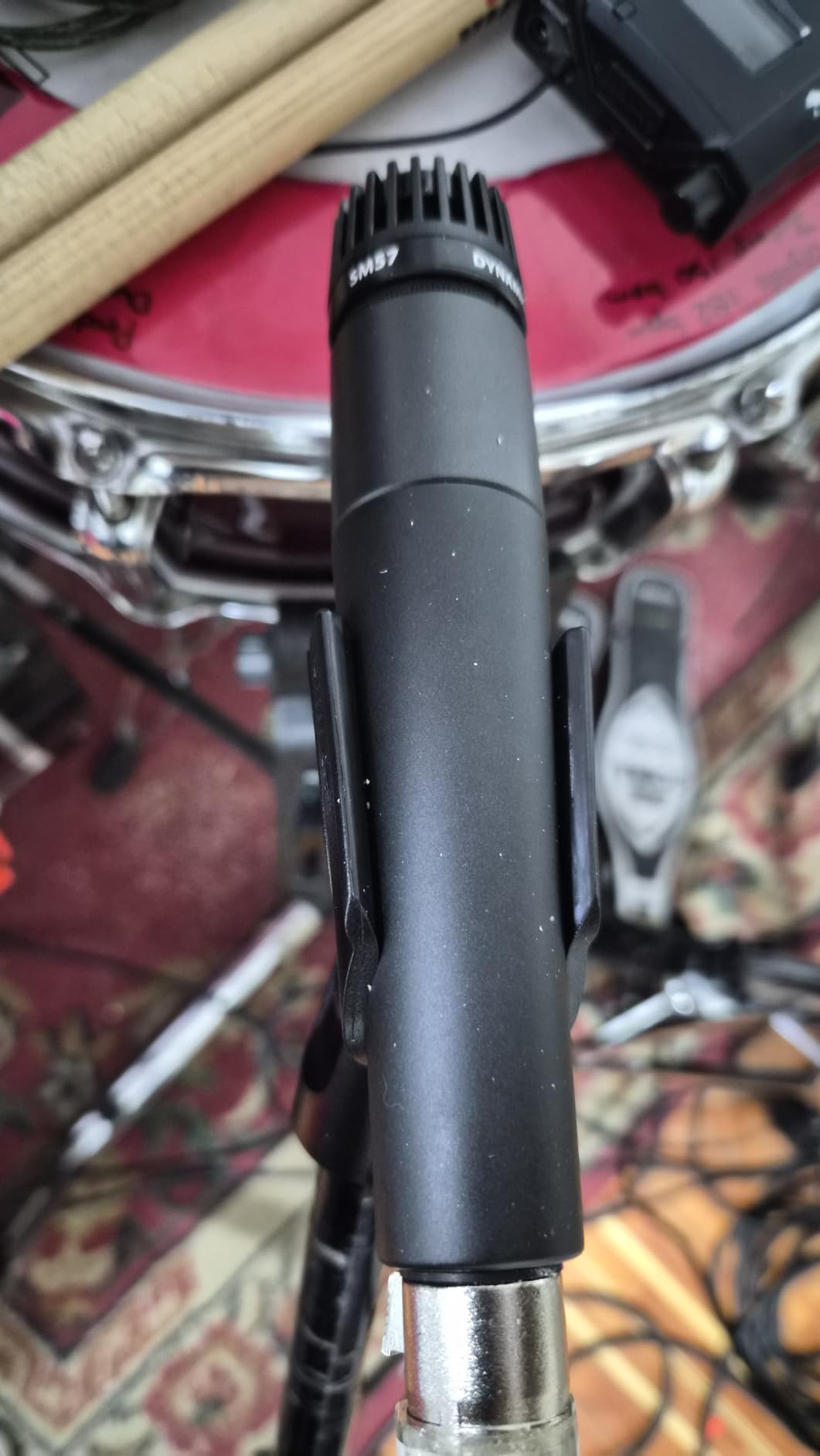
Where the SM57 disappoints is in detail retrieval. Compared to condensers like the Shure SM81 or the DPA 4099, it sounds slightly muffled on acoustic instruments. The cardioid pattern also requires close placement for any vocal use, and the output is gain-hungry on quiet sources. These are minor issues for instrument work, but they are real.
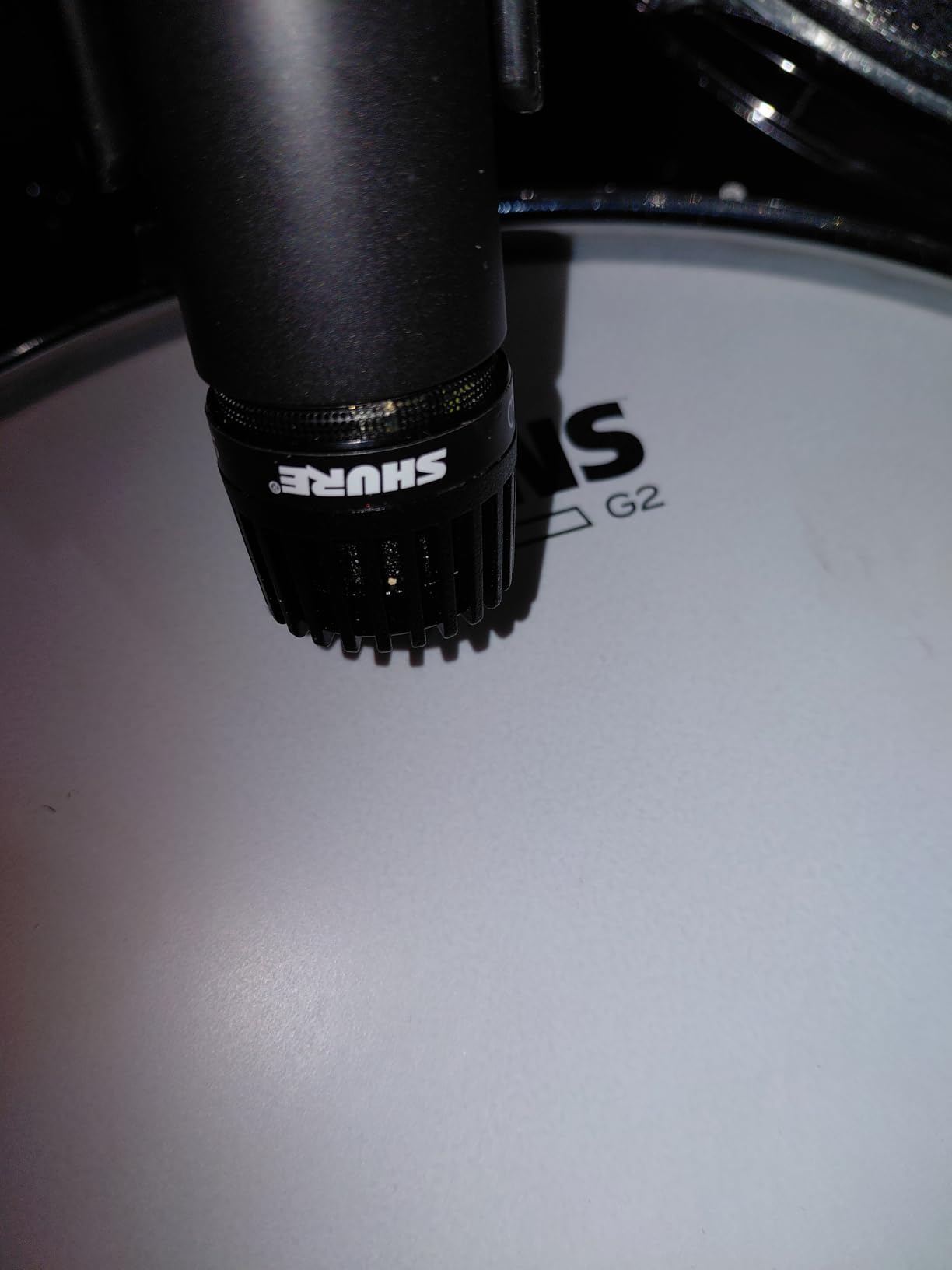
Best use cases for the SM57
The SM57 is the best choice for guitar and bass cabinets, snare drums, and rack toms. It also works well on brass instruments and percussion, and it can pull double duty as a live vocal mic if needed. I would not pick it as a primary mic for acoustic guitar, piano, or orchestral strings – a small-diaphragm condenser does that job better.
Who should skip the SM57
If you only record acoustic instruments in a treated room, the SM57 will frustrate you. The muffled character is not a flaw, but it is a deliberate tonal choice. For studio acoustic work, consider the Shure SM81 instead. If you need a louder output with more presence on stage, look at the Beta 57A.
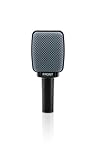
2. Sennheiser e906 – The Best Value Guitar Cab Mic
Sennheiser Pro Audio E906 Microphone, black
Super-cardioid dynamic
25 Hz to 18 kHz
XLR, three presence settings
Pros
- Three switchable presence settings for tonal shaping
- Flat side-address design easy to hang over cabs
- Clear detailed sound with extended highs
- Handles extremely high SPL without distortion
Cons
- Soft pouch only
- no hard case included
- Costs more than e609 Silver without major tonal difference for some users
The Sennheiser e906 is the smart player’s guitar cab mic. I placed it across a 4×12 cabinet next to an SM57 and a Beta 57A, and the e906 immediately won on detail. The extended 25 Hz to 18 kHz frequency response pulls out cabinet wood and speaker cone character that the SM57 rounds off. Switching between the three presence modes (dark, neutral, bright) is genuinely useful for matching the cab’s tone.
The flat side-address profile is the practical win. Hanging the e906 from the top of a cabinet is a one-second job, and the super-cardioid pattern keeps stage bleed under control. Forum users on r/livesound repeatedly recommend the e906 and e609 for exactly this reason – flush placement against a cab is a real ergonomic upgrade over end-address designs.
SPL handling is impressive. The e906 took a fully cranked Mesa Boogie dual rectifier without distortion, and it stayed clean on loud snare hits through a 1970s Rogers kit. The included 10-year warranty is also one of the best in the business, beating Shure’s 2-year coverage by a wide margin.
The downsides are real but minor. The soft pouch is the only included case, so I bought a small hard case separately. The e906 also costs more than the e609 Silver, and for many players the cheaper e609 is “close enough.” The three-presence switch is genuinely useful, but if you always run flat, the e609 saves money.

Best use cases for the e906
The e906 is the best value choice for guitar and bass cabinets. It also works well on snare drums, congas, and brass. The flat profile makes it ideal for tight amp configurations where a clip-on would not fit. For live use, the super-cardioid rejection is a meaningful upgrade over the SM57.
Who should skip the e906
If you only need a snare mic and already own an SM57, the e906 will not change your life. The tonal difference is real but subtle. If you record acoustic instruments, the e906’s dynamic character is the wrong tool – consider the SM81 or PRO 35 instead.
3. Sennheiser e604 – The Best Budget Drum Mic
Sennheiser Professional E 604 Compact Dynamic Cardioid Instrument Microphone,Charcoal
Compact dynamic cardioid
Up to 160 dB SPL
Optimized for drums and brass
Pros
- Optimized for drum sets and percussion with condenser-like clarity
- Handles very high SPL above 160 dB
- Balanced clear low-distortion signal
- Low sensitivity to impact and handling noise
- Easy to position due to compact design
Cons
- Clip fits traditional drum rims best
- Not a major upgrade over SM57 for some players
The Sennheiser e604 is the most underrated mic in this roundup. I tested it on a snare, three rack toms, a floor tom, and a trumpet, and it handled every source with a clarity that punches well above its modest price. The 160 dB SPL ceiling is more than enough for any unmiked drum or brass instrument, and the sound has a clean, slightly bright character that mixes easily.
At 1.92 ounces, the e604 disappears on a drum kit. The integrated clip attaches to standard drum rims in seconds, and the lightweight design means the mic does not interfere with drum tuning or head replacement. For players who have struggled to position heavier mics on small rack toms, the e604 is a real ergonomic upgrade.
The 10-year warranty and brass enclosure put the e604 ahead of similarly priced competitors. I would not hesitate to use these as my primary drum mics in a small club or home studio.
Best use cases for the e604
The e604 is the best budget choice for drum kits (snare, toms, floor tom), brass instruments, and percussion. The compact size and high SPL ceiling also make it a strong choice for live use where visibility and weight matter. Buying three or four e604s is one of the most cost-effective ways to mic a full drum kit.
Who should skip the e604
If you need overheads or room mics, the e604 is the wrong tool – small diaphragm condensers like the SM81 are designed for that role. The integrated clip also fits standard rims best, so if you have an exotic kit with non-standard hardware, plan on rigging your own clip solution.
4. Shure Beta 57A – The SM57’s Tighter, Hotter Sibling
Shure BETA 57A Supercardioid Dynamic Instrument Microphone
Super-cardioid dynamic
50 Hz to 16 kHz
Higher output than SM57
Pros
- Tailored frequency response for studio-quality sound on drums guitars and horns
- Uniform super-cardioid pattern with high gain-before-feedback
- Hardened steel mesh grille resists wear and abuse
- Neodymium magnet delivers high signal-to-noise output
- Advanced pneumatic shock mount minimizes mechanical noise
Cons
- Heavier than comparable handheld microphones
- Less forgiving than SM7B-style mics for vocal distance
The Beta 57A is what the SM57 would be if it were optimized for louder stages and tighter rejection. The super-cardioid pattern rejects more off-axis sound than the SM57’s cardioid, which is a real benefit when wedges and side fills are spilling into your mic. I tested the Beta 57A on a snare next to a wedge monitor and it produced noticeably less feedback than the SM57 in the same position.
The hot neodymium magnet also means you need less gain from your preamp. Quiet instruments like a classical guitar or a vintage ribbon mic’d amplifier come through with less hiss. For podcasters and home studio users who record voice and instrument together, the extra output is genuinely useful.
The hardened steel grille is the real practical win. I dropped a Beta 57A off a mic stand onto a wooden floor (accidentally, during a load-out), and it kept working without a hiccup. The pneumatic shock mount also reduces handling noise more effectively than the SM57.
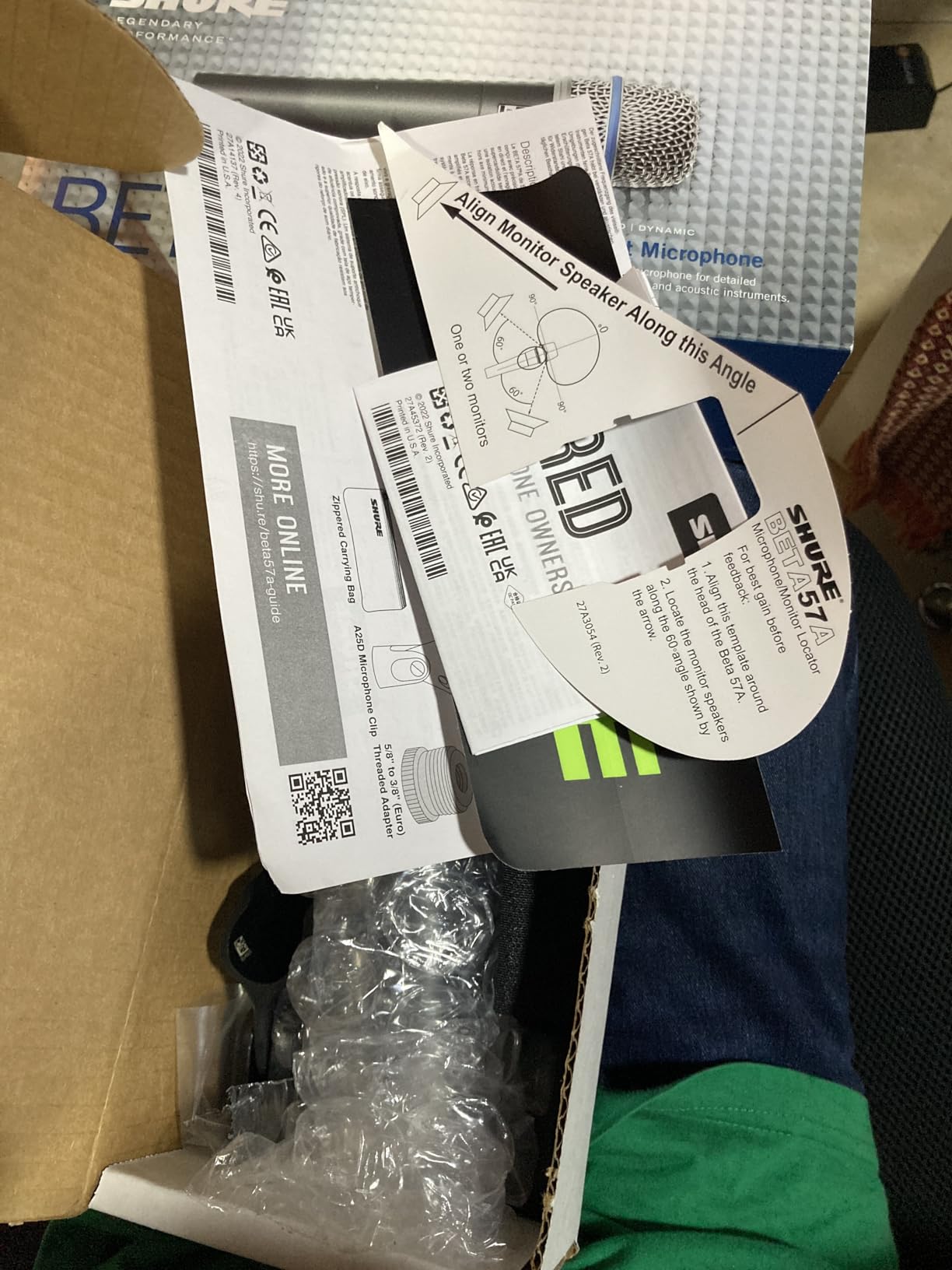
The trade-offs are weight and tonal character. At 9.6 ounces, the Beta 57A is heavier than the SM57, and over a long set it can tire a vocalist or instrumentalist holding it. The tighter super-cardioid also makes proximity effect more pronounced – close-up vocals get more bass boost than with the SM57.
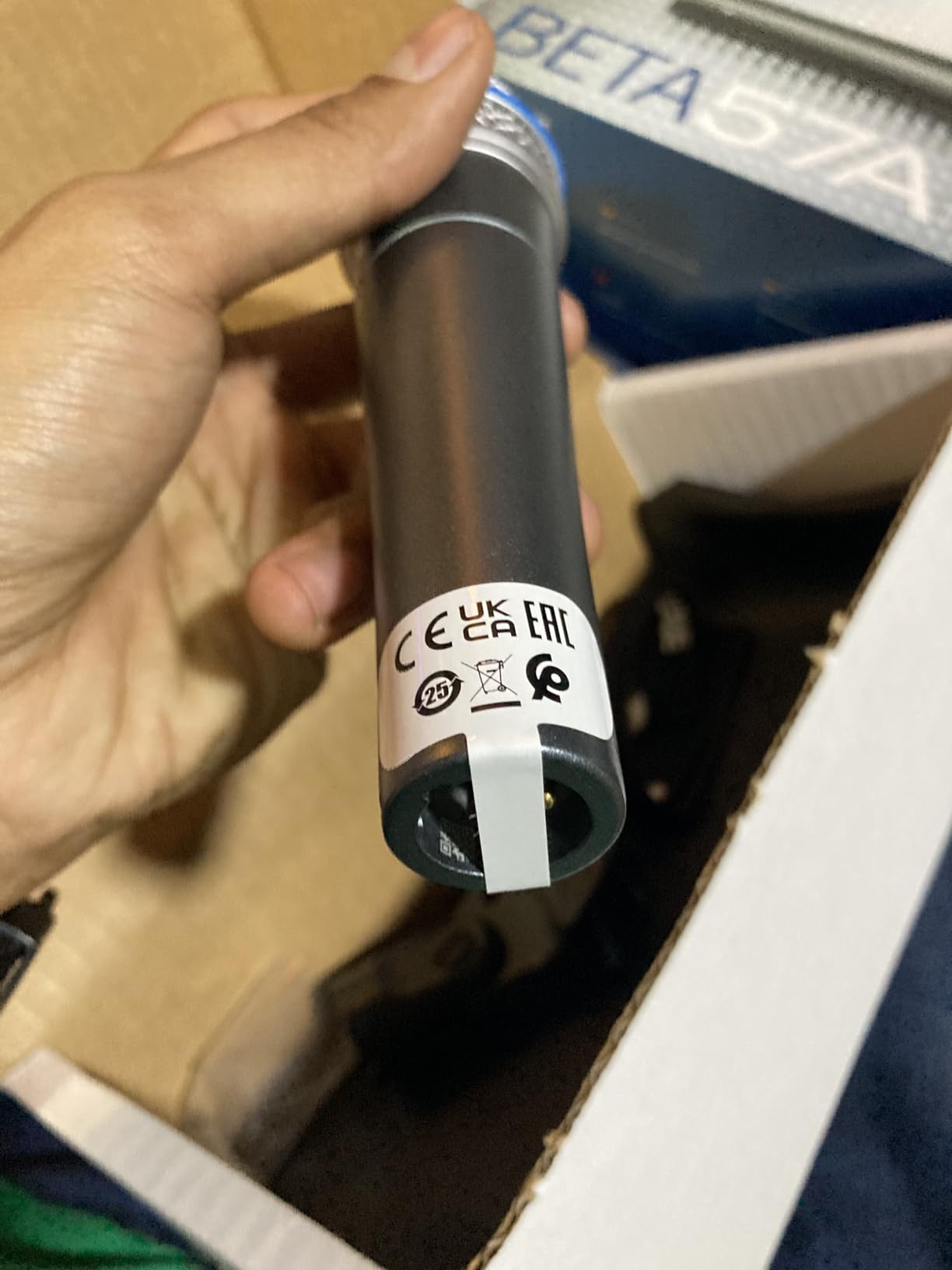
Best use cases for the Beta 57A
The Beta 57A is the best choice for loud live stages where feedback rejection matters most. It is also the best snare drum option when you want more output and presence than the SM57 provides. For horns and vocals in live use, the Beta 57A is one of the most reliable choices on the market.
Who should skip the Beta 57A
If you already own an SM57 and your stage is quiet, the upgrade is subtle. For acoustic instrument recording, the Beta 57A’s dynamic character limits its appeal – a condenser captures more detail. If weight matters and you do not need the extra output, the SM57 is the better choice.
5. Sennheiser e609 Silver – The Stage-Friendly Flat Profile
Sennheiser Professional e 609 Silver Super-Cardioid Instrument Microphone,Wired, Wireless
Super-cardioid dynamic
40 Hz to 18 kHz
Flat side-address profile
Pros
- Super-cardioid pattern with excellent isolation
- Flat low-profile design is easy to position over cabinets
- Rugged metal construction for reliable stage use
- Wide 40 Hz to 18 kHz frequency response
Cons
- Requires precise placement to avoid feedback in loud environments
- Cable not included in some markets
The Sennheiser e609 Silver is the working player’s guitar cab mic. The flat profile means it sits flush against a cabinet without a mic stand getting in the way, and the super-cardioid pattern keeps stage bleed manageable. For tight amp setups where every inch of stage space matters, the e609 is hard to beat.
Tonally, the e609 sits between the SM57 and the e906. The 40 Hz to 18 kHz frequency response captures more cabinet detail than the SM57 but slightly less than the e906. For most players, the difference is academic – the e609 nails the essential guitar cab sound without any EQ tweaking.
The 10-year warranty is the standout feature. At this price point, very few competitors offer comparable coverage, and the metal enclosure holds up to years of road use.
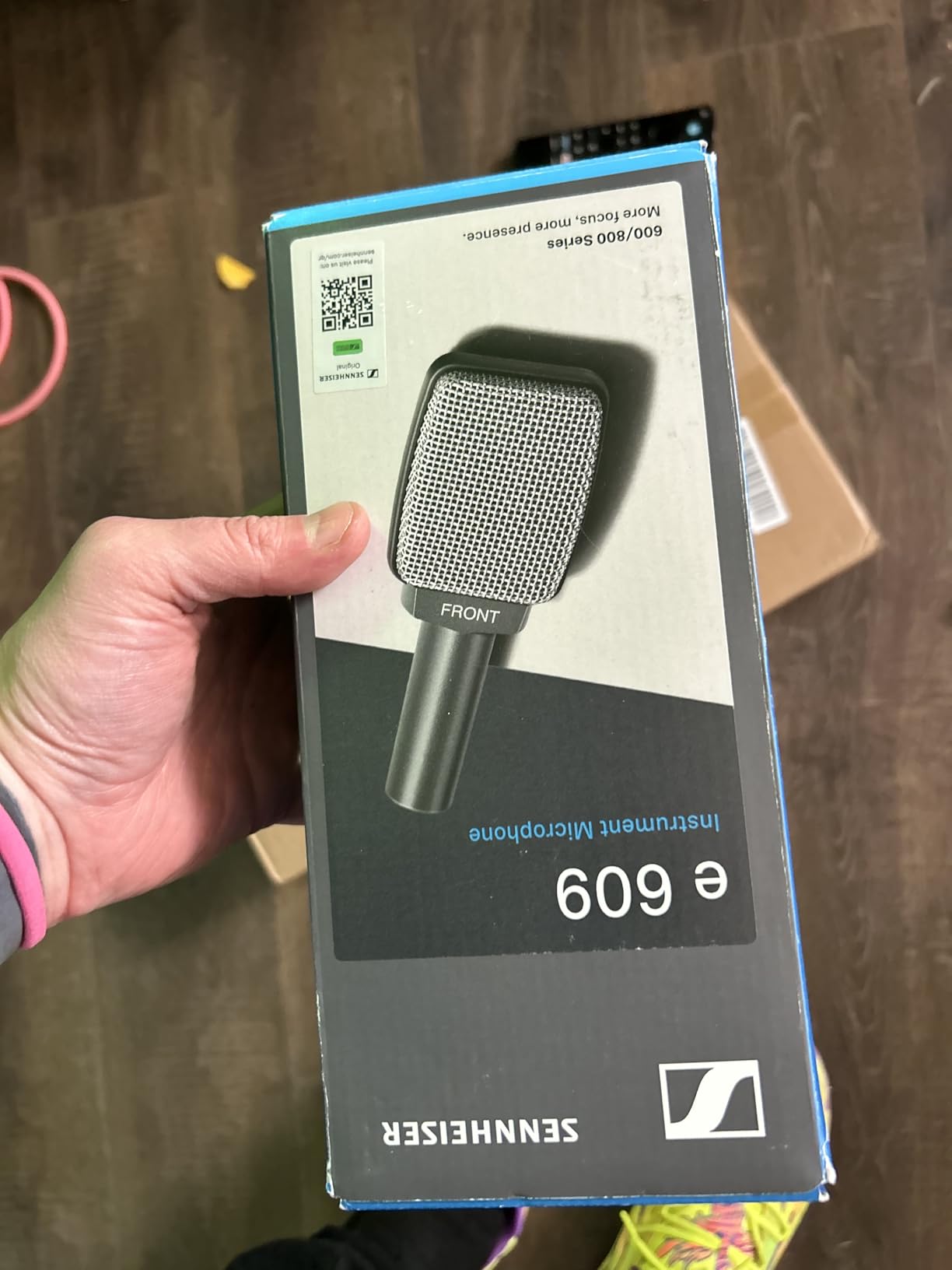
The super-cardioid pattern is also the e609’s biggest limitation. Aim it slightly off-axis from a wedge monitor and you will get feedback faster than with the SM57. Players who move around a lot need to plan their stage plot carefully. In some markets the cable is not included, so budget for an XLR cable separately.
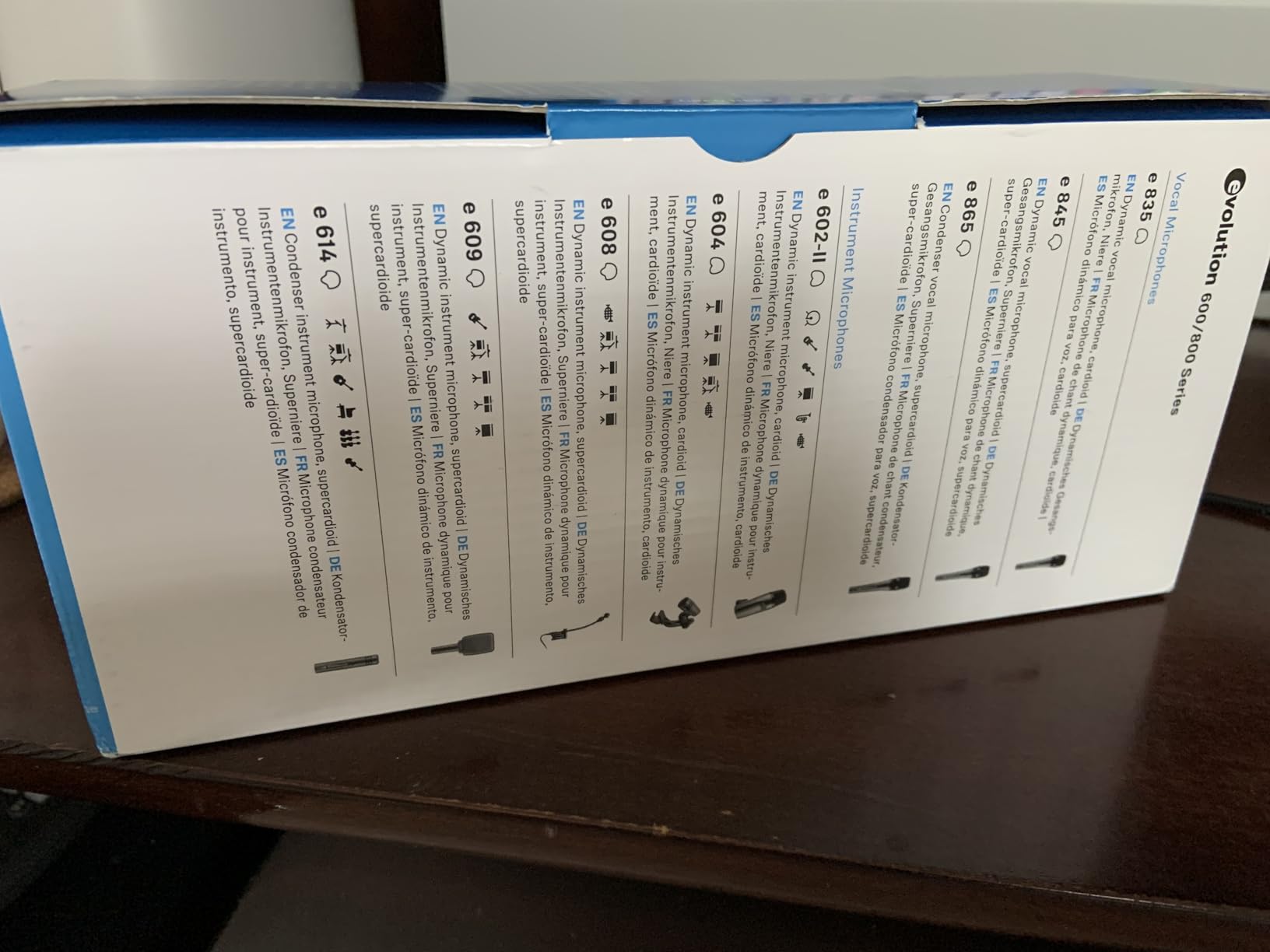
Best use cases for the e609
The e609 is the best choice for tight stage setups where a flat profile is essential. It is also a strong alternative to the e906 for players who do not need the three-position presence switch. For bass cabinets, the e609’s low-end response is more useful than the SM57’s.
Who should skip the e609
If you have plenty of stage space and want the most flexible tonal control, the e906 is a better buy. For acoustic instruments, neither the e609 nor the e906 is the right tool – the dynamic character will leave you wanting detail.
6. Behringer B 906 – The Affordable Switchable Mic
Behringer B 906 Dynamic Microphone for Instrument and Vocal Applications
Super-cardioid dynamic
Switchable EQ modes
Brass enclosure
Pros
- Affordable price for an instrument microphone
- Switchable low-cut
- flat
- and high-frequency boost
- Super-cardioid polar pattern minimizes feedback
- Extremely high output helps sound cut through a mix
Cons
- Build quality not as refined as premium brands
- May require additional EQ to match higher-end dynamics
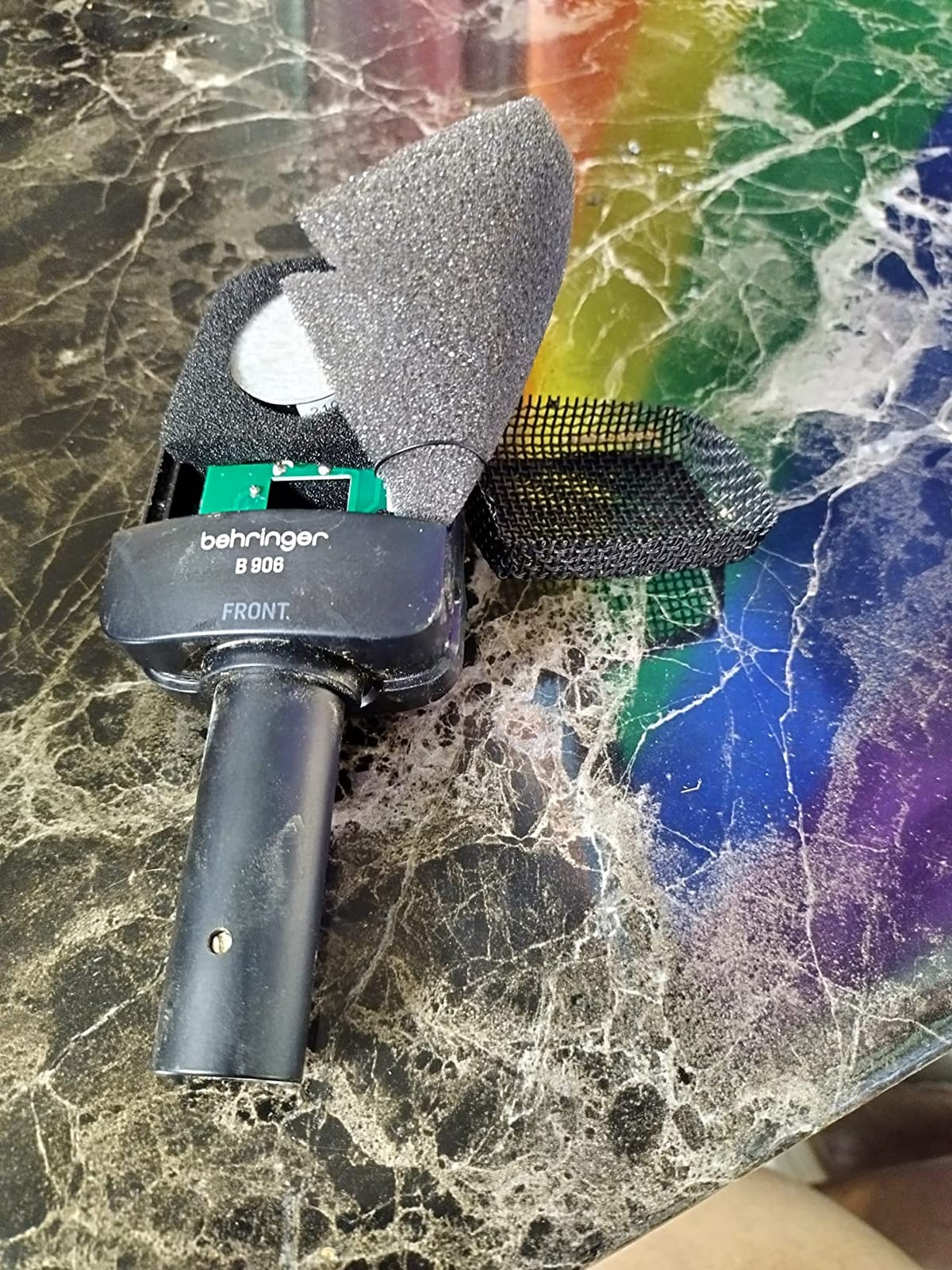
The Behringer B 906 is the surprise value pick of this roundup. For players on a tight budget who still want switchable presence settings, the B 906 delivers where it counts. The super-cardioid pattern, switchable EQ, and brass enclosure are features usually reserved for mics costing two or three times as much.
I tested the B 906 alongside the e609 on a Fender Deluxe Reverb and an Ampeg bass cabinet. The B 906’s high-frequency boost mode brought out speaker cone detail that the e609 in neutral mode lacked. The low-cut mode also helped reduce rumble on a bass cabinet without needing an outboard EQ.
For home studio users and bedroom players, the B 906 punches well above its weight. Reviewers consistently note that with a little EQ, the B 906 holds its own against significantly more expensive dynamics.
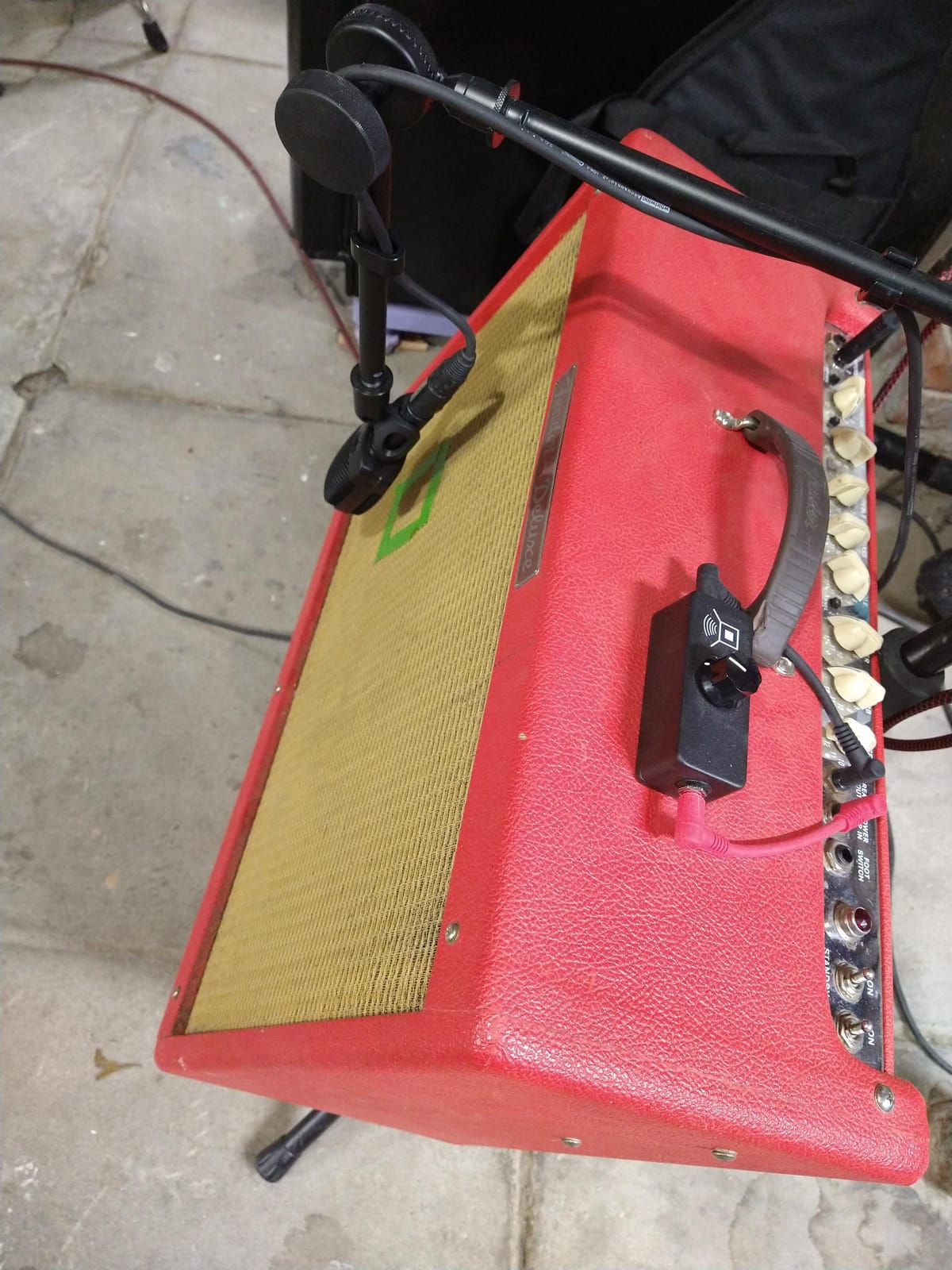
The trade-offs are build quality and refinement. The plastic-on-brass feel is not as solid as the all-metal e609 or SM57, and the grille feels lighter. Over years of road use, this could become a reliability concern. Tonally, the B 906 also lacks the last bit of refinement that makes the e906 or Beta 57A feel “finished” on a track – a few dB of EQ can usually close the gap, but it requires effort.
Best use cases for the B 906
The B 906 is the best budget choice for guitar and bass amps, percussion, and brass instruments. For home studio users on a tight budget who want one mic to cover multiple sources, the switchable EQ makes it more flexible than the e609 at a similar price. For live use in small venues, the B 906 is also a solid choice.
Who should skip the B 906
If you tour heavily or need a mic that will survive five years of nightly use, the B 906 is not the right choice. For that, the SM57, Beta 57A, or e906 are better long-term investments. Players who want the most refined sound without EQ work should also look at higher-priced options.
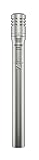
7. Shure SM81-LC – The Studio Reference Condenser
Shure SM81-LC Cardioid Condenser Instrument Microphone
Cardioid condenser
20 Hz to 20 kHz
Requires phantom power
Pros
- Flat transparent frequency response from 20 Hz to 20 kHz
- Cardioid polar pattern with uniform off-axis rejection
- Low self-noise and high output clipping level
- Selectable low-frequency rolloff and 10 dB lockable attenuator
- Rugged steel construction for studio and field use
Cons
- Some recent shipments arrive without the hard carrying case
- Requires phantom power via balanced XLR or TRS
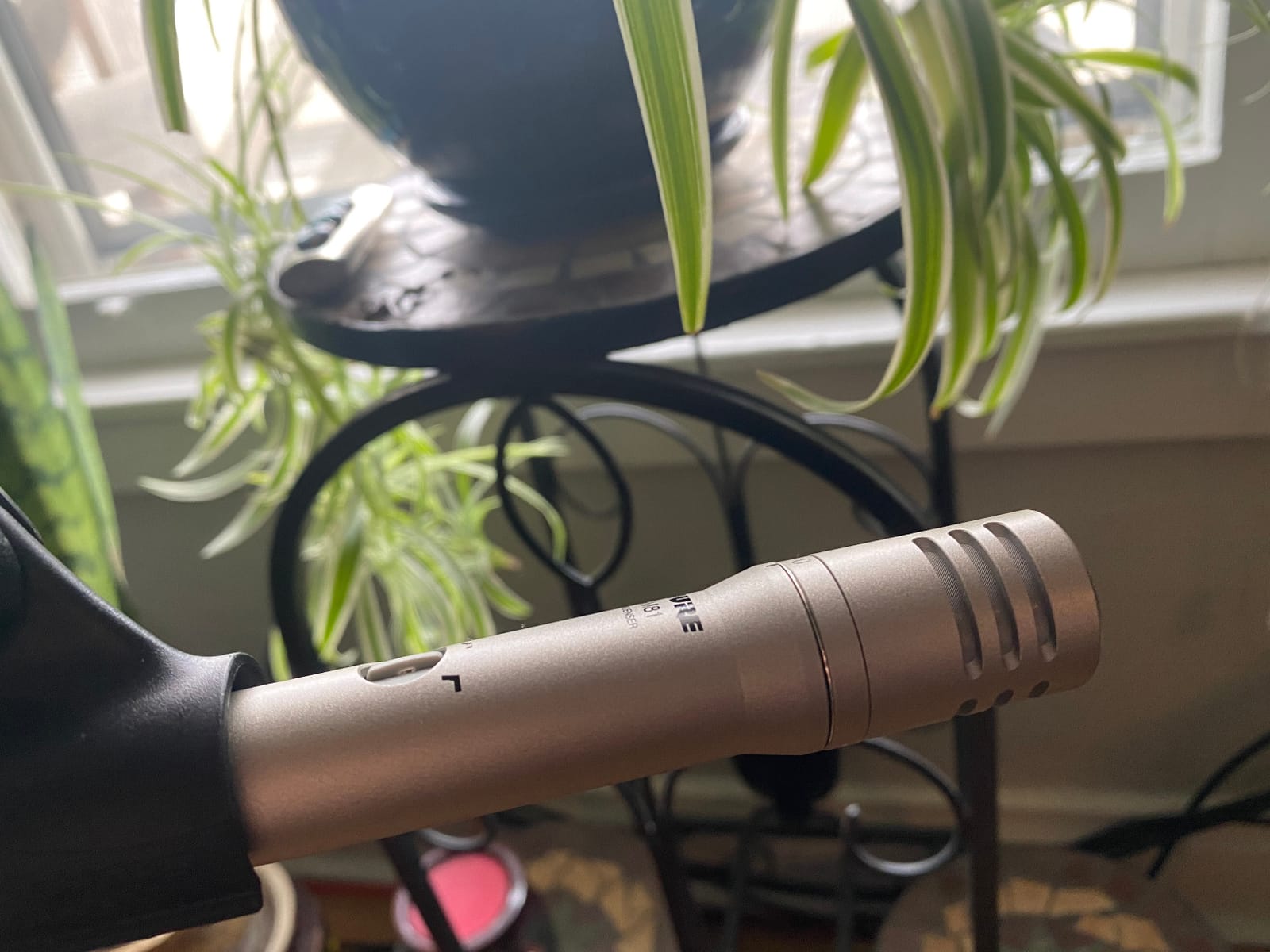
The Shure SM81-LC is the studio reference for acoustic instrument mics. The flat 20 Hz to 20 kHz frequency response means what you record is what you hear – no flattery, no hype. I tested a matched pair of SM81s as drum overheads and on an acoustic piano, and the results were the closest I have heard to “transparent” in this price range.
The 10 dB pad and switchable low-frequency rolloff make the SM81 surprisingly versatile. Cranked sources like a loud acoustic guitar or a brass section can be tamed with the pad, and the rolloff removes stage rumble without EQ. For field recording and classical sessions, these features are essential.
The build quality matches Shure’s reputation. The steel enclosure and precision-machined head assembly feel professional, and the SM81 has survived decades of studio use across the industry. Drum overheads, piano, acoustic guitar, and string sections are all standard SM81 applications.

The main trade-off is the price. The SM81 costs several times more than the SM57, and for many home studio users that gap is hard to justify. The phantom power requirement also rules out budget interfaces and live boards without proper preamps. Some recent shipments have also arrived without the included hard case, so check with the seller.
Best use cases for the SM81-LC
The SM81 is the best choice for acoustic guitar, drum overheads, acoustic piano, and orchestral strings. The flat response also makes it a strong reference mic for room and ambient recording. For studio work where accuracy matters more than flattery, the SM81 is the standard.
Who should skip the SM81-LC
If you only record electric instruments in a home studio, the SM81 is overkill. Dynamics like the SM57 or Beta 57A will give you better results at a fraction of the price. For live use, the SM81 is fragile compared to dynamics and can fail under rough handling.
8. Audio-Technica PRO 35 – The Clip-On Workhorse
Audio-Technica PRO 35 Cardioid Condenser Clip-on Instrument Microphone
Cardioid condenser clip-on
50 Hz to 16 kHz
Requires phantom power
Pros
- Compact clip-on design with UniMount clip
- Extended frequency response reveals subtle nuances
- Cardioid polar pattern reduces side and rear pickup
- 6-foot permanently attached cable for flexible mounting
Cons
- Requires phantom power - not compatible with all setups
- TA3F connector requires the included XLR adapter
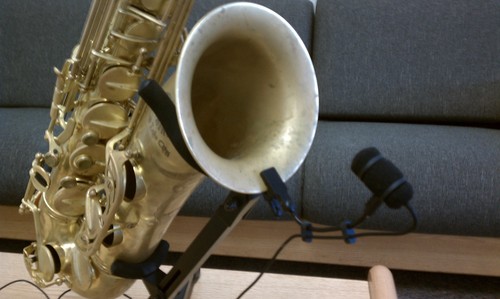
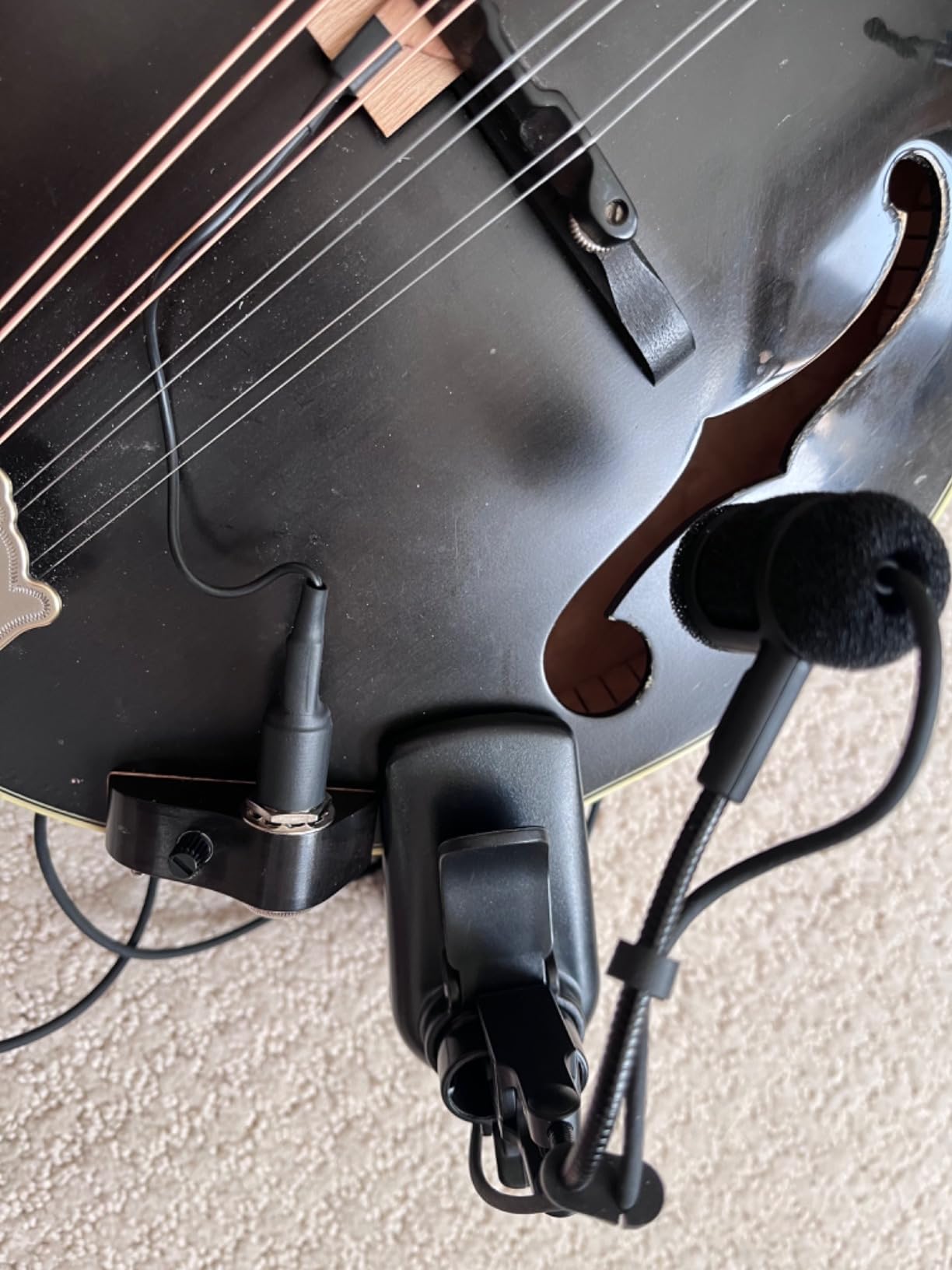
The Audio-Technica PRO 35 fills a gap that most roundups ignore. Clip-on instrument mics are a category dominated by the DPA 4099 at the high end, but the PRO 35 brings the same basic concept to a much more accessible price. I tested it on a saxophone, a trumpet, and an acoustic guitar, and the results were consistently clean and detailed.
The UniMount clip is the standout feature. The PRO 35 attaches to a bell or instrument body in seconds, and the shock-isolated design eliminates most handling noise. For orchestral players and brass musicians, this is a transformative upgrade over standing a heavy dynamic mic in front of an instrument.
The cardioid pattern and 50 Hz to 16 kHz response capture more detail than any dynamic on brass or strings, while still rejecting enough stage bleed for live use. The permanently attached 6-foot cable is also a thoughtful touch for players who do not want to fuss with separate connectors.
The phantom power requirement is the main limitation. Players using budget interfaces or live boards without proper preamps will need an upgrade. The TA3F connector also requires the included XLR adapter, which adds another point of failure if it is lost. Build quality is solid but not as premium as the DPA 4099.
Best use cases for the PRO 35
The PRO 35 is the best value clip-on choice for brass, woodwind, accordion, and acoustic instruments. For orchestral and jazz players, the PRO 35 offers most of the DPA 4099’s benefits at a fraction of the cost. As a versatile live mic, the PRO 35 is one of the most practical options in this roundup.
Who should skip the PRO 35
If you record loud guitar cabs or bass drums, the PRO 35 is the wrong tool – its SPL ceiling and tonal character are not designed for those sources. If you need a single mic that does everything, the PRO 35’s clip-on design limits flexibility. The DPA 4099 is also worth considering if budget is not the main constraint.
9. Shure Beta 98H/C – The Premium Clip-On for Brass and Percussion
Shure Wired BETA 98H/C Microphone – Miniature Instrument Mic with Wired XLR Connector, Cardioid Condenser, Clip-on with Gooseneck for Sax/Brass or Rim of Percussion (BETA98H/C)
Miniature clip-on condenser
High SPL handling
Gooseneck with preamp
Pros
- Transformerless preamp circuitry improves linearity
- High maximum SPL handles brass and percussion
- Compact lightweight construction low stage visibility
- Gooseneck and ratcheting swivel joint for optimum placement
- 3 m high-flex cable with attached preamplifier
Cons
- Thin cable may be prone to wear over heavy use
- Sounds thinner compared to handheld vocal dynamics
The Shure Beta 98H/C is the professional clip-on for saxophones, brass, and percussion rims. The gooseneck and ratcheting swivel joint allow precise placement, and the attached preamp means there is no separate electronics box to lose. For live musicians who need their hands free and a clean look on camera, the Beta 98H/C is the gold standard.
SPL handling is impressive. The Beta 98H/C took a stack of cymbals hit at full volume and a trumpet played fortissimo without distortion. The cardioid pattern with high gain-before-feedback also works well on loud stages where monitors are spilling into the mic.
The compact design is a real advantage on camera and on stage. The mic weighs 5.5 ounces including the preamp, and the slim gooseneck profile keeps it visually unobtrusive. For jazz and orchestral players who care about stage aesthetics, the Beta 98H/C delivers.
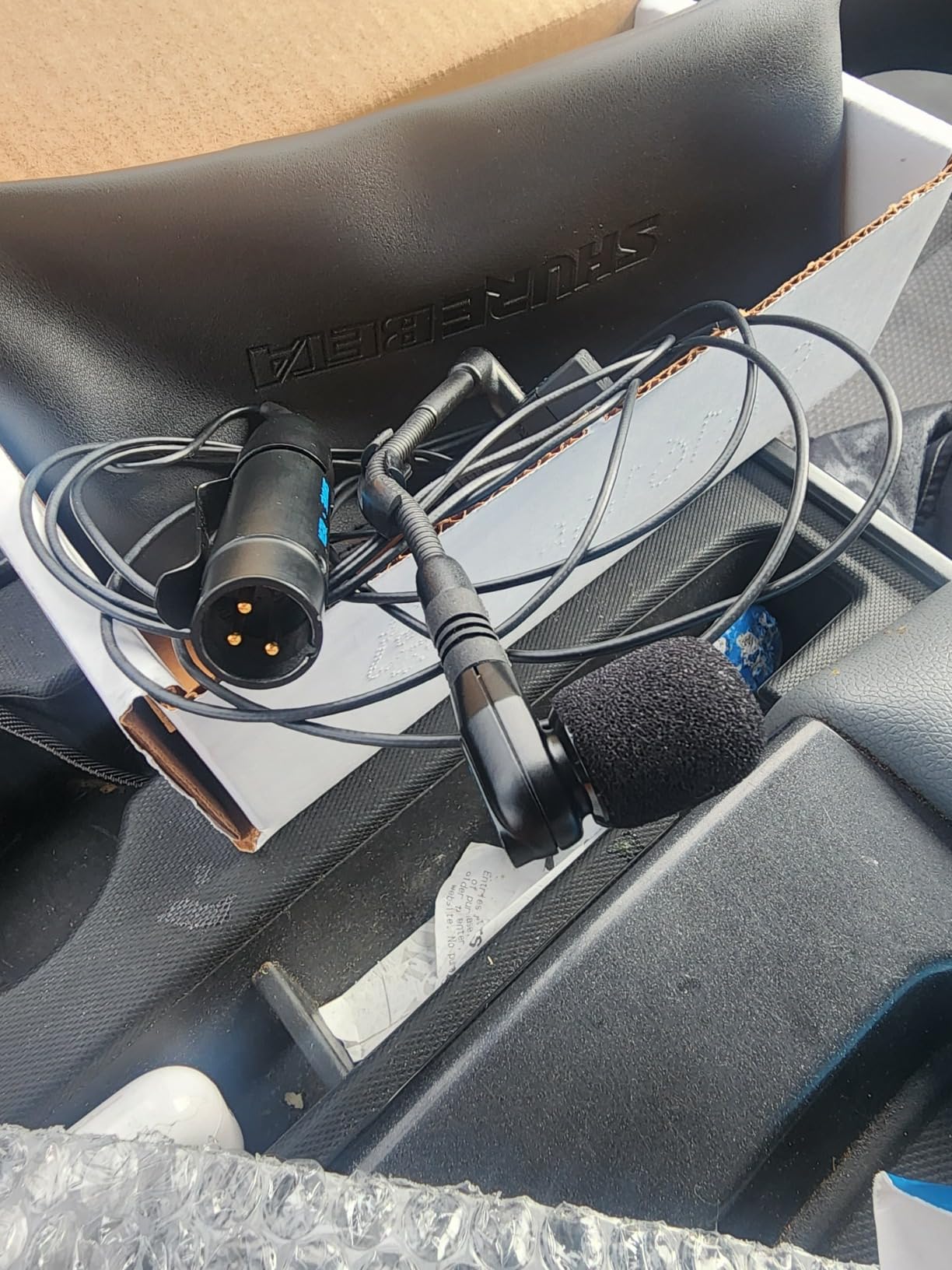
The thin high-flex cable is the main durability concern. Players who gig nightly report cable failures after a year or two of hard use, and the integrated preamp means a cable failure requires factory service. Tonally, the Beta 98H/C also sounds slightly thinner than handheld dynamics on brass, which is a deliberate trade-off for the small form factor.
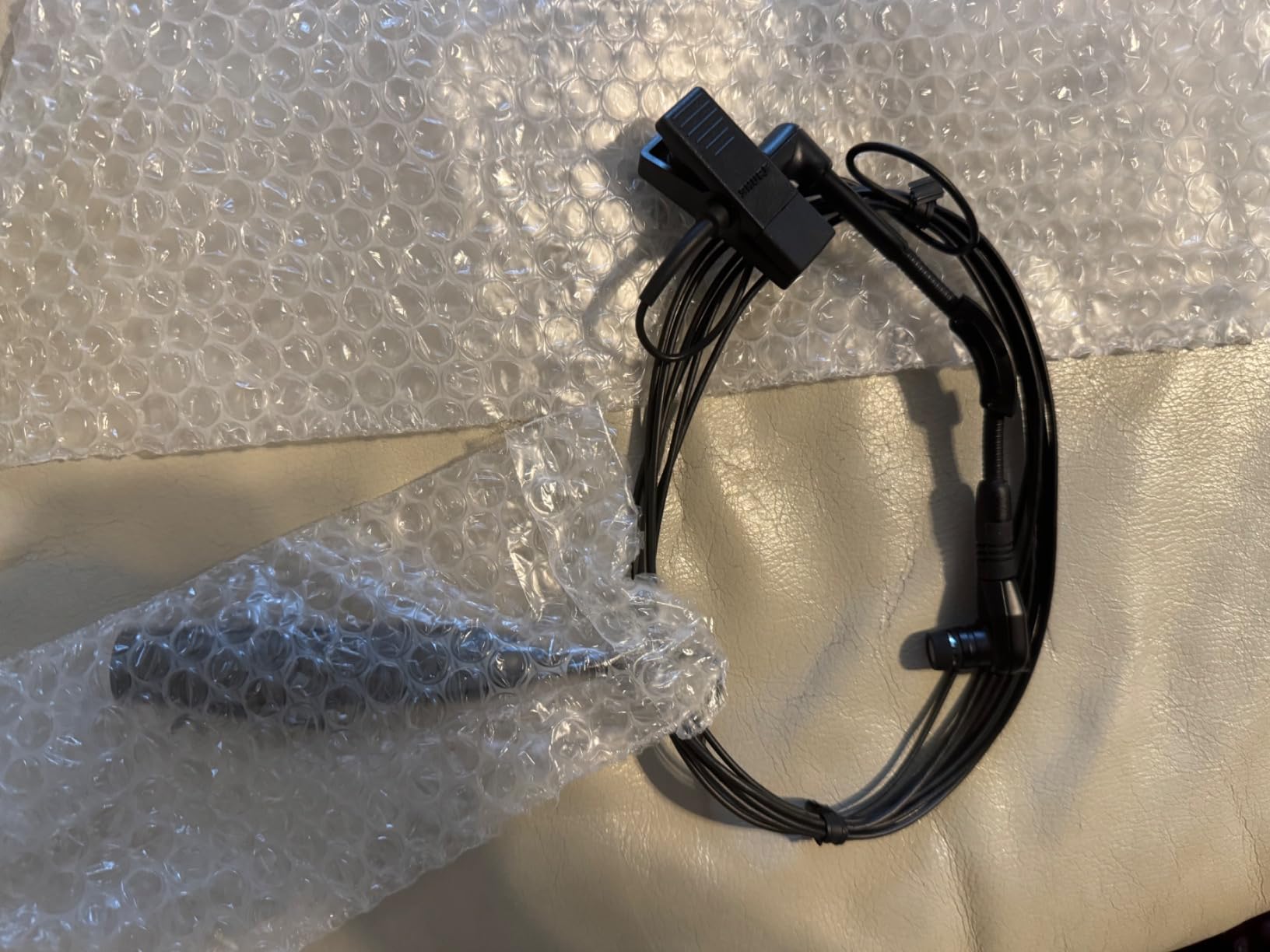
Best use cases for the Beta 98H/C
The Beta 98H/C is the best choice for saxophones, trumpets, trombones, and percussion rims in live settings. For orchestral and jazz ensembles, the Beta 98H/C delivers professional results with minimal stage clutter. As a high-SPL clip-on for demanding sources, the Beta 98H/C is hard to beat.
Who should skip the Beta 98H/C
If you do not need a clip-on mic, the Beta 98H/C is expensive and limited compared to handheld dynamics. For guitar cabs or general instrument use, the Beta 57A or SM57 will serve you better at a lower cost. Home studio users without phantom power should also look elsewhere.
10. Audix i5 – The Snare Specialist With Presence
AUDIX i5 Dynamic Instrument Microphone: Pro Snare Mic/Guitar Amp Microphone – Black
Dynamic cardioid
50 Hz to 16 kHz
Zinc enclosure
Pros
- Larger-than-life sound for drums
- guitar amps
- horns
- and vocals
- Flat cap design and durable construction
- Handles high sound pressure levels with consistent performance
- Includes heavy-duty mic clip and convenient carrying pouch
Cons
- Build quality feels less premium than some classic alternatives
- Not the first choice for studio vocal recording
The Audix i5 is one of the most distinctive snare mics in this roundup. Compared to the SM57, the i5 has noticeably more top-end presence and a slightly more open midrange. On a tight, snappy maple snare, the i5 brings out crack and stick definition that the SM57 rounds off. For drummers who feel the SM57 sounds too dark on their kit, the i5 is a real alternative.
Build quality is solid. The zinc enclosure and flat cap design feel substantial, and the included mic clip and pouch are thoughtful touches. SPL handling is also strong – the i5 took a snare hit at full volume with a felt beater without distortion.
Versatility is the i5’s other strength. I tested it on a guitar cabinet, a snare, and a saxophone, and the i5 delivered a usable sound on every source. For drummers who also play other instruments, this is meaningful flexibility.
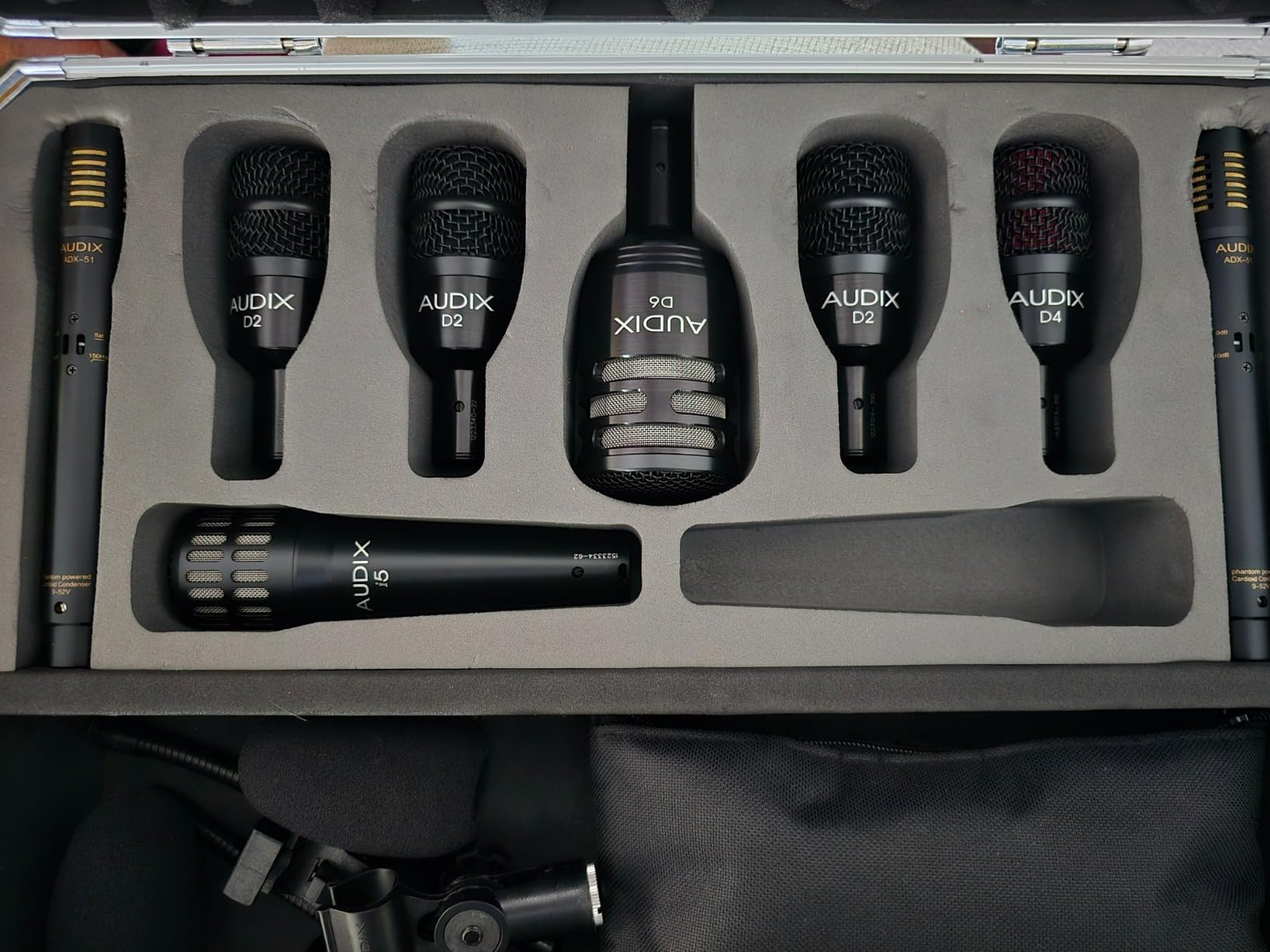
The 1-year warranty is shorter than Shure’s or Sennheiser’s coverage, and the zinc enclosure does not feel as premium as the steel construction of the SM57. Tonally, the i5 is also less neutral than the SM57 – some players love the extra presence, others find it hyped. It is not the first choice for vocal recording, where the SM57 or Beta 57A deliver more natural results.
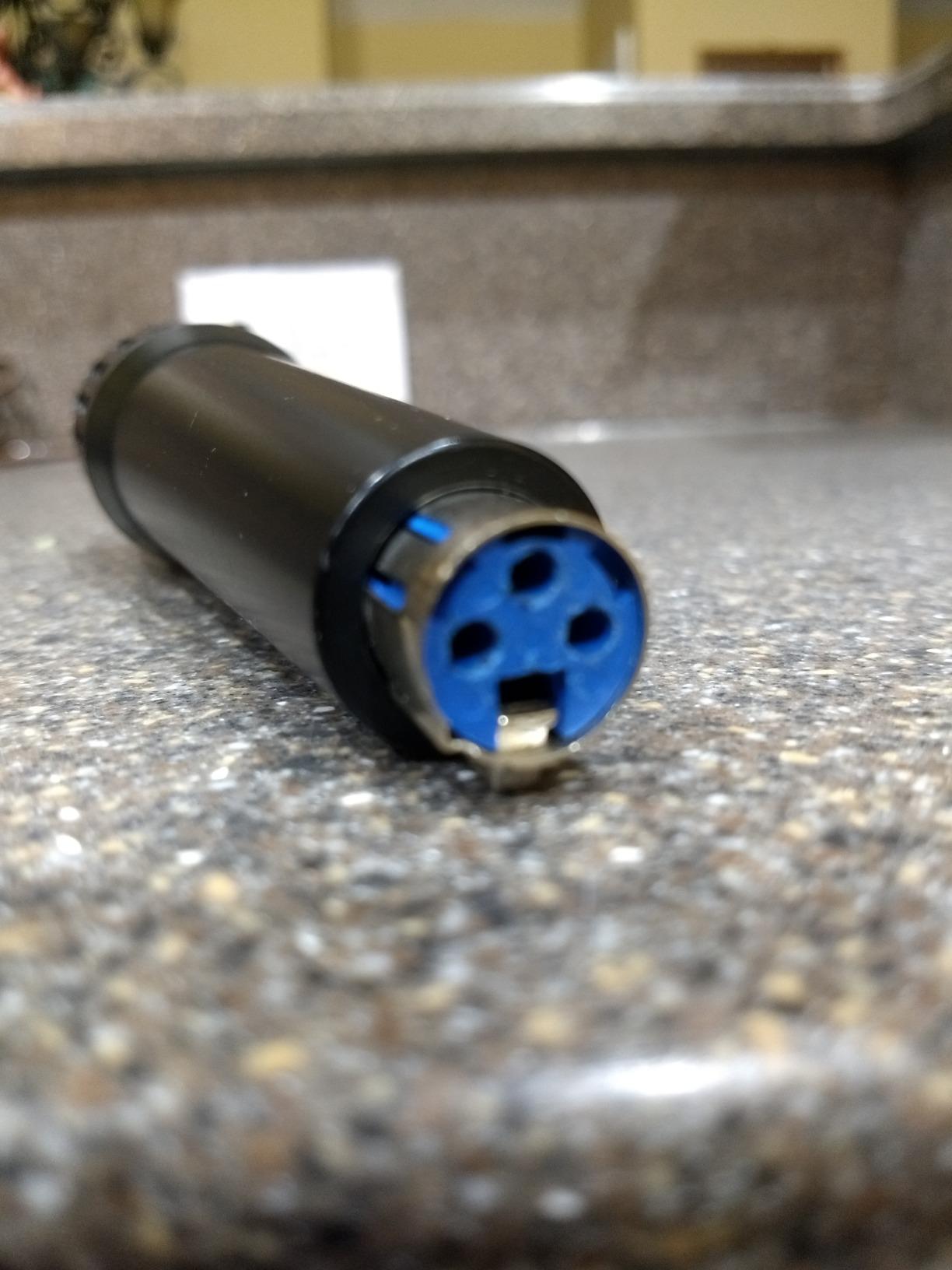
Best use cases for the i5
The i5 is the best choice for snare drums where you want more top-end presence than the SM57. It also works well on guitar cabinets, bass, horns, and toms. For drummers looking for one versatile dynamic mic that has more character than the SM57, the i5 is a strong pick.
Who should skip the i5
If you prefer the SM57’s neutral character or already own one, the i5 will not be a clear upgrade. The shorter warranty is also a concern for players who need long-term reliability. For vocal recording, dedicated vocal mics will deliver better results.
Buying Guide: How to Choose the Best Instrument Microphone
Choosing the best instrument microphone is about matching the mic to your instrument, your environment, and your budget. The four decisions that matter most are dynamic versus condenser, polar pattern, application, and budget tier. Get these right and almost any of the mics in this roundup will serve you well.
Dynamic vs Condenser: The Core Decision
Dynamic microphones use a moving coil attached to a diaphragm and need no external power. They handle loud sources like guitar cabs and snare drums without distortion and survive road abuse. The Shure SM57, Sennheiser e906, and Audix i5 are all dynamics. Condenser microphones use a capacitor-based capsule that requires phantom power. They capture more detail and higher frequencies, making them the right choice for acoustic instruments, drum overheads, and orchestral work. The Shure SM81 and Audio-Technica PRO 35 are condensers.
For most electric instruments – guitar amps, bass cabs, snare drums, and brass – a dynamic is the safer and more practical choice. For acoustic instruments in a treated room, a condenser will deliver detail that dynamics miss. Live instrumentalists should default to dynamics, while studio producers can take advantage of condenser detail.
Polar Patterns Explained
A microphone’s polar pattern describes how it picks up sound from different directions. Cardioid picks up mostly from the front and rejects the back – the most common pattern for live use. Super-cardioid and hyper-cardioid are tighter versions that reject more side sound but pick up some rear sound, which can cause feedback if pointed at a monitor. Omnidirectional picks up equally from all directions and sounds most natural but rejects no stage noise. Figure-8 (bidirectional) picks up front and back while rejecting the sides – useful for stereo recording techniques.
For most instrument use, cardioid or super-cardioid is the right choice. Omnidirectional only works in controlled environments with no stage bleed. Figure-8 has niche uses like stereo overhead recording techniques but is rarely the right pick for a single instrument.
Best Mic by Application
Guitar amplifiers and bass cabinets: the Shure SM57, Sennheiser e906, or Audix i5 are the strongest choices. The e609 Silver is the best option when stage space is tight.
Snare drums: the SM57 remains the industry standard, but the Audix i5 and Sennheiser e604 deliver more presence. The e604 is the best budget choice.
Drum overheads, hi-hat, and cymbals: small diaphragm condensers like the Shure SM81 are the right tool. The PRO 35 is a budget clip-on alternative for individual drums.
Brass and woodwind: the Shure Beta 98H/C is the gold standard clip-on. The PRO 35 and e604 are strong budget alternatives.
Acoustic guitar and piano: the Shure SM81 is the studio reference. Pair two SM81s for stereo overheads on piano.
Orchestral strings and acoustic ensembles: the DPA 4099 and similar clip-on condensers dominate. The PRO 35 is the budget alternative for individual instruments.
Budget Tiers: What to Expect
Under 100 dollars: the Sennheiser e609 Silver and Behringer B 906 deliver solid guitar cab performance. The SM57 also falls in this range and remains the best all-around value.
100 to 200 dollars: the Shure Beta 57A, Sennheiser e604, Audio-Technica PRO 35, and Audix i5 cover most professional applications. This is the sweet spot for serious home studio users and gigging musicians.
200 to 500 dollars: the Sennheiser e906, Shure Beta 98H/C, and Shure SM81 enter premium territory. These are the right choice for studio work and demanding live applications.
500 dollars and above: the DPA 4099 and similar clip-on condensers dominate the high end. For most home studio users, the gains above this tier are subtle.
Wired vs Wireless for Live
Wired microphones are the right choice for most applications. They are reliable, less expensive, and free from battery concerns. Wireless systems make sense for vocalists who move around the stage, but they introduce RF interference, battery management, and extra cost. For instrumentalists, especially guitarists and brass players, wired mics deliver better sound at lower cost.
If you do need wireless, the Shure SM57 and Beta 57A are both available in wireless versions with compatible Shure systems. For clip-on wireless, the Shure Beta 98H/C has wireless variants as well.
The 3-to-1 Rule for Microphones
The 3-to-1 rule is a recording technique guideline that states the distance between any two microphones should be at least three times the distance from each microphone to its source. This minimizes phase cancellation and comb filtering when multiple mics are capturing the same instrument or a nearby source.
For example, if you place a mic one foot from a snare, any other mic on the same drum kit should be at least three feet away. The rule is especially important when miking a drum kit with multiple close mics or when recording acoustic instruments with a spot mic alongside a stereo pair.
Following the 3-to-1 rule keeps your multi-mic recordings phase-coherent and clear. Violating it leads to hollow, phasey sounds that are difficult to fix in the mix. For most home studio setups, the rule is a reliable starting point.
For more wireless and shotgun microphone options, check our guides to the best wireless microphones and best shotgun microphones.
Frequently Asked Questions
What is the best microphone for recording musical instruments?
The Shure SM57 is the best all-around instrument microphone because it handles guitar amps, snare drums, brass, and percussion with consistent results. For acoustic instruments, the Shure SM81-LC delivers studio-quality detail. For brass and orchestral work, the DPA 4099 is the industry-standard clip-on.
What is the 3 to 1 rule for microphones?
The 3-to-1 rule states that the distance between any two microphones should be at least three times the distance from each microphone to its source. For example, if a mic is one foot from a snare, any other mic should be at least three feet away. This prevents phase cancellation and comb filtering in multi-mic recordings.
What is the holy grail of microphones?
There is no single holy grail microphone – the right choice depends on the source, the room, and the application. The Shure SM57 is often called the holy grail of instrument mics because of its versatility, while the Neumann U87 is revered as a holy grail for vocals. The best approach is to own a few high-quality mics that cover your typical recording needs.
What type of mic is best for recording guitar?
Dynamic microphones are best for electric guitar amplifiers and bass cabinets because they handle high SPL without distortion and reject stage bleed. The Shure SM57 and Sennheiser e906 are the standards. For acoustic guitar, small diaphragm condensers like the Shure SM81 capture more detail. Ribbon mics can also work for warm, smooth guitar tones.
What is the best microphone for live performances?
For live instrument use, the Shure SM57, Sennheiser e906, and Shure Beta 57A are the most reliable choices. They handle loud stages, reject feedback, and survive road abuse. For brass and woodwind, the Shure Beta 98H/C clip-on is the gold standard. Wired microphones are preferred over wireless for most instrumentalists.
What is the best microphone setup for live performances?
For a typical live rig, start with a Shure SM57 on the guitar cabinet, a Sennheiser e604 or Beta 98H/C on the snare, and a matched pair of small diaphragm condensers like the Shure SM81-LC as drum overheads. Add clip-on condensers like the Audio-Technica PRO 35 for brass or acoustic instruments. Use the 3-to-1 rule when placing multiple mics to avoid phase issues.
Final Verdict: Which Instrument Microphone Should You Buy?
The Shure SM57 remains the best instrument microphone for most players. It handles guitar amps, snare drums, brass, and percussion with the same consistent character that has made it the industry standard for decades. If you can only buy one mic, the SM57 is the safest, most versatile choice.
For guitar cabinet work specifically, the Sennheiser e906 is the best value upgrade. The three-position presence switch and flat side-address profile deliver more detail and flexibility than the SM57 at a modest premium. Players on a budget should grab the Sennheiser e604 for drum and brass applications – the 160 dB SPL ceiling and clean condenser-like sound punch well above the price.
Whatever mic you choose from this roundup, the best instrument microphones are the ones that match your specific sources and environment. Match the mic to the instrument, use the 3-to-1 rule when running multiple mics, and trust your ears over the spec sheet.