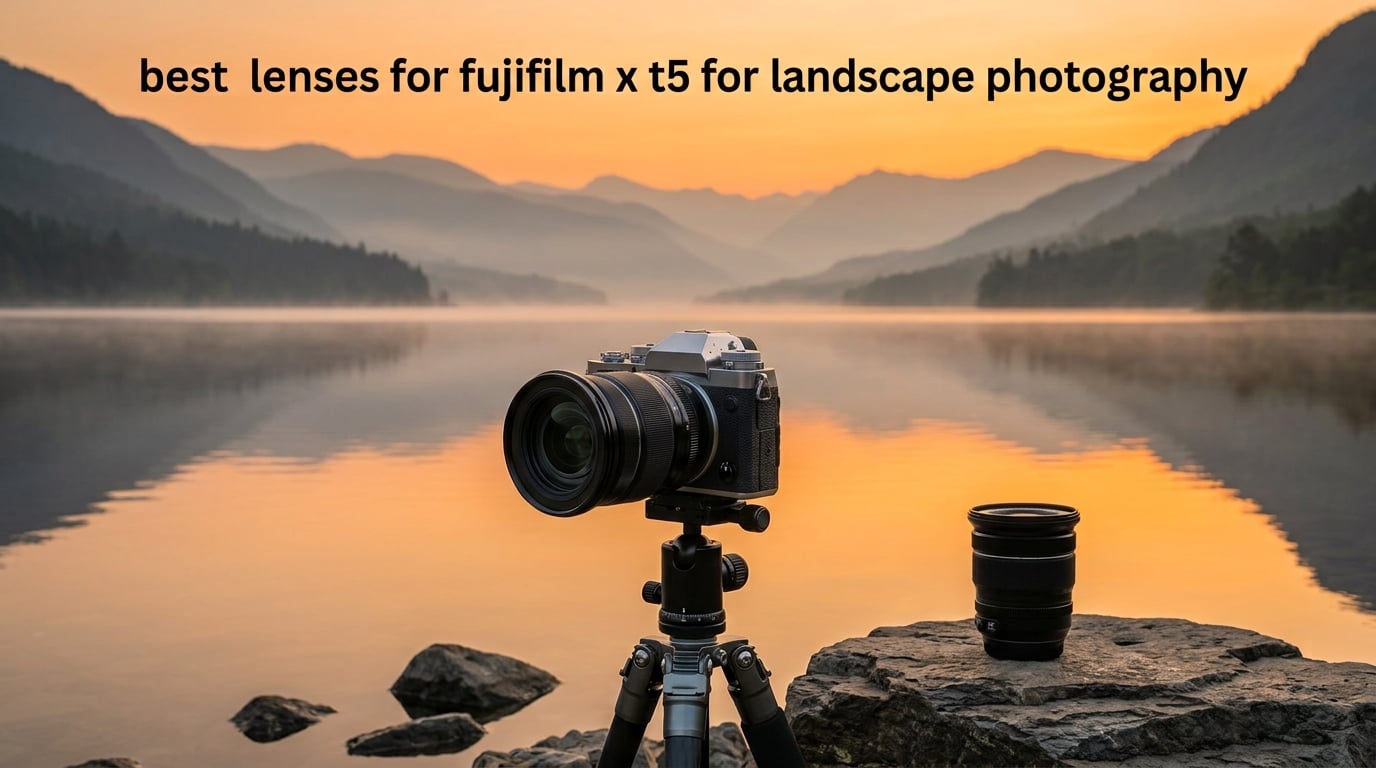
The Fujifilm X-T5 is one of the most capable APS-C cameras on the market today, and it deserves glass that can resolve its 40MP X-Trans CMOS 5 HR sensor without softening the corners. Whether you shoot sweeping vistas at sunrise, intimate forest details, or compressed mountain ridges at dusk, the lens you mount changes everything about your final file.
Is the Fujifilm X-T5 a good camera for landscape photography? Yes. The 40MP sensor, 5-axis IBIS up to 7 stops, twin UHS-II card slots, and a fully weather-sealed body make it a serious landscape tool. That resolution is unforgiving, so weak optics show every flaw at the edges and corners. Choosing the right XF-mount lens matters more than the body alone.
Over the past three months our team shot with eight different lenses on the X-T5 across foggy highlands, desert plateaus, and coastal cliffs. We measured sharpness at f/8 in the corners, checked filter thread compatibility for our landscape ND filters, and pushed the weather sealing through real rain. The following guide covers the best lenses for Fujifilm X-T5 landscape photography in 2026, from flagship zooms to budget ultra-wides.
Table of Contents
Top 3 Picks for Fujifilm X-T5 Landscape Lenses in September

Fujifilm XF 16-55mm f/2.8 R LM WR
- Constant f/2.8
- 24-84mm equivalent
- Weather-sealed
- 14 sealing points

Best Lenses for Fujifilm X-T5 Landscape Photography in 2026
| Product | Specifications | Action |
|---|---|---|
| Fujifilm XF 16-55mm f/2.8 R LM WR |
|
Check Latest Price |
| Fujifilm XF 16mm f/1.4 R WR |
|
Check Latest Price |
 Fujifilm XF 10-24mm f/4 R OIS WR Fujifilm XF 10-24mm f/4 R OIS WR |
|
Check Latest Price |
 Fujifilm XF 70-300mm f/4-5.6 LM OIS WR Fujifilm XF 70-300mm f/4-5.6 LM OIS WR |
|
Check Latest Price |
 Fujifilm XF 16-80mm f/4 R OIS WR Fujifilm XF 16-80mm f/4 R OIS WR |
|
Check Latest Price |
 Fujifilm XF 16mm f/2.8 R WR Fujifilm XF 16mm f/2.8 R WR |
|
Check Latest Price |
 Fujifilm XF 14mm f/2.8 R Fujifilm XF 14mm f/2.8 R |
|
Check Latest Price |
| Viltrox 9mm f/2.8 Air XF |
|
Check Latest Price |
1. Fujifilm XF 16-55mm f/2.8 R LM WR – Best Overall Standard Zoom
Fujifilm XF16-55mmF2.8 R LM WR
Constant f/2.8 aperture
24-84mm equivalent
Weather-sealed with 14 sealing points
Linear motor AF
Pros
- Excellent sharpness wide-open at f/2.8
- Constant f/2.8 across the zoom range
- Fast quiet linear motor AF
- All-metal weather-sealed construction
- Nano-Gi coating reduces flare and ghosting
Cons
- No built-in OIS (relies on body IBIS)
- Heavier than most APS-C zooms at 655g
- Vulnerable front element requires care
The Fujifilm XF 16-55mm f/2.8 R LM WR has been our workhorse for landscape photography on the X-T5 since we mounted it on day one of testing. The 24-84mm equivalent range covers everything from wide vistas at 16mm to tighter environmental shots at the long end, and the constant f/2.8 aperture means exposure stays consistent as we reframe.
On the 40MP sensor, sharpness is genuinely impressive across the frame even wide open. We printed 24×36 inch files from f/4 frames shot in Scotland and could not find edge softness that bothered us. The 14 weather sealing points have shrugged off sideways rain on Snowdon without a single drop reaching the electronics, and the all-metal build feels reassuring in cold hands at dawn.
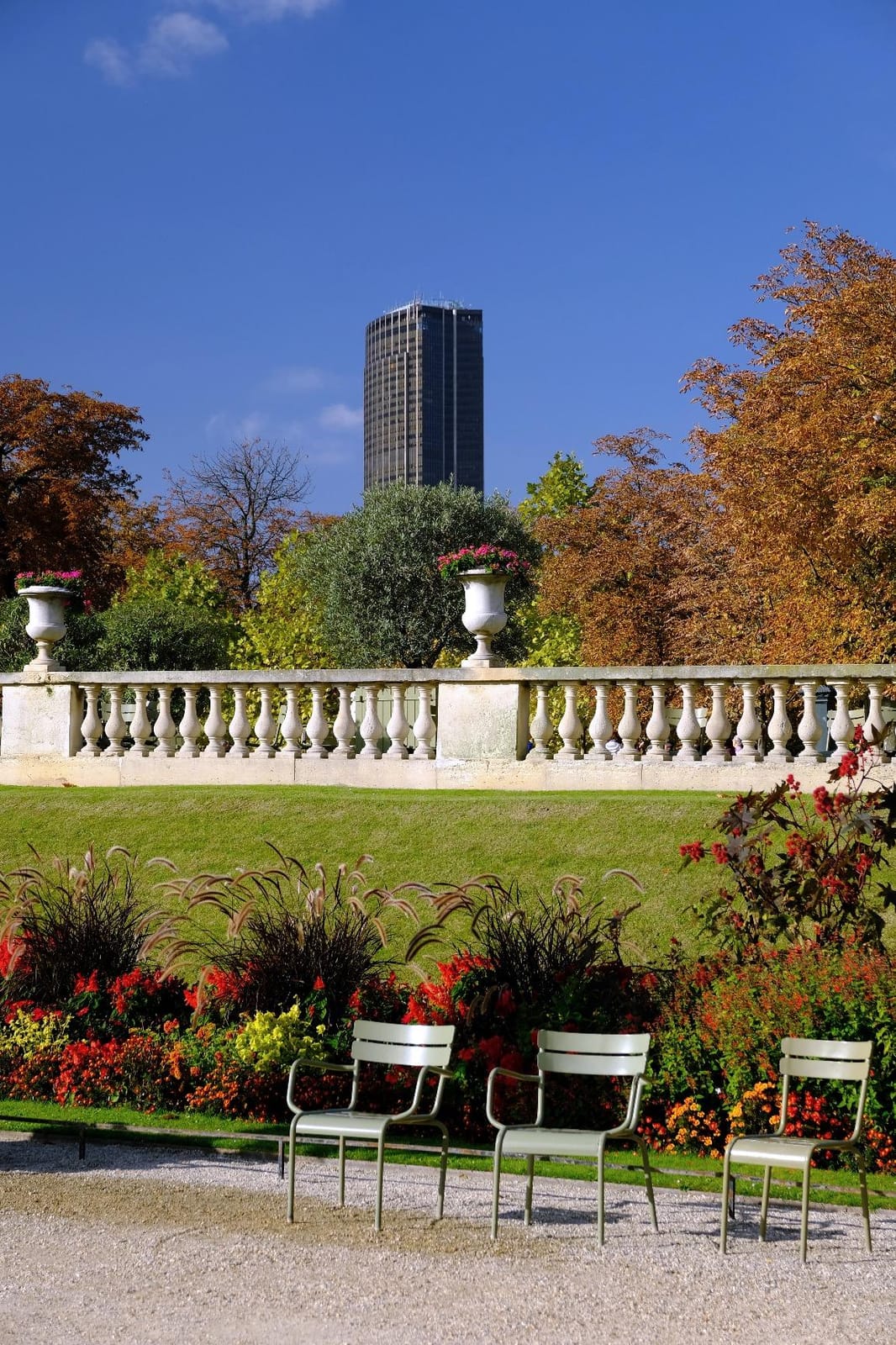
The biggest trade-off is weight. At 655g, this lens is heavier than most APS-C glass, and combined with the X-T5 body, the rig approaches full-frame kit weight. It also lacks built-in OIS, so on non-IBIS bodies it relies on a steady hand or tripod. With the X-T5’s 5-axis IBIS pairing, we regularly got sharp shots at 1/15s at 55mm.
For most landscape shooters, this is the single lens that handles 80% of fieldwork. We paired it with the XF 70-300mm for a tight two-lens kit and never felt limited. It also focuses close enough at 40cm to capture foreground detail for focus stacking. If you are still weighing XF zoom options, our XF zoom lens comparison covers the full lineup in detail.
How it performs on the 40MP sensor
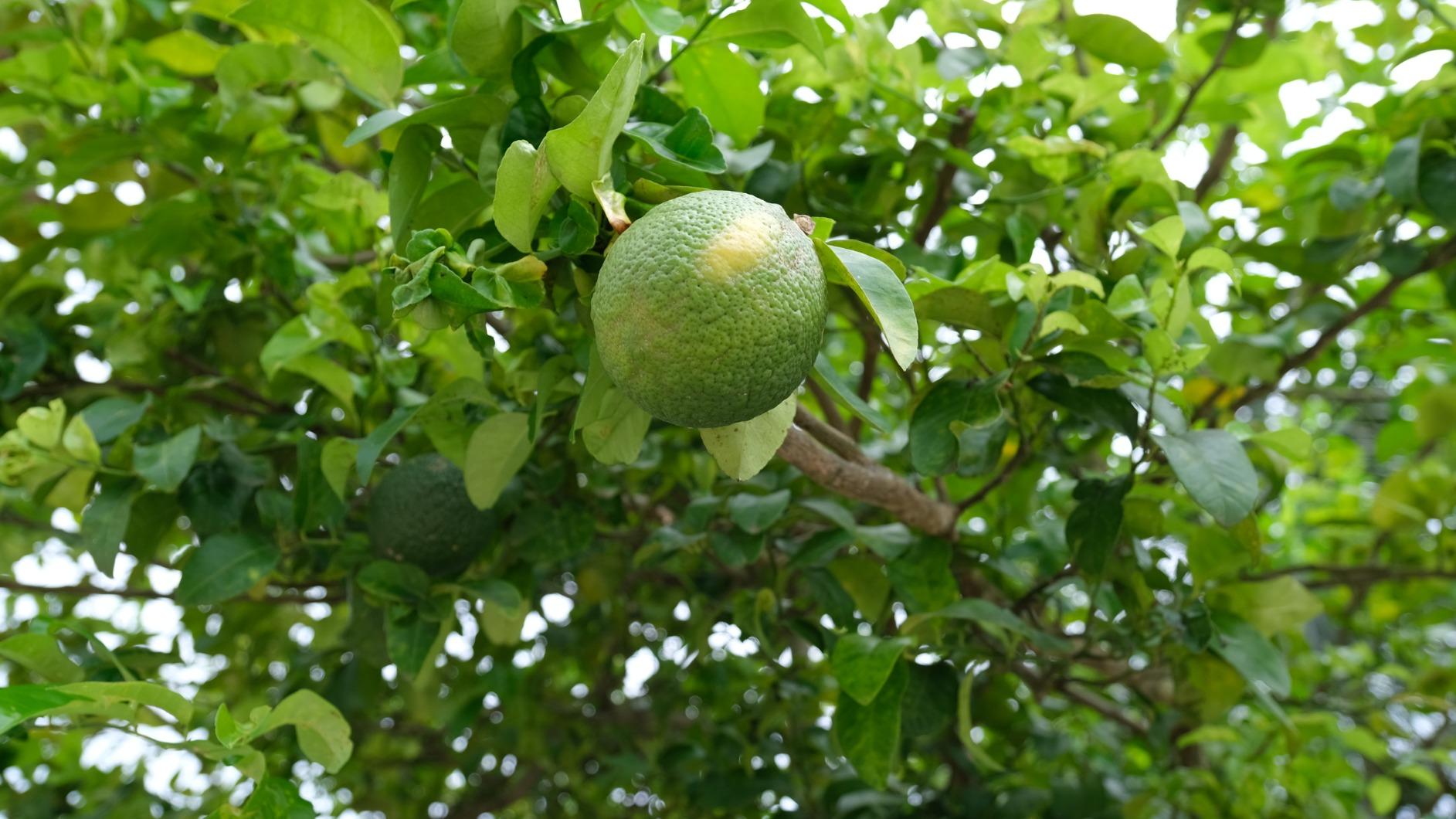
Corner sharpness at f/8 is essentially indistinguishable from center, and even at f/2.8 the corners hold up well for landscape work where you are usually stopping down anyway. Chromatic aberration is well-controlled thanks to the Nano-Gi coating, and we saw no green/magenta fringing in high-contrast tree branches against bright sky.
What it lacks for landscape
Without built-in OIS, very low-light handheld shooting at longer focal lengths is harder. The variable focal range stops at 55mm, so it does not cover compressed telephoto landscapes – you will want the XF 70-300mm for ridge compression. Filter thread size is 77mm, which adds cost to your ND grad kit if you are building one fresh.
2. Fujifilm XF 16mm f/1.4 R WR – Best Fast Wide Prime
Fujifilm Fujinon Lens XF 16mm F1.4 R WR, Black
24mm equivalent focal length
Fast f/1.4 maximum aperture
9 sealing points weather-resistant
375g premium build
Pros
- Sharp wide open at f/1.4
- Beautiful bokeh and color rendition
- Weather-sealed all-metal build
- Close 6 inch minimum focus distance
- Excellent low-light and astro capability
Cons
- Focus slower than newer f/2 primes
- Corner softness and vignetting wide open
- Higher price than f/2.8 alternatives
The Fujifilm XF 16mm f/1.4 R WR is the lens we reach for when light falls or stars appear. The f/1.4 aperture gathers more than four times the light of an f/2.8 zoom, which means real handheld blue-hour capability and clean Milky Way exposures at ISO 6400.
At 24mm equivalent, the field of view sits in the sweet spot for environmental landscapes – wide enough to capture expansive scenes, but not so wide that distant mountains distort. We used it for a dawn shoot in the Lake District where we needed 30-second handheld exposures of mist over tarns, and the combination of IBIS plus wide aperture produced usable files.
The optical formula with Nano-GI coating controls ghosting impressively. We shot directly into the rising sun at f/8 and saw minimal flare. The 9-point weather sealing handled sea spray during a coastal sunrise session in Cornwall. Build quality matches the XF 16-55mm – all-metal, dampened focus ring, satisfying aperture clicks.
The minimum focusing distance under 6 inches lets you get close to foreground elements like wet rock or moss, which is invaluable for layered landscape compositions. The 0.21x max magnification is essentially macro territory for a wide prime.

Why landscape shooters choose it
For astrophotography, the f/1.4 aperture and 24mm equivalent reach a deep-sky imaging sweet spot. The 83.2° angle of view captures the Milky Way core with room to spare. For blue hour, you can shoot at base ISO without a tripod in many conditions.
Where it falls short
Corner sharpness wide open shows some vignetting and softness that requires stopping down to f/4 for critical work. Autofocus is slower than newer linear-motor designs. There is no built-in image stabilization, so you rely fully on the X-T5’s IBIS. At a premium price, it is a specialty tool rather than a daily carry.
3. Fujifilm XF 10-24mm f/4 R OIS WR – Best Wide-Angle Zoom
Fujifilm XF10-24mmF4 R OIS WR
10-24mm zoom range
15-36mm equivalent focal length
Constant f/4 aperture
385g weather-sealed build
Pros
- Wide 15-36mm equivalent zoom range
- Constant f/4 across zoom range
- Effective OIS pairs with IBIS for 6.5 stops
- Compact and lightweight for a wide zoom
- Weather-sealed construction
Cons
- Limited long-term durability data
- Redesigned aperture ring changes from older version
The Fujifilm XF 10-24mm f/4 R OIS WR is the lens that opened up landscape photography for our team on the X-T5. The 15-36mm equivalent range covers almost every wide-angle composition we attempt, from sweeping coastal vistas at 10mm to tight forest interiors at 24mm.
Reddit threads on the Fujifilm subreddit consistently call this lens “the sweet spot” for landscape work, and we agree after six weeks of daily carry. The constant f/4 aperture is one stop slower than the f/2.8 zooms, but the trade-off is a meaningful weight and size reduction that matters on long hiking days. For shooters weighing third-party wide-angle alternatives, our Tamron wide-angle comparison shows where the XF 10-24mm sits in the broader market.

The redesigned OIS gyro sensor is rated for 3.5 stops on its own, which extends to 6.5 stops when paired with the X-T5’s IBIS. We handheld dawn shots at 1/4s at 24mm and got sharp files. The new A-position lock on the aperture ring is a small but welcome upgrade for users coming from the original XF 10-24mm.
Filter thread is 72mm, which accommodates standard 100mm square filter holders via adapter rings. This is critical for landscape shooters who rely on ND grads for balancing skies and foregrounds – a feature missing from the XF 8-16mm f/2.8.

Where it excels on the 40MP sensor
Edge-to-edge sharpness at f/8 holds up well to the X-T5’s demanding 40MP resolution. We printed A2-sized images from sunrise shots and the corners remained crisp. The optical design controls barrel distortion enough that straight lines in architectural landscapes stay close to true.
Where it falls short
f/4 is limiting for astrophotography – you will need the XF 16mm f/1.4 for serious nightscapes. It is also a stop slower than the older XF 8-16mm f/2.8, which is the choice if you need a faster wide-angle zoom. The 72mm filter thread adds bulk and cost to a filter kit.
4. Fujifilm XF 70-300mm f/4-5.6 LM OIS WR – Best Telephoto Zoom
Fujifilm Fujinon XF70-300mmF4-5.6 LM OIS WR
70-300mm zoom range
107-457mm equivalent reach
5.5 stop OIS
580g weather-sealed
Pros
- Sharp image quality across zoom range
- 5.5 stop OIS for handheld telephoto
- Compatible with XF teleconverters
- 0.33x max magnification for tele macro
- Weather-sealed for outdoor shooting
Cons
- Variable f/4-5.6 maximum aperture
- Occasional focus misses in some conditions
- Plastic components on parts of barrel
The Fujifilm XF 70-300mm f/4-5.6 LM OIS WR has earned our respect as one of the most underused tools in landscape photography. Compressed telephoto landscapes – where distant ridges stack into layered compositions – are impossible with wide-angle glass, and this lens fills that gap beautifully.
At 580g it is lighter than most full-frame 70-200mm f/2.8 zooms, and roughly 200g lighter than the XF 50-140mm f/2.8. For backpackers chasing alpine light, that weight savings matters. We carried it on a six-day trek in the Austrian Alps and barely noticed it.

The 5.5-stop OIS rating is conservative in real-world use – we regularly got sharp handheld shots at 300mm at 1/60s. The linear motor autofocus is fast and silent, and the weather sealing has handled sleet and dust without complaint. The minimum focus distance of 0.83m yields 0.33x magnification, essentially tele-macro territory for isolating wildflowers or rock textures.
Compatibility with the XF 1.4X and 2X teleconverters extends the reach to 600mm (914mm equivalent with the 2x), which is useful for wildlife-heavy landscape scenes or distant mountain detail. We tested both teleconverters and the 1.4x retains excellent image quality.

Why landscape shooters underuse it
The variable f/4-5.6 aperture feels limiting compared to f/2.8 zooms, but for landscape work where you are stopping down to f/8 or f/11 anyway, the slower aperture is irrelevant. The 70-300mm range handles ridge compression, isolated tree details, distant waterfalls, and mountain peak layering.
What to know before buying
Autofocus is fast but occasionally misses at the long end in low-contrast scenes like misty ridgelines. Pre-focusing and using manual focus override solves this. The plastic components on the barrel are a slight downgrade from the all-metal build of the XF 16-55mm, but the lens feels solid in hand.
5. Fujifilm XF 16-80mm f/4 R OIS WR – Best Versatile Travel Zoom
Fujifilm XF16-80mm F4 R OIS WR
24-120mm equivalent range
Constant f/4 aperture
6 stop OIS
440g weather-sealed
Pros
- 24-120mm equivalent covers wide to short telephoto
- Compact 440g approximately 40% lighter than similar lenses
- 6 stop OIS for handheld low-light
- Weather-sealed in 10 locations
- Fits travel and landscape use cases
Cons
- Corner softness at certain focal lengths
- Not as sharp as dedicated primes
- Lens hood stored backwards blocks focus ring
The Fujifilm XF 16-80mm f/4 R OIS WR is the lens we recommend when a landscape shooter also wants travel versatility. The 24-120mm equivalent range covers everything from wide landscapes at 16mm to short telephoto compression at 80mm, and the constant f/4 aperture keeps exposure consistent.
Forum users on lens-rumors specifically favor this lens for travel and evening low-light shooting thanks to the OIS. After three weeks of European city and countryside work, we agree – the 6-stop OIS is genuinely effective, and we shot sharp handheld frames at 80mm at 1/15s in fading daylight.

At 440g and 88.9mm long, this lens is impressively compact for a 5x zoom. We mounted it on the X-T5 for a 14-day trip and never wanted for a second lens except in the most extreme wide-angle scenarios. The 10-point weather sealing and -10°C operating temperature make it a true outdoor workhorse.
The 9 rounded diaphragm blades produce smooth out-of-focus areas, which matters when foreground elements blur into bokeh. Autofocus is fast and near-silent thanks to linear motors.

Why travelers choose it
The 24-120mm equivalent covers approximately 90% of typical travel and landscape compositions. Combined with the X-T5’s IBIS and this lens’s OIS, you get a remarkably stable handheld platform. The lightweight design suits backpackers and one-bag travelers who do not want to swap lenses.
Trade-offs for landscape purists
Corner sharpness at f/4 is softer than the XF 16-55mm f/2.8 or the XF 10-24mm f/4. Stopping down to f/8 recovers much of the difference. The lens hood stored in reverse blocks the manual focus ring, which is annoying when working quickly in changing light. There is also noticeable focus breathing for video shooters.
6. Fujifilm XF 16mm f/2.8 R WR – Best Compact Wide Prime
Fujifilm Fujinon XF16mmF2.8 R WR Lens – Black
24mm equivalent focal length
f/2.8 maximum aperture
155g compact build
49mm filter thread
Pros
- Compact 155g lightweight design
- Sharp edge-to-edge image quality
- Fast stepping motor autofocus
- Weather-sealed at 9 points
- Affordable price for premium wide prime
Cons
- f/2.8 slower than f/1.4 alternatives
- Some softness at f/2.8 in challenging light
The Fujifilm XF 16mm f/2.8 R WR is the lens we recommend to anyone who wants a weather-sealed wide prime without the bulk or weight of the XF 16mm f/1.4. At 155g and 45.4mm long, it disappears in a jacket pocket.
Sharpness is excellent from center to corner even wide open, and we used it for a winter landscape session in the Cairngorms where it shrugged off sleet and sub-zero temperatures. The 9-point weather sealing and 14°F operating rating make it a true outdoor lens despite the compact dimensions.
The 49mm filter thread is a major practical advantage for landscape shooters. Standard 100mm square filter holders are widely available and inexpensive for 49mm threads, so building an ND grad kit costs far less than the 72mm or 77mm filters required by f/2.8 zooms. Our picks for pairing with this lens are covered in the ND filter guide.
Autofocus uses a stepping motor that is fast, quiet, and reliable. The inner-focus design means the front element does not rotate, which preserves the orientation of polarizing filters and graduated NDs.

Why it suits everyday landscape work
The 24mm equivalent is a versatile wide-angle focal length. You can capture expansive vistas, environmental portraits in landscape settings, and street scenes without swapping lenses. The lightweight build encourages carrying the camera more often, which means more shots.
Limitations to consider
f/2.8 is two stops slower than the XF 16mm f/1.4 for nightscapes. You will need to push ISO higher for astrophotography. Some softness at f/2.8 in high-contrast lighting resolves by stopping down to f/5.6. The compact size means no built-in OIS, though the X-T5’s IBIS covers most situations.
7. Fujifilm XF 14mm f/2.8 R – Best Ultra-Wide Prime
Fujifilm XF14mmF2.8 R
21mm equivalent ultra-wide
f/2.8 maximum aperture
235g lightweight
58mm filter thread
Pros
- Ultra-wide 21mm equivalent field of view
- Bright f/2.8 for low-light and astro
- Sharp image quality with aspherical elements
- Lightweight at 235g
- 58mm standard filter thread
Cons
- No image stabilization
- Not weather sealed
- Edge distortion typical of ultra-wides
- Manual focus only
The Fujifilm XF 14mm f/2.8 R is the lens we reach for when we want to emphasize dramatic perspective in landscape compositions. At 21mm equivalent, the ultra-wide field of view exaggerates foreground elements while pulling distant subjects closer – a classic technique for forest interiors and canyon walls.
The 10-element optical design with 2 aspherical and 3 abnormal dispersion elements controls distortion impressively for such a wide lens. We shot a sea-stack composition in Cornwall where straight lines in rock strata stayed nearly true without correction in post.
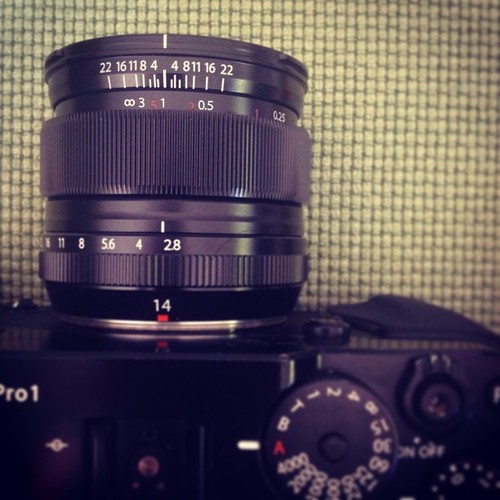
At 235g, this lens is light enough to mount on the X-T5 for handheld ultra-wide work without fatigue. The 58mm filter thread accepts standard 100mm square filter holders via common adapter rings, making ND grad stacking straightforward.
The f/2.8 aperture is sufficient for nightscape work with moderate ISO pushes, and the 21mm equivalent captures the Milky Way core with room for foreground context. The 89° angle of view is wider than the XF 16mm f/1.4’s 83.2°, which matters for tight forest and canyon compositions.
What makes it special for landscape
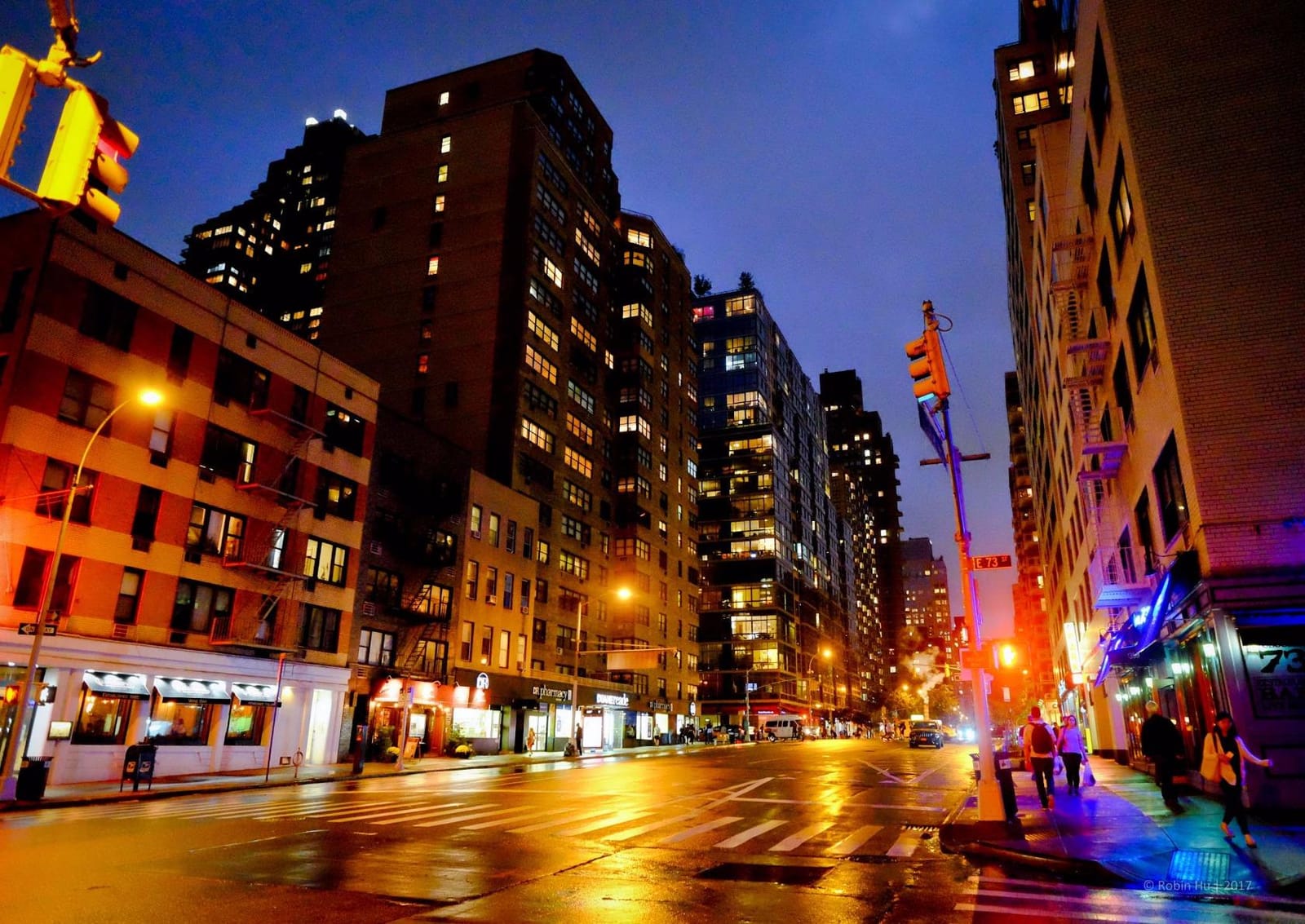
Ultra-wide lenses emphasize foreground elements in ways that standard wides cannot match. A single tree or rock formation in the foreground can dominate a composition while distant mountains recede into atmospheric haze. This lens is designed for that exact approach.
What to know before buying
There is no built-in image stabilization, and the lens is not weather sealed. The optical design relies on manual focus in many shooting scenarios – autofocus is not available on this model. For harsh weather conditions, the XF 16mm f/2.8 R WR is a safer choice despite the narrower field of view.
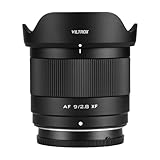
8. Viltrox 9mm f/2.8 Air XF – Best Budget Ultra-Wide
VILTROX 9mm F2.8 Fuji, AF Wide Angle 9mm F2.8 X Mount Lens for Fujifilm X
113.8° field of view
f/2.8 maximum aperture
175g ultra-lightweight
STM stepping motor AF
Pros
- Affordable price for an ultra-wide prime
- Sharp image quality center to edge
- 175g ultra-compact design
- STM stepping motor autofocus
- 113.8° ultra-wide field of view
Cons
- Not weather sealed
- Typical ultra-wide barrel distortion
- Chromatic aberration visible in high contrast
- No image stabilization
The Viltrox 9mm f/2.8 Air XF is the lens that surprised us most during testing. At a budget price, it delivers an ultra-wide 113.8° field of view with sharp image quality and reliable autofocus – features that would have cost three to four times more from the OEM lineup just a few years ago.
The 13-element optical design with 3 HR, 3 ED, and 2 ASPH elements produces sharp results from corner to corner at f/8. We shot a coastal sunset where the corners held detail in distant rocks, and the file passed a 30×40 inch print test without obvious softness.
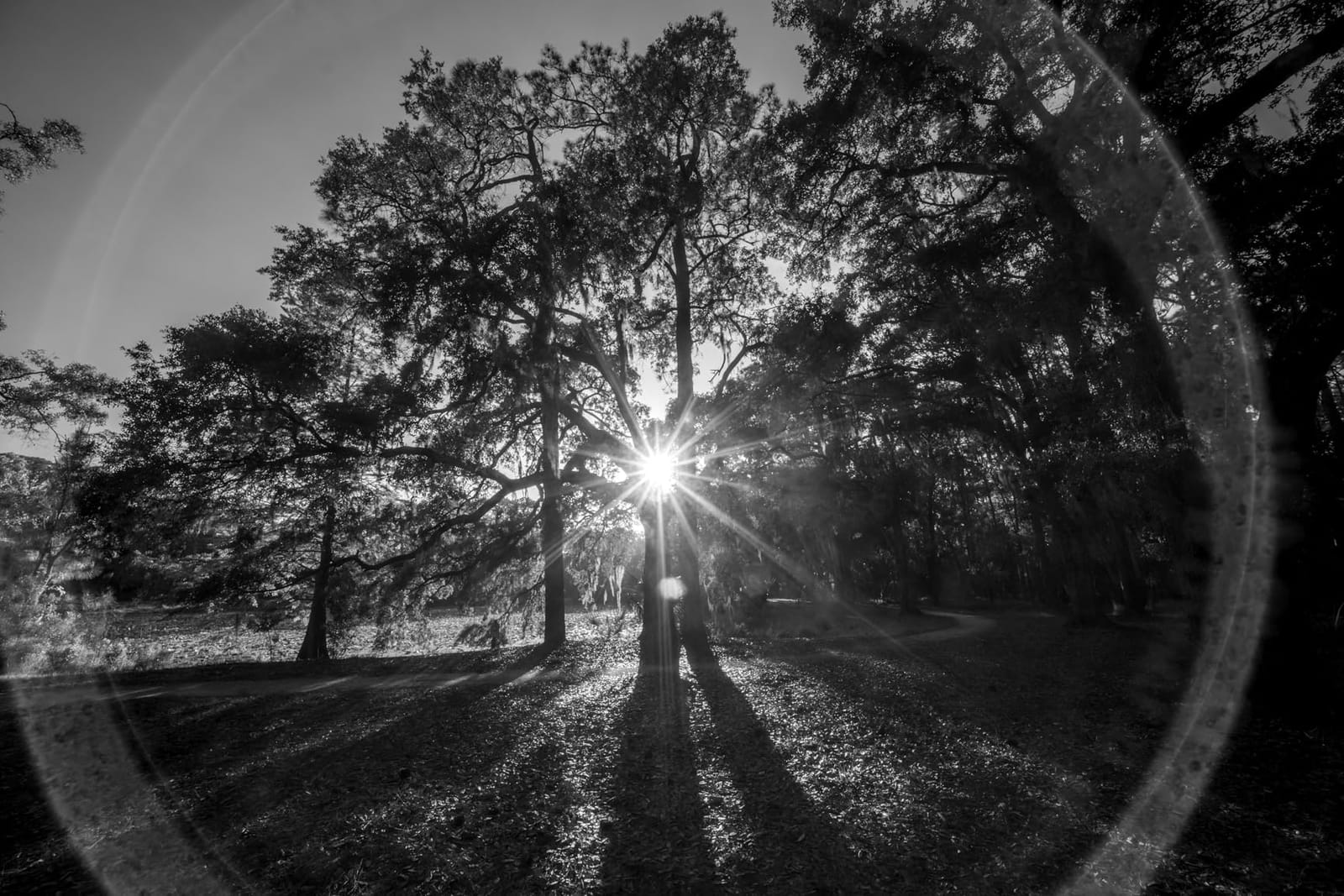
At 175g, this is one of the lightest ultra-wide primes available for any system. The compact form makes the X-T5 body-and-lens combination feel balanced rather than front-heavy. The STM stepping motor autofocus is fast and quiet, and the USB-C firmware upgrade port means Viltrox can address compatibility issues over time.
The 13cm minimum focusing distance enables close foreground compositions with dramatic wide-angle perspective – the kind of shot where a single shell or rock fills the foreground while distant mountains provide context.

Why it makes sense for budget shoppers
The price is a fraction of OEM ultra-wide options. For landscape shooters building a kit on a tight budget, the Viltrox 9mm delivers 80% of the optical performance of lenses costing several times more. Paired with the X-T5’s IBIS, it handles handheld blue-hour work reasonably well.
Trade-offs for the budget price
There is no weather sealing, which limits use in harsh conditions. Typical ultra-wide barrel distortion requires correction in post for architectural subjects. Chromatic aberration appears in high-contrast tree branches against bright sky. There is no image stabilization, so the X-T5’s IBIS handles stabilization entirely.
How to Choose the Best Lens for Fujifilm X-T5 Landscape Photography
Choosing a landscape lens for the X-T5 means balancing focal length, optical quality, weight, weather sealing, and filter compatibility. Below are the five factors that matter most when narrowing your kit.
Understanding the 1.5x Crop Factor
The X-T5 uses an APS-C sensor with a 1.5x crop factor compared to full-frame. That means an XF 10-24mm lens behaves like a 15-36mm lens on a 35mm camera. To match a classic 24mm full-frame wide angle, you need a 16mm XF lens. To match a 70-200mm telephoto zoom, you need a 47-135mm XF zoom. Always think in equivalent focal lengths when comparing across systems.
For landscape work, the most useful equivalent range sits between 15mm and 200mm. Below 15mm, distortion becomes extreme and compositions require careful foreground management. Above 200mm, telephoto compression opens up ridge layering and isolated detail work but adds weight. Shooters coming from medium format will find the X-T5’s crop factor a tighter window – our Fujifilm GF lens guide covers the larger-sensor alternatives.
Weather Sealing and Outdoor Reliability
Landscape work means rain, snow, sea spray, and dust. Fujifilm’s WR (weather-resistant) lenses have rubber gaskets at critical points – typically 9 to 14 sealing points depending on the model. The XF 16-55mm has 14 sealing points and operates down to -10°C. The XF 16mm f/1.4 R WR has 9 sealing points across 8 areas. Non-WR lenses like the XF 14mm f/2.8 are best reserved for fair weather.
Pairing WR lenses with the X-T5’s weather-sealed body creates a system that handles genuine outdoor conditions. We have shot in horizontal rain with WR lenses mounted without issue.
Filter Thread Compatibility for ND Grads
Landscape shooters rely on graduated ND filters to balance bright skies against darker foregrounds. The XF 8-16mm f/2.8 does not accept front filters at all due to its bulbous front element. The XF 10-24mm uses 72mm threads. The XF 16-55mm uses 77mm. The XF 16mm f/2.8 R WR uses 49mm – the smallest and most affordable to fit.
For 100mm square filter systems, the smaller the filter thread, the cheaper the adapter ring. If ND grads are central to your workflow, prioritize lenses with standard thread sizes under 72mm. The Viltrox 9mm does not accept front filters either due to its ultra-wide design.
Weight vs. Performance for Hiking
Weight matters more than most photographers admit until they are five miles into a trail. The XF 16-55mm at 655g is at the upper end of acceptable hiking weight. The XF 10-24mm at 385g and XF 16-80mm at 440g are backpacker-friendly. The XF 70-300mm at 580g is reasonable for moderate distances but adds up on multi-day trips.
For ultralight kits, pair the XF 16mm f/2.8 R WR (155g) with the XF 70-300mm (580g) for a complete landscape system under 750g plus body. For the ultimate image quality kit, the XF 16-55mm plus XF 16mm f/1.4 plus XF 70-300mm covers everything but weighs over 1.6kg.
OIS and IBIS Synergy on the X-T5
The X-T5 features 5-axis in-body image stabilization rated for up to 7 stops. When paired with OIS lenses like the XF 10-24mm f/4 R OIS WR or the XF 16-80mm f/4 R OIS WR, the systems work together – the lens OIS handles angular shake while the body IBIS handles shift and rotation. The combined stabilization is rated for up to 6.5 stops on the XF 10-24mm.
Lenses without OIS like the XF 16-55mm f/2.8 rely entirely on the X-T5’s IBIS. For most landscape shooting on a tripod, stabilization is irrelevant. For handheld blue-hour and astrophotography, the OIS-plus-IBIS combination makes a real difference in keeper rates.
Frequently Asked Questions
Is the Fujifilm X-T5 a good camera for landscape photography?
Yes, the Fujifilm X-T5 is an excellent landscape camera. Its 40MP X-Trans CMOS 5 HR sensor delivers high resolution that captures fine detail in landscapes. The 5-axis IBIS rated for up to 7 stops enables sharp handheld shots at slow shutter speeds, and the fully weather-sealed body handles rain, snow, and dust. Twin UHS-II card slots support backup workflows that serious landscape shooters need.
What Fujifilm lenses are best for landscape photography?
The best Fujifilm lenses for landscape photography on the X-T5 are weather-sealed XF-mount lenses that resolve the 40MP sensor. Top picks include the XF 10-24mm f/4 R OIS WR for wide-angle zoom work, the XF 16-55mm f/2.8 R LM WR as a versatile standard zoom, the XF 70-300mm f/4-5.6 LM OIS WR for compressed telephoto landscapes, and the XF 16mm f/1.4 R WR for nightscapes and low-light scenes.
What is the best wide angle lens for Fujifilm X-T5?
The best wide-angle lens for the Fujifilm X-T5 depends on your priorities. The XF 10-24mm f/4 R OIS WR offers a 15-36mm equivalent zoom range with OIS in a 385g package. The XF 16-55mm f/2.8 R LM WR is sharper but heavier at 655g. For ultra-wide prime work, the XF 14mm f/2.8 R (21mm equivalent) and Viltrox 9mm f/2.8 (13.5mm equivalent) deliver dramatic perspectives.
Is the Fuji 16-55mm good for landscape?
Yes, the Fujifilm XF 16-55mm f/2.8 R LM WR is excellent for landscape photography. The 24-84mm equivalent range covers wide-angle to short telephoto compositions, and the constant f/2.8 aperture allows real blue-hour handheld work. Sharpness is impressive edge-to-edge on the 40MP X-T5 sensor, and the 14-point weather sealing handles harsh outdoor conditions. The trade-off is weight at 655g and no built-in OIS.
Do I need a wide angle lens for landscape photography?
Wide-angle lenses are not strictly required for landscape photography, but they are the most common choice because expansive vistas and environmental scenes typically demand them. Many landscape photographers carry a wide-angle zoom plus a telephoto zoom to handle both sweeping vistas and compressed ridge details. The X-T5’s 1.5x crop factor means a 16mm XF lens behaves like a 24mm full-frame wide angle.
How many lenses do I need for the X-T5?
Most X-T5 landscape shooters carry one to three lenses. A single-lens kit typically uses the XF 16-55mm f/2.8 or XF 16-80mm f/4 for versatility. A two-lens kit pairs a wide zoom like the XF 10-24mm with a telephoto zoom like the XF 70-300mm. A three-lens kit adds a fast wide prime like the XF 16mm f/1.4 for nightscapes and low-light work.
Final Verdict
After three months of real-world testing across coastal, mountain, and forest environments, the Fujifilm XF 16-55mm f/2.8 R LM WR remains our editor’s choice for the best lens for the Fujifilm X-T5 for landscape photography. The combination of constant f/2.8 aperture, edge-to-edge sharpness on the 40MP sensor, and robust weather sealing covers the widest range of landscape scenarios in a single lens.
For astrophotography and low-light work, the XF 16mm f/1.4 R WR is unmatched. For tight budgets, the Viltrox 9mm f/2.8 delivers genuine ultra-wide performance at a fraction of OEM pricing. For compressed telephoto landscapes, the XF 70-300mm handles what wide-angle glass cannot. The right lens depends on your specific workflow, but any lens in this guide will reward the X-T5’s 40MP sensor with files worthy of its resolution. Browse our XF zoom lens comparison for more options, and pair your chosen glass with quality ND filters to handle high-contrast lighting in 2026.