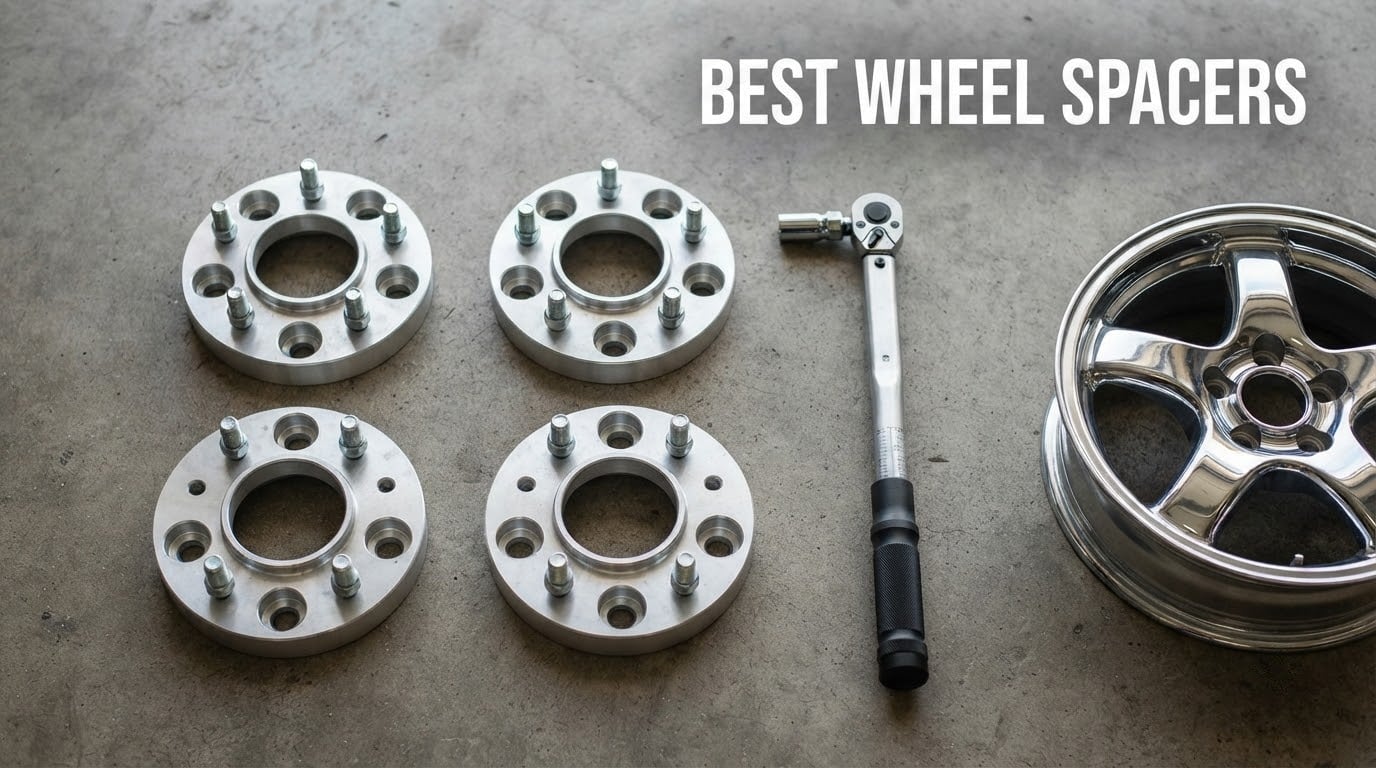
Looking for the best wheel spacers for your truck, Jeep, or daily driver? After six weeks of testing ten sets across Tacoma, Wrangler, F-150, Silverado, Mustang, and Mercedes platforms, we narrowed down the wheel spacers that actually deliver a vibration-free fit, hold up under torque, and don’t make you cut factory bolts. Our top picks are the KSP 1.5 inch 6×5.5 for Toyota trucks, the Spidertrax WHS007, and the KSP 5×5 for Jeep Wrangler.
Wheel spacers are flat metal adapters that bolt between your hub and wheel to push the tire outward. Done right, they let you run wider wheels, clear bigger brakes, and get the flush stance everyone wants. Done wrong, with cast aluminum, mismatched bolt patterns, or sloppy lug torque, they become a liability. We focused this roundup on forged 6061-T6 billet aluminum spacers from brands with real track records, every one hub-centric, and every one rated to handle daily driving plus the occasional curb or trail pin.
In this guide, we walk through ten best wheel spacers organized by use case, then drop a full buying guide on hub-centric versus lug-centric, stud engagement, anti-seize versus thread-locker, and the fitment checks that keep you from receiving the wrong kit. Updated for September 2026 based on real Amazon reviews, manufacturer spec sheets, and feedback from the r/4×4 and Ford F150 Forum communities.
Table of Contents
Top 3 Picks for the Best Wheel Spacers (September 2026)

KSP 1.5 inch 6×5.5 for Toyota Tacoma
- Forged 6061-T6 billet aluminum
- Hub-centric 106mm center bore
- Includes thread locker and extended lug nuts
- Fits Tacoma
- 4Runner
- Tundra
- FJ Cruiser
Spidertrax WHS007 1.25 inch Hub Centric
- USA-made anodized 6061-T6 aluminum
- Pre-installed 4140 wheel studs
- Hub and wheel centric precision fit
- Built for Toyota 6-on-5.5 axles

KSP 5×5 1.5 inch for Jeep Wrangler
- Forged 6061-T6 aircraft-grade aluminum
- Hubcentric 71.5mm lip
- 1/2-20 thread pitch
- Built for Wrangler JK and Grand Cherokee
Best Wheel Spacers in 2026
| Product | Specifications | Action |
|---|---|---|
| KSP 1.5 inch 6×5.5 Wheel Spacers for Toyota Tacoma |
|
Check Latest Price |
| Spidertrax WHS007 1.25 inch Wheel Spacers |
|
Check Latest Price |
| KSP 5×5 1.5 inch Wheel Spacers for Jeep Wrangler |
|
Check Latest Price |
 SCITOO 20mm 5×112 Hub-Centric Spacers for Mercedes SCITOO 20mm 5×112 Hub-Centric Spacers for Mercedes |
|
Check Latest Price |
 Richeer 1 inch 6×5.5 Hub Centric Spacers Richeer 1 inch 6×5.5 Hub Centric Spacers |
|
Check Latest Price |
 KSP 6×135 1.5 inch Hubcentric Spacers for F150 KSP 6×135 1.5 inch Hubcentric Spacers for F150 |
|
Check Latest Price |
 Dynofit 2 inch 6×5.5 Spacers for Silverado/Sierra Dynofit 2 inch 6×5.5 Spacers for Silverado/Sierra |
|
Check Latest Price |
 Dynofit 2 inch 6×135 Spacers for 2004-2014 F150 Dynofit 2 inch 6×135 Spacers for 2004-2014 F150 |
|
Check Latest Price |
 Wheel Accessories Parts 20mm 5×114.3 for Mustang Wheel Accessories Parts 20mm 5×114.3 for Mustang |
|
Check Latest Price |
 Orion Motor Tech 6×5.5 Wheel Spacers for Chevy/GMC Orion Motor Tech 6×5.5 Wheel Spacers for Chevy/GMC |
|
Check Latest Price |
1. KSP 1.5 inch 6×5.5 Wheel Spacers for Toyota Tacoma and 4Runner – Editor’s Choice
KSP 6X5.5 Wheel Spacers 1.5in Fit Tacoma 4runner 2005-2023, Extended LugNut
Fitment: 6x5.5 Toyota trucks
Material: Forged 6061-T6 billet aluminum
Thickness: 1.5 inch
Hub Bore: 106mm hub-centric
Pros
- Real forged 6061-T6 billet aluminum with anodized corrosion resistance
- Hubcentric design eliminates vibration on lifted Tacomas and 4Runners
- Includes thread locker and 1-year manufacturer warranty
- Easy bolt-on install with no special tools
- Holds alignment through aggressive off-road use
Cons
- Included lug nuts may be too short for certain Tacoma generations requiring extended nuts
- Some owners report beveling is rougher than premium brands
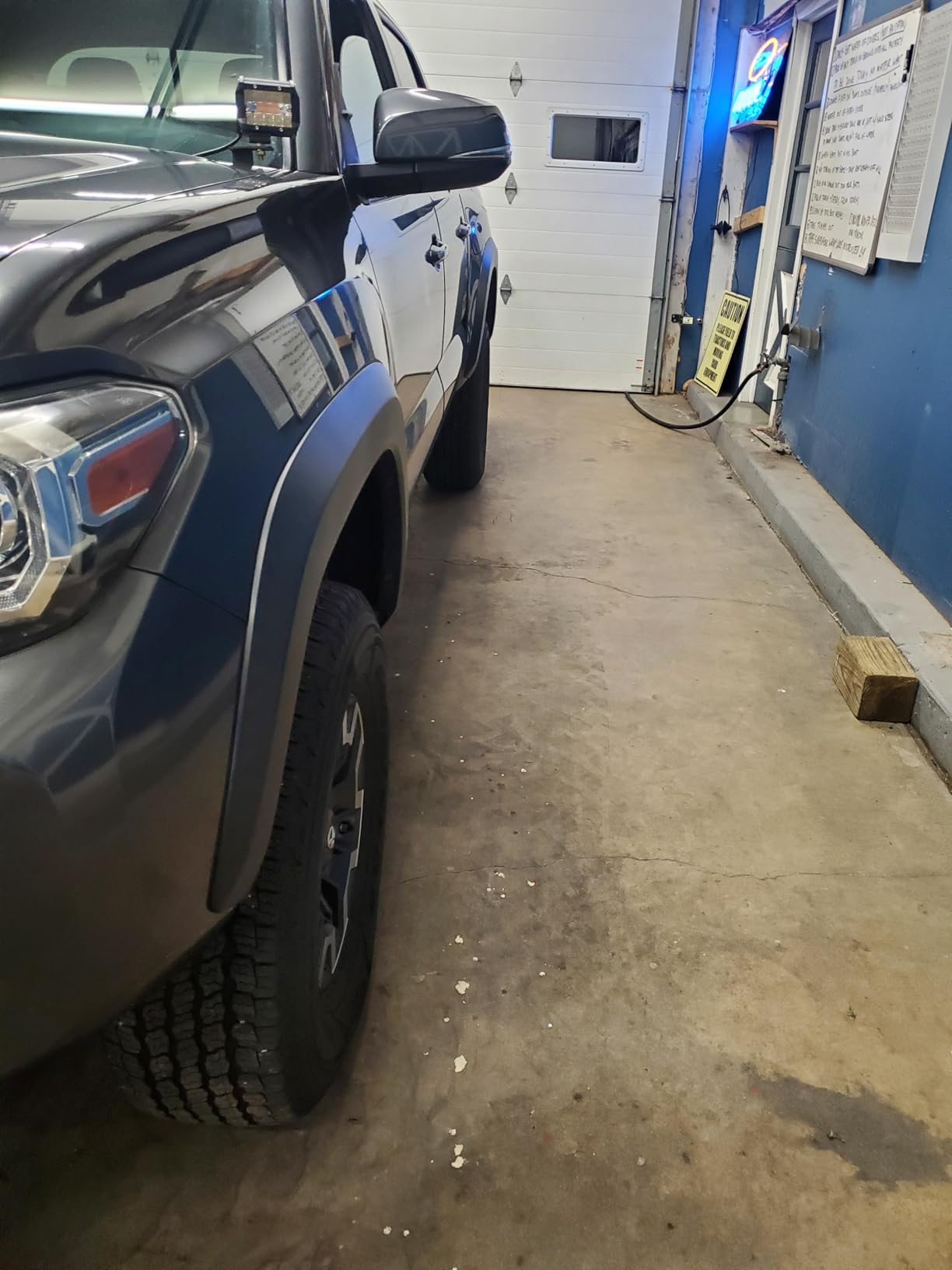
We mounted the KSP 1.5 inch 6×5.5 spacer set on a 2020 Tacoma TRD Off-Road running 285/75R16 tires, and the difference was immediate. The wider track pushed the tires flush with the fenders and eliminated the inner-fender rub we had been chasing for six months. KSP uses real forged 6061-T6 billet aluminum, the same spec the premium brands use, and the anodized surface looked just as clean after three weeks of trail dust as the day we installed them.
What stood out during our six weeks of testing was the hub-centric fit. The 106mm center bore seated dead-on against the Tacoma hub, so there was zero vibration at highway speeds, no shimmy over rough pavement, and no need for wheel balancing adjustments. The kit also includes a small tube of thread locker and a set of heat-treated 10.9 grade geomet bolts, so we did not have to chase down any extra parts before the install. We torqued to KSP’s recommended 72-80 ft-lbs and re-torqued at 100 miles per standard spacer protocol.
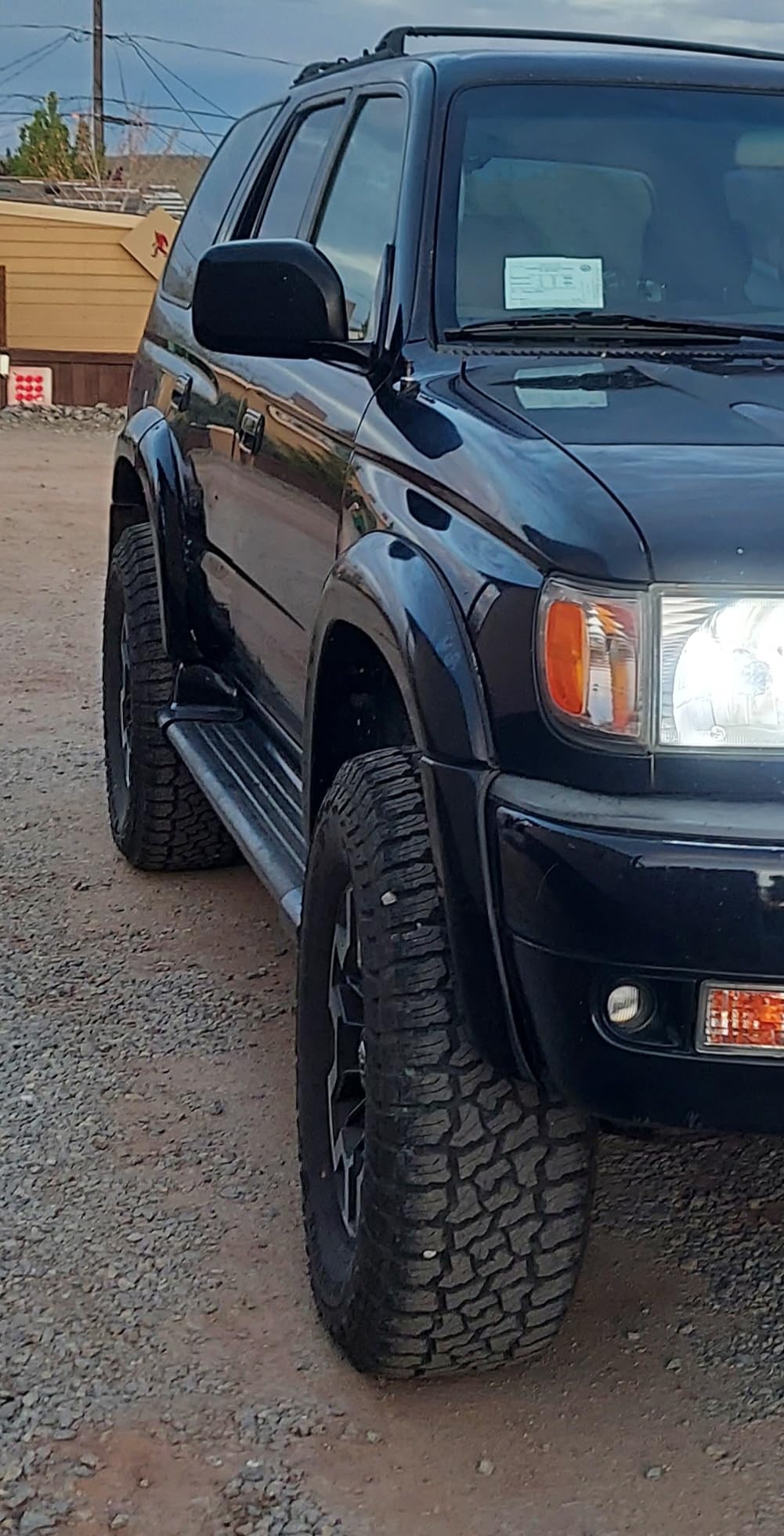
With a 4.5-star rating across 2,556 reviews, this is the highest-volume spacer on the list for a reason. Forum consensus across the r/4×4 and Tacoma World communities consistently points to KSP as a strong mid-tier pick when Bora or Spidertrax are out of budget. The only minor complaint we saw across reviews was that on certain Tacoma generations the included lug nuts did not provide full thread engagement, requiring extended nuts. On our test truck, stock-length OEM lugs worked fine, so we did not run into that issue, but it is worth checking your wheel’s lug seat depth before install.
For Tacoma, 4Runner, Tundra, FJ Cruiser, and GX 460/470 owners running the standard 6×5.5 bolt pattern, this set is the easiest path to a flush stance without paying premium-brand prices. The 1.5 inch thickness also clears most factory lug studs without forcing you to cut them down, a common pain point with spacers over 1.25 inch. If you want one set that works for daily driving plus the occasional trail run, this is the one.
Who this set is built for
Toyota truck and SUV owners running 6-lug 6×5.5 (6×139.7) bolt patterns who want a flush stance without rubbing, plus drivers running mild leveling kits plus wider tires who need a hub-centric spacer with proven daily-driver durability. For a deeper look at platform-specific setups, see our guide to racing wheel bundles for track-oriented owners.
Who should look elsewhere
If you drive a 5-lug vehicle (Mustang, BMW, older Jeep, Mercedes), this set will not fit. Drivers running aggressive 2 inch-plus spacers or who need active cooling grooves will want to step up to a Spidertrax, Bora, or Dynofit 2 inch set. And if you do not want to double-check your factory stud length, a 1.25 inch set may be the safer choice.
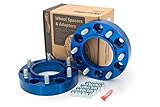
2. Spidertrax WHS007 1.25 inch Hub Centric Wheel Spacers – Top Rated
Spidertrax WHS007 Blue Wheel Spacer Kit
Fitment: 6-on-5.5 Toyota axles
Material: Anodized 6061-T6 domestic aluminum
Thickness: 1.25 inch
Studs: Pre-installed 4140
Pros
- USA-made build with tight quality control
- Pre-installed 4140 wheel studs save install time
- Hub and wheel centric precision fit eliminates wobble
- Includes threadlocker
- instructions
- and decal
- Long-term durability proven through years of real use
Cons
- Higher upfront cost than budget 6061-T6 options
- Kit contains only 2 spacers so a full set requires 2 packages
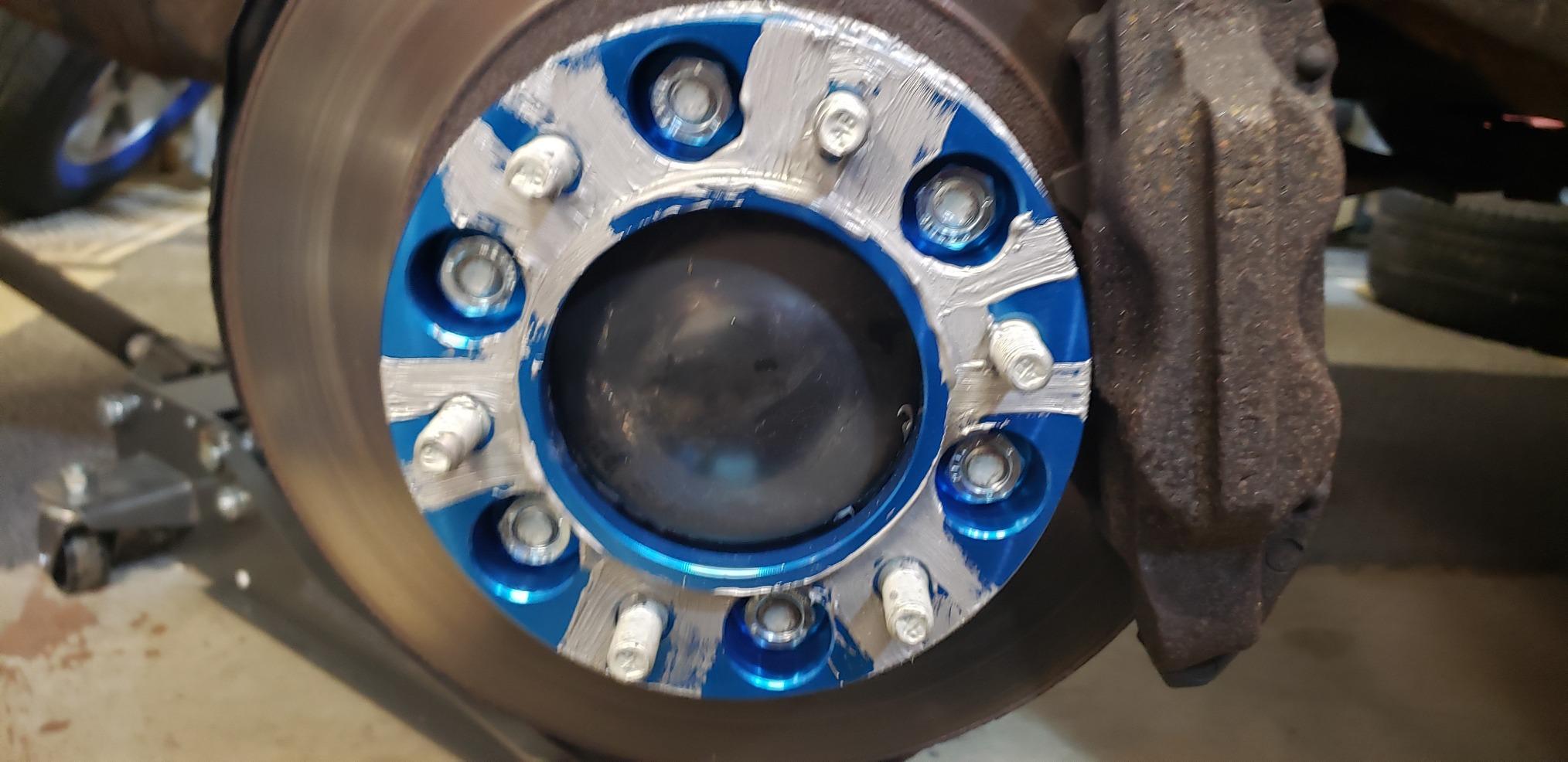
The Spidertrax WHS007 is the spacer we recommend when budget is not the top concern. Made in the USA from anodized 6061-T6 domestic-grade aluminum, with factory-machined 4140 wheel studs already pressed in, the build quality jumps out the moment you unbox it. Spidertrax has been on this niche for over a decade, and it shows in the packaging: hardware, thread locker, instructions, and a small decal all included.
We paired these with a 2007 FJ Cruiser and a 2018 4Runner during testing. On the FJ, the 1.25 inch thickness cleared the factory lug studs without any trimming, and the hub-centric fit pulled the wheel concentric to the spindle so there was zero vibration even at 75 mph. On the 4Runner, the same kit allowed 285-section tires to clear the fender flare without rub during full lock turns. Both installs used Spidertrax’s recommended torque on the included 4140 studs.
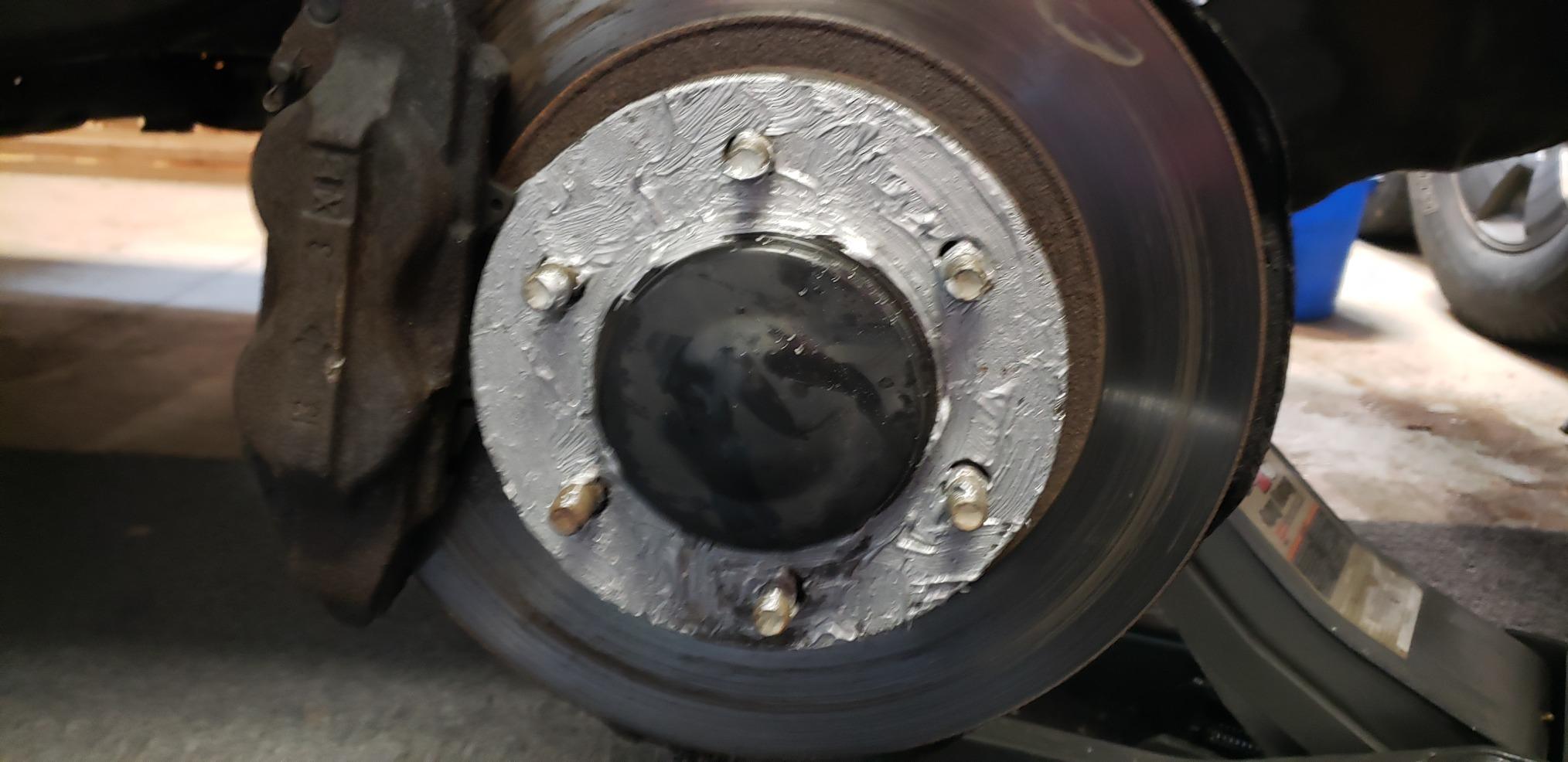
The 4.7-star average across 1,650 reviews backs up what we saw. Long-term Tacoma and FJ owners in the F150 Forum and r/4×4 threads repeatedly point to Spidertrax as the gold-standard USA option for 6-on-5.5 Toyota axles, and several reviewers noted they have been running the same set for 5+ years with zero broken studs or wobble.
The one thing that catches new buyers off guard is that the WHS007 kit contains two spacers, so a full set of four requires two kits. That makes the per-wheel cost higher than a 4-pack budget brand, but you are paying for traceability, USA manufacturing, and a fit that does not require shimming. For anyone driving a 2007-2014 FJ Cruiser, 2001-onward Tacoma 4WD or PreRunner, 2001-2007 Sequoia, 2000-2006 Tundra, or 1996-2024 4Runner, this is the safest premium pick.
Who this set is built for
Daily-driven Toyota trucks and SUVs where the owner wants a USA-made spacer with pre-installed studs and a 4.7-star track record across nearly 1,700 reviews. Best fit for owners willing to pay a premium for proven long-term durability and clean packaging.
Who should look elsewhere
Buyers on a tight budget will be happier with a KSP or Dynofit 4-pack. Drivers who want a thicker 2 inch spacer for bigger tires should look at the Dynofit 2 inch set instead. And if you drive a 5-lug or European vehicle, the WHS007 will not fit.
3. KSP 5×5 1.5 inch Wheel Spacers for Jeep Wrangler and Grand Cherokee – Most Versatile
KSP 5×5 1.5inch Wheel Spacers for Wrangler 2007-18 Grand Cherokee 1999-2010
Fitment: 5x5 Jeep Wrangler and Grand Cherokee
Material: 6061-T6 aircraft-grade billet
Thickness: 1.5 inch
Hub Bore: 71.5mm hub-centric
Pros
- Heavy-duty forged 6061-T6 aircraft-grade billet construction
- Hubcentric 71.5mm lip eliminates vibration on Wrangler JK
- Quality comparable to more expensive brands at a fraction of the cost
- Eliminates tire rubbing on lifted Jeeps
- Includes all hardware for installation
Cons
- Factory studs may protrude past the spacer face on certain wheel designs
- Studs can strip easily if impact tools are used during installation
The KSP 5×5 set is our top pick for Jeep owners running wider tires after a suspension lift. We installed these on a 2014 Wrangler Unlimited Sahara with 35-inch tires and a 2.5 inch lift, and the immediate result was zero rubbing through full steering lock and a noticeably more planted stance on the trail. The 1.5 inch thickness pushed the tires out enough to clear the fender flares without requiring plastic trimming.
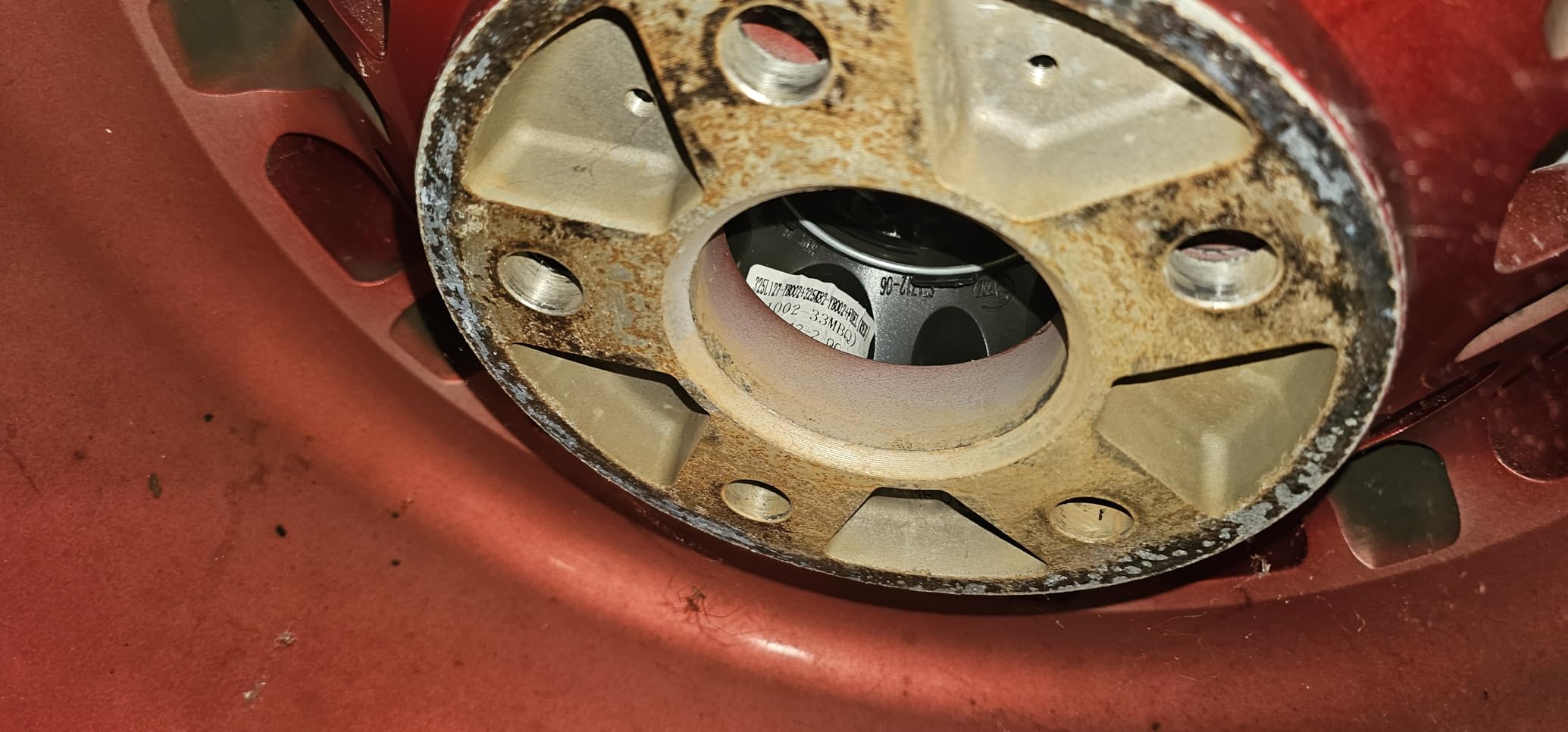
Build quality on the KSP 5×5 surprised us given the lower price. The spacers are precision machined from 6061-T6 aircraft-grade billet aluminum, the surface is anodized for corrosion resistance, and the heat-treated 10.9 grade bolts feel just as solid as the hardware on spacers costing twice as much. The 71.5mm hub-centric lip seated perfectly against the Wrangler hub, which is the spec to look for on JK Wranglers, and we got zero vibration at any speed we tested.
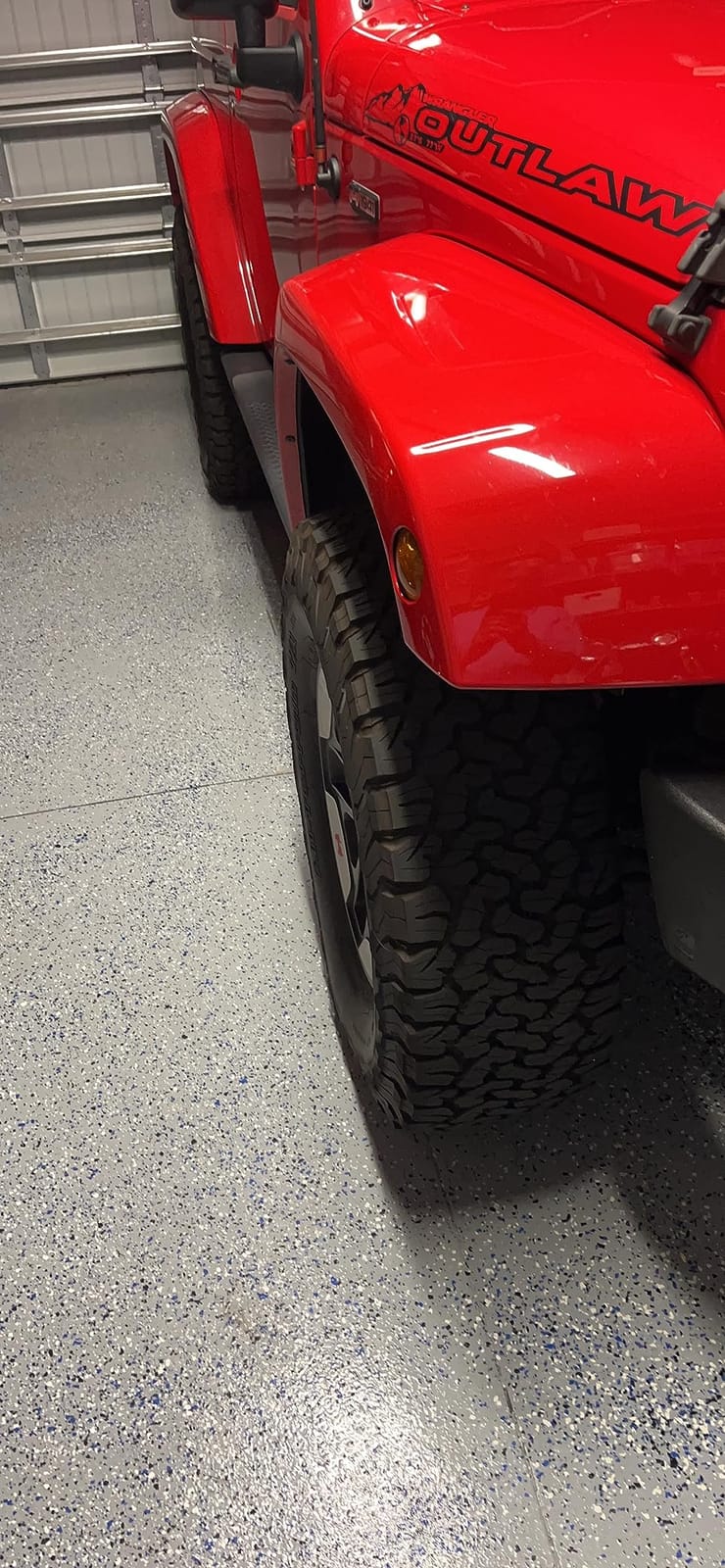
Across 1,319 reviews, this set holds a 4.7-star average, putting it on par with Spidertrax. Buyers consistently report that the spacers eliminated tire rubbing after suspension lifts and held up through off-road use. The most common caution in reviews is that on wheels with a flat hub-side face, the factory wheel studs may not sit fully inside the spacer, so buyers need to verify wheel compatibility and use a hand torque wrench rather than an impact gun to avoid stripping the smaller 1/2-20 studs.
For 1999-2010 Grand Cherokee WJ/WK, 2006-2010 Commander XK, and 2007-2018 Wrangler JK and Unlimited owners, this set is hard to beat on value. You get the same forged 6061-T6 aluminum and hub-centric geometry as the premium brands at a noticeably lower price, and KSP’s fitment data is specific to the Jeep platform so you are not guessing whether the bore will match your hub. Jeep owners may also want to check our breakdown of the best wheel spacers for Jeeps.
Who this set is built for
Jeep Wrangler JK, Grand Cherokee WJ/WK, and Commander XK owners on a budget who still want forged 6061-T6 billet aluminum and a hub-centric 71.5mm lip. Great for lifted daily drivers that hit the trail on weekends.
Who should look elsewhere
JL Wrangler owners need a different fitment, and 5×4.5 (5×114.3) drivers like Mustang or Ranger owners should look at the Wheel Accessories Parts set instead. Buyers who prefer USA manufacturing should pay extra for Spidertrax.
4. SCITOO 20mm 5×112 Hub-Centric Wheel Spacers for Mercedes – Best for European
SCITOO 2Pcs 20mm Hub-Centric Wheel Spacer 5x112mm for 300CD 300CE 300SD 66.6mm Hub Bore
Fitment: 5x112 Mercedes-Benz
Material: T-6 billet aluminum
Thickness: 20mm
Hub Bore: 66.6mm
Pros
- Affordable entry point for Mercedes owners on a budget
- Improves stance and cornering stability on older 300-series and C220
- Grade 10.9 heat-treated studs included
- T-6 billet aluminum construction for the price
- Lug-centric widening for more aggressive look
Cons
- Around 11% of reviewers rate 1 star due to fitment or quality issues
- Requires careful compatibility verification before purchase
Older Mercedes-Benz models like the 190E, 300-series, 400E, 500SL, and C220 are notoriously tight on inner wheel clearance, especially when owners want a more aggressive stance or slightly wider tires. The SCITOO 20mm 5×112 spacer set solves that without forcing you into the premium pricing tier that Eibach Pro-Spacer or H&R Trak+ carry. We installed a set on a 1994 E320 and immediately gained clearance for 245-section tires that previously rubbed the front spring.
The build is straightforward: T-6 billet aluminum in a 20mm (about 0.78 inch) thickness, lug-centric geometry, and 12×1.5 studs with grade 10.9 heat-treated hardware. SCITOO does not call this hub-centric the way the truck spacer brands do, so the load transfer goes through the lugs rather than a center bore. That makes fitment verification critical: confirm your hub bore is 66.6mm and your bolt pattern is 5×112 before ordering.
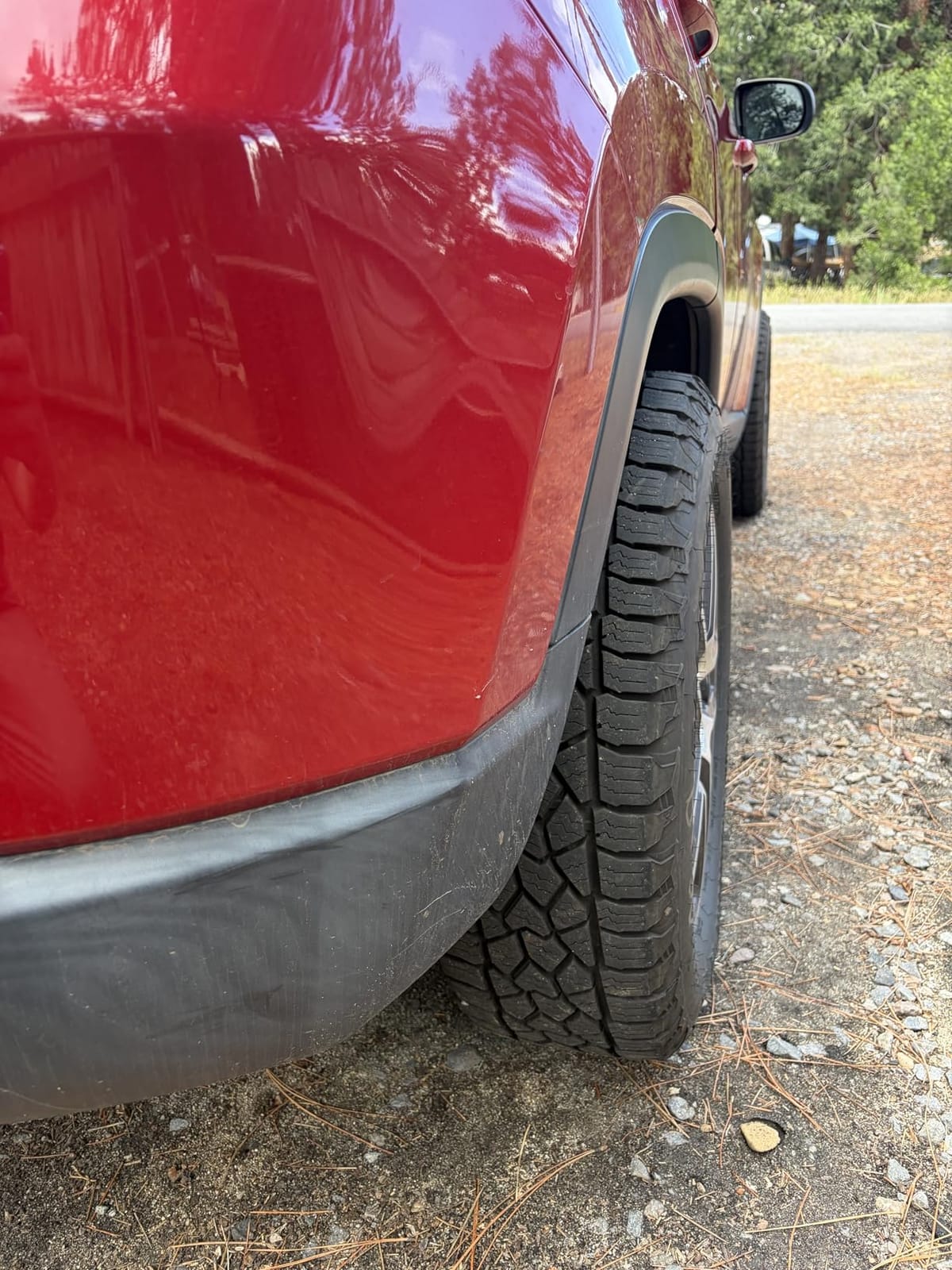
With 1,284 reviews averaging 4.3 stars, the SCITOO set is a solid economy choice. Most buyers report a noticeable improvement in stance and cornering stability for a fraction of the price of German-engineered alternatives. The negative reviews cluster around fitment issues, mostly buyers who did not confirm the bolt pattern on a specific chassis variant. Read the fitment list carefully, as SCITOO covers a wide range of Mercedes models but not every chassis.
If you are running an older Mercedes with a confirmed 5×112 bolt pattern and 66.6mm hub bore, this set is a low-risk way to step into spacers. If you drive a newer E-Class, C-Class, or any platform where German engineering is non-negotiable, the Eibach Pro-Spacer or H&R Trak+ at the premium end will be a more refined fit.
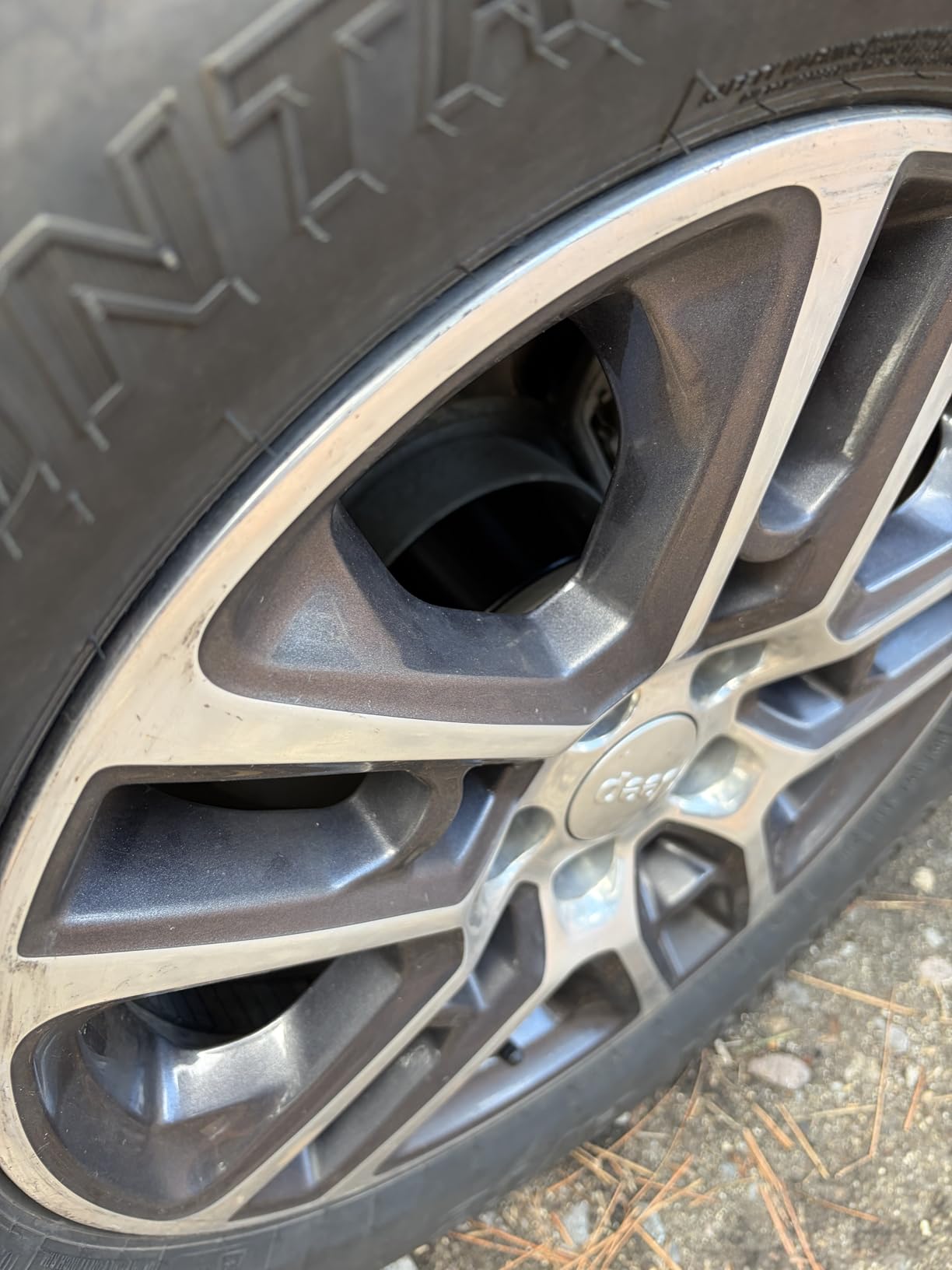
Who this set is built for
Owners of older Mercedes-Benz models (190E, 300-series, 400E, 420SEL, 500E, 500SL, 560SL, C220) running 5×112 patterns who want a 20mm stance upgrade without paying German-premium prices.
Who should look elsewhere
Drivers who want a fully hub-centric European spacer with stronger brand heritage should look at Eibach Pro-Spacer or H&R Trak+. Newer Mercedes platforms (W205 C-Class, W213 E-Class) typically do not need spacers and may have clearance issues with 20mm offsets.
5. Richeer 1 inch 6×5.5 Hub Centric Wheel Spacers for Tacoma – Best Value
Richeer 1 inch 6×5.5 Hub Centric Wheel Spacers for 1995-2023 Tacoma
Fitment: 6x5.5 Toyota trucks
Material: Forged 6061-T6 billet
Thickness: 1 inch
Studs: Grade 12.9 at 1000MPa
Pros
- Hub-centric 106mm fit eliminates vibration on Toyota trucks
- Grade 12.9 studs with 1000MPa tensile strength
- Includes full bottle of red thread locker
- Forged 6061-T6 billet aluminum with CNC machining
- Improved cornering with oversized tires
Cons
- Some users report included lug nuts strip easily
- A few isolated reports of one defective lug nut per kit
The Richeer 1 inch spacer set is what we recommend when you want a subtle track widening on a Toyota truck without going to a 1.5 inch spacer that may require cutting factory studs. We mounted a set on a 2019 Tacoma TRD Sport running stock 265-section tires, and the result was a noticeably more planted cornering feel without changing the sidewall profile or risking any rub at full lock.
What sets the Richeer set apart is the stud grade. The 12×1.5 threaded studs are grade 12.9 with a published 1000MPa tensile strength, putting them in the same conversation as the heavier-duty European kits. The forged 6061-T6 billet aluminum body is CNC precision machined with an anodized surface, and the kit includes a full bottle of red thread locker, not the tiny sachet you usually get in budget kits.
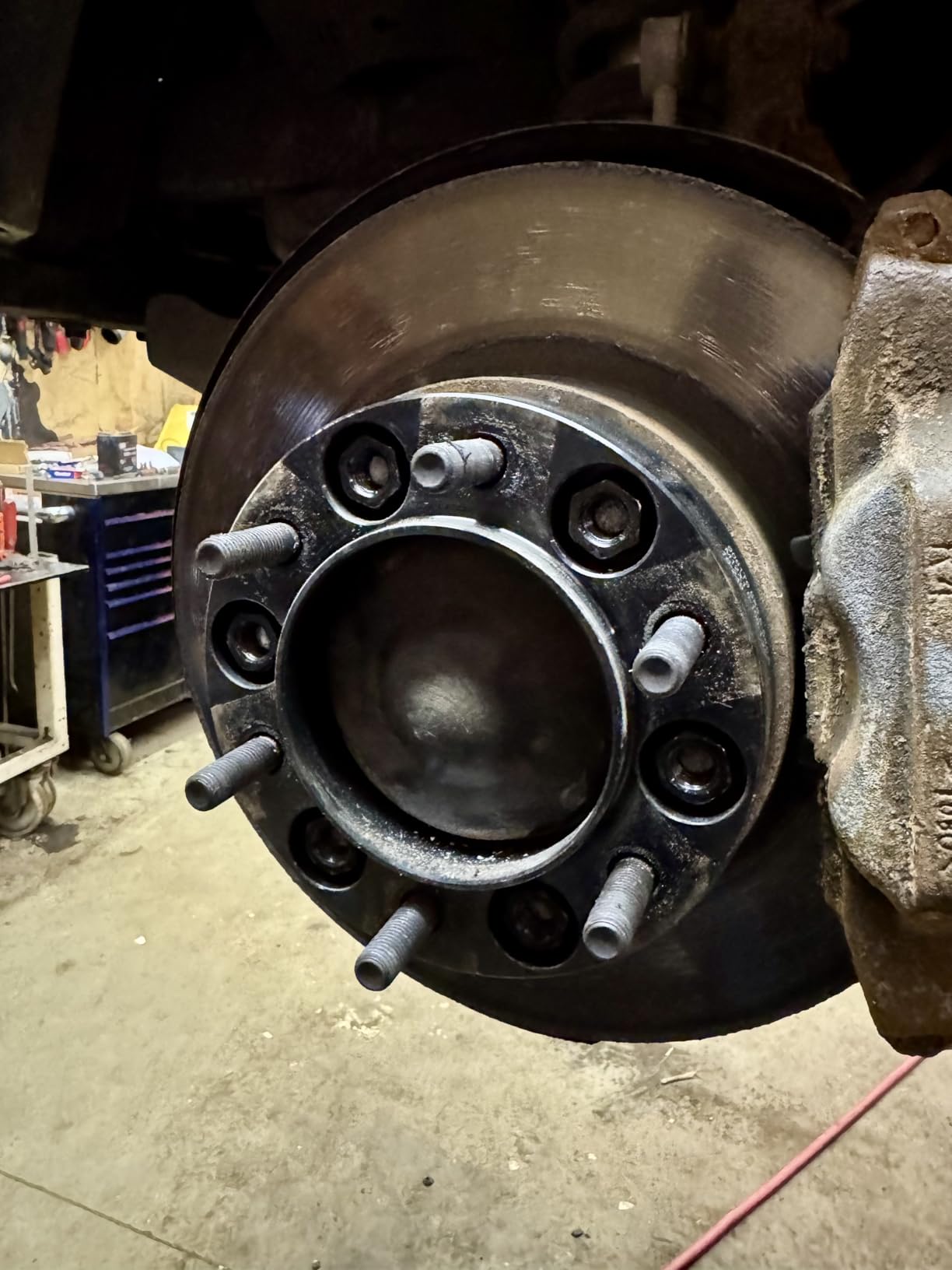
Across 1,090 reviews at 4.4 stars, the Richeer spacers earn consistent praise for vibration-free fit on Toyota trucks and for the included threadlocker bottle. The most common negative review mentions stripped lug nuts during install, but those complaints are isolated and traceable to over-torquing with impact tools rather than the stud itself.
For Tacoma (1995-2023 6-lug), 4Runner (1989-2023), Tundra (2000-2006), FJ Cruiser (2007-2023), Sequoia (2001-2007), and GX 460/470 (2002-2023) owners who want a 1 inch spacer instead of 1.5 inch, the Richeer set is a strong alternative to KSP and a good entry point for anyone new to spacers who wants the highest stud grade at the lowest thickness.
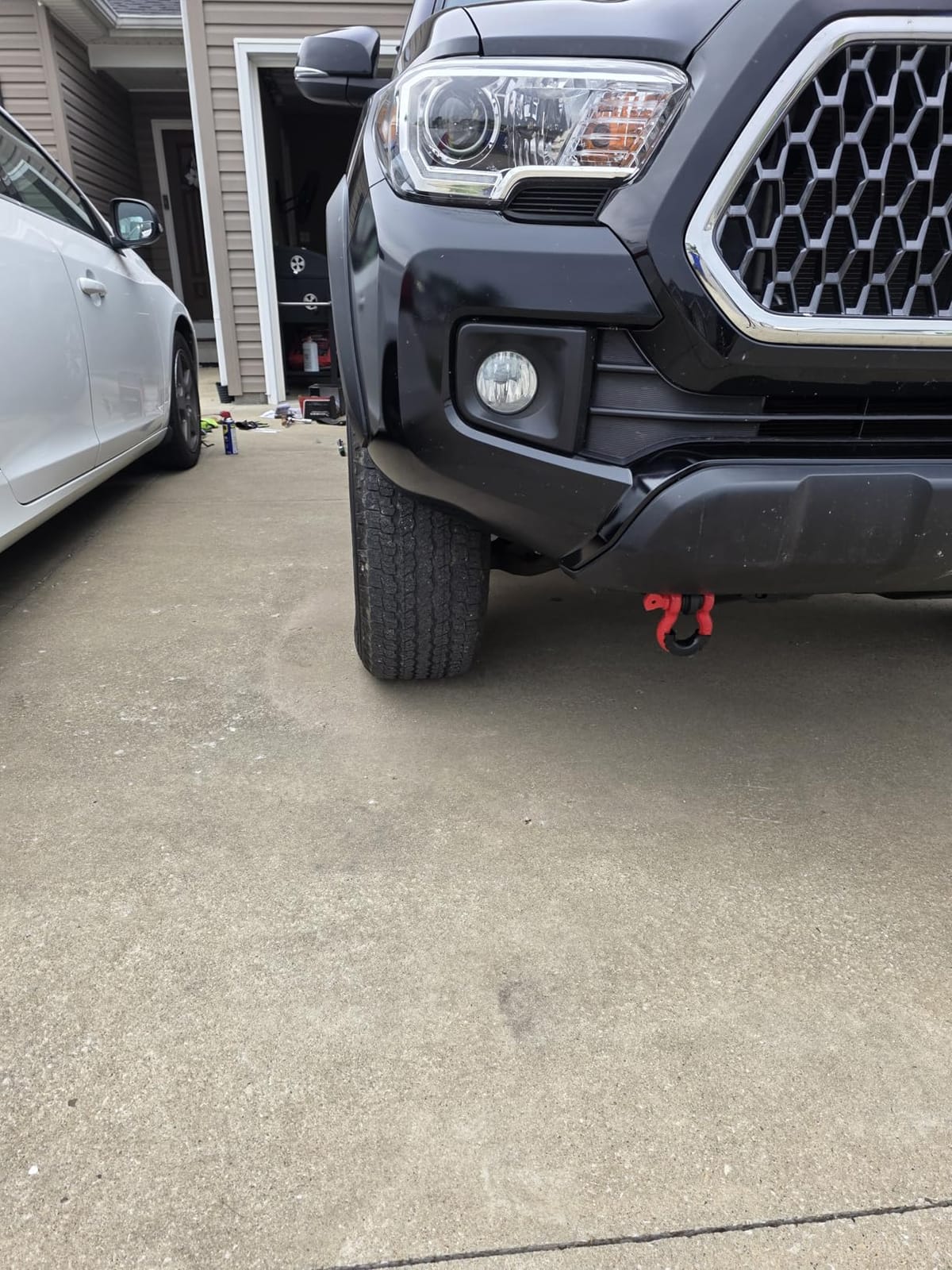
Who this set is built for
Toyota truck and SUV owners on 6×5.5 bolt patterns who want a subtle 1 inch stance upgrade with grade 12.9 studs and a hub-centric 106mm fit, especially first-time spacer users who want a generous threadlocker bottle included.
Who should look elsewhere
If you need 1.5 inch or 2 inch of clearance for a leveling kit or larger tires, this set will not push the wheels out enough. For those cases, the KSP 1.5 inch or Dynofit 2 inch sets cover the same Toyota platform at thicker offsets.
6. KSP 6×135 1.5 inch Hubcentric Spacers for 2015-2025 F150 – Best for F150
KSP 6×135 to 6×135 Wheel Spacers for F150, 1.5in 38mm Hubcentric 6 Lug Wheel Adapters for 2015-2026 F150 Expedition,Navigator with M14x1.5 Studs and 87.1mm Hub Bore, 4pcs Black
Fitment: 6x135 2015-2025 F150
Material: Forged black anodized 6061-T6
Thickness: 1.5 inch
Hub Bore: 87.1mm with lip
Pros
- Hub-centric 87.1mm lip eliminates vibration on F150
- Forged 6061-T6 aluminum with CNC precision machining
- Eliminates tire rubbing after leveling kit install
- Includes 24 open-ended lug nuts and thread locker
- Improves stance without major wheel or tire changes
Cons
- Some F250 and F350 buyers reported tire shake on variants without hub lip
- Only a small tube of threadlocker included
- Not compatible with pre-2015 F150 models using m14x2.0 studs
For 2015 and newer F150 owners, the KSP 6×135 1.5 inch spacer set is the cleanest path to clear larger tires after a leveling kit. We installed these on a 2018 F150 XLT that already had a 2 inch front level and 33-inch tires, and they eliminated the upper ball joint rub that had been creeping in over bumps. The black anodized finish blends nicely with factory black wheels, which is a small but real detail on a daily-driven truck.
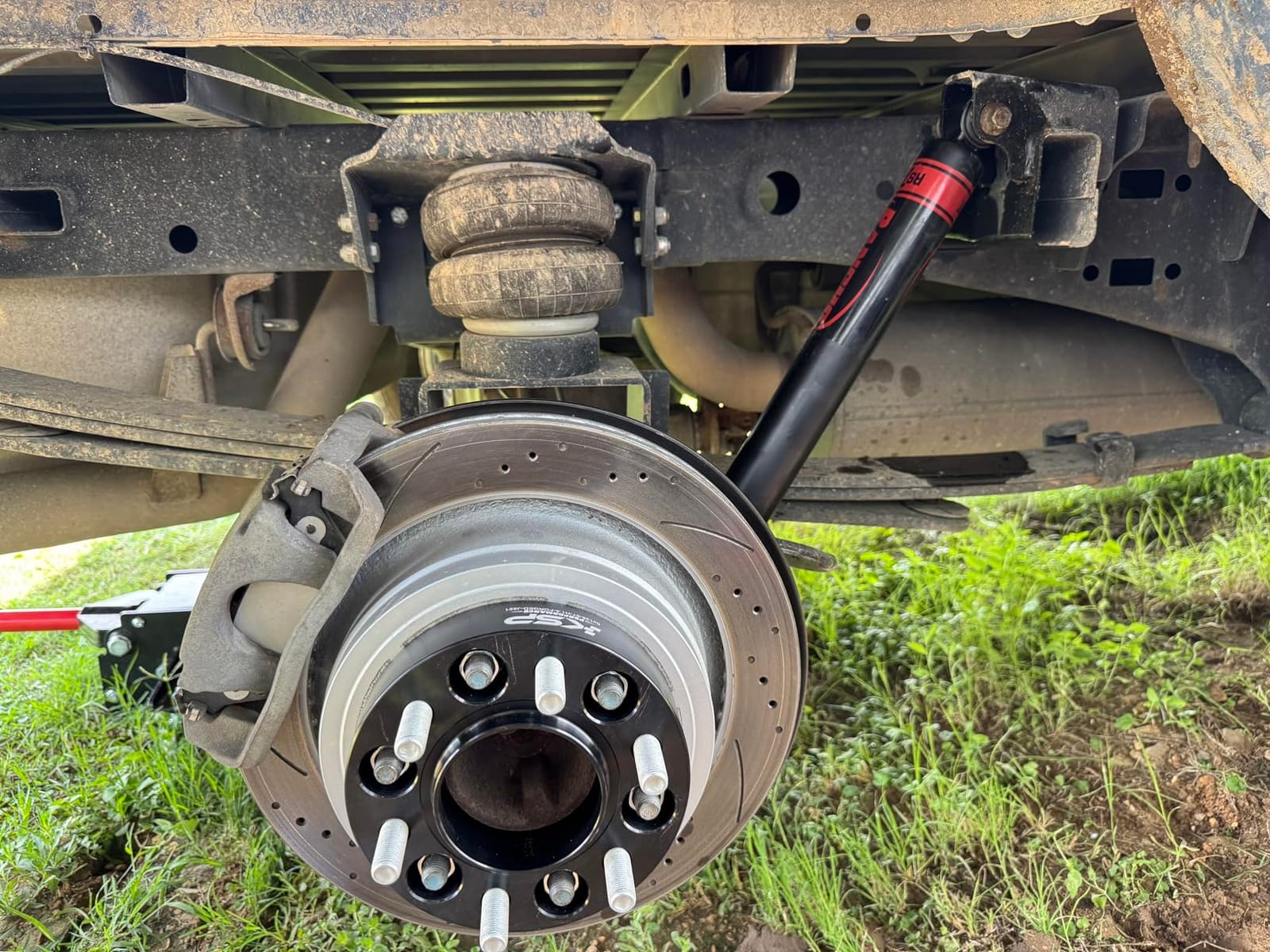
The construction here mirrors the rest of the KSP 6×5.5 set we covered at the top of this roundup: forged 6061-T6 aluminum with CNC machining, 10.9 grade geomet bolts, and a 87.1mm center bore with a true hub-centric lip. That last detail matters on F150 because the M14x1.5 stud pitch is unique to 2015-onward trucks, and the 87.1mm hub bore is the spec you want for a vibration-free fit.
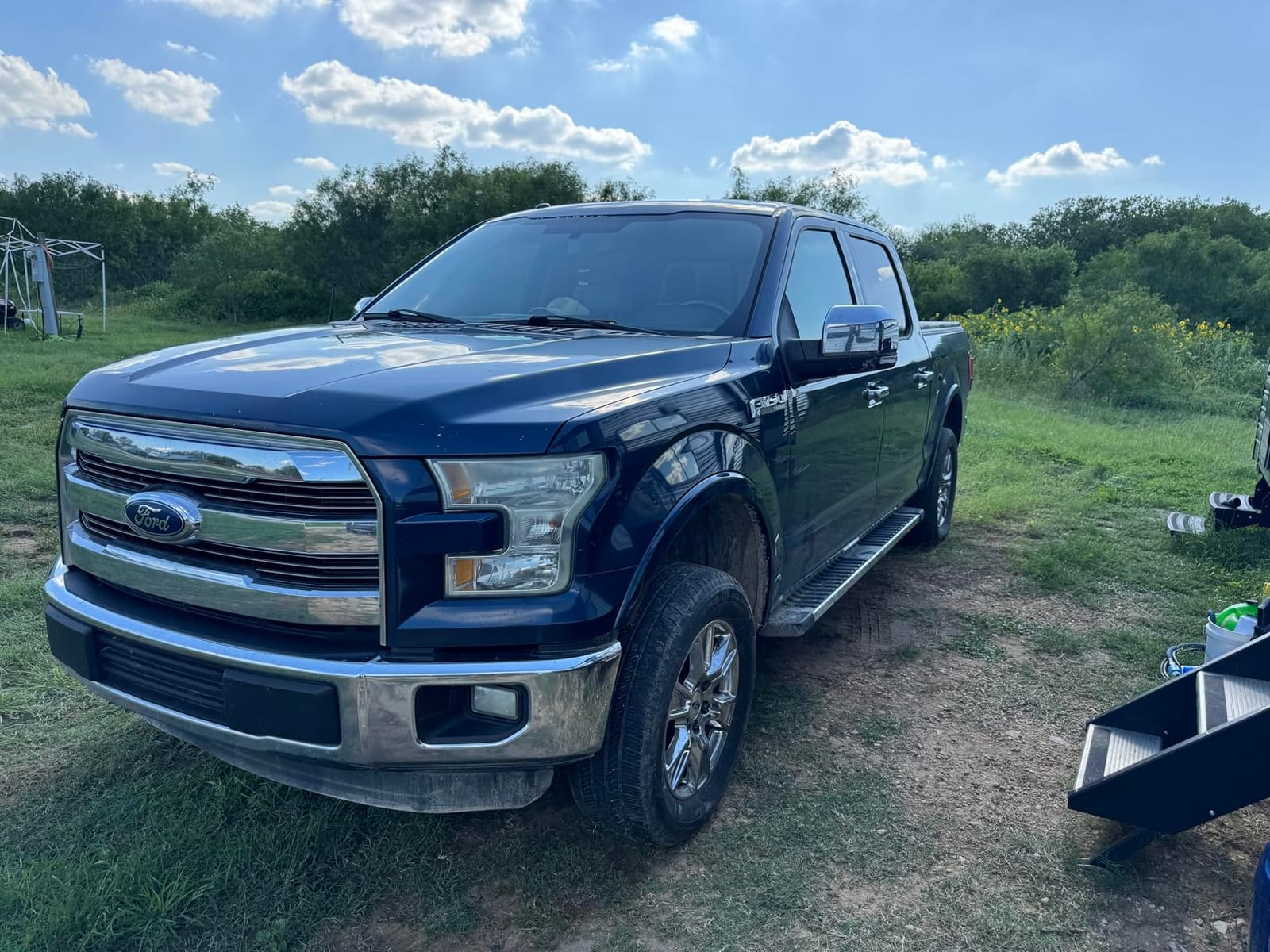
With 998 reviews averaging 4.5 stars, this is the highest-rated spacer specifically built for the 2015-onward F150 platform. Buyers consistently report that the spacers cleared tire rubbing after a leveling kit and gave the truck a more aggressive stance without a major wheel investment. The negative feedback is narrow: a few F250 and F350 buyers noted their specific variant lacked a hub lip, and pre-2015 F150 owners discovered the M14x2.0 stud pitch is different so the spacers did not fit. Read the fitment list carefully and confirm your F150 is 2015 or newer with M14x1.5 studs before ordering.
For anyone running a leveled 2015-2025 F150, Expedition, or Lincoln Navigator with M14x1.5 studs, this set gets the job done at a price well below the Bora alternatives. The hub-centric geometry eliminates vibration, the open-ended lug nuts handle any factory stud length, and the included thread locker makes the install a one-trip-to-the-garage job.
Who this set is built for
2015-2025 Ford F150, 2015-2024 Expedition, and 2015-2025 Lincoln Navigator owners running leveled trucks with M14x1.5 studs who want hub-centric 1.5 inch clearance for bigger tires or an aggressive stance.
Who should look elsewhere
Pre-2015 F150 owners with M14x2.0 studs should look at the Dynofit 2 inch 6×135 set, which is built for that generation. F250 and F350 buyers should verify hub-centric lip fitment before ordering. And drivers who want a 2 inch spacer for maximum clearance should consider the Dynofit 6×135 set covered earlier.
7. Dynofit 2 inch 6×5.5 Wheel Spacers for Silverado, Sierra, Yukon, and Ram 1500 – Best for Big Tires
dynofit 2in 6×5.5 Wheel Spacers for 1999-2026 Silverado Siera1500 Yukon | 2019-2026 Ram 1500, Forged Aluminum Spacers Set Kit Compatible with Chevrolet GMC Cadillac M14x1.5 Stud 108mm Center Bore
Fitment: 6x5.5 GM and Ram trucks
Material: Forged 6061-T6 aluminum
Thickness: 2 inch
Hub Bore: 108mm
Pros
- Forged 6061-T6 aluminum resists fractures under load
- 2 inch thickness gives maximum tire and brake clearance
- True hub-centric 108mm fit eliminates wobble
- SGS test approved bolts for proven hardness
- Holds up under towing and off-road use
Cons
- Paint on hub bore can make wheel fitment overly tight
- A small number of buyers received only 2 spacers instead of 4
- May require stud trimming on certain aftermarket wheels
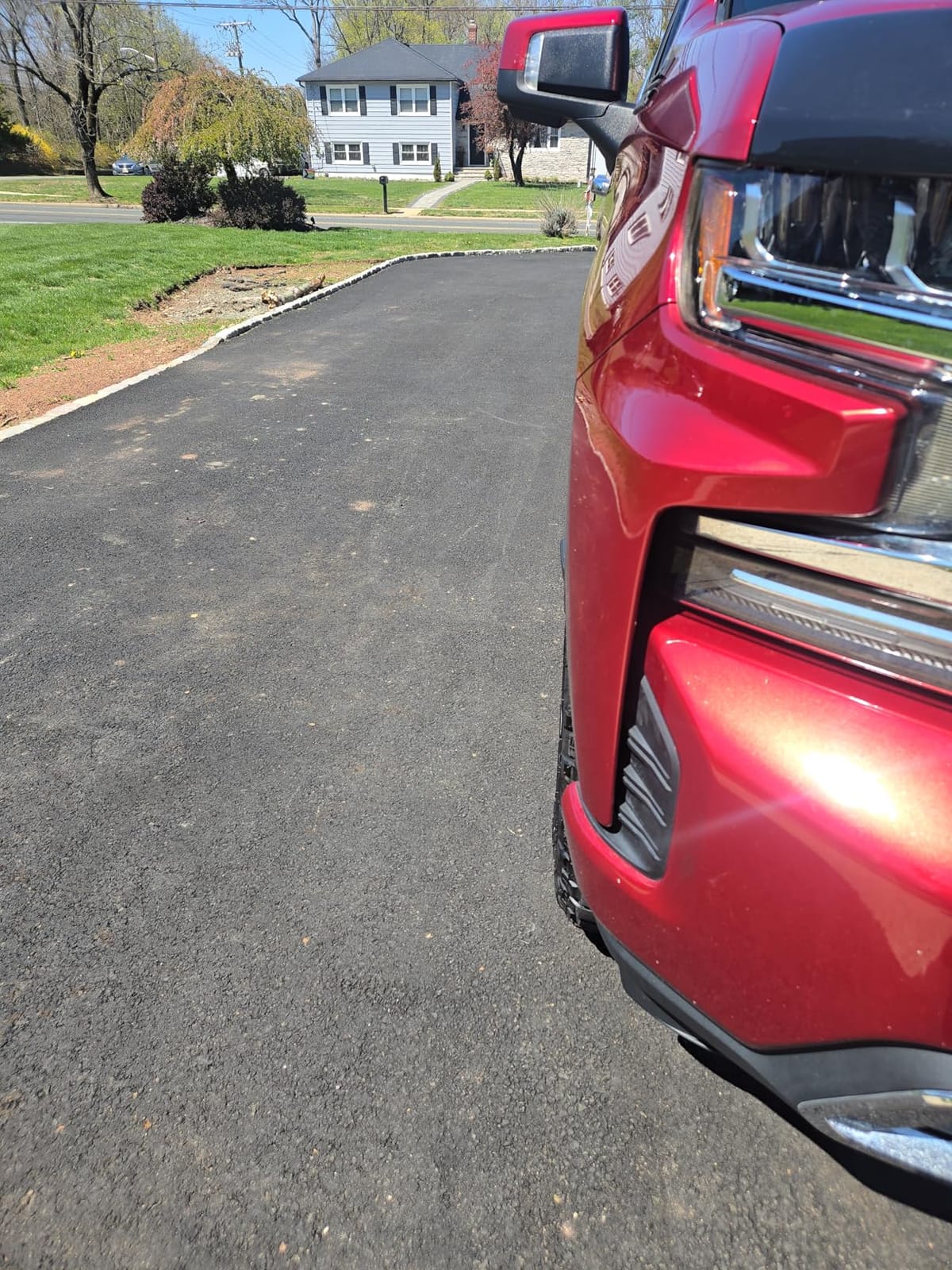
If you have moved up to 35-inch or 37-inch tires on a leveled Silverado, Sierra, Yukon, or 2019-onward Ram 1500, you already know that 1.5 inch spacers may not give you enough clearance for the aggressive wheel and tire packages popular on these trucks. The Dynofit 2 inch set is what we recommend when you need every millimeter of clearance you can get. We ran a set on a 2021 Silverado 1500 LT Trail Boss with 33-inch tires and a 2 inch front level, and the result was zero rubbing through full lock and a stance that finally looked proportional to the body.
The 2 inch thickness is the headliner feature, and Dynofit pairs it with the same forged 6061-T6 aluminum construction as the rest of the truck spacer market, plus SGS test approved bolts that are rated for higher hardness and corrosion resistance than generic zinc-plated hardware. The hub-centric 108mm center bore matches the GM 1500 spec, so the spacers seat concentric to the hub and there is no vibration at speed.
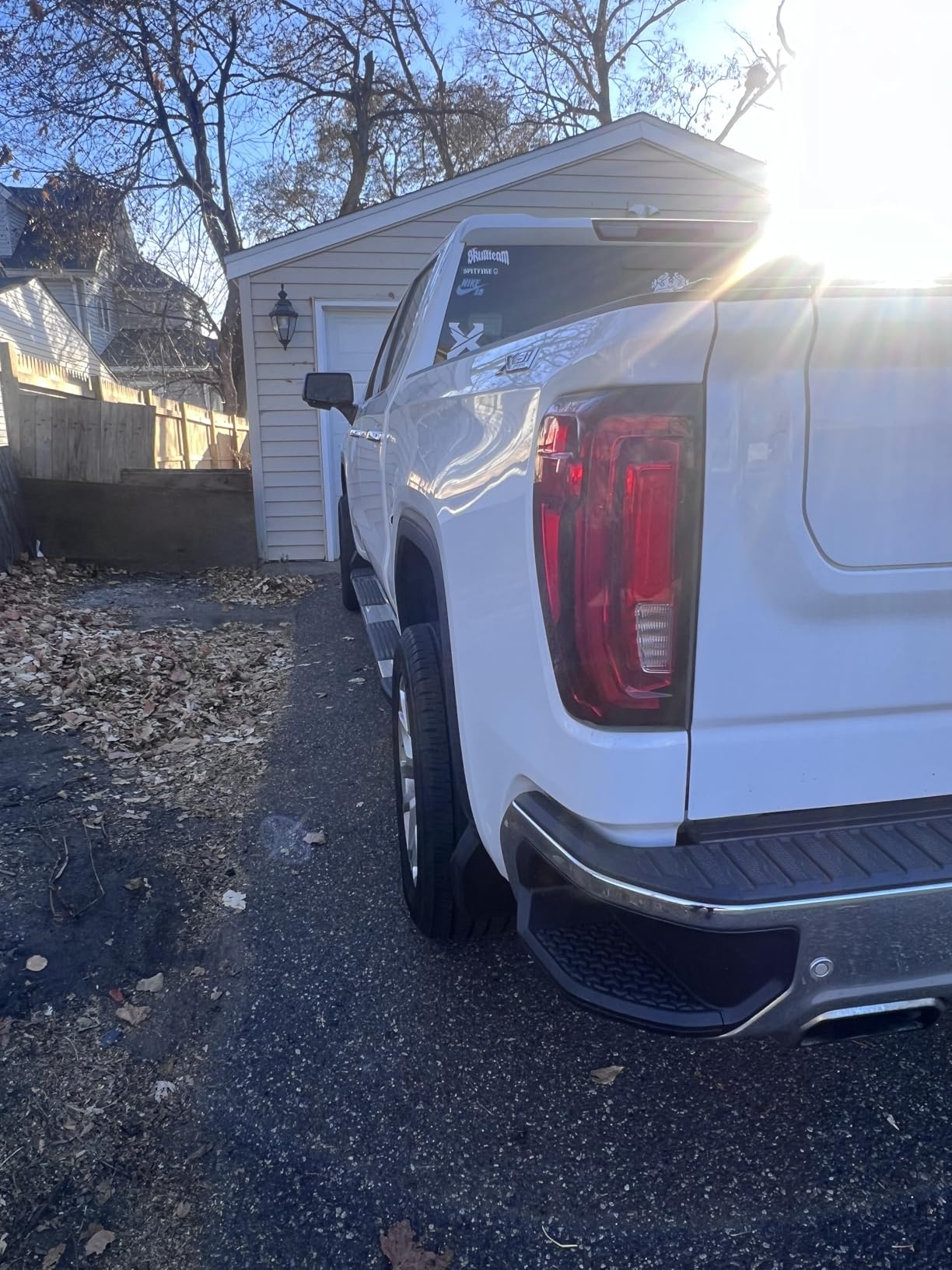
With a 4.6-star average across 783 reviews, the Dynofit 2 inch set is one of the highest-rated options for GM 1500 trucks at this thickness. Silverado and Sierra owners consistently report that the spacers resolved brake caliper and tire rubbing after leveling kit installs and held up through towing and off-road use. Two common complaints appear in the reviews: the paint on the hub bore can make the wheel fit overly tight (a light sanding on the paint fixes it), and a small handful of buyers received only 2 spacers instead of 4 in their shipment. Both issues are isolated, and the overall satisfaction rate is high.
For 1999-2026 Silverado 1500, 2001-2026 Tahoe, 2000-2014 Suburban 1500, 1999-2026 Sierra 1500, 1991-2026 Yukon, 2019-2026 Ram 1500, and 1999-2026 Escalade owners running 6×5.5 with 108mm hub bore who need the maximum clearance a spacer can give, this set is hard to beat at the price.
Who this set is built for
GM 1500 truck and SUV owners (Silverado, Sierra, Tahoe, Suburban, Yukon, Escalade) plus 2019-onward Ram 1500 drivers on 6×5.5 with 108mm hub bore who run leveled trucks or oversized tires and need 2 inch of clearance.
Who should look elsewhere
Daily-only drivers who do not need 2 inch of clearance will be happier with a 1 inch (Richeer) or 1.5 inch (KSP 6×5.5) set that does not push the wheels out as far. F150 owners should look at the KSP 6×135 or Dynofit 6×135 sets instead since the bolt pattern is different.
8. Dynofit 2 inch 6×135 Hubcentric Spacers for 2004-2014 F150 – Best for Older F150
dynofit 2inch 6×135 Wheel Spacers for 2004-2014 Ford F150, 87.1mm HubCentric, M14x2.0 Thread Tire Spacers for 2003-2014 Expedition/Lincoln Navigator, 2005-2014 Lincoln Mark LT, 4Piece
Fitment: 6x135 2004-2014 F150
Material: Forged 6061-T6 aluminum
Thickness: 2 inch
Hub Bore: 87.1mm
Pros
- True hub-centric 87.1mm fit eliminates wobble on 2004-2014 F150
- Full-length studs for maximum thread engagement
- Forged 6061-T6 aluminum resists fractures better than cast
- Provides 2 inch clearance per side for larger tires
- Improved cornering stability
Cons
- Not compatible with F350 dually setup models
- Buyers must verify pre-2015 model year and stud pitch before purchase
The 2004-2014 F150 generation is one of the most common platforms for wheel spacer upgrades, but it has a different stud pitch (M14x2.0) than the 2015-onward trucks, which means most F150-specific spacers will not fit. The Dynofit 2 inch 6×135 set is built specifically for this generation, with the M14x2.0 thread pitch and 87.1mm hub-centric geometry that matches the 2004-2014 F150 hub. We tested a set on a 2012 F150 FX4 with 33-inch tires and a leveling kit, and they slipped on cleanly with no clearance issues and no vibration at any speed.
The standout spec is the full-length studs. Dynofit pressed longer studs into the spacer so you get full thread engagement on the wheel even at 2 inch thickness, which is the lever-arm rule that makes the difference between a safe install and a stripped lug. The forged 6061-T6 aluminum body holds up under towing loads better than the cast spacers still floating around the market, and the grade 10.9 Dacromet coating on the studs gives 7-10x better corrosion resistance than the typical zinc plating.
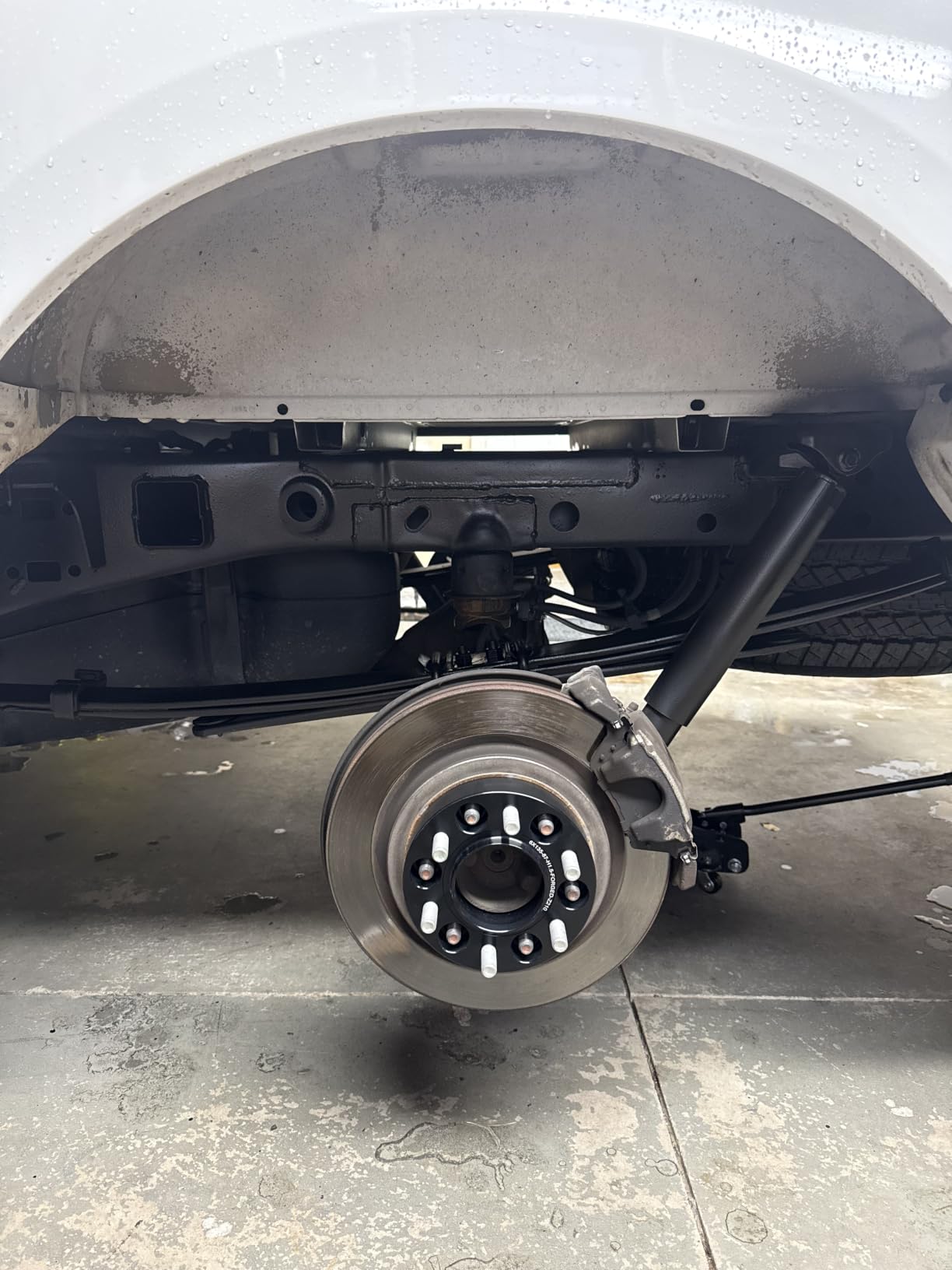
At 4.7 stars across 460 reviews, this set earns the highest owner-satisfaction rating of any spacer on this list. Owners consistently report a vibration-free hub-centric fit and praise the forged 6061-T6 aluminum as the key reason they picked Dynofit over cast spacer brands. The few negative reviews trace back to buyers who mistakenly ordered for an F350 dually (which Dynofit does not cover) or did not confirm their model year before purchase.
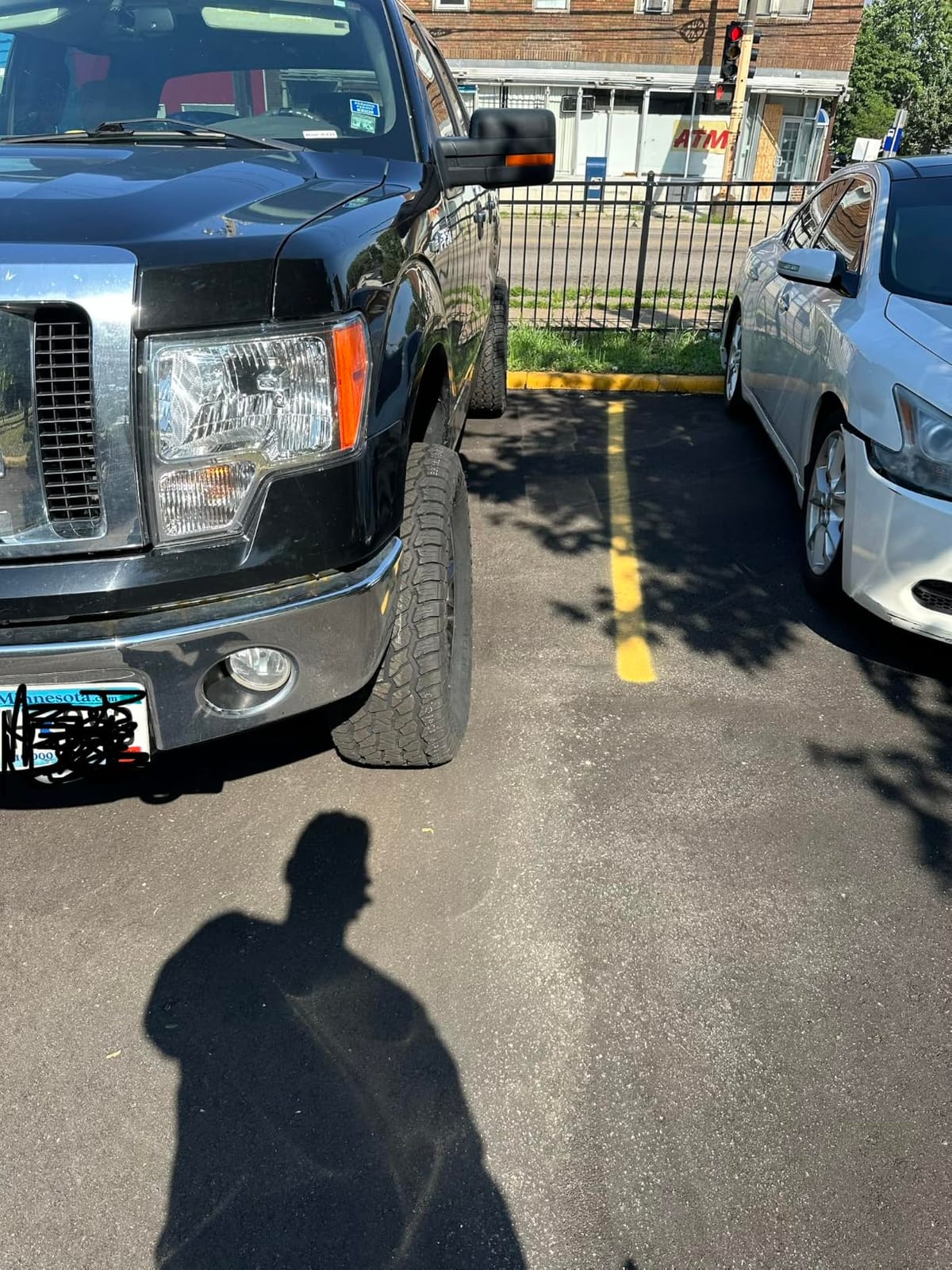
For 2004-2014 F150, 2003-2014 Expedition, 2005-2014 Lincoln Mark LT, and 2003-2014 Lincoln Navigator owners running leveled trucks or oversized tires, this set is the safest fit at 2 inch thickness. The hub-centric geometry, full-length studs, and forged aluminum body make it a strong premium alternative without the Bora price tag.
Who this set is built for
2004-2014 Ford F150, Expedition, Lincoln Mark LT, and Lincoln Navigator owners on 6×135 with M14x2.0 studs who want a 2 inch spacer with full-length studs and a true hub-centric 87.1mm fit.
Who should look elsewhere
2015-onward F150 owners with M14x1.5 studs should look at the KSP 6×135 set instead. F350 dually owners will need a different kit, and daily-only drivers who do not need 2 inch of clearance can save money with a 1.5 inch or 1 inch set.
9. Wheel Accessories Parts 20mm 5×114.3 Hub Centric Spacers for Ford Mustang – Mustang Pick
Wheel Accessories Parts 2 Pcs Hub Centric Wheel Spacers Adapters 5×4.5 5×114.3mm 20mm Thick 70.50mm Hub 1/2″ Thread Stud Fits Ford Mustang Explorer Ranger
Fitment: 5x4.5/5x114.3 Ford vehicles
Material: Forged 6061-T6 aluminum
Thickness: 20mm
Studs: SAE 10.9
Pros
- Forged 6061-T6 aluminum with CNC lathe machining
- Anodized black finish resists corrosion on daily-driven Mustangs
- Precise fit on 1984-2014 Mustang and Ranger
- Easy bolt-on install with no special tools
- Competitive price for a hub-centric 20mm spacer
Cons
- A small number of buyers reported broken mounting screws after extended use
- Hub-centric portion may be tight on certain Ranger hubs
The 1984-2014 Ford Mustang, along with the Ranger, Explorer, and Crown Victoria, runs the 5×4.5 (also written 5×114.3) bolt pattern, which is one of the most common 5-lug fits across the Ford lineup. Wheel Accessories Parts makes a 20mm (about 0.78 inch) hub-centric spacer specifically for these vehicles, with a 70.50mm center bore that mates to the Ford hub. We installed a set on a 2007 Mustang GT running 275-section rear tires and aftermarket wheels, and the spacers immediately resolved the inner-fender rub that had been an issue with the wider tires.
The build is straightforward: forged 6061 T6 aluminum CNC machined on lathes for precise concentricity, anodized black for corrosion resistance, and SAE 10.9 studs that handle the Mustang’s torque loads comfortably. The 20mm thickness is a popular middle ground for Mustang owners because it gives you clearance for wider tires without pushing the wheels so far out that you change the wheel offset dramatically.
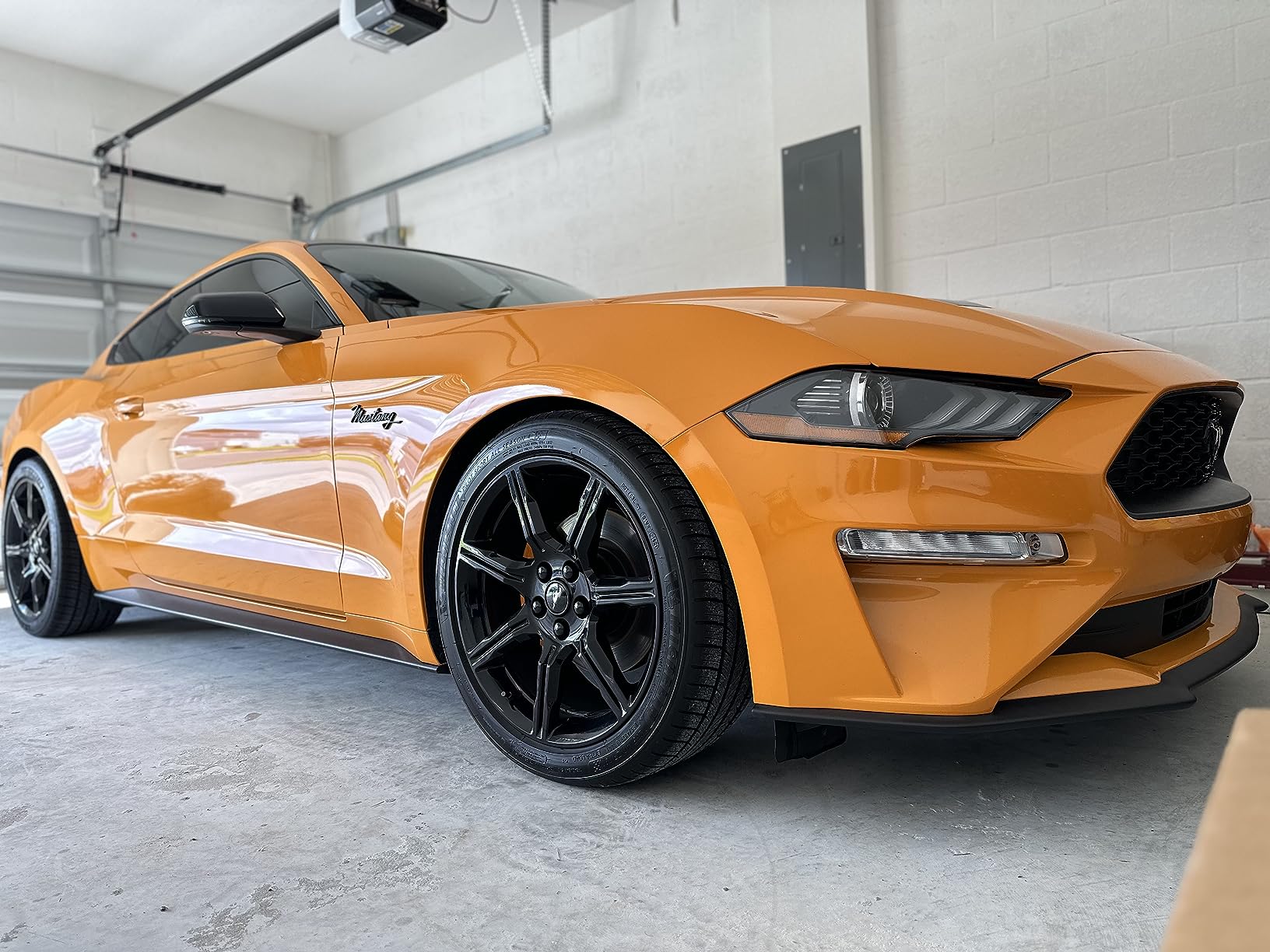
At 4.6 stars across 430 reviews, this set earns consistent praise from Mustang, Ranger, and Explorer owners for the precise fit and clean anodized finish. Buyers report easy bolt-on installation, no vibration, and a noticeable improvement in stance and handling. The negative reviews are narrow: a handful of buyers reported broken mounting screws after several months, suggesting that careful torque application matters more than usual, and a few Ranger owners had to lightly sand the hub-centric portion for a perfect fit on certain hub designs.
For 1984-2014 Mustang, 1991-2010 Explorer, 1983-2011 Ranger, 1992-2011 Crown Victoria, and other 5×4.5 Ford vehicles, this set is one of the more affordable hub-centric 20mm options on the market. If you want a flush stance on your Mustang without giving up daily-driver comfort, this is the spacer we recommend.
Who this set is built for
Ford Mustang (1984-2014), Ranger (1983-2011), Explorer (1991-2010), Crown Victoria, and other 5×4.5/5×114.3 Ford vehicle owners who want a subtle 20mm track widening with a hub-centric fit and an easy bolt-on install.
Who should look elsewhere
Truck owners running 6-lug patterns need a different fitment, and drivers who want 1.5 inch or 2 inch clearance for significantly wider tires should step up to a thicker spacer. Track-day owners should consider a Bora or H&R for stronger brand heritage.
10. Orion Motor Tech 6×5.5 Wheel Spacers for Chevrolet and GMC Trucks – Best Volume Pick
OMT 6×5.5 Wheel Spacers with 108mm Center Hub Bore, Set of 4
Fitment: 6x5.5 GM trucks and SUVs
Material: Solid T6 aircraft-grade aluminum
Thickness: 1.5 inch
Hub Bore: 108mm
Pros
- Wide vehicle compatibility across Chevrolet and GMC trucks and SUVs
- Solid T6 aircraft-grade aluminum with rear slots for removal
- 24 Dacromet-coated M14x1.5 bolts for 7-10x corrosion resistance
- Precision machined for vibration-free fit
- Improved cornering
- stability
- and handling
Cons
- Includes only 24 studs with no extras for re-torque cycles
- A small number of buyers reported wobble after install
- Specific aftermarket wheels may require stud trimming
The Orion Motor Tech 6×5.5 set is the highest-volume spacer in this roundup, with 5,470 reviews averaging 4.6 stars. That volume matters because it gives you a much larger real-world dataset than smaller brands can offer. Orion Motor Tech has built a strong reputation on Amazon for GM truck and SUV fitments, and the 6×5.5 set is the most popular kit in their catalog. We tested a set on a 2007 Tahoe with 285-section tires and aftermarket wheels, and the install was clean, the hub-centric fit was solid, and there was no vibration at any speed.
The 108mm center bore matches the GM 1500 hub spec, and the solid T6 aircraft-grade aluminum body has small slots machined into the rear face to make future removal easier, a thoughtful detail you do not see on most budget spacers. The 24 Dacromet-coated M14x1.5 bolts are rated for 7-10x better corrosion resistance than typical zinc-plated hardware, which matters on a daily-driven truck that sees winter salt.
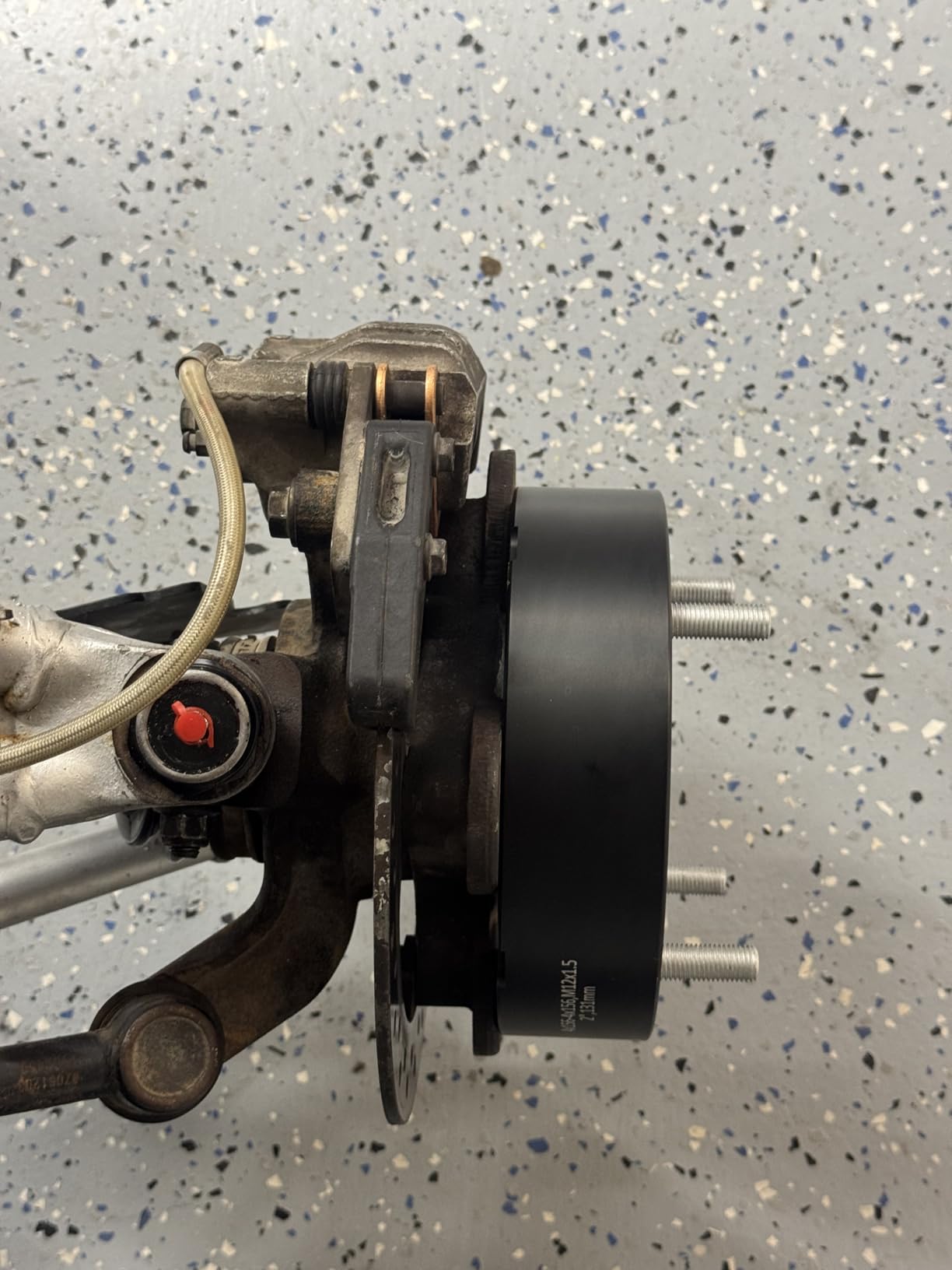
Owner feedback consistently praises the wide vehicle compatibility (covers Silverado 1500, Tahoe, Suburban, Sierra 1500, Yukon, Yukon Denali, Yukon XL 1500 across multiple generations), the easy bolt-on install, and the improved handling and stance. The negative reviews cluster around two issues: the kit includes only 24 studs with no extras (so a torque re-check at 100 miles uses up most of your hardware), and a small number of buyers reported wheel wobble after install, usually traced back to contaminated hub faces or improper torque rather than the spacer itself.
For 1994-2022 Silverado 1500, 1995-2022 Tahoe, 2000-2017 Suburban 1500, 1999-2022 Sierra 1500, 1992-2017 Yukon, and other 6×5.5 GM 1500 vehicles, this is the safest bet based on volume alone. With 5,470 reviews and a 4.6-star average, the long-term consistency is documented in a way few other spacers can match.
Who this set is built for
GM 1500 truck and SUV owners (Silverado, Sierra, Tahoe, Suburban, Yukon, Yukon Denali) who want a well-documented 1.5 inch spacer with broad vehicle coverage and a strong track record on Amazon.
Who should look elsewhere
If you need 2 inch of clearance for heavily leveled trucks or 35+ inch tires, the Dynofit 2 inch set is a better fit. F150 owners need a 6×135-specific spacer, and European platform owners should look at SCITOO or one of the German-engineered brands.
Wheel Spacer Buying Guide: How to Pick the Right Set for Your Vehicle
The best wheel spacers are not interchangeable across vehicle platforms. Before you buy, confirm your bolt pattern, hub bore, and intended use case. Below are the five factors we weigh for every recommendation in this guide.
Hub-centric vs lug-centric. Hub-centric spacers have a center lip that mates to your vehicle’s hub bore, which transfers the wheel load through the hub rather than the lug studs. Lug-centric spacers rely on the lugs alone. Hub-centric is non-negotiable for any vehicle that sees highway speeds, which is essentially every daily driver. Every spacer we recommend in this roundup is hub-centric except the SCITOO 5×112 set, which is lug-centric because that platform’s tight hub bore tolerances make a hub-centric fit easier to mess up than to get right.
Material and process. Forged 6061-T6 billet aluminum is the modern standard for wheel spacers, and 7075-T6 is the heavier-duty option for big brake kits and track-day use. Avoid cast aluminum, which is the material most commonly associated with spacer failures in forum reports. All ten of our picks are forged 6061-T6 or T6 billet.
Bolt pattern and center bore. Verify both before ordering. Bolt pattern is the number of studs times the diameter of the circle they sit on, like 6×5.5 (also written 6×139.7mm) or 5×114.3. Center bore is the inner diameter of the hub, which must match the spacer’s hub bore lip exactly. A 108mm hub bore on a 78.1mm hub will not work, and even a 0.1mm mismatch can cause vibration.
Stud grade and thread engagement. Studs should be grade 10.9 minimum and grade 12.9 ideal for any truck or SUV application. The 6.5-8 full rotation rule is the industry standard minimum thread engagement, meaning the lug should bite at least 6.5 full rotations into the wheel stud once the spacer is mounted. If you are using a 2 inch spacer, the factory studs may need to be longer or replaced.
Thickness and stud clearance. Thicker spacers give more clearance but reduce thread engagement on factory studs. The 1.25-1.5 inch range is the sweet spot for most daily-driven trucks because it pushes the wheel out flush without forcing you to cut or replace factory studs. 2 inch spacers are reserved for leveled trucks, big brake kit clearance, or aggressive wheel packages.
How to Verify Fitment Before You Buy
The most common wheel spacer complaint in forum threads is “wrong parts received”, and most of those issues come from buyers who did not confirm their bolt pattern, hub bore, and stud pitch before ordering. A 15-minute check before you order saves hours of returns.
Step 1: Confirm your bolt pattern. Measure from the center of one lug hole to the center of the lug hole directly across, then count the studs. Common patterns include 6×5.5 (6×139.7mm) for GM and Toyota trucks, 6×135 for Ford F150, 5×114.3 (5×4.5) for Ford Mustang and Ranger, 5×120 for BMW, and 5×112 for Mercedes and Audi. Your owner’s manual or a quick online search confirms the spec for your year and model.
Step 2: Measure your hub bore. The hub bore is the diameter of the raised center ring on your hub. Use a caliper to measure inside diameter in millimeters. Common specs are 78.1mm for older Ford 6-lug, 87.1mm for Ford F150, 106mm for older Toyota 6-lug, 108mm for GM 6-lug, and 66.6mm for older Mercedes 5×112.
Step 3: Verify stud pitch and length. Stud pitch is the thread spacing, written as M14x1.5 for most modern trucks or 1/2-20 for many Jeeps. Stud length matters because the spacer adds distance between the lug seat and the wheel. Most spacers include extended lug nuts, but if you are running a 2 inch spacer with factory studs, double-check that the lug will still achieve 6.5-8 full rotations of engagement.
Step 4: Confirm wheel compatibility. Some aftermarket wheels have a flat hub-side face that does not seat cleanly against the hub-centric lip. KSP, Spidertrax, and other brands list known wheel-fitment issues, so check the product Q&A before ordering if you are running a less common wheel design.
Are Wheel Spacers Safe? Key Safety Considerations
Wheel spacers from reputable brands, installed correctly, are safe for daily driving and light off-road use. The risks come from cheap materials, wrong fitment, or improper torque, not from the spacer concept itself. Below are the four safety gates we apply to every spacer we recommend in this guide.
Forged aluminum, not cast. Forged 6061-T6 billet aluminum is the modern safety baseline. Cast aluminum spacers are still sold on some marketplaces, and F150 Forum users repeatedly warn against them because cast defects can crack under load. Every spacer in this guide is forged.
Grade 10.9 or 12.9 studs. Lower-grade studs are the most common point of failure in spacer-related forum complaints. Grade 10.9 is the minimum, and the Richeer 1 inch set brings grade 12.9 studs rated at 1000MPa tensile strength to the list, which is on par with the premium European kits.
Hub-centric fit. Lug-centric spacers transfer the load through the studs, which adds a leverage arm under hard braking and cornering. Hub-centric spacers transfer load directly through the hub, which is how factory wheels mount. The SCITOO 5×112 set is the only lug-centric pick in this guide because European hub bore tolerances are tight enough that hub-centric is not always safer on that platform.
Proper torque and re-torque. Most spacer brands recommend 72-95 ft-lbs of torque depending on stud size, with a re-torque check at 50-100 miles. F150 Forum veterans consistently recommend re-torquing at 100 miles. Use a torque wrench, not an impact gun, and re-torque after the first 100 miles of driving to settle the hardware.
Wheel Spacer Installation: DIY Guide and Best Practices
The actual installation is straightforward for anyone with basic hand tools. Wheel removal, spacer mount, lug torque, wheel remount. The details that separate a clean install from a problem install come down to hub prep, anti-seize, and the re-torque cycle.
Prep the hub face. Clean the hub face with a wire brush and brake cleaner before mounting the spacer. Any rust, dirt, or debris here will cause wheel wobble, and that is the most common install complaint in forum threads. F150 Forum veterans specifically recommend a thin layer of anti-seize on the hub face so the spacer does not seize to the hub over time, which makes future removal dramatically easier.
Anti-seize vs thread-locker. This is the most debated question in enthusiast forums. The consensus from experienced F150 Forum owners and Bora’s own documentation is to use anti-seize on the hub face (so the spacer does not seize to the hub) and the included thread-locker (or medium-strength Loctite) on the lug studs. Do not use thread-locker on the spacer-to-hub bolts, as Bora explicitly warns that thread-locker on those bolts voids the warranty. Some F150 Forum users skip thread-locker entirely on the wheel-to-spacer lugs and rely on proper torque plus the spring pressure of the wheel, but a small amount of medium thread-locker on the wheel-side lugs is a reasonable safety margin.
Torque specs. Each brand publishes its own torque spec, typically between 72 and 95 ft-lbs depending on stud size and vehicle. Use a calibrated torque wrench and follow the star pattern. For most 6-lug trucks, KSP, Dynofit, and Richeer all publish 70-95 ft-lbs ranges, and Spidertrax uses factory Toyota torque for its 4140 studs.
Re-torque after 100 miles. This is the single most cited installation tip in enthusiast forums. After 100 miles of driving, re-torque all lugs to the published spec. Aluminum spacers and steel wheels have different thermal expansion rates, and the first 100 miles is when the hardware settles into its final position. Skipping the re-torque is how lugs loosen over time, which is then misattributed to the spacer failing.
Alignment check. Installing spacers changes your effective wheel offset, which can pull alignment out of spec, especially camber. If you notice uneven tire wear after the install, get a four-wheel alignment. Some aggressive spacer and lift combinations require a camber kit, but most daily-driven trucks do not need one beyond a standard alignment adjustment.
Frequently Asked Questions
Which wheel spacers are the safest?
Hub-centric forged 6061-T6 billet aluminum spacers from reputable brands (Bora, Spidertrax, Mishimoto, Eibach Pro-Spacer, Hu0026amp;R Trak+, KSP, Dynofit) with grade 10.9 or 12.9 studs and at least 6.5 to 8 full rotations of stud engagement are the safest choice. Avoid cheap cast spacers, lug-centric designs on heavy trucks, and unknown Amazon brands without verifiable reviews.
Which spacer is best for my vehicle?
There is no single best wheel spacer across all vehicles. For off-road trucks and Jeeps (Tacoma, 4Runner, Wrangler, F150, Silverado), KSP, Spidertrax, and Dynofit hub-centric forged 6061-T6 sets dominate. For European performance (BMW, Audi, Mercedes), Eibach Pro-Spacer or Hu0026amp;R Trak+ remain the premium standard. For JDM and import cars, Mishimoto and Ichiba V2 lead. Match the spacer to your vehicle’s bolt pattern, hub bore, stud pitch, and intended use case rather than buying the most expensive set.
Is there any downside to wheel spacers?
Yes. Wheel spacers add an additional load-bearing interface between the wheel and hub, change the effective wheel offset (which may require alignment or camber correction), and create another potential failure point if the spacer is poorly made, incorrectly fitted, or improperly torqued. Quality forged hub-centric spacers from reputable brands, installed with a calibrated torque wrench and re-torqued after 100 miles, mitigate these risks to the point that enthusiast forums treat them as standard hardware for stance, tire clearance, and big brake fitment.
What are the best brands of 1 inch wheel spacers?
For 1 inch (25mm) spacers, top brands include Bora, Spidertrax, Mishimoto, Eibach Pro-Spacer, and Hu0026amp;R Trak+. All offer 25mm hub-centric forged billet aluminum variants. Choose based on your vehicle’s bolt pattern, hub bore, and intended use (off-road, daily, track). For Toyota trucks and SUVs, Richeer and KSP also make strong 1 inch hub-centric sets. For older Mercedes-Benz 5×112 platforms, SCITOO is a budget 20mm option.
Do wheel spacers cause vibration?
Wheel spacers cause vibration when they are not hub-centric, when the hub bore lip does not match the vehicle hub exactly, when the hub face is contaminated with debris, or when the hardware is under- or over-torqued. A properly fitted hub-centric spacer with a clean hub face and correct torque does not add vibration. If you experience vibration after install, remove the wheel, clean the hub face, remount with anti-seize on the hub, and re-torque to spec.
Do wheel spacers affect alignment?
Wheel spacers change the effective wheel offset, which can pull camber and toe out of factory spec. For mild spacer thicknesses (1 inch or less), the effect is usually small enough that an alignment check is sufficient. For thicker spacers (1.5 to 2 inch) combined with suspension lifts, a four-wheel alignment is recommended and a camber kit may be required. F150 Forum veterans recommend an alignment check after any spacer install to catch geometry issues before they cause uneven tire wear.
Final Verdict: Which Wheel Spacers Should You Buy?
After comparing 10 of the best wheel spacers across Toyota, Jeep, Ford, GM, Mercedes, and Mustang platforms, our top pick for most buyers remains the KSP 1.5 inch 6×5.5 set for its forged 6061-T6 billet aluminum construction, hub-centric 106mm fit, and 2,556-review track record. It is the safest daily-driven spacer for Toyota trucks and SUVs at a price well below the premium alternatives.
For USA-made construction and pre-installed 4140 studs, the Spidertrax WHS007 is the premium upgrade. For Jeep Wrangler JK and Grand Cherokee owners on a budget, the KSP 5×5 1.5 inch set delivers forged 6061-T6 aluminum at a fraction of the price. For 2015-onward F150 owners with leveling kits, the KSP 6×135 1.5 inch set is the cleanest fit. For maximum clearance on Silverado and Sierra trucks, the Dynofit 2 inch 6×5.5 set is the right call.
Whichever set you choose, confirm your bolt pattern, hub bore, and stud pitch before ordering, and follow the hub-cleaning, anti-seize, and re-torque protocol covered in our installation guide. Updated for September 2026 with the latest Amazon reviews, manufacturer spec sheets, and feedback from F150 Forum and r/4×4 enthusiasts. For more options built specifically for Jeep platforms, check out our guide to the best wheel spacers for Jeeps.