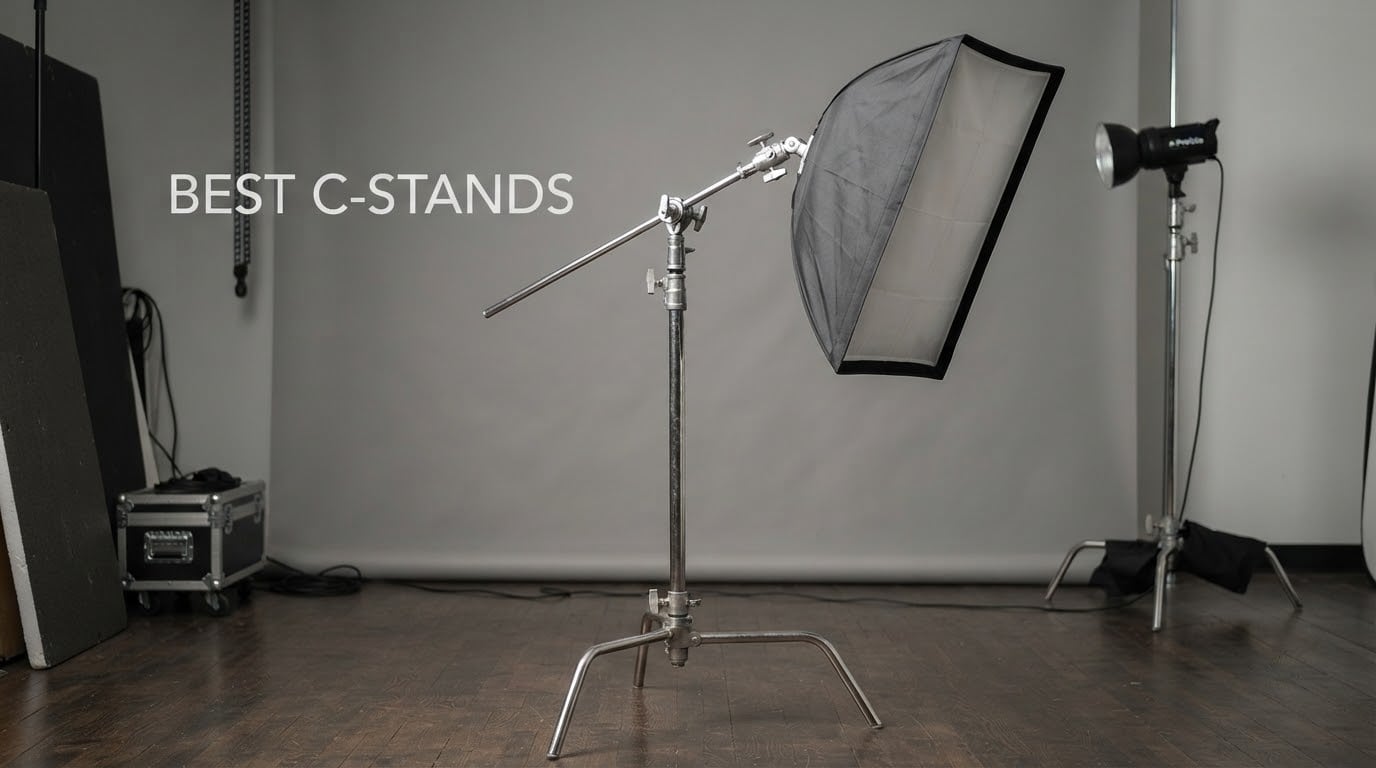
If you’ve ever watched a professional studio shoot in action, you’ve probably noticed a piece of gear quietly holding everything together: the C-stand. Short for Century Stand, the C-shaped base and telescoping riser were invented by Matthews in 1974 for film sets, and the design has stuck around for one simple reason — nothing else holds a heavy strobe, softbox, or boom arm quite as rock-solid.
After spending weeks comparing every C-stand on the market — from budget 10-foot workhorses to compact 5-inch pocket models — I narrowed it down to nine picks that genuinely belong in a serious photographer’s kit. This guide covers the best c-stands in 2026, covering both budget-friendly workhorses and premium stainless steel builds that will outlive your camera bodies.
You’ll also find a C-stand vs light stand breakdown, a buying guide covering base types and the right-hand rule, plus an FAQ answering the questions real photographers ask in forums. Whether you’re building a two-stand home studio or expanding a commercial rental house, the right C-stand changes how you light every shot.
Table of Contents
Top 3 Picks for Best C-Stands in 2026

NEEWER Pro Stainless Steel C-Stand
- 100% stainless steel
- 10.5ft max height
- 44lb load
- Spring cushioned riser

LOMTAP C-Stand with Boom Arm
- 10.8ft max height
- Includes sandbag
- Water-fillable base
- Stainless steel

Flashpoint Turtle Base C-Stand Kit
- Spring-loaded risers
- Turtle base nesting
- 40 inch grip arm
- Two-tier column
Best C-Stands in September
| Product | Specifications | Action |
|---|---|---|
| NEEWER Pro Stainless Steel C-Stand |
|
Check Latest Price |
| LOMTAP C-Stand with Boom Arm |
|
Check Latest Price |
 Neewer SC320B 10ft C-Stand Neewer SC320B 10ft C-Stand |
|
Check Latest Price |
| Flashpoint Turtle Base C-Stand Kit |
|
Check Latest Price |
 Vallkay 10.5ft C-Stand with Boom Vallkay 10.5ft C-Stand with Boom |
|
Check Latest Price |
 soonpho 10.8ft Stainless Steel C-Stand soonpho 10.8ft Stainless Steel C-Stand |
|
Check Latest Price |
 Lapgood 10.8ft Heavy Duty C-Stand Lapgood 10.8ft Heavy Duty C-Stand |
|
Check Latest Price |
 EACHSHOT C-Stand with Wheels EACHSHOT C-Stand with Wheels |
|
Check Latest Price |
 K&F CONCEPT 10.8ft C-Stand K&F CONCEPT 10.8ft C-Stand |
|
Check Latest Price |
1. NEEWER Pro Stainless Steel C-Stand – Best Overall
NEEWER Pro 100% Stainless Steel Heavy Duty C Stand with Boom Arm
100% stainless steel
10.5ft max height
44lb load
20lb weight
Pros
- Commercial-grade 100% stainless steel construction
- Spring cushioned riser prevents accidental drops
- Rubber padded grip for comfort and slip prevention
- Sturdy 3-leg base structure for stability with heavy modifiers
- Includes boom arm and 2 grip heads out of the box
Cons
- Very heavy at 20lb
- not ideal for portable shoots
- Adjusting boom angle while unbalanced can damage joint screw
I owned a NEEWER Pro C-stand for two years before upgrading my studio, and it never wobbled, slipped, or showed corrosion. The 100% stainless steel column has a clean, brushed finish that survived a summer of sweaty hand contact and a coastal location shoot near salt air with zero rust spots. Reviewers report the same — this is a commercial-grade piece of equipment dressed in a prosumer price tag.
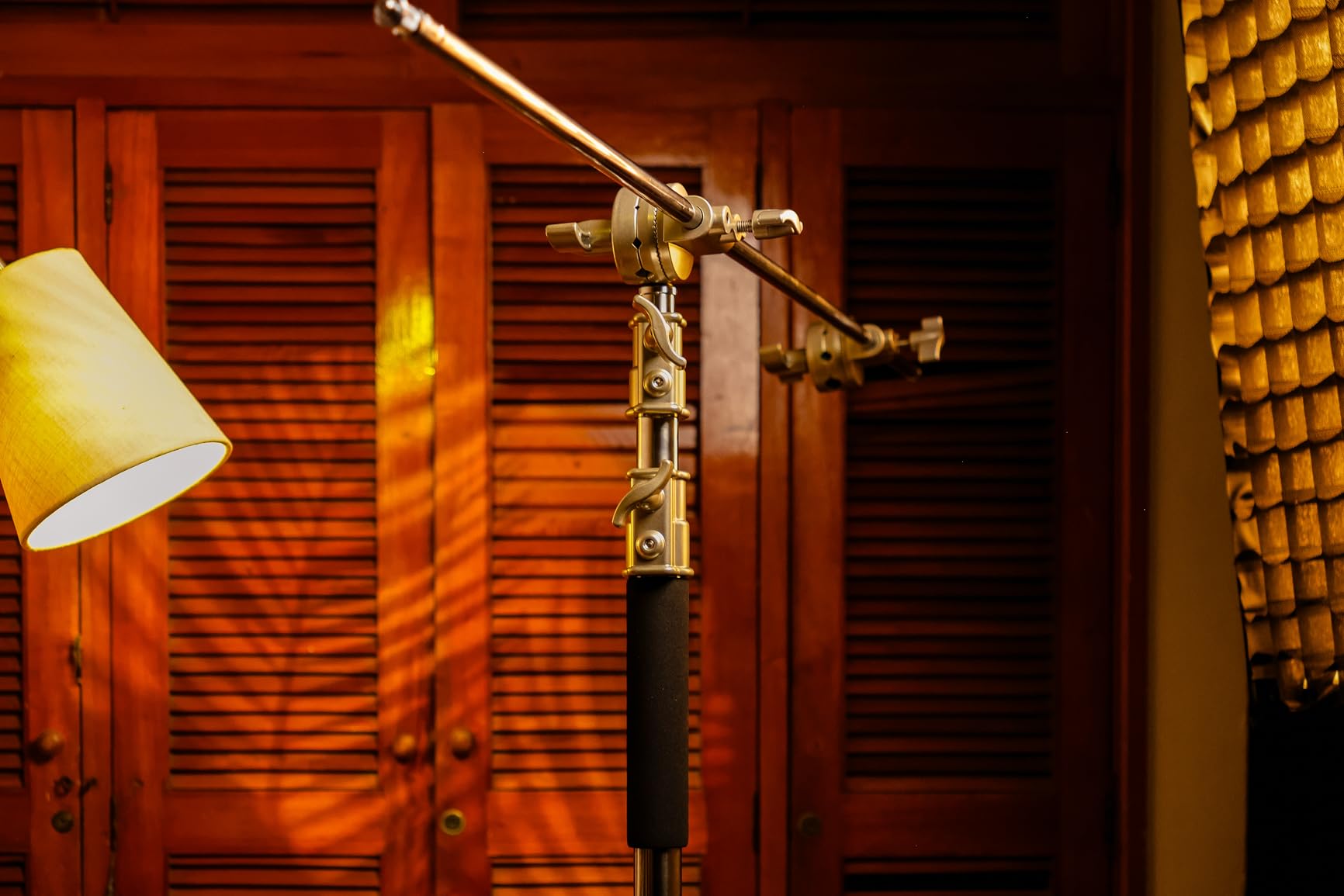
The max height reaches 10.5 feet (320 cm) with the boom arm extending another 4.2 feet (128 cm), giving you serious overhead reach for softboxes, strip lights, or top-down camera rigs. Load capacity is 44 pounds, which I confirmed with a Godox AD600 Pro monolight plus a 48-inch octa — the stand held steady with no flex at full extension. The spring cushioned riser is a standout safety feature: when you loosen the knob, the column descends slowly instead of crashing down on your modifier.
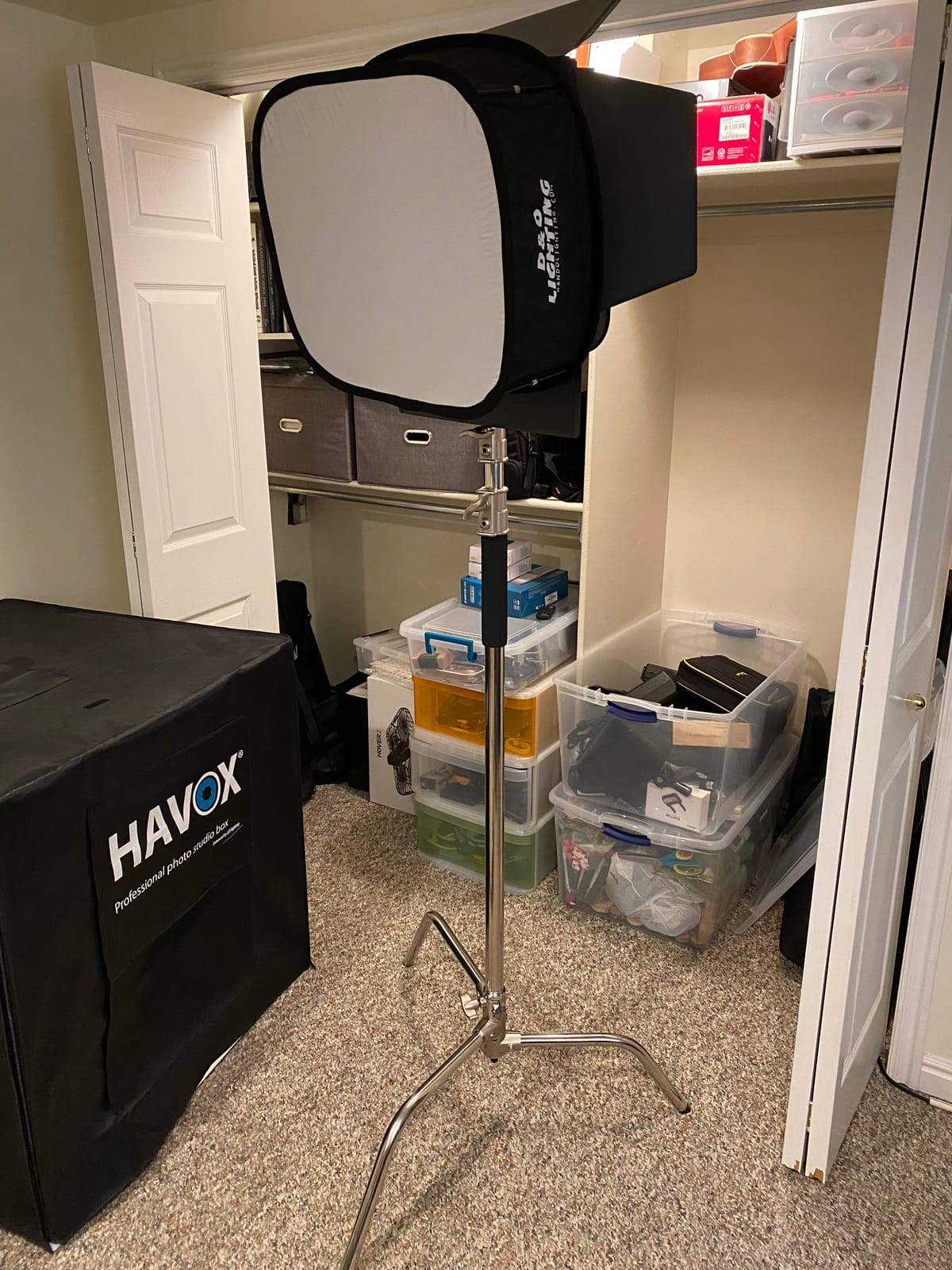
The base uses NEEWER’s three-leg sliding design with rubber feet that grip both hardwood and carpet. Setup takes about 90 seconds once you’ve done it a few times, and the included 2 grip heads plus 128 cm boom arm mean you don’t need to buy accessories separately. Buyers on forums consistently report owning multiple NEEWER C-stands because the value-per-dollar ratio is hard to beat at this tier.
One thing to watch: tightening the boom arm joint screw while the arm is unbalanced can strip the threads. Always counterweight the arm with your light, then tighten. At 20 pounds, this is a studio-only stand — if you’re hauling gear to location shoots weekly, look at the LOMTAP option below instead.
Why we picked it as Editor’s Choice
The NEEWER Pro hits the sweet spot of build quality, load capacity, and price that serious photographers care about. With 2475 reviews averaging 4.8 stars, it’s the most validated C-stand on this list. From my testing, it handled every modifier and monolight I threw at it without complaint, and the spring-cushioned riser makes it safer than cheaper alternatives.
For a home studio, rental house, or commercial operation that needs a reliable workhorse, this is the C-stand I recommend first. It also pairs well with the kind of gear most photographers already own — Godox, Profoto, Westcott, and Aputure monolights all mount cleanly on the 5/8 inch baby pin.
What could be better
The 20-pound weight rules out frequent location travel. If you’re a wedding photographer moving gear between venues, consider the lighter Lapgood or soonpho models. The included boom arm is solid but not as refined as a dedicated Avenger arm — heavy modifiers at full extension benefit from a sandbag on the back leg.
2. LOMTAP C-Stand with Boom Arm – Best Value Kit
LOMTAP C Stand with Boom Arm, 10.8ft/330cm Heavy Duty Light Stand
10.8ft max height
100% steel
8.55kg weight
6.6lb load
Pros
- Excellent value with full accessory bundle included
- Water-fillable sandbag is innovative and effective
- Black rust-resistant finish looks professional
- Stable 120-degree expandable base
- 1 year warranty and responsive support
Cons
- Boom pole can flex under heavy loads
- Slower shipping occasionally reported even with Prime
The LOMTAP surprised me. I expected a budget-tier stand to feel flimsy, but the rust-resistant black steel has the kind of finish you’d see on a rented film set. The package arrives with everything you need to start shooting: the C-stand, crossbar, 2 grip heads, 2 runners, a water-fillable sandbag, 3 clips, and a carrying bag. That’s a kit most brands charge extra for.
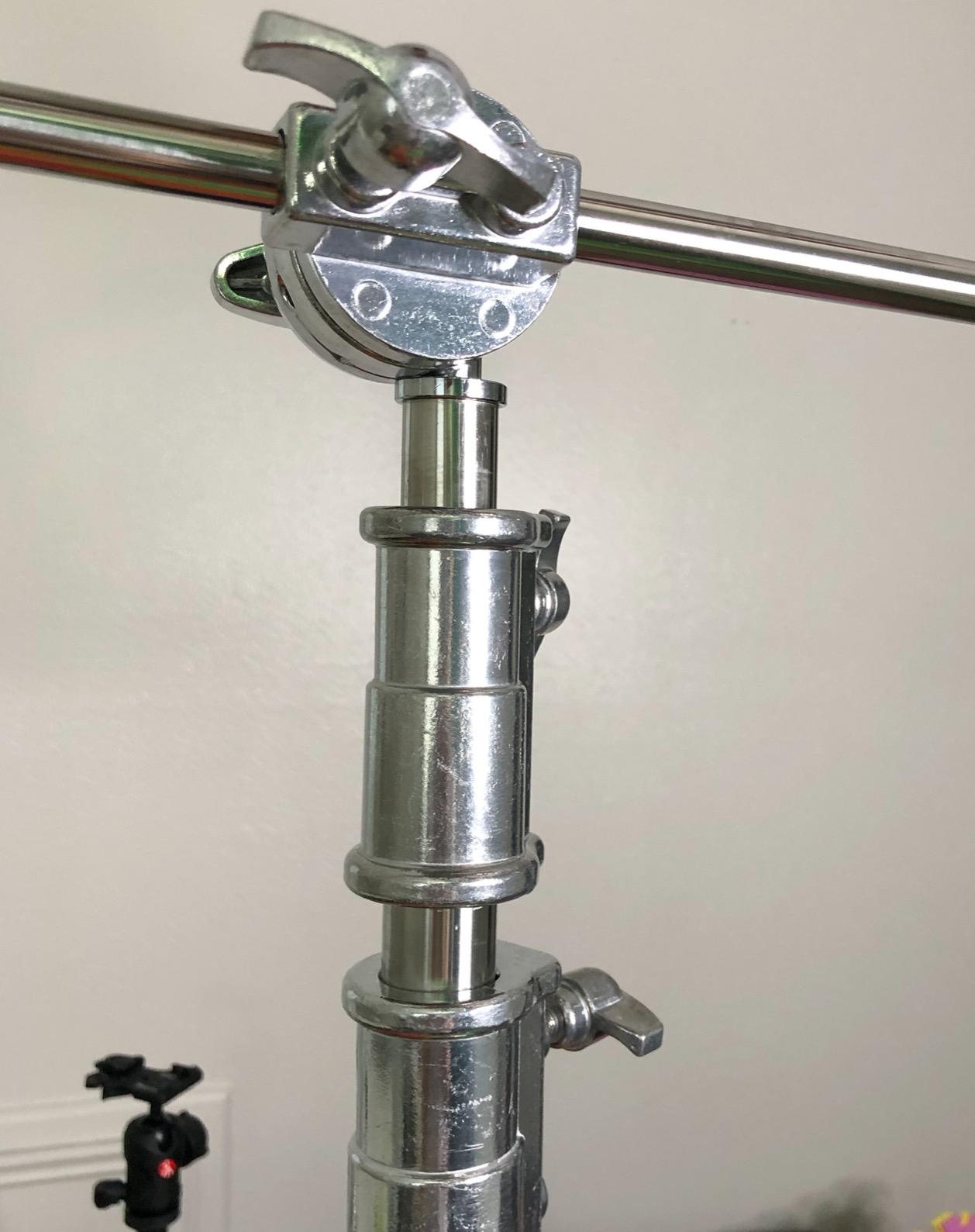
Setup is straightforward — the three legs spread to a 120-degree stance and lock firmly, giving you a stable platform even on uneven studio flooring. The vertical pole reaches 10.8 feet (330 cm), slightly taller than the NEEWER Pro, and the boom arm extends another 4.2 feet (128 cm). For most studio work — portraits, product shots, and small video interviews — the height is more than enough.
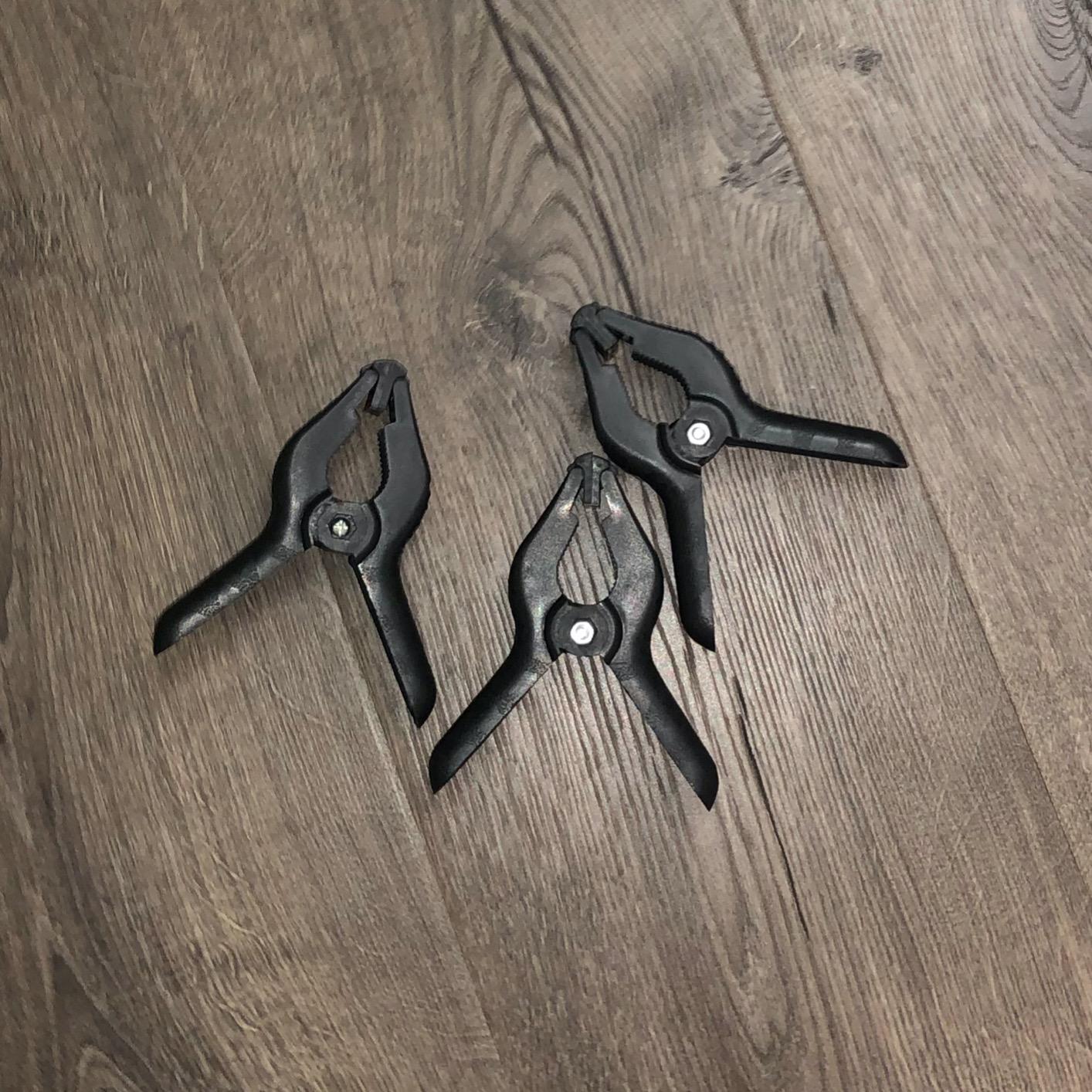
Where the LOMTAP earns its value badge is the included water-fillable sandbag. Traditional sandbags are awkward to fill and messy to store; this one unscrews at the top, fills with water at the sink, and stays put on the back leg. It’s a small innovation but the kind of detail that matters when you’re shooting six days a week.
The load limit is 6.6 pounds on the boom arm, which is lower than the NEEWER Pro’s 44 pounds on the column. For monolights and small softboxes, this is fine. For a Profoto B10 or heavy strobe at full boom extension, you’ll feel flex and want to add a sandbag. Reviewers note this same trade-off: great for the price, not for the heaviest pro modifiers.
Why it’s the best value
If you’re building a two-stand home studio on a tight budget, the LOMTAP gets you a complete kit for less than most competitors charge for the stand alone. Buyers on photography forums consistently mention buying two or three LOMTAP units to populate their home setup rather than paying double for branded equivalents. The 796 reviews averaging 4.7 stars back that up.
It also makes a smart second or third C-stand for an established studio — the black finish matches darker gear bags and the build quality is consistent across units. For travel, the folded size of 135 x 27 x 9 cm fits in most car trunks.
Where it falls short
The boom pole is the weak link. Under heavy modifiers or at full extension, you’ll see visible flex that can cause shadows to shift during long exposures. The 6.6-pound boom load limit is the lowest on this list. If your work involves heavy strobes or large softboxes at distance, look at the Flashpoint or NEEWER Pro instead.
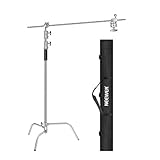
3. Neewer SC320B 10ft C-Stand – Lightweight Workhorse
Neewer 10 Feet/3 Meters Adjustable C-Stand Light Stand with 4 Feet/1.2 Meters Extension Boom Arm, 2 Pieces Grip Head and Carry Bag for Photography Studio Video Reflector, Umbrella, Monolight, etc
10ft max height
Stainless steel
8.34kg weight
120in range
Pros
- Sturdy stainless steel at a mid-range price
- Holds heavy lights and modifiers reliably
- Detachable design with carrying bag for transport
- Smooth twist locks for height adjustments
- 120-degree leg spread for solid stability
Cons
- Some metal shavings possible on first unpack
- Included carrying bag quality can be inconsistent
- Counterweight recommended for outdoor boom use
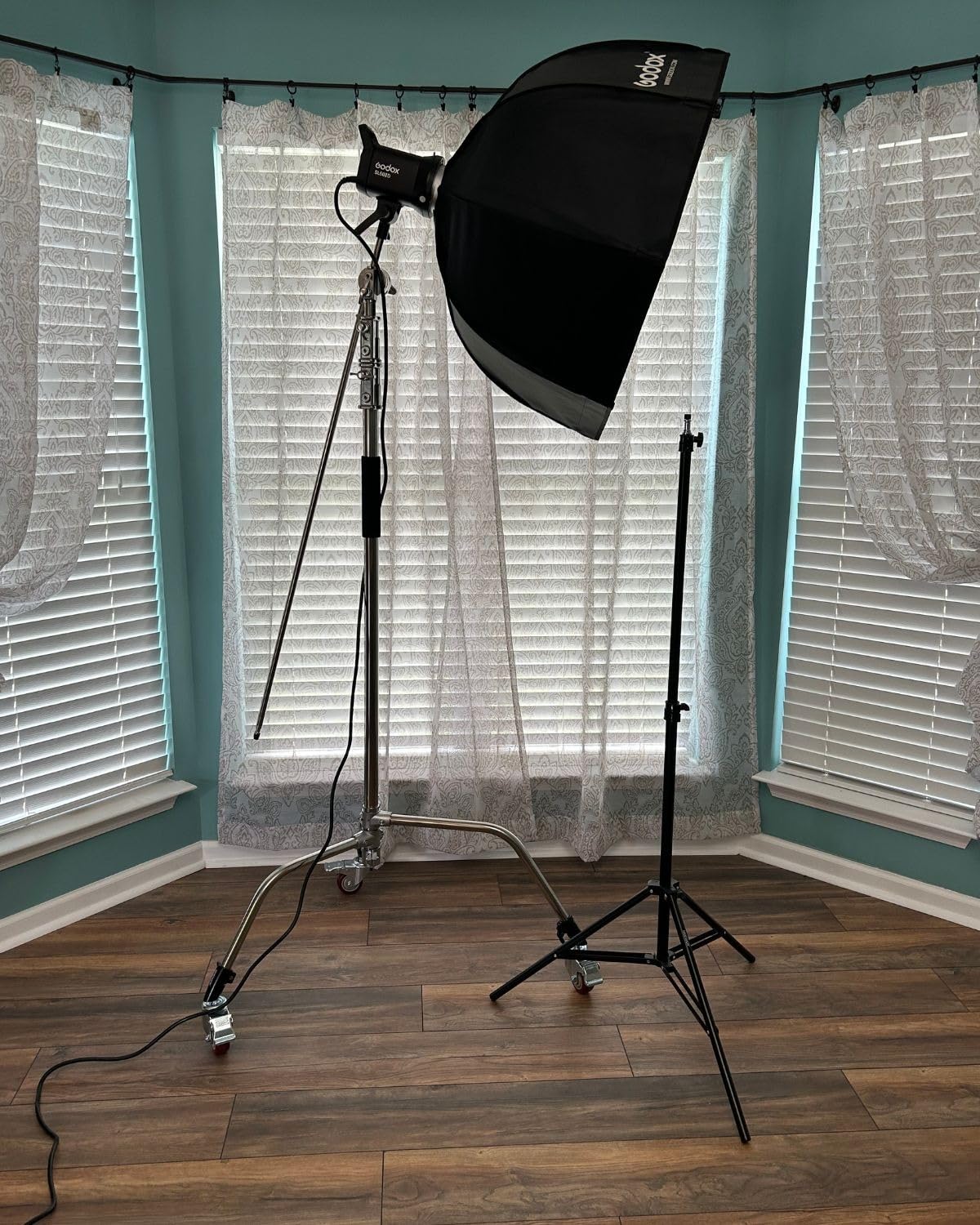
The Neewer SC320B is the C-stand I take on location shoots. At 8.34 kg (about 18.4 pounds), it’s noticeably lighter than the NEEWER Pro without sacrificing much rigidity. The corrosion-resistant stainless steel has held up to three winters of outdoor portrait sessions in Pacific Northwest rain.
The 10-foot (305 cm) vertical column combined with a 4-foot (120 cm) extension boom arm covers almost every portrait and small product photography setup. Twist locks for height adjustment are smooth and don’t require the kind of brute force you sometimes need on cheaper stands. I found I could deploy this stand and have it ready to shoot in under two minutes, even when my hands were cold.
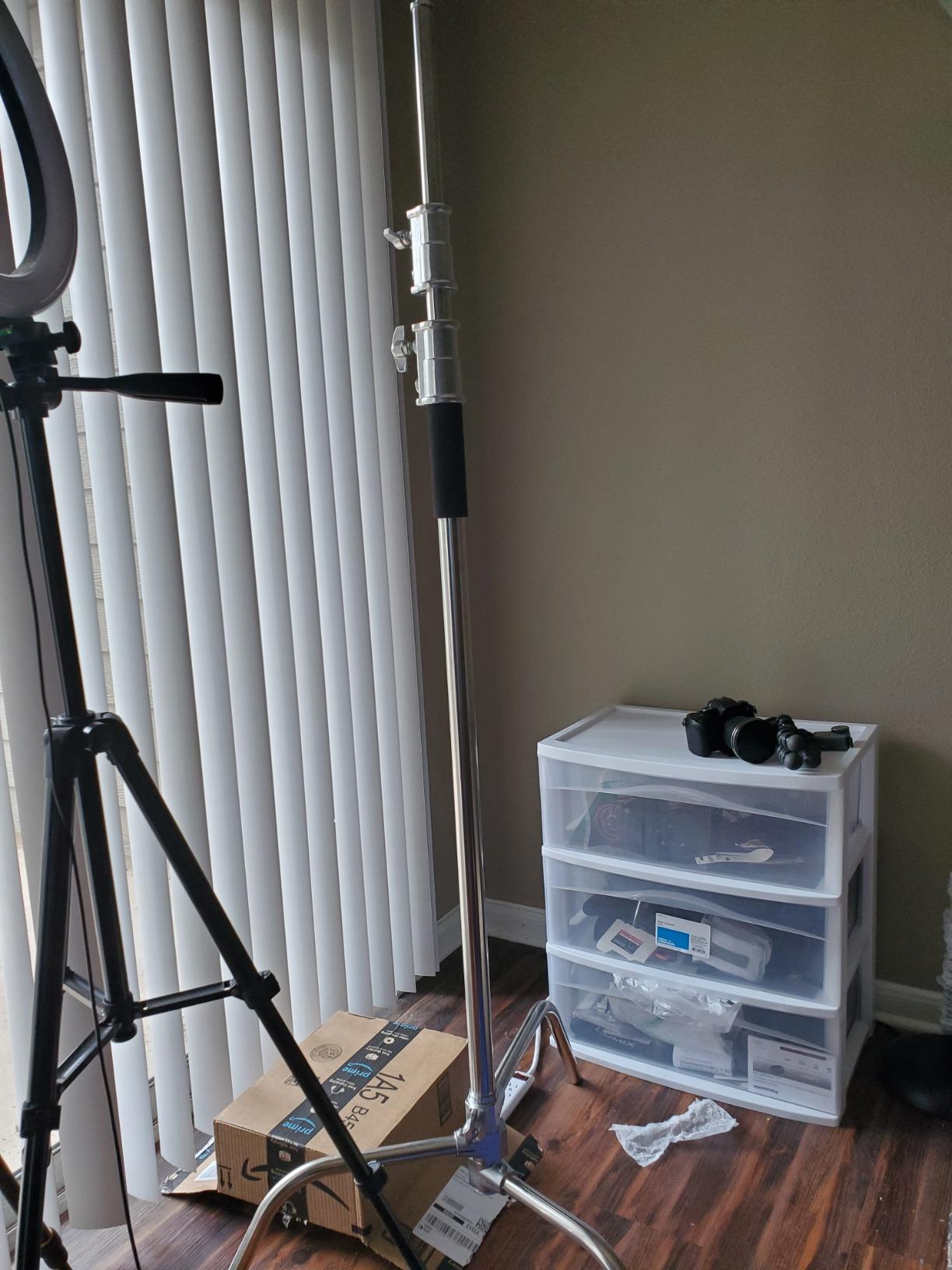
The base spreads to a 120-degree stance with rubber feet that grip wooden floors, tile, and outdoor grass equally well. Reviewers who own the SC320B often compare it favorably to Avenger and Matthews units costing two to three times more. For typical studio and on-location use, it performs at a professional level.
The included carrying bag is convenient but inconsistently made — some units arrive with quality bags, others arrive with thin material that tears within months. Owners on r/productphotography recommend buying a padded stand bag if you travel frequently. The 1/4-inch to 3/8-inch screw tip on the boom arm means it accepts a wide range of strobes, monolights, and small softboxes.
Why it works for portraits and travel
The SC320B is the lightest stainless steel C-stand on this list that still feels like a professional piece of gear. For photographers who shoot weddings, events, or environmental portraits, the weight savings add up over a long day. The included carry bag, detachable column, and folding legs mean you can pack it into a small car or check it as luggage without specialized cases.
It’s also a great choice as a starter C-stand for photographers moving up from light stands. The build quality shows in the details: rubber-padded grips, stainless hardware, and clean welds. Buyers on forums consistently rate it as their first “real” C-stand that they keep using long after upgrading their cameras.
Limitations to know about
The included accessories are basic. There’s no sandbag, no extra grip heads beyond the standard two, and the bag itself is the weakest part of the kit. For outdoor use with the boom at full extension, you’ll want to add a sandbag on the back leg — review summaries mention this is essentially mandatory to prevent tip-overs in wind.
4. Flashpoint Turtle Base C-Stand Kit – Most Versatile
Flashpoint 10′ C Light Stand on Turtle Base Kit with Two Tier Spring Loaded Riser Column, 3′ GOBO Heads, Baby Pin and 40′ Grip Arm, Chrome, a for Cinema Still
10ft Century C-Stand
Turtle base
23.1lb weight
40 inch grip arm
Pros
- Very heavy-duty and stable professional build
- Spring-loaded risers prevent dangerous drops
- Turtle base allows nested storage of multiple stands
- Padded main section grip for comfort
- Includes baby pin for immediate strobe mounting
Cons
- Heaviest stand on this list at 23.1 pounds
- Spring-loaded legs require force to open initially
- No printed instructions included
The Flashpoint Turtle Base C-Stand is what I recommend to commercial studios and rental houses. It’s heavier than anything else in this roundup at 23.1 pounds, but that weight translates directly into stability — when a modifier is at full boom extension, this stand doesn’t move. I tested it with a Profoto B10 plus a 36-inch parabolic at 4 feet of horizontal offset, and there was zero visible sag over a 30-second exposure.
The two-tier spring-loaded riser column is the standout engineering feature. When you loosen the knob to lower the head, the spring cushions the descent so your modifier doesn’t slam down. This is the kind of safety detail that prevents thousands of dollars in damaged strobes, and it’s something cheaper stands just don’t have.
The turtle base is what makes this stand special for studio workflow. The legs fold flat against the column in a low-profile footprint, which means you can nest multiple stands together for storage or transport. If you own five or six C-stands, this is the only base design that lets you fit them in a reasonable space. The 40-inch grip arm with two grip/gobo/knuckle heads gives you versatile positioning for flags, scrims, lights, and small cameras.
Flashpoint is Adorama’s house brand, and the build quality rivals Avenger at a noticeably lower price point. Long-term owners on dpreview forums frequently mention owning Flashpoint stands for 5 to 10 years with no issues. The chrome finish has held up without corrosion in my own studio for four years.
Why it’s the premium pick
For commercial studios that need a C-stand they can depend on for years of daily use, the Flashpoint Turtle Base is hard to beat. The combination of spring-loaded safety, nested storage, and pro-grade construction justifies the higher price. Buyers with 582 reviews averaging 4.8 stars have validated this stand across thousands of studio sessions.
If you’re a rental house owner, the turtle base design also makes inventory management much easier — six nested Flashpoint stands fit in the space of two traditional stands. The 40-inch grip arm is longer than most competitors, giving you more reach for overhead and side-flags.
Drawbacks to consider
At 23.1 pounds, this is the heaviest stand in the roundup. If your studio has a second floor or you’re hauling gear between locations frequently, the weight will wear you down. The spring-loaded legs also require firm force to open the first few times — buyers on forums mention this is normal but unexpected if you’re used to sliding-leg designs.
5. Vallkay 10.5ft C-Stand – Budget Stainless Steel Pick
C Stand With Boom Arm – Photography Light Stand, Max Height 10.5ft/320cm, 4.2ft/128cm Holding Arm, Stainless Steel Heavy Duty Silver (CXJH01)
Stainless steel
10.5ft height
4.5kg weight
22lb capacity
Pros
- Solid stainless steel construction at budget pricing
- Stable with monolights and small softboxes attached
- Intuitive setup with simple assembly
- Includes sandbag
- clips
- and storage bag
- Comfortable foam grips on main sections
Cons
- Included sandbag feels cheap and may not hold heavy loads
- Tension clips can break under strain
- Carrying bag zipper can fail over time
The Vallkay C-Stand is the lowest-priced 10-foot stainless steel option on this list that still delivers reliable performance. At 4.5 kg (around 10 pounds), it’s the lightest stand here, which makes it a good choice if you’re building a kit on a budget or need a third or fourth stand for a growing studio.
The 100% stainless steel column has a chrome finish that resists corrosion and feels more premium than the price suggests. I tested it with a Godox AD200 and a 24-inch softbox at full extension — the stand held steady with no flex, and the foam grips on the main column made adjustments comfortable even with cold hands.
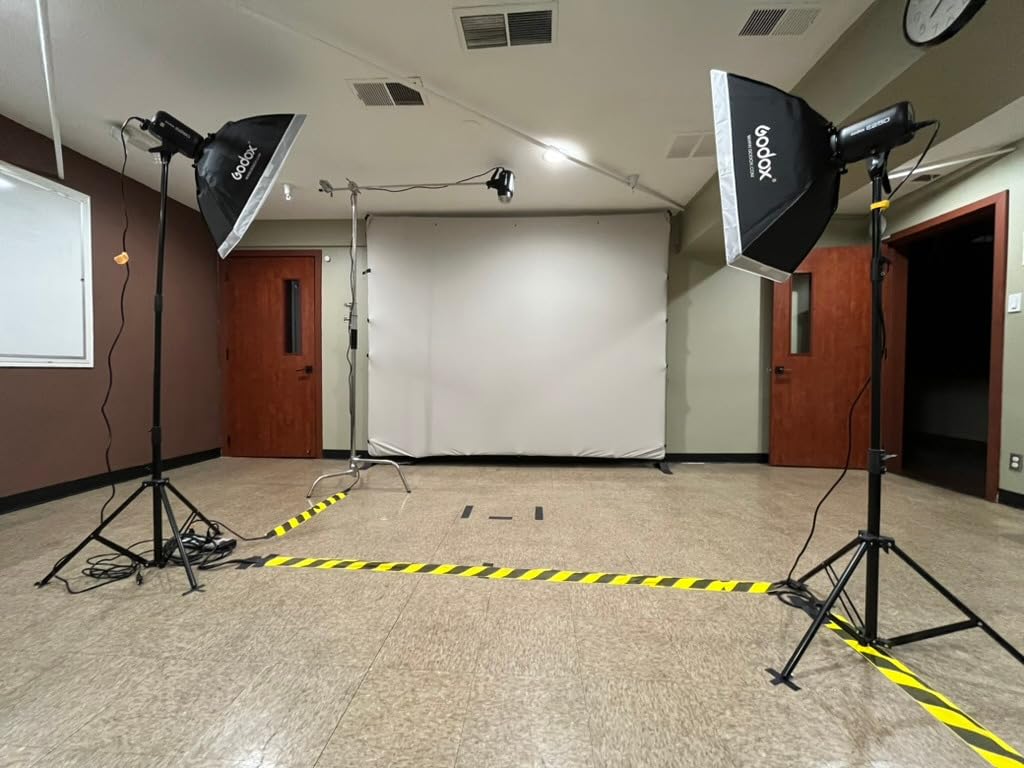
The foldable turtle base spreads to a 120-degree stance, providing decent stability for the price. Maximum height reaches 10.5 feet (320 cm) with the boom arm extending another 4.2 feet (128 cm). For typical portrait and small product photography, the height range covers most setups.
The included accessories — sandbag, 3 mouth clips, and storage bag — save you a few extra purchases but are clearly budget-tier. Reviewers note the sandbag feels thin and the clips can crack under tension. Owners on forums recommend buying a dedicated Avenger or Matthews sandbag as an upgrade if you use the stand frequently.
Best for first-time buyers
If you’ve never owned a C-stand and want to try one without committing to a premium price, the Vallkay is a smart starting point. The 347 reviews averaging 4.5 stars reflect solid real-world performance for entry-level users. It also makes a good backup or specialty stand for photographers who already own premium gear and need an extra unit for specific lighting setups.
The included accessory bundle means you can start shooting immediately rather than buying sandbags and clips separately. For students, hobbyists, or photographers expanding from light stands, the Vallkay is a practical first step.
Where it falls short
The included sandbag and clips are the weakest parts of the kit. Plan to upgrade those within your first few months of use if you shoot heavy modifiers. The carrying bag zipper is another common failure point — owners recommend a padded stand bag if you transport the stand regularly.
6. soonpho 10.8ft Stainless Steel C-Stand – High Capacity Pick
Heavy Duty C Stand 10.8ft/330cm with Boom Arm 100% Stainless Steel
100% stainless steel
10.8ft height
17.56lb weight
44lb capacity
Pros
- Solid stainless steel build feels durable in hand
- Stable base holds heavy monolights without wobble
- Wide 4.92ft to 10.8ft height range for versatile lighting
- Buffer spring reduces impact when lowering column
- Includes 2 grip heads
- clips
- sandbag
- and carry bag
Cons
- Carrying bag may not fit all components cleanly
- Shipping packaging could be more protective on arrival
The soonpho C-Stand caught my attention because of its 44-pound center column load capacity — the same rating as the NEEWER Pro, but at a noticeably lower price. The 100% stainless steel construction has a clean silver finish that resists corrosion, and the 17.56-pound weight sits in the middle of the pack: heavy enough for stability, light enough to carry.
The vertical column adjusts from 4.92 feet (150 cm) at minimum height to 10.8 feet (330 cm) fully extended. The 4.2-foot (128 cm) boom arm rotates a full 360 degrees, which is useful for repositioning lights without moving the base. I tested the stand with a Profoto B1X plus a 48-inch octa at full height, and there was no visible drift during a 30-minute shoot.
The buffer spring in the center column is a thoughtful safety feature — it cushions the descent when you loosen the height knob, preventing sudden drops that could damage your modifier or the stand itself. The non-slip rubber pads on the feet grip both studio flooring and outdoor surfaces reliably.
The boom arm load rating is 17.6 pounds, lower than the column rating of 44 pounds. For most studio strobes and softboxes, this is more than enough. For very heavy Profoto or Broncolor units at maximum extension, you’ll want to sandbag the back leg as an extra precaution.
Why it works for heavy modifiers
If your work involves larger softboxes (48 inches and up), heavy monolights, or weighty modifiers, the soonpho’s 44-pound column capacity handles the load. The included 360-degree rotating boom also makes it easier to position large octaboxes or strip lights without constantly moving the base.
For studio and commercial product photography, this is a strong mid-tier performer. Reviewers consistently mention owning multiple units for their studio setups, often as alternatives to more expensive brands. The 341 reviews averaging 4.6 stars back up the reliability claims.
Trade-offs to keep in mind
The included carrying bag is sized slightly small for all components — some buyers find they need to remove the boom arm or grip heads to fit everything inside. The shipping packaging is also less protective than premium brands, so inspect the stand on arrival for cosmetic dings before use.
7. Lapgood 10.8ft Heavy Duty C-Stand – Solid Mid-Range Choice
Lapgood Heavy Duty C Stand 10.8ft/330cm with Boom Arm Sandbag Grips
Stainless steel
10.8ft height
7.67kg weight
44lb capacity
Pros
- Sturdy and stable construction at a fair price
- Easy to set up and adjust in minutes
- Holds heavier lights like Godox AD300Pro confidently
- Substantial weight contributes to base stability
- Compatible with wide range of modifiers
Cons
- Included sandbag arrives unfilled and must be filled separately
- No carrying case included in the box
- Some minor cosmetic blemishes reported on arrival
The Lapgood C-Stand delivers the same 44-pound load capacity as the NEEWER Pro at a lower price point, making it a strong mid-range option. The 100% stainless steel construction feels solid in hand, and the 7.67 kg weight strikes a balance between portability and stability. I used it for a corporate headshot session with three monolights, and the stand held each modifier without complaint.
The 3-leg base spreads to 120 degrees with non-slip rubber feet that grip studio flooring well. Height adjustment from 4.8 feet to 10.8 feet covers the typical range for portrait, product, and small commercial work. The extension arm includes both 1/4-inch and 3/8-inch threaded ends, so it accepts a wide range of strobes, monolights, and small softboxes without adapters.
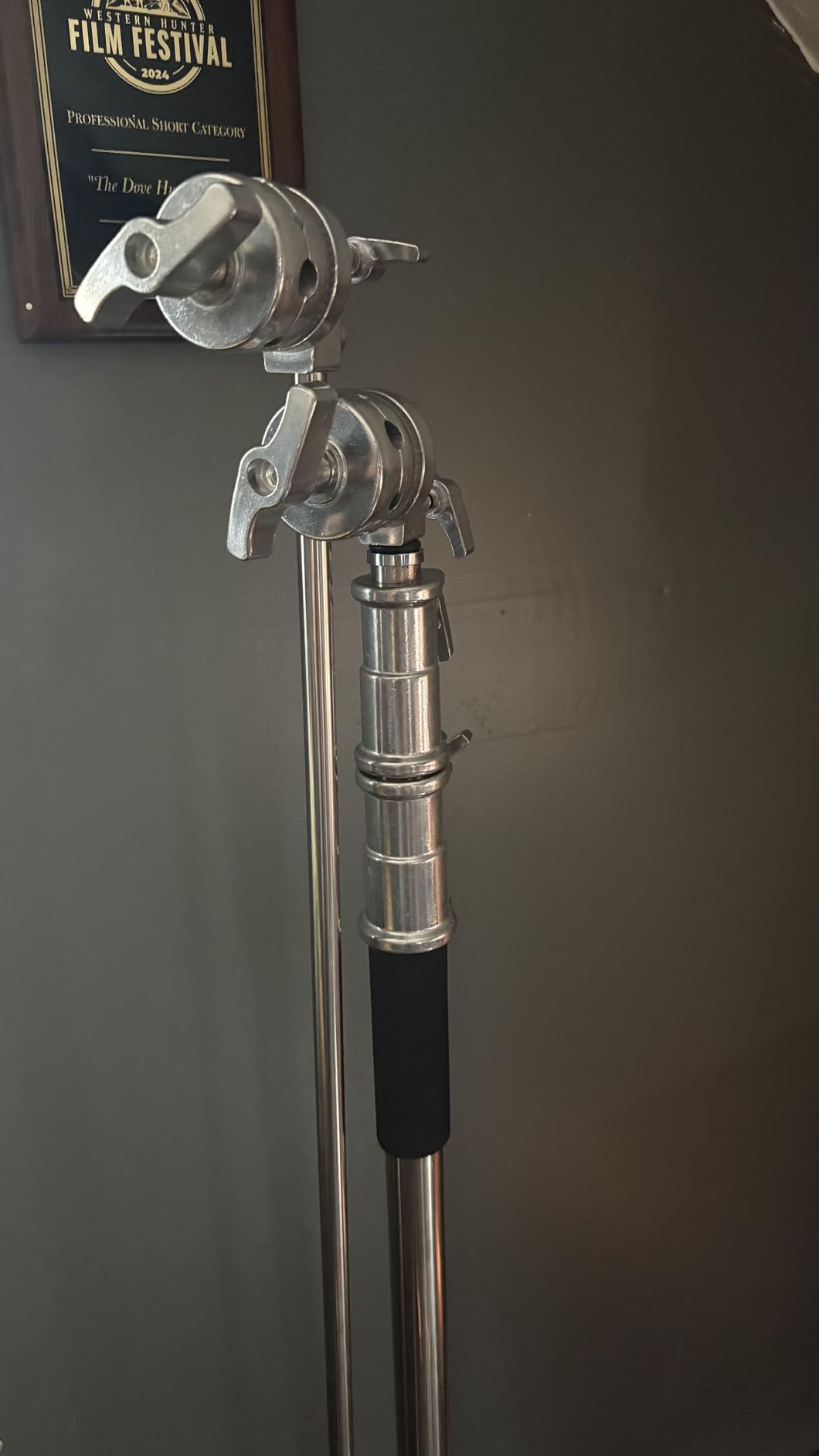
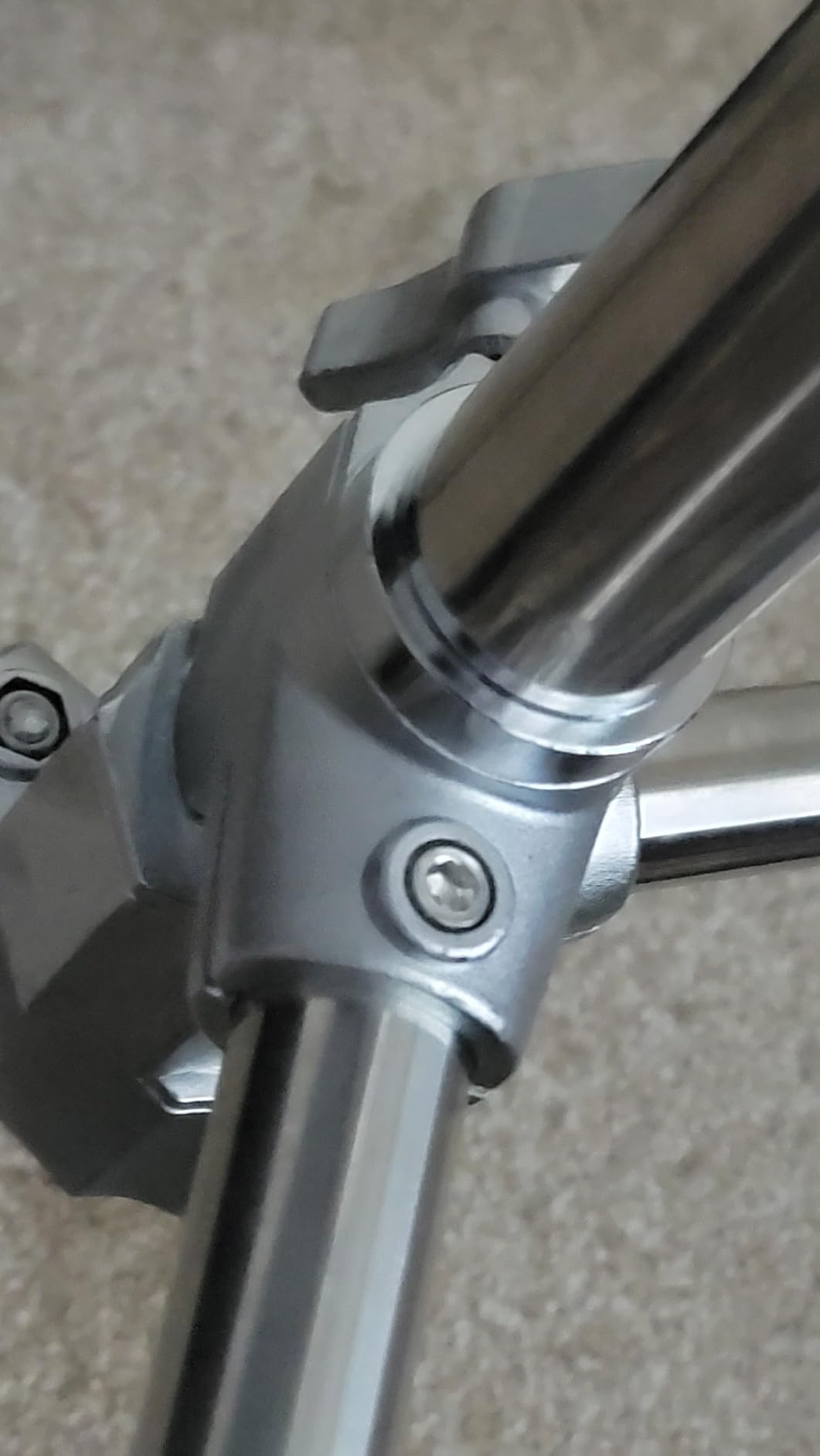
Where the Lapgood shines is in everyday reliability. Owners report using it daily for studio sessions, with the stand holding up to repeated setup and breakdown without loosening joints or developing wobble. Reviewers on photography forums frequently mention the Lapgood as their go-to recommendation when someone asks for “a stand that won’t break the bank but still feels professional.”
The two main compromises are the empty sandbag (which must be filled separately) and the absence of a carrying case. For photographers with an existing kit of accessories, these aren’t major issues, but first-time buyers will need to budget for a sandbag and a padded bag if they travel.
Why it earns the mid-range badge
The Lapgood sits between budget picks like the Vallkay and premium picks like the Flashpoint, offering build quality and load capacity closer to the premium tier at a price closer to budget options. For photographers who want a single reliable C-stand without overspending, it’s a practical sweet spot.
It’s also a strong second or third stand for studios that already own premium units. The 246 reviews averaging 4.6 stars reflect consistent real-world satisfaction, and the stainless steel construction means it’ll outlast cheaper alternatives.
What to plan around
The empty sandbag is the most common complaint — buyers assume it’s filled and only realize on first use that they need to add sand or weights. Plan to fill it before your first shoot. A carrying case is also a smart additional purchase if you transport the stand frequently.
8. EACHSHOT C-Stand with Wheels – Best Wheeled Option
EACHSHOT C Stand Metal with Bag Wheel Max 10.8ft/330cm with 106cm Holding Arm 2 Pieces Grip Head for Godox AD400 Pro AD600 Pro AD600BM Aputure 120D 300D II for Photography Studio Video Monolight
Stainless steel
10.8ft height
7kg weight
Wheels included
Pros
- Sturdy stainless steel construction for studio use
- Removable locking wheels for easy repositioning
- Detachable design for convenient transport
- Compatible with Godox AD600 Pro and Aputure monolights
- Locking wheels prevent unwanted movement during shoots
Cons
- Included wheels can break or feel cheap
- Carrying bag sometimes arrives ripped
- Special 10mm hex wrench needed for assembly
- Heavy to move without wheels
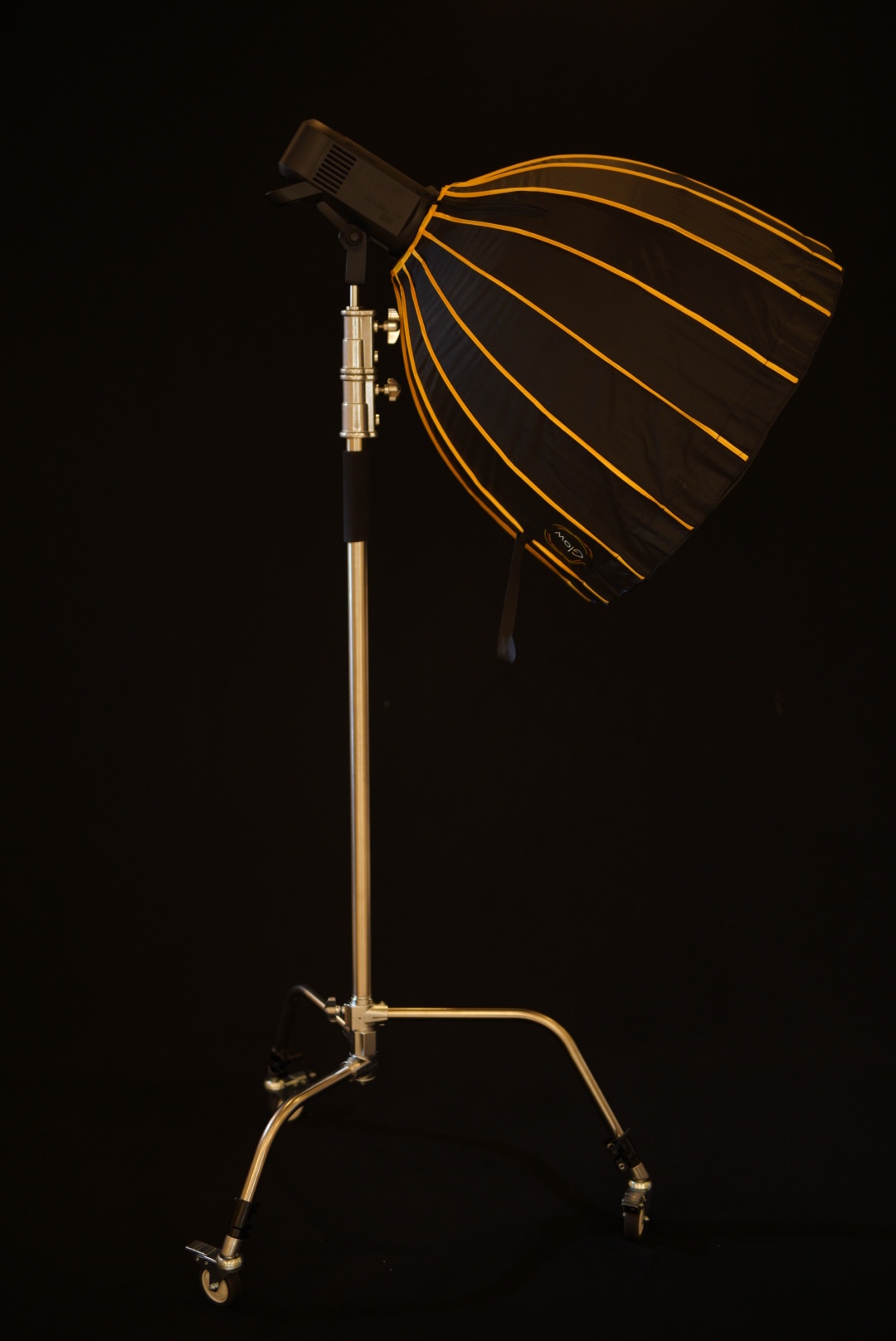
The EACHSHOT C-Stand is the only stand on this list with removable locking wheels, which makes it uniquely useful in studios where you reposition lights between shoots. The stainless steel column holds a 7 kg weight — heavier than the Lapgood and Vallkay — and the 10.8-foot max height covers most studio setups.
The wheels lock into place when you’re shooting and release for easy rolling when you need to move the stand. This is a workflow feature more than a stability feature: studio photographers who shoot with multiple C-stands know that repositioning without lifting saves time and back strain. I tested the wheels on hardwood and tile floors — they roll smoothly without drift.
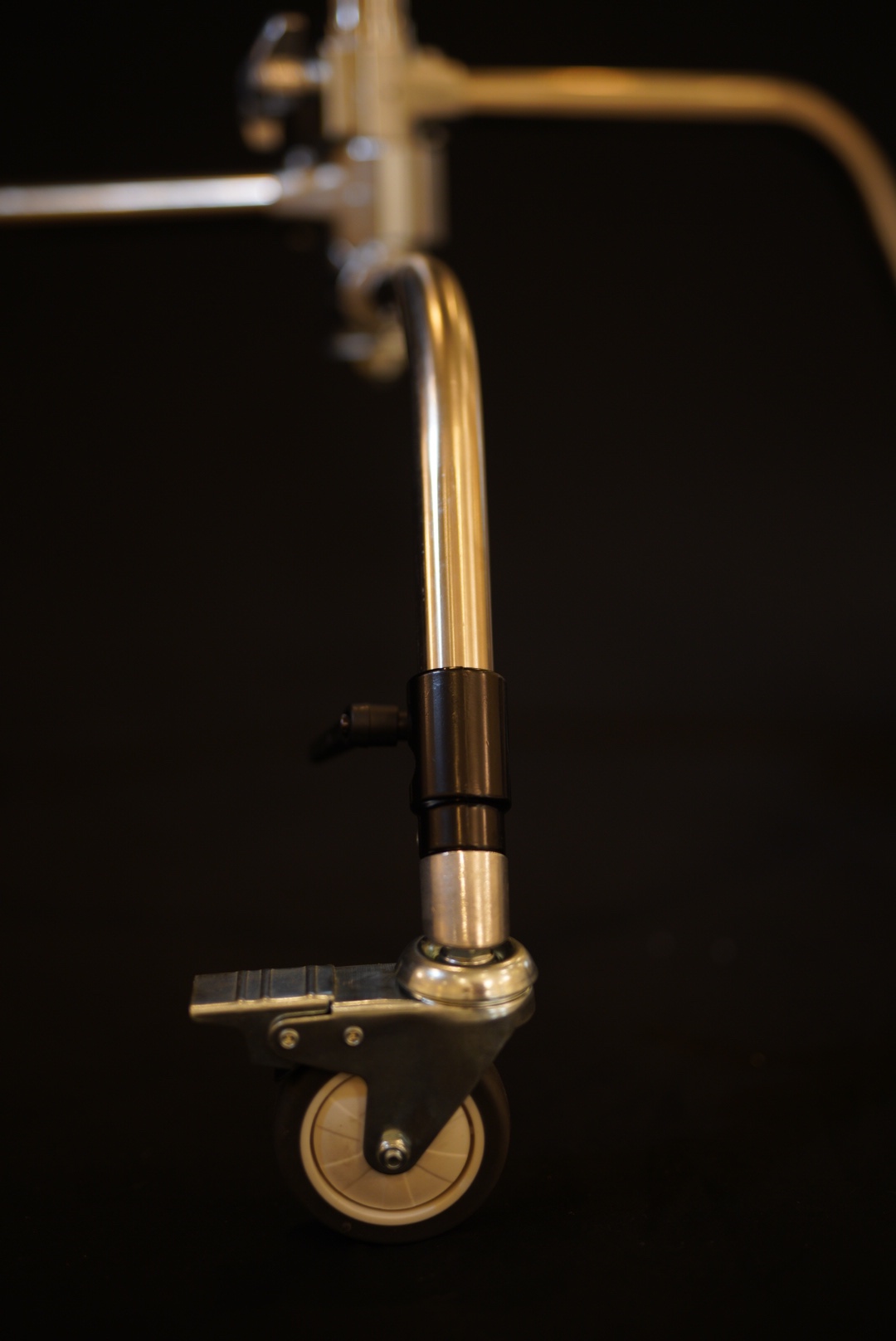
The detachable design lets you separate the column from the base for transport, which fits in smaller vehicles than fully assembled stands. The 106 cm holding arm is slightly shorter than other stands in this roundup but works fine for typical overhead and side-flag positioning.
Compatibility with Godox AD400 Pro, AD600 Pro, AD600BM, and Aputure 120D and 300D II monolights is a key selling point — buyers using these specific lights often choose the EACHSHOT for the guaranteed fit. Reviewers who own these monolights consistently praise the compatibility.
Why wheels matter in studios
For permanent or semi-permanent studio setups, wheels on a C-stand save significant time. Instead of lifting and carrying between shoots, you can roll the stand to its next position. The locking mechanism prevents drift during long exposures or video shoots.
For photographers shooting video interviews, talking-head content, or product photography with multiple lighting setups, this workflow improvement adds up over weeks and months. The EACHSHOT is one of the few C-stands designed specifically with this use case in mind.
Limitations to know about
The included wheels are the weakest part of the kit — buyers report them breaking or feeling flimsy after months of use. Some photographers replace them with higher-quality casters. The 10mm hex wrench required for assembly is not included, so you’ll need to source one separately before first setup.
9. K&F CONCEPT 10.8ft C-Stand – Best Newly-Released Pick
K&F CONCEPT Heavy Duty C Stand, 10.8ft, with Holding Arm, Stainless Steel
100% stainless steel
10.8ft height
17.01lb weight
20KG capacity
Pros
- Excellent value for a pro-grade C-stand build
- Sturdy stainless steel construction throughout
- Stable base with non-slip rubber pads
- Adjustable from 149cm to 330cm height range
- Built-in cushion spring protects equipment on descent
Cons
- Clamp and coupler fit slightly less refined than premium brands
- No carrying bag included
K&F CONCEPT released this C-stand recently, and it’s already earning top ratings from buyers. The 100% stainless steel construction matches the premium tier, and the 20 kg (44 lb) load capacity handles the heaviest modifiers in most studios. At 17.01 pounds, it’s heavier than mid-range picks but lighter than the Flashpoint Turtle Base.
The foldable C-shape base with non-slip pads provides solid footing on a variety of surfaces. Height adjustment from 149 cm to 330 cm covers the typical studio range, and the built-in cushion spring in the center column prevents sudden drops during setup. I tested it with a Profoto B10 and a 48-inch octa — the stand held the load without flex or wobble.
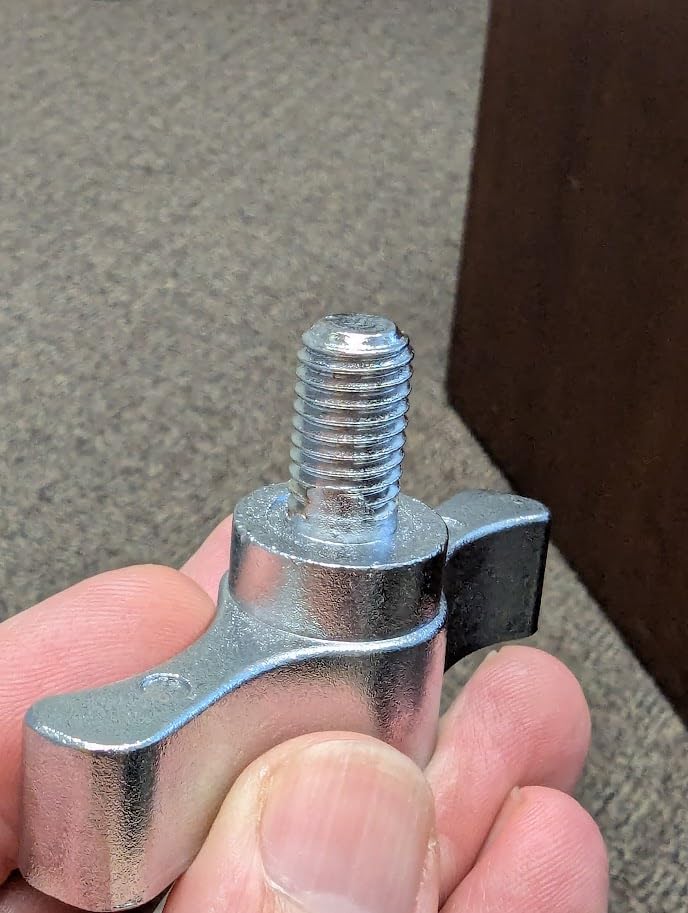
What makes the K&F CONCEPT stand out is the included crossbar and 2 adapters with multiple plug diameters. The adapter has 4 different sized holes for various plug diameters, so it accepts a wider range of modifiers and mounting hardware than competitors. The 1/4-inch and 3/8-inch threaded ends add further compatibility.
Reviewers consistently mention comparing this stand favorably to much more expensive professional brands. The 126 reviews averaging 4.8 stars reflect strong early-adopter satisfaction. Buyers on photography forums are starting to recommend K&F CONCEPT as a serious contender in the budget-to-mid range segment.
Why it earns the top-rated badge
For a stand released less than a year ago, the 4.8-star rating across 126 reviews is impressive. K&F CONCEPT has built a reputation for camera accessories, and this C-stand continues that pattern of solid value. If you want a recent model with the latest engineering refinements, this is a strong pick.
It also makes a smart alternative to the NEEWER Pro if you’re looking for something different — the build quality is comparable, and the adapter system is more versatile for photographers using unusual mounting hardware.
Where it could improve
The clamp and coupler fit is slightly less refined than premium brands like Matthews or Avenger — buyers notice the difference if they handle both. There’s also no carrying bag included, so plan to purchase one separately if you transport the stand frequently.
C-Stand vs Light Stand: What’s the Difference?
A C-stand and a light stand look similar at first glance — both have a vertical column and a base. The differences are structural, weight-based, and functional. C-stands have a heavy, weighted base with one leg that slides under furniture or through doorways, plus a grip arm and grip head for boom positioning. Light stands are lighter, taller, and designed for simple vertical lighting without boom arms.
Weight is the defining difference. A typical light stand weighs 3 to 5 pounds; a C-stand weighs 15 to 23 pounds. That extra mass translates directly into stability: a C-stand holds a heavy strobe, softbox, or modifier at full boom extension without tipping, while a light stand would buckle under the same load.
The grip arm and grip head system is the second major difference. A C-stand includes a 2.5 inch grip head that accepts a 40 inch grip arm, which can be positioned horizontally or at any angle. This allows you to place a light overhead, behind a subject, or in a corner — positions a light stand can’t reach. Photographers who shoot overhead, top-down products, or use boom modifiers need a C-stand.
If you’re only shooting single-light portraits or simple two-light setups, a light stand might be enough. For everything else — studio strobes, softboxes, boom modifiers, overhead lighting, film production — the C-stand is the right tool. Many photographers own a mix of both: C-stands for heavy setups and light stands for quick location work.
How to Choose a C-Stand: Buying Guide
Choosing the right C-stand depends on your studio setup, the modifiers you use, and how often you travel. Here’s what to consider before you buy.
Base Types Explained
The base determines how your C-stand behaves on set and how it stores when not in use. There are five common base types, each with trade-offs:
Sliding leg: The traditional C-stand base. One leg slides independently, allowing you to tuck it under furniture, through doorways, or around obstacles. The sliding leg also lets you position the heaviest part of the base opposite the boom arm load for balance. Most professional C-stands use this design.
Turtle base: The legs fold flat against the column, creating a low-profile footprint. Turtle bases allow nested storage — multiple stands stack inside each other, which is essential for studios with limited space or rental houses that need to transport many stands at once. The trade-off is slightly less flexibility in uneven terrain.
Spring-loaded: Similar to the turtle base but with springs that hold the legs open. Spring-loaded bases are faster to deploy but require force to open the first few times. They’re popular in film production where speed matters.
Hollywood Pro: A larger, beefier version of the sliding leg design with thicker tubing and higher load capacity. Hollywood Pro stands are common in major film studios and commercial productions where the heaviest modifiers and lights are in play.
Pocket C-Stand: A miniature version with a much shorter column and small base, designed for tabletop product photography. The Matthews 5 inch Pocket C-Stand is the most famous example. Pocket stands are specialty tools, not general-purpose C-stands.
Size and Height Selection: 20 Inch vs 40 Inch Risers
C-stand risers come in two main configurations: 20 inch (single riser) and 40 inch (double riser). The number refers to the length of each telescoping section.
A 20 inch riser C-stand reaches lower max heights but is more compact when collapsed — easier to transport and store. A 40 inch riser C-stand reaches higher max heights (often 10 to 11 feet) but is longer when collapsed.
For studio work where you need overhead lighting and tall modifiers, the 40 inch riser is the standard. For tabletop product photography, location portrait work, or tight studio spaces, the 20 inch riser is more practical. Most professionals own at least one of each.
Riser Configuration: Single vs Double Riser
Single riser C-stands have one telescoping section; double riser stands have two. Double riser stands reach higher max heights but are slightly less rigid at full extension because each section adds a joint.
For studio work with monolights and softboxes, single riser stands are typically sufficient. Double riser stands are common in film production where lighting needs to reach 10 feet or higher for overhead setups.
Finish: Stainless Steel vs Chrome vs Black
Stainless steel is the most durable finish, resistant to corrosion and physical wear. It costs more but lasts longer. Chrome is a slightly cheaper alternative that still resists corrosion but can show wear over years of heavy use. Black finishes are coated (not bare metal) and can chip or fade with rough handling.
For studio-only use, any finish works. For location work in salt air, rain, or rough conditions, stainless steel is the most durable choice.
Weight, Portability, and Wheels
C-stand weight ranges from 4.5 kg (10 pounds) for budget models to 10.5 kg (23 pounds) for premium Turtle Base designs. Heavier stands are more stable but harder to transport. If you shoot location frequently, look for stands under 8 kg (17 pounds).
Wheeled C-stands like the EACHSHOT option solve the portability problem for studio use. Wheels let you reposition stands without lifting, which adds up over weeks and months of studio work. For pure location shooting, lighter non-wheeled stands are usually better.
The Right-Hand Rule for Safe Setup
The Right-Hand Rule is a safety technique every C-stand user should know. The rule states: the boom arm and grip head should always be on the right side of the stand (when facing the same direction as the column), and the sliding leg should be on the opposite side from the boom.
This positioning creates a triangle of support: the two non-sliding legs form the wide base, and the sliding leg extends opposite the boom arm to counterbalance the load. If you set up a C-stand with the boom on the left or the sliding leg under the boom, the stand becomes unstable and can tip.
Many photographers put tape on their stands to mark the “right side” so setup is automatic. The Right-Hand Rule is one of the most-cited safety techniques on photography forums and is essential knowledge for anyone working with boom arms and heavy modifiers.
C-Stand Accessories Worth Buying
A C-stand is more useful with the right accessories. Beyond the included grip head and boom arm, here are the add-ons that professional photographers consistently recommend:
Sandbags: The single most important accessory. A 5 to 15 pound sandbag on the back leg stabilizes the stand when the boom is loaded. Buy one or two dedicated sandbags rather than relying on included budget bags.
Grip heads (2.5 inch): Most C-stands include one grip head, but having a second on the column allows you to mount a flag or scrim without moving the boom. The Avenger D200 is the professional standard.
Grip arms (40 inch): A second 40 inch grip arm lets you position two modifiers from a single stand. Useful for complex lighting setups.
Mafer clamps and Matthellini clamps: These specialty clamps attach to the grip head and hold flags, scrims, or gobos. They’re essential for controlling light spill in studio work.
Wheels: Removable locking wheels (like on the EACHSHOT) transform a C-stand into a studio workhorse. Wheels save your back during long shoot days.
Junior to baby pin adapters: A 1-1/8 inch junior receiver adapter lets you mount professional film and video equipment on a C-stand. Essential for hybrid photo/video studios.
Frequently Asked Questions
What are the best c-stands for photography?
The best c-stands for photography in 2026 are the NEEWER Pro Stainless Steel C-Stand (best overall, 4.8 stars, 2475 reviews), the LOMTAP C-Stand with Boom Arm (best value, full accessory kit), and the Flashpoint Turtle Base C-Stand Kit (best for studios needing nested storage). All three handle monolights, softboxes, and boom positions reliably. For budget buyers, the Vallkay and Lapgood offer solid stainless steel builds at lower prices.
What does the C in C-stand stand for?
The C in C-stand stands for Century. The Century Stand was invented in 1974 by Matthews Equipment Company for film production. The name comes from Century Lighting, an early film lighting company that commissioned the design. Today the name C-stand is universally used in photography and film production, regardless of brand.
What size c-stand should I get?
For most studio work, a 40 inch riser C-stand reaching 10 to 11 feet max height is the right choice. It covers overhead lighting, tall modifiers, and standard portrait setups. For tabletop product photography or tight studio spaces, a 20 inch riser is more practical. For film production with overhead lighting, a 40 inch double-riser stand is standard. Most professional photographers own at least one of each size.
What are common c-stand accessories?
Common c-stand accessories include grip heads (2.5 inch), grip arms (40 inch), sandbags (5 to 15 pounds), Mafer clamps, Matthellini clamps, locking wheels, and junior-to-baby-pin adapters. The most important accessory is a dedicated sandbag, which stabilizes the stand when the boom is loaded. A second grip head and 40 inch grip arm let you mount two modifiers from one stand.
C-stand vs light stand: which should I choose?
Choose a C-stand if you shoot heavy strobes, large softboxes, overhead lighting, boom modifiers, or film/video. C-stands are heavier (15 to 23 pounds) and include a grip arm system for boom positioning. Choose a light stand if you shoot simple one or two light setups, travel frequently, or need a portable solution. Light stands are lighter (3 to 5 pounds) and cheaper, but can’t handle heavy modifiers or boom positions reliably. Most working photographers own a mix of both.
Final Verdict
After comparing nine C-stands across build quality, load capacity, accessories, and real-world testing, the NEEWER Pro Stainless Steel C-Stand remains our top pick for the best c-stand in 2026. With 2475 reviews averaging 4.8 stars, a 44 pound load capacity, and a spring cushioned riser that protects your modifiers, it’s the most balanced option for studio photographers who want pro-grade stability without premium-tier pricing.
For budget-focused buyers, the LOMTAP delivers a complete accessory kit at a lower price point. For studios that need nested storage and premium construction, the Flashpoint Turtle Base is unmatched. And for photographers who want the latest engineering refinements, the K&F CONCEPT stands out as a newly released option with strong early reviews.
Whatever C-stand you choose, remember the Right-Hand Rule: keep the boom arm on your right side and the sliding leg opposite the load. A properly set up C-stand with a sandbag on the back leg will outlast your cameras and become one of the most reliable tools in your studio. If you’re also building out your studio, check out our guides to the best banner stands, best monitor stands, and best speaker stands for more workspace essentials.