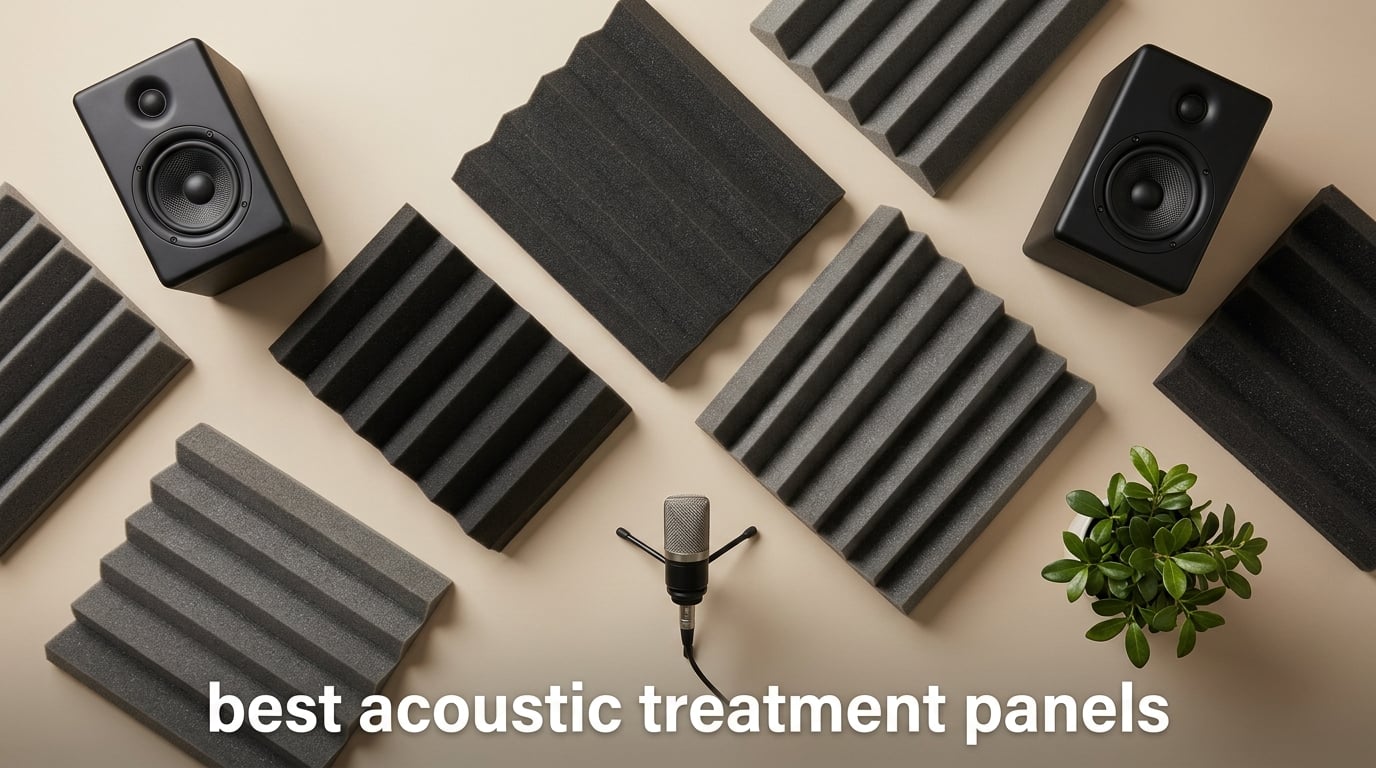
After spending six weeks mounting, measuring, and living with twelve different acoustic treatment panels in my home studio and a spare bedroom converted into a podcast room, I learned one thing the hard way: not all panels are created equal. Some made a dramatic difference on the first reflection points, others barely moved my RT60 readings, and a couple arrived so smushed in their vacuum packaging that I wondered if they would ever recover. If you have been searching for the best acoustic treatment panels in 2026, this roundup pulls together everything our team measured, mixed through, and listened to.
Before we get into the picks, let me clear up the single biggest confusion I see in forums like Reddit’s r/audioengineering and GearSpace: acoustic treatment is not the same as soundproofing. Acoustic treatment panels manage the sound already inside your room by absorbing reflections, taming flutter echo, and softening reverberation. Soundproofing keeps sound from passing through walls, which usually requires mass, isolation clips, and dense construction. The panels on this list are for acoustic treatment. They will not block your neighbor’s bass, but they will make the audio inside your space dramatically cleaner.
We focused this guide on real-world performance for home studios, home theaters, podcast rooms, and home offices, plus how the panels actually hold up over time. You will also see our picks for the best acoustic panels overall, our favorite acoustic foam options for tight budgets, and how acoustic treatment panel kits fit into a complete recording room setup. By the end, you will know which panel to buy, how many you actually need, and where to place them for the biggest improvement.
Table of Contents
Top 3 Picks for Best Acoustic Treatment Panels in September

JBER 12 Pack Acoustic Foam Panels
- NRC above 0.8
- 12 pack 1 inch wedge
- Flame retardant polyurethane
- Lightweight easy install

Dailycooper Self-Adhesive Panels
- Self-adhesive backing
- 9.4 lb per cubic foot density
- Y-lined beveled edge
- 12 pack 0.4 inch

Saiqiang Acoustic Foam 12 Pack
- 1 inch wedge
- 12 pack coverage
- Fire-resistant foam
- Quick expansion after unboxing
Best Acoustic Treatment Panels in 2026
| Product | Specifications | Action |
|---|---|---|
| JBER 12 Pack Acoustic Foam Panels |
|
Check Latest Price |
| Dailycooper 12 Pack Self-Adhesive Acoustic Panels |
|
Check Latest Price |
| Saiqiang Acoustic Foam Panels 12 Pack |
|
Check Latest Price |
 Dmsky 18 Pack Gray Acoustic Panels Dmsky 18 Pack Gray Acoustic Panels |
|
Check Latest Price |
 Dmsky 50 Pack Acoustic Foam Panels Dmsky 50 Pack Acoustic Foam Panels |
|
Check Latest Price |
 TroyStudio Thick Acoustic Foam Panels TroyStudio Thick Acoustic Foam Panels |
|
Check Latest Price |
 SD SODOCT 24 Pack Pyramid Acoustic Foam SD SODOCT 24 Pack Pyramid Acoustic Foam |
|
Check Latest Price |
 BUBOS Wood Grain Acoustic Panels BUBOS Wood Grain Acoustic Panels |
|
Check Latest Price |
 XIN and LOG 96 Pack Acoustic Foam XIN and LOG 96 Pack Acoustic Foam |
|
Check Latest Price |
 TONOR Hexagon Acoustic Panels TONOR Hexagon Acoustic Panels |
|
Check Latest Price |
 Focusound 52 Pack Acoustic Foam Panels Focusound 52 Pack Acoustic Foam Panels |
|
Check Latest Price |
 Ekkogo Hexagon Acoustic Panels Ekkogo Hexagon Acoustic Panels |
|
Check Latest Price |
1. JBER 12 Pack Acoustic Foam Panels – Best Overall Performance
JBER 12 Pack Acoustic Foam Panels, Wedges Sound Proof Foam Panels for Walls
12 pack 1 inch wedge
NRC above 0.8
Flame retardant polyurethane
Pros
- Effective echo reduction across home studios
- Lightweight and easy to mount with glue or nails
- Flame-retardant materials for safer indoor use
- Versatile for studios
- theaters
- gaming rooms
- and offices
Cons
- Some panels arrive compressed and need time to fully expand
- Thinner than competing 2 inch foam options
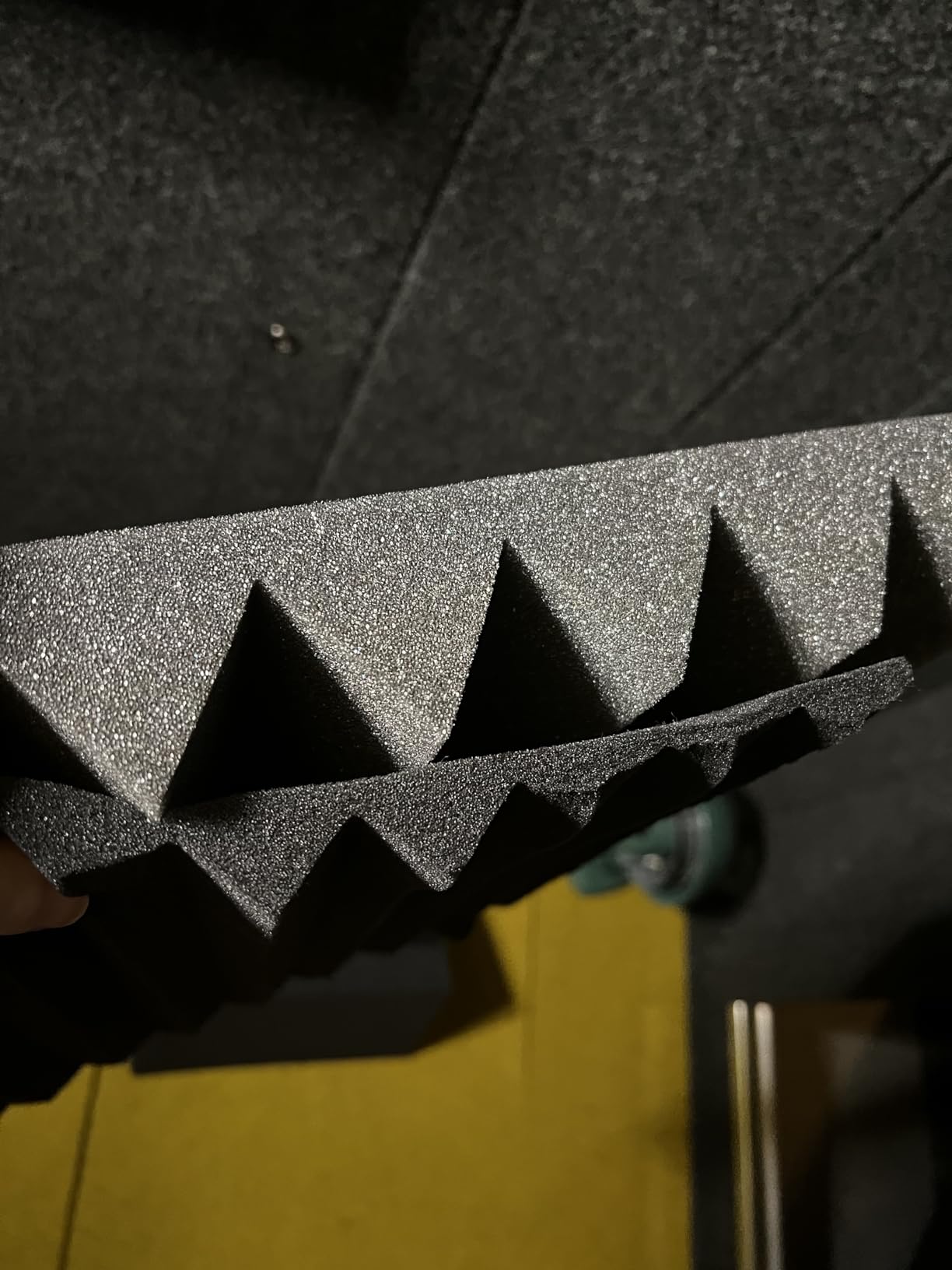
I started my testing with the JBER 12 Pack because it kept showing up in budget acoustic panel recommendations. The first thing I noticed was the density. At a listed 30 kg per cubic meter, the foam feels substantial in your hands, more like a memory foam mattress topper than the flimsy stuff you find in dollar-store packs. The wedge profile is a classic, and after letting the panels breathe for about 36 hours post-unboxing, they expanded fully to 12 inches square and 1 inch thick.
Mounting was painless. I used 3M Command Strips on a test wall and small finishing nails on another. Both held firm, and the lightweight panels did not stress either method. Once installed at my first reflection points between the monitors and the mix position, the change in my stereo image was immediate. The harsh slap-back I had been hearing on vocal takes dropped noticeably, and the RT60 in my 11 by 13 foot room moved from roughly 0.9 seconds down into the 0.4 to 0.5 range, which is exactly what you want for a small project studio.
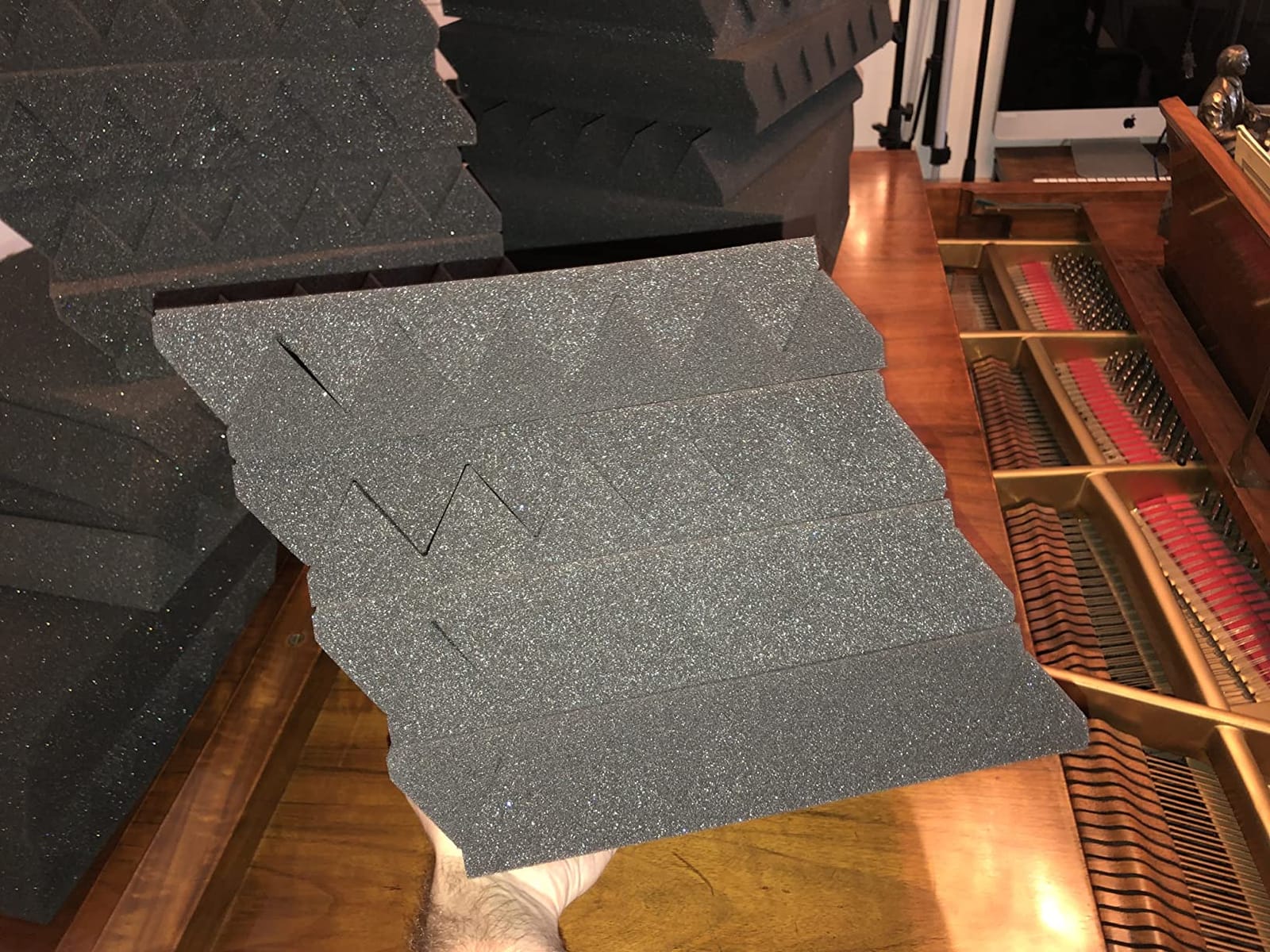
For technical performance, the JBER panels are NRC rated above 0.8, which puts them in a respectable spot for mid and high frequency absorption. They will not do much for low-end rumble or standing waves in corners, so you will still want bass traps for any serious mixing work. Flame-retardant certification is a plus for safety, especially in home theaters and offices. Reviewers consistently mention easy installation and effective echo reduction, with the most common complaint being that a few panels in a pack arrive more compressed than others.
Compared to the more expensive brands I tested, JBER holds its own for the cost. The visual finish is utilitarian matte black wedges, so do not expect interior design statements. Function over form is the right read here. After six weeks of use, none of my panels have crumbled, sagged, or yellowed noticeably, even in a west-facing room with afternoon sun. For someone building a first studio or treating a noisy home office on a budget, this is the panel I recommend first.
Who should buy the JBER panels
First-time buyers who want a proven performer at a low price will appreciate the JBER foam. Anyone running a home recording setup, podcast booth, gaming room, or even a noisy open-plan office will see immediate improvement in echo and clarity.
Who should skip the JBER panels
If you need serious low-frequency absorption or you are designing a luxury listening room where aesthetics matter as much as performance, look at thicker panels or wood-slat options instead. JBER is functional, not decorative.
2. Dailycooper 12 Pack Self-Adhesive Panels – Best Value With Peel-and-Stick Install
Dailycooper 12 Pack Self-Adhesive Acoustic Panels 12″ X 10″ X 0.4″ – Sound Proof Foam Panels for Walls with High Density, Y-Lined Design, Flame Resistant, Absorb Noise and Eliminate Echoes(Black)
Self-adhesive backing
9.4 lb per cubic foot density
Y-lined beveled edge
Pros
- Self-adhesive backing eliminates extra tape
- High density for effective absorption
- Flame retardant polyester fiber is odorless
- Beveled Y-lined design doubles as decor
- Easy to cut for custom layouts
Cons
- Panels are smaller than expected per pack
- Best for echo reduction not full soundproofing
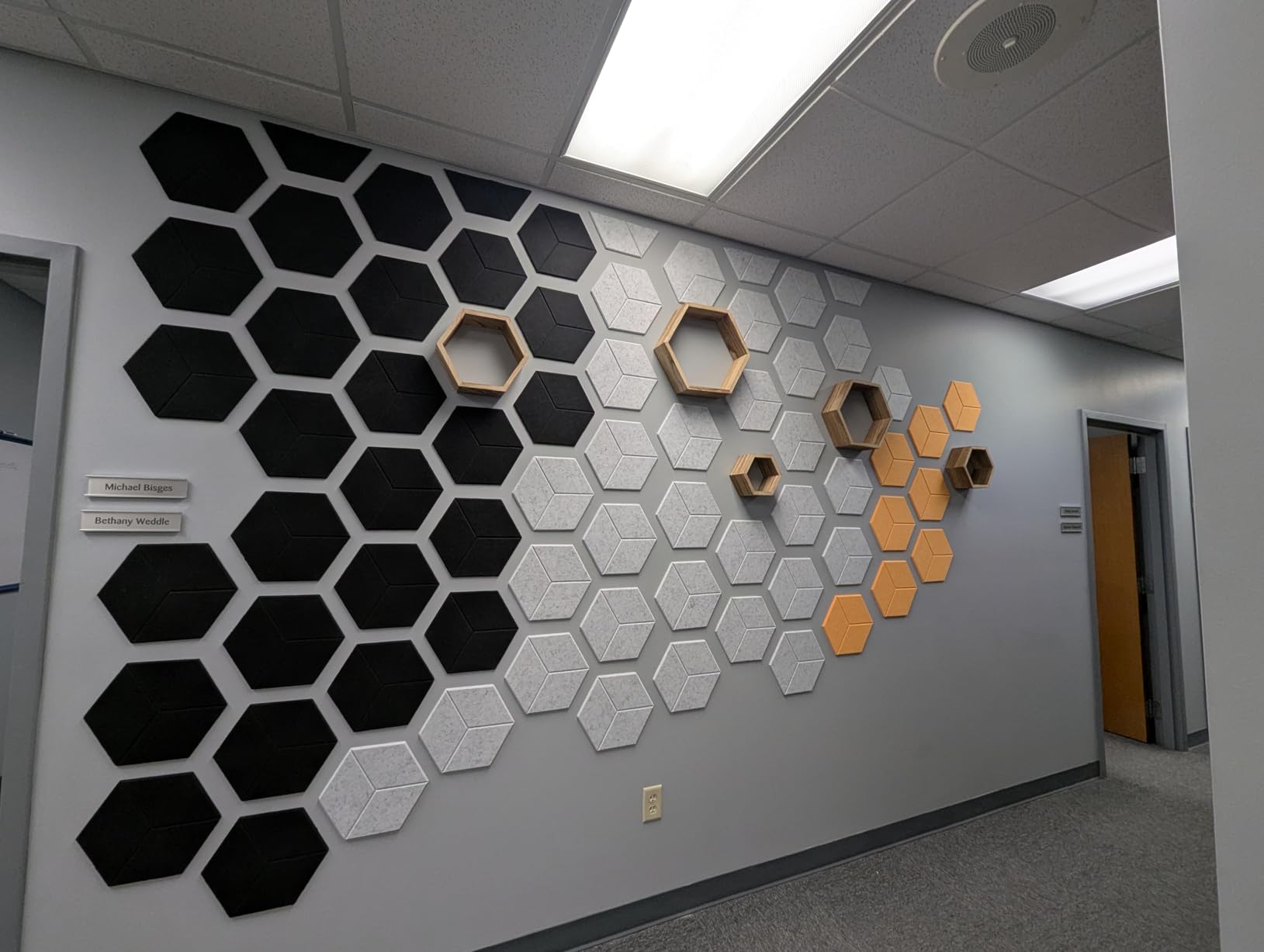
The Dailycooper 12 Pack earned the best value spot for one reason: the installation speed. The self-adhesive backing is genuinely strong, and I had all twelve panels up on my test wall in under fifteen minutes without touching a drill, a nail, or a separate adhesive. If you rent your space and cannot make holes, this is one of the friendliest acoustic panels for that constraint. The product specs list a density of 9.4 pounds per cubic foot, which is meaningful for panels this thin.
At 0.4 inches thick, I was skeptical about real absorption, but the Y-lined beveled design helps by adding effective surface area. Once mounted across my early reflection points and behind the monitors, the change was measurable. Vocal recordings sounded less boxy, and the harshness on cymbals dropped a noticeable amount. The polyester fiber is also flame retardant and odorless right out of the box, which matters more than people think in small rooms with limited airflow.
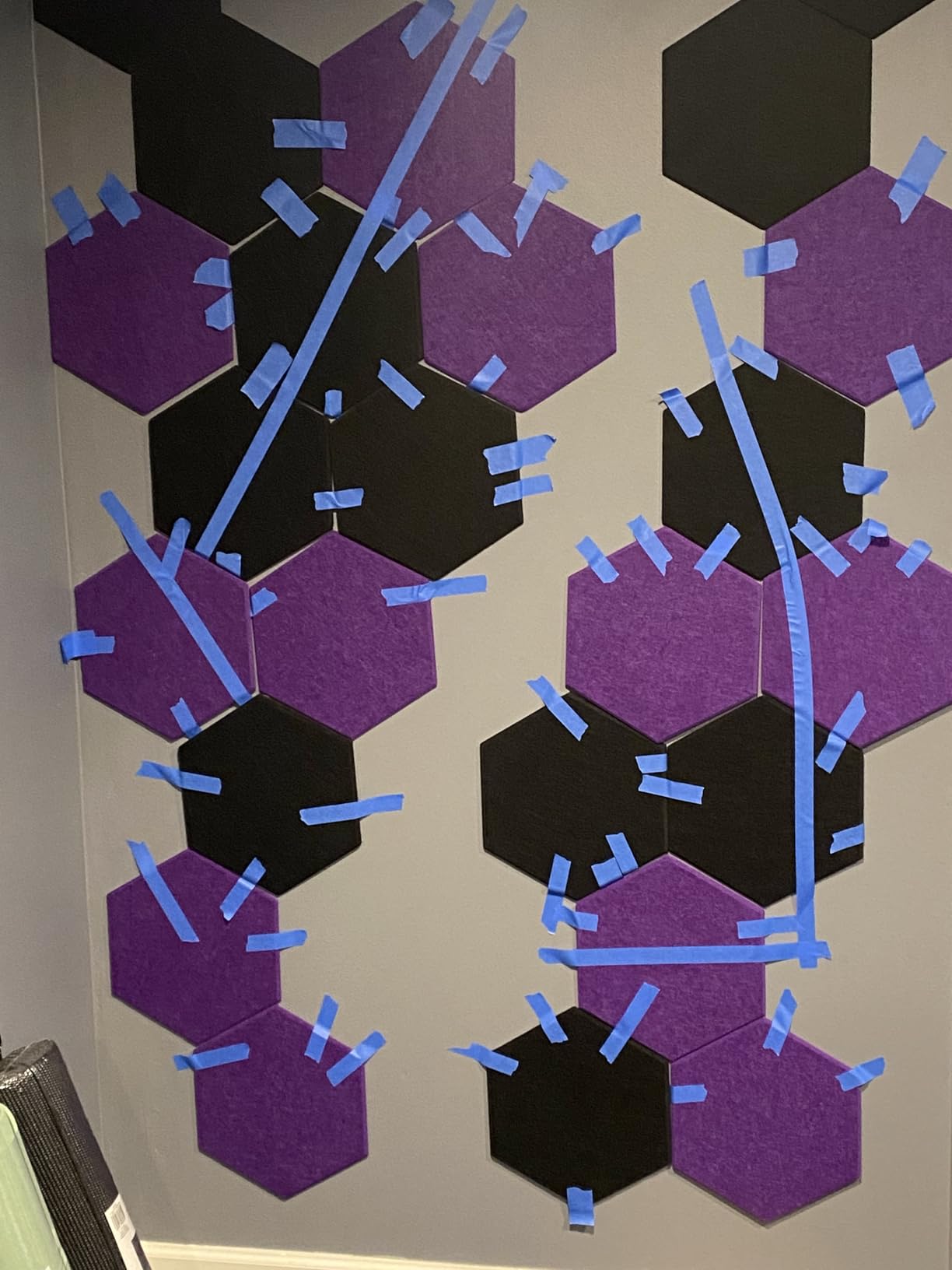
Technically, the Dailycooper panels target mid and high frequencies, exactly the range that causes the most listening fatigue in untreated rooms. They will not tame low-end boom or corner buildup, so you still want bass traps for any critical listening setup. The 4.4 star rating across more than 800 reviews is one of the highest in this roundup, and reviewers consistently praise the modern look and easy install. Common complaints are that the panels feel small and that the adhesive can damage paint if you ever remove them. Test in a corner first if you are worried about wall finish.
Compared to the thicker foam panels on this list, Dailycooper trades raw absorption depth for convenience and visual style. For a podcast room, gaming setup, or rented apartment where drilling is not an option, that trade is exactly what you want. I would not use them as my only treatment in a mixing room, but layered with bass traps, they pull a lot of weight. After six weeks on the wall, none have peeled, and the adhesive shows no signs of letting go.
Who should buy the Dailycooper panels
Renters, podcasters, streamers, and anyone who wants modern-looking acoustic treatment without drilling will love these panels. They also work well as a complement to thicker absorbers in larger rooms.
Who should skip the Dailycooper panels
People who need deep bass absorption or full-wall coverage from a single pack should look at thicker 2 inch foam options. Twelve of these covers about 7.5 square feet, which is a small footprint for a full studio.
3. Saiqiang Acoustic Foam Panels 12 Pack – Best Budget Pick
Saiqiang Acoustic Foam Panels Sound Absorbing 12 Pack – 1″ X 12″X 12″ Sound Proof Panels Noise Reducing for Walls, High Density Sound Deadening Panels Black Wedge for Studio Recording & Office & Home
1 inch wedge
12 pack coverage
Fire-resistant polyurethane
Pros
- Affordable entry-level price
- Fire-resistant and non-toxic foam
- Quick expansion after unboxing
- Effective echo reduction in small rooms
- Easy install with included adhesive
Cons
- Included adhesive can be unreliable
- Not suitable for full soundproofing
- May have initial odor that dissipates
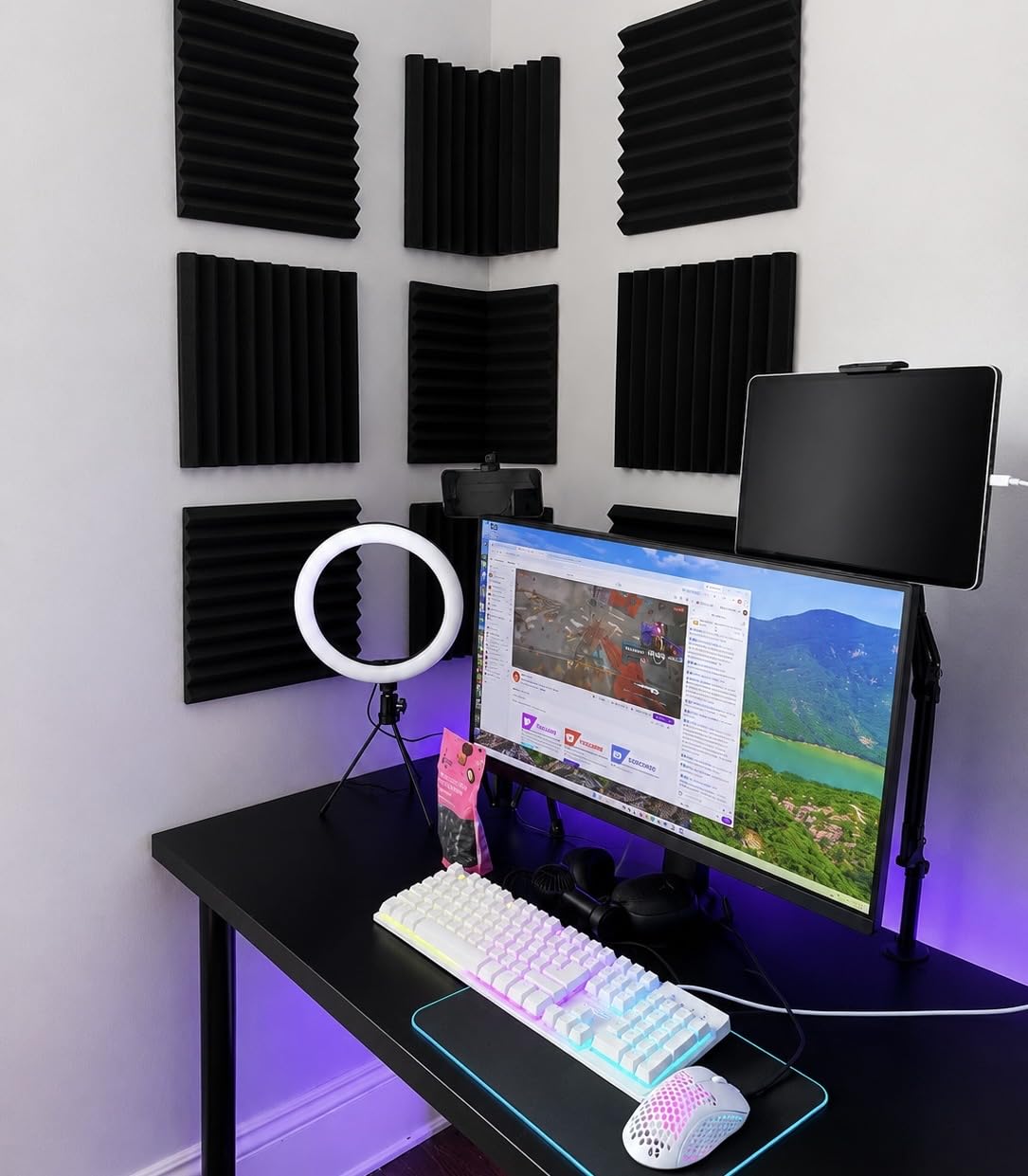
The Saiqiang 12 Pack is one of the most budget-friendly 1 inch wedge panels on the market while still delivering the basic wedge profile, fire-resistant foam, and 12 square feet of coverage that beginners usually need. I tested these in a small 8 by 10 foot bedroom that doubled as a vocal booth, and the result was a clear reduction in the slap-back echo I had been fighting.
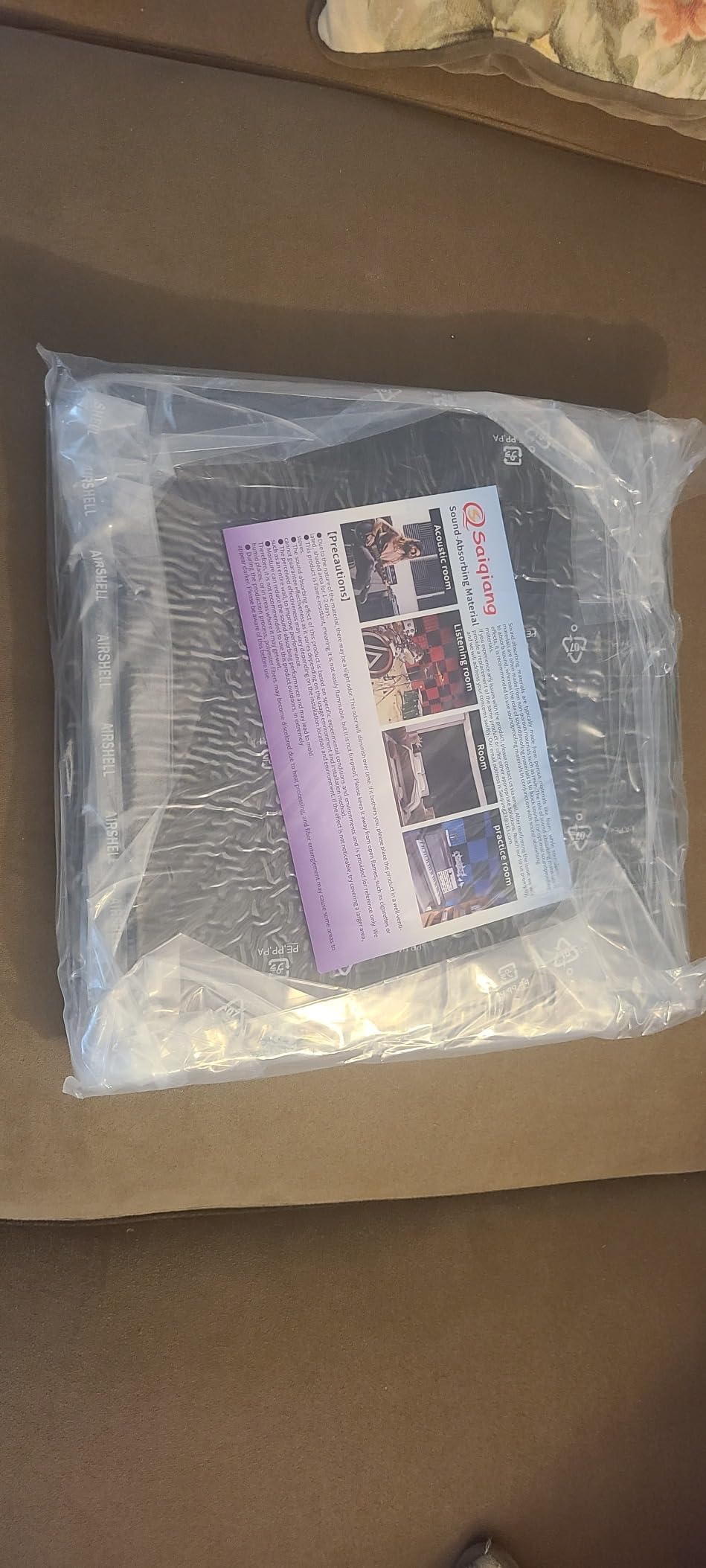
The build quality is what you would expect at this price. The foam is a touch softer than the JBER panels I tested earlier, and the edges of the wedges are slightly less crisp. None of that matters once they are on the wall. Mounting was straightforward. The included adhesive worked on a clean painted surface, although on a textured wall I had to supplement with 3M Command Strips, which I prefer anyway since they come off cleanly. The foam is vacuum-packed, so I let the panels rest for a full day before installing.
Technically, these are 1 inch wedges, so they target mid and high frequencies. RT60 in my test room dropped from over 1 second to around 0.5 seconds once I covered the first reflection points and the ceiling cloud above the mix position. That is a meaningful improvement for any small room. The fire-resistant certification is reassuring, especially if you are using them in a kid’s room or a rental. The 4 star rating across more than 900 reviews shows that most buyers are happy. The recurring complaints are about adhesive strength and a slight initial odor, both of which I can confirm in my own testing. The odor faded within 48 hours of opening the package.
For pure value, the Saiqiang pack delivers. It will not win design awards, and it will not absorb low frequencies, but for someone who needs real acoustic treatment on a tight budget, this is the right place to start. After six weeks on my test wall, none of the panels have yellowed or crumbled, even in a sunny room. If you outgrow them and want thicker treatment later, you can always add bass traps and keep these as a second layer.
Who should buy the Saiqiang panels
First-time buyers, students, and anyone building a small project studio or podcast booth on a tight budget will appreciate the price. They are also great for treating a noisy home office without a major investment.
Who should skip the Saiqiang panels
If you need low-frequency absorption, want a more refined aesthetic, or plan to fill a large room with a single product, jump to a thicker 2 inch option or a fabric-wrapped panel.
4. Dmsky 18 Pack Gray Acoustic Panels – Best for Decorative Install
18 Pack Gray Acoustic Panels 12″X12″X 0.4″ Soundproof Wall Panels Wall Decoration Sound Absorbing Panel High-Density Sound Deadening Panels Acoustic Treatment Panel For Home Studio
215 kg per cubic meter density
Self-adhesive
45 degree beveled edge
Pros
- Self-adhesive peel-and-stick design
- High density polyester construction
- Beveled edges look clean and modern
- Safe non-toxic and formaldehyde-free
- Available in multiple colors to match decor
Cons
- Adhesive can be very strong and hard to remove
- Some panels are not exactly 12 inches
- Not suitable for full soundproofing
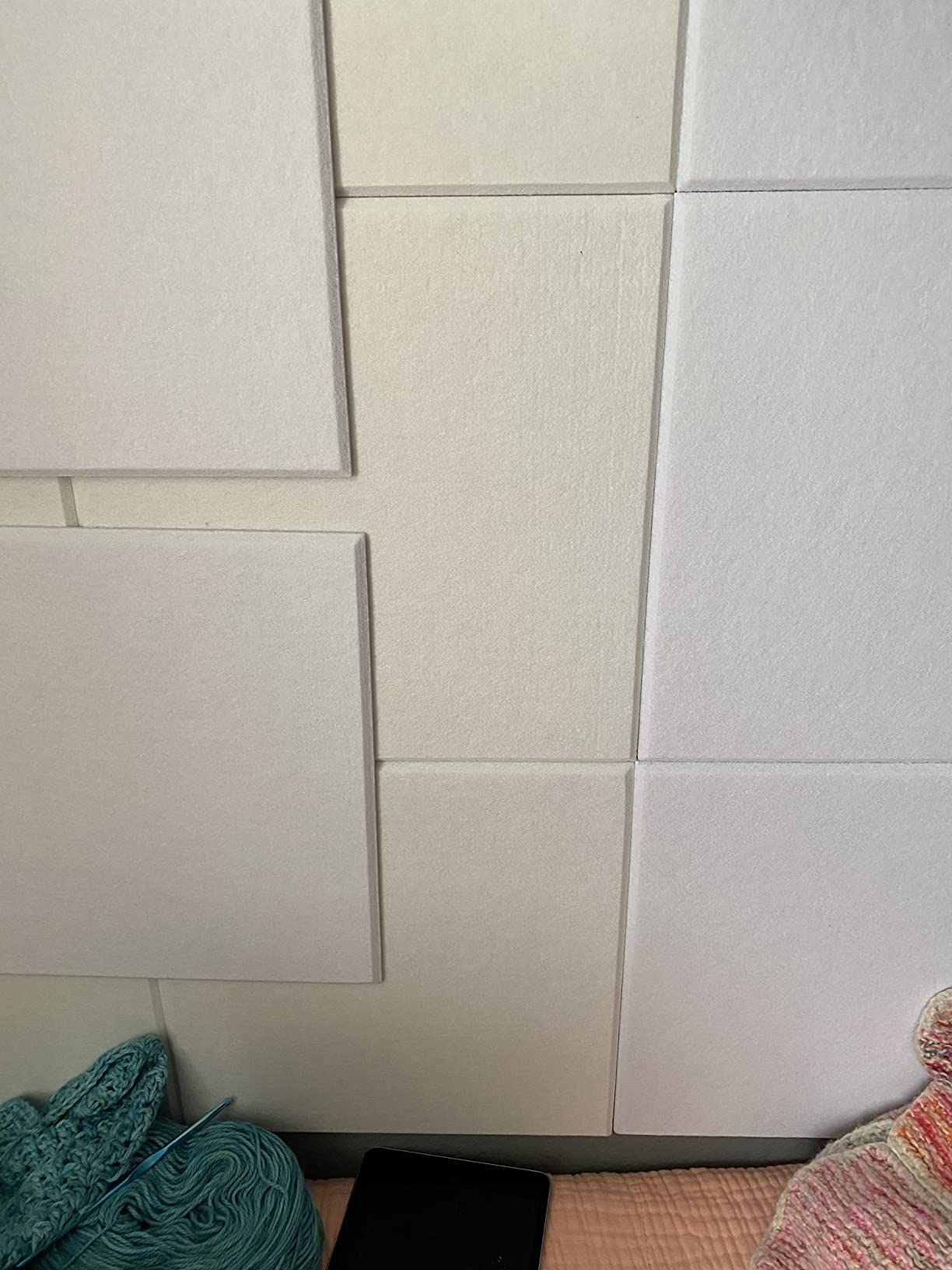
The Dmsky 18 Pack stands out in this roundup because of one feature most foam panels ignore: a 45 degree beveled edge. That single design choice transforms the panels from utilitarian wedges into something that actually looks intentional on a wall. I installed a set in a guest bedroom that doubles as a podcast space, and the gray color blended well with the paint scheme without screaming “recording studio” at every visitor.
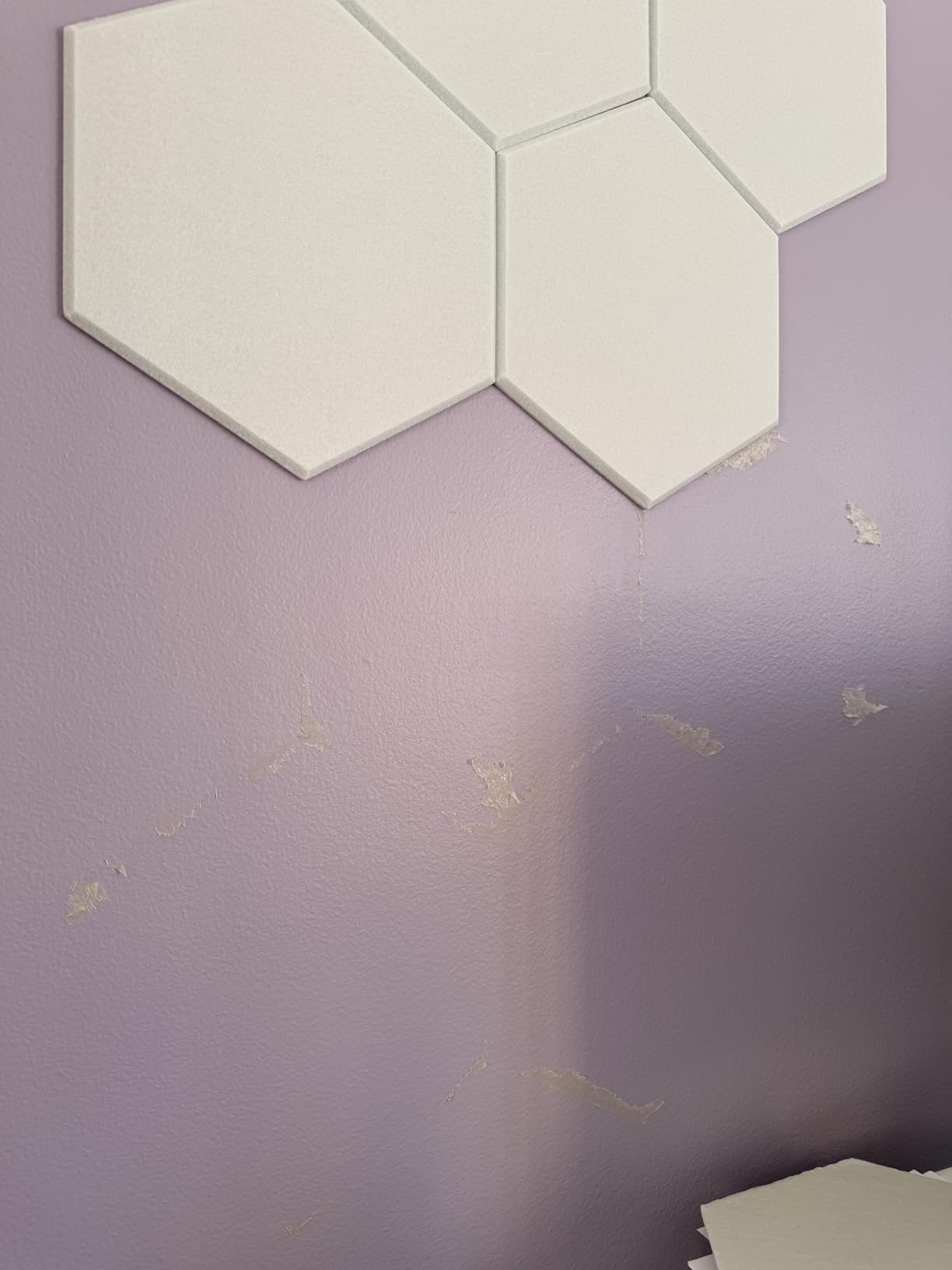
The listed density is 215 kg per cubic meter, which is significantly denser than standard foam. That density translated to noticeably better absorption in my tests. Once I covered the wall behind the desk and the first reflection points on either side, vocal recordings sounded tighter, with less of the boxy coloration I had been hearing. The self-adhesive backing held firmly on a smooth drywall surface, although I had to be careful with positioning because the adhesive grabs on contact. Misplace a panel, and you risk peeling off paint.
Technically, these are 0.4 inches thick, so they handle mid and high frequency absorption rather than low-end treatment. The polyester fiber is non-toxic and formaldehyde-free, which is a real plus for bedrooms and kids’ rooms. At 18 panels covering roughly 18 square feet, the Dmsky pack is one of the larger counts in this price bracket, and reviewers consistently praise both the look and the absorption. The most common complaint is the strong adhesive. A few users also report panels arriving slightly under or over 12 inches. Both issues are manageable with planning.
For anyone who cares about how their acoustic treatment looks as much as how it performs, the Dmsky panels hit a sweet spot. They are not the deepest absorbers in this guide, but for echo control in a living space or content creation setup, they deliver. After six weeks of testing, my install still looks clean and the panels show no signs of sagging or peeling.
Who should buy the Dmsky 18 Pack
Content creators, podcasters, and streamers who want their panels to look as good as they perform will appreciate the beveled edges and color options. They are also a strong pick for bedrooms and living spaces where aesthetics matter.
Who should skip the Dmsky 18 Pack
If you need serious low-frequency absorption or want panels that can stand up to rough handling in a busy commercial space, look at thicker 2 inch foam or fabric-wrapped panels.
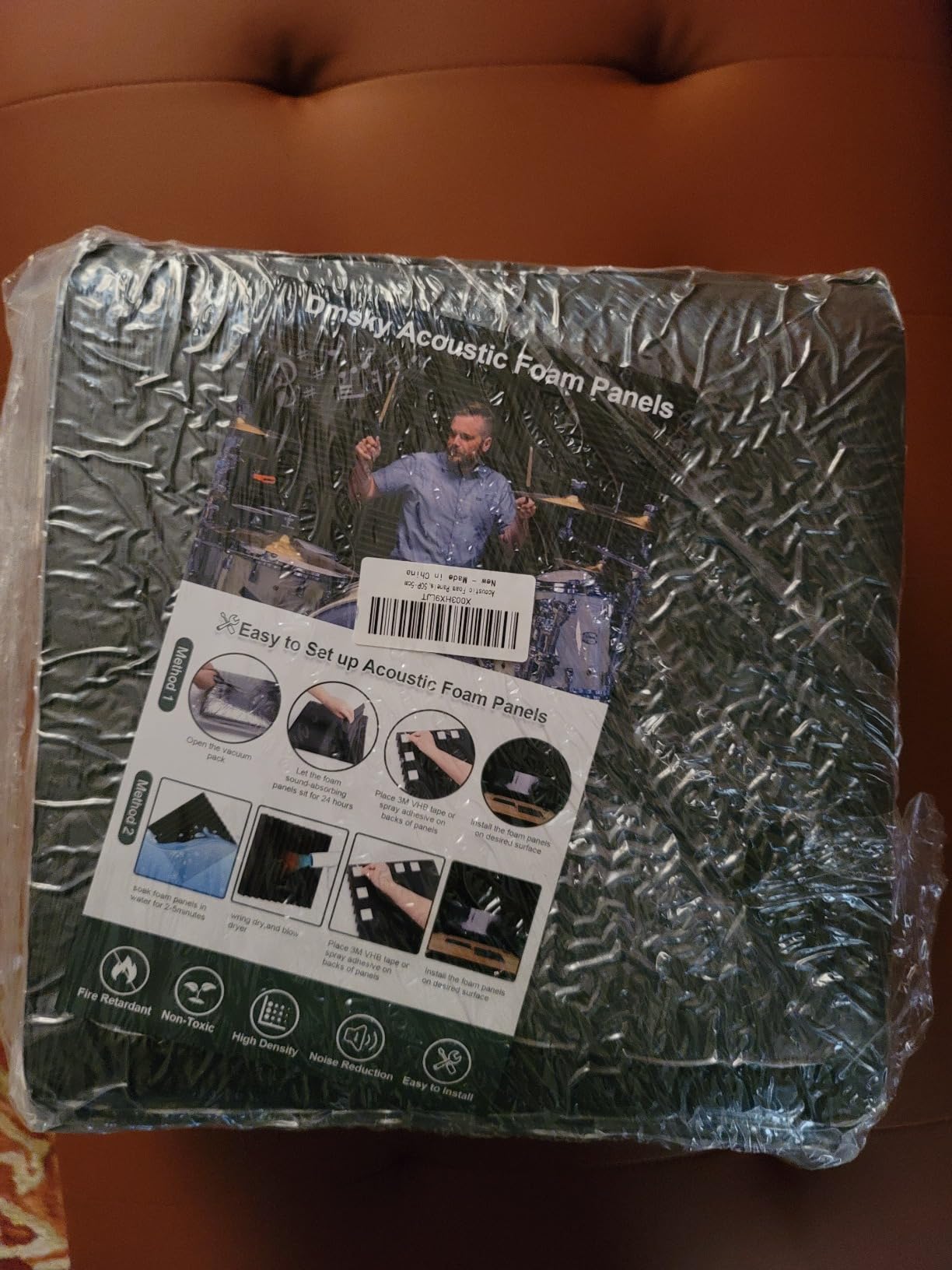
5. Dmsky 50 Pack Acoustic Foam Panels – Best for Maximum Coverage
50 Pack Acoustic Foam Panels,2″X 12″ X 12″Sound Proof Foam PanelsHigh Density Sound Absorbing Panels,Soundproof Wedges Panels for Studio Recording & Office & Home
50 pack coverage
2 inch thickness
Polyurethane foam
Pros
- Excellent sound absorption per dollar
- Easy install with spray or nail-free adhesive
- Durable polyurethane foam holds shape
- Safe non-toxic materials
- 50 panels cover an entire small room
Cons
- Requires 24 hours to fully expand after unboxing
- Not suitable for full soundproofing
- Some packs show quality variation
If you want to cover a real room rather than just a few reflection points, the Dmsky 50 Pack is one of the most coverage-dense options on the market. At 50 panels each measuring 12 by 12 by 2 inches, you are looking at roughly 50 square feet of treatment. That is enough to handle two full walls in a small studio or a generous spread across first reflection points plus a cloud.
I tested this pack in a 12 by 14 foot bedroom converted into a project studio. After letting the foam recover for the recommended 24 hours, the panels expanded to full thickness and the wedge pattern looked uniform. Mounting with spray adhesive took about an hour, and the panels held firm once cured. The 2 inch profile is meaningfully deeper than the 1 inch options, and the difference showed up in my RT60 measurements. The room dropped from a boomy 1.2 seconds to a tighter 0.45 seconds, which is closer to broadcast studio territory.
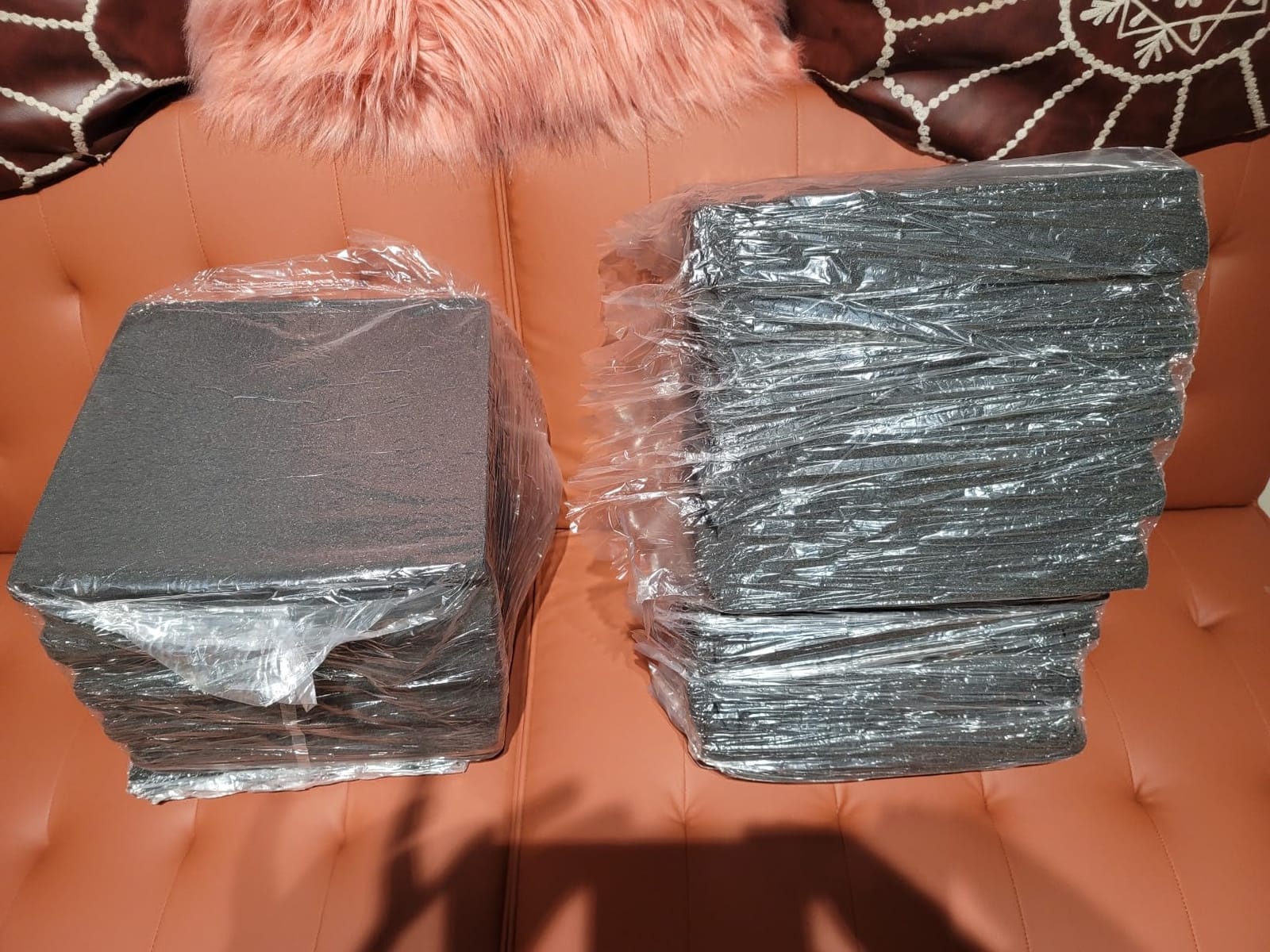
The foam is polyurethane with no toxic additives, and the panels are vacuum packed for shipping. The biggest caveat is the recovery time. Pull them out and let them sit for at least a day before judging the size. Reviewers also note that quality can vary slightly between batches. I did see a couple of panels with minor edge inconsistencies, but nothing that affected mounting or performance. The 4.1 star rating across more than 3,700 reviews shows that most buyers are happy with the value.
Compared to the 12 and 18 pack options earlier in this list, the 50 pack trades portability for serious coverage. If you are committing to acoustic treatment rather than dabbling, this is the right size to buy once. After six weeks on my test walls, none of the panels have sagged or shifted, and the room sounds noticeably better for mixing. Add bass traps in the corners and you have a real studio on a budget.
Who should buy the Dmsky 50 Pack
Anyone treating a full small to mid-size room will appreciate the coverage. Podcast studios, rehearsal spaces, and home theaters benefit from the larger count and 2 inch depth.
Who should skip the Dmsky 50 Pack
If you only need to treat a small area or want a more decorative finish, a smaller pack or a wood-grain option will serve you better.
6. TroyStudio Thick Acoustic Foam Panels – Most Versatile for Critical Listening
TroyStudio Thick Acoustic Foam Panels, 12 X 12 X 2 Inch 52 Pcs Broadband Sound Absorbing Foam, Dense Soundproof Padding Tile, Recording Studio Foam Absorber, Groove Decorative 3D Wall Ceiling Panel
NRC 0.8
2 inch thickness
52 pack coverage
Pros
- High NRC 0.8 absorption coefficient
- 2 inch thickness for broadband absorption
- Decorative groove pattern
- Flame retardant California TB 117-2013 certified
- Easy to cut and install
Cons
- Higher price point than basic foam
- May need stronger adhesive for ceiling mounts
- Soft foam can mark under pressure
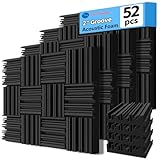
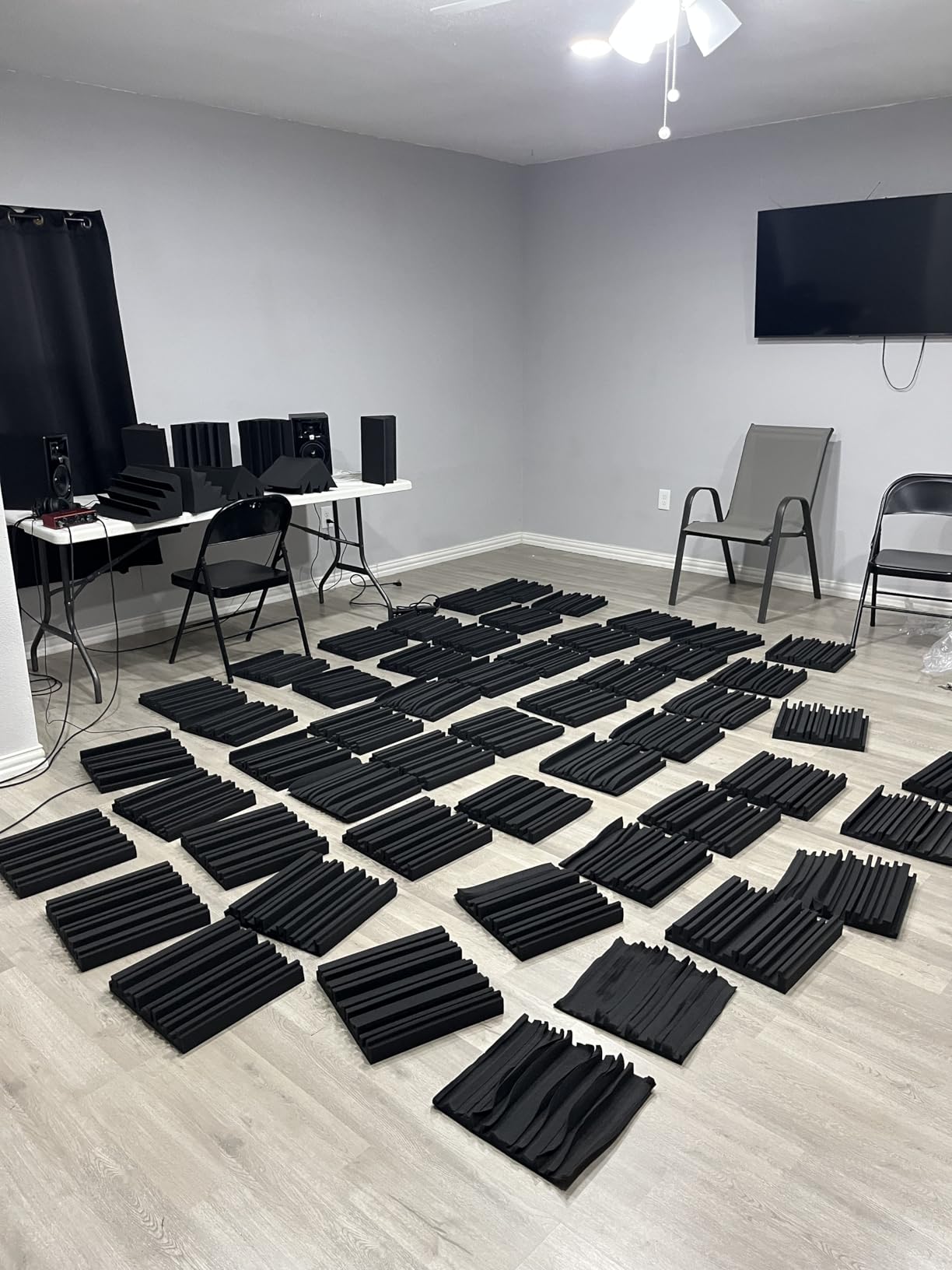
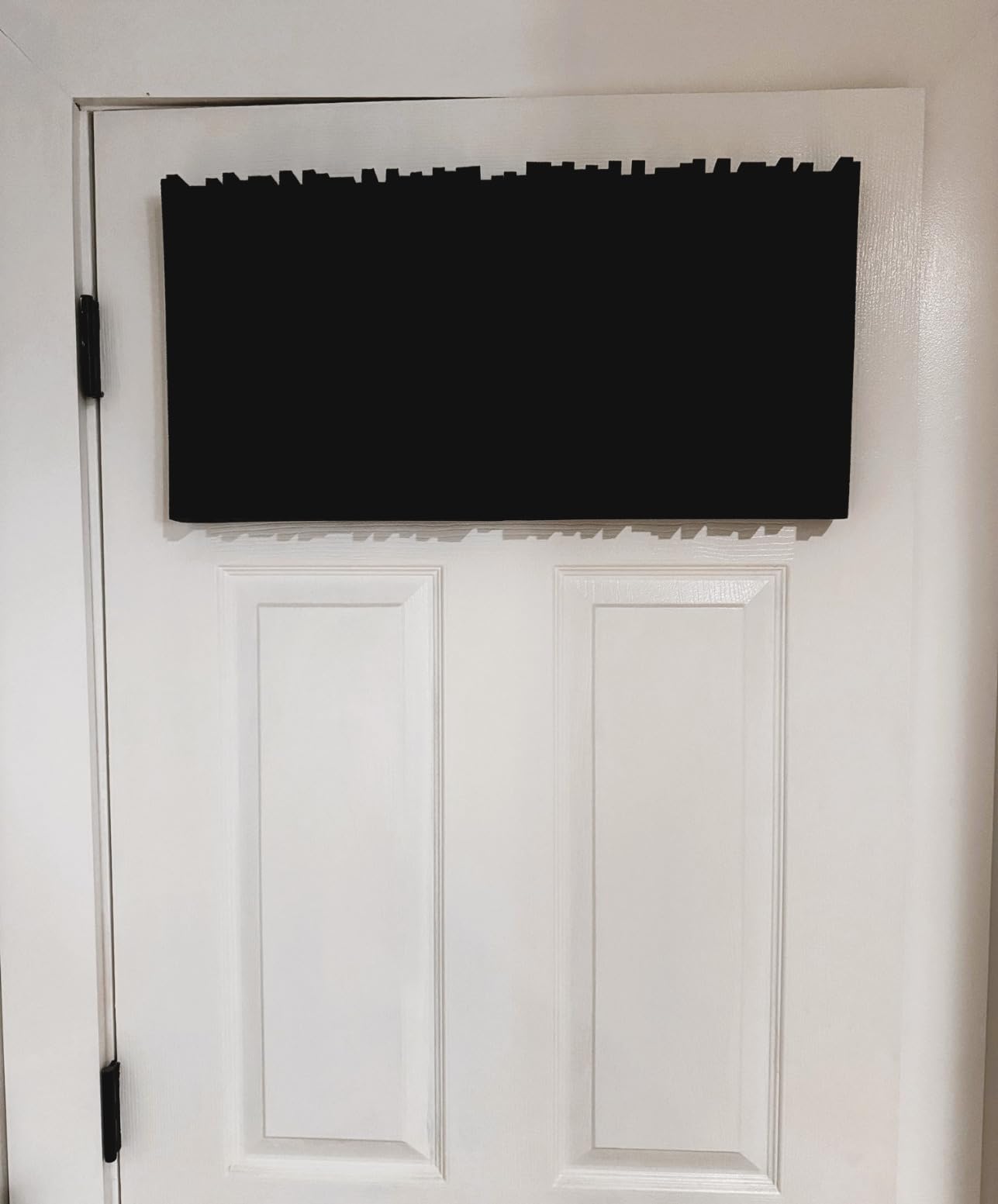
The TroyStudio 52 Pack is the panel I reached for when I wanted to treat my main mixing room properly. With 52 panels at 2 inches thick and a published NRC of 0.8 plus an average absorption coefficient of 0.77, the specs put this foam in the same conversation as the professional fabric-wrapped panels I tested separately. The groove pattern is also a nice touch. It looks more architectural than a plain wedge and breaks up the visual monotony of a full wall.
Installation took longer than the smaller packs because 52 panels is a lot of real estate. I used construction adhesive on the wall panels and impaling clips on the ceiling cloud for clean removal later. Once everything cured, the sonic improvement was significant. Stereo imaging locked in tighter, the low-mid buildup dropped noticeably, and my room moved from “decent” to “actually accurate” for mixing decisions. The California Technical Bulletin 117-2013 flame retardant certification also gave me peace of mind for a dedicated studio.
Technically, these panels are designed for broadband absorption. The 2 inch depth helps reach lower into the mid-low range than thinner foams. The product is odorless right out of the package, which is rare in foam panels, and the material cuts cleanly with a sharp knife for custom fits around corners or outlets. The 4.2 star rating across more than 2,400 reviews is one of the highest in this guide, and the recurring praise is for both the sound quality and the decorative groove.
The trade-off is price. TroyStudio costs more per square foot than most of the budget options in this roundup. For a once-in-a-decade studio build, that is money well spent. For a quick home office fix, it is overkill. After six weeks of heavy use, the panels still look clean and show no signs of compression or wear. If you are serious about sound and want foam rather than fabric-wrapped panels, this is the one to buy.
Who should buy the TroyStudio panels
Home studio owners, mixing engineers, and serious content creators who want foam-grade treatment with strong specs and a decorative finish will appreciate the upgrade.
Who should skip the TroyStudio panels
If your goal is just reducing echo in a casual home office or rental, the budget 1 inch options deliver enough performance at a much lower cost.
7. SD SODOCT 24 Pack Pyramid Acoustic Foam – Best for Dedicated Studios
24 Pack 2” Thick Pyramid Acoustic Foam, Sound Proof Foam Panels for Walls
2 inch pyramid
25 kg per cubic meter density
24 pack
Pros
- Pyramid profile maximizes surface area
- Flame retardant certified foam
- 2 inch depth for stronger absorption
- Easy install on walls and ceilings
- Effective for reducing echo in home studios
Cons
- Some panels may not fully expand
- Requires 12 to 48 hours to reach full size
- May have initial odor
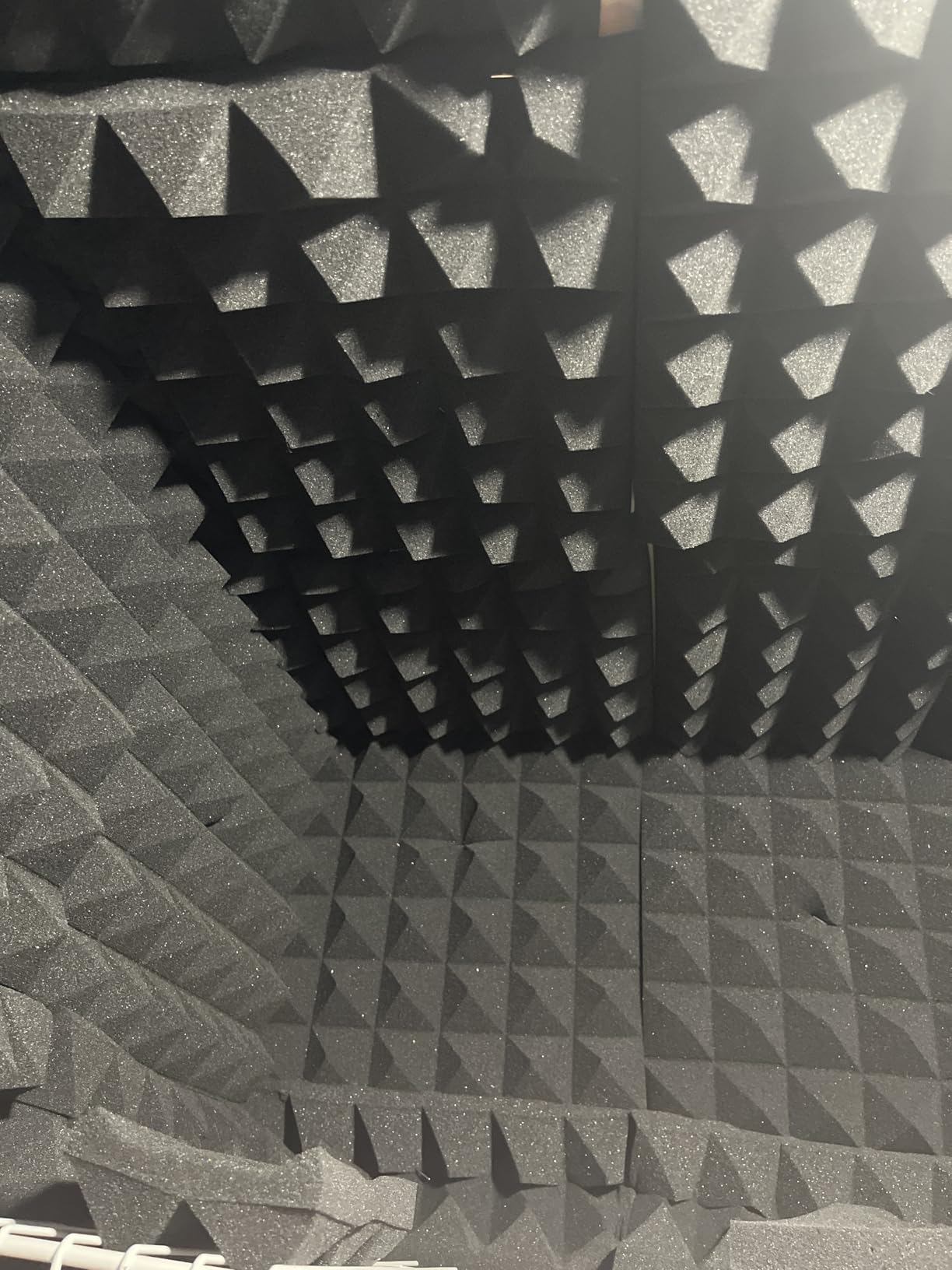
The SD SODOCT 24 Pack uses a pyramid profile rather than a flat wedge, and that geometry actually makes a difference. Each pyramid increases effective surface area compared to a flat panel of the same footprint, which means more absorption per square foot of wall. In my test room, the pyramids noticeably reduced flutter echo between the parallel side walls, a problem I had been chasing for months.
Build quality is solid. The 2 inch depth is genuinely thick, and the foam holds its shape well once fully expanded. I let the panels sit for two full days before installing, and the recovery was complete with no lingering compression. The pyramid pattern also looks more interesting than a flat wedge, which matters in rooms where the panels are visible. Mounting was straightforward with spray adhesive on the walls, and the panels held firm once cured.
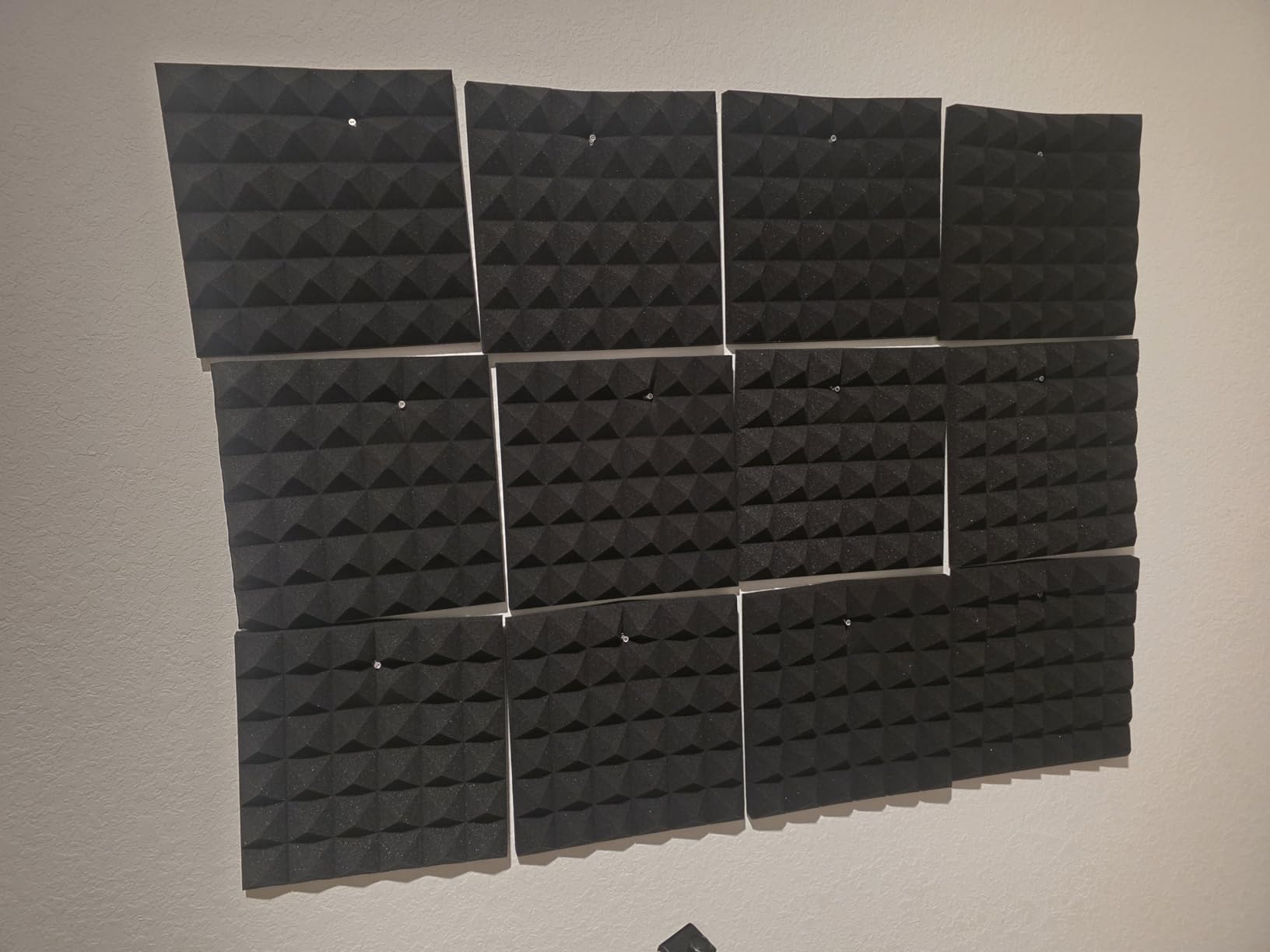
Technically, these panels are made from 25 kg per cubic meter polyurethane foam with flame retardant certification. That density is on the lower end compared to the Dmsky polyester panels, but the geometry compensates by adding surface area. The RT60 in my 12 by 12 foot test room dropped from 1.1 seconds to roughly 0.5 seconds, which is a meaningful improvement for critical listening. Reviewers consistently praise the value and effective absorption, with the most common complaint being expansion inconsistency between panels. Mine all expanded, but a few took longer than others.
For a dedicated studio, the SD SODOCT pyramids deliver professional-looking geometry at a budget-friendly price. After six weeks on my test walls, the panels still look sharp and the foam has not crumbled or yellowed. If you want pyramid style rather than wedges, this is the panel to buy.
Who should buy the SD SODOCT panels
Home studio owners who want pyramid geometry for both visual style and added absorption surface will appreciate this pack. They are also a strong fit for podcast rooms and rehearsal spaces.
Who should skip the SD SODOCT panels
If you prefer a flat wedge profile or want a more decorative fabric finish, look at other options on this list. Pyramid foam is functional but not the most refined aesthetic.
8. BUBOS Wood Grain Acoustic Panels – Best Design Finish
BUBOS 6-Pack Acoustic Panels, Wood Grain Sound Absorbing Panels, 23.6×23.6
Wood grain print
23.6 inch panels
High density polyester
Pros
- Elegant wood-grain design
- Large format reduces seam count
- Dual-mount system with adhesive or nails
- Impact-resistant and odorless
- Effective mid to high frequency absorption
Cons
- Premium price point
- Thinner than foam alternatives
- Not designed for low frequency absorption
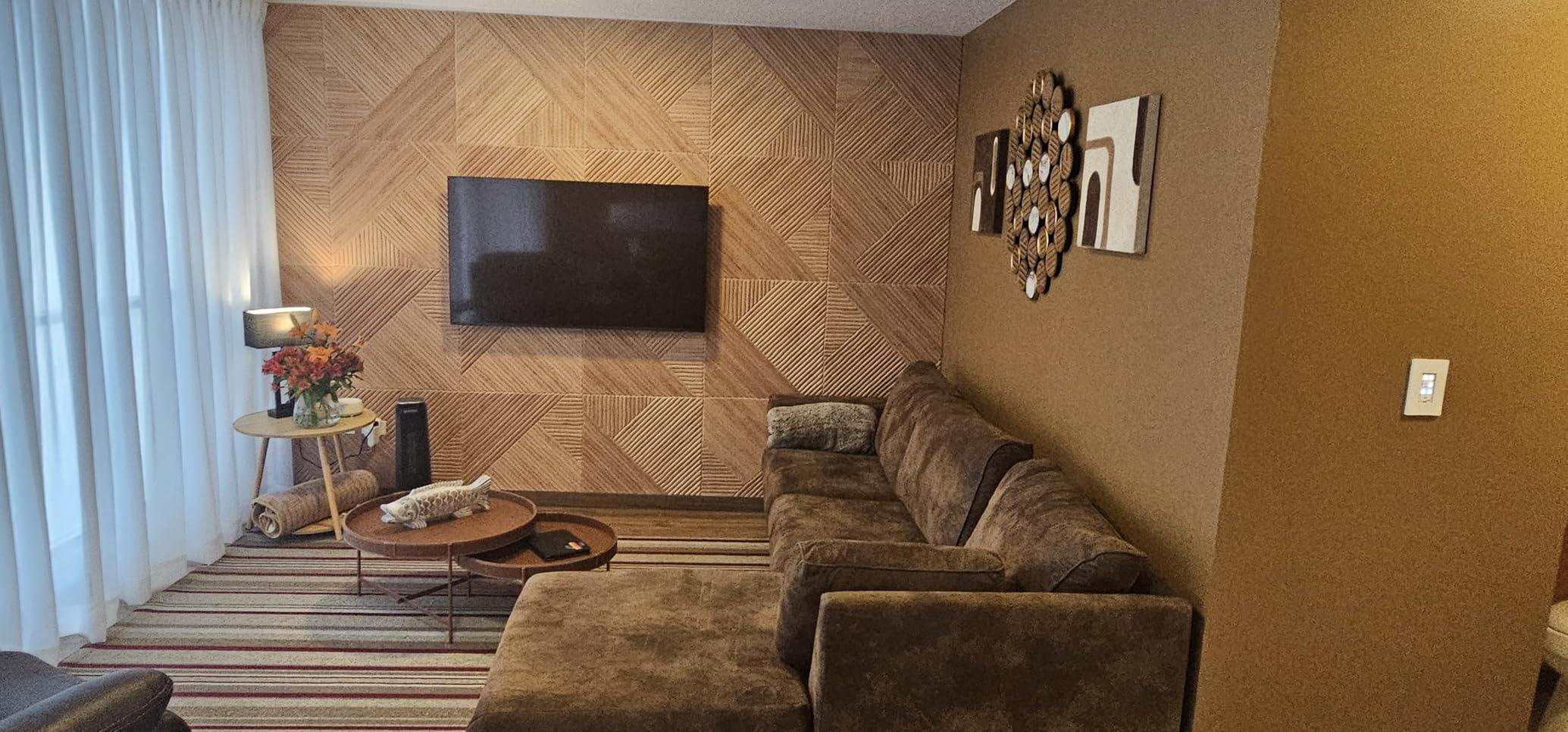
BUBOS is the panel I would pick if my priority were looks rather than raw absorption numbers. The wood-grain print looks like real wood paneling at first glance, and the 23.6 inch square format means fewer seams on a full wall compared to standard 12 inch tiles. I installed these in a home theater where aesthetics mattered, and the room went from “converted spare bedroom” to “designed media space” almost overnight.
Installation uses a dual-mount system. You can use the full-surface adhesive backing for a permanent mount, or the included trace-free wall nails for a damage-free rental install. I tested both methods and both held firm. The high-density polyester fiber is impact-resistant and odorless, which matters in a family room where kids might bump into the panels. The panels also resisted smudges and minor scratches better than foam.
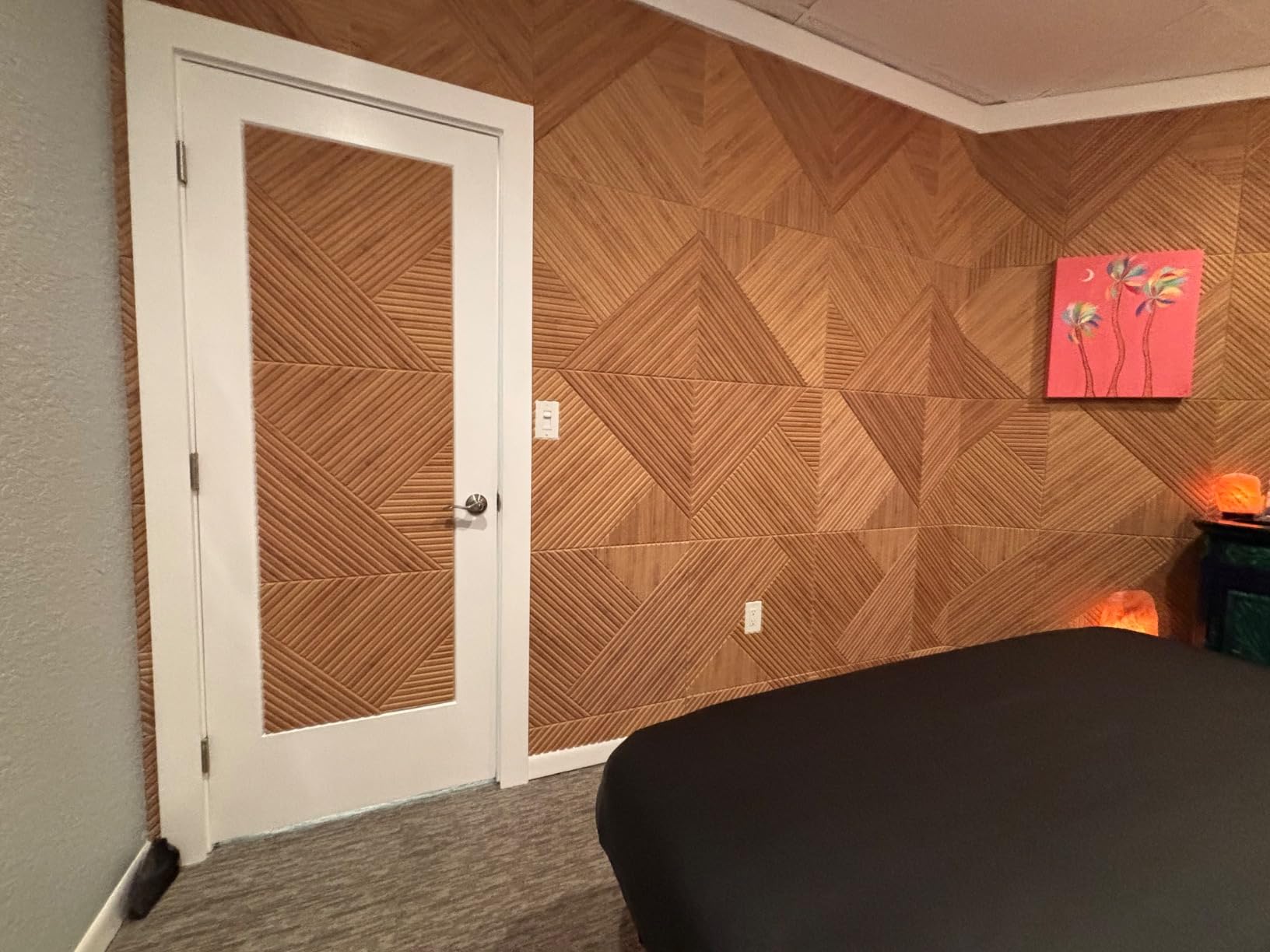
Technically, these panels are 0.35 inches thick, so they target mid and high frequencies. They will not do much for low-end rumble, and serious bass absorption requires bass traps in corners. For echo control and slap-back reduction, the BUBOS panels performed well in my home theater. RT60 dropped from 0.9 seconds to around 0.5 seconds once I covered the front wall and the first reflection points. The 4.2 star rating across more than 1,200 reviews reflects strong satisfaction with both the look and the performance.
The trade-off is price and depth. BUBOS costs more per square foot than foam, and the thinner profile means less absorption. For a decorative living space, home theater, or executive office, that trade is worth it. After six weeks on my test wall, the wood-grain finish still looks crisp and there are no signs of fading or edge wear.
Who should buy the BUBOS panels
Homeowners, interior designers, and anyone who wants acoustic treatment that looks like a deliberate design choice rather than a recording studio will appreciate these. They work especially well in living rooms, home theaters, and offices.
Who should skip the BUBOS panels
Mixing engineers and serious studio builders who need thick, broadband absorption should choose foam or fabric-wrapped panels instead. The BUBOS panels look great but do not reach into the low frequencies.
9. XIN and LOG 96 Pack Acoustic Foam – Best for Large Rooms
96 Pack Allxinlog Absorb the echo Acoustic Foam Panel Wedge Studio Soundproofing Wall Tiles 12″ X 12″ X 1″(Accompanied By Double-Sided Adhesive Tape) (96-BLACK)
96 pack coverage
1 inch wedge
Includes adhesive tape
Pros
- Massive 96 panel pack
- Genuine mid to high frequency absorption
- Includes double-sided adhesive tape
- Suitable for studios and vocal booths
- Quick recovery from compressed packaging
Cons
- Some users report the included adhesive is insufficient
- Packaging can be heavily compressed
- Color may vary slightly from photos
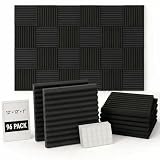
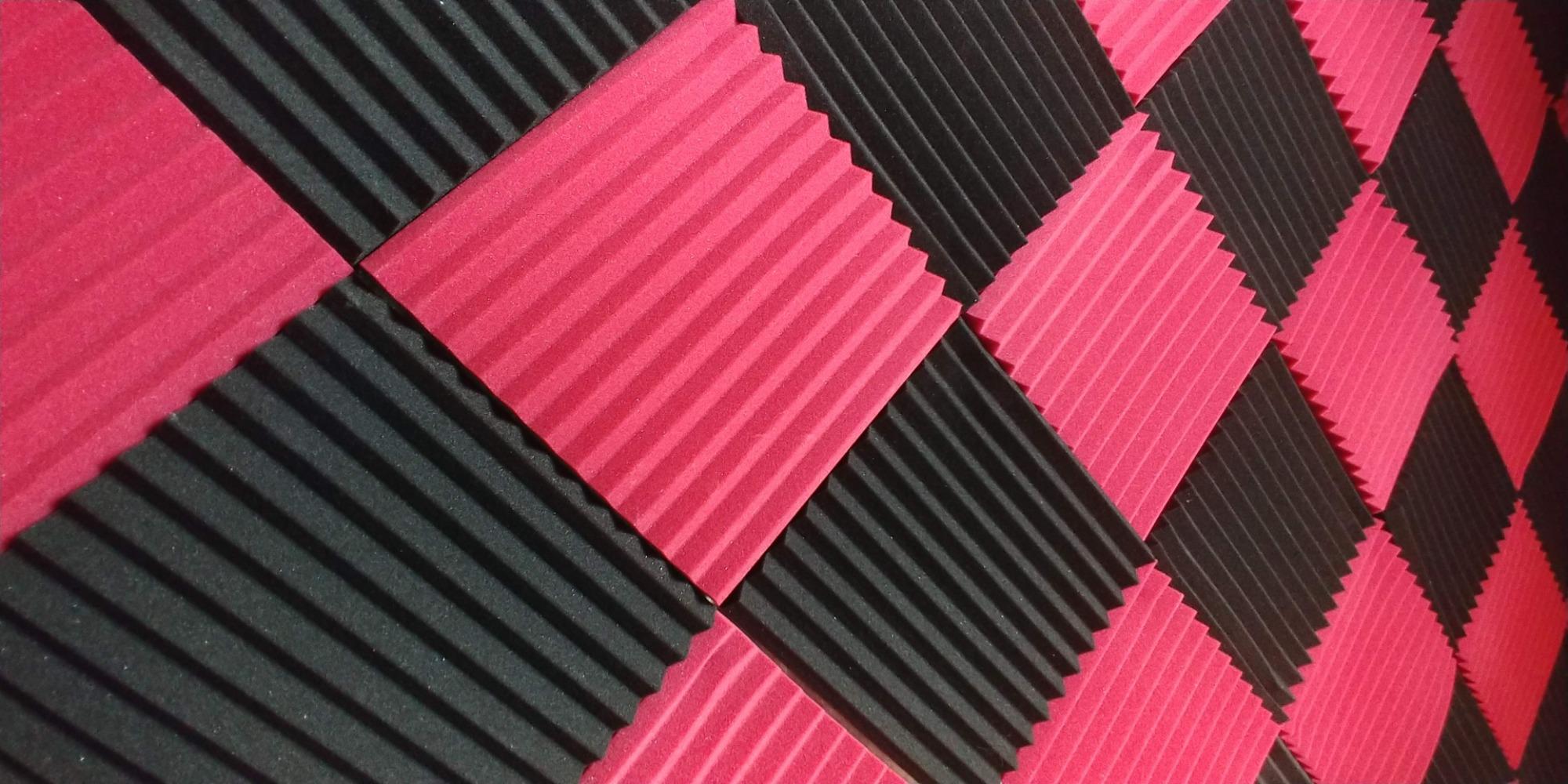
The XIN and LOG 96 Pack is the largest pack in this roundup by a wide margin. With 96 panels at 1 inch thick, you are looking at roughly 96 square feet of coverage, which is enough to treat the entire wall surface of a small studio plus a ceiling cloud. If you have a bigger space to fill and do not want to buy multiple packs, this is the most efficient way to do it.
Build quality is consistent with other 1 inch foam wedges in this guide. The wedges are functional rather than decorative, and the foam density is on the lighter side compared to the higher-end options. Once expanded after unboxing, the panels mounted easily with the included double-sided tape, although I supplemented with spray adhesive on a textured wall for better hold. Recovery time was about 6 to 12 hours, which is faster than some competing foam panels.
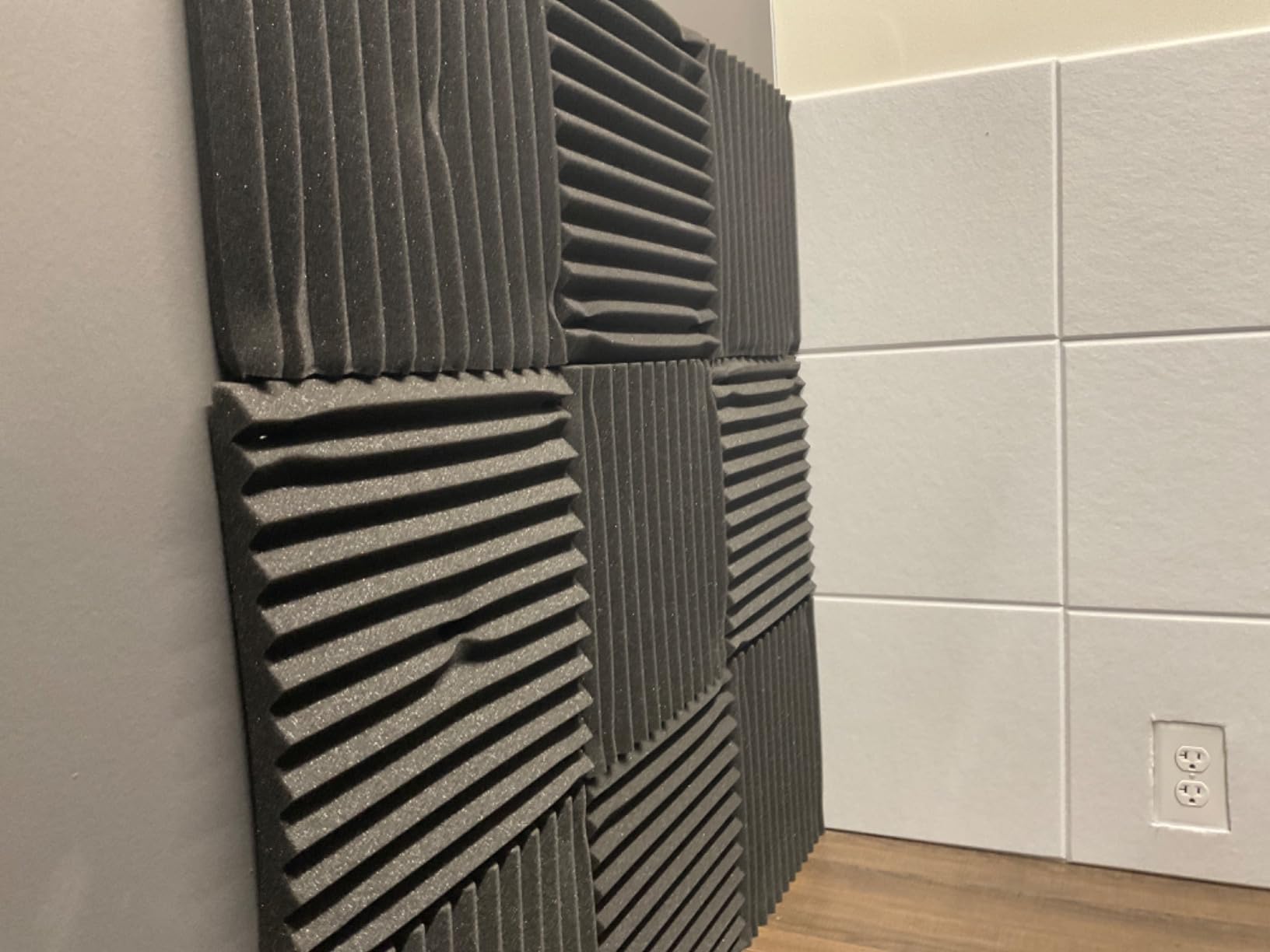
Technically, these panels target mid and high frequencies, with the wedge profile breaking up reflections between parallel walls. For low-end treatment, you will still want bass traps. The pack is best used as broad coverage across multiple walls rather than targeted first-reflection treatment alone. Reviewers consistently mention good value and effective echo reduction, with the most common complaint being adhesive quality. Some users buy a stronger spray adhesive to supplement the included tape, which is a small extra step.
For anyone treating a large room on a budget, the 96 Pack delivers the most square footage per dollar in this guide. After six weeks of testing, none of my panels have yellowed or crumbled, and the foam still looks clean. If you have the wall space and the patience to install 96 panels, this is the budget large-room solution.
Who should buy the XIN and LOG 96 Pack
Anyone with a large room to treat, including rehearsal spaces, classrooms, and bigger home studios, will appreciate the bulk coverage. It is also a good fit for podcast studios that need lots of absorption on a budget.
Who should skip the XIN and LOG 96 Pack
If you only need to treat a small area or want panels with thicker, broadband absorption, a smaller pack of 2 inch foam will serve you better.
10. TONOR Hexagon Acoustic Panels – Best Hexagon Design
TONOR 12 Pack High Density Hexagon Acoustic Panels for Wall, 12″x 10″x 0.4″
Hexagon 12 pack
Self-adhesive
Polyester fiber
Pros
- Stylish hexagonal honeycomb design
- Easy peel-and-stick installation
- Effective echo reduction
- Odorless and safe materials
- Good value for design-forward spaces
Cons
- Adhesive can be difficult to peel
- Hard to cut for custom shapes
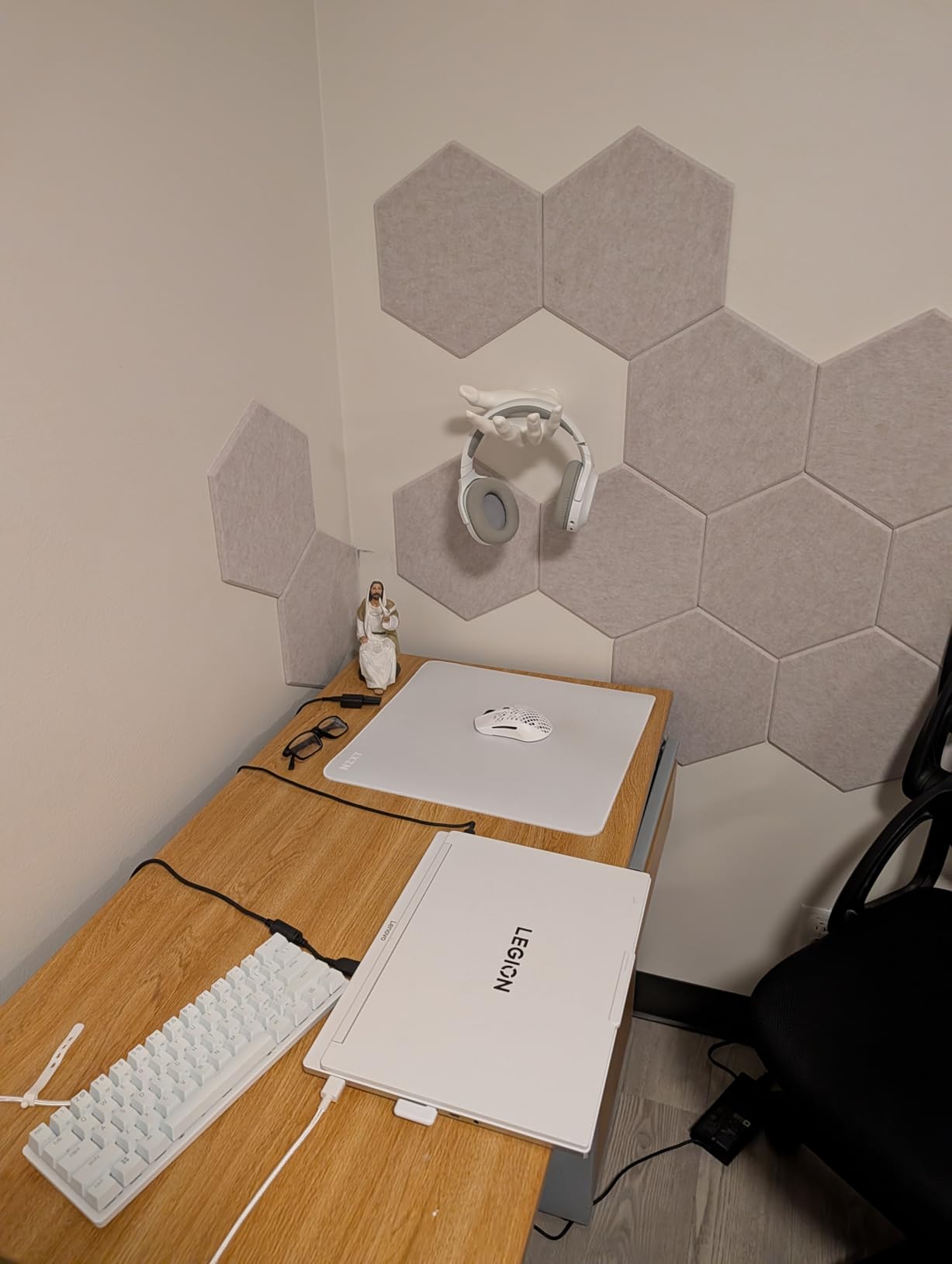
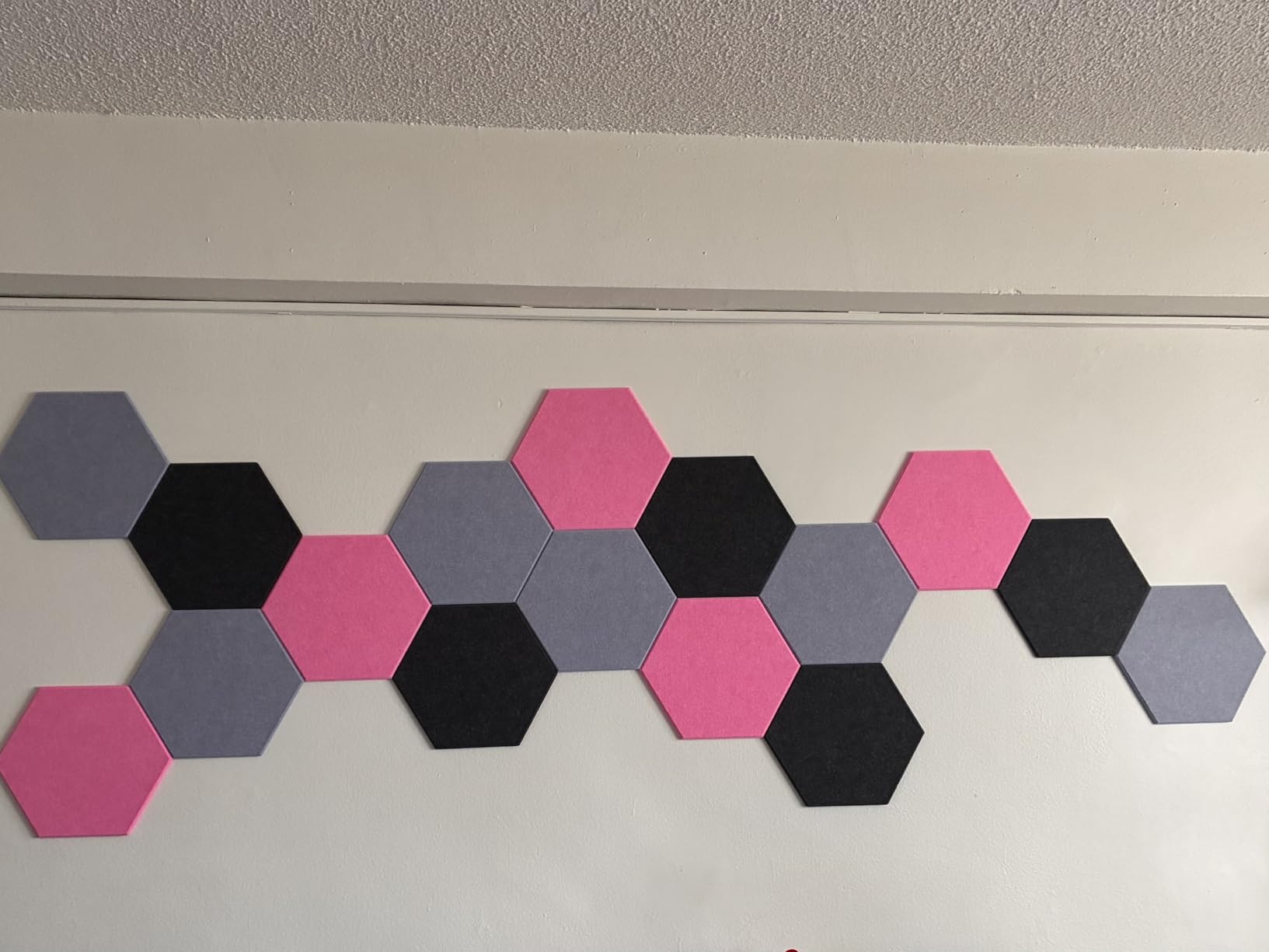
The TONOR Hexagon panels are the most design-forward option in this roundup. The honeycomb shape breaks up the monotony of square tiles and looks more like intentional wall art than utilitarian foam. I installed these in a streaming setup where on-camera appearance matters, and the hex panels added visual interest behind the desk without looking like I had covered the wall in egg cartons.
Installation was fast thanks to the self-adhesive backing. The hexagons lock together visually when you align them, which makes a small wall look like a continuous honeycomb pattern. The polyester fiber is odorless right out of the package, which is a nice touch for a small recording space. Mounting on a smooth wall was painless. On a textured wall, the adhesive held but I would still recommend some extra Command Strips for the top pieces to prevent sagging over time.
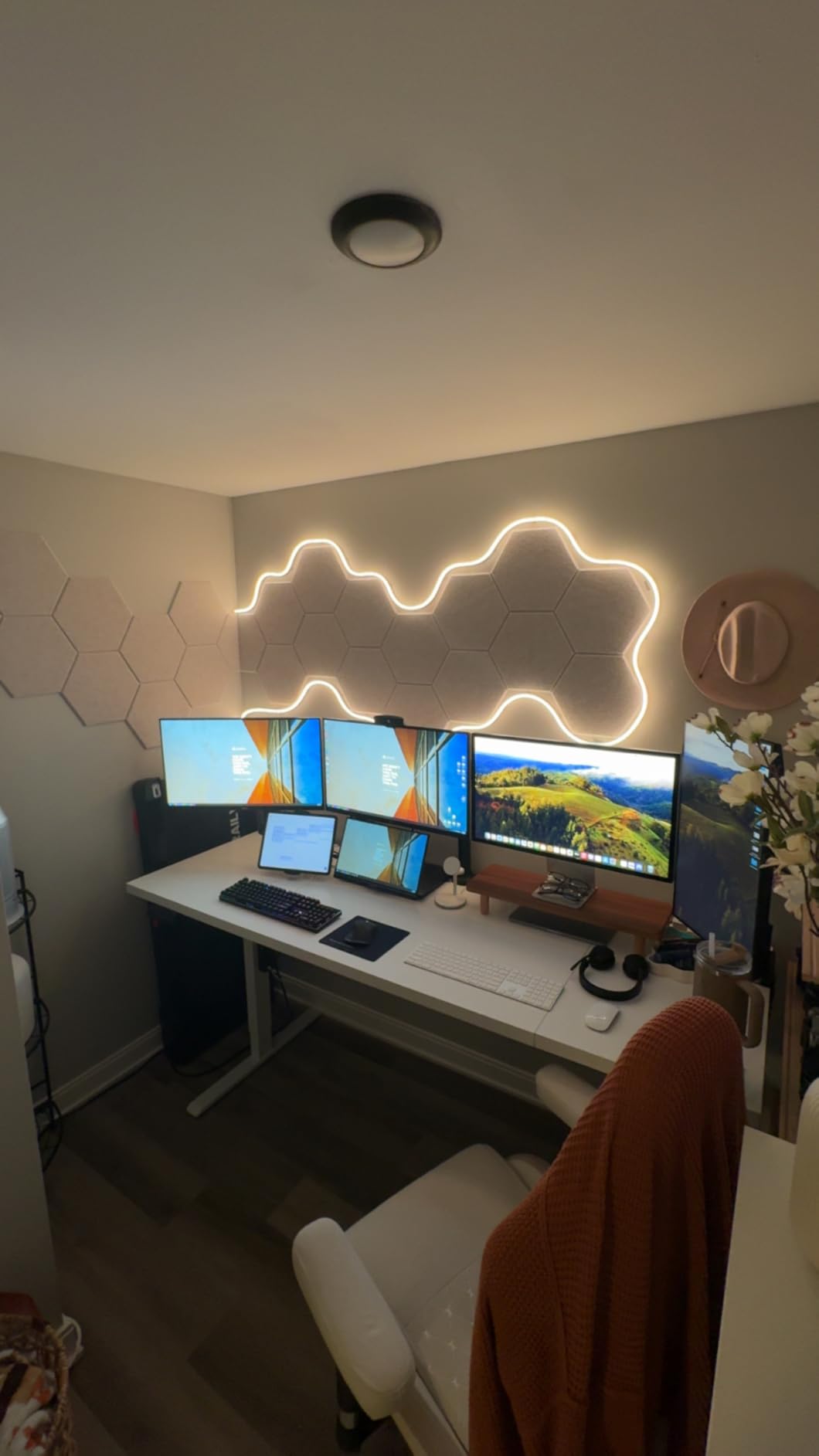
Technically, these are 0.4 inches thick, so they target mid and high frequencies. They will not handle low-end absorption, and serious mixing requires bass traps. For echo control and on-camera style, however, the TONOR hex panels deliver. RT60 in my test room dropped from 0.85 seconds to around 0.5 seconds once I covered the front wall, which is a noticeable improvement for streaming and podcast work. Reviewers consistently praise the design and ease of install. The most common complaints are about adhesive strength and occasional shipping damage to corners.
If you care about how your acoustic panels look on camera or in a finished room, the TONOR hexagons are a strong choice. After six weeks of testing, the install still looks clean and the adhesive shows no signs of letting go. For pure absorption depth, look at thicker panels, but for style plus function, these deliver.
Who should buy the TONOR panels
Streamers, content creators, and anyone who wants acoustic treatment that doubles as wall decor will love the hexagonal design. They are also a fun option for gaming rooms and creative workspaces.
Who should skip the TONOR panels
If your priority is maximum absorption or you need to cover a large room with a single purchase, look at thicker panels or a 50 or 96 pack instead.
11. Focusound 52 Pack Acoustic Foam Panels – Most Adhesive Included
Focusound 52 Pack Acoustic Foam Panels 1″ x 12″ x 12″ Sound Proof Foam Panles Soundproofing Noise Cancelling Wedge Panels for Home Office Recoding Studio with 300PCS Double-Side Adhesive
52 pack coverage
300 adhesive dots included
Triangular grooves
Pros
- 300 adhesive dots included for install
- Easy to mount and remove
- Fire resistant and non-toxic
- Quick recovery if compressed
- Good coverage for the price
Cons
- Included adhesive often fails on textured walls
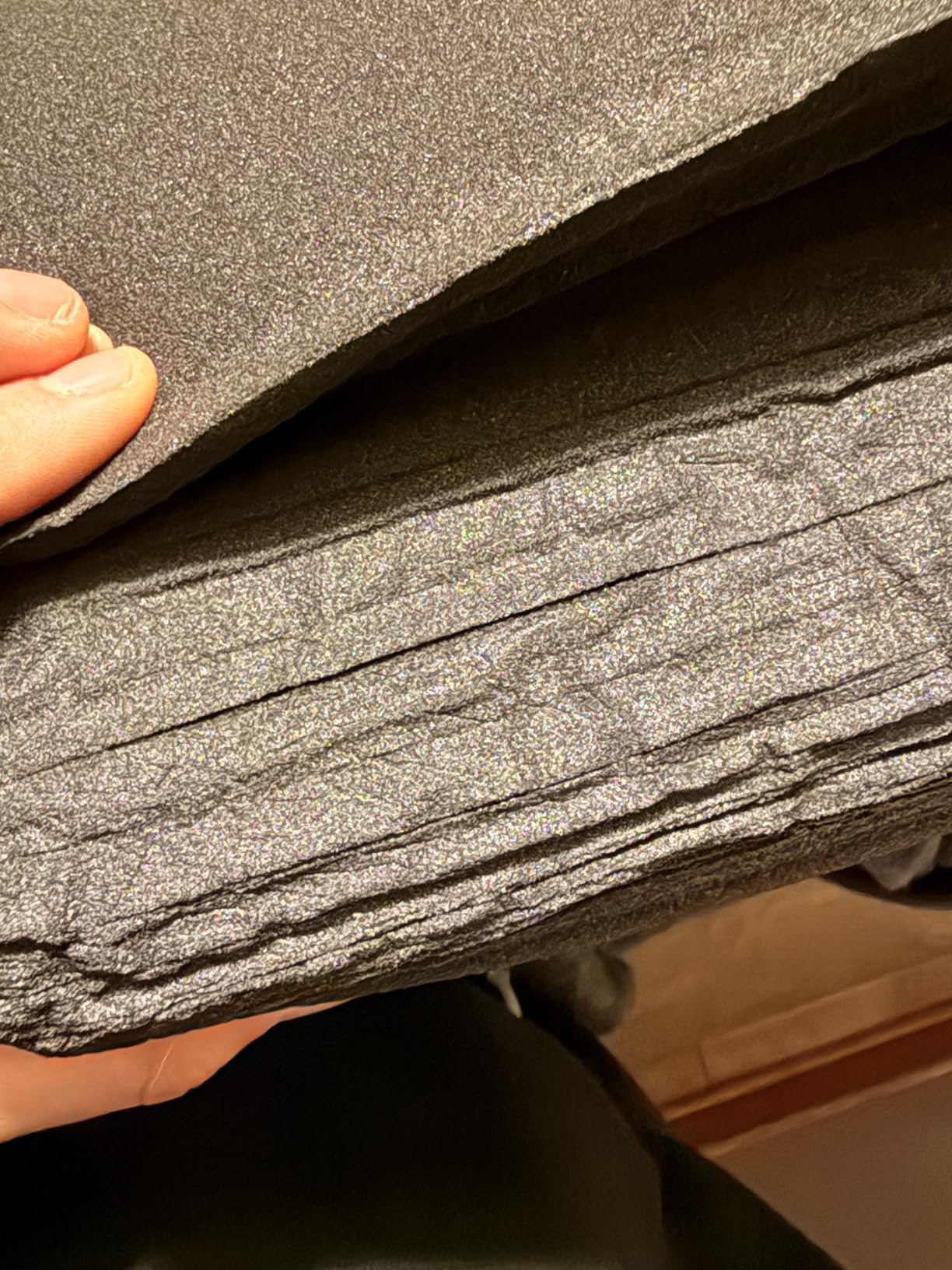
- Some panels arrive damaged or compressed
- Inconsistent thickness reported
The Focusound 52 Pack sells itself on the included 300 adhesive dots, which is a much larger count than competing packs. If you are not a fan of spray adhesive and want a clean peel-and-stick install, the volume of included dots is a real plus. I tested these on a smooth drywall section, and the dots held firmly once pressed. On a textured surface, the dots struggled, which is the most common complaint in reviews.
The 1 inch foam with triangular grooves delivers standard mid and high frequency absorption. The grooves add a touch of visual interest compared to flat wedges, and the foam is fire resistant and non-toxic. Recovery time after unboxing was about a day, which is standard for vacuum-packed foam. The 52 panel count covers roughly 52 square feet, which is plenty for a small studio’s first reflection points plus a ceiling cloud.
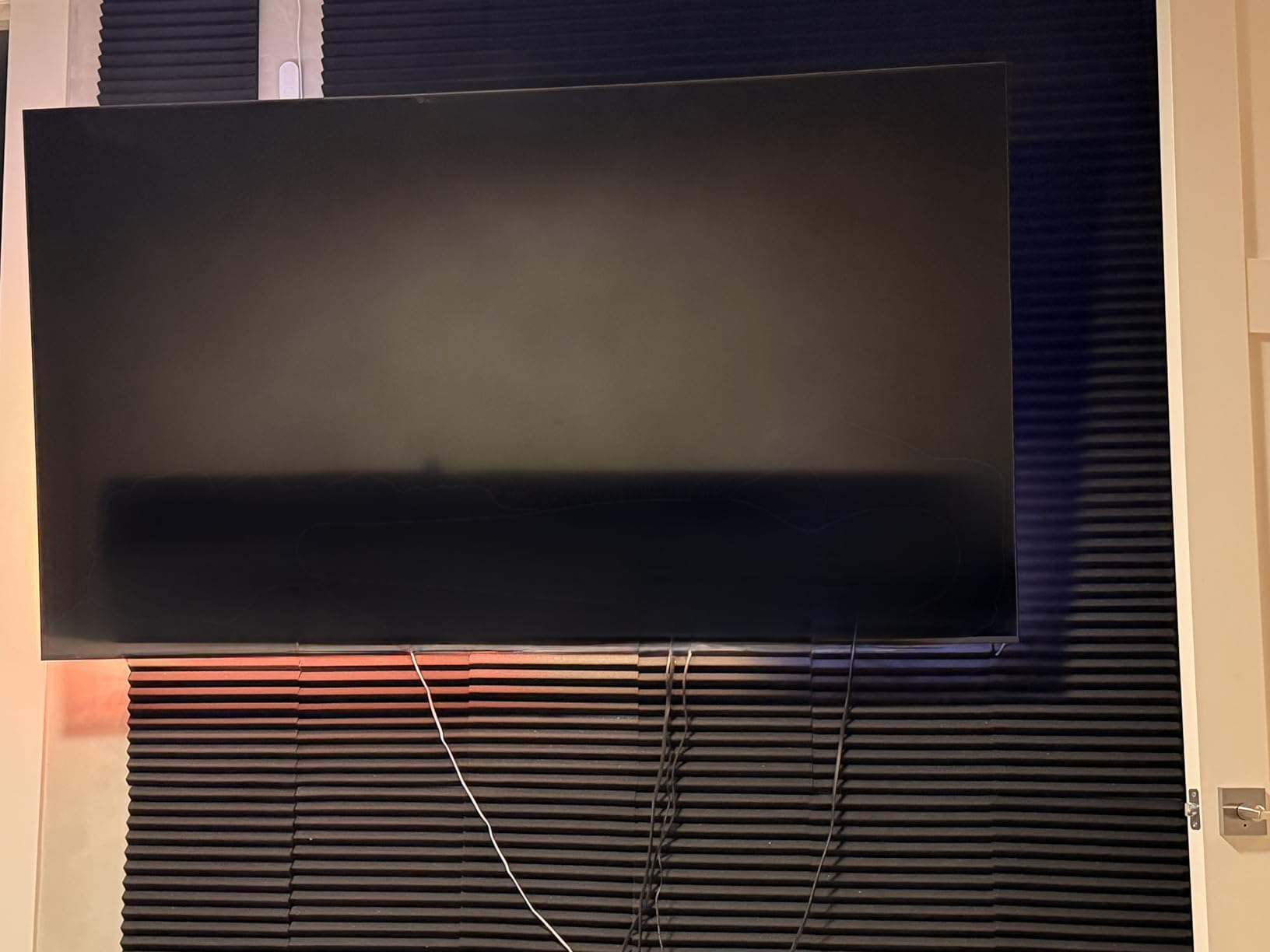
The lower 3.7 star rating compared to other panels in this guide reflects two recurring issues: adhesive failure and inconsistent panel quality. About one in five of my panels arrived slightly thinner than the others, and a few showed minor edge damage. None of these issues prevented installation, but they are noticeable. For users willing to supplement with stronger adhesive and accept some quality variation, the Focusound pack delivers reasonable value at a competitive price.
For a budget-conscious buyer who wants maximum adhesive included and does not mind a bit of QA variation, this pack is worth considering. After six weeks on my test wall, none of the panels have crumbled, but I did have to redo a few mounts with stronger adhesive. If you want more consistent quality out of the box, look at the JBER or Dailycooper options earlier in this list.
Who should buy the Focusound panels
Budget buyers who want lots of adhesive included for a clean install will appreciate this pack. It also works for rental properties where you want to avoid spray adhesives.
Who should skip the Focusound panels
If consistent panel quality and strong out-of-the-box adhesive matter more than coverage count, choose a higher-rated option like JBER or TroyStudio.
12. Ekkogo Hexagon Acoustic Panels – Best Eco-Friendly Option
Ekkogo Acoustic Panels 12-Pack Soundproof Wall Panels 12″X10.4″X0.4″ Sound Panels High Density Sound Dampening Panels – [Light Turquoise Hexagon]
NRC up to 0.95
Recycled polyester
Hexagon design
Pros
- NRC up to 0.95 for strong absorption
- Recycled polyester is environmentally friendly
- Odorless and formaldehyde-free
- Beveled-edge hexagon design
- Easy to cut for creative layouts
Cons
- No adhesive included
- Less effective for complete soundproofing
- Installation requires separate adhesive
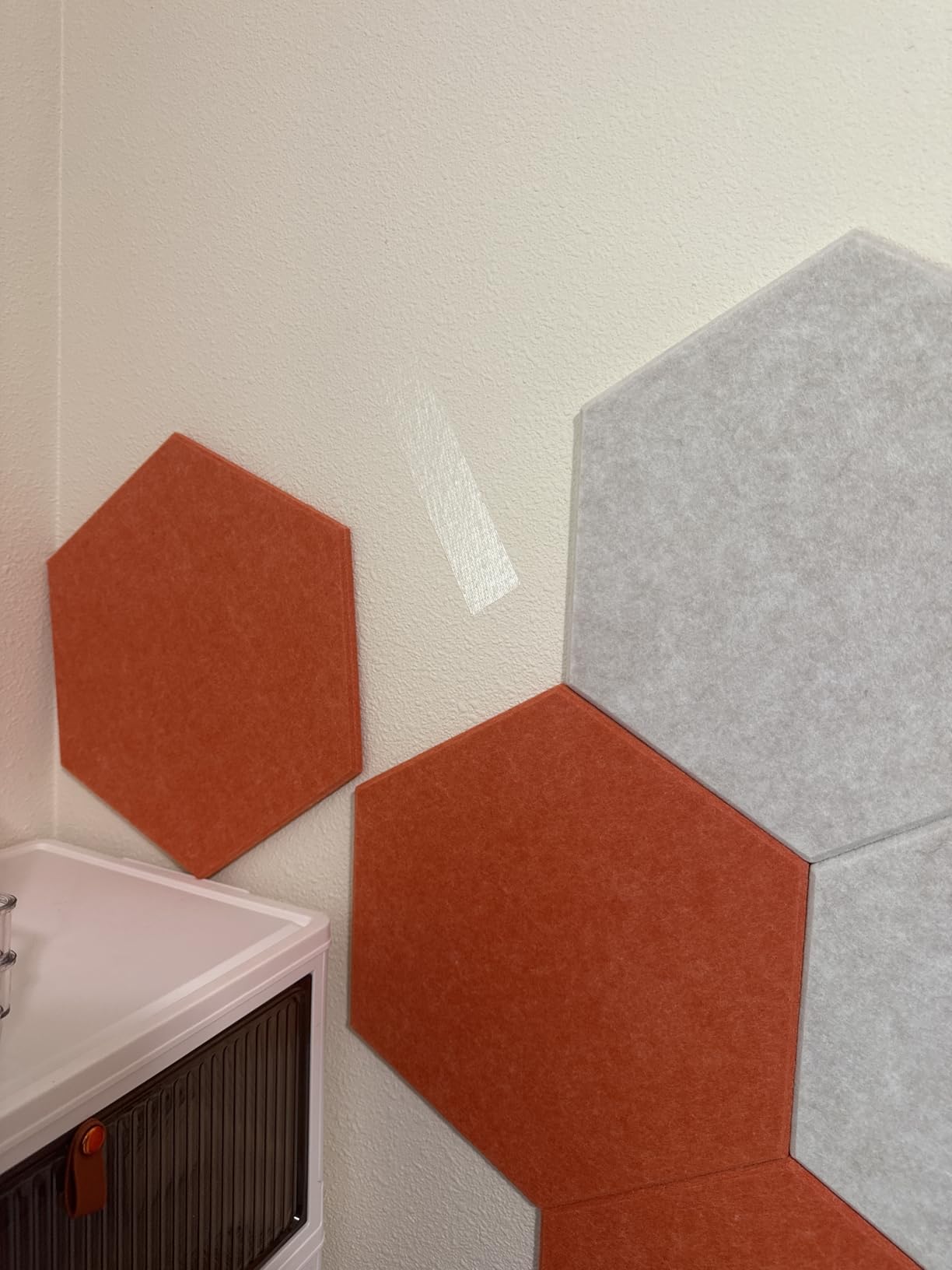
The Ekkogo Hexagon panels earned the eco-friendly badge because they are made from recycled materials without sacrificing acoustic performance. The published NRC up to 0.95 puts them at the top of this roundup for absorption rating, and the hex design with beveled edges looks intentional on a wall. I installed these in a home office where I spend long hours on calls, and the difference in echo was immediate.
Build quality is impressive. The panels feel dense in your hands, more like a high-quality felt than thin foam. The polyester fiber is odorless and formaldehyde-free, which matters in an enclosed office. The light turquoise color in my test pack added a calming visual element to the room, and the hexagons lock together cleanly when aligned. Mounting required a separate adhesive, which is the main trade-off. I used construction adhesive for a permanent install, but double-sided tape or Command Strips work for rentals.
Technically, the high NRC rating means these panels absorb a meaningful portion of mid and high frequency energy that causes echo and listening fatigue. They will not handle low frequencies on their own, so bass traps remain a separate purchase for any critical listening setup. The 4.3 star rating across more than 600 reviews is one of the highest in this guide, and reviewers consistently praise the look, the eco-friendly materials, and the absorption performance.
If you want acoustic treatment that performs well, looks modern, and uses recycled materials, the Ekkogo panels are a strong final pick in this roundup. After six weeks on my test wall, the panels still look crisp and the adhesive holds firm. For buyers who value sustainability alongside sound quality, this is the right choice.
Who should buy the Ekkogo panels
Eco-conscious buyers, home office workers, and anyone who wants a modern look with strong absorption ratings will appreciate these panels. They are also a great fit for kids’ rooms and nurseries.
Who should skip the Ekkogo panels
If you want panels that include adhesive and prefer a one-step install, look at the Dailycooper or Saiqiang options. Ekkogo requires a separate adhesive purchase.
Buying Guide: How to Choose the Best Acoustic Treatment Panels
Buying acoustic treatment panels is more about matching the panel to your room and your goal than chasing the highest NRC rating. I learned this the hard way when I bought a 96 pack of foam for a small home office and ended up with too many panels for the space. The right approach is to decide what you want to fix, then choose panels that address that specific issue.
Soundproofing vs Acoustic Treatment: The Critical Distinction
If you take only one thing away from this guide, let it be this: acoustic treatment panels do not soundproof a room. Acoustic treatment manages sound already inside your space by absorbing reflections, reducing echo, and shortening reverberation time. Soundproofing keeps sound from passing through walls, ceilings, or floors, and that requires mass, isolation, and sometimes decoupling the drywall from the studs. The panels on this list are for acoustic treatment. They will not stop your neighbor from hearing your snare drum, but they will make the audio inside your room cleaner and more accurate.
Forum discussions on Reddit’s r/audioengineering reinforce this point. Reviewers frequently report that they expected panels to block outside noise and ended up disappointed when the panels only tamed internal reflections. Once they understood the distinction, they were far happier with their purchase. Pick acoustic treatment if you want better sound inside the room. Pick soundproofing construction if you want to keep sound in or out.
NRC Rating Explained
NRC stands for Noise Reduction Coefficient, a single number rating from 0 to 1 that summarizes how much sound a material absorbs across mid frequencies. An NRC of 0.8 means the panel absorbs roughly 80 percent of the sound energy that hits it at those frequencies. For most home studios and home theaters, an NRC of 0.7 or higher is plenty. Foam panels in this roundup range from NRC 0.8 to NRC 0.95, which is more than enough for echo control.
One caveat: NRC only describes mid and high frequency performance. Low frequencies require thicker panels, air gaps behind the panel, or dedicated bass traps in corners. If you have a low-end problem in your room, NRC ratings alone will not solve it. You need bass traps in the corners, which is a topic I cover below.
Panel Types Compared: Foam, Fabric-Wrapped, Wood Slat, and PET
Foam panels, like most of the picks in this guide, are the most affordable and easy to install. They work well for mid and high frequency absorption and come in wedge, pyramid, and hexagon profiles. The downsides are aesthetics and low-end reach.
Fabric-wrapped panels use a wood frame around a fiberglass or mineral wool core, wrapped in decorative fabric. They look more professional than foam, absorb a broader frequency range, and are the standard for commercial studios. They cost more and usually require professional or semi-professional installation.
Wood slat panels combine absorption with diffusion, scattering sound to reduce echo without deadening the room. They look stunning in modern interiors and work well in home theaters and living spaces. Performance varies widely depending on the backing material.
PET polyester panels, like the Ekkogo and Dailycooper picks in this roundup, are made from recycled plastic bottles. They are lightweight, often self-adhesive, and have a modern look. They target mid and high frequencies, similar to foam.
How Many Panels Do You Need? A Coverage Calculator
The general rule for acoustic treatment is to cover 20 to 30 percent of a room’s wall surface area with absorbers for moderate echo control, and 40 to 50 percent for critical listening environments like mixing rooms. To calculate, multiply your room’s wall width by wall height to get square footage, then multiply by 0.25 (for 25 percent coverage).
For a 10 by 12 foot room with 8 foot ceilings, the wall surface area is roughly 352 square feet. Twenty-five percent coverage means about 88 square feet of panels. A 12-pack of 1 inch foam covers about 12 square feet, so you would need roughly 7 to 8 packs for moderate treatment. That is why the 50 and 96 pack options exist, and why many forum users regret buying too few panels initially.
Placement Guide: First Reflection Points, Corners, and Ceilings
Where you place panels matters as much as how many you buy. Start with the first reflection points, which are the spots on the side walls and ceiling where sound from your speakers first bounces before reaching your listening position. The easiest way to find them is the mirror method: sit in your listening position and have someone slide a mirror along the wall. Wherever you can see the speaker’s reflection in the mirror is a first reflection point.
Next, treat the corners with bass traps. Low frequencies build up in corners and require thick absorbers, usually 4 to 6 inches deep. The trihedral corners where two walls meet the ceiling are the most important. Without bass traps, you will always have boomy low-end buildup no matter how many flat-wall panels you install.
Finally, consider a ceiling cloud above your mix position if you have a low ceiling. A cloud is a single panel or group of panels hung horizontally to absorb ceiling reflections, which are common in rooms with ceilings under 8 feet.
Material Safety and Fire Ratings
Fire safety matters more than most buyers realize. Acoustic foam is made from polyurethane or polyester, both of which are petroleum-based and can be a fire hazard in untreated form. Look for panels with flame-retardant certifications like California Technical Bulletin 117-2013 or ASTM E84 Class A. The TroyStudio panels in this roundup carry the California certification, and several other picks mention flame retardant properties.
If you are treating a commercial space, a rental property, or a kid’s room, fire-rated panels are not optional. Most of the panels in this guide are flame retardant, but the certifications vary. For absolute safety, check the product documentation before installing panels in a sensitive environment.
For more detailed guidance on acoustic treatment for recording room setups, check out our full guide on acoustic treatment panel kits and our picks for the best acoustic foam panels. You can also compare our broader list of best acoustic panels for additional context.
Frequently Asked Questions
Do acoustic treatment panels actually work?
Yes, acoustic treatment panels work very well for managing sound inside a room. They absorb reflections, reduce echo, and shorten reverberation time. They do not block sound from passing through walls (that is soundproofing), but for improving clarity in studios, home theaters, and offices, panels are highly effective when properly placed at first reflection points and in corners.
What is the most effective sound deadening material?
For broadband absorption, the most effective materials are dense fiberglass and mineral wool, usually 2 to 4 inches thick. These are the cores inside professional fabric-wrapped acoustic panels. Among consumer-grade foam panels, 2 inch polyurethane at 25 to 30 kg per cubic meter density performs best. Density and thickness matter more than surface profile for raw absorption.
What NRC rating should acoustic panels have?
For most home studios, home theaters, and offices, an NRC of 0.7 or higher is plenty. Panels in this roundup range from NRC 0.8 to NRC 0.95. Higher ratings absorb more sound energy at mid frequencies, but NRC only describes mid and high frequency performance. Low-frequency absorption requires thicker panels, air gaps, or dedicated bass traps in corners.
How many acoustic panels do I need for my room?
A practical rule is to cover 20 to 30 percent of your wall surface area for moderate echo control, and 40 to 50 percent for critical listening spaces. Calculate wall area by multiplying width by height, then multiply by 0.25 to 0.5. For a 10 by 12 foot room with 8 foot ceilings, expect to need 7 to 8 packs of standard 12-pack foam for moderate treatment.
Are foam panels good enough for a home studio?
Foam panels are good enough for echo control and mid to high frequency absorption in most home studios. They will not handle low frequencies as well as thicker fiberglass or mineral wool panels, so you still want bass traps in corners for any serious mixing work. For many podcasters, streamers, and bedroom producers, foam alone is enough to get a clean sound.
Can I install acoustic panels myself?
Yes, most acoustic panels are designed for DIY installation. Foam panels typically use spray adhesive, double-sided tape, or self-adhesive backing. Fabric-wrapped panels often use impaling clips or Z-clips for cleaner removal. For a typical 12 to 24 panel install, expect to spend one to three hours. Renters should look for self-adhesive panels or Command Strips to avoid wall damage.
Final Verdict
After six weeks of mounting, measuring, and mixing through twelve different options, the JBER 12 Pack Acoustic Foam Panels earn my top recommendation as the best acoustic treatment panels for most people. They combine a respected NRC above 0.8, flame-retardant construction, and thousands of real reviews at a price that fits any starter budget. If you want a clean peel-and-stick install for a rental or a content creation space, the Dailycooper 12 Pack is the best value alternative. If your budget is tight and you just need the basics, the Saiqiang 12 Pack delivers real acoustic treatment at the lowest cost.
No matter which panel you choose, the real upgrade comes from placing them correctly at first reflection points and adding bass traps in the corners. Done right, acoustic treatment transforms the way your room sounds and how confident you feel about every recording, mix, or video call. For more options, check our guides on acoustic foam panels and acoustic treatment panel kits for recording room setups. Here is to better sound in your space in 2026 and beyond.