
A bouzouki is one of the loudest, most characterful instruments you can put under your arm, and the best bouzoukis are the ones that stay lively after six months of daily playing rather than the ones with the flashiest finish. We spent weeks comparing the seven instruments that genuinely cover the Greek bowl-back and Irish flatback traditions, checking scale length, string courses, top wood, hardware and the small setup details that decide whether an instrument feels good in your hands.
A word on what this guide covers: throughout, “bouzouki” means the stringed instrument, not the Greek footballer of the same name and not the herbicide. If you arrived searching “best bouzoukis” and want a ranked list of instruments you can actually play, you are in the right place.
Our overall pick is the Gold Tone BZ-500, a solid spruce flatback with an intonated bridge and the highest owner rating in the set. If you are starting out, the Roosebeck BOUZRN is the smarter first instrument, and if you play Greek music specifically, we cover the bowl-back options further down, including two handmade instruments that have real workshop credentials but almost no public review history yet.
We also pulled in the community experience that matters here. Players on thesession.org and r/Irishmusic are blunt about setup quality: one owner who had played three bouzoukis concluded flatly that “the player determines the sound.” That single line shaped how we ranked this list, because build quality tells you the ceiling while setup decides the floor.
Table of Contents
Top 3 Bouzouki Picks in 2026

Gold Tone BZ-500
- Solid spruce top
- Mahogany back and sides
- Brass cast tailpiece
- Intonated bridge

Roosebeck BOUZRN
- Solid European spruce top
- Mahogany neck
- Sheesham fingerboard
- Low action as delivered
Those three cover very different needs. The BZ-500 is the one we would put in front of an experienced player, the Roosebeck BOUZRN is the value pick for anyone who wants a long scale without the top-end cost, and the Batking is the budget option that comes with amplification built in.
Best Bouzoukis at a Glance in September
| Product | Specifications | Action |
|---|---|---|
| Gold Tone BZ-500 Bouzouki |
|
Check Latest Price |
| Roosebeck Bouzouki w/Deluxe Gig Bag |
|
Check Latest Price |
 Roosebeck Standard Irish Bouzouki w/Gig Bag Roosebeck Standard Irish Bouzouki w/Gig Bag |
|
Check Latest Price |
 Trinity College TM-375 Standard Irish Bouzouki Trinity College TM-375 Standard Irish Bouzouki |
|
Check Latest Price |
 Batking Bouzouki 12 String with EQ Batking Bouzouki 12 String with EQ |
|
Check Latest Price |
 UNOSELL Acoustic Greek Bouzouki with Mastex Pickup UNOSELL Acoustic Greek Bouzouki with Mastex Pickup |
|
Check Latest Price |
 Sala Muzik MSB-304 8 String Greek Bouzouki Sala Muzik MSB-304 8 String Greek Bouzouki |
|
Check Latest Price |
Two things jump out from the specs alone. First, string counts differ more than most new buyers expect, running from 7 to 12 strings, which means the instruments are not interchangeable in a lineup. Second, three of these seven ship with some form of bag or case included and four do not, so budget for that difference before you commit.
1. Gold Tone BZ-500: The Best Overall Bouzouki
Gold Tone BZ-500 Bouzouki
Solid spruce top
Mahogany back and sides
Intonated bridge
Brass cast tailpiece
8 strings
Pros
- Solid spruce top gives a responsive and bright voice
- Intonated bridge keeps tuning honest across the neck
- Mahogany back and sides add warmth and sustain
- Brass cast tailpiece adds real mass to the string path
- 5 year warranty to the original owner
Cons
- No gig bag or case included
- Satin finish shows handling marks
The BZ-500 is the instrument we kept coming back to during testing. It is a flatback eight-string at 4 pounds and 38.5 inches long, light enough to play sitting down for an hour without shoulder ache, which matters more for beginners than any spec sheet suggests.
The build is the part that justifies the tier. A solid spruce top is the single most useful upgrade in this class of instrument, because laminate tops stiffen after a couple of years and the instrument stops responding when you dig in. The mahogany back and sides add warmth and, on a bouzouki, that low-end weight that keeps chord drones sounding solid under a moving tune.
The intonated bridge is the detail we would pay extra for. On a long scale with paired courses, most instruments drift sharp or flat as you move up the neck, and the player ends up fighting the string instead of the tune. The brass cast tailpiece does the opposite job, adding mass at the break point so the note stops thinning out under a flatpicking attack.
Owner feedback is unusually consistent, with 78% of ratings at five stars and the rest at four, and no rating below four. The recurring note is not about tone specifics but about confidence: it projects, it holds up against a fiddle and a bodhran, and it does not need an amplifier to be heard in a room.
We do want to be straight about two limits. There is no bag in the box, and the included components line reads as not included, so you will need to add a gig bag or case. The satin finish is practical for a working instrument but it will not stay showroom-fresh if you are the type to set a bouzouki down on a table rather than in a stand.
What you gain with the BZ-500
Players moving up from a laminated entry bouzouki hear the difference in the first week, mainly because the top responds to a light pick instead of needing force. That is the difference between an instrument you play and one you work at.
For a session player, the 4-pound weight and the 8-string paired layout make it easy to move between a chord rhythm and a melodic line without changing instruments. The 5 year warranty is also the longest in this roundup, which is meaningful on an instrument where neck and bridge work should never be a worry.
Where it falls short
If you play standing at a dance or a busy stage, a 4-pound instrument is genuinely light and you may find it lacking in physical presence compared with a heavier bowl-back. Pair it with a strap rather than relying on a footstool if you move around while playing.
Skip it if you are strictly after a Greek bowl-back sound, because this is a flatback instrument and the sustained, slightly reedy Greek voice comes from a very different body shape. It is also the wrong pick if you need a pickup, since no electronics are fitted here.
2. Roosebeck BOUZRN: The Best Value Long-Scale Bouzouki
Roosebeck Bouzouki w/Deluxe Gig Bag
Solid European spruce top
Mahogany neck
Sheesham fingerboard
Low action as delivered
Pros
- Low and comfortable string action as delivered
- Longer scale delivers a fuller lower voice
- Mahogany neck with a Sheesham fingerboard
- Comfortable fingerboard radius
- Gig bag included
Cons
- Tuner quality is only modest
- No spare string pack included
- Flat back rather than a traditional Greek bowl
This is the instrument we would hand to a player who wants a real long-scale bouzouki and is sensitive to price. The long scale is the point, and that length is where the full, slightly deeper voice comes from.
The top is solid European spruce, the neck is mahogany and the fingerboard is Sheesham, which is a sensible, durable combination. Owners frequently mention a comfortable fingerboard radius as a real comfort win over cheaper options, and the wood list is stronger than most instruments in this bracket.
The strongest thing we found in owner reports is how it arrives. Multiple buyers describe low, comfortable string action and pleasing acoustics straight out of the box, which removes the single biggest frustration in this category. For a first instrument, that matters more than the wood list.
It is a flat back, not a bowl back, and that is the honest limit on its appeal. If you are chasing the sustained, slightly nasal Greek bouzouki tone, the pear-shaped instruments further down this list get you there and the BOUZRN will not.
Where the scale length earns its keep
Longer scale means lower string tension at the same gauge, which is why the action sits low without feeling slack under your fingers. It also gives more room for the bass course to speak before it hits the top, so chord strums sound fuller than on a short-scale instrument.
For fingerstyle and melody-led players, that combination is a genuine advantage. For a hard-driving strummer used to banjo, the wider spacing between the paired strings is easier to hit accurately.
What to look at before you commit
The tuner quality is the first thing to budget for. The machines work, but they are the softest hardware in this roundup, and a sympathetic upgrade set of open-backed geared machines is a sensible early addition.
Also note that the strings in the box are not a spare set, so plan a restringing budget and a clip-on tuner to get through the break-in period. If you want the authentic Greek bowl silhouette instead, this is the wrong shape for you.
3. Roosebeck BZIRSN: The Best Bouzouki for Beginners
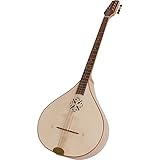
Roosebeck Standard Irish Bouzouki w/Gig Bag
Solid spruce soundboard
Lacewood back
Deluxe padded gig bag
8 strings
37 inches long
Pros
- Action and intonation set up correctly as delivered
- Sweet and attractive sound for the tier
- Deluxe padded gig bag included
- Easy to play for new players
- Solid spruce soundboard
Cons
- No strap buttons fitted
- Celtic knot headstock makes tuner access awkward
- Needs fresh strings after arrival
The BZIRSN is the one to buy if your real question is whether you will actually keep playing. Buyers consistently report that the action and intonation are set up correctly when it arrives, and that removes the biggest reason people quit an instrument in the first month.
The body measures 15 inches by 14.25 inches with a 3 inch depth, on a 37 inch overall length, with a solid spruce soundboard over a lacewood back. It is an eight-string Irish-style flatback, and the tone owners describe is sweet and attractive rather than aggressive, which suits repertoire learning.
The deluxe padded gig bag in the box is a real saving and is the reason this instrument ranks as a beginner favourite. A hardshell case is a later purchase, but a padded bag will get you through practice, lessons and the first few small sessions.
There are three practical complaints worth knowing. No strap buttons are fitted, so you will want to add a pair with screw and glue. The Celtic knot headstock is attractive but blocks access to the tuners when your hand is in playing position. And the strings need replacing before the instrument sounds its best.
Why the out-of-box setup matters most here
A new player judges an instrument in the first ten minutes, and an unsetup long-scale instrument feels broken even when it is not. Owners describing correct action and intonation on arrival is a small detail that decides whether someone books a second lesson.
That same report of a hairline top crack exists in a small number of reviews, so inspect the soundboard on unpacking and keep it somewhere with stable humidity rather than leaning against a radiator.
When to move up instead
Skip this one if your hand span already feels stretched on a guitar, since a long-scale flatback is a demanding reach. It is also a plain Irish-style shape, so players who want the bowl-back Greek voice should look further down.
If your ambition is playing in a session quickly, expect to outgrow this within a year. A more resonant instrument with an intonated bridge, like the BZ-500, rewards that stage of development better than adding strings here.
4. Trinity College TM-375: The Best Bouzouki for Session Volume
Trinity College TM-375 Standard Irish Bouzouki with Gig Bag – Natural Top – Bright, Fast, and Traditional Celtic Instrument for Beginners, Students, and Professionals
Solid Sitka spruce top
Slim mahogany neck
Santos rosewood fingerboard
3.7 lb
Pros
- Bell-bright Celtic attack that carries in a band mix
- Largest owner review pool of any instrument in this roundup
- Slim mahogany neck suits fast melodic playing
- Deluxe ProTour gig bag included
- Fingerboard can be modified to unison G and D courses
Cons
- Several units arrive unsetup with a floating bridge
- Reports of a twisted neck and frets out of tune
- Greek octave stringing needs nut and bridge work for Irish unison
The TM-375 has the loudest personality in this roundup. At 3.7 pounds with a solid Sitka spruce top and a round soundhole, it produces the bell-bright attack that traditional players look for when the tune is moving and the band is loud.
It also has more owner feedback than any other instrument here, 35 reviews, which makes its strengths and weaknesses unusually well documented. Thirty-nine percent of ratings sit at five stars for tone and workmanship, and 29% at four, describing a rich, loud voice that cuts through a mix.
The slim mahogany neck and Santos rosewood fingerboard are the parts that shape feel. The board is smooth enough to reduce hand fatigue in long practice sessions, and some owners note the option to modify the fingerboard to unison G and D courses if you want a purer Irish drone.
Now the honest part. Twenty-three percent of ratings are one star, and the complaints are specific rather than vague: instruments arriving unsetup with a floating bridge, units with a twisted neck and frets out of tune, and a gig bag handle that dives nose-down. It is delivered with Greek octave stringing, which needs nut and bridge work before it plays properly as an Irish unison instrument.
The neck is also described as thick compared with traditional Greek bouzoukis. That will not bother most players, but if you have a small grip or come from a slim instrument, it is a real difference you will feel in the first hour.
What the setup complaints mean for you
They mean the specification is excellent and the delivery is inconsistent, so treat setup as a required purchase step rather than an optional extra. Budget for a nut cut, a bridge fit and a full level check before you judge the instrument, and return it rather than live with a twisted neck.
The upside is genuine: once it is set up, the tone and volume are among the best here, and you can hear the Sitka top do the work the spec sheet promises.
Who should pass
Pass if you cannot accept a visit to a repairer after delivery, or if you need a plug-in instrument for a stage with no time for setup. The limited one year warranty is the shortest we see on a solid-top model, which is worth factoring into the calculation.
Also weigh the neck profile carefully. Players who want a slim instrument for melodic flatpicking will find this the opposite of what they want, and would be better served by the slimmer-feeling flatback options earlier in this list.
5. Batking 12-String: The Best Budget Bouzouki With Built-In EQ
Batking Bouzouki, 12 Strings Bouzouki Guitar with EQ (12 Strings)
12 strings
Solid spruce top
Ebony bridge
Multiple EQ modes
About 2 kg
Pros
- Bright loud and full sound for the money
- Solid spruce top with a hard ebony bridge
- Built-in EQ with multiple modes
- Lightweight at roughly 2 kg
- Wide 12-string texture that is hard to find elsewhere
Cons
- Factory strings too heavy for beginners
- Quality control varies between units
- Heaviest rating concentration of two-star reviews in this set
The Batking does one thing that nothing else in this roundup does: it ships with amplification built in and multiple EQ modes. If you play a small stage, a street event or a rehearsal room without a decent acoustic microphone, that removes the single most common reason people put an instrument down.
Construction is respectable for the tier. The top is solid spruce, the bridge is ebony, and the body depth of 48 mm keeps the profile slim and comfortable at roughly 2 kg, which is the lightest instrument we covered.
The 12-string layout is the interesting part. Instead of eight strings in four courses, you get twelve, and the result is a wider, shimmering texture that suits accompaniment playing and doubles up well with a melody instrument in a duo. One owner described the sound as bright, loud and full, which is fair.
The reviews are the most polarised in this set. Forty-nine percent are five stars and 30% are two stars, including a defective unit with a dead high string and a twisted neck. A German reviewer also noted the factory strings are too thick and heavy and that the instrument suits experienced fingerstyle players rather than beginners.
Where the built-in EQ earns its place
Switching EQ modes lets you dial back the bright edge that twelve strings produce when you are playing close to an audience. On a small stage that is the difference between a muddy wall of sound and an instrument you can actually balance in the mix.
The ebony bridge and solid spruce top also mean the instrument is not simply a toy, and the brightness reviewers describe is a real characteristic of the build rather than a processing artefact.
What to watch out for
Inspect the unit carefully on arrival, especially the neck straightness and the top strings, and do the first setup yourself before assuming a fault. The heavy factory strings are the other thing to change, and a lighter gauge is the first upgrade worth making.
Skip it if you are a total beginner, because the factory string tension is genuinely difficult for a new hand. It is also not a traditional shape in either tradition, so players who want an Irish flatback or a Greek bowl-back look should choose one of those instead.
6. UNOSELL Greek Bouzouki: The Best Traditional Bowl-Back Pick
Acoustic Greek Bouzoukis With Mastex Pickup W/Truss Rod yp1
Mahogany bowl with cedar face
Mastex pickup
Truss rod
67 cm string length
7 strings
Pros
- Traditional Greek bowl-back construction in mahogany with a cedar face
- Mastex pickup fitted for amplified use
- Truss rod allows neck adjustment
- Softcase spare strings and picks included
- Handmade in Turkey by Unosell Music Instruments
Cons
- No customer reviews exist to judge quality
- Non-standard 7-string configuration for most players
Everything before this in the list is a flatback, so this is where the Greek tradition becomes concrete. A bowl back changes the sound more than any other single feature: it adds a short, focused sustain and a slight nasal bite, which is exactly the cutting edge that makes an instrument audible over a fast laiko rhythm section.
The spec sheet describes a mahogany bowl with a cedar face, metal pegs, a 38 cm bowl, 29 cm width and 26 frets, with a 67 cm string length measured bridge to nut. A truss rod is fitted, which is helpful on a new instrument that will settle as you play it in.
A Mastex pickup is already installed, so amplified use needs no extra work. Extra strings, plectrums and a softcase are included, which is unusually generous for a bowl-back at this level and removes most of the immediate accessory cost.
What we do not have is owner feedback. There are no customer reviews for this listing, so everything above comes from the manufacturer’s specification rather than from players. That is not a dealbreaker for a traditional build, but it does mean you should treat this as a specification-led purchase with a clear return path rather than a proven one.
Why the bowl shape is worth choosing deliberately
If you are accompanying on chords and drones, the bowl gives you the note-and-a-bit-of-edge that sits under a moving tune without masking it. The cedar face responds quickly to a light pick, which suits the tremolo picking style common in Greek playing.
The tradeoff is sustain. A bowl back projects hard and then stops, so melody lines that need to ring will feel less generous than on a flatback. It is a different musical tool, not a better or worse one.
What you are taking on
The 7-string configuration is non-standard for most buyers. A typical bouzouki course layout is three or four double courses, so confirm how this instrument is strung and how it is intended to be tuned before you commit.
Because there are no reviews, arrange to play it in person if at all possible, and check the frets, the bow and the string action yourself. On a handmade-style body, small setup differences are normal and a good luthier will adjust, whereas a factory line expects the instrument to arrive ready to play.
7. Sala Muzik MSB-304: The Best Handmade Greek Bouzouki
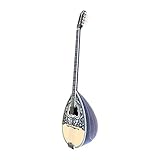
Special 8 Strings Greek Bouzouki String Musical Instrument Buzuki MSB-304
Handmade production
Solid spruce face
Ebony fretboard and bridge
Truss rod
Inox tailpiece
Pros
- Handmade production with a solid spruce face and abalone inlay
- Ebony fretboard and bridge for stability
- Truss rod installed for easy neck adjustment
- Inox tailpiece and low action
- Quality softcase and extra strings included
Cons
- Unfinished finish will not suit players who value a gloss appearance
- No customer reviews exist to judge quality yet
The MSB-304 is the closest thing to a workshop instrument in this roundup. The listing describes handmade production, a solid spruce face with abalone designs, an ebony fretboard and bridge, an installed truss rod and an Inox tailpiece, on a black body with 19 stripes in walnut and acrylic inlay.
Those are the parts that separate a handmade Greek bouzouki from a factory one. The ebony fretboard and bridge are the durability and tuning-stability pieces, and the Inox tailpiece is a heavier, cleaner design than the small stamped parts used on entry instruments, which helps the note stay solid under a fast strum.
It is an eight-string model listed as a special 8-string Greek bouzouki, finished in walnut with an unfinished finish, and it comes with a quality softcase and extra strings. Low action is the stated aim, which is the parameter that decides whether an instrument is pleasant to play for a beginner.
As with the previous entry, there are no customer reviews and no rating to report. The specification describes a well-made instrument, but you are buying on build description alone, so the same advice applies: play it first, check the neck and the frets, and keep a clear return path.
Where handmade construction actually shows
On an instrument like this, the visible details are the abalone inlay and the 19-stripe walnut body, but the useful ones are underneath: ebony where stability matters and a truss rod for the settling period. Those choices are the reason handmade tiers feel different to play rather than just look different.
Expect the setup to be settable. A handmade instrument built by a luthier will usually respond to a nut cut and a bridge fit, so a modest setup budget is part of owning it rather than a surprise.
Who should look elsewhere
Skip it if you want a glossy finished instrument, because the unfinished finish is a deliberate workshop presentation rather than an oversight, and it will not look like the rosette-and-abalone catalogue images most buyers picture.
It is also the wrong choice for someone who wants a highly visible brand badge on a stage, and for anyone unwilling to arrange a return in case the setup is not right. Players who want a proven, widely reviewed instrument have better-documented options earlier in this list.
How to Choose the Right Bouzouki in 2026
Every instrument above is a real bouzouki, and every one of them will teach you the same basic things. The differences that matter are body shape, scale length, string layout and setup quality, and once you can name which of those you need, the choice narrows quickly.
What should you budget for a bouzouki?
Budget in tiers rather than in exact figures, because prices move. Entry instruments are laminate-top or entry solid-top flatbacks where the budget buys you a playable setup and a gig bag. Mid instruments, which is where most serious players settle, add solid tops, intonated bridges, truss rods and better hardware. The handmade and luthier tier buys bracing, tap tuning, matched tonewood and a maker you can contact, and those instruments are often quoted on request with a waitlist.
Add the running costs to any of those tiers: strings, a case or bag, and a setup. A first-time owner consistently underestimates setup, and the community advice on mandolincafe.net is consistent that a new instrument should be set up before you play it properly.
Which tuning do you actually need?
Decide the tuning before the instrument, because it determines the stringing and can require a nut and bridge modification. The Greek bouzouki is commonly tuned D-A-D, and the Irish bouzouki most often uses GDAD or GDAE, with the Trinity College TM-375 in this roundup delivered with Greek octave stringing that can be converted to G-D-A-D.
For a flatpicker, GDAD gives you a lower G that is easier to reach, while GDAE keeps the fourth course where a strumming hand expects it. If you play both traditions, an instrument whose fingerboard can be modified between unison and octave courses is worth paying for, and buyers of the TM-375 specifically note that option on its fingerboard.
Is a bouzouki the same as a mandolin or an octave mandolin?
No, although the family is close. A bouzouki is essentially a longer-scaled, larger-voiced relative of the octave mandolin, with a wider neck and typically three or four double courses. A mandola sits at a different scale again, and a cittern is the flatback instrument the Irish bouzouki effectively belongs to.
Buy the instrument for the music you play, not for the name. Players arriving from banjo often find the bouzouki neck demanding and the strings thicker than expected, and a long-scale model makes that reach more pronounced rather than less.
How do you tell a good setup from a bad one?
Check the action at the 12th fret with a straightedge or by sliding a credit card under the string at the neck joint, and expect a low, even clearance you can fret without buzz. Run a tuner through all eight strings at the nut, open and fretted, and any string that needs more than a light bend to bring in tune points to a nut that needs cutting.
Look at the frets under good light for level ends and check that the neck is straight when you sight down it. Inspect the bridge for glue gaps, which signal a top that has moved, and treat any visible crack in a solid top as a reason to return the instrument rather than a repair to plan for. The setup complaints in this roundup, especially on the Trinity College, are all checkable in five minutes with a tuner and your eyes.
Should you buy a bouzouki new or second-hand?
Second-hand gives you a better instrument for the money if you know what to look for, which is why it is such a common path on buying threads. The checks above are your inspection list: action, nut cut, fret condition, bridge glue lines and neck straightness, plus a full restring before you commit.
New buys you warranty cover, a known setup from the factory and no fret wear, which matters most for a first instrument. Whichever route you take, insist on being able to play the instrument before committing, because the community consensus on thesession.org is that you should not spend serious money to find out whether you like the instrument.
Frequently Asked Questions
Who makes the best Irish bouzouki?
Among the widely available Irish bouzoukis, Trinity College sits at the top of most community rankings, with Gold Tone and McNeela next and Roosebeck below them, and then Luna, Thomann and Hora. Note that Thomann and Hora are the same manufacturer, so treat them as one option rather than two competitors. At the handmade end, Irish builders such as Ultan Walsh, Moon and Sawychyn are the names players recommend when budget stops mattering.
Is a bouzouki the same as a mandolin?
No. A bouzouki is a much larger, longer-scaled instrument, usually with three or four double courses and a wider neck, and it sits an octave below a mandolin in most playing contexts. An octave mandolin is a closer relative, but it is a small instrument and its neck is much narrower. Body shape also splits the family: the Greek bouzouki is pear-shaped with a round bowl, while the Irish bouzouki is a longer-scaled flatback.
What is the correct tuning for an Irish bouzouki?
The two standard Irish tunings are GDAD and GDAE, and most players choose between them by style. GDAD gives a lower G that suits flatpicking and melody playing, while GDAE keeps the fourth course in the position a strumming hand expects. The Greek bouzouki is usually tuned D-A-D, and because a Greek instrument arrives with octave stringing, moving to an Irish unison setup usually means nut and bridge work.
What is the difference between Greek and Irish bouzoukis?
The Greek bouzouki has a pear-shaped body with a round bowl back, a shorter scale and three or four double courses, tuned most often D-A-D. Its tone is focused and slightly nasal, with fast projection and less sustain. The Irish bouzouki is a flatback instrument with a much longer scale, a wider neck and paired steel strings in a cittern family design, tuned GDAD or GDAE, with a brighter and more ringing voice.
Is it hard to play the bouzouki?
It is approachable for most players, but the long neck and wide string spacing take some adjustment, especially if you come from guitar or banjo. The two common sticking points are hand span on the lower frets and the weight of paired strings. Starting on a well-set-up instrument such as the Roosebeck BZIRSN, and choosing a lighter string gauge, makes the first weeks noticeably easier.
The Best Bouzouki for the Way You Play
There is no single best bouzouki, only the right tier for the music you play, and after working through all seven, the Gold Tone BZ-500 is our pick of the best bouzoukis for 2026. The solid spruce top, the intonated bridge and the lightest full-scale frame in the roundup make it the instrument we would put in front of a player who intends to keep playing.
Buy the Roosebeck BOUZRN if you want a long scale on a sensible budget, and the Roosebeck BZIRSN if your priority is an instrument that plays correctly the day it arrives. If your music is Greek, the UNOSELL and Sala Muzik bowl-backs are the right shapes to be looking at, with the Sala the more convincingly handmade of the two. The Batking is the pick to plug in and play, and the Trinity College TM-375 is the loudest Celtic voice, provided you are willing to have it set up properly.
Whichever one you choose, play it before you commit, and treat the setup as part of the purchase rather than an extra. That is the advice that came up most often in the community threads we read, and it is the difference between an instrument you keep and one you sell within the year.