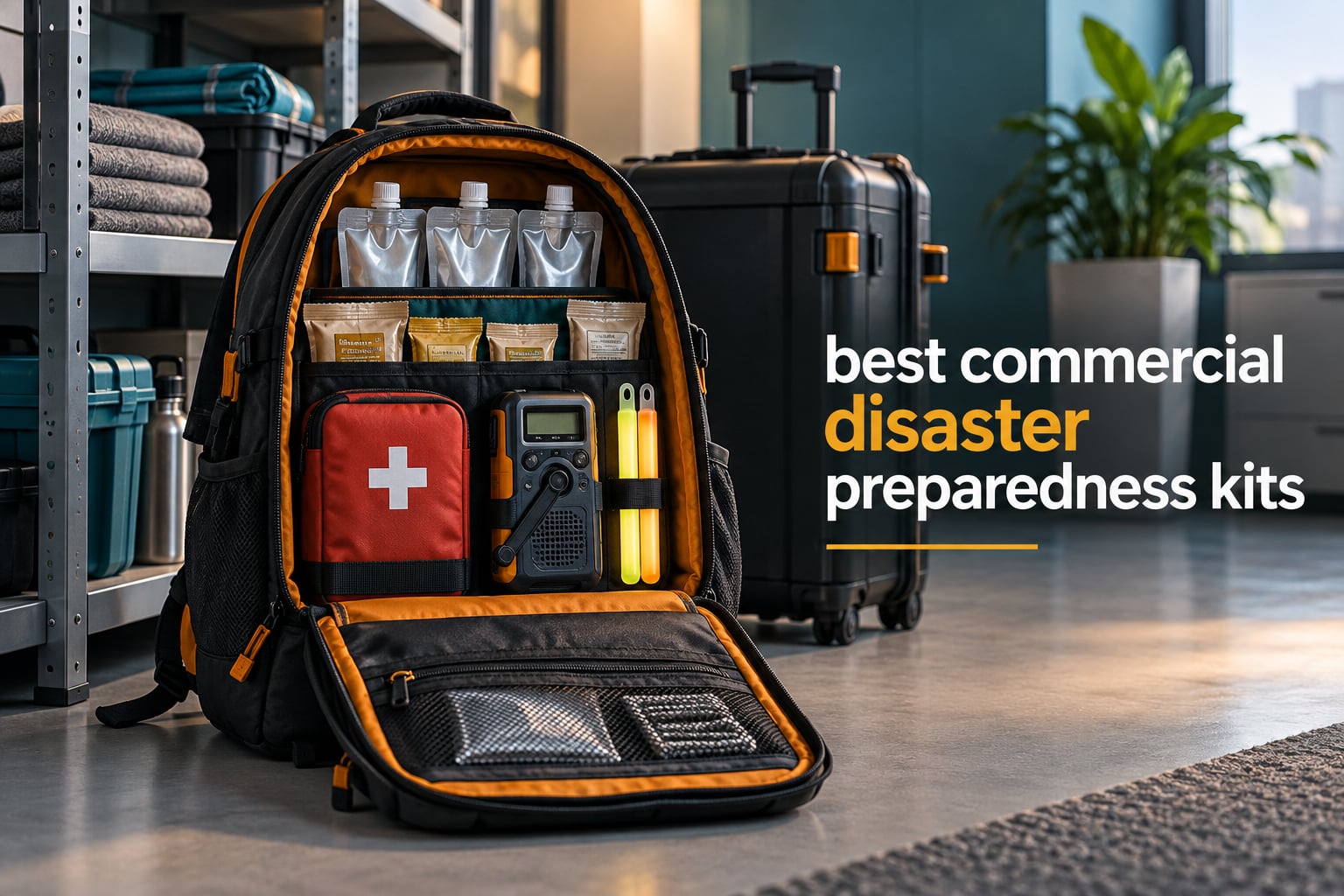
A commercial disaster preparedness kit is a packaged set of emergency supplies sized for a workplace rather than a household: water, shelf-stable food, first aid, lighting, communication, sanitation and shelter materials, packed to sustain a stated number of people for a stated window. The best commercial disaster preparedness kits we reviewed cover anywhere from one person for 72 hours to four people with a full medical and power supply, and they are built for a different set of hazards than a family bug-out bag.
Workplace kits get bought for one of five roles. An employee go bag lives at a desk or in a locker and carries water, food and light. A team leader response kit is a heavier bag held by a named supervisor for accountability and first response. A floor warden kit carries light, whistles, dust masks and glow sticks for a lockdown or evacuation. A shelter-in-place cache covers a floor or wing for an 8-hour hold. A wheeled response cache is a rolling case for large facilities and corridors.
We spent six weeks comparing the 10 kits below on the only measures that matter for procurement: stated person capacity, real water and food counts, weight you can actually move, where the kit can legally and safely be stored, and how often you have to rotate the consumables. Every rating and review figure below is taken from the current customer listing rather than from marketing copy. The short version: the commercial equipment buying guides we publish follow the same approach, because a procurement decision made on brand names alone is how offices end up with stale water pouches and no flashlight.
Table of Contents
Top 3 Picks for Commercial Disaster Preparedness Kits in September

Emergency Zone Family Kit
- 132 pieces
- 121-piece first aid kit
- 5-year shelf life food and water

Redfora 3-Day Earthquake Bag
- Color-coded waterproof packs
- 24 water pouches
- hand-crank NOAA radio

Our top pick is the Emergency Zone kit because it is the only one here that pairs a genuinely large supply count with a bag light enough to move in a corridor, and it holds the highest average rating in the group at 4.8 stars. The best value pick is the Redfora 3-Day bag, where the color-coded waterproof packaging makes an annual inventory check take minutes instead of an afternoon. The best small-team pick is the Ready America 2-Person pack, the most reviewed product in the set and the cheapest way to outfit several desks at once.
All 10 Commercial Disaster Preparedness Kits Compared in 2026
| Product | Specifications | Action |
|---|---|---|
| Emergency Zone Family Emergency Kit |
|
Check Latest Price |
| Redfora Complete 3-Day Earthquake Bag |
|
Check Latest Price |
| Ready America 2-Person 3-Day Backpack |
|
Check Latest Price |
 Ready America 4-Person 72-Hour Deluxe Ready America 4-Person 72-Hour Deluxe |
|
Check Latest Price |
 First My Family 4-Person 72-Hour First My Family 4-Person 72-Hour |
|
Check Latest Price |
 EVERLIT STORM II 3-Person 72-Hour EVERLIT STORM II 3-Person 72-Hour |
|
Check Latest Price |
 Mayday Deluxe 4-Person Backpack Mayday Deluxe 4-Person Backpack |
|
Check Latest Price |
 Mayday 4-Person Honey Bucket Mayday 4-Person Honey Bucket |
|
Check Latest Price |
 72 HRS Deluxe Emergency Kit 72 HRS Deluxe Emergency Kit |
|
Check Latest Price |
 Blue Coolers Blue Seventy-Two Blue Coolers Blue Seventy-Two |
|
Check Latest Price |
1. Emergency Zone Family Emergency Kit – the Best Overall Commercial Disaster Preparedness Kit
Family Emergency Kit | All-in-one Survival Kit Backpack for Earthquake, Flood, Disaster Relief, Civil Unrest & Outdoor – Survival Bag & Emergency Preparedness Kit for Families (4 Person)
132 pieces
18 x 12 x 12 inches
121-piece first aid kit
5-year shelf life
Pros
- Highest average rating in the group
- Compact 19 x 15 x 10 inch pack
- Coast Guard approved food with 5-year shelf life
- 121-piece first aid kit in its own pouch
- Discreet exterior
Cons
- Water quantities are lean for a genuine 72-hour hold
- Food bars are described as austere in taste
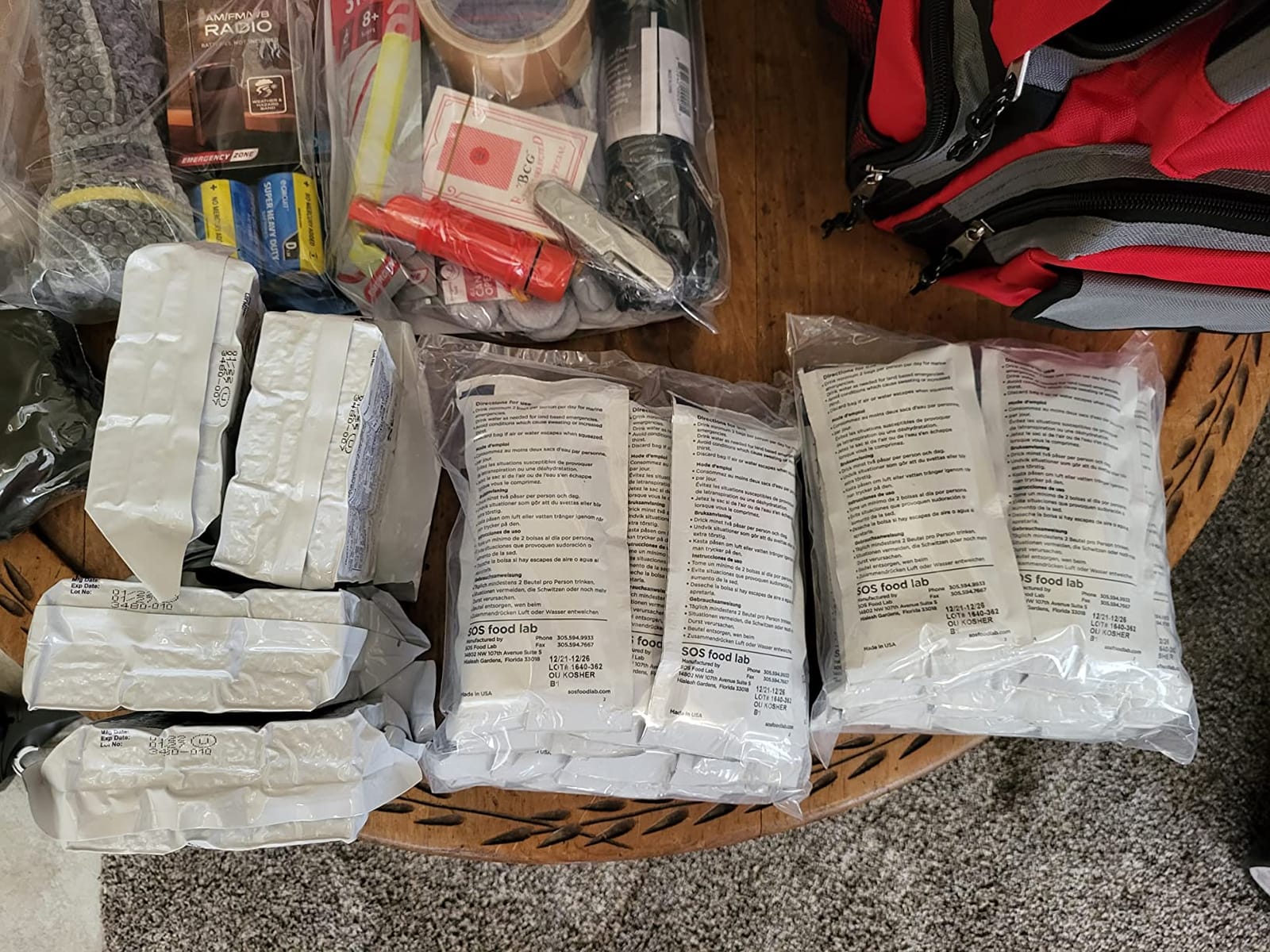
This is the kit we ended up recommending to every facility type, from a 12-person office to a small warehouse. The bag measures 18 x 12 x 12 inches and carries 132 pieces across first aid, shelter, light, water, food, hygiene, water purification and tools. What sets it apart is the 121-piece first aid kit, which is larger than the entire medical component in several competing kits.
Rotation burden is the reason most commercial kits fail in practice, and this one handles it well. Reviewers consistently single out the Coast Guard approved food rations and water with a 5-year shelf life, which means you are checking dates twice across a normal replacement cycle rather than every quarter. The pack also includes an emergency guidebook covering first aid and disaster planning, which is useful when the person who placed the kit is not the person who opens it.
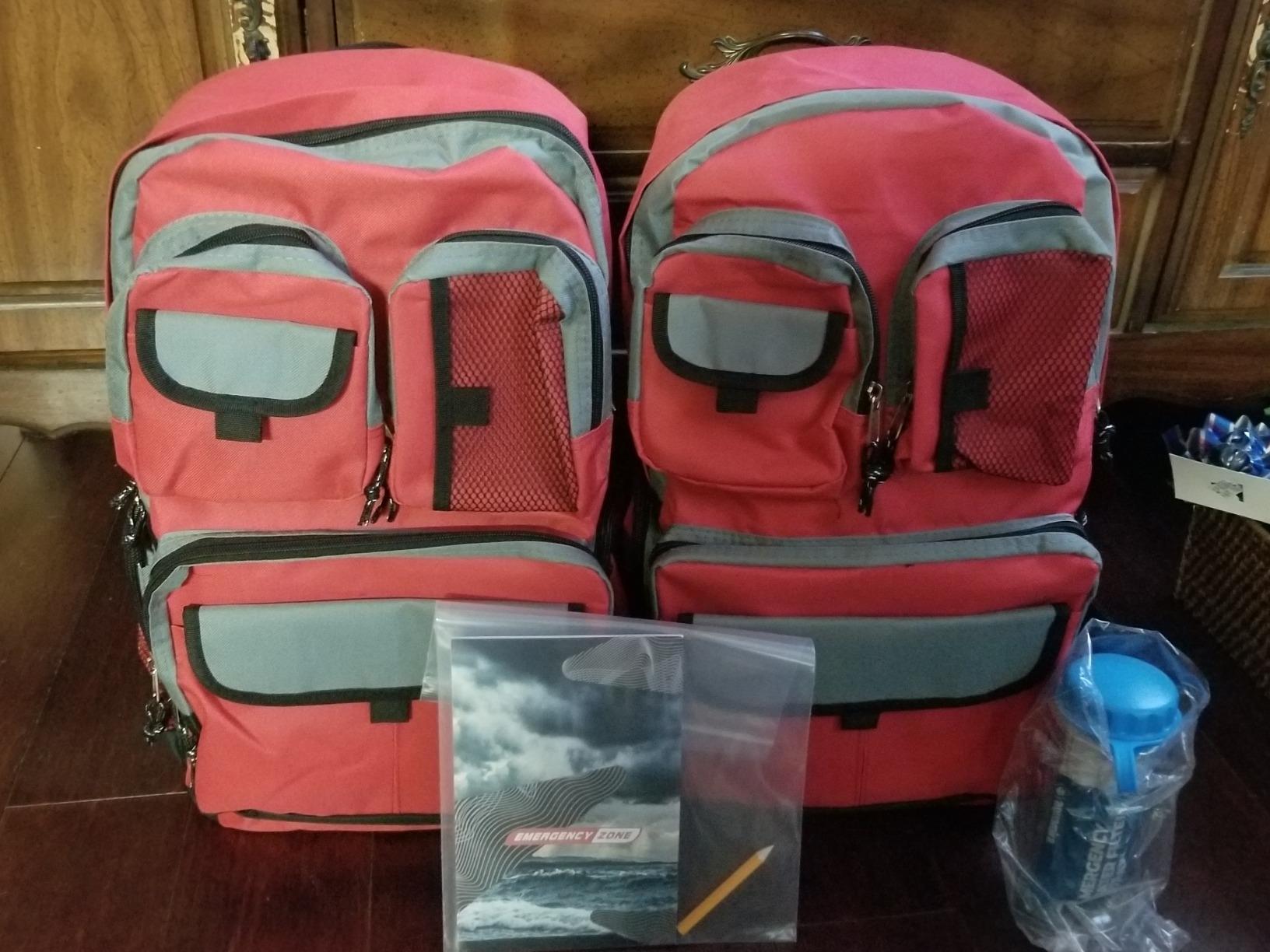
The exterior is deliberately plain, and that turns out to matter more than it sounds. Buyers working in customer-facing offices say a bag that reads as an emergency pack invites questions from visitors and can mark a person as a target in an unsheltered situation. This one reads like an ordinary day pack, which is exactly the behavior you want during a lockdown evacuation.
The listed item weight is 4.16 ounces, which almost certainly reflects the empty bag rather than the loaded pack. Do not plan on that number; the loaded weight is meaningful enough that we would not assign this kit to a floor warden expected to move fast up a stairwell.
Why it suits a workplace rather than a car
The stated capacity is a family, not an employee, so in an office context you would treat it as a team leader bag or a small floor cache rather than a per-person go bag. The size is genuinely portable, which is the property most commercial buyers care about, because a cache that cannot be carried out of a third-floor office is a cache that does not help during an evacuation.
Where it falls short
Water is the weak point. Reviewers report the quantities are minimal rather than generous, and the food bars are frequently described as tasting austere. For an 8-hour shelter-in-place in a warm climate, plan to add bottled water or a purification method on top of what is in the bag.
There is also no wheeled option and no external gear loops, so stacking this kit for a large team quickly becomes a floor-space problem. If you are furnishing an entire wing, look at a wheeled cache instead of multiplying backpacks.
2. Redfora Complete 3-Day Earthquake Bag – Best Value Color-Coded Kit
Complete Earthquake Bag – Emergency Kit for Earthquakes, Hurricanes, Wildfires and Other Disasters – Built for 2 Person for a 3 Day Period
107 pieces
10 x 18 x 24 inches
16 pounds
2 person 3-day
Pros
- Color-coded re-sealable waterproof packs
- 3600 calories of food bars
- 24 water pouches and 20 purification tablets
- NOAA hand-crank flashlight radio and charger
- Produced in 1 to 4 person sizes
Cons
- Loaded weight is substantial for a single carry
- The 107-piece count can read as padding once unpacked
The single most useful feature in this kit has nothing to do with survival. The supplies come in color-coded, re-sealable waterproof packs, and that is what makes an annual inventory realistic. You open the red pack, confirm the dates, close it, move on. Without that system, a shared office kit quietly ages until someone opens it during an actual event.
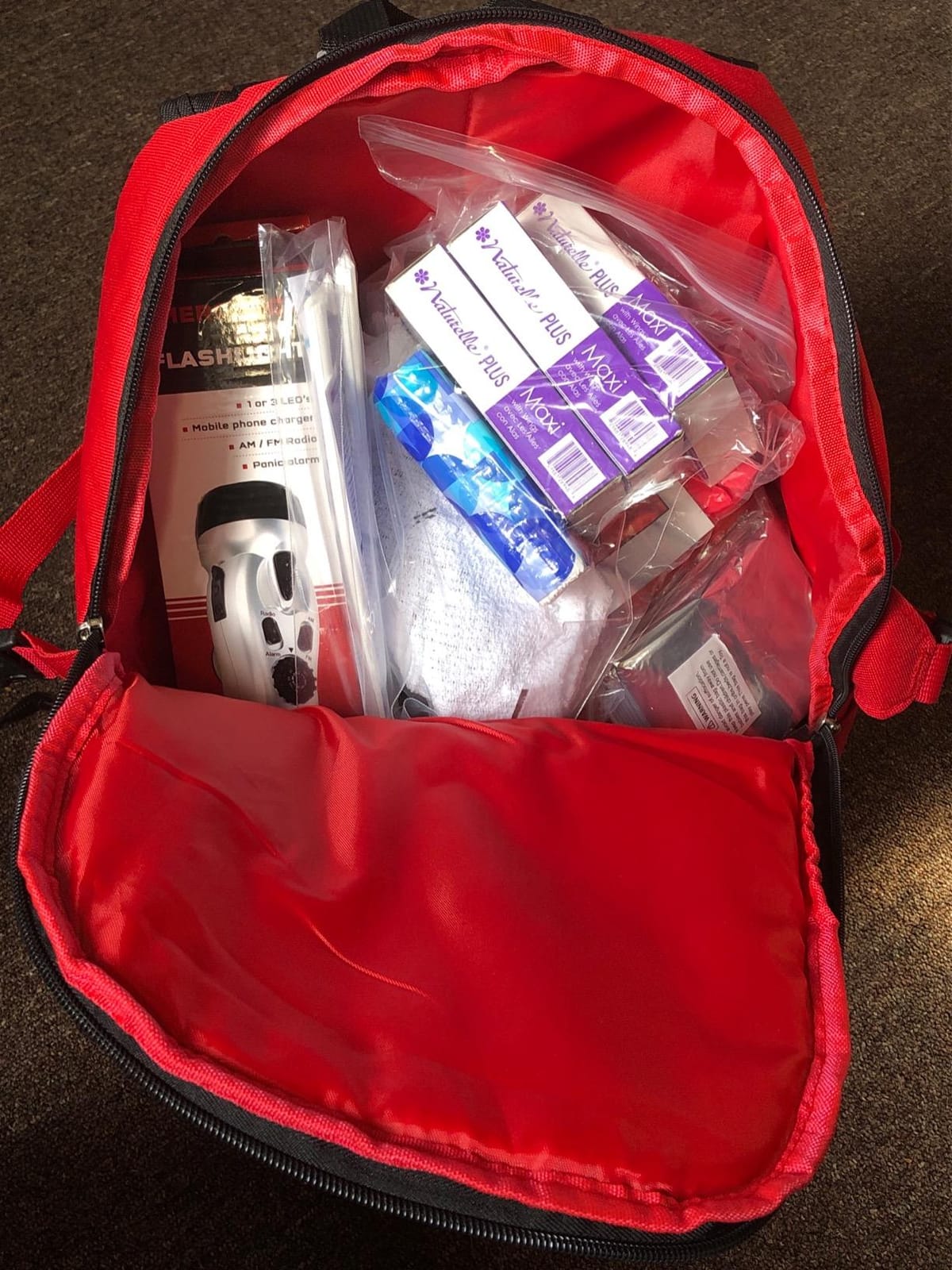
On capacity, you get 3600 calories of food bars, 24 water pouches and 20 water purification tablets, which is a defensible three-day load for two people. The included NOAA hand-crank flashlight, radio and phone charger is a genuine addition, since most kits in this group stop at a flashlight and assume cell towers will be up.
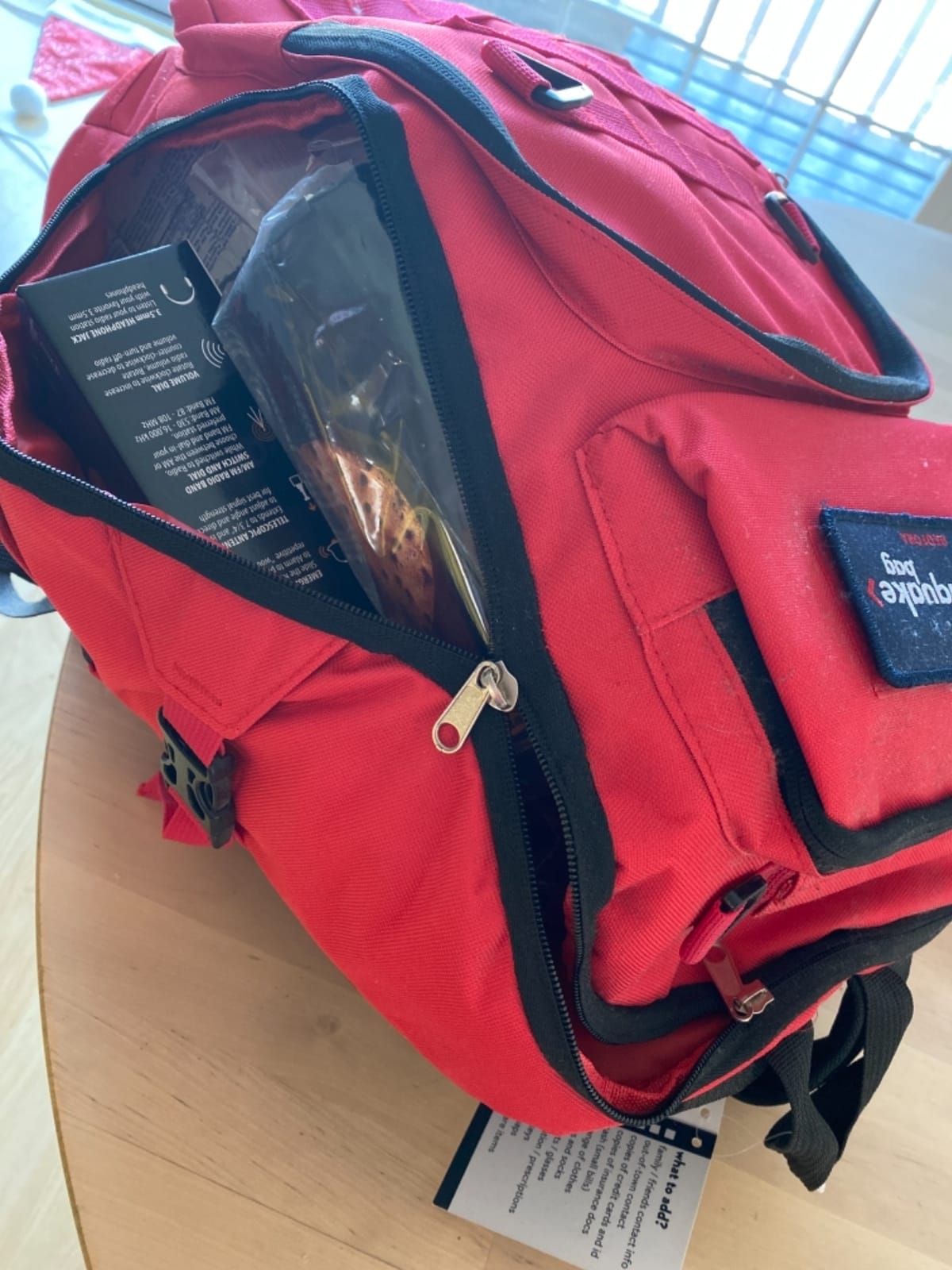
Reviewers also point out an expert video guide explaining what each supply category is actually for. That is an underrated detail for a commercial buyer handing kits to employees who have never opened one, and it pairs well with a scheduled drill day.
At 16 pounds listed weight, this is a bag that takes planning to move. For a team leader who has to carry it down two flights while directing others, that is a real limitation. For a floor cache that stays put, it is unremarkable.
Best fit for a floor or department cache
This is the kit we would put in a break room closet or a copy room and assign to a floor warden. The weight is acceptable when the bag stays in one place, and the color coding makes the monthly check a five-minute task. It is also available in 1, 2, 3 and 4 person configurations, so you can scale across a building without mixing kit types.
Where it falls short
The food and water are still modest for three full days of free consumption, and the loaded weight makes one-person carry impractical. Several reviewers also note that the piece count flatters the kit once everything is unpacked, so do not read 107 pieces as 107 distinct capabilities.
There is no first aid component as large as the Emergency Zone 121-piece pouch. If your facility has a manufacturing floor rather than an office floor, pair this with a separate bleeding control supply.
3. Ready America 2-Person 3-Day Backpack – Best for Outfitting Several Desks
Ready America 70280 Emergency 2-Person 3-Day Survival Backpack
2 person 72-hour
9.5 x 6 x 12 inches
7.8 pounds
4800 calories
Pros
- Most reviewed kit in the group
- Lowest cost per person
- 4800 calories and 12 sealed water pouches
- 33-piece first aid kit with basic over-the-counter medications
- Postage-paid expiration reminder card
Cons
- Some reviewers call it a bare minimum
- Light duty backpack construction
- Water quantity is minimal if two people drink freely
With 4378 reviews at a 4.7 average, this is the most examined kit in the set, and that is exactly why it earns a place. When you need to outfit twelve desks in a satellite office, the cost per person is the deciding factor, and reviewers repeatedly note this is the lowest per-person cost of anything we compared.
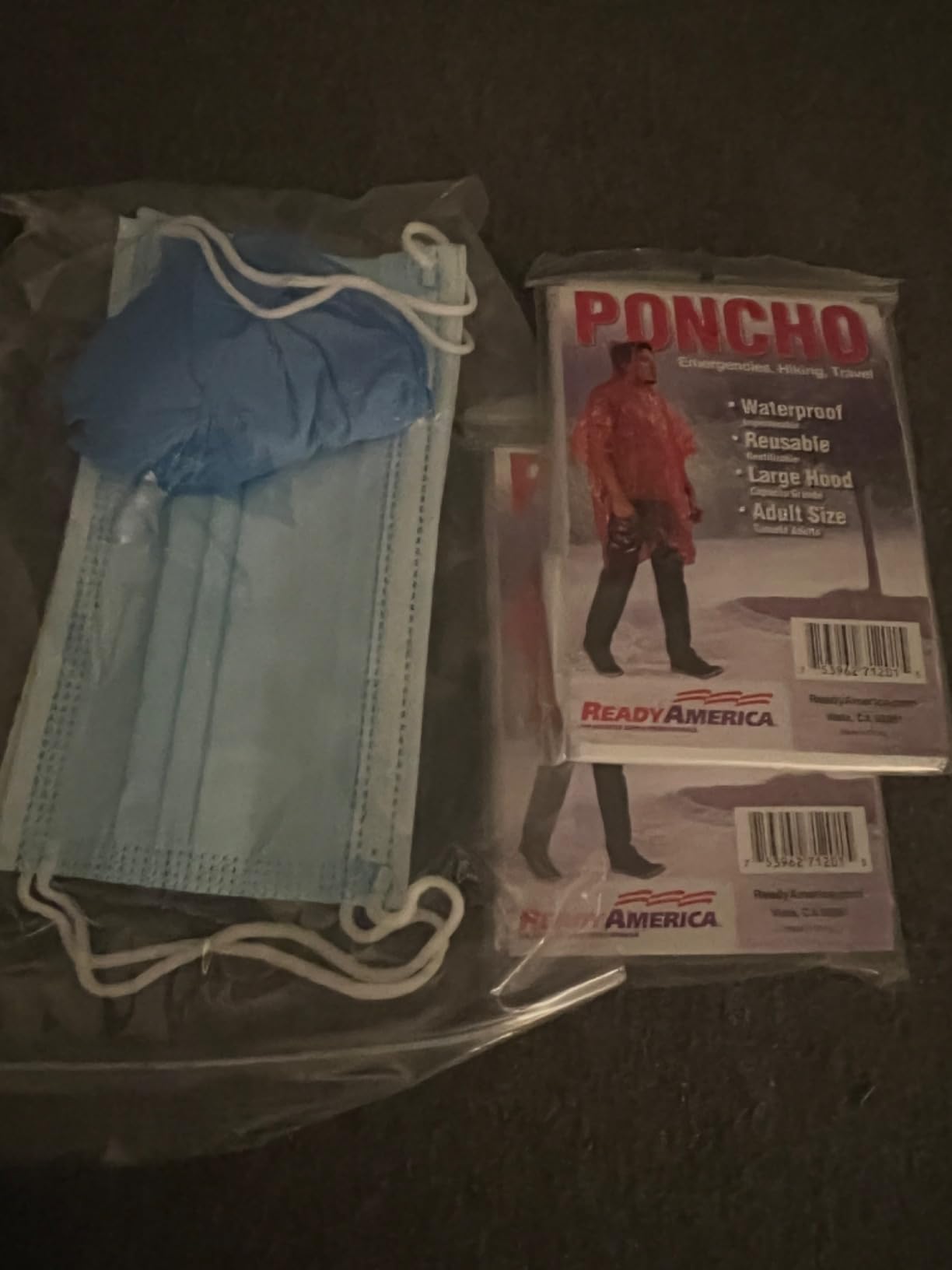
The load is 4800 calories of food bars plus 12 sealed water pouches, both with a 5-year shelf life, along with a 33-piece first aid kit that includes basic over-the-counter medications. Dust masks, nitrile gloves, two emergency ponchos, two survival blankets, two 12-hour lightsticks and a whistle cover the lockdown and debris scenarios an office actually faces.
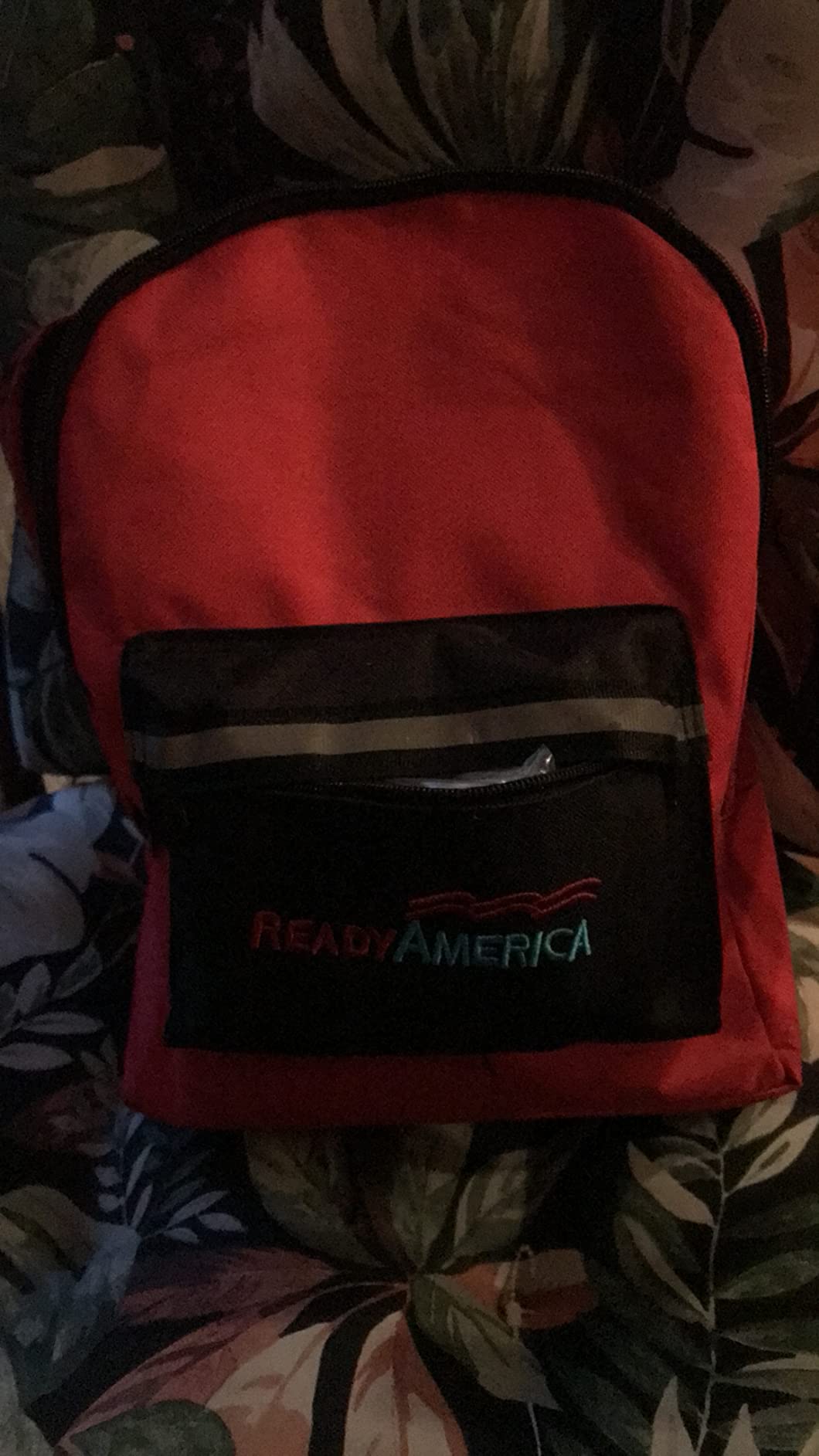
The detail we liked most is a postage-paid postcard that reminds you when expiration dates approach. Small companies rarely have a facilities manager whose job is kit rotation, and this turns a two-minute reminder into an automatic task. Buyers also report customizing the grab-and-go backpack with extra items, which is how we would add a phone battery pack.
Why per-employee distribution beats one shared cache
Buyers on workplace forums describe the same pattern repeatedly: employees know where supplies are only when they placed them themselves. A per-desk bag solves the accountability problem and the reach problem at the same time, because the person who needs it is standing next to it.
For a 10 to 20 person office, buying several of these and adding a shared heavier cache on each floor is a cleaner program than one large kit everyone is told about. It also matches the pattern in our commercial facility equipment guides, where distributed supply consistently outperforms a single centralized point.
Where it falls short
The backpack itself is the weak point. Reviewers describe the construction as light duty and raise the possibility of strap failure or dry rot over years of storage, so inspect the seams annually rather than assuming the bag will outlast its contents.
There is no radio and no phone charger, and the first aid pouch is a third the size of the Emergency Zone kit. If you are equipping a medical or industrial site, this is a personal go bag, not a first response kit.
4. Ready America 4-Person 72-Hour Deluxe – Best Team Leader Response Kit
Ready America 72 Hour Deluxe Emergency Kit, 4-Person 3-Day Backpack, First Aid Kit, Survival Blanket, Power Station, Emergency Food, Portable Disaster Preparedness Go-Bag for Earthquake, Fire, Flood
4 person 72-hour
12 x 9 x 16 inches
9.44 kg
33 pieces listed
Pros
- Battery-free hand-crank power station with radio and phone charging
- 107-piece first aid kit with goggles and biohazard bags
- Four food bars and four 1-liter water cartons
- Room for personal items after unpacking
Cons
- Water alone is thin for three full days
- Loaded weight is awkward to carry over distance
This is the most complete answer to a team leader role we found. The distinguishing component is a hand-crank 4-function emergency power station combining a flashlight, an AM/FM radio, a siren and a cell phone charger, and it needs no stored batteries at all. For a supervisor who has to coordinate a headcount in a dark stairwell with no cell service, that single item is worth more than several pouches of extra food bars.
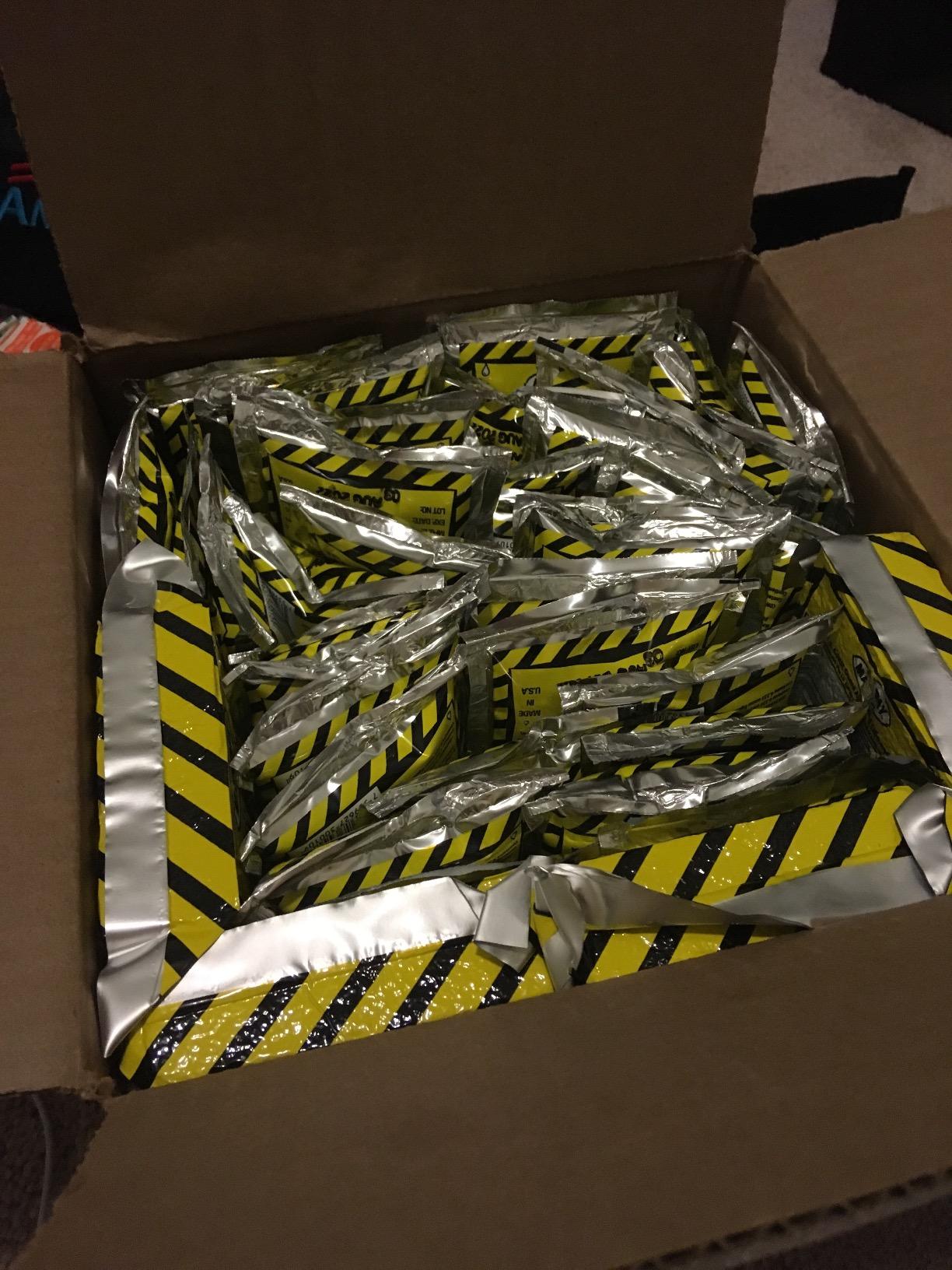
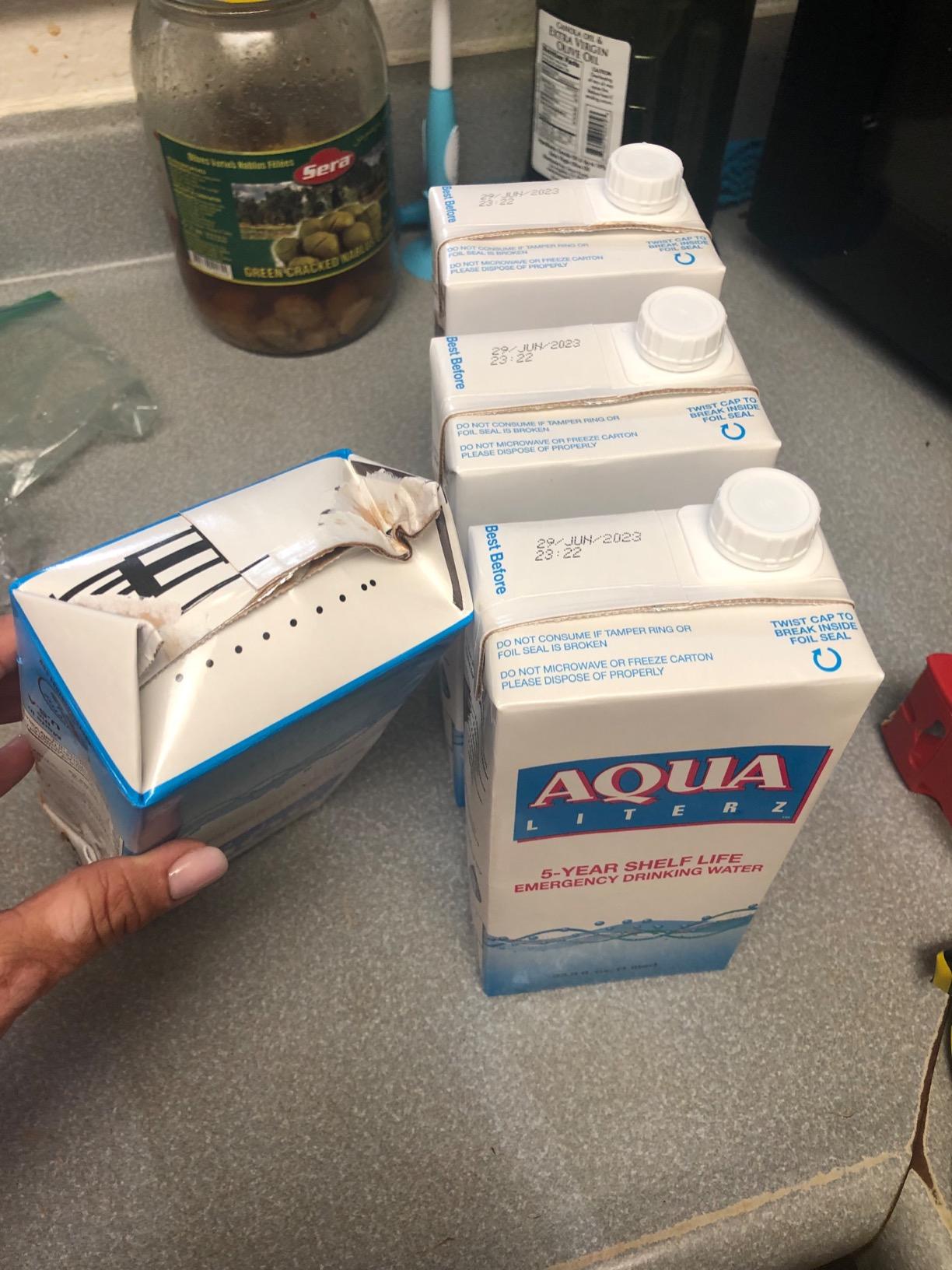
Capacity is stated for four people over 72 hours: four 2400-calorie food bars, four 1-liter water cartons, four emergency ponchos, four survival blankets, four 12-hour lightsticks, four nitrile gloves, four dust masks and four pairs of safety goggles. A 107-piece first aid kit, leather work gloves, biohazard bags, premoistened towelettes, a multi-tool, duct tape and a printed communication plan round out a genuinely job-site-ready load.
The listed weight is 9.44 kg and the loaded pack is roughly 20 pounds in a small volume. That is a heavy carry, and several reviewers call it awkward over distance. Assign it to someone with a short route to an exit.
What this kit covers that an office go bag does not
Three categories separate this from the personal go bags: the crank power station for communication, goggles and leather gloves for working around debris, and biohazard bags and towelettes for a facility where sanitation is compromised. That combination is why we place it with team leaders and floor wardens rather than at desks.
If your site runs an active-shooter lockdown policy, the siren function matters. If your site is a data center, warehouse or manufacturing floor, the dust masks and goggles are the reason to buy it.
Where it falls short
Four one-liter water cartons is roughly one liter per person per day, which is well short of the gallon-per-person-per-day figure most preparedness guides quote. Add water purification tablets and you are fine, but the shortfall is real and reviewers raise it directly.
At this weight, it is not a grab-and-go bag for a fast evacuation, and the pack is large enough that you need a closet or cabinet rather than a locker.
5. First My Family 4-Person 72-Hour Kit – Best Waterproof All-Rounder
First My Family All-in-One 4 Person, 72 Hour Emergency Survival Kit for Fires, Earthquakes, Hurricanes, Floods, Tsunami and Other Disasters – Premium Black Backpack
4 person 72-hour
18 x 16 x 12 inches
16.75 pounds
85-piece first aid
Pros
- Contents stated to exceed Red Cross preparedness guidelines
- 85-piece first aid kit
- One reviewer reported 24 hours of running water caused no damage
- Roomy bag with room for personal add-in items
Cons
- Brand name printed prominently on the bag exterior
- Heavy when fully loaded and impractical to carry far
This one gets recommended for a specific reason: the pack itself. One reviewer reported leaving it under 24 hours of running water without damage, and the bag stores flat beside a door or in a trunk, which solves the storage problem that defeats a lot of workplace kits. If your facility has a damp utility closet, that is a real advantage.
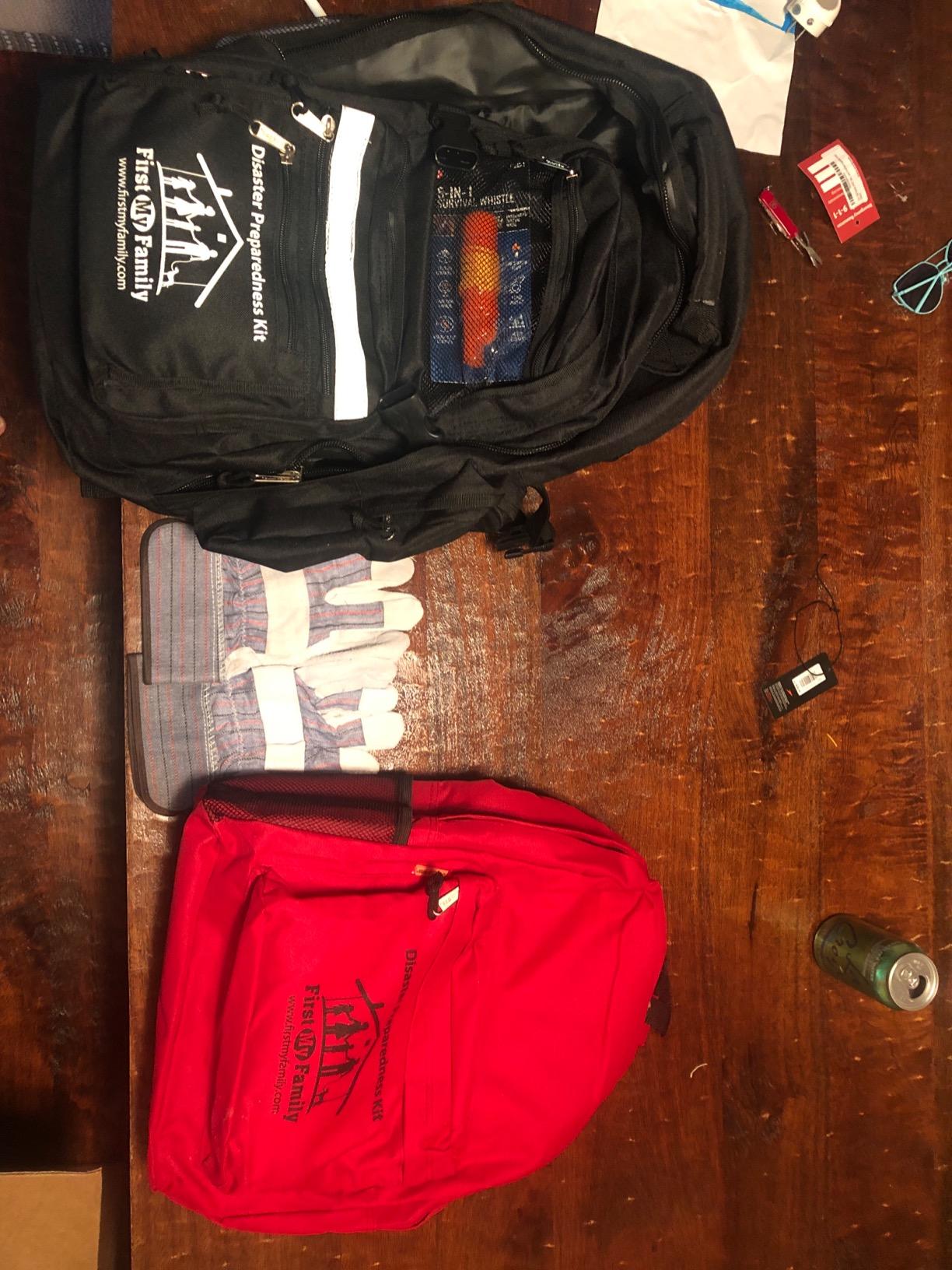
Contents include an 85-piece first aid kit plus food and water rations for four people, shelter and warmth materials for blackout conditions, and the manufacturer states contents exceed American Red Cross preparedness guidelines. It is also offered in 1, 2 and 4 person versions, and a variant that adds a water filter.
Where a waterproof bag changes the plan
Coastal sites, flood-prone warehouses, food processing plants and any location with an outdoor staging area benefit from a bag that tolerates standing water. The flat-storing design also means you can mount it in a shallow cabinet without losing depth to a rigid rolling case.
Buyers report using it as a camping, hiking and road trip kit too, which is convenient if the same supervisor is also a field technician. It is a sensible single purchase for someone who wants one kit rather than a tailored program.
Where it falls short
The brand name printed on the outside of the bag is a repeated complaint, and in a workplace context that matters more than it does in a garage. Several reviewers say the visible branding should be reconsidered, and we would agree for any customer-facing or unsecured site.
At 16.75 pounds loaded, it is not practical to carry any distance, so treat it as a stationary cache. If you need a team leader who can move at a run, look at a lighter pack.
6. EVERLIT STORM II 3-Person 72-Hour Kit – Best for Bleeding Control
EVERLIT 72 Hours 3 Day Earthquake Emergency Kit Bugout Go Bag Emergency Kit Survival Kit Backpack for Family, Preparedness for Hurricanes, Floods, Tsunami, Other Disasters
3 person 72-hour
17 x 12 x 12 inches
25 pounds
200 pieces
Pros
- Only kit in the group with a CAT tourniquet and 200-piece medical set
- 1000D polyester military-spec MOLLE backpack
- 3600 calories and 36 water pouches at 5-year shelf life
- Purification tablets treat up to 25 quarts
Cons
- Heaviest kit in the group at 25 pounds
- One reviewer reported water pouches arriving damaged
For construction, manufacturing, energy and logistics sites, this is the kit with the medical content. It is the only product we compared that includes a CAT tourniquet alongside a 200-piece medical supply set, and that single component changes who should carry it. A commercial facility with a machine shop, a loading dock or a construction trailer should treat bleeding control as a separate requirement from first aid, and this bag folds it in.
On the supply side you get 3600 calories of food bars and 36 water pouches with a 5-year shelf life, which the manufacturer positions against the FEMA guideline of 1000 calories per person per day, plus purification tablets that treat up to 25 quarts. A 3-in-1 hand-crank flashlight, radio and phone charger handles lighting and communication without batteries.
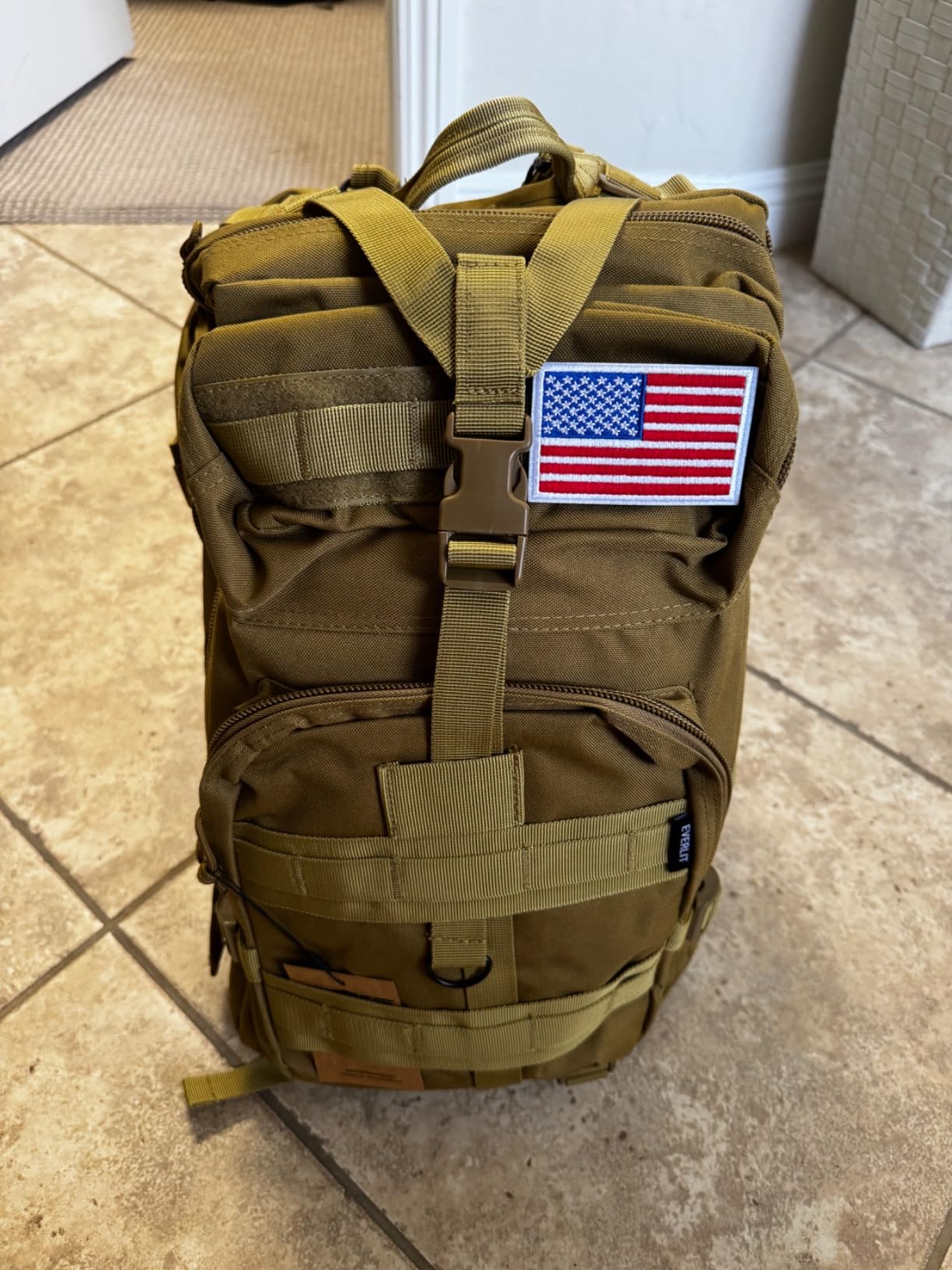
The bag is 1000D tear and water resistant polyester with a MOLLE-compatible layout, an adjustable waist strap, mesh padding and front attachment panels, plus four main compartments and many inner pockets. Reviewers confirm there is usable space remaining for extras once it is packed, which is unusual at this piece count.
Who should carry this and who should not
Assign this to a site lead, a safety officer or a first aid responder who is already on foot and moving around a facility. The MOLLE front panels let you add a personal radio or a bloodborne pathogen pouch without repacking the whole bag.
It is not a desk kit and not an evacuation bag. At 25 pounds it is the heaviest product in this group, and one person carrying it down a stairwell will be slower than the people around them, which is a safety problem rather than an inconvenience.
Where it falls short
Twenty-five pounds is the honest headline. That weight is a dealbreaker for most office environments and marginal even for an industrial site with a vehicle nearby.
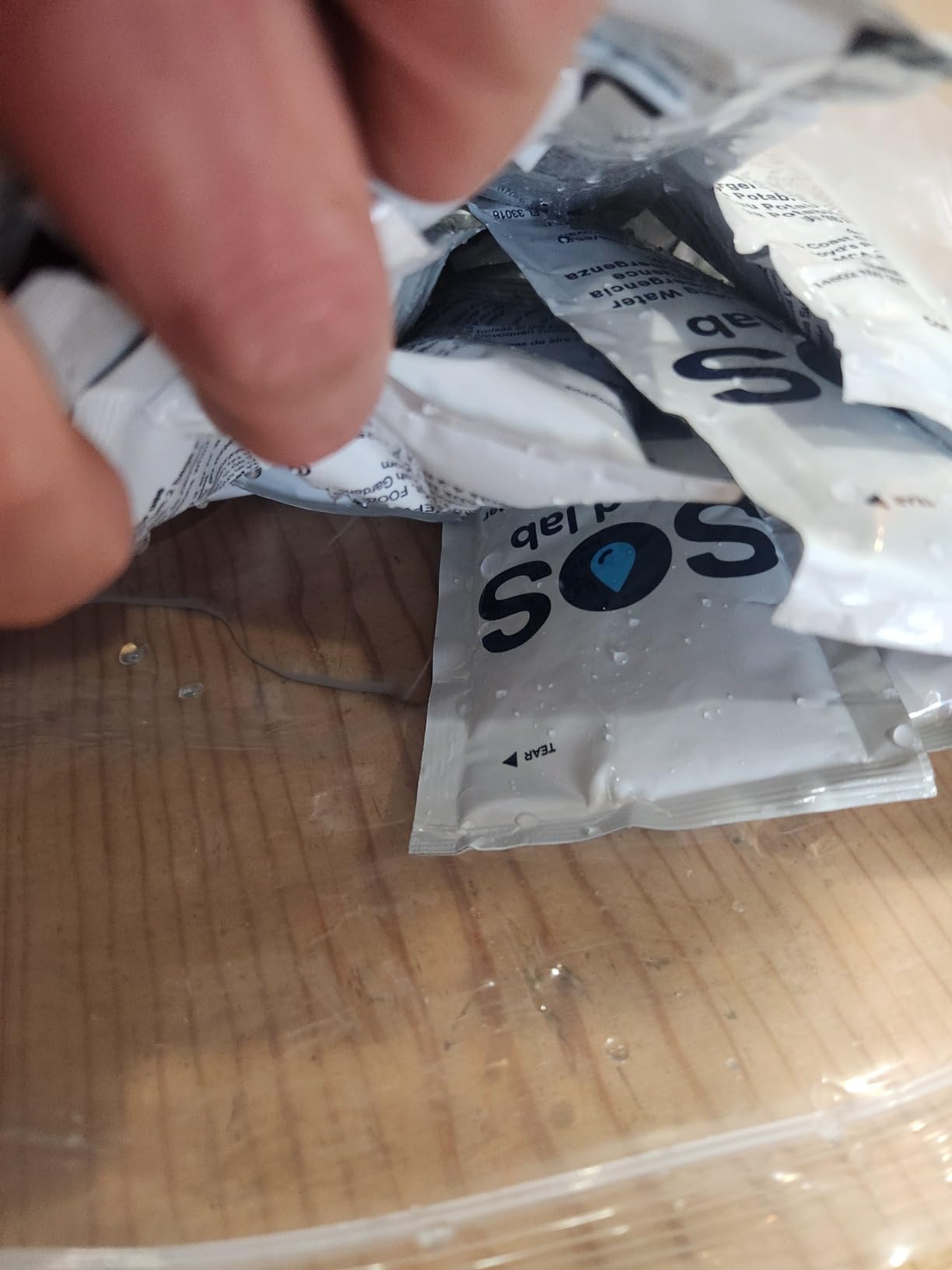
One reviewer reported several water pouches arrived already popped, so inspect the seal on every pouch at receipt rather than assuming the count on the packing slip matches what is usable. That applies to any sealed-water purchase, but it is worth doing on day one.
7. Mayday Deluxe 4-Person Backpack – Best for Compact Office Storage
Mayday Deluxe Emergency Preparedness Survival Backpack Kits (4 Person)
4 person
20 pounds
54 pieces
Backpack format
Pros
- Food and water carry a 5-year shelf life and are Coast Guard approved
- Backpack format stores compactly at home or at work
- Covers the core supply categories buyers expect
Cons
- Listing copy gives no calorie total or water count
- Weak category sales rank suggests limited demand history
- Heavy at 20 pounds with no hydration option
This is the awkward one in the list, and we included it deliberately. The core supply categories are all present: emergency food, a first aid kit, a flashlight, gloves, a knife, a light stick and a whistle, in a 54-piece backpack format that stores compactly and is built for four people.
What is missing is information. The listing does not give a calorie total, a water quantity or an itemized breakdown, so you cannot compare the actual load against any other kit in this roundup without opening it. Buyers reviewing it are broadly positive but generic, and the category sales rank is weak compared with the other Mayday product listed here.
When it is still the right call
If a supplier relationship matters more to you than specification transparency, a brand that makes the same product in multiple capacities is easier to standardize across a portfolio of sites. The backpack format is also easier to store and to hand off to a new employee than a rigid bucket.
It is a reasonable supplementary bag for a team leader who already carries a medical load, since the gloves, knife, light stick and whistle complement a first response kit rather than duplicate it.
Where it falls short
You are buying an unspecified box. Ask for the itemized contents list before committing across multiple sites, because you cannot verify water and calorie counts from what is published.
At 20 pounds it is heavy, and there is no hydration or purification component mentioned. The companion honey bucket kit listed further down carries far more documented detail, and we would choose that one instead.
8. Mayday 4-Person Honey Bucket Kit – Best for Shelter-in-Place Storage
Earthquake Kit 4 Person Deluxe Home Honey Bucket Survival Emergency
4 person
24 x 16.5 x 14 inches
23 pounds
Bucket with lid
Pros
- Bucket format stores without consuming shelf space and doubles as a toilet
- Includes a gas and water shut-off tool and 15-inch pry bar
- 54-piece first aid kit
- 50 purification tablets and 50 waterproof matches
Cons
- Lowest rating in the group at 4.4
- One detailed reviewer finds water under a gallon per person
- The lid does not seal for unprotected outdoor storage
The honey bucket is the most storage-efficient kit here and the one buyers most often describe as a genuinely complete one-stop starting point. The bucket with a lid stores without consuming shelf space, and the same container converts to a toilet using 12 liners and chemical disinfectant, which matters more than it sounds during a multi-day hold.
The included components go well past the standard list: a gas and water shut-off tool, a 15-inch pry bar, 50 water purification tablets, 50 waterproof matches, a 54-piece first aid kit, four 2400-calorie food bars, 24 water pouches, four solar blankets, four dust masks, four ponchos, leather palm gloves, a utility knife, a dynamo flashlight and radio, duct tape and a 5-in-1 whistle.
Why shelter-in-place buyers should look here
An 8-hour hold in an office is a water, light, sanitation and communication problem, not a wilderness survival problem. This kit covers sanitation with toilet liners and disinfectant, and it covers light and radio with the dynamo unit, which is a better match for a real shelter-in-place than a hiking kit with a tarp.
The bucket also survives a move. When tenants change or floors are reorganized, a lidded bucket is easier to relocate and to sign for than a soft backpack, and it cannot be quietly opened in a hallway.
Where it falls short
This is the lowest-rated kit in the group at 4.4, with 9% three-star and 4% two-star reviews. One detailed reviewer counts the water at under a gallon per person and the food at roughly a day of coverage, not three, which directly challenges the 4-person headline.
That same reviewer reports the lid does not seal well enough for unprotected outdoor storage, so keep this bucket indoors. Before you buy for a whole floor, add water and confirm the calorie math against your headcount and your planned coverage window.
9. 72 HRS Deluxe Emergency Survival Kit – Best for Winter and Blackout Scenarios
72HRS Earthquake Emergency Kit, 3 Day Survival Kit (2 Person, Red)
4 person
18 x 14 x 8 inches
56 pieces
90 day warranty
Pros
- Heavy-duty go-bag construction for long-term storage
- Available in eight red and black variants from 1 to 4 person
- 56-piece contents covering first aid water and food
- Intended for cold-weather and blackout scenarios
Cons
- Lowest-rated premium kit here at 4.5 with a 6% one-star share
- Listing copy does not itemize the 56 pieces
- Listed item weight of 756 g looks inconsistent with a stocked bag
This kit is marketed explicitly for cold-weather and blackout conditions, which is a narrower and more useful claim than generic comprehensive coverage. If your facility is in a region where a winter storm or a prolonged grid outage is the realistic scenario, that framing is worth something.
The reservation is transparency. The listing does not itemize the 56 pieces, and the listed item weight of 756 g does not appear consistent with a fully stocked 72-hour bag. Verify the contents on receipt.
What to check before ordering
Ask for the itemized contents list and confirm the food and water shelf life in writing. A winter scenario is the case where a short shelf life matters most, because a long outage in a cold climate is exactly when you cannot resupply quickly.
Confirm the water quantity per person and add purification tablets if the count is low. The 90-day warranty is short, so inspect the bag and its contents immediately and keep the receipt with your facilities records.
Where it falls short
The 4.5 average carries the largest one-star share of any kit in this group, at 6%, which signals a real satisfaction tail rather than a rounding issue. Buyers generally accept it as a capable heavy-duty bag, but the copy gives them little to compare.
There is no radio or charger listed, and no bleeding control component, so a cold-weather office kit is not a first response kit. Pair it with a communications-capable bag if your plan depends on headcounts during a blackout.
10. Blue Coolers Blue Seventy-Two – Best Single-Person 72-Hour Backpack
Blue Coolers Blue Seventy-Two | 72 Hour Emergency Backpack Survival Kits for 1 Person | Survival Kit for Wildfires, Earthquakes, Tornado, Hurricane, and Other Emergencies…
1 person 72-hour
14.8 x 9.9 x 4.4 inches
36 pieces
5-year shelf life
Pros
- Covers the American Red Cross three essentials of food water and blanket
- 2400 calories and 5 water pouches at 5-year shelf life
- Lightest loaded kit in the group
- Crank flashlight needs no stored power
- Available in 2-pack
Cons
- Only 5 water pouches for three full days
- 36-piece contents are the leanest of the deluxe kits
- No radio or phone charger
When one person has to carry their own kit out of a building, weight is the constraint that decides everything, and this is the lightest option in the roundup. At 14.8 x 9.9 x 4.4 inches and 119.64 g listed, it is genuinely grab-and-go, which makes it the natural desk or locker bag for a single employee.
Contents are 36 pieces: 2400-calorie food bars, five water pouches both with 5-year shelf life, a 36-piece first aid emergency kit, an emergency blanket, a rain poncho, a dust mask, a whistle and compass combo, and a battery-free crank flashlight. The blanket, food and water cover the three essentials the American Red Cross names.
Why a per-person kit is the highest-impact purchase
Buyers describe the same workplace pattern again and again, that employees know where supplies are only if they placed them. A single-person kit that lives in a desk drawer, a locker or a vehicle solves the reach problem that no shared cache does, because the person who needs water is the person holding the bag.
The 2-pack option is useful for teams of two or for a vehicle plus a desk, and the crank flashlight means nobody has to worry about a battery dying in a dark corridor during a power outage.
Where it falls short
Five water pouches is well under the gallon-per-person-per-day figure most preparedness guides recommend, and for three days it is not enough on its own. The 36-piece count is also the leanest of the deluxe kits here, with no sanitation supplies and no radio.
Treat this as a personal bag you supplement, not a survival kit. Add water, a phone battery pack and a small sanitation pouch, and it becomes a strong per-employee program.
Which Kit Type Does Each Workplace Role Need?
Match the kit to the role, not to the headcount alone. An employee who must evacuate on foot needs a light single-person bag, and a supervisor who must count heads needs a heavier bag with light, a radio and a charger.
A floor that stays put needs something different again: water, sanitation and cover for eight hours. Matching these wrong is the most common reason a purchased kit goes unused.
Most facilities need more than one type, and the cost difference between a personal bag and a floor cache is far smaller than the cost of a single expired or unreachable supply. If you are furnishing a building, plan on roughly one light bag per employee who works alone on a floor, plus one heavier response bag per floor or per department, plus one shelter-in-place cache per wing.
Facility managers who are also planning the rest of their equipment refresh can compare notes in our commercial equipment reviews, since the same headcount-based sizing logic applies to most capital purchases.
How to Size a Kit to Your Headcount and Coverage Window
Size on three numbers: how many people must be sustained, for how long, and how many of them must move under their own power. The first two determine the food and water count, and the third determines how many kits you can afford to be heavy.
Most published planning guidance treats 1000 calories per person per day and about one gallon of water per person per day as the working baseline. Run that math yourself before trusting a headline person count, because two of the kits in this roundup are marketed for four people and a reviewer counting the actual pouches would put one of them nearer a single day of food.
Add 20 to 30 percent for your actual building population rather than your scheduled population. A retail or restaurant site with shift changes, a school with a staff-only shelter area and a warehouse with contractors all have more bodies in the building than a spreadsheet suggests.
8-Hour Shelter-in-Place vs. 72-Hour Coverage
An 8-hour kit supports a facility that stays put through a short utility interruption, a chemical release outside the building or a lockdown ordered by police. It needs water, food that requires no cooking, light, a radio, a restroom solution and something to keep people calm. It does not need a tent or a sleeping bag.
A 72-hour kit assumes the surrounding infrastructure is gone. That is a hurricane landfall, a serious earthquake, an ice storm that lasts days or a flood that isolates the site. It needs the same core supplies multiplied by three, plus warmth, shelter, tools and the assumption that resupply is not coming.
Choose based on your realistic worst case, and be honest about it. FEMA publishes hazard-specific toolkits for earthquake, hurricane, inland flooding, power outage and severe wind, and matching your coverage window to your actual hazard is more useful than buying the largest kit available. A region with no seismic risk and a reliable grid does not need 72-hour coverage for every employee.
OSHA 29 CFR 1910.38 and 1910.151: What Employers Actually Need
OSHA 29 CFR 1910.38 requires a written Emergency Action Plan from employers with 10 or more employees, and the plan must cover a procedure for reporting a fire or other emergency, a procedure for emergency evacuation including the type of evacuation and the exit route assignment, a procedure for employees who remain to operate critical plant operations before evacuating, a procedure to account for all employees after evacuation, a procedure for employees performing rescue or medical duties, and the name and title of the person or job title of the person who directs the emergency response.
A kit is not a plan, but a kit is what makes steps three and four possible. The evacuation-exit assignment in 1910.38 is where per-floor placement and reachable-within-30-seconds placement stop being nice-to-haves.
Separately, 29 CFR 1910.151 governs first aid kit contents and the requirement that supplies be replenished as they are used, and ANSI Z308 is the standard most commercial first aid kits are built to. When a seller says commercial grade without citing either, treat that as marketing language rather than a specification.
What Commercial Kits Never Include
No commercial disaster preparedness kit in this roundup includes prescription medication, and they cannot safely. Insulin, inhalers, epinephrine and cardiac medication are personal medical items that belong with the individual who needs them. Your program can help by keeping an up-to-date list of who has a documented medical need, and by making sure an employee who cannot self-evacuate has a named assistant.
AEDs are also absent from every kit we compared, for the same reason: they are installed equipment, not packed supplies. If your facility has an AED, confirm it is registered, inspected on schedule and that your floor wardens know where it is, because a packaged kit will not address a cardiac event.
Beyond that, expect gaps in bleeding control unless you buy a kit with a tourniquet, bloodborne pathogen supplies, and durable tools for a worksite. The EVERLIT kit is the only one in this group with a CAT tourniquet included, which is why we recommend it specifically for construction, manufacturing, energy and logistics sites.
Shelf Life, Inspection and Rotation Schedule
Most food bars and water pouches in this category carry a 5-year shelf life, which is the single most useful procurement fact on this page. It means your inspection burden is two date checks across a standard replacement cycle rather than a quarterly sweep, and it is why the 5-year claim mattered enough to shape our ranking.
A workable annual schedule looks like this. In month one, walk every kit location and confirm the kit is where your plan says it is. In month two, open each first aid pouch and replace anything used or opened. In month four, check water pouch seals and food dates and log them. In month six, test every battery-free crank flashlight and radio. In month eight, confirm the emergency contact sheet inside each kit is current. In month ten, replace anything consumed during the year’s exercises.
Durable items that do not expire, such as gloves, ponchos, tarps, pry bars and hand tools, are the part of a purchase that justifies itself without a rotation burden. Add those to your list first, and buy perishables against your actual headcount.
Storage and Placement: Reaching Supplies Fast
Place kits so that anyone on a floor can reach one in under 30 seconds without passing a fire door or a locked stairwell. A single shared kit on an open-plan floor means people at the far end of the room never reach it, which is the most common complaint in workplace preparedness discussions.
Distribute rather than centralize: one light bag per desk or locker for employees who evacuate alone, one heavier response bag per floor, one shelter-in-place cache per wing, near but not blocking an exit. Label each one with the role it serves, because a kit nobody knows is assigned to them is a kit nobody opens.
Keep wheeled caches on a clear path with a designated parking spot, and keep them away from sprinklers and heaters. If your facility plans a rolling response kit, our buying guides for commercial equipment cover the same planning discipline at a much larger scale.
Frequently Asked Questions
What is the best-rated emergency survival kit?
Among the 10 commercial kits in this roundup, the Emergency Zone Family Emergency Kit holds the highest average rating at 4.8 stars across 1341 reviews. The best-reviewed product by volume is the Ready America 2-Person 3-Day Backpack with 4378 reviews at 4.7. For a workplace, judge ratings alongside capacity and weight, because a high rating on a 25-pound kit does not help an employee carrying it down a stairwell.
What are the 10 essential items in an emergency kit?
The core categories are drinking water, shelf-stable food, a first aid kit, a flashlight with spare or hand-crank power, a battery-free radio, an emergency blanket or poncho, dust masks and gloves, a whistle, a multi-tool or pry bar, and a sanitation solution. Water and food are the two most commonly under-stocked items in workplace kits, and sanitation is the one most often missing entirely.
What to put in a work survival kit?
Beyond the standard ten categories, add items matched to your worksite: safety goggles and leather gloves for industrial facilities, a bloodborne pathogen pouch for healthcare or sanitation workers, a hand-crank phone charger where cell coverage is unreliable, and a printed emergency contact sheet. For a team leader, include a hand-crank radio and a 107-piece or larger first aid set rather than a basic pouch.
How long will a Costco earthquake kit last?
Shelf life depends on the specific items rather than the brand. In all 10 kits we compared, the food bars and water pouches are sold with a 5-year shelf life, so a kit bought today should still be usable well into the next decade if seals stay intact. Inspect pouches annually because heat and humidity degrade sealed packaging faster than the printed date suggests.
What does FEMA recommend you purchase?
FEMA advises workplaces to keep water, non-perishable food, first aid supplies, flashlights and batteries on site, and its Ready Business program publishes hazard-specific toolkits for earthquake, hurricane, inland flooding, power outage and severe wind. FEMA’s planning baseline used widely in commercial preparedness is about one gallon of water and 1000 calories of food per person per day.
Are office emergency kits OSHA compliant?
OSHA 29 CFR 1910.151 governs first aid kit contents and requires supplies to be replenished as they are used, and ANSI Z308 is the standard most commercial first aid kits are built to. However, no packaged disaster kit satisfies 29 CFR 1910.38, which requires a written Emergency Action Plan with evacuation routes, accountability procedures and named response leadership for employers with 10 or more employees.
Conclusion: The Best Commercial Disaster Preparedness Kits for 2026
After six weeks of comparing these 10 kits against real workplace constraints, the Emergency Zone Family Emergency Kit is our pick for the best commercial disaster preparedness kits overall, on the strength of the highest rating in the group, a 121-piece first aid component and consumables with a 5-year shelf life that make rotation manageable. Pair it with the Redfora 3-Day bag wherever you need color-coded inventory and a hand-crank radio, and with the Blue Seventy-Two for employees who need to carry their own bag out.
Two numbers should drive your purchasing before any brand does: the headcount you actually need to sustain, and the coverage window your real hazard demands. Match the kit to the role that will carry it, place it within a 30-second walk of the people who need it, and put the inspection calendar on the same schedule as your building systems review. Start with the floor that has the longest walk to the nearest exit, and work outward from there.