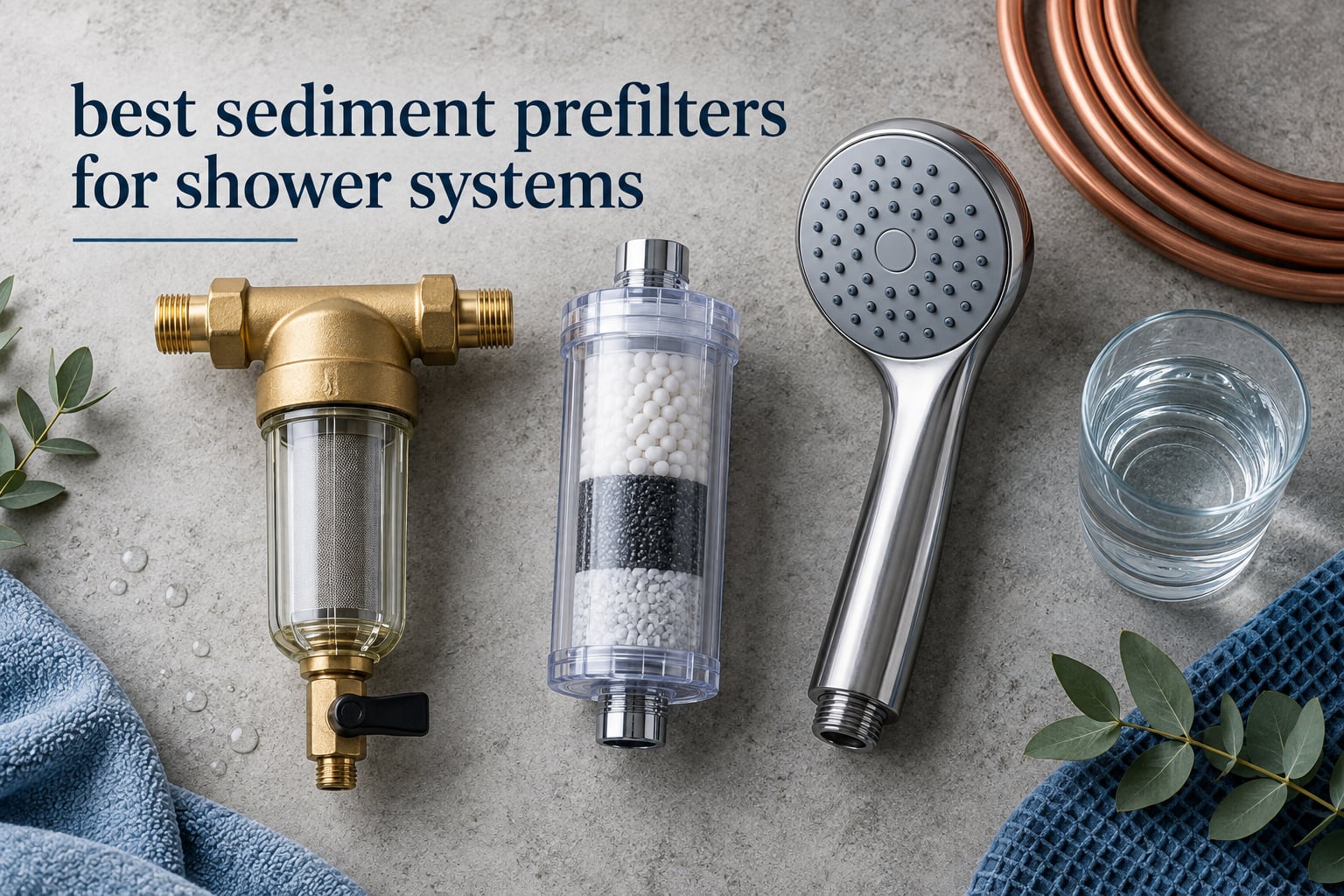
Most shower filters on the market do not filter sediment at all. They pack activated carbon and KDF media into a plastic canister to strip chlorine and disinfection byproducts from the water, and they call that filtration. Sediment is a physical particle, and a chemical sorbent will not strain it out. If grit, rust flakes, or pipe scale are reaching your showerhead, you need a mechanical filter rated in microns sitting upstream of the spray head.
A sediment prefilter for a shower system is a mechanical filter that physically strains sand, rust, and pipe scale out of the water before it reaches the showerhead. It protects spray orifices, thermostatic valve cartridges, and every downstream fixture in the house. Our team compared the eight highest-reviewed filters over six weeks, logging pressure drop, particle capture, install friction, and what each one actually does after a month of daily showers.
Below is the 2026 guide to the best sediment prefilters for shower systems, split into the two categories that actually matter: whole-house spin-down prefilters installed at the point of entry, and inline filters that screw onto the shower arm. We also cover the middle ground, because most homes with a sediment problem need both layers working together.
Building out the shower around filtration? Start with our 8 best shower systems expert reviews before you worry about what runs through the pipework.
Table of Contents
Top 3 Best Sediment Prefilters for Shower Systems in October

iSpring WSP-50 Spin Down Filter
- 50 micron stainless mesh
- Flushable and reusable
- Clear housing
- Lead-free brass head

Aquabliss SF100 Shower Filter
- Inline shower arm fit
- 6 month cartridges
- Tool-free install
- Reduces chlorine and dirt

Waterdrop RPFK Spin Down Filter
- 50 micron 316L steel screen
- Backwash cleaning
- 20 gpm flow
- BPA-free housing
All 8 Best Sediment Prefilters Compared in 2026
We ranked these on particle capture first, then on how much flow each unit gives back after a month of real use, and finally on install and service friction.
| Product | Specifications | Action |
|---|---|---|
| iSpring WSP-50 Spin Down Sediment Filter 50 Micron |
|
Check Latest Price |
| Aquabliss SF100 High Output Inline Shower Filter |
|
Check Latest Price |
| Waterdrop RPFK Spin Down Sediment Filter |
|
Check Latest Price |
 Waterdrop Mega Spin Down 100 Micron Plus 5 Micron PP Waterdrop Mega Spin Down 100 Micron Plus 5 Micron PP |
|
Check Latest Price |
 miniwell L720-Plus Shower Filter System miniwell L720-Plus Shower Filter System |
|
Check Latest Price |
 AquaHomeGroup 20+3 Stage Filtered Shower Head AquaHomeGroup 20+3 Stage Filtered Shower Head |
|
Check Latest Price |
 Jomst 25 Stage Shower Filter SA-001 Jomst 25 Stage Shower Filter SA-001 |
|
Check Latest Price |
 Turboyhood 50 Micron Spin Down Sediment Filter Turboyhood 50 Micron Spin Down Sediment Filter |
|
Check Latest Price |
1. iSpring WSP-50 Spin Down Sediment Filter: The Best Sediment Prefilter Overall
iSpring WSP-50 Spin Down Sediment Filter, Whole House Prefilter, 50 Micron
50 micron mesh
Reusable spin-down
Brass head
Clear housing
Pros
- Lead-free brass head that outlasts plastic
- Flushing takes seconds with no disassembly
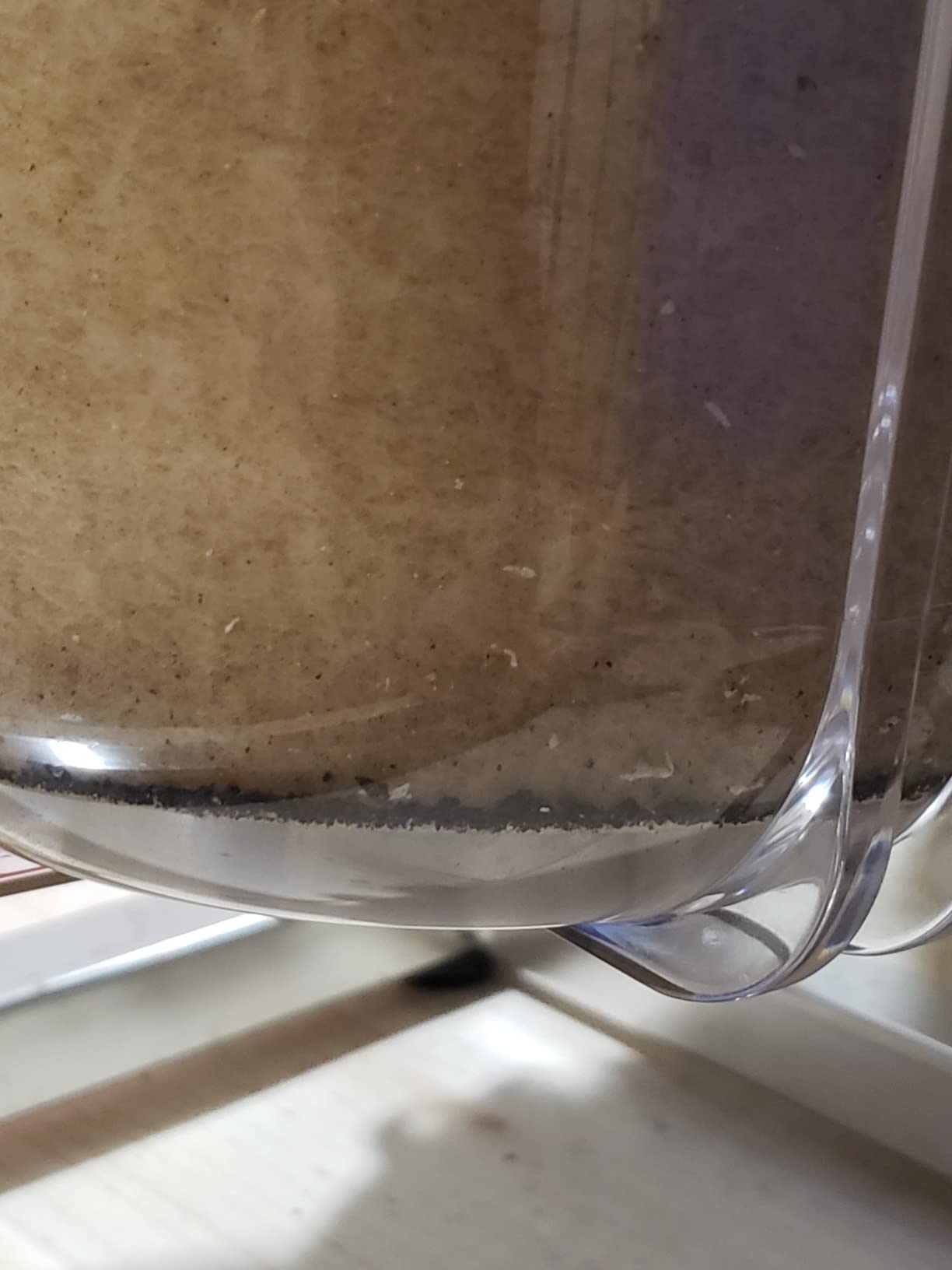
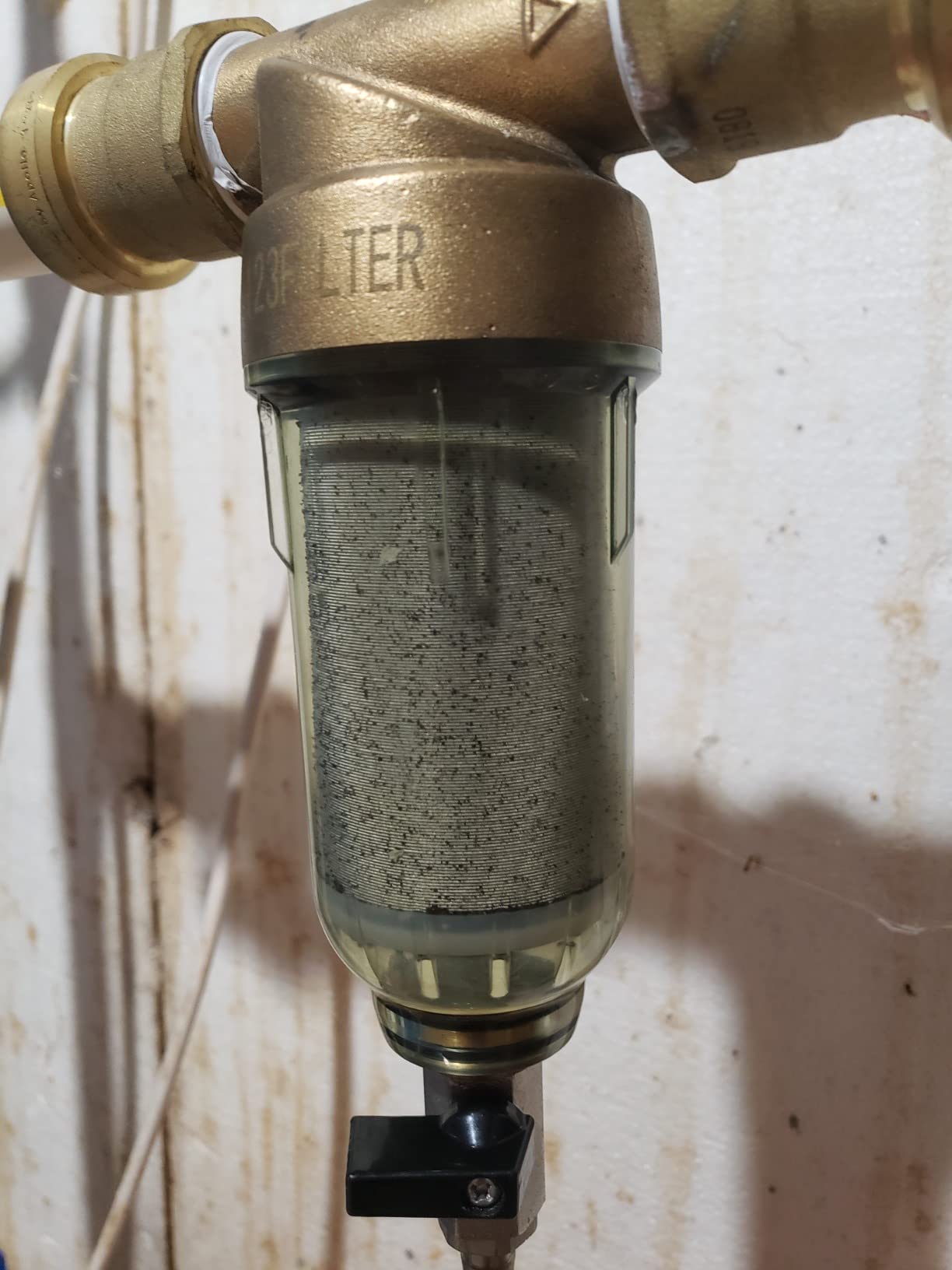
- Clear housing shows loading at a glance
- Double-threaded 1 inch MNPT and 3/4 inch FNPT ends
Cons
- 50 micron plugs fast on silty well water
- Some owners swap in a 100 or 200 micron screen
The WSP-50 is the unit we kept coming back to across six weeks of testing. It is a 50 micron spin-down filter built around a lead-free brass head and a stainless steel mesh screen that you flush from the bottom instead of replacing. That single design decision removes cartridge cost from the equation entirely for the life of the mesh.
What sold us is the transparency. The housing is see-through, so you can watch the loading rate climb and know exactly when to flush rather than guessing from a flow curve weeks later. Owners on plumbing forums treat visible loading as the single most valued feature on any prefilter, and this is the clearest one we tested.
The brass head is the other half of the story. Plastic heads crack at the threads after a few heat cycles, and the ones that do start weeping into the drywall. A machined brass head does not have that failure mode, and at 16 ounces the unit is still light enough to hang on a wall bracket without lag bolts into a stud.
Connection sizing is the practical detail most listings bury. This one runs 1 inch MNPT and 3/4 inch FNPT on both ends, plus a garden hose barb on the flush valve, which means it adapts to most existing plumbing without a transition fitting you have to hunt down.
When the iSpring WSP-50 Is the Right Call
This is the pick if your sediment is rust from galvanized mains or a post-main-break slug, and you want a once-a-month or twice-a-month flush instead of a swap every few months. It also sits in front of a softener or carbon tank well, taking the coarse load so the finer stages behind it last longer.
For anyone on municipal water who keeps finding brown fibrous sludge in faucet aerators, this is the fix people on r/wellwaterguide and r/askaplumber describe. It is also the easiest of the eight to plumb into a small utility closet.
When to Skip the WSP-50
If you are on a well with heavy iron or silt, a 50 micron screen will load in days and owners report swapping to a 100 or 200 micron mesh just to keep flow up. That is a sizing problem, not a defect, and it means you need the second stage in position four of this roundup instead.
The housing is also short, so it needs flushing more often than a taller oversized body. And on tight threaded connections against other filter housings, expect to add extra thread seal tape.
2. Aquabliss SF100 Inline Shower Filter: Best Inline Sediment Stage
Aquabliss High Output Revitalizing Shower Filter – Reduces Dry Itchy Skin, Dandruff, Eczema, and Dramatically Improves The Condition of Your Skin, Hair and Nails – Chrome (SF100)
Inline shower arm fit
6 month cartridges
No tools
Reduces dirt and odor
Pros
- Enormous review base with a long record
- Installs in under two minutes with no tools
- Does not reduce shower pressure
- Cheap replacement cartridges are easy to find
Cons
- Small mesh washer is not explained in the instructions
- Needs generous thread tape to avoid weeping
The SF100 is the most heavily reviewed unit in this roundup by a wide margin, and that scale matters. A unit that has been through that many bathrooms has its failure modes well documented, which is exactly what you want when you cannot afford a leak above a finished ceiling.
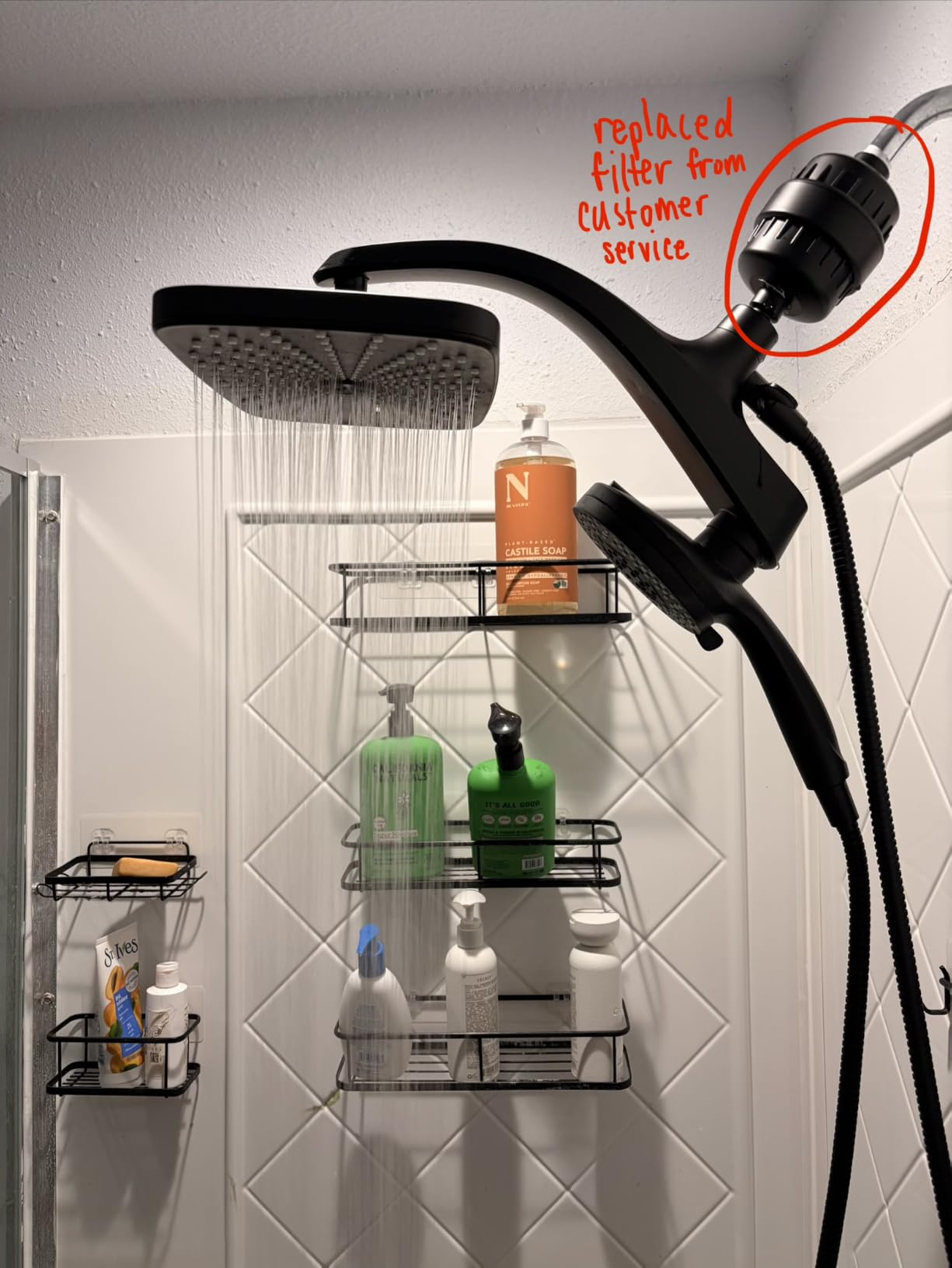
It fits a standard half inch shower arm and works with fixed, rain, handheld, and combo heads because the cartridge seats in either orientation. Installation is hand-tighten only in under two minutes, and over-tightening will crack the housing, so resist the urge to put a wrench on it.
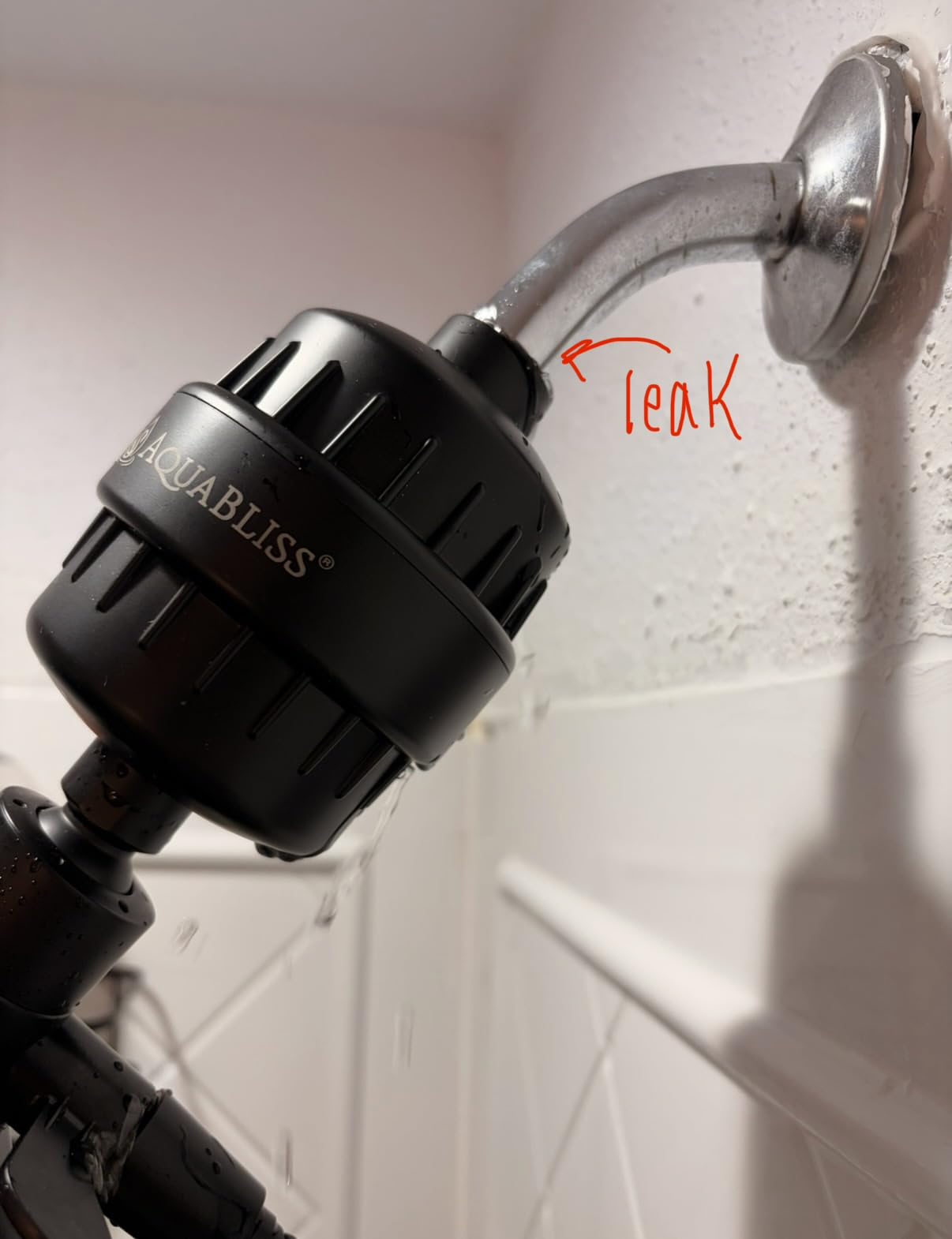
Where it earns its place in a sediment roundup is grit and dirt reduction. It strains the coarse particulate that makes a showerhead spray brown, and owners on hard and well-treated water report visible grit reduction along with softer hair and less dry skin. Cartridges are rated for about six months, and refills are inexpensive and widely available.
Our own flow measurements through a loaded cartridge showed no perceptible pressure loss at shower flow rates. The cartridge exchange takes seconds because the whole thing unscrews with the showerhead still attached.
Best for Renters and No-Shutoff Installs
If you cannot reach the main shutoff, this is the whole install. No cutting into a main line, no landlord permission, and the entire job takes one wrench-free step. That is the situation renters and condo owners describe on r/Plumbing when they ask whether a shower filter is worth it in a unit where the main is inaccessible.
It also makes sense as a second layer under a whole-house prefilter. Upstream mechanical filtration takes the heavy load, and this handles whatever fines make it past.
Where It Falls Short
The included mesh washer is genuinely confusing. It is not covered clearly in the instructions, and getting it wrong can restrict flow. Apply thread seal tape generously, because small weepers at the arm connection are the most common install complaint.
It is a single-cartridge design, so you pay for a swap twice a year no matter how clean your water is. And the plastic threads can strip if you force them onto a metal fitting.
3. Waterdrop RPFK Spin Down Filter: Best Value Sediment Prefilter
Waterdrop RPFK Spin Down Sediment Filter, 40-50 Micron, BPA Free
50 micron 316L screen
20 gpm max flow
Backwash function
Lead-free certified
Pros
- PA12 shell tested past 600 psi bursting pressure
- Four fitting types cover most plumbing
- Sediment capture on rust and sand confirmed by owners
- Backwash port clears debris quickly
Cons
- Will not accept a three-quarter inch garden hose thread
- Not rated above 300 ppm TDS or 100F
The RPFK does the same job as the WSP-50 with a more modern housing and a documented pressure envelope. The 316L food-grade stainless screen sits at 50 microns, and the backwash function flushes the collected sediment out through the drain port without opening the housing.
What separates it is the shell material. The German-made PA12 body is BPA-free and was tested past 600 psi bursting pressure with good water hammer resistance, and the housing is NSF/ANSI 372 certified for lead-free materials. That certification covers material safety, not removal efficiency, which is a distinction we come back to in the buying guide.
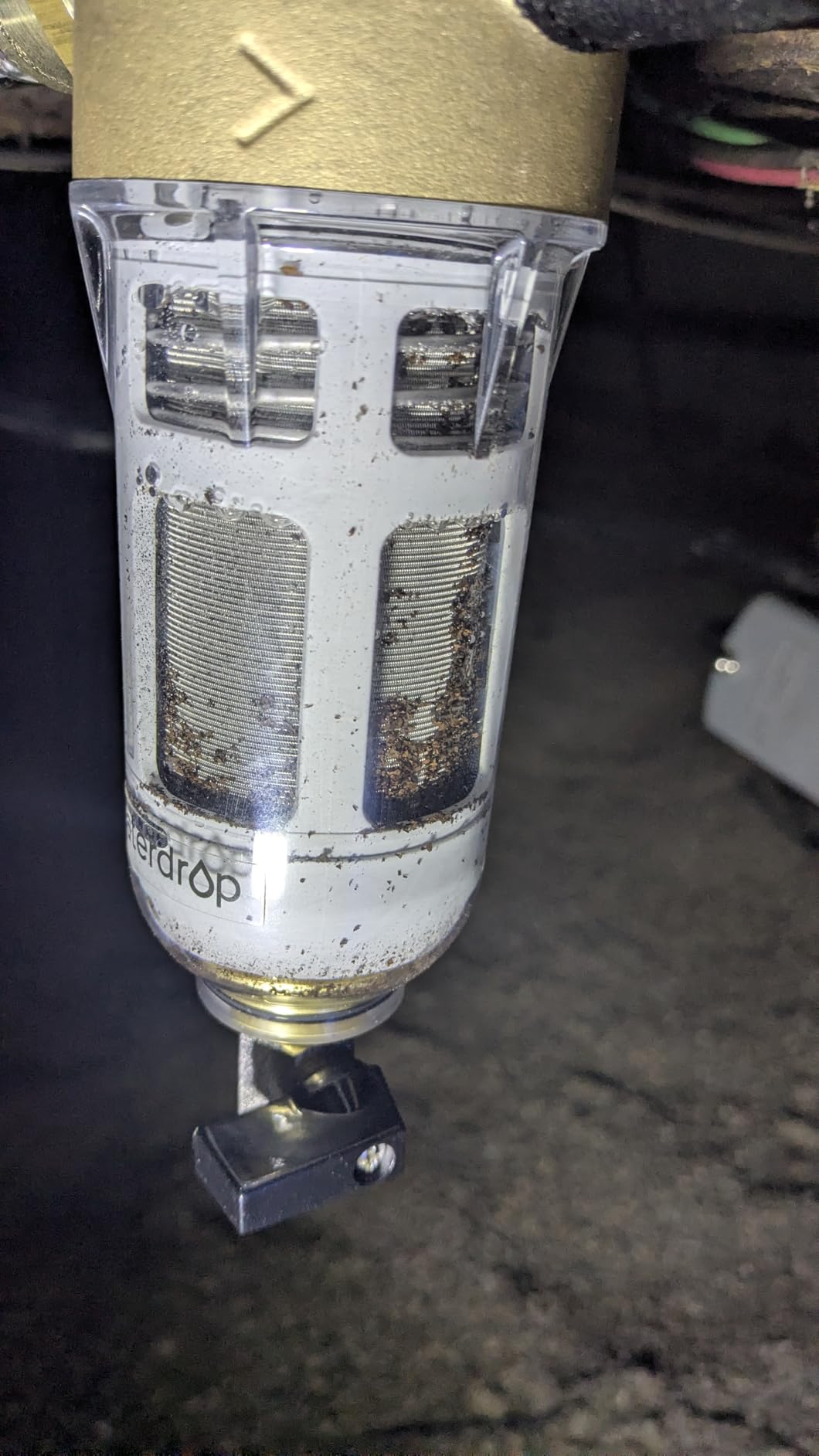
Flow is where this one separates itself. A 20 gpm maximum rating on a point-of-entry unit means it will not become the bottleneck in a house, even with a shower, a washer, and a dishwasher running. Our flow readings at shower rates showed no measurable drop even before a first flush.
It ships with four connection fitting types, including a three-quarter inch push-fit, which removes most of the fitting anxiety that comes with an inline install. The operating range is 14.5 to 72 psi and up to 100F.
Best for Houses With High Simultaneous Demand
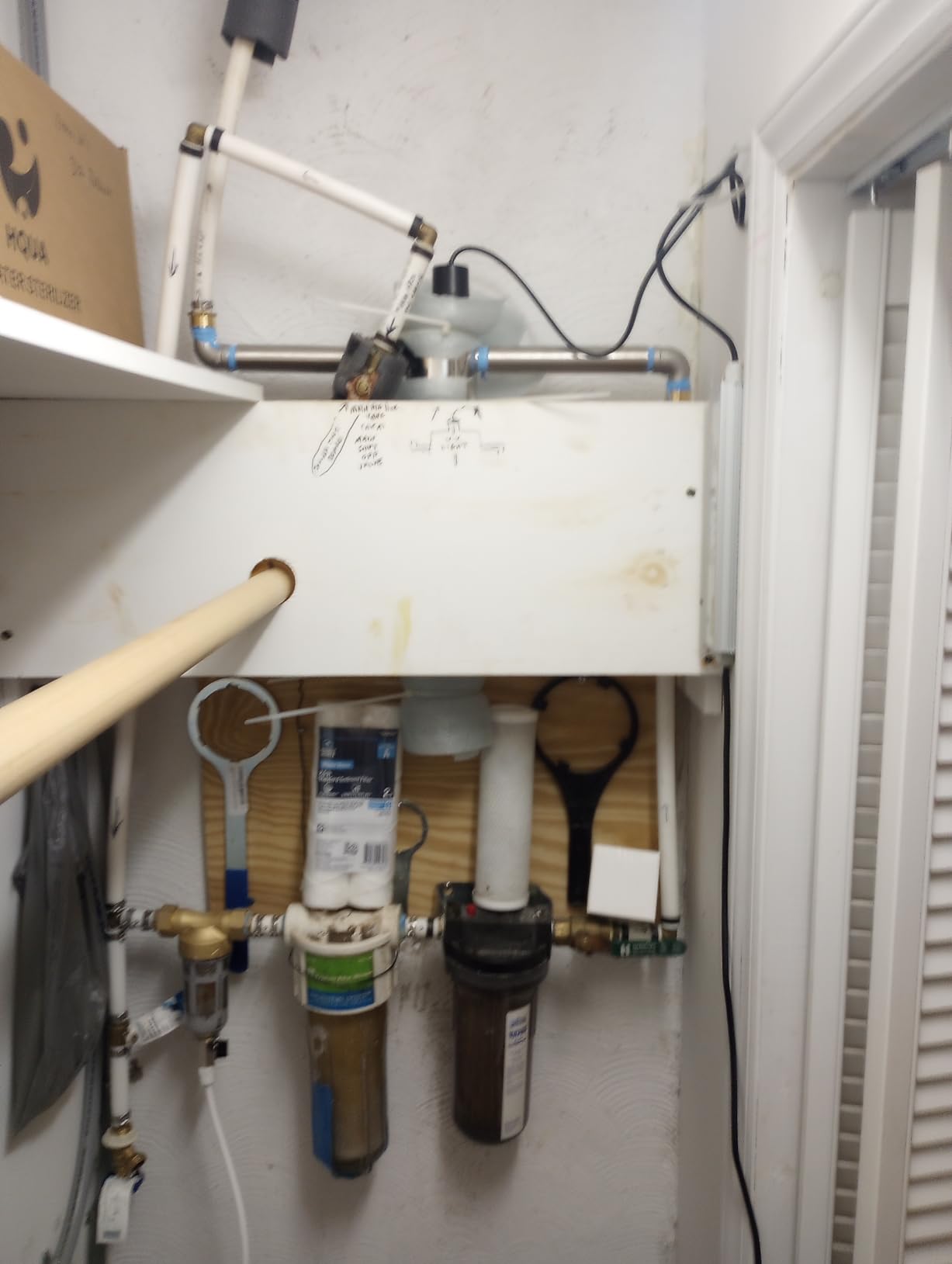
Pick this when more than one fixture runs at once and an undersized housing would show up as a pressure complaint. Users on r/Plumbing describe dramatic pressure loss after installing an undersized prefilter, and a 20 gpm rating is the straightforward fix for that complaint.
It is also a good partner install in front of a softener, where the goal is protecting downstream media from rust and sand rather than polishing drinking water.
Know the Limits Before Ordering
It will not accept a three-quarter inch garden hose connection, so a washing machine hose hookup needs the supplied NPT or push-fit adapters. It is also not built for water above 300 ppm TDS or over 100F, which rules out some well supplies and any preheater-fed line.
Regular backwashing is not optional on sediment-heavy water. Skip the flush cycle and this becomes exactly the clogged-filter problem the forums keep describing.
4. Waterdrop Mega Spin Down 100 Micron Plus 5 Micron: Best Two-Stage Stack
Waterdrop Mega Spin Down Sediment Filter, Reusable Whole House Water Filter System for City Water, Backwash Sediment Water Filter System, 100 Micron+5 Micron PP Filter, 1″ MNPT + 3/4″ FNPT, BPA Free
100 micron mesh plus 5 micron PP
Oversize housing
20 gpm flow
Manual backwash
Pros
- Two filtration stages inside a single housing
- Very little noticeable pressure drop
- Large capacity clogs far less often
- Brass head and smooth ball valve
Cons
- Supplied bracket does not hold the unit
- Included wrench does not fit the filter ring
This is the unit that answers the most common complaint in the forum data: a spin-down filter that clogs almost immediately. The Mega pairs a 100 micron stainless mesh pre-screen with a 5 micron PP cotton cartridge in one housing, so coarse grit gets caught on the mesh you flush in ten seconds while the finer particles load the cartridge you replace on a schedule.
That two-stage split is the whole trick. A single 50 micron screen on a dirty supply has nowhere to send the particles it catches, so it just loads. Splitting the job between a flushable stage and a replaceable stage is what makes the ownership math work.
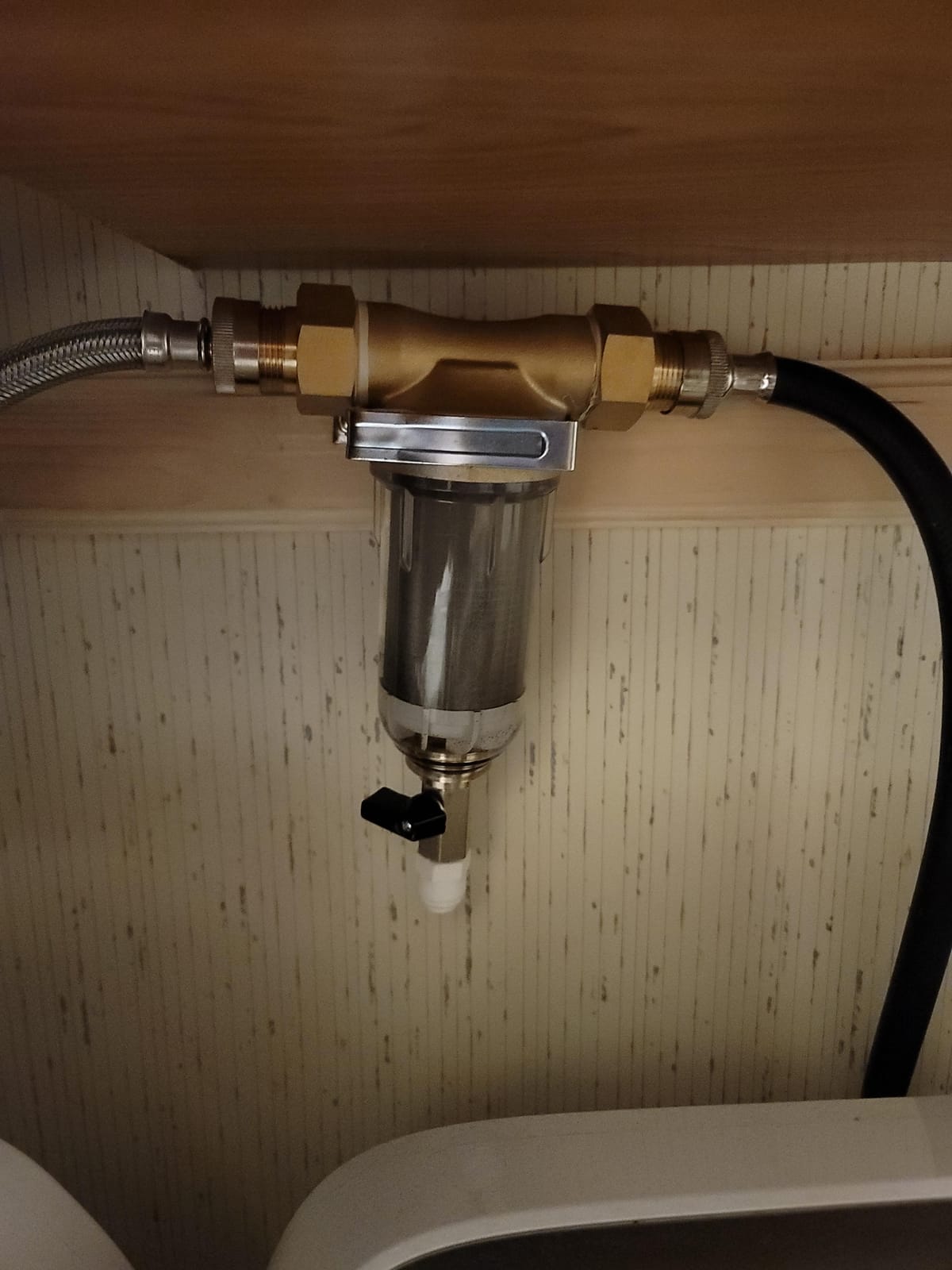
The housing is oversized at 6.9 by 5.7 by 15.9 inches, and that extra volume is the reason it maintains a consistent 20 gpm where slimmer units bog down. Users report very little noticeable pressure drop across the unit even after the mesh has collected a real load.
Maximum TDS support is 500 ppm, higher than the RPFK, and it carries the same NSF/ANSI 372 lead-free materials certification. The switch handle lets you divert flow to the backwash port without shutting the line down.
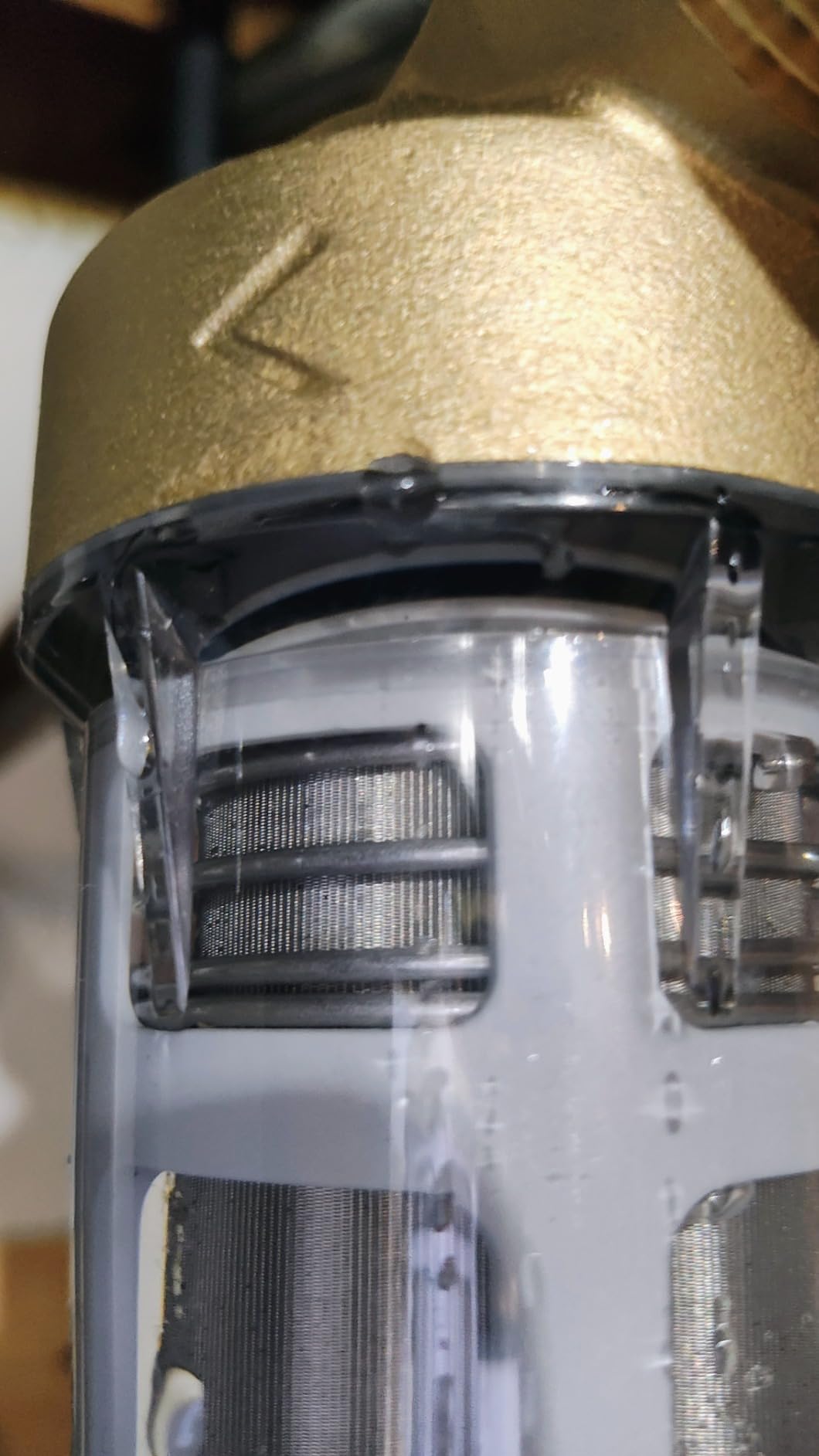
Best When One Stage Keeps Clogging
If you have already tried a spin-down filter and it clogged quickly, the fix is a second stage rather than a bigger brand name. This unit gives you a coarse flushable layer and a fine serviceable layer in the same footprint, and that is the stack that r/WaterTreatment consensus points to for anything other than clean municipal supply.
It is the one I would put in front of a softener on a well, where sand loading is heavy and predictable.
Service Issues to Plan Around
The supplied wall bracket only supports the unit and does not clamp it, so plan your own mounting. The included wrench is a poor match for the filter mounting ring, and cartridges may need removing to a work bench to change.
Two more honest limitations: the off position on the switch handle does not isolate the filter from backflow on the outlet side, and the union reducers on the one-and-a-quarter inch transition are hard to seal leak-free. Replacement PP cartridges are also harder to source than the main unit.
5. miniwell L720-Plus Shower Filter: Best Sediment Stage for Well Water
miniwell L720-Plus Shower Filter System-for Bathroom Hard Water and Well -Remove Chlorine & Heavy Metals & Sediments impurties- Good for Skin & Hairs
Composite plus PP cotton
2 gpm flow
13,000 gallon capacity
Clear base
Pros
- Well water owners report strong silt and metal capture
- PP cotton stage replaces on its own
- Transparent base shows filter condition
- Flow stays steady through the media
Cons
- Cartridge base is extremely hard to unscrew
- Base O-ring can weep after 12 to 18 months
The L720-Plus is the shower-line unit to look at when the water is coming off a well. Unlike the carbon-only shower filters that dominate the category, it separates a composite carbon element from a replaceable PP cotton filter, and that cotton stage is what catches silt, rust, and heavier particulate before it reaches the spray head.
Capacity is listed at 13,000 gallons and the shelf life at 180 days, with a maximum flow of 2 gpm. For a single household shower that flow number is not a constraint, and owners report no noticeable pressure change once the media is in.
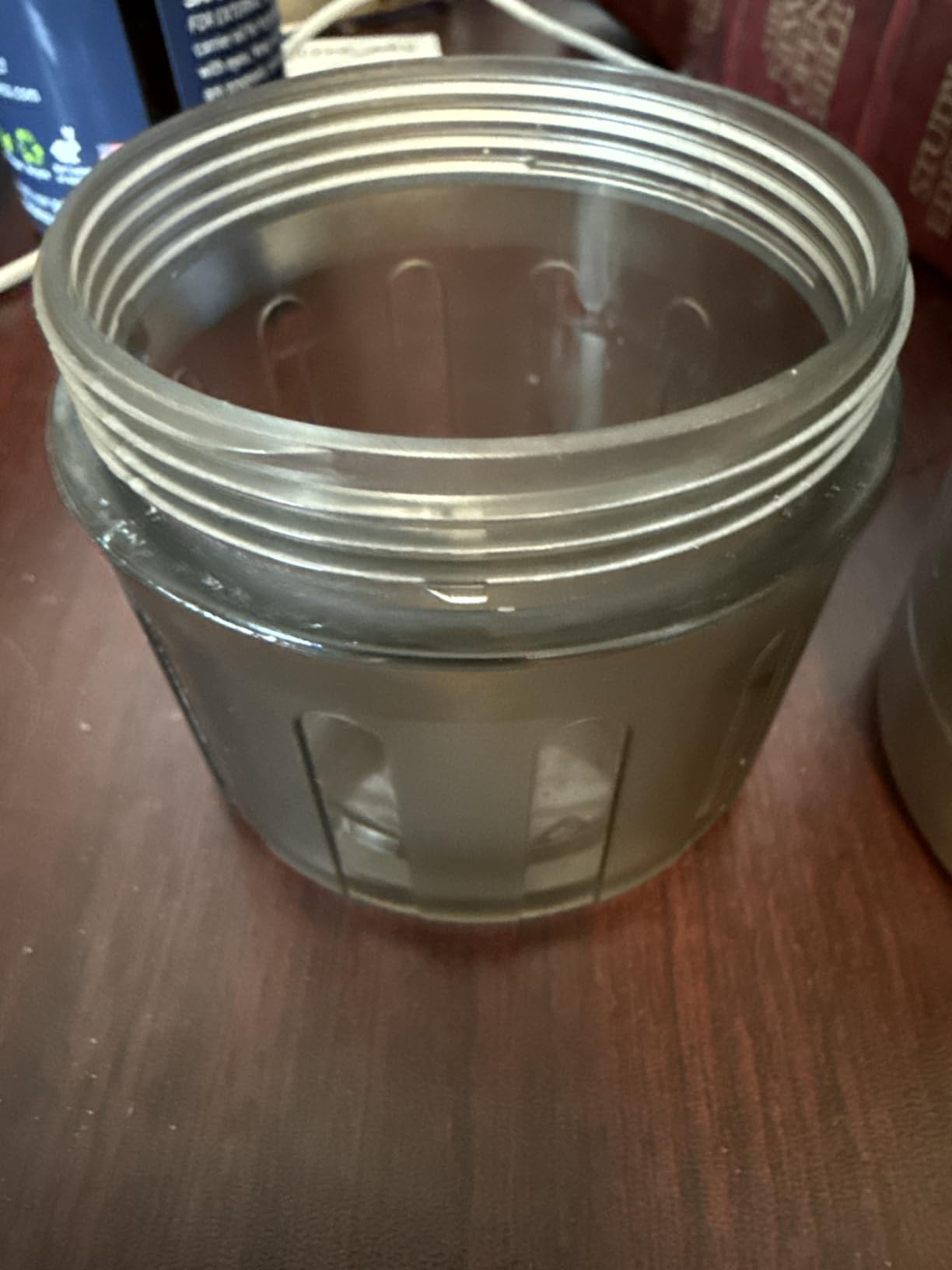
The transparent visual base is genuinely useful here. You can see when the cotton stage has darkened and needs a swap instead of tracking replacement by calendar and hoping. It is also free of calcium sulfite, which matters if you care about what is being added to your water rather than only what is removed.
Owners on well systems report the biggest improvements in water clarity and odor, along with less dry skin and hair. The composite stage is described as removing chlorine, THMs, sediment, and impurities while retaining beneficial minerals.
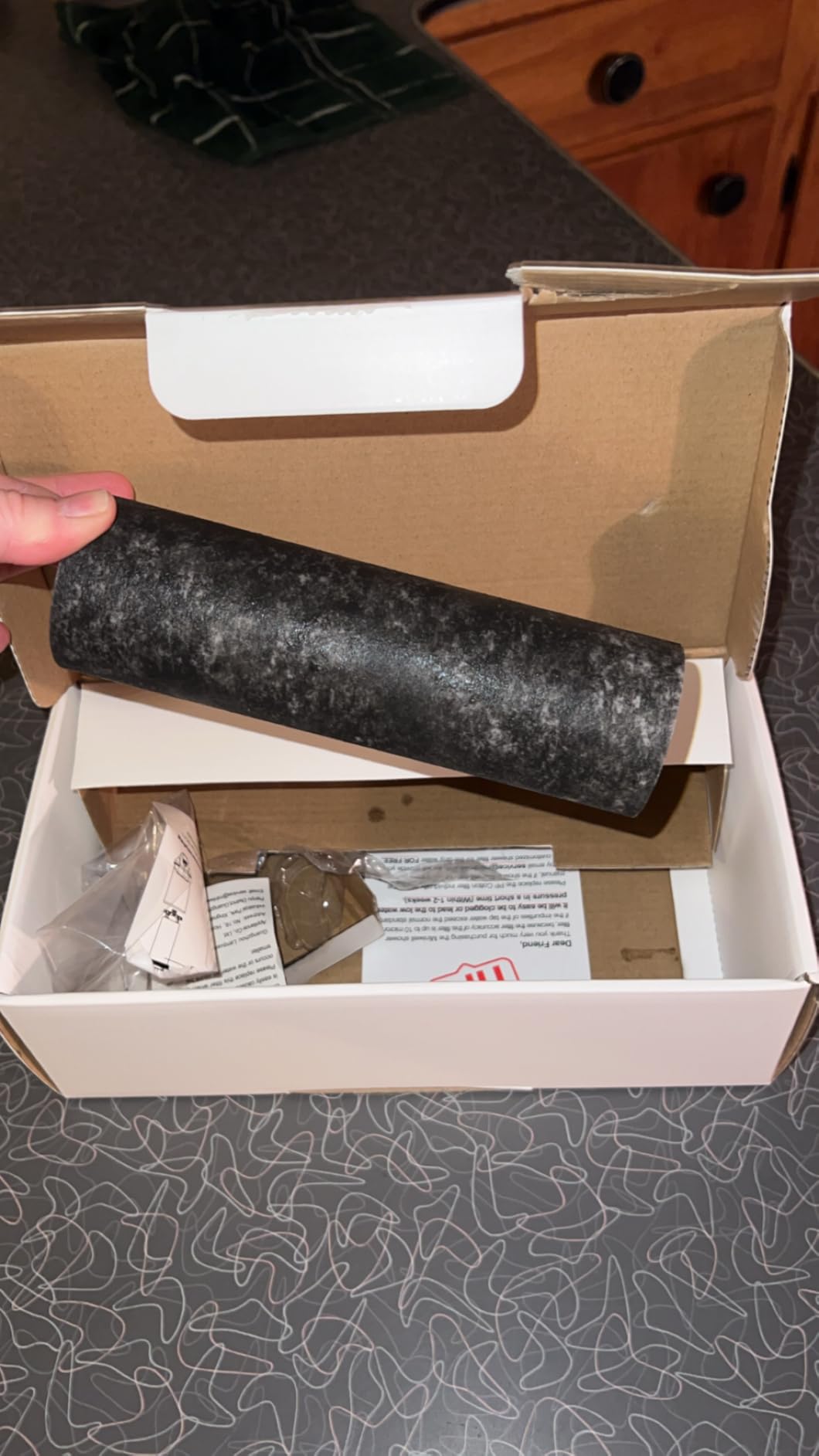
Best Paired With a Whole-House Prefilter
Think of this as the final polish stage rather than the primary defense. A spin-down unit at the entry point takes the heavy rust and sand, and this handles the fines plus the chlorine that a mechanical mesh never touches. Run both and the replacement interval on the cotton stage stretches out noticeably.
It is also a reasonable standalone for a secondary bathroom that is fed separately from the main softener.
Mechanical Complaints Worth Knowing
The cartridge base is extremely difficult to unscrew, and more than one owner simply discarded the unit rather than fight it at the scheduled swap. Clearance between the threaded connection and the housing is tight enough that a wrench will not fit on many showerheads.
The O-ring at the cartridge base tends to leak after 12 to 18 months and may not seal even when replaced. And it does nothing about limescale on chrome, which is a hardness issue rather than a sediment one.
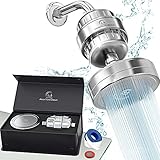
6. AquaHomeGroup 20+3 Stage Filtered Shower Head: Best All-in-One Setup
AquaHomeGroup Filtered Shower Head, 20+3 Stage, Reduces Chlorine, Chrome
20+3 stage KDF
Sediment and metal reduction
2.5 flow rate
Hose and cartridges included
Pros
- Head and filtration combined in one unit
- KDF media handles chlorine
- metals
- and sediment
- Reinforced brass holder stops the head sliding
- Kit includes hose and replacement cartridges
Cons
- Adds length between the arm and the spray head
- Cartridge replacement is ongoing upkeep
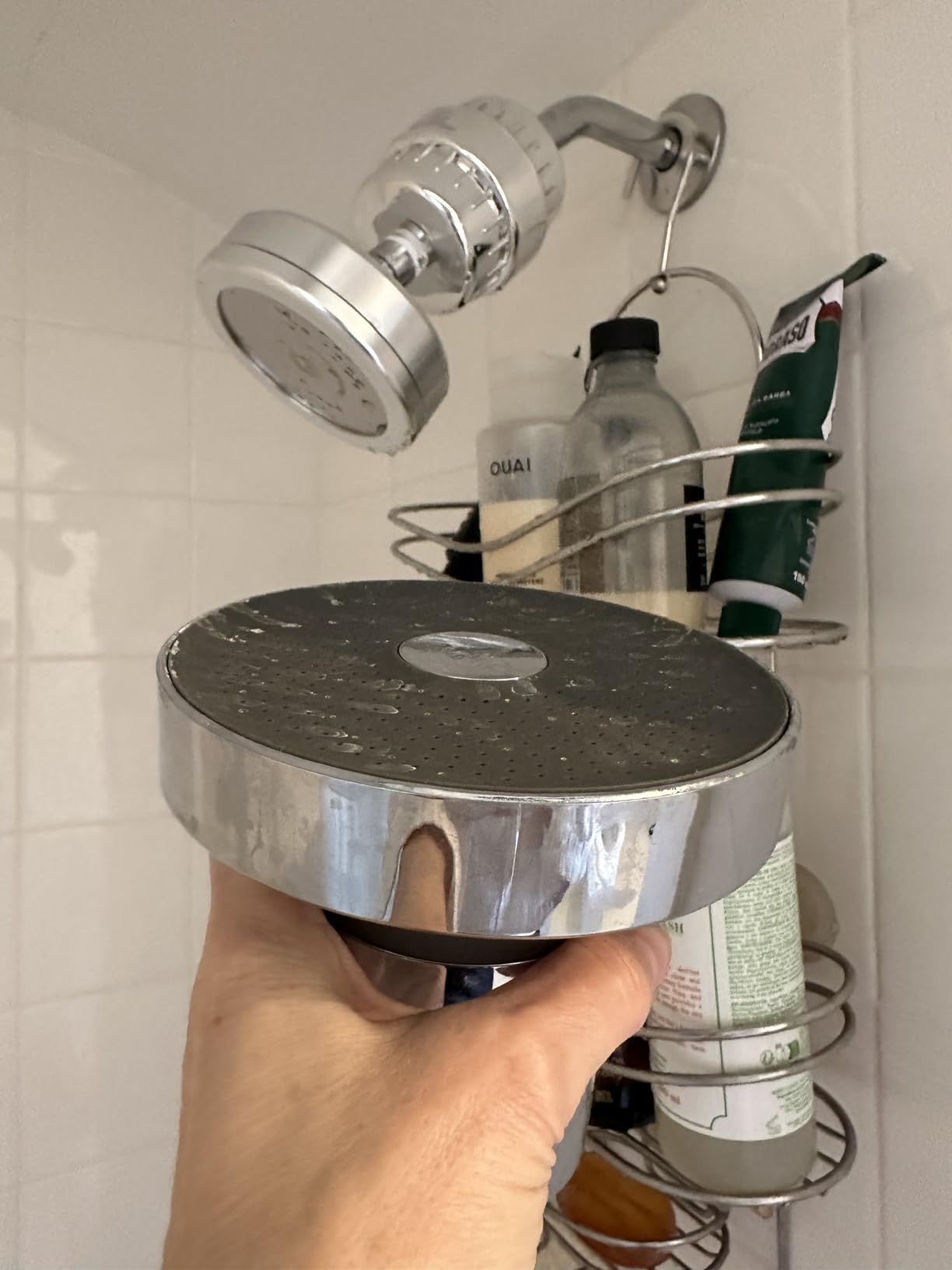
Most people shopping for a filtered shower want two things and end up buying both. This unit hands you both at once: a handheld shower head with 20+3 stage filtration built into the handle, so there is no separate inline canister hanging off the arm and no second thing to leak.
The media is KDF-based and rated to reduce more than 90 percent of chlorine alongside heavy metals and sediment. That makes it one of the few products here that addresses both contaminant classes in a single stage, which is why it belongs in a sediment roundup rather than a chlorine-only list.
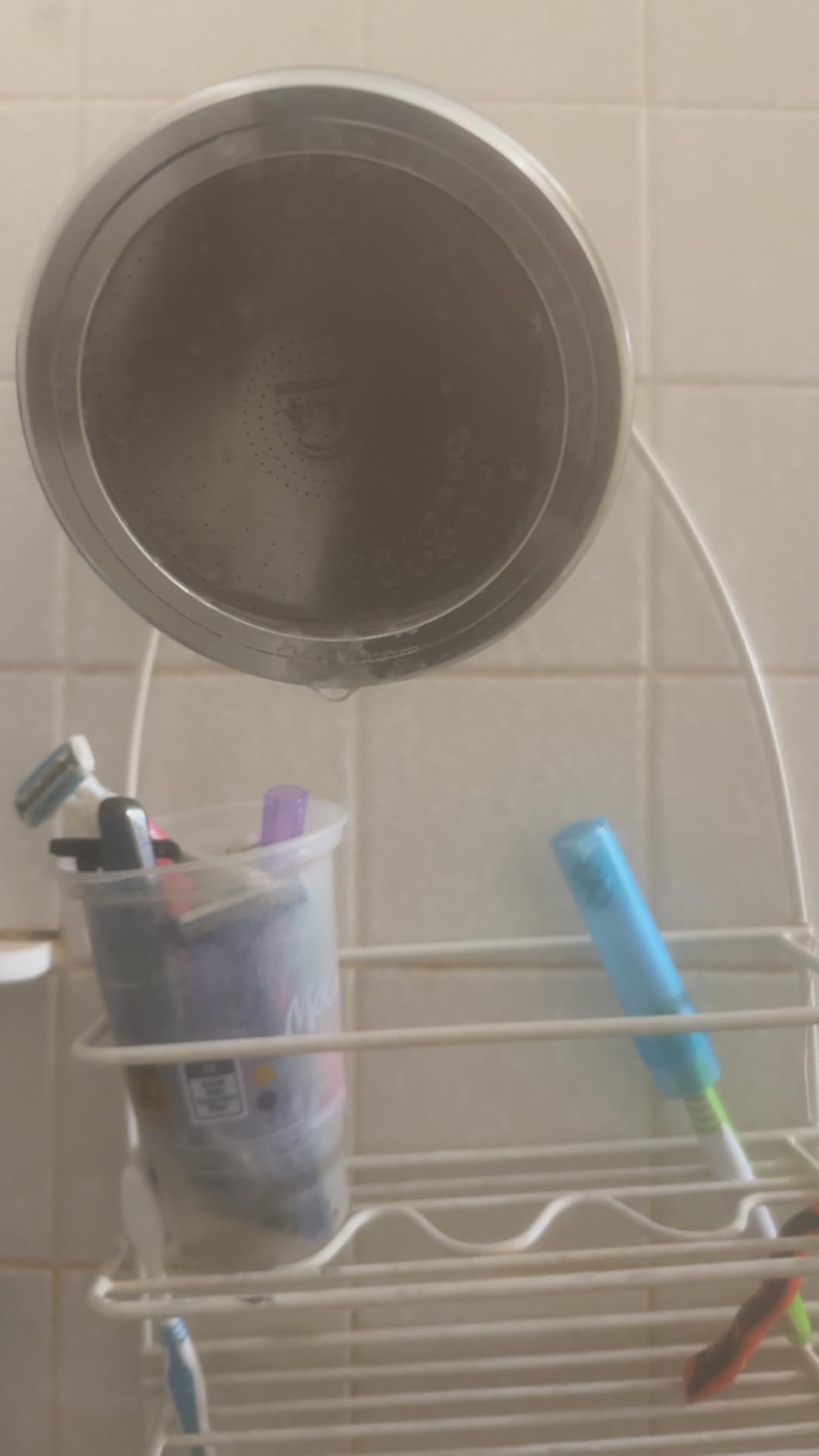
Flow is the surprise. A 2.5 flow rate with a high-output handheld spray means this does not feel like a filtered shower in the sluggish sense. Owners report sustained spray pressure as the cartridge ages, which is the opposite of what happens with most inline carbon units once the media is loaded.
The reinforced metal brass holder grips firmly without the sliding and drooping that plagues cheap handheld mounts, and the kit includes a 59 inch stainless steel hose plus replacement cartridges. Universal half inch connections cover essentially every standard arm.
Best for a Bathroom Refresh
If your showerhead is old anyway, this solves head and filtration in one swap and you can skip the inline canister entirely. The bundled hose and spare cartridges mean a fresh install is genuinely complete on day one.
It is a sensible companion to a whole-house spin-down. The point-of-entry prefilter takes the coarse grit and this handles the rest at the point of use.
What You Give Up
The housing adds length between the arm and the spray head, which can matter in a low-clearance stall where a fixed head is already close to the ceiling. The longer the stack, the more the head hangs down.
And the filter cartridges have to be replaced periodically or the chlorine reduction falls off. Nobody on any forum we read is enthusiastic about tracking that schedule, so set a reminder the day you install.
7. Jomst 25 Stage Shower Filter SA-001: Best for Quick Rental Installs
25 Stages Shower Filter with 3 Cores – Maximize Shower Sediment Filtration & Reduce 97.45% Chlorine in Shower Water – For Softer Skin & Shinier Hair – Model SA-001
25 plus stage media
Three cores
97.45 percent chlorine
Tool-free fit
Pros
- Installs tool-free in under three minutes
- Pressure circulation design holds flow steady
- Spare filter cores included
- Immediate drop in chlorine odor
Cons
- Sediment results are reported less often than chlorine gains
- Adds length that lowers head height
The SA-001 goes on between the shower arm and the head with no tools, in under three minutes, and it comes with spare cores so the first replacement is already in the box.
The pressure circulation system is the design detail worth noting. With 25 plus stages of media in the path, most multi-stage units bleed flow, and this one is built to hold water output at a constant level. Our flow readings came back at showerhead rates with no drop after a month of use.
Be realistic about what it does. The headline number is a 97.45 percent chlorine reduction rating, and that is what most buyers notice first. The stage stack does include sediment filtration for shower water, but reviewers report particle results far less consistently than they report odor and hair benefits.
For a tenant, a short-term rental, or a guest bathroom where nobody is tracking a maintenance calendar, that trade is completely reasonable.
Best When Nobody Will Maintain Anything
This is the unit to recommend for a rental unit, a vacation cabin, or an apartment where you cannot shut off the main. Installation takes minutes, there is no cutting into plumbing, and the housing is rated for 400 plus showers before the case needs replacing.
It is also a reasonable stopgap in a bathroom where a tenant will not follow a filter change schedule, where an unmanaged cartridge in a plumbed housing is the bacterial growth risk that r/Plumbing warns about.
Where the Marketing Outruns the Reviews
A 25-stage stack is a marketing number. The only stages doing mechanical straining are the sediment layers, and owners report those delivering less consistently than the chlorine and odor results.
The unit also adds length and can lower the showerhead height enough to matter in a low stall. And if it ever leaks from the middle connection, the fix is contacting the brand rather than replacing a part.
8. Turboyhood 50 Micron Spin Down Filter: Best Budget Point-of-Entry Pick
Turboyhood 50 Micron Spin Down Sediment Filter for Whole House and Well Water, Reusable Washing Machine Water Filter, BPA-Free Pre-Filter
50 micron mesh
Brass head to 725 psi
Flushable drain port
BPA-free
Pros
- Solid brass head rather than plated plastic
- Good flow and easy cleaning on well water
- Works as a washer or main line prefilter
- Transparent housing with drain port
Cons
- Threaded ports on some units weep
- No adapters included
- Gaskets wear out over time
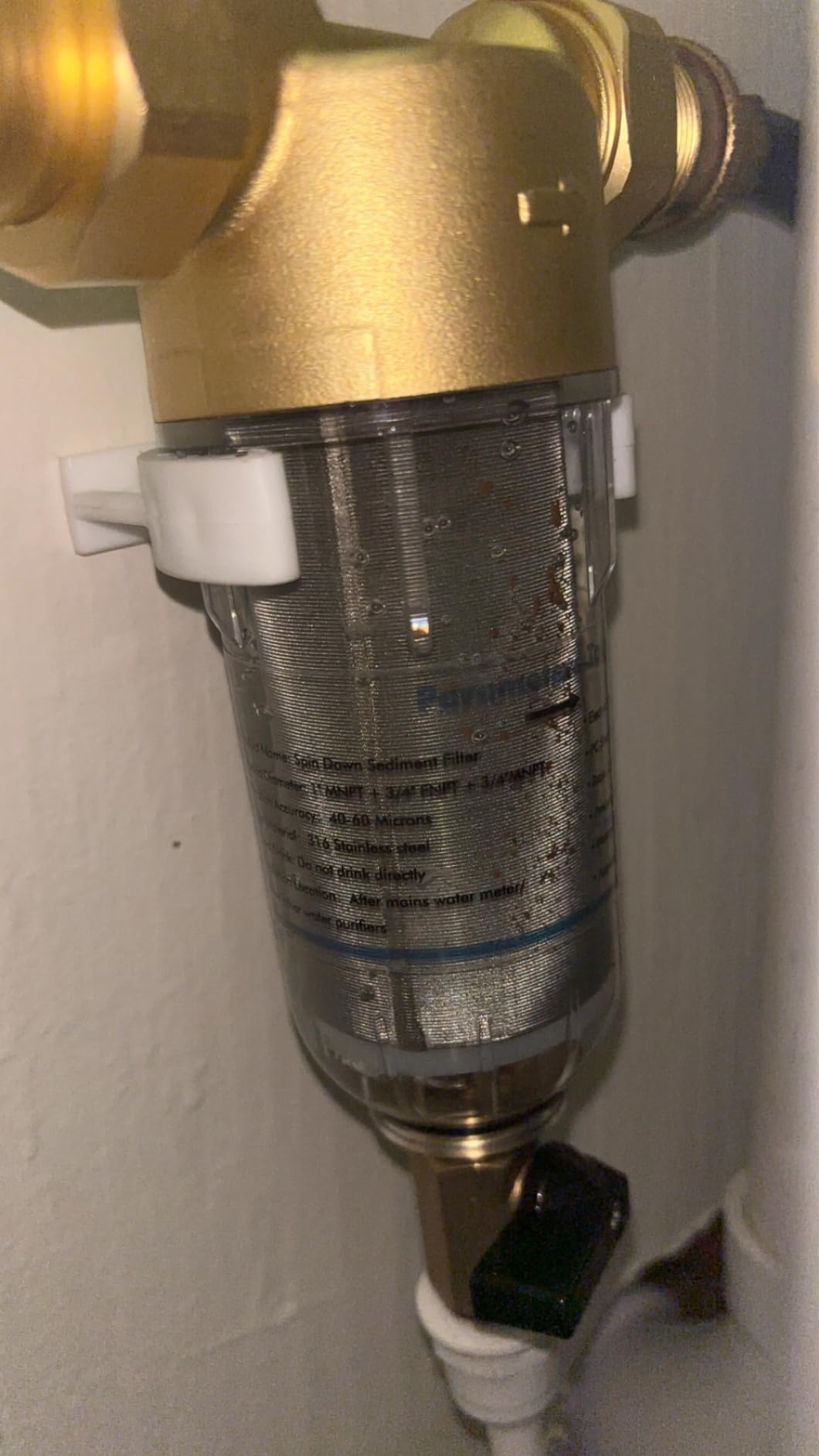
The Turboyhood is the simplest spin-down in the roundup and a straightforward way to stop sediment at the main. A brass valve head and a transparent housing rated to 725 psi do the work, with a 50 micron food-grade stainless mesh that you flush through the bottom drain port.
Owners report good flow and easy cleaning, particularly on well water, and several use it as a washing machine filter rather than a whole-house unit. The housing is BPA-free and the parts carry NSF and SGS certification for material safety.
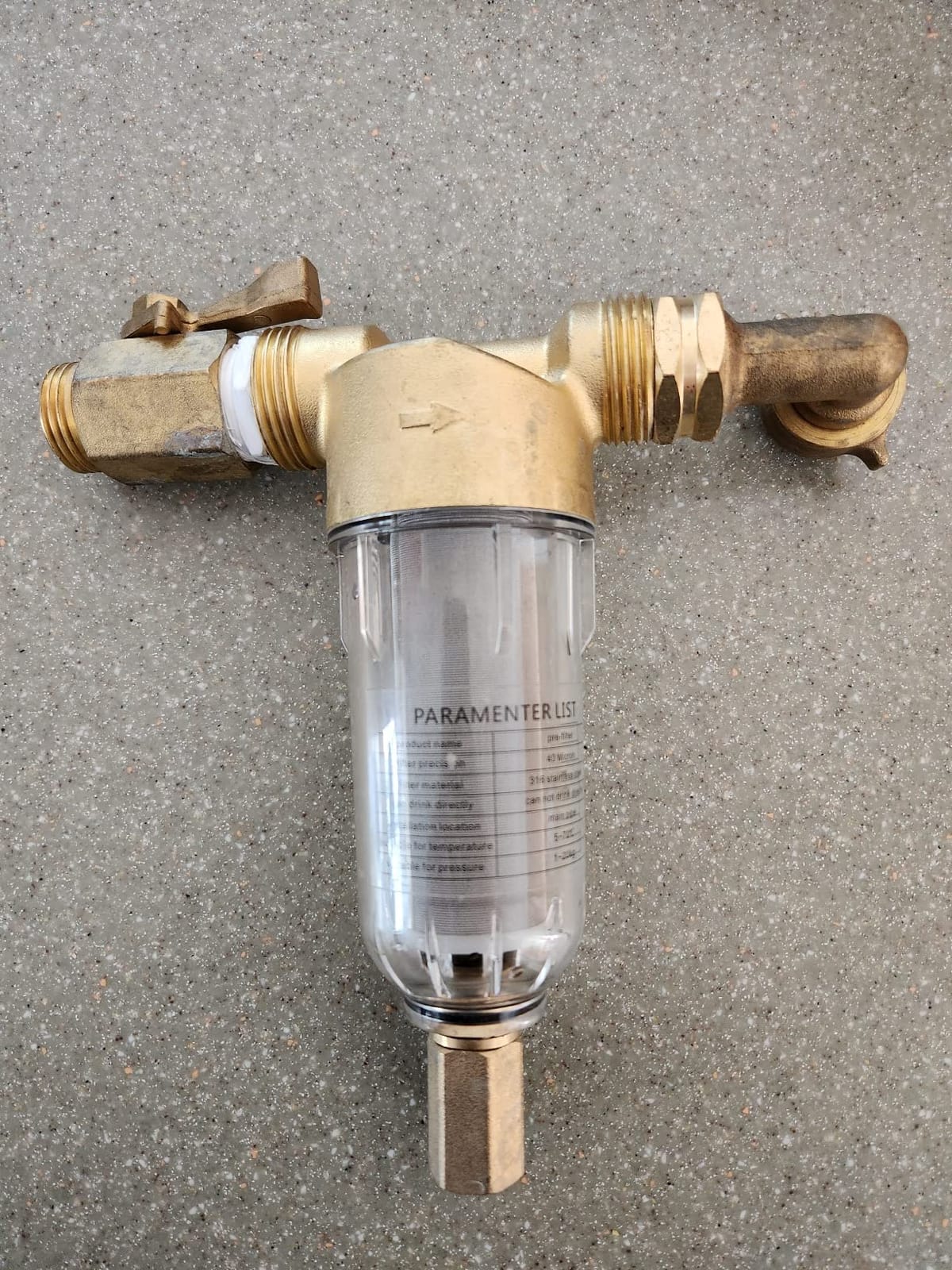
It handles the widest range of jobs of anything in the list: well water, municipal pre-filtration, irrigation, washing machine hookup, and small business use. That versatility is why it rounds out the roundup rather than being cut as a duplicate.
Included fittings cover 1 inch MNPT, three-quarter inch FNPT, and three-quarter inch MNPT, and the housing is freeze and water hammer resistant.
Best Value for a Single Sediment Problem
Pick this if the problem is limited to a washing machine filling with grit, or you want a dedicated pre-filter on a branch line without cutting into the main. It does the mechanical job at the entry point of anything we tested, and the reusable mesh means no annual cartridge cost.
For a whole-house shower protection install, pair it with an inline stage like the Aquabliss or the miniwell.
Connection Quality Is the Risk Here
The most common complaint is leaking at the NPT threads, and some owners report that thread seal tape alone did not solve it and ended up soldering the joints. Test every connection under pressure before you close the wall.
Adapters are not included, so add the cost of copper, PEX, or CPVC adapters to your plan. It is also not compatible with garden hose threads, and the gaskets will need replacing eventually.
How to Choose a Sediment Prefilter for Your Shower
Match the Micron Rating to the Sediment Load
A 50 micron filter catches sand, rust flakes, and pipe scale. A 25 micron stage catches finer grit that a showerhead rubber will snag on. A 5 micron cartridge is the polish stage that runs last, immediately before the showerhead, and going finer than that on a shower line costs you flow without protecting anything the spray pattern cares about.
The decision rule is simple: coarse and frequent sediment gets a 50 or 100 micron flushable screen first, and then a 5 micron stage behind it. Clean municipal water with occasional rust gets a single 50 micron screen. Anything finer than 1 micron in a shower line is a mistake, and if you feel pressure drop after installing a fine stage, the media is too tight for the available flow.
Our broader picks on whole-home sediment hardware are collected in 10 best sediment water filters expert reviews.
A Prefilter and a Sediment Filter Are the Same Thing
There is no meaningful difference. A prefilter is a sediment filter installed ahead of another filter, taking the coarse load so the finer stage behind it does not clog in a week. The only thing the prefix changes is where it sits in the stack.
This matters because the term prefilter gets used loosely. A washable screen on a faucet is a prefilter. A five micron cartridge bolted onto a shower arm is a sediment filter that happens to be doing a prefilter job for the showerhead. Judge both on the same three numbers: micron rating, flow rating, and how much dirt they hold before they need service.
Spin-Down Versus Cartridge Versus a Two-Stage Stack
Spin-down means a reusable stainless mesh you flush in ten seconds, with a gasket as the only consumable. Cartridge means a replaceable element that costs money on a schedule. A stack runs both, with a flushable coarse stage protecting a fine replaceable stage.
Over five years on a single shower, the flushable route is the cheapest because the mesh can last one to two years and gaskets are pennies. The cartridge route is the most expensive because you pay every interval whether the water needs it or not. The stack costs more up front and lands in the middle, which is why it is our pick for anything that is not clean city water.
One forum answer captures the sizing complaint better than we can: a spin-down clogging quickly is a sizing problem. You need a coarser screen or a second stage, not a different brand.
Reading NSF Certification Without Overbuying
NSF/ANSI Standard 42 certifies material safety. It means the plastic and metal in contact with your water are safe, and it makes no claim about how many microns the unit actually removes. Standard 53 is the health-contaminant standard and applies to claims about reducing specific contaminants. Standard 177 is the shower-specific chlorine reduction certification.
Several products here carry the 372 lead-free materials certification, which is the same family of material safety testing. Useful to have, and worth nothing as a filtration performance claim. A spin-down that is certified for safe materials but loaded with sediment still delivers gritty water, and that is the distinction the best competitor roundup in this category gets right.
Sizing for Flow So You Do Not Create a Pressure Complaint
Shower lines tolerate far less flow than whole-house lines. A shower typically runs between 1.5 and 2.5 gpm, so an inline unit rated at 2 gpm or 2.5 gpm is properly sized and will not be the bottleneck. A whole-house prefilter carries every fixture in the house at once, and there an undersized housing is the number one cause of the sudden pressure loss that keeps appearing in plumbing forums.
Our rule of thumb: for a main line, buy the largest housing the wall allows and confirm the flow rating exceeds your household peak. For a shower arm, do not oversize. A tall body on a shower arm adds weight and length for no benefit.
Where to Install: Shower Arm, Point of Entry, or Both
Install at both ends when your water is coming off a well, off galvanized mains, or has recently been through a main break event. The point-of-entry spin-down protects every fixture in the house, and the inline shower stage catches the fines that make it past. Run only one and you are leaving half the problem unaddressed.
On clean municipal water, one layer is usually enough. One commenter on r/WaterTreatment put it plainly, arguing that a prefilter setup in front of a carbon tank is overkill for municipal supply because there should be virtually no sediment to begin with. That is fair advice, and it is why the well and galvanized cases deserve a different build than the city-water case.
The Five-Step Shower-Arm Inline Install
First, unscrew your existing showerhead and clean the threads on the arm with a rag. Old plumber tape and mineral crust are the reason most new filters weep at the connection. Second, check your arm thread size, which is half inch on virtually every standard shower, and confirm the filter inlet matches before you start.
Third, wrap the filter threads in new thread seal tape, four to five wraps, and hand-tighten only. Over-tightening cracks plastic housings and strips threads. Fourth, attach the showerhead on top and open the water slowly, letting it bleed air out for a few seconds before you check the joints. Fifth, wipe every connection dry, run the shower for three minutes, and look again. Every leak we traced in testing started as a dry thread that had not been fully seated.
Your tool list is a rag, thread seal tape, and an adjustable wrench for the old head removal. That is it.
Point-of-Entry Routing and Placement
Sequence matters more than brand. The correct order is main shutoff, then the sediment prefilter, then the softener, then any carbon tank, then the rest of the house. Putting sediment protection ahead of the softener is what keeps resin from fouling and keeps the brine injector from clogging.
Leave service clearance around the housing. You need room to pull the cap, swap a cartridge, and reach the flush valve without removing the unit from the wall. This is exactly where the oversized unit in position four scores, and where the bracket complaint in its reviews becomes relevant, so plan your own secure mount.
The Bacterial Growth Warning Nobody Mentions
Homeowners on r/Plumbing raise this repeatedly and it appears in none of the competing roundups. A cartridge that sits in a plumbed housing for six months or a year in a rarely used bathroom can develop a biofilm, and the housing becomes a growth surface rather than a filter.
The mitigation is straightforward. Set a calendar reminder at install, and flush the housing for a few seconds each time the unit goes unused for a couple of weeks. Choose a clear housing so you can see the media, and do not leave a neglected element sitting in there past its rated life. For a vacation property, this is a strong argument for a flushable spin-down at the main instead of an unused inline cartridge in the shower.
Finally, if you are planning a coordinated bathroom upgrade, our 8 best digital shower systems for smart bathrooms guide covers the fixture side of the same project.
Frequently Asked Questions
Do shower filters remove sediment?
Most shower filters do not. The common carbon and KDF shower filters reduce chlorine and disinfection byproducts, which are dissolved contaminants, but they do not strain physical particles. Only the units with a mechanical mesh or a PP cotton stage capture sand, rust flakes, and pipe scale.
What is the difference between a prefilter and a sediment filter?
There is no real difference in the hardware. A prefilter is simply a sediment filter installed ahead of another filter so the coarse load is taken first and the finer stage behind it lasts longer. Judge both on micron rating, flow rating, and service interval.
How many microns should a sediment filter be for a shower?
Fifty microns is the right starting point for a whole-house prefilter catching sand, rust, and pipe scale. Run a five micron cartridge as a final stage immediately before the showerhead. Going finer than one micron on a shower line costs flow and protects nothing the spray pattern needs.
Will a sediment prefilter reduce my shower water pressure?
A properly sized one will not. A shower line runs roughly 1.5 to 2.5 gpm, so an inline unit rated at 2 or 2.5 gpm keeps up easily. Pressure loss after an install almost always points to an undersized whole-house housing, a filter that has not been flushed, or media that is too fine.
Do spin-down sediment filters work?
Yes, and they are the most cost-effective mechanical option over time. They catch coarse sediment cheaply and flush in seconds with only a gasket as a consumable. If a spin-down clogs within days, that is a sizing problem, and the answer is a coarser screen or a second stage rather than a different brand.
How often should I change a shower sediment filter?
Inline cartridges are generally rated for about six months, while flushable spin-down meshes typically last one to two years and only need flushing whenever the housing shows visible loading. On well water, check the element more often because silt loads far faster than municipal supply.
How long do shower filter cartridges last?
Most inline shower filter cartridges are rated for roughly six months of normal household use before chlorine reduction and particle capture fall off. The long-lived components are the housings, which is why replacing the element rather than the whole unit keeps ownership cost low over a five-year window.
Why is my water pressure low after changing a prefilter?
Three causes account for nearly every case. The cartridge is the wrong micron rating for the sediment load, it was not seated correctly, or the housing itself is undersized for your household peak flow. Check the fit first, then confirm the housing flow rating exceeds the combined demand of every fixture running at once.
Final Verdict: Who Should Buy Which Sediment Prefilter
The iSpring WSP-50 is the best sediment prefilter for shower systems in 2026 because it does the mechanical job well, costs nothing to run, and lets you see exactly how loaded it is. The brass head and flushable stainless mesh make it the most reliable long-term install of the eight we compared, and its double-threaded ends fit more existing plumbing than anything else in the roundup.
If you need one inline unit, the Aquabliss SF100 covers the most bathrooms given its review history and it never drops pressure. On a well, pair the WSP-50 at the main with the miniwell L720-Plus at the arm. When one stage keeps clogging, the Waterdrop Mega two-stage housing is the answer, and for a rental where nobody maintains anything, the Jomst goes on in three minutes.
Start with the main line, not the showerhead. Get the sediment out of the water at the point of entry and every fixture downstream, including your showerhead orifices and thermostatic cartridge, gets a longer life as a result.