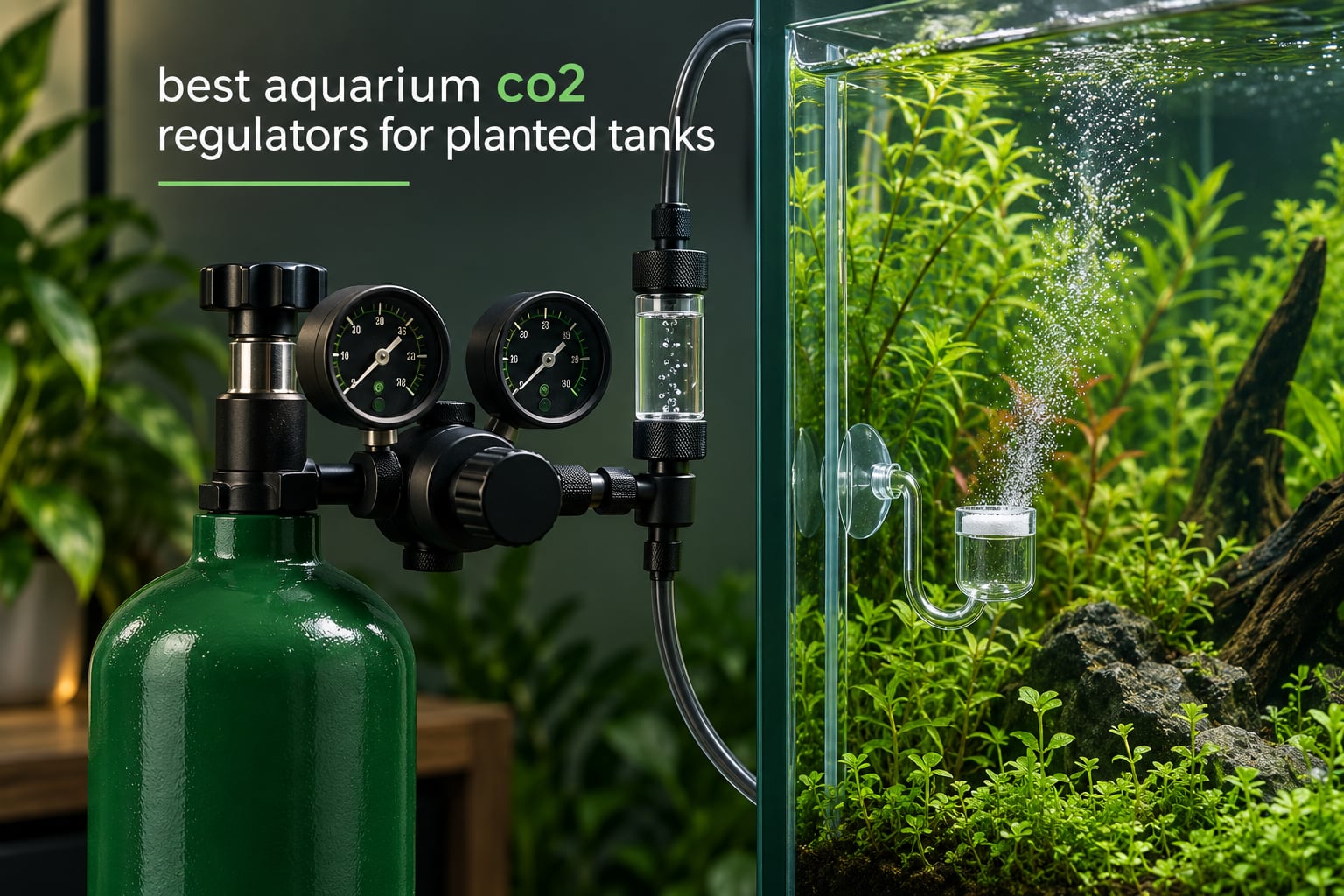
A planted tank runs on three things: light, nutrients, and carbon dioxide. Two of those are cheap and forgiving, but CO2 is the one that decides whether you get a fuzzy mess of stem plants or a dense carpet of Monte Carlo. Getting the gas there at a steady, measurable rate is what a regulator does, and picking the right one saves you from the two failures that ruin most setups: gas that stops when you need it and gas that floods the tank overnight.
These are the best aquarium CO2 regulators for planted tanks. I compared eight units across four brands, weighing stage design, gauge readability, needle valve range, solenoid type, cylinder fit, and what ships with the box. Every regulator below was picked on published specs and the failure patterns that show up in long-term owner reports, not on star ratings alone.
If you have not assembled the rest of the system yet, start with our aquarium CO2 systems guide. It covers diffusers, reactors, and drop checkers so you know what the regulator needs to feed.
Table of Contents
Top 3 Best Aquarium CO2 Regulators for Planted Tanks (2026)
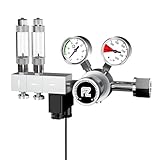
FZONE Pro Series Dual Stage
- Dual stage with 0-65 PSI output
- Two independent manifold blocks
- 12V DC solenoid
- 100 PSI safety valve
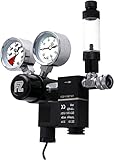
FZONE DC Solenoid Regulator
- Single stage with CGA320 fit
- 1 bubble per 3 seconds needle valve
- Bubble counter with check valve
- Tools included

Hygger HC003 Dual Gauge
- Dual gauges with green safe range
- 12V DC solenoid
- Thickened acrylic bubble counter
- Two-year warranty
Best Aquarium CO2 Regulators for Planted Tanks in October
| Product | Specifications | Action |
|---|---|---|
| FZONE Pro Series Dual Stage CO2 Regulator |
|
Check Latest Price |
| FZONE CO2 Regulator with DC Solenoid |
|
Check Latest Price |
| Hygger CO2 Regulator HC003 |
|
Check Latest Price |
 Ultum Nature Systems Mini Dual Stage Regulator Ultum Nature Systems Mini Dual Stage Regulator |
|
Check Latest Price |
 Hygger Motorized Valve Dual Stage CO2 Kit Hygger Motorized Valve Dual Stage CO2 Kit |
|
Check Latest Price |
 Clscea R100S Dual Gauge Regulator Clscea R100S Dual Gauge Regulator |
|
Check Latest Price |
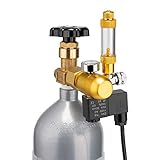 DaToo Dual Gauge CO2 Regulator DaToo Dual Gauge CO2 Regulator |
|
Check Latest Price |
 Hygger Mini CO2 Regulator Hygger Mini CO2 Regulator |
|
Check Latest Price |
1. FZONE Pro Series is the best overall dual stage CO2 regulator for planted tanks
FZONE Pro Dual Stage Aquarium CO2 Regulator CGA320 for Aquarium Plant Tanks
Dual stage 0-65 PSI output
Two manifold blocks
12V DC solenoid
2.4 lbs, 7.56 x 2.56 x 6.69 in
Pros
- Holds steady output as the cylinder depletes
- Wide 0-65 PSI adjustment range
- Two independent outlets for a second tank
- Quiet 12V DC solenoid that pairs with a timer
Cons
- Most expensive of the conventional units here
- Extra manifold block adds tubing complexity
- CGA320 cylinders only
This is the regulator I recommend to anyone moving past their first single-stage unit. It reduces cylinder pressure in two steps and lets you dial the outgoing line anywhere from 0 to 65 PSI, which means the same unit suits a 20-gallon display tank and a larger aquascape running a reactor.
The twin manifold blocks are the feature I did not expect to care about and now rely on. Each block carries its own high-precision needle valve and can run independently, so a second tank is a tubing job rather than a second purchase.
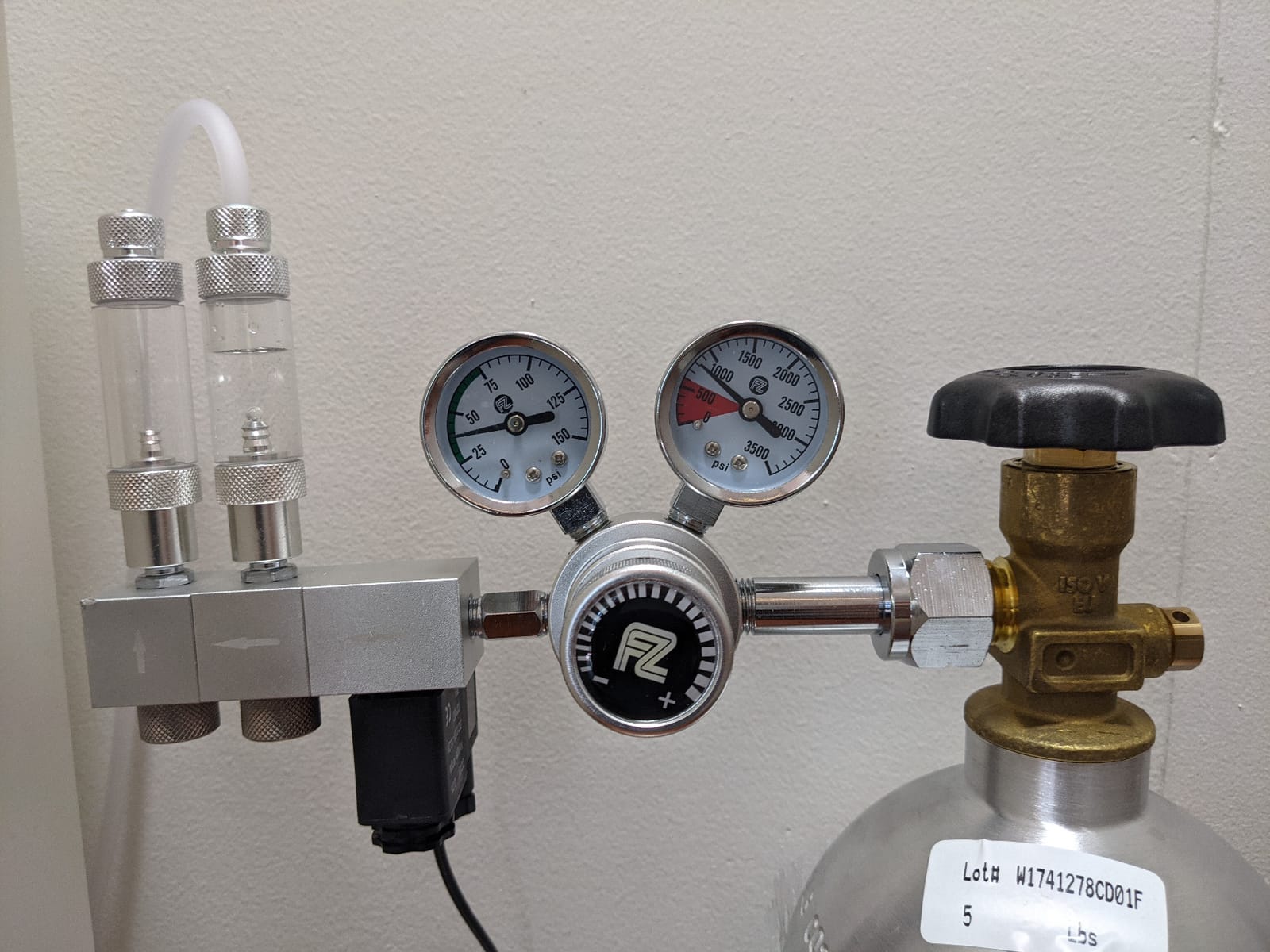
The needle valve tunes down to roughly one bubble every three seconds, fine enough for a small tank running a ceramic diffuser at a conservative rate. The solenoid runs on 12V DC, which means it stays cool to the touch and does not buzz the way an AC unit does in a bedroom stand.
A built-in safety valve opens above 100 PSI. That is a real protection rather than a spec-sheet nicety, because a stuck needle valve on any pressurized system will eventually find that limit.
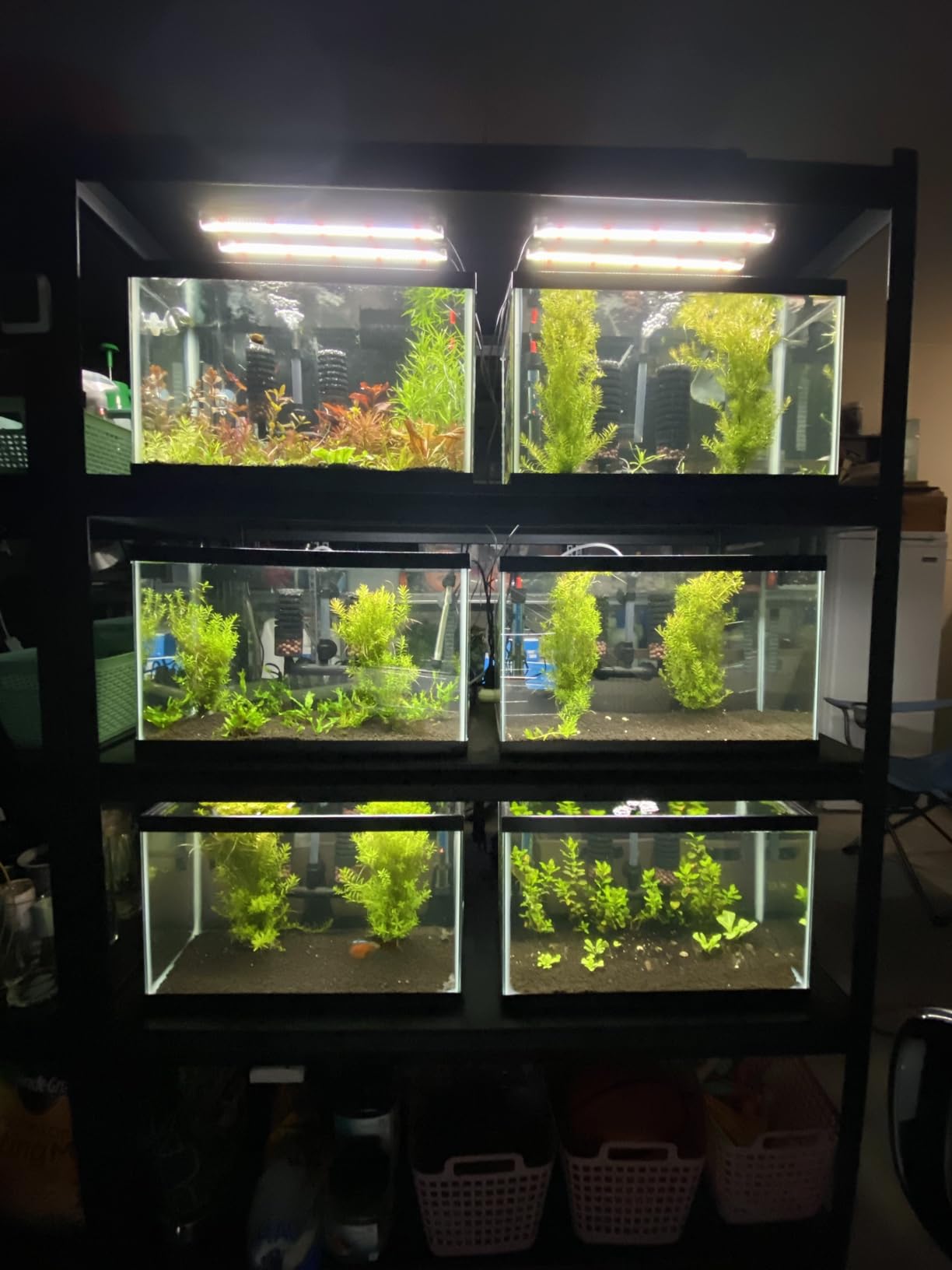
How the dual stage holds pressure as the cylinder empties
Stage one takes the raw cylinder pressure and drops it to a working range. Stage two takes that intermediate pressure and refines it into the outgoing line pressure your diffuser is rated for. Because the second step is downstream of the first, a falling cylinder pressure does not translate directly into a rising line pressure.
That is the whole mechanism behind end-of-tank-dump prevention, and it is why this design is the sensible default for any tank you plan to leave running unattended.
Where it falls short
It costs more than every single-stage unit in this roundup, and if you only run one tank you are carrying a second manifold block you never use. It also fits CGA320 cylinders, so a paintball bottle needs an adapter.
2. FZONE single stage is the best value CO2 regulator with the largest review base
FZONE Aquarium CO2 Regulator for CGA320 Side Open CO2 Cylinder
Single stage CGA320 body
1 bubble per 3 seconds
Integrated bubble counter with check valve
0.9 g listed weight
Pros
- Most reviewed regulator in this roundup at 1327 ratings
- Fine 1 bubble per 3 seconds flow control
- Bubble counter with check valve included
- All mounting tools included
- One-year manufacturer warranty
Cons
- Single stage design drifts as the cylinder empties
- Some owners report seal wear after a few years
- Short power cord on larger stands
With 1327 ratings, this is the unit with the deepest body of long-term owner feedback in the category, and the pattern in those reviews is consistent. People buy it as a first regulator, run it for years, and mostly stop thinking about it.
The needle valve is genuinely fine. It holds a slow one bubble per three seconds without the hunting you get on cheaper metal valves, and the knurled pressure knob and fine-tuning knob are easy to grip with wet hands.
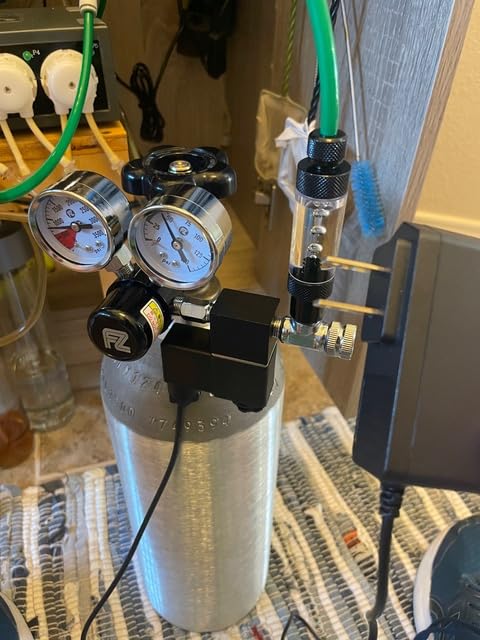
The split-type 12V DC solenoid replaced an older AC design on this model. It draws less power, runs cooler, and pairs cleanly with a photoperiod timer so gas shuts off when the lights go out.
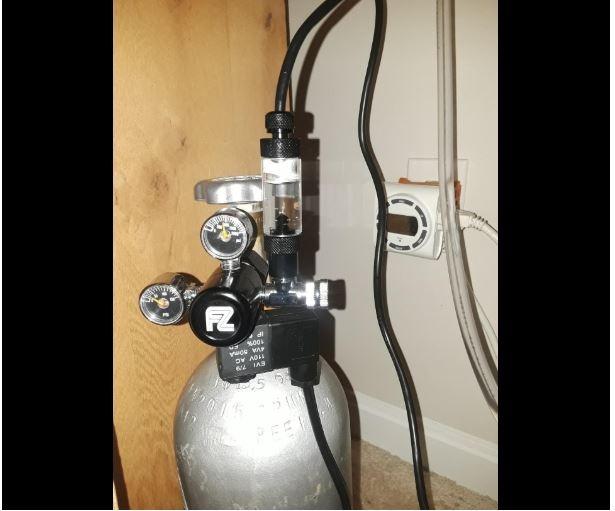
The included bubble counter has a check valve function, so a power cut or a siphon does not push tank water back into the cylinder. Installation tools come in the box, which saves a trip for the small wrench you otherwise need to tighten the fitting.
Why the 1327 reviews are the most useful data here
A large review base does two things. It surfaces the failure modes early, and it tells you how those failures age. The recurring complaints on this model concern single-stage pressure behaviour as the cylinder depletes and long-term seal durability, and roughly one in nine ratings is a one-star.
That is a fair trade for most low-tech and mid-tech setups that are checked daily and topped up before the tank runs dry.
Who should skip it
If your tank is 40 gallons or larger, runs carpeting species, or will be dosed overnight on a controller, the single-stage behaviour will cost you time you would rather spend on plants. Move up to a dual-stage unit.
3. Hygger HC003 has the clearest dual gauges for daily pressure checks
Hygger CO2 Aquarium Regulator with Dual Pressure Gauges, 12V DC Solenoid Valve, Bubble Counter & Check Valve – Precise Display for Aquatic Plant CO2 System
Dual gauges with green safe band
12V DC solenoid
Thickened acrylic bubble counter
1.1 lbs, 7.68 x 6.5 x 3.94 in
Pros
- Highest average rating in this roundup
- Green-marked safe operating range on the dial
- Lightweight aluminum body
- Two-year warranty with responsive replacement service
Cons
- No adjustment on the low-pressure side
- Needle valve reacts strongly to small turns
- Single stage configuration
- Bubble counter sometimes needs rework to run
The thing I notice first on this one is the green band printed on the dial face. Instead of working out your target range each time, you match the needle against the marked safe zone and move on.
Both gauges are present, so you can watch cylinder pressure and outgoing line pressure at the same time. That is the single most useful upgrade over a single-gauge regulator, because a low reading on a one-gauge unit tells you nothing about what your diffuser is actually receiving.
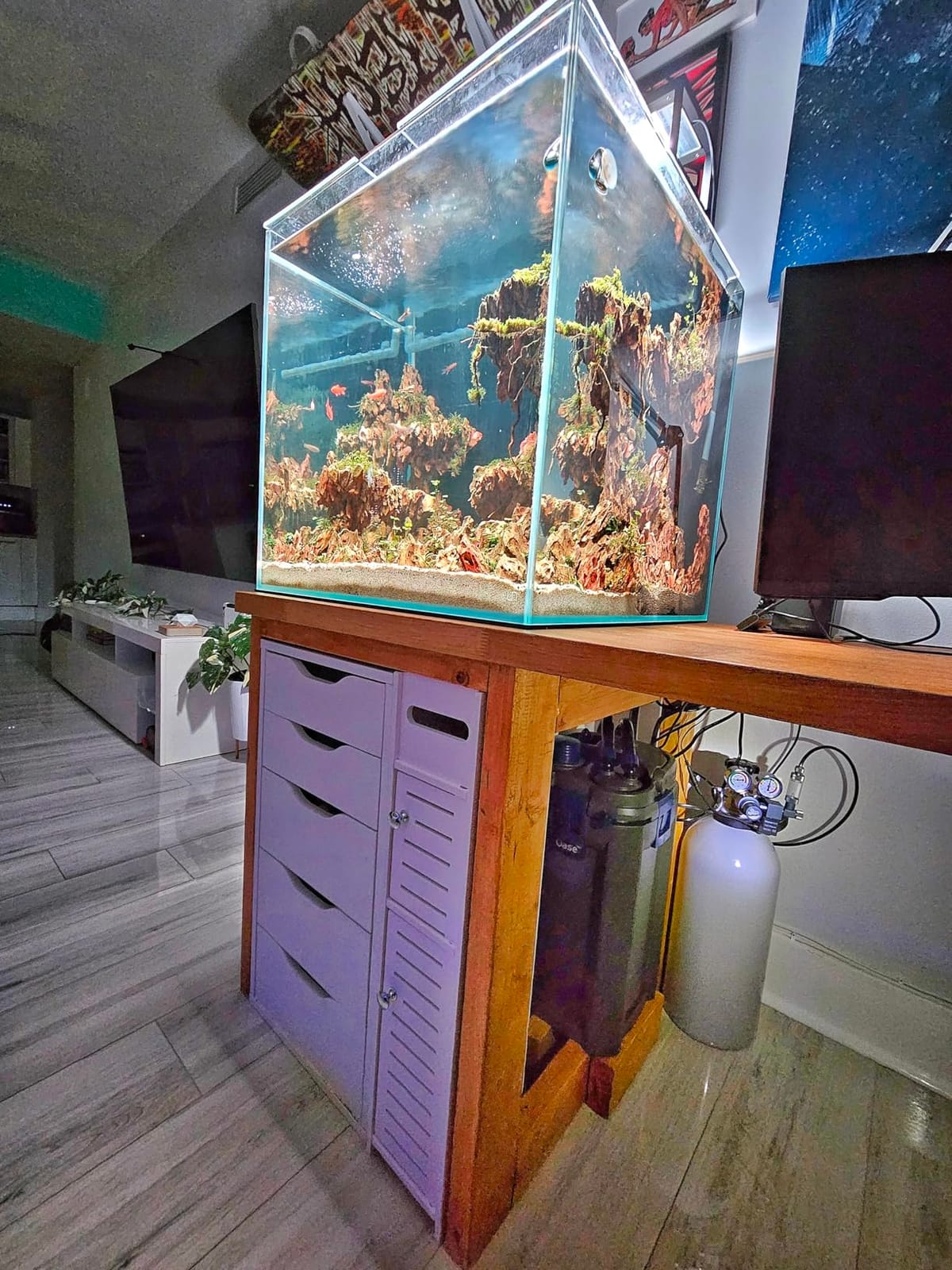
The body is hard aluminum alloy rather than steel, at 1.1 pounds, and the finish resists rust in a humid cabinet. The 12V DC solenoid works with a timed socket, which covers the night shutoff question for most people.
The bubble counter uses a thickened injection-molded acrylic tube with a check valve, and the needle valve gives fine control for a mid-size display tank.
What the 4.5 rating hides
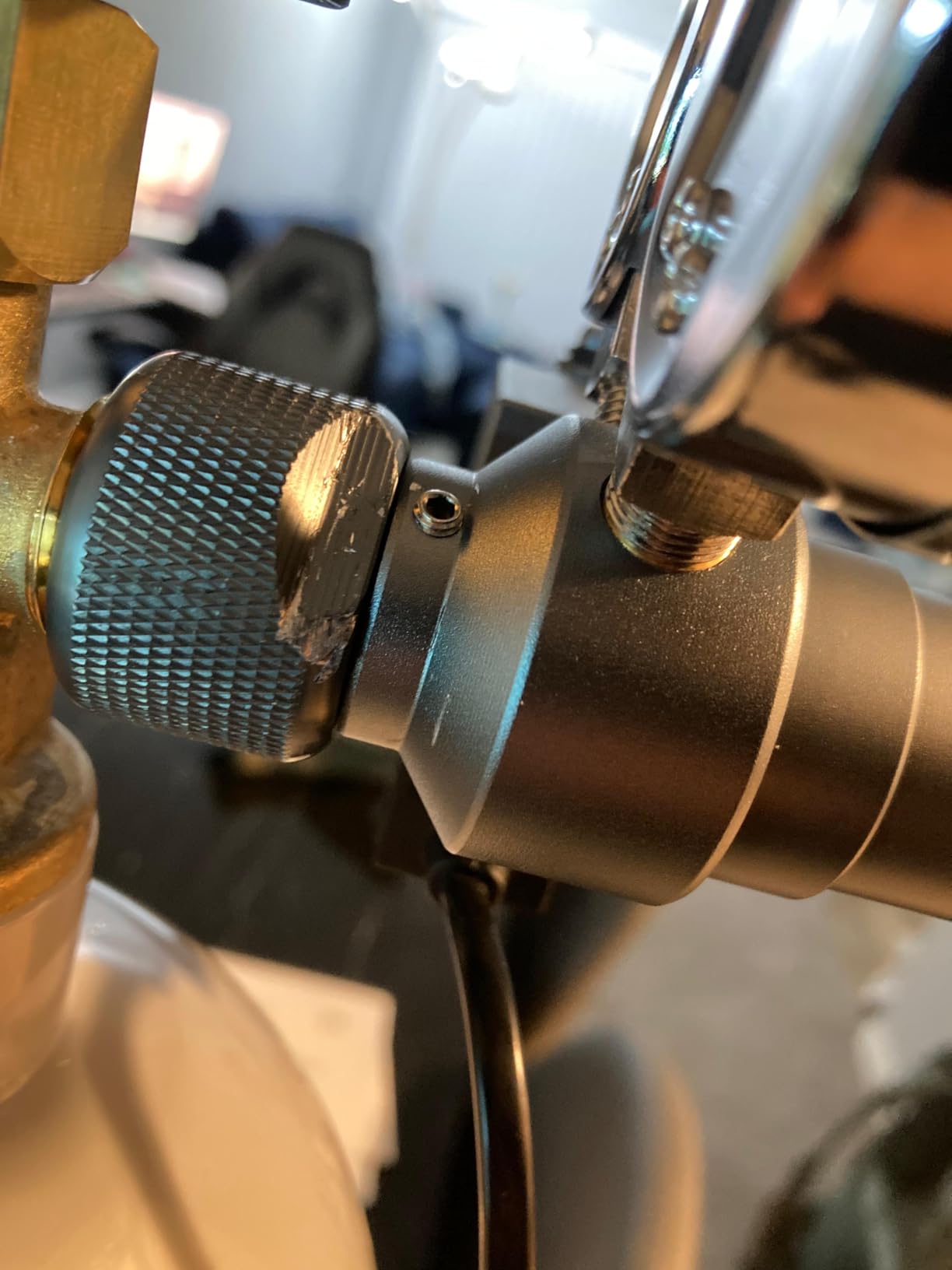
The review base is small at 69 ratings, so treat that number as encouraging rather than settled. The reported drawbacks are consistent: the needle valve is very sensitive to small turns, the low-pressure side has no adjustment, and the bubble counter occasionally needs disassembly before it will run.
One international reviewer also reports that the CGA320 thread does not fit Australian Type 30 bottles. That matters only if you are outside North America.
Best fit for the setup
Choose this one if you want readable instrumentation and a two-year warranty, and your tank sits well under 30 gallons. For heavier stocking or larger volumes, the missing low-pressure adjustment becomes harder to live with.
4. Ultum Nature Systems is the best mini dual stage regulator for nano tanks
Ultum Nature Systems CGA 320 to Paintball Adapter & CO2 Regulator (Mini Dual Stage CO2 Regulator)
Compact dual stage body
Fine needle valve
Built-in bubble counter
CGA320 to paintball adapter
Pros
- Dual stage regulation in a small body
- Reported machining and adapter quality above budget mini units
- Secure fittings that stay leak-free
- Works with paintball bottles and 20 oz cartridges
- Finish matches high-end hardware
Cons
- Most expensive regulator in this roundup
- One buyer received a unit that produced no CO2
- Detachable solenoid fitting allows movement
This is the rare mini regulator with a real dual-stage mechanism inside a compact body. Most small units are single-stage, which means you trade desk space for the exact pressure instability you were trying to avoid.
The CGA320 to paintball adapter is included, so it screws onto paintball bottles and 20 oz cartridges as well as standard cylinders. That makes it the simplest way to move between cylinder types without buying hardware twice.
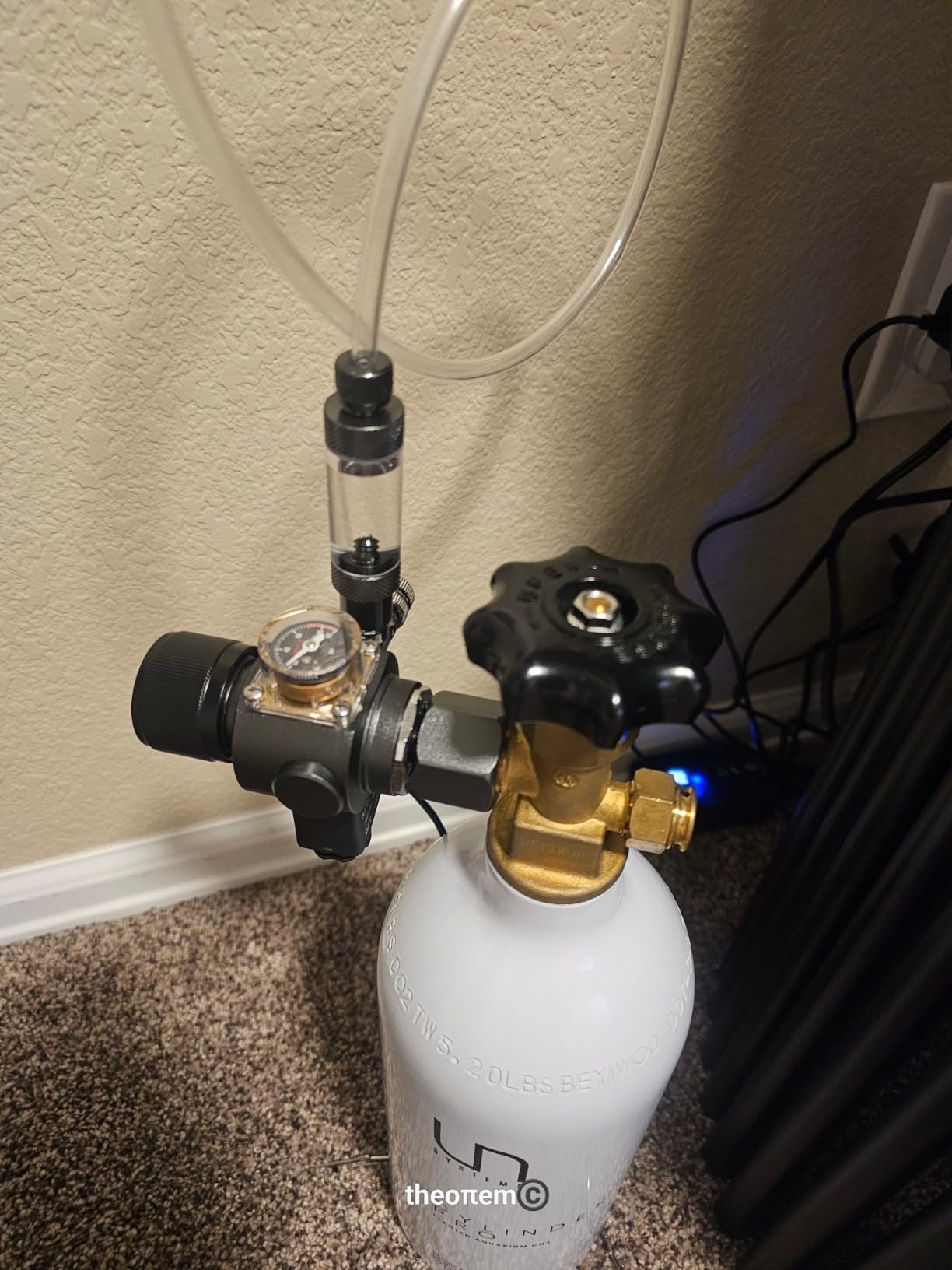
Owners coming from cheaper mini regulators consistently single out the machining and the fittings. Secure, leak-free assemblies are the norm rather than something you hope for, and the fine needle valve covers the low flow rates nano and desktop aquascapes need.
The bubble counter is built into the body, which keeps the plumbing on a nano tank to a minimum.
Why dual stage matters more than you think on a nano
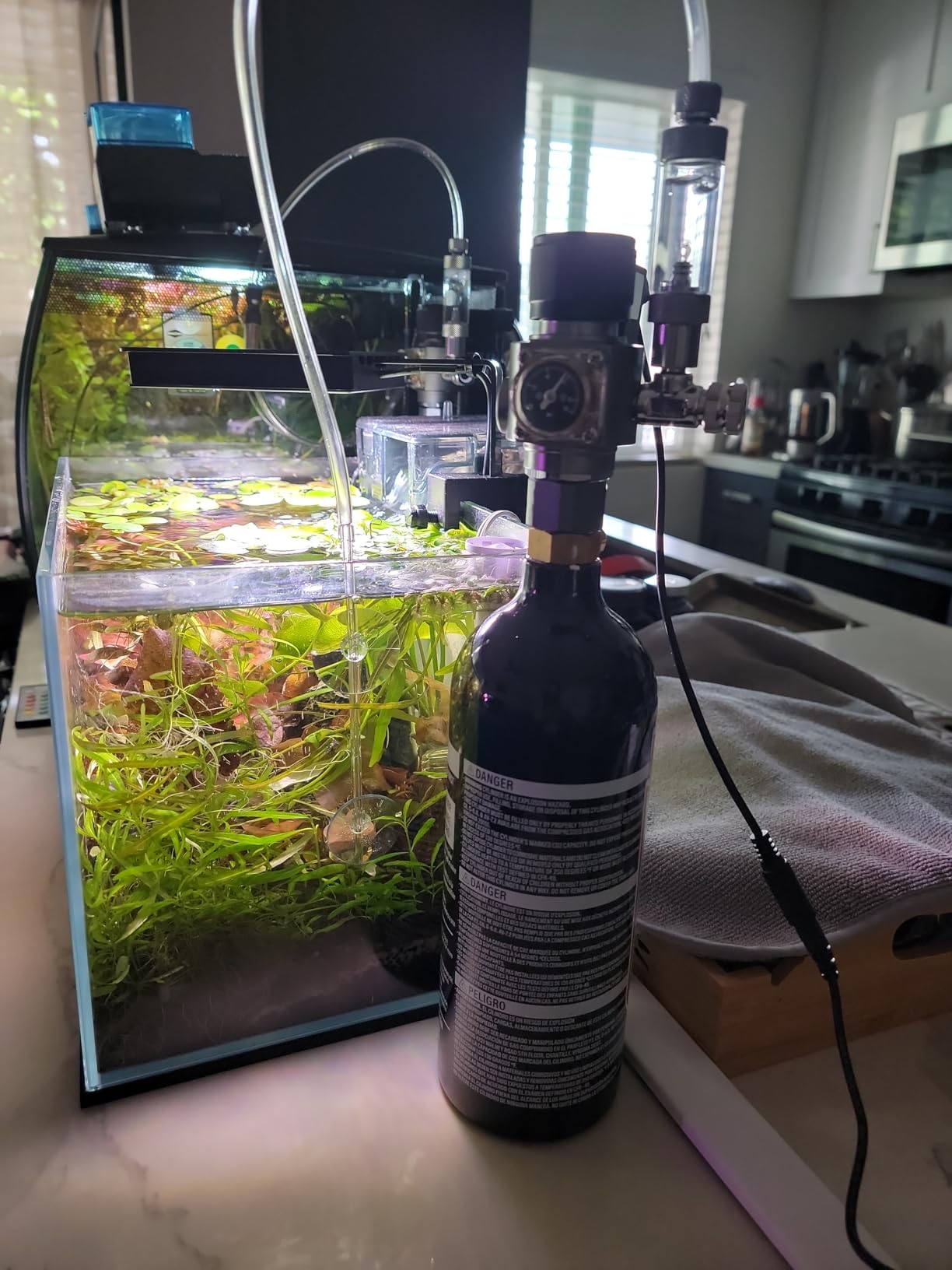
Nano tanks have a low gas demand and a small buffer, so a pressure surge pushes dissolved CO2 up quickly in a small volume of water. The dual stage keeps the line pressure steady instead of letting it climb as the bottle empties.
The included adapter also means you can start on a paintball bottle for a small tank and move to a larger cylinder later without replacing the regulator.
Where it disappoints
It is the most expensive unit in this roundup, and at 26 ratings the sample is thin. One buyer reported a unit that delivered no CO2 with no visible leak, and the response from support was slow.
The detachable solenoid-style fitting also permits some movement, so route tubing so it cannot tug.
5. Hygger motorized valve kit is the best CO2 regulator for running two tanks
Hygger CO2 Upgraded Aquarium CO2 Regulator with Motorized Valve, Dual Stage Adjustable Pressure, Expandable for Two Tanks, Includes Timer and Bubble Counters for CO2 Aquarium System
Motorized valve with included timer
Dual stage adjustable pressure
Two bubble counters
1.79 lbs, 8.27 x 7.32 x 3.43 in
Pros
- Motorized valve moves only when opening and closing
- Dual stage output guards against end-of-tank dumps
- Two bubble counters and expandable manifold
- Tool-free quick-connect fittings
- Included timer for scheduling
Cons
- Does not resume safely after a power interruption
- Timer interface takes configuring
- Non-US buyers report thread and plug mismatch
- Not compatible with Hygger's own DIY CO2 kit
The motorized valve is the idea worth understanding. Instead of holding an energized coil open all day, a small motor moves the valve only when it is opening or closing, so the unit does not generate the steady heat that shortens solenoid life.
Dual-stage regulation comes with it, so the output pressure stays stable as the cylinder depletes. The main valve sets pressure and the integrated needle valve sets flow, which separates two jobs that cheaper units merge into one.
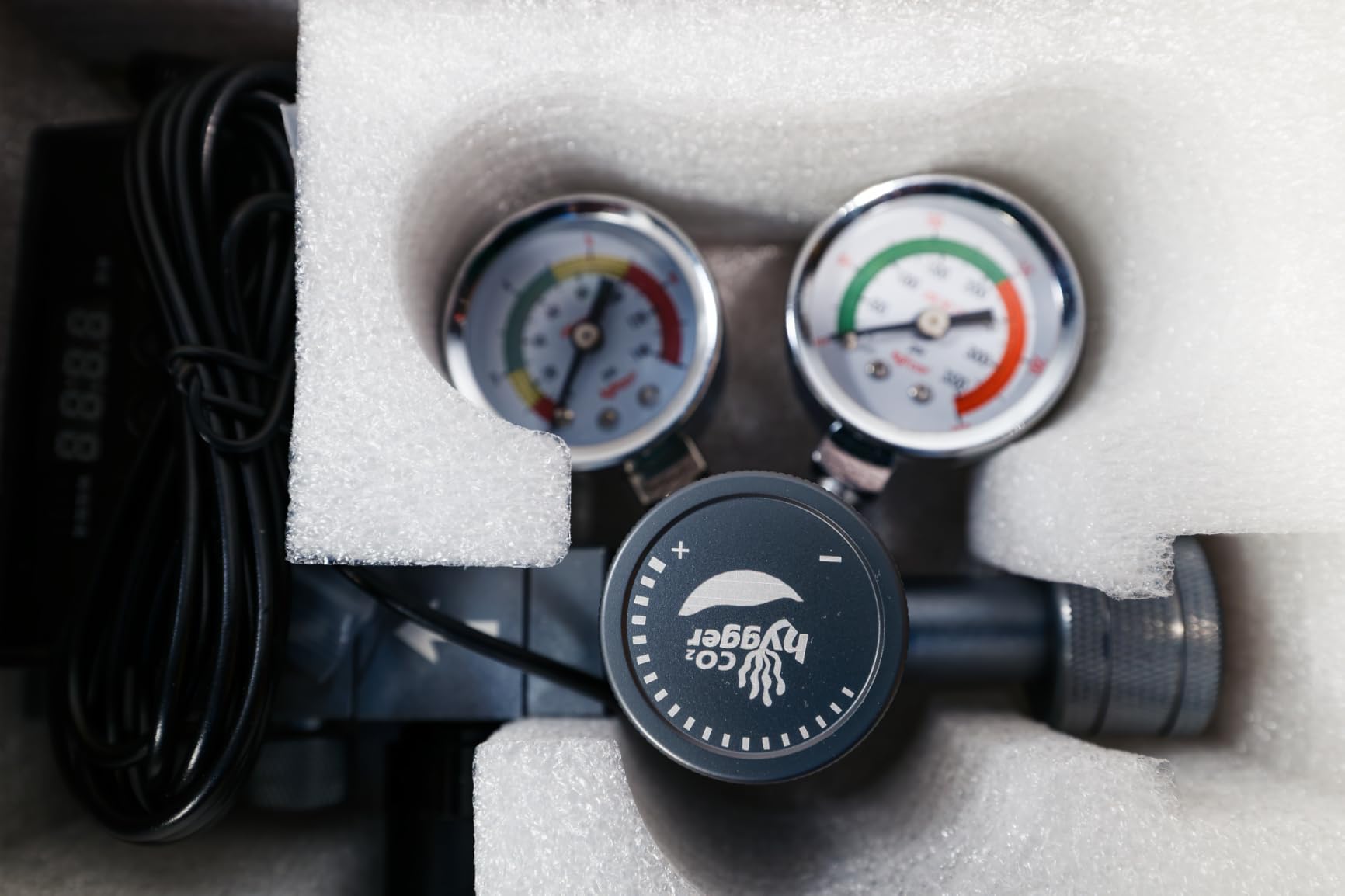
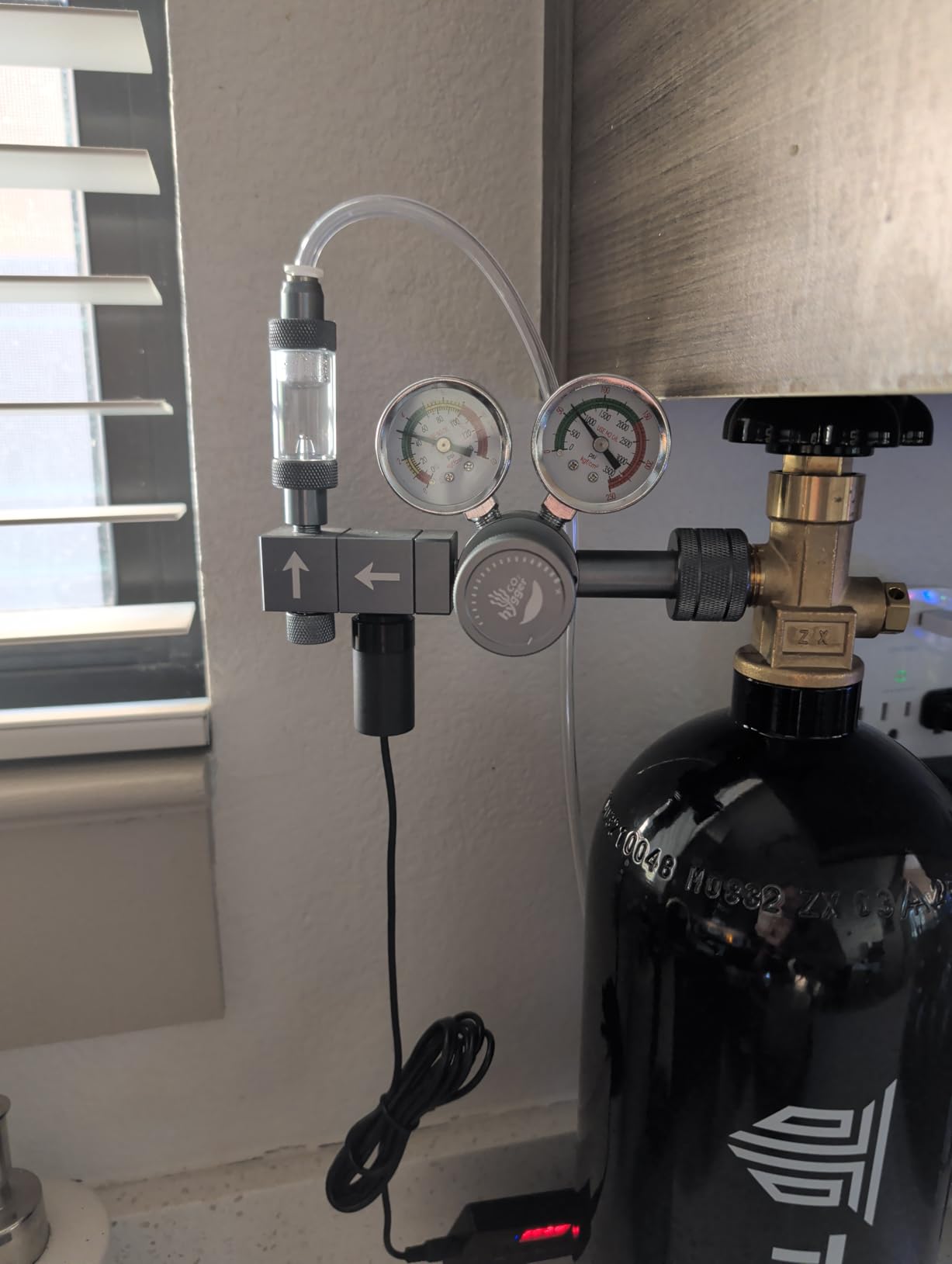
Two bubble counters are included, and the manifold design is expandable. The quick-connect fittings mean tubing pushes straight in without disassembly, which saves time on a two-tank install.
A timer comes in the box and the power adapter supports 110-240V. A two-year warranty is included.
The power outage problem you must plan for
The most serious complaint in owner reports is that this unit does not shut off or resume safely after a power interruption, and reviewers treat that as a fish-safety issue rather than an inconvenience. If your tank depends on this regulator, pair it with an alarm or a controller that tracks state.
Several international buyers also report cylinder thread incompatibility and a missing regional power adapter. The product is designed for standard CGA320 cylinders and North American power.
When it earns its place
For a two-tank setup, or one tank you intend to split with a sump later, the included second bubble counter and manifold layout make this more economical than buying a single-outlet unit and adding hardware afterward.
6. Clscea R100S is the best CO2 regulator for tool-free installation
Clscea Aquarium CO2 Regulator Dual Gauge with Solenoid Bubble Counter, R100S
Dual input and output gauges
Hand-tighten lock nut
Push-in tubing fittings
1.06 lbs, 6.93 x 4.96 x 3.5 in
Pros
- No wrenches needed to mount
- Push-in fittings cut setup time
- Dual gauges readable at a glance
- Cool-running solenoid detaches for servicing
- Compact footprint for small stands
Cons
- Single stage so output spikes as the cylinder runs down
- Minimum flow of one bubble per 8 seconds is coarse
- Solenoid needs periodic cleaning
- Small gauge faces
The R100S mounts with a large hand-tighten scuba-style lock nut and uses push-in fittings for tubing, so a first-time setup needs no tools at all. For an aquarium hobbyist who has never installed a regulator before, that removes the most common point of failure.
It also carries dual gauges for input and output pressure, which puts it ahead of most single-gauge units at a similar level of spend.
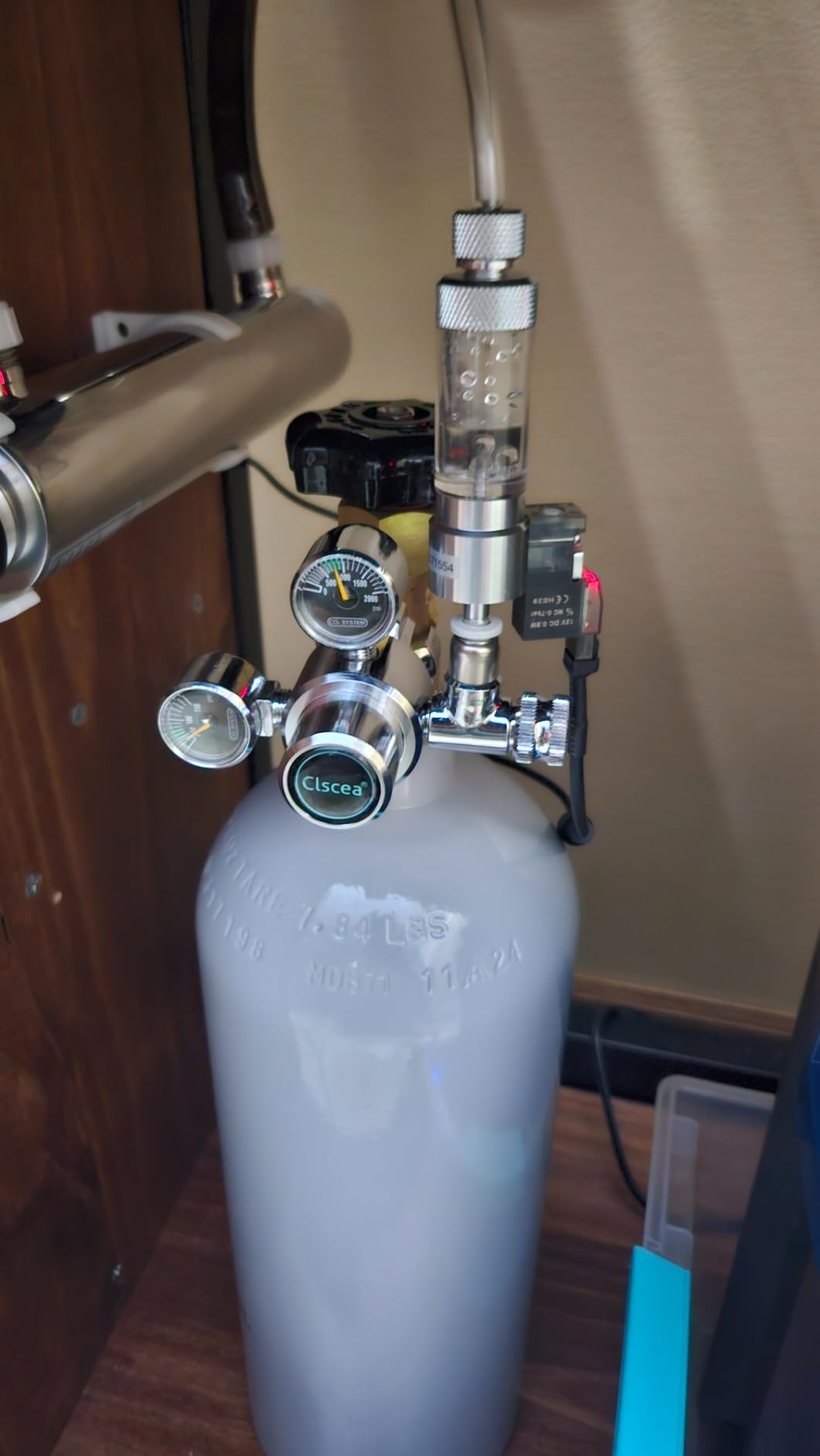
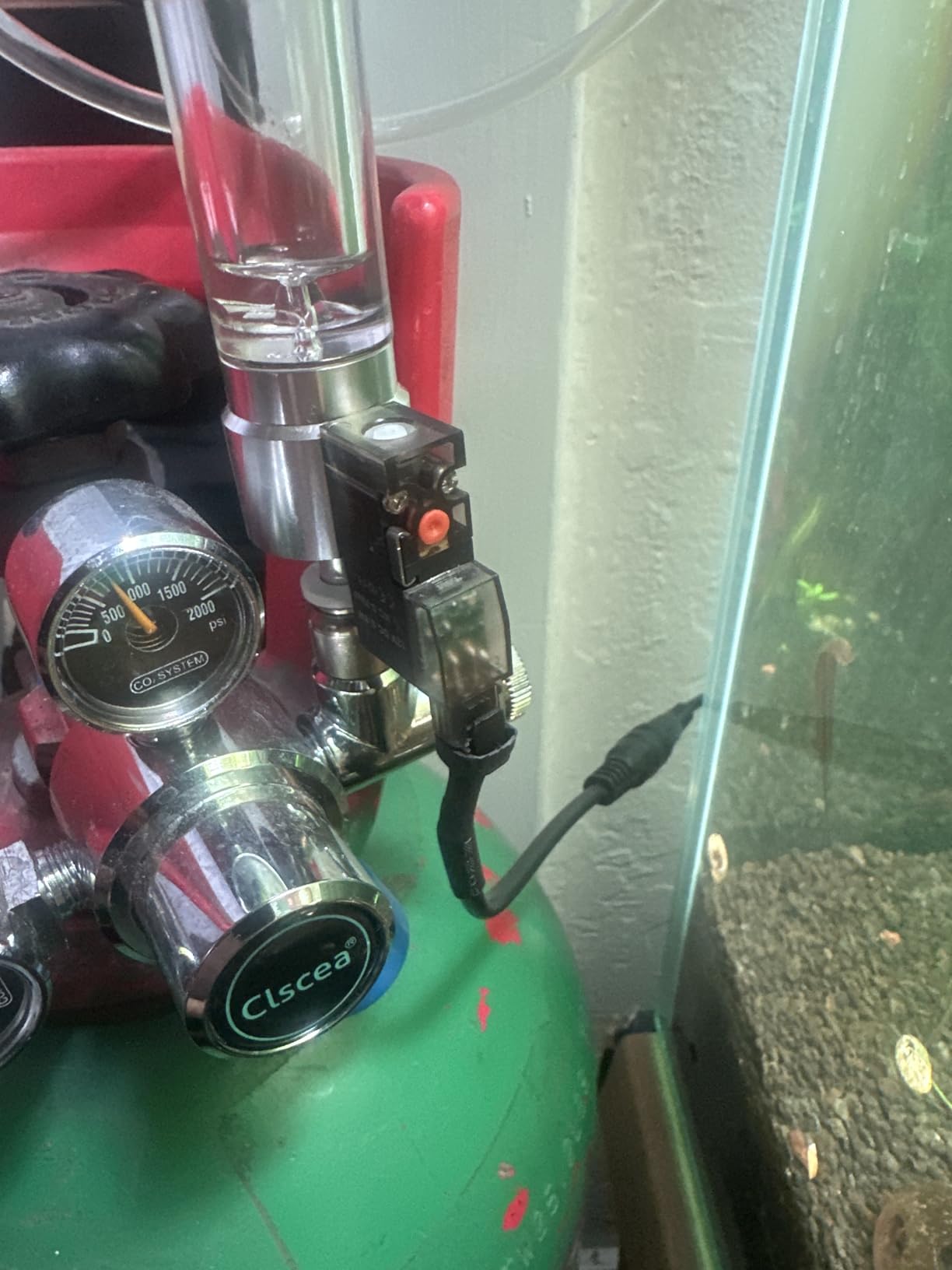
The solenoid runs cooler than body temperature and detaches from the regulator body, so you can service it without pulling the whole unit off the cylinder. The bubble counter includes a replaceable diffuser disk and a check valve.
At 1.06 pounds and roughly 7 by 5 by 3.5 inches, it fits smaller stands without crowding the tank.
Where the flow range runs out
The needle valve bottoms out at about one bubble every eight seconds, which is coarser than the three-second floor on the FZONE and Hygger units here. On a nano tank running a very low target rate, that coarser minimum can limit how far you can dial down.
It is also a single-stage design, so outgoing pressure still climbs as the cylinder empties. The solenoid needs regular cleaning to keep regulating correctly.
Best fit for the setup
Pick this for a first regulator on a tank up to about 25 gallons where ease of setup matters more than fine flow control. If you plan to dose overnight on a controller, look at a dual-stage unit instead.
7. DaToo is the lowest-priced dual gauge CO2 regulator in this roundup
DaToo Aquarium CO2 Regulator with Bubble Counter Solenoid Check Valve Adjustable for Standard US Planted Tank CO2
Precision adjustment at 150 PSI LP / 2000 PSI HP
Aluminum body with stainless diaphragm
Cold-touch solenoid
Dual or single gauge options
Pros
- Lowest-priced dual-gauge regulator here
- Pressure-reducing valve supports steady delivery
- Stainless steel diaphragm and aluminum body
- Cold-touch solenoid claimed to outlast typical solenoids
- Dual and single gauge variants available
Cons
- Mixed reports on whether the bubble counter is included
- Bubble rate adjustment feels coarse
- Single-stage only with no pressure adjustment
DaToo is the entry point if dual gauges matter to you and spend does not. The dial scales cover the useful range, including the low-pressure side, so you can watch output pressure directly.
The pressure-reducing valve keeps delivery continuous, and the body pairs high-purity aluminum with a stainless steel diaphragm. Owners consistently point to those two materials as the reason their unit has held up.
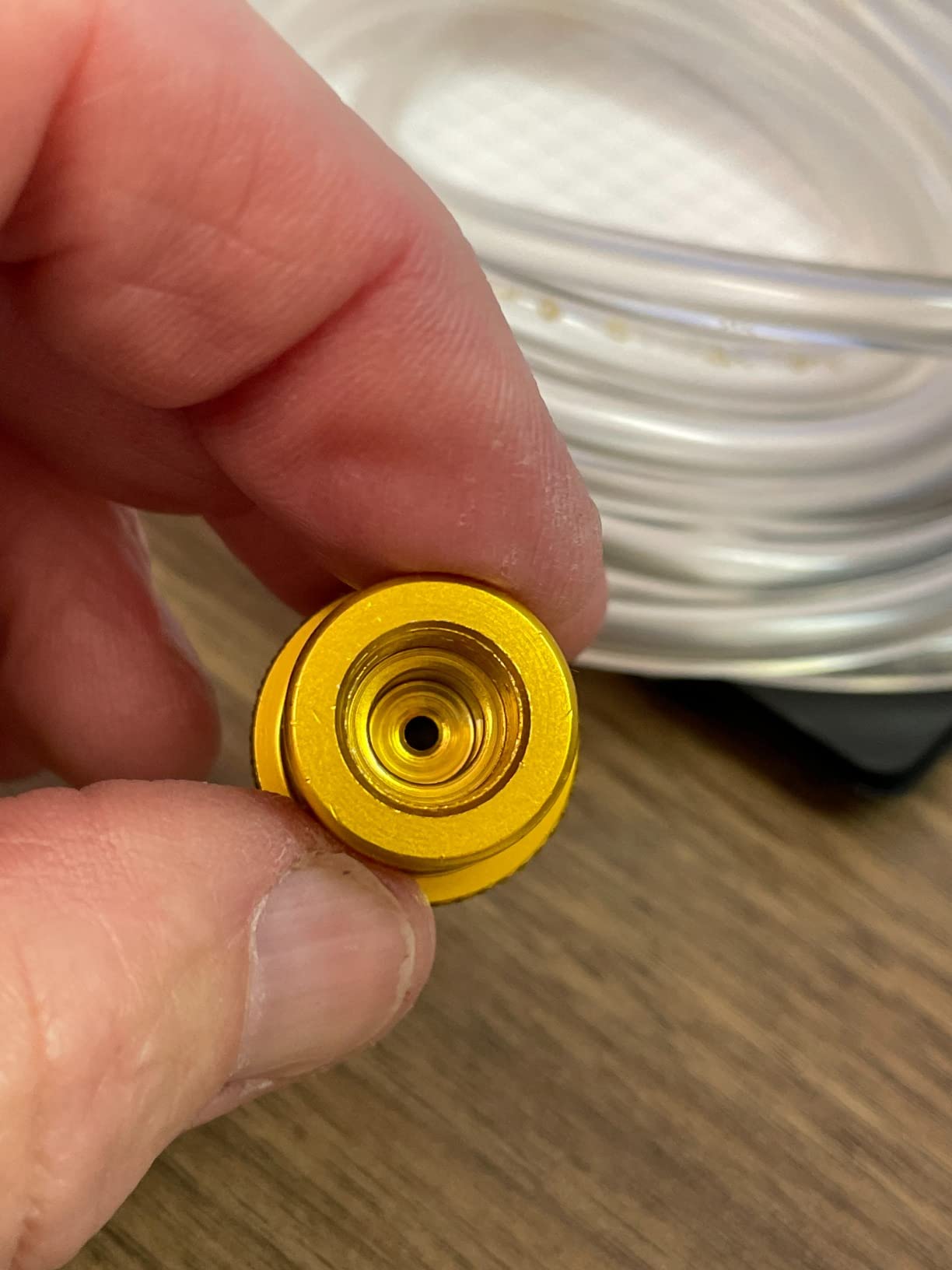
The cold-touch solenoid is designed to reduce heat during operation, and the manufacturer rates it at three to four times the service life of comparable solenoids. One-year warranty coverage is included.
Both dual-gauge and single-gauge variants exist, so you can step down if you are running a low-tech tank and do not need output pressure readings.
Verify what arrives before you set up
Owner reports are mixed on whether the bubble counter and check valve are consistently in the box across variants. Confirm the contents when your order arrives, and plan on a few dollars for a separate counter if one is missing.
The other caveat is that bubble rate adjustment is described as coarse, and the design is single-stage with no output pressure adjustment.
Best fit for the setup
This suits a low-tech planted tank where you are adding CO2 as a bonus and want readable gauges at the lowest spend. It is not the choice for a high-tech aquascape where you need precise control.
8. Hygger mini is the most compact regulator with 1 bubble per 3 second flow control
Aquarium Co2 Regulator, Mini CO₂ System with Upgraded DC Solenoid and Bubble Counter Check Valve, Detachable Design, for Building CO₂ System in Aquatic Plant Tank
Removable 12V DC solenoid
Side-outlet CGA320 layout
Needle valve to 1 bubble per 3 seconds
12.84 oz, 5.12 x 3.98 x 3.5 in
Pros
- Fine 1 bubble per 3 seconds flow for a small body
- Detachable solenoid simplifies servicing
- Side-outlet layout fits side-open CGA320 cylinders
- Thickened acrylic bubble counter with check valve
- Lightest and smallest footprint here
Cons
- Smallest review base at 23 ratings
- Single stage with no output pressure adjustment
- Mini body limits tubing routing
- One-star share of 11 percent
At 12.84 ounces and just over five inches on its longest side, this is the smallest unit in the roundup, and it still tunes down to one bubble per three seconds. That flow floor is finer than most mini regulators manage.
The solenoid detaches from the body, so cleaning or replacing it does not mean pulling the regulator off the cylinder.
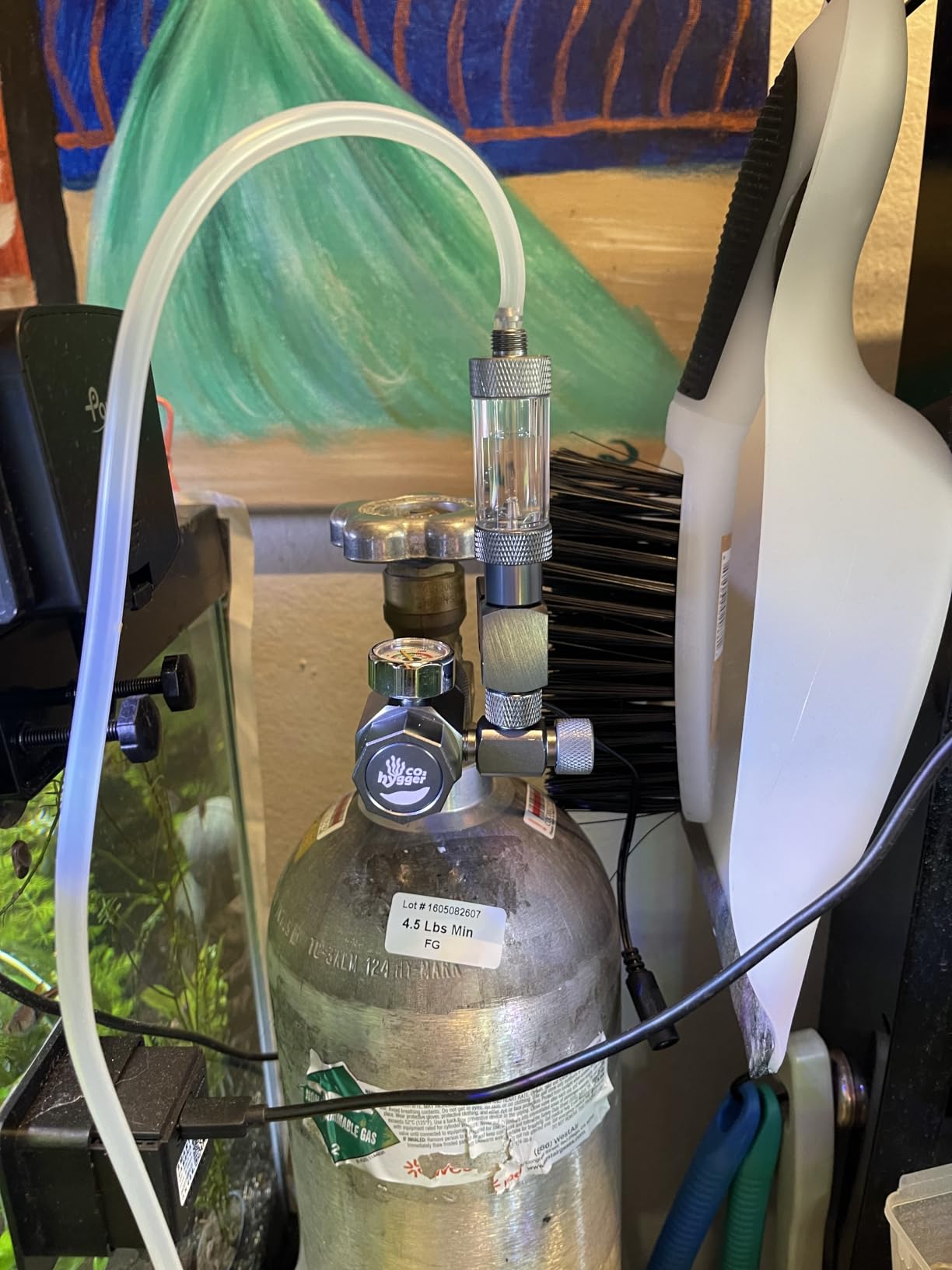
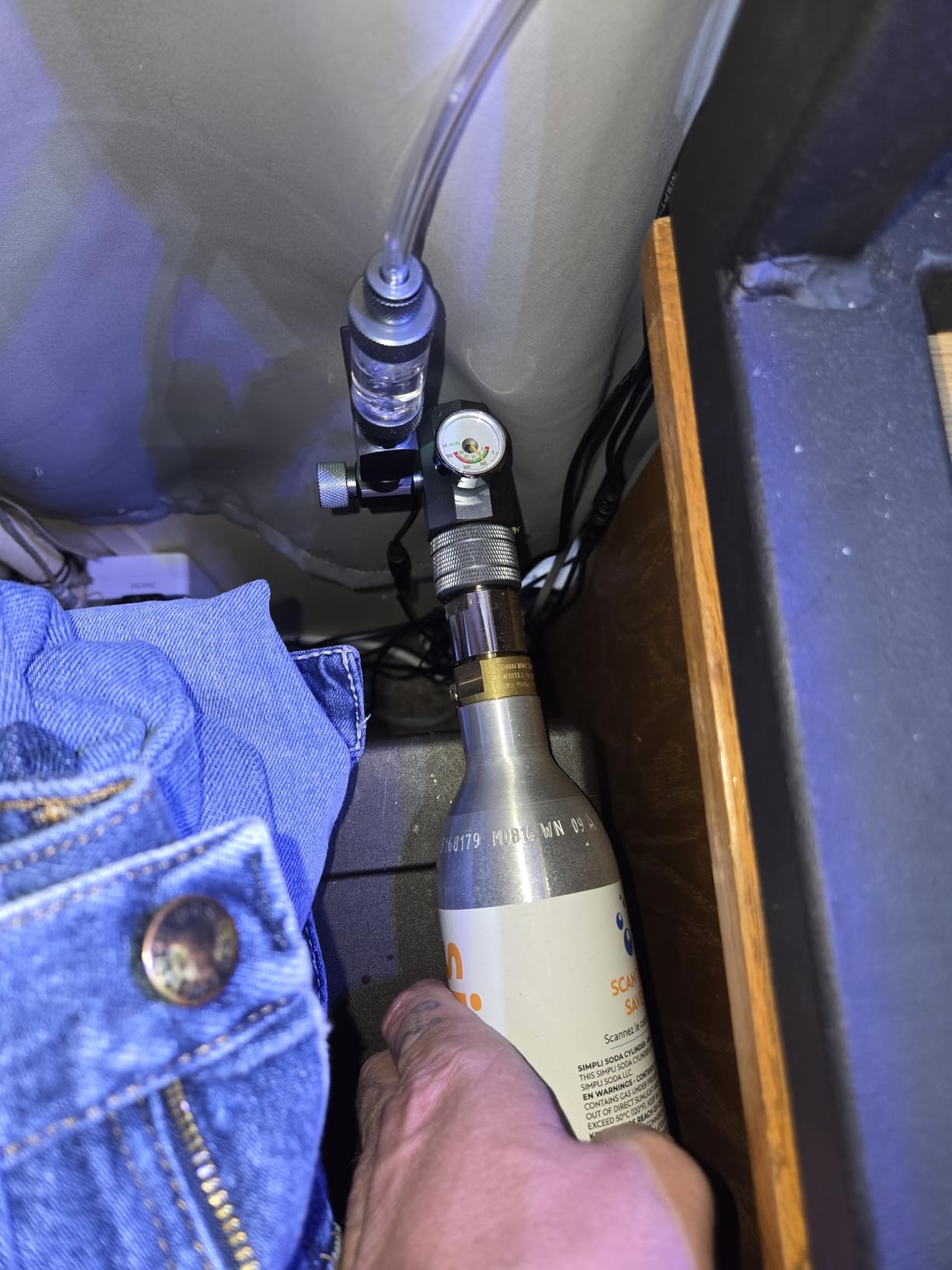
The side-outlet layout is engineered for side-open CGA320 cylinders, which reduces the chance of a leak at the connection point where a standard bottom-entry unit can weep under pressure.
The bubble counter uses a thickened acrylic tube with a built-in check valve, and the pressure knob plus fine-tuning valve are separate controls.
Where the small body costs you
With 23 ratings, this is the thinnest evidence base in the roundup, and the one-star share runs about 11 percent, mostly tied to early unit failures and fit issues. Treat the fine flow control as the reason to consider it, not as a guarantee.
It is single-stage, so there is no output pressure adjustment, and the compact body gives you less room to route tubing neatly.
Best fit for the setup
Good fit for a 10 to 20 gallon tank on a small stand where bench space is tight and you want slower flow options than a typical mini unit gives you. Pair it with a photoperiod timer from day one.
Single-stage vs dual-stage CO2 regulators
A single-stage CO2 regulator reduces cylinder pressure in one step, so outgoing line pressure falls and rises as the cylinder depletes. A dual-stage regulator reduces pressure twice, in a first stage down to an intermediate range and a second stage to your chosen working pressure. That second step is why dual-stage units hold a steady output and avoid end-of-tank-dump surges.
For a low-tech planted tank checked once a day, a single stage is fine. Once you run demanding species, dose overnight, or leave the tank unattended, the stability of a dual-stage unit is worth the step up in spend.
What to look for when buying a CO2 regulator
Dual gauges. One gauge shows cylinder pressure only, which tells you nothing about what reaches the diffuser. Dual gauges let you set working pressure and see it hold.
Needle valve range. The difference between a one-bubble-per-three-seconds floor and a one-bubble-per-eight-seconds floor decides whether you can dose a nano tank precisely.
Solenoid type. A 12V DC solenoid runs cooler and quieter than an AC unit and pairs with any timer or controller. Motorized valves add durability but cost more.
Bubble counter with a check valve. The counter lets you read flow in bubbles per second, and the check valve stops tank water backflowing into the cylinder after a power cut.
CO2-rated tubing. Silicone airline tubing is porous and will leak a meaningful share of your gas through the wall. Use proper high-density CO2 tubing from the regulator to the diffuser.
Included tools. Cylinder fittings want a wrench rather than bare hands, and most manufacturers include one. A unit that installs tool-free is convenient; a unit that includes a wrench is properly specified.
Which CO2 regulator fits your tank size
Under 20 gallons, a small cylinder and a mini or mid-size regulator are enough. A widely repeated view among planted tank hobbyists is that two disposable CO2 cartridges handle a tank of that size, and a full regulator setup is optional rather than necessary.
From 20 to 40 gallons, aim for one bubble roughly every three seconds as a starting point and refine from there with a drop checker. This is the range where a dual-gauge unit starts to earn its cost.
At 55 gallons and above, especially with carpeting species, a dual-stage regulator with an adjustable output range is the sensible default. Our large freshwater aquarium picks usually pair with hardware in this class.
For multi-tank setups, a manifold design with two independent outlets saves buying a second regulator later. Our planted tank CO2 kit guide covers how the surrounding pieces fit together.
Cylinder fit: CGA320, paintball and thread adapters
Most regulators here are built for CGA320 cylinders, the standard North American thread used on 5 lb, 10 lb, and 20 lb tanks. Check the listing before you buy if you are outside North America, because that thread is not universal.
Paintball bottles use a different thread and need a step-down adapter. The Ultum Nature Systems mini in this roundup includes a CGA320 to paintball adapter, which is why it suits small tanks fed by 24 oz bottles or 20 oz cartridges.
Imported brands with Japanese or European standard threads often have no North American equivalent at all, which is why some well-regarded units simply cannot be bought here. Our CO2 system roundup notes which thread standard each kit assumes.
Always depressurize the line before removing a regulator from a cylinder, and tighten the fitting with a wrench. Hand-tightening leaves leaks that show up as declining working pressure a week later.
Why the solenoid matters for night shutoff and fish safety
Fish stress begins around 30 ppm dissolved CO2, and a tank left dosing through the night can pass that mark without any visible change in plant growth. The standard practice among experienced hobbyists is to put the solenoid on the same timer as the lights.
A drop checker gives you a visual reading of dissolved CO2 so you are not guessing from bubble rate alone. A check valve in the bubble counter stops water reaching the cylinder if power drops.
A controller adds monitoring and automatic shutoff on top of a plain solenoid. If you only run one tank and check it daily, a solenoid plus a timer is enough. If your tank is heavily stocked or unattended, a controller is the safer route.
End-of-tank-dump and needle valve drift
An end-of-tank-dump happens when cylinder pressure falls below the pressure a single-stage regulator was set at. The regulator can no longer hold the setting, line pressure climbs, dissolved CO2 spikes, and the tank can go from clear to choked with algae in a night.
The fix is mechanical rather than a maintenance habit: a dual-stage regulator holds its output as the cylinder depletes, which is why four of the picks here are dual stage. A pre-emptive checklist also helps: refill on a schedule rather than on a gauge reading, watch the input gauge weekly, and use a timer so gas stops with the lights.
Needle valve drift is the other recurring complaint. The cheap metal valves change flow after the solenoid power-cycles, so users end up re-adjusting every morning. Owners of budget mini regulators describe exactly that routine, and it is the strongest practical argument for spending more on the valve rather than on the body.
If flow changes while gas is on and the needle valve is closed, suspect a worn diaphragm or a failed solenoid seat. Cleaning the solenoid periodically is standard advice from several manufacturers here, and a unit that detaches for servicing makes that job far easier.
Frequently Asked Questions
What is the best CO2 regulator for a planted aquarium?
The FZONE Pro Series is the best overall CO2 regulator for planted tanks we tested. It uses dual stage pressure reduction with adjustable output from 0 to 65 PSI, which keeps flow steady as the cylinder empties, and its two manifold blocks let you run a second tank. For a smaller tank and a tighter budget, the single-stage FZONE with 12V DC solenoid is the better entry point.
Which dual gauge CO2 regulator is the best?
The Hygger HC003 stands out for dual gauges because both dials carry clear scales and a green-marked safe operating range, so you can match the needle to your target without guesswork. The DaToo is the alternative if dual gauges matter most and spend should stay at the bottom of the range. All eight picks in this roundup carry at least one gauge, and the higher-end units carry two.
What is the difference between a single-stage and a dual-stage CO2 regulator?
A single-stage regulator reduces cylinder pressure in one step, so line pressure falls and rises as the cylinder empties. A dual-stage regulator reduces pressure twice, first to an intermediate range and again to your chosen working pressure, so output stays steady. That second step is what prevents an end-of-tank-dump surge.
What is the best CO2 regulator for a paintball tank?
For paintball bottles and 20 oz cartridges, the Ultum Nature Systems mini is the strongest match in this roundup because it ships with a CGA320 to paintball adapter and still uses dual stage regulation. Full-size CGA320 regulators can also run paintball bottles with a separate step-down adapter. Verify the thread before ordering, since paintball and CGA320 are not the same fitting.
Is a solenoid required on a CO2 regulator?
It is not required for function, but it is the cheapest safety feature in the system. A 12V DC solenoid lets a timer or controller close the gas with the lights, and fish stress begins around 30 ppm dissolved CO2. Pair it with a drop checker to read actual levels and a check valve in the bubble counter to stop water backflow into the cylinder after a power cut.
Conclusion
These are the best aquarium CO2 regulators for planted tanks, and the choice narrows quickly once you know your tank size. Pick the FZONE Pro Series when you want steady dual-stage output, adjustable working pressure, and the option to add a second tank later.
Pick the single-stage FZONE when you are starting out on a smaller tank and want the most proven unit available. Pick the Hygger HC003 for readable gauges, the Ultum Nature Systems mini for nano tanks, and the Hygger motorized valve kit for a two-tank setup.
Whichever you choose, pair it with CO2-rated tubing, a drop checker, and a timer wired to your lighting schedule. That combination does more for a planted tank than any regulator upgrade on its own.