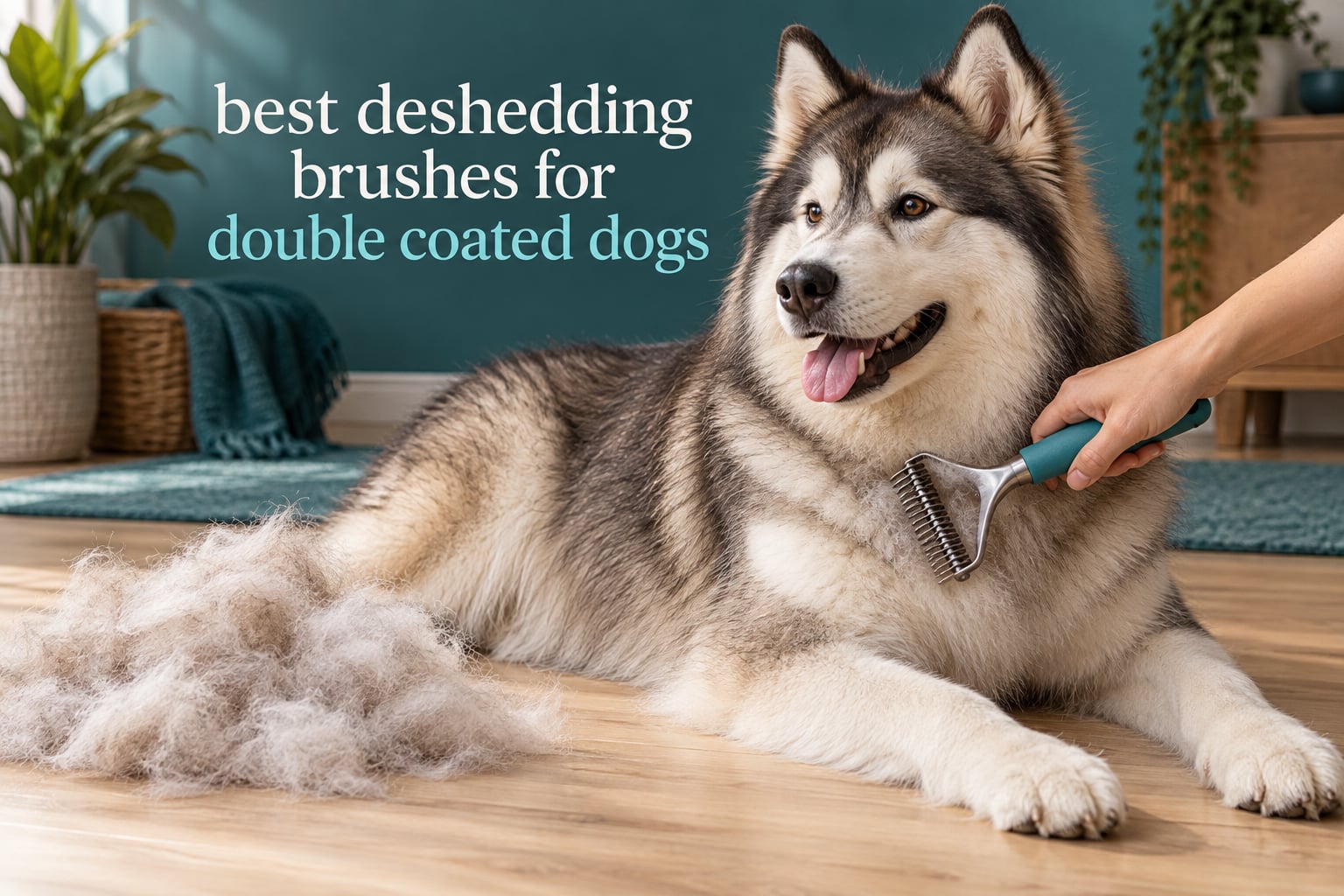
A double coat is two coats. Your dog has a weather-resistant topcoat of longer guard hairs and a dense, soft undercoat underneath that traps air against the skin. That undercoat is why a Husky or a German Shepherd can stand outside in winter, and it is also why loose undercoat ends up on your couch, your car seats and your clothes. When that dead undercoat starts coming loose in volume, it is called a coat blow, and clearing it out by hand is slow work.
That is what the best deshedding brushes for double coated dogs are built to do. They reach through the topcoat and pull the loose dead hair out before it works its way onto your furniture. I have spent years rotating through these tools with double-coated dogs of very different sizes and coat lengths, and the difference between a good tool and a bad one shows up in a single session rather than over months.
What follows is a roundup of 10 deshedding tools I would actually recommend, plus the technique that decides whether a tool helps or strips your dog’s coat. We also cover when to use a rake versus a slicker, how often to work through a blowing coat, and the mistakes that leave a dog with a patchy, over-thinned undercoat. Updated for 2026.
Table of Contents
Top 3 Best Deshedding Brush Picks for Double Coated Dogs in 2026

Maxpower Planet Dog Grooming Rake
- Dual-sided 9-tooth and 17-tooth design
- Rounded teeth for safe undercoat removal
- Lightweight handle with non-slip base

SleekEZ Deshedding Dog Brush
- Patented blade grabs hair tips without pulling
- Works on short
- medium and long coats
- Doubles as an upholstery hair rake

MIU COLOR Pet Grooming Brush
- 4 inch stainless steel comb with even teeth
- Detachable head with safety blade cover
- Anti-slip handle for control
All 10 Best Deshedding Brushes for Double Coated Dogs in October
| Product | Specifications | Action |
|---|---|---|
| Maxpower Planet Dog Grooming Rake |
|
Check Latest Price |
| SleekEZ Deshedding Dog Brush |
|
Check Latest Price |
| MIU COLOR Pet Grooming Brush |
|
Check Latest Price |
 GoPets 2-in-1 Deshedding and Dematting Comb GoPets 2-in-1 Deshedding and Dematting Comb |
|
Check Latest Price |
 Thunderpaws 2-in-1 Deshedding Brush and Rake Thunderpaws 2-in-1 Deshedding Brush and Rake |
|
Check Latest Price |
 EquiGroomer 5-Inch Undercoat Brush EquiGroomer 5-Inch Undercoat Brush |
|
Check Latest Price |
 FURminator Grooming Rake FURminator Grooming Rake |
|
Check Latest Price |
 FURminator Large Dog Undercoat Tool FURminator Large Dog Undercoat Tool |
|
Check Latest Price |
 Docrok Pet Grooming Combo Docrok Pet Grooming Combo |
|
Check Latest Price |
 Aumuca Self-Cleaning Slicker Brush Aumuca Self-Cleaning Slicker Brush |
|
Check Latest Price |
1. Maxpower Planet Dog Grooming Rake – Best Overall Undercoat Rake
Maxpower Planet Dog Grooming Rake, Deshedding Undercoat Brush, Dogs & Cats
Dual-sided rake
9 teeth and 17 teeth sides
4 ounce weight
Non-slip rubber base
Pros
- Pulls large volumes of loose undercoat in one session
- Teeth are rounded enough to avoid scratching
- One tool handles both dematting and thinning
- Light enough for long sessions
Cons
- No hair-release button so hair comes off by hand
- Some pets need a gradual introduction to the rake
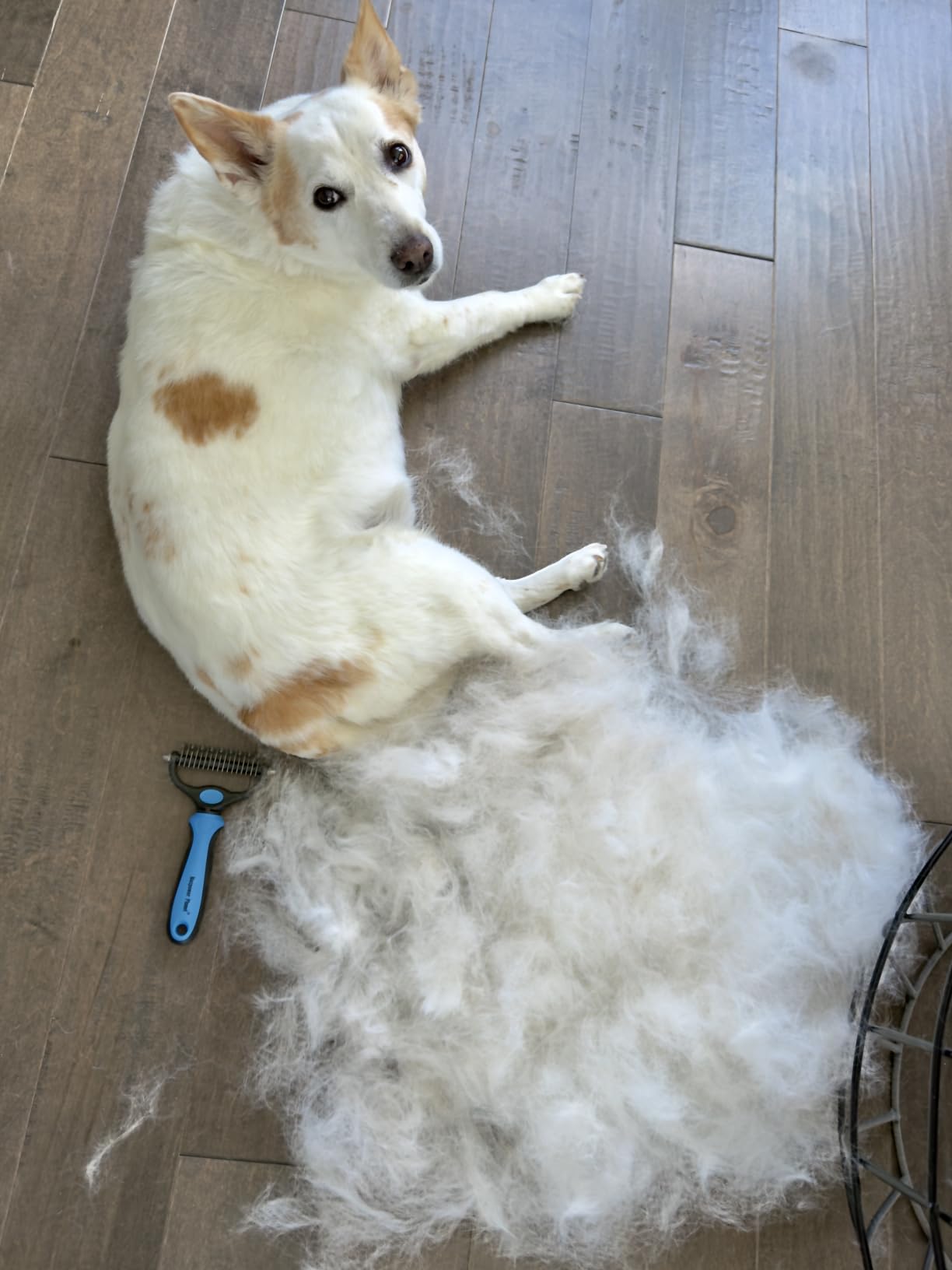
This is the tool I reach for first when a double-coated dog is blowing out. The 9-tooth side handles stubborn knots and the 17-tooth side does the thinning and deshedding work, so you are not switching tools mid-session when a mat turns up in a friction zone like behind the ears or at the base of the tail.
Owners of Great Pyrenees, German Shepherds, Anatolians and Kangals consistently report large volumes of undercoat coming out in a single pass, and the review base of more than 59,000 ratings at 4.6 stars is the largest in this group. The teeth are sharpened to cut but finely rounded at the tips, so even a heavy hand does not scratch the skin.

What sets it apart for me is how little it loads up. I can finish most of a small dog’s body before the rake needs clearing, which keeps the session short enough that the dog does not lose patience. On a dense coat I still stop and pull the collected fur off by hand every few minutes, and because there is no release button that fur does sometimes drift across the floor as I work.
The handle is 4 ounces with a non-slip rubber base, and it sits comfortably in a smaller hand. It is also one of the few tools here that works on cats as well as dogs, which matters if you have a long-haired cat that sheds on the same schedule.
What to check before you buy it
Know that you are buying a rake, not a slicker. It lifts loose undercoat that has already released from the skin, and it will not detangle a tight mat on its own the way a slicker with fine pins will. If your dog has a heavy mat situation, you want a second tool in the drawer.
Also plan on hand cleanup. Owners who complain most are the ones expecting a one-push release, and that feature simply is not on this model. A plastic comb left next to the rake makes the mid-session stop about five seconds instead of a minute.
Where it falls short
Pets that are unused to being handled, particularly cats, can be wary of a metal tool at first. Several owners describe a slow introduction over a few days, letting the dog sniff the rake and rewarding any tolerance before the first real stroke.
It is also not the right choice for a short single coat or a small delicate dog, because the teeth are long enough to reach a coat that does not need that kind of access. Match it to a genuine double coat and it is hard to beat.
2. SleekEZ Deshedding Brush – Best Value Coat Blow Tool
SleekEZ Dog Brush for Shedding | Patented Deshedding Dog Brush | Pet Hair Remover for Short, Medium & Long Coats | Made in USA | 5 Inch
Patented blade design
Comb-style metal blade
5 inch tool
4 ounce weight
Pros
- Grabs loose hair without pulling the topcoat
- Dogs that dislike brushing often tolerate it
- Doubles as an upholstery and carpet rake
- Lightweight for long sessions
Cons
- Teeth can scratch hardwood floors if used carelessly
- Can leave bald spots or scratch your hand if pressed too hard
- Metal teeth may dull over long-term heavy use
The idea behind this one is simple and it works. Instead of bristles or fine teeth, it uses a patented blade that catches the tips of loose hairs and pulls them out without pressing down into the skin the way a close-set deshedder does. On a dog who pulls away from the rake, that difference in sensation is what makes the session possible.
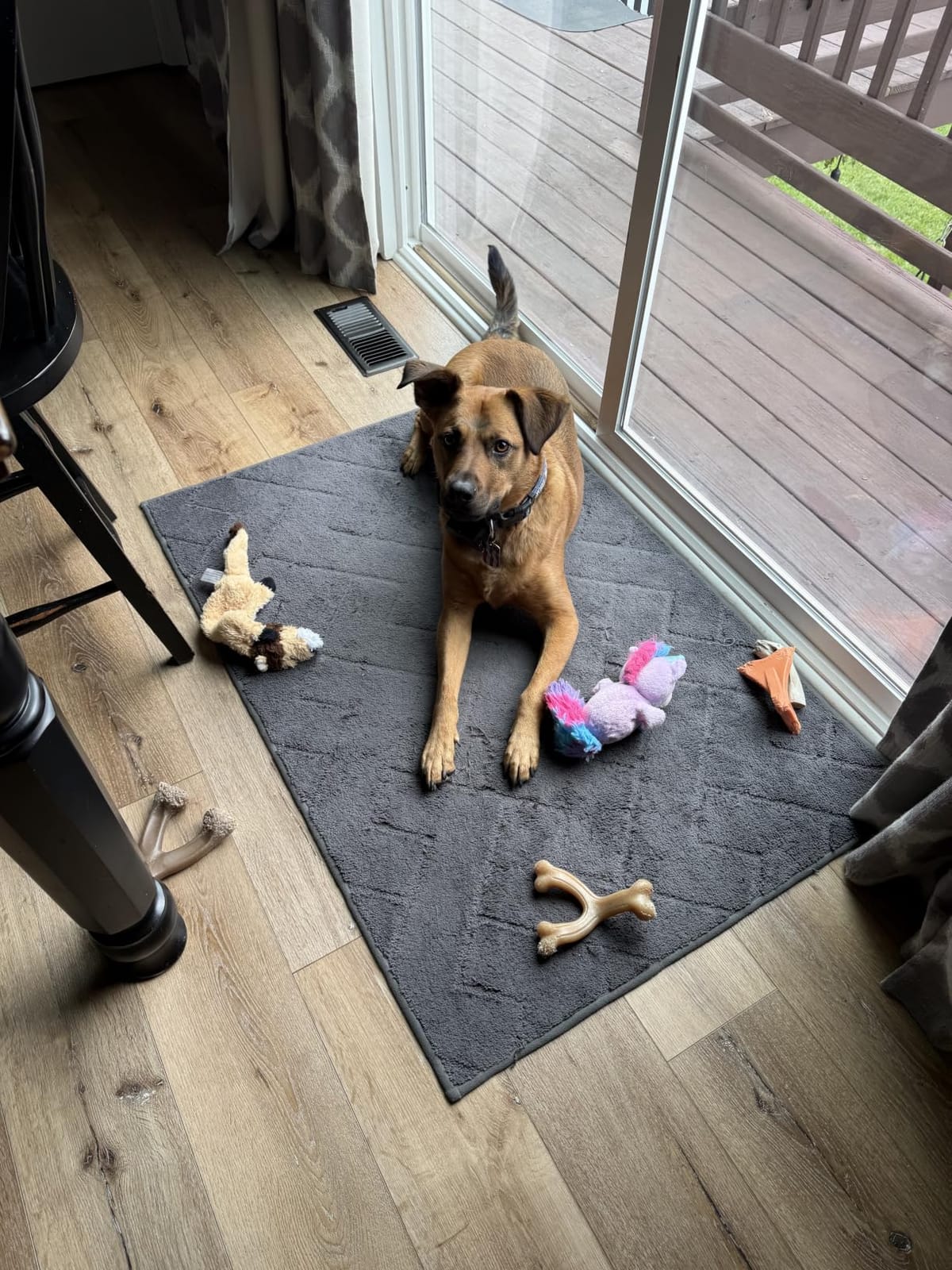
It weighs 4 ounces and measures 5.5 by 3 by 1.5 inches, and with more than 36,000 ratings averaging 4.6 stars it is one of the most proven tools in the category. Owners of pit mixes, huskies, Anatolian and Pyrenees mixes, Boston terriers and even greyhound-type short coats report meaningful hair reduction.
My favorite use for it is not the dog at all. It is the couch, the car seats and the bedding, where the same blade picks up embedded hair that a rubber curry brush just rolls around. Having one tool that does both jobs removes an entire step from my routine, and it works far better for pet hair on car upholstery than the [car detailing brushes](https://modelrec.com/best-car-detailing-brushes/) most people reach for first.
Because the blade is a comb rather than bristles, hair does not cling to it. You gather the collected fur into a ball and drop it, which is a genuine step up from picking fur out of a brush pin by pin.
What to check before you buy it
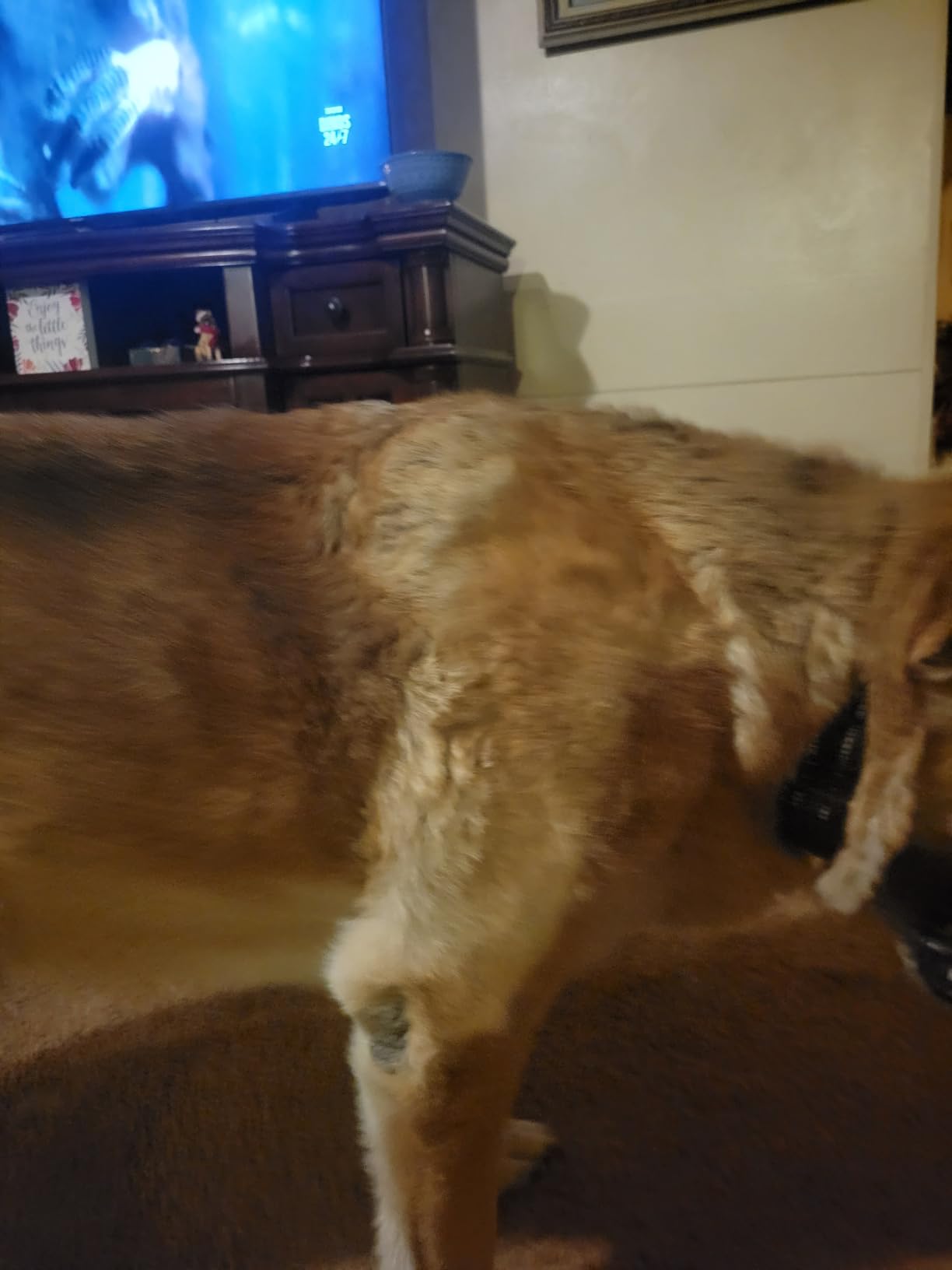
Direction of travel matters more here than with most tools. Brush in the direction the hair grows, and keep the strokes shallow on areas where the coat lies flat. Pressing hard or dragging against the growth is what produces the bald spots and scratched hands that reviewers describe.
Check your floor before you use it on hardwood or tile. The metal edge does not care what it is sliding across, and a dropped fur pile becomes a scratch.
Where it falls short
It is a loose-hair tool, not a deep undercoat tool. On a very dense coat with packed undercoat, you will need a rake or a slicker to get below the surface first. The 5 inch size also limits how much hair you can collect per stroke on a large dog.
Reviewers also note that the teeth can dull with long-term use on heavy coats. It is not a tool you buy once and never think about again if you are grooming a heavy shedder several times a week.
3. MIU COLOR Pet Grooming Brush – Best Budget Stainless Steel Comb
MIU COLOR Pet Grooming Brush, Deshedding Tool for Dogs & Cats, Blue
4 inch stainless steel comb
Detachable comb head
Anti-slip handle
3.5 ounce weight
Pros
- Low cost performance owners rate close to name-brand tools
- Gentle enough for cats and short-haired dogs
- Easy to clean and comfortable to hold
- Removes a substantial amount of loose undercoat
Cons
- No usage guidance so over-brushing can thin the topcoat
- Teeth do not hold hair so you clear them by hand
- Stiff teeth can bother skinny long-haired pets
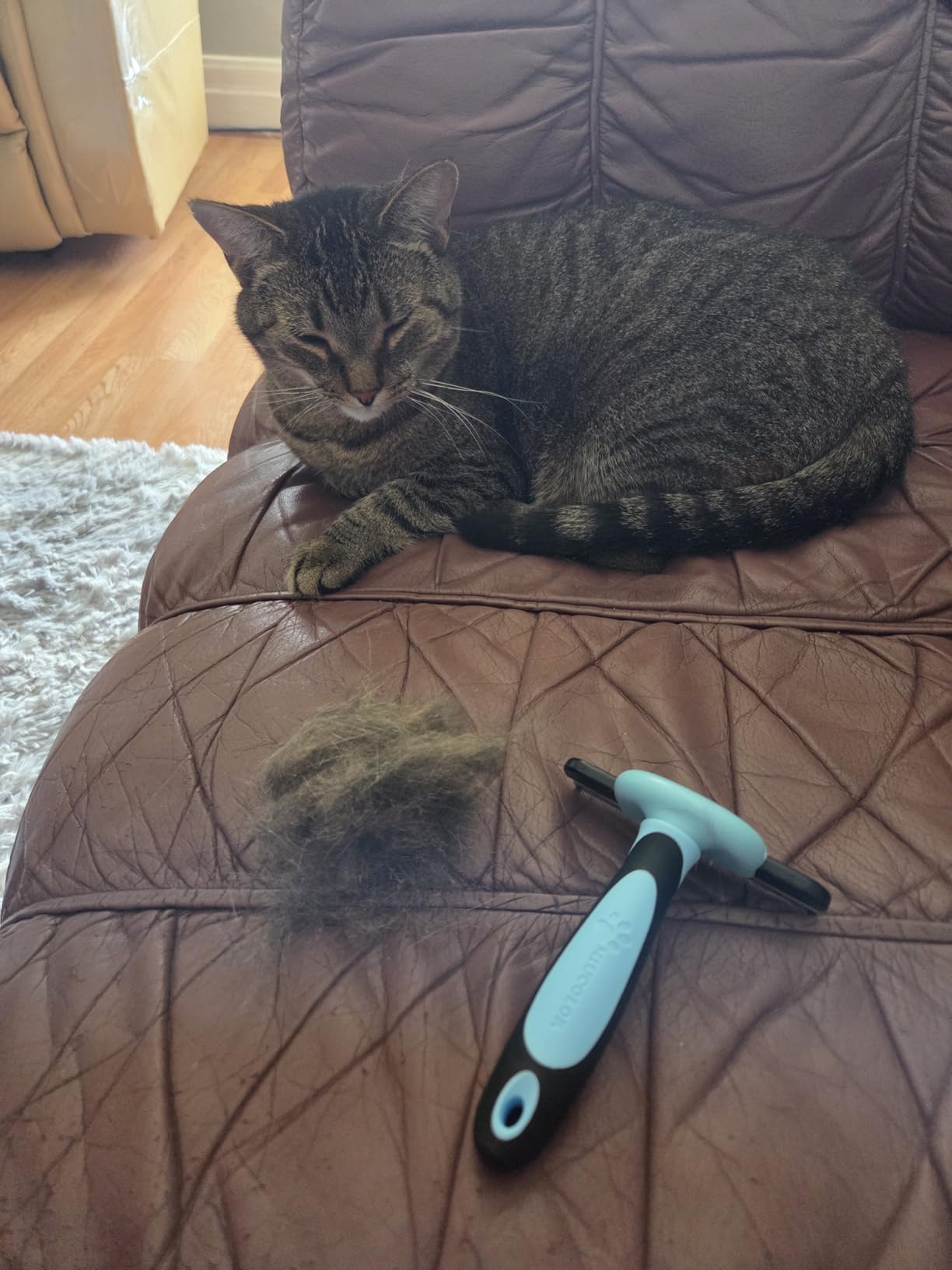
This is the tool I recommend to someone who wants to try deshedding before committing to a bigger setup. The 4 inch stainless steel comb has evenly paced teeth, and the head detaches so you can clear it and keep working rather than holding fur in your lap.
Owners treat it as a stand-in for the name-brand undercoat tools, and the feedback on gentleness is consistent. Cats and short-haired dogs often seem to enjoy the session rather than tolerate it, which matters if you are trying to build a positive grooming habit.
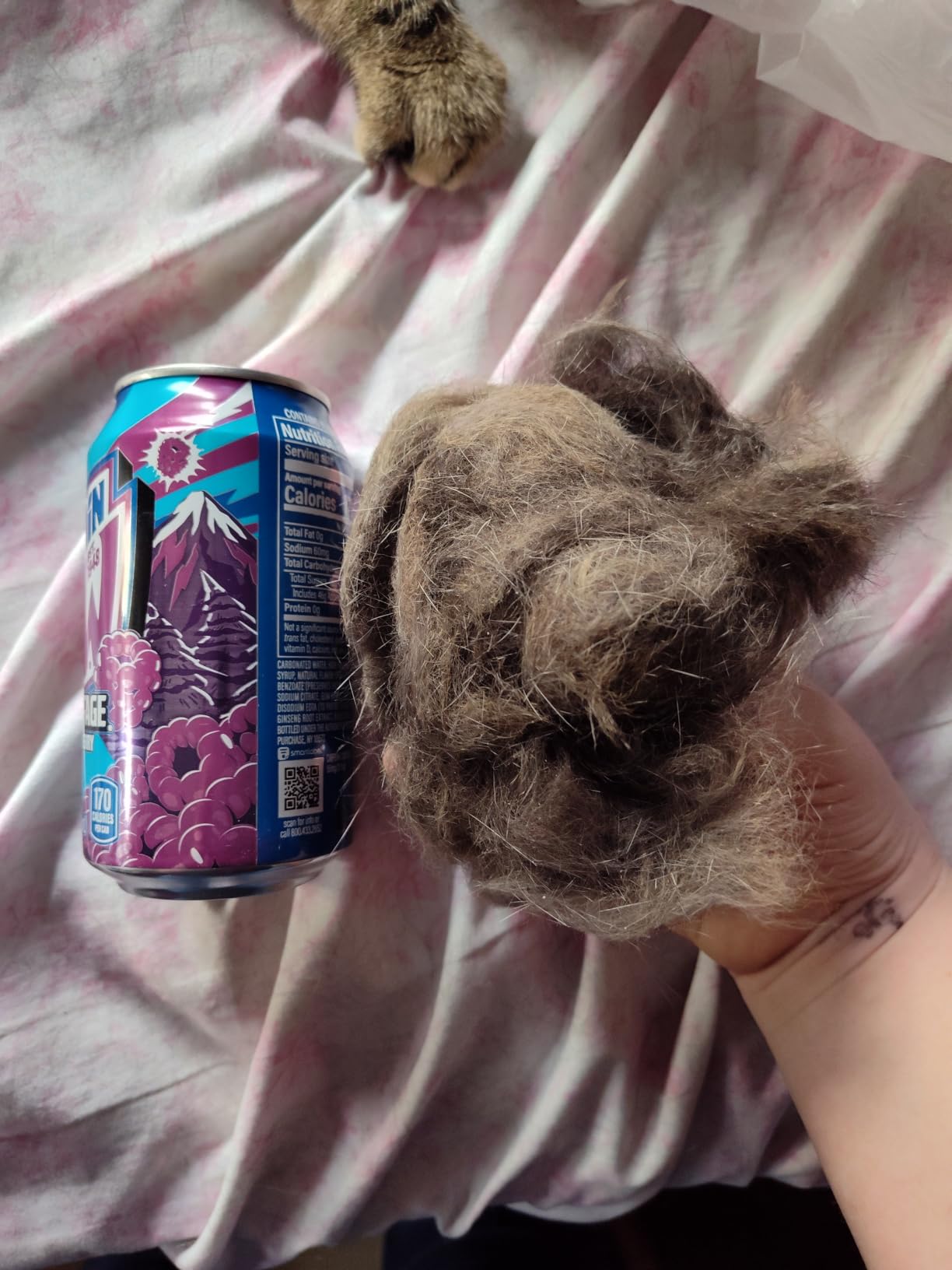
It comes in short and medium hair and long hair variants, and the anti-slip handle gives you enough control to keep light pressure. At 3.53 ounces it is the lightest comb in this roundup, and I have used it on a senior dog whose wrists made a heavier handle uncomfortable.
The safety blade cover on the detachable head is a nice touch. It protects the teeth while the head is stored or if the tool gets knocked off a counter, which happened in my house more than once.
What to check before you buy it
There is no usage guidance in the box and that is the single most important caveat. The most common piece of advice in the reviews is to keep sessions to 10 or 20 minutes once or twice a week, because the tool gives you no warning when you have thinned the coat too much.
Plan for hand clearing. The teeth do not hold collected hair, so you will be pulling fur off the comb by hand every few strokes. A small plastic comb or your fingers work, but budget for the extra time.
Where it falls short
Some buyers report build-quality issues, including a detachable head button failing early. Because the same tool is sold under several brand names, expect to replace it rather than repair it if something loosens.
It is also not a dematting tool. If your dog is a long-haired breed with an undercoat that tangles easily, pair it with a slicker rather than expecting it to work through knots on its own.
4. GoPets 2-in-1 Deshedding and Dematting Comb – Best Premium Two-Sided Tool
GoPets 2-in-1 Deshedding & Dematting Comb & Grooming Brush for Dogs & Cats
12-blade dematting side
23-blade deshedding side
Stainless steel construction
3.5 ounce weight
Pros
- One tool covers both matting and loose undercoat
- Blades glide through coat without pulling
- Built for thick double-coated breeds
- Non-slip handle reduces hand fatigue
Cons
- Costs more than most dual-sided tools in the category
The GoPets comb is the one I recommend when a dog has two different problems at once. The 12-blade side is coarse enough to work into a knot, and the 23-blade side is fine enough to lift loose hair once you have cleared the way. That combination is why it holds up on Golden Retrievers, huskies, doodles and poodles rather than only on short dense coats.
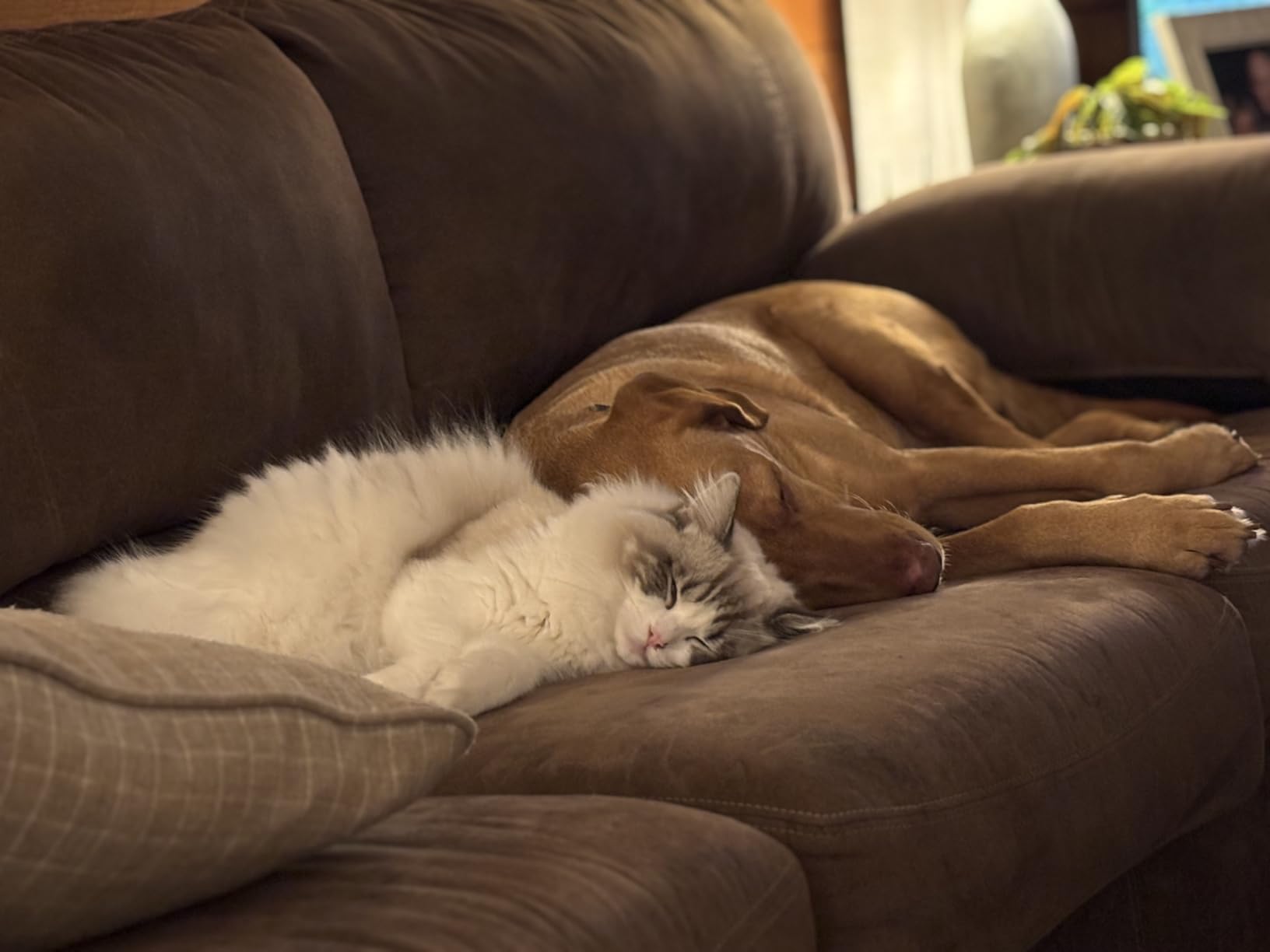
Reviewers describe the stainless steel blades as gliding through the coat without tugging, and several mention that it is usable on sensitive, anxious and senior pets. The blade density is the reason: fine teeth are less likely to catch and pull than long sparse rake teeth.
At 8.9 by 2.5 by 1.4 inches it has a long, narrow profile that gives it more sweep per stroke than the short rakes in this list, which means fewer passes on a large dog. That also makes it easier to cover a wide area like a flank or the rump of a heavy coated breed.
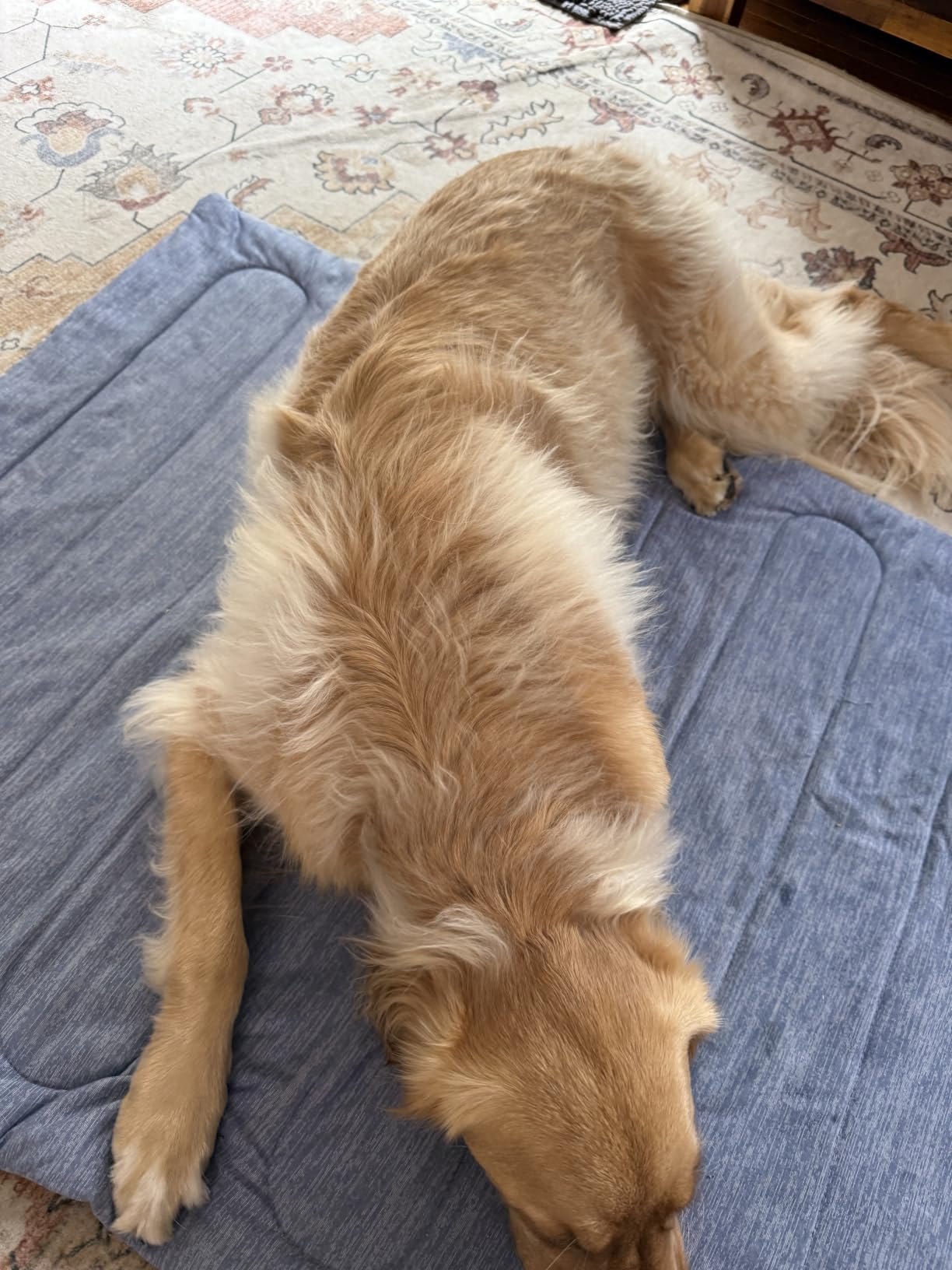
It has more than 21,000 ratings at 4.4 stars, so the feedback is well established rather than a thin sample. Owners of thick double-coated breeds consistently report capturing loose undercoat before it reaches furniture and clothing.
What to check before you buy it
It sits at the higher end of the price range for dual-sided tools, and that is the only real drawback owners raise. If you are buying a single tool for a large, thick-coated dog that both mats and sheds, the cost-per-use math still works out.
Start on the 23-blade side unless you have a specific knot. The coarse side is powerful, and using it as a general deshedding tool on a healthy coat is how you end up thinning the topcoat unnecessarily.
Where it falls short
The 12-blade side is not a substitute for a true dematting comb with a blade underneath. On a tight, established mat you will still want to work in from the bottom of the mat with a dedicated tool or a pair of hands.
At 4.4 stars it sits slightly below the top three in this group, mostly on comments about hair needing to be pulled off by hand rather than released. That is a minor inconvenience, not a dealbreaker.
5. Thunderpaws 2-in-1 Deshedding Brush and Rake – Best for Dense Undercoat
Thunderpaws 2-in-1 Deshedding Brush and Dematting Rake – Double Coat Undercoat Grooming Tool for Dogs and Cats, Reduces Shedding by Up to 95% (Electric Blue)
17 deep-reach rake teeth
68 fine deshedding teeth
Stainless steel build
1.45 ounce weight
Pros
- Two-sided design covers dematting and deshedding
- Deep rake teeth reach beneath the topcoat
- Rounded safety tips avoid scratching skin
- Shaped for 10-15 minute sessions
Cons
- Rounded tips can catch slightly more on tight mats than sharp blades
This one reaches deep into dense undercoat. Seventeen long rake teeth on one side get beneath the topcoat into packed undercoat, and 68 fine teeth on the other side lift what those long teeth loosen. On a dense double coat that has not been touched in months, that two-depth approach does more per session than the fine-tooth tools here.
It is a recent listing and has accumulated roughly 20,000 ratings at 4.4 stars, which is a large sample for a newer product. The listed target breeds are Golden Retrievers, German Shepherds, Huskies, Labradors, Bernese Mountain Dogs and Australian Shepherds, and the reviews match that positioning.
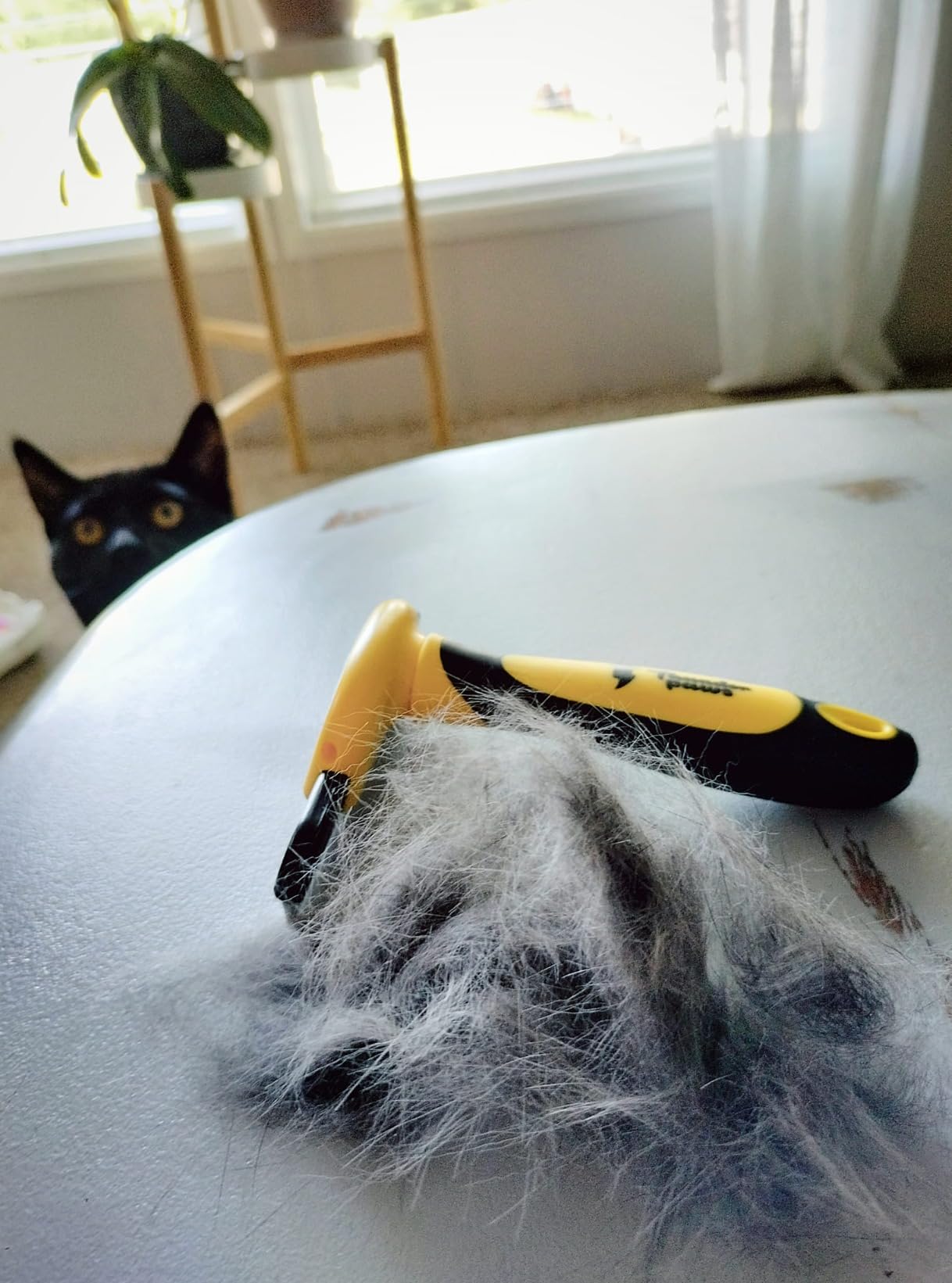
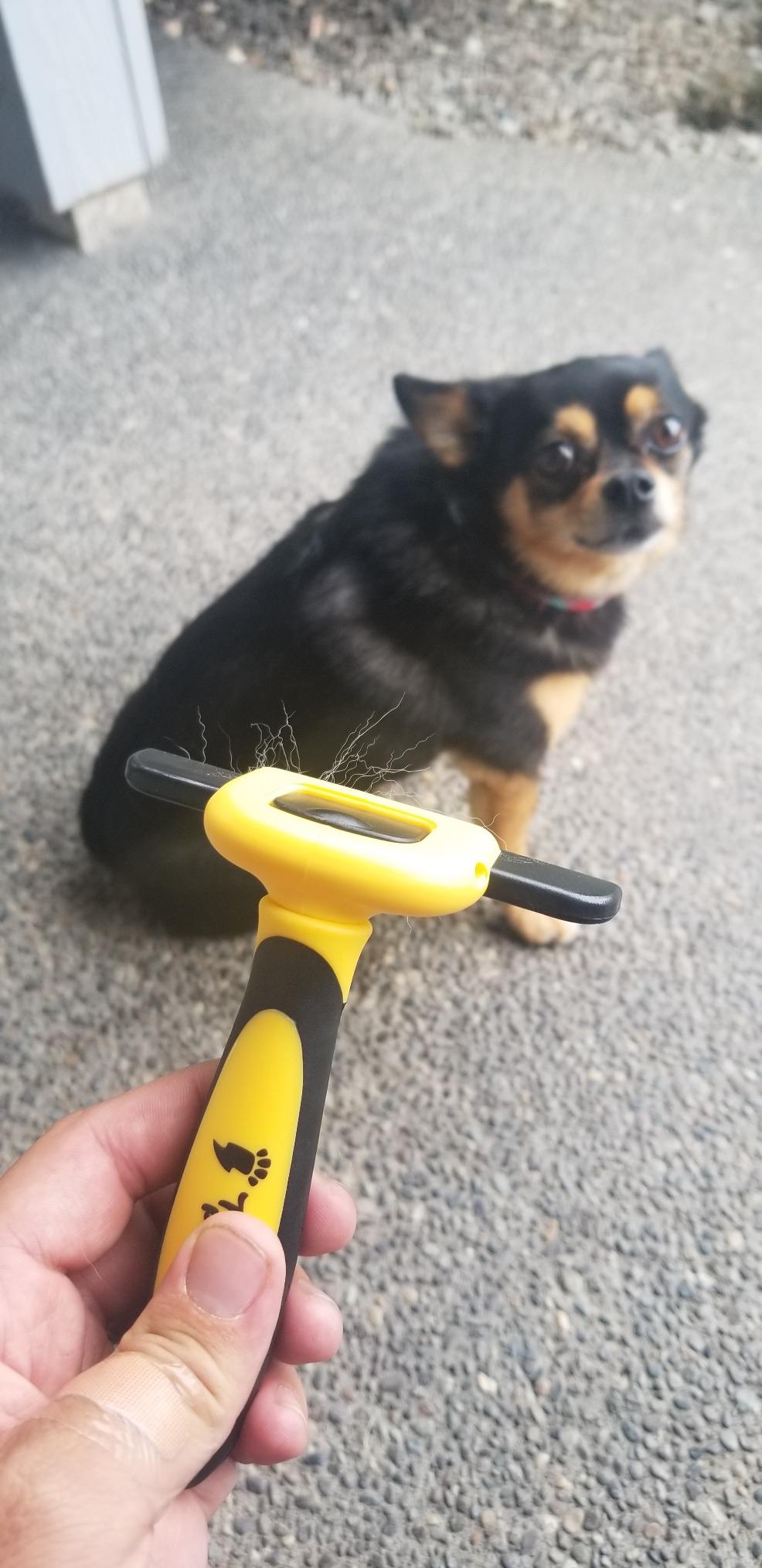
At 1.45 ounces it is the lightest tool in the roundup, and the rubberized comfort grip is shaped specifically for 10 to 15 minute sessions. That shape matters more than it sounds, because a rake that fits your hand properly lets you keep light pressure instead of leaning into the stroke.
The manufacturer specifies that it works on dry coats, and I agree with that. Using it on a wet coat or a slicker-damp coat increases drag and is where people tend to press harder than they intended.
What to check before you buy it
The long rake teeth need somewhere to go. On a short or thin coat the blade will hit skin if you push straight down, so keep the stroke shallow and let the teeth do the work across the surface rather than into the coat.
Check the package dimensions rather than the tool size if you are storing it in a small caddy. The listed package is 9.09 by 5.35 by 1.38 inches, which is a little larger than you would guess from the weight.
Where it falls short
The rounded safety tips trade a little cutting power for gentleness, and on a tight mat the tips can catch instead of slicing through. Owners dealing with established mats report needing an extra pass or a different tool for the worst spots.
It is a dry-coat tool, and it does nothing for tangling the way a fine-pin slicker does. On a long-haired double coat that mats between the legs, pair it with a slicker in the same drawer.
6. EquiGroomer 5-Inch Undercoat Brush – Best for Small Dogs and Tight Spots
EquiGroomer 5-Inch Undercoat Deshedding Brush for Dogs & Cats, Purple
Rounded stainless steel teeth
Wavy saw-like blade
Wooden block handle
2.89 ounce weight
Pros
- Removes large volumes of dead undercoat and dandruff
- Does not irritate skin and dogs tolerate it well
- Hair does not clog the tool mid-session
- Compact size fits legs
- belly and face
Cons
- Wavy blade releases hair instead of collecting it
- Fine undercoat sticks to hands with static
- 5 inch size feels oversized on very petite pets
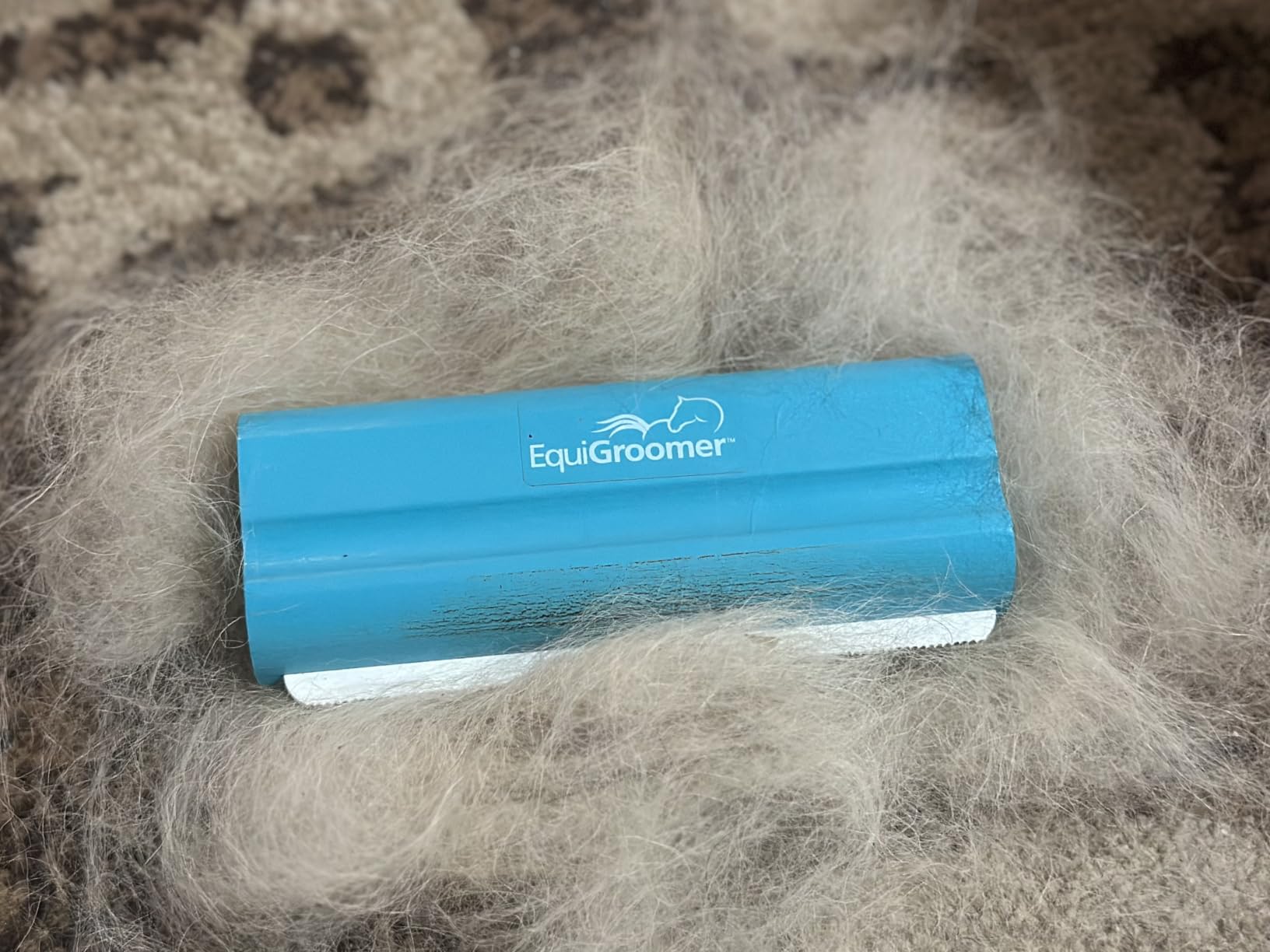
The EquiGroomer is a short blade with rounded stainless steel teeth set in a wavy, saw-like pattern, mounted in a wooden block handle. The wave is what makes it selective: the teeth catch dead hair and fur with rough, damaged cuticles while healthy silky fur slips between them. That is a gentler filter than a straight rake, and it is why animals that dislike being brushed often accept this one.
Because the metal never contacts the skin directly, red marks are essentially not a concern. Owners report large volumes of dead undercoat and flaking skin coming out in one session, and several describe it replacing two or three other tools in their drawer.
It is also easy to clean. Hair collects on the coat surface rather than packing into the teeth, so you can wipe it down or rinse it without picking hair out of a brush head. That makes it a good fit for a household where one person does the grooming for several pets.
At 5 by 1.5 by 2.5 inches and 2.89 ounces, the compact blade is genuinely the right size for a face, a leg or a paw. It is the tool I use for the spots a full-size rake simply will not fit into.
What to check before you buy it
Expect the hair to be everywhere. The wavy blade lets go of fur as you work rather than trapping it, so loose undercoat drifts and you gather it by hand as you go. If you are deshedding indoors, work outside or over a sheet you can shake out.
Measure your dog before ordering. On a very small or petite pet the 5 inch blade can feel oversized, and on a long dense coat the teeth are simply too short to reach deep enough.
Where it falls short
It is not a deep undercoat tool. Owners of long, dense-coated breeds such as Shelties report that it does not clear the volume of undercoat they need removed, because the teeth are short by design.
Fine, almost translucent undercoat can also be hard to ball up and tends to stick to your hands with static. It is an annoying detail, but it does not affect how well the tool works.
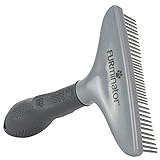
7. FURminator Grooming Rake – Best for Brush-Averse Dogs
FURminator Grooming Rake Tool for Dogs & Cats With Thick Coats
Rotating metal teeth
Long teeth for thick coats
Rounded pin tips
Non-slip handle
Pros
- Rotating teeth move through coat without catching and pulling
- Dogs tolerate it better than close-set deshedders
- Leaves coat smooth rather than stripped
- Harder to over-use than a traditional deshedding brush
Cons
- Loosened undercoat flies off in small clumps rather than bunching
- Some arrive with slightly bent teeth
- Not a one-session full deshedding tool
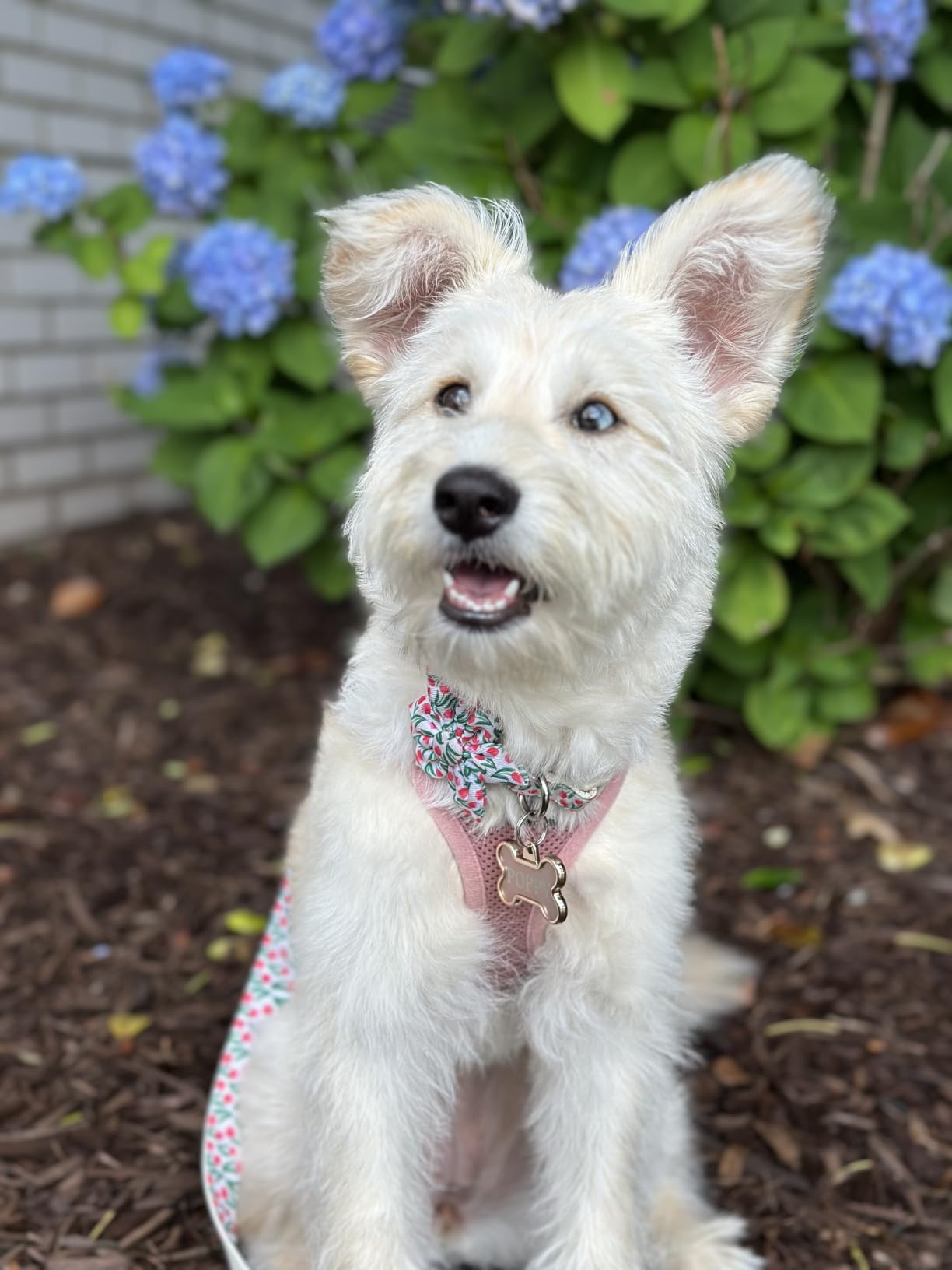
This rake is different from everything else on this list. The metal teeth rotate as they move through the coat, which means they lift loose hair rather than hooking it and pulling. Dogs notice the difference immediately, and owners consistently report better tolerance on animals who run away from a conventional undercoat rake.
Teeth are long and widely spaced enough to penetrate thick, long double coats, with rounded pin tips to reduce scraping. It holds more than 14,000 ratings at 4.6 stars and comes up again and again in feedback for huskies, golden retrievers, German Shepherds and Australian Shepherds.
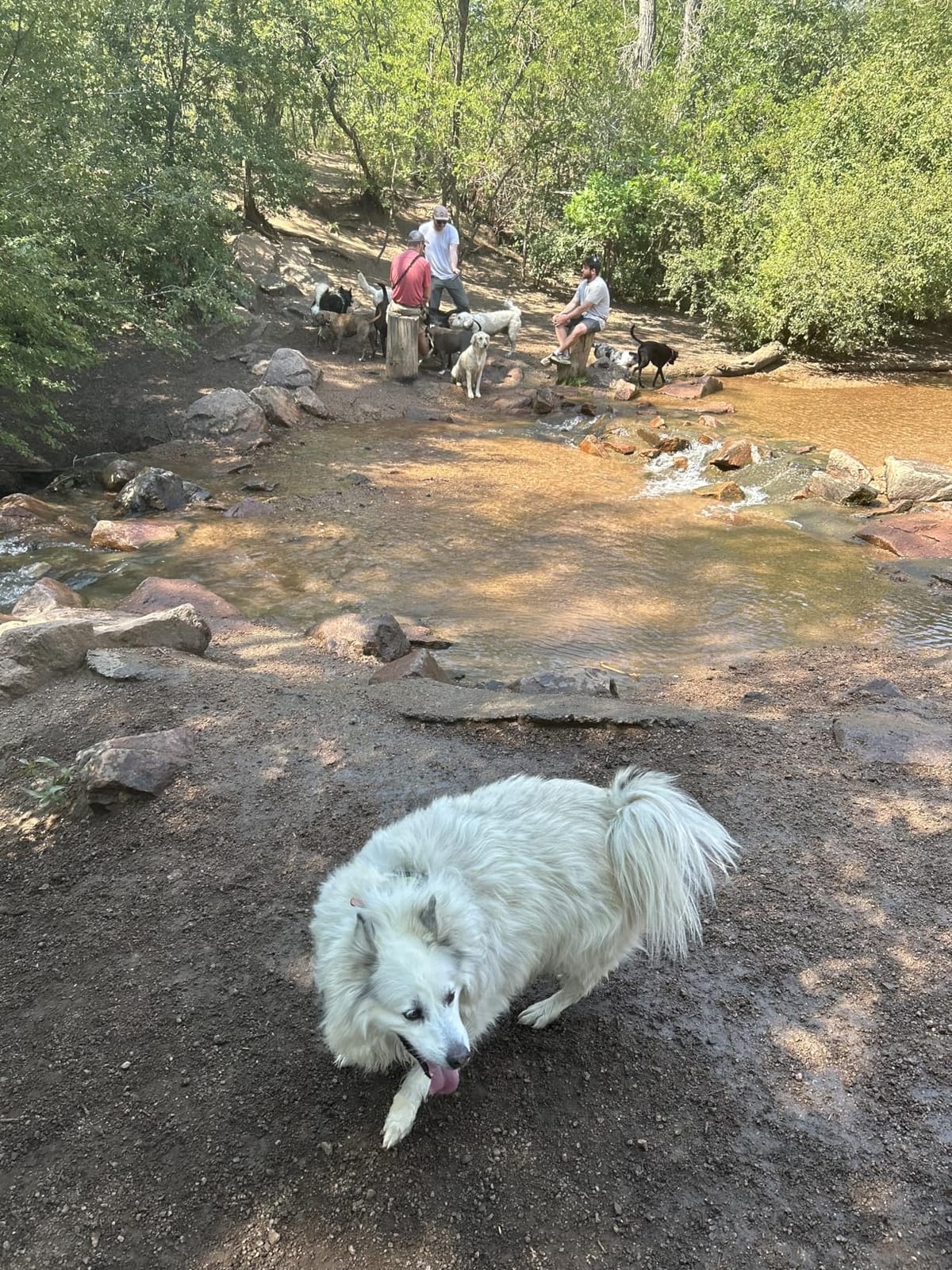
The coat is the other thing I like about it. Because the teeth are not cutting, it tends to leave the coat looking smooth and sleek rather than stripped, and it is harder to over-use than a close-set deshedding brush. That matters on a double coat, where stripping the undercoat down too far causes actual skin problems.
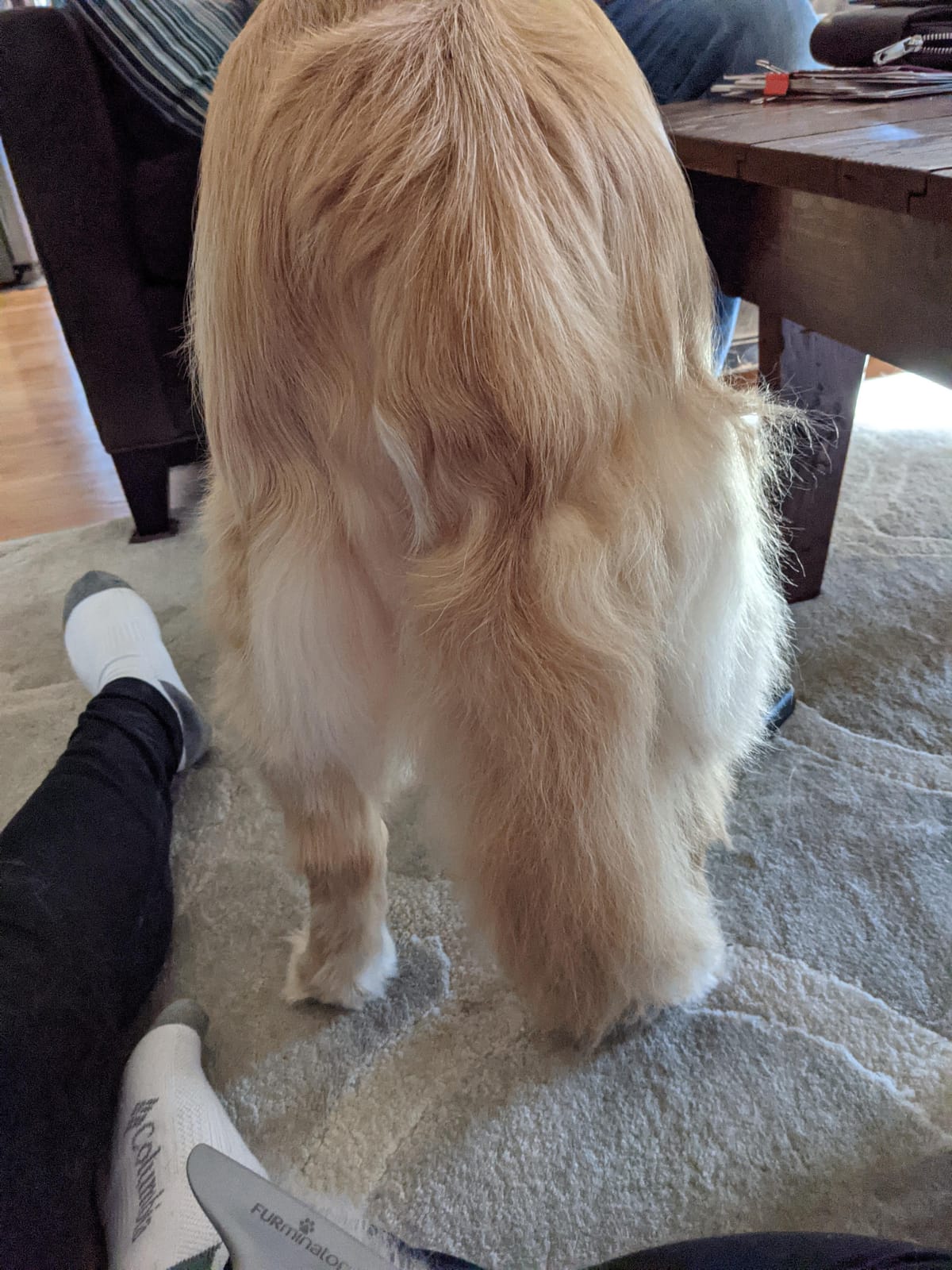
Several owners of heavy blow-outs report filling a bag with loose fur after 10 to 15 minutes of work. It also handles small tangles and knots when you start at the bottom of the mat rather than the top.
What to check before you buy it
It is a maintenance tool, not a blow-out remover. The design loosens undercoat and lets it release naturally over the following days, so if your dog is going through a full coat blow you will need a second tool that actively pulls hair out in the same session.
Inspect the teeth on arrival. A few owners report tools arriving with slightly bent teeth, and a bent rotating tooth will not spin properly. It is an easy return, but it is worth checking the day the box arrives.
Where it falls short
The loosened fur scatters. Instead of bunching at the end of the stroke, it comes off the coat as small clumps that land on the floor and stick to your clothes, so the cleanup takes as long as the brushing.
At 6.56 ounces and 9.65 inches long it is a long-handled rake, which makes it a poor match for small dogs or for anyone with hand or wrist trouble.
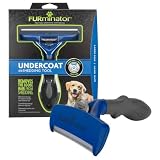
8. FURminator Large Dog Undercoat Tool – Best for Dogs Over 50 Pounds
FURminator Large Dog Undercoat deShedding Tool for Long Hair
Sized for dogs over 50 pounds
One-push hair release button
Ergonomic handle
9.14 ounce weight
Pros
- Purpose-built for large
- long-haired dogs
- Hair release button means no hand-pulling of clumps
- Removes loose undercoat without damaging the topcoat
- Highest average rating in this set
Cons
- Large size is wrong for small or short-haired dogs
- Works on loose hair rather than packed undercoat
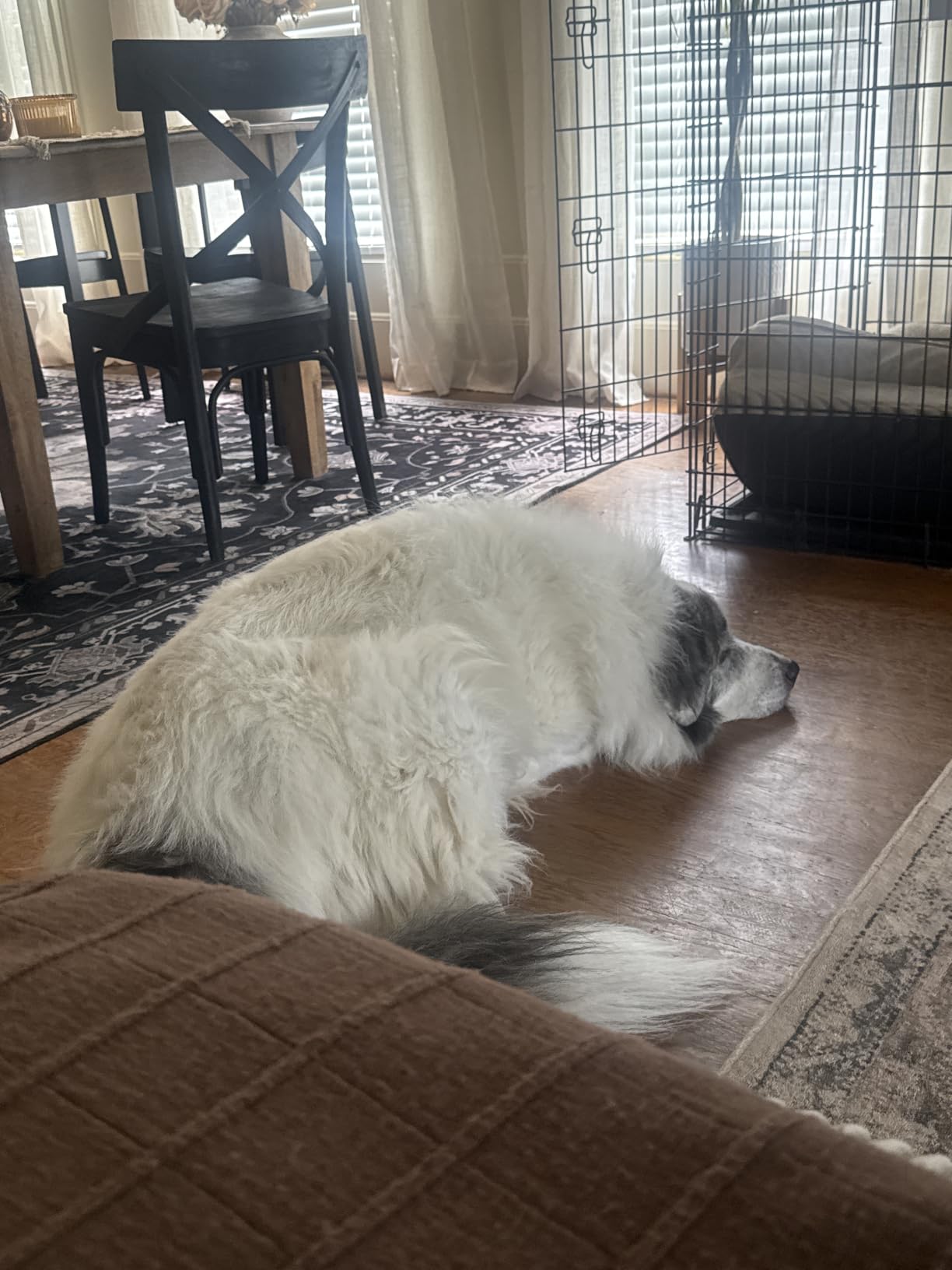
This is the highest-rated tool in the roundup at 4.7 stars, with 83 percent of ratings at five stars across more than 13,000 reviews. It is purpose-sized for dogs weighing over 50 pounds, and the head width is matched to that so a single stroke covers a meaningful section of a big dog’s flank.
The one-push hair release button is the feature no rake-style tool in this group offers. Instead of pulling a clump of dead undercoat off the blade by hand, you press once and the collected hair releases, which is a real time saver over a long session on a large dog.
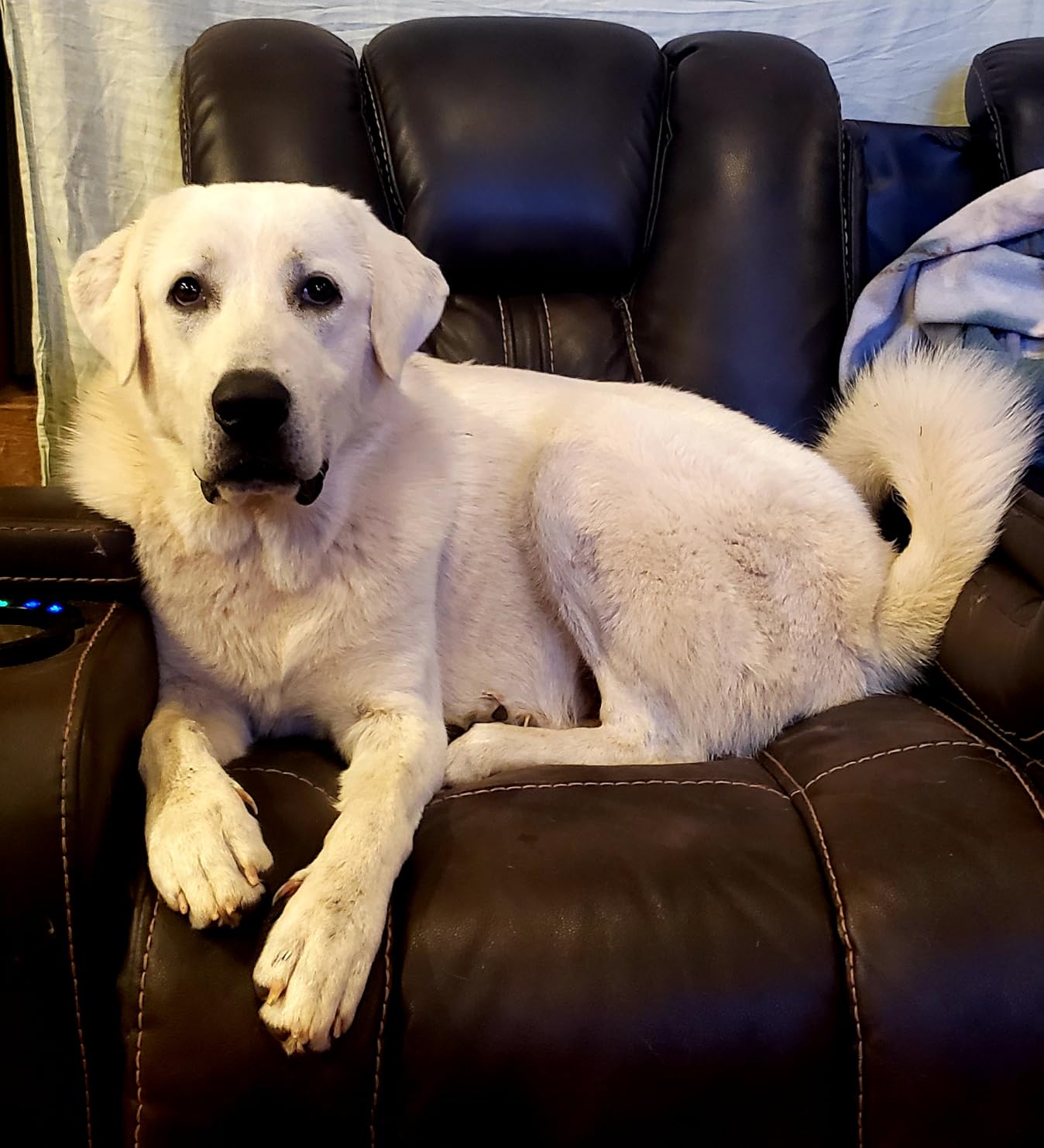
It works through the topcoat to lift loose undercoat hair without cutting skin or damaging the topcoat when you follow the direction of hair growth. Owners of large long-coated dogs report a visible reduction in hair on furniture within a few weeks of regular use.
It also carries a manufacturer work-or-money-back guarantee, which is unusual in this category. For a tool you are using on a hundred-pound dog several times a week during a coat blow, that is worth more to me than any extra tooth on the blade.
What to check before you buy it
Weigh your dog and be honest about it. This tool is built for dogs above 50 pounds. On a smaller dog the head is too wide to work with, you will get an uneven result, and you are paying for capability you cannot use.
Understand the depth. It reaches through the topcoat to gather loose hair rather than digging deep into packed undercoat. If your dog’s coat is thick and matted at the base, you still need a rake or a slicker to open it up first.
Where it falls short
It is a single-purpose size. Owners of short-haired or small double-coated dogs simply cannot use it, and it is the least versatile tool on this list even though it is the best rated.
At 9.14 ounces it is the heaviest tool here, and on a dog with a lot of coat the wrist load adds up over a full session. Taking breaks every ten minutes keeps that manageable.
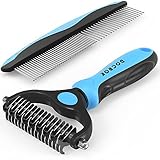
9. Docrok Pet Grooming Combo – Best for Mats and Knots
Docrok Pet Grooming Combo – Blue Deshedding Brush with Metal Comb for Detangling and Dematting Long, Matted Fur on Cats and Dogs
Rake plus separate metal comb
Dual-sided rake
Stainless steel teeth
Lightweight TPR handle
Pros
- Two tools in one set so you can detangle while a pet waits
- Pulls large clumps from doodles
- shepherds and long-haired cats
- Tines are blunt and do not scratch your hand
- Reports of calmer pets and reduced scratching
Cons
- Removes loose hair only
- it does not shear or shave
- Hair must be swept out of both tools by hand
- Comb tugs slightly on thicker hair
The Docrok set ships with two tools, a deshedding rake and a separate straight metal comb, and that second tool is the point. On a dog with mat-prone areas, being able to comb out a section while the dog settles is a much calmer process than putting the tool down and picking it back up every few strokes.
The rake has a wide side for dematting and a dense side for deshedding. The comb has a wide-toothed side for knot removal and a dense side for loose hair, and it is usable on legs, the head and the tail. That coverage of the friction zones is where most double coats start matting.
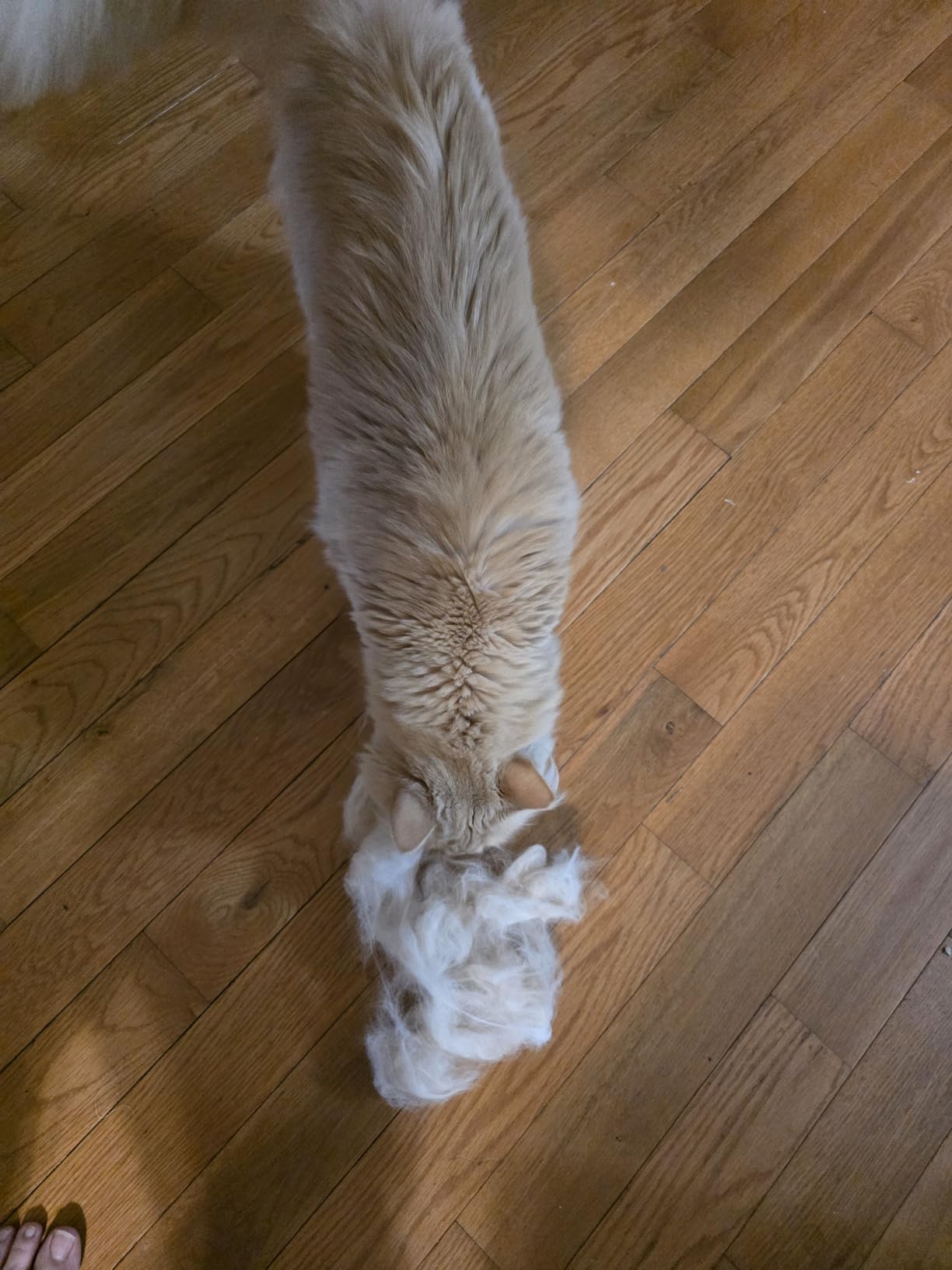
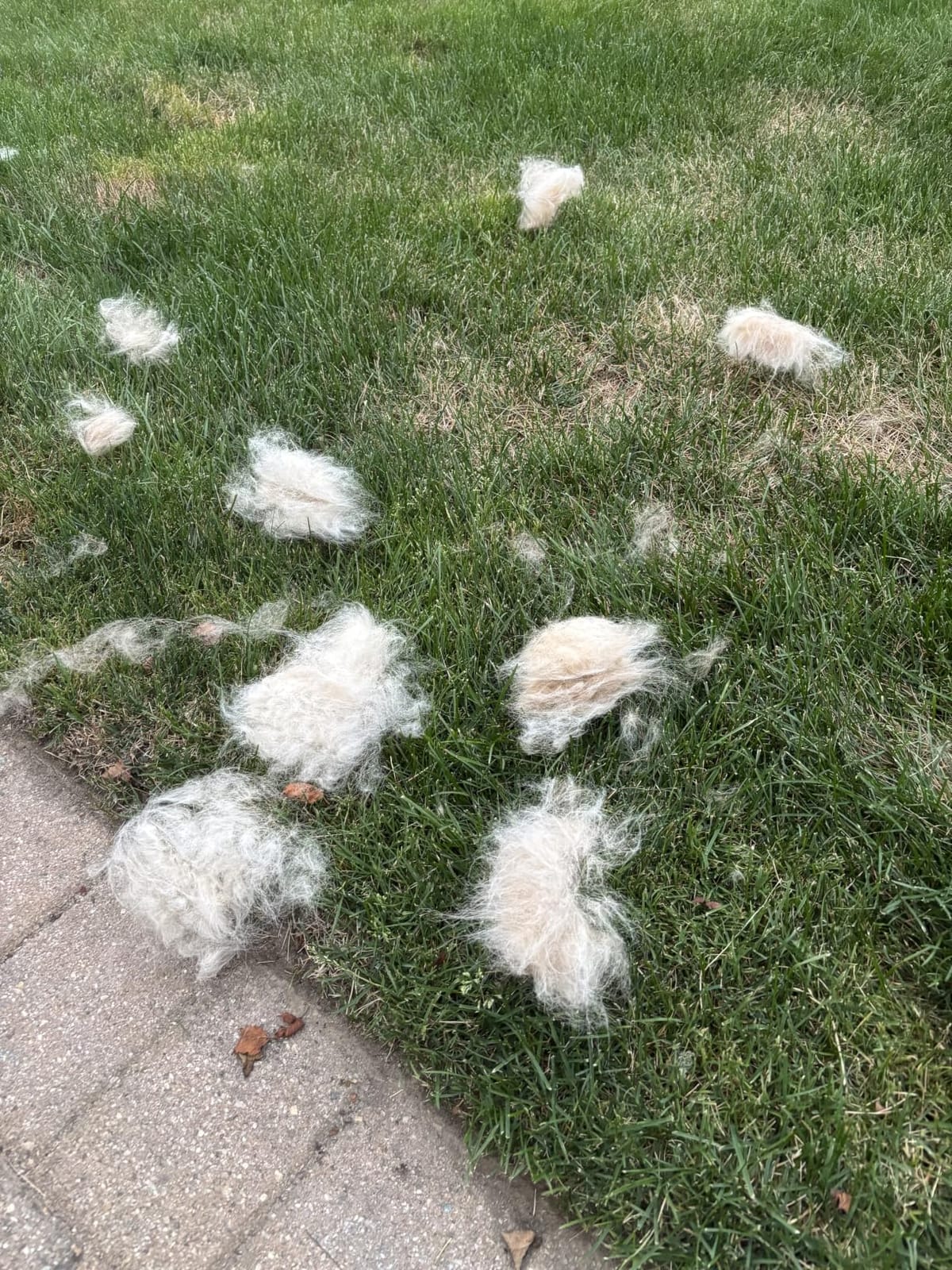
Reviewers report large clumps of loose hair coming out of doodles, German Shepherds, Belgian Malinois, long-haired cats and corgis. Several mention that their dogs are calmer and scratch less after regular use, which suggests the tool is doing the work without the tugging that sets up a bad association with grooming.
The tines are blunt rather than pointed, so clearing hair out of the tool does not scratch your fingers. It comes in at 6.74 ounces with a lightweight TPR handle, and the stainless steel teeth hold up on wiry shepherd-type coats.
What to check before you buy it
Ignore the marketing exaggeration. Reviewers push back on the idea that this tool shears or shaves like a razor. It removes loose hair, and the topcoat is not shortened. Expect a tidier dog, not a clipped one.
Plan your cleanup. Hair has to be swept out of both tools by hand during and after the session, and there is no release button on either piece. The blunt tines make that easy, but it is still extra time.
Where it falls short
The comb tugs slightly on thicker hair, so on a wiry coat you want to work in small sections rather than long strokes. Owners also note that the set carries no printed guidance on technique or frequency, so you need to set sensible limits yourself.
It is a two-piece set, which means more to store and more to keep track of than a single tool. If you only have one dog with a clean, unmatted coat, that is more hardware than you need.
10. Aumuca Self-Cleaning Slicker Brush – Best for Daily Maintenance
Aumuca Skin Friendly Self-Cleaning Slicker Brush for Dogs & Cats, Gentle Pet Grooming Tool for Shedding & Deshedding, Efficient Hair Remover for Long & Short Haired Pets
Stainless steel wire bristles
Round plastic protective tips
One-click cleaning button
5.29 ounce weight
Pros
- Round coated tips do not scratch skin
- One-click button releases hair without hand picking
- Loosens significant fur from huskies and Australian Shepherds
- Deep angled bristles stay gentle
- Easy to rinse clean
Cons
- Handle shape is not ergonomic and can slide with firm pressure
- Bristles are slightly wide for smaller cats
- Light pressure is required for the gentle action
A slicker brush is not a deshedding tool in the strict sense, and it belongs in this roundup for a specific reason: it is the one that keeps the coat from reaching a coat blow in the first place. Weekly slicker work loosens dead hair at the surface before it works its way down into the undercoat and starts tangling.
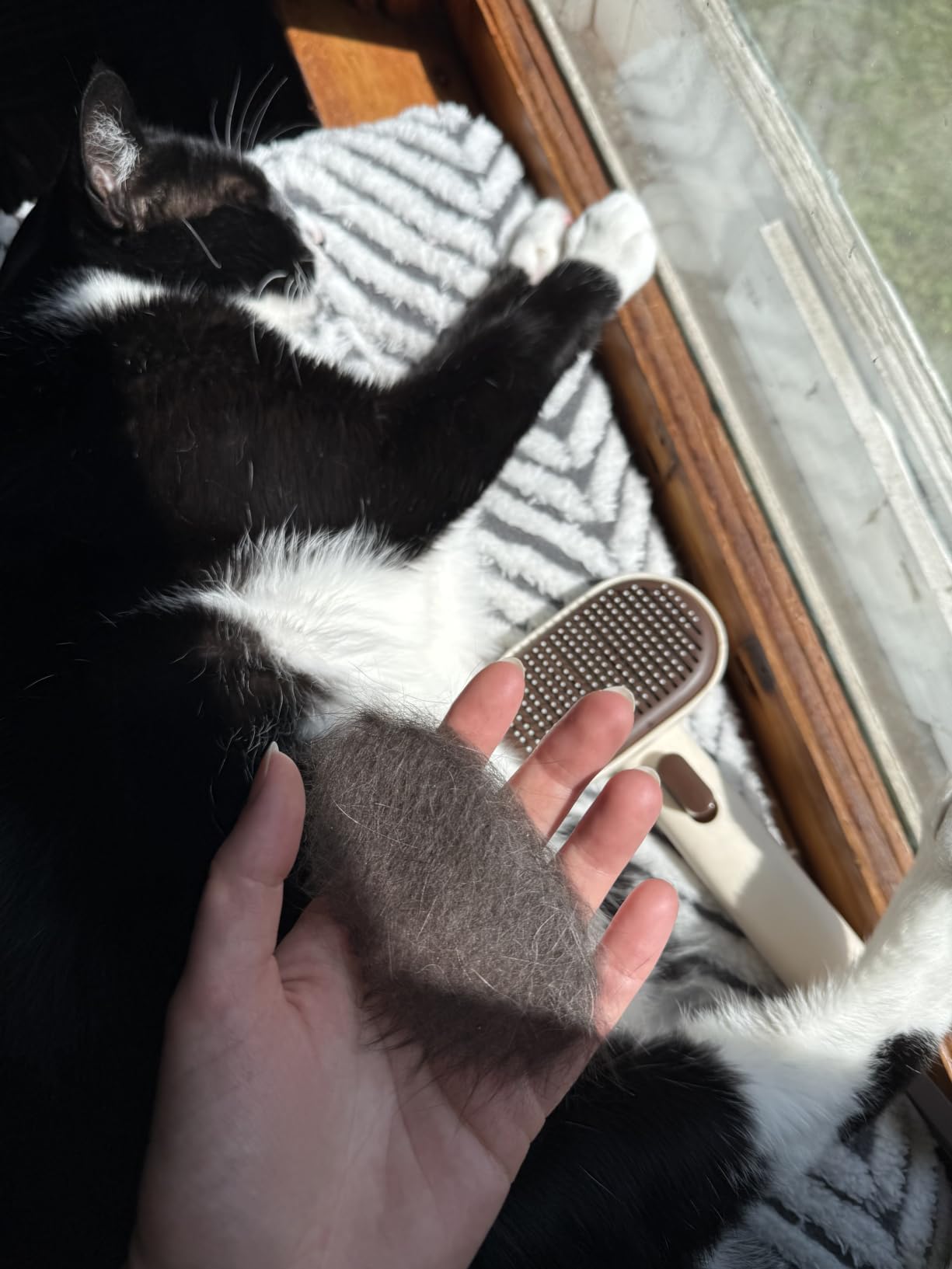
The bristles are stainless steel wire with round plastic protective tips, described as roughly 1.2 times thicker than comparable brushes and angled at 150 degrees. That angle and thickness are why they reach into a dense coat without the scratching that thinner pins cause. Even cats that normally resist brushing tend to accept it.
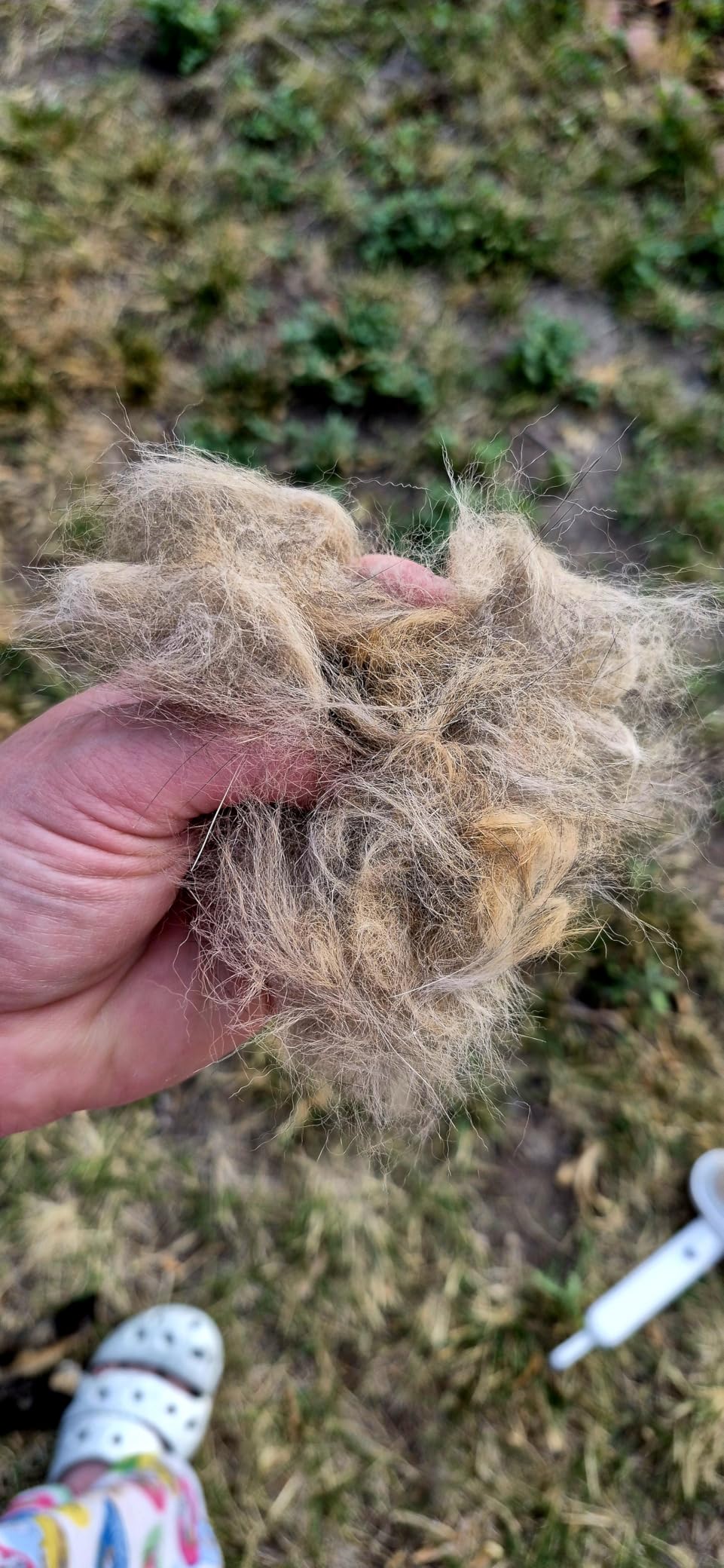
It has one of the largest review bases in the set at more than 38,000 ratings, and the one-click cleaning button is the feature reviewers name most. You press the button, the bristles retract, the hair releases, and the button pops back. You never stop mid-session to pick fur out of the brush head by hand.
It weighs 5.29 ounces and the ABS body has a silicone hanging loop for storage. There is a 90-day money-back guarantee behind it and it comes in seven colors, which is a minor thing but makes it easy to spot in a shared grooming caddy.
What to check before you buy it
Use light pressure. The round tips are gentle, but leaning into a stroke reduces that gentleness and is the fastest way to make a dog decide brushing is unpleasant. Let the angled bristles do the work.
Check your pet’s size against the brush head. At 8.3 by 4 by 1.9 inches it is a full-size brush, and reviewers note the head can be slightly too wide for smaller cats. For a small dog, look for a narrower slicker.
Where it falls short
The handle is the weak point and reviewers say so directly. It is not ergonomic and can slide out of your hand if you apply real force, so support the brush head with your other hand on any dog who leans into the stroke.
It is also a surface tool. It will not reach deep into a packed double coat, and on its own it will not clear a heavy coat blow. Treat it as the maintenance half of a two-tool routine rather than a replacement for a rake.
How to Choose a Deshedding Brush for a Double Coated Dog
Choosing the best deshedding brushes for double coated dogs comes down to three things: how deep the tool needs to reach, how your dog reacts to a metal tool, and how much coat there is to cover. Get those right and the brand barely matters. Get them wrong and you are buying a tool that irritates skin or never touches the undercoat.
Undercoat rake vs deshedding tool vs slicker vs rubber curry
An undercoat rake has long, widely spaced rounded teeth that dig into dense undercoat and pull dead hair out in a stroke. A deshedding tool uses a fine, curved stainless steel edge that separates the topcoat and catches loose hair that has already released. A slicker brush has fine wire pins that work the coat surface and are the best prevention tool you own. A rubber curry brush has rubber nubs for massage and loose hair, and it is a finishing or bath-time tool rather than a deshedding tool.
If you only buy one, match the tool to the job you actually have. Loose hair coming loose in a heavy coat blow means a deshedding tool. Tight, packed undercoat that has not been groomed in months means a rake. Hair that needs loosening before it mats means a slicker.
Coat type and coat length
Short, dense double coats like a German Shepherd or a Labrador respond best to long rake teeth that penetrate the layer. Long, flowing double coats like a Golden Retriever, a Collie or a Bernese Mountain Dog need a wider head and, in the worst areas, a slicker to open the tangles before a rake can do anything useful.
Shelties and other very long dense coats are the hardest case. Owners of these breeds report that a 5 inch blade simply does not reach deep enough, so a longer rake and a slicker both earn their place.
Dog size
Size is not a preference here, it is a function. A tool sized for dogs over 50 pounds cannot be used properly on a 20 pound dog, and a compact blade that fits a Pomeranian will take five times as long on a Malamute. Match the head width to the dog and the blade length to the coat density.
Weight matters more than people expect. At 9.14 ounces, a large-dog deshedding tool will give you a sore wrist over a full session on a thick coat unless you take breaks every ten minutes.
Sensitive skin and anxious dogs
Rounded teeth and plastic-coated bristle tips are the two features to look for. Reviewers are consistent on this: dogs with thin or sensitive skin do better with the wave-blade designs and the coated-pin slickers than with long straight rake teeth, and dogs that dislike handling do better with rotating teeth that do not pull.
Any tool can be introduced gradually. Letting the dog sniff it, rewarding any tolerance, and keeping the first two sessions to a couple of minutes builds the association that lets you use a firmer tool later.
Hair release and cleanup
This is the most underweighted feature and it affects every session. A one-push hair release button, a retracting bristle button, or a comb-style blade that does not trap hair will each save several minutes per session. A tool with no release mechanism means pulling fur off by hand every few strokes, and during a heavy coat blow that adds up quickly.
How often to brush a double coated dog
During a coat blow, short daily sessions beat one long weekly session. Most owners find five to ten minutes a day clears loose hair as it releases, while a single hour-long session on Saturday tends to overwhelm the dog and often gets skipped.
Outside the blow, one or two sessions a week is enough for most double coats, and a slicker on the surface between rake sessions keeps tangles from forming. The reviews on budget tools consistently warn against going over that, because a coat with no guard hairs left is easier to burn, easier to sunburn and harder to insulate.
Technique: the line brushing method
Start at the bottom of the coat and work upward in sections, parting the hair down to the skin and brushing from the part outward rather than brushing the surface. Take small sections you can see the skin on, use light pressure, and always brush in the direction the hair grows.
Work the friction zones last rather than first. Behind the ears, under the arms, at the tail base and in the “pants” area are where mats start, and doing them when the dog is already tired guarantees a fight.
What else reduces shedding
Brushing only handles the hair that has already released. Owners on grooming forums consistently report that switching to a higher-quality food with named animal protein and adding a fish oil supplement noticeably reduced shedding within a few weeks, because a poor coat sheds more.
Professional groomers use a sequence worth copying at home: a high-velocity dryer to loosen the undercoat, a deshedding shampoo, a rubber curry brush in circular motions while the coat is wet, then the undercoat rake, the slicker, and a comb for finishing. Even without the dryer, the wet rubber curry step pulls a surprising amount of loose hair out.
When to call a professional
If the mats are tight to the skin, if your dog is older and painful to stand or turn, or if the coat has been neglected for months, book a groomer. Working a tight mat out yourself with a rake is how dogs end up with bare patches, and an arthritic dog should not be asked to hold still through that.
A professional is also worth it for a puppy’s first introduction to a metal tool or for a dog with a bite history around handling. A groomer can desensitize your dog in a controlled setting before you take over at home.
Tool care
Clear hair from any tool after every session. Hair left in the teeth pulls on the coat next time, which is a fast way to teach a dog that brushing hurts, and trapped moisture against metal encourages rust on any stainless steel tool.
Wipe blades with a damp cloth, rinse the head, and dry it flat rather than standing it on the teeth. If you are cleaning the tool on a regular schedule, it will last far longer than one that only gets a rinse when the fur becomes visible.
While you are choosing hardware, our guides to [heated hair brushes](https://modelrec.com/best-heated-hair-brushes/) and [badger shaving brushes](https://modelrec.com/best-badger-shaving-brushes/) cover the other tools in the house that benefit from the same kind of care routine.
Frequently Asked Questions
Should you deshed a double-coated dog?
Yes, during a coat blow you should, because loose undercoat causes matting, traps moisture near the skin and ends up all over your home. Work it out in short daily sessions rather than one long session, and never strip the coat down past the point where healthy guard hairs remain.
What are the best brushes for double-coated dogs?
A dual-sided undercoat rake handles both matting and thinning, a fine-tooth deshedding tool catches loose hair that has already released, and a slicker brush with round coated tips handles weekly maintenance. Most owners end up owning a rake and a slicker, and use the slicker between rake sessions.
What is the best dog brush for double coats?
For most double-coated dogs the Maxpower Planet dual-sided rake is the best overall choice, because the 9-tooth side handles knots and the 17-tooth side does the deshedding, with rounded teeth that do not scratch. Dogs that are brush-averse do better with rotating teeth, and small dogs need a compact blade.
What is the best way to brush a double-coated dog?
Use the line brushing method: part the coat down to the skin, brush from the part outward in small sections, work in the direction the hair grows and use light pressure. Start at the bottom of the coat and move upward, and save the friction zones behind the ears and at the tail base for last.
What is the difference between a deshedding rake and an undercoat rake?
An undercoat rake has long, widely spaced rounded teeth that dig into dense undercoat and pull dead hair out. A deshedding tool uses a fine curved edge that separates the topcoat and catches hair that has already released from the skin. Rakes go deeper, deshedding tools are gentler and better on dogs that dislike being brushed.
What do groomers use to deshed dogs?
Professional groomers work in sequence: a high-velocity dryer to blow the undercoat loose, a deshedding shampoo, a rubber curry brush in circular motions while the coat is wet, then an undercoat rake, a slicker brush, and a metal comb for finishing. At home you can skip the dryer and keep the rest of the order.
Should you brush out a dog’s undercoat?
Yes, but only the loose dead hair, never down to bare skin. Brushing out the loose undercoat prevents matting and keeps the coat insulating. Brushing a healthy coat too thin leaves patches that are easier to sunburn and burn, so keep sessions to 10 or 20 minutes a few times a week.
How often should I deshed my double-coated dog?
During a coat blow, five to ten minutes a day clears hair as it releases and is far less disruptive than one long weekly session. Outside a blow, one or two sessions a week is enough for most double coats, with a slicker on the surface between rake sessions to prevent tangles.
Final Verdict: Which Deshedding Brush Wins in 2026
After putting all ten tools through real coat blows on double-coated dogs, the Maxpower Planet dual-sided rake wins as the best deshedding brush for double coated dogs overall. It combines deep rake teeth with rounded tips, it handles both matting and thinning, and its review base is the largest in the group at more than 59,000 ratings holding a 4.6 average.
Match it to your situation. If your dog hates being brushed, the FURminator grooming rake is gentler because the teeth rotate instead of pulling. If your dog weighs more than 50 pounds, the FURminator large dog tool is the highest-rated option and the only one here with a one-push hair release. If your dog is small or you are working in tight spots, the compact EquiGroomer blade fits. If you want one tool for daily upkeep, the Aumuca slicker with its retracting bristles prevents the coat blow in the first place.
Whatever you choose, keep sessions short, brush with the direction of growth, and stop before the coat looks thin. Short daily sessions during a blow will do more for your home and your dog’s skin than one heroic Saturday session. Updated for 2026.