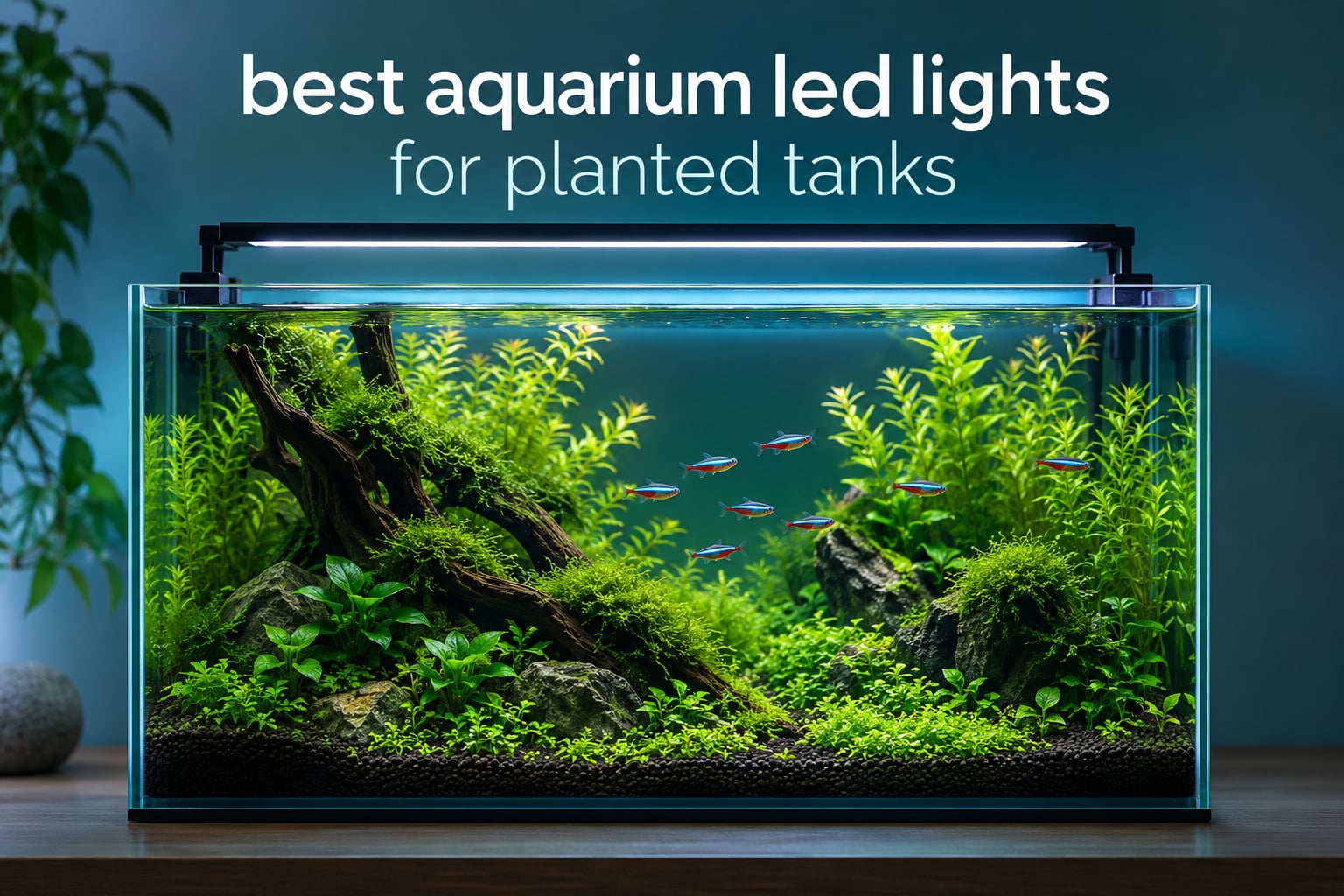
The short answer: the Hygger Advanced LED Aquarium Light is the best aquarium LED light for most planted tanks, because it pairs a true 6500K white channel with red and blue plant wavelengths, gives you five brightness levels and a sunrise-to-moonlight cycle, and mounts on tanks from 30 to 36 inches without needing an app. Finnex Planted Plus wins on colour rendition, and the Aqueon clip-on is the right choice for tanks under 20 gallons.
Planted tanks punish bad lighting in ways plain community tanks never do. A light that is too dim produces leggy stems and thin leaves, a light that is too strong or runs too long produces an algae bloom within a fortnight, and a light with no red channel struggles to push colour into stem plants. The gap between those outcomes is not the wattage printed on the box. It is how much photosynthetically active radiation reaches the substrate, and whether you can dim and schedule that output.
We compared the ten lights below across three tank sizes, checked the published output figures against the plant demand in each setup, and read long-term owner reports about failures and dial-in time. Last updated for 2026, this guide is arranged so you can self-select quickly: start with the top three, use the comparison table to narrow by tank width, then read the review that matches the shape of your tank.
Table of Contents
Top 3 Picks for Best Aquarium LED Lights for Planted Tanks in October
Hygger Advanced LED 30-36in
- 6500K white plus RGB channels
- 1662 lumens
- 24/7 sunrise to moonlight cycle
- Five brightness levels

Finnex Planted Plus 30in
- True 660nm deep red channel
- Four controllable bulbs
- Remote plus built-in sensor
Aqueon Clip-On LED
- 60 LEDs at 1000 lumens
- Three-way soft-touch control
- Clip or screw mount
- Rated to 20 gallon tanks
Every Light in the Roundup at a Glance
The table below sorts the picks by tank width, which is the single constraint that eliminates most options fastest. Every fixture listed here runs a full spectrum with red and blue plant wavelengths present.
| Product | Specifications | Action |
|---|---|---|
| Hygger Advanced LED 30-36in |
|
Check Latest Price |
| Finnex Planted Plus 30in |
|
Check Latest Price |
| Aqueon Clip-On LED |
|
Check Latest Price |
 Fluval Plant 3.0 36-46in Fluval Plant 3.0 36-46in |
|
Check Latest Price |
 SEAOURA Planted Light 48-54in SEAOURA Planted Light 48-54in |
|
Check Latest Price |
 FZONE 60W App Controlled FZONE 60W App Controlled |
|
Check Latest Price |
 Hygger Clip-On 14W 12-20in Hygger Clip-On 14W 12-20in |
|
Check Latest Price |
 NICREW C10 12-18in NICREW C10 12-18in |
|
Check Latest Price |
 SEAOURA LED Light 12-18in SEAOURA LED Light 12-18in |
|
Check Latest Price |
 Lominie A20 Gooseneck Lominie A20 Gooseneck |
|
Check Latest Price |
1. Hygger Advanced LED Light for 30-36 Inch Tanks – Best Overall
hygger Advanced LED Aquarium Light with Timer, 24/7 Lighting Cycle & DIY Mode, Full Spectrum Fish Tank Light for 30-36 in Freshwater Planted Tank
6500K white plus RGB
1662 lumens
63 white, 26 blue, 9 red, 6 green, 34 RGB LEDs
Fits 30-36 inch tanks
2.35 pounds
Pros
- True 6500K white channel alongside 450-455nm blue and 620-625nm red
- 24/7 mode runs a warm orange sunrise to a starry blue night
- Five brightness levels from 10 to 100 percent
- Five-step intensity works with low light plants without a separate dimmer
- Sliding brackets fit 30 to 36 inch tanks
Cons
- Stepped dimming rather than smooth continuous fade
- Programmable modes are limited next to app-controlled fixtures
This is the light we keep coming back to, because it does the two things planted tanks actually need and skips the rest. It outputs 1662 lumens from 6500K white LEDs alongside 450-455nm blue, 620-625nm red, 520-525nm green and a bank of RGB emitters, which means both ends of the photosynthetic range are populated rather than one of them faked with a blue filter.
The 24/7 mode is the reason most people end up here. It auto-starts around 6AM and cuts off at 22:50, ramping through a warm orange sunrise, a full-spectrum midday and a starry blue night, so the light is doing the daily ramp work without you touching a dial. For an aquarium full of shy species that matters more than raw output, because a hard on/off switch at 8PM resets everything.
DIY mode is where the practical control sits: three timer options at 6, 10 or 12 hours, seven colours and five brightness levels at 10, 25, 50, 75 and 100 percent. That stepped scale is the main compromise, and it is also the safeguard. A 25 percent setting gives you a genuine low light starting point, which matters more than you would think when you first read about CO2 systems for planted tanks and realise your tank may already have more light than the plants can use.
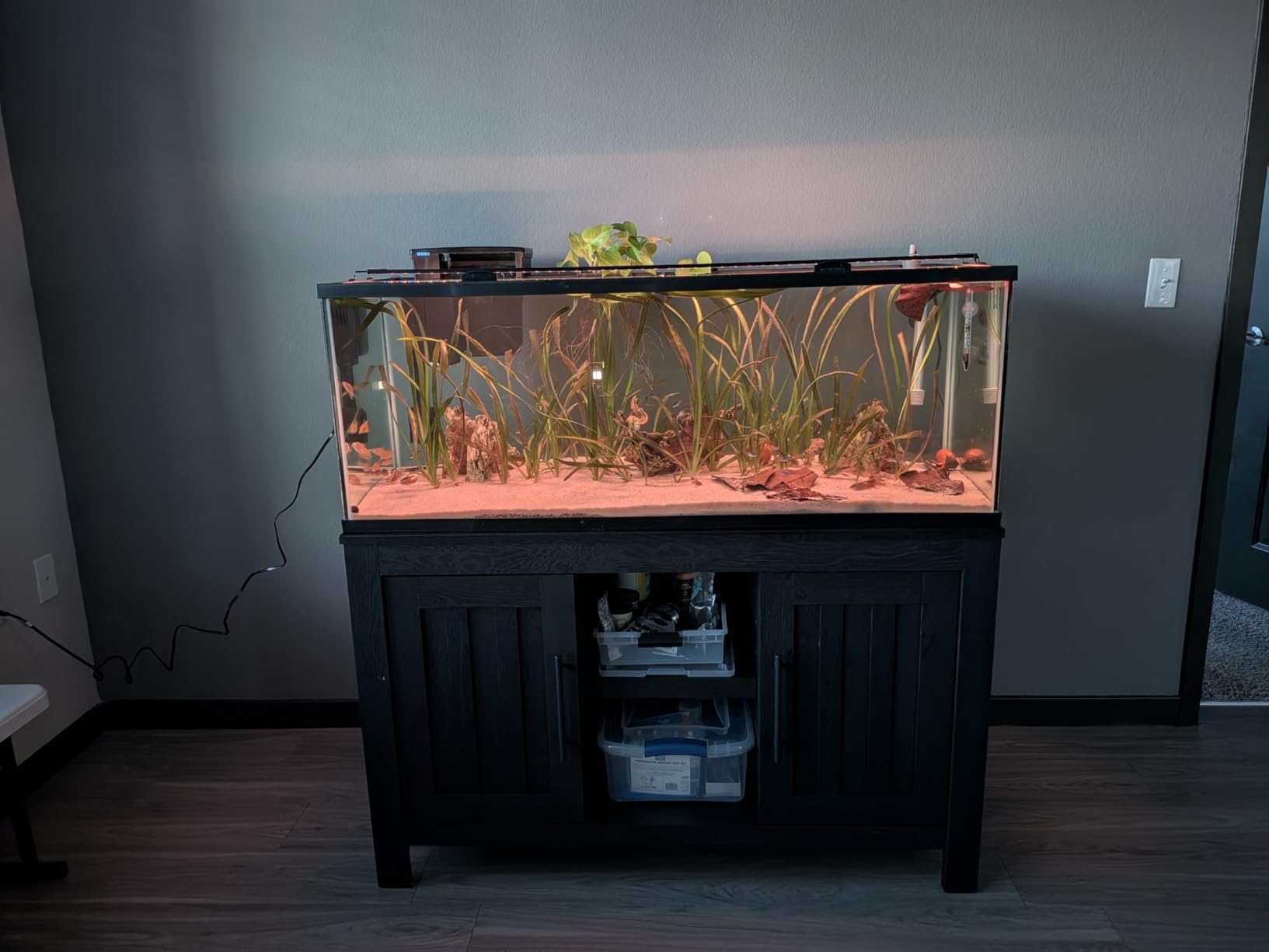
What you get at 1662 lumens, measured at the tank
Owner reports on this fixture describe it as a comfortable medium-light setup for a 30 inch tank at mid setting, which is exactly the range most planted tanks sit in. It will not push dense carpets like Monte Carlo under a high light, CO2-injected regime without a real fight, but it grows Anubias, Java fern, Cryptocoryne, mosses and most stem species comfortably. At full brightness on a shallow tank you should expect to pull the intensity down within the first fortnight.
The mounting system is sliding brackets rather than fixed legs, so the same bar covers anything from 30 to 36 inches. At 2.35 pounds it stays put without a bracket brace, and the aluminium body runs cool enough that you can adjust it without unplugging anything.
Where it falls short for you
If you want to dial a specific PAR target at substrate and watch it respond, this light does not give you that. Five fixed steps is coarser than a continuous dimmer, and the programmable scenes stop short of the multi-point custom schedules that app-controlled fixtures offer. People running a high light aquascape with heavy CO2 will find the ceiling here lower than they want.
The other limitation is scheduling granularity. Three timer options at 6, 10 and 12 hours is workable, but there is no nine-hour option, so a low tech tank that would ideally run seven hours a day has to choose between six and ten. Owner reviews also note that the colour and timer modes do not fully combine, which limits how much you can shape a single daily program.
2. Finnex Planted Plus 30 Inch – Best Value for Plant Colour
Finnex Planted Plus True 24/7 + HLC Aquarium LED Light, Automated Full Spectrum Fish Tank Light, True 660nm Deep Red Plant LEDs, 30 Inch, (HLC-30)
True 660nm deep red LEDs
Four controllable bulbs
Slim aluminum body at one pound
Fits 30 inch tanks
Pros
- True 660nm deep red plant channel that most budget fixtures omit
- Four bulbs for green red blue and daylight controlled independently
- Remote controls several fixtures from one handset
- Settings survive a power outage and resume where they stopped
- Long production history in aquarium lighting
Cons
- No app support and remote control only
- Fixed three hour timer steps limit scheduling
- Colour temperature runs cool rather than warm
For a long time the Finnex Planted Plus was the reference point the rest of the hobby was measured against, and the reason is the 660nm deep red channel. Almost every cheap bar in this roundup gives you blue at 450-465nm and white at 6500K, then pretends the red end is covered. Finnex puts real deep red diodes in the fixture, and you can see the difference on Ludwigia, Rotala and any red-leaved plant the moment the bulbs are pushed.
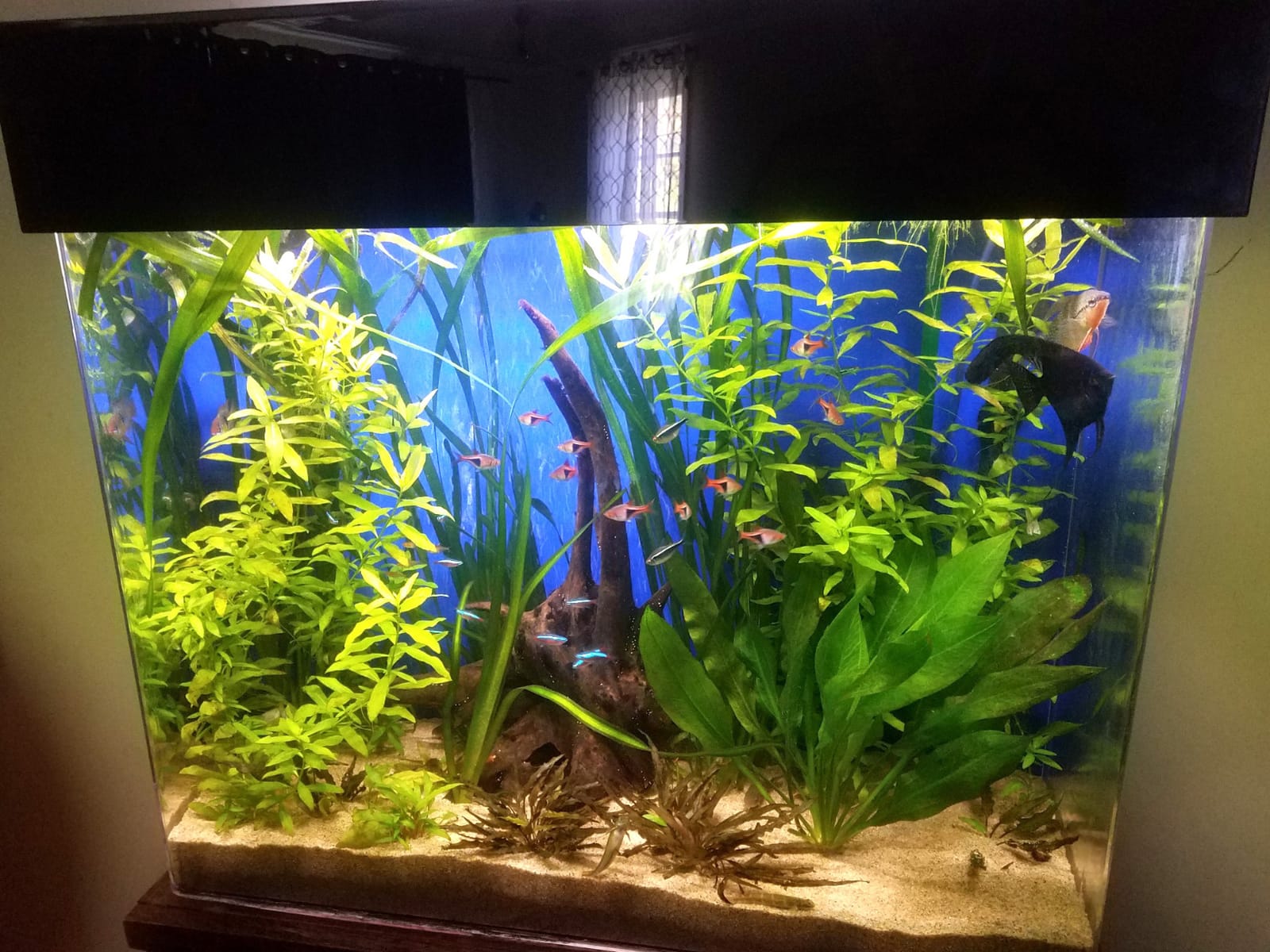
The 24/7 scene programming is genuinely the best of any light here. Sunrise, sunset, daylight and moonlight each get their own gradient, and the transitions are gradual rather than stepped. Owner reviews describe the colour rendition as noticeably richer under this light than under budget bars, particularly on orange and red fish.
The remote is the control surface, and it can drive several fixtures from one handset. There is also a built-in sensor so the unit can hold its own schedule if you lose the remote, which is a small thing that has rescued more than one setup.
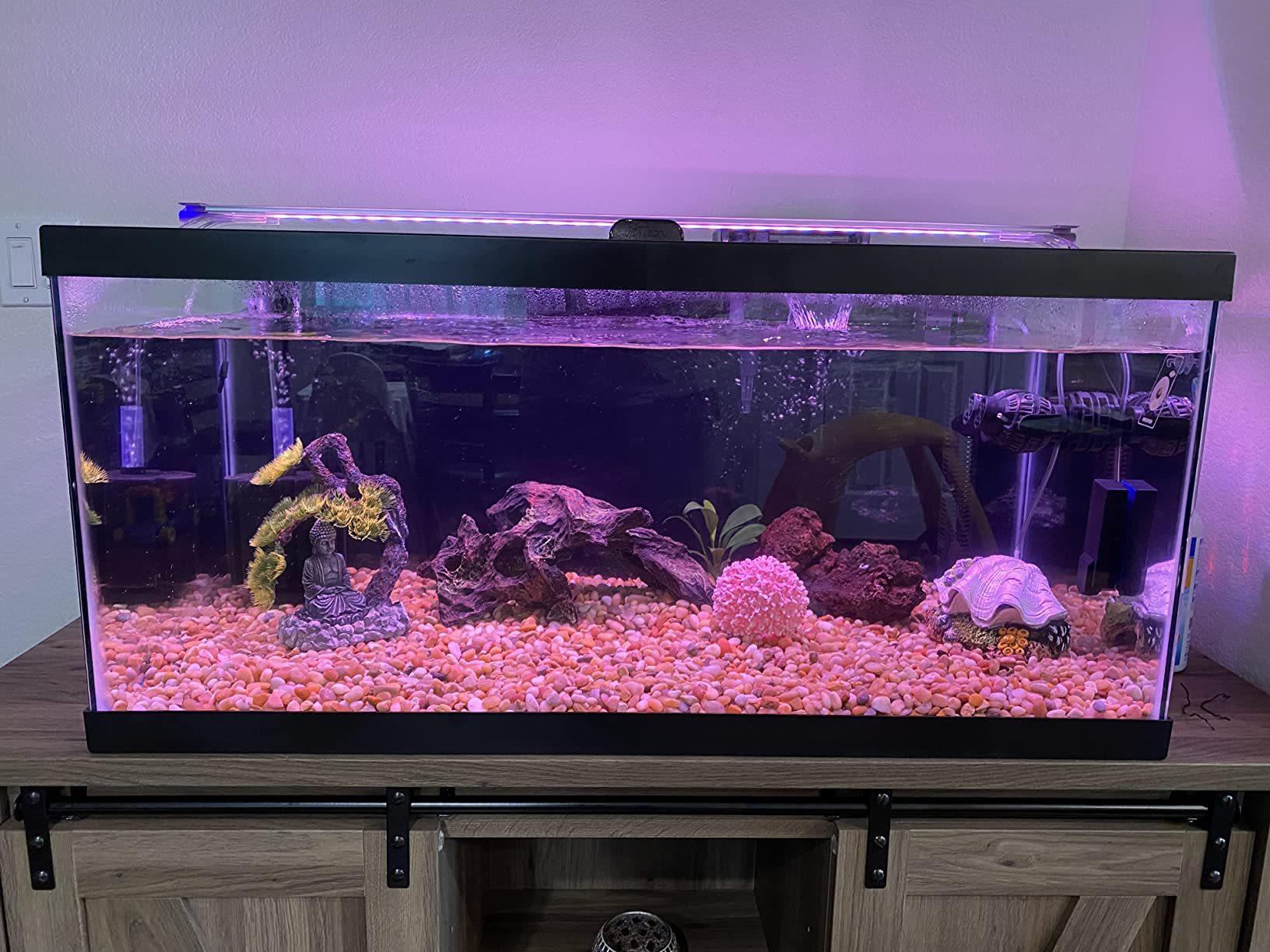
What the four bulbs actually let you do
Green, red, blue and daylight as independent channels means you can shift the tank white without dimming the plant channels. That matters for aquascaping, where you may want a cooler view at night and a neutral daylight for photography. It also lets you push red on a stem-heavy tank without flooding the water with blue, which is the usual cause of the algae problems low light hobbyists accidentally create.
Output is a mid-light fixture by design. Owners running demanding stems under this light report good colour and healthy growth but point out the ceiling: it was never able to get the high light output those plants want. Treat it as a 30 inch low-to-medium light bar that happens to render colour unusually well.
Where it falls short for you
The timer granularity is the practical limit. Steps jump in three hour blocks, so a seven hour photoperiod is not directly selectable and you end up running six or ten. That is workable but it forces a compromise on exactly the setting that controls algae pressure.
There is also no app and no physical power button. Everything depends on the remote, and a number of owners report fixtures freezing or refusing remote commands after several months of use. If your tank sits somewhere you would rather control from a phone, look at the Fluval or FZONE instead.
3. Aqueon Clip-On Planted LED – Top Rated for Tanks Under 20 Gallons
Aqueon Clip-On LED Fish Tank Light for Planted Aquariums, Up to 20 Gal
60 bright LEDs
1000 lumen maximum output
CRI 80
Clip-on and screw mount
One year warranty
Pros
- Enough published output to grow java fern anubias and amazon sword
- Mounts to the back of the tank and leaves the rim completely free
- Works on framed and frameless aquariums
- Many owners report units running for years on a daily timer
- Blue-only mode gives a low-disturbance night view
Cons
- No real dimming beyond the three-way button
- Runs hot to the touch for its size
- The flattened mounting screw can wear into the plastic tank back
The Aqueon clip-on is the simplest thing here that genuinely grows plants, and for a tank under 20 gallons it is very hard to argue with. Sixty LEDs pushing 1000 lumens is more output than most clip-ons in the category manage, and owners consistently report healthy growth on java fern, anubias and amazon sword, plus light carpeting species in shallow tanks.
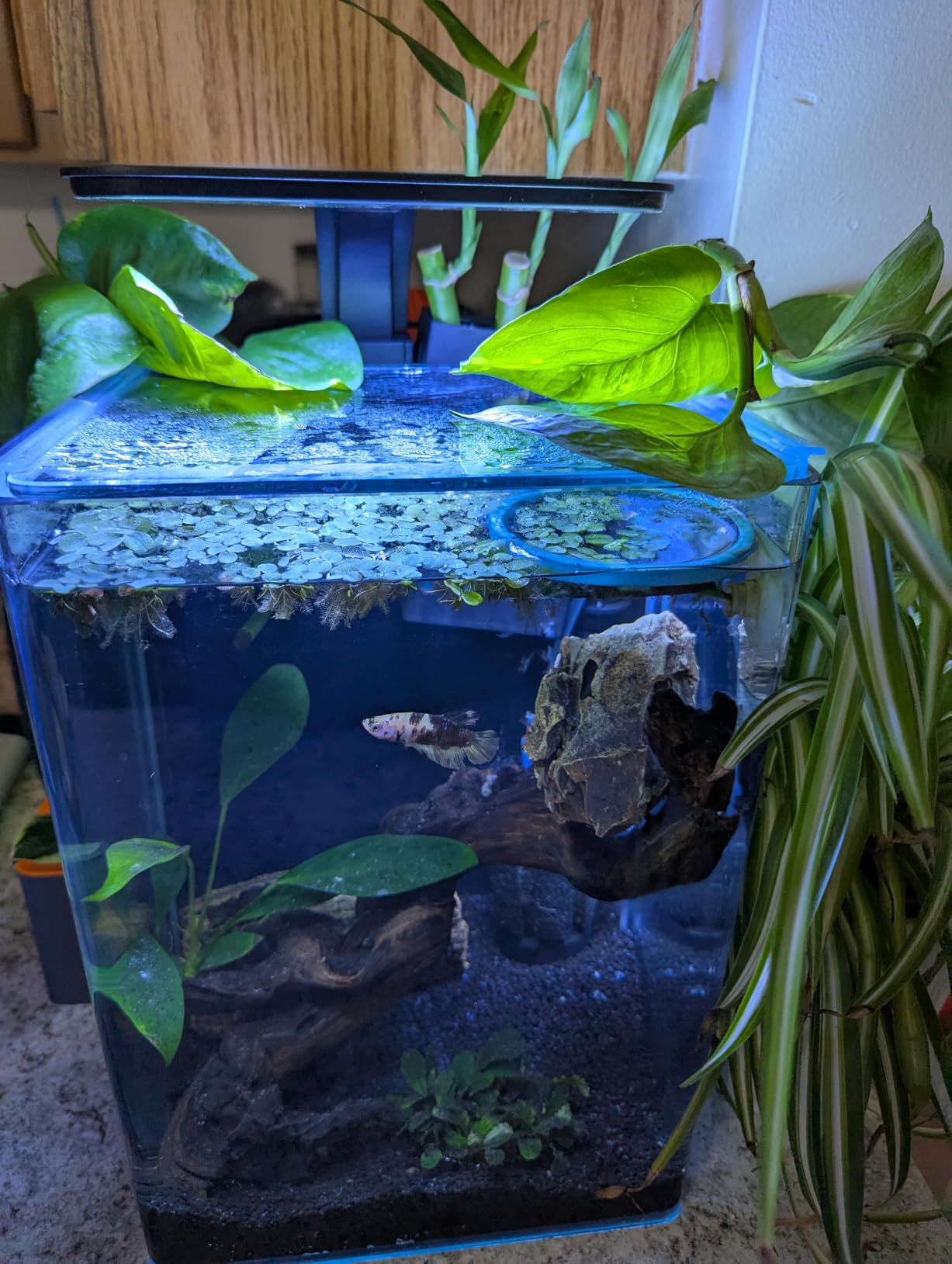
The mount is what wins over a bar light on small setups. It hangs off the back panel and leaves the entire top rim free, which on a nano or rimless tank is the difference between a clean line and a bracket sitting in your aquascape. A screw mount is included as well, so it works whether your tank is framed or frameless.
Control is a single soft-touch three-way button: all on, blue on, all off. That is genuinely all. There is no intensity trim and no ramp, so this is a light you run on a plug-in timer and leave alone, which is a limitation in one sense and a feature in another if you would rather not fiddle with menus.
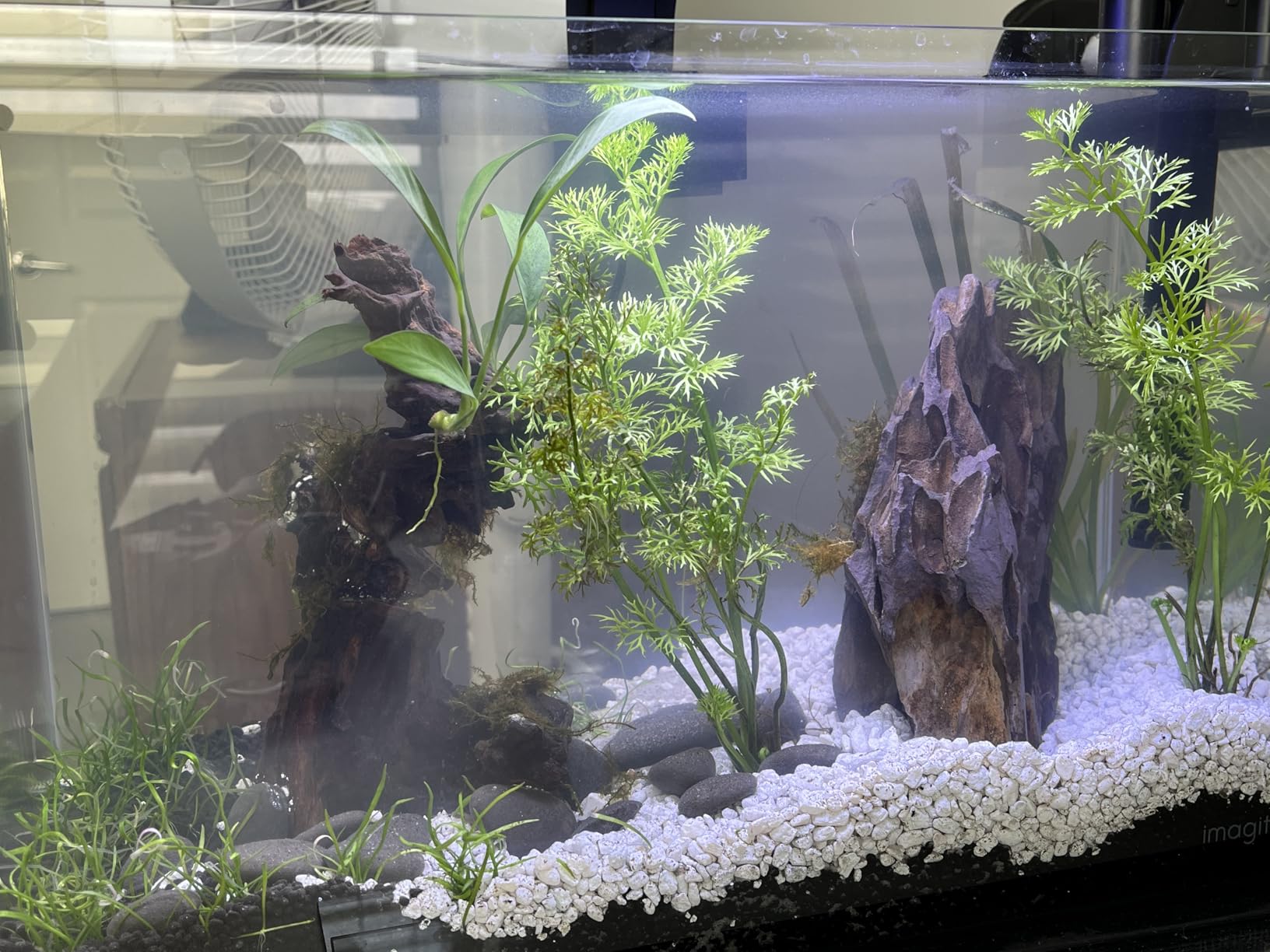
Where the 1000 lumens actually lands
Because it mounts on the back rather than overhead, the light arrives at your plants at an angle. That is fine for low light species, which is what this fixture is rated for at up to 20 gallons. It also means shading under a heavy aquascape is less of an issue than with a slim overhead bar that spreads light narrowly.
The practical advice with this light is to start it at the blue-only mode or run fewer hours than you think you need. Owners who run it on a seven hour timer in a small tank with low light plants generally have no problems; the same tanks run fourteen hours a day are the ones that report algae.
Where it falls short for you
There is no dimming. If your tank gets enough light at full output that you want it lower, you have no way to get there, and low light plants in a bright position can be forced past their comfort zone. Stepping back to a lower brightness fixture is the only answer.
Two smaller things show up repeatedly in reviews. The housing runs hot to the touch for something this small, and the flattened screw that tightens against the tank back can eventually wear a groove into the plastic. Neither is a dealbreaker on a small tank, but both are reasons to check the fit periodically rather than leaving it clamped for years.
4. Fluval Plant 3.0 for 36-46 Inch Tanks – Most Programmable
Fluval Plant 3.0 LED Planted Aquarium Lighting, 46 Watts, 36-46 Inches
46 watts and 252 LEDs
Six full spectrum band waves
120 degree light dispersion
36 by 15 by 1.02 inches
Pros
- Six full spectrum band waves plus Tropical and Lake Malawi presets
- Programmable 24 hour cycle with sunrise midday sunset and night phases
- 120 degree dispersion gives even coverage across the whole footprint
- Bluetooth app scheduling with intensity control
- Extendable brackets span a wide range of aquarium widths
Cons
- Bluetooth connection reported as unreliable by some users
- No physical on off switch so the fixture depends entirely on the app
- Highest price point among the picks here
The Fluval Plant 3.0 is the light you buy when you want the tank’s light to be a schedule you design rather than one you accept. Six band waves and a programmable 24 hour cycle with distinct sunrise, midday, sunset and night phases give you the most granular built-in programming of anything here, and the Planted preset gives you a sane starting point if you would rather not build from scratch.
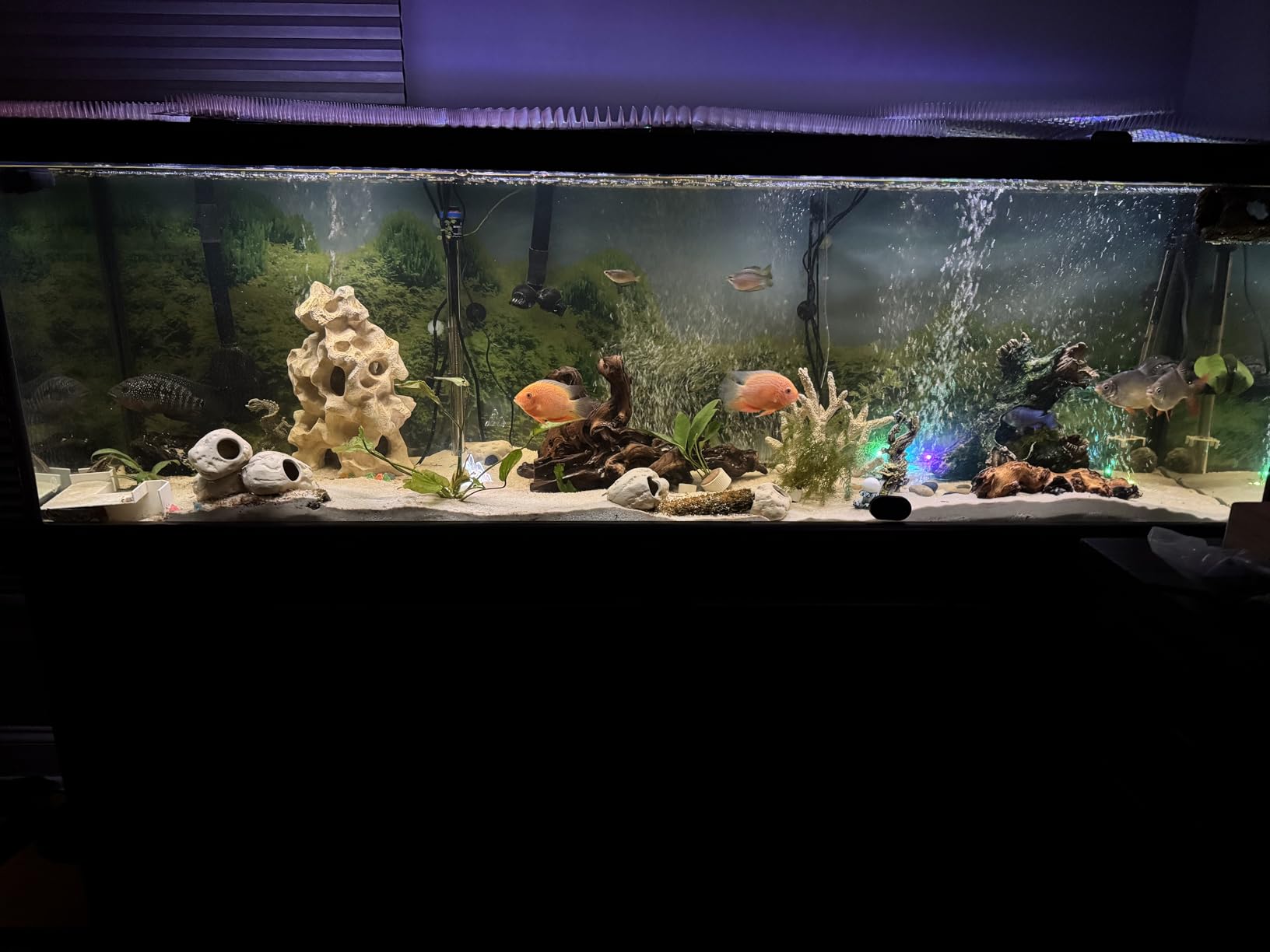
Output is substantial. Forty-six watts across 252 LED sources with 120 degree dispersion is enough light for demanding stems on a long tank, and the wide angle matters more than raw watts on a 36 to 46 inch footprint because it is what stops bright hotspots directly under the bar.
Control runs through a Bluetooth app on your phone. That is genuinely better than a remote once you have programmed it, because you can set intensity per phase rather than choosing from a fixed list. Owners report the scheduling and intensity control as the main reason they stayed with it.
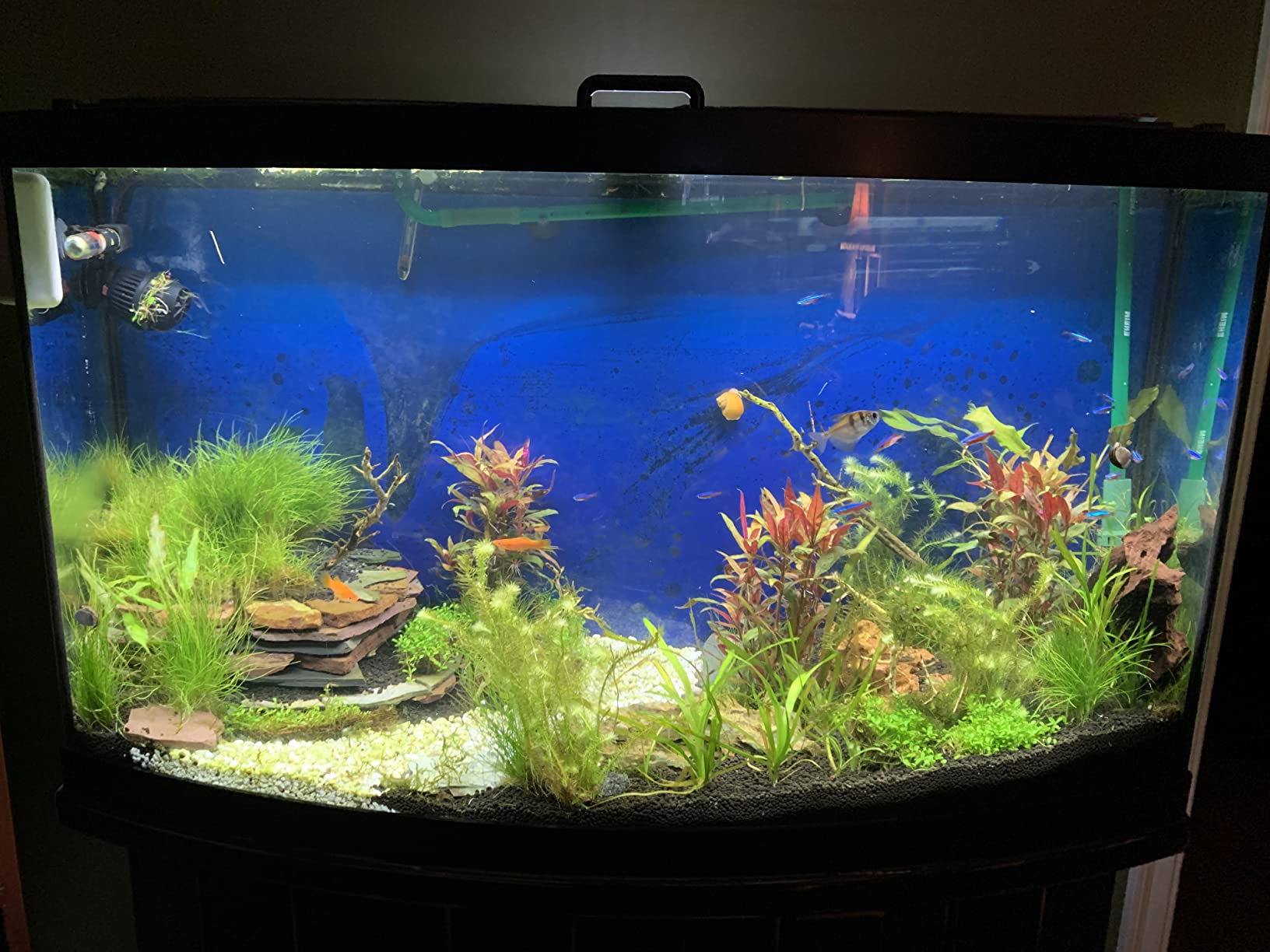
What 46 watts and 252 LEDs means for plant demand
This sits comfortably in the high light band for a long tank, which makes it one of the few lights here that lets you run a CO2-injected stem planting without immediately cutting the intensity back to the bottom step. For a 36 to 46 inch tank that is the difference between growing Rotala and Ludwigia properly and growing stretched stems reaching for light.
The trade is that high output demands discipline. Owners running this at full intensity report hair algae within weeks unless the photoperiod is kept short and intensity is dialled back after acclimation. Treat the app as the tool that keeps it in check rather than as a feature list.
Where it falls short for you
There is no physical on and off switch on the fixture. If the app loses its Bluetooth connection, which owners do report, you are reaching for the plug. Some people who moved off a Finnex fixture disliked exactly this and chose a remote-controlled light instead.
The price also sits well above everything else in this roundup, and hobbyists on forums question that gap more than any other. You are paying for the programmability and the optical spread as much as for the photons, and if you would rather set a timer once and forget it, a mid-range bar does the same job for plants.
5. SEAOURA Planted Light for 48-54 Inch Tanks – Highest Published Output
SEAOURA Aquarium Planted Light with 24/7 Timer for 48-54in Fish Tank
48 watts and 294 LEDs
PAR 181 at 2899 lumens
CRI 92
IP68 body
One year warranty
Pros
- Published PAR 181 and 2899 lumens across 294 LEDs
- CRI 92 for accurate plant and fish colour
- Seven rows of 5050 and 2835 chips across nine colour options
- Twenty dimming levels plus DAY NIGHT and 24/7 modes
- Replaceable battery in the controller preserves timing through power cuts
- IP68 aluminium and PC body tolerates splashing and routine cleaning
Cons
- Controller programming has a steep learning curve
- Some fixtures report the timing module failing within a few months
- Earlier versions could not dim inside 24/7 mode which triggered hair algae
This is the only light here that publishes a PAR figure, and the number is high. PAR 181 with 2899 lumens and 10685 lux from a 48 watt fixture is a substantial amount of light for a 48 to 54 inch tank, and it puts this bar in the range where carpet planting becomes realistic rather than theoretical.
Colour rendering is another strength. CRI 92 is the highest among the bar lights here, and owners report visibly more accurate reds and greens on fish and plants. The 12600K rating on the box reflects the top of a much wider programmable range, not the colour you would actually run.
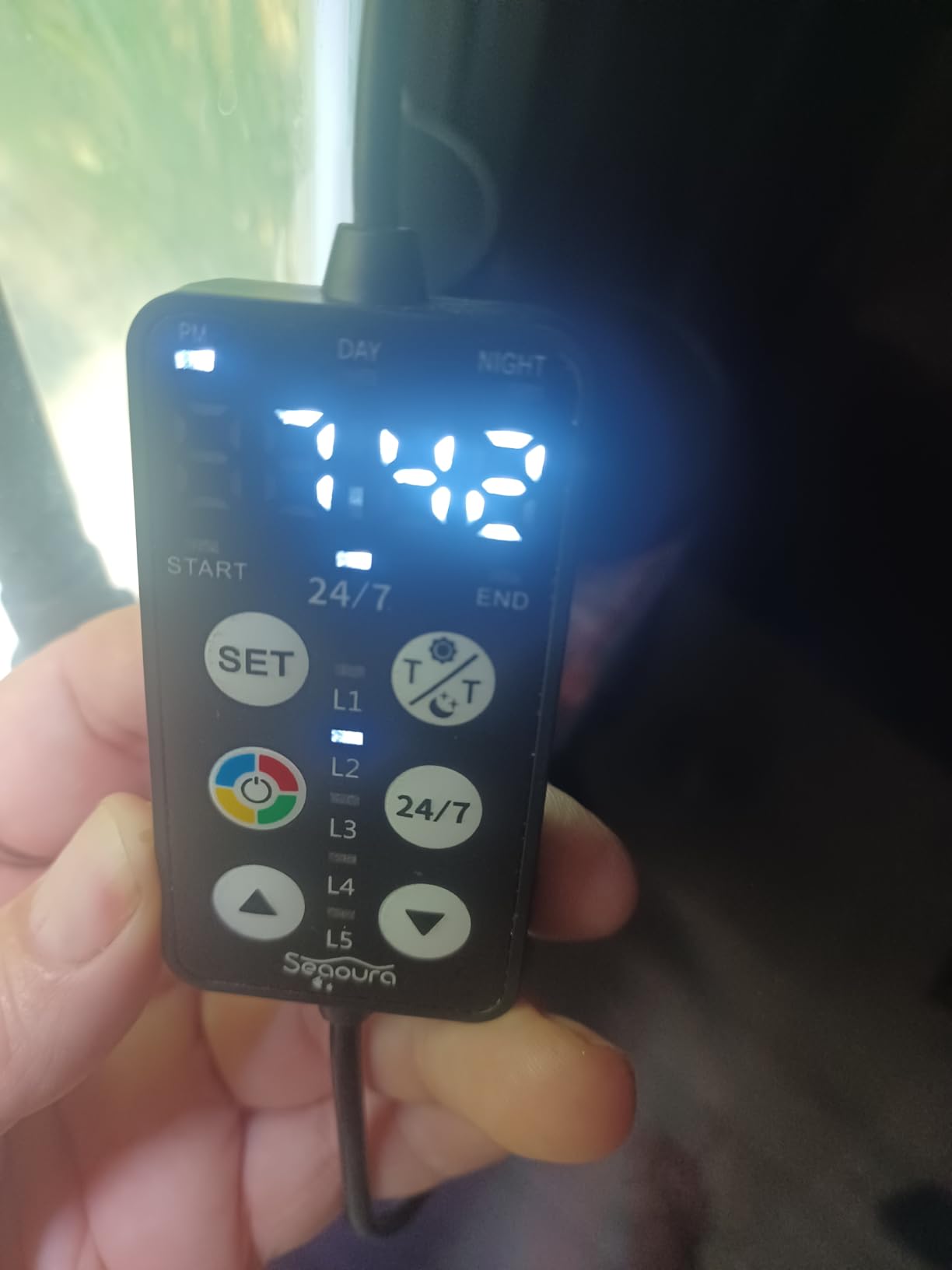
Programmability is genuinely deep once you get past the manual. DIY hour and minute DAY mode, a separate NIGHT mode and a 24/7 mode with an LED clock display on the controller, plus nine colour options and twenty dimming levels. A replaceable lithium battery in the controller keeps the schedule alive through a power cut, which is a small detail that matters in a long tank.
Working with PAR 181 without an algae bloom
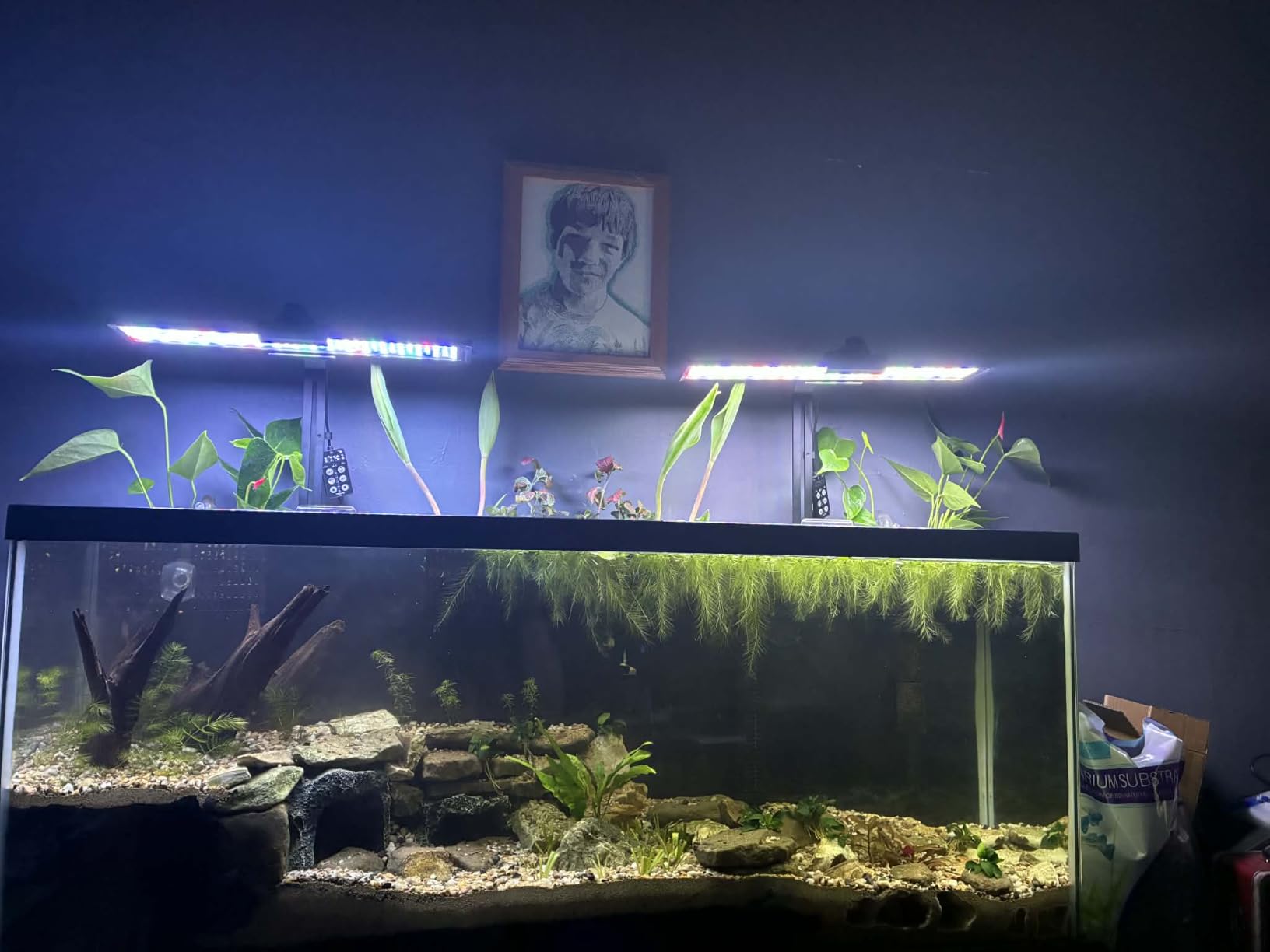
This is a high output light and it should be treated as one. The reported experience from owners is dramatic plant growth including red stem plants turning vivid, which is exactly what you want, but the same reviews describe heavy hair algae appearing when brightness was left at maximum through the 24/7 mode. The fixture now dims inside that mode; earlier versions did not, and that is where most of the complaints originated.
The realistic path is to start at the lowest of the twenty dimming levels, run a six or seven hour photoperiod, and raise intensity gradually over two to three weeks. If you want to push this into high light territory with demanding stems, pair it with a proper CO2 delivery approach rather than relying on light alone.
Where it falls short for you
The controller is the weak point. Owners describe the programming as difficult to learn at first and the printed directions as poor, so budget an evening with it before you set a tank running out of sight. The button-led interface is not self-explanatory.
Durability is mixed. A minority of fixtures report the timing module failing after roughly ten weeks to three months. The brand’s customer support is repeatedly described as resolving failures with replacements or refunds, which softens the problem, but it is still a hardware lottery at this tier.
6. FZONE 60W App Controlled Light – Best for Custom Schedules
FZONE Aquarium Light for Plants, 60W LED Fish Tank Light for 35-43″, Full Spectrum with APP Control, Timer & Sunrise/Sunset (Light 90)
60 watts at DC 24V
Zero to 3950 lumens
Four inch emission surface
Six rows of RGB white and UV
6500K to 12000K
Pros
- Four inch emission surface with six LED rows gives wide spot-free coverage
- Custom mode allows up to 24 programmable time points
- Auto mode simulates weather such as cloudy rainy and sunny days
- Bluetooth app memory function retains settings through power outages
- Aluminium housing stays below 120F to slow light decay
Cons
- Smallest review base here so long-term reliability data is thinner
- No physical remote or onboard controls
- Every adjustment requires a Bluetooth connection
The FZONE is the one to look at if your objection to app-controlled lights is that the apps are shallow. Custom mode here takes up to 24 time points rather than the four or five presets most manufacturers ship, so you can build a genuine multi-stage sunrise with a warm low stage, a full midday, and a long gradual fade rather than an on and off switch dressed up. We looked at more of these in our roundup of Wi-Fi LED aquarium lights for plant growth, where app scheduling quality is the deciding factor.
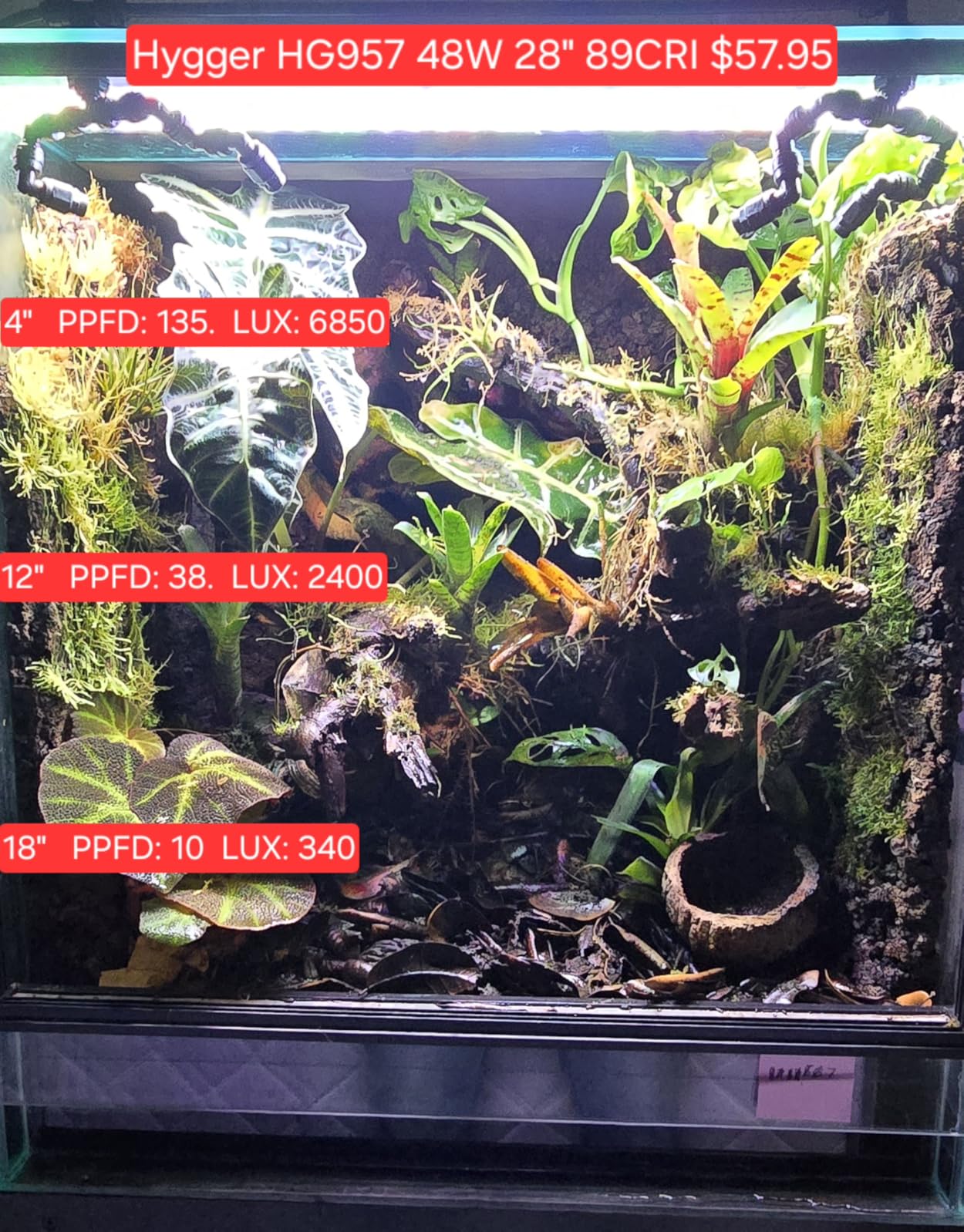
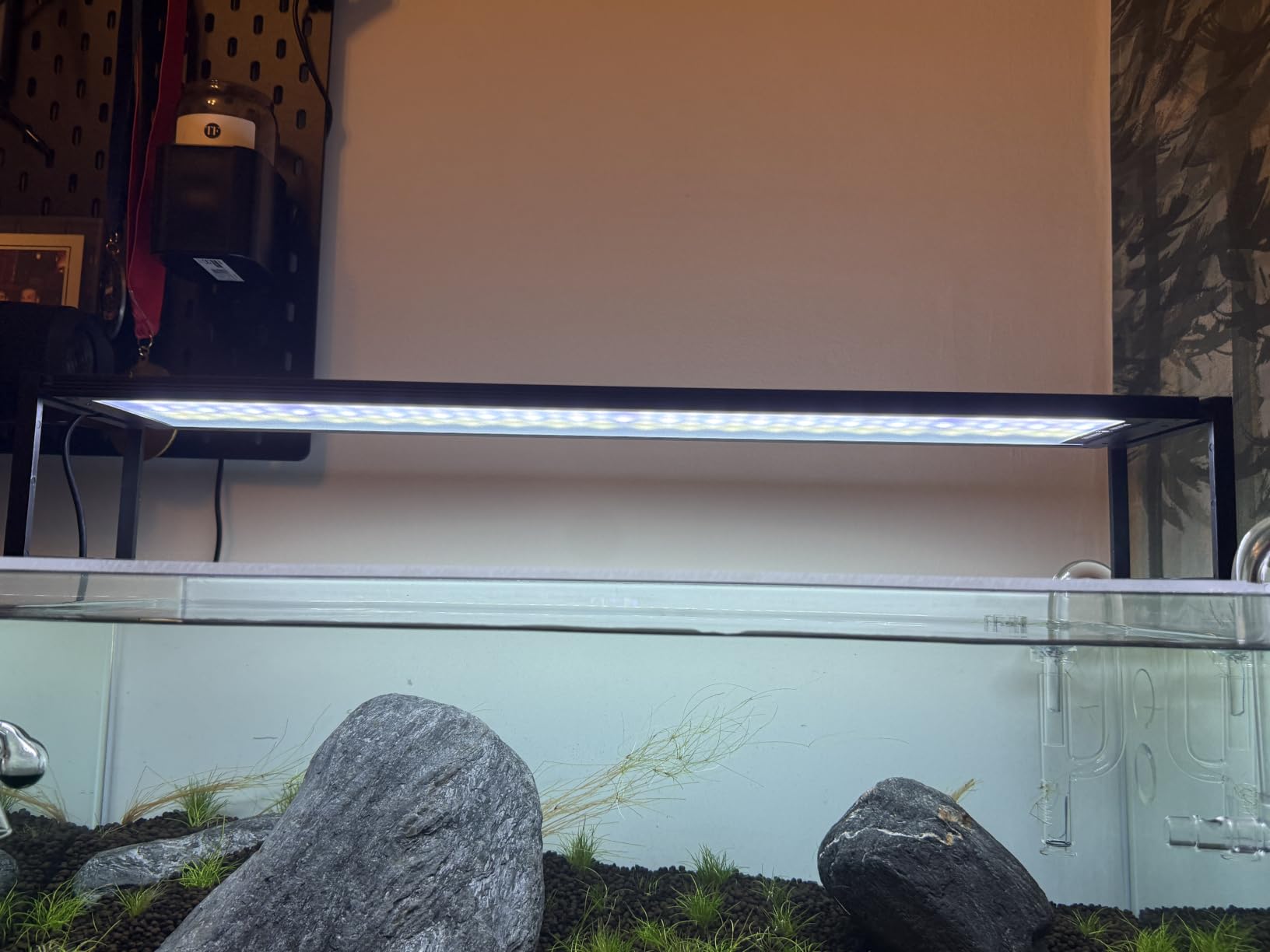
The physical design is the other argument for it. A four inch wide emission surface across six rows of RGB, white and UV diodes is a much broader emitter than a slim single-row bar, and reviewers single out the even, spot-free coverage as the standout. Sixty watts at DC 24V puts it in the same output class as the Fluval, but the spread is what you feel at the substrate.
Output runs from 0 to 3950 lumens and colour temperature from 6500K to 12000K. The UV diode in the mix is not a plant growth channel, but it is part of what makes fish colours read as vivid under the light, and the aluminium housing is designed to hold working temperature below 120F specifically to slow light decay over years.
Weather simulation is a gimmick, the 24 point schedule is not
Auto mode offers weather simulations including cloudy, rainy and sunny days, and we will say plainly that this is novelty rather than function. Nobody in our review of owner reports described it as changing plant outcomes. The value of this light is Custom mode, where 24 time points let you run the sort of slow multi-phase ramp that sunrise photography depends on.
For a 35 to 43 inch tank this output sits high enough for medium to high light use, provided you ramp it in. The memory function stores your schedule, so a power cut does not reset the programme to a factory default, and a temporary light mode gives you a maintenance setting without disturbing the presets you have dialled in.
Where it falls short for you
Everything runs through the phone. There is no physical remote and no onboard buttons, which means every adjustment needs a Bluetooth connection and a paired device. If you like to tweak brightness at the tank, this is friction you will feel daily.
Long-term data is thin at 336 ratings, which is the smallest base in this roundup. That is not a criticism of the fixture so much as a note on what you cannot yet know. Newer designs with fan housings and app dependencies take a year or two of owner reports before patterns show up.
7. Hygger Clip-On 14W for 12-20 Inch Tanks – Best Nano and Rimless Mount
hygger Clip On 24/7 Lighting Aquarium LED Light,Sunrise-Daylight-Moonlight and DIY Mode, Adjustable Timer/Brightness Fish Tank Light with 7 Colors for Planted Tank (14W for 12~20in Tank)
14 watts and 68 LED beads
817 lumens at CRI 85
Clip fits walls under 0.9 inch
Two year warranty
Pros
- Clip mount fits rimless tanks without taking up any rim space
- Default 24/7 cycle runs sunrise daylight and moonlight gradients
- 68 LEDs at 817 lumens with CRI 85 for clean colour
- Body mounts horizontally or vertically on most nano tanks
- Two year warranty and separable power adapter
Cons
- Timer brightness and colour settings do not combine
- Timer options jump from 6 to 10 to 12 hours
- Resets to full daylight mode after a power outage
The Hygger clip-on solves a problem that bar lights create on rimless tanks, which is the bracket. On a nano or a rimless cube the rim is part of the design, and a sliding bracket sitting across the top breaks the line and can slide out of its track. This unit clamps onto the glass wall instead, up to 0.9 inch thick, and leaves the top completely clear.
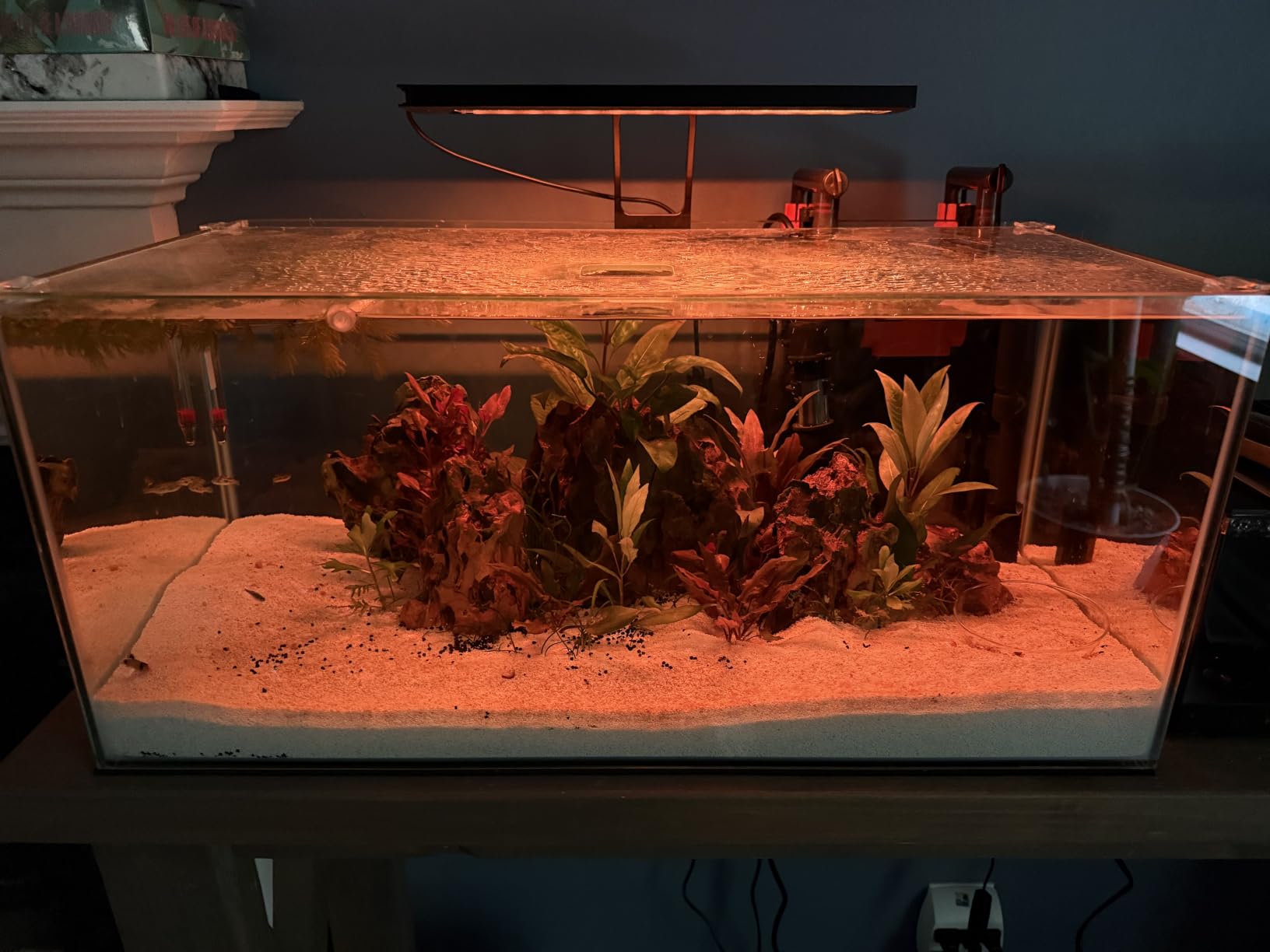
Output is modest and honestly labelled. Sixty-eight LED beads delivering 817 lumens at CRI 85 is right in the low light band, which matches what you want on a 12 to 20 inch nano tank full of crypts, moss and anubias. The aluminium body dissipates heat well enough to stay stable, and the power adapter separates so the cable can run cleanly.
Two mounting orientations are supported, horizontally or vertically, which is genuinely useful. On a tall narrow tank the vertical position spreads light down the water column instead of concentrating it at the surface.
What 817 lumens will and will not grow
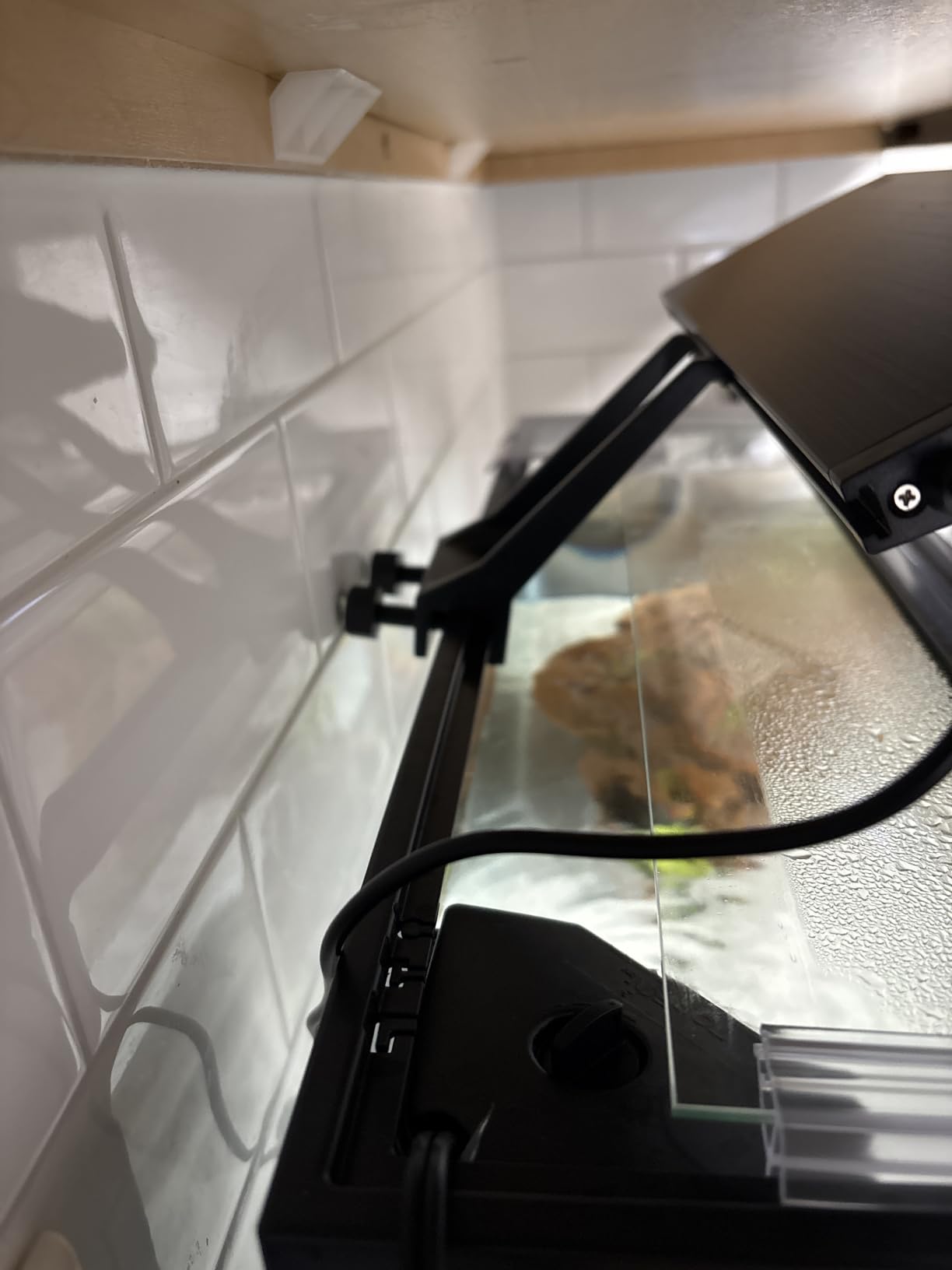
At this output you are running a low light planted tank. That means Anubias, Java fern, Cryptocoryne, mosses and hornwort all thrive, and stem plants grow but will lean toward the light without added CO2 and higher intensity. It is a comfortable, low-maintenance configuration that most nano owners never outgrow, and the 24/7 mode handles the daily ramp for you.
The DIY mode underneath gives 6, 10 or 12 hour timers, five brightness levels and seven colours. That is enough to run a genuinely low setting for sensitive species or a bright one for a growth push on a carpet.
Where it falls short for you
The modes do not combine, and this is the complaint owners raise most. Colour mode ignores the timer, so if you set a blue night colour the schedule stops applying. You end up choosing between a schedule and a colour rather than having both, which is frustrating on a fixture that clearly has the hardware for it.
Timer granularity also jumps from 6 to 10 to 12 hours with nothing in between, and the unit resets to full daylight after a power outage, so a summer power cut means reprogramming it by hand. The instructions for the timer are unclear enough that owners describe needing to experiment to understand them.
8. NICREW C10 for 12-18 Inch Tanks – Best Deep Red on a Budget
NICREW C10 Plant Aquarium Light, 12-18 in, 9W, Full Spectrum with Timer
Nine watts
6500K white with 460nm blue and TRUE 665nm red
Two channel dimming
Fits 12-18 inch tanks
Pros
- True 665nm deep red channel that most lights at this level omit
- Independent dimming from zero to 100 percent on two channels
- Gradual sunrise and sunset ramp rather than a hard switch
- Aluminium alloy body with heat sinks that dissipate LED heat
- Water resistant to daily splash and humidity
Cons
- Only nine watts so output is modest for dense planting
- Limited 12-18 inch size range for this listing
- Two channels rather than full per-channel RGB control
The NICREW C10 does one thing that almost nothing else at this level does, and that is the true 665nm deep red diode. Most budget fixtures list red in the marketing and deliver a weak orange chip near 620nm. A genuine 665nm emitter sits at the far end of the useful photosynthetic range for plants, and reviewers consistently single it out as the reason this light grows better than it should.
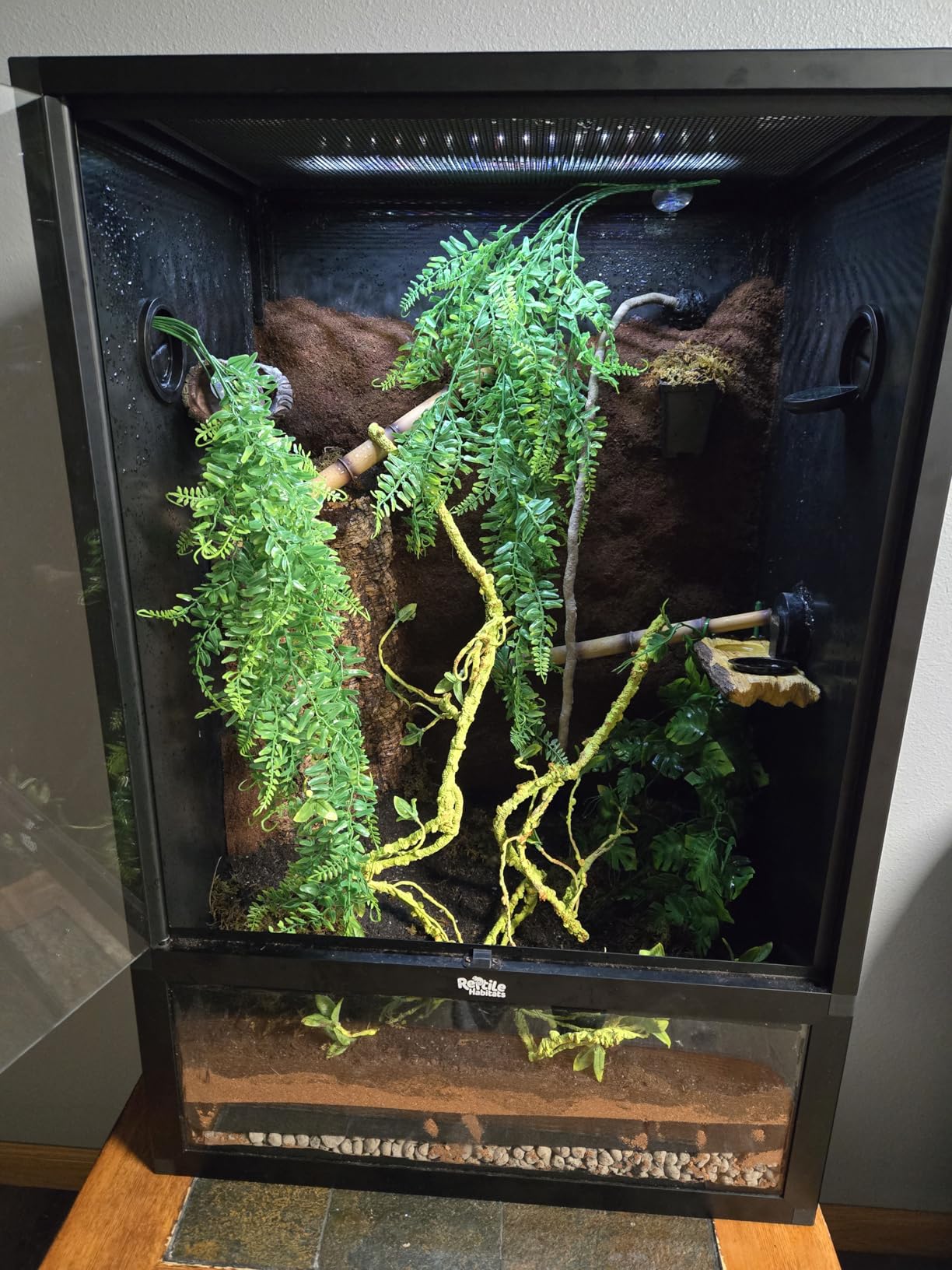
Dimming is the other strength, and it is finer than the price suggests. Two channels can be dimmed independently from 0 to 100 percent, with one covering white and red and the other covering blue. Splitting those is how you push red on a stem planting without flooding the tank with blue, which is the usual trigger for hair algae in low light setups. The claim of up to 10,000 colour temperature combinations follows from that control.
The Day and Night cycle ramps gradually at both ends rather than snapping on, which is easier on fish and looks better at night. The aluminium alloy body with integrated heat sinks handles the thermal side properly for a nine watt fixture.
Nine watts means low to medium light
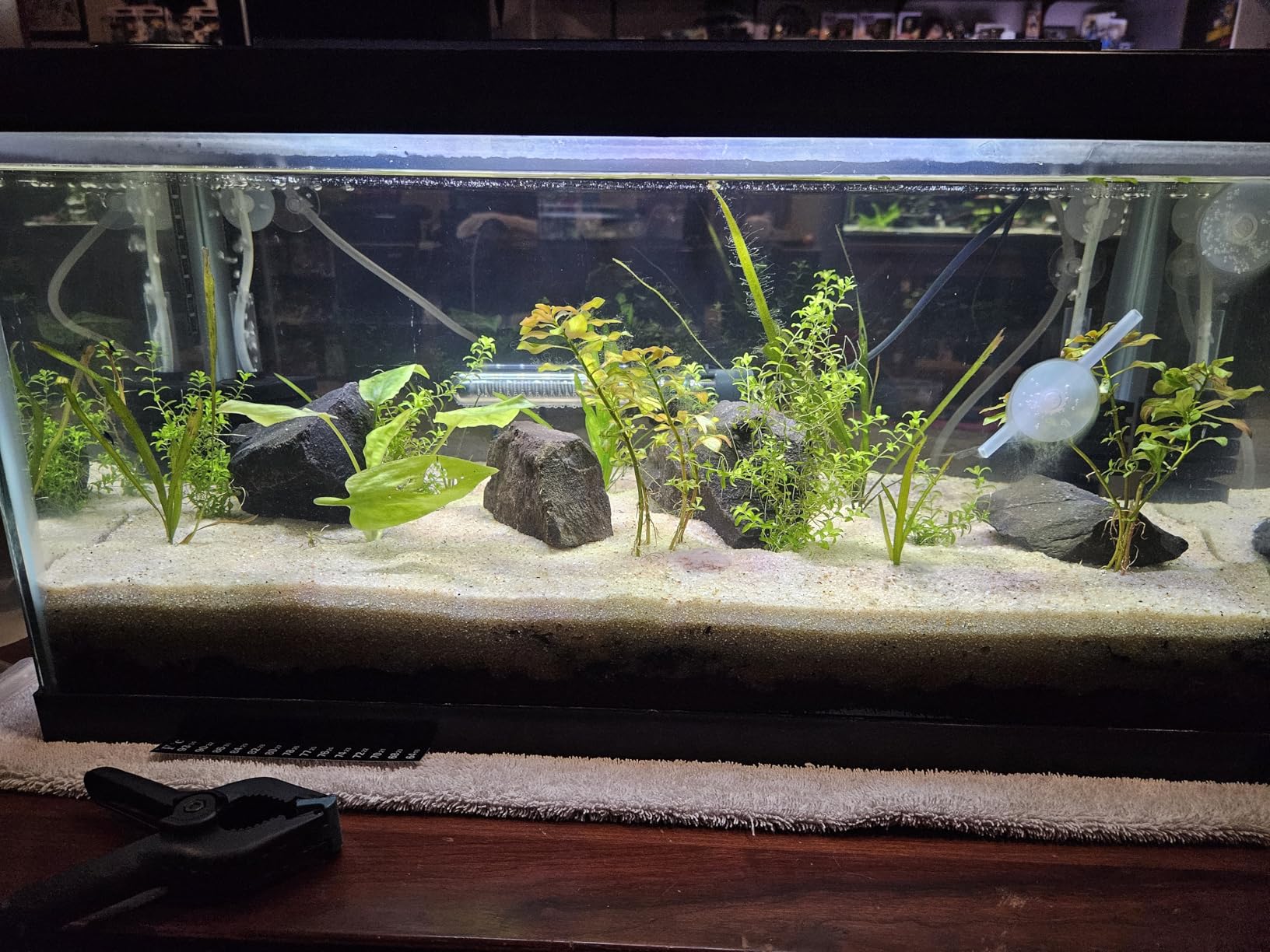
Be realistic about the ceiling here. Nine watts on a 12 to 18 inch tank is a low to medium light setup, which suits anubias, java fern, crypts, mosses and moderate stem planting beautifully. It will not drive dense carpets or demanding Rotala to full potential, and densely planted tanks in particular will shade each other out.
What you get at this output is colour quality rather than quantity, and for a small tank full of red-leaved stems that is often the more useful property. The shallow tanks where this size fits are also where a small light placed close to the water can outperform a larger bar mounted high.
Where it falls short for you
Size is the main constraint, since this listing covers 12 to 18 inch tanks. It is not a light to stretch across a 24 inch footprint without dimming it well past the point where your plants get anything useful.
Two channels also means you are not getting true per-channel RGB control, so the colour range is narrower than the 10,000 combinations figure suggests. And at nine watts the light simply cannot deliver the output needed for a high light, CO2-injected regime no matter how the channels are set.
9. SEAOURA LED Light for 12-18 Inch Tanks – The Budget Pick
SEAOURA Led Aquarium Light for Plants Growth, Fish Tank Light 12-18 Inch
Ten watts and 60 LEDs
Five columns of SMD2835 chips
CRI up to 89 percent
Time memory function
Pros
- Lowest entry point here with the largest review base at over 6000 ratings
- Full spectrum with 6500K white plus red pink green and blue at CRI up to 89
- Ten brightness levels and a dedicated blue-only viewing mode
- Time memory function retains settings after a power failure
- Fifteen minute gradual ramp at dawn and dusk
Cons
- Timer button behaviour confuses owners as it dims or blacks out the light
- Documentation does not clearly explain how to set the timer
- Click-style buttons need many presses to reach some settings
With more than 6,000 ratings behind it, the SEAOURA 10 watt bar carries more owner history than any other fixture here, and owners report one running for two years of daily use without a single bulb failure. For a first planted tank on a small budget it does an honest job.
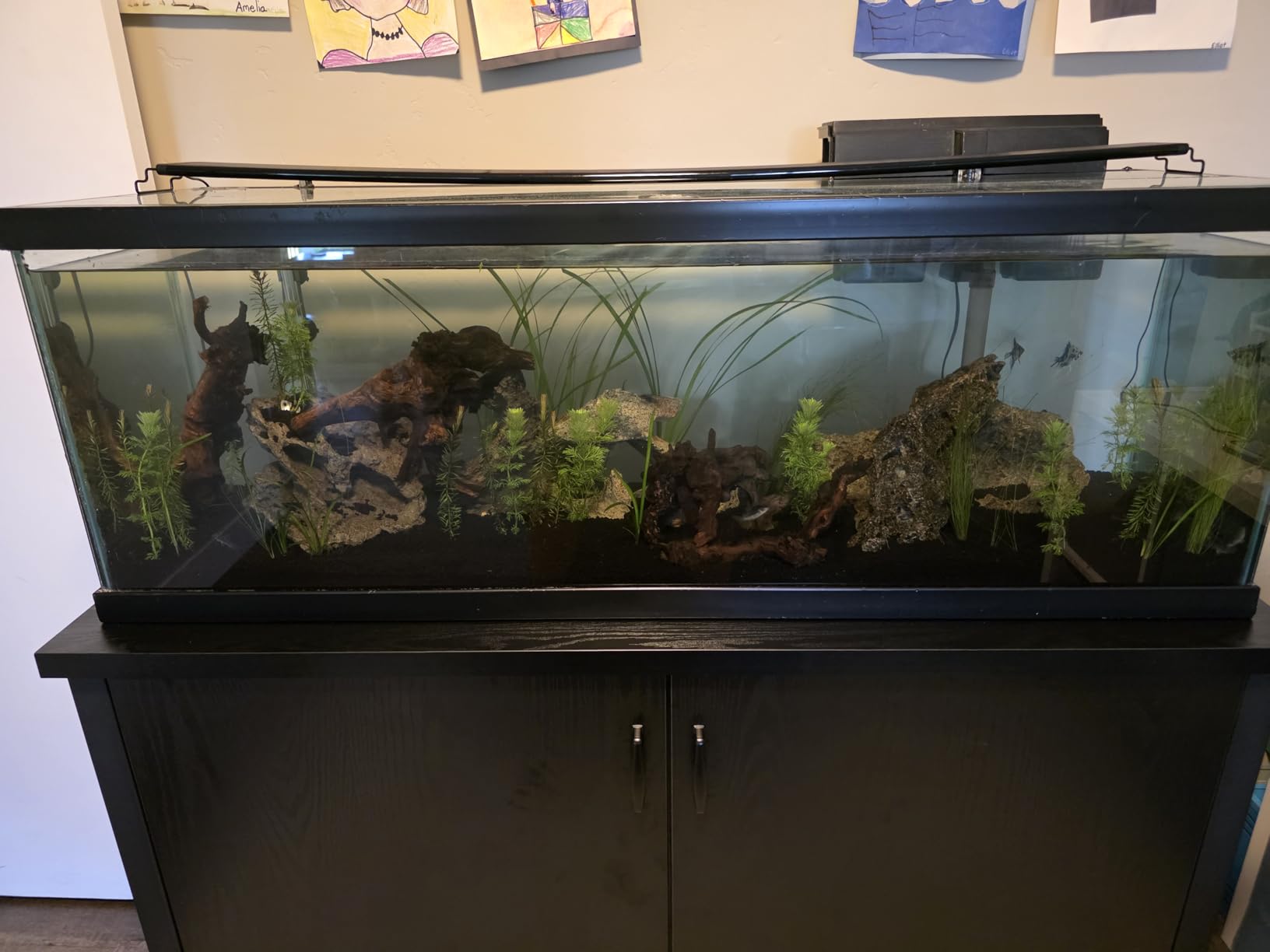
Output is ten watts across 60 LEDs arranged in five columns of SMD2835 chips, giving even spread rather than a hot line under the centre of the bar. Colour rendering of up to 89 CRI is respectable and sits between the Aqueon at 80 and the clip-on Hygger at 85, which you can see on fish colour in the tank.
The control set is unusually complete for the price. Three timer options at 6, 10 or 12 hours, ten brightness levels, three colour modes and a time memory function that restores your settings after a power cut. The fifteen minute ramp at dawn and dusk is a small touch that stops the light from startling fish and reduces the light shock that triggers nuisance algae.
Where a ten watt bar sits in a small tank
This is a low light fixture and should be treated as one. It fits 12 to 18 inch tanks, works on glass or acrylic, and the extendable metal bracket covers a range of widths. Anubias, java fern, crypts, mosses and light stem species will do well, and you are not going to grow a dense carpet with it.
Mounting flexibility is a genuine plus. It fits tanks with or without a hood, rimmed or rimless, and the ABS shell dissipates heat adequately for a fixture of this output. The extendable bracket is what lets one model cover several tank widths.
Where it falls short for you
The timer interface is the thing people complain about most, and it is a genuine usability problem rather than a fault. Pressing the timer button dims or blacks out the light as it starts the cycle, which owners routinely mistake for the unit failing. Add documentation that does not explain the sequence clearly and you have a frustrating first evening.
The click-style buttons also mean many presses to reach some settings. Ten brightness levels is more resolution than you need but costs you patience to set. And at the higher wattage sizes in this range, owners note output can be insufficient for heavily planted larger tanks.
10. Lominie A20 Gooseneck Light – Best CRI on a Small Tank
Lominie LED Aquarium Light, Planted Tank Light 4 Channels Remote Control 6500K Aquarium LED Lamp for Freshwater Fish Tank Refugium with Gooseneck (A20 Freshwater)
Sixteen full spectrum LEDs
CRI over 90 Ra
Four separate channels
360 degree gooseneck
Fits 8 to 18 inch tanks
Pros
- Four independent channels for separate colour and brightness control
- CRI above 90 Ra for natural looking plant and fish colour
- 360 degree rustproof gooseneck aims light at your aquascape
- Cold-forged heat sink and cooling fan run cool and quiet
- Adjustable by remote or by a separate dimmer
Cons
- Weakest average rating here at four stars with a notable share of one-star reviews
- App control needs a separately sold WiFi controller
- Only 8 to 18 inch tanks which excludes anything larger
The Lominie A20 is the pick if colour accuracy is the priority on a small tank. CRI above 90 Ra beats every other bar light here, and on a heavily aquascaped nano with colourful fish the difference between CRI 80 and CRI 90 shows in the tank rather than on a spec sheet.
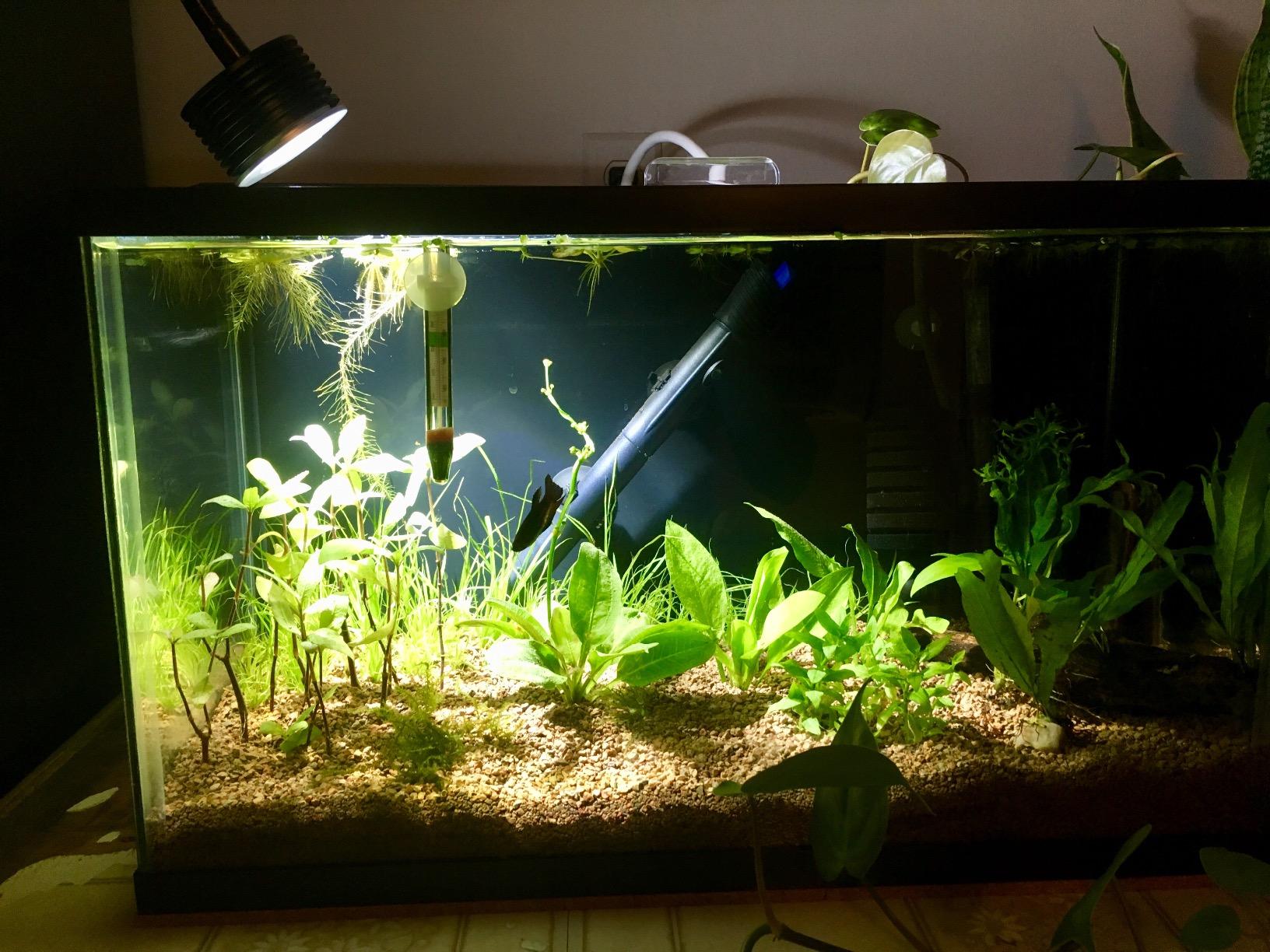
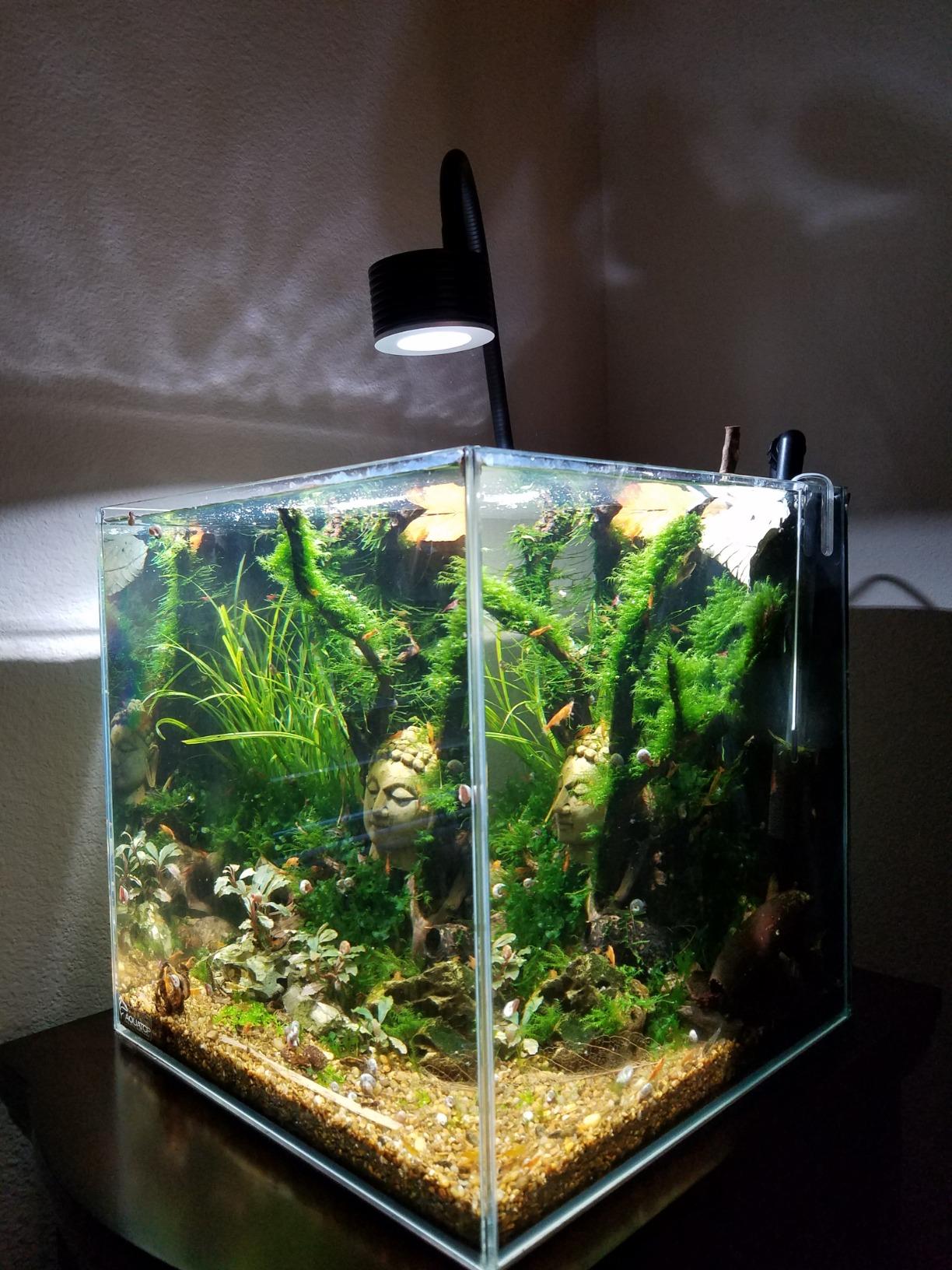
The gooseneck is the design feature that separates it from clip-ons and bars. Three hundred and sixty degrees of rustproof adjustment lets you aim the light precisely at the focal point of a scape rather than washing a whole tank evenly. The mount takes glass up to 0.95 inch with plastic screws that will not scratch the surface.
Sixteen high output LEDs including RGBW and purple are split across four channels, each adjustable independently for colour and brightness. Control works by remote, by dimmer, or by an optional WiFi controller for phone app access, so you are not forced into the app route. The cold-forged heat sink and cooling fan keep it quiet and cool, which extends LED life.
Aimed light rather than uniform light
Output suits tanks from 8 to 18 inches, which covers most nanos and small standard setups. At this size the aimable gooseneck is an advantage rather than a limitation, because you can concentrate light on a specific plant clump or hardscape feature and let the rest of the tank sit in softer light.
That also means coverage is not perfectly even across a wide tank, which is the trade for the precision. On a shallow scape with one clear focal point this works beautifully. On a long tank it becomes a problem, which is part of why the size range stops at 18 inches.
Where it falls short for you
Owner ratings are the weakest in this roundup, averaging four stars with a meaningful share of one-star reviews. Around twelve percent one-star is a real signal that a portion of buyers are disappointed, and we would want to read a year of owner reports before recommending it as a first choice.
App control is an extra purchase if you want it, one controller per light, which makes it expensive as a multi-tank solution. The eight to eighteen inch ceiling also rules it out for anything long, so this is a single-tank nano decision rather than a fleet-wide one.
How to Choose an Aquarium LED Light for Plants
Five checks separate the picks above from the ones that fail within a year, and none of them involve the wattage on the front of the box. Work through them in order and the right light for your tank usually becomes obvious before you have committed to anything.
Measure PAR at substrate, not lumens
PAR stands for photosynthetically active radiation, the 400-700nm band that plants use for photosynthesis, and the number you care about is what reaches the substrate in your tank. Lumens measure brightness as the human eye perceives it, which is why a light can be extremely bright to you and useless to a plant. The 4000 lumens question comes up constantly and has no single answer without knowing where the light is mounted and how deep the tank is.
Match the output to plant demand rather than tank size. Low light setups want roughly 30-50 PAR at substrate and handle Anubias, Java fern, Cryptocoryne, mosses and hornwort well. Medium light sits around 50-80 PAR. High light at 80-120 PAR is what demanding stems and dense carpets need, and only makes sense with CO2 injection and strict intensity control. Buying high light for low light plants is the most common and most reversible mistake new planted tank owners make.
Match colour temperature and spectrum to your plants
Full spectrum means real output across the photosynthetic range, not a marketing word. What matters is that both ends are populated: blue around 450-460nm drives vegetative growth, and deep red around 660-665nm drives colour and flowering response. Lights with white plus blue only will grow green plants but leave red-leaved stems flat.
On colour temperature, 6500K to 8000K is the useful window for freshwater planted tanks. The 6500K white channel on the Hygger and NICREW units sits at the low end of that and looks natural, while units quoting 12000K are describing the top of a programmable range rather than a colour you would run all day. Check for a genuine red emitter, not just red in the feature list.
Check dimming, timer and photoperiod control
Dimming is not a luxury in a planted tank. It is how you keep a bright fixture from creating an algae problem, and it is what lets you grow a low light plant under a fixture built for high light. A light with no dimmer forces you to choose a different fixture; a light with only a fixed three-way button forces you to choose a different hours setting, which is a worse compromise.
Six to seven hours a day suits a low tech tank without CO2. Seven to eight hours with CO2 injection is the normal range. Anything beyond that without a matching increase in CO2 and nutrient uptake is the single most cited cause of planted tank algae problems on hobby forums. Look for a timer you can set to a specific duration, and check whether it restores settings after a power cut, because plenty of budget units do not.
Pick the mount that fits your tank shape
Form factor is where most buying errors happen, because a light that fits one tank cannot be stretched across another. Clip-on units suit nano and rimless tanks where rim space is precious and a bracket would spoil the design. Bars cover 20 to 36 inch tanks with extendable brackets. Wider bars span 35 to 43 inch tanks, and the largest bar here reaches 48 to 54 inches, which is the range you need for the setups covered in our guide to large freshwater aquariums for planted tanks. For open-top tanks without a rim, a pendant hangs over the water instead of clamping anywhere.
Check the glass thickness against the clip or screw mount, and check whether the bracket extends far enough for your widest position. If your tank is rimless, confirm the mount grips glass rather than resting on the rim, and confirm the plastic screws are the kind that will not scratch glass under tightening.
Upgrade to a brighter light without triggering algae
Moving up to a stronger light is the most dangerous upgrade in the hobby and the one nobody warns you about. The algae bloom that follows is not a sign you chose badly; it is what happens when you hand a low light plant far more light than it can use. Start at 50 percent intensity or lower, or below where you think you need.
Raise intensity by 10 to 15 percent per week rather than jumping straight to maximum. Keep the photoperiod at six to seven hours initially and resist lengthening it, because more hours and more intensity together are what overwhelm the balance. If you are adding CO2, add it in step with the light increase rather than all at once. Trim plants weekly to consume the extra energy, and if you see the first dusting of green on glass, hold at the current level for a further week rather than pushing again.
Frequently Asked Questions
How many hours a day should a planted tank light be on?
Six to seven hours a day suits a low tech planted tank without CO2 injection. With CO2, seven to eight hours is normal. Running longer without matching CO2 and nutrient uptake is the most common cause of algae problems in planted tanks.
How much PAR do aquarium plants need?
Low light setups want roughly 30-50 PAR at substrate, medium light around 50-80 PAR, and high light 80-120 PAR for demanding stems and dense carpets. Match the figure to plant demand rather than tank size, since buying high light for low light plants is the most common and reversible mistake.
Is 4000 lumens enough to grow plants?
Lumens alone cannot answer it, because lumens measure brightness to the human eye rather than light usable by plants. What matters is PAR at substrate in your tank, which depends on fixture output, mounting height and tank depth. A 4000 lumen fixture placed low over a shallow tank can outperform a higher figure mounted high over a deep one.
What is a good full spectrum light for an aquarium?
A full spectrum planted light needs a white channel around 6500K plus real blue diodes near 450-460nm and genuine deep red emitters near 660-665nm. Lights carrying only white and blue will grow green plants but leave red-leaved stems flat. Colour temperature between 6500K and 8000K looks most natural in freshwater tanks.
Do aquarium LED lights cause algae?
Not by themselves. Algae appears when light, CO2 and nutrients are out of balance, usually when intensity or photoperiod is raised too fast. Ramp intensity up by 10-15 percent per week, hold the photoperiod at six to seven hours, and trim plants regularly to consume the extra energy.
The Light to Buy in 2026
If you only buy one, buy the Hygger Advanced LED for a tank between 30 and 36 inches. It has the most balanced combination of a genuine 6500K white channel, real red and blue plant wavelengths, five usable brightness levels and an automatic sunrise-to-moonlight cycle, and it does all of it without an app or a remote you have to keep track of. For the best aquarium LED lights for planted tanks generally, that is the fixture we would put over our own tank.
Match the tier to the job instead. Nano and rimless tanks under 20 inches take the Aqueon clip-on or the Hygger clip-on without touching the rim. Tanks needing stronger output on a long footprint take the Fluval Plant 3.0 or the SEAOURA bar, and the latter is the only light here publishing a PAR figure you can plan against. Whatever you choose, start at half brightness and raise it slowly, because the transition is where planted tanks go wrong.