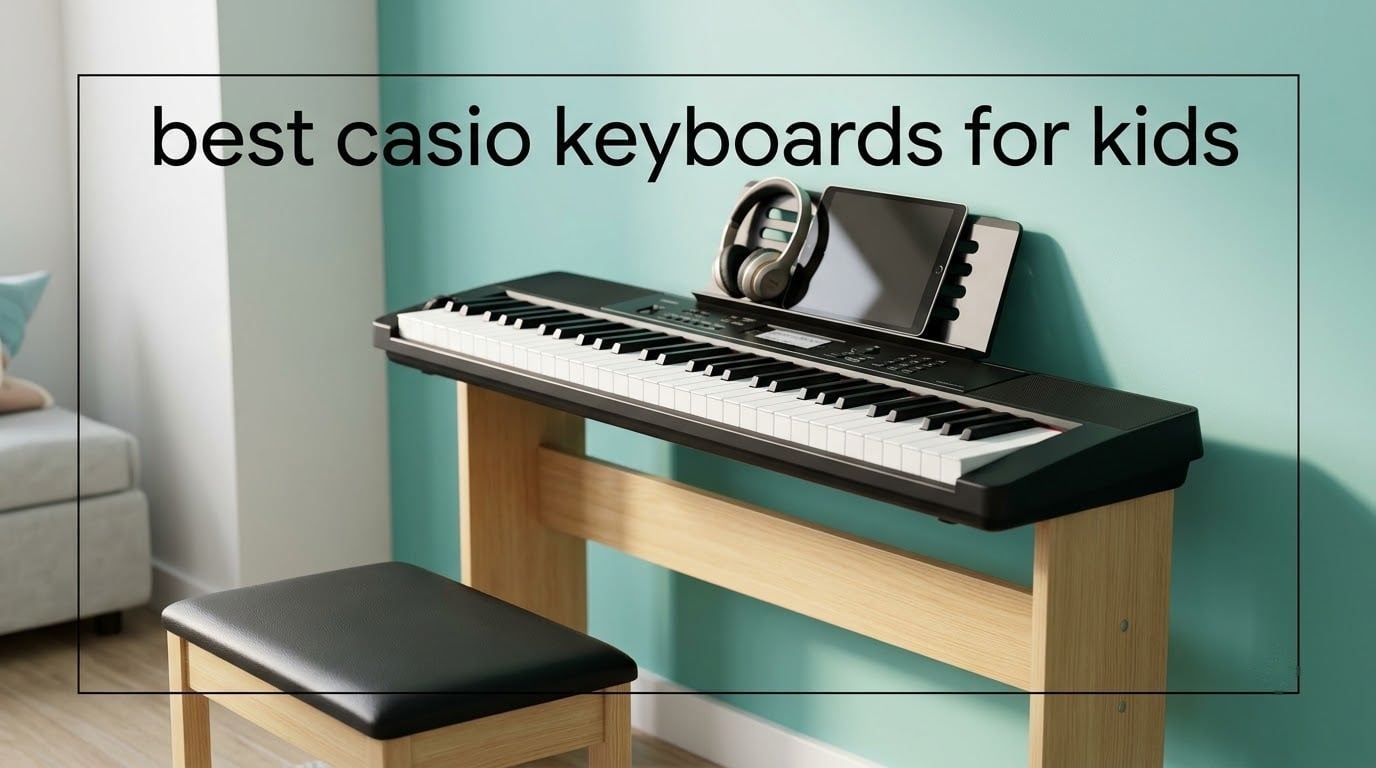
The best Casio keyboard for a child depends almost entirely on hand size and age rather than on features. For toddlers and preschoolers aged 3 to 5, a mini-key board like the Casio SA-51 or SA-81 is the right fit because full-size keys are simply too wide for small fingers. From ages 6 to 11, once lessons may start, the Casio CT-S200 is the model I recommend most often, and for children aged 8 and up who are already committed, the Casio CT-X700 is the strongest all-rounder on this list.
Every keyboard below is a genuine Casio, not a mixed-brand list. That matters because the Casio range is wide enough on its own that parents end up comparing models they do not understand. The SA models use mini keys, the CT-S models use unweighted full-size keys, the CT-X models add heavier touch response, and the LK-S models add lighting. If you want a broader view of the category first, our guide to the best kids keyboards covers non-Casio options too.
We compared all ten instruments below on key count, key action, tone count, lesson tooling, portability and what actually arrives in the box, then cross-checked those specifications against owner reviews. This guide was last updated in October 2026, and specifications and model lineups shift over time, so treat the numbers here as the guide and check the listing before you buy.
Table of Contents
Top 3 Picks for the Best Casio Keyboards for Kids in October

Casio CT-X700
- 600 tones and 195 rhythms on the AiX engine
- Step-Up Lesson system with backlit fingering display
- 61 full-size keys
- under 10lb with optional battery power

Casio CT-S200
- 61 full-size keys in a 7lb body
- 400 tones and 77 rhythms
- Dance Music Mode and 60 built-in songs
- Class-compliant USB-MIDI
Casio CT-S1
- Touch-sensitive 61 keys with AiX sound source
- 61 tones plus Casio Classic Tones
- One-button MIDI recorder
- Strap pins and under 10lb weight
Quick Overview Every Casio Model at a Glance in 2026
The table below lists every model in this guide with its core specifications, so you can match a keyboard to a child’s age without reading ten full reviews.
| Product | Specifications | Action |
|---|---|---|
| Casio CT-X700 |
|
Check Latest Price |
| Casio CT-S200 |
|
Check Latest Price |
| Casio CT-S1 |
|
Check Latest Price |
 Casio CT-S200 EPA Bundle Casio CT-S200 EPA Bundle |
|
Check Latest Price |
 Casio CT-S300 EPA Bundle Casio CT-S300 EPA Bundle |
|
Check Latest Price |
 Casio LK-S250 Casio LK-S250 |
|
Check Latest Price |
 Casio SA-81 Casio SA-81 |
|
Check Latest Price |
 Casio SA-51 Casio SA-51 |
|
Check Latest Price |
 Casio CT-S400 Casio CT-S400 |
|
Check Latest Price |
 Casio CT-S500 Casio CT-S500 |
|
Check Latest Price |
1. Casio CT-X700 – Best Overall for Kids Aged 8 and Up
Casio CT-X700 61-Key Portable Keyboard | 600 Tones | AiX Sound Engine
600 tones and 195 rhythms
61 unweighted touch-responsive keys
Under 10lb, battery capable
Pros
- 600 tones and 195 rhythms on the AiX engine
- Step-Up lesson system with backlit fingering display
- 6-track MIDI recorder plus 100 built-in songs
- Class-compliant USB-MIDI with no drivers needed
- Under 10lb molded case with music rest and smartphone shelf
Cons
- Menu layout can intimidate total beginners
- No Bluetooth
- Unweighted 61-key range runs out for low repertoire
This is the model I keep coming back to for a child who is eight or older and treating practice like a real subject rather than a game. It is the most heavily reviewed keyboard in this roundup by a wide margin, and owners repeatedly report years of reliable use rather than a first-season fling.
The sound engine is the standout. Six hundred tones and 195 rhythms sit on the same AiX platform Casio uses further up its range, and a German grand piano voice is included. Piano teachers and hobbyists who bought it at this level of hardware consistently say the sound exceeds what the specification sheet implies.
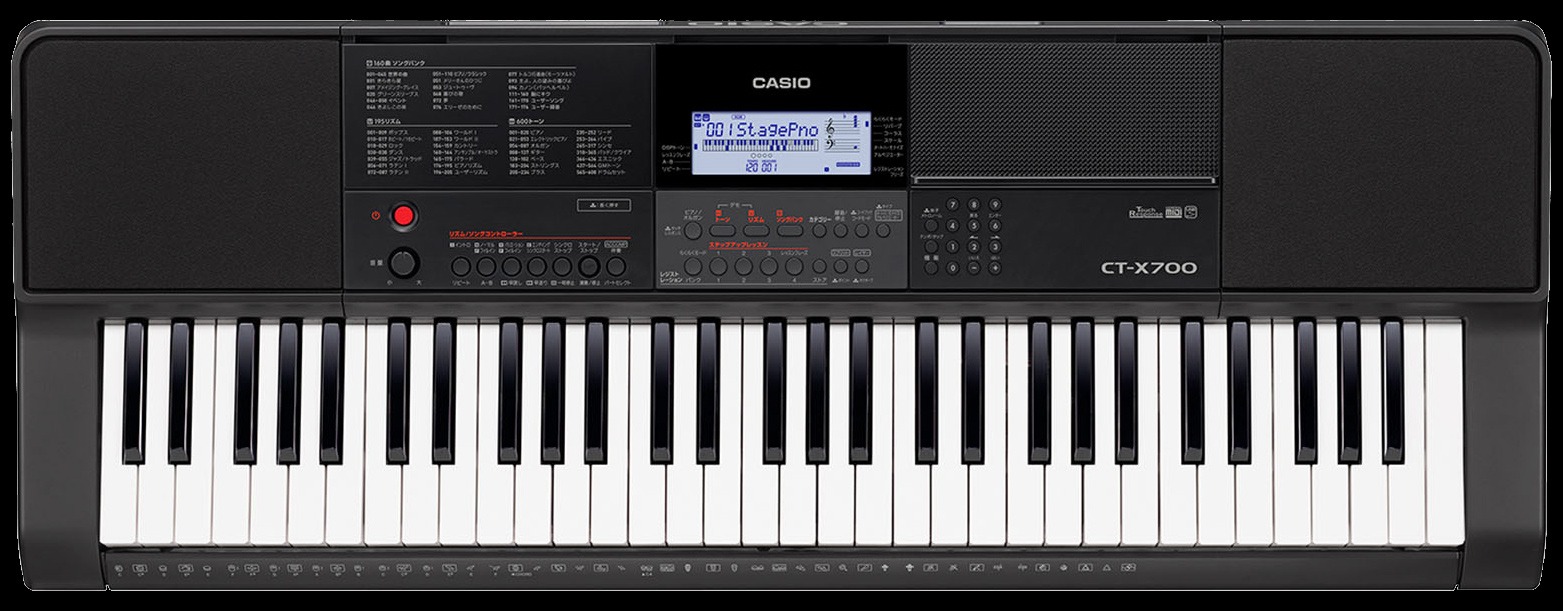
What makes it work for lessons is the Step-Up Lesson system, which pairs a backlit display with fingering and notation so a child can follow a piece without an adult standing over the bench. There is also a 6-track MIDI recorder and 100 built-in songs for practice and composition, which means the instrument grows from a practice tool into a small recording setup.
Connectivity is handled through class-compliant USB-MIDI, which works with Mac, PC, Android and iOS without installing drivers. That matters more than it sounds, because it means lesson apps and notation software are available the moment the keyboard is unboxed.
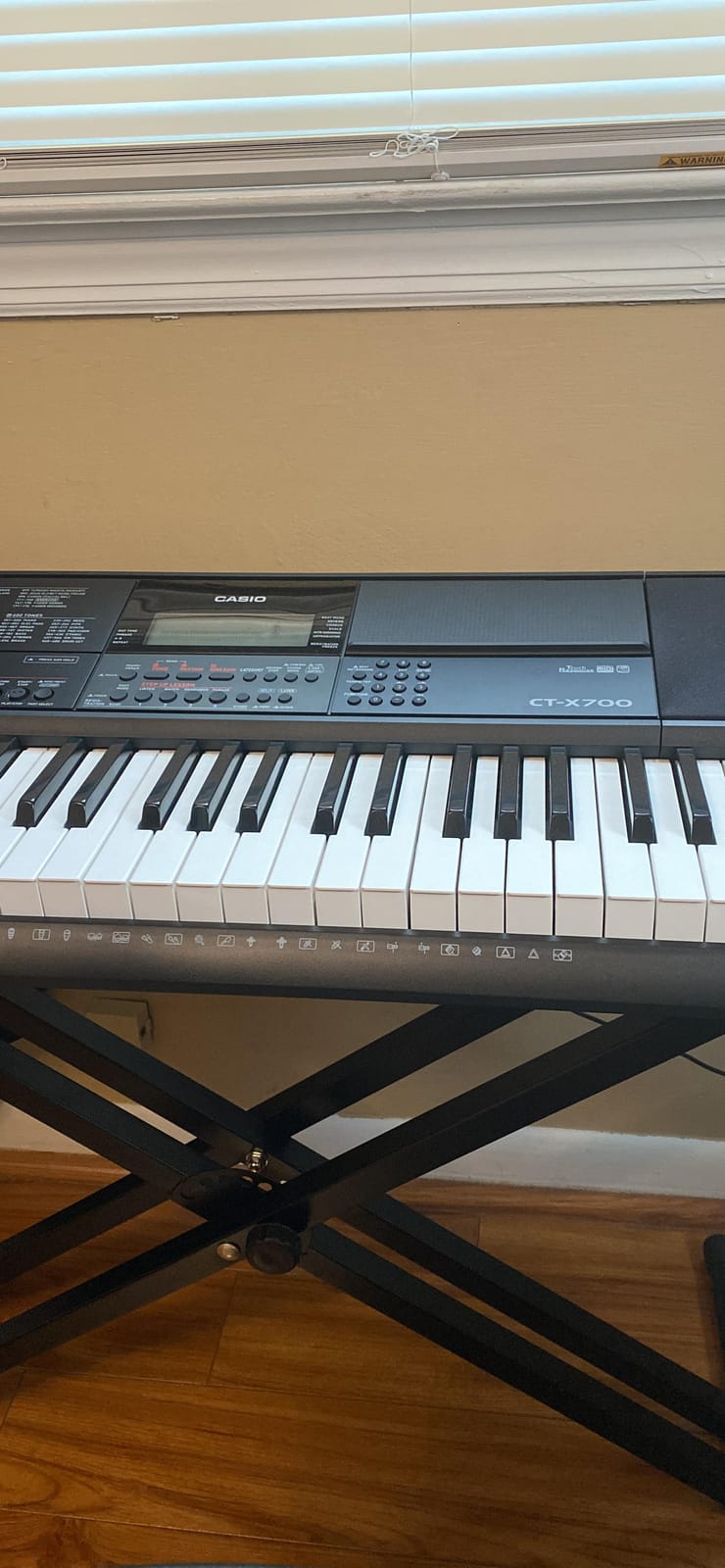
Who the CT-X700 suits
It suits a child who has settled into weekly lessons and wants a piano tone that sounds convincing in the room. The German grand voice holds up in front of other people, which is exactly what a child needs at a first recital.
It also suits a family with two children at different stages, because the Step-Up lessons stay useful for the younger one while the older one works through repertoire. Long-serving owners report five-plus years of dependable use, so it is not a toy that gets replaced at the next birthday.
Where the CT-X700 falls short
The menu system is the honest weakness. Piano teachers and hobbyists who recommend it also warn that total beginners can find the deep option lists intimidating, and the arpeggiator in particular sits behind several button presses. If your child is five years old, this is more machine than they need.
There is no Bluetooth, so wireless control needs an add-on adapter. The keybed is unweighted rather than fully weighted, and 61 keys run out on the low end for advanced repertoire. Buyers have also reported occasional deliveries without the listed AC adapter, so check the box on arrival.
2. Casio CT-S200 – Best Value 61-Key for Ages 6 to 11
Casio Casiotone CT-S200 – 61-Key Portable Keyboard for Beginners | 400 Tones, 77 Rhythms, LCD Display, Dance Music Mode, USB-MIDI, Stereo Speakers | Includes Power Supply & Music Rest | Black
61 full-size unweighted keys in a 7lb body
400 tones and 77 rhythms
AC adapter and music rest included
Pros
- 61 full-size keys at only 7lb with a carry handle
- 400 tones and 77 rhythms plus 10 reverb types
- Dance Music Mode triggers basslines and drum loops from the keys
- 60 built-in songs with one-hand-at-a-time guidance
- Class-compliant USB-MIDI works with Mac
- PC and mobile
Cons
- Unweighted keys lack true touch sensitivity
- Small onboard speakers limit low end
- USB-MIDI cable not included and the port is micro-B
The CT-S200 is the pick I suggest when a family wants a genuine 61-key instrument without turning the purchase into a project. It carries a 4.6 average across more than 1600 owner reviews, which tells you the value case holds up under a lot of real households.
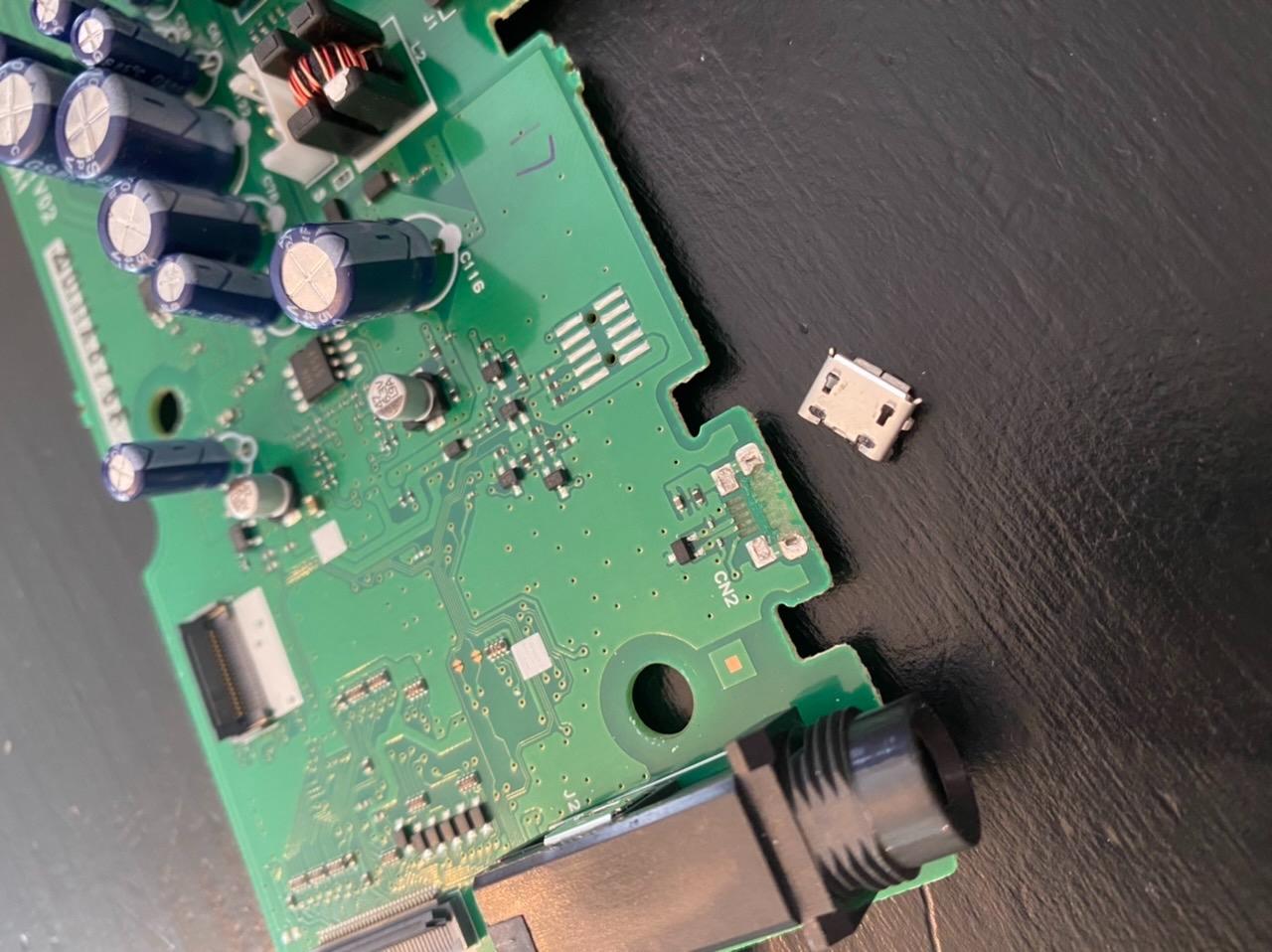
Sixty-one full-size keys in a body weighing about 7lb is a rare combination. Parents of young pianists mention the weight and carry handle constantly, because a child can move it between rooms without an adult lifting it, and the slim profile means it disappears under furniture between practice sessions.
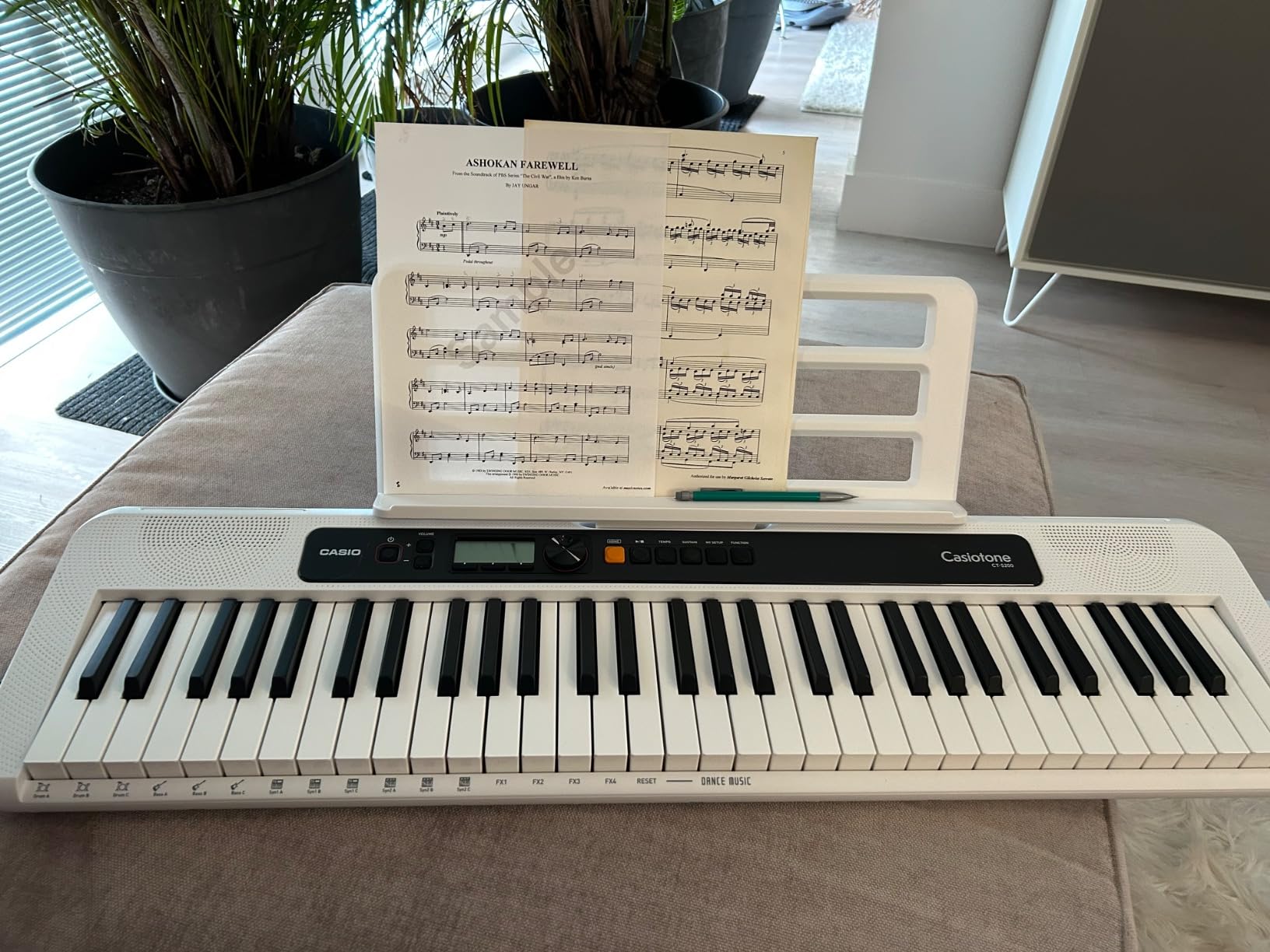
For engagement, the built-in content matters more than the tone count. Dance Music Mode lets a child trigger basslines, drum loops and synth parts straight from the keys, and 60 built-in songs support guided practice. Forum parents describe this as the feature that kept their child coming back to the instrument when nothing else did.
My Setup recalls favourite tones and rhythms in one press, which removes the biggest barrier for younger players: forgetting where a sound lives. Class-compliant USB-MIDI opens up Casio Music Space and other lesson software with no driver installation, and the included AC adapter and music rest mean the box is complete on day one.
Who the CT-S200 suits
It suits a child aged six to eleven who is exploring keys and rhythms with or without a teacher. Several owners bought it as a second instrument for grandparents’ houses or for travel, precisely because it is light and self-contained.
It also suits families who want a practice instrument that does not sound thin. The 400 tones and 10 reverb types give a beginner enough variety to sound like they are playing an instrument rather than a toy, and the keyboard itself takes up very little floor space.
Where the CT-S200 falls short
The keys are unweighted and only lightly responsive, so a child moving on to a weighted piano will notice the difference immediately. That is the single biggest reason to skip this model in favour of a weighted 88-key instrument.
The onboard speakers are small, which limits low-end output, and the USB-MIDI cable is not supplied while the port is micro-B rather than the newer standard. There is no USB power option, so it runs on batteries or the supplied adapter, and the full dot LCD plus dial layout takes some practice to navigate.
3. Casio CT-S1 – Best Sounding Touch-Sensitive Board
Casio Casiotone CT-S1 61-Key Portable Keyboard – Black
61 touch-sensitive full-size keys
AiX sound source with 61 tones
Bass reflex speakers with Surround mode
Pros
- Touch-sensitive keys widely praised as feeling premium
- AiX engine with convincing acoustic piano and organ voices
- Horizontal bass reflex speakers with Volume-Sync EQ and Surround mode
- One-button MIDI recorder with 40000-note memory
- Strap pins and under 10lb weight
Cons
- No sustain pedal included
- No dedicated 5-pin MIDI port
- Printed manual is a small fold-out card
- App support from third parties is weak
If the deciding factor for you is how the piano voice sounds rather than how many features are bolted on, the CT-S1 is the board to look at. It holds a 4.7 average and owners describe it as the best-sounding keyboard they could find near this level of hardware.
The 61 full-size keys are genuinely touch-sensitive, meaning a harder press produces a louder note. That single detail changes practice more than any tone count, because a child learns dynamics the same way they would on an acoustic. The AiX sound source delivers 61 high-quality tones alongside Casio Classic Tones, and the piano and organ voices get singled out repeatedly.
The speaker system is designed for a home room rather than a desk. Horizontal bass reflex speakers with Volume-Sync EQ and Surround mode keep the low end rich even at low volume, which is the setting most children practise in at night.
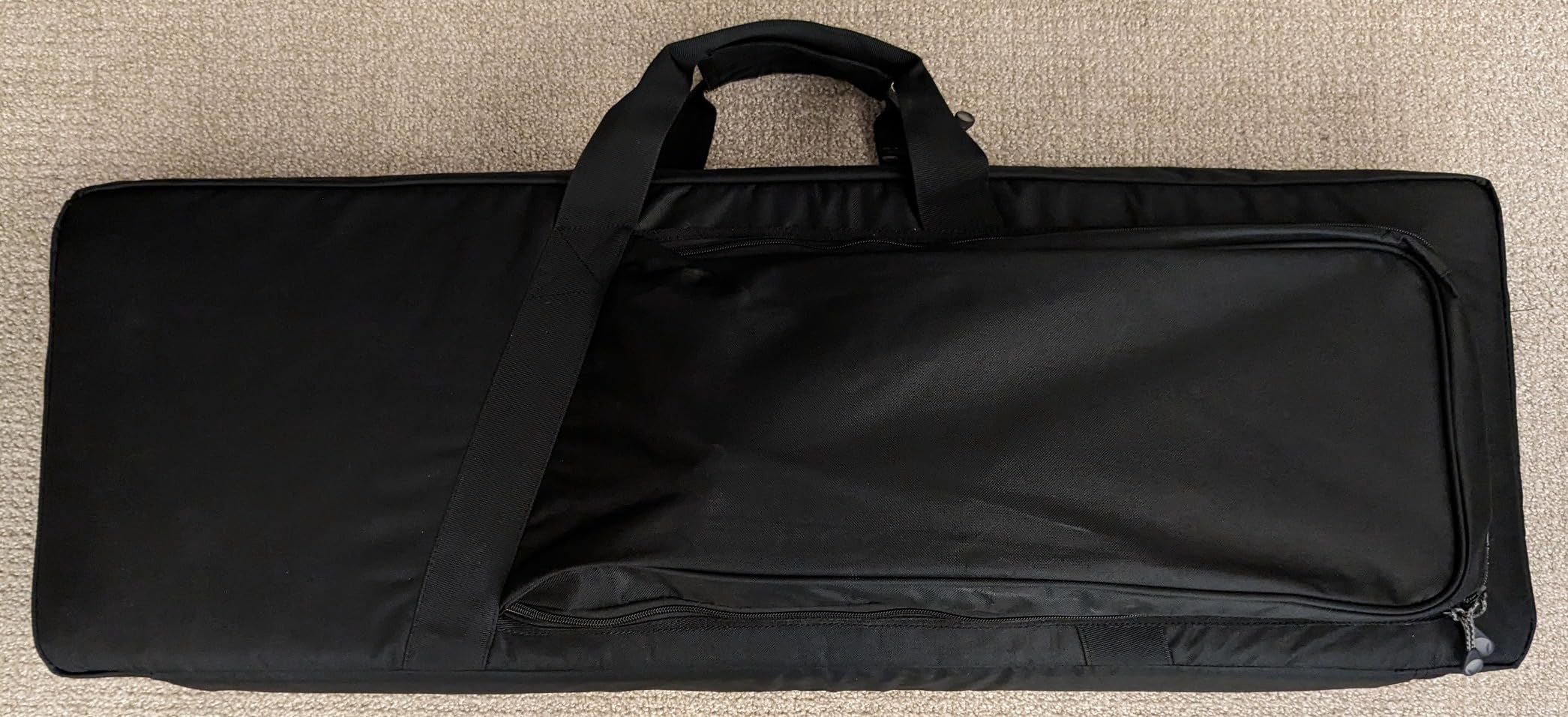
The one-button MIDI recorder stores up to 40000 notes and can layer hands together, and one owner uses it to layer their own parts for Bach practice. Strap pins and a body under 10lb make it genuinely portable, and AA batteries including rechargeables work at the lower terminal voltage.
Who the CT-S1 suits
It suits a child who is ready for real touch response and whose teacher keeps asking for dynamics and control. Many owners report playing on it for years without upgrading, which tells you the instrument holds its value as skill grows.
It also suits anyone who finds the button layout of a typical arranger keyboard distracting. The retro styling keeps the number of controls low on purpose, so a beginner is not presented with forty choices before playing a single note.
Where the CT-S1 falls short
No sustain pedal is included, and several buyers have to purchase one separately. There is no dedicated 5-pin MIDI port, so wireless MIDI needs a Bluetooth adapter, and some third-party lesson apps fail to detect one when it is attached.
The printed manual is a small fold-out card, and the key-assigned hidden functions require the online chart to find. The USB-A port does not pass MIDI out to a tablet even though the micro-USB port does, and the piano tone variety leans toward electric pianos rather than acoustics.
4. Casio CT-S200 EPA Bundle – Best Complete Starter Package
Casio CT-S200BK EPA 61-Key Premium Keyboard Package with Headphones, Stand, Power Supply, 6-Foot USB Cable and eMedia Instructional Software, Black
61 full-size keys with responsive feel
400 tones, 77 rhythms and 60 songs
Bundle includes stand, headphones, cable and software
Pros
- Complete first setup with headphones
- adjustable stand
- power supply
- cable and software
- 400 tones with 77 accompaniment rhythms and 60 preset songs
- Keys feel well weighted and responsive rather than cheap
- Works with lesson software including Piano Prodigy
- Light to carry and the metronome is well regarded
Cons
- Included headphones are weak and one pair arrived broken
- Light plastic construction
- Instruction book or software media sometimes missing
Four accessories are the most common surprise at the register: the stand, the bench, the sustain pedal and the power adapter. This bundle is the pick for parents who would rather solve that problem once, in the box, instead of discovering it at the checkout.
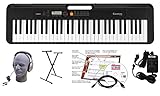
Everything a first setup needs arrives together. You get the keyboard, headphones, an adjustable stand, the power supply, a 6-foot USB cable and eMedia instructional software, which is exactly the list of omissions parents report most often when buying a bare keyboard.
The instrument underneath is the CT-S200 platform, so the 400 tones, 77 accompaniment rhythms and 60 preset songs carry over. Dance Music Mode adds the creative hook that keeps children engaged, and reviewers specifically mention compatibility with established lesson apps like Piano Prodigy.
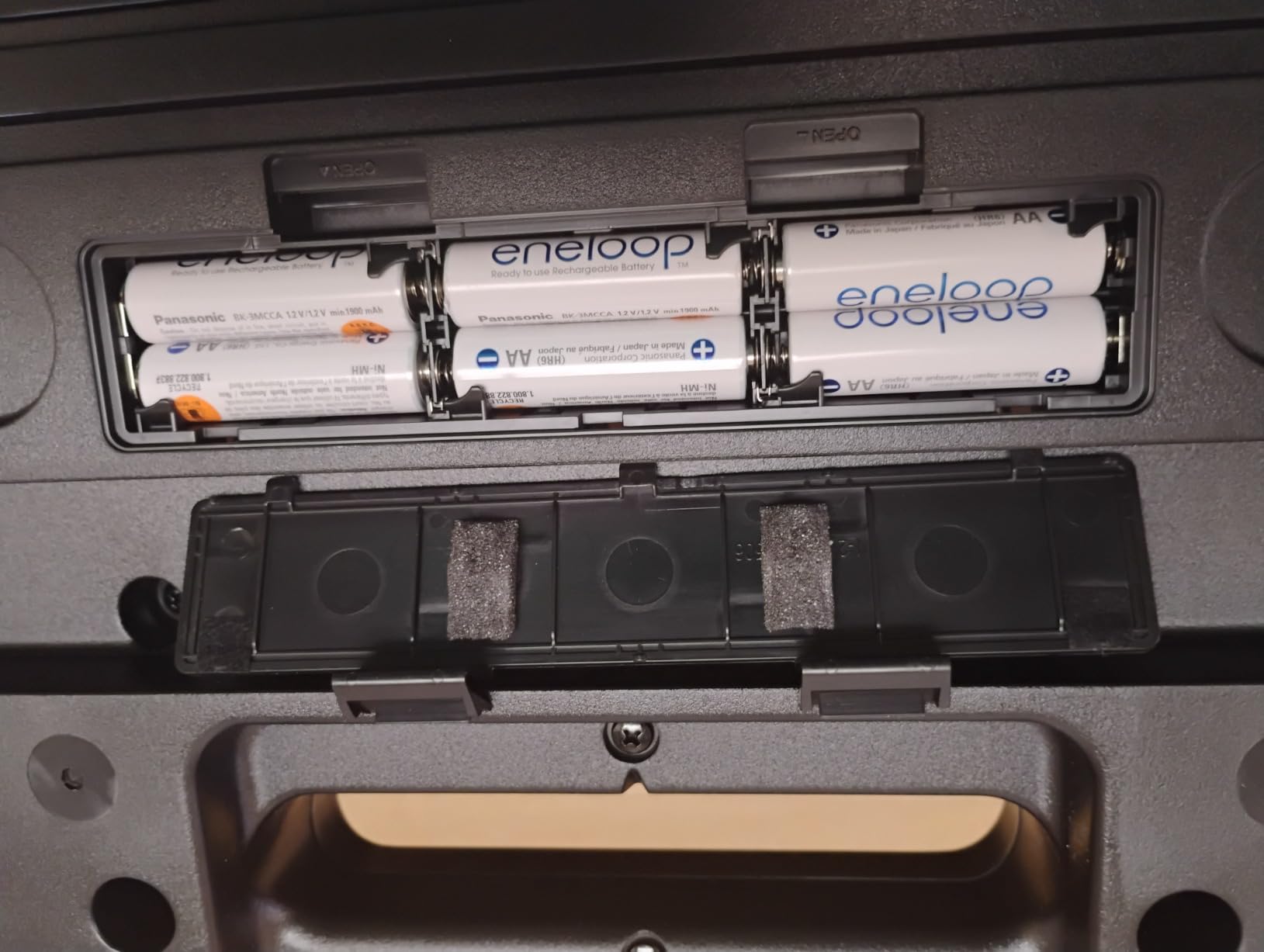
Battery life is worth noting for a bedroom instrument: six AA batteries run over four hours of play. That is enough for a full practice session without hunting for a wall socket, and owners report units lasting years of heavy use.
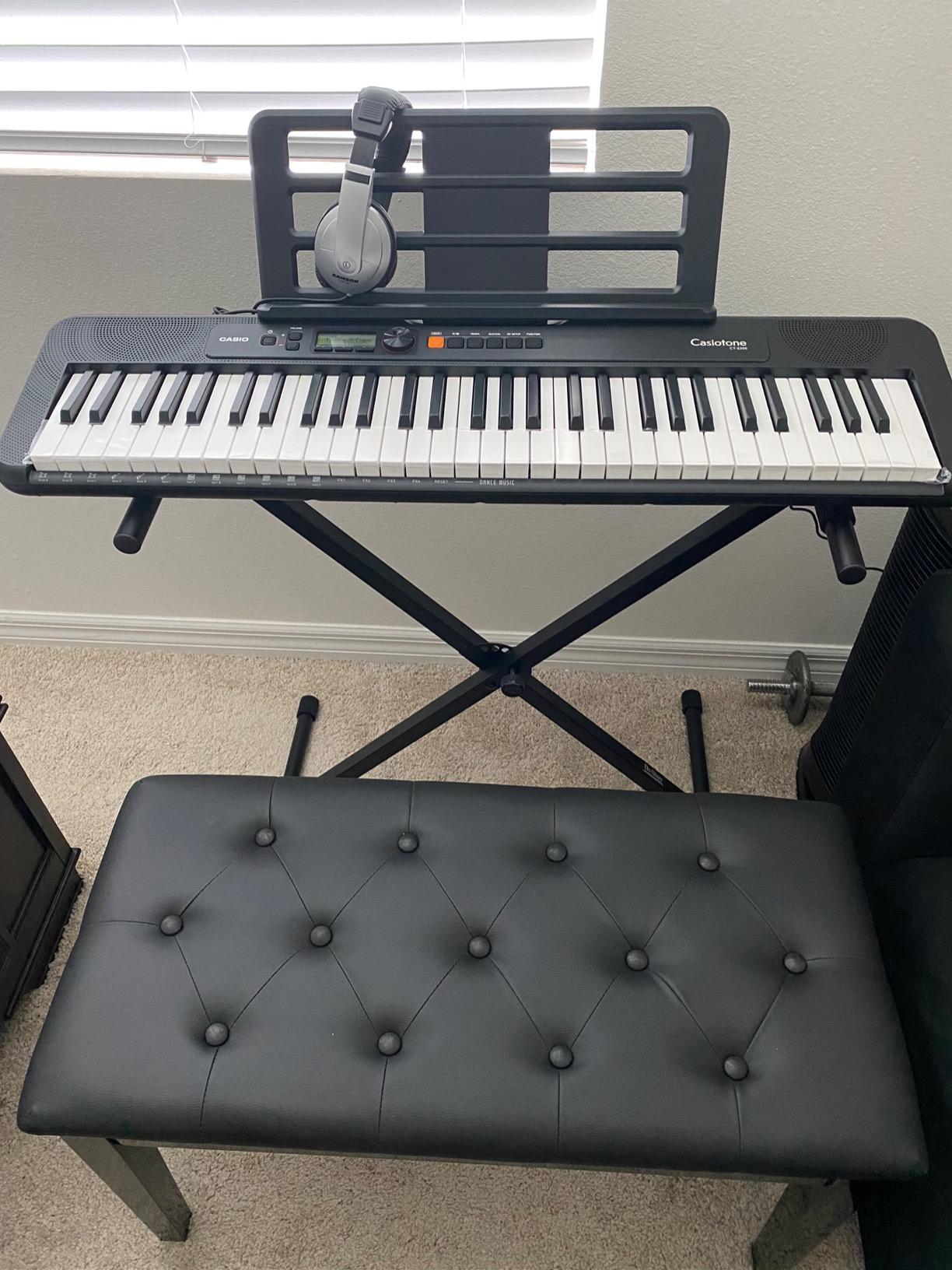
Who the CT-S200 bundle suits
It suits a family starting from nothing in the room. If there is no desk to spare and no stand to borrow, this is the version that works on the day it arrives rather than the day you get round to buying furniture.
It also suits parents who want the headphones included for quiet practice. The headphone jack is treated as close to mandatory by most households with a child learning next to a sibling or a sleeping sibling in the next room.
Where the CT-S200 bundle falls short
The headphones are the weak link in the package. Reviewers describe them as not good, and one pair arrived with a broken speaker wire after three months of use. Some buyers also found the instruction book or software media missing from the package.
Plastic construction is light, which keeps the weight down but does not feel premium, and the stand is included while the detachable sheet music holder inserts into the carry handle rather than sitting on the stand. A few buyers also reported difficulty returning a pack listed as an educational pack that the manufacturer does not actually sell separately.
5. Casio CT-S300 EPA Bundle – Best for Connecting to Lesson Apps
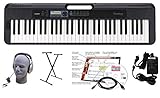
Casio CT-S300 EPA 61-Key Premium Keyboard Package with Headphones, Stand, Power Supply, 6-Foot USB Cable and eMedia Instructional Software
Touch-responsive 61 full-size keys
400 tones and 77 rhythms
USB-MIDI with 6-foot cable included
Pros
- Bundle includes headphones
- stand
- power supply
- 6-foot cable and tutorial software
- 400 tones and 77 rhythms with Dance Music Mode
- Touch-responsive 61 keys with USB-MIDI for lesson apps
- Light and easy to move with a stand included
- Parents frequently buy it as a child's first keyboard
Cons
- Included headphones are cheap
- Bundle occasionally arrives missing software disc or parts
- Built-in speakers are adequate rather than impressive
- Dial-and-screen navigation takes practice for younger players
The CT-S300 bundle is the pick when your plan is to put a tablet on the music rest and learn through an app. The 6-foot USB cable is actually in the box, which removes the most common friction in app-based learning.
Under the hood it is a touch-responsive 61-key board with 400 tones, 77 rhythms and Dance Music Mode, and the same Dance Music Mode hook as the CT-S200. Class-compliant USB-MIDI works with the Chordana Play app for iOS and Android alongside other USB-MIDI software, so the connection is straightforward rather than fiddly.
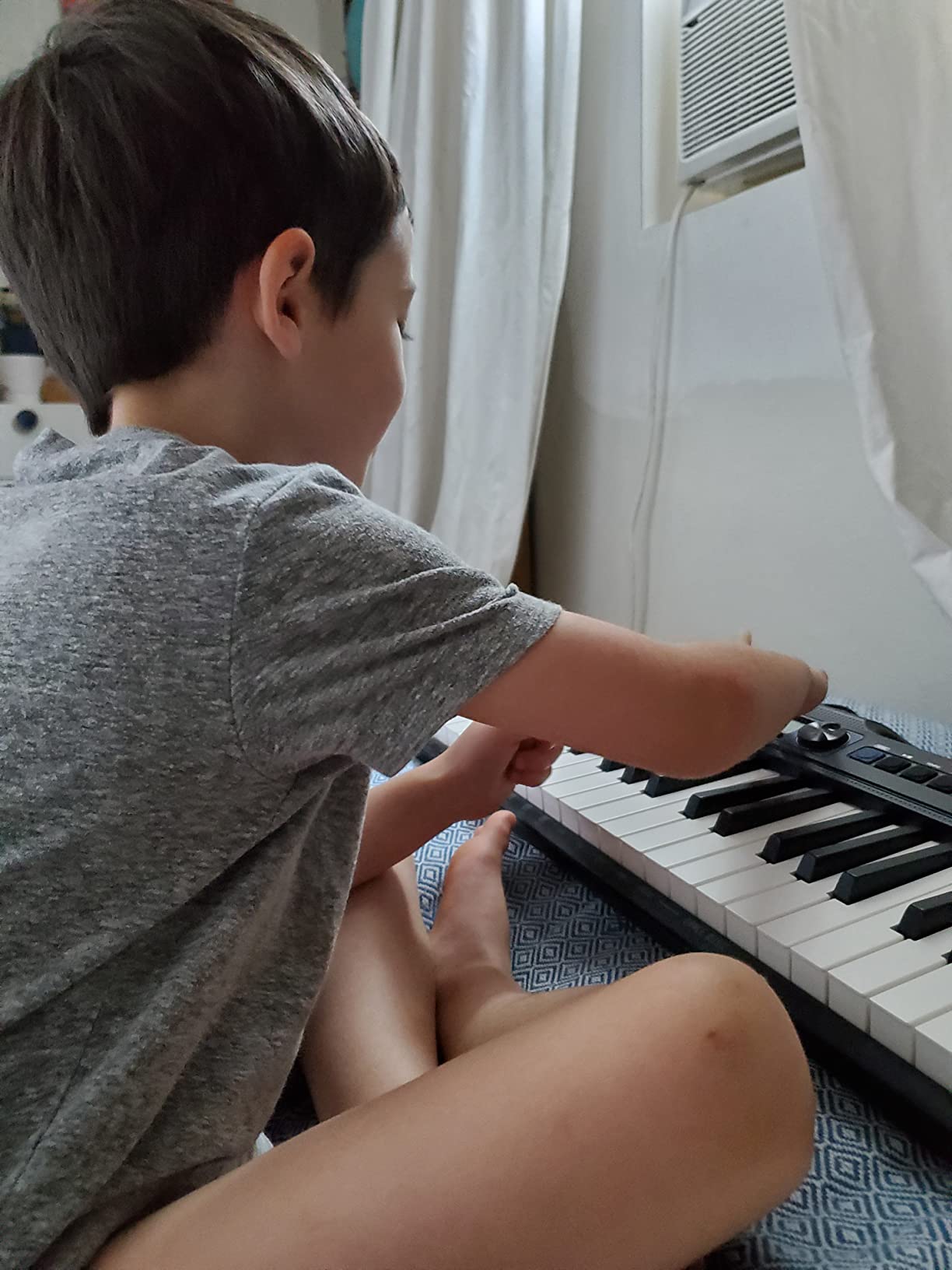
Touch response is what separates this from the cheaper CT-S models. A child pressing harder gets a louder note, which is the foundation of playing dynamics rather than simply triggering sounds.
Because the stand is included, the keyboard does not need separate furniture, and reviewers note it is light and easy to move around the house. Parents buying it as a child’s first keyboard frequently praise exactly that combination of completeness and portability.
Who the CT-S300 bundle suits
It suits a child who will learn through a screen rather than from printed sheet music. If you already use a lesson app, or intend to download one, having the correct cable in the box saves an afternoon.
It also suits households moving between rooms, since the light body and included stand make the keyboard a movable piece of furniture rather than a fixture. Touch-responsive keys also mean the child grows into dynamics before moving on to a weighted board.
Where the CT-S300 bundle falls short
The negative reviews here cluster on bundle contents rather than the keyboard. Headphones in this package are cheap, and shipments have occasionally arrived with a missing software disc or other missing components.
The built-in speakers are adequate rather than impressive, and the dial-and-screen navigation takes practice for younger players who are used to tapping a screen. Check the box contents on arrival if you need the cable and software.
6. Casio LK-S250 – Best Lighted-Key Pick for Self-Teaching
Casio Casiotone LK-S250 61-Key Lighted Portable Keyboard | 400 Tones
61 full-size touch-sensitive keys
Key Lighting System and 4-stage lessons
400 tones and 77 rhythms
Pros
- Key Lighting System plus 4-stage lessons make it self-teaching
- Song can be slowed to one hand at a time
- 61 full-size touch-sensitive keys with 400 tones and 77 rhythms
- Light enough to sit on a lap or carry by the handle
- Works as a MIDI controller with apps like Synthesia and Chordana
Cons
- Only four keys light at once so fifth notes unlight the earliest key
- LCD screen is not backlit
- Legacy micro-USB connector
- No weights on the keys despite full-size dimensions
This is the lighted-key Casio that comes up most often in parent discussions, and it is genuinely the best of the self-teaching options. The Key Lighting System shows a child which key to press next, and the 4-stage lesson system adds spoken guidance on top.
The feature parents value most is the ability to slow a song down to one hand at a time. A beginner who cannot yet coordinate two hands can start with the right hand alone and add the second later, which removes the single most common reason a young player quits.
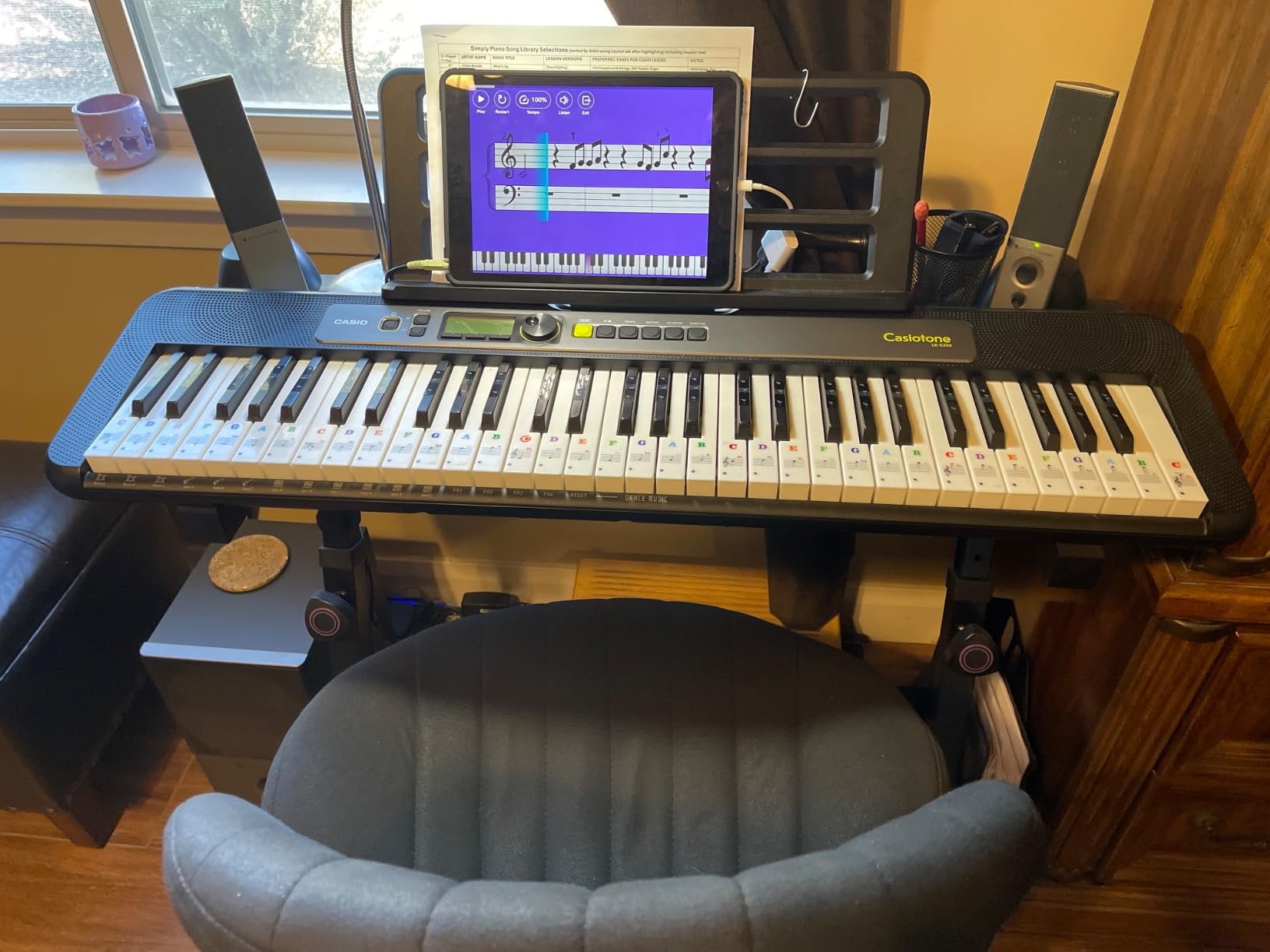
The rest of the specification sheet is respectable. You get 61 full-size touch-sensitive keys, 400 tones, 77 rhythms and Dance Music Mode, and the drawbar organ voices get singled out by reviewers. The sustain pedal input can be reassigned to expression or volume for organ patches, which is a detail most beginners never discover.
It also works as a MIDI controller for apps such as Synthesia, Simply Piano and Chordana, so a child can graduate from the built-in lessons without buying a different instrument. The body is light enough to sit on a lap or carry by the moulded handle.
Who the LK-S250 suits
It suits a child with no teacher available, either because of cost or geography, who needs something to tell them what to press. Parents describe children teaching themselves from the built-in songs with minimal adult involvement.
It also suits a child who gets bored quickly. The lights give visible feedback on every correct note, which is motivating in a way that a silent practice session on an unweighted board is not.
Where the LK-S250 falls short
Lighted keys do not teach real technique, and this is where forum criticism lands hardest. Parents in piano communities point out that classical study needs weighted action, and a keyboard that lights the next note for you builds a habit of watching rather than reading. If your child already has lessons, an unlit model is the better investment.
The lighting itself is limited to four keys at once, so a fifth note switches off the earliest one and two-handed work is restricted. The LCD is not backlit, the connector is a legacy micro-USB, the song library covers classical and Christmas material without blues, R&B or rock, and the keys carry no weights despite their full-size dimensions. Some orders have also arrived without the power adapter.
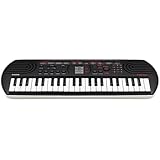
7. Casio SA-81 – Best Mini-Key Board for Ages 5 to 8
Casio Casiotone SA-81 Compact Keyboard | 100 Tones | 50 Rhythms
44 compact mini keys for small hands
100 sampled tones and 50 rhythms
Runs on batteries or the included AC adapter
Pros
- 44 mini keys well suited to small hands and beginners
- 100 realistic sampled tones
- 50 rhythm patterns and 10 familiar songs
- Layer mode and a sustain function plus octave shift
- Weighs about 3lb and runs on batteries or AC
Cons
- 44 keys is a limited range for serious study
- Mini keys need practice for adult players
- Compact footprint limits placement for lessons
The SA-81 is the mini-key board I recommend when a child is around five to eight, because 44 keys is the sweet spot between something too small to learn two-handed pieces on and something too wide for small fingers.
The action is the reason mini keys exist. A five-year-old’s hand span on a full-size keyboard is roughly a third of what an adult needs, so fingers either curl over neighbouring keys or cannot reach the black keys at all. Scaling the keys down removes that problem entirely, and buyers describe the fit for small hands as the deciding factor.
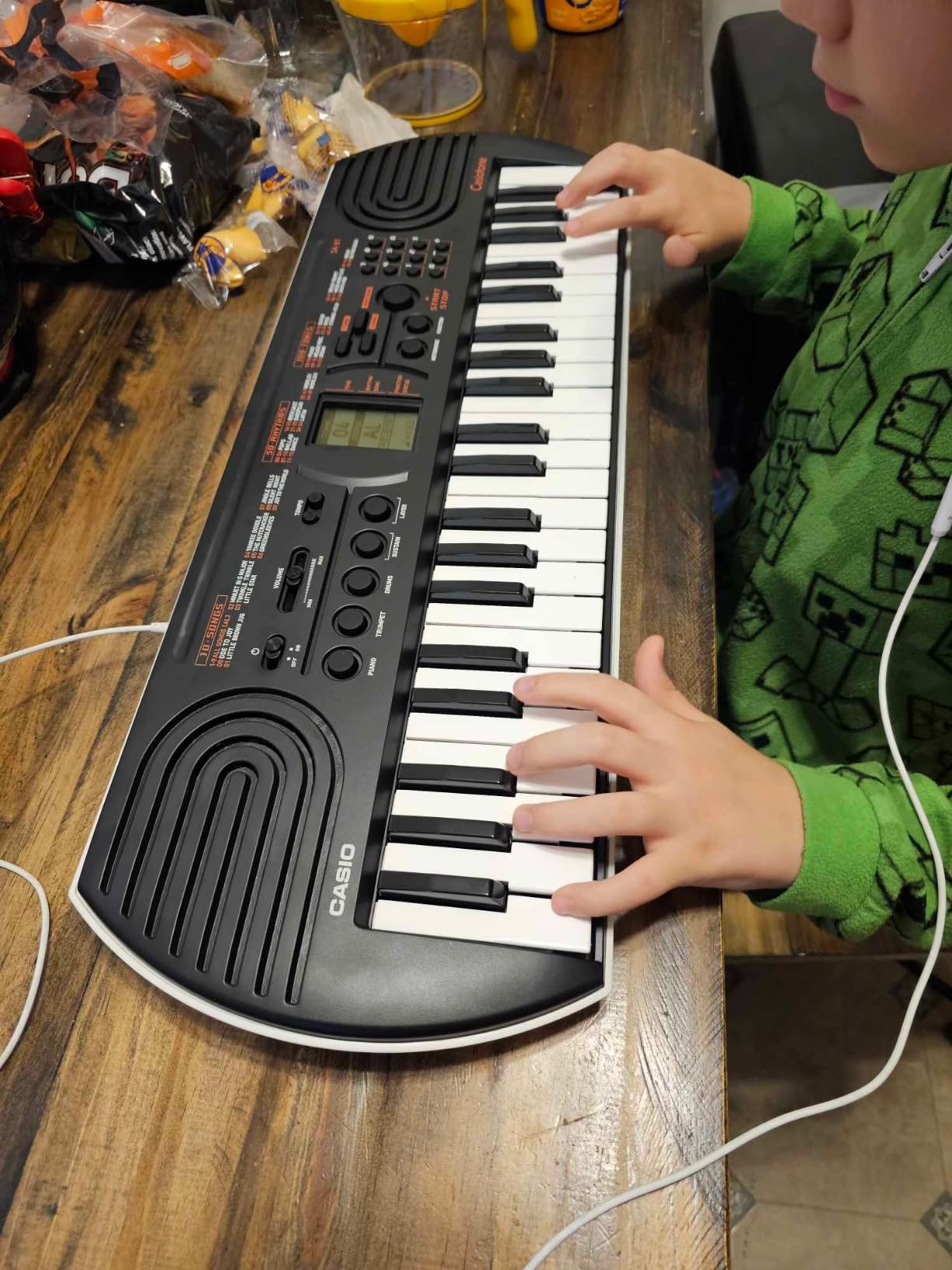
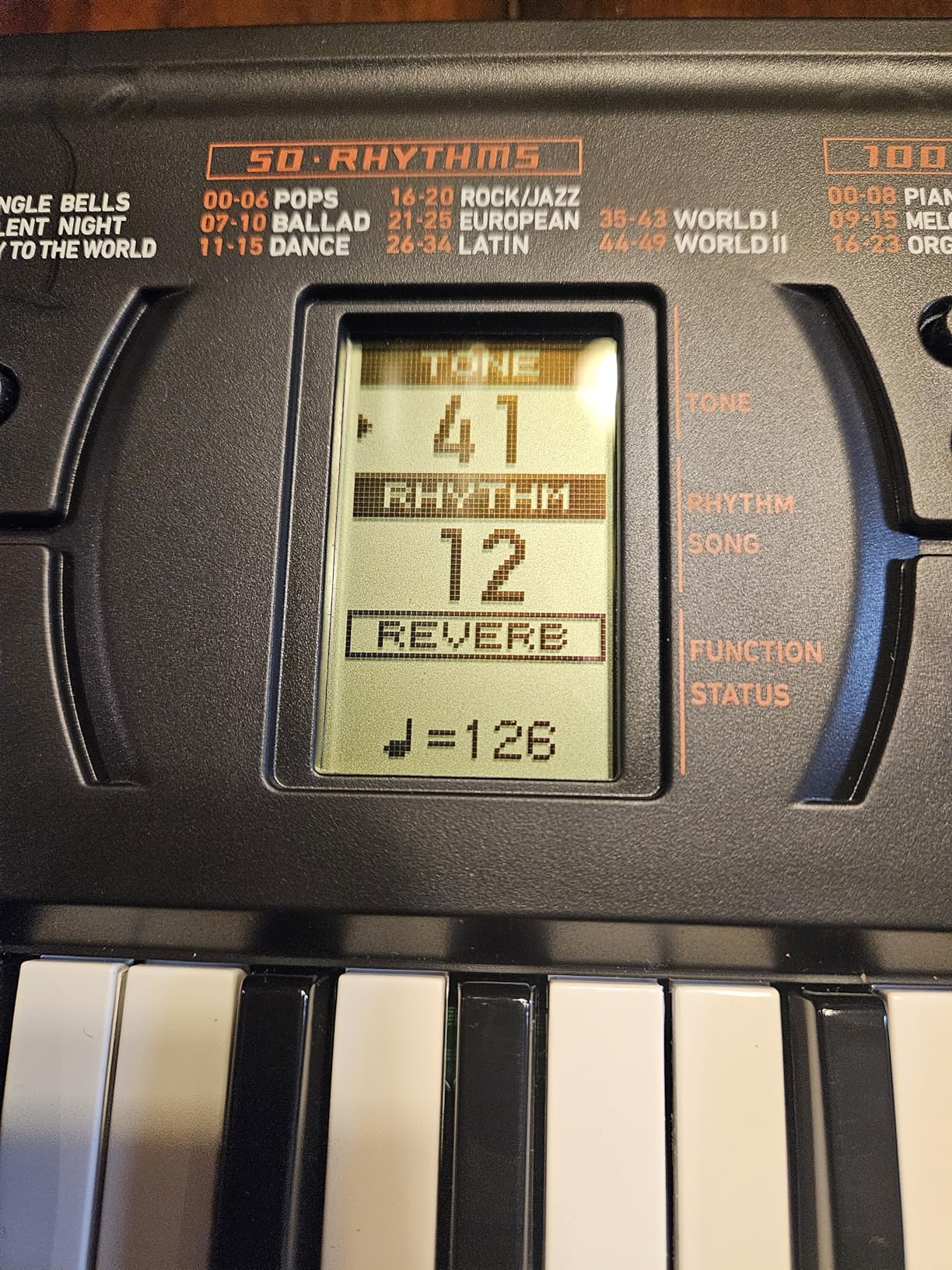
Sound variety is better than most parents expect at this size. You get 100 sampled tones, 50 rhythm patterns and 10 familiar songs including Ode to Joy, Twinkle Twinkle Little Star and Jingle Bells, which means a child who cannot yet read notation has something recognisable to play on day one.
Creative tools are unusually good for a mini board: layer mode lets two sounds overlap, there is a sustain function and octave shift, plus 16 scale tunings and reverb. At roughly 3lb it runs on batteries or the included AC adapter, so it moves between rooms and road trips easily.
Who the SA-81 suits
It suits a child aged five to eight with genuinely small hands, and a beginner working through early reading and two-handed playing. The familiar songs mean a new student hears something they know within minutes of switching it on.
It also suits families who want a second instrument for a grandparent’s house or for the car. Its weight and dual power options make it one of the easiest boards in this guide to move between rooms.
Where the SA-81 falls short
Forty-four keys is a limited range. It covers introductory work comfortably but leaves almost no room for repertoire, and a child in formal lessons will outgrow it quickly. That is the honest case for moving up to a 61-key board rather than extending this one.
Mini keys also frustrate adults. Players without practice hit the wrong notes, which is fine for a child and awkward for a parent sitting down to demonstrate something. The compact footprint limits where the keyboard can be placed during a lesson, and there is no weighted action to build finger strength.
8. Casio SA-51 – Best Budget Pick for Toddlers and Preschoolers
Casio Casiotone SA-51 32-Key Compact Digital Keyboard | 100 Tones
32 mini keys for very small hands
100 tones and 50 rhythms
Battery powered and portable
Pros
- 32 mini keys genuinely easy for small hands
- 100 tones plus one-touch access to piano trumpet and drum set
- 50 rhythms and 10 built-in songs
- Battery powered and lightweight
- Built to survive rough handling
- Tones rated good for the size
Cons
- Mini keys feel cheap under heavy hands
- No sustain pedal and no MIDI or aux input
- Some users report fast battery drain
The SA-51 is the first keyboard I would put in front of a child who is three or four. Thirty-two mini keys are small enough that a toddler can cover more than one key per finger, which is what makes exploration play work at that age.
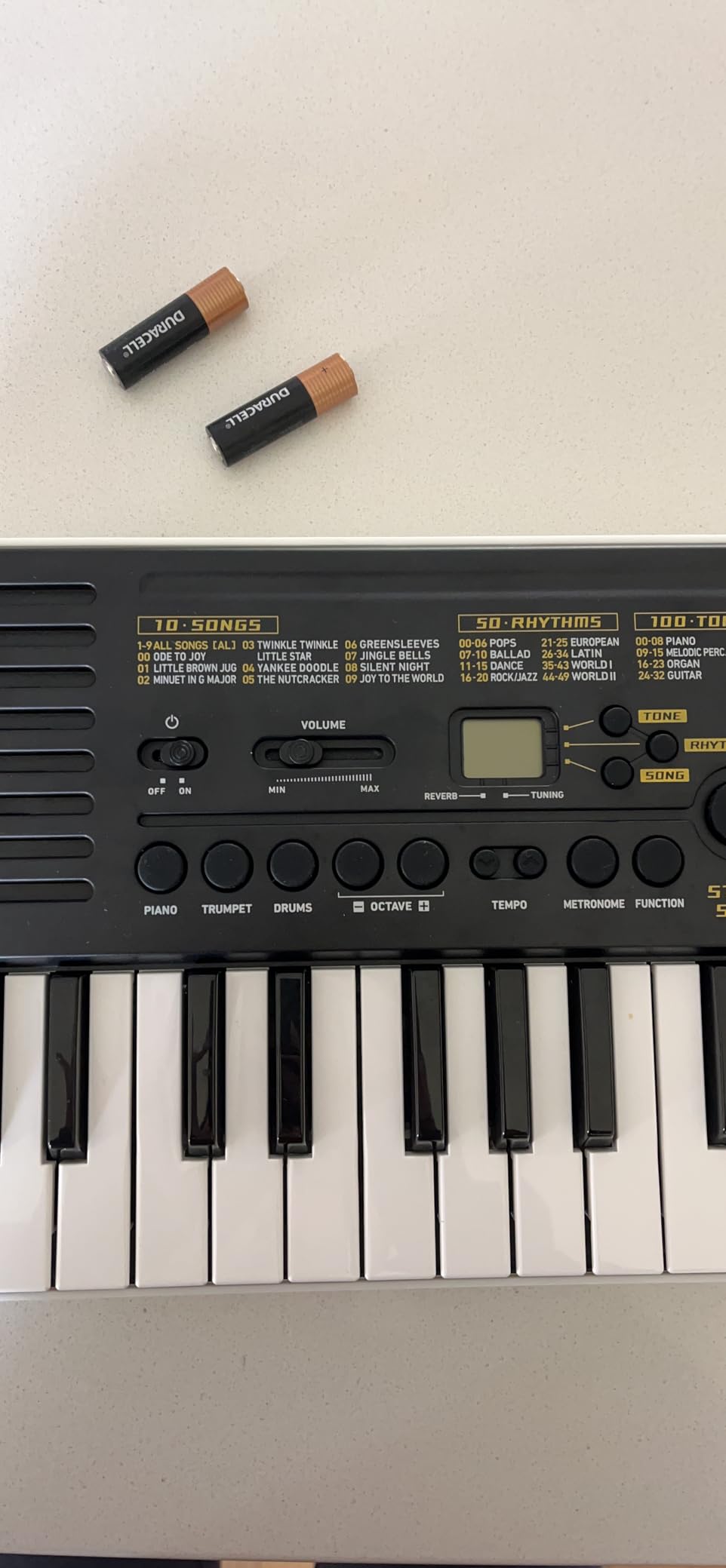
The one-touch tone buttons are the detail that matters most for a preschooler. A child who cannot yet read a menu can press a single button for piano, trumpet or drum set and hear an immediate change, which is the fastest possible cause-and-effect loop. There are 100 tones, 50 rhythm patterns and 10 built-in songs on top of that.
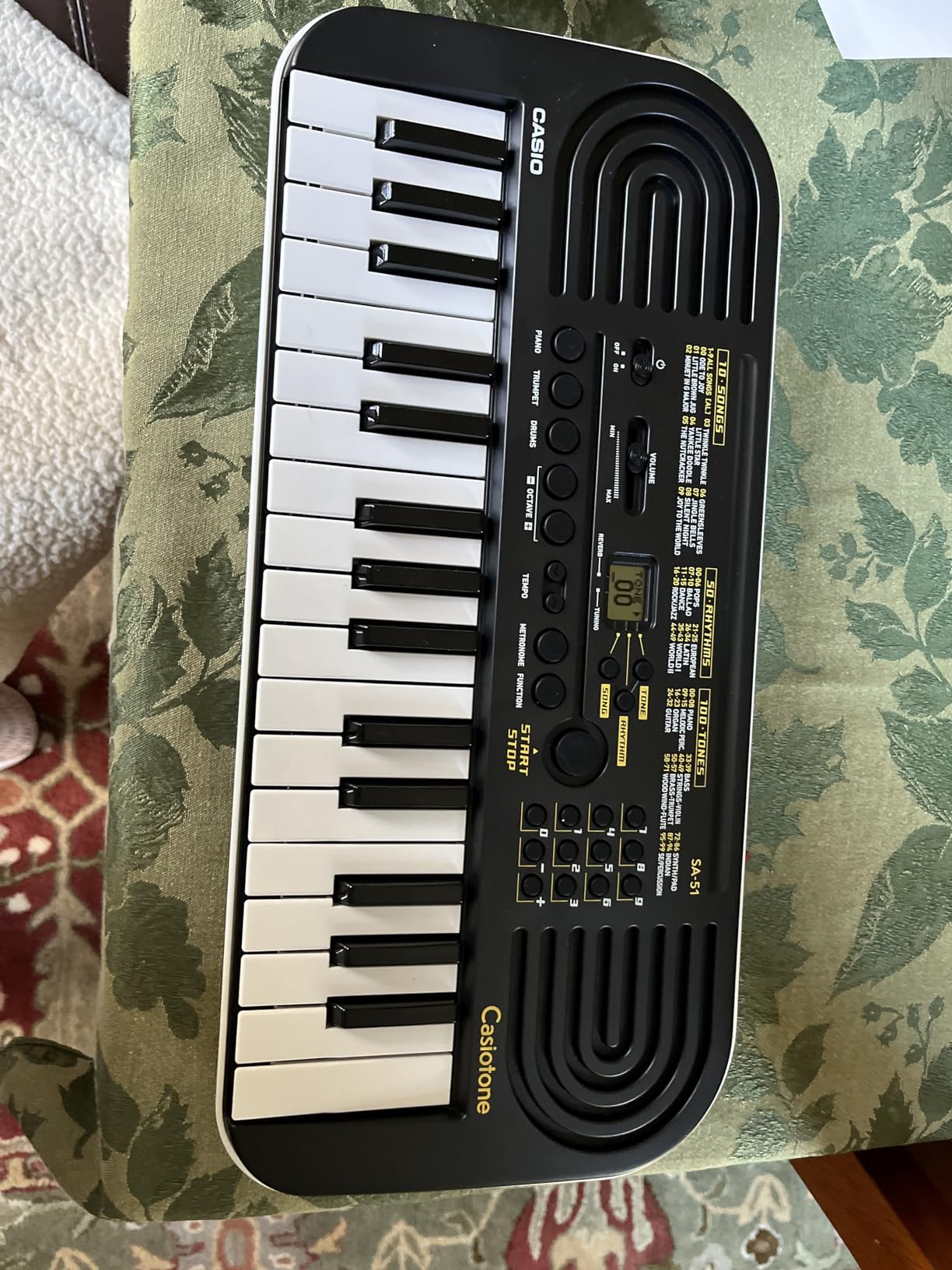
Durability is the surprise. One owner reports the unit survived being thrown down stairs and stomped on, and the 2.2lb battery-powered design means it can go anywhere in the house or into a bag for a trip. Several adults also buy it as a practice or backup keyboard and report the same satisfaction.
Tone quality is rated better than expected for the size, with owners comparing some voices favourably to older full-size Casio keyboards. At roughly 17 inches wide, it also fits on a shelf where a 61-key board never would.
Who the SA-51 suits
It suits toddlers and preschoolers aged three to five who are not yet reading music and mostly want to press things that make noise. For cause-and-effect play, more keys are not better.
It also suits families who want a first instrument that a child can carry around unsupervised. At 2.2lb with battery power, it is the easiest of the ten to hand to a small child and move between rooms.
Where the SA-51 falls short
The mini keys feel cheap, and one reviewer suggests it suits a non-hammering six- or seven-year-old rather than a toddler who bangs on everything. Thirty-two keys is fewer than the minimum most teachers want for two-handed playing, so it is a starting point rather than a lesson instrument.
There is no sustain pedal option and no Bluetooth, MIDI or auxiliary input, so it cannot grow with a child who later wants apps. The built-in songs play back in a fixed order, some rhythm patterns are much louder than the melody over them, and a few users report batteries draining quickly with the unit shutting itself off.
9. Casio CT-S400 – Best for Sound Variety and Studio Play
Casio Casiotone CT-S400 61-Key Touch-Responsive Keyboard | 600 Tones
61 full-size touch-responsive keys
600 dynamic AiX tones and 200 rhythms
6-track recorder, pitch bend and USB-MIDI
Pros
- 600 dynamic AiX tones anchored by a German concert grand piano
- Full-size touch-responsive keys described as feeling high-end
- 200 rhythms with full accompaniment
- Bass-reflex stereo speakers with SURROUND mode
- 6-track recorder
- pitch bend wheel and USB-MIDI
Cons
- No 1/4-inch output jack for a PA
- Option list is deep and takes time to learn
- Satin key finish rather than gloss
- Heavier than most 61-key portables in practice
The CT-S400 is the pick when sound variety is the priority rather than lesson tooling. Six hundred dynamic AiX tones and 200 rhythms with full accompaniment mean a child playing four chords can sound like a band, which keeps creative play going longer than a simpler board.
The keys are the other reason. Owners describe them as feeling high-end, and the German concert grand piano voice sits at the centre of the sound set. Bass-reflex stereo speakers with SURROUND mode fill a room convincingly, which matters if the keyboard is the main instrument in a living room.
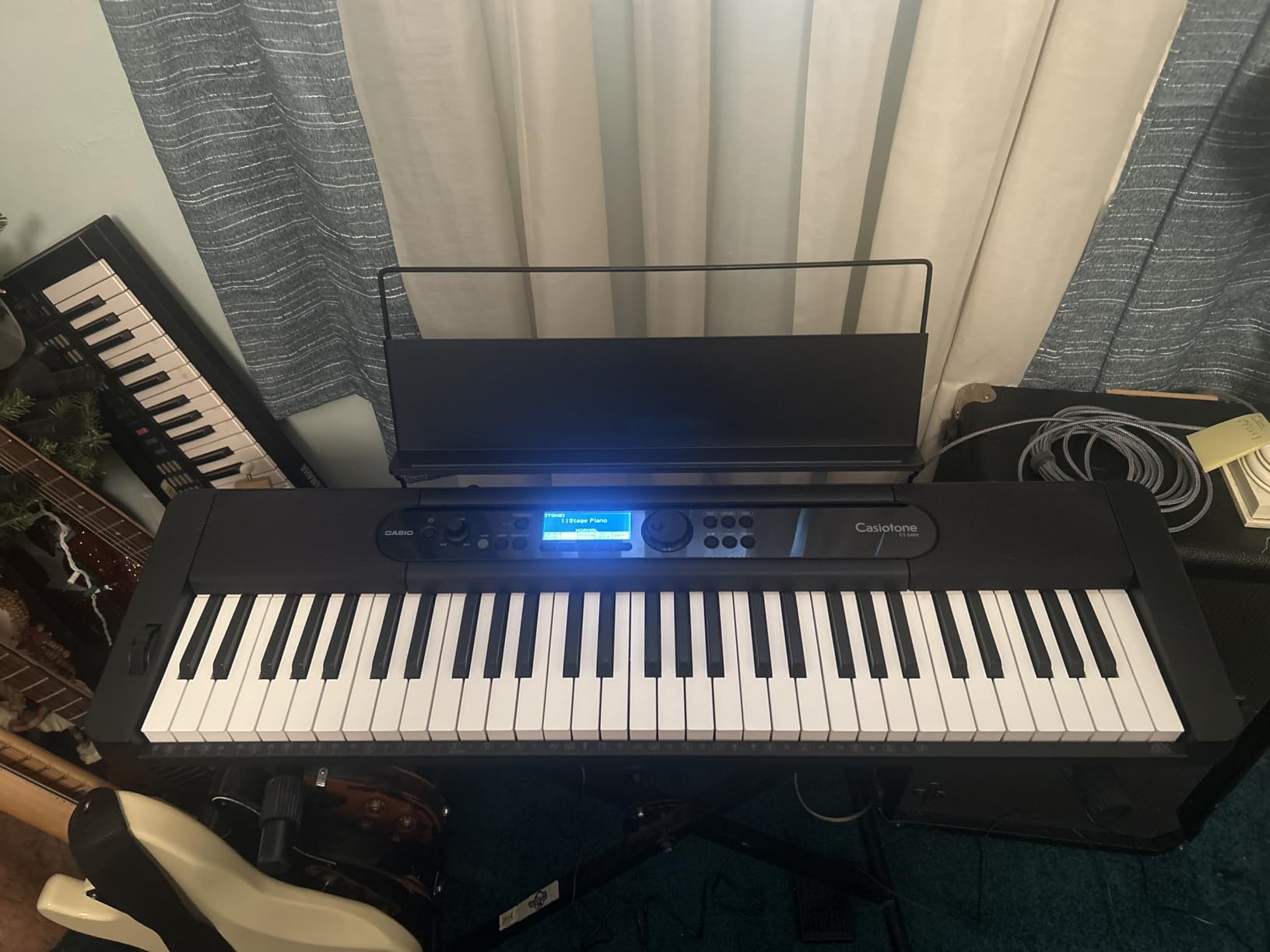
There are strap pins, so it can be worn like a guitar for lessons and small performances, and the 6-track recorder plus pitch bend wheel support composition rather than only practice. USB-MIDI and support for Casio Music Space and Chordana Play keep app-based learning available.
Owners who trade in expensive keyboards reach for this as an inexpensive studio and inspiration tool, which tells you something about the headroom in the sound engine. If your child moves past arranger playing and wants something they can perform on, we cover the wider field in our guide to the best arranger keyboards.
Who the CT-S400 suits
It suits a child who has been playing a while and wants to write music or perform, rather than a total beginner. The 200 rhythms with full accompaniment are the point of this board.
It also suits a family where the keyboard doubles as a practice instrument for an adult, since the sound quality holds up for adult ears and the recorder supports quick ideas.
Where the CT-S400 falls short
There is no 1/4-inch output jack for a PA, so connecting to a small stage system needs adapters. The option list is large enough that navigation takes real time to learn, which is a poor first impression for a young beginner.
The key finish is satin rather than the gloss some players prefer, and while the listed body weight is under 10lb with strap pins, reviewers find it heavier in practice than most 61-key portables. Bluetooth requires the optional WU-BT10 adapter rather than being built in.
10. Casio CT-S500 – Best Step-Up for Teens and Small Gigs
Casio Casiotone CT-S500 61-Key Touch-Responsive Keyboard | 800 AiX Tones
61 touch-responsive keys with strap pins
800 AiX tones and 243 rhythms
1/4-inch line outputs, Bluetooth adapter included
Pros
- 800 studio-quality AiX tones with a German concert grand piano
- 1/4-inch line outputs for amps and PAs
- 3 assignable knobs with DSP editing and saveable Registrations
- 6-track recorder with 243 rhythms and audio sampling
- WU-BT10 Bluetooth adapter included
- Stage-ready with strap pins
Cons
- 61 keys only
- so low repertoire needs octave shifting
- Feature depth suits an older child or adult rather than a young beginner
- Highest cost in the group with a learning curve on the knobs
The CT-S500 is where a committed teenager belongs. Eight hundred AiX tones, 243 rhythms and audio sampling including sampling incoming Bluetooth audio make it a production tool rather than a practice keyboard, and the average rating holds at 4.7 with no one- or two-star reviews in the set.
What separates it from every other board here is the output section. Real 1/4-inch line outputs let it connect directly to an amplifier or PA system, which is unusual at this size, and the WU-BT10 Bluetooth MIDI and audio adapter is included in the box rather than sold separately.
Who the CT-S500 suits
It suits a teenager or adult who has outgrown the arranger layout and wants control rather than variety. Three assignable knobs, pitch bend, deep DSP editing and saveable Registrations give real hands-on shaping of the sound.
It also suits anyone playing small gigs. Strap pins and a stage-ready body mean it can be played standing up, and the 6-track recorder handles quick idea capture between rehearsals.
Where the CT-S500 falls short
Only 61 keys are offered in this line, so anything below the left-hand range of repertoire requires octave shifting. The feature depth also suits an older child or adult rather than a first-time young child, and the knobs plus DSP editing come with a real learning curve.
It is the most expensive instrument in this guide, and for a six-year-old starting lessons that money is better spent on a bundle with a stand, headphones and a sustain pedal already included.
Casio Line Families Explained: SA, CT-S, CT-X, LK-S and Privia
Most parent confusion in this category comes from not knowing that the model letters describe the keybed, not the quality. Four Casio families cover almost everything a child could grow into, and each one answers a different question.
SA series: mini keys. The SA-46, SA-51, SA-80 and SA-81 use scaled-down keys sized for small hands. They are the right choice for exploration play and for children under about eight, and they are the wrong choice the moment a child needs weighted action or a full repertoire.
CT-S series: unweighted full-size keys. The CT-S100 through CT-S500 range is the mainstream of the Casio kids catalogue. Keys are full size, which means finger strength and technique learned here transfers cleanly, but they are unweighted and lighter versions add touch sensitivity. This is where most formal lesson students should start.
CT-X series: heavier touch response. The CT-X700 adds a denser feel and more sophisticated lesson tooling while staying within the same 61-key footprint. It suits a child already several years into lessons who wants dynamics and on-screen fingering guidance.
LK-S series: lighted keys. The LK-S250 and LK-S450 add the Key Lighting System and multi-stage lessons for children learning without a teacher. They are excellent for engagement and genuinely useful for the first year, but they do not build weighted technique.
Privia and CDP: the weighted destination. The Privia PX and CDP ranges are weighted 88-key digital pianos, and they are the step-up once a child commits to formal study and their teacher asks for real weighted or hammer action. None of them appear in this roundup because the brief here was Casio keyboards for kids starting out, but they are the answer to the question of what comes next.
How to Choose a Casio Keyboard for Your Child
Three questions narrow the field faster than any feature list. How old is the child, how large are their hands, and is a teacher involved? Everything else is preference.
How many keys does your child need? Thirty-two mini keys cover exploration for a toddler. Forty-four mini keys are the practical starting point for a child around five to eight who wants to play two-handed pieces. Sixty-one full-size keys are the standard starting point for formal lessons because they cover five octaves, enough for most beginner repertoire. The reason so many keyboards stop at 61 keys is cost and weight, not design indifference: 76-key and 88-key boards get heavier and pricier quickly, and the extra low notes matter to adult repertoire far more than to a beginner.
Do kids need weighted keys to start? No, and this is the question parents agonise over most. Unweighted keys are standard for the first few years of lessons, and teachers generally accept a touch-sensitive 61-key board in a home practice context. What weighted keys build is finger strength and the muscle memory of controlling a key with the arm rather than the finger, which becomes essential around the time a child starts intermediate repertoire. If your child is under about nine, an unweighted board with touch sensitivity is the right call and saves money you will spend again later.
Are light-up keys worth it? They are worth it for a child learning alone and worth less once a teacher is involved. The lighting shows the next correct key, which removes guesswork, but it also encourages watching the lights rather than reading notation. Piano teachers in online communities are consistent on this point, and it is why we recommend the LK-S250 only for self-teaching households.
What is actually in the box? This is where first-time parents are most often caught out. On this list, the CT-S200, CT-S1 and CT-X700 ship with an AC adapter and a music rest. The LK-S250 includes a power supply and music stand. The CT-S500 includes the Bluetooth adapter. The CT-S200 and CT-S300 EPA bundles add headphones, an adjustable stand, a 6-foot USB cable and eMedia software. None of the ten includes a sustain pedal or a bench, and no stand is included with the bare CT-S1 or CT-X700, so budget for those two items separately.
Do you need app connectivity? Only if you plan to teach with a screen. Class-compliant USB-MIDI on the CT-S200, CT-S1, CT-X700, CT-S300, CT-S400 and CT-S500 means lesson apps work without drivers, but the cable is a micro-B or USB type on several models and is not always supplied. The mini-key SA models have no MIDI or auxiliary input at all, so they cannot connect to anything.
Will the child outgrow it? Mini-key boards are usually outgrown in one to two years by age, and unweighted 61-key boards by skill level rather than age. If you are past the portable stage and buying for a teenager who wants full-size keys with more controls, our guide to the best 75% keyboards covers the next step up in footprint. The upgrade path that works for most families is SA board to CT-S or LK-S, then CT-S to CT-X, then to a weighted 88-key Privia or CDP. Buying one tier down and planning the upgrade is a reasonable strategy, and a used unweighted 61-key as a first step followed by a new weighted instrument later is a common and sensible approach.
One last practical note: a headphone jack is close to mandatory in a shared house, and it is present on every model here. Battery life varies, so for a bedroom instrument plan on roughly four hours of play from six AA batteries and keep the AC adapter within reach.
Frequently Asked Questions
What is the best beginner keyboard for a child?
For most children aged 6 to 11, the Casio CT-S200 is the best beginner keyboard because 61 full-size keys, 400 tones and 77 rhythms give room to grow without the weight of a larger board. For a toddler aged 3 to 5, match key size instead and choose a mini-key model such as the SA-51. For a child aged 8 and up already taking lessons, the CT-X700 offers touch response, on-screen fingering and a step-up path toward a weighted instrument.
Which Casio keyboard is best for beginners?
The Casio CT-S200 is the model we recommend most often for beginners, and it holds a 4.6 rating across more than 1600 owner reviews. The CT-X700 is the better pick once a child is eight or older and wants stronger lesson tooling and touch response, while the LK-S250 suits a child learning alone with no teacher available. All three sit in the 61-key class, which is the standard starting point for formal study.
How many keys does a child need to start learning piano?
Most teachers start children on a 61-key board, which covers five octaves and nearly all beginner repertoire. Children under about eight with small hands may need 32 or 44 mini keys to reach the black keys comfortably, but mini-key boards limit repertoire later. Keyboards stop at 61 keys mainly because 76-key and 88-key models get heavier and cost more, and the low notes matter more to advanced repertoire than to a beginner.
Do kids need weighted keys to start learning piano?
No. Unweighted keys are standard for the first few years of lessons, and a touch-sensitive 61-key board is what most teachers expect in a home. Weighted keys build finger strength and the muscle memory of arm control, which matters when a child reaches intermediate repertoire, usually around age nine or ten. Buy a heavier feel now only if the child is already older and technically advanced, or the money is better held for the step up later.
Can a piano teacher accept a lighted keyboard?
Most will accept one for the first year of lessons, but few recommend it long term. The Casio LK-S250 and LK-S450 light the next correct key, which removes guesswork for a child learning alone, yet it also encourages watching the lights rather than reading notation. Piano teachers in online communities frequently state that classical study needs weighted action. If lessons are already booked, an unlit model is the better investment.
How long before a child outgrows a beginner keyboard?
Mini-key boards are usually outgrown in one to two years by age, because a child’s hands grow faster than their reading level improves. Unweighted 61-key boards last much longer and are limited by skill rather than size, so a family starting at six may stay on one until the child is around ten or eleven. The natural upgrade path is mini keys to a 61-key CT-S or LK-S, then to a CT-X, and finally to a weighted 88-key Privia or CDP.
Conclusion
Across all ten of the best Casio keyboards for kids, one pattern holds: key size decides suitability far more than features do. Match the keyboard to the child’s hands first, then decide whether the extra tones, rhythms and lesson tooling are worth the money to you.
Our default pick is the Casio CT-X700, because it covers the widest age and skill range while offering on-screen fingering guidance and a clear path toward a weighted instrument. If the budget is tighter, the Casio CT-S200 gives you the same 61-key footprint with the accessory bundle available, and if you want everything in one box on day one, the CT-S200 EPA bundle removes the four accessories parents most often forget.
For a three-year-old, skip all of that and start with a mini-key board. For a teenager already composing, the CT-S500 has the outputs and recording tools that a practice keyboard cannot offer. Compare the current listing against the notes above, and check what is in the box before you click through.