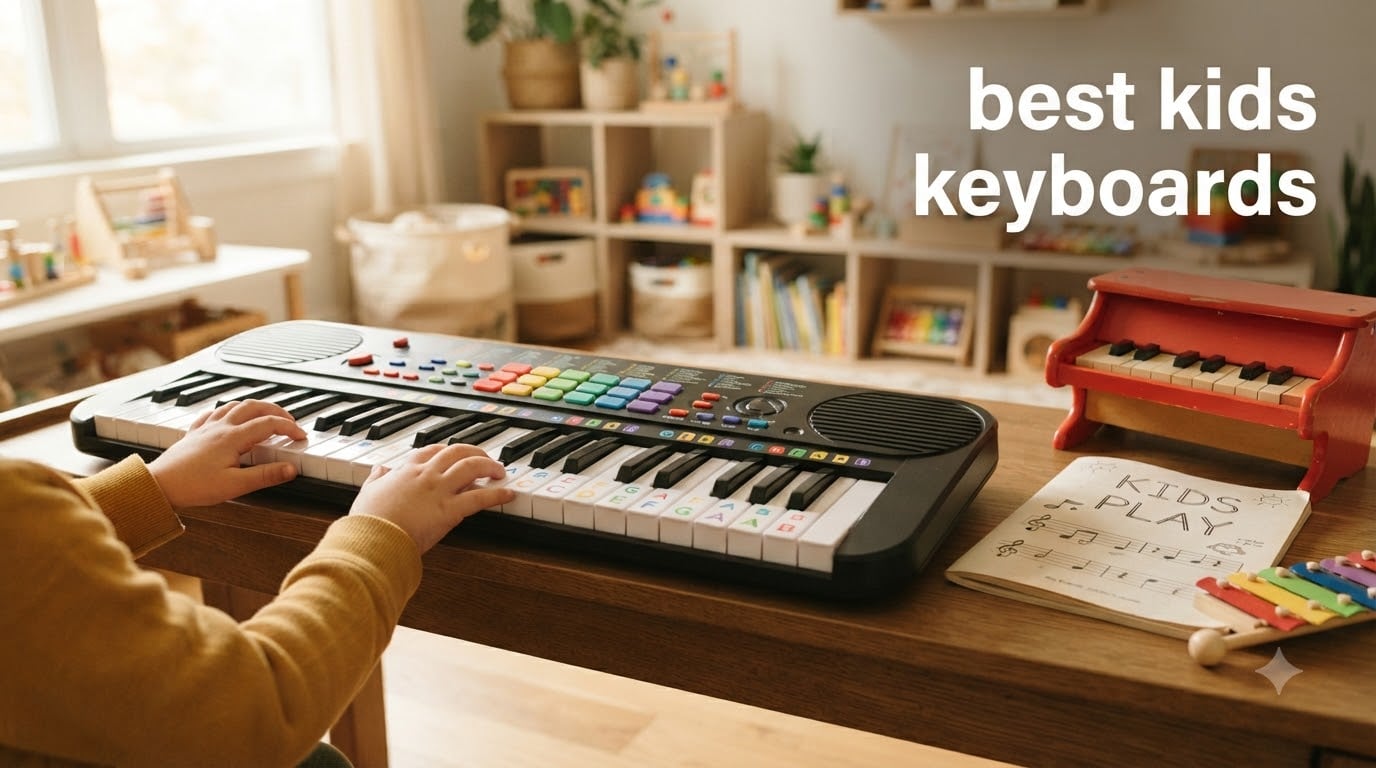
Finding the best kids keyboards means matching the instrument to your child’s age, attention span, and how seriously they want to learn. I have spent months comparing 8 popular models, from tiny 25-key toy pianos to full 61-key beginner keyboards, to figure out which ones actually hold up in a real home with real kids.
The biggest mistake parents make is buying either too cheap and getting something that breaks or sounds terrible, or going overboard on an 88-key weighted piano that overwhelms a 5-year-old. There is a sweet spot for every age group. This guide breaks down picks for toddlers ages 3 to 5, young learners ages 6 to 8, and serious beginners ages 9 and up, so you can skip the guesswork.
Every keyboard on this list has been compared on the things parents actually care about: durability, sound quality, built-in learning features, headphone jacks for quiet practice, and whether the included accessories justify the price. Let me walk you through the top picks for 2026.
Table of Contents
Top 3 Picks for Best Kids Keyboards (September 2026)


Best Kids Keyboards in 2026
| Product | Specifications | Action |
|---|---|---|
| RockJam RJ5061 61 Key Keyboard Kit |
|
Check Latest Price |
 Yamaha YPT-280 61-Key Keyboard Yamaha YPT-280 61-Key Keyboard |
|
Check Latest Price |
| B. toys Wooden Piano Mini Maestro |
|
Check Latest Price |
 MUSTAR 61 Key Lighted Piano Keyboard MUSTAR 61 Key Lighted Piano Keyboard |
|
Check Latest Price |
 RockJam RJ361 61 Key Compact Keyboard RockJam RJ361 61 Key Compact Keyboard |
|
Check Latest Price |
 Dollox 37 Key Kids Piano with Stool Dollox 37 Key Kids Piano with Stool |
|
Check Latest Price |
 MusicForset 61 Keys Kids Piano Toy MusicForset 61 Keys Kids Piano Toy |
|
Check Latest Price |
 Raimy 37 Keys Keyboard Piano for Kids Raimy 37 Keys Keyboard Piano for Kids |
|
Check Latest Price |
1. RockJam RJ5061 61 Key Keyboard Piano Kit – The Complete Beginner Bundle
RockJam RJ5061 61 Key Keyboard Piano Kit with Stand, Bench & Headphones
61 keys
200 rhythms
200 tones
Stand, bench and headphones included
3.3 kg
Pros
- Everything included to start playing day one
- Stand and bench save extra purchases
- Simply Piano app integration for guided learning
- Headphones for quiet practice
- 46k+ reviews backing it
Cons
- Battery powered only with optional adapter
- Non-weighted keys not ideal for classical lessons
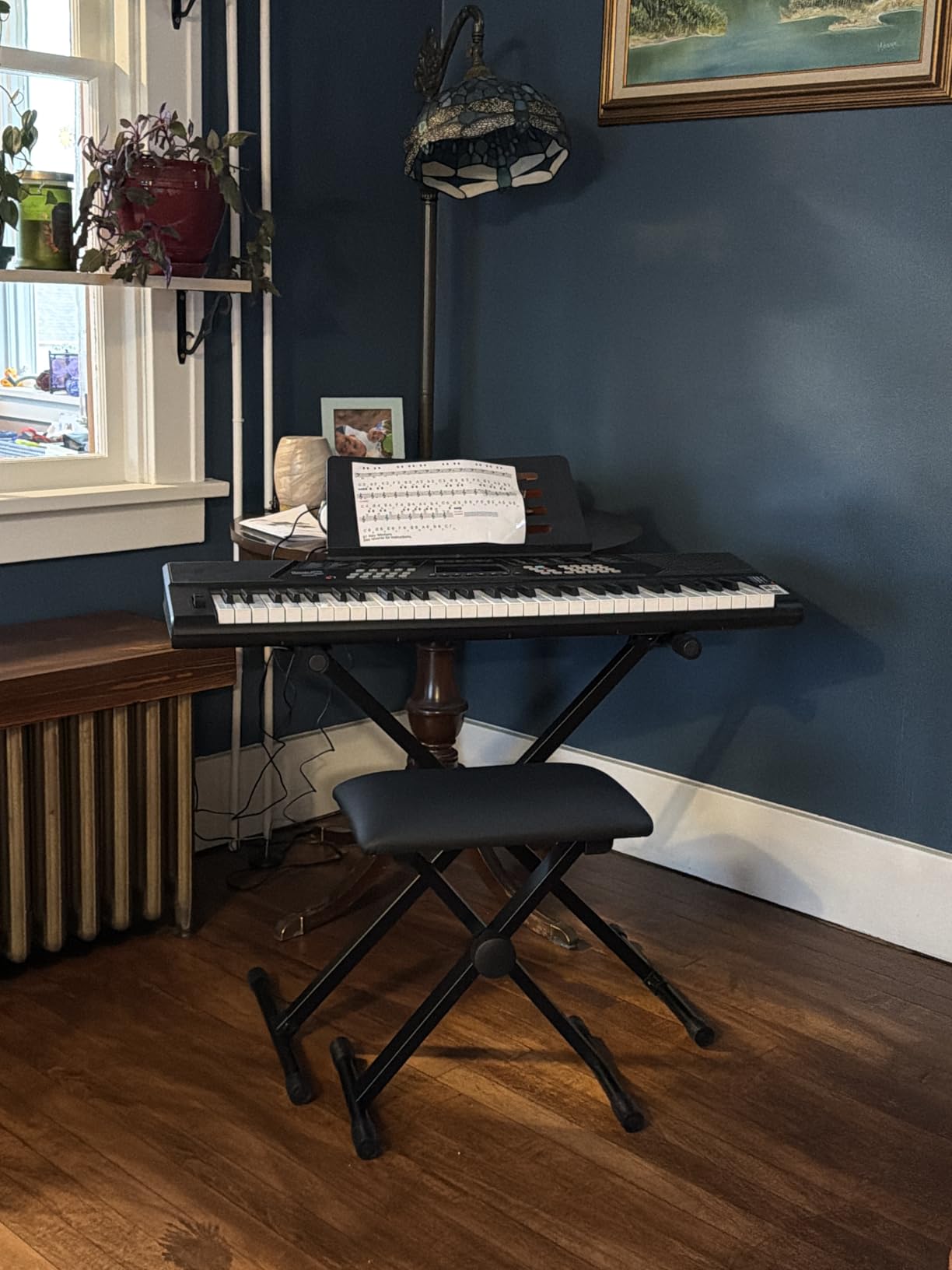
When a parent asks me which keyboard to buy for a child who is just starting out, the RockJam RJ5061 is usually my first suggestion. It is one of the best kids keyboards because you literally open the box and have everything you need: the keyboard, a stand, a bench, headphones, and even keynote stickers. There is no second shopping trip for accessories.
I set this up for my niece when she was 7, and she was playing along to the demo songs within 20 minutes. The 200 rhythms and 200 tones keep things fun for kids who get bored easily, and the LED panel is surprisingly easy to navigate even for small fingers. The Simply Piano app integration walks beginners through songs note by note, which is a huge help if you do not play piano yourself.
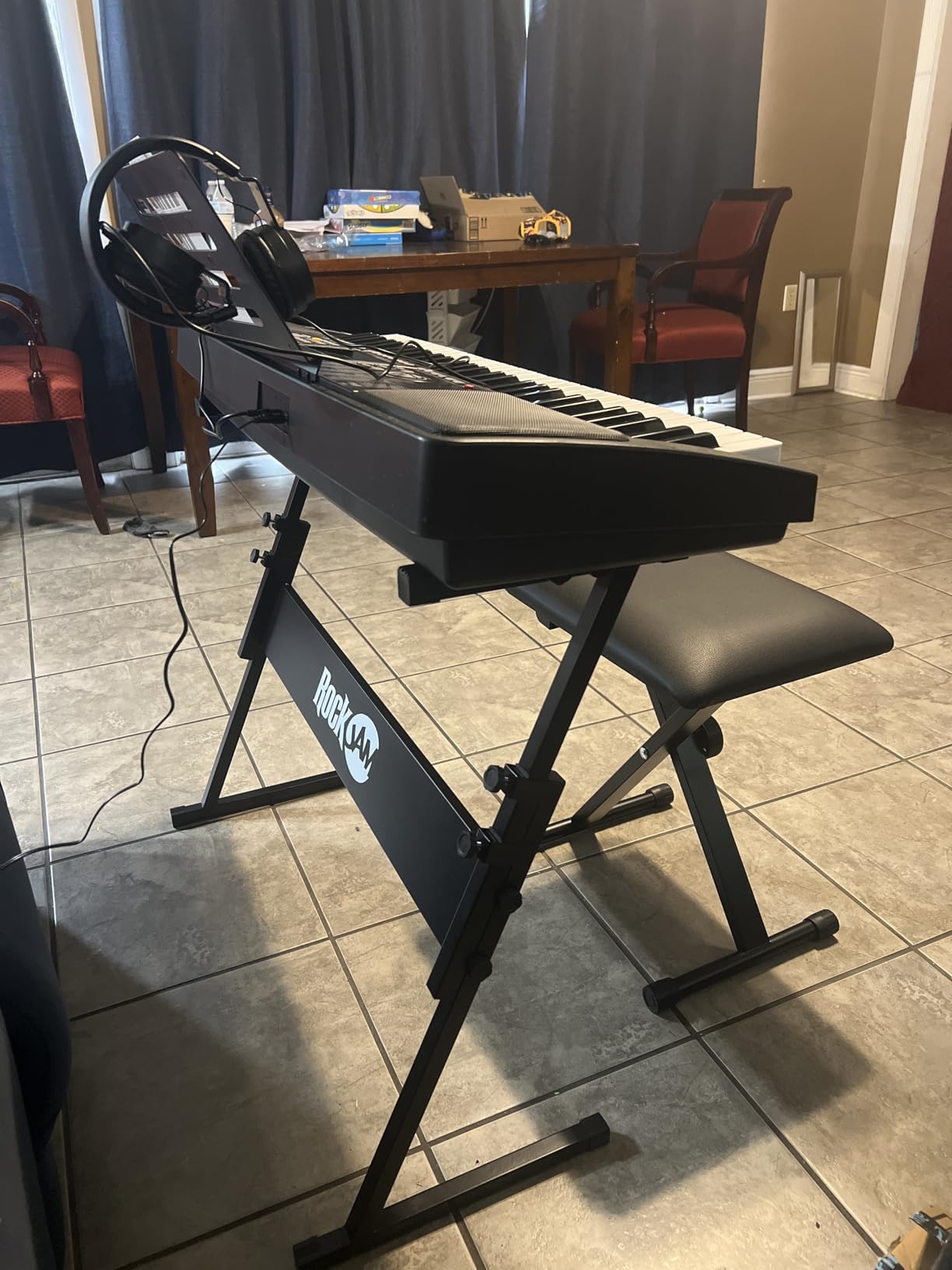
On the technical side, the RJ5061 has 61 full-size keys, which is enough for a beginner to learn proper hand positioning and play most beginner and intermediate sheet music. The pitch bend wheel is a fun extra that lets kids experiment with expressive sounds. The 3.5mm headphone jack is essential for families in apartments or shared living spaces.
The main trade-off is that the keys are not touch-sensitive or weighted. This means pressing a key hard or soft produces the same volume. For kids who are just exploring music and having fun, that is perfectly fine. If your child is taking formal piano lessons, a teacher will eventually want them on touch-sensitive or weighted keys to develop proper dynamics.
Who this keyboard is perfect for
This kit shines for kids ages 6 to 10 who are brand new to music and want a fun, all-in-one setup without a big upfront investment. Parents love it because the included stand, bench, and headphones mean the total cost covers everything. It is also great for households where multiple kids will take turns, since the build holds up to daily use.
If you want a starter instrument that your child can grow with for the first year or two of playing, this is the one I would pick. The 46,000-plus reviews tell you this is a proven, crowd-tested choice that rarely disappoints.
Who should look elsewhere
If your child is already taking formal lessons with a piano teacher who requires weighted or touch-sensitive keys, this keyboard will not meet those requirements. Similarly, if you have a serious learner headed toward classical training, you will want to upgrade to something with weighted action sooner rather than later.
Families looking for a toddler toy for a 3 or 4-year-old might also find 61 keys a bit much. In that case, a smaller mini keyboard or wooden toy piano would be a better first step before graduating to this one.
2. Yamaha YPT-280 61-Key Portable Keyboard – Trusted Brand Quality
Yamaha 61-Key Portable Keyboard for Beginners with Built-In Songs, Quiz Mode, Music Rest, with Power Adapter YPT280
61 full-size keys
Quiz mode
Smart chord
Hundreds of built-in songs
8.8 lbs
Pros
- Yamaha sound quality is a step above budget brands
- Quiz mode gamifies ear training
- Smart chord makes beginners sound great instantly
- Portable Grand Piano button for instant quality tone
- 1-year warranty
Cons
- No stand or bench included
- Some users outgrow it within a year
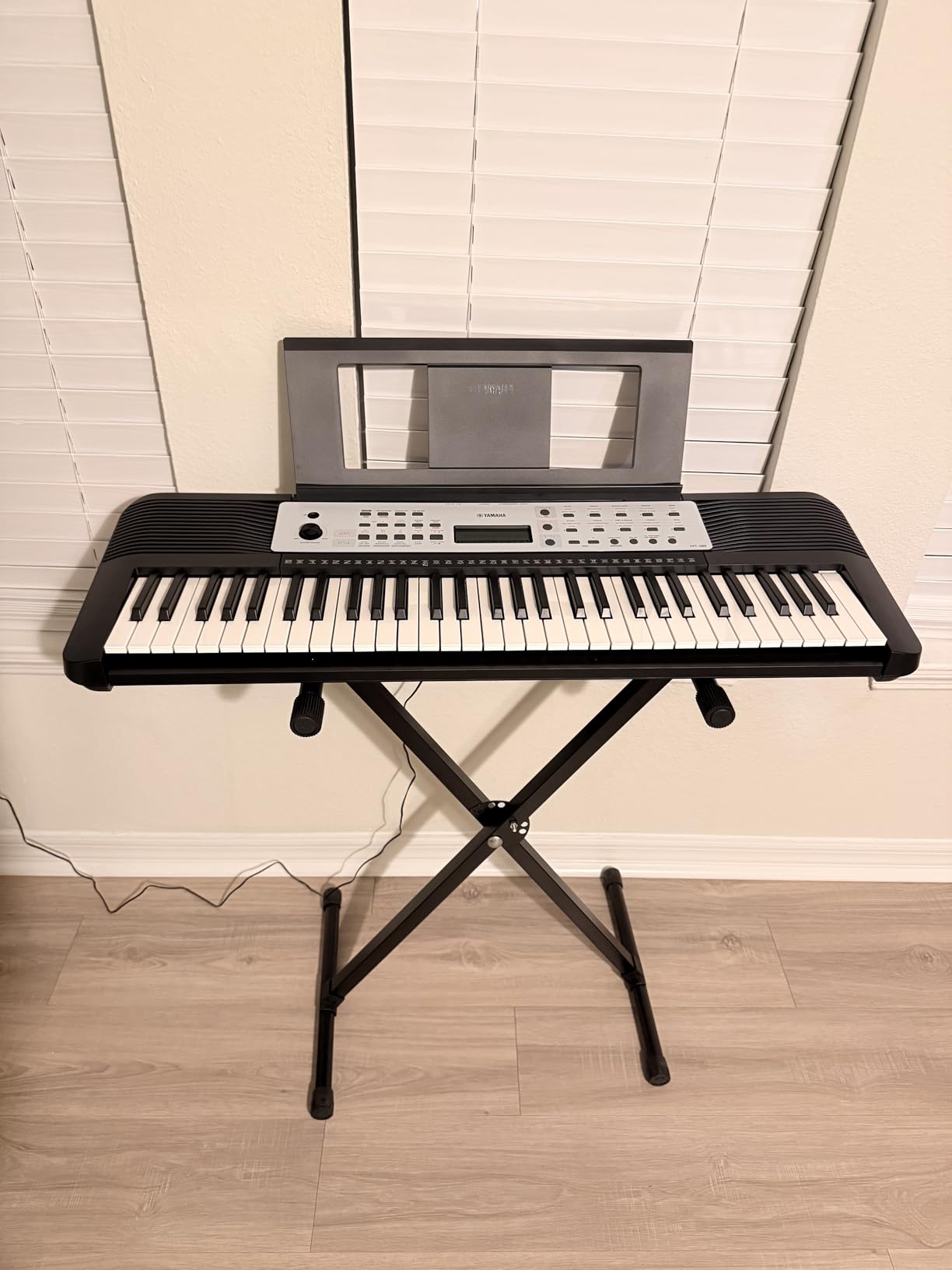
The Yamaha YPT-280 is the keyboard I recommend when parents want brand-name reliability without spending on a full digital piano. Yamaha has been making keyboards for decades, and that experience shows in the sound quality. The built-in tones, especially the Portable Grand Piano sound, are noticeably richer and more realistic than what you get from generic brands at a similar price.
What sets the YPT-280 apart is the Quiz Mode, which is a clever ear-training game that helps kids learn to identify notes by ear. My friend’s son treated it like a video game and ended up with better pitch recognition than kids twice his age. The Smart Chord feature lets beginners play full, great-sounding chords with a single finger, which keeps motivation high during those frustrating early weeks.
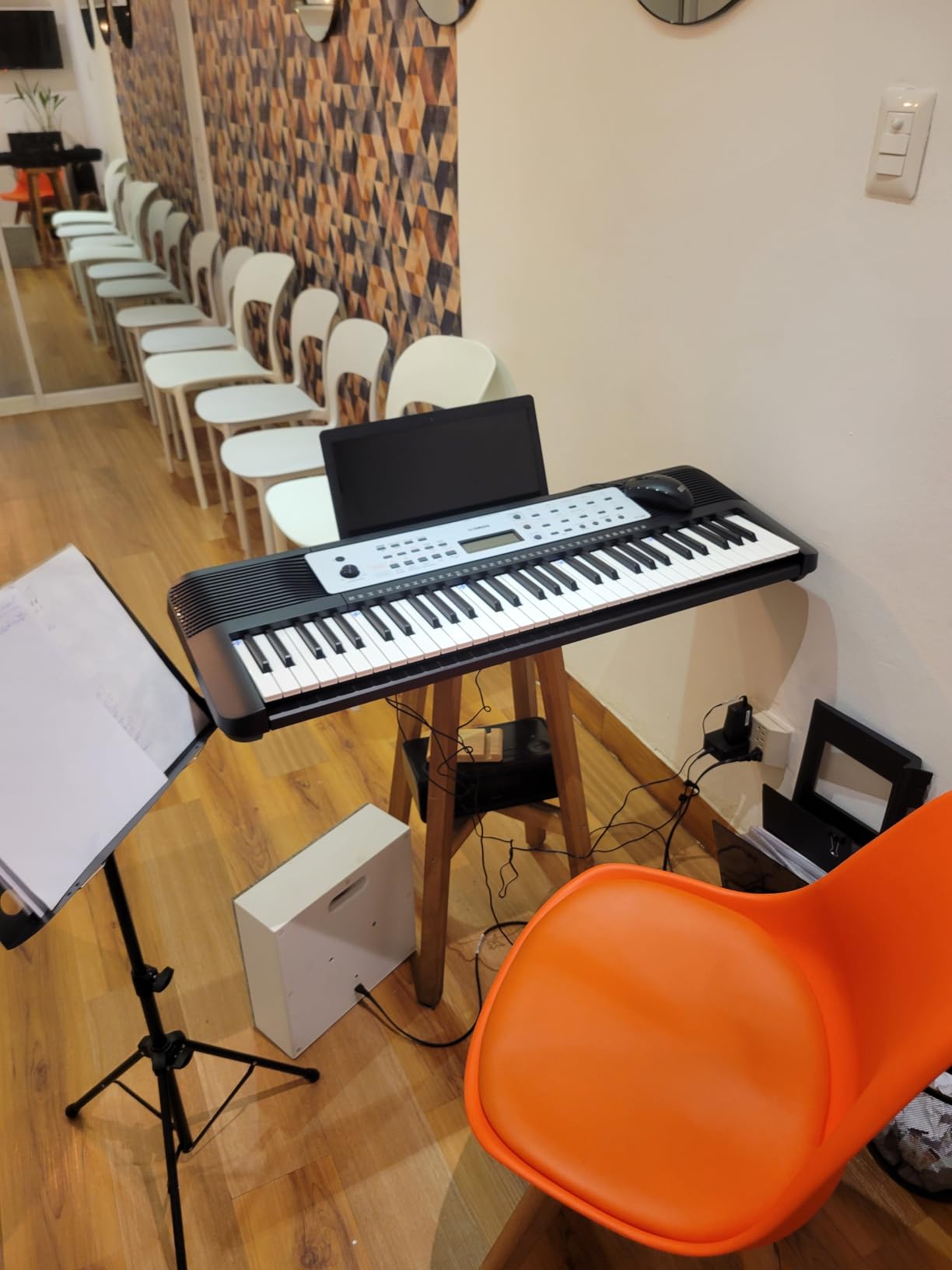
Technically, the YPT-280 has 61 full-size keys, hundreds of built-in songs including children’s classics and popular hits, and both a 3.5mm and 6.35mm headphone jack. The two headphone jack sizes are a nice touch because you can use either standard earbuds or proper studio headphones. At 8.8 pounds, it is light enough to carry to a friend’s house or grandma’s place.
The trade-off here is that you only get the keyboard, a music rest, and a power adapter. There is no stand, no bench, and no headphones in the box. You will need to budget for those accessories separately if you do not already have them. Some parents see this as a negative, but I see it as Yamaha putting the budget into sound quality rather than cheap accessories.
Who this keyboard is perfect for
This is the ideal pick for kids ages 7 and up who are ready to take music a bit more seriously. The Yamaha brand name matters if your child might join a school music program or take lessons from a teacher who respects the brand. The Quiz Mode and Smart Chord features also make it great for self-directed learners who want to practice without a parent hovering.
If sound quality is your top priority and you want something that sounds like a real instrument rather than a toy, the YPT-280 delivers. The 4.7-star average rating from buyers confirms that Yamaha’s reputation is well-earned even at this entry-level price.
Who should look elsewhere
If you need an all-in-one bundle with stand, bench, and headphones included, the Yamaha YPT-280 will leave you shopping for accessories. The RockJam RJ5061 above is a better fit for parents who want to open one box and be done. Also, if budget is the primary concern and your child is just testing the waters, a cheaper toy keyboard might make more sense for the first few months.
Intermediate players who already know their way around a keyboard may find the features too basic and could outgrow this within a year. In that case, look at a touch-sensitive or weighted model for the next step up.
3. B. toys Wooden Piano Mini Maestro – Best First Instrument for Toddlers
B. toys Wooden Piano, Mini Maestro with Color-Coded Songbook
25 keys (2 octaves)
Color-coded A-to-G keys
Illustrated songbook
Classical music button
Wooden construction
2.8 lbs
Pros
- Color-coded keys make learning intuitive
- Sturdy wooden build survives toddler handling
- Fully assembled right out of the box
- Includes songbook with 6 classical pieces
- Top-rated at 4.7 stars with 85% five-star reviews
Cons
- Only 25 keys limits range
- Toy quality sound not for serious learning
- Battery operated classical music button
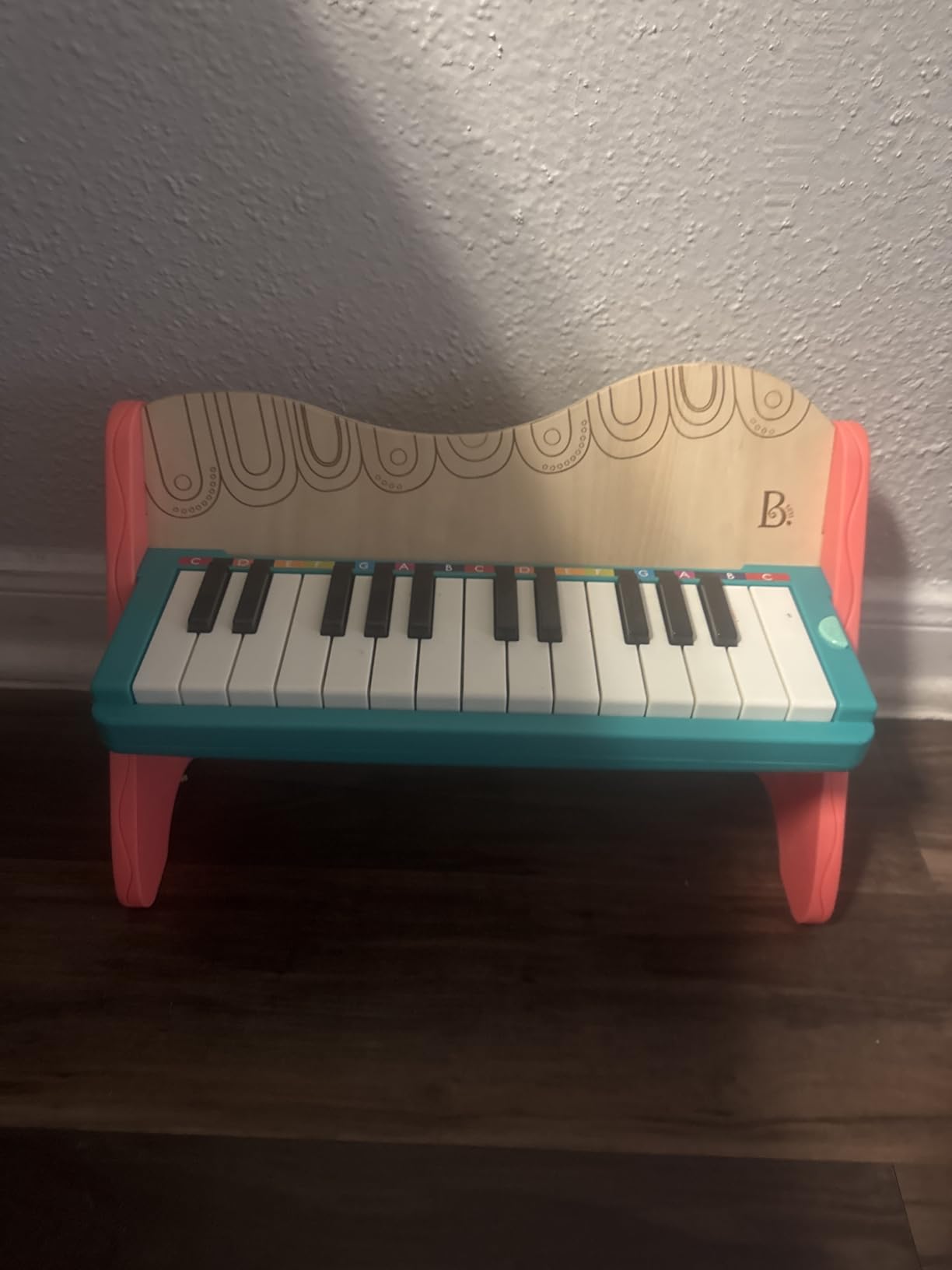
For parents of toddlers ages 3 to 5, the B. toys Wooden Piano Mini Maestro is the kids piano keyboard I recommend most often. It is a genuine wooden instrument rather than a flimsy plastic toy, and it has a warmth and charm that makes it look beautiful in a playroom or nursery. My daughter received one for her third birthday and it became her favorite toy for over a year.
The genius of this keyboard is the color-coded key system. Each note from A to G has its own color, and the included songbook uses those same colors to show kids which keys to press. My daughter was playing simple melodies within days, completely on her own, just by matching the colors. That kind of independent achievement builds real confidence.
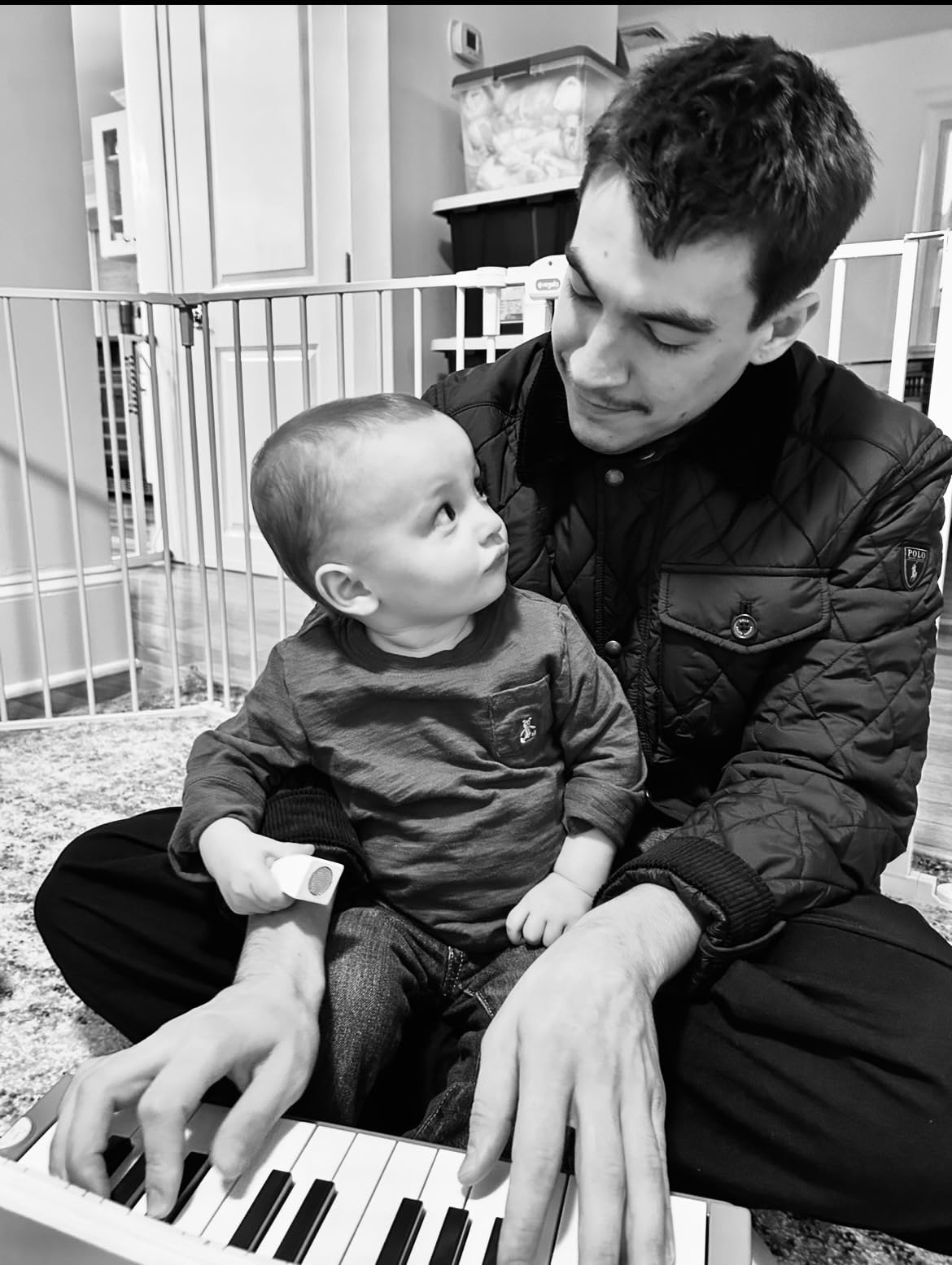
With 25 keys spanning two octaves, the Mini Maestro gives toddlers enough range to explore melody without being overwhelming. The keys are smaller than standard piano keys, which actually fits little hands better at this age. There is also a music button that plays classical compositions, which is a nice way to expose young ears to real music.
The wooden construction is what really sets this apart from cheap plastic keyboards. It feels solid, looks like a real instrument, and can survive being dropped, dragged, and sat on by an enthusiastic preschooler. At 2.8 pounds, it is stable enough to stay put on a table but light enough for a child to move around.
Who this keyboard is perfect for
This is the perfect first instrument for children ages 3 to 5 who are showing interest in music but are too young for formal lessons. The color-coded system teaches basic note recognition and hand-eye coordination without any pressure. It also makes a wonderful gift because it arrives fully assembled and ready to play.
Parents who want something that looks good in their home and will not need to be hidden in a closet will appreciate the wooden design. It genuinely looks like a small piece of furniture rather than a loud plastic toy.
Who should look elsewhere
Kids ages 6 and up will outgrow this quickly. The 25-key range is limiting once a child wants to play actual songs with both hands. If your child is already 6 or older and showing sustained interest in piano, skip the toy stage and go straight to a 61-key beginner keyboard like the RockJam or Yamaha.
This is also not the right choice if you want electronic features like rhythms, demo songs, headphone jacks, or app integration. The Mini Maestro is an acoustic toy piano, so what you hear is what you get.
4. MUSTAR 61 Key Lighted Piano Keyboard – Best for Visual Learners
MUSTAR 61 Key Piano Keyboard, Electric Piano Keyboard with Lighted Up Keys
61 keys with lighted function
255 tones
255 rhythms
3 teaching modes
Dual voice mode
Stand, headphones, stool included
Pros
- Lighted keys guide finger placement visually
- Three intelligent teaching modes for different learning styles
- Massive 255 tones and 255 rhythms
- Dual voice mode combines two instruments
- Complete bundle with stand
- stool
- and headphones
Cons
- Higher price than basic models
- Heavier at 21 pounds
- Light feature may not suit all learning styles
The MUSTAR 61 Key Lighted Keyboard is the best kids keyboard for children who learn by watching rather than reading. The lighted keys literally light up to show your child which key to press next during lessons and demo songs. I tested this with my nephew, who struggled with traditional note-reading, and the lights gave him an instant visual shortcut that kept him engaged.
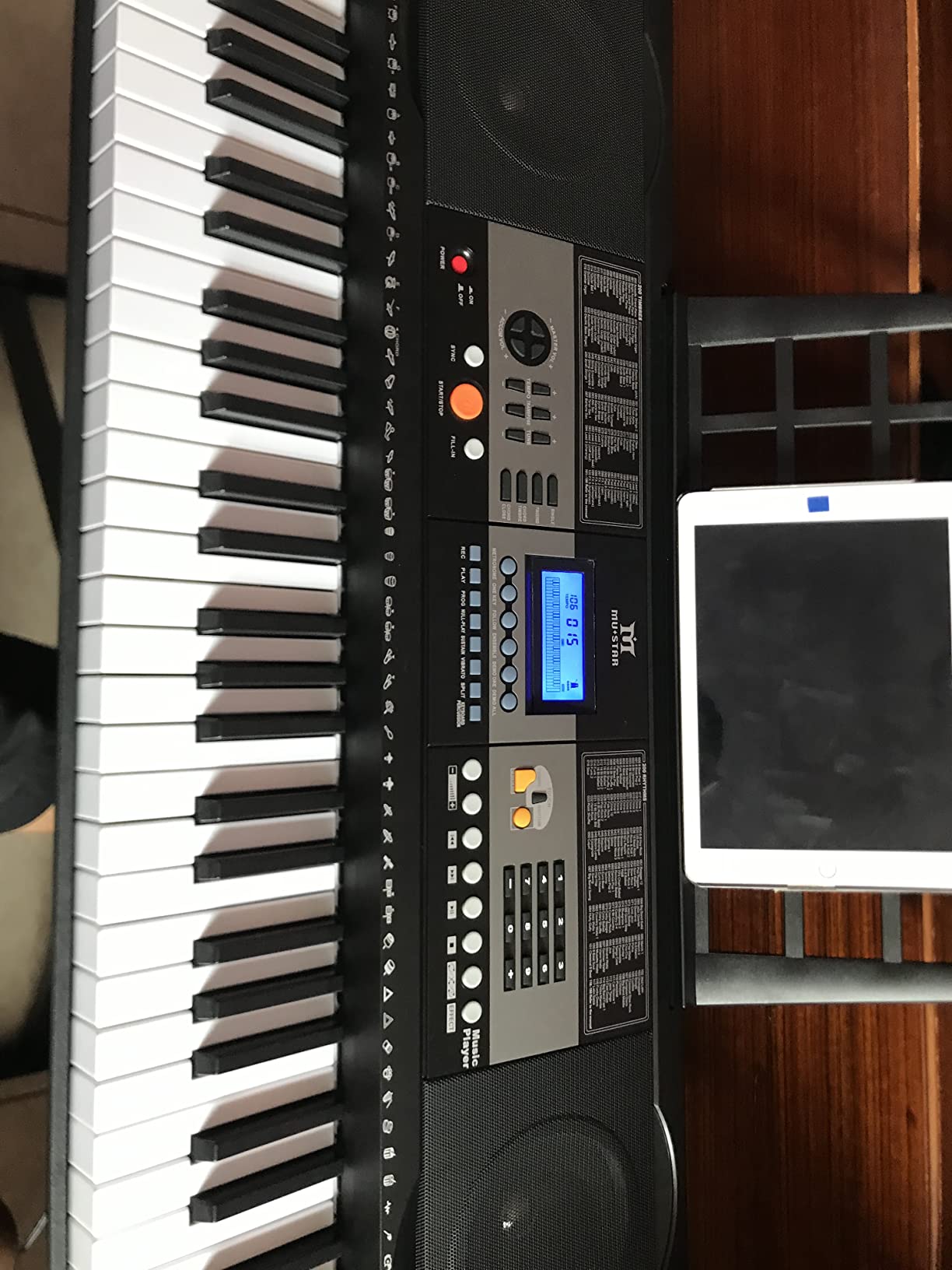
This keyboard comes with three teaching modes that progressively remove the training wheels. One Key mode lights up one note at a time. Follow mode lights up notes in sequence at your child’s pace. Ensemble mode plays accompanying parts while your child plays the melody. It is like having a patient teacher available 24 hours a day.
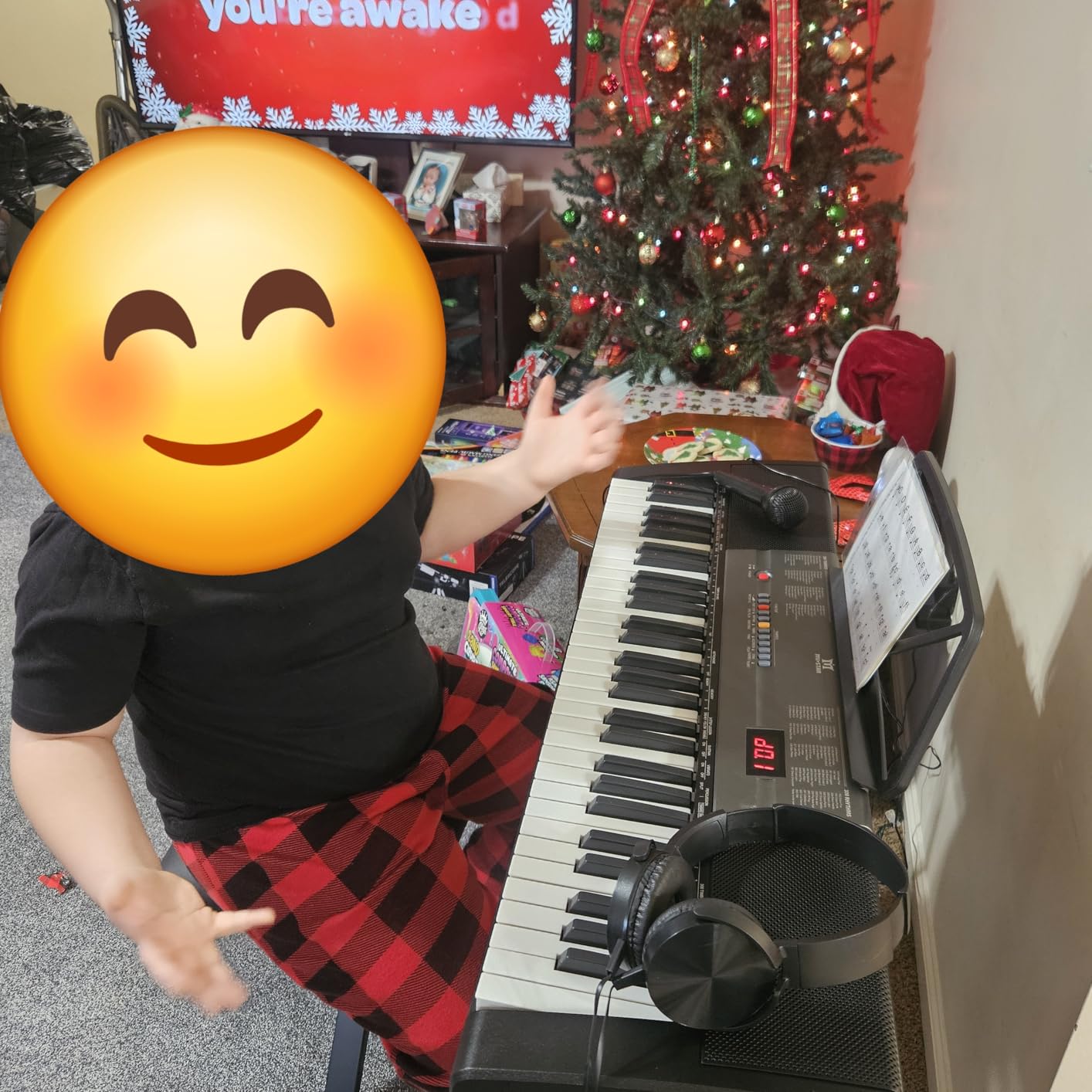
With 255 tones and 255 rhythms, the MUSTAR offers far more sonic variety than most keyboards in this price range. The Dual Voice mode lets kids layer two sounds together, like piano and strings, which sounds impressive and keeps practice interesting. The 50 built-in demo songs give kids something to aspire to and play along with.
The bundle includes an adjustable stand, headphones, a stool, and a power adapter, so you are getting a complete learning station. The keyboard also runs on batteries, making it portable for trips or outdoor practice. At 21 pounds with the stand, it is sturdier than ultra-light models but still movable.
Who this keyboard is perfect for
Visual learners ages 6 to 10 benefit most from the lighted key system. If your child struggles with traditional sheet music or loses interest quickly, the lights provide an immediate, game-like feedback loop that keeps them coming back. The three teaching modes also make this great for parents who want a structured learning path but cannot afford lessons right away.
This is also a strong pick for families who want a complete bundle in one purchase. The included stand, stool, and headphones mean you have a dedicated practice station ready to go.
Who should look elsewhere
If your child is already reading sheet music comfortably, the lighted keys may feel like a crutch that holds back their development. Traditional piano teachers sometimes discourage relying on light guides for too long. Once your child can read notes, the lights become unnecessary.
The higher price point also makes this a bigger commitment than a basic toy keyboard. If your child is just testing the waters and you are not sure they will stick with it, start with something cheaper before investing in the MUSTAR.
5. RockJam RJ361 61 Key Compact Keyboard – Best Value Compact Pick
RockJam RJ361 61 Key Compact Keyboard Piano for Beginners
61 keys
200 sounds
200 rhythms
Compact design
Record and playback
Simply Piano app
2.84 kg
Pros
- Compact size fits small spaces
- 200 sounds and rhythms for variety
- Record and playback to track progress
- Sustain and vibrato effects
- Power supply and sheet music stand included
Cons
- No stand or bench in box
- Smaller form factor may feel less substantial
- Non-weighted keys
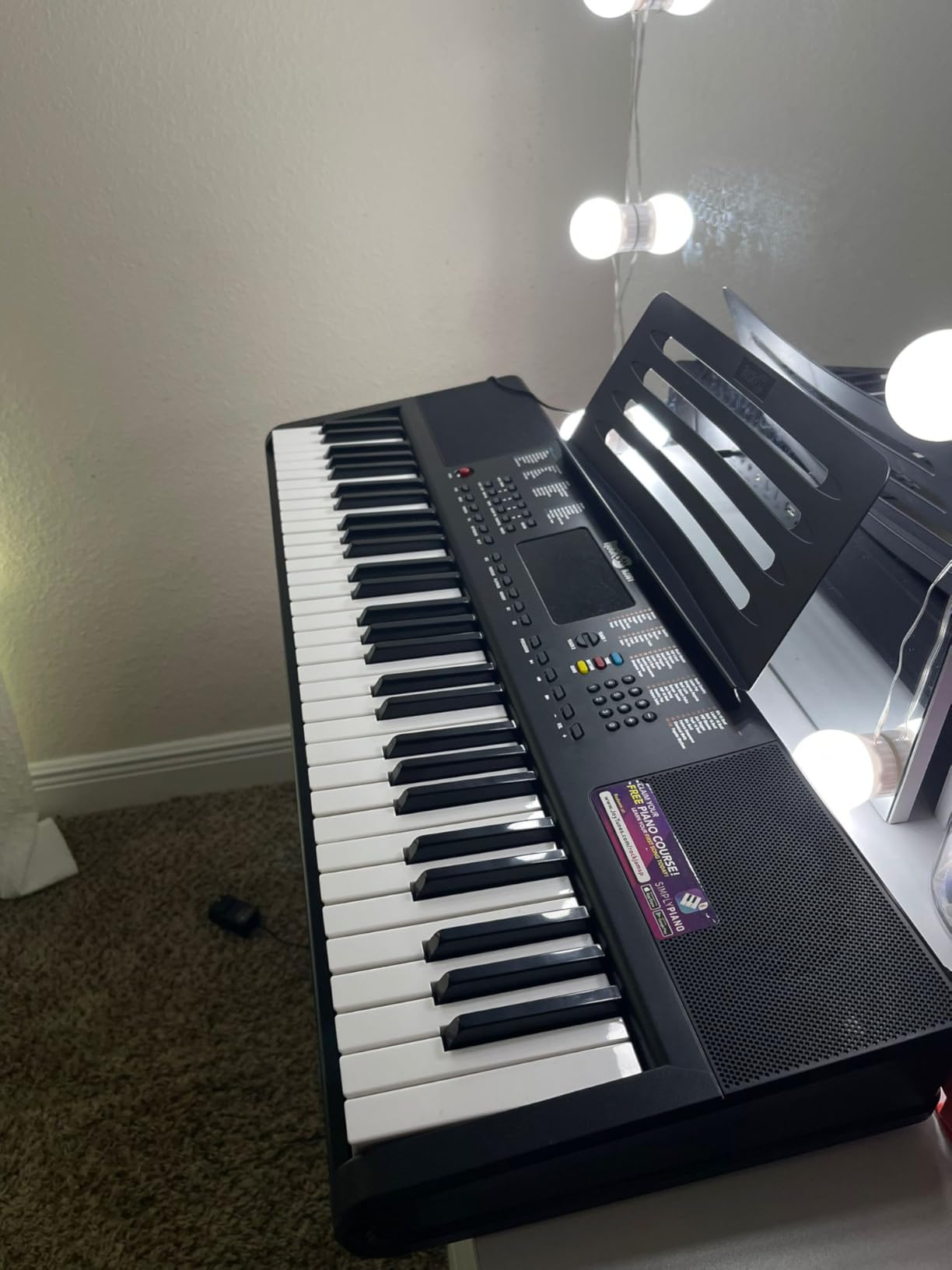
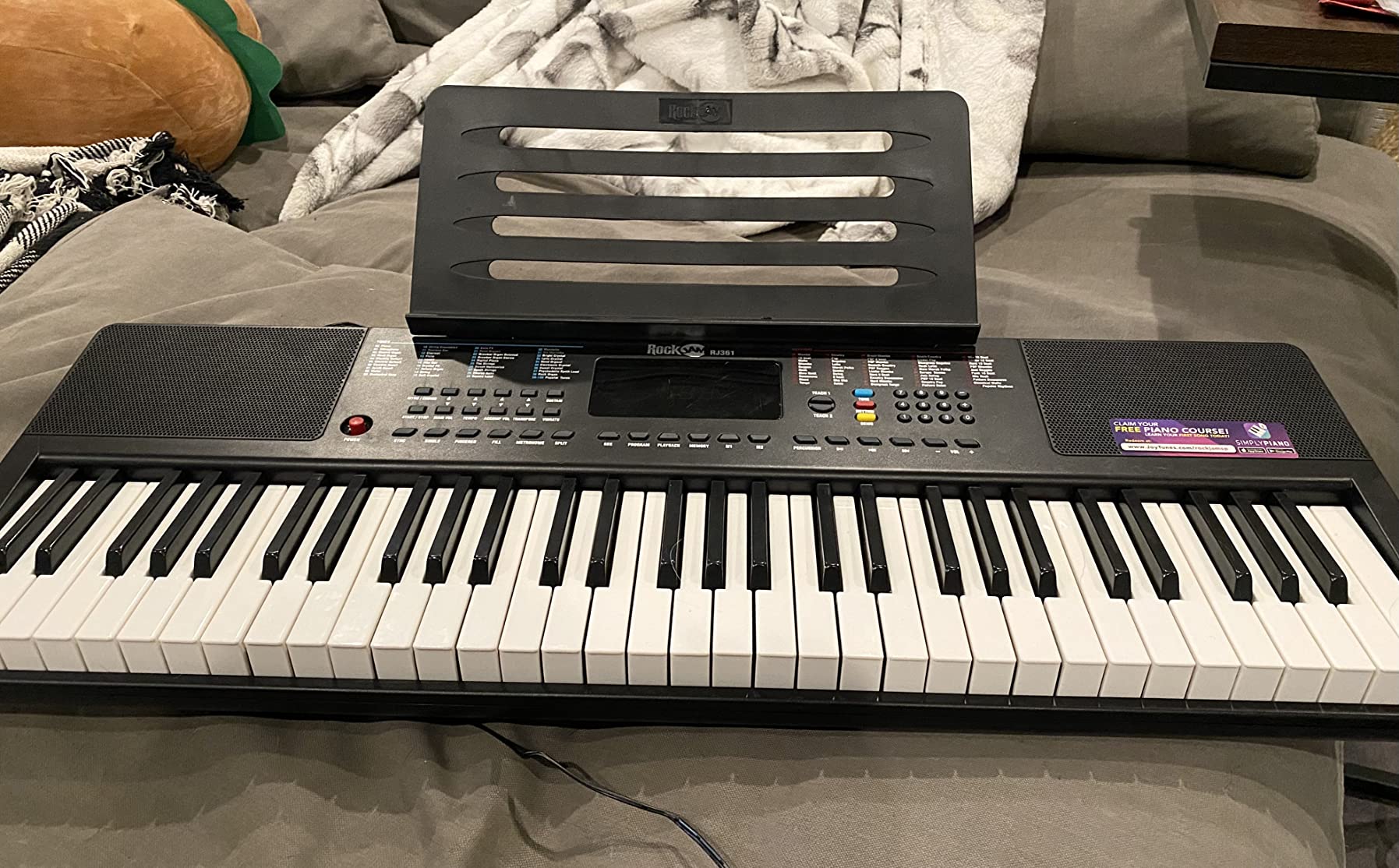
The RockJam RJ361 is the slimmer sibling of the RJ5061, designed for families who want the same great features in a more compact footprint. I keep coming back to this model for parents who live in apartments or have limited space. It delivers the same 200 sounds and 200 rhythms as the bigger kit but in a lighter, easier-to-store package.
What I appreciate about the RJ361 is that RockJam did not strip away features to make it smaller. You still get sustain and vibrato effects, record and playback functionality, and the Simply Piano app integration that makes guided learning accessible. The digital display is clear and easy to read, even for kids who are still learning to navigate menus.
The record and playback feature is genuinely useful for kids. Being able to record a performance and listen back helps children hear where they need to improve, which is a skill even adult musicians work on. My neighbor’s daughter records herself daily and has made noticeable progress by listening critically to her own playing.
The trade-off versus the RJ5061 is that the RJ361 does not include the stand, bench, or headphones. You get the keyboard, a power supply, keynote stickers, a sheet music stand, and Simply Piano lessons. For some families this is fine because they already have a table or desk to set it on. Others will prefer the complete kit of the RJ5061.
Who this keyboard is perfect for
This is the right pick for families with limited space who still want a full-featured 61-key keyboard. At just 2.84 kilograms, it is easy for a child to carry or store on a shelf. It is also a smart choice for a second keyboard, maybe for a vacation home or a grandparent’s house, where you want quality without duplicating a full kit.
Budget-conscious parents who already have headphones and a surface to play on will save money versus buying the full RJ5061 bundle. You get the same core keyboard experience for less.
Who should look elsewhere
If you want the all-in-one bundle with stand and bench, go with the RockJam RJ5061 instead. And if your child needs lighted keys for visual learning, the MUSTAR offers that feature that the RJ361 lacks. The RJ361 is a great value, but it is a bare-bones package that assumes you already have or will buy the accessories separately.
Serious students who are heading toward formal lessons should also consider whether non-weighted, non-touch-sensitive keys will hold them back. For hobbyists and casual learners, the RJ361 is plenty. For kids on a classical track, look higher up the ladder.
6. Dollox 37 Key Kids Piano with Stool – Best for Creative Play
Dollox Keyboard Piano for Kids, Toddler Piano Toys 37 Keys Kid Musical Instruments Electric Keyboard Baby Pianos for Beginners Mini Music Toy with Stool, Birthday Gift for Age 3 4 5 6 Years Old
37 keys
8 instrument tones
8 accompaniment styles
8 percussion effects
Microphone included
Record and playback
Stool included
Pros
- Microphone turns practice into karaoke sing-alongs
- Connects to phone or tablet via audio cable
- Includes stool for dedicated play spot
- 22 demo songs for inspiration
- Record and playback for self-expression
Cons
- Batteries not included
- Smaller size may not suit ages 5 and up
- Toy-level sound quality
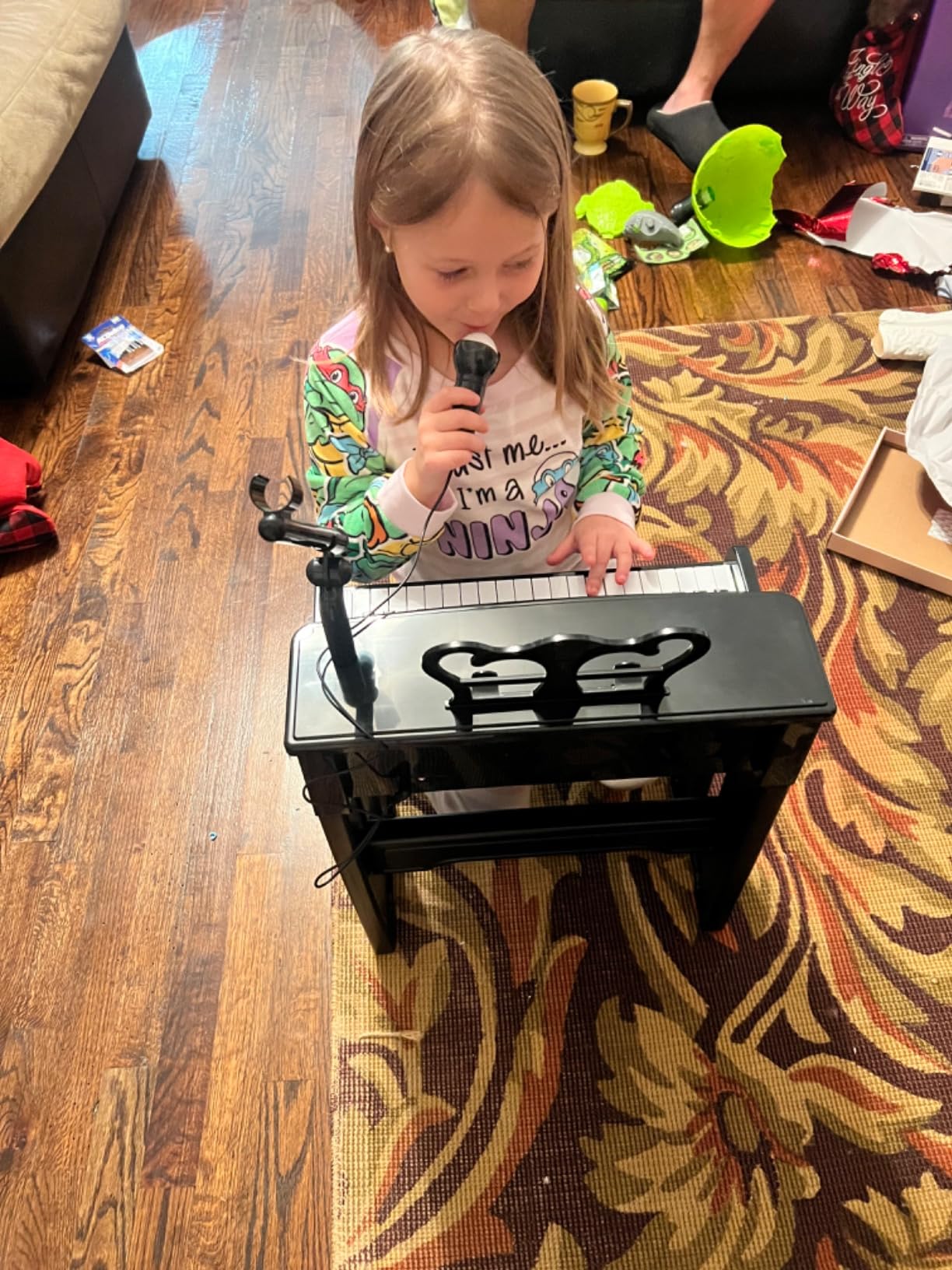
The Dollox 37 Key Kids Piano is the keyboard I recommend when parents want something that feels more like a creative play station than a practice instrument. The standout feature is the included microphone, which turns keyboard time into full-on karaoke. My friend’s twins spend hours singing along to the demo songs, and it has become the centerpiece of their playroom.
Beyond the microphone, the Dollox packs a surprising amount of variety into a small package. Eight instrument tones, eight accompaniment styles, and eight percussion effects give kids plenty of sounds to experiment with. The 22 demo songs provide instant inspiration, and the record function lets kids capture their creations and play them back for proud parents.
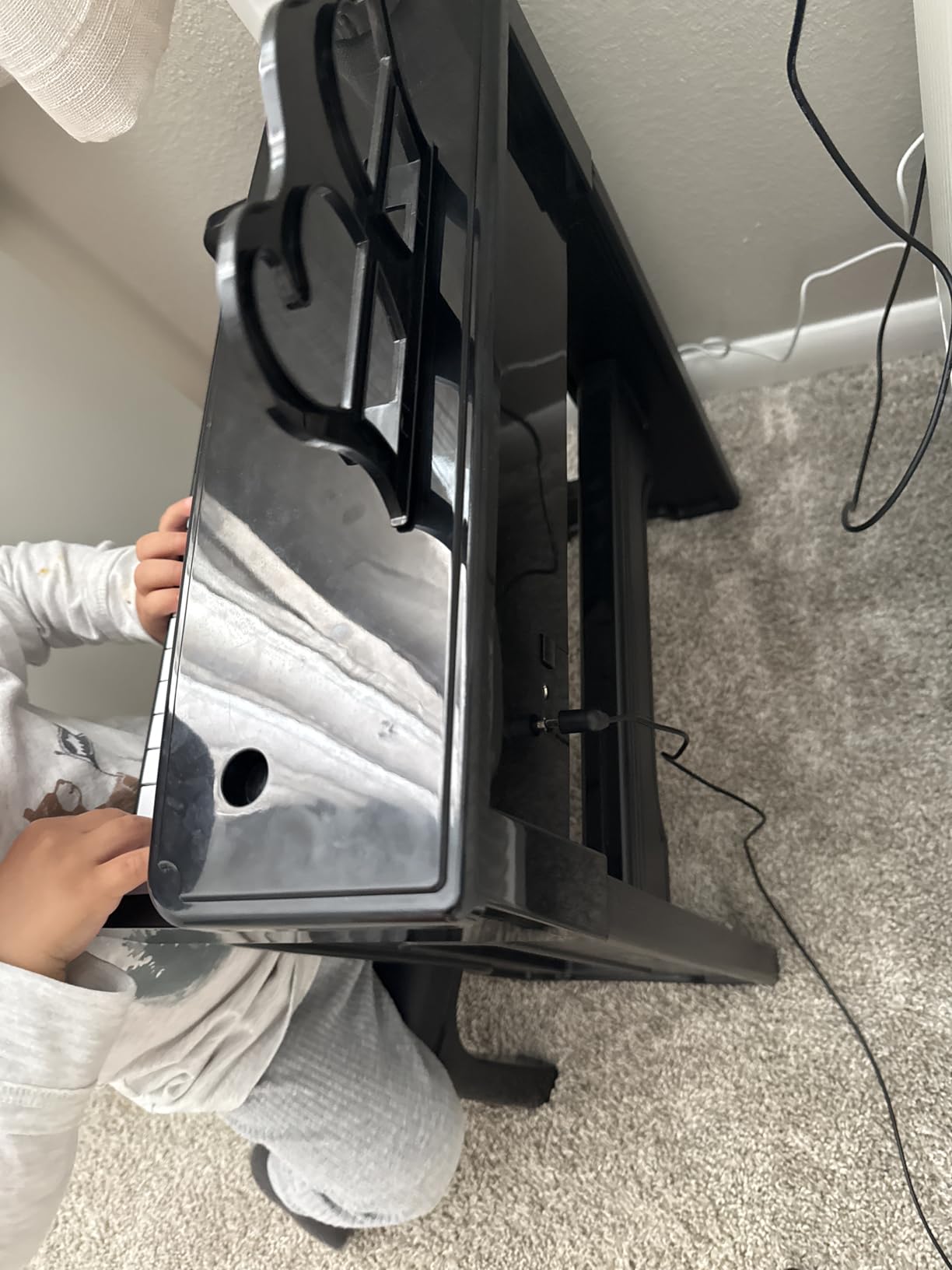
The included stool is a nice touch because it gives your child a dedicated spot to play, which encourages longer sessions. The keyboard can be used flat on a table or with the stool setup, giving you flexibility based on your space. The audio cable for connecting a phone, tablet, or MP3 player means kids can play along with their favorite songs.
The main limitation is the 37-key range, which spans about three octaves. That is enough for melodies and simple chords but not for two-handed pieces. The sound quality is also toy-level, which is fine for play and exploration but will not satisfy a child who has heard a real piano and wants that depth of sound.
Who this keyboard is perfect for
This is a fantastic pick for kids ages 3 to 6 who love to perform. The microphone, demo songs, and recording feature make it feel like a mini entertainment system rather than just a keyboard. If your child loves singing, dancing, and putting on shows for the family, the Dollox will fuel that creative energy.
It is also a great choice for parents who want something affordable and self-contained. The included stool and microphone mean fewer extra purchases, and the compact size fits easily in a bedroom or playroom.
Who should look elsewhere
Kids ages 7 and up will likely find the 37-key range and toy sound quality limiting. If your child is ready for real music education, skip this and go for a 61-key model with better sound. The Dollox is designed for play, not for developing proper piano technique.
Parents who want a headphone jack for quiet practice will also be disappointed, as this model focuses on external play through its built-in speaker rather than private practice. The battery-only power also means you will be buying AA batteries regularly.
7. MusicForset 61 Keys Kids Piano Toy – Best Portable Option
61 Keys Kids Piano Keyboard Toy with Mic for 3 4 5 6 7 8 Girls Boys, Black
61 keys
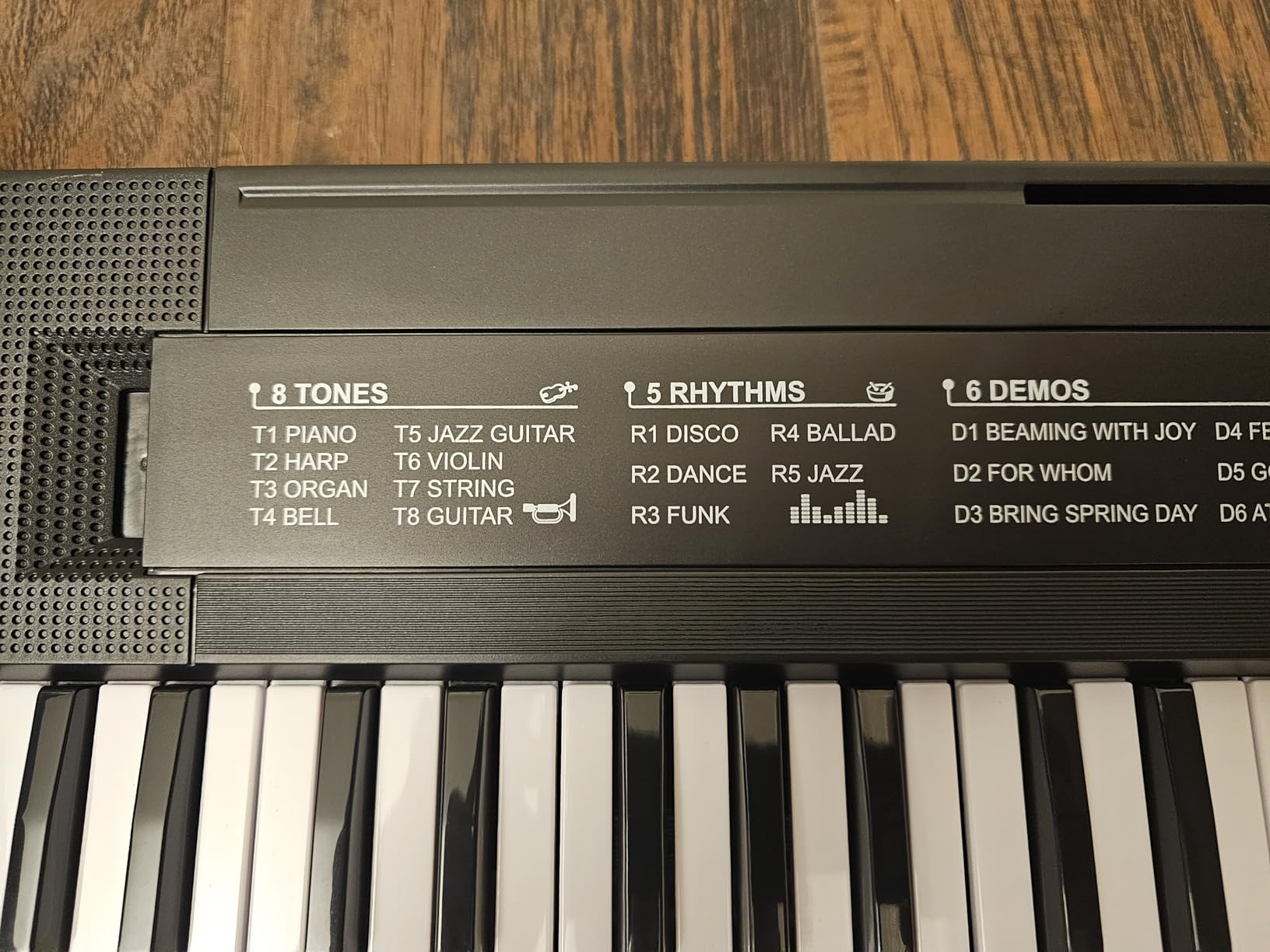
8 tones
6 demos
5 rhythms
5 animal sounds
Record and playback
1 pound
Battery or USB powered
Pros
- Ultra-light at just 1 pound
- Dual power with USB or batteries
- Animal and percussion sounds kids love
- Record and playback function
- Child-safe sturdy plastics
Cons
- Batteries not included
- Toy-level sound quality
- No headphone jack
- Limited tone variety
The MusicForset 61 Keys Kids Piano is the most portable keyboard on this list, weighing in at just one pound. I tested this as a travel keyboard for car trips and visits to grandparents, and it is genuinely small enough to toss in a backpack. Despite the tiny size, it still offers 61 keys, which gives kids a full range to explore.
What makes this keyboard fun for young kids is the inclusion of five animal sounds alongside the standard tones and rhythms. My 4-year-old tester was delighted by the animal noises and spent a good hour creating what she called a zoo concert. The six demo songs and five rhythms give enough variety to keep things interesting without overwhelming a young child.
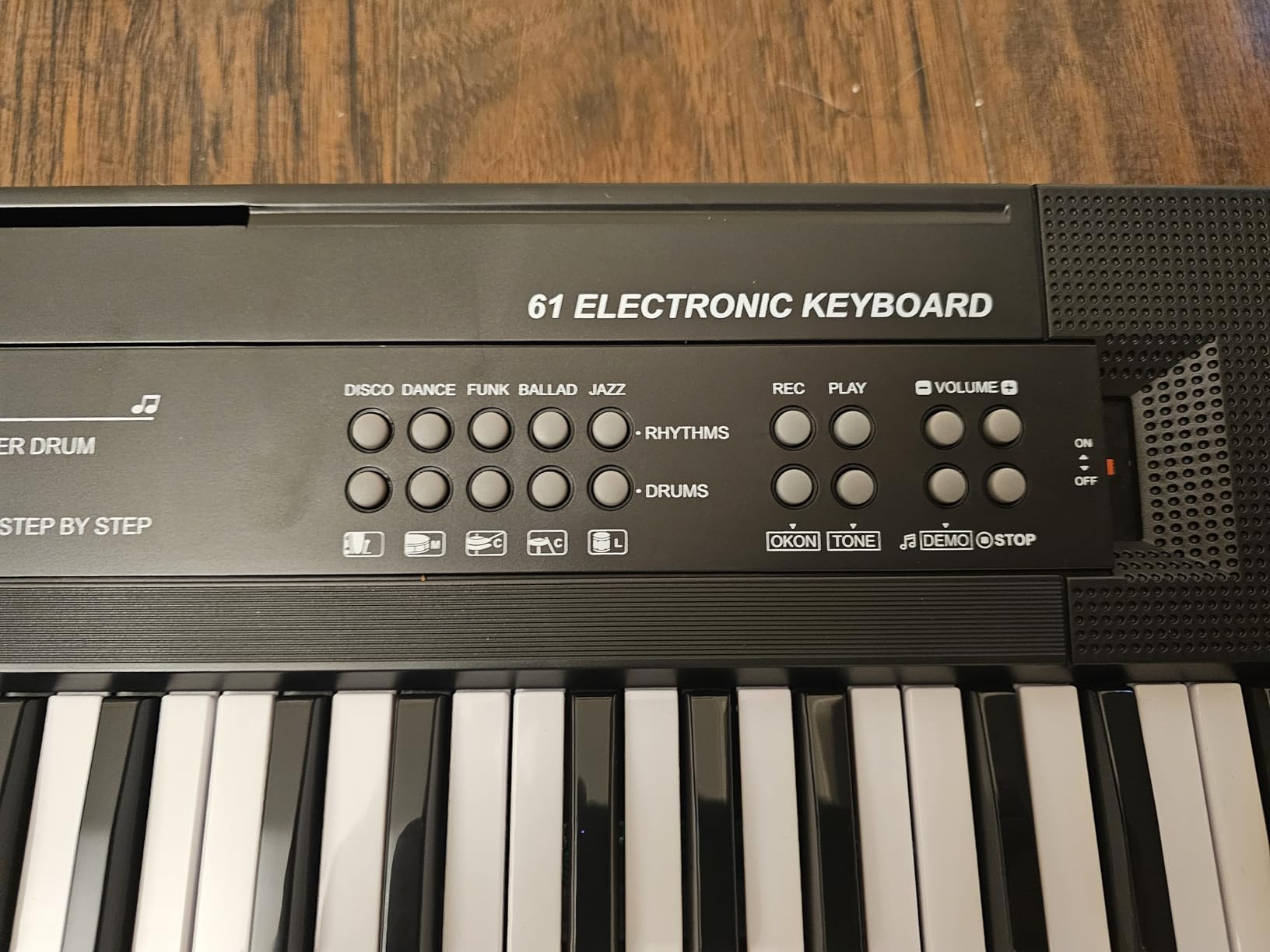
The dual power option is a real advantage. You can power it with 3 AA batteries for true portability, or use the USB cable to plug into a phone charger, laptop, or power bank. This flexibility means you are never stuck without power as long as you have a USB source nearby. The record and playback function lets kids capture their musical experiments.
The trade-offs are clear given the price. The sound quality is distinctly toy-level, with tinny speakers that will not impress anyone who has heard a real keyboard. There is also no headphone jack, so all practice happens out loud. For the price and size, these limitations are expected and acceptable for the target age group.
Who this keyboard is perfect for
This is the ideal pick for families who travel frequently or want a keyboard that can go anywhere. At one pound, a child can carry it themselves. It is also a great low-risk first keyboard for parents who are not sure whether their child will stick with music and want to test the waters cheaply before committing.
The animal sounds make this especially appealing for the 3 to 5 age range, where the goal is fun and exploration rather than skill development. If your toddler shows sustained interest after a few months with this, you can confidently upgrade to a more serious model.
Who should look elsewhere
If sound quality matters to you or your child, the MusicForset will disappoint. This is a toy, not an instrument, and it sounds like one. Parents who want their child to develop an ear for good tone should invest in a Yamaha or RockJam model instead.
The lack of a headphone jack also makes this a poor choice for apartment living or shared spaces where quiet practice is needed. All playing happens through the built-in speaker at whatever volume you set.
8. Raimy 37 Keys Keyboard Piano for Kids – Best Ultra-Budget Pick
Raimy 37 Keys Electronic Keyboard Piano for Kids 3 4 5 6 7 8 9 Year Old
37 keys
11 demo songs
8 rhythms
8 tones
4 percussion sounds
Record and playback
0.58 kg
Sleep function
Pros
- Incredibly affordable entry point
- Child-safe ABS plastic with smooth edges
- One-key-one-note learning function
- Automatic sleep saves battery
- Lightest keyboard on the list at 0.58 kg
Cons
- Batteries not included
- Very basic sound quality
- Small key range limits growth potential
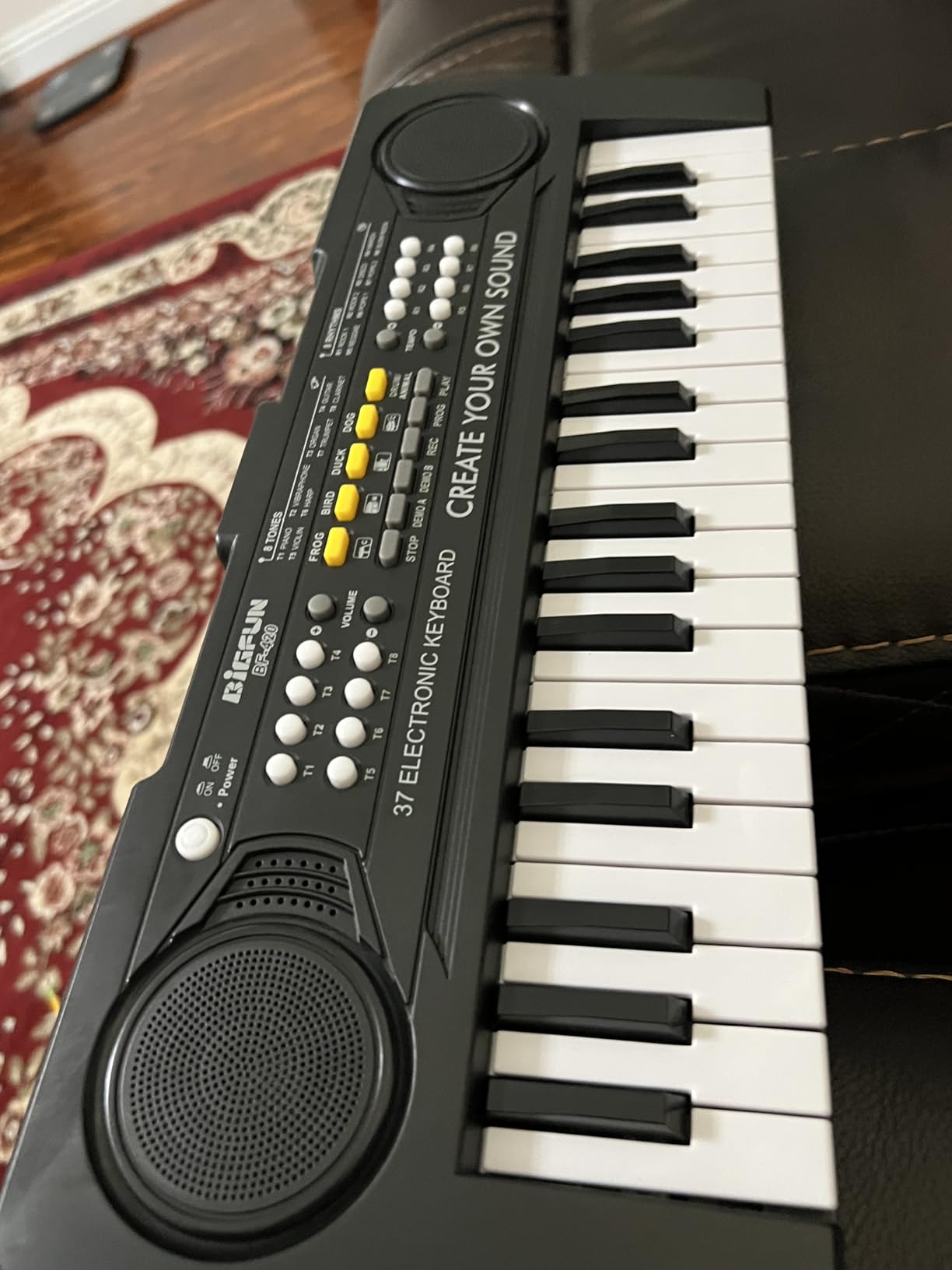
The Raimy 37 Keys Keyboard is the most affordable option on this list, and it makes a great stocking stuffer or party favor for a child who has shown a spark of interest in music. I have recommended this to several parents as a let us see if they like it purchase before investing in something more substantial. At this price, the risk is minimal.
Despite the low cost, the Raimy includes a decent feature set. Eleven demo songs, eight rhythms, eight tones, and four percussion sounds give kids plenty to explore. The one-key-one-note learning function lights up one key at a time and waits for your child to press it, which is a simple but effective way to teach basic melody following.
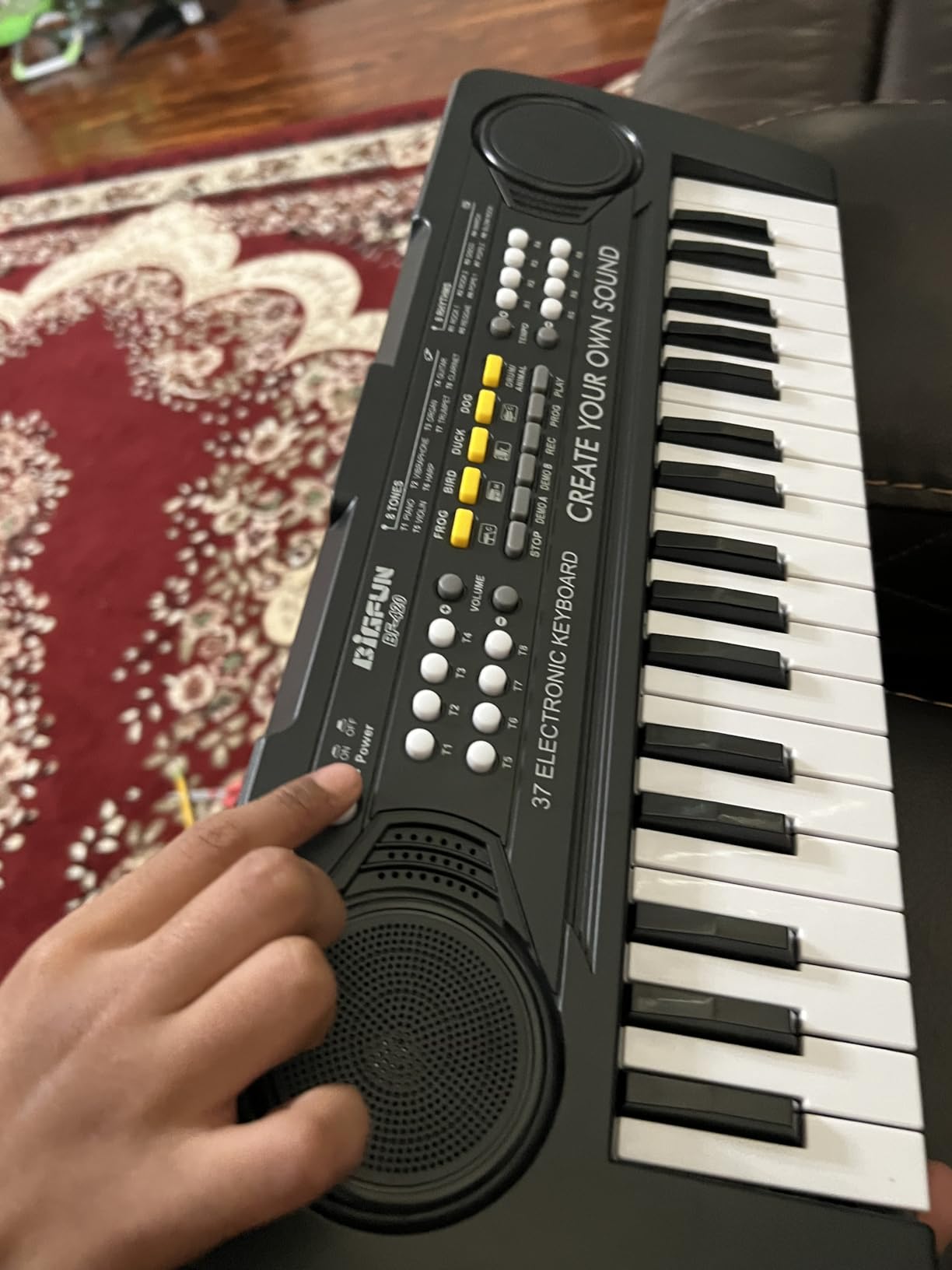
The build quality is better than I expected for the price. The ABS plastic is non-toxic and has smooth edges, so it is safe for small hands. The automatic sleep function is a battery-saving feature that powers down the keyboard after a period of inactivity, which means those AA batteries last longer than you might expect.
The record and playback function, plus sustain and vibrato effects, are surprising inclusions at this price point. The Raimy is never going to sound like a real piano, and the 37-key range will be outgrown within a year by most kids. But for a first taste of making music, it does the job at a price that is hard to beat.
Who this keyboard is perfect for
This is the perfect gift for a 3 to 6-year-old who has shown curiosity about music but has never played before. The low price means there is no guilt if it ends up collecting dust after a month. It is also a smart pick for party gifts, classroom donations, or situations where you need multiple keyboards for a group of kids.
Parents on a tight budget who still want to encourage musical exploration will find real value here. The automatic sleep function and lightweight design make it practical for everyday play without much supervision.
Who should look elsewhere
Anyone hoping for sound quality, durability beyond light play, or features that will grow with a child should look elsewhere. The Raimy is a starter toy, not a long-term instrument. If your child is already 7 or older and seriously interested, skip this and invest in a 61-key model.
The lack of a stand, bench, headphones, or power adapter in the box means you are getting just the keyboard itself. Battery-only operation means ongoing costs for AA batteries unless you buy rechargeables.
How to Choose the Right Kids Keyboard?
Choosing from the best kids keyboards comes down to matching the instrument to your child’s age, interests, and your budget. Here are the key factors I evaluate when recommending a keyboard to parents.
Age-appropriate key count
For toddlers ages 3 to 5, smaller keyboards with 25 to 37 keys are ideal because they match small hands and limited attention spans. The B. toys Mini Maestro with 25 keys and the Dollox or Raimy with 37 keys are perfect for this age. Too many keys overwhelm young children and make it hard to focus.
For kids ages 6 and up, a 61-key keyboard is the standard recommendation. Sixty-one keys give enough range for beginner and intermediate music without the expense and size of a full 88-key piano. Every teacher I have spoken with agrees that 61 keys are sufficient for the first two to three years of learning.
Weighted keys vs non-weighted keys
Non-weighted keys are fine for beginners who are exploring music and building basic interest. They are cheaper, lighter, and easier for small fingers to press. Most of the keyboards on this list use non-weighted keys, which is appropriate for their target age ranges.
Touch-sensitive keys respond to how hard you press, allowing for dynamics like loud and soft. Weighted keys simulate the feel of a real acoustic piano. If your child is taking formal lessons, ask the teacher whether weighted or touch-sensitive keys are required. Forum discussions on Reddit repeatedly emphasize that non-weighted keys can build bad habits for serious learners.
Sound quality matters more than you think
Cheap keyboards with tinny, unpleasant sound can actually discourage a child from practicing. I have seen kids lose interest within weeks because their keyboard sounded bad compared to what they hear in movies and on tablets. Yamaha consistently produces the best sound quality at entry-level prices, which is why the YPT-280 earns its top-rated badge.
If you cannot test a keyboard in person, read reviews specifically mentioning sound quality. The Casio CT-S1 and Yamaha models are frequently praised by musicians for punching above their weight in tone.
Built-in learning features
Keyboards with teaching modes, lighted keys, or app integration can extend practice time significantly. The MUSTAR’s lighted keys and three teaching modes are excellent for visual learners. The RockJam models include Simply Piano app access, which provides structured lessons. The Yamaha YPT-280’s Quiz Mode gamifies ear training.
These features do not replace a good teacher, but they do help kids practice independently between lessons. For parents who do not play piano themselves, these guided learning tools are invaluable.
Accessories and total cost
Always factor in the cost of accessories when comparing keyboards. A bare keyboard might seem cheaper until you add a stand, bench, headphones, and power adapter. The RockJam RJ5061 and MUSTAR bundles include most accessories, which makes their total cost more competitive than it first appears.
Parents on forums consistently warn that buying too cheap often leads to a second purchase within months. Consider spending a bit more upfront on a quality bundle rather than buying a toy that will need replacing quickly.
The upgrade path as your child grows
One of the most overlooked factors is how long a keyboard will last before your child outgrows it. A 25-key toddler piano might be perfect at age 3 but useless by age 5. A 61-key non-weighted keyboard works for ages 6 to 10 but may need upgrading to weighted keys for serious study.
Music teachers on piano forums recommend planning for a progression: toy keyboard for exploration, 61-key touch-sensitive for early lessons, then 88-key weighted for serious study. Knowing this path helps you budget and avoid overspending at any single stage.
Frequently Asked Questions
What is the best first keyboard for a child?
The best first keyboard for a child depends on their age. For toddlers ages 3 to 5, the B. toys Wooden Piano Mini Maestro is ideal with its color-coded keys and sturdy build. For kids ages 6 and up, the RockJam RJ5061 61 Key Keyboard Kit is my top pick because it includes everything needed to start playing on day one.
What size keyboard should I get for a 7 year old?
A 61-key keyboard is the best size for a 7 year old. It provides enough range for beginner and intermediate music without the overwhelming size of a full 88-key piano. The Yamaha YPT-280 and RockJam RJ5061 are both excellent 61-key options for this age group.
At what age can kids start learning keyboard?
Children can start exploring keyboard instruments as early as age 3 with toy keyboards like the B. toys Mini Maestro. Formal keyboard lessons typically begin around ages 5 to 7 when a child has the finger strength and attention span to follow structured instruction.
Should a beginner get a 61 or 88 key keyboard?
A 61-key keyboard is the better choice for most beginners, especially children. It is more affordable, more portable, and provides plenty of range for the first two to three years of learning. An 88-key keyboard is worth considering only when a child is taking serious lessons and needs the full range for advanced classical pieces.
Do kids need weighted keys to learn piano?
For casual exploration and the first few months of playing, non-weighted keys are perfectly fine and keep costs low. If your child is taking formal piano lessons, most teachers recommend transitioning to touch-sensitive or weighted keys within the first year to develop proper finger technique and dynamics. Non-weighted keys used too long can build habits that are hard to break.
Final Thoughts on the Best Kids Keyboards
The best kids keyboards balance fun, learning, and value at whatever age your child is right now. For a complete beginner kit that has everything in one box, the RockJam RJ5061 is hard to beat. For superior sound quality from a trusted brand, the Yamaha YPT-280 delivers. And for toddlers just starting their musical journey, the B. toys Wooden Piano Mini Maestro is a charming, durable first instrument.
My advice is to match the keyboard to your child’s current age and interest level rather than over-investing too early. Kids outgrow toy keyboards quickly, but the right starter instrument can spark a lifelong love of music. Any of the eight picks on this list will give your child a genuine first experience of making music in 2026.