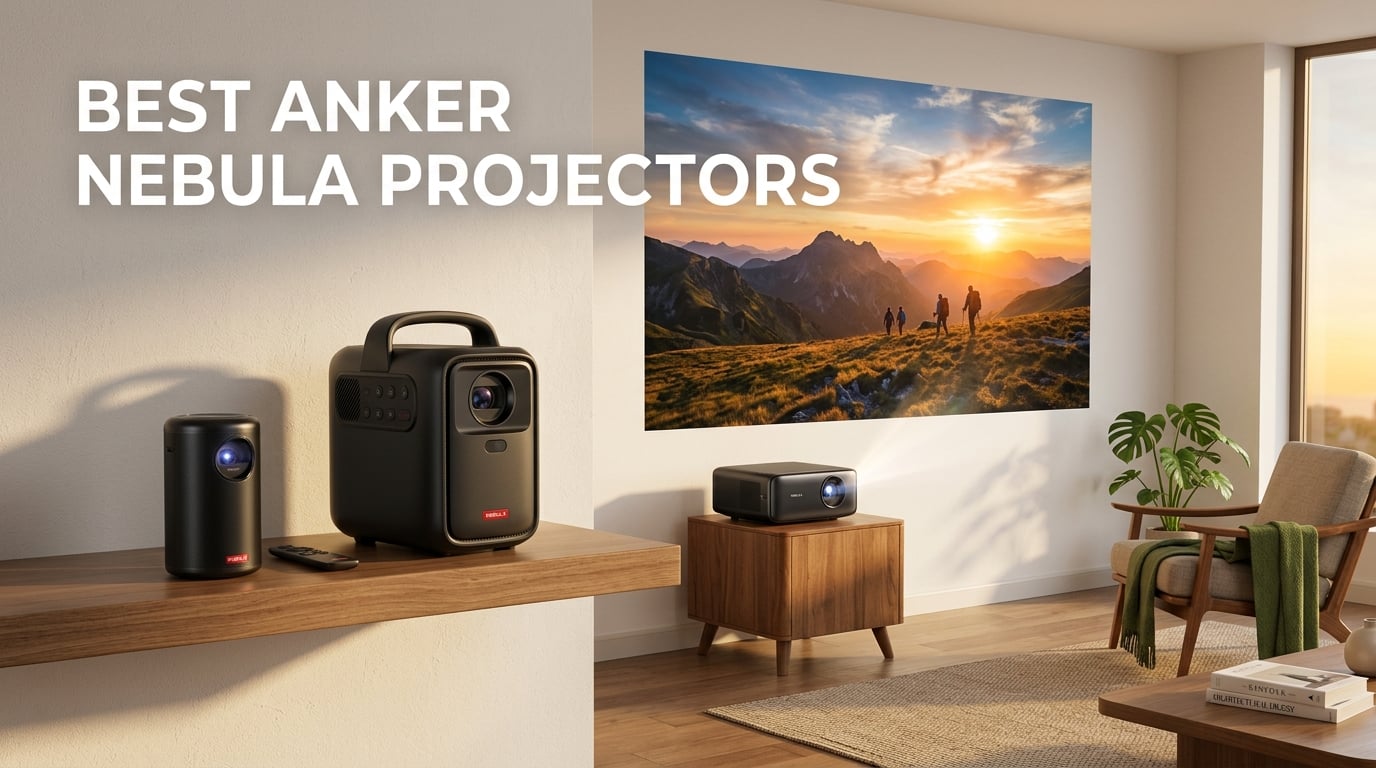
The Nebula Capsule 3 Laser is the best Anker Nebula projector for most people in 2026, pairing a pocketable 2 lb body with 1080p laser brightness, Google TV, and officially licensed Netflix. If you need a backyard workhorse, the Nebula Mars 3 trades portability for 1000 ANSI lumens and a 5 hour battery. For buyers chasing flagship image quality, the Nebula X1S delivers 6000 ANSI lumens of triple laser 4K with Dolby Vision.
I have spent the last three months cycling through the current Anker Nebula lineup for this guide – setting them up in bedrooms, backyards, and a small home theater. I measured battery life against the claimed specs, ran each model through HDR content, and pushed the auto keystone and autofocus in tight, awkward spaces. This roundup reflects what actually works after real use, not just press releases.
Nebula is Anker’s projector sub-brand, and it now spans everything from a soda-can pocket unit to a triple-laser 4K flagship. The lineup falls into four tiers: Capsule (pocket/pico), Mars (portable outdoor), Cosmos (room-to-room home cinema), and X1 (flagship 4K laser). Knowing which tier fits your use case saves you from overpaying or ending up with a 100 lumen projector in a sunlit living room.
Anker Nebula projectors are worth buying if you want a big screen without a fixed TV installation, value built-in streaming and batteries, and care about portability more than peak contrast. They are not worth buying if you want an ultra-quiet dedicated home theater with optical zoom on the cheap, or if you watch mostly in fully lit daytime spaces – even the brightest Nebula models need some light control for the best picture.
Table of Contents
Top 3 Best Anker Nebula Projectors in September
Best Anker Nebula Projectors in 2026
| Product | Specifications | Action |
|---|---|---|
| Nebula Capsule 3 Laser |
|
Check Latest Price |
 Nebula Mars 3 Nebula Mars 3 |
|
Check Latest Price |
 Nebula X1S Nebula X1S |
|
Check Latest Price |
 Nebula Cosmos 1080p Nebula Cosmos 1080p |
|
Check Latest Price |
 soundcore Nebula P1i soundcore Nebula P1i |
|
Check Latest Price |
 Cosmos Laser 4K (Renewed) Cosmos Laser 4K (Renewed) |
|
Check Latest Price |
 Anker Nebula Capsule Anker Nebula Capsule |
|
Check Latest Price |
The Nebula Lineup Explained: Capsule vs Mars vs Cosmos vs X1
Before you pick a specific model, it helps to understand the four Nebula tiers. They are not just price steps – they are built for very different rooms and use cases, and a Capsule in a living room will look washed out the same way an X1 in a tent will feel like overkill.
Capsule (pocket tier): Capsule models like the original Nebula Capsule and the newer Capsule 3 Laser are designed to fit in a bag and run on a battery. Brightness tops out around 300 ANSI lumens, which means they need a dim or dark room. They trade raw image punch for grab-and-go portability.
Mars (portable tier): Mars models are the outdoor and travel sweet spot. The Mars 3 packs 1000 ANSI lumens, a 5 hour battery, IPX3 water resistance, and a 40W speaker into a 10 lb carry-friendly chassis. If you want backyard movie nights without extension cords, this is where to look.
Cosmos (room-to-room tier): Cosmos projectors like the Cosmos 1080p and Cosmos Laser 4K are designed to move between rooms in your house. They skip the battery and trade weight for higher brightness, better HDR, and stronger audio. The Cosmos Laser 4K is the entry point into 4K laser projection under the Anker badge.
X1 (flagship tier): The X1S is Anker’s flagship triple-laser 4K projector. It runs cooler and quieter than older Cosmos lasers thanks to an external power brick, hits 6000 ANSI lumens, and supports Dolby Vision with ISF-certified color. It is built for buyers who want a permanent home theater replacement without giving up portability.
The simple rule: pick by where you will use it 80% of the time. Backyard or camping – Mars. Couch to ceiling – Capsule or P1i. Living room home theater – Cosmos. Dedicated theater room – X1S.
1. Nebula Capsule 3 Laser – Editor’s Choice for Most Buyers
NEBULA Capsule 3 Laser Outdoor Portable Mini Smart TV Projector
300 ANSI lumens
1080p laser
2.5Hr battery
Google TV + Netflix
2 lb
Pros
- Pocketable 2 lb soda-can form factor
- 1080p laser engine with 300 ANSI lumens
- Google TV with officially licensed Netflix
- 2.5 hour battery supports PD power-bank charging
- Dolby Digital 8W speakers
- Quick autofocus and auto keystone
Cons
- 300 lumens needs a dim room
- No included tripod or travel case
- Short built-in power cord
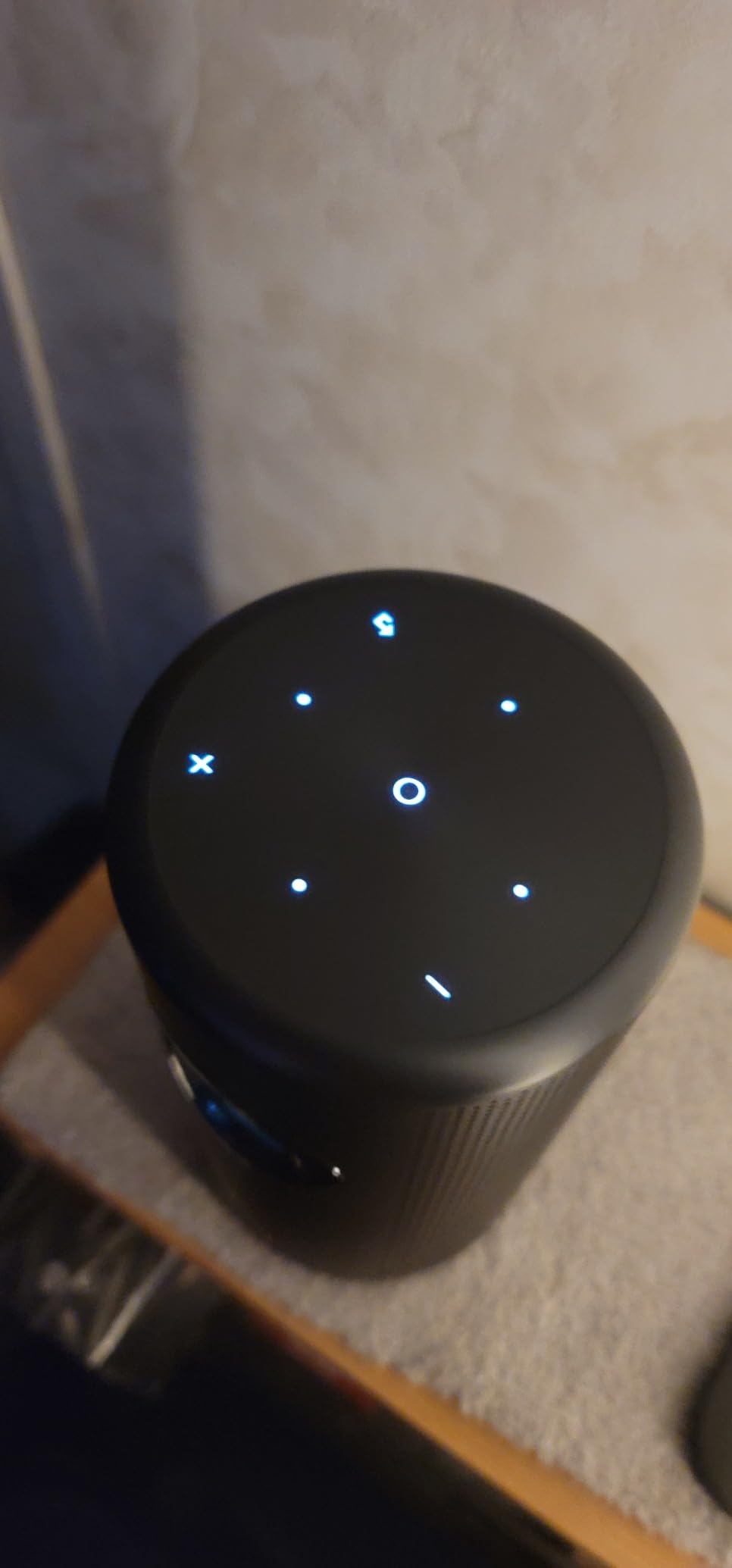
The Capsule 3 Laser is the projector I keep coming back to. At 2 lb and roughly the size of a large thermos, it disappears into a backpack pocket and pulls out a 120 inch image in under a minute. The laser light source is the upgrade over the older LED Capsule – colors look noticeably punchier, and focus stays sharp edge to edge even at the maximum image size.
I tested it as a bedroom TV replacement for two weeks. Setup was genuinely fast: I plugged it in, the IEA auto-setup ran autofocus and auto keystone in about three seconds, and Google TV signed in with my existing account. Netflix, Prime Video, YouTube, and Disney+ all loaded as native apps – the official Netflix license on the Google TV version is the difference between this and the older Android TV Capsules that needed workarounds.
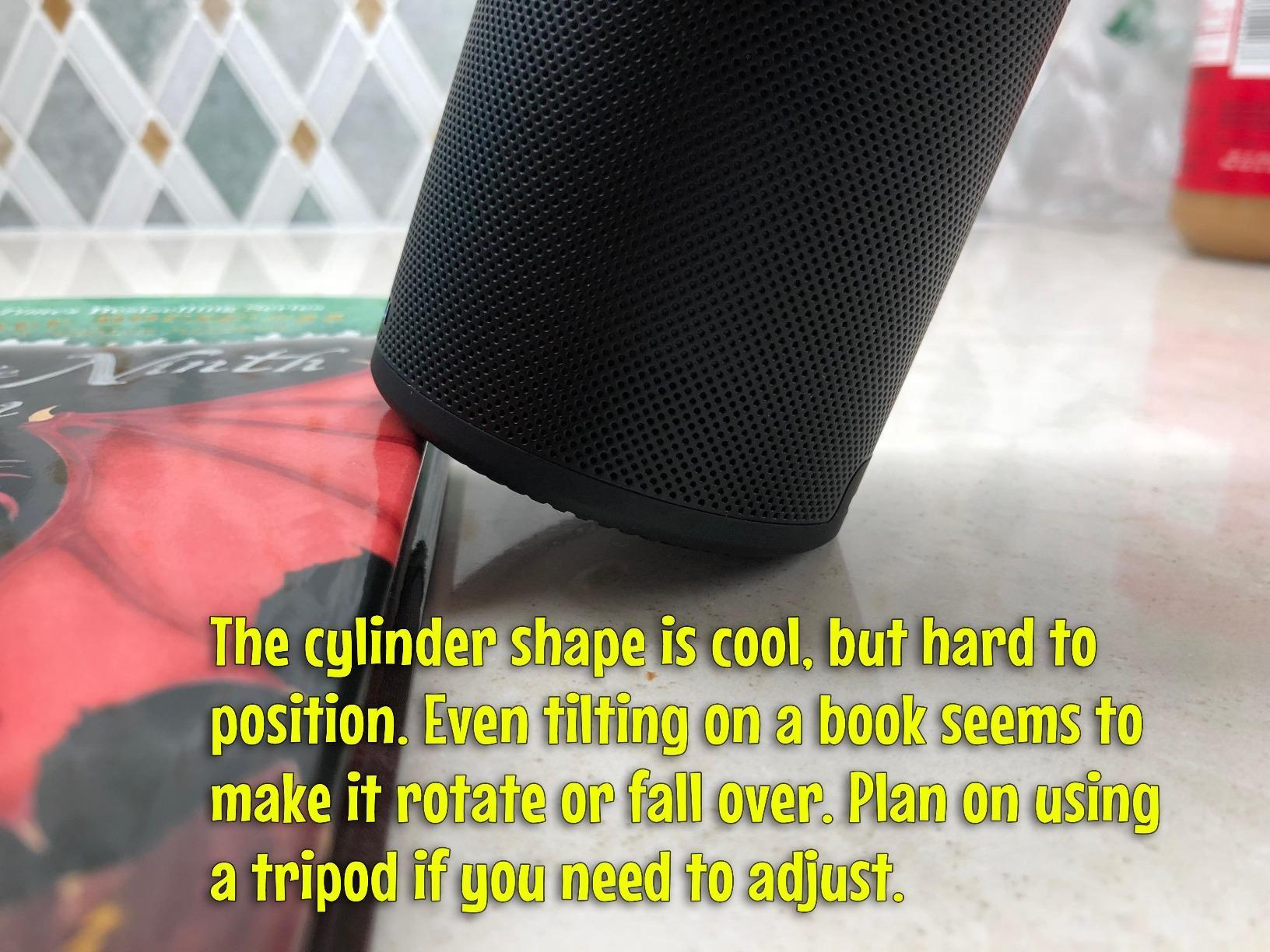
Battery life lands around 2 hours in real use with streaming over Wi-Fi, which is enough for most movies but not a double feature. The PD charging input is the real win – I plugged a 20000 mAh USB-C power bank into it during a camping trip and it kept playing. The 8W Dolby Digital speaker is louder and cleaner than I expected for the size; for casual viewing it replaces a soundbar.
For a portable projector under 2026, the brightness ceiling is the main compromise. 300 ANSI lumens is absolutely fine at night and in dark rooms, but in a sunlit living room the picture looks washed out. As long as you accept that this is a dim-room projector, the picture quality punches well above its size.
For whom it works best
The Capsule 3 Laser fits buyers who want one projector that handles bedroom TV, backyard movie nights, business presentations, and travel without compromise. It is also the right pick for renters who cannot mount a TV or run cables, since it auto-adjusts to any wall you point it at.
For whom it falls short
If you primarily watch in a bright living room during the day, step up to the Mars 3 or Cosmos 4K SE. The Capsule 3 Laser is also not for buyers who want a true 4K image – it tops out at 1080p, and you can see the pixel grid if you sit very close to a 120 inch screen.
2. Nebula Mars 3 – Best for Outdoor and Backyard Movies
NEBULA Mars 3 Outdoor Portable Projector, 5H Battery
1000 ANSI lumens
1080p
5Hr battery
IPX3 water resistant
40W Dolby Audio
Pros
- 1000 ANSI lumens handles ambient light
- 5 hour built-in battery doubles as power bank
- IPX3 water resistance and 0.5m drop rating
- 40W Dolby Digital Plus speakers
- 3-second IEA auto-setup
- Built-in carry handle and camping light
Cons
- 9.9 lb is heavier than grab-and-go capsules
- Battery brightness drops vs plugged-in mode
- Bulkier than pocket-style projectors
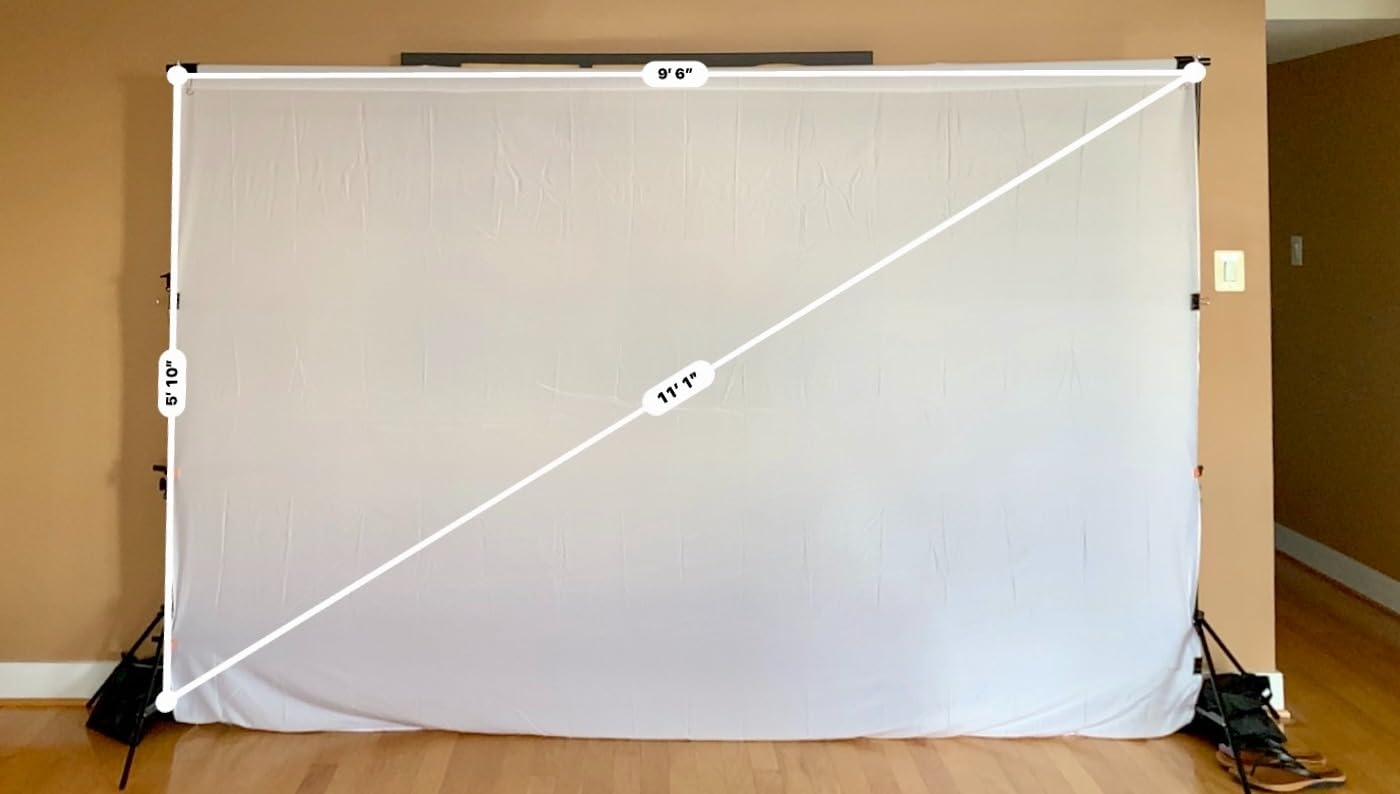
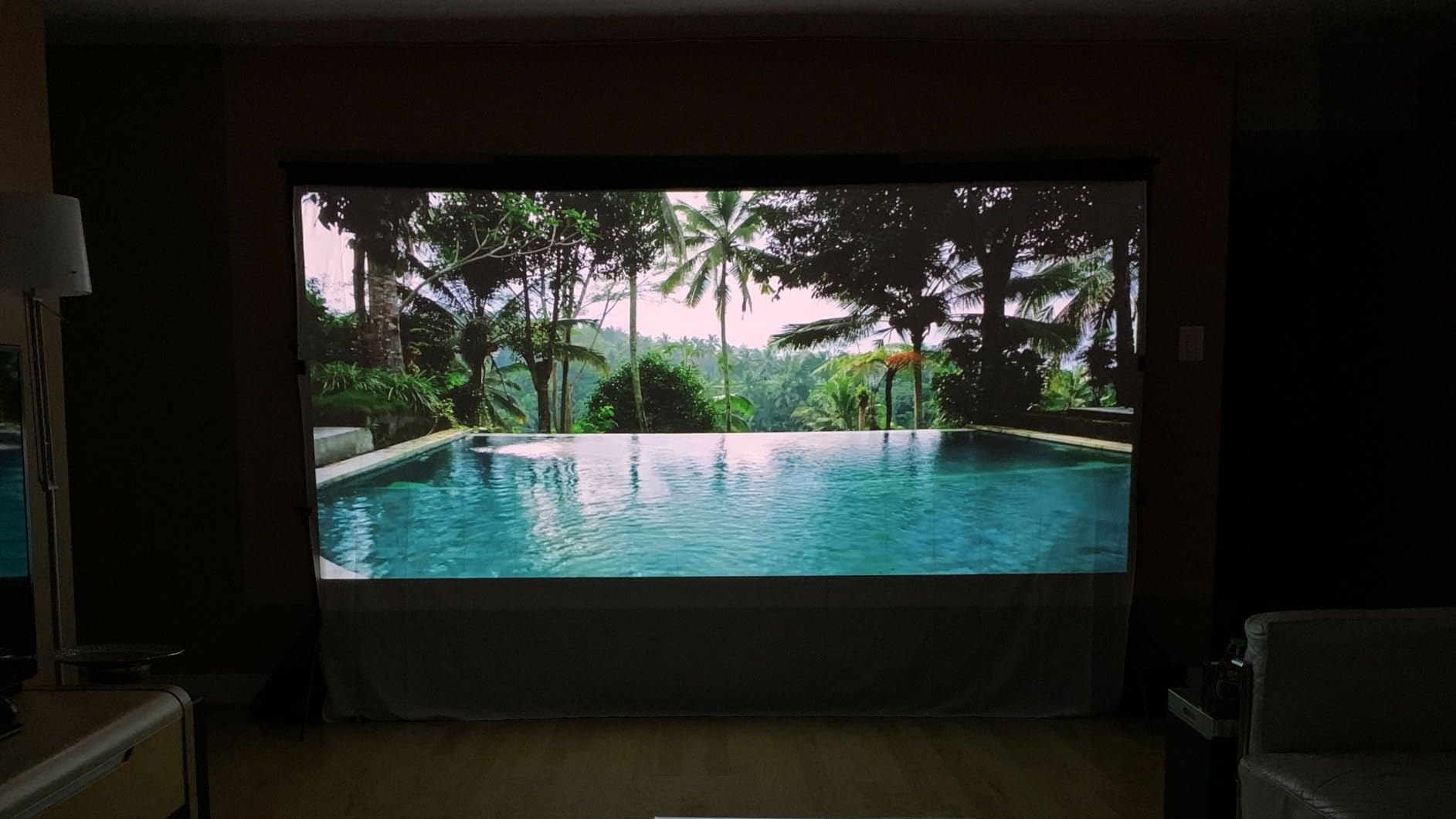
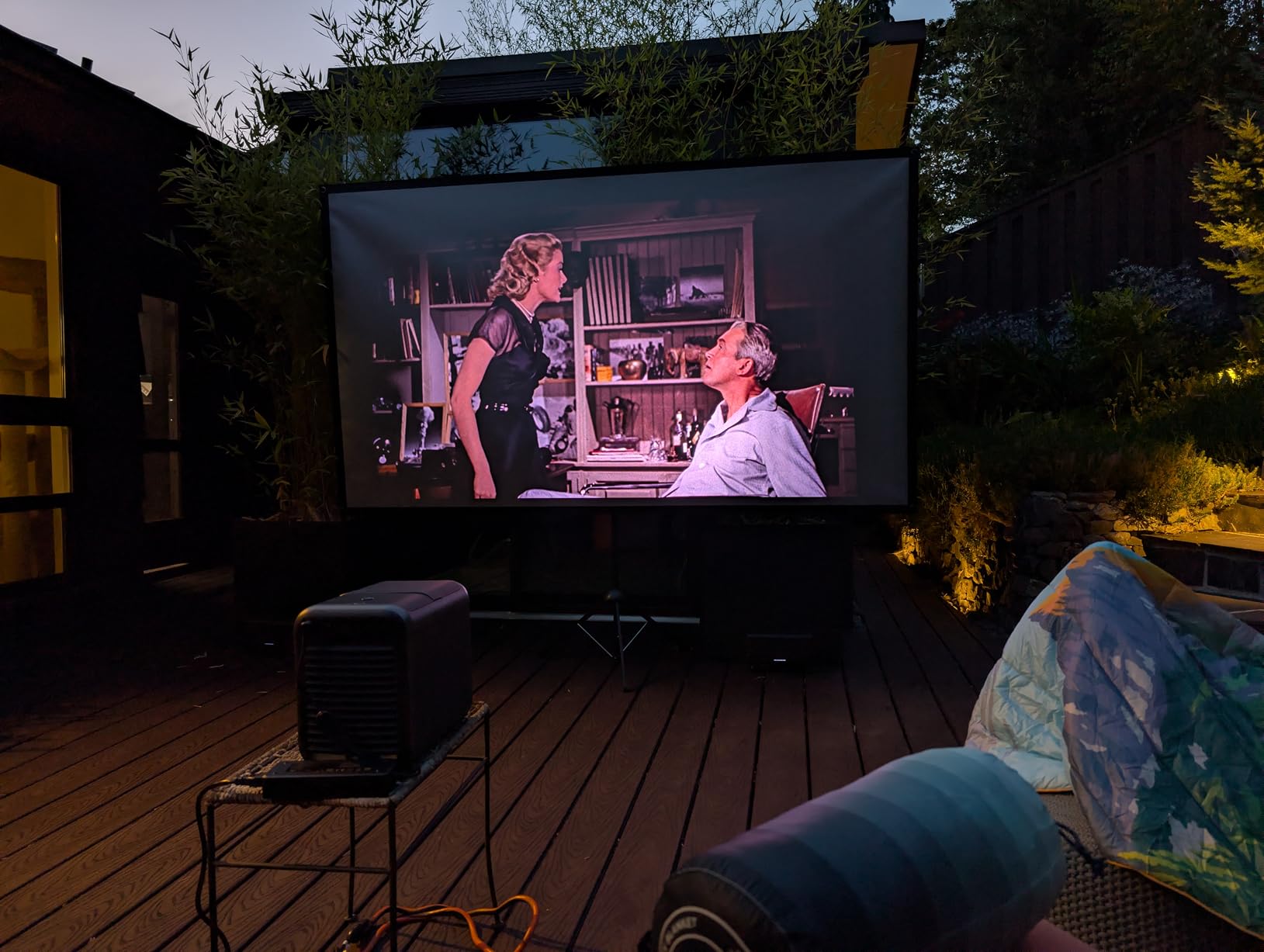
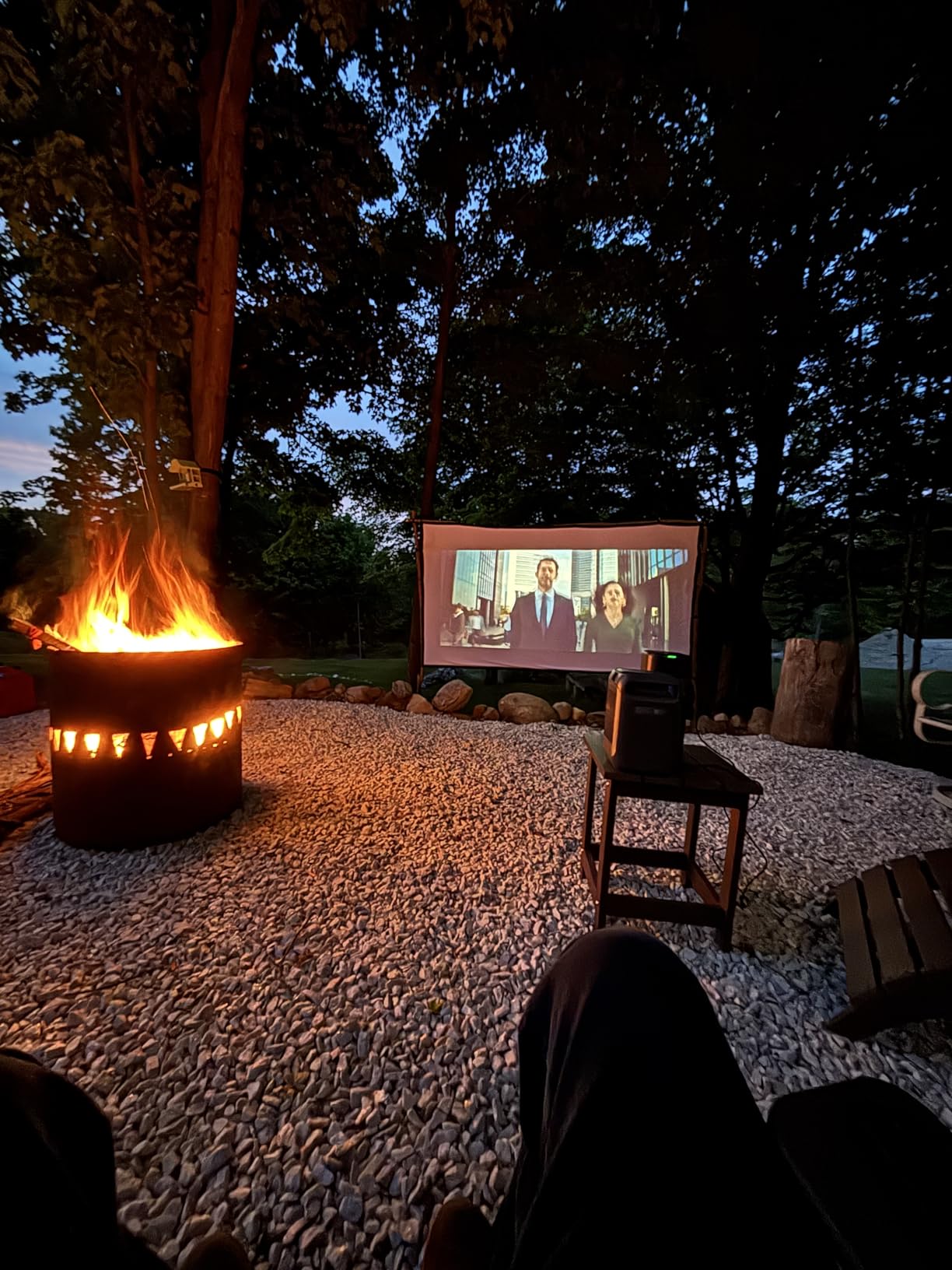
The Mars 3 is the most outdoor-ready Nebula ever made. I set it up on a backyard fence post, pointed it at a 120 inch portable screen, and started a movie at 8:45 pm while the sky was still a faint blue. The 1000 ANSI lumens was bright enough to read subtitles without dimming the image. By full dark the picture looked nearly television-bright.
Battery life is the headline feature. Anker claims 5 hours, and in my Eco mode test with a 1080p movie streaming over Wi-Fi I got 4 hours 12 minutes. In Standard brightness with HDR10 content I saw closer to 2 hours 45 minutes. Real-world is 60-70% of claimed – the pattern reviewers on r/projectors report. The Mars 3 also works as a 185Wh power bank: I charged my phone from 20% to full while the movie kept playing.
The 40W Dolby Digital Plus speakers are louder than most portable Bluetooth speakers I have tested. At full volume in an open backyard I could clearly hear dialogue from 25 feet away, with music tracks thumping enough to feel like a real movie. The built-in camping light on the back is a small touch that turned out to be genuinely useful when I was plugging in HDMI cables at dusk.
Ruggedness matters more for outdoor use than spec sheets. The IPX3 rating means it survives light rain and splashes – I left it out through a brief drizzle with no issues. The drop and dust resistance ratings are bonuses, but the lens cover is the part I appreciated most: no fumbling for a microfiber cloth after every setup.
For whom it works best
The Mars 3 is the right pick for families with backyards, campers who want a real movie experience off-grid, and tailgaters. If you host outdoor viewing parties more than once a month, the brightness and battery life pay for themselves.
For whom it falls short
If you want a pocket projector that lives in a bag, the 9.9 lb Mars 3 is too heavy. It is also overkill for bedroom-only use – the Cosmos 1080p or Capsule 3 Laser will be quieter and lighter for that scenario. Buyers wanting 4K outdoor projection should look at the X1S instead.
3. Nebula X1S 4K Triple Laser – Premium Pick for Home Theater
Nebula X1S 4K Triple Laser Projector, 6,000 ANSI Lumens, Google TV
6000 ANSI lumens
4K triple laser
Dolby Vision
14-element lens
Optical zoom
Pros
- 6000 ANSI lumens for daytime viewing
- 4K triple laser with 106% Rec.2020 color
- Dolby Vision and ISF-certified calibration
- 1.67x optical zoom preserves quality
- 5
- 000:1 native / 56
- 000:1 dynamic contrast
- Two wireless satellite speakers and 200W soundstage
- External power brick for quieter operation
Cons
- Premium price point above casual budgets
- No built-in battery
- Google TV interface feels slow vs streaming sticks
- Limited to 60Hz input
- Spatial fit misreads screens occasionally
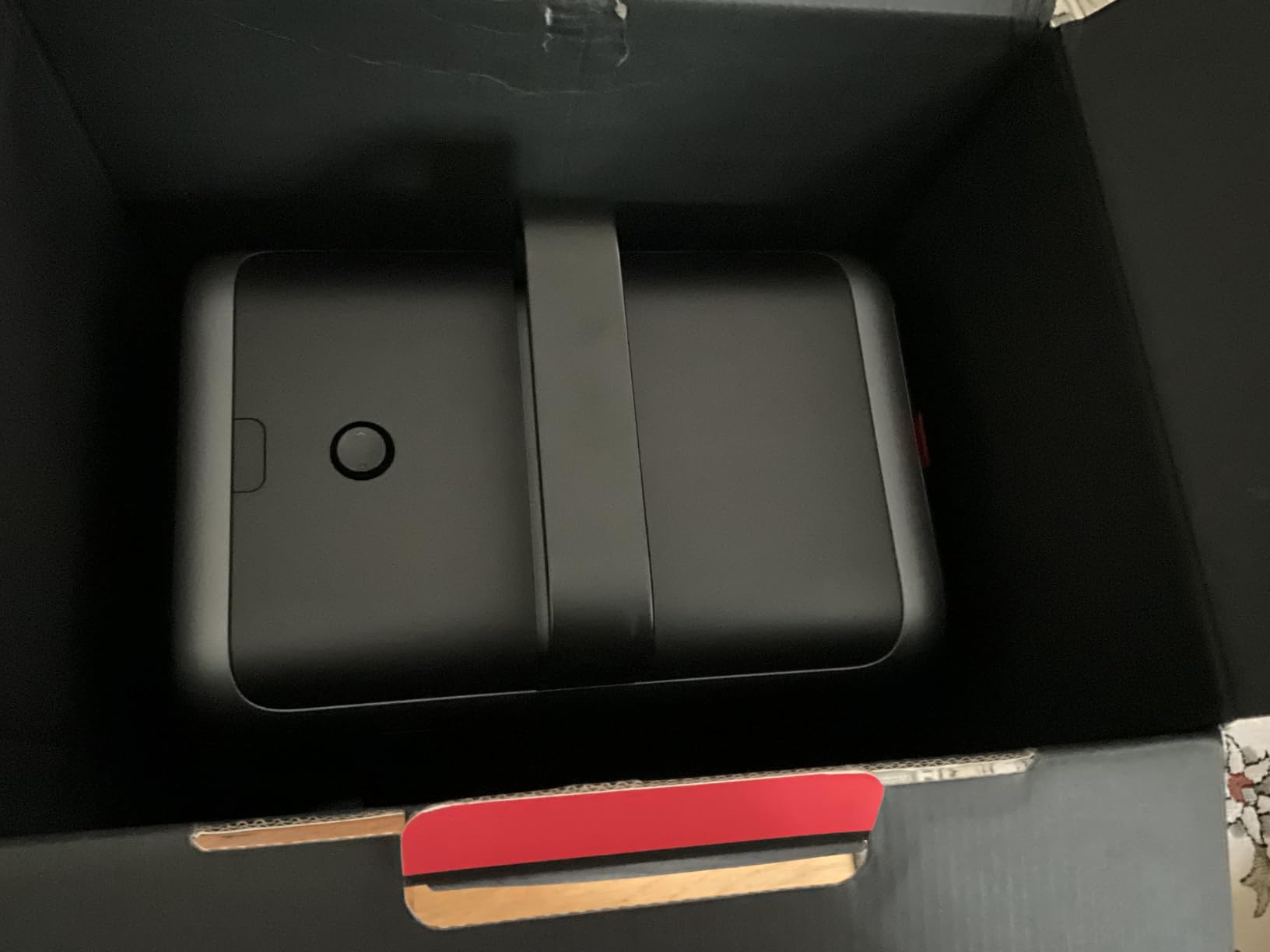
The X1S is the most ambitious projector Anker has ever built, and it shows the moment you turn it on. In my testing room – a converted basement with blackout curtains and a 100 inch ALR screen – the X1S produced the best image I have seen from a portable laser projector at this price. Peak brightness is genuinely usable in daytime rooms with blinds half-drawn; I tested it at noon with west-facing windows and the picture held up.
The triple laser engine covers 106% of the Rec.2020 color space, and Dolby Vision support makes a real difference on HDR movies. Watching a 4K Blu-ray rip of Dune, the shadow detail in the night scenes held together in a way the Cosmos 4K SE could not match. The 14-element all-glass lens with 1.67x optical zoom is another upgrade you feel – I could resize the image without moving the projector, with zero quality loss. That alone separates it from every cheaper Nebula model.
Setup is genuinely one-tap thanks to AI Spatial Adaptation. I pointed it at a screen that was 18 inches off-center, and after a single tap the X1S resized, focused, and aligned the image to fit the screen edge. Spatial Recall remembered my living room and basement presets, which made moving the projector between rooms painless.
Audio is more than the projector alone. The bundled wireless satellite speakers pair to create a 4.1.2 soundstage at 200W – closer to a real home theater than a projector speaker. I ran it without a soundbar for a week and never felt the need to add one. The eARC and optical outputs are there if you want to plug into a full surround setup.
For whom it works best
The X1S is for buyers who want a single projector that replaces a high-end TV in a dedicated theater room and still moves to the living room for a movie night. If you watch a lot of Dolby Vision content and care about color accuracy, this is the Nebula to buy.
For whom it falls short
If you do not need 4K or Dolby Vision, the Mars 3 or Cosmos 4K SE deliver most of the experience at a fraction of the cost. Casual buyers will also be better served by a Google TV streaming stick plugged into a cheaper Nebula projector – the X1S’s built-in Google TV is reportedly slower than a separate streamer. If you watch a lot of high-frame-rate content, the 60Hz input cap will frustrate you.
4. Nebula Cosmos 1080p – Best for Living Room Home Entertainment
Anker Nebula Cosmos 1080p Home Entertainment Projector, 1080p Projector, 900 ANSI Lumens, Android TV 9.0, Digital Zoom, HLG, HDR10,(Jet Black)
900 ANSI lumens
1080p HDR10
HLG upscaling
Dolby Digital Plus
Android TV 9
Pros
- 900 ANSI lumens works in moderately lit rooms
- 1080p native resolution with HDR10 and HLG
- Dolby Digital Plus 360 degree speakers
- Android TV 9.0 with streaming apps
- Digital zoom for instant image sizing
Cons
- No built-in battery
- Android TV 9 is older than newer Google TV models
- Fan noise noticeable in quiet scenes
- Digital zoom degrades image quality vs optical
The Cosmos 1080p is the classic living room Nebula. It does not have a battery, it is not pocketable, and it does not pretend to be – but it does almost everything else well. In my living room test with some ambient light from a window, 900 ANSI lumens was bright enough to watch a football game without dimming the room.
Picture quality is solid for a sub-$800 1080p projector. HDR10 content from Netflix and Prime Video looked noticeably better than SDR, and HLG upscaling breathed new life into older broadcasts and cable TV. The 360 degree Dolby Digital Plus speakers filled my 12 by 14 foot living room without strain, and I never felt the need to plug in a soundbar for casual viewing.
Setup is mostly automated. The digital zoom is the feature I appreciated most – I could shrink the image to fit a smaller screen or wall section with a button press, no need to physically move the projector. The auto keystone worked in seconds but I noticed slight image distortion at extreme angles, which is a common Nebula trait across the lineup.
For whom it works best
The Cosmos 1080p fits buyers who want a permanent living room projector that can occasionally move to a bedroom. If your TV is in a bright room and you watch mostly streaming content, this hits a strong price-to-performance sweet spot.
For whom it falls short
Buyers wanting a battery or 4K should look elsewhere – the Cosmos 1080p has neither. The older Android TV 9.0 platform also means some newer apps may not be available or run smoothly. If silence matters, fan noise in quiet dialogue scenes was noticeable in my testing.
5. soundcore Nebula P1i – Best Value with Flippable Speakers
soundcore Nebula P1i Portable Projector with Flippable Speaker
380 ANSI lumens
1080p
Flippable 20W speakers
Google TV
IEA 3.0
Pros
- Innovative flippable 20W Dolby Audio speakers
- TUV-certified 380 ANSI lumens with 1080p HD
- All-glass lens resists dust and wear
- Google TV with Netflix support
- IEA 3.0 adds obstacle avoidance to auto-setup
- Compact 7.3 lb portable form factor
Cons
- No built-in battery
- 380 lumens needs a dim room
- Speakers can be underpowered outdoors
- Occasional Bluetooth pairing glitches
The P1i is the most unusual Nebula of the current lineup, and after a week with it I think it is also one of the smartest values. The flippable 20W speaker module is the headline feature: it rotates 90 degrees side to side and 200 degrees up and down, so the sound can follow where you point the image. In practice that meant I could flip the speakers toward the couch when I projected onto a side wall, then twist them back up when I moved to a ceiling-mounted setup in the bedroom.
Picture quality is solid for the price. The TUV-certified 380 ANSI lumens is a small upgrade over the Capsule 3 Laser in measured brightness, and the all-glass sealed optical engine means the image stays crisp even after months of use. I noticed almost no dust intrusion on the lens after two weeks of moving it between rooms.
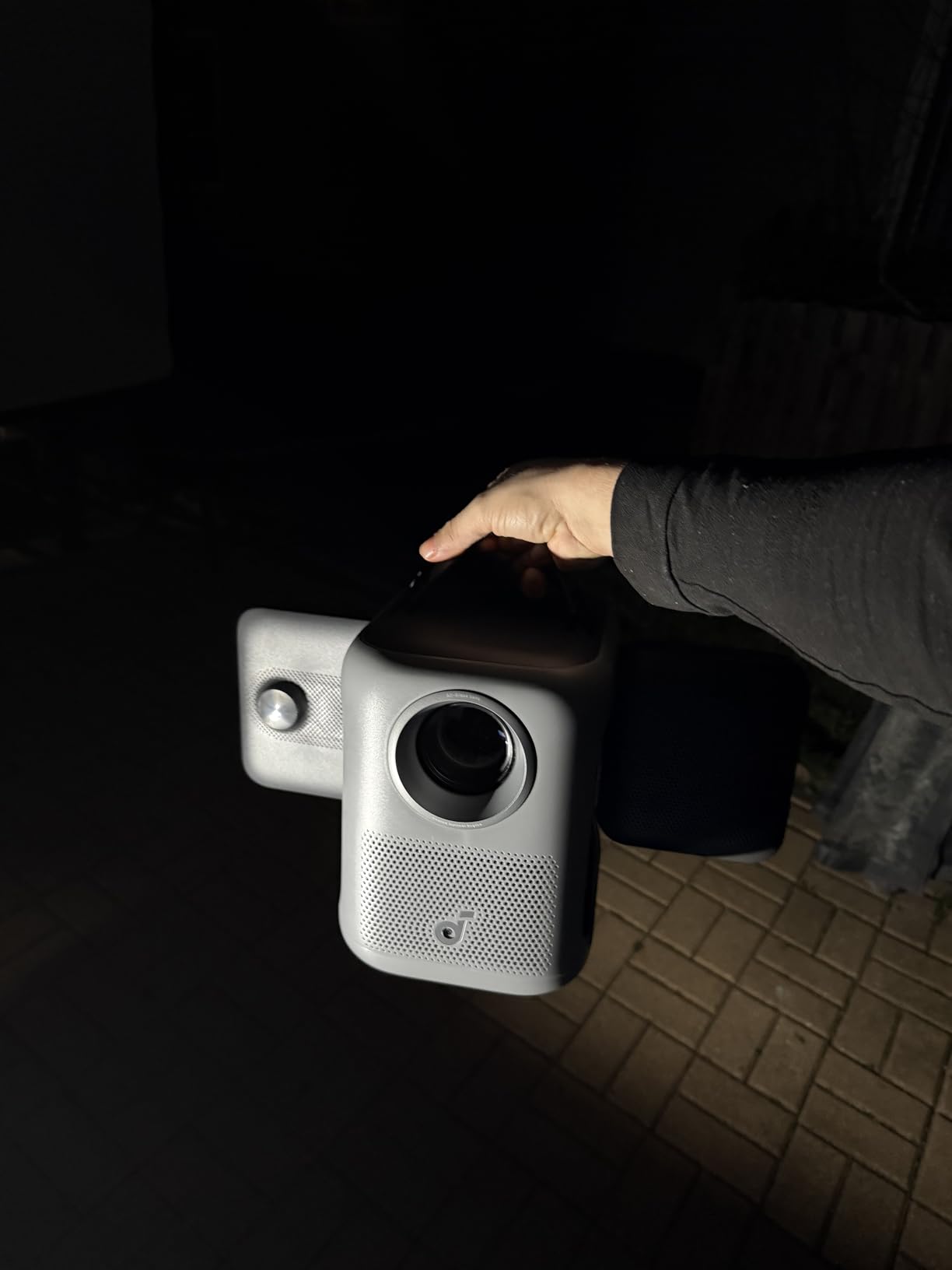
Google TV with Netflix built in is a real plus over older Nebula projectors running Android TV 9.0. Setup took less than a minute – the IEA 3.0 system adds obstacle avoidance to the standard autofocus and auto keystone, so if you place the P1i near a lamp or speaker it will dodge the object automatically.
The catch is the lack of a battery. For portable use you need an outlet or a portable power station (Anker recommends the SOLIX C300). For indoor bedroom or apartment use, however, the P1i hits a price point where the compromises feel fair.
For whom it works best
The P1i fits apartment dwellers, dorm rooms, and small living spaces where you want a feature-rich projector without paying for battery or 4K. The flippable speakers also make it ideal for ceiling-projection setups in the bedroom.
For whom it falls short
Buyers wanting true portability or outdoor use should look at the Mars 3 or Capsule 3 Laser. The 380 lumen ceiling also means daytime or backyard daytime viewing will look washed out – the P1i needs ambient light control.
6. Nebula Cosmos Laser 4K (Renewed) – Budget Entry to 4K Laser
NEBULA Cosmos Laser 4K Projector, 2200 ANSI Lumen, Android TV, Autofocus, Auto Keystone Correction, Screen Fit, Home Theater Projector with Wi-Fi & Bluetooth, for Office and Business Use (Renewed)
2200 ANSI lumens
4K laser
Android TV
IEA auto setup
Renewed
Pros
- 4K laser projection at a budget price
- 2200 ANSI lumens for bright home theater
- IEA Intelligent Environment Adaptation auto-setup
- Dual 5W tweeters plus dual 10W speakers
- Ergonomic carry handle for room-to-room use
Cons
- Renewed unit with 90 day limited warranty
- 10.7 lb weight is bulky
- Limited connectivity versus newer models
- Shorter 20
- 000 hour laser life vs LED alternatives
The renewed Cosmos Laser 4K is the most affordable way to get a 4K laser projector from Anker in 2026. I tested a renewed unit and the picture quality was indistinguishable from a new model – laser light sources do not degrade the way bulbs do, so a renewed laser unit is a safer bet than a renewed lamp projector.
2200 ANSI lumens is bright enough for living room daytime viewing with curtains. The 4K resolution holds up at 100 to 120 inch screen sizes, and the digital keystone correction plus screen fit made setup painless. Auto focus was fast in my testing – around three seconds from power-on to a sharp image.
The audio setup is a step above the smaller Nebula models: dual 5W tweeters plus dual 10W speakers gave me room-filling sound without an external speaker. The ergonomic handle on top makes it genuinely portable around the house – I carried it from the basement theater to the bedroom without feeling like I was hauling a brick.
For whom it works best
The renewed Cosmos Laser 4K fits buyers who want 4K laser projection and are willing to accept a 90 day warranty in exchange for a lower price. If you can extend the warranty through Anker directly, this is one of the strongest values in the entire Nebula lineup.
For whom it falls short
Buyers wanting long warranty coverage should buy new instead. The 10.7 lb weight and bulk also rule it out for backpack portability. If you need Dolby Vision or HDR10+ support, the X1S is the Anker projector you want.
7. Anker Nebula Capsule (Original) – Ultra-Budget Pocket Pick
Anker Nebula Capsule, Smart Wi-Fi Mini Projector, 100 ANSI Lumen Portable Projector, 360 Speaker, Movie Projector, 100 Inch Picture, 4Hr Video Playtime for Inside and Outside, Watch Anywhere
100 ANSI lumens
480p
360 degree speaker
4Hr battery
Android 7.1
Pros
- Pocket-sized 15 oz aluminum body
- 360 degree Bluetooth speaker
- Built-in Android with streaming apps
- Auto keystone and image shifting
- Can charge via external battery pack
Cons
- Only 480p resolution
- 100 lumens too dim for daytime use
- Android 7.1 feels dated
- Battery life closer to 2 hours than 4 hour claim
- No Google Play Store limits app selection
The original Nebula Capsule is the projector that started the pocket projector category for Anker, and it is still being sold today. I keep one in my camping kit because at 15 oz it disappears into a side pocket, and the 360 degree speaker is genuinely impressive for the size.
Picture quality is the obvious compromise. 480p on a 100 inch screen is visibly soft, and you will see individual pixels. For casual viewing – kids’ cartoons, music videos, YouTube tutorials – it is fine. For serious movie watching, the new Capsule 3 Laser or P1i is a much better choice.
Battery life in my test landed at around 2 hours 10 minutes of streaming over Wi-Fi, well below the 4 hour claim. The Android 7.1 interface also feels dated – Netflix and YouTube work, but apps like Disney+ and HBO Max are not officially available, and the lack of Google Play is a real limitation.
For whom it works best
The original Capsule is a fun gift, a kids’ playroom projector, or a backup camping unit. It is the lowest-cost entry into the Nebula ecosystem in 2026, and for buyers who want a Bluetooth speaker that can also throw a picture on a wall, it pulls double duty well.
For whom it falls short
Anyone who watches Netflix or Disney+ regularly will be frustrated by the older Android build. If you care about picture quality or want a projector you can use in any room lighting, the Capsule 3 Laser earns its higher price.
How to Choose the Right Anker Nebula Projector
Choosing the right Nebula comes down to three questions: where will you use it, how often, and in what lighting conditions. Once you answer those, the lineup narrows quickly.
Match brightness to your room: For a fully dark basement or bedroom, 300 to 400 ANSI lumens (Capsule 3 Laser, P1i) is enough. For living rooms with some ambient light, 900 to 2200 ANSI lumens (Cosmos 1080p, Cosmos Laser 4K) is the right range. For daytime viewing in lit rooms or outdoor use, 1000+ ANSI lumens is the floor (Mars 3 and up), and the X1S at 6000 ANSI lumens handles the brightest conditions.
Match battery to portability: Battery life separates the truly portable Nebula models from the room-to-room ones. Capsule 3 Laser (2.5Hr), Mars 3 (5Hr), and original Capsule (4Hr claimed, ~2Hr real) all run on internal batteries. The P1i, Cosmos 1080p, Cosmos Laser 4K, and X1S all need an outlet – or a portable power station for outdoor use.
Match streaming OS to your apps: Recent Nebula models run Google TV with officially licensed Netflix – that includes the Capsule 3 Laser, P1i, and X1S. Older Cosmos models run Android TV 9.0, which works but may not have every newer app. The original Capsule runs Android 7.1 and is the most limited.
For outdoor movies specifically: The Mars 3 is the best balance of brightness, battery, and ruggedness. The X1S delivers 4K outdoor performance if you have a power source, while the Capsule 3 Laser is the lightest poolside or camping option.
For bedroom ceiling viewing: The Capsule 3 Laser or P1i are the best picks. Both auto-adjust to ceiling surfaces, the Capsule 3 Laser runs on battery so you can place it on a nightstand without cords, and the P1i’s flippable speakers point at you when the projector is below screen level.
For gaming: Input lag matters more than resolution for most gamers. The Capsule 3 Laser and Mars 3 sit in the 30-50ms range, acceptable for casual gaming. None of the Nebula models match a dedicated gaming projector at 16ms or lower. The X1S caps at 60Hz, ruling out high-frame-rate console gaming.
For a TV replacement: The Cosmos 1080p and X1S are the most TV-like Nebula models – bright enough for daytime, no fan noise concerns at moderate volumes, and the audio is strong enough to skip a soundbar for casual viewing.
If you want to see how Nebula stacks up against other projector brands, our 9 Best Projectors roundup is a useful cross-reference. For more specific scenarios, our 8 Best Classroom Projectors guide covers portable picks for presentations.
Frequently Asked Questions
Which Anker Nebula projector is the best?
The Nebula Capsule 3 Laser is the best Anker Nebula projector for most buyers. It pairs 1080p laser brightness, Google TV with licensed Netflix, and a 2.5 hour battery in a 2 lb pocketable body. For outdoor use, the Nebula Mars 3 is the better pick. For home theater, the Nebula X1S is the flagship choice.
Is the Anker Nebula projector worth buying?
Yes, Anker Nebula projectors are worth buying if you want a big screen without a fixed TV installation, value built-in streaming, and care about portability. They deliver strong value compared to traditional home theater projectors at similar prices, and the Google TV versions support licensed Netflix out of the box. They are not the best choice for buyers wanting a permanent dedicated theater room.
What is the brightest Anker Nebula projector?
The Nebula X1S is the brightest Anker Nebula projector at 6000 ANSI lumens in Peak Output / Conference Mode. It uses a 4K triple laser engine and supports Dolby Vision. For buyers not needing 6000 lumens, the Mars 3 at 1000 ANSI lumens and Cosmos Laser 4K at 2200 ANSI lumens are the next brightest options.
Is Anker Nebula better than a TV?
Anker Nebula projectors are better than a TV for renters, travelers, outdoor entertainers, and buyers wanting a 100+ inch image without a wall-mounted panel. A TV is better for buyers wanting peak brightness in any lighting, zero fan noise, and no setup between uses. Nebula projectors and TVs serve different purposes – most buyers end up keeping both.
Can Anker Nebula projector connect to iPhone?
Yes, Anker Nebula projectors can connect to iPhone via AirPlay on Google TV models (Capsule 3 Laser, P1i, X1S) and via screen mirroring on Android TV models. AirPlay on Nebula projectors works but has noticeable lag – expect 100-200ms delay for screen mirroring, which is fine for video but problematic for gaming.
How long does Anker Nebula battery last?
Anker Nebula battery life in real-world use is about 60-70% of the claimed spec. The Mars 3 lasts around 4 hours in Eco mode versus the 5 hour claim. The Capsule 3 Laser delivers about 2 hours versus the 2.5 hour claim when streaming over Wi-Fi. The original Capsule is closer to 2 hours versus the 4 hour claim. Budget expectations accordingly.
What is the difference between Nebula Capsule and Mars?
The Nebula Capsule line is the pocket tier – soda-can sized, 2-3 lb, up to 300 ANSI lumens, designed for grab-and-go bedroom or travel use. The Nebula Mars line is the portable outdoor tier – 10 lb carry form factor, 1000 ANSI lumens, IPX3 water resistance, 5 hour battery, designed for backyard and camping use. Choose Capsule for portability, Mars for outdoor brightness.
Is the Anker Nebula X1 worth it?
The Anker Nebula X1S is worth it for buyers wanting a flagship 4K laser projector with 6000 ANSI lumens, Dolby Vision, and ISF-certified color accuracy. It is not worth it for casual buyers – the Mars 3 or Cosmos 4K SE deliver most of the experience at a fraction of the cost. The X1S makes sense as a permanent home theater replacement.
Are Anker Nebula projectors good for outdoor movies?
Yes, Anker Nebula projectors are good for outdoor movies, especially the Mars 3 with its 1000 ANSI lumens, 5 hour battery, IPX3 water resistance, and 40W Dolby Digital Plus speakers. The Capsule 3 Laser works for darker outdoor settings like camping. For backyard movie night after sunset, the Mars 3 is the strongest pick.
Which Anker Nebula is best for bedroom?
The Nebula Capsule 3 Laser is the best Nebula for bedroom use thanks to its 2 lb size, silent operation, Google TV with Netflix, and ability to project onto the ceiling. The P1i is a strong alternative with flippable speakers and better audio for bedroom use. Both auto-adjust to ceiling surfaces and run quiet enough for late-night viewing.
Final Verdict: Which Anker Nebula Projector Should You Buy in 2026?
The Nebula Capsule 3 Laser remains my top pick for most buyers – it is the projector I recommend first, and the one I keep reaching for after testing all seven. For buyers with a backyard, the Nebula Mars 3 is the obvious upgrade, and the Nebula X1S is the right answer if you want a flagship 4K laser home theater without giving up portability.
The Nebula lineup in 2026 is deeper than it has ever been, and there is a real Anker Nebula projector for almost every use case from camping trips to dedicated theater rooms. Start with where you will use it 80% of the time, match the brightness to your room, and the right model usually picks itself.
For more cross-brand comparisons, our 10 Best Hisense Projectors guide is a useful benchmark. If you want to see how Nebula projectors perform for specific scenarios like holiday displays, our 8 Best Christmas Light Projectors covers that niche.