
The best classical guitars for fingerstyle players are the ones where every string can speak on its own. That rules out a lot of popular instruments for reasons that have nothing to do with quality, and it changes what you should look at when you read a spec sheet.
Fingerpicking asks a guitar to do something strumming never does. Your thumb carries the bass line while your fingers pick out a melody, and both have to stay distinct at the same time. When the body is too bass-heavy or the top is stiff, those two voices merge into a blur, and players usually blame their own technique for it.
I spent weeks putting eight nylon-string instruments through fingerstyle patterns, alternating between Travis picking, alternating-bass folk figures and simple classical repertoire. I checked the same things each time: whether a plucked note stays clear next to its neighbour, how the top responds when you play softly versus hard, and whether the neck width suits classical hand positions. We also covered the wider buying picture in our general classical guitar guide.
Updated for 2026. No prices appear here, so read the specifications rather than the sticker.
Table of Contents
The Short Answer for Fingerpicking
The Cordoba C5 wins for most fingerstyle players: a solid cedar top, a 52mm nut and a 3 lb body give you clear note separation without fatigue. The Fender CN-60S is the easiest affordable way in, and the Yamaha CG122MCH is the mid-tier pick with a solid cedar top and low factory action.
That shortlist comes down to three criteria. First, note separation, which points at body size and back and sides wood. Second, dynamic response, which points at the top wood and bracing. Third, playability at the nut, which points at neck width and scale length. The rest of this article works through all eight instruments against those three filters.
Top 3 Picks for Best Classical Guitars for Fingerstyle Players in 2026

Cordoba C5 Classical
- Solid cedar top
- Mahogany back and sides
- 52mm nut width
- Savarez high tension strings

Fender CN-60S Concert Nylon
- Solid spruce top
- Concert body
- Built-in pickup and tuner
- Gig bag included

Each of those three solves a different problem. The Cordoba C5 is the one to buy if you want nothing to think about, the Fender CN-60S is the one to buy if budget is the deciding factor, and the Yamaha CG122MCH sits between them with a rosewood fingerboard and a low action as delivered.
Quick Comparison of All Eight Guitars in October
| Product | Specifications | Action |
|---|---|---|
| Cordoba C5 Classical |
|
Check Latest Price |
| Fender CN-60S Concert Nylon |
|
Check Latest Price |
| Yamaha CG122MCH |
|
Check Latest Price |
 Ibanez GA5TCE Ibanez GA5TCE |
|
Check Latest Price |
 Cordoba C9 CD/MH Cordoba C9 CD/MH |
|
Check Latest Price |
 Washburn C5CE Washburn C5CE |
|
Check Latest Price |
 Takamine GC5-NAT Takamine GC5-NAT |
|
Check Latest Price |
 Yamaha NTX1 NT Yamaha NTX1 NT |
|
Check Latest Price |
Nylon String vs Steel String for Fingerstyle
A nylon-string classical is the better fingerstyle instrument when you want warm, immediate tone at low volume, and a steel-string fingerstyle guitar is better when you need volume, brightness and the ability to drive a pick across the strings. That is the whole fork, and most buying mistakes happen because people never look at it.
Nylon strings have far lower tension than steel. That lower tension is a genuine advantage for fingerstyle because a plucked note releases energy more slowly, which means the note keeps sounding after your finger has moved on. You get overlap, sustain and a soft attack. If you practise in an apartment, that warmth is the entire reason to pick nylon.
The cost is projection. Nylon tops and nylon strings do not cut through a room the way steel does, and many players compensate by picking harder, which is exactly the opposite of what fingerstyle wants. Players moving from a dreadnought to a nylon guitar often report that the guitar sounds thinner; what actually happened is that the bass-heavy body stopped covering the melody.
Steel strings win on dynamic headroom. Pick softly and the guitar stays polite; pick hard and it projects across a room. That range is why singer-songwriters who alternate between fingerstyle patterns and strummed chords usually keep one of each. A third path exists too: the crossover instruments in this list, which pair a nylon top with a cutaway body and stage electronics.
Our rule is simple. If your playing is mostly melodic, quiet and pattern-based, stay with nylon. If you need to be heard over other instruments without a microphone, or you alternate constantly between patterns and chords, run a steel-string fingerstyle guitar as your second instrument. For smaller instruments, our travel guitar picks cover the same clearance in a steel-string format.
1. Cordoba C5 Solid Cedar Top – Best Overall for Fingerpicking
Cordoba C5 Classical w/Solid Cedar Top
Solid cedar top
Mahogany back and sides
52mm nut
25.6 in scale
3 lb
Pros
- Solid cedar top with a clear warm response
- Mahogany back and sides for note separation
- 52mm nut suits classical hand positions
- Includes Savarez Cristal Corum high tension strings
- Lightweight at 3 lb
Cons
- No pickup or electronics
- Soft cedar top dents more easily
- Needs humidity control in dry rooms
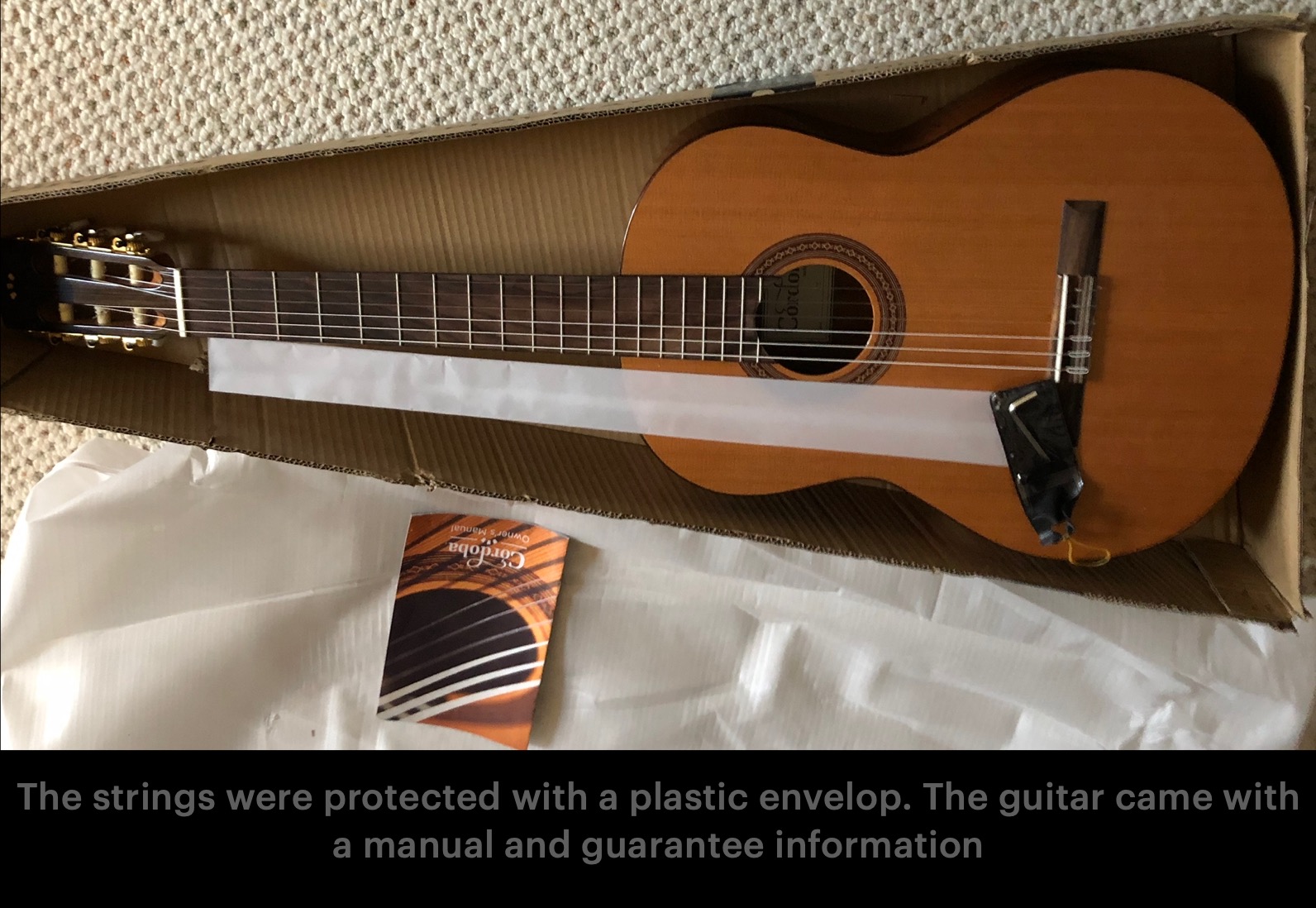
The C5 is the instrument I kept coming back to. Cedar is a wood that speaks the moment you touch it, so a soft fingerstyle touch still produces a full note rather than a click, and the mahogany back and sides add the harmonic complexity that keeps a bass line from turning to mud under a melody.
It comes with Savarez Cristal Corum high tension strings, which is unusual at this level and matters for fingerstyle. Higher tension nylon means more resistance at the fingertips, which is a real consideration if you already play steel. The trade is volume and stability, and for most players the control benefit is worth it.
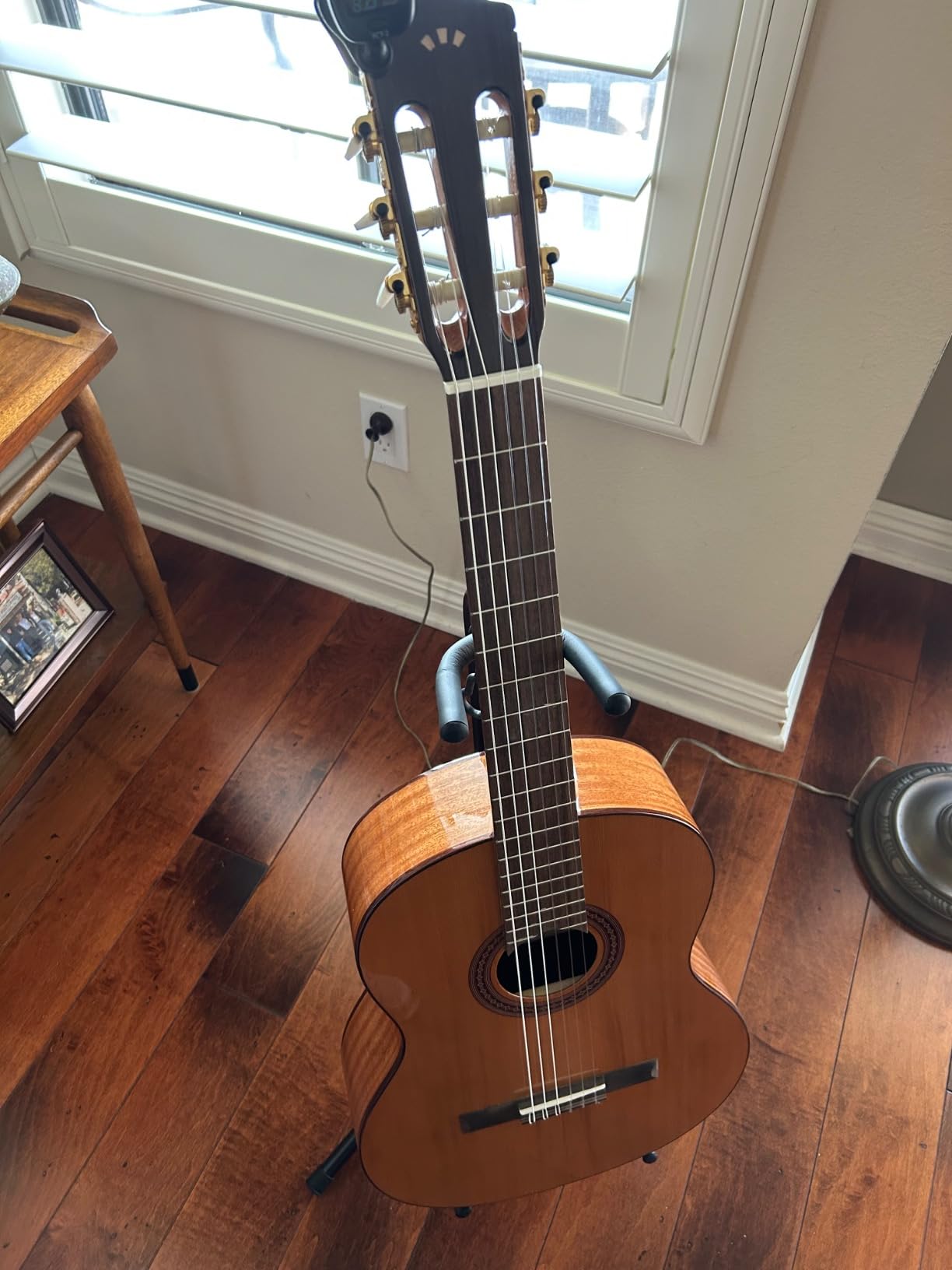
At 3 lb the C5 is the lightest guitar in this group, and that weight changes long practice sessions. A lighter instrument sits comfortably on a raised leg for an hour without the pressure point you get from a heavier box, which matters more for fingerstyle than for strumming because your picking arm is working constantly.
The 52mm nut is a full classical width. Strings sit further apart than on a steel-string, which means a misplaced finger catches nothing and your thumb can travel its own path without brushing the treble strings. Players coming from steel often describe the opposite problem in reverse, that they over-swing because the neck feels wide.
Why It Works for Fingerpicking Patterns
Three properties separate this guitar from the rest of the field for pattern work. The 25.6 in scale is standard classical, so the frets under your fingers do not compress, and that keeps a running bass line even. The wide string spacing at the nut makes it easy to isolate a single string without muting two others by accident. And the solid top responds to dynamic changes, so you can drop from a loud Travis pattern into a quiet melodic variation and hear the difference.
Reviewers consistently describe the tone as warm, clear and powerful for a solid-top instrument, and note that the included strings are among the best they have played on a stock guitar. That combination means you are not doing a string swap in week one.
Where It Falls Short
There are no electronics, so this is a purely acoustic instrument unless you add a pickup later. For a player who wants to run a nylon guitar through a small amp for practice or busking, that is an extra expense and an extra step at the bridge.
Cedar is a softwood, and a solid cedar top is more vulnerable to dents than a spruce top. It also responds to humidity more than spruce does, so keeping the case closed in a dry room matters. None of this is a dealbreaker, but it is the tradeoff for a top that sounds this alive under a light touch.
2. Fender CN-60S Concert Nylon – Best Budget Start
Fender CN-60S Concert Nylon String Acoustic Guitar, with 2-Year Warranty, Natural
Solid spruce top
Laminated mahogany back and sides
Concert body
25.3 in scale
7.4 lb
Pros
- Solid spruce top that voices early
- Concert body keeps bass from crowding the melody
- Built-in pickup and tuner
- Gig bag included
- Playable action straight from the box
Cons
- Laminate back and sides limit sustain
- Heavier than a traditional classical at 7.4 lb
- Basic onboard electronics for stage use
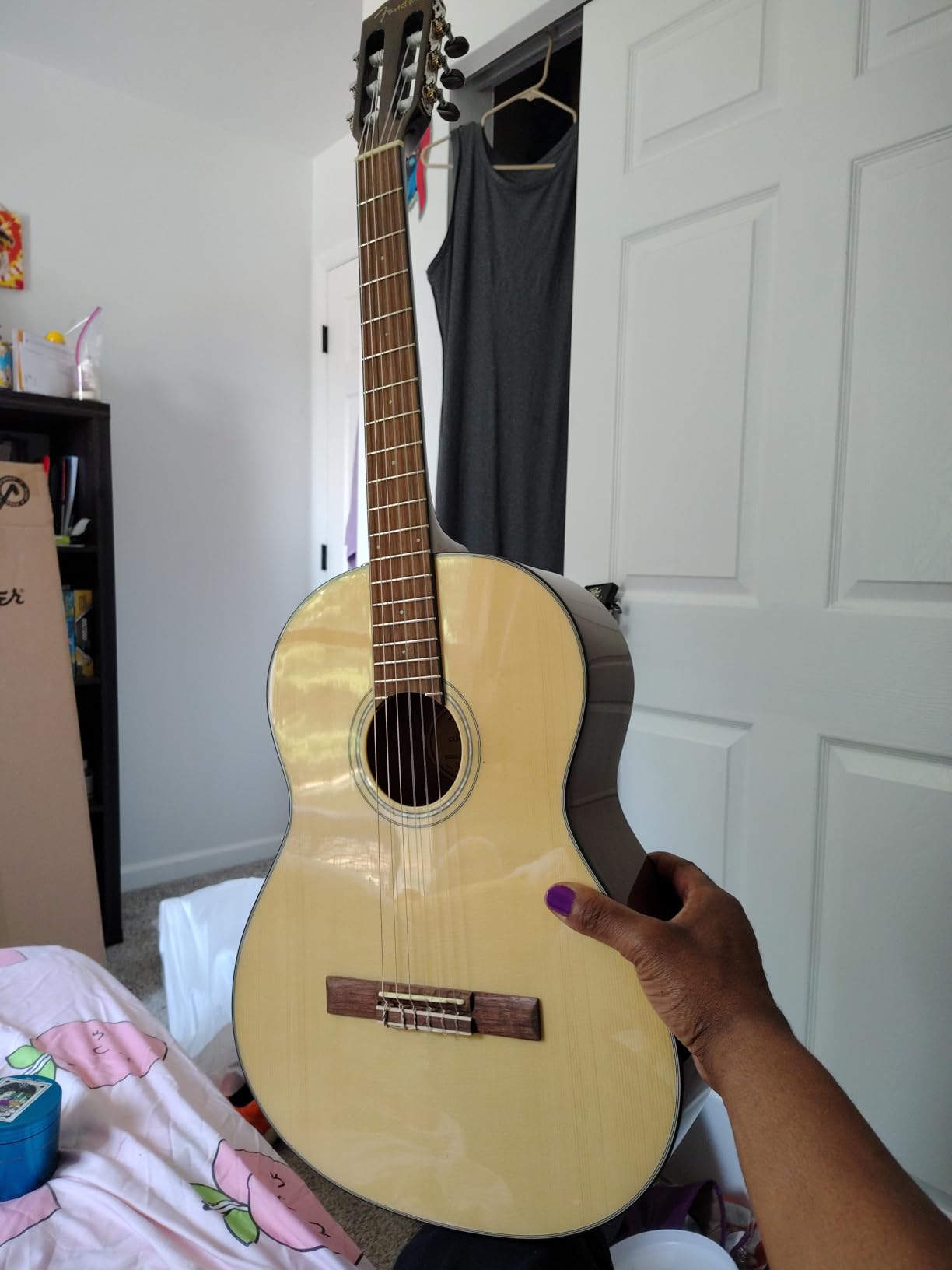
The concert body is the reason this guitar works for fingerstyle at all. A dreadnought pushes low frequencies toward the front of the mix and a melody line disappears inside them, while a concert body is tuned for balance across the whole range. Switching from a large flat-top to this shape is the single biggest clarity change a fingerstyle player can make.
The solid spruce top gives you more headroom than cedar, which sounds like a disadvantage until you realise what it means in practice. You can pick a bass note hard without the top feeling like it is about to give out, and the instrument does not punish a heavier thumb for a baritone pattern.
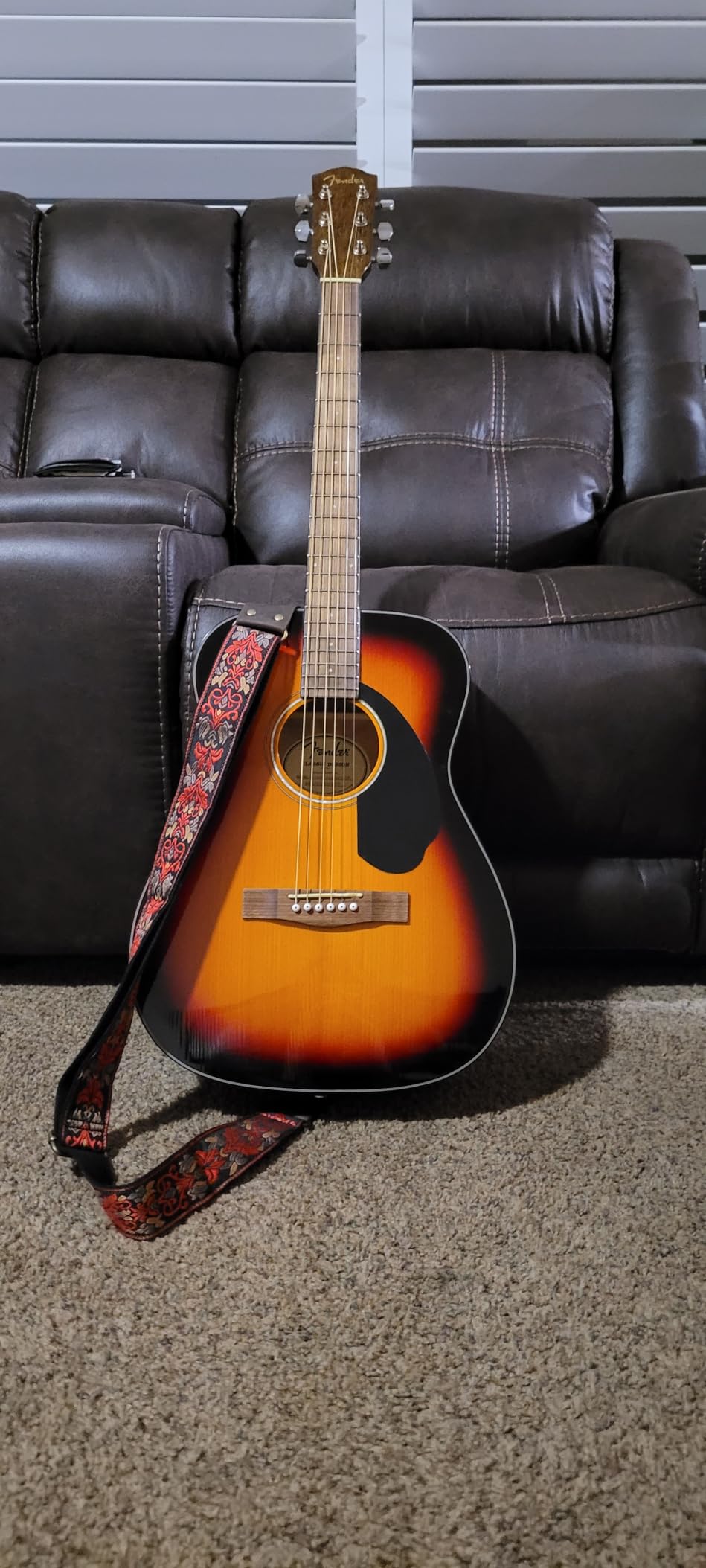
The scale length is listed at 25.3 in, slightly under the standard classical figure, so the frets are marginally easier to reach without changing the spacing of the strings. For players with less stretch in the fretting hand, that small difference is noticeable over an hour of practice.
Electronics are built in, with a pickup in the bridge area and an onboard tuner, and a gig bag comes in the box. Reviewers point to the combination of a solid top, a comfortable body and electronics that work as a practice amplifier setup without any extra purchases.
Why It Works for Fingerpicking Patterns
Spruce has a broader dynamic range than cedar, and for fingerstyle that range is the point. A melodic intro played quietly and a driving Travis pattern at full attack both stay readable on the same instrument, which is what you need when your arrangement changes between sections.
The walnut fingerboard has a 12 in radius, a flat shape that suits sliding the fretting hand along a single string, a technique that appears constantly in country and folk fingerstyle pieces. Nothing on this guitar fights that habit.
Where It Falls Short
At 7.4 lb this is the heaviest instrument in the group by a wide margin, and you will feel it on your right thigh after a long sitting session. Players who care about long practice comfort should look at the lighter solid-top options further down this list.
The laminated mahogany back and sides are the cost of the entry point. A laminate is stable and it is fine for a solid spruce top to sit on, but it gives up some of the sustain and harmonic movement that an all-solid body provides. The onboard pickup is also basic, and reviewers suggest it is more at home in a practice room than on a stage with a full band.
3. Yamaha CG122MCH – Best Mid-Tier Solid Cedar
Yamaha CG122MCH Solid Cedar Top Classical Guitar
Solid cedar top
Nato back and sides
Rosewood fingerboard
25.6 in scale
Low action
Pros
- Solid cedar top with warm immediate tone
- Rosewood fingerboard and bridge
- Low action as delivered
- 3-ply neck for stability
- Matte finish sits comfortably under the palm
Cons
- Laminated nato back and sides
- Factory strings are often replaced
- Action is standard rather than exceptionally low
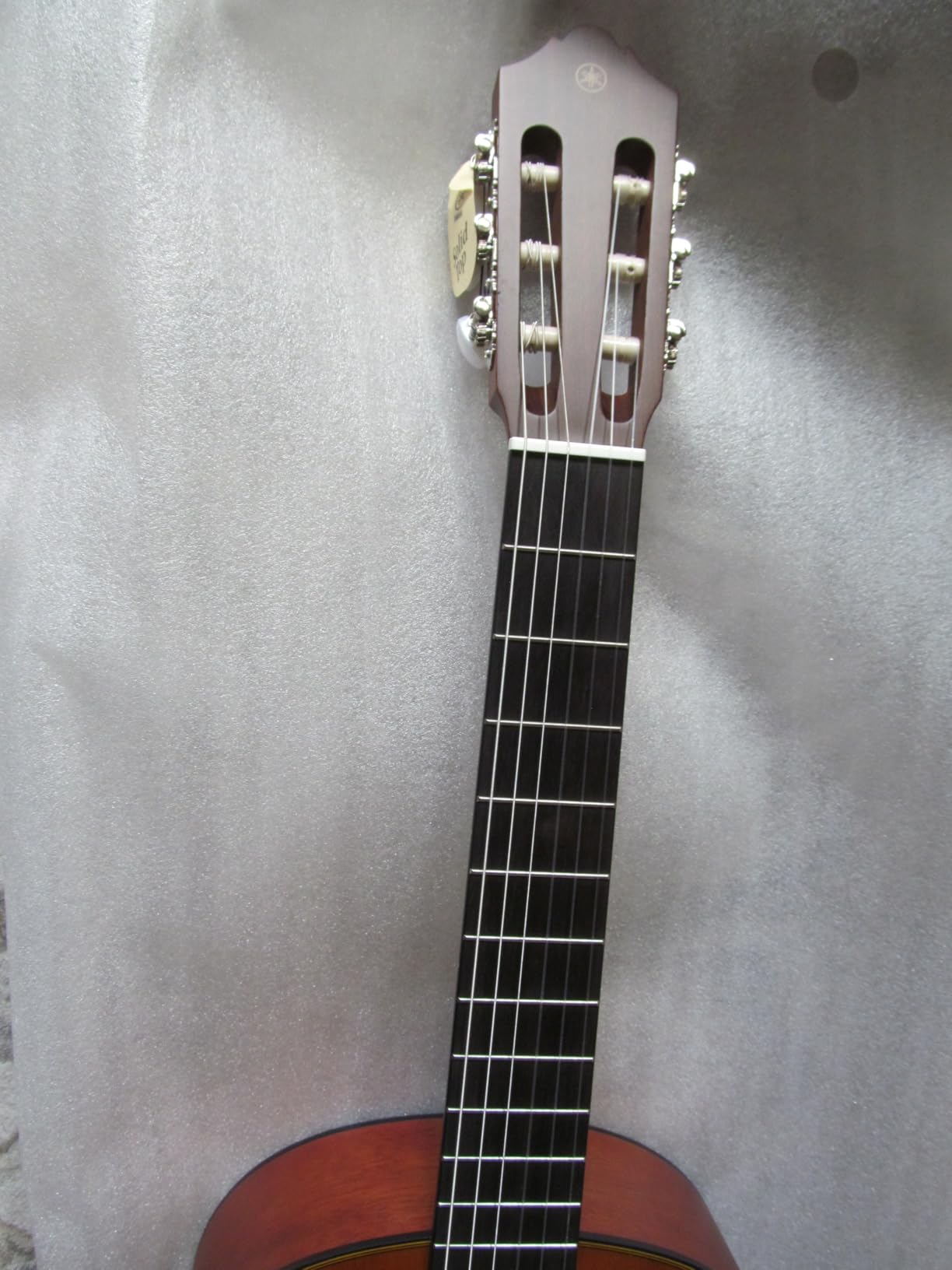
The CG122MCH is the safe centre of this list. A solid cedar top gives the warm, immediate response that fingerstyle players tend to prefer, and the matte natural finish feels easy under the palm of a strumming hand while a thinline body keeps the weight manageable.
The real practical advantage is the action as delivered. Reviewers repeatedly mention good playability straight out of the box, and for a new player that removes the most common first-month frustration with a classical guitar, which is a setup session before you can play anything properly.

The rosewood fingerboard and bridge are a step up from the plain boards on entry models. Rosewood is denser and slightly more slippery than a laminate board, which helps when you move between thumb and fingers quickly and want a clean release rather than a drag.
The 3-ply neck construction is worth knowing about. Layered woods resist warping better than a single piece, and a stable neck means your action stays where you left it across seasons, which matters on a nylon guitar where the pull of the strings is constant.
Why It Works for Fingerpicking Patterns
Cedar responds to a light touch faster than almost anything else in this price range, so delicate melodic lines come through with body rather than as thin harmonics. That is the sound most fingerstyle arrangements are built around, and it is why a player moving from a cedar instrument reports no adjustment period.
At 25.6 in the scale is standard, so the reach is familiar to anyone who has played classical technique before, and that makes the transition to rest position and left-hand-free positioning on a treble line feel natural. More on nut width and hand fit in the buying guide below.
Where It Falls Short
The nato back and sides are laminated, so the sustain ceiling is lower than an all-solid instrument. The solid top still does most of the work, but a player chasing longer ring-out on a bass note will hear the difference eventually.
Several reviewers note that the factory strings are the weak point, and many swap them within the first year. It is a cheap fix and improves the tone, but it is a step before you hear what the guitar can do. Action that is sold as low is closer to standard classical height for some players, so test it if you are sensitive to that.
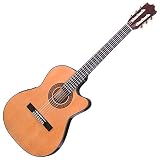
4. Ibanez GA5TCE – Best Lightweight Stage Guitar
Ibanez 6-String Classical Guitar, Right, Natural
Thinline cutaway
Spruce top with sapele back and sides
Piezo pickup
25.5 in scale
4 lb
Pros
- Thinline cutaway for high fret access
- Weighs only 4 lb on a strap
- Okoume neck with purpleheart fingerboard
- Piezo pickup with 1/4 in output jack
- Limited lifetime warranty
Cons
- Thin body gives up some acoustic resonance
- Amplified piezo tone can sound thin
- Sapele back and sides lack rosewood depth
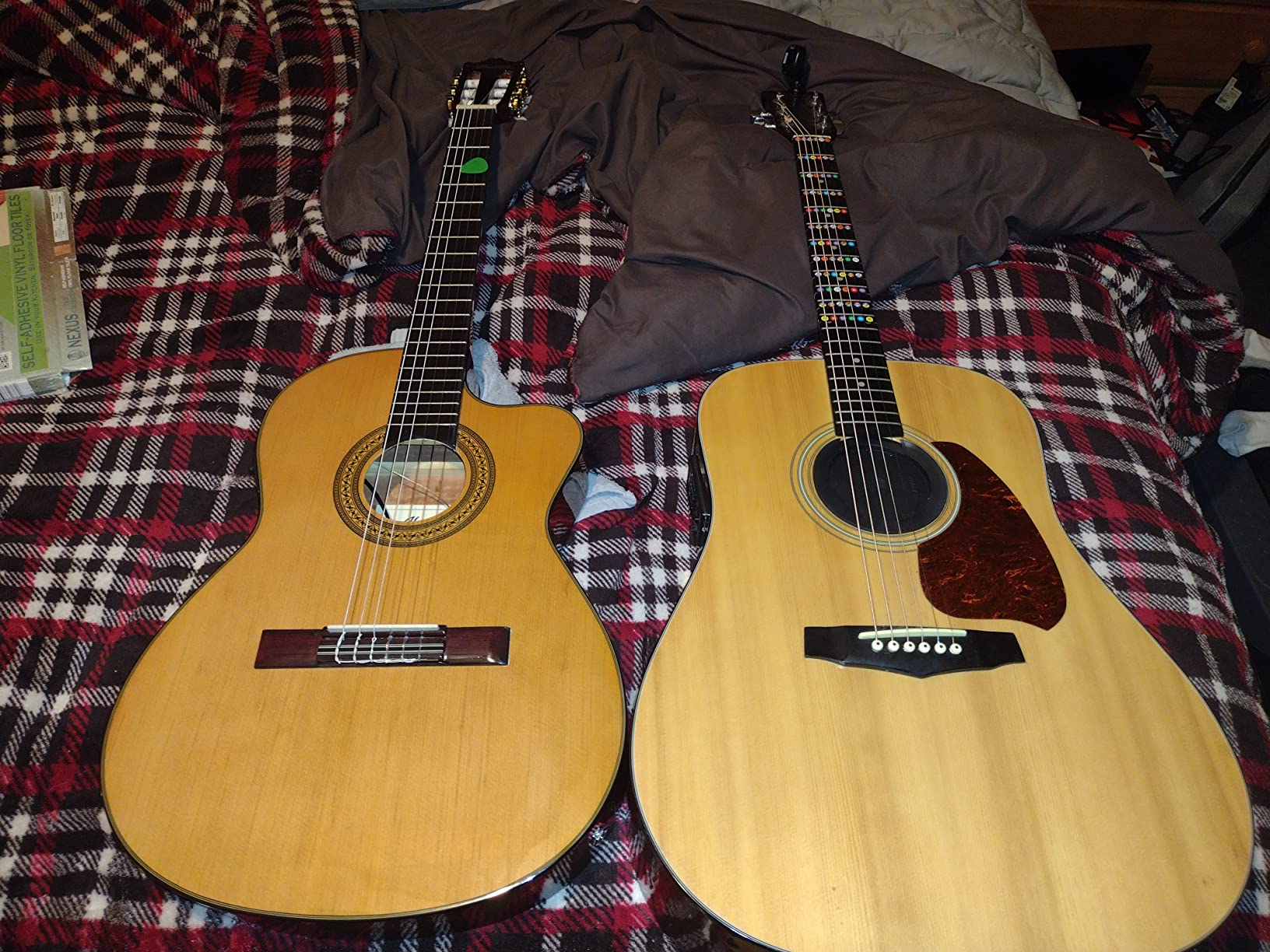
The GA5TCE is built for a specific player: someone who plays standing, on stage, with an amplifier, and who still wants a nylon-string voice. The cutaway gives you access to the upper frets for melodic runs, and a piezo pickup puts the guitar into a small amp without any extra hardware.
At 4 lb it is the second lightest instrument in this group, ahead of everything with a full-depth box behind it. On a strap that weight is barely noticeable, which is the whole point of a thinline body and the reason this guitar suits busking, street performance and small stages more than a full-depth classical.
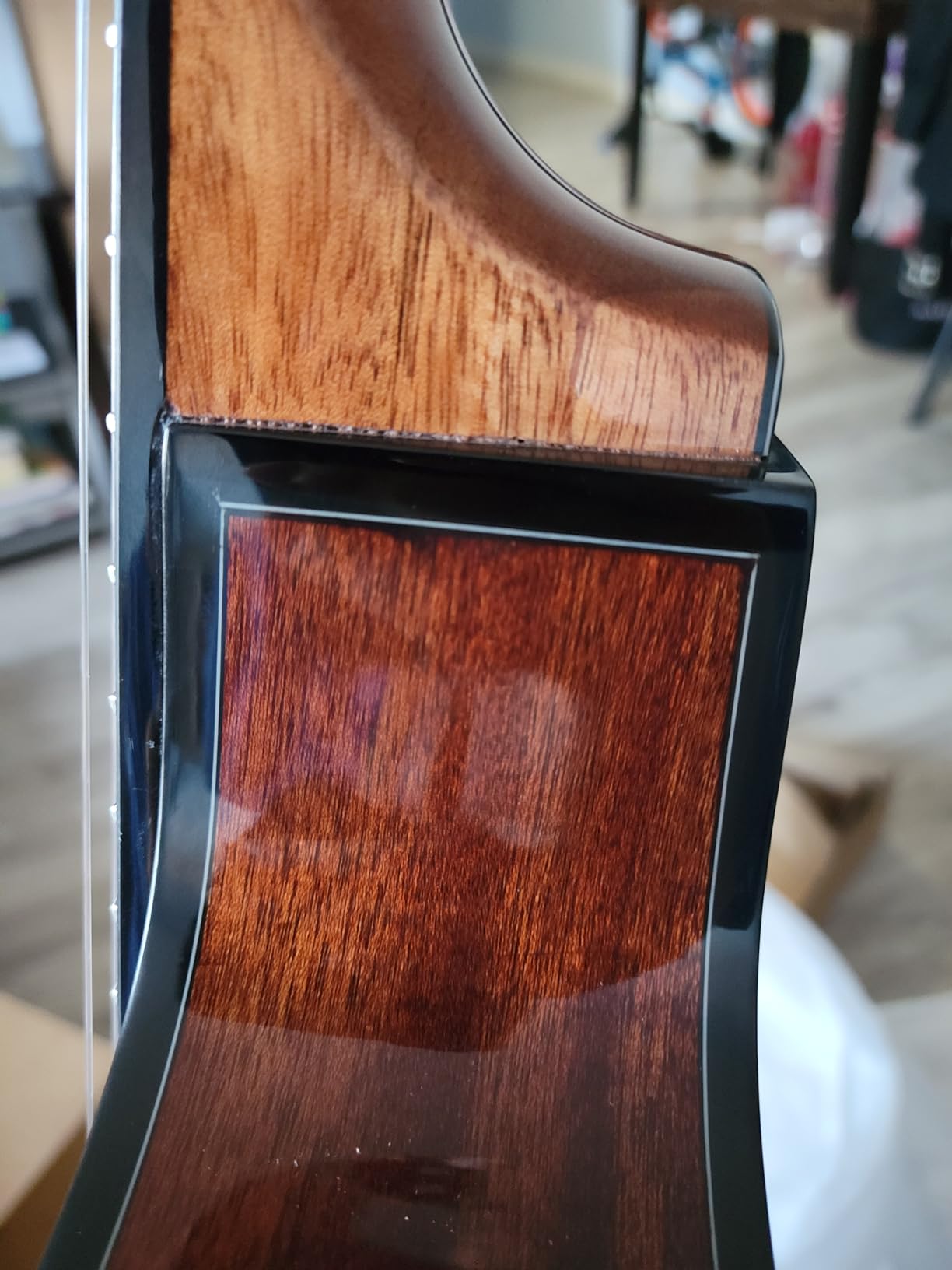
The okoume neck with a purpleheart fingerboard is a combination you rarely see at this level, and it is more than a styling note. Purpleheart is a dense hardwood that gives the fretting hand a stable platform and lets you press without the board flexing under a firm barre.
At 25.5 in the scale is again in standard classical territory, and reviewers mention a comfortable neck profile. A limited lifetime warranty also removes one of the usual worries with a crossover instrument that gets knocked around between gigs.
Why It Works for Fingerpicking Patterns
The cutaway is the fingerstyle feature here. A melodic line that climbs above the twelfth fret is simply not playable on a non-cutaway classical without a painful stretch, and the missing upper bout is exactly the space a hand needs to reach in there.
The piezo pickup means practice can happen at any volume. You can work on a tricky alternating-bass pattern at midnight through an amplifier without the neighbours hearing a full acoustic instrument through the wall, which removes the most common reason players abandon fingerstyle practice.
Where It Falls Short
Thinline bodies trade resonance for weight, and reviewers with a classical background notice it. The unplugged volume and depth are lower than a full-depth box, and if your playing is entirely acoustic and entirely at home, that is a compromise you do not need to make.
Sapele is a bright, even wood rather than a rosewood, so the harmonic complexity behind a held note is simpler. The piezo also needs a good amplifier and EQ to sound natural, and players report it can sound thin when the settings are wrong. Several reviewers also mention that the factory setup needs a small adjustment before it sits right.
5. Cordoba C9 CD/MH – Best All-Solid Wood
Cordoba C9 CD/MH Acoustic Nylon String Classical Guitar
Solid Canadian cedar top
Solid mahogany back and sides
Spanish heel
25.6 in scale
3.5 lb
Pros
- Only all-solid-wood build in this group
- Spanish heel construction improves sustain
- Hardshell case included
- Gold tuners and inlaid mosaic rosette
- 3-year warranty
Cons
- Highest cost in the lineup
- Gloss finish shows fingerprints and marks
- Needs humidity control in dry rooms
The C9 is the only fully solid-wood instrument in this group, and that changes the sustain behaviour in a way fingerstyle players notice immediately. A solid back and sides keeps ringing after the note has been articulated, so overlapping melodic lines build into each other instead of cutting off.
Reviewers describe warm, rich tone with excellent sustain and excellent fretwork, and the build is described as handmade in a small boutique workshop. It is the closest thing here to a traditional Spanish instrument, and the Spanish heel is a real construction detail rather than a cosmetic flourish.
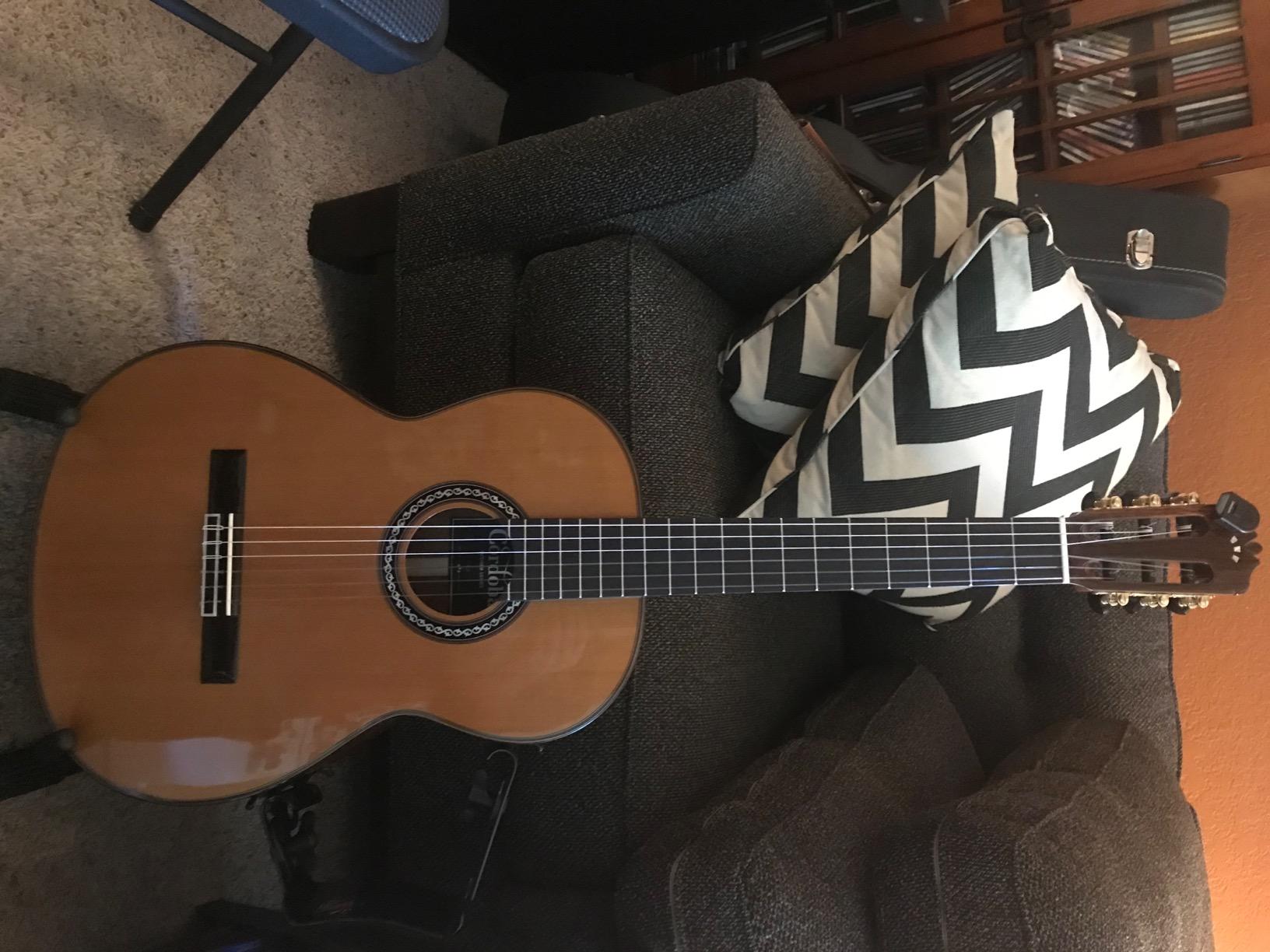
A Spanish heel attaches the neck block to the back of the body, which increases the contact area between the neck and the resonating chamber. In practice that means a stronger low end and a longer sustain than a bolt-on or dovetail at the same body size, and a bass note keeps sounding while your thumb moves to the next string.
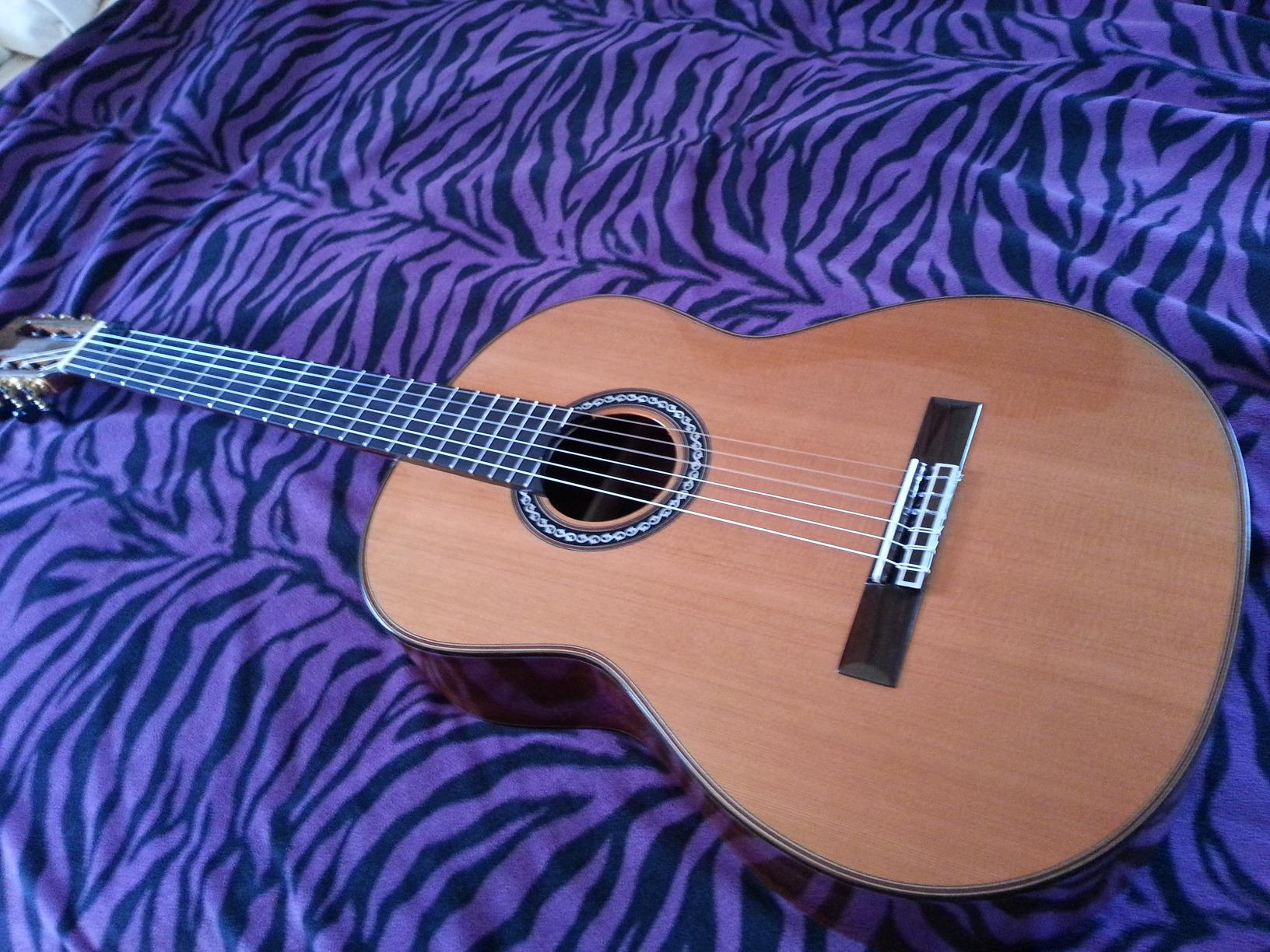
The 3.5 lb weight keeps it light despite the solid woods, and the hardshell case is included rather than sold separately. Gold tuners with pearl buttons, an inlaid mosaic rosette and a 3-year warranty complete a package that feels considered rather than assembled from a parts list.
Why It Works for Fingerpicking Patterns
Solid mahogany back and sides are what give this guitar its separation. The body has enough internal decay to keep a bass note alive without letting it bloom across the neighbouring strings, which is precisely the balance a Travis picking pattern needs between thumb and fingers.
Nut width sits close to the full classical standard, so the strings are still widely spaced but marginally easier to reach for players who find a 52mm neck demanding. The buying guide below covers how to check this against a guitar you already own.
Where It Falls Short
This is the most expensive instrument in the group, and that is the first thing a careful buyer should weigh. It also carries the fewest reviews of the three top-rated guitars here, so the sample of owner experience is thinner.
The gloss finish shows fingerprints and marks, which matters on a dark instrument handled often. All-solid wood also needs stable humidity to stay flat, so if your guitar lives in a heated room in winter, that is a maintenance commitment. And since it arrives with high-tension strings, some players replace them immediately for a softer classical tension.
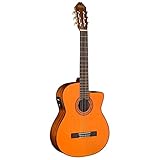
6. Washburn C5CE – Best for Practice Amplification
Washburn Classical Series C5CE Classical Acoustic Electric Guitar, Natural
Spruce top with catalpa back and sides
Cutaway thin body
Onboard preamp with tuner
Nubone nut and saddle
6 lb
Pros
- Cutaway body for melodic runs high on the neck
- Nubone nut and saddle rather than plastic
- Onboard preamp with tuner and cable included
- Good unplugged tone for a practice room
- Limited lifetime warranty
Cons
- High gloss orange tint is polarizing
- Preamp has no EQ and the pickup picks up finger noise
- Action often arrives high and needs a setup
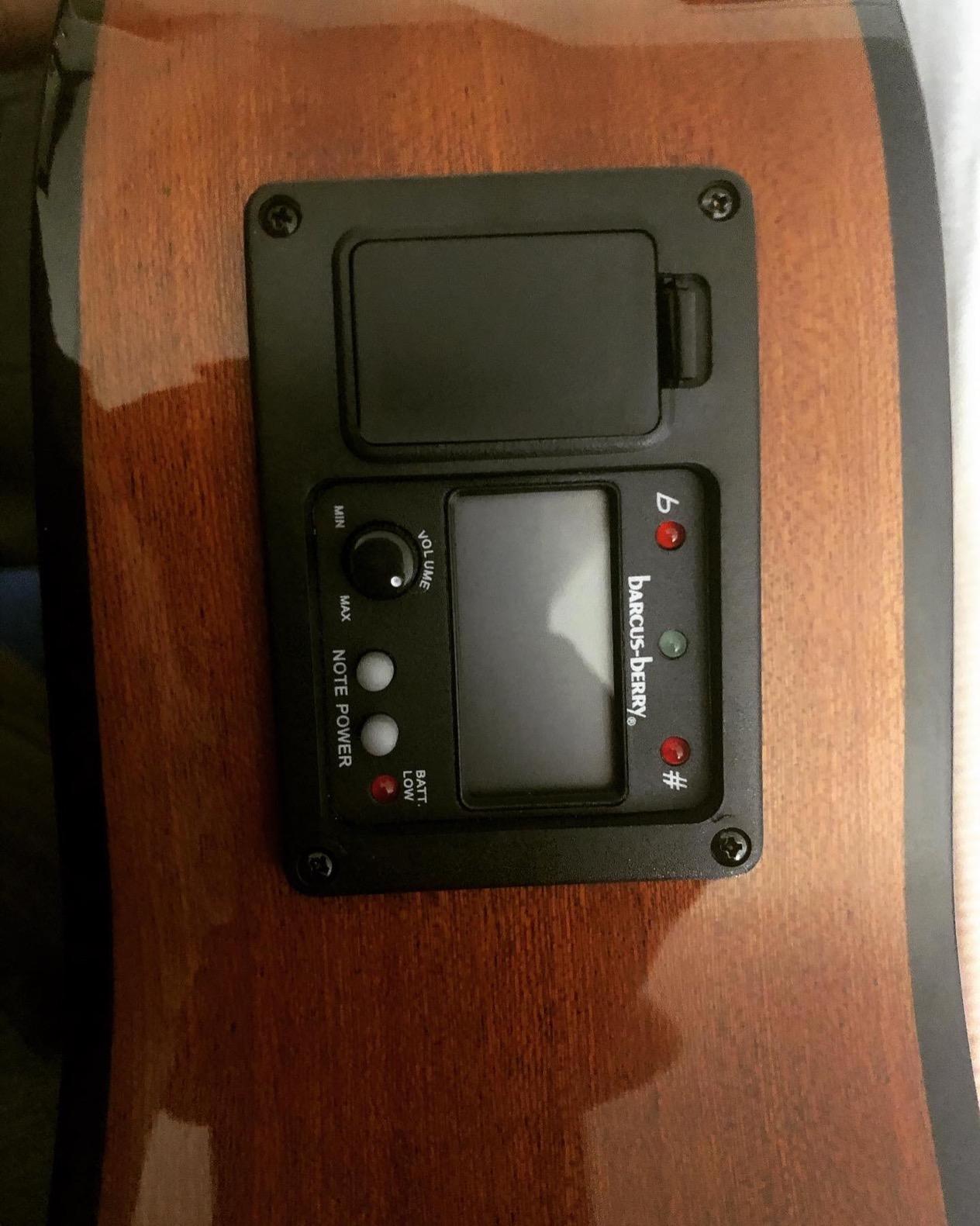
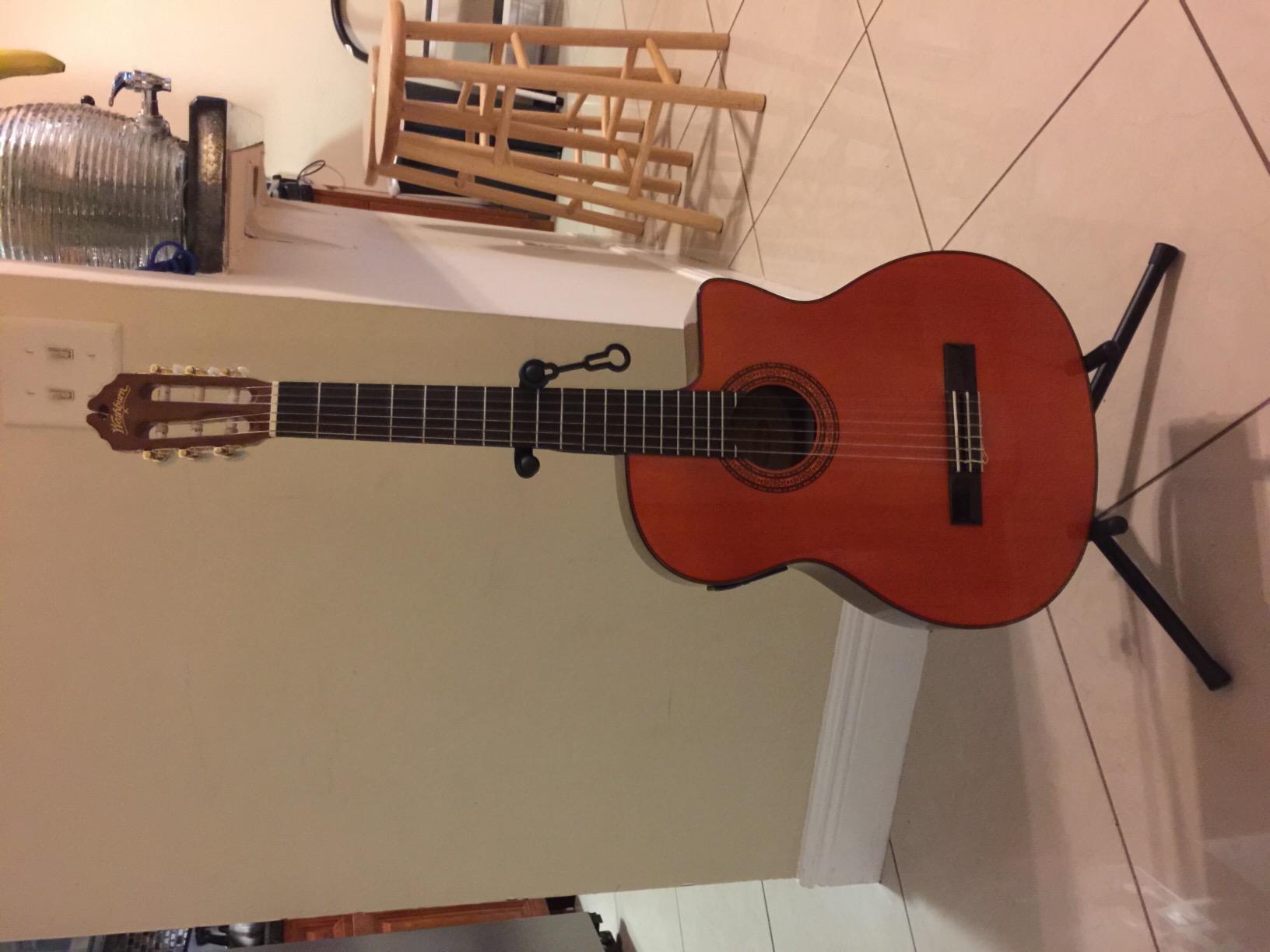
The C5CE is the practical choice for a player who wants to practise fingerstyle through an amplifier without carrying a separate pickup. The onboard preamp with an integrated tuner means no external box, no battery pack in a gig bag, and no cable adapter to forget.
Reviewers consistently call the unplugged tone good for the price, which is the honest benchmark. A spruce top with a cutaway body gives you a bright, articulate voice that cuts through a pattern-based arrangement, even if the body is not as deep as a full classical.
The Nubone nut and saddle are a detail worth pointing out, because a composite nut and saddle do not grip strings the way cheap plastic does. A loose nut makes a string buzz at low frets while you fingerstyle, and a moving saddle changes intonation between songs. Using Nubone here removes a common source of early frustration.
A 9-foot instrument cable and the 9V battery for the tuner are in the box, and the limited lifetime warranty is longer than most of the classical warranties in this group. The cutaway reaches the upper frets for melodic lines that climb above the neck joint.
Why It Works for Fingerpicking Patterns
Spruce tops have a fast, clear attack, and that is what you want when a pattern has rapid note changes. Cedar rounds the edges of a fast run into a warm blur, while spruce keeps each note distinct before the next one lands, so a busy fingerstyle arrangement stays readable.
Amplified practice changes how you build technique. A preamp lets you keep the volume at a level where you can still hear string noise and finger placement errors, which is when the correction actually takes hold. That is a training tool more than a performance feature.
Where It Falls Short
The high gloss finish with an orange tint is the most polarising cosmetic in this group, and several reviewers simply do not like it. It is a small thing next to tone, but it is the thing you see every day.
The preamp has no EQ, so you have less control over the amplified voice than the more advanced electronics elsewhere in this list, and the pickup picks up finger noise from a nylon-string right hand. The most common complaint is action arriving high, and several reviewers also mention sharp fret edges that need filing before it feels finished.
7. Takamine GC5-NAT – Best for Rosewood Back and Sides
Takamine GC5-NAT Classical Guitar, Natural
Solid spruce top
Rosewood back and sides
Dovetail neck joint
25.6 in scale
5.6 lb
Pros
- Rosewood back and sides add sustain and harmonic richness
- Dovetail neck joint resists movement
- Inlaid mosaic rosette and gold tuners
- Synthetic bone nut and bridge saddle
- Quiet response suits practice in a shared home
Cons
- Short 30-day warranty
- Quality control reports of buzz on some units
- No fret markers on the neck
The GC5 pairs a solid spruce top with rosewood back and sides, and that combination is the reference tone many classical players grow up hearing. Spruce supplies headroom for a firm thumb, and rosewood underneath adds the harmonic richness that a longer bass note needs to sound like a note rather than a thud.
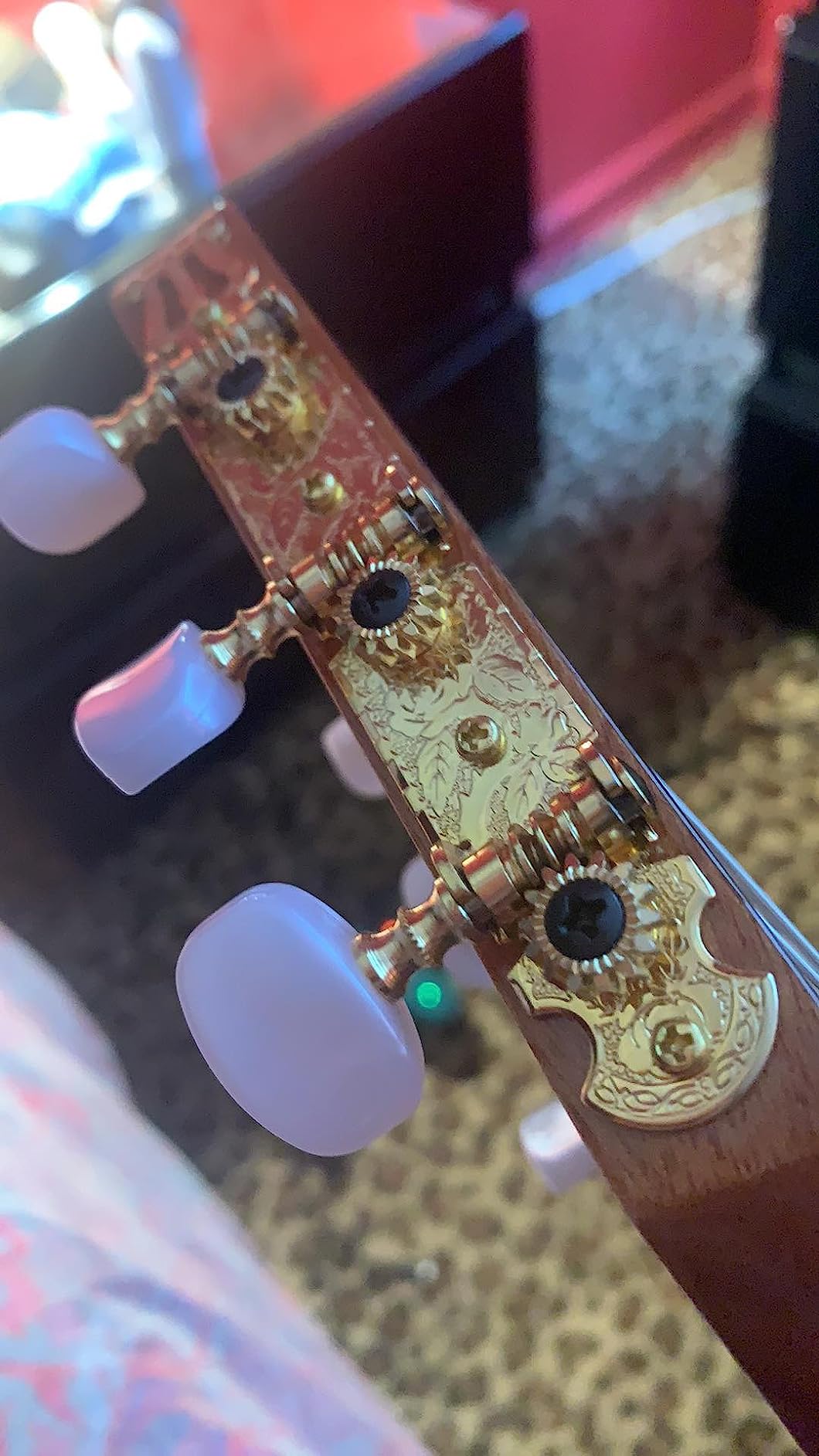
Reviewers praise the tone and projection alongside the appointments, listing the inlaid mosaic rosette and gold tuners with pearl buttons as more than expected. The dovetail neck joint is a real construction choice here, and it holds the neck angle more securely over decades than a bolt-on.
The synthetic bone nut and bridge saddle are consistent with the build quality story, and both matter for intonation. A well-fitted nut keeps each string seated across the width of the fingerboard, which is what lets you tune once and play a whole passage in tune.
At 25.6 in with a 51mm nut, this sits at the narrower end of the classical range, so it is a reasonable choice for players who want classical spacing without the full 52mm width. That makes it a useful middle ground between a traditional classical and a crossover instrument.
Why It Works for Fingerpicking Patterns
Rosewood back and sides are the reason this guitar sustains a melodic line the way fingerstyle recordings do. A bass note keeps developing underneath the finger melody rather than fading the instant it is plucked, and that overlap is what makes a pattern sound like a piece of music rather than a list of notes.
The fan-braced solid spruce top responds well to changes in touch, so you can move from a quiet intro to a full Travis pattern without the guitar going from thin to harsh. A quieter instrument also matters in a shared home, where the ability to play at low volume with a full tone is the difference between practising daily and practising occasionally.
Where It Falls Short
The 30-day warranty is the shortest in this group and considerably shorter than the 3-year coverage on the Cordoba C9. For a solid-wood instrument, that gap is worth factoring into the decision.
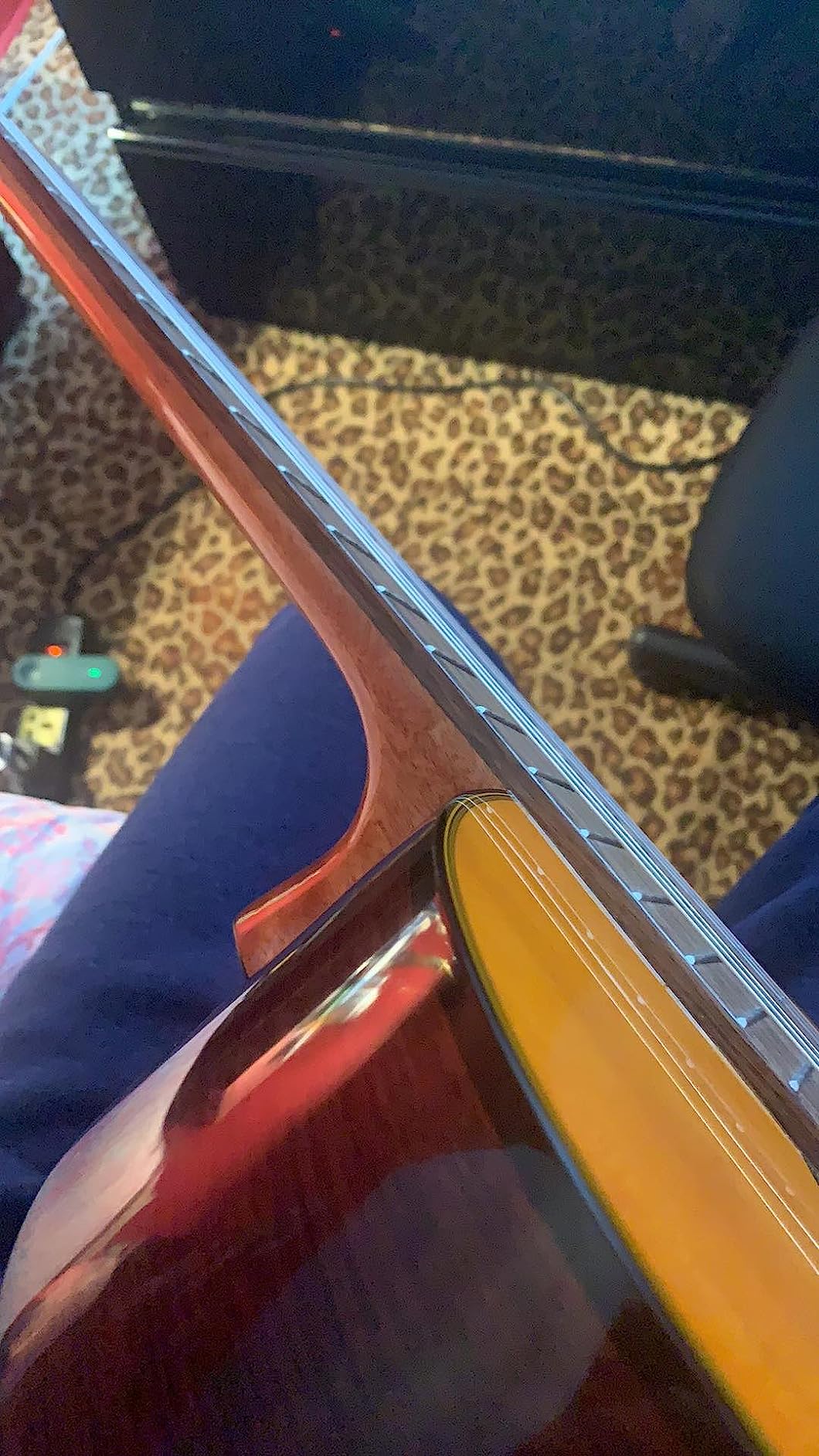
There are reports of quality control issues, including buzzing and even finish problems on some units, and with only 31 reviews the sample is small enough that you should inspect the instrument carefully on arrival. There are also no fret markers on the neck, which slows down navigation for a player who does not already know the fretboard. The instrument is built in China rather than Japan, which is normal for this tier but relevant if origin matters to you.
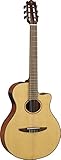
8. Yamaha NTX1 NT – Best Cutaway With Stage Electronics
Yamaha NTX1 NT Cutaway Acoustic-Electric Nylon-String Classical Guitar, Natural
Solid spruce top
Nato back and sides
Cutaway thin body
Advanced preamp with tuner
5.5 lb
Pros
- Solid spruce top with clean articulation
- Advanced preamp with onboard tuner and tone control
- Strap buttons already fitted
- Thin cutaway body suits players coming from steel strings
- 1-year manufacturer warranty
Cons
- Nato back and sides limit resonance
- Thin body projects less than a full classical
- Cutaway horn can catch a wide strum
The NTX1 is aimed squarely at a steel-string player who wants nylon tone without giving up stage gear. The advanced preamp with an onboard tuner and tone control is the most complete electronics package in this group, and the strap buttons are already fitted for playing while standing.
The solid spruce top keeps the articulation clean, which is what a crossover player needs. You can hear the difference between a classical rest-stroke and a steel-string rake, and the top reflects that rather than blurring the two together.
At 5.5 lb the body is light enough to sit comfortably for a seated player, and the thin cutaway design sits close to the body the way a steel-string does. For a player who will strum a few chords between fingerstyle passages, that familiar feel matters more than it sounds on paper.
Reviewers report good amplified tone and highlight the electronics as the reason to buy this over a plain acoustic classical at the same tier. If you are already running a pickup system for another instrument, the built-in preamp saves a purchase and a troubleshooting session.
Why It Works for Fingerpicking Patterns
Spruce gives the definition you want in a pattern-based piece, and the cutaway removes the fretboard ceiling for melodic lines that climb. A player who writes arrangements that go somewhere past the twelfth fret cannot do that on a non-cutaway instrument, and this one lets them.
The tone control on the preamp is more useful than it first appears. Rolling off the upper mids tames the string noise that nylon sends into a piezo pickup, so an amplifier practice session stays clean even with a light right-hand touch.
Where It Falls Short
The nato back and sides are a step back from the rosewood and mahogany builds in this list, and reviewers are candid that the thin body lacks the acoustic projection of a full-depth classical. Unplugged in a large room, it is not the instrument that fills the space.
Players who want a traditional classical hand position may find the neck feels narrow, since the cutaway format tilts toward steel-string habits. And the finish is only covered for one year, which is the shortest warranty among the acoustic-electric models here.
How to Choose a Classical Guitar for Fingerstyle
Pick the Body Before the Brand
Body size controls how the frequency range is balanced, and balance is what fingerstyle is made of. A concert or grand auditorium body is the safest all-round answer, because it does not push bass as hard as a dreadnought while still having enough box to sustain a note. A parlor or 7/8-size body goes further toward clarity and comfort, and is the better choice for a seated player with a smaller frame.
Avoid the dreadnought for fingerstyle as your only instrument. The extra bass volume is designed for strumming a rhythm bed, and a melody played over it disappears. If you already own one, you can still play patterns on it, but you should not choose it deliberately for this style.
Choose a Top Wood by Playing Habit
Solid tops respond to a light touch in a way laminate tops do not, and that difference is the single most important tonewood decision here. Spruce is brighter and has more headroom, which suits players who pick firmly or play fast arrangements. Cedar is warmer and reacts to a gentler touch, which suits melodic playing and quiet practice.
Players arriving from cedar-top guitars often report that a spruce top feels unfamiliar at first, usually because the attack is more pronounced. It is an adjustment of touch rather than a flaw, and it settles within a few sessions.
Match Nut Width to Your Hand
Nut width is the number to check before you commit. Around 52mm is the full classical standard, 51mm is a slight reduction, and 43mm to 45mm is the steel-string range with noticeably tighter string spacing. A wider nut gives you room to move your fingers independently, which is exactly what fingerstyle needs, but it demands more reach between the first and fourth fingers.
If you play a steel-string guitar comfortably today, a full 52mm classical will feel wide for the first few weeks. That is normal and it settles, but players with genuinely small hands are better served by the 51mm models or a 7/8-size body.
Watch Scale Length and String Tension
Scale length sets how far apart the frets are, and a shorter scale means less of a stretch to reach the first position. Most full-size classical guitars here sit at 25.5 or 25.6 in, with the Fender at 25.3 in, so the difference between them is small. Moving from a 25.5 in classical to a shorter steel-string scale is a much bigger jump than comparing two classicals.
String tension matters just as much. Higher tension nylon, like the Savarez set that comes with the Cordoba C5, gives more volume and stability and can feel harder under the fingers. If you are new to fingerstyle or already playing long sessions, a normal tension set is the kinder starting point.
Budget for a Setup in the First Month
Most guitars in this group arrive playable, but several need a small adjustment before they feel finished. High action, buzzing upper frets and sharp fret edges are the complaints that come up most often in owner reviews, and all three are a technician’s job rather than a fault in the instrument.
Ask for a full setup when you pick the guitar up, including a relief adjustment at the nut and a saddle compensation at the bridge. A setup on a new instrument is cheap and it solves most of the early frustration that makes a new player conclude the guitar was a mistake.
For a wider look at where these instruments sit in the price tiers, our classical guitar picks under one thousand dollars cover the same ground in more depth.
Which Guitar Should You Buy?
If you want one answer rather than a set of options, the Cordoba C5 is the guitar to buy. Its solid cedar top, 52mm nut and 3 lb body cover the three things fingerstyle players care about, and the included high-tension strings mean you can start playing on the day it arrives.
Choose the Fender CN-60S if budget is the deciding factor and you want a concert body with a solid spruce top and built-in electronics, and accept the weight. Choose the Yamaha CG122MCH if you want a rosewood fingerboard and low action as standard. For standing or amplified work, the Ibanez GA5TCE is the lightest option, and the Washburn C5CE and Yamaha NTX1 cover players who want stage electronics and a cutaway.
Pick the Cordoba C9 if you want an all-solid-wood instrument and are buying once. Pick the Takamine GC5 if the rosewood back and sides tone is what you are chasing. If your hands are small or you want a smaller box for travel, start with the 51mm-nut options and consider a 7/8-size instrument before committing to a full classical.
Frequently Asked Questions
Which classical guitars are best for fingerpicking?
The strongest fingerpicking choices here are the Cordoba C5 for its solid cedar top and 52mm nut, the Fender CN-60S for a solid spruce top in a concert body, and the Yamaha CG122MCH for a solid cedar top with low factory action. All three separate a thumb bass line from a finger melody, which is what fingerpicking requires.
What is the best guitar for fingerstyle playing?
It depends on volume and repertoire. A nylon-string classical gives warm, immediate tone at low volume, which suits melodic and pattern-based playing. A steel-string fingerstyle guitar gives you dynamic headroom and projection for playing over other instruments. Players who alternate between fingerstyle and strummed chords usually keep one of each.
What size classical guitar is best for fingerpicking?
A concert or grand auditorium body is the safest all-round size because it balances bass and treble without either crowding the melody line. A parlor or 7/8-size body goes further toward clarity and suits smaller players and seated practice. Avoid a dreadnought if fingerstyle is your main style, because the bass emphasis masks melodic lines.
Which strings are best for fingerstyle guitar?
Normal tension nylon is the safest starting point for fingerstyle because it is easier on the fingertips over long sessions. Higher tension nylon, like the Savarez set supplied with the Cordoba C5, gives more volume and stability but can feel harder under the thumb. The Cordoba C5, Yamaha CG122MCH, Cordoba C9 and Takamine GC5 all run standard classical scale lengths, so tension is the variable rather than string length.
Do classical guitars have wider fretboards?
Yes. A standard classical nut is around 51mm to 52mm wide, while a steel-string acoustic is usually 43mm to 45mm. The extra width gives each string more room, which makes it easier to pluck one string without catching its neighbour. Players with small hands sometimes prefer the 51mm models or a 7/8-size instrument instead.
Is stringing a classical guitar hard?
It is easier than stringing a steel-string because the strings are simply looped over a rear bridge pin and the ball end goes into the bridge, with no winding involved. The fiddly part is tensioning evenly across six strings and letting the guitar settle at full tension before tuning it properly. Many shops will do it, and a beginner can manage it in about ten minutes.
Final Verdict
The best classical guitars for fingerstyle players share three traits: a solid top, a body that does not over-emphasise bass, and a wide enough nut to keep each string independent. The Cordoba C5 satisfies all three and is the pick we would buy first, with the Fender CN-60S and Yamaha CG122MCH covering the entry and mid tiers of the market.
For amplified or stage playing, the Ibanez GA5TCE, Washburn C5CE and Yamaha NTX1 all put electronics in the box. For an instrument you buy once and keep, the Cordoba C9 is the only all-solid-wood option here, and the Takamine GC5 gets you rosewood back and sides with a solid spruce top. Whichever you settle on, ask for a setup before your first practice session, and give it a fortnight before you judge the tone. Our broader classical guitar roundup covers the next tier up for players who want a larger body or a pickup fitted from the factory.
Last updated October 2026.