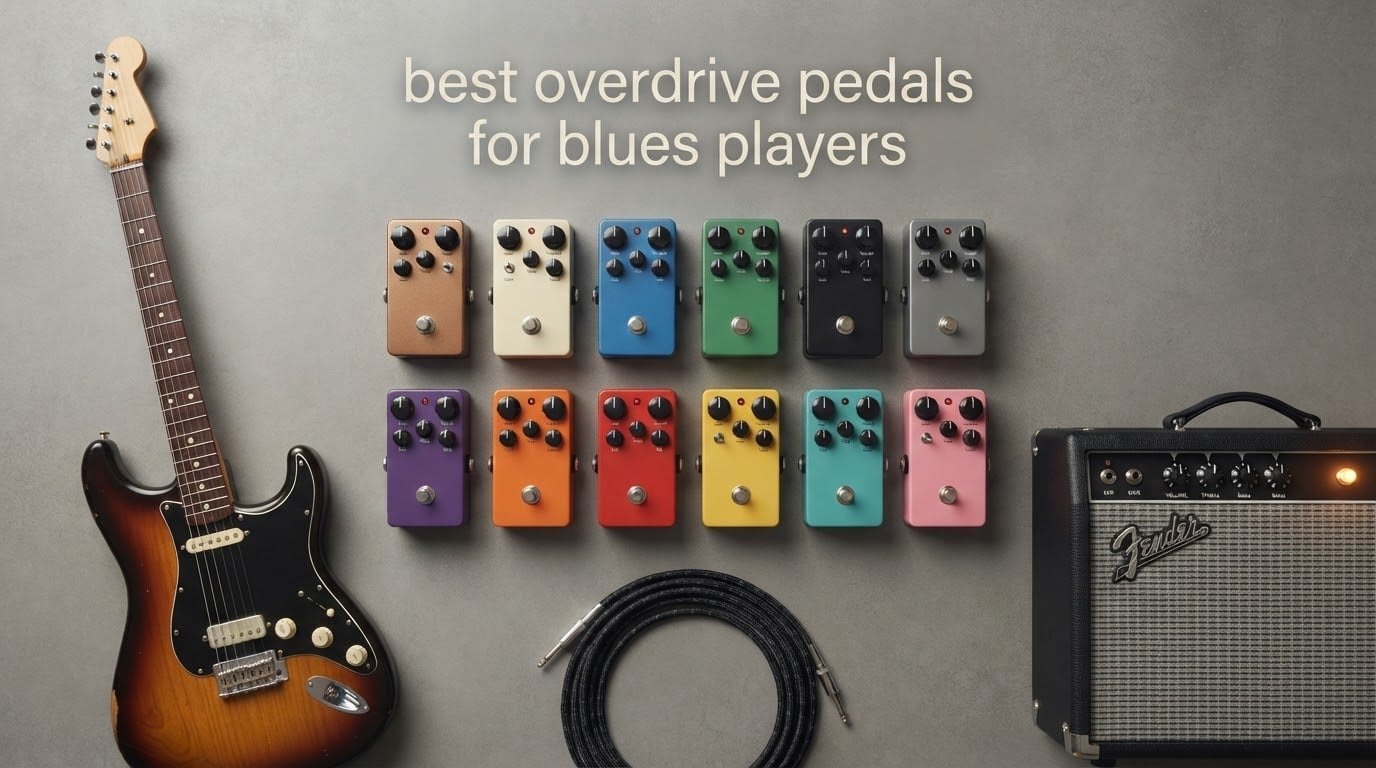
Here is the direct answer: the Boss BD-2 Blues Driver. It sits in the middle of the pack on price, and it reacts to your picking the way a good tube amp does. Everything else on this list earns its place by doing something the BD-2 cannot.
Blues lives in the gap between clean and distortion. An overdrive pedal works by clipping your guitar signal with diodes and re-amplifying it, adding warm edge-of-breakup without the compressed roar of a distortion pedal. That is the sound most players mean when they search for the best overdrive pedals for blues players.
We spent weeks pairing these twelve pedals with tube amps and single-coil guitars, then reading through thousands of owner reviews to catch the complaints that do not show up in a demo video. Every pedal below carries an honest list of drawbacks, because the gap between a great blues overdrive and a disappointing one is often just the dial-in.
Table of Contents
Top 3 Best Overdrive Pedals for Blues Players in 2026
Best Overdrive Pedals for Blues Players in October
| Product | Specifications | Action |
|---|---|---|
 Boss BD-2 Blues Driver Boss BD-2 Blues Driver |
|
Check Latest Price |
 Ibanez TS9 Tube Screamer Ibanez TS9 Tube Screamer |
|
Check Latest Price |
 Boss SD-1 Super Overdrive Boss SD-1 Super Overdrive |
|
Check Latest Price |
 EarthQuaker Plumes EarthQuaker Plumes |
|
Check Latest Price |
 JHS Morning Glory V4 JHS Morning Glory V4 |
|
Check Latest Price |
 Ibanez TS808 Ibanez TS808 |
|
Check Latest Price |
 Maxon OD808 Reissue Maxon OD808 Reissue |
|
Check Latest Price |
 Donner Blues Drive Donner Blues Drive |
|
Check Latest Price |
 Electro-Harmonix East River Drive Electro-Harmonix East River Drive |
|
Check Latest Price |
 Ibanez Tube Screamer Mini Ibanez Tube Screamer Mini |
|
Check Latest Price |
 JHS Bonsai 9-Way Screamer JHS Bonsai 9-Way Screamer |
|
Check Latest Price |
 Donner Dumbal Drive Donner Dumbal Drive |
|
Check Latest Price |
The 12 Best Overdrive Pedals for Blues Players
1. Boss BD-2 Blues Driver: the best all-around blues overdrive
Boss BD-2 Blues Driver Guitar Effects Pedal
Creamy yet crunchy overdrive
Simulates a tube amp push
300 g weight
5.95 x 3.75 x 2.75 inches
Five-year Boss warranty
Pros
- Reacts to picking nuance and volume knob moves
- Sits well with both clean and already-breaking-up amps
- Three-knob layout is fast to dial in
- Light 300 g body
Cons
- Brighter than a dark warm overdrive
- Mid push is gentler than a Tube Screamer
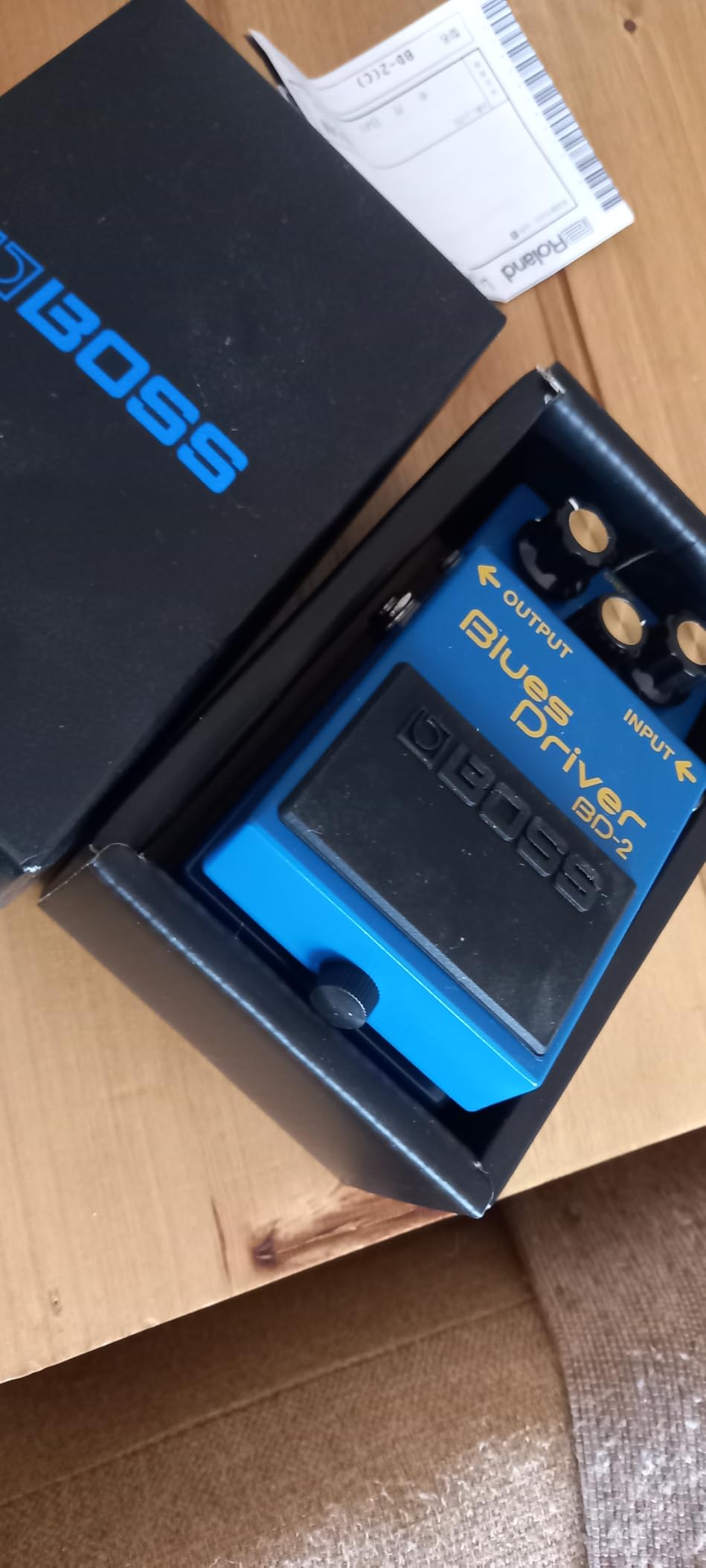
The BD-2 is the pedal I keep reaching for first when someone asks me to rig a blues guitar in five minutes. Three knobs, one obvious sweet spot, and a midrange lift that turns a clean tube amp into a rhythm machine. Owners describe it as creamy but crunchy, and that description holds up.
What makes it work across styles is how it responds to your hands. Roll the guitar volume down and the tone cleans up without losing the low end. Dig in with a bridge pickup and it pushes harder. That dynamic behaviour is why a lot of players describe one pedal plus one boost as covering most of their blues needs.
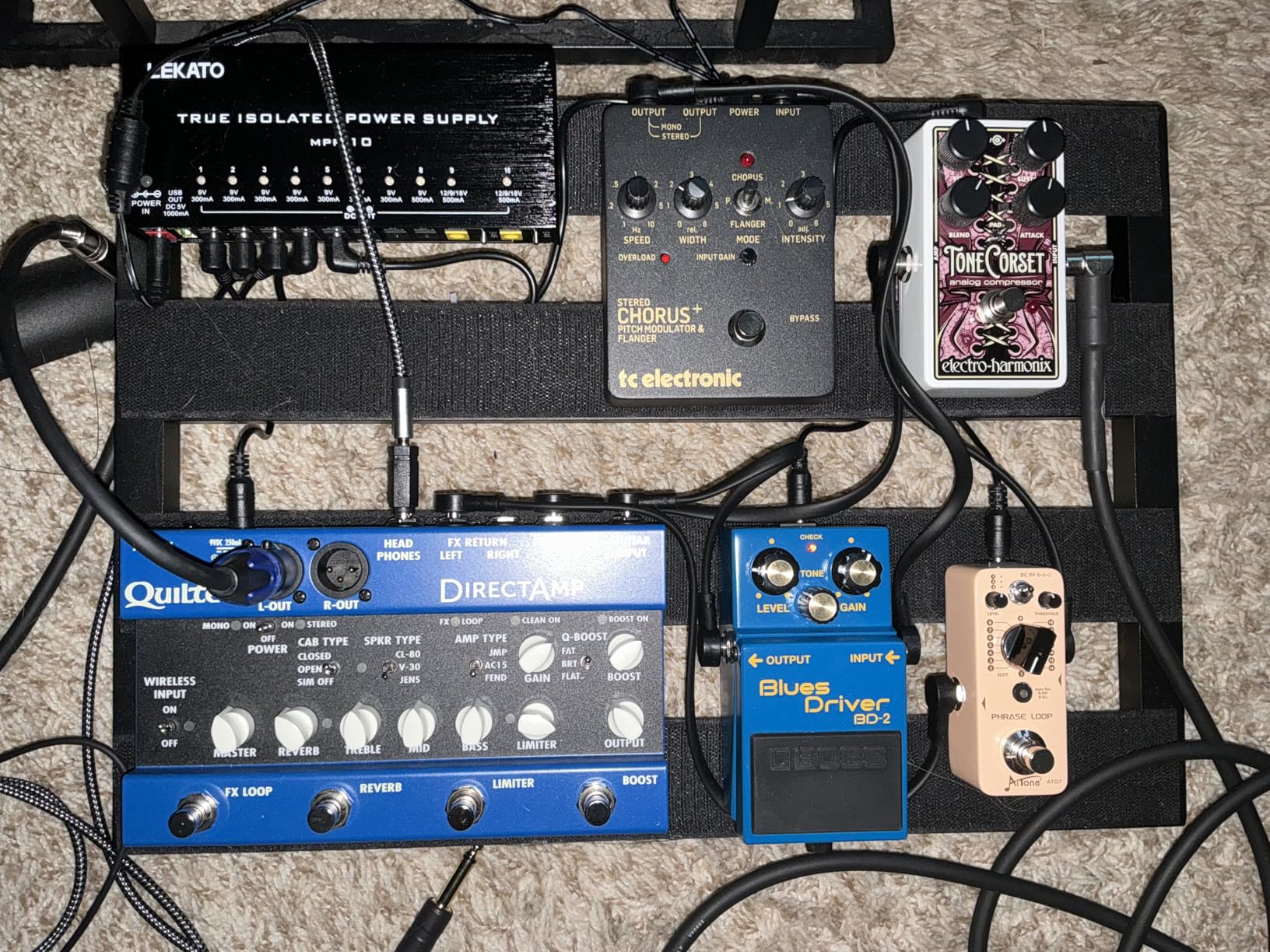
Measured at 300 g and just under 6 inches wide, it takes up very little board space. Boss backs it with a five-year warranty, which matters for a pedal this widely used. The listing includes a power supply cable, manual and warranty card.
Brightness is a complaint that comes up often in reviews. Owners note that the Blues Driver voicing can feel bright compared with darker overdrives, and that the midrange push is less pronounced than a Tube Screamer-style pedal. Both are fair, and both are fixable with the tone knob.
How the BD-2 pairs with amps and guitars
With a Fender Deluxe Reverb set clean, the BD-2 sits right at the edge of breakup where blues rhythm lives. Into a Marshall-style amp already breaking up, it thickens the low mids and cleans up the fizz. It is the rare pedal that does both jobs without a mode switch.
On a Stratocaster it is a rhythm and lead pedal. On a Telecaster the added mids give the twang enough body to play slide without sounding thin. Jazz-blues comping also benefits because the mid lift carries chord detail at low volumes.
Where the BD-2 falls short
If you want the aggressive mid hump of a Screamer for a horny Texas blues lead, the BD-2 is the wrong choice. You will have to lean on the tone control and your picking rather than the circuit. Players who want a dark, warm breakup will also find it a little forward in the top end.
It is also a three-knob pedal, so there is no voicing switch to fix those issues at the circuit level. If you need bass control and a presence knob, look at one of the four-control models later in this list.
2. Ibanez TS9 Tube Screamer: the definitive blues mid-push
Ibanez TS9 Model Overdrive Pedal – TS9, Classic, MultiColored
Tube Screamer midrange voicing
Drive tone and level controls
16 ounces
5.3 x 3 x 2.4 inches
Pros
- The reference midrange push for blues leads and rhythm
- Tightens and clarifies higher-gain amps
- Compact and light on the board
- Great value against vintage reissues
Cons
- Green circuit can sound compressed and honky at high gain
- Pedal only with no power supply included
The TS9 is the Screamer circuit most people picture when they hear the word blues overdrive. That mid hump was designed to cut through a mix in the late 1970s, and it still does. For a Strat lead tone with a bit of bite, it is hard to beat.
Owners rate the value highly against vintage Tube Screamer reissues, and the pedal is small and light at 16 ounces. It runs on a 9V battery with an AC adapter option, so it fits almost any board. Rating sits at 4.8 across more than 1300 reviews.
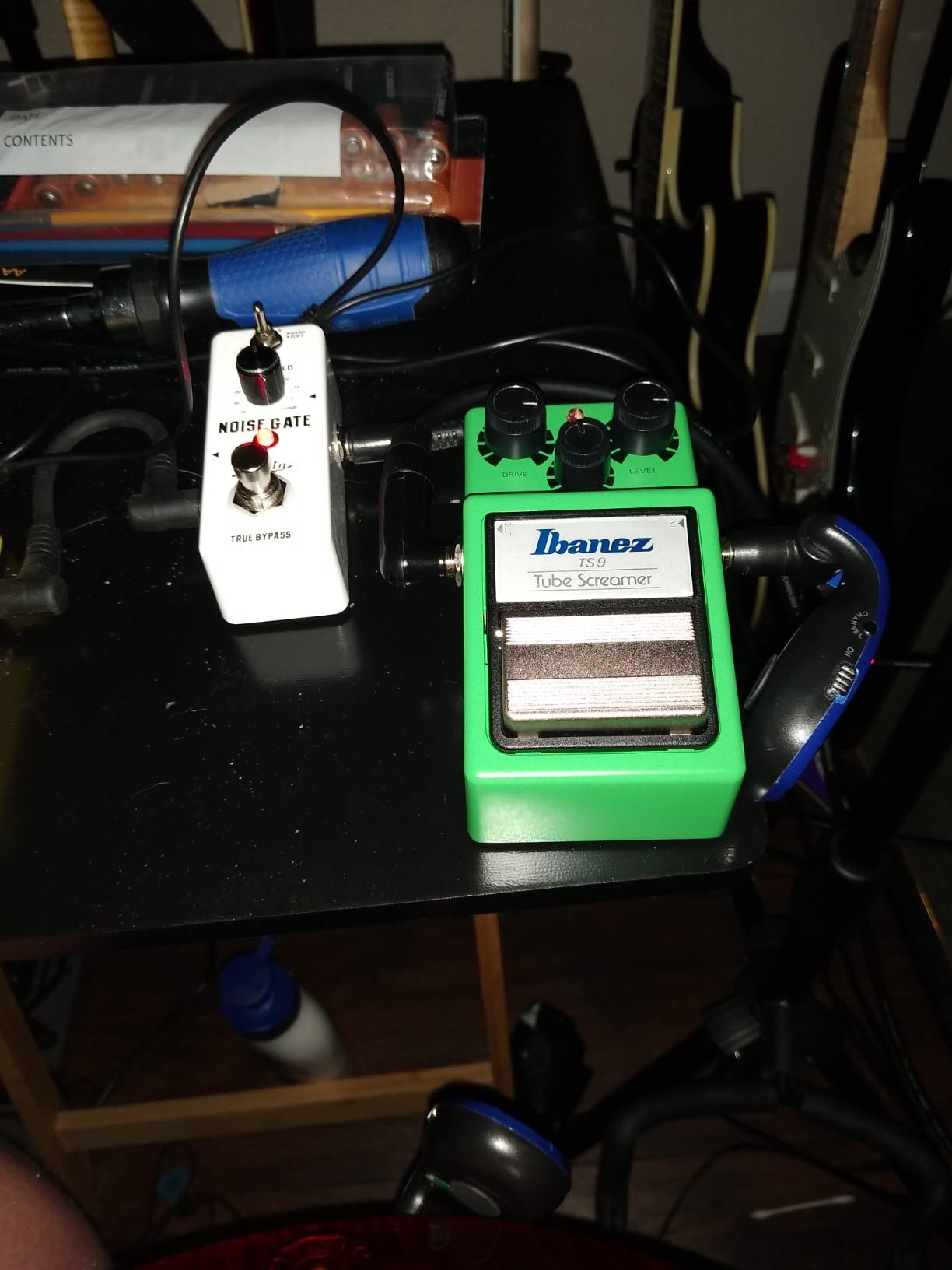
The blues-specific strength is how the mid focus tightens up an amp that is already getting loose. On a tube amp in the upper edge of breakup, the TS9 adds the singing sustain that slide players chase. Rhythm comping stays tight because the low end stays focused.
The persistent complaint is what happens when you push the gain past the blues range. Reviewers describe the green-mix circuit as compressed and honky at high gain. For blues that is a setting you avoid, not a dealbreaker, but it tells you where the pedal’s ceiling sits.
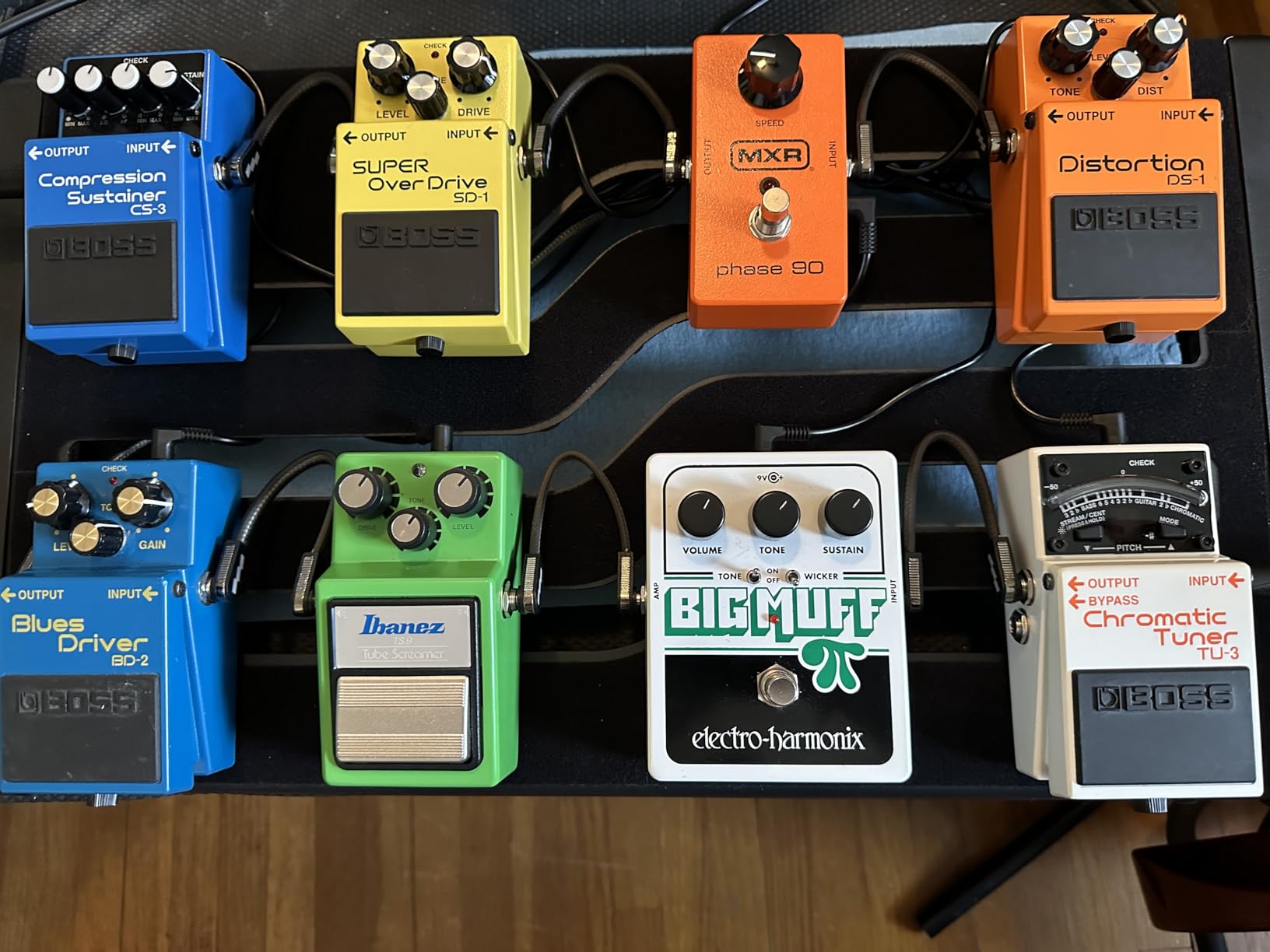
Answering the Tube Screamer bass cut complaint
Forum players often complain that Screamers cut bass and sound too funky or too metal for blues. That complaint comes from using the pedal as a distortion boost into a cranked Marshall. As a low-gain push into a clean tube amp it is a different pedal entirely.
Keep the gain near the bottom of its sweep, roll the tone back to about halfway, and pair it with a single-coil guitar. That is the dial-in the circuit was built for. A Strat or a Tele with a warm neck pickup will sound more Texas blues than anything metal.
Who should skip the TS9
If you want fat low mids and a warmer top end, a Screamer fights you. Players who prefer a dark vintage tone will find it too lean and too focused. The pedal is also pedal-only in the box, so budget for a 9V adapter if you do not already use batteries.
Those who want more control over the mid hump without moving to a boutique price should keep reading. The EarthQuaker Plumes does something similar with a cleaner result.
3. Boss SD-1 Super Overdrive: the most-reviewed pedal here
BOSS SD-1 SUPER Overdrive Compact Overdrive Pedal
Asymmetrical clipping circuit
Tube-like characteristics
14.4 ounces
6 x 4 x 6 inches
Five-year Boss warranty
Pros
- Most owner reviews of any pedal on this list
- Focused midrange with a tight low end
- Stacks well with boost and other overdrives
- Compact footprint
Cons
- Low gain ceiling for a stand-alone drive
- Enclosure shows wear from heavy use
The SD-1 is not usually the first pedal a blues player reaches for, and it should be. Its asymmetrical clipping circuit produces even harmonic content across the range, which is why owners describe the tone as tube-like rather than fizzy.
The three-knob layout is identical in feel to the BD-2, which makes the SD-1 a painless first pedal or a permanent second stage in front of a bigger drive. Owner reviews single out its strong stacking behaviour as much as its standalone tone.
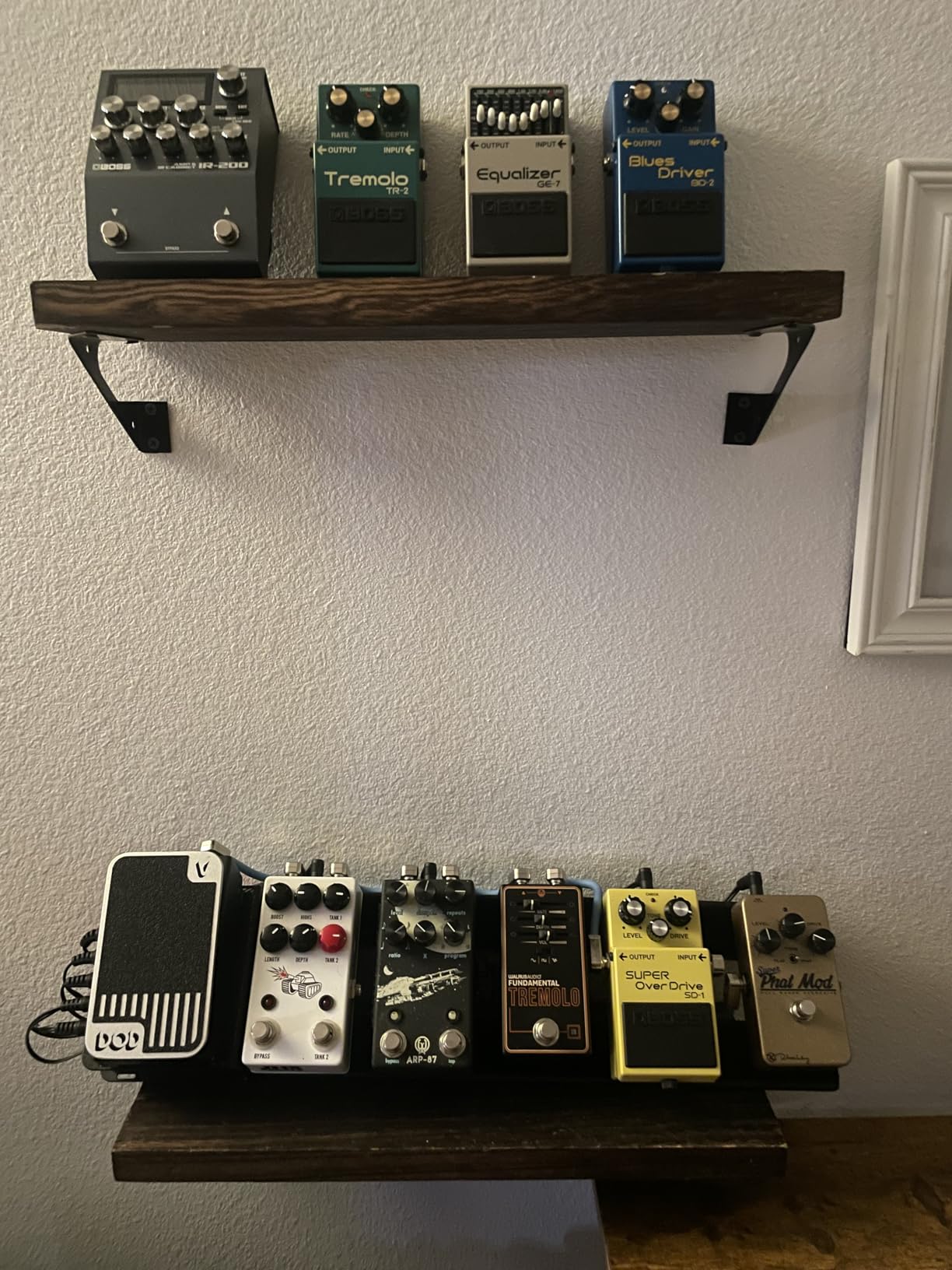
The blues application is rhythm and light lead. On a clean tube amp the SD-1 adds a warm mid push without the aggressive squeeze of a Screamer. It is also excellent as a stacking partner, adding thickness on top of another overdrive without collapsing the low end.
Two limits show up in the reviews. The gain ceiling is low, so it will not supply distortion on its own, and the enclosure picks up scuffs and nicks from decades of pedalboard use. Neither matters much if you treat your gear kindly.
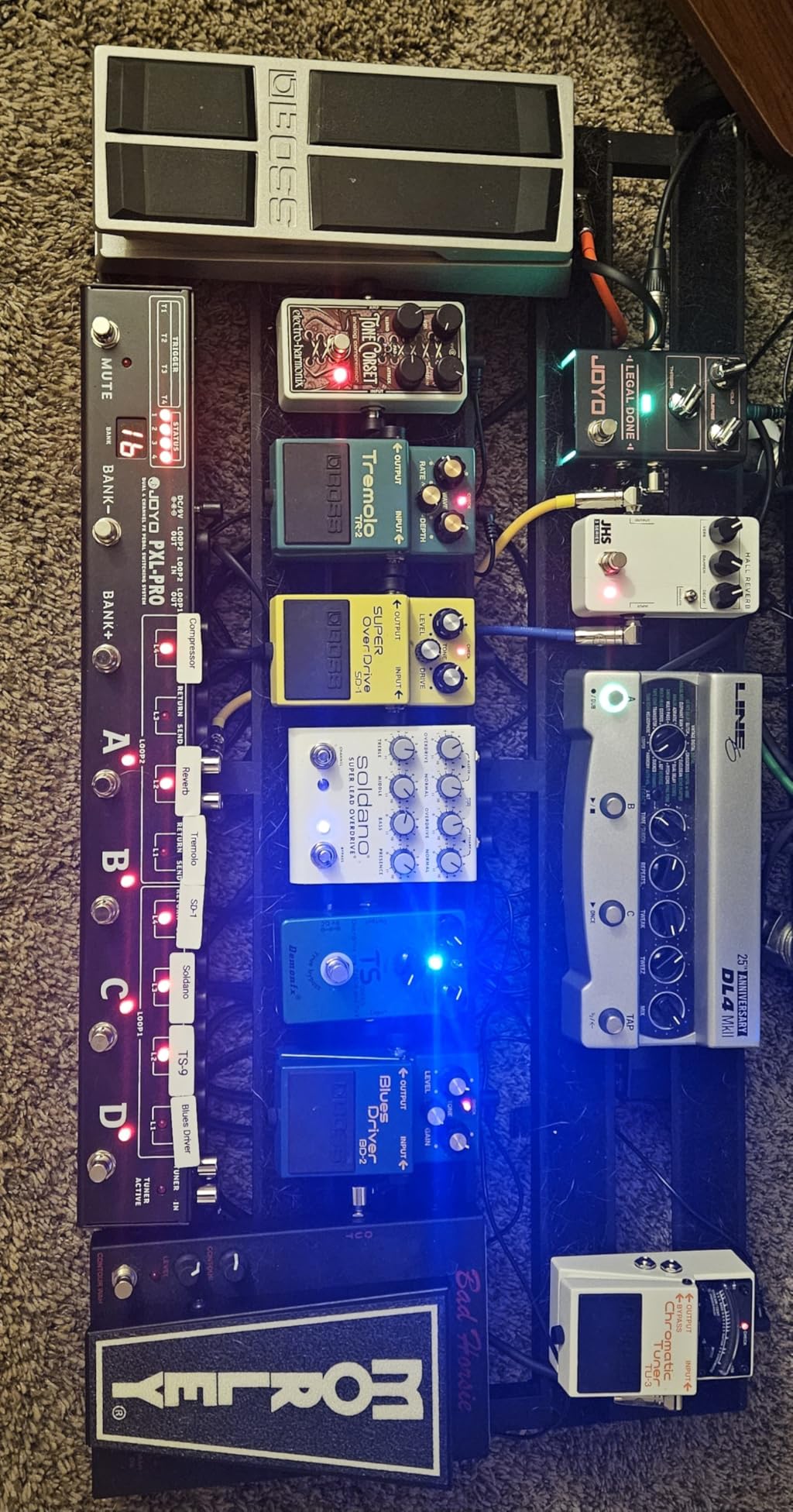
SD-1 against the BD-2
Choose the SD-1 when your amp already does most of the work and you want mid focus without colour. Choose the BD-2 when you want a bigger low-end swell and more apparent movement from the guitar volume knob.
Players who like slide and a Telecaster snap often land on the SD-1 because the tight low end does not fight the percussive attack. Strat players who want vocal lead sustain tend to prefer the BD-2.
Where it will not go
Push the SD-1 for lead tones and you will run out of gain before you run out of ideas. It also lacks any voicing option, so the tone is what it is. If you need a wide gain range from clean boost to crunchy, look at the EarthQuaker Plumes or the JHS Morning Glory.
It is worth noting the pedal pulls 30 milliamps, so a fresh battery or a quiet power supply matters on a long board.
4. EarthQuaker Devices Plumes: three voices in one pedal
EarthQuaker Devices Plumes Small Signal Shredder Overdrive Guitar Effects Pedal
Three clipping voices including clean boost
All-analog signal path
12.8 ounces
6 x 3 x 3 inches
Limited lifetime warranty
Pros
- Clean boost mode works beautifully with single-coil blues
- Tube Screamer style push without muddy mids
- Low noise and high signal integrity
- Limited lifetime warranty
Cons
- Bright top end suits some players more than others
- Very loud output so level needs care
The Plumes stands out for flexibility without a crowded control layout. Three clipping voices live on a rotary selector, and the middle position functions as a clean boost that owners frequently call their favourite setting for blues.
That middle mode adds volume and clarity to Strat and Telecaster tones without adding much of its own colour. It is the clean-amp front-of-chain boost that a lot of blues players end up buying separately.
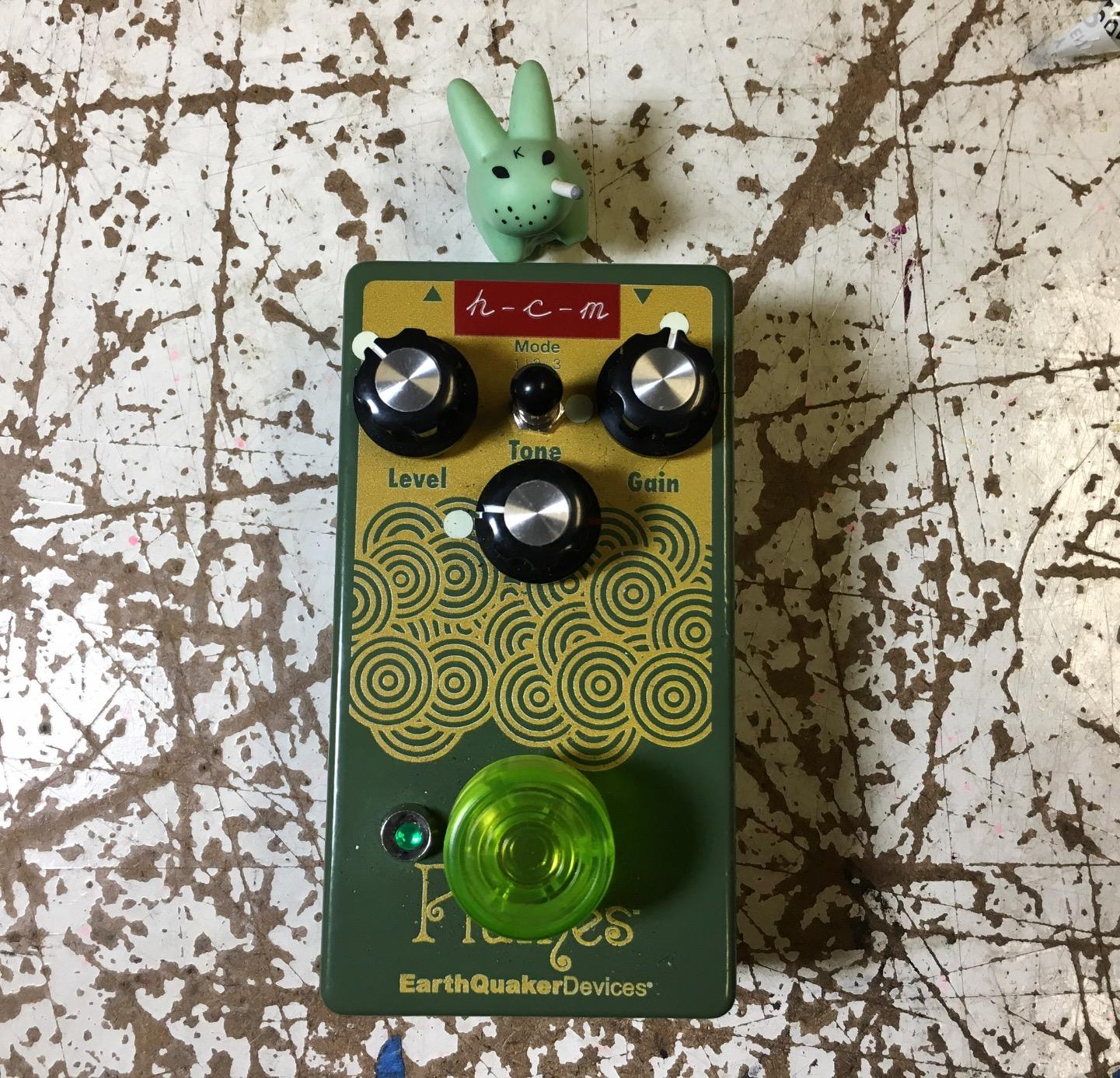
The tone control is described as sculpting low end, top end and midrange focus rather than acting as a simple treble roll. That gives you real EQ control from a three-knob pedal, which is unusual and useful when chasing a particular amp response.
Signal integrity is the headline spec here. Owners praise the low noise and the three-dimensional clarity, and the headroom lets it push an amp harder without falling apart. Earthquaker backs it with a limited lifetime warranty.
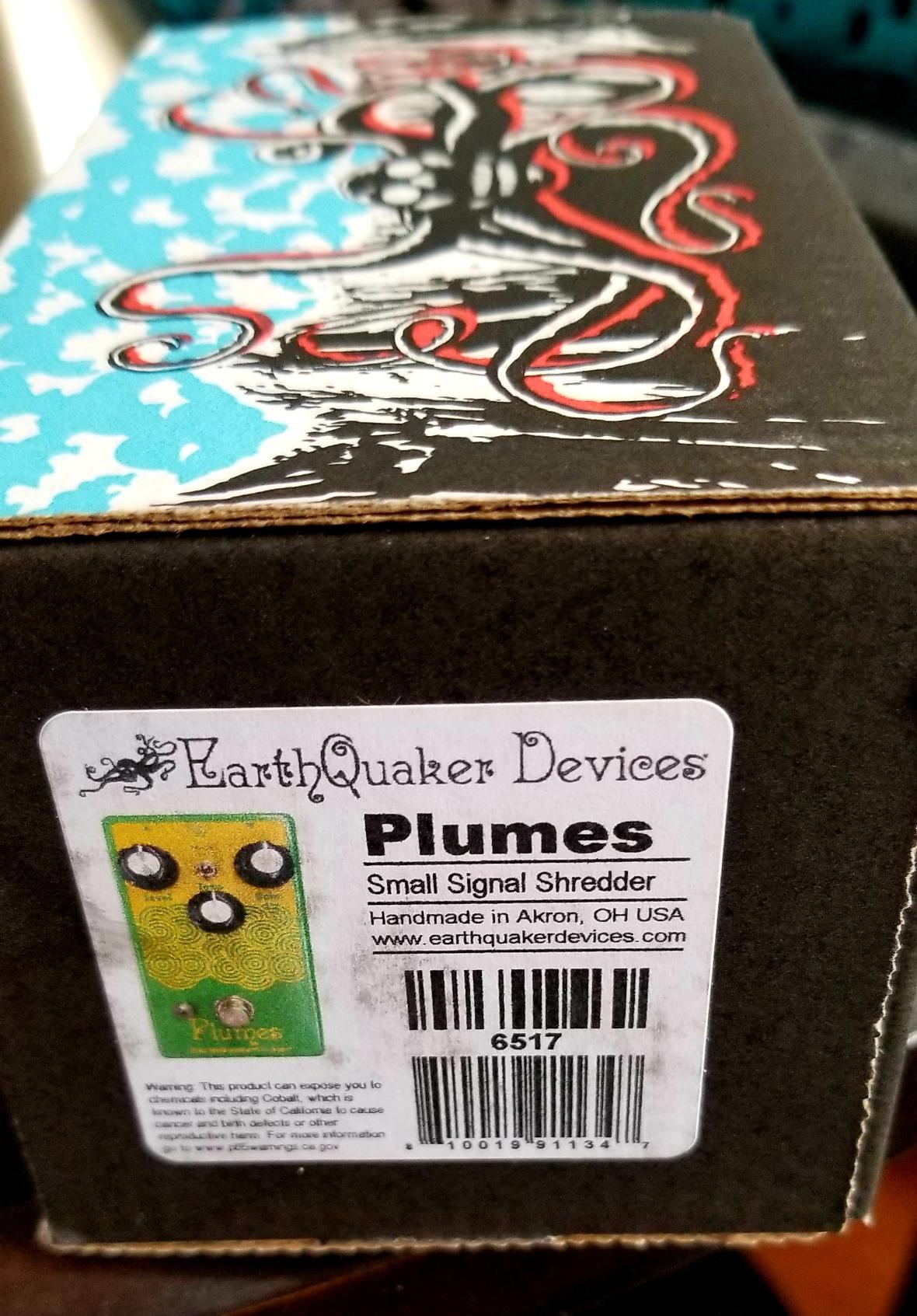
Dialing the Plumes in for blues
Start in the middle boost mode with the tone at two o’clock and the gain low. Push into the clean-amp drive voice once you want more saturation. Guitar volume down gives you a convincing clean rhythm without a separate boost pedal.
That makes the Plumes a strong candidate for a first serious blues pedal because it covers rhythm, lead and boost duties. It is also comfortable under a compressor, which is where many players place it.
Watch the output level
The loud output is a practical warning worth reading before you buy. Because the pedal pushes an amp hard, the level needs careful setting or it will overwhelm a smaller combo. Players who like a dark warm tone may also find it brighter than they want.
If your board is getting crowded, the Ibanez Tube Screamer Mini gives you a similar idea in a fraction of the space.
5. JHS Pedals Morning Glory V4: the transparent boost option
JHS Pedals Morning Glory V4 Overdrive Guitar Effects Pedal, Gold
Very transparent overdrive design
Two switchable gain stages
Side-mounted bright cut switch
0.34 kg
6 x 3 x 3 inches
Pros
- Adds grit without colouring the amp
- Two gain stages switchable on the fly
- Bright cut switch tames harsh rigs
- Extra headroom makes it a full-frequency boost
Cons
- Costs more than mainstream overdrives
- Needs a good amp or a boost in front to sing
The Morning Glory is the pedal for a player who wants their amp’s voice, not the pedal’s voice. Owners describe it as transparent and dynamic, adding mid to low level grit and tube-like touch response while leaving the underlying tone intact.
Two gain stages are switchable on the fly, and the gain control sweeps from fully clean to a rock and roll level. That range is why it doubles as a full-frequency boost with increased headroom and output.
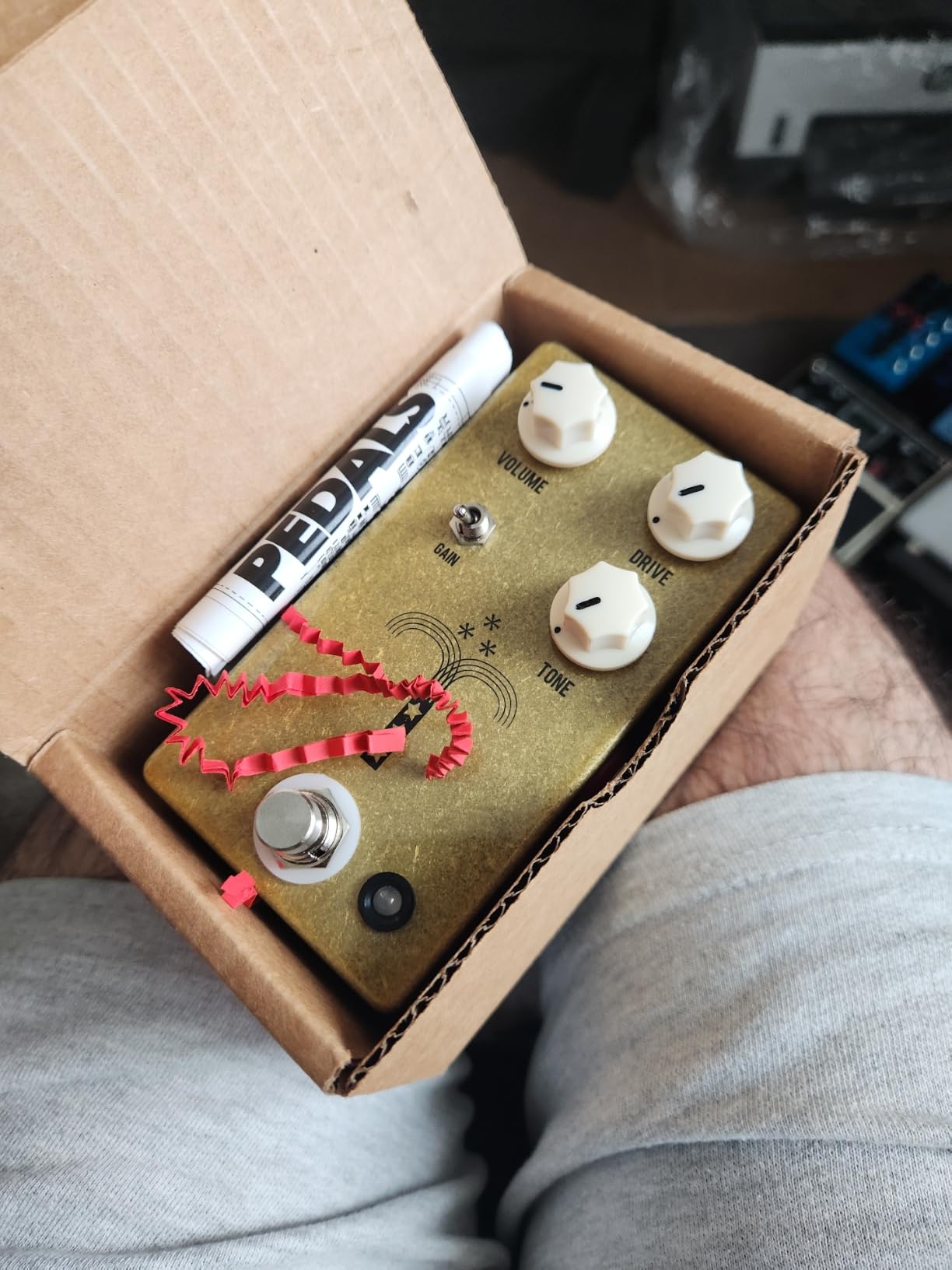
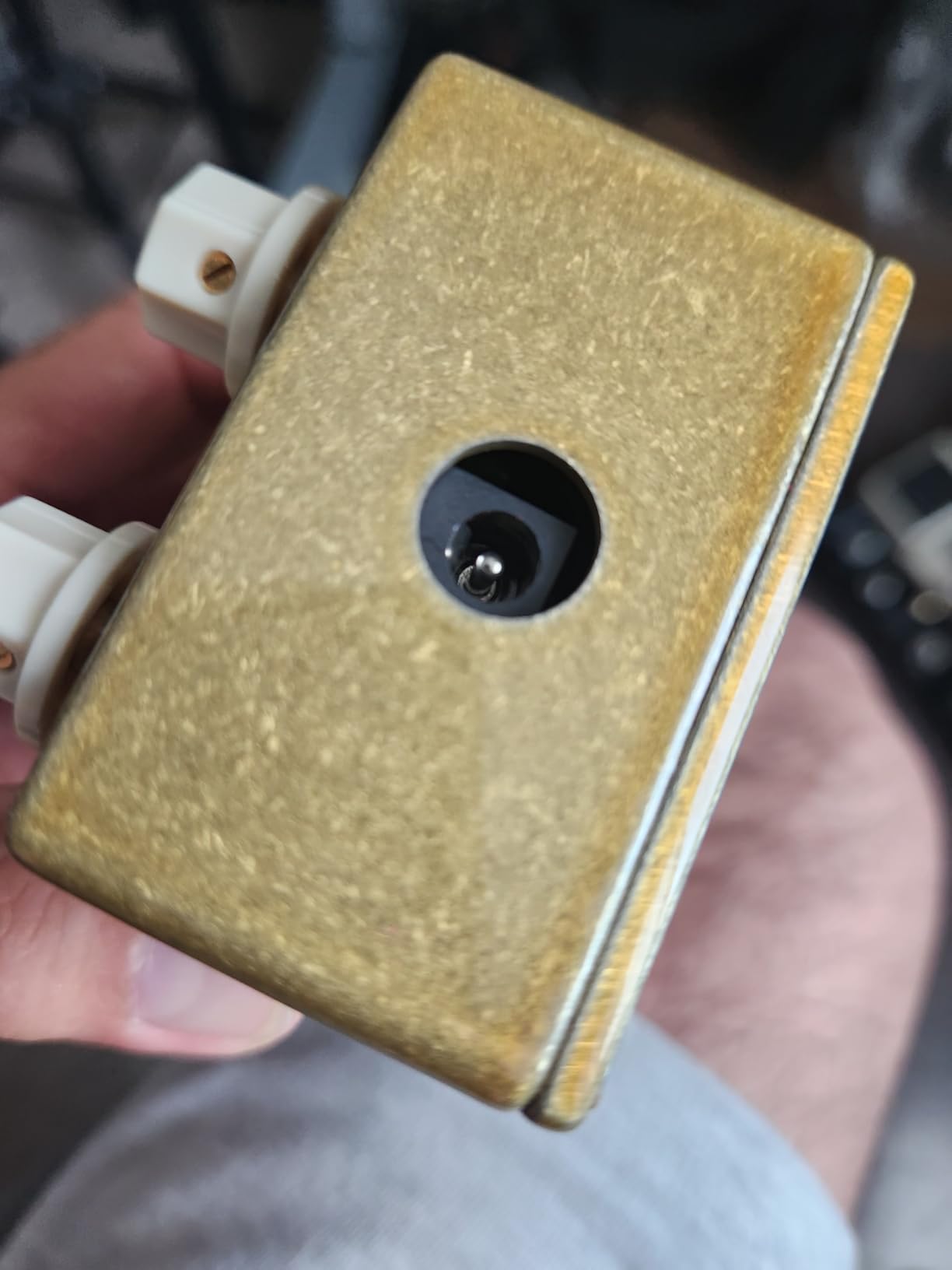
The side-mounted bright cut switch is the feature blues players notice most. On a bright single-coil guitar or a modern amp, it takes the harshness off the top end without thinning the whole sound.
JHS includes a limited lifetime warranty within the USA, and the pedal draws 100 milliamps, so plan your power accordingly. At 0.34 kg it is a normal-sized stompbox.
Where transparency helps and where it does not
Transparency is exactly what you want when your amp is a good one and you are chasing a specific tone. It is also exactly what you do not want when your amp is thin and you need the pedal to supply the body. That is the honest limitation here.
Reviewers note the midrange needs a healthy amp or a clean boost in front to sing. Pair it with a Fender Deluxe Reverb or a Princeton-style amp and it turns clean channels into edge-of-breakup tones that sound like the amp grew up.
Is it worth the extra cost
The Morning Glory sits above mainstream overdrives on price, and you are paying for headroom and flexibility. Players who want one pedal for boost, rhythm and lead get a lot for that spend. Players who only need a simple crunchy rhythm sound can get there for less.
Another route to more control is the Donner Dumbal Drive, which gives you four knobs including bass and treble.
6. Ibanez TS808: the warm original Tube Screamer circuit
Ibanez TS808 Original Tube Screamer Overdrive Pedal
Warm natural tube overdrive
Overdrive tone and level controls
1.4 pounds
6 x 2 x 3 inches
One-year limited warranty
Pros
- Warm natural tube overdrive character
- Zinc die-cast chassis with rubber feet
- LED shows effect and battery condition
- Power adapter included
Cons
- Heavier and larger than compact overdrives
- Less defined mid peak than the TS9 circuit
The TS808 is the original, and the circuit sounds softer and warmer than the green-box TS9 that most players buy. If you like a gentle vocal edge rather than a pronounced mid hump, this is the version to hear.
The signal profile is described as warm and distorted for rock and blues, with an LED that shows both effect state and battery condition. That battery indicator is a small convenience on a long rehearsal day.
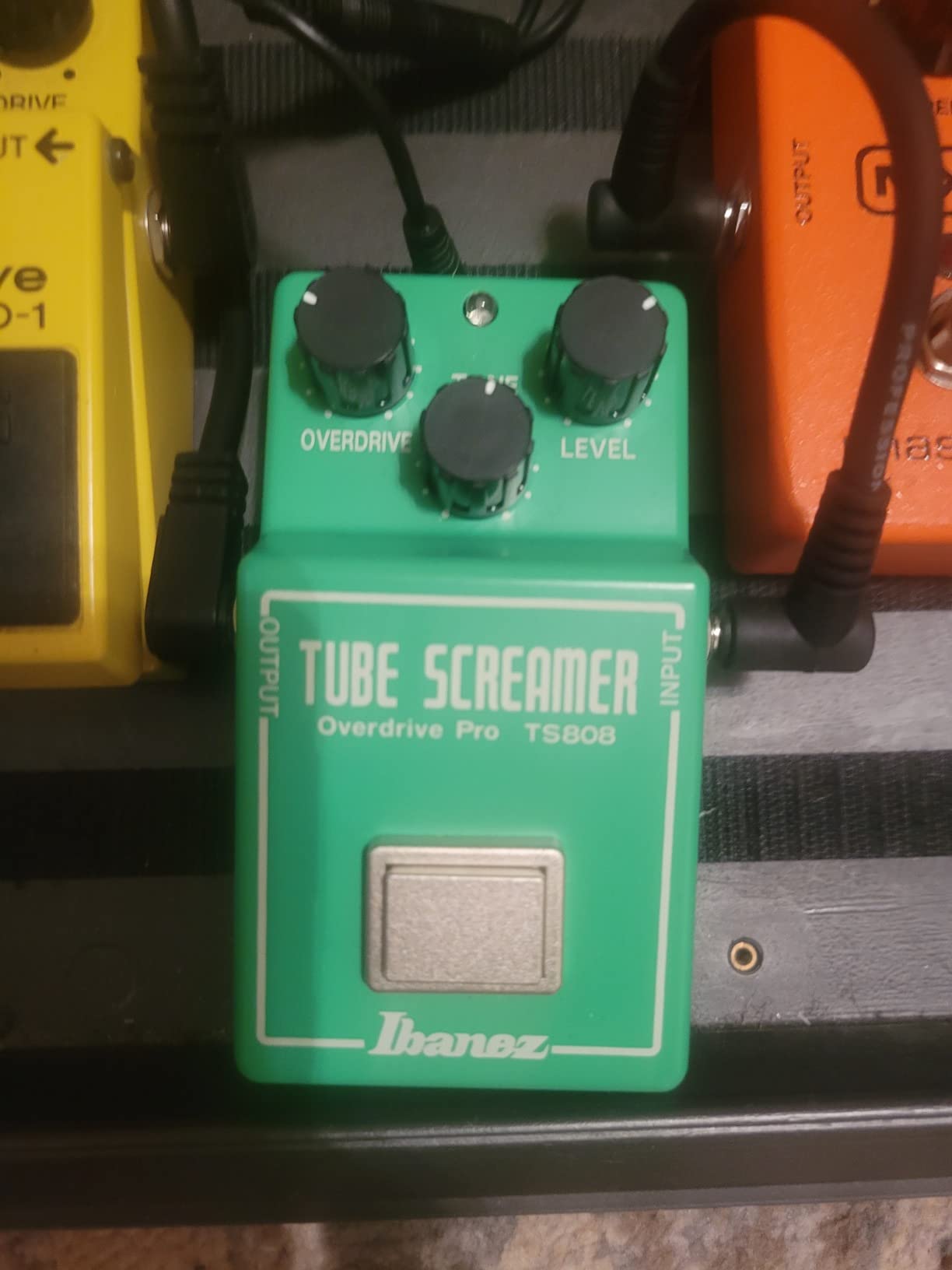
At 1.4 pounds it is the heaviest pedal in this roundup, and the 6 x 2 x 3 inch footprint is large for a modern board. The zinc die-cast chassis and rubber feet are built for a hard life.
The tone distinction matters. Reviewers note the original 808 circuit is less defined than the TS9-style mid peak, which reads as a limitation to some and as warmth to others. For a warm push into a tweed or a small tube combo, that softness is the point.
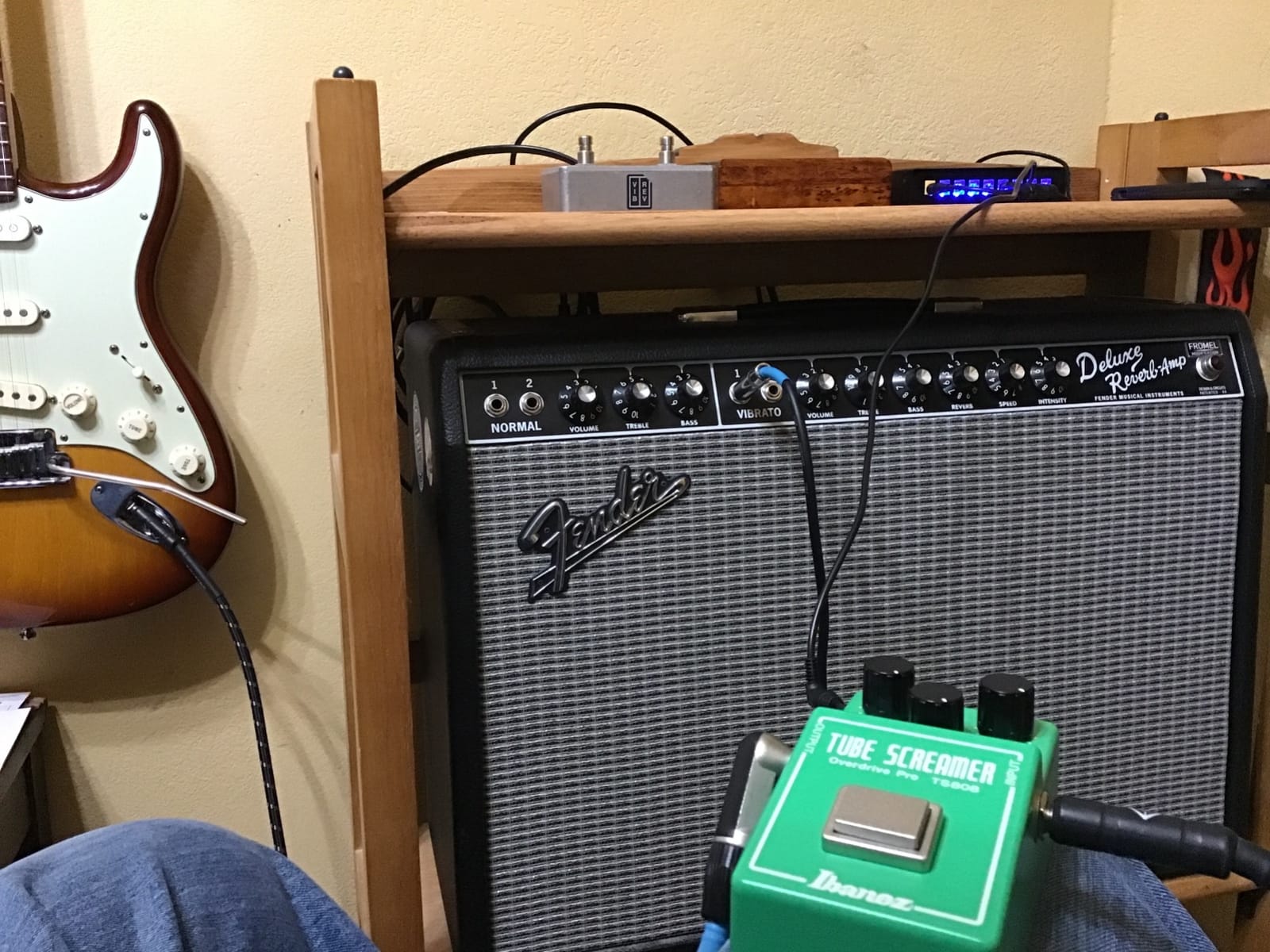
TS808 against a tweed or tweed-style amp
Into a small clean tube amp the TS808 does the job of a second gain stage without adding fizz. It is a comfortable pedal for slide, for open tunings and for jazz-blues chord work where note clarity matters more than grit.
Players who prefer the 808 usually point to touch sensitivity at lower gain, which is where blues players live. The pedal draws only 9 milliamps, so it is also one of the easiest to power.
Is the weight a real problem
On a large board with plenty of room, the weight is manageable. On a compact board it is the first pedal to consider swapping out. The Maxon OD808 later in this list covers the same circuit heritage in a smaller, lighter package.
Owners also report the lower-scoring feedback is mostly about size rather than sound quality, which is worth keeping in mind before you judge the circuit.
7. Maxon OD808 Reissue: the original 808 circuit, reissued properly
Maxon Reissue Series OD808 Overdrive
Faithful 808 reissue with JRC4558 IC
Three controls
13.76 ounces
6 x 5.75 x 2.5 inches
Three-year parts and labour warranty
Pros
- Same 808 circuit with the JRC4558 chip
- Highly dynamic and responsive to touch
- Excellent in front of an already-driven amp
- Heavy-duty components and durable finish
Cons
- Expensive next to other 808 style reissues
- Gain is mild so it is not a distortion pedal
Maxon’s reissue uses the same JRC4558 chip as the original 808, and owners consistently single that out as the reason for buying it rather than a cheaper homage. The circuit is smooth and natural, closer to a tube amp pushed just past clean.
It is highly dynamic. Pick softer and it cleans up, pick harder and it sings. That touch response is the defining feature of the 808 family and the reason blues players keep coming back to it.
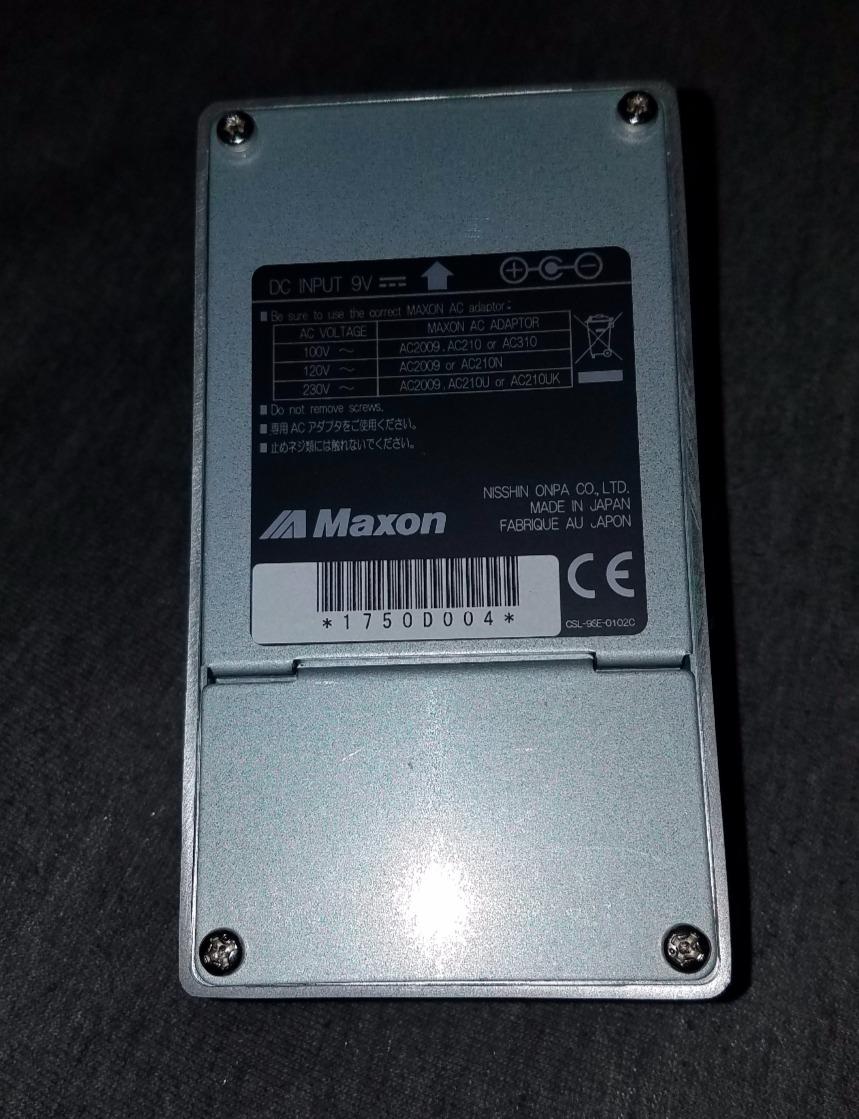
Only three controls: drive level, tone and volume. At 13.76 ounces it is lighter than the Ibanez TS808 and better suited to a modern board. Maxon also offers three years of parts and labour warranty, which outlasts the one-year cover on the Ibanez original reissue.
For blues, the sweet spot is as a boost in front of an amp channel that is already breaking up. It does not need much gain of its own, and reviewers describe it as a front-end boost for players who already own plenty of gain.
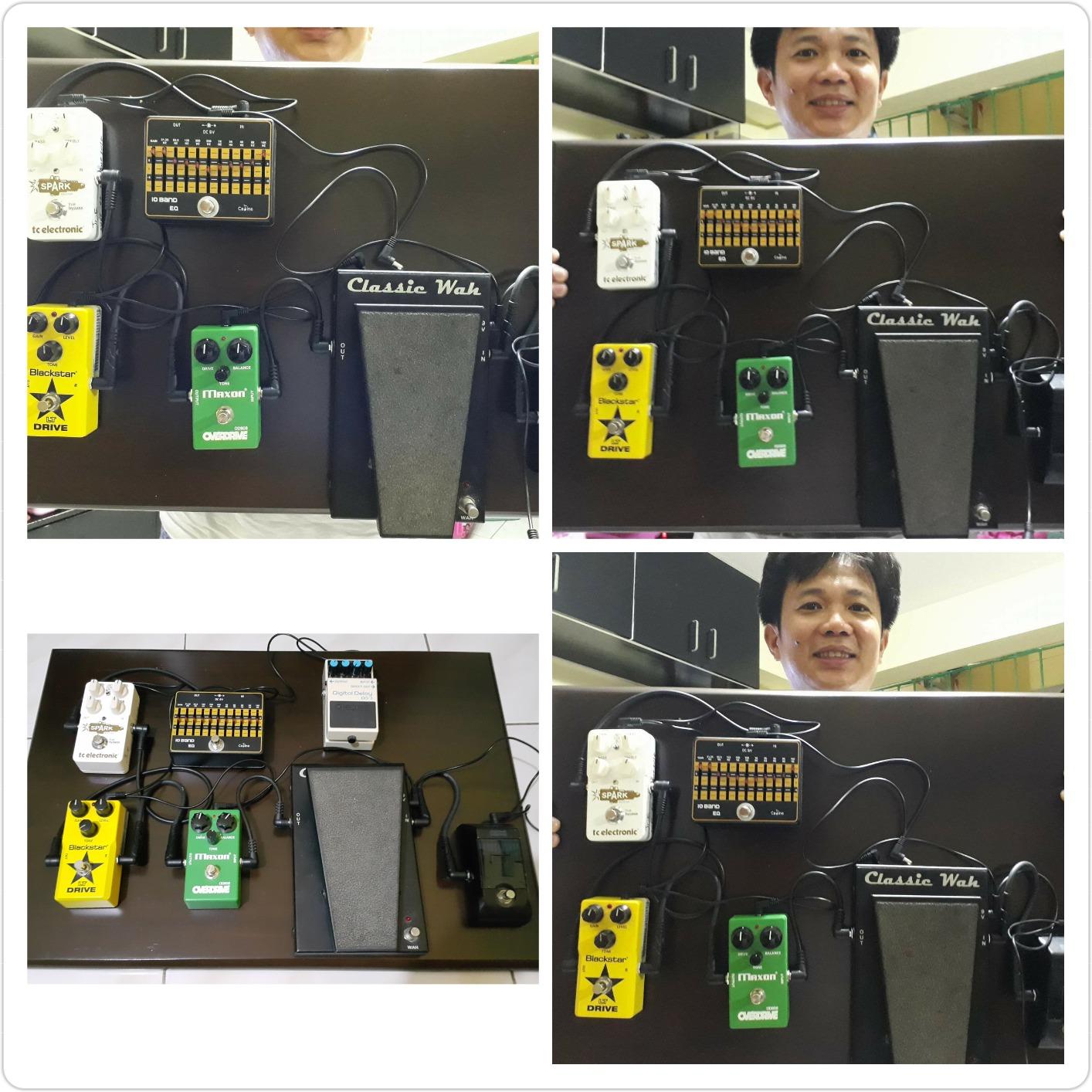
Choosing between the two 808 reissues
Both cover the same heritage. The Maxon uses the original chip for exactness and carries the longer warranty. The Ibanez is cheaper, larger and gives you the LED battery indicator.
If your blues tone is all about touch sensitivity at low gain, both work. Pick Maxon for circuit fidelity, pick Ibanez for a sturdier package and a battery check at a glance.
Where it stops being useful
The gain is mild, so anyone expecting a stand-alone distortion pedal will be disappointed. It also costs more than other reissue alternatives, which is the most common complaint in reviews.
If the mild gain is exactly what you do not want, the Maxon is the wrong end of the 808 family. The Boss SD-1 offers more bite for blues rhythm work.
8. Donner Blues Drive: an entry point worth stepping on
Donner Overdrive Guitar Pedal, Blues Drive Vintage Overdrive Effect Warm/Hot Modes for Pedal Boards Electric Guitar, True Bypass
Warm and Hot overdrive modes
LEVEL TONE and GAIN controls
6.6 x 4.7 x 2.6 inches
Two-year manufacturer warranty
Pros
- Two modes cover classic Screamer tone and a tighter hotter sound
- Wide dynamic range from soft to searing
- True bypass aluminium alloy chassis
- Compact body leaves board room
Cons
- Power supply is not included
- Tone is less articulate than boutique Screamer models
The Donner Blues Drive is the pedal I recommend when someone asks what to put on the board before they have committed any real money. Warm mode gives you a classic Screamer-style tone, Hot mode gives you something louder and tighter.
Owners report a wide dynamic range, from smooth quiet passages to searing lead settings, and a lot of the praise is about build quality for the money. The chassis is aluminium alloy with true bypass switching.
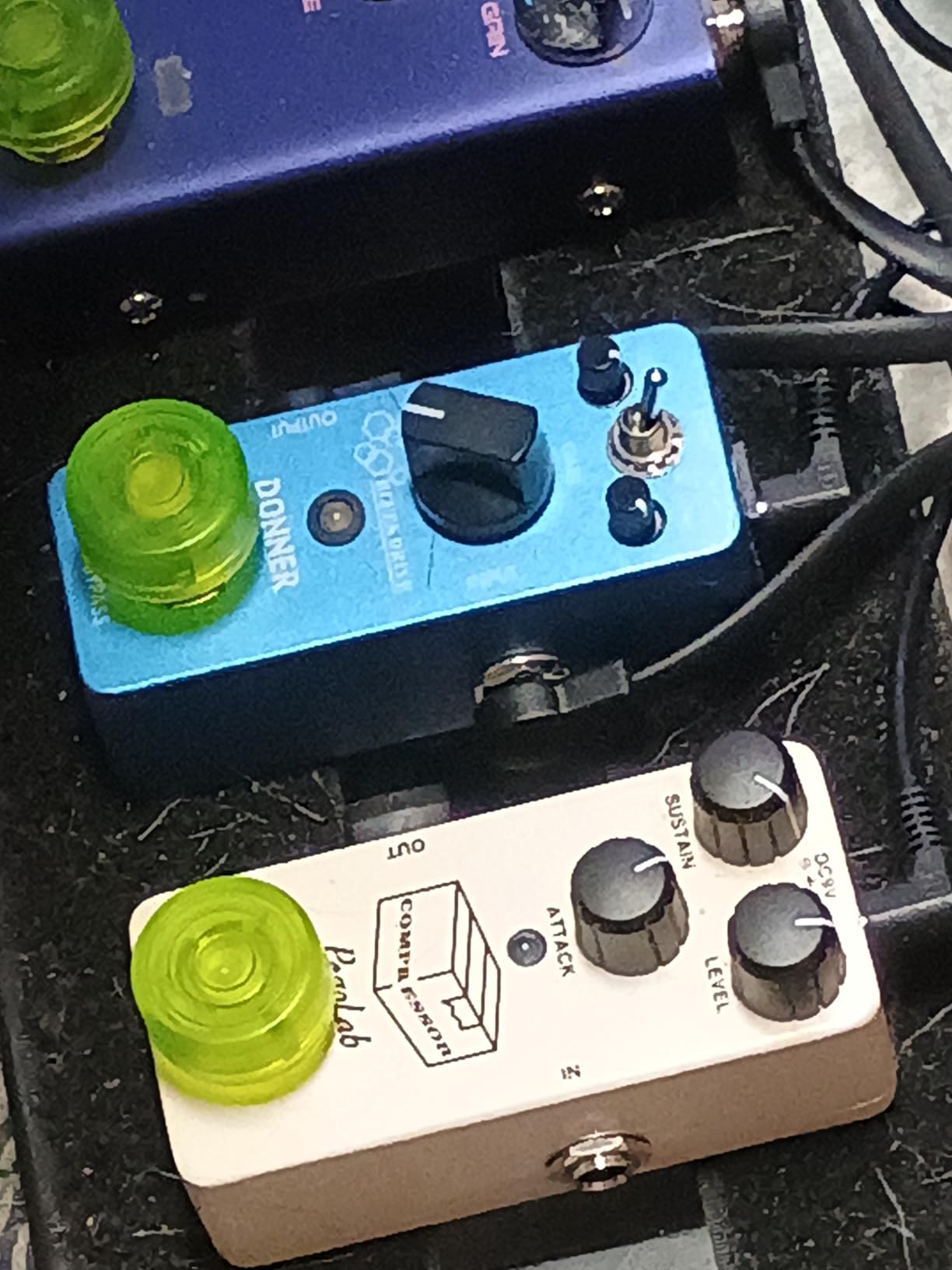
Three controls do the work: level, tone and gain. The Warm mode is the more useful one for blues, where a mid push with headroom matters more than volume.
Rated 4.5 across nearly 1700 reviews, it sits a little below the BOSS pedals here because buyers compare it against boutique articulation. About 70 percent of reviewers give it five stars, which is still a solid return for a first drive.
Warm mode or Hot mode for blues
Warm mode suits clean tube amps and single-coil guitars. It behaves like a mid-hump push and cleans up when you back off the guitar volume.
Hot mode is for a rhythm band mix or for pushing a valve amp that is already dirty. It gets tighter and louder rather than fatter, so it is a different flavour rather than a better one.
What you give up
The honest answer is articulation. Reviewers describe the tone as more basic and less articulate than boutique Screamer style pedals, and the top end can turn harsh when the gain is high. The 9V adapter is not included, which is an easy thing to forget on day one.
Budget options like this get criticised in forums for sounding thin or fizzy. Keeping the gain below halfway and the tone below noon avoids most of that.
9. Electro-Harmonix East River Drive: mid focus without the fuss
Electro-Harmonix East River Drive Overdrive Pedal
Symmetrical mid-focused overdrive
True bypass
9V battery included
10.4 ounces
2.75 x 3.45 x 5.75 inches
Pros
- Smoother midrange than a TS9 with the same family character
- Lets more low end through so it boosts amps well
- Many usable sweet spots
- Compact die-cast chassis
Cons
- Low gain ceiling for high-gain work
- Footswitch is unusually loud
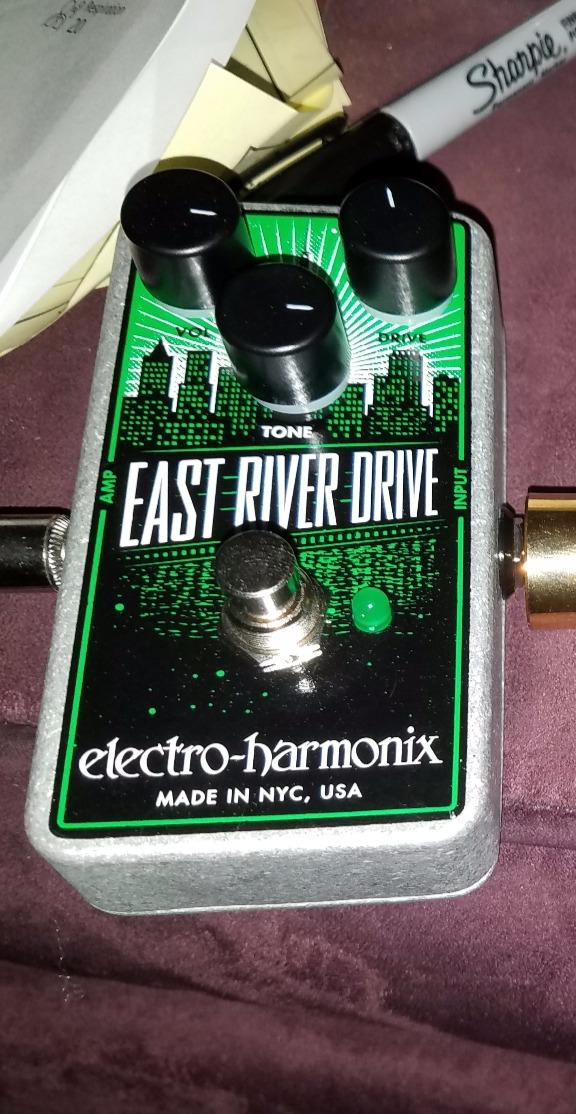
The East River Drive is a symmetrical mid-focused overdrive, which puts it in the Screamer family with a gentler hand. Reviewers describe the midrange as smoother and less aggressive than a TS9 while still clearly recognisable as that circuit.
The low end is the story here. Owners note that it lets more low end through than a typical Screamer, which makes it effective as an amp boost. That matters for blues players whose tube amp is already full.
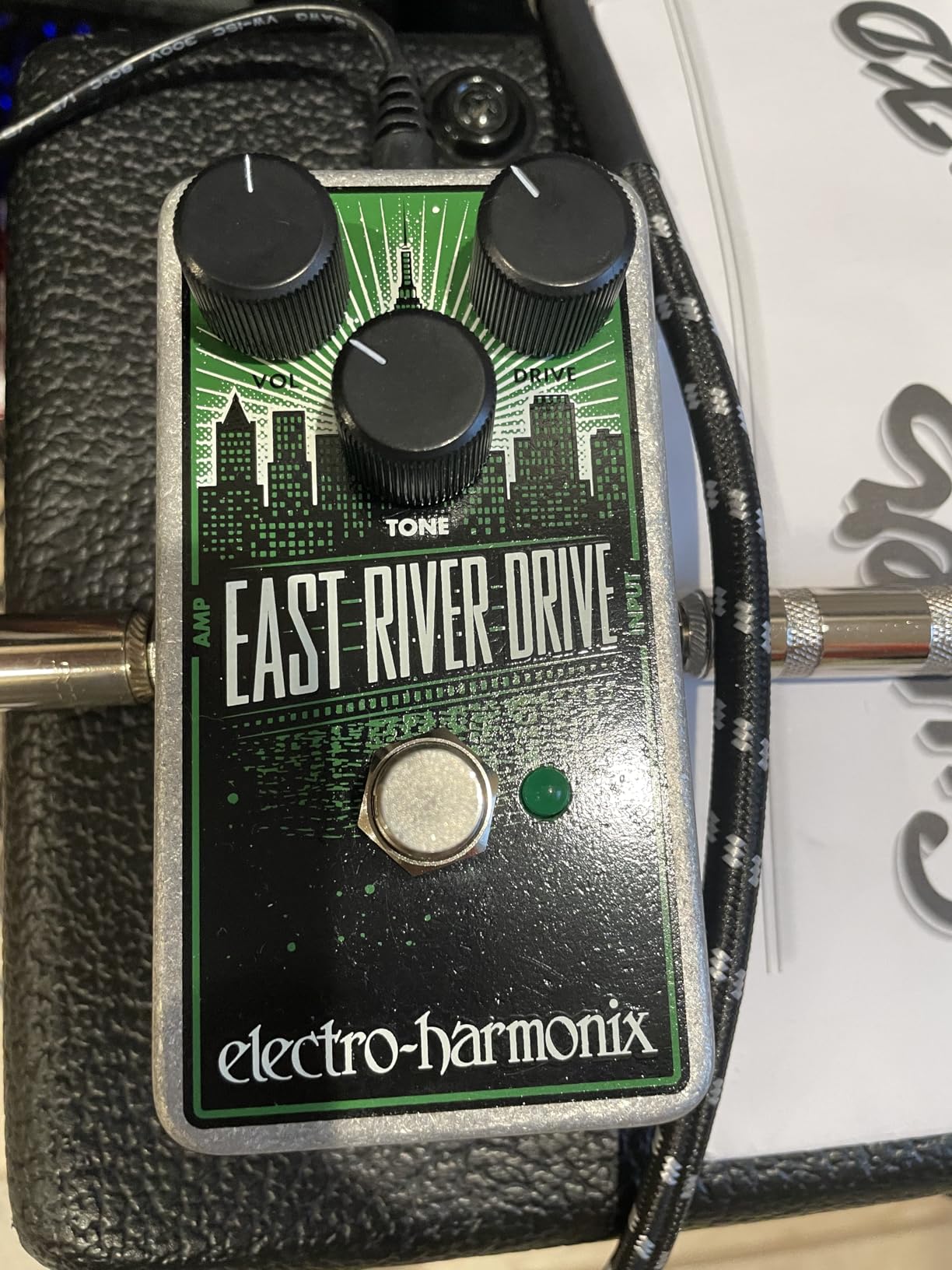
It ships with a 9V battery and has true bypass switching, which is convenient for players building a first board. The chassis is compact die-cast at 10.4 ounces, so it fits easily on a smaller board.
Another strength owners mention is having many usable sweet spots rather than one narrow voicing. That flexibility means it can sit behind a compressor or in front of a dirty channel without turning to mush.
A Screamer alternative for bass-heavy amps
If your complaint about Tube Screamers is that they hollow out the bottom, this is the direct answer. Into a Marshall-style amp with a thick bottom it behaves, where a TS9 would fight for space in the low mids.
It also works well as a clean boost with a Tele, where the added mids give the note some body. Just keep the gain low and treat it as a mid push rather than a drive.
Honest drawbacks
The rating here is 4.4 from 184 reviews, a smaller sample than most pedals on this list. The reasons for it are consistent though. The gain ceiling is low, so it will not produce distortion alone, and the footswitch is described as unusually loud, which matters on a board with a tight power supply.
Treat the tone description with some caution given the review count. The East River Drive suits players who want low-end-preserving push, not players chasing maximum gain.
10. Ibanez Tube Screamer Mini: the full Screamer in a small case
Ibanez Tube Screamer Mini Pedal
Mini Tube Screamer voicing
Drive level and tone controls
10.4 ounces
6 x 3 x 4 inches
Pros
- Full Tube Screamer voicing in a compact enclosure
- Frees up valuable pedalboard space
- Good value for a classic blues overdrive
- Light 10.4 ounce body
Cons
- Needs a separate 9V power adapter because of the mini format
- Fewer controls than the full-size TS series
The Tube Screamer Mini delivers essentially the full-size Screamer voicing in a much smaller box. Users confirm the sound matches, which makes it a straightforward answer to a crowded pedalboard.
It does what the full-size model does. It cuts bass and brightens the amp, it tightens a loose rhythm sound, and it gives you the classic mid hump for leads. At 10.4 ounces it is a light stompbox.
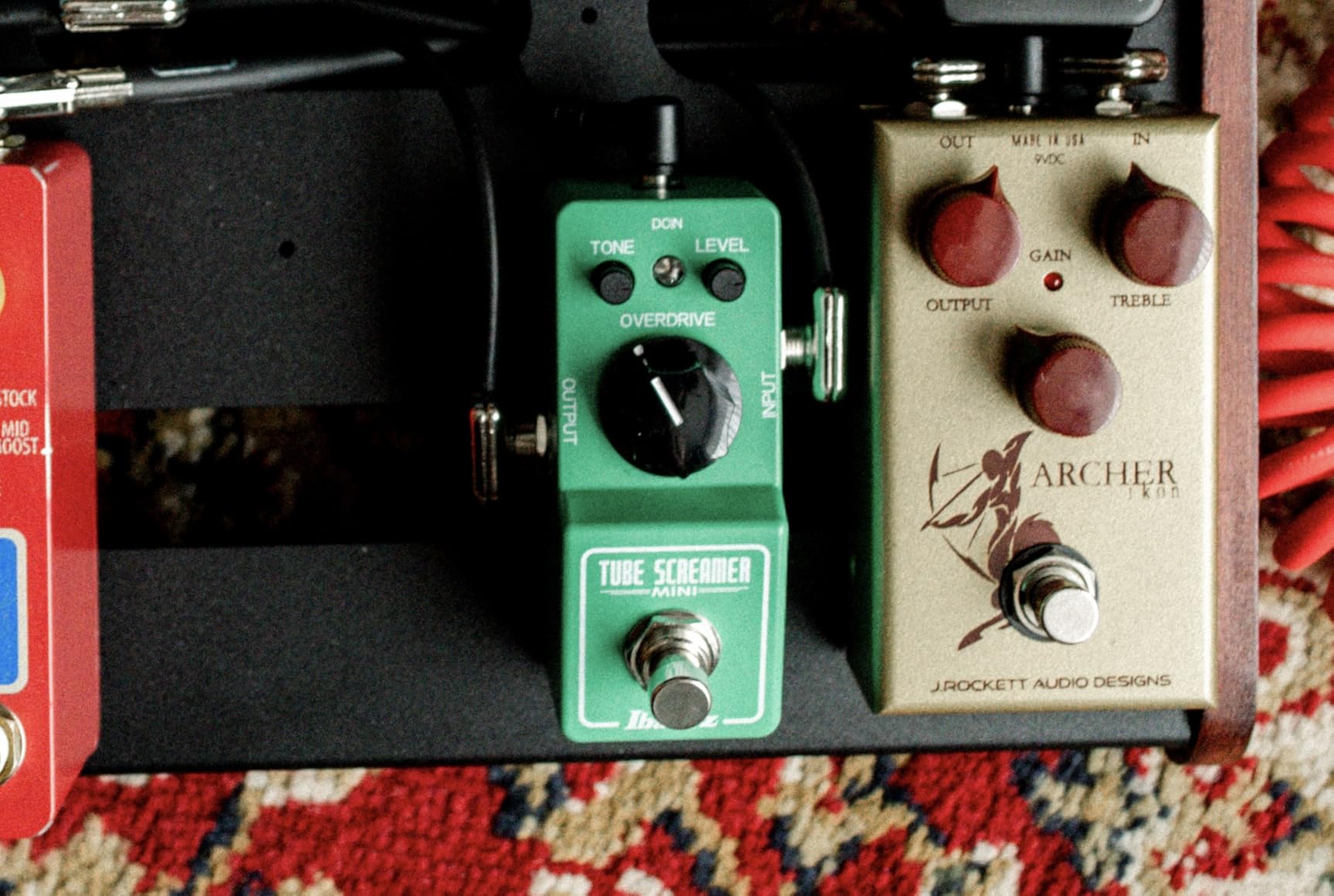
The value argument is simple. If you were choosing between a mini and the full-size model on sound alone, the mini wins. What you give up is a little headroom and the range of a full-size casing.
Rated 4.7 from more than 500 reviews, with 86 percent five-star ratings, the consensus is that compact size and price are the main draws for blues players on crowded boards.
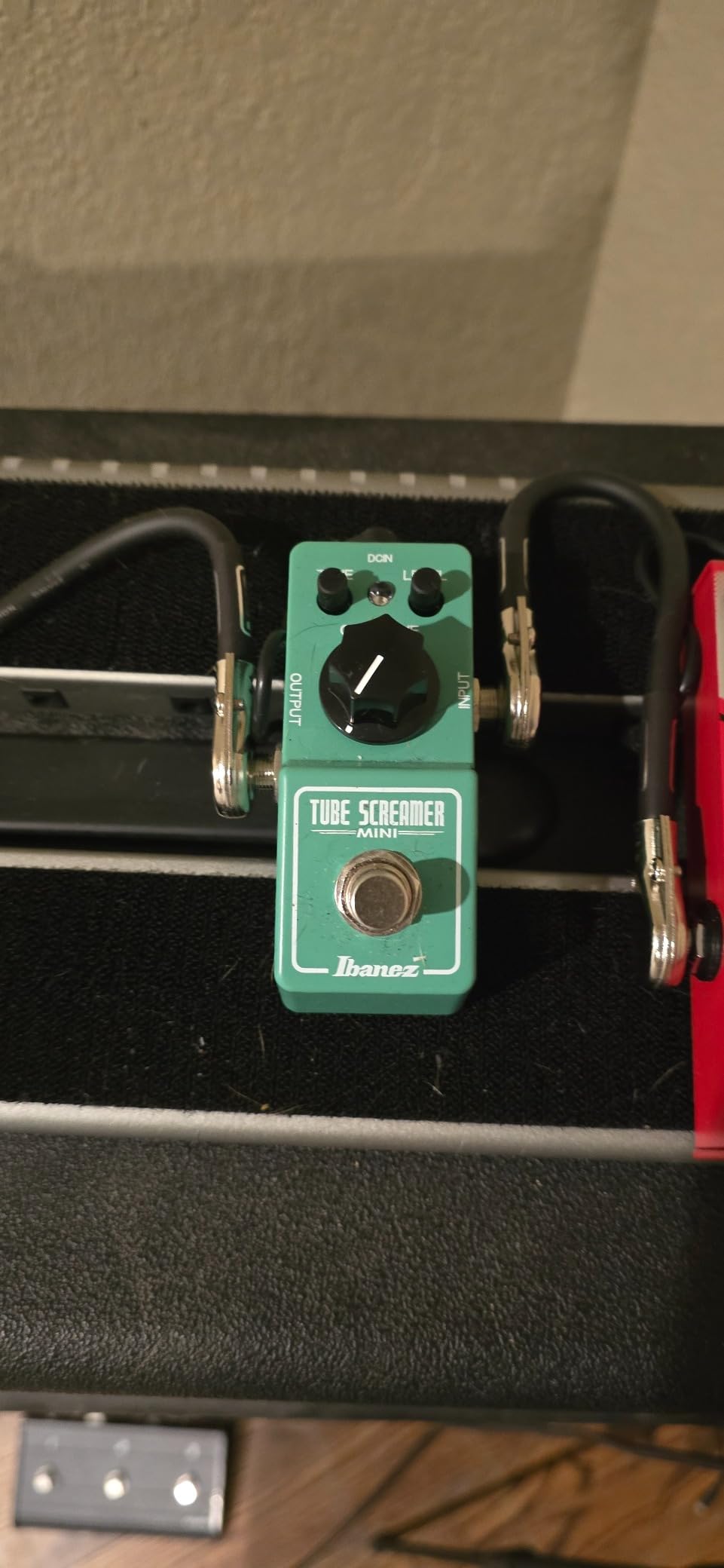
What you gain and what you lose by going mini
You gain board space and you keep the tone. What you lose is internal voicing flexibility. The full-size series offers more headroom, and if you run the mini into an already-hot amp you will reach its ceiling sooner.
For blues this is rarely the deciding factor. Low-gain push and rhythm work is where the mini spends most of its time, and there it behaves exactly like its bigger sibling.
Plan your power
The most common practical complaint is that the mini format needs a separate 9V power adapter. It draws 100 milliamps, so it will not run from a passive daisy chain comfortably. Sort that out before the rehearsal, not at the rehearsal.
Compared with the full-size TS9, the mini makes sense when board real estate is the binding constraint. Otherwise the TS9 is the better buy.
11. JHS Pedals Bonsai 9-Way Screamer: nine vintage circuits in one box
JHS Pedals Bonsai 9-Way Screamer Overdrive Guitar Effects Pedal, Green
Nine selectable Screamer variants
Rotary mode selector
12.8 ounces
6 x 3 x 3 inches
Limited lifetime warranty
Pros
- Covers classic vintage and rare Screamer variants in one box
- Mode-specific components actually engage on each setting
- Compact and well made
- Limited lifetime warranty
Cons
- Costs about as much as two vintage style Screamers
- Several modes sound very similar to each other
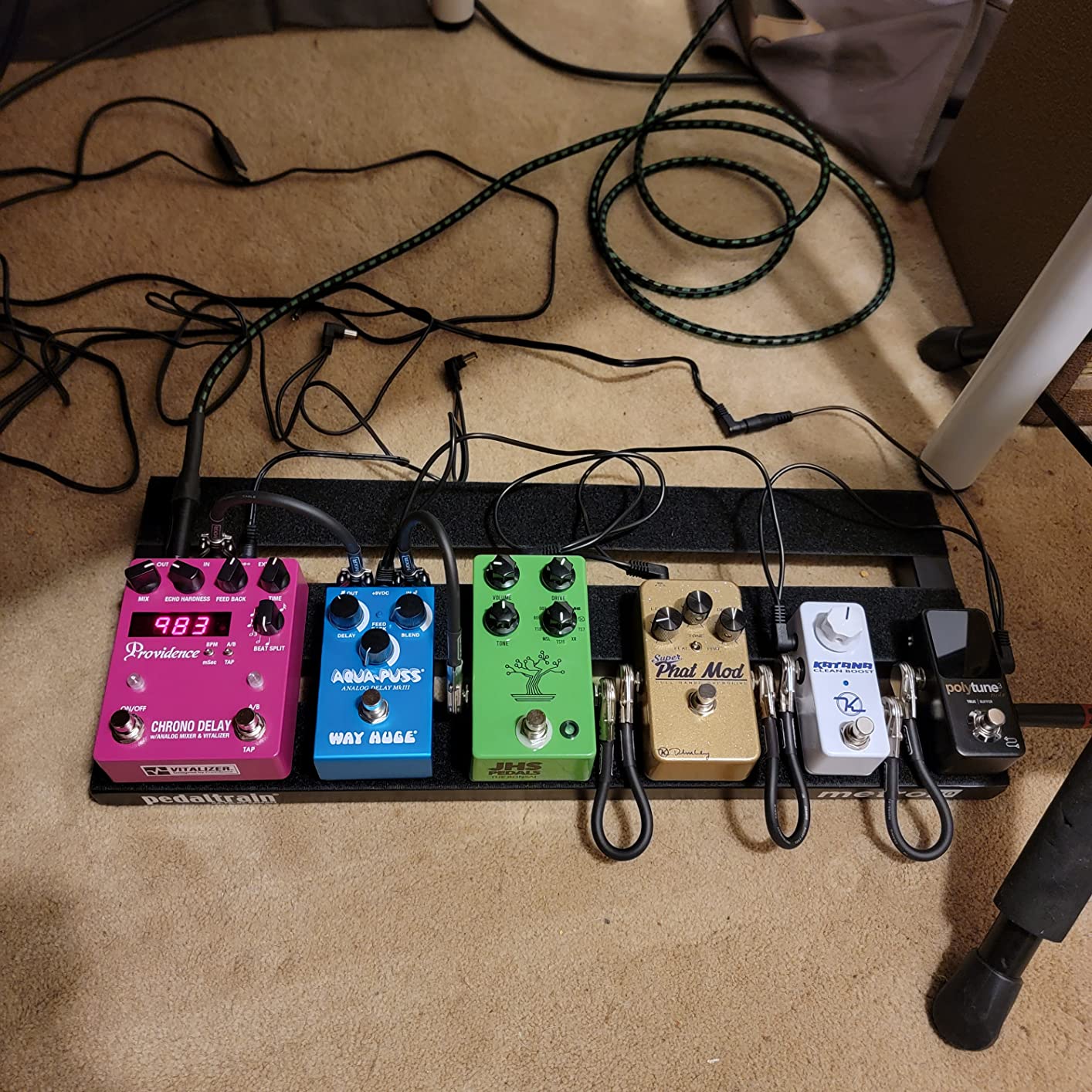
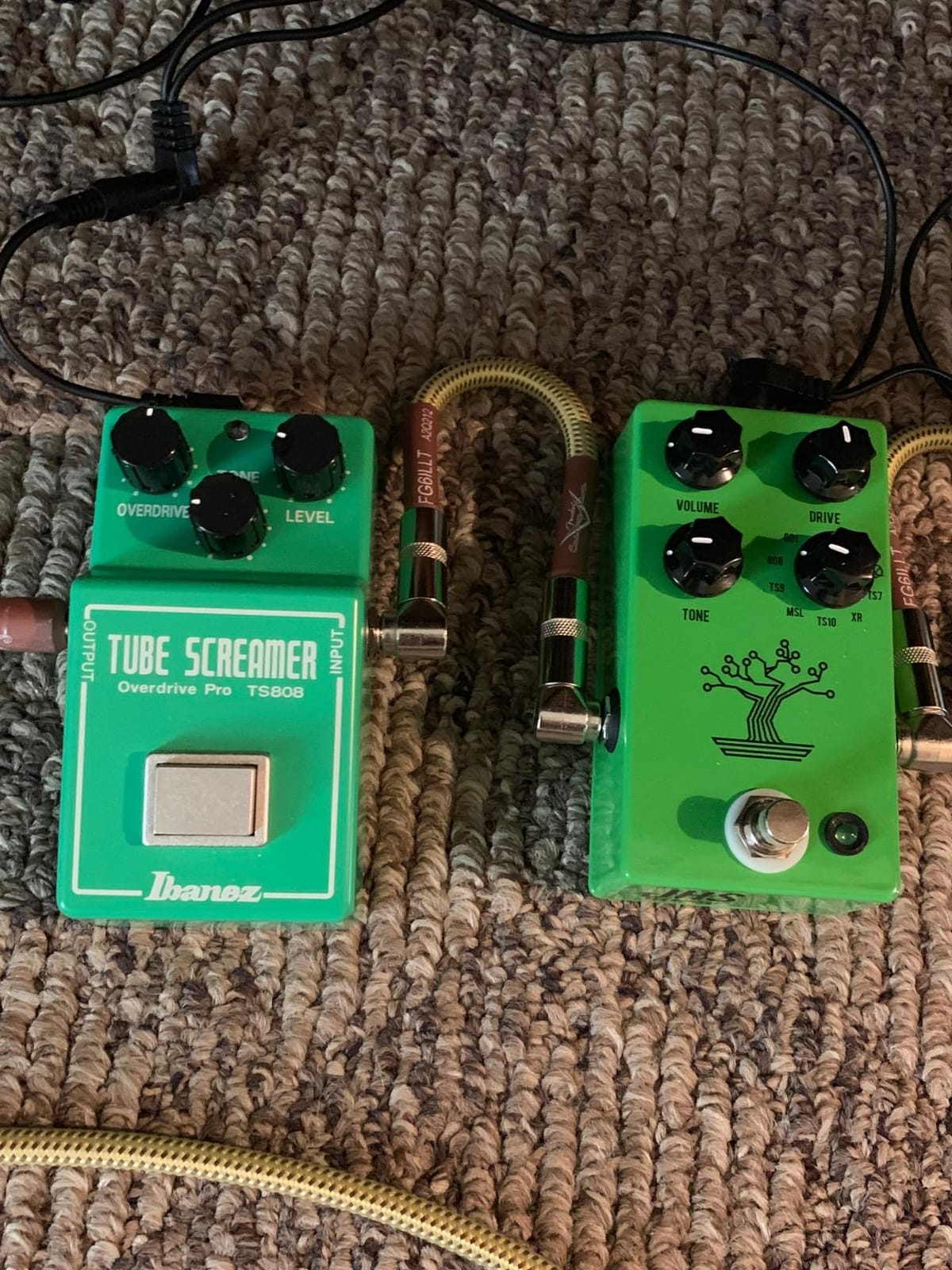
The Bonsai is a tribute to the Tube Screamer with nine selectable variants on a rotary knob. The claim is exact replications rather than emulations, with mode-specific components actually switching in for each original unit.
That is the appeal. Instead of chasing several vintage Screamers, you get the range in a single box, from the TS10 through to modified 808 style voicings. Enthusiastic owners value the option to A/B against a TS9 or TS10 they already own.
At 12.8 ounces it is a normal stompbox, and JHS backs it with a limited lifetime warranty. Seventy-nine percent of owners give five stars, with 6 percent at one star, so the response is genuinely split.
The sceptical view is worth hearing. Owners rate it at roughly 85 to 90 percent of the original pedals’ sound, and note it is not a full substitute for recording with the real units. That is a fair expectation for any single pedal covering nine circuits.
Is nine modes too many for blues
For most blues players it is more than they need. A TS9 sound, a warm 808 sound and a clean boost cover almost everything the genre asks for. The extra modes matter most if you play in several bands with different tones.
The complaint that several modes sound very similar is the one that appears most in reviews. If you already know which vintage Screamer you want, buying a single pedal that nails that circuit is usually the better use of the budget.
Where it earns its place
It earns its place as a sampler. Players moving from blues to fusion to classic rock can find a different voicing without buying again. The limited lifetime warranty reduces the risk of committing to a circuit you may not love.
It is priced near or above the cost of two vintage style Screamers, so it is a specialist choice rather than a first blues pedal.
12. Donner Dumbal Drive: Dumble style voicing on a tight budget
Donner Dumbal Drive Overdrive Pedal for Electric Guitar – Dumble Style With 2 Band EQ Boost Effect, Pure Analog True Bypass
Dumble ODS style overdrive
GAIN VOL BASS and TREBLE controls
260 g
4.5 x 2.1 x 2.6 inches
True bypass
Pros
- Classic Dumble ODS style voicing with a creamy smooth texture
- Four controls give real sound shaping
- Three modes from smooth to bright
- Light and compact housing
Cons
- Power supply is not included
- Needs an EQ pedal in front to get the familiar Dumble hump
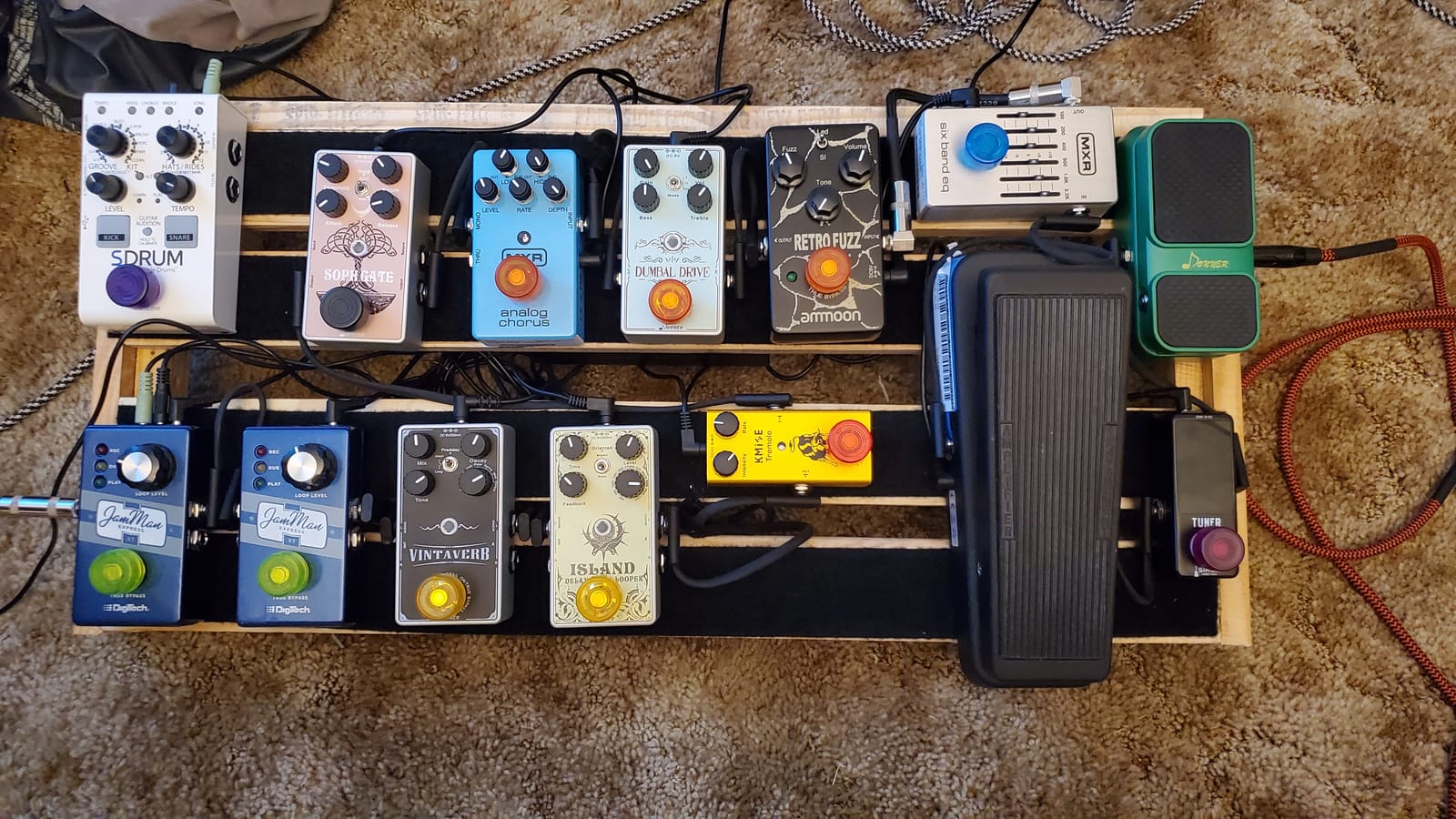
The Dumbal Drive is based on the sound of the Dumble ODS amps, which is the amp behind a lot of early Texas blues. Owners describe the result as creamy and smooth with a distinctly vintage texture.
Unlike most three-knob overdrives, it gives you gain, volume, bass and treble. That fourth knob matters on a Dumble-style circuit because the low mids are the whole point of the sound.
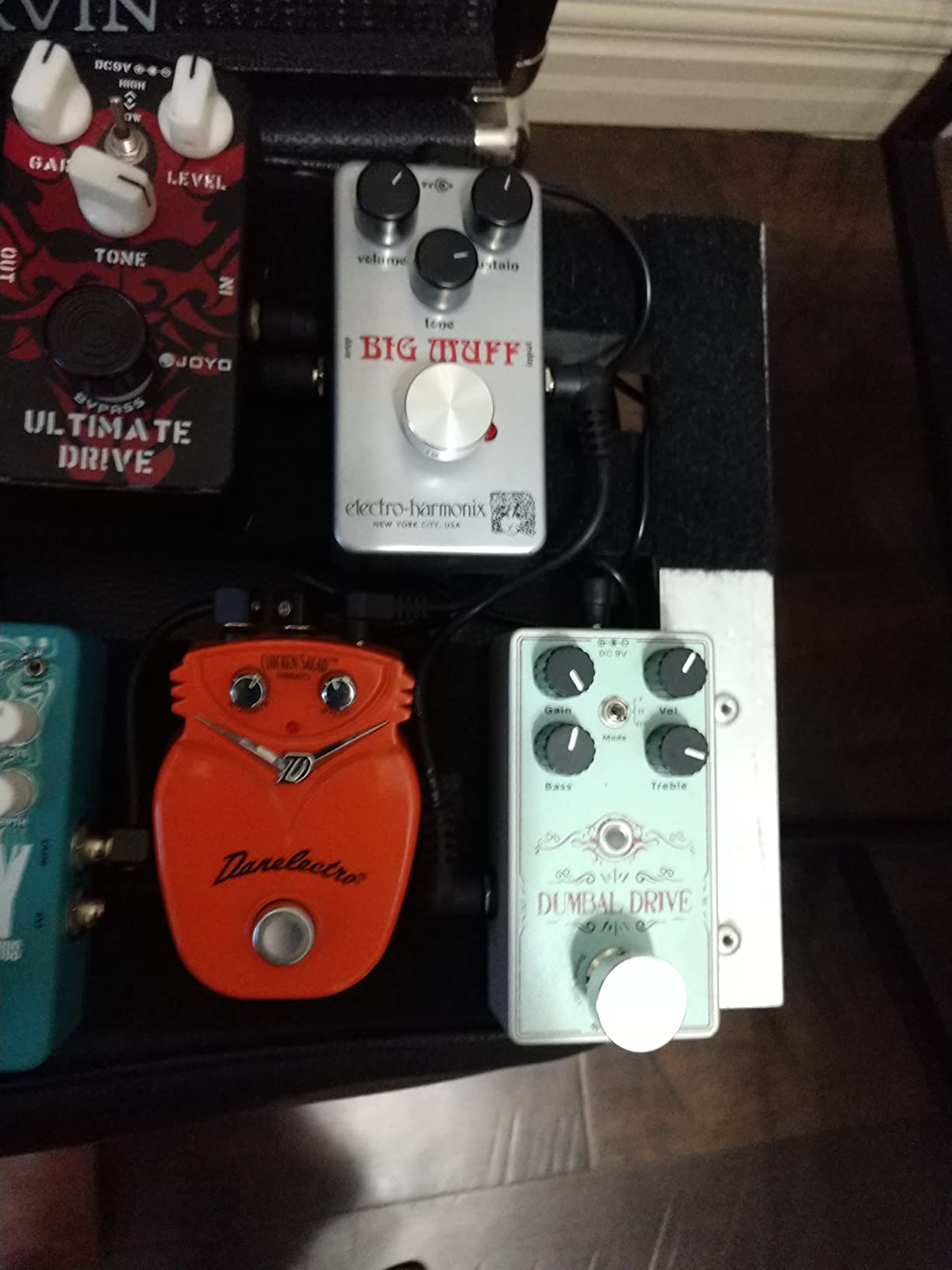
Three modes on a selector range from smooth through to bright territory. True bypass keeps the signal intact with no popping, and the housing is light at 260 g for a pedal with this much shaping.
The dynamic range and headroom get specific praise. There is plenty of sustain available without the circuit needing to be pushed hard, which suits clean-amp work at bedroom volume.
Getting the Dumble mid hump
The honest limitation appears in the reviews and we would repeat it here. Without an EQ pedal in front, the tone can read as plain. The familiar Dumble midrange hump is not built into the circuit.
Push the bass and treble up, keep the gain moderate, and it moves closer to the ODS character. If you already run a boost or an EQ, that limitation mostly disappears and the four controls start to pay for themselves.
How it compares to the rest of this list
The rating is 4.3, the lowest figure on this list, with 63 percent five-star and 22 percent four-star ratings. Buyers still praise the Dumble voicing and the mode switching, so the rating reflects plainness rather than a fault.
For players chasing a Texas blues tone on a tight budget, it is a cheap way to find out whether Dumble style voicing suits you. If you want more polish and less shape-shifting, the Boss BD-2 is the safer buy.
How to Choose a Blues Overdrive Pedal in 2026
Overdrive, distortion and fuzz are different animals
Overdrive clips a low-to-medium signal and re-amplifies it, leaving plenty of headroom and dynamic response. Distortion uses heavier clipping and pre-emphasis to produce more compressed, sustained tone. Fuzz clips so hard that it squares off the waveform and produces gated, unstable sounds.
Blues needs the middle option. You want your note attack, your vibrato and your picking dynamics to survive into the broken tone. If a pedal hides your picking, it is doing distortion work.
Clipping style is the part most players do not think about. Asymmetrical clipping, like the Boss SD-1 uses, produces mostly even-order harmonics that sound warmer and more musical. Symmetrical clipping, like the Electro-Harmonix East River Drive, generates odd-order harmonics that add bite and edge. Silicone diodes get the job done reliably, while germanium diodes add compression and a softer vintage feel but vary from unit to unit.
The five blues overdrive circuit families
Tube Screamer. The Ibanez TS808 of 1976 and the TS9 that followed shaped the vocabulary of blues guitar. The mid hump pushes the middle of the spectrum forward and the low end tightens, which makes the signal cut through. The Maxon OD808 and the Electro-Harmonix East River Drive share the family.
Blues Driver. Boss launched the BD-2 in 1995 as a Tube Screamer alternative with a different clipping approach. It is more three-dimensional and less mid-focused, which makes it at home on rhythm work as well as leads.
Blues Breaker. Marshall’s 1966 circuit is the other foundational blues overdrive, based on the JTM style amps. It is fuller and more compressed than a Screamer, with more gain available. None of the twelve pedals here is a straight Blues Breaker, which is worth knowing if you want that sound.
Klon and Timmy. Transparent circuits derived from the Klon Centaur aim to add gain and sustain without imposing their own voice. The Timmy and Paul Cochrane style pedals use reversed tone controls that confuse newcomers. The JHS Morning Glory sits in this camp in spirit, adding grit and headroom without mid push.
Dumble and Tweed. Dumble style circuits aim for the fat, smooth, slightly saturated sound of the Dumble ODS and tweed amps. They need more bass control than a standard three-knob pedal gives you, which is why the Donner Dumbal Drive includes bass and treble.
Match the pedal to your guitar
Single coils need mid help. A Strat or a Tele into a clean amp is thin and polite on its own, so a mid-hump circuit such as a TS9 or the East River Drive adds the bite blues requires.
Humbuckers already carry midrange. With those, a transparent pedal such as the Morning Glory adds grit without doubling up on the mids. The BD-2 also works well because it swells the low end rather than pushing a peak.
Match the pedal to your amp and gain staging
Marshall-style amps punish pedals that cut too much low end, so on those the East River Drive or the Maxon OD808 behaves better than a Screamer. Fender and Vox cleans want the opposite, and mid-focused circuits shine there.
At low bedroom volume, remember that solid-state amps need more gain from the pedal while tube amps need less. Turning up the amp to hear a small tube combo defeats the point of the pedal.
Which pedal suits your budget
The two Donner pedals cover the budget end, and both are honest entry points rather than throwaway toys. The Blues Drive gives you two modes and a mid push for very little. The Dumbal Drive gives you four knobs and a Dumble flavour. Neither competes with a boutique pedal on refinement.
At the middle of the range, the BOSS SD-1 and the Electro-Harmonix East River Drive both cost less than the big names while keeping the build and warranty respectable. The Ibanez Tube Screamer Mini is the value play if board space is your problem.
A clean solid-state amp wants a different pedal from a tube amp already at the edge of breakup. With a clean amp, choose more gain from the pedal. With a dirty tube amp, choose headroom and use the pedal as a push.
For tube amps, our ordering is simple. Compressor first, then the clean boost, then the overdrive, then modulation and time-based effects. Anything with a delay in it should follow the drive so repeats are already saturated.
Six steps to dial in any blues overdrive
Set your amp to the cleanest channel you have, or to the edge of breakup if that is where it lives.
Set the pedal gain to its lowest position and the tone to the middle.
Set the pedal level to match your amp, then pull it back until it does not overwhelm.
Turn the guitar volume down a little and check that the tone cleans up without losing its character.
Increase gain slowly until the amp moves into edge-of-breakup territory.
Sweep the tone knob last, from low to high, and note where the tone stops being warm.
A beginner path to your first blues overdrive
Step one, name your amp situation honestly. If you play through a clean solid-state combo, you need a pedal with more gain on board, and a Screamer-family or Blues Driver circuit will carry you further. If you own a tube amp that already breaks up at moderate volume, buy something transparent and use it as a boost.
Step two, pick one circuit and live with it for a month. Players who cycle through five pedals in their first year end up owning none of the sound. Every family listed above is a defensible choice for blues.
Step three, dial it in before you judge it. Most disappointing blues overdrive reviews trace back to a bad starting setting rather than a bad pedal. Use the six steps above and give it two weeks of playing before you decide.
Matching pedal to blues sub-genre
Texas blues. Blues Breaker circuits and Dumble style voicings dominate, but on this list the Donner Dumbal Drive and the JHS Morning Glory into a tweed-style amp get closest. Clean single coils with the guitar volume doing the work.
Chicago blues. Heavier gain and a mid-forward lead. The Ibanez TS9 handles rhythm comping here, and the JHS Bonsai covers the more aggressive 808 style voicings when you need them.
British blues. Screamer-family circuits pushed into a Marshall-style amp. The TS808 or the Maxon OD808 works as a boost in front of a dirty channel here.
West Coast and jazz blues. Transparent, headroom-rich circuits. The JHS Morning Glory is the clearest example, with the Boss SD-1 handling light rhythm crunch.
Jump blues. Sharper and brighter, which suits the East River Drive or the SD-1 at moderate gain. Clean amps work well for this style.
Building your first blues pedalboard
If you are still working out what a pedalboard needs before you buy a single drive, our roundup of the best overdrive pedals covers the wider range, and our best compressor pedals guide covers the other half of a typical blues signal chain. For the other effect categories players end up owning, we have also written up octave pedals, loop pedals and rudder pedals, though none of those are essential for a first blues setup.
Pedal order matters less than clean power. Buffered and true bypass designs behave differently in front of long cable runs, so check your bypass type against your board layout before you blame the pedal for a thin sound.
If you play octaves or lead lines and want a harmonic layer under them, a looping pedal is a separate category, but it changes how an overdrive sits in the chain so it is worth reading that guide before adding one.
Frequently Asked Questions
What is the best overdrive pedal for blues music?
The Boss BD-2 Blues Driver is the best all-around overdrive for blues. It balances midrange lift, low-end swell and touch sensitivity well enough to handle rhythm, lead and boost duties on a clean or already-breaking-up amp. The Ibanez TS9 is the pick if you want a stronger mid hump, and the JHS Morning Glory is the pick if you want transparency.
What kind of overdrive is a blues driver?
A Blues Driver is a mid-focused overdrive circuit introduced by Boss in 1995 with the BD-2. It clips a low-to-medium gain signal asymmetrically and re-amplifies it, producing a warm, dynamically responsive tone with more low end than a Tube Screamer. It suits both clean amps and tube amps sitting at the edge of breakup.
Do blues players use overdrive or distortion?
Blues players overwhelmingly use overdrive. Blues lives between clean and distortion, so touch sensitivity and note dynamics matter more than compression and sustain. Overdrive pushes an amp toward edge-of-breakup while leaving your picking attack intact. Distortion is used for slide, for aggressive rhythm work and for covering a band in a loud room.
Should I run an overdrive into a tube amp?
Yes. Running an overdrive in front of a tube amp is the standard blues setup, because the pedal supplies consistent gain and touch response while the amp supplies its own warmth and headroom. Set the amp to edge-of-breakup and keep the pedal gain low. With a clean amp you will run the pedal gain considerably higher.
What 5 pedals should every guitarist have?
For blues specifically the practical five are an overdrive, a clean boost, a compressor, a tuner and a delay or reverb. Most players describe one drive plus one boost covering the majority of their needs. Our general overdrive and compressor guides cover the main categories in more detail.
Final Verdict for Blues Players in 2026
The Boss BD-2 Blues Driver wins this roundup because it plays rhythm, lead and boost duties well on the same three knobs, with no mode switch to confuse an audience mid-song. Buy the Ibanez TS9 if you want more mid hump, the JHS Morning Glory if you want your amp’s voice to dominate, or the Donner Blues Drive if you are starting out.
Whatever you choose, keep the gain low, let the guitar volume do the work, and give the pedal a few weeks before you decide it is wrong. That dial-in time is where most disappointing blues overdrives turn out to be fine.