
The Sonos Era 100 is the speaker most people should start with, and it heads this list of picks worth watching through Amazon’s Prime Big Deal Days sale because it does the most for the least: room tuning and multi-room flexibility in a body small enough for a kitchen counter.
Two other picks serve very different homes. The Sonos Beam Gen 2 is the compact home theater option for smaller living rooms, and the Sonos Roam 2 is the one that travels. The event runs October 6-7, 2026, and prices move through it, so check the button on each card for the current figure rather than a number written here.
Table of Contents
Our Top 3 Picks for Best Amazon Prime Big Deal Days Sonos Deals


The Era 100 takes the top spot on the strength of owner feedback rather than spec-sheet drama. It carries a 4.4 rating across more than 2700 reviews, the deepest well of real-world use in this group, and owners consistently describe bass and vocal clarity that other speakers at twice the size struggle to match.
The Beam Gen 2 earns its place for anyone whose main problem is television audio in a room that cannot take a long bar. Its 25.6 inch width and two-cable setup keep it out of the way, and Dolby Atmos is handled in software rather than with upfiring drivers, which is a compromise worth knowing about before you buy.
The Roam 2 is the outlier of the three, and the reason it is here. At 0.42 kg it is the lightest speaker in this roundup by a wide margin, it is IP67 waterproof and dustproof, and it still joins the same Wi-Fi multi-room system as everything on this page.
Best Amazon Prime Big Deal Days Sonos Deals Compared (2026)
| Product | Specifications | Action |
|---|---|---|
| Sonos Era 100 |
|
Check Deal Price |
| Sonos Beam Gen 2 |
|
Check Deal Price |
 Sonos Roam 2 Sonos Roam 2 |
|
Check Deal Price |
 Sonos Amp Sonos Amp |
|
Check Deal Price |
 Sonos Era 300 Sonos Era 300 |
|
Check Deal Price |
 Sonos Ace Sonos Ace |
|
Check Deal Price |
 Sonos Five Sonos Five |
|
Check Deal Price |
 Sonos Ray Sonos Ray |
|
Check Deal Price |
 Sonos Move 2 Sonos Move 2 |
|
Check Deal Price |
 Sonos Arc Ultra Sonos Arc Ultra |
|
Check Deal Price |
Two fields in that table deserve a note. Type is the broadest sorting tool here, because a soundbar and a portable speaker are rarely in direct competition. Standout is the single spec most often cited by owners, and it is the one worth checking against your own room before you look at anything else.
How We Chose
We compared the specifications that separate these models: driver count and layout, channel configuration, wireless and wired connectivity, battery figures, physical dimensions and weight. Alongside those we read owner reviews on Amazon, focusing on the complaints that repeat rather than the single glowing review. Data was checked in October 2026, just before the event opens.
1. Sonos Era 100: Editor’s Choice for a First System
Sonos Era 100 – Black – Wireless, Alexa Enabled Smart Speaker
Type: Smart speaker
Standout: Dual tweeters
Weight: 2020 g
Pros
- Deep bass from a compact body
- Wide stereo separation
- Trueplay tunes the room automatically
- Next-gen dual-tweeter array
Cons
- Voice control needs a two-word wake phrase
- Sonos app can be slow to navigate
- Not water resistant
This is the speaker most people should start with. At 2020 g and 7.22 inches tall, it fits a shelf, a counter or a bedside table without rearranging anything, and it still produces bass that owners regularly describe as deeper than they expected from something this size.

Sound comes from a next-generation dual-tweeter arrangement with a 25 percent larger midwoofer than the speaker it replaced, driven by a processor Sonos says is 47 percent faster. Trueplay measures the room and adjusts the equalisation on its own, which matters most in a rectangular living room with hard floors.
Owners mention one specific benefit repeatedly: stereo separation. Two angled tweeters pull the sound wider than a single-driver speaker of similar price manages, so a single Era 100 sounds wide enough for most kitchens and offices. For a second room later, the same speaker drops into the same app.

The trade-off is the software. Alexa on this model needs the two-word wake phrase, and it will not reliably control smart lights. Reviewers also report the Sonos app running slowly at times, and a smaller number hit Wi-Fi setup problems on the first attempt. None of that is a dealbreaker, but it is the reason the app earns a place in the buying guide.
Against the Sonos Five, the Era 100 gives up raw low-end output and some of that wide soundstage in exchange for being a fraction of the size and weight. Against the Roam 2, it wins indoors and loses every outdoor argument. Good to know: line-in works through a sold-separately adapter, not a built-in socket.
2. Sonos Beam Gen 2: Best for Compact Home Theater
Sonos Beam Gen 2 – Black – Soundbar with Dolby Atmos
Type: Soundbar
Standout: Dolby Atmos
Width: 25.6 in
Pros
- Clear dialogue and solid bass for the size
- Atmos adds real immersion
- Setup often under five minutes
- Doubles as a music speaker
Cons
- No HDMI pass-through for extra devices
- No Bluetooth audio input
- Trueplay needs an iPhone
A 25.6 inch wide, 2.7 inch tall bar that disappears under a television and still puts a soundstage in the room. The Beam Gen 2 is the pick for anyone whose living room cannot host a 46 inch Arc Ultra, and it is the model Sonos built for smaller spaces.

Owners highlight clear dialogue reproduction and richer bass than the size suggests, and Dolby Atmos adds a layer of height that makes films and games feel wider. Setup through the Sonos app is quick, and TV remote control worked out of the box on the modern sets most people own. It also plays music when the TV is off, which quietly makes it a second speaker rather than a bar.
There are three real limitations. There is no HDMI pass-through, so a second HDMI device needs an adapter. There is no Bluetooth audio input, which means playback goes through AirPlay 2 or Wi-Fi streaming. And there are no upfiring drivers, so the Atmos effect is processed rather than physically produced by height speakers above the listening position.

Compared with the Era 100, the Beam is the better television partner and the worse music-only speaker. Compared with the Arc Ultra, the gap is dramatic: the Arc Ultra runs 9.1.4 channels with 14 internal circuits, while the Beam handles two channels with software. Pick the Beam if your room is small, and pick the Arc Ultra if the room is not.
Good to know: Trueplay tuning requires an iPhone and cannot be completed on Android or an iPad. Owners also report that the built-in voice microphone occasionally misses commands, so the TV remote is the more reliable daily control.
3. Sonos Roam 2: Best for Travel
Sonos Roam 2 – Black – Portable Waterproof Bluetooth Speaker
Type: Portable
Standout: IP67 build
Weight: 0.42 kg
Pros
- Lightest speaker here at 0.42 kg
- IP67 waterproof and dustproof
- Automatic Trueplay per environment
- Stands upright or on its side
Cons
- Limited volume and little bass at high levels
- Battery life often under the stated 10 hours
- Setup can need a factory reset
The Roam 2 is the reason to buy Sonos for someone who listens away from a shelf. It is the lightest speaker in this roundup by a wide margin at 0.42 kg, and it carries an IP67 rating for waterproofing and dustproofing, so a poolside table or a muddy campsite is not a problem.
Owners love the clarity for its footprint and the fact that it can stand upright or lie on its side. Automatic Trueplay re-tunes for each new environment, which matters when the speaker moves from a desk to a bathroom to a garden table in one day. Pairing over Wi-Fi or Bluetooth is quick.
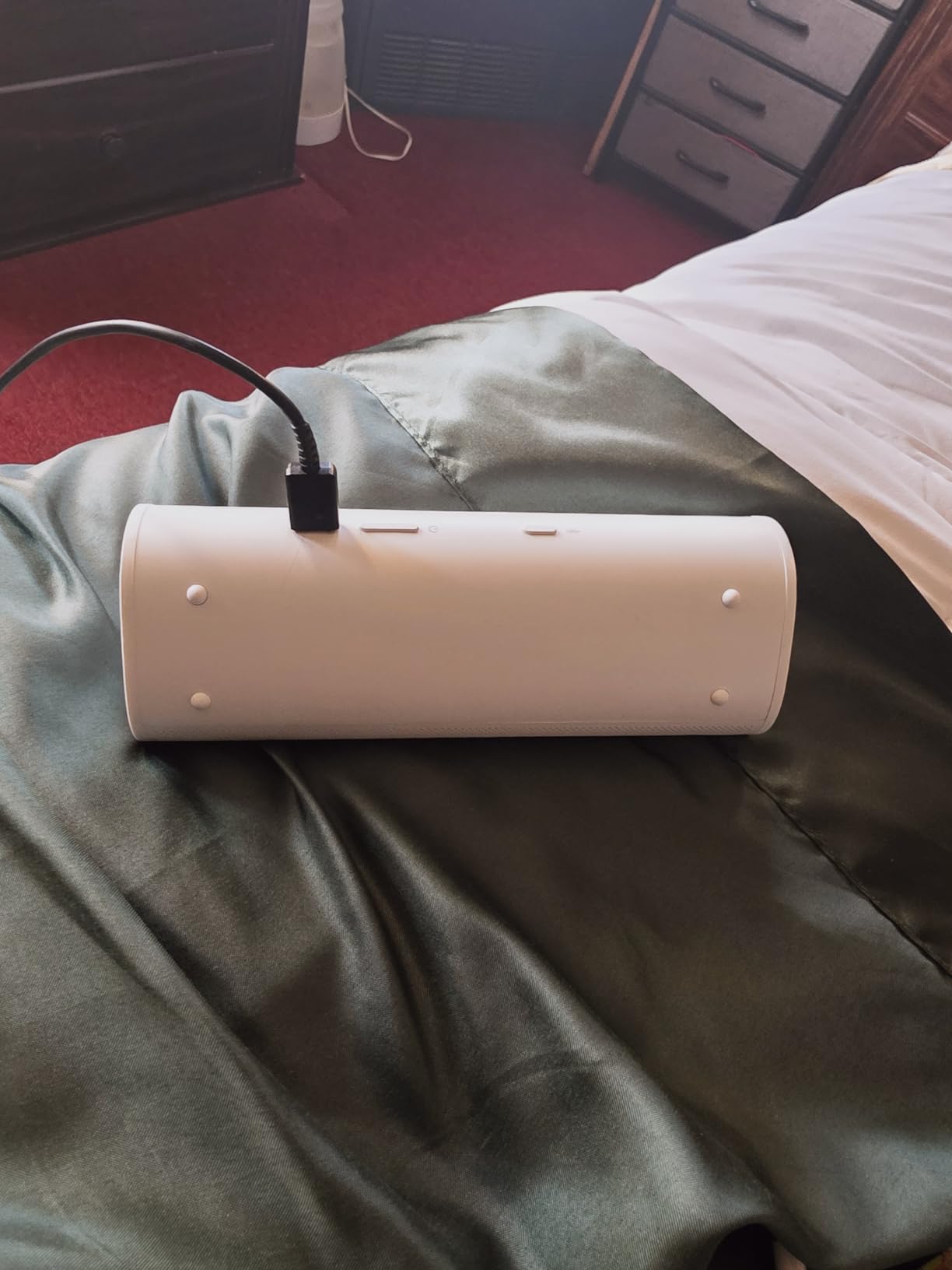
The complaints are consistent enough to plan around. Maximum volume is modest and the bass largely disappears at high levels, so it will not carry a large outdoor gathering. Several owners report real battery life well under the advertised 10 hours, so plan charging around a full day away from a socket.
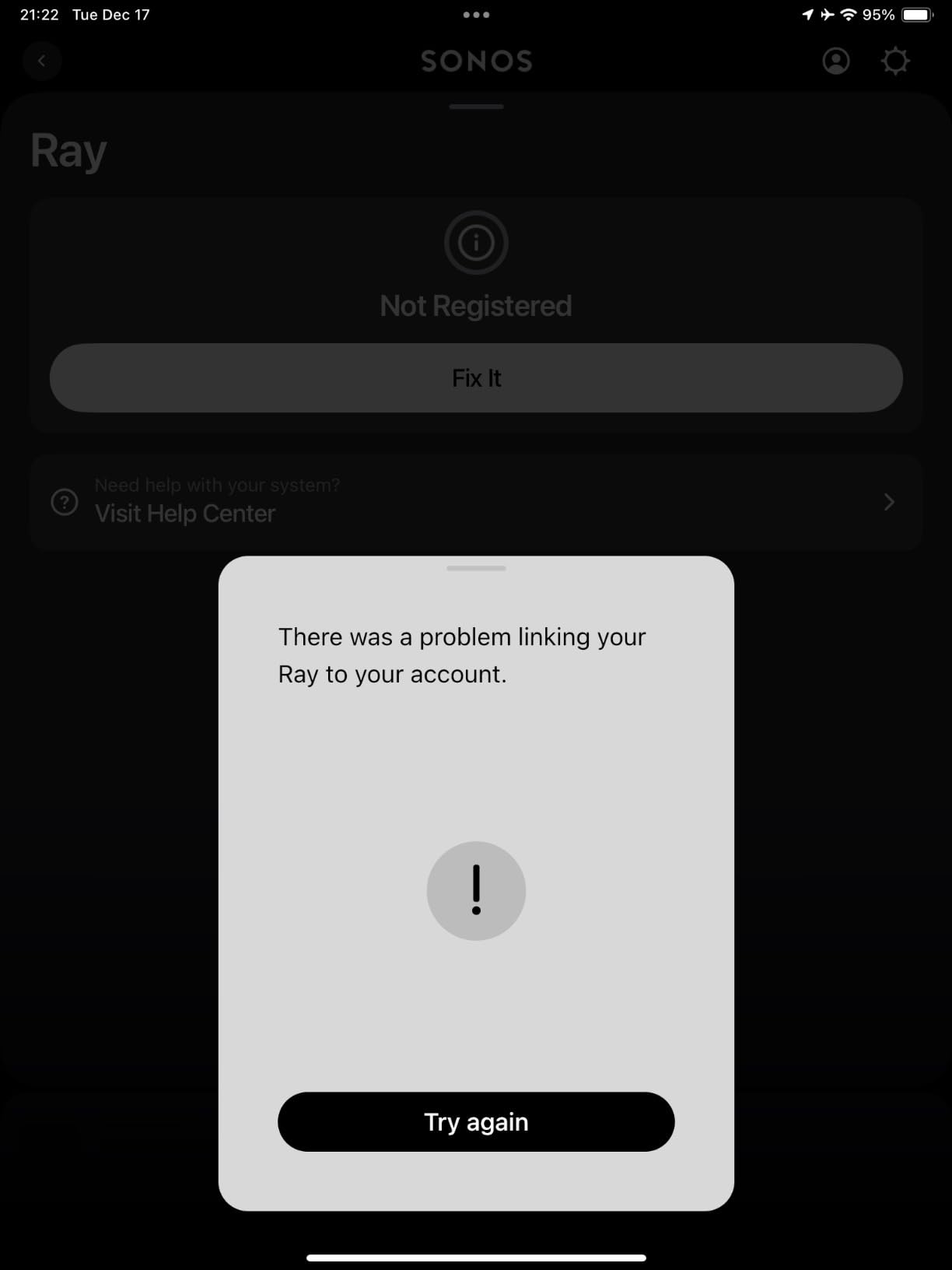
The setup friction is the part most worth knowing in advance: a number of owners describe glitchy registration in the Sonos app that needs a factory reset to clear. Set aside ten quiet minutes for it rather than doing it the night before the event ends.

The Move 2 makes the opposite choice, staying louder and lasting longer while giving up the packability. Indoors the Era 100 wins on everything except sound quality. Good to know: 45mm drivers describe the honest limits of the design, with clarity first and low end a distant second.
4. Sonos Amp: Best for Turntables and Wired Speakers
Sonos Amp – Black
Type: Amplifier
Standout: 125W output
Weight: 2.1 kg
Pros
- Runs turntables and wired speakers
- Digital input avoids analog conversion
- Wall or rack mountable
- Powers outdoor speakers
Cons
- Day-to-day control needs the app
- No display or front-panel controls
- App configuration is not intuitive
Not every Sonos buyer wants a speaker. If you own a turntable, a stereo pair or a set of outdoor speakers, the Amp is the piece that pulls them into the ecosystem, and it is the only amplifier on this list.
It delivers 125 watts into 8 ohm channels, handles 5.1 channel audio, and takes a direct digital input so streaming and TV audio skip an analog conversion step. That is a real signal-path improvement, and owners who care about it tend to care about it a lot. It also mounts in a rack or on a wall with a simplified port layout.
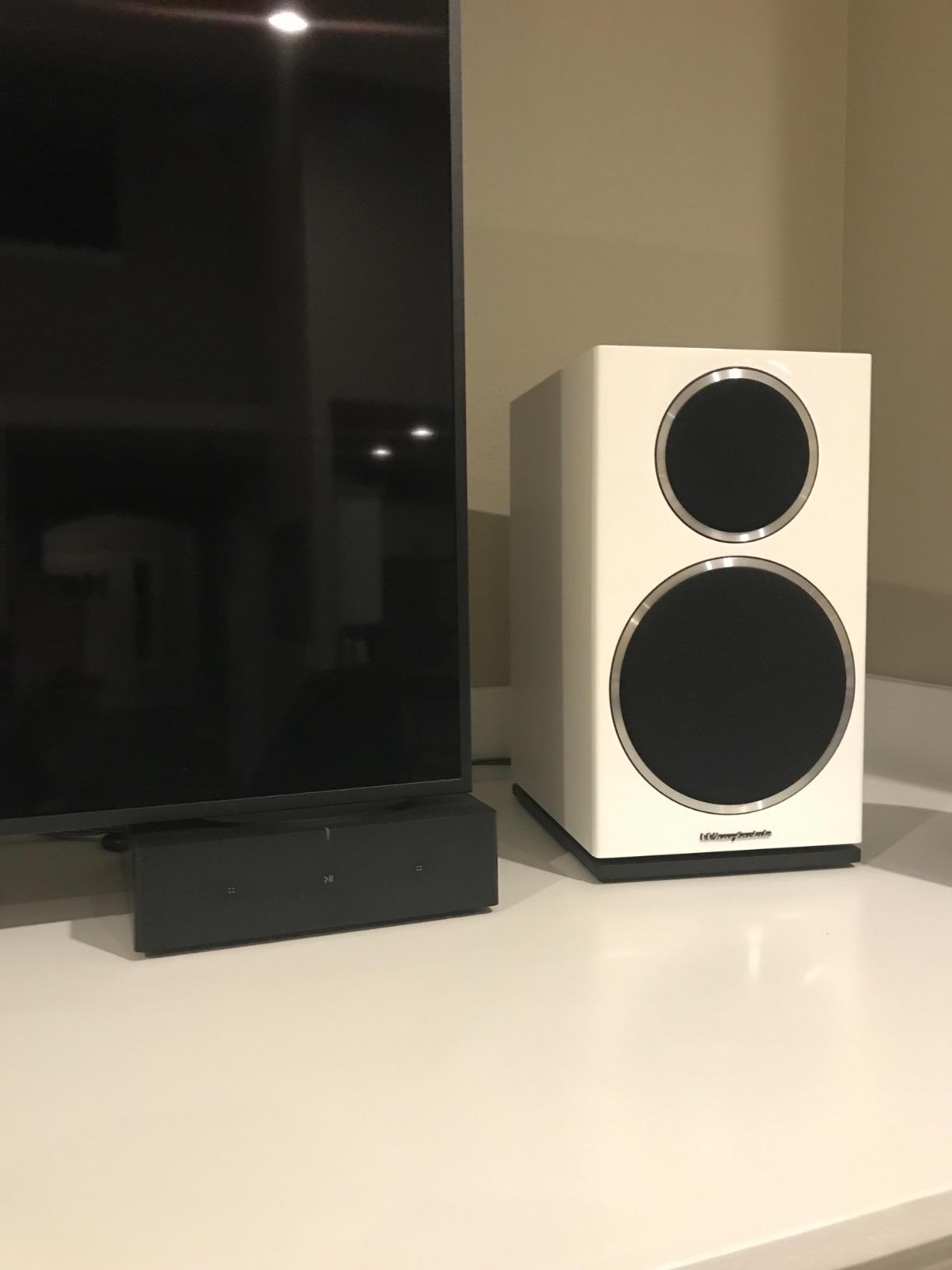
The catch is the interface. There is no display and nothing on the front panel beyond power, so volume, input selection and EQ all happen in the Sonos app, which reviewers describe as workable but not intuitive. Nothing about the signal is visible from the sofa, which is the trade for a box that costs less than the speakers it drives.
Compared with the Sonos Five, the Amp is the quieter path: the Five plays records itself through a 3.5mm line-in, while the Amp needs passive speakers wired to it. Compared with the Era 100, the Amp has no drivers of its own, so it does nothing at all until a source or a pair of speakers is attached.
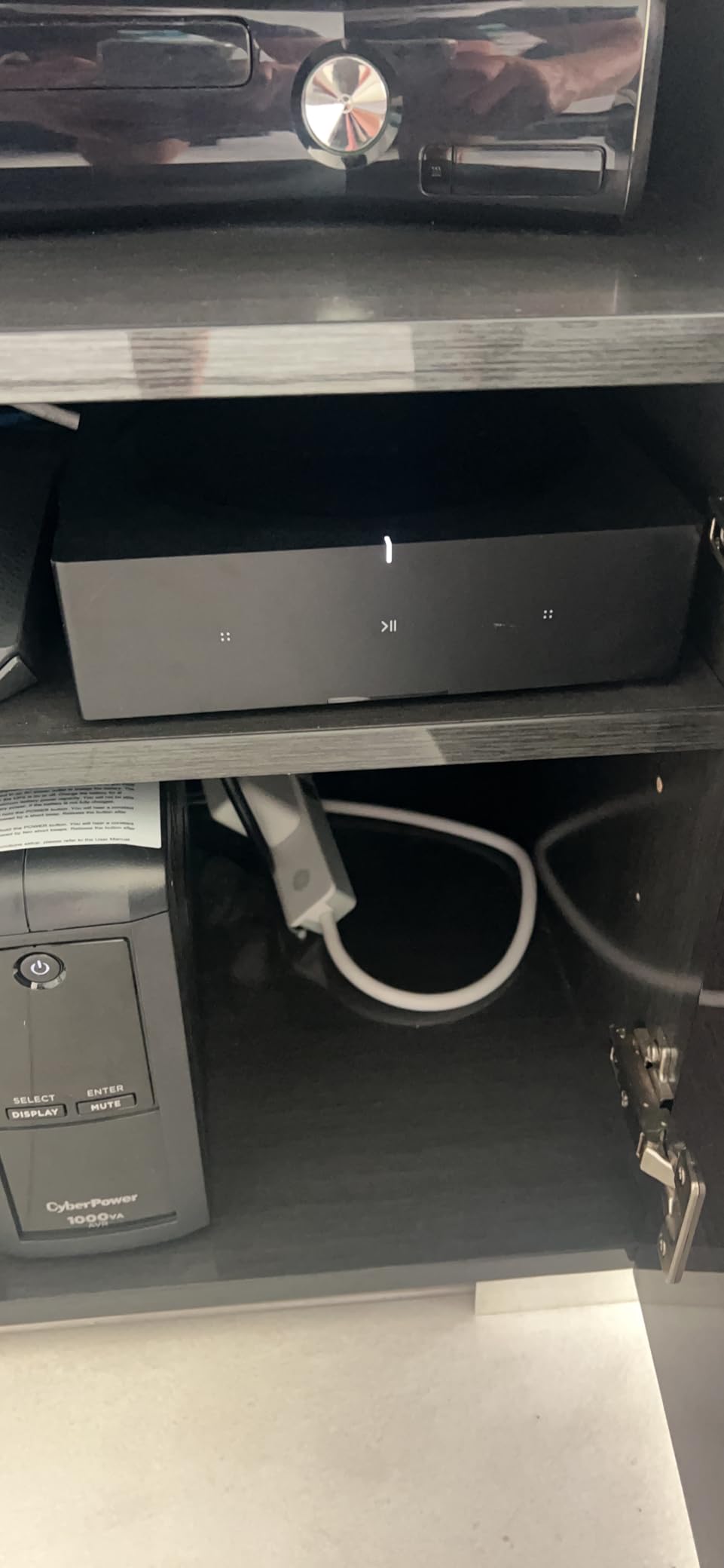
One practical point worth checking early: wireless Sonos One surrounds can be added later for home theater, which makes the Amp a sensible first purchase for someone building a system slowly rather than in one go.
5. Sonos Era 300: Best for Large Rooms
Sonos Era 300 Wireless Smart Speaker with Dolby Atmos – Black
Type: Smart speaker
Standout: Six drivers
Weight: 4470 g
Pros
- Height channel gives genuine Atmos
- Six drivers project wall to wall
- Custom waveguides widen the image
- Can act as Arc or Beam surrounds
Cons
- Bulky shape needs shelf space
- Line-In Adapter sold separately
- Bass-heavy listeners will want a Sub
The Era 300 is the standalone speaker for a big open-plan room. Six drivers fire forward, sideways and upward, and the upward-firing one produces a real height channel rather than a simulated one, which is why it earns a 4.6 rating from owners who use it for films as well as music.
It pairs with an Arc or Beam Gen 2 to form genuine multichannel surround. Custom waveguides spread the stereo image wide from a single box, so one speaker can cover a kitchen island or a living room that a pair of smaller speakers would struggle to fill.

Owners describe crisp highs, transparent mids and bass with enough headroom for normal listening, plus Bluetooth and line-in support on a flagship speaker where those used to be missing. The pairing option is the quiet superpower: buy the Era 300 now as a standalone and add a Beam or Arc later for surrounds.
Three things work against it. The cinched-waist design is genuinely bulky and needs real shelf depth. The Line-In Adapter is a separate purchase. And switching between surround and stereo music roles is less intuitive than it should be, which owners mention more than once.

For a room the Era 100 cannot fill, this is the upgrade, and it is no substitute for a soundbar when television is the priority. On pure music, the Sonos Five goes deeper on bass and wins on tuning. Good to know: Trueplay can fail if a hearing aid’s Bluetooth is active on your phone.
6. Sonos Ace: Best for Noise-Cancelling Headphones
Sonos Ace Noise Cancelling Bluetooth Over-Ear Headphones – White
Type: Over-ear headphones
Standout: 30-hour battery
Bluetooth: 5.4
Pros
- Class-leading active noise cancellation
- Comfortable for all-day wear
- Three-minute charge adds three hours
- TV Audio Swap from a Sonos bar
Cons
- No Wi-Fi for direct streaming
- Occasional one-side dropouts
- Head tracking can be distracting
Headphones are the odd one out in a speaker roundup, and the Ace earns its place because it is the one product here that travels with a person rather than a room. Active noise cancellation is the headline feature and the thing owners praise most, alongside comfort good enough for a full working day.
Battery life is listed at 30 hours with cancellation on, and rapid charging turns three minutes on a cable into three hours of playback. The physical Content Key handles volume, playback and calls without the accidental touches that touch controls suffer, and the metal joint at the earcup feels built to last.

The feature that matters most for this audience is TV Audio Swap, which moves audio from an Arc Ultra, Arc, Beam or Ray to the headphones in an instant. For two people in one room, that ends the argument about what to watch. Dolby Atmos with head tracking is supported, along with lossless audio over USB-C.
Owners do report the rough edges: intermittent one-side dropouts, difficulty pairing with the Sonos app for some people, and unexpected battery drain on a number of units with an unreliable indicator light. Head tracking can be switched off in the app if it irritates you. There is no Wi-Fi, so quality depends entirely on the transmitted source.
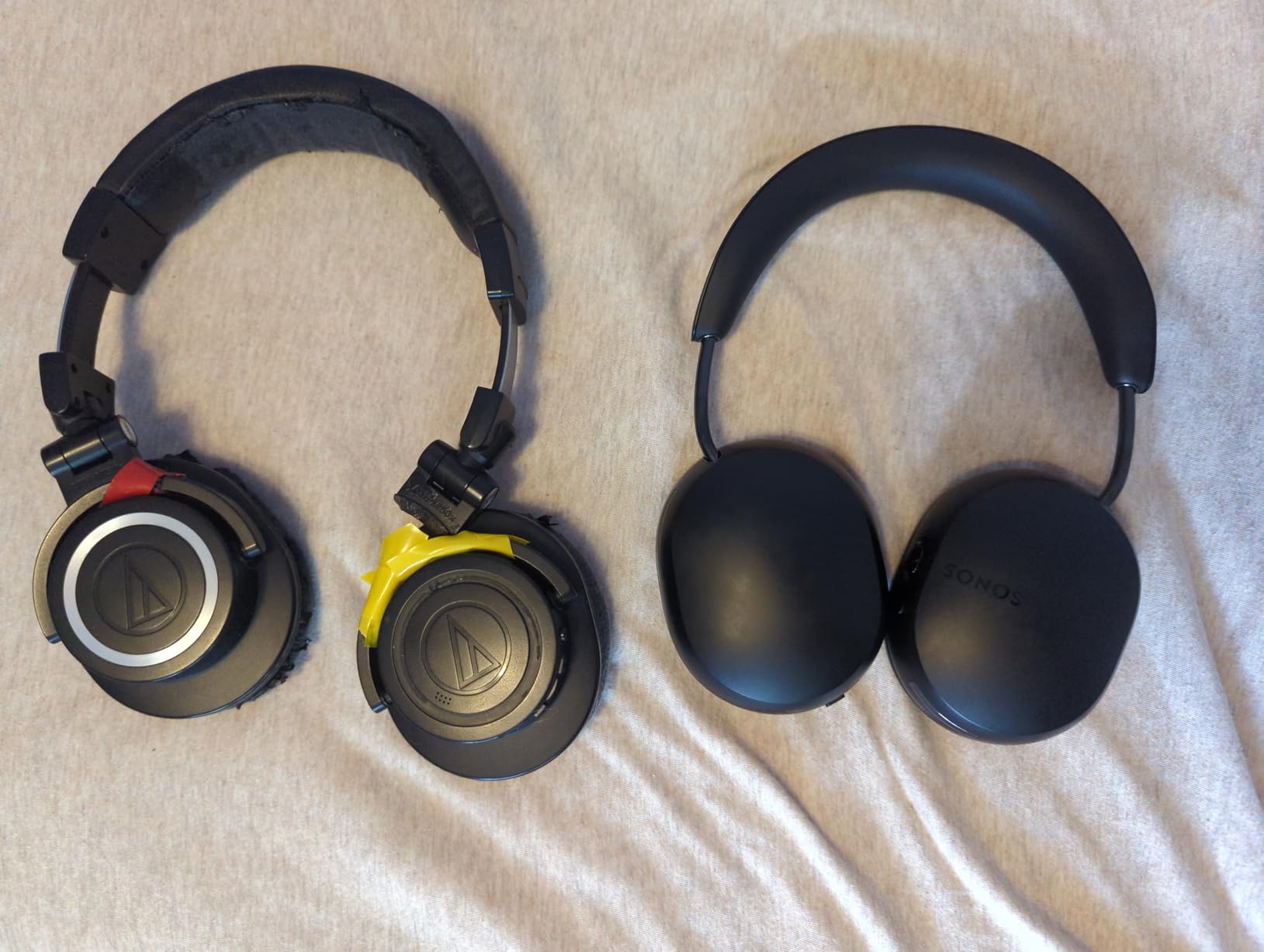
Compared with the Era 100, the Ace is what you use when the neighbours make the Era 100 impractical. Compared with the Beam Gen 2, it is the second half of a two-person setup rather than a substitute for it. Good to know: a small number of units shipped with crackling in one ear, so check the return window when it arrives.
7. Sonos Five: Best for Stereo Music
Sonos Five – Black – Wireless HiFi Speaker
Type: Wi-Fi speaker
Standout: Three woofers
Weight: 6350 g
Pros
- Three high-excursion woofers in a sealed body
- Two angled tweeters plus a centre tweeter
- 3.5mm line-in for a turntable
- Tuned by producer Giles Martin
Cons
- No Bluetooth support
- Large and heavy at 6350 g
- EQ adjustments need the app
Where the Era 300 adds height for films, the Five is built for music. Three high-excursion woofers sit in a sealed architecture, which owners specifically praise for bass that stays controlled rather than reverberating, and the whole cabinet is tuned by producer Giles Martin.
Two angled side tweeters plus a centre tweeter produce an unusually wide soundstage, and the placement logic is genuinely useful: set it horizontally for smart stereo, or stand two of them upright and they switch to automatic mono with wider separation between them.
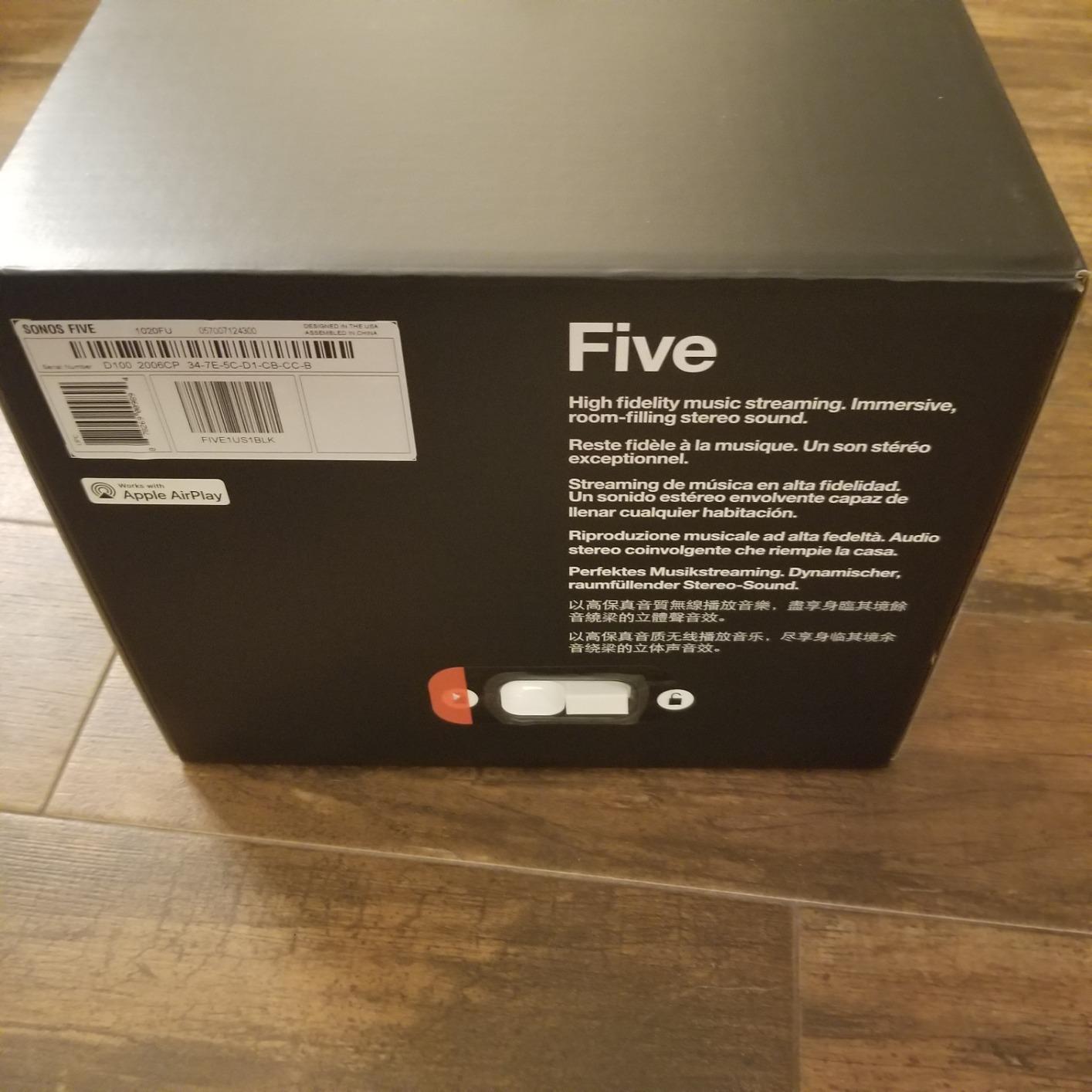
The trade-offs are physical and practical. It weighs 6350 g and measures over 14 inches wide, so it needs a substantial shelf and a decision about where it lives before you buy. There is no Bluetooth at all, so playback runs through Wi-Fi, AirPlay 2 or the 3.5mm line-in that accepts a turntable or CD player.
Fine adjustment of the equalisation happens in the app, and the physical controls on the cabinet are limited to a numbered power level. Compared with the Era 300, the Five is the better music-only buy and the weaker film partner. Compared with the Amp, the Five needs no external speakers while the Amp can drive anything passive.
Good to know: a sealed body keeps bass controlled at higher volumes, which is exactly where speakers of this size usually give up first. If your room is small, check that a 14-inch-wide speaker will not crowd the space before the event ends and the price is back to normal.
8. Sonos Ray: Best for Small TV Setups
Sonos Ray – Compact Soundbar for TV and Music – Black
Type: Soundbar
Standout: Optical input
Width: 22 in
Pros
- Clearer and wider than most small bars
- Two-cable setup with app guidance
- Compact 22 inch footprint
- Streams over Wi-Fi and AirPlay 2
Cons
- Optical input only with no HDMI ARC
- No Bluetooth and no Atmos height channels
- Modest bass without a subwoofer
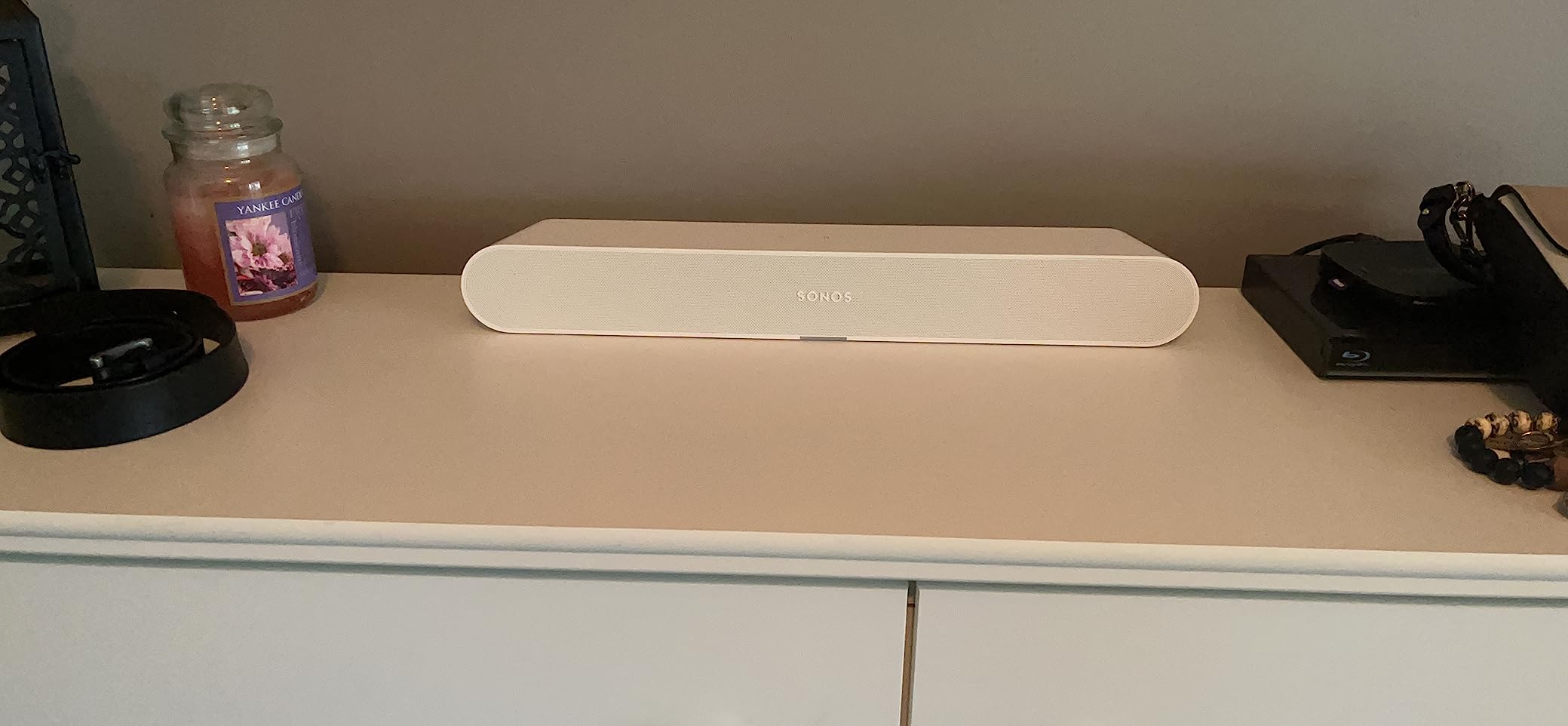
The Ray is the smallest television fix in the lineup, and it is the one to consider when the television is the problem rather than the music. At 22 inches wide and just under 3 inches tall, it suits a bedroom, a small office or a second television most people ignore.
Owners describe clearer, more powerful sound than most bars at this size, with a soundstage wider than the cabinet suggests. Setup is genuinely two cables with the app walking you through it, and it streams over Wi-Fi through the Sonos app, AirPlay 2 and Spotify Connect when the TV is off.
The optical input is the catch. There is no HDMI ARC or eARC, so it needs a television with an optical audio output, and older or cheaper sets increasingly lack one. Check your TV’s ports before you fall for the price. There is no Bluetooth either, and no Dolby Atmos or height channels, which is the trade for the lower rating of 4.2.
Owners also note that the app is required for basic control and updates, and no remote is bundled. That leaves the television’s own remote doing most of the work, which is fine in a bedroom and less so in a main living room.
Good to know: a subwoofer is the single change that improves this bar most, and Sonos sells one that pairs wirelessly. If your TV has no optical output, skip straight to the Era 100 and route audio over HDMI or Wi-Fi instead.
9. Sonos Move 2: Best for Bigger Portables
Sonos Move 2 – Black – Wireless Portable Bluetooth Speaker
Type: Portable
Standout: 24-hour battery
Weight: 3000 g
Pros
- Up to 24 hours per charge
- Dual tweeters widen the stereo image
- IP56 rating with shock-absorbent build
- Built-in handle for moving rooms
Cons
- Heavier and bulkier than the Roam 2
- Full recharge takes about 24 hours
- Not as weatherproof as IP-rated rivals
The Move 2 sits between the Roam 2 and a home speaker, and it exists for people who want a portable that can still be heard in a garden or a garage. It runs 24 hours per charge, double what the smaller portable manages, with a precision-tuned woofer behind a pair of tweeters.
Owners highlight the step up in stereo image over the original Move, the automatic Trueplay tuning, and the built-in handle that makes moving it between rooms painless. The IP56 rating adds shock-absorbent materials, so drops and splashes are less of a concern than with an unrated speaker.
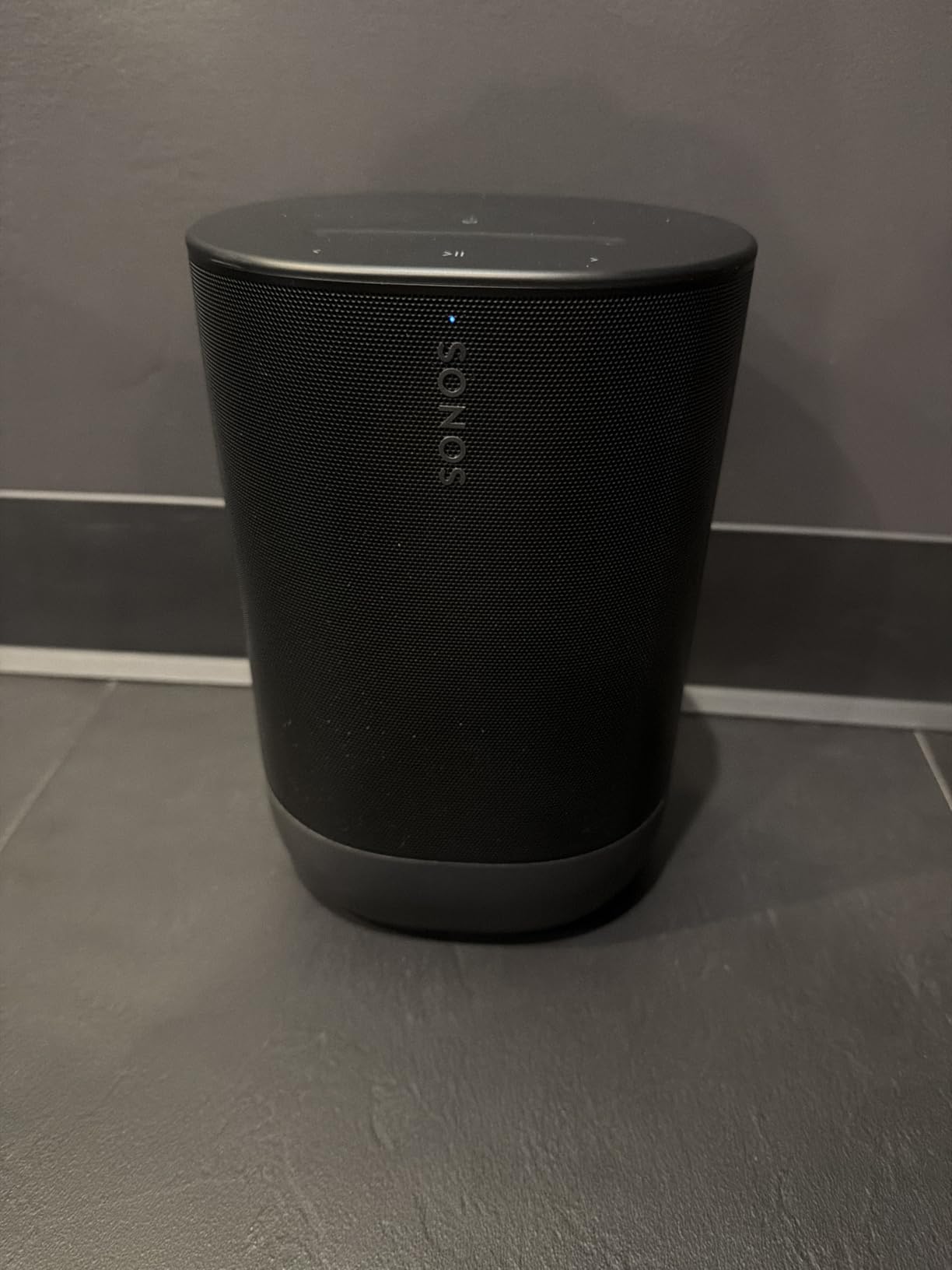
The full recharge on the included Wireless Charging Base takes about 24 hours, which matters if you are planning a long trip rather than a day out. Bass-focused tracks still will not stand in for a dedicated larger speaker at maximum volume, and the IP56 rating sits a step behind the Roam 2’s IP67 for direct water exposure.
Weight is the honest downside at 3000 g, roughly seven times the Roam 2’s mass, in a body with a carry handle rather than a bare cabinet. Setup in the Sonos app and voice assistant programming can be finicky at first, so allow time for it.
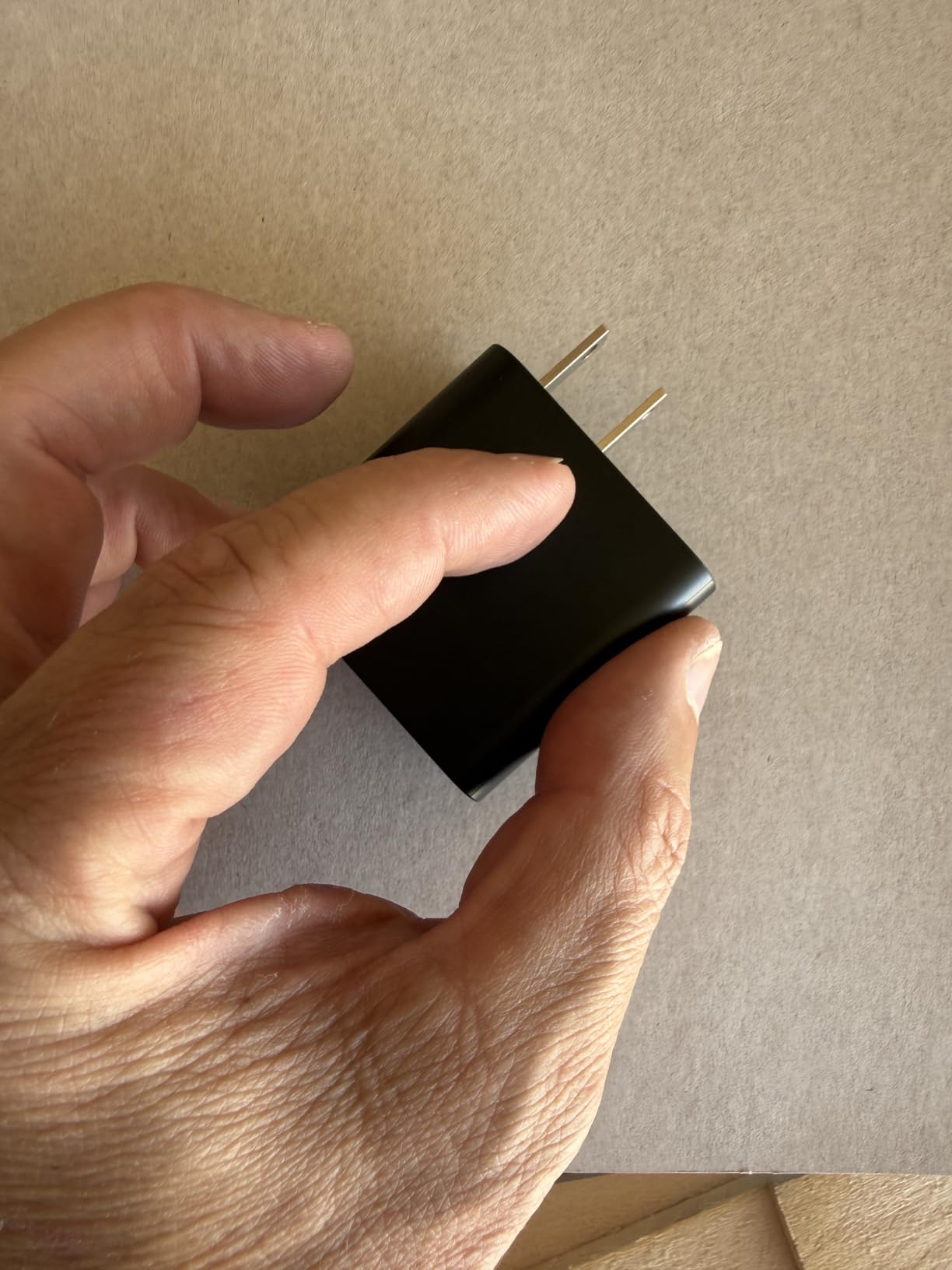
Good to know: the charging base has a detachable power cable, and any USB-PD supply works on the go, so you are not tied to the base at a socket in the house.
10. Sonos Arc Ultra: Best for Cinema
Sonos Arc Ultra Soundbar with Dolby Atmos – Black
Type: Soundbar
Standout: 9.1.4 Atmos
Width: 46.18 in
Pros
- 9.1.4 channel spatial audio
- AI Speech Enhancement clarifies dialogue
- Room-filling bass without a subwoofer
- Single HDMI eARC setup
Cons
- No remote included
- Music playback trails its film performance
- Needs re-pairing after some upgrades
The Arc Ultra is the cinema pick, and the only model here with a 9.1.4 channel configuration and 14 internal circuits driving it. It is a 46.18 inch metal bar that sits low under a television and renders Dolby Atmos with real height and width information.
Owners rate it 4.6, and the specific praise is about dialogue. AI Speech Enhancement lifts voices without flattening the rest of the mix, which is the complaint that sends people shopping for a new bar in the first place. Bass is authoritative enough to fill a room without a subwoofer, though owners planning a full setup still add one.
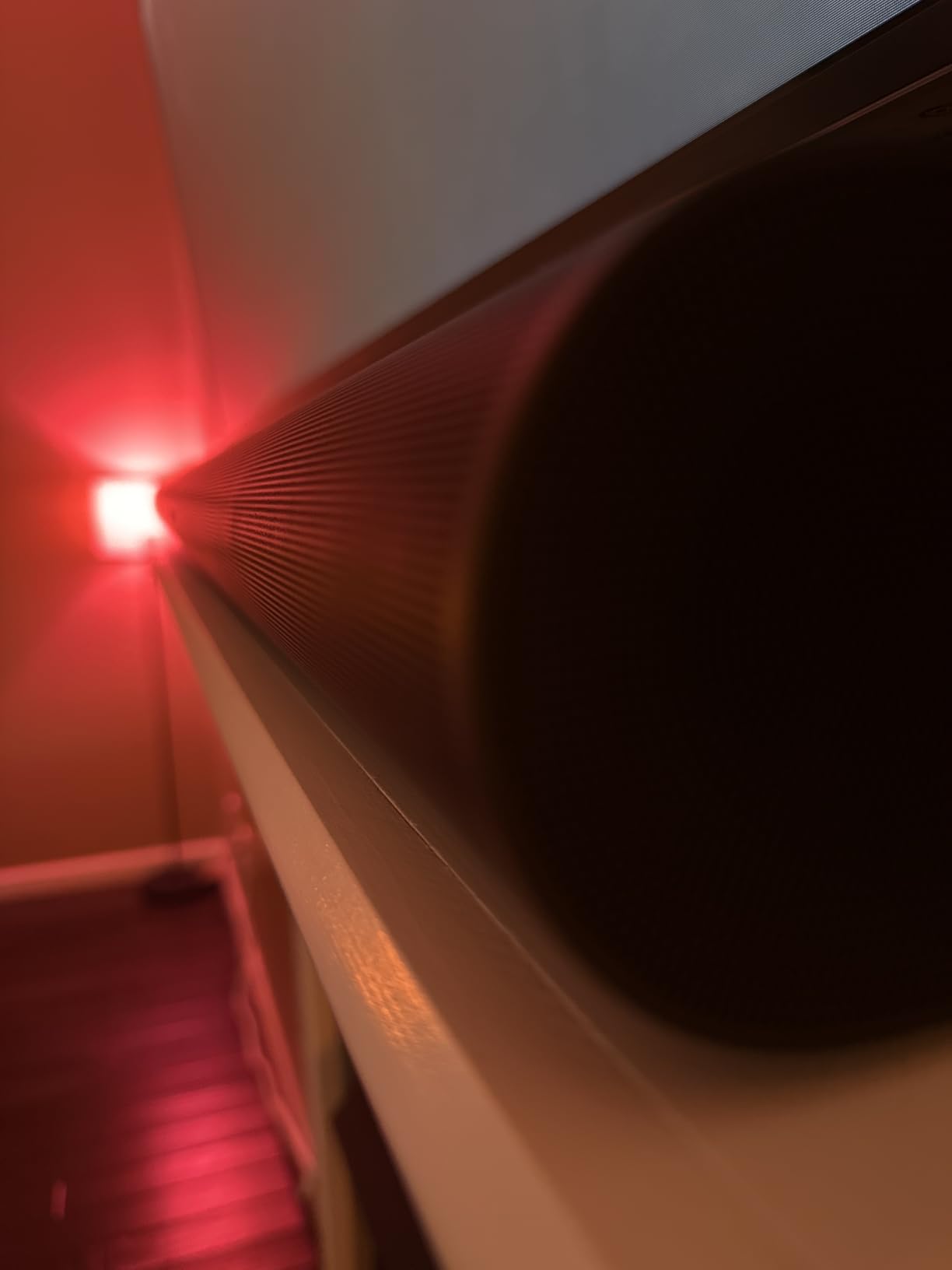
Setup is a single HDMI eARC cable with step-by-step app guidance, and Trueplay tunes the result to the room. It accepts Bluetooth, AirPlay 2, Spotify Connect and Wi-Fi streaming, and it can be expanded with a Sub and Era 300 rear speakers when the budget allows.
The reported drawbacks are worth weighing. No remote is included, so you use the TV remote or the app. Music playback is fine but not the strength of its film performance. If you are replacing another soundbar, the TV can hold the old pairing and give you flat sound until you re-pair. Room calibration also depends on the phone microphone, so results vary by device.
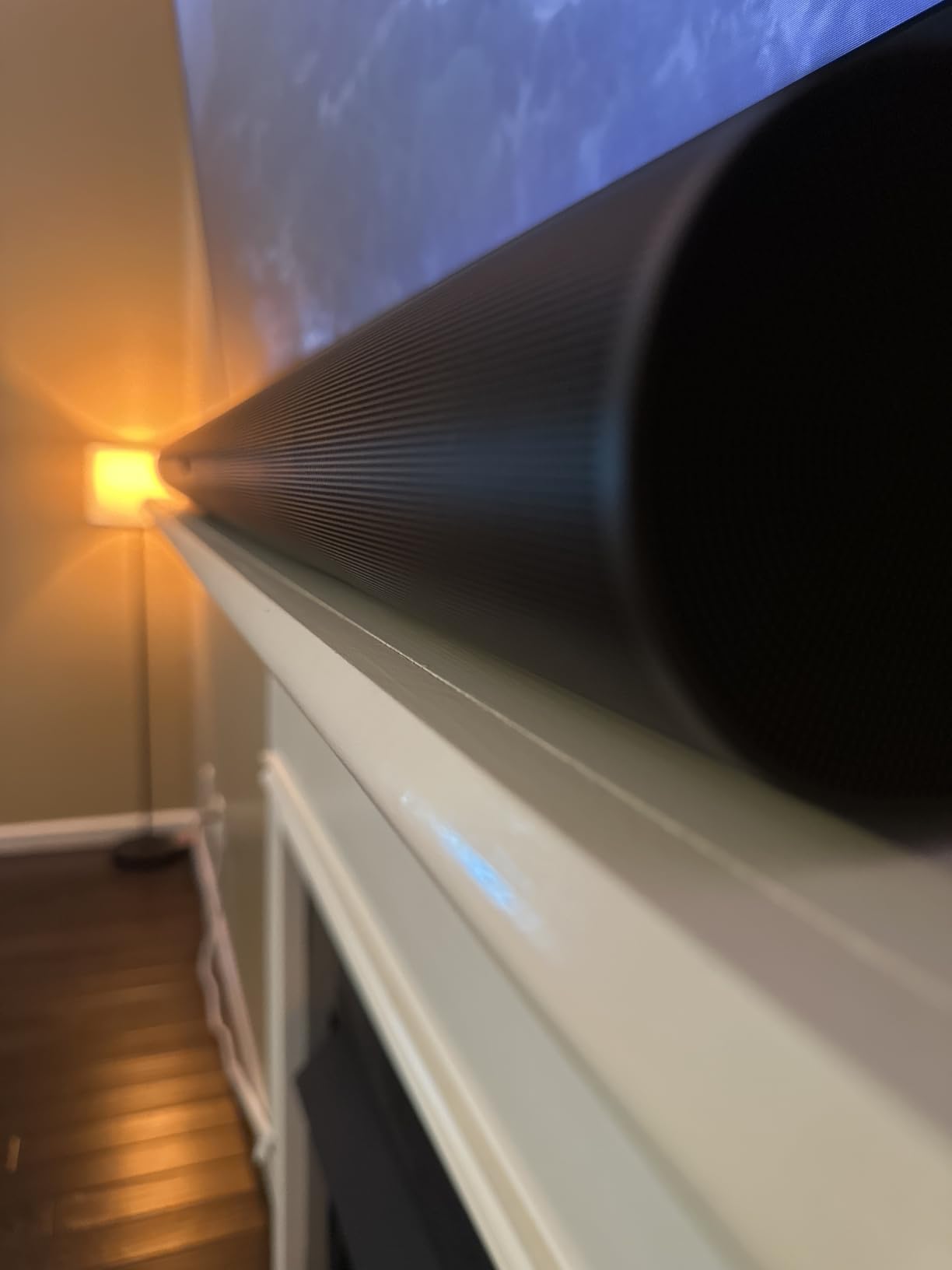
The gap between this and the Beam Gen 2 is the difference between a small-room bar and a dedicated home theatre system. On music alone, the Era 300 is the better speaker. Good to know: the deeper the room and the further back you sit, the more the extra channels earn their place.
How to Choose Sonos Speakers During Prime Big Deal Days
Match the Speaker to the Room
Room size decides more than any spec. Under about 150 square feet, a single smart speaker such as the Era 100 or a compact bar such as the Ray covers the space without wasted output. Between roughly 150 and 300 square feet, look at the Era 300 or the Beam Gen 2, and past 300 square feet the Arc Ultra or a paired setup makes more sense.
Placement matters as much as size. Leave a little air behind a speaker, keep it off the back wall in a corner, and remember that a soundbar competes with the television’s own speakers, while a standalone speaker does not.
Prioritize the Listening Experience
Decide what you actually listen to before you compare drivers. Bass response, vocal clarity, stereo separation and the usefulness of the microphones matter more than model names, and a speaker tuned for films will rarely be the best afternoon music speaker in the house.
Our Sonos speaker buying guide goes deeper on this, including how sealed architectures and upfiring drivers change what you hear in a normal living room. The short version: the Five for music, the Era 300 for spatial sound, the Era 100 for everything in between.
Check Smart-Home and Streaming Compatibility
Look at the connections, not just the drivers. Bluetooth, Wi-Fi streaming, AirPlay 2, Spotify Connect, 3.5mm line-in and HDMI eARC are the practical differences, and several models here omit one or two. The Roam 2, Era 100, Era 300 and Move 2 all carry Bluetooth; the Beam Gen 2, Five and Ray do not.
Voice control is worth checking honestly. Alexa on the Era 100 needs a two-word wake phrase before it will listen, and owner reviews on several models here report the built-in microphone occasionally missing commands. Treat voice as a convenience rather than a reason to choose.
Consider Setup, Controls, and Daily Use
Every one of these speakers is configured through the Sonos app, and owner reviews across the list point at the same thing: the hardware is easy, the software is the variable. Plan for one careful setup session, keep your phone’s Bluetooth clear of hearing aid connections before Trueplay runs, and leave the new speaker somewhere it can reach your network on the 2.4 GHz band.
Physical controls differ more than the listings suggest. The Ace has a real Content Key, the Era 100’s touch surface can be triggered when you move the speaker, and the Amp has almost nothing on the front panel at all.
Compare Value Beyond the Event
Price changes hourly during a two-day event, so value has to be judged on what the hardware does. What separates these models is driver layout, channel count, battery figures and whether the box includes the cable you need.
Adapters are the quiet extra cost. The Era 100 and the Era 300 both need a separately sold Line-In Adapter for turntable playback, and the Amp expects you to bring your own speaker wire if the runs are new. Build the full cost before deciding.
How to Shop Sonos Speaker Deals During the Sale
Confirm the exact model number on the listing, not just the family name, since Sonos reuses names across generations and colourways. Check whether the offer is new stock or Amazon Warehouse, and who the seller and shipper actually are. Read the return window for refurbished listings more carefully than the headline figure, because the warranty terms differ. Most offers on this list need an active Prime membership, with a free trial counting, and prices can change through the event.
A useful habit: open the listing you are watching on a phone before you commit, then check the same model on a price-history site. The lowest number the model has ever reached is the only honest benchmark for whether an event price is genuinely good.
Before you buy, check these five things:
- Confirm the model number and colour match the one you researched, including the generation.
- Check the listing states what is in the box, especially cables, adapters and power supplies.
- Look at whether the seller is Amazon or a third-party marketplace, and read who ships it.
- Read the return window and warranty terms before choosing a refurbished or open-box listing.
- Note when you checked the price, and check the price history so you know what the model has sold for before.
Frequently Asked Questions
When does Amazon Prime Big Deal Days run in 2026?
Amazon Prime Big Deal Days runs October 6-7, 2026, as a two-day event. Most offers on the Sonos models in this list need an active Prime membership, and a free trial counts. Prices can change during the event window, so check the listing rather than a saved figure.
What should I look for in Amazon Prime Big Deal Days Sonos deals?
Look at the model number first, because Sonos reuses product names across generations. Then check the connection list, since several models omit Bluetooth, HDMI or line-in. Finally, read what the box includes, since some models need a separately sold adapter for turntable playback.
Is Prime membership required to buy these Sonos speaker deals?
Most offers during the event are members-only, so an active Prime membership is the practical requirement. A free trial counts where one is offered to new members. Without Prime you can still buy any of these speakers, but the event pricing is generally not visible on the listing.
Can Sonos speakers be paired to create a whole-home audio system?
Yes, and it is the strongest argument for buying into the brand. Every model here connects over Wi-Fi to the Sonos app, plays in any room independently, or all of them at once. The Beam Gen 2, Era 300, Era 100, Five and Roam 2 can also act as surrounds for a Sonos soundbar.
Which Sonos speaker is easiest to place in a small room?
The Era 100 is the easiest, at 2020 g and 7.22 inches tall it fits a shelf, a counter or a bedside table. The Roam 2 is smaller still at 0.42 kg, but it is built for portability rather than filling a room. For a small television, the Ray is only 22 inches wide.
Do I need the same Wi-Fi network for every Sonos speaker?
Every speaker in one system needs to reach the same home network, and it should be a 2.4 GHz band. Speakers on separate networks will not group together. If your router splits bands, move the Sonos units onto the 2.4 GHz network before you start setup in the app.
Final Verdict: Best Amazon Prime Big Deal Days Sonos Deals
Watch the Sonos Era 100 first if you are starting from nothing. It is the pick most likely to be the right size for your room, and it is the one that grows into a whole-home system without a rethink.
Buy the Sonos Era 300 if your space is large and you want height channels from a single box. Buy the Sonos Beam Gen 2 if a small living room and television audio is the problem. Buy the Sonos Roam 2 if the listening happens away from a shelf, and the Sonos Move 2 if that travel includes a garden.
For music only, the Sonos Five is the dedicated answer. For a turntable or wired speakers, the Sonos Amp is the only one that does that job. The Sonos Ace is for commutes and for pairing privately with a Sonos bar. The Sonos Ray covers a small television, and the Sonos Arc Ultra is the cinema build for a room that can take 46 inches of bar.
Check each listing’s current price during the event window, confirm the model number, and buy the one that fits your room rather than the one with the biggest number.