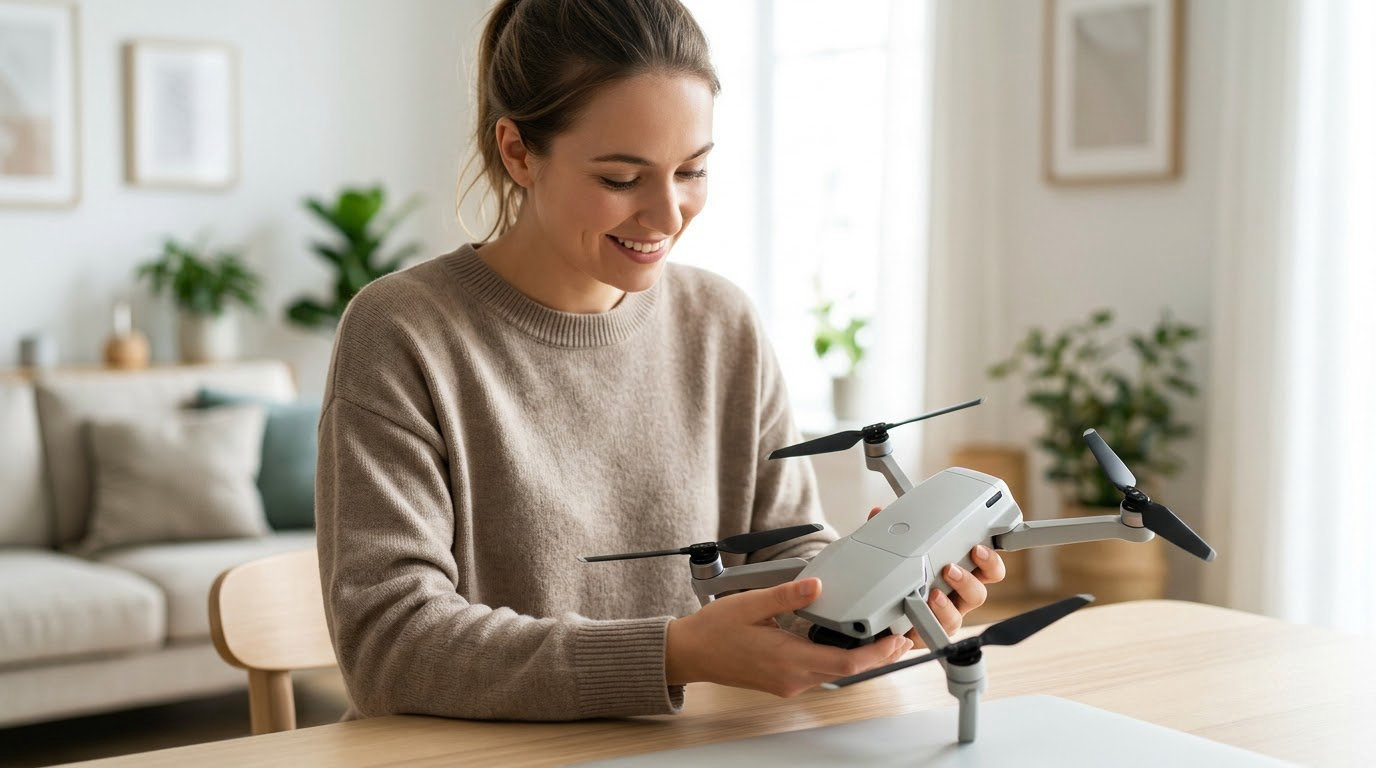
If you shoot outdoors, vlog or record interviews, the DJI Mic Mini is the pick to watch during Amazon’s October sale. Two transmitters that weigh 10 g each, 400 m of transmission and 48 hours of runtime from the charging case make it the least noticeable audio upgrade on this list. If you want a drone instead, the DJI Mini 2 Fly More Combo is the safest first aircraft, and the DJI Osmo Action 4 covers POV and underwater work for anyone who would rather not fly at all.
Prime Big Deal Days runs October 6-7, 2026, and most offers need a Prime membership. Offers on DJI gear change through the event, so treat everything below as a shortlist worth checking rather than a promise. Every listing below carries a button that shows the current price when you open it.
Table of Contents
Our Top 3 Picks for Best Amazon Prime Big Deal Days DJI Deals

Best Amazon Prime Big Deal Days DJI Deals Compared (October 2026)
| Product | Specifications | Action |
|---|---|---|
 DJI Mic Mini DJI Mic Mini |
|
Check Deal Price |
| DJI Mini 2 Fly More Combo |
|
Check Deal Price |
| DJI Osmo Action 4 |
|
Check Deal Price |
 DJI Mic 2 DJI Mic 2 |
|
Check Deal Price |
 DJI Osmo Mobile 8 DJI Osmo Mobile 8 |
|
Check Deal Price |
 DJI Osmo Pocket 3 DJI Osmo Pocket 3 |
|
Check Deal Price |
 DJI Mini 3 Fly More Combo DJI Mini 3 Fly More Combo |
|
Check Deal Price |
 DJI Osmo Nano DJI Osmo Nano |
|
Check Deal Price |
 DJI Neo Fly More Combo DJI Neo Fly More Combo |
|
Check Deal Price |
 DJI Avata 2 Fly More Combo DJI Avata 2 Fly More Combo |
|
Check Deal Price |
How We Chose
We compared the specs that actually move a buying decision for DJI gear: weight and flight time for drones, sensor size and stabilisation for cameras, transmission range and internal recording for microphones. Alongside those we read owner reviews and ratings on Amazon for each model, and checked the listings again on October 2026.
1. DJI Mic Mini: Editor’s Choice for Discreet Wireless Audio
DJI Mic Mini (2 TX + 1 RX + Charging Case), Ultralight, Detail-Rich Audio
Type: Wireless microphone
Standout: 10 g transmitters
Weight: 178 g
Warranty: DJI
Pros
- Transmitters weigh 10 g each and vanish under a collar
- Two noise cancellation levels plus automatic limiting
- 48 hours of runtime from the charging case
- Plugs straight into DJI Osmo bodies over OsmoAudio
Cons
- No hardware mute button and noise cancellation shares the power button
- No small carry case for the transmitters alone
- The USB-C mobile receiver is needed for direct phone work
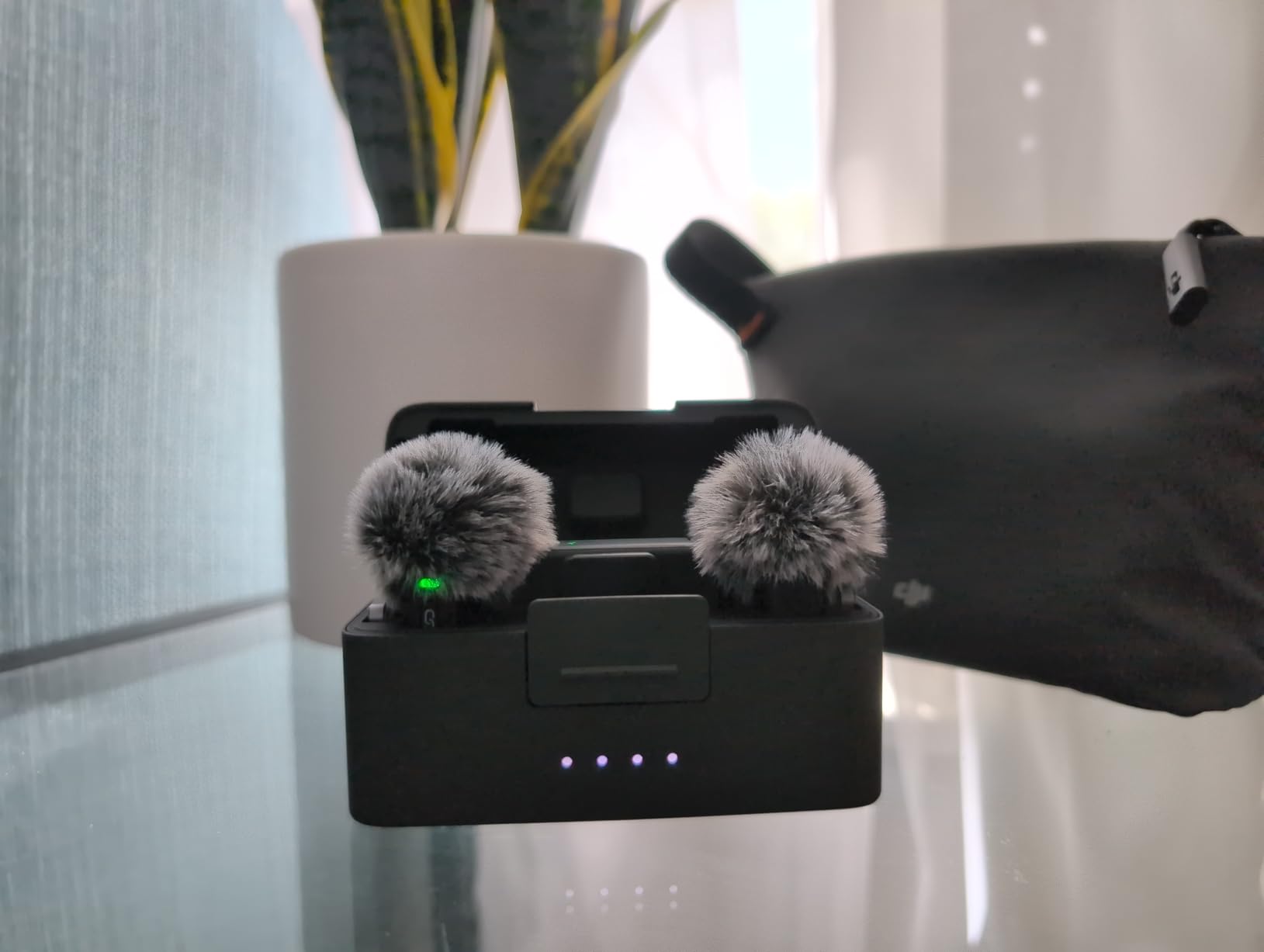
The reason this one leads is simple: it disappears. Each transmitter is a 10 g lavalier, so nothing about the wearer reads as equipment on camera. That matters most in the situations people actually record in, which is a two-person interview in a small room or a walk-and-talk where a visible box ruins the take.
Recording quality is respectable for the size. You get 48 kHz sampling, a 120 dB SPL ceiling, a 70 dB signal-to-noise ratio and up to 400 m of transmission. Two noise cancellation levels handle a café or a windy street, and automatic limiting stops loud moments from clipping without you touching a control mid-sentence.
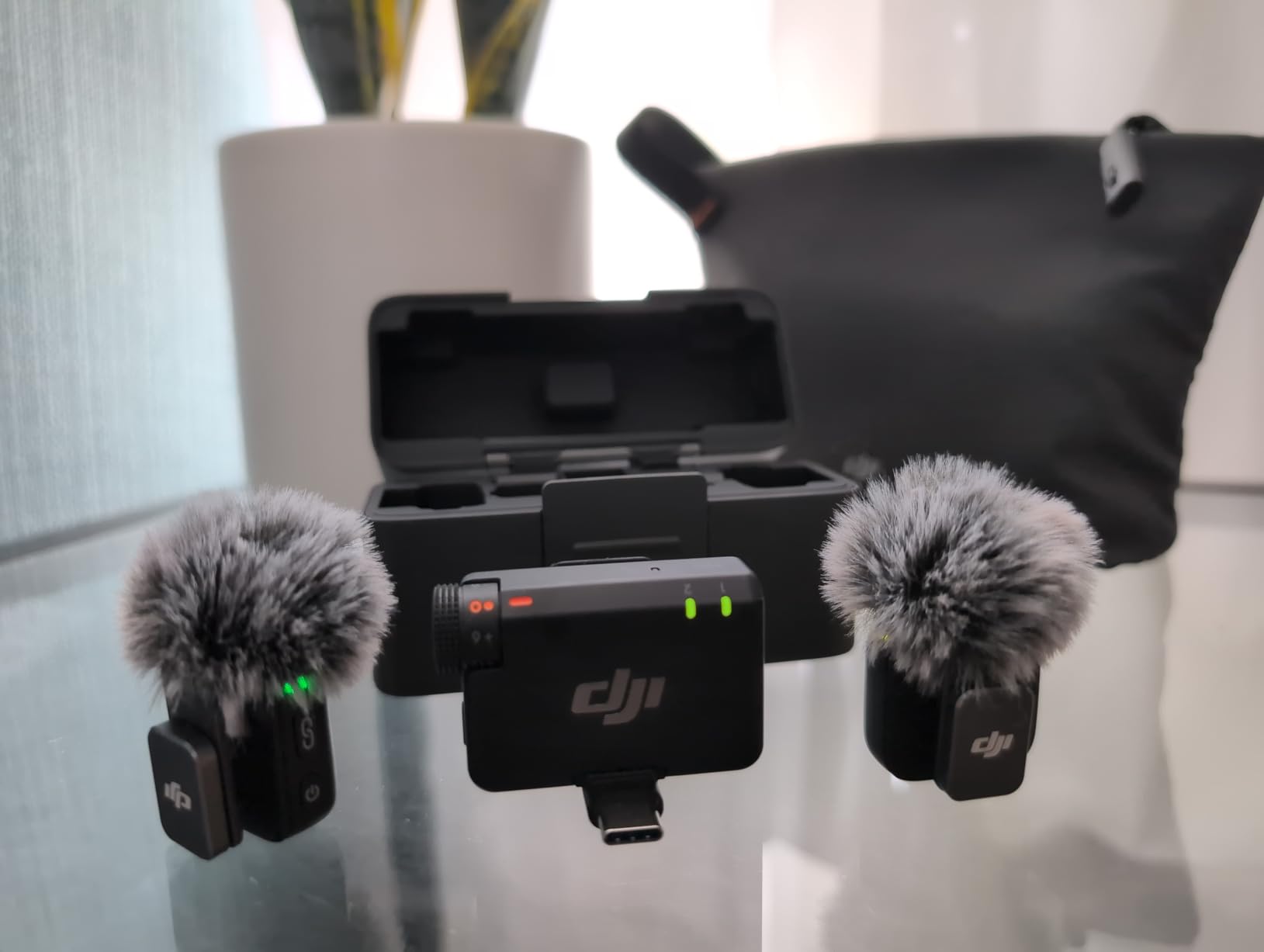
What owners like most is the battery story. The included charging case holds two transmitters and a receiver and delivers up to 48 hours, which in practice means a multi-day shoot without a charger nearby. The case is also the storage, so the whole system packs into one object.
Compared with the DJI Mic 2 on this list, the Mic Mini trades two things away. The Mic 2 records 32-bit float audio internally as a backup, which saves a take when levels go wrong, and its receiver has a 1.1-inch colour OLED screen with headphone monitoring for checking levels in the field. The Mic Mini pushes simplicity instead, and for most spoken-word recording that is the better trade.
Good to know: if you plan to record straight into a phone, check that you want the USB-C mobile receiver variant rather than the standard one.
2. DJI Mini 2 Fly More Combo: Top Rated for a First Drone
DJI Mini 2 Fly More Combo – Ultralight Foldable Drone, 3-Axis Gimbal with 4K Camera, 12MP Photos, 31 Mins Flight Time, OcuSync 2.0 10km HD Video Transmission, QuickShots, Gray (CP.MA.00000306.01)
Type: Foldable drone
Standout: 10 km transmission
Weight: 249 g
Warranty: DJI
Pros
- Under 249 g so no FAA registration for recreational flights
- Three-axis gimbal and 10 km OcuSync 2.0 link
- Three batteries and spare propellers in the Fly More Combo
- QuickShots automate cinematic patterns for new pilots
Cons
- Gimbal can develop drift that needs occasional recalibration
- Not water resistant for wet-weather work
- Many features depend on a phone rather than the controller
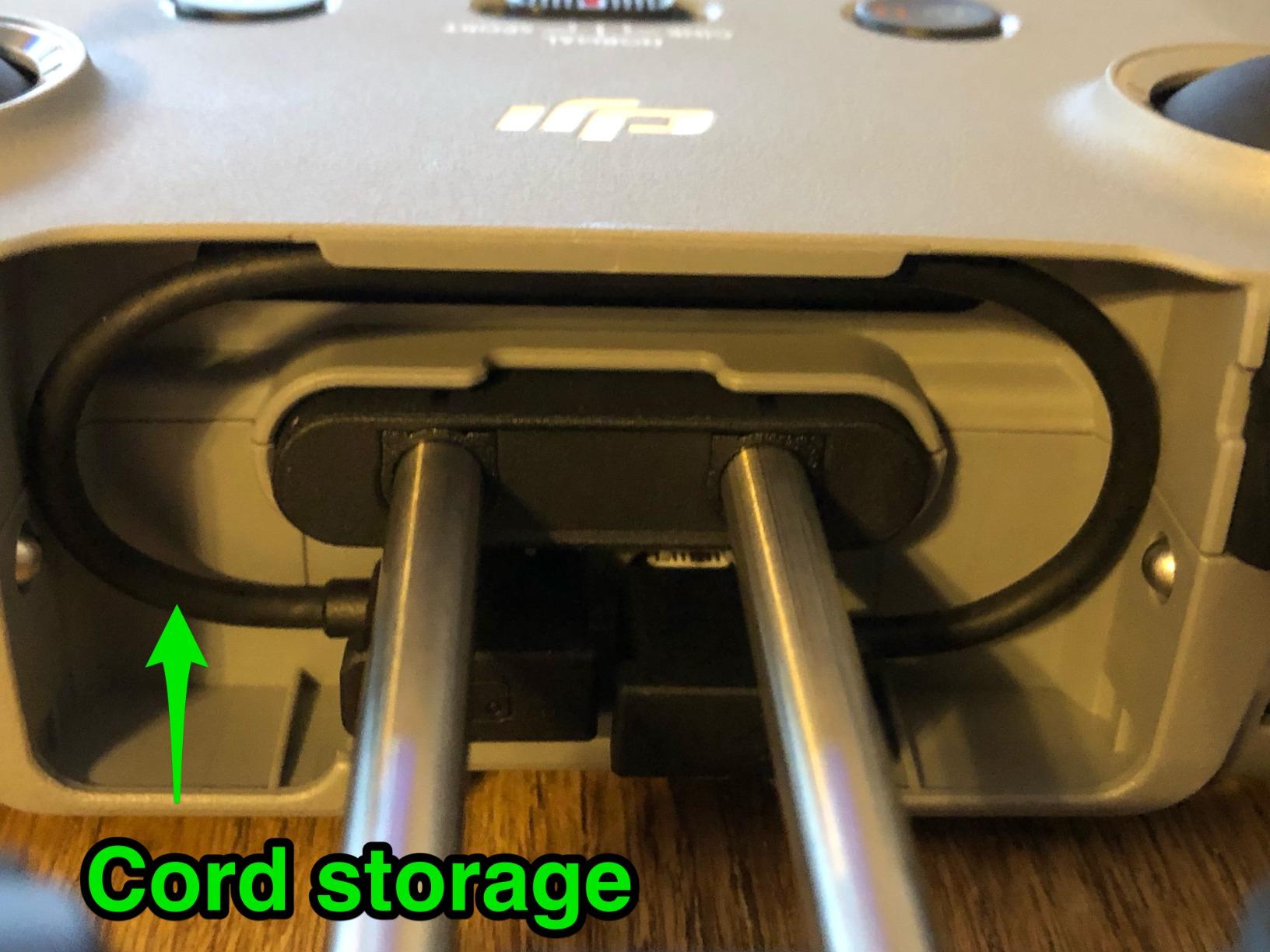
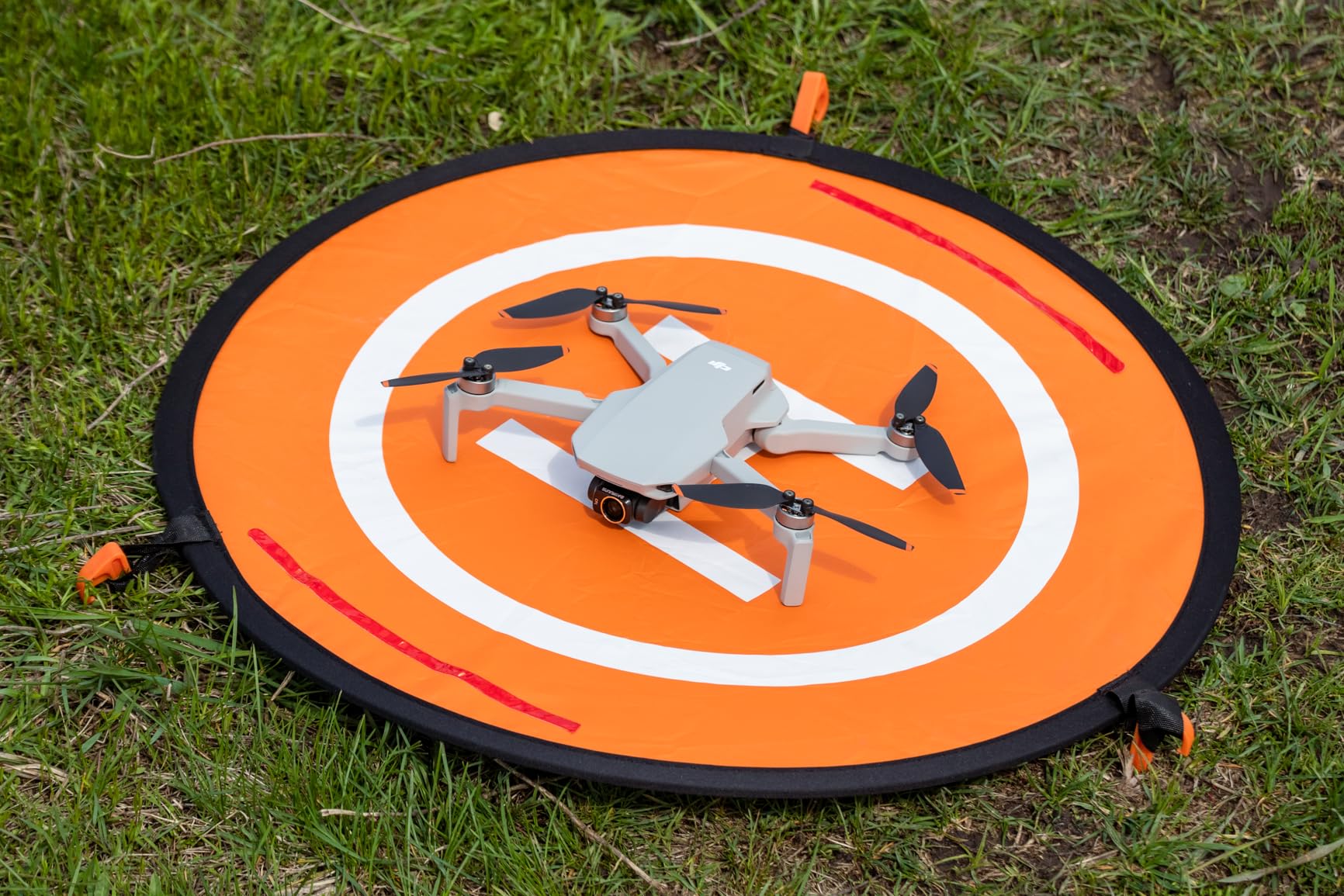
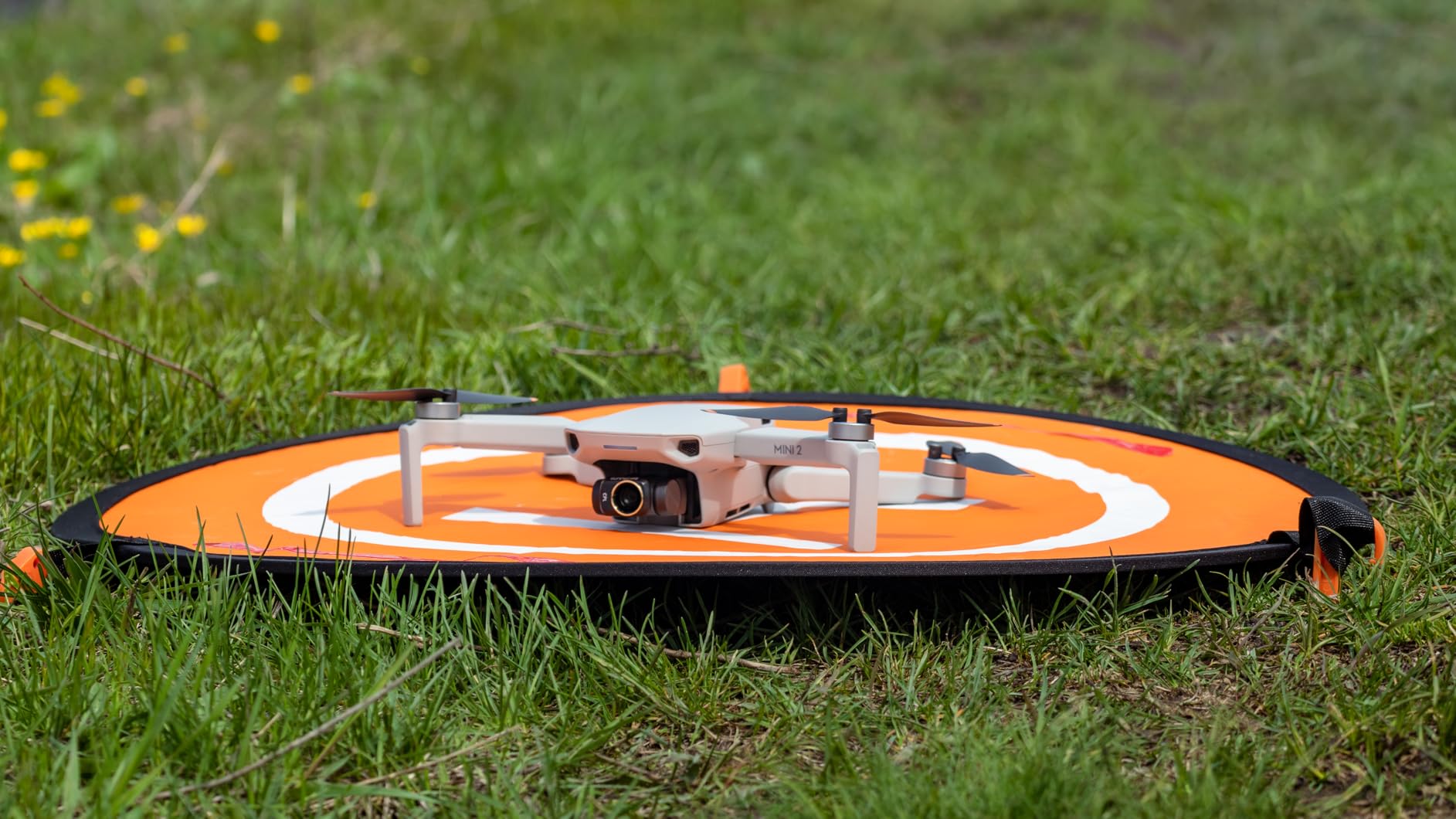
Buy the Mini 2 Fly More Combo if your first drone should be the one you keep. At under 249 g it sits below the FAA registration threshold for recreational flying, it folds down small enough to live in a day bag, and the three-axis mechanical gimbal produces footage that does not need stabilising in software later.
The link is the part people underrate. OcuSync 2.0 carries HD video up to 10 km, which in practice means you keep a usable image far past the point where a cheap drone’s feed breaks up. Each battery runs up to 31 minutes, so the three in this bundle cover a full afternoon of scattered flying rather than one careful session.
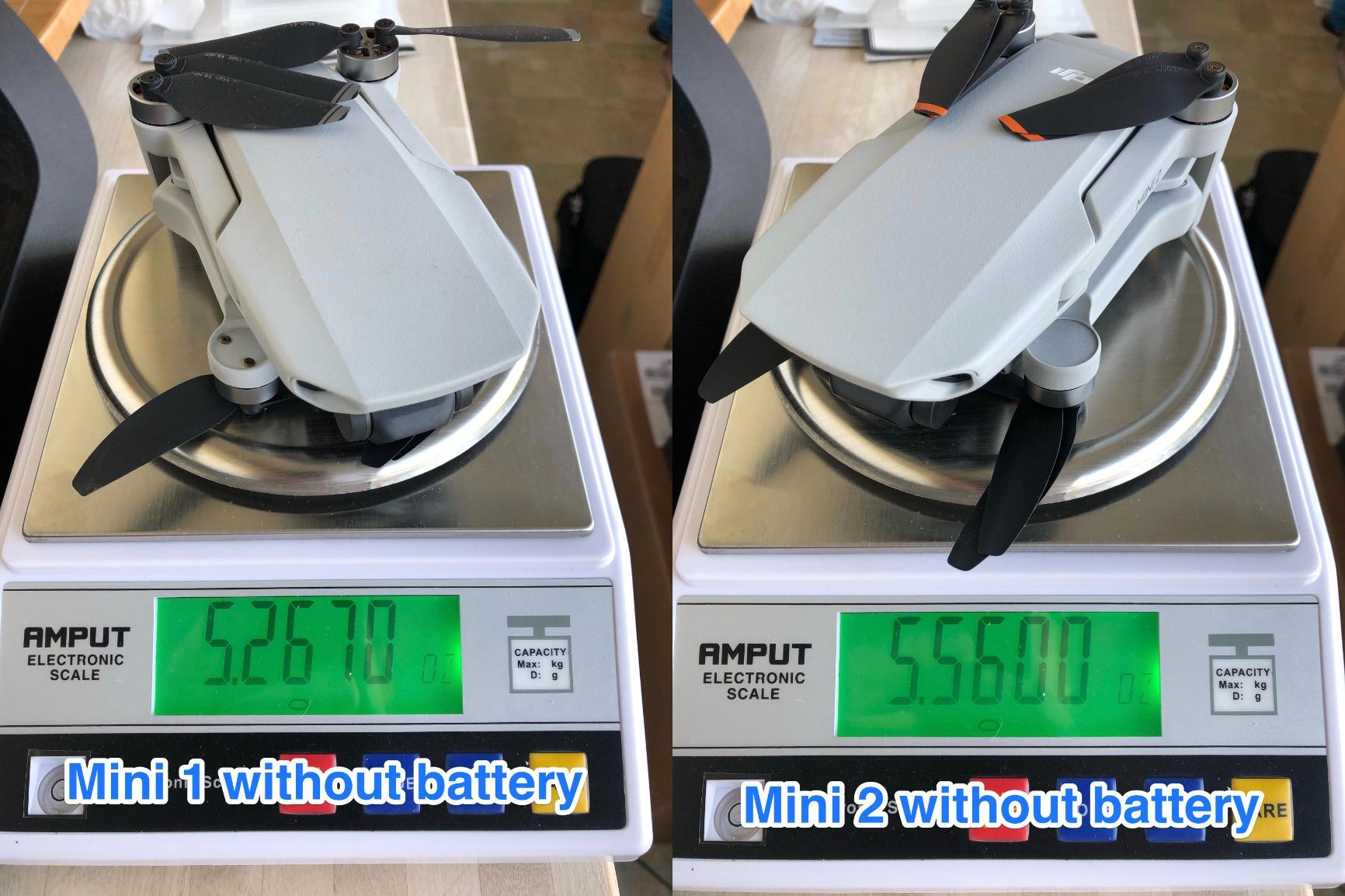
Owners report the 12 MP sensor producing good daylight stills, DNG and RAW capture if you want them, and 4x digital zoom for tightening a frame you could not fly closer to. QuickShots handle the cinematic moves most beginners avoid attempting on a manual stick.
Skip it in favour of the DJI Mini 3 Fly More Combo if you shoot vertical content for social, because True Vertical Shooting records a ready-to-post frame without cropping. Pick the DJI Neo Fly More Combo instead if the aircraft will mostly fly indoors or around people, where full-coverage propeller guards matter more than transmission range.
Owners also mention the recurring one: the mechanical gimbal can drift after a knock, and recalibrating it is a two-minute job on a laptop.
3. DJI Osmo Action 4: Best for POV and Underwater Shooting
DJI Osmo Action 4 Essential Combo, Waterproof Action Camera Vlogging Camera
Type: Action camera
Standout: 4K/120fps
Weight: 145 g
Warranty: DJI
Pros
- 1/1.3-inch sensor with large pixels for dim scenes
- 155 degree view and 4K/120fps for slow motion POV
- Waterproof to 18 m without a housing
- Dual touchscreens for framing and playback
Cons
- Essential Combo leaves out the curved adhesive base and extra mounts
- Fixed wide lens caps zoom at 4x digital
- Menu system takes a session to learn
This is the pick for anyone filming a bike run, an underwater sequence or a hike who does not want a drone involved. The 1/1.3-inch sensor with 2.4-micron pixels holds up in low light better than the small sensors in most action cameras, which matters when you are filming at dawn or under water.
Both full-colour touchscreens are a genuine improvement over single-screen cameras. You can frame a vertical shot, check playback and check your settings without pulling the camera off the mount each time. The magnetic quick-release makes angle changes fast enough that you stop planning them in advance.
Owners rate the stabilisation as the reason footage looks professional without a gimbal. RockSteady 3.0 runs in three modes, and HorizonBalancing keeps the horizon level through turns. Recording runs up to 150 minutes on the 1770 mAh battery, and the camera is rated to operate down to -20°C for winter shooting.
Two functions change ordinary footage. Pre-Rec buffers 5 to 60 seconds before you press record, so a moment that happens while you are reaching for the button still exists. Highlight tags clips while you are shooting so the edit is faster afterwards.
The catch is the bundle. The Essential Combo is the lean version, so anyone doing mount-to-mount or surf work may want the wider accessory bundle instead. Compared with the DJI Osmo Nano on this list, the Action 4 wins on sensor size, 120fps slow motion and an 18 m depth rating, while the Nano wins on built-in storage and battery length.
4. DJI Mic 2: Best for Interviews and Podcasts
DJI Mic 2 (2 TX + 1 RX + Charging Case), All-in-one Wireless Microphone
Type: Wireless microphone
Standout: 32-bit float backup
Weight: 28 g
Warranty: DJI
Pros
- 32-bit float internal recording on each transmitter
- 250 m transmission with a stable link
- Charging case doubles as storage with up to 18 hours
- Pre-linked and paired the moment you open the case
Cons
- On-board noise reduction is only adequate against newer kits
- Audio is a little lighter on bass than some rivals
- Case will not close with the windscreens fitted
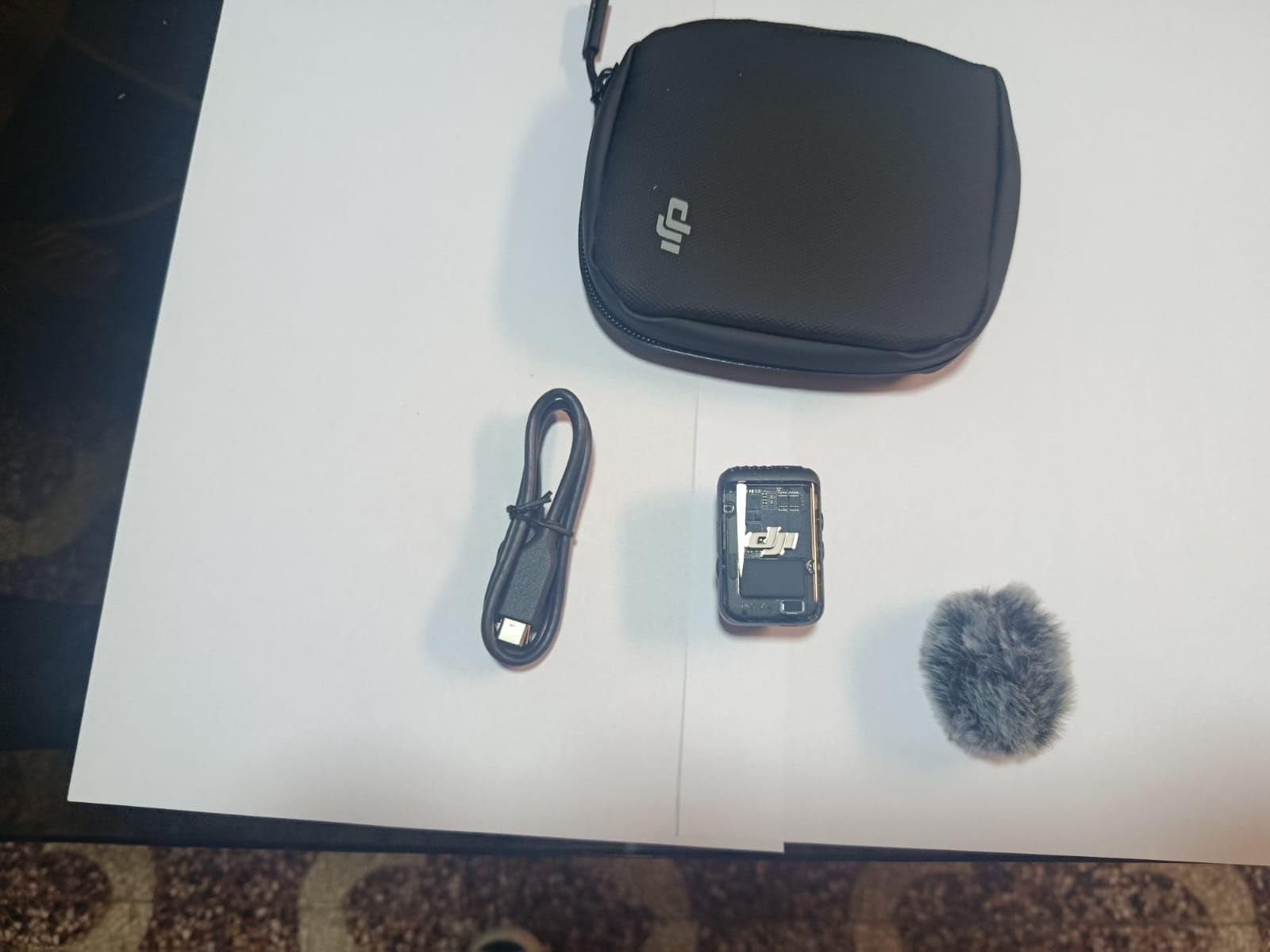
The Mic 2 is the version of this system built for people who record long and cannot afford to lose a take. Each transmitter records 32-bit float audio internally for up to 14 hours, so even if something goes wrong at the source you have a recoverable copy.
Everything about the workflow is designed to remove steps. Transmitters and receiver arrive pre-linked and pair instantly, the case doubles as the charger and gives up to 18 hours of total operation, and the receiver carries a 1.1-inch colour OLED screen with a jog dial and a 3.5 mm headphone output for monitoring before you commit to a take.
Each transmitter also has a 3.5 mm input, so you can run a proper wired lavalier into it when the built-in capsule is not good enough. Range is 250 m on a clear line, with an 85 dB signal-to-noise ratio.
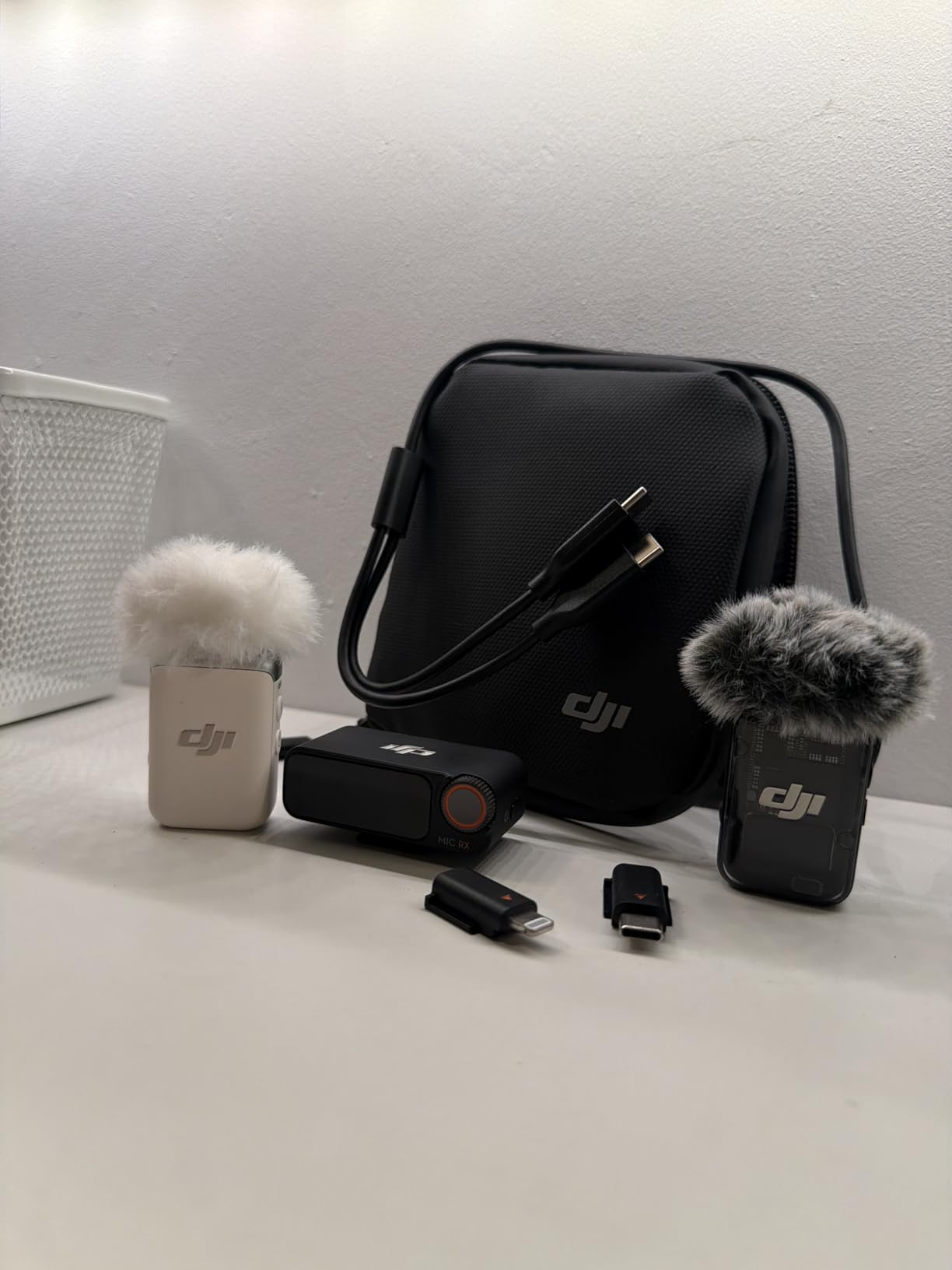
Compared with the DJI Mic Mini, the Mic 2 is the safer choice for a paid shoot: internal backup recording, headphone monitoring and an external mic input. The Mic Mini is smaller and lighter. Reviews also note that the Mic 2 noise reduction is a step behind the newest kits, and that Android Bluetooth mode can refuse to expose the external mic input.
Good to know: the case will not latch with windscreens mounted, so pack those separately.
5. DJI Osmo Mobile 8: Best for Phone Filming
DJI Osmo Mobile 8 Gimbal Stabilizer for Phone, 3-Axis Stabilization
Type: Handheld gimbal
Standout: Tracking and fill light
Weight: 370 g
Warranty: DJI
Pros
- Tracking
- audio reception and fill light in one module
- Three-axis stabilisation for smooth phone footage
- Extension rod and tripod built in
- 10-hour battery with pass-through phone charging
Cons
- Recalibration is needed when the drift warning appears
- 370 g feels heavy on smaller phones
- App setup adds steps compared with a bare phone
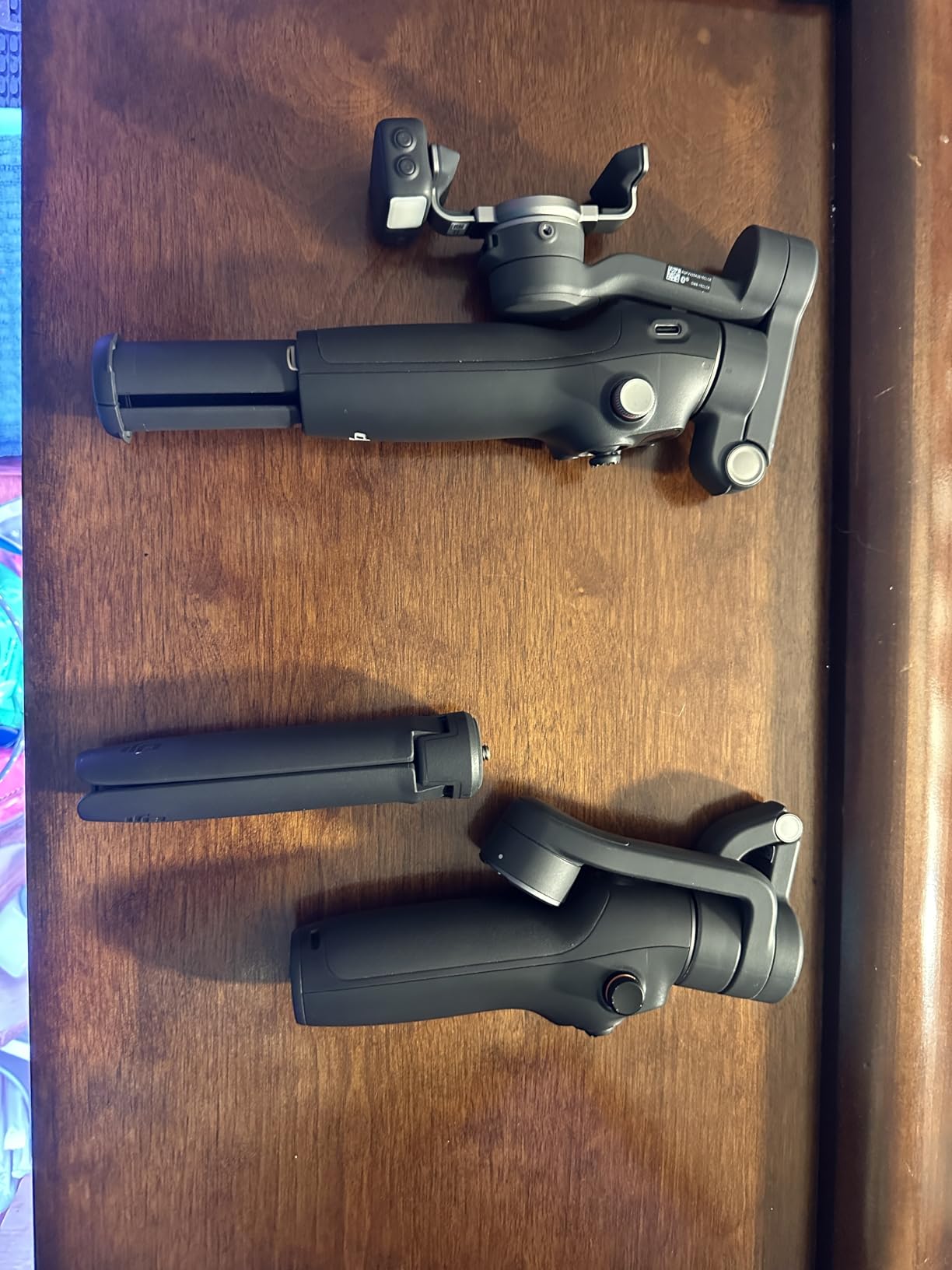
Most people who film on a phone do not need a camera. They need the shaking to stop. That is exactly what the Osmo Mobile 8 does, with three-axis stabilisation that turns a handheld walk into something close to a locked-off shot.
The multi-function module is the reason to pick this generation over an older Osmo Mobile. Tracking, audio reception and a fill light sit in one unit, so you are not assembling a separate microphone and light for a talking-head clip. Pan rotation runs a full 360 degrees for a smooth horizontal sweep across a group.
Reviewers consistently mention the built-in extension rod and tripod as the quiet winner. Accessories you normally buy separately are already in the box, and the 10-hour battery with pass-through phone charging means you can film a whole event on one charge while the phone stays powered.
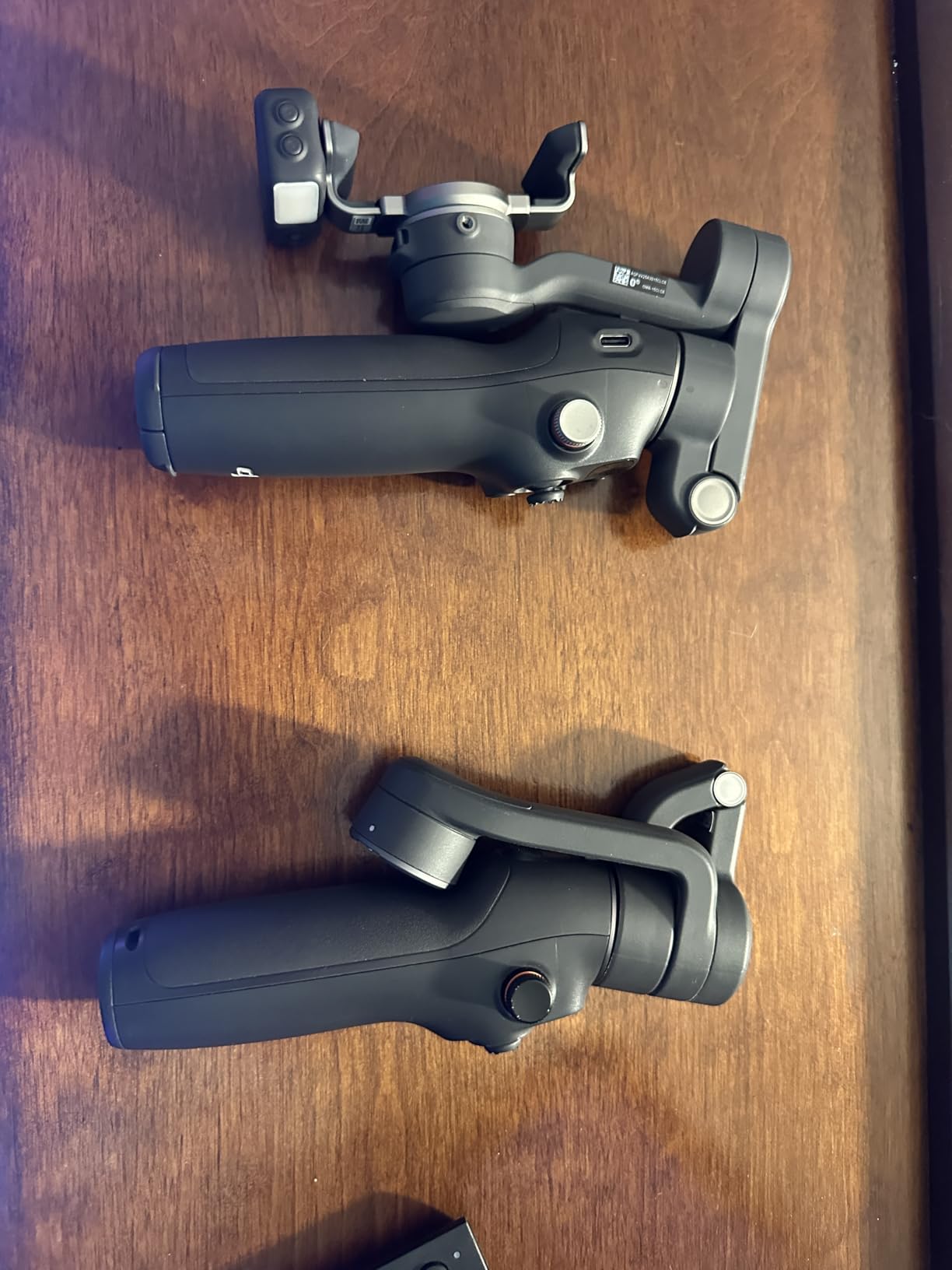
Its rating here is 4.4 stars. The grip complaints are consistent: it is balanced for larger phones, so 370 g feels like a lot on a small handset, and the gimbal needs recalibration when a drift warning appears. Compared with the DJI Osmo Pocket 3, the Pocket gives you a real 1-inch sensor and mechanical gimbal, while this one works with whatever phone you already own.
6. DJI Osmo Pocket 3: Best for Solo Vlogging
DJI Osmo Pocket 3 Creator Combo, Vlogging Camera with 1” CMOS & 4K/120fps
Type: Compact vlogging camera
Standout: 1-inch sensor
Weight: 179 g
Warranty: DJI
Pros
- 1-inch CMOS sensor with sharp 4K/120fps
- Two-inch rotating screen for solo framing
- ActiveTrack 6.0 keeps a face centred hands-free
- Three-axis mechanical gimbal stays smooth
Cons
- Must be activated within a limited number of uses
- App may need manual installation outside the usual stores
- Gimbal is delicate and needs a proper case
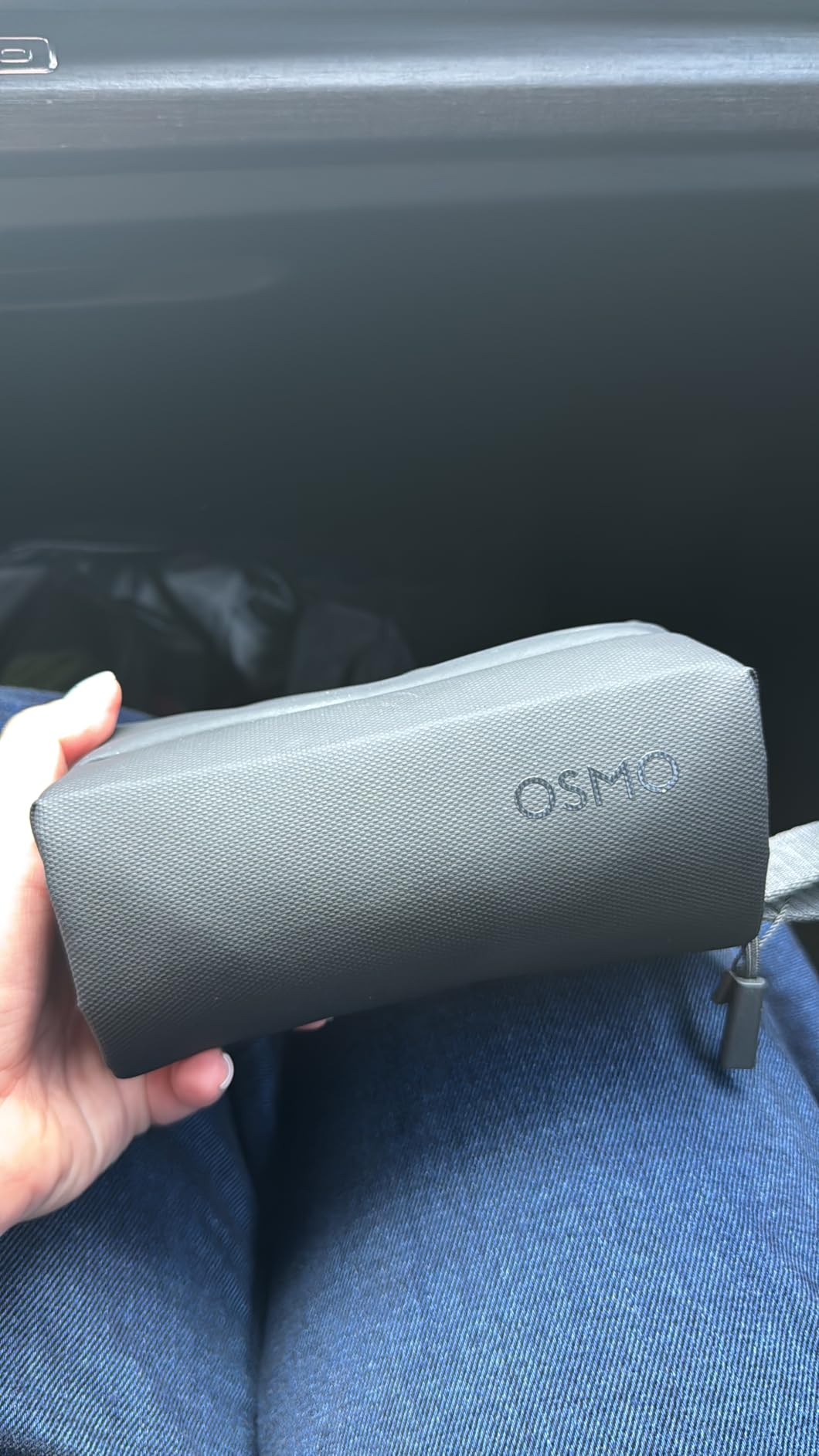
The Pocket 3 exists because filming alone is awkward. You set the camera, walk into frame, and hope it framed you. The two-inch rotating screen solves that, and at 179 g the whole thing is genuinely pocketable, so it is always within reach when a moment happens.
Image quality is the bigger reason it has thousands of reviews. A 1-inch CMOS sensor, an f/2 aperture on a 20 mm equivalent lens and 4K at 120 fps put it well above the phone class, and the three-axis mechanical gimbal smooths movement in ways digital stabilisation cannot fully match. Battery life is around 166 minutes per charge.
The Creator Combo is the version to look at, because it adds a battery handle for extended recording, a wide-angle lens, a mini tripod and a DJI Mic 2 transmitter that connects directly. That last part turns the camera into a complete solo kit: 4K picture and wireless audio in one bag with no separate recorder.
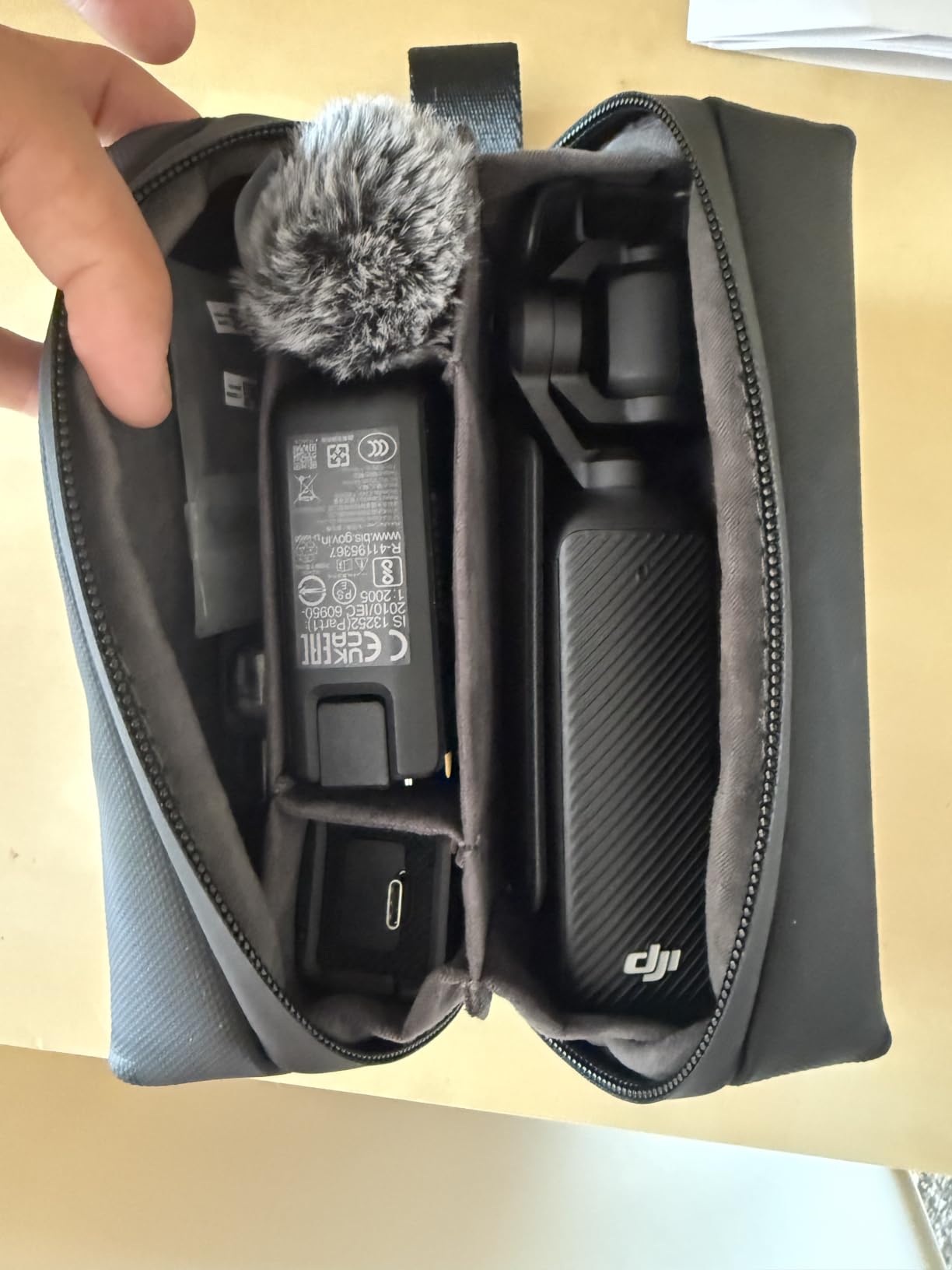
Owners do flag real friction points. The camera needs activating within a limited number of uses or it will not function, the DJI Mimo app can need manual installation outside the usual app stores, and the exposed gimbal is delicate enough that carrying it loose in a bag is a gamble.
The Pocket 3 is not the weather camera here. The Action 4 handles rain, snow and underwater work to 18 m, while the Pocket 3 is built for handheld and solo filming and is not water resistant. In exchange you get smoother footage from a mechanical gimbal and a far larger sensor for low light.
7. DJI Mini 3 Fly More Combo: Best for Vertical Social Video
DJI Mini 3 Fly More Combo With DJI RC, 3 Batteries
Type: Foldable drone
Standout: 114 minutes of flight
Weight: 248 g
Warranty: DJI
Pros
- True Vertical Shooting records a post-ready frame
- Three batteries give roughly 114 minutes of flight
- Controller has a bright 5.5-inch screen for sunlight
- Dual Native ISO Fusion captures 4K HDR
Cons
- No obstacle avoidance sensing for tight spaces
- Batteries drain while parked in the charging hub
- Light plastic airframe feels thin in the hand
This is the social-content pick. True Vertical Shooting records in the 9:16 orientation natively, so you are not cropping a wide horizontal frame and losing half the sky to get a reel that fills the screen.
The DJI RC controller is the upgrade most people do not expect to care about. Its built-in 5.5-inch HD display stays readable in direct sun, where a phone screen in a sunshade is awkward and hot. Owners mention it as the single biggest reason the combo beats the base model.
Battery maths is where the Fly More naming makes sense. Three batteries produce roughly 114 minutes of total flight time, which turns a hobby into a usable production tool. QuickTransfer over Wi-Fi at up to 25 Mb/s gets footage off the aircraft quickly, and the two-way charging hub tops batteries up in either direction.
The specs beat the other sub-250 g drones in this roundup: 48 MP stills and 4K HDR from Dual Native ISO Fusion, plus Level 5 wind resistance rated at 38 kph. At 248 g it stays under the recreational registration threshold.
Owners report two recurring downsides. There is no obstacle avoidance, so flying among trees or near buildings is on you. Batteries also drain noticeably while sitting in the charging hub, which is worth knowing if you pack up and wait for a better light.
The DJI Mini 2 Fly More Combo is the cheaper step back if you do not shoot vertical: no post-ready frames, but three batteries and a 10 km link. The DJI Avata 2 is the other direction entirely, calmer to learn on here than in the goggles. Read the DJI Avata 2 section if you have been curious about first-person flight.
8. DJI Osmo Nano: Best for Hands-Free POV Capture
DJI Osmo Nano Standard Combo (128GB), 4K Wearable Camera, 1/1.3″ Sensor
Type: Wearable camera
Standout: 128 GB built in
Weight: 124 g
Warranty: DJI
Pros
- 128 GB of built-in storage means no card to buy
- Magnetic 124 g body for hands-free mounting
- Up to 200 minutes of battery per charge
- Connects directly to two DJI microphones
Cons
- Body runs warm during long high-resolution recording
- Digital stabilisation cannot match the Pocket 3
- Vision Dock handles many shooting and transfer tasks

The Osmo Nano is the camera you clip on and forget about. At 124 g with a magnetic body, it mounts to a strap or a collar and captures a genuine hands-free point of view for walks, bike rides and errands, which is footage no drone gets you.
The feature that changes the first day is storage. This Standard Combo carries 128 GB inside, so you can shoot the moment you open the box instead of formatting a card first. A microSD slot still expands it if you want more.
Video is 4K/60fps on a 1/1.3-inch sensor with a 143-degree field of view, recorded in 10-bit colour with D-Log M for grading later. Battery life of up to 200 minutes is the longest of the body-worn cameras here, and the body is waterproof to 10 m. It also links directly to two DJI microphones, so POV footage with clean audio is one tap away.
Reviewers point out two real limits. The compact body generates heat during extended high-resolution recording, and the Endurance Mode exists for exactly that. Stabilisation here is digital rather than gimbal-based, so it will not match the DJI Osmo Pocket 3 on smooth walking shots.
Good to know: the Vision Dock is not just a charger, it handles a lot of the shooting and transfer functions, so factor it in.
9. DJI Neo Fly More Combo: Best for First-Time Pilots
DJI Neo Fly More Combo, Mini Drone With 4K UHD Camera for Adults
Type: Mini drone
Standout: Palm takeoff
Weight: 135 g
Warranty: DJI
Pros
- 135 g so no registration or Remote ID needed
- Palm takeoff and landing remove the learning curve
- Three control options including voice and app
- Full-coverage propeller guards for close flying
Cons
- Small 1/1.3-inch sensor limits image quality
- Light build is more affected by wind and gusts
- No manual modes for acrobatic flying
Nobody enjoys their first drone flight. The Neo is designed so that first flight is not the one where you damage it. At 135 g it is lighter than a phone and needs no FAA registration or Remote ID for recreational use, and it takes off from and lands on your open palm.
Full-coverage propeller guards mean it can fly near people, branches and indoors, which is where new pilots actually want to record. It holds 4K ultra-stabilised video, reaches 10 km and is rated to Level 4 wind resistance, and it is rated as beginner-level hardware.
You have three ways to fly it, which solves the usual early-pilot dilemma. Voice control in English or Chinese, the mobile app, or the included RC-N3 remote. Reviewers treat the RC-N3 as the unlock: once you want precision, the physical sticks are already in the bundle, alongside three batteries and a two-way charging hub.
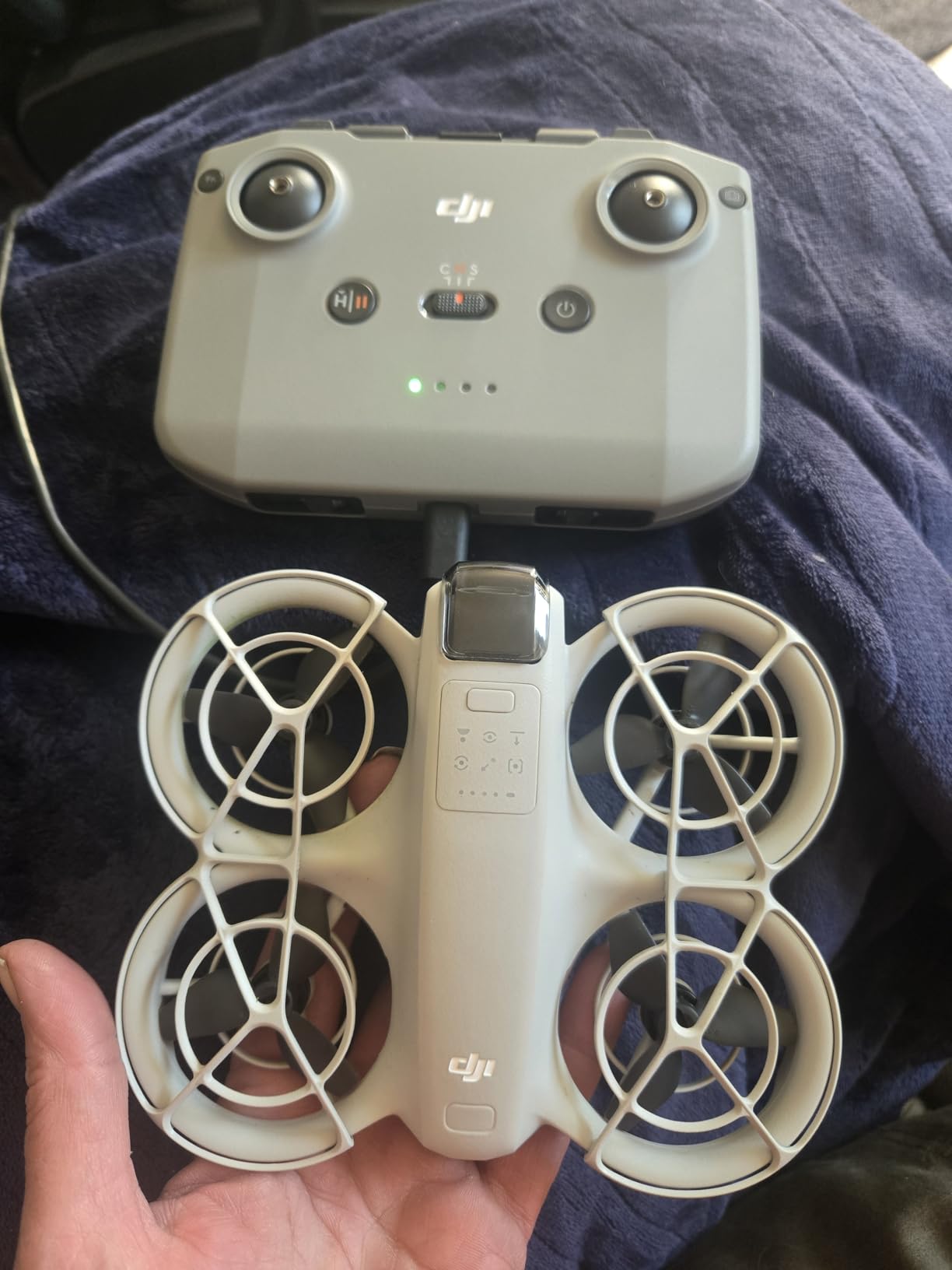
AI subject tracking and eight QuickShots modes handle the footage, so you can put the aircraft down and let it film you for a while.
Know the trade-off before buying. The small sensor produces noticeably weaker footage than the DJI Mini 2 Fly More Combo or the DJI Mini 3, and the light airframe is more upset by gusts. Pick the Neo to learn on or to record safely around people; pick the Mini 3 for the finished video.
10. DJI Avata 2 Fly More Combo: Best for Indoor and Immersive FPV
DJI Avata 2 Fly More Combo (3 Batteries), FPV Drone With Camera 4K
Type: FPV drone
Standout: 13 km range
Weight: 377 g
Warranty: DJI
Pros
- Goggles and motion controller included in the bundle
- 155 degree view and 4K/60fps on a 1/1.3-inch sensor
- Built-in propeller guards allow indoor practice
- Pause and hover function builds confidence
Cons
- Motion controller cannot yaw without forward motion
- Each battery lasts roughly 15 to 23 minutes
- Goggles field of view trails some rivals
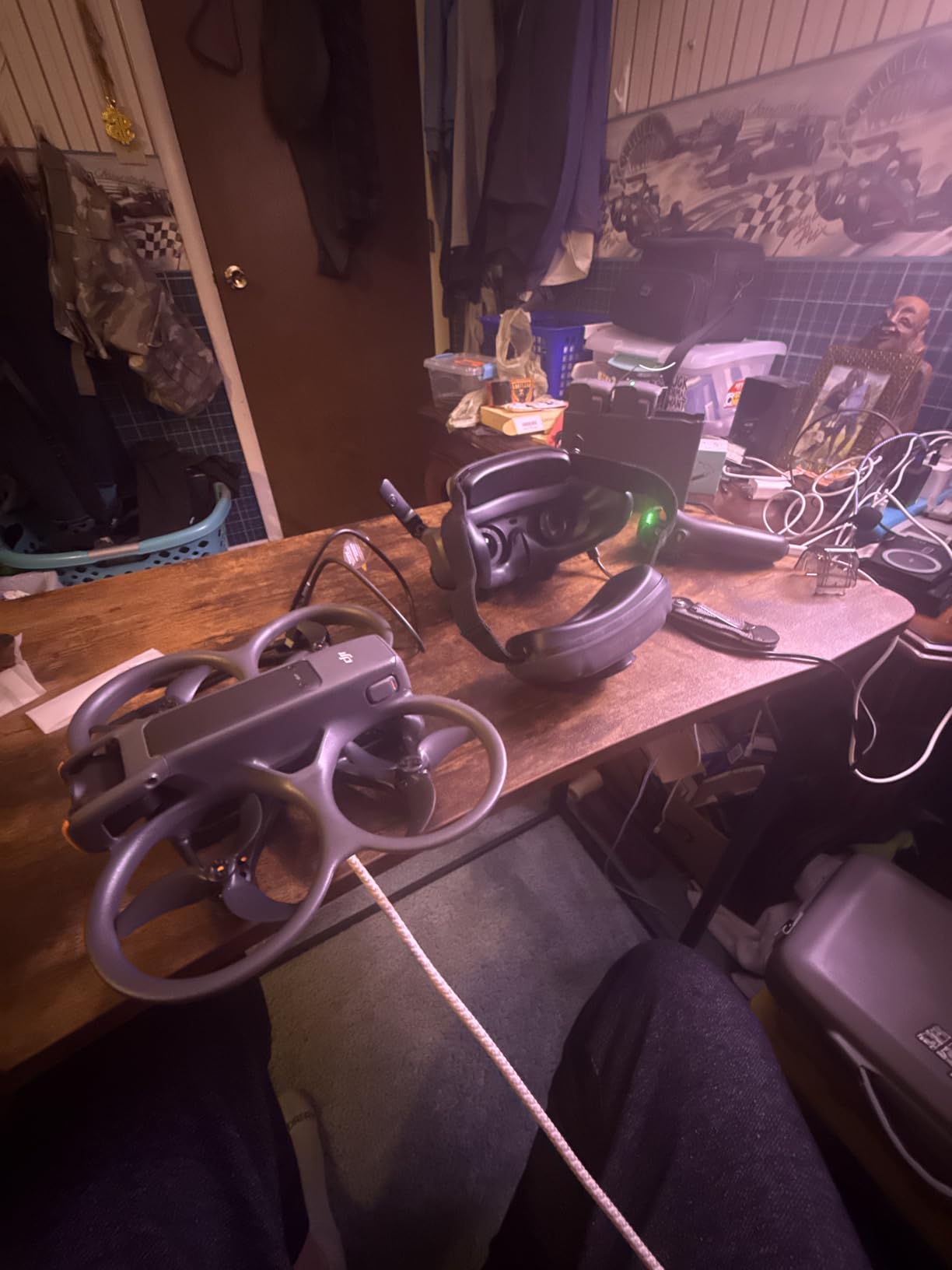
The Avata 2 is the only true first-person view drone here. Put the goggles on and the aircraft becomes the view, which is a different experience entirely from watching a phone screen, and it makes fast, low, close-to-the-ground flying genuinely fun.
What makes it a fair entry point is the motion controller. Instead of two sticks, you tilt a single controller to steer, which is far easier to learn than traditional sticks. A pause and hover function freezes the aircraft when you lose orientation, and built-in propeller guards make practising indoors or near people realistic.
Recording is 4K/60fps from a 1/1.3-inch sensor across a 155-degree field of view, and the transmission link runs to 13 km. Flips, rolls and 180-degree drifts are built in, and the LightCut app handles quick POV edits.
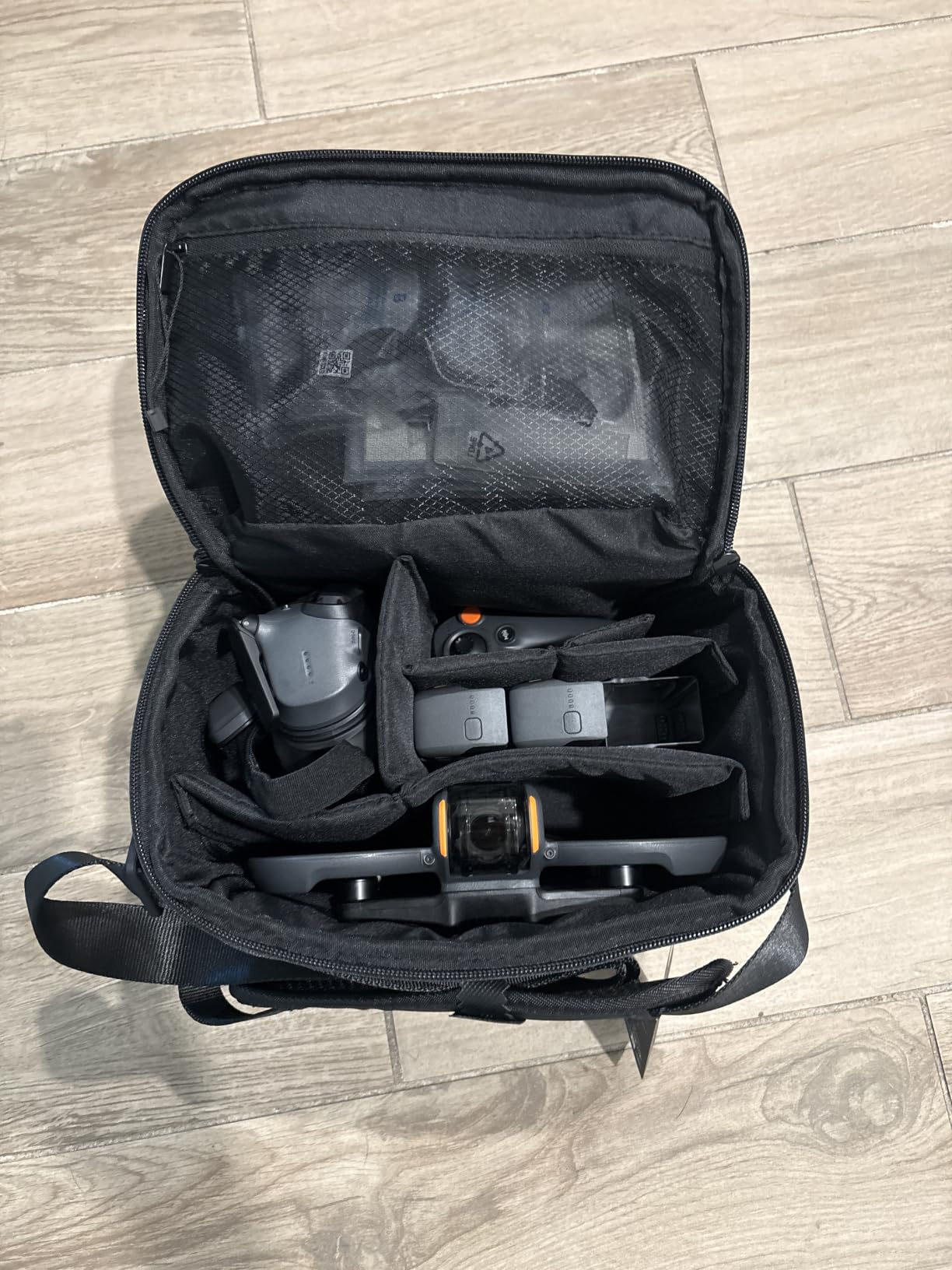
Honest limits, straight from owners. The motion controller cannot yaw the aircraft without forward motion, so you cannot circle a subject without moving forward. Each battery lasts roughly 15 to 23 minutes depending on flying style, which is why the three-battery bundle matters. The goggles also have a narrower field of view and refresh rate than some competing systems, and the first few sessions feel intense.
Compared with the DJI Neo Fly More Combo, the Neo is calmer and safer for a first aircraft while the Avata 2 is for when you want the goggles experience. Compared with the DJI Osmo Mobile 8, both stabilise movement, but only one of them flies.
How to Choose DJI Gear During Prime Big Deal Days
DJI Product Type and Intended Use
DJI sells three genuinely different kinds of gear and confusing them wastes money. Drones give you aerial movement, action and wearable cameras give you hands-free point of view on the ground, and microphones fix the audio that most compact footage gets wrong. Decide which of the three solves your actual problem before comparing any two listings.
The four drones here serve distinct jobs: the DJI Neo for learning and safe close flying, the DJI Mini 2 Fly More Combo as a general first aircraft, the DJI Mini 3 Fly More Combo for social and vertical capture, and the DJI Avata 2 for immersive first-person flying. Two action-style cameras, the DJI Osmo Action 4 and the DJI Osmo Nano, cover helmet, underwater and clip-on work, with the DJI Osmo Pocket 3 and DJI Osmo Mobile 8 covering hand-held and solo vlogging.
Compatibility With Existing Cameras and Accessories
Check the connection before you fall for the number on the box. Both microphones here record to their own receivers first, then send audio onward, and both connect directly to DJI cameras over OsmoAudio without a receiver in the chain. If you shoot on a camera that is not a DJI body, confirm the cable situation before ordering.
Memory is the other compatibility question, and it applies to the drones rather than the cameras. The DJI Mini 2, DJI Mini 3, DJI Neo and DJI Avata 2 all record to microSD cards, while the DJI Osmo Nano Standard Combo ships with 128 GB built in. Our guide to memory cards for DJI drones covers capacity, speed class and the formats that survive high bitrate recording.
Portability, Flight Time and Battery Needs
Weight matters more than most specs because it decides whether you can fly without registration and whether the aircraft goes in a carry-on. Under 250 g covers the DJI Neo at 135 g, the DJI Osmo Nano at 124 g, the DJI Osmo Pocket 3 at 179 g, the DJI Osmo Action 4 at 145 g and the DJI Mini 3 at 248 g. The DJI Avata 2 at 377 g and the DJI Osmo Mobile 8 at 370 g are the heavy ones here.
Flight time is the number to plan sessions around. Per battery you get 31 minutes from the DJI Mini 2 and roughly 38 minutes from the DJI Mini 3, which works out to about 114 minutes across the three batteries in the Fly More Combo. The DJI Avata 2 manages around 15 to 23 minutes per battery, so a bundle matters more there than anywhere else in this list.
For the cameras, runtime is long enough to stop thinking about it: 150 minutes on the DJI Osmo Action 4, 200 minutes on the DJI Osmo Nano, 166 minutes on the DJI Osmo Pocket 3 and 10 hours on the DJI Osmo Mobile 8.
Image, Video and Audio Capabilities
Sensor size is the field that most changes the finished footage. The DJI Osmo Pocket 3 has a 1-inch sensor, the DJI Osmo Action 4 and DJI Osmo Nano have 1/1.3-inch sensors, and the DJI Neo shares that smaller 1/1.3-inch size. Bigger sensors hold more detail when the light drops, which is where clip-on and mini drones usually lose the argument.
For audio, the difference is internal recording. The DJI Mic 2 writes 32-bit float audio internally as a backup for up to 14 hours per transmitter, so a blown take is recoverable. The DJI Mic Mini is smaller and simpler, with 48 kHz sampling and up to 48 hours from its case. Our breakdown of DJI mic systems for creators compares both against what interviews and vlogs actually need.
Stabilisation splits three ways here: mechanical gimbal on the DJI Osmo Pocket 3, DJI Mini 2 and DJI Mini 3, digital stabilisation on the DJI Osmo Nano, and a mix of sensor-based systems on the DJI Osmo Action 4.
How to Shop DJI Deals During the Sale
Read the listing carefully before you compare it to anything. The model number in the technical details tells you the exact generation, and DJI reuses similar names across years, so a Mini 2 listing and a Mini 3 listing look almost identical until you check the numbers. Then look at what the bundle actually contains: batteries, controllers and mounts change between a base model, an RC version and a Fly More or Creator Combo.
Check the seller line as well. A listing sold by DJI’s own Amazon storefront and a listing sold by a Marketplace retailer carry different warranty handling and different return paths, and buyers regularly ask about this because it changes what happens when something fails. Note whether the item is new or renewed, and compare the controller that comes with it against your existing gear.
Most offers during Prime Big Deal Days need a Prime membership, with a free trial counting, and the price on a given listing can change while the event is running. That is why each product above links straight to its listing rather than showing a figure here.
- Confirm the exact model number and generation before comparing two DJI listings
- Count the batteries and the controller in the bundle, not just the headline name
- Check the seller line and the warranty terms for that specific offer
- Confirm your phone or camera works with the audio and app ecosystem you are buying into
Frequently Asked Questions
When do the best Amazon Prime Big Deal Days DJI deals appear?
Amazon Prime Big Deal Days runs October 6-7, 2026, and DJI hardware is usually among the items whose price changes as soon as the window opens. Most offers need a Prime membership, and a free trial counts. Savings on a given listing can end early or change during the event, so the listing itself is the only place that shows the current figure.
Does DJI take part in Amazon Prime Big Deal Days?
Yes. DJI hardware is sold on Amazon both through DJI’s own Amazon storefront and through third-party Marketplace retailers, and offers can apply to either. That is why the seller name on the listing matters so much to buyers: a Marketplace seller changes how the warranty and the return are handled, even when the price looks better.
Is there an Amazon DJI discount code for Prime Big Deal Days?
There is no separate DJI discount code to apply. The savings come from Amazon’s own event pricing on specific DJI listings, plus any coupon shown on the product page, so there is nothing to enter at checkout. Open the listing to see what the current arrangement is.
Where is DJI the cheapest to buy during the sale?
It changes from model to model and week to week. DJI runs its own store, Amazon sells the same hardware, and camera retailers such as B and H and Adorama carry much of the line too. During Prime Big Deal Days the Amazon listing is the easiest comparison because Prime benefits come with it.
Do I need to register a sub-250g DJI drone with the FAA?
Recreational drones under 250 g do not need to be registered for recreational flying, which covers the DJI Neo at 135 g and the DJI Mini 3 at 248 g in this list. Commercial work has its own rules, and local and state restrictions still apply wherever you fly.
Final Verdict: Best Amazon Prime Big Deal Days DJI Deals
The most worth-watching pick in these Amazon Prime Big Deal Days DJI deals is the DJI Mic Mini, the editor’s choice for its 10 g transmitters and 48 hours from the case. If you want a drone to keep for years, the DJI Mini 2 Fly More Combo is the top-rated one and the least complicated way to start. For vertical social video, take the DJI Mini 3 Fly More Combo and its screen controller.
On the cheaper end of the list, the DJI Osmo Mobile 8 is the lowest-cost way to stabilise the phone you already own, and the DJI Neo Fly More Combo is the gentlest place to learn to fly because of its palm launch and guarded propellers. For interviews that cannot afford a lost take, the DJI Mic 2 records a backup on the transmitter itself. The DJI Osmo Pocket 3 is the solo vlogging answer, the DJI Osmo Action 4 handles underwater work, the DJI Osmo Nano covers hands-free point of view, and the DJI Avata 2 is the only true FPV option here.
Check the model number, the bundle contents and the seller line on each listing, then open the button to see the current price.