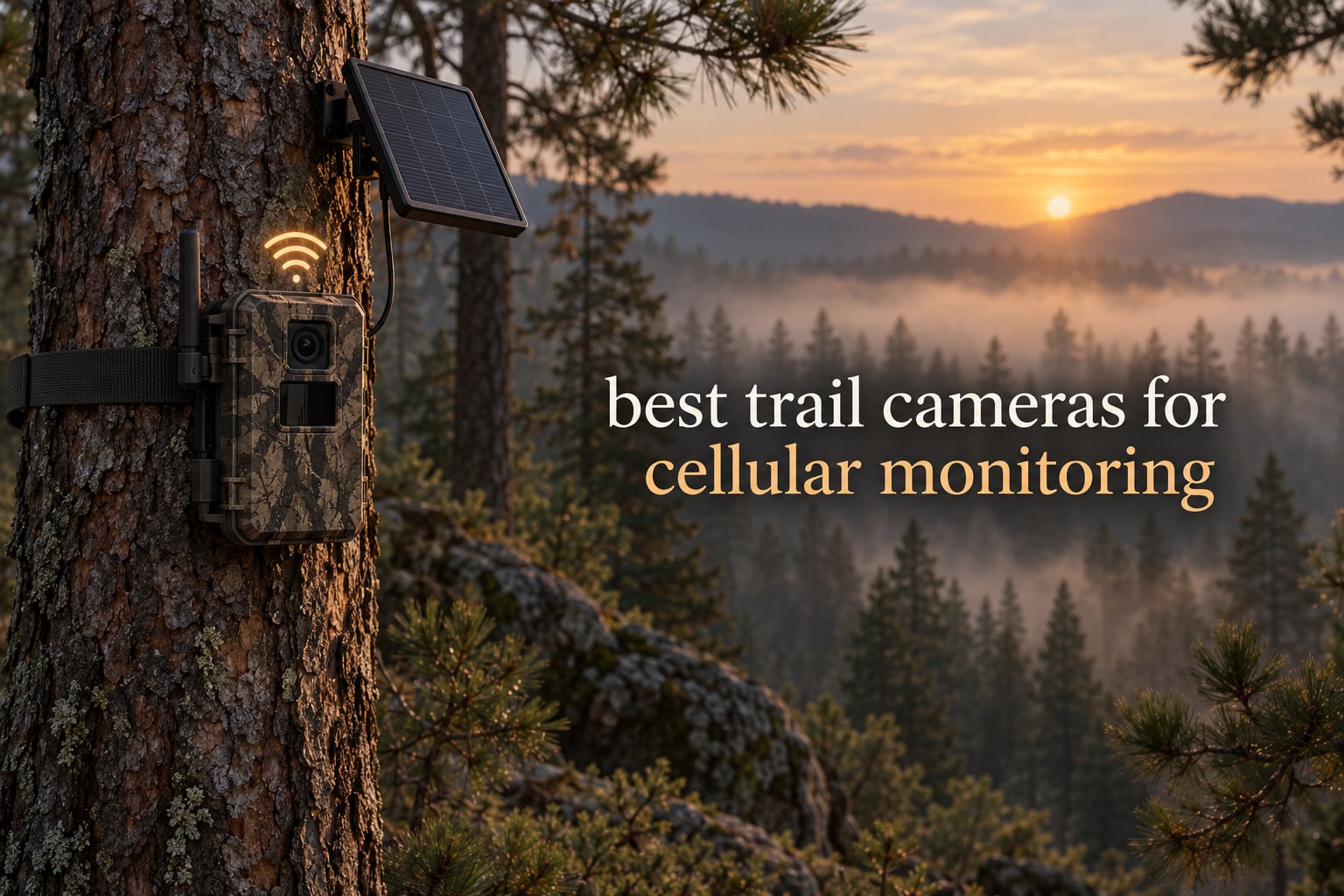
The best trail cameras for cellular monitoring solve a problem every trail camera owner eventually runs into: you place a camera somewhere useful, and then you have to physically walk back to it to see anything. A WiFi model needs a router, a mains outlet, or a phone hotspot within range. A cellular trail camera carries its own LTE modem and SIM, so it uploads photos and clips to the cloud and pushes an alert to your phone from a treeline, a gate, or a back forty with no power and no bars on your own handset.
We spent weeks reading the spec sheets, digging through owner reviews, and comparing what these cameras actually do once they are bolted to a tree. That matters because the gap between a camera that looks good on paper and one that reliably delivers a picture in January is where most buying mistakes happen. Twelve cameras made the cut below, and every one of them sends images to a phone over 4G LTE with no WiFi involved.
What separates the good ones from the frustrating ones is not the megapixel count. It is carrier flexibility, trigger speed, night-vision type, storage setup, and how honest the brand is about subscription costs. We break all of that down, plus a method for testing signal strength at your exact location before you spend money, because weak signal is the single most common reason a cellular trail camera disappoints.
If you want the short version before you read further, our full methodology is in the 12 Best Cellular Trail Cameras Tested & Reviewed roundup, and cameras aimed at off-grid land are covered separately in 10 Best Cellular Trail Cameras for Remote Properties.
Table of Contents
Top 3 Best Trail Cameras for Cellular Monitoring in 2026

VOOPEAK TC32B-2P
- 360 degree live view over 4G LTE
- Solar panel with 7800mAh battery
- Works on Verizon AT&T and T-Mobile

MagicEagle H1 Cellular
- 13000mAh battery with solar
- 940nm no-glow IR to 90 feet
- Gravity sensor and A-GPS tamper tracking

SPYPOINT Flex-M Pack
- Free 100 photos per month
- Dual SIM cross-carrier selection
- 32GB SD card included
The VOOPEAK TC32B-2P takes the top spot because it does the most things well at once: a pan-and-tilt live view, a pre-installed SIM that auto-selects the strongest of three major US networks, a 0.1 second trigger, and solar power in a two-pack. The MagicEagle H1 outscores it on owner satisfaction, with the highest rating in the group and a battery that owners say ends battery changes entirely. The SPYPOINT Flex-M pack wins on cost of ownership, since it is the only camera here with a genuinely free transmission allowance and a dual-SIM setup that keeps sending photos where phones struggle.
Quick Overview All 12 Cellular Trail Cameras Compared in October
| Product | Specifications | Action |
|---|---|---|
| VOOPEAK TC32B-2P |
|
Check Latest Price |
 Oculview 2K Pan and Tilt Oculview 2K Pan and Tilt |
|
Check Latest Price |
 Moultrie Edge 2 Pro Moultrie Edge 2 Pro |
|
Check Latest Price |
| SPYPOINT Flex-M Pack |
|
Check Latest Price |
| MagicEagle H1 Cellular |
|
Check Latest Price |
 TACTACAM Reveal Ultra TACTACAM Reveal Ultra |
|
Check Latest Price |
 Moultrie Edge Solar Moultrie Edge Solar |
|
Check Latest Price |
 TACTACAM Reveal X 3.0 2-Pack TACTACAM Reveal X 3.0 2-Pack |
|
Check Latest Price |
 Stealth Cam Fusion Max 2-Pack Stealth Cam Fusion Max 2-Pack |
|
Check Latest Price |
 Moultrie Edge 3 Moultrie Edge 3 |
|
Check Latest Price |
 VOOPEAK TC32 2-Pack VOOPEAK TC32 2-Pack |
|
Check Latest Price |
 VOOPEAK Dual Lens 4G VOOPEAK Dual Lens 4G |
|
Check Latest Price |
1. VOOPEAK TC32B-2P: The Most Capable Pan-and-Tilt Cellular Cam
VOOPEAK Trail Camera, 4G LTE Cellular Game Cameras with 360° Live Streaming
4G LTE live view
355 degree pan and 100 degree tilt
4W solar with 7800mAh battery
IP68 rated
Pros
- 0.1 second trigger catches fast movement
- Pre-installed SIM picks the strongest of three US networks
- Solar and 7800mAh battery hold charge for months
- Two-pack gives two monitored locations
- Quick three-minute setup
Cons
- Night vision range is short for open ground
- Daytime images have a pronounced fisheye look
- SD card not included and cloud playback is a paid add-on
This is the camera I recommend most often to people who want one box to cover a lot of ground. The TC32B-2P streams a 2.5K live view you can pan 355 degrees and tilt 100 degrees from the phone app, which means one mounted unit substitutes for two or three fixed-cone cameras when you are watching a wide trail or a driveway corner. Reviews repeatedly single out the 0.1 second trigger as the quiet hero, since fast-moving deer and anything else crossing the frame lands in the shot instead of half of it.
Signal handling is what convinced me. The built-in SIM scans Verizon, AT&T and T-Mobile and settles on whichever is strongest where the camera actually hangs, so there is no carrier decision to make and no SIM to install in the rain. Owners also report that the 4W panel and 7800mAh internal battery carry the camera through long stretches without a visit.
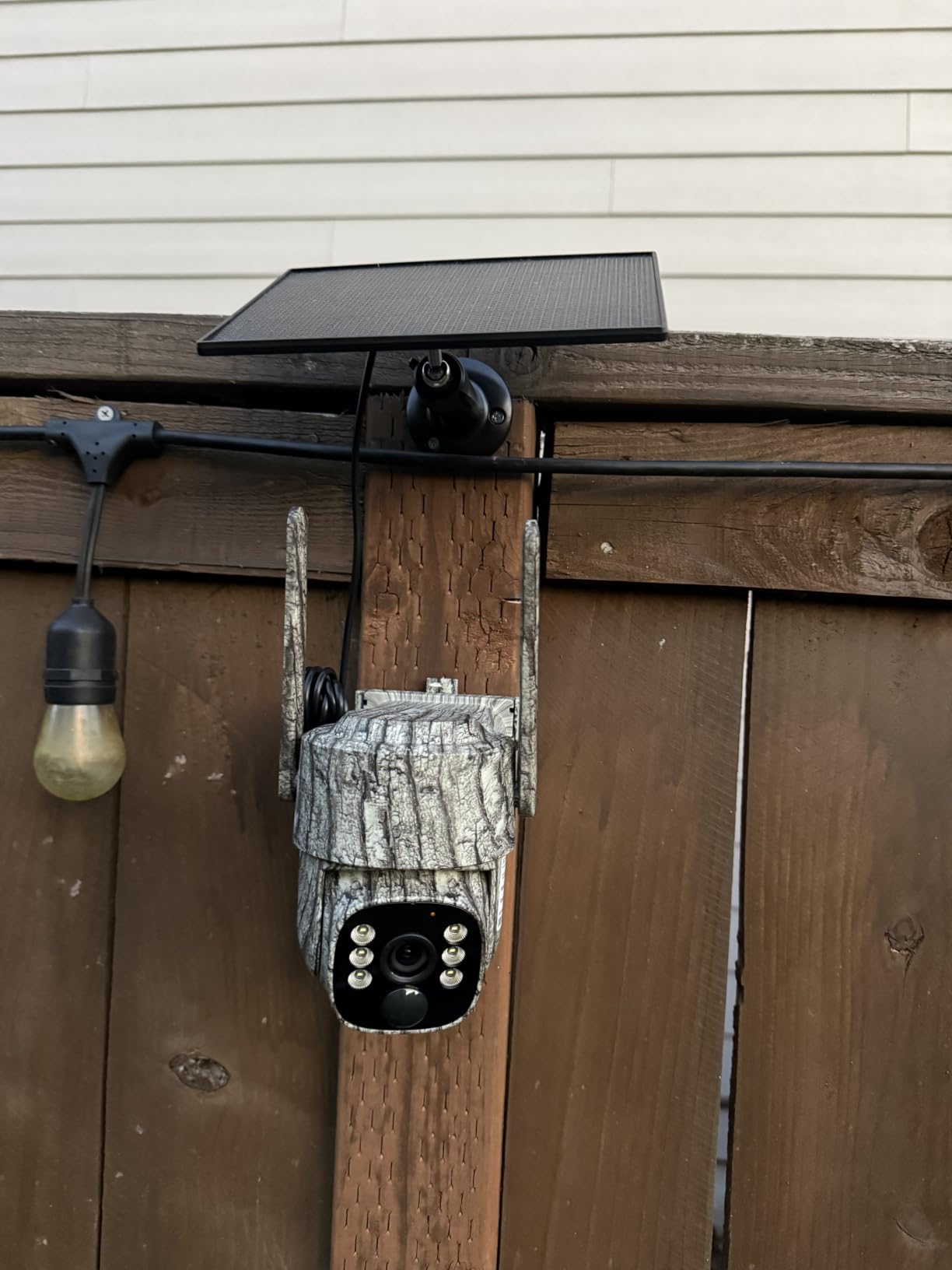
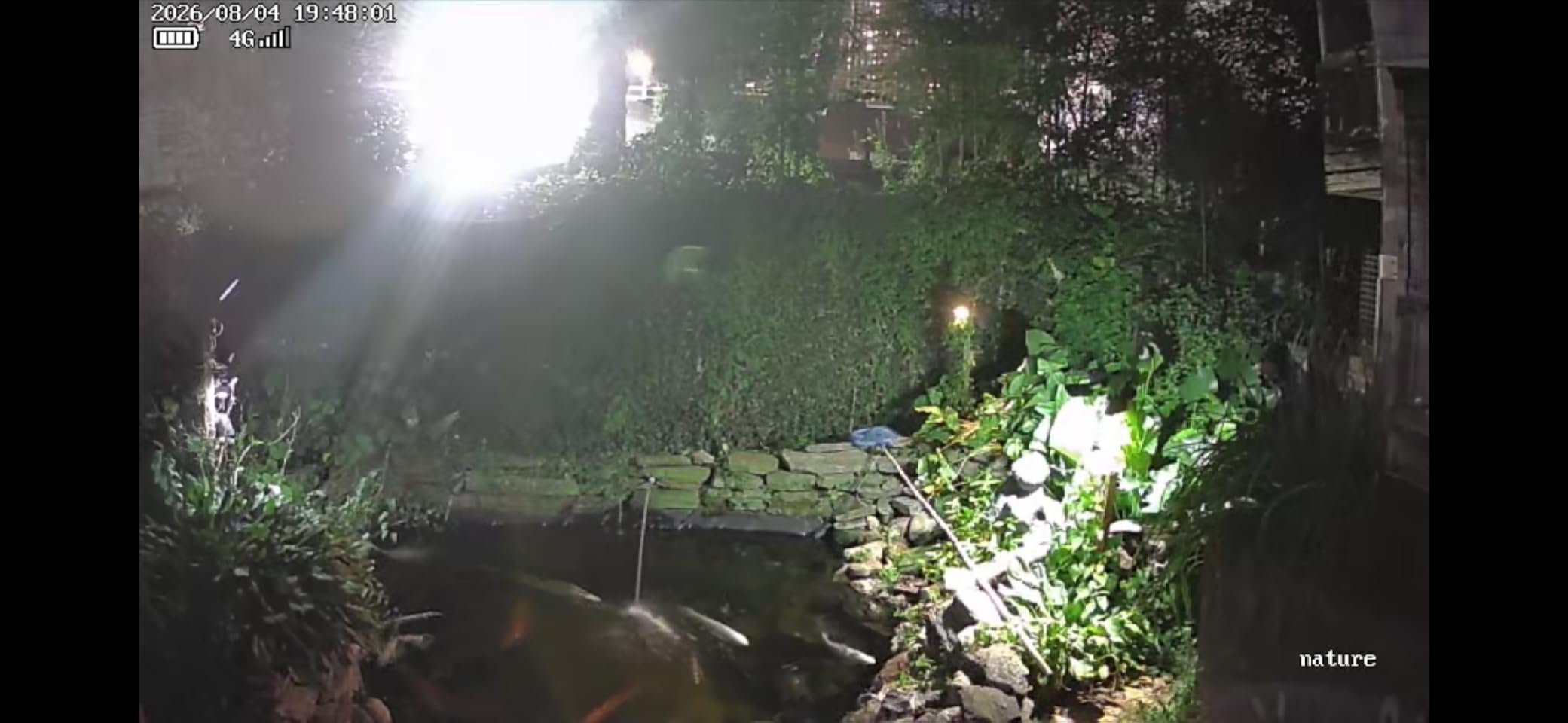
Two things temper the recommendation. Night vision tops out at roughly 30 feet in practice against a stated 65 feet, so this is a close-range camera rather than one for open fields. Daytime frames carry a visible fisheye curve and blow out when direct sun hits the lens, which matters if you plan to identify animals by markings.
There is also a real running cost. The microSD card is not included, and reviewing recorded video in the app requires a cloud subscription on top of whatever transmission plan you choose. A minority of owners reported units freezing or refusing to recognize a card. Treat this as the flexible, high-coverage option rather than the low-maintenance one.
What you gain by choosing this camera
Remote framing is the headline. Being able to nudge the lens a few degrees from the couch after the camera is already strapped to a tree saves an entire trip, which matters when your sites are an hour away. Owners also like that setup is close to instant: scan a code, pair the app, mount it.
If your phone coverage is poor but not absent, this camera’s multi-network auto-connect often still works, because it is hunting across three carriers rather than one. That flexibility is the single biggest reason this model is our first pick for mixed-terrain monitoring.
Where it falls short
The short IR range is the real constraint. If you need to identify a buck at 80 feet at night, look at a low-glow or no-glow model with a stated 90 to 100 foot range instead.
Cost stacking is the other one. Buyers should budget for a card, a transmission plan, and cloud access as separate line items, and they should accept fisheye distortion as part of the design rather than a defect.
2. Oculview 4G LTE Pan and Tilt: Best for Wide-Area Coverage
Oculview 4G LTE Cellular Trail Cameras, 360° 2K Live Streaming Game Camera, SIM Card Included, Low-Glow Night Vision, Solar Powered, Instant Alerts, Two Storage Ways, No WiFi Needed for Hunting&Trail
2K live view over 4G LTE
336 degree pan and 90 degree tilt
850nm low-glow IR to 100 feet
6W solar panel
Pros
- Pan and tilt control is repeatedly described as transformative
- Live view holds up at long distance from a tower
- Solar panel maintains charge through bad weather
- Customer support and replacement service are fast
- App pairing is intuitive
Cons
- Setup instructions leave too much to work out
- SD card subscription and cloud fees stack up per camera
- App sometimes loses the camera and needs a reset
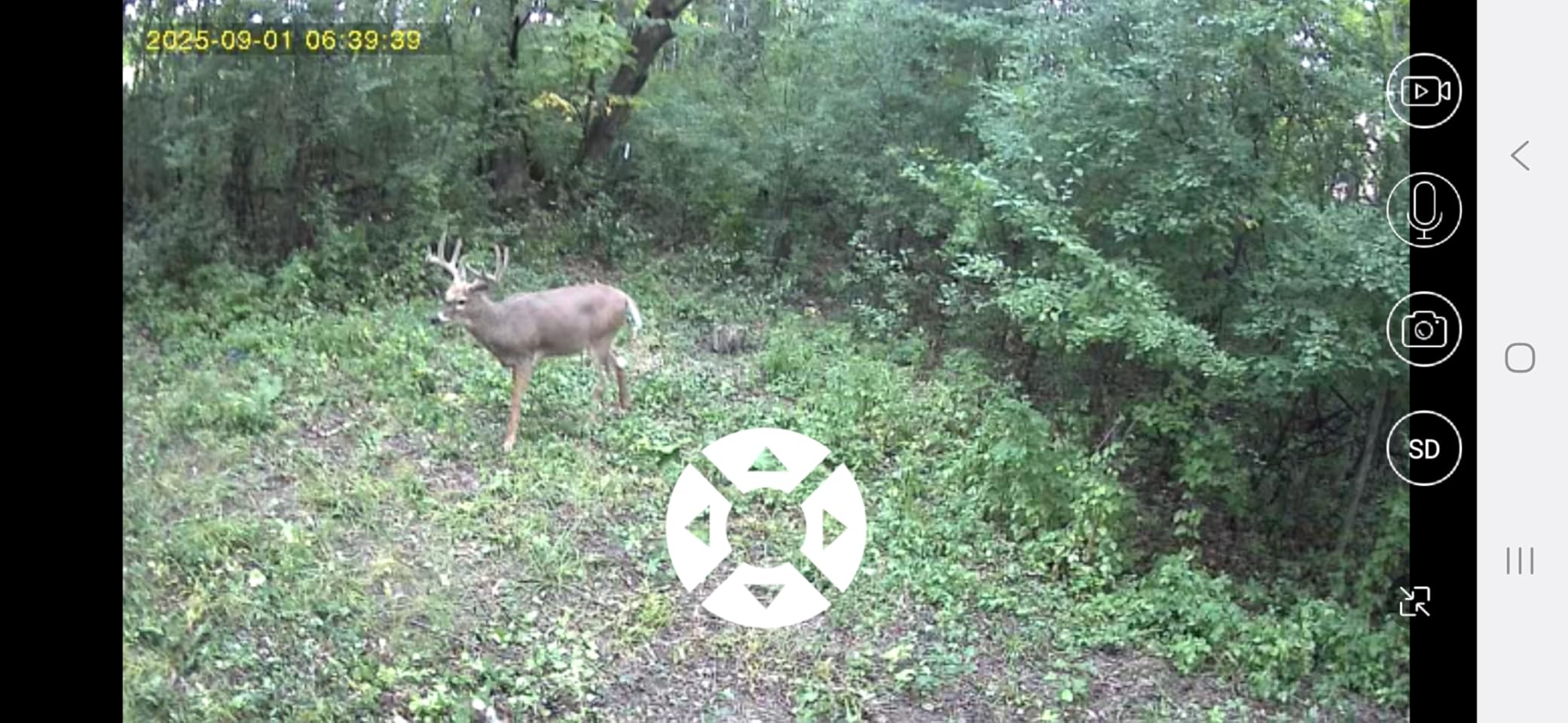
This is the camera for a user who wants to check a whole property rather than a single trail. The 336 degree pan and 90 degree tilt with 4x digital zoom is repeatedly described in reviews as the feature that changes how the camera gets used, because you can sweep a driveway, a gate, or a stand of timber from one mounting point. The 2K live stream stays usable even when the camera sits well away from a cell tower.
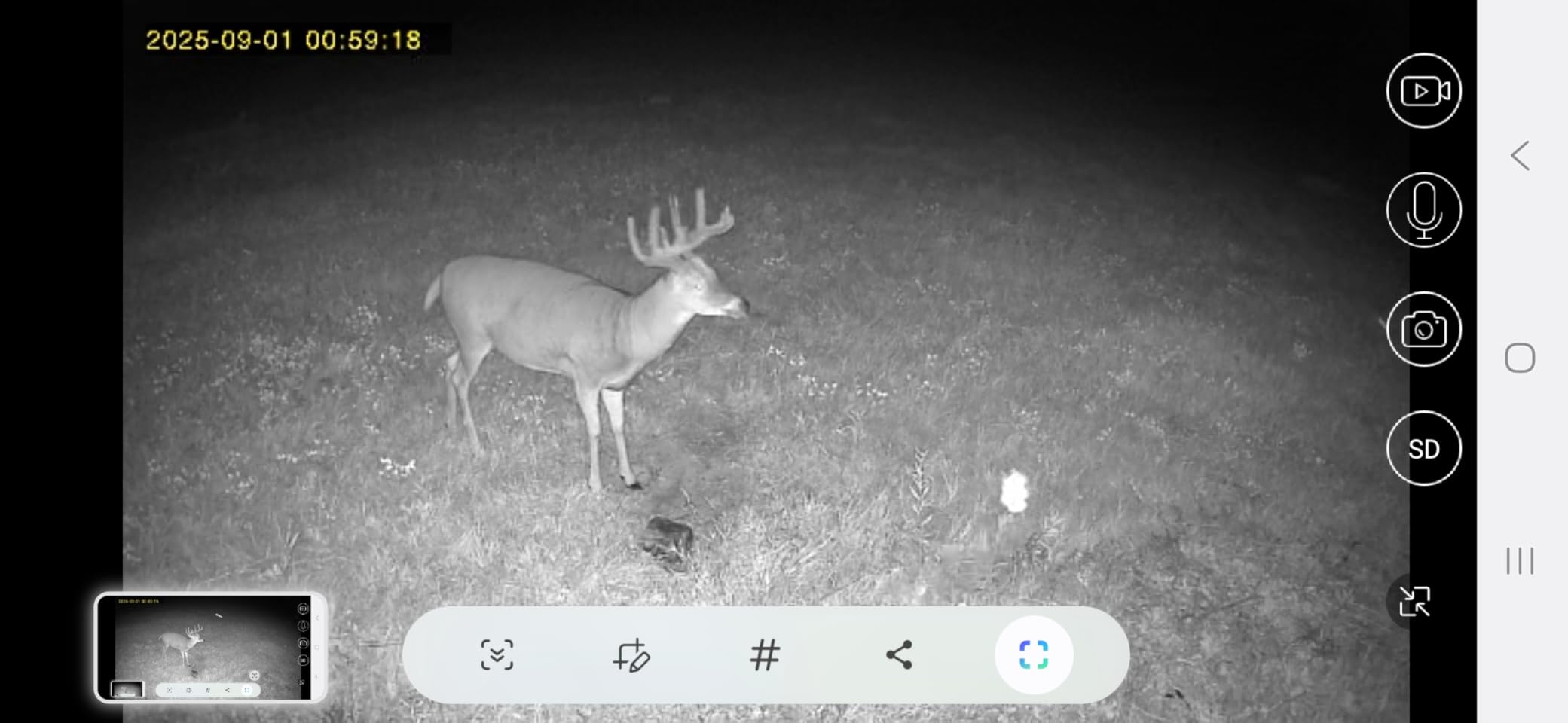
Night performance is stronger than most of the field. The 850nm low-glow infrared reaches up to 100 feet with the built-in spotlight enabled, which is a genuine step up from the short-range units that dominate this price bracket, and low-glow output keeps the flash from glaring visibly.
The honest drawback is ownership cost. Several reviewers itemize the running total themselves: an SD card, a monthly subscription, and cloud storage are all separate, and they scale with the number of cameras. A connected 6W panel can also be fully depleted during a long stretch of overcast weather, which matters in a northern fall.
Some users report the app stops recognizing the camera and forces a full reset, and setup instructions are criticized as vague enough that you will be figuring out menu logic on your own. Support, however, draws real praise for fast replacement service.
Reasons to pick it over the alternatives
Two reasons stand out. The first is night range: 100 feet of low-glow IR puts this camera in a different tier from most budget units. The second is the motorized pan and tilt, which effectively multiplies coverage without extra hardware.
For property security rather than hunting, it is one of the strongest fits on this list because you can aim at a gate or entry point remotely and confirm whether a person, a vehicle, or an animal triggered the alert.
Where it disappoints
If you are deploying many cameras, the per-camera cost stack is the problem. This is a strong single-camera or two-camera tool, and a poor fit for a ten-camera spread unless the subscription math works out.
App stability is the other weak point. Repeated resets and occasional false alerts come up often enough that we would pair it with a wide-angle static mount if you cannot check the camera daily.
3. Moultrie Edge 2 Pro: Best AI False-Trigger Filtering
Moultrie Edge 2 Pro Cellular Trail Camera – 40MP, No-Glow Flash
40MP stills and 1440p video
100 foot detection with low-glow flash
Live Aim remote preview
8GB built-in memory
Pros
- Live Aim preview lets you frame the shot from anywhere
- AI species filters steadily reduce false triggers
- Auto-connects to the strongest carrier
- Built-in memory removes SD retrieval
- Two year warranty from activation
Cons
- Cloud delivery requires a subscription
- Motion detection occasionally misses activity
- Refurbished warranty replacements have been reported defective
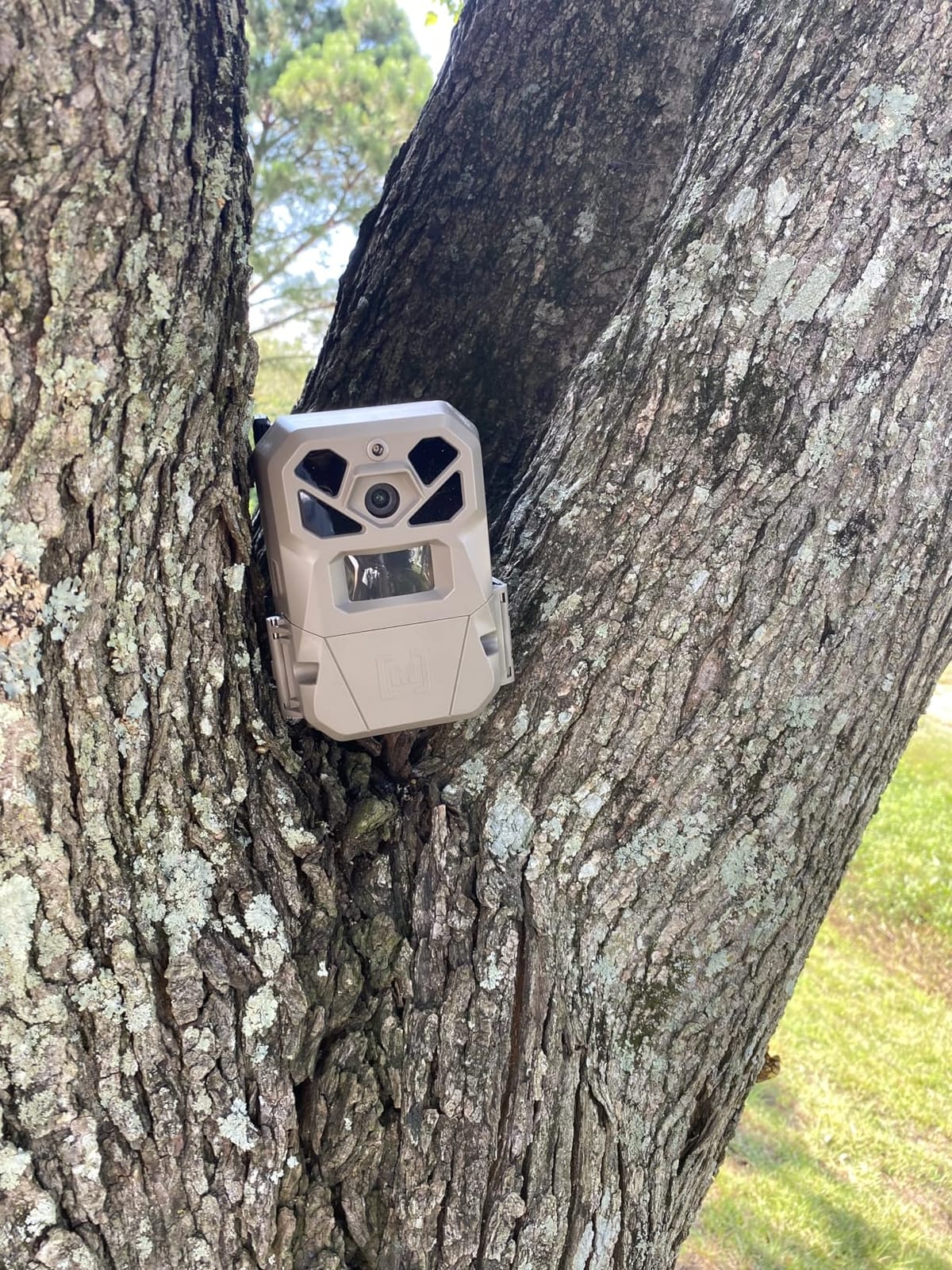
The Edge 2 Pro is the pick if your biggest frustration is volume. Its AI filters sort detections into bucks, does, turkey and humans, and owners report that confirming true detections in the app trains the camera to stop sending shadow shots, so the useful footage rises without you touching sensitivity settings every week. That also protects your data allowance, which is the hidden cost most cellular owners discover too late.
Live Aim is the second feature worth calling out. From the app you get a live camera preview to align the angle before you leave the house, and combined with 100 feet of detection range and low-glow flash, it removes most of the guesswork from a fresh placement.
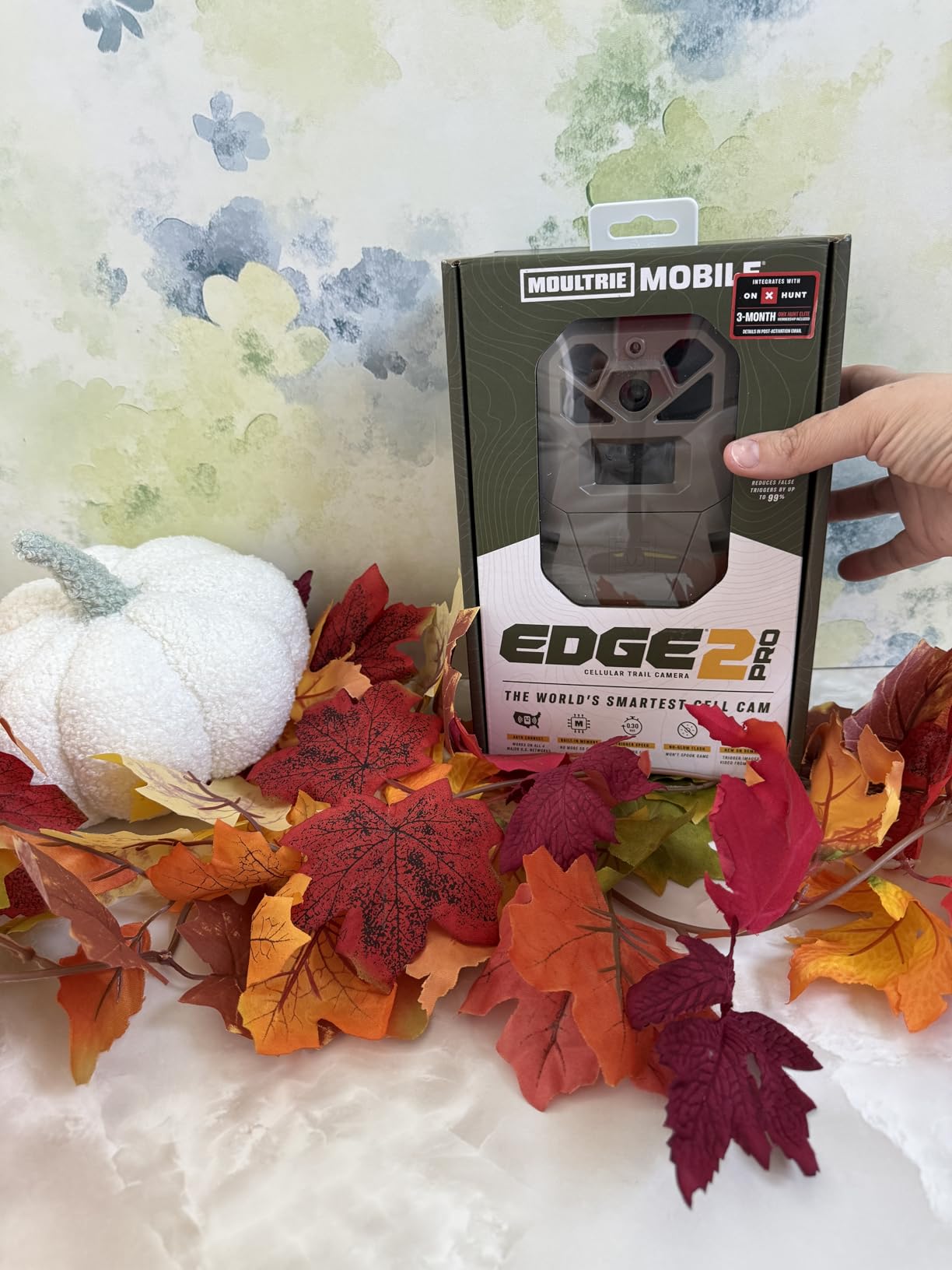
Storage is handled well. Eight gigabytes of built-in memory plus cloud backup means no card to retrieve in mud, and the camera accepts Moultrie battery boxes, solar packs and standard tree mounts, so powering it is not a problem.
The compromise is that picture quality is good rather than exceptional for the money, and motion detection occasionally misses real activity. Warranty replacements have occasionally arrived as refurbished units that triggered continuously and drained a battery in a day, which is worth flagging if you buy through a marketplace channel rather than direct.
What this camera does better than most
Alert discipline. AI species filtering is not a gimmick on this model; multi-user reports describe a real drop in useless images once you start confirming detections, and fewer alerts means longer battery life and less data used.
It also auto-selects the strongest available carrier, which removes the single most common reason cellular cameras fail on day one in rural areas.
Where it is not the right pick
If you refuse to pay a subscription, the built-in memory alone will not deliver photos to your phone. This camera is built around cloud delivery, and the plan cost is the price of that convenience.
For anyone needing genuine 4K detail at long range, look higher in this list. The 1440p video here is serviceable, not exceptional.
4. SPYPOINT Flex-M and SD Card Pack: Best Value Over Three Years
SPYPOINT Flex-M and SD Card Pack – Cellular Trail Cameras |Best Value in Hunting Accessories |No WiFi Needed & GPS-Enabled |Hunting Night Vision | IP65 Waterproof |28MP Photos, 720p Videos
28MP photos and 720p video
Free 100 photo monthly allowance
Dual SIM cross-carrier selection
32GB card included
Pros
- Only camera here with a genuinely free monthly allowance
- Dual SIM picks the strongest network in poor coverage
- SD card and preactivated SIMs included
- Quick trigger with easy app-guided setup
Cons
- Image clarity trails pricier models past about 20 feet
- Motion sensitivity is very high and drives constant captures
- Default settings burn the free allowance fast
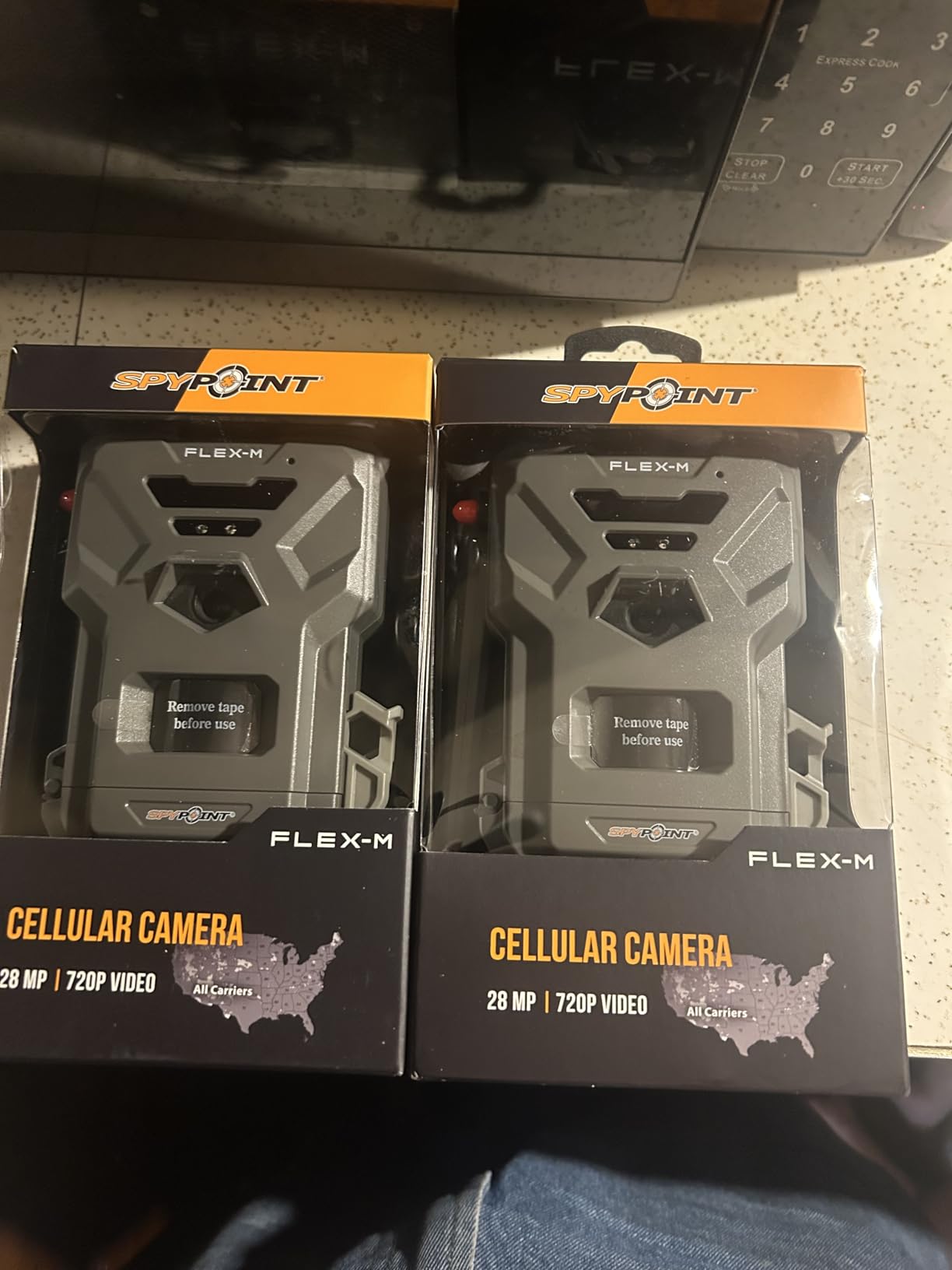
For anyone who plans to run more than one camera, the Flex-M pack changes the arithmetic. It is the only camera in this group with a free transmission allowance of up to 100 photos per month, and paired with the included 32GB card and preactivated SIMs, it gives you a working camera for close to nothing after the hardware. Paid tiers run from a low monthly rate for capped photo counts up to an unlimited option.
Dual-SIM cross-carrier selection is the technical story. Users running cameras in rough terrain report reliable photo delivery in spots where their own phones barely register, which is exactly the weak-coverage scenario we spend a whole section on below. For low-frequency monitoring like a gate or a seldom-used trail, that reliability matters more than image sharpness.
The 28MP sensor and 720p video are the compromise. Owners are candid that clarity drops off noticeably past about 20 feet, so this is not the camera for counting points on a distant antler, and motion sensitivity is set very high, so foliage and shadows trigger constant captures unless you dial it back or clear vegetation before mounting.
Default settings also exhaust the free allowance within the first month. Change the check-in interval before you rely on the free plan. A minority of owners report unit failures within a year and a mounting strap that decayed in a few months, so a lockbox is a sensible addition.
Why the economics here win
Three years of free low-volume monitoring costs you nothing in data. Add a second and third camera and most rivals’ per-camera plan fees start to outweigh the hardware difference entirely. That is why this sits in our top three despite the softer image.
It is also the most forgiving option for a first cellular camera, since the card and SIM are in the box and activation is guided in the app.
Where you will notice the trade-off
Night and long-range identification. If your monitoring goal is buck scoring at distance, this camera will not give you the pixels, and the video resolution is well below what newer models offer.
High-traffic sites are also a poor fit. Constant triggers from moving vegetation will burn any capped allowance quickly, and the high default sensitivity makes that worse.
5. MagicEagle H1 Cellular: The Highest-Rated Camera Here
MagicEagle® Cellular Trail Camera 4G Wild Game Cameras 13,000 mAh Battery Solar Panel 2K Audible Video No-Glow IR Night Vision IP66 Waterproof for Wildlife Deer Monitoring Home Security (Army Green)
5MP sensor with 0.3 second trigger
13000mAh battery plus solar panel
940nm no-glow IR to 90 feet
Gravity sensor with A-GPS
Pros
- Highest owner rating in the group
- Crisp daytime images from a 5MP sensor
- SignalSync no-SIM connection pairs quickly
- Battery and solar end battery changes
- Setup is easy for non-technical users
Cons
- Solar panel mount may need different screws with the strap
- Some setup steps are easy to miss without the manual
On owner satisfaction this one leads the entire list by a distance, and the reason is consistency rather than any single headline spec. SignalSync cloud-SIM technology pairs quickly and auto-selects the strongest network segment without a physical SIM, and reviewers who describe themselves as technically challenged specifically call out how painless the pairing and app flow was.
Power is the standout. A 13000mAh battery with an included solar panel is repeatedly credited with eliminating battery changes altogether, and a 32GB card is in the box. Image quality is described as exceptionally crisp for a 5MP sensor, with clear captures of night activity such as skunks and opossums through the 940nm no-glow flash at 90 feet.
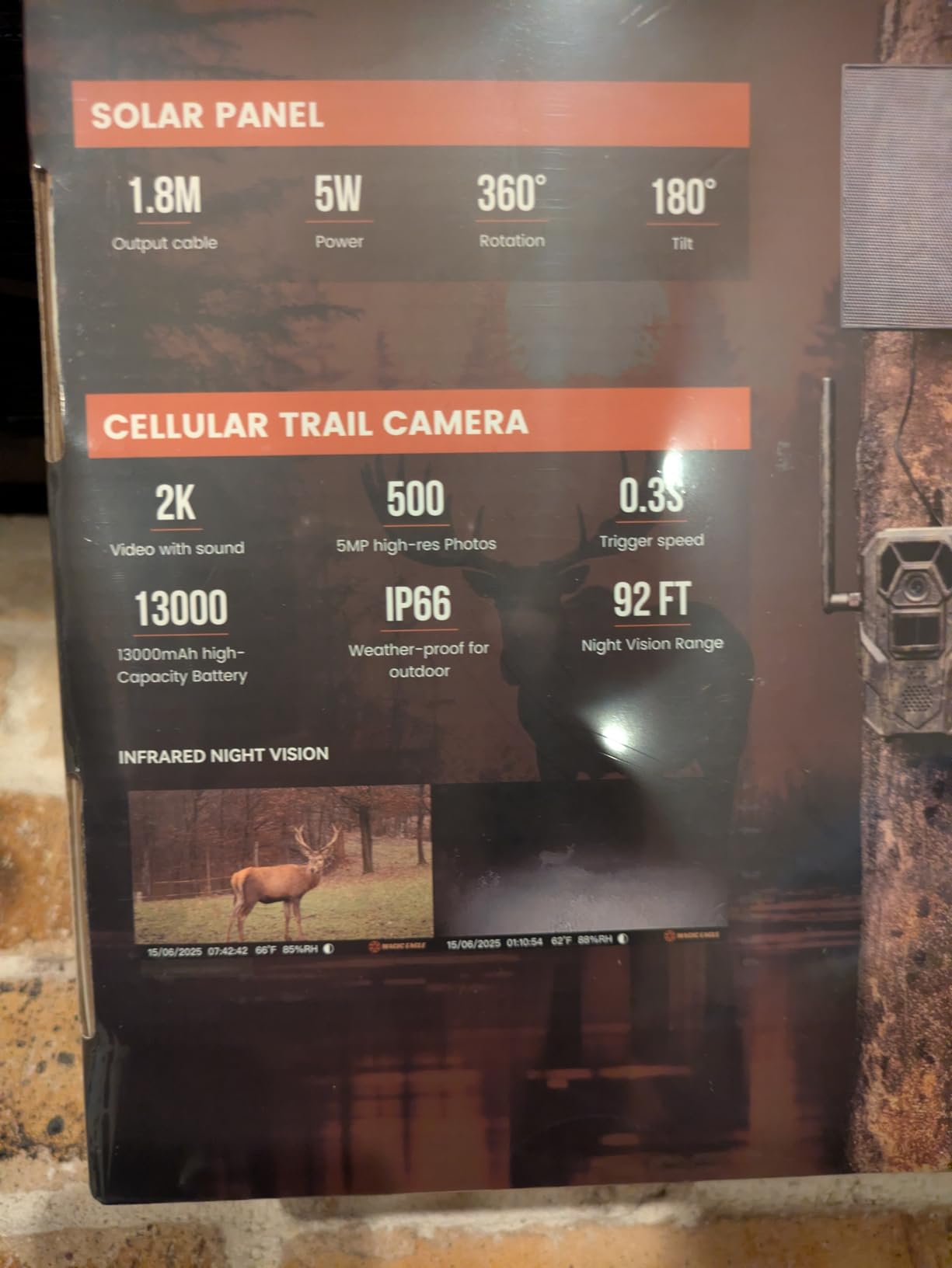
There is a quietly important feature here that few rivals match: a built-in gravity sensor paired with A-GPS. That combination gives you tamper alerts and offline location tracking, so a camera that gets moved or stolen does not simply vanish from your map.
The reviews are almost uniformly positive. The only hardware critique we found is that the solar panel mount sometimes needs extra or shorter screws when fitted with the strap, and some setup steps are easy to miss without reading the manual closely. A 2.5 year warranty is available with registration.

Who should consider this one first
Anyone who wants to set cameras and forget them. The battery and solar combination is the clearest answer on this list to the most common complaint in cellular trail camera ownership, which is batteries dying far faster than expected.
It is also a strong choice for backyard and property monitoring, since the compact camouflaged housing reportedly does not spook wildlife at close range.
Where to temper expectations
The sensor is 5MP and video is 2K with audio. That is more than adequate for presence and behavior monitoring, but it is not the choice if you need fine detail at long range.
Reading the manual matters more than with the bigger brands. Miss a step and you may conclude the solar panel is not charging when it simply was not connected.
6. TACTACAM Reveal Ultra: Best Image Quality With Theft Tracking
TACTACAM Reveal Ultra Cellular Trail Camera: 4K Photo, 1080p Video, Live View, GPS Tracking-Enabled, Switchable No-Glow/Low-Glow Flash, LTE Connectivity, LCD Screen – Best Hunting, Game Camera
4K stills and 2.5K video
Sub-0.5 second trigger with 9-shot burst
Active GPS with half-mile alerts
Switchable low-glow and no-glow flash
Pros
- Best image quality in this group
- Reduced IR output changed observed deer behavior
- Live view and on-demand requests are fast
- Active GPS keeps transmitting even when powered off
- On-camera LCD aids setup
Cons
- Some owners reported persistent shadow triggers
- Technical support was unreachable in-app
- Data and video request plans cost more outside the US
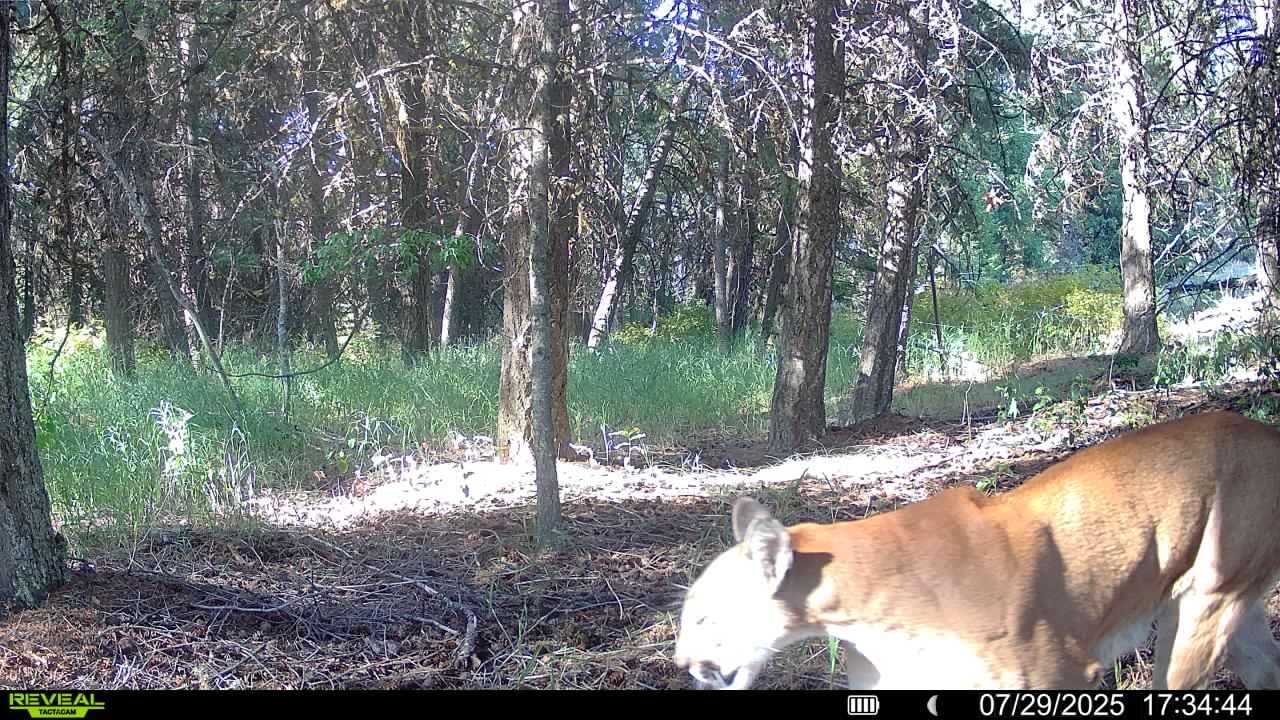
If picture quality decides the purchase, this is the camera. It produces 4K stills and 2.5K video with a sub-0.5 second trigger and a burst of up to nine frames, and hunters running it alongside other cameras report that the reduced IR output was low enough to change how deer behaved at night compared with everything else on their property.
The security angle is genuinely differentiated. Active GPS keeps transmitting coordinates with the camera powered off or the battery removed, and you get a movement alert at half a mile. For anyone running cameras across open land where theft is real, that is worth more than another megapixel.
Automatic 4G carrier connection means no manual carrier setup, and an upgraded antenna helps it hold signal in poor spots. A 2-inch LCD on the camera itself is a small thing that saves real time on a cold morning, and 16GB of internal storage means the SD slot is optional rather than required.
The negatives are about support and one specific behavior. One detailed review describes a camera sending hundreds of shadow photos that no setting would suppress, and no in-app technical channel being available to resolve it. Outside the US, a Canadian reviewer reports the network failing seasonally and data plans costing more than the hardware.
Where this camera earns its price
Identification quality. If you need to tell one buck from another or confirm a species without driving to the tree, 4K stills with a fast burst are the difference between a guess and a record.
Live view plus on-demand photo requests respond quickly, and the switchable flash lets you drop to no-glow when you are near a neighbor’s boundary or a well-traveled public trail.
Where it disappoints
Support access is the weak point. If something goes wrong, you may end up routing through a third-party storefront rather than the app, so factor that friction into your expectations for a premium camera.
It is also the wrong tool for anyone outside the US who depends on the network, since a single owner reported seasonal outages and plan costs above the price of the camera.
7. Moultrie Edge Solar: Best Integrated Solar Design
Moultrie Edge Solar Cellular Trail Camera – Integrated Solar, 40MP
Integrated solar with rechargeable battery
40MP photos and 1080p video
0.4 second trigger
Four-carrier auto-connect
Pros
- Integrated solar removes battery swaps entirely
- Reliable delivery of thousands of images between charges
- AI buck detection cuts irrelevant alerts
- Remote health status suits multi-camera setups
Cons
- No real-time streaming at the time of purchase
- Battery still needs a manual top-up about quarterly in low sun
- Wind-blown vegetation drives high image volume
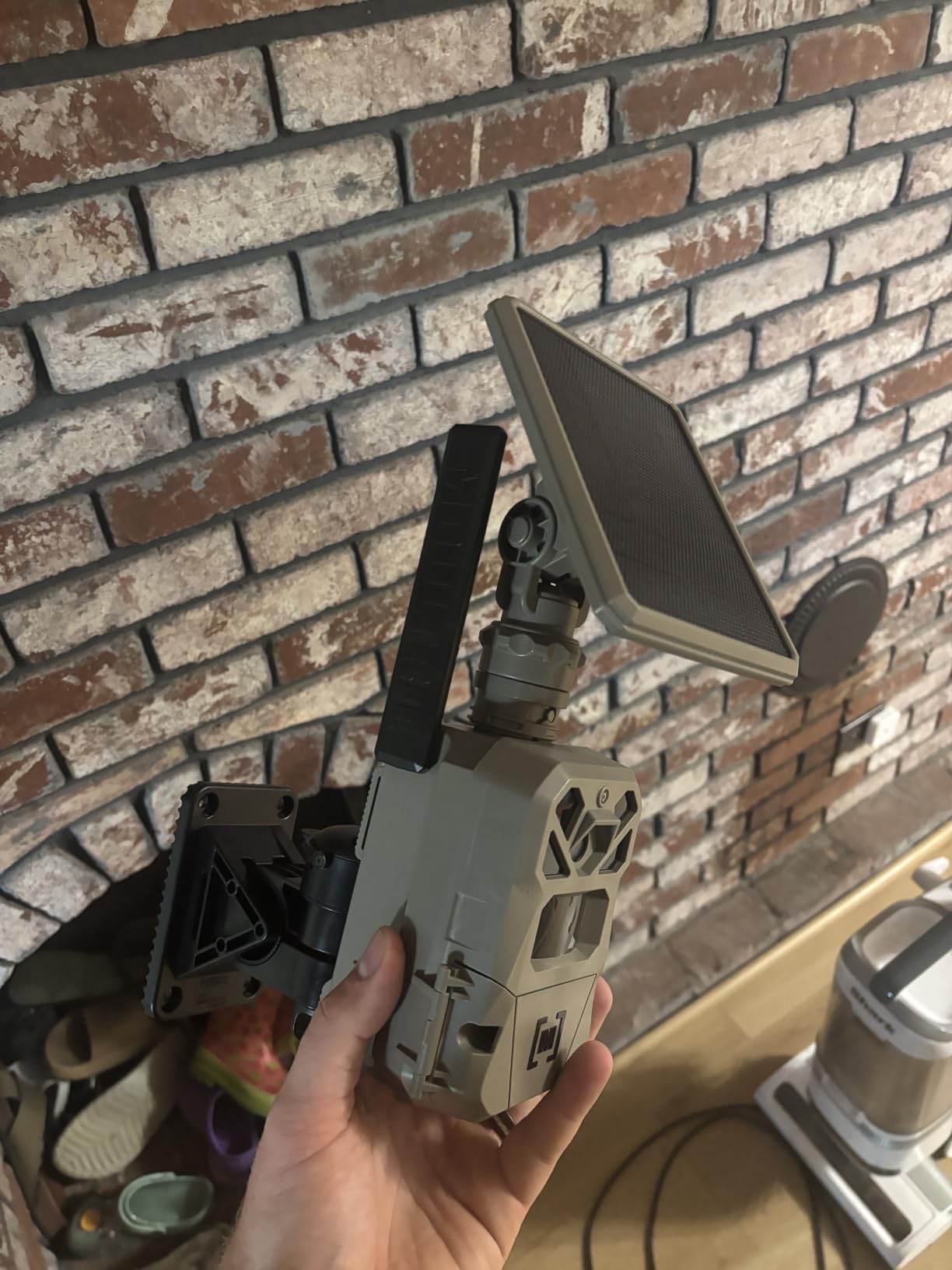
The cleanest answer to the battery question. This camera comes with an integrated adjustable solar panel and a built-in rechargeable battery pack, so there are no AA cells at all and no strap-mounted panel to aim. Owners running it at remote mountain properties report thousands of images delivered between only a couple of charges, and multi-camera users say they have never run flat.
Connectivity is strong. The camera automatically picks the strongest of four major US networks with no SIM cards involved, 40MP stills and 1080p video with audio are solid, and the low-glow IR reaches 100 feet on a 0.4 second trigger across a 100-foot PIR range.
Remote access is where it stops. On-demand video requests and remote health status work well, but real-time streaming was not available at the time of purchase and was listed as coming later. That distinction matters if your reason for wanting cellular is instant video rather than delivered clips.
Image quality is described as fair rather than sharp and weak past a short distance, and wind-blown trees and grass generate a high volume of unnecessary photos. One detailed review notes there is no way to check battery health on demand or pair over Bluetooth to confirm the panel is charging, which left a unit dead after a short trip.
Why the solar design is worth the premium
There is no seasonal battery window to manage. No partial discharge memory, no cold-morning voltage sags, and no lithium stock to carry up a ridge. For a camera that stays mounted year round, that removes an entire category of maintenance.
The Easy Aim mount with real-time preview also makes placement accurate on the first attempt, which is the cheapest way to cut false triggers.
Where it is the wrong tool
If you need live streaming today, skip it. Buyers who assumed the feature was present were the source of the most critical reviews on this listing.
It is also not a camera for long-range scoring, since clarity past a short distance is the most common image complaint in the reviews.
8. TACTACAM Reveal X Gen 3.0 Two-Pack: Easiest Setup for Beginners
TACTACAM Reveal X Gen 3.0 Cellular Trail Camera – Multi Carrier, HD Photos & Videos, Pre-Installed Antenna, Built-in GPS, Best Battery Life, Low-Glow, Fast Trigger Speed + Cleaning Cloth | 2PK
Multi-carrier with preactivated SIM
1080p FHD video with 3-shot burst
Low-glow IR flash
Built-in GPS and storage
Pros
- Low-glow flash is effectively undetectable to wildlife
- Built-in storage removes SD card retrieval
- Works across multiple networks for carrier flexibility
- Three-shot burst centers game in frame
- Straightforward activation for beginners
Cons
- Two-pack is a significant outlay
- Solar panels are sold separately
- Only a one-year warranty
Two cameras for two locations is the most common real-world setup, and this pack addresses it directly. Owners highlight the low-glow IR flash as effectively undetectable to both wildlife and people, built-in storage that removes the SD card trip from your routine, and multi-network support that lets you move a camera to a marginal coverage area without changing hardware.
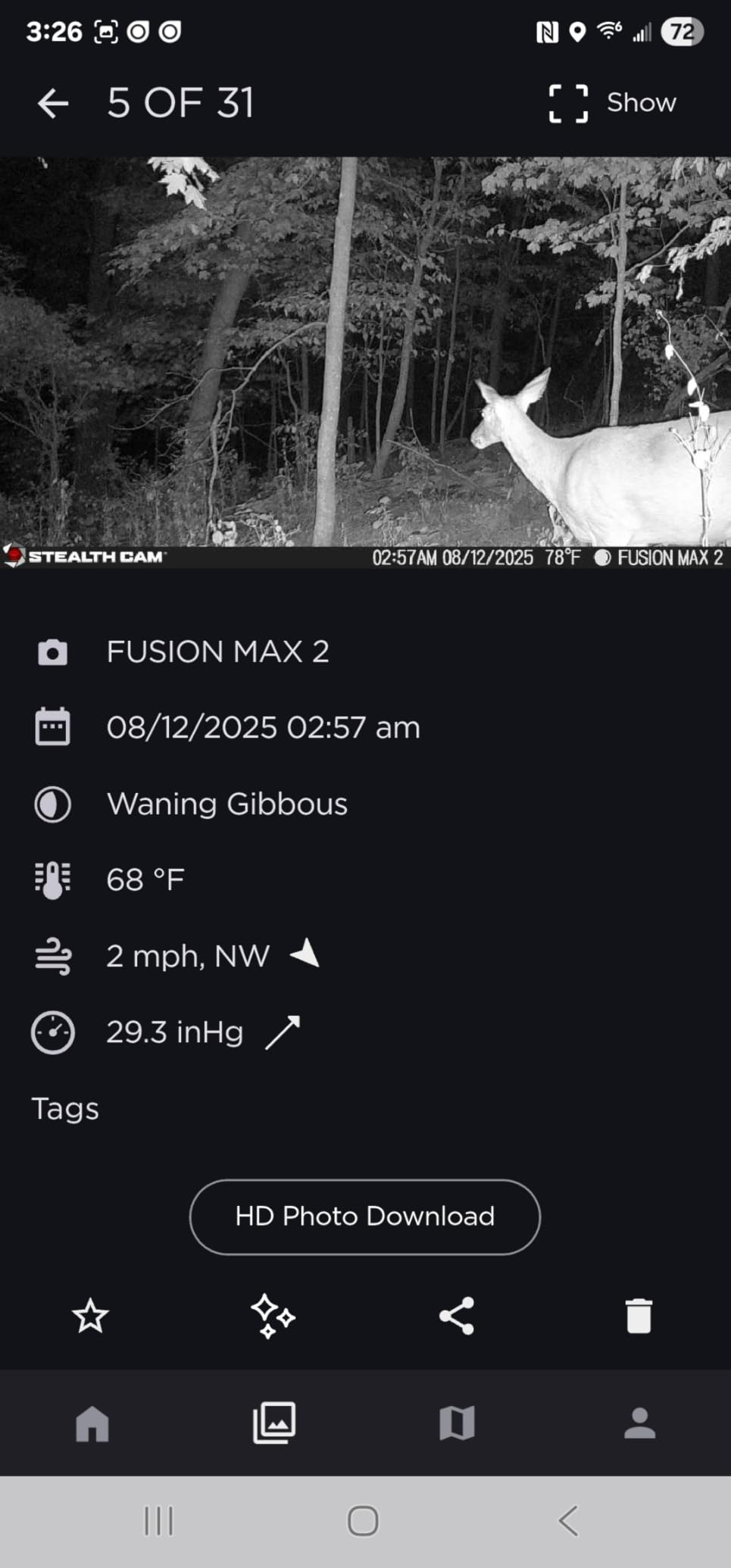
Setup is described as suitable for beginners, with a step-by-step activation interface. Three-shot burst mode helps put game in the center of the frame rather than at the edge, and built-in GPS means the camera map is accurate from the first day.
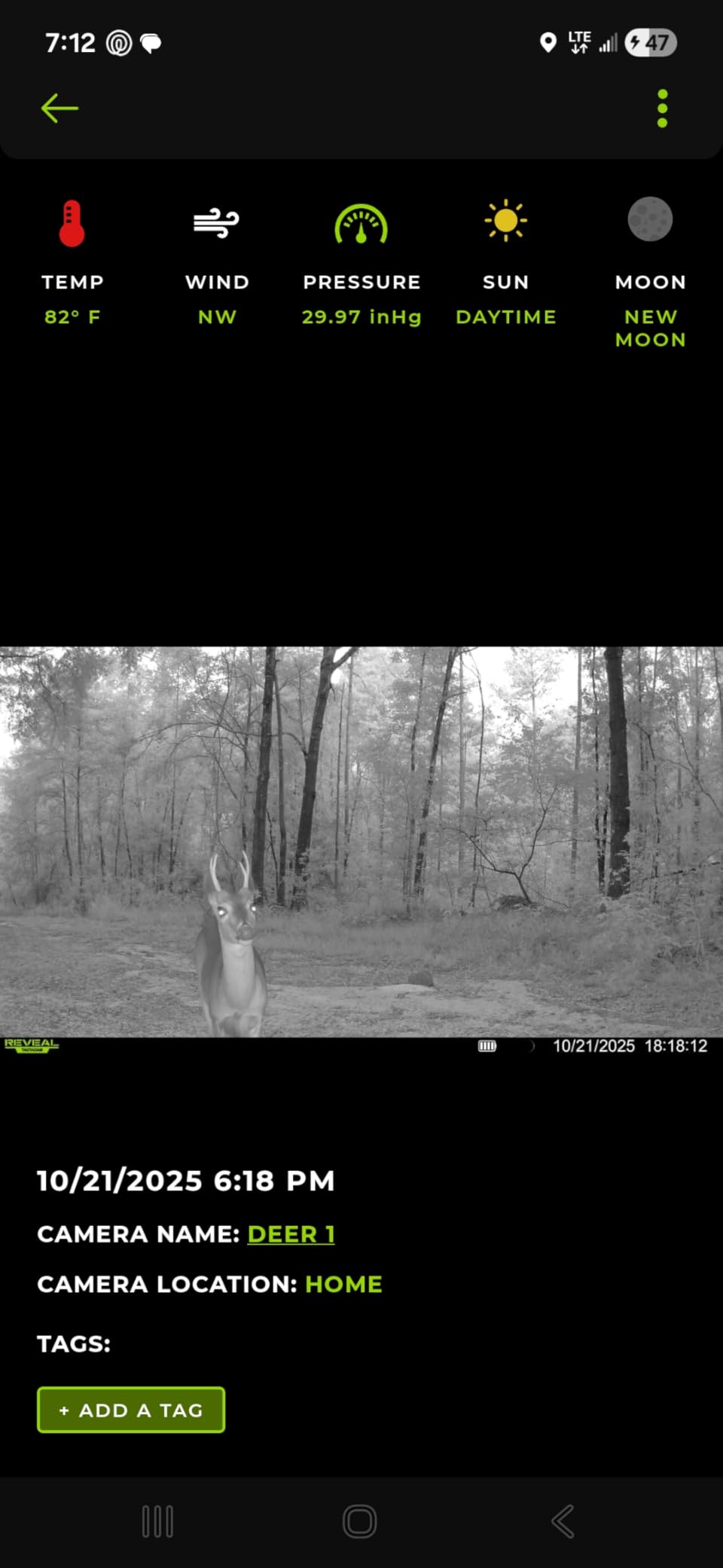
This listing has the thinnest written feedback in the group at 205 reviews, so real-world insight is thinner here than for the other picks. What exists centers on stealth, storage convenience and easy activation, which is consistent across the reviews rather than dramatic in any direction.
Three practical notes. The two-pack format is the largest single outlay among these options, solar panels are sold separately for extended runtime, and warranty coverage is one year, shorter than the two years several rivals offer. Budget for a panel if you are mounting away from a vehicle.
What works well about this pack
Coverage per dollar is the point. Most buyers need two positions, not one, and a two-pack removes the temptation to run a single camera with a wider but lower quality field of view.
Built-in storage also means you can check what a camera saw from the app rather than driving out with a laptop and a card reader, which is the main reason people buy cellular in the first place.
Where you should be cautious
The one-year warranty is the shortest here. If your cameras live in exposed or hard-to-reach spots, longer coverage is worth something.
And since the packs are sold as a fixed two, single-camera buyers should skip this one entirely and choose a single unit instead.
9. Stealth Cam Fusion Max Two-Pack: Best Resolution Options
Stealth Cam 36MP Fusion Max Cellular Trail Camera with 0.4 Second Trigger Speed, 80-Feet Detection Range and Infrared Flash (2-Pack)
36MP selectable down to 4MP
0.35 second trigger with 1-6 shot burst
80 foot detection and IR range
AT&T and Verizon dual SIMs
Pros
- Fast 0.35 second trigger with adjustable burst
- Selectable resolution trades detail for storage and battery
- Dual pre-installed SIMs broaden coverage
- QR code Quick Scan simplifies activation
Cons
- Runs on 16 AAA batteries which are not included
- Rechargeable cartridge sold separately
- Warranty coverage is described as limited
The distinguishing feature here is adjustable resolution. You can select anything from 36MP down to 4MP, which lets you trade image detail against storage use, transmission volume and battery drain. Buyers who manage several cameras say that control is the reason they keep the setting low during heavy activity periods.
Two pre-installed SIM cards connect to AT&T or Verizon, giving you a manual option when auto-selection lands on a weak network. Quick Scan QR setup and the COMMAND Pro app make activation and remote settings changes straightforward.
Power is the recurring complaint. The cameras take 16 AAA cells, which are not included, and users who move to the optional rechargeable cartridge do so specifically to stop buying alkaline batteries. Some report those 16 cells running down quickly in heavy-use setups, which is the direct cost of a high-sensitivity trigger plus cellular transmission.
Range is honest rather than generous at 80 feet for detection and IR flash, and warranty coverage is described as limited. For a camera meant to sit for a season on public land, that is a real consideration.
Reasons this two-pack earns its place
Resolution control is unique in this group. On a camera that must send photos over a metered connection, being able to drop to 4MP on a busy trail is a genuine cost saving that fixed-resolution rivals cannot offer.
Dual pre-installed SIMs also give manual network choice, which is the rarest feature in a list otherwise dominated by automatic carrier selection.
Where the economics bite
Sixteen AAA cells per camera, times two cameras, is a lot of batteries to carry. Budget accordingly or plan on the rechargeable cartridge from day one.
Limited warranty coverage means you should lockbox the cameras rather than assume a replacement if one is damaged or stolen.
10. Moultrie Edge 3: Best Value for Food Plot Monitoring
Moultrie Edge 3 Cellular Trail Camera – 40MP, 0.5s Trigger
40MP stills and 1080p video
0.5 second trigger with 100 foot range
Four-carrier auto-connect no SIM needed
Built-in memory plus local recording
Pros
- Quick setup with a heavy-duty tree strap included
- 40MP stills and 1080p video stay crisp day and night
- Auto-connects to the strongest of four US networks
- Live Aim preview and built-in GPS simplify mapping
- Built-in memory means no SD card required
Cons
- Paid plan required to send photos to the app
- Recurring plan cost adds up over time
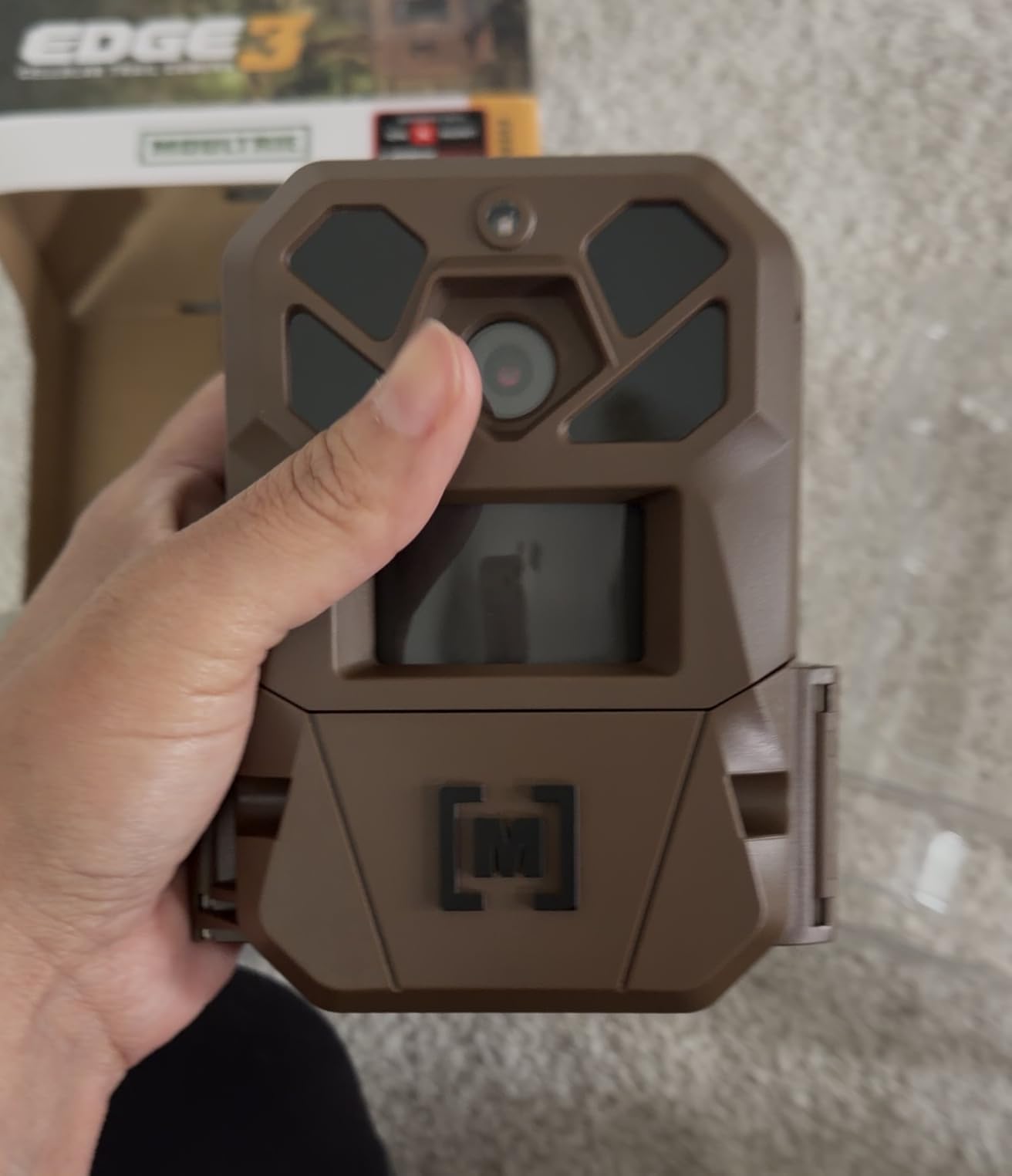
For food plot and feeder work this is the most complete unit at the entry level. It delivers 40MP stills and 1080p video with sound, a 0.5 second trigger, and a 100 foot flash and detection range with low-glow infrared that does not spook deer. It also ranks number one in Hunting & Trail Cameras, which is not nothing.
The setup experience gets specific praise: a heavy-duty tree strap in the box, Live Aim preview for setting the angle, and built-in GPS for mapping. Full feeder remote control from the app is a genuine bonus if you run an automatic feeder, since you can trigger it and check the response without walking out.
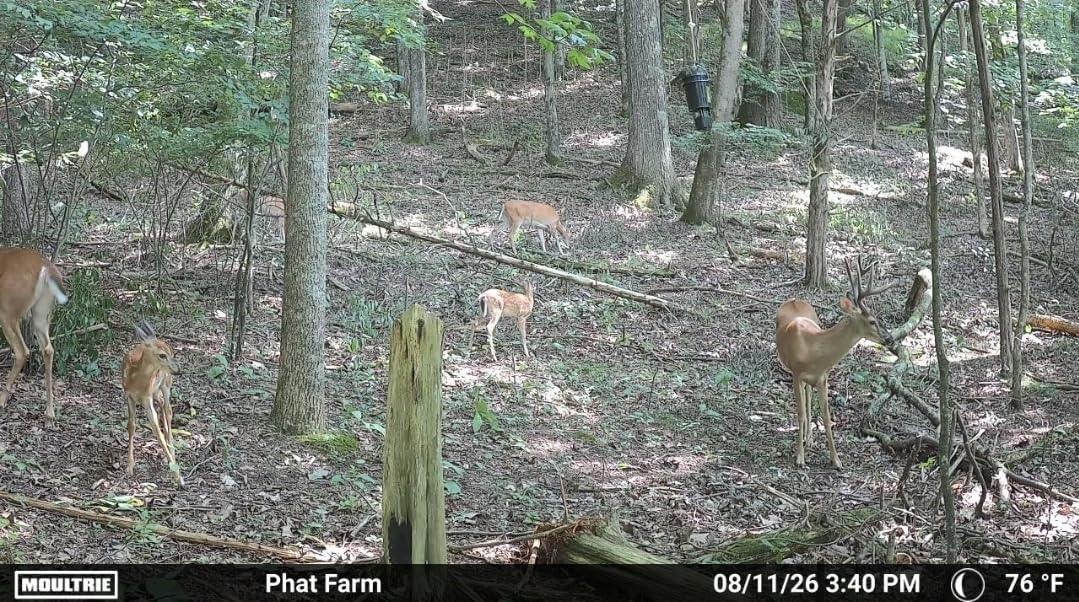
AI buck detection reduces false triggers, which extends battery life and keeps you looking at relevant photos instead of a wall of empty frames. Built-in memory handles local recording so an SD card is optional rather than required, and compatibility with EDGE Series lithium packs and solar panels means power is a menu choice later.
The reservation every reviewer raises is the same one: a paid plan is required to send photos to the app. Owners describe the quality and reliability positively without exception and then note that the plan cost over a multi-year deployment is what gives them pause. Two year warranty coverage from activation in the app is a plus.
Why food plot owners like it
Feeder control plus AI buck detection means you can run a plot on a schedule and receive only the alerts that matter. Built-in memory removes the card retrieval habit entirely, and the strap-and-strap-free mounting makes it easy to reposition as the season changes.
Multi-carrier auto-connect with no SIM card is the other quiet benefit: you can move this camera to a new lease or a new stand of trees without touching carrier settings.
Where it is not the best choice
If your priority is zero recurring cost, this is the wrong camera. Delivery to the app depends on a subscription, and there is no free allowance to fall back on.
Anyone needing live streaming rather than delivered photos and clips should also look elsewhere, since this model is built around alerts and stored captures.
11. VOOPEAK TC32 Two-Pack: Best Two-Camera Auto-Tracking Setup
4G LTE Cellular Trail Camera 2 Pack, Human Auto Tracking with 2,5K HD Live
355 degree pan and 90 degree tilt auto-tracking
2.5K live view with color night vision
IP66 rated
Solar panel for each camera
Pros
- Auto-tracking locks onto and follows moving subjects
- Two-pack includes a dedicated solar panel per camera
- Switchable invisible infrared and white-light night modes
- App control lets you frame the shot remotely
- PIR sensor sends instant picture alerts
Cons
- Each camera needs its own separate data plan
- Memory card not included and must be bought separately
- Only 2.5K video is listed alongside a 4MP still sensor spec
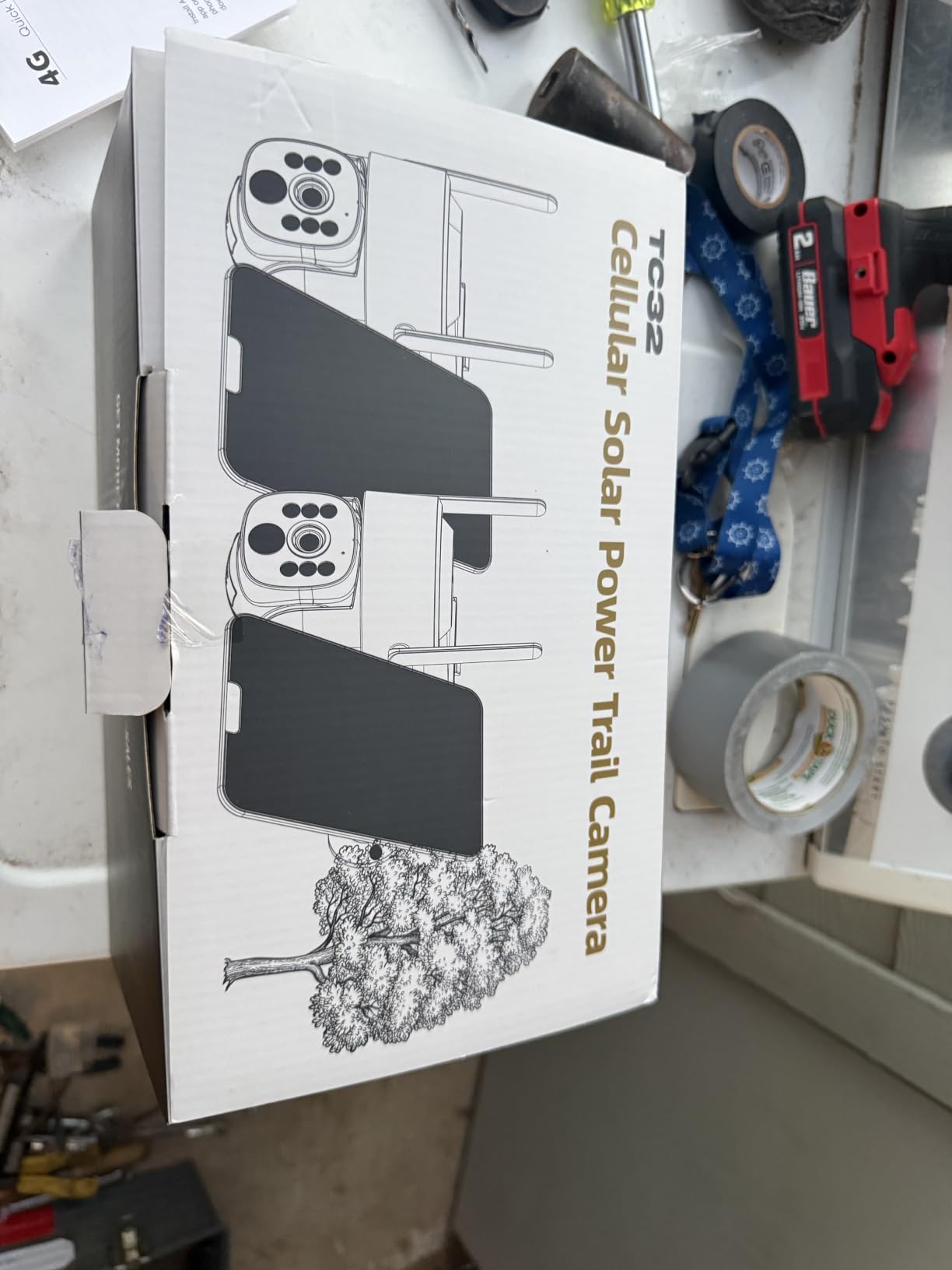
The strongest rating of any multi-camera package here, and the reason is auto-tracking. The 355 degree pan and 90 degree tilt lock onto a moving subject and follow it, which turns a mounted camera into something closer to a guided security unit. Buyers watching a yard, an orchard or a farm entrance value that more than raw resolution.
The bundle also solves power for two locations: each camera comes with its own solar panel. Live view runs at 2.5K with switchable invisible infrared and white-light night vision, so you can capture color footage when the light is appropriate and stay invisible when it is not. IP66 weather resistance and 30fps capture handle year-round outdoor placement.
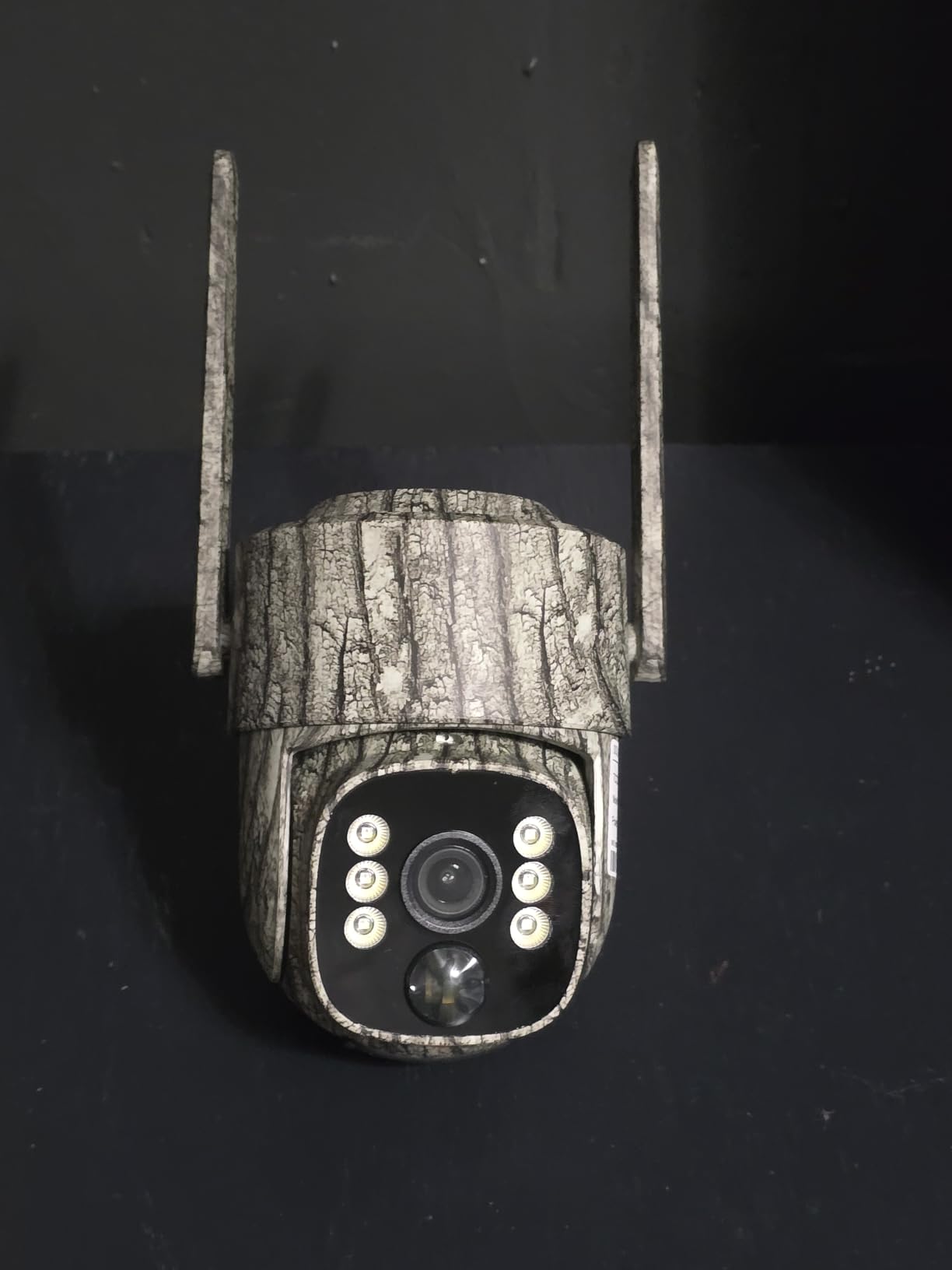
The catch is running cost and the pre-installed non-removable SIM. Because the SIM cannot be swapped, you are locked to whatever networks the unit supports, and every camera in the pair carries its own separate data plan with no shared allowance. That is manageable for two units and unpleasant for ten.
The memory card is not included and must be purchased separately, and the spec sheet pairs 2.5K video with a 4MP still sensor, so the headline number flatters the photo quality slightly. Otherwise the review profile is strongly positive, with owners citing remote framing and the two-camera solar bundle as the deciding factors.
When auto-tracking is worth paying for
Anywhere the subject does not stay still. A person walking through a yard, a vehicle entering a gate, or an animal crossing an open field all benefit from a camera that follows rather than one fixed on a narrow cone.
It is also the most convincing security option in this roundup when paired with the color night mode, because you can identify a visitor by clothing instead of a silhouette.
Where the limits show up
Per-camera data charges are the structural problem. Two units is manageable; a spread of cameras on a property will run up quickly, and this is where subscription-free models earn their place.
A fixed high-resolution camera will also out-resolve this one for identification work at distance, so use it for presence and tracking rather than for scoring.
12. VOOPEAK Dual Lens 4G: One Device, Two Camera Views
Cellular Trail Camera, 4G LTE Dual Lens Game Camera 360° Live Streaming
Dual lens giving two camera views
4K capture with color night LED
Two-way talk and remote access
5W solar with 7800mAh battery
Pros
- One unit behaves as two cameras with 360 degree coverage
- LED can be motion-triggered always on or off
- Pre-installed 4G SIM with free trial data
- Two-way talk works from the app
- IP68 rated from -40F to 140F
Cons
- Each camera needs its own subscription
- Manufacturer does not list effective still resolution
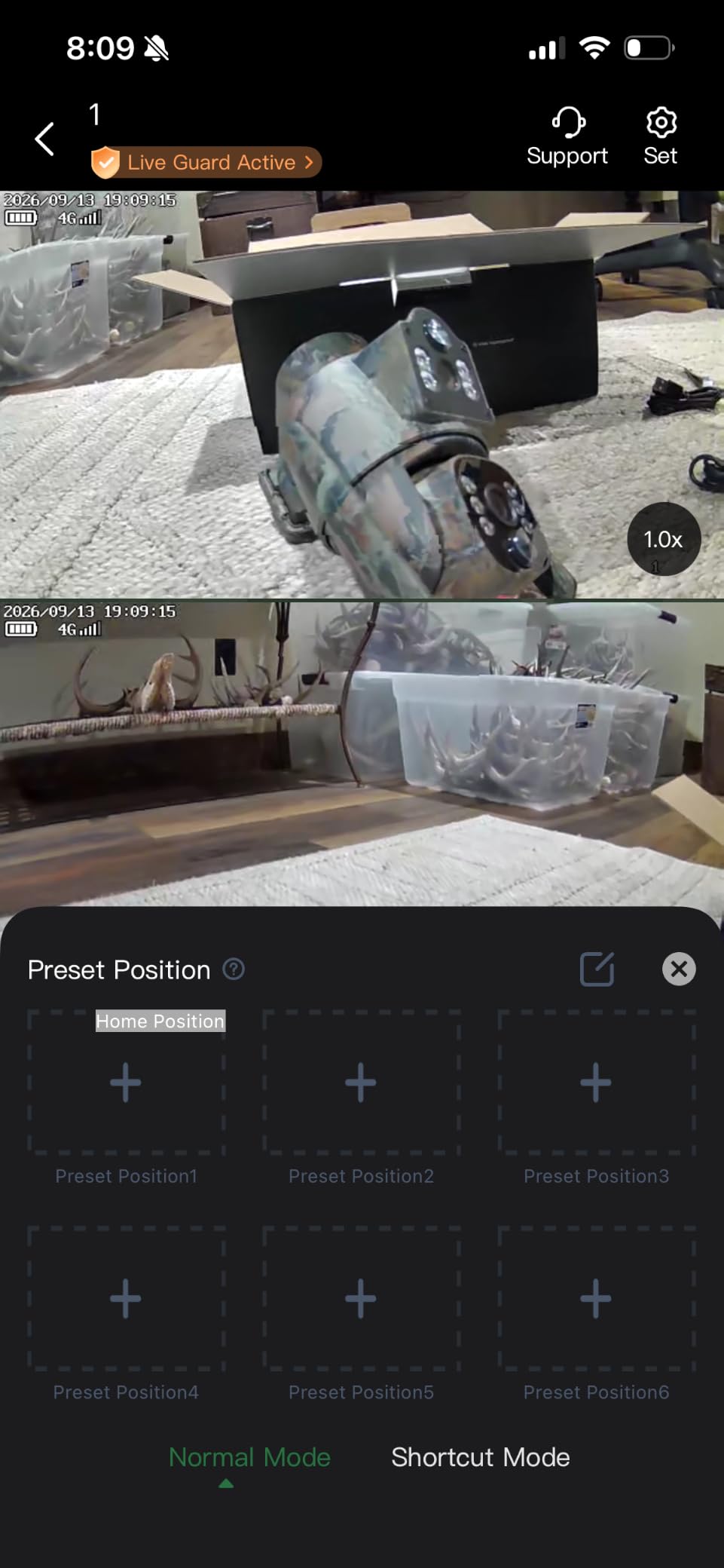
The dual-lens design is the hook here: one device covers 360 degrees and presents as two separate viewpoints, either split or stitched, which removes the blind spots you get from a single wide lens. That is genuinely useful at a gate or a trail crossing where you want both approaches in view.
A configurable LED gives you colored night footage when you want it, motion-triggered by default, alongside PIR sensing with AI detection to reduce false alarms. Two-way talk lets you speak to a visitor from the CloudEye 365 app, and a 5W panel with a 7800mAh battery is rated for very long intervals between charges.
The rating spread is wide here, and the review base is the thinnest in the group at 43 reviews, so treat the sentiment as directional. Owners like the dual-lens coverage, color night vision, solar power and the built-in SIM supporting Verizon, AT&T and T-Mobile.
Two recurring frictions: every camera needs its own subscription, and a single package cannot cover multiple devices. The manufacturer also does not list effective still resolution, which makes it hard to compare the photo side against the megapixel claims elsewhere in this roundup. Setup is reported as roughly three minutes in the app with no WiFi required.
What makes the dual lens worthwhile
Coverage economics. One mount point, two views, no blind spot between them. For someone monitoring a single access point who would otherwise need two cameras and two subscriptions, that is the sensible trade.
Two-way talk also moves this from wildlife tool to household device, which makes it a reasonable choice for a rural home or a remote outbuilding.
Where you should pass
Evidence is thin. Forty-three reviews is not enough to rank this camera confidently against the better-documented units, and the missing resolution figure makes direct comparison unfair.
Multi-camera owners should skip it for the same reason they would skip the TC32 two-pack: one subscription per device, with no shared allowance.
How Cellular Trail Cameras Work
A WiFi trail camera stores images on its own card and only sends them when it can reach your router or a phone hotspot, which in the field usually means it cannot. A cellular trail camera carries an LTE modem and a SIM, so it uploads each capture to the manufacturer’s cloud over the mobile network and your app receives an alert. That is the entire difference, and it is what makes remote monitoring possible.
The sequence matters for troubleshooting. A PIR motion sensor fires, the camera captures a photo or clip to its SD card or internal memory, then the LTE modem transmits the file to the cloud. Your phone gets a push notification, and on supported models you can request a live stream or an on-demand capture that the camera fetches and sends back on the next check-in.
Because transmission is the expensive part, most cameras let you choose how much they send. A few cap monthly photos, several offer a small free allowance, and the rest require a paid plan. That choice, rather than the camera hardware, is usually what determines your three-year cost.
How to Test Cellular Signal Strength Before You Buy
Weak signal is the number one reason a cellular trail camera disappoints, and it is the one problem you can check before spending anything. Here is the sequence we use.
1. Run a speed test on your phone at the exact mounting spot. Stand where the camera will hang, in the open, at roughly shoulder height. If you do not get usable bars there, a camera may still work if it multi-carrier, but a single-network model almost certainly will not.
2. Check each carrier’s coverage map for that address. A camera locked to one network fails if that network is weak, regardless of how well a competitor’s signal reads.
3. Prefer multi-carrier hardware. Every auto-connect camera on this list scans several networks and settles on the strongest one available. That single feature eliminates most coverage-related returns before they happen.
4. Use the free trial data that ships with the camera. Several models include a trial allowance or a block of free data, which lets you confirm delivery before committing to a plan.
5. Consider an external antenna if the site is genuinely marginal. Forum users working weak-coverage sites routinely pair an antenna with an external battery pack, and forum consensus notes that these cameras can keep sending photos in locations where the owner’s phone barely registers.
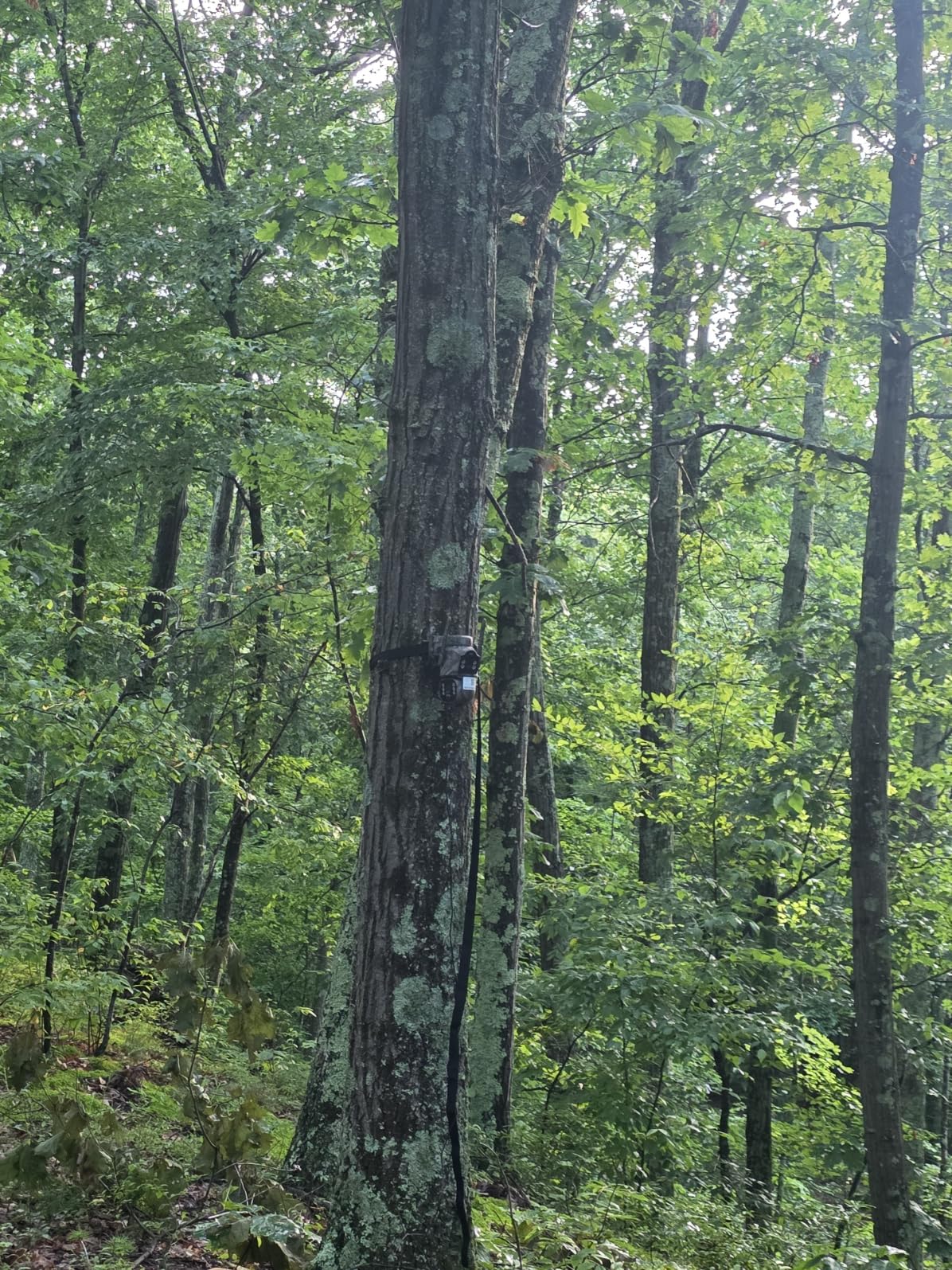
6. Mount above the vegetation line. Signal at ground level is frequently worse than signal a few feet higher, and a camera strapped at chest height also gets photographed by curious neighbors.
How to Choose a Cellular Trail Camera
Carrier type comes first. A multi-carrier camera with auto-connect picks the strongest network where it stands and avoids carrier lock-in entirely. A camera with pre-installed SIMs for two named networks, like the Stealth Cam Fusion Max, gives you a manual fallback. Only a carrier-locked model gives you no options at all, and forum complaints about locked cameras failing on the local network are among the most common complaints in this category.
Storage setup decides how much maintenance you accept. Built-in memory, offered by the Moultrie Edge models and the TACTACAM Reveal X, removes SD card retrieval entirely. Included cards, as with the SPYPOINT Flex-M pack, avoid a first-week purchase. Cards you supply yourself are the most flexible but also the most forgettable.
Trigger speed and night-vision type determine whether you get usable images. Sub-0.5 second triggers with burst modes catch movement, while 0.3 to 0.5 second triggers on fixed-cone cameras are fine for stationary activity. No-glow 940nm infrared and low-glow flash preserve stealth, and reach varies enormously: 80 to 100 feet is common, but some budget units deliver far less in practice.
Power options determine whether you visit twice a year or never. Integrated solar, as on the Moultrie Edge Solar, is the lowest-maintenance approach. A large internal battery plus a panel, as on the MagicEagle H1, is close behind. AA lithium cells work but require visits, and a 16-AAA configuration like the Stealth Cam’s is a real logistics burden.
Live view versus delivered clips is the last major fork. Cameras such as the Oculview, the VOOPEAK TC32B and the TACTACAM Reveal Ultra stream on demand, which is what you want for security and trespasser alerts. Cameras built around notifications, like the Moultrie Edge 3, are cheaper to run and better suited to wildlife and food plots.
Anti-theft features deserve attention on any public or remote land. Active GPS that keeps transmitting when the battery is removed, as on the Reveal Ultra, or a gravity sensor with A-GPS, as on the MagicEagle H1, lets you recover a camera. A steel lockbox and tamper signage still do more to deter theft than any electronics.
Long-range security cameras are covered in our 10 Best Cellular Security Cameras guide, and non-cellular models are covered in 12 Best Trail Cameras In-Depth Reviews.
Battery Life and Solar Power in the Field
Cellular transmission is why trail camera batteries die faster than the packaging suggests. A non-cellular camera can sleep for months between visits. A cellular camera wakes on every trigger, powers a modem, negotiates with a tower, and pushes a file, and that radio work is where the extra drain comes from. Users across the forums report the same pattern: batteries going from full to empty in a day, and much faster drain on high-sensitivity settings.
Lithium cells are the baseline expectation. They hold charge in cold weather, where alkaline voltage sags and triggers false or missed captures. If your camera takes AA cells, lithium is not an optional upgrade in winter.
Solar sizing follows the panel, not the camera. A 4W to 6W panel covers a camera that sends a modest number of photos per day. If your camera streams, runs a higher trigger rate, or sits in a cloudy region, budget for the largest panel the mount allows and angle it south where you are in the northern hemisphere. Panel mount hardware is a common complaint on otherwise good cameras, so check that the included screws actually fit your strap.
Placement still decides battery life. A camera aimed at open sky charges faster than one under canopy. Cameras pointed at moving vegetation fire constantly and drain regardless of panel size, so clear the detection zone before you mount and accept lower sensitivity.
Subscription-Free and Multi-Carrier Options
The flat answer that no cellular trail camera works without a subscription is out of date. Multi-carrier hardware now exists, and the real distinction is between carrier-locked SIMs and cloud SIMs that choose the network for you.
Three arrangements appear in this roundup. Built-in cloud SIMs, as on the MagicEagle H1 and the Moultrie Edge models, connect you through a virtual SIM with no physical card and auto-select the strongest network segment. Pre-installed physical SIMs for one or two carriers, as on the TACTACAM Reveal X and the Stealth Cam Fusion Max, give you a card you can swap between networks. Locked hardware, where a camera only ever works on one carrier, appears least and frustrates owners most.
Truly bring-your-own-SIM models remain the exception rather than the rule in this category, so plan around a brand-provided SIM or cloud SIM. If subscription cost is the deciding factor for you, the SPYPOINT Flex-M pack is the only unit here with a meaningful free monthly allowance.
Cellular Cameras for Property Security and Trespasser Alerts
Trail cameras are increasingly used as security devices on remote land, and the forums show a steady crossover from hunting into monitoring gates, outbuildings and equipment yards. The requirements differ from wildlife work, and choosing for the wrong use case is expensive.
Prioritize live view and pan-and-tilt control for security. Cameras that can stream on demand let you identify a visitor before deciding whether to respond, and the Oculview and VOOPEAK TC32B options cover a wide area from one mount point. The TC32 two-pack adds auto-tracking, which follows a person walking through a yard rather than filming one fixed cone.
Prioritize detection range and night vision over resolution. You want enough reach to see a person approaching a gate in darkness, which favors the low-glow units with 90 to 100 foot range over compact units with short IR. Two-way talk, as on the dual-lens VOOPEAK, adds deterrence value for a rural home.
Then mount it well. Higher placement, a clear detection zone, and a lockbox with signage deter more tampering than any feature list. Anything advertised with tamper alerts or GPS recovery should still be physically secured.
Frequently Asked Questions
What is the difference between a WiFi trail camera and a cellular trail camera?
A WiFi trail camera saves photos to its own memory card and only transmits when it can reach your router or a phone hotspot, which in remote field locations usually means it cannot. A cellular trail camera has a built-in LTE modem and SIM card, so it uploads each photo or clip over the mobile network to a cloud service and sends an alert to your phone, letting you monitor a camera anywhere with coverage.
Are there any cellular trail cameras without a subscription?
Almost none. Most cellular trail cameras require a paid plan to deliver photos to the app. The main exception in this roundup is the SPYPOINT Flex-M, which includes a free transmission allowance of up to 100 photos per month before paid tiers begin. Cloud-only models like the Moultrie Edge series have no free allowance at all, so the recurring cost is the price of remote delivery.
Which cellular trail camera gets the best signal?
Cameras with multi-carrier or cloud SIM technology get the best signal because they automatically scan several major networks and connect to whichever is strongest at the mounting location. In this roundup, the VOOPEAK TC32B, MagicEagle H1, Moultrie Edge models, SPYPOINT Flex-M and TACTACAM Reveal Ultra all auto-select networks. Carrier-locked cameras offer no fallback and are the most common cause of coverage failures.
Why are my trail camera batteries dying so fast?
Cellular transmission is the usual reason. Every trigger wakes the camera, powers the LTE modem and pushes a file, and that radio work adds up over a season. High motion sensitivity makes it far worse because vegetation and shadows trigger constant captures. Using lithium cells instead of alkaline, dialing sensitivity down, aiming the camera at a clear zone and adding a solar panel all extend runtime substantially.
Which brand of trail camera is the most reliable?
Reliability depends more on the model and the site than the brand name. Forum owners of TACTACAM REVEAL cameras commonly report multi-year runs with few issues and prompt customer service, while owners of some SpyPoint setups report more hardware failures. For current models, owner ratings in this roundup are strongest for the MagicEagle H1 and the TACTACAM Reveal Ultra, both of which also carry manufacturer warranties.
Conclusion: Which Cellular Trail Camera Should You Buy?
For most people, the VOOPEAK TC32B-2P is the best trail camera for cellular monitoring because it combines the widest coverage control, multi-carrier flexibility, a 0.1 second trigger and solar power in one package. If you want the highest owner satisfaction and the fewest battery worries, the MagicEagle H1 is hard to argue with, and its gravity sensor with A-GPS gives you theft recovery that almost nothing else here matches.
Match the pick to the job instead. Take the TACTACAM Reveal Ultra when image quality and active GPS theft tracking matter most. Take the Moultrie Edge 3 for food plots and feeder control, the Moultrie Edge Solar if you refuse to touch batteries, the SPYPOINT Flex-M pack if running several cameras on a tight data budget, and the Oculview or VOOPEAK TC32 two-pack when you want live view and pan-and-tilt coverage for security.
Whichever you choose, test the signal at the exact mounting spot first and check the subscription terms before you buy, not after. Those two steps prevent nearly every complaint we read about cellular trail cameras, and they take an afternoon rather than a season.
As 2026 brings new models to market, this roundup will be re-tested and updated with the same method: real signal checks, real runtime, and honest running costs.