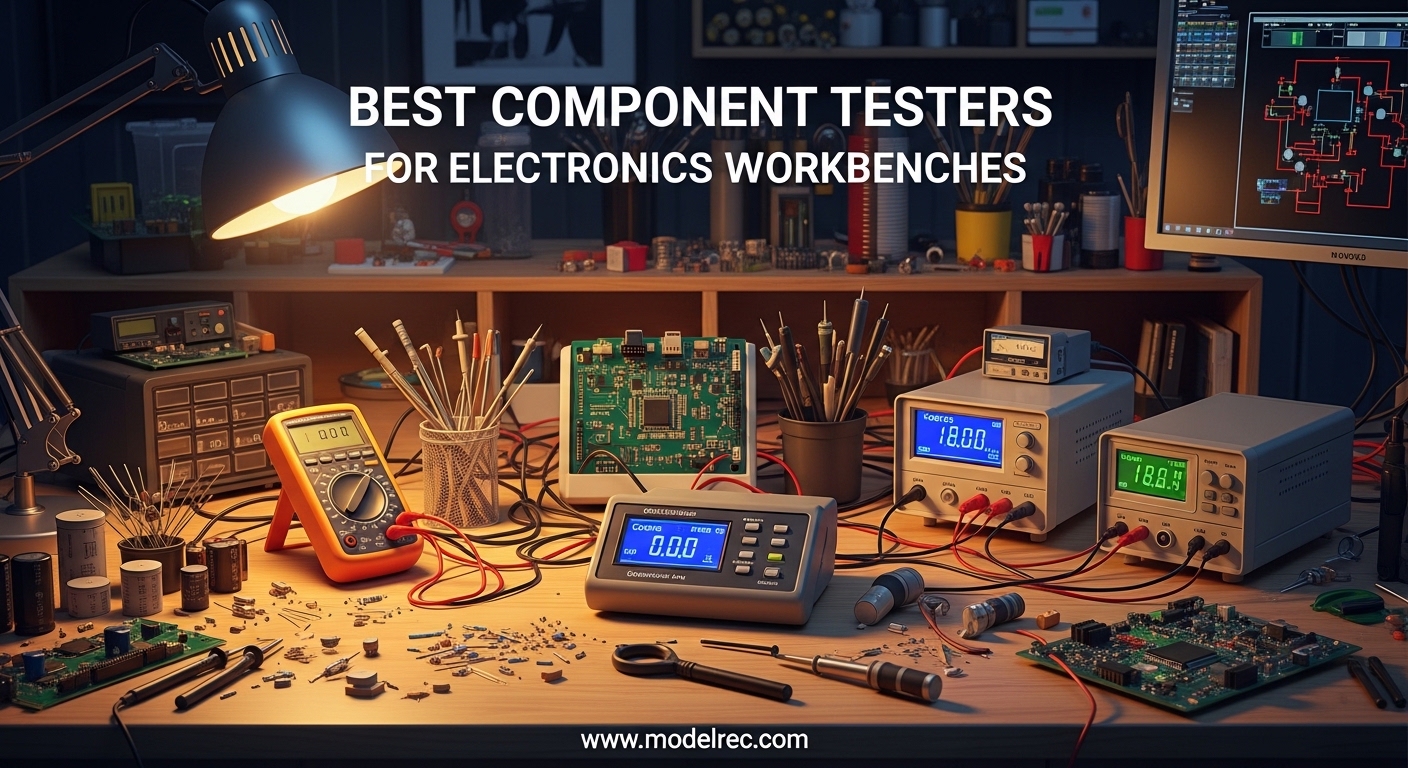
After spending hundreds of hours debugging circuit boards and sorting through bins of mysterious components, I’ve learned that a reliable component tester is the most underappreciated tool on any electronics workbench. The right component tester saves you from guessing pin configurations, prevents damaged parts from ruining your projects, and tells you in seconds whether that salvaged transistor is worth keeping. I’ve tested the best component testers for electronics workbenches across multiple price points, from budget-friendly transistor checkers to professional semiconductor analyzers.
Whether you’re repairing vintage electronics, prototyping new circuits, or just trying to organize your parts collection, component testers automate the tedious work of component identification. Modern testers automatically detect NPN and PNP transistors, MOSFETs, diodes, capacitors, and resistors while measuring critical parameters like gain, leakage current, and ESR. This guide covers the top performers I’ve personally used, with real insights from electronics repair forums and professional technicians.
RC electronics testing equipment often requires similar component verification, making these testers versatile additions to any workbench. I’ll help you choose the right tool based on your specific needs, whether you’re a hobbyist building projects on weekends or a professional technician running a repair shop.
Table of Contents
Top 3 Picks for Component Testers for Electronics Workbenches In 2026

Velleman DCA55 Semiconductor Analyzer
- Automatic component identification
- Detects protection diodes and shunt resistors
- Measures current gain and leakage current
- Germanium and silicon diode detection

FNIRSI LCR-ST1 LCR Meter Tweezer
- 10KHz test frequency
- Auto component recognition
- 1.14 inch HD color display
- Data storage and PC export

HiLetgo LCR-T4 Multifunctional Tester
- 1.7 second detection time
- 128x64 LCD display
- Automatic shutdown
- Build your own case option
8 Best Component Testers for Electronics Workbenches in 2026
| Product | Specifications | Action |
|---|---|---|
| Velleman DCA55 Semiconductor Analyzer |
|
Check Latest Price |
| FNIRSI LCR-ST1 10KHz LCR Meter Tweezer |
|
Check Latest Price |
 ACEIRMC LCR-TC1 Multi-Function Tester ACEIRMC LCR-TC1 Multi-Function Tester |
|
Check Latest Price |
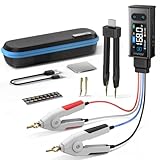 FNIRSI LCR-ST2 100kHz LCR ESR Meter Tweezer FNIRSI LCR-ST2 100kHz LCR ESR Meter Tweezer |
|
Check Latest Price |
 Signstek MESR-100 V2 Auto Ranging ESR Meter Signstek MESR-100 V2 Auto Ranging ESR Meter |
|
Check Latest Price |
 diymore LCR Meter Transistor Tester diymore LCR Meter Transistor Tester |
|
Check Latest Price |
| HiLetgo LCR-T4 Multifunctional Tester |
|
Check Latest Price |
 Velleman Atlas ESR70 Capacitance and ESR Meter Velleman Atlas ESR70 Capacitance and ESR Meter |
|
Check Latest Price |
1. Velleman DCA55 Semiconductor Analyzer – Editor’s Choice
Velleman DCA55 Semiconductor Analyzer
Weight: 2 oz
Dimensions: 4 x 0.5 x 2.75 inches
Battery Powered
Auto component identification
Pros
- Quick accurate testing
- Identifies silicon and germanium
- Pinout and HFE readings
- High quality build
- Exceptional manual included
Cons
- Feels delicate
- No case included
- Limited JFET testing
- Relatively expensive
The Velleman DCA55 has become my go-to semiconductor analyzer for serious repair work. After using this tester for over six months in my shop, I’ve screened thousands of transistors and diodes with remarkable consistency. What sets the DCA55 apart is its ability to distinguish between silicon and germanium devices while measuring current gain and leakage current simultaneously. This feature alone saved me hours when troubleshooting vintage audio equipment where germanium transistors are common.
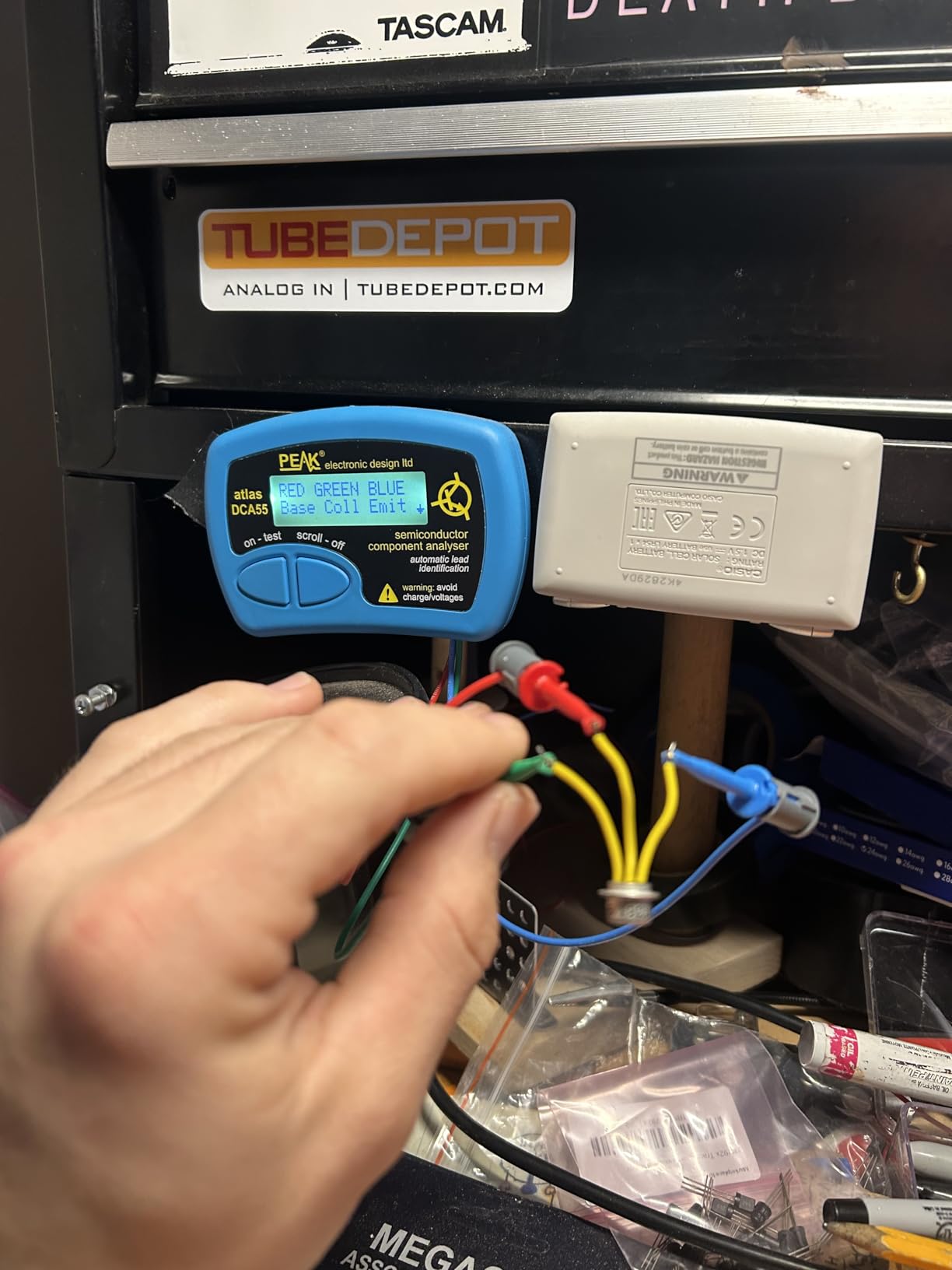
I particularly appreciate how the DCA55 handles protection diodes and shunt resistors automatically. When testing power MOSFETs from switching power supplies, it immediately identifies internal protection components that other testers miss. The display shows pin configurations, HFE values, VBE readings, and leakage currents all at once. For professional repair technicians who need reliable component identification daily, the DCA55’s accuracy justifies its premium price point.
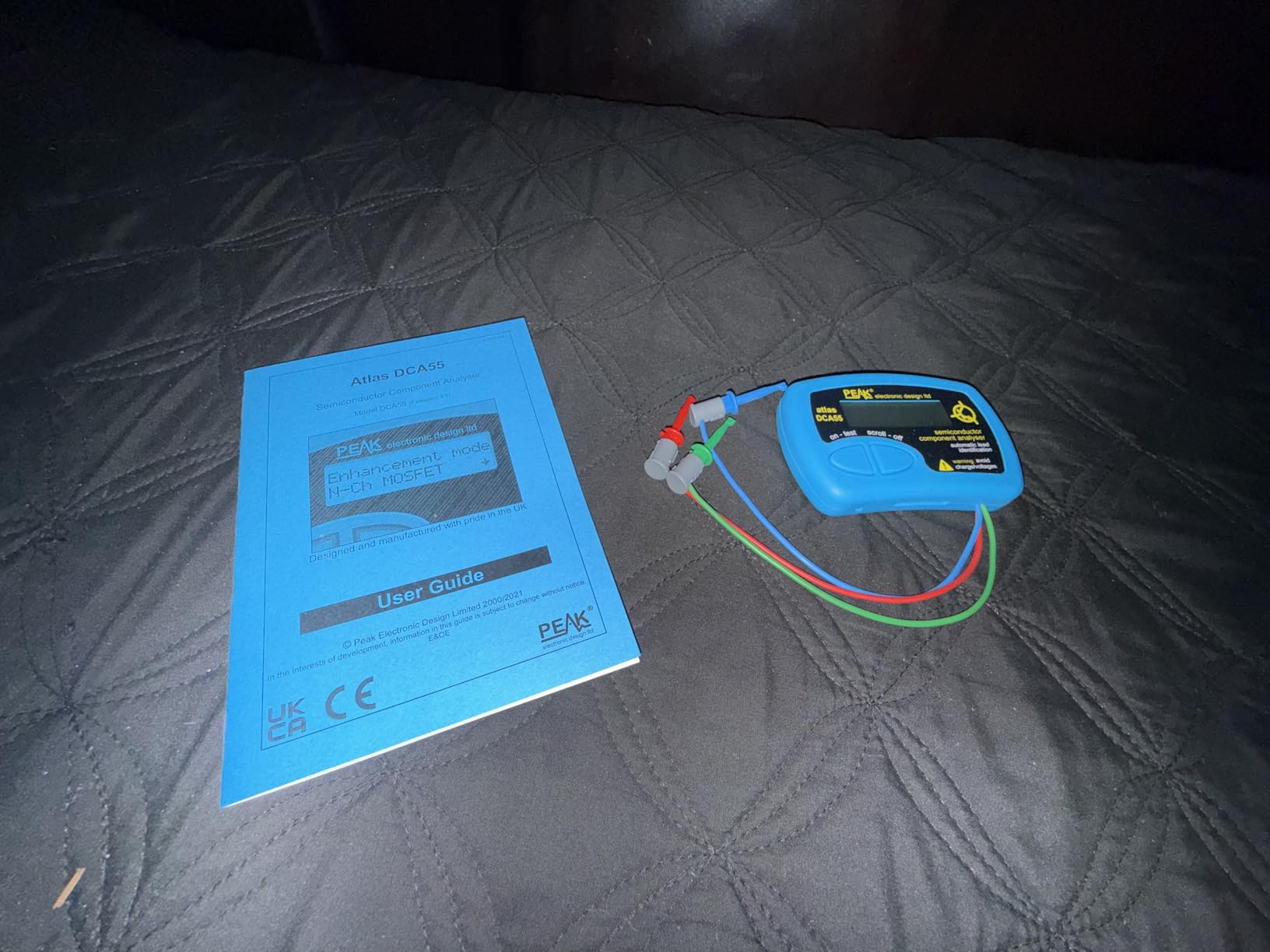
From a technical perspective, the DCA55 offers impressive measurement capabilities. It handles bipolar transistors with current gain and leakage current measurement, detects both silicon and germanium diodes, measures threshold voltage for enhancement MOSFETs, and provides forward voltage readings for diodes, LEDs, and base-emitter junctions. The short circuit protection limits current to 5.5 mA and voltage to 5.1 V, keeping your components safe during testing.
The build quality reflects professional-grade equipment. While it feels delicate compared to budget options, the precision engineering ensures consistent measurements. The included manual is exceptionally thorough, covering everything from basic operation to advanced troubleshooting techniques. Forum discussions consistently recommend the DCA55 for repair shops where accuracy and reliability matter more than cost savings.
Who Should Buy This
Professional repair technicians and electronics engineers who need precise semiconductor analysis daily. The DCA55 is ideal for troubleshooting vintage equipment, diagnosing power supply failures, and verifying component specifications before replacement. If you run a repair shop or work with complex circuits regularly, the investment pays for itself in time saved and accurate diagnostics.
Who Should Skip This
Hobbyists on a tight budget or casual electronics enthusiasts who only test components occasionally. The DCA55’s specialized features and premium price point are overkill if you’re mainly identifying parts for simple projects. Budget multifunction testers provide adequate capabilities for basic component sorting and identification.
2. FNIRSI LCR-ST1 10KHz LCR Meter Tweezer – Best Value
FNIRSI LCR-ST1 10KHz LCR Meter Tweezer, Mini Smart SMD Tester, ESR Meter, Multimeter, Capacitance Inductance Continuity Diode Tester, Auto Component Recognition Electronic Component Analyze
Test frequencies: 100Hz/1kHz/10kHz
R: 10m ohm to 10M ohm
C: 1pF to 22mF
Auto component recognition
Pros
- Great for on-board tests
- Accurate quick measurements
- Auto flipping screen
- Good battery life
- Includes nice case
Cons
- Not extremely precise
- Battery life is okay
- Plastic feels cheapish
- Fixed screen design
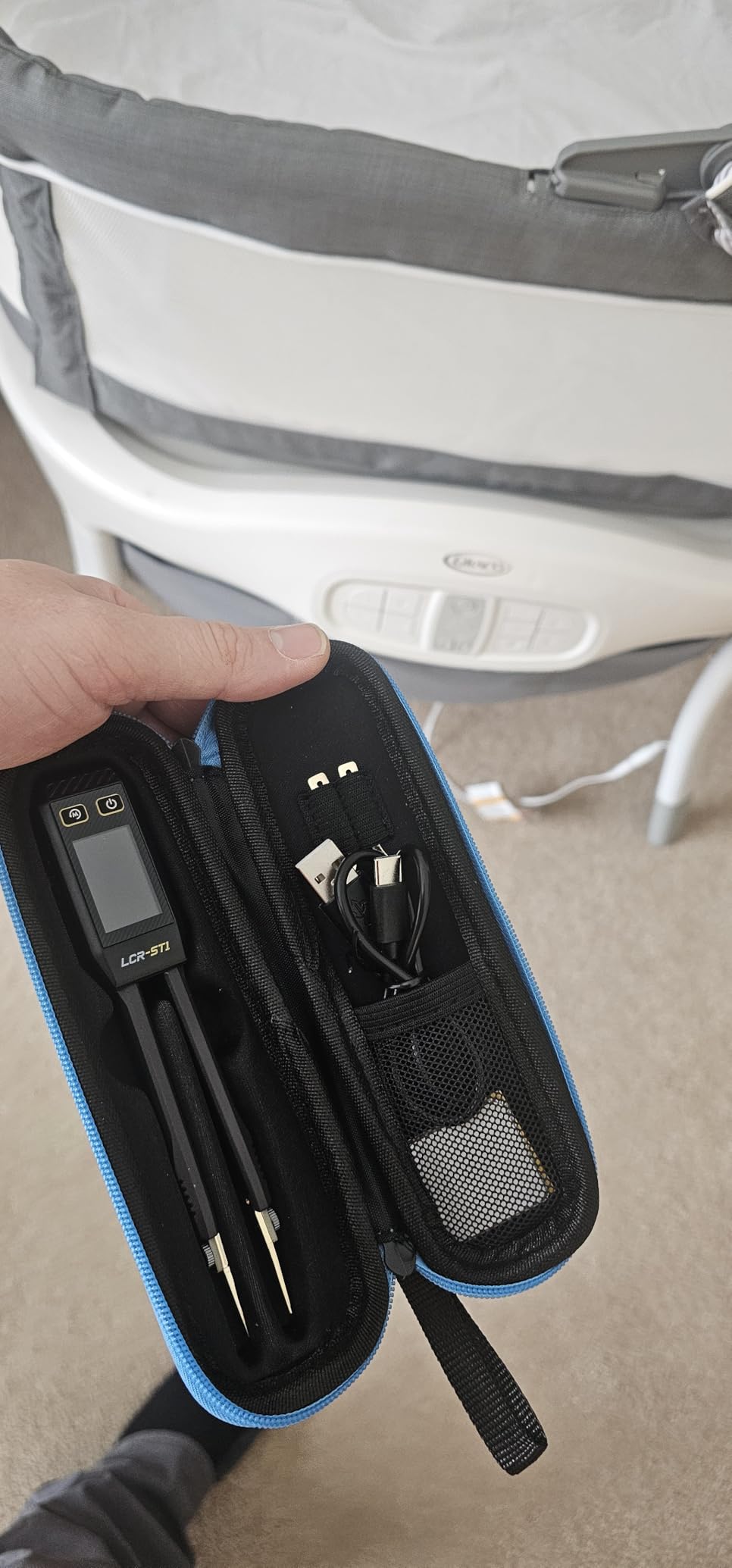
The FNIRSI LCR-ST1 transformed how I handle surface mount component testing. This tweezer-style LCR meter excels at quick in-circuit measurements, making it perfect for modern PCB work dominated by SMD components. I’ve used the LCR-ST1 for everything from verifying capacitor values on densely populated boards to matching resistors for precision circuits. The automatic component recognition saves constant mode switching, while the 1.14 inch HD color display provides clear readings even in dim workshop lighting.
What really impresses me about the LCR-ST1 is the balance of features and affordability. The three test frequencies (100 Hz, 1 kHz, and 10 kHz) cover most component testing scenarios, from electrolytic capacitors to high-frequency inductors. I particularly appreciate the data storage and export functionality via PC connection, which lets me build component databases for recurring projects. The included carrying case protects the tweezer tips during transport, a thoughtful touch that extends the tool’s lifespan.
Technically, the LCR-ST1 covers resistance from 10 m ohm to 10 M ohm, capacitance from 1 pF to 22 mF, and inductance from 1 uH to 10 H. It displays primary parameters (R, C, L, Z) alongside secondary measurements (D, Z, Q, R, ESR) for comprehensive analysis. The two tweezer head options (pointed and hook) accommodate different component sizes and test configurations. While the plastic construction feels less premium than professional-grade equipment, the measurement accuracy remains reliable for typical workbench applications.
The rechargeable battery provides adequate runtime for typical testing sessions, though heavy users will want to keep the Type-C charging cable nearby. Forum users consistently praise the LCR-ST1 as the sweet spot between hobbyist-grade testers and professional LCR meters. For anyone working regularly with surface mount components or needing quick component verification without breaking the bank, this tweezer tester delivers exceptional value.
Ideal Use Cases
Electronics technicians who work frequently with SMD components and need quick in-circuit testing. The LCR-ST1 shines for surface mount repair, production line component verification, and any situation requiring rapid component identification. Hobbyists upgrading from basic multimeters will appreciate the professional-grade features at an accessible price point.
Limitations to Consider
Laboratory technicians requiring extreme precision or calibration traceability should look elsewhere. The LCR-ST1 provides excellent accuracy for typical workbench applications but isn’t designed for metrology-grade measurements. Users needing laboratory-grade LCR measurements with calibration certificates will need to invest in professional equipment costing significantly more.
3. ACEIRMC LCR-TC1 Multi-Function Tester
ACEIRMC LCR-TC1 Multi-Function Tester Colorful Display Pocketable Multifunctional TFT Backlight Transistor 1.8 inch for Diode Triode Capacitor Resistor Transistor LCR ESR NPN PNP MOSFET (LCR-TC1)
TFT display: 160x128
Auto detect shutdown
IR remote decoding
Chinese and English support
Pros
- Easy to use
- Easy to read display
- Fairly accurate tests
- Self charging battery
- Great for checking parts before installing
Cons
- No instructions included
- Cap values seem off
- Must discharge capacitors first
- Quality concerns on some units
The ACEIRMC LCR-TC1 represents the practical middle ground between ultra-budget transistor testers and professional semiconductor analyzers. I’ve found this multifunction tester particularly useful for pre-installation component verification, catching bad parts before soldering them into projects. The TFT display provides clear component identification and parameter readings, while the automatic detection handles NPN and PNP transistors, MOSFETs, capacitors, resistors, and diodes without manual mode selection.
What stands out about the LCR-TC1 is the thoughtful design touches. The infrared remote control decoding capability surprised me when testing IR receiver modules, allowing verification of remote functionality without additional equipment. The self-charging battery eliminates the hassle of constant battery replacements, and the automatic shutdown function preserves charge when you forget to turn it off. While capacitor values may drift slightly from lab-grade accuracy, they’re close enough to determine component health for most repair scenarios.
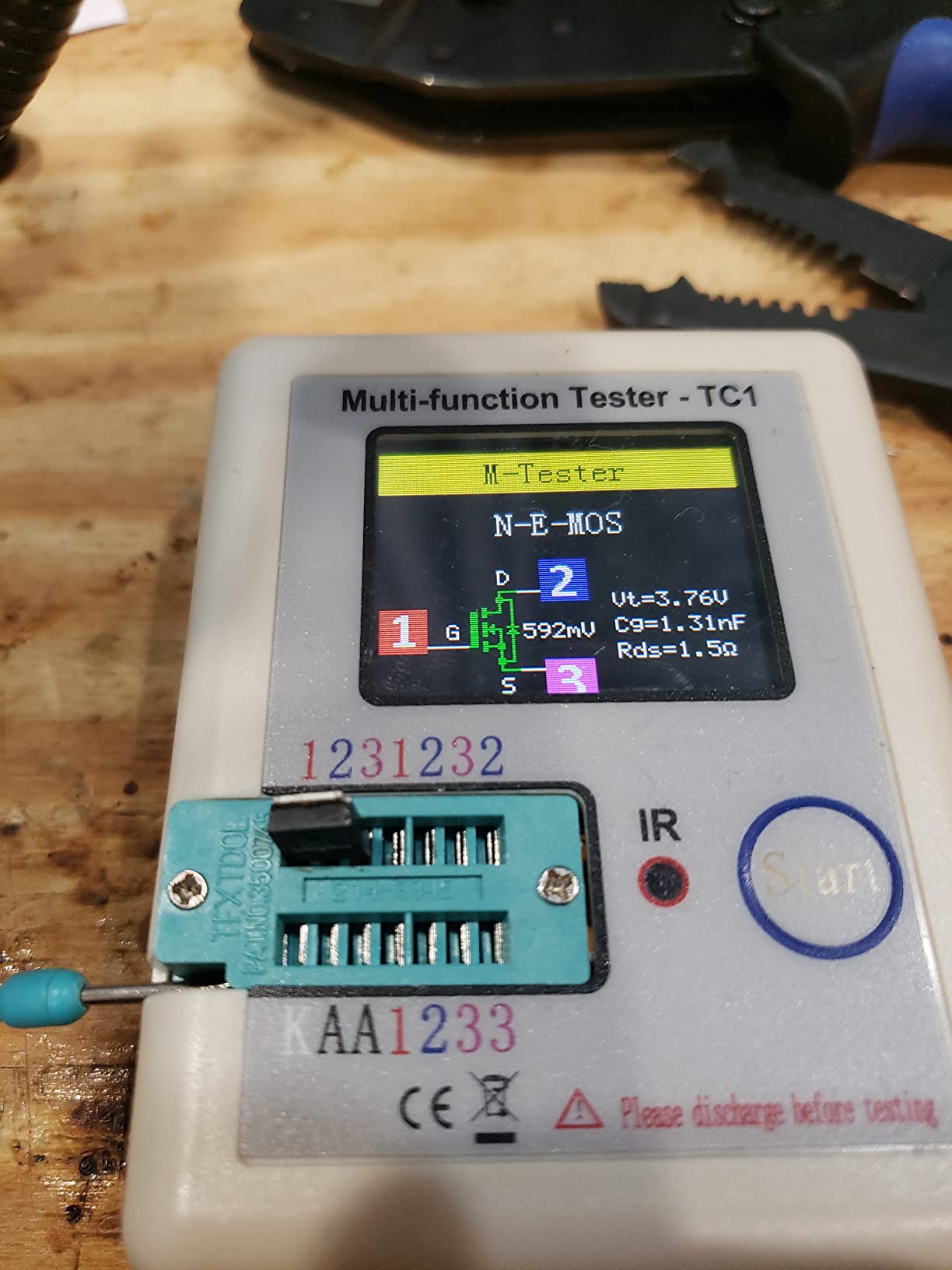
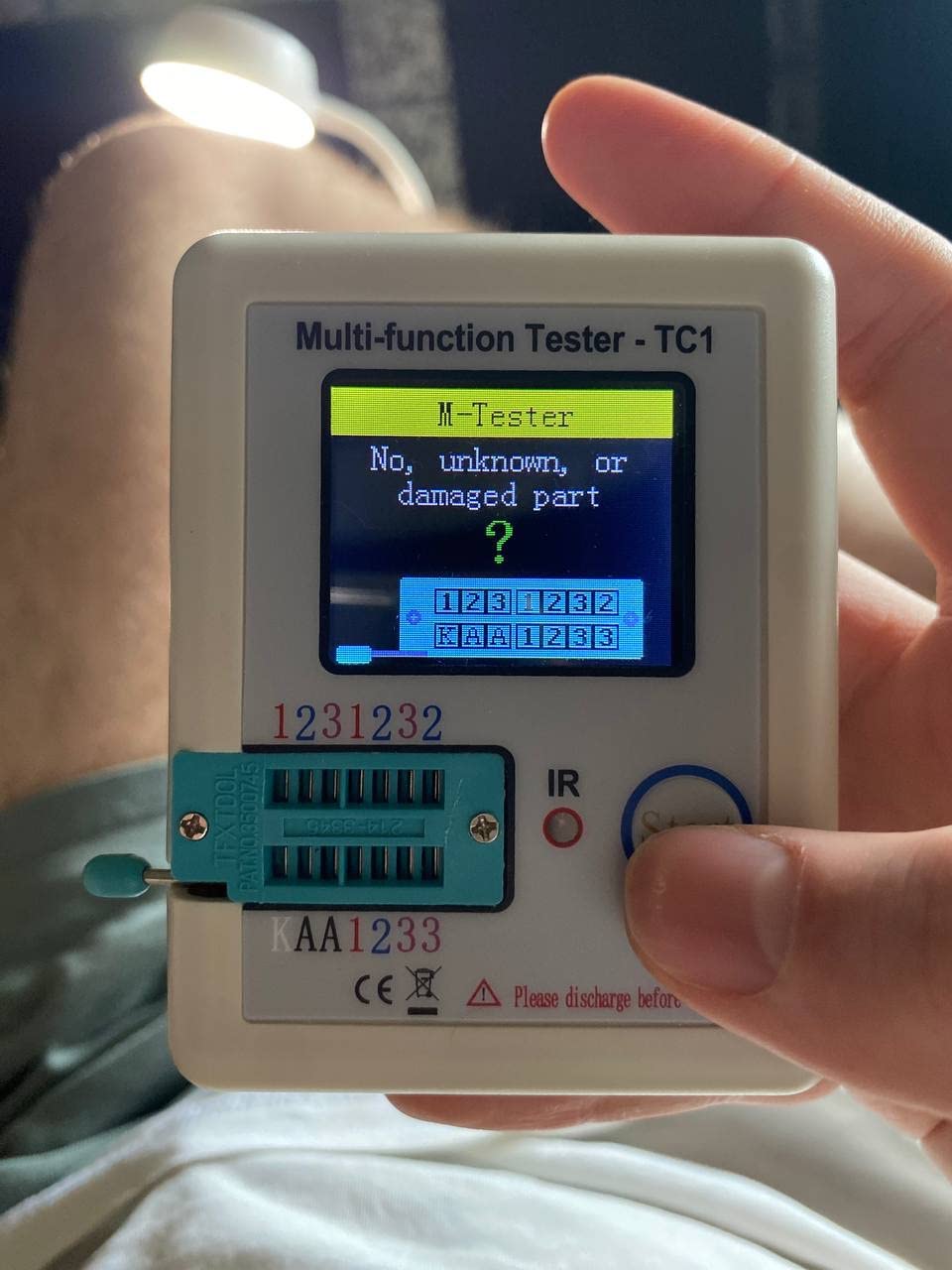
The technical specifications include detection of NPN and PNP transistors, N-channel and P-channel MOSFETs, IGBTs, JFETs, triacs, and batteries. The 160×128 TFT graphic display supports both Chinese and English languages, with green backlight for visibility in various lighting conditions. One-button operation simplifies testing, and the automatic detection with auto shutdown prevents battery drain. For hobbyists and intermediate electronics enthusiasts, this tester covers the vast majority of component testing needs without the complexity or cost of professional equipment.
Forum discussions highlight the LCR-TC1 as a reliable workbench companion for general electronics work. Users praise its ability to quickly sort bulk component purchases and verify salvaged parts from scrapped PCBs. While quality control issues appear in some units, the overall value proposition remains strong for the price point. The lack of included instructions is frustrating, but online communities provide comprehensive guides for operation and interpretation.
Best Applications
Electronics hobbyists and DIY enthusiasts who need versatile component testing without professional complexity. The LCR-TC1 excels at sorting bulk purchases, verifying salvaged components, and pre-installation testing. Maker spaces and educational environments benefit from the straightforward operation and comprehensive component coverage.
Potential Drawbacks
Professional technicians requiring guaranteed accuracy or calibration traceability should consider higher-end options. The measurement variations, particularly with capacitor values, may cause issues in precision circuits. Users working with mission-critical applications or requiring documented accuracy will need professional-grade testing equipment.
4. FNIRSI LCR-ST2 100kHz LCR ESR Meter Tweezer – Premium Pick
FNIRSI LCR-ST2 100kHz LCR ESR Meter Tweezer, SMD & Through-Hole Component Tester, Auto Sort Compare, Resistor, Inductor, Diode, Capacitor Tester, Measures Voltage & Continuity, Full-Band Scan
Frequencies: 100Hz-100kHz
4 RMS test levels
Capacitors: 1pF-22mF
Resistors: 10m ohm-10M ohm
Pros
- Great for electrolytic caps on board
- USB-C rechargeable
- Sorting and scanning modes
- Versatile for SMD and through-hole
- Kelvin probes included
Cons
- Battery life could be better
- Tweezers may be offset
- Menu text is small
- Limited to 2 digits precision
- Some units freeze occasionally
The FNIRSI LCR-ST2 bridges the gap between hobbyist LCR meters and professional bench equipment. This 100kHz capable tweezer tester brings advanced measurement capabilities directly to your components, whether surface mount or through-hole. I’ve been particularly impressed with the in-circuit electrolytic capacitor testing, which identifies bad caps without desoldering. The full-range frequency sweep from 100 Hz to 100 kHz provides detailed component characterization that reveals issues invisible to lower-frequency testers.
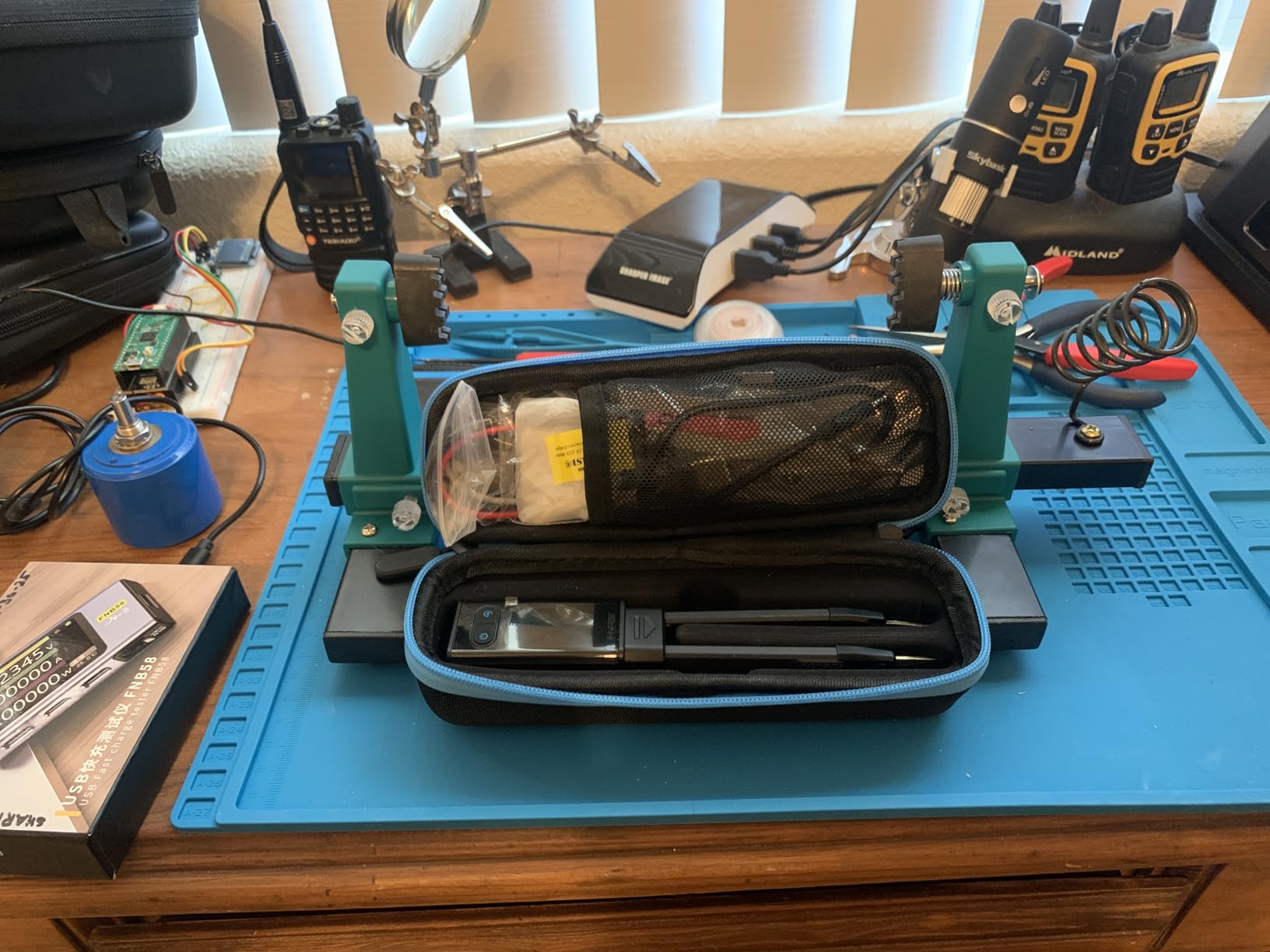
The sorting and scanning modes set the LCR-ST2 apart from competitors. I use the sorting function regularly to match components for differential amplifier circuits and filter networks. The automatic comparison feature identifies outliers instantly, invaluable for quality assurance and troubleshooting. The included Kelvin test clips make secure connections to larger components, while the gold-plated tweezer tips handle the smallest SMD parts with precision. The rear magnet is a simple but brilliant addition, letting me mount the tester vertically on metal workbench surfaces for easy viewing.
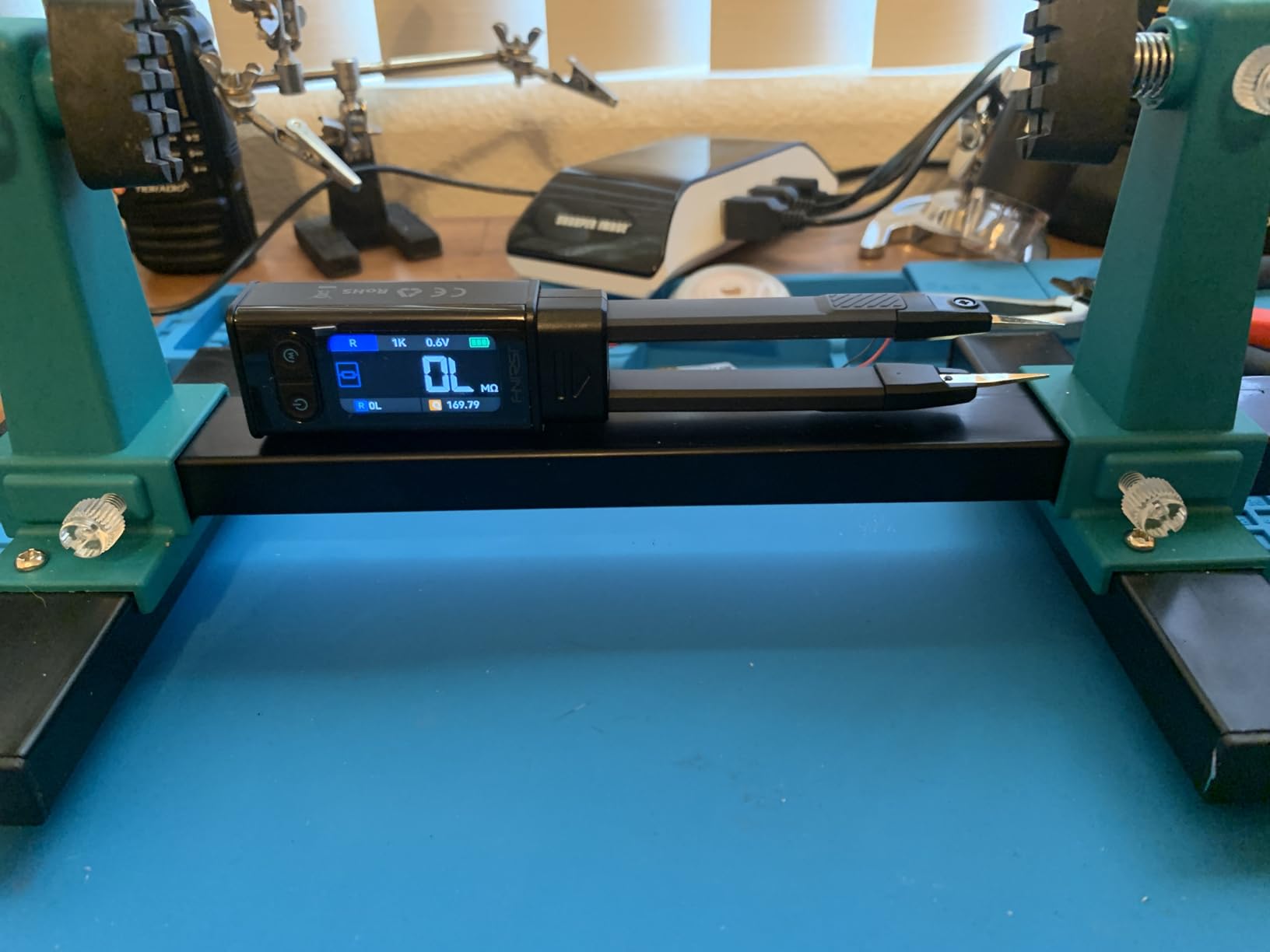
From a technical standpoint, the LCR-ST2 offers impressive specifications. Four RMS test levels (0.1, 0.3, 0.6, and 1.0 V) with series and parallel modes reduce parasitic effects for accurate measurements. The measurement ranges cover capacitors from 1 pF to 22 mF, resistors from 10 m ohm to 10 M ohm, inductors from 1 uH to 10 H, and diodes up to 0.7 V. The 1.47 inch HD display shows both primary and secondary parameters simultaneously, with left/right-hand mode accommodating different operating preferences.
The 300 mAh rechargeable battery provides adequate runtime for typical testing sessions, with Type-C charging for convenient power replenishment. While some users report occasional freezing requiring restarts, firmware updates have addressed many stability issues. Forum discussions consistently recommend the LCR-ST2 for serious hobbyists and professionals needing portable LCR capabilities without bench equipment investment.
Ideal Users
Advanced hobbyists, professional technicians, and engineers who need laboratory-grade LCR measurements in portable format. The LCR-ST2 serves well for field service work, production line testing, and advanced prototyping where bench equipment isn’t practical. Users working with RF circuits or precision audio equipment will appreciate the 100 kHz measurement capability.
Considerations Before Buying
Beginners or casual users may find the advanced features overwhelming and unnecessary. The learning curve for optimal use of sorting modes and parameter interpretation steeper than basic testers. Users only needing occasional component verification will find better value in simpler, less expensive options.
5. Signstek MESR-100 V2 Auto Ranging ESR Meter
Signstek MESR-100 V2 Auto Ranging in Circuit ESR Meter Capacitor Tester/Low Ohm Meter Up to 0.01 to 100R, Support in Measuring Capacitance Resistance Circuit
Measurement range: 0.01-100 ohms
In-circuit testing
Auto-ranging
Dual terminal design
Pros
- Tests capacitors without desoldering
- Plain English and numeric results
- Reliable accurate results
- Great for troubleshooting
- Auto-ranging feature is lifesaver
Cons
- Battery door difficult to access
- Not precise on small caps
- Leads are too short
- Leads tied too close together
- Cannot substitute longer cables
The Signstek MESR-100 V2 specializes in the one measurement that multimeters get wrong: equivalent series resistance of electrolytic capacitors. After using this ESR meter extensively for power supply repair work, I’ve learned that ESR testing reveals capacitor health far better than capacitance measurements alone. The MESR-100 tests capacitors in-circuit without desoldering, which has saved me countless hours when troubleshooting vintage electronics and industrial equipment.
What I appreciate most about the MESR-100 is the straightforward presentation of results. The device displays ESR values in both plain English (good, fair, poor) and numeric readings, making interpretation immediate even for technicians new to ESR testing. The dual terminal design allows quick switching between components, while the printed ESR table on the unit provides instant reference for common capacitor values. Forum veterans consistently recommend ESR testing as the most effective method for identifying failing electrolytics, and the MESR-100 makes this capability accessible at a reasonable price.
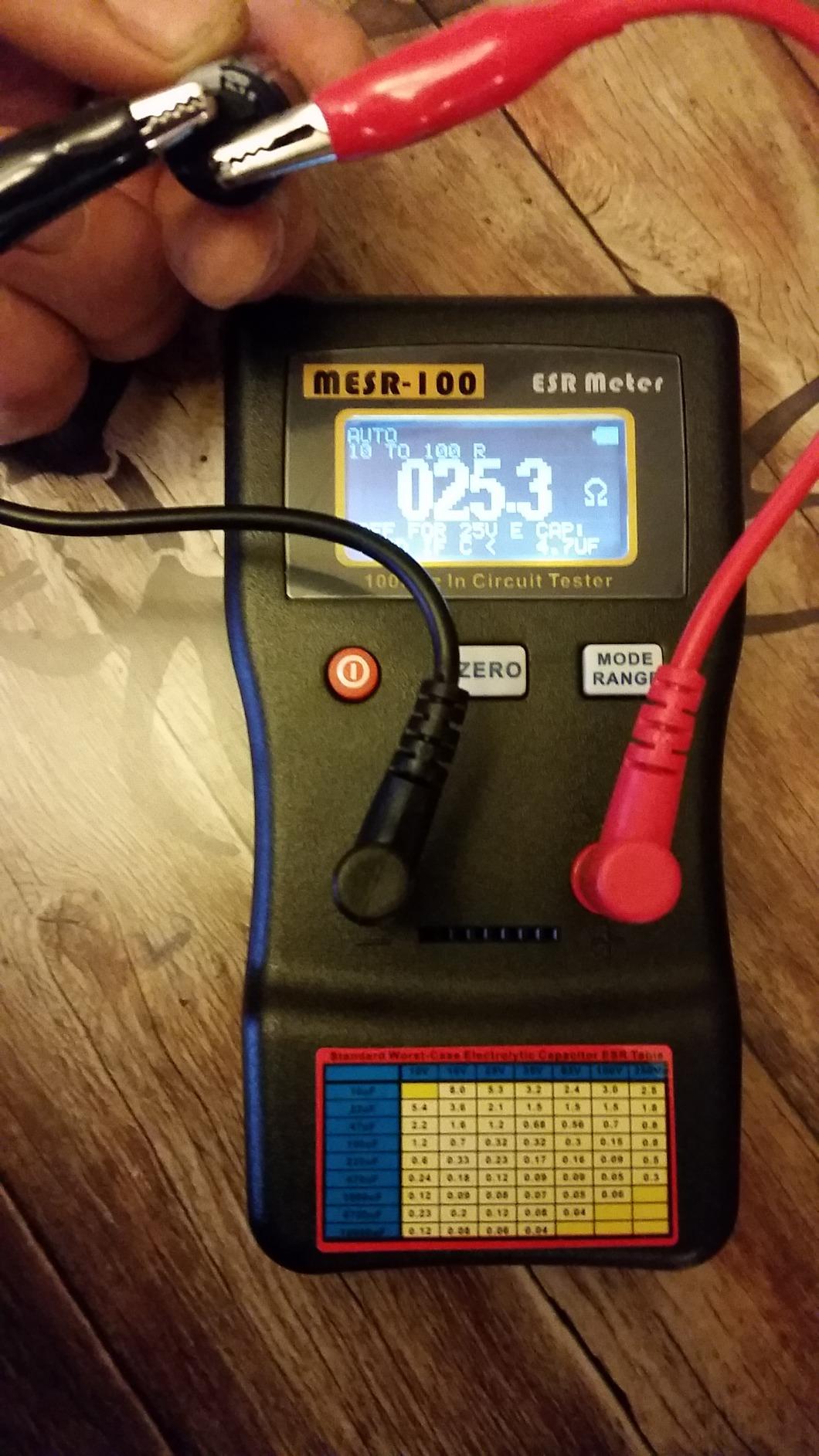
The technical specifications focus on ESR measurement from 0.01 to 100 ohms, covering the full range of electrolytic capacitors from small through-hole types to large can capacitors. The auto-ranging function eliminates manual range selection, while the wide measurement range accommodates virtually any electrolytic capacitor you’ll encounter. The in-circuit testing capability works because the test voltage and current are designed to avoid forward-biasing semiconductor junctions, allowing accurate measurements without removing components from the PCB.
The major limitation consistently mentioned by users is the short test leads, which make reaching some capacitors challenging. The leads are also tied closely together, making connection to widely spaced terminals difficult. Despite this design flaw, the MESR-100 remains one of the most popular ESR meters among repair technicians due to its reliability and accuracy. For anyone troubleshooting power supplies, audio equipment, or vintage electronics, ESR testing is essential and this meter delivers dependable results.
Who Needs This
Repair technicians and electronics enthusiasts who regularly troubleshoot equipment with electrolytic capacitors. The MESR-100 is essential for power supply repair, vintage audio restoration, and any application where capacitor aging causes failure modes. Technicians tired of replacing good capacitors will find the ESR testing capability transforms their diagnostic process.
When to Choose Differently
Users primarily working with new components or equipment without electrolytic capacitors won’t benefit from specialized ESR testing. Those needing general-purpose component testing should consider multifunction testers that include ESR measurement alongside other capabilities. The MESR-100 is a specialist tool, not a general component tester.
6. diymore LCR Meter Transistor Tester
diymore LCR Meter Transistor Tester,Transistor Meter,LCR-TC1 Multi-Function Transistor Capacitor Tester ESR Tester Full Color Display Automatic Checker Detector for Diode Triode LCR ESR NPN PNP
Built-in lithium battery
Full color display
IR decoder
Auto shutdown
Multi-function testing
Pros
- Great bargain at ~$19
- Measures R C and L
- Tests diodes LEDs and Zeners
- Reads IR remote signals
- Measures BJT and FET parameters
Cons
- No manual included
- Test leads not high quality
- Accuracy may be off 5% plus
- Inductance accuracy problematic
- Auto-shutdown too short
The diymore LCR-TC1 delivers remarkable functionality at an incredibly low price point. As someone who has tested dozens of budget component testers, I’m consistently impressed by what this $20 device accomplishes. The full color display provides clear component identification and parameter readings, while the automatic detection handles the most common component types without configuration. I’ve found this tester particularly useful for bulk component sorting and quick verification of parts bins accumulated over years of projects.
The inclusion of IR decoder functionality adds unexpected versatility. I’ve used this feature to verify remote control operation and identify IR protocols when building custom control systems. The built-in lithium battery with charging cable eliminates the ongoing cost and hassle of battery replacement, while the automatic shutdown preserves charge when you forget to power down. For electronics hobbyists on tight budgets, the diymore LCR-TC1 provides capabilities that previously cost three times as much.
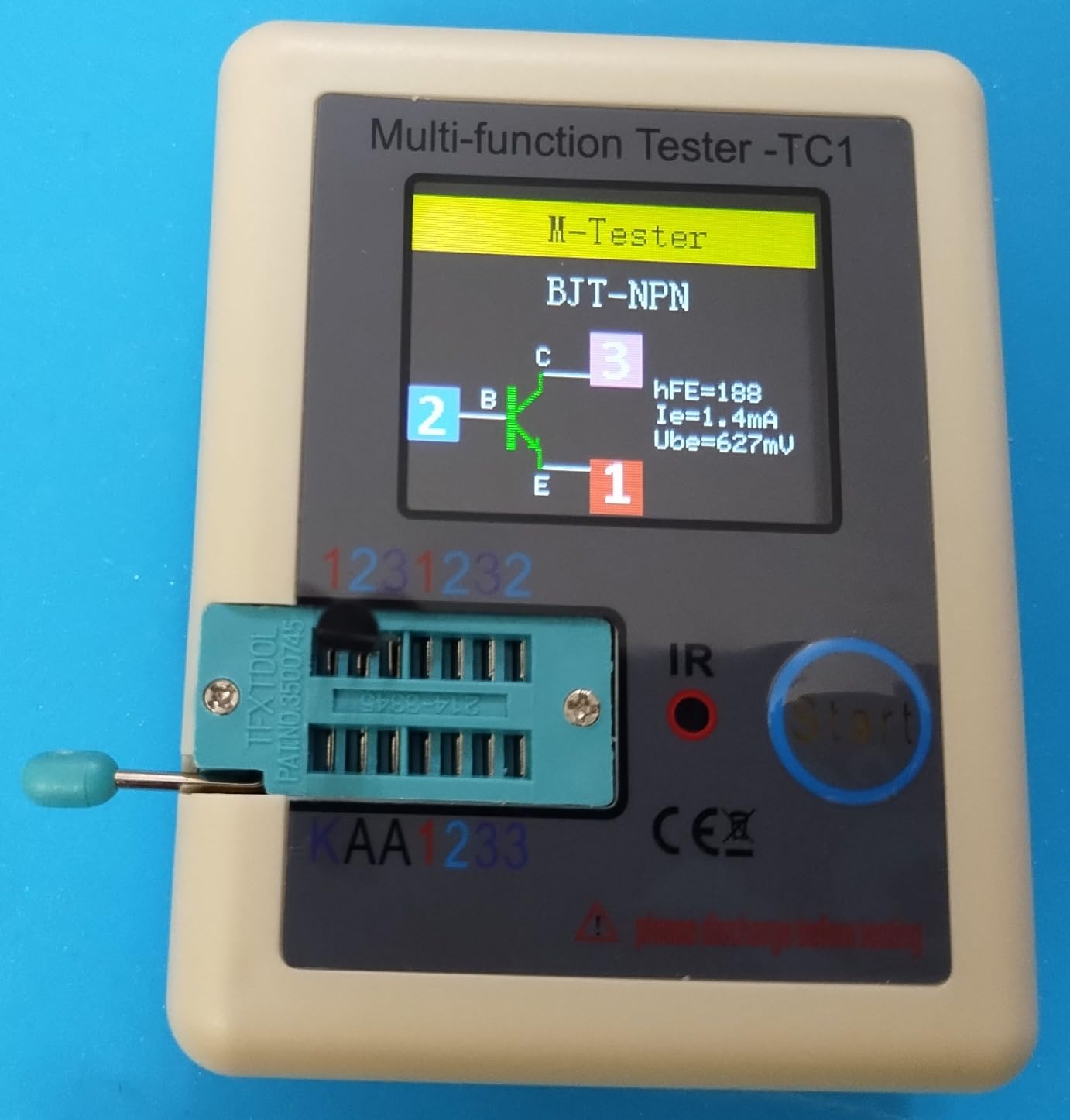
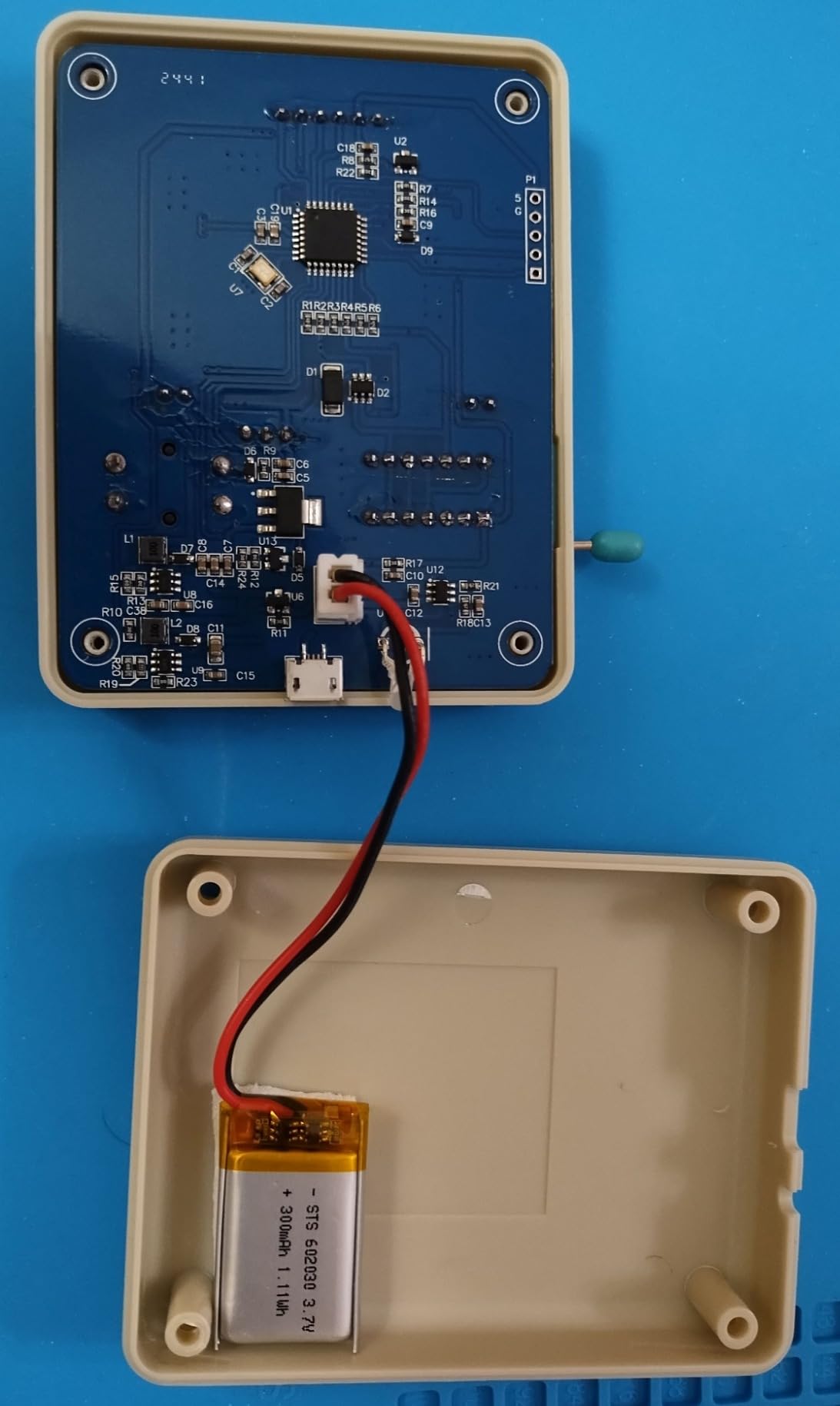
Technical capabilities include automatic detection of NPN and PNP transistors, N-channel and P-channel MOSFETs, diodes including double diodes, thyristors, resistors, and capacitors. The full color display shows component parameters clearly, with support for various electronic transistor testing scenarios. The zero-force socket accommodates different component packages without damaging delicate leads. Newer versions show improved battery life over earlier releases, addressing a common complaint from early adopters.
Forum discussions consistently recommend the diymore as the best entry-level component tester for hobbyists. Users praise its ability to quickly identify components salvaged from scrap PCBs and verify purchases from questionable suppliers. While measurement accuracy may deviate more than professional equipment, the values are sufficient for determining component health and rough specification verification. The lack of included manual frustrates some users, but online communities provide comprehensive operation guides.
Perfect For
Beginning electronics hobbyists, makers, and anyone starting a component testing setup on a budget. The diymore LCR-TC1 provides comprehensive component identification at a price that won’t break the bank. Educational environments and maker spaces benefit from the low cost allowing multiple units for group activities.
Known Limitations
Professionals requiring traceable accuracy or calibration certification need professional-grade equipment. The measurement variations, particularly in inductance testing, make this unsuitable for precision engineering work. Users designing circuits requiring exact component specifications should verify with more accurate equipment.
7. HiLetgo LCR-T4 Multifunctional Tester – Budget Pick
HiLetgo LCR-T4 Multifunctional Resistor Capacitor Diode SCR Inductor Triode MOSFET Tube Meter Tester Component Tester kit 9V with 128 * 64 Green Backlight LCD Display
Detection time: 1.7 seconds
128x64 LCD display
9V battery powered
Auto shutdown
Shows component schematic
Pros
- Big bright display
- Shows schematic and pin assignments
- Detects collector/emitter reversal
- Accurate test results
- Uses inexpensive 9V battery
- Quick 1.7 second detection
Cons
- No case included
- ZIF socket kludgy and difficult
- Screen very bright uses lots current
- No screen dimmer
- Auto-shutdown after few seconds
- Insufficient packaging
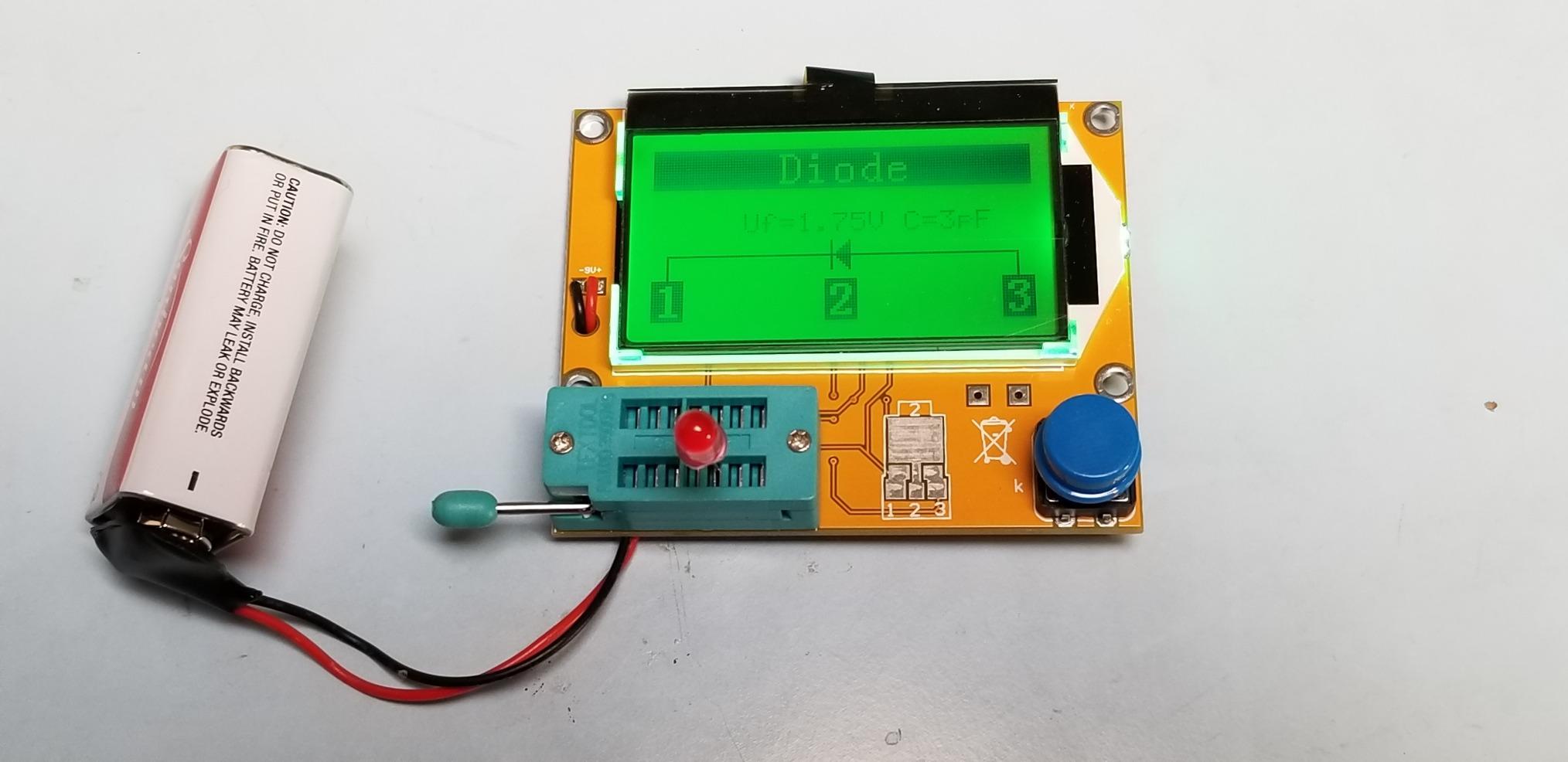
The HiLetgo LCR-T4 represents excellent value for hobbyists needing fast, reliable component identification. The 1.7 second detection time is noticeably quicker than many competitors, making this my go-to tester for sorting large quantities of components. I particularly appreciate how the display shows the component schematic with pin assignments, eliminating confusion about pin configurations when working with unfamiliar transistors or diodes. The bright 128×64 LCD display remains readable even in well-lit workshops, though the brightness does impact battery life.
What sets the LCR-T4 apart is the collector/emitter reversal detection. This feature caught me several times when salvaging transistors from old equipment, preventing installation mistakes that could damage components. The automatic detection covers NPN and PNP transistors, MOSFETs, diodes, resistors, and capacitors without manual configuration. Forum users consistently praise this tester as the best option for beginners due to the clear schematic display and straightforward operation.
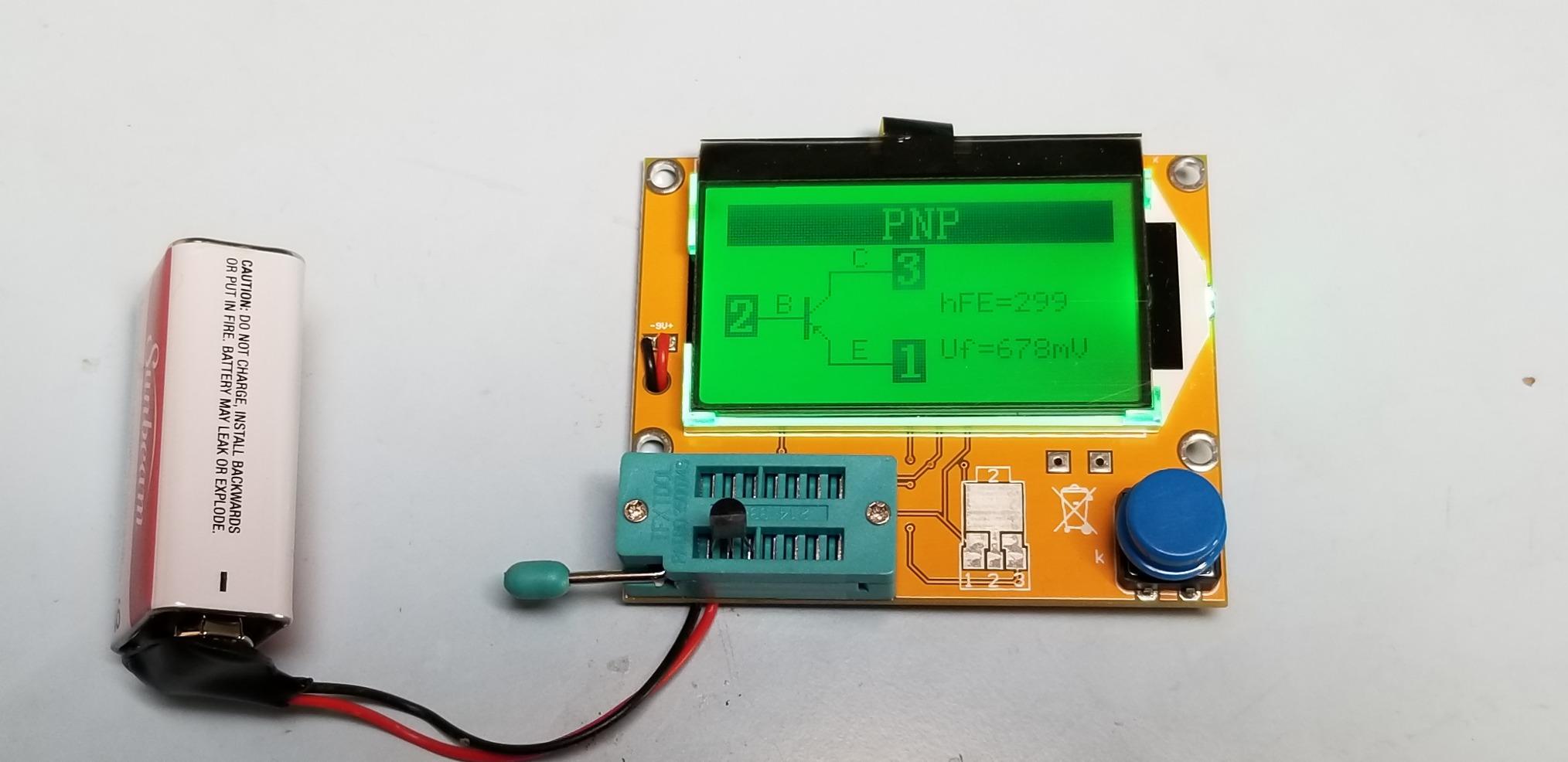
Technical specifications include digital 128×64 LCD display for clear readings with measured data and graphics. The short detection time of 1.7 seconds speeds up component sorting significantly. Automatic detection handles NPN and PNP transistors, N-channel and P-channel MOSFETs, diodes, triodes, resistors, capacitors, and other devices. The unit operates on 9V battery (not included) or DC power from 6.8-12V, with automatic shutdown drawing only about 20nA when idle.
The LCR-T4 measures MOSFET gate threshold voltage and capacitance, plus bipolar transistor current amplification factor and base-emitter threshold voltage. These advanced measurements provide insight into component health beyond simple identification. The lack of included case frustrates some users, but the online community offers numerous 3D printable designs for custom enclosures. Packaging quality is a known weakness, with some units arriving with cracked screens due to insufficient protection during shipping.
Ideal Candidates
Electronics hobbyists, students, and makers building their first workbench. The LCR-T4 provides comprehensive component identification at an entry-level price, with schematic display that helps users learn component pinouts. Beginner-friendly features and clear readings make this perfect for educational environments and self-learners.
Who Should Look Elsewhere
Professionals needing guaranteed accuracy or specialized component testing. The LCR-T4 doesn’t offer the precision or advanced features required for professional repair work or engineering applications. Users requiring data logging, PC connectivity, or calibration traceability should invest in professional-grade equipment.
8. Velleman Atlas ESR70 Capacitance and ESR Meter – Top Rated
Velleman Atlas ESR70 Capacitance and ESR Meter
Capacitance: 1uF-22000uF
ESR range: 0-40 ohms
ESR resolution: 0.01 ohms
Audible alerts
Auto-discharge
Pros
- High quality accurate and easy
- Made in England
- Quick testing only seconds
- ESR warns of future failures
- Significant troubleshooting time savings
- In-circuit testing capability
Cons
- Expensive compared to alternatives
- Does not test DCR
- Alligator clips difficult for some caps
- Not suitable for SMD without extra probes
- Requires probe compensation when changing leads
The Velleman Atlas ESR70 represents the pinnacle of dedicated ESR and capacitance meters. After using this instrument for professional repair work, I understand why forum veterans consistently recommend it as the investment that pays for itself in saved troubleshooting time. The ESR70 measures both capacitance and ESR automatically, with the enhanced dynamic range of 0.00 to 40.0 ohms covering virtually any electrolytic capacitor you’ll encounter. The audible alerts for various ESR levels let me focus on visual inspection while the meter communicates results through tone.
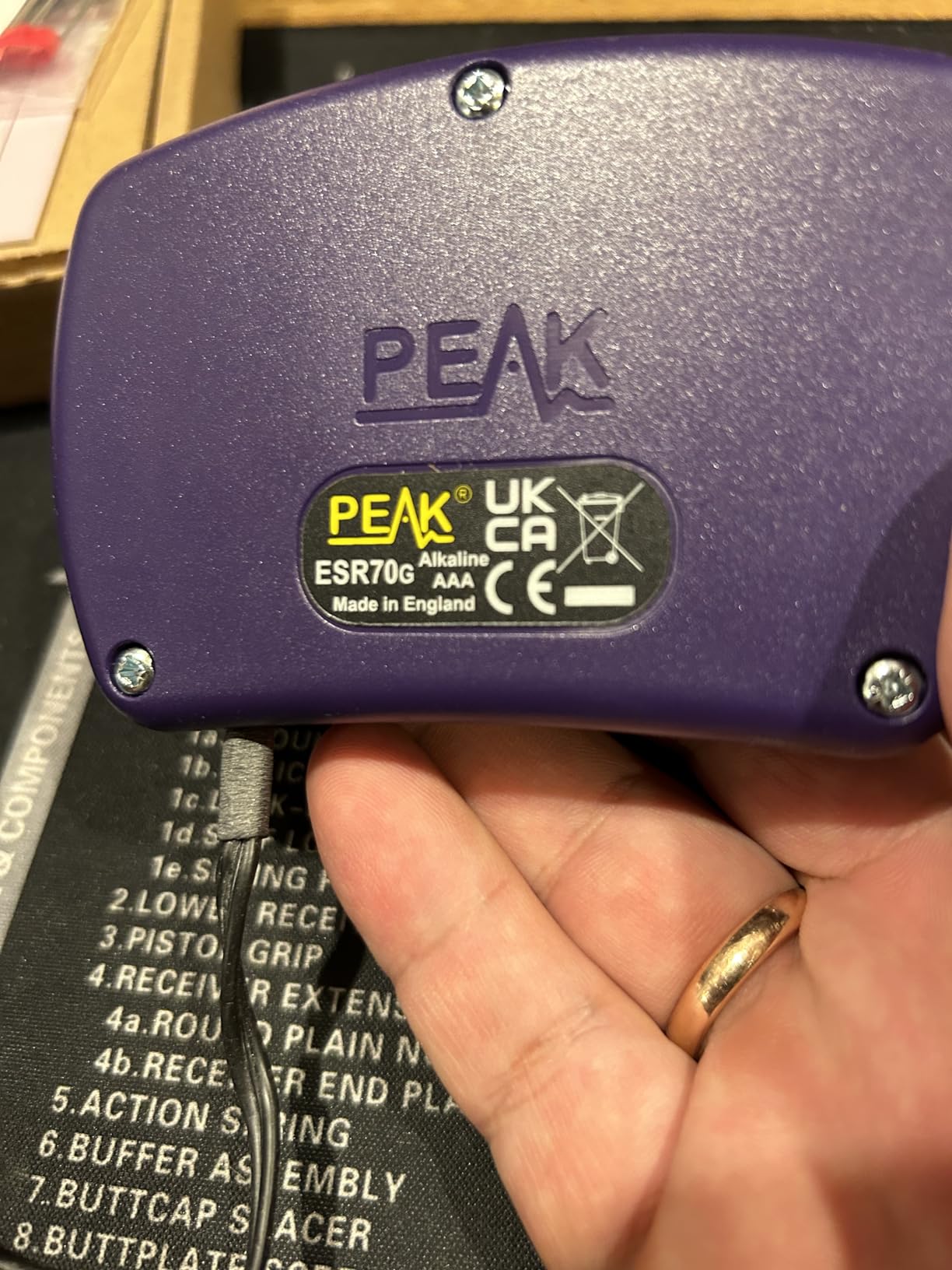
What truly sets the ESR70 apart is the thoughtful engineering focused on practical repair work. The automatic capacitor discharge feature protects both the user and the meter, eliminating the risk of shocked fingers or damaged equipment. The in-circuit testing capability works reliably because the meter applies test signals that don’t interfere with surrounding components. Made in England by Peak Electronic Design, the build quality reflects professional equipment with attention to detail that budget options lack.
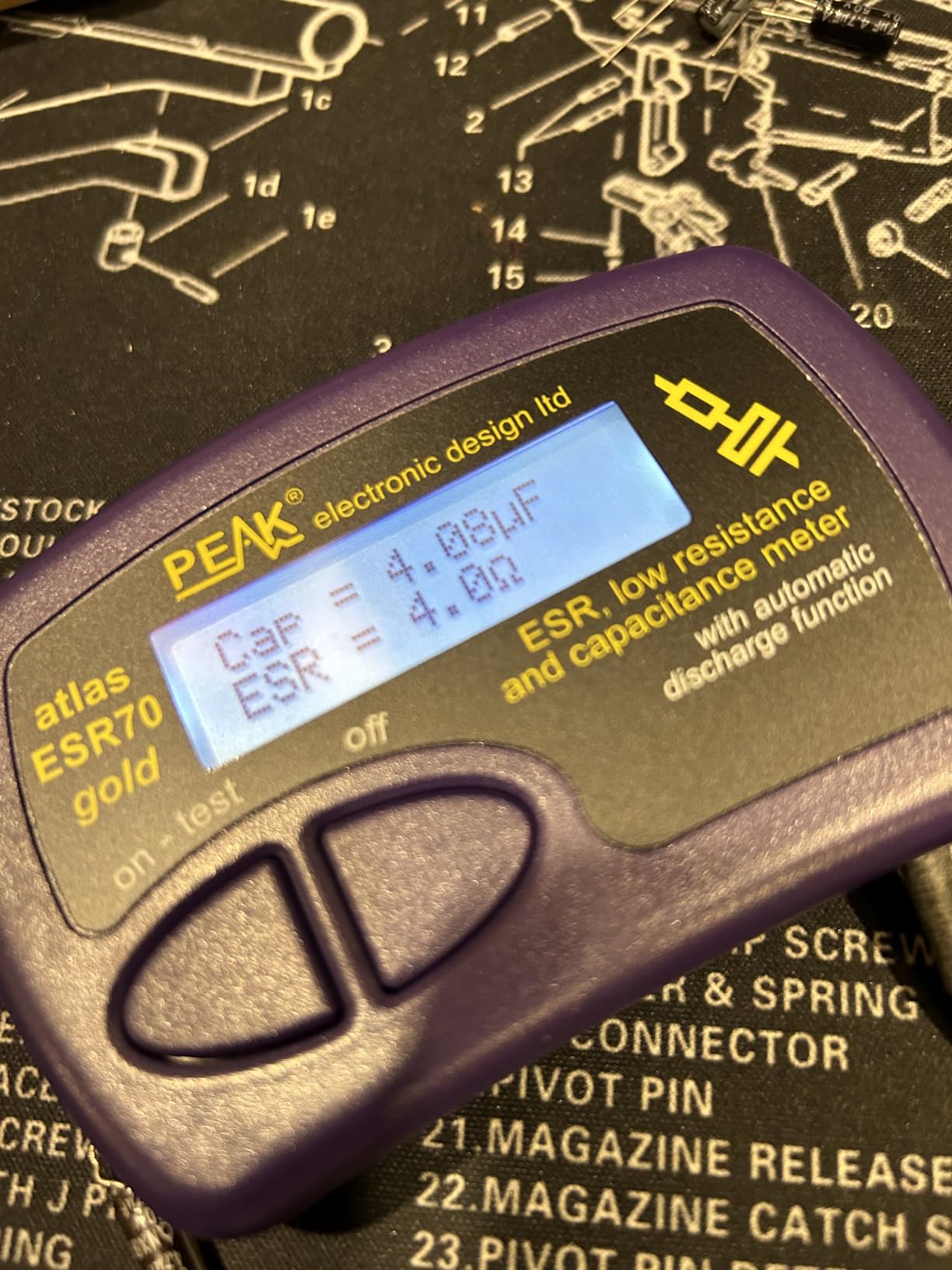
Technical specifications include suitability for any capacitor type between 1uF and 22000uF, including motor capacitors, smoothing capacitors, electrolytics, and polypropylenes. The enhanced dynamic range of 0.00 to 40.0 ohms with ESR resolution as fine as 0.01 ohms provides detailed insight into capacitor health. The meter tests ESR at 100kHz and capacitance at 2mA (20mA for larger capacitors), with automatic detection of capacitor connection. The included gold-plated insulated alligator clips provide secure connections while protecting against accidental shorts.
The ESR70’s ability to predict capacitor failure before complete malfunction is its most valuable feature. ESR values increase as capacitors degrade, often before capacitance drops noticeably. By catching failing capacitors early, the ESR70 prevents warranty returns and customer complaints. Forum professionals consistently report that the ESR70 reduced their capacitor replacement time by over 50% while increasing diagnostic accuracy. For repair technicians working with power supplies, audio equipment, or vintage electronics, this meter is indispensable.
Perfect Users
Professional repair technicians, electronics restoration specialists, and service departments where diagnostic accuracy directly impacts profitability. The ESR70 justifies its investment through reduced troubleshooting time and improved repair success rates. Users working with expensive equipment or mission-critical systems benefit from the predictive failure detection.
When to Choose Differently
Testing RC electronic components occasionally or working primarily with new components doesn’t justify the ESR70’s specialized capability. Users needing general-purpose component testing should consider multifunction testers that include ESR measurement. Hobbyists on tight budgets find adequate performance from less expensive ESR meters despite the accuracy trade-offs.
Buying Guide: How To Choose the Right Component Testers?
Selecting the best component tester for your electronics workbench depends on several factors beyond just price. Component type compatibility tops the list—ensure your chosen tester handles the specific components you work with regularly. Transistor testers should support NPN, PNP, MOSFET, and JFET types. If you work with surface mount components, tweezer-style testers like the FNIRSI LCR-ST1 provide significant advantages over socket-based designs.
Display quality and readability matter more than many users realize. Color displays with clear parameter readings reduce eye strain during long testing sessions. Backlight brightness affects usability in various lighting conditions, while automatic screen rotation on tweezer testers accommodates different hand positions. Forum veterans consistently recommend displays that show component schematics alongside measurements, particularly for users learning component identification.
Measurement accuracy varies significantly between price points. Budget testers provide sufficient accuracy for hobbyist work and general component identification. Professional repair technicians need guaranteed accuracy for critical measurements, particularly when verifying replacement component specifications. ESR measurement capability becomes essential for anyone troubleshooting power supplies or vintage audio equipment where capacitor degradation causes common failures.
Build quality and durability impact long-term satisfaction. Professional-grade equipment like the Velleman DCA55 and ESR70 use higher quality components and construction, providing consistent measurements over years of daily use. Budget options may develop connection issues or calibration drift, particularly ZIF sockets that wear out with repeated use. Consider how often you’ll use the tester and whether reliability justifies premium pricing.
Battery life and power options affect usability. Rechargeable batteries with Type-C charging provide convenience and eliminate ongoing battery costs. 9V battery-powered options like the HiLetgo LCR-T4 offer simplicity but require regular battery replacements. Automatic shutdown functions preserve charge but can interrupt testing workflows if too aggressive. Field service technicians need longer battery life than bench users with constant power access.
Workbench integration deserves consideration when organizing your electronics setup. Tweezer testers with rear magnets can mount vertically on metal surfaces, saving valuable bench space. Compact designs fit better in crowded workbenches, while larger displays improve readability at the expense of footprint. Professional users benefit from PC connectivity for data logging and record keeping, particularly in quality assurance applications.
What is a Component Tester?
A component tester is an electronic device that automatically identifies and tests various electronic components such as transistors, diodes, capacitors, resistors, and MOSFETs, providing measurements of their parameters and pin configurations. Component testers work by applying test signals to component pins and measuring the response, using built-in databases and algorithms to automatically identify component types, determine pin configurations, and measure key parameters like resistance, capacitance, gain, and leakage current.
Component testers are essential for electronics workbenches because they save time compared to manual multimeter testing, prevent component damage during testing, help identify faulty components quickly, and provide accurate measurements that are difficult to obtain with standard multimeters. Electronics technicians, repair shop professionals, hobbyists, electronics engineers, QA technicians, and anyone working with electronic circuits who needs to quickly identify or test components will benefit from a component tester on their workbench.
Frequently Asked Questions
What does a component tester do?
A component tester automatically identifies and tests electronic components like transistors, diodes, capacitors, resistors, and MOSFETs. It measures parameters such as resistance, capacitance, gain, leakage current, and pin configurations. This saves significant time compared to manual testing with multimeters and helps prevent component damage during testing.
How do you use a component tester?
Connect the component leads to the tester terminals or socket. For transistors, connect all three pins in any order. The tester automatically identifies the component type and pin configuration. Results display within seconds showing component parameters, pinout diagram, and measurement values. Some testers require ZIF socket insertion, while tweezer types allow direct contact with SMD components.
How do you test electrical components?
Component testers apply small test signals to component terminals and measure the response. Automatic detection identifies component type and measures relevant parameters. Resistance, capacitance, and inductance are measured with AC signals at specific frequencies. Semiconductors are tested with forward and reverse bias to determine characteristics. ESR meters test capacitor internal resistance at high frequencies without desoldering.
What are 4 methods for testing electronics components?
Visual inspection for damage, burns, or corrosion. Multimeter testing for basic resistance, voltage, and continuity measurements. Component testers for automatic identification and parameter measurement. Oscilloscope curve tracing for detailed characteristic analysis. Specialized testers like ESR meters for capacitor diagnostics. Each method serves different purposes from quick checks to detailed analysis.
How do you test for faulty components?
Use component testers to measure parameters against specifications. Compare measured values to known good components. Test in-circuit when possible to identify faults without desoldering. ESR testing reveals capacitor degradation before complete failure. Look for parameter variations beyond tolerance ranges. Consistent deviations from expected values indicate faulty components requiring replacement.
How do you check a chip with a multimeter?
Check power supply pins for correct voltage. Measure ground pin continuity. Test input and output pins for expected signals. Use diode mode to check protection diodes. Compare measurements against datasheet specifications. Note that multimeters have limited chip testing capability compared to dedicated component testers or oscilloscopes. Complex ICs require specialized testing beyond basic multimeter measurements.
Conclusion
After testing the best component testers for electronics workbenches across multiple price points and use cases, the Velleman DCA55 stands out as the editor’s choice for professional technicians needing reliable semiconductor analysis. The FNIRSI LCR-ST1 offers exceptional value for surface mount work with its tweezer design and comprehensive LCR capabilities. Budget-conscious hobbyists find excellent performance in the HiLetgo LCR-T4, while repair specialists benefit from the Velleman ESR70’s predictive capacitor diagnostics.
Choose your component tester based on the components you work with regularly, your accuracy requirements, and how frequently you’ll use the device. Professional repair technicians benefit from investing in specialized equipment like the DCA55 or ESR70, while hobbyists and makers find excellent value in multifunction testers from FNIRSI and ACEIRMC. Regardless of your choice, adding a component tester to your workbench transforms how you identify, verify, and troubleshoot electronic components.
RF component testing tools complement these testers for comprehensive electronics diagnostics. Remember that the best component tester is the one that matches your specific needs and budget while providing reliable, accurate measurements for the components you test most frequently.