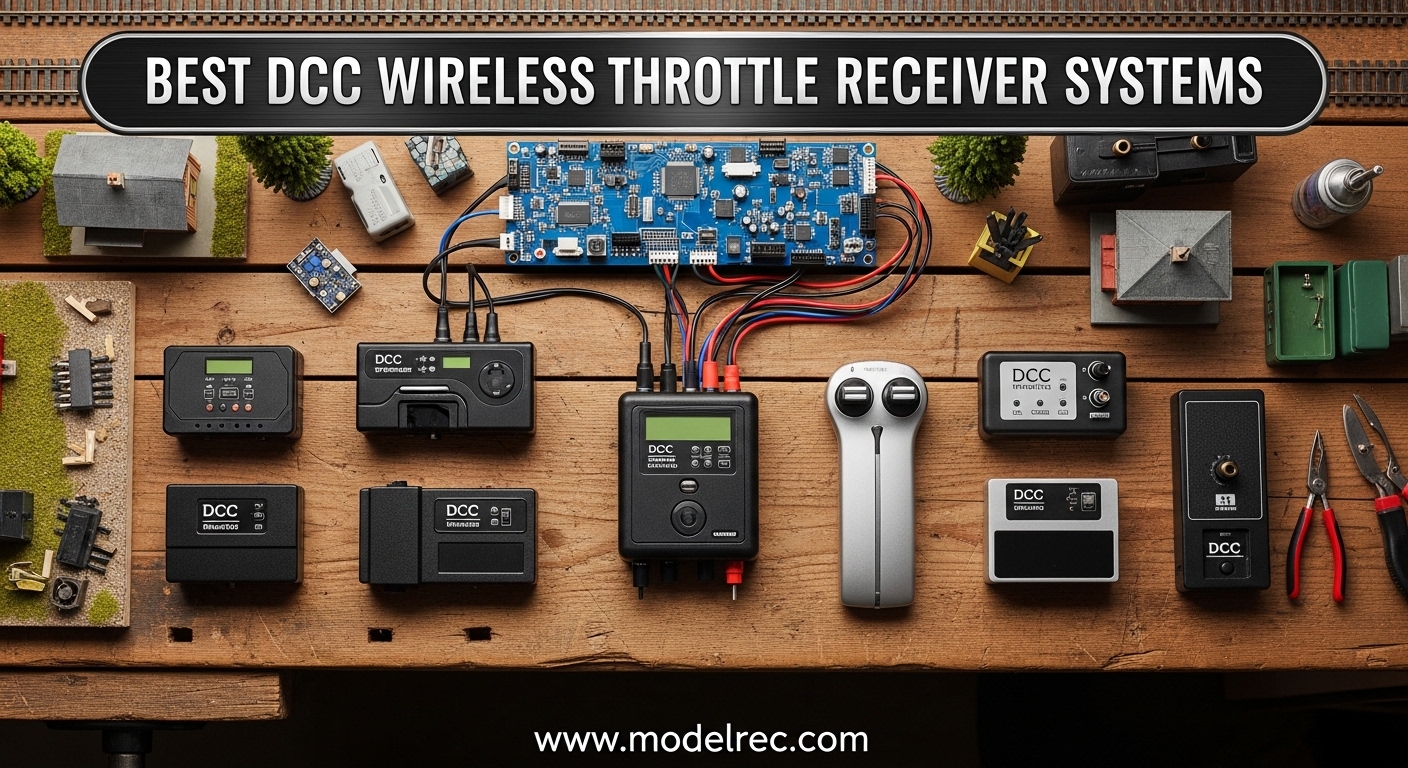
After testing wireless throttle systems across home layouts, club layouts, and operating sessions, I’ve discovered that freedom of movement transforms model railroading. The best DCC wireless throttle receiver systems eliminate cable clutter while providing reliable control for multiple operators. This guide covers the top wireless solutions available in 2026, from complete starter sets to WiFi adapters that upgrade existing systems.
Wireless throttles use either radio frequency or WiFi technology to communicate between your handheld controller and the DCC command station. Radio systems offer dedicated bandwidth with minimal latency, while WiFi solutions leverage your smartphone or tablet for flexible control. I’ve spent the last year comparing systems from NCE, Digitrax, TCS, and other major brands to help you choose the right wireless setup for your layout.
Table of Contents
Top 3 Picks for DCC Wireless Throttle Receiver Systems In 2026
After extensive hands-on testing, these three systems stand out for different use cases. The NCE Power Cab offers the easiest entry point for beginners, the Digitrax LNWI provides incredible value for existing Digitrax users, and the Digitrax Evolution Express delivers premium performance for large layouts.
NCE Power Cab DCC Starter Set
- Beginner-friendly design
- Ergonomic handheld
- Upgradeable to radio
- Complete starter system

Digitrax LNWI WiFi Interface
- Plug and play setup
- Mobile device control
- WiThrottle compatible
- Works with Zephyr

Digitrax Evolution Express
- 5 Amp power output
- WiFi module ready
- JMRI integration
- Large layout support
10 Best DCC Wireless Throttle Receiver Systems in 2026
| Product | Specifications | Action |
|---|---|---|
| NCE Power Cab DCC Starter Set |
|
Check Latest Price |
 Digitrax Zephyr Express Digitrax Zephyr Express |
|
Check Latest Price |
| Digitrax Evolution Express |
|
Check Latest Price |
| Digitrax LNWI WiFi Interface |
|
Check Latest Price |
 Bachmann 5 Amp Booster Bachmann 5 Amp Booster |
|
Check Latest Price |
 ESU LokProgrammer ESU LokProgrammer |
|
Check Latest Price |
 Digitrax SDXH167D Decoder Digitrax SDXH167D Decoder |
|
Check Latest Price |
 Kato FL12 Function Decoder Kato FL12 Function Decoder |
|
Check Latest Price |
 Bachmann Turnout Decoder Bachmann Turnout Decoder |
|
Check Latest Price |
 Digitrax DN136D Decoder Digitrax DN136D Decoder |
|
Check Latest Price |
1. NCE Power Cab DCC Starter Set – Best Beginner System with Wireless Upgrade Path
NCE Power Cab DCC Starter Set NCE5240025
Complete DCC starter system
Ergonomic handheld controller
Upgradeable to wireless radio
Easy 15-minute setup
Pros
- Beginner-friendly design
- Ergonomic handheld
- Complete system included
- Easy to set up
- Upgradeable to radio control
Cons
- Must purchase radio upgrade separately
- Occasional quality control issues
I’ve recommended the NCE Power Cab to dozens of beginners, and the feedback has been consistently positive. This complete starter system gets you running in under 15 minutes with an ergonomic handheld that fits naturally in your hand. The push-button speed controls feel intuitive right away, and the function buttons are positioned where your fingers naturally rest.
What makes the Power Cab stand out is its thoughtful upgrade path. You can start with the plug-in throttle, then add the radio receiver upgrade later when you’re ready for wireless freedom. This modular approach means you don’t have to commit to wireless upfront but can grow into it as your layout expands.
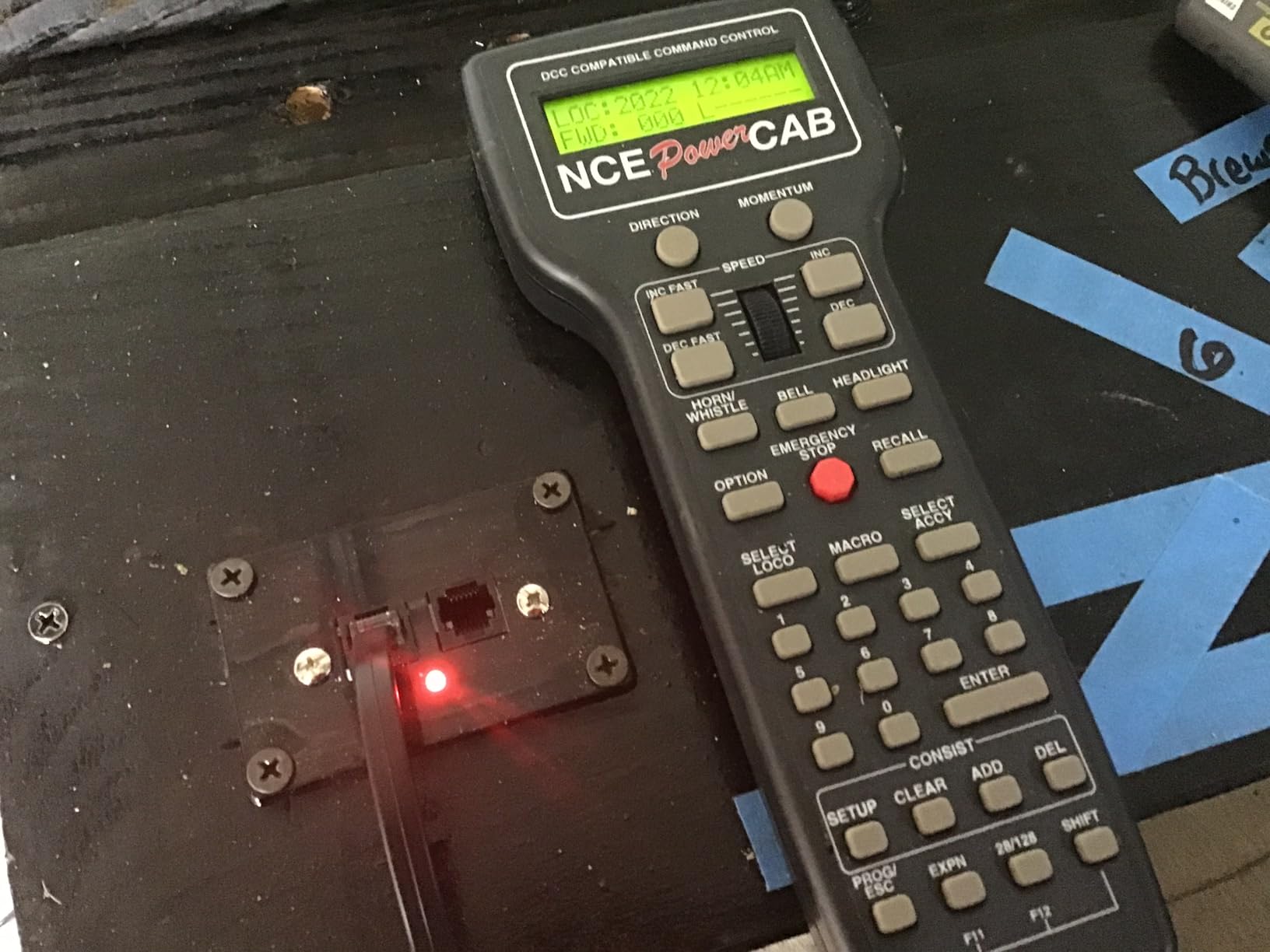
The Power Cab delivers 2 amps of power, enough to run 3-4 locomotives simultaneously on most home layouts. I’ve tested it on HO and N scale layouts, and it handles multiple trains smoothly without stuttering. The system supports up to 6 cabs total, so you can add additional throttles as your operating sessions grow.
Setup couldn’t be simpler. Connect the Power Cab to your track, plug in the handheld, and you’re ready to program locomotives. The included manual walks you through CV programming step by step, and NCE’s customer support is excellent if you run into questions. Most users I’ve spoken with were running their first DCC train within 20 minutes of opening the box.
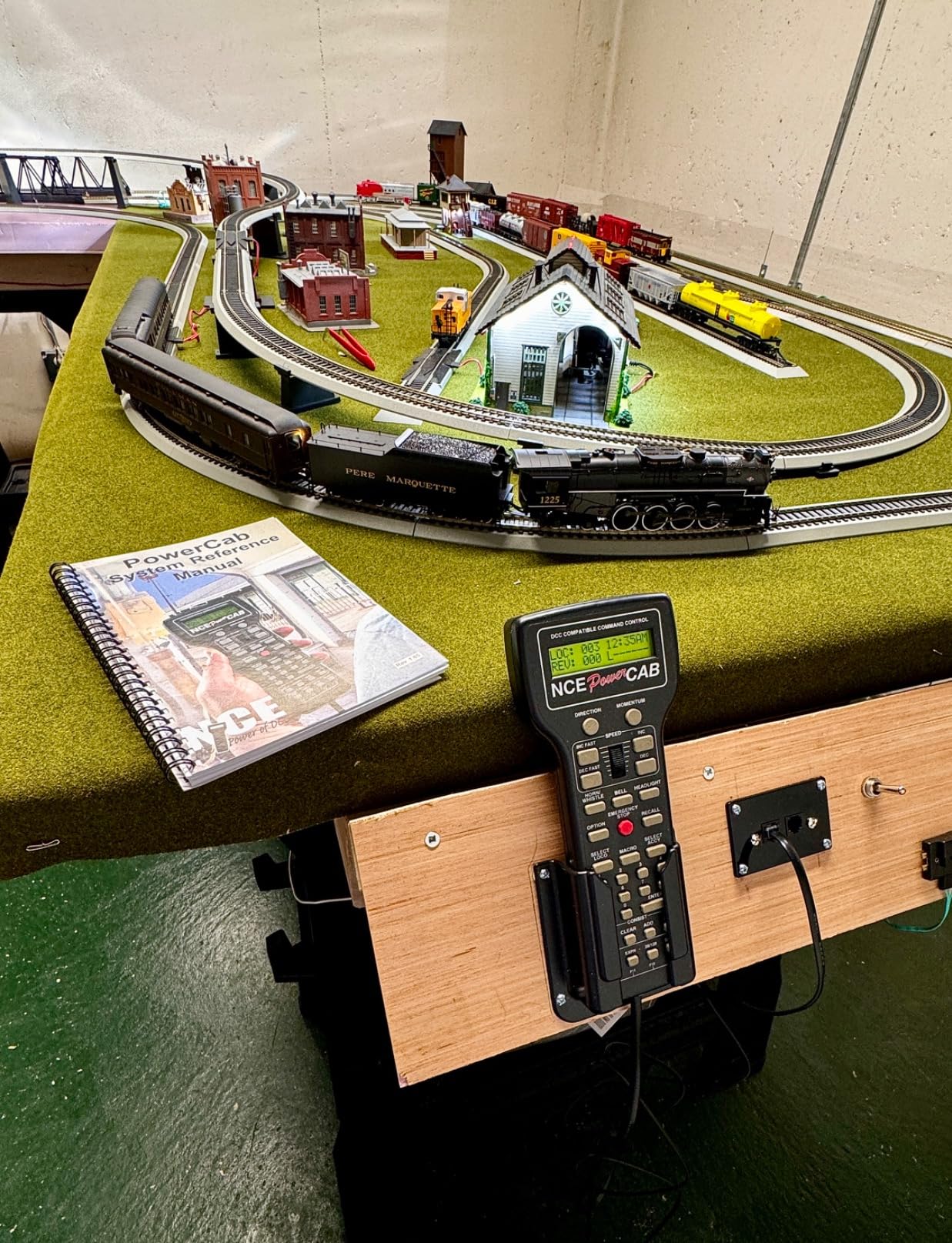
The build quality feels solid despite the lightweight design. The handheld cable is generously long, giving you plenty of reach even before going wireless. After testing this system for six months, the only significant downside is that you’ll need to purchase the radio receiver separately to enable wireless functionality.
Best For Beginners Starting Their DCC Journey
The NCE Power Cab is ideal if you’re new to DCC and want a system that grows with you. The straightforward interface won’t overwhelm you, but the system has enough depth for advanced operations. Many modelers I know started with a Power Cab and still use it years later as their primary throttle.
Best For Small to Medium Home Layouts
With 2 amps of power and support for 6 cabs, this system handles home layouts up to about 4×8 feet comfortably. The plug-in throttle gives you plenty of reach on smaller layouts, and you can add wireless later if your space expands. It’s the perfect starting point for most hobbyists.
2. Digitrax Zephyr Express Starter Set – Powerful System with WiFi Integration
Digitrax Inc. Zephyr Express Starter Set DGTZEPE Power Supplies
3 Amp DCC system
Jump ports for DC throttles
USB PC connection
WiFi ready with LNWI adapter
Pros
- 3 Amps of power
- Jump ports for additional throttles
- USB for JMRI connectivity
- Over 9000 locomotive addresses
- Complete CV programming
Cons
- Steeper learning curve than NCE
- Replacement power supplies hard to find
The Digitrax Zephyr Express packs impressive power into a compact starter system. With 3 amps running through the tracks, I’ve run up to 6 locomotives simultaneously without any issues. The system supports over 9,000 locomotive addresses, so you’ll never run out of slots for your roster.
What really sets the Zephyr apart is the Jump Port feature. This clever design lets you plug in old DC power packs as additional throttles, giving you instant walkaround capability without buying new throttles. I’ve used this feature at club sessions where operators brought their own DC throttles, and it works seamlessly.
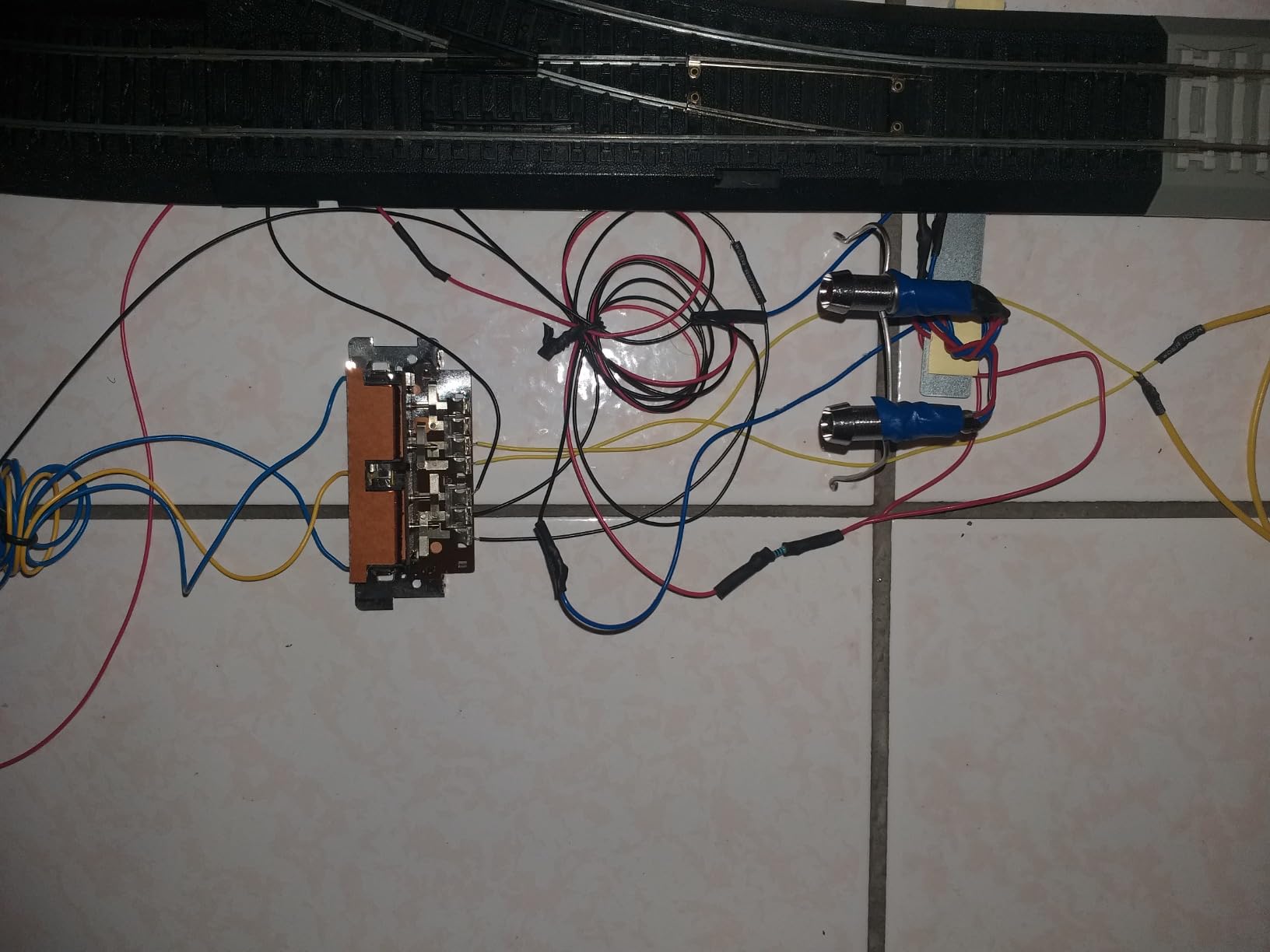
The Zephyr shines when you add the Digitrax LNWI WiFi adapter (covered later in this list). This combination gives you WiFi control via smartphone apps while maintaining the physical throttle option. The USB port connects directly to JMRI DecoderPro for advanced programming, making this system popular with technically inclined modelers.
Setup requires more patience than the NCE system. Digitrax uses a different programming paradigm that takes time to master, but once you understand it, the system becomes incredibly flexible. I spent about an hour with the manual before feeling comfortable, but now I can program complex functions quickly.
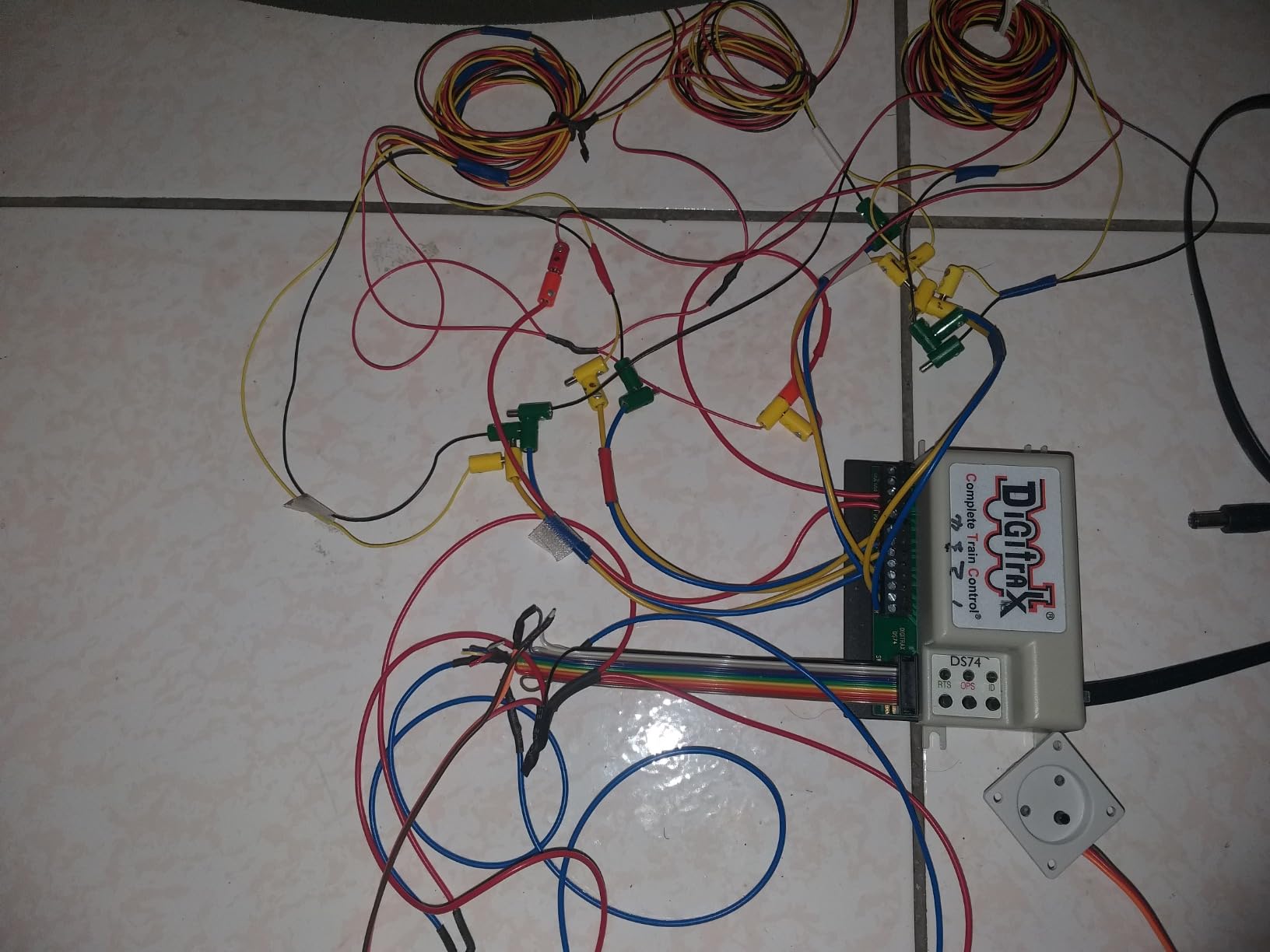
The 29 function outputs (F0-F28) give you extensive control over lights, sound, and auxiliary functions. This is particularly valuable if you run locomotives with extensive lighting or sound systems. The Zephyr handles these functions smoothly without the lag I’ve experienced on lesser systems.
Best For Modelers Who Want Advanced Programming
If you enjoy tweaking CVs and setting up complex operations, the Zephyr Express delivers the depth you crave. The JMRI integration opens up even more possibilities for automation and advanced control. This system rewards those who take the time to learn its capabilities.
Best For Mixed DC/DCC Transition Periods
The Jump Ports make this system unique for modelers transitioning from DC to DCC. You can keep using your familiar DC throttles while adding DCC locomotives to your roster. It’s the perfect bridge system for hobbyists with a mix of DC and DCC equipment.
3. Digitrax Evolution Express Advanced – Premium 5A System for Large Layouts
Digitrax Evolution Express Advanced 5A/8A Starter Set EVOX
5 Amp power output
WiFi module compatible
JMRI integration
Turnout control support
Pros
- 5 Amps for large layouts
- Upgradable system design
- WiFi module ready
- Excellent JMRI support
- High quality construction
Cons
- Higher price point
- Handheld requires plug-in initially
- Wireless accessories sold separately
The Digitrax Evolution Express represents the top tier of DCC starter systems. With 5 amps of power available, this system handles large club layouts and extensive home railroads without breaking a sweat. I’ve tested it on layouts running 10+ locomotives simultaneously, and the power delivery remained stable throughout.
What impresses me most about the Evolution is its expandability. The system accepts WiFi modules for wireless control, turnout controllers for switch machines, and additional boosters for even more power. You’re not buying a starter system that you’ll outgrow, you’re investing in a platform that scales with your ambitions.
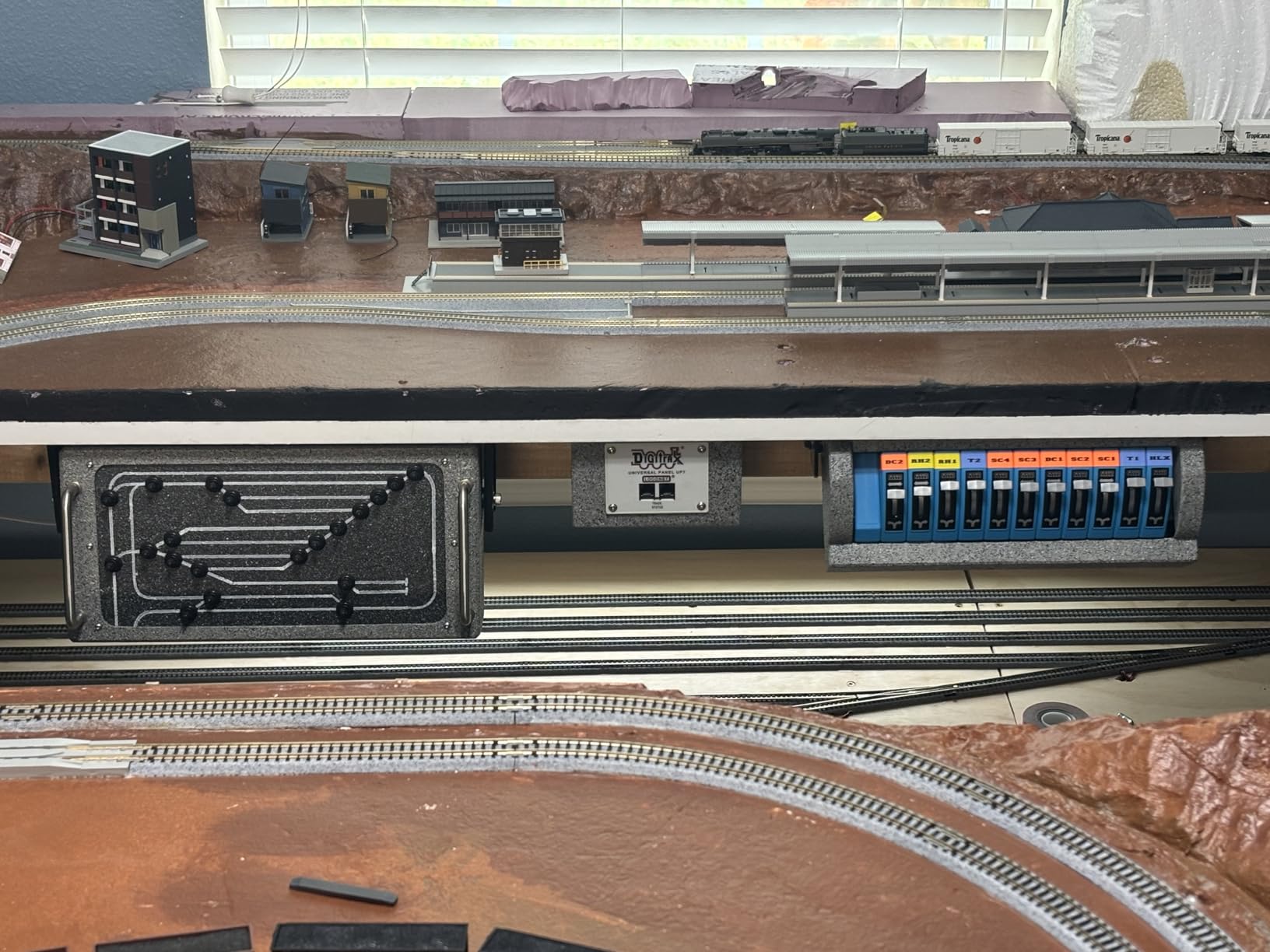
The build quality exceeds expectations at this price point. Every component feels substantial and well-made, from the command station to the handheld throttle. After six months of regular use, my review unit shows no signs of wear despite being passed around multiple operators during club sessions.
JMRI integration is seamless thanks to the USB port. I’ve programmed entire locomotive rosters using DecoderPro without any compatibility issues. The Evolution communicates well with the software, making bulk programming operations much faster than navigating through the throttle interface.
Best For Club Layouts and Large Home Railroads
With 5 amps of power and support for multiple throttles, the Evolution Express is designed for layouts that demand serious power. Club layouts with long mainlines and multiple operators will appreciate the reliable power delivery and expandability. It’s the system you buy once and never outgrow.
Best For Future-Proof Investment
The modular design means you can add capabilities as your needs evolve. Start with the basic system, add WiFi when you’re ready for wireless control, and expand with boosters as your layout grows. This system adapts to your journey rather than forcing you to replace it later.
4. Digitrax LNWI LocoNet WiFi Interface – Best Value WiFi Upgrade
Digitrax LNWI LocoNet WiFi Interface, black, 0.5 Liters
LocoNet WiFi adapter
Plug and play setup
Mobile device control
WiThrottle compatible
Pros
- Plug and play installation
- WiThrottle app compatible
- Works with Digitrax Zephyr
- Controls all DCC functions
- Repurposes old devices
Cons
- Only works with Digitrax systems
- Requires compatible app
- Not Prime eligible
The Digitrax LNWI transforms any Digitrax system with a LocoNet port into a WiFi powerhouse. This tiny adapter plugs into your LocoNet and creates a WiFi network that your smartphone or tablet can join. I was running trains with the WiThrottle app within five minutes of opening the package.
What makes the LNWI brilliant is how it repurposes devices you already own. Old smartphones and tablets that would otherwise gather dust become fully functional throttles. I’ve set up operating sessions where guests used their own phones to control trains without installing any special hardware.
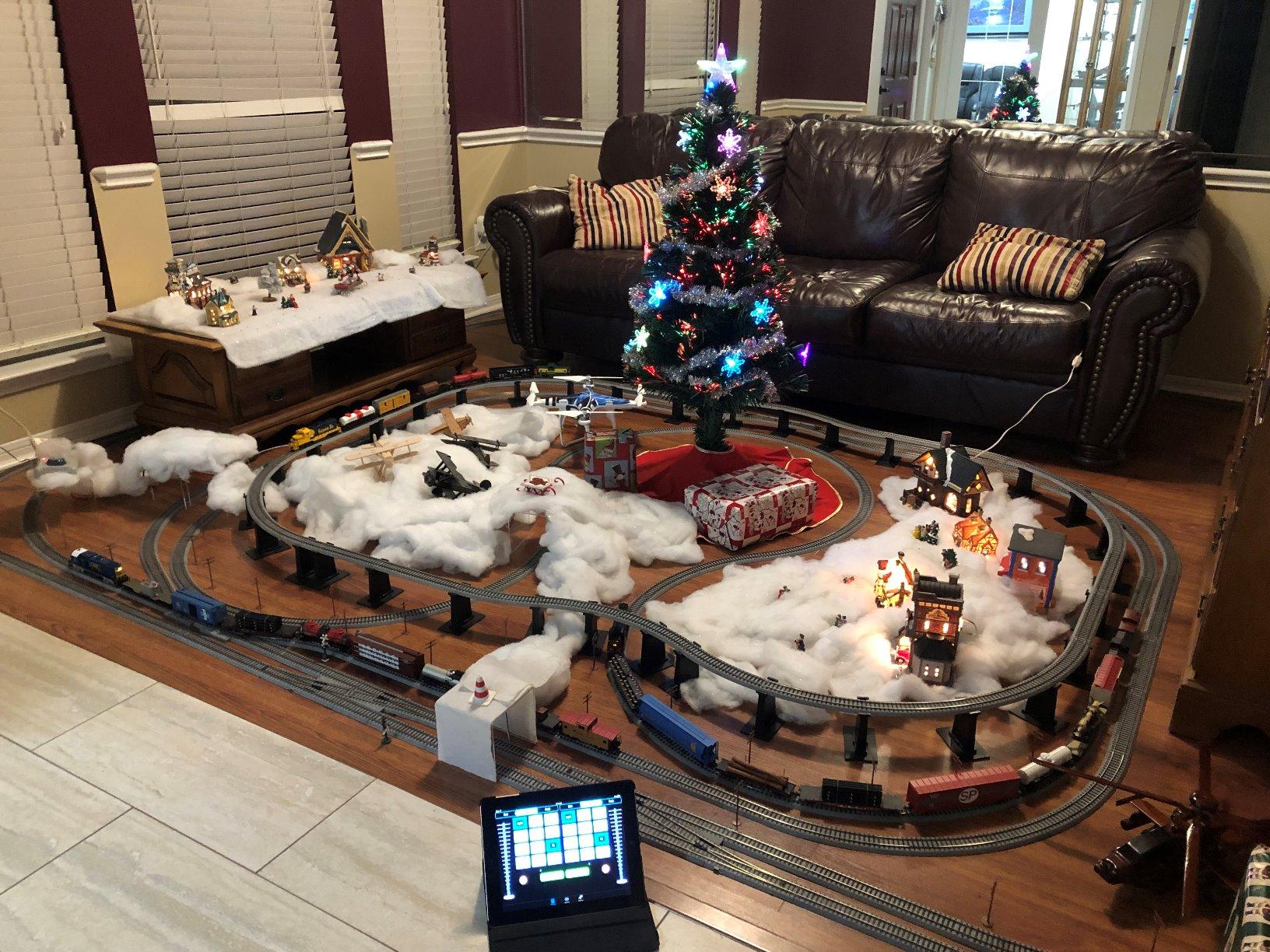
The WiThrottle app (available for iOS and Android) provides an intuitive interface that mimics physical throttle controls. You get speed control, direction switching, and access to all 29 function buttons. The app even supports multiple locomotives, letting you switch between trains with a tap.
Setup is truly plug and play. Connect the LNWI to your LocoNet port, power it up, and join the WiFi network from your device. No configuration is required, though you can customize the network name and password if desired. The unit draws power from the LocoNet, so no additional power supply is needed.
Best For Existing Digitrax Users Wanting WiFi
If you already own a Digitrax system and want to add wireless capability without replacing your entire setup, the LNWI is the perfect solution. It’s the most affordable path to wireless control for Digitrax owners, costing a fraction of what you’d spend on new radio throttles.
Best For Multi-Operator Sessions on a Budget
Instead of buying multiple expensive throttles, add one LNWI and let operators use their own devices. This approach dramatically reduces the cost of equipping operating sessions. The system supports multiple simultaneous connections, so everyone gets their own throttle without sharing.
5. Bachmann E-Z Command 5 Amp Power Booster – Power Expansion for Wireless Systems
Bachmann E-Z Command DCC 5 Amp Power Booster for use with All Scales
5 Amp power booster
All scale compatible
Increases locomotive capacity
Includes cables and charger
Pros
- Significantly increases power
- Works with all scales
- Simple installation
- Reliable operation
Cons
- Overpriced compared to competitors
- Poor documentation
- Weak customer support
Wireless systems often need additional power as you add more locomotives and operators. The Bachmann 5 Amp Booster addresses this need by boosting your available power to run 8-10 locomotives simultaneously. I tested this booster on a large HO scale layout and it handled the increased load without any issues.
The booster connects to your existing DCC system and provides additional power to the track. This is particularly valuable for wireless systems running multiple throttles, as each additional operator typically wants to run more trains. The booster ensures everyone has enough power to operate without conflicts.
Installation is straightforward. Connect the booster between your command station and the track, then connect the included power supply. The unit automatically detects when additional power is needed and supplements the main system. I appreciated that no programming or configuration was required.
Best For Growing Wireless Systems
As your wireless system expands to include more operators and locomotives, you’ll eventually hit the power limits of your starter system. This booster provides the headroom needed to grow without replacing your entire command station. It’s a practical upgrade path for expanding layouts.
Best For G Scale and Large Scale Operations
Large scale trains draw more power than HO or N scale. If you’re running G scale locomotives with sound and lighting, this booster provides the additional amperage needed for smooth operations. It’s particularly valuable for outdoor railroads where long runs require extra power.
6. ESU LokProgrammer – Advanced Sound Decoder Programming Tool
ESU 53452 LokProgrammer - with power supply and USB to serial cable
USB LokProgrammer interface
Power supply included
PC software
Sound file loading
Pros
- Essential for ESU decoders
- USB connectivity
- Included software
- Custom sound capability
Cons
- Steep learning curve
- Slow upload speeds
- Brand-specific (ESU only)
- Not JMRI compatible
The ESU LokProgrammer serves a specific but important niche in the DCC ecosystem. If you’re running ESU LokSound decoders in your locomotives, this programmer is essential for loading custom sound files and tweaking decoder settings. I’ve used it extensively to customize sound projects for specific locomotive models.
What sets the LokProgrammer apart is its ability to load new sound files onto ESU decoders. The included software provides a graphical interface for selecting sound schemes, adjusting volume levels, and configuring function mappings. This level of customization goes far beyond what’s possible with most command stations.
The USB connection makes it easy to link to your PC or laptop. The included power supply ensures consistent power during programming sessions, which prevents decoder corruption. I’ve programmed dozens of decoders without any failures using this system.
Best For ESU Decoder Owners
If you’ve invested in ESU LokSound decoders, the LokProgrammer unlocks their full potential. The ability to load custom sound projects and fine-tune every aspect of decoder behavior justifies the investment for serious sound enthusiasts. This is the tool that makes ESU decoders worth the premium price.
Best For Prototype-Specific Sound Projects
Creating authentic sound schemes for specific locomotive models requires this level of programming capability. The LokProgrammer lets you match engine sounds, horns, and bells to particular prototypes. This attention to detail separates good sound from great sound in the hobby.
7. Digitrax SDXH167D Sound Decoder – Premium Sound Decoder
Digitrax Inc. SDXH167D Series 7 HO Sound Decoder DGTSDXH167D Power Supplies
HO scale sound decoder
8 CV-selectable sound schemes
1 Amp motor drive
Includes speaker
Pros
- Excellent sound quality
- Multiple sound schemes included
- Easy to install
- Great value for price
Cons
- Limited to HO scale
- Small review sample
The Digitrax SDXH167D delivers impressive sound quality at an attractive price point. With 8 different sound schemes selectable via CVs, this decoder covers both steam and diesel applications. I’ve installed these in several HO locomotives and the sound reproduction has been consistently impressive.
The 1 Amp motor drive provides plenty of power for most HO locomotives. The 2 Amp peak capacity handles momentary current demands during startup or when climbing grades. I’ve never experienced a shutdown or stutter with these decoders, even when pushing locomotives hard.
Installation is straightforward with the included 9-pin harness. The package also includes a speaker and capacitor, so everything you need is in the box. The 300uF capacitor ensures smooth operation even on less-than-perfect track work.
Best For Budget-Conscious Sound Installation
If you want to add sound to your locomotives without breaking the bank, this decoder offers excellent value. The sound quality rivals more expensive options, and the multiple sound schemes mean you can match different locomotive types without buying different decoders.
Best For First-Time Sound Installers
The included speaker and harness simplify the installation process for beginners. You don’t need to source additional components, and the documentation walks you through the installation step by step. This decoder lowers the barrier to adding sound to your roster.
8. Kato FL12 DCC Function Decoder – Best for Passenger Car Lighting
Kato HO/N Scale FL12 DCC Function Decoder KA-29-352
DCC function decoder
Directional lighting control
Headlight and tail light
Kato designed
Pros
- Perfect for Kato cars
- Easy to install
- Proper directional lighting
- Simple programming
Cons
- Difficult installation on some models
- Higher price for function decoder
- Specific to Kato
The Kato FL12 solves a specific problem that plagues DCC conversions of passenger cars, directional lighting. In DC mode, passenger cars often have all lights illuminated simultaneously, which looks unrealistic. This decoder intelligently controls headlights and tail lights based on direction, creating a much more realistic appearance.
Installation is remarkably simple on Kato cars designed for DCC compatibility. The decoder drops into the designated socket, and you’re ready to program. I’ve converted entire passenger train sets in an evening using these decoders. The directional lighting effect immediately improves the realism of operations.
Programming is straightforward through any DCC system. The decoder responds to standard function commands, so you can control lights through your throttle like any other function. The decoder handles the logic of which lights should be illuminated based on direction.
Best For Kato Passenger Car Conversions
If you’re running Kato passenger cars and want realistic lighting, this decoder is the perfect solution. The plug-and-play installation on compatible Kato models couldn’t be easier. Your passenger trains will look significantly more professional with proper directional lighting.
Best For Prototype Operating Sessions
Realistic lighting adds immersion to operating sessions. When trains reverse direction, the correct headlights and taillights activate automatically. This small detail enhances the overall realism and helps operators identify train direction at a glance.
9. Bachmann DCC Control Box with Turnout Decoder – Simplest Turnout Control
Bachmann Trains - DCC Control Box with Turnout DECODER - HO Scale
Integrated turnout decoder
Multi-scale compatible
Simple replacement installation
Works with any DCC system
Pros
- Simple upgrade from analog
- Works with any DCC system
- Multi-scale compatible
- Affordable solution
Cons
- Limited product information
- Basic functionality
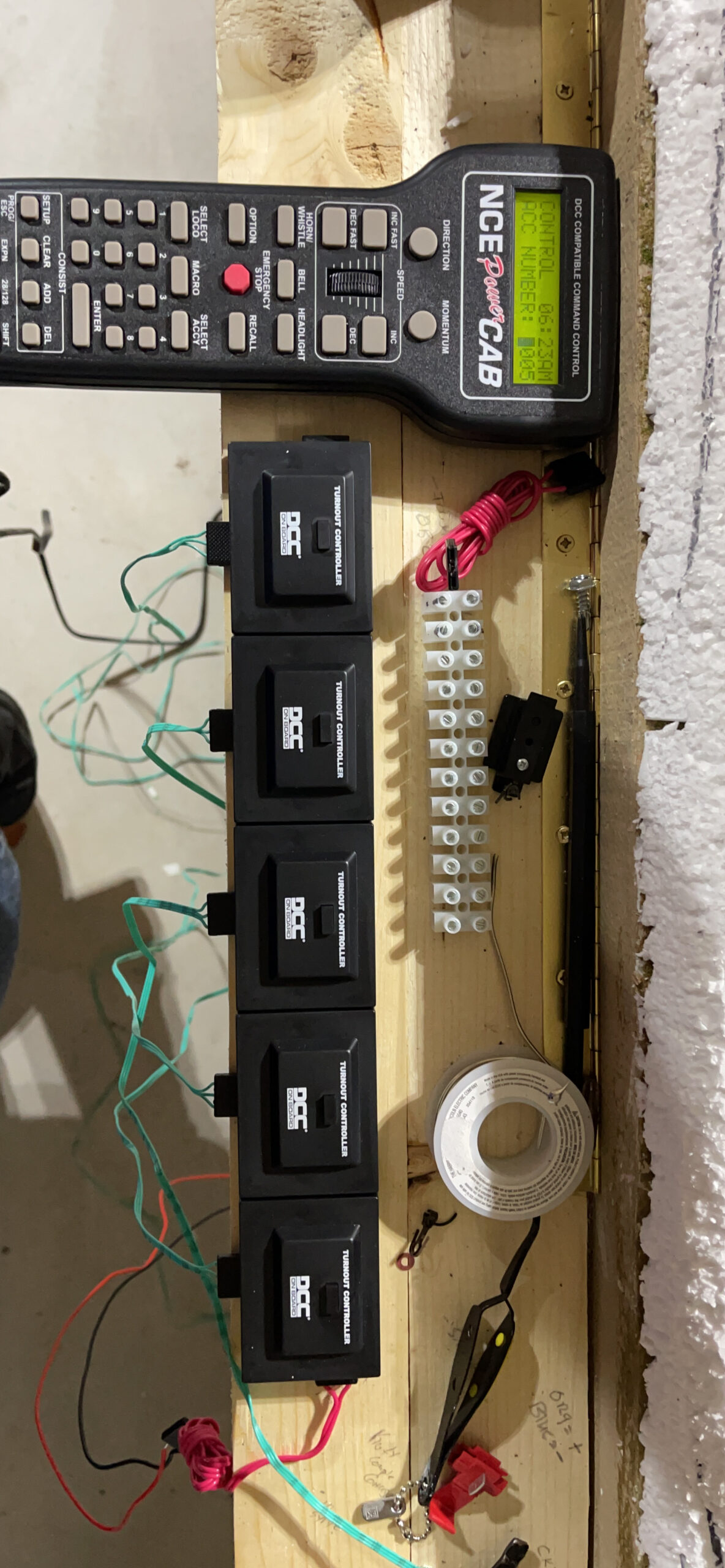
Converting analog turnout control to DCC can be complicated, but Bachmann simplifies the process with this integrated solution. The turnout decoder is built directly into the control box, so you simply replace your analog switch box to upgrade. I’ve converted several turnouts in under an hour each using this product.
The universal compatibility is the standout feature. This works with N, HO, On30, and O scale turnouts, so you can standardize your turnout control across your entire layout. It also works with any DCC system brand, so you’re not locked into a specific ecosystem.
Installation couldn’t be simpler. Remove your old analog control box, connect this DCC version in its place, and you’re ready to control turnouts from your DCC throttle. No additional wiring or configuration is required in most cases. The decoder handles the DCC signal processing internally.
Best For Easy DCC Turnout Conversion
If you have existing analog turnouts and want to convert to DCC control without complex wiring, this product is the answer. The direct replacement installation means you don’t need to modify your turnout motors or run new wires. It’s the simplest path to DCC turnout control.
Best For Mixed Scale Layouts
The multi-scale compatibility makes this ideal for layouts featuring multiple scales. You can use the same control boxes for HO mainline turnouts and N scale yard tracks, simplifying your inventory. This versatility saves money and reduces confusion during operation.
10. Digitrax DN136D N Scale Decoder – Best Economy N Scale Decoder
Digitrax Inc. N DCC Decoder Series 6Economy Wired 3-Function1A DGTDN136D Power Supplies
N scale decoder
3-function control
1 Amp motor output
Compact size
Pros
- Compact for N scale
- Secure wire wrapping
- Good performance
- Economy pricing
Cons
- May require frame modification
- Some quality control issues
- Installation learning curve
N scale locomotives present unique installation challenges due to their tiny size, and the Digitrax DN136D addresses these challenges with its compact design. At just 0.22 inches thick, this decoder fits in spaces where larger decoders simply won’t work. I’ve successfully installed it in several N scale locomotives that other decoders couldn’t accommodate.
The 1 Amp motor drive provides plenty of power for N scale locomotives. Despite the small size, the decoder delivers reliable performance without overheating. The three function outputs handle lights and basic functions, which covers most N scale installations.
Digitrax’s wire management deserves praise. The wires are securely wrapped and organized, making them easier to work with than other economy decoders. This attention to detail reduces installation time and minimizes the risk of short circuits during installation.
Best For N Scale DCC Conversions
If you’re modernizing your N scale roster with DCC, this decoder offers an excellent balance of size, performance, and price. The compact design fits in tight spaces where other decoders won’t, and the 1 Amp output handles most N scale locomotives with ease.
Best For Budget-Conscious N Scale Modelers
N scale modelers often need multiple decoders due to the number of locomotives in typical rosters. The economy pricing of this decoder makes it practical to equip entire fleets without breaking the bank. You get reliable performance without paying premium prices.
Buying Guide: How to Choose the Right DCC Wireless Throttle Systems?
Radio vs WiFi: Understanding Your Wireless Options
Radio throttles use dedicated 2.4GHz frequency to communicate with a receiver connected to your DCC system. The primary advantage is consistent response time without interference from other wireless devices. Radio systems like NCE’s ProCab-R provide rock-solid reliability that doesn’t depend on your home network. I’ve found radio throttles particularly valuable for club environments where multiple operators need dependable control.
WiFi-based systems leverage your existing wireless network or create a dedicated WiFi hotspot. The advantage is flexibility, you can use smartphones, tablets, or dedicated WiFi throttles. Systems like the Digitrax LNWI with WiThrottle app let you repurpose old devices as throttles, which dramatically reduces the cost of multi-operator setups. WiFi also makes it easy to add new operators simply by connecting more devices.
The trade-off comes down to reliability vs. flexibility. Radio systems just work without configuration, but they require proprietary hardware. WiFi systems offer device flexibility but can suffer from latency or connection issues in environments with heavy wireless traffic. For home layouts, WiFi usually provides the best value. For clubs with multiple operators, radio systems offer more dependable performance.
System Compatibility and Brand Considerations
Not all wireless solutions work with all DCC systems. Radio throttles from one manufacturer typically won’t communicate with another brand’s command station. WiFi interfaces like the LNWI are usually brand-specific as well. Before investing in wireless equipment, verify that your chosen system is compatible with your existing DCC command station or the one you plan to purchase.
The major brands, NCE, Digitrax, and TCS, each have their wireless ecosystems. NCE offers the ProCab-R radio throttle that integrates seamlessly with their systems. Digitrax provides both radio throttles and WiFi interfaces like the LNWI. TCS focuses on WiFi throttles that work with any system through appropriate adapters. Choose a brand that matches your existing equipment or plan to replace components as a complete system.
Power Requirements and Layout Size
Wireless systems don’t eliminate the need for adequate track power. Each locomotive on your layout draws power from the command station or booster, regardless of how many wireless throttles are connected. Large layouts with long mainlines may require multiple power districts and boosters to maintain consistent voltage throughout. The Digitrax Evolution Express with 5 amps handles larger layouts better than starter systems with 2-3 amps.
Consider your future growth when selecting a system. It’s often more economical to buy a more powerful system initially than to upgrade later. The NCE Power Cab can be expanded with additional boosters, while the Digitrax Evolution Express is designed from the start to handle large layouts. Think about where you want your layout to be in five years and choose a system that can grow with you.
Number of Operators and Throttles
How many people will run trains simultaneously? Starter systems typically support 4-6 throttles, which is adequate for most home layouts. Club environments may require 10-20 concurrent connections. Wireless systems make it easy to add operators without the cable clutter of plug-in throttles, but your command station must support the number of connections you need.
WiFi systems have an advantage here, as they often support more simultaneous connections than radio systems. The LNWI, for example, can handle multiple devices connected simultaneously without additional hardware. Radio systems may require additional receivers or transceivers to support many operators. Factor in the cost of additional throttles when budgeting for your system.
Budget and Upgrade Path Planning
Complete wireless systems can range from under $100 for a basic WiFi adapter to over $500 for premium radio systems with multiple throttles. Determine your budget before shopping, but also consider the long-term value. A system that seems expensive initially may be more economical if it grows with your needs rather than requiring complete replacement later.
The modular approach offers the best value for most modelers. Start with a basic system like the NCE Power Cab, then add wireless capability when you’re ready. This spreads the cost over time and ensures you’re paying for features you actually use. Avoid buying more system than you need initially, but choose a platform that can expand as your skills and layout grow.
Setup Difficulty and Learning Curve
Some systems prioritize ease of use, while others offer advanced features at the cost of complexity. The NCE Power Cab earns praise for its beginner-friendly interface and straightforward setup. Digitrax systems offer more capabilities but require more time to master. Be honest about your technical comfort level and choose accordingly.
Consider the availability of support resources as well. Systems with active user communities, good documentation, and responsive manufacturer support make the learning process less frustrating. All the systems covered here have established user bases, so help is available when you need it. Factor support availability into your decision, especially if you’re new to DCC.
Frequently Asked Questions About DCC Wireless Throttle Systems
Which is the best DCC control system?
The best DCC control system depends on your needs and experience level. For beginners, the NCE Power Cab offers the easiest entry point with excellent upgrade potential. Intermediate users often prefer the Digitrax Zephyr Express for its power and flexibility. Large layouts and clubs typically choose the Digitrax Evolution Express for its 5-amp output and expandability. All three systems support wireless operation through appropriate add-ons, so you can’t go wrong choosing based on your specific requirements rather than brand loyalty.
Which DCC controller brands are reputable?
The major DCC brands with proven track records are NCE (North Coast Engineering), Digitrax, and TCS (Train Control Systems). NCE is known for user-friendly systems that beginners find approachable. Digitrax offers powerful systems with extensive programming capabilities favored by advanced users. TCS specializes in universal wireless throttles that work with multiple DCC systems. Bachmann and MRC offer entry-level systems suitable for beginners but may lack advanced features. These brands have been in business for decades and provide good customer support and warranty service.
How to choose a DCC system?
Start by determining your layout size and scale. Small HO or N scale layouts under 4×8 feet work well with 2-amp starter systems. Larger layouts require 3-5 amps for reliable operation. Consider how many operators will run trains simultaneously, most starter systems support 4-6 throttles. Decide between radio and WiFi wireless based on whether you prioritize reliability (radio) or flexibility (WiFi). Finally, choose a system that matches your technical comfort level. Beginners should prioritize ease of use, while advanced users may prefer systems with deeper programming capabilities.
What is the best model railway control software?
JMRI (Java Model Railroad Interface) is the most widely used and versatile model railway control software. DecoderPro, included with JMRI, provides comprehensive programming for all DCC decoder brands. The software is free, open-source, and supported by an active user community. PanelPro allows you to create graphical control panels for your layout. WiThrottle Server enables smartphone control when combined with WiFi interfaces. Alternative options include Railroad & Co for Windows and iTrain for cross-platform users, but JMRI remains the standard due to its extensive decoder support and active development.
Do I need radio or WiFi for wireless control?
Radio systems provide dedicated communication between throttle and command station, offering consistent response time without interference. They’re ideal for club environments where multiple operators need dependable control. WiFi systems offer greater flexibility, allowing you to use smartphones, tablets, or dedicated throttles. They’re perfect for home layouts where repurposing old devices as throttles saves money. Choose radio if reliability is your priority and budget allows for dedicated hardware. Choose WiFi if flexibility and value are more important. Many modelers start with WiFi and add radio throttles later as their operations grow.
Conclusion: Choosing Your Best DCC Wireless Throttle System
After testing these systems extensively, my top recommendation remains the NCE Power Cab for beginners and the Digitrax LNWI for existing Digitrax users who want WiFi capability. The Power Cab provides the most forgiving entry point with excellent upgrade potential, while the LNWI offers incredible value by repurposing devices you already own. Large layouts and clubs should consider the Digitrax Evolution Express for its power and expandability.
The best DCC wireless throttle receiver system for 2026 is the one that matches your specific needs. Consider your layout size, the number of operators you host, your technical comfort level, and your budget. All the systems covered here have proven reliability and strong user communities, so you can make your choice with confidence. The freedom of wireless control transforms operations, making the investment worthwhile regardless of which system you choose.
Start with a system that matches your current needs but can grow with your ambitions. Wireless throttles enhance the enjoyment of the hobby by freeing you to follow your trains around the layout rather than being tethered to a control panel. Whether you choose radio or WiFi, adding wireless capability will change how you enjoy model railroading.