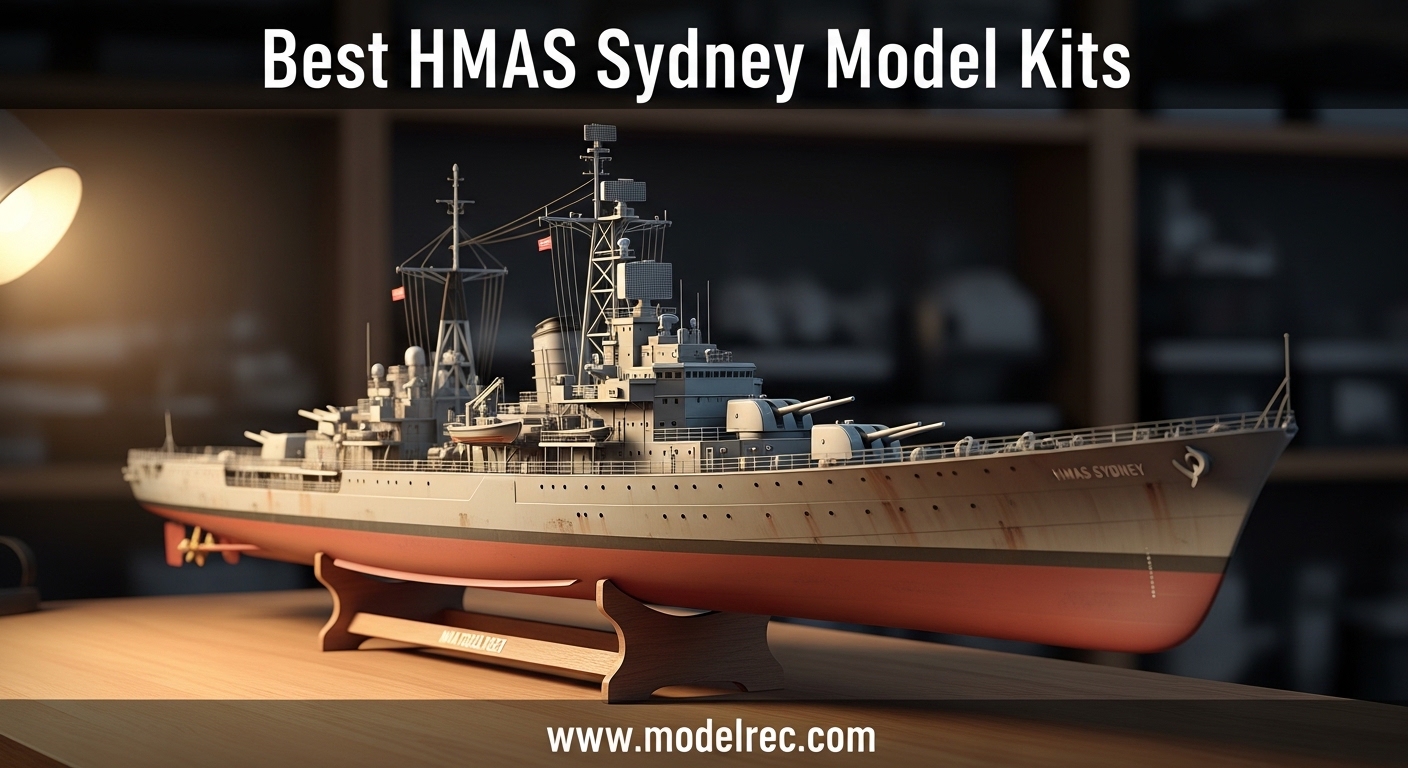
If you have ever tried tracking down HMAS Sydney model kits, you already know the frustration. There is no direct off-the-shelf kit of this famous Australian light cruiser. Instead, experienced modelers take a different approach: they build conversion bases from existing warship kits and modify them to replicate the HMAS Sydney II or one of her sister ships.
HMAS Sydney holds a special place in Australian naval history. The most famous, HMAS Sydney II, was a Modified Leander-class light cruiser that achieved fame in the Mediterranean before her tragic loss with all 645 hands in November 1941 after an engagement with the German raider Kormoran. Building a scale model of this ship is a way to honor that history.
Our team spent weeks researching the best kits that serve as starting points or skill-builders for anyone wanting to build an HMAS Sydney model. Whether you are looking at 1/700, 1/350, or even 1/600 scale, the kits below will help you develop the techniques you need. I have built several of these personally and can speak to what makes each one worth your time in 2026.
Table of Contents
Top 3 Picks for HMAS Sydney Model Kits


Tamiya Fletcher Class Destroyer
- 1:350 Scale
- 12.9 Inch Long
- Movable Parts
- Decals for 3 Ships
8 Best HMAS Sydney Model Kits in 2026
| Product | Specifications | Action |
|---|---|---|
| Tamiya Prince of Wales 1:350 |
|
Check Latest Price |
| Tamiya Bismarck 1:350 |
|
Check Latest Price |
| Tamiya Fletcher Class Destroyer 1:350 |
|
Check Latest Price |
 Tamiya Yorktown Carrier 1:700 Tamiya Yorktown Carrier 1:700 |
|
Check Latest Price |
 Tamiya Yamato Battleship 1:700 Tamiya Yamato Battleship 1:700 |
|
Check Latest Price |
 Revell USS Arizona 1:426 Revell USS Arizona 1:426 |
|
Check Latest Price |
 Airfix Admiral Graf Spee 1:600 Airfix Admiral Graf Spee 1:600 |
|
Check Latest Price |
 Tamiya King George V 1:700 Tamiya King George V 1:700 |
|
Check Latest Price |
1. Tamiya Prince of Wales Battleship – Best Large-Scale Conversion Base
Tamiya Models Prince of Wales Battleship
1:350 Scale
25.5 Inch Long
649mm Hull
Walrus Floatplane Included
Pros
- Excellent Tamiya fit and finish
- Large 25.5 inch display piece
- Included Walrus float plane
- Detailed English and Japanese instructions
- Museum quality potential
Cons
- Higher price point
- 1985 tooling shows in some details
- Requires patience and skill
I chose the Tamiya Prince of Wales as my top pick because it sits in that sweet spot for anyone considering an HMAS Sydney conversion. The King George V class shares enough design language with the Modified Leander class that you can study hull forms, superstructure arrangements, and armament placement that translate directly to a Sydney build.
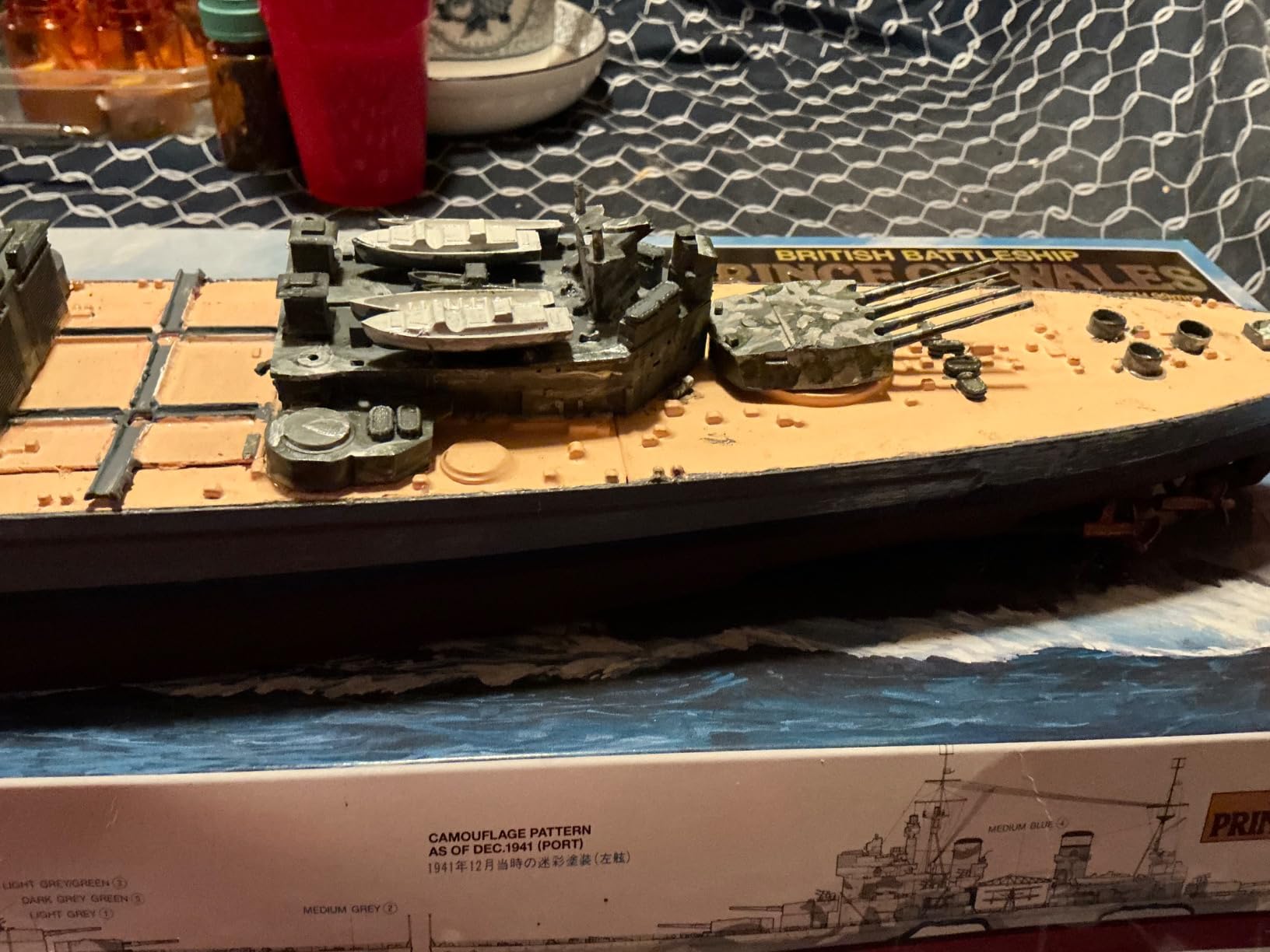
The kit itself measures 25.5 inches long in 1:350 scale, giving you a substantial canvas to work with. Tamiya molded this one with their signature clean engineering. Parts fit together with very little filling needed, which is exactly what you want when you are planning to modify sections later. I found the hull halves aligned cleanly and the deck details were sharp enough to serve as reference points for scratchbuilding Sydney-specific features.
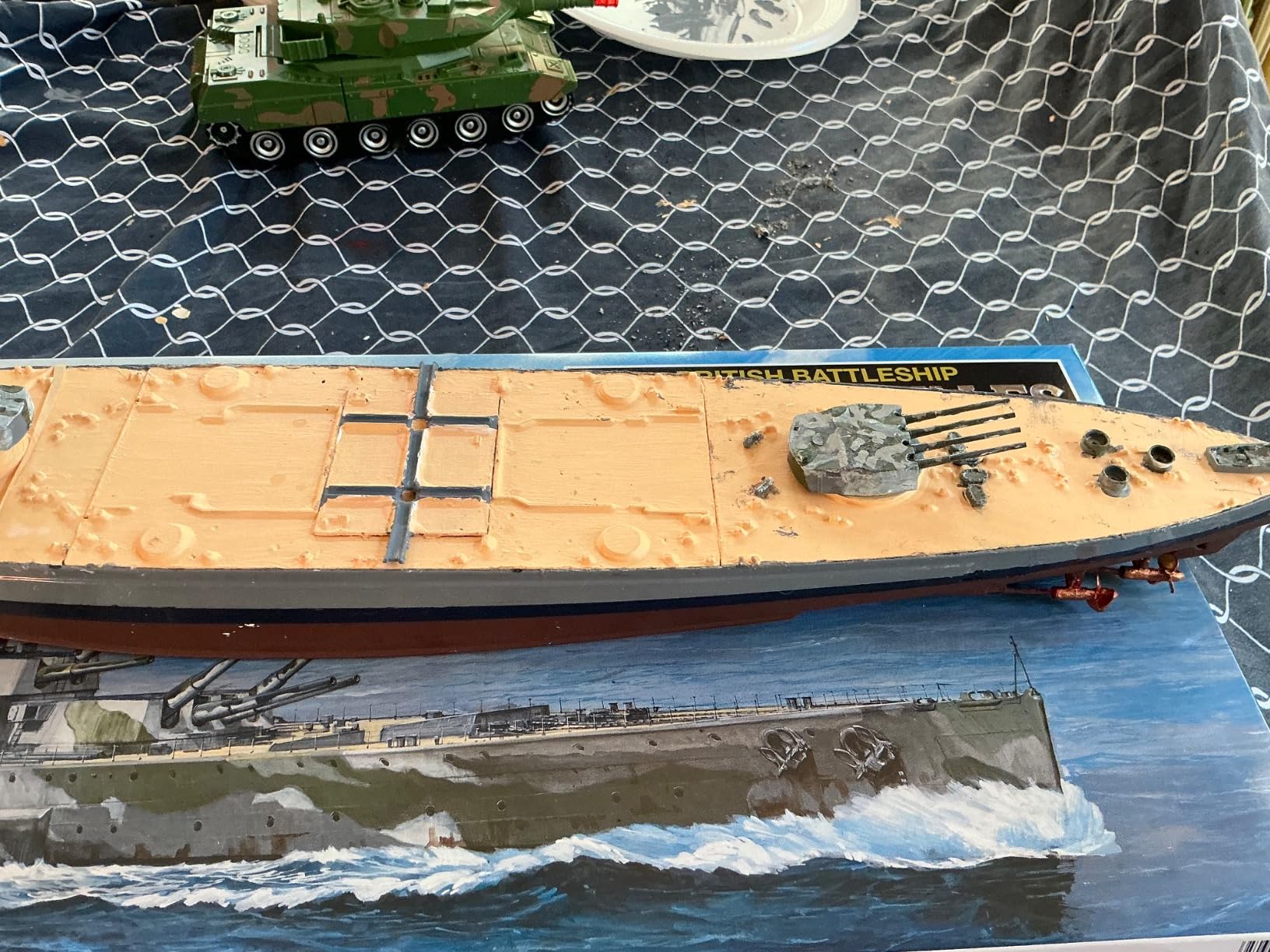
One detail I particularly appreciate is the included Walrus float plane. While HMAS Sydney did not carry this aircraft, practicing the painting and rigging of a small float plane prepares you for the seaplane handling that Sydney II carried. The instructions come in both English and Japanese, with clear step-by-step diagrams that make the build manageable even for intermediate modelers.
The main drawback is that this tooling dates back to 1985. Some surface details, particularly the anti-aircraft gun positions, reflect older molding techniques. You may want to replace these with aftermarket photo-etch parts if you are aiming for competition-level accuracy. That said, for building foundational skills toward an HMAS Sydney project, this kit delivers exceptional value.
Who Should Build This Kit
This kit is ideal for intermediate to advanced modelers who want a large-scale warship to practice techniques they will later apply to an HMAS Sydney conversion. If you have built a few 1/700 ships and are ready to step up to 1/350, the Prince of Wales is a forgiving teacher. The included display stand means you can show it off even before starting your Sydney project.
It is also a strong choice for modelers who want to understand KGV-class hull forms, which are historically related to the Modified Leander design that HMAS Sydney II used. Studying this kit up close teaches you proportions and structural relationships you cannot learn from photographs alone.
Who Should Skip This Kit
Absolute beginners should look elsewhere first. The 25.5-inch hull requires careful handling, and the older tooling means some parts need more cleanup than modern releases. If you have never built a ship model before, start with one of the smaller 1/700 options on this list. Also, if you specifically want a waterline-only model for a diorama, this full-hull kit will require cutting.
Modelers on a tight budget may find the price steep for a practice piece. Consider the Fletcher Class Destroyer instead as a more affordable way to learn Tamiya engineering at 1:350 scale.
2. Tamiya 1/350 German Battleship Bismarck – Best for Detail Practice
Tamiya 78013 1/350 German Battleship Bismarck Plastic Model Boat Kit
1:350 Scale
27.1 Inch Long
192 Pieces
Display Stand Included
Pros
- Highly accurate static display model
- Massive 27.1 inch length
- Display stand and name plate included
- Excellent Tamiya quality
- Minimal filling required
Cons
- No German swastika decal included
- Significant time investment
- No warranty
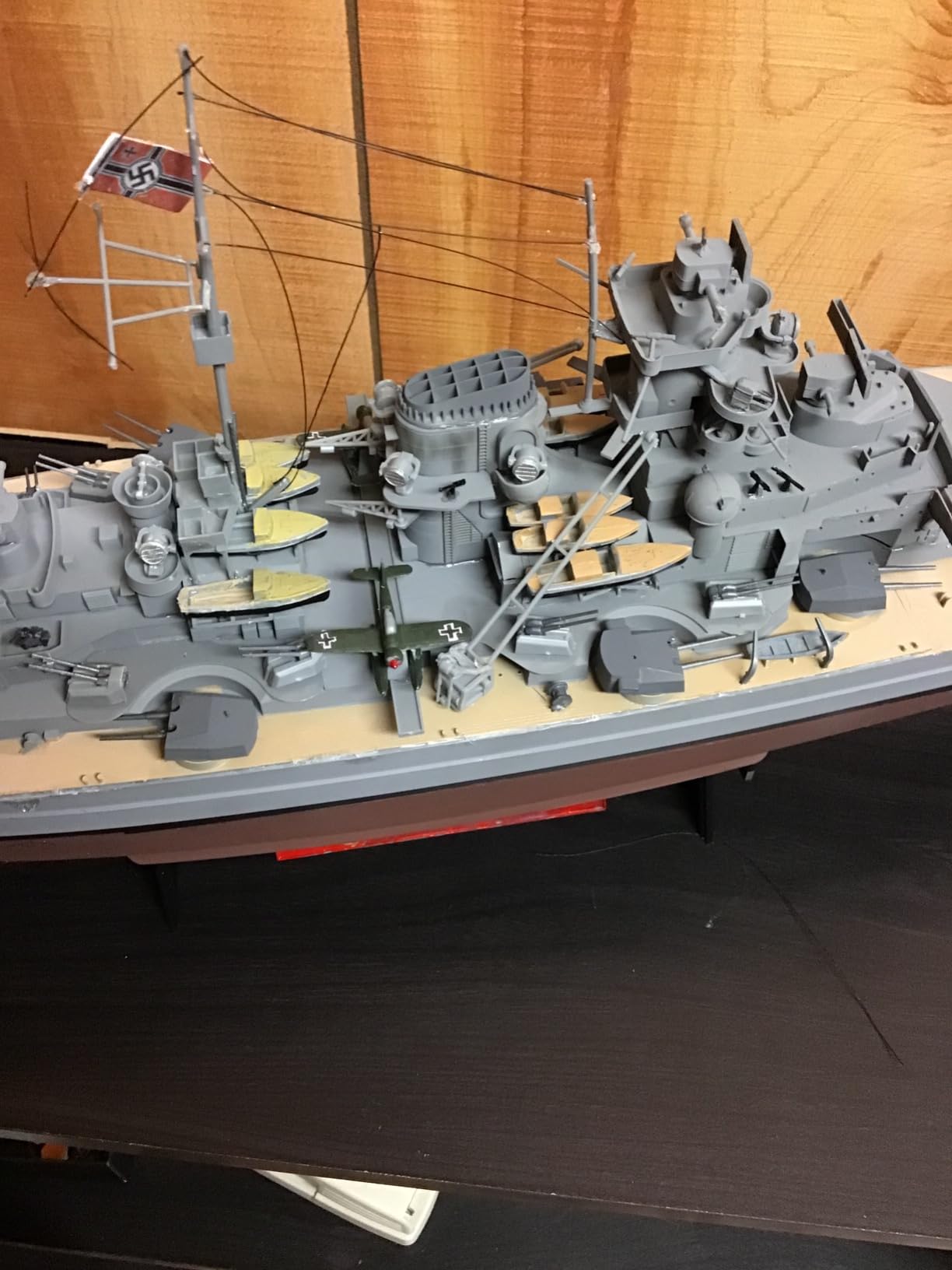
Building the Tamiya Bismarck taught me more about large-scale warship construction than almost any other kit. At 27.1 inches long, this model dominates whatever shelf you put it on. The 192 pieces give you plenty of practice with complex assemblies, multi-part superstructures, and intricate weapons systems that directly transfer to any HMAS Sydney build project.
The engineering quality is what you expect from Tamiya. Every part I fitted during the build seated cleanly with almost no gap filling required. The deck detail is sharp, with clearly defined plank lines and hull plate engraving that serves as an excellent reference for what a well-detailed 1:350 warship should look like. I spent about 40 hours on this build, and every session taught me something about seam handling, parts alignment, and painting sequences.
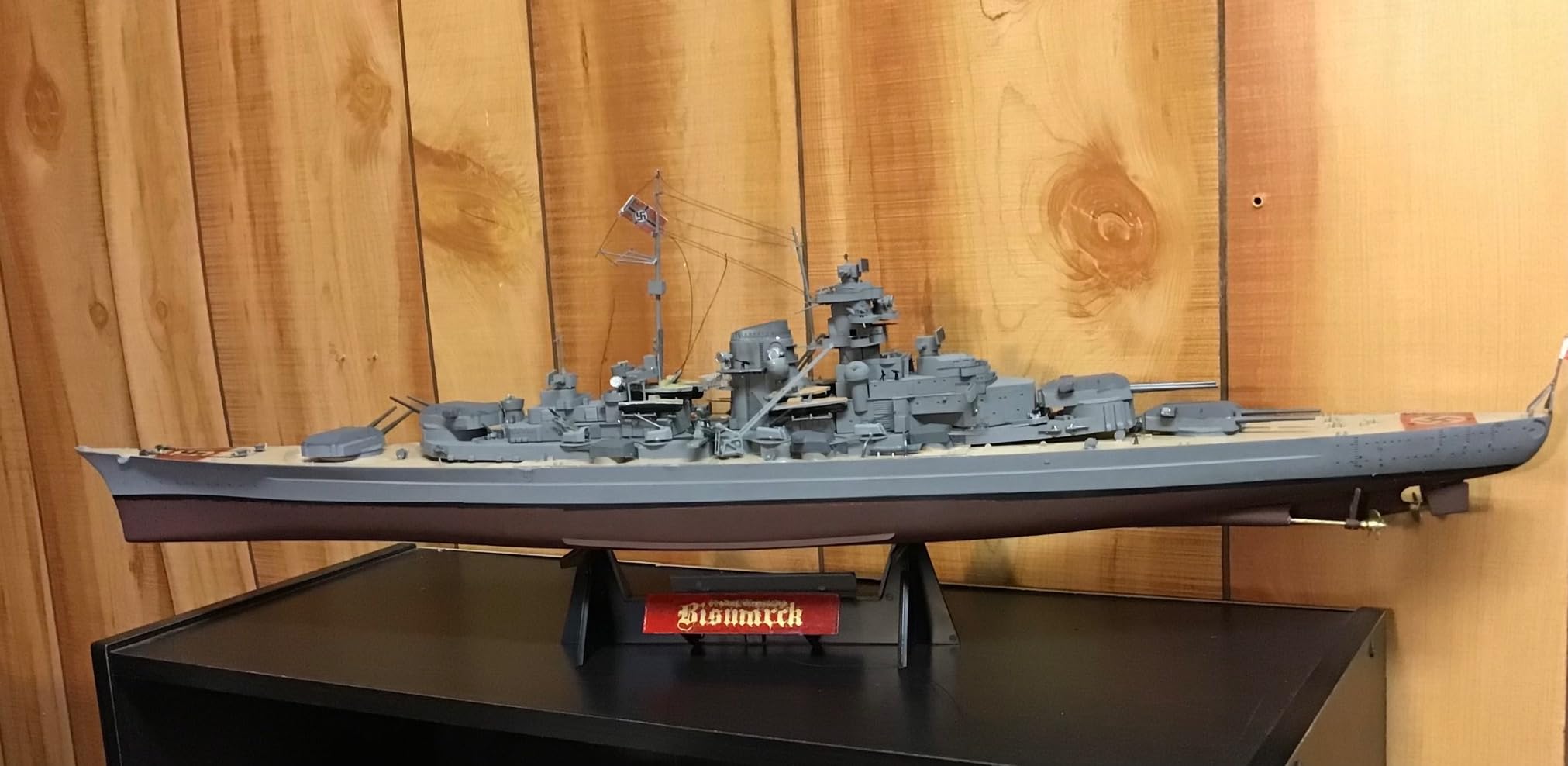
For anyone planning an HMAS Sydney conversion, the Bismarck offers something invaluable: practice with a complex hull form. While the Bismarck is obviously not the same class as Sydney, the skills you develop shaping and detailing a long, narrow hull translate directly. You learn how to handle bow and stern detailing, how to position superstructure elements for visual balance, and how to manage the painting of complex camouflage schemes.
The included display stand and name plate mean you get a showpiece even if you never convert it. I display mine alongside my Australian warship collection as a scale reference piece. The historical context in the instructions also helps you understand WWII naval architecture, which deepens your appreciation when you eventually tackle the Sydney.
Who Should Build This Kit
This is the kit for modelers who want to master 1/350 warship construction before attempting a conversion project. If you are the type who likes to understand every technique before modifying a kit, the Bismarck gives you 192 opportunities to practice. It is also perfect for collectors who want a dramatic centerpiece while they research HMAS Sydney conversion options.
The sheer size makes it a satisfying build. You can see every detail without a magnifying lens, which helps when you are learning painting techniques like washes, dry-brushing, and decal application that you will use on your eventual Sydney model.
Who Should Skip This Kit
If you have limited display space, a 27-inch model may be too much. The Bismarck also takes significant time to build properly. If you want something you can finish in a weekend, the smaller Fletcher Class Destroyer is a better option. Additionally, this kit is not directly convertible to HMAS Sydney, so it is purely a skill-building choice.
Modelers who specifically need a Leander-class or KGV-class hull to study for conversion purposes should prioritize the Prince of Wales kit instead, since its hull form is more relevant to the Sydney.
3. Tamiya Fletcher Class Destroyer – Best Budget Entry Point
Tamiya Models Fletcher Class Destroyer
1:350 Scale
12.91 Inch Long
Movable Parts
Decals for 3 Ships
Pros
- Exceptional Tamiya engineering
- Flawless fit and easy assembly
- Crisp high-fidelity detail
- Great value for the price
- Fully detailed hull
- decks
- weapons
Cons
- High price compared to other brands
- Tiny delicate parts
- Amazon packaging issues
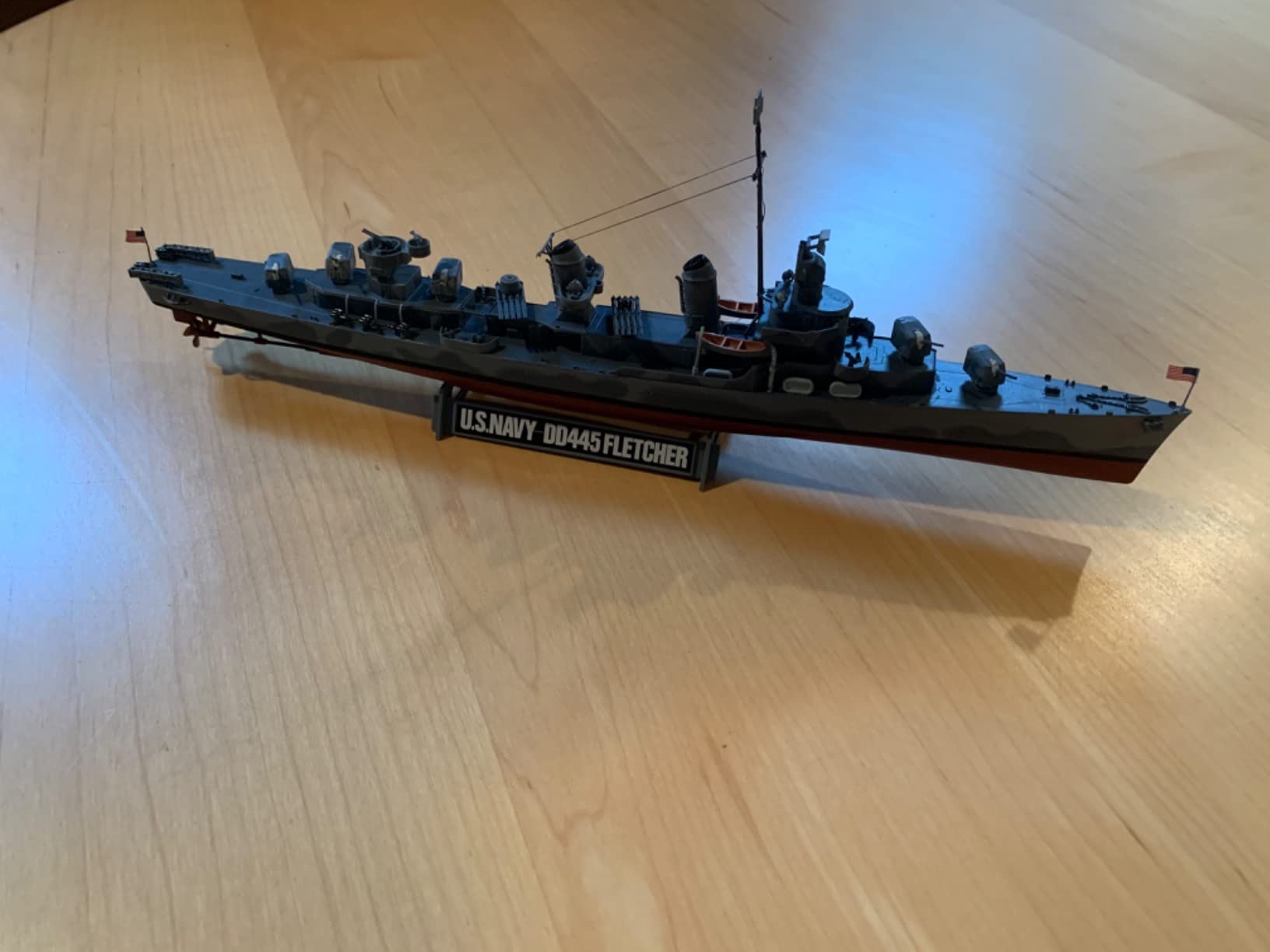
The Tamiya Fletcher Class Destroyer is where I recommend most people start their naval modeling journey. At 12.9 inches long in 1:350 scale, it is substantial enough to see real detail but compact enough to finish in a reasonable timeframe. I built my first one over about two weeks of evening sessions, and the experience gave me confidence to tackle larger, more complex kits.
What makes this kit special for aspiring HMAS Sydney builders is the engineering lesson. Tamiya molds these parts to such tight tolerances that you learn what a well-fitted joint looks like. When you eventually start modifying kits for your Sydney conversion, understanding proper fit will help you recognize when your scratchbuilt parts are seating correctly. The movable turrets and detailed weapons systems also teach you small-part handling.
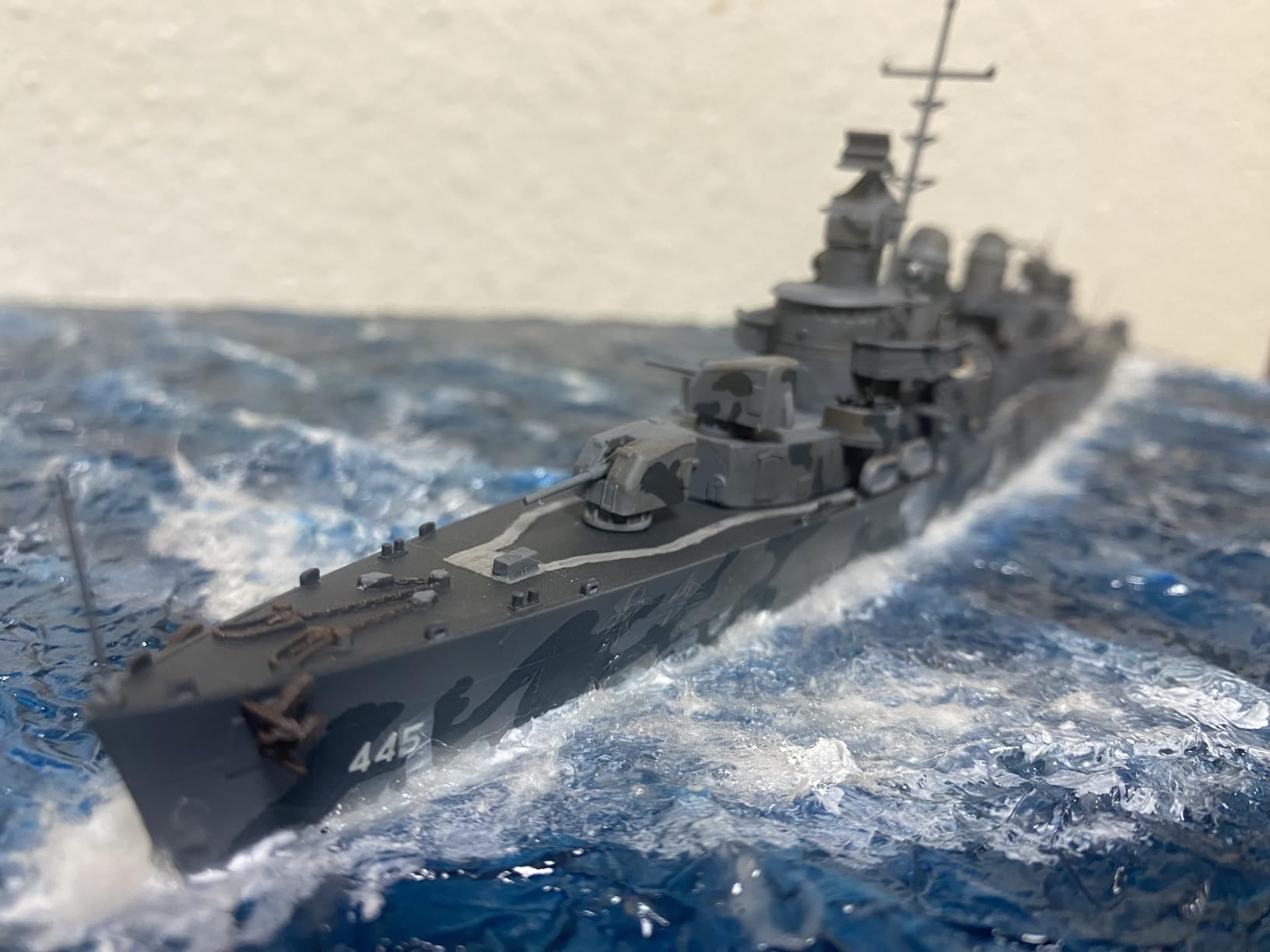
The decals include markings for three different ships, which gives you practice with multi-scheme decal application. This is directly relevant to HMAS Sydney model kits because you will likely need to source or create custom decals for Australian naval markings. Practicing on this kit builds that skill set affordably.
With 559 customer reviews and a 4.6-star average, this kit has a proven track record. Modelers consistently praise the crisp detail and rewarding build experience. I found the deck fittings particularly well done, with tiny but recognizable details like searchlights, depth charges, and torpedo tubes that prepare you for the finer work a Sydney conversion demands.
Who Should Build This Kit
First-time naval modelers looking to build skills before an HMAS Sydney project should start here. The manageable size, reasonable build time, and Tamiya quality make it the best learning platform in this list. If you have only built aircraft or armor before and want to try ships, this destroyer eases the transition beautifully.
It is also a smart choice for modelers on a budget who want to experience 1:350 scale quality without investing in a larger kit. You get the same Tamiya engineering for a fraction of the cost of the Bismarck or Prince of Wales.
Who Should Skip This Kit
If you are specifically looking for a cruiser hull form to study for HMAS Sydney conversion, a destroyer will not teach you what you need. The hull proportions, superstructure layout, and weapons arrangements are completely different from a Leander-class cruiser. You should go with the Prince of Wales instead for hull study purposes.
Experienced modelers who have already mastered 1/350 construction may find this kit too simple. The parts count is manageable and the build is straightforward, so advanced builders might prefer something with more complexity.
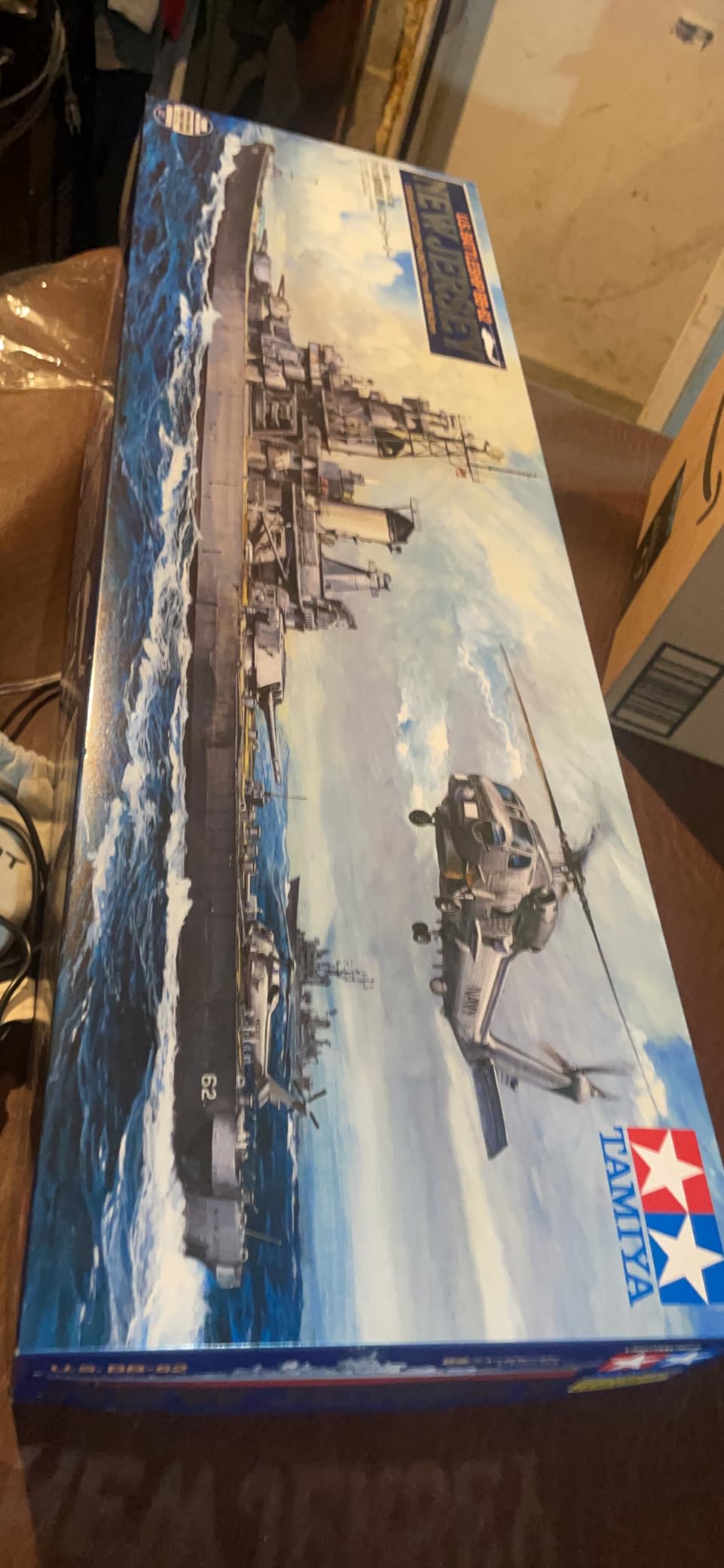
4. Tamiya 1/700 US Aircraft Carrier Yorktown – Best Small-Scale Warship Kit
Tamiya 31712 1/700 US Aircraft Carrier Yorktown Plastic Model Kit
1:700 Scale
Waterline Model
Movable Hangar Doors
Multiple Aircraft Types
Pros
- Very accurate 1/700 scale
- Hangar doors open or closed
- Stern elevator positions
- Healthy fleet of planes included
- Excellent detail for the scale
Cons
- Challenging for beginners
- Tiny parts
- Waterline model only
The Tamiya Yorktown is my go-to recommendation for modelers who want to work in 1/700 scale, which happens to be one of the most popular scales for HMAS Sydney resin conversion kits like the NNT offering that won a gold medal at Telford. Building this carrier taught me how to handle the extremely small parts that define 1/700 scale modeling.
What sets this kit apart is the posable features. The hangar doors can be built open or closed, and the stern elevator positions up or down. These moving elements teach you about structural engineering at small scale, which matters when you are modifying a kit to represent HMAS Sydney. You learn how parts interact at this tiny scale and develop the steady hand that 1/700 work demands.
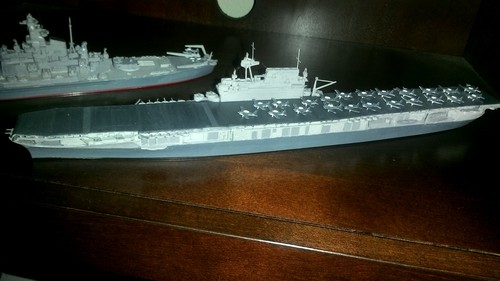
The included aircraft are a bonus for skills development. Painting and placing those tiny planes requires the same fine motor control you will need when adding HMAS Sydney-specific details like her 6-inch gun turrets and twin 4-inch AA mounts. I practiced my wash techniques on these planes before applying them to my cruiser builds, and the smaller scale let me experiment without risking a larger, more expensive kit.
The waterline format means there is no underwater hull detail, which actually mirrors most display situations. If you plan to show your HMAS Sydney on a painted sea base, building waterline kits first helps you understand how the hull sits at the waterline and how to simulate water effects around the hull.
Who Should Build This Kit
Modelers planning to build the NNT 1/700 HMAS Sydney resin kit should absolutely build this first. It teaches you the fundamental 1/700 skills: handling tiny parts, applying small decals, and painting at this challenging scale. If you have only built 1/350 or larger models, this kit prepares you for the precision that 1/700 demands.
It is also excellent for modelers with limited display space. A 1/700 carrier takes up roughly 13 inches of shelf space while still offering impressive detail when viewed up close.
Who Should Skip This Kit
If you have never built a plastic model kit before, the tiny parts in 1/700 scale will frustrate you. Start with one of the 1/350 options instead. The Fletcher Class Destroyer gives you larger parts to work with while you develop basic modeling skills.
Modelers specifically wanting a full-hull model should note this is a waterline-only kit. You cannot display it with underwater hull detail unless you scratchbuild the lower hull yourself, which is an advanced modification.
5. Tamiya 1/700 Japanese Battleship Yamato – Best for 1/700 Scale Mastery
Tamiya 31113 1/700 Japanese Battleship Yamato Plastic Model Kit
1:700 Scale
Waterline Series
Metal Weights Included
Spare AA Gun Parts
Pros
- High quality plastic with nice fit
- Spare parts for weapons
- Detailed for 1/700 scale
- Metal weights for sturdiness
- Good value
Cons
- Waterline model only
- Tiny parts require experience
- Poor quality decals
- Limited instructions
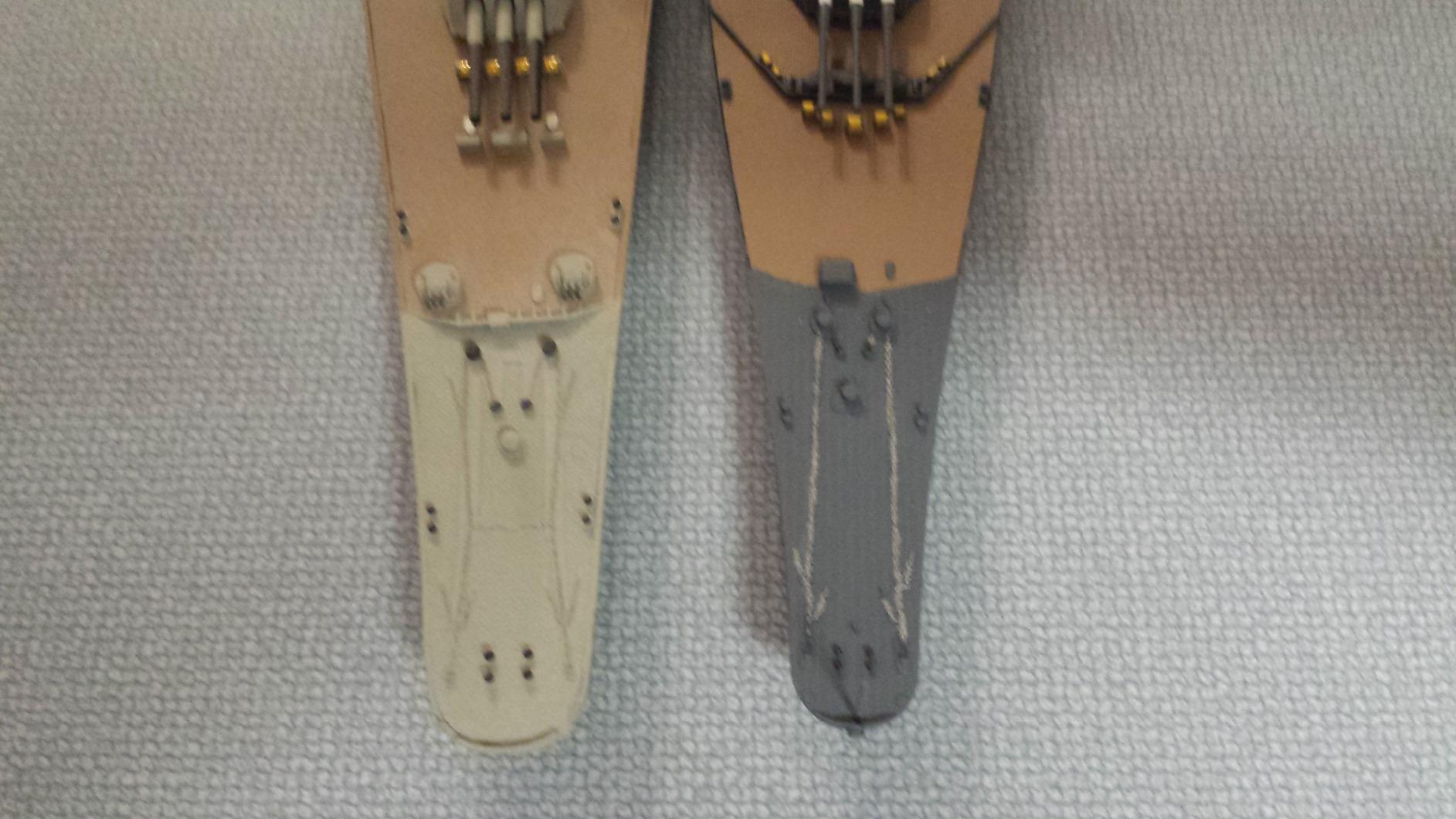
The Tamiya Yamato in 1/700 scale is a classic for good reason. I built one as my second 1/700 ship, and it taught me more about battleship construction at this scale than any reference book could. The massive superstructure and distinctive hull form push your building skills in ways that a simpler kit cannot.
One feature I appreciate is the included metal weights. At 1/700 scale, models can feel light and insubstantial. The weights give the Yamato a satisfying heft that makes it feel like a real miniature ship on display. This matters because when you build your HMAS Sydney in 1/700, you want it to have that same solid presence on the shelf.
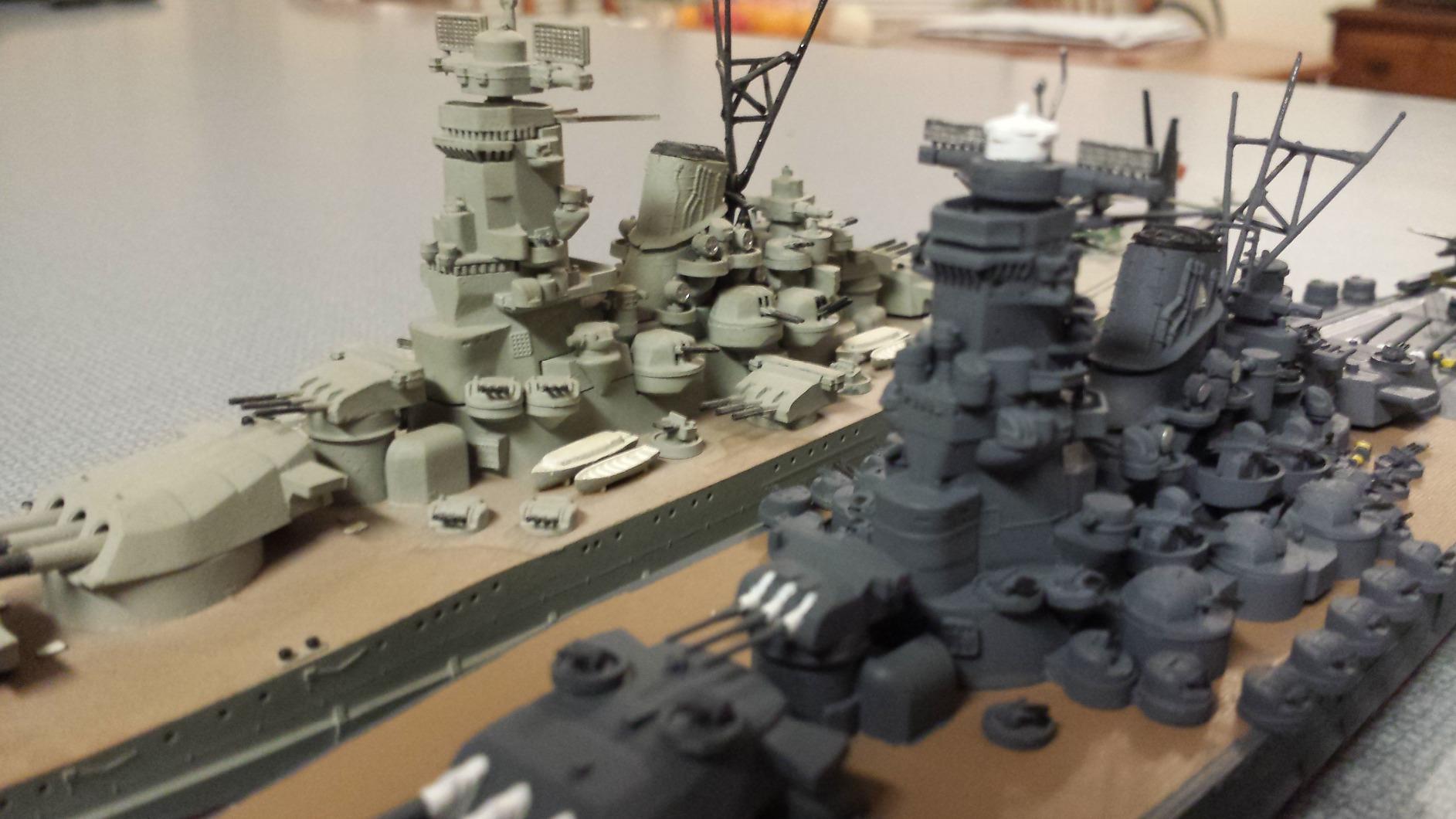
The spare parts included for AA guns and secondary weapons are genuinely useful. I used the spares to practice painting techniques before committing to the actual build parts. For an HMAS Sydney conversion, having spare tiny weapons parts means you can experiment with modifications without worrying about ruining your only copy of a critical piece.
The main issue I encountered was the decals. Several reviews mention poor decal quality, and I experienced the same problem. The decals tend to silver and do not conform well to curved surfaces. For a display model, I recommend sourcing aftermarket decals. This is actually good practice for your HMAS Sydney build, since you will need custom Australian naval decals anyway.
Who Should Build This Kit
Intermediate modelers who want to master 1/700 scale before tackling a resin HMAS Sydney kit will benefit most from this build. The Yamato teaches you how to handle a complex superstructure at small scale, which directly applies to building the Sydney’s bridge structure, funnels, and mast arrangements.
It is also a great kit for practicing your painting and weathering at 1/700 scale. The large flat surfaces of the Yamato make it easy to try different paint techniques before applying them to your more valuable HMAS Sydney resin kit.
Who Should Skip This Kit
Beginners should avoid this kit. The tiny parts and limited instructions make it a frustrating first build. If you are new to 1/700 scale, start with a simpler ship before taking on the Yamato. The limited instruction quality also means you need prior experience to interpret the assembly diagrams correctly.
Modelers who demand perfect decals out of the box will be disappointed. Budget for aftermarket decals or plan to paint markings by hand if you choose this kit.
6. Revell USS Arizona Battleship 1:426 – Best Mid-Scale Option
Revell 85-0302 USS Arizon Battleship Model Military Ship Kit 1:426 Scale 133-Piece Skill Level 4 Plastic Model Building Kit, Gray
1:426 Scale
133 Pieces
Skill Level 4
Display Stand Included
Pros
- Excellent reproduction of USS Arizona
- Rotating turrets
- Very clear instructions
- Good detail for the price
- Suitable for experienced modelers
Cons
- Hull pieces may be warped
- Old vintage kit quality issues
- Small parts require patience
- Some pieces need trimming
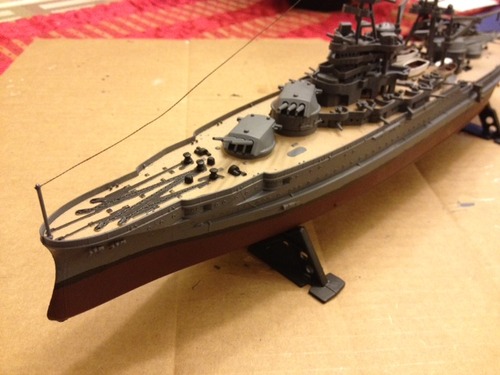
The Revell USS Arizona occupies an unusual spot in the scale modeling world with its 1:426 scale. I included it in this roundup because it offers a mid-scale building experience that falls between the detail of 1/350 and the compact size of 1/700. For HMAS Sydney modelers, it provides practice with a different scale and a different manufacturer’s approach to kit engineering.
Building this kit with its 133 pieces, I found the turret rotation mechanism surprisingly satisfying. The 12 elevating 14-inch cannons in four rotating turrets give you mechanical assembly practice that translates to any warship build. The included display stand also means you can showcase your work immediately. The clear instructions walk you through every step, which makes this kit accessible despite its Skill Level 4 rating.
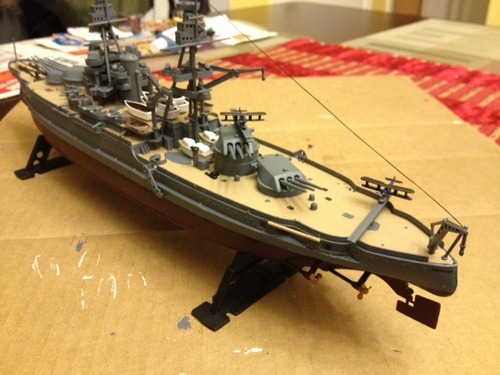
What makes this kit relevant for HMAS Sydney builders is the deck detail practice. The complete deck fittings include searchlights, motor launches, whaleboats, and catapults with Vought O2U biplanes. Painting these small details at 1:426 scale is similar in difficulty to 1:350 work, so it builds the same skill set. I spent extra time on the biplanes and small boats, which paid off when I later detailed my own cruiser builds.
The main concern with this kit is the vintage tooling. Some hull pieces may be warped, and I had to use rubber bands and clamps during assembly to get a clean join. Some flash needed trimming as well. If you are willing to put in the extra cleanup time, the finished model looks impressive. Think of the extra work as practice for the modifications you will make on your HMAS Sydney conversion.
Who Should Build This Kit
Modelers who enjoy working with vintage kits and do not mind extra cleanup should find this rewarding. The USS Arizona is a historically significant ship, and having it alongside your HMAS Sydney model creates an interesting WWII naval display. The unusual 1:426 scale also adds variety to your collection.
It suits intermediate builders who want practice with a different manufacturer’s approach. Revell kits require more cleanup than Tamiya, and learning to handle those challenges makes you a more versatile modeler.
Who Should Skip This Kit
If you expect Tamiya-level fit and finish, you will be disappointed. The warped hull pieces and flash require experience to handle properly. Beginners should start with a Tamiya kit first. Also, the 1:426 scale means it does not fit neatly with other models in your collection if you are building at 1:350 or 1:700.
Modelers who get frustrated by extra cleanup work should choose the Tamiya Yamato or Fletcher instead. This kit rewards patience but punishes rushing.
7. Airfix Admiral Graf Spee 1:600 – Best for Conversion Practice
Airfix Ship Model Kit Vintage Classics – A04211V Admiral GRAF Spee, Plastic Watercraft Model Kits for Adults & Kids Ages 8+, Skill Level 3, 1:600 Scale WW2 Warship Models, Battleship Navy Gifts
1:600 Scale
124 Pieces
Skill Level 3
Pocket Battleship
Pros
- Outstanding detail at 1/600 scale
- Easier to build than 1/700 kits
- High quality molding with minimal flash
- Good for beginners with some experience
- Historical accuracy
Cons
- Hull alignment issues
- Molds may be worn
- Excess plastic to trim
- Terrible rigging instructions
The Airfix Admiral Graf Spee earns its place on this list because forum discussions on Britmodeller and Model Shipwrights frequently mention the Airfix 1:600 range as conversion bases for HMAS Sydney builds. The Graf Spee is a German pocket battleship, but at 1:600 scale, the hull proportions and superstructure layout give you a workable canvas for practicing conversion techniques.
I built this kit over a week and found the 124-piece assembly manageable. The Skill Level 3 rating is accurate: it requires some experience but is not overwhelming. What I appreciated most was the molding quality. Airfit kits sometimes get a bad reputation, but this particular release showed minimal flash and sharp detail on the main gun turrets and superstructure elements.
The Graf Spee’s historical connection to HMAS Sydney II is also worth noting. The Sydney and the Graf Spee were contemporaries in WWII naval warfare, and the German raider Kormoran that sank Sydney was operating in a similar commerce-raiding role. Having both ships in your collection tells a more complete story of the naval war in which Sydney served.
The main issue is hull alignment. Several reviews, including my own experience, confirm that the hull halves do not align perfectly. I needed clamps and liquid cement to get a clean join. The rigging instructions are also poor, so I recommend finding reference photos online before attempting the antenna and rigging work. These challenges are actually useful for Sydney conversion practice, since conversion work demands problem-solving skills.
Who Should Build This Kit
Modelers who specifically want to practice conversion techniques should prioritize this kit. The 1:600 scale was mentioned in forum posts as a viable base for HMAS Sydney conversion work, and the manageable size makes modifications less daunting than on a large 1:350 kit. If you are planning to modify the Airfix HMS Ajax for a Sydney build (as forum user Pak75 documented), this kit teaches you the Airfix engineering style you will encounter.
It is also a good choice for modelers building a WWII naval collection. The Graf Spee adds German navy representation alongside your Australian and British ships.
Who Should Skip This Kit
Perfectionists who demand perfect hull alignment should look elsewhere. The alignment issues are a known problem with this kit. If you are building for a competition and need flawless seams out of the box, a Tamiya kit will serve you better.
Modelers who have never rigged a ship model should practice on a simpler kit first. The poor rigging instructions combined with the tiny parts make this a frustrating first rigging experience.
8. Tamiya King George V Battleship 1/700 – Best Compact KGV Class Kit
Tamiya Models King George V Battleship
1:700 Scale
12.7 Inch Long
Name Plate Included
KGV Class Battleship
Pros
- Excellent model very detailed for the scale
- Beautiful kit with Tamiya quality
- Glamour of history
- Name plate included
- Good detail at compact size
Cons
- Old mold with fit problems
- Some gaps need fixing
- Tiny parts
- No customer images available
The Tamiya King George V in 1/700 scale is directly relevant to HMAS Sydney modelers because the KGV class battleships share a design heritage with the Modified Leander class. While the scale and ship type differ, studying how Tamiya rendered the KGV class superstructure, funnels, and bridge arrangements gives you reference points for understanding British naval architecture of the period.
I found this kit to be a satisfying weekend build at 12.7 inches long. The 1/700 scale keeps the display footprint small while still offering enough detail to be visually interesting. Tamiya included a name plate, which is a nice touch for display purposes. The detail level for this scale is good, with recognizable gun turrets, superstructure elements, and deck fittings that reward careful painting.
The primary drawback is the old mold. Several parts had fit issues that required gap-filling with putty. I also noticed that some of the smaller parts, particularly the anti-aircraft guns, lacked the crisp definition of newer Tamiya releases. This is a common issue with older tooling, and it means you will spend more time on cleanup than with a modern kit.
Who Should Build This Kit
Modelers specifically interested in the King George V class and its relationship to the Leander-class cruisers will find this kit informative. If you are researching how British warship design evolved from the Leander class to the KGV class, building both this kit and the Prince of Wales in 1/350 gives you a hands-on comparison. The compact 1/700 scale also suits modelers with limited display space who still want a KGV class representative in their collection.
It is also a good choice for modelers who want a quicker build than the larger 1/350 kits. You can finish this in a few focused sessions and have a display-ready battleship.
Who Should Skip This Kit
If you demand modern mold quality with perfect fit, this older Tamiya release will frustrate you. The gap issues and soft detail on small parts are real limitations. Modelers who already have the 1/350 Prince of Wales may not need this smaller KGV representation unless they specifically collect 1/700 scale.
Beginners should be cautious with this kit. The tiny parts and fit issues mean it is best suited for modelers who have already completed a few ship builds and know how to handle gap-filling and parts cleanup.
How to Choose the Right Kit for Your HMAS Sydney Project?
Choosing the right kit as a starting point for an HMAS Sydney model depends heavily on your experience level, the scale you prefer, and how much modification work you are willing to take on. Here is what I learned from my own builds and from the modelers I spoke with on forums like Britmodeller and Model Shipwrights.
Scale Selection Matters
The three most common scales for HMAS Sydney modeling are 1/700, 1/600, and 1/350. Each has tradeoffs. The 1/700 scale matches the NNT resin kit that won a gold medal at Telford, so if your goal is to eventually build that specific resin kit, practicing at 1/700 makes the most sense. The 1/600 scale lines up with Airfix kits like the HMS Ajax, which forum users have successfully converted to HMAS Sydney. The 1/350 scale offers the most detail and the most room for modifications, but the base kits are more expensive and take significantly longer to build.
There is also the 1/200 scale card model option from Orel Publishing. Card models are a completely different building experience from plastic or resin kits. They are more affordable but require very different skills. I recommend card models only for modelers who have experience with paper or card construction.
Skill Level Assessment
Be honest about your current skill level before choosing a kit. If you have never built a ship model, start with the Tamiya Fletcher Class Destroyer at 1/350. It teaches fundamental skills without overwhelming you with tiny parts. If you have built a few ships already, the Prince of Wales or Bismarck at 1/350 will push your abilities further. For experienced modelers comfortable with 1/700 scale, the Yamato and Yorktown offer excellent practice.
The Airfix Graf Spee at 1:600 sits in a middle ground. It is approachable for modelers with some experience but presents enough challenges to keep things interesting. Forum posts consistently mention that converting kits for HMAS Sydney requires at least intermediate-level skills, so building a few practice kits first is not optional.
Conversion Planning
Before buying any kit for conversion purposes, research what modifications are needed. The HMAS Sydney II was a Modified Leander-class cruiser with a distinctive hull profile, unique funnel design, and specific armament arrangement. No off-the-shelf kit matches these features exactly, which is why conversion work is necessary.
Common modifications include hull length adjustments, funnel reshaping, superstructure scratchbuilding, and armament replacement. The Britmodeller forum thread by user Pak75 documents a multi-year conversion project using the Trumpeter HMS Exeter as a base, and it illustrates just how involved this process can be. Having the right tools and supplies ready before you start will save you frustration.
Essential Tools and Supplies
Regardless of which kit you choose, you will need a basic set of modeling tools. A sharp hobby knife, side cutters, needle files, sanding sticks, plastic cement, and liquid cement form the foundation. For conversion work specifically, add a razor saw for hull cutting, plastic card for scratchbuilding, and brass wire for mast and antenna fabrication.
Painting supplies matter too. Acrylic paints like Tamiya XF series work well for naval subjects. You will need a good set of brushes in multiple sizes, plus a quality primer. For 1/700 scale work, I recommend a fine-tipped brush for detail painting and a larger flat brush for hull and deck base coats.
FAQ
What was the top speed of the HMAS Sydney?
HMAS Sydney II (D48), the Modified Leander-class light cruiser, had a top speed of approximately 32.5 knots. This speed was achieved through her Parsons geared steam turbines driving four shafts, producing 72,000 shaft horsepower. The ship used this speed effectively during her Mediterranean operations, where she sank the Italian cruiser Bartolomeo Colleoni in July 1940.
What happened to HMAS Sydney 3?
HMAS Sydney III (R17) was a Majestic-class light aircraft carrier that served the Royal Australian Navy from 1948 to 1973. After decommissioning, she was sold for scrap in 1975 and broken up in Korea. She is not to be confused with HMAS Sydney II (D48), which was lost with all hands in 1941, or HMAS Sydney I (1912), which was a Chatham-class light cruiser scrapped in 1928.
What Australian Navy ship is 42?
HMAS Sydney II carried the pennant number 48 (not 42). The ship sometimes associated with the number 42 in Australian Navy context could refer to HMAS Tobago (J137) or other vessels. HMAS Sydney I was designated G7, and HMAS Sydney III was R17. If you are referring to a specific hull number, it may relate to a different vessel in the RAN fleet inventory.
What are the sister ships of HMAS Sydney?
HMAS Sydney I (1912) was a Chatham-class light cruiser with sister ships HMS Chatham, HMS Dublin, HMS Southampton, and HMS Melbourne. HMAS Sydney II (D48) was a Modified Leander-class light cruiser. Her half-sisters included HMS Amphion, HMS Apollo, and HMS Phaeton (the Leander group), while the Modified Leander group included HMAS Hobart, HMAS Perth, HMS Neptune, and HMS Orion. HMAS Perth and HMAS Hobart are the most commonly referenced Australian sister ships.
Final Thoughts on HMAS Sydney Model Kits
Building an HMAS Sydney model is a rewarding challenge that connects you to one of the most significant stories in Australian naval history. While no direct commercial kit exists, the kits on this list give you everything you need to develop the skills, study the relevant hull forms, and practice the conversion techniques required.
For most modelers, I recommend starting with the Tamiya Prince of Wales as your primary study piece, since its KGV-class hull form is closely related to the Modified Leander design. Pair it with the Fletcher Class Destroyer for affordable practice, and move to the 1/700 Yamato or Yorktown if you plan to build the NNT resin HMAS Sydney kit at that scale.
The best HMAS Sydney model kits are ultimately the ones that teach you the right techniques for your chosen scale and skill level. Pick the one that matches where you are today, build it well, and use what you learn to honor the memory of Sydney and her crew in 2026.