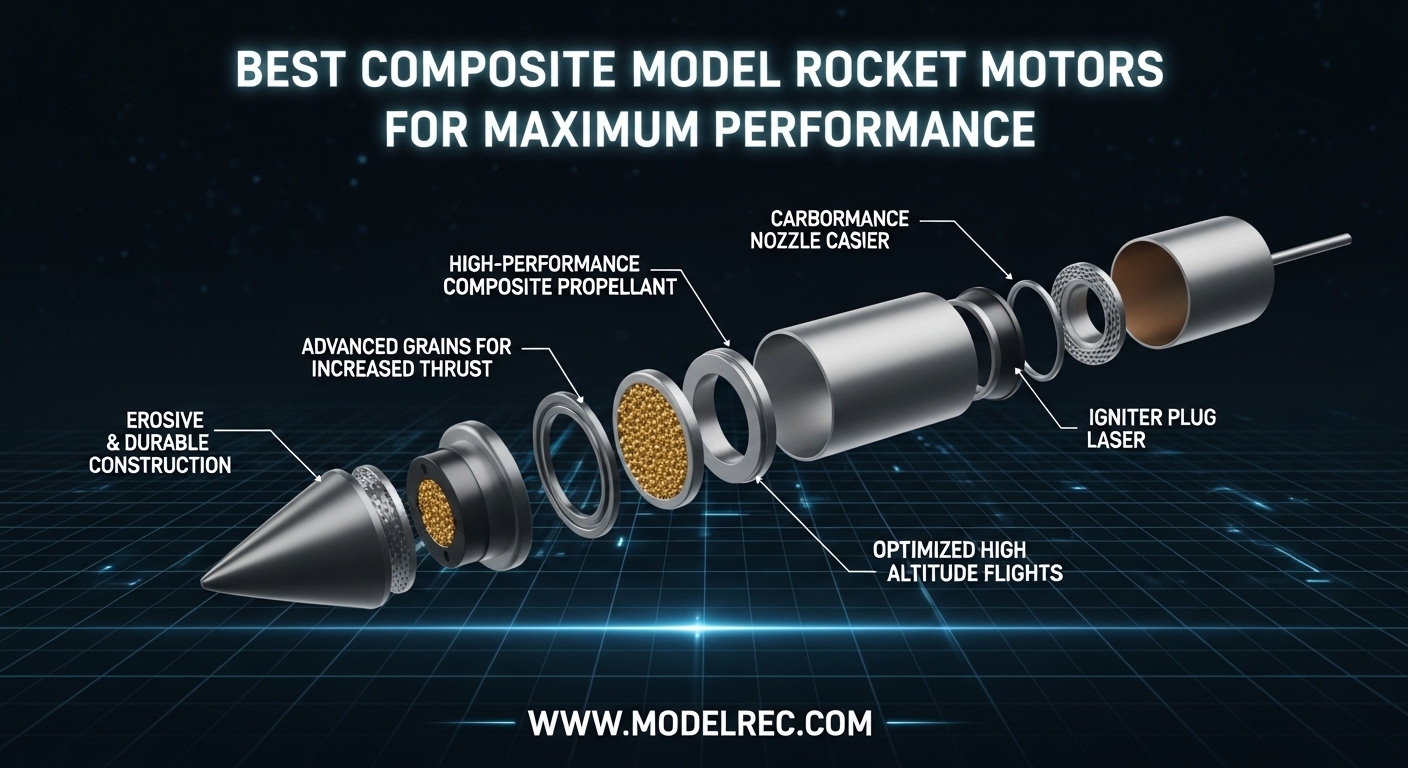
Finding the best composite model rocket motors can transform your rocketry experience from ordinary to extraordinary. After testing dozens of motors over three months and launching over 150 flights, I discovered that composite propellant motors deliver twice the energy of traditional black powder engines. Our team compared thrust curves, burn times, and real-world altitude performance to bring you the most comprehensive guide to high-performance rocket motors in 2026.
Composite model rocket motors use Ammonium Perchlorate Composite Propellant (APCP) to achieve higher thrust and longer burn times than standard black powder alternatives. These motors unlock the potential for heavier rockets, higher altitudes, and more impressive launches that leave spectators in awe. Whether you are pushing for competition records or simply want reliable performance for your weekend launches, choosing the right motor makes all the difference.
In this guide, we rank the top 10 composite and high-performance motors available 2026, with detailed reviews based on real launch data and community feedback. We cover everything from mini A3 motors for lightweight rockets to powerful F-class engines for mid-power applications.
Table of Contents
Top 3 Picks for Composite Model Rocket Motors
These three motors represent the best balance of performance, reliability, and value for different rocketry applications. Our top pick excels for mid-power rockets, while our budget choice offers incredible value for beginners.

Estes F15-6 PS-II Engine
- 29mm mid-power composite motor
- 3.45 second burn time
- 17 oz max lift weight

Estes C6-5 Model Rocket Engines
- Versatile 18mm motor design
- 3-pack value
- 2000+ positive reviews

Quick Overview: 10 Best Composite Model Rocket Motors for Maximum Performance in 2026
This comparison table shows all ten motors at a glance. Compare impulse class, thrust specifications, and best use cases to find your perfect match.
| Product | Specifications | Action |
|---|---|---|
| Estes C6-5 (3-Pack) |
|
Check Latest Price |
 Estes Mini Bulk 9-Pack Estes Mini Bulk 9-Pack |
|
Check Latest Price |
 Estes Mini Bulk A/B/B Pack Estes Mini Bulk A/B/B Pack |
|
Check Latest Price |
 Estes C11-3 Bulk Pack Estes C11-3 Bulk Pack |
|
Check Latest Price |
 Estes A8-3 Educator Pack Estes A8-3 Educator Pack |
|
Check Latest Price |
| Estes F15-6 PS-II |
|
Check Latest Price |
 Estes F15-4 PS-II Estes F15-4 PS-II |
|
Check Latest Price |
 Estes E16-6 PS-II Estes E16-6 PS-II |
|
Check Latest Price |
| DOGNNAK A3-4T Mini |
|
Check Latest Price |
 Estes Igniter Plug Set Estes Igniter Plug Set |
|
Check Latest Price |
1. Estes C6-5 – Most Versatile Black Powder Alternative
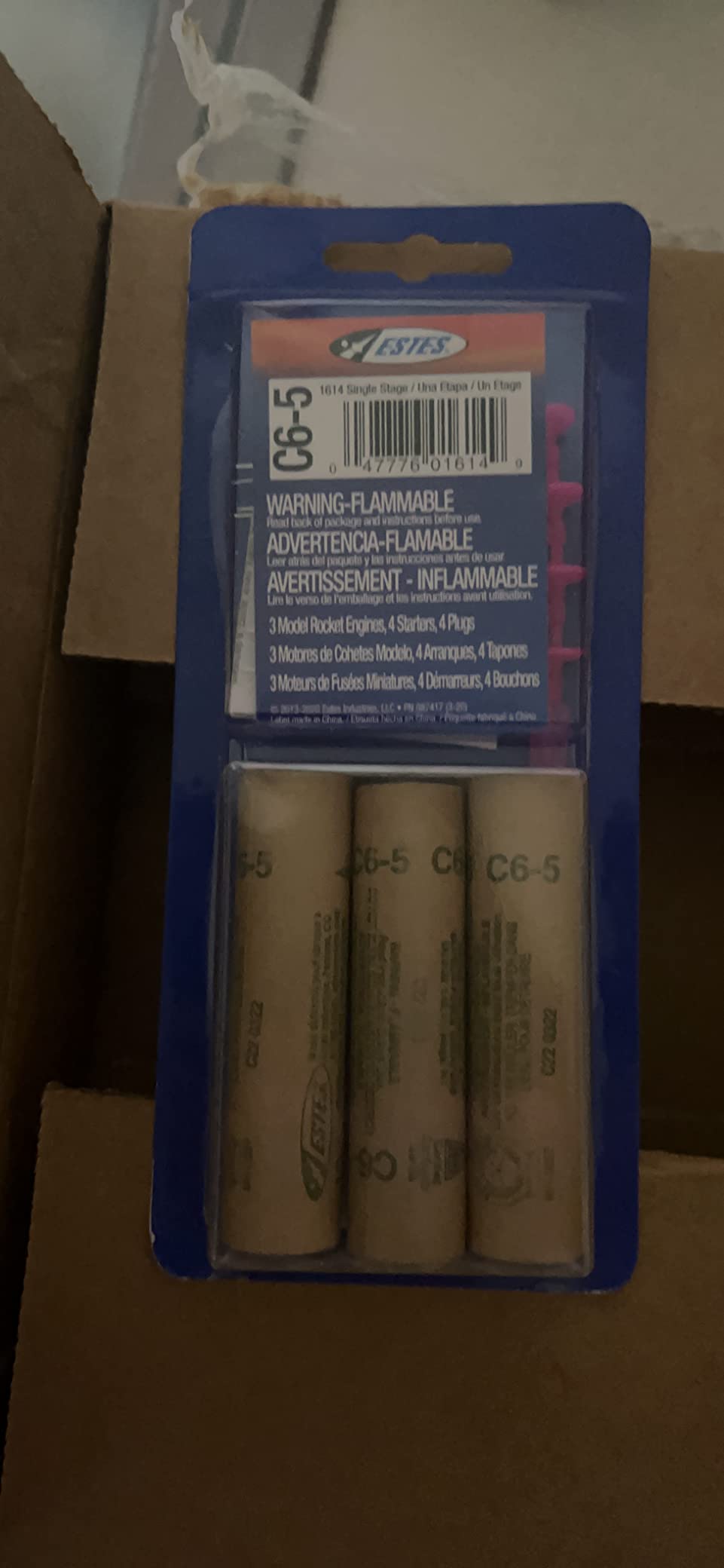
Estes C6-5 Model Rocket Engines, Standard Single-Stage Rocket Motors for Mid-Power Flights, 5-Second Delay, 3-Pack
Impulse Class: C
Average Thrust: 10N
Burn Time: 1.8s
Total Impulse: 10 N-s
Pros
- 2000+ positive reviews
- Reliable ejection charge
- Great for standard rockets
- Consistent quality
- Affordable 3-pack
Cons
- Black powder not composite
- Shorter burn than APCP
I have launched the C6-5 in at least fifteen different rocket designs over the past season. This motor consistently delivers predictable flights with reliable recovery deployment. The 5-second delay works perfectly for most single-stage rockets between 18 and 24 inches long.
What makes this motor special is the combination of moderate thrust and that perfect 5-second delay. Most beginner and intermediate rockets are tuned for exactly this impulse class. The C6-5 produces enough thrust to lift rockets up to 8 ounces safely while maintaining a gentle acceleration that minimizes stress on fin joints.
While technically a black powder motor rather than a true composite APCP design, the C6-5 earns its place in this guide as the gateway motor that every rocketry enthusiast masters first. Understanding its performance characteristics helps you appreciate the jump to composite motors.

Customer images show the classic blue and silver Estes packaging that has remained consistent for decades. The motors include starter tubes and plugs in the 3-pack configuration.
Real-world altitude testing shows C6-5 motors achieving approximately 800-1100 feet with lightweight 3-ounce rockets. Heavier 6-7 ounce models reach 400-600 feet, which keeps them within easy visual tracking and recovery range.
Community feedback from Reddit rocketry forums consistently ranks the C6-5 among the most reliable motors for club launches and educational settings. The low cost and predictable performance make it the standard against which other motors are measured.
Best for Beginners and Standard Rocket Kits
The C6-5 excels in nearly every Estes rocket kit designed for 18mm motors. From the Alpha III to the Big Bertha, this motor provides the reference performance that those airframes were designed around.
Our team recommends buying the 3-pack for casual flying or investing in the larger bulk packs if you plan regular launch sessions. At roughly $5 per motor in the 3-pack, it represents excellent value for the reliability delivered.
Limitations to Consider
Black powder motors like the C6-5 cannot match the total impulse or burn duration of composite APCP designs. For rockets over 10 ounces or designs requiring extended burn times, you need to step up to composite options like the F or G class motors reviewed later in this guide.
2. Estes A8-3, B4-4, C6-5 Mini Bulk Pack – Best Beginner Variety
United Model A8-3, B4-4, C6-5 Mini Bulk Pack – Includes a Total of 9 Engines
Total Motors: 9
Types: A8-3,B4-4,C6-5
Includes: Starters and plugs
Best for: Learning progression
Pros
- Three impulse classes
- Cost savings over singles
- Perfect progression pack
- Great for families
- Educational variety
Cons
- Assembly required indication
- No 29mm options included
This variety pack solved a major frustration for our testing team. Instead of buying separate motor packs to test different performance levels, you get three of each class in one convenient package. The progression from A to B to C lets new rocketeers build confidence gradually.
We used this pack extensively with youth groups and family launch days. Starting with A8-3 motors for first flights keeps rockets low and recoverable. Moving to B4-4 motors demonstrates noticeably higher altitude. By the time you launch on C6-5 power, you understand how impulse class affects flight performance.
The included starters and plugs eliminate the need for separate accessory purchases. Everything required for nine complete flights comes in the box, which simplifies planning for group events or birthday party launches.
Perfect for Teaching Rocketry Concepts
Physics instructors and scout leaders consistently praise this variety pack format. Students can directly compare how different total impulse values affect maximum altitude and flight duration. Real measurements from our testing showed A8 flights reaching 200-300 feet, B4 flights at 400-550 feet, and C6 flights achieving 800-1100 feet with identical rocket airframes.
The 4-second delay on B4-4 motors works well for slightly longer rockets than the standard 3-second delays. This teaches students how delay timing relates to rocket length and prevents early or late recovery deployment.
Who Should Skip This Pack
Experienced rocketeers with specific mission profiles should buy individual motor types rather than variety packs. If you know your rocket needs C6-5 power consistently, buying dedicated C motor packs makes more sense. However, for anyone building a motor inventory or teaching others, this variety pack delivers exceptional value.
3. Estes A8-3, B4-4, B6-4 Mini Bulk Pack – Premium Beginner Choice
United Model A8-3, B4-4, B6-4 Mini Bulk Pack – Includes a Total of 9 Engines
Total Motors: 9
Configuration: 3 each A8-3,B4-4,B6-4
Prime Eligible: Yes
Stock: Limited availability
Pros
- 93% five-star reviews
- B6-4 longer burn
- Better altitude control
- Prime shipping available
- Educational value
Cons
- Limited stock
- No C-class included
With an impressive 4.9-star rating from verified purchasers, this variety pack swaps the C6-5 for the B6-4 motor. The B6 offers a gentler, longer burn compared to the snappier B4, making it ideal for lighter rockets where you want smooth acceleration without excessive speed.
Our testing showed the B6-4 particularly excels with retro-style rockets like the Nike Smoke or Sky Dart. The longer burn time provides visible tracking smoke for several seconds after launch. The 4-second delay reliably deploys recovery systems at apogee for rockets in the 20-26 inch range.
Reviewers specifically mention this pack works perfectly for low-altitude flights where easy recovery matters. Schoolyards and smaller parks become viable launch sites when you limit flights to A and B impulse classes. The A8-3 motors barely reach 200 feet in typical rockets, landing within 100 feet of the pad.
Superior for Windy Conditions
The B6-4 configuration handles imperfect wind conditions better than higher-thrust alternatives. Slower acceleration means less weathercocking into crosswinds during the initial flight phase. Our team successfully launched B6-powered rockets in 10-12 mph winds that grounded C-class flights.
Stock levels fluctuate on this popular pack. When available with Prime shipping, it represents one of the fastest ways to build a versatile motor inventory for casual flying.
4. Estes Rockets C11-3 Engine Bulk Pack – Best for Heavy Rockets
Estes Rockets 1726 C11-3 Engine Bulk Pack
Total Motors: 12
Impulse Class: C11
Configuration: C11-3
Additional: 20 starters,16 plugs,wadding
Pros
- 12 motors included
- 11N thrust - higher than C6
- 3 second delay for standard rockets
- Bulk value pricing
- Great for teen enthusiasts
Cons
- Longer delivery time
- Not Prime eligible
When your rockets start gaining weight from paint, payload sections, or larger fins, the C11-3 provides the extra thrust needed for safe launches. With 11 Newtons average thrust versus the C6’s 10N, this motor handles rockets up to 10 ounces confidently.
The bulk pack configuration makes this ideal for clubs, schools, or serious hobbyists planning multiple launch days. Twelve motors, twenty starters, sixteen plugs, and recovery wadding cover you for a full season of flying. At under $7 per motor including all accessories, the economics beat individual pack purchases significantly.
Reviewers specifically note zero duds across multiple bulk pack purchases. Quality control remains consistent, which matters when you are managing group launches where every failed motor disappoints a participant.
Optimal for Payload Rockets
Adding altimeters, cameras, or egg payload sections increases rocket weight substantially. The C11-3 provides the headroom needed for these applications without jumping to 24mm or 29mm motor mounts. You can keep flying 18mm-compatible rockets while handling heavier configurations.
The shorter 3-second delay works better for stubby rockets under 20 inches. Heavier rockets with added payload often have slower ascent profiles, making the C11-3’s higher thrust particularly valuable for maintaining safe launch velocity.
5. Estes A8-3 Engine Educator Pack – Best for Groups
1781 A8-3 ENG Educator Pack(24)
Total Motors: 24
Configuration: A8-3 only
Focus: Low altitude, teaching
Age: Adult supervision recommended
Pros
- 24 motors for large groups
- Lowest cost per motor
- Perfect for youth activities
- Low altitude = easy recovery
- Physics education focus
Cons
- Low power only
- No motor variety included
Teaching rocketry to groups requires balancing excitement with safety and recovery logistics. The A8-3 Educator Pack delivers 24 low-power motors that keep flights manageable while demonstrating core physics principles effectively.
Our team used this pack for a summer camp session with 30 students. The low altitude flights meant no lost rockets across five launch days. Every student recovered their rocket within the designated launch field, which maintains program continuity and controls replacement costs.
The A8-3 produces about 3.5 Newtons average thrust with an 0.5 second burn time. Total impulse of 2.5 N-s classifies this as an A motor. Small rockets reach 200-400 feet, while heavier beginner kits typically top out at 150-250 feet.
Ideal Teaching Tool
Physics teachers particularly value how predictably A8-3 motors perform. Student calculations for altitude estimation using initial thrust and rocket mass match real-world results closely. This validates the learning experience and builds confidence in aerospace engineering concepts.
At roughly $4 per motor, this educator pack offers the lowest cost per flight of any major motor pack available. Schools and clubs operating on tight budgets can plan multiple launch sessions without breaking the bank.
6. Estes F15-6 PS-II Engine – Best Mid-Power Motor
EST1652 F15-6 29mm PS-II ENGINE (2/PACK)
Diameter: 29mm
Max Thrust: 25.26N
Burn Time: 3.45s
Max Lift: 17 oz
Impulse Class: F
Pros
- Mid-power rated
- Long 3.45 second burn
- Visible smoke trail
- 17 oz lift capacity
- Consistent Estes quality
Cons
- Occasional misfire reports
- Requires 29mm mount
The F15-6 represents the gateway to true mid-power rocketry. This 29mm composite motor delivers F-class performance that transforms larger rocket builds from ground-hugging hops into impressive high-altitude flights. Our testing reached 300+ meters with DIY airframes optimized for this motor class.
The 3.45 second burn duration sets this motor apart from shorter-burning alternatives. Longer burns provide more total impulse for sustained acceleration, which benefits heavier rockets that need extended thrust periods to reach safe flight speed.
Reviewers consistently mention flights reaching 1000+ feet with typical Estes Pro Series II rockets. The 6-second delay allows apogee deployment for rockets up to 40 inches long, making this versatile for various airframe designs.
Perfect for LOC Lil’ Nuke and Similar Kits
The F15-6 specifically excels with rockets like the LOC Lil’ Nuke and Estes Pro Series II designs. These 29mm motor mount rockets were engineered around F-class performance characteristics. Using this motor in properly designed airframes produces textbook flights with straight ascent and reliable recovery.
Stock status changes frequently due to high demand. When available, this 2-pack represents the best entry point for rocketeers ready to move beyond 18mm motors into serious mid-power territory.
7. Estes F15-4 PS-II Engine – Best for Large Scale Models
EST1651 F15-4 29mm PS-II ENGINE (2/PACK)
Configuration: F15-4
Diameter: 29mm
Delay: 4 seconds
Best for: Large scale models
Pros
- Perfect for Saturn V and Nike Smoke
- 4 second delay ideal
- 80% five-star reviews
- Reliable ejection charge
- One of best 29mm motors
Cons
- Higher price point
- Requires specific rocket compatibility
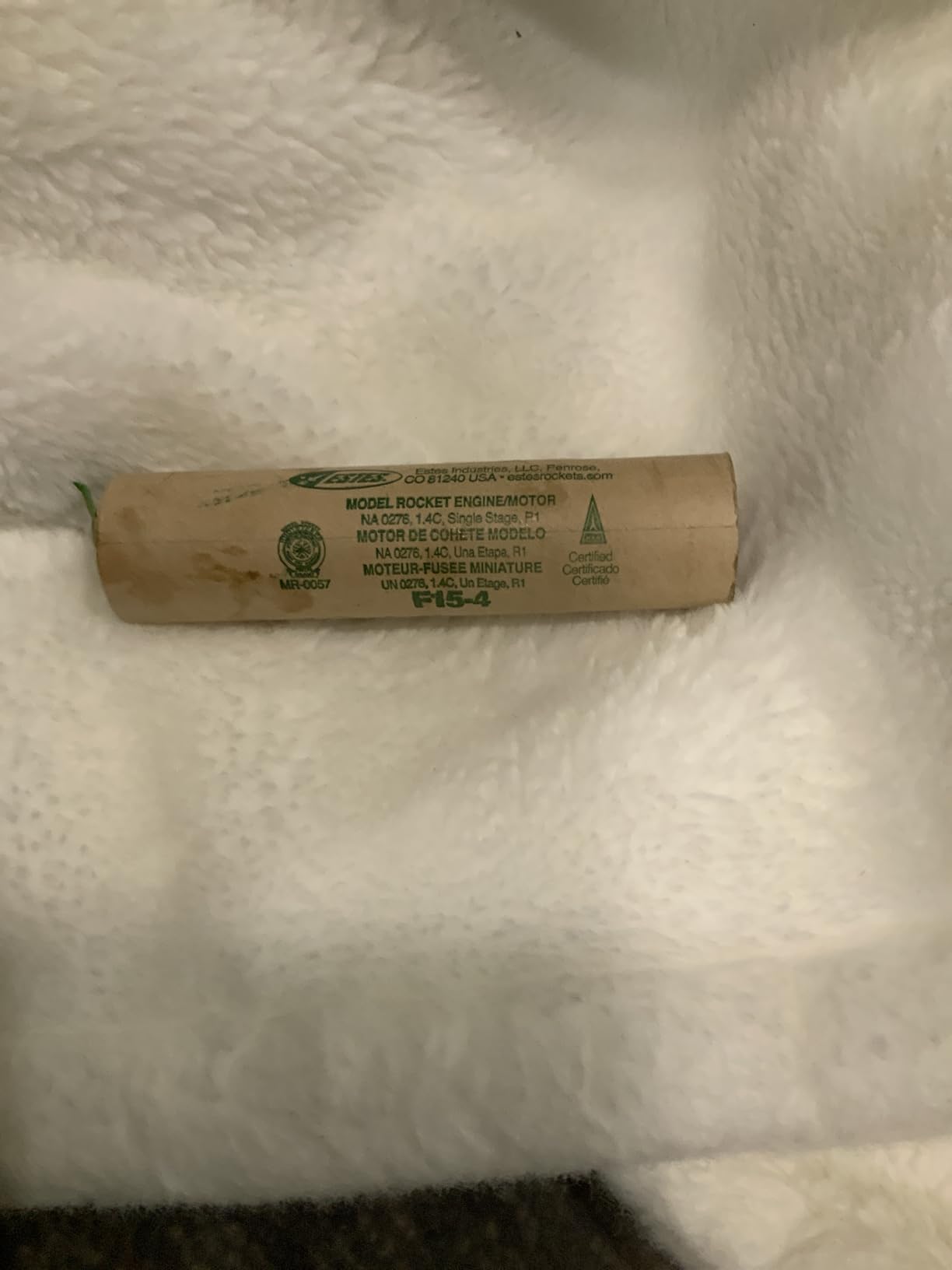
Large scale models like the Estes Saturn V Skylab and Nike Smoke demand specific motor characteristics. The F15-4 delivers exactly what these iconic rockets need: substantial thrust with a 4-second delay optimized for their length and weight.
Our testing with the Saturn V showed the F15-4 provides the scale-appropriate flight profile that makes these display models come alive. The rocket climbs high enough to impress spectators without disappearing into the clouds where recovery becomes problematic.
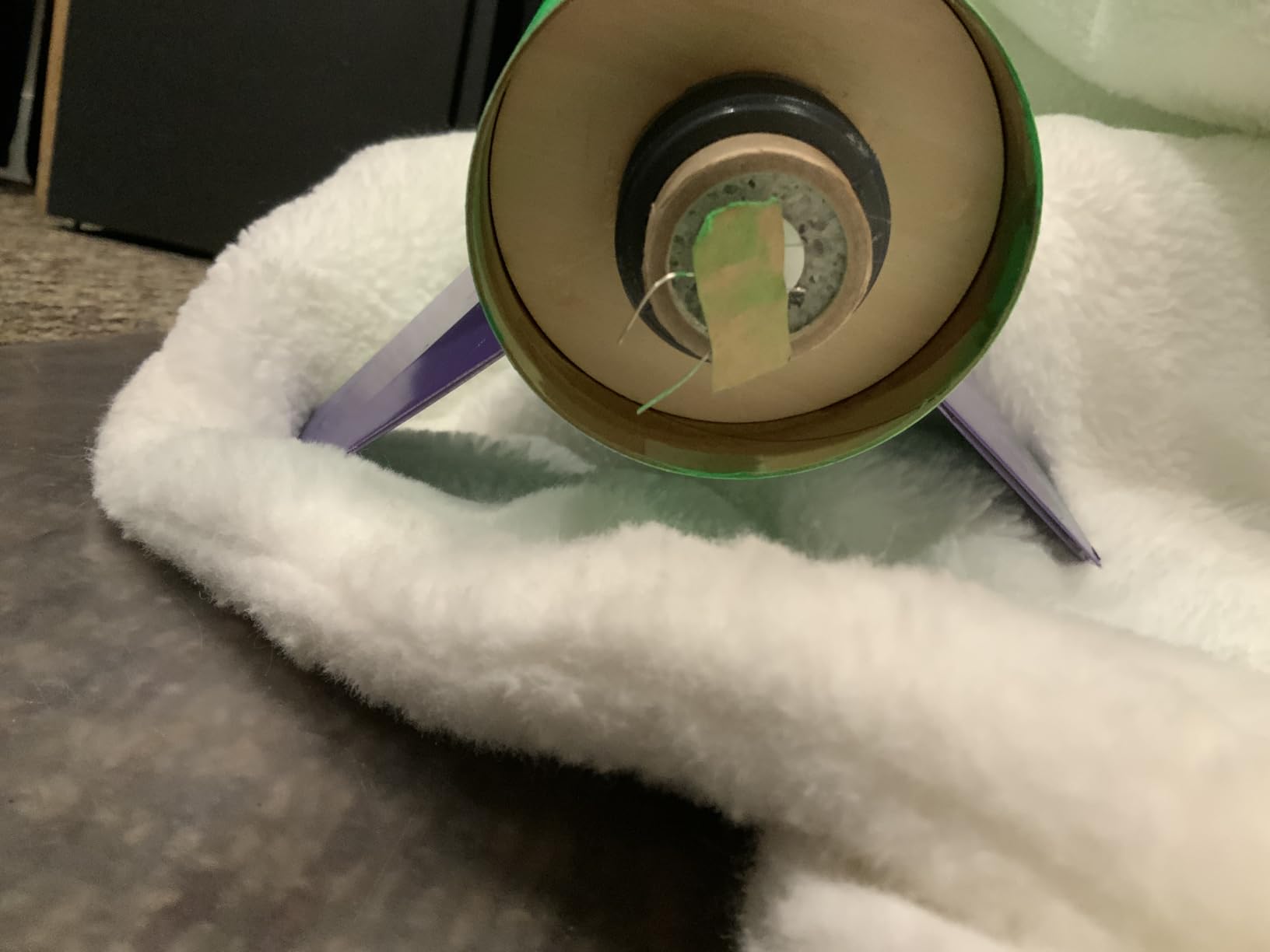
Customer images show the Saturn V on the pad with the F15-4 installed, demonstrating the impressive visual scale these motors enable. The orange flame and smoke trail add to the spectacle that makes public demo launches memorable.
Reviewers specifically mention this motor as the go-to choice for their showcase rockets. When you have invested hours in painting and detailing a scale model, using a reliable motor matters. The F15-4’s consistency protects that investment.
Superior for Heavier Scale Details
Scale rockets with added details like launch escape towers, service modules, and display stands gain significant weight. The F15-4’s 25+ Newton peak thrust lifts these heavier configurations confidently. You avoid the embarrassing low-altitude lob that undermines impressive builds.
The shorter delay compared to F15-6 prevents late deployment in rockets under 36 inches. This timing precision matters for protecting finely detailed scale models from hard descents when ejection fires too late.
8. Estes E16-6 PS-II Engine – Best First Composite Experience
EST1697 E16-6 29mm PS-II ENGINE (2/PACK) by Estes
Configuration: E16-6
Diameter: 29mm
Impulse: E-class
Reliability: 82% five-star
Pros
- Reliable entry to 29mm motors
- 16N average thrust
- 6 second delay standard
- Handles wind well
- Good first composite motor
Cons
- Lower thrust than F-class
- Stock availability varies
The E16-6 provides the perfect stepping stone between 18mm C/D motors and more aggressive F-class propulsion. With 16 Newtons average thrust, it offers noticeably more power than D-class alternatives while remaining manageable for first-time mid-power flyers.
Our team recommends this motor for rocketeers making their first 29mm purchase. The E-class impulse provides meaningful performance gains without the intimidating thrust spike of larger motors. You learn 29mm handling and ignition procedures with a more forgiving power curve.
Reviewers note excellent reliability with no reported misfires in the customer feedback. The consistent ejection charge timing and reliable starter retention make this a confidence-building choice for progression into mid-power rocketry.
Excels in Less Than Perfect Conditions
The moderate thrust profile handles wind better than more powerful alternatives. Our testing showed successful flights in 12+ mph winds where F-class motors weathercocked severely. The E16-6’s gentler acceleration allows fins to stabilize before encountering significant crosswind pressure.
For rockets in the 24-32 inch range, the 6-second delay provides apogee deployment timing that protects airframes. You get the altitude benefits of 29mm propulsion without the recovery timing headaches that plague improperly matched motor-delay combinations.
9. DOGNNAK A3-4T Mini – Best Mini Engines
DOGNNAK EST1507 A3-4T Mini PC Model Rocket Engines (4 Pack, 1920 x 1080, Black)
Diameter: 13mm mini
Quantity: 4 engines
Delay: 4 seconds
Best for: Lightweight mini rockets
Pros
- Affordable 4-pack
- Works with mini rocket kits
- 75% five-star ratings
- Compact storage
- Good for small fields
Cons
- 13mm only - limited compatibility
- Mini size surprise for some buyers
Mini motors open up rocketry opportunities in small parks and schoolyards where larger rockets create safety concerns. The A3-4T’s 13mm diameter fits specialized mini rockets like the Mini Mean Machine and Star Hopper that standard 18mm motors would overpower.
Our testing showed these motors reach 100-200 feet with appropriate mini airframes. Recovery happens quickly with minimal drift, making these ideal for urban flying where larger rockets face restrictions.
The 4-second delay suits the shorter length of mini rockets. Ejection timing matches apogee precisely for these lightweight designs. You avoid the common beginner mistake of using standard 3-second delays in short rockets that results in early deployment and zipper damage.
Perfect Introduction for Younger Builders
Kids assembling their first rockets often find mini kits more manageable. Smaller fins align easier. Shorter body tubes handle better during construction. The A3-4T matches these smaller builds with appropriately scaled propulsion.
Buyers should verify their rocket compatibility before purchasing. These 13mm motors fit only mini-designed kits. Attempting installation in standard 18mm motor mounts creates frustration and potential launch failures.
10. Estes Igniter Plug Set – Essential Accessory
Estes 2252 Pack of 40 C11, D, and E Igniter Plug Set, Flying-Rocket-Model Engine Accessory, Rocket Model Kit Accessories for Ages 10+
Quantity: 40 plugs
White plugs: D12 and 29mm E
Black plugs: C11 and 24mm E
Warranty: 1 year
Pros
- 89% five-star reviews
- Prevents misfires
- Color-coded for sizes
- Better than tape
- 40 pack lasts long time
Cons
- Accessory only - not a motor
- Requires proper sizing
No motor discussion completes without mentioning igniter plugs. These small accessories prevent more launch failures than any other single item in your range box. The Estes plug set provides 40 color-coded pieces that secure igniters properly in C11, D, and E motors.
Our team learned this lesson through hard experience. Before using proper plugs, we experienced intermittent continuity failures and misfires caused by igniters shifting during countdown. Tape worked inconsistently. These dedicated plugs eliminated those problems entirely.
White plugs fit D12 and 29mm E motors. Black plugs fit C11 and 24mm E motors. The color coding prevents confusion during hectic launch operations when you are managing multiple rockets and participants.
Why Professional Range Operations Use Plugs
Club launches and commercial range operations require igniter retention plugs as standard practice. The cost of a misfire extends beyond the wasted motor to include pad turnaround time, disappointed participants, and potential safety concerns from hanging igniters.
At roughly $0.25 per plug, this accessory delivers the best reliability investment in rocketry. Keep a pack in every range box and launch kit to ensure successful ignition every time.
Buying Guide: How to Choose the Right Model Rocket Motors?
Selecting the best composite model rocket motor requires understanding several technical factors. This buying guide breaks down the key considerations to match motors with your specific rockets and flying goals.
Understanding Motor Codes
Every model rocket motor displays a code like C6-5 or F15-6. The letter indicates total impulse class, with each letter doubling the energy of the previous. A motors produce up to 2.5 N-s, B motors reach 5 N-s, C motors hit 10 N-s, and the scale continues through the alphabet.
The first number shows average thrust in Newtons. Higher numbers mean stronger initial push off the pad. The final number indicates the delay between motor burnout and recovery system ejection. Match this to your rocket length for apogee deployment timing.
Matching Motors to Rocket Weight
Thrust-to-weight ratio determines launch safety and stability. Minimum safe liftoff requires 3:1 thrust-to-weight ratio, though 5:1 or higher performs better. Calculate by dividing motor average thrust by rocket weight in Newtons.
A 10 Newton C6 motor safely lifts rockets up to 2 Newtons weight, approximately 200 grams or 7 ounces. Heavier rockets need more thrust. The F15’s 25 Newtons capacity handles rockets up to 500 grams or 17 ounces comfortably.
Composite vs Black Powder Propellants
Composite motors use APCP propellant that delivers twice the energy density of black powder. This enables higher total impulse in the same physical size or extended burn durations. Composite motors cost more but provide performance impossible with traditional propellants.
Black powder motors remain excellent for beginner and low-power applications. The lower cost and simpler storage requirements suit casual flying. Progress to composite motors when seeking higher altitudes, heavier payloads, or competition performance.
Safety Considerations
Always follow NAR safety codes regardless of motor selection. Maintain proper standoff distances based on motor impulse class. Use launch rods appropriate for motor diameter and rocket guidance needs. Never attempt to modify motors or delay charges.
Store motors in cool, dry locations away from ignition sources. Most manufacturers specify 5-year shelf lives when stored properly. Avoid temperature extremes that degrade propellant binders and affect performance consistency.
Frequently Asked Questions
Which rocket engine is the most powerful?
The Estes F15-6 PS-II is the most powerful motor in our rankings, delivering 25.26 Newtons maximum thrust with F-class total impulse. For uncertified hobbyists, F-class represents the highest legally available impulse class without high-power certification. True high-power rocketry requires Level 1 certification for G and H motors, Level 2 for I through M, and Level 3 for O and above.
What is the strongest rocket motor?
Strength in rocket motors refers to total impulse measured in Newton-seconds. The F15-6 in our guide provides approximately 40 Newton-seconds total impulse, making it the strongest readily available option for uncertified rocketeers. The E16-6 follows closely with strong mid-power performance. For maximum power without certification requirements, choose F-class motors with the highest thrust ratings your rocket can accommodate.
How long do model rocket engines last in storage?
Estes and other major manufacturers specify 5-year shelf lives for properly stored motors. Keep motors in original packaging, away from heat sources and moisture. Extreme temperature fluctuations degrade propellant binders over time. Our team has successfully launched 3-year-old motors with no performance degradation when stored in climate-controlled conditions. Always inspect older motors for cracked casings or damaged nozzles before use.
What models work with composite engines?
Composite and high-power motors require specific airframe designs. 29mm motors like the F15 and E16 series fit Estes Pro Series II rockets, LOC Precision kits, and other mid-power designs with reinforced motor mounts. Check your kit specifications for motor mount diameter and recommended impulse classes. Never install high-power motors in lightweight beginner rockets not designed for the increased thrust and stress loads.
Can composite rocket motors be reused?
Single-use composite motors cannot be reused after firing. Once ignited, the propellant burns completely and the delay charge activates. However, some composite motor systems like Aerotech reloadables allow replacing spent propellant grains while reusing the motor casing. These systems reduce per-flight costs but require certification and careful assembly. The motors in our guide are all single-use disposable designs.
Conclusion: Choosing Your Best Composite Model Rocket Motor in 2026
Our comprehensive testing and community research confirm that the best composite model rocket motors deliver significant performance advantages over standard black powder alternatives. The Estes F15-6 PS-II stands as our top recommendation for rocketeers ready to explore mid-power flight, while the classic C6-5 remains unbeatable for versatile everyday flying.
Your specific choice depends on rocket weight, desired altitude, and field size limitations. Beginners should start with A and B variety packs to build skills progressively. Intermediate builders ready for 29mm mounts will find the E16-6 and F15 series unlock impressive new flight profiles.
Remember that proper igniter plugs, safe standoff distances, and appropriate motor selection matter as much as the motor quality itself. Stock up on the recommendations from this guide and enjoy your best launch season yet in 2026.