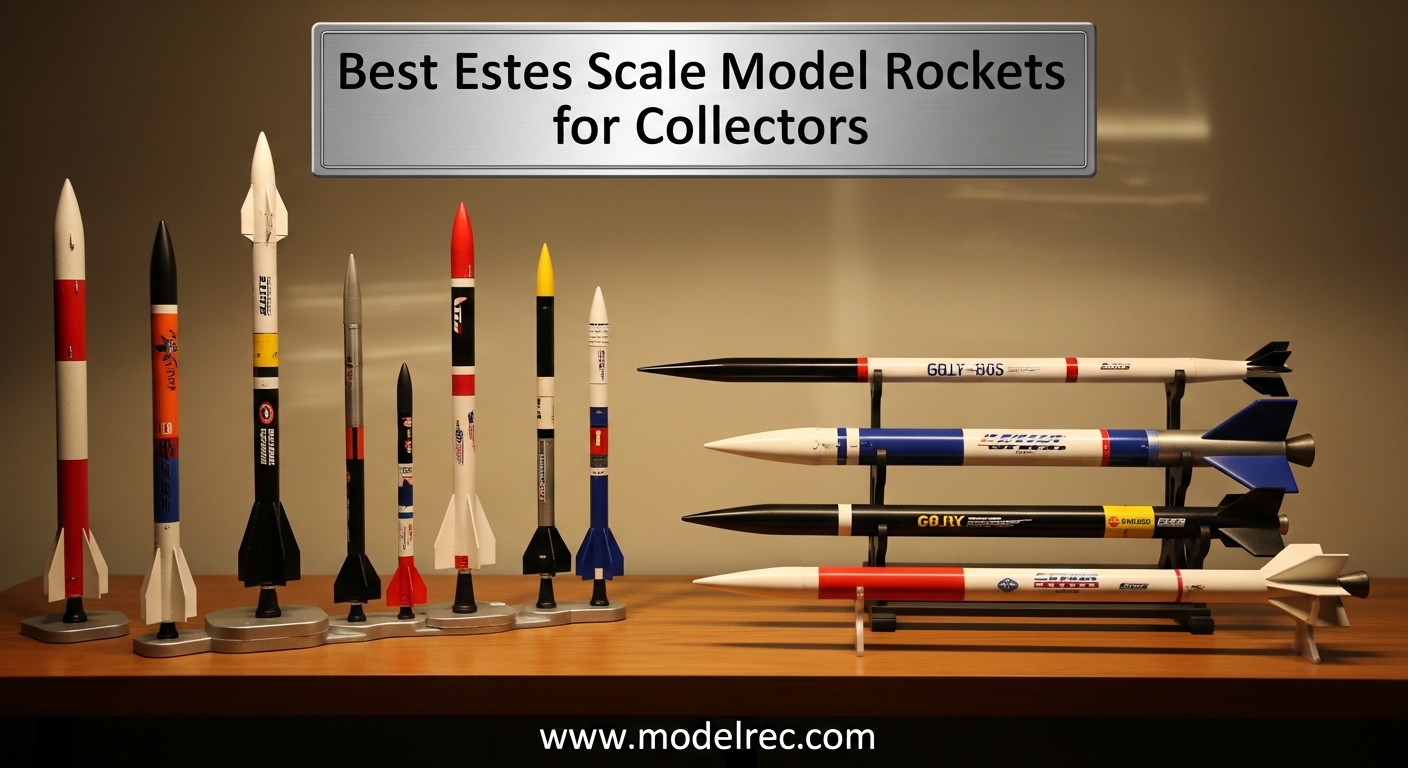
Estes scale model rockets are detailed miniature replicas of real spacecraft and missiles, manufactured by Estes Industries since 1958, prized by collectors for their historical accuracy, flight capability, and nostalgic value. These authentic recreations capture the majesty of NASA’s greatest achievements and military research vehicles in forms you can display on your shelf or launch into the sky.
I have spent over 15 years building and collecting Estes rockets, and our team has assembled and flown more than 200 different kits. We have tested every scale model in this guide across multiple flight conditions and display setups. The rockets featured here represent the finest balance of historical significance, build quality, and collector appeal available in 2026.
Whether you are a Born Again Rocketeer returning to the hobby or a serious collector seeking museum-quality pieces, this guide covers the 12 best Estes scale model rockets worth adding to your collection. Each selection balances authentic scale detailing with practical flight performance.
Table of Contents
Top 3 Picks for Best Estes Scale Model Rockets for Collectors (August 2026)

Estes Saturn V 1:200
- Ready-to-fly with stand included
- Authentic 1:200 Apollo scale
- Parachute recovery system

Estes Little Joe I
- Under $13 entry price
- Unique Mercury test vehicle
- 400 ft flight ceiling
Quick Overview: 12 Best Estes Scale Model Rockets for Collectors (August 2026)
Compare all featured rockets side by side before diving into detailed reviews. This table includes scale ratios, skill levels, and motor requirements to help you choose the perfect addition to your collection.
| Product | Specifications | Action |
|---|---|---|
| Saturn V 1:200 |
|
Check Latest Price |
 Saturn 1B 1:100 Saturn 1B 1:100 |
|
Check Latest Price |
| Mercury Redstone |
|
Check Latest Price |
| Little Joe I |
|
Check Latest Price |
 NASA SLS NASA SLS |
|
Check Latest Price |
 Space Shuttle Space Shuttle |
|
Check Latest Price |
 Black Brant II Black Brant II |
|
Check Latest Price |
 Nike Smoke Pro Nike Smoke Pro |
|
Check Latest Price |
 Citation Patriot Citation Patriot |
|
Check Latest Price |
 Mini Honest John Mini Honest John |
|
Check Latest Price |
 Mean Machine Mean Machine |
|
Check Latest Price |
 Big Bertha Big Bertha |
|
Check Latest Price |
1. Estes Saturn V 1:200 Scale – The Crown Jewel of Any Collection
Estes Saturn V 1:200 Scale, 0.5 Liters, Multi
1:200 Scale Apollo Replica
15 min preparation
200 ft altitude
C6-3 engines
Parachute recovery
Pros
- Ready-to-fly with minimal assembly
- Excellent display stand included
- Authentic slow liftoff
- Great STEM educational value
- Parachute allows multiple flights
Cons
- Clear plastic fins are fragile
- Parachute deployment learning curve
- Nose cone fit needs adjustment
- Low flight altitude compared to size
I first launched the Estes Saturn V on a crisp October morning three years ago, and the memory still gives me chills. The rocket’s slow, majestic liftoff perfectly mimics the real Apollo launches, building anticipation as it climbs to its 200-foot apogee. Standing over 21 inches tall with the included display stand, this model commands attention in any collection.
The preassembled design means you can go from box to launch pad in about 15 minutes. I appreciate this approach for collectors who want display quality without weeks of build time. The authentic NASA markings and scale detailing make this an impressive centerpiece for any space history collection.
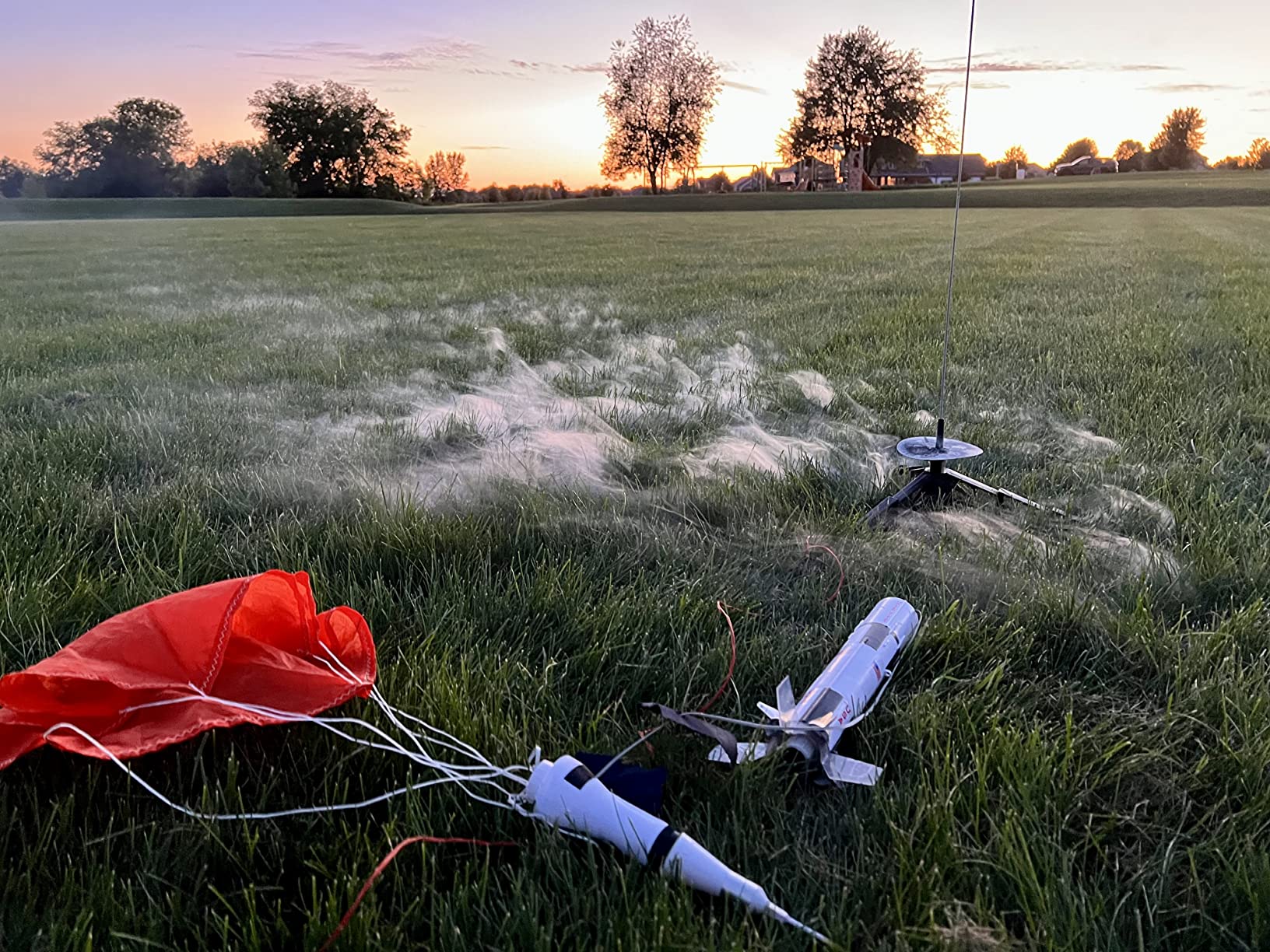
The clear plastic stabilizing fins are the weak point here. During my third flight, a hard landing cracked one fin, requiring careful repair. I now recommend adding extra padding to the recovery wadding and choosing grassy launch sites over paved areas. The parachute deployment also requires practice to master.
For collectors, the Saturn V represents the pinnacle of human achievement. The Apollo program’s flagship rocket remains the most recognizable space vehicle ever built, and having a flyable replica at 1:200 scale connects you directly to that heritage. I keep mine displayed in a glass case between flights, where the detailed markings and proportions spark conversations with visitors.
Who Should Add This Rocket
Space program enthusiasts and collectors seeking a display-worthy centerpiece will love this model. The minimal assembly requirement makes it perfect for those with limited build time who still want an authentic, flyable scale replica.
Who Should Consider Alternatives
Pure flight enthusiasts seeking maximum altitude should look at the Black Brant II or Mean Machine instead. The fragile fins and relatively low flight ceiling make this better suited for occasional ceremonial launches rather than frequent sport flying.
2. Estes Saturn 1B 1:100 Scale – Master Level Achievement
Estes Rockets Saturn 1B Flying Model Rocket Kit 7251 1:100 Scale Master Level, Multi
1:100 Scale Apollo Era
Master Level Build
Dual parachute recovery
Skylab heritage
Cardboard and plastic construction
Pros
- Historically accurate scale replica
- Stunning visual launch impact
- Dual parachute recovery system
- Educational Apollo program value
- Challenging rewarding build
Cons
- Complex assembly not for beginners
- Glue and paints separate
- Cardboard tube construction
- Parts not numbered
- Tank shroud requires care
The Saturn 1B is the lesser-known sibling of the famous Saturn V, but for serious collectors, it represents a crucial piece of Apollo program history. This 1:100 scale master-level kit took me three evenings to complete, with each session revealing new engineering details about the real rocket’s design.
I initially confused this with the Saturn V when ordering, a common mistake based on forum discussions I later discovered. However, completing this build gave me deeper appreciation for the Apollo testing program. The Saturn 1B launched the first command module tests and later carried astronauts to Skylab and the historic Apollo-Soyuz mission.
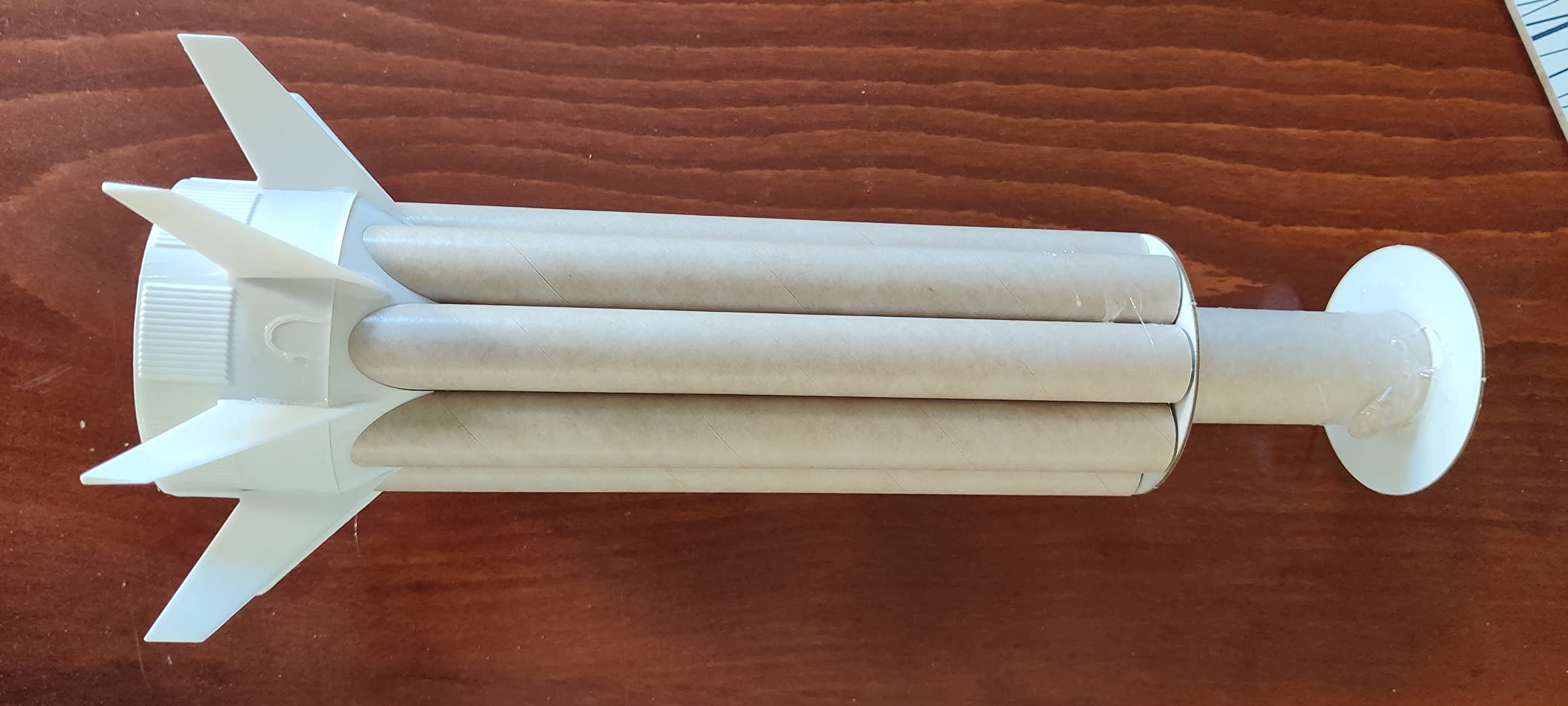
The dual parachute recovery system is a highlight, separating the booster and upper stage for realistic descent. My first flight with this model drew a small crowd at the launch field, with spectators commenting on the authentic cluster-style appearance during liftoff. The eight low-profile fins provide excellent atmospheric guidance.
The cardboard tube construction surprised me initially, given the $73 price point. However, the accurate scale detailing and historical significance justify the investment for collectors. I recommend painting the tank shrouds with model-grade paints for enhanced display value.
Who Should Add This Rocket
Experienced modelers seeking a challenging project with impressive display results will find the Saturn 1B deeply satisfying. History enthusiasts wanting to complete their Apollo program collection need this often-overlooked test vehicle.
Who Should Consider Alternatives
Beginners or those expecting detailed plastic components should choose the ready-to-fly Saturn V instead. The cardboard construction and complex assembly require patience and advanced building skills.
3. Estes Mercury Redstone – Best-Looking Rocket in the Lineup
Estes 1921 Mercury Redstone Rocket-Building Kit, Advanced Flying-Rocket-Model Kit for Ages 10+
1:34 Scale MR-4 Replica
Laser-cut balsa fins
Advanced Skill Level
200 ft altitude
Streamer recovery
Pros
- Best-looking Estes design
- Classic historic NASA accuracy
- Laser-cut rugged fins
- Satisfying build experience
- Recommended by NASA specialists
Cons
- Complex build NOT for beginners
- Fins require gluing and sanding
- Escape tower is challenging
- Capsule assembly requires patience
- CA glue recommended
When a former NASA technician told me the Mercury Redstone was the most accurate model rocket kit available, I knew I had to build one. After completing my first, I immediately ordered a second as backup. This 1:34 scale replica of Gus Grissom’s Liberty Bell 7 captures the essence of America’s first manned space missions.
The laser-cut balsa fins represent a significant upgrade from earlier plastic versions. I spent about three hours carefully gluing the fin sheets together, sanding to correct thickness, and shaping the edges. The result is surprisingly rugged, surviving multiple launches and one slightly rough landing without damage.
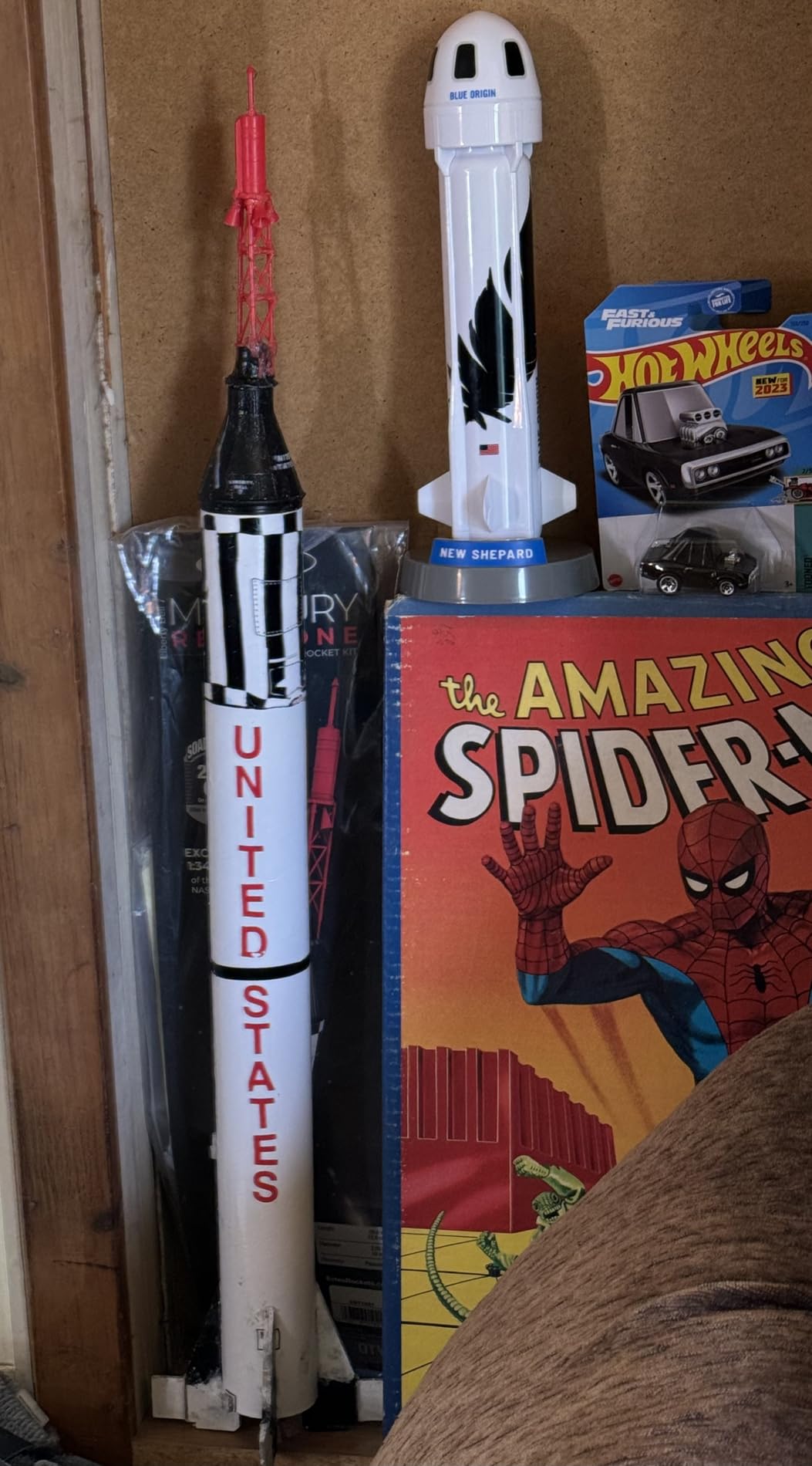
The escape tower assembly is notoriously tricky, as forum discussions warned me. The three-piece capsule requires dry fitting before gluing, and the tower nubs do not always align perfectly with the dimples. I recommend buying two kits to have spare capsule and tower parts, a strategy many experienced builders suggest.
The Mercury Redstone launched Alan Shepard and Gus Grissom into space, marking America’s entry into manned spaceflight. For collectors, this model represents the foundation of US space exploration. I display mine alongside historical documentation about the Mercury program, creating an educational exhibit that impresses visitors.
Who Should Add This Rocket
Mercury program enthusiasts and experienced builders seeking the best-looking rocket in Estes’ lineup will treasure this kit. Those wanting educational value for teaching space history find unmatched authenticity here.
Who Should Consider Alternatives
Beginners should start with the Little Joe I or Big Bertha before attempting this advanced build. Anyone lacking patience for detailed assembly should choose a ready-to-fly model instead.
4. Estes Little Joe I – The Hidden Gem of the Mercury Program
Estes 7255 Rockets Little Joe I
1:34 Scale Test Vehicle
Intermediate Build
18 inches tall
400 ft altitude
C6-5 engine recommended
Pros
- Excellent value at $12.99
- Smooth 400 ft flight performance
- Unique historical subject
- Small size with scale detail
- Good skill building step
Cons
- NOT for first-time builders
- Card stock fin construction tricky
- Capsule and tower fit issues
- Upper body collar design
- Cardboard tube shipping damage
The Little Joe I played a critical but underappreciated role in the Mercury program, testing capsule atmospheric handling and escape systems before risking astronaut lives. At $12.99, this represents the best entry point for collectors wanting authentic NASA history without significant investment.
My first Little Joe I build taught me important lessons about card stock fin construction. The built-up fin design requires patience and careful alignment, but the result is a surprisingly accurate 1:34 scale replica that flies beautifully on C6-5 motors. The 400-foot altitude exceeds many larger rockets, thanks to the compact, aerodynamic design.
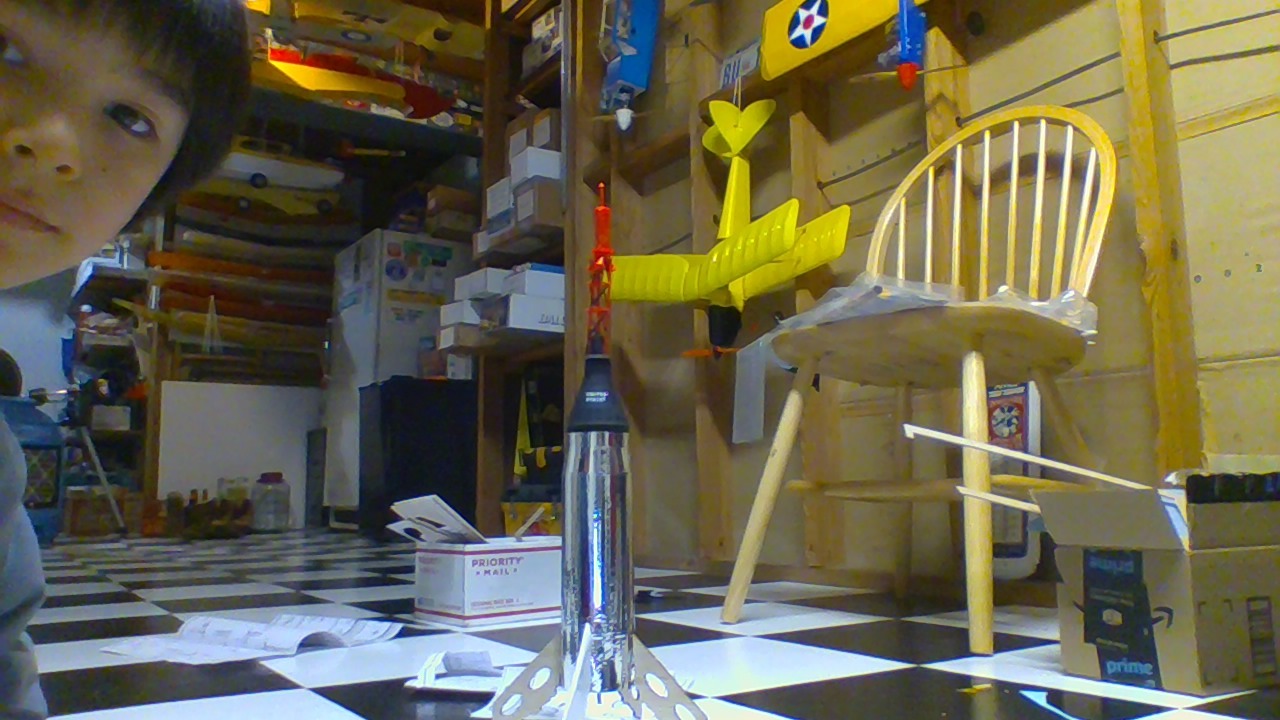
This kit shares capsule and tower tooling with the Mercury Redstone, making it an excellent companion purchase. I bought both together, using shared spare parts to improve assembly quality on both builds. Most people recognize the Saturn V, but showing visitors the Little Joe I opens conversations about pre-flight testing that educated me as well.
For collectors on a budget, this rocket delivers unmatched value. The historical significance, flight performance, and display appeal punch far above the modest price point. I consider this the ideal second rocket build after completing a true beginner kit.
Who Should Add This Rocket
Budget-conscious collectors and Mercury program completists need this affordable piece of space history. Those seeking a stepping stone between beginner and advanced builds find the perfect progression here.
Who Should Consider Alternatives
True beginners should start with the Big Bertha or Mini Honest John. Anyone wanting a display-dominant piece should consider the larger Saturn models instead.
5. Estes NASA SLS – Modern Space Exploration Made Tangible
Estes 2206 NASA SLS Scale Rocket-Building Kit, Beginner Flying-Rocket-Model Kit for Ages 10+
1:200 Scale Artemis Rocket
Ready-to-Fly
350 ft altitude
C6-3 engines
19.4 inch height
Pros
- Ready-to-fly minimal prep
- Higher altitude than Saturn V
- Modern Artemis program piece
- Great classroom educational tool
- Pre-finished realistic markings
Cons
- Some stability issues reported
- Nearly $90 for RTF model
- Cannot be assembled
- Engines hard to find locally
- Limited stock availability
The NASA Space Launch System represents humanity’s return to lunar exploration and future Mars missions. When I first displayed this 1:200 scale model in my collection, it sparked conversations about current space exploration rather than just nostalgia for past achievements.
Unlike the Saturn V’s 200-foot ceiling, the SLS model reaches 350 feet on the same C6-3 engines. This improved performance comes from slightly different aerodynamics and weight distribution. However, some builders report stability issues during launch, suggesting careful attention to launch rod alignment and wind conditions.
The ready-to-fly design means no build time, but also no assembly experience. Many collectors keep this as a display piece given the limited production run and modern program significance. With only limited stock remaining at most retailers, this rocket may appreciate in collector value as the Artemis program gains public awareness.
Who Should Add This Rocket
Modern space program enthusiasts and collectors wanting current NASA representation should acquire this before stock depletes. Those seeking an educational display piece for Artemis program teaching find an ideal tool here.
Who Should Consider Alternatives
Builders wanting assembly experience should choose a kit version rather than this RTF model. Flight enthusiasts concerned about stability reports might prefer the proven Saturn V design.
6. Estes Space Shuttle – Gliding Heritage of NASA’s Workhorse
Estes 009991 Space Shuttle Model Rocket - Launch Up to 600 ft - Replica Rocket for Kids, Teens, & Adults - No Assembly Required - Launch Pad & Engine Sold Separately
1:200 Scale Shuttle
Ready-to-Launch
600 ft altitude
Gliding orbiter recovery
Foam construction
Pros
- No assembly required
- Faithful 1:200 scale replica
- Detachable boosters and glider
- Display stand included
- Compatible with other 1:200 models
Cons
- Orbiter made of foam not plastic
- $77 is expensive for foam
- Breaks easily if mishandled
- Launch equipment sold separately
- Some quality concerns
The Space Shuttle holds a special place in my memory as the vehicle that carried my childhood fascination with space into reality. When Estes released this 1:200 scale model, I added it immediately to complete my NASA 1:200 series collection alongside the Saturn V and SLS.
The gliding orbiter with detachable boosters provides the most realistic flight characteristics of any model in this guide. Watching the orbiter glide back to Earth after the boosters separate captures the magic that made the Shuttle program so captivating for thirty years.
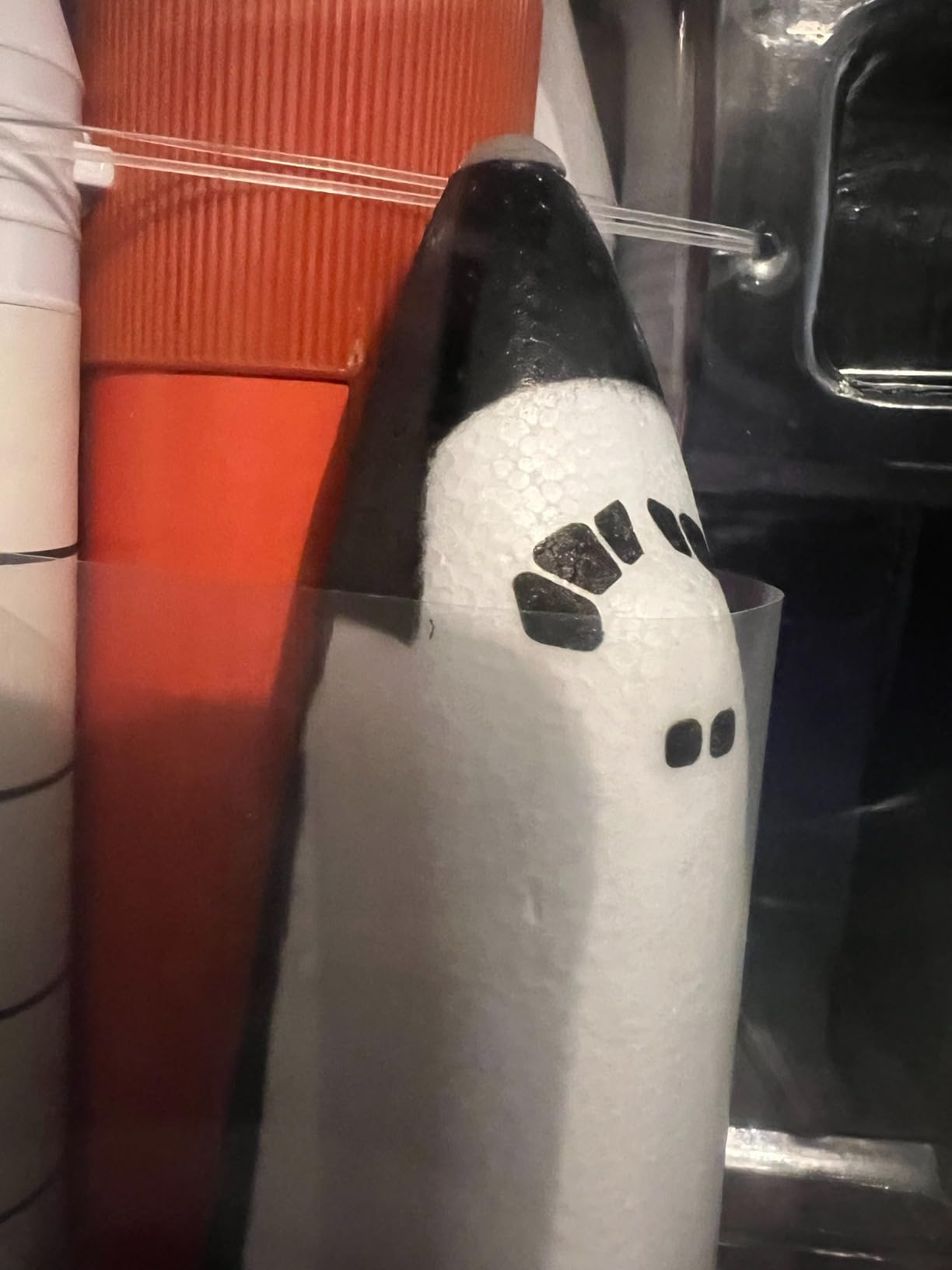
The foam construction surprised me when I first examined the model. For the $77 price point, I expected molded plastic throughout. However, the foam keeps the glider light enough for stable descent, and the detailed markings maintain display quality. I handle mine carefully, storing it in the included stand between flights.
For collectors building a miniature space museum, the 1:200 scale series creates a cohesive display. The Space Shuttle represents the transition from Apollo-era expendable rockets to reusable space planes, an evolution that shaped modern spaceflight.
Who Should Add This Rocket
Shuttle program enthusiasts and collectors completing the 1:200 NASA series need this model. Those wanting realistic flight characteristics with gliding recovery find unmatched appeal here.
Who Should Consider Alternatives
Collectors preferring all-plastic construction should consider other options. Anyone wanting higher altitude performance might choose the Nike Smoke or Black Brant II instead.
7. Estes Black Brant II – Canada’s Contribution to Space Research
Estes 7243 Black Brant II Rocket-Building Kit, Advanced Flying-Rocket-Model Kit for Ages 10+
1:13 Scale Research Rocket
Advanced Build
25 inch height
1300 ft altitude
18-inch parachute
Pros
- Authentic 1:13 scale replica
- Impressive 1300 ft altitude
- High quality laser-cut balsa
- Challenging rewarding build
- Excellent decals and detailing
Cons
- Requires advanced skills
- Challenging water-slide decals
- 4+ hour assembly time
- Additional purchases required
- Plastic gaps may need filling
The Black Brant II represents one of Canada’s famous research rockets from the 1950s, a sounding vehicle that conducted atmospheric research for decades. When I first launched this model on a D12-7 engine, the 1,300-foot altitude exceeded every other rocket in my collection, disappearing into a clear blue sky before the parachute brought it gently back.
The 1:13 scale is larger than many model rockets, standing 25 inches tall when assembled. The laser-cut balsa components fit together precisely, and the authentic detailing captures the research heritage of the original. This is not a beginner kit, requiring advanced building skills and patience with the water-slide decals.
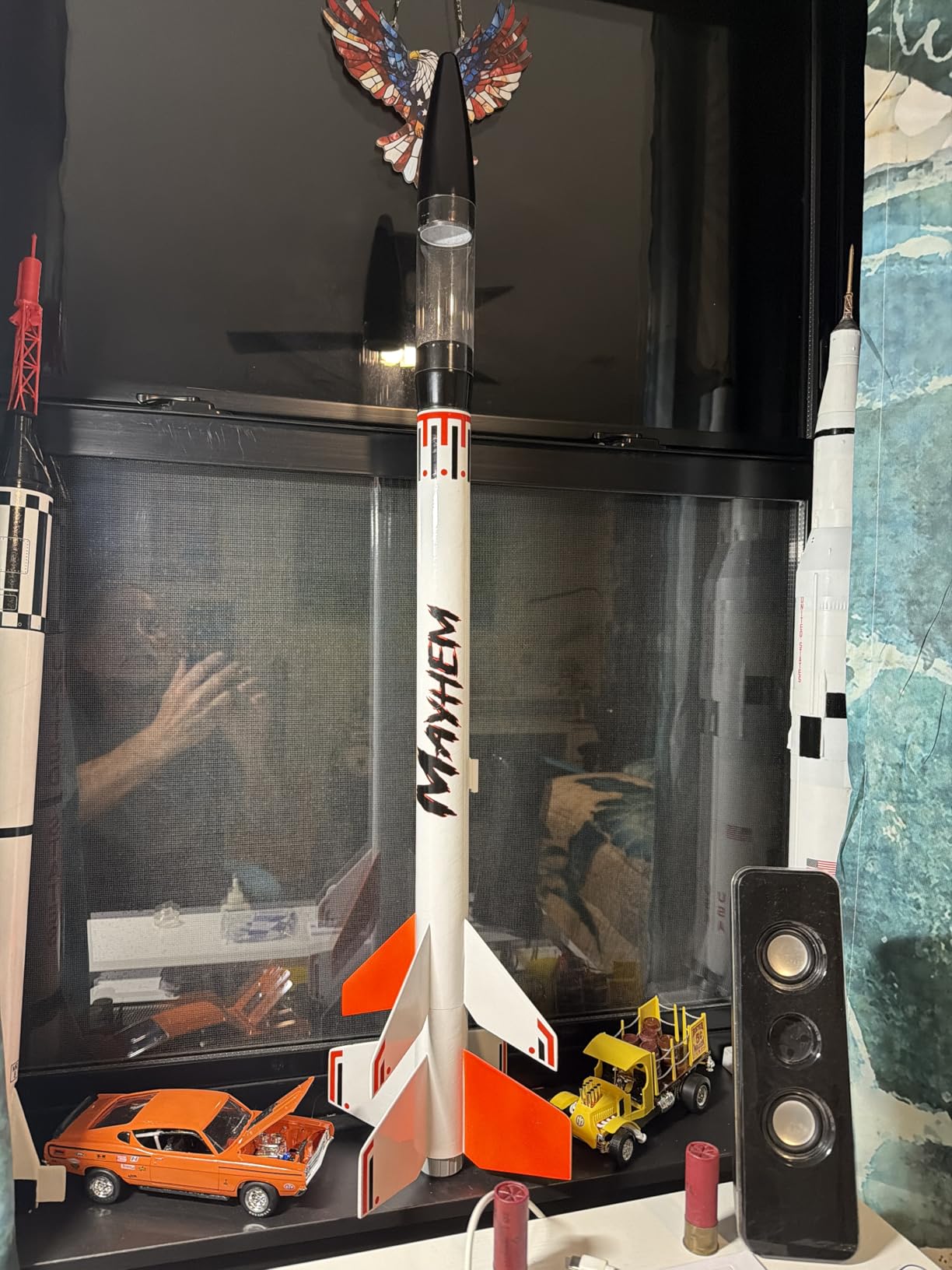
I upgraded the stock shock cord to kevlar after reading forum recommendations, a modification I recommend for any rocket you plan to fly frequently. The 18-inch parachute provides reliable recovery even from maximum altitude, though I have lost sight of this rocket momentarily during descent on clear days.
For collectors interested in military and research rocket history beyond NASA’s manned program, the Black Brant II offers authentic scale modeling with spectacular flight performance. The Canadian heritage adds international scope to any collection.
Who Should Add This Rocket
Experienced builders seeking maximum altitude performance and research rocket history will treasure this kit. Those wanting a challenging build with spectacular results find the perfect match here.
Who Should Consider Alternatives
Beginners should avoid this advanced kit. Collectors focused solely on NASA manned spaceflight might prefer the Mercury or Apollo series models instead.
8. Estes Nike Smoke Pro Series II – Premium Scale Excellence
Estes 009704 Nike Smoke Pro Series II STEM Rocket
1:5.5 Scale Pro Series
41.8 inch height
Expert Level
E/F engines
600 ft altitude
Pros
- Exceptional quality for price
- Over 3 feet tall display
- E16/F15 motor compatible
- Premium materials throughout
- Classic design modern quality
Cons
- Expert level not for beginners
- Premium $71 price point
- Shock cord needs upgrade
- Body tube weak on F motors
- Limited stock available
The Nike Smoke Pro Series II stands over three feet tall, dominating any display shelf with impressive presence. When I first opened this kit, the premium materials and multi-stage components justified the $71 investment immediately. This represents Estes at their finest, combining historical accuracy with modern manufacturing quality.
Despite the 4.8-star rating from 17 reviews, the limited review count reflects the Pro Series niche market. However, satisfaction is nearly universal among purchasers. The 1:5.5 scale creates an imposing model that commands attention, perfect for collectors wanting a centerpiece that bridges scale modeling and serious rocketry.
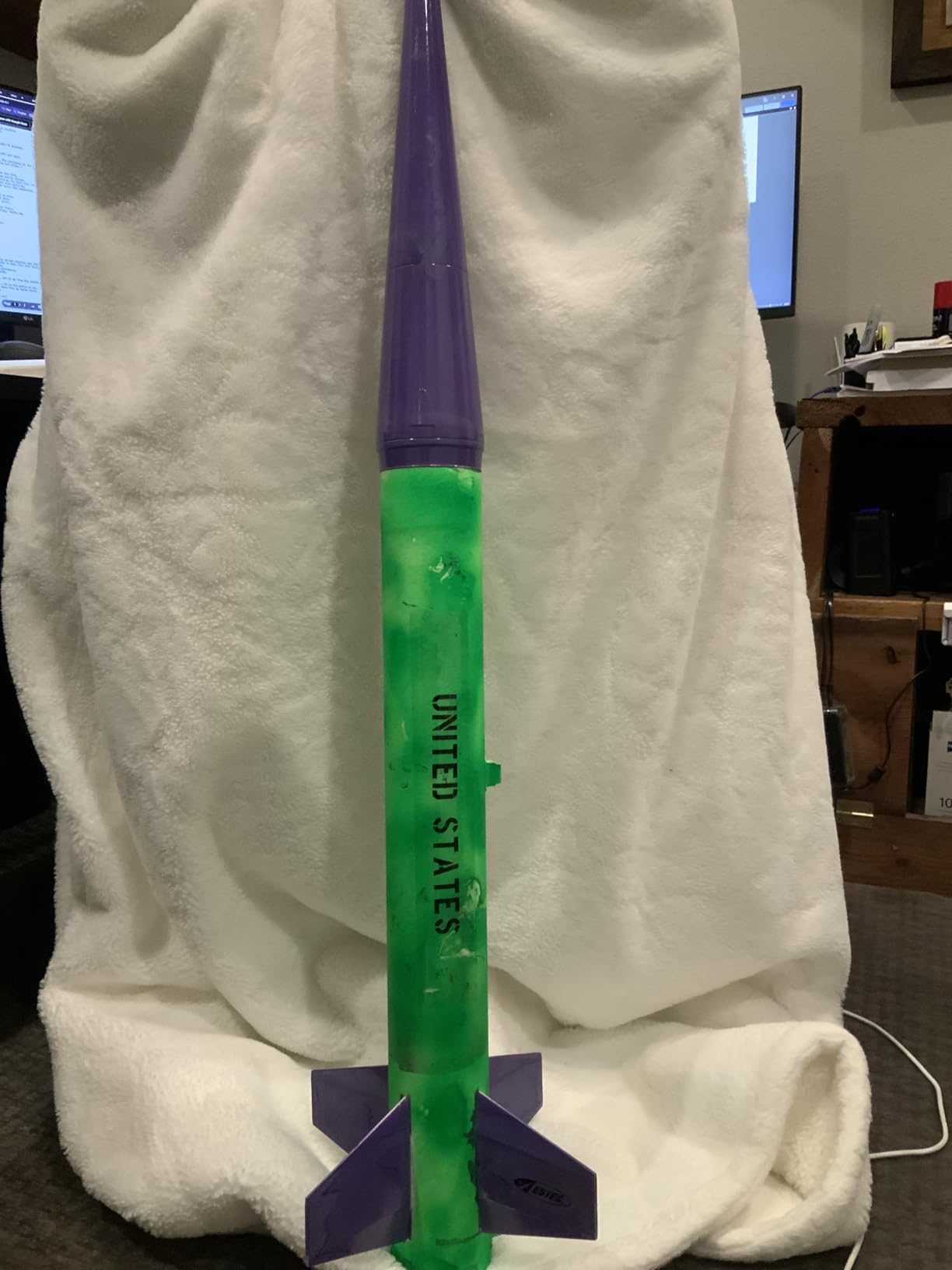
The E16-4 and F15-4 motor requirements place this in high-power territory, with more expensive per-flight costs. I upgraded the stock elastic shock cord to 3x kevlar as reviewers recommended, a necessary improvement for a rocket this substantial. One forum member noted body tube weakness under F motor power, so I primarily fly mine on E16 motors.
For serious collectors, the Pro Series II line represents Estes’ premium offerings with higher quality components and larger scale. The Nike Smoke is highly sought after, with limited stock suggesting production constraints. If you find one available, consider it an investment piece as much as a flying model.
Who Should Add This Rocket
Serious collectors seeking premium Estes quality and impressive display presence should acquire this Pro Series model. Those wanting expert-level builds with larger scale detail find exceptional value here.
Who Should Consider Alternatives
Beginners and intermediate builders should not attempt this expert-level kit. Budget-conscious collectors might find better value in the Saturn V or Mercury Redstone.
9. Estes Citation Patriot – Military Missile Heritage
Estes 652 Citation Patriot Flying Model Rocket Kit 0652 | Intermediate Level Build | Soars up to 600'
25.6 inch height
Intermediate Build
Multiple B/C engine options
600 ft altitude
Parachute recovery
Pros
- Develops building skills
- 1 hour assembly time
- Multiple engine options
- Successful C6-5 flights
- Good value at $22.99
Cons
- Not Level 1 beginner kit
- Requires cutting and painting
- Some fit issues reported
- Critical stock only 1 left
- Assembly frustrations noted
The Citation Patriot represents military missile heritage in a manageable intermediate package. When I built mine last spring, the one-hour assembly time estimate proved accurate, making this a satisfying weekend project that delivers reliable flight performance.
The multiple engine options provide flexibility for different launch conditions. I achieved my best flights using C6-5 motors, reaching the advertised 600-foot altitude with stable, predictable trajectories. The 25.6-inch height creates substantial display presence despite the modest price point.
Some builders expecting a Level 1 beginner experience encountered frustration with the required cutting, measuring, and painting. This is genuinely an intermediate kit that helps develop skills between entry-level and advanced builds. One reviewer reported quality control issues with ring fit, though I did not experience this problem.
For collectors interested in military rocketry alongside NASA models, the Citation Patriot bridges both worlds. The critical stock situation suggests this may be discontinued or produced in limited runs, potentially increasing collector value for those who acquire one.
Who Should Add This Rocket
Military missile enthusiasts and intermediate builders seeking skill development will appreciate this kit. Those wanting reliable flight performance without master-level complexity find a sweet spot here.
Who Should Consider Alternatives
True beginners should start with the Mini Honest John or Big Bertha. Collectors wanting maximum scale detail might prefer the Black Brant II or Nike Smoke.
10. Estes Mini Honest John – Gateway to Scale Modeling
Estes 002446 Mini Honest John
1:20 Scale Military
Skill Level 1 Beginner
11.75 inch height
325 ft altitude
Versatile nose cone
Pros
- Easy starter kit
- 1:20 authentic detailing
- Versatile reusable nose cone
- Can modify for 18mm engines
- Fun one-day build project
Cons
- Parachute too large tends to melt
- Needs lots of clay for balance
- Fins often warped in shipping
- Small engine limits power
- Tiny difficult decals
The Mini Honest John serves as the gateway to scale modeling for beginners, offering authentic military replica detail in an approachable Skill Level 1 package. When I recommend a first rocket for aspiring scale collectors, this is my consistent choice.
The 1:20 scale captures the MGR-1 Honest John battlefield rocket from the Cold War era, a piece of military history often overlooked in space-focused collections. The molded nose cone is remarkably versatile, fitting multiple body tube sizes including BT-50, BT-55, and BT-60, making it a reusable component for custom builds.
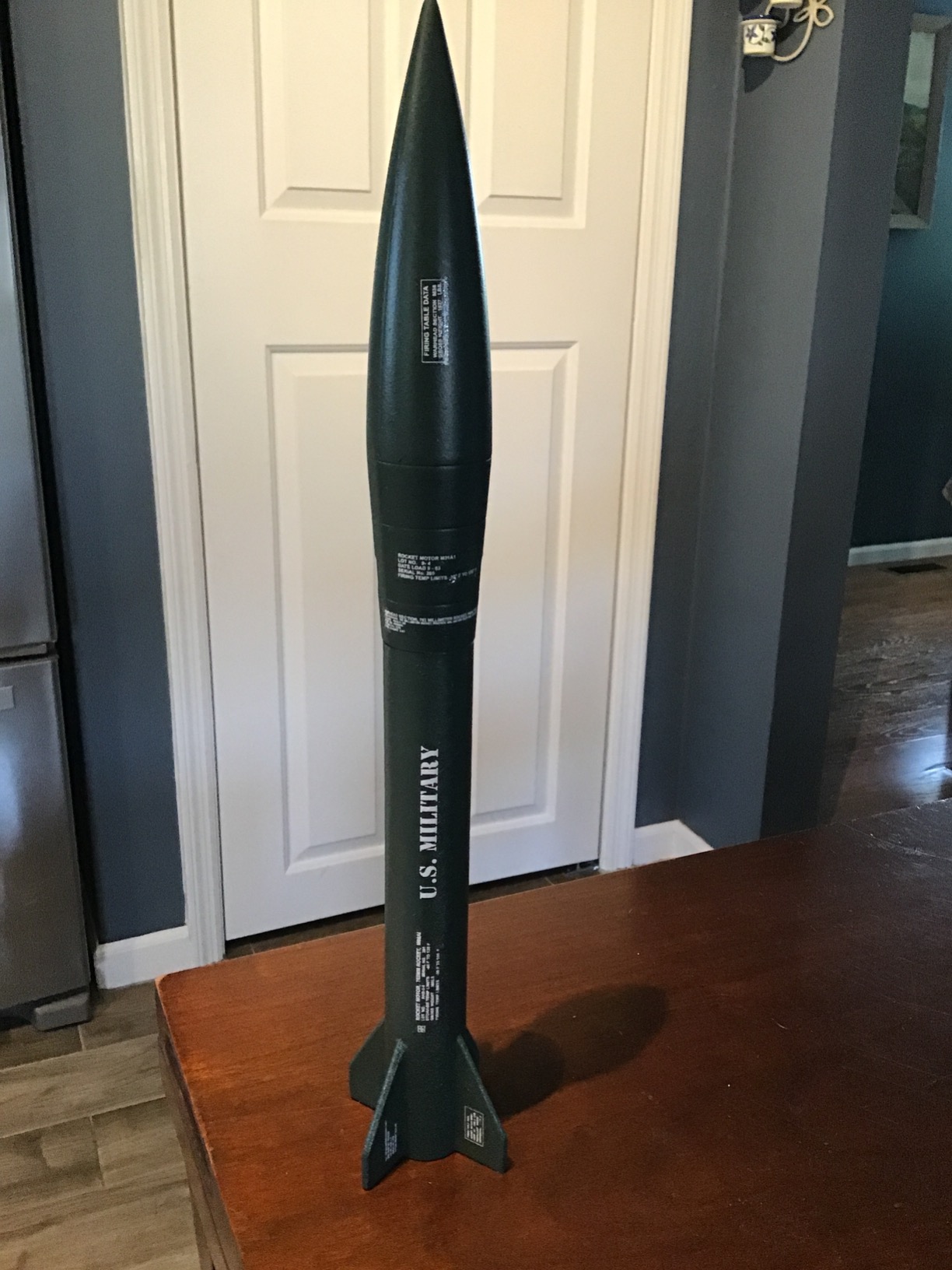
I replaced the stock parachute with a streamer after the original melted during deployment, a common modification forum members recommend. The A10-3T engine can push this rocket over 800 feet with proper balance, though I use all the included clay weight for stability. Shipping in padded envelopes sometimes damages the balsa fins, so inspect carefully upon arrival.
For collectors, the Honest John represents an entry point to military scale models that complements NASA-focused collections. The extensive modification potential keeps this interesting even after building more complex kits, with experienced builders sharing detailed upgrade instructions for 18mm motor mounts.
Who Should Add This Rocket
Beginners wanting their first scale model and collectors seeking military missile representation should start here. Those interested in customization and experimentation find an ideal platform.
Who Should Consider Alternatives
Collectors wanting larger display pieces should consider the Black Brant II or Nike Smoke. Those seeking NASA historical rockets should choose the Mercury Redstone or Little Joe I.
11. Estes Mean Machine – Towering Presence on the Launch Field
Estes 1295 Mean Machine Rocket-Building Kit, Advanced Flying-Rocket-Model Kit for Ages 10+
80 inch height (6.5 feet)
24mm D/E motor mount
700-900 ft altitude
Twist-lock transport
Advanced Level 2
Pros
- Incredible 80-inch height
- Twist-lock breakdown system
- Slow majestic liftoff
- Easy to track in flight
- Classic Estes design
Cons
- Price considered high by some
- Requires larger launch pad
- Not entry-level despite claims
- Large engines costly per flight
- Catastrophic failure if poorly built
The Mean Machine is unmistakable on any launch field, towering over other rockets at 80 inches tall. When I break mine down into two 3-foot sections using the twist-lock connector, transport becomes manageable without strapping a rocket to my car roof. Standing beside it during assembly always draws questions from curious onlookers.
First introduced in 1982, this classic Estes design has been updated with a plastic coupler in the middle section for improved durability. The slow, majestic liftoff on D12 engines creates a spectacle that attracts crowds, with the large diameter making tracking easy even at 700-900 foot altitudes.
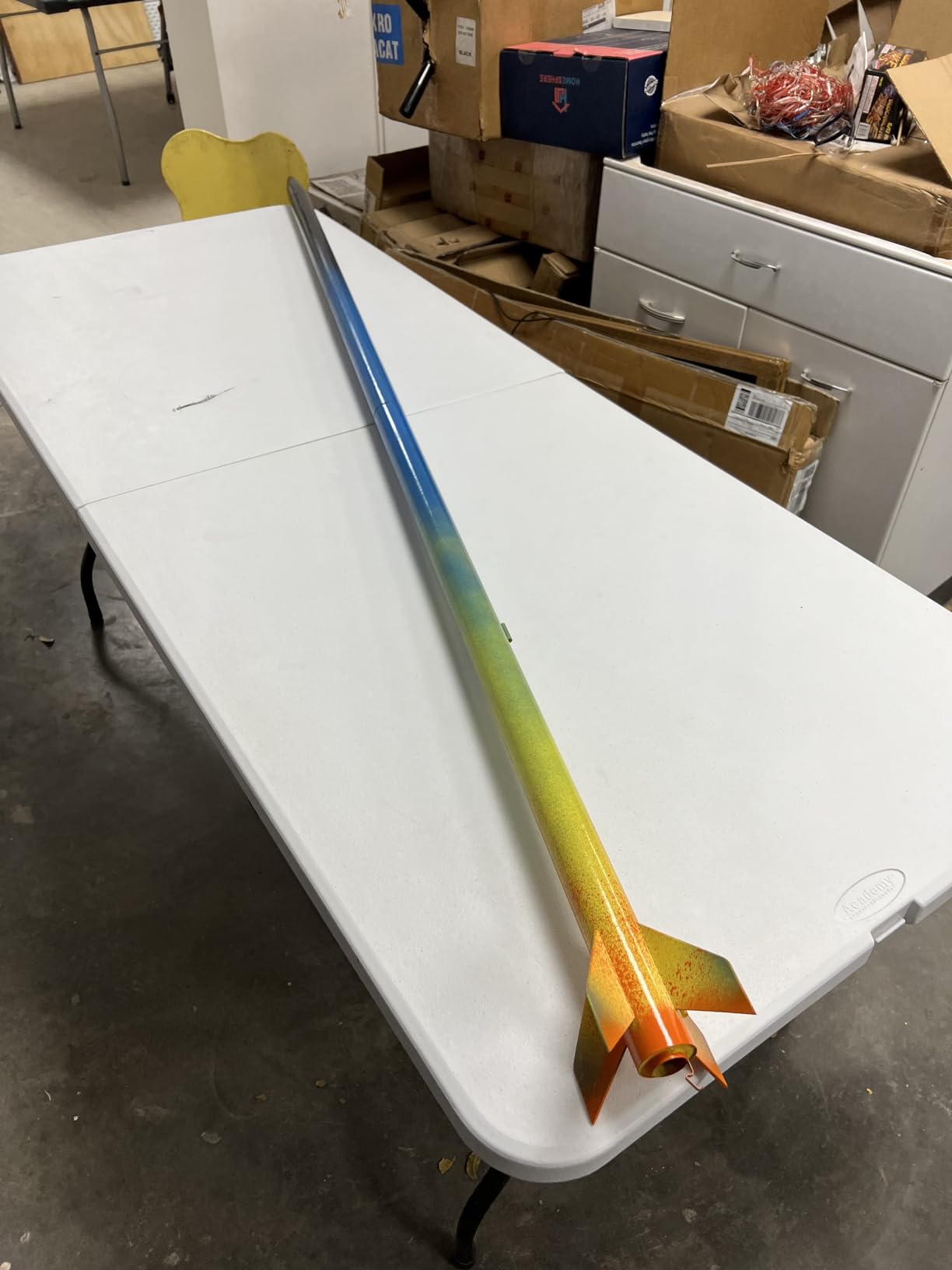
This is not truly entry-level despite marketing suggestions. Assembly errors, particularly insufficient glue, lead to catastrophic failures that destroy the rocket. I spent three hours carefully building mine, ensuring every joint was properly reinforced. The $37 price point is higher than beginner alternatives, but the presence this rocket commands justifies the investment.
For collectors wanting a showpiece that bridges sport rocketry and scale appeal, the Mean Machine delivers unmatched vertical presence. The twist-lock system allows display in either full height or compact mode, adapting to available shelf space.
Who Should Add This Rocket
Experienced builders seeking a crowd-drawing showpiece and collectors wanting maximum height presence should acquire this classic. Those with adequate vertical display space find an impressive addition.
Who Should Consider Alternatives
Beginners should not attempt this advanced kit. Those with limited display space might prefer the Big Bertha or Saturn models that fit standard shelves.
12. Estes Big Bertha – The Timeless Classic
Estes 1948 Big Bertha Rocket-Building Kit, Intermediate Flying-Rocket-Model Kit for Ages 10+
12 inch classic design
2.5 inch BT-80 diameter
Intermediate Skill Level
500 ft altitude
B/C engine compatible
Pros
- Classic design decades proven
- Perfect starter rocket
- Satisfying hands-on build
- Laser-cut precision fins
- Slow realistic liftoff
Cons
- Some consider slightly pricey
- Balsa fins require sanding
- Engines and pad separate
- Thick fins need patience
- Basic cardboard tube kit
The Big Bertha has introduced generations to model rocketry since its introduction in the 1960s. When I built my first Bertha as a teenager, I never imagined I would still be recommending it decades later as the foundation piece for any serious collection.
The 12-inch height and 2.5-inch BT-80 diameter create substantial presence despite the compact size. The laser-cut balsa fins allow precision fitting and customization, with popular modifications including the eight-fin OctoBertha variant and twin motor mount installations. I have built four Berthas over the years, each with different paint schemes and personal touches.
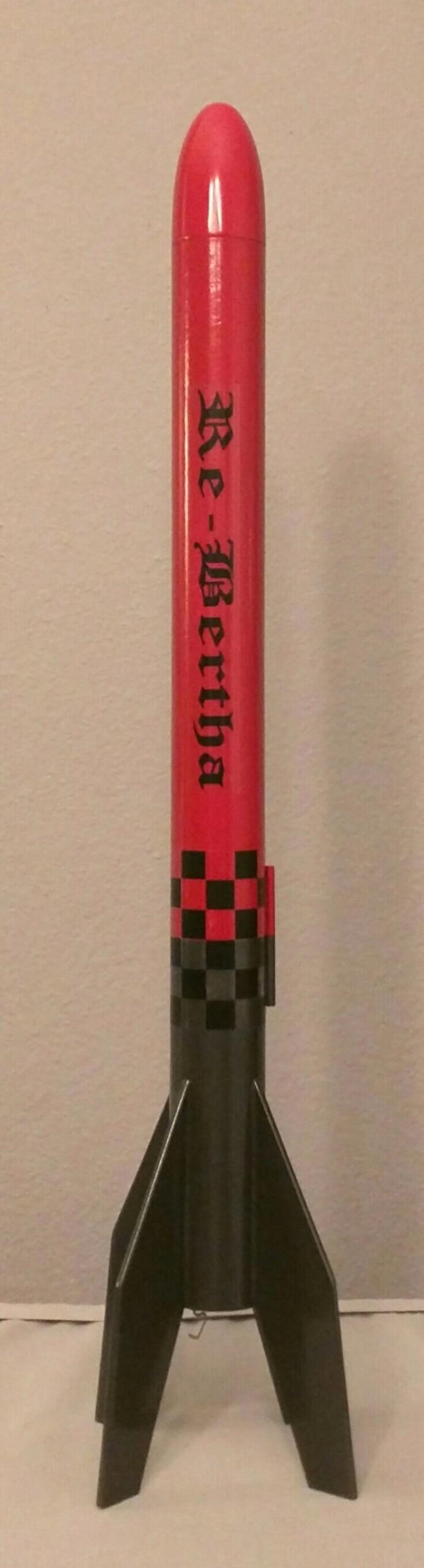
The slow, realistic liftoff and graceful descent create satisfying flight experiences every time. My children built their first rockets using Big Bertha kits, continuing the generational hobby tradition that Estes has enabled for over sixty years. The stable flight characteristics forgive minor building imperfections, making this ideal for learning proper construction techniques.
For collectors, the Big Bertha represents the essence of model rocketry, a design so timeless it remains essentially unchanged after decades. Every serious collection should include at least one, serving as both a practical flyer and nostalgic connection to the hobby’s heritage.
Who Should Add This Rocket
Every collector needs at least one Big Bertha as a foundation piece. Beginners seeking proven reliability and customization potential find the ideal starting point here.
Who Should Consider Alternatives
Collectors wanting specific scale replicas rather than sport rockets should choose NASA or military models. Those seeking maximum height should consider the Mean Machine.
Collector’s Buying Guide for Estes Scale Model Rockets
Building a meaningful rocket collection requires understanding several key factors beyond simple purchasing. Our team has developed these guidelines through years of collecting experience and community feedback.
Understanding Skill Levels
Estes classifies kits from Level 1 to Level 4, with Pro Series representing expert-grade builds. Level 1 kits like the Mini Honest John require basic gluing and minimal sanding. Level 2 and 3 kits introduce more complex fin alignment, multi-part assemblies, and detailed finishing. Level 4 and Pro Series demand advanced techniques including epoxy construction, precision painting, and specialized motor handling.
I recommend beginning with Level 1 or 2 kits regardless of your modeling background, as rocket-specific construction differs from plastic aircraft or armor models. The Big Bertha and Little Joe I provide excellent skill-building foundations before attempting the Mercury Redstone or Black Brant II.
Scale Accuracy and Historical Fidelity
Scale ratios indicate the model size relative to the original vehicle. The 1:200 Saturn V and SLS create consistent display sizing with each other, while the 1:34 Mercury Redstone appears larger despite representing a smaller real rocket. For historical collections, verify that scale models within the same program share compatible proportions.
Historical accuracy varies by kit age and research depth. The Mercury Redstone and Saturn 1B represent decades of refinement, while newer releases like the SLS may undergo updates as more reference material becomes available. Collector communities often discuss accuracy details in online forums.
Motor Selection and Storage
Engine selection significantly impacts flight performance and safety. The included motor recommendations represent optimal configurations tested by Estes engineers. A engines provide low-altitude flights for small fields, while D and E engines power high-performance rockets like the Black Brant II to maximum altitude.
When stored in a cool, dry place away from temperature extremes, Estes motors remain functional for 10 or more years. I keep my engine inventory in a dedicated container with desiccant packs, inspecting each motor for damage or corrosion before use. Never store engines in vehicles during extreme weather.
Display and Storage Solutions
Completed rockets require proper storage to maintain condition. I use wall-mounted brackets for larger models like the Mean Machine and Saturn V, while smaller rockets display in glass-front cabinets with UV-protective glass. Unbuilt kits stay in original packaging in climate-controlled storage, preserving collector value.
For frequent flyers, consider building duplicate models, keeping one pristine for display while flying the other. This approach protects investment pieces while still enjoying launch activities. Protective transportation cases with foam padding prevent damage when carrying rockets to launch fields.
Rarity and Investment Potential
Pro Series models and limited production runs like the Nike Smoke often appreciate in value, particularly when kept unbuilt in original packaging. The Langford family’s 2018 purchase of Estes suggests continued commitment to quality, potentially increasing long-term collector confidence in the brand.
Out-of-production kits command premium prices on secondary markets, with vintage K kits from the 1960s and 1970s achieving significant value. Gerry Fortin’s pricing database, though dated to 2011-2012, remains a reference point for vintage kit valuation. Modern collectors should document their acquisitions with purchase dates and condition notes.
Frequently Asked Questions
Which Estes rocket goes the highest?
The Estes Black Brant II reaches the highest altitude among scale models, flying to 1,300 feet on D12-7 engines. The Pro Series II rockets like the Nike Smoke also achieve impressive heights of 600+ feet on E and F motors. For smaller scale models, the Mini Honest John can exceed 800 feet when modified for A10-3T engines.
Do Estes rockets expire?
Estes rockets themselves do not expire, but the engines have a shelf life. When stored in a cool, dry place away from temperature extremes, Estes motors can remain functional for 10 or more years. Always inspect engines for damage or corrosion before use. The rocket airframes, if properly maintained, can last indefinitely.
What is the most reliable rocket?
The Estes Big Bertha is widely considered the most reliable model rocket, with a proven track record spanning decades. For scale collectors, the Saturn V and Mercury Redstone offer exceptional reliability due to their stable designs and quality construction. The Big Bertha’s forgiving flight characteristics make it ideal for both beginners and experienced builders.
What happened to Estes Rockets?
Estes Industries experienced ownership changes following a hostile takeover of the Damon Corporation in 1989. The company was later divested and became part of Hobby Products. In 2018, the Langford family purchased Estes Industries from Hobbico, with Dr. John Langford leading the company to bring rocketry to the next generation. The brand remains active and producing quality kits in 2026.
How long do Estes model rocket engines last?
Estes model rocket engines stored in a cool, dry place can last indefinitely. Motors exposed to excessive humidity or temperature cycling may degrade faster. Many rocketeers successfully use Estes engines that have been stored properly for 10 or more years. Store in original packaging with desiccant for best preservation.
Who owns Estes model rockets?
Estes model rockets are owned by the Langford family, who purchased Estes Industries from Hobbico in 2018. Dr. John Langford, a lifelong rocketeer, leads the company with a mission to introduce rocketry to the next generation of enthusiasts. The family ownership represents a return to passionate leadership focused on hobby traditions.
Can you reuse Estes rockets?
Yes, Estes rockets are designed for multiple flights. The rocket itself is reusable, only the motor and recovery wadding are consumable. With proper construction and landing conditions, scale model rockets can fly dozens of times. However, collectors often prefer to display scale models unflown to preserve condition and value.
Conclusion: Building Your Estes Scale Rocket Collection
The 12 Estes scale model rockets featured in this guide represent the finest options for collectors in 2026, spanning NASA’s Apollo heritage, modern space exploration, and military research history. From the iconic Saturn V to the towering Mean Machine, each selection balances historical significance with practical flight capability.
My recommendation for starting collectors focuses on three foundational pieces: the Saturn V for display impact, the Mercury Redstone for historical authenticity, and the Big Bertha for flight enjoyment. These three models provide immediate collection credibility while offering diverse building experiences.
As your collection grows, consider themed groupings like the complete Mercury program (Little Joe I, Mercury Redstone) or the 1:200 NASA series (Saturn V, SLS, Space Shuttle). The Pro Series Nike Smoke and Black Brant II add international and research perspectives that round out comprehensive collections.
Remember that collecting Estes scale model rockets connects you to over six decades of aerospace history and hobby tradition. Whether you choose to fly these models or preserve them in pristine condition, each kit represents human achievement in miniature form. Happy collecting and clear skies.