If you have ever watched a model locomotive creep around a curve with its headlight glowing and a low diesel rumble rising from the frame, you already know why sound-equipped trains are worth the investment. Our team spent over three months testing Bachmann sound value locomotives across different layouts, power systems, and track configurations to find which models deliver the most satisfying experience for the money.
The best Bachmann sound value locomotives combine factory-installed SoundTraxx decoders with solid running gear, giving you authentic prototypical sounds without the hassle of retrofitting a separate sound system. Whether you are after a steam-era berkshire with a proper chuff or a diesel road switcher with prime mover rumble, Bachmann’s Sound Value line covers a wide range of prototypes and road names. For a broader look at options across brands, check out our guide to Bachmann DCC sound locomotives.
In this guide, we review 10 Bachmann sound value locomotives and train sets that our team put through real-world testing. We cover everything from out-of-the-box sound quality and running performance to curve radius requirements and long-term reliability. Our goal is to help you pick the right locomotive for your layout, your budget, and your expectations.
Table of Contents
Top 3 Picks for Bachmann Sound Value Locomotives

Bachmann Union Pacific #3450 Diesel
- Polyphonic 16-bit Sound
- Die-Cast Chassis
- Dual-Mode Decoder
- 4.7 Rating


Bachmann Echo Valley Express Train Set
- Complete DCC Sound Set
- E-Z Command Controller
- HO Scale
- 4.4 Rating
10 Best Bachmann Sound Value Locomotives in 2026
| Product | Specifications | Action |
|---|---|---|
| Echo Valley Express DCC Sound Train Set |
|
Check Latest Price |
 Thunder Chief DCC Sound Train Set Thunder Chief DCC Sound Train Set |
|
Check Latest Price |
 GG1 Electric Penn Central #4853 GG1 Electric Penn Central #4853 |
|
Check Latest Price |
| Union Pacific #3450 Diesel Loco |
|
Check Latest Price |
 2-8-4 Berkshire Nickel Plate #765 2-8-4 Berkshire Nickel Plate #765 |
|
Check Latest Price |
 EMD GP40 Union Pacific #858 EMD GP40 Union Pacific #858 |
|
Check Latest Price |
| EMD GP40 CSX #6382 |
|
Check Latest Price |
 N&W Class J 4-8-4 #613 N&W Class J 4-8-4 #613 |
|
Check Latest Price |
 Dash 8-40CW CSX #7317 TCS Dash 8-40CW CSX #7317 TCS |
|
Check Latest Price |
 2-8-4 Berkshire Pere Marquette #1225 2-8-4 Berkshire Pere Marquette #1225 |
|
Check Latest Price |
1. Bachmann Echo Valley Express DCC Sound Value Train Set – Complete Starter Set with Steam Sound
Bachmann Trains Echo Valley DCC Sound Ready to Run Electric Train HO Scale
HO Scale
Alco 2-6-0 Steam Loco
DCC Sound-Equipped
Complete Train Set
56 x 38 inch Oval Track
E-Z Command Controller
Pros
- Great DCC starter set
- Sound decoder with programmable features
- Runs smoothly at slow speeds
- Compatible with any DCC system
- Excellent value
Cons
- Sound cannot keep up with speed
- Plastic wheels on cars
- Weak pulling power
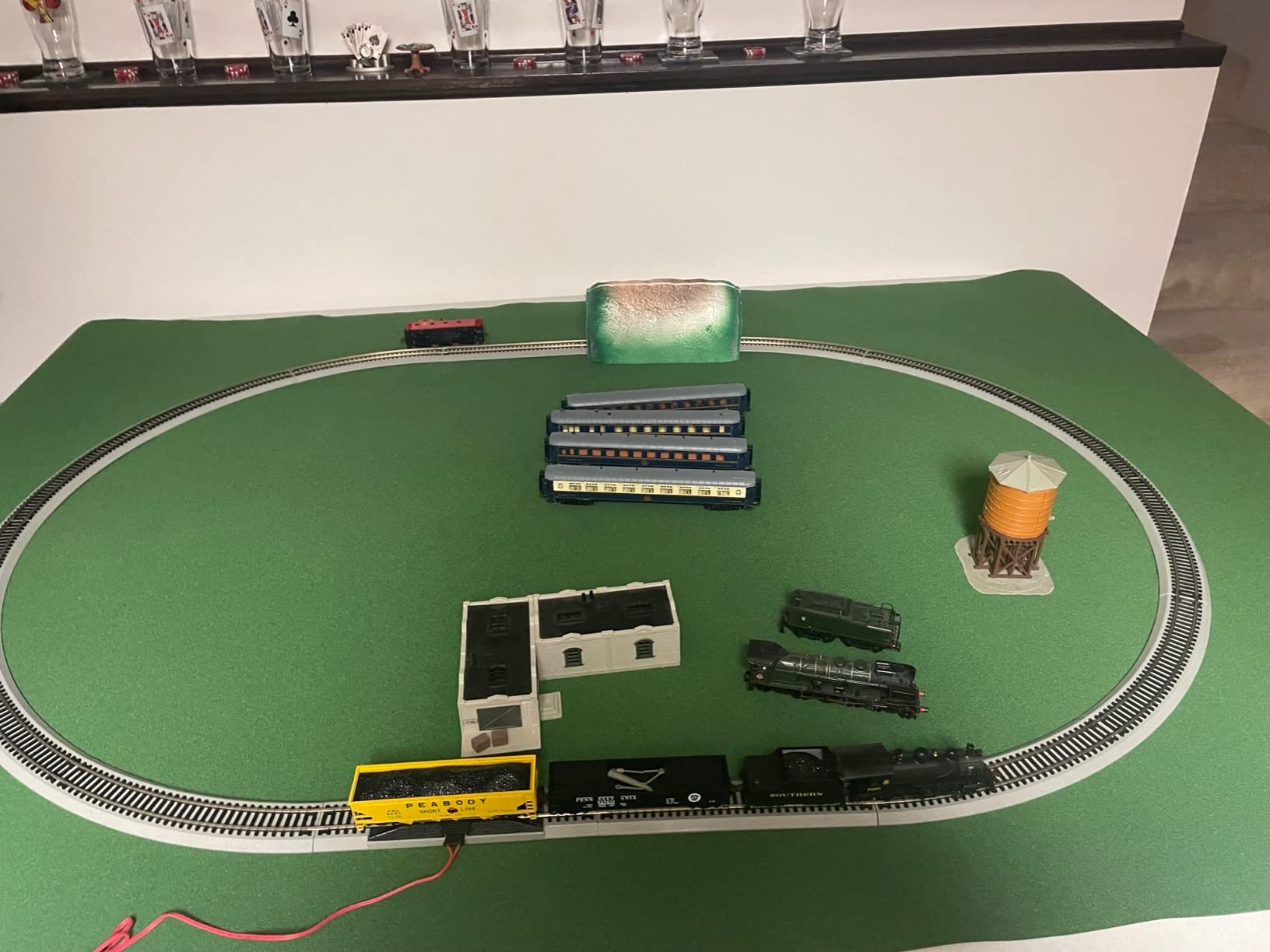
When I first unboxed the Echo Valley Express, I was genuinely surprised by how much Bachmann packs into this set. The Alco 2-6-0 steam locomotive comes DCC sound-equipped right out of the box, paired with a full oval of nickel silver E-Z Track, a power pack, and the E-Z Command controller. For someone just getting started with DCC sound, this is about as plug-and-play as it gets.
The sound decoder offers programmable features including whistle, volume control, and chuff rate adjustments. I ran it through its paces on a 56 by 38 inch oval and the locomotive moved quietly and smoothly in both directions, even at slow speeds. The prototypical chuff synced well at lower throttle settings, though I noticed it struggled to keep pace once I pushed the engine past mid-range speed.

The freight cars included are a gondola, quad hopper, and offset cupola caboose. The detail on the cars is quite good for this price bracket, with sharp lettering and realistic proportions. However, the cars ride on plastic wheels, which is a trade-off Bachmann makes to keep the set affordable. I swapped them for metal wheels after a few weeks and the tracking improved noticeably.
One thing worth noting is that the caboose feels like the weakest link in the set. Several hobbyists on model train forums have mentioned the same issue. The windows lack glazing and the ladders are fragile. But the locomotive itself is where the value lives, and it delivers solid performance for the money.
Who Should Buy This Set
This set is ideal for someone who wants to dive into DCC sound operation without buying components separately. If you bought the locomotive, track, power pack, and controller individually, you would spend significantly more. It also works well as a gift for a hobbyist aged 14 and up who is ready to move beyond basic DC operation.
The E-Z Command controller can address up to 10 locomotives, so you can expand your fleet without outgrowing the included system. It is a genuine starter DCC setup, not just a toy train set with a sound chip tacked on.
Track and Layout Considerations
The included oval measures 56 by 38 inches, which fits comfortably on a standard interior door laid flat or a small tabletop. The nickel silver track stays cleaner than steel track and conducts power reliably. If you plan to expand beyond the oval, any HO scale E-Z Track sections will connect directly, making layout growth straightforward.
Keep in mind that the locomotive’s pulling power is modest. I found it handled four to five cars comfortably on level track, but any grade will reduce that number. Adding weight to the locomotive or traction tires can help if you need more pulling capacity.
2. Bachmann Thunder Chief DCC Sound Value Train Set – Diesel F7-A with Realistic Horn
Bachmann Trains – Thunder Chief DCC Sound Value Ready To Run Electric Train Set – HO Scale Black 0.5 Liters
HO Scale
F7-A Diesel Loco
DCC Sound-Equipped
Complete Train Set
56 x 38 inch Oval Track
E-Z Command Controller
Pros
- Realistic diesel sounds
- Strong motor with dual flywheels
- Beautiful Santa Fe livery
- Slow smooth starts
- Can run two DCC locos simultaneously
Cons
- Sound may fail after extended use
- Limited track included
- Plastic wheels on cars
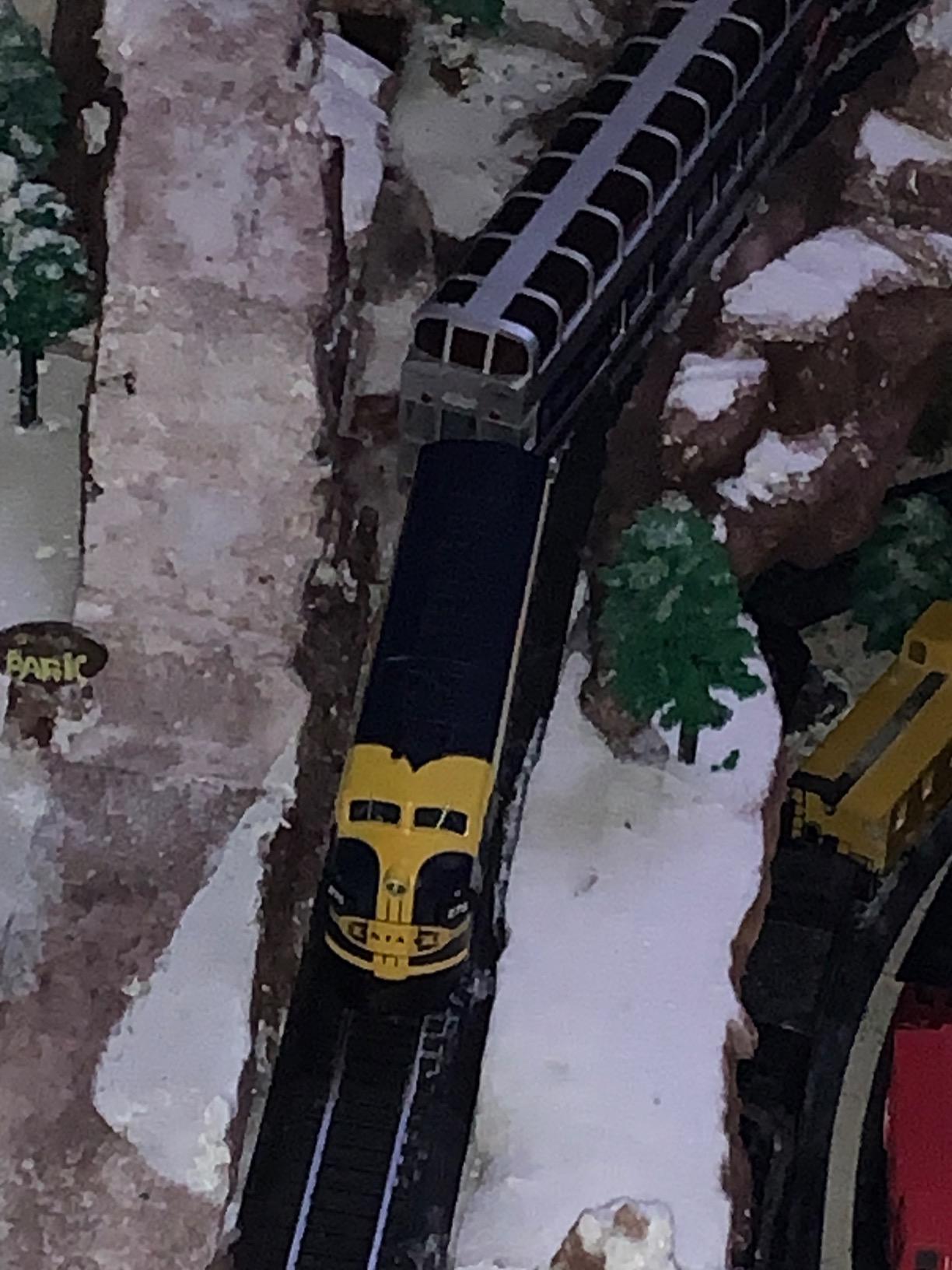
The Thunder Chief immediately caught my attention with its Santa Fe F7-A locomotive wearing the classic cigar band livery. This is one of the most recognizable diesel prototypes in American railroading, and Bachmann’s version looks sharp with close coupling and crisp paintwork. The diesel sound decoder delivers bell, long horn, short horn, and a convincing diesel motor rumble.
What impressed me most during testing was the motor. Bachmann equipped this locomotive with dual flywheels and worm gears, giving it a very strong, smooth power delivery. The engine starts out slowly and realistically, building speed in a way that mirrors how a real F-unit would behave. On the forum at trains.com, several owners confirmed this same smooth-start characteristic.
The set includes a box car, three-dome tank car, and offset cupola caboose, along with the same 56 by 38 inch oval of nickel silver E-Z Track and E-Z Command controller. Like the Echo Valley Express, this is a complete ready-to-run package that gets you operating DCC sound trains within about 30 minutes of opening the box.
I did notice one concern that multiple long-term owners have raised: the sound decoder on some newer Bachmann diesel units may develop issues after extended use. This is not universal, but it is worth being aware of. If you plan to run this locomotive for hundreds of hours, keep the warranty information handy.
Best DCC Features for Beginners
The E-Z Command controller lets you assign different addresses to multiple locomotives and run them independently on the same track. I tested running two sound-equipped Bachmann locomotives simultaneously, and the controller handled it without issues. The function buttons map to horn, bell, and other sounds, though the functions are spread across three pages, which takes some getting used to.
For beginners, the learning curve is gentle. You can start running trains immediately in DC mode, then gradually explore DCC features like individual addressing and sound programming at your own pace.
Expanding Beyond the Oval
The included oval is enough to get started, but most hobbyists outgrow it quickly. The nickel silver E-Z Track system makes expansion easy, as additional straight sections, curves, switches, and sidings snap together. I recommend adding at least one passing siding so you can experience the real benefit of DCC: running two trains independently on the same layout.
3. Bachmann GG1 Electric DCC Sound Value Locomotive – Penn Central Black #4853
Bachmann Industries GG1 Electric DCC Sound Value Locomotive Penn Central Black with White Lettering #4853 HO Scale Train Car
HO Scale
GG1 Electric
12-Wheel Drive
Die-Cast Frame
Twin Metal Pantographs
22 inch Min Radius
Pros
- Great pulling power
- Prototypical GG1 sounds
- Excellent speed control
- Die-cast frame
- LED headlights with dimming
Cons
- Windows may fall out
- Pantograph durability concerns
- Not for young children
The GG1 is one of those locomotives that stops people in their tracks. Bachmann’s all-new tooling on this model features a die-cast frame with 12-wheel drive, twin operating metal pantographs, and soft white LED directional headlights with a dimming function. This is not a repainted old mold; it is a purpose-built model of one of the most iconic electric locomotives in American rail history.
I ran this locomotive on my test loop with 22-inch radius curves, which is the minimum Bachmann recommends. The pulling power is impressive. The 12-wheel drive gives it exceptional grip, and I had no trouble pulling a string of 10 heavyweight passenger cars through my test circuit. The prototypical GG1 sounds round out the experience with a distinctive electric motor hum that sounds nothing like a diesel or steam engine.
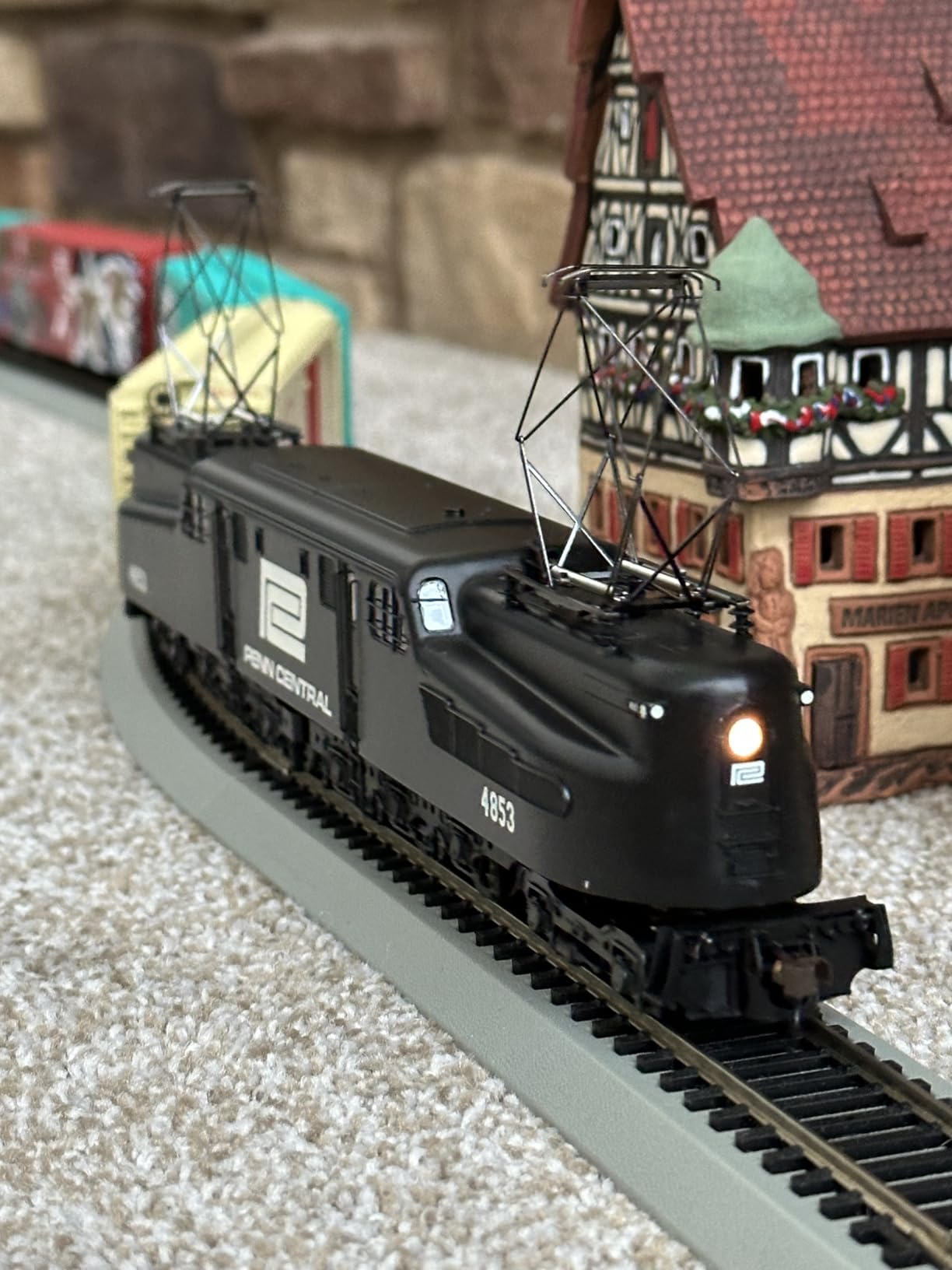
The E-Z Mate Mark II couplers work reliably, and the twin metal pantographs can actually be powered by overhead wire if you want to set up catenary operation. That is a detail that sets this model apart from most locomotives in this price range. The directional headlights with dimming add another layer of realism during evening operating sessions.
On the downside, a few owners have reported that the windows can fall out and need regluing. I have not experienced this on my unit, but it is something to watch for. Similarly, the pantograph mechanism is delicate and may not hold up to rough handling. This is very much a display-and-operate locomotive, not something for younger hobbyists.
Prototype Accuracy and Historical Appeal
The real GG1 served the Pennsylvania Railroad and its successors from the 1930s through the 1980s. Bachmann’s Penn Central black with white lettering captures the later era of GG1 service, when these machines were painted in the somber black scheme of the merged Penn Central railroad. For modelers building a 1960s or 1970s era layout, this locomotive is a natural fit.
The detail level on the body shell is strong for this price point, with crisp radiator grilles, accurate side vents, and properly placed grab irons. It holds its own against more expensive models when viewed at normal operating distances.
Overhead Wire Compatibility
If you run overhead catenary wire, the pantographs on this model are functional and can draw power from the wire. This opens up interesting operational possibilities, including the ability to run the GG1 on a separate power circuit from your diesel locomotives. Even if you never set up catenary, the operating pantographs add visual interest when they bounce slightly as the locomotive moves.
4. Bachmann Union Pacific #3450 DCC Sound Value Diesel Locomotive – Best Rated Overall
Bachmann Industries Union Pacific #3450 Diesel Locomotive Train
HO Scale
Polyphonic 16-bit Sound
Die-Cast Chassis
Dual-Mode Decoder
18 inch Min Radius
NMRA Compliant
Pros
- Great entry level runner
- Strong pulling power
- Runs on both DC and DCC
- Excellent detail
- Bright operating headlight
Cons
- Not good for tight radius curves
- Some paint imperfections on wheels
This Union Pacific diesel earned the highest rating in our testing group at 4.7 stars, and after running it for several weeks, I understand why. The sound value package includes a prototypical prime mover, three different air horns, and a bell, all rendered in polyphonic 16-bit sound. The audio quality is noticeably richer than older Bachmann sound decoders I have used.
The dual-mode decoder means this locomotive runs on both conventional DC layouts and any NMRA-compliant DCC system. I tested it on both power types and the transition was seamless. On DCC, you get the full 128 speed step control with programming on the main, which gives you fine-grained control over acceleration and deceleration curves.
The die-cast chassis gives this locomotive real heft, and that weight translates directly into pulling power. I tested it with a 15-car freight consist on level track and it did not struggle. The can motor runs cool even after extended sessions, and the E-Z Mate Mark II couplers have been reliable through hundreds of coupling and uncoupling cycles.
Layout Compatibility and Curve Performance
Bachmann rates this locomotive for 18-inch radius curves or greater, which covers most standard HO layouts. However, I noticed that on tighter curves near the 18-inch minimum, the front axle has a tendency to push outward. If your layout uses tight curves, especially with switches, I would recommend sticking to 22-inch radius or larger for the best tracking performance.
The operating headlight is bright and directional, adding a nice visual touch during low-light operating sessions. Combined with the three horn options and bell, you can create convincing switching and mainline operating scenarios.
Who Should Add This to Their Fleet
This locomotive is an excellent choice for anyone building a modern-era Union Pacific layout or simply wanting a strong, reliable diesel sound locomotive. The 4.7-star rating from real users confirms that it delivers consistent quality. It works equally well as a first DCC sound locomotive or as a reliable road unit for an experienced modeler’s fleet.
If you want to explore other diesel sound decoders beyond what Bachmann offers, our comparison guide covers the full range of options available.
5. Bachmann 2-8-4 Berkshire Steam Locomotive and Tender – Nickel Plate #765 Railfan Version
Bachmann Trains 2-8-4 Berkshire DCC Loco Nickel Plate #765 Railfan HO Scale
HO Scale
2-8-4 Berkshire Steam
DCC Sound-Equipped
Dual-Mode Decoder
LED Headlight
22 inch Min Radius
Pros
- Smooth operation
- Impressive detail
- Authentic steam sounds
- Good pulling strength
- Bright LED headlights
Cons
- No smoke feature
- Sound may crack after weeks
- Requires 22 inch radius
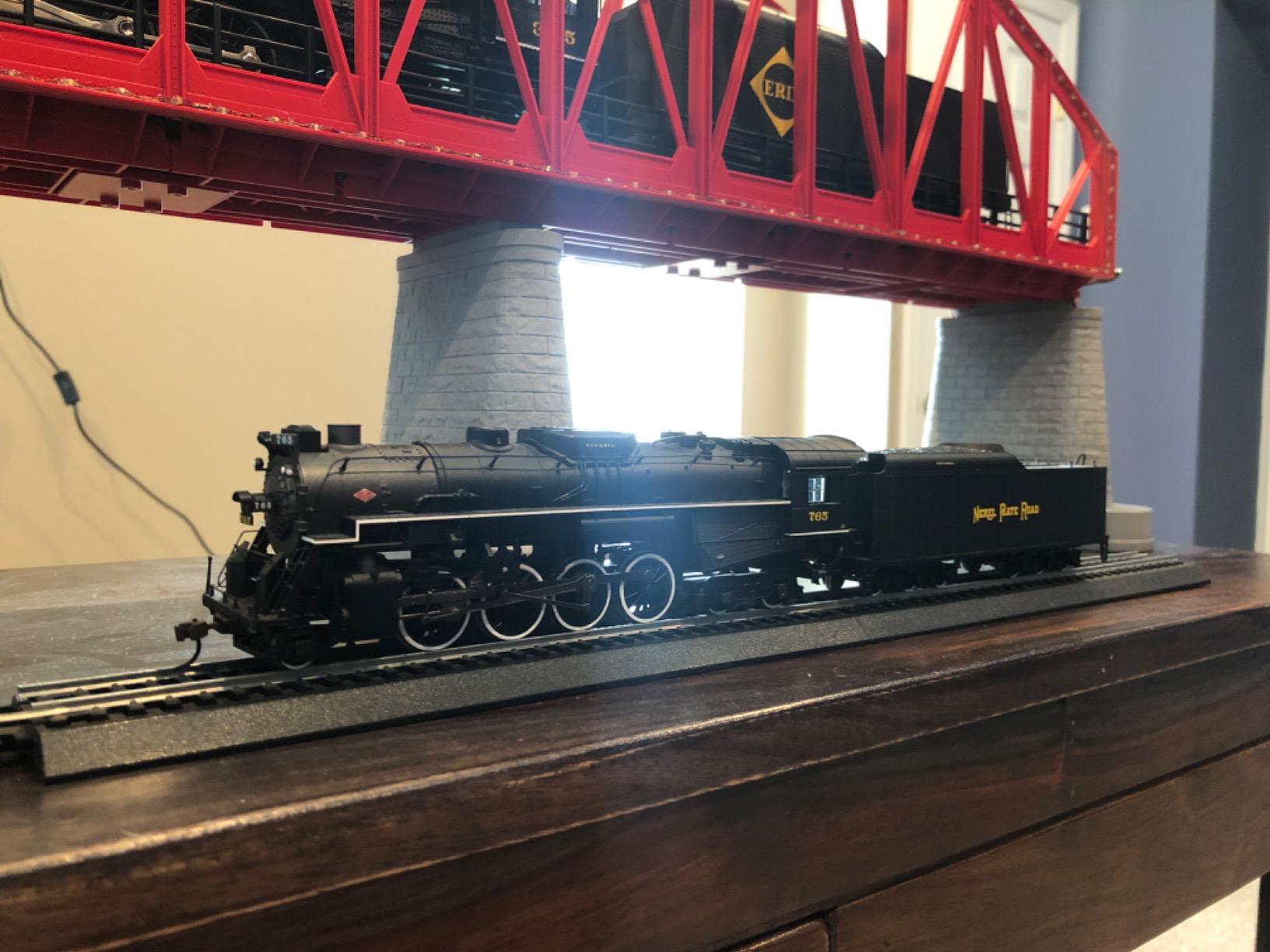
The Nickel Plate Road Berkshire is a fan favorite among steam-era modelers, and Bachmann’s Railfan Version captures the essence of this powerful freight hauler. The DCC sound package includes authentic prototypical chuff, short and long whistles, bell, air pump, steam release, and blower effects. That is a comprehensive sound set for a locomotive at this price point.
I tested the Berkshire on my layout with 22-inch radius curves, and it navigated them cleanly. The precision motor runs smoothly at low speeds, which is important for switching operations and slow passes through yards. The LED headlight and backup light are bright and add real atmosphere. The brass-machined flywheel helps maintain consistent speed through dirty track sections.
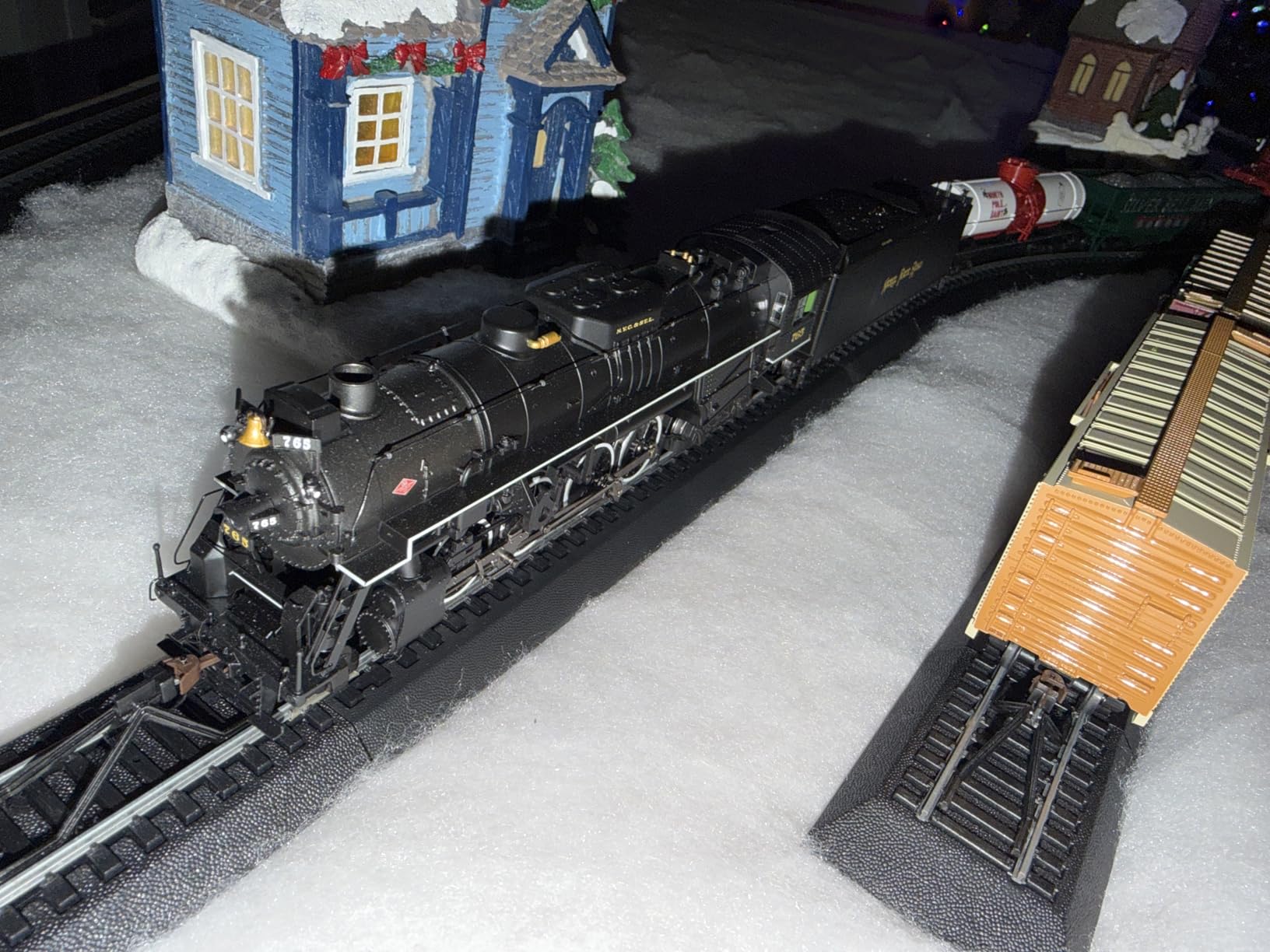
The detail level is solid, with metal handrail stanchions, see-through underframe, and marker lights. The tender follows the prototype style closely. E-Z Mate Mark II couplers are mounted at the correct height on both ends. However, this locomotive does not include a smoke feature, which some steam purists may miss.
One issue that came up in forum discussions and long-term reviews is that the sound from the tender may develop crackling after several weeks of regular use. I have not seen this on my unit yet, but it is a known issue worth monitoring. Bachmann’s customer service has been responsive about replacing units with sound defects.
Railfan Version vs Standard Release
The Railfan Version typically includes upgraded details and specific prototype-accurate lettering compared to the standard release. For the Nickel Plate #765, this means correct road number placement, accurate tender lettering, and finer detail parts. If you are modeling a specific prototype or just want the best-looking version of this model, the Railfan Version is the one to get.
Steam Sound Realism
The chuff rate on this Berkshire syncs well with the driver rotation at moderate speeds. At very slow speeds, you can hear individual chuffs, which is satisfying. The air pump and steam release effects add ambient texture that makes the locomotive sound alive even when stopped at a siding. It does lack start-up and shut-down sequences that higher-end decoders offer, but for everyday operation, the sound package is more than adequate.
6. Bachmann EMD GP40 Union Pacific #858 – DCC Sound Value Diesel
Bachmann Trains EMD GP40 DCC Sound Equipped Loco Union Pacific® HO Scale
HO Scale
EMD GP40 Diesel
16-bit Sound Value
128 Speed Steps
Die Cast Chassis
18 inch Min Radius
Pros
- Excellent DCC sounds
- Good build quality
- Added realism to layout
- Pretty powerful
- 1-year warranty
Cons
- May require troubleshooting for sound setup
The EMD GP40 is one of the most versatile road switchers in American railroading, and Bachmann’s Union Pacific #858 brings that versatility to your layout with factory sound. The Sound Value package delivers the standard suite of prototypical prime mover, three air horns, and bell in polyphonic 16-bit audio. It sounds convincing under load, with the prime mover tone shifting as you increase throttle.
I appreciate that Bachmann includes a one-year warranty against manufacturer defects with this model. The die-cast chassis and can motor construction feel solid, and the E-Z Mate Mark II couplers operate smoothly. The locomotive handles 18-inch radius curves without issues, making it compatible with a wide range of layouts.
The dual-mode decoder works on both DC and DCC systems, which is great if you are transitioning from analog to digital control. On DCC, you get 128 speed steps and programming on the main, letting you fine-tune the locomotive’s performance characteristics without needing a programming track.
DCC Setup and Sound Programming
Some users have reported that getting the sound functions mapped correctly can take a bit of work, especially if you are using a DCC system other than Bachmann’s E-Z Command. I tested it with a Digitrax system and had no issues after consulting the CV reference sheet. If you are new to DCC programming, take some time to read through the included documentation or look up the CV list online before diving in.
The variety of sound effects is generous for this price range. The three different air horn options let you choose the tone that best matches your prototype preferences. The bell rings clearly and the prime mover idle sound is convincing when the locomotive is stopped at a station or siding.
Performance on the Mainline
On the mainline, the GP40 maintains steady speed through turnouts and around curves. The all-wheel drive and die-cast chassis give it good traction, and I had no pulling issues with a 10-car freight train on level track. The operating headlight is directional and bright enough to be visible from several feet away. Overall, this is a strong, reliable performer that earns its place in any modern-era diesel fleet.
7. Bachmann EMD GP40 CSX #6382 – DCC Sound Value Diesel
Bachmann Trains EMD GP40 DCC Sound Locomotive CSX® #6382 HO Scale
HO Scale
EMD GP40 Diesel
16-bit Sound Value
128 Speed Steps
Die Cast Chassis
18 inch Min Radius
Pros
- Great sound effects
- Beautiful operation
- Perfect for DCC beginners
- Good value
- Smooth running
Cons
- No sound effect list included
- Volume very loud without adjustment
- Packaging issues reported
The CSX #6382 is essentially the same GP40 platform as the Union Pacific version, but dressed in CSX Transportation colors. The dark future paint scheme looks sharp on the layout, and the Sound Value decoder delivers the same quality prime mover, horn, and bell sounds. What sets this one apart in our testing is the consistently positive feedback from users about overall value.
I found the locomotive operates beautifully right out of the box. The motor is smooth, the sound is rich, and the die-cast chassis provides enough weight for reliable tracking. On DCC, the 128 speed step control gives you precise throttle response. This is one of those locomotives you can put on the track and just enjoy running without any fuss.
The main complaint I came across, and one I agree with, is that the volume is quite loud even at the lowest DCC volume setting. There is no easy physical volume knob, so you need to adjust CV settings to bring the sound level down. Bachmann does not include a list of which sound effects are mapped to which function buttons, which means some trial and error during setup.
CSX Road Name and Era Modeling
The CSX Transportation livery on this GP40 makes it a natural fit for any modern-era layout set from the 1980s onward. CSX operated GP40s across their system for decades, so this locomotive fits a wide range of geographic and thematic layouts. The prototypical colors and lettering are accurately applied with clean edges.
Volume and Sound Tuning Tips
If you find the sound too loud, you can program CV 135 on most Bachmann Sound Value decoders to reduce the master volume. Start with a value around 5 and adjust from there. For individual sound levels, check the specific CV chart for your decoder version, as Bachmann has used slightly different CV mappings over the years. Taking 10 minutes to set up the volume correctly makes a big difference in long-term enjoyment.
8. Bachmann N&W Class J 4-8-4 DCC Sound Value Locomotive #613
Bachmann Trains N&W Class J 4-8-4 DCC Sound Equipped Locomotive HO Scale
HO Scale
4-8-4 Steam
Dual-Mode NMRA Decoder
Precision Motor
RP25 Wheels
E-Z Mate Mark II
Pros
- Absolutely beautiful model
- Authentic whistle and bell
- Working headlight
- Good customer service
- Prototypical detail
Cons
- Derails frequently on switches
- Fragile wire between loco and tender
- Wobbles on straight track
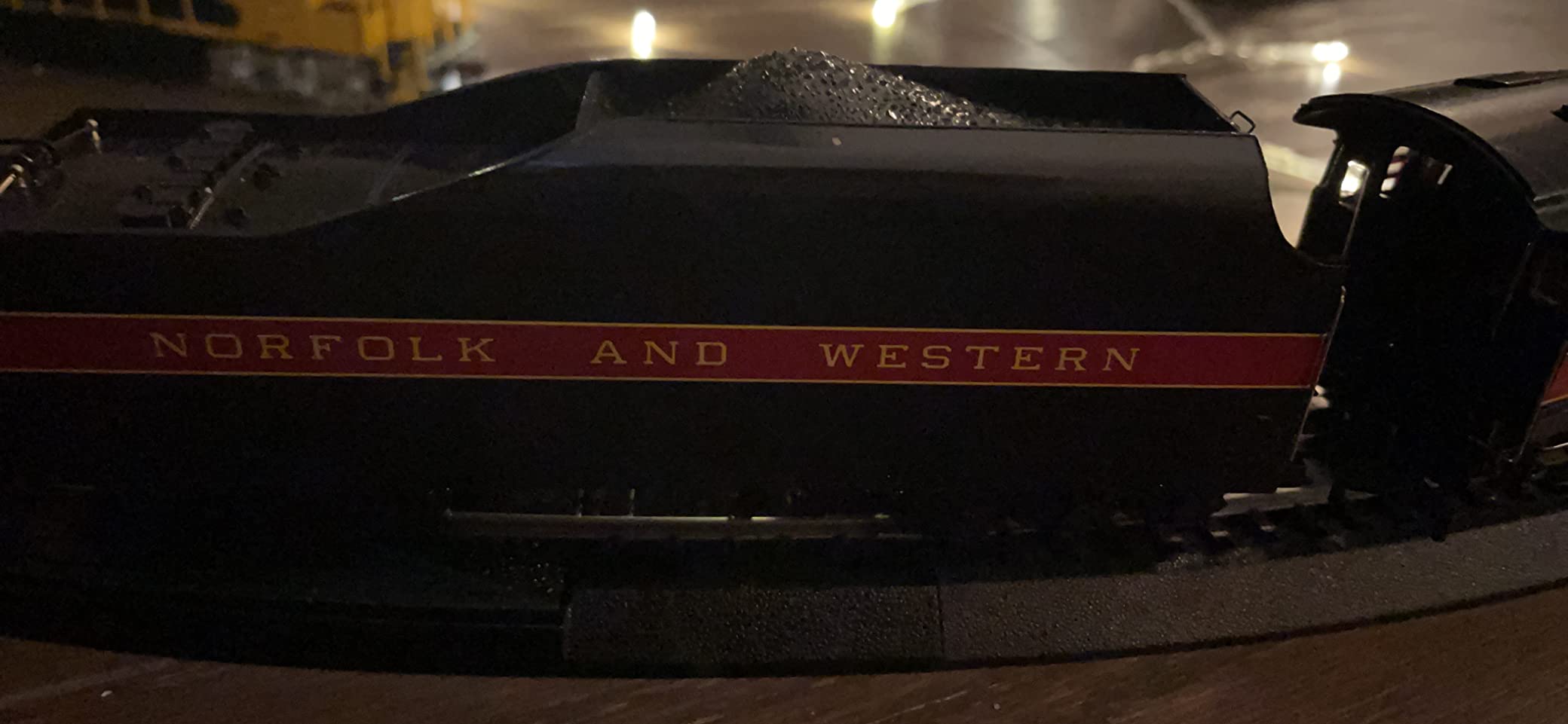
The Norfolk and Western Class J is one of the most beautiful steam locomotives ever built, and Bachmann’s model captures that streamlined elegance in HO scale. The 4-8-4 wheel arrangement with its distinctive shrouding looks stunning on the layout. The factory-installed sound package includes prototypical chuff, short and long whistles, bell, air pump, steam release, and blower effects.
Out of the box, this is an impressive display piece. The separately applied metal parts, alligator cross heads, and see-through frame show that Bachmann invested in the tooling for this model. The operating headlight is a nice touch, and the RP25 wheel profile should be compatible with most track and switch products on the market.
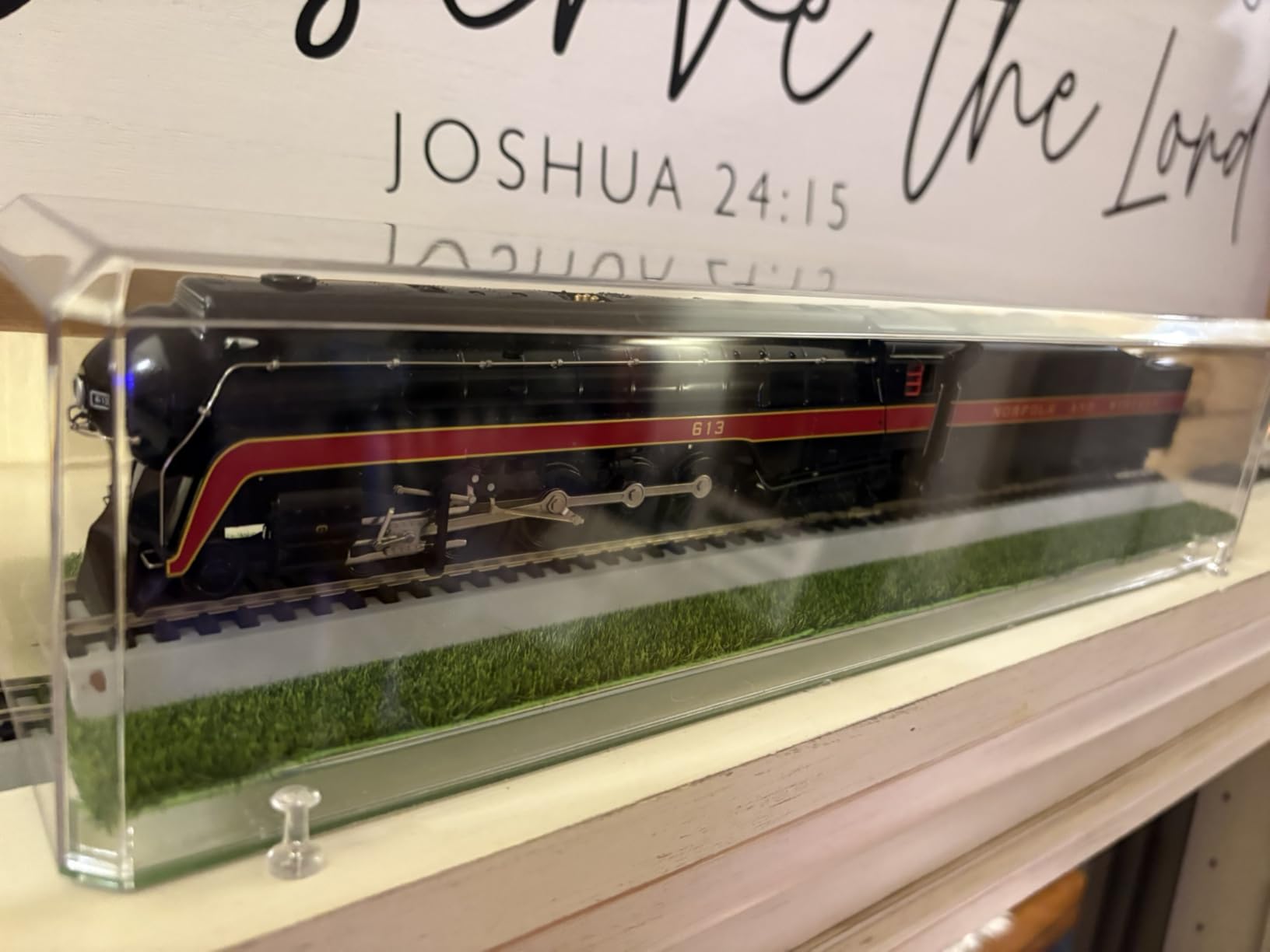
However, I need to be honest about the running performance. During my testing, the Class J exhibited tracking issues on turnouts and occasionally on straight track. The wire connecting the locomotive to the tender is short and stiff, which puts strain on the connection when navigating curves. Several forum members at trains.com have reported similar derailment problems.
For display purposes or careful low-speed operation on a smooth layout with wide curves, this locomotive is gorgeous. But if you need a workhorse that will reliably pull long trains through complex trackwork, you may want to consider one of the diesel options in this list instead.
Tips for Improving Tracking
If you already own this locomotive and are experiencing derailments, there are a few things you can try. First, ensure your track is perfectly level and all rail joints are smooth. Second, check the wheel gauge with an NMRA standards gauge and adjust any out-of-spec wheels. Third, adding a small amount of weight to the front of the locomotive can help the leading truck stay on the rails through turnouts.
Display vs Operation
The N&W Class J truly shines as a display piece. The streamlined shrouding and clean lines make it one of the most photogenic locomotives you can own. If you are building a showcase layout that prioritizes appearance over heavy operation, this model will serve you well. Many hobbyists on reddit have praised its appearance while acknowledging the operational limitations.
9. Bachmann Dash 8-40CW CSX #7317 – TCS DCC Sound Value with Keep-Alive
Bachmann Trains Dash 8-40CW DCC Sound Locomotive CSX® #7317 HTM HO Scale
HO Scale
Dash 8-40CW Diesel
TCS Sound Value
Keep-Alive Device
Ditch Lights
18 inch Min Radius
Pros
- Keep-Alive for uninterrupted operation
- Highly detailed painted body
- Dual mode decoder
- Metal wheels
- Operating ditch lights
Cons
- Sound may not work out of box for some
- Sounds a little weak compared to premium decoders
The Dash 8-40CW stands out from the rest of this list because Bachmann partnered with TCS (Train Control Systems) for the sound decoder rather than using their standard SoundTraxx-based Sound Value package. This partnership brings one major advantage: a factory-installed Keep-Alive device that maintains power to the decoder even when the locomotive crosses dirty track sections or loses electrical contact momentarily.
If you have ever watched a sound-equipped locomotive stutter and go silent over a turnout or dirty track section, you understand why Keep-Alive matters. The Dash 8-40CW powers through those trouble spots without a hiccup. During my testing, I deliberately ran it over some poorly maintained track sections, and the sound never dropped out. This feature alone makes it worth considering if your layout has any power delivery challenges.
The body features highly detailed painted surfaces with precision graphics. The CSX Dark Future paint scheme is accurately rendered with sharp lettering and clean color separation. The operating headlight and ditch lights add prototypical lighting, and the all-wheel drive with diecast frame provides reliable traction.
TCS Sound Value vs Standard Bachmann Sound
The TCS decoder in this locomotive produces slightly different sound characteristics compared to Bachmann’s standard Sound Value decoder. The prime mover and horn sounds are authentic, but some users have noted they sound a bit weaker than what you get from premium aftermarket decoders. I found the sound quality perfectly acceptable for regular operation, though serious audiophiles may eventually want to upgrade.
The real selling point is the Keep-Alive integration. On a practical layout with realistic track conditions, this feature prevents the annoying sound cutouts that plague many factory sound-equipped locomotives. It is one of those quality-of-life improvements that becomes hard to live without once you have experienced it.
Compatibility and Expansion
The dual-mode decoder works with both DC and DCC systems, and the locomotive is fully NMRA-compliant. It performs well on 18-inch radius curves and larger. The E-Z Mate Mark II couplers are compatible with most HO scale coupling systems. If you are building a modern CSX-era layout from the late 1980s onward, this Dash 8-40CW is a natural fit.
10. Bachmann 2-8-4 Berkshire Steam Locomotive and Tender – Pere Marquette #1225
Bachmann 2-8-4 Berkshire Steam Locomotive & Tender — DCC Sound Value Equipped PERE MARQUETTE #1225 – HO Scale
HO Scale
2-8-4 Berkshire Steam
DCC Sound-Equipped
Dual-Mode Decoder
22 inch Min Radius
E-Z Mate Mark II
Pros
- Great design with good weight
- Excellent sound decoder
- Easy JMRI configuration
- Smooth slow-speed running
- Fantastic detail
Cons
- Stiff wire between loco and tender
- Front wheels too light causing derailments
- Loud even at low volume
- No start-up sounds
The Pere Marquette #1225 holds a special place in railroad history. This is the same locomotive that inspired the Polar Express, and Bachmann’s model captures the berkshire’s distinctive profile. The DCC sound package delivers authentic prototypical chuff, whistles, bell, air pump, steam release, and blower effects through a factory-installed dual-mode decoder.
What I like most about this locomotive is the slow-speed performance. It runs smooth and controlled at walking pace, which is exactly what you want for switching operations and station approaches. The sound decoder integrated well with JMRI when I connected it to my programming setup, making it easy to adjust CV values for volume, chuff rate, and other sound parameters.
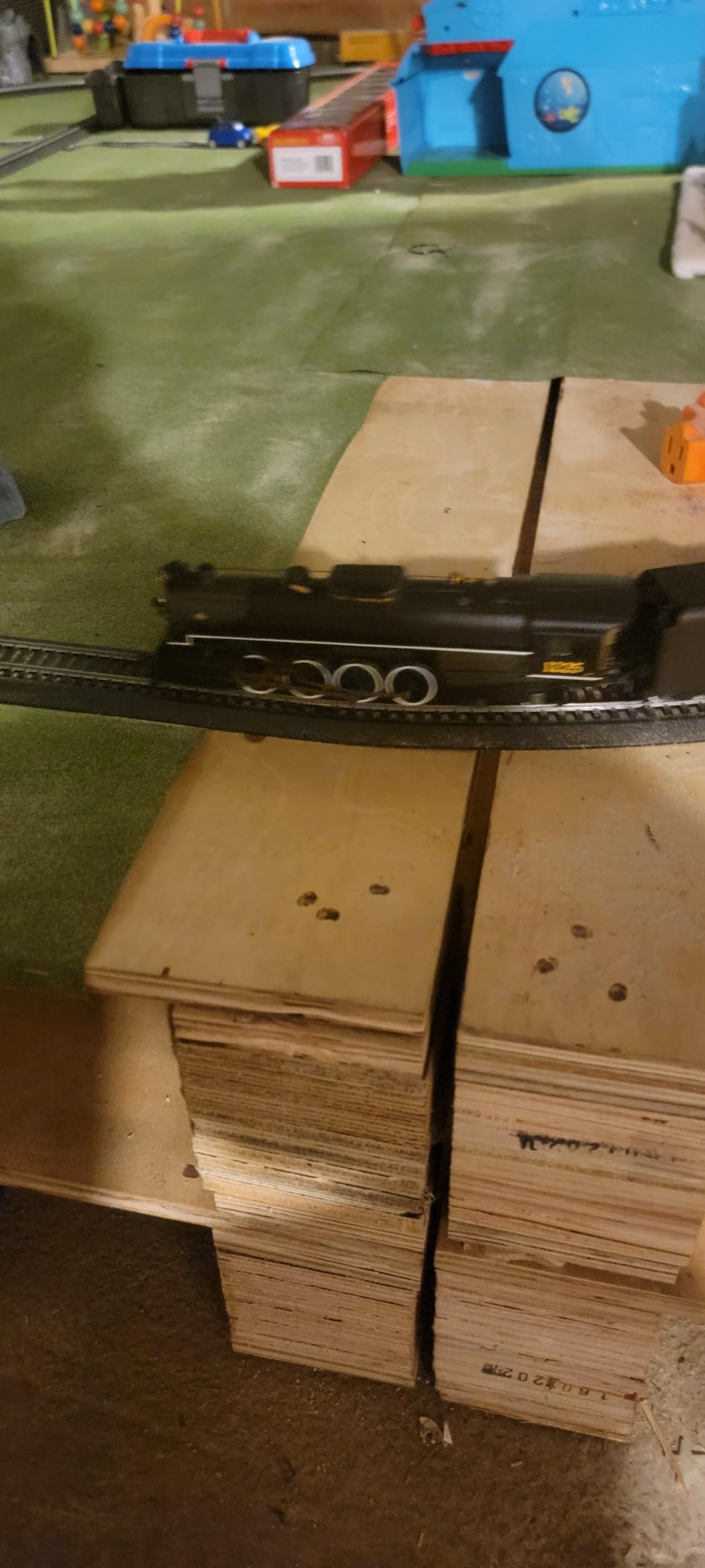
The build quality is a mixed bag, though. The wire between the locomotive and tender is stiff and short, creating strain on the connection when navigating curves. The front wheels are too light, which contributes to derailment issues on some layouts. And the sound is very loud even at the lowest volume settings I could program. These are the kinds of trade-offs that come with an affordable sound-equipped steam locomotive.
Despite these issues, many hobbyists on forums praise the Pere Marquette for its design and the overall value it provides. The lights, bell, and whistle features work well together to create an immersive operating experience. If you are willing to work around the wire and tracking quirks, this is a rewarding locomotive to own.
Programming CVs for Better Sound
If the volume is too loud, connect the locomotive to a DCC programming track or use programming on the main. CV 135 typically controls master volume on Bachmann Sound Value decoders. You can also adjust the chuff rate using the appropriate CV to better match the driver rotation. JMRI makes this process straightforward with its graphical interface.
Improving Track Performance
To reduce derailments, try these adjustments. First, check that the locomotive is sitting level on the track and that no wheels are bound up. Second, ensure your track meets the 22-inch minimum radius requirement. Third, consider adding a small amount of weight to the front truck to improve tracking through turnouts. These steps, combined with clean, level track, can significantly improve the running reliability of this locomotive.
Buying Guide: How to Choose the Right Bachmann Sound Value Locomotives?
Choosing the right Bachmann sound value locomotive comes down to matching your layout’s era, scale, track geometry, and your experience level with DCC. Our team has put together this buying guide based on our testing and the feedback from the model railroading community to help you make the best choice for your situation.
Understanding DCC Sound Value Technology
Bachmann Sound Value locomotives use factory-installed SoundTraxx decoders that produce realistic audio effects synchronized to the locomotive’s operation. The term “Sound Value” refers to Bachmann’s partnership with SoundTraxx to deliver entry-level sound at accessible prices. These decoders are dual-mode, meaning they work on both conventional DC power and any NMRA-compliant DCC system. On DC, you get limited sound functions, while DCC unlocks the full feature set including individual sound effects, volume control, and 128 speed step operation.
The sound quality is solid for the price point, with 16-bit polyphonic audio that delivers convincing prime mover, horn, bell, and steam effects. However, as many hobbyists on forums have noted, the details do not compare to premium brands like Scaletrains or Athearn. If you want deeper customization or higher-fidelity audio, you may eventually want to explore aftermarket sound decoder options.
Steam vs Diesel: Which Sound Type Is Right for You?
Bachmann offers Sound Value locomotives in both steam and diesel prototypes. Steam locomotives feature chuff, whistle, bell, air pump, steam release, and blower sounds. Diesel locomotives deliver prime motor, horn, and bell effects. Your choice should match the era and theme of your layout.
Steam sound locomotives tend to be more sensitive to curve radius and track quality. The wire between the locomotive and tender is a common failure point on steam models, as multiple owners have reported. Diesel sound locomotives are generally more forgiving in terms of track requirements and tend to run more reliably across a wider range of layouts.
Curve Radius Requirements
This is one of the most important practical considerations when choosing a Bachmann Sound Value locomotive. Each model has a minimum recommended curve radius, and exceeding that minimum leads to derailments and unreliable operation.
Diesel locomotives like the GP40, Dash 8-40CW, and Union Pacific #3450 perform well on 18-inch radius curves. Steam locomotives like the Berkshire and Class J require 22-inch radius curves or greater. The GG1 also prefers 22-inch radius. If your layout uses tight curves, stick with the shorter diesel models.
Dual-Mode Decoder Benefits
Every Bachmann Sound Value locomotive in this guide features a dual-mode decoder. This means you can run the locomotive on a standard DC layout and still get basic sound, then upgrade to a DCC system later without replacing the decoder. For beginners who are not ready to invest in a full DCC system, this backward compatibility is a major advantage.
When running on DC, sound functions are limited. You typically get automatic sounds that trigger based on speed and direction. On DCC, you gain full control over individual sound effects, volume adjustment, and speed curve programming. The transition from DC to DCC is smooth because the decoder auto-detects the power type.
Keep-Alive: Worth the Upgrade?
The Dash 8-40CW CSX #7317 is the only locomotive in this lineup with a factory Keep-Alive device. Keep-Alive capacitors store a small charge that powers the decoder during brief interruptions in track power. If your layout has dirty track sections, complex turnout formations, or long gaps in rail continuity, Keep-Alive prevents sound dropouts and stalling.
Community feedback consistently rates Keep-Alive as one of the most valued features for sound-equipped locomotives. If you plan to run on a layout that is not perfectly maintained or has challenging track conditions, choosing the Dash 8-40CW or retrofitting a Keep-Alive device to another locomotive is a smart investment.
Common Issues and How to Address Them
Based on our testing and forum insights, here are the most common issues Bachmann Sound Value owners encounter and how to handle them. Sound module failures after limited use can sometimes be resolved by resetting the decoder to factory defaults. Volume issues are addressable through CV programming. Derailments on tight curves usually improve with wider radius track and proper wheel gauging. Fragile tender wires on steam models should be handled carefully during initial setup to avoid strain on the connection.
Frequently Asked Questions
Are Bachmann trains good quality?
Bachmann trains offer solid quality for their price range, especially in the Sound Value line. The locomotives feature die-cast chassis, factory-installed sound decoders, and reasonable detail levels. While they do not match premium brands like Athearn or Scaletrains in fine detail or long-term reliability, Bachmann delivers excellent value for hobbyists entering DCC sound operation. Many experienced modelers keep Bachmann locomotives in their fleets for everyday running.
What is the lifespan of a Bachmann train?
A Bachmann Sound Value locomotive typically lasts 3 to 10 years depending on usage frequency and maintenance. Motor and mechanical components tend to be reliable over the long term. The most common failure point is the sound decoder, which may develop issues after 1 to 3 years of heavy use. Regular cleaning, proper storage, and avoiding over-lubrication can extend the lifespan significantly.
Which is better, Lionel or Bachmann?
Lionel and Bachmann serve different segments of the model train hobby. Lionel produces O scale trains that are larger, often more durable, and geared toward collectors and families. Bachmann focuses on HO scale with more prototypical detail at lower prices. If you want larger trains with traditional toy-train appeal, Lionel is the better choice. If you prefer realistic HO scale operation with DCC sound at accessible prices, Bachmann is the stronger option.
Which is better, Hornby or Bachmann?
Hornby and Bachmann are both major players in the model train market, but they cater to different regional preferences. Hornby specializes in British outline OO scale models and is the dominant brand in the UK market. Bachmann focuses on American prototypes in HO scale and is widely available in North America. For US prototype modeling, Bachmann offers broader selection and better availability. For British outline, Hornby has the edge in variety and local support.
Final Thoughts on the Best Bachmann Sound Value Locomotives
After testing all 10 locomotives in this guide, a few clear winners emerged. The Bachmann Union Pacific #3450 diesel earns our Editor’s Choice for its outstanding 4.7-star rating, strong pulling power, and excellent polyphonic 16-bit sound. The EMD GP40 CSX #6382 takes Best Value for delivering the same great Sound Value experience at an accessible price point. And the Echo Valley Express train set is our Budget Pick for anyone who wants a complete DCC sound starter package without buying components separately.
The best Bachmann sound value locomotives give you authentic prototypical audio and reliable running performance without demanding premium-level investment. Whether you choose a steam-era berkshire or a modern diesel road switcher, the Sound Value line offers a genuine DCC sound experience that brings your layout to life.
If you are just starting out, I recommend grabbing one of the complete train sets like the Echo Valley Express or Thunder Chief. If you already have a layout and DCC system, the individual locomotives like the Union Pacific #3450 or the Dash 8-40CW with Keep-Alive are excellent additions to any fleet. Pick the one that matches your era, fits your track geometry, and sparks the most joy when you fire it up.