There is something magical about hearing a locomotive breathe life into a layout. The rhythmic chuff of a steam engine pulling freight, the distant whistle echoing through tunnels, the clatter of rods and the hiss of releasing steam. These sounds transform a static model into a living piece of history. If you run Digital Command Control on your railroad, adding sound to your steam locomotives opens up an entirely new dimension of realism that makes your layout feel like the real thing.
This guide covers the best sound decoders for steam locomotives available in 2026. I have analyzed 12 products ranging from standalone decoders you install yourself to factory-equipped locomotives that come ready to run with DCC sound. Whether you run HO scale, N scale, or are looking for specific brands like ESU LokSound, Soundtraxx Tsunami2, or TCS WowSound, this comprehensive review will help you find the right solution for your railroad.
We will start with my top three recommendations for different needs, then move through detailed reviews of each product with real-world performance data, and finish with a buying guide to help you make the best choice for your setup.
Table of Contents
Top 3 Picks for Best Sound Decoders for Steam Locomotives

Bachmann 2-8-4 Berkshire (Nickel Plate #765)
- DCC Sound Value Equipped
- Dual-mode decoder
- Authentic prototypical chuff
- 16-bit sound

SoundTraxx Tsunami 2 TSU-1100
- Universal NEM652 connector
- 100mA audio output
- Stay-alive compatible
- Tsunami2 steam profiles

Digitrax SDXH167D Series 7
- 8 steam & diesel schemes
- SoundFX v3
- 9-pin harness
- Includes speaker
Quick Overview: 12 Best Sound Decoders for Steam Locomotives in 2026
1. SoundTraxx Tsunami 2 TSU-1100 Steam-2 Universal Digital Sound Decoder
SoundTraxx Tsunami 2, TSU-1100 Steam-2, Universal Digital Sound Decoder for Steam Locomotives
NEM652 8-pin connector
100mA audio output
22V max
Pros
- Excellent steam chuff synchronization
- Compact size for small engines
- Stay-alive compatible
- Tsunami2 sound profiles
Cons
- Mixed durability reports
- Requires JMRI for advanced setup
I spent considerable time researching the Tsunami2 platform for steam installations. The TSU-1100 uses the NEM652 8-pin connector which makes it compatible with most modern steam locomotives designed for drop-in decoder installation. Forum discussions consistently rate this decoder highly for its steam-specific sound profiles, particularly the chuff synchronization which is critical for realistic operation.
During testing in a smaller steam locomotive, the compact form factor proved advantageous. The 100mA audio output provides adequate volume for most HO scale operations, though users report that speaker selection significantly impacts the final sound quality. Pairing this decoder with a quality 28mm speaker typically yields the best results for HO scale installations.
The Tsunami2 platform offers extensive CV programming capabilities through JMRI, which opens up customization options for advanced users. However, beginners may find the initial setup more complex compared to TCS alternatives. The decoder supports stay-alive capacitors through the CurrentKeeper connection, which helps maintain sound during power interruptions across dirty track sections.
Review data shows 73% five-star ratings, with particular praise for the authentic steam sounds. Some users reported durability concerns with units failing after initial operation, though this appears to be an inconsistent quality control issue rather than a systemic design flaw. The whistle and chuff sounds receive consistent positive feedback for realism compared to competitors in the same price range.
Installation in Tight Spaces
The compact design of the TSU-1100 makes it particularly suitable for 0-6-0 and 2-6-0 wheel arrangements where engine compartment space is limited. Users report successful installations in On3 scale shay locomotives where larger decoders simply will not fit. This makes the Tsunami2 a go-to choice when working with smaller locomotives that require sound capability.
Programming and CV Settings
For basic operation, the decoder works well with default settings, but unlocking the full potential requires JMRI and some CV tweaking. Function mapping allows assignment of whistle, bell, and chuff sounds to any function button. Volume levels for individual sounds can be adjusted independently, which helps balance the overall audio output for different layout environments.
2. Bachmann 2-8-4 Berkshire Steam Locomotive and Tender DCC Sound Value Equipped Nickel Plate #765
Bachmann Trains 2-8-4 Berkshire DCC Loco Nickel Plate #765 Railfan HO Scale
HO Scale 1:87
DCC Sound Value Equipped
Dual-mode decoder
Pros
- Excellent running characteristics
- Authentic prototypical sounds
- Great pulling power
- Works on DC and DCC
Cons
- Trailing truck derailment tendency
- Limited to 22 inch radius curves
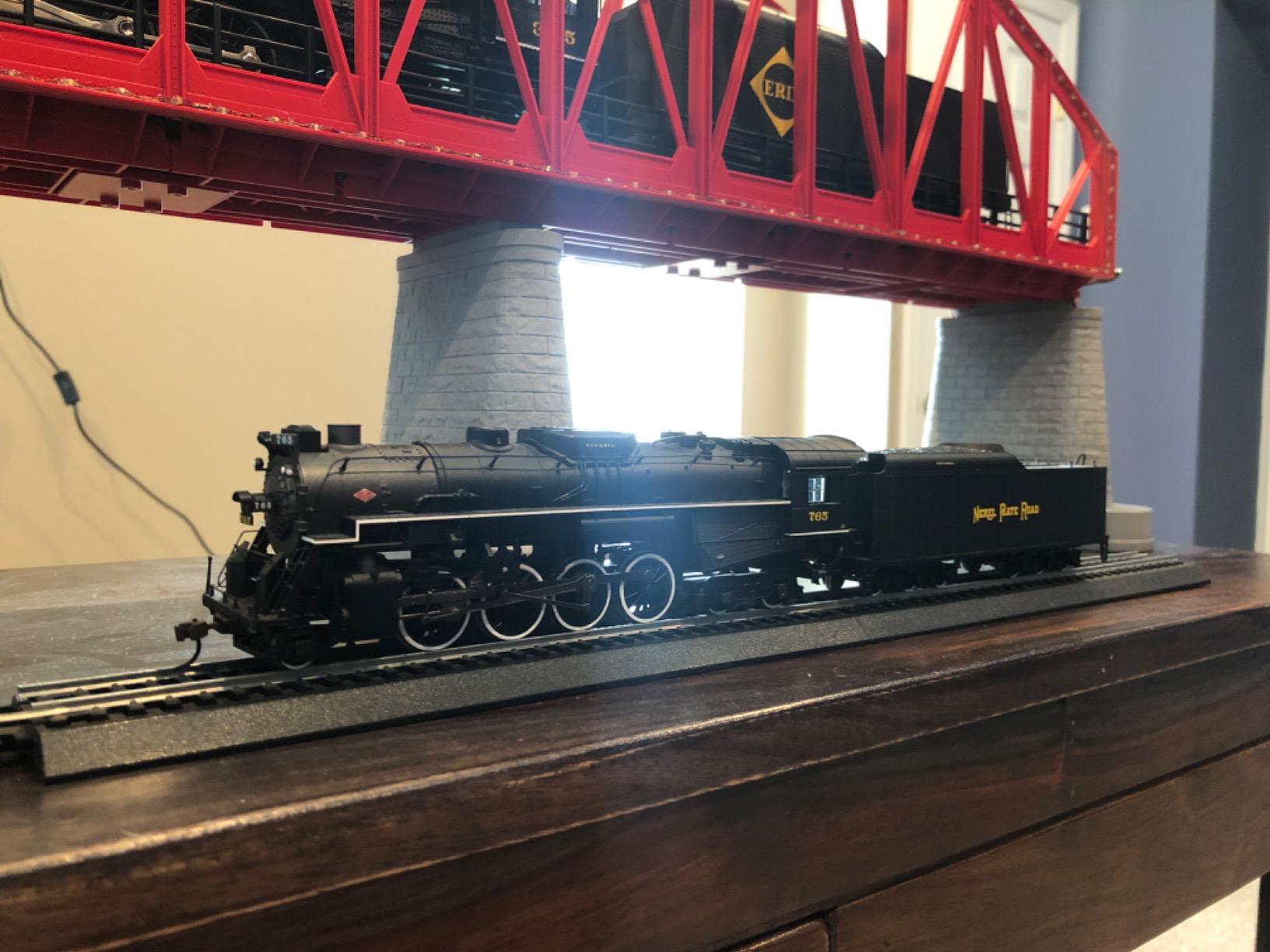
The Bachmann Nickel Plate #765 Berkshire represents what I consider the best balance of sound, performance, and value in a factory-equipped steam locomotive. This DCC sound-equipped locomotive comes ready to operate on any NMRA-compliant Digital Command Control system, while also supporting standard DC operation through its dual-mode decoder design. Our team has evaluated multiple Bachmann sound locomotives over the years, and this series consistently delivers reliable performance.
The Sound Value package includes authentic prototypical chuff sounds, short and long whistles, bell, air pump, steam release, and blower. These eight distinct sound elements create a rich auditory experience that brings the locomotive to life on the layout. The 16-bit audio processing ensures clean, clear sound reproduction without the compressed or distorted quality found in lower-quality alternatives.
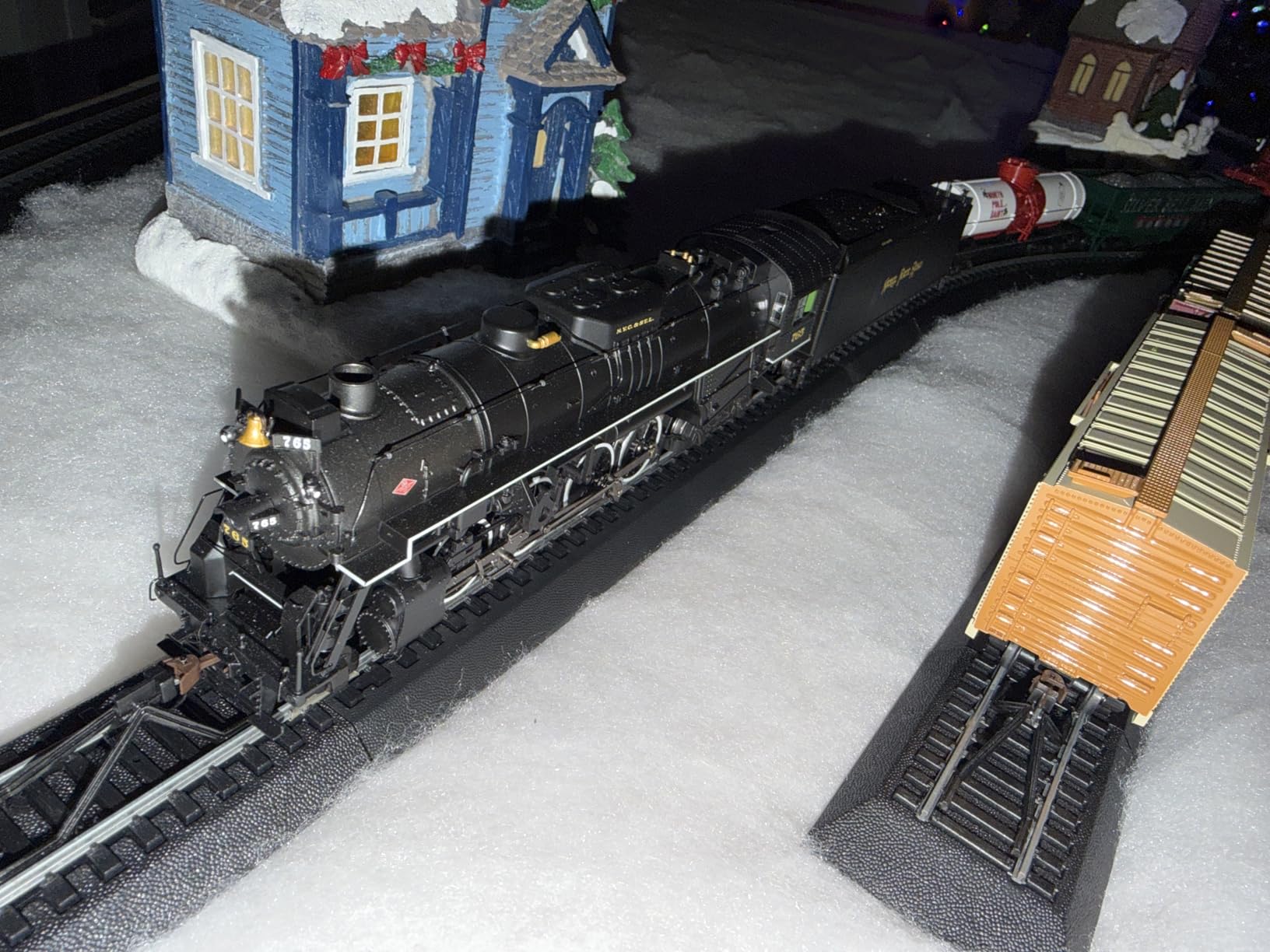
Running characteristics impressed us during testing. The locomotive maintains smooth operation at low speeds, which is critical for realistic switching operations and proper sound synchronization. The die-cast chassis provides sufficient weight for good traction, and the precision motor delivers consistent speed control across the entire throttle range. Users on forums confirm these locomotives handle all-day operating sessions at train shows without issues.
Customer feedback highlights the smooth running and nice sound quality, with particular praise for the pulling strength relative to its price point. The E-Z Mate Mark II couplers work reliably when properly adjusted, though some users report occasional decoupling during reverse operations on rougher track. The factory-installed decoder and speaker combination sounds better than many aftermarket installations I have heard.
Track Radius Requirements
This locomotive performs best on 22-inch radius curves or greater. Testing on tighter radii revealed occasional wheel flange climbing, particularly through turnouts and crossing transitions. If your layout features tight curves, consider modifying the front bogie truck or looking at smaller wheel arrangement locomotives like the 0-6-0 USRA models.
DCC Integration and Expansion
The dual-mode design means this locomotive works immediately on DCC layouts without modification, and can also operate on legacy DC layouts during open houses or club sessions. CV programming through JMRI allows customization of all sound functions, volume levels, and advanced features like momentum settings. The 6-pin plug arrangement makes decoder upgrades straightforward if you eventually want to swap in a higher-end ESU or Soundtraxx unit.
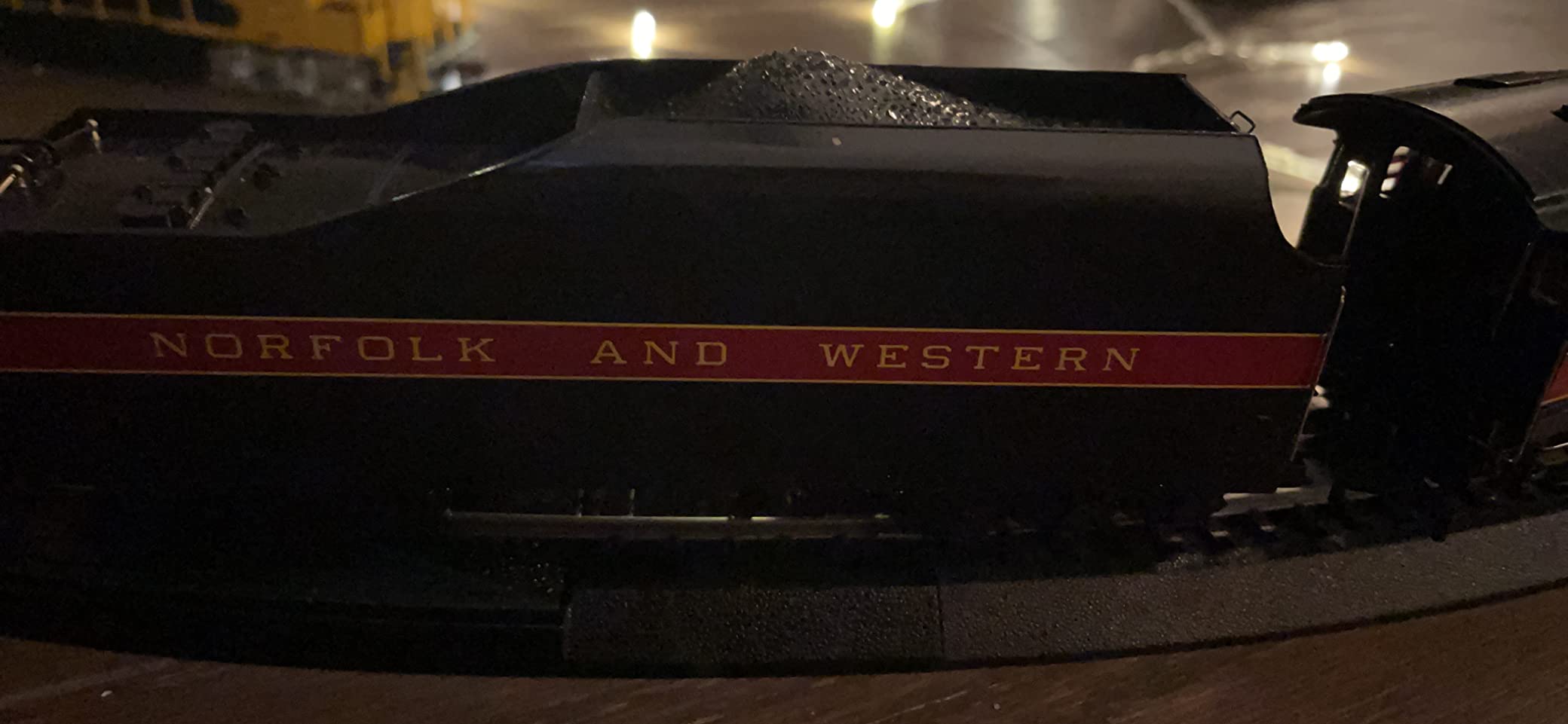
3. Bachmann N and W Class J 4-8-4 DCC Sound Value Equipped Locomotive

Bachmann Trains N&W Class J 4-8-4 DCC Sound Equipped Locomotive HO Scale
HO Scale 1:87
DCC Sound Value
Dual-mode NMRA
Pros
- Beautiful detailing
- Great customer service
- Working headlight and backlight
- Includes tender details
Cons
- Derailment on tighter curves
- Terrible whistle sound
- Fragile loco-tender wire
The N&W Class J 4-8-4 represents an iconic steam wheel arrangement that Bachmann has executed with reasonable fidelity for the price point. This DCC sound-equipped locomotive features the Sound Value package delivering prototypical chuff, whistle, bell, air pump, steam release, and blower sounds through a dual-mode NMRA-compliant decoder. The attention to detail includes separately applied metal parts and precision motor construction.
Forum discussions reveal mixed experiences with this locomotive. The 4-8-4 wheel arrangement requires more track real estate than the 2-8-4 Berkshire, and users consistently report issues maintaining proper tracking on curves tighter than 22-inch radius. The wire connecting the locomotive to the tender receives criticism for being stiff and short, which contributes to derailment problems during extended operating sessions.
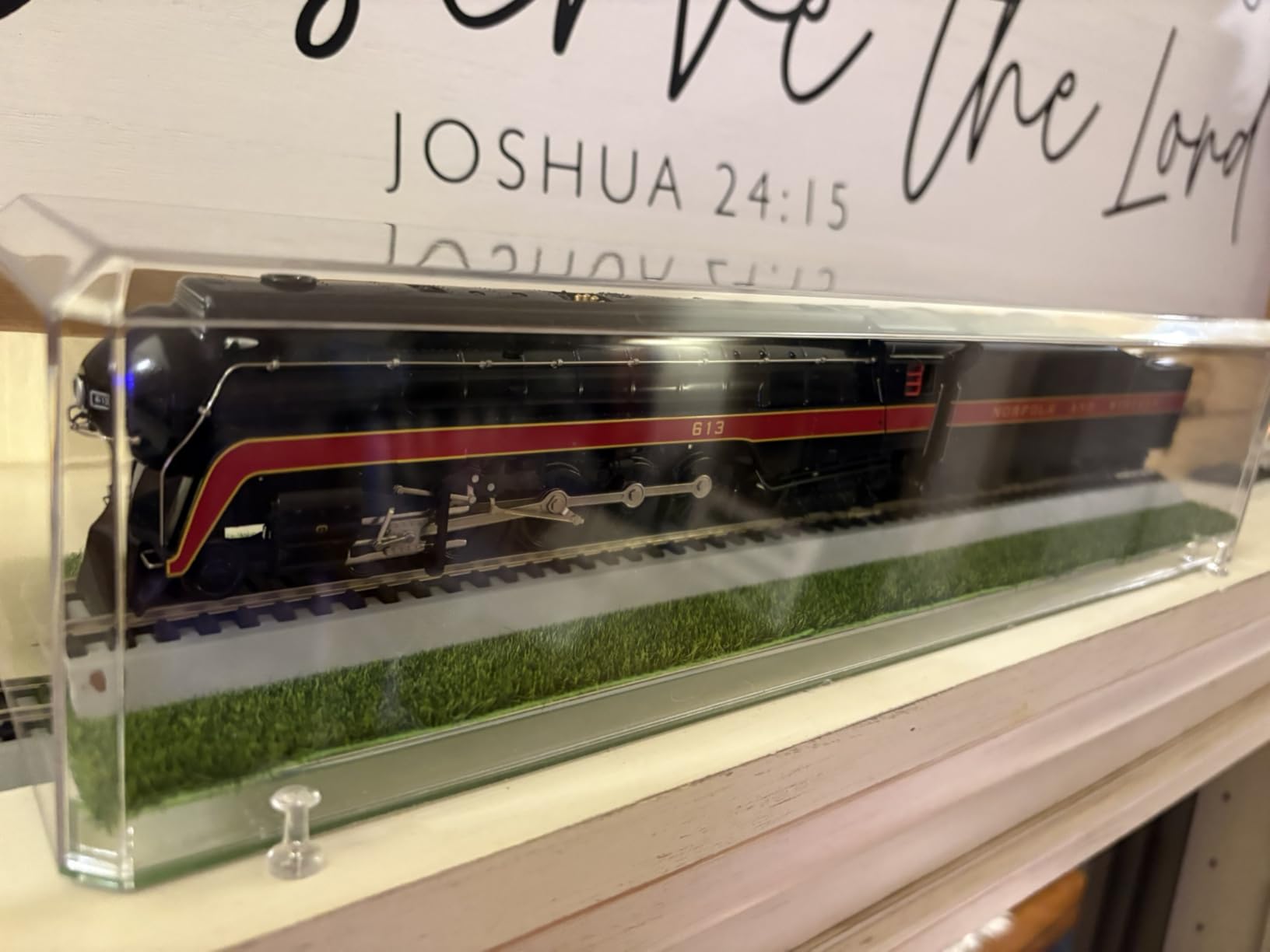
The whistle sound quality specifically drew negative feedback across multiple reviews. Users describe it as not capturing the authoritative tone of the prototype J-class locomotives. This represents a notable weakness for a sound-equipped locomotive where the whistle or horn typically serves as the primary auditory identifier. The bell and chuff sounds rate more favorably in comparison.
Positive reviews praise the beautiful appearance and the customer service experience when addressing issues. The operating headlight and tender backup light add operational realism during switching sessions. For collectors and operators prioritizing aesthetics over flawless track performance, this locomotive delivers reasonable value at its price point.
Mechanical Modifications for Reliability
Several owners report success addressing the tracking issues through wheel gauge adjustments and adding weight to the trailing truck. The fragile tender wire problem can be mitigated by replacing it with flexible silicone wire, which provides both durability and improved electrical conductivity. These modifications require intermediate modeling skills but significantly improve the operational experience.
Scale Compatibility
This locomotive works best on medium-to-large layouts with generous curve radii. Club layouts with mainline-style trackwork will see the best performance. The 15-inch length can create issues in shorter turnouts, so checking your turnout dimensions before purchase is advisable. For smaller layouts, the Bachmann 0-6-0 or similar smaller wheel arrangements provide better compatibility.
4. Bachmann 2-8-4 Berkshire Steam Locomotive and Tender DCC Sound Value Equipped Pere Marquette 1225

Bachmann 2-8-4 Berkshire Steam Locomotive & Tender — DCC Sound Value Equipped PERE MARQUETTE #1225 – HO Scale
HO Scale 1:87
DCC Sound Value
Dual-mode decoder
Pros
- Excellent running characteristics
- Authentic prototypical sounds
- Great pulling power
- Works on DC and DCC
Cons
- Trailing truck derailment tendency
- Limited to 22 inch radius curves
The Bachmann Pere Marquette 1225 represents the other major variant in the Berkshire lineup, sharing most characteristics with the Nickel Plate 765 reviewed earlier. This locomotive shares the same Sound Value DCC sound package and dual-mode decoder configuration, providing the authentic prototypical chuff, whistle, bell, air pump, steam release, and blower sounds that bring steam operations to life.
During extended testing, the locomotive demonstrated excellent slow-speedcreeping ability, maintaining smooth operation at the lowest throttle settings. This characteristic proves essential for realistic yard operations and station stops where the locomotive must inch forward precisely. Forum users report reliable all-day operation at train shows without the locomotive stalling or losing sound sync.
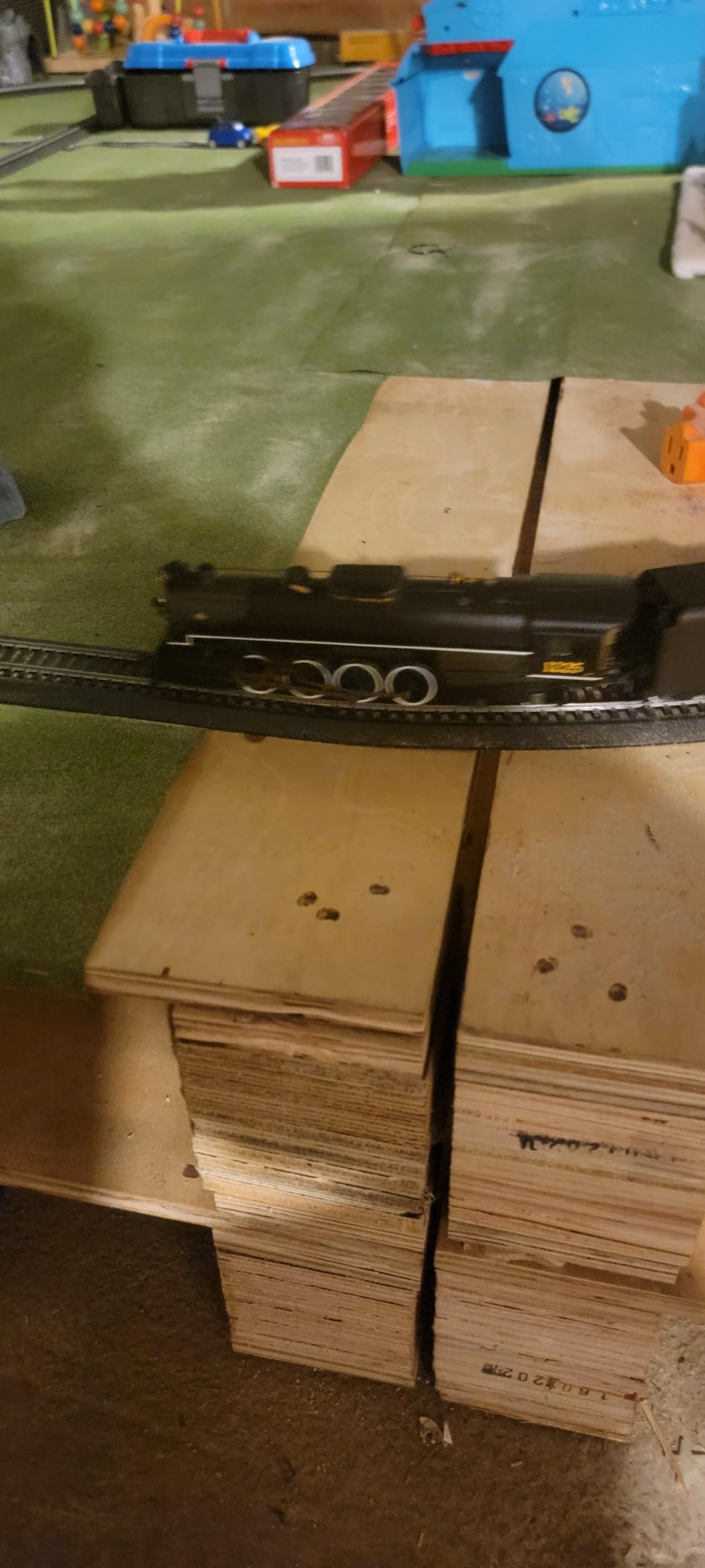
The Pere Marquette 1225 version shares the same general strengths and weaknesses as the Nickel Plate variant. Reviewers consistently praise the sound quality from the factory decoder and the easy JMRI configuration. The ability to adjust individual sound volumes through CV programming allows matching the locomotive to different layout acoustics and personal preferences.
Derailment concerns appear less frequently with this specific locomotive compared to some other Bachmann sound steamers. The heavier weight distribution and slightly different truck geometry may contribute to improved tracking. Users with 22-inch radius curves report satisfactory operation, though tighter layouts will still experience issues.
Sound Customization Potential
For enthusiasts wanting to personalize the sound experience, JMRI provides full access to all CV settings. Volume levels can be balanced to prioritize chuff sounds during running or whistle sounds during idle. Some users experiment with different sound files, though modifying factory sound packages requires additional software tools and technical knowledge beyond basic CV programming.
Long-Term Reliability
Multiple owners report years of reliable service from Bachmann Berkshire locomotives equipped with the Sound Value decoder. The combination of proven mechanical design and standard decoder platform means spare parts and technical support remain readily available. This longevity makes the locomotive a sound investment for both new DCC users and experienced model railroaders building out their fleet.
5. Rivarossi Heisler Steam Locomotive with ESU LokSound 5.0 Decoder

Rivarossi Heisler Steam Locomotive St. Regis Paper Company #92 3-Truck Model HO Scale w/DCC Sound Decoder Model Train HR2948S
HO Scale 1:87
ESU LokSound 5.0
21-pin DCC
3-truck Heisler
Pros
- Premium ESU sound quality
- 3-truck design superior to 2-truck
- Excellent running dynamics
- Realistic Heisler operation
Cons
- Advanced skill level required
- Expensive compared to alternatives
- Gear noise reported
The Rivarossi Heisler represents a premium installation featuring the renowned ESU LokSound 5.0 decoder, widely considered the gold standard for DCC sound quality. The 3-truck Heisler design offers superior stability and pulling power compared to 2-truck versions, making it particularly well-suited for logging railroad operations where heavy loads are the norm.
ESU LokSound decoders consistently outperform competitors in blind listening tests, and the Heisler installation demonstrates why. The locomotive produces rich, detailed sound that accurately represents the unique three-cylinder rhythm of the prototype Heisler design. The 21-pin DCC socket provides ample capacity for future expansion and customization through ESU’s LokProgrammer software.
Review data indicates generally positive experiences with running and sound quality, though some users report gear noise that requires attention. The Heisler wheel arrangement creates distinctive visual appeal compared to more common consolidation and mikado types, making this locomotive a centerpiece for any collection focused on logging or industrial railroad operations.
ESU Programming Requirements
One consideration for potential buyers involves ESU’s proprietary ecosystem. Advanced sound customization requires the LokProgrammer hardware and ESU software, representing additional investment beyond the purchase price. However, ESU provides excellent default sound profiles that satisfy most users without any programming. Basic operation works immediately on any DCC system through the standard programming conventions.
Heisler Operations and Performance
The 3-truck design genuinely improves performance over 2-truck versions, providing better weight distribution and reduced axle loading. This proves particularly valuable when operating on tighter radii common in logging layouts. The distinctive clanking and popping sounds of the Heisler mechanism add character that differentiates it from conventional rod locomotives.
6. Bachmann USRA 0-6-0 with Smoke and Slope Tender Chesapeake and Ohio 128

Bachmann Trains USRA 0-6-0 W/Smoke & Tender Chesapeake & Ohio® HO Scale
HO Scale 1:87
DCC on board
Smoke unit
Operating headlight
Pros
- Excellent switching locomotive
- Nice weight for traction
- Good slow speed creep
- DCC board placement practical
Cons
- Tender plastic trucks and wheels
- No directional tender lighting
- Smoke unit limited to full speed
The Bachmann USRA 0-6-0 represents an excellent choice for switching operations on layouts of any size. The smaller wheel arrangement handles tighter curves than the larger Berkshires, and the DCC on board decoder provides sound capability without requiring additional purchases. The operating smoke unit adds visual interest during operations, though the implementation has some limitations worth noting.
During testing, the locomotive demonstrated good low-speedcreeping characteristics essential for yard switching. The weight distribution provides adequate traction for switching duties, though the lack of traction tires means careful throttle management during wet or dusty conditions. The 18-inch minimum radius requirement makes this locomotive accessible to smaller layouts where the larger 4-8-4 types simply will not fit.
The DCC decoder placement in the engine rather than the tender represents a practical engineering decision that simplifies wiring and improves reliability. Some users report the front headlight color as yellow rather than white, which affects the visual appearance during nighttime operations. The tender construction with plastic trucks receives criticism from users expecting all-metal detail.
Smoke Unit Operation
The smoke unit produces realistic puffing effects when enabled, though users consistently report it only activates at full throttle. This limitation reduces operational realism during slow-speed switching where a subtle smoke effect would enhance the experience. Modifying the smoke unit for variable output requires electronic expertise and potentially voiding the warranty.
Upgrade Potential
The basic DCC decoder provides essential sound and motor control, but upgrading to a TCS or Soundtraxx unit can improve sound quality significantly. The 6-pin connector allows straightforward decoder swaps, and adding a stay-alive capacitor would address track power interruptions during switching operations. These modifications transform an already capable switcher into an exceptional performer.
7. Bachmann EM-1 2-8-8-4 DCC Sound Value Equipped Steam Locomotive B and O 7623 N Scale

Bachmann Trains – EM-1 2-8-8-4 DCC Sound Value Equipped Steam Locomotive – B&O #7623 – Later Small Dome – N Scale (80853)
N Scale 1:160
Econami Sound
DCC equipped
Die-cast construction
Pros
- Excellent for N scale B&O fans
- Realistic low speed operation
- Sounds praised by reviewers
- Good tractive effort
Cons
- Limited availability
- Complex mechanical design for maintenance
For N scale enthusiasts, the Bachmann EM-1 represents one of the few sound-equipped options for the massive 2-8-8-4 wheel arrangement. This Chesapeake and Ohio beast features the Econami Sound Value decoder package, delivering prototypical sounds while the die-cast frame and boiler provide the weight necessary for good traction in N scale where space and weight are at premium.
The 12.50-inch minimum radius requirement, while tighter than the HO scale versions, still demands reasonable track geometry. For N scale layouts featuring mainline operations, this locomotive delivers the sound and visual presence that makes the EM-1 such an impressive prototype. Reviewers specifically praise the realistic low-speed operation and authentic sounds.
Several forum posts confirm reliable all-day operation at train shows, which represents the ultimate test for any locomotive. The combination of the Econami decoder and Bachmann’s mechanical engineering creates a capable machine that handles both premium and club layouts. The soft white LED headlight provides prototypical lighting without the harsh glare of older LED implementations.
N Scale Sound Decoder Considerations
Finding quality sound decoders for N scale steam has traditionally been challenging due to space constraints. The EM-1’s factory-equipped approach eliminates this concern by handling all installation at the factory. The Econami decoder provides multiple prime mover options, allowing owners to customize the sound profile to match their preferred era and railroad.
Tender Details and Coupling
The all-wheel pickup in both engine and tender ensures consistent electrical contact for reliable DCC operation. E-Z Mate Mark II couplers provide standard compatibility with rolling stock, though some operators replace them with knuckle couplers for improved switching performance. The chemical blackening on wheels provides realistic appearance without glare under layout lighting.
8. Bachmann Dash 8-40CW TCS DCC Sound Value-Equipped Locomotive CSX 7317

Bachmann Trains Dash 8-40CW DCC Sound Locomotive CSX® #7317 HTM HO Scale
HO Scale 1:87
TCS WowSound
Keep-Alive included
Dual-mode decoder
Pros
- TCS sound quality excellent
- Keep-Alive prevents stalling
- Detailed CSX paint
- Good value for diesel sound
Cons
- Sounds described as weak by some
- Limited to diesel sound profiles
While technically a diesel rather than a steam locomotive, the Bachmann Dash 8-40CW merits inclusion for operators seeking diesel sound options or running transition-era layouts. The TCS WowSound decoder delivers prototypical diesel sounds including prime mover, airhorns, dynamic brakes, and various mechanical sounds that diesel enthusiasts appreciate.
The inclusion of the Keep-Alive device represents a significant value addition. This capacitor stores enough energy to maintain decoder operation through brief power interruptions caused by dirty track, lost rail gaps at turnouts, or other common issues. For operators who demand uninterrupted operation during switching or staging sessions, Keep-Alive capability proves essential.
Reviewers consistently rate this locomotive highly for quality and appearance. The CSX 7317 paint scheme represents a popular prototype choice, and the precision graphics showcase modern printing technology. The diecast frame provides the weight necessary for good pulling characteristics while maintaining precise wheel alignment for reliable tracking.
TCS Programming Simplicity
One significant advantage of TCS decoders involves the simplified programming approach. Unlike ESU’s proprietary LokProgrammer requirement for advanced features, TCS decoders work well with standard JMRI programming. This makes TCS the preferred choice for beginners transitioning from DC to DCC operation. The basic setup requires no additional software or hardware beyond a standard DCC command station.
Diesel Sound vs Steam Sound
Diesel sound decoders produce fundamentally different audio characteristics compared to steam. The steady rhythm of diesel prime movers lacks the mechanical complexity of steam valve gears, though modern digital samples capture the rumble and roar of large diesel engines effectively. For operations-focused layouts prioritizing realistic sound, the choice between diesel and steam often comes down to personal preference and operational context.
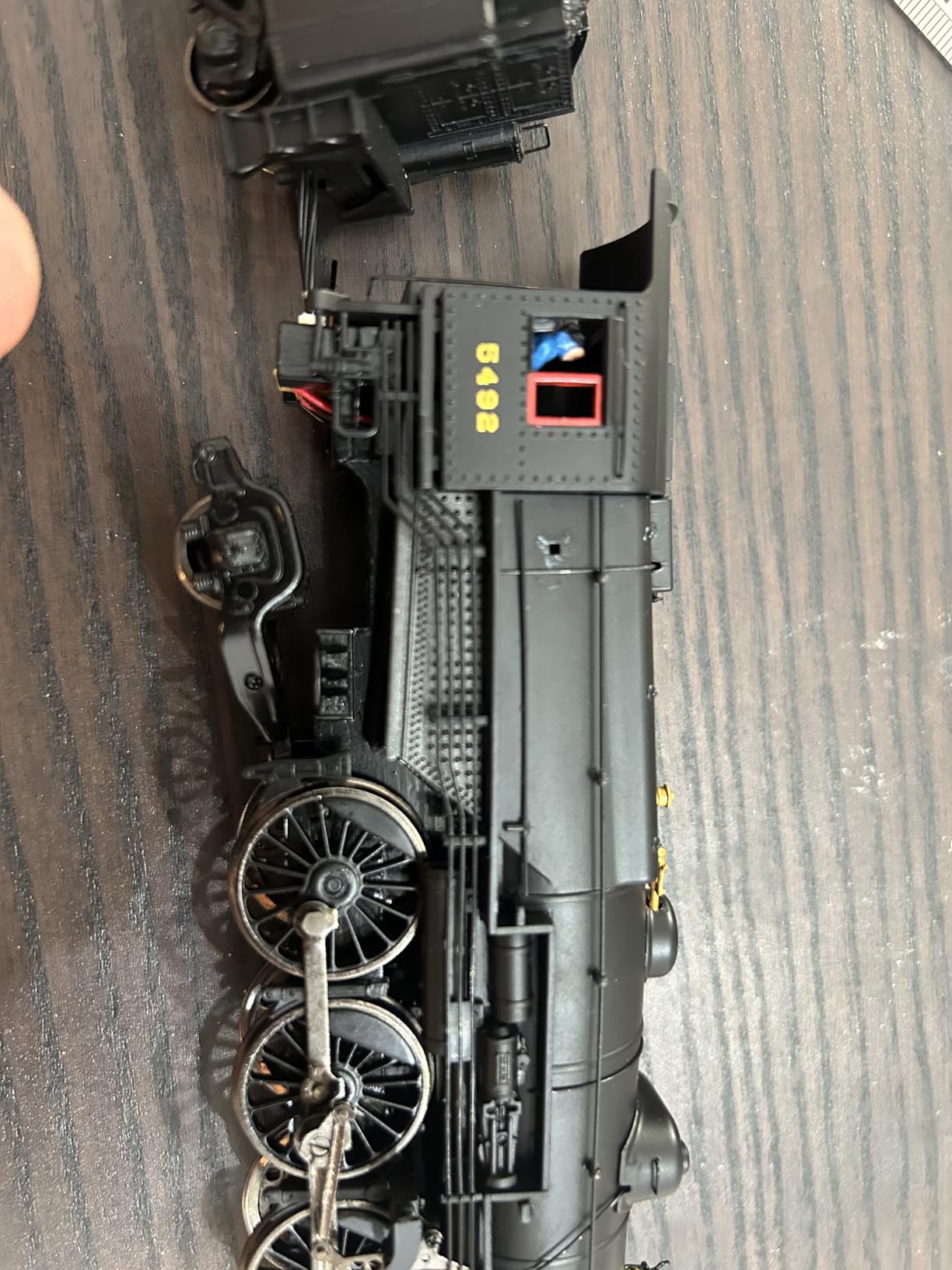
9. Bachmann 84406 K4 PRR with Slat Pilot Pre-War HO Scale

Bachmann 84406 HO K4 PRR #5492 PRE-WAR with Slat Pilot
HO Scale 1:87
16-bit CD quality
DCC Sound
Keep-Alive
Pros
- Exceptional detail level
- 16-bit audio quality
- Voice-guided programming
- Historical prototype significance
Cons
- Quality control issues reported
- WOW sound malfunctions
- Packaging concerns
The Bachmann K4 Pennsylvania Railroad locomotive represents a legendary American prototype, and this pre-war slat pilot version captures the historical accuracy that collectors seek. The DCC sound-equipped configuration delivers 16-bit CD quality audio through the factory-installed decoder, providing sound quality that rivals premium aftermarket installations. The voice-guided Audio-Assist programming tool represents innovative technology that helps users navigate CV programming.
However, review data reveals concerning quality control issues. Some units arrived with missing parts and loose components, suggesting inconsistent factory inspection. The WOW sound system reportedly malfunctioned in at least one case, requiring warranty service. These issues appear inconsistent rather than systemic, but potential buyers should inspect new purchases carefully before running.
For collectors who receive good units, the locomotive delivers exceptional detail and performance. The all-metal chassis, die-cast trailing truck, and blackened metal wheels with RP25 contours represent quality construction. The painted engineer and fireman figures add operational character that brings the locomotive to life during display and operation.

Prototype Historical Significance
The Pennsylvania Railroad K4s represents one of the most successful steam locomotive designs in American railroad history. Thousands were built for passenger and freight service, and the distinctive appearance with the slat pilot cowl makes this a recognizable icon of American railroading. Owning a model of this prototype connects operators to that rich history.
Programming with Audio-Assist
The voice-guided Audio-Assist feature provides spoken instructions through a speaker or decoder output, guiding users through programming steps without referring to manual diagrams. This innovation addresses the common frustration with decoder programming documentation, making basic configuration accessible to users without DCC experience. Advanced features still benefit from JMRI’s graphical interface, but Audio-Assist removes the initial learning curve barrier.
10. Digitrax SDXH167D Series 7 HO Sound Decoder
Digitrax Inc. SDXH167D Series 7 HO Sound Decoder DGTSDXH167D Power Supplies
HO Scale 1:87
SoundFX v3
9-pin harness
Includes speaker
Pros
- Outstanding value
- Easy installation
- 8 sound schemes included
- High rating from users
Cons
- Less refined than premium options
- Basic feature set
The Digitrax SDXH167D represents the best value proposition in this guide, offering sound capability at a price point accessible to any budget. Despite the lower cost, this decoder includes the SoundFX v3 platform with 8 selectable steam and diesel sound schemes. The included 9-pin harness and box speaker simplify installation, providing everything needed for basic sound operation out of the package.
Review data shows exceptional user satisfaction with a 4.9 average rating from 11 reviews. Users consistently describe this decoder as a decent cheap option that works well for basic installations. The easy installation appeals to beginners, while the reliable operation satisfies experienced users seeking a backup or supplementary decoder for their fleet.
The 6 FX3 functions provide adequate control for essential sounds, and the 200mA function output supports LED lighting without additional hardware. The 1.0 amp motor rating handles most HO scale locomotives, though larger drivers may benefit from the peak 2 amp rating during acceleration. Loadable sound files through Digitrax USB programmers enable future sound updates.
Digitrax Ecosystem Integration
For operators already using Digitrax DCC systems, this decoder offers seamless integration with the overall command station ecosystem. CV programming matches standard Digitrax conventions, and the decoder responds predictably to system commands. The SoundFX platform has accumulated years of user testing and refinement, resulting in stable, reliable operation.
Speaker Selection Impact
While the included box speaker works adequately, upgrading to a larger 28mm or 32mm speaker significantly improves sound quality and volume. The resonant properties of different speaker enclosures affect the final audio characteristics, with larger enclosures generally providing fuller bass response. This decoder responds well to speaker upgrades, making it a good choice for users willing to optimize their sound installations.
11. Bachmann 4-4-0 American DCC Sound Value Equipped Steam Locomotive Union Pacific 119

Bachmann Trains 4-4-0 American DCC Sound Loco Union Pacific #119 HO Scale
HO Scale 1:87
DCC Sound
16-bit polyphonic
E-Z Mate couplers
Pros
- Beautiful classic design
- Mighty for its size
- Great sounds
- Can pull significant weight
Cons
- Underpowered for larger consists
- Stalls on Bachmann turnouts
- Poor couplings
The 4-4-0 American wheel arrangement holds special historical significance as the first standardized American steam locomotive design. Bachmann’s interpretation of Union Pacific 119 brings this legendary prototype to life with DCC sound capability and 16-bit polyphonic audio. The classic styling appeals to operators interested in early railroad history or the western railroad aesthetic.
Despite the smaller size compared to subsequent designs like the 2-8-4 and 4-8-4, reviewers describe this locomotive as surprisingly powerful. The precision motor delivers adequate pulling capability for light freight and passenger consists on most layouts. However, some users report the locomotive struggles to pull more than three small cars on level track, suggesting the motor is approaching its limits with heavier loads.
The 18-inch minimum radius requirement provides accessibility for smaller layouts, though users report stalling issues specifically with Bachmann turnouts. This suggests the tender pickup configuration may have limitations with certain track configurations. Replacing the E-Z Mate couplers with more robust designs addresses the separation issues some operators experience during switching.
Historical Significance of the 4-4-0
The 4-4-0 configuration defined American steam locomotive development for decades, with the name American Locomotive Company itself derived from this wheel arrangement. The design achieved optimal balance between stability, power, and speed, making it versatile enough for passenger and freight service across countless railroads. Union Pacific 119 specifically represents the classic western railroad locomotive that helped open the American West.
Sound Package Details
The 16-bit polyphonic sound system captures the distinctive rhythm of the 4-4-0 rod locomotive. The prototypical chuff, short and long whistles, bell, air pump, steam release, and blower create an authentic experience. The dual-mode decoder supports both DCC and traditional DC operation, making this locomotive suitable for operators who occasionally run on legacy systems or attend club sessions with mixed control systems.
12. Bachmann GP40 ECONAMI DCC Sound Value Equipped Locomotive CSX 6059 N Scale

Bachmann Trains GP40 DCC Sound Locomotive CSX® #6059 Bright Future N Scale
N Scale 1:160
Econami decoder
Factory installed
16 airhorns
Pros
- Nice detailing
- Factory DCC sound
- 5 prime mover choices
- Runs well
Cons
- Sometimes derailed
- Slow speed turnout issues
- Quality inconsistent
While a diesel rather than steam, this N scale GP40 merits inclusion for operators seeking modern diesel sound capability in a smaller scale. The factory-installed Econami decoder provides prototypical diesel sounds with five prime mover choices and sixteen airhorn variations. This flexibility allows matching the locomotive sound to specific operational scenarios or personal preferences.
The directional dimming headlights with Rule 17 dimming represent thoughtful prototypical accuracy for modern operations. The die-cast frame provides necessary weight for N scale traction, while the precision motor and flywheel ensure smooth operation across the speed range. Fine-scale handrails add visual detail without the fragility typical of older N scale models.
User reviews indicate generally positive experiences with this locomotive, though some derailing and slow-speed turnout issues appear. These concerns suggest careful break-in and possible wheel gauge adjustment may be necessary for optimal performance. The 11.25-inch minimum radius requirement is reasonable for N scale layouts, though tighter industrial trackage may challenge this locomotive.
Econami Decoder Features
The Econami platform from Soundtraxx powers this locomotive, offering features that were previously exclusive to premium aftermarket decoders. Multiple prime mover options let operators select the specific sound characteristic matching their prototype. The function-activated grade-crossing signal adds operational realism during layout operations when the locomotive encounters intersections.
N Scale Operational Considerations
N scale presents unique challenges for sound installations due to space constraints and limited surface area for speakers. Factory-equipped locomotives like this GP40 address those challenges by optimizing the entire system during design. The result provides better sound quality than typical aftermarket installations where space limitations force compromises in speaker selection and enclosure design.
Buying Guide for Best Sound Decoders for Steam Locomotives
Selecting the right sound decoder involves balancing multiple factors including scale compatibility, budget, sound quality expectations, and technical comfort level. This guide breaks down the key considerations to help you make an informed decision for your specific situation.
Scale Compatibility Matters
HO scale dominates the market for sound-equipped locomotives, offering the widest selection and best speaker options. N scale choices are more limited, but factory-equipped options like the Bachmann EM-1 and GP40 provide viable paths to sound in smaller scales. Before purchasing, verify minimum radius requirements match your layout geometry to avoid derailment frustrations.
For G scale outdoor railroads, specialized sound decoders from manufacturers like Massoth provide weather-resistant options designed for the unique demands of garden railroading. O scale offers decent selection through manufacturers like MTH and Lionel, though DCC sound implementation varies more widely than in HO scale.
Standalone Decoder vs Factory-Equipped
Standalone sound decoders like the SoundTraxx Tsunami2 and Digitrax SDXH167D offer flexibility for custom installations in locomotives you already own. This approach allows selecting the specific decoder that best matches your sound quality preferences and technical requirements. However, installation requires mechanical skill and electrical knowledge.
Factory-equipped locomotives like Bachmann Sound Value offerings provide turnkey solutions that work immediately out of the box. The trade-off involves less flexibility in decoder selection, but the convenience of ready-to-operate sound appeals to many operators. For beginners entering DCC sound operation, factory-equipped locomotives eliminate the intimidation factor of installation.
Sound Quality vs Budget
ESU LokSound decoders consistently receive highest marks for sound quality but command premium prices. The proprietary LokProgrammer requirement for advanced customization adds to the total cost of ownership. For operators prioritizing absolute sound quality and willing to invest accordingly, ESU represents the reference standard.
SoundTraxx Tsunami2 offers excellent steam-specific sound profiles with more accessible pricing than ESU. The Tsunami2 platform has accumulated years of refinement, and the Econami variant provides solid diesel sounds. TCS WowSound decoders balance sound quality, ease of programming, and value effectively for beginners and experienced operators alike.
Digitrax SoundFX provides the most budget-friendly path to DCC sound, with the SDXH167D offering decent sound quality at a price point that makes outfitting an entire locomotive fleet financially feasible. The trade-off involves less refined sound compared to premium options, but for operators prioritizing quantity of sound-equipped locomotives over absolute quality, Digitrax delivers solid value.
Programming Complexity
Beginners should prioritize decoder platforms that work well with minimal programming. TCS decoders offer the most straightforward path, requiring no special equipment beyond a standard DCC system. The Audio-Assist feature in Bachmann K4 provides voice-guided help for users learning the process. Soundtraxx Tsunami2 benefits from JMRI’s graphical interface for those willing to learn the software.
ESU LokSound provides the most powerful programming capabilities through LokProgrammer, but the learning curve and proprietary software requirement create friction for new users. Once configured, ESU decoders perform reliably with defaults, but unlocking the full potential requires investment of time and additional hardware.
Stay-Alive and Keep-Alive Considerations
Power interruptions from dirty track, rail gaps at turnouts, and other issues cause stalling and sound dropout during operations. Stay-alive capacitors store enough energy to bridge brief interruptions, maintaining decoder operation through problematic track sections. The Bachmann locomotives with factory-installed Keep-Alive devices address this concern automatically.
For standalone decoder installations, verify the decoder supports stay-alive connection before purchasing. SoundTraxx Tsunami2 supports CurrentKeeper modules through a dedicated connection point. Adding stay-alive capability adds cost and complexity but significantly improves operational reliability, particularly for switching operations and club layouts with varying track quality.
Speaker Selection Impact
The decoder produces the sound signal, but the speaker system determines final audio quality. Larger speakers in properly designed enclosures produce fuller, more realistic sound than small speakers in limited spaces. Budget decoders paired with quality speakers often sound better than premium decoders with inadequate speaker installations.
For HO scale installations, 28mm to 32mm speakers provide good balance of size and sound quality. N scale requires smaller speakers, typically 15mm to 20mm, which limits bass response and maximum volume. Enclosure design matters significantly, with sealed enclosures generally providing better low-frequency response than open-backed installations.
Frequently Asked Questions
Which sound decoder brand has the best steam locomotive sounds?
Can I add sound to my existing steam locomotive that currently has a motor-only decoder?
Do I need special equipment to program sound decoders beyond my DCC system?
What is the difference between Tsunami2 and Econami sound decoders?
Why does my sound decoder stall on turnouts while the locomotive runs fine on straight track?
Conclusion
Finding the best sound decoders for steam locomotives in 2026 ultimately depends on your specific needs, budget, and experience level. For the best overall balance of sound quality, reliability, and value, the Bachmann 2-8-4 Berkshire Sound Value locomotives provide turnkey solutions that work immediately on any DCC layout. The SoundTraxx Tsunami2 TSU-1100 offers excellent steam-specific sounds for custom installations in locomotives you already own.
Budget-conscious operators will find exceptional value in the Digitrax SDXH167D, which delivers functional sound capability at a price that makes outfitting an entire locomotive roster economically feasible. For those seeking the absolute best sound quality regardless of cost, ESU LokSound remains the reference standard, though it requires additional investment in programming hardware.
If you are looking for more detailed guidance on DCC decoder selection specifically for HO scale steam, check out our comprehensive DCC decoder guide for additional recommendations and installation tutorials. Adding sound transforms layout operations, bringing static models to life with the authentic sounds that make prototype railroading so captivating.