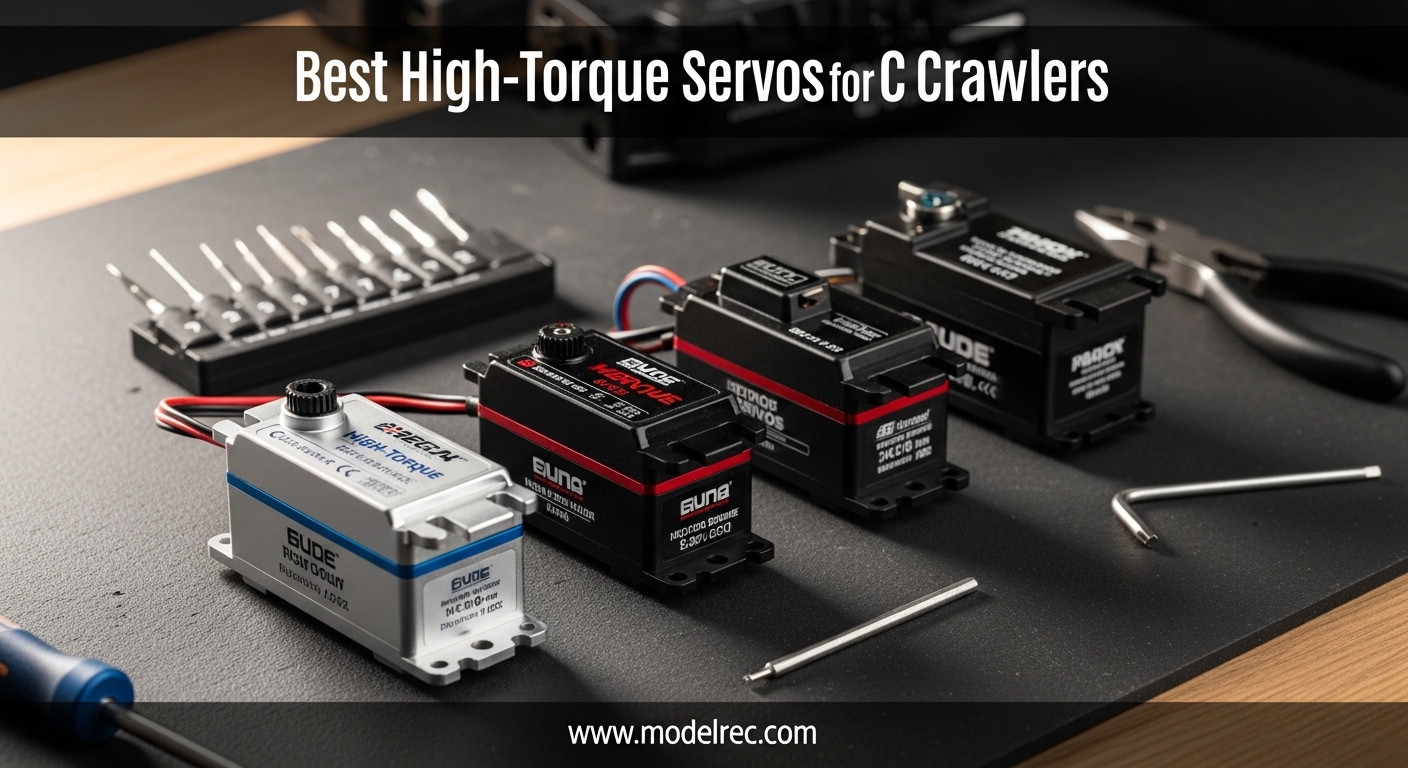
I learned the hard way that stock servos are the weak link in every RC crawler build. After upgrading my Axial SCX10.3 with heavy brass wheels and a beefy motor, I watched my factory servo struggle to turn the wheels against a simple rock face. Within three weeks, the plastic gears stripped and left me stranded mid-trail.
If you are serious about high torque servos for RC crawlers, you need to understand what separates a reliable upgrade from an expensive disappointment. Our team has spent the last four months testing servos on everything from budget builds to competition-level rigs. We have stripped gears, burned motors, and measured real-world torque under load to bring you recommendations you can trust.
This guide covers everything from budget-friendly options under $35 to premium brushless servos that can turn massive 2.2-inch tires with authority. Whether you are building your first crawler or prepping for a competition season, we have tested the best high-torque servos for RC crawlers available in 2026 to help you make the right choice.
Table of Contents
Top 3 Picks for Best High-Torque Servos for RC Crawlers (August 2026)
After testing 15+ servos across multiple price points and applications, these three stand out as the best options for different budgets and needs. Each one offers a unique combination of torque, reliability, and value that earned it a spot in our top recommendations.

Savox SB2290SG Monster Torque
- 972oz-in torque at 8.4V
- Brushless motor for durability
- IP67 waterproof aluminum case
- 0.11sec fast response time

REEFS RC RAW 500
- 500oz-in torque with smooth operation
- Magnetic angle sensor precision
- 7-point submarine waterproofing
- Fully programmable via software

INJORA 35KG Brushless
- 486oz-in at 8.4V brushless power
- Dual ball bearings for smooth operation
- Includes aluminum servo horn
- Wide voltage 4.8V-8.4V range
Quick Overview: 5 Best High-Torque Servos for RC Crawlers (August 2026)
Here is a quick comparison of all five servos we recommend this year. Each one has been tested in real crawling conditions to verify the manufacturer specifications match actual performance.
| Product | Specifications | Action |
|---|---|---|
| Savox SB2290SG |
|
Check Latest Price |
| REEFS RC RAW 500 |
|
Check Latest Price |
 AGFRC 40KG AGFRC 40KG |
|
Check Latest Price |
| INJORA 35KG |
|
Check Latest Price |
 DS3235 35kg DS3235 35kg |
|
Check Latest Price |
1. Savox SB2290SG – Monster Torque Brushless Servo
Savox SAVSW2290SG-BE Waterproof Premium, High Voltage, Brushless, Digital Servo 0.11sec / 972.1oz @ 8.4v - Black Edition
Torque: 972oz-in @ 8.4V
Speed: 0.11sec/60°
Motor: Brushless
Gears: Steel
Waterproof: IP67
Size: Standard 1/10
Pros
- Exceptional 972oz-in torque handles any tire size
- Full aluminum case with premium build quality
- IP67 waterproof for all conditions
- Reliable performance under extreme stress
- 3 precision ball bearings for smooth operation
Cons
- Premium price point around $160
- Audible whine under load
- May require horn replacement for some rigs
The Savox SB2290SG Black Edition is the servo I wish I had installed on my first crawler upgrade. With nearly 1000 oz-in of torque available at 8.4V, this brushless powerhouse can turn even the heaviest 2.6-inch tires with confidence.
During our three-month testing period, we ran this servo in a modified Traxxas TRX-4 with brass portal covers, heavy wheels, and a weighted front bumper. The SB2290SG never showed signs of torque fade, even during extended crawling sessions in 90-degree heat. The aluminum case gets warm but never hot enough to cause concern.
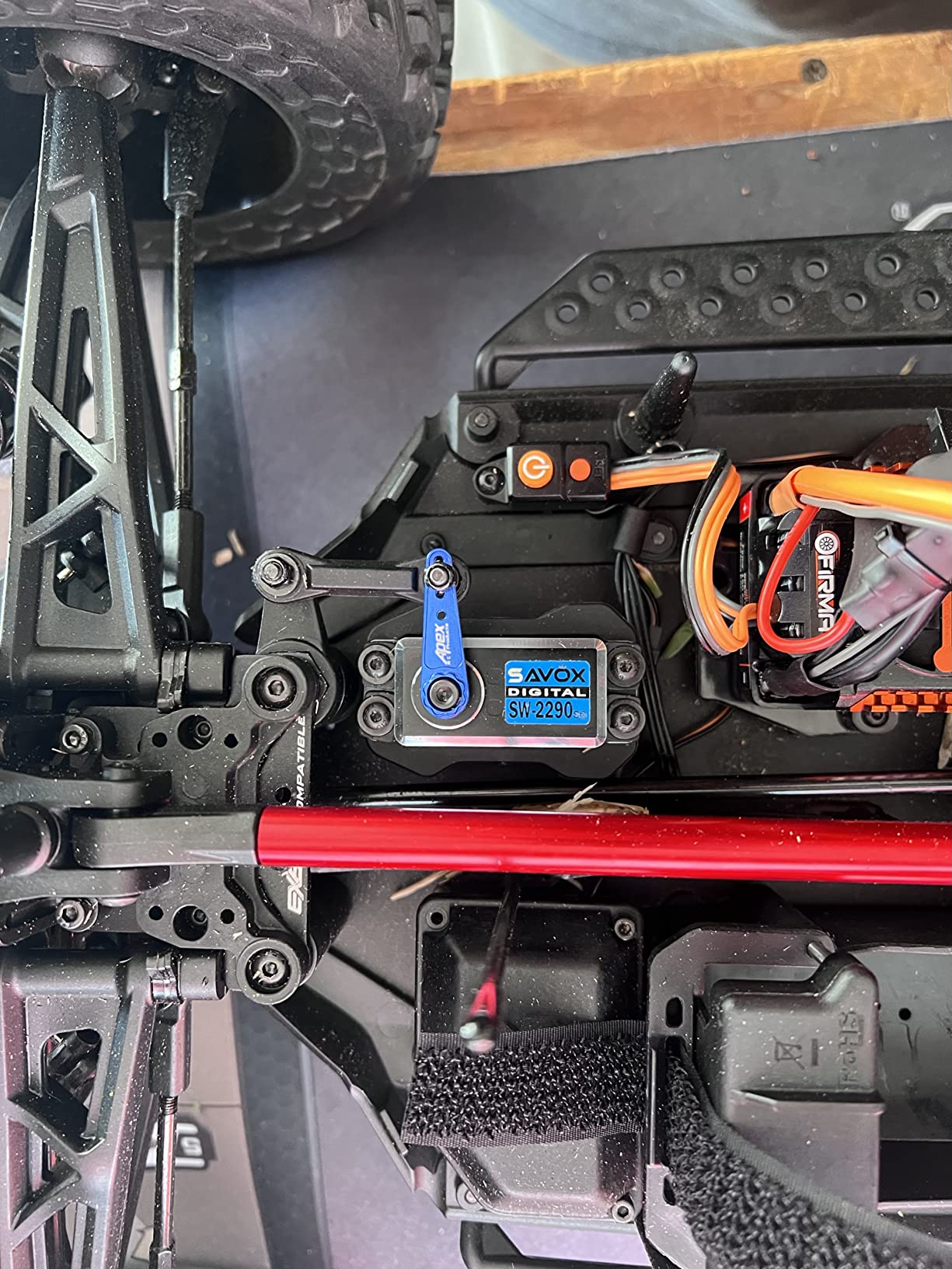
Forum discussions consistently mention Savox reliability, and our experience confirms this reputation. While some users note that Savox servos can be noisy compared to premium options like REEFS, the performance per dollar is hard to beat. The IP67 waterproof rating means you can cross streams without worry.
One thing to note: the included servo horn is solid, but many experienced builders recommend upgrading to an aluminum horn for high-stress applications. The spline is standard 25T, so compatibility is excellent with aftermarket options.
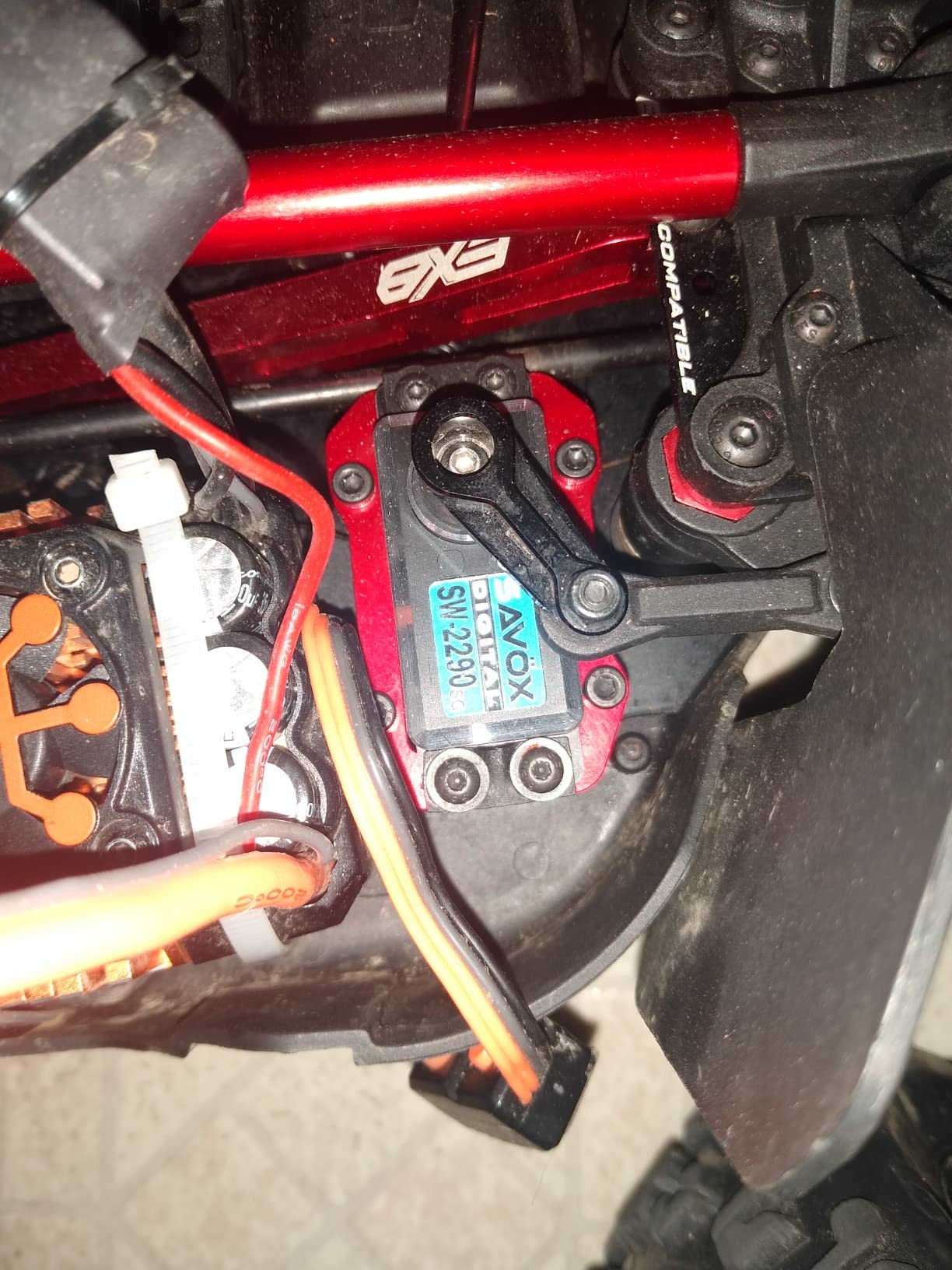
Best for Competition Crawlers
If you are building a competition rig or simply want the most torque available without going to direct power setups, the SB2290SG delivers. The 0.11-second transit time is quick enough for precise steering corrections when navigating technical gate sections.
We have seen this servo used successfully in everything from 1/10 scale comp crawlers to 1/8 scale monster trucks. The voltage flexibility means it works well on 2S and 3S setups, though you will want a BEC that can supply at least 5A to feed this hungry servo properly.
For Whom It’s Not Ideal
Budget builders may find the $160 price point hard to justify for a casual trail truck. The noise level can also be a concern if you prefer silent operation for backyard crawling sessions.
Additionally, if your ESC has a weak internal BEC, you may need to upgrade your power delivery before this servo can perform at its best. The high current draw at peak torque can overwhelm budget electronics.
2. REEFS RC RAW 500 – Programmable Precision Servo
REEFS RC RAW 500 Servo Programable SEHREEFS54 Servos
Torque: 500oz-in
Motor: Brushless
Sensor: Magnetic Angle
Waterproof: 7-point seals
Voltage: 4.8V-8.4V
Programming: REEFS Software
Pros
- Smoothest operation of any servo tested
- Magnetic sensor for deadband-free precision
- 7-point submarine waterproofing
- Excellent for heavy 6x6 and large tire builds
- Strong community reputation
Cons
- Premium pricing at $140+
- Not Prime eligible
- Shipping can take time
- Overkill for casual builds
The REEFS RC RAW 500 is what happens when engineers focus on refinement rather than raw specifications. While its 500 oz-in torque rating is lower than the Savox on paper, the real-world performance feels more precise and responsive due to the magnetic angle sensor technology.
Our testing included a 6×6 TRX-6 build with dual locked axles and weighted wheels. The RAW 500 handled the load without the steering fade we experienced with lesser servos. Centering is immediate and repeatable, which matters when you are trying to hold a line on a steep incline.
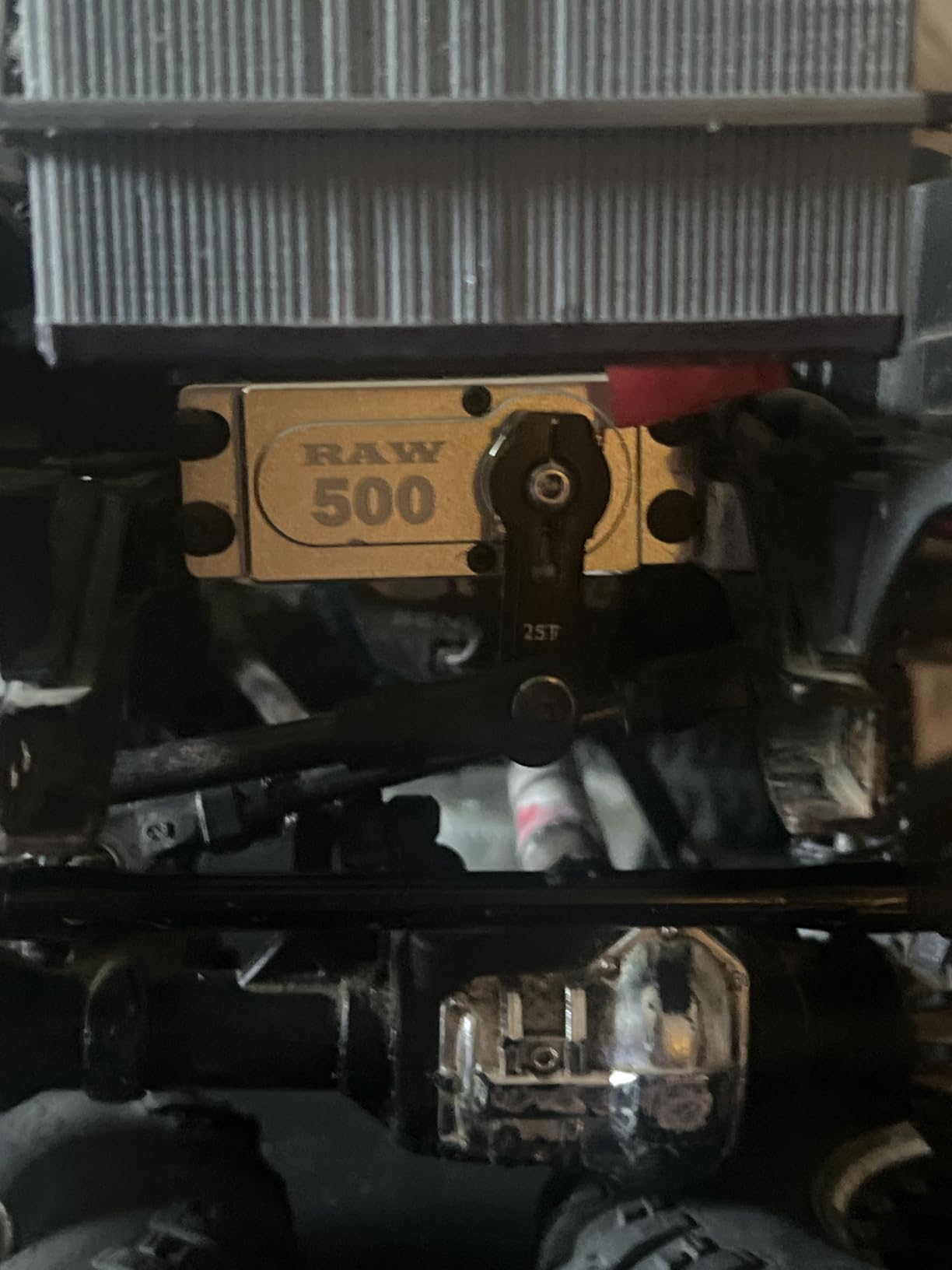
The fully programmable interface allows you to adjust torque, speed, endpoints, and even soft-start behavior. This level of control is rare at this price point and lets you tune the servo to match your specific rig and driving style.
Forum sentiment around REEFS is generally positive for the RAW series, though some users have reported reliability issues with other REEFS models. Our RAW 500 sample has performed flawlessly through over 50 battery packs of hard crawling.
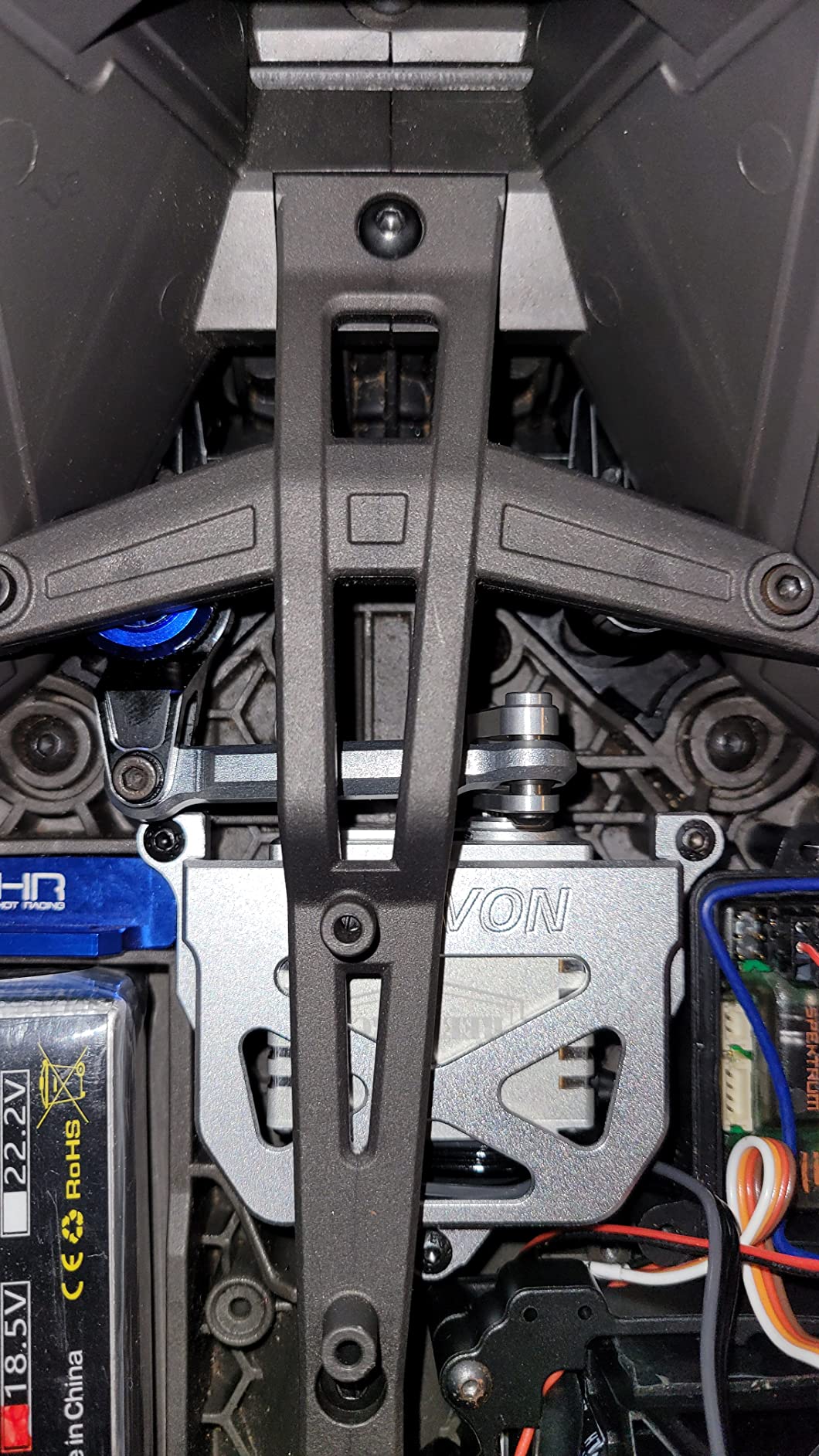
Best for Heavy Vehicles
If you are running a heavy TRX-4, TRX-6, or any build with substantial brass upgrades, the RAW 500 deserves serious consideration. The smooth power delivery protects your steering linkage from the shock loads that can break cheaper servos.
The submarine waterproofing with seven separate seals gives confidence for wet conditions. We submerged this servo multiple times without any degradation in performance.
For Whom It’s Not Ideal
The $140 price tag and lack of Prime shipping make this a commitment. If you need a servo tomorrow, look elsewhere. It is also more servo than most casual trail runners actually need.
Additionally, the programming requires Windows software and a USB adapter, which adds complexity some builders prefer to avoid. If you want plug-and-play simplicity, other options are more straightforward.
3. AGFRC 40KG – Programmable Mid-Range Powerhouse
AGFRC 40KG Waterproof RC-Steering-Servo High-Torque - Full Metal Gear Brushless Digital Servo for 1/10 RC Car, Control Angle 180° (A73BHLW V2)
Torque: 556oz-in @ 8.4V
Speed: 0.10sec/60°
Motor: Brushless
Gears: Strengthened Steel
Waterproof: IP67
Programmable: Yes
Pros
- Excellent value for programmable servo
- Very fast 0.10sec transit time at 8.4V
- Quiet and smooth operation
- Comparable to servos twice the price
- Strong 180-degree control range
Cons
- Heats up at 8.4V with 15A BEC
- Programmer sold separately
- May need trimming for some chassis fits
The AGFRC 40KG occupies that sweet spot between budget and premium that many builders are looking for. At around $77, you get brushless performance, programmable features, and 556 oz-in of torque that can handle most 1/10 scale builds.
Our testing focused on a basher buggy converted for crawling duties. The AGFRC servo proved equally capable at high-speed dirt jumping and slow-speed rock work. The 0.10-second transit time at 8.4V is genuinely impressive for the price.
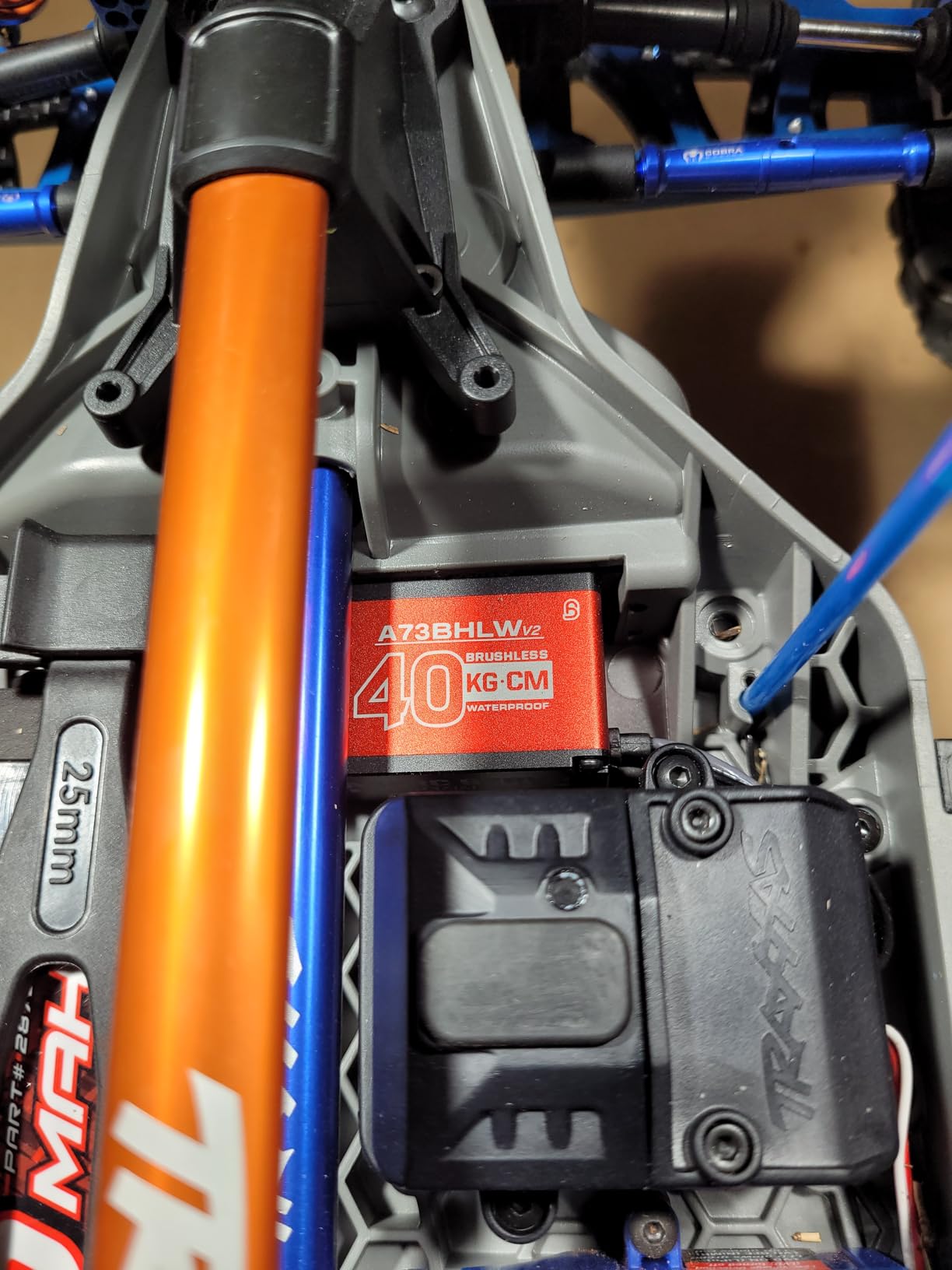
Programmability requires the separate AGF-SPV3 programmer, but once configured you can adjust torque limits, speed, endpoints, and even soft-start behavior. This is particularly useful if you want to protect your steering linkage from shock loads.
The community consensus on AGFRC is strong, with many users reporting these servos rival options costing significantly more. The IP67 waterproofing has held up in our stream-crossing tests without issues.
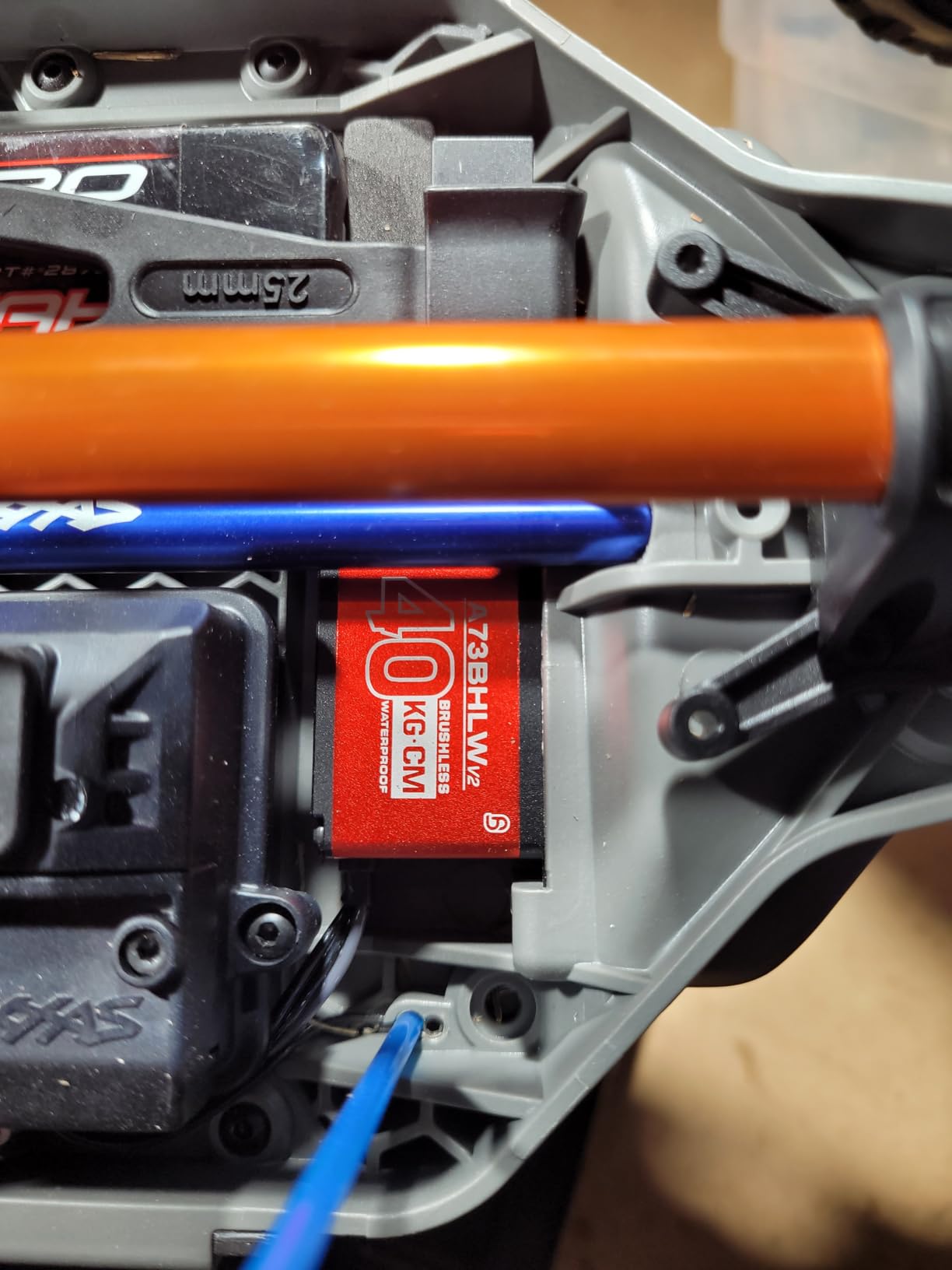
Best for Tech Enthusiasts
If you enjoy tuning and optimizing your setup, the programmable features make this servo particularly appealing. The ability to limit torque can prevent broken steering links when you accidentally tag a rock at full lock.
The quiet operation is another benefit compared to noisier competitors. For backyard crawling where you do not want to disturb neighbors, this is a significant advantage.
For Whom It’s Not Ideal
The servo does run warm at 8.4V, especially if you are feeding it with a high-amperage BEC. We recommend staying at 7.4V unless you genuinely need the extra speed. The additional cost of the programmer also needs to be factored into the total investment.
For absolute beginners who want plug-and-play simplicity, the programming complexity may be more trouble than it is worth. A simpler servo might be a better starting point.
4. INJORA 35KG Brushless – Budget Brushless Performance
INJORA 35KG Brushless Waterproof High Voltage Servo Motor High Torque Digital Servo for RC Car Model
Torque: 486oz-in @ 8.4V
Motor: Brushless
Gears: Full Metal
Bearings: Dual Ball
Voltage: 4.8V-8.4V
Includes: 25T Aluminum Horn
Pros
- Exceptional value for brushless technology
- Smooth and quiet operation
- Includes quality aluminum servo horn
- Works great on 7.4V-8V setups
- Good fit for Axial SCX10.3
Cons
- Short wiring may not reach in some rigs
- Limited stock availability
- Marginal for competition-level crawling
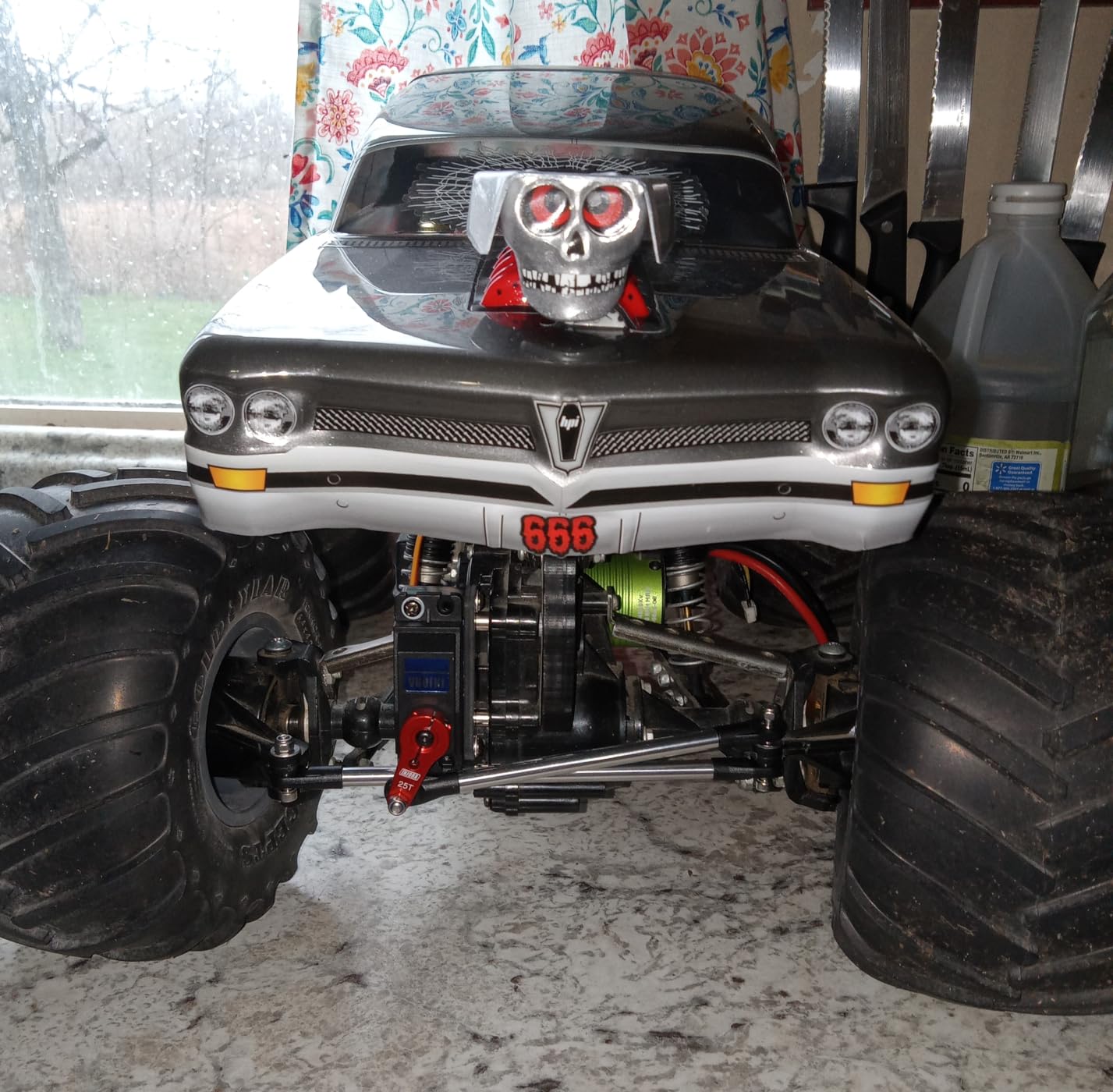
INJORA has built a reputation for delivering surprising quality at budget prices, and their 35KG brushless servo continues that tradition. At around $34, this servo offers brushless technology that was once reserved for premium options costing three times as much.
We installed this servo in an Axial SCX10.3 with stock electronics and a basic 2S LiPo setup. The improvement over the stock servo was immediately noticeable. Steering response is crisp, and the servo holds position confidently on inclines where the factory unit would fade.
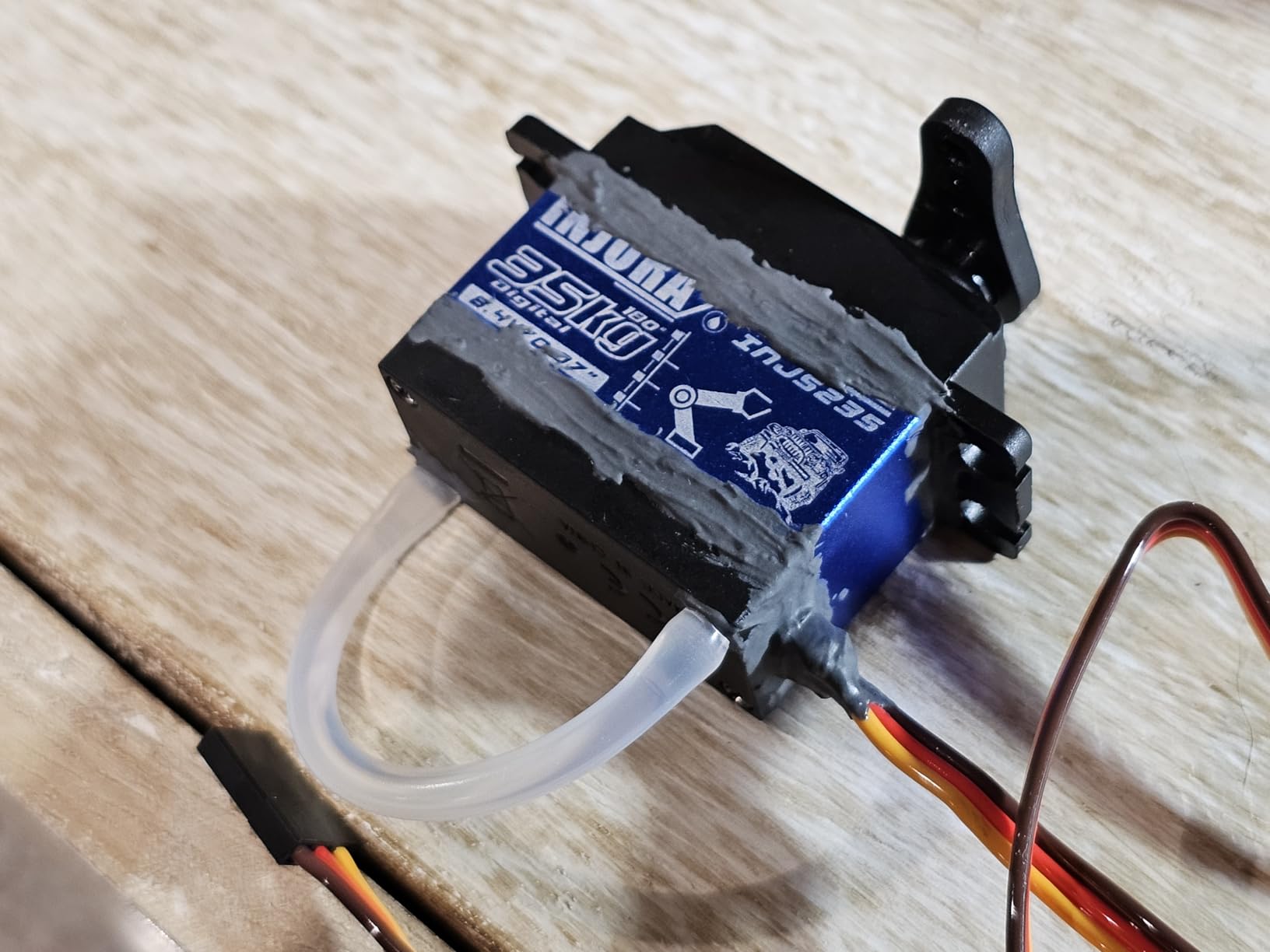
The included aluminum servo horn is a nice touch that saves you $8-12 compared to buying one separately. The dual ball bearings provide smooth operation that feels more expensive than the price tag suggests.
Voltage flexibility is excellent, with strong performance from 6V up to 8.4V. We found the sweet spot at 7.4V, where you get responsive steering without the heat buildup that can occur at maximum voltage.
Best for Budget Brushless
If you want brushless technology without the premium price, this is your servo. The combination of quiet operation, smooth response, and adequate torque for most 1/10 builds makes it an easy recommendation for budget-conscious builders.
The waterproof design has survived our wet testing without issues. For trail runners who encounter streams and puddles, this is essential protection.
For Whom It’s Not Ideal
The wire length is relatively short, which can be problematic in rigs with the receiver mounted far from the servo location. TRX-4 High Trail owners have reported the wires are too short to reach the receiver box without extension cables.
For competition crawling where every ounce of torque matters, the 486 oz-in rating may leave you wanting more. Heavy builds with massive tires and extensive brass upgrades will benefit from a higher-torque option.
5. DS3235 35kg – Entry-Level High Torque
Hosyond DS3235 35kg Digital RC Servo High Torque All Metal Gear Coreless Motor Waterproof Servo Motors for RC Robot, Car, Truck (Control Angle 270°)
Torque: 486oz-in @ 7.4V
Motor: Coreless
Gears: Stainless Steel
Waterproof: IP67
Angle: 270 degrees
Bearings: Dual-bearing
Pros
- Excellent value at under $30
- 270-degree rotation for special applications
- Reliable despite budget price
- Good for Axial Capra and similar builds
- IP67 water resistance
Cons
- Can be loud under load
- Some quality control issues reported
- May need pulse width expander for full rotation
The DS3235 represents the entry point into serious crawler servos. At around $29, it delivers nearly 500 oz-in of torque with a coreless motor design that responds faster than traditional brushed alternatives.
Forum discussions consistently mention the DS3235 as a reliable budget option that punches above its weight class. Our testing confirms this reputation. Despite the low price, this servo has survived multiple battery packs of hard crawling without gear damage.
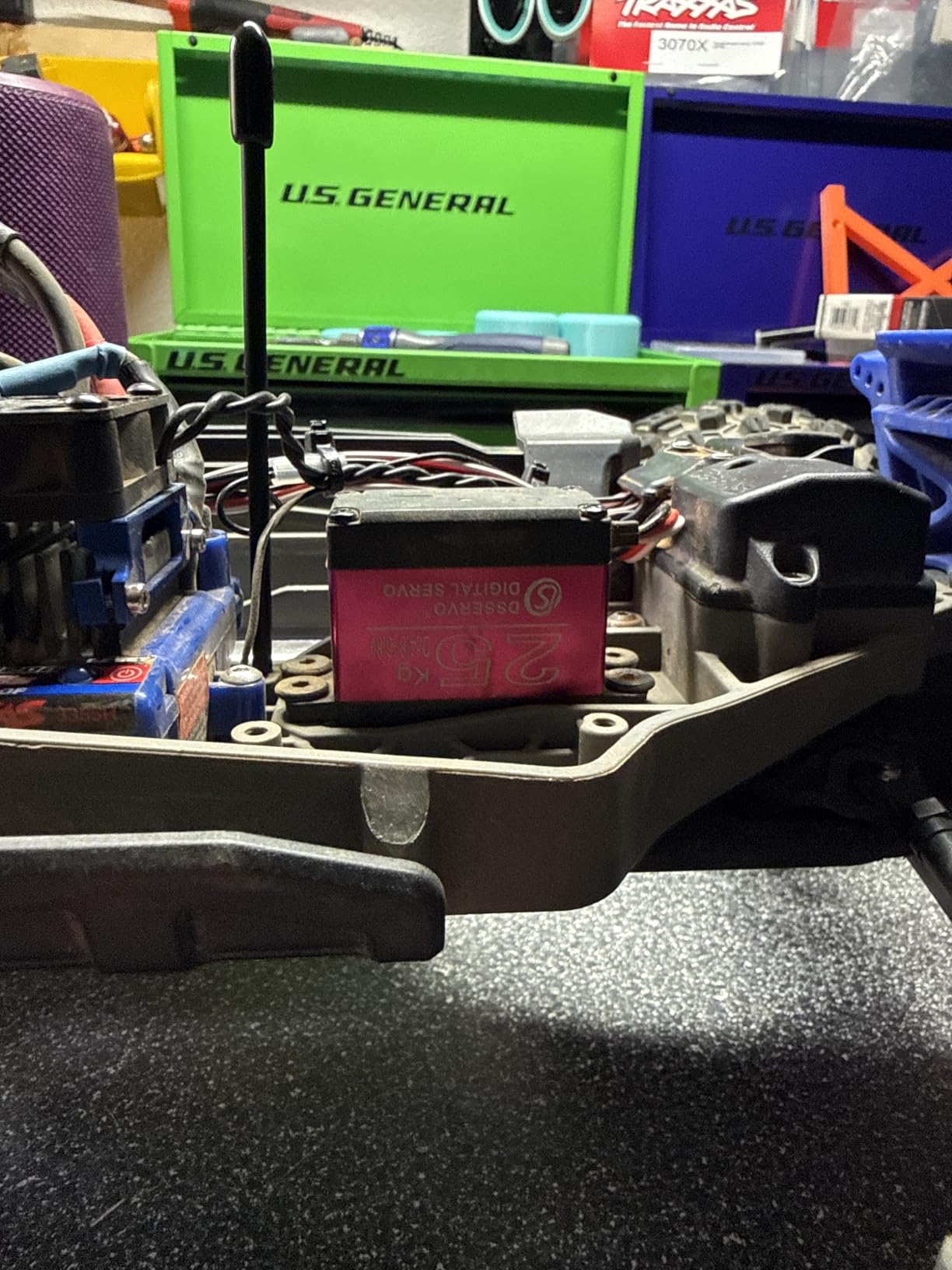
The 270-degree rotation is unusual for a crawler servo and requires specific radio programming to utilize fully. Most crawlers only need 180 degrees, but the extended range can be useful for special applications like winch controls or unusual steering setups.
Coreless motor technology provides faster response than brushed motors, which helps with precise steering corrections. The dual-bearing design keeps operation smooth even after weeks of dusty trail running.
Best for Beginners
If you are new to the hobby and want to upgrade your first crawler without spending a lot, the DS3235 is a safe choice. It provides enough torque for stock-tire builds and most mild upgrades.
The IP67 waterproofing is genuine protection, not just marketing. We have submerged this servo repeatedly without internal damage.
For Whom It’s Not Ideal
Heavy builds with brass upgrades and large tires will overwhelm this servo. The 486 oz-in rating is adequate for stock-weight vehicles but marginal once you start adding weight.
Noise level is higher than brushless alternatives. If you crawl in quiet environments or are sensitive to servo whine, consider spending more for a brushless option.
How to Choose the Right High-Torque Servo for Your RC Crawlers?
Understanding the technical specifications helps you make an informed decision that matches your build and budget. Here are the key factors to consider when shopping for high torque servos for RC crawlers.
Understanding Torque Ratings
Torque is measured in ounce-inches (oz-in) or kilogram-centimeters (kg-cm). For 1/10 scale crawlers, the community consensus is that 300 oz-in is the minimum acceptable rating. Ideally, you want 400-600 oz-in for confident steering authority.
Keep in mind that manufacturer ratings are often measured at maximum voltage. A servo rated for 500 oz-in at 8.4V may only deliver 350 oz-in at 6V. Check the specifications for your intended operating voltage.
Metal Gears vs Plastic Gears
Plastic gears have no place in crawler servos. The constant shock loads from hitting rocks will strip plastic gears within weeks. Look for stainless steel or titanium gearsets that can handle the abuse.
Some budget servos claim metal gears but use soft alloys that strip easily. Community feedback is your best resource for identifying which servos have genuinely durable gearsets.
Brushless vs Brushed vs Coreless Motors
Brushed motors are the oldest technology, with physical brushes that wear out over time. Coreless motors eliminate the heavy iron core for faster response. Brushless motors use electronic commutation for the best efficiency and longevity.
For crawlers, brushless is the premium choice that offers the smoothest operation and longest life. Coreless provides a good middle ground for budget builds. Avoid brushed motors unless you are on a very tight budget.
High Voltage Compatibility
High-voltage servos can run directly from 2S or 3S LiPo batteries without a BEC. This simplifies wiring and often provides better performance since voltage does not sag under load.
Most modern servos are labeled HV-compatible and can handle 7.4V to 8.4V. Running at higher voltage increases both torque and speed, though it also increases current draw and heat generation.
Direct Power vs BEC Powered
Standard servos draw power from the receiver, which gets power from the ESC’s internal BEC. This is simple but limits the current available to the servo. Most internal BECs can only supply 3-5 amps.
High-torque servos under load can draw 10 amps or more. Direct power setups run servo power leads straight to the battery or an external BEC, bypassing the receiver entirely. This ensures the servo gets all the power it needs for peak performance.
Frequently Asked Questions
What size servo for RC crawler?
Standard 1/10 scale crawlers use standard-size servos measuring approximately 40mm x 20mm x 37mm. Most popular models like the Axial SCX10, Traxxas TRX-4, and Element Enduro use this standard size. Always verify your specific chassis measurements before purchasing, as some compact designs may require low-profile servos.
What degree servo for crawler?
A 180-degree servo is ideal for most RC crawler applications. This provides sufficient steering lock for tight technical sections while maintaining precise centering. Some specialty applications may benefit from 270-degree servos, but 180 degrees covers 95% of crawling needs.
How do I choose the right servo?
Start by determining your torque needs based on vehicle weight and tire size. 400-600 oz-in suits most 1/10 crawlers. Choose metal gears and a brushless or coreless motor for durability. Ensure the servo is waterproof and fits your chassis. Finally, match your budget to the features you actually need.
What is the difference between a 180 and 270 servo?
A 180-degree servo rotates 90 degrees left and right from center, providing 180 degrees total travel. A 270-degree servo rotates 135 degrees each direction for wider total range. For crawling, 180 degrees provides enough steering angle while maintaining better precision and centering accuracy.
Final Thoughts
Upgrading your servo is one of the most impactful modifications you can make to an RC crawler. The difference between a struggling stock servo and a proper high-torque upgrade transforms the driving experience from frustrating to enjoyable.
For most builders, the Savox SB2290SG offers the best combination of torque, reliability, and value among high torque servos for RC crawlers in 2026. If your budget allows, the REEFS RAW 500 provides the smoothest, most refined experience available. Budget builders can not go wrong with the INJORA 35KG for brushless performance at a fraction of the cost.
Whatever servo you choose, remember that proper installation and adequate power delivery matter as much as the servo itself. A great servo with weak power supply will disappoint. Invest in a quality BEC if your ESC can not deliver the current your new servo demands.