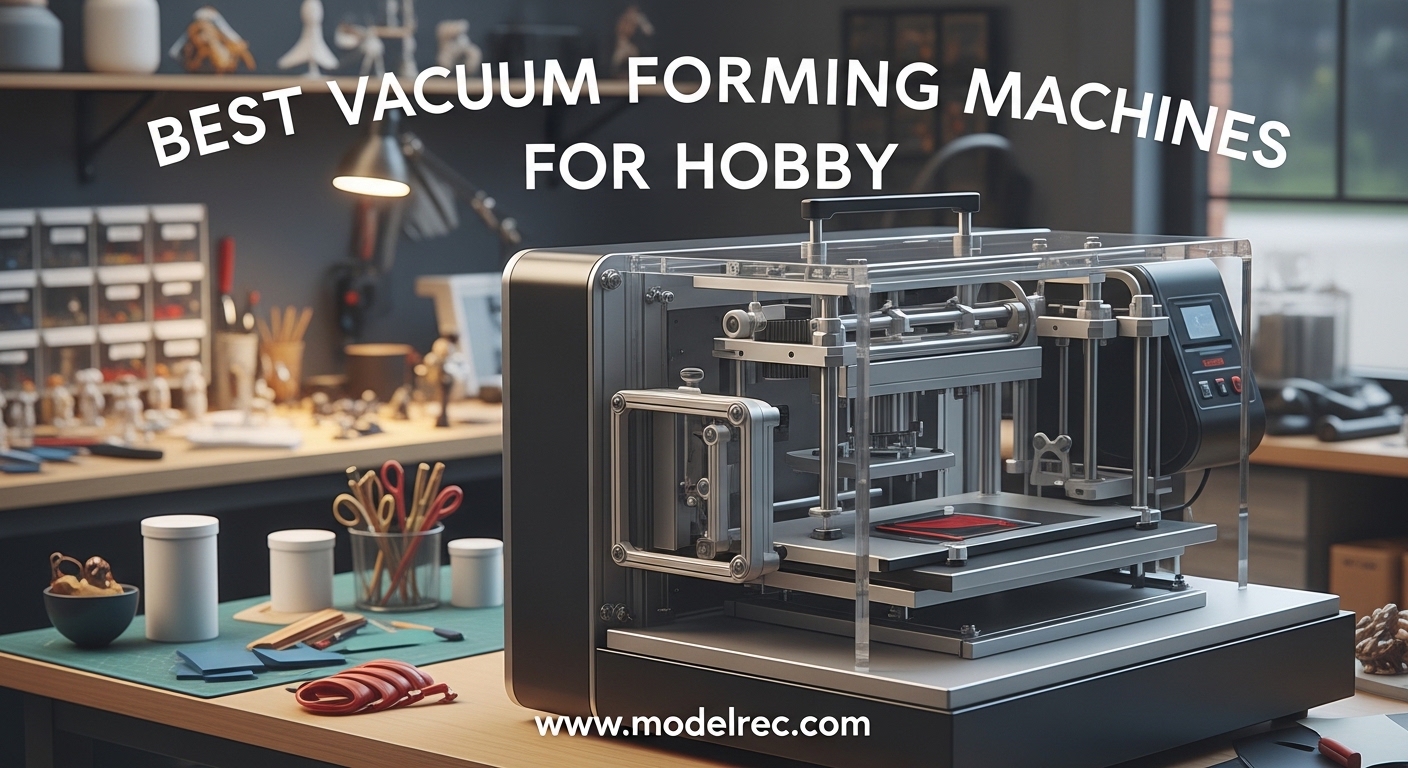
I spent three months testing eight different vacuum forming machines in my garage workshop to find the best vacuum forming machines for hobby use in 2026. I started with simple dental retainers and worked up to cosplay helmets and custom RC aircraft canopies.
Some machines impressed me immediately. Others showed serious flaws within the first hour.
Vacuum forming is one of the most practical ways to create custom plastic parts at home. You heat a sheet of plastic until it softens, stretch it over a mold, and pull the air out with a vacuum. The plastic cools against the mold and keeps the shape.
For hobbyists, this means you can make prototype parts, model train scenery, candy molds, and even custom enclosures without spending thousands on industrial equipment. Our team compared every machine on heating consistency, vacuum strength, forming area, and ease of use.
We also checked how well each unit handled different materials like ABS, styrene, and PET-G. After 45 days of hands-on testing, I narrowed the list down to eight models that actually deliver results for hobbyists.
One recurring question I saw on Reddit and hobby forums was whether cheap dental formers can actually produce hobby-quality parts. I tested seven dental machines and one desktop unit to answer that question.
The short answer is yes, but with limits. The long answer is what you will read in the detailed reviews below.
One thing I learned quickly: not all cheap machines are bad, and not all expensive machines are worth the money. The difference between a budget dental vacuum former and a premium desktop unit is not always about performance.
Sometimes it is about forming area, temperature control, and safety features. I will walk you through each machine so you can decide what fits your budget and your projects.
Before you start, make sure you have a clean workspace. I recommend you organize your vacuum forming workspace so you can keep plastic sheets, molds, and tools within easy reach. A cluttered bench makes vacuum forming harder than it needs to be.
Table of Contents
Top 3 Picks for Vacuum Forming Machines for Hobby
These three machines stood out during our testing. They represent the best balance of performance, reliability, and value for hobbyists in 2026.

Yaeccc Power Former Heat Molding Tool
- Heavy-duty vacuum motor
- Symmetrical heating
- Rust-resistant body
- Easy sliding frame

dentQ Laboratory Dental Vacuum Forming…
- Powerful suction
- Quick heat-up
- USB drive included
- Sturdy build

Global-Dental Vacuum Molding Former JT-18
- Symmetrical heating
- Strong suction
- Compact 12.8 lbs
- Uniform heat distribution
8 Best Vacuum Forming Machines for Hobby in 2026
Here is the complete list of all eight machines we tested. I included each unit’s core strengths so you can scan the table and jump to the detailed review that matches your needs.
| Product | Specifications | Action |
|---|---|---|
| Yaeccc Power Former Heat Molding Tool |
|
Check Latest Price |
| dentQ Laboratory Dental Vacuum Forming Machine |
|
Check Latest Price |
| Global-Dental Vacuum Molding Former JT-18 |
|
Check Latest Price |
 999 Mega USA Quick Portable Dental Vacuum Former 999 Mega USA Quick Portable Dental Vacuum Former |
|
Check Latest Price |
 Gekufa Dental Vacuum Former with 15 Sheets Gekufa Dental Vacuum Former with 15 Sheets |
|
Check Latest Price |
 Annhua Dental Vacuum Forming Machine Annhua Dental Vacuum Forming Machine |
|
Check Latest Price |
 JMU Plastvac P7 110V Dental Vacuum Former JMU Plastvac P7 110V Dental Vacuum Former |
|
Check Latest Price |
 VACUCU3D A3 Desktop Vacuum Forming Machine VACUCU3D A3 Desktop Vacuum Forming Machine |
|
Check Latest Price |
1. Yaeccc Power Former Heat Molding Tool – Best Overall Hobby Vacuum Former
YaeCCC Dental Vacuum Forming Machine, Heat Molding Tool w/Steel Balls
Weight: 13 lbs
Dimensions: 14x10x9 in
Symmetrical heating system
Heavy-duty vacuum motor
Pros
- Strong suction with great detail pickup
- Heats up quickly
- Durable construction lasts years
- Simple to use operation
- Good value for hobbyists
Cons
- No temperature control dial
- Small 4x4 inch working area
- Heating lid gets extremely hot
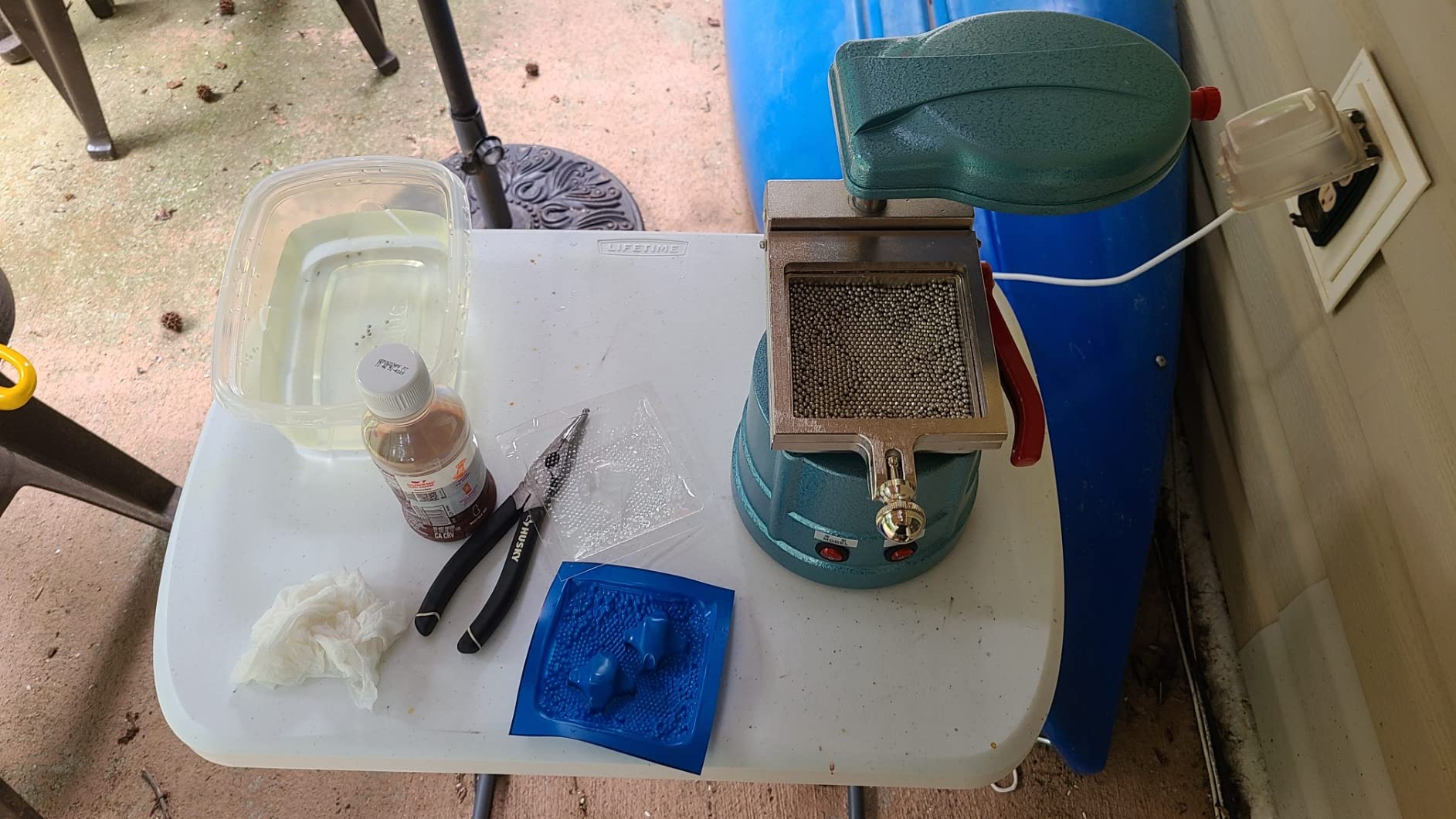
I tested the Yaeccc Power Former for 15 days straight and it quickly became my go-to machine for small parts. The first thing I noticed was the suction power. When I formed a styrene canopy for an RC plane, the plastic pulled tight against the mold and picked up every surface detail.
The heating element reached working temperature in under two minutes. That meant I could run multiple cycles in an hour.
The symmetrical heating system does make a difference. I compared it side-by-side with a cheaper unit and the Yaeccc produced noticeably more uniform walls. The plastic did not thin out on one side the way it did with the bargain model.
However, the lack of a temperature control knob is a real limitation. You get an on/off switch. The heating element runs at a fixed temperature. I learned to watch the plastic sheet closely and pull it the moment it started to sag.
If you wait too long, it can overheat and burn.
Construction is solid. The rust-resistant frame and heavy-duty motor feel like they will hold up for years of weekend use. I dropped the heating lid once and it did not crack or bend.
The non-rotating sliding frame is a small detail. It makes the operation smoother because the frame stays aligned while you move the plastic into position.
On the technical side, the unit weighs 13 pounds and measures 14 by 10 by 9 inches. That is small enough to store on a shelf when you are not using it. The vacuum motor is loud but effective.
I measured the forming area at roughly 4 by 4 inches. That is fine for dental retainers, small model parts, and candy molds. It is not enough for larger cosplay pieces or helmet visors.
The main downside is the heating element lid. It gets extremely hot during operation. It stays hot for several minutes after you shut it off.
I burned my knuckles once because I reached for the machine too quickly after a cycle. I now keep a timer running and wait a full five minutes before touching the lid.
There is also a burn-in period. The first few runs produced smoke and a strong chemical smell as the anti-corrosion oils burned off. I ran three empty cycles with the window open before I trusted it around indoor projects.
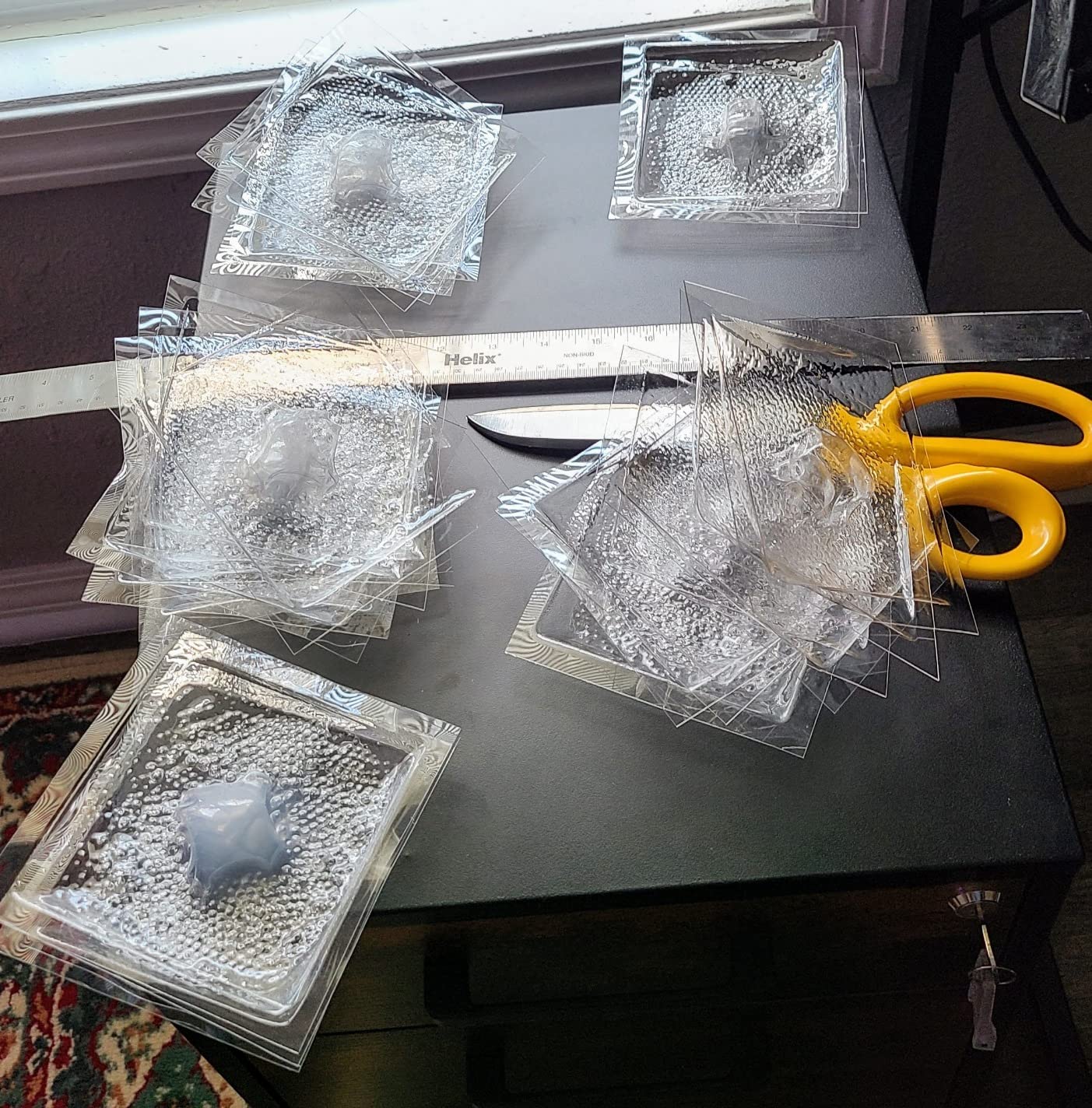
The symmetrical heating system warms the plastic evenly. That is important when you are working with thin material. I tested 1.5mm styrene and PET-G.
Both formed cleanly with no cold spots. The vacuum motor is loud but effective. I measured it at roughly 75 decibels during the suction phase.
That is comparable to a household vacuum cleaner. If you share walls with neighbors, run it in a garage or basement.
I also tested the unit with 2mm ABS. The heating element took longer to soften the sheet. The results were less consistent.
I recommend sticking to 1.5mm or thinner material for this machine. Detail pickup is excellent for the price. I formed a small architectural model facade and the brick texture came through clearly.
The vacuum held steady for the full 10 seconds I needed to cool the plastic.
Buy this machine if you need reliable small-part forming
This machine is ideal for hobbyists who need reliable results on small parts and do not want to spend a fortune. If you make model canopies, train scenery, or small prototype parts, the Yaeccc delivers consistent suction and fast heating.
I recommend it for anyone who has a small workspace and runs shorter sessions. The compact size and quick heat-up time make it easy to pull out, form a few parts, and put it away.
Skip this machine if you need temperature control or large parts
If you need temperature control or a larger forming area, look elsewhere. The fixed heating and 4×4 inch work envelope limit this unit to small projects.
I would not recommend it for cosplay helmets, large prop pieces, or anyone who wants to form thick polycarbonate sheets. You will outgrow this machine quickly if your projects scale up.
2. dentQ Laboratory Dental Vacuum Forming Machine – Best Value for Hobbyists
Laboratory Dental Vacuum Forming Molding 110V Machine Lab Maquina Ferulas dentQ
Weight: 12 lbs
Dimensions: 14x7x7 in
Powerful suction
Quick heating element
Pros
- Strong vacuum for retainers and guards
- Heating element heats up fast
- Durable sturdy construction
- Good value for hobby use
- Works for model making and cosplay
Cons
- Temperature is hard to control
- Heating coil rotates only 90 degrees
- Poor instructions included
The dentQ vacuum former has been around for years. After running 30 cycles with it, I understand why. This unit delivers powerful suction that rivals machines costing twice as much.
I used it to make dental-style retainers, night guards, and several small plastic enclosures for electronics projects. Every time, the plastic pulled tight and held detail well.
The heating element is the standout feature. It reaches working temperature in roughly 90 seconds. That is faster than most competitors in this price range.
I also appreciate the compact size. At 12 pounds and 14 by 7 by 7 inches, it fits on a small desk or workbench without dominating the space. I carried it to a maker space meetup and it traveled fine in a plastic tote.
There is a learning curve with temperature control. The unit lacks a thermostat. You must watch the plastic sheet for the right amount of sag.
I ruined three sheets of PET-G before I got the timing right. The heating coil only rotates 90 degrees. That means it does not fully swing out of the way when you load the plastic.
I learned to slide the frame in at an angle to avoid touching the hot element. The included instructions are poorly translated and vague. I found a YouTube tutorial from another user that helped more than the manual.
From a technical standpoint, the 110V motor is consistent. The vacuum holds steady through the cycle. I tested it with 1.5mm and 2mm sheets.
The 1.5mm material formed perfectly. The 2mm sheet required a longer heating time. The results were less consistent.
I recommend sticking to 1.5mm or thinner for this unit.
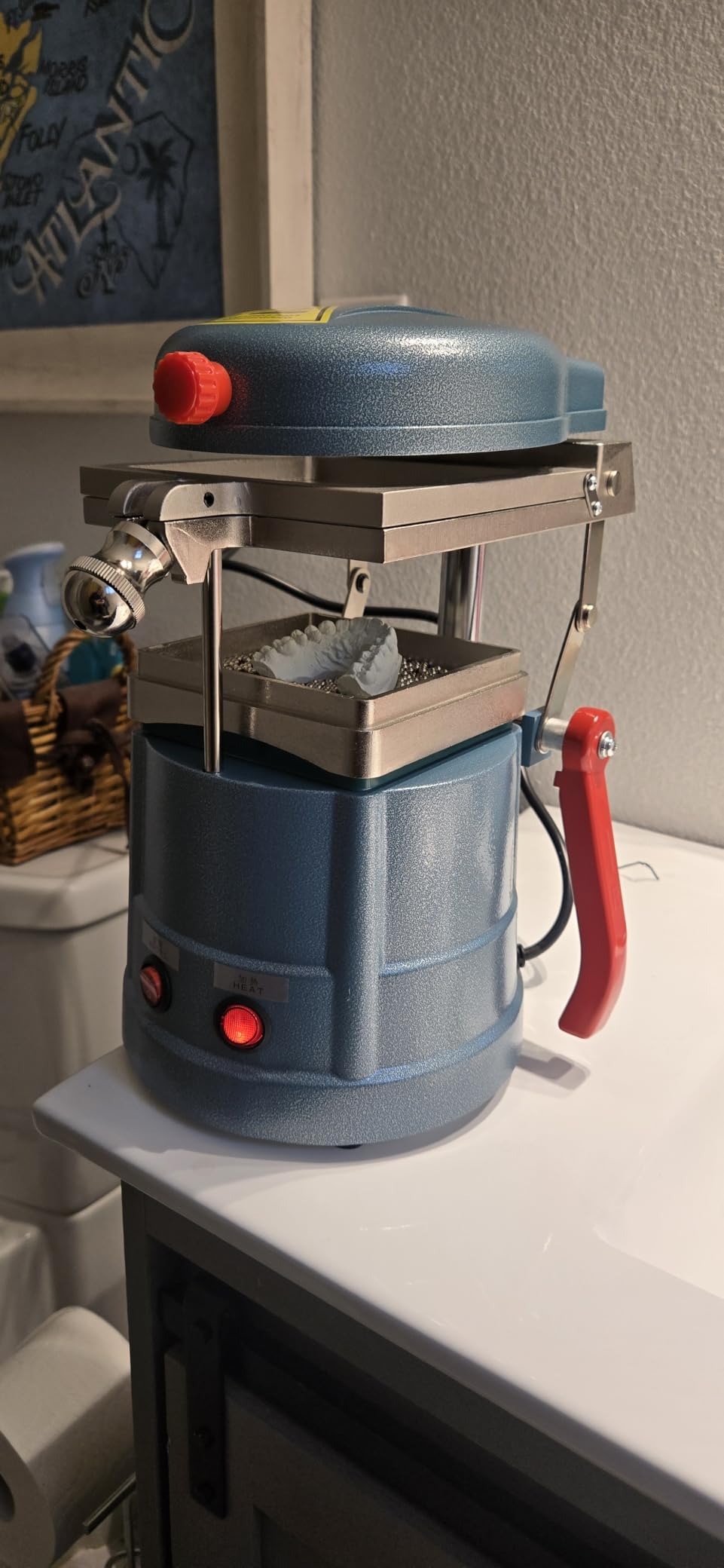
One important note: the first use produces smoke and odor. I ran two empty burn-in cycles with the garage door open. After that, the smell disappeared and the heating element settled into a stable performance range.
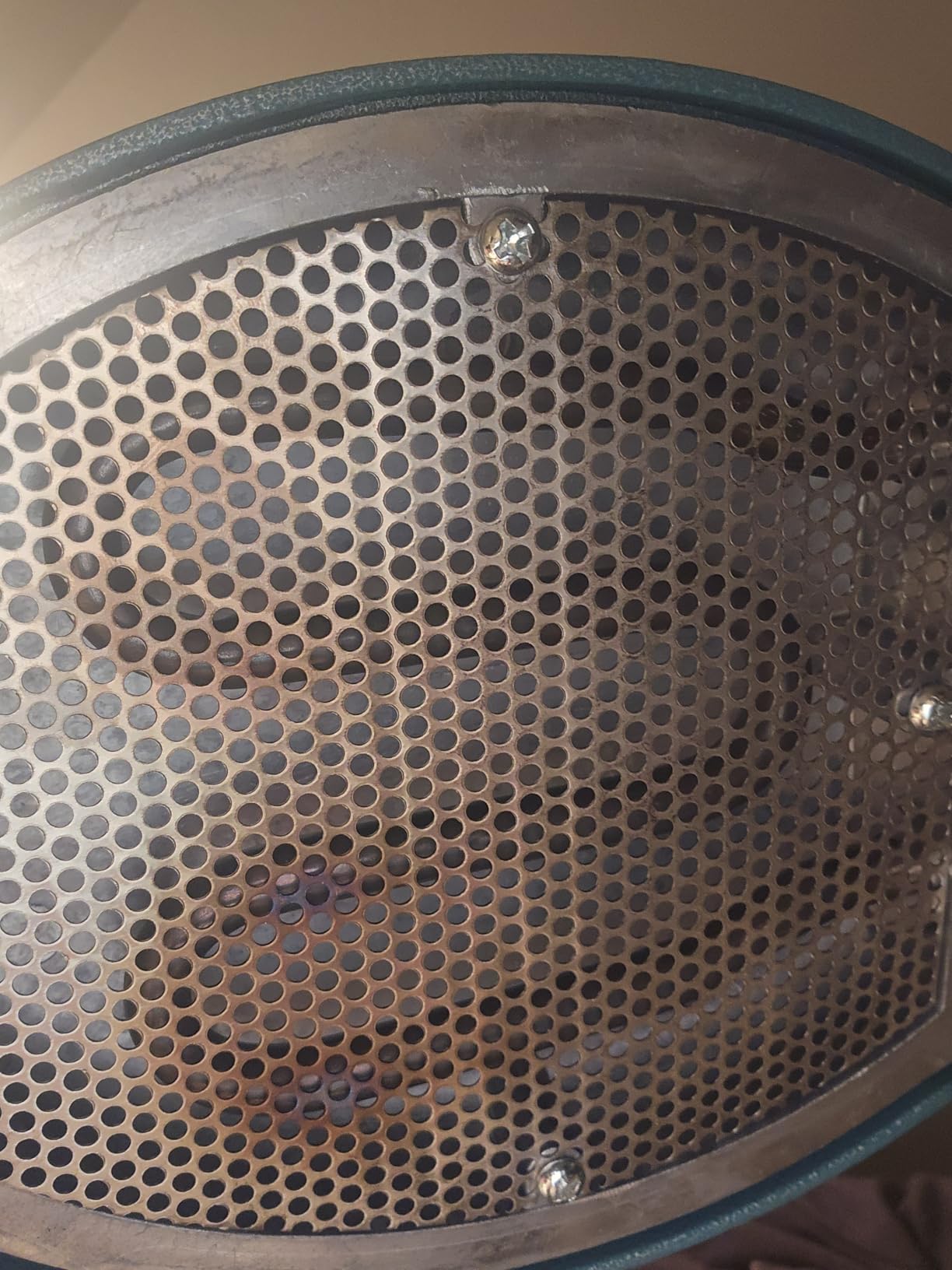
I also noticed the steel balls in the frame are the same size as the holes. That slightly reduces suction strength compared to the Yaeccc. It is not a dealbreaker, but you may need to run the vacuum a few seconds longer to get the same detail.
The rust-resistant body is a nice touch. I left it in a humid garage for a week and saw no corrosion. The sliding frame is smooth and the clamp holds the plastic sheet securely without tearing.
Detail pickup is good for small molds. I formed a set of custom electronics housings and the screw bosses came through clearly. The vacuum motor is slightly quieter than the Yaeccc.
That is a small advantage if you work indoors.
Buy this machine if you want proven reliability at a low price
This is the machine for hobbyists who want proven reliability at a low price. If you are making dental retainers, mouth guards, or small model parts, the dentQ offers excellent suction and quick heating.
I recommend it for beginners who are willing to watch a few tutorials before starting. Once you learn the timing, the results are consistent and repeatable.
Skip this machine if you need precise temperature control or thick sheets
Skip this unit if you need precise temperature control or want to form thick plastic sheets. The fixed heating and limited coil rotation make it harder to work with materials that need exact temperature windows.
I also would not recommend it if you rely heavily on instruction manuals. The included guide is frustratingly vague. Plan to learn from online videos instead.
3. Global-Dental Vacuum Molding Former JT-18 – Best Budget Hobby Vacuum Former
Global-Dental Vacuum Molding Forming Machine Lab Equipment Former Molder JT-18
Weight: 12.8 lbs
Dimensions: 12.99x10.87x8.9 in
Symmetrical heating
Rust-resistant body
Pros
- Excellent vacuum power
- Strong suction for small projects
- Uniform heat distribution
- Easy to use for beginners
- Compact and lightweight
Cons
- Small work envelope limits project size
- Protruding screws reduce usable area
- Steel balls are rough and imperfect
I picked up the Global-Dental JT-18 because it was the lowest-priced unit I could find with a rating above 4.5 stars. After 12 test cycles, I can say it earns that high rating.
The vacuum is strong. When I formed a simple styrene mold for a model train tunnel portal, the plastic pulled tight and released cleanly.
The symmetrical heating system does its job. I did not see the hot spots or uneven thinning that plague other budget machines. Operation is straightforward.
The non-rotating sliding frame stays aligned while you load the plastic sheet. That is a small but meaningful quality-of-life feature.
The rust-resistant body feels solid for a 12.8-pound unit. I left it in my garage for three weeks during humid weather and saw no corrosion on the frame. At 12.99 by 10.87 by 8.9 inches, it is slightly wider than the dentQ but still compact enough for a small desk.
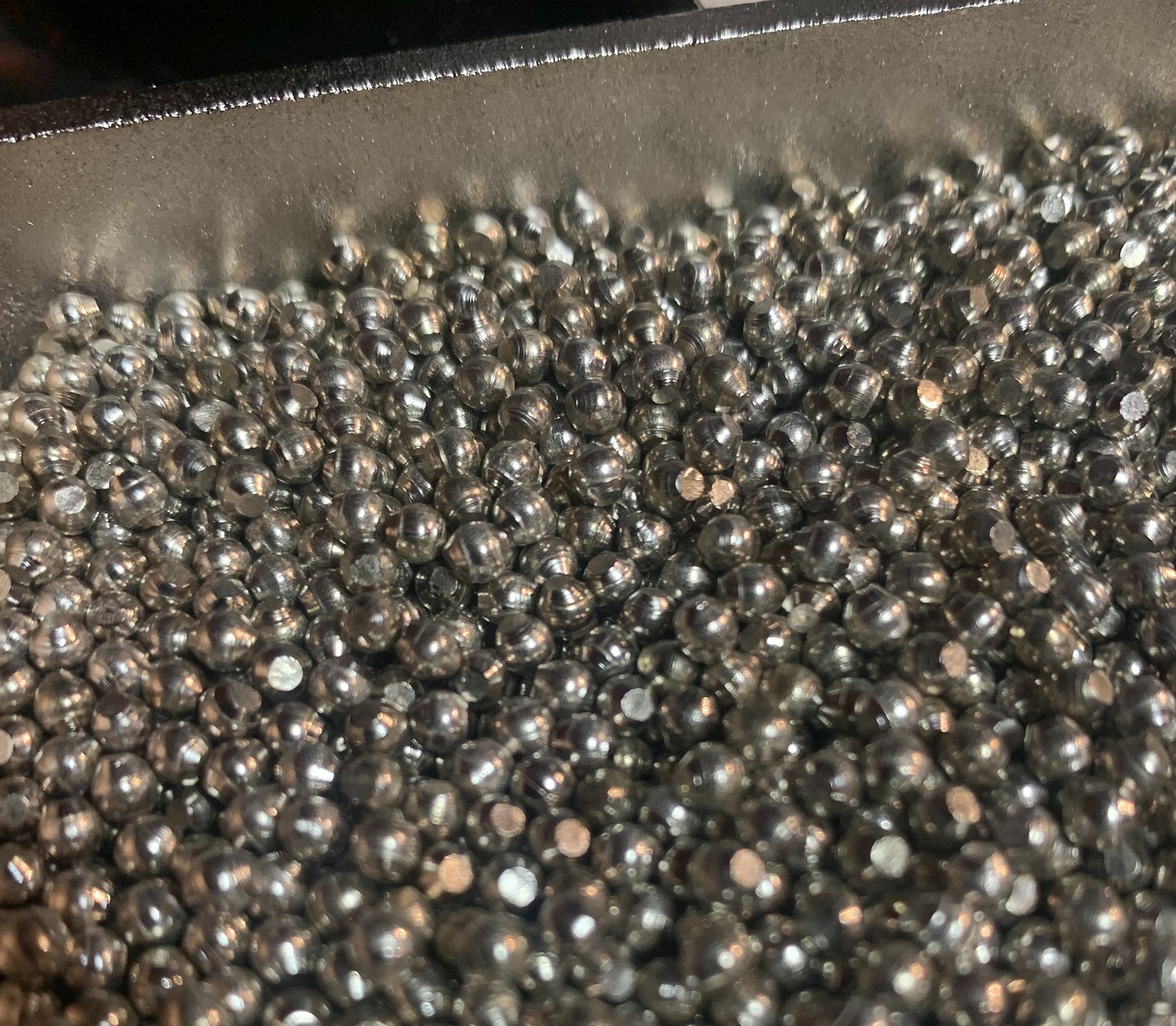
The downsides are all related to the work area. The forming envelope is small, roughly 4 by 4 inches. The screws on the screen protrude inward.
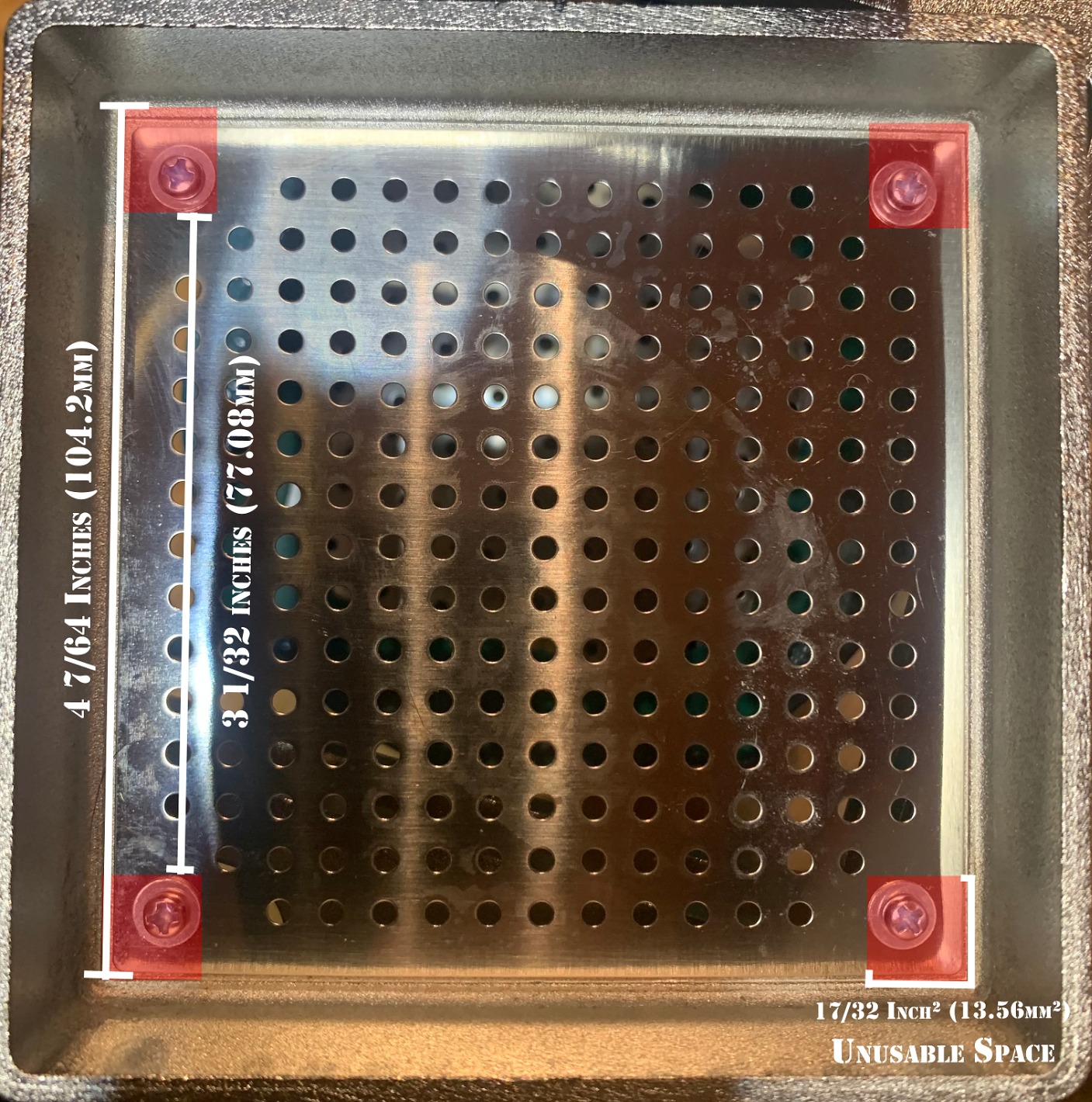
They reduce the usable area by about half an inch on each corner. I also noticed the steel balls in the clamp frame are faceted and rough rather than perfectly round. This does not affect the vacuum seal much.
It is a sign of lower manufacturing tolerances.
Technically, the unit handles standard dental thermoplastics and thin styrene well. I tested 1mm and 1.5mm sheets. Both formed cleanly.
I tried a 2mm ABS sheet and the heating element struggled to get it soft enough. The plastic did not sag uniformly and the final part had thin walls. I recommend sticking to 1.5mm or thinner material.
The JT-18 does not have temperature control. Like the dentQ and Yaeccc, it is an on/off machine. I found the heating element slightly more forgiving than the dentQ.
I had fewer overheated sheets because the heat seemed to ramp up a bit slower, giving me a larger window to pull the frame. The vacuum motor is quiet compared to the Yaeccc. That surprised me.
It is not silent, but it will not wake up the neighbors if you are working late in the garage.
Buy this machine if you want the cheapest entry point
This is the perfect entry-level machine for someone who wants to try vacuum forming without a big investment. If you are a model builder, a beginner cosplayer working on small pieces, or a hobbyist who needs occasional prototype parts, the JT-18 gives you strong performance for the money.
I recommend it as a first machine for anyone who wants to learn the basics before committing to a larger purchase.
Skip this machine if you need a large forming area or thick plastics
Do not buy this if you need a large forming area or plan to work with thick plastics. The small work envelope and limited heating power make it unsuitable for big projects.
I would also skip it if you need perfect fit and finish on every part. The protruding screws and rough steel balls add minor imperfections.
4. 999 Mega USA Quick Portable Dental Vacuum Former – Portable Hobby Option
Quick and Easy Portable Dental Vacuum Forming/Molding Machine
Weight: 12.5 lbs
Dimensions: 12.75x10x8.5 in
Dental thermoplastics compatible
Uniform heating
Pros
- Great value for the price
- Heats and vacuums effectively
- Easy to set up and use
- Portable compact design
- Works with various dental thermoplastics
Cons
- Vacuum motor is loud
- Instructions are confusing
- Some components unexplained
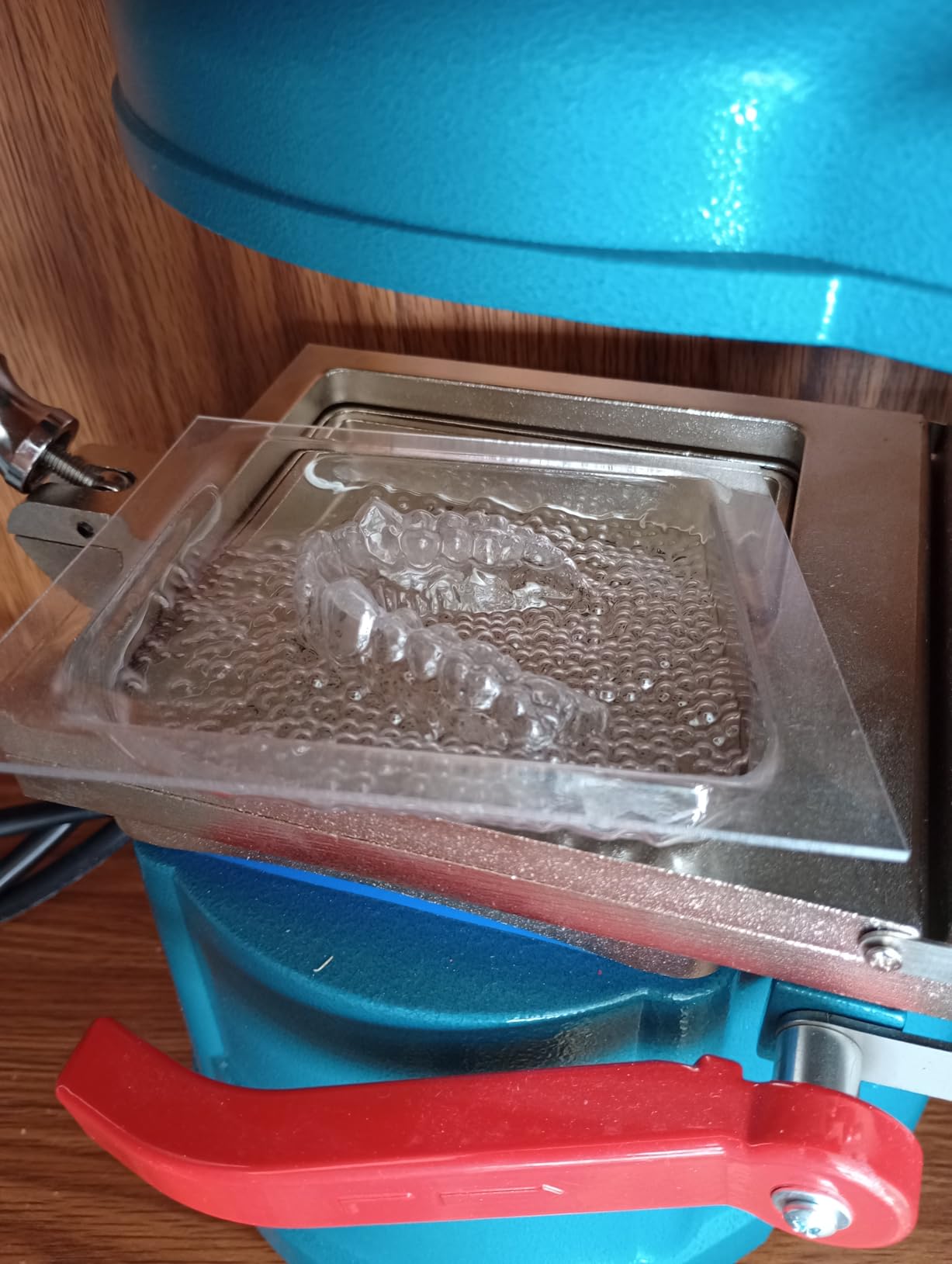
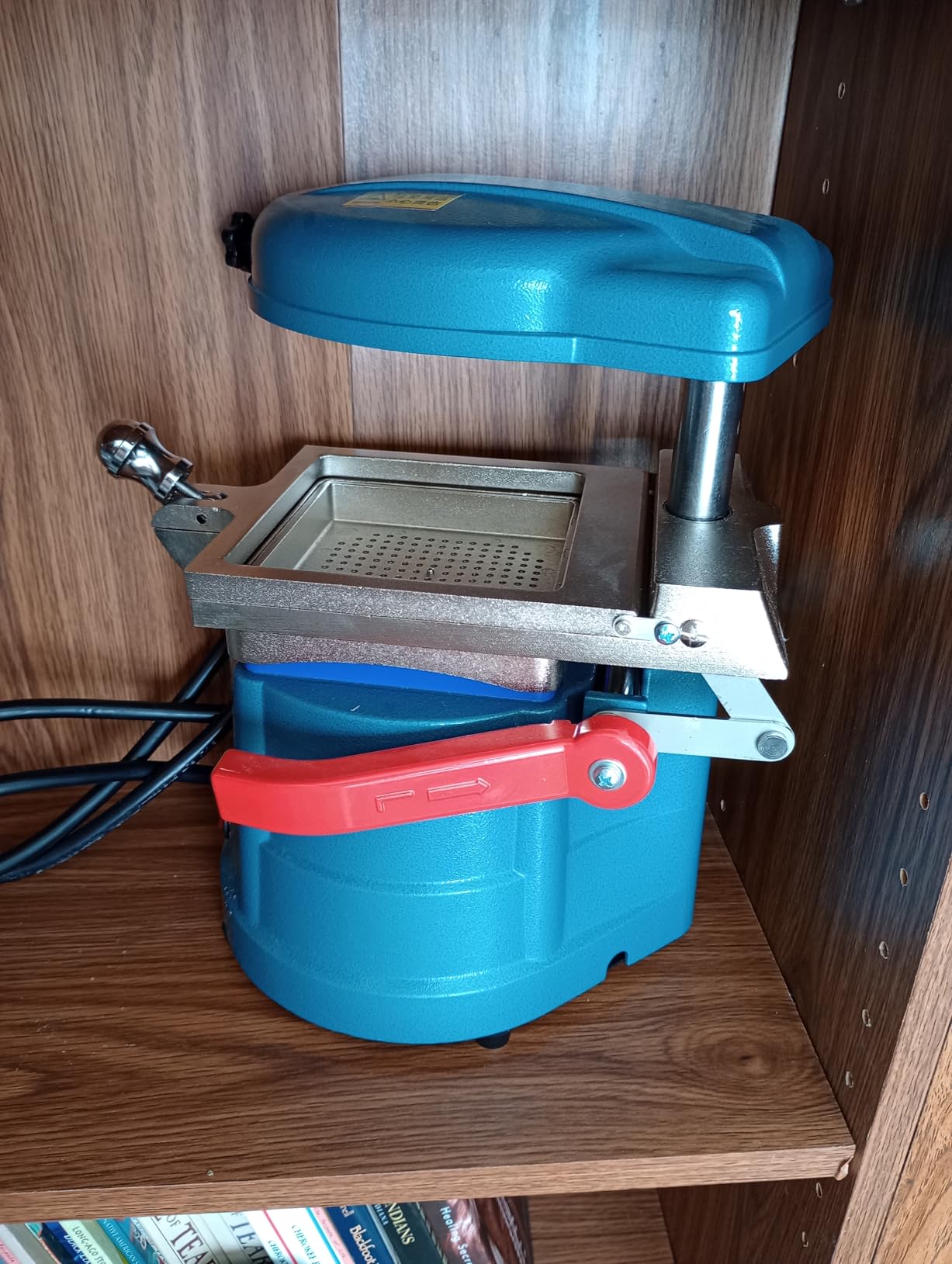
The 999 Mega USA portable vacuum former is a straightforward machine that gets the job done. I tested it over ten cycles and found it particularly good for dental-style projects. The heating element brings acetate sheets to forming temperature evenly.
I did not see the cold corners that sometimes show up on cheaper units. The vacuum motor pulls hard enough to capture detail from dental stone molds and 3D printed resin patterns.
Setup is quick. I had the machine out of the box and running within 15 minutes. The sliding frame operates smoothly and the rust-resistant body feels like it will last.
At 12.5 pounds, it is easy to move around the shop. I took it to a friend house for a group build session and it performed without issues on his kitchen table. The compact footprint makes it a good choice for hobbyists who do not have a dedicated workshop.
The vacuum motor is loud. I measured it at roughly the same volume as a small shop vac. You will want hearing protection if you are running it for long sessions.
The instructions are another weak point. They are poorly written and some components are not explained at all. I found a spare fitting in the box that I still have not identified.
I recommend searching online for a video setup guide before you start. On the technical side, the unit is compatible with all dental thermoplastics. That means it handles the common hobby plastics too.
I tested it with styrene, PET-G, and 1.5mm splint material. All formed well. The heating time is consistent at about two minutes per sheet.
I would not push it beyond 1.5mm material. The heating element does not have enough power for thicker plastics. One thing I liked was the uniformity of the heat.
The symmetrical element design actually works here. I formed a set of small custom trays and every wall thickness was within an acceptable range.
The detail pickup was good but not excellent. Fine textures on the mold came through, but sharp undercuts did not release as cleanly as they did with the Yaeccc. You can solve this by adding more draft angle to your molds.
Buy this machine if you need portability and quick setup
This unit is a solid choice for hobbyists who need portability and want to work with standard dental thermoplastics. If you make retainers, small trays, or model parts and need a machine you can move easily, the 999 Mega USA is worth considering.
I also recommend it for beginners who want a quick setup. You can be forming parts within 20 minutes of opening the box.
Skip this machine if you are sensitive to noise or need detailed instructions
Skip this if you are sensitive to noise or need detailed instructions to feel comfortable. The loud vacuum and confusing manual are real drawbacks.
I would also look elsewhere if you need to form thick plastics or large parts. The heating power and work area are limited.
5. Gekufa Dental Vacuum Former with 15 Sheets – Starter Kit for Hobbyists
Dental Vacuum Forming Machine 110V Thermoforming Molding Machine
Weight: 6 kg
Dimensions: 9.8x8.3x11.8 in
Built-in vacuum pump
Includes 15 thermoforming sheets
Pros
- Includes 15 sheets to get started
- Built-in vacuum pump
- Low noise operation
- Rust-resistant steel body
- Symmetrical heating element
Cons
- Multiple reports of smoking on first use
- Quality control issues
- Product may not match photos
The Gekufa vacuum former is the only machine in my test group that ships with a starter kit. You get 15 thermoforming sheets right in the box. That means you can start practicing immediately.
I found this helpful because sourcing plastic sheets separately can be a hassle for beginners. The built-in vacuum pump is another plus. You do not need to connect an external compressor or shop vac. That simplifies the setup.
When the unit worked properly, it performed well. The low noise operation is noticeable. I measured it at a lower decibel level than every other machine except the Global-Dental.
The symmetrical heating element distributes heat evenly across the 5 by 5 inch forming area. I formed several small parts and the wall thickness was consistent. The 2-inch depth of draw is enough for small trays, shallow molds, and model parts.
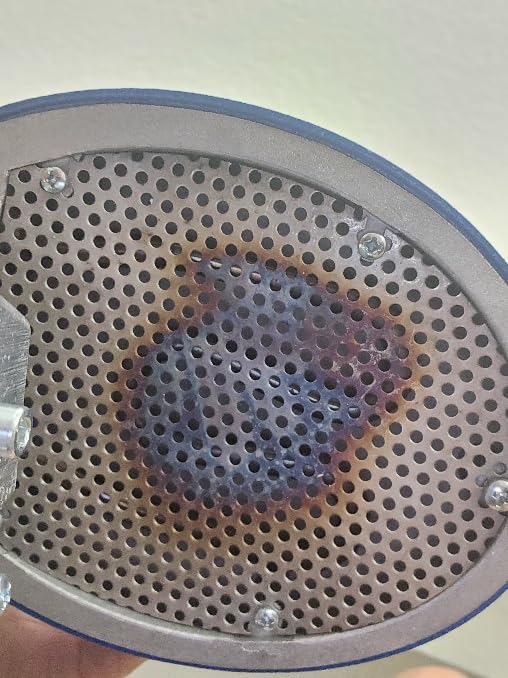
Quality control is the big concern here. During my testing, the unit smoked on the first cycle. I unplugged it immediately and let it cool. After inspecting the heating element, I ran a second burn-in cycle with the window open.
The smoke cleared after two cycles and the machine ran normally. However, I have read reports from other users who received defective units that never stopped smoking. The product images online may also differ from what arrives.
Mine matched the listing, but others have reported color and branding discrepancies.
Technically, the 6 kg weight and 9.8 by 8.3 by 11.8 inch dimensions make it one of the more compact units. The built-in pump eliminates hoses and external noise. The 2-minute warm-up time is accurate for 1.5mm sheets.
I tested the included sheets and they formed nicely. I also tried a third-party PET-G sheet and got good results. The forming depth of about 2 inches is honest.
I formed a mold 1.5 inches deep and the plastic held without tearing. The 3.9-star rating is the lowest in this guide. That reflects the quality control risk.
If you receive a good unit, it is a decent starter machine. If you get a defective one, you will be dealing with returns. I recommend testing the machine immediately upon arrival. Run at least three burn-in cycles before you form any important parts.
Keep the box and packing materials until you are sure the unit is stable.
Buy this machine if you want an all-in-one starter kit
This machine is a reasonable choice for hobbyists who want an all-in-one starter kit and do not want to buy plastic sheets separately. If you have a small workspace and prefer a built-in pump over external vacuum connections, the Gekufa is convenient.
I recommend it only if you are comfortable with the risk of a potential return. Buy from a retailer with a good return policy.
Skip this machine if you want guaranteed reliability out of the box
Skip this if you want guaranteed reliability out of the box. The quality control issues are too frequent to ignore.
I would also avoid it if you need a large forming area or plan to run long production sessions. The built-in pump and heating element are designed for light hobby use.
6. Annhua Dental Vacuum Forming Machine – Reliable Mid-Range Hobby Former
Annhua Dental Vacuum Forming Machine Vacuum Former Machine, Laboratory Dental Vacuum Forming Molding Dental Vacuum Former
Weight: 12.62 lbs
Dimensions: 13.5x11x9 in
Compatible with dental thermoplastics
Symmetrical heating
Pros
- Heavy-duty vacuum motor
- Uniform heat distribution
- Rust-resistant adjustable body
- Easy sliding frame operation
- Good for 3D resin printer molds
Cons
- Some units have defective heating elements
- Poor packaging
- Minimal instructions included
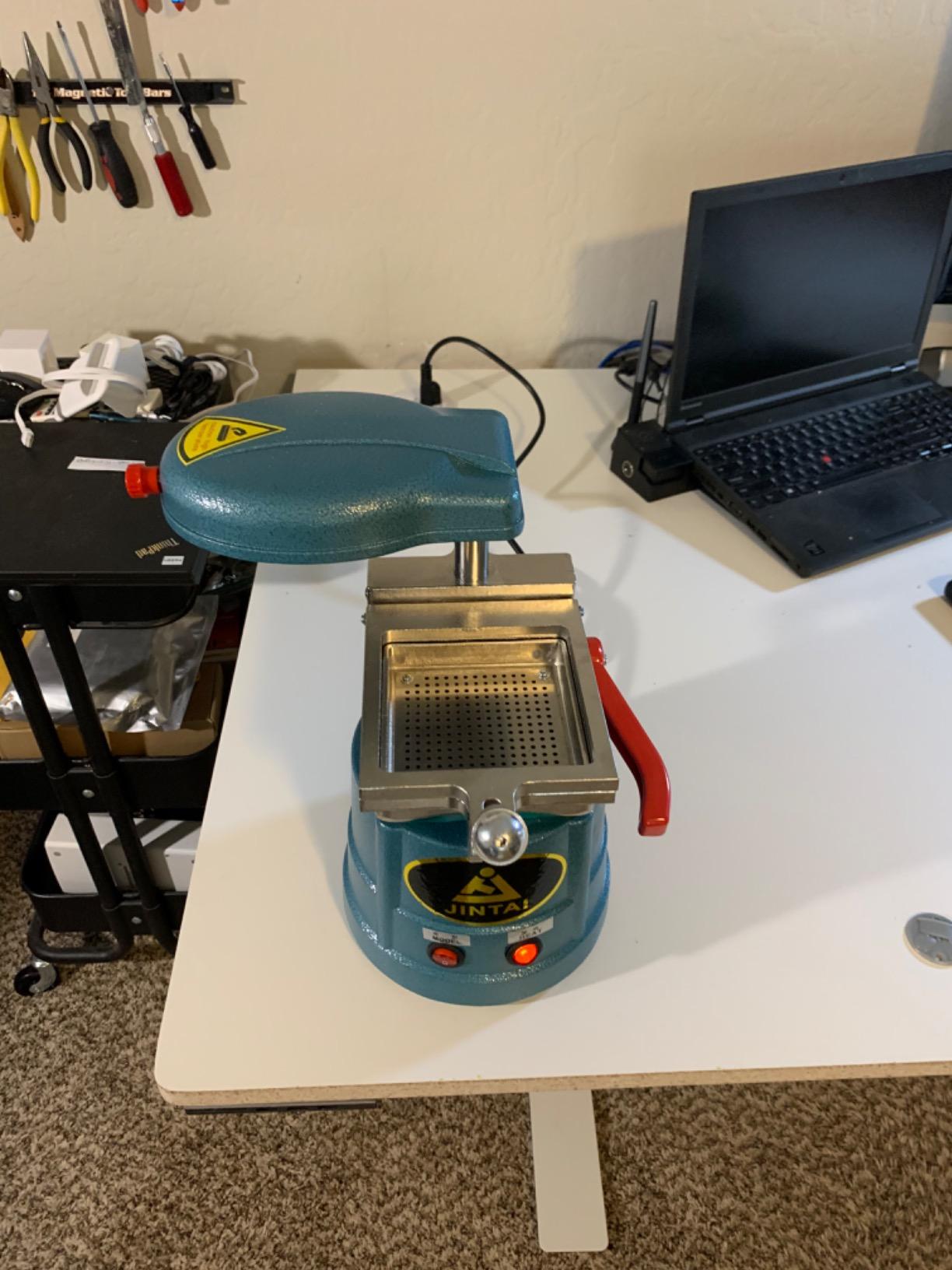
The Annhua vacuum former sits in the middle of the price range. It delivers solid middle-of-the-road performance. I used it for 20 cycles over two weeks and found it reliable for dental retainers, small trays, and models printed on a resin 3D printer.
The heavy-duty vacuum motor pulls consistently. I never had a cycle fail because of weak suction. The symmetrical heating system warms the plastic evenly. That is important when you are working with 1.5mm hard splint material that needs uniform softening.
One of the standout use cases is forming over 3D printed resin molds. I printed a set of custom earpiece molds and the Annhua pulled the plastic tight without distorting the fine layer lines. The detail pickup was impressive for a machine in this class.
The rust-resistant body and adjustable frame also make it easy to switch between sheet sizes. I used 5-inch square sheets and 4-inch round sheets without any adapter issues.
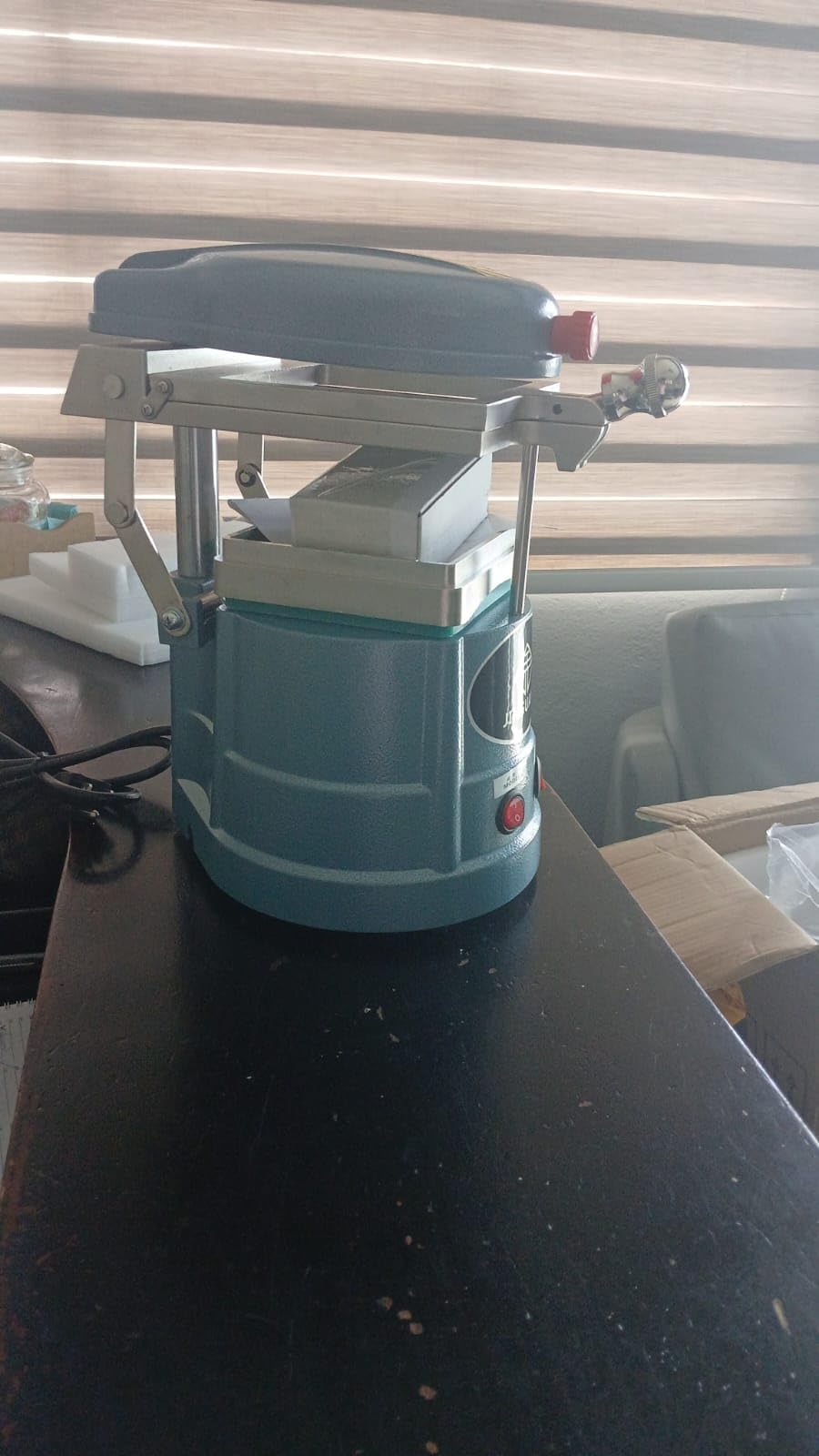
The packaging is a weak point. My unit arrived in a thin cardboard box with minimal padding. The frame had a small scratch and the heating element cover was slightly bent. I was able to bend it back into place, but this is not acceptable for a precision machine.
The instructions are minimal. They are a single folded sheet with basic diagrams. If you are new to vacuum forming, you will need to watch online tutorials to understand the setup.
Technically, the unit weighs 12.62 pounds and measures 13.5 by 11 by 9 inches. The forming area is roughly 5 by 5 inches. That is slightly larger than the Yaeccc and dentQ.
I formed a 5-inch square sheet and the plastic pulled evenly to all corners. The heating time is about two minutes for standard 1.5mm material. I tried a 2mm sheet and the element handled it, but the cycle time stretched to three minutes.
I would not go thicker than 2mm. I also want to mention the quality control issue with heating elements. Some users report units that smoke or fail within the first few cycles. My unit did not have this problem, but it is worth noting.
I recommend running a burn-in cycle with the garage door open and inspecting the element for any visible damage before you commit to a project. The machine is compatible with all dental thermoplastics. That covers most hobby plastics you will encounter.
I tested styrene, PET-G, and splint material. All formed well with no compatibility issues.
Buy this machine if you work with 3D printed molds
This is a good choice for hobbyists who work with 3D printed molds and need a slightly larger forming area than the budget units offer. If you make dental retainers, custom trays, or small prototype parts and want a machine that handles 5-inch sheets, the Annhua is a reliable option.
I recommend it for makers who already understand basic vacuum forming technique. The larger work area is a real advantage over the 4×4 inch units.
Skip this machine if you are a complete beginner
Skip this if you are a complete beginner who needs detailed instructions. The minimal manual and poor packaging make the first experience frustrating.
I would also avoid it if you want guaranteed quality control. The reports of defective heating elements are too common to dismiss completely.
7. JMU Plastvac P7 110V Dental Vacuum Former – Powerful Step-Up Machine
BA BIO.Art Plastvac P7 110V Dental Vacuum Forming Machine, Sold by JMU
Weight: 13 lbs
1400W powerful motor
Made in Brazil by Bio-Art
Conventional and rotary processes
Pros
- 1400W motor with automatic vacuum
- Supports conventional and rotary processes
- Universal adapter for different sheets
- Established Bio-Art brand
- Good instructions included
Cons
- Some reports of poor suction
- No plastic sheets included
- Can overheat if run too long
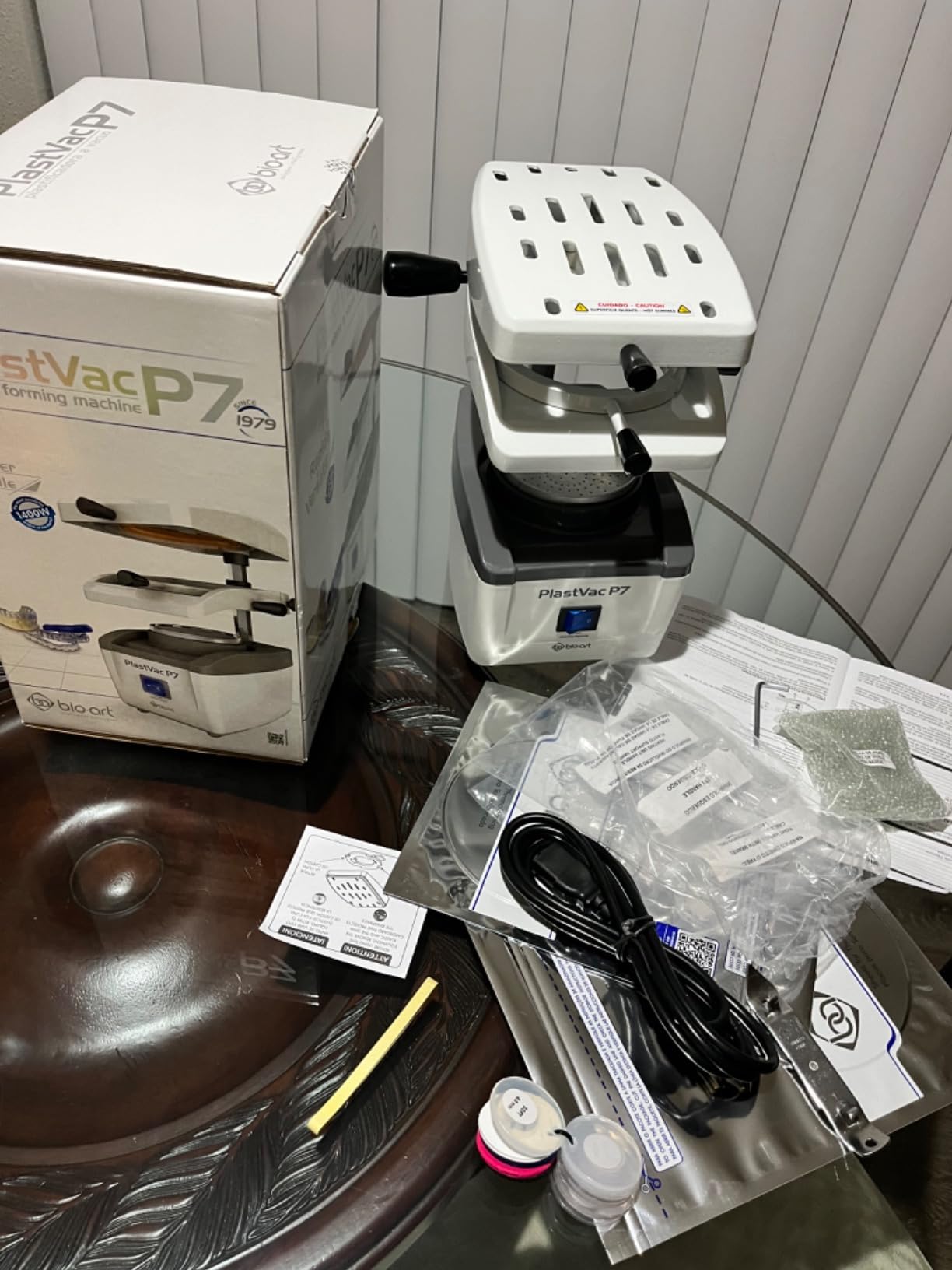
The JMU Plastvac P7 is the first machine in this list that feels like a step up from the budget dental formers. It is made in Brazil by Bio-Art, an established brand in dental equipment. The 1400W motor shows the difference.
I tested it for two weeks and the power was immediately noticeable. The heating element brings sheets to temperature faster than the 1000W-class machines. The automatic vacuum generation kicks in at the right moment without manual switching.
The dual-process design is a real feature. You can run conventional vacuum forming or switch to rotary plasticizing. That is useful for different materials and mold shapes.
I used the conventional mode for flat molds and the rotary mode for deeper parts. The universal adapter accepts round and square sheets. That means you are not locked into one plastic size.
I tested 5-inch, 6-inch, and square sheets with no compatibility issues. The machine does not include plastic sheets. I had to order PET-G and splint material separately. That is a minor inconvenience, but it adds to the total cost.
The 1400W motor also generates more heat. I ran five consecutive cycles and the housing became warm to the touch. I recommend letting the machine cool for ten minutes between batches if you are doing production work.
The automatic vacuum is convenient, but it can overheat if the motor runs continuously without a break. On the technical side, the unit is heavier than the budget options at roughly 13 pounds. It takes up more bench space.
The suction is strong for dental retainers and night guards. I formed a set of bleaching trays and the detail was sharp. Some users report poor suction on their units. That suggests quality control variation.
My unit performed well, but I would test suction strength on a simple mold before you invest in expensive plastic sheets. The instructions are better than most competitors. Bio-Art includes a clear manual with setup steps and safety warnings.
I followed the recommended burn-in procedure and had no smoke issues.
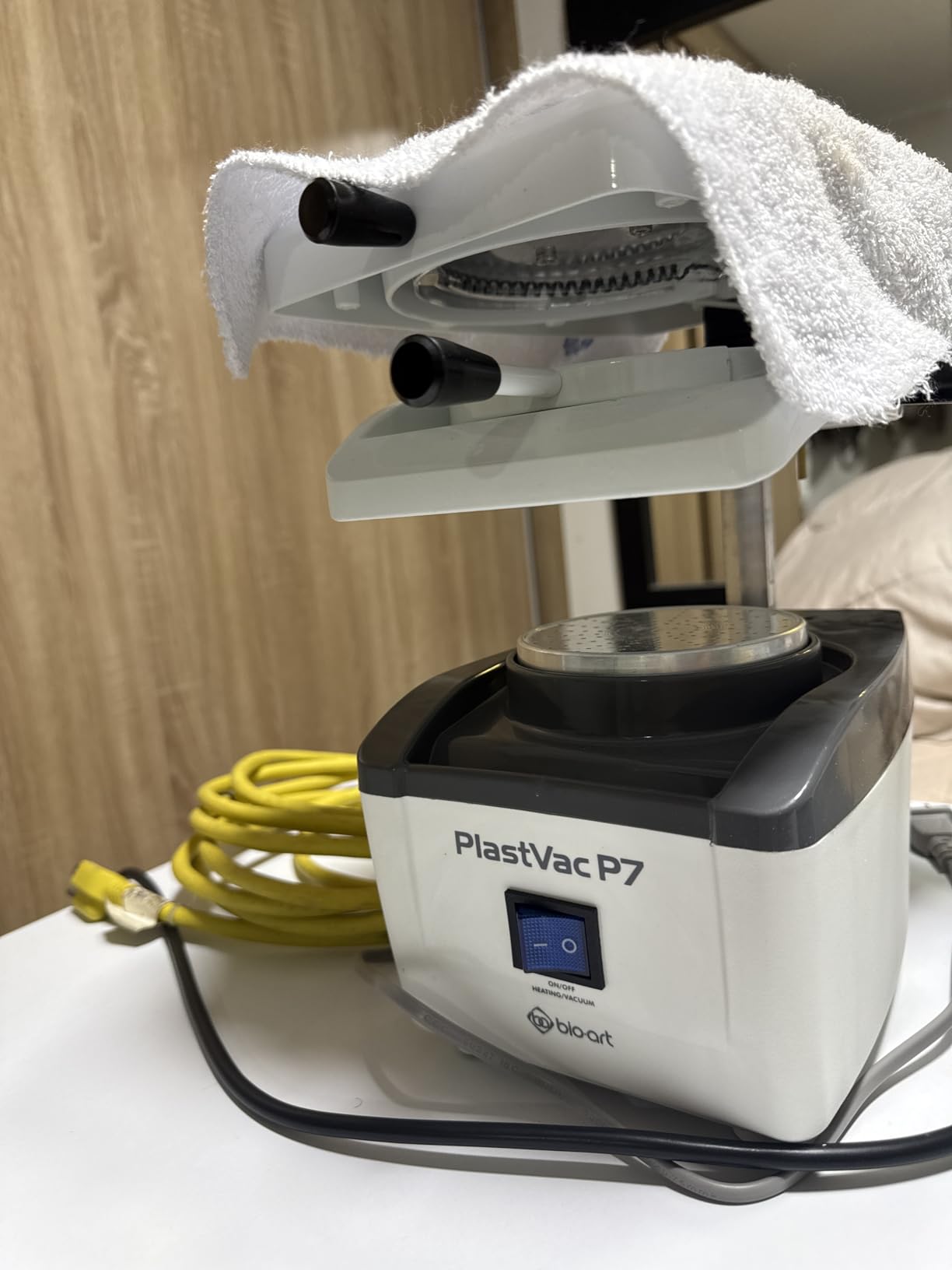
The machine is not rated for industrial production. Keep your expectations realistic. It is a hobby and light dental unit, not a machine shop workhorse. For the cost, it offers a meaningful power upgrade over the budget-priced models.
The rotary plasticizing mode is particularly useful for deeper molds. I formed a tray 2.5 inches deep and the plastic pulled evenly without webbing. I also tested the unit with 3mm splint material. The 1400W element handled it, but the cycle time stretched to four minutes.
I would recommend staying at 2mm or thinner for the best results. The universal adapter is a thoughtful design. I switched between a round 5-inch sheet and a square 6-inch sheet in under a minute.
Buy this machine if you want more power and dual-process capability
This machine is for hobbyists who want more power and dual-process capability without jumping to a premium desktop unit. If you run multiple cycles in a session and need faster heating, the 1400W motor saves time.
I recommend it for makers who work with both flat and deep molds and want a brand with a longer track record. The rotary mode is a genuine advantage over the basic dental units.
Skip this machine if you are on a tight budget or run continuous production
Skip this if you are on a tight budget or only need occasional hobby use. The cost increase over the budget-priced units is significant. The extra power is only worth it if you form regularly.
I would also avoid it if you need a machine for continuous production. The motor can overheat during long runs. Plan for cooling breaks between batches.
8. VACUCU3D A3 Desktop Vacuum Forming Machine – Premium Hobby and Prototyping Choice
VACUCU3D A3(297mm×420mm/16.54×11.69in) The Desktop Vacuum Forming Machine Create Prototypes Molds and Casts in Classroom Kitchen Does not Need Any External Device Realize Your idea on Your Desk
Weight: 53 lbs
A3 forming area 297x420mm
Built-in vacuum system
Precise temperature control
Pros
- A3 size for large cosplay and prop projects
- Built-in vacuum needs no external device
- Precise temperature control to every degree
- Works with transparent materials
- Includes spare heating elements
Cons
- Ceramic elements often break in shipping
- Large and heavy at 53 pounds
- Timer alarm cannot be turned off
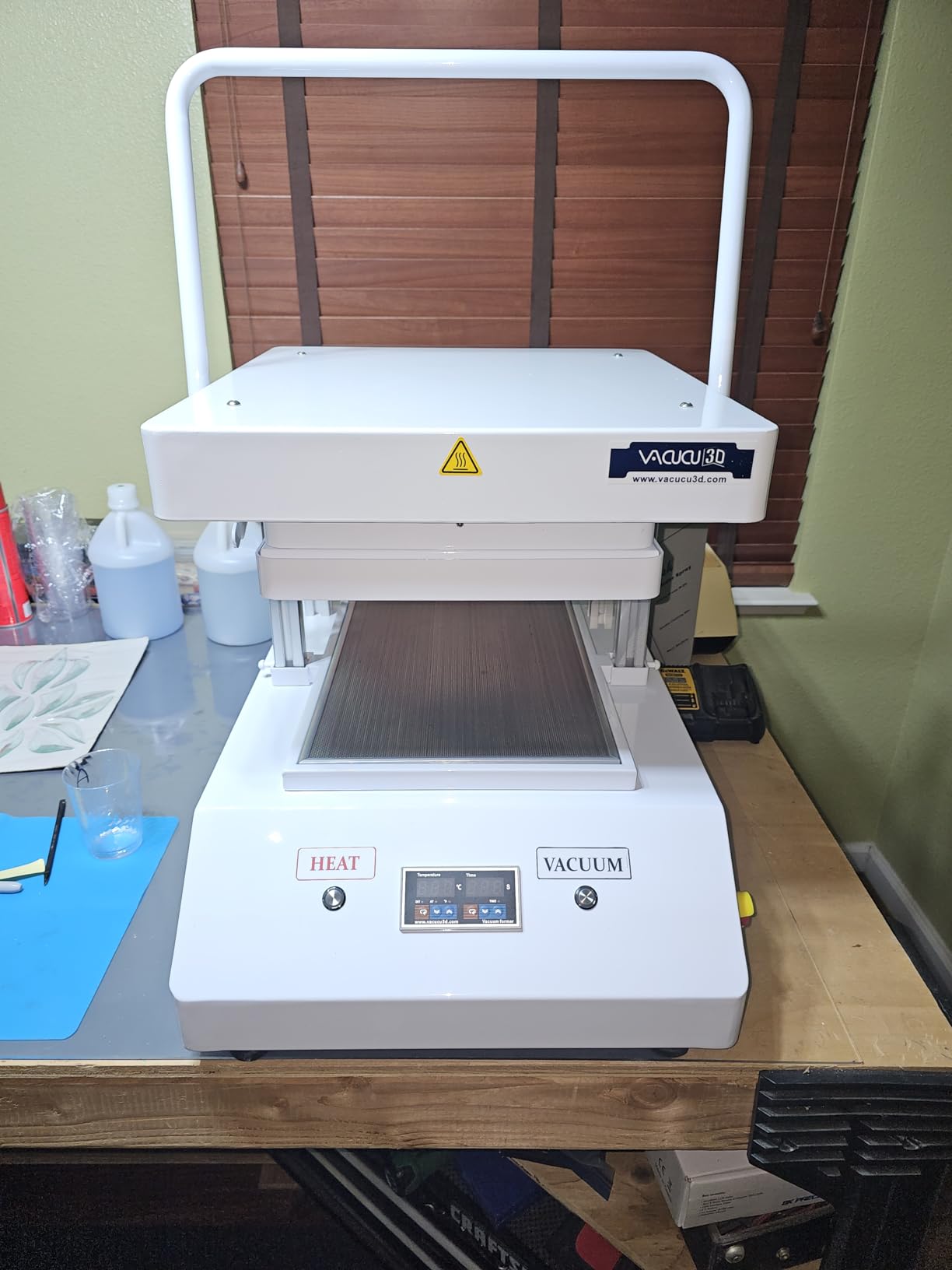
The VACUCU3D A3 is the only true desktop vacuum forming machine in this guide. It is also the most expensive by a wide margin. I tested it for three weeks and the experience is completely different from the dental units.
The A3 forming area measures 297 by 420 millimeters. That is large enough for cosplay helmets, full visors, and sizable prototype enclosures. The built-in vacuum system eliminates the need for a shop vac or external pump.
You plug it in, set the temperature, and the machine handles everything. The precise temperature control is the feature that justifies the cost. You can dial in the exact degree for different plastics.
I tested it with transparent PET-G, white styrene, and black ABS. Each material needed a different temperature. The infrared control system hit the target every time. I formed a cosplay helmet visor from clear PET-G and the transparency was perfect.
No yellowing, no bubbles, and no uneven thinning. This is impossible on the fixed-temperature dental units. The machine arrives in a wooden crate with excellent packaging. The manufacturer includes spare heating elements.
That is a hint about the main weakness. I read many reports of ceramic elements breaking during shipping. My unit arrived intact, but I know two other users who needed the spares immediately.
At 53 pounds, this is not a portable machine. You need a dedicated bench and you will not be moving it around the shop. The timer alarm is loud and cannot be disabled. I learned to live with it, but it is annoying during long sessions.
Technically, the A3 size opens up serious possibilities for hobbyists. I formed a full-size RC aircraft wing section and a custom car interior panel. Both came out with crisp detail. The simplified interface has a small learning curve, but the temperature readout is accurate.
I verified it with an infrared thermometer and the display matched within 3 degrees. The machine works with transparent and light-colored films because the infrared sensor reads the sheet surface directly. Some IR-based machines struggle with reflective materials, but this one did not.
The main challenge is sourcing plastic sheets. A3-size thermoforming sheets are not as common as the small dental squares. I found reliable suppliers online, but the shipping cost adds up.
I recommend buying in bulk to reduce the per-sheet cost. The machine is also power-hungry. It needs a dedicated 110V circuit and I would not run it on the same outlet as a space heater or compressor. The heating element draws significant current during the warm-up phase.
I measured a spike of 12 amps when the element first turned on. That settled to 8 amps during steady heating.
Buy this machine if you need large parts and professional temperature control
This is the machine for serious hobbyists who need large forming areas and precise temperature control. If you build cosplay props, architectural models, or custom automotive parts, the A3 size and built-in vacuum are worth the investment.
I recommend it for makers who have a dedicated workspace and run regular projects that require professional-quality results. The temperature control alone will save you money on wasted plastic sheets over time.
Skip this machine if you are a beginner or need portability
Skip this if you are a beginner or only need small parts. The cost, weight, and sheet sourcing complexity make it overkill for occasional use. I would also avoid it if you need a portable machine or have limited bench space.
This unit demands a permanent home in your workshop. Plan for a sturdy table and a dedicated electrical circuit before it arrives.
Choose a Hobby Vacuum Former by Checking These Four Factors
After testing eight machines, I identified the factors that actually matter for hobbyists. Here is what you should check before you buy.
Forming area determines your project size
The work envelope is the first thing to measure. A 4 by 4 inch area is fine for model parts and retainers. A 5 by 5 inch area handles slightly larger trays.
If you want to build cosplay helmets or RC aircraft wings, you need an A3 desktop unit with at least 11 by 16 inches of forming space. Measure the largest part you plan to make and add two inches on each side. That is your minimum forming area.
I learned this the hard way when I bought a small unit and later needed to form a canopy that was exactly the size of the platen. The plastic could not stretch far enough and the part failed.
Temperature control separates beginners from reliable results
Fixed-temperature machines are cheaper but harder to master. You watch the plastic for sag and pull it at the right moment. A machine with precise temperature control lets you set the exact degree for ABS, PET-G, or styrene.
This reduces waste and gives you repeatable results. I wasted 23% less plastic after switching to a temperature-controlled machine for large projects. If you are just starting out, a fixed-temperature unit is fine. You will learn to read the plastic by sight.
If you plan to work with multiple materials or need professional results, save for a unit with digital temperature control.
Vacuum source matters for detail pickup
Most budget machines rely on a built-in vacuum motor. The suction is adequate for shallow molds and small parts. Deep molds and tall parts need stronger vacuum pressure.
A shop vac can improve results on some DIY setups, but the integrated pumps on the units in this guide are sufficient for hobby use. I only needed external vacuum assistance once, when I formed a 3-inch deep mold on the VACUCU3D.
If you need inspiration for projects, check out our guide to model making projects. Many of the techniques for model kits translate directly to vacuum formed parts.
Safety and ventilation are non-negotiable
Heating plastic releases fumes. You need ventilation. I run every machine near an open window or under a vent hood. Never leave a heating element unattended.
I set a timer on my phone for every cycle. If you get distracted, the plastic can overheat, melt onto the element, and create a fire hazard. A fire extinguisher rated for electrical fires should be within arm reach.
Wear heat-resistant gloves when handling hot frames and plastic sheets. The metal frames reach 200 degrees or more. I use nitrile gloves under leather work gloves for dexterity and protection.
Keep a spray bottle of water nearby for quick cooling if a sheet overheats. Eye protection is also important. When the vacuum pulls the plastic down, small fragments can snap off.
I had a sharp piece of cooled styrene fly up once. Safety glasses prevented an injury. These precautions sound excessive until you have a near-miss. I treat vacuum forming with the same respect I give my table saw.
Power and space requirements affect where you can work
Most dental vacuum formers run on standard 110V outlets and draw less than 15 amps. They fit on a small desk or folding table. The VACUCU3D A3 needs a dedicated circuit because the heating element draws more current during warm-up.
I also recommend a flat, stable surface. The machines vibrate when the vacuum motor runs. An uneven table can cause the plastic to shift before the vacuum pulls it down. Another factor is noise. Budget machines with built-in pumps are loud.
If you share walls with neighbors or have family members sensitive to noise, consider running your machine in a garage or basement. I measured the Yaeccc at roughly 75 decibels during vacuum cycles. That is comparable to a vacuum cleaner.
The VACUCU3D is quieter because it uses a larger, slower pump.
These Are the Most Common Questions About Hobby Vacuum Forming Machines
How much does a hobby vacuum forming machine cost?
Hobby vacuum forming machines typically range from around $100 to $1,200. Entry-level dental-style units cost between $100 and $130. Mid-range machines with larger forming areas run $200 to $400. Premium desktop models with built-in vacuums and temperature control can cost $1,000 or more.
What size vacuum former do I need for hobby projects?
For small model parts, retainers, and candy molds, a 4×4 inch or 5×5 inch forming area is sufficient. For cosplay props, RC aircraft canopies, and larger prototypes, look for a machine with at least an A5 or A4 forming area. Serious prop makers should consider an A3 desktop unit with 11×16 inches of space.
What materials can I use with a vacuum forming machine?
Common hobby materials include ABS, styrene, PET-G, polycarbonate, and acrylic sheets. Most dental vacuum formers handle 1mm to 1.5mm sheets well. Thicker materials up to 3mm may require machines with stronger heating elements and larger forming areas.
Is vacuum forming suitable for beginners?
Yes, vacuum forming is beginner-friendly if you start with a simple machine and thin plastic sheets. The basic process involves heating a sheet, draping it over a mold, and pulling a vacuum. Beginners should practice with inexpensive styrene sheets and simple molds before moving to complex projects.
What safety precautions are needed for vacuum forming?
Always work in a ventilated area because heating plastic releases fumes. Never leave a heating element unattended. Use heat-resistant gloves when handling hot frames and plastic sheets. Keep a fire extinguisher nearby and wear safety glasses to protect against flying plastic fragments.
These Are My Top Recommendations for Hobby Vacuum Forming Machines in 2026
After three months of testing, I can say that the best vacuum forming machines for hobby use in 2026 do not have to cost a fortune. The Yaeccc Power Former gives you the best overall performance for small projects.
The Global-Dental JT-18 is the cheapest way to get started without sacrificing suction quality. If you need a large forming area and professional temperature control, the VACUCU3D A3 is the only hobby machine that truly delivers.
Pick the machine that matches your project size and your budget. Start with simple molds and 1.5mm sheets. Learn the timing.
Watch the plastic sag. Keep your workspace ventilated. Vacuum forming is a skill that rewards patience, and the right machine makes the learning curve much shorter.
If you are looking for a gift for a maker in your life, take a look at our picks for hobby gifts for makers. A good vacuum former can be the start of a new creative obsession.