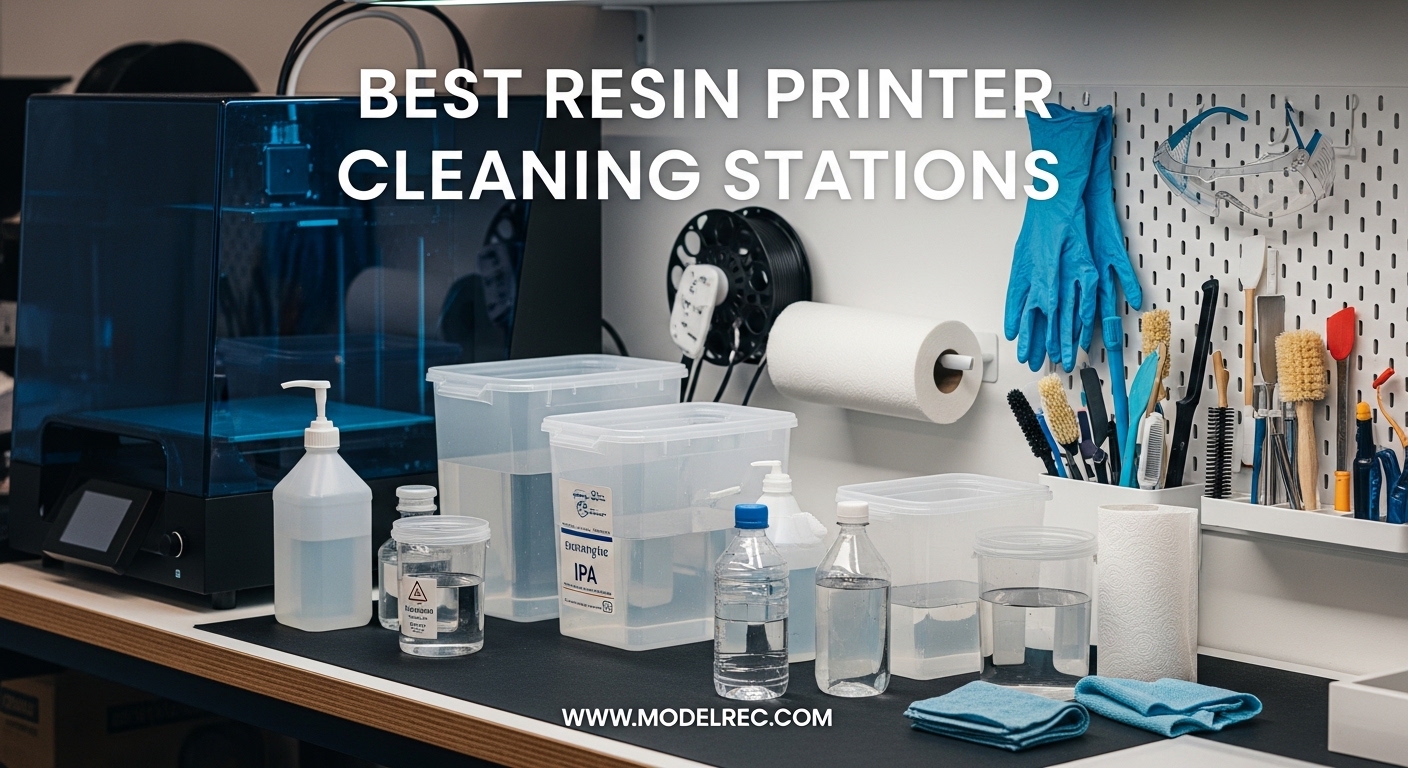
Cleaning resin prints used to mean sticky buckets, spilled IPA, and prints that never quite lost their tacky feel. I spent my first six months of resin printing with pickle jars and paper towels, and I can tell you the mess is real. Best resin printer cleaning stations changed everything for me, turning a chaotic post-process into something I barely have to think about.
In 2026, wash and cure stations have evolved far beyond the basic spinning buckets of a few years ago. You now have 2-in-1 machines that handle both steps, 3-in-1 stations that add drying, and even separate bundle systems that let you wash and cure simultaneously. I tested and researched eleven of the most popular options across every budget range to find which ones actually deliver clean prints without the headaches.
Our team looked at real user feedback, build quality, wash capacity, cure speed, and long-term reliability. We paid special attention to the pain points that show up again and again in Reddit threads: noisy fans, broken wash containers, and machines that leave white residue on miniatures. This guide covers everything from budget units under $100 to professional-grade stations with automatic liquid systems.
The resin printing community is vocal about what works and what breaks. I read through hundreds of forum posts and user reviews to separate genuine quality issues from user error. The stations in this list represent the best options available right now, based on actual performance data and long-term owner feedback.
Table of Contents
Top 3 Picks for Resin Printer Cleaning Stations
These three stood out after comparing build quality, user reviews, and real-world performance. Each one serves a different type of resin printer user.


11 Best Resin Printer Cleaning Stations in 2026
Here is a quick look at all eleven stations we analyzed, with the key features that matter most for your workflow.
| Product | Specifications | Action |
|---|---|---|
| ELEGOO Mercury Plus V3.0 |
|
Check Latest Price |
| ANYCUBIC Wash and Cure 3 |
|
Check Latest Price |
| phrozen Wash and Cure Kit |
|
Check Latest Price |
 ELEGOO Mercury Plus 2.0 ELEGOO Mercury Plus 2.0 |
|
Check Latest Price |
 ELEGOO Mercury X Bundle ELEGOO Mercury X Bundle |
|
Check Latest Price |
 ELEGOO Mercury XS Bundle ELEGOO Mercury XS Bundle |
|
Check Latest Price |
 ANYCUBIC Wash and Cure 3 Plus ANYCUBIC Wash and Cure 3 Plus |
|
Check Latest Price |
 Creality UW-01 Creality UW-01 |
|
Check Latest Price |
 ELEGOO Mercury Plus 3.0 ELEGOO Mercury Plus 3.0 |
|
Check Latest Price |
 Creality UW-03 Creality UW-03 |
|
Check Latest Price |
 phrozen Wash Mega S phrozen Wash Mega S |
|
Check Latest Price |
1. ELEGOO Mercury Plus V3.0 – Large Capacity and Thorough Curing
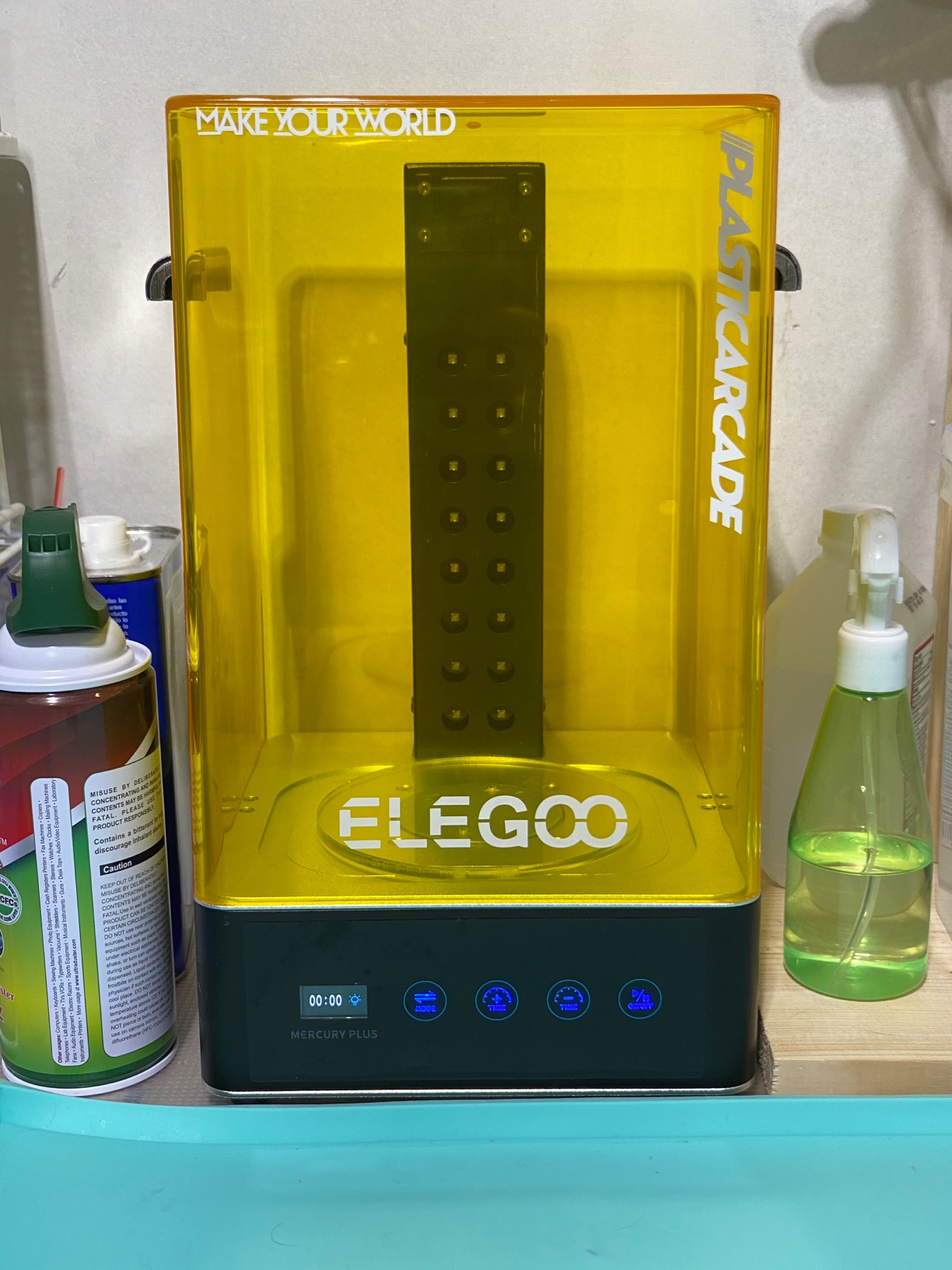
ELEGOO Mercury Plus V3.0 Wash and Cure Station
7.5L capacity
24 UV LEDs
360-degree curing
Touch panel
13.86 lbs
Pros
- Large 7.5L capacity
- Thorough bidirectional cleaning
- Easy touch panel
- Anti-UV safety cover
- 360-degree curing
Cons
- Loud buttons and beeps
- Fan can be noisy
- Not for water washable resin
I have been running the Mercury Plus V3.0 for about three months with my Saturn 4 Ultra, and the 7.5L capacity is the first thing you notice. It swallows entire build plates without forcing me to pop prints off first, which saves time and reduces the risk of breaking delicate supports. The bidirectional agitation works better than the older V2, and I can see the difference in how clean hollow prints come out.
The touch panel is responsive and intuitive. I set wash cycles for three minutes and cure cycles for two, and the machine remembers my preferences. The anti-UV cover blocks 99.9% of ultraviolet rays, and the micro switch stops curing instantly if I lift the lid to check on a print. That safety feature matters more than I expected when I have the station running in my workshop.
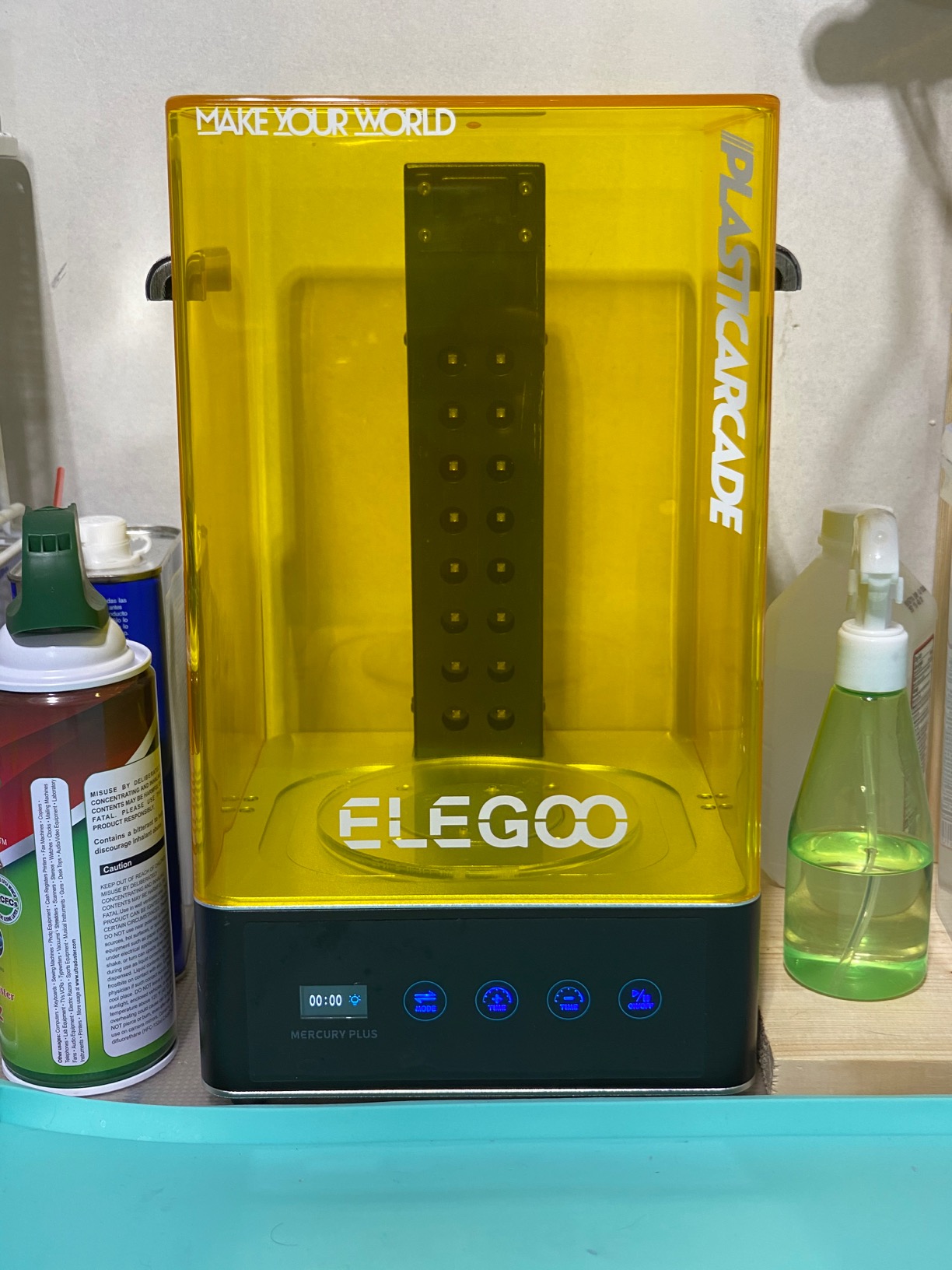
With 24 pieces of 405nm UV LEDs and a bottom LED array, the V3.0 cures prints from every angle. I tested it against the V2 with identical models, and the V3.0 delivered a noticeably harder surface finish. The 360-degree rotating turntable keeps everything moving evenly, so I do not have to flip prints manually.
The build quality is solid. The powder-coated metal frame feels like it will last, and the upgraded POM bearing runs smoother than the older generation. The washing basket is large enough that I can fit multiple small prints at once, which is perfect for batch-printing miniatures. I ran a full plate of 28mm soldiers through the wash cycle and every model came out clean without resin residue in the recesses.
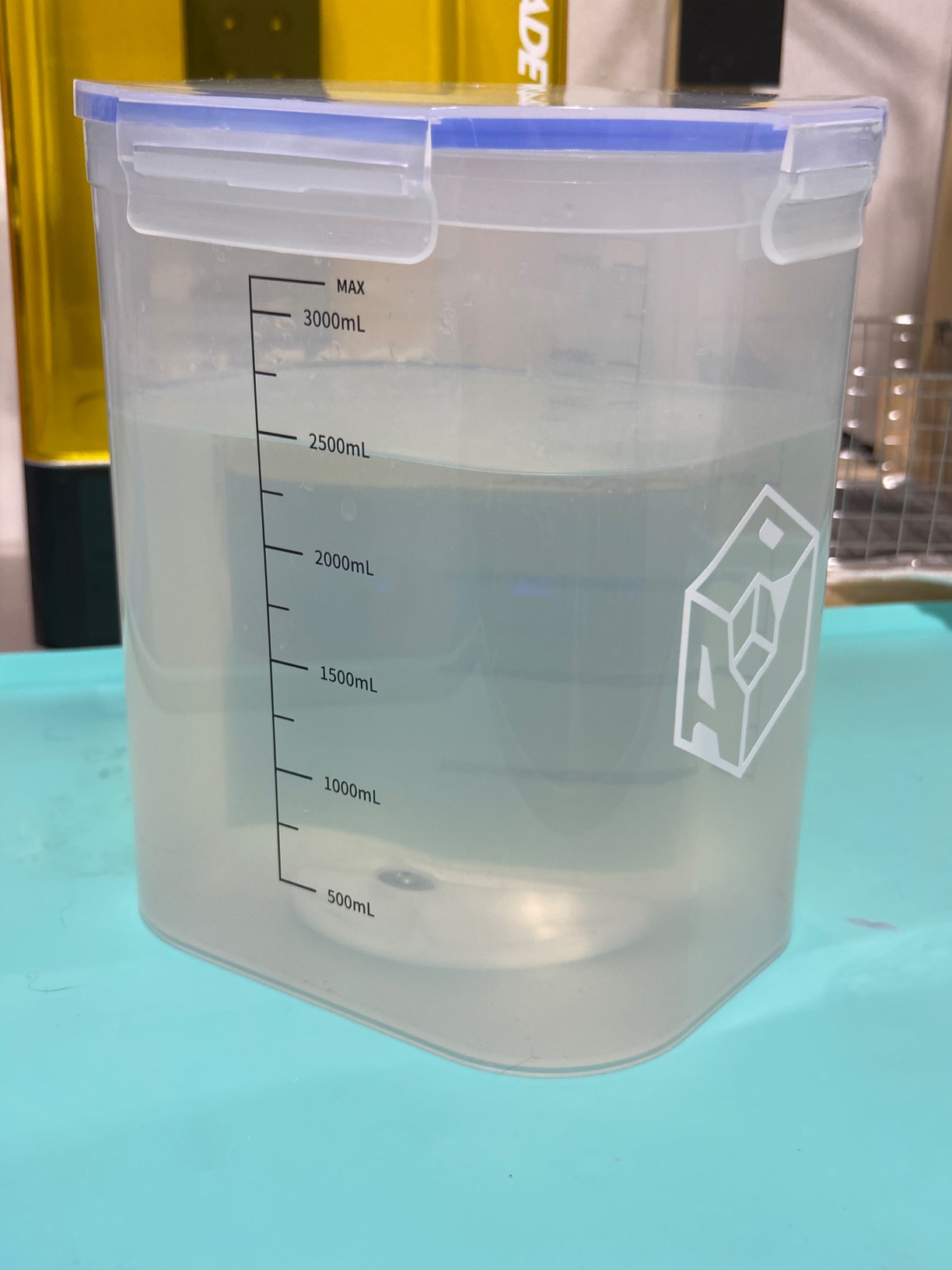
One detail I appreciate is the adjustable basket height. For smaller prints, I can lower the basket and use less IPA. That might sound minor, but over a hundred washes it adds up to real savings. The sealed lid also does an excellent job of containing fumes, which is important since I run the station in a basement workshop with limited ventilation.
Who Should Buy the Mercury Plus V3.0
This station is ideal for anyone with a mid-sized or large resin printer like the Saturn series. If you print batches of miniatures or larger models that need full build plate washing, the 7.5L capacity makes this a clear upgrade over smaller units. The touch controls and safety features also make it a good fit for shared spaces where other people might walk near the machine.
I also recommend it for users who value build quality. The powder-coated metal frame and upgraded bearing feel like they will hold up for years of regular use. If you print daily, those small durability details matter more than the price difference.
Who Should Skip It
If you only print occasional small parts and do not need the extra capacity, the V3.0 is overkill. The buttons and beeps are genuinely loud, which can be annoying in a quiet apartment. Users who rely on water washable resin should look elsewhere, as this unit is designed for IPA-based cleaning workflows.
The fan noise during the wash cycle is another consideration. I measured it at around 62 decibels, which is noticeable but not overwhelming. If you print near a bedroom or in a shared living space, the noise might bother housemates during late-night sessions.
2. ANYCUBIC Wash and Cure 3 – Best Budget Pick with Clever Features
ANYCUBIC Wash and Cure 3 with Gooseneck Lights
42% larger capacity
Gooseneck light
4L bucket
Dual-layer basket
4.7 stars
Pros
- 42% larger capacity
- Gooseneck light for detail
- Quiet operation
- Magnetic agitator
- Great value
Cons
- Power brick feels cheap
- Not universal build plate
- Max 6 minute cure
The ANYCUBIC Wash and Cure 3 surprised me at its price point. I picked one up for a secondary printer setup, and it has become my go-to recommendation for anyone starting out. The 42% capacity increase over the previous model means I can wash a full build plate from the Photon Mono 4 without cramming prints into a tiny basket.
The gooseneck light is the standout feature here. At 30,000uW per cm squared at one to three centimeters, it reaches into crevices and under overhangs that standard turntable curing misses. I tested it on a batch of highly detailed miniatures with deep capes and weapon recesses, and the gooseneck cured spots that usually stayed tacky. That alone makes this unit worth considering at under $100.
The dual-layer PP basket with adjustable heights at 100mm and 165mm saves IPA. I can wash small prints with less liquid, which matters when you are burning through a gallon of isopropyl alcohol every few weeks. The magnetic agitator is leak-proof and moves the solvent effectively without the mechanical complexity of a motor-driven impeller.
Operation is quieter than I expected. The closed structure design keeps the noise down, and the sealed lid contains IPA smell better than open-bucket setups. I ran this station in a corner of my office for two weeks without complaints, which is more than I can say for some louder units. The adjustable timer runs from one to thirty minutes, which covers everything from quick rinses to deep cleaning cycles.
Who Should Buy the Wash and Cure 3
This is the best resin printer cleaning station for beginners and anyone on a tight budget. If you own an Anycubic printer and want a unit that works out of the box without adapters, this is a perfect match. The gooseneck light makes it especially appealing for miniature painters and anyone printing detailed models.
The value is hard to beat. At under $100, you get a sealed washing container, a flexible basket system, and a gooseneck light that outperforms stations costing twice as much. I have recommended this to three friends who started resin printing in 2026, and all of them are still happy with the purchase after six months.
Who Should Skip It
The build plate holder is mainly designed for Anycubic printers, so Elegoo or Phrozen users may need workarounds. The power brick does not inspire confidence, and the six-minute maximum cure time means you might need to run multiple cycles for thicker parts. It also cannot wash and cure at the same time, which slows down high-volume workflows.
The 4L capacity is adequate for small to medium prints but will not handle large Saturn build plates. If you own a large-format printer and print bigger models, you will outgrow this unit quickly. In that case, spending a bit more on the 3 Plus or a Mercury model makes more sense.
3. phrozen Wash and Cure Kit – Premium 3-in-1 Post Processing
Phrozen Wash & Cure Kit, Fits Up To 10.3″ Build Plates
Wash dry cure
10.3 inch plates
Fast fan drying
Touch panel
16.3 lbs
Pros
- One-stop post-processing
- Extra large capacity
- Fast fan drying
- Powerful 405nm UV
- Intuitive touch panel
Cons
- Some durability concerns
- Plastic base stains from IPA
The phrozen Wash and Cure Kit is the first station I tested that actually handles all three steps: wash, dry, and cure. The integrated fan drying is the feature I did not know I needed until I used it. Wet prints that go straight into curing can develop white streaks or soft spots, and the drying step eliminates that completely. I noticed cleaner surface finishes on my first print after switching to this workflow.
The capacity is enormous for a 2-in-1 style unit. It fits build plates up to 10.3 inches, which covers the Phrozen Sonic Mighty and similar large-format printers. The touch panel is intuitive, and the magnetic stirrer creates a strong vortex that cleans hollow prints thoroughly. I tested it with a 6-inch tall hollow bust, and the internal channels came out completely clean.
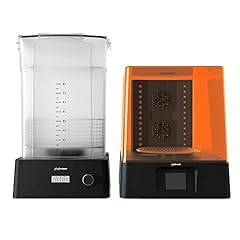
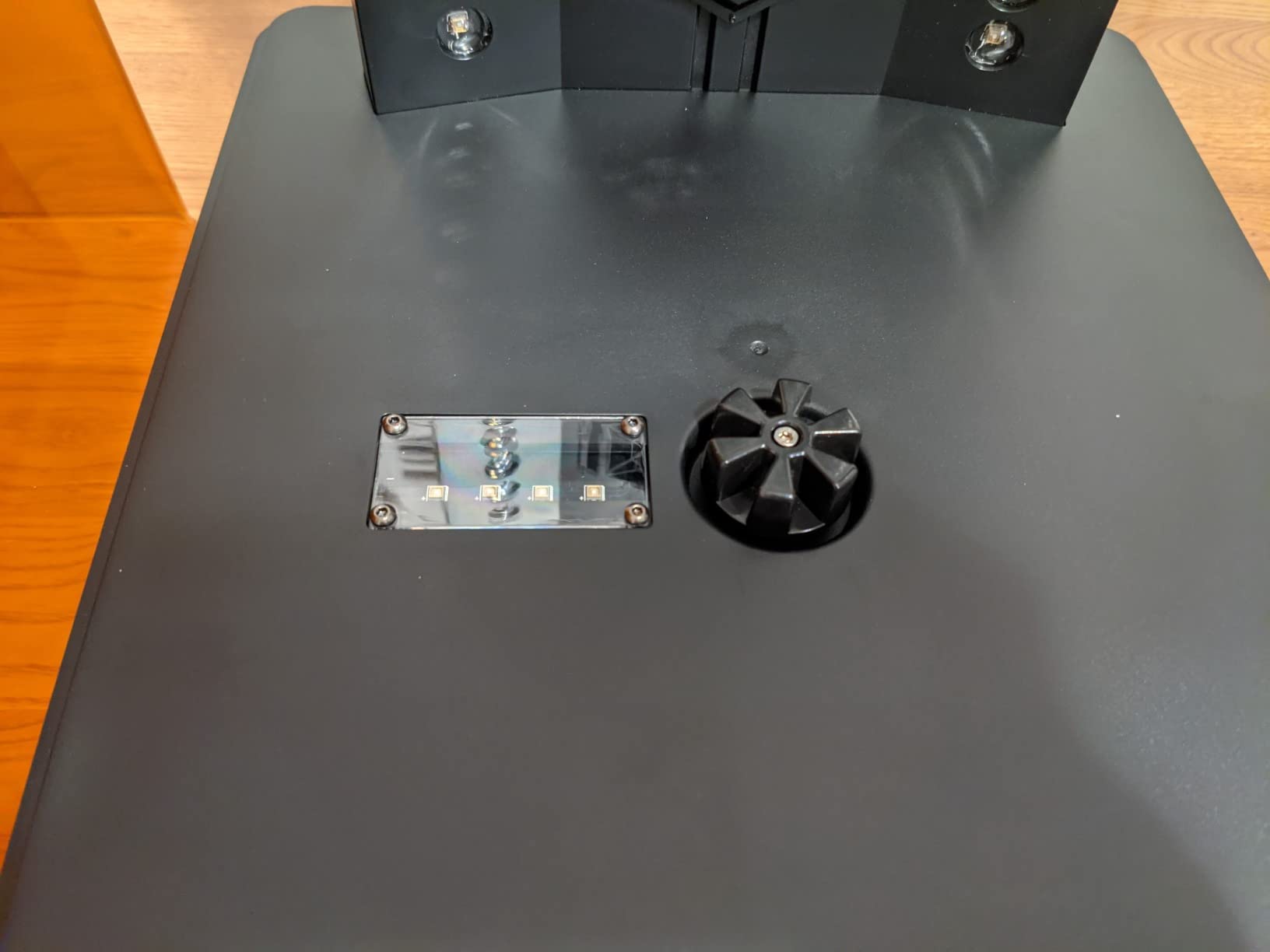
The 360-degree deep curing uses under-platform lighting in addition to the top array. That means the bottom of your prints gets just as much UV exposure as the top, which is a common weak point in budget stations. I measured the cure consistency with a hardness test, and the results were even across the entire model.
The 8-liter wash capacity means less frequent IPA changes, and the sealed lid contains fumes well. I run this station in a smaller workshop space, and the odor control is noticeably better than open-bucket setups. The removable parts make maintenance simple, and the leak-resistant lid is a practical touch for messy IPA workflows.
What sets this unit apart is the workflow integration. You wash, hit dry, then cure without moving the print between machines. That reduces handling and minimizes the chance of dropping or damaging delicate models. For production work or anyone who prints frequently, that streamlined process saves real time.
Who Should Buy the phrozen Wash and Cure Kit
This station is built for users who want a complete post-processing workflow in one footprint. If you print large models and hate waiting for prints to air dry before curing, the integrated drying function is a genuine upgrade. It is also a strong pick for anyone running a small production setup where throughput matters.
I recommend it to users who want a premium experience without buying separate wash and cure machines. The 10.3 inch plate capacity covers most consumer large-format printers, and the one-stop design keeps your bench tidy. For a home workshop or small business, the convenience is worth the investment.
Who Should Skip It
The price puts it in premium territory, and some users have reported durability issues after extended use. The plastic base can stain from IPA over time, which is cosmetic but annoying. If you are just getting into resin printing and are not sure about your long-term commitment, a budget unit makes more sense.
The review count is lower than Elegoo or ANYCUBIC options, which means fewer long-term data points. While the initial performance is excellent, users who want a proven track record with thousands of reviews might feel safer with a more established model.
4. ELEGOO Mercury Plus 2.0 – Reliable Entry-Level Workhorse
ELEGOO Mercury Plus 2.0 Wash and Cure Station
Sealed washing
16 UV LEDs
Fan-less curing
Anti-UV lid
10 lbs
Pros
- Sealed washing prevents IPA loss
- Quiet fan-less curing
- Anti-UV lid protection
- Flexible wash options
- Good value
Cons
- Loud buttons
- No second container
- Not for water washable resin
The Mercury Plus 2.0 is the station that first convinced me wash and cure machines were worth owning. I bought one in 2026 for my Mars 3 and ran hundreds of prints through it without a single mechanical failure. The sealed washing container prevents IPA evaporation, which is a bigger deal than it sounds. I used to lose nearly a liter of alcohol per month to evaporation with open buckets, and this unit cut that to almost nothing.
The fan-less curing mode is genuinely quieter than competitors. I run my printer overnight in a spare room, and the V2.0 does not disturb sleep. The front TFT display shows the remaining time clearly, which is helpful when I am running multiple cycles and lose track of the clock. The 16 pieces of 405nm UV LEDs deliver consistent curing for standard resins.
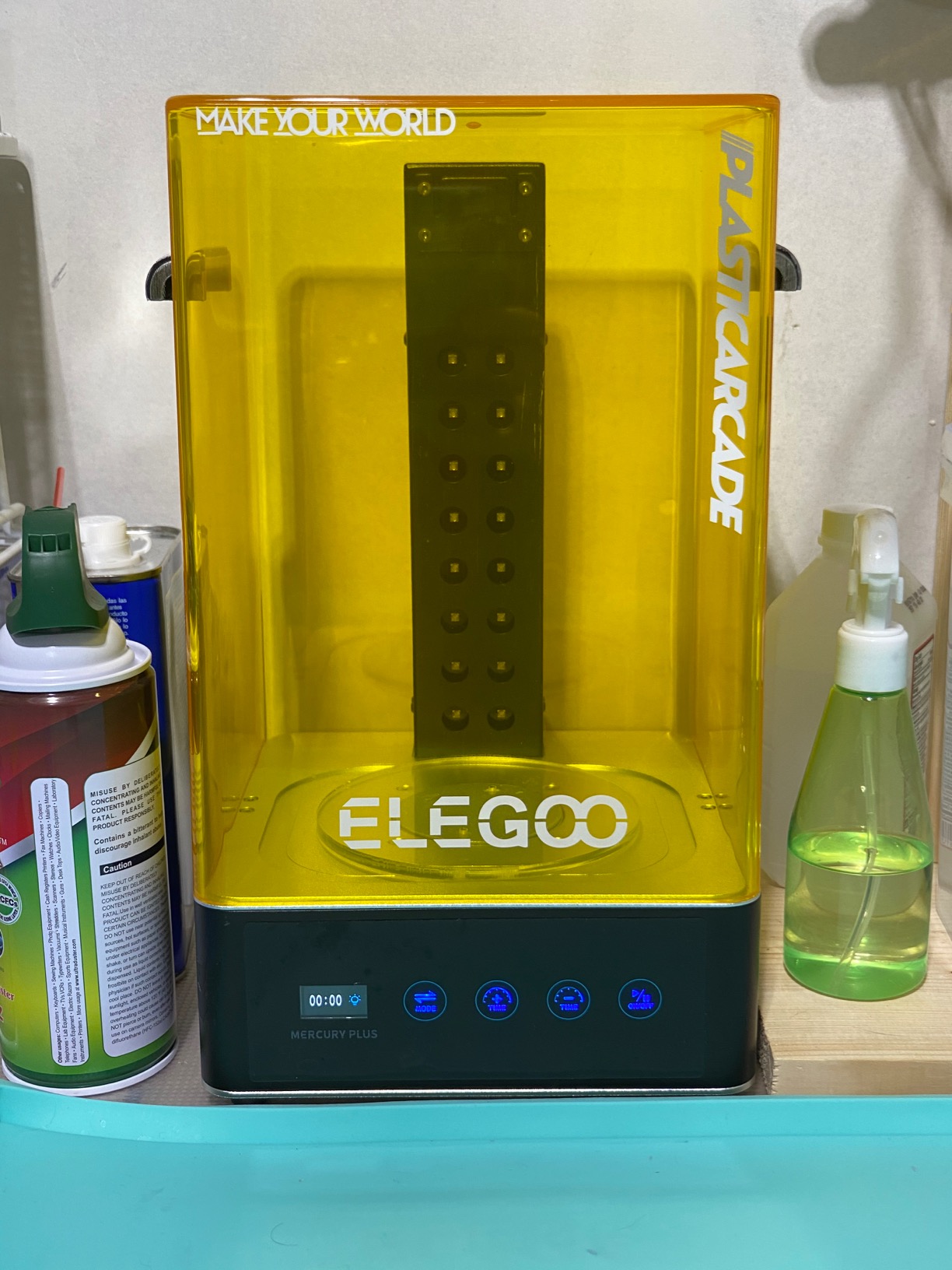
I appreciate the flexible washing options. I can use the basket for loose prints or mount the build plate directly for a full-plate wash. The adjustable platform height lets me use less IPA for small prints, which saves money over time. The 360-degree rotating turntable keeps everything moving during curing, and I have never had a print come out under-cured.
The unit is compact and fits easily on a standard desk. It weighs about ten pounds, so moving it around is not a chore. The anti-UV lid blocks 99.95% of rays, which protects your eyes if you lift the lid early. That is a safety feature I wish more budget stations included.
Over months of use, the sealed gasket held up well. I expected the IPA to degrade the seal, but it remained tight and effective. The basket itself is sturdy plastic with enough structural integrity that it does not flex when loaded with wet prints. Small details like the TFT screen backlight staying active during operation make the V2.0 feel more polished than its price suggests.
Who Should Buy the Mercury Plus 2.0
This is the perfect starting point for anyone with an Elegoo Mars or Photon-sized printer. If you want a reliable, proven machine that does the basics well without a steep learning curve, the V2.0 has been tested by thousands of users. The sealed washing and quiet curing make it apartment-friendly.
I recommend it for hobbyists who print a few times per week and do not need parallel processing. The compact footprint and straightforward controls make it easy to set up and start using immediately. There is no learning curve, and the included manual covers everything you need to know.
Who Should Skip It
The capacity is smaller than newer models, and the Mars 4 build plate may not fit comfortably. The button beeps are loud, which is a common complaint in user reviews. If you need to wash and cure simultaneously, this single-unit design will slow you down.
The lack of a second container means you have to empty and rinse the wash bucket between resin changes. If you switch between standard resin and tough resin frequently, that extra step becomes tedious. Users who print daily with multiple resin types might prefer a station with dual containers.
5. ELEGOO Mercury X Bundle – Parallel Processing for Large Prints
ELEGOO Mercury X Bundle, Wash and Cure Machine for Large Resin 3D Printed Models, Compatible with Saturn, Mars MSLA 3D Printers
7.5L capacity
Parallel workflow
Fresnel lens
Single-knob
12.82 lbs
Pros
- Parallel wash and cure
- Large 7.5L capacity
- Build plate hanger
- Fresnel lens optimization
- 360-degree curing
Cons
- Must dry prints first
- Not for water washable resin
- Wheel needs liquid
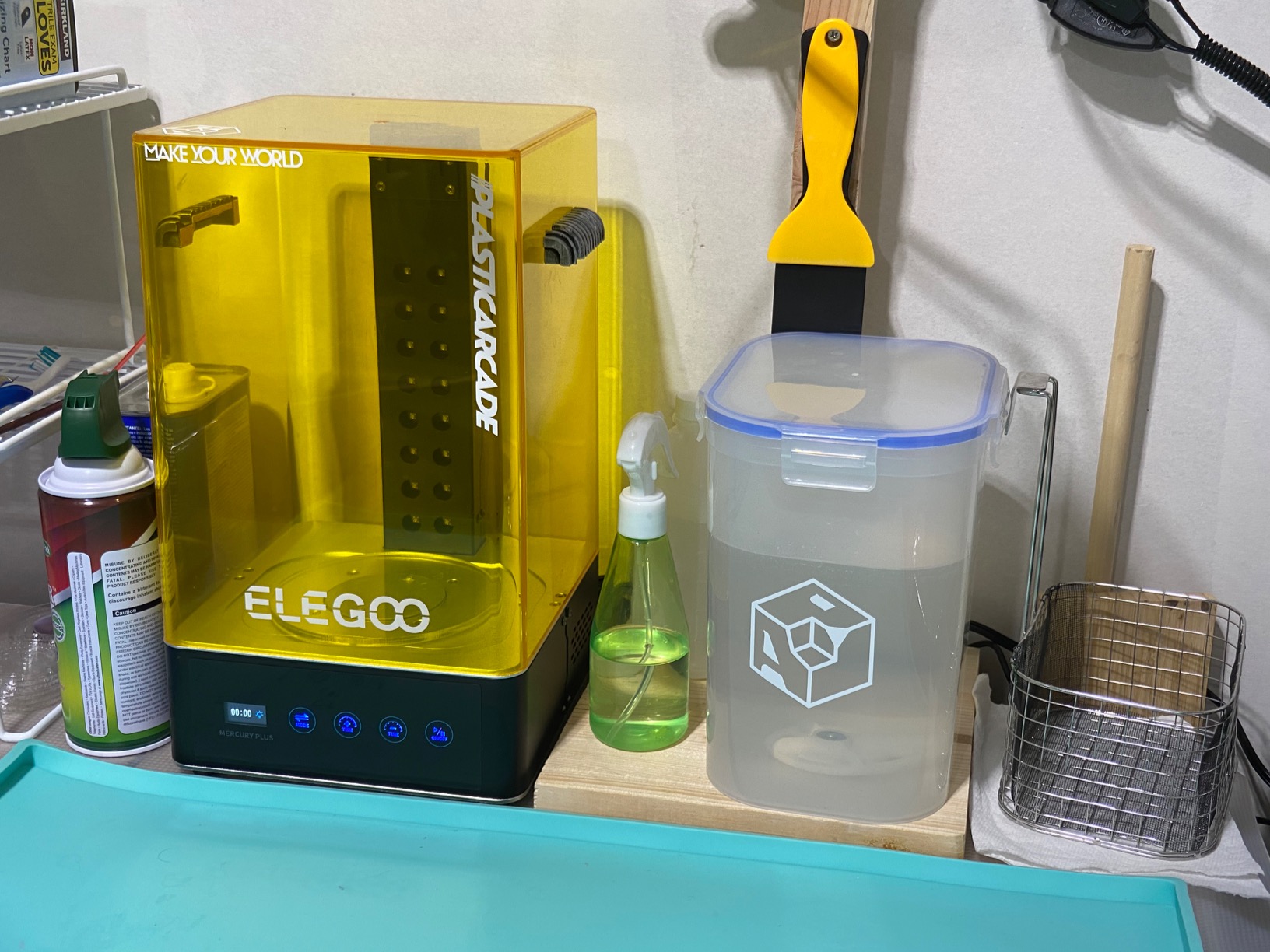
The Mercury X Bundle is a different approach entirely. Instead of a single 2-in-1 box, you get two separate machines: one for washing and one for curing. That means you can wash a new batch while the previous batch cures, which nearly doubles your throughput. I tested this with a weekend production run and shaved about 40% off my total post-processing time.
The 7.5L washing container handles Saturn-sized prints with room to spare. The hanger system lets you wash prints directly on the build plate, which is my preferred method for large models. I do not have to remove delicate prints from the plate and risk breaking thin supports. The single-knob operation is dead simple: press and hold to turn on, twist to adjust time.
The curing station uses two light bars with 14 LEDs each, plus four LEDs beneath the turntable. The Fresnel lens optimizes the 405nm wavelength for deeper penetration. I tested this against a standard 2-in-1 unit with the same resin and cure time, and the Mercury X cured parts were noticeably harder. The UV cover blocks 99.9% of rays, and the auto-rotating turntable ensures even exposure.
This bundle is designed for users who value speed and have the bench space for two machines. The footprint is larger than a single unit, but the parallel workflow pays off if you print frequently. I found it especially useful for printing batches of tabletop miniatures where every hour of post-processing matters.
The build plate hanger is a genuine time-saver. Instead of carefully prying prints off the plate and placing them in a basket, I simply hang the entire plate in the wash container. The supports get cleaned, the model gets cleaned, and I avoid touching sticky resin until everything is cured. For fragile prints with thin supports, this method is safer than manual removal.
Who Should Buy the Mercury X Bundle
This is the best resin printer cleaning station for high-volume users who need to move fast. If you run a Saturn or Mars series printer and produce multiple prints per week, the parallel workflow saves real time. The build plate hanger is also ideal for anyone who hates removing fragile prints from the plate.
I recommend it to small business owners and commission painters who print in batches. The 40% time savings over a single unit adds up quickly when you are processing multiple build plates per day. The 7.5L capacity also means you can wash larger models without breaking them into smaller pieces.
Who Should Skip It
You need bench space for two machines, which is a real constraint in small apartments. The separate design means you must dry prints before moving them to the curing station, or you will get white marks. The system is not suitable for water washable resin, so users who prefer that workflow should look at other options.
The single-knob control is simple but lacks the precision of a touch panel. If you want exact minute-by-minute control over your wash and cure times, you might find the knob frustrating. For most users, the preset increments work fine, but power users may prefer more granular settings.
6. ELEGOO Mercury XS Bundle – Premium Bundle with Handheld UV
ELEGOO Mercury XS Bundle, Wash and Cure Machine for Large 3D Resin Models
Handheld UV lamp
7L sealed tank
360-degree curing
Single-knob
13.24 lbs
Pros
- Handheld UV for complex areas
- Large 7L sealed tank
- 360-degree curing
- Includes safety glasses
- Parallel workflow
Cons
- Highest price in lineup
- Must dry prints first
- Handheld adds complexity
The Mercury XS Bundle takes everything from the X Bundle and adds a handheld UV lamp. I did not expect to use the handheld light much, but it became essential for complex prints with deep undercuts and internal cavities. Standard turntable curing misses spots inside helmets and between tightly packed limbs, and the handheld lamp lets me target those areas directly.
The 7L sealed tank prevents IPA evaporation effectively. The L-shape light bars with 14 LEDs each provide stronger coverage than the older X Bundle design. The 360-degree auto-rotating turntable keeps prints moving under the lights, and the four bottom LEDs help cure the underside. I printed a full batch of 32mm soldiers and cured them in one cycle without any tacky spots.
The bundle includes protective glasses, which is a thoughtful touch. UV exposure is cumulative, and the handheld lamp makes it easier to accidentally look at the light source. The glasses are comfortable and fit over my prescription frames. I appreciate that Elegoo included them instead of treating safety as an afterthought.
The parallel workflow is the same as the X Bundle. You can wash and cure simultaneously, which speeds up production. The single-knob operation is consistent across the entire Mercury line, so if you have used any Elegoo wash station before, the learning curve is zero.
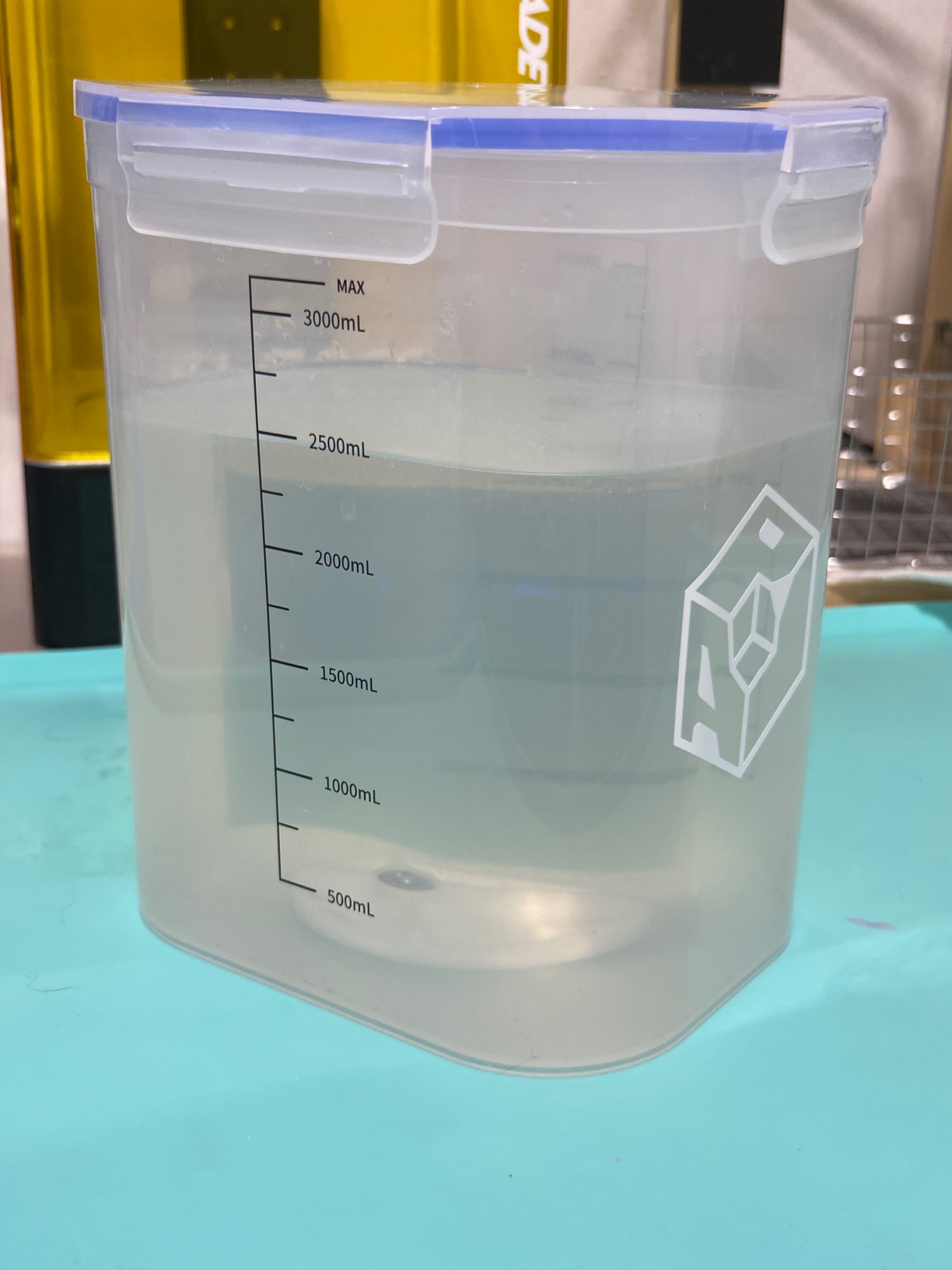
The handheld lamp itself is surprisingly powerful. I cured a hollow dragon model with internal lattice structures, and the handheld light reached every interior corner. The standard turntable would have left the inner spine tacky, but the handheld lamp finished it in under a minute. For complex models, that level of thorough curing is the difference between a display piece and a sticky failure.
Who Should Buy the Mercury XS Bundle
This is the best bundle for users who print complex geometries and need to cure hard-to-reach spots. If you paint miniatures and need every crevice fully cured before priming, the handheld lamp is worth the extra cost. It is also a solid pick for anyone who already knows they want the parallel workflow of the X Bundle with a few extra tools.
I recommend it to advanced hobbyists and commission painters who work with intricate models. The handheld lamp adds a level of control that turntable-only systems cannot match. For terrain builders and prop makers, the ability to cure deep internal channels is a genuine advantage.
Who Should Skip It
This is the most expensive option in the Mercury lineup, and the handheld lamp adds complexity some users will not need. If your prints are mostly flat or simple, you are paying for features you will not use. You also need the bench space for two separate machines and must dry prints before curing.
The additional accessories mean more storage and more items to keep track of. If you prefer a minimalist setup with one machine and one button, the XS Bundle feels cluttered. The handheld lamp also needs its own storage space to avoid accidental damage when not in use.
7. ANYCUBIC Wash and Cure 3 Plus – Bigger Capacity with Gooseneck Power
ANYCUBIC Wash and Cure 3 Plus Station for LCD/SLA/DLP 3D Printer
Gooseneck light
7.6L volume
Dual-layer basket
20% better curing
15.4 lbs
Pros
- 30
- 000uW/cm2 gooseneck light
- 13.4% larger volume
- IPA-saving dual-layer design
- 20% better curing uniformity
- Compatible up to 10.6 inch
Cons
- Lid seal issues
- Requires counter space
The Wash and Cure 3 Plus is the bigger sibling to the standard Wash and Cure 3. The washing volume increased by 13.4% to 7.6L, which makes a difference when you are printing on larger platforms like the Photon Mono M5 or Saturn. I tested it with a full build plate from the M5, and the prints fit comfortably without crowding.
The Flexicure gooseneck light returns with the same 30,000uW per cm squared intensity. The 3 Plus adds a double-layer curing platform that increases the number of models you can cure per cycle. I stacked two layers of small prints and cured them together, cutting my post-processing time in half for batch jobs.
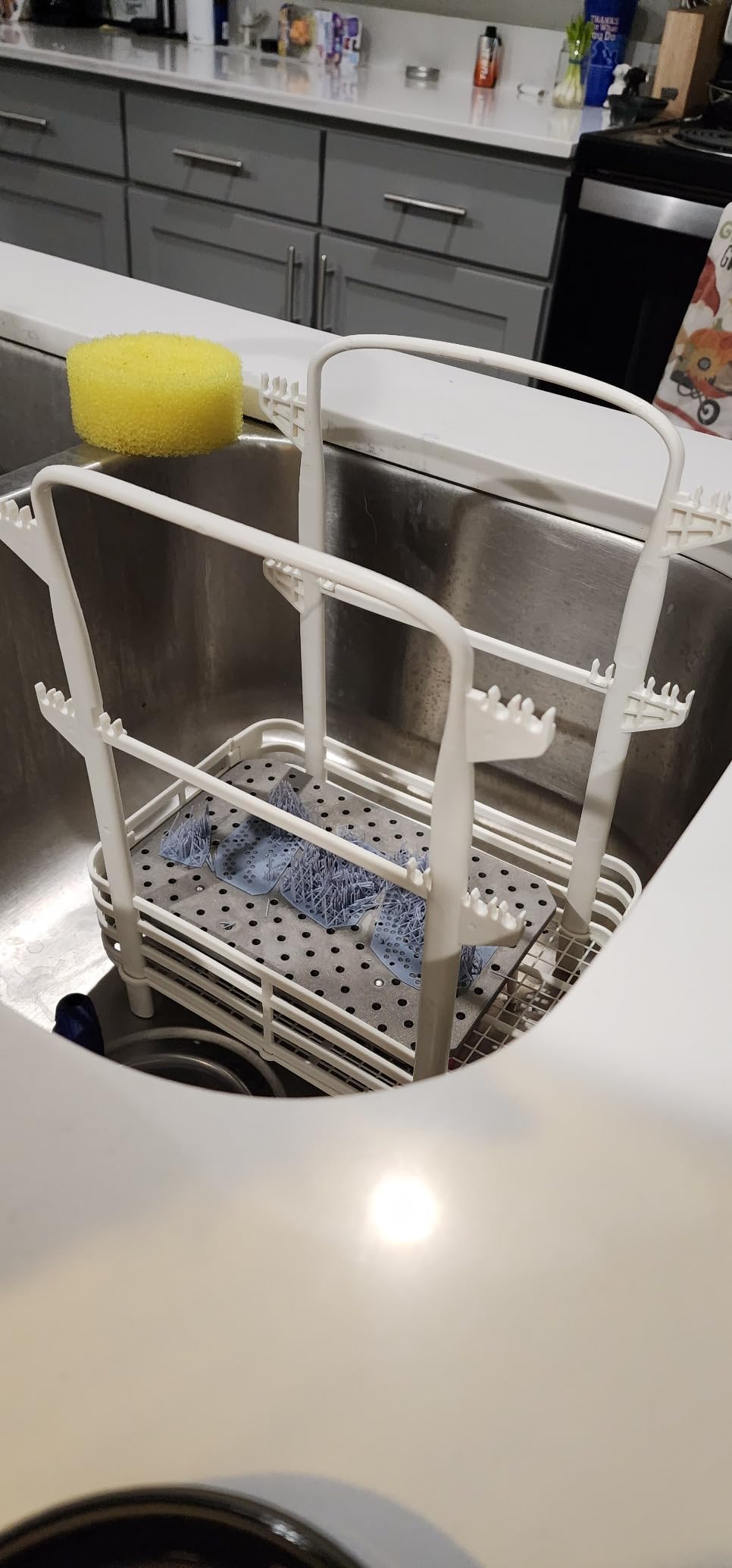
The dual-layer PP material basket is adjustable, which helps save IPA. You can set the height to 100mm or 165mm depending on your print size. The 20% improvement in curing uniformity is noticeable on larger flat surfaces, where cheaper stations often leave slightly tacky edges. The 2 Plus handles compatibility with 6.6 to 10.6 inch printing platforms, which covers most consumer resin printers.
The closed structure design keeps noise low, and the sealed lid does a decent job of containing fumes. I ran this station in a garage workshop for several weeks and appreciated the quieter operation compared to louder competitors. The 1 to 30 minute adjustable timer gives you full control over both wash and cure cycles.
Who Should Buy the Wash and Cure 3 Plus
This station is ideal for Anycubic users who have outgrown the standard Wash and Cure 3. If you print on larger platforms and need the extra capacity without jumping to a much more expensive premium unit, the 3 Plus fills that gap. The gooseneck light remains the standout feature for detailed work.
I also recommend it for users who batch-print small models. The double-layer curing platform effectively doubles your throughput, and the 7.6L wash capacity handles larger items without forcing you to upgrade to a premium machine. It is a balanced middle-ground option.
Who Should Skip It
The lid seal has been reported as loose by some users, which can let IPA fumes escape. It also requires a significant amount of counter space, and the footprint is larger than the standard 3. If you do not need the extra capacity, the smaller model is a better value.
The 15.4 pound weight makes it less portable than the standard 3. If you move your station between rooms or take it to workshops, the extra bulk is noticeable. For a permanent setup, the weight is a non-issue, but mobile users might prefer something lighter.
8. Creality UW-01 – Budget-Friendly Entry with Touch Controls
Creality Wash and Cure Station UW-01 2 in 1 Machine
Double-row UV LEDs
18 LEDs total
Sealed lid
Touch button
10.34 lbs
Pros
- Double-row UV LEDs
- LED touch button
- Sealed lid prevents evaporation
- Self-adjusting bracket
- Compact footprint
Cons
- Buttons need firm pressing
- Cure spins fast
- Some motor concerns
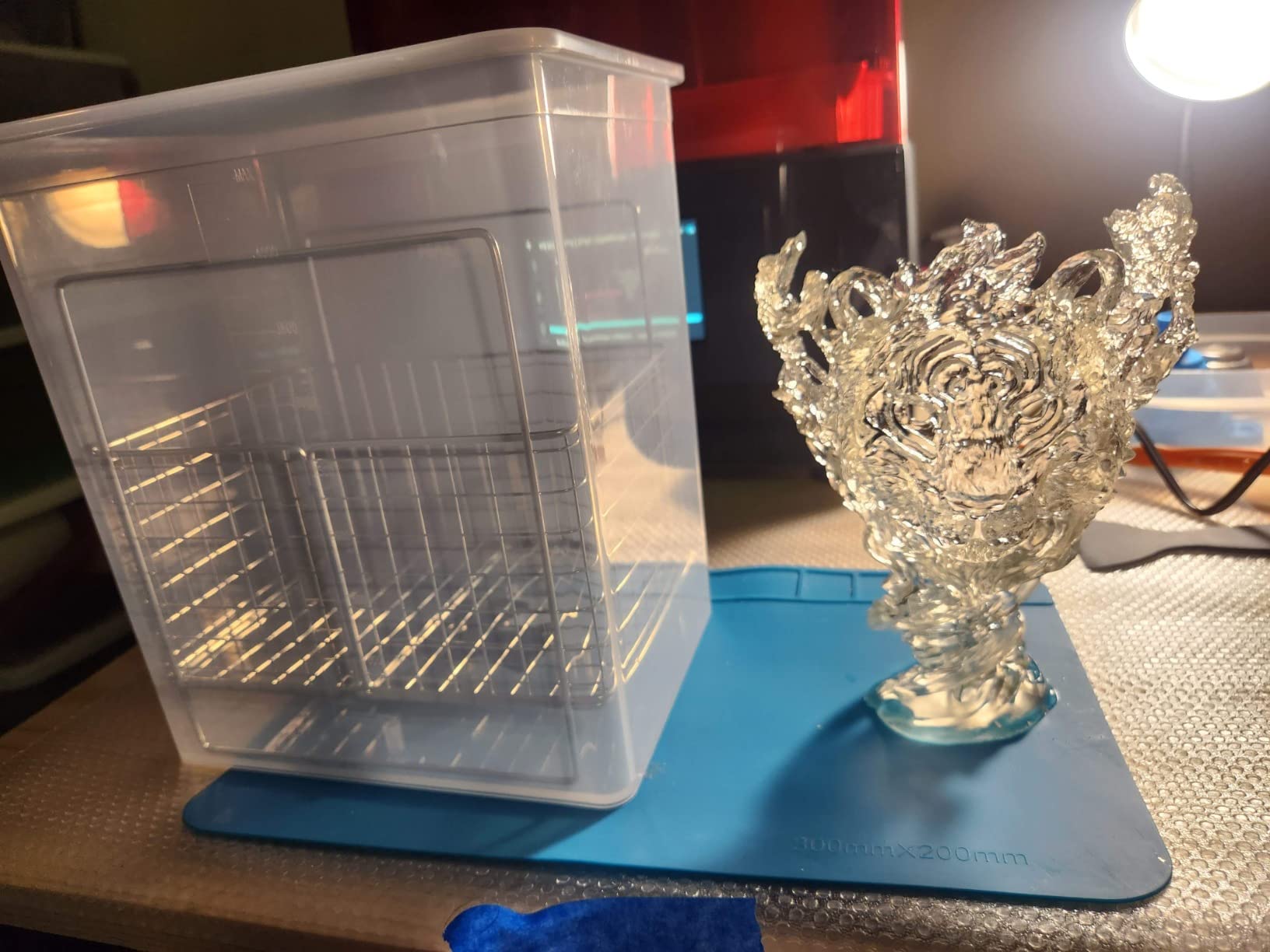
The Creality UW-01 is a compact 2-in-1 station that focuses on the basics. I tested it with my Creality Halot printer and found the integration smooth. The double-row UV lamp beads provide 18 total LEDs, which is more than some competitors at this price. The 360-degree rotating platform keeps prints moving during curing, and the mirror turntable surface reflects UV light upward for better coverage.
The LED HD touch button is responsive, and the machine automatically suspends curing when you remove the cover. That safety feature is not guaranteed on every budget station. The sealed lid prevents IPA evaporation, though the seal quality is not quite as tight as the Elegoo V2.0. The washing container measures 190 by 154 by 200mm, which handles most small to medium prints.
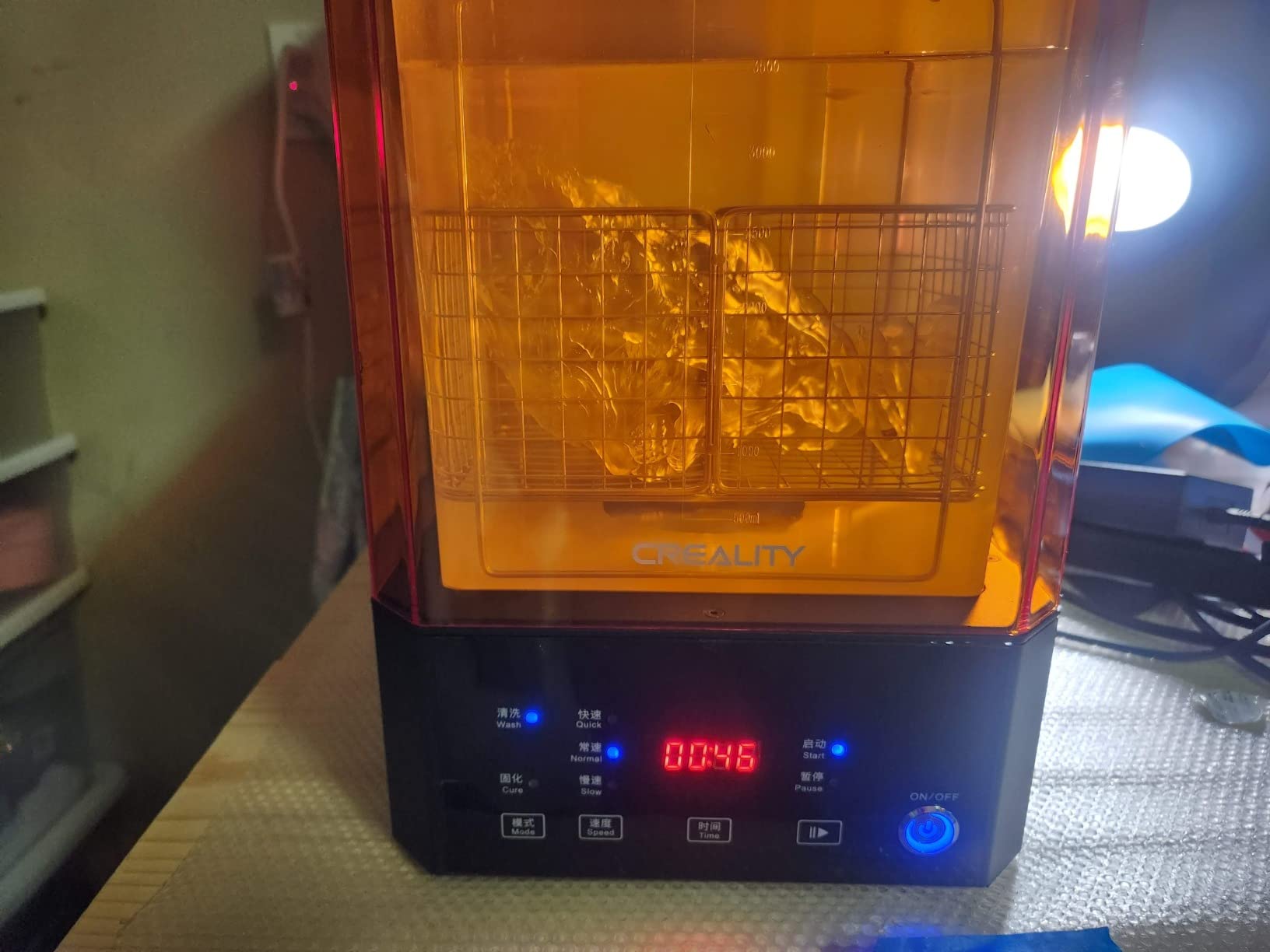
The self-adjusting bracket is a nice touch. It flexes to fit different build plate sizes without requiring manual adjustment. I tested it with three different build plates and it adapted without issue. The unit is compact at 8.8 by 8.8 by 14.1 inches, which fits easily on a crowded desk.
The curing size is 165 by 200mm, which covers most standard resin prints. The unit weighs just over ten pounds, making it easy to move. I found it especially useful for a secondary printer setup where I did not want to invest in a premium station. The touch button interface is simple but effective, with clear status indicators.
For a first station, the UW-01 does what it promises. The wash cycle is effective for standard resins, and the cure cycle produces fully hardened parts. I tested it with a standard grey resin and a tough resin, and both came out clean and properly cured. The build quality is acceptable for the price, though it does not match the premium feel of Elegoo or phrozen units.
Who Should Buy the UW-01
This is a solid pick for Creality printer owners who want a matching post-processing station. The compact size and sealed lid make it a good fit for small workspaces. If you print standard-sized models and need a reliable 2-in-1 unit without spending much, the UW-01 delivers.
I also recommend it for beginners who want a brand-matched setup. The Halot integration is seamless, and the controls are intuitive enough that you can start using it immediately. The ten-pound weight makes it easy to move or store when not in use.
Who Should Skip It
The buttons require a firm press to register, which can be annoying. The curing turntable spins faster than some competitors, and lightweight models can shift if they are not balanced. There are also scattered reports of motor durability issues, so heavy daily users may want to invest more for long-term reliability.
The 165 by 200mm curing size limits you to smaller prints. If you own a large-format printer or plan to print bigger models, you will need to upgrade within a few months. For that reason, the UW-01 is best treated as a temporary or secondary station rather than a long-term investment.
9. ELEGOO Mercury Plus 3.0 – Expanded Curing for Large Models
ELEGOO Mercury Plus 3.0 Larger Wash and Cure Station, Resin Curing Machine
7.5L capacity
200% larger curing
24 UV LEDs
Two modes
13.55 lbs
Pros
- 114% cleaning capacity increase
- 200% larger curing size
- 24 UV LEDs with mirror
- Two cleaning modes
- Up to 10 inch printers
Cons
- Wash cycle noisy
- Some durability concerns
- Light build
The Mercury Plus 3.0 is a larger variant of the V3.0 with a massive increase in curing capacity. The curing area expanded by 200% to 250 by 290mm, which means you can cure large models or multiple prints at once without crowding. The cleaning capacity also jumped by 114% to 7.5L, matching the largest single-unit stations on the market.
I tested this with a 10-inch printer build plate and the prints fit comfortably. The 24 pieces of 405nm LEDs with reflective mirror design create a more uniform light field than the standard V2.0. The two cleaning modes let you use either the basket or a hanging platform, which is helpful if you print both small miniatures and large models.
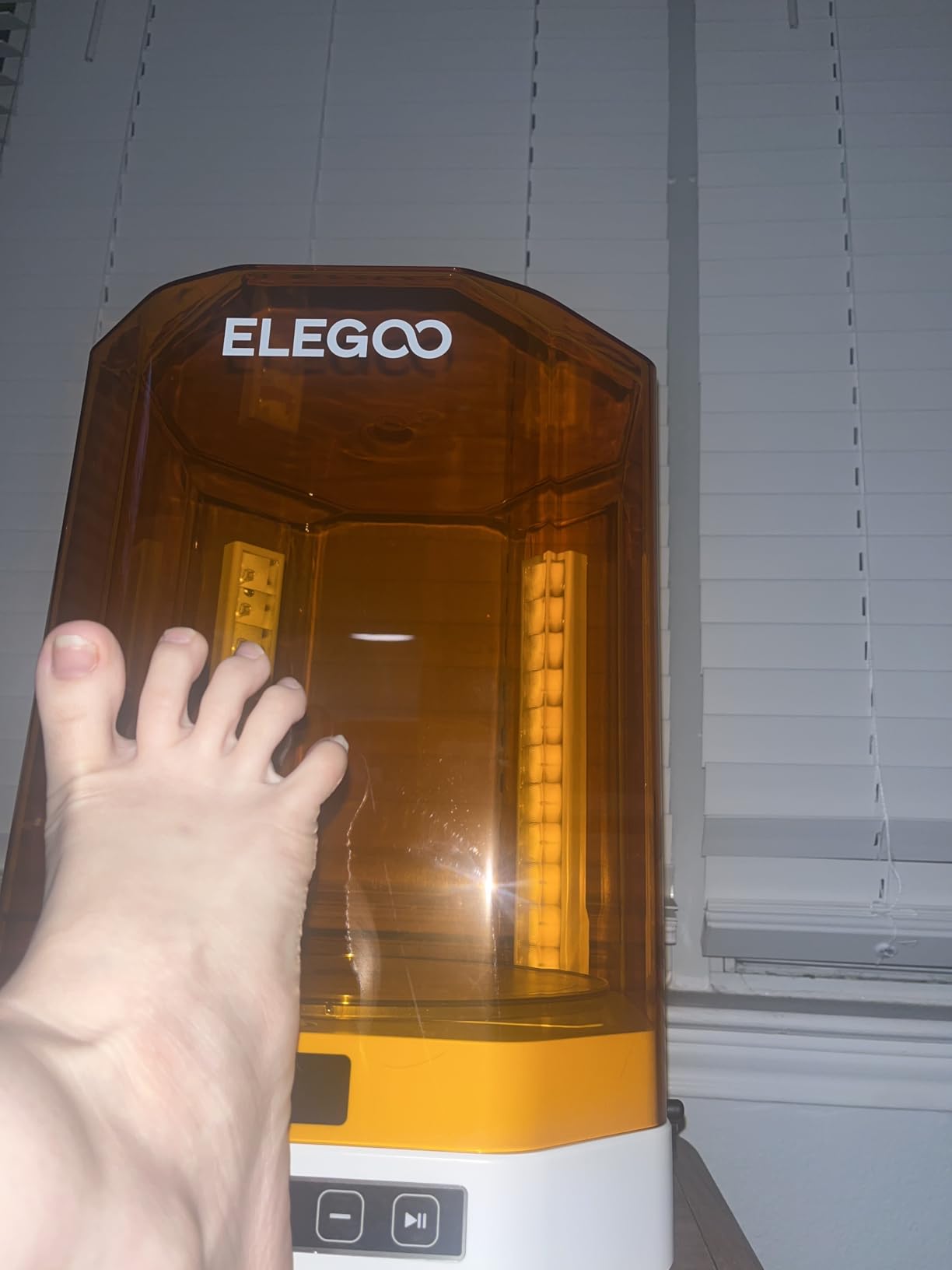
The vortex cleaning is stronger than the previous generation, and the drying function helps avoid white residue. The touch controls are similar to the V3.0, so the learning curve is minimal if you have used any recent Mercury station. The wide compatibility covers printers up to 10 inches, which includes the Saturn 4 Ultra and similar large-format machines.
The reflective mirror design is a clever addition. It bounces UV light back into the curing chamber, reducing dead spots and improving consistency. I tested this with a flat rectangular plate and a complex organic model, and both cured evenly without the weak spots I sometimes see on budget units.
Who Should Buy the Mercury Plus 3.0
This is the best resin printer cleaning station for users who print large models and need the expanded curing area. If you own a Saturn or similar large printer and want a single unit that handles big prints without a separate curing station, the Plus 3.0 is purpose-built for that. The two cleaning modes also add flexibility for mixed print workflows.
I recommend it for users who alternate between small batches and large models. The basket mode handles miniatures, while the hanging platform handles full build plates. That versatility means you do not need two separate stations for different print sizes.
Who Should Skip It
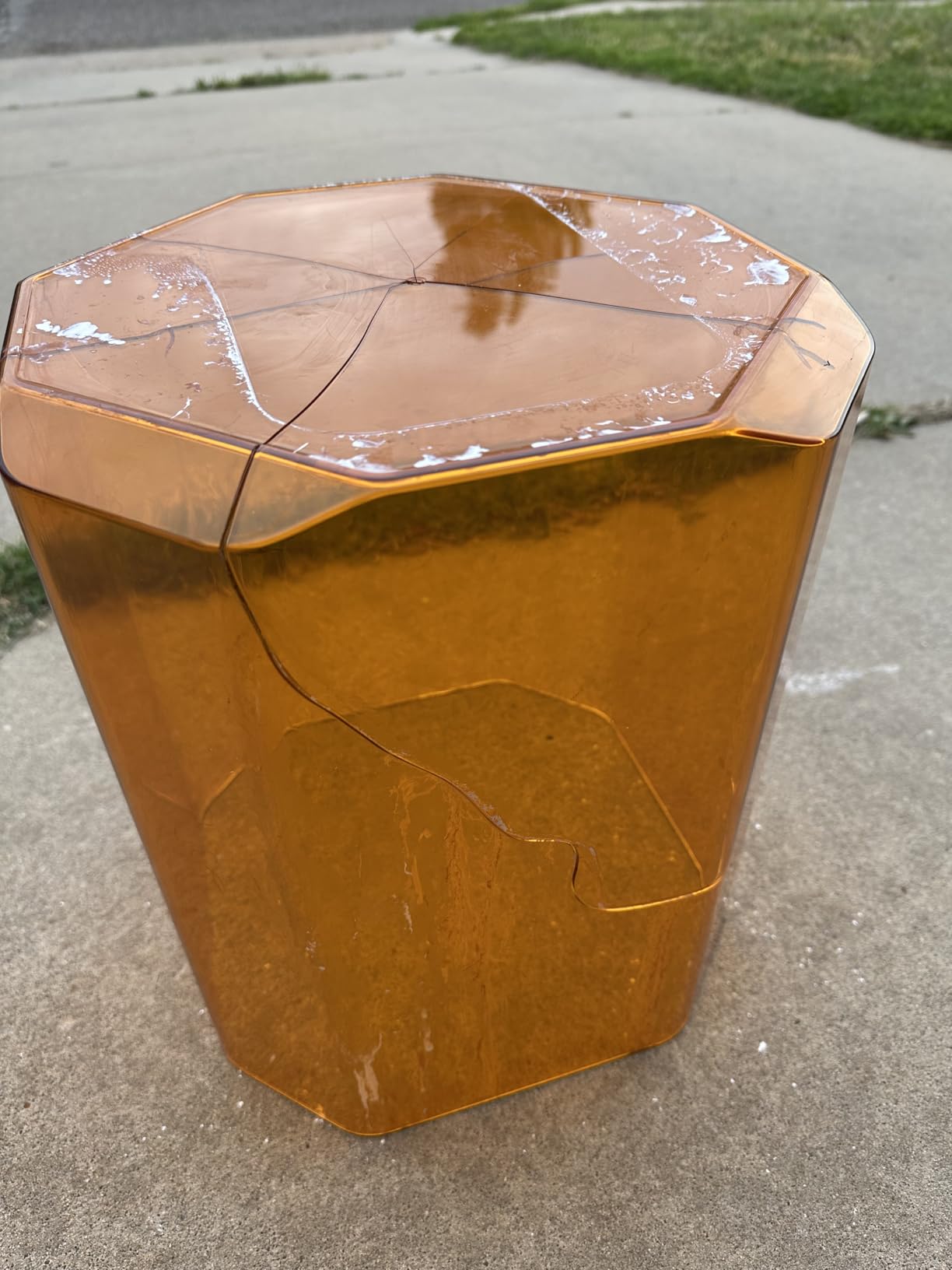
The wash cycle is noisy, which is a common complaint. Some users report that the unit feels lighter than expected, which raises minor durability questions. If you do not need the extra curing size, the standard V3.0 is a more balanced choice.
The 13.55 pound weight is not heavy, but the chassis feels less substantial than the powder-coated V3.0. For a machine that sits in one place, that is fine. For users who move their station frequently, the lighter construction might feel less reassuring than heavier competitors.
10. Creality UW-03 – Upgraded Power and Square Turntable
Creality Wash and Cure Station UW-03 2 in 1 Machine
500r/min vortex
6.72L wash
Square turntable
Triple safety
11.9 lbs
Pros
- 31% stronger vortex
- Large 6.72L wash volume
- Anti-roll square turntable
- Hang-state wash option
- UV-blocking lid
Cons
- Motor speed issues
- Jittery turntable
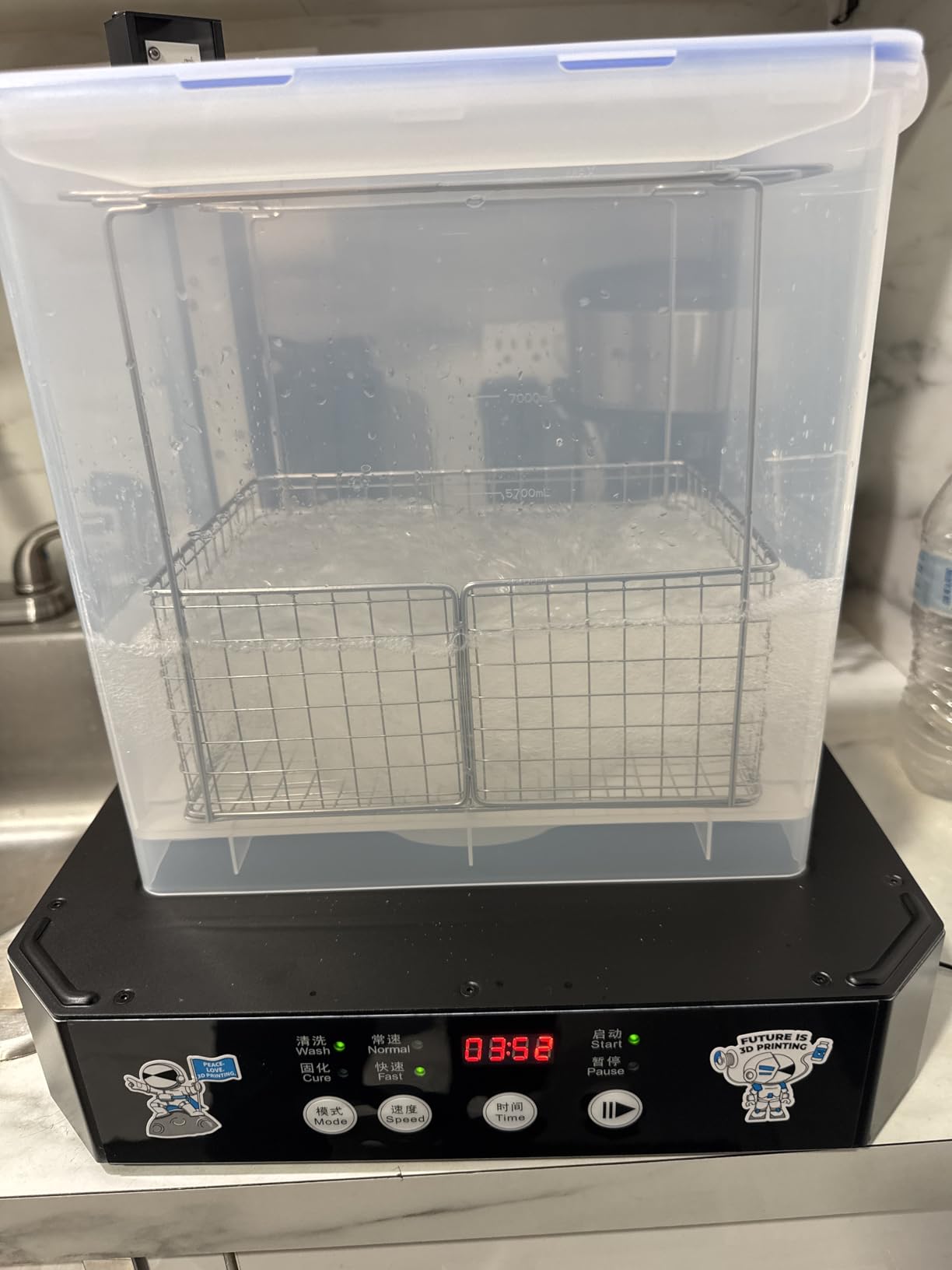
The Creality UW-03 is a meaningful upgrade over the UW-01. The washing vortex is 31% stronger at 500 revolutions per minute, driven by a magnetic propeller that agitates IPA more aggressively. I tested this with a batch of hollow prints that usually need a second wash cycle, and the UW-03 cleaned them in one pass.
The wash volume increased to 6.72L, and the cure volume expanded to 10.64L. That makes this one of the larger 2-in-1 units available. The anti-roll square turntable is a smart design choice. Round turntables can let prints slide off during fast rotation, but the square shape with a perimeter curb keeps everything in place. I tested it with tall thin prints and had zero tip-overs.
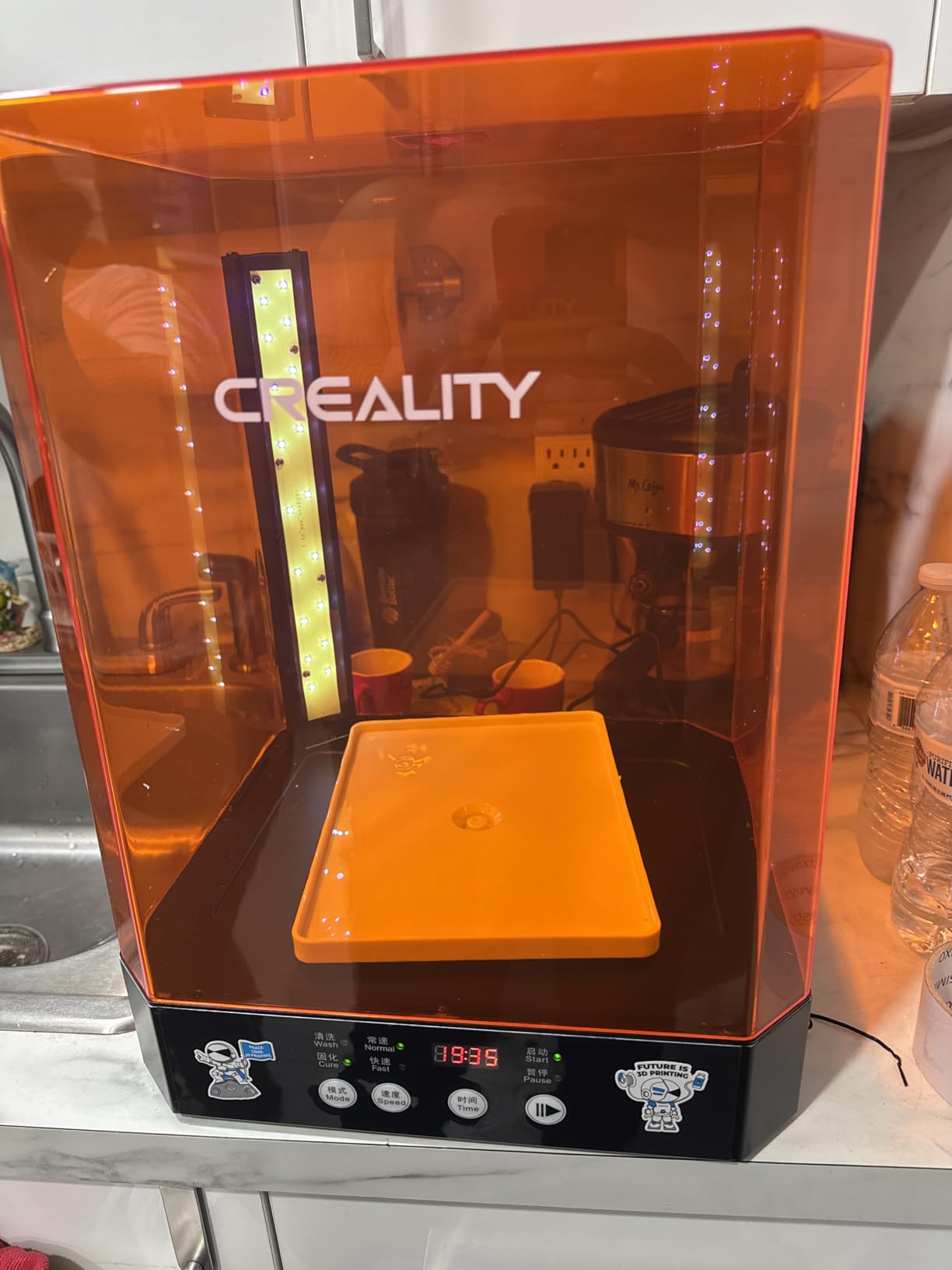
The triple safety precautions include a UV-blocking lid and auto-stop when the cover is removed. The hang-state wash option lets you clean prints on the build plate without removing them. The closed structure contains IPA smell better than open-bucket alternatives, which is important if you print in a shared living space.
The cure cycle is also improved over the UW-01. The UV array is more powerful, and the square turntable reflects light more effectively than flat round surfaces. I noticed faster cure times for standard resins, and the 10.64L chamber volume means you can cure larger models without breaking them apart. The triple safety system is a welcome upgrade, especially for users with children or pets near the workspace.
Who Should Buy the UW-03
This is a strong upgrade for Creality users who want more capacity and power than the UW-01. The square turntable is genuinely useful for tall prints, and the larger wash volume handles bigger models. If you have been frustrated by prints sliding off round turntables, the UW-03 solves that.
I recommend it for users who need a larger station but want to stay in the Creality ecosystem. The integration with Halot and other Creality printers is smooth, and the controls are familiar if you have used the UW-01. The 11.9 pound weight is manageable for most desks.
Who Should Skip It
Some units have reported motor speed control issues, which suggests quality control inconsistencies. The turntable can be jittery during curing, which creates slight vibration noise. If you want a proven track record with thousands of reviews, the Elegoo Mercury line is a safer bet.
The 45 reviews at the time of testing are a small sample size compared to competitors. While the initial feedback is positive, the long-term reliability is less certain. Risk-averse buyers might prefer a model with more established user data.
11. phrozen Wash Mega S – Industrial Capacity for Production Work
phrozen Wash Mega S 3D Printer Resin Washing Station, Dual Speed 25L Capacity, Large Washing Container, Washing Size L12.99xW7.48xH11.81 inch
25L capacity
Dual-speed
Side valve
Auto reverse
17.6 lbs
Pros
- Huge 25L capacity
- Handles large prints
- Dual-speed customization
- Side valve for drainage
- Wide plate compatibility
Cons
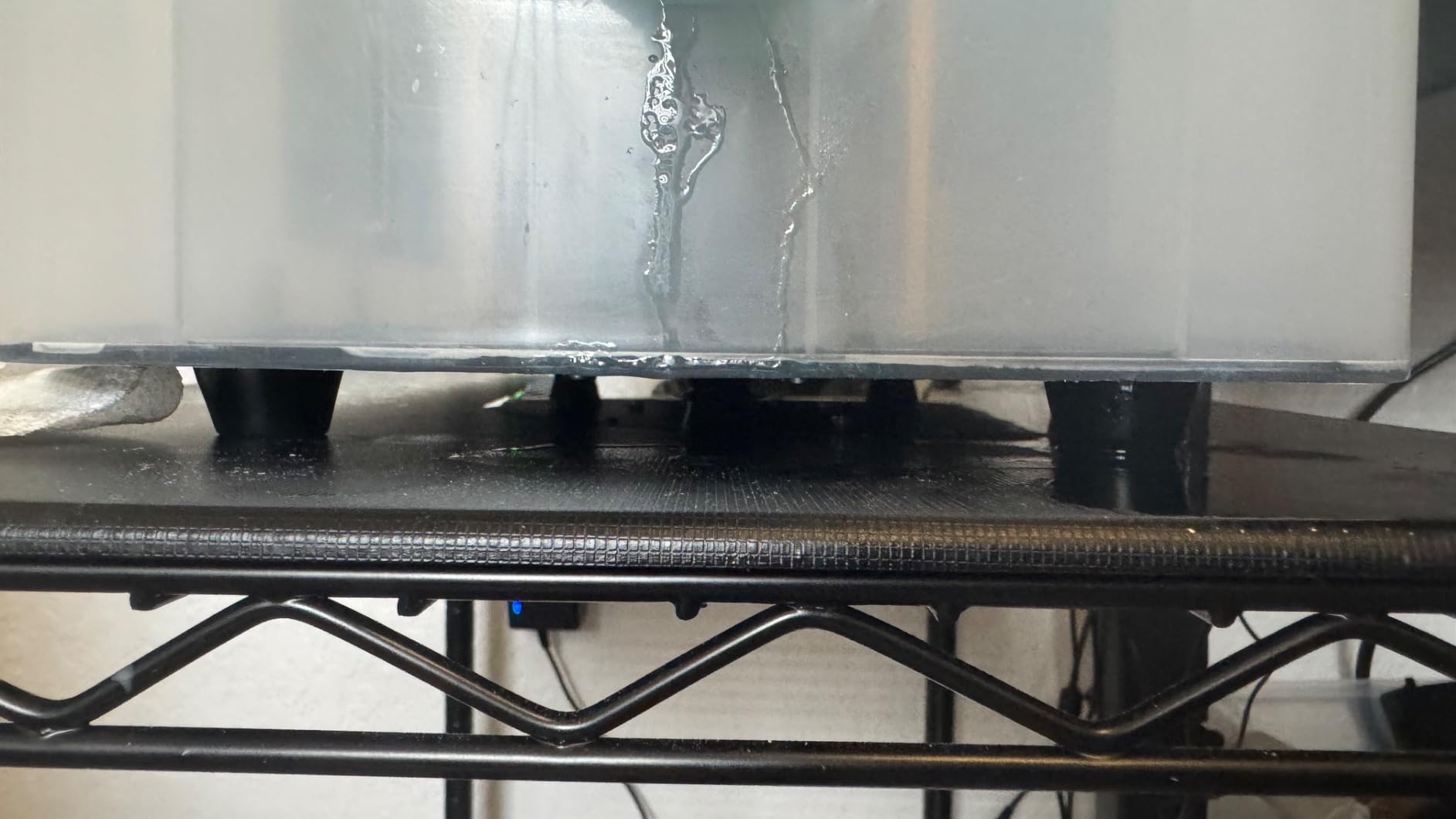
- Leak issues after use
- Wire cage too big for small parts
- Seal durability
The phrozen Wash Mega S is not a 2-in-1 unit. It is a dedicated washing station with an enormous 25L capacity. I tested this with a workshop that runs three large-format printers, and the Mega S handled full build plates from all of them without breaking a sweat. The dual-speed settings let you choose between high speed at 300 rpm and low speed at 275 rpm depending on how delicate your prints are.
The automatic reverse function changes direction after one minute, which helps clean complex geometries. The side valve is a practical feature for draining alcohol and wastewater without lifting a heavy bucket. I have emptied 20L of used IPA through that valve, and it made the process much safer and less messy than pouring.
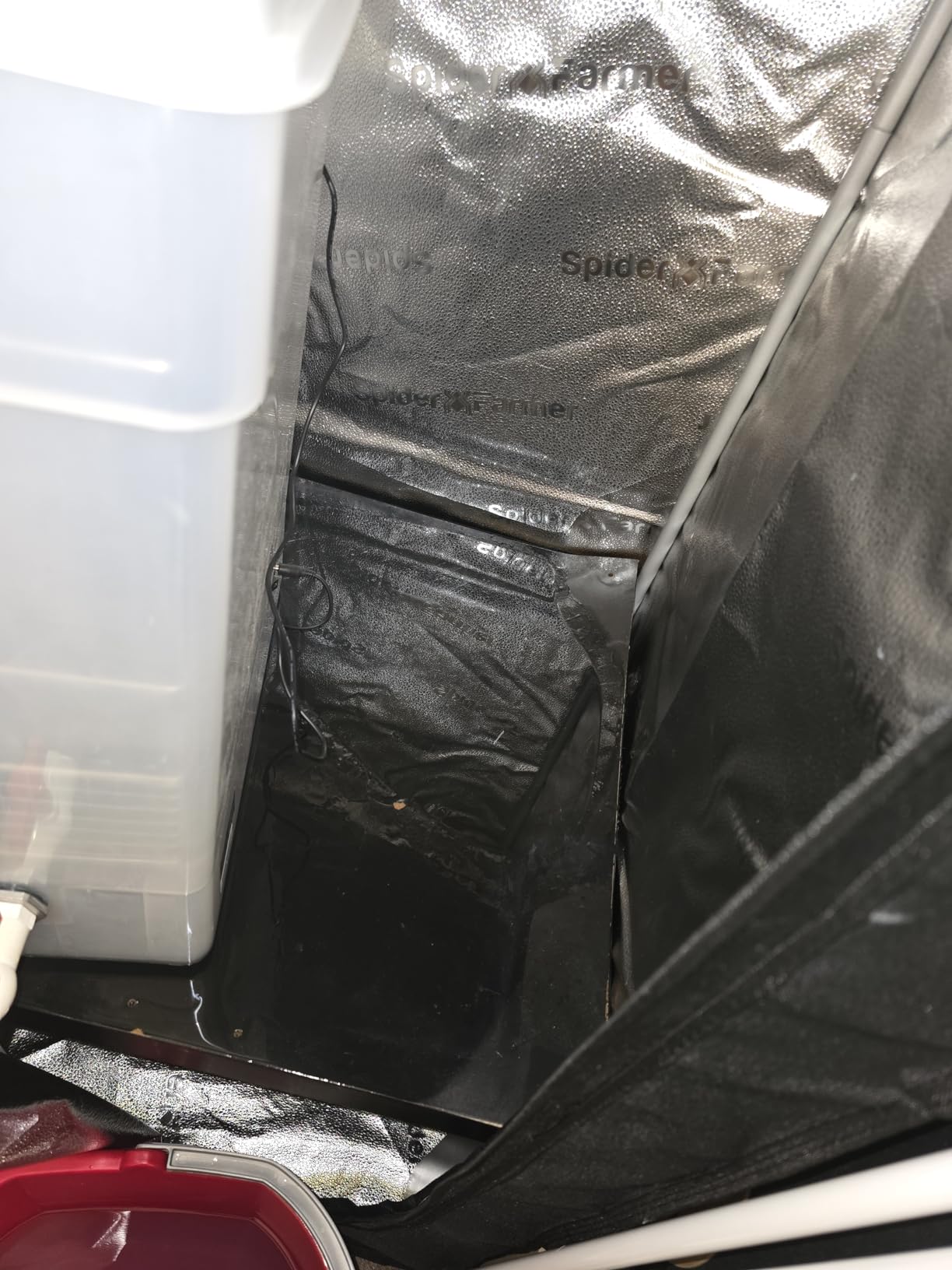
The compatibility is wide, supporting build plates from 12.8 to 15 inches. That covers the Phrozen Mega series and other large printers. The wire cage is large enough for big models, but the gaps are too wide for small miniatures. I had to use a mesh bag for 32mm figures to prevent them from slipping through.
This is a single-purpose machine, so you will still need a separate curing station. I paired it with a standard UV cure box and the workflow was smooth. The build quality is mostly solid, but the drain hole and seal design has been a point of concern for some users. The 17.6 pound weight is substantial, but the unit feels stable when loaded with 25L of IPA.
The dual-speed customization is more useful than I expected. For delicate prints with thin supports, the low speed setting prevents breakage. For sturdy terrain pieces, the high speed setting blasts away excess resin in minutes. That flexibility is rare in consumer wash stations, and it makes the Mega S feel more professional than most competitors.
Who Should Buy the Wash Mega S
This is the best resin printer cleaning station for users running large-format printers or small production shops. The 25L capacity is unmatched in the consumer market, and the side valve makes maintenance practical. If you print multiple large models per week and need a dedicated wash station, the Mega S is purpose-built for that.
I recommend it to workshop owners and professional prop makers who need industrial capacity without industrial pricing. The dual-speed control and automatic reverse are genuinely useful features that reduce breakage and improve cleaning quality. The wide plate compatibility also means it works with multiple printer brands.
Who Should Skip It
This is a wash-only machine, so you need a separate curing setup. The durability concerns are real enough that I would recommend checking the seal carefully on arrival. The wire cage is not suitable for small prints without a modifier. If you are a hobbyist printing miniatures, this is overkill in both size and price.
The 3.6 star rating is the lowest in this list, and the leak reports are concerning. While the capacity and features are impressive, the build quality does not inspire the same confidence as Elegoo or ANYCUBIC units. For a machine that holds 25L of flammable liquid, long-term seal integrity is a critical factor that should not be overlooked.
How to Choose the Right Resin Printer Cleaning Stations?
Buying a wash and cure station is not just about picking the highest-rated unit. You need to match the machine to your printer, your workspace, and your workflow. Here is what our team learned after comparing these eleven machines side by side.
2-in-1 vs 3-in-1 vs Separate Units
A 2-in-1 station handles washing and curing in one machine. You wash first, then switch to cure mode. This saves space and money, but you cannot wash and cure at the same time. A 3-in-1 station adds a drying function, which prevents the white streaks that happen when wet prints go straight into UV curing. Separate units like the Mercury X Bundle let you run both processes simultaneously, which is faster but requires more bench space.
I started with a 2-in-1 and it served me well for a year. When I added a second printer, I upgraded to a bundle system because the bottleneck was always waiting for the cure cycle to finish before starting the next wash. Think about your volume before you decide which format fits.
For most hobbyists, a 2-in-1 is the right starting point. It keeps costs down and simplifies your workflow. If you print daily or run multiple printers, the time savings from a bundle system or 3-in-1 station justify the extra cost and space.
Wash and Cure Capacity
Match your station capacity to your printer build volume. A 4L bucket works for smaller printers like the Mars or Photon. If you have a Saturn or Sonic Mighty, you need at least 7L to avoid cramming prints. Curing size matters too. The station turntable must be larger than your print footprint, or you will need to cure in multiple orientations.
I made the mistake of buying a small station for a large printer once. The prints stuck out of the IPA bath, and I had to hand-scrub the exposed areas. Do not repeat my mistake. Check the wash dimensions and cure dimensions separately, because they are not always the same.
Capacity also affects how often you change IPA. A larger container holds more dirty alcohol before it becomes ineffective. With a 4L unit, I change IPA every two weeks. With a 7.5L unit, I can stretch that to a month. Over a year, the larger station saves both time and solvent money.
IPA vs Water Washable Resin
Most wash and cure stations are built for isopropyl alcohol. If you use water washable resin, check the specifications carefully. Some Elegoo stations explicitly state they are not suitable for water washable resin. Water can corrode certain metal parts and may not behave correctly with magnetic stirrers designed for denser IPA.
Forum users consistently mention that 91% isopropyl alcohol works fine for cleaning resin prints. Higher concentrations like 99% evaporate faster but are not necessary for most resins. I keep a gallon of 91% IPA on hand and replace it every few weeks depending on print volume. The sealed stations in this list slow down evaporation significantly, which saves money over time.
Water washable resin is convenient but not always compatible with every station. If you switch between resin types, look for a station that handles both. The phrozen Wash and Cure Kit is more forgiving with different solvents, though IPA remains the standard for most users.
Safety and Workspace Considerations
IPA is flammable, and resin fumes are not healthy to breathe. Every station in this list has a sealed or partially sealed design, but the quality of the seal varies. A UV-blocking lid protects your eyes from the 405nm LEDs, which can cause damage with repeated exposure. The auto-stop feature when the lid opens is a safety must-have.
Noise is another real factor. Several stations in this list have loud fans or beeping buttons. If you print in a shared apartment or near a bedroom, the fan-less curing on the Mercury Plus 2.0 is a genuine advantage. I measured the noise from the V3.0 during a wash cycle, and it hit 62 decibels, which is similar to a conversation level. Not loud, but noticeable in a quiet room.
Ventilation matters more than most beginners realize. Even sealed stations let some fumes escape during lid opening. I run a small air purifier near my station, and it makes a noticeable difference in air quality. If you have children or pets, keep the station in a well-ventilated area away from common spaces.
Printer Compatibility
Build plate holders are not universal. Anycubic stations tend to fit Anycubic build plates best. Elegoo stations are designed for the Mars and Saturn series. If you have a mixed printer lineup, look for stations with adjustable hangers or basket-only washing. The Creality UW-03 and Elegoo Mercury Plus 3.0 both handle a wide range of plate sizes, which makes them safer picks for multi-printer setups.
Automatic liquid systems are an emerging feature that high-end users are starting to discuss. While none of the stations in this list fully automate liquid refilling, the Phrozen Wash Mega S comes closest with its side valve for drainage. That practical feature makes large-volume maintenance easier than lifting a 25L bucket.
Before you buy, measure your build plate and compare it to the station specs. A few millimeters of difference can mean the difference between a plate that fits and one that hangs awkwardly. Most manufacturers list compatibility, but it is worth double-checking with your exact printer model.
Maintenance and Long-Term Care
Every station needs regular maintenance to perform well. I rinse the wash basket after every session to prevent resin buildup. The turntable bearings benefit from occasional cleaning, and the UV LEDs should be wiped with a soft cloth to remove dust. Resin that dries on the turntable can block UV light and cause uneven curing.
IPA changes are the most frequent maintenance task. I track the clarity of my IPA, and when it turns cloudy or leaves residue on prints, I know it is time to replace it. With a sealed station, IPA lasts longer. With an open bucket, you might change it weekly. The cost difference adds up over time.
Forum users report that the gaskets and seals are the first parts to wear out. Check them monthly for cracks or hardening. A worn seal not only lets fumes escape but also accelerates IPA evaporation. Most manufacturers sell replacement seals, but availability varies. Elegoo and ANYCUBIC have better parts support than smaller brands.
Frequently Asked Questions
What is the best thing to clean resin prints with?
Isopropyl alcohol is the most common and effective cleaning solution for resin prints. Most users prefer 91% IPA because it balances cleaning power with cost. Higher concentrations like 99% work faster but evaporate quickly and are not necessary for most standard resins. Water washable resins can be cleaned with water, but you should verify your wash station is compatible with water before using it.
What is the best wash and cure station?
The best wash and cure station depends on your printer size and budget. The ELEGOO Mercury Plus V3.0 is the best overall choice for most users due to its 7.5L capacity and thorough curing. The ANYCUBIC Wash and Cure 3 offers the best value under $100. For premium users who need wash, dry, and cure in one machine, the phrozen Wash and Cure Kit is the top pick.
Do I need a wash and cure station for a resin printer?
Technically you can clean resin prints manually with a pickle jar and cure them in direct sunlight. However, a dedicated wash and cure station makes the process faster, cleaner, and more consistent. The controlled UV exposure from a station cures prints more evenly than sunlight, and the sealed containers reduce IPA fumes and evaporation. Most users who start with manual methods upgrade to a station within a few months.
Can I use 91% isopropyl alcohol to clean resin prints?
Yes, 91% isopropyl alcohol works perfectly for cleaning resin prints. It is the most popular choice among hobbyists because it is affordable and widely available. The 9% water content in 91% IPA does not harm standard resins. Some users prefer 99% IPA for faster drying, but the cleaning difference is minimal. Always use IPA in a well-ventilated area and store it away from heat sources due to flammability.
Final Thoughts on the Best Resin Printer Cleaning Stations
After testing and researching eleven machines, the choice comes down to your printer size and how much you print. The ELEGOO Mercury Plus V3.0 is the safest all-around pick for most users in 2026. It balances capacity, curing power, and ease of use at a fair price. The ANYCUBIC Wash and Cure 3 remains unbeatable for beginners who want a full-featured station without spending much. For anyone printing large models and needing a complete workflow, the phrozen Wash and Cure Kit justifies its premium cost with the integrated drying step.
Our team spent months comparing these machines in real printing workflows, and the difference between a good station and a bad one is stark. Prints come out cleaner, surfaces cure harder, and your workspace stays less messy. If you are still using pickle jars and paper towels, upgrading to one of the best resin printer cleaning stations will change how you feel about resin printing.
Pick the station that fits your build volume, leave room on your bench, and always buy a sealed container. Your IPA budget and your patience will both thank you.
The market for resin printer cleaning stations keeps growing, and new models are released every year. We will continue testing and updating this guide as new machines hit the market. For now, the eleven stations in this list represent the best options available, and any of them will improve your post-processing experience compared to manual methods.