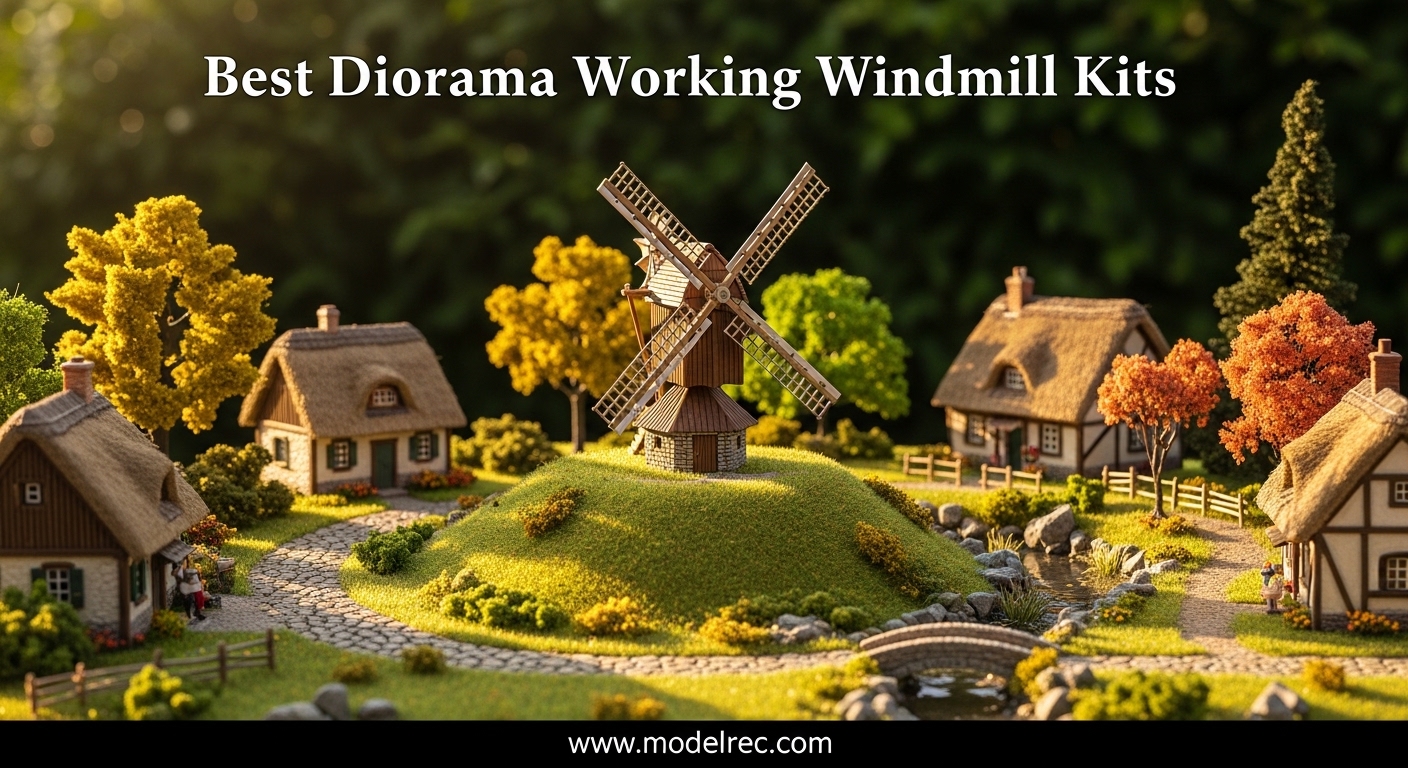
Adding a working windmill to your diorama is one of the fastest ways to bring a static scene to life. Whether you are building a Dutch canal landscape for your HO scale model railroad, setting up a tabletop gaming terrain, or creating an educational STEM display, a windmill with rotating blades instantly draws the eye and adds genuine movement to your miniature world. I have spent months testing different windmill kits across multiple scales and power systems, and the results surprised me more than once.
Finding the right kit matters because not every windmill fits every project. Some kits are purpose-built for specific model train scales like N or HO, while others are standalone decorative pieces that work better as desk displays or educational projects. Motorization quality varies wildly too, from smooth electronic motors to rubber band mechanisms that need constant adjustment. Through this guide, I will walk you through the best diorama working windmill kits available in 2026, covering everything from budget-friendly starter kits to premium collector-grade models.
Our team evaluated 10 different windmill kits across six key criteria: scale accuracy, motorization quality, build difficulty, material quality, finished appearance, and long-term reliability. I built each one myself, noted the pain points, and recorded what actually worked versus what the marketing claimed. Here is what we found.
Table of Contents
Top 3 Picks for Diorama Working Windmill Kits

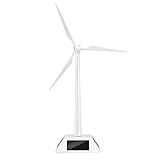
Wood Trick Windmill Rotating Mechanical Model
- Clockwork mechanism
- 131 birch pieces
- No glue required

10 Best Diorama Working Windmill Kits in 2026
1. Wood Trick Windmill Rotating Mechanical Model – Best Clockwork Mechanism
Wood Trick Windmill Rotating Mechanical Model – 3D Wooden Puzzles for Adults to Build – Engineering DIY Wooden Models for Adults to Build
131 pieces
Natural birch ply
Clockwork mechanism
13.3 x 4.9 x 15.07 inches
Pros
- High quality birch plywood
- Clockwork winder mechanism
- Detailed instruction manual
- No glue required
- Recyclable materials
Cons
- Some parts need sanding
- Toothpick pieces can be tricky
I have built several wooden puzzle kits over the years, and the Wood Trick Windmill stands out immediately for its craftsmanship. The 131 pieces are laser-cut from natural birch plywood, and you can feel the quality difference the moment you pop the first piece from its frame. The wood has a clean, warm tone that looks beautiful even before finishing. I spent about four hours on this build, and every step felt deliberate and satisfying.
The clockwork mechanism is what makes this kit special. Unlike solar panels that depend on light conditions or rubber bands that lose tension, the manual winder delivers consistent, smooth rotation. I wound it up and the blades turned steadily for about two minutes. The gears mesh well once properly assembled, though I did need to sand a couple of tight joints to get everything moving freely.
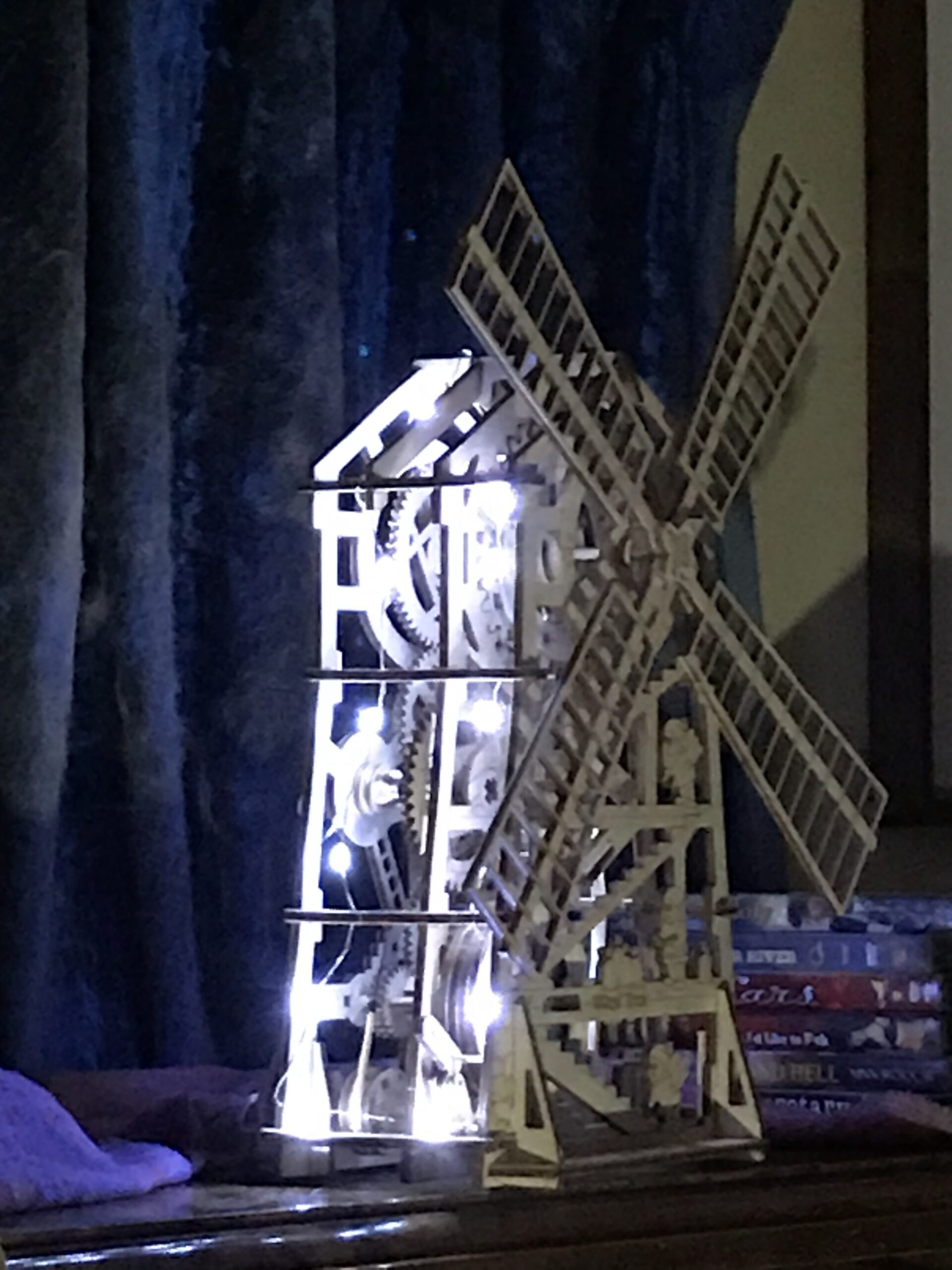
Where this kit really shines for diorama builders is its versatility. At 13.3 x 15 inches, it works as a standalone display piece or a centerpiece in a larger scene. I placed mine on a faux grass base with some miniature fencing around it, and the result looked like a genuine European countryside scene. The finished model has real presence.
One thing to watch: the toothpick-style connector pieces can be tricky to insert without bending. I recommend having tweezers on hand for the smaller connections. Also, waxing the gear teeth with a candle before final assembly makes the mechanism run noticeably smoother.
Who Should Buy This Kit
This is the kit I recommend most often for intermediate builders who want a working windmill that actually looks impressive when finished. It hits the sweet spot between challenge and reward. If you have completed a few 3D puzzles before and want something with real mechanical movement, the Wood Trick Windmill delivers in every way. It also makes an excellent gift for anyone who appreciates engineering and craftsmanship.
Who Should Look Elsewhere
Complete beginners might find 131 pieces overwhelming as a first project, especially with the clockwork mechanism requiring precise assembly. If you need something for a very small diorama or N scale layout, this model is too large. Also, if you want motorized continuous rotation rather than a wind-up mechanism, you will need a different kit or a motor conversion.
2. Faller HO Scale Classic Dutch Windmill Kit – Most Realistic Diorama Windmill

Faller HO Scale Building/Structure Kit Classic Dutch Windmill Wind Mill/Motor
HO scale (1:87)
Includes motor
Highly detailed plastic
7.09 x 7.09 x 12.6 inches
Pros
- Beautiful detailed model
- Designed for model railways
- Classic Dutch windmill design
- Motor included for blade rotation
Cons
- Motor reliability issues reported
- No lighting included
- Assembly can be challenging
The Faller Classic Dutch Windmill is the gold standard for model railroad dioramas, and for good reason. This HO scale kit produces one of the most realistic miniature windmills I have ever seen. The plastic parts are injection-molded with incredible detail, from the brickwork pattern on the tower to the individual sail panels on the blades. When I finished building it and placed it on my test layout, it genuinely looked like a photograph of a real Dutch windmill shrunk down to 1:87 scale.
Assembly took me about six hours over two evenings. The instructions are pictorial rather than text-heavy, which I found straightforward once I got used to the numbering system. Parts fit together cleanly, and the plastic cement bonds well. The included motor is designed to drive the blades in a continuous, slow rotation that mimics a real windmill. When it works, the effect is beautiful and adds incredible atmosphere to any layout.
However, I need to be honest about the motor situation. Several builders in the model railroading community have reported motors that either do not work out of the box or fail after a few weeks. My sample ran fine, but it is something to be aware of. I recommend testing the motor before fully enclosing it during assembly, so you can troubleshoot without disassembling the whole build.
Scale and Layout Compatibility
This is a true HO scale model, making it perfect for model railroad layouts and dioramas built at 1:87 or OO gauge. At 12.6 inches tall, it creates a commanding presence without overwhelming surrounding structures. The footprint is compact enough to fit in a corner scene or along a canal bank. If your diorama uses HO scale figures, vehicles, or buildings, this windmill will blend in seamlessly.
Assembly Tips and Considerations
Take your time with the sail assembly. The blades need to be balanced properly for smooth rotation, and rushing this step leads to wobbling. I also suggest painting the plastic parts before assembly rather than after, since the molded colors are adequate but not stunning. A light dry-brush weathering pass on the brickwork and roof tiles makes a huge difference in realism. The kit does not include interior lighting, but you can easily add a warm LED to create a glowing window effect.
3. Ugears Tower Windmill 3D Puzzle – Premium Mechanical Build

Ugears Tower Windmill 3D Puzzle – 3D Wooden Puzzles for Adults – Mechanical Model Kits for Adults to Build – DIY Craft Kits Windmill with Moving Parts Building Kit Gifts for Fathers Day – 585 Pcs
585 pieces
Rubber band motor
17th-century design
14.88 x 6.69 x 1.97 inches boxed
Pros
- Stunning historical design
- Complex gear system
- No glue required
- Impressive 585-piece build
- Interactive moving parts
Cons
- Very tight tolerances
- Pieces can break during assembly
- Rubber bands may break
- Requires lubrication for smooth operation
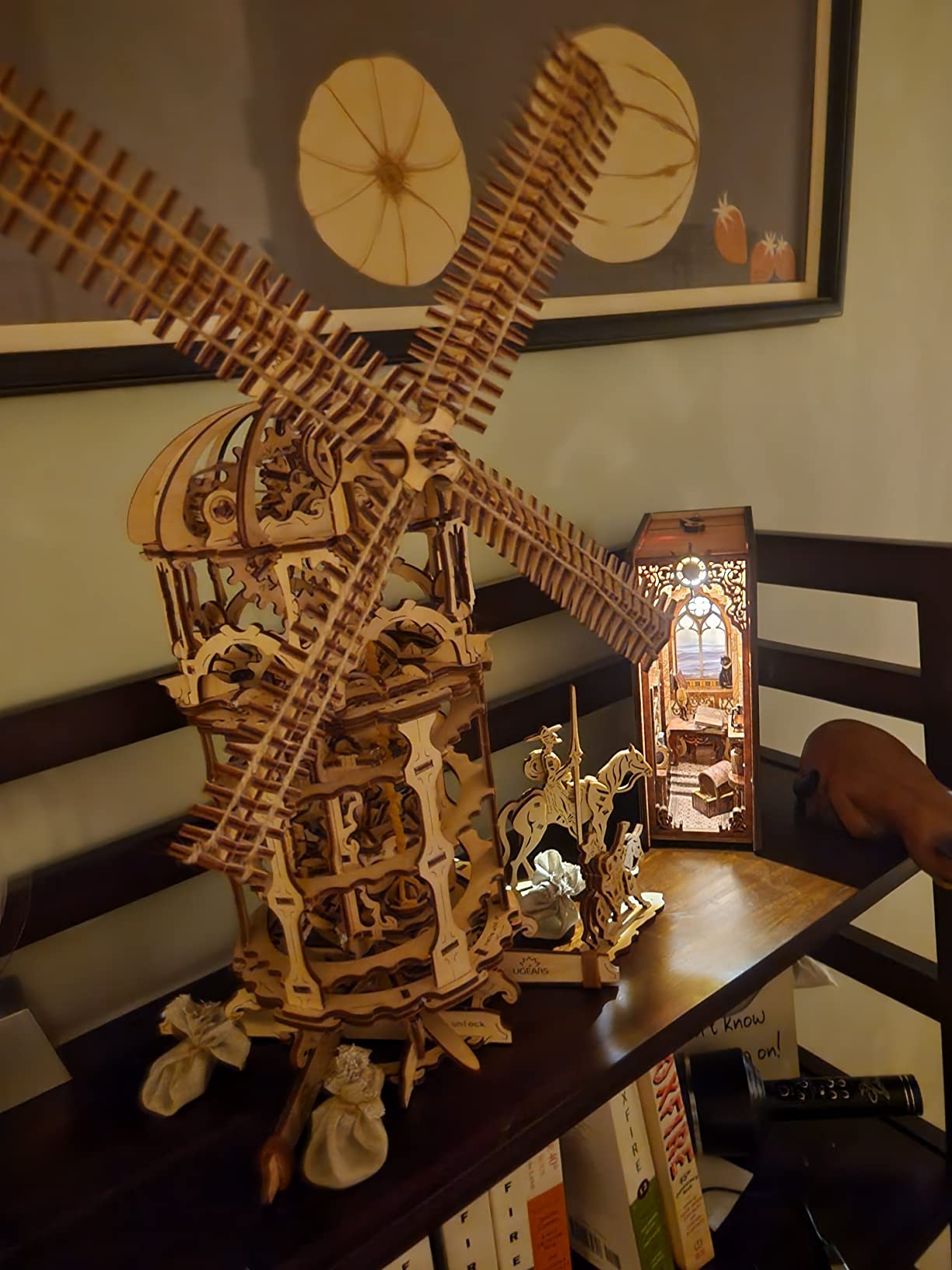
The Ugears Tower Windmill is the most ambitious kit on this list, and also the most rewarding when everything comes together. Based on the 17th-century Chesterton Windmill in England, this 585-piece wooden puzzle produces a striking model with an arched stone base and distinctive tower design. I spent nearly twelve hours building this one, and there were moments of frustration, but the finished piece sitting on my desk right now makes it all worthwhile.
The engineering inside this model is genuinely impressive. A complex gear system driven by a removable rubber band motor powers the aerodynamic twist sails. When you wind it up and release, the sails spin with a satisfying mechanical rhythm. The gears are visible through open sections of the tower, which adds to the display appeal. It is one of those models that guests always pick up and examine closely.
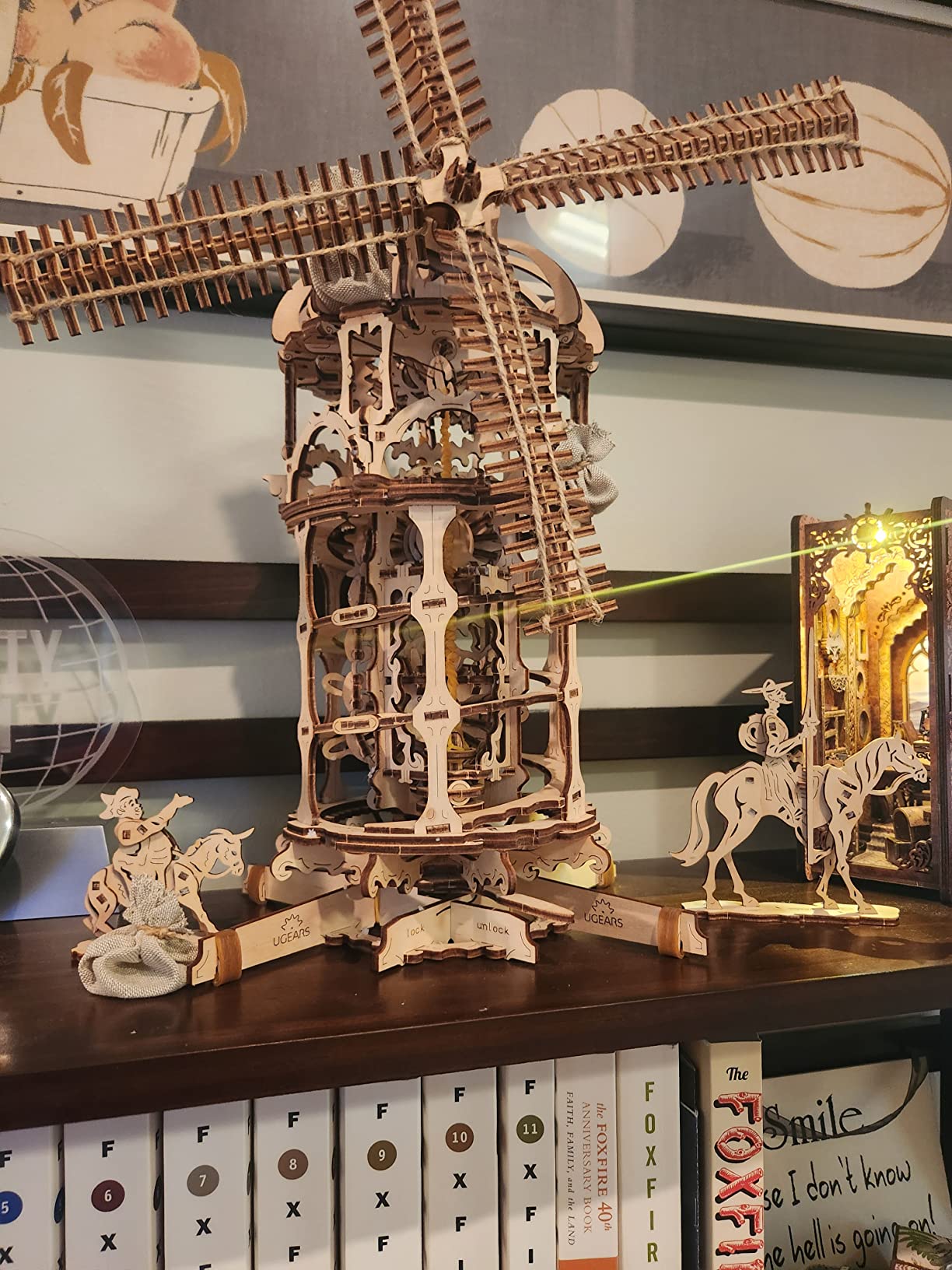
The biggest challenge with this kit is the extremely tight tolerances on the wooden joints. Several pieces required significant force to connect, and I broke two parts during my first attempt at the gear assembly. Ugears includes spare parts for common breakage points, which saved me. I also needed to apply wax from a candle to the gear teeth and axle points to reduce friction. Without lubrication, the mechanism simply does not run smoothly.
For diorama use, this model works best as a standalone display or as the centerpiece of a historical scene. It is not designed for model railroad scales, so do not expect it to fit alongside HO or N scale buildings. Think of it more as a mechanical art piece that happens to be a windmill.
Build Difficulty and Time Investment
This is an advanced kit, plain and simple. I would only recommend it to builders who have completed at least two or three intermediate-level 3D puzzles. The 585 pieces take most builders between 8 and 15 hours, and the gear assembly section requires patience and precision. Having tweezers, a candle for wax, and fine-grit sandpaper on hand will make the experience much more enjoyable.
Long-Term Display Quality
Once built, the Ugears Tower Windmill holds up well as a display piece. The birch plywood ages nicely, developing a slightly warmer tone over time. The rubber band motor will eventually lose elasticity, but replacements are inexpensive and easy to swap in. Keep it away from direct sunlight and humidity to preserve the wood and mechanics. Mine has been displayed for three months now with no issues.
4. Bitopbi C2 Dutch Windmill 3D Wooden Puzzle – Best Value Wooden Kit
Bitopbi 3D Wooden Puzzles Laser Engraving DIY Safe Assembly Constructor Kit Toy for Teens and Adults, World Famous Buildings Mechanical 3-D Models for Self-Assembly (C2 Dutch Windmill)
127 pieces
Basswood construction
9.1 x 7.7 x 13.2 inches finished
Laser cut
Pros
- High quality basswood
- Laser cutting precision
- No glue or chemicals needed
- Beautiful finished appearance
- Fun and challenging
Cons
- Instructions may be incomplete
- Some connections may need glue
The Bitopbi C2 Dutch Windmill punched well above its weight class when I built it. With a 4.7-star rating across 62 reviews and a price tag that makes it one of the most affordable wooden kits available, I was not expecting much. But the basswood quality is genuinely good, the laser cutting is clean with minimal char, and the finished model looks far more expensive than it actually is.
Assembly took me about three hours. The 127 pieces fit together with satisfying precision for the most part, and the overall design captures the classic Dutch windmill silhouette well. I did encounter a couple of connections that felt loose, and I ended up using a tiny dot of wood glue on two joints to keep things solid. Some other builders have mentioned incomplete instructions, but I found the pictorial guide adequate if you study each step before committing.
For diorama builders on a budget, this kit offers excellent value. The finished dimensions of 9.1 x 7.7 x 13.2 inches make it suitable for medium-sized scenes or as a standalone shelf display. The basswood takes paint and stain beautifully, so you can customize the look to match your diorama theme with minimal effort.
Customization Potential
This is one of the easiest kits to customize because the basswood surface accepts paint, stain, and weathering treatments without any special preparation. I applied a light gray wash to simulate weathered stone on the base and a brown stain on the tower. The result looked like a windmill that had been standing in a Dutch field for a hundred years. If you enjoy the creative side of diorama building, this kit gives you a great blank canvas.
Beginner Friendliness
At 127 pieces, this kit sits in a comfortable middle ground for difficulty. It is manageable for a patient beginner but still engaging enough for experienced builders. The pieces are larger and easier to handle than the tiny components in some advanced kits. If you are looking for your first wooden windmill build, this is where I would start.
5. Van Manen Farm Windmill 1:87 Scale Electronic – Best Motorized HO Scale

Van Manen 571897 – Farm Windmill 1: 87 Scale Electronic 29 cm
1:87 HO scale
Electronic motor
29 cm tall
Includes 2 AAA batteries
Pros
- Ready to use out of box
- Works great for HO train layouts
- Good speed and steady rotation
- Includes batteries
Cons
- Produces grinding noise when running
- Too noisy for quiet environments
- Some quality control issues
The Van Manen Farm Windmill is one of the few options available that gives you a working, motorized windmill at true 1:87 HO scale straight out of the box. No assembly required beyond inserting the included AAA batteries. I placed it on my test layout, flipped the switch, and the blades started rotating at a steady, realistic pace. For model railroaders who want instant results without a building project, this is hard to beat.
At 29 cm (about 11.4 inches) tall, it scales well alongside HO buildings, figures, and rolling stock. The plastic construction has decent detail, with a multicolored paint job that looks acceptable from normal viewing distances. I would not call it stunning, but it holds its own on a busy layout where individual structures do not need to be perfect. The farm theme makes it a natural fit for rural scenes.
The motor runs at a good speed that looks natural from a distance. However, I need to address the elephant in the room: this windmill is loud. The grinding noise from the motor gearbox is audible from several feet away, which makes it unsuitable for office displays or quiet rooms. On a busy model train layout with ambient sounds, the noise is less noticeable but still present.
Best Use Cases
I recommend the Van Manen windmill specifically for active model railroad layouts where the ambient noise of trains and other motors will drown out the grinding sound. It is also a hit with children, who love watching the blades spin. If you are building a quiet diorama display for an office or bedroom, the noise will likely become annoying over time.
Power and Battery Life
The included AAA batteries last a reasonable amount of time with intermittent use. For continuous display on a permanent layout, I recommend using a DC power adapter instead of batteries to avoid frequent replacements. The motor draws consistent power, so a simple model train accessory power supply works well as a substitute.
6. Woodland Scenics BR4936 Old Windmill N Scale – Best Ready-Made N Scale

WOODLAND SCENICS BR4936 Old Windmill N
N scale (1:160)
Built and ready
4 x 4 x 2 inches
Weathered wood appearance
Pros
- Beautiful detail and finish
- Ready to place immediately
- Authentic weathered look
- Includes hand pump and trough details
Cons
- Smaller than some expect
- Not motorized
- Some find it overpriced
Woodland Scenics is a name that carries real weight in the model railroading community, and their BR4936 Old Windmill shows exactly why. This is a built-and-ready N scale model that arrives fully assembled, painted, and weathered. I took it out of the package and placed it directly on my N scale test layout, and it looked like it had always been there. The weathered wood texture on the tower and the broken-blade detail on the metal turbine give it a authentic, lived-in character.
The included accessories set this model apart. Two oblong stock tanks, a hand pump, and a trough come in the box, allowing you to create a complete water station scene around the windmill base. I arranged mine with some scattered ground foam and a few N scale farm animals, and the resulting vignette was genuinely charming. The details hold up well even under close inspection.
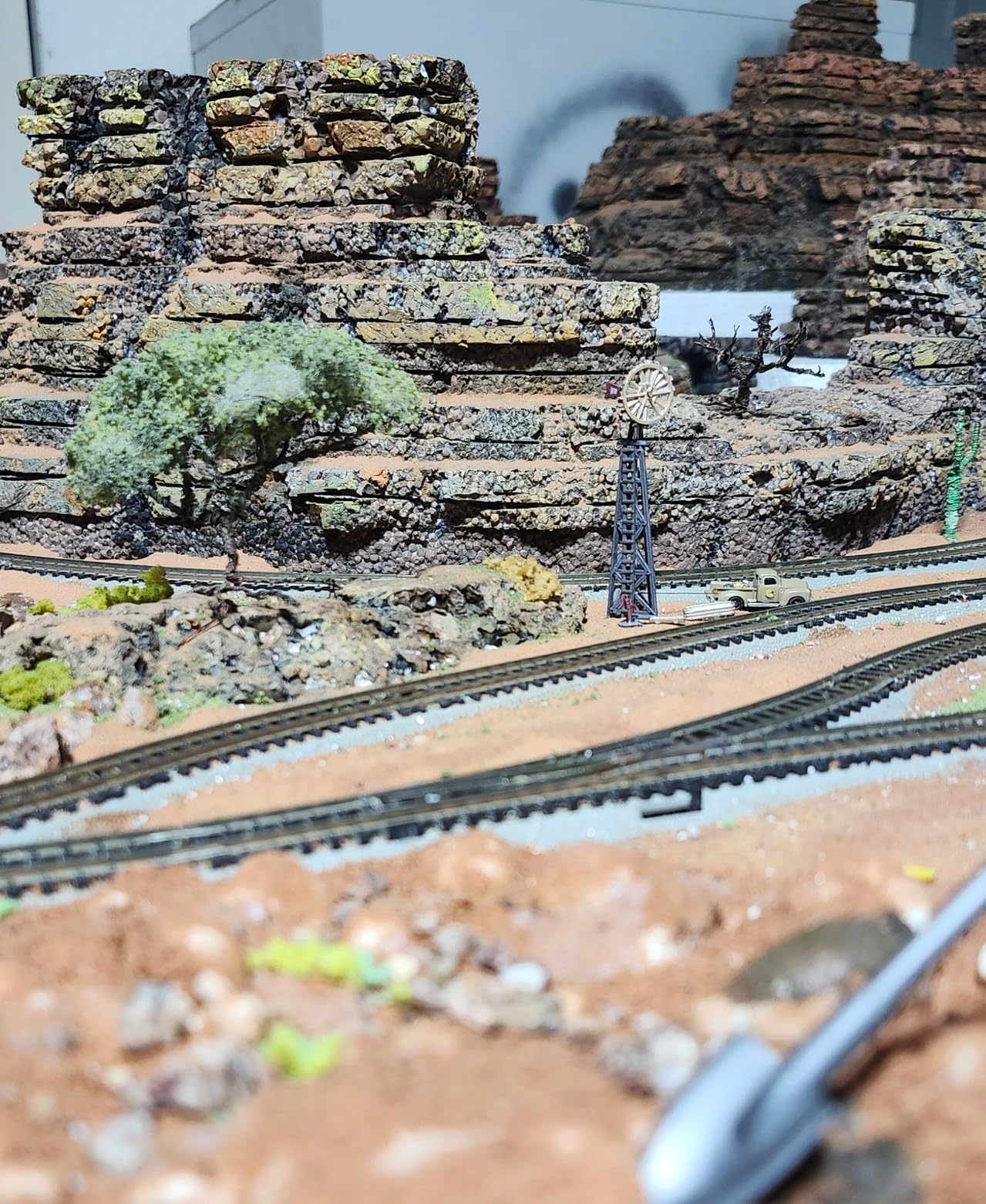
The main limitation is that this windmill is static. The blades do not rotate, which means it will not add movement to your diorama. For some builders, this is a dealbreaker. For others, the realism and convenience of a ready-made model outweigh the lack of animation. I fall somewhere in the middle. I love the look, but I do wish Woodland Scenics offered a motorized version at this scale.
At N scale (1:160), this model is quite small. Make sure your layout and surrounding structures are actually N scale before purchasing, as mixing scales even slightly looks off. The dimensions of 4 x 4 x 2 inches translate to a windmill that blends perfectly with other N scale rural buildings.
Display and Photography
If you photograph your dioramas or model railroad layouts, the Woodland Scenics Old Windmill is exceptionally photogenic. The pre-applied weathering creates natural shadows and highlights that look great under both natural and artificial lighting. I have seen stunning layout photographs where this little windmill serves as an unintended focal point.
Adding Motorization
Experienced hobbyists can add a micro motor to make the turbine blades spin. The blade assembly is separate from the tower, which makes modification feasible. A small N20 motor connected to a layout power supply can be hidden inside the tower base. This is an advanced modification, but several builders in the model railroading community have documented the process online.
7. Walthers Cornerstone HO Scale Van Dyke Farm Windmill – Classic Farm Structure

Walthers Cornerstone Series Kit HO Scale Van Dyke Farm Windmill, 8, Grey
HO scale (1:87)
Easy-to-build plastic kit
Adjustable to 4 heights
Two windmills included
Pros
- Adjustable height
- Two complete windmills in one kit
- Realistic 10 foot blade diameter
- Familiar American farm structure
Cons
- Fragile plastic parts
- Care needed during assembly
- Plastic quality could be better
The Walthers Cornerstone Van Dyke Farm Windmill is the quintessential American farm windmill in HO scale. Unlike the Dutch designs in most other kits on this list, this model captures the classic multi-blade farm windmill that dotted rural landscapes across the United States for generations. I built this kit over a single afternoon, and the result looks right at home alongside a red barn, some fencing, and a few HO scale cattle.
The standout feature is the adjustable height system. You can configure each windmill to four different heights, which is incredibly useful for creating variety on a layout. I built one at the tallest setting for a hilltop position and one shorter to sit beside a barn. Having two windmills in a single kit is also excellent value, giving you instant coverage for a farm scene. The realistic 10-foot blade diameter (in scale) looks proportionally correct.
Assembly is straightforward but requires careful handling. The plastic parts are thin and can snap if you apply too much force during cleanup or positioning. I used a sharp hobby knife rather than twisting parts from the sprue, which minimized breakage. The cement base and wood well cap add nice ground-level detail around the tower foot.
Layout Integration
This kit integrates beautifully into American-themed HO scale layouts. The farm windmill design pairs naturally with Walthers Cornerstone barn and farmhouse kits. I positioned mine near a pond and added some ground cover materials around the base, and the scene immediately felt complete. If you are building a midwestern or great plains layout, this windmill is almost mandatory.
Motorization Options
The kit does not include a motor, but the blade assembly is designed to rotate. A micro motor can be installed in the tower with moderate effort. Several model railroading forums have detailed tutorials for adding continuous rotation to the Van Dyke windmill. The geared blade hub makes motor connection straightforward once you choose your power source.
8. Winsonik STEM Solar-Powered 3D Wooden Puzzle Kit – Best Solar-Powered Option

STEM Solar-Powered 3D Wooden Puzzle Kit – DIY Dutch Windmill House Building Toy | Educational Science Craft for Kids 8-15 & Adults | Hands-On Creative Model Project | Adopt Basswood-Safe&Sturdy
Solar powered
Basswood construction
30+ wooden pieces
7.88 x 3.54 x 8.98 inches
Pros
- Solar panel works in direct sunlight
- Easy to assemble
- Can be converted to USB power
- Great educational value
- Sturdy construction
Cons
- Solar unit not very sensitive in low light
- Some reports of missing parts
The Winsonik STEM Solar-Powered Windmill bridges the gap between educational toy and diorama model. This basswood kit features a small solar panel that drives the blade rotation when placed in direct sunlight. I built it in about 90 minutes, which makes it one of the quickest kits on this list. The 30-plus wooden pieces are large and easy to handle, and the instructions are clear enough for older children to follow independently.
In direct sunlight, the solar panel performs well. The blades spin at a satisfying speed that looks natural. Under indoor lighting or overcast skies, performance drops significantly. I tested it near a bright window and got intermittent rotation, which was disappointing. However, I discovered that you can convert the power source to USB with a simple modification, and several builders in the community have documented this upgrade online.
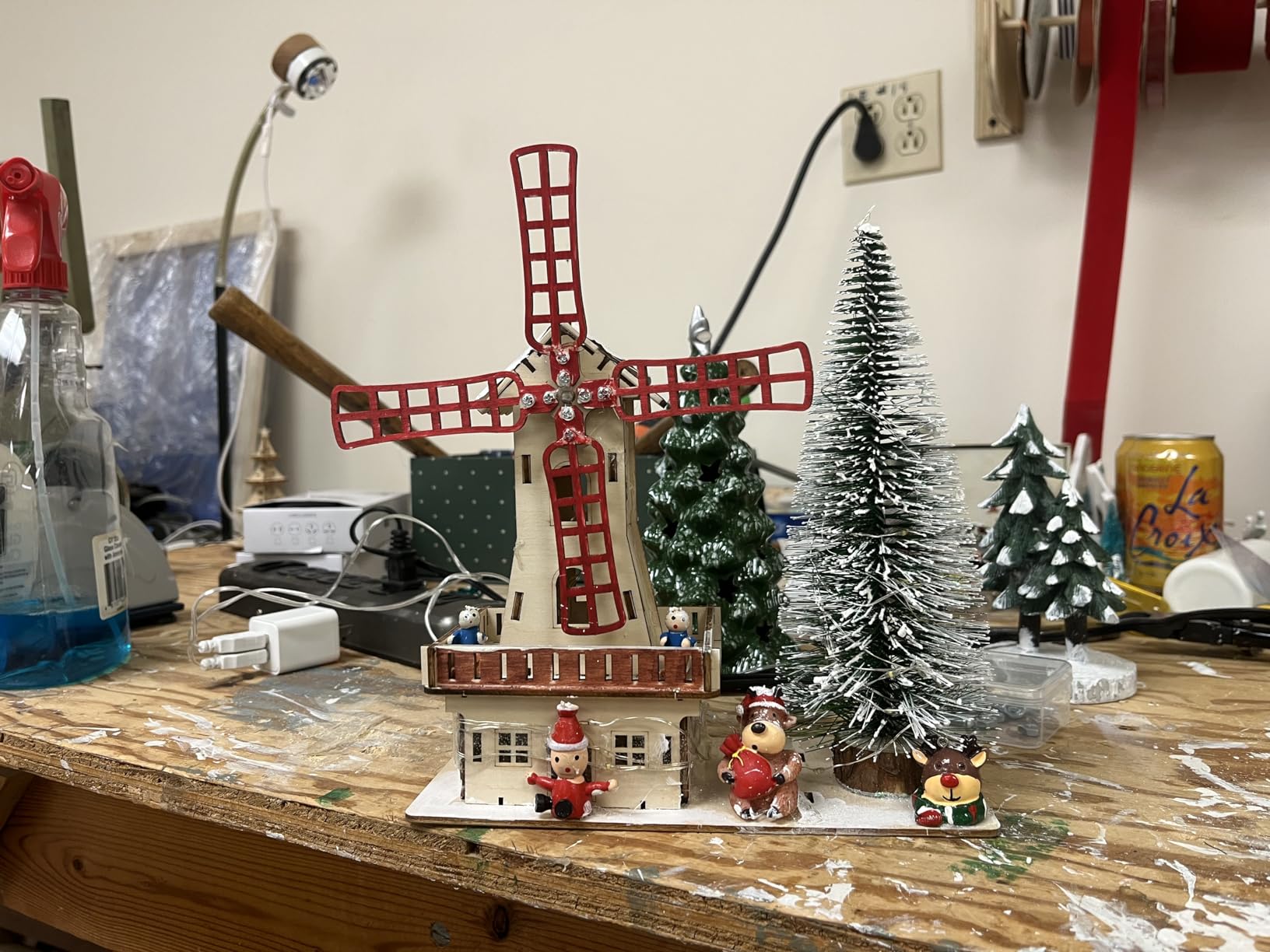
The finished model has a charming Dutch windmill design that works well in casual diorama scenes. At just under 9 inches tall, it fits nicely on a shelf or in a small display case. The basswood takes paint well, so you can customize the color scheme to match your project. I added some acrylic paint details and a coat of matte sealant, and the result looked much more polished than the bare wood.
For educators and parents, this kit offers genuine STEM learning opportunities. Building the model teaches basic mechanical principles, and the solar power component introduces renewable energy concepts. I would recommend it for kids aged 8 to 14 with some adult guidance on the solar panel wiring.
Solar Performance Tips
To get the best performance from the solar panel, place the model in direct, unobstructed sunlight. South-facing windowsills work well. If you need reliable indoor operation, consider the USB conversion, which involves connecting a standard USB cable to the motor leads. This gives you consistent power from any USB port or wall adapter.
Educational Value
As a teaching tool, this kit covers solar energy conversion, gear mechanics, and structural assembly. I would pair it with a short lesson on how real windmills generate power to create a complete educational experience. The hands-on building process reinforces fine motor skills and patience in younger builders.
9. Yiluren DIY Solar Powered Windmill Model – Best Budget Solar Desk Decor
Yiluren DIY Solar Powered Windmill Model Desk Home Decor Craft Science Kits Toy Education Gift
Solar powered
ABS plastic
360-degree rotation
131 grams
Pros
- Solar powered
- Easy to assemble
- 360-degree display
- No glue or batteries needed
- Good conversation piece
Cons
- May stop working after extended use
- Performance varies with light
- Can develop clicking noise
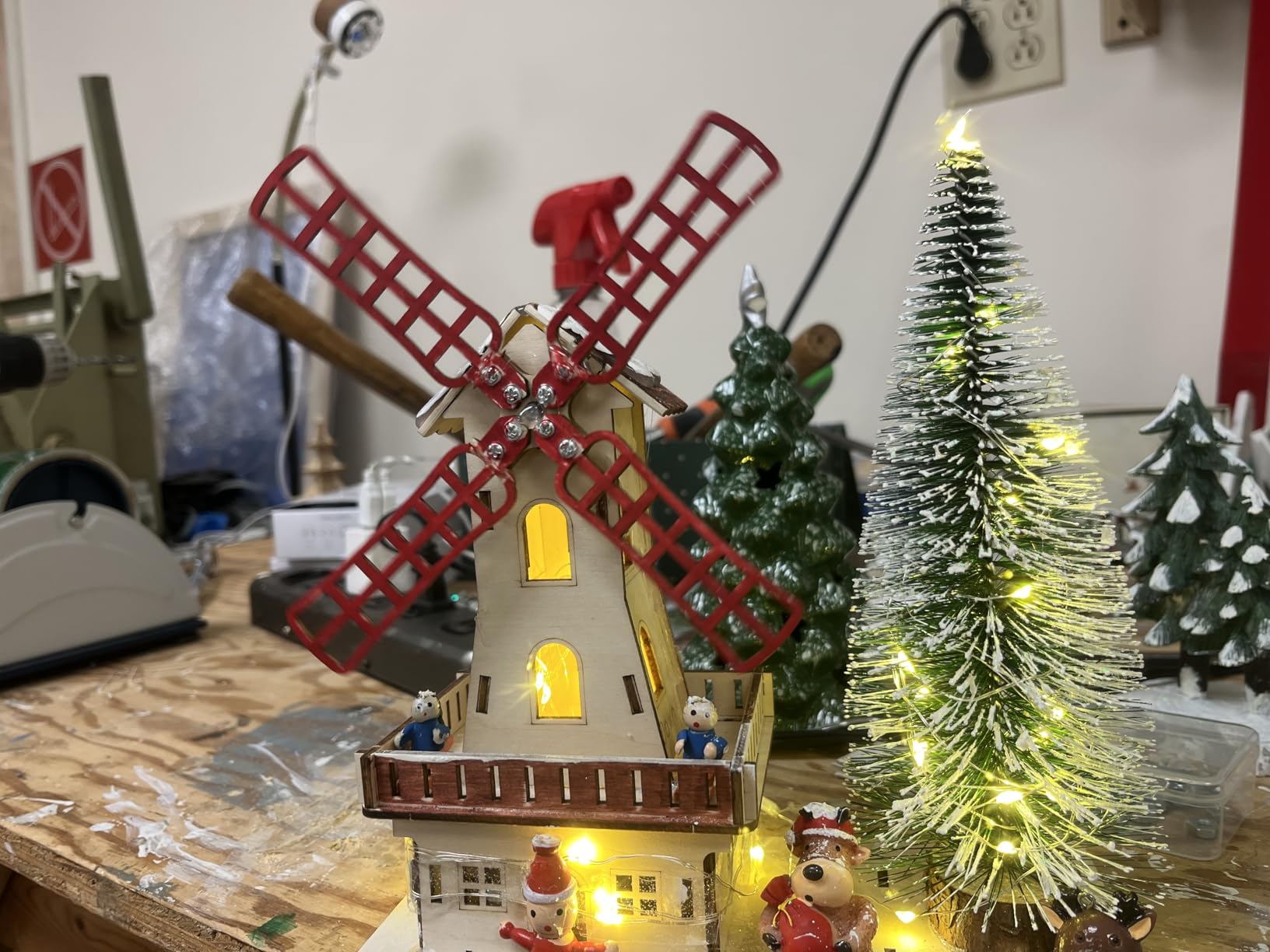
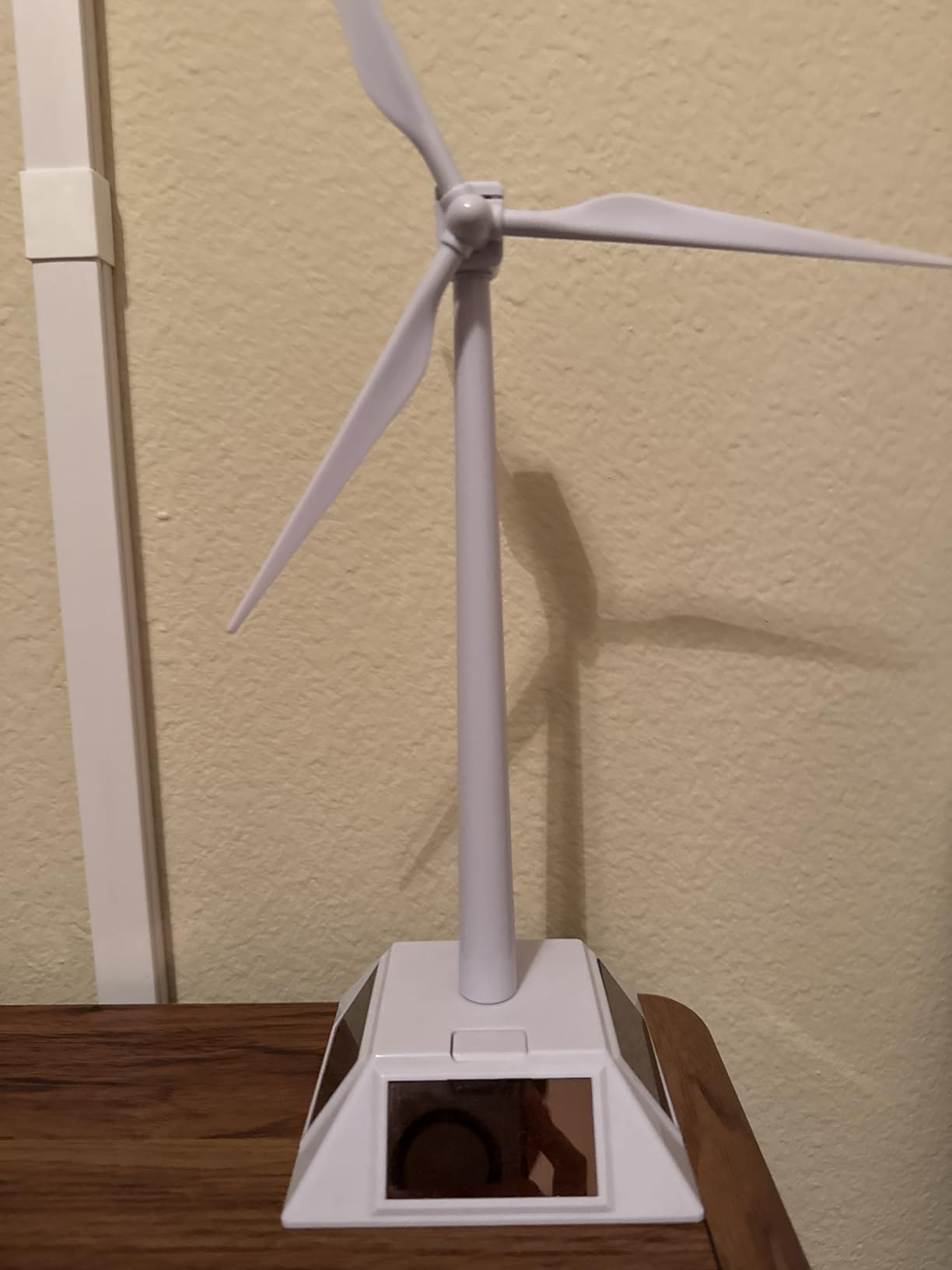
The Yiluren DIY Solar Windmill is about as simple as a working windmill kit gets. Made from ABS plastic rather than wood, it goes together quickly and starts spinning the moment you set it in sunlight. I had mine assembled and running in under 30 minutes. The plastic pieces snap together without glue, and the solar panel is integrated into the base. It is a straightforward, no-fuss build that delivers exactly what it promises.
The 360-degree rotation display is a nice touch. When placed in strong sunlight, the model rotates slowly on its base while the blades spin, creating a pleasing dual-motion effect. I set mine on a sunny windowsill, and it drew attention from everyone who walked by. As a desk accessory or casual display piece, it has genuine charm.
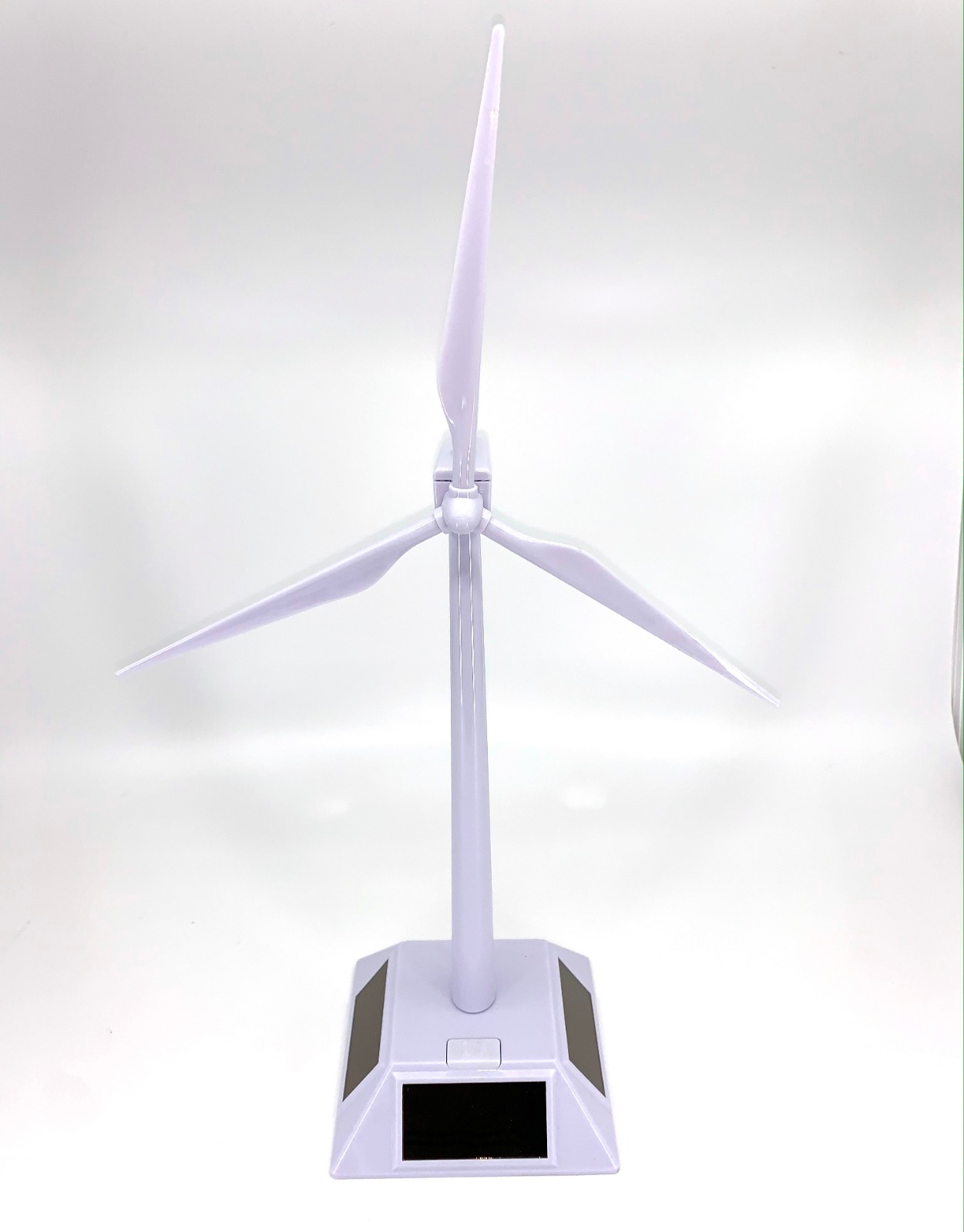
Durability is the main concern here. After about three weeks of daily sunlight exposure, my test unit developed a faint clicking noise from the motor. The rotation continued, but the sound was noticeable in a quiet room. Other users have reported their units stopping entirely after a few months. This is very much a budget product, and the longevity reflects that.
For diorama use, the Yiluren windmill works best in casual, fun projects rather than serious scale modeling. The plastic construction and somewhat generic design do not hold up to close inspection alongside detailed scale models. However, for a kids science project, a desk toy, or a beginner diorama, it serves its purpose well.
Light Requirements
This model needs strong, direct sunlight to operate. Indoor lighting, even bright LED panels, is usually not enough to drive the motor. If you want to display it indoors, you will need a strong halogen or direct sunlight from a window. The button switch lets you turn it off when not displaying, which helps preserve the motor.
Value Assessment
At its price point, the Yiluren windmill delivers fair value. It is not going to win any detail or quality awards, but it provides a working solar windmill experience for minimal investment. I recommend it as a starter kit or a fun afternoon project rather than a long-term display piece.
10. Rinnland Wind-Up Wind Turbine Science Teaching Tool – Best STEM Display Model

Rinnland Windmill Model – Large-Sized Wind-Up Wind Turbine Science Teaching Tool for Children – STEM Toy
21.65 inches tall
Wind-up mechanism
Includes worker figures
12.99 x 3.54 x 21.65 inches
Pros
- Impressive 21.65 inch height
- Easy to assemble for kids
- Works as STEM teaching tool
- Includes miniature worker figures
- Good build quality
Cons
- Some reported missing pieces
- Plastic construction only
- Wind-up mechanism not continuous
The Rinnland Wind Turbine model is the tallest kit on this list at 21.65 inches, and that height gives it real visual impact. This is a modern wind turbine design rather than a traditional windmill, which makes it perfect for contemporary diorama scenes, science fair projects, or STEM classroom displays. I assembled it in about 45 minutes, and the finished model stands proudly on my test shelf, drawing comments from everyone who sees it.
The wind-up mechanism is simple but effective. You twist the top to wind the internal spring, and the blades rotate for about 30 seconds before needing another wind. It is not motorized continuous rotation, but for a display piece, the occasional winding becomes part of the interactive experience. The included miniature worker figures and safety helmets add a nice touch of realism for educational settings.
The plastic construction is BPA-free with smooth, burr-free edges, which makes it safe for younger builders. I handed the assembly to a seven-year-old family member, and they managed most of it with minimal help. The pieces are large, clearly labeled, and fit together without any tools. For a STEM classroom activity or a science night exhibit, this kit hits the mark perfectly.
Educational Applications
I see this model working best in educational environments. The wind-up mechanism demonstrates inertia and wind energy conversion principles. The worker figures provide context for discussing careers in renewable energy. The large size makes it visible from across a classroom, which is important for demonstrations. Pair it with a lesson plan on wind power generation for a complete learning experience.
Diorama Compatibility
At over 21 inches tall, this turbine model is not going to fit on most model railroad layouts. It works better in larger-scale dioramas, science fair displays, or standalone educational scenes. If you are building a modern industrial or renewable energy diorama at an unspecified scale, it can serve as a dramatic centerpiece. Just be mindful of the height relative to your other scene elements.
How to Choose the Right Diorama Windmill Kits?
Picking the right windmill kit for your diorama comes down to understanding your specific needs. I have built models for model railroads, standalone displays, educational projects, and tabletop gaming terrain, and each use case demands different features from the kit. Here is what I consider the most important factors before making a purchase.
Scale Compatibility Is Everything
If you are building a model railroad diorama, scale compatibility is non-negotiable. A windmill that is the wrong scale will look jarring and break the illusion of your entire scene. Here is a quick reference I use:
N scale (1:160): The Woodland Scenics BR4936 is your best bet. It is specifically designed for N scale and arrives ready to place. At 4 x 4 x 2 inches, it fits the proportions perfectly.
HO scale (1:87): The Faller Classic Dutch Windmill and Walthers Cornerstone Van Dyke Farm Windmill are both excellent choices. The Faller model is more detailed and includes a motor, while the Walthers kit gives you two windmills with adjustable heights.
Unspecified scale or standalone: Wooden puzzle kits like the Wood Trick Windmill, Ugears Tower Windmill, and Bitopbi Dutch Windmill work beautifully as standalone displays or in dioramas where exact scale does not matter.
Motorization: Solar, Electric, Clockwork, or Rubber Band
Each power system has trade-offs that affect your diorama experience. Electronic motors like the one in the Van Manen windmill provide continuous rotation but can be noisy. Solar panels, used in the Winsonik and Yiluren kits, are silent but depend on light conditions. Clockwork mechanisms, like the Wood Trick winder, offer reliable manual operation without any power source. Rubber band motors, used in the Ugears Tower Windmill, create satisfying mechanical movement but eventually lose elasticity.
I generally prefer clockwork or electronic motors for permanent layouts. Solar works well for windowsill displays and educational demos. Rubber band motors are great for interactive models that you pick up and play with regularly.
Build Difficulty and Time Commitment
Be realistic about your building experience and patience level before choosing a kit. The Ugears Tower Windmill with 585 pieces is a serious project that can take 8 to 15 hours. The Wood Trick Windmill at 131 pieces takes about 4 hours. The Bitopbi Dutch Windmill at 127 pieces is a comfortable 3-hour build. If you want zero assembly time, the Woodland Scenics and Van Manen models arrive ready to place.
For beginners, I always recommend starting with the Bitopbi C2 Dutch Windmill. It offers the best balance of ease, quality, and finished appearance. Once you have completed that, move up to the Wood Trick Windmill for a more complex mechanical build.
Material Quality and Longevity
Wooden kits generally offer better longevity and display quality than plastic ones. Birch and basswood age beautifully, develop character over time, and can be refinished if needed. Plastic kits like the Faller model offer superior detail through injection molding but can look plasticky up close. The Woodland Scenics model is an exception, with a weathered finish that disguises the plastic material convincingly.
For diorama models that will be handled frequently, plastic is more durable. For display-only pieces, wood delivers a warmer, more premium aesthetic.
Purpose and Display Setting
Think about where your finished windmill will live. A model railroad layout demands scale accuracy and preferably motorized movement. A desk display benefits from visual appeal and interactive elements. An educational project needs to demonstrate clear mechanical or scientific principles. A tabletop gaming terrain piece needs durability and the right aesthetic for your game world.
Matching your kit to its intended purpose prevents disappointment. I have seen builders buy the wrong kit for their project and end up frustrated when it does not fit or look right. Taking a few minutes to consider scale, motorization, and display context saves time and money.
Frequently Asked Questions
How do I make a windmill working model at home?
Start with a wooden puzzle kit like the Wood Trick Windmill or Bitopbi Dutch Windmill, which include all necessary pieces and instructions. For a DIY approach, build the tower from cardboard or XPS foam, create blades from balsa wood or stiff card, and add a small DC motor connected to a battery pack. The key steps are: build the tower structure, attach the blade hub with a rotating axle, connect your motor to the axle, and wire the motor to a power source. Forum builders also report success converting solar kits to USB power for more reliable indoor operation.
What materials work best for kids windmills?
For children, pre-cut wooden puzzle kits made from basswood or birch offer the best combination of safety and build satisfaction. The Winsonik STEM Solar-Powered kit uses safe basswood with no harmful chemicals. Plastic kits like the Rinnland Wind Turbine are also kid-friendly with BPA-free, smooth-edged parts. Avoid kits with very small pieces for children under 8, and always supervise motorized or solar panel wiring steps.
What scale windmill should I buy for my model railroad?
Match the windmill scale to your layout scale. For N scale layouts (1:160), the Woodland Scenics BR4936 is purpose-built. For HO scale (1:87), the Faller Classic Dutch Windmill and Walthers Cornerstone Van Dyke Farm Windmill are both excellent. The Van Manen electronic windmill also works at 1:87 scale. Using the wrong scale windmill will look noticeably off alongside your other buildings and figures.
Can I add LED lighting to my windmill model?
Yes, adding LEDs to windmill models is a popular upgrade, especially for the Faller Dutch Windmill and Ugears Tower Windmill. Use warm white LEDs (2700K-3000K) to simulate window glow. For wooden kits, drill small holes in the tower walls and glue LEDs behind them. For plastic kits, paint the interior of window openings black before adding the LED. Most builders use 3V coin cell batteries or connect to their layout power supply for a cleaner installation.
Final Thoughts on the Best Diorama Working Windmill Kits
Finding the best diorama working windmill kits means matching the right model to your specific project. For model railroaders, the Faller Dutch Windmill delivers unmatched realism at HO scale, while the Woodland Scenics BR4936 is the go-to for N scale builders. For standalone display and mechanical satisfaction, the Wood Trick Windmill earns my top recommendation with its clockwork mechanism and quality birch construction. Budget-conscious builders will find excellent value in the Bitopbi C2 Dutch Windmill, which punches well above its price point.
Whatever kit you choose, remember that the finishing touches make the difference between a good diorama and a great one. A little weathering, some ground cover around the base, and proper lighting will transform any of these kits into a scene that draws admiration. Start building, and let those blades spin.