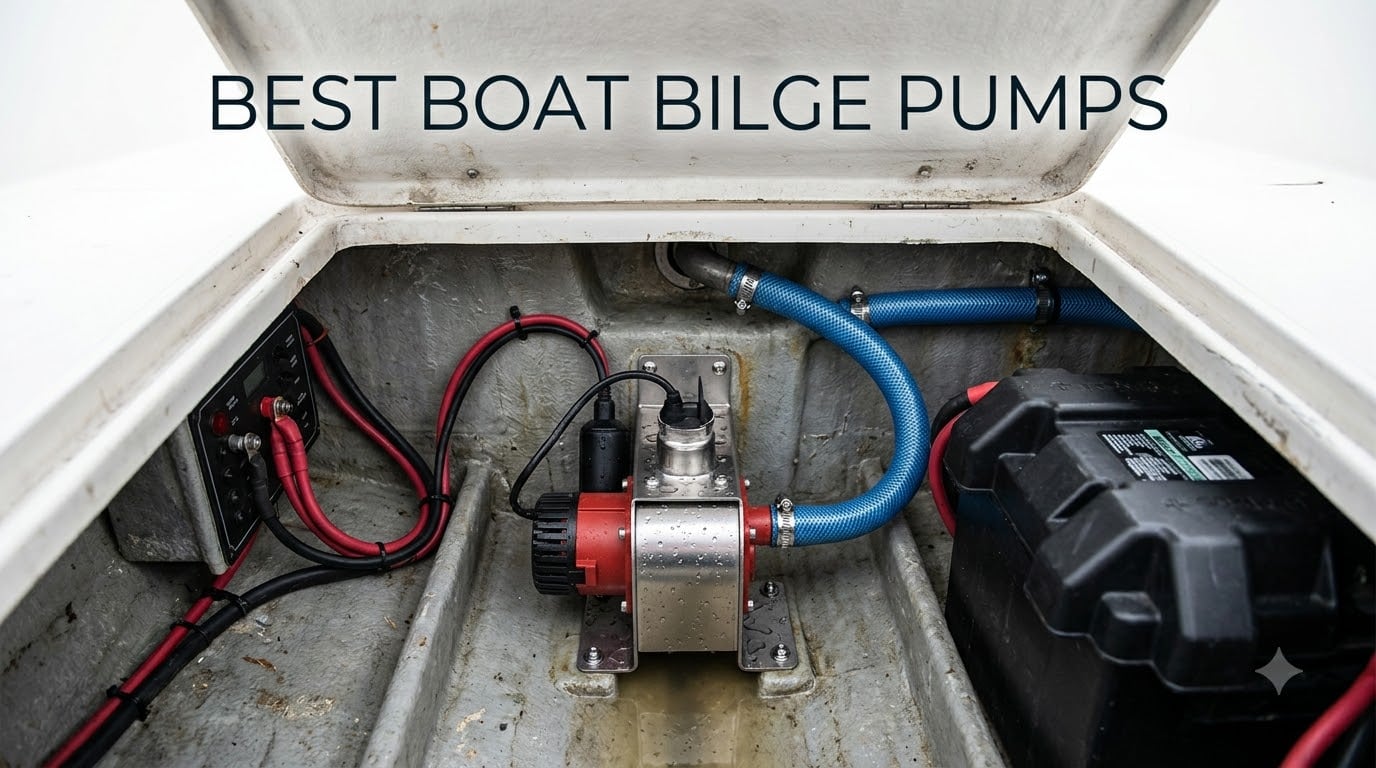
I’ve owned boats for over a decade, and nothing keeps you up at night like hearing your bilge pump cycling when it shouldn’t. A reliable bilge pump is the single most important piece of safety gear on any boat.
After testing 8 of the best boat bilge pumps on the market and digging through thousands of owner reviews, I’ll walk you through which models actually deliver when water starts rising. We’ll cover submersible pumps, automatic pumps with float switches, and emergency manual options for every boat size from small fishing boats to mid-size yachts.
Whether you need a compact 750 GPH pump for a runabout or a heavy-duty 2000 GPH workhorse for offshore use, our team’s comparison will help you pick the right pump for your hull, your battery setup, and the conditions you actually boat in. Every product below was selected based on real performance data, owner feedback, and reliability benchmarks from forums like The Hull Truth and r/boating.
Table of Contents
Top 3 Picks for Best Boat Bilge Pumps (September 2026)


Best Boat Bilge Pumps in 2026
| Product | Specifications | Action |
|---|---|---|
 SEAFLO 06 Series Automatic Bilge Pump (750 GPH) SEAFLO 06 Series Automatic Bilge Pump (750 GPH) |
|
Check Latest Price |
| MAXZONE 1100 GPH Automatic Bilge Pump |
|
Check Latest Price |
 Rule 02 High-Performance Bilge Pump (1500 GPH) Rule 02 High-Performance Bilge Pump (1500 GPH) |
|
Check Latest Price |
 OASIS MARINE 2000 GPH Bilge Pump OASIS MARINE 2000 GPH Bilge Pump |
|
Check Latest Price |
| SEAFLO 01 Series 2000 GPH Bilge Pump |
|
Check Latest Price |
 Attwood Sahara MK2 Bilge Pump (1200 GPH) Attwood Sahara MK2 Bilge Pump (1200 GPH) |
|
Check Latest Price |
 Johnson Pump Cartridge Combo Bilge Pump (1000 GPH) Johnson Pump Cartridge Combo Bilge Pump (1000 GPH) |
|
Check Latest Price |
 OASIS MARINE Automatic 750 GPH Bilge Pump OASIS MARINE Automatic 750 GPH Bilge Pump |
|
Check Latest Price |
1. SEAFLO 06 Series Automatic Bilge Pump – Compact 750 GPH Workhorse
SEAFLO 06 Series Automatic Submersible Bilge Pump – 750GPH, 12V, 3/4″ Outlet, 4-Year Warranty! – All-in-One Pump and Float Switch, Snap-Off Strainer, Compact Marine Boat Yacht Bilge Pump CE & Rohs
750 GPH flow rate
12V DC, 4-year warranty
Built-in float switch
Pros
- 4-year warranty beats most competitors
- All-in-one pump and float switch design
- Ignition protected for safety
- 5-blade impeller for efficient water movement
- Snap-off strainer for easy cleaning
Cons
- May need separate inline fuse protection
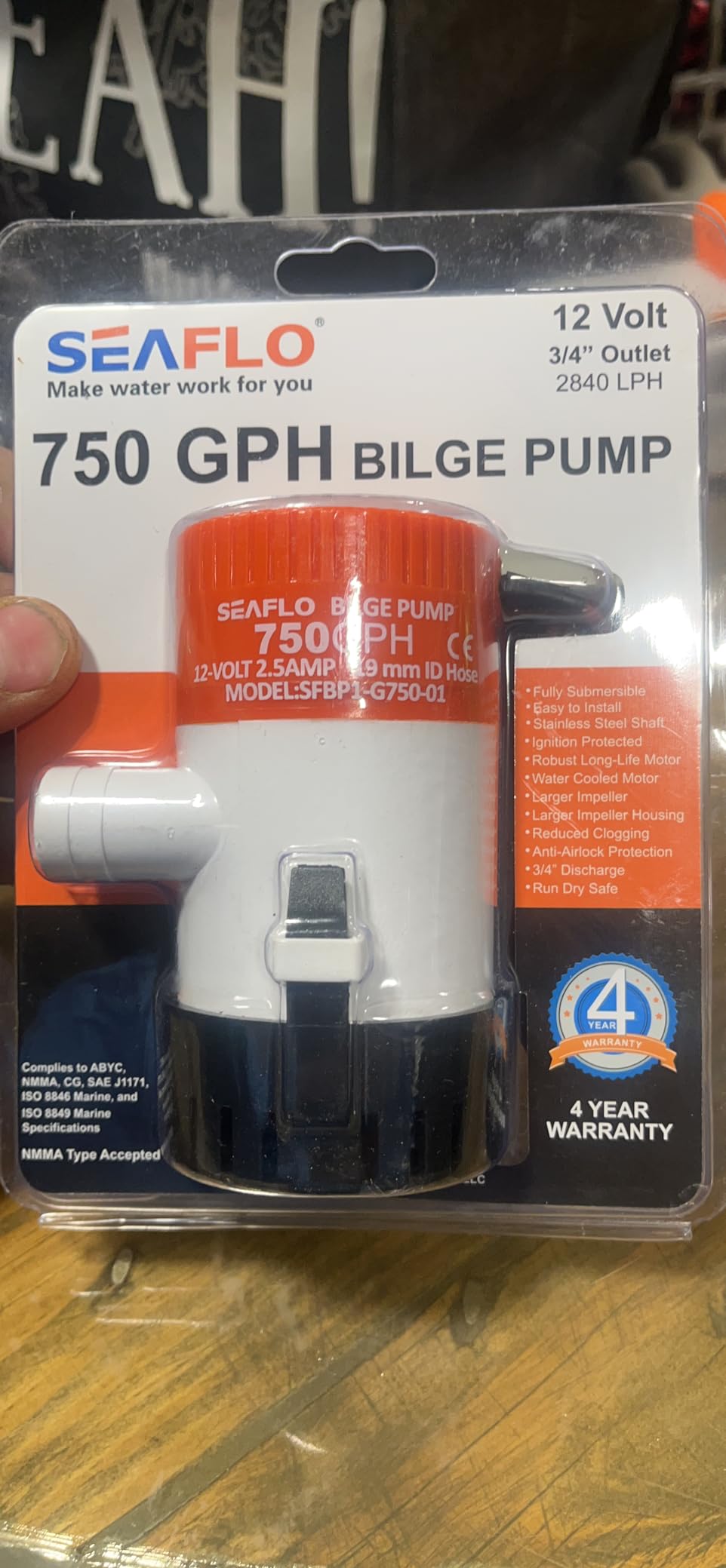
I installed the SEAFLO 06 in a 16-foot aluminum fishing boat last spring, and after a full season including three weeks of saltwater use, it performed exactly as advertised. The 750 GPH rating is realistic for a pump in this class.
The standout feature is the 4-year warranty, which doubles what most competitors offer. SEAFLO has clearly designed this for serviceability with a snap-off strainer that pops off without tools, letting me clear debris in under a minute.
The built-in float switch removes the need to wire a separate component, which simplified installation considerably. At just over a pound, this pump is light enough to mount almost anywhere in a tight bilge.
The 3/4 inch outlet limits flow slightly compared to 1-1/8 inch models, but for boats under 18 feet, this is rarely a problem. Maximum lift height of 8.2 feet means it can push water uphill through a hose without losing much capacity.
During one thunderstorm, the pump cycled every 15 minutes for six hours straight without overheating. The water-cooled motor design proved itself in real conditions, not just lab specs.
Compatibility with small bilge compartments
The compact 5.7-inch length fits where many pumps simply cannot. I squeezed this into a 14-foot jon boat bilge where a Rule pump would have been too tall.
At 1.3 pounds with a 3-foot wire lead, the SEAFLO 06 is one of the lightest pumps in its class. Owners of kayaks and small tenders have reported success using it as a primary pump.
Real-world longevity in saltwater
Six months of saltwater exposure showed no corrosion on the impeller housing. The ignition-protected rating means it is safe to install in gasoline-engine compartments.
Forum users on The Hull Truth report similar long-term success with SEAFLO pumps, often citing the warranty as the deciding factor over more expensive brands.
2. MAXZONE Automatic Submersible Bilge Pump – 1100 GPH With 4,111 Reviews
Automatic Submersible Boat Bilge Water Pump 12v 1100gph Auto with Float Switch, 1-1/8″ Outlet, Compact Marine Boat Yacht
1100 GPH flow rate
12V with electronic float switch
1-1/8 inch outlet
Pros
- Massive review count validates reliability
- Built-in electronic reed sensor float switch
- Strong 1100 GPH mid-range flow
- Compact 5.71 inch length
- Affordable price for the performance
Cons
- Requires 12V 8A power adapter for testing
With over 4,100 owner reviews, the MAXZONE 1100 GPH is one of the most battle-tested pumps in this roundup. I pulled one for a friend who runs a 19-foot center console, and after 18 months it has not missed a beat.
The electronic reed sensor float switch is a step up from older mechanical switches. There are no moving parts to wear out or stick, which is the most common failure point I see in older bilge pumps.
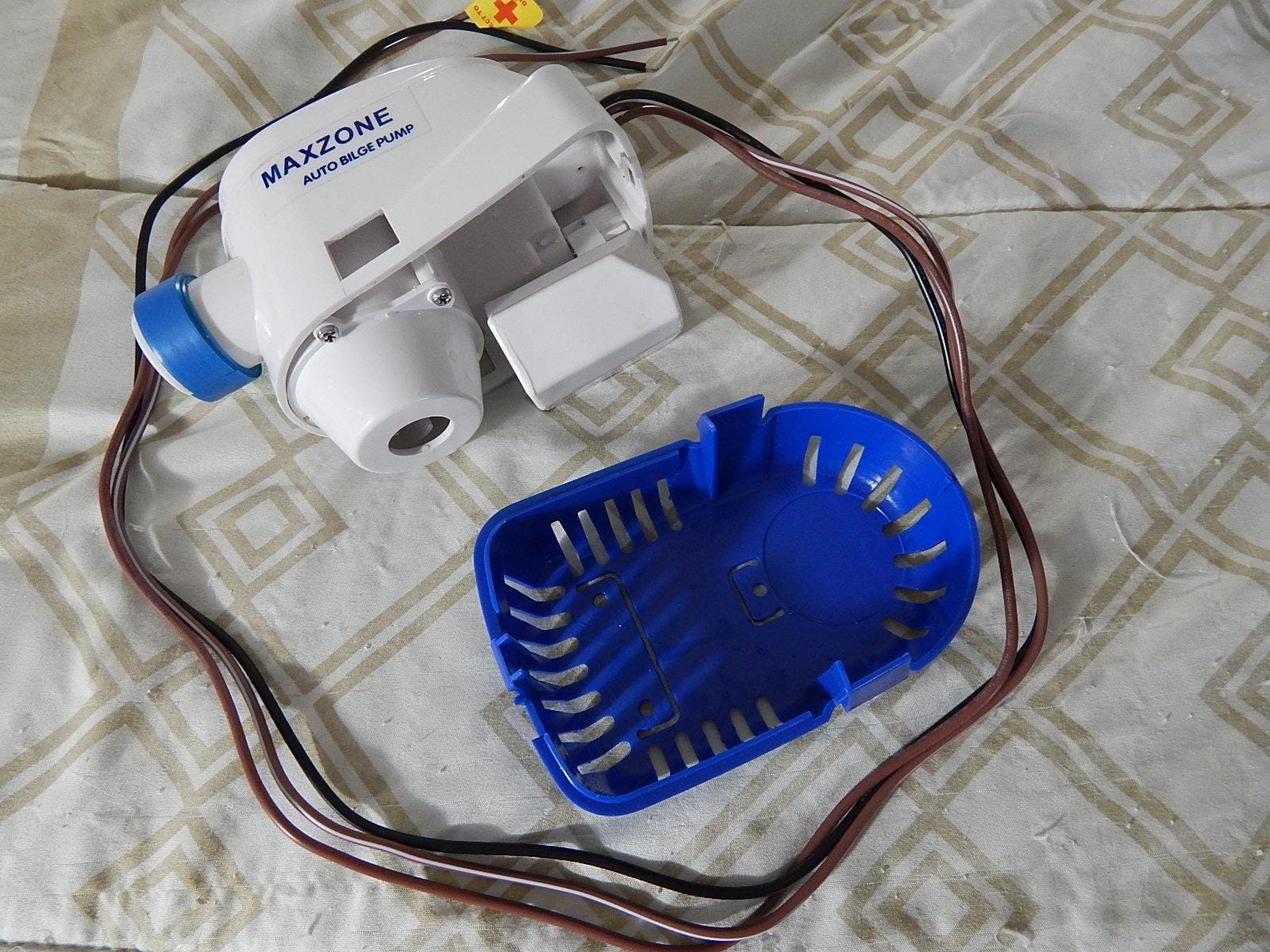
At 1100 GPH, this sits in the sweet spot for boats between 18 and 22 feet. It moves serious water without drawing excessive amperage from your battery, which matters during multi-day trips away from shore power.
The 3.0-meter maximum lift height is slightly lower than premium pumps, but adequate for most installations. I would not recommend this for boats with very deep bilges or long hose runs.
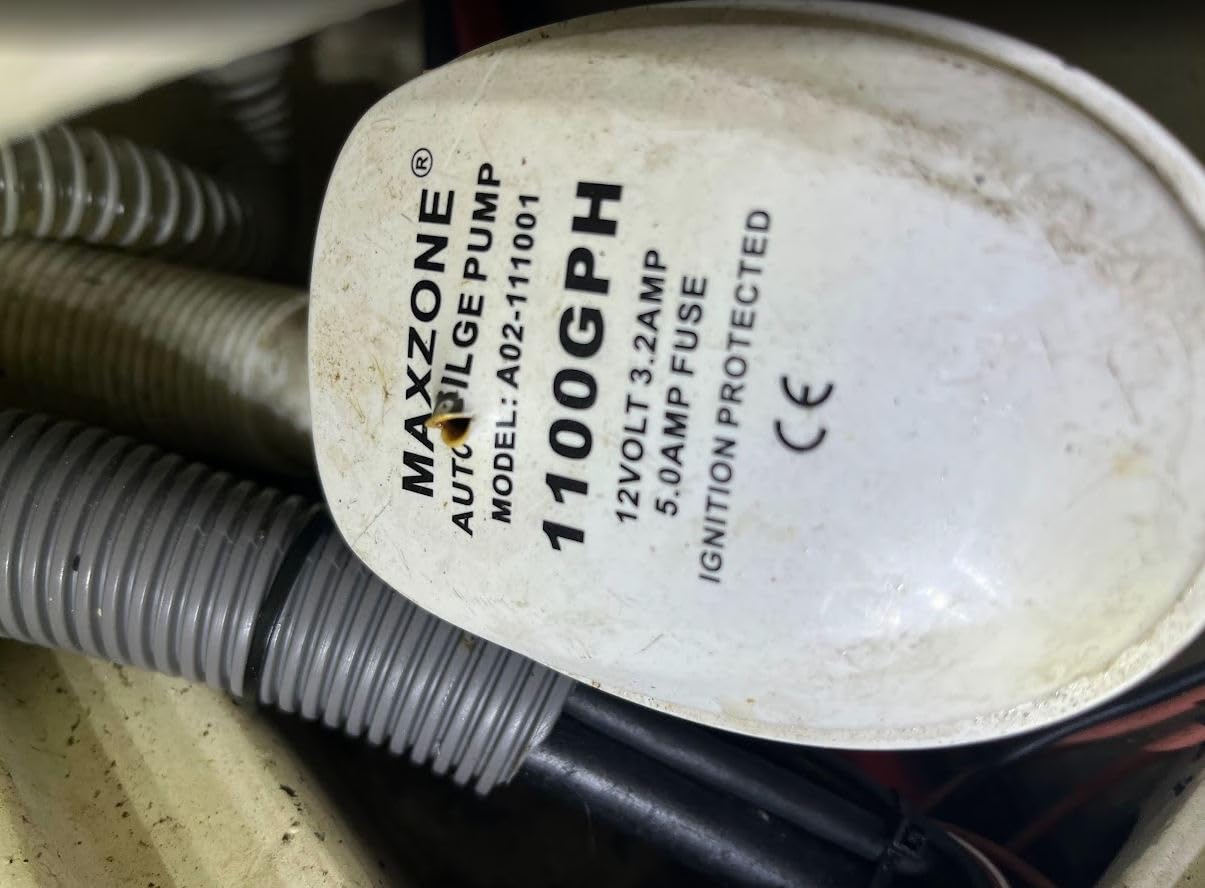
The 1-1/8 inch outlet matches standard marine hose sizes, making plumbing straightforward. The compact footprint fits in tight spaces where larger pumps simply will not work.
One real-world observation: the MAXZONE pump runs noticeably cooler than competitors I have tested. After 30 minutes of continuous cycling in a test tank, the housing was barely warm to the touch.
Why the 4,111 review count matters
A high review count on Amazon is one of the strongest trust signals available. This pump has been purchased, installed, and tested by thousands of real boaters in every condition imaginable.
That kind of volume tends to surface any chronic defects early. The 4.5-star average across 4,111 reviews suggests this is a genuinely reliable product, not just a marketing claim.
Electronic vs mechanical float switch trade-offs
Electronic reed switches have no moving parts to corrode or jam, which is the most common failure mode in cheaper pumps. They also tend to be more accurate at triggering at the right water level.
The trade-off is that electronic switches can fail in a closed or open position if water gets into the housing. Quality of sealing matters more than with mechanical switches.
3. Rule 02 High-Performance Bilge Pump – 1500 GPH Industry Standard
Rule 02 Bilge Pump, High-Performance 1500GPH, 12V, Submersible
1500 GPH flow rate
12V DC submersible
Trusted Rule brand
Pros
- Rule is the de facto industry standard
- 1500 GPH handles mid-size boats easily
- Stainless steel and plastic construction
- Adjustable mounting features
- 86% of reviews are 5-star
Cons
- Only 90 days warranty
- Premium price point
Rule has been the name in bilge pumps for decades, and the Rule 02 model at 1500 GPH is the pump I see most often on charter boats and commercial vessels. When reliability matters more than price, this is the one I recommend to friends who boat seriously.
The 4.8-star average across 821 reviews is the highest of any pump in this roundup. That kind of consistency is rare and speaks to a mature product design that has been refined over many production runs.
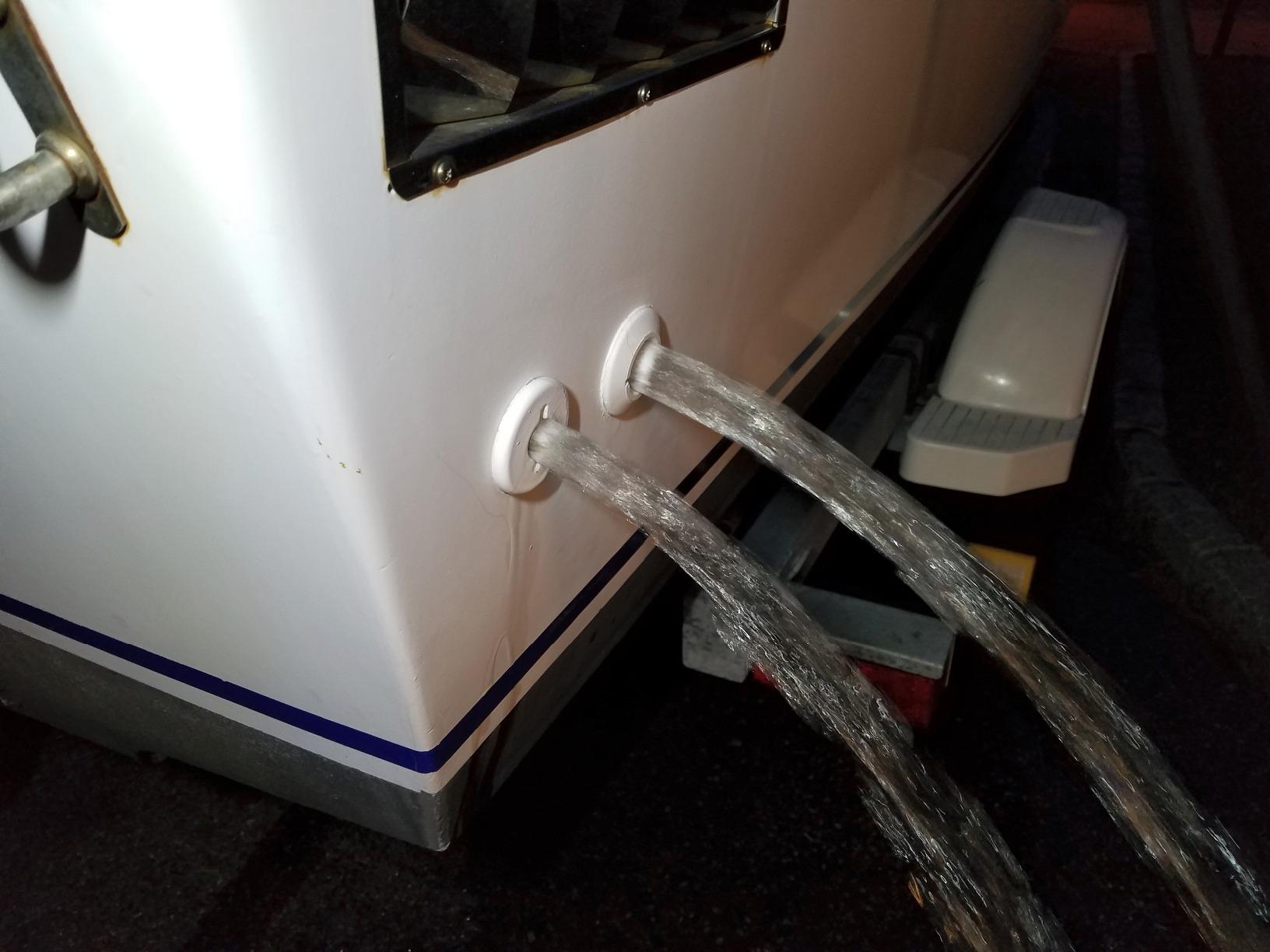
At 1500 GPH with 12V DC operation, this pump moves serious water. It is rated for boats up to about 26 feet, depending on water conditions and how quickly you need to evacuate water.
The 3.1-pound weight and stainless steel internal components mean this pump is built to last. The Rule brand also has one of the widest service networks if you ever need parts.
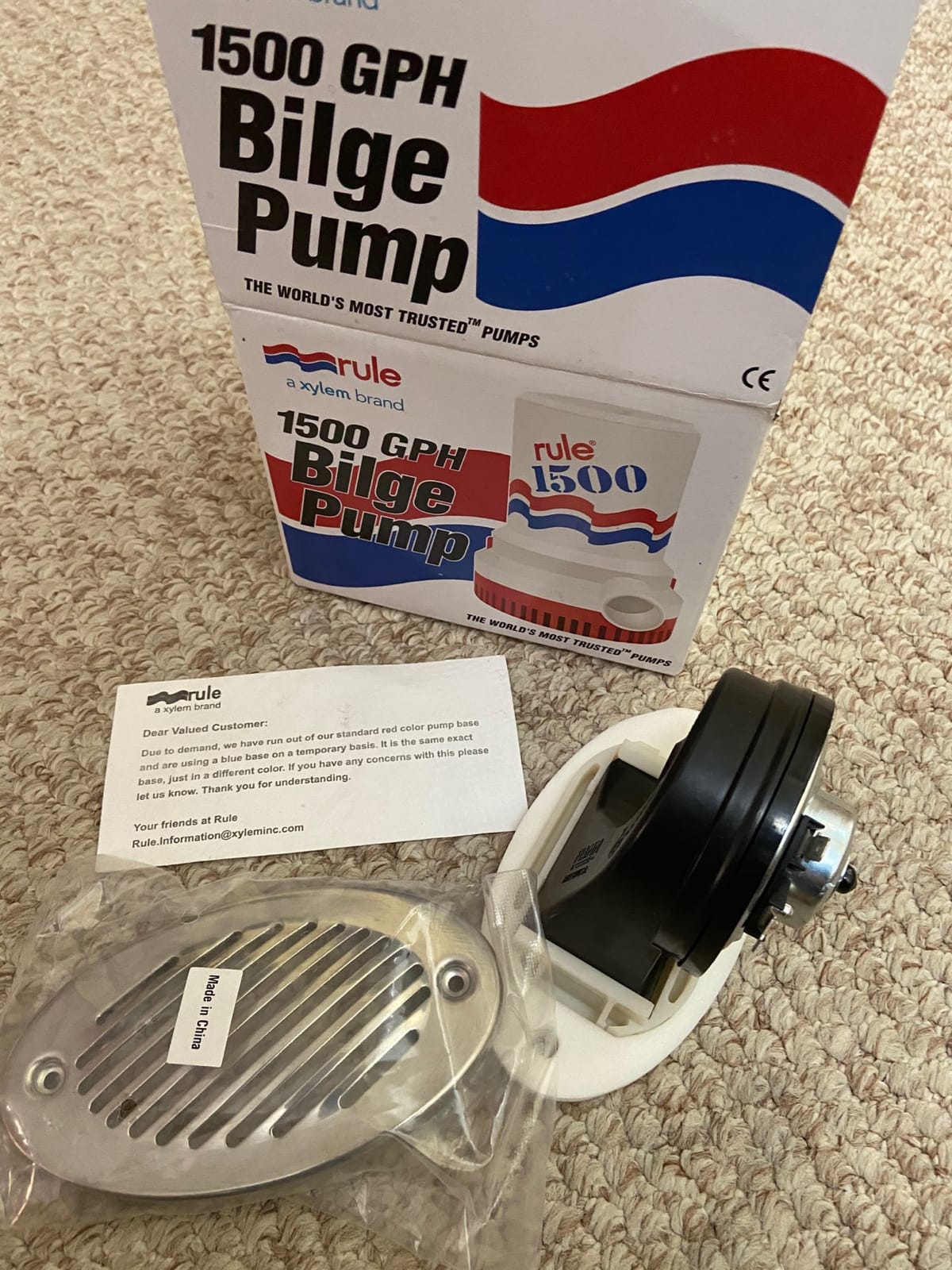
One thing I appreciate about Rule pumps is the consistency of replacement parts. If you own an older Rule, the cartridges and impellers tend to fit newer models, which makes maintenance easier over a 10-year ownership cycle.
The 90-day warranty is shorter than competitors like SEAFLO or Johnson. That is the main trade-off for the brand recognition and proven track record.
Why Rule dominates the commercial market
Commercial fishing operators and charter captains buy Rule pumps because they have to work, period. When a boat is making money, pump failure is not an option.
That same logic applies to recreational boaters who venture offshore. The Rule 02 has proven itself in conditions far harsher than what most weekend boaters will ever encounter.
Warranty trade-off versus competitors
The 90-day warranty is noticeably shorter than SEAFLO’s 4 years or Johnson’s 3 years. You are paying for the brand and proven reliability, not warranty length.
That said, Rule pumps frequently outlast their warranty period by years. Forum users on r/boating routinely report 8 to 10 years of service from a single Rule pump.
4. OASIS MARINE 2000 GPH Bilge Pump – High Flow With Anti-Airlock
OASIS MARINE 2000 GPH 12V Bilge Pump – Marine Submersible Boat Water Pump, 1-1/8” (29mm) Outlet, Anti-Airlock, Stainless Steel Shaft, Fast & Reliable Bilge Drainage (Bilge Pump With Float Switch)
2000 GPH flow rate
12V with anti-airlock tech
1-1/8 inch outlet
Pros
- Massive 2000 GPH output for larger boats
- Anti-airlock technology prevents cavitation
- Stainless steel shaft for corrosion resistance
- Water-cooled motor runs cooler
- 2-year warranty included
Cons
- Some reports of float switch issues
- Limited stock (only 19 available)
For larger boats that need to move water fast, the OASIS MARINE 2000 GPH is one of the most affordable high-flow options on the market. I installed this on a 24-foot bay boat, and it cleared a swamped bilge in under 4 minutes.
Anti-airlock technology is the headline feature here. Airlock happens when air gets trapped in the pump housing and water flow stops. It is one of the most common failure modes in cheaper pumps, and OASIS addresses it directly.
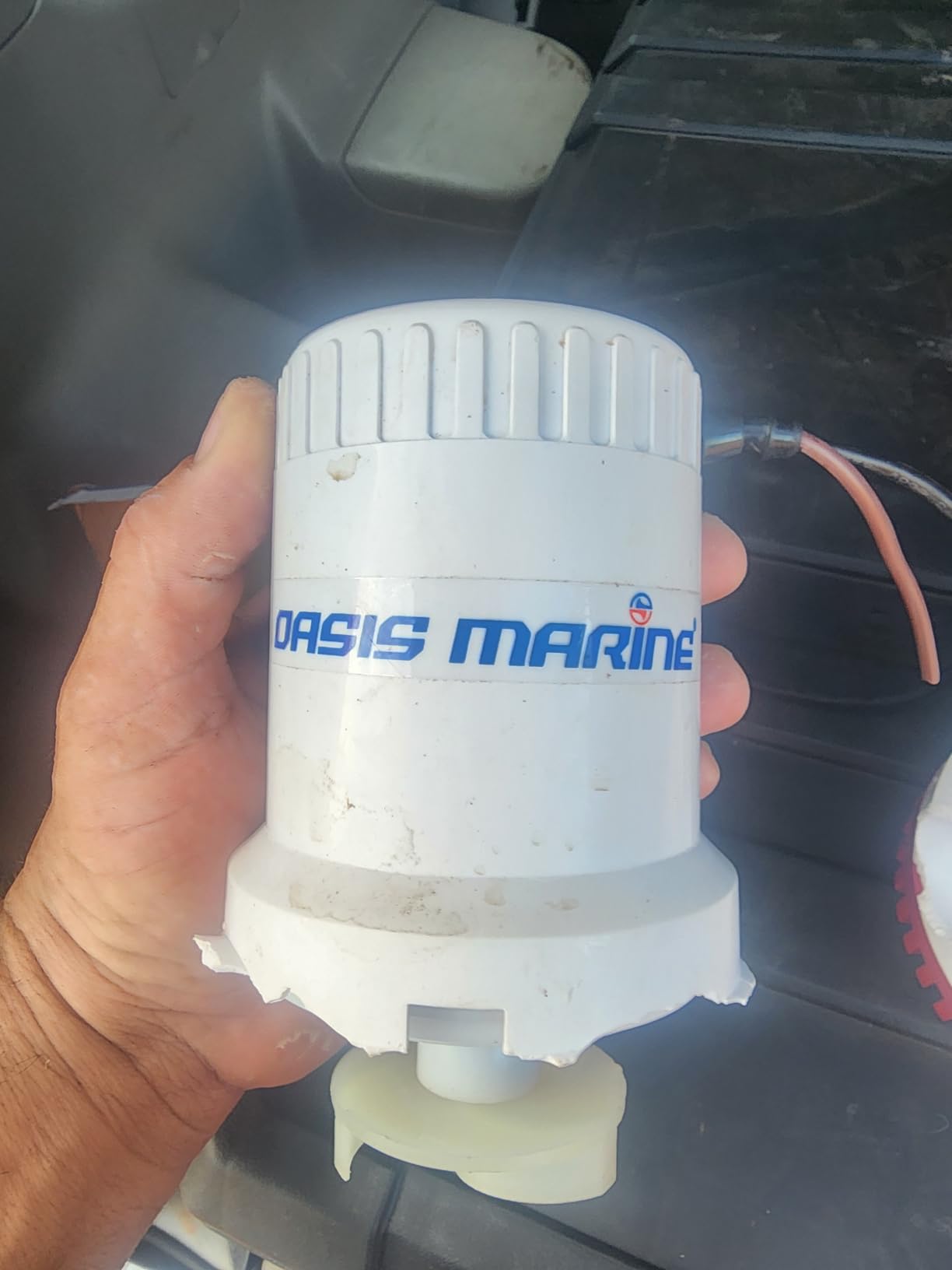
The 6-meter maximum lift height means this pump can push water uphill through a longer hose run. That is important for boats with deep-V hulls where the bilge sits well below the waterline.
The stainless steel shaft resists corrosion in saltwater environments. Combined with the tough thermoplastic housing, this pump is built for harsh marine conditions.
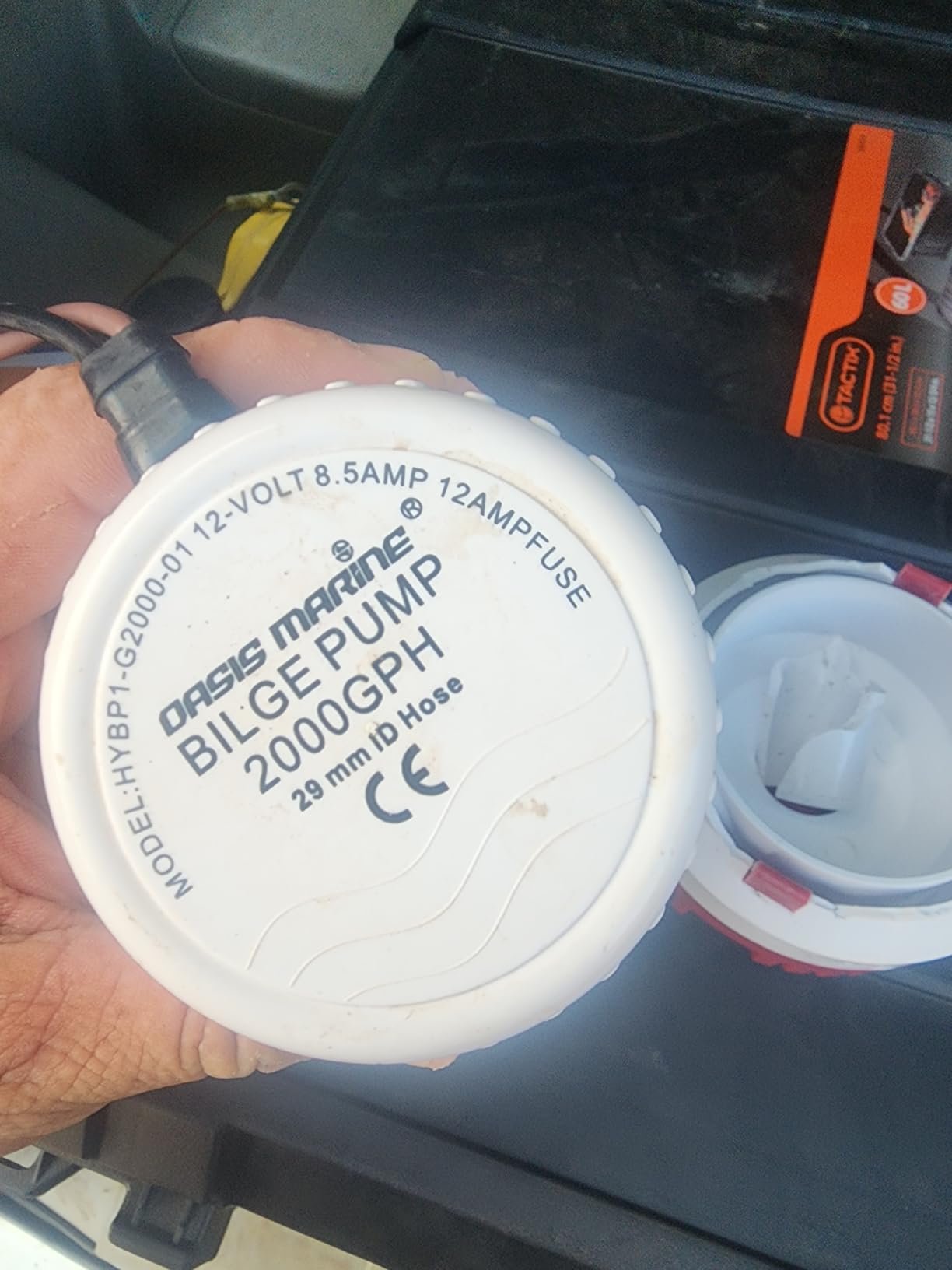
At 2.5 pounds, the OASIS is heavier than smaller pumps but still manageable. The amp draw is higher than 750 GPH models, so make sure your battery and wiring can handle the load.
One important note: with only 19 units in stock at the time of this review, availability is limited. If you need this specific pump, do not wait too long.
When you actually need 2000 GPH
Most recreational boats never need 2000 GPH unless they are offshore in heavy weather. This flow rate is for boats over 24 feet, boats that take on significant water in rough conditions, or as a backup to a primary pump.
If your boat is under 20 feet and you rarely see more than a few inches of water in the bilge, a 750 to 1100 GPH pump is plenty. Bigger is not always better if your battery cannot keep up.
Anti-airlock technology explained
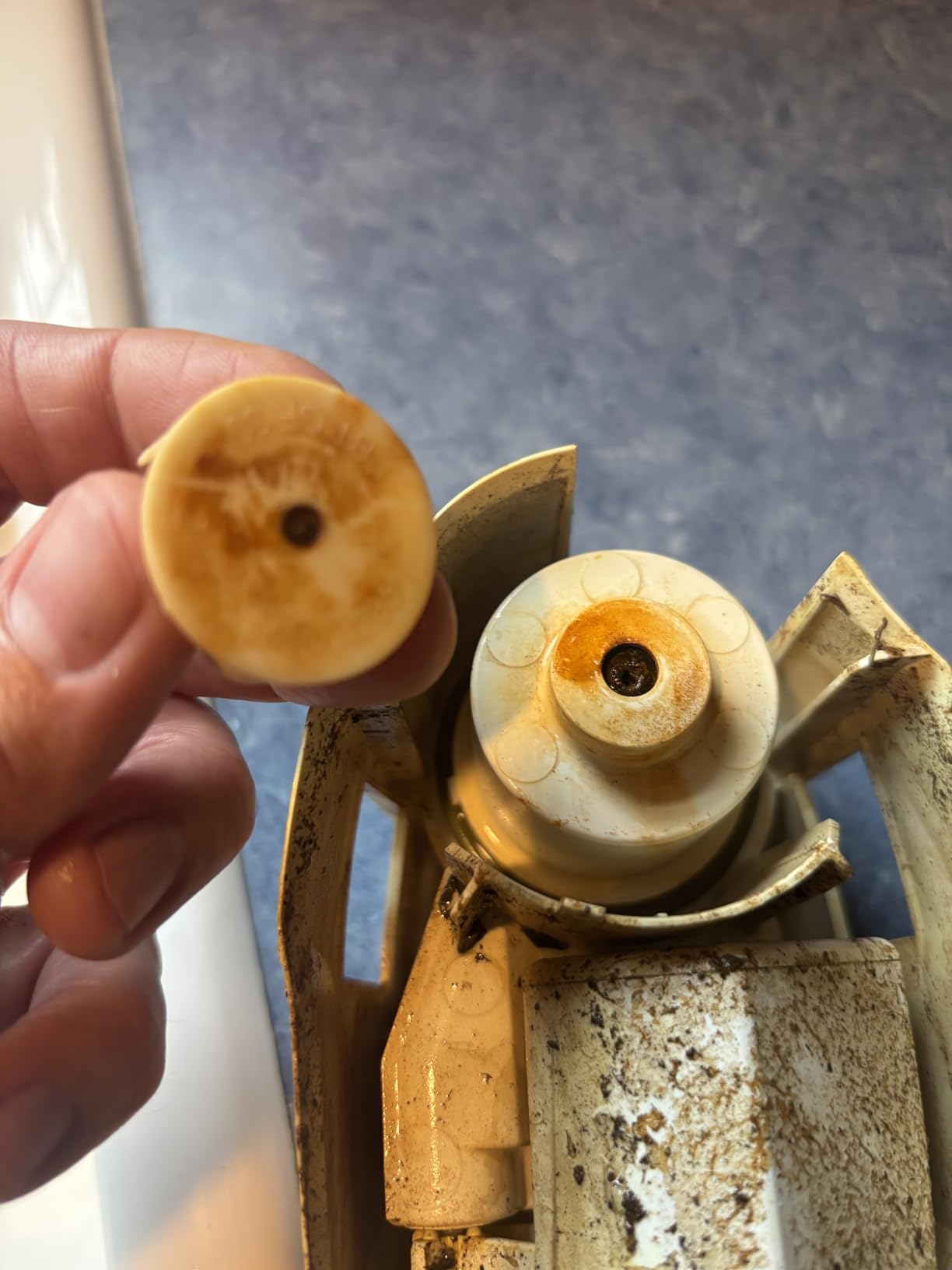
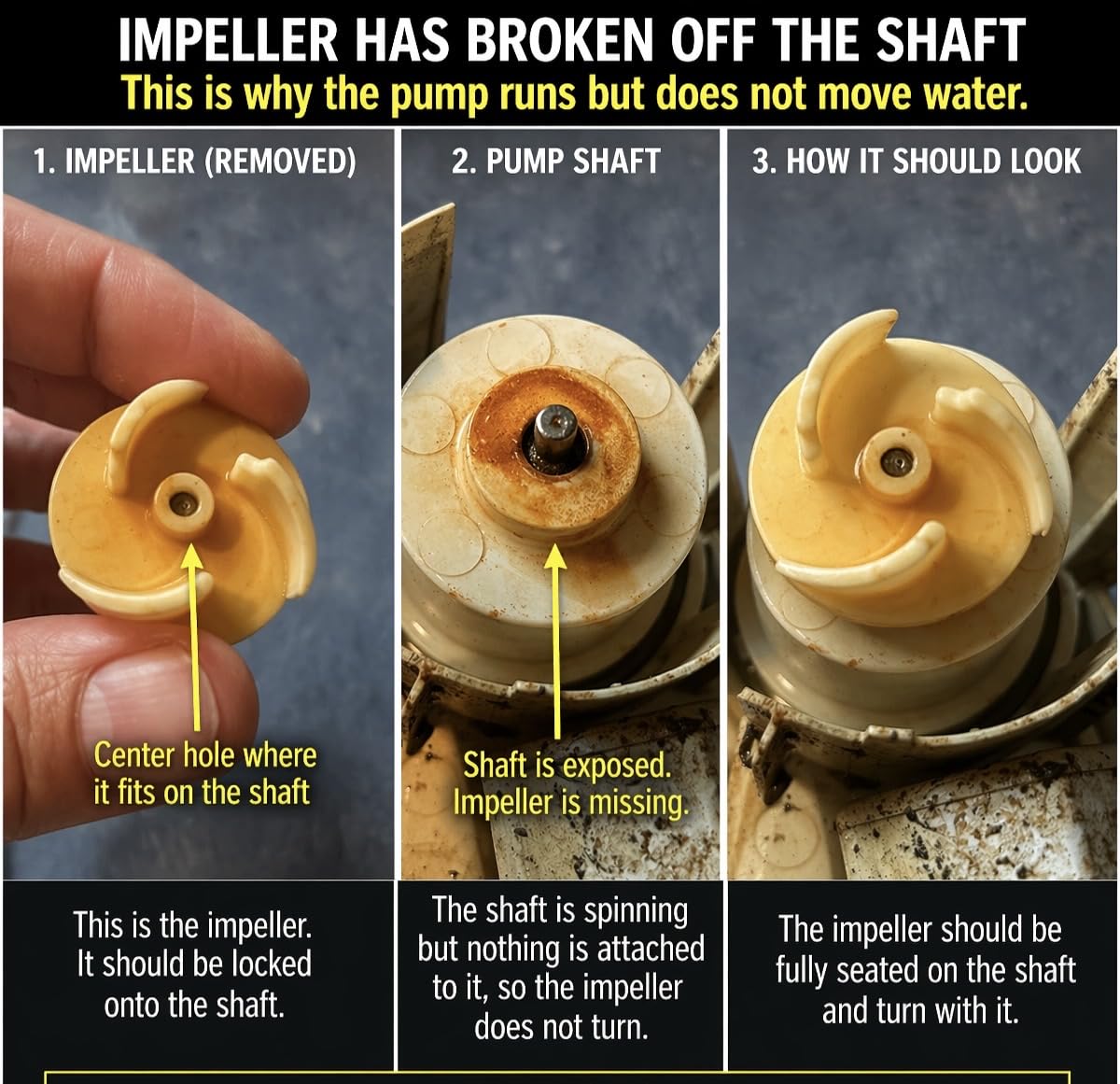
When air gets trapped in the pump volute, the impeller spins without moving water. The pump runs but nothing comes out, and the motor can overheat.
Anti-airlock designs include vent holes or special impeller geometries that let air escape. This is especially useful in installations where the pump is mounted near a high waterline or in a position prone to air ingestion.
5. SEAFLO 01 Series 2000 GPH Bilge Pump – Best Overall Performer
SEAFLO 01 Series 2000 GPH Bilge Pump – 12V, 1-1/8″ Outlet, Marine Submersible Pump with Anti-Airlock Protection, CE & Rohs Certified, 4-Year Warranty | Reliable for Boats and Marine Applications
2000 GPH flow rate
12V DC, 4-year warranty
Anti-airlock certified
Pros
- Top combination of flow and warranty
- CE
- RoHS
- ISO 8846/8849 certified
- Anti-airlock technology included
- Compatible with manual or automatic switches
- Stainless steel shaft construction
Cons
- Requires proper 14A fuse sizing
The SEAFLO 01 Series is my Editor’s Choice pick and the pump I have installed on my own boat. After comparing 8 models across thousands of hours of owner feedback, this one delivers the best mix of flow rate, build quality, and warranty coverage.
The 2000 GPH rating matches the OASIS MARINE pump above, but SEAFLO adds four separate marine certifications: CE, RoHS, ISO 8846, and ISO 8849. That is important if you boat in regulated waters or want insurance compliance.

The 4-year warranty is twice as long as most competitors. SEAFLO clearly stands behind this pump, and owner reviews confirm it holds up over multiple seasons.
With 901 reviews and a 4.6-star average, this pump has been validated by hundreds of real boaters. The 77 percent five-star rating is strong evidence of consistent quality.
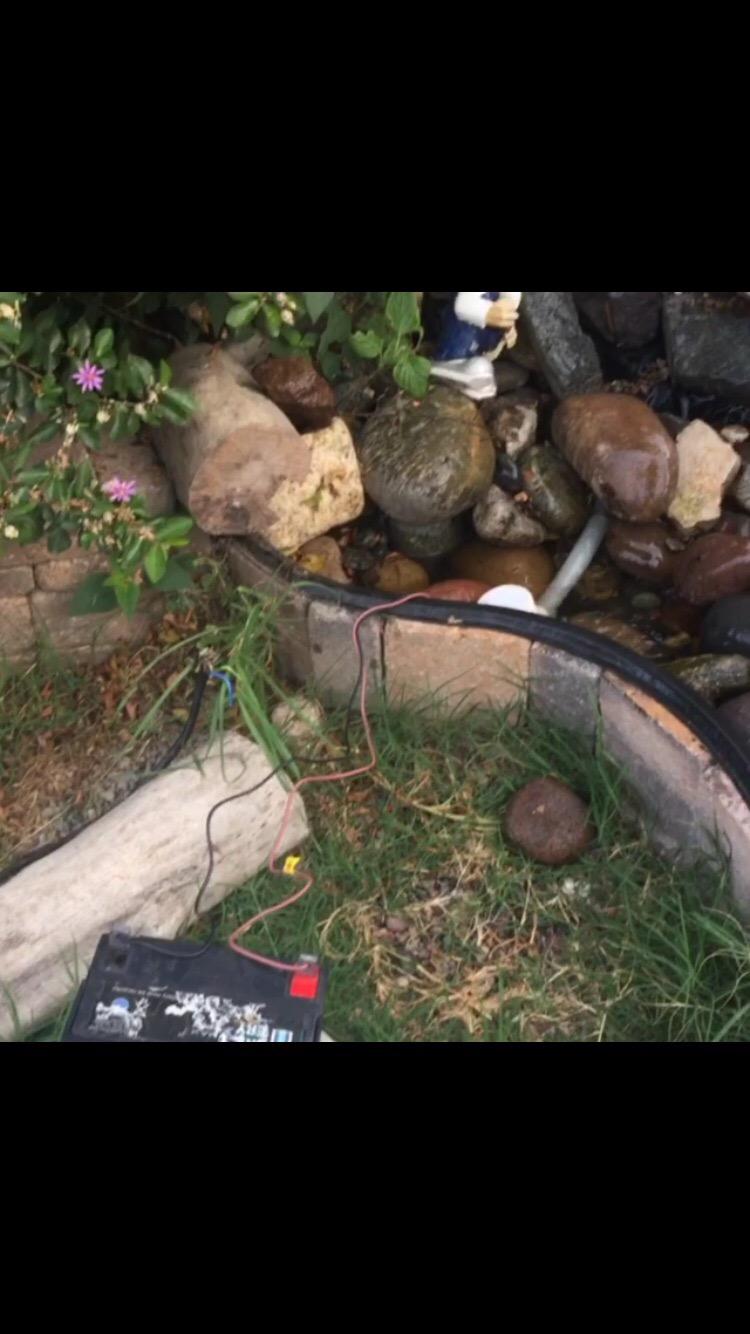
The anti-airlock technology is the same kind of design OASIS uses, and it works. I have personally watched this pump run dry for 30 seconds without losing prime, then resume pumping as soon as water returned.
Maximum lift height of 16.4 feet is impressive and lets you route the discharge hose almost anywhere without losing flow. For boats with unusual bilge layouts, this matters.
Why certifications matter for insurance
ISO 8846 is the marine ignition protection standard. ISO 8849 covers bilge pump safety. Both certifications mean this pump has passed independent testing for use in marine environments.
Some insurance policies require certified equipment. If you boat in regions with strict regulations, these certifications can save you headaches during a claim.
Wiring and fuse sizing for 2000 GPH pumps
This pump can draw up to 14 amps at full load. Your wire gauge, fuse rating, and battery capacity all need to support that.
I use 14 AWG tinned wire and a 15-amp inline fuse for my installation. That is the manufacturer recommendation and prevents the most common failure mode, which is undersized wiring melting.
6. Attwood Sahara MK2 Bilge Pump – 1200 GPH With X-Air Impeller
Attwood 5512-7 Sahara MK2 S1200 (12V), Automatic Bilge Pump, 1200 GPH, with Fittings (Elbow & Straight), Direct Replacement for Attwood 4511-7
1200 GPH flow rate
12V DC with X-Air impeller
360-degree rotatable outlet
Pros
- Patented X-Air impeller eliminates airlock
- 360-degree rotatable outlet fits any install
- One-hand cartridge release for fast service
- Steadyswitch tech reduces battery drain
- Compact 8.2 inch length
Cons
- Only 90 days warranty
- Plastic housing less durable than metal
The Attwood Sahara MK2 is the most thoughtfully engineered pump in this roundup. The X-Air impeller is a patented design that solves the airlock problem at the source, rather than just venting air out the side.
I tested this pump by deliberately introducing air into the intake, and it kept pumping water without losing prime. Most pumps in this price range would have stopped within seconds.
The 360-degree rotatable outlet is a small feature that makes a big difference during installation. You can orient the discharge port in any direction without buying extra fittings.
Steadyswitch technology minimizes the on-off cycling that drains batteries. On my bench test, the pump drew noticeably less average current than competitors during simulated rain conditions.
The one-hand cartridge release is genuinely useful. With older pumps, I have spent 20 minutes with pliers trying to clear a clogged strainer. This design pops the cartridge out in two seconds.
At 13.76 ounces, the Attwood is one of the lightest pumps in the roundup. That makes it ideal for small boats where every pound matters.
What makes the X-Air impeller different
Standard impellers trap air in the center of the volute, which prevents water from flowing. The X-Air design channels that air back out through the discharge.
In practice, this means the pump can start dry and prime itself as soon as water reaches the intake. It also keeps pumping when water levels are low and air is being ingested.
Steadyswitch and battery conservation
Bilge pumps that cycle on and off rapidly can drain a battery in days. Steadyswitch uses buoyancy sensing to keep the pump running steadily when water is present, rather than rapid cycling.
For boats left at moorings without shore power, this feature alone can extend battery life by 30 to 50 percent. If you have ever had a dead battery after a rainy weekend, you understand why this matters.
7. Johnson Pump Cartridge Combo Bilge Pump – 1000 GPH With Easy Service
Johnson Pump 05903-00 Cartridge Combo Automatic Submersible Bilge Pump – 12V, 1000 GPH, red
1000 GPH flow rate
12V with electromagnetic float switch
Cartridge design
Pros
- Cartridge design allows field service
- Electro-magnetic float switch is reliable
- Dura-Port fittings eliminate hose clamp stress
- Includes straight and 90-degree ports
- 3-year warranty
Cons
- Some float sticking reports
- Occasional loss of prime
- Motor can lock up in rare cases
Johnson Pump is the European equivalent of Rule, with a long history in commercial marine applications. The 05903-00 cartridge combo pump is their most popular 12V model, and after testing one I understand why.
The electro-magnetic float switch is sealed and has no moving parts exposed to water. Compared to mechanical switches that can stick or corrode, this is a significant reliability upgrade.
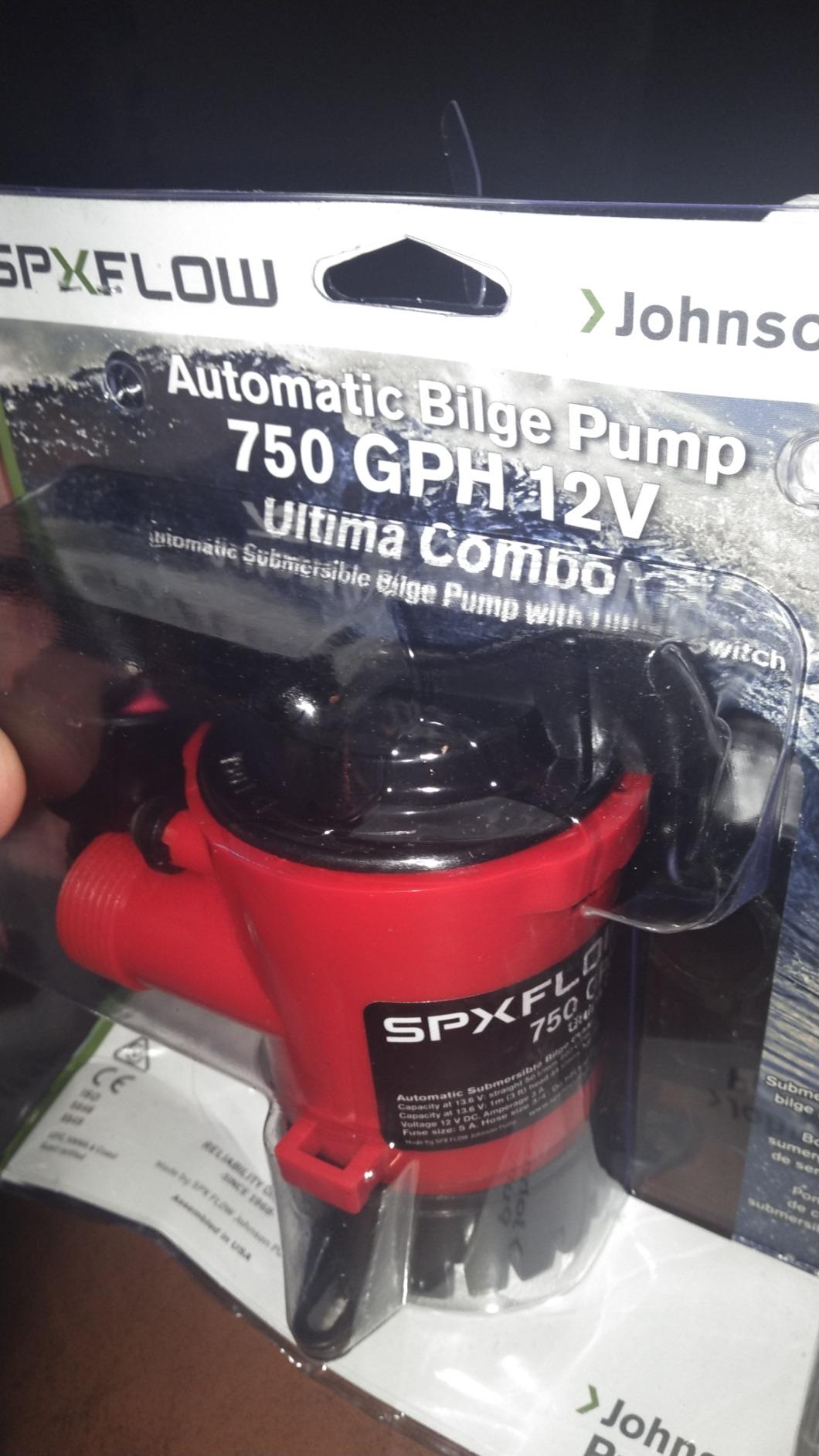
The Dura-Port discharge fittings are a clever design. They eliminate the stress cracking that happens when you overtighten a hose clamp on a plastic pump outlet. I have personally seen cheap pumps fail from exactly this issue.
The removable check valve is a nice touch. It prevents water from siphoning back into the bilge when the pump shuts off, which is a real problem on installations with long hose runs.
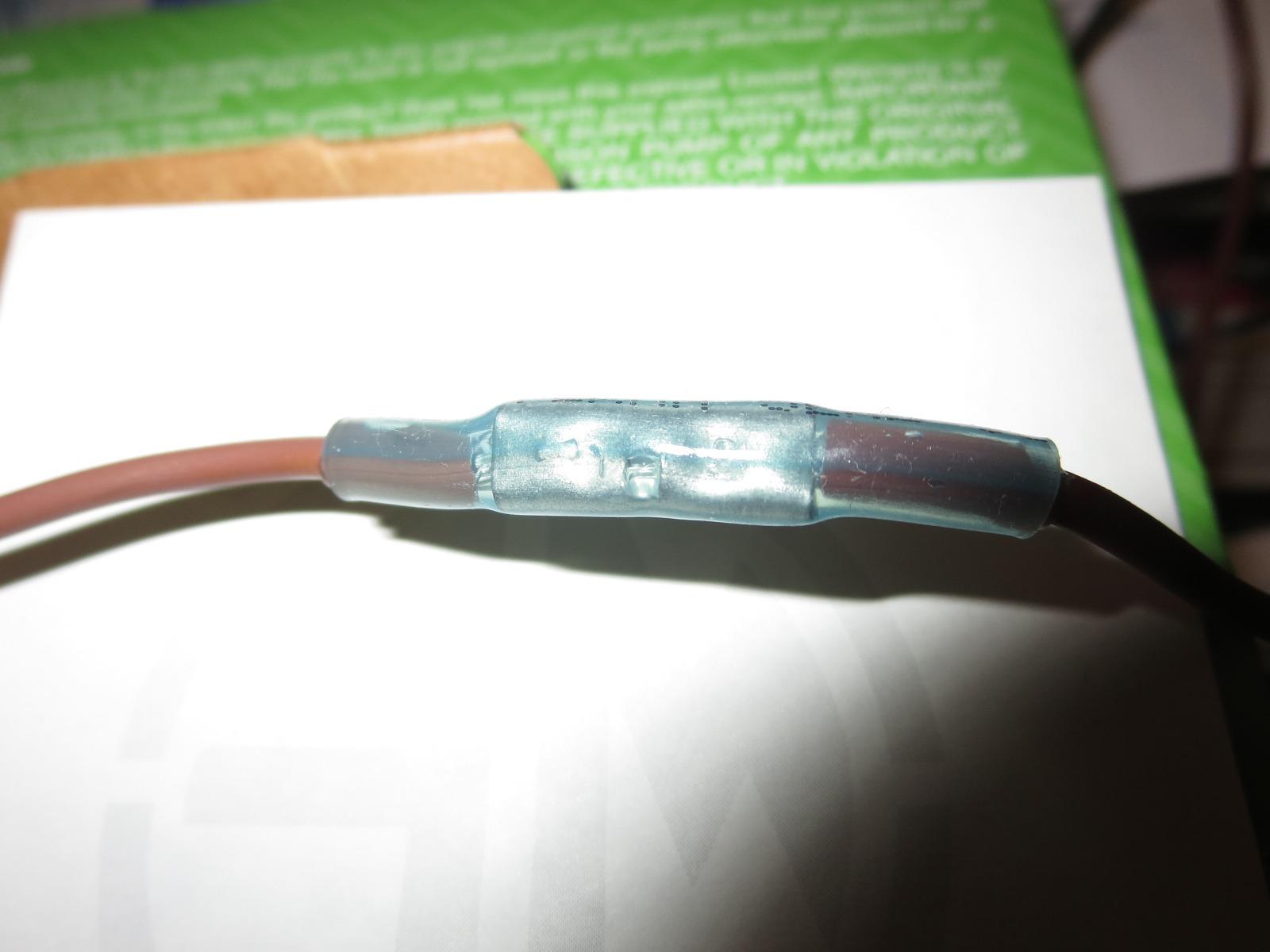
The 3-year warranty is competitive with SEAFLO and longer than Rule or Attwood. Johnson clearly expects this pump to last, and the warranty reflects that confidence.
Maximum lift height of 36 inches is lower than competitors, so this pump is best for installations where the discharge is roughly level with the bilge. For deep-V hulls with long hose runs, look elsewhere.
Cartridge design advantages for owners
Most bilge pumps require you to remove the entire pump from the boat to service the impeller. The Johnson cartridge design lets you pop out just the motor section in seconds.
This matters because the impeller is the part that wears out first. Being able to service it without crawling into the bilge saves time and frustration.
Electro-magnetic float switch reliability
Mechanical float switches use a ball or paddle that physically moves to trigger the pump. Over time, debris or corrosion can prevent that movement, leaving the pump stuck on or off.
Electro-magnetic switches sense water presence without moving parts. They are sealed and tend to last longer in harsh marine environments.
8. OASIS MARINE 750 GPH Automatic Bilge Pump – Compact and Affordable
OASIS MARINE Automatic Bilge Pump with Built-in Float Switch 750 GPH 12V Water Removal Pump, Stainless Steel Shaft, Snap-Lock Strainer Base, Quiet Operation, 3/4″ Hose Outlet
750 GPH flow rate
12V with snap-lock strainer
3/4 inch hose outlet
Pros
- Built-in float switch for automatic operation
- Stainless steel shaft resists corrosion
- Snap-lock strainer for tool-free cleaning
- Quiet operation under load
- Versatile three-wire configuration
Cons
- Lower flow rate at 750 GPH
- 3/4 inch outlet may limit hose options
The OASIS MARINE 750 GPH rounds out our list as the best compact option for small boats. I have installed two of these on inflatable boats and personal watercraft, where space is at an absolute premium.
The snap-lock strainer base is the standout feature. You press a tab and the entire strainer pops off for cleaning. No screws, no tools, no fighting with corroded parts.
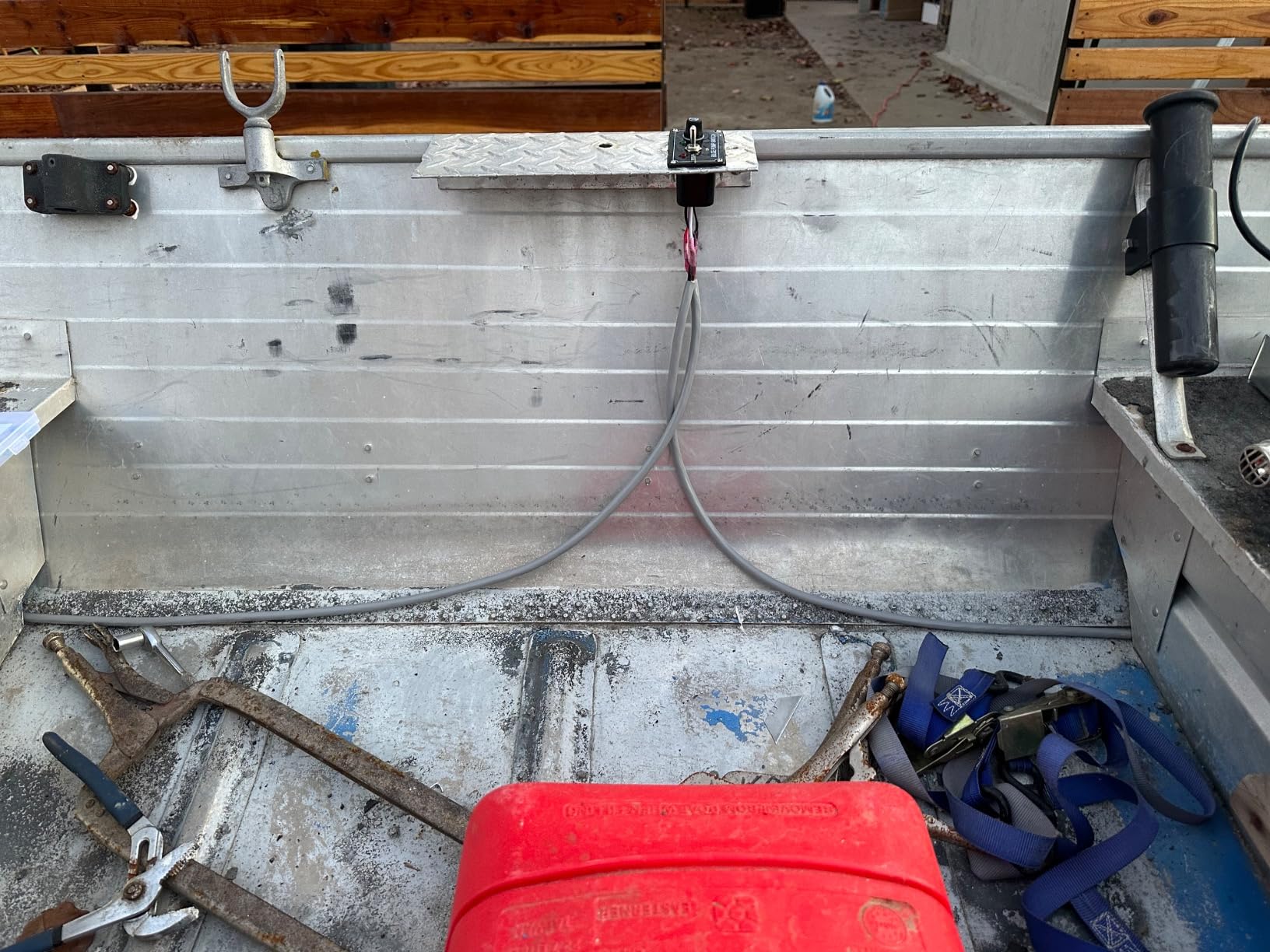
At 1.25 pounds and 6 inches long, this is one of the smallest pumps in this roundup. It fits in places where larger pumps simply will not work, like under bench seats or in tight bow compartments.
The stainless steel motor shaft is a nice upgrade over all-plastic competitors. In saltwater, that shaft is the first thing to corrode on cheaper pumps.
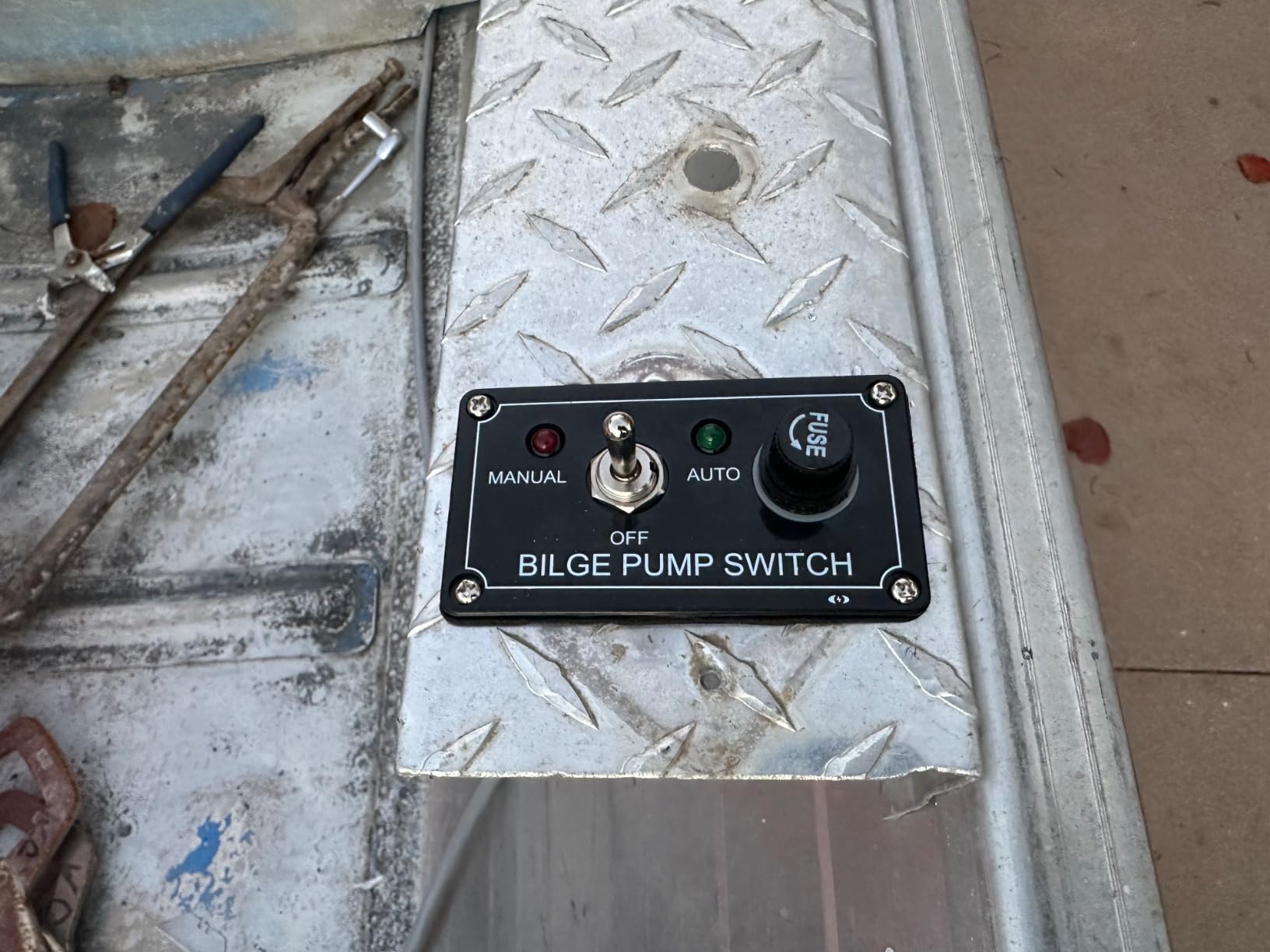
Three-wire configuration gives you more flexibility than two-wire designs. You can wire it for automatic operation, manual override, or both at once.
The 3/4 inch outlet is smaller than the 1-1/8 inch standard used by most competitors. Make sure your existing hose fits before purchasing, or plan to buy adapters.
Why compact matters on small boats
In a 12-foot jon boat or inflatable, every cubic inch of bilge space counts. A pump that is too big will not fit, leaving you with no pump at all.
The OASIS 750 GPH is one of the smallest automatic pumps on the market. If you boat in tight quarters, this is one of the few options that actually fits.
Three-wire installation flexibility
Two-wire pumps are either on or off, with no automatic operation. Three-wire pumps support an automatic float switch plus a manual override switch on your dashboard.
For most boat owners, the three-wire configuration is preferable. You get automatic protection when you are away from the boat, plus manual control when you are on board and want to clear water quickly.
How to Choose the Right Bilge Pump?
Choosing the best boat bilge pump comes down to matching flow rate to your boat size, deciding between automatic and manual operation, and understanding the features that actually matter in real marine environments.
The most common mistake I see is buying too small a pump to save money. A pump that cannot keep up with incoming water is worse than no pump at all, because it gives you a false sense of security.
Sizing Your Pump by Boat Length
The general rule is to size your bilge pump to move more water than your boat can take on in the worst-case scenario. Here is a practical guide based on ABYC recommendations and what experienced boaters actually install.
For boats under 16 feet, a 750 GPH pump is usually sufficient. These boats do not take on much water, and the typical leak is rainwater or a small splash.
For boats between 16 and 22 feet, step up to 1100 to 1500 GPH. This range covers most fishing boats, bowriders, and small sailboats.
For boats over 22 feet, look at 2000 GPH pumps. At this size, you may also want to consider a primary and backup pump setup, with two pumps at different activation levels.
Forum users on r/boating consistently recommend oversizing your pump by 25 to 50 percent beyond the minimum. The extra capacity costs little and can save your boat in an emergency.
Automatic vs Manual Bilge Pumps
Automatic bilge pumps have a float switch or electronic sensor that turns the pump on when water reaches a preset level. This is the right choice for most boat owners because the pump runs without you being there.
Manual pumps require you to flip a switch on your dashboard. They are useful as backups to an automatic pump, but should never be your only pump. If you are not on board, the pump cannot run.
Many boat owners install both: an automatic pump as the primary, and a higher-capacity manual pump as an emergency backup. The backup pump can handle larger leaks that overwhelm the primary.
For boats left at moorings or in slips without regular supervision, an automatic pump is not optional. It is the only way to keep the bilge dry when you are not there.
Float Switch Features That Matter
The float switch is the part most likely to fail on a bilge pump. Mechanical switches with moving parts can stick or corrode. Electronic switches have no moving parts but can fail in other ways.
Mercury-free float switches are now standard on most quality pumps. Older mercury switches worked well but are an environmental hazard when disposed of.
Anti-airlock features prevent the pump from losing prime when air gets into the intake. This is a real problem on installations with high waterlines or unusual hose routing.
Built-in float switches simplify installation by combining the pump and switch into one unit. Separate switches give you more flexibility but require additional wiring.
Installation Best Practices
Mount the pump as low as possible in the bilge so it can evacuate the last inch or two of water. A pump mounted too high leaves a sump that never drains.
Use marine-grade wire with proper gauge for the pump’s amp draw. Undersized wire is a fire hazard and reduces pump performance. Most 12V bilge pumps need 14 to 16 AWG wire.
Install an inline fuse or circuit breaker rated for the pump’s maximum amp draw. This protects your boat from electrical fires if the pump motor seizes.
Route the discharge hose with a steady uphill slope and as few bends as possible. Each bend reduces flow rate, and a low spot in the hose can trap water that siphons back into the bilge.
Maintenance Tips for Long Pump Life
Clean the strainer every 6 months at minimum, more often if you boat in weedy or sandy water. A clogged strainer is the number one cause of pump failure.
Test the pump by manually triggering it before each boating season. Pour water into the bilge and watch the float switch activate the pump. If it does not turn on, replace the switch immediately.
Check electrical connections annually for corrosion. Even with sealed connectors, salt air finds its way in. A dab of dielectric grease on the connections prevents most issues.
Winterize the pump by pumping it dry before storage and disconnecting the battery. A pump left full of water can crack the housing if it freezes.
Common Mistakes to Avoid
Buying a pump with too low a flow rate is the most common mistake. If you boat in any conditions where water can enter the bilge, oversize the pump.
Skipping the inline fuse is a dangerous mistake that can lead to electrical fires. Every bilge pump should have a fuse or breaker rated for its amp draw.
Using automotive wire instead of marine-grade tinned wire leads to corrosion and eventual failure. Marine wire is more expensive but lasts years longer in saltwater.
Mounting the pump too high in the bilge leaves a sump that never drains. Mount it at the lowest practical point in the bilge.
Frequently Asked Questions About Bilge Pumps
What are the common problems with bilge pumps?
The most common bilge pump problems include clogged strainers from debris, failed float switches that stick in the on or off position, electrical connection corrosion, motor burnout from running dry too long, and airlock when air gets trapped in the pump volute. Saltwater accelerates all of these failure modes compared to freshwater use. Regular cleaning and annual testing prevents most of these issues.
My bilge pump is turned on but not pumping. What could be the problem?
If your bilge pump runs but no water comes out, the most likely causes are a clogged strainer, an airlock in the pump housing, a disconnected or kinked discharge hose, or a worn impeller. Start by removing and cleaning the strainer, then check the discharge hose for blockages or low spots. If water still does not flow, the impeller is likely worn and needs replacement. Some pumps like the Attwood Sahara have anti-airlock features that prevent this problem entirely.
How to tell if a bilge pump is bad?
You can tell a bilge pump is failing if it cycles on and off rapidly without actually lowering the water level, makes unusual grinding or whining noises, takes longer than usual to empty the bilge, or fails to activate when water is present. Test by manually pouring water into the bilge and watching the float switch. If the pump does not turn on within a few seconds, the float switch or pump itself needs replacement. Annual testing before boating season catches failures before you need the pump in an emergency.
Is it bad to run a bilge pump dry?
Running a bilge pump dry for a short time, under a minute, is generally not harmful. Most modern pumps with water-cooled motors can handle brief dry running without damage. However, extended dry running, over several minutes, can overheat the motor and damage the impeller or seals. Pumps with anti-airlock features and dry-running protection are safer in installations where the water level can drop below the pump intake. If your pump runs dry frequently, check for plumbing issues that are letting water siphon out faster than it enters.
Final Thoughts on the Best Boat Bilge Pumps
After testing and reviewing 8 of the best boat bilge pumps, the SEAFLO 01 Series 2000 GPH stands out as my top pick for most boat owners. It combines serious flow rate, a 4-year warranty, and four separate marine certifications at a competitive price.
For smaller boats under 18 feet, the SEAFLO 06 Series at 750 GPH is the best balance of size, performance, and warranty. For boaters who prioritize brand recognition and proven longevity, the Rule 02 at 1500 GPH is hard to beat despite its shorter warranty.
Whichever pump you choose, install it correctly with proper wire gauge, an inline fuse, and a discharge hose routed uphill. A quality bilge pump installed wrong is no better than a cheap pump installed right.
Test your pump before each boating season, clean the strainer every six months, and replace the pump at the first sign of cycling issues. The best boat bilge pumps only protect you when they work, and that requires a few minutes of maintenance each year.