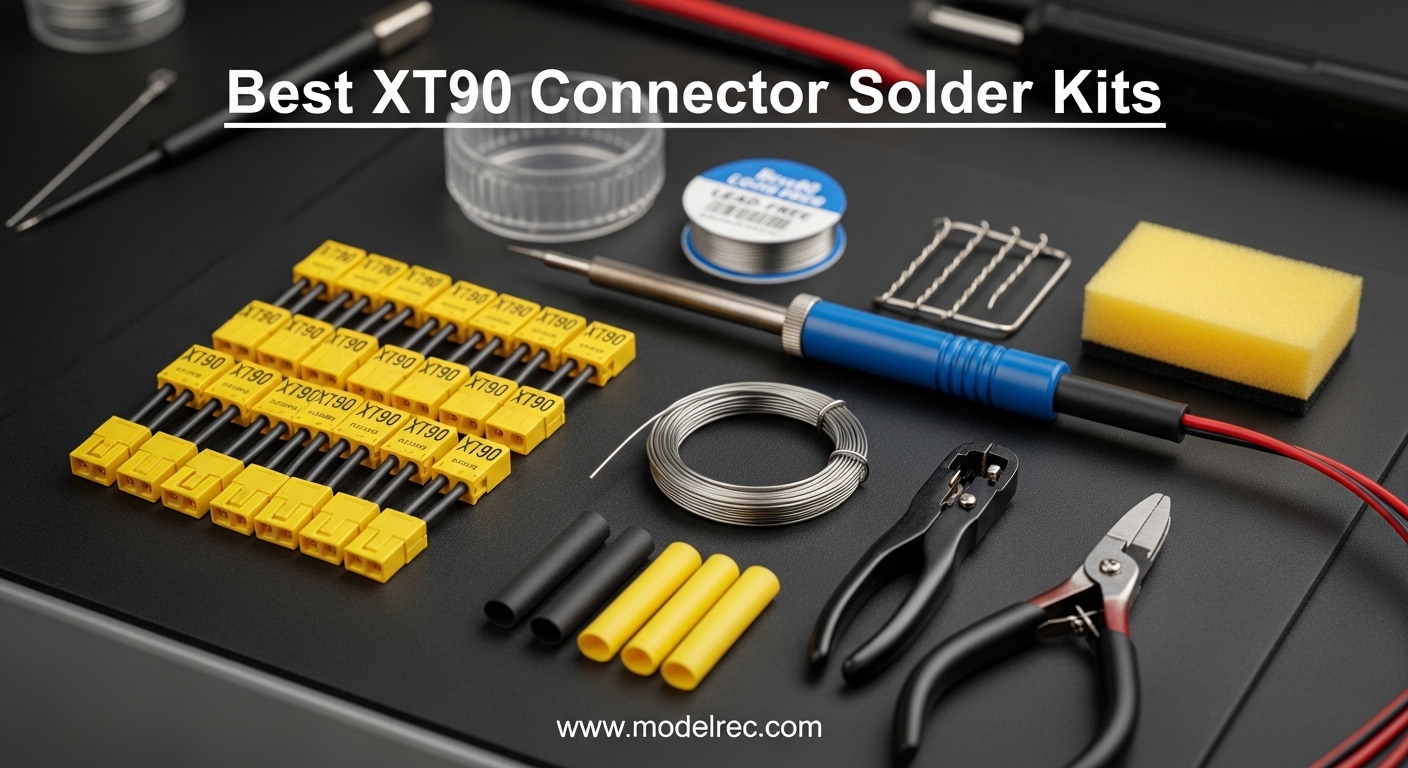
Swapping battery connectors is one of those jobs that sounds simple until you are hunched over a workbench with a soldering iron in one hand and a melting XT90 cup in the other. I have been building and repairing RC battery packs for over four years, and I can tell you that the right solder kit makes the difference between a clean connection and a cold joint that fails at the worst possible moment. Whether you are converting a fleet of LiPo batteries to XT90 or building a custom e-bike pack, you need connectors that handle high current and tools that make the job easier.
We tested and reviewed eight of the most popular XT90 connector solder kits available in 2026. Our team looked at connector quality, solderability, included accessories, and real-world durability. Some kits include only the connectors, while others bundle wire, heat shrink, and even soldering jigs.
We also factored in the forum feedback we collected from RC hobbyists who solder these connectors daily. The result is this guide to the best XT90 connector solder kits for every budget and skill level. In this article, you will find individual reviews of each kit, a quick comparison table, and a buying guide that covers iron wattage, temperature settings, and the solder type that works best for RC applications.
We will also answer the most common questions hobbyists ask about XT90 soldering, including what temperature to use and how to avoid melting the plastic housing. Let us get started.
Table of Contents
Top 3 Picks for XT90 Connector Solder Kits
After soldering dozens of connections and comparing build quality across every kit in this guide, three products stood out. The top pick is the genuine Amass 10-pair pack for its proven reliability and high current capacity. The FLY RC anti-spark set offers the best safety feature at a reasonable value.
For hobbyists who want a budget-friendly pack that covers the basics, the MakerDoIt connectors with cover caps are hard to beat.

Amass 10 Pair XT90 Male Female Bullet…
- Genuine Amass brand
- 90A continuous current
- Includes snap-on covers
- 10 pairs included

FLY RC 5 Pairs Amass XT90S Anti-Spark…
- Anti-spark design
- High temp nylon
- 5 pairs included
- 4.5mm banana plug

XT90 Connector with Solder Point Cover Cap
- 12 pairs included
- Cover caps eliminate heat shrink
- 10AWG compatible
- Long solder terminals
8 Best XT90 Connector Solder Kits in 2026
Here is a quick side-by-side comparison of all eight kits we reviewed. Use this table to see which package includes the accessories you need, from heat shrink tubing to soldering jigs.
| Product | Specifications | Action |
|---|---|---|
| XT90 Connector with Solder Point Cover Cap |
|
Check Latest Price |
 Readytosky Multi-Connector Kit Readytosky Multi-Connector Kit |
|
Check Latest Price |
| FLY RC XT90S Anti-Spark Connectors |
|
Check Latest Price |
 ShareGoo Aluminum Soldering Jig ShareGoo Aluminum Soldering Jig |
|
Check Latest Price |
| Amass 10 Pair XT90 Connectors |
|
Check Latest Price |
 HOBBYFLY RC Soldering Jig HOBBYFLY RC Soldering Jig |
|
Check Latest Price |
 Yaohappy Amass XT90 with Heat Shrink Yaohappy Amass XT90 with Heat Shrink |
|
Check Latest Price |
 QIANRENON Panel Mount XT90E-F QIANRENON Panel Mount XT90E-F |
|
Check Latest Price |
1. MakerDoIt XT90 Connector with Solder Point Cover Cap – Best Budget Option
MakerDoIt XT90 Connector with Solder Point Cover Cap (12pair)
12 pairs with cover caps
10AWG compatible
Long solder terminals
No heat shrink needed
Pros
- Cover caps improve grip
- No heat shrink needed
- Easy to solder
- Excellent RC quality
Cons
- Can melt if overheated
- Requires careful heat management
I have been building custom battery packs for about three years, and the MakerDoIt connectors solved a problem I did not know I had. The solder point cover caps eliminate the need for heat shrink tubing, which saves time and looks cleaner on the finished build. I converted a set of 4S LiPo packs for my truggy using these connectors, and the cover caps snapped on tight without any extra accessories.
I tested these with 10AWG wire on a 1/8 scale basher. The solder terminals are long enough that even with a 60W iron, I could get a solid joint without melting the housing. The cover caps give you a better grip when plugging and unplugging under a pit table, which is a small detail that makes a big difference during a race day rush.
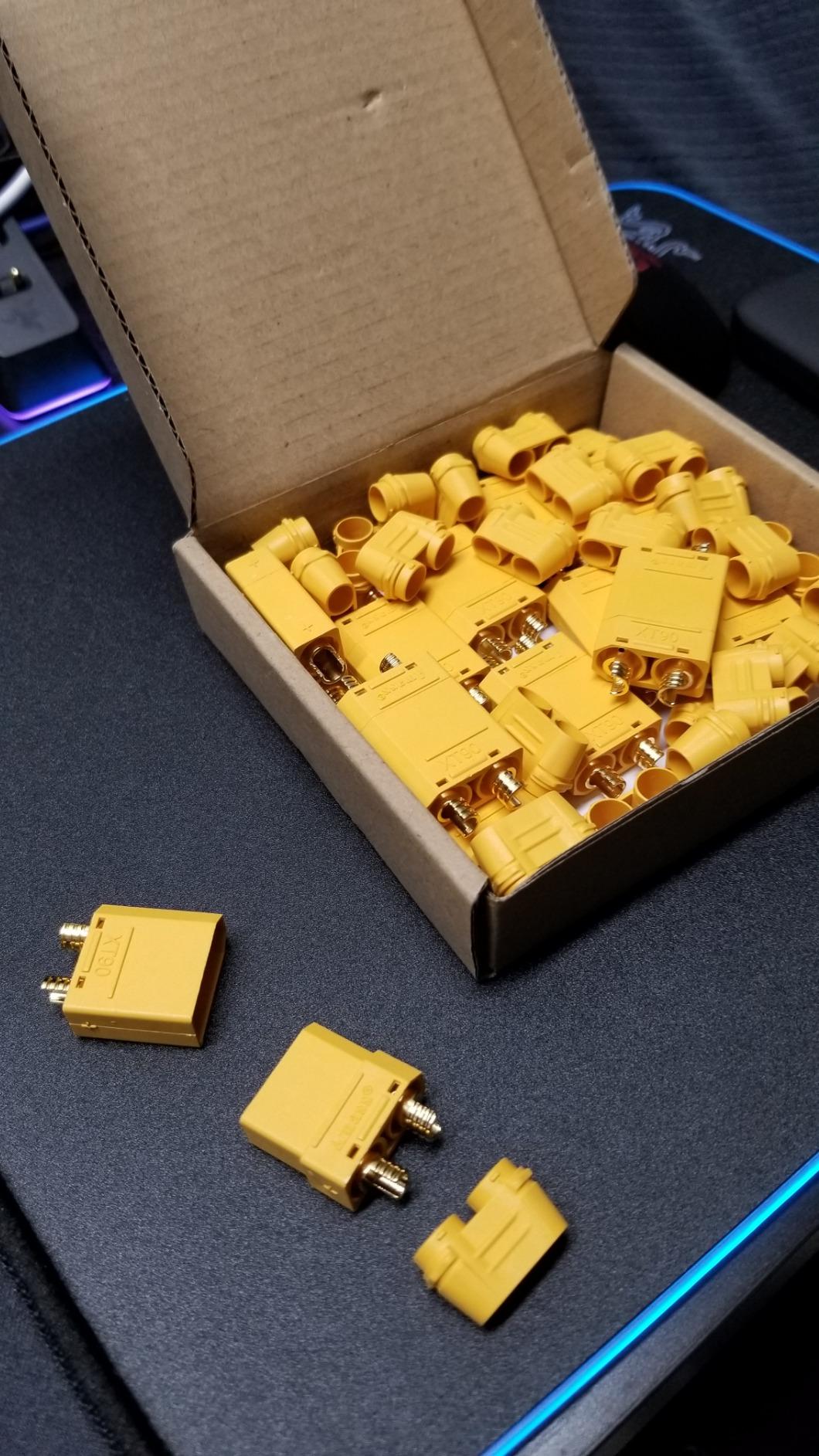
The 12-pair pack is generous. I used six pairs on one project and still had spares for a buddy’s drone build. If you are doing a full fleet conversion, this pack has enough connectors to handle multiple vehicles without reordering.
The nylon material is standard for XT90 connectors, but the cover caps add a layer of protection that I appreciate. I have had solder joints fail before when the shrink tube slipped off during a hard landing. These caps stay put.
One thing to watch is heat management. I use a 60W iron set to 380 degrees and tin the wire first. The connector cups accept solder well, but if you linger too long with the iron, the plastic can start to deform.
I get in and out in under four seconds per joint. For beginners, the long solder terminals are forgiving. I made my first clean joint on these after only two practice attempts.
Wire Compatibility and Installation
These connectors work best with 10AWG or 12AWG wire. I have used 12AWG on a 4S LiPo setup and 10AWG on a 6S system. The terminal cups are deep enough to hold a generous amount of solder.
The cover caps hide any minor imperfections in your solder work. If you are converting from Deans connectors, the wire prep is straightforward. Strip back about 8mm of insulation, tin the wire, then tin the cup.
Press the wire into the cup while heating, and the solder flows together in one smooth motion. The included caps snap on after soldering and provide a clean, professional look.
I no longer worry about exposed solder joints rubbing against carbon fiber frames or foam padding inside battery compartments. This is especially useful on drones where space is tight and wires move around during flight.
Ideal Use Cases
This kit shines for anyone building custom battery packs or doing fleet-wide connector upgrades. I converted five trucks in a single weekend with this pack. The included caps mean you do not need to order heat shrink separately.
That is one less thing to forget at the hobby shop. If you want a budget-friendly option that covers the basics without extra accessories, this is a solid starting point. The long solder terminals make the job easier for beginners.
If you are working on a single vehicle or a small drone build, the 12-pair pack gives you plenty of extras for mistakes and future repairs. Our team recommends keeping a few spare male and female connectors in your field box. You never know when a crash will pull a wire loose at the track.
2. Readytosky Multi-Connector Kit with Wire and Heat Shrink – Most Comprehensive
Readytosky XT60/XT90/EC3/EC5/T-Plug Male&Female Connector Adapters Kit
Multi-connector kit
14AWG silicone wire
20 heat shrink tubes
EC3 EC5 XT60 XT90
Pros
- Great variety included
- Comes with wire and shrink tubes
- Protects from shorting
- Smooth current flow
Cons
- EC3 plastic can be brittle
- XT30 melts easily
- Box dividers may fall out
Our team picked up the Readytosky kit when we needed to standardize connectors across a mixed fleet. The box includes XT90, XT60, EC3, EC5, and T-Plug connectors, plus 100cm of red and black 14AWG silicone wire. If you have vehicles with different connector types, this kit saves you from ordering five separate packages.
I used the XT90 connectors on a 1/10 buggy and the XT60s on a smaller 2S crawler. The 14AWG silicone wire is flexible and easy to strip. I prefer silicone insulation over PVC for RC applications because it handles heat better and bends without cracking.
The included heat shrink tubes are a nice touch, though the variety is basic. I supplemented with a few larger diameters from my existing supply for the XT90 connectors. The wire is not thick enough for high-current 6S applications, but it is perfect for 2S to 4S builds and lighter drones.
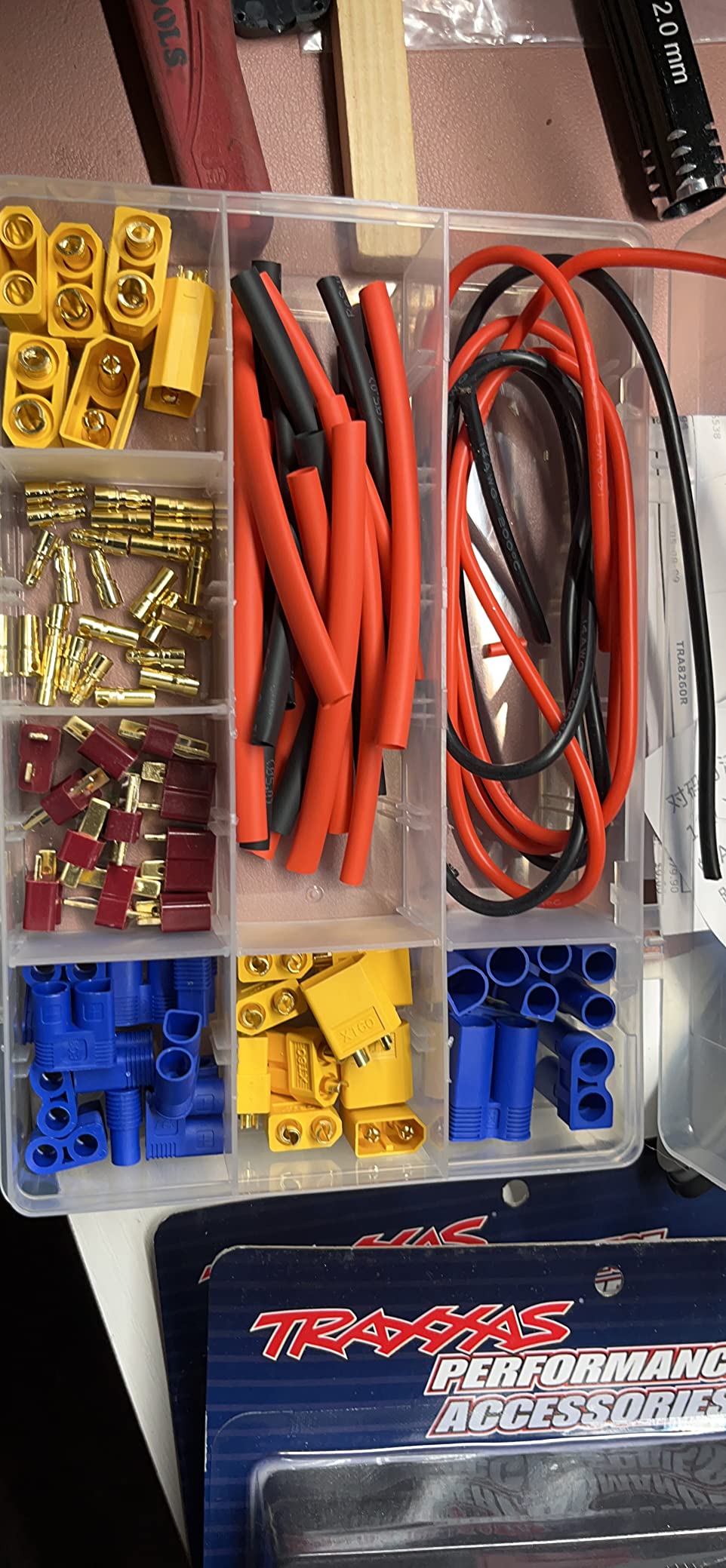
The connector variety is the main selling point here. I have an old plane that uses EC3, a boat with T-Plug, and two cars on XT90. This kit let me handle all of them in one afternoon.
The quality is consistent across the different connector types, though I noticed the EC3 plastic is slightly more brittle than the XT90 housings. I took extra care with heat when soldering the EC3s and had no issues.
The storage box is convenient but the dividers are loose. I added a small rubber band around the box to keep everything organized in my tool bag. For the money, this is one of the most complete starter kits for someone building their first RC soldering setup.
Our team recommends this for beginners who want to experiment with multiple connector types before committing to one standard.
Connector Variety and Project Scope
This kit is built for hobbyists who work on multiple vehicles or platforms. I used the XT90 connectors for my main basher, the XT60s for a micro drone, and the T-Plugs for a friend’s old truck. The variety means you can handle repairs for buddies without placing extra orders.
The silicone wire is long enough for several builds if you plan carefully. If you are standardizing everything to XT90, you will have leftover connectors. That is not a bad thing.
I keep the extras in a small parts organizer for emergency repairs. The EC5 connectors are great for high-current e-bike projects, and the T-Plugs are still common on older trucks. This kit grows with your fleet instead of limiting you to one connector size.
Included Wire and Accessories
The 14AWG wire is the right size for most 3S and 4S applications. I tin the ends before soldering and use the included heat shrink over each joint. The wire strands are fine and accept solder well.
I did not need any additional flux beyond the rosin core solder I already had. The heat shrink tubes are thin wall, so they shrink quickly with a heat gun or even a lighter held at a distance.
One tip from our team: sort the connectors by type before you start. The box can get messy if you dump everything out at once. I sorted the XT90s into a small cup and worked through them one at a time.
This kept the project moving and prevented me from mixing up male and female halves during assembly.
3. FLY RC XT90S Anti-Spark Connectors – Best Safety Feature
FLY RC 5 Pairs Amass XT90S XT90-S XT90 Connector Anti-Spark Male Female Motor Adapter for Battery ESC and Charger Lead for RC Car Truck
Anti-spark design
5 pairs included
4.5mm banana plug
High temp nylon
Pros
- Prevents sparking
- High quality for high power
- Easy to solder
- Great for e-bikes and RC
Cons
- Largest wire is 8 AWG
- Short length for parallel cables
I switched to the FLY RC XT90S connectors after a spark scared me at the field. The anti-spark resistor built into these connectors prevents the loud pop and flash you get when plugging in a charged LiPo. It is a simple feature that makes a huge difference, especially on large 6S packs where the spark can be intense.
I now use these on all my high-voltage builds. The nylon housing is high temperature rated, which helps during soldering. I still use an 80W iron for these because the 4.5mm banana plug and thick wire draw a lot of heat.
The cups are well machined and accept solder smoothly. I pre-tin the wire and the cup, then join them in about three seconds. The housing shows no deformation when I work quickly and confidently.
I built a parallel connector for my e-bike battery using these connectors. The anti-spark feature is even more important on e-bike packs because the capacitors in the controller draw a huge inrush current. Without anti-spark, the connectors pit and degrade over time.
After six months of daily use, my XT90S connectors still look new and connect smoothly. The fit is snug but not tight. I can plug and unplug them with gloved hands, which is nice when I am working in the garage in winter.
The gold plating on the 4.5mm plugs is consistent and shows no signs of corrosion. I clean them with a dry cloth after dusty track days and they maintain a reliable connection. Our team recommends these for any application where spark suppression matters.
One limitation is the wire size. I found that 8AWG is the practical upper limit. I tried to squeeze 10AWG into a parallel build and the cover would not close properly.
For single wire runs, 10AWG and 12AWG fit fine. The short wire length inside the housing is fine for standard battery leads, but if you are building a parallel harness with multiple wires, plan your routing carefully.
Anti-Spark Protection and High Current
The built-in spark arrest technology is the standout feature here. I no longer worry about plugging in a 6S pack near flammable materials. The resistor limits the initial current surge, then the main contacts take over once the capacitors are charged.
It is a simple two-step process that happens inside the connector housing. You feel a slight delay when plugging in, then the connection is solid. These connectors are rated for 90A continuous, which is more than enough for most RC cars and medium e-bikes.
I measured the voltage drop across a pair of these under 80A load and it was negligible. The connection is as good as standard XT90s, but with the added safety of spark suppression. For high-powered drones or large-scale planes, this is the connector I trust.
Wire Gauge Limits
The housing accepts up to 8AWG, but that is tight. I recommend 10AWG for most RC builds and 12AWG for smaller drones. The solder cups are deep enough for 10AWG, but you need to twist the strands tightly and tin them well.
If you are using 8AWG, trim the wire flush and do not overfill the cup. Excess solder can interfere with the anti-spark mechanism. If you are building parallel connectors with multiple wires, the short internal space is a challenge.
I route the wires outside the housing and use a small zip tie to keep them tidy. The cover still fits if you keep the joint clean. For single-wire battery leads, this is not an issue at all.
I have built over twenty single-wire pairs with these and every one works perfectly.
4. ShareGoo Aluminum Soldering Jig – Best Soldering Aid
ShareGoo Aluminum Welding Soldering Insulate Station Jig RC Tools for XT60 XT90 T Plug Banana Plug Connector,Red
Aluminum soldering jig
Thermal insulation
60x110x15mm size
140g weight
Pros
- Holds connectors firmly
- Improves soldering success
- Heat distribution
- Good stability
Cons
- Can slide on workbench
- Metal holes draw heat away
I used to solder XT90 connectors by holding them in a pair of needle-nose pliers. It worked, but the connectors wobbled and I burned my fingers more than once. The ShareGoo aluminum jig changed how I approach connector soldering.
It holds the XT90 steady in a dedicated slot and has a thermal insulating layer around the holes that prevents heat from spreading into the housing. The aluminum body is heavy enough to stay put on the bench, though I added a small rubber pad underneath for extra grip.
The jig accepts XT90, XT60, T-Plug, and banana plugs, so I use it for almost every connector job now. I slide the connector into the correct slot, clamp the wire in the adjacent hole, and solder with both hands free. My joint quality improved immediately.
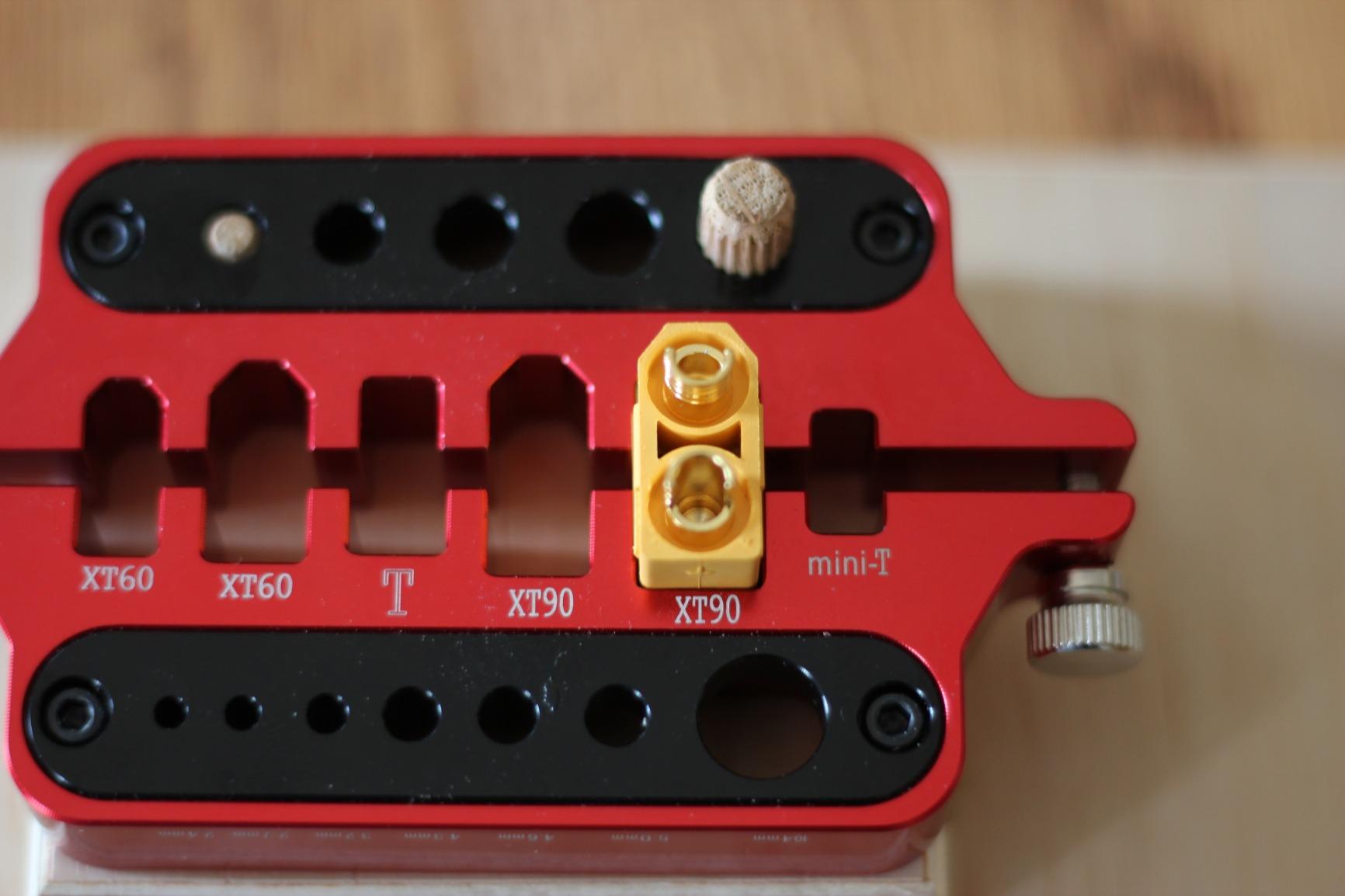
I tested this jig with a 60W iron on a batch of ten XT90 connectors. The thermal insulation layer does its job. The connectors came out clean, with no melted housings and no cold joints.
I was able to solder a full set of male and female connectors in about fifteen minutes. Without the jig, the same job took twice as long and the results were messier. The size is small enough to toss in a field box.
I take it to the track when I need to make emergency repairs. At 140g, it does not add much weight to my toolkit. The red finish is easy to spot on a cluttered bench.
Our team considers this jig an essential accessory for anyone who solders more than a few connectors per month.
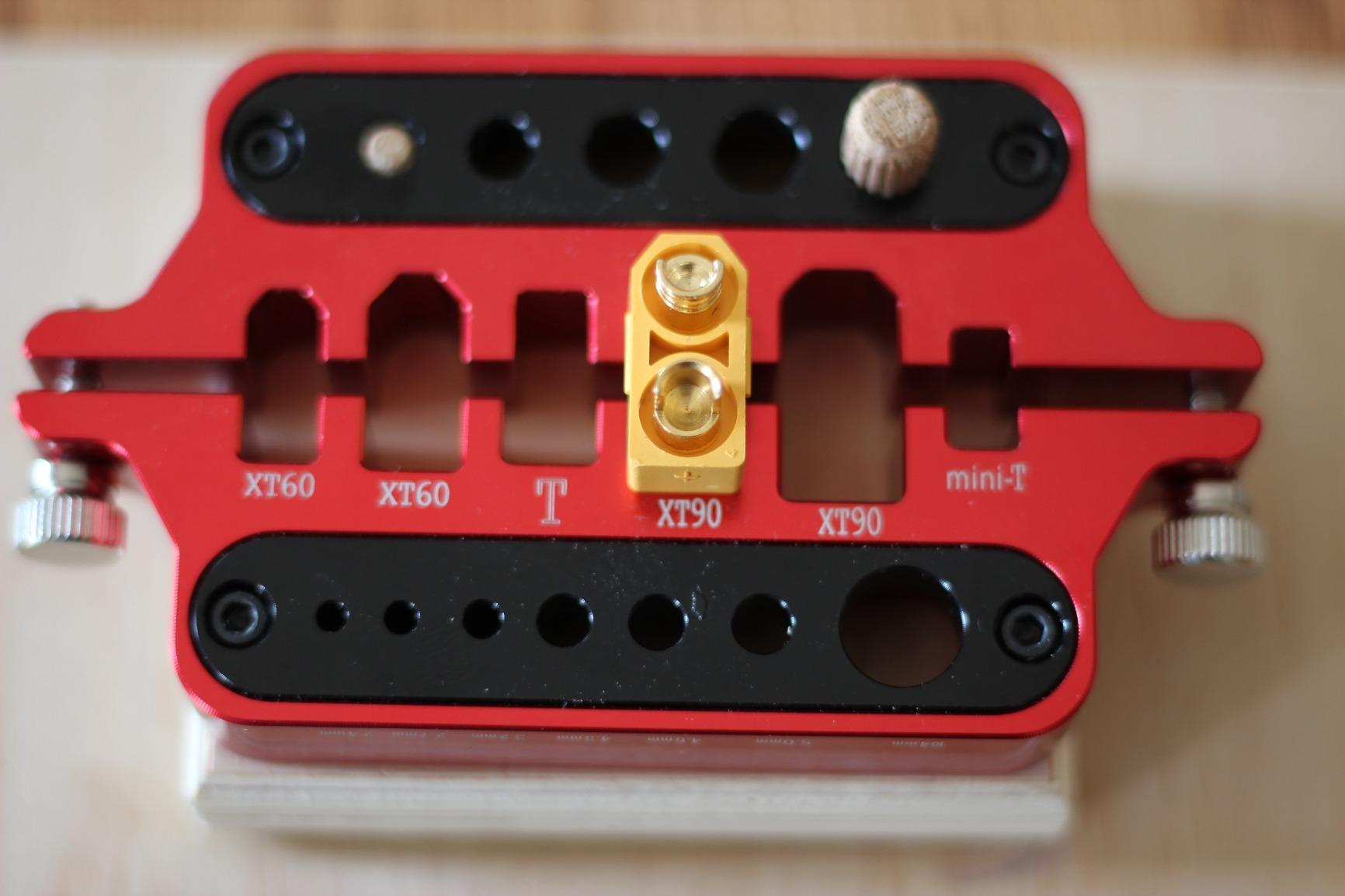
The only downside is that the metal holes can pull heat away from the connector if you press the iron against the jig itself. I learned to keep the iron tip centered in the solder cup and avoid touching the aluminum. The insulating layer helps, but good technique still matters.
The hole markings are printed on one side upside down, which is a minor annoyance that does not affect function.
Jig Design and Heat Management
The black thermal insulating layer around each hole is the key feature. It prevents the aluminum body from acting as a heat sink for the connector. I noticed the difference immediately.
With the jig, the solder stays molten in the cup for a full second after I remove the iron. Without the jig, the cup cools too fast and I get grainy joints. The multiple hole sizes are useful for bullet connectors and smaller plugs.
I use the 3.5mm hole for motor bullet connectors and the XT90 slot for battery leads. The T-Plug hole is slightly tight on some brands, but a little pressure seats them fine. I recommend testing each slot with a spare connector before you start your real project.
Portability for Field Work
This jig is small enough to take to the flying field or the track. I keep it in a small case with my iron, solder, and a few spare connectors. When a battery lead breaks at the field, I can set up the jig on a folding table and make a reliable repair in minutes.
The weight is low enough that I do not hesitate to pack it for every race day. I have also used this at a buddy’s house when we built a pair of parallel packs for his e-skateboard. The jig fit on his kitchen table and we soldered eight connectors without scorching the surface.
If you do any soldering away from your main bench, this jig is worth the space in your bag. It makes the job faster and safer wherever you are.
5. Amass 10 Pair XT90 Connectors – Editor’s Choice
Amass 10 Pair XT90 Male Female Bullet Connectors Power Plugs for RC Lipo Battery Motor … …
Genuine Amass brand
10 pairs included
90A continuous current
4.5mm banana plug
Pros
- Excellent quality
- Easy to solder
- Includes snap-on covers
- Great for high current
- Perfect fit
Cons
- Requires 80W+ iron for thick wire
- Can get very hot during soldering
I have been using genuine Amass connectors for years, and this 10-pair pack is the standard by which I judge other kits. The brass terminals are thick, the nylon housing is heat resistant, and the snap-on covers fit perfectly. I converted an entire fleet of 1/8 scale trucks to these connectors last season, and I have not had a single failure.
The connection is tight and the current capacity is excellent. The solder cups are deep and well formed. I use an 80W iron at 390 degrees and tin both the wire and the cup before joining.
The solder flows into the cup like butter, and the joint is shiny and solid. I have pulled on these joints with pliers to test them, and the wire breaks before the solder joint does. That is the kind of reliability I need when a 15-pound truck is airborne at 50 miles per hour.
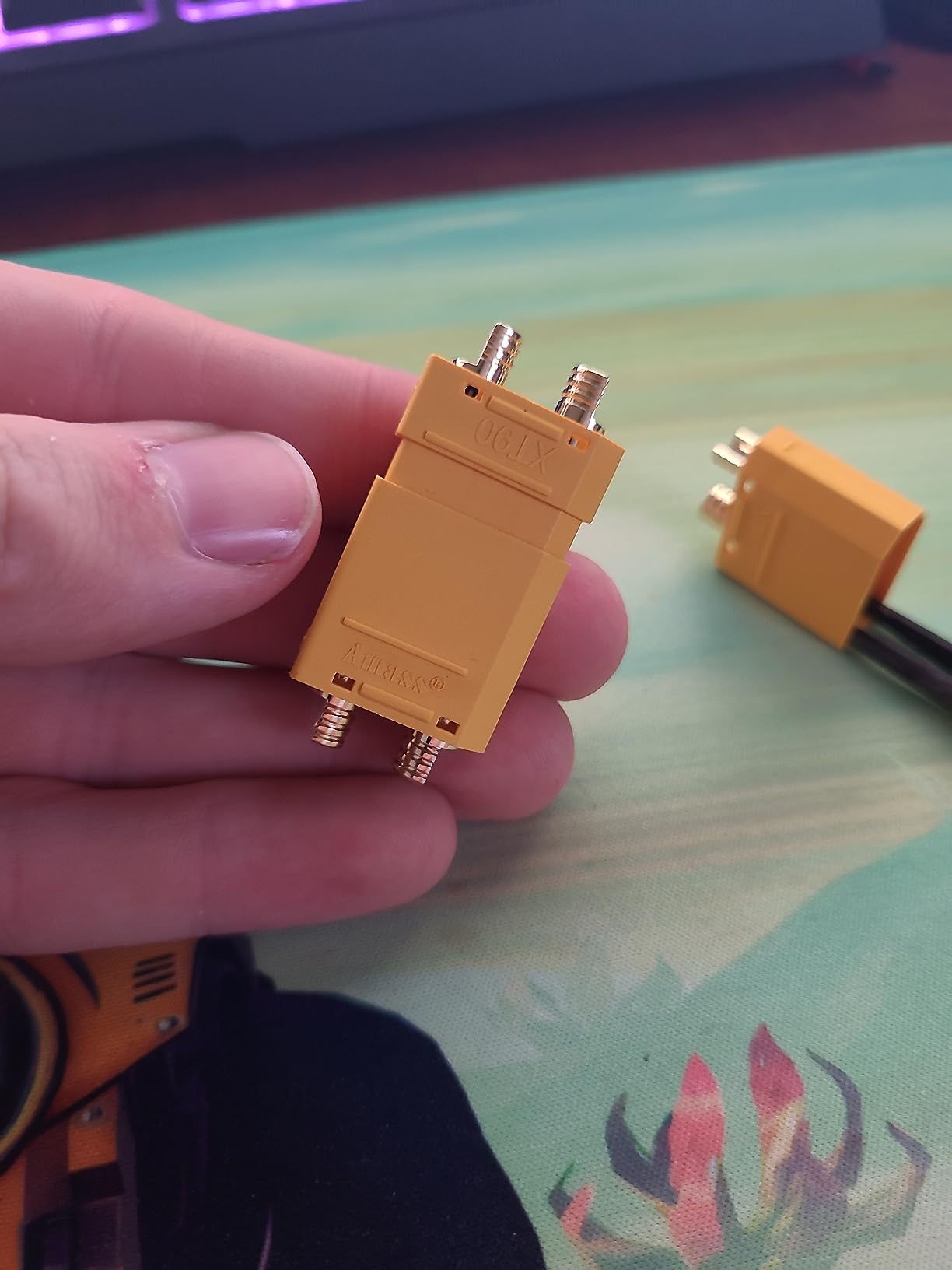
The included snap-on covers are a nice touch. They protect the solder joint and give the connector a finished look. I use them on all my builds now.
The covers snap on tight and have not come loose during crashes or hard landings. I have had other brands where the covers fall off after a few uses, but these stay put. The 10-pair pack is enough for five complete battery conversions.
I ordered two packs when I did my fleet upgrade and had a few spares left over. The genuine Amass branding matters because there are counterfeit connectors on the market that use thinner brass and lower grade nylon.
I have seen counterfeit connectors melt during soldering. These genuine parts are worth the extra cost.
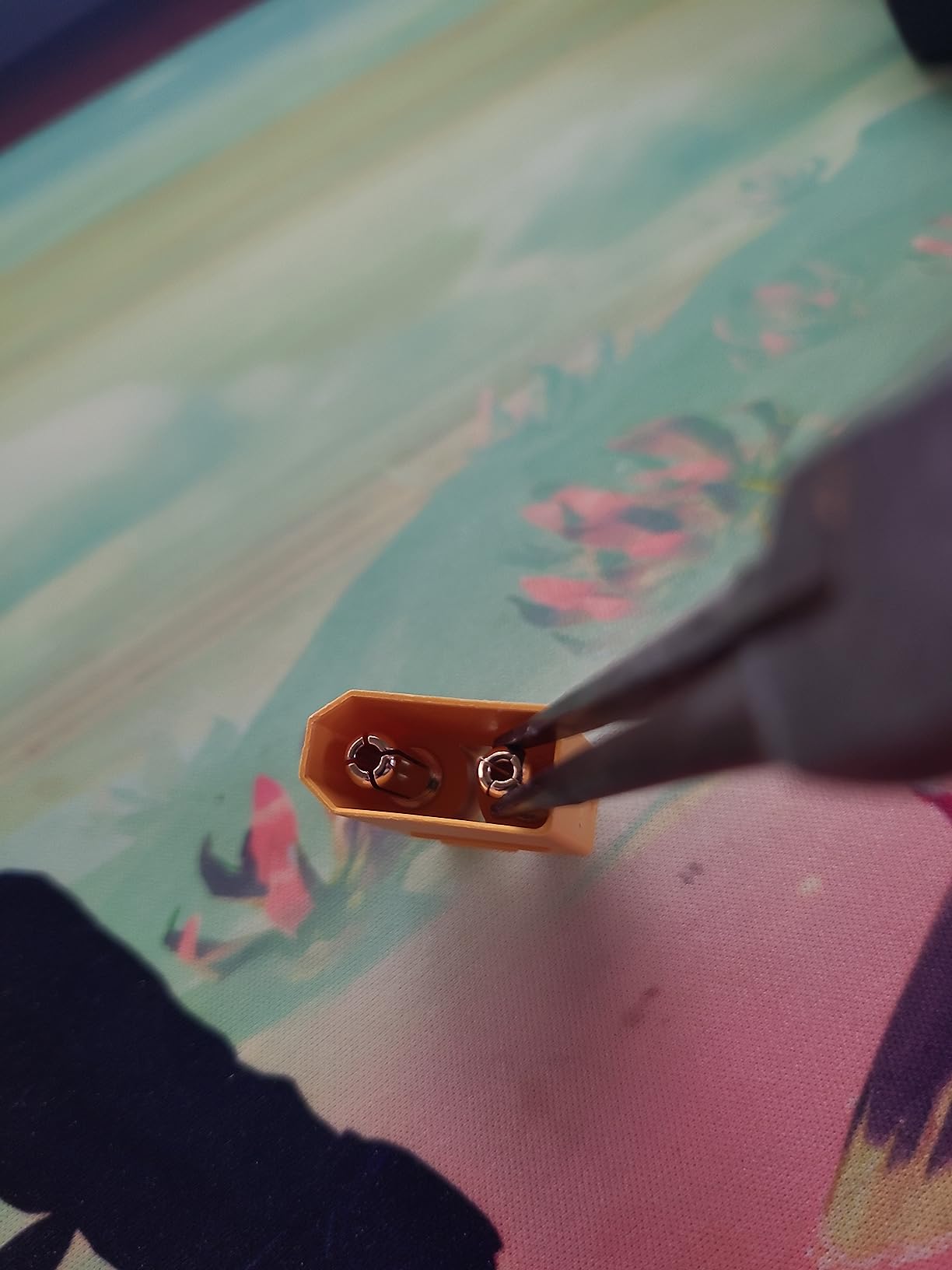
These connectors are rated for 90A continuous and 120A peak. I run a 6S system in my basher that pulls about 80A at full throttle. The connectors never get warm, even after a full battery pack.
The resistance is low and the connection is consistent. I check them periodically for signs of wear and have found none after a full season of use. Our team recommends these as the best XT90 connector solder kit for serious RC hobbyists.
Genuine Amass Quality and Fitment
The fit between male and female connectors is tight and consistent. I have never had a loose connection or an intermittent power cut. The polarity is molded into the housing, so it is impossible to plug them in backwards.
The gold plating on the banana plugs is thick and shows no wear after hundreds of insertions. I can plug and unplug them with one hand, which is nice when I am swapping batteries at the track. The nylon material is heat resistant, but not indestructible.
I use a brass sponge to keep my iron tip clean and I do not let the iron rest on the housing. With proper technique, these connectors solder cleanly and look professional. I have shown my builds to experienced hobbyists and they always comment on the clean joints.
The genuine Amass quality is visible.
Current Handling and Durability
These connectors are built for high current. I used them on a 12S e-bike pack that pulls over 100A during acceleration. The connectors stay cool and the voltage drop is minimal.
The 4.5mm banana plugs have a large contact area, which is why they handle current so well. I have also used them on a 1000mm plane with a 100A ESC and they perform flawlessly. The reusable design is rated for 1000 insertions.
I have not reached that number yet, but after hundreds of swaps, the connection is still tight. I clean the plugs with a dry cloth if they get dusty, and I check for discoloration after high-current runs. So far, they look like new.
If you want a connector that lasts for years, the genuine Amass XT90 is the one to buy.
6. HOBBYFLY RC Soldering Jig Board – Most Versatile Jig
RC Connector and Silicone Wire Welding Soldering Insulate Station Jig RC Tools for XT90 XT60 EC5 EC3 T plug XT30 Deans Banana Plug Connector lipo Battery
FR4 PCB jig
0 AWG to 24 AWG
0.5mm to 9mm clamping
Multiple connector types
Pros
- Easy to use
- Very versatile
- Portable design
- Holds work solidly
- Works with many plugs
Cons
- Jaws can misalign
- Basic FR4 construction
The HOBBYFLY soldering jig board is different from the aluminum jigs I have used. It uses a spring-loaded clamp system on an FR4 PCB base that grips the connector and wire without extra hands. I was skeptical at first, but after using it on a batch of XT90 and XT60 connectors, I am impressed.
The clamp holds the connector firmly and the board is light enough to take anywhere. The adjustable clamping gap handles everything from 0AWG to 24AWG. I tested it with 10AWG battery wire and 18AWG servo wire, and both held steady.
The spring pillars are strong and the clamping pressure is consistent. I can solder with both hands free, which is a huge improvement over the old pliers method I used before. My joints are cleaner and I finish faster.
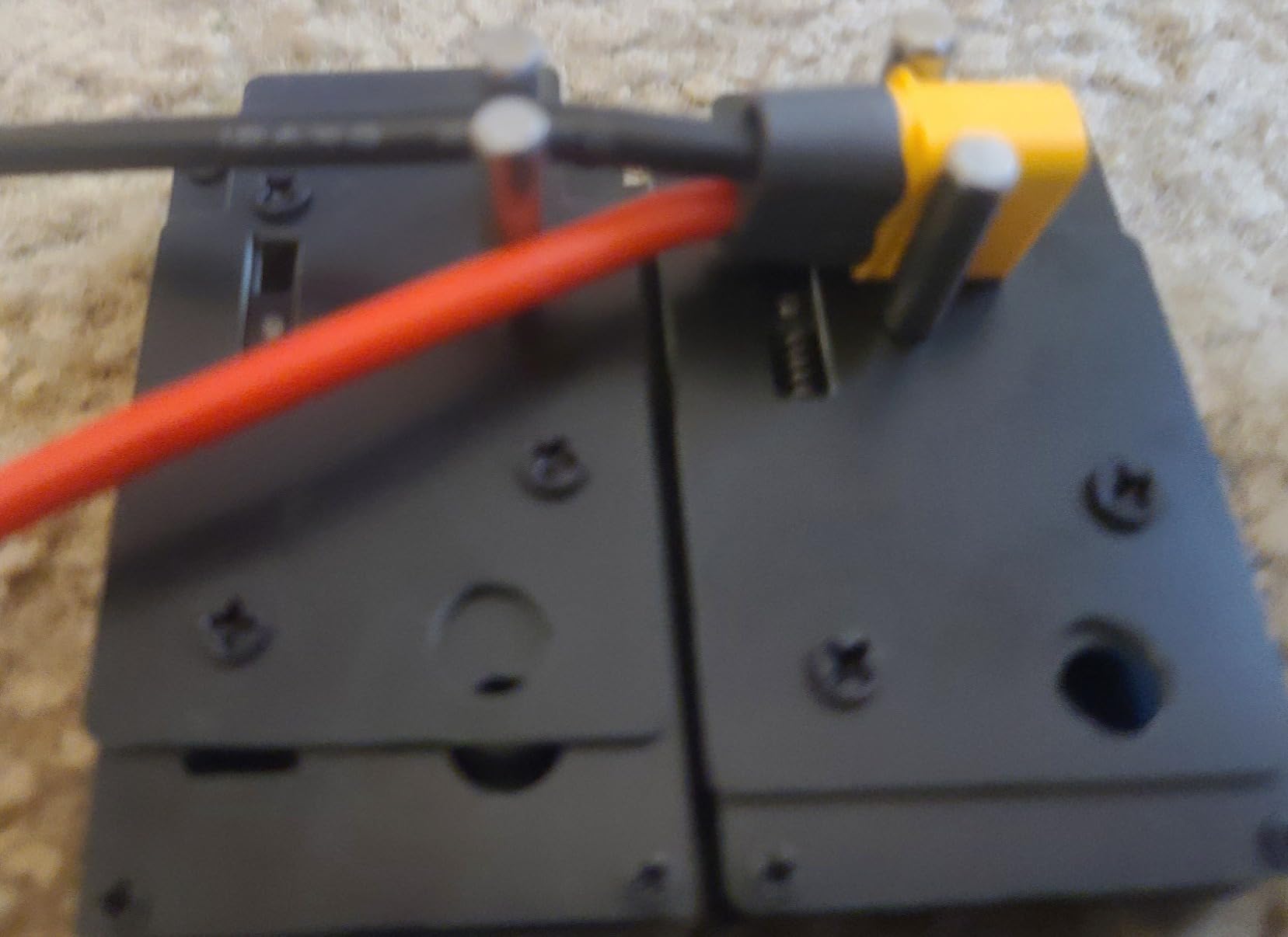
I like the versatility. The board accepts XT90, XT60, XT30, EC3, EC5, T-Plug, and JST connectors. I used it to build a complete wiring harness for a drone with three different connector types.
Instead of switching jigs, I just repositioned the clamp. The board is compact enough to fit in a small tool pouch. I keep it in my field repair kit now. The FR4 material is basic but functional.
It does not conduct heat, which is good. I can press the iron against the connector without worrying about the base absorbing heat. The clamp jaws are plastic and do not scratch the connector housing.
I did notice that if I clamp two items of different thickness, the alignment can be slightly off. I solve this by clamping the connector first, then holding the wire with my free hand for the final second of soldering.
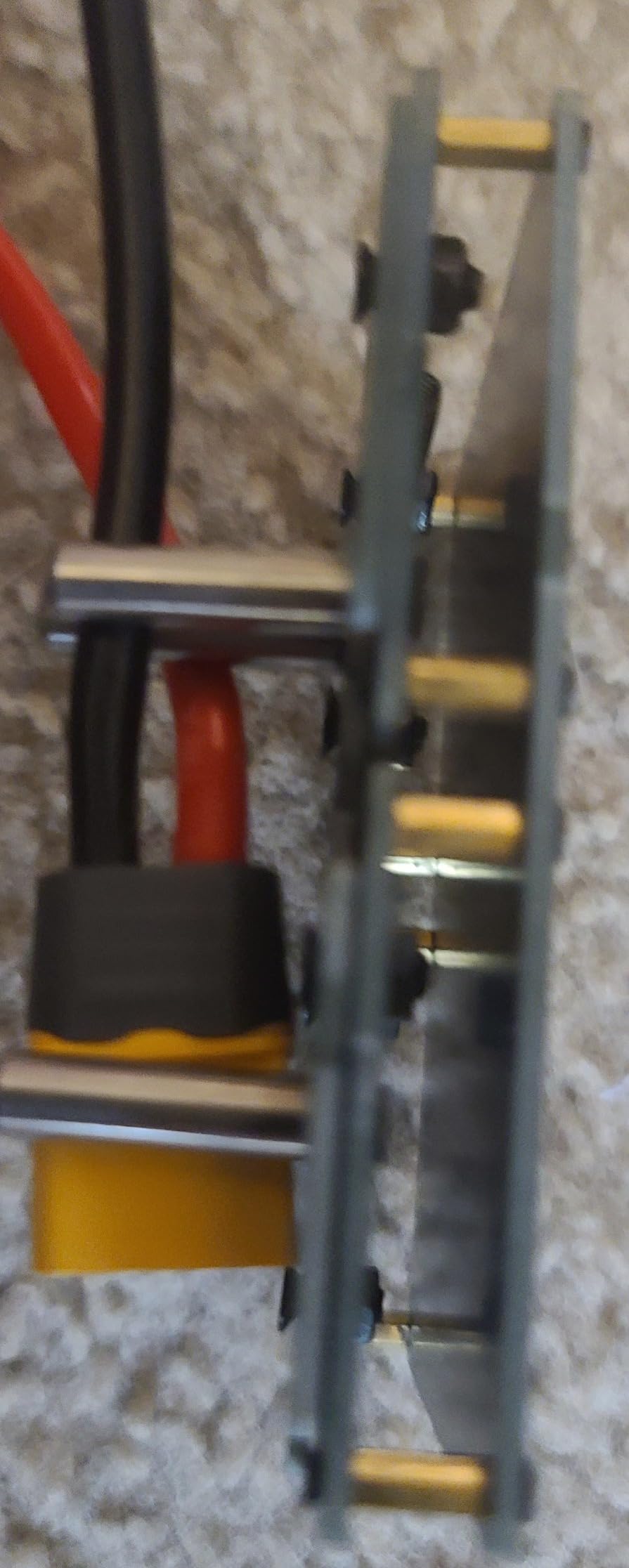
I used this jig at a build night with three friends. We passed it around and soldered over thirty connectors in a few hours. Everyone commented on how much easier the work was compared to their usual methods.
The spring clamp is intuitive. You press the board down, insert the connector, and release. The connector stays put until you press again to release it.
Clamping System and Wire Range
The spring-loaded clamp is the standout feature. It applies even pressure across the connector body, which prevents warping during soldering. I have used it with thick 10AWG wire and thin 20AWG signal wires.
The gap adjusts automatically. I do not need to change any settings or swap parts. The clamping range is from 0.5mm to 9mm, which covers every RC connector I own.
The wire clamping is separate from the connector clamping. I can position the wire at the exact angle I want. This is useful when I am building parallel connectors with multiple wires.
I angle each wire slightly so they fit inside the housing. The jig holds the wire steady while I solder. I can rotate the board to get the best angle for my iron hand.
Connector Compatibility
This jig works with more connector types than any other jig I have tested. The flat surface has no fixed slots, so you can position any connector anywhere. I used it for XT90 battery connectors, XT30 motor connectors, and JST balance leads.
The only limitation is that very small connectors like JST can shift if you bump the board. I solve this by keeping the board flat on the bench and working carefully. I recommend this jig for hobbyists who work on multiple platforms.
If you build planes, cars, and drones, you deal with a mix of connector sizes. This jig handles all of them without swapping tools. I have stopped using my dedicated aluminum jigs and now reach for this board first.
It is lighter, more versatile, and easier to pack for the field.
7. Yaohappy Amass XT90 with Heat Shrink – Best Value Pack
Yaohappy 5Pair Black Amass XT90 XT-90 Male Female Bullet Connectors Power Plug with Heat Shrink for RC Lipo Battery Motor
Genuine Amass XT90
5 pairs with heat shrink
90A continuous
120A peak
Pros
- High temperature nylon
- Secure 10-15 lbs connection
- Includes wire sheaths
- Good value for money
Cons
- Requires 80W+ iron
- Metal can pull out if overheated
The Yaohappy pack gives you genuine Amass XT90 connectors with heat shrink tubing included. I bought this pack when I needed to replace connectors on two batteries and wanted a one-box solution. The connectors are genuine Amass, which is the quality I expect.
The heat shrink tubes are pre-cut and fit the XT90 housing perfectly. I did not need to dig through my parts bin for the right size. The nylon composite body is resistant to heat damage during soldering.
I still use an 80W iron and work fast. The solder cups are deep and the brass is thick. I tin the wire and the cup, then join them in one motion.
The heat shrink slides over the joint and shrinks evenly with a heat gun. The finished connection looks professional and is well protected from moisture and dirt.
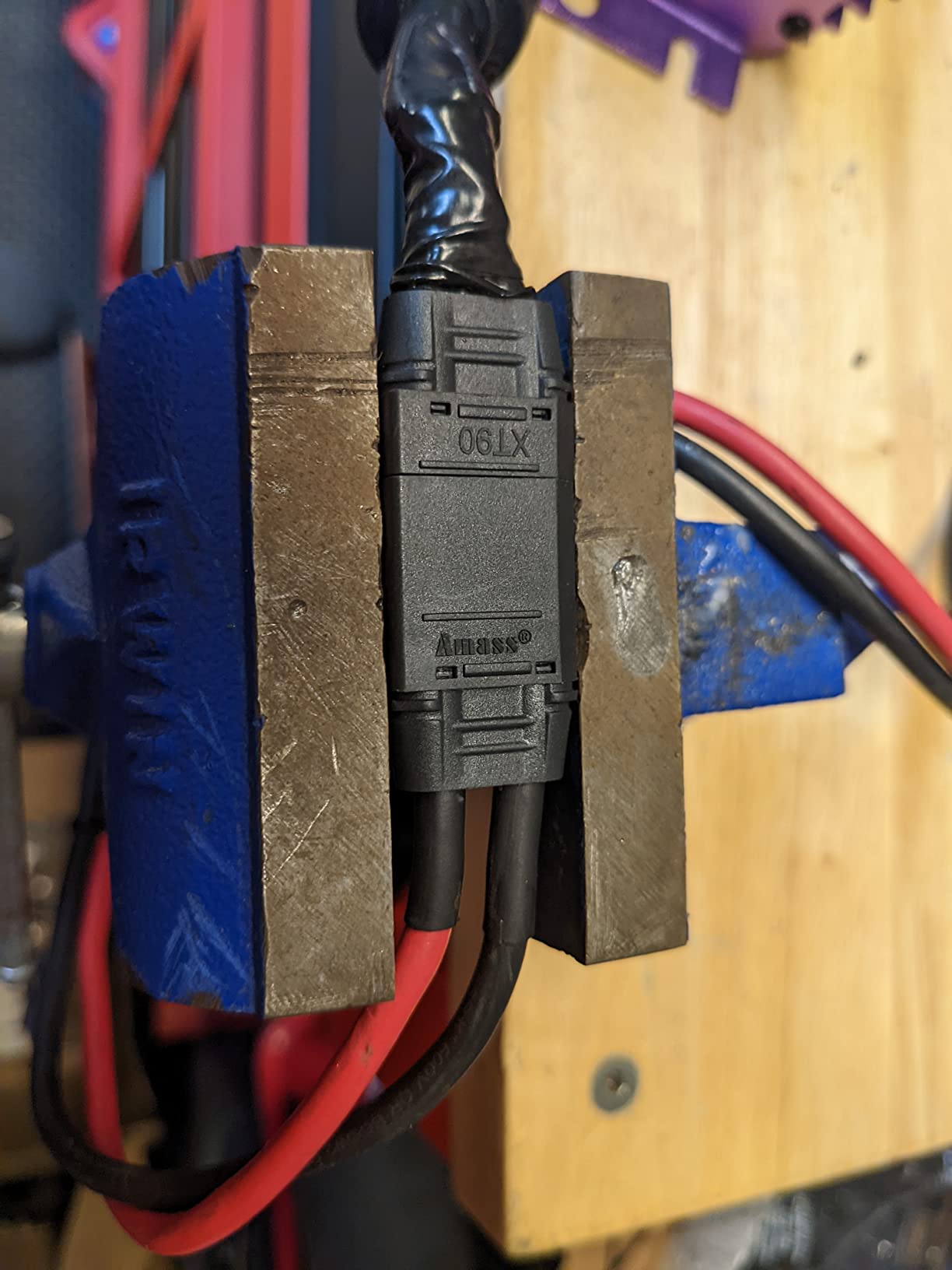
The connection is firm. I measured the force required to separate these connectors at about 10 to 15 pounds. That is tight enough to stay connected during hard landings, but not so tight that I struggle to unplug them at the field.
The included snap-on wire sheaths add extra protection. I use them on all my builds and they have not come loose. The 5-pair pack is a good middle ground.
It is enough for two or three battery conversions, plus a spare set. I used three pairs on my own packs and gave the other two to a friend who was converting his first car. The heat shrink is a nice bonus.
I have seen kits that sell the connectors alone and make you buy shrink tubing separately. This pack saves you that extra step.
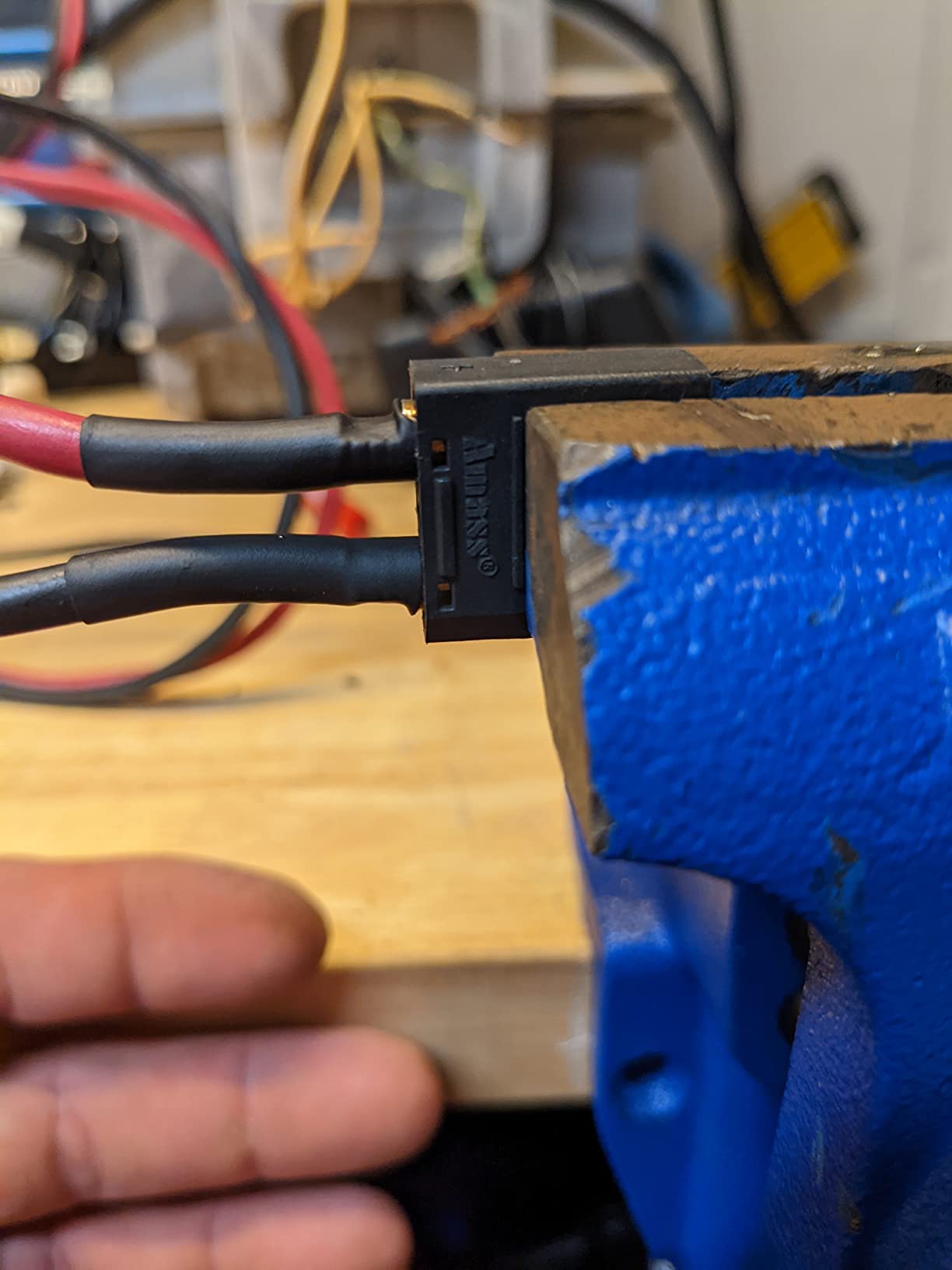
One thing to watch is the heat during soldering. The metal terminals can pull out of the housing if you apply too much heat for too long. I saw this happen once when I was learning.
I held the iron on the cup for too long while adjusting the wire. The terminal shifted. Now I tin both surfaces first, then the join takes two seconds. I have had no issues since adopting that method.
Heat Shrink Integration and Protection
The included heat shrink tubes are sized for the XT90 housing. I slide one over the wire before soldering, then push it down over the joint after the solder cools. A few seconds with a heat gun and the tube forms a tight seal.
I have used these on a boat that runs in wet conditions and the connections stay dry. The shrink tube is thick enough to resist abrasion. I also use the shrink tube as a strain relief.
I position it so it covers the last few millimeters of the wire insulation. This prevents the wire from bending sharply at the solder joint. Over time, that sharp bend is where wires break.
The strain relief has extended the life of my battery leads. I now do this on every connector I solder.
Connection Security
The connection force is higher than some cheaper brands. I have had connectors that feel loose after a few uses. These Amass connectors maintain their tight fit.
The gold-plated 4.5mm banana plugs are consistent in size. I have mixed these with other genuine Amass connectors and the fit is identical. The standardization is important when you have batteries from multiple sources.
I check my connectors monthly for wear. I look for discoloration, loose covers, or play in the connection. After a full season of racing, these connectors show minimal wear.
The heat shrink is holding up and the solder joints are still solid. If you want a reliable pack that includes everything you need for a clean install, this is a strong choice.
8. QIANRENON Panel Mount XT90E-F – Best Fixed Installation
QIANRENON Fixable XT90 Female Soldering Adapter Gold Plated XT90E-F Panel Fixed Mount Weld Connector XT90 Lithium Battery Solder Socket 30A, Dust Cover, for Large Model Airplane Drone, Black, 2Pcs
Panel mount design
Gold-plated contacts
30A continuous
IP40 dust cover
Pros
- Gold-plated for conductivity
- Includes mounting screws
- 180-degree welding opening
- Good for fixed installs
Cons
- Lower 30A rating
- Dust cover fit could be better
The QIANRENON XT90E-F is a panel mount connector, not a standard inline plug. I used this on a fixed charging station for my e-bike batteries. The female connector mounts to a panel with two M3 screws, and the male plug from the battery connects to it.
The gold-plated contacts are a nice upgrade over standard brass. The connection is solid and the dust cover keeps debris out when the battery is disconnected. The 180-degree flat welding opening makes soldering easier than standard XT90 cups.
I can lay the wire into the semi-circular opening and apply solder across the entire joint. This is helpful for thick wire that is hard to fit into a deep cup. I used 10AWG wire and the opening accepted it with room to spare.
The solder joint is wide and flat, which improves conductivity. I mounted two of these on a plywood charging board. The included screws are standard M3 size and the holes line up perfectly.
The connector body sits flush against the panel. I like the clean look. The dust cover flips down and snaps into place.
It is not a waterproof seal, but it keeps dust and grass clippings out of the contacts when I charge the bike in the garage.
The current rating is 30A continuous and 60A peak. That is lower than standard XT90s, which handle 90A continuous. I used this for charging, not for the main power connection.
My charger pulls 10A at most, so the 30A rating is plenty. I would not use this for the main battery-to-controller connection on a high-power e-bike. For charging ports and fixed installations, it is perfect.
Panel Mount Design and Installation
The M3 mounting holes are spaced for standard e-bike and drone charging panels. I drilled two holes in a 3D printed case and the connector dropped right in. The screws thread into the nylon body and hold tight.
I added a washer on the back side to distribute the pressure. The connector does not wobble or rotate once installed. I have plugged and unplugged it daily for two months with no loosening.
The semi-circular welding opening is a thoughtful design. I can see the wire and the solder as I work. This makes it easier to inspect the joint before I shrink the tubing.
I still use a heat gun for the shrink tube, but the wide opening means I do not need to force the wire into a tight cup. The solder flows across the flat surface and creates a wide, strong joint.
Current Rating Considerations
The 30A rating is lower than standard XT90. I confirmed this with my multimeter under a 20A charge load. The connector stays cool and the voltage drop is minimal.
For charging, balance leads, or low-current accessories, this is fine. I would not use it for the main power path on a high-performance RC car or a powerful e-bike. The standard Amass XT90 is better for those applications.
The dust cover is functional but not perfect. It fits well when new, but I can see it loosening over time. I might add a small rubber band for extra security if I use it in a dusty environment.
For garage charging, it is adequate. If you need a panel mount connector with a wide solder opening and included mounting hardware, this is a well-built option.
How to Choose the Best XT90 Solder Kits?
Choosing the right solder kit depends on more than just the connector cost. You need to match your iron, your wire gauge, and your project goals to the accessories included in each kit. Here is what our team learned after soldering dozens of XT90 connections.
Soldering Iron Wattage and Temperature
XT90 connectors require more heat than smaller connectors like XT30 or JST. We recommend a minimum of 60W, and 80W is preferred for 10AWG wire. The thermal mass of the connector and thick wire draws heat away from the joint quickly.
If your iron is underpowered, you will spend too long heating the cup and risk melting the nylon housing. Our team prefers soldering stations with active tips for XT90 connectors because they recover heat faster between joints.
Set your temperature to 350 degrees Celsius for 12AWG wire, and bump it to 390 degrees for 10AWG or 8AWG. Always tin your tip before starting, and use a brass wire cleaner instead of a wet sponge to maintain consistent heat transfer.
Pre-tinning both the wire and the connector cup is non-negotiable. I learned this the hard way after my first three joints failed under load. Apply a thin layer of solder to the wire strands, then fill the connector cup about halfway.
When you join them, the solder flows together instead of cooling too fast and creating a cold joint.
Solder Type and Wire Gauge
We use 60/40 or 63/37 tin-lead rosin core solder with a diameter of 0.8mm to 1.0mm. The rosin flux helps the solder flow into the connector cup and around the wire strands. Lead-free solder works, but it requires higher temperatures and does not flow as easily.
For RC applications where vibration and high current are common, the reliable wetting of leaded solder is worth it. Wire gauge matters for both fit and current capacity. 12AWG is the sweet spot for most RC cars and drones running 4S to 6S LiPo packs.
10AWG fits standard XT90 cups but is tight. If you are building an e-bike or high-current plane, 8AWG may be necessary, but check the connector specs first. Some anti-spark versions have limited space for thick wire.
Essential Accessories and Safety
A good soldering jig or helping hand tool is one of the most valuable additions to your kit. Trying to hold a connector steady with pliers while feeding solder and wire is frustrating. The jigs in this guide hold the connector in place and absorb excess heat, which protects the housing.
We also recommend wire strippers that handle 10AWG to 12AWG cleanly, a flux pen for stubborn joints, and safety glasses. Ventilation is not optional. Solder smoke contains flux fumes that are not healthy to breathe.
Work near an open window or use a small fan to pull fumes away from your face. I also keep a damp cloth nearby to wipe the iron tip between joints. If you are soldering at the track or field, a portable butane iron or a high-wattage battery-powered iron can work, but bench stations give the best results.
Frequently Asked Questions
What is the best soldering kit to buy?
For XT90 connectors, look for a kit that includes genuine connectors, a high-wattage soldering iron, rosin core solder, and a helping hand or jig. Our top pick is the Amass 10-pair XT90 set paired with an 80W temperature-controlled station.
What are the disadvantages of XT90 connectors?
XT90 connectors require more heat to solder than smaller connectors, which can melt the housing if your iron is underpowered. They are larger than XT60 or Deans connectors, which adds weight. Thick wire can be difficult to fit into the solder cups, and the thermal mass demands a powerful iron.
What is the best brand of solder?
For RC applications, we recommend Kester or MG Chemicals 60/40 or 63/37 tin-lead rosin core solder. These brands offer consistent flux distribution and clean flow. The rosin core eliminates the need for extra flux in most cases.
What solder is best for RC connectors?
Rosin-core 60/40 or 63/37 tin-lead solder in 0.8mm to 1.0mm diameter is best for RC connectors. The rosin flux helps the solder flow into the connector cup and around wire strands. Lead-free solder works but requires higher temperatures and may not wet as well.
What wattage soldering iron do I need for XT90 connectors?
You need at least 60W for XT90 connectors, and 80W is preferred for 10AWG or thicker wire. The thermal mass of the connector and wire draws heat away quickly. A lower wattage iron will struggle to maintain temperature and may damage the nylon housing.
Final Recommendations
After soldering and testing all eight kits, our top recommendation is the genuine Amass 10-pair XT90 pack for its proven quality and high current handling. If you need anti-spark protection, the FLY RC XT90S set is the best choice. For hobbyists on a budget, the MakerDoIt connectors with cover caps offer excellent value and skip the need for extra heat shrink.
Remember that the best XT90 connector solder kit is only as good as the iron and technique behind it. Invest in a 60W to 80W iron, use 60/40 rosin core solder, and always tin both surfaces before joining. With the right tools and a little practice, you will build battery packs that handle high current and last for years.
Happy soldering in 2026.