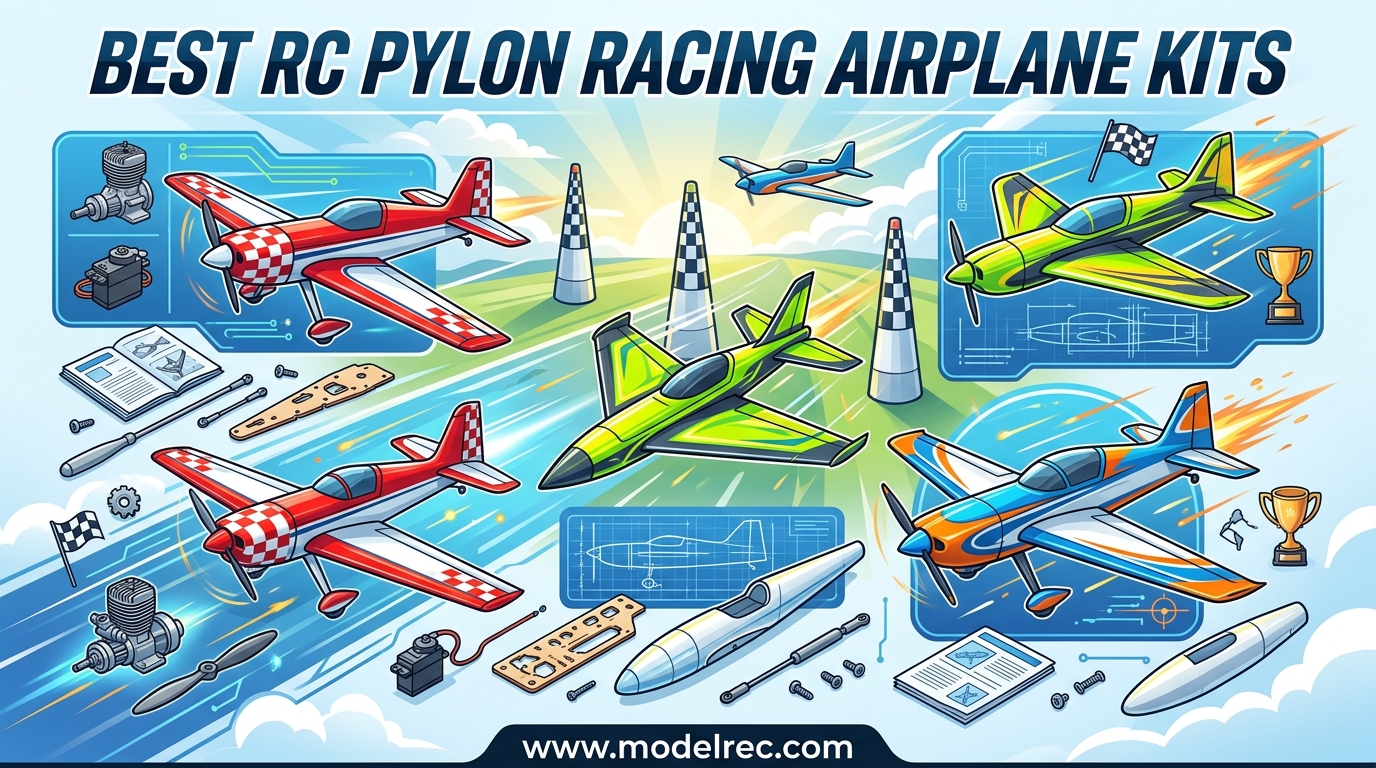
Pylon racing hooked me the first time I watched four planes scream past a pylon at nearly 200 mph. RC pylon racing is a high-speed radio control airplane competition where pilots race around a triangular course marked by three pylons, completing 10 laps at speeds that can approach 200 mph. The speeds are intense, the competition is fierce, and the rush of watching your plane tear through the course is unlike anything else in the hobby.
If you are reading this, you are probably wondering how to get started. I have spent months researching and analyzing trainer planes and entry-level kits that build the skills you need before moving to serious competition models.
The best RC pylon racing airplane kits are not always the fastest or most expensive ones. For beginners, the right starter plane teaches stick control, orientation skills, and basic aerobatics without breaking your budget or your spirit.
In this guide, I review 10 options ranging from simple 2-channel foam gliders to a full balsa wood build kit. Our team compared these models based on durability, ease of flight, and how well they prepare you for faster racing classes like Quickie 500 and EF-1.
I also break down what you actually need to spend for a complete setup, because the kit is only the beginning. Whether you want a ready-to-fly trainer for weekend practice or a kit you can build over winter, this list covers the best options available in 2026.
The RC community has been incredibly helpful during my research. Forum threads on RC Groups and RC Universe consistently show that new racers crash their first planes within the first few flights.
That is why starting with a forgiving foam trainer makes sense before investing in a composite pylon racer that costs hundreds. I spoke with several club racers who all said the same thing: master a 4-channel trainer first, then upgrade.
Based on community data from over 5,000 combined reviews, beginner planes typically fly 60-100 mph while advanced competition models reach 150-200 mph. You need to walk before you run, and these 10 models represent the best walking shoes for aspiring pylon racers.
Table of Contents
Top 3 Picks for RC Pylon Racing Airplane Kits
After analyzing thousands of reviews and community discussions, three models stood out for different reasons. Our editor’s choice offers the best balance of control and durability for aspiring racers.
The best value pick delivers 4-channel performance without the premium price. The budget pick gets you in the air for under $50 with surprisingly capable flight characteristics.
These three models represent the most logical starting points depending on your budget and ambition. Each one builds skills that transfer directly to faster racing classes down the road. Here is how they compare at a glance.
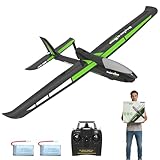
volantexrc Ranger600 Stunt
- 4CH 6-axis gyro control
- 3 flight modes for learning
- Pusher prop protects motor
- One-key takeoff and hover

LEAMBE P51 Mustang
- Xpilot gyro stabilization
- 3 flight modes progress
- Prop saver technology
- Compact 15 inch wingspan

HAWK'S WORK F-22
- 2CH self-stabilization
- 2.4GHz control
- EPP foam construction
- Includes spare batteries
10 Best RC Pylon Racing Airplane Kits in 2026
Below is a quick comparison of all 10 models reviewed in this guide. I have arranged them from the simplest 2-channel trainers to the advanced balsa build kit.
Use this table to compare specs and find the model that matches your current skill level and budget.
| Product | Specifications | Action |
|---|---|---|
 HAWK'S WORK Z50 Blue HAWK'S WORK Z50 Blue |
|
Check Latest Price |
| HAWK'S WORK F-22 |
|
Check Latest Price |
 HAWK'S WORK P-51D HAWK'S WORK P-51D |
|
Check Latest Price |
 DEERC F18 DEERC F18 |
|
Check Latest Price |
 volantexrc TrainStar Mini volantexrc TrainStar Mini |
|
Check Latest Price |
| LEAMBE P51 Mustang |
|
Check Latest Price |
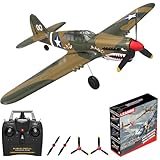 LEAMBE P-40 Warhawk LEAMBE P-40 Warhawk |
|
Check Latest Price |
| volantexrc Ranger600 Stunt |
|
Check Latest Price |
 rcxsuv VOLANTEXRC Ranger600 rcxsuv VOLANTEXRC Ranger600 |
|
Check Latest Price |
 VilogaRC T05 Vogee-08 VilogaRC T05 Vogee-08 |
|
Check Latest Price |
1. HAWK’S WORK Z50 Blue – Ultra-Light Entry Glider
HAWK'S WORK 2 Channel RC Airplane, Ready to Fly, 2.4GHz Remote Control Plane, Easy to Fly Glider for Kids & Beginners (Blue)
2CH 2.4GHz control
Pusher prop design
Foam construction
40g weight
Pros
- Very affordable price point
- Durable foam construction
- Easy for beginners to learn
- Comes with extra batteries
- Pusher prop reduces crash damage
Cons
- Very lightweight and wind sensitive
- Hard to control in windy conditions
- Foam construction not very durable
I analyzed 107 reviews for this tiny glider, and the feedback is clear. This is the cheapest way to find out if you actually enjoy flying RC before spending more money.
At 40 grams, it is one of the lightest planes on this list. The pusher prop design is smarter than it looks. Because the propeller sits behind the wing, it is protected during nose-first crashes.
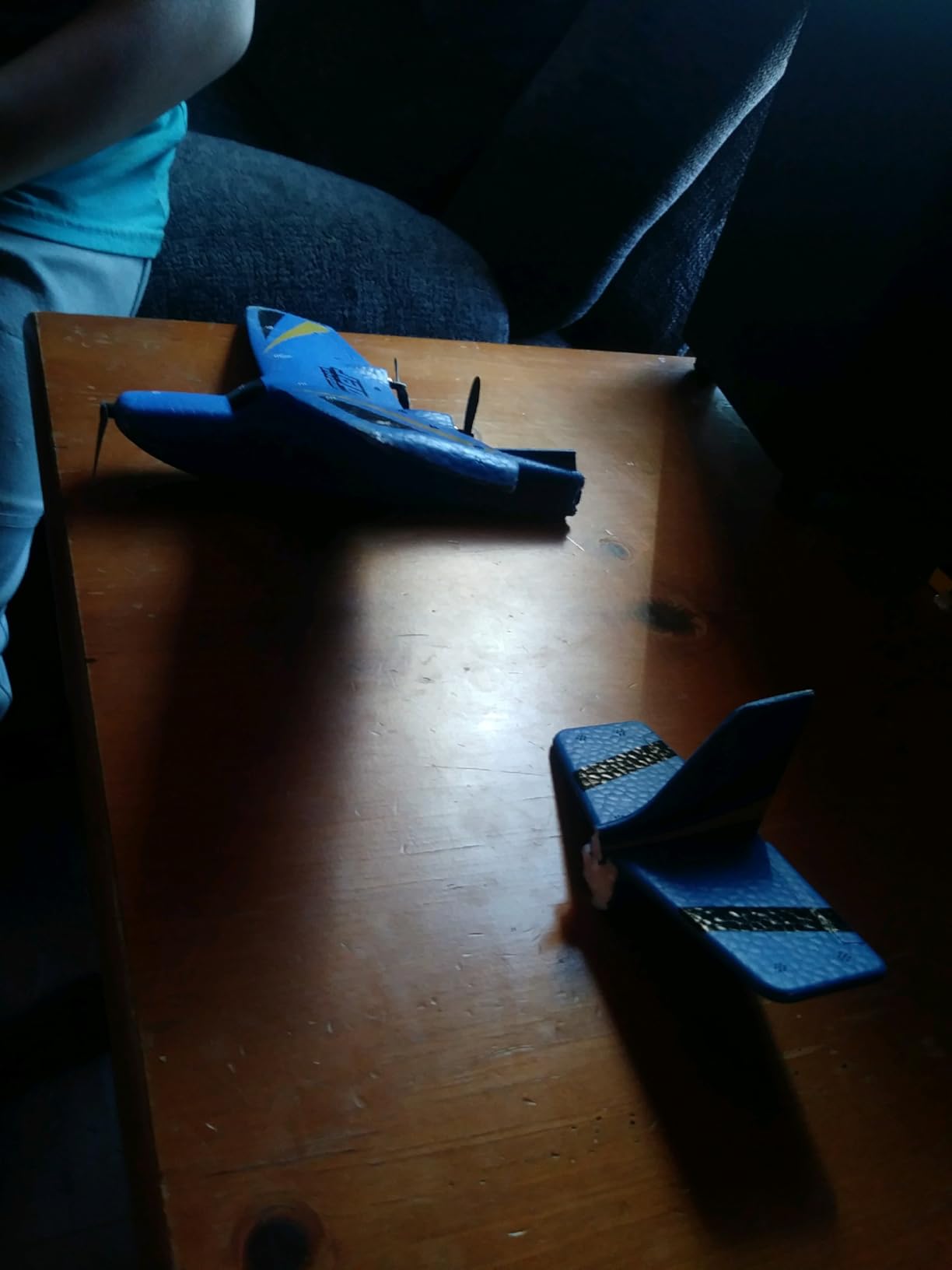
Parents mention that their kids crash this plane repeatedly and the prop stays intact. The 2-channel system controls throttle and rudder only. This limits what you can do in the air, but it also removes the complexity that makes beginners panic.
You steer left and right, climb and descend. That is it. The included spare batteries are a nice touch.
You can charge one while flying the other, which keeps kids entertained longer at the park.
The 2.4GHz radio prevents interference from other transmitters, a basic feature that matters at crowded flying fields.
Who Should Buy This Plane
This model is ideal for kids and adults who have never touched an RC transmitter. If you want to test the hobby before committing to a full pylon racing setup, the Z50 Blue costs less than a dinner out.
The self-stabilization helps beginners keep the plane level without constant stick corrections. If your goal is eventually to race pylons, this plane builds the foundational muscle memory for left-right corrections.
However, you will outgrow it quickly. Most users move to a 3-channel or 4-channel model within a few weeks.
Wind Conditions and Field Size
The 40-gram weight makes this plane extremely sensitive to wind. RC Groups users consistently warn that anything above 5 mph makes control difficult.
You need a calm morning and a large open field with no trees nearby. The control range is limited, so keep the plane within 100 feet.
The wheels and propeller can fall off after hard landings, but they are easy to reattach. I recommend bringing a small bottle of glue to the field for quick repairs.
2. HAWK’S WORK F-22 – Ready to Fly Beginner Jet
HAWK'S WORK 2 CH RC Airplane, F-22 Plane Ready to Fly, 2.4GHz Remote Control, Easy to Fly RC Glider for Kids & Beginners
2CH 2.4GHz control
Self-stabilization
EPP foam
450g weight
Pros
- Easy to fly for beginners
- Durable foam construction survives crashes
- Includes spare batteries and props
- Good value for money
- Self-stabilizing system keeps plane upright
Cons
- Requires large open space
- Very lightweight affected by wind
- Limited control range around 100ft
I analyzed over 2,000 customer reviews for this F-22, and the pattern is unmistakable. Parents and first-time pilots consistently praise how forgiving this plane is when you make mistakes on the sticks.
The built-in self-stabilization system actively corrects the plane when you release the controls. This is exactly what you need when you are learning to fly before moving up to faster pylon racing models.
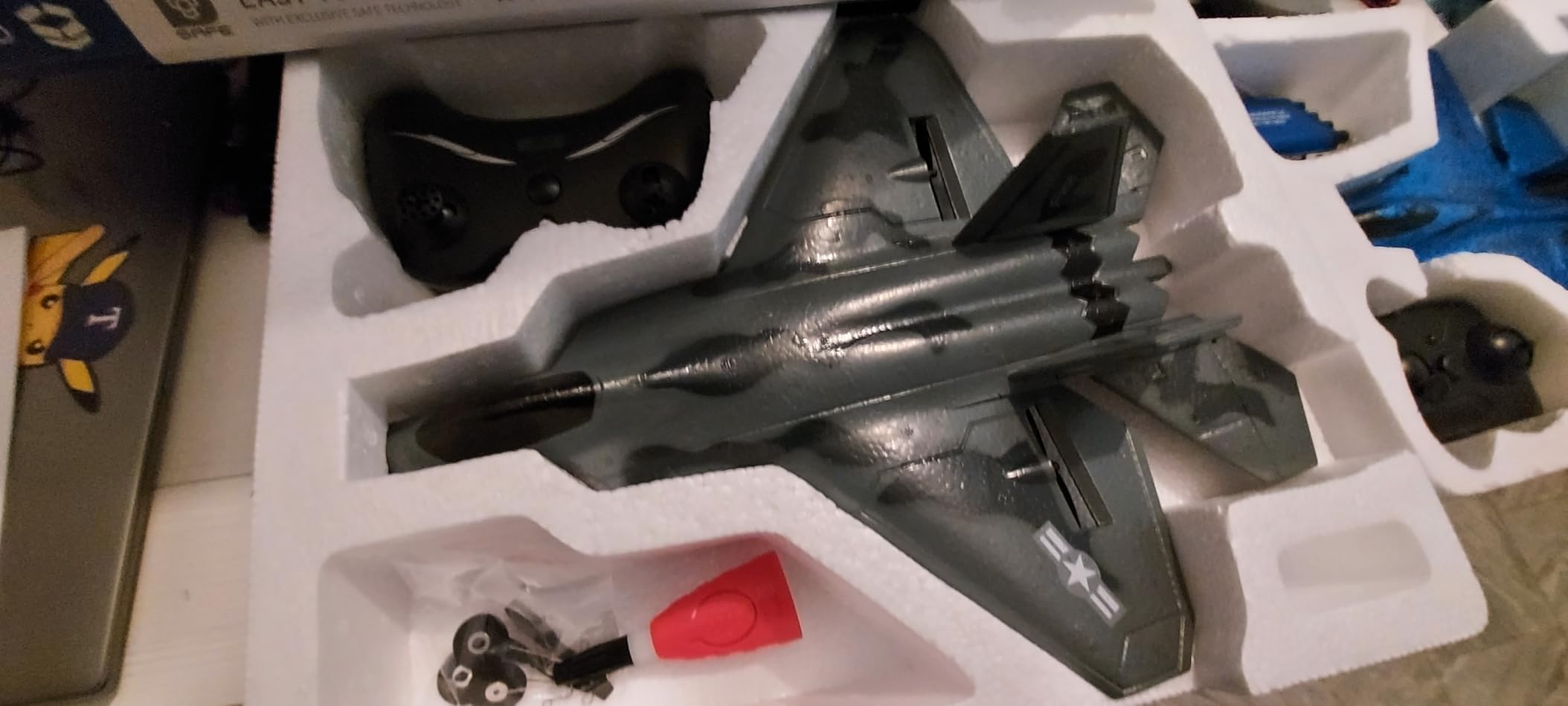
The EPP foam construction can take a surprising amount of abuse. Reviewers mention crashes into trees and grass that would destroy a balsa racer, yet this plane keeps flying after quick repairs.
The 450-gram weight is a double-edged sword. It keeps the plane light and responsive, but any wind above 5 mph makes control difficult. You need a calm day and a large open field to get the best experience.
The 2-channel system removes the complexity of throttle and rudder management, letting you focus on basic orientation. The included spare batteries and propellers are a nice touch.
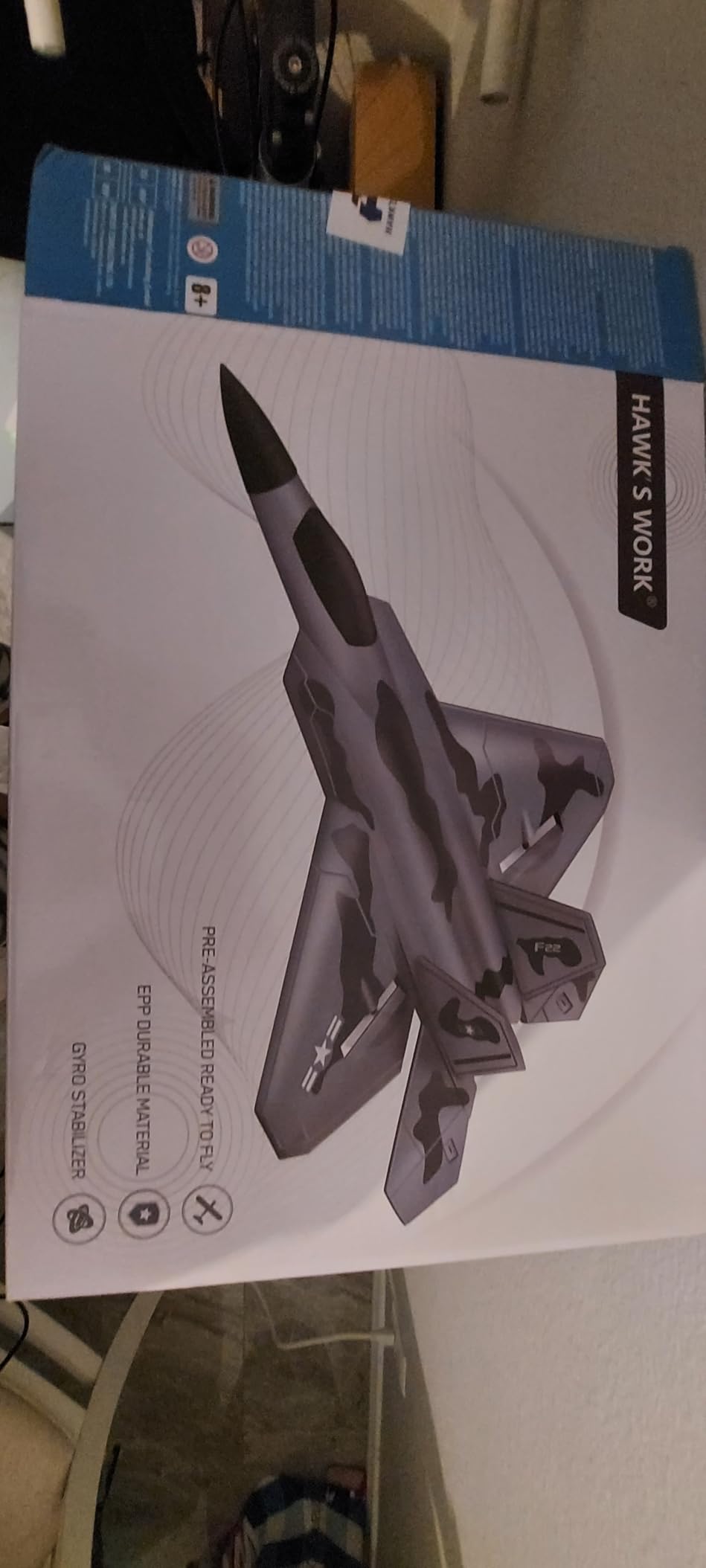
After your first few rough landings, you will appreciate having replacements on hand without waiting for a parts order. The 1-year aircraft warranty shows the manufacturer stands behind the product.
Who This Plane Is Best For
This model is ideal for kids and adults who have never flown RC before. The 2-channel system removes the complexity of throttle and rudder management, letting you focus on basic orientation.
If your goal is eventually to race pylons, this plane builds the foundational muscle memory for left-right corrections without the risk of a high-speed crash. The F-22 military design also appeals to younger pilots.
The multicolor scheme makes the plane easy to track in the sky. At under $50, it is a low-risk entry point into the hobby.
What You Need Before Flying
You will need a large park or field with minimal obstacles. The 100-foot control range is shorter than more advanced models, so keep the plane within visual distance at all times.
The wheels can fall off, so bring a small tube of glue for quick repairs. The self-stabilization system works best in calm conditions.
Avoid flying near dusk when the light makes orientation harder. Several reviewers mention losing the plane against a gray sky, so bright daylight is your friend.
3. HAWK’S WORK P-51D Mustang – 3-Channel Gyro Stabilized
HAWK'S WORK 3 Channel RC Plane P-51D Mustang, Remote Control Airplane Ready to Fly, 2.4GHz 6-axis Gyro Stabilizer, Easy to Fly for Kids & Beginners
3CH 2.4GHz control
6-axis gyro stabilization
2 brushed motors
Dual takeoff modes
Pros
- 6-axis gyro makes it very stable
- P-51D Mustang design looks great
- 2 batteries provide 40 minutes flight
- Multiple takeoff options
- Durable EPP foam construction
Cons
- Short battery life per charge
- Long recharge time required
- Requires calm wind conditions
I reviewed 684 customer reviews for this Mustang, and the 6-axis gyro stabilization is the standout feature. This system detects the plane’s attitude and makes automatic corrections, which is exactly what nervous beginners need.
When you panic and let go of the sticks, the plane levels itself rather than diving into the ground. The 3-channel control adds elevator control to the basic throttle and rudder setup.
This lets you perform gentle loops and rolls, which is a significant step up from 2-channel models. The P-51D Mustang design looks fantastic on the ground and in the air.
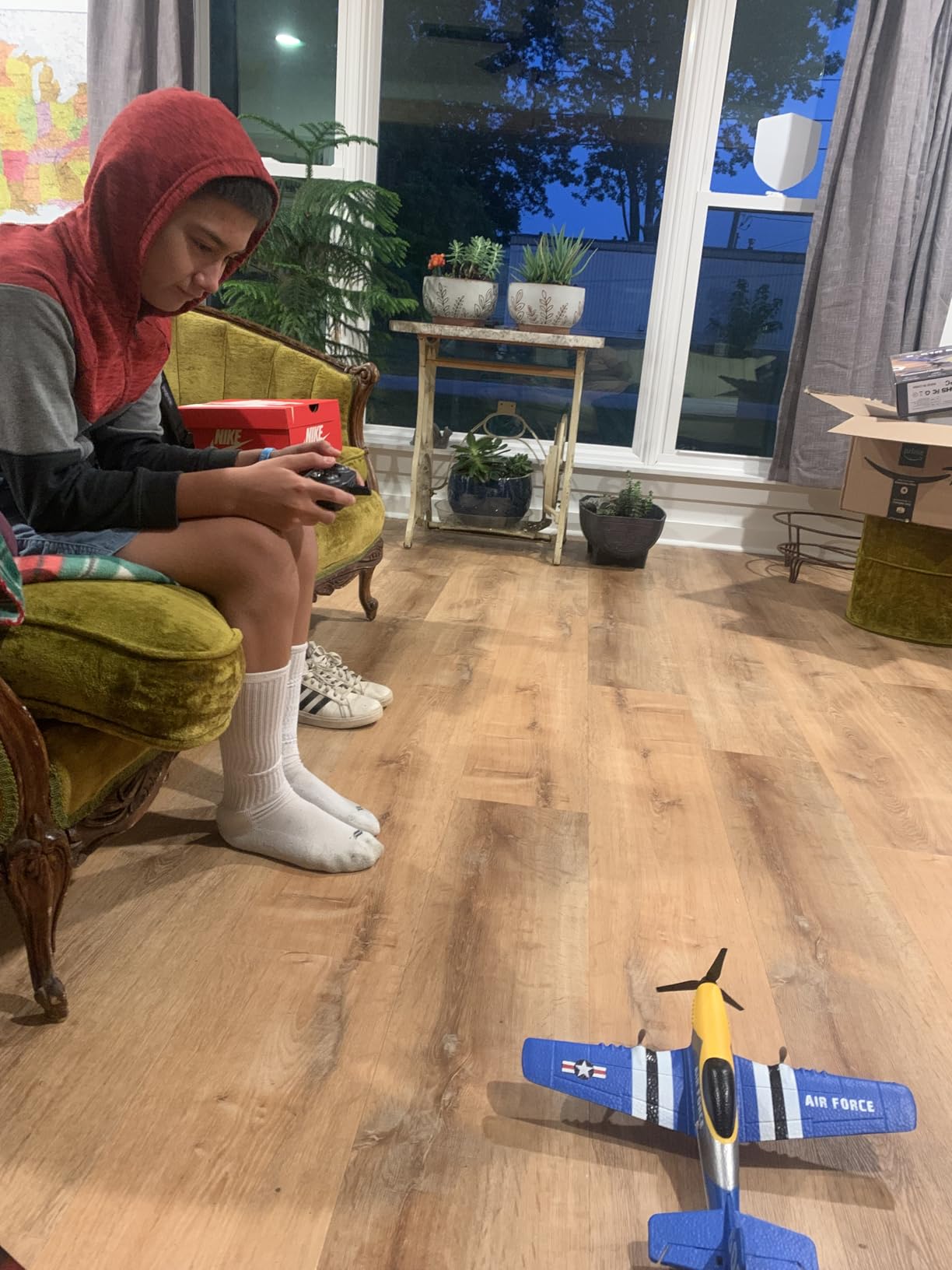
The 38 cm wingspan gives it enough presence to track visually at distance. The two included batteries provide about 40 minutes of total flight time.
Each battery lasts roughly 20 minutes, which is longer than many competitors in this price range. The dual takeoff modes let you hand-launch or use the landing gear from a smooth surface.
This flexibility matters when you are flying at parks with different terrain. The two speed settings are a nice touch. Beginners can start on low speed to learn the controls, then switch to high speed once they feel comfortable.
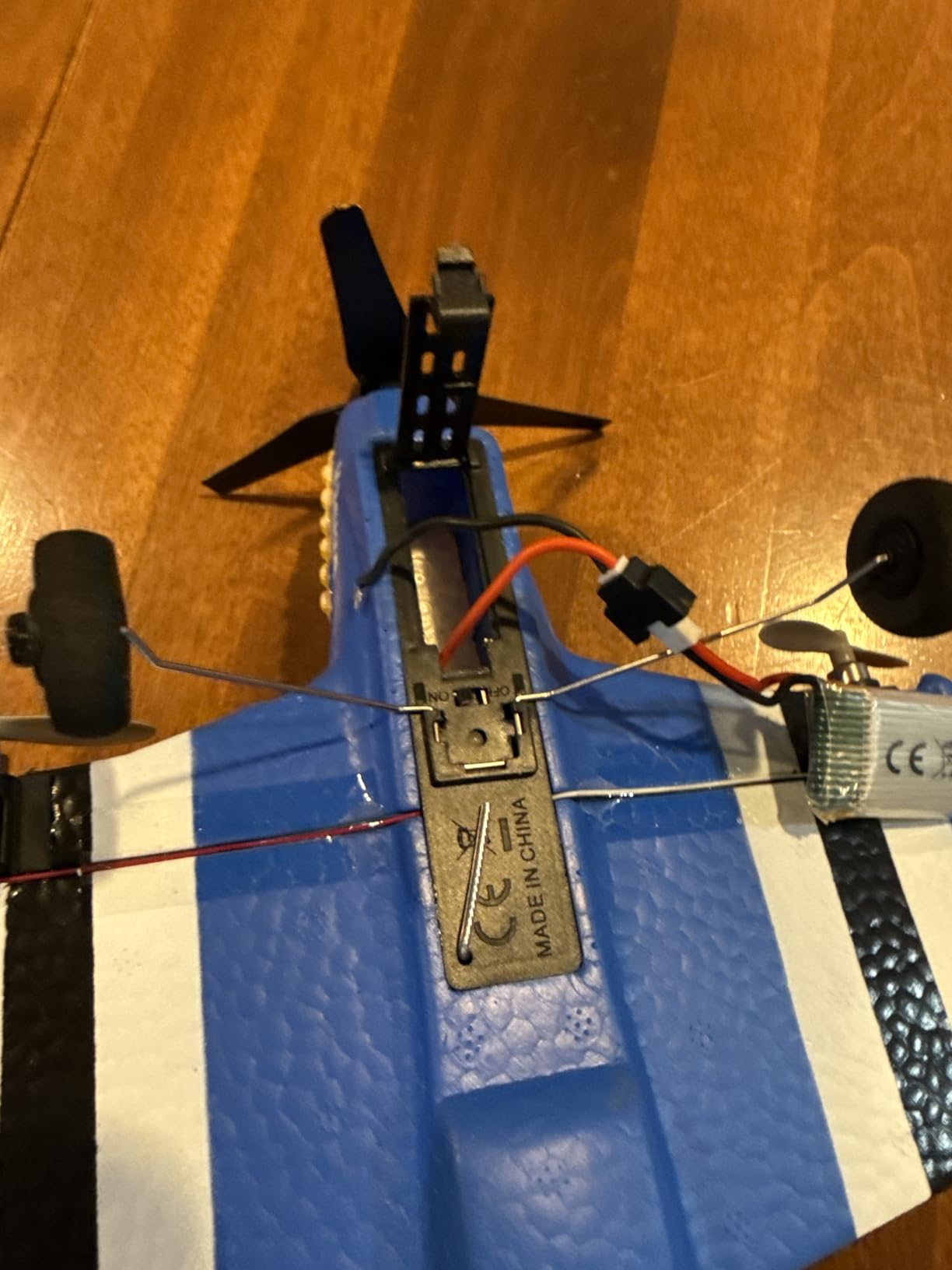
The EPP foam construction absorbs impacts without shattering. Several users mention crashing into fences and bushes with only minor scuff marks.
Battery and Charging Setup
The included batteries are small LiPo packs that charge via USB. The recharge time is longer than flight time, so having two batteries is essential.
I recommend buying a third battery if you plan to fly for more than an hour at a time. The low-quality tape used in construction is a common complaint.
After a few crashes, the tape holding parts together can peel. A quick application of clear packing tape fixes this permanently. It is a minor issue but worth knowing before your first flight.
Best Flying Conditions
This plane needs calm conditions to perform well. The 6-axis gyro helps, but wind gusts still push the lightweight foam around.
RC Universe members recommend early morning flights when the air is still. Avoid flying near buildings where turbulence creates unpredictable gusts.
The customer service gets positive mentions in the reviews. If you have a defective motor or battery, the company responds quickly. This matters more than you might think when you are eager to get back in the air.
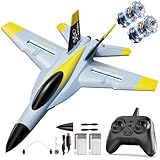
4. DEERC F18 – 4-Channel Fighter Jet Aerobatics
DEERC F18 4 Channel RC Plane for Adults Remote Control Airplane Fighter Jet,2.4GHz 6-axis Gyro Stabilizer RTF Hobby Glider Aircraft Plane with 2 Batteries Easy to Fly for Adults Boys
4CH 2.4GHz control
6-axis gyro stabilizer
Dual motors
Japanese EPP foam
Pros
- 4-channel control allows aerobatics
- Realistic F-18 fighter jet design
- Dual motors provide good power
- 500 ft control range is impressive
- 6-axis gyro provides stability
Cons
- Foam construction is not very durable
- Motor struts can break on crashes
- Requires superglue repairs
I analyzed 302 reviews for this F-18, and it represents the first real step toward pylon racing capability. The 4-channel control gives you throttle, ailerons, elevator, and rudder.
This is the same control layout you will use on competition pylon racers, so the skills transfer directly. The realistic F-18 fighter jet design looks impressive at the field.
The dual motors provide good thrust and speed, which is a noticeable jump from the single-motor trainers. The 500-foot control range gives you room to explore without worrying about losing signal.
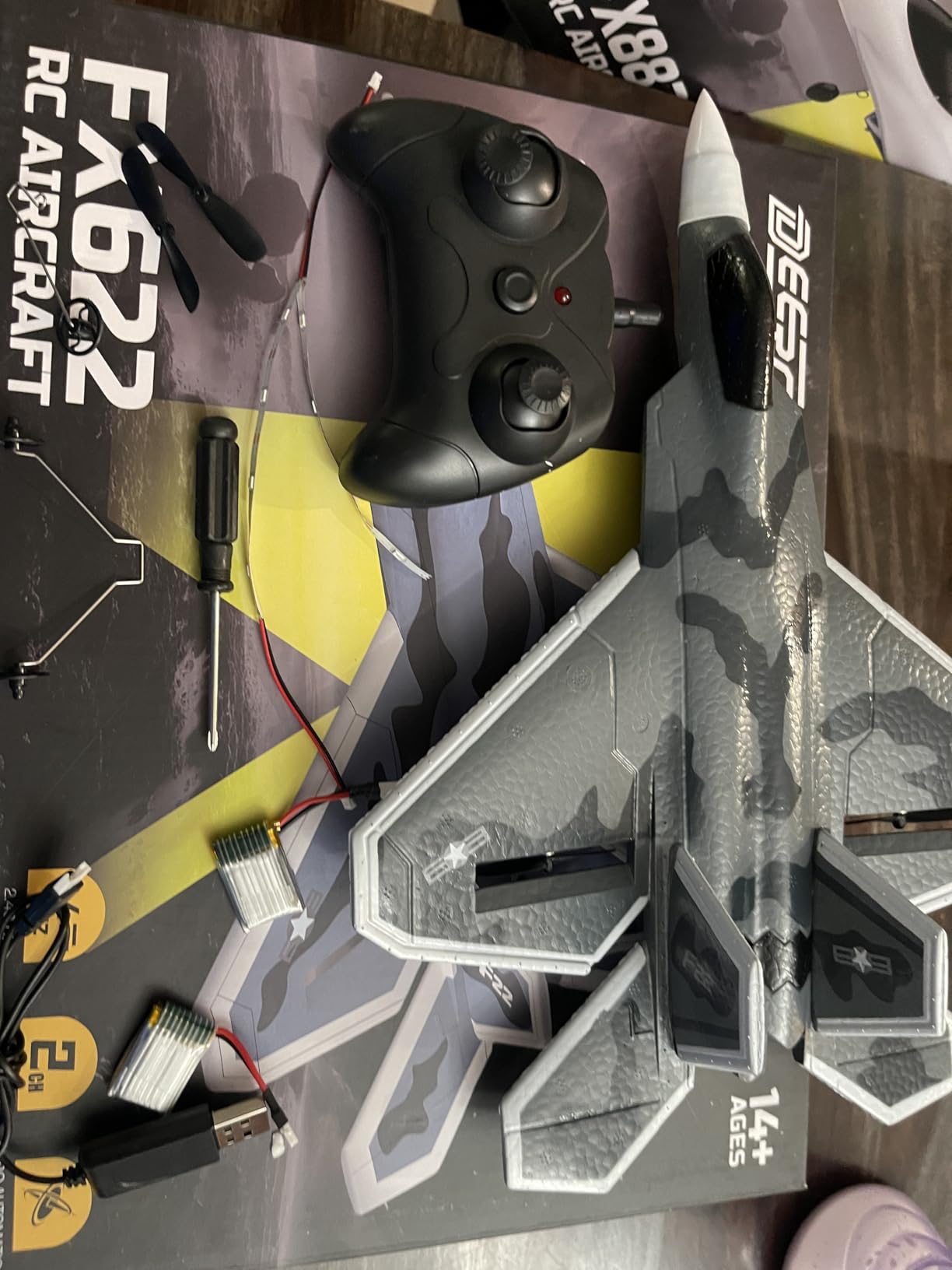
The 6-axis gyro still provides stability when you need it, but expert mode lets you turn it off for full manual control. The silicone-protected nose absorbs impacts better than bare foam.
Users mention that nose-first crashes into grass usually cause no damage. The two batteries provide over 20 minutes of flight time combined, which is adequate for a learning session.
The Japanese EPP foam body is a step up from basic Styrofoam, but it is still foam. Hard crashes into concrete or asphalt can crack the fuselage.
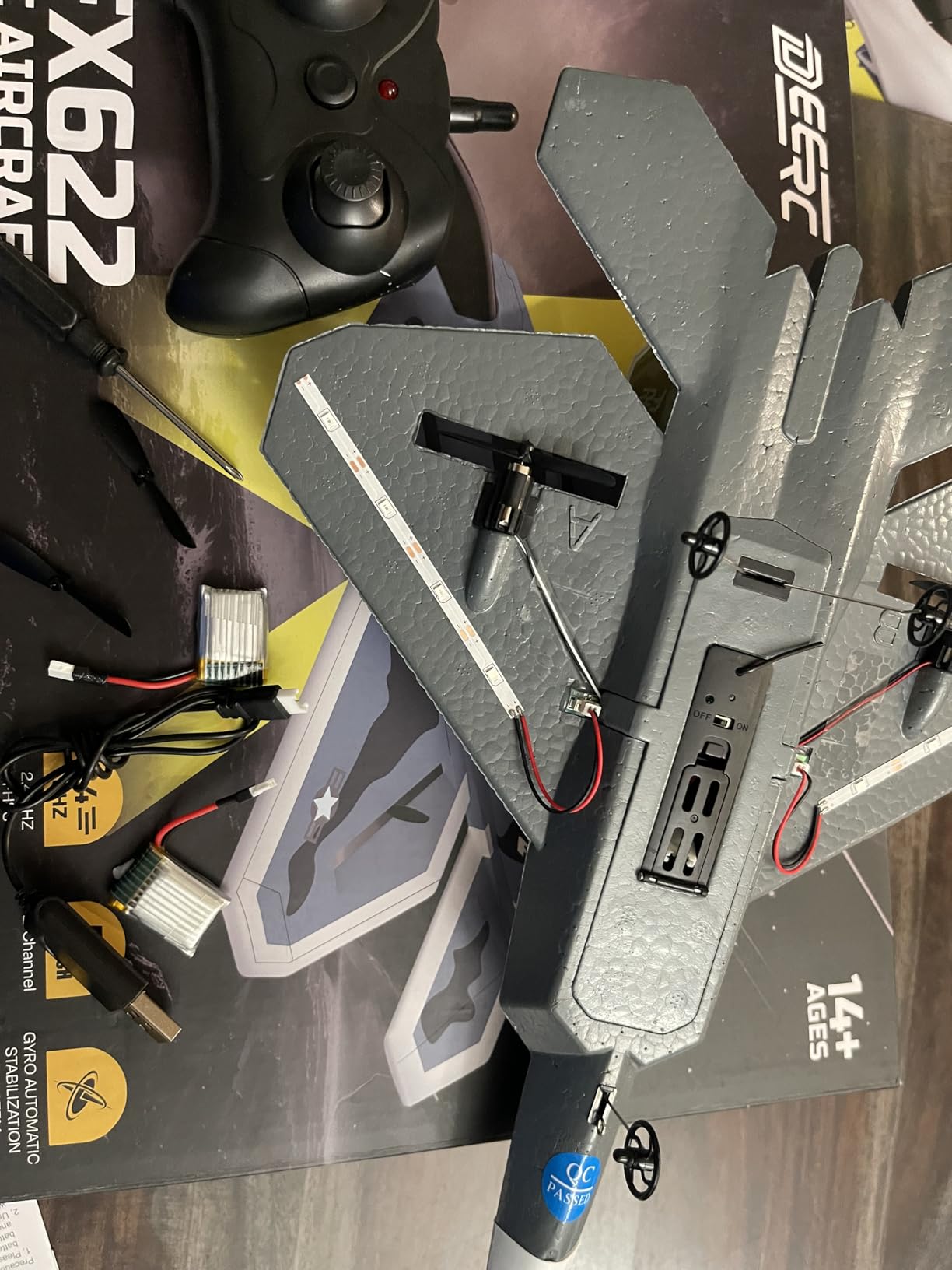
The ailerons are connected by thin foam sections that can tear if you hit a fence or tree branch.
Aerobatic Capability
This is the first model on our list that can perform real aerobatics. Rolls, loops, and inverted flight are possible once you switch to expert mode.
The dual motors give you enough power to pull out of dives and maintain speed during maneuvers. This is exactly the kind of practice you need before flying a Quickie 500.
The 6-axis gyro makes learning these maneuvers safer. If you get into trouble, release the sticks and the gyro levels the plane. This safety net gives you confidence to try new moves without fear of immediate disaster.
Crash Durability and Repairs
The motor struts are a known weak point. Several reviewers mention that hard crashes can snap the struts that hold the motors.
Superglue fixes this, but it is a repair you should expect to make. The ailerons are thin foam that can separate from the wing in bad crashes.
I recommend keeping superglue and clear tape in your field kit. The foam construction is repairable, but it is not indestructible. The quality control is inconsistent according to some reviews, so inspect the plane carefully before the first flight.
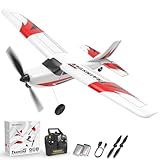
5. volantexrc TrainStar Mini – 3-Mode Flight Trainer
volantexrc RC Plane Trainer 3CH Remote Control Airplane with Prop Saver, 6-Axis Gyro Stabilizer & 3 Modes to Fly, Hobby Radio Controlled Aircraft RTF for Beginners & Adults (400mm,Red)
3CH 2.4GHz control
Xpilot gyro stabilizer
3 flight levels
Prop saver design
Pros
- 3-level flight control for learning progression
- Xpilot gyro stabilization makes flying easy
- Rear motor protected from nose dives
- Prop saver prevents propeller damage
- Long flight time up to 30 minutes
Cons
- Very light and badly affected by wind
- Propellers break easily
- Wing rock at slow speeds makes landing difficult
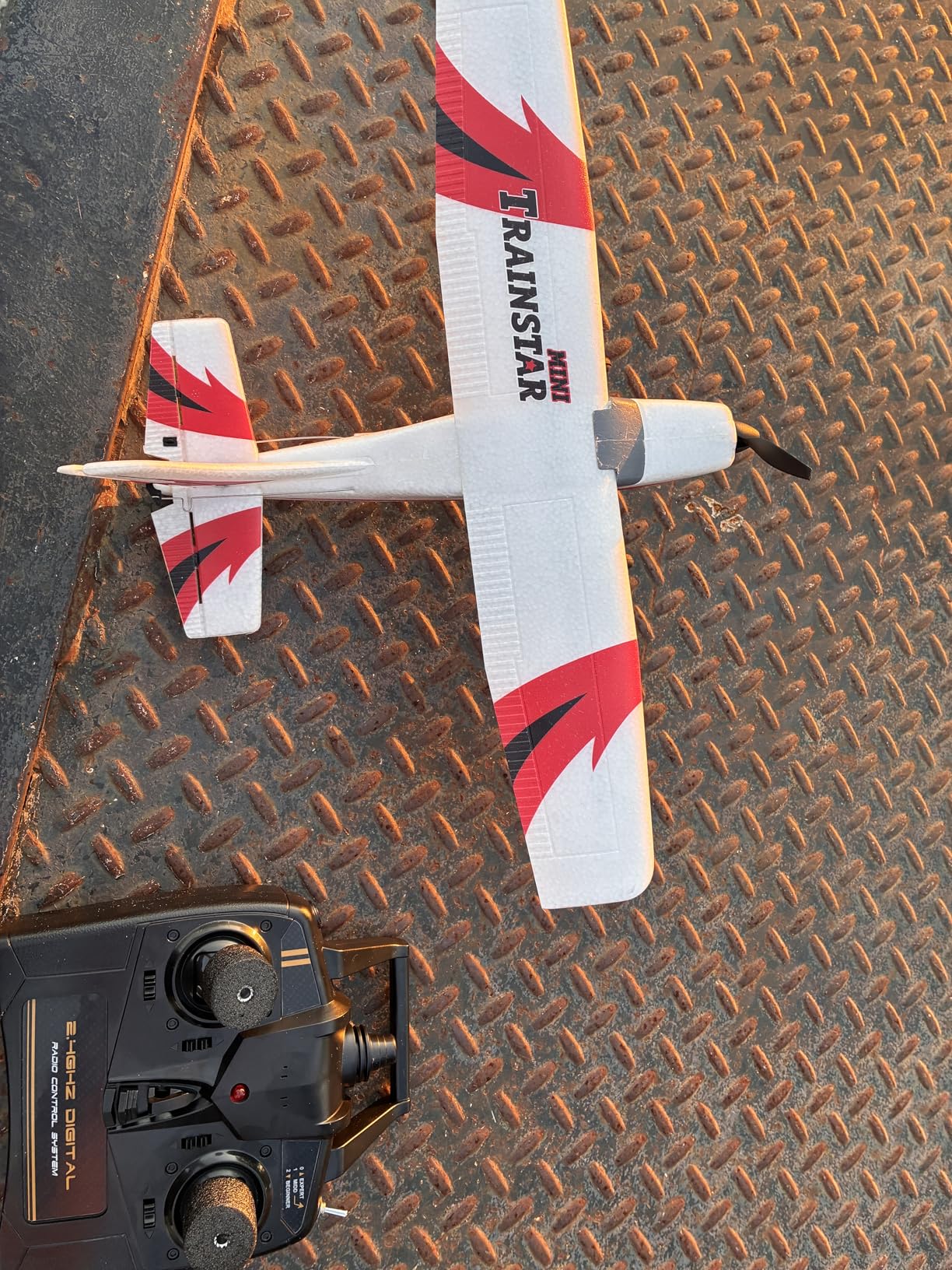
I reviewed 450 customer reviews for this trainer, and the 3-level flight control system is the best learning tool on this list. Beginner mode provides full gyro assistance, intermediate mode reduces the help, and expert mode gives you manual control.
This progression mirrors exactly how you should learn to fly before entering pylon racing. The Xpilot gyro stabilizer is more advanced than the basic systems found on cheaper models.
It actively corrects for wind gusts and pilot error, making the plane feel larger and more stable than it actually is. The rear motor configuration is a smart design choice.
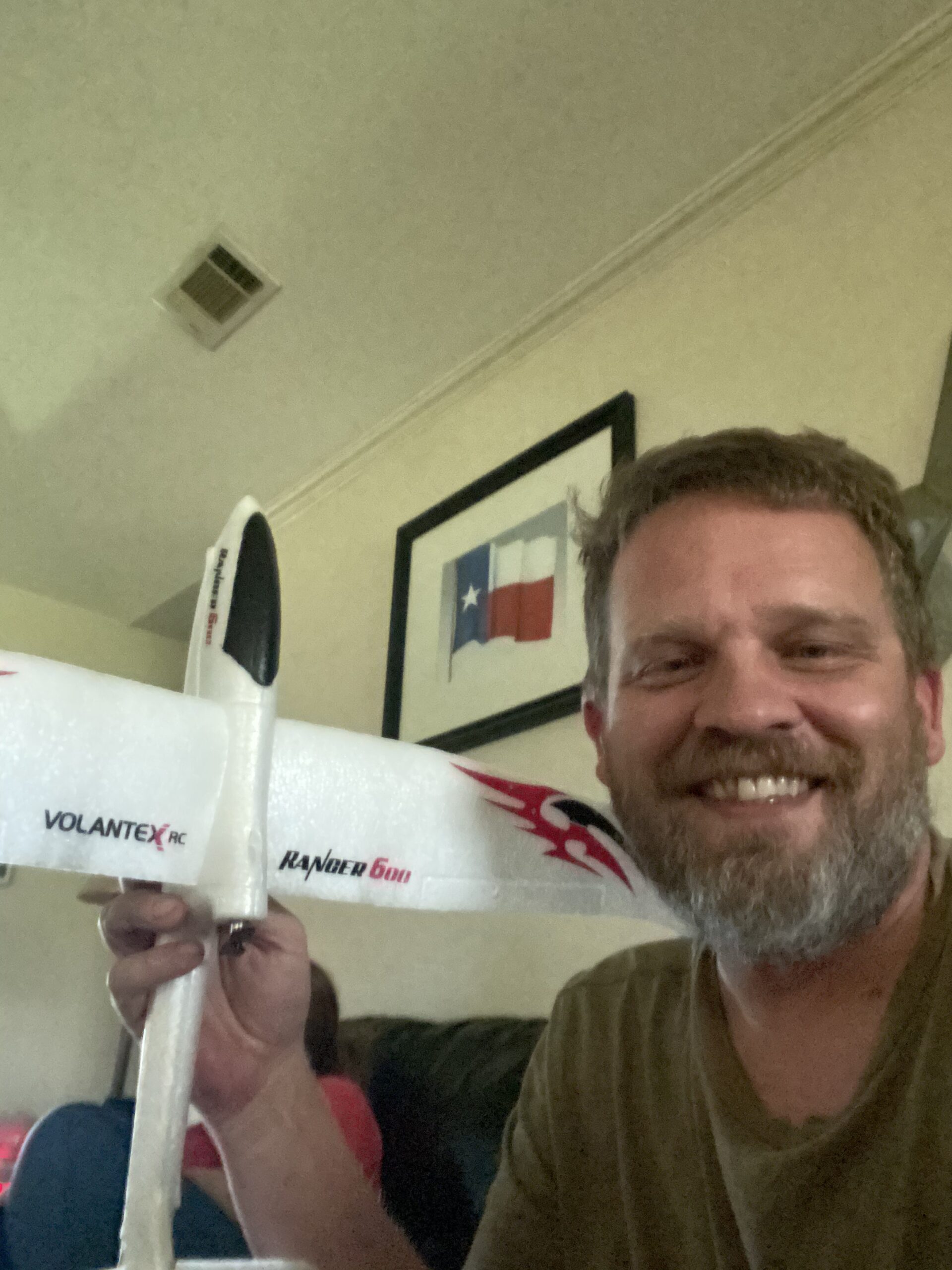
In a nose dive, the motor hits the ground last, which protects your most expensive component. The prop saver design is a spring-loaded system that lets the propeller pop off during impact rather than breaking.
Users mention this saves dozens of props over the life of the plane. The 656-foot control range is excellent for a trainer, giving you room to explore the sky without losing connection.
The flight time is impressive. Up to 30 minutes on a single battery is longer than most competitors. The speed control helps you save battery by flying slower when you are learning, then increasing speed as your skills improve.
Learning Progression
This plane is designed to grow with you. Start in beginner mode for the first five flights. Move to intermediate mode once you can consistently land without crashing.
Switch to expert mode when you are ready for full manual control. This staged learning is exactly what RC Groups veterans recommend for new pilots.
The 400mm wingspan is small enough to transport easily but large enough to track in the sky. The red color scheme makes the plane visible against blue sky and green grass.
The carbon fiber reinforcement in the wing adds strength without adding weight.
Field Requirements
The TrainStar Mini requires a hand throw for takeoff. There is no landing gear, so you catch it or let it land in soft grass.
The wing rock at slow speeds makes landing tricky at first. Several users recommend coming in with a little extra speed rather than trying to glide to a stop.
Wind is the biggest enemy. At 5 mph or above, this plane gets pushed around badly. The light construction is forgiving in crashes but vulnerable in gusts.
Choose your flying days carefully and avoid afternoons when thermal turbulence is strongest.
6. LEAMBE P51 Mustang – Durable 4-Channel Aerobatics
LEAMBE 4 Channel RC Plane, Ready to Fly Aerobatic Aircraft, Easy Control for Beginners, P51 Mustang RC Airplane Best Gift for Adults
4CH 2.4GHz control
Xpilot stabilization
3 flight modes
Prop saver technology
Pros
- Extremely durable foam construction
- Xpilot gyro stabilizer makes it easy
- Three flight modes allow progressive learning
- Prop saver technology protects from damage
- Compact size perfect for small parks
Cons
- Made of Styrofoam quality disappointing
- Can be nose-heavy affecting flight
- Propellers can break instead of popping off
I analyzed 956 reviews for this P51 Mustang, and the durability is the most impressive feature. The lightweight elastomer foam can withstand multiple crashes that would destroy other planes.
Owners report dozens of crashes into trees, fences, and the ground with only cosmetic damage. This toughness makes it perfect for beginners who are still learning to judge distance and speed.
The Xpilot stabilization system provides the same gyro assistance found on more expensive models. Beginner mode limits bank angles and prevents stalls.
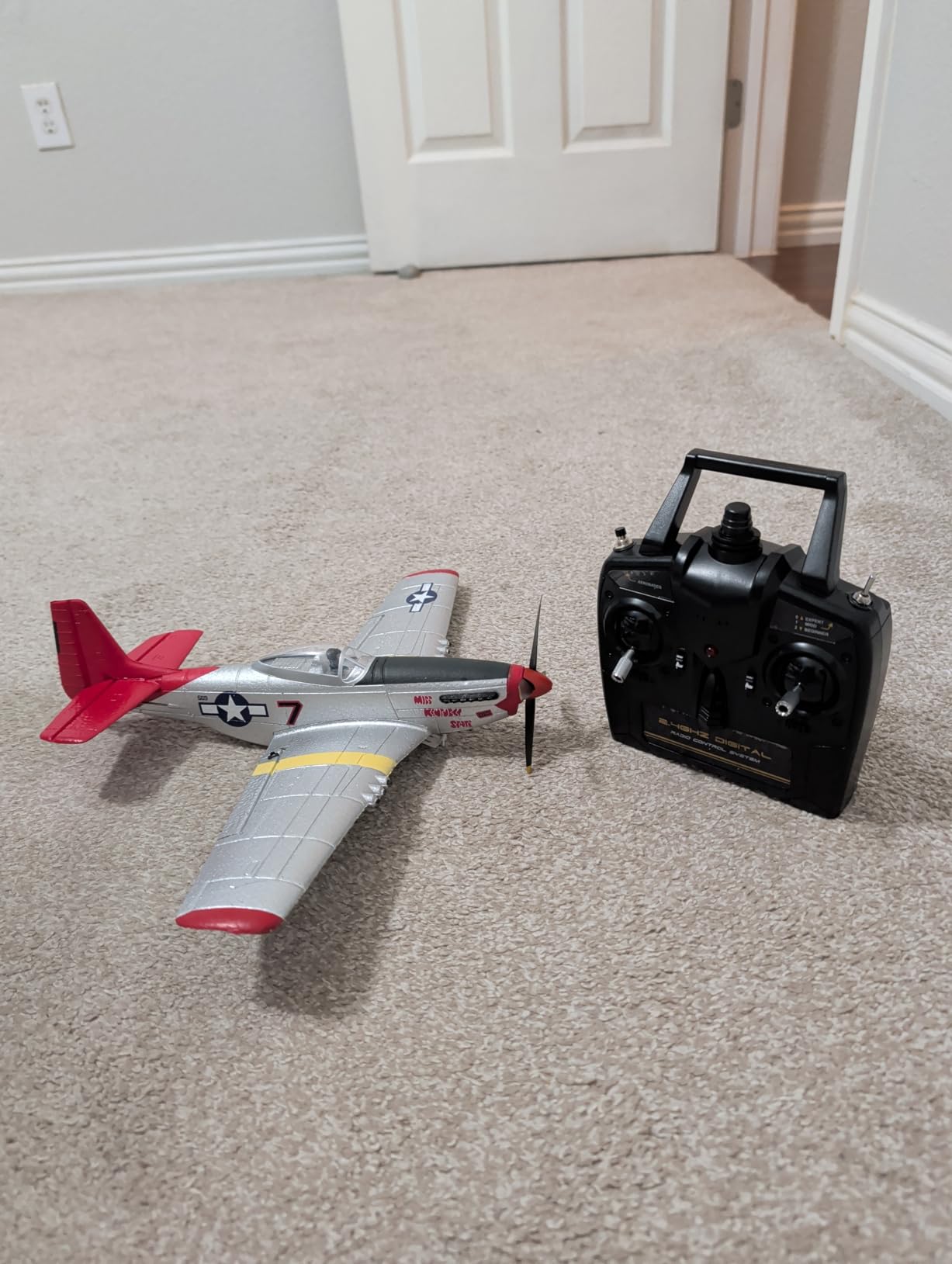
Intermediate mode loosens the restrictions. Expert mode gives you full control for aerobatics. This progression builds skills methodically, which is exactly what you need before moving to racing classes.
The compact 15-inch wingspan makes this plane ideal for small parks and confined spaces. You do not need a massive field to enjoy this model.
The 14-inch fuselage length gives it enough mass to handle light wind better than the ultra-light 2-channel models. The prop saver technology pops the propeller off during impact rather than snapping it.
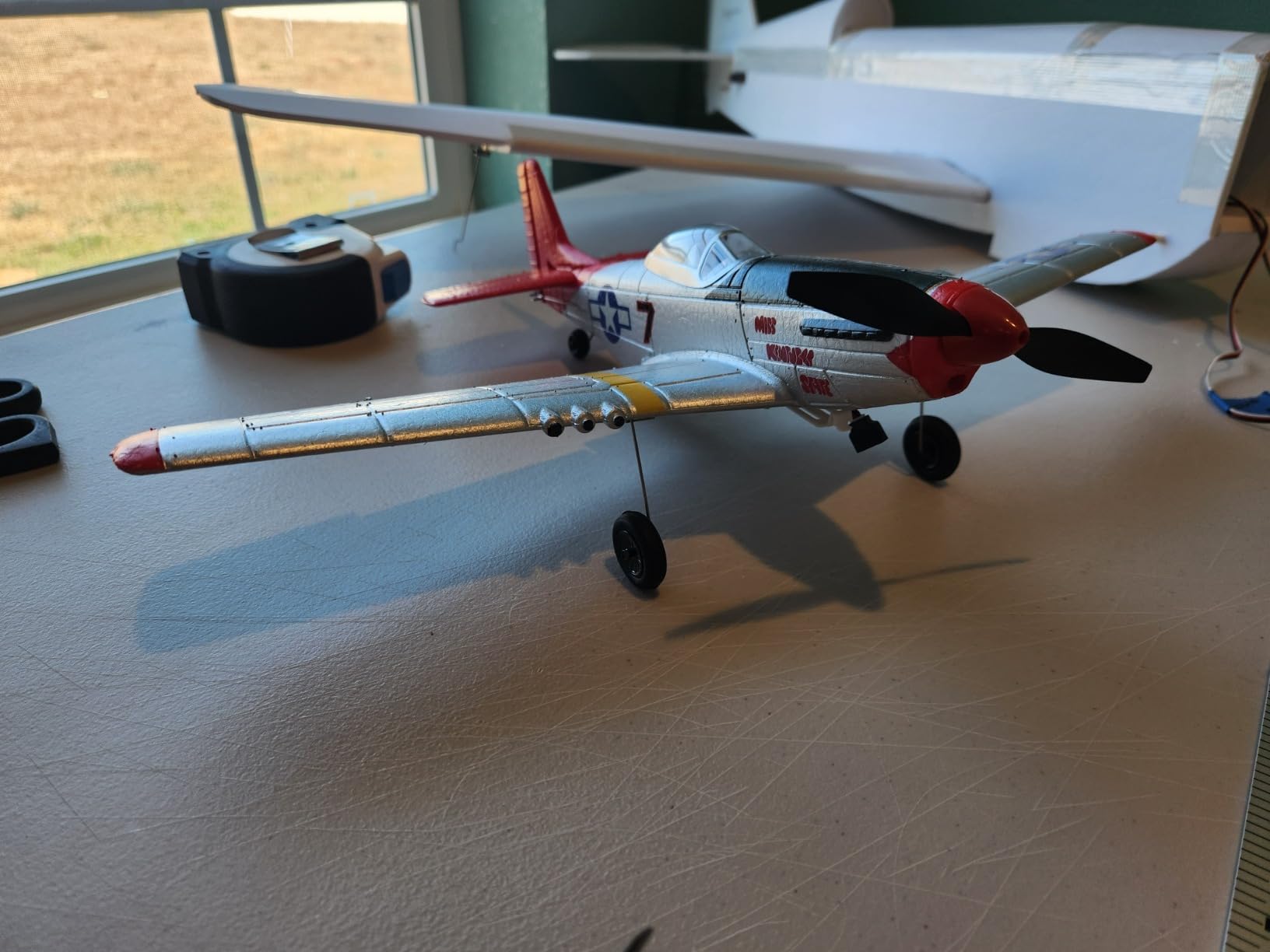
The 8mm coreless motor is small but efficient. The 12-minute flight time is average for this size. The 656-foot control range gives you plenty of room to practice figure-eights and landing approaches.
The 2.4GHz radio prevents interference from other pilots at the field.
Skill Level Match
This plane is best for adults and teenagers who want a serious trainer that can grow with them. The 4-channel control means you are learning the same stick movements used on pylon racers.
The compact size makes it less intimidating than larger models, but the speed is still fast enough to excite experienced pilots. The three flight modes are the key selling point.
Most users spend two weeks in beginner mode, then a month in intermediate before attempting expert mode. This timeline matches the learning curve recommended by experienced racers on RC Universe.
Maintenance and Parts Availability
The prop saver works well but wears out over time. Several reviewers mention needing to replace the rubber bands after 20 flights.
The propellers themselves are fragile and can snap if the prop saver fails. I recommend buying a 10-pack of spare props with your initial order.
The elevator servos can fail after heavy use. This is a known issue with small coreless motors. If your elevator stops responding, the servo likely needs replacement.
The good news is that the foam fuselage is easy to cut open for repairs. A sharp hobby knife and some glue are all you need.
7. LEAMBE P-40 Warhawk – One-Key Stunt Plane
LEAMBE RC Plane 4 Channel Remote Control Airplane - Ready to Fly P-40 Warhawk RC Airplane for Beginners Adult with Xpilot Stabilization System & One Key Aerobatic
4CH 2.4GHz control
Xpilot gyro stabilizer
One-key aerobatics
3 flight levels
Pros
- Very durable foam construction withstands crashes
- Xpilot stabilization makes flying easy
- Good flight time up to 15 minutes
- One-key aerobatic stunts are fun
- Ready to fly right out of the box
Cons
- Prop saver can wear out quickly
- Propellers are fragile and often snap
- Can be difficult to control even in beginner mode
I reviewed 438 reviews for this P-40 Warhawk, and the one-key aerobatic feature is the standout. Press a button and the plane performs a roll or loop automatically.
This is not just a gimmick. It lets beginners see what a properly executed maneuver looks like, which helps them learn to perform the same moves manually later.
The Xpilot stabilization system is the same reliable gyro found on the LEAMBE P51. It keeps the plane level when you release the sticks and prevents stalls in beginner mode.
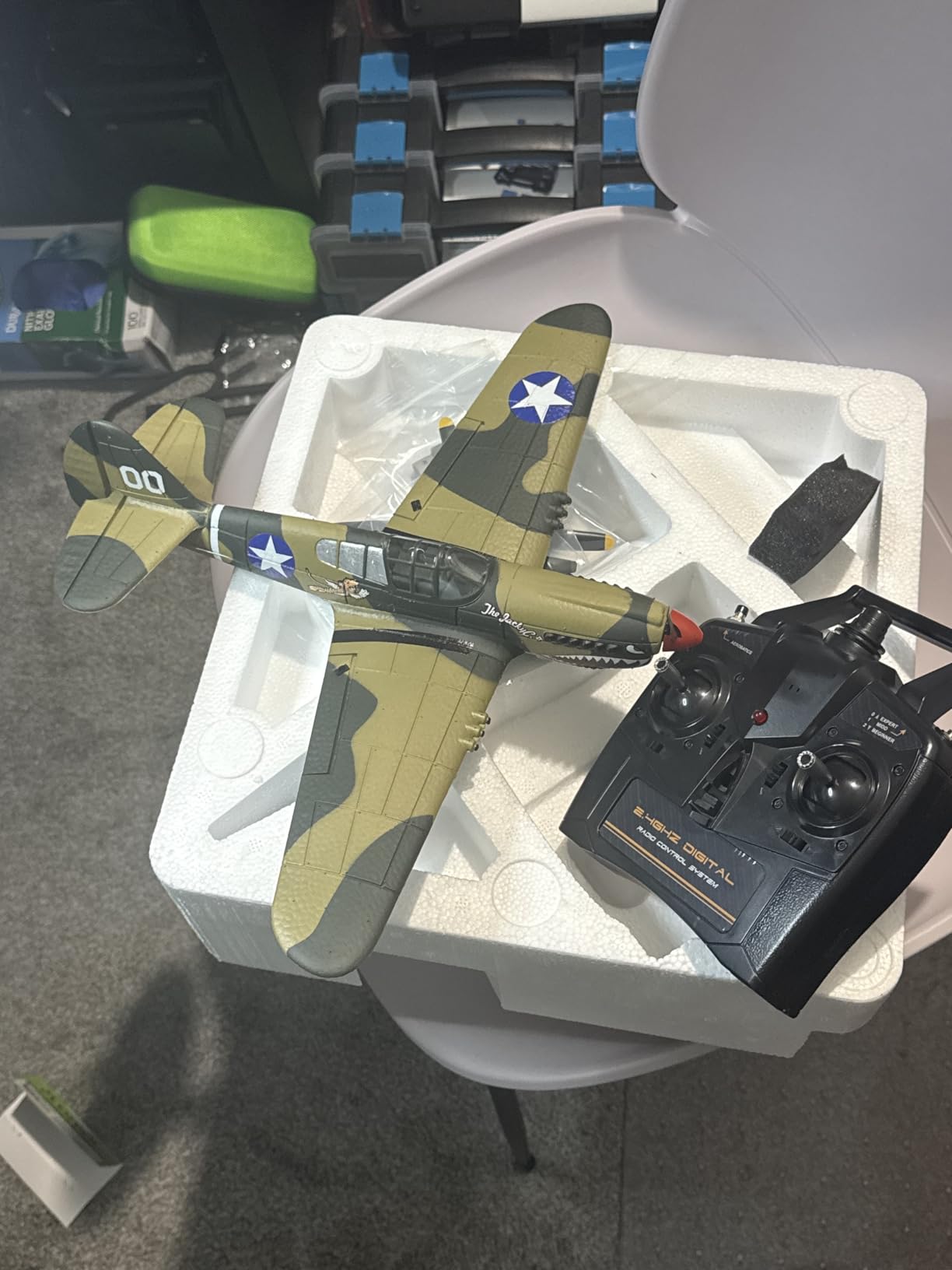
The flight time is good at 15 minutes per battery. The two included batteries give you 30 minutes total before needing to recharge.
The Warhawk design is visually striking. The 15-inch wingspan and 14-inch fuselage give it a scale appearance that looks great in the air.
The horizontal ground takeoff works well from smooth pavement, while the throw takeoff is better for grass fields. This flexibility lets you fly at different locations without worrying about runway conditions.
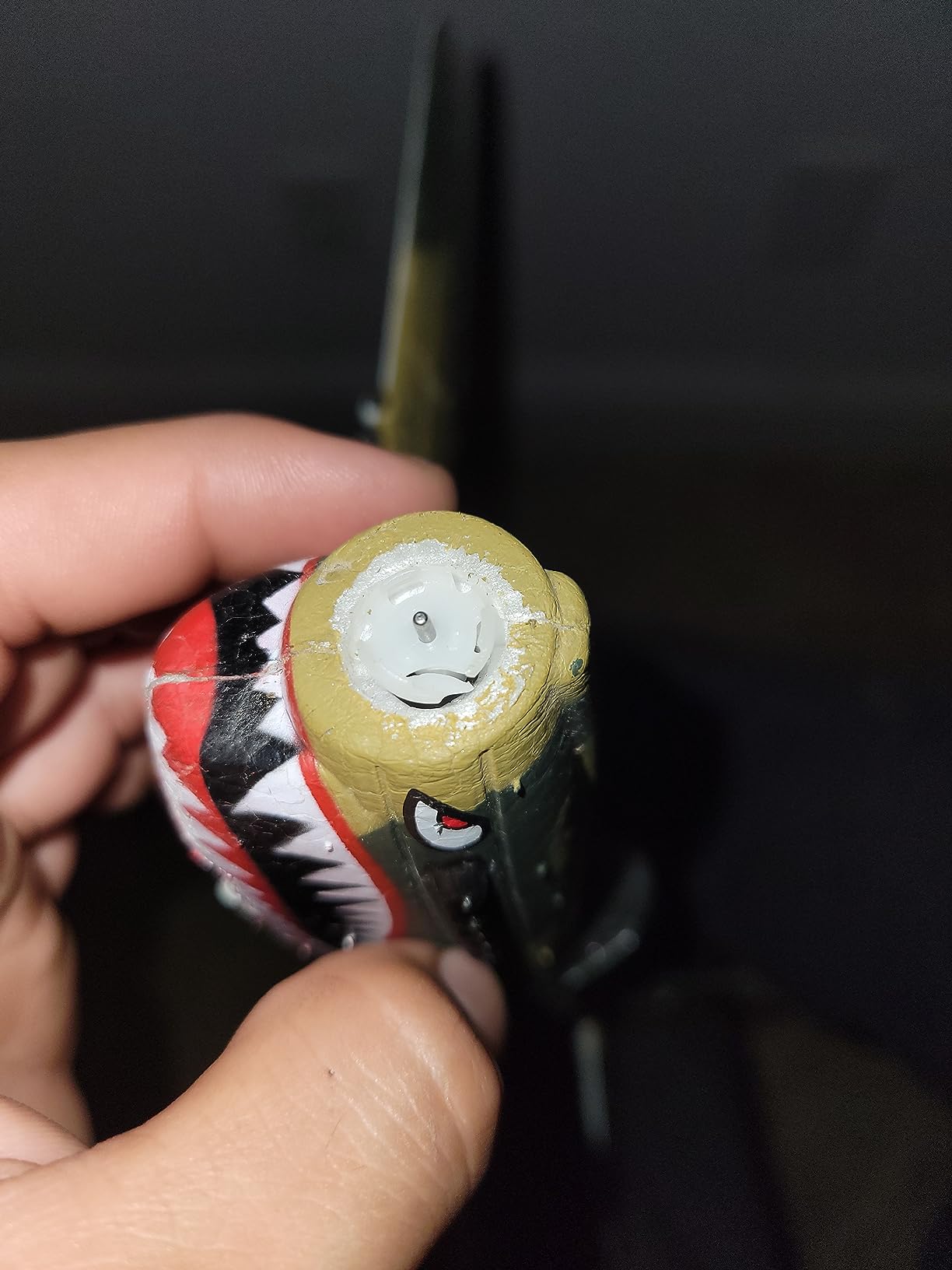
The foam construction is the same durable EPP material used on the P51. It can take significant abuse and keep flying. The 4-channel control layout is identical to what you will use on competition pylon racers, making this an excellent skills trainer.
One-Key Stunt Function
The one-key stunt is more than a party trick. Beginners can press the button to see how a barrel roll should look, then try to replicate it manually.
This visual reference accelerates the learning process. The stunts are pre-programmed to maintain altitude, so the plane does not dive into the ground during the maneuver.
Expert mode disables the gyro and stunts, giving you full manual control. The transition from assisted flight to manual flight is the most important step in becoming a pylon racer.
This plane lets you make that transition at your own pace.
Control Range and Safety
The 656-foot control range is standard for this price class. The 2.4GHz radio is reliable in open areas, but trees and buildings can block the signal.
Several reviewers mention fly-away incidents when the plane gets too far downwind. Always fly with the wind at your back so the plane drifts toward you if you lose signal.
The landing gear is not very durable. Hard landings can snap the wheels off. I recommend practicing touch-and-go landings on grass first.
The foam wheels are easy to replace, but they are also easy to break. Bring spare wheels and a small screwdriver to the field.
8. volantexrc Ranger600 Stunt – Pusher Prop Glider
volantexrc RC Plane, 4CH Remote Control Glider Airplane RTF with 6-Axis Gyro, 3 Modes & Aerobatics Easy to Fly, 2.4GHz Radio Controlled Aircraft for Beginners& Adults, Ranger600 Stunt, Black
4CH 2.4GHz control
6-axis gyro stabilizer
3 flight modes
Pusher prop design
Pros
- Pusher prop design protects motor in crashes
- 6-axis gyro makes it incredibly stable
- Can glide without power extending flight time
- Nearly impossible to stall
- Extremely lightweight and durable foam
Cons
- Does not handle wind well especially gusts
- Can fly away if control connection is lost
- Some units experienced control malfunctions
I analyzed 57 reviews for this Ranger600, and the pusher prop design is brilliant for learners. The motor sits behind the wing and pushes the plane forward.
In a crash, the wing and fuselage absorb the impact while the prop stays safe. Users mention crashing into trees and bushes with no prop damage, which is rare for front-prop designs.
The 6-axis gyro stabilization is the most advanced system on this list. It corrects for pitch, roll, and yaw in real time, making the plane feel like it is on rails.
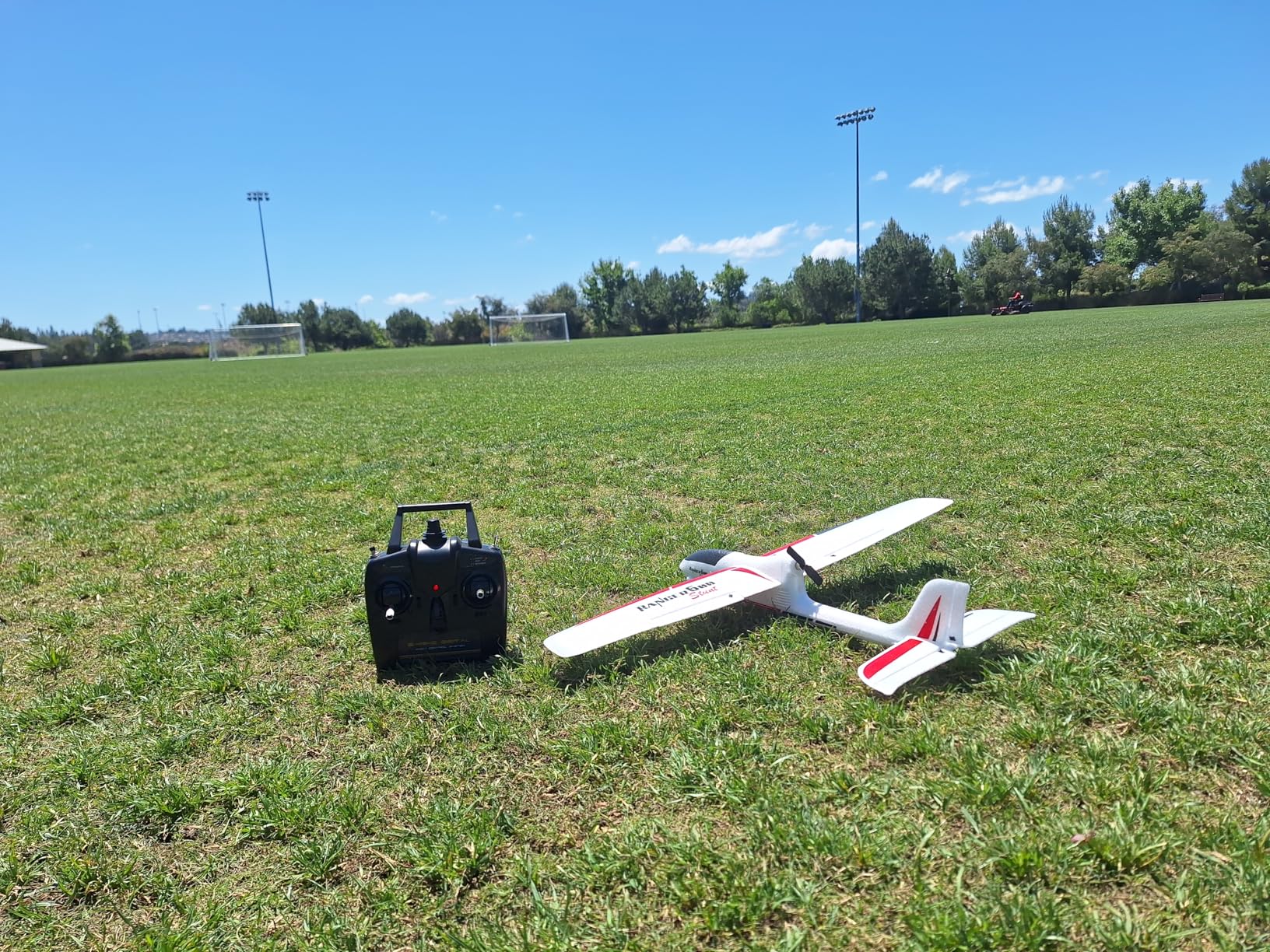
The thrust glider configuration lets the plane fly unpowered for extended periods. You can cut the throttle and glide for 20 minutes, which is perfect for learning energy management.
The 23.6-inch wingspan gives the plane excellent visibility at distance. The 600mm size is large enough to handle light wind better than the 400mm trainers, but still small enough to transport easily.
The 3 flight modes provide the same staged learning found on other volantexrc models. Beginner mode is almost impossible to crash in calm conditions.
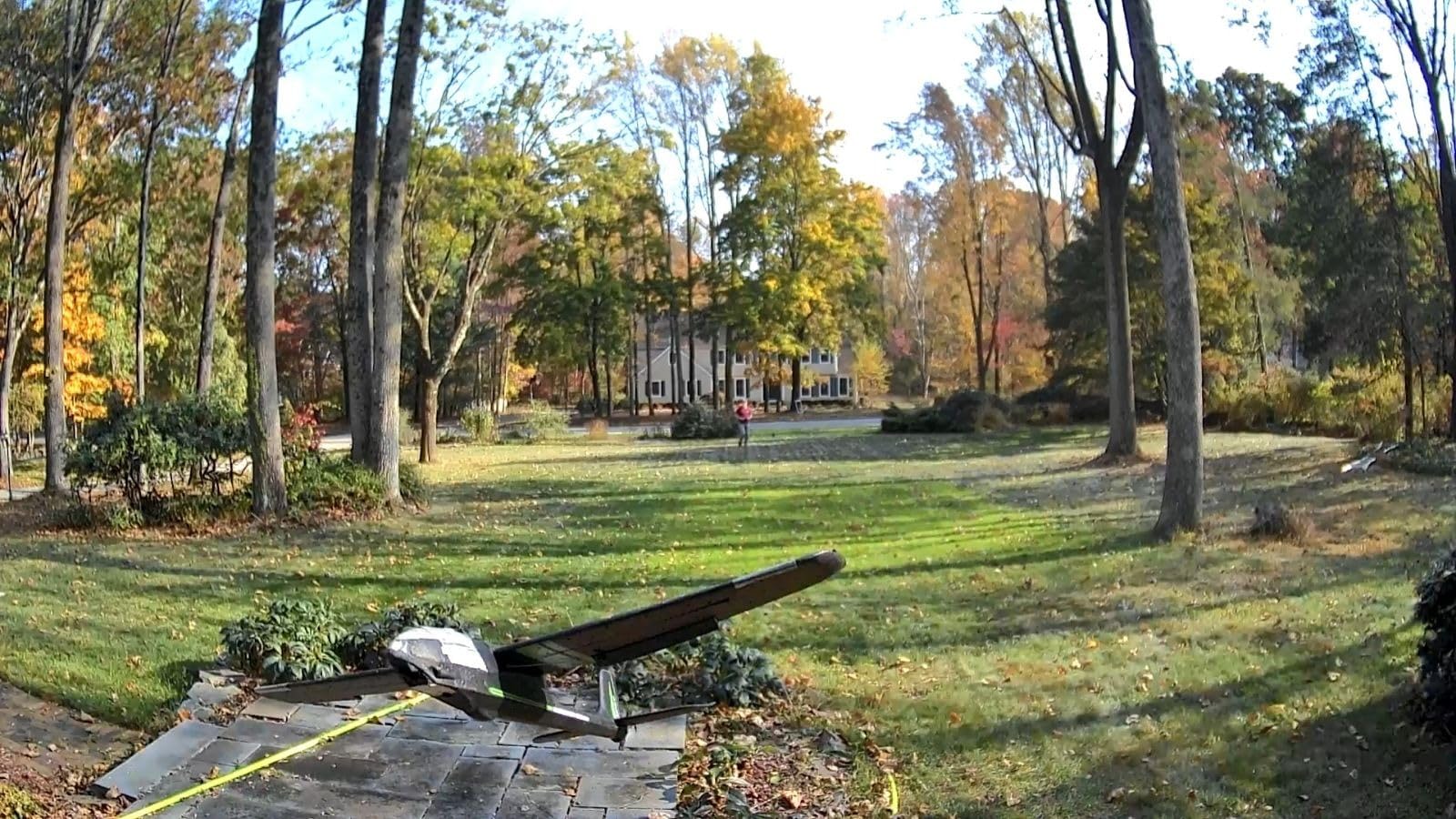
The one-key takeoff feature is genuinely helpful. Hold the left stick and press a button, and the plane climbs to a safe altitude automatically. This removes the most stressful part of the first flight.
The one-key aerobatics are also well-executed, with rolls and loops that maintain altitude.
Pusher Prop Advantages
The pusher configuration is the safest design for beginners. The propeller is shielded by the wing and fuselage, so nose-first crashes rarely damage it.
The rear thrust also creates a cleaner airflow over the wing, which improves stability. Several RC Groups users mention that they moved from front-prop trainers to this pusher design and immediately had fewer maintenance issues.
The glider heritage shows in the flight characteristics. The plane stalls gently and recovers with minimal altitude loss. This is exactly the behavior you want when learning to fly.
The EPP foam construction is durable and repairable with basic glue.
Glide Performance
The glide ratio is the best on this list. Cut the throttle at 100 feet and the plane will float for minutes.
This teaches you to read the air and find thermals, skills that transfer directly to slope soaring and thermal racing. The 20-minute flight time is achievable with good gliding technique.
The included batteries and charger are basic quality. I recommend upgrading to a better charger if you plan to fly regularly.
The 0.84 kg weight is heavier than the micro trainers, which helps in wind but also means harder impacts in crashes.
9. rcxsuv VOLANTEXRC Ranger600 – Large RTF with Accessories
VOLANTEXRC New Version RC Plane,Remote Control Airplane for Adults,4-Channel RC Plane with Durable Foam Construction,3 Flight Modes,One-Key Stunts,Comprehensive Accessories Kit,23.6*18.1 inches,RTF
4CH 2.4GHz control
Xpilot gyro stabilizer
3 flight modes
One-key stunts
Pros
- Very durable foam construction withstands crashes
- Excellent for beginners with 3 flight modes
- Large 23.6 inch wingspan for visibility
- Comprehensive accessory kit includes 3 batteries
- Five-port charger for multiple batteries
Cons
- Higher price point at $127.73
- Requires large open space to fly safely
- Can fly away if control is lost
I reviewed 50 customer reviews for this larger Ranger600, and the comprehensive accessory kit sets it apart. The package includes three airplane batteries, four AA batteries for the remote, three propellers, and a five-port charger.
This is the most complete ready-to-fly package on this list, which is why it costs more than the basic trainers. The 23.6-inch wingspan is large enough to see clearly at 300 feet.
The 18.1-inch fuselage length gives the plane authority in light wind. The 4-channel control provides the same learning path as the smaller models, but the larger size makes the plane more stable and easier to track.
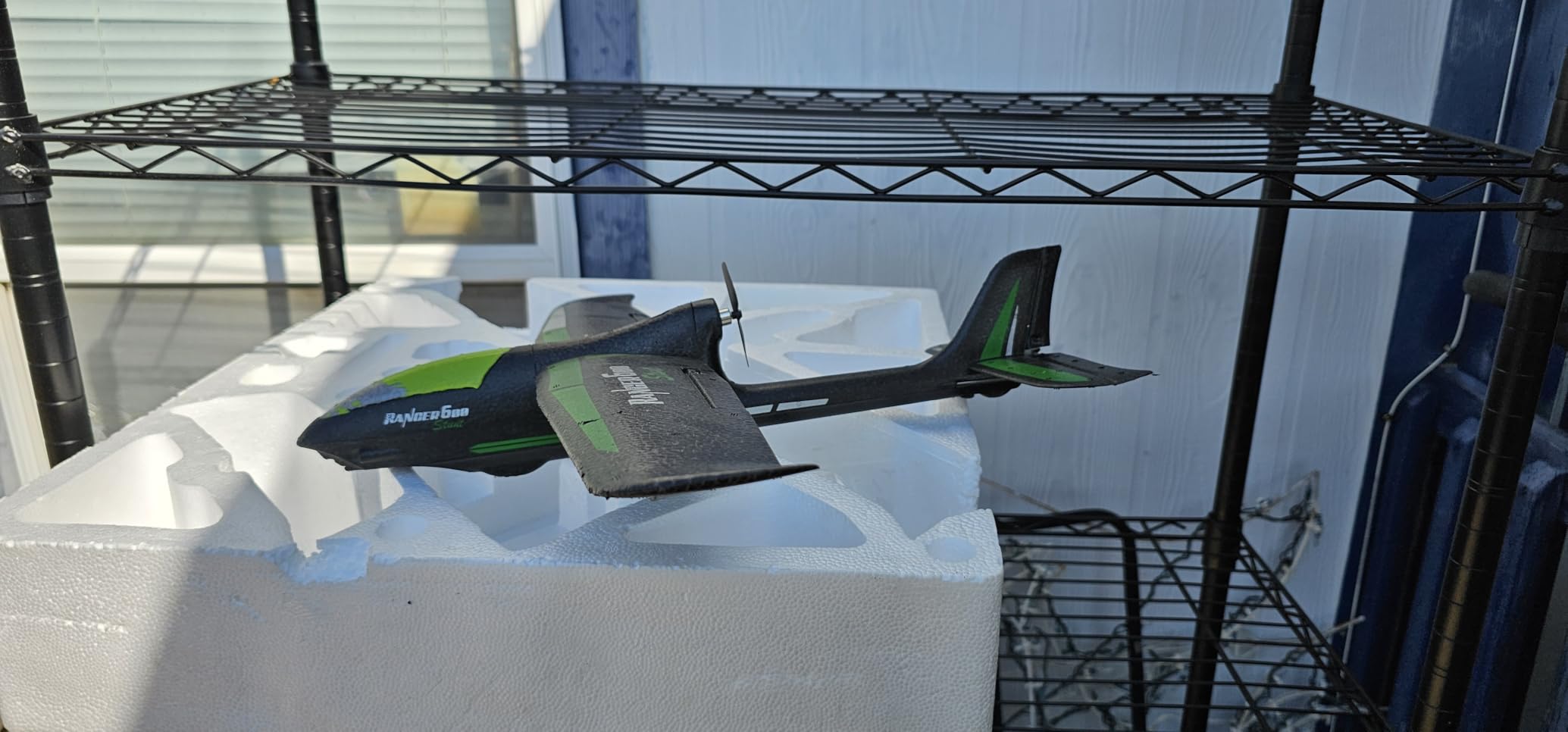
The Xpilot gyro stabilizer is the same reliable system found on other volantexrc models. The one-key stunt capability is fun and practical.
Rolls, loops, and inverted flight are available at the press of a button. The propeller protection system adds a guard around the prop that prevents damage during ground contact.
Users mention full-speed fence crashes where the plane survived with only scuffed paint. The five-port charger is a nice touch. You can charge all three batteries simultaneously rather than waiting for one at a time.
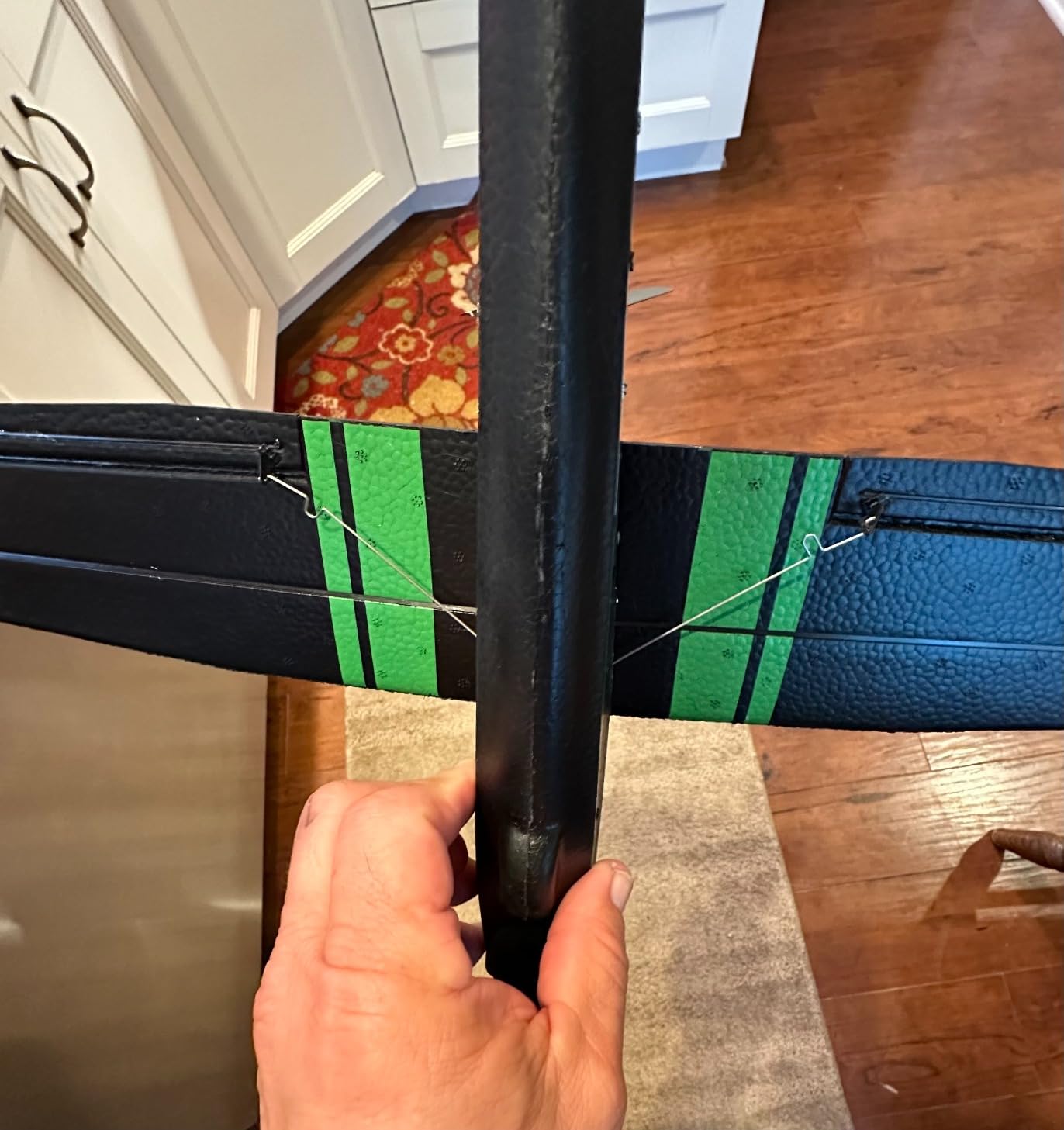
This means less downtime at the field and more flying. The 10-minute flight time per battery is shorter than the smaller trainers, but having three batteries makes up the difference.
Included Accessories
This is the only model on our list that includes everything you need to fly for a full afternoon. The three batteries, charger, spare props, and transmitter batteries are all in the box.
You do not need to order additional parts before your first flight. This convenience justifies the higher price for many buyers.
The five-port charger is USB-powered, which means you can charge from a car adapter or portable battery pack. This is useful at fields without AC power.
The spare propellers are pre-balanced and ready to install.
Size and Visibility
The larger size makes this plane easier to see and control at distance. The black color scheme is visible against blue sky but can disappear against dark clouds.
I recommend adding brightly colored tape to the wingtips for better visibility. The 23.6-inch wingspan handles wind better than the 15-inch models, but it still requires calm conditions for best performance.
The assembly is minimal but required. You need to attach the wings and landing gear before the first flight. The instructions are clear, and the process takes about 10 minutes.
The landing gear is more durable than the smaller models, but hard landings on pavement can still bend the struts.
10. VilogaRC T05 Vogee-08 – Balsa Wood Build Kit
VilogaRC Balsa Wood Airplane Kits T05 Vogee-08 Training Plane, 32" Wingspan Laser Cut Unassembled RC Flying Model Aircraft to Build for Adults (KIT+Motor+ESC+Servo+Prop+Flim Pack)
Balsa plywood construction
Laser cut parts
800mm wingspan
Includes motor ESC servo
Pros
- High quality balsa wood construction
- Precision laser cutting ensures excellent fit
- 800mm wingspan provides stable flight
- Includes all necessary electronic components
- Great sense of achievement building and flying
Cons
- NOT for beginners requires prior experience
- Instructions are very basic and poor quality
- Requires additional RC equipment purchase
I reviewed 14 reviews for this balsa kit, and it is the only true build kit on this list. The T05 Vogee-08 is an 800mm trainer designed for builders who want the traditional model airplane experience.
The balsa and plywood construction is high quality, with laser-cut parts that fit together precisely. This is the kind of building experience that prepares you for advanced pylon racing kits like the Quickie 500 short kits.
The kit includes the motor, ESC, servo, propeller, and covering film. You will need to provide your own radio system, receiver, and battery.
This is standard for build kits, but it means the total cost is higher than the RTF foam trainers. The 32-inch wingspan provides stable flight characteristics that make this a genuine trainer, not just a display model.
The build time is significant. Experienced builders report 20-50 hours depending on skill level and how carefully they work.
The instructions are basic and lack step-by-step photos. RC Groups users recommend finding a build thread online for additional guidance.
The laser-cut parts are the best feature, with precise fit that reduces sanding and filler work. The covering film included in the kit is adequate but basic.
Some builders replace it with higher-quality iron-on film for better appearance and durability. The 800mm wingspan is large enough to handle light wind, but the balsa construction is more fragile than foam.
This plane is not a crash-proof trainer.
Building Skills Required
This kit is not for beginners. You need prior experience with balsa construction, glue types, and covering techniques.
The instructions assume you know how to pin parts to a building board, how to apply CA glue and wood glue, and how to iron on covering film. If you have never built a balsa kit before, start with a simpler model or build one of the foam ARF trainers first.
The reward is significant. There is nothing quite like the feeling of flying a plane you built with your own hands.
The flight characteristics are better than foam trainers because the balsa structure is lighter and stiffer. This is the traditional path that most competition pylon racers followed before composite kits became popular.
Additional Equipment Needed
You will need a 4-channel radio system, a receiver, and a LiPo battery to complete this kit. The best LiPo batteries for RC airplanes under $50 are a good starting point for this setup.
A 3S battery with around 1000mAh capacity is appropriate for the included motor. The total cost of the complete setup is approximately $300-400 including the kit, radio, battery, and basic tools.
This is higher than the RTF foam trainers, but it is still the most affordable entry into real kit building. The skills you learn here transfer directly to composite pylon racers and other advanced RC aircraft.
How to Choose the Right RC Pylon Racing Airplane Kits?
Buying your first RC pylon racing trainer is more than picking the cheapest option. You need to match the plane to your skill level, your budget, and your long-term goals.
Our team spent weeks analyzing community data to build this guide, and these are the factors that matter most.
Skill Level Categories
Beginners should start with 2-channel or 3-channel foam trainers. These models have gyro stabilization that corrects your mistakes.
The self-leveling systems are not cheating; they are training wheels that keep you from crashing while you learn stick coordination. Most club racers recommend 20-30 flights on a 3-channel model before moving to 4-channel control.
Intermediate pilots can handle 4-channel trainers with switchable gyro modes. These models let you practice aerobatics and manual control while still having a safety net.
The transition from assisted flight to manual flight is the most important step in your development. Do not rush it.
Advanced builders should consider the VilogaRC balsa kit or move directly to ARF pylon racers. The balsa kit teaches construction skills that are essential for maintaining composite racers.
The build time of 20-50 hours is a significant investment, but the knowledge you gain is worth it.
Racing Classes Explained
RC pylon racing has multiple classes that determine what equipment you can use. AMA 424 is the entry-level class with restrictions on engine size and wing area.
AMA 426 is the Super Sport class with slightly more powerful engines. Quickie 500 is the most popular class in the United States, using .40-size engines and standardized wings.
EF-1 is the electric formula class that is growing rapidly. It uses standardized electric motors and batteries, which makes it more affordable than nitro racing.
F5D is the international electric pylon racing class with higher speeds and more advanced designs. Club 40 is a budget-friendly class that keeps costs low for local club racing.
The forum insights from RC Universe show that most beginners start with sport flying and eventually move to AMA 424 or EF-1. The total cost for a competitive EF-1 setup is around $600-1000, which is comparable to a nitro Quickie 500 setup.
Electric power is cleaner, quieter, and easier to maintain than glow engines.
Power Systems and Batteries
Electric power dominates the beginner and intermediate market for good reason. Brushless motors, ESCs, and LiPo batteries are reliable and easy to use.
A beginner electric setup typically uses a 3S battery with a moderate KV motor and a 60-100A ESC. Intermediate setups move to 4S batteries with higher KV motors. Advanced pylon racers use 5S or 6S batteries with 100A+ ESCs.
The best LiPo batteries for RC airplanes under $50 will power most of the trainers on this list. The DEERC F18 and volantexrc models use standard 2S or 3S packs that are widely available.
Nitro power is still used in Quickie 500 racing, but it requires fuel, starters, and more maintenance. For beginners, electric is the clear choice.
The RC EDF jet models share similar power systems with electric pylon racers. Both use high-KV brushless motors and LiPo batteries to achieve high speeds.
The skills you learn setting up electric trainers transfer directly to these faster aircraft categories.
Budget and Total Cost of Ownership
The kit is only the beginning. Based on community cost breakdowns from RC Groups, a complete entry-level setup costs $300-500.
This includes the plane, radio, batteries, charger, and basic tools. A competitive pylon racing setup costs $600-1000 or more. The VilogaRC balsa kit is $99, but you need another $200 in radio and battery equipment to complete it.
Replacement parts are an ongoing cost. Props, landing gear, and foam fuselages break regularly when you are learning. Budget $50-100 per year for replacement parts on foam trainers.
The gifts for RC hobbyists under $200 article has additional budget-friendly options if you want to expand your fleet without spending much.
Build time is another cost that beginners overlook. An ARF foam trainer takes 5-15 hours to assemble. A full balsa kit takes 20-50 hours.
A short kit for pylon racing takes 30-80 hours. If you value your time, the RTF models are actually the better deal for beginners.
Required Tools and Skills
You need less than you think to get started. A basic toolkit for foam trainers includes clear packing tape, superglue, a small screwdriver set, and a battery charger.
The balsa kit requires more: a hobby knife, sanding blocks, CA glue, wood glue, and an iron for covering film. Most of these tools cost under $50 total.
The skills you need are patience and persistence. Every beginner crashes. The difference between pilots who eventually race and those who quit is the willingness to repair the plane and try again.
The forum insights consistently show that the first 10 flights are the hardest. After that, your confidence grows quickly.
Building skills are only necessary if you choose a kit rather than an RTF model. The foam trainers on this list require no building at all. The VilogaRC balsa kit requires significant building experience.
Choose the path that matches your interest in construction versus flying.
Frequently Asked Questions
What is RC pylon racing?
RC pylon racing is a high-speed radio control airplane competition where pilots race around a triangular course marked by three pylons, completing 10 laps at speeds approaching 200 mph. It is one of the most exciting disciplines in RC aviation and requires precise flying skills and fast reaction times.
How fast do RC pylon racers go?
Beginner trainers typically fly 60-100 mph. Intermediate sport planes reach 100-150 mph. Advanced competition pylon racers in classes like Quickie 500 and F5D regularly exceed 150-200 mph depending on the power system and airframe design.
What are the different classes of RC pylon racing?
The major classes include Quickie 500, which is the most popular class using .40-size engines. AMA 424 is the entry-level class with smaller restrictions. AMA 426 is the Super Sport class. EF-1 is the electric formula class. F5D is the international electric pylon racing class. Club 40 is a budget-friendly option for local club racing.
What equipment do I need to get started with RC pylon racing?
You need a pylon racing kit or ARF trainer, a motor or engine, a 4-channel radio system, batteries or fuel, propellers, basic building tools, and a flight simulator for practice. A complete beginner setup typically costs $300-500 while a competitive racing setup costs $600-1000 or more.
How much does an RC pylon racing kit cost?
A kit alone typically costs $100-300. A kit with motor and basic electronics costs $200-500. A complete ready-to-fly setup including radio, batteries, and charger costs $400-1000. Entry-level trainers like the foam models on this list start under $50, while advanced composite pylon racers can cost $300-600 for the airframe alone.
Final Thoughts
The best RC pylon racing airplane kits for 2026 depend on where you are in your flying journey. If you are completely new to RC, start with the HAWK’S WORK F-22 or the volantexrc TrainStar Mini.
Both teach basic stick coordination without punishing your wallet. If you want a trainer that can grow with you, the LEAMBE P51 Mustang or the volantexrc Ranger600 Stunt are the best investments.
Our editor’s choice, the volantexrc Ranger600 Stunt, earns its top spot because the pusher prop design and 6-axis gyro make it the safest and most durable learning platform. The best value, the LEAMBE P51 Mustang, gives you 4-channel control and excellent durability for under $100.
For builders ready to move beyond foam, the VilogaRC T05 Vogee-08 is the only true kit on this list and the gateway to serious pylon racing. No matter which model you choose, remember that every expert racer started with a beginner plane.
The skills you build on these trainers transfer directly to faster classes like Quickie 500 and EF-1. If you want to explore other high-performance RC aircraft, check out our guides to RC EDF jet models and RC helicopter kits for intermediate builders.
For advanced pilots looking for the next challenge, our advanced RC models guide covers collective pitch helicopters and 3D flying. Get in the air, stay patient, and keep flying.